WO2012137334A1 - Appareil d'éclairage de véhicule - Google Patents
Appareil d'éclairage de véhicule Download PDFInfo
- Publication number
- WO2012137334A1 WO2012137334A1 PCT/JP2011/058809 JP2011058809W WO2012137334A1 WO 2012137334 A1 WO2012137334 A1 WO 2012137334A1 JP 2011058809 W JP2011058809 W JP 2011058809W WO 2012137334 A1 WO2012137334 A1 WO 2012137334A1
- Authority
- WO
- WIPO (PCT)
- Prior art keywords
- lighting
- contact
- panel
- touch sensor
- mode
- Prior art date
- Legal status (The legal status is an assumption and is not a legal conclusion. Google has not performed a legal analysis and makes no representation as to the accuracy of the status listed.)
- Ceased
Links
Images






Classifications
-
- B—PERFORMING OPERATIONS; TRANSPORTING
- B60—VEHICLES IN GENERAL
- B60Q—ARRANGEMENT OF SIGNALLING OR LIGHTING DEVICES, THE MOUNTING OR SUPPORTING THEREOF OR CIRCUITS THEREFOR, FOR VEHICLES IN GENERAL
- B60Q3/00—Arrangement of lighting devices for vehicle interiors; Lighting devices specially adapted for vehicle interiors
- B60Q3/70—Arrangement of lighting devices for vehicle interiors; Lighting devices specially adapted for vehicle interiors characterised by the purpose
- B60Q3/74—Arrangement of lighting devices for vehicle interiors; Lighting devices specially adapted for vehicle interiors characterised by the purpose for overall compartment lighting; for overall compartment lighting in combination with specific lighting, e.g. room lamps with reading lamps
- B60Q3/745—Arrangement of lighting devices for vehicle interiors; Lighting devices specially adapted for vehicle interiors characterised by the purpose for overall compartment lighting; for overall compartment lighting in combination with specific lighting, e.g. room lamps with reading lamps using lighting panels or mats, e.g. electro-luminescent panels, LED mats
-
- B—PERFORMING OPERATIONS; TRANSPORTING
- B60—VEHICLES IN GENERAL
- B60Q—ARRANGEMENT OF SIGNALLING OR LIGHTING DEVICES, THE MOUNTING OR SUPPORTING THEREOF OR CIRCUITS THEREFOR, FOR VEHICLES IN GENERAL
- B60Q3/00—Arrangement of lighting devices for vehicle interiors; Lighting devices specially adapted for vehicle interiors
- B60Q3/80—Circuits; Control arrangements
- B60Q3/82—Switches specially adapted for vehicle interior lighting, e.g. switching by tilting the lens
-
- B—PERFORMING OPERATIONS; TRANSPORTING
- B60—VEHICLES IN GENERAL
- B60Q—ARRANGEMENT OF SIGNALLING OR LIGHTING DEVICES, THE MOUNTING OR SUPPORTING THEREOF OR CIRCUITS THEREFOR, FOR VEHICLES IN GENERAL
- B60Q3/00—Arrangement of lighting devices for vehicle interiors; Lighting devices specially adapted for vehicle interiors
- B60Q3/80—Circuits; Control arrangements
- B60Q3/85—Circuits; Control arrangements for manual control of the light, e.g. of colour, orientation or intensity
-
- B—PERFORMING OPERATIONS; TRANSPORTING
- B60—VEHICLES IN GENERAL
- B60Q—ARRANGEMENT OF SIGNALLING OR LIGHTING DEVICES, THE MOUNTING OR SUPPORTING THEREOF OR CIRCUITS THEREFOR, FOR VEHICLES IN GENERAL
- B60Q2500/00—Special features or arrangements of vehicle interior lamps
- B60Q2500/30—Arrangements for illuminating different zones in the vehicle, e.g. front/rear, different seats
Definitions
- the present invention relates to a moving body, and more particularly to a moving body lighting device for a moving body.
- an organic electroluminescence light-emitting panel (hereinafter referred to as EL light-emitting panel) is installed between a fabric and a substrate (or foam layer) as a vehicle interior light, and light emitted from the EL light-emitting panel is used.
- the one constructed so as to be directed indoors through the fabric has been proposed (see, for example, Patent Document 1).
- the EL light-emitting panel as the lighting panel does not need to consider heat dissipation.
- it is installed on the headliner, door panel, vehicle seat (seat), rear deck, sun visor, trunk panel, etc. Is possible.
- the surface of the EL light emitting panel may be unintentionally touched. Therefore, the EL light emitting panel that should be originally kept in a lighted state is turned off or turned on. There is a possibility that erroneous control such as turning on an unnecessary EL light emitting panel may be performed.
- the present invention has been made in view of the above points, and an object of the present invention is to provide a moving body lighting device capable of receiving only an intended operation and controlling a lighting panel.
- a moving body lighting device is a moving body lighting device installed in a room of a moving body, and includes a lighting panel, a touch sensor provided in the lighting panel, and a contact sent from the touch sensor.
- a contact mode determination unit that determines whether or not the contact mode with respect to the touch sensor is a predetermined intermittent contact that is intermittently performed twice or more within a predetermined period based on the signal;
- a lighting / extinguishing control unit that performs lighting and extinguishing control of the lighting panel when it is determined to be intermittent contact.
- FIG. 3 is a perspective view showing a schematic structure of a contact sensor integrated EL panel 23.
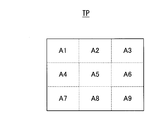
- FIG. FIG. 6 is a diagram showing segmented regions A1 to A9 on the contact sensor surface of the touch sensor panel TP in the contact sensor integrated EL panel 23.
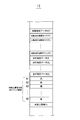
- 3 is a diagram showing an outline of the contents stored in a memory 11.
- FIG. It is a flowchart which shows an example of a light control toning subroutine. It is a flowchart which shows another example of the light control toning subroutine.
- the moving body lighting device is based on the contact signal sent from the touch sensor provided on the lighting panel, and the contact mode with respect to the touch sensor is intermittently contacted twice or more within a predetermined period. It is determined whether or not the predetermined intermittent contact is made, and when it is determined that the contact mode is the intermittent contact as described above, the lighting panel is turned on and off. Thereby, it becomes possible to prevent erroneous control of the lighting panel when the fingertip comes into contact with the surface of the lighting panel unintentionally.
- the contact mode is the predetermined first mode
- the lighting panel that has been contacted is turned on, and then the first mode of contact is made to the contact sensor of the lighting panel. Turns off the lighting panel.
- any one of the plurality of lighting panels is intermittently contacted as described above, and the contact mode is a predetermined second mode different from the first mode, all Turn off all the lighting panels at once. Thereby, when all the lighting panels in the lighting state are turned off, it is possible to turn off all the lighting panels all at once without performing an individual turning-off operation on each lighting panel.
- the intermittent contact is a third mode different from the first mode and the second mode, each of the lighting panels designated in advance to be the target of simultaneous lighting is turned on all at once.
- the intermittent contact is a predetermined fourth aspect different from the first aspect, the second aspect, and the third aspect, the light emission color or light emission luminance of the lighting panel is changed.
- FIG. 1 is a block diagram showing a configuration of a moving body illumination device according to the present invention.
- each of the lighting panels 2 1 to 2 n (n is an integer greater than or equal to 2) is, for example, as shown in a broken line in FIG. As shown by the surface of each tension and the broken line in FIG.
- the lighting panels 2 1 to 2 n are connected to the controller 1 via the control bus BUS. Furthermore, the controller 1, the memory 11 via the control bus BUS, the operation unit 12, a timer 13 1 ⁇ 13 n corresponding to the illumination panel 2 1 ⁇ 2 n, respectively, and the illuminance sensor 14 is connected.
- Each of the lighting panels 2 1 to 2 n has the same internal configuration.
- the lighting on / off switch 21 of each lighting panel 2 is turned on when a lighting command signal is supplied from the controller 1 via the control bus BUS, and supplies a power supply voltage VL to an EL (Electroluminescence) panel driver 22.
- the turn-off command signal is supplied from the controller 1 via the control bus BUS
- the turn-on / off switch 21 is turned off and stops supplying the power supply voltage VL to the EL panel driver 22.
- the lighting / extinguishing switch switching command signal is supplied from the controller 1 via the control bus BUS, the lighting / extinguishing switch 21 reverses the on / off state until just before that.
- the on / off switch 21 is switched to the off state, and the supply of the power supply voltage VL to the EL panel driver 22 is stopped.
- the on / off switch switching command signal is supplied in the off state, the on / off switch 21 is switched on and supplies the power supply voltage VL to the EL panel driver 22.
- the EL panel driver 22 performs various operations based on the power supply voltage VL according to various illumination control signals (described later) supplied from the controller 1 via the control bus BUS only while the power supply voltage VL is supplied from the lighting / extinguishing switch 21.
- a light emission driving voltage is generated and supplied to the contact sensor integrated EL panel 23.
- FIG. 3 is a perspective view showing a schematic structure of the contact sensor integrated EL panel 23.
- the contact sensor integrated EL panel 23 is configured by bonding a transparent touch sensor panel TP to the light emitting surface side of the organic EL light emitting panel ELP.
- the organic EL light-emitting panel ELP as a planar EL light-emitting element is lit with light emission luminance and light emission color corresponding to the light emission drive voltage only while the light emission drive voltage is supplied from the EL panel driver 22, and the light is emitted. Release to the outside through the touch sensor panel TP. The organic EL light-emitting panel ELP is turned off when this light emission driving voltage is not supplied.
- the touch sensor panel TP has a contact sensor surface divided into a plurality of regions A1 to A9.
- the touch sensor panel TP is in contact with the position where the contact is made, that is, any region A among the regions A1 to A9 for a period during which the contact continues.
- a contact detection signal TC indicating the contact position information indicating whether or not it has been made and a lighting panel identification number is generated and supplied to the controller 1 via the control bus BUS.
- the illumination panel identification number is a unique number assigned individually to each of the illumination panels 2 1 to 2 n .
- each of the illumination panels 2 1 to 2 n is turned on in response to the lighting command signal supplied from the controller 1 and is turned off in response to the turn-off command signal. Further, when a lighting / extinguishing switch switching command signal is supplied from the controller 1, the lighting / extinguishing state until just before that is reversed. Further, each of the lighting panels 2 1 to 2 n generates a contact detection signal TC every time contact is made with the touch sensor panel TP, and sends this to the controller 1.
- the controller 1 controls lighting, extinction, luminance, and emission color of each of the lighting panels 2 1 to 2 n by executing the following lighting control.
- FIG. 5 is a flowchart showing the main flow of such illumination control.
- the controller 1 executes a lighting dimming toning subroutine for controlling lighting, extinguishing, dimming, and toning for the lighting panels 2 1 to 2 n (step S1).
- the controller 1 executes an illuminance restriction subroutine for restricting illuminance on the illumination panels 2 1 to 2 n (step S2).
- the controller 1 executes an illumination lock mode subroutine for locking the current state of the illumination panels 2 1 to 2 n (step S3).
- step S3 the controller 1 returns to step S1 and repeatedly executes the control of steps S1 to S3.
- FIG. 6 is a flowchart showing the lighting dimming toning subroutine executed in step S1.
- step S11 the controller 1 determines whether or not the contact detection signal TC is supplied from any one of the lighting panels 2 1 to 2 n (step S11).
- step S11 when it is determined that the contact detection signal TC is supplied, the controller 1 performs the following contact mode determination (step S12). That is, by this contact mode determination, the controller 1 counts the number of contact detection signals TC that are intermittently supplied within a predetermined period, and when the number is 2 times, [double-click], 3 times If it is, [triple click], if it is four times, it is determined that [quadro click] operation has been performed. Then, contact mode data TDT indicating the determination result is stored in the memory 11 as shown in FIG.
- the vehicle occupant makes the fingertip contact with the touch sensor panel TP of the illumination panel 2 intermittently only twice within a predetermined period [double click], and intermittently only three times. It is determined in which contact mode the [triple click] that is contacted with [4] and [quadroclick] that is intermittently contacted only four times.
- the controller 1 determines whether or not the contact mode data TDT stored in the memory 11 indicates [double click] (step S13). If it is determined in step S13 that the contact mode data TDT indicates [double click], the controller 1 uses the automatic turn-off flags F 1 to F n stored in the memory 11 as shown in FIG. above-mentioned contact detection signal TC sends a lighting panel 2 (hereinafter, the lighting panel 2 K hereinafter) was carried out as to whether or not a logic level 1 indicating that the auto off flag F K corresponding is in auto oFF Is determined (step S14).
- the lighting panel 2 K hereinafter
- step S14 the automatic off flag F K is determined to be a logic level zero
- the controller 1 sends the On Off switch switching command signal to the lighting panel 2 K (step S15).
- on off switch 21 of the lighting panel 2 K inverts the ON-OFF state until immediately before. That is, when the on / off switch switching command signal is supplied in the on state, the on / off switch 21 is switched to the off state, and the supply of the power supply voltage VL to the EL panel driver 22 is stopped. Thus, a lighting panel 2 K transitions to off state.
- the on / off switch switching command signal is supplied when the on / off switch 21 is in the off state
- the on / off switch 21 is switched on and supplies the power supply voltage VL to the EL panel driver 22.
- a lighting panel 2 K transitions to the lighting state.
- step S15 the lighting panel 2 K, the transition to the lighting state when there Off state until immediately before, if there are lit transitions to off state.
- step S16 determines whether or not the lighting panel 2K is in a lighting state.
- step S16 if the lighting panel 2 K is determined to be lit, the controller 1 will be described later proceeds to execution of Shiki dimming toning subroutine (step S17).
- step S17 the controller 1, of the timer 13 1 ⁇ 13 n respectively, to start time counting of the timer 13 K corresponding to the illumination panel 2 K (step S18).
- step S18 or when the contact detection signal TC is determined to not supplied at step S11, then the controller 1, or the counted time of the timer 13 K exceeds a predetermined auto OFF period TQ It is determined whether or not (step S19).
- step S19 if the time measured by the timer 13 K is determined not to exceed the auto-off period TQ, the controller 1 may then either counted time of the timer 13 K exceeds the auto off start time T ST It is determined whether or not (step S20).
- step S20 if the time measured by the timer 13 K is determined to have exceeded the auto off start time T ST, the controller 1, the emission luminance gradually lighting panel 2 K over a period (TQ-T ST) is fed into an illumination panel 2 K auto off command signal to cause lead to off state is lowered (step S21).
- EL panel driver 22 of the lighting panel 2 K is the light emission drive voltage leading to 0 volts gradually the voltage value over a predetermined period is reduced, the organic EL light emitting panel ELP Supply.
- the controller 1 stores the auto off flag F K logic level 1 indicating that the illumination panel 2 K is being automatically extinguished the memory 11 (step S22).
- step S14 If it is determined in step S14 that the automatic turn-off flag FK is at logic level 1, that is, if [double-click] is performed on the lighting panel 2 that is turned off automatically, the controller 1 An automatic turn-off stop command signal is sent to each of the lighting panels 2 in the lighting state among the lighting panels 2 1 to 2 n (step S23).
- step S23 the EL panel driver 22 of the lighting panel 2 in the lit state stops the operation of reducing the light emission drive voltage to be supplied to the organic EL light emitting panel ELP.
- step S24 After execution of step S23, the controller 1 sends a maximum luminance emission command signal to each of the lighting panels 2 in the lighting state (step S24).
- step S24 the EL panel driver 22 of the lighting panel 2 in the lit state fixes and supplies the maximum light emission driving voltage for causing the organic EL light emitting panel ELP to emit light with the maximum luminance.
- step S24 the controller 1 resets the time measured by the timers 13 1 to 13 n of the lighting panel 2 in the lighting state to the initial value and restarts the time counting operation (step S25).
- the controller 1 causes the time measured by the timer 13 K terminate the counting operation returns to the initial value (step S26).
- the controller 1 stores the auto off flag F K logic level 0 indicating that the lighting panel 2 K is not in auto off in the memory 11 (step S27).
- step S13 determines whether or not the contact mode data TDT indicates [triple click] (step S28). ). If it is determined in step S28 that the contact mode data TDT indicates [triple click], the controller 1 sends out a turn-off command signal to all the lighting panels 2 1 to 2 n (step S29). By executing step S29, all the lighting panels 2 1 to 2 n are turned off, and the supply of the power supply voltage VL to the EL panel driver 22 is stopped. Therefore, all the lighting panels 2 1 to 2 n are turned off.
- the controller 1 returns the time measured by all the timers 13 1 to 13 K to the initial values, and ends all the time measuring operations (step S30).
- the controller 1 stores in the memory 11 the automatic turn-off flags F 1 to F K of logic level 0 indicating that all the lighting panels 2 are not turned off automatically (step S31).
- step S28 determines whether or not the contact mode data TDT does not indicate [triple click] (step S32). ). If it is determined in step S32 that the contact mode data TDT indicates [quadro click], the controller 1 performs illumination within the lighting designation data LG 1 to LG n stored in the memory 11 as shown in FIG. It is determined whether or not the lighting designation data LG K corresponding to the panel 2 K indicates that lighting is designated (step S33). Each of the lighting designation data LG 1 to LG n designates the lighting panel 2 to be turned on at the same time in accordance with [Quadro Click] in each of the lighting panels 2 1 to 2 n. Can be set arbitrarily.
- step S33 if the lighting specified data LG K is determined to indicate that the specified lighting, controller 1 sends a lighting command signal to the lighting panel 2 K (step S34).
- step S34 on off switch 21 of the lighting panel 2 K is turned on, supplies a power supply voltage VL to the EL panel driver 22. Thereby, the illumination panel 2K lights up.
- step S34 the controller 1 proceeds to execution of step S18.
- step S32 If it is determined in step S32 that the contact mode data TDT does not indicate [quadro click], that is, it is determined that none of [double click], [triple click], or [quadro click] has been performed. If so, the controller 1 proceeds to execution of step S19. Further, in step S33, if the lighting specified data LG K is determined to indicate that it has not been specified lit, the controller 1 proceeds to the execution of step S19.
- the first contact sensor surface of the vehicle occupant illumination panel 2 1 ⁇ 2 n [triple-click] Then, all of the lighting panel 2 1 ⁇ 2 n on the on state is turned off (S28, S29 ). Therefore, when all the lighting panels 2 in the lighting state are turned off, the lighting installed in the vicinity of the vehicle occupant without individually [double-clicking] each lighting panel 2 in the lighting state. It is possible to turn off all the lighting panels 2 all at once by simply [triple clicking] one panel 2.
- each of the lighting panel 2 that had previously specified within the lighting panel 2 1 ⁇ 2 n are turned on collectively (S32 to S34). Accordingly, for example, when searching for a fallen object that has fallen on the floor in the room, the user can simply click [quadro click] the contact sensor surface of the lighting panel 2 installed on the dashboard. As shown, the two lighting panels 2 respectively installed on the driver side door and the passenger side door can be turned on simultaneously.
- each of the lighting panels 2 1 to 2 n is automatically turned off when a preset automatic turn-off period TQ elapses after being turned on (S18 to S21). This makes it possible to prevent forgetting to turn off.
- the lighting panel 2 is turned off, the light emission luminance is gradually reduced instead of turning off the light instantaneously (S21).
- the touch sensor surface of the lighting panel 2 is [double-clicked] during the brightness reduction period (while the automatic turn-off flag F is at the logic level 1), the normal lighting state, that is, the highest brightness is obtained again. (S14, S23 to S25). Therefore, since the brightness is gradually reduced, it can be seen that the vehicle occupant is automatically turned off.
- the automatic extinguishing period TQ can be set to a large value (for example, infinite) so that the automatic extinguishing function is substantially disabled.
- the light emission luminance adjustment and the light emission color adjustment are performed by the contact operation on the contact sensor surface of the lighting panel 2 having the light adjustment function and the color adjustment function by the light adjustment color adjustment processing in step S17 illustrated in FIG. .
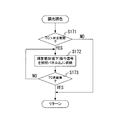
- FIG. 8 is a flowchart showing an example of a dimming toning subroutine that performs such dimming and toning processing.
- the controller 1 determines whether or not the contact detection signal TC corresponding to the second contact with the contact sensor surface in [double click] is continuously supplied over a predetermined period. (Step S171).
- the contact detection signal TC is supplied continuously for more than a predetermined time period, i.e., when the contact sensor surface of the lighting panel 2 K is determined to have been pressed long, the controller 1, the light emission luminance and supplies to the lighting panel 2 K brightness increase command signal or luminance reduction instruction signal to be higher or lower by a predetermined luminance component (step S172).
- step S172 the controller 1 determines whether or not the contact detection signal TC is no longer supplied (step S173). In step S173, when the contact detection signal TC is determined to continue to be supplied, that is, when the long press to the contact sensor surface of the lighting panel 2 K is determined to be continued, the controller 1, the step S172 The operation as described above is repeatedly executed.
- the increase in luminance and the decrease in luminance in step S172 are performed, for example, by repeating the following processes 1 to 4.
- Process 1 The brightness is gradually increased until the maximum brightness is reached.
- Process 2 When the maximum luminance is reached, the luminance change direction is set to minus (decrease in luminance).
- Process 3 The luminance is gradually decreased until the minimum luminance is reached.
- Process 4 When the minimum luminance is reached, the luminance change is set to plus (luminance increase).
- step S173 when it is determined in step S173 that the contact detection signal TC is no longer supplied, or in step S171, it is determined that the contact detection signal TC is not continuously supplied over a predetermined period. Then, the controller 1 exits from the dimming toning subroutine and returns to the execution of step S18 shown in FIG.
- the illumination panel The 2K emission luminance gradually increases or decreases.
- the lighting panel 2 K emits light while maintaining the light emission luminance when the fingertip is separated from the contact sensor surface.
- N is a natural number of 2 or more
- the light emission luminance may be changed as described above. At this time, after the light emission luminance reaches the maximum luminance, when the contact operation to the contact sensor surface for N times is performed again, the lighting panel 2 is turned off.
- step S172 the controller 1 sets the emission color to “white”, “red”, “orange”, “yellow”, “green”, “blue”, “indigo”, “purple”, “white”. supplying a light emission color change signal to be changed in step opponent by cyclically as in the lighting panel 2 K.
- the emission color of the lighting panel 2 K is "white”, “red”, “orange”, “yellow” , “Green”, “Blue”, “Indigo”, “Purple”.
- the lighting panel 2 K continues to emit light with a state where long press against the contact sensor surface was maintained emission color of the time of completion. Thereby, it becomes possible to select a favorite luminescent color by an easy operation.
- N is a natural number of 2 or more
- the light emission color may be changed as described above.
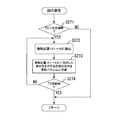
- a light adjustment toning subroutine as shown in FIG. 9 may be executed instead of the light adjustment toning subroutine shown in FIG.
- the controller 1 determines whether or not the contact detection signal TC corresponding to the second contact with the contact sensor surface in [double click] is continuously supplied over a predetermined period. (Step S271). In step S271, when it is determined that the contact detection signal TC is continuously supplied for a predetermined period or longer, that is, it is determined that a long press has been performed, the controller 1 determines the contact position based on the contact detection signal TC. Is one of the areas A1 to A9 on the contact sensor surface as shown in FIG. 4 (step S272).
- the controller 1 makes contact positions (areas A1 to A9) indicated by the contact detection signal TC according to the contact position light emission color correspondence map stored in the contact position light emission color correspondence map area of the memory 11 as shown in FIG. It obtains light emission color corresponding to), and supplies the emission color designation signal for designating the emission color to the lighting panel 2 K (step S273).
- EL panel driver 22 of the lighting panel 2 K supplies the light emission drive voltage to be lit in the specified emission color in the light-emitting color designation signal to the organic EL light emitting panel ELP. Accordingly, at this time, the illumination panel 2K emits light in the light emission color designated by the above-described light emission color designation signal.
- each emission color is shown in each of the areas A1 to A9 on the contact sensor surface as shown in FIG. 4 in the form of a chromaticity diagram defined by CIE (Commission Internationale de l'Eclairage) It is associated.
- CIE Commission Internationale de l'Eclairage
- step S274 If it is determined in step S274 that the contact detection signal TC is no longer supplied, or if it is determined in step S271 that the contact detection signal TC is not continuously supplied over a predetermined period, the controller 1 Leaves the dimming toning subroutine and returns to the execution of step S18 shown in FIG.
- the lighting panel 2 K continues light emission while maintaining an emission color corresponding to the contact position when the fingertip is separated from the contact sensor surface.
- the contact mode of the illumination panel with respect to the touch sensor is a predetermined intermittent contact in which the contact is intermittently performed twice or more within a predetermined period. It is determined whether or not (2 to 4 clicks), and the lighting panel is turned on, turned off, dimmed, and toned only when it is determined that the contact is intermittent. Thereby, even if a passenger's finger contacts the surface of the lighting panel 2 by mistake, the contact is not accepted. Therefore, only the operation intended by the vehicle occupant can be accepted, and the lighting panel 2 can be turned on, turned off, dimmed, and toned.
- step S2 After executing the lighting dimming toning control, the controller 1 executes an illuminance restriction subroutine (step S2). At this time, an arbitrary upper limit of illuminance is input in advance by the operation unit 12. Thereby, the illuminance upper limit value YL indicating the input illuminance upper limit value is stored in the memory 11 as shown in FIG.
- FIG. 10 is a flowchart showing an example of the illuminance restriction subroutine.
- the controller 1 determines whether or not the room illuminance detected by the illuminance sensor 14 is larger than the above-described illuminance upper limit value YL (step S371). If it is determined in step S371 that the room illuminance is greater than the illuminance upper limit value YL, the controller 1 determines that the vehicle is on the basis of a vehicle parking signal or a side brake signal supplied from a vehicle travel control system (not shown). It is determined whether the vehicle is traveling (step S372). If it is determined in step S372 that the vehicle is running, the controller 1 sets the time counted by the timer 13 corresponding to the illumination panel 2 among the currently illuminated lighting panels 2n.
- step S373 A turn-off command signal is sent to the large lighting panel 2 (step S373).
- step S373 By executing step S373, one illumination panel 2 is turned off, so that the room illuminance decreases.
- the controller 1 returns to the execution of step S371 described above and repeatedly executes the operation as described above. During this time, if it is determined in step S371 that the room illuminance is smaller than the illuminance upper limit YL, or if it is determined in step S372 that the vehicle is not running, that is, the vehicle is stopped, the controller 1 Exiting the restriction subroutine, the process proceeds to execution of step S3 shown in FIG.
- step S373 the lighting start time is turned off one by one in the order of the old lighting panel 2 until the room illuminance becomes smaller than the illuminance upper limit YL.
- step S373 the lighting panel 2 is turned off, but instead, the light emission luminance of each lighting panel 2 in the lit state may be lowered all at once by a predetermined luminance.
- the number of lighting panels 2 that are automatically turned on is automatically set so that the indoor illuminance during vehicle traveling does not become higher than the predetermined illuminance upper limit value.
- Illuminance restriction processing is performed to reduce or reduce the luminance of all the lighting panels 2 that are lit. Note that if the illuminance data when each of the lighting panels 2 1 to 2 n is turned on is recorded in the memory by measuring in advance, the illuminance by the plurality of lighting panels that are turned on can be obtained by calculation.
- the illuminance sensor 14 may not be provided.
- the controller 1 After execution of the illuminance restriction, the controller 1 locks the lighting / extinguishing state of each lighting panel 2 at the present time, that is, the lighting lock mode subroutine for invalidating the contact operation of each lighting panel 2 to the touch sensor panel TP. Is executed (step S3).
- FIG. 11 is a flowchart showing an example of such an illumination lock mode subroutine.
- the controller 1 first determines whether or not the contact detection signal TC is supplied from any one of the lighting panels 2 1 to 2 n (step S471). When it is determined in step S471 that the contact detection signal TC is supplied, the controller 1 performs the following contact mode determination (step S472). By such contact mode determination, the controller 1 counts the number of contact detection signals TC supplied within a predetermined period. When the number is 5 times, [5 clicks], when the number is 6, Determines that [6 click] has been made, and stores the contact mode data TDT indicating the determination result in the memory 11 as shown in FIG.
- the vehicle occupant touches the touch sensor panel TP of any one of the lighting panels 2 1 to 2 n with the fingertips only five times within a predetermined period [ 5 clicks] or [6 clicks] in which contact is made intermittently 6 times is determined in which contact mode is used.
- the vehicle occupant turns on the illumination lock mode for locking the lighting / extinguishing state of each lighting panel 2, one of the touch panels TP of the lighting panels 2 1 to 2 n is touched. [5 click] operation as described above.
- the vehicle occupant performs the [6 click] operation as described above.
- the controller 1 determines whether or not the contact mode data TDT stored in the memory 11 indicates [5 clicks] (step S473).
- step S473 When it is determined in step S473 that the contact mode data TDT indicates [5 clicks], the controller 1 masks reception of the above [double click], [triple click], and [quadro click], that is, a lighting / extinguishing operation. The reception is masked for the operation of the contact mode that bears (step S474). By executing step S474, the controller 1 enters a state where it is determined that these operations have not been performed even if [double click], [triple click], or [quadro click] is performed by the vehicle occupant. .
- step S473 when it is determined in step S473 that the contact mode data TDT does not indicate [5 clicks], the controller 1 determines whether or not the contact mode data TDT indicates [6 clicks] (step S475). . If it is determined in step S475 that the contact mode data TDT indicates [6 clicks], the controller 1 cancels the reception mask state of the above [double click], [triple click], and [quadro click] ( Step S476). After execution of step S476 or S474, or when it is determined in step S475 that the contact mode data TDT does not indicate [6 clicks], or when it is determined in S471 that the contact detection signal TC is not supplied. Then, the controller 1 exits from the illumination lock mode subroutine and proceeds to execution of step S1 shown in FIG.
- the vehicle occupant can select [1] the touch sensor panel TP of the illumination panel 2 of each of the illumination panels 2 1 to 2 n [ By clicking [5 clicks], the lighting lock mode is entered in which subsequent [double click], [triple click] and [quadro click] are not accepted.
- the [double-click], [triple-click] and [quadro-click] operations for turning on / off the lighting panel 2 become invalid, so that the unintended contact with the lighting panel 2 or mischief of the child, etc. Can be prevented.
- the lighting panel 2 to be locked is set in advance by the operation unit 12, and in the lighting lock mode, only the lighting panel 2 set as the locking target is [double-click], [triple] You may make it the reception prohibition state of [click] and [quadro click].
- the lighting panel 2 is turned on / off by the touch sensor panel TP, but a push switch or a toggle switch may be used instead of the touch sensor panel TP. This makes it possible to turn on / off the illumination panel 2 without performing a delicate operation such as [double click].
- the inversion of a lighting / light-off state is a 1st contact mode [double click]
- All the lighting panel simultaneous turn-off is a 2nd contact mode [triple click]
- the lighting panel designated beforehand The simultaneous lighting is executed by [quadro click] that is the third contact mode, and the dimming and toning are performed by [long press] that is the fourth contact mode.
- the first to third contact modes are not limited to [Double click], [Triple click], and [Quadro click] as described above.
- the first contact mode is an operation in which the fingertip is intermittently contacted N times (N is a natural number of 2 or more) within a predetermined period
- the second contact mode is an operation in which the fingertip is intermittently contacted M times (M ⁇ N).
- N and L times L ⁇ M, L ⁇ N) may be the third contact mode.
- an operation in which the fingertip contacts intermittently S times (S ⁇ M, S ⁇ N, S ⁇ L) within a predetermined period may be set as the fourth contact mode.
- each of the first to fourth contact modes has different contact patterns by combining a [click] operation in which the fingertip is intermittently contacted a plurality of times within a predetermined period and a [long press] operation. It may be adopted.
- a [click] operation in which the fingertip is intermittently contacted a plurality of times within a predetermined period
- a [long press] operation it may be adopted.
- the specific contact pattern in addition to a case in which each operation is sequentially performed in the order of [click] operation and [long press] operation (or vice versa), [click] operation, [long press] operation, [ Three or more operations may be successively performed in the order of “click” operation, or “long press” operation, “click” operation, and “long press” operation.
- Controller 2 1 to 2 n Lighting panel 21 ON / OFF switch ELP Organic EL light emitting panel TP Touch sensor panel
Landscapes
- Engineering & Computer Science (AREA)
- Mechanical Engineering (AREA)
- Arrangements Of Lighting Devices For Vehicle Interiors, Mounting And Supporting Thereof, Circuits Therefore (AREA)
- Circuit Arrangement For Electric Light Sources In General (AREA)
Abstract
L'invention concerne un appareil d'éclairage de véhicule permettant d'évaluer, en fonction d'un signal de contact envoyé en provenance du capteur tactile, si oui ou non un mode de contact pour un capteur tactile, qui est disposé sur un panneau d'éclairage, est un contact intermittent prescrit dans lequel le contact est effectué de manière intermittente deux ou plusieurs fois au cours d'une période prédéterminée, et si le mode de contact est évalué comme étant un contact intermittent tel qu'il est décrit ci-dessus, l'appareil d'éclairage de véhicule effectue la commande en éteignant et en allumant le panneau d'éclairage.
Priority Applications (2)
| Application Number | Priority Date | Filing Date | Title |
|---|---|---|---|
| PCT/JP2011/058809 WO2012137334A1 (fr) | 2011-04-07 | 2011-04-07 | Appareil d'éclairage de véhicule |
| JP2012503561A JP5044058B1 (ja) | 2011-04-07 | 2011-04-07 | 移動体用照明装置 |
Applications Claiming Priority (1)
| Application Number | Priority Date | Filing Date | Title |
|---|---|---|---|
| PCT/JP2011/058809 WO2012137334A1 (fr) | 2011-04-07 | 2011-04-07 | Appareil d'éclairage de véhicule |
Publications (1)
| Publication Number | Publication Date |
|---|---|
| WO2012137334A1 true WO2012137334A1 (fr) | 2012-10-11 |
Family
ID=46968769
Family Applications (1)
| Application Number | Title | Priority Date | Filing Date |
|---|---|---|---|
| PCT/JP2011/058809 Ceased WO2012137334A1 (fr) | 2011-04-07 | 2011-04-07 | Appareil d'éclairage de véhicule |
Country Status (2)
| Country | Link |
|---|---|
| JP (1) | JP5044058B1 (fr) |
| WO (1) | WO2012137334A1 (fr) |
Cited By (4)
| Publication number | Priority date | Publication date | Assignee | Title |
|---|---|---|---|---|
| JP2014120207A (ja) * | 2012-12-13 | 2014-06-30 | Panasonic Corp | 壁取付用スイッチ |
| JP2018193062A (ja) * | 2018-08-21 | 2018-12-06 | パイオニア株式会社 | 車載用照明装置 |
| JP2019147512A (ja) * | 2018-02-28 | 2019-09-05 | トヨタ車体株式会社 | 車両用ムーンルーフ装置 |
| US11397518B2 (en) | 2014-03-28 | 2022-07-26 | Pioneer Corporation | Vehicle lighting device |
Citations (5)
| Publication number | Priority date | Publication date | Assignee | Title |
|---|---|---|---|---|
| JPH0368238U (fr) * | 1989-11-07 | 1991-07-04 | ||
| JP2009129171A (ja) * | 2007-11-22 | 2009-06-11 | Denso It Laboratory Inc | 移動体に搭載される情報処理装置 |
| JP2010021118A (ja) * | 2008-07-14 | 2010-01-28 | Clarion Co Ltd | スイッチ構造 |
| JP2010143455A (ja) * | 2008-12-19 | 2010-07-01 | Kojima Press Industry Co Ltd | 車室内照明装置 |
| JP2011046211A (ja) * | 2009-08-25 | 2011-03-10 | Kojima Press Industry Co Ltd | 車室内照明装置 |
Family Cites Families (2)
| Publication number | Priority date | Publication date | Assignee | Title |
|---|---|---|---|---|
| JP2009020585A (ja) * | 2007-07-10 | 2009-01-29 | Panasonic Electric Works Co Ltd | プログラマブル表示器 |
| JP5481864B2 (ja) * | 2008-10-03 | 2014-04-23 | ヤマハ株式会社 | 電子鍵盤楽器 |
-
2011
- 2011-04-07 JP JP2012503561A patent/JP5044058B1/ja not_active Expired - Fee Related
- 2011-04-07 WO PCT/JP2011/058809 patent/WO2012137334A1/fr not_active Ceased
Patent Citations (5)
| Publication number | Priority date | Publication date | Assignee | Title |
|---|---|---|---|---|
| JPH0368238U (fr) * | 1989-11-07 | 1991-07-04 | ||
| JP2009129171A (ja) * | 2007-11-22 | 2009-06-11 | Denso It Laboratory Inc | 移動体に搭載される情報処理装置 |
| JP2010021118A (ja) * | 2008-07-14 | 2010-01-28 | Clarion Co Ltd | スイッチ構造 |
| JP2010143455A (ja) * | 2008-12-19 | 2010-07-01 | Kojima Press Industry Co Ltd | 車室内照明装置 |
| JP2011046211A (ja) * | 2009-08-25 | 2011-03-10 | Kojima Press Industry Co Ltd | 車室内照明装置 |
Cited By (7)
| Publication number | Priority date | Publication date | Assignee | Title |
|---|---|---|---|---|
| JP2014120207A (ja) * | 2012-12-13 | 2014-06-30 | Panasonic Corp | 壁取付用スイッチ |
| US11397518B2 (en) | 2014-03-28 | 2022-07-26 | Pioneer Corporation | Vehicle lighting device |
| US11644965B2 (en) | 2014-03-28 | 2023-05-09 | Pioneer Corporation | Vehicle lighting device |
| US11899920B2 (en) | 2014-03-28 | 2024-02-13 | Pioneer Corporation | Vehicle lighting device |
| US12340081B2 (en) | 2014-03-28 | 2025-06-24 | Pioneer Corporation | Vehicle lighting device |
| JP2019147512A (ja) * | 2018-02-28 | 2019-09-05 | トヨタ車体株式会社 | 車両用ムーンルーフ装置 |
| JP2018193062A (ja) * | 2018-08-21 | 2018-12-06 | パイオニア株式会社 | 車載用照明装置 |
Also Published As
| Publication number | Publication date |
|---|---|
| JP5044058B1 (ja) | 2012-10-10 |
| JPWO2012137334A1 (ja) | 2014-07-28 |
Similar Documents
| Publication | Publication Date | Title |
|---|---|---|
| US11850998B2 (en) | Vehicular exterior rearview mirror assembly with ground illumination and icon projection module | |
| JP4013562B2 (ja) | 照明装置 | |
| US6773129B2 (en) | Vehicle interior lighting systems using electroluminescent panels | |
| CN109476254B (zh) | 用于设置照明灯的光分布的装置与方法 | |
| RU2674741C2 (ru) | Лампа для чтения транспортного средства с настройкой света низкой интенсивности и способ управления лампой | |
| JP5044058B1 (ja) | 移動体用照明装置 | |
| WO2012056799A1 (fr) | Dispositif d'éclairage pour voiture automobile | |
| US20150298607A1 (en) | Vehicle lighting apparatus with multizone proximity control | |
| JP4222192B2 (ja) | 照明装置 | |
| KR20130039200A (ko) | 자동차용 유기 el 라이트 장치 | |
| US9434301B2 (en) | Hidden photoluminescent vehicle user interface | |
| JP2015209105A (ja) | 車両用発光装置 | |
| JP2012221947A (ja) | 移動体用照明装置 | |
| JP7137581B2 (ja) | 移動体用表示装置 | |
| JP6220356B2 (ja) | 車室内照明装置 | |
| JP2011110977A (ja) | 車両用室内灯 | |
| RU2679975C2 (ru) | Скрытый фотолюминесцентный пользовательский интерфейс транспортного средства | |
| CN113799685B (zh) | Adb大灯亮度和光区自适应调节方法及装置 | |
| JP2012218728A (ja) | 移動体用照明装置 | |
| JP2017124769A (ja) | 照明装置および照明方法 | |
| CN115715260B (zh) | 用于运行用于机动车的照明装置的方法,照明装置以及机动车 | |
| JP4652257B2 (ja) | カーテシランプ | |
| WO2023176265A1 (fr) | Accessoire de lampe de véhicule | |
| JP6006167B2 (ja) | 照明装置 | |
| KR101508998B1 (ko) | 차량용 공조시스템의 콘트롤러 심볼 조명장치 |
Legal Events
| Date | Code | Title | Description |
|---|---|---|---|
| ENP | Entry into the national phase |
Ref document number: 2012503561 Country of ref document: JP Kind code of ref document: A |
|
| 121 | Ep: the epo has been informed by wipo that ep was designated in this application |
Ref document number: 11863075 Country of ref document: EP Kind code of ref document: A1 |
|
| NENP | Non-entry into the national phase |
Ref country code: DE |
|
| 122 | Ep: pct application non-entry in european phase |
Ref document number: 11863075 Country of ref document: EP Kind code of ref document: A1 |