WO2012137449A1 - Souris anémique exprimant gfp invalidée par epo - Google Patents
Souris anémique exprimant gfp invalidée par epo Download PDFInfo
- Publication number
- WO2012137449A1 WO2012137449A1 PCT/JP2012/002207 JP2012002207W WO2012137449A1 WO 2012137449 A1 WO2012137449 A1 WO 2012137449A1 JP 2012002207 W JP2012002207 W JP 2012002207W WO 2012137449 A1 WO2012137449 A1 WO 2012137449A1
- Authority
- WO
- WIPO (PCT)
- Prior art keywords
- epo
- gfp
- human mammal
- gene
- transgenic non
- Prior art date
- Legal status (The legal status is an assumption and is not a legal conclusion. Google has not performed a legal analysis and makes no representation as to the accuracy of the status listed.)
- Ceased
Links
Images







Classifications
-
- A—HUMAN NECESSITIES
- A61—MEDICAL OR VETERINARY SCIENCE; HYGIENE
- A61K—PREPARATIONS FOR MEDICAL, DENTAL OR TOILETRY PURPOSES
- A61K49/00—Preparations for testing in vivo
- A61K49/0004—Screening or testing of compounds for diagnosis of disorders, assessment of conditions, e.g. renal clearance, gastric emptying, testing for diabetes, allergy, rheuma, pancreas functions
- A61K49/0008—Screening agents using (non-human) animal models or transgenic animal models or chimeric hosts, e.g. Alzheimer disease animal model, transgenic model for heart failure
-
- A—HUMAN NECESSITIES
- A01—AGRICULTURE; FORESTRY; ANIMAL HUSBANDRY; HUNTING; TRAPPING; FISHING
- A01K—ANIMAL HUSBANDRY; AVICULTURE; APICULTURE; PISCICULTURE; FISHING; REARING OR BREEDING ANIMALS, NOT OTHERWISE PROVIDED FOR; NEW BREEDS OF ANIMALS
- A01K67/00—Rearing or breeding animals, not otherwise provided for; New or modified breeds of animals
- A01K67/027—New or modified breeds of vertebrates
- A01K67/0275—Genetically modified vertebrates, e.g. transgenic
- A01K67/0276—Knock-out vertebrates
-
- A—HUMAN NECESSITIES
- A01—AGRICULTURE; FORESTRY; ANIMAL HUSBANDRY; HUNTING; TRAPPING; FISHING
- A01K—ANIMAL HUSBANDRY; AVICULTURE; APICULTURE; PISCICULTURE; FISHING; REARING OR BREEDING ANIMALS, NOT OTHERWISE PROVIDED FOR; NEW BREEDS OF ANIMALS
- A01K67/00—Rearing or breeding animals, not otherwise provided for; New or modified breeds of animals
- A01K67/027—New or modified breeds of vertebrates
- A01K67/0275—Genetically modified vertebrates, e.g. transgenic
- A01K67/0278—Knock-in vertebrates, e.g. humanised vertebrates
-
- G—PHYSICS
- G01—MEASURING; TESTING
- G01N—INVESTIGATING OR ANALYSING MATERIALS BY DETERMINING THEIR CHEMICAL OR PHYSICAL PROPERTIES
- G01N33/00—Investigating or analysing materials by specific methods not covered by groups G01N1/00 - G01N31/00
- G01N33/48—Biological material, e.g. blood, urine; Haemocytometers
- G01N33/50—Chemical analysis of biological material, e.g. blood, urine; Testing involving biospecific ligand binding methods; Immunological testing
- G01N33/5005—Chemical analysis of biological material, e.g. blood, urine; Testing involving biospecific ligand binding methods; Immunological testing involving human or animal cells
- G01N33/5008—Chemical analysis of biological material, e.g. blood, urine; Testing involving biospecific ligand binding methods; Immunological testing involving human or animal cells for testing or evaluating the effect of chemical or biological compounds, e.g. drugs, cosmetics
- G01N33/502—Chemical analysis of biological material, e.g. blood, urine; Testing involving biospecific ligand binding methods; Immunological testing involving human or animal cells for testing or evaluating the effect of chemical or biological compounds, e.g. drugs, cosmetics for testing non-proliferative effects
-
- A—HUMAN NECESSITIES
- A01—AGRICULTURE; FORESTRY; ANIMAL HUSBANDRY; HUNTING; TRAPPING; FISHING
- A01K—ANIMAL HUSBANDRY; AVICULTURE; APICULTURE; PISCICULTURE; FISHING; REARING OR BREEDING ANIMALS, NOT OTHERWISE PROVIDED FOR; NEW BREEDS OF ANIMALS
- A01K2217/00—Genetically modified animals
- A01K2217/07—Animals genetically altered by homologous recombination
- A01K2217/075—Animals genetically altered by homologous recombination inducing loss of function, i.e. knock out
-
- A—HUMAN NECESSITIES
- A01—AGRICULTURE; FORESTRY; ANIMAL HUSBANDRY; HUNTING; TRAPPING; FISHING
- A01K—ANIMAL HUSBANDRY; AVICULTURE; APICULTURE; PISCICULTURE; FISHING; REARING OR BREEDING ANIMALS, NOT OTHERWISE PROVIDED FOR; NEW BREEDS OF ANIMALS
- A01K2227/00—Animals characterised by species
- A01K2227/10—Mammal
- A01K2227/105—Murine
-
- A—HUMAN NECESSITIES
- A01—AGRICULTURE; FORESTRY; ANIMAL HUSBANDRY; HUNTING; TRAPPING; FISHING
- A01K—ANIMAL HUSBANDRY; AVICULTURE; APICULTURE; PISCICULTURE; FISHING; REARING OR BREEDING ANIMALS, NOT OTHERWISE PROVIDED FOR; NEW BREEDS OF ANIMALS
- A01K2267/00—Animals characterised by purpose
- A01K2267/01—Animal expressing industrially exogenous proteins
-
- A—HUMAN NECESSITIES
- A01—AGRICULTURE; FORESTRY; ANIMAL HUSBANDRY; HUNTING; TRAPPING; FISHING
- A01K—ANIMAL HUSBANDRY; AVICULTURE; APICULTURE; PISCICULTURE; FISHING; REARING OR BREEDING ANIMALS, NOT OTHERWISE PROVIDED FOR; NEW BREEDS OF ANIMALS
- A01K2267/00—Animals characterised by purpose
- A01K2267/03—Animal model, e.g. for test or diseases
- A01K2267/035—Animal model for multifactorial diseases
- A01K2267/0381—Animal model for diseases of the hematopoietic system
-
- G—PHYSICS
- G01—MEASURING; TESTING
- G01N—INVESTIGATING OR ANALYSING MATERIALS BY DETERMINING THEIR CHEMICAL OR PHYSICAL PROPERTIES
- G01N2333/00—Assays involving biological materials from specific organisms or of a specific nature
- G01N2333/435—Assays involving biological materials from specific organisms or of a specific nature from animals; from humans
- G01N2333/475—Assays involving growth factors
- G01N2333/505—Erythropoietin [EPO]
Definitions
- the present invention relates to a model animal characterized by spontaneously developing anemia. More specifically, the present invention relates to a transgenic non-human mammal characterized by spontaneously developing anemia associated with decreased production of erythropoietin (Epo) after birth.
- Epo erythropoietin
- Epo is a cytokine that promotes red blood cell production, and is also known as a therapeutic agent for renal anemia with a long track record of treatment.
- Epo is mainly produced in the mammalian liver (fetal stage) and kidney (postnatal). In chronic renal dysfunction, Epo production from the kidney is reduced to become anemia (renal anemia) (Non-patent Document 1). This anemia is improved by administration of Epo obtained by genetic recombination technology, and renal anemia. Patient prognosis and quality of life have improved dramatically.
- Epo in tissues exhibits a cytoprotective action against stress, and in part, clinical use aimed at the extrahematopoietic effect of Epo has also been started Yes.
- administration of Epo also stimulates cancer growth to reduce treatment results, and reports that it promotes thrombus formation and shortens survival time.
- New US guidelines include Epo and similar drugs. Stricter standards have been applied to the administration of However, regarding the action of these Epo, in addition to clinical statistical data, there is a lack of data such as animal experiments as a basis, and establishment of a useful experimental system has been desired.
- hypoxia-inducible transcription factor HIF hypoxia inducible factor has been identified from research on Epo gene expression control using a hepatocyte-derived cell line, and this factor is now used in a wide range of life, from energy metabolism to inflammation, development, and carcinogenesis. It is an important factor in activities. Epo is produced in the kidney by a small number of special cells, and it is expected that unknown factors that define tissue specificity and hypoxia reactivity are working there. There is a high possibility that it will lead to the elucidation of the disease state and the development of treatments.
- Epo-producing cells since the production of Epo is very low in a normal breeding environment, Epo-producing cells must be given unless an Epo production stimulus such as blood removal or phenylhydrazine administration or breeding in a hypoxic room is given. The situation in which the identification and analysis of the information could not be continued for a long time.
- Epo erythropoiesis associated with an increase in blood Epo concentration such as high altitude environment and anemia is called stress hematopoiesis, and in mice, the spleen is the place of hematopoiesis.
- Epo concentration is kept very low in steady hematopoiesis, and it is expected that different molecular mechanisms work in stress hematopoiesis and steady hematopoiesis, but the details are unknown. Furthermore, Epo production and Epo sensitivity are reduced in chronic anemia associated with inflammation and cancer, but the mechanism is unknown.
- Non-Patent Documents 2 to 4 methods for reducing Epo production by reducing renal function have been used to study renal anemia and to obtain experimental animals with low Epo production.
- this method most of the rat kidney is excised to induce a decrease in Epo production and anemia associated with a decrease in renal function.
- it requires skill in surgical procedures and is a time-consuming procedure. It took a lot of effort to obtain a large number of individuals.
- Epo gene knockout mice develop severe anemia in the embryonic period and die, they could not be used for such purpose analysis (Non-patent Document 5).
- An EpoGFP / + mouse in which a green fluorescent protein (GFP: Green Fluorescent Protein) gene was knocked into the Epo gene was prepared, Epo-producing cells were labeled, and heterozygotes were mated with each other to examine the expression system of EpoGFP / GFP mice.
- GFP Green Fluorescent Protein
- Non-Patent Document 6 A conditional knockout mouse was created for the purpose of examining the action of Epo in adults (Non-Patent Document 6). This mouse was rescued from the lethality of EpoGFP / GFP mice by using an E. coli artificial chromosome (BAC) containing the Epo gene inserted with the loxP sequence. The lethality was fully reproduced. Further, when drug-induced CRE was expressed in the rescued mice, a decrease in Epo expression was observed in adults.
- BAC E. coli artificial chromosome
- Another laboratory reported a conditional knockout mouse in which a loxP sequence was directly inserted into the Epo gene and a drug-induced Cre recombinase was allowed to act (Non-patent Document 7).
- EPO-TAgh homo mice are used for research such as gene therapy, but immune responses against mouse Epo have also been reported, and it is expected that the immune system is activated to express highly immunogenic SV40 TAg. (Non-Patent Document 11). From these results, there were many unclear points about Epo-TAg mice, and it was feared that they were not standard as Epo production deficient mice.
- Epo-BAC-GFP-Tg introduced with BAC (Bacterial Artificial Chromosome) containing the Epo gene was created and used with both Epo (GFP / +) mice as the main organ for adult Epo production.
- Epo-producing cells REPs, Renal Epo Producing Cells
- they are fibroblast-like cells that surround the proximal tubule and express neuronal markers (non-) Patent Documents 14 and 15).
- Epo production control mechanism may be working.
- the Epo-BAC-GFP-Tg mouse is an excellent experimental animal that analyzes Epo production control in the kidney. In other words, anemia induced by these treatments has a problem that individual differences are large.
- Binley K Askham Z, Iqball S, et al. Long-term reverse of chronic anemia useing a hypoxia-regulated erythropoietin gene therapy. Blood. 2002; 100: 2406-2413. Gruber M, Hu C-J, Johnson RS, Brown EJ, Keith B, Simon MC. Execute Postnal ablation of Hif-2 ⁇ alpha ⁇ results in anemia. PNAS. 2007; 104: 2301-2306. Suzuki N, Obara N, Yamamoto M, Helmut S, Bernhard Bn. Use of Gene [hyphen (true graphic)] Manipulated Mice in the Study of Erythropoietin Gene Expression. Methods in Enzymology. Vol.
- the object of the present invention is to establish a model animal that spontaneously develops anemia associated with a decrease in Epo production, and to establish an experimental animal system that is useful for studying Epo action mechanisms and new treatment methods for disease states associated with a decrease in Epo production. It is to provide.
- mice homozygously deficient in the Epo gene are embryonic lethal, so mice that have been genetically deficient in endogenous Epo production in adults have not been obtained.
- Epo production decreased after birth and mice that spontaneously developed severe anemia were obtained.
- the present invention relates to a transgenic non-human mammal characterized by spontaneously developing anemia after birth.
- the transgenic non-human mammal is characterized by having a decreased blood erythropoietin (Epo) concentration after birth.
- Epo blood erythropoietin
- Epo production in the postnatal kidney is suppressed by genetic modification.
- the genetic modification includes, for example, an operation of knocking out an endogenous Epo gene and introducing an Epo gene whose expression in the kidney is suppressed from the outside as a transgene.
- the transgene preferably includes from 3.3 kb upstream to 4.5 kb downstream of the transcription start point of the Epo gene.
- the transgenic non-human mammal has a reporter gene knocked in at the same time that the endogenous Epo gene is knocked out.
- a reporter gene a GFP gene can be mentioned, for example.
- non-human mammal is not particularly limited, for example, a mouse is preferable, and for example, a mouse of 458 strain shown in Examples is preferable.
- transgenic non-human mammal of the present invention a mouse prepared from a fertilized egg deposited under accession number FERM BP-11347 can be mentioned.
- the present invention also provides a tissue or cell derived from the transgenic non-human mammal, and a cell line established from the tissue or cell.
- the present invention also provides a fertilized egg prepared from the transgenic non-human mammal.
- a fertilized egg specified by a deposit number FERM BP-11347 can be cited.
- the present invention also provides an Epo producing cell isolated from the transgenic non-human mammal.
- the Epo-producing cells include kidney-derived Epo-producing (REP) cells.
- the present invention provides a method for producing Epo-producing cells, comprising the following steps; (A) producing the transgenic non-human mammal according to any one of claims 6 to 10, (B) isolating a tissue or cell from the transgenic non-human mammal; (C) detecting a cell expressing a reporter gene from the tissue or cells, and (d) isolating a cell expressing the reporter gene.
- the present invention provides a method for screening an Epo production promoting active substance, comprising the following steps; (A) contacting a test substance with an Epo-producing cell produced by the method according to claim 17, (B) a step of detecting the expression of a reporter gene in the Epo-producing cell, and (c) a step of selecting a test substance having an activity of promoting the expression of the reporter gene as compared with the control.
- the transgenic non-human mammal of the present invention (such as a mouse) can be used as an animal experiment system in which the influence of endogenous Epo can be ignored because Epo production naturally decreases after birth and reaches a level that can hardly be detected. Moreover, in the transgenic non-human mammal of the present invention, Epo production can be easily confirmed using attenuation of GFP fluorescence as an index. Therefore, the transgenic non-human mammal of the present invention can be used to study Epo-related diseases such as renal anemia and chronic anemia, in addition to studies on erythropoiesis factors, steady-state and stress hematopoiesis, and the extrahematopoietic effects of Epo. It is extremely useful for the development of treatments.
- FIG. 3 shows the construction of a 3.3K-Epo3 ′ transgene.
- the part indicated by both arrowheads indicates a 310-bp region in the 3'UTR that has been deleted to distinguish it from the endogenous Epo gene.
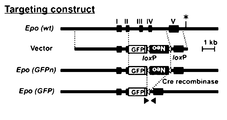
- the second to fourth exons of the Epo gene are replaced with the EGFP (Clontech) gene.
- Epo (wt) wild-type Epo locus
- Epo (GFPn) Epo locus targeted by a targeting vector
- Epo (GFP) Epo locus where GFP was finally knocked in.
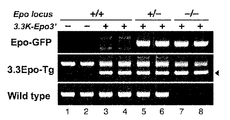
- Epo-GFP knockout allele: corresponding to both arrowhead regions in FIG. 2
- Epo-Tg band indicated by arrowheads, region deleted in the transgene: corresponding to both arrowhead regions in FIG. 1
- Wild type sequence unique to the wild-type Epo gene allele: corresponding to * in FIG. 2.
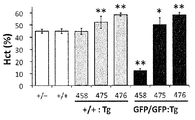
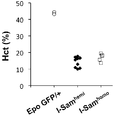
- Hct value % of an 8-10 week-old rescue mouse.
- Epo-Tg region deleted in transgene: corresponding to the double-headed region in FIG. 1
- endo-Epo endogenous Epo
- HPRT housekeeping gene
- I-Samhomo I-Sam having two copies of transgene (Tg)
- I-Samhemi I-Sam having one copy of Tg.
- Tg transgene
- I-Samhemi I-Sam having one copy of Tg.
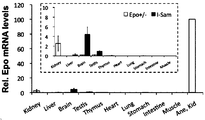
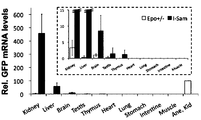
- concentration in plasma It is a figure which shows Epo expression in the whole body of I-Sam. From the left, Kidney, Liver, Brain, Testis, Thymus, Heart, Lung, Stomach, Intestine, Muscle ( (Muscle), kidney in anemia (Ane, Kid: 100). It is a figure which shows the GFP expression in the whole body of I-Sam.
- GFP stained image with anti-GFP antibody
- DAPI nuclear stained image with DAPI
- NeuN nuclear stained image with anti-NeuN antibody
- GFAP stained elephant with anti-GFAP antibody
- arrow cells expressing both GFP and GFAP.
- an “Epo (GFP / GFP) mouse” is a mouse having a gene Epo (GFP) (FIG. 2) in which a GFP cDNA sequence and a polyA sequence are inserted in the second exon of the Epo gene. Also called a knock-in knock-out mouse. Mice show Epo deficiency and express GFP upon transcription of the Epo gene. This gene mutation is produced by the gene homologous recombination method and the Cre / loxP method (FIG. 2), and the Epo (GFP / +) mouse is a heterozygote thereof.
- 3.3K-Epo-3 ′ is a gene fragment introduced into a fertilized egg at the time of creation of a transgenic mouse, and is 4.5 kb downstream from 3.3 kb upstream of the transcription start point of the Epo gene. In order to distinguish it from the original Epo gene, the untranslated region of exon 5 is partially deleted (see FIGS. 1 and 4).
- transgene is a transgene (gene introduced from the outside) of a transgenic mouse, and is equivalent to 3.3K-Epo3 ′ in the present invention.
- a “reporter gene” is a gene that is linked under the control of a target gene promoter and enables detection of the promoter activity.
- the reporter gene is linked under the control of the target gene Epo gene promoter so that the Epo gene is knocked out.
- the reporter gene may be any gene that encodes a reporter protein that can be clearly distinguished from any other protein that can be produced in the host.
- the cells before transformation do not have a gene encoding the same or similar protein as the reporter protein. More preferably, it is a gene encoding an enzyme or the like that reacts specifically with a foreign substrate to produce a metabolite that can be easily quantitatively measured.
- reporter genes include a) chloramphenicol acetyltransferase, b) firefly luciferase, c) ⁇ -galactosidase, d) secretory alkaline phosphatase, e) green fluorescent protein (GFP), and the like. The modified type etc. are mentioned.
- Green Fluorescent Protein is a reporter gene that can be directly quantified because it emits fluorescence, and its modified form is also commercially available. Then, it is described as “GFP”.
- the “3.3K-Epo3 ′ transgenic mouse” is a transgenic mouse having a transgene of the 3.3K-Epo3 ′ region, and is abbreviated as 3.3K-Epo3′Tg or Tg. (See FIGS. 1 and 3).
- Epo (GFP / GFP): 3.3K-Epo3 ′ mouse is an Epo gene knock-in knockout homo mouse and a mouse having 3.3K-Epo3 ′ derived from a transgenic mouse.
- 3 lines 2 lines do not exhibit anemia in adults, and Epo production is usually observed in normal amounts under rearing, but rather tends to be polycythmic (see FIGS. 5, 6, and 7).
- I-Sam Inherited-Superanemous mouse
- Epo-deficient GFP anemia mouse is one line of Epo (GFP / GFP): 3.3K-Epo3 ′ mouse, A mouse line with features.
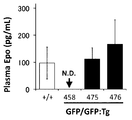
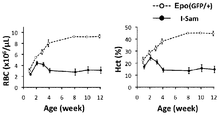
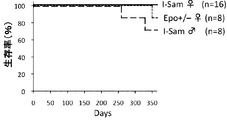
- I-Sam is born avoiding the embryonic lethality of Epo (GFP / GFP) (FIG. 5). Plasma Epo after 8-10 weeks of age is undetectable or very low and presents severe anemia (FIGS. 7 and 8). Transcription from the Epo (GFP) gene is enhanced by severe anemia due to a decrease in Epo production, and cells originally having Epo production ability are labeled with GFP (see FIGS. 18-20).
- non-human mammal means mammals including non-human primates.
- rodents such as rats and mice are convenient, and mice are particularly preferred.
- anemia means a lack of red blood cells in blood and various symptoms caused thereby.
- the number of red blood cells and / or hematocrit is reduced by at least 20%, preferably 40%, particularly preferably 60% or more, compared to the wild-type normal value. Means.
- the transgenic non-human mammal of the present invention relates to a transgenic non-human mammal characterized by spontaneously developing anemia due to a decrease in erythropoietin (Epo) production after birth.
- Epo erythropoietin
- Transgenic non-human mammals (such as mice) of the present invention spontaneously develop anemia after reaching birth to a level where Epo production is naturally reduced and almost undetectable. Therefore, if it is 2-3 months or older after birth, it can be used as an animal experiment system in which the influence of endogenous Epo can be ignored. Therefore, the transgenic non-human mammal of the present invention is useful for studies of erythropoietic factors, steady-state and stress hematopoiesis, Epo's extrahematopoietic study, chronic severe anemia and tissue reaction. Is an animal.
- the transgenic non-human mammal of the present invention has an Epo-GFP knock-in gene homozygously, and can detect the transcription amount of the Epo locus by fluorescence of the incorporated GFP.
- transcription of the Epo locus is always greatly stimulated by severe anemia, including cells with potential ability, kidney, liver, and other tissues. Cells capable of producing Epo are labeled with GFP.
- exogenous Epo production occurs in the liver or the like by an externally introduced gene prior to birth, thus avoiding Epo deficiency and accompanying lethality due to anemia.
- the factor can be used as a molecular target for new treatment.
- experimental models such as renal dysfunction, chronic inflammation, and cancer bearing, it is possible to elucidate the molecular mechanism of renal anemia and chronic anemia using GFP fluorescence attenuation as an index.
- diseases that can be examined for treatment using the transgenic non-human mammal of the present invention include, but are not limited to, diseases caused by anemia and fluctuations in tissue oxygen partial pressure.
- Anemia includes, but is not limited to, anemia associated with renal failure or end-stage renal disease, anemia due to chemotherapy or radiotherapy, chronic diseases such as chronic infection, autoimmune disease, rheumatoid arthritis, AIDS Anemia due to malignant tumors, anemia due to prematurity, anemia due to hypothyroidism, anemia due to nutritional disorders such as iron deficiency, and anemia related to blood disorders.
- diseases caused by fluctuations in tissue oxygen partial pressure include retinopathy of prematurity and ischemic diseases such as cerebral infarction, cerebral embolism, and myocardial infarction.
- I-Sam Epo-deficient GFP anemia mouse
- I-Sam Epo-deficient GFP anemia mouse
- cells originally having Epo-producing ability are labeled with a GFP gene knocked into the Epo gene.
- GFP GFP gene knocked into the Epo gene.
- the blood Epo concentration gradually decreases after birth, and cannot be detected or becomes very low at 8-10 weeks after birth.
- mice that are homo-deficient in endogenous Epo production become embryonic lethal and cannot be used for adult experiments. Therefore, in the present invention, by producing Epo from the transgene, lethality due to anemia in the fetal stage is avoided, and a mouse in which Epo production disappears after birth (“I-Sam (Epo-deficient GFP anemia mouse)”) is prepared.
- I-Sam Epo-deficient GFP anemia mouse
- the present invention takes advantage of the fact that the introduced transgene has no transcriptional activity in major postnatal Epo-producing tissues such as the kidney. In this respect, a method different from the normal conditional knockout method is used. The activity of this transgene is due to both the introduced gene region and the chromosomal location effect of the insertion site.
- I-Sam Epo-deficient GFP anemia mouse
- I-Sam Epo-deficient GFP anemia mouse
- Epo gene fragment upstream from 3.3 kb to 4.5 kb downstream
- I-Sam (Epo-deficient GFP anemia mouse) does not show any significant abnormality in growth, and the life span is not significantly different from that of wild-type mice. The fertility of both males and females does not decrease, and mice with the same phenotype can be efficiently obtained by mating with “I-Sam (Epo-deficient GFP anemia mouse)”. Furthermore, mating with Epo (GFP / +) hetero mice provides littermate controls that do not present anemia. No significant abnormality is observed in the morphology and histology of the kidney of “I-Sam (Epo-deficient GFP anemia mouse)”, and the serum creatinine level is normal. Although cardiac hypertrophy is observed, it is thought to be secondary due to anemia.
- Epo GFP / GFP
- the transcription status of the Epo locus is grasped by the fluorescence of GFP.
- Epo production is strongly suppressed.
- I-Sam Epo-deficient GFP anemia mouse
- a fertilized egg produced by mating an “I-Sam (Epo-deficient GFP anemia mouse)” with a normal mouse was established on March 1, 2011 at the Patent Organism Depositary, National Institute of Advanced Industrial Science and Technology. The deposit number is FERM BP-11347.
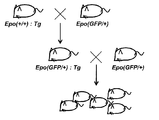
- the anemia mouse of the present invention can be obtained by natural mating of the mouse obtained from the fertilized egg. More specifically, this fertilized egg stochastically contains Epo (GFP / +) 458Tg + and Epo (GFP / +) 458Tg- at 50:50, but both Epo and Tg genes are Mendelian, and Epo (GFP / GFP) 458Tg- is embryonic lethal. Therefore, when the mice obtained from the fertilized eggs are naturally mated with each other, in the case of mating between Epo (GFP / +) 458Tg +, the probability is 1/5, and Epo (GFP / +) 458Tg + and Epo (GFP / GFP / GFP). In the case of (+) 458Tg- mating, the probability is 1/7, and the born child becomes an anemic mouse.
- I-Sam Screening for drugs that stimulate Epo production in the brain
- the brain is also hypoxic due to severe anemia, and the expression of the GFP gene knocked into the Epo gene is observed in astrocytes. Since Epo produced from glial cells adjacent to neurons is expected to work in a paracrine manner without involving the cerebrovascular barrier, I-Sam can be used to treat the cerebral infarction.
- I-Sam can be used to treat the cerebral infarction.
- Systemic administration of Epo may increase hemoglobin, increase blood consistency and induce recurrence of cerebral infarction, but is unlikely to be a drug that specifically stimulates brain Epo production . Therefore, the screening system using I-Sam is useful for searching for a safe and effective new cerebral infarction therapeutic agent.
- Epo-producing cell of the present invention 3.1 Epo-producing cell In Epo-producing cells isolated from the transgenic non-human mammal of the present invention, activation of Epo expression can be easily detected through a reporter gene. Therefore, the Epo-producing cell of the present invention can be used for research on the control mechanism of Epo production, screening for an Epo production-promoting active substance described later, and the like.
- the Epo-producing cells are not particularly limited as long as they are cells of tissues or organs that produce Epo, and examples thereof include kidney- and liver-derived cells.
- kidney-derived Epo production (REP: Renal Epo Producing). Cells) cells are preferred.
- Epo-producing cells of the present invention are prepared by, for example, (a) Epo in which the endogenous Epo gene is knocked out, the reporter gene is knocked in, and the expression in the kidney is suppressed.
- a step of producing a transgenic non-human mammal into which a gene has been introduced as a transgene from the outside (b) a step of isolating a tissue or cell from the transgenic non-human mammal, (c) It can be prepared by detecting a cell expressing a reporter gene from among them, and (d) isolating a cell expressing the reporter gene.
- reporter gene examples include chloramphenicol acetyltransferase, firefly luciferase, ⁇ -galactosidase, secreted alkaline phosphatase, GFP, and modified GFP, among which GFP and modified GFP are preferable.
- the reporter gene is linked so that the Epo gene is knocked out under the control of the Epo gene promoter.
- Epo production promoting active substances can be screened.
- Such a screening method includes, for example, (a) a step of bringing a test substance into contact with an Epo-producing cell produced by the above method, (b) a step of detecting expression of a reporter gene in the Epo-producing cell, and ( c) It can be carried out by selecting a test substance that promotes expression of the reporter gene compared to the control.
- Epo production-promoting active substance thus screened is useful as a therapeutic drug candidate for a disease caused by anemia and tissue oxygen partial pressure fluctuation accompanying the above-mentioned decrease in Epo production.
- Example 1 A decrease in Epo production due to renal failure causes severe anemia. This is evident by the dramatic improvement of anemia by administration of Epo to patients with renal failure. However, since it is not clear whether all erythropoiesis in adults is Epo-dependent, this was investigated.
- Epo (GFP / +) mouse In order to establish a mutant mouse in which GFP cDNA is inserted into the Epo locus, the MC1-Neo cassette adjacent to the EGFP cDNA and loxP sequences (Morita M. et al., EMBOJ. 2003). 22 (5): 1134-1146.), MC1-DT3 cassette (Takahashi S. et al., MJBiol. Chem. 1997; 272 (19): 12611-12615.), And 129SV mouse-derived genome sequence (Imagawa S, et al., Int. J. Hematol. 2002; 75 (4): 376-381.) was produced. In this targeting vector, the second to fourth exons of the Epo gene are replaced with the EGFP (Clontech) gene (FIG. 2).
- Mutant ES cells obtained through homologous recombination of the targeting vector were injected into blastocysts of C57BL / 6 mice to produce four independent germline chimeric mice.
- a heterozygous knock-in mouse of genotype Epo (GFPn / +) was crossed with an Ayu1-Cre transgenic mouse that expresses Cre recombinase in the germ line, and genotype Epo (GFP / +) A mouse was obtained.
- Epo (GFP / +) mouse was repeated, and Epo (GFP / GFP) in which the Epo gene was knocked out homozygously was obtained. Similar to previous reports, Epo (GFP / GFP) mice developed severe anemia and died by about embryonic day 13.
- Genomic DNA was extracted from the litter and three types of PCR were performed. That is, using the Epo-GFP primer set, the knockout allele was detected (both arrows in FIG. 2), and using the 3.3 Epo-Tg primer set (same as above), the region deleted in the transgene was detected. Using a wild type primer set (same as above), a sequence (* in FIG. 2) unique to the wild type Epo gene allele was detected. The region deleted in the transgene was observed as a PCR product shorter than the wild-type Epo gene allele or knockout allele (the band indicated by the arrow in FIG. 4).
- Epo-GFP primer set GFP-cs actctcggcatggacgagctg (SEQ ID NO: 1)
- Epo-RTR gtgagtgttcggagtggagcagg
- Epo-Tg primer set Epo-5UTRs: acaggaaggtctcacatagcc (SEQ ID NO: 3)
- Epo-s5 tacagctaggagagttgtgtgg (SEQ ID NO: 4)
- Epo-B6as tggggaaacccccatgagatc (SEQ ID NO: 5)
- Epo concentration (pg / mL) Epo concentration (pg / mL) in the plasma of 8-10 week old rescue mice was measured using the Epo ELISA kit (Quantikine, Mouse / Rat Epo ELISA kit (R & D systems)). I-Sam had an Epo concentration below the detection limit, but other strains of rescue mice showed an Epo concentration that was similar to or slightly higher than that of control Epo (GFP / +) (FIG. 7).
- Plasma Epo concentration from 1 to 4 weeks of age I-Sam and Epo (GFP / +) were compared for Epo concentrations in plasma from 1 to 4 weeks of age (FIG. 9). . At 1 week of age, Epo similar to that of control Epo (GFP / +) was detected, but after 2 weeks of age, the plasma Epo concentration of I-Sam decreased to the detection limit level.
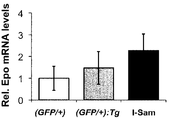
- Epo expression level in 1-week-old liver Epo mRNA levels were quantified using primers that detect both endogenous Epo mRNA and Epo mRNA derived from the 3.3K-Epo3 ′ transgene (FIG. 10). . Epo mRNA was detected in the liver of I-Sam, and its expression level was higher than that of control Epo (GFP / +).
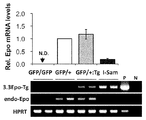
- Epo expression level of fetal liver on embryonic day 13 was observed, Epo mRNA was detected in fetal liver of I-Sam, and its expression level was about 20% compared to control Epo (GFP / +) (Fig. 12).
- the Epo mRNA expressed in the fetal liver of I-Sam was confirmed to be derived from the 3.3K-Epo3 'transgene using a primer that distinguishes it from the endogenous Epo mRNA.
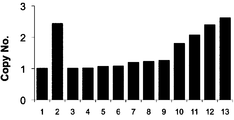
- Epo gene copy number Using genomic DNA, the copy number of the fourth exon portion of the Epo gene was quantified by real-time PCR (FIG. 15). As an internal standard, Gata2 gene located on another chromosome was used. When the number of copies of Epo (+/ ⁇ ) was 1, it was confirmed that Epo (+ / +) was 2 copies (graph bars 1 & 2). By crossing I-Sam, I-Sam (hemizygote, graph bar 3 to 9) having 1 copy of transgene (Tg) and I-Sam (homozygote, graph bar 10 to 10) having 2 copies of Tg. 13) was born.
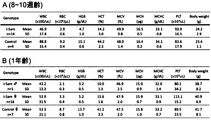
- I-Sam is anemic from the first week of life. Thereafter, in the wild type, both the number of red blood cells and hematocrit increased approximately twice, but I-Sam slightly increased at 2 weeks of age, but then decreased, and Hct 14.2 ⁇ 3.0% at 8 to 10 weeks of age. (8-10 weeks old, simultaneous control 44.2 ⁇ 2.3%) and marked anemia. (FIGS. 8 and 14).
- the plasma Epo concentration was also similar to Epo (GFP / +) used as a control at 1 week after birth, but decreased at 2 weeks after the increase in Epo concentration in the control, and then decreased (FIG. 9). Data for 10 weeks after birth are shown (FIG. 17). This phenotype did not improve or worsen in the 1-year-old I-Sam.
- Epo (GFP / GFP) mice are anemic on the 13th day of embryonic day and the liver is white. Around this time, Epo (GFP / GFP) mice become embryonic lethal. On the other hand, I-Sam showed red hemoglobin in the liver and red blood cells in the blood vessels as in the heterogeneous Epo (GFP / +) (FIG. 11). I-Sam was born according to Mendel's rule, and fetal lethality was avoided (FIG. 5).
- Epo mRNA expression in the liver of embryonic day 13 was examined, it was about 20% of the heterogeneous Epo (GFP / +) in the quantitative RT-PCR method, and was derived from the transgene (FIG. 12).
- the fertilized egg prepared by crossing I-Sam and a normal mouse was internationally deposited on March 1, 2011 as the deposit number FERM BP-11347 at the Patent Organism Depositary, National Institute of Advanced Industrial Science and Technology.
- Epo-producing organs in adults are the kidney and liver, but reports of Epo production are also found in other organs. Therefore, I-Sam mice have severe anemia, and it is predicted that induction of transcriptional activity of the hypoxia-responsive Epo gene is maximally occurring in each tissue. I-Sam and Epo (GFP / +) Epo expression and GFP expression were examined for 3 mice each 12 weeks old.
- Epo expression RNA was extracted from each organ of three 12-week-old I-Sam and Epo (GFP / +) mice, reverse transcription was performed, and Epo mRNA level was determined by quantitative PCR. Was quantified. Epo (GFP / +) shows a low level of Epo expression in the kidney, but the expression of the kidney is strongly induced during anemia (Ane, Kid, 100).
- GFP expression RNA was extracted from each of three organs, reverse transcription was performed, and then GFP mRNA levels were quantified by real-time PCR. Moreover, frozen sections were prepared from tissues fixed with 4% paraformaldehyde for the kidney and liver, and observed with a confocal fluorescence microscope.
- GFP fluorescence in the kidney and liver of I-Sam revealed strong expression of GFP (FIG. 20).
- Epo-producing cells are usually found only in the peritubular stromal cells at the cortical medullary boundary (Obara, 2008), but in I-Sam, they are expressed only in the tubular stromal cells.
- GFP-expressing cells increased around the central vein.
- I-Sam expresses the GFP gene in Epo-producing cells without stimulation such as blood removal due to chronic anemia.
- the expression of the Epo gene can be easily confirmed by the expression of the GFP gene not only in tissues where the expression of Epo gene is high, such as kidney and liver, but also in tissues where low level Epo expression is observed.
- the expression of Epo gene in brain tissue was analyzed.
- the basal ganglia region was analyzed by immunohistochemical staining (FIG. 21). Specifically, in order to confirm what kind of cell the GFP positive cell is, a neuron marker NeuN (the nucleus of the neuronal cell is dyed) or a GFP positive cell in the I-Sam brain tissue, or Multiple staining was performed with GFAP (which stains the cytoplasm of astrocytes), which is an astrocyte marker (astrocytes).
- GFAP which stains the cytoplasm of astrocytes
- a drug that stimulates Epo production in the brain can be evaluated and screened by conducting an ischemia / reperfusion experiment of the nervous system assuming treatment of cerebral infarction or the like using I-Sam.
- Systemic administration of Epo may increase hemoglobin, increase blood consistency and induce recurrence of cerebral infarction, but is unlikely to be a drug that specifically stimulates brain Epo production . Therefore, I-Sam is useful for evaluating a safe and effective new therapeutic agent for cerebral infarction.
- the mouse of the present invention without being affected by endogenous Epo, Epo production ability inherent in the tissue, a route or substance that stimulates or suppresses it, and a response analysis to chronic tissue hypoxia are performed. be able to.
- a nervous system ischemia / reperfusion experiment assuming cerebral infarction treatment or the like can be performed, and a drug that stimulates Epo production in the brain can be evaluated and screened using GFP expression as an index. Therefore, the mouse of the present invention can be used for the development of therapeutic methods for Epo-related diseases such as renal anemia and chronic anemia, in addition to research on erythropoiesis factors, steady-state and stress hematopoiesis, and the extra-hematopoietic action of Epo. Available.
- SEQ ID NO: 1 Primer (GFP-cs)
- SEQ ID NO: 2 Primer (Epo-RTR)
- SEQ ID NO: 3 Primer (Epo-5UTRs)
- SEQ ID NO: 4 Primer (Epo-s5)
- SEQ ID NO: 5 Primer (Epo-B6as)
Landscapes
- Life Sciences & Earth Sciences (AREA)
- Health & Medical Sciences (AREA)
- Engineering & Computer Science (AREA)
- Biomedical Technology (AREA)
- General Health & Medical Sciences (AREA)
- Environmental Sciences (AREA)
- Veterinary Medicine (AREA)
- Animal Behavior & Ethology (AREA)
- Zoology (AREA)
- Urology & Nephrology (AREA)
- Immunology (AREA)
- Biotechnology (AREA)
- Pathology (AREA)
- Toxicology (AREA)
- Biodiversity & Conservation Biology (AREA)
- Hematology (AREA)
- Molecular Biology (AREA)
- Animal Husbandry (AREA)
- Chemical & Material Sciences (AREA)
- Epidemiology (AREA)
- Rheumatology (AREA)
- Public Health (AREA)
- Gastroenterology & Hepatology (AREA)
- Endocrinology (AREA)
- Diabetes (AREA)
- Microbiology (AREA)
- Biochemistry (AREA)
- General Physics & Mathematics (AREA)
- Analytical Chemistry (AREA)
- Physics & Mathematics (AREA)
- Medicinal Chemistry (AREA)
- Food Science & Technology (AREA)
- Cell Biology (AREA)
- Tropical Medicine & Parasitology (AREA)
- Bioinformatics & Cheminformatics (AREA)
- Micro-Organisms Or Cultivation Processes Thereof (AREA)
- Medicines That Contain Protein Lipid Enzymes And Other Medicines (AREA)
- Measuring Or Testing Involving Enzymes Or Micro-Organisms (AREA)
Abstract
Priority Applications (3)
| Application Number | Priority Date | Filing Date | Title |
|---|---|---|---|
| US14/008,703 US9180207B2 (en) | 2011-04-05 | 2012-03-29 | Epo knockout GFP anemic mouse |
| EP12768270.6A EP2695515B1 (fr) | 2011-04-05 | 2012-03-29 | Souris anémique exprimant gfp invalidée par epo |
| JP2013508747A JP5939487B2 (ja) | 2011-04-05 | 2012-03-29 | Epo欠損GFP貧血マウス |
Applications Claiming Priority (2)
| Application Number | Priority Date | Filing Date | Title |
|---|---|---|---|
| JP2011083664 | 2011-04-05 | ||
| JP2011-083664 | 2011-04-05 |
Publications (1)
| Publication Number | Publication Date |
|---|---|
| WO2012137449A1 true WO2012137449A1 (fr) | 2012-10-11 |
Family
ID=46968862
Family Applications (1)
| Application Number | Title | Priority Date | Filing Date |
|---|---|---|---|
| PCT/JP2012/002207 Ceased WO2012137449A1 (fr) | 2011-04-05 | 2012-03-29 | Souris anémique exprimant gfp invalidée par epo |
Country Status (4)
| Country | Link |
|---|---|
| US (1) | US9180207B2 (fr) |
| EP (1) | EP2695515B1 (fr) |
| JP (1) | JP5939487B2 (fr) |
| WO (1) | WO2012137449A1 (fr) |
Families Citing this family (3)
| Publication number | Priority date | Publication date | Assignee | Title |
|---|---|---|---|---|
| PT3482629T (pt) * | 2014-05-19 | 2021-02-18 | Univ Yale | Animais não humanos geneticamente modificados que expressam epo humana |
| CN107217075B (zh) * | 2017-06-28 | 2021-07-02 | 西安交通大学医学院第一附属医院 | 一种构建epo基因敲除斑马鱼动物模型的方法及引物、质粒与制备方法 |
| CN118252110A (zh) * | 2024-02-26 | 2024-06-28 | 华南理工大学 | 一种epoa基因突变致红系减少的斑马鱼模型及其应用 |
Citations (1)
| Publication number | Priority date | Publication date | Assignee | Title |
|---|---|---|---|---|
| JP2011083664A (ja) | 2009-10-13 | 2011-04-28 | Nitto Denko Corp | 複合半透膜又は膜エレメントの保存方法 |
-
2012
- 2012-03-29 US US14/008,703 patent/US9180207B2/en active Active
- 2012-03-29 JP JP2013508747A patent/JP5939487B2/ja active Active
- 2012-03-29 EP EP12768270.6A patent/EP2695515B1/fr active Active
- 2012-03-29 WO PCT/JP2012/002207 patent/WO2012137449A1/fr not_active Ceased
Patent Citations (1)
| Publication number | Priority date | Publication date | Assignee | Title |
|---|---|---|---|---|
| JP2011083664A (ja) | 2009-10-13 | 2011-04-28 | Nitto Denko Corp | 複合半透膜又は膜エレメントの保存方法 |
Non-Patent Citations (25)
| Title |
|---|
| BINLEY K; ASKHAM Z; IQBALL S ET AL.: "Long-term reversal of chronic anemia using a hypoxia-regulated erythropoietin gene therapy", BLOOD, vol. 100, 2002, pages 2406 - 2413, XP002241588, DOI: doi:10.1182/blood-2002-02-0605 |
| EL HASNAOUI-SAADANI R; PICHON A; MARCHANT D ET AL.: "Cerebral adaptations to chronic anemia in a model of erythropoietin-deficient mice exposed to hypoxia", AMERICAN JOURNAL OF PHYSIOLOGY - REGULATORY INTEGRATIVE & COMPARATIVE PHYSIOLOGY, vol. 296, 2009, pages R801 - 811 |
| GAGNON RF; DUGUID WP: "A reproducible model for chronic renal failure in the mouse", UROLOGICAL RESEARCH, vol. 11, 1983, pages 11 - 14 |
| GAGNON RF; GALLIMORE B: "Characterization of a mouse model of chronic uremia", UROLOGICAL RESEARCH, vol. 16, 1988, pages 119 - 126 |
| GARCIA DL; ANDERSON S; RENNKE HG; BRENNER BM: "Anemia lessens and its prevention with recombinant human erythropoietin worsens glomerular injury and hypertension in rats with reduced renal mass", PROCEEDINGS OF THE NATIONAL ACADEMY OF SCIENCES OF THE UNITED STATES OF AMERICA, vol. 85, 1988, pages 6142 - 6146 |
| GRUBER M; HU C-J; JOHNSON RS; BROWN EJ; KEITH B; SIMON MC: "Acute postnatal ablation of Hif-2{alpha} results in anemia", PNAS, vol. 104, 2007, pages 2301 - 2306, XP055149291, DOI: doi:10.1073/pnas.0608382104 |
| IMAGAWA S ET AL., INT. J. HEMATOL., vol. 75, no. 4, 2002, pages 376 - 381 |
| KAPITSINOU PP; LIU Q; UNGER TL ET AL.: "Hepatic HIF-2 regulates erythropoietic responses to hypoxia in renal anemia", BLOOD, vol. 116, 2010, pages 3039 - 3048 |
| MAXWELL P.H. ET AL.: "Identification of the renal erythropoietin-producing cells using transgenic mice", KIDNEY INT., vol. 44, no. 5, 1993, pages 1149 - 1162, XP055125436 * |
| MAXWELL PH; OSMOND MK; PUGH CW ET AL.: "Identification of the renal erythropoietin- producing cells using transgenic mice", KIDNEY INT., vol. 44, 1993, pages 1149 - 1162, XP055125436, DOI: doi:10.1038/ki.1993.362 |
| MORITA M. ET AL., EMBO J., vol. 22, no. 5, 2003, pages 1134 - 1146 |
| OBARA N. ET AL.: "Repression via the GATA box is essential for tissue-specific erythropoietin gene expression", BLOOD, vol. 111, no. 10, 2008, pages 5223 - 32, XP055125443 * |
| OBARA N; SUZUKI N; KIM K; NAGASAWA T; IMAGAWA S; YAMAMOTO M: "Repression via the GATA box is essential for tissue-specific erythropoietin gene expression", BLOOD, vol. 111, 2008, pages 5223 - 5232, XP055125443, DOI: doi:10.1182/blood-2007-10-115857 |
| PAN X. ET AL.: "Isolation and characterization of renal erythropoietin-producing cells from genetically produced anemia mice", PLOS ONE, vol. 6, no. 10, October 2011 (2011-10-01), pages E25839, XP055125437 * |
| RINSCH C; DUPRAZ P; SCHNEIDER BL ET AL.: "Delivery of erythropoietin by encapsulated myoblasts in a genetic model of severe anemia", KIDNEY INT., vol. 62, 2002, pages 1395 - 1401, XP055148883, DOI: doi:10.1046/j.1523-1755.2002.00574.x |
| See also references of EP2695515A4 |
| SHUN YAMAZAKI ET AL.: "Epo Idenshi Kesshitsu Mouse no Rescuer to Joken Tsuki Epo Idenshi Hakai Mouse no Juritsu", JOURNAL OF JAPANESE BIOCHEMICAL SOCIETY, 2009, pages ROMBUNNO.4T4P-11, XP008170936 * |
| SHUN YAMAZAKI ET AL.: "Seiju ni Okeru Yudoteki Erythropoietin Idenshi Hakai no Zoketsu ni Ataeru Eikyo", JOURNAL OF JAPANESE BIOCHEMICAL SOCIETY, 2010, pages ROMBUNNO.1P-0304, XP008170918 * |
| SHUN YAMAZAKI; NORIO SUZUKI; NAOSHI OBARA; XIAOQING PAN; IKUO HIRANO; KOU-ICHI JISHAGE; KURISU HONDA; NAOKO MINEGISHI; MASAYUKI YA: "Rescue of Erythropoietin-Deficient Mice From Anemia by Complementation with BAC Transgene", BLOOD (ASH ANNUAL MEETING ABSTRACTS, vol. 114, November 2009 (2009-11-01), pages 3614, XP008173018 |
| SUZUKI N; OBARA N; YAMAMOTO M; HELMUT S; BERNHARD BN: "Methods in Enzymology", vol. 435, 2007, ACADEMIC PRESS, article "Use of Gene[hyphen (true graphic)]Manipulated Mice in the Study of Erythropoietin Gene Expression", pages: 157 - 177 |
| TAKAHASHI S. ET AL., M. J. BIOL. CHEM., vol. 272, no. 19, 1997, pages 12611 - 12615 |
| TAKEDA A; TADA T; SHINOHARA S; MOGI Y; MATSUI N: "Factors contributing to higher hematocrit levels in hemodialysis patients not receiving recombinant human erythropoietin", AMERICAN JOURNAL OF KIDNEY DISEASES: THE OFFICIAL JOURNAL OF THE NATIONAL KIDNEY FOUNDATION, vol. 40, 2002, pages 104 - 109, XP028836450, DOI: doi:10.1053/ajkd.2002.33918 |
| WU H; LIU X; JAENISCH R; LODISH HF: "Generation of committed erythroid BFU-E and CFU-E progenitors does not require erythropoietin or the erythropoietin receptor", CELL, vol. 83, 1995, pages 59 - 67 |
| ZEIGLER B.M. ET AL.: "A mouse model for an erythropoietin-deficiency anemia", DIS.MODEL. MECH., vol. 3, no. 11-12, 2010, pages 763 - 72, XP055125433 * |
| ZEIGLER BM; VAJDOS J; QIN W; LOVERRO L; NISS K: "A mouse model for an erythropoietin- deficiency anemia", DISEASE MODELS & MECHANISMS |
Also Published As
| Publication number | Publication date |
|---|---|
| JPWO2012137449A1 (ja) | 2014-07-28 |
| EP2695515A4 (fr) | 2014-12-17 |
| US20140053288A1 (en) | 2014-02-20 |
| JP5939487B2 (ja) | 2016-06-22 |
| US9180207B2 (en) | 2015-11-10 |
| EP2695515A1 (fr) | 2014-02-12 |
| EP2695515B1 (fr) | 2017-12-27 |
Similar Documents
| Publication | Publication Date | Title |
|---|---|---|
| US11849709B2 (en) | Genetically modified rat models for severe combined immunodeficiency (SCID) | |
| Kuang et al. | Merosin-deficient congenital muscular dystrophy. Partial genetic correction in two mouse models. | |
| Bark et al. | Developmentally regulated switch in alternatively spliced SNAP-25 isoforms alters facilitation of synaptic transmission | |
| Pyo et al. | Establishment of a conditional transgenic mouse model recapitulating EML4-ALK–positive human non–small cell lung cancer | |
| TW200906441A (en) | Glycine N-methyltransferase (GNMT) animal model and use thereof | |
| JP2021169461A (ja) | 寿命に関する動物モデル並びに寿命を延ばす及び腫瘍化を阻害する関連方法 | |
| US6180849B1 (en) | Trangenic mice with a disruption in the tiar gene | |
| CN109688810A (zh) | 具有缺陷性p450氧化还原酶的人肝嵌合非人动物及其使用方法 | |
| JP5939487B2 (ja) | Epo欠損GFP貧血マウス | |
| Zeigler et al. | A mouse model for an erythropoietin-deficiency anemia | |
| JP4613824B2 (ja) | トランスジェニック非ヒト哺乳動物 | |
| WO2005098008A1 (fr) | Modele murin de crise cardiaque inductible par regime lipidique | |
| US20220217956A1 (en) | Rodent Model Of Increased Bone Mineral Density | |
| WO2011126126A1 (fr) | ANIMAL NON HUMAIN DÉFICIENT EN PRODUIT DU GÈNE Gm1 ET PROCÉDÉ POUR L'UTILISER | |
| US20070204353A1 (en) | Transgenic animals and methods of monitoring hedgehog responding cells | |
| JP5403536B2 (ja) | ヒトmll/af4融合遺伝子導入トランスジェニック非ヒト動物 | |
| JP3817638B2 (ja) | トランスジェニック非ヒト哺乳動物 | |
| JP2004154135A (ja) | ノックアウト非ヒト動物 | |
| JP2011000054A (ja) | 初期乳がんモデル用動物 | |
| US20090235367A1 (en) | Non-human mammal comprising a modified SERCA2 gene and methods, cells, genes, and vectors thereof | |
| Booth | The role of protein tyrosine phosphatase receptor Q in development and disease | |
| JP2006141283A (ja) | 3−ホスホグリセレートデヒドロゲナーゼの発現が低下したノックアウト非ヒト哺乳動物 | |
| WO2017026383A1 (fr) | Animal mammifère transgénique non-humain exprimant un egfr humain spécifiquement dans les poumons | |
| JP2013220083A (ja) | 肝糖産生モニターマウス | |
| JP2003158954A (ja) | 新規非ヒト動物 |
Legal Events
| Date | Code | Title | Description |
|---|---|---|---|
| 121 | Ep: the epo has been informed by wipo that ep was designated in this application |
Ref document number: 12768270 Country of ref document: EP Kind code of ref document: A1 |
|
| ENP | Entry into the national phase |
Ref document number: 2013508747 Country of ref document: JP Kind code of ref document: A |
|
| WWE | Wipo information: entry into national phase |
Ref document number: 14008703 Country of ref document: US |
|
| NENP | Non-entry into the national phase |
Ref country code: DE |
|
| WWE | Wipo information: entry into national phase |
Ref document number: 2012768270 Country of ref document: EP |