WO2012141390A1 - 무선 애드 혹 네트워크를 위한 최적의 다중 홉 Hybrid V-MIMO 전송 경로 설정을 위한 라우팅 방법 및 장치 - Google Patents

무선 애드 혹 네트워크를 위한 최적의 다중 홉 Hybrid V-MIMO 전송 경로 설정을 위한 라우팅 방법 및 장치 Download PDF

Info

Publication number
WO2012141390A1
WO2012141390A1 PCT/KR2011/006807 KR2011006807W WO2012141390A1 WO 2012141390 A1 WO2012141390 A1 WO 2012141390A1 KR 2011006807 W KR2011006807 W KR 2011006807W WO 2012141390 A1 WO2012141390 A1 WO 2012141390A1
Authority
WO
WIPO (PCT)
Prior art keywords
node
cooperative
nodes
transmission
network
Prior art date
Legal status (The legal status is an assumption and is not a legal conclusion. Google has not performed a legal analysis and makes no representation as to the accuracy of the status listed.)
Ceased
Application number
PCT/KR2011/006807
Other languages
English (en)
French (fr)
Other versions
WO2012141390A8 (ko
Inventor
정종문
김서욱
한동혁
김봉회
김준형
Current Assignee (The listed assignees may be inaccurate. Google has not performed a legal analysis and makes no representation or warranty as to the accuracy of the list.)
LG Electronics Inc
Industry Academic Cooperation Foundation of Yonsei University
Original Assignee
LG Electronics Inc
Industry Academic Cooperation Foundation of Yonsei University
Priority date (The priority date is an assumption and is not a legal conclusion. Google has not performed a legal analysis and makes no representation as to the accuracy of the date listed.)
Filing date
Publication date
Application filed by LG Electronics Inc, Industry Academic Cooperation Foundation of Yonsei University filed Critical LG Electronics Inc
Priority to US14/111,153 priority Critical patent/US9450857B2/en
Priority to KR1020137027381A priority patent/KR101835335B1/ko
Publication of WO2012141390A1 publication Critical patent/WO2012141390A1/ko
Publication of WO2012141390A8 publication Critical patent/WO2012141390A8/ko
Anticipated expiration legal-status Critical
Ceased legal-status Critical Current

Links

Classifications

    • HELECTRICITY
    • H04ELECTRIC COMMUNICATION TECHNIQUE
    • H04LTRANSMISSION OF DIGITAL INFORMATION, e.g. TELEGRAPHIC COMMUNICATION
    • H04L45/00Routing or path finding of packets in data switching networks
    • H04L45/12Shortest path evaluation
    • HELECTRICITY
    • H04ELECTRIC COMMUNICATION TECHNIQUE
    • H04WWIRELESS COMMUNICATION NETWORKS
    • H04W84/00Network topologies
    • H04W84/18Self-organising networks, e.g. ad-hoc networks or sensor networks
    • HELECTRICITY
    • H04ELECTRIC COMMUNICATION TECHNIQUE
    • H04WWIRELESS COMMUNICATION NETWORKS
    • H04W40/00Communication routing or communication path finding
    • H04W40/02Communication route or path selection, e.g. power-based or shortest path routing
    • H04W40/04Communication route or path selection, e.g. power-based or shortest path routing based on wireless node resources
    • H04W40/08Communication route or path selection, e.g. power-based or shortest path routing based on wireless node resources based on transmission power
    • HELECTRICITY
    • H04ELECTRIC COMMUNICATION TECHNIQUE
    • H04WWIRELESS COMMUNICATION NETWORKS
    • H04W40/00Communication routing or communication path finding
    • H04W40/02Communication route or path selection, e.g. power-based or shortest path routing
    • H04W40/04Communication route or path selection, e.g. power-based or shortest path routing based on wireless node resources
    • H04W40/10Communication route or path selection, e.g. power-based or shortest path routing based on wireless node resources based on available power or energy
    • HELECTRICITY
    • H04ELECTRIC COMMUNICATION TECHNIQUE
    • H04WWIRELESS COMMUNICATION NETWORKS
    • H04W40/00Communication routing or communication path finding
    • H04W40/02Communication route or path selection, e.g. power-based or shortest path routing
    • H04W40/20Communication route or path selection, e.g. power-based or shortest path routing based on geographic position or location
    • HELECTRICITY
    • H04ELECTRIC COMMUNICATION TECHNIQUE
    • H04BTRANSMISSION
    • H04B7/00Radio transmission systems, i.e. using radiation field
    • H04B7/02Diversity systems; Multi-antenna system, i.e. transmission or reception using multiple antennas
    • H04B7/022Site diversity; Macro-diversity
    • H04B7/026Co-operative diversity, e.g. using fixed or mobile stations as relays
    • HELECTRICITY
    • H04ELECTRIC COMMUNICATION TECHNIQUE
    • H04BTRANSMISSION
    • H04B7/00Radio transmission systems, i.e. using radiation field
    • H04B7/02Diversity systems; Multi-antenna system, i.e. transmission or reception using multiple antennas
    • H04B7/04Diversity systems; Multi-antenna system, i.e. transmission or reception using multiple antennas using two or more spaced independent antennas
    • H04B7/0413MIMO systems
    • HELECTRICITY
    • H04ELECTRIC COMMUNICATION TECHNIQUE
    • H04WWIRELESS COMMUNICATION NETWORKS
    • H04W40/00Communication routing or communication path finding
    • H04W40/02Communication route or path selection, e.g. power-based or shortest path routing
    • H04W40/12Communication route or path selection, e.g. power-based or shortest path routing based on transmission quality or channel quality
    • YGENERAL TAGGING OF NEW TECHNOLOGICAL DEVELOPMENTS; GENERAL TAGGING OF CROSS-SECTIONAL TECHNOLOGIES SPANNING OVER SEVERAL SECTIONS OF THE IPC; TECHNICAL SUBJECTS COVERED BY FORMER USPC CROSS-REFERENCE ART COLLECTIONS [XRACs] AND DIGESTS
    • Y02TECHNOLOGIES OR APPLICATIONS FOR MITIGATION OR ADAPTATION AGAINST CLIMATE CHANGE
    • Y02DCLIMATE CHANGE MITIGATION TECHNOLOGIES IN INFORMATION AND COMMUNICATION TECHNOLOGIES [ICT], I.E. INFORMATION AND COMMUNICATION TECHNOLOGIES AIMING AT THE REDUCTION OF THEIR OWN ENERGY USE
    • Y02D30/00Reducing energy consumption in communication networks
    • YGENERAL TAGGING OF NEW TECHNOLOGICAL DEVELOPMENTS; GENERAL TAGGING OF CROSS-SECTIONAL TECHNOLOGIES SPANNING OVER SEVERAL SECTIONS OF THE IPC; TECHNICAL SUBJECTS COVERED BY FORMER USPC CROSS-REFERENCE ART COLLECTIONS [XRACs] AND DIGESTS
    • Y02TECHNOLOGIES OR APPLICATIONS FOR MITIGATION OR ADAPTATION AGAINST CLIMATE CHANGE
    • Y02DCLIMATE CHANGE MITIGATION TECHNOLOGIES IN INFORMATION AND COMMUNICATION TECHNOLOGIES [ICT], I.E. INFORMATION AND COMMUNICATION TECHNOLOGIES AIMING AT THE REDUCTION OF THEIR OWN ENERGY USE
    • Y02D30/00Reducing energy consumption in communication networks
    • Y02D30/70Reducing energy consumption in communication networks in wireless communication networks

Definitions

  • the present invention relates to a routing method and apparatus for optimal multi-hop Hybrid V-MIMO transmission path establishment for a wireless ad hoc network.
  • Wireless ad hoc network is an infrastructure-less network that is autonomously configured by nodes and refers to a network that does not require an underlying network device such as a base station or an access point to configure and maintain the network. .
  • MIMO multiple input multiple output
  • V-MIMO multiple input multiple output
  • various MIMO transmission technologies have been developed due to the high bandwidth efficiency of the MIMO transmission scheme.
  • the circuit configuration of the transmitter and the receiver is complicated, and the energy consumption of the circuit increases, which makes it difficult to use in a wireless ad black network.
  • the installation of multiple antennas in a small sensor is also an obstacle to implementation. Due to these problems, V-MIMO transmission technology using a virtual antenna array has been proposed as a solution for applying MIMO technology to an ad hoc network.
  • Ad-hoc On-demand Distance Vector AODV
  • DSR Dynamic Source Routing
  • DYMO Dynamic MANET On-demand
  • RREQ route request
  • RREP route reply
  • the DSR maintains the routing path by maintaining and updating the path cache known to the mobile node.
  • the originating node starts transmitting, if there is a valid route to the destination node, it saves the route cache and sends the packet. If the originating node does not have the route, it broadcasts the route request (RREQ) packet to discover the route.
  • RREQ route request
  • a path encounters a node that contains a valid path cache, it is a routing protocol that sends a Path Reply (RREP) packet to form the path.
  • DYMO similar to AODV and DSR, is a wireless on-demand protocol that forms routes with route request (RREQ) messages and route reply (RREP) messages.
  • DYMO is a routing protocol developed after AODV. It has the advantages of AODV and is easier to implement than AODV.
  • the present invention provides a method and apparatus for finding an optimal transmission path in terms of energy efficiency in a wireless ad hoc network multi-hop transmission environment with limited energy.
  • SISO single input single output
  • V-MISO virtual-multiple input single output
  • V-SIMO virtual-single input multiple output
  • V-MIMO virtual-multiple input multiple output
  • Hybrid V-MIMO transmission technology that selects the optimal combination by utilizing various transmission technologies such as).
  • a predetermined node in an ad hoc network establishes a data transmission path from a first node to a second node, the method comprising: calculating an optimal number of cooperative nodes (M opt ) in the network; Sending a cooperating node request message including the optimal number of cooperating nodes (M opt ) to all nodes in the network; Receiving a cooperating node response message from at least one node in the network; Setting a cooperative transmission node and / or a cooperative reception node for each intake of the optimal transmission path and the optimal transmission path from the first node to the second node based on the cooperative node response message; And transmitting a cooperating node setting message, which is information indicating the set cooperating transmitting node and / or the cooperating receiving node, to a corresponding node.
  • a wireless communication unit configured to transmit and receive a signal in a predetermined node in an ad hoc network to establish a data transmission path from a first node to a second node;
  • the network can be optimized cooperative nodes in the (M opt) to be configured to calculate the optimum cooperation node number (M opt) controls the wireless communication unit to transmit a co node a request message to all nodes in the network including
  • the cooperative transmission node and the cooperative reception node are determined for each absorption of the optimal transmission path and the optimal transmission path from the first node to the second node based on the cooperative node response message received from at least one node in the network.
  • a processor unit configured to control the wireless communication unit to transmit a cooperative node setting message, which is information indicating the set cooperative transmitting node and the cooperative receiving node, to the corresponding node.
  • the optimal number of cooperating nodes M opt may be calculated by the first node or the second node or an intermediate node with high power in the network.
  • each of the number of cooperative ⁇ 3 ⁇ 4 cooperative reception nodes set for each hop may be less than or equal to the optimal number of cooperative nodes (M opt ).
  • the calculation of the optimal number of cooperative nodes may determine the optimal number of cooperative nodes based on the distance between each node in the network and the energy of each node.
  • the energy efficiency and connectivity of the data transmission can be improved.
  • Conventional V-MIMO protocol has a disadvantage inefficient compared to SISO in terms of energy and delay time when the data transmission distance is short.
  • an optimal data transmission scheme that satisfies the service quality is selectively used for each section, thereby minimizing energy consumption, thereby satisfying the service quality.
  • FIG. 1 is a diagram illustrating an exemplary embodiment of a flow of a message for enabling optimal V-MIMO transmission based on a source node.
  • FIG. 2 is a diagram illustrating an embodiment of a message flow to enable optimal V-MIMO transmission based on a destination node.
  • 3 is a protocol energy consumption optimal routing algorithm for setting an optimal V-MIMO transmission path in an ad hoc network of a multi-absorption transmission environment.
  • FIG. 4 is a graph illustrating the average distance between nodes in forming routing according to node density.
  • FIG. 5 is a CN REQ (cooperate node request) proposed for use in information exchange for optimal virtual-multiple input multiple output (V-MIMO) transmission. ) Structure diagram showing message format.
  • a structural diagram showing the format of a cooperating node (CN) Information message. 7 is used for information exchange for optimal V-MIMO transmission ⁇ ⁇ !
  • 9 is a protocol header format for use in information exchange for optimal V-MIMO transmission.
  • FIG. 10 is a diagram illustrating a hybrid V-MIMO apparatus that enables information exchange and optimal path setting for optimal V-MIMO transmission.
  • U is a graph showing the energy efficiency according to each transmission scheme SISO, V-MISO, V-SIMO and V-MIMO according to the transmission distance.
  • 15 is a flowchart illustrating an optimal node-based V-MIMO transmission of a network node according to another embodiment of the present invention.
  • 16 is a diagram illustrating a transmission path set in a network showing an embodiment of the present invention.
  • the protocol proposed by the present invention can operate based on the source node or the destination node.
  • the present invention is not limited to the source node or the destination node, and the present invention can be applied to the intermediate node.
  • 1 and 2 are message flow diagrams for the protocol operation based on the source node and the protocol operation based on the destination node, respectively, described above.
  • a message flow diagram for protocol operation based on an intermediate node is described later with reference to FIG. 15.
  • the first node may be either a destination node, a source node, or an intermediate node with high power in the network. Therefore, the destination node, the source node, and the intermediate node to be described later may be replaced with each other, so that the description based on the destination node may be interpreted based on the source node or the intermediate node.
  • a node means a communication device (communication terminal or repeater) that transmits or receives data
  • the suction path is an absolute path between data communication devices located on each node.
  • nodes are systems like routers, nodes and nodes It is called a segment. The crossing between segments is called hop. Each segment has an independent network address. The terms 'between nodes and nodes' and 'between suction and hop' can therefore be used interchangeably.
  • the optimal number of cooperating nodes means an optimal value of the number of virtual receiving nodes (M r ) and virtual transmission nodes (M t ) at each node in the network. The calculation of the optimal number of cooperative nodes (M opt ) will be described later.
  • the source node calculates the optimal number of cooperative nodes (M opt ) and transmits the calculated Mop, to the cooperative node request message (CN REQ) to all nodes in the network (1) ⁇
  • M opt the optimal number of cooperative nodes
  • CN REQ the cooperative node request message
  • FIG. As in the source node (S) sends a cooperative node request message to the nodes (nl ⁇ n9) in the network.
  • the nodes receiving the message of the source node transmit the CN information message to neighboring nodes of one distance (2).
  • nodes (nl to n9) in a network which are nodes that receive a cooperative node request message, transmit a cooperative node information message to a node that is one hop away.
  • Each node that receives the CN information message has up to M opt in order of the largest RSS (Received Signal Strength) of the CN information among neighboring nodes in one hop distance.
  • Node information which is a list of cooperating nodes, is stored, and unicasted to the source node in a cooperative node response (CN REP) message together with node location information.
  • the cooperative node means a cooperative transmission node and / or a cooperative reception node (3) for data transmission.
  • nodes of each node nl to n9 transmit a cooperative node response message (CN REP) to a source node.
  • the node that transmits the CN REP message may be a node that can participate in data transmission among nodes that receive the CN information message.
  • the source node is a cooperative node, which is information indicating a cooperative transmission node and / or a cooperative reception node that establishes an optimal transmission path at each intake, based on the cooperative node answer message.
  • the source node that receives the CN REP message from the nodes generates the cooperative node configuration message, which is the optimal transmission path configuration information.
  • the cooperative node setting message for the HV-MIMO transmission is transmitted to the corresponding nodes (nl to n9) (4). Therefore, as described above, the source node sets an optimal transmission path for each intake and transmits data on protocol operation.
  • each node in the network can know from which node to receive information and to which node. Therefore, each node in the network may store information on the receiving node and the receiving node, and may change the information of the receiving node and the transmitting node in each node at regular intervals.
  • the above process can be formed based on the destination node, not the source node.
  • the destination node-based routing path configuration is shown in FIG. This is almost the same as the source node based path setting shown in FIG. 1, where the destination node plays the role of the source node. That is, as shown in FIG. 2, the destination node broadcasts the cooperative node request message to nodes in the network with the optimal number of cooperative nodes (M opt ) (1). For example, as shown in FIG. 2, the destination node D transmits a cooperative node request message to nodes in the network (nl to n9).
  • the nodes receiving the message of the destination node transmit a CN Information message to neighboring nodes of one distance (2). That is, as shown in Figure 2, the nodes (nl ⁇ n9) receiving the cooperative node request message transmits the cooperative node information message to a node that is one hop away.
  • Each node that receives the CN Information message is a list of up to M opt collaborative nodes in the largest order of Received Signal Strength (RSS) of the CN information located one hop away.
  • the node information is stored, and the node location information and the cooperative node information are unicasted to the source node in the cooperative node answer (CN REP) message.
  • the cooperative node means a cooperative transmission node and / or a cooperative reception node for the transmission of data (3). That is, as shown in FIG. 2, nodes of each node nl to n9 transmit a cooperative node response message (CNREP) to the destination node.
  • CREP cooperative node response message
  • each node in the network can cooperate with up to M opt .
  • the possible nodes are configured, and information about nodes that can cooperate with itself is determined by the node responding with the cooperative node response message.
  • the cooperative node configuration message which is information indicating the information, is transmitted to the corresponding node. Therefore, in FIG. 2, the destination node that receives the CN REP message from each node of the network generates a cooperative node configuration message that is optimal transmission path configuration information.
  • the cooperative node setting message for the HV-MIMO transmission is transmitted to the corresponding nodes (nl to n9).
  • the V-MIMO transmission path setting method for the transmission process in the protocol is not limited to the source node and the destination node can be set to a specific node in the network.
  • the specific node when configured as a specific node in the network, the specific node may be powered from another location, for example, to calculate the optimal number of blood nodes (M opt ) and to transmit and receive each message smoothly. have.
  • FIG. 3 illustrates pseudo code that implements the operation of the protocol described above. Below is a description of each part of the pseudo code.
  • the source code of FIG. 3 will be described as the source node calculates / transmits M opt , but it has been described above that it can be calculated / transmitted by any node in the network.
  • the optimal transmission scheme proposed by the present invention is dependent on the high and low density of nodes in the network.
  • the originator node reads the density value P obtained during the initial network configuration.
  • the network density P may be determined according to one of the following methods, for example.
  • the network designer / controller directly inputs the node density value of the network after the network installation.
  • the source node may estimate the number of nodes per unit area, or P, from the number of nodes within the broadcast range.
  • the actual node density value can be measured and calculated from the GPS location information.
  • a pseudo code which is an example of the protocol proposed by the present invention, includes obtaining an optimal number of virtual input and virtual output node numbers of V-MIMO, V-MISO, and V-SIMO transmission schemes according to a network environment. . Accordingly, in the network, as many data nodes as the number of virtual I / Os participate in the transmission in various I / O combinations such as 2X2 and 3X3.
  • the optimal combination of input and output can be found by the following procedure.
  • M h t is the number of output nodes to transmit and the number of input nodes to receive, ie, at each of those nodes, the source node determines the output nodes it sends and the input nodes it receives. Taking into account the optimal transmission energy can be calculated.
  • Each M 1, 2, 3,... . Defining a case having a minimum value of the optimum transmission energy of each of the N case in M opt, which means the optimum is the input and the output node number on V-MIMO, V-MISO, V-SIMO data transmission.
  • the above process is described in detail in each step in (3) ⁇ (10) below.
  • Arbitrary variable N may be an appropriate number as the maximum value of the number of cooperative nodes used in the optimal V-MIMO transmission scheme.
  • the optimal number of cooperative nodes may vary depending on the network environment, but in general, it is known that 5 or less is appropriate in consideration of implementation complexity.
  • N variable is the event of a network configuration designer to enter, enter the second number of 5 or more or less, depending on the network environment, the source Node is 2X2, 3X3, in a virtual input and output combinations of 4X4 optimal number of input / output nodes of M opt Set to get.
  • the effective node density p MxM is calculated for each case where ⁇ is 1,2,... ⁇ .
  • PM X M is for given network environment
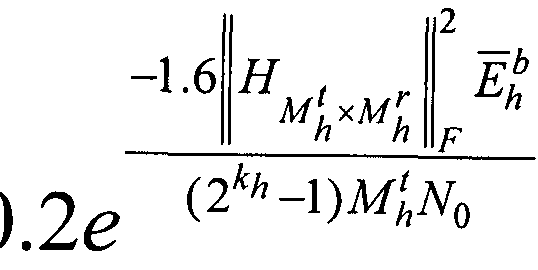
  • Equation 1 an estimated value representing ⁇ with cooperative nodes necessary for V-MIMO, V-MISO, and V-SIMO transmission, it can be obtained from Equation 1 below according to the Poisson Approximation of a random point. .
  • d local means the maximum value of the distance between the nodes forming the virtual input or virtual output. It can be input by the designer / controller according to the network channel environment. The larger the value of d, oca , the higher the gain of virtual I / O transmission in a network with low node density, and the higher the energy consumption used for information exchange between virtual input and output nodes.
  • is 1, 2, ....
  • ⁇ ( ⁇ ⁇ ) is calculated.
  • the sum of the transmission distances along the transmission path between the source node and the destination node must be longer than the ideal minimum distance, where ⁇ ( ⁇ ⁇ ) is the actual transmission distance .
  • This variable represents a degree greater than the ideal minimum distance.
  • ⁇ ( ⁇ ⁇ ) is a variable used to calculate the average distance between nodes when routing is formed, and statistical values can be obtained according to node density.
  • 4 is a graph showing simulation results obtained by approximating the statistically obtainable ⁇ ( ⁇ ⁇ ). That is, as shown in Figure 4, it can be seen that the average distance between nodes according to the node density within a certain area gradually decreases as a log function. Thus, the node density is 0.0005 ⁇ p ⁇ 0.0030.
  • ⁇ ( ⁇ ) can be expressed by Equation 2 below.
  • Equation 3 above shows the total energy used for data transmission from the source node to the destination node, the transmission absorption ⁇ MxM and the transmission energy of each hop.
  • P h c is a parameter related to the physical properties of the ad hoc node and has a constant value and can be expressed by Equation 4 below.
  • Equation 4 it can be obtained as a plane ⁇ ⁇ ⁇ of the distance between each hop node.
  • d SD is the distance between the source node and the destination node, and the node distance can be obtained by the following two methods. If the GPS information is available, it is possible to read the position information of the node 3 ⁇ 4 e ⁇ relatively accurate distance calculation nodes. RSS (Received if no GPS information is available)
  • the reception power ⁇ ⁇ in free space may be represented by Equation 5 below.
  • Equation 6 Equation 6 below.
  • Equation 7 The optimal absorption resulting from the above derivatives is given by Equation 7 below.
  • is 1,2,... ...
  • the optimal value of the energy used for data transfer from the source node to the destination node is calculated.
  • the transmission energy is the product of the optimal hop number ⁇ ⁇ ⁇ ⁇ and the transmission energy of each absorb ('').
  • the optimal transmission energy value obtained is stored.
  • the optimum transmission energy value for each M is compared and the energy is the lowest. Therefore, in Fig. 3, the storage step of [W MxM (M, M,)] is performed to obtain the number M of V-MIMO cooperating nodes that minimize transmission energy in a given network environment.
  • the value calculated by the source node is stored.
  • the source node is above 8 and step compares the energy consumption value for the stored V-MIMO in cooperation node number is determined the number M opt of the optimum V-MIMO cooperative nodes in a given network environment. This may be expressed as Equation 8 below.
  • the source node broadcasts a cooperative node request (CN REQ) message to all nodes in the network.
  • Cooperative Node Request (CN REQ) The message contains the M opt value calculated in step (9) above. Therefore, the nem m node can receive the optimal number of cooperative nodes in the current network situation.
  • Every node that receives a CN REQ message transmits a CN information message including a node's IP address or node ID to a neighbor node at one hop distance. Any node that receives the CN Information message or a node that can participate in the data transmission has the location of the node after storing the M opt node information with the largest RSS in the CN Information message.
  • the source node uses the received information to determine the nodes and the role of each node for establishing a minimum energy consumption path (MECR) to the destination node through the calculation of steps (11) to (20) below.
  • MECR minimum energy consumption path
  • the calculation of steps (11) to (20) is performed with the possible V-MIMO setting of M opt or less in the section where the number of cooperative nodes does not reach the optimal value of M opt due to low node density or low battery of neighboring nodes. To perform.
  • an optimal transmission technique is selected for each absorption from l to x.
  • the method of minimizing energy consumption among the transmission methods of V-MIMO, V-MISO, V-SIMO, and SISO is selected as the optimal transmission method.
  • the energy consumption efficiency of each transmission method is SISO when the transmission distance is short, V-MIMO when the transmission distance is long, and V-MISO and V-SIMO in the middle section. Therefore, the step of selecting a transmission method having an optimal energy for each absorption can be obtained according to the steps of (12) to (20).
  • the optimal number of cooperative nodes M h r used for V-SIMO transmission is set from 1 to V- of min (r, M opt ).
  • Equation 10 The calculation of ⁇ E h (l, l,) -E h (l, M h r , d h ) ⁇ is performed by Equation 10 below to measure the more energy efficient transmission method between SISO and V-SIMO. do.
  • w h is equal to the following equation n.
  • the average bit error rate (BER) ⁇ required by the network which is one of the important variables to know for comparing the energy consumption, can be obtained by the following two methods. First, if BER measurement is possible, the measured BER value is used. Second, when BER measurement is impossible, the BER estimation equation of the M-QAM transmission is shown in Equation 12 below.
  • Equation 12 P b «0 That is, given h (energy per bit required in the network) and channel environment
  • the transmission method is determined as V-SIMO.
  • an optimal cooperative node can be set as follows.
  • the source node may store the configuration. .
  • the source node performs the following calculation to predict the more energy efficient transmission method between SISO and V-MISO.
  • SISO According to the above calculation result, if the value of ⁇ E h (l, l, d h ) -E h (M h t , l, d h ) ⁇ is less than 0, the energy efficiency of SISO is better, so the transmission of the interval
  • the method is determined by SISO, and when ⁇ E h (l, l, d h ) -E h (M h t , l, d h ) ⁇ is greater than 0, the transmission method is determined by V-MISO.
  • the source node can consider the energy efficiency of the transmission method in the following order: have.
  • SISO is chosen as the transmission method because of its high energy efficiency
  • V-MIMO is selected because of its high energy efficiency
  • V-SIMO with similar energy efficiency is achieved. Choose the better method between V and MISO.
  • step (13) in order to measure the energy efficiency of V-SIMO transmission in step 1, do step (13).
  • Step (18) is identical to step (14). If the calculation is less than zero
  • the transmission method is selected as SISO, otherwise
  • the transmission method is determined according to the result of step (19).
  • the energy efficiency of V-MIMO is better.
  • the transmission method of the interval is determined by V-MIMO, and when ⁇ 3 ⁇ 4 (1, M h r , d h ) -E h (M h *, M h *, d h ) ⁇ is less than 0, the transmission method is ( 2 0) is determined in step. ,
  • the transmission method is determined by comparing the energy efficiency of the remaining V-MISO and V-SIMO in step (20).
  • 5 is a diagram illustrating a cooperative node request (CNREQ) message.
  • the CN REQ message transmits an optimal M value calculated by the source node to the entire network, that is, M opt so that nodes in the network can form a M opt based cooperative node.
  • the M field has values of 0, 1,2, and 3 with 2 bits allocated, which informs neighboring nodes to use 0, 1,2, and 3 V-MIMO cooperative nodes, respectively.
  • 2 bits are allocated to account for 3 X 3 V-MIMO transmissions.
  • field values can be assigned up to 3 bits, and 2 to 3 bits are appropriate for efficient transmission. Therefore, unlike the message format transmitted by the existing routing protocol, the present invention has a feature in that an M field is added and transmitted.
  • CN Information is a message for each node in a network to broadcast to a neighboring node reachable within one hop, so that each node forms M opt or less cooperative nodes.
  • Each node receives the information of the cooperative node received (CN Refer to RSS of Information) and make a list of up to M opt cooperating nodes in order of node that sent the strongest cooperating node information (CN Information) message. Therefore, unlike the message format transmitted by the existing routing protocol, the present invention has a feature in that an M field is added and transmitted.
  • a CN REP message is a message format for each node to transmit its location information and cooperative node information to a source node, and includes an R field for whether or not its node is used as a routing path.
  • W field containing information about willingness of W
  • E field transmitting energy level of node in 8 steps
  • location field for transmitting location information and location information for cooperative node.
  • CN IP Address field is included.
  • the E field represents a residual index at each node to allow high energy to participate.
  • the present invention has the feature that M field, W field, and E field are added and transmitted.
  • the HV-MIMO Setup message of FIG. 8 is a message for distributing the setup value calculated for the V-MIMO transmission by the source node to each node, and the C field indicating the role information of each node indicates the minimum energy consumption path ( Role coordination node for V-MIMO transmission, reception coordination node for V-MIMO transmission, and reception node for STBC decoding of V-MIMO transmission. Notify field. That is, the C field corresponds to a field for informing role information of the cooperative node.
  • the HV-MIMO Transmission IP Address field is assigned the IP address of the node to be referred for V-MIMO transmission. Therefore, unlike the message format transmitted in the existing routing protocol, the present invention has a feature in that an M field, a C field, and an HV-MIMO Transmission IP Address field are added and transmitted.
  • a header of a protocol includes a V field indicating a protocol version, a transmission method such as SISO, V-MISO, V-SIMO, and V-MIMO, and the number of antennas according to each transmission method (for example, V-MISO transmission).
  • Sir HV-MIMO Type field defining 2X1, 3X1, 4X1, etc.
  • Feedback field for exchanging codebook information for effective beamforming in Closed-Loop MIMO transmission, Reserved field for future use, and sequence of transmission Contains a Sequence Number field containing the number ' . This feedback information is suitable for theforming of the N codebook beamforming vectors known to both the transmitting end and the receiving end.
  • beamforming A method of selecting a vector and transmitting its index to a transmitter.
  • FIG. 10 presents a block diagram of a system implementation for designing a hybrid V-MIMO device.
  • the apparatus for setting an optimal multi-hop Hybrid V-MIMO transmission path proposed by the present invention and transmitting data through the path includes a wireless communication unit, a processor unit including a storage unit, a sensor unit, and a power supply unit (battery, etc.). It is.
  • the wireless communication unit is composed of an input / output interface (I / O Interface) 801 and a GPS module 802 for transmission to and from neighbor nodes.
  • the GPS modules are an optional configuration for receiving the position and distance information of the node.
  • the GPS module uses an estimation method using RSS as described above.
  • the wireless communication unit transmits data designated by the processor unit according to the configuration of the processor unit, and transmits the received data to the processor unit.
  • the processor portion includes a controller 803 and a memory 804.
  • the controller performs STBC encoding and decoding functions for data transmission and reception of wireless communication, link-state based routing protocol function, and performs an optimization algorithm as described in the pseudo code of FIG. Has
  • the controller processes the information measured by the sensor unit and delivers it to the wireless communication unit.
  • the controller stores the received packet or measured sensing information in a memory device to increase processing efficiency.
  • the sensor unit 805 is configured to enable suitable sensing according to the use of the sensor, such as medical, construction, agriculture, environment, defense, quarantine, logistics.
  • the power supply device 806 such as a battery supplies power to the wireless communication unit, the processor unit, and the sensor unit.
  • the processor unit When there is a GPS module in order to calculate the optimum and number of cooperative nodes (M opt ), the processor unit receives the position and distance information of the node, and each node in the network performs wireless communication with the neighboring nodes using the I / O interface modules. Therefore, broadcasting between each node in the network, or at the destination node, and at the source node, and at the intermediate node, can be performed through the I / O Interface modules. All.
  • the processor unit Based on the information on each node from the wireless communication unit, the processor unit performs a routing protocol function as the present invention. That is, the processor unit performs an optimization algorithm as described in the pseudo code of the embodiment of the present invention in FIG. 3.
  • the processor unit of one node in the network for example, the source node, calculates an optimal number of cooperative nodes (M opt ) and broadcasts the calculated M opt to the all nodes in the network by the wireless communication unit. All nodes receiving the cooperative node request message transmit the cooperative information message including the node's IP address or node ID to the neighboring node within 1 node. For example, as shown in FIG. 1, the source node S broadcasts the cooperative node request message to the nodes nl to n9 in the network in the wireless communication unit.
  • the nodes After receiving the cooperative request message of the source node, the nodes transmit the cooperative node information (CN Information) message to the neighbor node to co-operate with up to M opt nodes. That is, as shown in FIG. 1, nodes nl to n9 in the network receiving the cooperative node request message transmit the cooperative node information message to the node at one hop distance. Then, each node that receives the CN information message has a maximum M in order of receiving received signal strength of RSS information of neighboring nodes that are one hop away. It saves node information, which is a list of opt cooperative nodes, and transmits unicast to the source node with the node location information and cooperative node information in the cooperative node answer (CN REP) message.
  • CN REP cooperative node answer
  • the controller 803 of the source node processes the information measured by the sensor unit 805 to store and store the information stored in the energy storage unit 806 Is transmitted to the radio communication unit 801 and 802. Therefore, the radio communication unit of the source node forwards the configuration message about the cooperative reception / transmission node set by the controller of the source node to the radio communication unit of the node forming the data transmission path. do.
  • the optimal HV-MIMO transmission scheme is set for each intake from the source node to the destination node and data is transmitted.
  • 11 is a graph showing energy efficiency according to each transmission method according to the transmission distance.
  • the energy efficiency of SISO, V-MISO, V-SIMO and V-MIMO depends on the transmission distance.
  • 11 is an end-to-end data rate of 10kbps and end-to-end bit error
  • Experimental results are obtained by comparing 1 absorption energy with each technique of SISO, 2X1 V-MISO, and 1X2 V-Snviu 3 ⁇ 4 ⁇ v-MIMO where the ratio (BER) is less than 10—.
  • FIG 12, 13 and 14 are graphs showing the transmission energy consumption of each transmission method according to the network environment.
  • the energy consumption of SISO, V-MISO, V-SIMO, V-MIMO, and Hybrid V-MIMO multi-absorption transmissions depends on the network density.
  • Node density is defined as the average number of nodes in lm 2 , and nodes are randomly distributed according to a uniform random distribution.
  • the maximum transmission distance of nodes is assumed to be 102.13 m by referring to IEEE 802.15.4-2006.
  • FIG. 12 illustrates an example of limiting the number of cooperating nodes of the protocol proposed by the present invention to 2.
  • Hybrid V-MIMO transmissions have an average energy gain of 4% 19%, 2.08%, 28.65%, and 0.94% for SISO, V-SIMO, V-MISO, and V-MIMO, respectively.
  • FIG. 13 is an embodiment of a case in which the number of cooperative nodes of the protocol proposed by the present invention is limited to 4, and the energy of SISO, 4X 1 V-MISO, 1 X4 V-SIMO, 4X4 V-MIMO, and Hybrid transmission method Compare the consumption.
  • the energy of SISO, 4X 1 V-MISO, 1 X4 V-SIMO, 4X4 V-MIMO, and Hybrid transmission method Compare the consumption.
  • an embodiment considering an environment having a higher node density than that of FIG. 12 has been presented.
  • FIG. 14 is a diagram illustrating network connectivity according to node density. 14 compares the connectivity of SISO, 2X2 V-MIMO, 3X3 V-MIMO, 4X4 V-MIMO and Hybrid V-MIMO.
  • FIG. 15 is a flowchart illustrating an optimal V-MIMO transmission based on an intermediate node in a network according to an embodiment of the present invention.
  • M h r is the number of input nodes to receive
  • M h r is the number of input nodes to receive, so the maximum value of the number of output nodes to transmit and the number of input nodes to receive in the network applying the protocol is determined as M opt .
  • 15 shows that a particular node of the network calculates the optimal number of cooperative nodes (M opt ) in the network (1501).
  • a particular node of the network then broadcasts 150 cooperating node request messages to all nodes in the network, including the optimal number of cooperating nodes M opt .
  • an optimal transmission path and / or a cooperative reception node for each absorption are configured (1504) from the first node to the second node.
  • the cooperative node configuration message indicating the cooperative transmission node and / or the cooperative reception node is transmitted to the corresponding node (1505).
  • the source node starts data transmission to the neighbor node of the source node according to the optimal transmission path determined by the source node or the destination node or the intermediate node. .
  • the neighbor node transmits the data to the next node according to the optimal transmission path.
  • each node constituting the optimal transmission path receives the data and transmits it to the next node.
  • the cooperative transmission node set for each intake participates in the data transmission
  • the cooperative reception node set for each hop participates in the data reception.
  • the data is transmitted from the near-origin node to the destination node through each node constituting the optimal transmission path, and for each hop of the optimal transmission path, the cooperative transmission node and / or the cooperative reception node set according to the present invention are configured. Participate in the data transmission / reception.
  • FIG. 16 is a diagram illustrating an optimal transmission path setting from a source (S) node to a destination (D) node.
  • S-node sets the optimal number of cooperative nodes (M opt )
  • the S-node broadcasts a cooperative request message containing the optimal number of cooperative nodes to all nodes (N1-N9) in the network. do.
  • each node receiving the cooperative request message transmits cooperative information (CN Information) to neighbor nodes of the first absorbing node in order to establish cooperative nodes having an optimal number of cooperative nodes (M opt ).
  • Each node that receives the CN information message has a maximum M opt in order of the largest RSS (Received Signal Strength) of the CN information among neighboring nodes at one hop distance.
  • RSS Receiveived Signal Strength
  • Node information which is a list of up to cooperating nodes, and location of node It transmits unicast to source node in CN REP message with information.
  • each node N1 to N9 transmits a cooperative node response message (CNREP) to the source node.
  • CREP cooperative node response message
  • the source node transmits a cooperative node configuration message, which is information indicating a cooperative transmission node and / or a cooperative reception node, which sets an optimal transmission path in each hop, based on the cooperative node answer message. That is, the cooperative transmission node and / or the cooperative reception node are determined at each node by the cooperative node configuration message, and the optimal HV-MIMO transmission path can be configured. For example, in the case of the node N3 in FIG. 16, when the input is received from the nodes N1 and N2 and is transmitted to the node N5, the number of cooperative transmission nodes (M h t ) is 1, and the cooperative reception node is 2 Will be. In this case, the MISO path setting method is selected.
  • the present invention provides the network-optimized HV-MIMO transmission path by transmitting the cooperative node configuration message, which is information indicating the optimal transmission path and the cooperative transmission node and / or the cooperative receiving node, to each corresponding node. Protocol method to set.

Landscapes

  • Engineering & Computer Science (AREA)
  • Computer Networks & Wireless Communication (AREA)
  • Signal Processing (AREA)
  • Mobile Radio Communication Systems (AREA)

Abstract

본 발명은 무선 애드 혹 네트워크 (Wireless Ad Hoc Network) 에서 에너지 효율을 높이기 위해 최적의 전송 경로를 설정하는 방법에 관한 것이다. 보다 구체적으로 설명하면, 본 발명은 제한된 에너지로 동작하는 기기간(M2M: Machine to Machine) 통신 장치들로 구성된 무선 네트워크의 다중 홉 데이터 전송 환경에서, 상기 네트워크 내 노드의 위치 등 상기 네트워크의 링크 정보를 기반으로, 최적화된 데이터 전송 경로를 설정하되, 이를 위하여 각 홉마다 단일입출력(SISO: Single Input Single Output), 가상 단일입력 다중출력(V-SIMO: Virtual Single Input Multiple Output), 가상 다중입력 단일출력 (V-MISO: Virtual Multiple Input Single Output) 및 가상 다중입출력 (V-MIMO) 전송기법 중 최적의 전송기법을 선택하여 에너지 소모를 최소화하는 무선 M2M 통신 네트워크 프로토콜에 관한 것이다.

Description

【명세서】
【발명의 명칭】
무선 애드 혹 네트워크를 위한 최적의 다중 홉 Hybrid V-MIMO 전송 경로 설 정을 위한 라우팅 방법 및 장치
【기술분야】
본 발명은 무선 애드 혹 네트워크를 위한 최적의 다중 홉 Hybrid V-MIMO 전송 경로 설정을 위한 라우팅 방법 및 장치에 관한 것이다.
【배경기술】
무선 애드흑 네트워크 (Wireless Ad Hoc Network)는 노드들에 의해 자율적으로 구성되는, 기반 구조 없는 네트워크로서, 네트워크의 구성 및 유지를 위해 기지국 이나 엑세스 포인트와 같이 기반 네트워크 장치를 필요로 하지 않는 네트워크를 말한다.
무선 애드혹 네트워크 상에서 최저 전력을 소모하는 라우팅 경로 (path)를 산 출하는 것은 중요한 문제이다.
무선 애드 혹 네트워크 (Wireless Ad Hoc Network) 에서 에너지 효율을 높이기 위해 최적의 전송 경로 설정방법으로, MIMO(multiple Input Multiple Output)와 V- MIMO등인 전송 기술이 있다. 이 중 MIMO 전송방식이 갖는 높은 대역폭 효율로 인해 다양한 MIMO 전송 기술이 개발되고 있다. 그러나 MIMO 전송을 위해서는 전송기 및 수신기의 회로 구성이 복잡해지고, 회로의 소모 에너지가 많아지므로 무선 애드 흑 네트워크에서 활용하기에 어려움이 있다. 더욱이 작은 센서에 다수 의 안테나를 설치하는 것 또한 구현에 걸림돌이 된다. 이러한 문제로 인해 가상 안테나 배열 (Virtual Antenna Array) 을 이용한 V-MIMO(Virtual MIMO) 전송기술이 애드 혹 네트워크에 MIMO 기술을 적용하기 위한 해결책으로 제시되었다. V- MIMO(Virtual Multiple Input Multiple Output)를 적용한 무선 애드 혹 네트워크는 MIMO가 갖는 다중화 이득을 갖는 장점이 있는 반면, 전송에 참여하는 센서 간의 협동을 위해 추가적인 에너지 소모 및 전송 지연이 발생한다. 따라서 데이터 전 송 거리가 짧은 경우 에너지 및 지연시간 축면에서 효율적이지 못한 단점이 있다. 한편, AODV(Ad-hoc On-demand Distance Vector), DSR(Dynamic Source Routing), DYMO(Dynamic MANET On-demand)는 모두 무선 애드 흑 네트워크들 ^ 한 은디 맨드 (on-demand) 방식 라우팅 알고리즘이다. AODV(Ad-hoc On-demand Distance Vector)는 벨만 -포드 (BELLMAN-FORD) 알고리즘을 기 반으로 하는 테이블 기 반 (table-driven) 알고리즘인 DSDV(Destination-Sequenced Distance- Vector Routing)을 기 본으로 한다. 근원지 노드가 목적지 노드로 전송을 시작할 때, 유효한 경로를 가 지고 있지 않은 경우, 경로 요청 (RREQ: route request) 메시지를 브로드캐스트 전송 하여 이웃 노드 및 중간 노드로부터 경로를 탐색하고, 경로가 형성 이 가능한 노 드들이 경로응답 (RREP: route reply)메시지를 근원지 노드까지 회신하여 경로를 형 성하는 방식으로 동작하는 라우팅 프로토콜이다.
DSR은 모바일 노드가 알고 있는 경로 캐쉬를 유지 및 갱신하여 라우팅 경로 를 유지 한다. 근원지 노드가 전송을 시작할 때, 목적지 노드까지의 유효한 경로가 있을 경우 경로 캐쉬를 저장하고 패킷을 전송하며 , 경로를 가지고 있지 않은 경 우 경로 요청 (RREQ) 패킷을 브로드캐스트 전송하여 경로 탐색을 하고 목적 경로 가 유효한 경로 캐쉬를 포함하는 노드를 만나면 경로 웅답 (RREP)패킷을 보내 경 로를 형성하는 라우팅 프로토콜이다.
DYMO는 AODV, DSR과 유사하게 경로 요청 (RREQ) 메시지와 경로 응답 (RREP) 메시지로 경로를 형성하는 무선 애드 흑 온디 맨드 (On-demand) 프로토콜이 다. DYMO는 AODV에 이어 개발된 라우팅 프로토콜로, AODV의 장점을 가지 며 AODV보다 구현이 용이 하다는 장점 이 있다.
위와 같은 프로토콜 내에서는 단일입출력 (SISO: Single Input Single Output), 가 상 단일입 력 다중출력 (V-SIMO: Virtual Single Input Multiple Output), 가상 다중입 력 단일출력 (V-MISO: Virtual Multiple Input Single Output) 및 가상 다중입출력 (V- MIMO) 전송 기 법 중에서 동일한 전송 기법 하나만 이용한다. 따라서, 1 흡의 전 송 거 리 마다 에너지 효율이 떨어지는 면이 있다.
【발명의 상세한 ^명】
【기술적 과제】
본 발명 이 해결하고자 하는 과제는 제한된 에너지를 가진 무선 애드 혹 네트 워크 다중 홉 전송 환경 에서 에너지 효율 면에서 최 적의 전송 경로를 찾는 방법 및 장치를 제공한다. 또한, 최적 경로의 각 구간에서 SISO(single input single output), V-MISO(virtual- multiple input single output), V-SIMO(virtual-single input multiple output) 및 V- MIMO(virtual- multiple input multiple output)와 같은 다양한 전송 기술을 활용하여 최적의 조합을 선택하는 Hybrid V-MIMO 전송 기술을 제공한다.
【기술적 해결방법】
본 발명의 일 양상으로, 애드 혹 네트워크 내 소정 노드가 제 1 노드로부터 제 2 노드로의 데이터 전송 경로를 설정함에 있어서, 상기 네트워크 내에서 최적 의 협력 노드 수 (Mopt)를 계산하는 단계; 상기 최적의 협력 노드 수 (Mopt)를 포함하 는 협력 노드 요청 메시지를 상기 네트워크 내의 모든 노드에 전송하는 단계; 상 기 네트워크 내 하나 이상의 노드로부터 협력 노드 응답 메시지를 수신하는 단 계; 상기 협력 노드 응답 메시지를 기초로, 상기 제 1 노드로부터 상기 제 2 노드 로의 최적 전송 경로 및 상기 최적 전송 경로의 각 흡마다 협력 전송 노드 및 /또 는 협력 수신 노드를 설정하는 단계; 및 상기 설정된 협력 전송 노드 및 /또는 협 력 수신 노드를 나타내는 정보인 협력 노드 설정메시지를 해당 노드에 전송하는 단계를 포함하는 전송 경로 설정방법이 제공된다.
본 발명의 다른 양상으로, 애드 혹 네트워크 내 소정 노드가 제 1 노드로부터 제 2 노드로의 데이터 전송 경로를 설정함에 있어서, 신호를 송수신하도록 구성 된 무선통신부; 상기 네트워크 내에서 최적의 협력 노드 수 (Mopt)를 계산하도록 구성되고, 상기 최적의 협력 노드 수 (Mopt)를 포함하는 협력 노드 요청 메시지를 상기 네트워크 내의 모든 노드에 전송하도록 상기 무선통신부를 제어하며, 상기 네트워크 내 하나 이상의 노드로부터 수신한 협력 노드 웅답 메시지를 기초로, 상기 제 1 노드로부터 상기 제 2 노드로의 최적 전송 경로 및 상기 최적 전송 경 로의 각 흡마다 협력 전송 노드 및 협력 수신 노드를 설정하여, 상기 설정된 협 력 전송 노드 및 협력 수신 노드를 나타내는 정보인 협력 노드 설정메시지를 해 당 노드에 전송하도록 상기 무선통신부를 제어하는 프로세서부를 포함하는, 전송 경로 설정 장치가 제공된다.
본 발명의 각 양상에 있어서, 상기 최적의 협력 노드 수 (Mopt)는 상기 제 1 노드 또는 상기 제 2 노드 또는 상기 네트워크 내 전력이 높은 중간 노드에 의해 계산될 수 있다. 본 발명의 각 양상에 있어서, 각 홉마다 설정되는 협력 전 ^ ¾ 협력 수신 노드의 수 각각은 상기 최적 협력 노드 수 (Mopt) 이하인 것을 특징으로 할 수 있다.
본 발명의 각 양상에 있어서, 상기 최적의 협력 노드 수 (Mopt)의 계산은 네트 워크 내의 각 노드 간의 거리 및 각 노드의 에너지를 기초로 상기 최적의 협력 노드 수를 결정할 수 있다.
【유리한 효과】
본 발명에 따르면, 규모가 큰 무선 애드 혹 (ad hoc) 네트워크에서 데이터 전 달 경로를 하나 또는 여러 구간으로 나누어 각 구간별로 에너지 최적화된 전달 방식을 흔합 사용함으로써, 데이터 전송의 에너지 효율성 및 연결성을 높이는 효 과가 있다. 종래 V-MIMO 프로토콜은 데이터 전송 거리가 짧을 경우 에너지 및 지연시간 측면에서 SISO에 비해 비효율적인 단점이 있다. 본 발명에서는 데이터 전송 경로를 서비스 품질을 만족시키는 최적 구간 길이로 나누어 각 구간별로 사 비스 품질을 만족하는 최적의 데이터 전송방식을 선택적으로 이용하므로 에너지 소모를 최소화하여 서비스 품질을 만족하는 효과가 있다.
【도면의 간단한 설명】
도 1 은 근원지 노드 기반 최적의 V-MIMO 전송이 가능하도톡 메시지의 흐 름을 나타낸 일실시예 구조도.
도 2 는 목적지 노드 기반 최적의 V-MIMO 전송이 가능하도록 메시지의 흐 름을 나타낸 일실시예 구조도.
도 3은 다중 흡 전송환경의 애드 혹 네트워크에서 최적의 V-MIMO 전송 경 로를 설정하는 프로토콜 에너지 소모 최적 경로 설정 알고리즘.
도 4는 노드 밀도에 따른 라우팅 형성 시 노드 간 평균 거리를 계산한 그래 프 도 5는 최적의 V-MIMO(virtual-multiple input multiple output) 전송을 위한 정보 교환에 사용하도록 제시된 CN REQ (cooperate node request) 메시지 형식을 나타낸 구조도.
도 6은 최적의 V-MIMO 전송올 위한 정보 교환에 사용하도록 제시된
CN(cooperate node) Information 메시지 형식을 나타낸 구조도. 도 7은 최적의 V-MIMO 전송을 위한 정보 교환에 사용하노^ ^A!건
REP(cooperate node reply) 메시지 형식을 나타낸 구조도.
도 8은 최적의 V-MIMO 전송을 위한 정보 교환에 사용하도톡 하는 HV-MIMO 설정 (Setup) 메시지 형식.
도 9는 최적의 V-MIMO 전송올 위한 정보 교환에 사용하도록 하는 프로토콜 헤더 형식.
도 10은 최적의 V-MIMO 전송을 위한 정보 교환 및 최적 경로 설정을 가능 하게 하는 Hybrid V-MIMO 장치를 나타낸 도면.
도 U은 전송거리에 따른 각 전송방식 SISO, V-MISO, V-SIMO 및 V-MIMO에 따른 에너지 효율을 나타낸 그래프.
도 12, 도 13 및 도 14는 네트워크 환경에 따른 SISO, V-MISO, V-SIMO, V- MIMO 및 Hybrid V-MIMO 멀티 흡 전송의 에너지 소모를 나타낸 그래프.
도 15는 본 발명의 다른 실시 예를 나타낸 네트워크 노드의 증간 노드 기반 의 최적의 V-MIMO 전송이 가능하도록 나타낸 흐름도.
도 16은 본 발명의 일 실시 예를 나타낸 네트워크 내 설정된 전송경로를 예 시한 도면.
【발명의 실시를 위한 형태】
본 발명이 제안하는 프로토콜은 근원지 노드 기반 또는 목적지 노드 기반으 로 동작할 수 있다. 그러나, 근원지 노드 또는 목적지 노드로 제한되지 않으며, 중간 노드인 경우에도 본 발명의 적용이 가능하다. 도 1 및 도 2 는 전술한 각각 근원지 노드 기반에 따른 프로토콜 동작 및 목적자 노드 기반에 따른 프로토콜 동작에 대한 메시지 흐름도이다. 중간 노드 기반에 따른 프로토콜 동작에 대한 메시지 흐름도는 도 15에서 후술하도특 한다.
본원발명에서 제 1 노드는 목적지 노드, 근원지 노드, 또는 네트워크 내 전력 이 높은 중간 노드 중 어느 하나일 수 있다. 따라서, 후술하는 목적지 노드, 근원 지 노드, 중간 노드는 서로 대치되어 동작될 수 있으므로, 목적지 노드 기반의 서 술은 근원지 노드 기반 또는 중간 노드 기반으로 해석될 수 있다.
본원발명에서 노드는 데이터를 전송 또는 수신하는 통신기기 (통신 단말 또는 중계기)를 의미하고, 흡은 각 노드 위에 위치한 데이터 통신 장비간의 절대 경로 를 의미한다. 또는 노드는 라우터와 같은 시스템이며, 노드와 노느 기
Figure imgf000008_0001
트 (segment)라 한다. 세그먼트와 세그먼트 사이를 넘는 것을 흡 (hop)이라 한다. 각 각의 세그먼트는 독립적인 네트워크 주소를 갖는다. 따라서 '노드와 노드 사 이' 용어와 '흡과 홉 사이' 용어는 대치되어 사용할 수 있다.
도 1 은 근원지 노드 기반으로 V-MIMO 전송을 설정하는 경우의 메시지 흐 름도이다. 이하에서, 최적의 협력 노드 개수 (Mopt)는 네트워크 내의 각 노드에서 가상 수신 노드 (Mr) 및 가상 전송 노드 (Mt) 개수의 최적 값을 의미한다. 최적의 협력 노드 개수 (Mopt)의 계산과 관련하여 후술하도록 한다.
먼저, 근원지 노드는 최적의 협력 노드 개수 (Mopt)를 계산하고, 상기 계산한 Mop, 를 네트워크 내의 모든 노드에 협력 노드 요청 메시지 (CN REQ)를 전송한다 (①)ᅳ 예를 들어, 도 1에서와 같이 근원지 노드 (S)는 협력 노드 요청 메시지를 네 트워크 내 노드 (nl~n9)로 전송한다.
최대 Mopt 개의 노드와의 협력을 위해, 근원지 노드의 메시지를 받은 노드들 은 1흡 거리의 이웃 노드들에게 협력 노드 정보 (CN Information) 메시지를 전송한 다(②). 도 1를 참조하면, 협력 노드 요청 메시지를 받은 노드인 네트워크 내 노 드 (nl ~ n9)는 1 홉 (one hop) 거리에 있는 노드에게 협력 노드 정보 메시지를 전송 한다.
상기 협력 노드 정보 (CN Information) 메시지를 받은 각 노드는 1 흡 (one hop) 거 리에 있는 이웃 노드 중 협력 노드 정보 (CN Information) 의 RSS(Received Signal Strength)가 가장 큰 순서대로 최대 Mopt개까지의 협력 노드 리스트인 노드 정보 등을 저장하고, 노드의 위치 정보와 함께 협력 노드 응답 (CN REP) 메시지에 담아 근원지 노드에 유니캐스트 전송한다. 협력 노드는 데이터의 전송을 위한 협력 송 신 노드 및 /또는 협력 수신 노드를 의미한다 (③) . 도 1을 참조하면, 각각의 노드 nl~ n9까지의 노드는 근원지 노드로 협력 노드 응답 메시지 (CN REP)를 전송한다. 상기 협력 노드 응답 (CN REP) 메시지를 전송하는 노드는 상기 협력 노드 정보 (CN Information) 메시지를 수신한 노드들 중 데이터 전송에 참여 가능한 노드일 수 있다.
근원지 노드는 협력 노드 웅답 메시지를 바탕으로, 각 흡에서의 최적의 전송 경로를 설정하는 협력 전송 노드 및 /또는 협력 수신 노드를 나타내는 정보인 협 력 노드 설정 메시지를 해당 노드에 전송한다. 따라서, 도 1에 i| ^)^^ ^ 노드들로부터 협력 노드 응답 (CN REP) 메시지를 받은 근원지 노드는, 최적의 전 송 경로 설정 정보인 협력 노드 설정 메시지를 생성한다. 이 HV-MIMO 전송을 위한 협력 노드 설정 메시지를, 각 해당 노드 (nl~ n9)에 전송하는 과정을 거친다 (④ ). 따라서 상기와 같이 근원지 노드가 각 흡마다 최적의 전송경로를 설정하여 프로토콜 동작에 대한 데이터를 전송한다. 따라서 이와 같이 네트워크 내의 각 노드는 어떤 노드로부터 정보를 수신하고 어떤 노드로 정보를 전송하는지 여부를 알 수 있다. 따라서 네트워크 내의 각 노드는 전송받는 노드와 수신하는 노드에 관한 정보를 저장할 수도 있으며, 일정의 주기마다 각 노드에서 수신 노드 및 전 송 노드의 정보를 변경할 수 있다.
위 과정은 근원지 노드가 아닌 목적지 노드 기반으로 형성이 가능하다. 목적 지 노드 기반 라우팅 경로 설정은 도 2와 같다. 이는 도 1에서 보인 근원지 노드 기반 경로 설정과 거의 동일하게 근원지 노드의 역할은 목적지 노드가 수행한다. 즉, 도 2와 동일하게 목적지 노드가 최적의 협력 노드 개수 (Mopt)를 네트워크 내 노드에 협력 노드 요청 메시지를 브로드캐스트한다 (①) . 예를 들어, 도 2에서와 같이 목적지 노드 (D)는 협력 노드 요청 메시지를 네트워크 내 노드 (nl 〜 n9)로 전 송한다.
최대 Mopt 개의 노드와 협력을 위해, 목적지 노드의 메시지를 받은 노드들은 1흡 거리의 이웃 노드들에게 협력 노드 정보 (CN Information) 메시지를 전송한다 (②) . 즉 도 2에서와 같이, 협력 노드 요청 메시지를 받은 노드 (nl ~ n9)는 1 흡 (one hop) 거리에 있는 노드에게 협력 노드 정보 메시지를 전송한다.
협력 노드 정보 (CN Information) 메시지를 받은 각 노드는 1 홉 (one hop) 거리 에 있는 협력 노드 정보 (CN Information) 의 RSS(Received Signal Strength)가 가장 큰 순서대로 Mopt개까지의 협력 노드 리스트인 노드 정보 등을 저장하고, 노드의 위치 정보 및 협력 노드 정보를 협력 노드 웅답 (CN REP) 메시지에 담아 근원지 노드에 유니캐스트 전송한다. 협력 노드는 데이터의 전송을 위한 협력 송신 노드 및 /또는 협력 수신 노드를 의미한다 (③) . 즉, 도 2에서와 같이 각각의 노드 nl~ n9 까지의 노드는 목적지 노드로 협력 노드 응답 메시지 (CNREP)를 전송한다.
이와 같은 과정을 통하여 네트워크 내의 각 노드는 최대 Mopt 개를 갖는 협력 가능한 노드들을 설정하고, 자신과 협력 가능한 노드들의 정보를 ^-^^, 노드는 협력 노드 응답 메시지를 바탕으로, 각 홉에서의 최적의 전송 경로 설정 을 위한 협력 전송 노드 및 /또는 협력 수신 노드를 나타내는 정보인 협력 노드 설정 메시지를 해당 노드에 전송한다. 따라서, 도 2에서 네트워크의 각 노드들로 부터 협력 노드 응답 (CN REP) 메시지를 받은 목적지 노드는, 최적의 전송 경로 설정 정보인 협력 노드 설정 메시지를 생성한다. 이 HV-MIMO 전송을 위한 협력 노드 설정 메시지를, 각 해당 노드 (nl~n9)에 전송하는 과정을 거친다 (④) .
상기와 같이, 프로토콜에서 전송과정을 위한 V-MIMO 전송 경로 설정방법은 근원지 노드와 목적지 노드에 한정되지 않으며 네트워크내의 특정 노드로 설정이 가능하다. 이와 같이 네트워크 내의 특정 노드로 설정되는 경우, 그 특정 노드는 예를 들어 다른 곳으로부터 파워를 공급 받아, 최적의 혈력 노드 개수 (Mopt)의 계 산 및 각각의 메시지 전송 및 수신이 원활히 이루어 질 수 있다.
도 3은 전술한 프로토콜의 동작을 구현하는 수도 코드 (pseudo code)를 예시한 것이다. 아래 내용은 수도 코드 (pseudo code)의 각 부분에 대한 설명이다. 설명의 편의를 위하여, 근원지 노드가 Mopt를 계산 /전송하는 것으로 도 3의 수도 코드를 설명하나, 네트워크 내 임의의 노드에 의해 계산 /전송될 수 있음은 앞서 밝힌 바 있다.
(1) GET node density p
본 발명이 제안하는 최적의 전송 기법은 네트워크 내 노드의 밀도가 높고 낮 음에 의존적이다. 따라서 , 근원자 노드는 네트워크 초기 설정 단계에서 얻은 밀도 값 P를 읽어 들인다. 이 때, 네트워크 밀도 P는, 예를 들어, 아래의 방법 중 하 나에 따라 결정될 수 있다.
①네트워크 설계자 /제어기 (controller)가 직접 입력
네트워크 설계자 /제어기가 네트워크 설치 후 네트워크의 노드 밀도 값을 초 기값으로써 직접 입력하는 방법이다.
② 이웃 노드의 개수로부터 추정
브로드캐스트 메시지에 대해 응답을 한 노드의 개수를 기반으로 추정하는 방 법으로서, 근원지 노드는 브로드캐스트 범위 내 노드 개수로부터 단위 면적 당 노드 개수 즉 P를 추정할 수 있다. ③ GPS 정보를 이용
GPS 정보가 이용 가능한 경우, GPS의 위치 정보를 통해 실제 노드 밀도 값 을 측정 및 계산할 수 있다.
(2) FOR M= maxCMh 1, Mh r) = 1 toN
본 발명이 제안하는 프로토콜의 일 예인 수도 코드 (pseudo code)는 네트워크 환경에 따라 V-MIMO, V-MISO, V-SIMO 전송 기법의 가상 입력 및 가상 출력 노 드 개수 최적 값을 구하는 단계를 포함한다. 이에 따라 네트워크는 데이터 전송 시 2X2, 3X3 등의 여러 입출력 조합에서 최적의 가상 입출력 개수만큼의 노드가 전송에 참여하게 된다. 최적의 입출력 조합은 아래의 과정으로 구할 수 있다. 데이터 전송에 앞서 근원지 노드는 노드 밀도 P를 이용하여 각 입출력 조합 (Mh t, Mh r)을 대표하는 변수 M = max(Mh t, Mh r^l 1에서 N까지의 각 경우마다 최적의 전 송 에너지를 계산한다. 여기서, Mh t 은 전송하는 출력 노드 수이며, 수신하 는 입력 노드 수이다. 즉, 각 해당 노드에서, 근원지 노드는 전송하는 출력 노드 와 수신하는 입력 노드를 고려하여 최적의 전송에너지 계산이 가능하다.
각 M = 1, 2, 3, …. N 인 각 경우의 최적 전송 에너지 중 최소 값을 갖는 경 우를 Mopt로 정의하며, 이는 V-MIMO, V-MISO, V-SIMO 데이터 전송 시 최적의 가 상 입력 및 출력 노드 개수를 의미한다. 위 과정은 아래 (3) ~ (10)에서 각 단계별 로 구체적으로 기술되어 있다. 임의의 변수 N은 최적의 V-MIMO 전송 기법에 사 용되는 협력 노드 개수의 최대값으로 적당한 수가 지정될 수 있다. 협력 노드의 개수는 네트워크 환경에 따라 최적 값이 다를 수 있으나 일반적으로 구현의 복잡 도 등을 고려할 때 5개 이하가 적당한 것으로 알려져 있다. N 변수는 네트워크 구성 시 설계자가 입력할 수 있으며, 네트워크 환경에 따라 2 이상 5 이하의 수 를 입력하여 근원지 노드가 2X2, 3X3, 4X4의 가상 입출력 조합에서 최적의 입 /출 력 노드 수 Mopt를 구하도록 설정한다. N이 작을수톡 전송 초기 설정에 소요되는 시간이 줄어드는 장점이 있으며 반면 주어진 네트워크에서 최적의 전송 기법이 선택되지 못할 수 있는 단점이 있을 수도 있다.
(3) COMPUTE p MxM
1부터 N까지의 M에 대하여 ,Μ이 1,2, ····.· Ν 인 각 경우 마다 효율적인 노드 밀도 (effective node density) p MxM 가 계산된다. P MXM 는 주어진 네트워크 환경에 서 V-MIMO, V-MISO, V-SIMO 전송에 필요한 협력 노드를 가진 ^ 노큼 나타내는 추정 값으로써, 랜덤 포인트 (random point)의 포아송 근사법 (Poisson Approximation)에 따라 아래와 같이 수학식 1로 구할 수 있다.
【수학식 1】
0 ᅳ pe—^ { dlocalP
Μ Μᅳ . , .
M\ 이 때, dlocal은 가상 입력 또는 가상 출력을 이루는 노드들 간 거리의 최대 값을 의미한다. 네트워크 채널 환경 등에 따라 설계자 /제어기 (controller)가 입력할 수 있 다. d,oca, 값이 클수록 노드 밀도가 낮은 네트워크에서도 가상 입출력 전송을 통한 이득을 얻을 확를이 높아지는 장점이 있으며, 가상 입력 및 출력 노드 간 정보 교환에 사용되는 에너지 소모가 커지는 단점이 있다.
(4) COMPUTE β ( ΜΧ )
또한, 1부터 Ν까지의 Μ에 대하여, Μ이 1, 2, ·····. Ν 인 각 경우 마다 β(ρΜχΜ) 를 계산한다ᅳ 근원지 노드와 목적지 노드 간의 전송 경로에 따른 전송 거리의 합 은 이상적인 최소 거리보다 길 수 밖에 없는데, 이 때 β(ρΜχΜ) 는 실제 전송 거 리가 이상적인 최소 거리보다 큰 정도를 나타내는 변수이다.
β( ΜχΜ) 는 라우팅 형성 시 노드 간 평균 거리를 계산하는 데 이용되는 변 수로서 노드 밀도에 따라 통계적인 값을 구할 수 있다. 도 4는 통계적으로 구할 수 있는 β(ΡΜχΜ) 의 근사값을 구한 시뮬레이션 결과를 나타낸 그래프이다. 즉 도 4에서와 같이, 일정 면적 내에서의 노드 밀도에 .따른 노드간 평균 거리는 로 그 함수로서 점점 감소하는 것을 알 수 있다. 따라서, 노드 밀도가 0.0005 < p < 0.0030. 일 때 β(ρ)는 아래의 식 2로 나타낼 수 있다.
【수학식 2】
(ρ)二 -0.1191η(ρ) + 0.414 (5) COMPUTE ^M xM
또한, 1부터 N까지의 M에 대하여 ,Μ이 1,2,ᅳ… Ν 인 각 경우 마다 이상적인 전송 흡 수 x 를 계산한다. /xM는 네트워크 환경에 따라 전송 에너 를 최소로 하는 홉 (hop) 수를 수학식으로 계산한 값으로, 그 값이 자연수가 아닐 수 있어 실제 전송 흡 수에 적용할 때는 반을림 (nnmd) 함수를 취한 /Χ 값을 이용하며, 이는 다음 단계인 (6)에서 수행된다. 이상적인 전송 흡 수 는 아래와 같은 단계를 거쳐 계산할 수 있다.
【수학식 3]
Figure imgf000013_0001
위 수학식 3은 근원지 노드에서 목적지 노드까지의 데이터 전송에 사용되 전체 에너지를 나타낸 것으로, 전송 흡 수 ^MxM 와 각 홉의 전송 에너지
Eh(M,M,dh) 의 곱으로 이루어진다.
Ph c는 애드 혹 노드의 물리적 성질에 관련된 파라미터로써 상수 값을 가지며 아래의 수학식 4로 나타낼 수 있다.
【수학식 4】
Figure imgf000013_0002
+ Mh"(PLNA +Pmix+PIFA+Pfilr +PADC) β ^SD
위 수학식 4에서 매 홉 노드 간 거리의 평 ΜχΜ 로써 구할 수 있다. 이 때 dSD는 근원지 노드와 목적지 노드 사이의 거리로서, 노드 거리는 아 래의 두 가지 방법으로 얻을 수 있다. GPS 정보가 이용 가능한 경우, 노드의 위치 정보를 읽어 ¾ e τ 二二 비교적 정확한 노드 거리 계산이 가능하다. GPS 정보가 없는 경우 RSS (Received
Signal Strength)로부터 노드 거리를 추정할 수 있다. 자유 공간에서 수신 파워 ΡΓ은 아래 수학식 5로 나타낼 수 있다.
【수학식 5】
1 d1
이 때 Pt는 전송 파워, d는 수신기와 송신기 사이의 거리, Ct는 송수신기의 특 징에 따른 상수이다. 위 수학식으로부터 수신 파워의 크기를 이용하여 전송 거리 를 추정할 수 있으며, WSN에서 RSS를 이용한 더욱 정확한 거리 추정 방법이 여 러 국제 저널에서 새로운 연구 결과로써 발표되고 있다. 최적의 전송 흡 수 를 얻기 위해 위 수학식 5를 미분하면 아래의 결 과 수학식 6을 얻는다.
【수학식 6]
Figure imgf000014_0001
위 미분의 결과로 얻은 최적 흡 수 는 아래 수학식 7과 같다.
【수학 7]
Figure imgf000014_0002
(6) COMPUTE XMxM = round ( ZM M ) (5)에서 구한 ^ΜχΜ는 이론적인 값으로, 실제 전송 홉 수는 자연수가 도)어 야 함에 따라 실제 최적 홉 수 Χ /χΜ는 반올림 함수인 r0Und(^ xM)를 이용하여 구할 수 있다.
(7) COMPUTE ΧΜΧΜΕ( ,Μ
또한, 1부터 Ν까지의 Μ에 대하여 ,Μ이 1,2,…… Ν 인 각 경우 마다, 근원지 노드에서 목적지 노드로 데이터 전송에 사용되는 에너지의 최적 값을 계산한다. 전송 에너지는 최적 홉 수 ΧΜχΜ와 각 흡의 전송 에너지 ( ' ' )의 곱 으로 이루어진다.
Figure imgf000015_0001
M이 1, 2,ᅳ"… N 인 각 경우 마다 구한 최적 전송 에너지 값을 저장한다. 이 는 다음 단계 (9)에서 각 M에 대한 최적 전송 에너지 값을 비교하여 그 중 에너 지가 가장 최소가 되는 M을 구하는데 사용된다. 따라서 도 3에서, [W MxM (M,M, )]의 저장 단계는 주어진 네트워크 환경에서 전송 에너지 를 최소화하는 V-MIMO 협력 노드의 개수 M을 구하기 위해 (2)~(7)에 걸쳐 근원 지 노드가 계산한 값을 저장하는 단계이다.
Figure imgf000015_0002
근원지 노드는 위 (8) 단계 에서 저장된 V-MIMO 협력 노드 개수에 대한 에 너지 소모 값을 비교하여 주어진 네트워크 환경에서 최적의 V-MIMO 협력 노드 의 개수 Mopt를 구한다. 이는 아래 수학식 8과 같이 표현될 수 있다.
【수학식 8】
Mopl = arg Mmm{xMxME(M,M,dh): = \,2,-,N}
( 10) DETERMINE V-MIMO MECR
수도 코드 (pseudo code)에 의하면, 근원지 노드는 네트워크 내 모든 노드에 협력 노드 요청 (CN REQ) 메시지를 브로드캐스트한다. 협력 노드 요청 (CN REQ) 메시지는 위 (9) 단계에서 계산한 Mopt 값을 포함한다. 따라서, 네느 그 m 노드가 현 네트워크 상황에서 최적의 협력 노드 수를 전송 받을 수 있다. 협력 노드 요청 (CN REQ) 메시지를 전송 받은 모든 노드는 노드의 IP 주소 혹은 노드 ID를 포함한 협력 노드 정보 메시지 (CN Information message)를 1 흡 (hop) 거리의 이웃 노드에 전송한다. 협력 노드 정보 메시지 (CN Information message)를 전송 받 은 모든 노드 혹은 데이터 전송에 참여 가능한 노드는 협력 노드 정보 메시지 (CN Information message)의 RSS가 가장 큰 Mopt 개의 노드 정보를 저장한 후, 노드 의 위치 정보 및 Mopt 개까지의 협력 노드 정보를 포함한 협력 노드 응답 (CN REP) 메시지를 근원지 노드에 전송한다. 근원지 노드는 전송 받은 정보를 이용하 여 아래 (11) 〜 (20) 단계의 계산을 통해 목적지 노드까지의 최소 에너지 소모 경 로 (MECR) 성립을 위한 노드들 및 각 노드의 역할을 결정한다. 이 때, 노드 밀도 가 낮거나 주변 노드의 배터리 부족 등의 이유로 협력 노드 개수가 최적 값인 Mopt에 미치지 못하는 구간에서는 Mopt 이하의 가능한 V-MIMO 설정으로 (11) ~ (20) 단계의 계산을 수행한다.
(ll)FOR/z=l tOX 본 발명이 제안하는 프로토콜에 따라 l ~x까지의 각 흡마다 최적의 전송 기 법을 선택한다. 각 흡마다 가능한 협력 노드의 수를 고려하여 V-MIMO, V-MISO, V-SIMO, SISO 의 전송방법 중 에너지 소모를 최소화 하는 방법을 최적의 전송 방법으로 선택한다.
전송 거리에 따른 각 전송 방식의 에너지 소모 효율은 전송 거리가 짧은 경우 SISO, 전송 거리가 긴 경우 V-MIMO, 중간 구간에서 V-MISO 와 V-SIMO가 각각 효율이 높다. 따라서 각 흡마다 최적의 에너지를 갖는 전송 방법을 선택하는 단 계는 (12) ~ (20)의 단계에 따라 구할 수 있다.
(12) IF (Mh l, Mh r) = (1, 1) THEN Scheme (h) is SISO
(Mh l, Mh r)=(l,l) 인 경우에 전송 방법 Scheme (h) 이 SISO단계에서 SISO전송 에 사용 가능한 노드의 수가 송신 측과 수신 측 모두 한 개인 경우, 즉 해당 흡 의 최소 에너지 소모 경로 (MECR)상의 노드만 통신 가능한 경우 (10)단계에서 정 한 노드간 통신을 하며 전송 방법은 따라서 SISO 방식을 따른다.
(13) ELSEIF (Mh 1, Mh r) - (1, r| r>l) THEN (ΜΗ', Mh r)=(l,r| r>l) 인 경우에, 전송에 사용 가능한 노드의
개이나 수신단은 여러 개 있어, SISO 전송과 V-SIMO 전송을 고려할 수 있는 경 우, SISO 전송과 V-SIMO 전송 중 에너지 효율이 더 좋은 방법을 측정하기 위해
V-SIMO 전송에 사용되는 최적의 협력 노드 수 Mh r을 1부터 min(r, Mopt) 의 V-
SIMO 전송의 에너지 소모를 비교하여 최적의 협력 노드 구성을 구한다. 즉 Mh r arg mm{E(\, M[ ,dh) /M[ = 1,2, ···, min(r, Mopt }
= M" 로 설정하고, 설정 (configuration) 을 저장한다.
(14) COMPUTE {Eh (1, 1, dh) - Eh(l, Mh r, dh)}
{Eh(l,l, )-Eh(l,Mh r, dh)}의 계산은 SISO와 V-SIMO 중 에너지 효율이 더 높은 전송 방법을 측정 하기 위해 아래의 수학식 10을 수행한다.
【수학식 10]
Eh{\Xdh)- r,dh)}
0
Figure imgf000017_0001
때, wh는 아래의 수학식 n과 같다.
Figure imgf000017_0002
위 에너지 소모 비교를 위해 알아야 하는 중요 변수 중 하나인 네트워크에서 요구하는 평균 BER (Bit Error Rate) ^는 다음의 두 가지 방법으로 구할 수 있다. 첫째, BER측정이 가능한 경우 측정한 BER 값을 이용한다. 둘째, BER측정이 불 가능한 경우, M-QAM 전송의 BER추정식은 아래의 수학식 12와 같다.
【수학식 12】 Pb « 0
Figure imgf000018_0001
즉, 주어진 h (네트워크에서 요구되는 비트 당 에너지) 및 채널 환경
H t r
Μ/ίΧΜ/!의 정보로부터 요구되는 BER 의 추정이 가능하다.
위 계산 결과에 따라, {Eh(l,l,dh)-Eh(l,Mh r, dh)} 값이 0보다 작은 경우 SISO의 에너지 효율이 더 좋으므로 해당 구간의 전송 방법은 SISO로 결정되며,
{Eh(l,l,dh)-Eh(l,Mh r,dh)}가 0보다 큰 경우 전송 방법은 V-SIMO로 결정된다.
(15) ELSEIF (Mh 1, Mh r) = (t, 1| t>l) THEN
(Mh*, Mh r)=(t, 1| t>l) 인 경우에 전송에 사용 가능한 노드의 수가 수신단은 한 개이나 송신단은 여러 개 있어 SISO 전송과 V-MISO 전송을 고려할 수 있는 경 우, 근원지 노드는 SISO 전송과 V-MISO 전송 중 에너지 효율이 더 좋은 방법을 측정 하기 위해 V-MISO 전송에 사용되는 최적의 협력 노드 수 Mh t을 1부터 min(t, Mopt) 의 V-MISO 전송의 에너지 소모를 비교하여 최적의 협력 노드 구성을 구한 다. 예를 들어, 다음과 같이 최적의 협력 노드가 설정될 수 있다.
【수
Figure imgf000018_0002
근원지 노드는 상기 설정 (configuration)을 저장할 수 있다. .
(16) COMPUTE {Eh (1, l,dh)- Eh (Mh l, 1, dh)}
근원지 노드는 SISO와 V-MISO 중 에너지 효율이 더 높은 전송 방법을 예 측하기 위해 아래의 계산을 수행한다.
【수학식 14】 {Eh{\Xdh -Eh(M Xdh)}
Figure imgf000019_0001
V-MISO
0
SISO 위 계산 결과에 따라, {Eh(l,l,dh) -Eh(Mh t, l, dh)} 값이 0보다 작은 경우 SISO의 에너지 효율이 더 좋으므로 해당 구간의 전송 방법은 SISO로 결정되며, {Eh(l,l,dh)-Eh(Mh t, l,dh)}가 0보다 큰 경우 전송 방법은 V-MISO로 결정된다.
(17) ELSEIF (Mh1, Mh r) = (t, r| t, r>l) THEN
전송에 사용 가능한 노드의 수가 수신단과 송신단 모두 여러 개 있어 SISO, V-MISO, V-SIMO 및 V-MIMO 전송을 모두 고려할 수 있는 경우, 근원지 노드는 아래의 순서로 전송 방법의 에너지 효율을 고려할 수 있다.
① V-SIMO와 SISO
② V-SIMO와 V-MIMO
③ V-SIMO와 V-MISO
전송 거리가 짧은 경우, SISO가 에너지 효율이 높으므로 전송 방법으로 선택 되며, 전송 거리가 긴 경우, V-MIMO가 에너지 효율이 높으므로 선택되고, 세 번 째 단계에 이르면 에너지 효율이 비슷한 V-SIMO와 V-MISO 중 더 나은 방법을 선택한다.
우선 ①단계의 V-SIMO 전송 에너지 효율을 측정 하기 위해, (13) 단계와 마
arg min{E(l, M ,dh): /Mh r = 1,2, ···, min(r, Mopt
찬가지로 Mh r = 로 설정하고 설정
(configuration)을 저장한다 .
(18) COMPUTE {Eh(l, l,dh)-Eh(l, Mh r, dh)}
(18) 단계는 (14) 단계와 그 절차가 같다. 계산한 결과가 0보다 작은 경우
SISO의 에너지 효율이 좋으므로 전송 방법은 SISO로 선택하며, 그렇지 않은 경우
(19)단계의 결과에 따라 전송 방법을 결정한다.
(19) COMPUTE {Eh (1, Mh r,dh) - Eh(Mh*, Mh*, dh)} SISO 와 V-SIMO의 전송 에너지를 비교하여, {Eh(l,l,dh)-Eh(l,
다 큰 경우, (19) 단계에서 아래의 계산이 수행된다. 이 때 V-MIMO 전송의 최적 의 설정 (configuration)을 구하기 위해 송수신 협력 노드의 수 Mh*은 1부터 Mopt까 지의 에너지 소모를 비교하여 최적의 V-MIMO 협력 노드 설정이 Mh*= arg m {E{Ml ,Ml,dh) \/Mh * = 1,2, ... , min(i, r, Mopl 를 만족하 J
M,
Mh*XMh* 구성으로 최적화된 설정 (configuration)을 저장한다.
Figure imgf000020_0001
위 계산 결과에 따라, {¾(1, Mh r,dh)-Eh(Mh*, Mh*, dh)} 값이 0보다 큰 경우 V- MIMO의 에너지 효율이 더 좋으므로 해당 구간의 전송 방법은 V-MIMO로 결정 되며, {¾(1, Mh r,dh)-Eh(Mh*, Mh*, dh)}가 0보다 작은 경우 전송 방법은 (20) 단계에서 결정된다. ,
(20) COMPUTE {Eh (1, Mh r,dh)-Eh(Mh t,l, dh)}
(18) 단계와 (19) 단계를 거쳐 최적의 전송 방법이 V-MIMO, SISO가 아닌 경 우 (20) 단계에서 나머지 V-MISO와 V-SIMO의 에너지 효율을 비교하여 전송 방법 을 결정한다. 이 때 V-MISO 전송의 최적 협력 노드 수를 구하기 위해 는 1 부터 Mopt의 에너지 소모 값을 비교하여 최적의 협력 노드 수 Mh t= arg mm{E(Mh' ,1, dh
Figure imgf000020_0002
1,2, ... , {t, Mopt
를 구하고 설정 (configuration) 을 저장한다.
【수학식 16】
Figure imgf000021_0001
Mh r Mh' V-MISO
+ ∑E nrNs - > 0
V-SIMO
j=\,Mh r≥2 i=\,Mh'≥2 위 계산에 따라 {Eh(l, Mh r, dh)-Eh(Mh t, 1, 4)} 가 0보다 큰 경우 V-MISO의 에너 지 효율이 좋으므로 해당 구간의 전송 방법은 V-MISO로 결정되며, {Eh(l, Mh r,dh)- Eh(Mh t,l, dh)} 가 0보다 작은 경우 V-SIMO의 에너지 효율이 좋으므로 해당 구간의 전송 방법은 V-SIMO로 결정된다. (12) ~ (20)의 단계에서 전송 방법이 V-MIMO, V- MISO, V-SIMO, SISO 중 한 방법으로 정해진 경우, 같은 방법으로 다음 흡의 전송 방법을 결정한다.
도 5, 도 6, 도 7, 도 8 및 도 9는 도 1과 도 2에서 제시한 메시지 흐름도를 따라 각 노드간에 교환하는 메시지 형식의 예시이다. 도 5는 협력 노드 요청 (CNREQ) 메시 지를 나타낸 도면이다. 도 5에서, 협력 노드 요청 (CN REQ) 메시지는 근원지 노드 가 전체 네트워크에 계산한 최적의 M 값 즉 Mopt 을 전송하여 네트워크 내 노드 들이 Mopt 기반 협력 노드 형성이 가능하도록 한다. M 필드는 2비트가 할당되어 0, 1,2, 3의 값을 갖는데 각각 0, 1,2, 3개의 V-MIMO 협력 노드를 사용하도록 주변 노드들에 알리는 역할을 한다. V-MIMO 구성의 현실적인 제약을 감안하여 3X3 V- MIMO 전송까지 고려하도록 2비트가 할당되어 있다. 필요에 따라 필드값은 3비트 까지 할당할 수 있으며 효율적인 전송을 위해 2~3 비트의 할당이 적당하다. 따라 서 기존의 라우팅 프로토콜에서 전송하는 메시지 포맷과 달리 본원발명은 M필드 가 추가되어 전송되는 특징이 있다.
도 6 은 협력 노드 정보 (CN Information) 메시지를 예시한 도면이다. 도 6에서 협력 노드 정보 (CN Information) 메시지는 네트워크 내 각 노드가 일 흡 (1 hop) 이 내 도달 가능한 이웃 노드에 브로드캐스트하여, 각 노드가 Mopt 개 이하의 협력 노드 형성을 하기 위한 메시지이다. 각 노드는 전송받은 협력 노드 정보 (CN Information)의 RSS를 참조하여 가장 신호가 강한 협력 노드 정보 (CN Information) 메시지를 전송한 노드 순으로 Mopt 개까지 협력 노드 리스트를 작성한다. 따라서 기존의 라우팅 프로토콜에서 전송하는 메시지 포맷과 달리 본원발명은 M필드가 추가되어 전송되는 특징이 있다.
도 7 은 협력 노드 응답 (CN REP) 메시지를 예시한 도면이다. 도 7에서 협력 노드 웅답 (CN REP) 메시지는 각 노드가 근원지 노드에게 자신의 위치 정보 및 협력 노드 정보를 전송하기 위한 메시지 형식으로, 라우팅 경로로서 자신의 노드 가 이용되는지 여부에 대한 R 필드, 노드의 참여 여부 (willingness)에 대한 정보를 담은 W 필드, 노드의 에너지 잔량을 8단계로 구분하여 근원지 노드에 전송하는 E 필드, 위치 정보 전송을 위한 위치 (Location) 필드와 협력 노드의 정보를 전송하 기 위한 CN IP Address 필드를 포함하고 있다. 즉 E 필드는 높은 에너지가 참여하 도록 각 노드에서의 잔량 지수를 나타내는 값이다. 이와 같이, 협력 노드 웅답 (CN REP) 메시지를 통하여, 각 네트워크 내 노드의 위치 및 노드 정보를 이용하 여 경로 설정이 가능하다. 따라서 기존의 라우팅 프로토콜에서 전송하는 메시지 포맷과 달리 본원발명은 M필드, W 필드, E 필드가 추가되어 전송되는 특징이 있 다.
도 8 은 HV-MIMO 설정 (Setup) 메시지를 예시한 도면이다. 도 8 의 HV- MIMO 설정 (Setup) 메시지는 근원지 노드가 계산한 V-MIMO 전송을 위한 설정 값 을 각 노드에 분배하는 메시지로, 각 노드의 역할 정보를 알리는 C 필드는 최소 의 에너지 소모 경로 (MECR) 내의 V-MIMO 전송을 위한 송신 협력 노드 , V-MIMO 전송을 위한 수신 협력 노드, V-MIMO 전송의 STBC 디코딩이 필요한 수신 노드 등의 역할 구분을. 알리는 필드이다. 즉, C 필드는 협력 노드의 역할 정보를 알려 주기 위한 필드에 해당한다. HV-MIMO Transmission IP Address 필드는 V-MIMO 전 송을 위해 참고해야 할 노드의 IP주소 값이 할당 된다. 따라서 기존의 라우팅 프 로토콜에서 전송하는 메시지 포맷과 달리 본원발명은 M필드, C 필드, HV-MIMO Transmission IP Address 필드가 추가되어 전송되는 특징이 있다.
도 9 는 프로토콜의 기본 헤더 양식을 예시한 도면이다. 도 9에서, 프로토콜 의 헤더는 프로토콜의 버전을 표시하는 V 필드, SISO,V-MISO,V-SIMO,V-MIMO등 의 전송 방법 및 각 전송 방법에 따른 안테나 수 (예를 들어 V-MISO 전송의 경 우 2X1, 3X1, 4X1 등)를 정의하는 HV-MIMO Type 필드, Closed-Loop MIMO 전송 에서 효과적인 범포밍 (beamforming)을 위한 코드북 정보를 교환하는 Feedback 필 드, 추후 사용을 위한 Reserved 필드, 전송의 시퀀스 번호를'기록한 Sequence Number 필드를 포함한다. 이 피드백 (Feedback) 정보는 송신단과 수신단이 모두 알 고 있는 N개의 코드북 범포밍 (beamforming) 백터 중 수신단이 적합한 범포밍
(beamforming) 백터를 선택하고 그 인덱스 (index)를 송신단에 전송하는 방식이다.
피드백 ( eedback) 비트가 처리 가능한 log2N 비트로 효율적인 피드백 (Feedback)이 가능한 장점이 있다. 구현할 수 있는 코드북으로는 여러 가지가 개발되고 있으나, 그래스매니언 링크 패킹 (Grassmannian line packing)을 기반으로 하여 설계한 빔포밍
(beamforming) 코드북 일 예는 아래와 같다.
[표 l]Mh l=2이며 N=4(2비트) 인 경우
-0.1612-0.7348; -0.0787— 0.3192_/ -0.2399 + 0.5985; -0.9541
-0.5135-0.4128ᅳ / - 0.2506 + 0.9106y -0.7641-0.0212; 0.2996
[표 2]Mht =2이며 N=8(3비트)인 경우
0.8393-0.2939; - 0.3427 + 0.9161; -0.2065 + 0.3337; 0.3478 + 0.3351;
- 0.1677 + 0.4256ᅳ / 0.0498 + 0.2019y 0.9166 + 0.0600; 0.2584 + 0.83667
0.1049 + 0.6820; 0.0347 -으2716_/ -O.7457 + O.II8I7 -0.7983 + 0.3232;
0.6537 + 0.3106; 0.0935-0.9572; -0.4553-0.4719; 0.5000 + 0.0906; ¬표 3]Μ =3이며 N=4(2비트)인 경우
Figure imgf000023_0001
[표 4] M =3이며 N=8(3비트)인 경우
Figure imgf000023_0002
0
,4 /3 1 ,2¾73
Figure imgf000024_0001
도 10 에서는 Hybrid V-MIMO 장치 설계를 위한 시스템 구현 블록 다이어그 램 (Block Diagram)을 제시 한다. 본 발명이 제안하는 최적의 다중 홉 Hybrid V- MIMO 전송 경로를 설정 및 해당 경로로 데이터 전송을 하는 장치는 무선 통신 부, 기억장치를 포함한 프로세서부, 센서부 및 전력 공급장치 (배터리 등)로 구성 되어 있다.
무선 통신부는 주변 노드와의 전송올 위한 입*출력 인터페이스 (I/O Interface)(801)와, GPS 모들 (802)로 구성되어 있다. 이 때 GPS 모들은 노드의 위치 및 거리 정보를 받기 위한 선택적인 구성으로, GPS 모들이 없는 경우 전술한 바 와 같이 RSS 등을 이용한 추정법을 사용한다. 무선 통신부는 프로세서부의 설정 (configuration)에 따라 프로세서부에서 지정한 데이터를 전송하며, 수신한 데이터 를 프로세서부에 전달한다.
프로세서부는 컨트를러 (803)와 기억장치 (804)를 포함한다. 컨트를러는 무선 통 신부의 데이터 송,수신을 위한 STBC 부호화 및 복호화 기능, 링크 -상태 (link-state) 기반의 라우팅 프로토콜 기능, 도 3의 수도코드에서 설명한 바와 같은 최적화 알 고리즘을 수행하는 기능을 가진다. 컨트롤러는 센서부에서 측정된 정보를 처리하 여 무선 통신부에 전달한다. 컨트롤러는 전송받은 패킷 또는 측정한 센싱 정보 등을 기억 장치에 저장하여 프로세싱의 효율을 높인다. 센서부 (805)는 의료, 건축, 농업, 환경, 국방, 검역, 물류 등 센서의 용도에 따라 적합한 센싱이 가능하도록 구성된다. 배터리 등의 전력 공급장치 (806)로 무선 통신부, 프로세서부, 센서부에 전력을 공급한다.
프로세서부에서 최적와 협력 노드 개수 (Mopt)를 계산하기 위하여 GPS 모들이 있는 경우에 노드의 위치 및 거리 정보를 수신하여 네트워크 내의 각 노드들은 I/O Interface 모들로 주변 노드와 무선 통신을 수행한다. 따라서 네트워크 내의 각 노드 사이, 또는 목적지 노드에서의 브로드캐스팅, 및 근원지 노드에서의 브로드 캐스팅, 중간 노드에서의 브로드캐스팅은 I/O Interface 모들을 통해 수행될 수 있 다.
무선통신부로부터 각 노드에 대한 정보를 바탕으로 프로세서부에서 본발명과 같은 라우팅 프로토콜 기능을 수행한다. 즉, 프로세서부는 도 3에서의 본 발명의 일 실시예인 수도코드에서 설명한 바와 같은, 최적화 알고리즘을 수행하는 기능 을 한다. 네트워크 내 일 노드, 예를 들어, 근원지 노드의 프로세서부는 최적의 협력 노드 수 (Mopt)를 계산하고, 상기 계산한 Mopt 를 무선통신부에서 네트워크 내 모든 노드에 협력 노드 요청 메시지를 브로드캐스트한다. 협력 노드 요청 메시지 를 받은 모든 노드는 1 흡 내의 이웃 노드에 노드의 IP 주소 혹은 노드 ID등을 포함한 협력 정보 메시지를 무선통신부에서 전송한다. 예를 들어, 도 1에서와 같 이 근원지 노드 (S)는 협력 노드 요청 메시지를 네트워크 내에서 nl ~ n9의 노드로 무선통신부에서 브로드캐스팅한다. 그 후 근원지 노드의 협력 요청 메시지를 받 은 노드들은 최대 Mopt 개의 노드와 협력을 위해, 협력 노드 정보 (CN Information) 메시지를 이웃 노드에 전송한다. 즉 도 1에서와 같이, 협력 노드 요청 메시지를 받은 네트워크 내에서 노드 (nl~n9)는 1 흡 (one hop) 거리에 있는 노드에게 협력 노 드 정보 메시지를 전송한다. 그 후, 협력 노드 정보 (CN Information) 메시지를 받 은 각 노드들은 1 흡 (one hop) 거리에 있는 이웃 노드 중 협력 노드 정보 (CN Information) 의 RSS(Received Signal Strength)가 가장 큰 순서대로 최대 Mopt개까지 의 협력 노드 리스트인 노드 정보 등을 저장하고, 노드의 위치 정보 및 협력 노 드 정보를 협력 노드 웅답 (CN REP) 메시지에 담아 근원지 노드에 유니캐스트 전 송한다. 위와 같이 HV-MIMO 전송을 위한 협력 노드 웅답 메시지를 프로세서부 로부터 수신받아, 근원지 노드의 컨트롤러 (803)는 센서부 (805)에서 측정된 정보를 처리하여 에너지 저장부 (806)에 저장하고 저장된 정보는 무선 통신부 (801, 802)에 전달된다ᅳ 따라서 근원지 노드의 무선통신부는 근원지 노드의 컨트를러에 의하여 설정된 협력 수신 /송신 노드에 관한 설정 메시지를 데이터 전송 경로를 형성하는 노드의 무선통신부로 전달된다. 근원지 노드에서 목적지 노드까지의 각 흡마다 최적의 HV-MIMO 전송 기법을 설정하여, 데이터를 전송한다.
도 11은 전송거리에 따른 각 전송방식에 따른 에너지 효율을 나타낸 그래프이 다. 전송 거리에 따른 SISO, V-MISO, V-SIMO 및 V-MIMO 에너지 효율은 전송거리 에 따라 달라진다. 도 11은 종단간 데이터 전송율이 10kbps 이며 종단간 비트에러 율 (BER) 이 10— 이하를 만족하는 SISO, 2X1 V-MISO, 1X2 V-Snviu ¾ ^ v- MIMO 의 각 기법에 의한 1 흡 전송 에너지를 비교한 실험 결과이다. 통-홀 페이 딩 (Long-haul fading) 환경의 전송 즉 전송 거리가 dTH2(= 68.63m) 보다 멀 때 V- MIMO 전송이 가장 에너지 효율이 좋음을 알 수 있으며, 전송 거리가 dTH1 (=9.22m) 보다 짧은 경우 SISO 전송이 가장 에너지 효율이 좋다. 전송 거리 dh가 dTH1보다 멀며 dTH2보다는 짧은 경우 즉 dTH1 < dh < dTH2를 만족할 때 V-MISO 와 V-SIMO 전송이 효율이 좋음을 알 수 있다.
도 12, 도 13 및 도 14는 네트워크 환경에 따른 각 전송방식의 전송 에너지 소 모에 대하여 나타낸 그래프이다. 네트워크 환경에 따른 SISO, V-MISO, V-SIMO, V- MIMO 및 Hybrid V-MIMO 멀티 흡 전송의 에너지 소모는 노드 밀도에 따라서 달 라진다.
도 12, 도 13 및 도 1'4는 250X250 m2 의 공간에 근원지 노드와 목적지 노드가 양 종단에 위치하는 경우 즉 전송 거리가 250 m인 경우 노드 밀도의 변화에 따른 각 전송 기법의 에너지 소모와 연결성을 비교한 실험 결과 그래프이다. 노드 밀 도는 lm2 내의 평균적인 노드 개수로 정의하였으며, 노드는 유니폼 랜덤 분포 (Uniform random distribution)에 따라 랜덤하게 분포되어 있다. 노드의 최대 전송 거 리는 IEEE 802.15.4-2006 를 참고하여 102.13 m 로 가정하였다.
도 12은 본 발명이 제안하는 프로토콜의 협력 노드의 수를 2로 제한한 경우에 대한 실시 예로써, SISO, 2X1 V-MISO, 1X2 V-SIMO, 2X2 V-MIMO 및 Hybrid 전송 방법의 에너지 소모를 비교한다. 도 13에서 네트워크의 노드 밀도가 상대적으로 높은 경우 (Ρ = 0·003) Hybrid V-MIMO 전송 방법은 SISO 전송에 비해 47.69%의 평균 에너지 이득이 있으며 ,V-SIMO,V-MISO,V-MIMO에 대해 각각 1.10%, 21.85%,
4.02%의 평균 에너지 이득이 있음을 알 수 있다. 노드 밀도가 Ρ 0·002 인 경우 Hybrid V-MIMO 전송은 SISO, V-SIMO, V-MISO, V-MIMO에 대해 각각 4그 19%, 2.08%, 28.65%, 0.94%의 평균 에너지 이득이 있으며, 노드 밀도가 상대적으로 낮은 경우 즉 =으 001 인 경우 Hybrid V-MIMO 전송은 SISO에 비해 25.69%의 평균 에너지 이득이 있다. 이와 같이 전송거리가 짧은 경우에는 SISO 전송방법을 채택 하고 흡 간의 전송거리가 먼 경우에는 V-MIMO를 선택하여 HV-MIMO 전송방법 을 선택하여 에너지 소모를 최소화 할 수 있다.
도 13는 본 발명이 제안하는 프로토콜의 협력 노드의 수를 4로 제한한 경우에 대한 실시 예로써, SISO, 4X 1 V-MISO, 1 X4 V-SIMO, 4X4 V-MIMO 및 Hybrid 전송 방법의 에너지 소모를 비교한다. 협력 노드의 개수가 상대적으로 많음을 고려하 여, 도 12에 비해 노드 밀도가 더 높은 환경까지 고려한 실시 예가 제시되었다. 도
14에서 네트워크의 노드 밀도가 상대적으로 높은 P = 0.007의 경우 Hybrid V- MIMO 전송 방법은 SISO, V-SIMO, V-MISO, V-MIMO에 대해 각각 46.82%, 3.57%, 37.04%, 20.29%의 평균 에너지 이득이 있음을 알 수 있다. 노드 밀도가 Ρ = 0·004 인 경우 Hybrid V-MIMO 전송은 SISO, V-SIMO, V-MISO, V-MIMO 에 대해 각각 48.89%, 10.59%, 49.34%, 25.73%의 평균 에너지 이득이 있으며, 노드 밀도가 ? =으 001 인 경우 Hybrid V-MIMO 전송은 SISO에 비해 25.69%의 평균 에너지 이 득이 있다. V-SIMO, V-MISO, V-MIMO 전송은 필요한 협력 노드의 수가 늘어날 수 록 상대적으로 높은 노드 밀도에서도 연결성을 유지하기 어려움을 알 수 있다. 도 14는 노드 밀도에 따른 네트워크 연결성을 보이는 실시 예이다. 도 14는 SISO, 2X2 V-MIMO, 3X3 V-MIMO, 4X4 V-MIMO 및 Hybrid V-MIMO의 연결성을 비교한다. Hybrid V-MIMO 전송의 MECR 연결성은 노드 밀도가 =0.00038 이상일 때 99%에 달하며, V-MIMO 전송과는 달리 추가의 협력 노드를 필요로 하지 않는 SISO와 같이 높은 연결성을 보인다 .2X2 V-MIMO, 3X3 V-MIMO, 4X4 V-MIMO는 각각 p = 0.0025 , p = 0.0045 , p = 0.0065이상일 때 연결성이 99%에 달하며, Hybrid V-MIMO 전송에 비해 노드가 많이 밀집한 환경에서 연결성이 유지됨을 알 수 있 다.
도 15는 본 발명의 일 실시 예를 나타낸 네트워크 내의 중간 노드 기반의 최 적의 V-MIMO 전송이 가능하도록 예시한 흐름도이다. 각 입출력 조합 (Mht, Mh0을 대표하는 변수 M = max(Mht, Mh r)이 1에서 N까지의 각 경우마다 최적의 전송 에너 지를 계산하기 위하여 상기 조합을 이용한다. 여기서, 은 전송하는 출력 노드 수이며, Mh r 는 수신하는 입력 노드 수이다. 따라서 상기 프로토콜을 적용하는 네 트워크 내에서 전송하는 출력 노드 수와 수신하는 입력 노드 수의 최대값을 Mopt 으로 정한다. 도 15는 네트워크의 특정 노드는 네트워크에서 최적의 협력 노드 수 (Mopt)를 계산한다 (1501). 그 후 상기 네트워크의 특정 노드는 상기 최적의 협력 노드 수 (Mopt)를 포함하는 협력 노드 요청 메시지를 상기 네트워크 내의 모든 노드에 브 로드캐스팅한다 (1502). 상기 데이터 전송에 참여 가능한 상기 네트워크 내의 노드 에 의해 전송된 협력 노드 응답 메시지를 수신한다 (1503). 상기 협력 노드 웅답 메시지를 기초로, 상기 제 1 노드로부터 상기 제 2노드로의 최적 전송 경로 및 상 기 최적 전송 경로 각 흡마다의.험력 전송 노드 및 /또는 협력 수신 노드를 설정 한다 (1504). 상기 설정된 협력 전송 노드 및 /또는 협력 수신 노드를 나타내는 정 보인 협력 노드 설정메시지를 해당 노드에 전송한다 (1505).
도 1, 도 2, 및 도 15에 있어서, 상기 근원지 노드는 상기 근원지 노드 또는 상기 목적지 노드 또는 상기 중간 노드에 의해 결정된 상기 최적 전송 경로에 따 라 상기 근원지 노드의 이웃 노드로의 데이터 전송올 시작한다. 상기 이웃 노드 는 상기 최적 전송 경로에 따라 다음 노드로 상기 데이터를 전송한다. 이와 같은 방식으로, 상기 최적 전송 경로를 구성하는 각 노드는 상기 데이터를 수신하여 다음 노드로 전송한다. 이때, 각 흡마다 설정된 협력 전송 노드가 상기 데이터 전 송에 참여하며, 각 홉마다 설정된 협력 수신 노드가 상기 데이터 수신에 참여하 게 된다. 즉, 상기 데이터는 상기 최적 전송 경로를 구성하는 각 노드를 거쳐 근 원지 노드로부터 목적지 노드로 전송되되, 상기 최적 전송 경로의 각 홉마다, 본 발명에 따라 설정된 협력 전송 노드 및 /또는 협력 수신 노드가 상기 데이터 전송 / 수신에 참여하게 된다.
도 16은 근원지 (S) 노드에서 목적지 (D) 노드까지의 최적의 전송 경로 설정을 예시한 도면이다. 예를 들어, S 노드가 최적의 협력 노드 수 (Mopt)를 설정하는 경 우, S노드는 최적의 협력 노드 수를 포함하는 협력 요청 메시지를 네트워크의 노 드 (N1~N9) 모두에 브로드캐스팅한다. 따라서, 협력 요청 메시지를 받은 각 노드 들은 최적의 협력 노드 수 (Mopt) 이하의 협력 노드를 설정하기 위해, 1흡 노드의 이웃노드들에게 협력정보 (CN Information)를 전송한다. 상기 협력 노드 정보 (CN Information) 메시지를 받은 각 노드는 1 흡 (one hop) 거리에 있는 이웃 노드 중 협 력 노드 정보 (CN Information) 의 RSS(Received Signal Strength)가 가장 큰 순서대 로 최대 Mopt개까지의 협력 노드 리스트인 노드 정보 등을 저장하고, 노드의 위치 정보와 함께 협력 노드 웅답 (CN REP) 메시지에 담아 근원지 노드에 유니캐스트 전송한다. 도 16을 참조하면, 각각의 노드 Nl~ N9까지의 노드는 근원지 노드로 협력 노드 응답 메시지 (CNREP)를 전송한다.
근원지 노드는 협력 노드 웅답 메시지를 바탕으로, 각 홉에서의 최적의 전송 경로를 설정하는 협력 전송 노드 및 /또는 협력 수신 노드를 나타내는 정보인 협 력 노드 설정 메시지를 해당 노드에 전송한다. 즉, 협력 노드 설정 메시지에 의하 여 각 노드에서 협력 전송 노드 및 /또는 협력 수신 노드가 결정되고, 최적의 HV- MIMO 전송 경로 설정이 가능하다. 예를 들어, 도 16의 N3 노드의 입장에서 N1, N2 노드로부터 입력받고, N5 노드로 전송하는 것으로 설정되는 경우에는, 협력 전송 노드 수 (Mh t)는 1이고, 협력 수신 노드 는 2가 되는 것이다. 이 경우에는 MISO 경로 설정방법이 선택된다. 또한, N6 노드의 입장에서 N4, N5 노드로부터 입력받고, N7, N8 노드로 전송하는 것으로 설정되는 경우에는, 값은 2이고, Mh r 값은 2가 되는 것이다. 이 경우에는 MIMO 경로 설정방법이 선택된다. 이와 같이 전체적인 네트워크 입장에서 매 홉마다 경로를 달리 설정하여, 최적의 전송 경로 가 설정된다. 따라서, 본 발명은 최적의 전송 경로 및 각 홉의 협력 전송 노드 및 /또는 협력 수신 노드를 나타내는 정보인 협력 노드 설정메시지를 S 노드가 각 해당 노드에 전송함으로써, 네트워크 최적의 HV-MIMO 전송 경로를 설정하는 프 로토콜 방법이다.

Claims

【특허청구범위】
【청구항 11
애드 혹 네트워크 내 소정 노드가 제 1 노드로부터 제 2 노드로의 데이터 전 송 경로를 설정함에 있어서,
상기 네트워크 내에서 최적의 협력 노드 수 (Mopt)를 계산하는 단계;
상기 최적의 협력 노드 수 (Mopt)를 포함하는 협력 노드 요청 메시지를 상기 네트워크 내의 모든 노드에 전송하는 단계;
상기 네트워크 내 하나 이상의 노드로부터 협력 노드 웅답 메시지를 수신하 는 단계;
상기 협력 노드 웅답 메시지를 기초로, 상기 제 1 노드로부터 상기 제 2 노드 로의 최적 전송 경로 및 상기 최적 전송 경로의 각 흡마다 협력 전송 노드 및 협 력 수신 노드를 설정하는 단계; 및 '
상기 최적 전송 경로 설정을 위한 상기 협력 전송 노드 및 상기 협력 수신 노드를 나타내는 정보인 협력 노드 설정메시지를 해당 노드에 전송하는 단계를 포함하는 전송 경로 설정방법.
【청구항 2】
제 1 항에 있어서,
상기 최적의 협력 노드 수 (Mopt)는 상기 제 1 노드 또는 상기 제 2 노드 또는 상기 네트워크 내 전력이 높은 중간 노드에 의해 계산되는 것을 특징으로 하는 전송 경로 설정 방법.
【청구항 3】
제 1 항에 있어서,
각 흡마다 설정되는 협력 전송 노드의 수 및 협력 수신 노드의 수 각각은 상 기 최적 협력 노드 수 (Mopt) 이하인 것을 특징으로 하는 전송 경로 설정 방법.
【청구항 4]
제 1 항에 있어서, 상기 협력 노드 응답 메시지는 상기 참여 가능한 노드의 위치 정보를 더 포 함하는 것을 특징으로 하는 전송 경로 설정 방법.
【청구항 5]
제 1항에서,
상기 최적의 협력 노드 수 (Mopt)를 계산하는 단계에 있어서,
네트워크 내의 각 노드 간의 거리 및 각 노드의 에너지를 기초로 상기 최적 의 협력 노드 수를 결정하는 것을 특징으로 하는 전송 경로 설정 방법.
【청구항 6】
제 1항에 있어서,
상기 협력 노드 응답 메시지는 상기 협력 노드 응답 메시지를 전송한 노드가 선호하는 협력 전송 노드 또는 선호하는 협력 수신 노드에 대한 정보를 포함하며 , 상기 선호하는 협력 전송 노드 또는 상기 선호하는 협력 수신 노드는 RSS(Received Signal Strength)를 기반으로 결정되는 전송 경로 설정 방법.
【청구항 7】
제 1항에 있어서, 상기 협력 노드 응답 메시지는 네트워크 내 상기 협력 전 송 노드 및 상기 협력 수신 노드의 에너지 잔량 정보를 더 포함하는것을 특징으 로 하는 전송 경로 설정 방법.
[청구항 8】
저 U항에 있어서,
전송 경로의 설정은 각 흡에서 에너지 효율을 고려하여 V-SIMO, SISO, V- MIMO, V-SIMO 또는 V-MISO 전송방법 중 어느 하나로 최적의 전송 경로를 설정 하는 것을 특징으로 하는 전송 경로 설정 방법.
【청구항 9】
애드 혹 네트워크 내 소정 노드가 제 1 노드로부터 제 2 노드로의 데이터 전 송 경로를 설정함에 있어서,
신호를 송수신하도톡 구성된 무선통신부;
상기 네트워크 내에서 최적의 협력 노드 수 (Mopt)를 계산하도록 구성되고, 상 기 최적의 협력 노드 수 (Mopt)를 포함하는 협력 노드 요청 메시지를 상기 네트워 크 내의 모든 노드에 전송하도록 상기 무선통신부를 제어하며, 상기 네트워크 내 하나 이상의 노드로부터 수신한 협력 노드 응답 메시지를 기초로, 상기 제 1 노 드로부터 상기 제 2 노드로의 최적 전송 경로 및 상기 최적 전송 경로의 각 홉마 다 협력 전송 노드 및 협력 수신 노드를 설정하여, 상기 설정된 협력 전송 노드 및 협력 수신 노드를 나타내는 정보인 협력 노드 설정메시지를 해당 노드에 전송 하도록 상기 무선통신부를 제어하는 프로세서부를 포함하는,
전송 경로 설정 장치.
【청구항 10]
제 9항에 있어서,
상기 프로세서부는 상기 제 1 노드 또는 상기 제 2 노드 또는 상기 네트워크 내 전력이 높은 중간 노드에 위치하는, 전송 경로 설정 장치.
【청구항 11】
제 9항에 있어서,
각 흡마다 설정되는 상기 협력 전송 노드의 수 및 상기 협력 수신 노드의 수 각각은 상기 최적 협력 노드 수 (Mopt) 이하인, 전송 경로 설정 장치.
【청구항 12】
제 9항에 있어세
상기 협력 노드 응답 메시지는 상기 참여 가능한 노드의 위치 정보를 더 포 함하는, 전송 경로 설정 장치.
【청구항 13]
제 9항에 있어서 상기 프로세서부는 상기 네트워크 내의 각 노드 간의 거리 및 각 노드의 에 너지를 기초로 상기 최적의 협력 노드 수 (Mopt)를 결정하도록 구성된,
전송 경로 설정 장치.
【청구항 14]
제 9항에 있어서,
상기 수신된 협력 노드 응답 메시지는 상기 네트워크 내 하나 이상의 노드가 선호하는 협력 전송 노드 또는 선호하는 협력 수신 노드에 대한 정보를 포함하도 록 구성된,
전송 경로 설정 장치.
PCT/KR2011/006807 2011-04-11 2011-09-15 무선 애드 혹 네트워크를 위한 최적의 다중 홉 Hybrid V-MIMO 전송 경로 설정을 위한 라우팅 방법 및 장치 Ceased WO2012141390A1 (ko)

Priority Applications (2)

Application Number Priority Date Filing Date Title
US14/111,153 US9450857B2 (en) 2011-04-11 2011-09-15 Routing method and apparatus for setting optimum multi-hop hybrid V-MIMO transmission path for wireless ad hoc network
KR1020137027381A KR101835335B1 (ko) 2011-04-11 2011-09-15 무선 애드 혹 네트워크를 위한 최적의 다중 홉 Hybrid V-MIMO 전송 경로 설정을 위한 라우팅 방법 및 장치

Applications Claiming Priority (2)

Application Number Priority Date Filing Date Title
US201161473816P 2011-04-11 2011-04-11
US61/473,816 2011-04-11

Publications (2)

Publication Number Publication Date
WO2012141390A1 true WO2012141390A1 (ko) 2012-10-18
WO2012141390A8 WO2012141390A8 (ko) 2013-10-10

Family

ID=47009528

Family Applications (1)

Application Number Title Priority Date Filing Date
PCT/KR2011/006807 Ceased WO2012141390A1 (ko) 2011-04-11 2011-09-15 무선 애드 혹 네트워크를 위한 최적의 다중 홉 Hybrid V-MIMO 전송 경로 설정을 위한 라우팅 방법 및 장치

Country Status (3)

Country Link
US (1) US9450857B2 (ko)
KR (1) KR101835335B1 (ko)
WO (1) WO2012141390A1 (ko)

Cited By (1)

* Cited by examiner, † Cited by third party
Publication number Priority date Publication date Assignee Title
CN109417745A (zh) * 2016-07-16 2019-03-01 索尼公司 利用定向传送在无线网络中路由数据分组

Families Citing this family (12)

* Cited by examiner, † Cited by third party
Publication number Priority date Publication date Assignee Title
EP2898732B1 (en) * 2012-09-24 2017-05-03 Nec Corporation Method and system for operating stations in a cooperative station network
US10021621B2 (en) 2015-04-03 2018-07-10 Qualcomm Incorporated UE-to-UE relay list and determination of floor arbitrator
CN107171739B (zh) * 2017-04-28 2020-09-01 天津大学 一种水声网络mac接入方法
WO2020023909A1 (en) 2018-07-27 2020-01-30 GoTenna, Inc. Vine™: zero-control routing using data packet inspection for wireless mesh networks
KR102100760B1 (ko) 2018-12-31 2020-05-15 충남대학교산학협력단 스마트 컨트랙트를 활용한 Payment channel에서의 멀티 홉 트랜잭션 라우팅 방법
KR102211566B1 (ko) 2019-05-20 2021-02-03 엘아이지넥스원 주식회사 디지털 무전기의 최적 중계단말 선택방법
KR102124134B1 (ko) 2019-05-20 2020-06-23 엘아이지넥스원 주식회사 디지털 무전기의 지정중계 제어방법 및 장치
CN111510955A (zh) * 2019-12-10 2020-08-07 上海智格网通信科技有限公司 无线自组网协议开销空间优化方法
CN111365198B (zh) * 2020-03-10 2021-02-02 中国海洋大学 一种海上风电机组振动监测方法及系统
KR102370197B1 (ko) 2020-11-06 2022-03-04 엘아이지넥스원 주식회사 소부대 운용을 위한 디지털 무전기의 통화품질 제어방법 및 장치
CN113015140B (zh) * 2021-02-01 2022-06-10 西北大学 一种LoRa上行系统中节能的自适应虚拟MIMO传输方法
CN113347088B (zh) * 2021-06-25 2022-07-12 中国科学院软件研究所 一种改进的无线自组织网络多链路路由方法

Citations (4)

* Cited by examiner, † Cited by third party
Publication number Priority date Publication date Assignee Title
KR20090062317A (ko) * 2007-12-12 2009-06-17 한국전자통신연구원 멀티홉 무선망에서 시스템 업그레이드 방법 및 시스템
KR20090111613A (ko) * 2008-04-22 2009-10-27 한국전자통신연구원 애드 혹 네트워크 내 노드를 위한 자원 할당 방법 및 장치
KR20110002067A (ko) * 2008-04-28 2011-01-06 노텔 네트웍스 리미티드 업링크 v-mimo를 위한 후보 리스트 생성 방법 및 장치
KR20110007324A (ko) * 2009-07-16 2011-01-24 고려대학교 산학협력단 무선 애드혹 네트워크의 토폴로지 제어장치 및 방법, 무선 애드혹 네트워크의 노드장치, 그리고 무선 애드혹 네트워크의 노드장치의 통신 링크 형성방법

Family Cites Families (6)

* Cited by examiner, † Cited by third party
Publication number Priority date Publication date Assignee Title
US6130881A (en) * 1998-04-20 2000-10-10 Sarnoff Corporation Traffic routing in small wireless data networks
CA2450224C (en) * 2001-06-14 2012-06-19 Meshnetworks, Inc. Routing algorithms in a mobile ad-hoc network
GB0220660D0 (en) * 2002-09-05 2002-10-16 Nokia Corp Signal propogation delay routing
WO2006114511A1 (fr) * 2005-04-28 2006-11-02 France Telecom Procede de routage, station emettrice-receptrice et programme d'ordinateur pour la mise en œuvre du procede
US7957355B1 (en) * 2005-05-27 2011-06-07 Heiferling Mark J Swarm autonomous routing algorithm for mobile ad hoc network communications
US8411567B2 (en) * 2010-06-30 2013-04-02 Intel Corporation Swarm intelligence based methods to enable cooperative communication in a mesh network

Patent Citations (4)

* Cited by examiner, † Cited by third party
Publication number Priority date Publication date Assignee Title
KR20090062317A (ko) * 2007-12-12 2009-06-17 한국전자통신연구원 멀티홉 무선망에서 시스템 업그레이드 방법 및 시스템
KR20090111613A (ko) * 2008-04-22 2009-10-27 한국전자통신연구원 애드 혹 네트워크 내 노드를 위한 자원 할당 방법 및 장치
KR20110002067A (ko) * 2008-04-28 2011-01-06 노텔 네트웍스 리미티드 업링크 v-mimo를 위한 후보 리스트 생성 방법 및 장치
KR20110007324A (ko) * 2009-07-16 2011-01-24 고려대학교 산학협력단 무선 애드혹 네트워크의 토폴로지 제어장치 및 방법, 무선 애드혹 네트워크의 노드장치, 그리고 무선 애드혹 네트워크의 노드장치의 통신 링크 형성방법

Cited By (2)

* Cited by examiner, † Cited by third party
Publication number Priority date Publication date Assignee Title
CN109417745A (zh) * 2016-07-16 2019-03-01 索尼公司 利用定向传送在无线网络中路由数据分组
CN109417745B (zh) * 2016-07-16 2022-08-05 索尼公司 用于利用定向传送在无线网络中路由数据分组的装置

Also Published As

Publication number Publication date
US20140036727A1 (en) 2014-02-06
US9450857B2 (en) 2016-09-20
KR20140027161A (ko) 2014-03-06
WO2012141390A8 (ko) 2013-10-10
KR101835335B1 (ko) 2018-03-07

Similar Documents

Publication Publication Date Title
KR101835335B1 (ko) 무선 애드 혹 네트워크를 위한 최적의 다중 홉 Hybrid V-MIMO 전송 경로 설정을 위한 라우팅 방법 및 장치
Kumar et al. Energy balanced position-based routing for lifetime maximization of wireless sensor networks
CN101138206B (zh) 用于多跳网络中的高级路由选择度量的方法及装置
Paraskevas et al. Multi-metric energy efficient routing in mobile ad-hoc networks
CN101827421B (zh) 基于信道状态信息的dsr协作路由方法及路由器
Park et al. RHRA-DRL: RSU-assisted hybrid road-aware routing using distributed reinforcement learning in internet of vehicles
Deng et al. Diversity of multi-hop cluster-based routing with arbitrary relay selection
Spohn et al. Improving route discovery in on-demand routing protocols using two-hop connected dominating sets
Ahmad et al. Efficient AODV routing based on traffic load and mobility of node in MANET
Bhuvaneshwar et al. CONSET: a cross-layer power aware protocol for mobile ad hoc networks
Gokturk et al. A cross-layer multi-hop cooperative network architecture for wireless ad hoc networks
Rodrigue et al. Routing protocols: When to use it in terms of energy?
Arora An adaptive transmission power aware multipath routing protocol for mobile ad hoc networks
Gokturk et al. Cooperative MAC protocol with distributed relay actuation
Treplan et al. Energy efficient reliable cooperative multipath routing in wireless sensor networks
Oda et al. A transmission power control adaptive to variation of node density in mobile ad hoc network clustering
Hu et al. Stability-based RREQ forwarding game for stability-oriented route discovery in MANETs
Ramesh et al. Performance comparison of congestion aware multi-path routing (with load balancing) and ordinary DSR
Jing et al. On-demand multipath routing protocol with preferential path selection probabilities for MANET
Chen et al. A cross-layer strategy for cooperative diversity in wireless sensor networks
Busse et al. Energy-efficient forwarding in wireless sensor networks
Cao Trong et al. RAI: A high throughput routing protocol for multi-hop multi-rate ad hoc networks
Bosunia et al. A robust and reliable routing protocol for energy-constrained mobile ad hoc networks
Shui et al. A cross-layer design for distributed channel assignment over multi-radio multi-channel wireless mesh networks
Huang et al. A farthest-first forwarding algorithm in VANETs

Legal Events

Date Code Title Description
121 Ep: the epo has been informed by wipo that ep was designated in this application

Ref document number: 11863604

Country of ref document: EP

Kind code of ref document: A1

WWE Wipo information: entry into national phase

Ref document number: 14111153

Country of ref document: US

NENP Non-entry into the national phase

Ref country code: DE

ENP Entry into the national phase

Ref document number: 20137027381

Country of ref document: KR

Kind code of ref document: A

122 Ep: pct application non-entry in european phase

Ref document number: 11863604

Country of ref document: EP

Kind code of ref document: A1