WO2012144194A1 - Terminal, dispositif de commande, procédé de communication, système de communication, module de communication, programme, et dispositif de traitement d'informations - Google Patents
Terminal, dispositif de commande, procédé de communication, système de communication, module de communication, programme, et dispositif de traitement d'informations Download PDFInfo
- Publication number
- WO2012144194A1 WO2012144194A1 PCT/JP2012/002646 JP2012002646W WO2012144194A1 WO 2012144194 A1 WO2012144194 A1 WO 2012144194A1 JP 2012002646 W JP2012002646 W JP 2012002646W WO 2012144194 A1 WO2012144194 A1 WO 2012144194A1
- Authority
- WO
- WIPO (PCT)
- Prior art keywords
- processing rule
- control device
- packet
- terminal
- processing
- Prior art date
- Legal status (The legal status is an assumption and is not a legal conclusion. Google has not performed a legal analysis and makes no representation as to the accuracy of the status listed.)
- Ceased
Links
Images








Classifications
-
- H—ELECTRICITY
- H04—ELECTRIC COMMUNICATION TECHNIQUE
- H04L—TRANSMISSION OF DIGITAL INFORMATION, e.g. TELEGRAPHIC COMMUNICATION
- H04L45/00—Routing or path finding of packets in data switching networks
- H04L45/302—Route determination based on requested QoS
- H04L45/308—Route determination based on user's profile, e.g. premium users
-
- H—ELECTRICITY
- H04—ELECTRIC COMMUNICATION TECHNIQUE
- H04L—TRANSMISSION OF DIGITAL INFORMATION, e.g. TELEGRAPHIC COMMUNICATION
- H04L41/00—Arrangements for maintenance, administration or management of data switching networks, e.g. of packet switching networks
- H04L41/50—Network service management, e.g. ensuring proper service fulfilment according to agreements
- H04L41/5041—Network service management, e.g. ensuring proper service fulfilment according to agreements characterised by the time relationship between creation and deployment of a service
-
- H—ELECTRICITY
- H04—ELECTRIC COMMUNICATION TECHNIQUE
- H04L—TRANSMISSION OF DIGITAL INFORMATION, e.g. TELEGRAPHIC COMMUNICATION
- H04L45/00—Routing or path finding of packets in data switching networks
- H04L45/74—Address processing for routing
-
- H—ELECTRICITY
- H04—ELECTRIC COMMUNICATION TECHNIQUE
- H04L—TRANSMISSION OF DIGITAL INFORMATION, e.g. TELEGRAPHIC COMMUNICATION
- H04L63/00—Network architectures or network communication protocols for network security
- H04L63/02—Network architectures or network communication protocols for network security for separating internal from external traffic, e.g. firewalls
- H04L63/0227—Filtering policies
-
- H—ELECTRICITY
- H04—ELECTRIC COMMUNICATION TECHNIQUE
- H04W—WIRELESS COMMUNICATION NETWORKS
- H04W28/00—Network traffic management; Network resource management
- H04W28/02—Traffic management, e.g. flow control or congestion control
- H04W28/08—Load balancing or load distribution
- H04W28/09—Management thereof
-
- H—ELECTRICITY
- H04—ELECTRIC COMMUNICATION TECHNIQUE
- H04L—TRANSMISSION OF DIGITAL INFORMATION, e.g. TELEGRAPHIC COMMUNICATION
- H04L41/00—Arrangements for maintenance, administration or management of data switching networks, e.g. of packet switching networks
- H04L41/08—Configuration management of networks or network elements
- H04L41/0894—Policy-based network configuration management
-
- H—ELECTRICITY
- H04—ELECTRIC COMMUNICATION TECHNIQUE
- H04L—TRANSMISSION OF DIGITAL INFORMATION, e.g. TELEGRAPHIC COMMUNICATION
- H04L41/00—Arrangements for maintenance, administration or management of data switching networks, e.g. of packet switching networks
- H04L41/08—Configuration management of networks or network elements
- H04L41/0895—Configuration of virtualised networks or elements, e.g. virtualised network function or OpenFlow elements
-
- H—ELECTRICITY
- H04—ELECTRIC COMMUNICATION TECHNIQUE
- H04L—TRANSMISSION OF DIGITAL INFORMATION, e.g. TELEGRAPHIC COMMUNICATION
- H04L41/00—Arrangements for maintenance, administration or management of data switching networks, e.g. of packet switching networks
- H04L41/34—Signalling channels for network management communication
- H04L41/342—Signalling channels for network management communication between virtual entities, e.g. orchestrators, SDN or NFV entities
-
- H—ELECTRICITY
- H04—ELECTRIC COMMUNICATION TECHNIQUE
- H04L—TRANSMISSION OF DIGITAL INFORMATION, e.g. TELEGRAPHIC COMMUNICATION
- H04L41/00—Arrangements for maintenance, administration or management of data switching networks, e.g. of packet switching networks
- H04L41/40—Arrangements for maintenance, administration or management of data switching networks, e.g. of packet switching networks using virtualisation of network functions or resources, e.g. SDN or NFV entities
-
- H—ELECTRICITY
- H04—ELECTRIC COMMUNICATION TECHNIQUE
- H04L—TRANSMISSION OF DIGITAL INFORMATION, e.g. TELEGRAPHIC COMMUNICATION
- H04L43/00—Arrangements for monitoring or testing data switching networks
- H04L43/02—Capturing of monitoring data
- H04L43/026—Capturing of monitoring data using flow identification
-
- H—ELECTRICITY
- H04—ELECTRIC COMMUNICATION TECHNIQUE
- H04L—TRANSMISSION OF DIGITAL INFORMATION, e.g. TELEGRAPHIC COMMUNICATION
- H04L43/00—Arrangements for monitoring or testing data switching networks
- H04L43/20—Arrangements for monitoring or testing data switching networks the monitoring system or the monitored elements being virtualised, abstracted or software-defined entities, e.g. SDN or NFV
-
- H—ELECTRICITY
- H04—ELECTRIC COMMUNICATION TECHNIQUE
- H04L—TRANSMISSION OF DIGITAL INFORMATION, e.g. TELEGRAPHIC COMMUNICATION
- H04L63/00—Network architectures or network communication protocols for network security
- H04L63/08—Network architectures or network communication protocols for network security for authentication of entities
Definitions
- the present invention relates to a terminal, a control device, a communication method, a communication system, a communication module, a program, and an information processing device, and relates to communication technology in a network in which the control device performs centralized control of forwarding devices.
- OpenFlow In recent years, technology known as OpenFlow has been proposed (refer to Patent Literature 1, and Non Patent Literatures 1 and 2).
- Communication is treated as end-to-end flow, and path control, recovery from failure, load balancing, and optimization are performed in flow units.
- An OpenFlow switch as specified in Non Patent Literature 2 is provided with a secure channel for communication with an OpenFlow controller, and operates according to a flow table in which appropriate addition or rewriting is instructed by the OpenFlow controller.
- the flow table are definitions of sets of matching rules (Header fields) for collation with packet headers, flow statistical information (Counters), and actions (Actions) defining processing content, for each flow (refer to Fig. 24).
- an OpenFlow switch when an OpenFlow switch receives a packet, an entry is searched for that has a matching rule (refer to header field in Fig. 24) that matches header information of the received packet, from the flow table.
- a matching rule (refer to header field in Fig. 24) that matches header information of the received packet, from the flow table.
- the OpenFlow switch updates the flow statistical information (Counters) and also implements processing content (packet transmission from a specified port, flooding, dropping, and the like) described in an Actions field of the entry in question, for the received packet.
- the OpenFlow switch transmits a request for entry setting with respect to the OpenFlow controller via a secure channel, that is, a request to determine a path of the packet based on source and destination of the received packet.
- the OpenFlow switch receives a flow entry corresponding to the request and updates the flow table. In this way, the OpenFlow switch uses the entry stored in the flow table as a processing rule to perform packet forwarding.
- Patent Literature 1 and 2 determines an entry for packet processing in accordance with a request transmitted from a switch, and sets the determined entry with respect to the switch.
- a controller determines an entry for packet processing in accordance with a request transmitted from a switch, and sets the determined entry with respect to the switch.
- there is a problem of load on the controller there is a problem of load on the controller.
- a reason for this is that, since the controller centrally controls a plurality of switches and calculates an entry with respect to a request transmitted from the plurality of switches, the processing load on the controller increases.
- the controller may set an entry prescribing processing for rewriting header content of a packet with respect to a switch.
- the load required for packet processing in a switch increases.
- Patent Literature 2 discloses a gateway control device for controlling a gateway. However, Patent Literature 2 does not disclose a measure for reducing load on a gateway or a gateway control device.
- a terminal adapted for communicating with a network including at least one forwarding device for forwarding a packet, and a control device for controlling the forwarding device(s) in accordance with a request from the forwarding device
- the terminal includes: a communication unit that receives a processing rule specifying a method of processing the packet, which is determined by the control device, from the control device; a storage unit that stores the received processing rule; and a processing unit that in a case of communicating with the network, processes the packet in accordance with the processing rule that corresponds to the packet by referring to the processing rule stored in the storage unit.
- a control device adapted for setting a processing rule for a packet with respect to at least one forwarding device for forwarding packets
- the control device includes: a request receiving unit that receives an access request transmitted by a terminal adapted for accessing a network in which the forwarding device processes the packet in accordance with the processing rule; a control unit that determines a processing rule set in the terminal, in accordance with the access request; and a communication unit that transmits the determined processing rule to the terminal.
- a communication method for controlling a terminal adapted for communicating with a network including at least one forwarding device for forwarding a packet, and a control device for controlling the forwarding device(s) in accordance with a request from the forwarding device, wherein the method includes: a receiving step of receiving a processing rule specifying a method of processing the packet, from the control device; a step of storing the received processing rule in a storage unit; and a processing step of in a case of communicating with the network, processing the packet in accordance with the processing rule that corresponds to the packet by referring to the processing rule stored in the storage unit.
- the present method is linked with a specific apparatus, which is a terminal communicating with a network including a forwarding node and a control device.
- a communication system including at least one forwarding device for forwarding a packet, a control device for controlling the forwarding device(s) in accordance with a request from the forwarding device, and a terminal communicating with a network including the forwarding device(s) and the control device, wherein the control device comprises a control unit that determines a processing rule set in the terminal; and the terminal comprises: a communication unit that receives the processing rule determined by the control device, from the control device; a storage unit that stores the received processing rule; and a processing unit that in a case of communicating with the network, processes the packet in accordance with the processing rule that corresponds to the packet by referring to the processing rule stored in the storage unit.
- a communication module installed in a terminal, adapted for communicating with a network including at least one forwarding device for forwarding a packet, and a control device for controlling the forwarding device(s) in accordance with a request from the forwarding device, wherein the module includes: a communication unit that receives a processing rule specifying a method of processing the packet, which is determined by the control device, from the control device; a storage unit that stores the received processing rule; and a processing unit that in a case where the terminal communicates with the network, processes the packet in accordance with the processing rule that corresponds to the packet by referring to the processing rule stored in the storage unit.
- the program can be recorded in a computer readable, non-transient recording medium. That is, the present invention can be embodied as a computer program product.
- an information processing device for transmitting to a terminal a program for causing a terminal that communicates with a network including at least one forwarding device for forwarding a packet, and a control device for controlling the forwarding device in accordance with a request from the forwarding device to execute: a process of receiving a processing rule specifying a method of processing the packet, which is determined by the control device, from the control device; a process of storing the received processing rule; and a packet process of in a case where the terminal communicates with the network, processing the packet in accordance with the processing rule that corresponds to the packet by referring to the processing rule stored in the storage unit.
- the present invention in the technology for performing communication by the control device centrally controlling forwarding devices, it is possible to reduce load on the control device or the forwarding device(s).
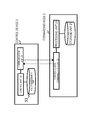
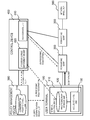
- Fig. 1 is a diagram showing an example of a configuration of the present invention
- Fig. 2 is a diagram showing an example of a configuration of the present invention
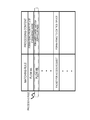
- Fig. 3 is a diagram showing an example of a table storing processing rules
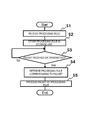
- Fig. 4 is a flowchart showing an example of operations of the present invention
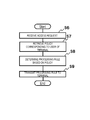
- Fig. 5 is a flowchart showing an example of operations of the present invention
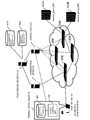
- Fig. 6 is a diagram showing an example of a configuration of a first exemplary embodiment of the present invention
- Fig. 7 is a diagram showing an example in which the configuration of Fig. 6 is applied to an access control system
- Fig. 8 is a diagram showing an example of authentication information
- Fig. 9 is a diagram showing an example of communication policy information
- FIG. 10 is a diagram showing an example of resource information
- Fig. 11 is a diagram showing an example of a communication policy
- Fig. 12 is a diagram showing an example of a configuration of a control device
- Fig. 13 is a sequence diagram showing an example of operations of the first exemplary embodiment
- Fig. 14 is a sequence diagram showing an example of operations of the first exemplary embodiment
- Fig. 15 is a sequence diagram showing an example of operations of the first exemplary embodiment
- Fig. 16 is a sequence diagram showing an example of operations of a second exemplary embodiment
- Fig. 17 is a diagram showing an example of a communication policy
- Fig. 18 is a diagram showing an example of a configuration of a third exemplary embodiment
- Fig. 18 is a diagram showing an example of a configuration of a third exemplary embodiment
- Fig. 18 is a diagram showing an example of a configuration of a third exemplary embodiment
- Fig. 18 is a diagram showing an example of a configuration of a third
- FIG. 19 is a diagram showing an example of a configuration of a fourth exemplary embodiment
- Fig. 20 is a diagram showing an example of a configuration of a fifth exemplary embodiment
- Fig. 21 is a diagram showing an example of a configuration of a sixth exemplary embodiment
- Fig. 22 is a diagram showing an example of a configuration of a seventh exemplary embodiment
- Fig. 23 is a sequence diagram showing an example of operations of the seventh exemplary embodiment
- Fig. 24 is a diagram describing related technology.
- Fig. 1 is a diagram showing a configuration of a communication network and a configuration of a terminal 1.
- Fig. 2 is a diagram showing a configuration of a forwarding node 2 and a control device 3. It is to be noted that reference symbols attached to the drawings are added for convenience to respective elements as an example in order to aid understanding. The reference symbols are not intended to limit the invention to modes as illustrated in the drawings.
- the forwarding node 2 processes the packet in accordance with a processing rule corresponding to the packet.
- the processing rule specifies processing content for the packet.
- An example of a configuration of a processing rule is shown in Fig. 3.
- the processing rule for example, includes a matching rule for matching a packet and the processing rule, and processing content for the packet that matches the processing rule.
- a processing unit 23 searches for a processing rule corresponding to the packet from a storage unit 21. That is, the processing unit 23 performs search in a table of a configuration exemplified in Fig. 3, which is stored in the storage unit 21. For example, if the packet belongs to a "flow A", it matches a matching rule for "flow A".
- a "flow” is a sequence of packets identified in accordance with packet content (information such as packet source and destination, a combination of plural information items included in the packet, and the like).
- the processing unit 23 processes the packet in accordance with the retrieved processing rule. For example, in an example in Fig. 3, if a packet belongs to the "flow A", the processing unit 23 executes processing content of "forward from port 'a' of forwarding node".
- a control device communication unit 22 transmits a request to set a processing rule, the control device 3.
- the control device 3 controls packet processing by the forwarding node 2.
- a control unit 32 determines a processing rule corresponding to the setting request.
- the communication unit 31 transmits the processing rule determined by the control unit 32 to the forwarding node 2.
- the processing rule specifies processing content for a packet such as, for example, packet transmission from a specified port, flooding, dropping, packet header rewriting, and the like.
- the control device 3 sets processing rules not only for the forwarding node(s) 2, but also for a terminal 1 that communicates with a communication network including at least one forwarding node 2 and the control device 3. Furthermore, the terminal 1 executes packet processing in accordance with a processing rule as set.
- the terminal 1 transmits an access request to the communication network via a communication unit 10. It is to be noted that the terminal 1 is a communication terminal such as a personal computer, a handheld device, or the like. The terminal 1 may have either a wired or wireless method of communication.
- the forwarding node 2 forwards the access request to the control device 3.
- the control device 3 sets in advance a processing rule corresponding to a packet for requesting access (for example, an authentication packet or a login packet) to the storage unit 21 of the forwarding node 2.
- the control device 3 sets a processing rule in which a matching rule is "access request packet", and corresponding processing content is "forward to control device”.
- the processing rule corresponding to the access request packet specifies, for example, processing for forwarding the access request packet to the control device 3.
- the processing unit 23 of the forwarding node 2 forwards the access request packet to the control device 3, in accordance with the processing rule corresponding to the access request packet.
- the control unit 32 of the control device 3 refers to a policy management unit 33 and retrieves a policy corresponding to a user of the terminal.
- the policy management unit 33 may store a policy that is set for each terminal.
- the control unit 32 determines a processing rule to be set in the terminal 1, based on the retrieved policy.
- the communication unit 31 transmits the determined processing rule to the terminal 1.
- the control device 3 may set a period of validity for the determined processing rule and transmit this to the terminal 1. In a case where a period of validity is set, the processing rule that has been set in the terminal 1 is deleted from the terminal 1 when the period of validity has elapsed.
- Fig. 2 shows an example where the policy management unit 33 is included in the control device 3, but the policy may be managed by a device other than the control device 3.
- control device 3 may determine the processing rule to be set in the terminal 1 based on information managed by the control device 3, without referring to the policy management unit 33.
- control device 3 may set a processing rule for a forwarding node corresponding to a processing rule for a terminal set in the terminal, in a forwarding node 2. For example, in a case where the terminal 1 executes rewriting processing for some packets in accordance with a processing rule set in the terminal 1, the control terminal 3 may set a processing rule matching rewritten content within a packet, in the forwarding node 2.
- the terminal 1 sets the processing rule in the storage unit 11.
- the processing unit 12 of the terminal 1 transmits or receives a packet to or from a communication network
- the processing unit 12 retrieves a processing rule corresponding to the transmitted or received packet.
- the processing unit 12 processes the packet in accordance with the processing rule.
- the processing unit 12 may transmit or receive the packet without executing processing corresponding to the packet, or may perform packet dropping (discarding).
- packet processing in a case where a processing rule corresponding to the transmitted or received packet is not stored in the storage unit 11 is not limited to this.
- Fig. 4 is a flowchart showing an example of operations of the terminal 1.
- the terminal 1 In a case of receiving a processing rule from the control device 3 (S1), the terminal 1 stores the received processing rule in the storage unit 11 (S2).
- the terminal 1 retrieves a processing rule corresponding to the transmitted or received packet (S4).
- the terminal 1 processes the transmitted or received packet in accordance with the processing rule (S5).
- Fig. 5 is a flowchart showing an example of operations of the control device 3.
- the control device 3 On receiving an access request from the terminal 1 (S6), the control device 3 retrieves a policy corresponding to a user of the terminal, from the policy management unit 33 (S7).
- the control device 3 determines a processing rule to be set in the terminal 1 based on the retrieved policy (S8), and transmits it to the terminal 1 (S9).
- the control device 3 sets the processing rule with regard to the terminal 1, and the terminal 1 itself executes packet processing corresponding to the processing rule. Since the terminal 1 executes packet processing such as rewriting of some packets according to the processing rule, in place of the forwarding node 2, packet processing load on the forwarding node 2 is greatly reduced. Furthermore, since the processing device 3 can set a processing rule, corresponding to content of a processing rule for a terminal set for the terminal 1, in advance in the forwarding node 2, it is possible to curtail requests to the control device 3 generated due to the processing rule not being set in the forwarding node 2. Therefore, the processing load on the control device 3 is greatly reduced.
- Fig. 6 shows an example of a system configuration in the first exemplary embodiment. Referring to Fig. 6, the configuration is shown to include a user terminal 100, a plurality of forwarding nodes 200, a policy management device 300, and a control device 400.
- the plurality of forwarding nodes 200 carry out processing of packets transmitted from the user terminal, in accordance with a processing rule set by the control device 400.
- a terminal control device 110 (functionally) in the user terminal 100 stores processing rules set by the control device 400, and controls packets transmitted by the user terminal based on a processing rule.
- the terminal control device 110 is provided with a processing rule storage unit 120 that stores processing rules to determine whether or not to forward a packet transmitted from a processing rule determination unit 420, and an access control unit 130 for allowing or denying access transmitted from the user terminal, based on a processing rule stored in the processing rule storage unit 120. That is, the access control unit 130 confirms whether or not a processing rule corresponding to a packet transmitted from the terminal 100 is stored in the processing rule storage unit 120. In a case where a processing rule corresponding to the packet transmitted from the terminal 100 is stored therein, the access control unit 130 confirms processing content specified in the processing rule. In a case where the processing content disallows forwarding of the packet, the access control unit 130 does not forward the packet to a communication network configured by the forwarding nodes 200, but executes an access restriction such as dropping the packet or the like.
- a processing rule storage unit 120 that stores processing rules to determine whether or not to forward a packet transmitted from a processing rule determination unit 420, and an access control unit 130 for allowing or denying
- the policy management device 300 manages the communication policy and notifies the communication policy assigned to a user for whom authentication has succeeded, to the control device 400.
- the policy management device 300 includes a communication policy storage unit 310 that associates a role assigned to the user and access rights set for each role.
- the policy management device 300 provides information concerning the access rights corresponding to the role of the user for whom authentication has succeeded, to the control device 400.
- the control device 400 sets a processing rule specifying processing content of a packet, with respect to the forwarding nodes 200. It is to be noted that reference symbols attached to the drawings are added for convenience to respective elements as an example in order to aid understanding. The reference symbols are not intended to limit the invention to modes of the drawings as illustrated.
- control device 400 determines a path between the terminal 100 of the user for whom authentication has succeeded, and a network resource 500 which the user can access, based on information concerning access rights received from the policy management device 300.
- the control device 400 includes a path control unit 410 that sets a processing rule in a forwarding node(s) 200 on a determined path.
- the control device 400 is provided with a processing rule determination unit 420 that transmits a processing rule determining whether or not to forward a packet from the terminal 100, to the terminal control device 110 of the user terminal 100.
- the control device 400 may set a period of validity for a processing rule transmitted to the user terminal 100. In this case, the terminal 100 deletes the processing rule for which the period of validity has passed. It is to be noted that in a case where the processing rule determination unit 420 transmits a processing rule disallowing packet forwarding from the terminal 100, the path control unit 410 need not set a processing rule corresponding to a determined path, with regard to the forwarding node(s) 200.
- processing rule By setting the processing rule as described above, it is possible to determine the accessible network resource 500, in accordance with the role assigned to the user, and furthermore, it is possible to set a path to allow access for each flow. In addition, by setting the abovementioned processing rule, it is possible to cause the user terminal 100 to execute an access restriction, with regard to flow for which access by the user is denied, among packet flows transmitted from the user.
- the packet for which access is restricted has the access restricted by the terminal 100 without being transmitted to a forwarding node(s) 200, processing load in the forwarding node(s) 200 is reduced. Since by access restriction by the terminal 100 there is a decrease in packets sent at the occasion of a request to set a processing rule to be transmitted to the control device from the forwarding node 200, the load on the control device is greatly reduced.
- the processing rule that denies forwarding of the packet may be deleted.
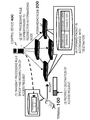
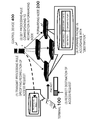
- Fig. 7 is a diagram representing an example in which an access control system is realized using the configuration of Fig. 6.
- the configuration shown in Fig. 7 is an example of the system, and the present invention is not limited to the system configuration disclosed in Fig. 7.
- the configuration shown includes: a plurality of the forwarding nodes 200, the terminal control device 110 for controlling whether or not to transmit a packet transmitted from the user terminal 100, the control device 400 for setting processing rules in the forwarding nodes 200 and the terminal control device 110, the policy management device 300 for notifying a communication policy to the control device 400, and an authentication device 330 for providing authentication information indicating an authentication result to the policy management device 300.
- a forwarding node 200 processes a received packet, in accordance with a processing rule that associates a matching rule matching the received packet and processing content to be applied to a packet that matches with the matching rule.
- a processing rule that associates a matching rule matching the received packet and processing content to be applied to a packet that matches with the matching rule.
- an OpenFlow switch as disclosed in Non Patent Literature 2 may be used.
- the forwarding node 200 is not limited to the OpenFlow switch.
- a certain forwarding node 200 among the plurality of forwarding nodes 200 is connected to network resources 500A and 500B. It is to be noted that the network configuration shown in Fig. 7 is merely an example, and the connection configuration of the forwarding node 200 and the network resource 500A and 500B is not limited to the example of Fig. 7.
- the user terminal 100 communicates with the network resources 500A and 500B, via the forwarding nodes 200.
- the network resource 500A and the network resource 500B each belong to a different resource group from one another, and they are respectively given resource group IDs of resource_group_0001 and resource_group_0002.
- the authentication device 330 is an authentication server that uses a password or biometric authentication or the like to perform a user authentication procedure with the user terminal 100.
- the authentication device 330 transmits authentication information indicating a result of the user authentication procedure with the user terminal 100 to the policy management device 300.
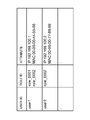
- Fig. 8 is an example of authentication information held in the authentication device 330 of the present exemplary embodiment.
- the authentication device 330 transmits an entry for user1, which includes user1; attributes being IP address: 192.168.100.1, and MAC address: 00-00-00-44-55-66; and role IDs: role_0001 and role_0002, as authentication information to the policy management device 300.
- the authentication device 330 transmits an entry for user2 which includes user2; attributes being IP address: 192.168.100.2, and MAC address: 00-00-00-77-88-99; and role ID: role_0002, as authentication information to the policy management device 300.
- the authentication information may be information by which the policy management device 300 can determine a communication policy assigned to a user, and there is no limitation to the example of Fig. 8.
- the authentication information may be the user ID of a user for whom authentication has succeeded, an access ID such as a role ID or MAC address derived from the user ID in question, location information of the user terminal 100, or a combination of these.
- the authentication device 330 may transmit information of a user for whom authentication has failed, as authentication information to the policy management device 300, and may transmit a communication policy by which the policy management device 300 restricts access from the user in question, to the control device 400.
- the policy management device 300 is connected to the communication policy storage unit 310 and a resource information storage unit 320, determines a communication policy corresponding to the authentication information received from the authentication device 330, and transmits the determined communication policy to the control device 400.
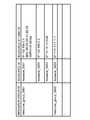
- Fig. 9 is an example of communication policy information stored in the communication policy storage unit 310.
- the communication policy information has a resource group ID given to a group of resources, and access rights, for each role identified by a role ID.
- a user having the role ID: role_0001 is allowed access to both resource groups having IDs: resource_group_0001 and resource_group_0002.
- a user having the role ID: role_0002 is denied access to the resource group ID: resource_group_0001, but is allowed access to resource_group_0002.
- Fig. 10 is an example of resource information stored in the resource information storage unit 320.
- the resource information is information associated with a resource ID of a resource belonging to a resource group ID or other detailed attributes thereof (resource attributes).
- resource attributes For example, with regard to the resource information, resources having resource_0001, resource_0002, and resource_0003 are included in a group identified by the resource group ID: resource_group_0001, and port numbers used in respective IP addresses, MAC addresses, and services thereof are included.
- the policy management device 300 makes reference to the communication policy information and the resource information, determines a communication policy of a user who has received authentication by the authentication device 330, and notifies the control device 400. For example, based on a role ID included in authentication information received from the authentication device 330, the policy management device 300 identifies content of a resource group ID and access rights thereof attached to the role ID in question from the policy information of Fig. 9. The policy management device 300 identifies the resource information belonging to the resource group ID from the resource information of Fig. 10. The policy management device 300 creates a communication policy using the identified policy information and the resource information.
- Fig. 11 shows an example of a communication policy of a user having a user ID: user1 created from information shown in Fig. 8, Fig. 9, and Fig. 10.
- Values of attribute information of the user ID: user1 of the authentication information of Fig. 8 are set in a source field of Fig. 11.
- resource attributes extracted from resource information of Fig. 10 based on content of the role ID: role_0001 of the policy information of Fig. 9 are set in a destination field.
- Rights based on access rights of the role ID: role_0001 of the information of Fig. 9 are set in an access rights field.
- content for example, service and port number
- that has been set in a resource attribute field of the resource information of Fig. 10 is set in a condition (option) field.
- the control device 400 On receiving the communication policy, the control device 400 creates a processing rule specifying processing content to transmit to a forwarding node a request to set a processing rule for a packet from the user to whom the communication policy in question is applied, and sets the processing rule in at least one forwarding node among the plurality of forwarding nodes 200.
- the forwarding node 200 On receiving a packet from the user to whom the communication policy is applied, the forwarding node 200 transmits a request to set a processing rule to the control device 400, based on the processing rule.
- the control device 400 On receiving the request to set the processing rule for a packet from the user to whom the communication policy is applied, the control device 400 determines a forwarding path of the packet and a processing rule corresponding to the forwarding path, based on packet information included in the setting request, and sets the processing rule in the forwarding node 200 in the forwarding path of the packet in question. With regard to the processing rule set in the forwarding node, the control device 400 transmits a processing rule determining whether or not to forward a packet from the terminal 100, to the terminal control device 110 of the user terminal 100.
- Fig. 12 is a block diagram representing a detailed configuration of the control device 400.
- the control device 400 is provided with a node communication unit 40 that performs communication with a forwarding node 200, a control message processing unit 41, a processing rule management unit 42, a processing rule storage unit 43, a forwarding node management unit 44, a path-action calculation unit 45, a topology management unit 46, a terminal location management unit 47, a communication policy management unit 48, and a communication policy storage unit 49.
- the control message processing unit 41 analyzes a control message received from the forwarding node 200 and delivers the control message information to a corresponding functional block inside the control device 400, in accordance with a result of the analysis.
- the processing rule management unit 42 manages how a processing rule is set and in which forwarding node 200. Specifically, a processing rule created by the path-action calculation unit 45 is registered in the processing rule storage unit 43 and set in the forwarding node 200, and updating is performed of registration information of the processing rule storage unit 43 corresponding to a case where a change occurs in the processing rules set in the forwarding node 200, according to a processing rule deletion notice from the forwarding node 200.
- the forwarding node management unit 44 manages the capability (for example, number and type of ports, type of processing content supported, and the like) of the forwarding node 200 controlled by the control device 400.
- the path-action calculation unit 45 creates a processing rule to execute a request to set a processing rule with respect to a packet transmitted from a terminal used by the user in question, in accordance with the communication policy concerned.
- the forwarding node 200 that is a set destination of the created processing rule may be any of the forwarding nodes 200 to which the user terminal 100 can connect, or may be a selection of any forwarding node(s) 200 based on source information included in the communication policy.
- the path-action calculation unit 45 determines a forwarding path of the packet in question and a processing rule corresponding to the forwarding path in question, based on packet information included in the request.
- the path-action calculation unit 45 calculates the packet forwarding path based on network topology information built by the topology management unit 46. It is to be noted that the path-action calculation unit 45 may calculate the forwarding path of the packet giving consideration also to location information of the communication terminal managed by the terminal location management unit 47. Next, the path-action calculation unit 45 acquires port information and the like of the forwarding node(s) 200 in the forwarding path from the forwarding node management unit 44, and obtains processing content to be executed by the forwarding node(s) 200 in the path and a matching rule for identifying flow to be applied to the processing content. It is to be noted that the matching rule can be created using the source IP address, the destination address, a condition (option) and the like, of the communication policy of Fig.
- a processing rule that specifies processing content and the like for forwarding a packet from a source IP address of 192.168.100.1 to a destination of IP 192.168.0.1, from a prescribed port of the forwarding node 200.
- the path-action calculation unit 45 when setting a processing rule, may create not only a packet for which a request is received to set a processing rule, but may also create a processing rule realizing packet forwarding to a resource to which the user terminal has access rights.
- the topology management unit 46 builds network topology information based on connection relationships of forwarding nodes 200 collected via the node communication unit 40.
- the terminal location management unit 47 manages information for identifying the location of the user terminal connected to the communication system.
- a description is given in which the IP address is used as information for identifying the user terminal, and a forwarding node identifier of a forwarding node to which the user terminal is connected and information of a port thereof are used as information for identifying the location of the user terminal.
- information for identifying the user terminal and the location of the user terminal is not limited to this.
- the terminal and its location may be identified by using information provided by the authentication device 330.
- the communication policy management unit 48 On receiving communication policy information from the policy management device 300, the communication policy management unit 48 stores the information in the communication policy storage unit 49, and also transmits the information to the path-action calculation unit 45.
- Non Patent Literatures 1 and 2 may be applied as the control device 400. That is, operational functions of a processing rule (flow entry) on the occasion of receiving the communication policy may be added to the OpenFlow controller.
- the disclosures of Non Patent Literatures are incorporated herein in their entirety by reference thereto.
- the processing rule determination unit 420 transmits to the processing rule storage unit 120 of the terminal control device 110 a processing rule for determining whether or not to forward a packet, (for example, a processing rule with a source of "192.168.100.1", a destination of "192.168.0.3", and access rights of "deny” in the table of Fig. 11) among processing rules created by the path-action calculation unit 45.
- a method of forwarding from the control device 400 to the processing rule storage unit 120 of the terminal control device 110 may be by a wired connection, a wireless connection, or any other forwarding method.
- Each unit (processing means) of the control device 400 shown in Fig. 12, and the path control unit 410 and the processing rule determination unit 420 can be realized by a computer program that stores the abovementioned respective information and executes the respective processes described above in a computer configuring the control device 400, using hardware thereof.
- the terminal control device 110 in Fig. 7 is configured from the processing rule storage unit 120 and the access control unit 130, similar to Fig. 6.
- the processing rule storage unit 120 receives and stores a processing rule for determining whether or not to forward a packet, from the control device 400.
- the access control unit 130 executes access control for a packet transmitted from the user terminal 100, in accordance with a processing rule recorded in the processing rule storage unit 120. That is, in a case where denial of access is specified in a processing rule corresponding to a packet transmitted by (from) the user terminal 100, the access control unit 130 of the use terminal by itself restricts transmission of the packet in question.
- the processing rule storage unit 120 and the access control unit 130 of the abovementioned terminal control device 110 can be realized by a computer program that stores the abovementioned respective information and executes the respective processes described above in a computer of the user terminal that configures the terminal control device 110, using hardware thereof.
- the computer program may be recorded on a non-transient recording medium which is computer readable.
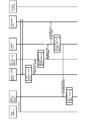
- Fig. 13, Fig. 14, and Fig. 15 are sequence diagrams representing a sequence of operations of the present exemplary embodiment. Referring to Fig. 13, when the user terminal makes a login request to the authentication device 330, a packet corresponding to the login request is forwarded to the authentication device 330 (S001 in Fig. 13).
- the authentication device 330 performs user authentication (S002 in Fig. 13).
- the authentication device 330 transmits authentication information to the policy management device 300 (S003 in Fig. 13).
- the policy management device 300 refers to the communication policy storage unit 310 and the resource information storage unit 320, based on the received authentication information, and determines a communication policy (S004 in Fig. 13).
- the policy management device 300 transmits the determined communication policy to the control device 400 (S005 in Fig. 13).
- the control device 400 sets, in a forwarding node 200, a processing rule specifying processing content in which a request to set a processing rule corresponding to the packet transmitted from the user terminal is transmitted to the control device 400 (S006 in Fig. 13).
- the control device 400 determines whether or not to forward the packet and creates a processing rule corresponding to a result of the determination (S007 in Fig. 13).
- the control device transmits the created processing rule to the terminal control device 110 (S008 in Fig. 13).
- the terminal control device 110 On receiving a processing rule transmitted by the control device 400, the terminal control device 110 registers the processing rule in the processing rule storage unit 120 (S009 in Fig. 13).
- Fig. 14 is a sequence diagram representing a sequence of operations in a case where transmission of a packet by the terminal control device 110 is allowed.
- the user terminal transmits the packet with a destination of a network resource (S101 in Fig. 14).
- the terminal control device 110 receives the packet, and determines whether or not to transmit the packet to the network resource (S102 in Fig. 14).
- the terminal control device 110 compares the destination IP address of the packet transmitted from the user terminal and processing rules registered in the processing rule storage unit 120. In a case where it is specified that access is allowed, in a processing rule corresponding to the packet transmitted from the user terminal, the terminal control device 110 transmits the packet to the forwarding node 200 (S103 in Fig. 14).
- the forwarding node 200 receives the packet from the terminal control device 110, determines a forwarding path of the packet in accordance with the processing rule registered by the control device 400 (S104 in Fig. 14), and forwards the packet (S105 in Fig. 14).
- Fig. 15 is a sequence diagram representing a sequence of operations in a case where transmission of a packet by the terminal control device 110 is denied.
- the terminal control device 110 receives the packet and determines whether or not to transmit the packet to the network resource (S202 in Fig. 15).
- the terminal control device 110 compares the destination IP address of the packet transmitted from the user terminal and processing rules registered in the processing rule storage unit 120. In a case where content is specified showing that access is denied, in a processing rule corresponding to the packet transmitted from the user terminal, the terminal control device 110 restricts transmission of the packet (the packet is dropped or the like) (S203 in Fig. 15).
- control device 400 may set the processing rule for the terminal, or the terminal may periodically refer to the control device 400 and the terminal may obtain the processing rule. Furthermore, a combination of the two mechanisms is also possible. It should be noted further selection or combination (with deletion of certain element(s) or step(s)), if necessary, may be formulated within the entire concept and disclosure of the present disclosure as a whole as long as the basic concept and principle are maintained.
- the mechanism for allowing or denying forwarding of a packet by the access control unit 130 may be a mechanism similar to the method performed in a forwarding node, or packet filtering technology as in iptables may be used. Furthermore, the access control unit 130 of the terminal control device 110 can also apply a processing rule allowing or denying forwarding of a packet with respect to a physical NIC (Network Interface Card) inside the user terminal; application is also possible to respective virtual NICs held by plural VMs (Virtual Machines) operating inside the user terminal; and application is also possible to a plurality of virtual switches operating inside the user terminal. In this way, the access control unit 130 can freely specify a place for executing access control inside the user terminal.
- NIC Network Interface Card
- the packet transmitted from the user terminal can be subjected to access restriction inside the user terminal, without being transmitted to the forwarding node 200, by the terminal control device 110 inside the user terminal. Therefore, the load on a control device accompanying a request to set a processing rule and the load of forwarding processing of a forwarding node can be greatly reduced.
- Fig. 16 is a sequence diagram representing a sequence of operations of the second exemplary embodiment of the present invention.
- a user terminal makes a login request to an authentication device 330 (S301 in Fig. 16).
- the authentication device 330 performs user authentication (S302 in Fig. 16).
- the authentication device 330 transmits authentication information to a policy management device 300 based on a result of user authentication (S303 in Fig. 16).
- a policy management device 300 determines a communication policy for a user based on the authentication information received from the authentication device 330 (S304 of Fig. 16). The policy management device 300 transmits the determined communication policy to the control device 400 (S305 in Fig. 16).
- the control device 400 generates a processing rule based on the communication policy received from the policy management device 300, and sets the processing rule in a forwarding node 200 (S306 in Fig. 16). These operations are the same as the first exemplary embodiment.
- the control device 400 has set the processing rule in the forwarding node 200, reference is made to content of the processing rule, and the processing rule for determining whether or not to forward a packet is transmitted to the policy management device 300 (S307 in Fig. 16).
- the policy management device 300 that has received the processing rule for determining whether or not to forward a packet uses information of a communication policy storage unit 310 and a resource information storage unit 320 to select another user for whom the processing rule is to be applied (S309 in Fig. 16).
- Fig. 17 is a diagram representing an example in which the policy management device 300, which has received the processing rule for determining whether or not to forward a packet, selects another user for whom the processing rule is to be applied.
- a processing rule (below, a processing rule (a)) that denies access where a source is "IP: 192.168.100.0/24" and a destination is "192.168.0.3".
- the policy management device 300 searches for another user (resource ID or resource group ID) who matches the processing rule (a), and selects another user who matches (for example, with a source of "192.168.100.10", other conditions have the same resource ID and resource group ID as for the user of the processing rule (a)).
- a user who performs login processing (S301) of Fig. 16 is A
- a user terminal used by user A is a user terminal A
- a terminal control device possessed by the user terminal A is terminal control device A.
- a user selected based on a processing rule received from the control device 400 by the policy management device 300 of Fig. 16 is B
- a user terminal used by user B is a user terminal B
- a terminal control device possessed by the user terminal B is terminal control device B.
- the policy management device 300 receives the processing rule (a) for determining whether or not to forward a packet to user A from the control device 400, and after selecting user B who matches the processing rule (a), sets respective processing rules in the terminal control device A of the user terminal A, and the terminal control device B of the user terminal B (S310 and S312 of Fig. 16). It is to be noted that any order may be used as the order in which the control device 400 transmits the processing rules to the terminal control device A and the terminal control device B.
- the terminal control device A On receiving the processing rule transmitted by the control device 400, the terminal control device A registers the processing rule in a processing rule storage unit of the terminal control device A (S311 in Fig. 16). Similarly, on receiving the processing rule transmitted by the control device 400, the terminal control device B registers the processing rule in a processing rule storage unit of the terminal control device B (S313 in Fig. 16).
- a control device 400 sets a processing rule specifying writing of an identifier of a terminal to a packet, with respect to a terminal 100. It is to be noted that occasions at which the processing rule is set for the terminal 100 by the control device 400 may be arbitrary. For example, in a case where the control device 400 receives a packet (for example, an authentication packet or a login packet) for requesting access, transmitted by the terminal 100, a processing rule may be set for the terminal 100. Furthermore, the control device 400 may set a processing rule for the terminal 100 at arbitrary timing.
- a packet for example, an authentication packet or a login packet
- the control device 400 includes in the processing rule a matching rule for matching a packet that is a target of processing to write the identifier of the terminal, and sets the processing rule in the terminal 100.
- the terminal 100 writes the identifier in the terminal in an arbitrary field of the packet (for example, a prescribed field of a header), in accordance with the set processing rule.
- the terminal 100 transmits the packet in which the identifier is written to a network composed of forwarding nodes 200.
- a forwarding node 200 receives the packet including the identifier of the terminal from the terminal 100, and checks whether or not there is a processing rule corresponding to the identifier of the terminal, from processing rules it holds. In a case where there is no processing rule corresponding to the identifier of the terminal, the forwarding node 200 transmits a request to set a processing rule corresponding to the identifier of the terminal, to the control device 400.
- the control device 400 that receives the request from the forwarding node 200 determines a forwarding path corresponding to the identifier of the terminal, and transmits a processing rule corresponding to the forwarding path to the forwarding node 200.
- the identifier of the terminal is set in a matching rule, and processing of a packet corresponding to the identifier is set in processing content.
- the forwarding node 200 processes the packet that includes the identifier of the terminal, in accordance with a processing rule matching the identifier of the terminal included in the packet.
- the control device 400 can flexibly control packet flow in terminal units. Furthermore, since there is no necessity for the control device 400 or the forwarding node 200 to recognize the identifier of the terminal, the processing load necessary for collecting terminal identifiers by the control device 400 and the forwarding node 200 is greatly reduced. In addition, since the processing device 400 can set a processing rule that corresponds to an identifier of a terminal in advance in the forwarding node 200, it is possible to curtail requests to the control device 400 generated due to the processing rule not being set in the forwarding node 200. Therefore, the processing load on the control device 400 is greatly reduced.
- a control device 400 sets a processing rule concerning Quality of Service (QoS) with regard to a prescribed terminal 100.
- QoS Quality of Service
- occasions at which a processing rule is set for the terminal 100 by the control device 400 may be arbitrary.
- a processing rule may be set for the terminal 100.
- the control device 400 may set a processing rule for the terminal 100 at arbitrary timing.
- the control device 400 may transmit QoS information to only a prescribed terminal 100 selected by a prescribed condition.
- the processing rule concerning QoS specifies processing for writing QoS information of a packet to the packet that has been transmitted from the prescribed terminal 100.
- the QoS information is, for example, a QoS class in which class division is done according to a priority.
- the control device 400 controls a forwarding node 200 so as to accommodate a band, with regard to a packet with a high QoS class.
- the control device 400 may set a processing rule specifying writing of a low QoS class to a packet, for the terminal 100, and may control the forwarding node 200 so as to temporarily isolate traffic from a heavy user with high frequency of communication, in a path with a narrow band.
- the control device 400 may determine the processing rule set in the terminal 100 based on communication records or location information of the terminal 100.
- the control device 400 includes in the processing rule a matching rule for matching a packet that is a target for processing to write the QoS information, and sets the processing rule in the terminal 100.
- the terminal 100 writes the QoS information in an arbitrary field of the packet (for example, a prescribed field of a header), in accordance with the set processing rule.
- the terminal 100 transmits the packet in which the QoS information is written to a network composed of forwarding nodes 200.
- a forwarding node 200 receives the packet including the QoS information from the terminal 100, and checks whether or not there is a processing rule corresponding to the QoS information, from processing rules it holds. In a case where there is no processing rule corresponding to the QoS information, the forwarding node 200 transmits a request to set a processing rule corresponding to the QoS information included in the packet to the control device 400. However, the control device 400 may set a processing rule corresponding to the QoS information in advance in the forwarding node 200. In this case, requests to set a processing rule with respect to the control device 400 are greatly reduced.
- the control device 400 that receives the request from the forwarding node 200 determines a forwarding path corresponding to the QoS information, and transmits a processing rule corresponding to the forwarding path to the forwarding node 200.
- the QoS information is set in a matching rule, and processing of a packet corresponding to the QoS information is set in processing content.
- the forwarding node 200 processes the packet that includes the QoS information in accordance with a processing rule matching the QoS information included in the packet.
- the present exemplary embodiment it is possible to execute QoS control for a terminal by the initiative of a network operator who administers the control device 400. Furthermore, since the control device 400 can set a processing rule corresponding to the QoS information in advance in the forwarding node 200, it is possible to greatly reduce requests to set processing rules from the forwarding nodes 200. Therefore, the processing load on the control device 400 is greatly reduced. Furthermore, since there is no necessity to execute processing to write the QoS information in the forwarding nodes 200, it is possible to greatly reduce the load of packet processing with regard to the forwarding nodes 200.
- a control device 400 sets a processing rule for a prescribed terminal 100, specifying redirection of an access request of the terminal 100.
- the control device 400 sets a processing rule specifying redirection of the access request.
- the control device 400 sets a processing rule for the terminal 100 so as to redirect the access request to a related site carrying out a special event such as a discount or the like.
- the control device 400 may set a processing rule for the terminal 100, so as make a redirection only for the first access request of the terminal 100.
- the control device 400 may add a period of validity to the processing rule redirecting communication in the terminal 100, and set the processing rule in the terminal 100. Furthermore, the control device 400 may refer to a communication record of the terminal 100 to determine a redirection destination. For example, the control device 400 may analyze user preferences based on a communication record, and may set a processing rule for the terminal 100, redirecting to an advertizing site or the like, corresponding to the preferences. Furthermore, the control device 400 may determine a redirection destination based on the location of the terminal 100. The control device 400 recognizes the location of the terminal 100 based on location information (GPS or the like) transmitted from the terminal 100, for example, or location information of an access point at which the terminal 100 accesses a network. The control device 400 sets a processing rule specifying redirection to a destination of a prescribed website or the like related to the location, based on the location of the terminal 100.
- location information GPS or the like
- the control device 400 transmits to the terminal 100 a processing rule executing rewriting of a "destination" field of a header of an access request packet transmitted from the terminal 100. Furthermore, the control device 400 determines a forwarding path corresponding to a redirection destination, and sets a processing rule corresponding to the determined path in a forwarding node 200. The control device 400 may set a processing rule corresponding to the redirection destination in advance in the forwarding node 200. In this case, requests to set processing rules with respect to the control device 400 are greatly reduced.
- the control device 400 includes, in the processing rule, a matching rule for matching a packet that is a target for redirection, and sets the processing rule in the terminal 100.
- the terminal 100 rewrites the destination field of a packet header in accordance with the processing rule that has been set, to a redirection destination set in the processing rule.
- the terminal 100 transmits the packet in which the destination field has been rewritten to a network composed of forwarding nodes 200.
- the forwarding nodes 200 forward the packet in accordance with a processing rule corresponding to the redirected destination.
- a service provider in the network can lead the user of a terminal to a specific site. Furthermore, since the control device 400 can set a processing rule corresponding to a redirected destination in advance in the forwarding nodes 200, it is possible to greatly reduce requests to set processing rules from the forwarding nodes 200. Therefore, the processing load on the control device 400 is greatly reduced. In addition, since there is no necessity to execute processing to rewrite the packet destination in the forwarding nodes 200, packet processing with regard to the forwarding nodes 200 is greatly reduced.
- a control device 400 sets a processing rule specifying writing of billing information for a terminal user to a packet, with respect to a prescribed terminal 100.
- the billing information for example, relates to a billing class in which the terminal user makes a contract with a network operator in accordance with quality of communication service and the like.
- occasions at which a processing rule is set for the terminal 100 by the control device 400 may be arbitrary.
- a processing rule may be set for the terminal 100.
- the control device 400 may set a processing rule for the terminal 100 at arbitrary timing.
- the control device 400 includes, in the processing rule, a matching rule for matching a packet that is a target for processing to write the billing information, and sets the processing rule in the terminal 100.
- the control device 400 controls forwarding nodes 200 so as to provide, for packets of a high billing class, a higher service quality (giving priority to range, or the like) than packets in a low billing class.
- the terminal 100 writes the billing information in an arbitrary field of the packet (for example, a prescribed field of a header), in accordance with the set processing rule.
- the terminal 100 transmits the packet in which the billing information is written to a network composed of the forwarding nodes 200.
- a forwarding node 200 receives the packet including the billing information from the terminal 100 and checks whether or not there is a processing rule corresponding to the billing information, from processing rules it holds. In a case where there is no processing rule corresponding to the billing information, the forwarding node 200 transmits a request to set a processing rule corresponding to the billing information included in the packet to the control device 400. However, the control device 400 may set a processing rule corresponding to the billing information in advance in the forwarding node 200. In this case, requests to set a processing rule with respect to the control device 400 are greatly reduced.
- the control device 400 that receives the request from the forwarding node 200 determines a forwarding path corresponding to the billing information and transmits a processing rule corresponding to the forwarding path to the forwarding node 200.
- the billing information is set in a matching rule, and processing of a packet corresponding to the billing information is set as processing content.
- the forwarding node 200 processes the packet that includes the billing information in accordance with a processing rule matching the billing information included in the packet.
- the control device 400 may set a processing rule specifying redirection to a site recommending an upgrade of the billing class, to a user terminal 100 for which the billing class is low and which is in a state with communication service quality below a prescribed threshold, which continues for a fixed period.
- the present exemplary embodiment it is possible to control the communication service quality in accordance with billing information of a terminal user, by the initiative of a network operator who administers the control device 400. Furthermore, since the control device 400 can set a processing rule corresponding to the billing information in advance in the forwarding node 200, it is possible to greatly reduce requests to set processing rules from the forwarding nodes 200. Therefore, the processing load on the control device 400 is greatly reduced. Furthermore, since there is no necessity to execute processing to write the billing information in the forwarding nodes 200, it is possible to greatly reduce the load of packet processing with regard to the forwarding nodes 200.
- Fig. 22 is a diagram representing an example of a configuration of the seventh exemplary embodiment of the present invention.
- the seventh exemplary embodiment differs from the exemplary embodiments described above in that a control device 400A includes an alteration judging unit 610.
- the alteration judging unit 610 holds a hash value of a processing rule set in a terminal 100, determined by a processing rule determination unit 420.
- the alteration judging unit 610 compares the hash value of a processing rule recorded in a processing rule storage unit 120 of a terminal control device 110, and a hash value that it itself holds. In a case where the hash values are different, the alteration judging unit 610 judges that the processing rule set in the terminal 100 has been altered. In order to ensure the security of a communication system, the alteration judging unit 610 registers a processing rule denying access from that terminal 100, in forwarding nodes 200. It is to be noted that, when setting the processing rule denying access in the forwarding nodes 200, the alteration judging unit 610 may set a period of validity in the processing rule.
- Fig. 23 is a sequence diagram representing a sequence of operations of the seventh exemplary embodiment of the present invention.
- a user terminal makes a login request to an authentication device 330 (S401 in Fig. 23).
- the authentication device 330 performs user authentication (S402 in Fig. 23).
- the authentication device 330 transmits authentication information to a policy management device 300 based on a result of user authentication (S403 in Fig. 23).
- the policy management device 300 determines a communication policy for a user based on the authentication information received from the authentication device 330 (S404 of Fig. 23). The policy management device 300 transmits the determined communication policy to the control device 400 (S405 in Fig. 23).
- the control device 400 determines a processing rule based on the communication policy received from the policy management device 300, and sets the processing rule in a forwarding node 200. On receiving the communication policy, the control device 400 sets a processing rule to perform a request to set a processing rule concerning a packet from a user terminal, in the forwarding node 200 (S406 in Fig. 23). The control device 400 determines a processing rule for setting in the terminal 100 (S407 in Fig. 23). The control device 400 transmits the determined processing rule to the terminal control device 110 (S408 in Fig. 23).
- the terminal control device 110 On receiving the processing rule transmitted by the control device 400, the terminal control device 110 registers the processing rule in the processing rule storage unit 120 (S409 in Fig. 23).
- the alteration judging unit 610 of the control device 400 generates a hash value requested by a set processing rule with respect to the terminal 100 (S410 in Fig. 23).
- the terminal control device 110 generates a hash value requested by the processing rule set by the control device 400 (S411 in Fig. 23), and transmits the hash value to the alteration judging unit 610 of the control device 400 (S412 in Fig. 23).
- the alteration judging unit 610 of the control device 400 collates the hash value generated by the alteration judging unit 610 and the hash value transmitted by the terminal control device 110 (S413 in Fig. 23). If the result of the collation of the hash values is that the values match, the alteration judging unit 610 of the control device 400 regards this as normal, and completes the sequence of processes. On the other hand, if the result of the collation of the hash values is that the values are different, a determination is made that a processing rule has been altered by the user of the terminal 100, a processing rule denying access from that terminal 100 is generated, and the processing rule is set in the forwarding node 200 (S414 in Fig. 23). It is to be noted that the alteration judging unit 610 may set a period of validity in the processing rule denying access from the terminal 100.
- the control device detects the alteration, and by setting a processing rule denying all accesses by that user in forwarding nodes, it is possible to prevent the access control system in question being intentionally controlled by the user.
- access control is performed by assigning a role ID to a user, as shown in Fig. 8 to Fig. 11, but it is also possible to perform access control by using an access ID such as a MAC address, or a user ID assigned to each user, or location information of the user terminal 100, or the like.
- the user terminal 100 performs an authentication procedure with the authentication device 330 via a forwarding node 200, but it is also possible to employ a configuration in which the user terminal 100 communicates directly with the authentication device 330 and implements the authentication procedure.
Landscapes
- Engineering & Computer Science (AREA)
- Computer Networks & Wireless Communication (AREA)
- Signal Processing (AREA)
- Computer Hardware Design (AREA)
- Computer Security & Cryptography (AREA)
- Computing Systems (AREA)
- General Engineering & Computer Science (AREA)
- Data Exchanges In Wide-Area Networks (AREA)
Abstract
Priority Applications (9)
| Application Number | Priority Date | Filing Date | Title |
|---|---|---|---|
| US14/112,526 US9338090B2 (en) | 2011-04-18 | 2012-04-17 | Terminal, control device, communication method, communication system, communication module, program, and information processing device |
| JP2013548658A JP6028736B2 (ja) | 2011-04-18 | 2012-04-17 | 端末、制御装置、通信方法、通信システム、通信モジュール、プログラムおよび情報処理装置 |
| KR1020157028518A KR101685471B1 (ko) | 2011-04-18 | 2012-04-17 | 단말, 제어 디바이스, 통신 방법, 통신 시스템, 통신 모듈, 프로그램을 기록한 컴퓨터 판독 가능한 기록 매체, 및 정보 처리 디바이스 |
| RU2013150986/08A RU2586587C2 (ru) | 2011-04-18 | 2012-04-17 | Терминал, устройство управления, способ связи, система связи, модуль связи, программа и устройство обработки информации |
| EP12773850.8A EP2700205A4 (fr) | 2011-04-18 | 2012-04-17 | Terminal, dispositif de commande, procédé de communication, système de communication, module de communication, programme, et dispositif de traitement d'informations |
| KR1020137029921A KR20140002042A (ko) | 2011-04-18 | 2012-04-17 | 단말, 제어 디바이스, 통신 방법, 통신 시스템, 통신 모듈, 프로그램, 및 정보 처리 디바이스 |
| BR112013026628A BR112013026628A2 (pt) | 2011-04-18 | 2012-04-17 | terminal, dispositivo de controle, método de comunicação, sistema de comunicação, módulo de comunicação, programa e dispositivo de processamento de informações |
| CN201280019346.5A CN103597787B (zh) | 2011-04-18 | 2012-04-17 | 终端、控制装置、通信方法、通信系统、通信模块以及信息处理装置 |
| AU2012246221A AU2012246221B2 (en) | 2011-04-18 | 2012-04-17 | Terminal, control device, communication method,communication system, communication module, program, and information processing device |
Applications Claiming Priority (2)
| Application Number | Priority Date | Filing Date | Title |
|---|---|---|---|
| JP2011-092318 | 2011-04-18 | ||
| JP2011092318 | 2011-04-18 |
Publications (1)
| Publication Number | Publication Date |
|---|---|
| WO2012144194A1 true WO2012144194A1 (fr) | 2012-10-26 |
Family
ID=47041327
Family Applications (1)
| Application Number | Title | Priority Date | Filing Date |
|---|---|---|---|
| PCT/JP2012/002646 Ceased WO2012144194A1 (fr) | 2011-04-18 | 2012-04-17 | Terminal, dispositif de commande, procédé de communication, système de communication, module de communication, programme, et dispositif de traitement d'informations |
Country Status (9)
| Country | Link |
|---|---|
| US (1) | US9338090B2 (fr) |
| EP (1) | EP2700205A4 (fr) |
| JP (1) | JP6028736B2 (fr) |
| KR (2) | KR101685471B1 (fr) |
| CN (1) | CN103597787B (fr) |
| AU (1) | AU2012246221B2 (fr) |
| BR (1) | BR112013026628A2 (fr) |
| RU (1) | RU2586587C2 (fr) |
| WO (1) | WO2012144194A1 (fr) |
Cited By (7)
| Publication number | Priority date | Publication date | Assignee | Title |
|---|---|---|---|---|
| CN104125244A (zh) * | 2013-04-23 | 2014-10-29 | 中兴通讯股份有限公司 | 一种分布式网络中转发信息的方法及系统 |
| CN104780562A (zh) * | 2014-01-13 | 2015-07-15 | 中国联合网络通信集团有限公司 | 一种处理数据的方法、装置及系统 |
| EP2966830A4 (fr) * | 2014-06-06 | 2016-01-20 | Huawei Tech Co Ltd | Procédé, appareil et système destinés à faire interagir des informations dans un réseau d'accès |
| JP2016508690A (ja) * | 2013-01-24 | 2016-03-22 | テケレック・インコーポレイテッドTekelec, Inc. | ベアラセッショントラフィックを必要に応じてネットワークノードに転送するためにポリシー情報を用いる方法、システムおよびコンピュータ読取可能媒体 |
| EP3076612A4 (fr) * | 2013-12-24 | 2016-12-14 | Huawei Tech Co Ltd | Procédé de traitement de paquet, noeud et système |
| US10148509B2 (en) | 2015-05-13 | 2018-12-04 | Oracle International Corporation | Methods, systems, and computer readable media for session based software defined networking (SDN) management |
| US11388082B2 (en) | 2013-11-27 | 2022-07-12 | Oracle International Corporation | Methods, systems, and computer readable media for diameter routing using software defined network (SDN) functionality |
Families Citing this family (21)
| Publication number | Priority date | Publication date | Assignee | Title |
|---|---|---|---|---|
| WO2012144203A1 (fr) * | 2011-04-18 | 2012-10-26 | Nec Corporation | Terminal, dispositif de commande, procédé de communication, système de communication, module de communication, programme, et dispositif de traitement d'informations |
| US8743885B2 (en) | 2011-05-03 | 2014-06-03 | Cisco Technology, Inc. | Mobile service routing in a network environment |
| ES2536447T3 (es) * | 2012-04-27 | 2015-05-25 | Nec Europe Ltd. | Procedimiento y sistema para la determinación de interacciones en toda la red entre elementos de reenvío de una red |
| US9130872B2 (en) * | 2013-03-15 | 2015-09-08 | Cisco Technology, Inc. | Workload based service chain insertion in a network environment |
| EP3073691B1 (fr) * | 2013-12-12 | 2020-09-16 | Huawei Technologies Co., Ltd. | Procédé et dispositif pour améliorer la qos |
| US9479443B2 (en) | 2014-05-16 | 2016-10-25 | Cisco Technology, Inc. | System and method for transporting information to services in a network environment |
| US9379931B2 (en) | 2014-05-16 | 2016-06-28 | Cisco Technology, Inc. | System and method for transporting information to services in a network environment |
| CN105393508B (zh) * | 2014-06-26 | 2019-09-13 | 华为技术有限公司 | 软件定义网络的服务质量控制方法及设备 |
| EP3183831B1 (fr) * | 2014-08-22 | 2021-05-12 | Level 3 Communications, LLC | Portail de mise en réseau définie par logiciel |
| CN104363254A (zh) * | 2014-10-09 | 2015-02-18 | 严雪荷 | 数据转发系统和数据转发装置 |
| US10417025B2 (en) | 2014-11-18 | 2019-09-17 | Cisco Technology, Inc. | System and method to chain distributed applications in a network environment |
| US9762402B2 (en) | 2015-05-20 | 2017-09-12 | Cisco Technology, Inc. | System and method to facilitate the assignment of service functions for service chains in a network environment |
| US11044203B2 (en) | 2016-01-19 | 2021-06-22 | Cisco Technology, Inc. | System and method for hosting mobile packet core and value-added services using a software defined network and service chains |
| US10361969B2 (en) | 2016-08-30 | 2019-07-23 | Cisco Technology, Inc. | System and method for managing chained services in a network environment |
| WO2018068191A1 (fr) | 2016-10-10 | 2018-04-19 | 华为技术有限公司 | Procédé de communication, élément de réseau formant nœud de sécurité, et terminal |
| KR101905665B1 (ko) * | 2016-12-16 | 2018-10-10 | 중앙대학교 산학협력단 | Sdn에 기반한 가상 이동 통신망 사업자(mvno)의 네트워크 시스템 및 그 운용 방법 |
| KR102609287B1 (ko) * | 2017-11-16 | 2023-12-01 | 광동 오포 모바일 텔레커뮤니케이션즈 코포레이션 리미티드 | 자원 지시 방법, 사용자 장치, 네트워크 장치 및 컴퓨터 저장 매체 |
| KR102423755B1 (ko) | 2017-12-14 | 2022-07-21 | 삼성전자주식회사 | 패킷 전송을 제어하는 서버 및 방법 |
| KR20200108312A (ko) | 2018-01-12 | 2020-09-17 | 광동 오포 모바일 텔레커뮤니케이션즈 코포레이션 리미티드 | 파라미터 구성 방법 및 관련 제품 |
| WO2019169679A1 (fr) * | 2018-03-05 | 2019-09-12 | Oppo广东移动通信有限公司 | Procédé de transmission d'informations de terminal et produits associés |
| EP3871556B1 (fr) * | 2020-02-27 | 2023-10-11 | invisibobble GmbH | Dispositif de maintien des cheveux |
Citations (6)
| Publication number | Priority date | Publication date | Assignee | Title |
|---|---|---|---|---|
| JP2002368788A (ja) * | 2001-06-05 | 2002-12-20 | Japan Telecom Holdings Co Ltd | 経路制御ドメインの相互接続方法および相互接続装置 |
| JP2004064182A (ja) | 2002-07-25 | 2004-02-26 | Nippon Telegr & Teleph Corp <Ntt> | プライベート網間接続方法およびゲートウェイ制御装置 |
| JP2004185622A (ja) * | 2002-12-04 | 2004-07-02 | Docomo Communications Laboratories Usa Inc | 動的ファイアウォールシステム |
| JP2008095010A (ja) | 2006-10-13 | 2008-04-24 | Nippon Paint Co Ltd | サッシュブラック塗料組成物および塗膜形成方法 |
| JP2009246957A (ja) * | 2008-03-11 | 2009-10-22 | Nec Corp | セキュリティポリシー制御システム、セキュリティポリシー制御方法、及びプログラム |
| EP2309785A1 (fr) | 2009-10-12 | 2011-04-13 | Research In Motion Limited | Procédé, dispositif et système de mise en correspondance de numéros de destination |
Family Cites Families (14)
| Publication number | Priority date | Publication date | Assignee | Title |
|---|---|---|---|---|
| JP3872717B2 (ja) * | 2002-05-15 | 2007-01-24 | 日本電信電話株式会社 | ネットワークの品質制御方法、ネットワークシステム及び管理装置 |
| US7212828B2 (en) | 2002-12-31 | 2007-05-01 | International Business Machines Corporation | Monitoring changeable locations of client devices in wireless networks |
| US7836490B2 (en) * | 2003-10-29 | 2010-11-16 | Cisco Technology, Inc. | Method and apparatus for providing network security using security labeling |
| US7277885B2 (en) * | 2004-02-18 | 2007-10-02 | Microsoft Corporation | Systems and methods for filter processing using hierarchical data and data structures |
| JP3760167B2 (ja) * | 2004-02-25 | 2006-03-29 | 株式会社日立製作所 | 通信制御装置、通信ネットワークおよびパケット転送制御情報の更新方法 |
| CN100590983C (zh) | 2004-04-21 | 2010-02-17 | 三星电子株式会社 | 无线终端中多数据处理装置和方法 |
| CN1332535C (zh) * | 2004-06-14 | 2007-08-15 | 深圳市傲天通信有限公司 | 用户上网行为控制系统 |
| DE102005021849B4 (de) * | 2005-05-11 | 2007-08-02 | Infineon Technologies Ag | Embedded-Kommunikationsendgerät |
| CN102244868A (zh) * | 2005-12-26 | 2011-11-16 | 松下电器产业株式会社 | 用于控制访问请求的移动网络管理设备和移动信息管理设备 |
| CN104837070A (zh) * | 2006-06-09 | 2015-08-12 | 华为技术有限公司 | 组播业务处理方法、系统及接入设备 |
| US20080189769A1 (en) | 2007-02-01 | 2008-08-07 | Martin Casado | Secure network switching infrastructure |
| US20090150562A1 (en) * | 2007-12-07 | 2009-06-11 | Research In Motion Limited | Apparatus and method for directing a communication session to a communication device of a group of devices having a common registration identity |
| US8527641B2 (en) * | 2008-11-25 | 2013-09-03 | Citrix Systems, Inc. | Systems and methods for applying transformations to IP addresses obtained by domain name service (DNS) |
| US8743696B2 (en) * | 2009-08-07 | 2014-06-03 | Cisco Technology, Inc. | Mobile transport solution for offloading to an alternate network |
-
2012
- 2012-04-17 WO PCT/JP2012/002646 patent/WO2012144194A1/fr not_active Ceased
- 2012-04-17 JP JP2013548658A patent/JP6028736B2/ja active Active
- 2012-04-17 AU AU2012246221A patent/AU2012246221B2/en not_active Ceased
- 2012-04-17 US US14/112,526 patent/US9338090B2/en active Active
- 2012-04-17 BR BR112013026628A patent/BR112013026628A2/pt not_active IP Right Cessation
- 2012-04-17 RU RU2013150986/08A patent/RU2586587C2/ru not_active IP Right Cessation
- 2012-04-17 KR KR1020157028518A patent/KR101685471B1/ko not_active Expired - Fee Related
- 2012-04-17 EP EP12773850.8A patent/EP2700205A4/fr not_active Withdrawn
- 2012-04-17 KR KR1020137029921A patent/KR20140002042A/ko not_active Ceased
- 2012-04-17 CN CN201280019346.5A patent/CN103597787B/zh not_active Expired - Fee Related
Patent Citations (6)
| Publication number | Priority date | Publication date | Assignee | Title |
|---|---|---|---|---|
| JP2002368788A (ja) * | 2001-06-05 | 2002-12-20 | Japan Telecom Holdings Co Ltd | 経路制御ドメインの相互接続方法および相互接続装置 |
| JP2004064182A (ja) | 2002-07-25 | 2004-02-26 | Nippon Telegr & Teleph Corp <Ntt> | プライベート網間接続方法およびゲートウェイ制御装置 |
| JP2004185622A (ja) * | 2002-12-04 | 2004-07-02 | Docomo Communications Laboratories Usa Inc | 動的ファイアウォールシステム |
| JP2008095010A (ja) | 2006-10-13 | 2008-04-24 | Nippon Paint Co Ltd | サッシュブラック塗料組成物および塗膜形成方法 |
| JP2009246957A (ja) * | 2008-03-11 | 2009-10-22 | Nec Corp | セキュリティポリシー制御システム、セキュリティポリシー制御方法、及びプログラム |
| EP2309785A1 (fr) | 2009-10-12 | 2011-04-13 | Research In Motion Limited | Procédé, dispositif et système de mise en correspondance de numéros de destination |
Non-Patent Citations (4)
| Title |
|---|
| "OpenFlow: Switch Specification", WIRE PROTOCOL OXOL, 4 April 2011 (2011-04-04), Retrieved from the Internet <URL:http://www.openflowswitch.org/documents/openflow-spec-v1.0.0.pdf> |
| NICK MCKEOWN, OPENFLOW: ENABLING INNOVATION IN CAMPUS NETWORKS, 4 April 2011 (2011-04-04), Retrieved from the Internet <URL:http://www.openflowswitch.org//documents/openflow-wp-latest.pdf> |
| NICK MCKEOWN: "OpenFlow: Enabling Innovation in Campus Networks", WIRE PROTOCOL OXOL |
| See also references of EP2700205A4 |
Cited By (12)
| Publication number | Priority date | Publication date | Assignee | Title |
|---|---|---|---|---|
| JP2016508690A (ja) * | 2013-01-24 | 2016-03-22 | テケレック・インコーポレイテッドTekelec, Inc. | ベアラセッショントラフィックを必要に応じてネットワークノードに転送するためにポリシー情報を用いる方法、システムおよびコンピュータ読取可能媒体 |
| CN104125244A (zh) * | 2013-04-23 | 2014-10-29 | 中兴通讯股份有限公司 | 一种分布式网络中转发信息的方法及系统 |
| EP2991313A4 (fr) * | 2013-04-23 | 2016-04-20 | Zte Corp | Procédé et système de transfert d'informations dans un réseau distribué |
| US10021030B2 (en) | 2013-04-23 | 2018-07-10 | Zte Corporation | Method and system for forwarding information in distributed network |
| CN104125244B (zh) * | 2013-04-23 | 2019-05-07 | 中兴通讯股份有限公司 | 一种分布式网络中转发信息的方法及系统 |
| US11388082B2 (en) | 2013-11-27 | 2022-07-12 | Oracle International Corporation | Methods, systems, and computer readable media for diameter routing using software defined network (SDN) functionality |
| EP3076612A4 (fr) * | 2013-12-24 | 2016-12-14 | Huawei Tech Co Ltd | Procédé de traitement de paquet, noeud et système |
| US10148573B2 (en) | 2013-12-24 | 2018-12-04 | Huawei Technologies Co., Ltd. | Packet processing method, node, and system |
| CN104780562A (zh) * | 2014-01-13 | 2015-07-15 | 中国联合网络通信集团有限公司 | 一种处理数据的方法、装置及系统 |
| EP2966830A4 (fr) * | 2014-06-06 | 2016-01-20 | Huawei Tech Co Ltd | Procédé, appareil et système destinés à faire interagir des informations dans un réseau d'accès |
| US9941966B2 (en) | 2014-06-06 | 2018-04-10 | Huawei Technologies Co., Ltd. | Method for information exchange in access network, apparatus, and system |
| US10148509B2 (en) | 2015-05-13 | 2018-12-04 | Oracle International Corporation | Methods, systems, and computer readable media for session based software defined networking (SDN) management |
Also Published As
| Publication number | Publication date |
|---|---|
| RU2013150986A (ru) | 2015-05-27 |
| KR20140002042A (ko) | 2014-01-07 |
| JP2014512109A (ja) | 2014-05-19 |
| US20140079070A1 (en) | 2014-03-20 |
| KR101685471B1 (ko) | 2016-12-20 |
| JP6028736B2 (ja) | 2016-11-16 |
| AU2012246221A1 (en) | 2013-11-07 |
| CN103597787B (zh) | 2017-06-09 |
| EP2700205A1 (fr) | 2014-02-26 |
| RU2586587C2 (ru) | 2016-06-10 |
| KR20150123337A (ko) | 2015-11-03 |
| US9338090B2 (en) | 2016-05-10 |
| EP2700205A4 (fr) | 2014-12-17 |
| AU2012246221B2 (en) | 2016-11-24 |
| CN103597787A (zh) | 2014-02-19 |
| BR112013026628A2 (pt) | 2016-12-27 |
Similar Documents
| Publication | Publication Date | Title |
|---|---|---|
| AU2012246221B2 (en) | Terminal, control device, communication method,communication system, communication module, program, and information processing device | |
| EP2628281B1 (fr) | Terminal, dispositif de commande, procédé de communication, système de communication, module de communication, programme, et dispositif de traitement d'informations | |
| US9887920B2 (en) | Terminal, control device, communication method, communication system, communication module, program, and information processing device | |
| JP5862577B2 (ja) | 通信システム、制御装置、ポリシ管理装置、通信方法およびプログラム | |
| JP5811179B2 (ja) | 通信システム、制御装置、ポリシ管理装置、通信方法およびプログラム | |
| JP5811171B2 (ja) | 通信システム、データベース、制御装置、通信方法およびプログラム | |
| EP2832058B1 (fr) | Système de communication, appareil de commande, appareil de communication, procédé de commande de communication et programme | |
| JP2014516215A (ja) | 通信システム、制御装置、処理規則設定方法およびプログラム |
Legal Events
| Date | Code | Title | Description |
|---|---|---|---|
| 121 | Ep: the epo has been informed by wipo that ep was designated in this application |
Ref document number: 12773850 Country of ref document: EP Kind code of ref document: A1 |
|
| ENP | Entry into the national phase |
Ref document number: 2013548658 Country of ref document: JP Kind code of ref document: A |
|
| NENP | Non-entry into the national phase |
Ref country code: DE |
|
| ENP | Entry into the national phase |
Ref document number: 2012246221 Country of ref document: AU Date of ref document: 20120417 Kind code of ref document: A |
|
| ENP | Entry into the national phase |
Ref document number: 20137029921 Country of ref document: KR Kind code of ref document: A |
|
| WWE | Wipo information: entry into national phase |
Ref document number: 2012773850 Country of ref document: EP |
|
| ENP | Entry into the national phase |
Ref document number: 2013150986 Country of ref document: RU Kind code of ref document: A |
|
| WWE | Wipo information: entry into national phase |
Ref document number: 14112526 Country of ref document: US |
|
| REG | Reference to national code |
Ref country code: BR Ref legal event code: B01A Ref document number: 112013026628 Country of ref document: BR |
|
| ENP | Entry into the national phase |
Ref document number: 112013026628 Country of ref document: BR Kind code of ref document: A2 Effective date: 20131016 |