WO2012144277A1 - スケール抑制方法及び地熱発電装置 - Google Patents
スケール抑制方法及び地熱発電装置 Download PDFInfo
- Publication number
- WO2012144277A1 WO2012144277A1 PCT/JP2012/055545 JP2012055545W WO2012144277A1 WO 2012144277 A1 WO2012144277 A1 WO 2012144277A1 JP 2012055545 W JP2012055545 W JP 2012055545W WO 2012144277 A1 WO2012144277 A1 WO 2012144277A1
- Authority
- WO
- WIPO (PCT)
- Prior art keywords
- geothermal water
- concentration
- geothermal
- water
- inorganic cation
- Prior art date
- Legal status (The legal status is an assumption and is not a legal conclusion. Google has not performed a legal analysis and makes no representation as to the accuracy of the status listed.)
- Ceased
Links
Images


Classifications
-
- C—CHEMISTRY; METALLURGY
- C02—TREATMENT OF WATER, WASTE WATER, SEWAGE, OR SLUDGE
- C02F—TREATMENT OF WATER, WASTE WATER, SEWAGE, OR SLUDGE
- C02F5/00—Softening water; Preventing scale; Adding scale preventatives or scale removers to water, e.g. adding sequestering agents
- C02F5/08—Treatment of water with complexing chemicals or other solubilising agents for softening, scale prevention or scale removal, e.g. adding sequestering agents
-
- C—CHEMISTRY; METALLURGY
- C02—TREATMENT OF WATER, WASTE WATER, SEWAGE, OR SLUDGE
- C02F—TREATMENT OF WATER, WASTE WATER, SEWAGE, OR SLUDGE
- C02F1/00—Treatment of water, waste water, or sewage
- C02F1/008—Control or steering systems not provided for elsewhere in subclass C02F
-
- C—CHEMISTRY; METALLURGY
- C02—TREATMENT OF WATER, WASTE WATER, SEWAGE, OR SLUDGE
- C02F—TREATMENT OF WATER, WASTE WATER, SEWAGE, OR SLUDGE
- C02F1/00—Treatment of water, waste water, or sewage
- C02F1/20—Treatment of water, waste water, or sewage by degassing, i.e. liberation of dissolved gases
-
- C—CHEMISTRY; METALLURGY
- C09—DYES; PAINTS; POLISHES; NATURAL RESINS; ADHESIVES; COMPOSITIONS NOT OTHERWISE PROVIDED FOR; APPLICATIONS OF MATERIALS NOT OTHERWISE PROVIDED FOR
- C09K—MATERIALS FOR MISCELLANEOUS APPLICATIONS, NOT PROVIDED FOR ELSEWHERE
- C09K8/00—Compositions for drilling of boreholes or wells; Compositions for treating boreholes or wells, e.g. for completion or for remedial operations
- C09K8/52—Compositions for preventing, limiting or eliminating depositions, e.g. for cleaning
- C09K8/528—Compositions for preventing, limiting or eliminating depositions, e.g. for cleaning inorganic depositions, e.g. sulfates or carbonates
-
- E—FIXED CONSTRUCTIONS
- E21—EARTH OR ROCK DRILLING; MINING
- E21B—EARTH OR ROCK DRILLING; OBTAINING OIL, GAS, WATER, SOLUBLE OR MELTABLE MATERIALS OR A SLURRY OF MINERALS FROM WELLS
- E21B37/00—Methods or apparatus for cleaning boreholes or wells
- E21B37/06—Methods or apparatus for cleaning boreholes or wells using chemical means for preventing or limiting, e.g. eliminating, the deposition of paraffins or like substances
-
- F—MECHANICAL ENGINEERING; LIGHTING; HEATING; WEAPONS; BLASTING
- F01—MACHINES OR ENGINES IN GENERAL; ENGINE PLANTS IN GENERAL; STEAM ENGINES
- F01K—STEAM ENGINE PLANTS; STEAM ACCUMULATORS; ENGINE PLANTS NOT OTHERWISE PROVIDED FOR; ENGINES USING SPECIAL WORKING FLUIDS OR CYCLES
- F01K23/00—Plants characterised by more than one engine delivering power external to the plant, the engines being driven by different fluids
-
- F—MECHANICAL ENGINEERING; LIGHTING; HEATING; WEAPONS; BLASTING
- F01—MACHINES OR ENGINES IN GENERAL; ENGINE PLANTS IN GENERAL; STEAM ENGINES
- F01K—STEAM ENGINE PLANTS; STEAM ACCUMULATORS; ENGINE PLANTS NOT OTHERWISE PROVIDED FOR; ENGINES USING SPECIAL WORKING FLUIDS OR CYCLES
- F01K27/00—Plants for converting heat or fluid energy into mechanical energy, not otherwise provided for
-
- F—MECHANICAL ENGINEERING; LIGHTING; HEATING; WEAPONS; BLASTING
- F03—MACHINES OR ENGINES FOR LIQUIDS; WIND, SPRING, OR WEIGHT MOTORS; PRODUCING MECHANICAL POWER OR A REACTIVE PROPULSIVE THRUST, NOT OTHERWISE PROVIDED FOR
- F03G—SPRING, WEIGHT, INERTIA OR LIKE MOTORS; MECHANICAL-POWER PRODUCING DEVICES OR MECHANISMS, NOT OTHERWISE PROVIDED FOR OR USING ENERGY SOURCES NOT OTHERWISE PROVIDED FOR
- F03G4/00—Devices for producing mechanical power from geothermal energy
- F03G4/074—Safety arrangements
-
- F—MECHANICAL ENGINEERING; LIGHTING; HEATING; WEAPONS; BLASTING
- F24—HEATING; RANGES; VENTILATING
- F24T—GEOTHERMAL COLLECTORS; GEOTHERMAL SYSTEMS
- F24T10/00—Geothermal collectors
- F24T10/30—Geothermal collectors using underground reservoirs for accumulating working fluids or intermediate fluids
-
- F—MECHANICAL ENGINEERING; LIGHTING; HEATING; WEAPONS; BLASTING
- F28—HEAT EXCHANGE IN GENERAL
- F28F—DETAILS OF HEAT-EXCHANGE AND HEAT-TRANSFER APPARATUS, OF GENERAL APPLICATION
- F28F19/00—Preventing the formation of deposits or corrosion, e.g. by using filters or scrapers
-
- C—CHEMISTRY; METALLURGY
- C02—TREATMENT OF WATER, WASTE WATER, SEWAGE, OR SLUDGE
- C02F—TREATMENT OF WATER, WASTE WATER, SEWAGE, OR SLUDGE
- C02F1/00—Treatment of water, waste water, or sewage
- C02F1/66—Treatment of water, waste water, or sewage by neutralisation; pH adjustment
-
- C—CHEMISTRY; METALLURGY
- C02—TREATMENT OF WATER, WASTE WATER, SEWAGE, OR SLUDGE
- C02F—TREATMENT OF WATER, WASTE WATER, SEWAGE, OR SLUDGE
- C02F2209/00—Controlling or monitoring parameters in water treatment
- C02F2209/001—Upstream control, i.e. monitoring for predictive control
-
- C—CHEMISTRY; METALLURGY
- C02—TREATMENT OF WATER, WASTE WATER, SEWAGE, OR SLUDGE
- C02F—TREATMENT OF WATER, WASTE WATER, SEWAGE, OR SLUDGE
- C02F2209/00—Controlling or monitoring parameters in water treatment
- C02F2209/005—Processes using a programmable logic controller [PLC]
- C02F2209/006—Processes using a programmable logic controller [PLC] comprising a software program or a logic diagram
-
- C—CHEMISTRY; METALLURGY
- C02—TREATMENT OF WATER, WASTE WATER, SEWAGE, OR SLUDGE
- C02F—TREATMENT OF WATER, WASTE WATER, SEWAGE, OR SLUDGE
- C02F2209/00—Controlling or monitoring parameters in water treatment
- C02F2209/02—Temperature
-
- C—CHEMISTRY; METALLURGY
- C02—TREATMENT OF WATER, WASTE WATER, SEWAGE, OR SLUDGE
- C02F—TREATMENT OF WATER, WASTE WATER, SEWAGE, OR SLUDGE
- C02F2209/00—Controlling or monitoring parameters in water treatment
- C02F2209/06—Controlling or monitoring parameters in water treatment pH
-
- C—CHEMISTRY; METALLURGY
- C02—TREATMENT OF WATER, WASTE WATER, SEWAGE, OR SLUDGE
- C02F—TREATMENT OF WATER, WASTE WATER, SEWAGE, OR SLUDGE
- C02F2209/00—Controlling or monitoring parameters in water treatment
- C02F2209/40—Liquid flow rate
-
- C—CHEMISTRY; METALLURGY
- C02—TREATMENT OF WATER, WASTE WATER, SEWAGE, OR SLUDGE
- C02F—TREATMENT OF WATER, WASTE WATER, SEWAGE, OR SLUDGE
- C02F2303/00—Specific treatment goals
- C02F2303/10—Energy recovery
-
- C—CHEMISTRY; METALLURGY
- C02—TREATMENT OF WATER, WASTE WATER, SEWAGE, OR SLUDGE
- C02F—TREATMENT OF WATER, WASTE WATER, SEWAGE, OR SLUDGE
- C02F2303/00—Specific treatment goals
- C02F2303/22—Eliminating or preventing deposits, scale removal, scale prevention
-
- C—CHEMISTRY; METALLURGY
- C02—TREATMENT OF WATER, WASTE WATER, SEWAGE, OR SLUDGE
- C02F—TREATMENT OF WATER, WASTE WATER, SEWAGE, OR SLUDGE
- C02F5/00—Softening water; Preventing scale; Adding scale preventatives or scale removers to water, e.g. adding sequestering agents
- C02F5/08—Treatment of water with complexing chemicals or other solubilising agents for softening, scale prevention or scale removal, e.g. adding sequestering agents
- C02F5/083—Mineral agents
-
- C—CHEMISTRY; METALLURGY
- C02—TREATMENT OF WATER, WASTE WATER, SEWAGE, OR SLUDGE
- C02F—TREATMENT OF WATER, WASTE WATER, SEWAGE, OR SLUDGE
- C02F5/00—Softening water; Preventing scale; Adding scale preventatives or scale removers to water, e.g. adding sequestering agents
- C02F5/08—Treatment of water with complexing chemicals or other solubilising agents for softening, scale prevention or scale removal, e.g. adding sequestering agents
- C02F5/10—Treatment of water with complexing chemicals or other solubilising agents for softening, scale prevention or scale removal, e.g. adding sequestering agents using organic substances
-
- C—CHEMISTRY; METALLURGY
- C02—TREATMENT OF WATER, WASTE WATER, SEWAGE, OR SLUDGE
- C02F—TREATMENT OF WATER, WASTE WATER, SEWAGE, OR SLUDGE
- C02F5/00—Softening water; Preventing scale; Adding scale preventatives or scale removers to water, e.g. adding sequestering agents
- C02F5/08—Treatment of water with complexing chemicals or other solubilising agents for softening, scale prevention or scale removal, e.g. adding sequestering agents
- C02F5/10—Treatment of water with complexing chemicals or other solubilising agents for softening, scale prevention or scale removal, e.g. adding sequestering agents using organic substances
- C02F5/12—Treatment of water with complexing chemicals or other solubilising agents for softening, scale prevention or scale removal, e.g. adding sequestering agents using organic substances containing nitrogen
-
- C—CHEMISTRY; METALLURGY
- C02—TREATMENT OF WATER, WASTE WATER, SEWAGE, OR SLUDGE
- C02F—TREATMENT OF WATER, WASTE WATER, SEWAGE, OR SLUDGE
- C02F5/00—Softening water; Preventing scale; Adding scale preventatives or scale removers to water, e.g. adding sequestering agents
- C02F5/08—Treatment of water with complexing chemicals or other solubilising agents for softening, scale prevention or scale removal, e.g. adding sequestering agents
- C02F5/10—Treatment of water with complexing chemicals or other solubilising agents for softening, scale prevention or scale removal, e.g. adding sequestering agents using organic substances
- C02F5/14—Treatment of water with complexing chemicals or other solubilising agents for softening, scale prevention or scale removal, e.g. adding sequestering agents using organic substances containing phosphorus
-
- Y—GENERAL TAGGING OF NEW TECHNOLOGICAL DEVELOPMENTS; GENERAL TAGGING OF CROSS-SECTIONAL TECHNOLOGIES SPANNING OVER SEVERAL SECTIONS OF THE IPC; TECHNICAL SUBJECTS COVERED BY FORMER USPC CROSS-REFERENCE ART COLLECTIONS [XRACs] AND DIGESTS
- Y02—TECHNOLOGIES OR APPLICATIONS FOR MITIGATION OR ADAPTATION AGAINST CLIMATE CHANGE
- Y02E—REDUCTION OF GREENHOUSE GAS [GHG] EMISSIONS, RELATED TO ENERGY GENERATION, TRANSMISSION OR DISTRIBUTION
- Y02E10/00—Energy generation through renewable energy sources
- Y02E10/10—Geothermal energy
-
- Y—GENERAL TAGGING OF NEW TECHNOLOGICAL DEVELOPMENTS; GENERAL TAGGING OF CROSS-SECTIONAL TECHNOLOGIES SPANNING OVER SEVERAL SECTIONS OF THE IPC; TECHNICAL SUBJECTS COVERED BY FORMER USPC CROSS-REFERENCE ART COLLECTIONS [XRACs] AND DIGESTS
- Y02—TECHNOLOGIES OR APPLICATIONS FOR MITIGATION OR ADAPTATION AGAINST CLIMATE CHANGE
- Y02W—CLIMATE CHANGE MITIGATION TECHNOLOGIES RELATED TO WASTEWATER TREATMENT OR WASTE MANAGEMENT
- Y02W10/00—Technologies for wastewater treatment
- Y02W10/30—Wastewater or sewage treatment systems using renewable energies
Definitions
- the present invention relates to a method for suppressing a scale containing inorganic cations such as calcium, and a geothermal power generation apparatus that generates electricity using geothermal water while suppressing the precipitation of these scales.
- Geothermal power generation is a method in which high-temperature geothermal water is collected from production wells and is generated using steam separated from the geothermal water. The geothermal water from which the steam has been separated is returned to the ground from the reduction well.
- geothermal water collected from production wells contains more inorganic ions such as calcium and dissolved silica than well water and river water.
- the geothermal water collected from the production well is high temperature, but the inorganic cation and dissolved silica are concentrated and the temperature of the geothermal water is lowered by the flash process of extracting steam from the geothermal water by decompression. Moreover, it is gradually cooled as it circulates in the piping in the power plant, and the solubility of inorganic cations and dissolved silica decreases.
- the silica contained in the geothermal water becomes supersaturated, it is polymerized to become amorphous silica, which precipitates as silica scale.
- the inorganic cation forms a salt such as carbonate and precipitates. These scales may adhere to the pipe inner wall of the power generator and cause a pipe blockage or the like.
- Patent Document 1 it has been conventionally practiced to add acid to geothermal water to lower the pH to suppress silica scale precipitation.
- the lower the pH the lower the polymerization rate of the silica.
- the silica polymerization rate decreases and the silica scale does not easily precipitate in the piping of the geothermal power generation device. is there.
- Patent Document 2 a chemical solution is injected into a production well to suppress precipitation of inorganic cation salts such as calcium carbonate, anhydrite, and magnesium silicate in the production well. ing.
- the solubility of amorphous silica increases as it becomes alkaline, and is said to increase rapidly especially at pH 8 or higher. Therefore, precipitation of silica scale can be suppressed by increasing the pH of the geothermal water.
- silica and inorganic cations sometimes form salts and precipitate as scales.
- a salt of silica and an inorganic cation is obtained by injecting a scale-preventing agent into a production well and removing inorganic ions contained in geothermal water.
- geothermal water contains a large amount of inorganic cations, so if you try to remove all inorganic cations in the geothermal water, the treatment costs will increase and the economics of the geothermal power plant will increase. Operation was difficult.
- an object of the present invention is to provide a method for suppressing a scale containing an inorganic cation such as calcium, and a geothermal power generation apparatus that can be economically operated while suppressing the precipitation of these scales.
- the scale suppression method of the present invention comprises: An influent measurement process for measuring the flow rate of geothermal water collected from the production well and the concentration of inorganic cations of 2 or more, A heat removal step of removing heat of the geothermal water; An effluent measurement step for measuring the temperature and pH of the geothermal water after the heat removal step; Based on the temperature and pH of the geothermal water after the heat removal step, the inorganic cation saturation concentration of the geothermal water after the heat removal step is obtained, and the inorganic of the geothermal water measured in the influent measurement step Necessary for suppressing precipitation of salt containing inorganic cation from the value obtained by subtracting the saturation concentration of the inorganic cation of the geothermal water after the heat removal step from the cation concentration and the flow rate of the geothermal water.
- the scale control method of the present invention first, the flow rate of geothermal water collected from a production well and the concentration of divalent or higher inorganic cations are measured, and the temperature and pH of the geothermal water after the heat removal step are measured. measure. Then, based on the temperature and pH of the geothermal water after the heat removal step, the saturation concentration of the inorganic cation of the geothermal water after the heat removal step is obtained, and the inorganic cation of the preheated water measured in the influent measurement step Calculate the amount of scale inhibitor added to suppress the precipitation of salts containing inorganic cations from the concentration minus the saturation concentration of the inorganic cation after the heat removal step and the flow rate of the geothermal water. To do.
- the scale inhibitor is added to the geothermal water collected from the production well.
- the geothermal water after the heat removal step it is possible to add a scale inhibitor according to the amount of the inorganic cation that is deposited at a saturation concentration or higher, and it is possible to suppress the precipitation of scale, and the amount of the scale inhibitor added Can be minimized.
- each of the sample waters is prepared by increasing the inorganic cation concentration little by little at the same silica concentration and pH as the geothermal water collected from the production well. After holding the temperature after the heat removal step for a predetermined time, when measuring the inorganic cation concentration in each treated water, when the inorganic cation concentration of the treated water first becomes lower than the inorganic cation concentration of the sample water It is preferable that the concentration of the sample water is the saturation concentration.
- the inorganic cation concentration of the sample water when the inorganic cation concentration of the treated water first becomes lower than the inorganic cation concentration of the sample water, precipitation of the salt containing the inorganic cation is obtained.
- the saturation concentration at which can begin can be determined.
- the silica concentration, pH, temperature after heat treatment removal varies, by obtaining the saturation concentration in advance under various conditions in which the silica concentration, pH, temperature after the heat removal step is changed, Based on the temperature and pH of the geothermal water after the heat removal step, the saturation concentration of the inorganic cation of the geothermal water after the heat removal step can be determined.
- the inorganic cation is preferably at least one selected from magnesium ion, calcium ion, divalent iron ion, trivalent iron ion and aluminum ion. Any of the above inorganic cations reacts with silica under alkaline conditions to form a salt that is difficult to dissolve and is likely to precipitate, so that it is highly necessary to apply the method of the present invention.
- the scale suppression method of the present invention it is preferable to adjust the pH of the geothermal water to 9 or more.
- the pH of the geothermal water By setting the pH of the geothermal water to 9 or more, it is possible to increase the solubility of silica and suppress the generation of scale.
- the scale suppression method of the present invention it is preferable to adjust the pH to 9 or more by adding an alkaline agent to the geothermal water simultaneously with the addition of the scale inhibitor or after the addition of the scale inhibitor. Simultaneously with the addition of the scale inhibitor to the geothermal water, or after the addition of the scale inhibitor, the alkaline agent is added to adjust the pH to 9 or more, thereby preventing salt precipitation due to inorganic cations in the addition of the alkaline agent. can do.
- the heat removal step of the scale suppression method of the present invention preferably includes a step of reducing the pressure of the geothermal water and taking out water vapor and / or a step of recovering heat from the geothermal water and evaporating the power generation medium.
- power generation can be performed using the heat of geothermal water.
- the scale suppression method of the present invention gas-liquid separates geothermal water collected from the production well, supplies steam after gas-liquid separation to a power generation facility, and uses the geothermal water after gas-liquid separation in the heat removal step. It is preferable to send. According to this aspect, heat can be further recovered from the geothermal water after separating the steam to generate power.
- the geothermal power generator of the present invention is An inorganic cation concentration measuring device that measures the concentration of divalent or higher inorganic cations in geothermal water collected from production wells; A flow meter for measuring the flow rate of geothermal water collected from the production well; A heat removal section for lowering the temperature of the geothermal water; A thermometer for measuring the temperature of the geothermal water after the heat removal; A pH measuring device for measuring the pH of the geothermal water after the heat removal; Based on the temperature and pH of the geothermal water after the temperature is lowered at the heat removal unit, the saturation concentration of the inorganic cation of the geothermal water after the temperature is lowered at the heat removal unit is determined, and the inorganic A value obtained by subtracting the saturation concentration of the inorganic cation of the geothermal water after the temperature has been lowered by the heat removal unit from the inorganic cation concentration of the geothermal water measured by a cation concentration measuring device, and the geothermal water From the flow rate of
- the geothermal power generation device of the present invention in the arithmetic processing unit, the geothermal heat after the temperature is reduced by the heat removal unit based on the temperature measured by the thermometer and the pH measured by the pH measurement device. Obtain the saturated concentration of inorganic cations in water. Next, from the value obtained by subtracting the saturation concentration from the inorganic cation concentration measured by the inorganic cation concentration measuring device and the flow rate measured by the flow meter, the amount of inorganic cation that is expected to precipitate as it is calculated. The amount of the scale inhibitor added to suppress the precipitation of that amount of inorganic cation is calculated. In the control unit, by adding the amount of the scale inhibitor calculated by the arithmetic processing unit, the amount of the scale inhibitor added can be minimized while suppressing the precipitation of scale.
- the geothermal power generation apparatus of the present invention is preferably configured so that a gas-liquid separator is disposed in front of the heat removal unit, and geothermal water after gas-liquid separation is introduced into the heat removal unit. According to this aspect, heat recovery can be further performed using the geothermal water after collecting steam for power generation from the geothermal water.
- the heat removal unit of the geothermal power generation apparatus of the present invention is one or more types selected from a heat radiating pipe, a flasher that extracts steam from geothermal water by decompression, and a heat exchanger that heats the power generation medium to evaporate the power generation medium.
- a heat radiating pipe Preferably there is.
- the geothermal power generation apparatus of the present invention includes a solution storage unit that stores sample water, a temperature control unit that adjusts the temperature of the sample water stored in the solution storage unit, and an acid in the sample water stored in the solution storage unit.
- a pH adjusting unit for adjusting pH by adding alkali a concentration measuring unit for measuring a divalent or higher valent inorganic cation concentration in a sample water after a predetermined time, and gradually adjusting the inorganic cation concentration as sample water
- a saturation concentration measuring device for an inorganic cation having a solution supply unit that creates an enhanced one and sequentially flows into the solution storage unit.
- the saturation concentration of inorganic cations under various pH and temperature conditions can be measured in advance by changing the pH and temperature of the sample water, the temperature and pH of the geothermal water can be measured.
- the saturation concentration of the inorganic cation in the geothermal water can be obtained.
- the scale inhibitor is added to the geothermal water collected from the production well. Therefore, in the geothermal water after the heat removal step, it is possible to add a scale inhibitor according to the amount of the inorganic cation deposited at a saturation concentration or more, and suppress the precipitation of the scale, and the addition amount of the scale inhibitor Can be minimized.
- the arithmetic processing unit calculates the amount of inorganic cations that are predicted to precipitate as they are, and the scale inhibitor necessary for suppressing the precipitation of the inorganic cations of that amount.
- the amount of the scale inhibitor added is minimized while suppressing the precipitation of scale. The power generator can be operated economically.
- geothermal water collected from the production well 10 is sent to the separator 11 through the pipe L1.
- hot water and steam are separated, and the steam is sent to the first turbine 12 via the pipe L ⁇ b> 3, and power is generated by the first generator 13.
- the separator 11 has a function of a flasher for extracting steam by depressurizing hot water.
- the steam that has passed through the first turbine 12 is sent to the condenser 14 via the pipe L4 to become condensed water, further sent to the cooling tower 15 via the pipe L5, cooled, and reduced through a path (not shown). Returned to the well 16.
- a part of the water cooled by the cooling tower 15 is returned to the condenser 14 via the pipe L6 and used as cooling water for the steam sent from the first turbine 12.
- the heat is further recovered from the geothermal water separated from the steam by the separator 11, and the inorganic cation reacts with the silica and precipitates as a scale while the recovered geothermal water is returned to the reduction well 16. I try to prevent it. That is, in this embodiment, the geothermal water separated from the steam by the separator 11 corresponds to the geothermal water collected from the production well in the present invention. However, in the present invention, the geothermal water collected from the production well 10 may be used as it is for the medium evaporator 17 described below.
- the geothermal power generation apparatus equipped with this medium evaporator performs binary power generation using the heat of the geothermal water separated by the separator 11. That is, the geothermal water separated by the separator 11 is sent to the medium evaporator 17 via the pipe L7, where heat exchange is performed to evaporate the low boiling point heat medium, and then the reduction well is connected via the pipe L8. 16 is returned.
- the medium evaporator 17 corresponds to the heat removal unit in the present invention.
- the heat medium vaporized by the medium evaporator 17 is sent to the second turbine 18 through the pipe L9, and the second generator 19 generates power. Furthermore, the heat medium that has passed through the second turbine 18 is sent to the medium condenser 20 via the pipe L10, where it becomes a condensate, and further passes through the pipe L11 having the pump 21 in the middle, to the medium evaporator. 17 is returned.
- a low-boiling-point heat medium that can be vaporized using the heat of the geothermal water separated by the separator 11 is used, and is not particularly limited.
- normal heptane, isoheptane , Normal pentane, isopentane, normal butane, isobutane, hydrofluoroether, R245fa, R134a, R22, R407c, and the like are preferably used.
- the geothermal water separated by the separator 11 is recovered by heat through the medium evaporator 17 and then returned to the reduction well 16.
- the scale was generated and the piping was blocked.
- a scale inhibitor is added in accordance with the concentration of the divalent or higher valent inorganic cation contained in the geothermal water to suppress the generation of scale due to the salt of the inorganic cation and silica. .
- the divalent or higher valent inorganic cation is not particularly limited.
- it is a kind selected from magnesium ion, calcium ion, divalent iron ion, trivalent iron ion and aluminum ion.
- the scale inhibitor include EDTA, NTA (nitrilotriacetic acid), HIDS (3-hydroxy-2-2′-iminodisuccinic acid), carboxymethylethyleneimine, citric acid, tartaric acid, and various sodium salts thereof.
- Chelating agents such as potassium salts, ammonium salts and hydrates, PAS (polyacrylic acid Na) and the like.
- An apparatus configuration for carrying out the above-described scale suppression method will be described with reference to FIG. 1.
- An inorganic cation concentration meter 22 and a silica concentration meter 23 are provided in a pipe L 7 extending from the separator 11 to the medium evaporator 17. It is connected. Further, the alkaline agent in the alkaline agent tank 24 flows into the downstream of the silica concentration meter via the pump 25, and the chelating agent in the chelating agent tank 26 is connected to the pump 27 at almost the same location. It comes to flow in through.
- the inflow site of the alkaline agent is preferably the same as the inflow site of the chelating agent or downstream of the inflow site of the chelating agent.
- the addition amount of the alkaline agent supplied from the alkaline agent tank 24 is adjusted so that the pH of the geothermal water is preferably 9 or more, more preferably 9.5 to 10.0.
- the addition amount of the chelating agent is adjusted by receiving the signal from the arithmetic processing unit 28 and controlling the pump 27 by the chelating agent addition amount control unit 29.
- a flow meter 30 is connected further downstream of the inflow point of the alkaline agent in the pipe L7 so that the flow rate of the geothermal water flowing into the medium evaporator 17 can be measured.
- the installation location of the flow meter 30 is not limited to the above location, and may be upstream of the location where the alkali agent or chelating agent is added.
- thermometer 31 and a pH meter 32 are connected to the pipe L8 connecting the medium evaporator 17 and the reduction well 16, and the temperature and pH of the geothermal water returned to the reduction well through the medium evaporator 17 are measured. It is supposed to be.
- the inorganic cation concentration meter 22, the silica concentration meter 23, the flow meter 30, the thermometer 31, and the pH meter 32 are each connected to the arithmetic processing unit 28.
- a storage device 33 is connected to the arithmetic processing unit 28, and an input device 34 is connected to the storage device 33.
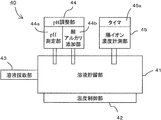
- FIG. 2 shows an example of an inorganic cation saturation concentration measuring apparatus suitably used in the present invention.
- the inorganic cation saturation concentration measuring device 40 includes a solution storage unit 41.
- the solution storage unit 41 includes a temperature control unit 42, a solution collection unit 43, a pH adjustment unit 44, and a cation concentration measurement unit. 45 is connected.
- the pH adjusting unit 44 is provided with a pH measuring unit 44a and an acid / alkali adding unit 44b.
- a timer 45 a is attached to the cation concentration measuring unit 45.
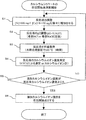
- FIG. 3 shows a flowchart for measuring the saturation concentration of the inorganic cation using the saturation concentration measuring device 40.
- calcium ion is selected as the inorganic cation, and the precipitation start point (saturation concentration) of calcium silicate is obtained.
- a reaction solution in which the silica concentration is 600 mg / L and the calcium concentration is gradually increased in the range of 0 to 50 mg / L is prepared, and the solution storage unit 41 is filled through the solution collecting unit 43 (step S1). ).
- step S2 while measuring the pH by the pH measuring unit 44a of the pH adjusting unit 44, for example, hydrochloric acid or a sodium hydroxide aqueous solution is added from the acid-alkali adding unit 44b, and a predetermined pH, for example, pH 9, 10, 11 It adjusts so that it may become (step S2).
- a predetermined pH for example, pH 9, 10, 11 It adjusts so that it may become (step S2).
- reaction liquid adjusted to a predetermined calcium concentration and pH is kept at a constant temperature under predetermined conditions, in this embodiment, 100 ° C. for 3 hours (step S3).
- This condition is preferably set to be the same as the temperature and time when returning to the reduction well 16 through the medium evaporator 17.
- the cation concentration measurement unit 45 measures the cation concentration (calcium concentration in this embodiment) (step S4).
- the calcium concentration can be measured by, for example, EDTA titration or a calcium ion meter.
- step S5 it is determined whether or not the initially added calcium ion concentration is higher than the calcium ion concentration after the reaction. If NO, the process returns to step S1. In the case of YES, the calcium ion concentration of the sample water at that time (concentration in step S1) is determined as the deposition start point (saturated concentration in the present invention) (step S6), and the process is terminated.
- a similar measurement may be performed by adjusting a reaction solution in which the concentration of magnesium is gradually increased in step S1.
- FIG. 4 shows the result of measuring the saturation concentration of calcium at pH 9 by the above method, where the horizontal axis indicates the amount of calcium added (mg / L) during reaction liquid adjustment, and the vertical axis indicates ,
- the calcium ion concentration after reaction (mg / L, black square graph), and the value obtained by subtracting the calcium ion concentration after reaction from the same calcium addition amount (mg / L, black triangle graph) are shown. Therefore, when the silica concentration is 600 mg / L, and the treatment is performed at 100 ° C. for 3 hours at pH 9, the value obtained by subtracting the calcium ion concentration after reaction from the calcium addition amount is a positive value. 5 mg / L, which is the amount of calcium added to turn to 1.
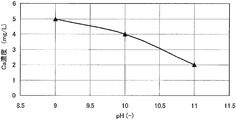
- FIG. 5 shows the results of measuring the saturation concentration of calcium at each pH by repeating the measurement shown in FIG. 3 under various pH conditions. Thus, it turns out that the saturation concentration of calcium falls as pH rises.
- the pH is changed with respect to the saturation concentration of each inorganic cation when processing is performed under predetermined conditions set to be similar to the temperature and time when returning to the reduction well 16 through the medium evaporator 17.
- the data measured in advance is obtained in advance, and the data is input from the input device 34 of FIG. 1 to the storage device 33 and stored. When the temperature and time fluctuate, the data is obtained under various conditions.
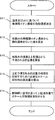
- the calculation processing unit 28 in FIG. 1 calculates the addition amount of the chelating agent that is a scale inhibitor, and controls the pump 27 by the chelating agent addition amount control unit 29 to add a predetermined amount of the chelating agent. This will be described with reference to FIG.
- the above measurement is performed from the data of the saturated concentration of each inorganic cation stored in the storage device 33 under various conditions.
- the saturation concentration of the inorganic cation in the geothermal water under the determined conditions is determined (step S1).
- step S12 a value obtained by subtracting the saturation concentration determined above from the inorganic cation concentration of the geothermal water measured by the inorganic cation concentration meter 22 is calculated (step S12).
- the concentration of the inorganic cation in the geothermal water increases, so the concentration rate is estimated from the amount of evaporation to obtain the inorganic cation concentration of the geothermal water.
- step S13 prediction is made when a scale inhibitor (chelating agent) is not added from the flow rate of the geothermal water measured by the flow meter 30 and the value obtained by subtracting the saturation concentration from the inorganic cation concentration of the geothermal water.
- the amount of inorganic cations deposited as scale is calculated (step S13).
- step S14 the addition amount of a scale inhibitor (chelating agent) necessary for suppressing the precipitation of the inorganic cation having the predicted precipitation amount is calculated (step S14).
- the operation of FIG. 6 by the arithmetic processing unit 28 is performed, for example, every predetermined time so that an appropriate amount of precipitation inhibitor is always added to the geothermal water.
- the first turbine 12 while preventing the geothermal water from depositing scale in the pipe, the first turbine 12 generates power with the first generator 13 and the second turbine 18 generates power with the second generator 19.
- the first turbine 12 generates power with the first generator 13 and the second turbine 18 generates power with the second generator 19.
- the addition amount of the scale precipitation inhibitor (chelating agent) can be suppressed to the minimum necessary, economical operation becomes possible.
Landscapes
- Engineering & Computer Science (AREA)
- Chemical & Material Sciences (AREA)
- Life Sciences & Earth Sciences (AREA)
- Combustion & Propulsion (AREA)
- Mechanical Engineering (AREA)
- General Engineering & Computer Science (AREA)
- Organic Chemistry (AREA)
- Environmental & Geological Engineering (AREA)
- Water Supply & Treatment (AREA)
- Hydrology & Water Resources (AREA)
- General Chemical & Material Sciences (AREA)
- Chemical Kinetics & Catalysis (AREA)
- General Life Sciences & Earth Sciences (AREA)
- Physics & Mathematics (AREA)
- Geology (AREA)
- Mining & Mineral Resources (AREA)
- Sustainable Energy (AREA)
- Thermal Sciences (AREA)
- Geochemistry & Mineralogy (AREA)
- Inorganic Chemistry (AREA)
- Materials Engineering (AREA)
- Fluid Mechanics (AREA)
- Sustainable Development (AREA)
- Preventing Corrosion Or Incrustation Of Metals (AREA)
- Removal Of Specific Substances (AREA)
- Water Treatment By Electricity Or Magnetism (AREA)
Abstract
Description
生産井から採取した地熱水の流量と、2価以上の無機陽イオン濃度を計測する流入水計測工程と、
前記地熱水の熱を除去する熱除去工程と、
前記熱除去工程後の地熱水の温度及びpHを計測する流出水計測工程と、
前記熱除去工程後の地熱水の温度及びpHに基づいて、前記熱除去工程後の地熱水の無機陽イオンの飽和濃度を求め、前記流入水計測工程で測定した前記地熱水の無機陽イオン濃度から前記熱除去工程後の地熱水の無機陽イオンの飽和濃度を引いた値と、前記地熱水の流量とから、前記無機陽イオンを含む塩の析出を抑制するために必要なスケール抑制剤の添加量を演算するスケール抑制剤添加量演算工程と、
前記スケール抑制剤添加量演算工程で演算されたスケール抑制剤の添加量に基づいて、前記生産井から採取した地熱水にスケール抑制剤を添加するスケール抑制剤添加工程とを含むことを特徴とする。
生産井から採取される地熱水中の2価以上の無機陽イオン濃度を測定する無機陽イオン濃度測定装置と、
前記生産井から採取される地熱水の流量を測定する流量計と、
前記地熱水の温度を低下させる熱除去部と、
前記熱除去後の地熱水の温度を測定する温度計と、
前記熱除去後の地熱水のpHを計測するpH測定装置と、
前記熱除去部で温度を低下させた後の地熱水の温度及びpHに基づいて、前記熱除去部で温度を低下させた後の地熱水の無機陽イオンの飽和濃度を求め、前記無機陽イオン濃度測定装置で測定した前記地熱水の無機陽イオン濃度から前記熱除去部で温度を低下させた後の地熱水の無機陽イオンの飽和濃度を引いた値と、前記地熱水の流量とから、前記無機陽イオンを含む塩の析出を抑制するために必要なスケール抑制剤の添加量を算出する演算処理部と、
前記地熱水に、前記演算処理部で算出された量のスケール抑制剤を添加する制御部とを備えていることを特徴とする。
11 セパレータ
12 第1タービン
13 第1発電機
17 媒体蒸発器
18 第2タービン
19 第2発電機
20 媒体凝縮器
21 ポンプ
22 無機陽イオン濃度計
23 シリカ濃度計
24 アルカリ剤タンク
25 ポンプ
26 キレート剤タンク
27 ポンプ
28 演算処理部
29 キレート剤添加量制御部
30 流量計
31 温度計
32 pH計
33 記憶装置
34 入力装置
40 飽和濃度測定装置
41 溶液貯留部
42 温度制御部
43 溶液採取部
44 pH調整部
44a pH測定部
44b 酸アルカリ添加部
45 陽イオン濃度計測部
45a タイマ
Claims (11)
- 生産井から採取した地熱水の流量と、2価以上の無機陽イオン濃度を計測する流入水計測工程と、
前記地熱水の熱を除去する熱除去工程と、
前記熱除去工程後の地熱水の温度及びpHを計測する流出水計測工程と、
前記熱除去工程後の地熱水の温度及びpHに基づいて、前記熱除去工程後の地熱水の無機陽イオンの飽和濃度を求め、前記流入水計測工程で測定した前記地熱水の無機陽イオン濃度から前記熱除去工程後の地熱水の無機陽イオンの飽和濃度を引いた値と、前記地熱水の流量とから、前記無機陽イオンを含む塩の析出を抑制するために必要なスケール抑制剤の添加量を演算するスケール抑制剤添加量演算工程と、
前記スケール抑制剤添加量演算工程で演算されたスケール抑制剤の添加量に基づいて、前記生産井から採取した地熱水にスケール抑制剤を添加するスケール抑制剤添加工程とを含むことを特徴とするスケール抑制方法。 - 前記生産井から採取した地熱水と同様なシリカ濃度及びpHで、前記無機陽イオン濃度を少しずつ増加させた試料水をそれぞれ作成し、
前記各試料水を前記熱除去工程後の温度に所定時間保持した後、各処理水中の前記無機陽イオン濃度を測定し、
前記試料水の無機陽イオン濃度よりも前記処理水の無機陽イオン濃度が最初に低くなるときの試料水の濃度を前記飽和濃度とする請求項1に記載のスケール抑制方法。 - 前記無機陽イオンが、マグネシウムイオン、カルシウムイオン、2価の鉄イオン、3価の鉄イオン及びアルミニウムイオンから選ばれる一種以上である請求項1に記載のスケール抑制方法。
- 前記地熱水のpHを9以上に調整する請求項1~3のいずれか1つに記載のスケール抑制方法。
- 前記地熱水に、前記スケール抑制剤の添加と同時又は前記スケール抑制剤の添加後に、アルカリ剤を添加してpHを9以上に調整する請求項4に記載のスケール抑制方法。
- 前記熱除去工程は、前記地熱水を減圧し、水蒸気を取出すフラッシュ工程及び/又は前記地熱水から熱を回収して発電媒体を蒸発させる工程を含む請求項1に記載のスケール抑制方法。
- 前記生産井から採取した地熱水を気液分離し、気液分離後の蒸気を発電設備に供給し、気液分離後の地熱水を前記熱除去工程に送る、請求項1に記載のスケール抑制方法。
- 生産井から採取される地熱水中の2価以上の無機陽イオン濃度を測定する無機陽イオン濃度測定装置と、
前記生産井から採取される地熱水の流量を測定する流量計と、
前記地熱水の温度を低下させる熱除去部と、
前記熱除去後の地熱水の温度を測定する温度計と、
前記熱除去後の地熱水のpHを計測するpH測定装置と、
前記熱除去部で温度を低下させた後の地熱水の温度及びpHに基づいて、前記熱除去部で温度を低下させた後の地熱水の無機陽イオンの飽和濃度を求め、前記無機陽イオン濃度測定装置で測定した前記地熱水の無機陽イオン濃度から前記熱除去部で温度を低下させた後の地熱水の無機陽イオンの飽和濃度を引いた値と、前記地熱水の流量とから、前記無機陽イオンを含む塩の析出を抑制するために必要なスケール抑制剤の添加量を算出する演算処理部と、
前記地熱水に、前記演算処理部で算出された量のスケール抑制剤を添加する制御部とを備えていることを特徴とする地熱発電装置。 - 前記熱除去部の前段に、気液分離器が配置され、気液分離後の地熱水を前記熱除去部に導入するように構成されている、請求項8に記載の地熱発電装置。
- 前記熱除去部は、放熱する配管、減圧により地熱水から蒸気を取出すフラッシャー及び発電媒体に熱を与えて発電媒体を蒸発させる熱交換器、から選ばれる1種以上である請求項8に記載の地熱発電装置。
- 試料水を貯留する溶液貯留部と、
この溶液貯留部に貯留された試料水の温度を調整する温度制御部と、
前記溶液貯留部に貯留された試料水に酸又はアルカリを添加して、pHを調整するpH調整部と、
所定時間経過後に試料水中の2価以上の無機陽イオン濃度を測定する濃度計測部と、
試料水として前記無機陽イオン濃度を徐々に高めたものを作成して順次、前記溶液貯留部に流入させる溶液供給部とを有する無機陽イオンの飽和濃度測定装置を備えている請求項8~10のいずれか1つに記載の地熱発電装置。
Priority Applications (4)
| Application Number | Priority Date | Filing Date | Title |
|---|---|---|---|
| US14/009,296 US9840429B2 (en) | 2011-04-19 | 2012-03-05 | Scale inhibition method and geothermal power generating device |
| PH1/2013/502042A PH12013502042B1 (en) | 2011-04-19 | 2012-03-05 | Scale inhibition method and geothermal power generating device |
| NZ615602A NZ615602B2 (en) | 2011-04-19 | 2012-03-05 | Scale inhibition method and geothermal power generating device |
| JP2013510917A JP5839030B2 (ja) | 2011-04-19 | 2012-03-05 | スケール抑制方法及び地熱発電装置 |
Applications Claiming Priority (2)
| Application Number | Priority Date | Filing Date | Title |
|---|---|---|---|
| JP2011092758 | 2011-04-19 | ||
| JP2011-092758 | 2011-04-19 |
Publications (1)
| Publication Number | Publication Date |
|---|---|
| WO2012144277A1 true WO2012144277A1 (ja) | 2012-10-26 |
Family
ID=47041399
Family Applications (1)
| Application Number | Title | Priority Date | Filing Date |
|---|---|---|---|
| PCT/JP2012/055545 Ceased WO2012144277A1 (ja) | 2011-04-19 | 2012-03-05 | スケール抑制方法及び地熱発電装置 |
Country Status (4)
| Country | Link |
|---|---|
| US (1) | US9840429B2 (ja) |
| JP (1) | JP5839030B2 (ja) |
| PH (1) | PH12013502042B1 (ja) |
| WO (1) | WO2012144277A1 (ja) |
Cited By (19)
| Publication number | Priority date | Publication date | Assignee | Title |
|---|---|---|---|---|
| EP2722598A1 (en) * | 2012-10-16 | 2014-04-23 | Panasonic Corporation | Water heater |
| EP2722599A1 (en) * | 2012-10-16 | 2014-04-23 | Panasonic Corporation | Water heater |
| WO2015181999A1 (ja) * | 2014-05-26 | 2015-12-03 | 三菱重工業株式会社 | 水処理装置及び水処理方法 |
| JP2016142451A (ja) * | 2015-02-02 | 2016-08-08 | イノベーティブ・デザイン&テクノロジー株式会社 | 発電システム用の熱交換器および該熱交換器を含むバイナリー発電システム、並びに発電システム用の熱交換器の制御方法 |
| US9657600B2 (en) | 2015-02-02 | 2017-05-23 | Innovative Designs & Technology Inc. | Heat exchanger, a purifier, an electrode-containing pipe, a power generation system, a control method for heat exchanger and a scale removing method |
| JP2017198142A (ja) * | 2016-04-27 | 2017-11-02 | 株式会社Ihi回転機械 | バイナリ発電システムおよびバイナリ発電方法 |
| JP2018030088A (ja) * | 2016-08-24 | 2018-03-01 | 株式会社日本触媒 | 地熱発電装置用スケール防止剤及び地熱水のスケール防止方法 |
| JPWO2016204287A1 (ja) * | 2015-06-19 | 2018-04-05 | ジャパン・ニュー・エナジー株式会社 | 地熱発電システム、地熱発電装置、地熱発電方法又は媒体移送管、その媒体移送管を利用した地熱発電装置及び地熱発電方法並びに破砕帯に媒体移送管を設置する方法 |
| JP2018091809A (ja) * | 2016-12-07 | 2018-06-14 | 三菱日立パワーシステムズ株式会社 | 地熱発電用蒸気性状監視装置、地熱発電システム、地熱発電用蒸気性状監視方法、及び、地熱発電システム制御方法 |
| JP2020012456A (ja) * | 2018-07-20 | 2020-01-23 | 株式会社東芝 | スケール抑制装置、地熱発電設備およびスケール抑制方法 |
| JP7094047B1 (ja) | 2021-02-24 | 2022-07-01 | 日本重化学工業株式会社 | 地熱タービン翼のスケール除去方法および地熱発電方法 |
| JP2022177574A (ja) * | 2021-05-18 | 2022-12-01 | 富士電機株式会社 | スクラバ装置 |
| JP2023513422A (ja) * | 2020-01-21 | 2023-03-31 | ソレニス・テクノロジーズ・ケイマン・エル・ピー | 地熱井の刺激及びシリカ系堆積物の除去 |
| JPWO2023074697A1 (ja) * | 2021-10-25 | 2023-05-04 | ||
| JPWO2024057966A1 (ja) * | 2022-09-12 | 2024-03-21 | ||
| WO2025018200A1 (ja) * | 2023-07-19 | 2025-01-23 | 富士電機株式会社 | 地熱発電システム |
| WO2025018198A1 (ja) * | 2023-07-19 | 2025-01-23 | 富士電機株式会社 | 地熱発電システム |
| WO2025263161A1 (ja) * | 2024-06-20 | 2025-12-26 | 富士電機株式会社 | 洗浄システム |
| US12571378B2 (en) | 2022-09-29 | 2026-03-10 | Fuji Electric Co., Ltd. | Geothermal power generation system and silica scale deposition control method |
Families Citing this family (8)
| Publication number | Priority date | Publication date | Assignee | Title |
|---|---|---|---|---|
| JP7438970B2 (ja) * | 2018-04-18 | 2024-02-27 | エコラボ ユーエスエー インコーポレイティド | タービン堆積物洗浄剤 |
| US11230484B2 (en) * | 2018-09-12 | 2022-01-25 | Chemtreat, Inc. | Methods and systems for calcite removal using polysuccinimide |
| US11421516B2 (en) | 2019-04-30 | 2022-08-23 | Sigl-G, Llc | Geothermal power generation |
| US11897801B2 (en) * | 2019-07-30 | 2024-02-13 | Solenis Technologies, L.P. | Silica scale inhibitors |
| CA3179784A1 (en) * | 2020-09-04 | 2022-03-10 | Rajendra Prasad Kalakodimi | Methods for predicting and monitoring scale formation in industrial water systems |
| JP7145375B2 (ja) * | 2021-01-29 | 2022-10-03 | 栗田工業株式会社 | 推定装置、予測装置、制御装置、推定システム、予測システム、制御システム、推定プログラム、予測プログラム、制御プログラム、推定方法、予測方法及び制御方法 |
| CN114412416B (zh) * | 2022-03-09 | 2025-06-27 | 山东省鲁南地质工程勘察院(山东省地质矿产勘查开发局第二地质大队) | 一种地热热储层及输送管线不提泵除垢装置及使用方法 |
| JP7182027B1 (ja) * | 2022-08-05 | 2022-12-01 | カルファケミカル株式会社 | 地熱等の再生可能エネルギーを利用したバイナリー発電システム |
Citations (7)
| Publication number | Priority date | Publication date | Assignee | Title |
|---|---|---|---|---|
| JPS57112697A (en) * | 1980-12-29 | 1982-07-13 | Mitsubishi Metal Corp | Method of removing scale on surface of heat-exchange tube |
| JPS61220793A (ja) * | 1985-03-25 | 1986-10-01 | Sasakura Eng Co Ltd | 水質監視方法及び水質制御方法 |
| JPS6274499A (ja) * | 1985-09-27 | 1987-04-06 | Hisaka Works Ltd | 温泉水のスケ−ル除去方法 |
| JPS62111095A (ja) * | 1985-11-09 | 1987-05-22 | 株式会社ササクラ | 地熱水の二重目的処理方法 |
| JPH0448998A (ja) * | 1990-06-19 | 1992-02-18 | Hitachi Zosen Corp | 地熱利用設備におけるスケール析出の抑制方法 |
| JPH04281899A (ja) * | 1991-03-11 | 1992-10-07 | Hitachi Zosen Corp | 地熱利用設備におけるスケール析出の抑制方法 |
| JPH09206733A (ja) * | 1995-08-25 | 1997-08-12 | Union Oil Co Calif | ケイ素含有沈殿の生成を防止する方法 |
Family Cites Families (10)
| Publication number | Priority date | Publication date | Assignee | Title |
|---|---|---|---|---|
| JP2769461B2 (ja) | 1992-01-17 | 1998-06-25 | 日本重化学工業株式会社 | 地熱蒸気井の薬注管取付構造 |
| JP3244855B2 (ja) | 1993-04-21 | 2002-01-07 | 三菱重工業株式会社 | 地熱熱水からのシリカスケール析出防止法 |
| US5656172A (en) * | 1995-12-28 | 1997-08-12 | Union Oil Company Of California | pH modification of geothermal brine with sulfur-containing acid |
| JP2002250271A (ja) * | 2001-02-23 | 2002-09-06 | Toshiba Eng Co Ltd | 地熱発電用蒸気タービンのスケール付着監視システム |
| JP2002257030A (ja) * | 2001-02-28 | 2002-09-11 | Mitsubishi Materials Corp | スケール成長予測装置、方法、及びそのプログラムとプログラムを記録した記録媒体 |
| US6761865B1 (en) * | 2003-04-22 | 2004-07-13 | Union Oil Company Of California | Method for synthesizing crystalline magnesium silicates from geothermal brine |
| US8563481B2 (en) * | 2005-02-25 | 2013-10-22 | Clearwater International Llc | Corrosion inhibitor systems for low, moderate and high temperature fluids and methods for making and using same |
| JP5125970B2 (ja) * | 2008-10-07 | 2013-01-23 | 富士電機株式会社 | 地熱流体利用システムのスケール付着監視装置 |
| US8430162B2 (en) * | 2009-05-29 | 2013-04-30 | Schlumberger Technology Corporation | Continuous downhole scale monitoring and inhibition system |
| JP5372838B2 (ja) * | 2010-05-31 | 2013-12-18 | 富士電機株式会社 | スケール抑制装置 |
-
2012
- 2012-03-05 PH PH1/2013/502042A patent/PH12013502042B1/en unknown
- 2012-03-05 WO PCT/JP2012/055545 patent/WO2012144277A1/ja not_active Ceased
- 2012-03-05 JP JP2013510917A patent/JP5839030B2/ja active Active
- 2012-03-05 US US14/009,296 patent/US9840429B2/en active Active
Patent Citations (7)
| Publication number | Priority date | Publication date | Assignee | Title |
|---|---|---|---|---|
| JPS57112697A (en) * | 1980-12-29 | 1982-07-13 | Mitsubishi Metal Corp | Method of removing scale on surface of heat-exchange tube |
| JPS61220793A (ja) * | 1985-03-25 | 1986-10-01 | Sasakura Eng Co Ltd | 水質監視方法及び水質制御方法 |
| JPS6274499A (ja) * | 1985-09-27 | 1987-04-06 | Hisaka Works Ltd | 温泉水のスケ−ル除去方法 |
| JPS62111095A (ja) * | 1985-11-09 | 1987-05-22 | 株式会社ササクラ | 地熱水の二重目的処理方法 |
| JPH0448998A (ja) * | 1990-06-19 | 1992-02-18 | Hitachi Zosen Corp | 地熱利用設備におけるスケール析出の抑制方法 |
| JPH04281899A (ja) * | 1991-03-11 | 1992-10-07 | Hitachi Zosen Corp | 地熱利用設備におけるスケール析出の抑制方法 |
| JPH09206733A (ja) * | 1995-08-25 | 1997-08-12 | Union Oil Co Calif | ケイ素含有沈殿の生成を防止する方法 |
Cited By (30)
| Publication number | Priority date | Publication date | Assignee | Title |
|---|---|---|---|---|
| EP2722599A1 (en) * | 2012-10-16 | 2014-04-23 | Panasonic Corporation | Water heater |
| EP2722598A1 (en) * | 2012-10-16 | 2014-04-23 | Panasonic Corporation | Water heater |
| WO2015181999A1 (ja) * | 2014-05-26 | 2015-12-03 | 三菱重工業株式会社 | 水処理装置及び水処理方法 |
| JP2015223539A (ja) * | 2014-05-26 | 2015-12-14 | 三菱重工業株式会社 | 水処理装置及び水処理方法 |
| JP2016142451A (ja) * | 2015-02-02 | 2016-08-08 | イノベーティブ・デザイン&テクノロジー株式会社 | 発電システム用の熱交換器および該熱交換器を含むバイナリー発電システム、並びに発電システム用の熱交換器の制御方法 |
| US9657600B2 (en) | 2015-02-02 | 2017-05-23 | Innovative Designs & Technology Inc. | Heat exchanger, a purifier, an electrode-containing pipe, a power generation system, a control method for heat exchanger and a scale removing method |
| JPWO2016204287A1 (ja) * | 2015-06-19 | 2018-04-05 | ジャパン・ニュー・エナジー株式会社 | 地熱発電システム、地熱発電装置、地熱発電方法又は媒体移送管、その媒体移送管を利用した地熱発電装置及び地熱発電方法並びに破砕帯に媒体移送管を設置する方法 |
| JP2017198142A (ja) * | 2016-04-27 | 2017-11-02 | 株式会社Ihi回転機械 | バイナリ発電システムおよびバイナリ発電方法 |
| JP2018030088A (ja) * | 2016-08-24 | 2018-03-01 | 株式会社日本触媒 | 地熱発電装置用スケール防止剤及び地熱水のスケール防止方法 |
| JP2018091809A (ja) * | 2016-12-07 | 2018-06-14 | 三菱日立パワーシステムズ株式会社 | 地熱発電用蒸気性状監視装置、地熱発電システム、地熱発電用蒸気性状監視方法、及び、地熱発電システム制御方法 |
| JP2020012456A (ja) * | 2018-07-20 | 2020-01-23 | 株式会社東芝 | スケール抑制装置、地熱発電設備およびスケール抑制方法 |
| JP7077169B2 (ja) | 2018-07-20 | 2022-05-30 | 株式会社東芝 | スケール抑制装置、地熱発電設備およびスケール抑制方法 |
| US12371972B2 (en) | 2020-01-21 | 2025-07-29 | Solenis Technologies, L.P. | Geothermal well stimulation and silca based deposit removal |
| JP2023513422A (ja) * | 2020-01-21 | 2023-03-31 | ソレニス・テクノロジーズ・ケイマン・エル・ピー | 地熱井の刺激及びシリカ系堆積物の除去 |
| JP2022129307A (ja) * | 2021-02-24 | 2022-09-05 | 日本重化学工業株式会社 | 地熱タービン翼のスケール除去方法および地熱発電方法 |
| WO2022181679A1 (ja) * | 2021-02-24 | 2022-09-01 | 日本重化学工業株式会社 | 地熱タービン翼のスケール除去方法および地熱発電方法 |
| JP7094047B1 (ja) | 2021-02-24 | 2022-07-01 | 日本重化学工業株式会社 | 地熱タービン翼のスケール除去方法および地熱発電方法 |
| JP7661782B2 (ja) | 2021-05-18 | 2025-04-15 | 富士電機株式会社 | スクラバ装置 |
| JP2022177574A (ja) * | 2021-05-18 | 2022-12-01 | 富士電機株式会社 | スクラバ装置 |
| WO2023074697A1 (ja) * | 2021-10-25 | 2023-05-04 | 富士電機株式会社 | シリカスケール生成量の予測方法 |
| JP7681263B2 (ja) | 2021-10-25 | 2025-05-22 | 富士電機株式会社 | シリカスケール生成量の予測方法 |
| JPWO2023074697A1 (ja) * | 2021-10-25 | 2023-05-04 | ||
| WO2024057966A1 (ja) * | 2022-09-12 | 2024-03-21 | 富士電機株式会社 | シリカ過飽和流体のpH推算装置及びpH推算方法 |
| JPWO2024057966A1 (ja) * | 2022-09-12 | 2024-03-21 | ||
| JP7769925B2 (ja) | 2022-09-12 | 2025-11-14 | 富士電機株式会社 | シリカ過飽和流体のpH推算装置及びpH推算方法 |
| US12571378B2 (en) | 2022-09-29 | 2026-03-10 | Fuji Electric Co., Ltd. | Geothermal power generation system and silica scale deposition control method |
| WO2025018200A1 (ja) * | 2023-07-19 | 2025-01-23 | 富士電機株式会社 | 地熱発電システム |
| JPWO2025018200A1 (ja) * | 2023-07-19 | 2025-01-23 | ||
| WO2025018198A1 (ja) * | 2023-07-19 | 2025-01-23 | 富士電機株式会社 | 地熱発電システム |
| WO2025263161A1 (ja) * | 2024-06-20 | 2025-12-26 | 富士電機株式会社 | 洗浄システム |
Also Published As
| Publication number | Publication date |
|---|---|
| US20140083949A1 (en) | 2014-03-27 |
| JP5839030B2 (ja) | 2016-01-06 |
| NZ615602A (en) | 2015-02-27 |
| PH12013502042A1 (en) | 2013-12-16 |
| US9840429B2 (en) | 2017-12-12 |
| PH12013502042B1 (en) | 2017-11-17 |
| JPWO2012144277A1 (ja) | 2014-07-28 |
Similar Documents
| Publication | Publication Date | Title |
|---|---|---|
| JP5839030B2 (ja) | スケール抑制方法及び地熱発電装置 | |
| JP5751987B2 (ja) | スケール抑制方法及び地熱発電装置 | |
| US5858245A (en) | Inhibition of silicate scale formation | |
| van Wyk et al. | Analysis of the energy consumption of supercritical water desalination (SCWD) | |
| von Hirtz | Silica scale control in geothermal plants—Historical perspective and current technology | |
| JP5563854B2 (ja) | スケール抑制方法及び発電システム | |
| Luo et al. | Scaling tendency of boiler feedwater without desiliconization treatment | |
| JP5499823B2 (ja) | 冷却水系の処理方法 | |
| BR112015025008B1 (pt) | Método para remover carepas em instalação de geração de vapor | |
| JP6056183B2 (ja) | スケール抑制装置、その装置を用いた地熱発電システム及びスケール抑制方法 | |
| CN105060601A (zh) | 一种专门针对火电厂零排放的综合处理系统 | |
| JP6592386B2 (ja) | アンモニア含有排水の処理方法および処理装置 | |
| Jiang et al. | Proof-of-concept study of an integrated solar desalination system | |
| WO2013161325A1 (ja) | スケール抑制装置、その装置を用いた地熱発電システム及びスケール抑制方法 | |
| Rahman et al. | 14 Scale Formation and Control in Thermal Desalination Systems | |
| JP2016031154A (ja) | 制御方法、ボイラ制御装置及びプログラム | |
| Myers et al. | Purification of magnesium chloride from mixed brines via hydrogen chloride absorption with ambient temperature and pressure regeneration of super azeotropic hydrochloric acid | |
| NZ615602B2 (en) | Scale inhibition method and geothermal power generating device | |
| Inyang et al. | The importance of boiler feed water and its treatment in a chemical plant | |
| Ni et al. | Effects of temperature and salinity on fouling in hypersaline seawater | |
| US12571378B2 (en) | Geothermal power generation system and silica scale deposition control method | |
| JP2009299161A (ja) | 水系の金属腐食抑制方法 | |
| JP2007262567A (ja) | ボイラ腐食抑制方法 | |
| Gallup | Brine pH modification scale control technology. 2. A review | |
| Mabrouk et al. | Modelling scale formation in wet cooling system and validation with pilot plant data |
Legal Events
| Date | Code | Title | Description |
|---|---|---|---|
| 121 | Ep: the epo has been informed by wipo that ep was designated in this application |
Ref document number: 12773822 Country of ref document: EP Kind code of ref document: A1 |
|
| ENP | Entry into the national phase |
Ref document number: 2013510917 Country of ref document: JP Kind code of ref document: A |
|
| NENP | Non-entry into the national phase |
Ref country code: DE |
|
| WWE | Wipo information: entry into national phase |
Ref document number: 14009296 Country of ref document: US |
|
| 122 | Ep: pct application non-entry in european phase |
Ref document number: 12773822 Country of ref document: EP Kind code of ref document: A1 |