WO2012144379A1 - 供給装置、供給方法、受信装置、受信方法、プログラム、および放送システム - Google Patents
供給装置、供給方法、受信装置、受信方法、プログラム、および放送システム Download PDFInfo
- Publication number
- WO2012144379A1 WO2012144379A1 PCT/JP2012/059839 JP2012059839W WO2012144379A1 WO 2012144379 A1 WO2012144379 A1 WO 2012144379A1 JP 2012059839 W JP2012059839 W JP 2012059839W WO 2012144379 A1 WO2012144379 A1 WO 2012144379A1
- Authority
- WO
- WIPO (PCT)
- Prior art keywords
- program
- segment data
- data sequence
- progress
- unit
- Prior art date
- Legal status (The legal status is an assumption and is not a legal conclusion. Google has not performed a legal analysis and makes no representation as to the accuracy of the status listed.)
- Ceased
Links
Images










Classifications
-
- H—ELECTRICITY
- H04—ELECTRIC COMMUNICATION TECHNIQUE
- H04N—PICTORIAL COMMUNICATION, e.g. TELEVISION
- H04N21/00—Selective content distribution, e.g. interactive television or video on demand [VOD]
- H04N21/20—Servers specifically adapted for the distribution of content, e.g. VOD servers; Operations thereof
- H04N21/25—Management operations performed by the server for facilitating the content distribution or administrating data related to end-users or client devices, e.g. end-user or client device authentication, learning user preferences for recommending movies
- H04N21/262—Content or additional data distribution scheduling, e.g. sending additional data at off-peak times, updating software modules, calculating the carousel transmission frequency, delaying a video stream transmission, generating play-lists
-
- H—ELECTRICITY
- H04—ELECTRIC COMMUNICATION TECHNIQUE
- H04N—PICTORIAL COMMUNICATION, e.g. TELEVISION
- H04N21/00—Selective content distribution, e.g. interactive television or video on demand [VOD]
- H04N21/20—Servers specifically adapted for the distribution of content, e.g. VOD servers; Operations thereof
- H04N21/23—Processing of content or additional data; Elementary server operations; Server middleware
- H04N21/242—Synchronisation processes, e.g. processing of PCR [Programme Clock References]
-
- H—ELECTRICITY
- H04—ELECTRIC COMMUNICATION TECHNIQUE
- H04N—PICTORIAL COMMUNICATION, e.g. TELEVISION
- H04N21/00—Selective content distribution, e.g. interactive television or video on demand [VOD]
- H04N21/40—Client devices specifically adapted for the reception of or interaction with content, e.g. set-top-box [STB]; Operations thereof
- H04N21/41—Structure of client; Structure of client peripherals
- H04N21/4104—Peripherals receiving signals from specially adapted client devices
- H04N21/4126—The peripheral being portable, e.g. PDAs or mobile phones
-
- H—ELECTRICITY
- H04—ELECTRIC COMMUNICATION TECHNIQUE
- H04N—PICTORIAL COMMUNICATION, e.g. TELEVISION
- H04N21/00—Selective content distribution, e.g. interactive television or video on demand [VOD]
- H04N21/20—Servers specifically adapted for the distribution of content, e.g. VOD servers; Operations thereof
- H04N21/23—Processing of content or additional data; Elementary server operations; Server middleware
- H04N21/235—Processing of additional data, e.g. scrambling of additional data or processing content descriptors
-
- H—ELECTRICITY
- H04—ELECTRIC COMMUNICATION TECHNIQUE
- H04N—PICTORIAL COMMUNICATION, e.g. TELEVISION
- H04N21/00—Selective content distribution, e.g. interactive television or video on demand [VOD]
- H04N21/40—Client devices specifically adapted for the reception of or interaction with content, e.g. set-top-box [STB]; Operations thereof
- H04N21/43—Processing of content or additional data, e.g. demultiplexing additional data from a digital video stream; Elementary client operations, e.g. monitoring of home network or synchronising decoder's clock; Client middleware
- H04N21/4302—Content synchronisation processes, e.g. decoder synchronisation
- H04N21/4307—Synchronising the rendering of multiple content streams or additional data on devices, e.g. synchronisation of audio on a mobile phone with the video output on the TV screen
- H04N21/43079—Synchronising the rendering of multiple content streams or additional data on devices, e.g. synchronisation of audio on a mobile phone with the video output on the TV screen of additional data with content streams on multiple devices
-
- H—ELECTRICITY
- H04—ELECTRIC COMMUNICATION TECHNIQUE
- H04N—PICTORIAL COMMUNICATION, e.g. TELEVISION
- H04N21/00—Selective content distribution, e.g. interactive television or video on demand [VOD]
- H04N21/40—Client devices specifically adapted for the reception of or interaction with content, e.g. set-top-box [STB]; Operations thereof
- H04N21/43—Processing of content or additional data, e.g. demultiplexing additional data from a digital video stream; Elementary client operations, e.g. monitoring of home network or synchronising decoder's clock; Client middleware
- H04N21/435—Processing of additional data, e.g. decrypting of additional data, reconstructing software from modules extracted from the transport stream
-
- H—ELECTRICITY
- H04—ELECTRIC COMMUNICATION TECHNIQUE
- H04N—PICTORIAL COMMUNICATION, e.g. TELEVISION
- H04N21/00—Selective content distribution, e.g. interactive television or video on demand [VOD]
- H04N21/40—Client devices specifically adapted for the reception of or interaction with content, e.g. set-top-box [STB]; Operations thereof
- H04N21/45—Management operations performed by the client for facilitating the reception of or the interaction with the content or administrating data related to the end-user or to the client device itself, e.g. learning user preferences for recommending movies, resolving scheduling conflicts
- H04N21/458—Scheduling content for creating a personalised stream, e.g. by combining a locally stored advertisement with an incoming stream; Updating operations, e.g. for OS modules ; time-related management operations
-
- H—ELECTRICITY
- H04—ELECTRIC COMMUNICATION TECHNIQUE
- H04N—PICTORIAL COMMUNICATION, e.g. TELEVISION
- H04N21/00—Selective content distribution, e.g. interactive television or video on demand [VOD]
- H04N21/40—Client devices specifically adapted for the reception of or interaction with content, e.g. set-top-box [STB]; Operations thereof
- H04N21/45—Management operations performed by the client for facilitating the reception of or the interaction with the content or administrating data related to the end-user or to the client device itself, e.g. learning user preferences for recommending movies, resolving scheduling conflicts
- H04N21/462—Content or additional data management e.g. creating a master electronic programme guide from data received from the Internet and a Head-end or controlling the complexity of a video stream by scaling the resolution or bit-rate based on the client capabilities
- H04N21/4622—Retrieving content or additional data from different sources, e.g. from a broadcast channel and the Internet
-
- H—ELECTRICITY
- H04—ELECTRIC COMMUNICATION TECHNIQUE
- H04N—PICTORIAL COMMUNICATION, e.g. TELEVISION
- H04N21/00—Selective content distribution, e.g. interactive television or video on demand [VOD]
- H04N21/40—Client devices specifically adapted for the reception of or interaction with content, e.g. set-top-box [STB]; Operations thereof
- H04N21/47—End-user applications
- H04N21/472—End-user interface for requesting content, additional data or services; End-user interface for interacting with content, e.g. for content reservation or setting reminders, for requesting event notification, for manipulating displayed content
- H04N21/4722—End-user interface for requesting content, additional data or services; End-user interface for interacting with content, e.g. for content reservation or setting reminders, for requesting event notification, for manipulating displayed content for requesting additional data associated with the content
-
- H—ELECTRICITY
- H04—ELECTRIC COMMUNICATION TECHNIQUE
- H04N—PICTORIAL COMMUNICATION, e.g. TELEVISION
- H04N21/00—Selective content distribution, e.g. interactive television or video on demand [VOD]
- H04N21/80—Generation or processing of content or additional data by content creator independently of the distribution process; Content per se
- H04N21/83—Generation or processing of protective or descriptive data associated with content; Content structuring
- H04N21/845—Structuring of content, e.g. decomposing content into time segments
- H04N21/8455—Structuring of content, e.g. decomposing content into time segments involving pointers to the content, e.g. pointers to the I-frames of the video stream
-
- H—ELECTRICITY
- H04—ELECTRIC COMMUNICATION TECHNIQUE
- H04N—PICTORIAL COMMUNICATION, e.g. TELEVISION
- H04N21/00—Selective content distribution, e.g. interactive television or video on demand [VOD]
- H04N21/80—Generation or processing of content or additional data by content creator independently of the distribution process; Content per se
- H04N21/85—Assembly of content; Generation of multimedia applications
- H04N21/854—Content authoring
- H04N21/8547—Content authoring involving timestamps for synchronizing content
-
- H—ELECTRICITY
- H04—ELECTRIC COMMUNICATION TECHNIQUE
- H04N—PICTORIAL COMMUNICATION, e.g. TELEVISION
- H04N21/00—Selective content distribution, e.g. interactive television or video on demand [VOD]
- H04N21/80—Generation or processing of content or additional data by content creator independently of the distribution process; Content per se
- H04N21/85—Assembly of content; Generation of multimedia applications
- H04N21/858—Linking data to content, e.g. by linking an URL to a video object, by creating a hotspot
- H04N21/8586—Linking data to content, e.g. by linking an URL to a video object, by creating a hotspot by using a URL
-
- H—ELECTRICITY
- H04—ELECTRIC COMMUNICATION TECHNIQUE
- H04N—PICTORIAL COMMUNICATION, e.g. TELEVISION
- H04N5/00—Details of television systems
- H04N5/44—Receiver circuitry for the reception of television signals according to analogue transmission standards
- H04N5/445—Receiver circuitry for the reception of television signals according to analogue transmission standards for displaying additional information
Definitions
- the present disclosure relates to a supply device, a supply method, a reception device, a reception method, a program, and a broadcast system, and in particular, a supply device suitable for use when performing data broadcasting synchronized with the progress of a digital television broadcast program.
- a supply method, a receiving device, a receiving method, a program, and a broadcasting system are examples of a supply device, a supply method, a reception device, a reception method, a program, and a broadcasting system.
- Conventional data broadcasting displays information not directly related to the TV program being viewed, such as news, weather forecasts, traffic information, etc., or information related to the TV program being viewed (casts, stories). It is used for display purposes.
- a program progress synchronization information service For future data broadcasting, it is required to enhance (improve the implementation frequency) a service for displaying information synchronized with the progress of the television program being viewed (hereinafter referred to as a program progress synchronization information service). ing.
- the present disclosure has been made in view of such a situation, and makes it possible to easily realize a program progress synchronization information service.
- a supply apparatus relates to a broadcast unit that broadcasts a program to a reception apparatus via a broadcast network, a segment valid period that indicates a synchronization period with respect to the progress of the program, and the ongoing program A supply unit that supplies a segment data sequence including at least one piece of segment data including metadata to the receiving apparatus.
- the supply unit can supply the segment data sequence to the receiving device via a network in response to a request from the receiving device.
- the broadcast unit also broadcasts an application control descriptor including a URL of the supply unit that is a supply source of the segment data sequence, and the supply unit responds to a request from the receiving device based on the application control descriptor,
- the segment data sequence can be supplied to the receiving device via a network.
- the metadata related to the ongoing program is targeted at a person, thing, place, or entire scene that appears in the synchronized program, and the title name, description information, link information, keyword, It may include at least one of position information or pointer information.
- the segment valid period of the segment data can be described using PTS indicating the progress position of the corresponding program.
- a supply method is a supply method by a supply device, in which a broadcast step of broadcasting a program to a reception device via a broadcast network by the supply device and a synchronization period for the progress of the program are shown. And supplying a receiving device with a segment data sequence including at least one segment data comprising a segment validity period and metadata related to the ongoing program.
- a program according to a first aspect of the present disclosure is a program for controlling a supply device, and includes a broadcasting step of broadcasting a program to a receiving device via a broadcast network, and a segment valid indicating a synchronization period with respect to the progress of the program And a supply step of supplying the receiving device with a segment data sequence including at least one segment data comprising metadata related to the program in progress and the duration of the program.
- segment data including a segment effective period indicating a synchronization period with respect to the progress of a program and a metadata related to the program in progress, when the program is broadcast to a receiving device via a broadcasting network.
- a segment data sequence including at least one is supplied to the receiving device.
- a receiving apparatus relates to a receiving unit that receives a program broadcast via a broadcasting network, a segment valid period that indicates a synchronization period with respect to the progress of the program, and the ongoing program
- An acquisition unit that acquires a segment data sequence including at least one segment data including metadata, and information related to the program to a user in synchronization with the progress of the program based on the acquired segment data sequence
- a presentation unit for presentation
- the reception unit also receives an application control descriptor including a URL of a supply unit that is a supply source of the segment data sequence, and the acquisition unit sends the supply unit to the supply unit via a network based on the application control descriptor.
- an application control descriptor including a URL of a supply unit that is a supply source of the segment data sequence
- the acquisition unit sends the supply unit to the supply unit via a network based on the application control descriptor.
- a supply of segment data sequences can be requested.
- a receiving method is a receiving method of a receiving device that receives a program broadcast via a broadcast network, in which a segment effective period indicating a synchronization period for the progress of the program by the receiving device, And obtaining a segment data sequence including at least one segment data composed of metadata related to the ongoing program, and based on the obtained segment data sequence, in synchronization with the progress of the program, A presentation step of presenting information related to the program to the user.
- a program according to a second aspect of the present disclosure is a program for controlling a receiving apparatus that receives a program broadcast via a broadcast network, and includes a segment valid period indicating a synchronization period with respect to the progress of the program, and a progress
- the computer of a receiving apparatus is made to perform the process containing the presentation step which shows a user relevant information.
- a segment data sequence including at least one segment data composed of a segment valid period indicating a synchronization period with respect to a progress of a program and metadata related to the ongoing program is acquired and acquired. Based on the segment data sequence, information related to the program is presented to the user in synchronization with the progress of the program.
- a broadcast system is a broadcast system including a supply device and a reception device, wherein the supply device broadcasts a program to the reception device via a broadcast network, and the progress of the program A supply unit that supplies a segment data sequence including at least one segment data period including a segment valid period indicating a synchronization period to the program and metadata related to the ongoing program to the receiving apparatus, the receiving apparatus comprising: Based on the acquired segment data sequence, a receiving unit that receives a program broadcast from the supply device via a broadcast network, an acquisition unit that acquires the segment data sequence supplied from the supply device, and the program A presentation unit that presents information related to the program to the user in synchronization with the progress of the program.
- a supply device broadcasts a program to a receiving device via a broadcast network, a segment valid period indicating a synchronization period with respect to the progress of the program, and metadata relating to the ongoing program
- a segment data sequence including at least one segment data consisting of is supplied to the receiving apparatus.
- the segment data sequence supplied from the supply device is acquired by the receiving device, and information related to the program is presented to the user in synchronization with the progress of the program based on the acquired segment data sequence.
- the segment data sequence for easily realizing the program progress synchronization information service can be supplied to the receiving device.
- the program progress synchronization information service can be provided to the user based on the supplied segment data sequence.
- the program progress synchronization information service can be easily realized.
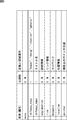
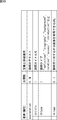
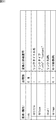
- FIG. 1 It is a figure which shows the example of a display of the screen by a resident application dependence process. It is a figure which shows the example of a display of the screen by a resident application dependence process. It is a figure which shows an example of the segment data sequence corresponding to FIG. It is a figure which shows the example of a display of the screen by a resident application dependence process. It is a figure which shows an example of the segment data sequence corresponding to FIG. It is a block diagram which shows the structural example of a computer.
- FIG. 1 shows a broadcasting system according to an embodiment.
- the broadcasting system 10 includes a broadcasting device 20, a segment data sequence server 21, and a content server 22 provided on the broadcasting side, and a receiving device 30 and an information terminal 40 provided on the receiving side.
- the broadcasting system 10 realizes a program progress synchronization information service that presents information synchronized with the progress of a television program to the user of the receiving device 30.
- the program progress synchronization information service in the receiving device 30 depends on a resident application (hereinafter abbreviated as a resident application) that is incorporated in the receiving device 30 in advance. Therefore, the method of presenting information as a program progress synchronization information service in each receiving device 30 is not necessarily common to all receiving devices 30.
- the broadcast side broadcast device 20 broadcasts a digital broadcast signal via the broadcast network 1.
- the broadcast network 1 is assumed to be a terrestrial digital broadcast network, a satellite broadcast network, a cable television network, or the like.
- the broadcast digital broadcast signal includes signals such as program video, audio, and subtitles.
- an application control descriptor for controlling the receiving device 30 when realizing the program progress synchronization information service is included in a predetermined position of the digital broadcast signal.
- the application control descriptors having the same contents are repeatedly broadcast for a predetermined period. As a result, it is possible to suppress the occurrence of a situation in which the program progress synchronization information service cannot be realized because the receiving device 30 failed to receive the application control descriptor.
- the application control descriptor When the program progress synchronization information service is executed in units of broadcast services (so-called broadcast channels), the application control descriptor is broadcast by being included in an SDT (service description table) included in a digital broadcast signal. When the program progress synchronization information service is executed on a program basis, it is broadcast in an EIT (event information table) included in the digital broadcast signal. In this case, the application control descriptor may be included in the program PMT (program map) and broadcast. Details of the application control descriptor will be described later.
- the segment data sequence server 21 receives application control data (including a segment data sequence described later) necessary for realizing the program progress synchronization information service in the receiving device 30 in response to a request from the receiving device 30 via the Internet 2. To the receiving device 30.
- application control data including a segment data sequence described later
- the content server 22 supplies content presented to the user as a program progress synchronization information service in response to a request from the receiving device 30 or the information terminal 40 via the Internet 2.
- the receiving device 30 on the receiving side receives a digital broadcast signal broadcast from the broadcasting device 20 via the broadcast network 1, and based on the received digital broadcast signal, monitors the video and audio of a program or CM (not shown). ).
- the receiving device 30 acquires a segment data sequence from the segment data sequence server 21 based on the application control descriptor included in the digital broadcast signal.
- the receiving apparatus 30 implements a program progress synchronization information service by executing a resident app that is held and supplying a segment data sequence to the resident app.
- the receiving device 30 can be connected to the information terminal 40 via a predetermined interface.
- the connection between the receiving device 30 and the information terminal 40 may be a wireless connection using a wireless LAN, Bluetooth (registered trademark), infrared, or the like, or a wired connection via a wired LAN, USB, HDMI, or the like.
- the information as the program progress synchronization information service may be displayed by combining the video of the new information service with the video of the program or CM, or displayed on the screen of the information terminal 40 connected to the receiving device 30. Also good.
- the receiving device 30 may be configured as a single unit, or may be built in, for example, a digital television receiver or a video recorder.
- the information terminal 40 provides a program progress synchronization information service to the user in accordance with control from the receiving device 30.
- Examples of the information terminal 40 include a smartphone, a mobile phone, a tablet PC, a digital television receiver, and a video recorder.
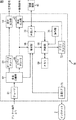
- FIG. 2 shows a configuration example of the receiving device 30.
- the receiving device 30 includes a tuner 61, a demultiplexing unit 62, an audio decoder 63, an audio output unit 64, a video decoder 65, an analysis unit 66, a video output unit 67, a control unit 68, a memory 69, an operation unit 70, and a communication I / F 71. , An application engine 72, and an external I / F 73.
- the tuner 61 receives and demodulates a digital broadcast signal corresponding to the service (broadcast channel) selected by the user, and outputs a TS (transport stream) obtained as a result to the demultiplexing unit 62.
- the demultiplexing unit 62 separates the TS input from the tuner 61 into an audio encoded signal and a video encoded signal, the audio encoded signal to the audio decoder 63, and the video encoded signal to the video decoder 65 and the analyzing unit 66. Output to. Further, the demultiplexing unit 62 separates the control signal including SDT and EIT that may include the application control descriptor from the TS and outputs the control signal to the analysis unit 66.
- the audio decoder 63 decodes the input audio encoded signal and outputs the resulting audio signal to the audio output unit 64.
- the audio output unit 64 outputs the input audio signal to a subsequent stage (for example, a speaker).
- the video decoder 65 decodes the input video encoded signal and outputs the resulting video signal to the analysis unit 66 and the video output unit 67.
- the analysis unit 66 detects and analyzes the application control descriptor included in the SDT and EIT input from the demultiplexing unit 62, controls the communication I / F 71 according to the analysis result, and transmits via the Internet 2.
- Application control data is acquired from the segment data sequence server 21.
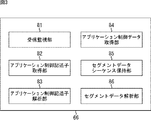
- FIG. 3 shows functional blocks included in the analysis unit 66.
- the analysis unit 66 includes a reception monitoring unit 81, an application control descriptor acquisition unit 82, an application control descriptor analysis unit 83, an application control data acquisition unit 84, a segment data sequence holding unit 85, and a segment data analysis unit 86. .
- the reception monitoring unit 81 monitors the change of service (channel) by channel selection operation and the start and end of a program in the service being received.
- the application control descriptor acquisition unit 82 holds the SDT and EIT input from the demultiplexing unit 62, and acquires the application control descriptor from the SDT and EIT.
- the application control descriptor analysis unit 83 analyzes the application control descriptor corresponding to the selected service or program.
- the application control data acquisition unit 84 acquires application control data from the segment data sequence server 21 based on the analysis result of the application control descriptor corresponding to the selected service or program.
- the segment data holding unit 88 holds a segment data sequence constituting the acquired application control data.
- the segment data analysis unit 86 analyzes each segment data constituting the segment data sequence.
- the video output unit 67 outputs the video signal input from the video decoder 65 to a subsequent stage (for example, a display). Also, the video output unit 67 combines the video of the program progress synchronization information service input from the application engine 72 and the video signal input from the video decoder 65 and outputs the resultant to the subsequent stage.
- the control unit 68 controls the entire receiving device 30 by executing a control program recorded in the memory 69.
- the memory 69 stores a control program executed by the control unit 68. This control program can be updated based on digital broadcast signals or update data supplied via the Internet 2.
- the operation unit 70 receives various operations from the user and notifies the control unit 68 of operation signals corresponding thereto.
- the communication I / F 71 is connected to the segment data sequence server 21 or the content server 22 via the Internet 2 in accordance with control from the analysis unit 66 or the application engine 72.
- the application engine 72 executes a resident application stored in advance in accordance with control from the control unit 68.
- the executed resident application uses the segment data sequence supplied from the control unit 68 to realize a program progress synchronization information service.
- the resident application held by the application engine 72 can be updated based on a digital broadcast signal or update data supplied via the Internet 2.
- the external I / F 73 establishes a connection with the information terminal 40 by radio or wire.
- FIG. 4 shows a configuration example of the information terminal 40. However, FIG. 4 shows only the parts related to realizing the program progress synchronization information service in cooperation with the receiving device 40, and other parts are omitted as appropriate.
- the information terminal 40 includes an external I / F 91, a command analysis unit 92, a control unit 93, an operation unit 94, a memory 95, an application engine 96, a communication I / F 97, and an output unit 98.
- the external I / F 91 is connected to the external I / F 73 of the receiving device 30 by wireless or wired.
- the command analysis unit 92 analyzes a command from the receiving device 30 input via the external I / F 73 and outputs the analysis result to the control unit 93.
- the control unit 93 controls the entire information terminal 40 by executing a control program (for example, Android, iOS, etc. as a platform) recorded in the memory 65. Further, the control unit 93 controls the application engine 96 based on the analysis result from the command analysis unit 92 to realize the program progress synchronization information service.
- a control program for example, Android, iOS, etc. as a platform
- control program executed by the control unit 93 is recorded.
- the operation unit 94 receives various operations from the user and notifies the control unit 93 of operation signals corresponding thereto.
- the application engine 96 executes a resident application corresponding to the program progress synchronization information service for the information terminal 40 held in advance according to the control from the control unit 93, and outputs a video signal or audio signal of information obtained as an execution result. Output to 98.
- the communication I / F 97 connects to the content server 22 via the Internet 2 in accordance with control from the application engine 96.
- the output unit 98 displays video corresponding to the video signal input from the application engine 96, and outputs audio corresponding to the audio signal.
- FIG. 5 shows an example of the syntax of the application control descriptor.
- descriptor_tag indicating the corresponding service (broadcast channel) or program
- descriptor_length indicating the data length of the application control descriptor
- application_control_type indicating the application control type
- app_control_data_url_length indicating the data length of the URL for specifying the application control data acquisition destination (segment data sequence server 21)
- app_control_data_url_byte indicating the URL
- the application control data is data necessary for realizing the program progress synchronization information service in the receiving device 30.
- FIG. 6 shows the structure of application control data.
- the application control data includes a segment data sequence composed of a plurality of segment data, as shown in A of FIG.
- Each segment data consists of a segment valid period and command data (Fig. B), or a segment valid period and metadata (Fig. C).
- the segment valid period is indicated by start_PTS and end_PTS indicating two points on the progress time axis of the corresponding program.
- start_PTS and end_PTS indicating two points on the progress time axis of the corresponding program.
- segment data sequence segment data including command data and segment data including metadata can be mixed.
- FIG. 7 shows the data structure of the segment data sequence.
- segment_sequence each segment data is described with @segment_number indicating the number, start_PTS indicating the PTS value of the start timing of the segment valid period, and end_PTS indicating the PTS value of the end timing of the segment valid period Is done.
- PTS value a counter value of a 90 KHz clock embedded in a video stream or an audio stream can be used, but an absolute time indicated in hours, minutes and seconds or a relative time from the start of a program may be used.
- each segment data describes either command data or metadata.
- segment data including metadata is used in the program progress synchronization information service, the metadata of the segment data will be described in detail.
- FIG. 8 shows the metadata structure in the segment data.
- Metadata types include application data (application_data), text subtitle data (caption), bitmap subtitle data (subtitle), related metadata (meta), and the like.
- @Target indicates the application that should process the metadata. However, if the application that should process the metadata is a resident application that is held in advance in the receiving device 30, @target is omitted. In the program progress synchronization information service, the resident application is used, so @target is omitted.
- FIG. 9 shows the data structure of related metadata (meta).
- a plurality of related metadata can be described, and required @focus_type and @focus_name are described for each related metadata.
- @focus_type is information indicating the type (focus type) on the screen related to the metadata (attention target), person (human), thing (thing), location (location), or the entire screen (general ) Is specified.
- @focus_name the title name for the target of attention (person, object, place, or entire screen) is described.
- link link information related to the target of interest is described.
- keyword a keyword related to the target of interest is described.
- location position information (latitude, longitude) related to the target of interest is described.
- pointer the position on the screen to be noticed (pointer position) is described. Note that explanation or pointer is not essential, and any number can be described.
- FIG. 10 shows an element of explanation, which is one item of related metadata.
- an arbitrary number of explanatory texts related to the target object can be described.
- title the title name of the explanatory text is described.
- type the type of description (explanation type) is described.
- definition, biography, background, relation, access, introduction, etc. are described.
- @logo is not essential, a URL (for example, content server 22) indicating the acquisition destination of the logo image corresponding to the description is described.
- FIG. 11 shows a link element which is one item of related metadata.
- title the title name of the link information is described.
- @type describes the type of link information (link type).
- info is described when the link destination is information such as a web page, and content is described when the link destination is content such as a moving image or music.
- the URL of the link destination is described in @url.
- @logo is not essential, a URL (for example, content server 22) indicating the acquisition destination of the logo image corresponding to the link destination is described.
- FIG. 12 shows a keyword element which is one item of related metadata.
- keyword a character string of an arbitrary number of keywords is described.
- FIG. 13 shows a location element which is one item of related metadata.
- title the title name of the position information is described.
- @longitude describes the longitude of the position information.
- @latitude describes the longitude of the position information.
- FIG. 14 shows a pointer element, which is one item of related metadata. @horizontal describes the horizontal position of the pointer. @vertical describes the vertical position of the pointer.
- FIG. 15 is a flowchart for explaining processing of the reception device 30.
- This process is repeatedly executed while the receiving device 30 is receiving a program, and the receiving device 30 has already acquired and held the SDT and EIT included in the digital broadcast signal.
- step S1 the reception monitoring unit 81 of the analysis unit 66 detects a received service (broadcast channel) or program change. If the application control descriptor is included in the SDT corresponding to the changed service or the EIT corresponding to the changed program, the application control descriptor acquisition unit 82 acquires the application control descriptor and obtains the application control descriptor analysis unit 83. The application control descriptor analysis unit 83 analyzes the application control descriptor. The application control data acquisition unit 84 acquires application control data (segment data sequence) from the segment data sequence server 21 based on the analysis result of the application control descriptor. The acquired application control data (segment data sequence) is held in the segment data sequence holding unit 85.
- step S2 the segment data analysis unit 86 detects the segment data constituting the held segment data sequence that matches the progress timing of the program being received. Specifically, the PTS indicating the progress position of the program being received is within the segment valid period of the segment data (in the range from start_PTS to end_PTS).
- step S3 if the extracted segment data includes metadata, the segment data analysis unit 86 supplies the metadata to the application engine 72. In response to this, the application engine 72 activates the resident application and supplies the supplied metadata to the resident application. Thereafter, processing depending on the resident application is executed, and a program progress synchronization information service is realized.
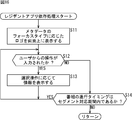
- FIG. 16 is a flowchart for explaining the resident application dependent process.
- step S11 the resident app responds to the metadata focus type (human (human), thing (thing), location (general)) on the screen of the ongoing television program.
- the logo It is assumed that the logo image data corresponding to each focus type is held in advance by the resident application. By displaying this logo, it is possible to notify the user who is watching the television program of the presence of metadata related to the progress of the program.
- step S12 the resident application determines whether or not there is an operation from the user such as selection of a log corresponding to the focus type displayed on the screen. If it is determined that there is an operation from the user, the resident application advances the process to step S13 and displays the program progress synchronization information according to the user's operation. Thereafter, the process returns to step S12, and the subsequent steps are repeated.
- step S12 If it is determined in step S12 that there is no operation from the user, the resident application advances the process to step S14, and determines whether or not the progress timing of the program being received is within the segment valid period. If it is determined that it is within the segment valid period, the process returns to step S12 and the subsequent steps are repeated. If it is determined that it is not within the segment valid period (the progress timing of the program being received has passed the segment valid period), the resident application dependent process using the metadata of the segment data of interest is terminated.
- FIG. 17 shows a display example of the screen image output from the receiving device 30 when the program progress synchronization information service is implemented in association with the news program.
- a video of a news program in which a news caster appears is displayed on the display screen 100, and three types of logos corresponding to the focus type, that is, a scene information logo corresponding to the entire screen are displayed on the upper right of the display screen 100 101, a person information logo 102 whose focus type corresponds to a person, and a location information logo 103 whose focus type corresponds to a place are displayed.
- the logo image data corresponding to the focus type is held in advance by the resident application. By displaying these logos, the user can recognize that three types of metadata can be displayed. When the user performs an operation of selecting one of these logos, corresponding information is displayed.
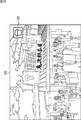
- FIG. 18 shows a display example of the screen of the receiving device 30 when the program progress synchronization information service is implemented in association with the information program.
- the display screen 100 an image of an information program introducing a store called “Kojiro Chaya” is displayed, and a location information logo 103 corresponding to the focus type is displayed on the upper right of the video.
- a location information logo 103 By displaying the location information logo 103, the user can recognize that the metadata whose focus type is location can be displayed.
- the screen display is changed as shown in FIG.
- a hyperlink 111 of “Link of Onijiro Chaya” is displayed based on the @title of the link information (link) of the related metadata, and the link information @ A link logo image 112 of Onijiro Chaya acquired based on the logo is displayed.
- the browser is activated, connected to the link destination indicated by the link information @url, and the web page of “Kojiro Chaya” is displayed.
- “MAP” button 113 is displayed on the lower left side of the video of the information program displayed in a reduced size because of the location information (location) of the related metadata.
- location location
- a map of the location indicated by the latitude and longitude of the position information is displayed.
- FIG. 20 and 21 show display examples of the screens of the receiving device 30 and the information terminal 40 when the program progress synchronization information service is executed in association with the information program in cooperation with the information terminal 40.
- FIG. 20 and 21 show display examples of the screens of the receiving device 30 and the information terminal 40 when the program progress synchronization information service is executed in association with the information program in cooperation with the information terminal 40.
- the display screen 100 of the receiving device 30 shows only the video of the program, and the location information logo 103 corresponding to the focus type is displayed on the display screen 120 of the information terminal 40.
- the display screen 100 of the receiving device 30 can be limited to only the video of the program.
- an explanatory text based on the explanatory information (explanation) of the related metadata is displayed on the display screen 120 of the information terminal 40. In this case, it is not necessary to reduce the video of the program displayed on the display screen 100 of the receiving device 30.
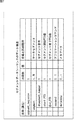
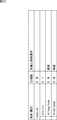
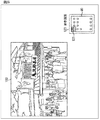
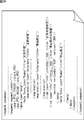
- program progress synchronization information service shown in FIGS. 19 to 21 can be realized by the segment data sequence shown in FIG. 22, for example.
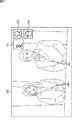
- FIG. 23 shows the transition of the screen image output from the receiving device 30 when the program progress synchronization information service is implemented in association with the drama program.
- FIG. A In the case of FIG. A, two people appearing in the drama are displayed on the display screen 100, and a person information logo 102 corresponding to the focus type is displayed on the upper right of the display screen 100.
- the display screen 100 transitions to FIG.
- the resident application of the receiving device 30 is a specification that uses (can) the pointer position (pointer) of the related metadata, as illustrated in FIG. According to the position, the title name of the person to be noticed (in this case, Shiki Masaoka and Masayuki Akiyama as role names) is displayed.
- FIG. 1 A list 131 of Masaki Masaoka and Masayuki Akiyama as role names is displayed.
- FIG. B or FIG. C when the user performs the selection operation of the title name of the target person (in this case, Shiki Masaoka or Masayuki Akiyama as the role name), as shown in FIG. Is reduced, and an explanatory note regarding the selected person of interest is displayed.
- the title name of the target person in this case, Shiki Masaoka or Masayuki Akiyama as the role name
- Fig. D corresponds to the case where the title name of the person to be watched (Shoki Masaoka as the role name) is selected.
- the video of the drama program is reduced, and below it is "Koki Masaoka", “Teryuki Kayama (name of the actor who plays Masaoka Masaoka)", “Kidori's haiku collection based on the explanation information (explanation) of the related metadata.
- a plurality of tabs whose title is “and a description 141 of the selected tab are displayed.
- hyperlink 142 of “Study Masaoka Masanori” and hyperlink 143 of “Tetsuyuki Kayama's room” based on @title of link information (link) of related metadata Is displayed.
- the browser is activated and connected to the link destination indicated by @url of the link information, and the web page of “Masaoka Shiki Research” or “Kayama Teruyuki's Room” is displayed.
- program progress synchronization information service shown in FIG. 23 can be realized by the segment data sequence shown in FIG. 24, for example.
- the program progress synchronization information service using segment data sequences for example, displays explanations of terms that appear in economic news, displays explanations of backgrounds and circumstances of incidents, and is related Link information of past news and related information can be provided.
- screen display examples are omitted, for example, characters such as people, animals, robots, and fictitious animals are displayed superimposed on the video of the program, and keywords of related metadata are used for the utterance of the characters. May be.
- FIG. 17 to FIG. 21 and FIG. 23 are examples of screen display, and the method of using the segment data sequence depends solely on the resident application of the receiving device 30 and the information terminal 40. That is, the broadcasting side only provides the receiving side with a segment data sequence that can be used for the program progress synchronization information service, and does not limit the display method.
- the broadcast side can aggregate various information synchronized with the progress of the television program into the segment data sequence as related metadata by, for example, the same operation as the creation of the synchronized subtitle information of the conventional program. .
- a program constituting the software may execute various functions by installing a computer incorporated in dedicated hardware or various programs. For example, it is installed from a program recording medium in a general-purpose personal computer or the like.
- FIG. 25 is a block diagram showing an example of the hardware configuration of a computer that executes the above-described series of processing by a program.
- a CPU Central Processing Unit
- ROM Read Only Memory
- RAM Random Access Memory
- An input / output interface 205 is further connected to the bus 204.
- the input / output interface 205 includes an input unit 206 composed of a keyboard, mouse, microphone, etc., an output unit 207 composed of a display, a speaker, etc., a storage unit 208 composed of a hard disk or nonvolatile memory, and a communication unit 209 composed of a network interface.
- a drive 210 for driving a removable medium 211 such as a magnetic disk, an optical disk, a magneto-optical disk, or a semiconductor memory is connected.
- the CPU 201 loads, for example, the program stored in the storage unit 208 to the RAM 203 via the input / output interface 205 and the bus 204 and executes the program. Is performed.
- the program executed by the computer may be a program that is processed in time series in the order described in this specification, or in parallel or at a necessary timing such as when a call is made. It may be a program for processing.
- the program may be processed by a single computer or may be distributedly processed by a plurality of computers. Furthermore, the program may be transferred to a remote computer and executed.
- system represents the entire apparatus composed of a plurality of apparatuses.
- 1 broadcast network 2 internet, 10 broadcast system, 20 broadcast device, 21 segment data sequence server, 22 content server, 30 receiver, 40 information terminal, 61 tuner, 62 demultiplexer, 63 audio decoder, 64 audio output, 65 video decoder, 66 analysis unit, 67 video output unit, 68 control unit, 69 memory, 70 operation unit, 71 communication I / F, 72 application engine, 73 external I / F, 81 reception monitoring unit, 82 application control descriptor Acquisition unit, 83 Application descriptor analysis unit, 84 Application control data acquisition unit, 85 segment data sequence holding unit, 86 segment data analysis unit, 100 computer 101 CPU
Landscapes
- Engineering & Computer Science (AREA)
- Multimedia (AREA)
- Signal Processing (AREA)
- Databases & Information Systems (AREA)
- Human Computer Interaction (AREA)
- Computer Security & Cryptography (AREA)
- Two-Way Televisions, Distribution Of Moving Picture Or The Like (AREA)
- Circuits Of Receivers In General (AREA)
Abstract
Description
[放送システムの構成例について]
図1は、実施の形態である放送システムを示している。この放送システム10は、放送側に設けられる放送装置20、セグメントデータシーケンスサーバ21、およびコンテンツサーバ22、並びに、受信側に設けられる受信装置30および情報端末40から構成される。
図2は、受信装置30の構成例を示している。受信装置30は、チューナ61、多重分離部62、オーディオデコーダ63、音声出力部64、ビデオデコーダ65、解析部66、映像出力部67、制御部68、メモリ69、操作部70、通信I/F71、アプリエンジン72、および外部I/F73から構成される。
図4は、情報端末40の構成例を示している。ただし、図4には、受信装置40と連携して番組進行同期情報サービスを実現するために関係する部位のみが示されており、その他部位については適宜省略されている。
次に、デジタル放送信号に含めて放送されるアプリケーション制御記述子について説明する。アプリケーション制御記述子は、デジタル放送信号のSDTまたはEITに含めて放送される。
次に、セグメントデータシーケンスサーバ21から受信装置30に供給されるアプリケーション制御データについて説明する。アプリケーション制御データは、受信装置30にて番組進行同期情報サービスを実現するために必要なデータである。
次に、受信装置30による番組進行同期情報サービスを実現するための処理について、図15を参照して説明する。図15は、受信装置30の処理を説明するフローチャートである。
次に、レジデントアプリ依存処理による受信装置30または情報端末40の画面表示について説明する。
Claims (12)
- 放送網を介して受信装置に番組を放送する放送部と、
前記番組の進行に対する同期期間を示すセグメント有効期間、および進行中の前記番組に関連するメタデータからなるセグメントデータを少なくとも1つ含むセグメントデータシーケンスを前記受信装置に供給する供給部と
を備える供給装置。 - 前記供給部は、前記受信装置からの要求に応じ、ネットワークを介して前記セグメントデータシーケンスを前記受信装置に供給する
請求項1に記載の供給装置。 - 前記放送部は、前記セグメントデータシーケンスの供給元となる前記供給部のURLを含むアプリケーション制御記述子も放送し、
前記供給部は、前記アプリケーション制御記述子に基づく前記受信装置からの要求に応じ、ネットワークを介して前記セグメントデータシーケンスを前記受信装置に供給する
請求項2に記載の供給装置。 - 進行中の前記番組に関連する前記メタデータは、同期される番組に登場する人物、物、場所、またはシーン全体を注目対象とし、前記注目対象についてのタイトル名、説明情報、リンク情報、キーワード、位置情報、またはポインタ情報のうちの少なくとも一つを含む
請求項2に記載の供給装置。 - 前記セグメントデータの前記セグメント有効期間は、対応する番組の進行位置を示すPTSを用いて記述されている
請求項2に記載の供給装置。 - 供給装置による供給方法において、
前記供給装置による、
放送網を介して受信装置に番組を放送する放送ステップと、
前記番組の進行に対する同期期間を示すセグメント有効期間、および進行中の前記番組に関連するメタデータからなるセグメントデータを少なくとも1つ含むセグメントデータシーケンスを前記受信装置に供給する供給ステップと
を含む供給方法。 - 供給装置の制御用のプログラムであって、
放送網を介して受信装置に番組を放送する放送ステップと、
前記番組の進行に対する同期期間を示すセグメント有効期間、および進行中の前記番組に関連するメタデータからなるセグメントデータを少なくとも1つ含むセグメントデータシーケンスを前記受信装置に供給する供給ステップと
を含む処理を供給装置のコンピュータに実行させるプログラム。 - 放送網を介して放送された番組を受信する受信部と、
前記番組の進行に対する同期期間を示すセグメント有効期間、および進行中の前記番組に関連するメタデータからなるセグメントデータを少なくとも1つ含むセグメントデータシーケンスを取得する取得部と、
取得された前記セグメントデータシーケンスに基づき、前記番組の進行に同期して、前記番組に関連する情報をユーザに提示する提示部と
を備える受信装置。 - 前記受信部は、前記セグメントデータシーケンスの供給元となる供給部のURLを含むアプリケーション制御記述子も受信し、
前記取得部は、前記アプリケーション制御記述子に基づき、ネットワークを介して前記供給部に前記セグメントデータシーケンスの供給を要求する
請求項8に記載の受信装置。 - 放送網を介して放送された番組を受信する受信装置の受信方法において、
前記受信装置による、
前記番組の進行に対する同期期間を示すセグメント有効期間、および進行中の前記番組に関連するメタデータからなるセグメントデータを少なくとも1つ含むセグメントデータシーケンスを取得する取得ステップと、
取得された前記セグメントデータシーケンスに基づき、前記番組の進行に同期して、前記番組に関連する情報をユーザに提示する提示ステップと
を含む受信方法。 - 放送網を介して放送された番組を受信する受信装置の制御用のプログラムであって、
前記番組の進行に対する同期期間を示すセグメント有効期間、および進行中の前記番組に関連するメタデータからなるセグメントデータを少なくとも1つ含むセグメントデータシーケンスを取得する取得ステップと、
取得された前記セグメントデータシーケンスに基づき、前記番組の進行に同期して、前記番組に関連する情報をユーザに提示する提示ステップと
を含む処理を受信装置のコンピュータに実行させるプログラム。 - 供給装置と受信装置からなる放送システムにおいて、
前記供給装置は、
放送網を介して前記受信装置に番組を放送する放送部と、
前記番組の進行に対する同期期間を示すセグメント有効期間、および進行中の前記番組に関連するメタデータからなるセグメントデータを少なくとも1つ含むセグメントデータシーケンスを前記受信装置に供給する供給部と
を備え、
前記受信装置は、
前記供給装置から放送網を介して放送された番組を受信する受信部と、
前記供給装置から供給される前記セグメントデータシーケンスを取得する取得部と、
取得された前記セグメントデータシーケンスに基づき、前記番組の進行に同期して、前記番組に関連する情報をユーザに提示する提示部と
を備える
放送システム。
Priority Applications (8)
| Application Number | Priority Date | Filing Date | Title |
|---|---|---|---|
| RU2013145941/07A RU2013145941A (ru) | 2011-04-21 | 2012-04-11 | Устройство подачи, способ подачи, устройство приема, способ приема, программа и система широковещательной передачи |
| US14/111,286 US10582244B2 (en) | 2011-04-21 | 2012-04-11 | Feeding device, feeding method, receiving device, receiving method, program, and broadcasting system |
| KR1020137026387A KR20140010431A (ko) | 2011-04-21 | 2012-04-11 | 공급 장치, 공급 방법, 수신 장치, 수신 방법, 프로그램 및 방송 시스템 |
| CN2012800182070A CN103477653A (zh) | 2011-04-21 | 2012-04-11 | 供给设备、供给方法、接收设备、接收方法、程序和广播系统 |
| CA2830151A CA2830151A1 (en) | 2011-04-21 | 2012-04-11 | Feeding device, feeding method, receiving device, receiving method, program, and broadcasting system |
| EP12774121.3A EP2701381A4 (en) | 2011-04-21 | 2012-04-11 | SENDING DEVICE, TRANSMISSION PROCEDURE, RECEIVING DEVICE, RECEIVING METHOD, PROGRAM AND BROADCAST SYSTEM |
| MX2013011972A MX2013011972A (es) | 2011-04-21 | 2012-04-11 | Aparato de suministro, metodo de suministro, aparato de recepcion, metodo de recepcion, programa, y sistema de difusion. |
| JP2013510958A JP6228456B2 (ja) | 2011-04-21 | 2012-04-11 | 供給装置、供給方法、受信装置、受信方法、プログラム、および放送システム |
Applications Claiming Priority (2)
| Application Number | Priority Date | Filing Date | Title |
|---|---|---|---|
| JP2011-094939 | 2011-04-21 | ||
| JP2011094939 | 2011-04-21 |
Publications (1)
| Publication Number | Publication Date |
|---|---|
| WO2012144379A1 true WO2012144379A1 (ja) | 2012-10-26 |
Family
ID=47041490
Family Applications (1)
| Application Number | Title | Priority Date | Filing Date |
|---|---|---|---|
| PCT/JP2012/059839 Ceased WO2012144379A1 (ja) | 2011-04-21 | 2012-04-11 | 供給装置、供給方法、受信装置、受信方法、プログラム、および放送システム |
Country Status (11)
| Country | Link |
|---|---|
| US (1) | US10582244B2 (ja) |
| EP (1) | EP2701381A4 (ja) |
| JP (2) | JP6228456B2 (ja) |
| KR (1) | KR20140010431A (ja) |
| CN (1) | CN103477653A (ja) |
| AR (1) | AR086093A1 (ja) |
| CA (1) | CA2830151A1 (ja) |
| MX (1) | MX2013011972A (ja) |
| RU (1) | RU2013145941A (ja) |
| TW (1) | TW201249198A (ja) |
| WO (1) | WO2012144379A1 (ja) |
Cited By (2)
| Publication number | Priority date | Publication date | Assignee | Title |
|---|---|---|---|---|
| JP2015128241A (ja) * | 2013-12-27 | 2015-07-09 | 株式会社東芝 | 電子機器、制御方法、及びプログラム |
| JP2017508326A (ja) * | 2013-12-19 | 2017-03-23 | エルジー エレクトロニクス インコーポレイティド | 放送伝送装置、放送伝送装置の動作方法、放送受信装置および放送受信装置の動作方法 |
Families Citing this family (7)
| Publication number | Priority date | Publication date | Assignee | Title |
|---|---|---|---|---|
| US9602850B2 (en) * | 2013-08-06 | 2017-03-21 | Verizon Patent And Licensing Inc. | Metadata validation |
| CN106899882B (zh) * | 2015-12-21 | 2019-11-01 | 北京奇虎科技有限公司 | 视频进度更新方法及终端 |
| JP2017157177A (ja) * | 2016-03-04 | 2017-09-07 | 富士通株式会社 | スマート装置、退避データ削減方法及び退避データ削減プログラム |
| US20240149151A1 (en) | 2022-11-04 | 2024-05-09 | Backbone Labs, Inc. | System and Method for Rich Content Browsing Multitasking on Device Operating Systems with Multitasking Limitations |
| US12324983B2 (en) * | 2022-12-23 | 2025-06-10 | Backbone Labs, Inc. | Universal mobile game controller |
| US12558612B2 (en) | 2022-12-23 | 2026-02-24 | Backbone Labs, Inc. | Universal mobile game controller |
| US12427403B2 (en) | 2023-07-27 | 2025-09-30 | Backbone Labs, Inc. | Mobile game controller and method for connecting to a wireless audio device |
Citations (5)
| Publication number | Priority date | Publication date | Assignee | Title |
|---|---|---|---|---|
| WO2002061596A1 (en) * | 2001-01-30 | 2002-08-08 | Electronics And Telecommunications Research Institute | Method and apparatus for delivery of metadata synchronized to multimedia contents |
| JP2002320163A (ja) * | 2001-04-20 | 2002-10-31 | Sharp Corp | メタ情報と映像時間位置情報を利用した映像視聴装置 |
| WO2004084214A1 (en) * | 2003-03-18 | 2004-09-30 | Koninklike Philips Electronics N.V. | Device and method for recording information |
| JP2006050237A (ja) | 2004-08-04 | 2006-02-16 | Sony Corp | 端末装置およびデータ処理方法、プログラム並びに記録媒体 |
| WO2007097387A1 (ja) * | 2006-02-22 | 2007-08-30 | Access Co., Ltd. | 番組放送システム及び番組コンテンツ配信システム |
Family Cites Families (25)
| Publication number | Priority date | Publication date | Assignee | Title |
|---|---|---|---|---|
| JP3356961B2 (ja) | 1997-04-08 | 2002-12-16 | 直之 宮山 | テレビ番組関連情報提供システム |
| JPH11275537A (ja) | 1998-03-23 | 1999-10-08 | Sony Corp | 情報送信装置および方法、情報受信装置および方法、並びに提供媒体 |
| AU6016600A (en) | 1999-07-14 | 2001-02-05 | Matsushita Electric Industrial Co., Ltd. | Apparatus for providing information, information receiver and storage medium |
| US7367042B1 (en) * | 2000-02-29 | 2008-04-29 | Goldpocket Interactive, Inc. | Method and apparatus for hyperlinking in a television broadcast |
| JP2001251565A (ja) | 2000-03-03 | 2001-09-14 | Sony Corp | 受信装置及び受信装置の情報再生方法、並びに、電子機器及び電子機器の情報再生方法 |
| US20010052133A1 (en) | 2000-04-12 | 2001-12-13 | Lg Electronics Inc. | Apparatus and method for providing and obtaining product information through a broadcast signal |
| JP2002238036A (ja) * | 2001-02-07 | 2002-08-23 | Fujitsu Ltd | 放送方法、および、放送方法を放送局装置に実行させるプログラム |
| JP4504601B2 (ja) | 2001-08-24 | 2010-07-14 | 財団法人エヌエイチケイエンジニアリングサービス | データ受信端末及びデータ受信プログラム |
| KR100429806B1 (ko) * | 2002-01-07 | 2004-05-03 | 삼성전자주식회사 | 디지털 tv 프로그램에 연관된 부가 정보를 표시하는방법 및그 장치 |
| JP3968260B2 (ja) | 2002-03-22 | 2007-08-29 | 日本電信電話株式会社 | 映像関連情報提示装置、方法、プログラムおよびこのプログラムを記録した記録媒体 |
| US7197717B2 (en) * | 2002-06-04 | 2007-03-27 | Microsoft Corporation | Seamless tabbed focus control in active content |
| JP2004180136A (ja) * | 2002-11-28 | 2004-06-24 | Sony Corp | 送信装置、受信装置、送信方法、受信方法および送受信システム |
| JP2005124163A (ja) * | 2003-09-22 | 2005-05-12 | Matsushita Electric Ind Co Ltd | 受信装置、番組連携表示方法および印刷制御方法 |
| JP2005151147A (ja) | 2003-11-14 | 2005-06-09 | Toshiba Corp | 再生装置及び再生方法 |
| JP2006004024A (ja) * | 2004-06-16 | 2006-01-05 | Fujitsu Ltd | ディレクトリサーバに実行させるためのプログラム |
| WO2006049185A1 (ja) | 2004-11-02 | 2006-05-11 | Matsushita Electric Industrial Co., Ltd. | アプリケーションプログラム実行装置 |
| US8316394B2 (en) * | 2006-03-24 | 2012-11-20 | United Video Properties, Inc. | Interactive media guidance application with intelligent navigation and display features |
| KR100777409B1 (ko) * | 2006-06-05 | 2007-11-19 | 주식회사 알티캐스트 | 디지털 양방향 방송에서의 네트워크 서비스 프로바이더애플리케이션 프로비저닝 방법 |
| RU2010109890A (ru) | 2007-08-17 | 2011-09-27 | Конинклейке Филипс Электроникс Н.В. (Nl) | Способ и устройство для предоставления метаданных для сохранения |
| US20090129749A1 (en) * | 2007-11-06 | 2009-05-21 | Masayuki Oyamatsu | Video recorder and video reproduction method |
| US8634855B2 (en) * | 2008-07-18 | 2014-01-21 | At&T Intellectual Property I, L.P. | System and method for sharing location information |
| US8588588B2 (en) * | 2008-09-12 | 2013-11-19 | Panasonic Corporation | Television receiver and program data reception method |
| KR101500741B1 (ko) * | 2008-09-12 | 2015-03-09 | 옵티스 셀룰러 테크놀로지, 엘엘씨 | 카메라가 구비된 이동 단말기 및 이의 촬영 방법 |
| KR20100052676A (ko) * | 2008-11-11 | 2010-05-20 | 삼성전자주식회사 | 컨텐츠 앨범화 장치 및 그 방법 |
| GB201004449D0 (en) * | 2010-02-22 | 2010-05-05 | Corbett Sean | Data accelerator |
-
2012
- 2012-03-29 TW TW101111068A patent/TW201249198A/zh unknown
- 2012-04-11 CN CN2012800182070A patent/CN103477653A/zh active Pending
- 2012-04-11 JP JP2013510958A patent/JP6228456B2/ja not_active Expired - Fee Related
- 2012-04-11 KR KR1020137026387A patent/KR20140010431A/ko not_active Withdrawn
- 2012-04-11 WO PCT/JP2012/059839 patent/WO2012144379A1/ja not_active Ceased
- 2012-04-11 CA CA2830151A patent/CA2830151A1/en not_active Abandoned
- 2012-04-11 MX MX2013011972A patent/MX2013011972A/es not_active Application Discontinuation
- 2012-04-11 RU RU2013145941/07A patent/RU2013145941A/ru not_active Application Discontinuation
- 2012-04-11 US US14/111,286 patent/US10582244B2/en active Active
- 2012-04-11 EP EP12774121.3A patent/EP2701381A4/en not_active Ceased
- 2012-04-13 AR ARP120101280A patent/AR086093A1/es unknown
-
2016
- 2016-09-07 JP JP2016174724A patent/JP2017034681A/ja active Pending
Patent Citations (5)
| Publication number | Priority date | Publication date | Assignee | Title |
|---|---|---|---|---|
| WO2002061596A1 (en) * | 2001-01-30 | 2002-08-08 | Electronics And Telecommunications Research Institute | Method and apparatus for delivery of metadata synchronized to multimedia contents |
| JP2002320163A (ja) * | 2001-04-20 | 2002-10-31 | Sharp Corp | メタ情報と映像時間位置情報を利用した映像視聴装置 |
| WO2004084214A1 (en) * | 2003-03-18 | 2004-09-30 | Koninklike Philips Electronics N.V. | Device and method for recording information |
| JP2006050237A (ja) | 2004-08-04 | 2006-02-16 | Sony Corp | 端末装置およびデータ処理方法、プログラム並びに記録媒体 |
| WO2007097387A1 (ja) * | 2006-02-22 | 2007-08-30 | Access Co., Ltd. | 番組放送システム及び番組コンテンツ配信システム |
Cited By (2)
| Publication number | Priority date | Publication date | Assignee | Title |
|---|---|---|---|---|
| JP2017508326A (ja) * | 2013-12-19 | 2017-03-23 | エルジー エレクトロニクス インコーポレイティド | 放送伝送装置、放送伝送装置の動作方法、放送受信装置および放送受信装置の動作方法 |
| JP2015128241A (ja) * | 2013-12-27 | 2015-07-09 | 株式会社東芝 | 電子機器、制御方法、及びプログラム |
Also Published As
| Publication number | Publication date |
|---|---|
| RU2013145941A (ru) | 2015-04-20 |
| KR20140010431A (ko) | 2014-01-24 |
| CA2830151A1 (en) | 2012-10-26 |
| TW201249198A (en) | 2012-12-01 |
| JP6228456B2 (ja) | 2017-11-08 |
| EP2701381A4 (en) | 2014-09-03 |
| CN103477653A (zh) | 2013-12-25 |
| US10582244B2 (en) | 2020-03-03 |
| AR086093A1 (es) | 2013-11-20 |
| US20140109133A1 (en) | 2014-04-17 |
| JP2017034681A (ja) | 2017-02-09 |
| EP2701381A1 (en) | 2014-02-26 |
| JPWO2012144379A1 (ja) | 2014-07-28 |
| MX2013011972A (es) | 2014-02-06 |
Similar Documents
| Publication | Publication Date | Title |
|---|---|---|
| JP6228456B2 (ja) | 供給装置、供給方法、受信装置、受信方法、プログラム、および放送システム | |
| US12425691B2 (en) | Reception apparatus, reception method, and program for switching between first and second content | |
| CN103329554B (zh) | 接收装置、接收方法、提供装置、提供方法、程序和广播系统 | |
| JP5783402B2 (ja) | 受信装置、受信方法、供給装置、供給方法、プログラム、および放送システム | |
| US10244078B2 (en) | Information processing apparatus, information processing method, and program | |
| JP2013009358A (ja) | 放送通信連携受信装置 | |
| JP5275506B2 (ja) | 受信機、プログラム及び放送システム | |
| JP5156527B2 (ja) | 番組再生装置 | |
| JP4755717B2 (ja) | 放送受信端末装置 | |
| JP2013098868A (ja) | 動画像再生システム | |
| JP6035389B2 (ja) | 受信方法、および受信装置 |
Legal Events
| Date | Code | Title | Description |
|---|---|---|---|
| 121 | Ep: the epo has been informed by wipo that ep was designated in this application |
Ref document number: 12774121 Country of ref document: EP Kind code of ref document: A1 |
|
| ENP | Entry into the national phase |
Ref document number: 2013510958 Country of ref document: JP Kind code of ref document: A |
|
| ENP | Entry into the national phase |
Ref document number: 2830151 Country of ref document: CA |
|
| ENP | Entry into the national phase |
Ref document number: 20137026387 Country of ref document: KR Kind code of ref document: A |
|
| WWE | Wipo information: entry into national phase |
Ref document number: 14111286 Country of ref document: US Ref document number: 2012774121 Country of ref document: EP |
|
| ENP | Entry into the national phase |
Ref document number: 2013145941 Country of ref document: RU Kind code of ref document: A |
|
| WWE | Wipo information: entry into national phase |
Ref document number: MX/A/2013/011972 Country of ref document: MX |
|
| NENP | Non-entry into the national phase |
Ref country code: DE |