WO2012144486A1 - Procédé pour diminuer une substance radioactive au sein d'une substance contaminée par la radioactivité - Google Patents
Procédé pour diminuer une substance radioactive au sein d'une substance contaminée par la radioactivité Download PDFInfo
- Publication number
- WO2012144486A1 WO2012144486A1 PCT/JP2012/060338 JP2012060338W WO2012144486A1 WO 2012144486 A1 WO2012144486 A1 WO 2012144486A1 JP 2012060338 W JP2012060338 W JP 2012060338W WO 2012144486 A1 WO2012144486 A1 WO 2012144486A1
- Authority
- WO
- WIPO (PCT)
- Prior art keywords
- water
- cesium
- sample
- radioactive
- radioactively contaminated
- Prior art date
- Legal status (The legal status is an assumption and is not a legal conclusion. Google has not performed a legal analysis and makes no representation as to the accuracy of the status listed.)
- Ceased
Links
Images



















Classifications
-
- G—PHYSICS
- G21—NUCLEAR PHYSICS; NUCLEAR ENGINEERING
- G21F—PROTECTION AGAINST X-RADIATION, GAMMA RADIATION, CORPUSCULAR RADIATION OR PARTICLE BOMBARDMENT; TREATING RADIOACTIVELY CONTAMINATED MATERIAL; DECONTAMINATION ARRANGEMENTS THEREFOR
- G21F9/00—Treating radioactively contaminated material; Decontamination arrangements therefor
- G21F9/001—Decontamination of contaminated objects, apparatus, clothes, food; Preventing contamination thereof
- G21F9/002—Decontamination of the surface of objects with chemical or electrochemical processes
-
- B—PERFORMING OPERATIONS; TRANSPORTING
- B01—PHYSICAL OR CHEMICAL PROCESSES OR APPARATUS IN GENERAL
- B01J—CHEMICAL OR PHYSICAL PROCESSES, e.g. CATALYSIS OR COLLOID CHEMISTRY; THEIR RELEVANT APPARATUS
- B01J39/00—Cation exchange; Use of material as cation exchangers; Treatment of material for improving the cation exchange properties
- B01J39/04—Processes using organic exchangers
- B01J39/05—Processes using organic exchangers in the strongly acidic form
-
- C—CHEMISTRY; METALLURGY
- C02—TREATMENT OF WATER, WASTE WATER, SEWAGE, OR SLUDGE
- C02F—TREATMENT OF WATER, WASTE WATER, SEWAGE, OR SLUDGE
- C02F1/00—Treatment of water, waste water, or sewage
- C02F1/42—Treatment of water, waste water, or sewage by ion-exchange
-
- C—CHEMISTRY; METALLURGY
- C02—TREATMENT OF WATER, WASTE WATER, SEWAGE, OR SLUDGE
- C02F—TREATMENT OF WATER, WASTE WATER, SEWAGE, OR SLUDGE
- C02F1/00—Treatment of water, waste water, or sewage
- C02F1/68—Treatment of water, waste water, or sewage by addition of specified substances, e.g. trace elements, for ameliorating potable water
-
- C—CHEMISTRY; METALLURGY
- C02—TREATMENT OF WATER, WASTE WATER, SEWAGE, OR SLUDGE
- C02F—TREATMENT OF WATER, WASTE WATER, SEWAGE, OR SLUDGE
- C02F1/00—Treatment of water, waste water, or sewage
- C02F1/02—Treatment of water, waste water, or sewage by heating
-
- C—CHEMISTRY; METALLURGY
- C02—TREATMENT OF WATER, WASTE WATER, SEWAGE, OR SLUDGE
- C02F—TREATMENT OF WATER, WASTE WATER, SEWAGE, OR SLUDGE
- C02F1/00—Treatment of water, waste water, or sewage
- C02F1/50—Treatment of water, waste water, or sewage by addition or application of a germicide or by oligodynamic treatment
- C02F1/505—Treatment of water, waste water, or sewage by addition or application of a germicide or by oligodynamic treatment by oligodynamic treatment
-
- C—CHEMISTRY; METALLURGY
- C02—TREATMENT OF WATER, WASTE WATER, SEWAGE, OR SLUDGE
- C02F—TREATMENT OF WATER, WASTE WATER, SEWAGE, OR SLUDGE
- C02F1/00—Treatment of water, waste water, or sewage
- C02F1/68—Treatment of water, waste water, or sewage by addition of specified substances, e.g. trace elements, for ameliorating potable water
- C02F1/685—Devices for dosing the additives
- C02F1/688—Devices in which the water progressively dissolves a solid compound
-
- C—CHEMISTRY; METALLURGY
- C02—TREATMENT OF WATER, WASTE WATER, SEWAGE, OR SLUDGE
- C02F—TREATMENT OF WATER, WASTE WATER, SEWAGE, OR SLUDGE
- C02F1/00—Treatment of water, waste water, or sewage
- C02F1/42—Treatment of water, waste water, or sewage by ion-exchange
- C02F2001/425—Treatment of water, waste water, or sewage by ion-exchange using cation exchangers
-
- C—CHEMISTRY; METALLURGY
- C02—TREATMENT OF WATER, WASTE WATER, SEWAGE, OR SLUDGE
- C02F—TREATMENT OF WATER, WASTE WATER, SEWAGE, OR SLUDGE
- C02F2101/00—Nature of the contaminant
- C02F2101/006—Radioactive compounds
-
- C—CHEMISTRY; METALLURGY
- C02—TREATMENT OF WATER, WASTE WATER, SEWAGE, OR SLUDGE
- C02F—TREATMENT OF WATER, WASTE WATER, SEWAGE, OR SLUDGE
- C02F2201/00—Apparatus for treatment of water, waste water or sewage
- C02F2201/002—Construction details of the apparatus
- C02F2201/006—Cartridges
-
- C—CHEMISTRY; METALLURGY
- C02—TREATMENT OF WATER, WASTE WATER, SEWAGE, OR SLUDGE
- C02F—TREATMENT OF WATER, WASTE WATER, SEWAGE, OR SLUDGE
- C02F2301/00—General aspects of water treatment
- C02F2301/08—Multistage treatments, e.g. repetition of the same process step under different conditions
Definitions
- the present invention relates to a method for reducing radioactive substances from radioactively contaminated substances.
- radioactive materials adhere to equipment used in nuclear facilities.
- decontamination measures are taken to decontaminate radioactive materials from radioactively contaminated equipment.
- decontaminating radioactive substances from radioactively contaminated equipment is to place a member in the sulfuric acid aqueous solution and temporarily electrolytically reduce it by lowering the potential to the corrosive area of the member and dissolving the member.
- a radioactive substance removes a radioactive substance (patent document 1).
- Other examples of decontaminating radioactive substances from radioactively contaminated equipment include a decontamination process in which a metal matrix contaminated with radioactivity is dissolved in an organic acid solution, and the concentration of the organic acid.
- An organic acid replenishment step for replenishing the decontamination step with an amount of organic acid corresponding to a decrease in the concentration, a decomposition step for separating the decontamination waste liquid generated in the decontamination step, and the organic acid There is one that removes radioactive substances by reducing the separation step of separating the metal eluted in the solution (Patent Document 2).
- radioactive water-contaminated water was released into the sea by an explosion that occurred at a nuclear power plant.
- radioactive substances released into the air or seawater include iodine 131, cesium 134, cesium 136, and cesium 137.
- the half-life of iodine 131 is about 8 days, and the half-life of cesium is about 30 years. Due to the release of iodine and cesium into the air, there has been a reputational damage that vegetables in Fukushima Prefecture and its neighboring prefectures are contaminated with radioactive materials.
- Vegetables from the neighboring prefectures are not selling.
- iodine and cesium were detected in fish (kibinago) caught in Fukushima Prefecture and its neighboring prefectures, fish not contaminated with radioactivity caught in Fukushima Prefecture and its neighboring prefectures also sold due to rum. It is gone.
- the present invention provides a method for reducing radioactive substances by using special water (creative water) in plants such as vegetables contaminated by radioactivity, drinking water such as tap water, and land such as farmland. It is to provide.
- special water creative water
- the radioactive substance is water
- the radioactive substance is removed from the radioactively contaminated water by passing the radioactively contaminated water through the device for producing the generated water. Is to decrease.
- Still another invention is that when the radioactively contaminated substance is water, the radioactively contaminated water is brought into contact with the ion exchange resin provided in the device for producing the generated water. The radioactive material is reduced from the water.
- the method of reducing radioactive material from the radioactively contaminated material of the present invention is first passed through an ion exchange resin and then contains 65 to 76% of silicon dioxide in tourmaline and igneous rock. It is characterized by reducing the radioactive material from the radioactively contaminated substance by contacting the radioactively contaminated substance with special water that has passed either one of the rocks and the other after the other. It is what.
- the present invention is characterized in that the special water is hot water heated to 35 ° C. or higher.
- the present invention is characterized in that the special water is further passed through obsidian.
- the present invention is characterized in that the radioactively contaminated substance is a plant, and the plant is immersed in the special water.
- the present invention is characterized in that the radioactively contaminated substance is used as raw water, and the special water and the raw water are mixed.
- the present invention is characterized in that the mixing ratio of the special water and the raw water is 30% or more for the special water.
- the present invention is characterized in that the radioactively contaminated substance is used as soil, and the special water is brought into contact with the soil.
- the present invention is characterized in that the rock containing a large amount of silicon dioxide among the igneous rocks is a rock composed of one of obsidian, pearlite, and pinestone.
- the present invention is characterized in that the tourmaline is mixed with a metal composed of at least one of aluminum, stainless steel, and silver.
- the present invention is characterized in that the weight ratio of the tourmaline and the metal is 10: 1 to 1:10.
- the method of reducing radioactive material from the radioactively contaminated substance of the present invention is such that when the radioactively contaminated substance is water, the radioactively contaminated water is first passed through the ion exchange resin. Then, one of the tourmaline and the rock containing 65 to 76% of silicon dioxide in the igneous rock is passed first through the other, thereby reducing the radioactive material from the water contaminated with the radioactivity. It is what.
- the present invention is characterized in that the rock containing a large amount of silicon dioxide in the igneous rock is a rock composed of one of obsidian, pearlite, and pine stone.
- the present invention is characterized in that the tourmaline is mixed with a metal composed of at least one of aluminum, stainless steel, and silver.
- the radioactively contaminated substance is water
- the radioactively contaminated water is brought into contact with an ion exchange resin.
- the radioactive material is reduced from the water contaminated by the radioactivity.
- the plants are brought into contact with special water (creational water)
- special water preferably, the radioactive material adhering to plants such as vegetables contaminated with radioactivity can be reduced by soaking in special water.
- vegetables whose radioactivity concentration exceeds the provisional regulation value in each country can be kept below the provisional regulation value that causes no problem even if eaten.
- the radioactively contaminated substance is water (raw water) such as tap water or seawater
- raw water such as tap water or seawater
- special water preferably immersed in special water
- Substances contaminated with radioactivity are plants (including vegetables) and soil, and the substances contaminated with radioactivity (not limited to plants and soil) are immersed in special water.
- the special water after removing the radioactively contaminated material is called “waste liquid”.
- the radioactive material since the radioactive material hardly accumulates in the waste liquid, the radioactive material remaining in the waste liquid is much lower than the provisional regulation value of food in Japan. Therefore, the waste liquid after dipping the radioactively contaminated substance to reduce the radioactive substance can be thrown away into the sewage as it is.
- the radioactive pollutant is drinking water (raw water) such as tap water
- the amount of radioactive material can be reduced by mixing special water. As long as the raw water does not contain an excessive amount of radioactive material, it can be used as drinking water by mixing special water.
- the radioactive pollutant When the radioactive pollutant is water, it is first passed through an ion exchange resin, and then either tourmaline or rocks containing 65-76% silicon dioxide in igneous rocks, with the other being radioactive afterwards.
- the radioactive material By passing the contaminated water (passing the creation water generator), the radioactive material can be greatly reduced from the radioactively contaminated water. That is, when the radioactive pollutant is water, the created water and the radioactively contaminated water are mixed, but by passing the radioactively contaminated water directly through the created water generator, Radioactive material can be greatly reduced.
- the radioactive pollutant is water
- the radioactive material is reduced from the water by reducing the radioactive material from the water contaminated with the radioactive material by bringing the contaminated water into contact with the ion exchange resin.
- the radioactive material thus collected can be collected in an ion exchange resin. As a result, the radioactive material collected in the ion exchange resin can be easily treated.
- FIG. 5 shows a certificate proving that it is correct.
- FIG. 7 is a certificate that proves that it is correct. It is a figure which shows the radioactivity density
- FIG. 9 shows a certificate proving that it is correct. It is a figure which shows the comparison of the radioactivity density
- FIG. 11 is a certificate that proves that it is correct.
- FIG. 13 shows a certificate proving that it is correct. It is a figure which shows the radioactivity density
- FIG. 15 shows a certificate proving that it is correct. It is a figure which shows the comparison of the radioactivity density
- FIG. 17 shows a certificate that proves that it is correct. It is a figure which shows the radioactivity density
- FIG. 19 is a certificate that proves that it is correct.
- FIG. 21 is a certificate that proves that it is correct. It is a figure which shows the radioactivity concentration measurement result of weeds.
- FIG. 23 is a certificate that proves that it is correct. It is a figure which shows the radioactivity density
- FIG. 25 shows a certificate proving that it is correct. It is a figure which shows the radioactivity density
- FIG. 27 shows a certificate that proves that it is correct.
- FIG. 29 shows a certificate that proves that it is correct. It is a figure which shows the radioactive concentration of raw
- FIG. 31 shows a certificate that proves that it is correct. It is a figure which shows the radioactivity density
- FIG. 33 is a certificate that proves that it is correct.
- FIG. 35 shows a certificate proving that it is correct. It is a figure which shows the radioactivity density
- FIG. 37 shows a certificate that proves that it is correct.
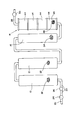
- FIG. 1 is a configuration diagram showing an embodiment of a device for producing fresh water.
- the first soft water generator 10, the second soft water generator 12, the ion generator 14, and the rock storage container 16 are sequentially connected in series via connecting pipes 18 a, 18 b, and 18 c.
- water having a pressure such as tap water is introduced from the water supply pipe 20 into the inside through the communication pipe 22.
- An inlet opening / closing valve 24 such as a faucet is provided between the water supply pipe 20 and the communication pipe 22, and a check valve 26 is provided in the middle of the communication pipe 22.
- a discharge pipe 28 is attached to the outlet side of the rock container 16, and an outlet opening / closing valve 30 is provided at the tip or middle of the discharge pipe 28.
- the water fed from the water supply pipe 20 passes through the first soft water generator 10, the second soft water generator 12, the ion generator 14, and the rock storage container 16 in this order, and the outlet opening / closing valve 30. Is taken out from the discharge pipe 28 by opening.
- the water stored in the water tank is introduced into the first soft water generator 10 via the water supply pipe 20 by a pump. In this case, a check valve 26 is provided between the pump and the first soft water generator 10.
- the first soft water generator 10 and the second soft water generator 12 contain a large amount of granular ion exchange resin 32 therein, and a cross-sectional view thereof is shown in FIG.
- the main bodies 34 of the soft water generators 10 and 12 have a cylindrical shape, and have water inlets 36a and 36b on the upper and lower ends of the cylindrical shape.
- shield members 38a and 38b each having a hole in the center are provided on the inner wall at a position slightly away from the upper and lower end surfaces. Between the pair of shield members 38a, 38b, the ion exchange resin 32 is stored in a fine mesh 40.
- the shield member 38 having a hole in the center is provided on the inner wall at a position slightly apart from the upper and lower entrances 36a, 36b.
- the net 40 containing the ion exchange resin 32 is disposed between the pair of shield members 38. This is because the spaces 42a and 42b are formed in the vicinity of the entrances 36a and 36b.
- the reason why the water is allowed to enter and exit from the central hole of the shield members 38 a and 38 b is that the water always contacts the ion exchange resin 32.
- the reason why the ion exchange resin 32 is put into the net 40 is that the granular ion exchange resin 32 can be taken out together with the net 40 when the granular ion exchange resin 32 is taken out for cleaning.
- the first soft water generator 10 and the second soft water generator 12 have a height of, for example, 80 cm and an inner diameter of 10 cm.
- the storage height of the ion exchange resin 32 is set to 70 cm (the spaces 42 a and 42 b exist above and below). At this time, the storage height of the ion exchange resin 32 needs to be high enough to sufficiently perform ion exchange with water.
- the storage height of the ion exchange resin 32 becomes too high (for example, when the storage height of the ion exchange resin 32 is about 200 cm or more), the ion exchange resin 32 becomes a resistance of water, and the inside of the soft water generator.
- the storage height of the ion exchange resin 32 is set to a height at which the flow rate does not decrease.
- the container for storing the ion exchange resin 32 is divided into two because the height of the first soft water generator 10 and the second soft water generator 12 is as high as the ion generator 14 and the rock container 16. This is to keep the pressure low and to prevent the flow rate from decreasing due to the pressure loss of water passing therethrough. It is also possible to combine the two soft water generators 10 and 12 into one soft water generator.
- the ion exchange resin 32 is for removing metal ions such as Ca 2+ , Mg 2+, and Fe 2+ contained in water to soften the water. In particular, the water hardness is reduced to zero. It is for lowering to a near extent.
- a strongly acidic cation exchange resin (RzSO 3 Na) obtained by uniformly sulfonating a spherical copolymer of styrene / divinylbenzene is used. This ion exchange resin 32 causes the following ion exchange reaction with metal ions such as Ca 2+ , Mg 2+ and Fe 2+ contained in water.
- the metal ions such as Ca 2+ , Mg 2+, and Fe 2+ are removed from the water by passing through the ion exchange resin 32 to become soft water. Further, passing through the ion exchange resin 32 generates Na + , OH ⁇ , and hydronium ions (H 3 O + ) in the water. However, chlorine (Cl) contained in tap water passes through without being ionized. Depending on the type of the ion exchange resin 32, Na + may not be generated.
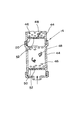
- FIG. 1 a partial cross-sectional view of the ion generator 14 is shown in FIG.
- the ion generator 14 is configured such that a plurality of cartridges 44 are connected in series in the vertical direction in the same arrangement.
- Each cartridge 44 contains either granular tourmaline 46 or a mixture of granular tourmaline 46 and plate-like metal 48.
- Tourmaline has a positive electrode and a negative electrode.
- the positive electrode and the negative electrode allow water to have an electromagnetic wave having a wavelength of 4 to 14 microns, and cut water clusters to hydronium. This is for generating ions (H 3 O + ).
- the energy of the electromagnetic wave having a wavelength of 4 to 14 microns is 0.004 watt / cm 2 .
- the tourmaline 46 may be a product obtained by finely pulverizing tourmaline stones, but is commercially available with a weight ratio of tourmaline, ceramic, and aluminum oxide (including silver) of about 10:80:10. It may be a tourmaline mixture called tourmaline pellets. The ceramic contained in this tourmaline pellet acts to separate the positive and negative electrodes.
- the tourmaline 46 disappears in a predetermined period (for example, about 3 months at a diameter of 4 mm) by stirring the water by mixing the tourmaline 46 at a weight ratio of 10 weight or more with respect to the ceramic and heating at 800 ° C. or higher. 46 can be made.
- the tourmaline 46 is increased in strength by heating, and the wear period can be extended.
- the ion exchange resin 32 is passed to make the water soft water whose hardness is close to zero, and the tourmalines 46 are rubbed together in the soft water.
- soft water whose hardness is close to zero aluminum ions and calcium ions can be prevented from adhering to the negative electrode of tourmaline 46, and the function of tourmaline 46 as a positive and negative electrode can be prevented from being lowered. .
- the metal 48 at least one kind of metal such as aluminum, stainless steel, or silver is used.
- the metal 48 is preferably a metal that does not generate rust or dissolve in water.
- aluminum has a bleaching action as well as a bactericidal action and an antibacterial action
- stainless steel has a bactericidal action and an antibacterial action
- a cleaning improvement action
- silver has a bactericidal action and an antibacterial action. Yes.
- copper and lead cannot be used because they have toxicity. Also, expensive materials such as gold cannot be used because of cost.
- the weight ratio of the tourmaline 46 and the metal 48 is preferably 10: 1 to 1:10. Beyond that range, there is too much material on one side, and the effects of both materials cannot be demonstrated simultaneously.
- the cartridge 44 has a cylindrical shape with one end open, and a plurality of holes 52 are provided on the bottom surface 50 thereof.
- the size of the hole 52 is set so that the tourmaline 46 and the metal 48 do not pass through the hole 52 of the bottom surface 50.
- each cartridge 44 has a bottom surface 50 provided with a large number of holes 52 on the lower side, and a tourmaline 46 and a metal 48 are placed on the bottom surface 50. And it sets so that the inside of each cartridge 44 may flow from lower to higher.
- each cartridge 44 the water that has passed through the numerous holes 52 in the bottom surface 50 is set so as to be sprayed onto the tourmaline 46 and the metal 48 from the bottom to the top.
- the tap water has a high water pressure
- the water having the water pressure collides with the tourmaline 46 and the metal 48 in the cartridge 44 vigorously, and the tourmaline 46 and the metal 48 are agitated in the cartridge 44 by the power of the water.
- the size and number of the holes 52 are set.
- the cartridges 44 having an inner diameter of 5 cm and a storage volume of 7 cm in depth are stacked in four stages, and the tourmaline 46 and the metal 48 are sufficiently stored in the cartridge 44. Is set to an amount that can move freely within the cartridge 44.
- the number of cartridges 44 may be increased or decreased, or a single cartridge 44 with a larger storage volume may be used.
- the tourmaline 46 and the metal 48 are dispersed in the plurality of cartridges 44 having a small accommodation volume, and the plurality of cartridges 44 are connected, so that the stirring efficiency of the tourmaline 46 and the metal 48 is increased by the momentum of water. Can be increased.
- each cartridge 44 can be easily attached and detached by means of, for example, screwing, and the tourmaline 46 is easily refilled in each cartridge 44. It can be so.
- the metal 48 does not dissolve in water and need not be replenished. However, the entire cartridge 44 containing the tourmaline 46 and the metal 48 can be replaced.
- the accommodation volume of the cartridge 44 may be changed according to the flow rate of use.
- the tourmaline 46 rubs against each other to generate a positive electrode and a negative electrode, and when the water contacts the tourmaline 46, the increase in negative ions is increased. Can be achieved. Further, the cluster of water is cut, in order to generate a large amount of hydronium ions (H 3 O +) may be accommodated only tourmaline 46 in the cartridge 44. However, by mixing the metal 48 with the tourmaline 46, the negative ions generated in the tourmaline 46 when they come into contact with each other can be further increased.
- tourmaline 46 has a plus electrode and a minus electrode
- water (H 2 O) is dissociated into hydrogen ions (H + ) and hydroxide ions (OH ⁇ ).
- hydronium ions (H 3 O + ) having a surface active action are generated by hydrogen ions (H + ) and water (H 2 O).
- the amount of hydronium ions (H 3 O + ) generated is much larger than the amount generated by the ion exchange resin 32.
- Some of the hydronium ions (H 3 O +) is water (H 2 O) and associated with hydroxyl ions (H 3 O 2 -) to become hydrogen ions (H +).
- the water that has passed through the ion generator 14 is then allowed to pass through the inside of the rock container 16 that stores the rock 54 containing 65 to 76% of silicon dioxide among the igneous rocks.
- the igneous rocks (divided into volcanic rocks and plutonic rocks), as rocks 54 containing a large amount of silicon dioxide, volcanic rocks include rhyolite such as obsidian, pearlite, and pine sebite, and plutonic rocks include granite.
- the rock container 16 stores at least one kind of rocks such as obsidian, pearlite, pinestone, and granite.
- Rhyolite such as obsidian, pearlite and pine stone, or granite has negative electrons.
- rhyolite and granite such as obsidian, pearlite and pinestone are acid rocks. Rhyolite has the same chemical composition as granite.
- the rock container 16 is, for example, a cylinder having an inner diameter of 10 cm and a height of 80 cm, and a rock 54 containing a large amount of silicon dioxide among igneous rocks having a size of, for example, about 5 mm to 50 mm in the inside thereof, Accommodates an amount that does not drop.
- water first passes through the ion exchange resin, then passes through tourmaline 46 (or a mixture of tourmaline 46 and metal 48), and then passes through the rock container 16.
- Things are special water (creative water).
- H 3 O + hydronium ions
- H 3 O 2 ⁇ hydroxyl ions
- active hydrogen active hydrogen
- the energy of this water has an electromagnetic wave with a wavelength of 4 to 14 microns, which is 0.004 watt / cm 2 , and has a redox potential of ⁇ 20 to ⁇ 240 mV.
- the water used for producing the method for producing hydrogen according to the present invention is a wound made by passing water through an ion exchange resin 32, tourmaline 46 (or a mixture of tourmaline 46 and metal 48) and rock 54 in this order.
- Use fresh water In FIG. 1, water is passed in the order of ion exchange resin 32, tourmaline 46 (or a mixture of tourmaline 46 and metal 48), and rock 54, but water is passed in this order, but water is passed through ion exchange resin 32, rock 54, tourmaline 46 (or The tourmaline 46 and the metal 48 may be mixed). That is, as shown in FIG. 4, water may be passed through the first soft water generator 10, the second soft water generator 12, the rock container 16, and the ion generator 14 in this order.
- the water passed through the rock 54 has an oxidation-reduction potential of ⁇ 20 to ⁇ 240 mV. If hot water is used instead of water, the negative redox potential is further stabilized. Furthermore, the water that has passed through the rock 54 contains a large amount of dissolved oxygen and active hydrogen.
- Creation water has many characteristics listed below.
- Tourmaline emits weak energy (electromagnetic waves with a wavelength of 4 to 14 microns). This weak energy cuts a large cluster of water and releases toxic gases and heavy metals contained in the cluster to the outside from the water.
- D It has a redox potential of ⁇ 20 to ⁇ 240 mV.
- E Contains dissolved oxygen and active hydrogen.
- F Soft water from which calcium ions and aluminum ions have been removed. By passing tap water or the like through the ion exchange resin, calcium ions and aluminum ions contained in the water can be removed.
- It It contains active hydrogen carbonate ions (HCO 3 ⁇ ) and metasilicic acid (H 2 SiO 3 ).
- the creation water (H1) is obtained by bringing the creation water generated in FIGS. 1 and 4 into contact with obsidian.
- a container containing fresh water and a communication passage containing obsidian are connected, and a pump is provided in the middle of the communication passage.
- the fresh water in the container is circulated by returning it to the container again through the communication passage containing obsidian.
- the creation water (H1) is created by passing the creation water in the container 3-4 times through obsidian in the communication passage.
- the accommodation length in the obsidian communication passage is, for example, 30 to 80 cm.
- the fresh water (H1) has the same characteristics as the fresh water, and has H + increased as compared with the fresh water.
- the radioactively contaminated substances are intended for plants, water, soil, etc., and radioactively contaminated plants In this way, fresh water is brought into contact with water, soil, etc., and radioactive substances are reduced from them. Moreover, when the substance polluted by radioactivity is water, the radioactive substance can be reduced more efficiently by passing the water through an ion exchange resin or a fresh water generator.
- Example 1 the case where the radioactive contaminants are plants will be described as Example 1, and Example 1 will be described with reference to FIG.
- the plant includes not only weeds but also various vegetables and fruits.
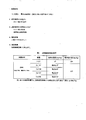
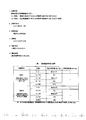
- FIG. 5 shows the results of measuring the radioactivity concentration when the radioactive pollutant according to the present invention is weeds.
- FIG. 6 shows a certificate that proves that the measurement result of FIG. 5 is correct.
- the method of reducing radioactive material from the radioactively contaminated weeds of Example 1 is to bring the created water into contact with the radioactively contaminated weeds. The contact is preferably to immerse the weeds in the fresh water.
- FIG. 5 The measurement results in FIG. 5 will be described.
- Sample weeds weeds collected on the bank 1 km from the village office in Iitate Village, Fukushima Prefecture (weeds collected on April 8, 2011) are used. Although weeds are used in FIG. 5, it is considered that various plants such as vegetables and fruits have the same results as weeds.
- Sample 1 was obtained by rinsing the weed with tap water in Akuda, Ueda City, Nagano Prefecture for 1 minute, and immersing the washed water in tap water in Akiwa, Ueda City, Nagano Prefecture for one day.
- Sample 2 was obtained by rinsing the weeds with tap water in Ueda City, Nagano Prefecture for 1 minute, and immersing the washed water in fresh water (special water) for 1 day. It should be noted that the tap water in Ueda City, Nagano Prefecture, does not contain iodine 131, cesium 134, cesium 136, or cesium 137.
- the results of environmental radioactivity level surveys made by the Ministry of Education, Culture, Sports, Science and Technology based on reports from each prefecture. It is clear from what was collected on March 29 of (water supply (faucet)) and from April 8 (indication of “not detected”).
- Sample 1 and Sample 2 the water to be dipped is only different from tap water and fresh water, respectively, and the other conditions were tested under the same conditions.
- About 30 liters of tap water or creation water is put in separate containers, and about 1 kg of weeds is immersed in each container.
- Sample 1 is obtained by immersing weeds in tap water, but since there is also an idea that iodine and cesium dissolve in water, it is the same with tap water (sample 1) and fresh water (sample 2).
- the measurement result under the conditions is shown in FIG.
- iodine 131 is 32100 (radioactivity concentration Bq / Kg)
- cesium 134 is 91900 (Bq / Kg)
- cesium 136 is 5470 (Bq / Kg)
- cesium 137 was 80800 (Bq / Kg)
- the total of the three types of cesium was 178170 (Bq / Kg).
- iodine 131 is 7040 (radioactive concentration Bq / Kg)
- cesium 134 is 7550 (Bq / Kg)
- cesium 136 is 447 (Bq / Kg)
- cesium 137 is 7870 (Bq / Kg)
- cesium is 15867 (Bq / Kg).
- the “value obtained by correcting the half-life for the sample collection date and time” in FIG. 5 is a value obtained by correcting the radioactivity concentration values of all the samples based on the sample collection date and time.
- the radioactive concentration of the iodine 131 of the sample 2 is about 1/5.
- the three types of cesium of sample 2 (cesium 134, cesium 136, cesium 137) have a radioactivity concentration of about 1/10 compared with the three types of cesium of sample 1. From this result, it is shown that iodine 131 and three kinds of cesium (cesium 134, cesium 136, cesium 137) can be greatly reduced by immersing a plant (weed) contaminated with radioactivity in fresh water. It becomes clear from 5.
- the radioactivity concentration measurement results in FIG. 5 are shown in FIG. 6 in the “Analysis / Test Engineering Department / Chemical Management Section” of “Hitachi Kyowa Engineering Co., Ltd.” located at 3-10-2 Bentencho, Hitachi City 317-0072, Ibaraki, Japan (Telephone: 0294-55-7809, FAX: 0294-55-9692).
- the radioactivity concentration of iodine 131 from the plant is reduced to 1/5 by soaking the weed contaminated with radioactivity in the fresh water, and the radioactivity concentrations of the three types of cesium. Can also be reduced to about 1/10 each. Since weeds and vegetables are contained in plants, if the radioactive concentration value of the vegetable contaminated with radioactivity is about 10 times less than the provisional regulation value, the vegetable contaminated with radioactivity is created. 1 day, the vegetables contaminated with radioactivity can be lowered below the provisional regulation value and can be eaten as safe vegetables.
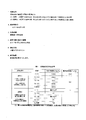
- FIG. 7 shows how much iodine 131 and three types of cesium are contained in the generated water after dipping the weed contaminated with radioactivity in the generated water for one day and then removing the weed. It demonstrates based on thru
- weeds in FIG. 7 weeds collected on the bank 1 km away from the village office in Iitate Village, Fukushima Prefecture, the same as in FIG. 5, are used. However, the weed sampling date in FIG. 7 is March 29, 2011, which is different from the weed sampling date in FIG. 5 (April 8, 2011). Sample 1 in FIG.
- FIG. 7 is the sample 2 of FIG. 7 that is immersed in the creation water (H1) for 1 day.
- the sample 1 of FIG. 7 is immersed in the creation water for 2 days. It is the sample 1 of FIG. FIG. 10 shows a certificate proving that FIG. 9 is correct. What was examined whether there is a difference in the decrease in radioactivity concentration between the creation water (H1) and the creation water is the sample 1 in FIG. 7 (creation water (H1)) and the sample in FIG. 1 (creation water).
- -4150) Bq / Kg decreased
- the main composition is the same in both the fresh water and the fresh water (H1), and it has the same characteristics except for the difference in the amount of H + , so even if the fresh water is used, It is considered to be a value close to the creation water (H1).
- the weed contaminated with radioactivity (Sample 1 in FIG. 7) is immersed in the creation water for 2 days, and then the creation water after taking out the weed is referred to as “waste liquid”.
- the amount of decrease in iodine 131 between sample 1 in FIG. 7 to sample 1 in FIG. 9 is 10600 Bq / Kg and the amount of decrease in three types of cesium (the amount of decrease in cesium 134 is 59900 Bq / Kg, the amount of decrease in cesium 136 is 5780 Bq / Kg,
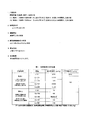
- FIG. 11 shows the results of measuring how much of the reduction amount of cesium 137 (67500 Bq / Kg) is contained in the waste liquid.
- FIG. 12 shows a certificate that proves that the measurement result of FIG. 11 is correct.
- the radioactivity concentration of iodine 131 was “not detected”. “Not detected” is less than 1 Bq / Kg (because it is rounded off, it is 0.5 Bq / Kg or less).
- the radioactive concentrations of cesium 134 and cesium 136 were “not detected”.
- the radioactive concentration of cesium 137 was 10 Bq / Kg, and the total radioactive concentration of the three types of cesium was 10 Bq / Kg. That is, according to the radioactivity concentration measurement result of FIG. 11, it was clarified that the waste liquid does not contain iodine 131, cesium 134, and cesium 136, and the radioactivity concentration of cesium 137 is also greatly reduced. .
- Example 3 the case where the radioactive pollutant is “life water” such as tap water will be described as Example 3, and Example 3 will be described with reference to FIG. .
- water for daily life includes all water used in daily life, such as tap water, well water, pond water, and river water.
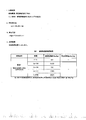
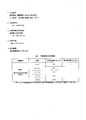
- FIG. 13 shows the radioactivity concentration measurement result in the case of “tap water”.
- FIG. 14 shows a certificate that proves that the measurement result of FIG. 13 is correct.
- the method of reducing radioactive material from the radioactively contaminated material of Example 3 is to bring the created water into contact with water such as tap water contaminated with the radioactive material.
- “contacting” means mixing the generation water or the generation water (H1) with the water contaminated by the radioactivity.
- iodine 131 is reduced from 308 Bq / Kg of sample 1 to a quarter of 75 Bq / Kg.
- the cesium 137 having an influence on the human body was changed from 13 Bq / Kg of the sample 1 to “not detected”.
- sample 3 mixed raw water (H1) of volume 7 with volume 3 of raw water
- iodine 131 is 47 Bq / Kg
- cesium 134 is “not detected”
- cesium 136 is “Not detected” and cesium 137 were “not detected”.
- the total of the three types of cesium was “not detected”.
- iodine 131 is reduced from 75 Bq / Kg of sample 1 to 47 Bq / Kg compared to sample 2, and three types of cesium (cesium 134, cesium 136, Cesium 137) was all “not detected”.
- FIG. 13 the measurement results of radioactivity concentrations of 50% and 70% of the created water (H1) were obtained.
- the ratio of the created water (H1) is 30%, which is lower than that of FIG.
- the radioactivity concentration measurement was measured.
- the raw water used in FIG. 15 is the same as the sample 1 in FIG.
- FIG. 15 shows the measurement results of radioactivity concentration obtained by mixing 0.3 liters of fresh water (H1) with 0.7 liters of raw water.
- FIG. 16 is a certificate that proves that the measurement result of FIG. 15 is correct. According to the radioactivity concentration measurement results of FIG.
- FIG. 17 shows the result of measuring the radioactivity concentration when the substance contaminated with radioactivity is soil.
- FIG. 18 shows a certificate that proves that the measurement result of FIG. 17 is correct.
- the method of reducing radioactive material from the radioactively contaminated material of Example 4 is to bring the created water into contact with the radioactively contaminated soil.
- Contact in the case of soil means that the soil contaminated with radiation is sprayed with fresh water or fresh water (H1), or the soil contaminated with radioactivity is created or created (H1). ) (Slow water a few centimeters above the soil like paddy water).
- Iodine 131 was 3070 q / Kg
- cesium 134 was 897 Bq / Kg
- cesium 136 was 42 Bq / Kg
- cesium 137 was 989 Bq / Kg
- the total of the three cesium types was 1928 Bq / Kg.
- the iodine 131 in the sample 2 was reduced to about one third as compared with the iodine 131 in the sample 1.
- Three types of cesium (cesium 134, cesium 136, cesium 137) of sample 2 are three types of cesium compared to three types of cesium of sample 1 (cesium 134, cesium 136, cesium 137). Both decreased to about one third.
- the iodine 131 and the three kinds of cesium were reduced to about one third by immersing the raw soil in the fresh water for one day. This makes it possible to reduce crops such as radioactive vegetables and fruits below the provisional regulation value by reducing iodine 131 and three types of cesium (cesium 134, cesium 136, cesium 137) from radioactively contaminated soil. It becomes.
- radioactive pollutants are brought into contact with hot water (fresh water heated to 35 ° C. or higher). Specifically, radioactive pollutants (weeds) are immersed for 48 hours in hot water (fresh water of 35 ° C. or higher).
- FIG. 19 shows the results of measuring the radioactivity concentration in which radioactive pollutants (weeds) were immersed in the fresh water at room temperature (16 ° C.). The normal temperature varies depending on the climate, but here, it is uniformly described as 16 ° C.
- FIG. 20 shows a certificate that proves that the measurement result of FIG. 19 is correct.
- the radioactivity concentration measurement results in FIG. 19 are for comparison with the radioactivity concentration measurement results in FIG.
- Specimen 1 in FIG. 19 shows the radioactivity concentration measurement result after the grass around the dragonfly in front of Kojimagami, Kawamata-cho, Fukushima Prefecture was soaked for 48 hours in fresh water at room temperature.
- Sample 2 in FIG. 19 shows the measurement results of the radioactivity concentration of the waste liquid after the grass of Sample 1 is immersed in the fresh water at room temperature for 48 hours. The grass around this dragonfly was collected on April 13, 2011. According to the radioactivity concentration measurement result of FIG.
- iodine 131 is 10900 (radioactivity concentration Bq / Kg), cesium 134 was 45300 (Bq / Kg), cesium 136 was 2210 (Bq / Kg), cesium 137 was 48100 (Bq / Kg), and the total of the three types of cesium was 95610 (Bq / Kg).
- sample 2 waste liquid after the grass around the dragonfly was soaked in 16 ° C.
- FIG. 21 shows the result of measuring the radioactivity concentration of the waste liquid obtained by immersing the grass of the same sample as the sample 1 of FIG. 19 in fresh water of 35 ° C. for 48 hours.
- FIG. 22 is a certificate certifying that the radioactivity concentration measurement result of FIG. 21 is correct.
- “soaked in hot water of 35 ° C. fresh water for 48 hours” means that hot water of 35 ° C. fresh water is put in a container, and grass around the dragonfly is put in the container. It means that it was left for a while The temperature of the 35 ° C creation water in the container gradually decreases. For example, when 16 ° C is normal temperature, the temperature will be about 15 minutes to 20 minutes, and then the grass is about 47 hours and 40 minutes.
- sample 1 grass around the dragonfly is immersed in hot water of 35 ° C. fresh water, and the temperature of the 35 ° C. fresh water gradually decreases to room temperature.
- iodine 131 is 6350 (radioactive concentration Bq / Kg)
- cesium 134 is 35200 (Bq / Kg)
- cesium 136 is 1580 (Bq / Kg)
- cesium 137 is 38800 (Bq / Kg)
- cesium three types The total was 75580 (Bq / Kg).
- Sample 2 grass is soaked in hot water at 35 ° C., and the temperature of the 35 ° C.
- iodine 131 is 34 (Bq / Kg)
- cesium 134 was 106 (Bq / Kg)
- cesium 136 was “not detected”
- cesium 137 was 104 (Bq / Kg)
- the total of the three types of cesium was 210 (Bq / Kg).
- FIG. 19 compares the normal temperature fresh water (48 hours immersion) and the fresh water of FIG. 21 hot water (48 hours immersion).
- 4550 (10900-6350) Bq / Kg) for iodine 131 and 10100 in the case of cesium 134 than the soaking of the grass in the soaking water at room temperature.
- 45300-35200) Bq / Kg
- cesium 136 decreased 630 (2210-1580)
- cesium 137 decreased 9300 (48100-38800) (Bq / Kg) radioactive concentration.
- both iodine 131 and the three types of cesium were brought into contact with hot water containing a radioactive substance in the hot water of the created water, compared to the radioactive water contained in the fresh water at room temperature. Can be greatly reduced.
- Example 5 shows the radioactivity concentration measurement results of weeds collected on the bank of Hawawagi in Iitate-mura, Fukushima Prefecture. This weed was collected on May 14, 2011.
- FIG. 24 shows a certificate that proves that the measurement result of FIG. 23 is correct. According to the radioactivity concentration measurement results of the weed sample 1 in FIG.
- iodine 131 is 391 (Bq / Kg)
- cesium 134 is 16300 (Bq / Kg)
- cesium 136 is 135 (Bq / Kg)
- cesium 137 is The total of 17600 (Bq / Kg) and three types of cesium was 34035 (Bq / Kg).
- Sample 1 in FIG. 25 is the same weed as Sample 1 in FIG. 23 (weeds collected on the bank of Hawawagi, Iitate-mura, Fukushima Prefecture). It shows the result of the subsequent radioactivity concentration measurement.
- “boiled with hot water of Sosei water” means a state in which weeds are boiled in hot water of Sosei water boiling at about 100 ° C.
- Sample 2 in FIG. 25 shows the measurement results of the radioactive concentration of the waste liquid after the weed of Sample 1 in FIG.
- FIG. 26 is a certificate certifying that the radioactivity concentration measurement result of FIG. 25 is correct.
- sample 1 is obtained by measuring the radioactive concentration of the soil at point C
- sample 2 is obtained by immersing the soil at point C in fresh water at room temperature for 24 hours
- sample 3 is obtained by The soil at the site was immersed in hot water (35 ° C) for 24 hours.
- hot water of 35 ° C. fresh water means that hot water of 35 ° C. fresh water is put in a container, and grass around the dragonfly is put in the container. It means that it was left for a while.
- the temperature of the 35 ° C creation water in the container gradually decreases. For example, when 16 ° C is normal temperature, the temperature reaches 15 to 20 minutes, and then the grass is about 23 hours and 40 minutes. It can be immersed in normal temperature fresh water.
- iodine 131 is 740 (Bq / Kg)
- cesium 134 is 2830 (Bq / Kg)
- cesium 136 is 87 (Bq / Kg)
- cesium 137 is The total of 3100 (Bq / Kg) and the three types of cesium was 6017 (Bq / Kg).
- iodine 131 is 304 (Bq / Kg)
- cesium 134 is 1180 (Bq / Kg)
- cesium 136 was 26 (Bq / Kg)
- cesium 137 was 1340 (Bq / Kg)
- the total of the three types of cesium was 2546 (Bq / Kg). That is, in Sample 3, compared to Sample 1, iodine 131 decreased by about 59%, cesium 134 decreased by about 58%, cesium 136 decreased by about 70%, and cesium 137 decreased by about 57%.
- the soil of the target sample soaked in the fresh water at room temperature is iodine 131 and cesium 134. It can be seen that the radioactivity concentrations of cesium 136 and cesium 137 are all low. Furthermore, the soil of the target sample was soaked in hot water (35 ° C) for 24 hours (sample 3), compared to the soil of the target sample soaked in normal fresh water for 24 hours (sample 2). It can be seen that the radioactivity concentrations of iodine 131, cesium 134, cesium 136, and cesium 137 are all low. That is, it can be seen that soaking the target sample in hot water of the fresh water can reduce the radioactivity concentration than soaking the target sample in the fresh water at room temperature.
- the radioactive water is further reduced when the temperature of the hot water of the creation water is higher with respect to the soil.
- the soil at the point B of the rice field in Sasu-Shari name 87, Iizumi-mura, Fukushima Prefecture was used as the target sample.
- the soil at point C in the rice field was collected on May 1, 2011.
- sample 1 is obtained by measuring the radioactive concentration of the soil at point B
- sample 2 is obtained by immersing the soil at point B in fresh water at room temperature
- sample 3 is The soil at point B is immersed in hot water of 50 ° C fresh water for 24 hours.
- iodine 131 is 314 (Bq / Kg)
- cesium 134 is 1210 (Bq / Kg) and cesium 136 were not detected
- cesium 137 was 1350 (Bq / Kg)
- the total of the three types of cesium was 2560 (Bq / Kg). That is, in Sample 3, compared to Sample 1, iodine 131 decreased by about 54%, cesium 134 decreased by about 71%, cesium 136 decreased by about 100%, and cesium 137 decreased by about 70%.
- the soil of the target sample soaked in the fresh water at room temperature is iodine 131 and cesium 134. It can be seen that the radioactivity concentrations of cesium 136 and cesium 137 are all low.
- the soil of the target sample was soaked in hot water (50 ° C) for 24 hours (sample 3), compared to the soil of the target sample soaked in the fresh water at room temperature (sample 2). It can be seen that the radioactivity concentrations of iodine 131, cesium 134, cesium 136, and cesium 137 are all low.
- FIG. 27 The result of FIG. 27 (the temperature of the hot water for the creation water is 35 ° C.) is compared with the result of FIG. 29 (the temperature of the hot water for the creation water is 50 ° C.).
- the temperature of the hot water of FIG. 27 is 35 ° C.
- the sample 3 soil after being immersed in hot water of the fresh water for 24 hours
- Cesium 134 decreased by about 58%
- cesium 136 decreased by about 70%
- cesium 137 decreased by about 57%.
- the sample 3 (the soil after being soaked in the hot water of the creation water for 24 hours) is reduced by about 54% with respect to the sample 1.
- cesium 134 decreased by about 71%
- cesium 136 decreased by about 100%
- cesium 137 decreased by about 70%. From this result, it can be seen that when the temperature of the hot water of the creation water increases, cesium 134 and cesium 137 can be significantly reduced.
- Example 9 the hot water of the fresh water (what heated fresh water to 35 degreeC or more) is mixed with the seawater containing a radioactive pollutant.
- the measurement result of the seawater which is an object sample is demonstrated to FIG.
- the target sample in FIG. 31 uses seawater from Iwasawa Beach, about 5 km away from the Fukushima nuclear power plant. This target sample was collected on April 15, 2011.
- FIG. 32 is a certificate that proves that the measurement result of FIG. 31 is correct.
- iodine 131 is 700 (Bq / Kg)
- cesium 134 is 957 (Bq / Kg)
- cesium 136 is 43 (Bq / Kg).
- Cesium 137 was 1030 (Bq / Kg), and the total of the three types of cesium was 2030 (Bq / Kg).
- FIG. 33 is a mixture of raw water (sea water at Iwasawa Beach) and fresh water at room temperature (about 16 ° C.).
- Sample 1 in FIG. 33 is a mixture of 70% raw water and 30% normal temperature fresh water, and 0.7% raw water mixed with 0.3 liter normal temperature fresh water.
- Sample 2 in FIG. 33 is obtained by mixing 50% raw water with 50% fresh water at room temperature, and mixing 0.5 liter fresh water with 0.5 liter raw water.
- iodine 131 is 602 (Bq / Kg)
- cesium 134 is 664 (Bq / Kg)
- cesium 136 is 32 ( Bq / Kg)
- cesium 137 was 674 (Bq / Kg)
- the total of the three types of cesium was 1370 (Bq / Kg).
- Sample 1 in FIG. 35 is obtained by mixing 70% of raw water (seawater of Iwasawa Beach) with 30% of hot water (35 ° C.) of fresh water. This sample 1 is obtained by measuring a mixture of 0.7 liters of raw water mixed with 0.3 liters of hot water of creation water.
- Sample 2 in FIG. 35 is obtained by mixing 50% of raw water with 50% hot water of creation water. Sample 2 was obtained by measuring 0.5 liter of raw water mixed with 0.5 liter of fresh water.
- iodine 131 is detected as 193 (Bq / Kg), cesium 134 is 180 (Bq / Kg), and cesium 136 is not detected.
- Cesium 137 was 191 (Bq / Kg), and the total of the three types of cesium was 371 (Bq / Kg).
- iodine 131 is 25 (Bq / Kg)
- cesium 134 is not detected
- cesium 136 is not detected.
- Cesium 137 was not detected, and the total of the three types of cesium was not detected. Comparing Sample 1 and Sample 2 in FIG.
- radioactively contaminated substances in Examples 1 to 9 are plants, water, and soil
- the radioactively contaminated substances in the present invention may be metals.
- the radioactively contaminated substance is used as a plant, water or soil, and is brought into contact with fresh water (special water).
- the water containing radioactive pollutants is passed through the soft water generators 10 and 12 (containing the ion exchange resin 32) shown in FIG. 1 and FIG. It is intended to reduce or remove radioactive pollutants from water containing pollutants.
- the water containing a radioactive pollutant creates the fresh water shown in FIG. 1 as a fresh water generator (apparatus for passing water in the order of the soft water generators 10, 12, the ion generator 14, and the rock container 16).
- a creation water generator (apparatus that passes water in the order of the soft water generators 10 and 12, the rock container 16, and the ion generator 14) that creates the creation water shown in FIG. It is intended to reduce or remove radioactive pollutants from water containing pollutants.
- iodine 131 is 303 (Bq / Kg)
- cesium 134 is 10 (Bq / Kg)
- cesium 136 is not detected
- cesium 137 is 15 ( Bq / Kg)
- the total of the three cesium types was 25 (Bq / Kg).
- Sample 2 in FIG. 37 is obtained by passing raw water through the ion exchange resin 32 in the soft water generators 10 and 12.
- Ion exchange resin 32, the Ca 2+ and Mg 2+ and Fe 2+ and the like of the metal ions contained in the water removal is for a soft water water, as the ion exchange resin 32.
- a strongly acidic cation exchange resin (RzSO 3 Na) obtained by uniformly sulfonating a spherical copolymer of styrene / divinylbenzene.
- the ion exchange resin 32 is not limited to this.
- iodine 131 is 162 (Bq / Kg), and cesium 134 is "detected""No", cesium 136 was “not detected”, cesium 137 was “not detected”, and the total of the three types of cesium was "not detected”. That is, in Sample 2, compared to Sample 1, iodine 131 was reduced by about 47%, and all three types of cesium were “not detected”.
- Sample 3 in FIG. 37 is treated water in which raw water (water containing radioactive pollutants) is passed through a fresh water generator.
- the radioactivity concentration of the treated water of Sample 3 was “not detected” for both iodine 131 and the three types of cesium 3. From this result, it is clear that all of the iodine 131 and the three types of cesium 3 can be removed by the creation water generator even though the radioactivity concentration is small by passing the raw water through the creation water generator. is there.
- iodine 131 In the treated water in contact with the ion exchange resin 32, iodine 131 was reduced by about 47%, and three types of cesium were “not detected”. In the treated water when raw water was passed through the creation water generator, neither iodine 131 nor three types of cesium were “detected”. As a result, iodine 131 and three types of cesium can be reduced or eliminated even when the raw water is brought into contact with the ion exchange resin or when the raw water is passed through the fresh water generator.
- FIG. 39 shows a certificate that proves that the measurement result of FIG. 39 is correct.
- iodine 131 is 110 (Bq / Kg)
- cesium 134 is 11 (Bq / Kg)
- cesium 136 is “not detected”
- cesium 137 is “detected”.
- the total of the three types of cesium was 11 (Bq / Kg).
- the sample 1 in FIG. 39 is collected at the same place as the sample 1 in FIG. 37 on the same day, so it is considered that almost the same numerical value can be obtained.
- the time when the sample 1 of FIG. 37 is placed in the container (X) and the time when the sample 1 of FIG. 39 is placed in the container (Y) are different, for example. Conceivable. That is, it can be seen that Sample 1 in FIG. 39 and Sample 1 in FIG. 37 are not the same.
- Sample 2 in FIG. 39 is treated water after the raw water is brought into contact with the ion exchange resin.
- Sample 3 is treated water after raw water is passed through a fresh water generator.
- Sample 4 is obsidian (rock containing 65 to 76% silicon dioxide) provided in the fresh water generator after the raw water is passed through the fresh water generator.
- Sample 5 is tourmaline aluminum in the fresh water generator after the raw water is passed through the fresh water generator.
- Sample 6 is an ion exchange resin in the fresh water generator after raw water is passed through the fresh water generator.
- sample 6 in FIG. 39 ion exchange resin in the fresh water generator after the raw water is passed through the fresh water generator.
- iodine 131 is 49 (Bq / Kg)
- cesium 134 is 21 (Bq / Kg)
- cesium 136 is “not detected”
- cesium 137 is 27 (Bq / Kg)
- cesium has three types.
- the total was 48 (Bq / Kg).
- sample 6 ion exchange resin in the fresh water generator after passing the raw water through the fresh water generator
- sample 1 is more than sample 1
- the numerical value increased by 10 to 61 (Bq / Kg). This measurement result is thought to be due to some error.
- the error is assumed to be, for example, that the ion exchange resin or the container in which the ion exchange resin was put in was not correctly washed in the measurement performed before the sample 6 in FIG.
- Materials used for the creation water generator include ion exchange resin 32, rock 54 (obsidian etc.) containing 65 to 76% silicon dioxide, tourmaline 46, and metal 48.
- ion exchange resin 32 rock 54 (obsidian etc.) containing 65 to 76% silicon dioxide, tourmaline 46, and metal 48.
- the radioactive substance may be attached only to the ion exchange resin 32. From the sample 6 in FIG. From this point, in order to reduce the amount of radioactive material from raw water in large quantities, it is only necessary to periodically replace the ion exchange resin, and to reduce or remove the radioactive material from the water containing the radioactive material efficiently over a long period of time. Can do.
Landscapes
- Chemical & Material Sciences (AREA)
- Engineering & Computer Science (AREA)
- Organic Chemistry (AREA)
- Life Sciences & Earth Sciences (AREA)
- Environmental & Geological Engineering (AREA)
- Chemical Kinetics & Catalysis (AREA)
- Water Supply & Treatment (AREA)
- Hydrology & Water Resources (AREA)
- Medicinal Chemistry (AREA)
- Health & Medical Sciences (AREA)
- Electrochemistry (AREA)
- General Chemical & Material Sciences (AREA)
- Food Science & Technology (AREA)
- Physics & Mathematics (AREA)
- General Engineering & Computer Science (AREA)
- High Energy & Nuclear Physics (AREA)
- Treatment Of Water By Ion Exchange (AREA)
Abstract
L'invention concerne un procédé pour diminuer une substance radioactive, qui permet l'élimination ou la diminution d'une substance radioactive d'une plante telle qu'un légume, d'une eau ou d'une terre telle qu'une terre agricole qui a été contaminée avec une radiation. Une substance contaminée par la radioactivité est immergée dans une eau particulière qui est d'abord passée à travers une résine échangeuse d'ions puis est passée à travers une parmi une tourmaline et une roche éruptive contenant du dioxyde de silicium dans une quantité de 65 à 76 % et ensuite à travers l'autre. De cette manière, les concentrations de radioactivité de l'iode-131 et de trois sortes de césium (césium-134, césium-136 et césium-137) dans la substance contaminée par la radioactivité peuvent être diminuées.
Applications Claiming Priority (4)
| Application Number | Priority Date | Filing Date | Title |
|---|---|---|---|
| JP2011093658 | 2011-04-20 | ||
| JP2011-093658 | 2011-04-20 | ||
| JP2011-118641 | 2011-05-27 | ||
| JP2011118641 | 2011-05-27 |
Publications (1)
| Publication Number | Publication Date |
|---|---|
| WO2012144486A1 true WO2012144486A1 (fr) | 2012-10-26 |
Family
ID=47041592
Family Applications (1)
| Application Number | Title | Priority Date | Filing Date |
|---|---|---|---|
| PCT/JP2012/060338 Ceased WO2012144486A1 (fr) | 2011-04-20 | 2012-04-17 | Procédé pour diminuer une substance radioactive au sein d'une substance contaminée par la radioactivité |
Country Status (1)
| Country | Link |
|---|---|
| WO (1) | WO2012144486A1 (fr) |
Cited By (2)
| Publication number | Priority date | Publication date | Assignee | Title |
|---|---|---|---|---|
| JP2019163987A (ja) * | 2018-03-19 | 2019-09-26 | 有限会社ジェニス・ホワイト | 放射性汚染物の剥離洗浄システム |
| CN119902252A (zh) * | 2024-12-29 | 2025-04-29 | 中国辐射防护研究院 | 能力验证液体样品稳定性检验方法及相关设备 |
Citations (2)
| Publication number | Priority date | Publication date | Assignee | Title |
|---|---|---|---|---|
| JPH07132284A (ja) * | 1993-11-09 | 1995-05-23 | Fukai Toshiko | 浄化活性作用を有する水の製造方法及び製造装置 |
| JP2003057393A (ja) * | 2001-08-16 | 2003-02-26 | Kurita Engineering Co Ltd | 除染方法および除染剤 |
-
2012
- 2012-04-17 WO PCT/JP2012/060338 patent/WO2012144486A1/fr not_active Ceased
Patent Citations (2)
| Publication number | Priority date | Publication date | Assignee | Title |
|---|---|---|---|---|
| JPH07132284A (ja) * | 1993-11-09 | 1995-05-23 | Fukai Toshiko | 浄化活性作用を有する水の製造方法及び製造装置 |
| JP2003057393A (ja) * | 2001-08-16 | 2003-02-26 | Kurita Engineering Co Ltd | 除染方法および除染剤 |
Cited By (2)
| Publication number | Priority date | Publication date | Assignee | Title |
|---|---|---|---|---|
| JP2019163987A (ja) * | 2018-03-19 | 2019-09-26 | 有限会社ジェニス・ホワイト | 放射性汚染物の剥離洗浄システム |
| CN119902252A (zh) * | 2024-12-29 | 2025-04-29 | 中国辐射防护研究院 | 能力验证液体样品稳定性检验方法及相关设备 |
Similar Documents
| Publication | Publication Date | Title |
|---|---|---|
| KR0185960B1 (ko) | 정화활성작용을 가진 물의 제조방법 및 제조장치 | |
| Gyamfi et al. | Chemical analysis of potable water samples from selected suburbs of Accra, Ghana | |
| Mohammed et al. | Optimization of levofloxacin removal from aqueous solution using electrocoagulation process by response surface methodology | |
| Abhineet et al. | Physico-chemical parameters for testing of present water quality of Khan River at Indore, India | |
| Mbui et al. | The state of water quality in Nairobi River, Kenya | |
| Martı́nez et al. | Electrolytically generated silver and copper ions to treat cooling water: an environmentally friendly novel alternative | |
| Mehmood et al. | Spatio-temporal changes in water quality of Jhelum River, Kashmir Himalaya | |
| Kumar et al. | Review on physico-chemical parameters of water concerning their effect on biotic population | |
| Ayodeji et al. | Physicochemical analysis of underground water in Zaria Metropolis, Kaduna State, Nigeria | |
| Abu-Ghamja et al. | Assessment of water quality in Qarun Lake | |
| Aimer et al. | Removal of Pesticides by electrochemical oxidation using a boron doped diamond anode | |
| Al-Mayahi et al. | The Effect of the Treated Wastewater on the Pollution of the Diyala River | |
| Al-Agili | Removal of nitrates from water by Amberlite IR-400 and economic Duolite A-378 ion exchange resins | |
| Yadav et al. | Deciphering geospatial variations in water quality of a perennial river for human consumption and agricultural application | |
| Tanimu et al. | Effects of domestic waste water on water quality of three reservoirs supplying drinking water in kaduna state-Northern Nigeria | |
| Abeish et al. | Assessment of Groundwater Quality of Assabaa Region, Libya | |
| Pokhrel | Removal of heavy metals from wastewater using electrocoagulation | |
| Dutta et al. | A Mini Review on Water Quality Assessment Methods for Cations and Anions in Natural Water Sources | |
| Noortheen et al. | Study on physico-chemical parameters of water samples in and around Salem District, Tamil Nadu, India | |
| Ebuete et al. | Assessment of Physicochemical Parameters of Oil and Gas Terminal Effluent of the Bonny Estuary, Rivers State, Nigeria | |
| LAKE | COLLEGE OF SCIENCE AND TECHNOLOGY SCHOOL OF SCIENCE DEPARTEMENT OF CHEMISTRY OPTION OF ENVIRONMENTAL CHEMISTRY | |
| Elmarkhi et al. | Contributions methods of statistical analysis of leachate from the landfill Ouled Berjal (Kénitra, Morocco) | |
| ATLIĞ et al. | NITROGEN DYNAMICS AND ITS IMPORTANCE AT THE SEDIMENT-WATER INTERFACE IN LAKE ECOSYSTEMS: EFFECTS AND OUTCOMES | |
| Basavaraddi et al. | Applying Artificial Intelligence to Studies on Water Quality and Phytoplankton Diversity of Eachnur Tank, Tiptur, Tumkur-District, Karnataka, India | |
| Shah | Chemical Parameter Analysis for Water, Waste Water and Ground Water |
Legal Events
| Date | Code | Title | Description |
|---|---|---|---|
| 121 | Ep: the epo has been informed by wipo that ep was designated in this application |
Ref document number: 12773788 Country of ref document: EP Kind code of ref document: A1 |
|
| NENP | Non-entry into the national phase |
Ref country code: DE |
|
| 122 | Ep: pct application non-entry in european phase |
Ref document number: 12773788 Country of ref document: EP Kind code of ref document: A1 |
|
| NENP | Non-entry into the national phase |
Ref country code: JP |