WO2012148026A1 - Composition de filtre optique, verre à filtre optique comprenant celle-ci et procédé de production de celle-ci - Google Patents
Composition de filtre optique, verre à filtre optique comprenant celle-ci et procédé de production de celle-ci Download PDFInfo
- Publication number
- WO2012148026A1 WO2012148026A1 PCT/KR2011/003246 KR2011003246W WO2012148026A1 WO 2012148026 A1 WO2012148026 A1 WO 2012148026A1 KR 2011003246 W KR2011003246 W KR 2011003246W WO 2012148026 A1 WO2012148026 A1 WO 2012148026A1
- Authority
- WO
- WIPO (PCT)
- Prior art keywords
- parts
- oxide
- weight
- optical filter
- phosphorus pentoxide
- Prior art date
- Legal status (The legal status is an assumption and is not a legal conclusion. Google has not performed a legal analysis and makes no representation as to the accuracy of the status listed.)
- Ceased
Links
Images

Classifications
-
- C—CHEMISTRY; METALLURGY
- C03—GLASS; MINERAL OR SLAG WOOL
- C03C—CHEMICAL COMPOSITION OF GLASSES, GLAZES OR VITREOUS ENAMELS; SURFACE TREATMENT OF GLASS; SURFACE TREATMENT OF FIBRES OR FILAMENTS MADE FROM GLASS, MINERALS OR SLAGS; JOINING GLASS TO GLASS OR OTHER MATERIALS
- C03C3/00—Glass compositions
- C03C3/12—Silica-free oxide glass compositions
- C03C3/16—Silica-free oxide glass compositions containing phosphorus
- C03C3/17—Silica-free oxide glass compositions containing phosphorus containing aluminium or beryllium
-
- C—CHEMISTRY; METALLURGY
- C03—GLASS; MINERAL OR SLAG WOOL
- C03C—CHEMICAL COMPOSITION OF GLASSES, GLAZES OR VITREOUS ENAMELS; SURFACE TREATMENT OF GLASS; SURFACE TREATMENT OF FIBRES OR FILAMENTS MADE FROM GLASS, MINERALS OR SLAGS; JOINING GLASS TO GLASS OR OTHER MATERIALS
- C03C3/00—Glass compositions
- C03C3/04—Glass compositions containing silica
- C03C3/062—Glass compositions containing silica with less than 40% silica by weight
- C03C3/064—Glass compositions containing silica with less than 40% silica by weight containing boron
- C03C3/066—Glass compositions containing silica with less than 40% silica by weight containing boron containing zinc
-
- C—CHEMISTRY; METALLURGY
- C03—GLASS; MINERAL OR SLAG WOOL
- C03C—CHEMICAL COMPOSITION OF GLASSES, GLAZES OR VITREOUS ENAMELS; SURFACE TREATMENT OF GLASS; SURFACE TREATMENT OF FIBRES OR FILAMENTS MADE FROM GLASS, MINERALS OR SLAGS; JOINING GLASS TO GLASS OR OTHER MATERIALS
- C03C3/00—Glass compositions
- C03C3/12—Silica-free oxide glass compositions
- C03C3/16—Silica-free oxide glass compositions containing phosphorus
- C03C3/19—Silica-free oxide glass compositions containing phosphorus containing boron
-
- C—CHEMISTRY; METALLURGY
- C03—GLASS; MINERAL OR SLAG WOOL
- C03C—CHEMICAL COMPOSITION OF GLASSES, GLAZES OR VITREOUS ENAMELS; SURFACE TREATMENT OF GLASS; SURFACE TREATMENT OF FIBRES OR FILAMENTS MADE FROM GLASS, MINERALS OR SLAGS; JOINING GLASS TO GLASS OR OTHER MATERIALS
- C03C4/00—Compositions for glass with special properties
- C03C4/08—Compositions for glass with special properties for glass selectively absorbing radiation of specified wave lengths
-
- G—PHYSICS
- G02—OPTICS
- G02B—OPTICAL ELEMENTS, SYSTEMS OR APPARATUS
- G02B5/00—Optical elements other than lenses
- G02B5/20—Filters
- G02B5/22—Absorbing filters
- G02B5/226—Glass filters
Definitions
- the present invention relates to an optical filter composition and an optical filter glass including the same, and a method for manufacturing the same, wherein at least one of an alkaline earth metal oxide or zinc oxide (ZnO), an alkali metal oxide, copper oxide (CuO), and phosphorus pentoxide (P) is provided. 2 O 5 ), and in detail, in the visible light region, the optical transmittance is increased, and in various wavelength regions except the visible light, the transmittance is lowered as much as possible, and the physical and chemical durability and stability are excellent.
- the present invention relates to a filter composition, an optical filter glass including the same, and a method of manufacturing the same.
- Image processing such as a small camera module, a digital camera, a surveillance camera, and the like used in a mobile phone is performed by converting a light signal into an electrical signal and processing it into an image signal through a CCD or CMOS sensor.
- the CCD or CMOS sensor is made of a silicon material and detects light signals not only in the visible region (400 to 700 nm) but also in the near infrared region (700 to 1150 nm) that people can see. As a result, an image of red tone is displayed as a whole.
- a digital imaging apparatus using a CCD or CMOS sensor in order to obtain a natural color image as seen by the human eye, light in the 800-1000 nm band of the near infrared region sensed by the sensor is blocked and light in the 400-600 nm region is transmitted. It is essential to have an optical component that can be corrected to human visual sensitivity.
- 30 to 40 materials of TiO 2 / SiO 2 , Ta 2 O 5 / SiO 2 or Nb 2 O 5 / SiO 2 are deposited on a Borosilicate thin glass substrate having good light transmittance, low surface defects and good smoothness.
- a reflective near infrared cut filter (IR cut-off filter) fabricated by repeated layer deposition was used.
- Reflective near infrared cut-off filter transmits the light in the visible region and reflects the light in the near infrared region due to the interference effect of the multilayer film in which the low refractive index material and the high refractive index material are alternately deposited. It serves to block the near infrared rays entering the CCD or CMOS sensor by reflecting the near infrared rays from the incoming light signal.
- optical coating technology mass production is possible stably, which is the method adopted in camera module for mobile phone.
- the reflective near-infrared cut filter has an interference effect, and the interference result is different depending on the angle of incident light.
- the number of pixels of the camera module increases to 5 million pixels or more and becomes slim and miniaturized, a characteristic change due to the incident angle of the near infrared cut filter is becoming a problem.
- absorption near-infrared cut off filters are known, which are used for digital cameras, VTR cameras and surveillance cameras.
- the maximum absorption of light occurs in the 800 nm region, and the near-infrared absorbing glass that exhibits high transmittance in the visible wavelength range of 400 to 600 nm is used. Since the near infrared rays are blocked by absorption rather than an interference effect, the characteristic change due to the incident angle is fundamentally changed. It can be minimized.
- Phosphate-based glass containing CuO is generally used as a glass having such characteristics, and Cu 2+ ions present in the glass have a bluish green color and block near infrared rays.
- the present invention is to solve the above problems, the present invention is an optical filter composition comprising a variety of metal oxides in a glass composition of phosphorus pentoxide (P 2 O 5 ) as a matrix of glass, and an optical filter glass comprising the same;
- the present invention relates to a method for manufacturing the same, an optical filter composition including the same, which has improved transmittance of visible light and absorption of an invisible light region, and which has high durability and water resistance, physical and chemical reliability, stability and weather resistance, and a glass for optical filter comprising the same, and a method of manufacturing the same. It aims to provide.
- CuO copper oxide
- P 2 O 5 -based glass composition by adding copper oxide (CuO) to the phosphate-based (P 2 O 5 -based) glass composition, to absorb the light in the wavelength region excluding visible light to exhibit the characteristics as an optical filter, by containing a crosslinking agent
- the purpose of the present invention is to improve the durability and to lower the melting temperature and to enhance the water resistance.
- the present invention for solving the above problems is a composition for an optical filter, the composition according to the present invention is at least one of alkaline earth metal oxide or zinc oxide (ZnO), alkali metal oxide, copper oxide (CuO) and phosphorus pentoxide (P 2 O 5 )
- the phosphorus pentoxide (P 2 O 5 ) is 40 to 55% by weight based on 100% by weight of the composition for the optical filter
- the copper oxide (CuO) is in 100 parts by weight of the phosphorus pentoxide (P 2 O 5 ) It is characterized by including 1 to 15 parts by weight.
- the alkali metal oxide is preferably at least one of lithium oxide (Li 2 O), sodium oxide (Na 2 O) or potassium oxide (K 2 O), and the alkaline earth metal oxide is preferably barium oxide ( At least one of BaO), magnesium oxide (MgO), calcium oxide (CaO) or zinc oxide (ZnO) is used.
- At least one of the alkaline earth metal oxide or zinc oxide (ZnO) is 25 to 70 parts by weight based on 100 parts by weight of the phosphorus pentoxide (P 2 O 5 ), the alkali metal oxide is 100 parts by weight of the phosphorus pentoxide (P 2 O 5 ) 18 to 50 parts by weight with respect to parts, the lithium oxide (Li 2 O) is 0.1 to 15 parts by weight based on 100 parts by weight of the phosphorus pentoxide (P 2 O 5 ), the sodium oxide (Na 2 O) is the phosphorus pentoxide (P 2 O 5 ) It is characterized in that 0.1 to 22 parts by weight based on 100 parts by weight.
- the material further includes a crosslinking agent, and as a crosslinking agent, at least one of boron oxide (B 2 O 3 ) or silicon dioxide (SiO 2 ) is preferably used, and the boron oxide (B 2 O 3 ) is 1 to 12.5 parts by weight based on 100 parts by weight of phosphorus pentoxide (P 2 O 5 ), wherein the silicon dioxide (SiO 2 ) comprises 0.1 to 7 parts by weight based on 100 parts by weight of the phosphorus pentoxide (P 2 O 5 ) It features.
- boron oxide (B 2 O 3 ) or silicon dioxide (SiO 2 ) is preferably used, and the boron oxide (B 2 O 3 ) is 1 to 12.5 parts by weight based on 100 parts by weight of phosphorus pentoxide (P 2 O 5 ), wherein the silicon dioxide (SiO 2 ) comprises 0.1 to 7 parts by weight based on 100 parts by weight of the phosphorus pentoxide (P 2 O 5 )
- a glass for an optical filter comprising an optical filter of the present invention for achieving the object of the composition and it is more of alumina (Al 2 O 3), and the alumina (Al 2 O 3) has the pentoxide ( P 2 O 5 ) 15 to 55 parts by weight based on 100 parts by weight is characterized in that it is included.
- the method for making the glass for the optical filter from the composition for an optical filter as described above is a grinding and blending step of grinding and blending the optical filter composition, a melting step of forming a melt by heating and melting the optical filter composition, the melting step Molding step of molding the melt in, characterized in that it comprises a cooling step of cooling the melt.
- the glass by using the content of phosphorus pentoxide (P 2 O 5 ) at 55% by weight or less, the glass can prevent water vapor from being lowered in reliability and secure physical and chemical stability.
- P 2 O 5 phosphorus pentoxide
- the alkali metal oxide it is possible to stably lower the melting point to perform a function as an optical filter, and to add the alkaline earth metal oxide or zinc oxide to lower the melting temperature, improve the light transmittance in the visible region, as well as weather resistance and There is an effect that can enhance the durability.
- a crosslinking agent and alumina (Al 2 O 3 ) in the composition can not only enhance the binding between molecules, but also lower the melting temperature to maximize the effect of blocking the light of various wavelengths except the visible region and glass There is an effect that can enhance the durability and reliability of.
- the quality, strength and physical and chemical stability is excellent,
- the glass for optical filters which can effectively block the light of a visible region can be manufactured most effectively.
- the water resistance of the phosphate-based glass can be greatly improved, and in the reliability test required for the component for camera module assembly and the material, a glass having strong water resistance without deformation even after an extreme environmental test with a temperature of 85 ° C. and a humidity of 85% is used. You can get it.
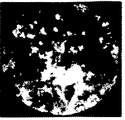
- Figure 2 is a photograph taken through an optical microscope after processing the glass for optical filters according to an embodiment of the present invention in harsh conditions.
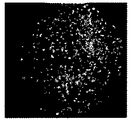
- Figure 3 is a photograph taken through an optical microscope after processing the glass for an optical filter according to an embodiment of the present invention in harsh conditions.
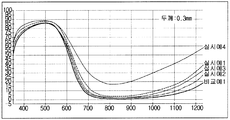
- Figure 4 is a graph of the transmittance according to the wavelength of the light of Examples 1 to 4 and Comparative Example 1 of the present invention.
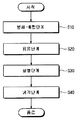
- FIG. 5 is a flowchart sequentially showing a method for producing a composition for an optical filter.
- the glass for optical filters according to the present invention has a great influence on spectroscopic properties, degree of crystallization, durability, melting point, chemical stability and reliability depending on the content of the composition.
- the optical filter refers to a material that selectively transmits light in a specific wavelength region or blocks light in a specific wavelength region.
- composition for optical filters is looked at.
- the optical filter composition includes at least one of an alkaline earth metal oxide or zinc oxide (ZnO), an alkali metal oxide, copper oxide (CuO), and phosphorus pentoxide (P 2 O 5 ).
- Phosphorous pentoxide (P 2 O 5 ) which is a component of the optical filter composition, is a main component that forms a network structure of glass, and maintains a copper (Cu) component exhibiting an absorption function in the infrared range as a divalent cation, thereby maintaining a specific wavelength. It can be used as a base material of the glass for optical filters which absorbs light.
- Copper oxide (CuO) is an essential component for absorbing light of various wavelengths, and in particular serves to exhibit the characteristics of absorbing light in the infrared range, more preferably in the near infrared region.
- the copper oxide (CuO) is preferably 1 to 15 parts by weight, more preferably 1.8 to 12.5 parts by weight, most preferably 3.6 to 10 parts by weight based on 100 parts by weight of phosphorus pentoxide (P 2 O 5 ). .
- CuO copper oxide
- P 2 O 5 phosphorus pentoxide
- Copper divalent cations (Cu 2+ ) absorb light in various wavelength ranges except visible light, in particular in the infrared region, more preferably in the near infrared region of 700 nm or more, thereby making the glass blue.
- the cation (Cu 2+ ) becomes a monovalent cation (Cu + )
- the glass changes from blue to cyan and cannot absorb light in the infrared region. Therefore, in order to absorb light in the infrared region, copper must be maintained in a divalent cation state (Cu 2+ ).
- the conditions under which the copper divalent cation (Cu 2+ ) becomes the monovalent cation (Cu + ) are when the content of copper oxide (CuO) is high when the temperature is high, when the amount of oxygen is low.
- the component capable of lowering the melting temperature at least one of lithium oxide (Li 2 O), sodium oxide (Na 2 O), or potassium oxide (K 2 O) may be used as the alkali metal oxide.
- the alkali metal oxide is preferably 18 to 50 parts by weight, more preferably 20 to 45 parts by weight, most preferably 21.8 to 40 parts by weight based on 100 parts by weight of phosphorus pentoxide (P 2 O 5 ). . Within such a range, the melting temperature of the whole composition can be lowered, thereby increasing the absorption of near infrared rays, and improving light transmittance at a wavelength of 500 nm, which is a visible light region.
- An alkali metal oxide is phosphorus pentoxide (P 2 O 5) when 100 parts by weight to about 18 parts by weight, less than, the same as the present invention, phosphorus pentoxide (P 2 O 5) content of the composition of less than 60% by weight increase of the excessive melting temperature of This can cause Cu ions to transition from divalent to monovalent, which significantly reduces the light-shielding properties of wavelengths in various regions, more specifically near-infrared, and exceeds 50 parts by weight of the chemical resistance of the glass.
- phosphoric acid (P 2 O 3 ) is a major cause of the phenomenon of elution after thin glass production.
- lithium oxide (Li 2 O) of the alkali metal oxide it is preferably 0.1 to 15 parts by weight, more preferably 1.8 to 14 parts by weight, most preferably based on 100 parts by weight of phosphorus pentoxide (P 2 O 5 ). Preferably 4 to 12.5 parts by weight.
- lithium oxide (Li 2 O) is less than 0.1 part by weight with respect to 100 parts by weight of phosphorus pentoxide (P 2 O 5 ), the effect of adding lithium oxide (Li 2 O) cannot be exerted, thereby increasing the melting point, thereby causing Cu Transition of ions from divalent to monovalent greatly reduces the ability to block light in various wavelengths, more specifically in the near-infrared region, and when it exceeds 15 parts by weight, crystallization of the glass is promoted to become opaque. The problem of lowering will occur.
- the amount is preferably 0.1 to 22 parts by weight, more preferably 2 to 20 parts by weight, most preferably 5 to 17.5 parts, based on 100 parts by weight of phosphorus pentoxide (P 2 O 5 ). It is effective in the case of a weight part.
- sodium oxide Na 2 O
- phosphorus pentoxide P 2 O 5
- the increase in erosion of the refractory If a problem occurs and the amount is added in excess of 22 parts by weight, the chemical resistance is lowered under the influence of the alkali cleaner in the post-polishing process, which is a post-processing process, and the strength of the glass becomes weak.
- alkaline earth metal oxides are also components that can lower the melting temperature in the manufacture of glass.
- alkaline earth metal oxides can improve the chemical resistance and durability of the resulting glass.
- Alkaline earth metal oxides are complementary to alkali metal oxides and can solve the corrosive problem of glass containing a large amount of alkali metal oxides.
- the content of the alkaline earth metal oxide is preferably from 25 to 70 parts by weight, more preferably from 27 to 65 parts by weight, most preferably from 30 to 62.5 parts by weight, based on 100 parts by weight of phosphorus pentoxide (P 2 O 5 ).
- the denial case is effective.
- the copper divalent cation becomes a copper monovalent cation due to an increase in melting temperature, and thus, various wavelengths, more specifically, near infrared rays Absorption characteristics of the wavelength of the region are weakened, making it difficult to use as an optical filter, and when used in excess of 70 parts by weight, crystallization of the glass leads to devitrification, which makes the molding operation impossible or very difficult. There is a problem of being ineligible.
- the alkaline earth metal oxide in particular, at least one component of barium oxide (BaO), magnesium oxide (MgO), calcium oxide (CaO), or strontium oxide (SrO) may be used, and at the same time, it is oxidized for the same purpose as these alkaline earth metal oxides.
- Zinc (ZnO) can be used. Barium oxide (BaO) not only lowers the melting temperature but also improves the light transmittance in the visible region, and magnesium oxide (MgO) enhances the weather resistance of the glass, and calcium oxide (CaO) and strontium oxide (SrO). And zinc oxide (ZnO) serves to enhance durability.
- a crosslinking agent is a substance for chemically reacting with molecules of a high molecular compound to interconnect a molecule to take a net structure.
- a crosslinking agent was included in the glass composition to improve the durability of the glass.
- silicon dioxide (SiO 2) and boron oxide (B 2 O 3) as a cross-linking agent, silicon dioxide (SiO 2) and boron oxide (B 2 O 3) is to bond a loose network structure durability and water resistance
- the additives also lower the melting point.
- Boron oxide (B 2 O 3 ) is preferably 1 to 12.5 parts by weight, more preferably 2 to 10 parts by weight, most preferably 3 to 8 parts by weight of 100 parts by weight of phosphorus pentoxide (P 2 O 5 ) It is effective in the case of a weight part.
- boron oxide (B 2 O 3 ) When boron oxide (B 2 O 3 ) is less than 1 part by weight with respect to 100 parts by weight of phosphorus pentoxide (P 2 O 5 ), it does not perform a sufficient role as a crosslinking agent, causing a problem that the glass becomes weak and the melting point is high. When it exceeds 12.5 parts by weight, the viscosity of the glass melt is increased, bubbles and defects may be generated on the resulting glass surface, and the absorption of the near infrared region is hindered, resulting in a problem that the practicality as an optical filter is lowered.
- silicon dioxide (SiO 2 ) is used as an additive in the phosphate (P 2 O 5 ) -based glass and serves as described above.
- Silicon dioxide (SiO 2 ) is preferably 0.1 to 7 parts by weight, more preferably 1 to 5 parts by weight based on 100 parts by weight of phosphorus pentoxide (P 2 O 5 ).
- silicon dioxide SiO 2
- P 2 O 5 phosphorus pentoxide
- Alumina (Al 2 O 3 ) is preferably 15 to 55 parts by weight based on 100 parts by weight of phosphorus pentoxide (P 2 O 5 ), more preferably 17 to 53 parts by weight, most preferably 20 to 50 parts by weight. The case is effective.
- alumina Al 2 O 3
- P 2 O 5 phosphorus pentoxide
- the method for manufacturing the optical filter glass includes a crushing and blending step S10, a melting step S20, a forming step S30, and a cooling step S40.
- the crushing and blending step (S10) is a step of crushing the fine filter composition and mixing them, performing dry or wet milling using a ball milling (Ball milling) method for 1 to 2 hours and dried.
- the setting of the temperature conditions of the melting step S20 serves as an important factor. If the melting temperature is less than 1000 °C, the composition is not sufficiently melted or the melting time is long, the efficiency of the production process decreases, if the melting temperature exceeds 1300 °C, the life of the refractory to melt the glass is shortened and erosion of the refractory This is exacerbated, causing unwanted crystals to enter the glass.
- the melting step (S20) of the glass composition when the composition is melted to form a melt, at least one gas of oxygen or nitrogen is added to the melt at the same time interval, and simultaneously stirred with bubbling. can do. At least one gas of oxygen or nitrogen is injected into the melt using a platinum tube. As a result, the copper divalent cation (Cu 2+ ) can be prevented from becoming a copper monovalent cation (Cu + ), and the bubbles present in the melt can be removed.
- the molding step (S30) is a step of pouring the melt formed in the melting step (S20) to a mold and maintained at a predetermined temperature for 1 to 3 hours, the temperature is preferably at 900 to 1100 °C, more preferably 950 It is effective to carry out at 1050 degreeC.
- the temperature of the forming step (S30) is less than 900 °C the melt is crystallized to obtain a non-uniform glass as well as the problem of lowering the transparency also occurs, if the temperature exceeds 1100 °C, the viscosity of the melt is lowered due to a low occurrence There is a problem.
- the copper oxide (CuO) is added to the melt and stirred.
- copper oxide (CuO) is added from the melting step, there is a problem that the copper divalent cation (Cu 2+ ) becomes a copper monovalent cation (Cu + ), so that the visible light region is added by adding copper oxide (CuO) in the melting step.
- the transmittance of can maintain the characteristics as an optical filter having a high transmittance and a low transmittance for light in the invisible light region, more preferably light in the infrared region.
- the cooling step (S40) is a step of lowering the temperature of the melt after the forming step, it is preferable to lower the melt at a rate of 1 to 6 °C / min, more preferably 1 to 3 °C / min speed Is effective.
- cooling rate is less than 1 ° C / min crystallization of the elements constituting the composition does not become a homogeneous glass, and if it exceeds 6 ° C / min, the durability of the production equipment is weakened due to rapid cooling A problem arises.
- the glass for optical filters produced according to the present invention includes the above-described structure, so that the transmittance in the visible light is high and the transmittance in the wavelength other than the visible light region is kept low, similar to the glass for the conventional optical filter. It is a glass that solves the water resistance, which has been raised as a problem, and has remarkably improved in the physical and chemical stability, strength, and weather resistance of the glass.
- the glass according to the present invention exhibits low transmittance in light of various wavelengths except the visible light region, particularly in the near-infrared region, and therefore is a charge coupled device (CCD) or silicon photodiode (image sensor) used in digital cameras and mobile phone cameras. SPD), and in addition, sheaths (e.g., in aircraft cockpits) for light emitting color displays, stray filters of monochromators, graduated filters, and plastic composite filters. It can be applied to components, goggles and the like.
- CCD charge coupled device
- SPD silicon photodiode
- sheaths e.g., in aircraft cockpits
- stray filters of monochromators stray filters of monochromators
- graduated filters graduated filters
- plastic composite filters plastic composite filters
- each raw material powder according to Examples 1 to 4 and Comparative Examples 1 to 2 was subjected to raw material mixing through wet milling for 1 hour.
- the mixed raw materials were placed in an alumina crucible and melted at 1200 ° C, and maintained at the highest temperature for 4 hours to remove sufficient air bubbles and unmelted components. Was done.
- the glass in the bulk state was prepared through a slow cooling process in which the completely melted glass was placed in a carbon crucible and cooled to room temperature at a rate of 3 ° C./min.
- the prepared bulk glass was sawed at 0.5T to produce thin glass, and 0.3T was prepared by grinding and polishing to finish the sawing of the finished glass.
- the glass thus produced was cleaned with an alkali cleaner and pure water, and the defects were identified under 400,000 lux using a halogen test or the like.
- 0.3T thin glass manufactured according to Example 3 was measured for spectral characteristics to derive the results as shown in FIG. 1.
- Weather resistance was measured as a change in transmittance before and after after 120 hours at 85 ° C. and 85% humidity.
- the transmittance was measured using a spectrophotometer (U-4100 manufactured by Hitachi), and was obtained using the following formula.
- I in is incident light and I out is transmitted light.
- the compositions for the optical filters having different combinations of the materials are shown in Examples 1 to 4 and Comparative Examples 1 and 2, and in Table 2, Examples 1 to 4 and Comparative Example 1 described in Table 1 above.
- the transmittance for each wavelength of the optical filter glass including the composition of the above 2 was described, and in addition, the wavelength of light when the transmittance became 50% was shown.
- the glass specimens according to the examples were excellent in transmittance in the visible region, and 70 wt% or more of phosphorus pentoxide (P 2 O 5 ), which was used in the past, was used.
- P 2 O 5 phosphorus pentoxide
- Comparative Example 2 it can be seen that the transmittance is particularly high at 550 nm, which is a wavelength most recognized by the human eye.
- the transmittance data according to each example shows that there is no difficulty in using as the glass for the optical filter according to the present invention.
- Figs. 1 to 3 in terms of weather resistance which can be known according to the change in transmittance under severe conditions (85 ° C., exposure to humidity of 85% for 120 hours), the present inventors carried out more than in the case of the comparative example. It can be seen that the glass by examples shows excellent properties. In particular, in the case of Example 4, even if exposed to harsh conditions for 1000 hours or more, physical and chemical stability and reliability are exhibited.
- Examples 1 and 4 have a difference of about two times in strength, and it can be seen that the physical strength is also significantly superior to the prior art. have.
- Example 1 Example 2
- Example 3 Example 4 Comparative Example 1 120 MPa 100 MPa 120 MPa 160 MPa 90 MPa
- the optical filter glass according to the present invention has a high transmittance in the wavelength region of about 400 to 625 nm, and the transmittance rapidly decreases (the light is absorbed in the wavelength region of 700 nm or more).
- the transmittance can be preferably applied as a near infrared optical filter.
- the present invention comprises at least one of an alkaline earth metal oxide or zinc oxide (ZnO), an alkali metal oxide, copper oxide (CuO) and phosphorus pentoxide (P 2 O 5 ), and specifically, in the visible region,
- the present invention relates to an optical filter composition, an optical filter glass including the same, and a method of manufacturing the same, which have physical and chemical durability and stability while having a low transmittance in the various wavelength ranges except visible light. awards are available.
Landscapes
- Chemical & Material Sciences (AREA)
- Life Sciences & Earth Sciences (AREA)
- Engineering & Computer Science (AREA)
- Chemical Kinetics & Catalysis (AREA)
- General Chemical & Material Sciences (AREA)
- Geochemistry & Mineralogy (AREA)
- Materials Engineering (AREA)
- Organic Chemistry (AREA)
- Physics & Mathematics (AREA)
- General Physics & Mathematics (AREA)
- Optics & Photonics (AREA)
- Glass Compositions (AREA)
Abstract
La présente invention concerne une composition de filtre optique, un verre à filtre optique comprenant celle-ci et un procédé de production de celle-ci. Avec la composition de filtre optique selon la présente invention, le procédé pour produire celle-ci et le verre à filtre optique comprenant la composition de filtre optique, la teneur en pentoxyde de phosphore (P2O5) est limitée à pas plus de 55 pour cent en poids par rapport à 100 pour cent en poids de la composition totale, et un oxyde de métal alcalino-terreux ou de l'oxyde de zinc (ZnO), un oxyde de métal alcalin et un agent de réticulation sont ajoutés de manière à abaisser le point de fusion de sorte que non seulement l'effet de blocage de la lumière de longueurs d'onde dans différentes régions est maximisé mais également la durabilité et la fiabilité du verre sont améliorés, et également une quantité appropriée d'alumine (Al2O3) est utilisée de sorte qu'il soit possible d'augmenter sensiblement la durabilité de verre de phosphate et il est possible de maintenir les caractéristiques spectroscopiques d'un verre à filtre optique existant inchangées.
Priority Applications (1)
| Application Number | Priority Date | Filing Date | Title |
|---|---|---|---|
| PCT/KR2011/003246 WO2012148026A1 (fr) | 2011-04-29 | 2011-04-29 | Composition de filtre optique, verre à filtre optique comprenant celle-ci et procédé de production de celle-ci |
Applications Claiming Priority (1)
| Application Number | Priority Date | Filing Date | Title |
|---|---|---|---|
| PCT/KR2011/003246 WO2012148026A1 (fr) | 2011-04-29 | 2011-04-29 | Composition de filtre optique, verre à filtre optique comprenant celle-ci et procédé de production de celle-ci |
Publications (1)
| Publication Number | Publication Date |
|---|---|
| WO2012148026A1 true WO2012148026A1 (fr) | 2012-11-01 |
Family
ID=47072529
Family Applications (1)
| Application Number | Title | Priority Date | Filing Date |
|---|---|---|---|
| PCT/KR2011/003246 Ceased WO2012148026A1 (fr) | 2011-04-29 | 2011-04-29 | Composition de filtre optique, verre à filtre optique comprenant celle-ci et procédé de production de celle-ci |
Country Status (1)
| Country | Link |
|---|---|
| WO (1) | WO2012148026A1 (fr) |
Cited By (1)
| Publication number | Priority date | Publication date | Assignee | Title |
|---|---|---|---|---|
| WO2025151240A1 (fr) * | 2024-01-11 | 2025-07-17 | Corning Incorporated | Composition de verre absorbant le proche infrarouge contenant du cuivre et produits la contenant pour des applications de filtre |
Citations (5)
| Publication number | Priority date | Publication date | Assignee | Title |
|---|---|---|---|---|
| US4505569A (en) * | 1981-08-08 | 1985-03-19 | Canon Kabushiki Kaisha | Projection apparatus which compensates for the spectral sensitivity of an image receiving member |
| KR970042349A (ko) * | 1995-12-12 | 1997-07-24 | 게르하르트 암라인/루드비히 비르스 | 산화제2구리를 포함하는 알루미늄인산염 유리들 |
| US5668066A (en) * | 1995-07-24 | 1997-09-16 | Hoya Corporation | Near infrared absorption filter glass |
| JP2002316834A (ja) * | 2001-04-20 | 2002-10-31 | Okamoto Glass Co Ltd | 青色ガラス |
| KR20060111413A (ko) * | 2005-04-22 | 2006-10-27 | 쇼트 코포레이션 | 산화 구리(ⅱ)를 함유하는 알루미노포스페이트 유리 및 광필터링을 위한 이의 용도 |
-
2011
- 2011-04-29 WO PCT/KR2011/003246 patent/WO2012148026A1/fr not_active Ceased
Patent Citations (5)
| Publication number | Priority date | Publication date | Assignee | Title |
|---|---|---|---|---|
| US4505569A (en) * | 1981-08-08 | 1985-03-19 | Canon Kabushiki Kaisha | Projection apparatus which compensates for the spectral sensitivity of an image receiving member |
| US5668066A (en) * | 1995-07-24 | 1997-09-16 | Hoya Corporation | Near infrared absorption filter glass |
| KR970042349A (ko) * | 1995-12-12 | 1997-07-24 | 게르하르트 암라인/루드비히 비르스 | 산화제2구리를 포함하는 알루미늄인산염 유리들 |
| JP2002316834A (ja) * | 2001-04-20 | 2002-10-31 | Okamoto Glass Co Ltd | 青色ガラス |
| KR20060111413A (ko) * | 2005-04-22 | 2006-10-27 | 쇼트 코포레이션 | 산화 구리(ⅱ)를 함유하는 알루미노포스페이트 유리 및 광필터링을 위한 이의 용도 |
Cited By (1)
| Publication number | Priority date | Publication date | Assignee | Title |
|---|---|---|---|---|
| WO2025151240A1 (fr) * | 2024-01-11 | 2025-07-17 | Corning Incorporated | Composition de verre absorbant le proche infrarouge contenant du cuivre et produits la contenant pour des applications de filtre |
Similar Documents
| Publication | Publication Date | Title |
|---|---|---|
| CN103058519B (zh) | 一种用于红外截止滤光片的厚片蓝玻璃配方 | |
| US20070099787A1 (en) | Aluminophosphate glass containing copper (II) oxide and uses thereof for light filtering | |
| CN107935381B (zh) | 用于中膨胀光纤传像元件的高折射率玻璃的组合物及其制备方法 | |
| US8399371B2 (en) | Optical glass | |
| TWI732564B (zh) | 玻璃、玻璃製品、玻璃元件、濾光器、設備及其製造方法 | |
| WO2011118724A1 (fr) | Procédé de production d'un verre à filtre qui coupe les rayons dans le proche infrarouge | |
| CN108675631B (zh) | 一种磷酸盐光学玻璃及其制备方法和光学元件、滤光器 | |
| TW201806895A (zh) | 光學玻璃及近紅外線截止濾波件 | |
| JP6047226B2 (ja) | 近赤外光吸収ガラス、近赤外光吸収素子、及び近赤外光吸収光学フィルタ | |
| CN106990463A (zh) | 近红外线截止滤波器 | |
| JP7854063B2 (ja) | ガラス、ガラス素子及びフィルター | |
| JP5824070B2 (ja) | 光学ガラス、光学素子、および光学機器 | |
| JP6047227B2 (ja) | 近赤外光吸収ガラス、近赤外光吸収素子、及び近赤外光吸収光学フィルタ | |
| CN110194592A (zh) | 一种玻璃、玻璃元件及滤光器 | |
| JP7468528B2 (ja) | 近赤外線カットフィルタガラス、光学フィルタおよび撮像装置 | |
| KR101266431B1 (ko) | 근적외선 필터용 유리조성물 및 이를 이용한 근적외선 필터용 유리의 제조방법 | |
| WO2012148026A1 (fr) | Composition de filtre optique, verre à filtre optique comprenant celle-ci et procédé de production de celle-ci | |
| JP2989739B2 (ja) | 近赤外線吸収ガラス、このガラスを用いた固体撮像素子保護用フィルター及びこのフィルターを用いた固体撮像素子 | |
| JP3110325B2 (ja) | 近赤外線カットフィルタガラスの分光特性調整方法 | |
| KR101399144B1 (ko) | 광학 필터용 조성물 및 이를 포함하는 광학 필터용 유리 및 이의 제조 방법 | |
| TWI388529B (zh) | 吸收式近紅外線濾光玻璃 | |
| TWI703354B (zh) | 鏡頭模組及其近紅外線濾光片 | |
| KR101125681B1 (ko) | 근적외선 필터용 유리 | |
| CN101403799B (zh) | 高像素700万以上数码相机用低通滤波器基片及制备方法 | |
| CN120535196B (zh) | 一种用于红外截止滤光片的高模量蓝玻璃及其制备方法 |
Legal Events
| Date | Code | Title | Description |
|---|---|---|---|
| 121 | Ep: the epo has been informed by wipo that ep was designated in this application |
Ref document number: 11864349 Country of ref document: EP Kind code of ref document: A1 |
|
| NENP | Non-entry into the national phase |
Ref country code: DE |
|
| 32PN | Ep: public notification in the ep bulletin as address of the adressee cannot be established |
Free format text: NOTING OF LOSS OF RIGHTS PURSUANT TO RULE 112(1) EPC (EPO FORM 1205A DATED 10/03/2014). |
|
| 122 | Ep: pct application non-entry in european phase |
Ref document number: 11864349 Country of ref document: EP Kind code of ref document: A1 |