WO2012148200A9 - Composition pour faciliter des procédures chirurgicales pour traiter des maladies vasculaires ischémiques - Google Patents
Composition pour faciliter des procédures chirurgicales pour traiter des maladies vasculaires ischémiques Download PDFInfo
- Publication number
- WO2012148200A9 WO2012148200A9 PCT/KR2012/003260 KR2012003260W WO2012148200A9 WO 2012148200 A9 WO2012148200 A9 WO 2012148200A9 KR 2012003260 W KR2012003260 W KR 2012003260W WO 2012148200 A9 WO2012148200 A9 WO 2012148200A9
- Authority
- WO
- WIPO (PCT)
- Prior art keywords
- ischemic
- composition
- disease
- vascular
- treatment
- Prior art date
- Legal status (The legal status is an assumption and is not a legal conclusion. Google has not performed a legal analysis and makes no representation as to the accuracy of the status listed.)
- Ceased
Links
Images





Classifications
-
- A—HUMAN NECESSITIES
- A61—MEDICAL OR VETERINARY SCIENCE; HYGIENE
- A61K—PREPARATIONS FOR MEDICAL, DENTAL OR TOILETRY PURPOSES
- A61K38/00—Medicinal preparations containing peptides
- A61K38/16—Peptides having more than 20 amino acids; Gastrins; Somatostatins; Melanotropins; Derivatives thereof
- A61K38/17—Peptides having more than 20 amino acids; Gastrins; Somatostatins; Melanotropins; Derivatives thereof from animals; from humans
- A61K38/18—Growth factors; Growth regulators
- A61K38/1816—Erythropoietin [EPO]
-
- A—HUMAN NECESSITIES
- A61—MEDICAL OR VETERINARY SCIENCE; HYGIENE
- A61P—SPECIFIC THERAPEUTIC ACTIVITY OF CHEMICAL COMPOUNDS OR MEDICINAL PREPARATIONS
- A61P9/00—Drugs for disorders of the cardiovascular system
-
- A—HUMAN NECESSITIES
- A61—MEDICAL OR VETERINARY SCIENCE; HYGIENE
- A61P—SPECIFIC THERAPEUTIC ACTIVITY OF CHEMICAL COMPOUNDS OR MEDICINAL PREPARATIONS
- A61P9/00—Drugs for disorders of the cardiovascular system
- A61P9/10—Drugs for disorders of the cardiovascular system for treating ischaemic or atherosclerotic diseases, e.g. antianginal drugs, coronary vasodilators, drugs for myocardial infarction, retinopathy, cerebrovascula insufficiency, renal arteriosclerosis
-
- A—HUMAN NECESSITIES
- A61—MEDICAL OR VETERINARY SCIENCE; HYGIENE
- A61M—DEVICES FOR INTRODUCING MEDIA INTO, OR ONTO, THE BODY; DEVICES FOR TRANSDUCING BODY MEDIA OR FOR TAKING MEDIA FROM THE BODY; DEVICES FOR PRODUCING OR ENDING SLEEP OR STUPOR
- A61M1/00—Suction or pumping devices for medical purposes; Devices for carrying-off, for treatment of, or for carrying-over, body-liquids; Drainage systems
Definitions
- the present invention relates to a composition for treating ischemic vascular diseases, more specifically, to an ischemic cerebrovascular disease, ischemic cardiovascular disease, or ischemic peripheral blood vessel disease treatment aid containing erythropoietin (EPO) as an active ingredient. It relates to a composition for.
- EPO erythropoietin
- Ischemia refers to a reduced state of blood flow to body organs, tissues or sites, which ultimately leads to necrosis of cells and tissues that are irreversible damage.
- the brain and heart are the most sensitive organs of blood flow, for example, when ischemic tissues are caused by stroke or head injury, triggering a process called ischemic cascade, which permanently damages brain tissue. .
- Stroke is a disease caused by the blood vessels that supply blood to the blood vessels are blocked or broken, local parts of the brain, commonly known as 'stroke'. Symptoms include paraplegia, sensory impairment, speech impairment, pronunciation impairment, vision and vision impairment, diplopia, headache, dizziness, consciousness disorder, vegetative condition and dementia. Stroke is an ischemic stroke (80-85%) caused by a complete blockage or severe narrowing of the blood vessels of the brain and a loss of blood flow in the tissues, and hemorrhagic stroke (15-20%), which is a condition in which brain cells are damaged by bleeding. Divided into Stroke accounts for second place in Korea's mortality rate and third place in the world's mortality rate, and more than 50% of patients who survived strokes have various disorders left to burden the patients as well as those who need to take care of the patients.
- Ischemic stroke which accounts for the majority of strokes, often determines the prognosis of patients in the acute phase (within 7 days) or subacute phase (within 4 weeks).
- reopening therapy is performed to replenish the blood flow so that the brain tissue of the brain-ischemic penumbra, which is the physiological target of acute treatment, is functioning again.
- reopening therapy has been known to improve patient's prognosis by intravenous administration within 4.5 hours of symptom onset or within 6 hours by intraarterial method.
- the rate of stroke patients found in time to receive re-opening treatment in the appropriate emergency room is extremely low. Therefore, since most patients with acute ischemic stroke do not receive adequate treatment, new treatments that are safe and effective in acute patients are urgently needed.
- ischemic cardiovascular disease or ischemic peripheral blood vessel disease which is an ischemic disorder in the same tissue
- reperfusion injury is known to occur more easily when the blood vessels are not blocked slowly but when the blood vessels are suddenly blocked, when the ischemia of the tissue is larger, and when the blood vessels are longer.
- reperfusion injury is known to occur more easily when the blood vessels are not blocked slowly but when the blood vessels are suddenly blocked, when the ischemia of the tissue is larger, and when the blood vessels are longer.
- the appearance of these injuries paradoxically results in more tissue damage, which often results in a worse prognosis through reperfusion surgery or procedures.
- Ischemic diseases such as cerebral infarction, myocardial infarction, and peripheral arterial occlusion disease are caused by a decrease in blood supply and ultimately cause irreversible damage of cells constituting tissues.
- brain protection drugs have been used as targets for the treatment of excitatory toxicity, inflammation, and oxidative stress in the early stages of the ischemic cascade, that is, in the destructive phase of tissues. It has been developed and carried out preclinical and clinical studies, but it has not shown any obvious efficacy in humans.
- intracranial blood flow through anastomosis which attempts to connect normal vessels on the outside of the cranial cavity with abnormal vessels in the cranial cavity.
- Improved therapies have been developed.
- Such angiography is divided into direct angioplasty, which directly connects the intracranial and intracranial vessels, and indirect angioplasty, which does not directly connect the intracranial and intracranial vessels, depending on the procedure.
- This anastomosis is a surgical procedure that separates the blood vessels outside the two cranial cavities and then removes the skull and connects the blood vessels in the abnormal two cranial cavity. It's a surgery that doesn't connect.
- Indirect angiography has the advantage of simpler procedure compared to direct anastomosis, but it is only applicable to pediatric patients who are known to have better neovascularization conditions and conditions than adults because neovascularization is required after surgery. It can only be applied to adult patients had a disadvantage.
- the surgery is relatively simple compared to direct angioplasty, but there are still surgical side effects, and there may be a problem such as cerebral infarction in about 15% of patients after surgery.
- 2010/0247452 discloses that erythropoietin can induce angiogenesis in tissues or organs in which angiogenesis or angiogenesis is released by enhancing endothelial progenitor cell differentiation and adhesion.
- the concept of the physical barrier of the living body is not mentioned or suggested at all.
- the present inventors in the treatment of ischemic vascular diseases, such as ischemic cerebrovascular disease, ischemic cardiovascular disease, ischemic peripheral blood vessels, etc., as an angiogenesis induction agent for therapeutic procedures for a procedure (or surgery) that destroys physical barriers to a minimum
- ischemic vascular diseases such as ischemic cerebrovascular disease, ischemic cardiovascular disease, ischemic peripheral blood vessels, etc.
- angiogenesis induction agent for therapeutic procedures for a procedure (or surgery) that destroys physical barriers to a minimum
- erythropoietin it has been confirmed that angiogenesis by the procedure can be promoted and ischemia-reperfusion injury can be reduced to effectively treat ischemic disease, and thus the present invention has been completed.
- the main object of the present invention is to provide a composition for treating ischemic vascular disease treatment comprising erythropoietin (EPO) as an active ingredient.
- EPO erythropoietin
- the present invention also provides a method for treating ischemic cerebrovascular disease, ischemic cardiovascular disease, ischemic peripheral blood vessel disease, etc. using a composition comprising erythropoietin (EPO) as an active ingredient.
- the present invention provides erythropoietin (Erythropoietin, EPO) containing as an active ingredient, ischemic vascular disease treatment procedure composition.
- the ischemic vascular disease includes ischemic cerebrovascular disease, ischemic heart disease, ischemic peripheral vascular disease and the like.
- the ischemic vascular disease treatment procedure includes angioplasty, perforation, direct vascular anastomosis, and indirect vascular anastomosis.
- the composition is characterized in that it is administered before undergoing treatment for ischemic vascular disease.
- the composition is characterized by reducing ischemia-reperfusion injury after treatment for ischemic cardiovascular disease or ischemic peripheral blood vessel disease.
- the composition is characterized in that it is administered for angiogenesis after therapeutic surgery to connect the intracranial and extracranial vessels in ischemic cerebrovascular disease.
- the composition is characterized in that it is administered to the patient in the situation of acute vascular occlusion.
- the present invention also provides a method for treating ischemic vascular disease, comprising administering the composition to a patient in need thereof.
- the composition may be administered before or after receiving the ischemic vascular disease treatment procedure, and may preferably be administered to the patient before receiving the ischemic vascular disease treatment procedure.
- Ischemic vascular diseases of the present invention include ischemic cerebrovascular disease, ischemic cardiovascular disease, ischemic peripheral vascular disease and the like.
- the method is characterized in that the composition is administered to a patient in the context of acute vascular occlusion.
- an erythropoietin-containing composition of the present invention is used to provide various therapeutic procedures including multiple perforation to adult patients having ischemic cerebrovascular disease, ischemic cardiovascular disease, or ischemic peripheral blood vessel disease, including moyamoya disease.
- the rapid success of the procedure can significantly improve the success rate of the procedure by enabling safe, simple and efficient treatment using the revascularization mechanism of blood vessels.
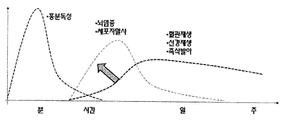
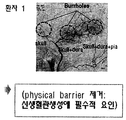
- FIG. 1 is a diagram illustrating a strategy of stroke treatment using angiogenesis of the present invention.
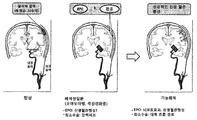
- Figure 2 is a schematic diagram showing the neovascularization and functional recovery of the brain according to an embodiment of the present invention.
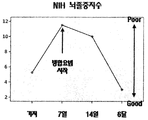
- 3 is a graph showing the change in the mean value of the NIH stroke index over time for patients 1-4.
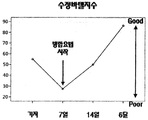
- Figure 4 is a graph showing the change in the mean value of the modified Battel index over time of patients 1 to 4.
- 5 is a graph showing the change in the mean value of the fertilized Lankin index over time of patients 1 to 4.
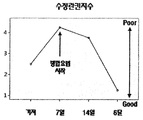
- 6 is a graph showing changes in the mean value of the NIH stroke index, the mean value of the modified Battel index, and the mean value of the modified Lankin index over time of patients 5 to 10.
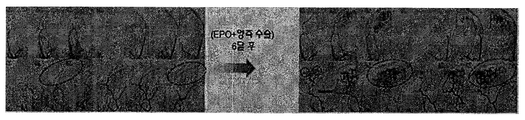
- FIG. 7 is a blood vessel of the brain taken before and after the procedure when administering and administering a multi-vascularization auxiliary composition for the treatment of acute ischemic brain disease in accordance with an embodiment of the present invention in the patient 1 It is a photograph showing an image.
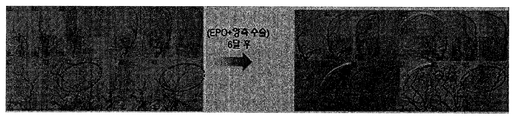
- FIG. 8 is a blood vessel image of the brain taken before and after the procedure when administering and administering an angiogenic composition for treatment of acute ischemic brain disease according to an embodiment of the present invention and multiple puncture surgery in patient 2 It is a photograph showing.
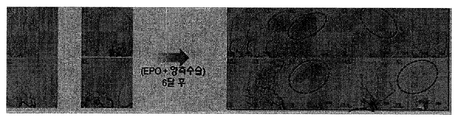
- FIG. 9 is a blood vessel image of the brain taken before and after the procedure when administering an angiogenic composition for the treatment of acute ischemic brain disease and performing a multi-puncture operation in patient 3 It is a photograph showing.
- FIG. 10 is a blood vessel image of the brain taken before and after the procedure when administering and administering an angiogenic composition for treating acute ischemic brain disease according to an embodiment of the present invention and multiple punctures in patients 4 It is a photograph showing.
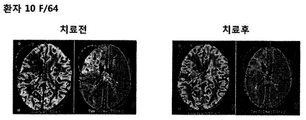
- 11 is a blood vessel image of the brain taken before and after the procedure when administering an angiogenic composition for the treatment of acute ischemic brain disease and performing a multi-puncture operation in patient 5 It is a photograph showing.
- FIG. 12 is a blood vessel image of the brain taken before and after the procedure when administering an angiogenic composition for the treatment of acute ischemic brain disease and performing a multi-puncture operation for a patient 6 It is a photograph showing.
- FIG. 13 is a blood vessel image of the brain taken before and after the procedure when administering an angiogenic composition for the treatment of acute ischemic brain disease and performing a multi-puncture operation in a patient 7 It is a photograph showing.
- FIG. 14 is a blood vessel image of the brain taken before and after the procedure when administering and administering an angiogenic composition for treatment of acute ischemic brain disease according to an embodiment of the present invention and multiple puncture surgery in a patient 8 It is a photograph showing.
- 15 is a blood vessel image of the brain taken before and after the procedure when administering an angiogenesis-assisted composition for treating acute ischemic brain disease and performing a multi-puncture operation in a patient 9. It is a photograph showing.
- FIG. 16 is a blood vessel image of the brain taken before and after the procedure when administering an angiogenic composition for the treatment of acute ischemic brain disease and performing a multi-puncture operation on a patient 10 It is a photograph showing.
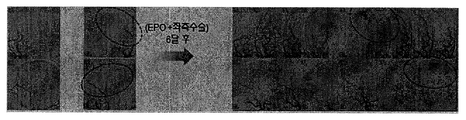
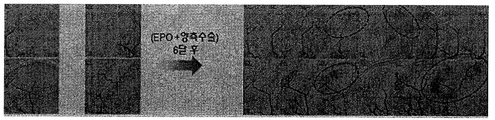
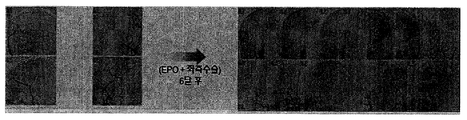
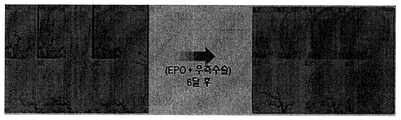
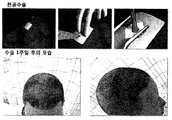
- FIG. 17 is a schematic diagram and a photograph showing a state after a week in a patient undergoing perforation surgery and bilateral surgery in one embodiment of the present invention targeting patients 1 to 10.
- FIG. 17 is a schematic diagram and a photograph showing a state after a week in a patient undergoing perforation surgery and bilateral surgery in one embodiment of the present invention targeting patients 1 to 10.
- angiogenesis is angiogenesis.
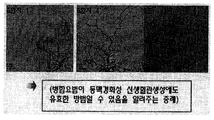
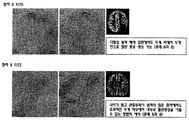
- FIG. 19 is a case of atherosclerotic cerebrovascular occlusion when administering angiogenesis-assisted composition for treating acute ischemic brain disease and performing multiple puncture surgery in patients 1 and 4 according to an embodiment of the present invention. Cerebrovascular image showing effective angiogenesis method.
- angiogenesis is an effective method for vascular occlusion.
- 21 is a significant increase in pre- and post-treatment cerebral blood flow when administering an angiogenic composition for treatment of acute ischemic brain disease and performing multiple puncture surgery in patient 10. Picture of perfusion video showing.
- FIG. 22 is a schematic photograph used when a model for minimal surgery was performed in rats.
- FIG. 22 is a schematic photograph used when a model for minimal surgery was performed in rats.
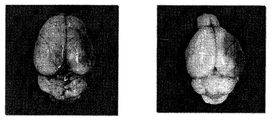
- FIG. 23 illustrates a case in which a drug and a surgery for observing neovascularization according to EPO and perforation surgery are performed in a model manufactured in rats, each of three groups (Group 1 is administered only drug, Group 2 performed only perforation surgery, and Group 3 performed drug and perforation surgery.
- FIG. 24 is a photograph showing the degree of neovascular development when EPO, perforation surgery, and rh-VEGF-A165 were combined and treated in a mouse model.
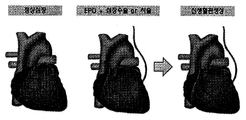
- 25 is a schematic diagram showing the neovascularization and functional recovery of the heart according to an embodiment of the present invention.
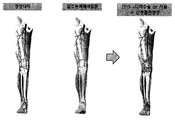
- Figure 26 is a schematic diagram showing the functional recovery of neovascularization and peripheral tissues according to an embodiment of the present invention.
- an ischemic vascular disease treatment procedure such as ischemic cerebrovascular disease, ischemic cardiovascular disease, and ischemic peripheral vascular disease
- the present inventors perform a procedure (or surgery) that destroys the physical barrier at least to the patient in order to minimize the complication of the patient.
- erythropoietin is used as an angiogenesis inducer for adjuvant treatment
- the vessels in which ischemic cerebrovascular disease such as ischemic cerebrovascular disease, ischemic cardiovascular disease, ischemic peripheral vascular disease, etc.
- the present invention provides an ischemic vascular disease treatment aid composition comprising erythropoietin (EPO) as an active ingredient, and a method for treating ischemic vascular disease using the composition.
- EPO erythropoietin
- the neuroprotective effect of EPO has been reported in animals to date, but any material or method can be used to remove two intra-outside anatomical barriers through simple procedures during acute cerebral ischemia in humans and experimental animals.
- the concept of inducing neovascular regeneration through the concept of diffusion from outside the healthy brain for use in acute ischemic tissue in the brain has not been inferred or derived from it. Therefore, the present invention provides a method for safely and effectively enhancing neovascular composition in ischemic tissues of acute cerebral infarction patients and animals using EPO and growth factor proteins which are very safe for living organisms, and demonstrates the effectiveness of the new functions of the composition in vivo. It was clarified.
- EPO erythropoietin
- VEGF vascular endothelial growth factor
- ischemic vascular disease refers to a disease that occurs directly or indirectly in relation to blood vessels, and means a disease in which blood flow decreases due to a disorder occurring in blood vessels or a disease that occurs due to the reduced blood flow. do.
- the ischemic blood vessel related disease is not particularly limited thereto, and includes all ischemic cerebrovascular diseases, ischemic heart diseases, and ischemic peripheral blood vessel diseases.
- ischemic cerebrovascular disease refers to a disease caused by blood not being supplied normally to blood vessels of the brain.
- the ischemic cerebrovascular disease is not particularly limited thereto, and includes ischemic stroke, moyamoya disease, thrombosis, and embolism.
- ischemic stroke is also referred to as “brain infarction,” and means a condition in which necrosis of brain tissue due to a decrease in the amount of blood supplied to the brain is unrecoverable.
- Moyamoya disease refers to the stenosis or occlusion at the end of the internal carotid artery or the beginning of the cerebral artery and the middle cerebral artery, without any particular reason, and near the abnormal vessel of the moyamoya vessel Refers to a disease exhibiting the symptoms for which production is observed.
- cerebrothrombosis refers to a disease in which a part of cerebrovascular disease occurs due to impaired passage of blood flow due to arterial stenosis or thrombosis.
- Cerebroembolism refers to a disease caused by blockage of cerebrovascular due to a blood clot in the heart.
- ischemic cardiovascular disease refers to a disease caused by the normal supply of blood to heart-related blood vessels.
- cardiovascular diseases include, but are not limited to, myocardial infarction and angina pectoris.
- myocardial infarction refers to a disease in which coronary arteries of the heart are acutely occluded by blood clots or spasms, causing necrosis of tissues or cells of the heart muscle.
- angina refers to a disease in which the heart muscle is secondary to ischemia due to a sharp decrease in oxygen and nutrient supply while decreasing blood supply to all or part of the heart.
- ischemic peripheral vascular disease refers to a vascular disease caused mainly by a poor supply of blood flow to limb arteries and veins.
- the peripheral vascular diseases include, but are not particularly limited to, peripheral vascular stenosis, peripheral vascular obstruction.
- peripheral vascular stenosis refers to a disease in which the limb artery or vein is narrowed by aging or the like.
- peripheral vascular occlusion refers to a disease in which the limb artery or vein is blocked by aging or the like.
- aneurysm refers to a disease in which the arterial wall expands locally in a hump shape.
- ischemic vascular disease treatment procedure refers to a method for treating the ischemic vascular diseases by surgical methods.
- the ischemic vascular related disease treatment procedure is not particularly limited, but includes angioplasty, direct vascular anastomosis and indirect vascular anastomosis.
- vascular intervention refers to a treatment method for treating a disease occurring in a blood vessel rather than surgery along the blood vessel.
- the angioplasty is not particularly limited to this, but includes balloon ceramic dilation and stent insertion.
- the term "balloon dilator” is inserted through the groin or blood vessels of the arm with a thin, soft wire and the end of the balloon balloon with a small balloon, and enters the balloon to the site where the blood vessel is blocked, It means a procedure to inflate the balloon by inflating the balloon.
- the term "stent insertion" is used to expand the stent by the expansion of the balloon, by using a balloon to be provided with a stent of the structure of the micro-wire mesh on the outside, when performing the balloon ceramic expansion
- the expanded stent means a procedure to maintain the expanded blood vessels.
- the term "indirect vascular anastomosis” refers to a procedure for inducing the creation of neovascularization that supplies blood flow to the brain by simply bringing the scalp artery, meninges, or muscles into contact with the outer surface.
- the indirect vascular anastomosis is not particularly limited to this, but includes multiple perforation surgery.
- ischemia-reperfusion injury refers to tissue damage resulting from oxygenation and recovery of blood flow to ischemic tissues in which a sudden ischemic condition occurs, and particularly includes microvascular disorders. Endothelial function in all segments of the microvessels (eg, arterioles, capillaries, and vasculature) is impaired when exposed to ischemia-reperfusion, which decreases vasodilatability in the arterioles, and filtration and leukocytes in capillaries. Leukocyte plugging is increased, and leukocyte-endothelial cell adhesion and extravasation of proteins are increased in the lavage veins, resulting in an imbalance in the production of reactive oxygen species and NO. This promotes these reactions.
- multiple Burr-hole Surgery refers to an operation in which a plurality of holes are made only in the skull using a drill that automatically stops when the dura is in contact, and the operation is simple enough to be almost close to the procedure. Therefore, there is no technical problem such as surgical skill of the surgeon, and there is an advantage that it can be easily performed even under local anesthesia.
- composition for treating ischemic vascular disease of the present invention may be used alone or in combination with methods using surgery, hormonal therapy, drug treatment and biological response modifiers for the treatment of ischemic vascular disease.
- angiogenesis a blood vessel capable of supplying enough blood flow for treatment of actual ischemic disease.
- Vasculogenesis is not achieved.
- This concept of physical barrier is applicable even in the case of peripheral vascular obstruction.
- the length of the blood vessel to be produced by the EPO or angiogenesis inducing agent may be excessive. Therefore, when EPO alone is administered, the length of blood vessels to be newly formed is not sufficient to prevent angiogenesis as much as necessary for treatment. Therefore, angiogenesis may be induced at the desired site only when a procedure or surgery that destroys the physical barrier on the length is accompanied with an angiogenesis agent.
- ischemic cardiovascular diseases such as cardiac ischemia and peripheral arterial occlusion disease or ischemic peripheral blood vessel disease
- ischemic cardiovascular diseases such as cardiac ischemia and peripheral arterial occlusion disease or ischemic peripheral blood vessel disease
- ischemic peripheral blood vessel disease which may be said to have a relatively long time window for reperfusion treatment, after surgery to recover blood flow to ischemic tissue
- problems with poor prognosis due to side effects from ischemia-reperfusion injury There were problems with poor prognosis due to side effects from ischemia-reperfusion injury.
- the present inventors have developed a new method that overcomes the disadvantages of each method by inducing various signals to condition angiogenesis or tissue ischemia by pretreatment of safe EPO before the treatment procedure.
- the present inventors start to appear in the regenerative phase of the ischemic disease.
- the present invention has been successful in inducing stronger and faster to achieve a fundamental and effective treatment of acute ischemic disease (see FIG. 1).
- EPO is administered to generate neovascularization signals to the patient first, and to perform multiple perforation surgery that destroys only the skull and meninges, the intra- and intra-cranial barriers.
- neovascularization was sufficiently generated throughout the brain tissue, which showed a more significant therapeutic effect than when each method was performed independently.
- ischemic cardiovascular disease such as cardiac ischemia or peripheral arterial occlusion disease or ischemic peripheral blood vessel disease
- ischemia-reperfusion after treatment is performed by pretreatment of pre-treatment EPO by surgery or pretreatment EPO to recover blood flow to ischemic tissue.
- Side effects due to damage are significantly reduced (see FIGS. 25 and 26).
- the composition of the present invention may comprise a pharmaceutically acceptable carrier other than EPO.
- Such carriers include, but are not limited to, any of the standard pharmaceutical carriers used in known formulations such as sterile solutions, tablets, coated tablets and capsules.
- Such carriers are lactose, dextrose, sucrose, sorbitol, mannitol, xylitol, erythritol, maltitol, starch, acacia rubber, alginate, gelatin, calcium phosphate, calcium silicate, cellulose, methyl cellulose, microcrystalline cellulose, poly Vinyl pyrrolidone, water, methylhydroxybenzoate, propylhydroxybenzoate, talc, magnesium stearate, polyvinylpyrrolidone, dextrin, milk, certain types of clays, stearic acid, talc, vegetable oils (e.g.
- Edible oils such as edible oil, cottonseed oil, coconut oil, almond oil, peanut oil), neutral fatty acid glycerides, mineral oil, petrolatum, animal fats and oils, cellulose derivatives (e.g. crystalline cellulose, hydroxypropyl cellulose, hydroxypropyl methyl cellulose, Excipients such as methylcellulose), or other known excipients.
- Such carriers may also include antioxidants, wetting agents, viscosity stabilizers, flavoring agents, color additives and other ingredients.
- composition of the present invention may be formulated in various formulations including erythropoietin as an active ingredient, and a pharmaceutically acceptable carrier.
- the formulation is not particularly limited, and may include oral, injectable or external preparations such as soft capsules, hard capsules, tablets, and syrups.
- solid preparations for oral administration include tablets, pills, powders, granules, capsules, and the like
- preparations for parenteral administration include sterile aqueous solutions, non-aqueous solvents, suspensions, emulsions, lyophilized preparations, and the like. Suppositories are included.
- the present invention also provides a method of treating ischemic vascular disease, comprising administering the EPO-containing composition of the present invention to a patient before or after receiving a treatment for ischemic vascular disease.
- the EPO-containing composition of the present invention may be administered to a patient prior to undergoing treatment for acute ischemic vascular disease.
- Ischemic vascular diseases of the present invention include ischemic cerebrovascular disease, ischemic cardiovascular disease, ischemic peripheral vascular disease and the like.
- the route of administration of the composition of the present invention may be administered through any general route as long as it can reach the target tissue.
- composition of the present invention may be administered daily or intermittently before the procedure, the number of administrations per day may be administered once or divided into two to three times, preferably 40,000 IU for three days before the procedure 10 days
- the procedure is preferably performed under local anesthesia, but the method and dosage of the composition are not limited as described above, In consideration of the dosage form, and the therapeutic effect, it may be appropriately administered according to various methods conventionally known to those skilled in the art.
- the cause of acute cerebral infarction is atherosclerosis.
- the combination therapy was administered to patients with either age- or adult-type moyamoya and the changes in clinical features and neovascularization before and after treatment were measured.
- Patient 1 has right hemiplegia, patient with Moyamoya syndrome showing no aphasia (unilateral + moyamoya vessels), patient 2 has right hemiplegia, patient with Moyamoya syndrome showing unilateral aphasia (unilateral + moyamoya vessels), and patient 3 has consciousness Moyamoya disease patients with deterioration (bilateral + moyamoya vessels), patient 4 patients with Moyamoya syndrome (bilateral + moyamoya vessels) showing right hemiplegia, 5 patients with Moyamoya disease patients with right hemiplegia (both sides Sex + moyamoya vessels), patient 6 patients with Moyamoya syndrome (unilateral + without moyamoya vessels) showing right hemiplegia, patient 7 patients with Moyamoya disease (bilateral + moyamoya vessels) showing left hemiplegia, patients 8 was a patient with Mo
- the NIH stroke index, the modified Bathel Index, and the modified Rankin score were measured, respectively, and their average value was changed over time. Analysis according to (see FIGS. 3 to 5).
- the NIH stroke index, the modified Bathel Index and the modified Rankin score were measured, respectively, and their average value was changed over time. Were analyzed according to (see FIG. 6).
- the NIH stroke index is a method of imposing one point on the appearance of neurological symptoms, with a score of 0 to 34, and a score of 0 is excellent prognosis.
- Modified Battel index is in the range of 0 to 100 points, the higher the score according to the state of daily living function is a better prognosis.
- the modified Lankin index it is in the range of 0 to 6 points, 6 points of death, and 1 point of awareness of the symptoms, but indicates the degree to which all daily life is possible.
- FIG 3 is a graph showing the change in the mean value of the NIH stroke index over time of patients 1 to 4
- Figure 4 is a graph showing the change in the mean value of the modified Battel index over time of patients 1 to 4
- 5 is a graph showing the change in the mean value of the fertilized Lankin index over time of patients 1 to 4.
- FIG. 6 is a graph showing changes in the mean value of the NIH stroke index, the mean value of the modified Battel index, and the mean value of the modified Lankin index over time of patients 5 to 10.
- FIG. Patients were patients with less intense stroke than patients 1-4. Patients showed recovery of function in all cases, as in severe cases (patients 1 to 4), even with mild stroke.
- composition of the present invention as a composition for assisting multiple perforation surgery for the treatment of acute cerebral infarction caused by atherosclerosis and moyamoya disease, it can be clearly seen that the success rate of treatment is improved when the multiperforation surgery is performed.
- the combined treatment was very safe.
- Example 1-3 Brain Vascular Imaging and Analysis of Patients
- FIG. 7 to 16 are each a patient 1 to 10 when the procedure is performed when the multi-puncture surgery while using as a composition for assisting the multi-perforation surgery for the treatment of acute cerebral infarction due to the sclerotic and moyamoya disease of the present invention It is a picture showing the blood vessel image of the brain taken before and after the following.
- Patient 1 drilled a total of three holes, with only the skull in front, the hard membrane behind, and the soft membrane behind.
- the neovascularization was confirmed that the blood vessels did not grow when only the skull was perforated and neovascularization was generated only when the pericardium was punctured.
- Moyamoya disease was cured. Therefore, the case that the neovascularization is generated only when there is sufficient destruction of the hard membrane, which is a relatively hard barrier inside and out of the anatomy during the procedure. All subsequent patients had only perforated to the dura mater.
- neovascularization was demonstrated in patients without moyamoya blood vessels, indicating that neovascularization can be used not only for moyamoya disease but also for stroke caused by atherosclerotic obstructive arterial disease. It is a case showing.
- Patients 6 and 8 were elderly patients with cerebral atherosclerotic atherosclerosis who were 70 years or older and had no severe perfusion disorders.
- the method of the present invention was performed in combination with acute ischemic stroke of 20 years or older (6 females out of 10 persons, mean age of 50.5 ⁇ 17.4 (range 22-75 years)). In all one patient, no adverse effects from treatment were found. In the present situation where there is no special drug treatment other than vascular resurgery in acute cerebral infarction, this method can be a very safe method that can be performed even in acute phase of unstable clinical condition. In addition, in the 15 hemispheres treated in the effective aspect, it shows a method that can generate 100% of the neovascular regeneration by generating vascular pathways from the healthy two.
- Group 2 blocked unilateral vertebral arteries using electrocution in rats using the group 1 method.
- Group 3 also blocked the contralateral vertebral arteries using electrocution in rats using the group 2 method.
- Group 4 underwent permanent unilateral middle cerebral artery occlusion using nylon endoscopic nylon thread.
- Group 1 (control: t-MCAO + no burrhole) made an animal model according to the above method and observed the natural history.
- Group 2 (t-MCAO + burrhole) made an animal model with cerebral infarction and performed minimal surgery on day 3 It was.
- Group 3 (t-MCAO + EPO + burrhole) also created a cerebral infarction animal model and 3 days after intraperitoneal injection of EPO for 3 days at 5000 U / kg / day for preconditioning for cerebrovascular angiogenesis.
- Minimal surgery was performed. Minimal surgery was performed to anesthetize the animals using inhalation anesthesia, and then made a hole 4 mm in diameter in the temporal bone using a drill as shown in FIG. After the surgery, the surgical site was closed using a nylon 5-0 thread.
- this experiment reduced reperfusion time to reduce the intensity of cerebral infarction, reduced the size of minimal surgery to 2 mm and added to EPO for pre & post-conditioning of neovascular regeneration.
- Vascular Endothelial Growth Factor (VEGF) was added and used. Animal models were prepared using 290 to 340 gram male Sprague-Dawley rats and two models were used to confirm revascularization. Cerebral artery 60 min occlusion-reperfusion was performed in the same manner as the conventional method. The cerebral infarction was made using the method and then injected intraperitoneally for 3 days at a dose of 5000 U / KG / day. In addition, rh-VEGF-A165 was given intraperitoneally using an input pump at a dose of 50ng / kg / min. The timing of administration was 3, 6, and 9 days after surgery.
- VEGF Vascular Endothelial Growth Factor
- the composition of the present invention for the treatment of ischemic cerebrovascular diseases, etc. by creating an environment that promotes angiogenesis in the brain of the patient, multiple perforation in the situation of acute vascular occlusion (within seven days of onset of symptoms)
- ischemic vascular diseases such as surgery
- neovascularization improves the prognosis of living organisms with tissue ischemia.
- human and animal experiments showed that the neovascularization response may be enhanced by preoperative administration of erythropoietin (EPO) contained in the composition to remove anatomical barriers for vascular development. It was clearly seen in animal experiments that this neovascularization was further enhanced by post-operative incorporation of rhVEGF-A165 protein.
- EPO erythropoietin
- the method of the present invention is a method of delivering various drugs in the future by regenerating the passage through which various substances which have not reached the cerebral vessel due to cerebral vascular occlusion and have not been shown to be effective in the human body can be reached. It is also expected that they may be used.
- compositions of the present invention are expected to be widely used in the effective treatment of ischemic vascular diseases including ischemic cerebrovascular disease, ischemic cardiovascular disease, and ischemic peripheral vascular disease.
Landscapes
- Health & Medical Sciences (AREA)
- Life Sciences & Earth Sciences (AREA)
- Engineering & Computer Science (AREA)
- Bioinformatics & Cheminformatics (AREA)
- Animal Behavior & Ethology (AREA)
- General Health & Medical Sciences (AREA)
- Veterinary Medicine (AREA)
- Public Health (AREA)
- Medicinal Chemistry (AREA)
- Pharmacology & Pharmacy (AREA)
- Chemical & Material Sciences (AREA)
- Proteomics, Peptides & Aminoacids (AREA)
- Zoology (AREA)
- Epidemiology (AREA)
- Immunology (AREA)
- Gastroenterology & Hepatology (AREA)
- Cardiology (AREA)
- Heart & Thoracic Surgery (AREA)
- Chemical Kinetics & Catalysis (AREA)
- General Chemical & Material Sciences (AREA)
- Nuclear Medicine, Radiotherapy & Molecular Imaging (AREA)
- Organic Chemistry (AREA)
- Vascular Medicine (AREA)
- Urology & Nephrology (AREA)
- Medicines That Contain Protein Lipid Enzymes And Other Medicines (AREA)
Abstract
La présente invention concerne une composition comprenant de l'érythropoïétine (EPO) en tant que substance active pour faciliter des procédures chirurgicales pour traiter des maladies vasculaires ischémiques. La présente invention concerne en outre un procédé pour traiter des maladies vasculaires ischémiques en utilisant ladite composition. La composition pour faciliter des procédures chirurgicales selon la présente invention peut améliorer le taux de succès de différentes procédures chirurgicales comprenant des opérations de coupe multiples effectuées sur un patient adulte souffrant de différentes maladies vasculaires ischémiques comprenant la maladie de Moyamoya, et peut être largement utilisée dans le traitement de différentes maladies vasculaires ischémiques.
Priority Applications (1)
| Application Number | Priority Date | Filing Date | Title |
|---|---|---|---|
| US14/113,762 US9956265B2 (en) | 2011-04-26 | 2012-04-26 | Composition for aiding surgical procedures for treating ischemic vascular diseases |
Applications Claiming Priority (4)
| Application Number | Priority Date | Filing Date | Title |
|---|---|---|---|
| KR10-2011-0039219 | 2011-04-26 | ||
| KR20110039219 | 2011-04-26 | ||
| KR10-2012-0043799 | 2012-04-26 | ||
| KR1020120043799A KR101609690B1 (ko) | 2011-04-26 | 2012-04-26 | 허혈성 혈관 질환 치료시술 보조용 조성물 |
Publications (3)
| Publication Number | Publication Date |
|---|---|
| WO2012148200A2 WO2012148200A2 (fr) | 2012-11-01 |
| WO2012148200A3 WO2012148200A3 (fr) | 2013-01-17 |
| WO2012148200A9 true WO2012148200A9 (fr) | 2013-03-14 |
Family
ID=47072926
Family Applications (1)
| Application Number | Title | Priority Date | Filing Date |
|---|---|---|---|
| PCT/KR2012/003260 Ceased WO2012148200A2 (fr) | 2011-04-26 | 2012-04-26 | Composition pour faciliter des procédures chirurgicales pour traiter des maladies vasculaires ischémiques |
Country Status (2)
| Country | Link |
|---|---|
| US (1) | US9956265B2 (fr) |
| WO (1) | WO2012148200A2 (fr) |
Families Citing this family (5)
| Publication number | Priority date | Publication date | Assignee | Title |
|---|---|---|---|---|
| KR20160140147A (ko) | 2015-05-29 | 2016-12-07 | 주식회사 젬백스앤카엘 | 심장 허혈후 재관류 손상에 의한 심장 질환 치료 및 예방용 조성물 |
| US11446084B2 (en) | 2019-07-12 | 2022-09-20 | Neuralink Corp. | Laser drilling of pia mater |
| EP3964225A1 (fr) * | 2020-09-04 | 2022-03-09 | Dompe' Farmaceutici S.P.A. | Peptides dotés d'une activité angiogénique |
| CA3192758A1 (fr) * | 2020-09-04 | 2022-03-10 | Dompe' Farmaceutici Spa | Peptides pourvus d'une activite angiogenique |
| CN118490406B (zh) * | 2024-07-18 | 2024-10-11 | 四川大学华西医院 | 一种新型急性缺血性脑小血管病动物模型构建方法 |
Family Cites Families (9)
| Publication number | Priority date | Publication date | Assignee | Title |
|---|---|---|---|---|
| WO1999045775A1 (fr) | 1998-03-09 | 1999-09-16 | St. Elizabeth's Medical Center | Compositions et methodes modulant la vascularisation |
| DE19857609A1 (de) | 1998-12-14 | 2000-06-15 | Hannelore Ehrenreich | Verwendung von Erythropoietin zur Behandlung von cerebralen Ischämien des Menschen |
| US7309687B1 (en) | 1999-04-13 | 2007-12-18 | The Kenneth S. Warren Institute, Inc. | Methods for treatment and prevention of neuromuscular and muscular conditions by peripherally administered erythropoietin |
| US6379363B1 (en) * | 1999-09-24 | 2002-04-30 | Walter Lorenz Surgical, Inc. | Method and apparatus for reattachment of a cranial flap using a cranial clamp |
| US7767643B2 (en) * | 2000-12-29 | 2010-08-03 | The Kenneth S. Warren Institute, Inc. | Protection, restoration, and enhancement of erythropoietin-responsive cells, tissues and organs |
| US6531121B2 (en) * | 2000-12-29 | 2003-03-11 | The Kenneth S. Warren Institute, Inc. | Protection and enhancement of erythropoietin-responsive cells, tissues and organs |
| DE10234192B4 (de) | 2002-07-26 | 2009-11-26 | Epoplus Gmbh Co.Kg | Verwendung von Erythropoetin |
| BRPI0410470A (pt) * | 2003-05-19 | 2006-06-20 | Kenneth S Warren Inst Inc | uso de uma eritropoietina ou de uma citocina protetora de tecido e método para proteger ou manter a viabilidade de uma célula, tecido ou órgão de mamìfero respondente |
| ATE469654T1 (de) | 2003-12-30 | 2010-06-15 | Augustinus Bader | Verwendung des erythropoietins zur regeneration von lebergewebe |
-
2012
- 2012-04-26 WO PCT/KR2012/003260 patent/WO2012148200A2/fr not_active Ceased
- 2012-04-26 US US14/113,762 patent/US9956265B2/en active Active
Also Published As
| Publication number | Publication date |
|---|---|
| WO2012148200A3 (fr) | 2013-01-17 |
| WO2012148200A2 (fr) | 2012-11-01 |
| US9956265B2 (en) | 2018-05-01 |
| US20140045748A1 (en) | 2014-02-13 |
Similar Documents
| Publication | Publication Date | Title |
|---|---|---|
| Williams et al. | Autologous plasmin enzyme in the surgical management of diabetic retinopathy | |
| Groff et al. | Adenosine-induced transient asystole for management of a basilar artery aneurysm: case report | |
| WO2012148200A9 (fr) | Composition pour faciliter des procédures chirurgicales pour traiter des maladies vasculaires ischémiques | |
| KR100516676B1 (ko) | 안면 수술에서의 레보부피바카인의 용도 | |
| SU1183112A1 (ru) | Способ лечени острой ишемии миокарда | |
| KR20230010187A (ko) | 재개통 치료 후 재관류 손상 또는 출혈을 치료하기 위한 조성물 및 방법 | |
| Rowan | Awareness under TIVA: a doctor's personal experience | |
| Hair | Radiosensitive adamantinoma | |
| KR20210135720A (ko) | 황반변성의 완화, 억제, 치료 또는 예방용 조성물 | |
| KR20120121372A (ko) | 허혈성 혈관 질환 치료시술 보조용 조성물 | |
| WO2004032941A1 (fr) | Compositions pharmaceutiques contenant de la polydatine ou ses sels et utilisations de ces dernieres | |
| TWI825446B (zh) | 醫藥組合物治療組織缺血狀況之用途 | |
| RU2204962C2 (ru) | Способ защиты головного мозга от гипоксии при протезировании дуги аорты | |
| RU2300351C1 (ru) | Способ лечения патологии зрительного нерва и сетчатки | |
| Marx | Coronary Artery Spasms and Heart Disease: Brief, periodic constrictions of the coronary arteries may cause angina and even heart attacks in some people | |
| Thakkar | Hematoma block: An effective anesthesia for distal radius fractures | |
| KR100854058B1 (ko) | 스테로이드를 유효 성분으로 하는 망맥락막 질환 치료제 | |
| WO2016153103A2 (fr) | Procédé pour favoriser la pousse des cheveux et empêcher la chute des cheveux d'un patient, composition associée et procédé de préparation de la composition | |
| Wiederholt et al. | Hypotension and its effect on EEG activity in the dog | |
| WO2025165088A1 (fr) | Utilisation d'un inhibiteur de caspase | |
| KR101768809B1 (ko) | 덱사메타손 및 글리벤클라마이드를 포함하는 뇌졸중의 예방 또는 치료용 약학적 조성물 | |
| Ye et al. | Effect Of Dexmedetomidine On Controlled Hypotension In Hypertensive Patients Undergoing Endoscopic Sinus Surgery | |
| Goldie et al. | Epidural anaesthesia in low-back pain and sciatica | |
| WO2022065943A1 (fr) | Produit de thérapie cellulaire destiné au traitement d'un accident vasculaire cérébral | |
| RU2135181C1 (ru) | Способ профилактики фибрилляции желудочков сердца в восстановительном периоде после выключения сердца из кровообращения в условиях бесперфузионной гипотермии у больных приобретенным митральным пороком |
Legal Events
| Date | Code | Title | Description |
|---|---|---|---|
| 121 | Ep: the epo has been informed by wipo that ep was designated in this application |
Ref document number: 12776674 Country of ref document: EP Kind code of ref document: A2 |
|
| WWE | Wipo information: entry into national phase |
Ref document number: 14113762 Country of ref document: US |
|
| NENP | Non-entry into the national phase in: |
Ref country code: DE |
|
| 122 | Ep: pct application non-entry in european phase |
Ref document number: 12776674 Country of ref document: EP Kind code of ref document: A2 |