WO2012157656A1 - Absorbeur d'oxygène - Google Patents
Absorbeur d'oxygène Download PDFInfo
- Publication number
- WO2012157656A1 WO2012157656A1 PCT/JP2012/062450 JP2012062450W WO2012157656A1 WO 2012157656 A1 WO2012157656 A1 WO 2012157656A1 JP 2012062450 W JP2012062450 W JP 2012062450W WO 2012157656 A1 WO2012157656 A1 WO 2012157656A1
- Authority
- WO
- WIPO (PCT)
- Prior art keywords
- group
- general formula
- compound
- oxygen
- compound represented
- Prior art date
- Legal status (The legal status is an assumption and is not a legal conclusion. Google has not performed a legal analysis and makes no representation as to the accuracy of the status listed.)
- Ceased
Links
- 0 CC(N(C(*)C(O)=O)C(C)=O)=O Chemical compound CC(N(C(*)C(O)=O)C(C)=O)=O 0.000 description 2
- RRNVQYGRDQOETQ-UHFFFAOYSA-N CC(C(NCc1cc(CNC(C(C)N)=O)ccc1)=O)N Chemical compound CC(C(NCc1cc(CNC(C(C)N)=O)ccc1)=O)N RRNVQYGRDQOETQ-UHFFFAOYSA-N 0.000 description 1
- FILJCZSJDUMYGZ-UHFFFAOYSA-N CC(C)(C)C(C(NCc1cc(CNC(C(C(C)(C)C)N)=O)ccc1)=O)N Chemical compound CC(C)(C)C(C(NCc1cc(CNC(C(C(C)(C)C)N)=O)ccc1)=O)N FILJCZSJDUMYGZ-UHFFFAOYSA-N 0.000 description 1
- UBGMWBDNUOVITG-UHFFFAOYSA-N CC(C)C(C(NCc1cc(CNC(C(C(C)C)N)=O)ccc1)=O)N Chemical compound CC(C)C(C(NCc1cc(CNC(C(C(C)C)N)=O)ccc1)=O)N UBGMWBDNUOVITG-UHFFFAOYSA-N 0.000 description 1
- YXINVBDRPAFINC-UHFFFAOYSA-N CC(C)CC(C(NCc1cccc(CNC(C(CC(C)C)N)=O)c1)=O)N Chemical compound CC(C)CC(C(NCc1cccc(CNC(C(CC(C)C)N)=O)c1)=O)N YXINVBDRPAFINC-UHFFFAOYSA-N 0.000 description 1
- GQQSVIZHZNOAKJ-UHFFFAOYSA-N CCC(C(NCc1cccc(CNC(C(CC)N)=O)c1)=O)N Chemical compound CCC(C(NCc1cccc(CNC(C(CC)N)=O)c1)=O)N GQQSVIZHZNOAKJ-UHFFFAOYSA-N 0.000 description 1
Images

Classifications
-
- B—PERFORMING OPERATIONS; TRANSPORTING
- B01—PHYSICAL OR CHEMICAL PROCESSES OR APPARATUS IN GENERAL
- B01D—SEPARATION
- B01D53/00—Separation of gases or vapours; Recovering vapours of volatile solvents from gases; Chemical or biological purification of waste gases, e.g. engine exhaust gases, smoke, fumes, flue gases, aerosols
- B01D53/02—Separation of gases or vapours; Recovering vapours of volatile solvents from gases; Chemical or biological purification of waste gases, e.g. engine exhaust gases, smoke, fumes, flue gases, aerosols by adsorption, e.g. preparative gas chromatography
-
- B—PERFORMING OPERATIONS; TRANSPORTING
- B65—CONVEYING; PACKING; STORING; HANDLING THIN OR FILAMENTARY MATERIAL
- B65D—CONTAINERS FOR STORAGE OR TRANSPORT OF ARTICLES OR MATERIALS, e.g. BAGS, BARRELS, BOTTLES, BOXES, CANS, CARTONS, CRATES, DRUMS, JARS, TANKS, HOPPERS, FORWARDING CONTAINERS; ACCESSORIES, CLOSURES, OR FITTINGS THEREFOR; PACKAGING ELEMENTS; PACKAGES
- B65D81/00—Containers, packaging elements, or packages, for contents presenting particular transport or storage problems, or adapted to be used for non-packaging purposes after removal of contents
- B65D81/24—Adaptations for preventing deterioration or decay of contents; Applications to the container or packaging material of food preservatives, fungicides, pesticides or animal repellants
- B65D81/26—Adaptations for preventing deterioration or decay of contents; Applications to the container or packaging material of food preservatives, fungicides, pesticides or animal repellants with provision for draining away, or absorbing, or removing by ventilation, fluids, e.g. exuded by contents; Applications of corrosion inhibitors or desiccators
- B65D81/266—Adaptations for preventing deterioration or decay of contents; Applications to the container or packaging material of food preservatives, fungicides, pesticides or animal repellants with provision for draining away, or absorbing, or removing by ventilation, fluids, e.g. exuded by contents; Applications of corrosion inhibitors or desiccators for absorbing gases, e.g. oxygen absorbers or desiccants
-
- A—HUMAN NECESSITIES
- A23—FOODS OR FOODSTUFFS; TREATMENT THEREOF, NOT COVERED BY OTHER CLASSES
- A23B—PRESERVATION OF FOODS, FOODSTUFFS OR NON-ALCOHOLIC BEVERAGES; CHEMICAL RIPENING OF FRUIT OR VEGETABLES
- A23B2/00—Preservation of foods or foodstuffs, in general
- A23B2/70—Preservation of foods or foodstuffs, in general by treatment with chemicals
- A23B2/704—Preservation of foods or foodstuffs, in general by treatment with chemicals in the form of gases, e.g. fumigation; Compositions or apparatus therefor
- A23B2/708—Preservation of foods or foodstuffs, in general by treatment with chemicals in the form of gases, e.g. fumigation; Compositions or apparatus therefor in a controlled atmosphere, e.g. partial vacuum, comprising only CO2, N2, O2 or H2O
- A23B2/712—Preservation of foods or foodstuffs, in general by treatment with chemicals in the form of gases, e.g. fumigation; Compositions or apparatus therefor in a controlled atmosphere, e.g. partial vacuum, comprising only CO2, N2, O2 or H2O in which an absorbent is placed or used
- A23B2/717—Oxygen absorbent
-
- B—PERFORMING OPERATIONS; TRANSPORTING
- B01—PHYSICAL OR CHEMICAL PROCESSES OR APPARATUS IN GENERAL
- B01J—CHEMICAL OR PHYSICAL PROCESSES, e.g. CATALYSIS OR COLLOID CHEMISTRY; THEIR RELEVANT APPARATUS
- B01J20/00—Solid sorbent compositions or filter aid compositions; Sorbents for chromatography; Processes for preparing, regenerating or reactivating thereof
- B01J20/02—Solid sorbent compositions or filter aid compositions; Sorbents for chromatography; Processes for preparing, regenerating or reactivating thereof comprising inorganic material
- B01J20/06—Solid sorbent compositions or filter aid compositions; Sorbents for chromatography; Processes for preparing, regenerating or reactivating thereof comprising inorganic material comprising oxides or hydroxides of metals not provided for in group B01J20/04
-
- B—PERFORMING OPERATIONS; TRANSPORTING
- B01—PHYSICAL OR CHEMICAL PROCESSES OR APPARATUS IN GENERAL
- B01J—CHEMICAL OR PHYSICAL PROCESSES, e.g. CATALYSIS OR COLLOID CHEMISTRY; THEIR RELEVANT APPARATUS
- B01J20/00—Solid sorbent compositions or filter aid compositions; Sorbents for chromatography; Processes for preparing, regenerating or reactivating thereof
- B01J20/02—Solid sorbent compositions or filter aid compositions; Sorbents for chromatography; Processes for preparing, regenerating or reactivating thereof comprising inorganic material
- B01J20/10—Solid sorbent compositions or filter aid compositions; Sorbents for chromatography; Processes for preparing, regenerating or reactivating thereof comprising inorganic material comprising silica or silicate
- B01J20/14—Diatomaceous earth
-
- B—PERFORMING OPERATIONS; TRANSPORTING
- B01—PHYSICAL OR CHEMICAL PROCESSES OR APPARATUS IN GENERAL
- B01J—CHEMICAL OR PHYSICAL PROCESSES, e.g. CATALYSIS OR COLLOID CHEMISTRY; THEIR RELEVANT APPARATUS
- B01J20/00—Solid sorbent compositions or filter aid compositions; Sorbents for chromatography; Processes for preparing, regenerating or reactivating thereof
- B01J20/02—Solid sorbent compositions or filter aid compositions; Sorbents for chromatography; Processes for preparing, regenerating or reactivating thereof comprising inorganic material
- B01J20/10—Solid sorbent compositions or filter aid compositions; Sorbents for chromatography; Processes for preparing, regenerating or reactivating thereof comprising inorganic material comprising silica or silicate
- B01J20/16—Alumino-silicates
- B01J20/18—Synthetic zeolitic molecular sieves
-
- B—PERFORMING OPERATIONS; TRANSPORTING
- B01—PHYSICAL OR CHEMICAL PROCESSES OR APPARATUS IN GENERAL
- B01J—CHEMICAL OR PHYSICAL PROCESSES, e.g. CATALYSIS OR COLLOID CHEMISTRY; THEIR RELEVANT APPARATUS
- B01J20/00—Solid sorbent compositions or filter aid compositions; Sorbents for chromatography; Processes for preparing, regenerating or reactivating thereof
- B01J20/02—Solid sorbent compositions or filter aid compositions; Sorbents for chromatography; Processes for preparing, regenerating or reactivating thereof comprising inorganic material
- B01J20/20—Solid sorbent compositions or filter aid compositions; Sorbents for chromatography; Processes for preparing, regenerating or reactivating thereof comprising inorganic material comprising free carbon; comprising carbon obtained by carbonising processes
-
- B—PERFORMING OPERATIONS; TRANSPORTING
- B01—PHYSICAL OR CHEMICAL PROCESSES OR APPARATUS IN GENERAL
- B01J—CHEMICAL OR PHYSICAL PROCESSES, e.g. CATALYSIS OR COLLOID CHEMISTRY; THEIR RELEVANT APPARATUS
- B01J20/00—Solid sorbent compositions or filter aid compositions; Sorbents for chromatography; Processes for preparing, regenerating or reactivating thereof
- B01J20/22—Solid sorbent compositions or filter aid compositions; Sorbents for chromatography; Processes for preparing, regenerating or reactivating thereof comprising organic material
- B01J20/26—Synthetic macromolecular compounds
- B01J20/264—Synthetic macromolecular compounds derived from different types of monomers, e.g. linear or branched copolymers, block copolymers, graft copolymers
-
- B—PERFORMING OPERATIONS; TRANSPORTING
- B01—PHYSICAL OR CHEMICAL PROCESSES OR APPARATUS IN GENERAL
- B01J—CHEMICAL OR PHYSICAL PROCESSES, e.g. CATALYSIS OR COLLOID CHEMISTRY; THEIR RELEVANT APPARATUS
- B01J20/00—Solid sorbent compositions or filter aid compositions; Sorbents for chromatography; Processes for preparing, regenerating or reactivating thereof
- B01J20/28—Solid sorbent compositions or filter aid compositions; Sorbents for chromatography; Processes for preparing, regenerating or reactivating thereof characterised by their form or physical properties
- B01J20/28014—Solid sorbent compositions or filter aid compositions; Sorbents for chromatography; Processes for preparing, regenerating or reactivating thereof characterised by their form or physical properties characterised by their form
- B01J20/2805—Sorbents inside a permeable or porous casing, e.g. inside a container, bag or membrane
-
- B—PERFORMING OPERATIONS; TRANSPORTING
- B01—PHYSICAL OR CHEMICAL PROCESSES OR APPARATUS IN GENERAL
- B01J—CHEMICAL OR PHYSICAL PROCESSES, e.g. CATALYSIS OR COLLOID CHEMISTRY; THEIR RELEVANT APPARATUS
- B01J20/00—Solid sorbent compositions or filter aid compositions; Sorbents for chromatography; Processes for preparing, regenerating or reactivating thereof
- B01J20/30—Processes for preparing, regenerating, or reactivating
- B01J20/3007—Moulding, shaping or extruding
-
- C—CHEMISTRY; METALLURGY
- C08—ORGANIC MACROMOLECULAR COMPOUNDS; THEIR PREPARATION OR CHEMICAL WORKING-UP; COMPOSITIONS BASED THEREON
- C08J—WORKING-UP; GENERAL PROCESSES OF COMPOUNDING; AFTER-TREATMENT NOT COVERED BY SUBCLASSES C08B, C08C, C08F, C08G or C08H
- C08J5/00—Manufacture of articles or shaped materials containing macromolecular substances
- C08J5/18—Manufacture of films or sheets
-
- C—CHEMISTRY; METALLURGY
- C08—ORGANIC MACROMOLECULAR COMPOUNDS; THEIR PREPARATION OR CHEMICAL WORKING-UP; COMPOSITIONS BASED THEREON
- C08K—Use of inorganic or non-macromolecular organic substances as compounding ingredients
- C08K5/00—Use of organic ingredients
- C08K5/16—Nitrogen-containing compounds
- C08K5/17—Amines; Quaternary ammonium compounds
- C08K5/175—Amines; Quaternary ammonium compounds containing COOH-groups; Esters or salts thereof
-
- C—CHEMISTRY; METALLURGY
- C08—ORGANIC MACROMOLECULAR COMPOUNDS; THEIR PREPARATION OR CHEMICAL WORKING-UP; COMPOSITIONS BASED THEREON
- C08K—Use of inorganic or non-macromolecular organic substances as compounding ingredients
- C08K5/00—Use of organic ingredients
- C08K5/16—Nitrogen-containing compounds
- C08K5/20—Carboxylic acid amides
-
- C—CHEMISTRY; METALLURGY
- C08—ORGANIC MACROMOLECULAR COMPOUNDS; THEIR PREPARATION OR CHEMICAL WORKING-UP; COMPOSITIONS BASED THEREON
- C08K—Use of inorganic or non-macromolecular organic substances as compounding ingredients
- C08K5/00—Use of organic ingredients
- C08K5/16—Nitrogen-containing compounds
- C08K5/21—Urea; Derivatives thereof, e.g. biuret
-
- C—CHEMISTRY; METALLURGY
- C08—ORGANIC MACROMOLECULAR COMPOUNDS; THEIR PREPARATION OR CHEMICAL WORKING-UP; COMPOSITIONS BASED THEREON
- C08K—Use of inorganic or non-macromolecular organic substances as compounding ingredients
- C08K5/00—Use of organic ingredients
- C08K5/16—Nitrogen-containing compounds
- C08K5/34—Heterocyclic compounds having nitrogen in the ring
- C08K5/3412—Heterocyclic compounds having nitrogen in the ring having one nitrogen atom in the ring
- C08K5/3415—Five-membered rings
- C08K5/3417—Five-membered rings condensed with carbocyclic rings
-
- B—PERFORMING OPERATIONS; TRANSPORTING
- B01—PHYSICAL OR CHEMICAL PROCESSES OR APPARATUS IN GENERAL
- B01D—SEPARATION
- B01D2253/00—Adsorbents used in seperation treatment of gases and vapours
- B01D2253/20—Organic adsorbents
- B01D2253/202—Polymeric adsorbents
-
- B—PERFORMING OPERATIONS; TRANSPORTING
- B01—PHYSICAL OR CHEMICAL PROCESSES OR APPARATUS IN GENERAL
- B01D—SEPARATION
- B01D2257/00—Components to be removed
- B01D2257/10—Single element gases other than halogens
- B01D2257/104—Oxygen
-
- B—PERFORMING OPERATIONS; TRANSPORTING
- B01—PHYSICAL OR CHEMICAL PROCESSES OR APPARATUS IN GENERAL
- B01J—CHEMICAL OR PHYSICAL PROCESSES, e.g. CATALYSIS OR COLLOID CHEMISTRY; THEIR RELEVANT APPARATUS
- B01J2220/00—Aspects relating to sorbent materials
- B01J2220/40—Aspects relating to the composition of sorbent or filter aid materials
- B01J2220/46—Materials comprising a mixture of inorganic and organic materials
-
- C—CHEMISTRY; METALLURGY
- C08—ORGANIC MACROMOLECULAR COMPOUNDS; THEIR PREPARATION OR CHEMICAL WORKING-UP; COMPOSITIONS BASED THEREON
- C08J—WORKING-UP; GENERAL PROCESSES OF COMPOUNDING; AFTER-TREATMENT NOT COVERED BY SUBCLASSES C08B, C08C, C08F, C08G or C08H
- C08J2323/00—Characterised by the use of homopolymers or copolymers of unsaturated aliphatic hydrocarbons having only one carbon-to-carbon double bond; Derivatives of such polymers
- C08J2323/02—Characterised by the use of homopolymers or copolymers of unsaturated aliphatic hydrocarbons having only one carbon-to-carbon double bond; Derivatives of such polymers not modified by chemical after treatment
- C08J2323/04—Homopolymers or copolymers of ethene
- C08J2323/06—Polyethene
Definitions
- the present invention relates to an oxygen absorbent that removes oxygen in a package in which food or the like is packaged, and more particularly to an oxygen absorbent comprising a specific compound.
- an oxygen absorbent for removing oxygen in a package in which food or the like is packaged for example, those containing iron powder as a main component, those containing ascorbic acid or a salt thereof as a main component, and ethylenically unsaturated compounds such as polybutadiene Containing a transition metal catalyst such as cobalt, a metaxylylene bisphthalimide compound or a metaxylylene bis (1-oxo-2-isoindoline) compound and a transition metal catalyst such as cobalt, hexamethylene bisbenzyl Those containing an amide compound or a metaxylylene bisformamide compound and a transition metal catalyst such as cobalt are known (see, for example, Patent Documents 1 to 5).
- the iron-based oxygen absorbent has an advantage that it is inexpensive and easy to handle because oxygen is absorbed by an oxidation reaction of iron.
- iron-based oxygen absorbers require moisture to absorb oxygen, require high humidity in the system, and have limited storage targets.
- a metal detector for inspection of foreign matter cannot be used, or it cannot be put into a package before inspection of foreign matter.
- iron powder since iron powder is used, there is also a problem that the package containing the oxygen absorbent cannot be heated as it is in a microwave oven.
- the resin is colored and becomes opaque, so that there is a limitation in use that it cannot be used in the field of packaging that requires transparency.
- ascorbic acid-based oxygen absorbers absorb oxygen as the ascorbic acid decomposes.
- Ascorbic acid is widely used as an antioxidant for food additives, and ascorbic acid-based oxygen absorbers have the advantage of higher hygiene and safety than iron-based oxygen absorbers.
- Ascorbic acid-based oxygen absorbers have a problem that the oxygen absorption rate is slower than iron-based oxygen absorbers. If the oxygen absorption rate is slow, if the stored product in the package is very sensitive to oxygen, the stored product will be oxidized or decomposed by oxygen before the oxygen absorber absorbs oxygen. There is a problem.
- ascorbic acid-based oxygen absorbents containing transition metals for the purpose of improving the oxygen absorption rate are known.
- ethylenically unsaturated compounds such as polybutadiene, metaxylylene bisphthalimide compounds or metaxylylene bis (1-oxo-2-isoindoline) compounds, and hexamethylene bisbenzylamide compounds or metaxylylene bismethylamide compounds are The compounds themselves oxidize to absorb oxygen, but in order for these compounds to absorb oxygen, a transition metal is indispensable as an oxidation reaction accelerator.
- JP 54-35189 A JP-A-54-98348 JP-A-9-291120 Special table 2010-527389 Special table 2008-530345
- ascorbic acid-based oxygen absorbers have a mechanism in which oxygen is absorbed with the decomposition reaction of ascorbic acid, so that a decomposition product may be generated and an unpleasant odor may be generated in the package.
- some transition metals have an adverse effect on the human body and the environment, and oxygen absorbers that do not use transition metals are desired from the viewpoint of safety.
- ethylenically unsaturated compounds such as polybutadiene have a problem that, when blended with a resin, the resin is colored, the transparency is lowered, and the moldability is lowered due to a decrease in melt viscosity.
- An object of the present invention is to provide an oxygen absorbent that exhibits sufficient oxygen absorption performance without containing a metal.
- the present invention provides an oxygen absorbent as described in (1) below.
- R A1 represents a substituent
- R A2 represents an electron-donating group.
- m A represents an integer of 1 to 4
- n A represents an integer of 0 to 3.
- m A + n A is an integer of 1 to 4.
- Q A is at least selected from the group consisting of an aromatic hydrocarbon group, a saturated or unsaturated alicyclic hydrocarbon group, a linear or branched saturated or unsaturated aliphatic hydrocarbon group, and a heterocyclic group.
- a (m A + n A ) -valent group containing one group is represented. However, Q A does not contain a carboxyl group.
- R B1 represents a substituent.
- m B represents an integer of 1 to 4
- n B represents an integer of 0 to 3.
- m B + n B is an integer of 1 to 4.
- Q B is at least selected from the group consisting of an aromatic hydrocarbon group, a saturated or unsaturated alicyclic hydrocarbon group, a linear or branched saturated or unsaturated aliphatic hydrocarbon group, and a heterocyclic group. It represents a (m B + n B ) -valent group containing one group. However, Q B does not contain an amino group. ] [Wherein R C1 represents a substituent. n C represents an integer of 1 or 2. Q C is at least selected from the group consisting of an aromatic hydrocarbon group, a saturated or unsaturated alicyclic hydrocarbon group, a linear or branched saturated or unsaturated aliphatic hydrocarbon group, and a heterocyclic group.
- R D1 represents a substituent
- R D2 represents an electron-donating group.
- m D represents an integer of 1 to 4
- n D represents an integer of 0 to 3.
- m D + n D is an integer of 1 to 4.
- Q D is at least selected from the group consisting of an aromatic hydrocarbon group, a saturated or unsaturated alicyclic hydrocarbon group, a linear or branched saturated or unsaturated aliphatic hydrocarbon group, and a heterocyclic group.
- a (m D + n D ) -valent group containing one group is represented.
- R E1 represents a substituent.
- R E2 represents a hydrogen atom or a substituent.
- L E represents an imino group, an ether group, or sulfide group.
- m E represents an integer of 1 to 4
- n E represents an integer of 0 to 3, provided that m E + n E is 1 to 4.
- Q E represents a hydrogen atom or a (m E + n E ) -valent group.
- Ra F1 represents a substituent.
- Rb F1 represents a hydrogen atom or a substituent.
- Q F1 represents a hydrogen atom or a substituent.
- L F1 represents an imino group, an ether group, or a sulfide group.
- n F represents an integer of 1 to 2.
- Ra F2 represents a substituent.
- Q F2 represents a hydrogen atom or a substituent.
- L F2 represents an imino group, an ether group, a sulfide group, or a substituted or unsubstituted alkylene group.
- Ra F3 represents a substituent.
- Q F31 and Q F32 each represent a hydrogen atom or a substituent.
- L F3 represents an imino group, an ether group, or a sulfide group.
- the present invention includes the following preferred embodiments (2) to (32).
- the oxygen absorbent according to (1) comprising at least one amide compound represented by the general formula (AI).
- R A1 in the general formula (AI) is a substituted or unsubstituted alkyl group having 1 to 6 carbon atoms or a substituted or unsubstituted aryl group having 6 to 10 carbon atoms
- R A2 is an amino group
- the oxygen absorbent according to (2) which is a hydroxyl group or a substituted or unsubstituted alkyl group having 1 to 6 carbon atoms.
- Q A in the general formula (AI) is a metaxylylene group.
- R A1 in the general formula (AI) is a substituted or unsubstituted alkyl group having 1 to 6 carbon atoms or a substituted or unsubstituted aryl group having 6 to 10 carbon atoms, and R A2 is an amino group.
- the oxygen absorbent according to (1) comprising at least one amide compound represented by the general formula (BI).
- Q B in the general formula (BI) is a group containing a linear or branched saturated or unsaturated aliphatic hydrocarbon group having 6 to 12 carbon atoms, (9) or (10) The oxygen absorbent according to 1.
- the oxygen absorbent according to (1) comprising at least one imide compound represented by the general formula (CI).
- Q C in general formula (C-I) is an ethylene group, an oxygen-absorbing agent according to (13) or (14).
- (16) (13) A resin composition comprising 1 to 30% by mass of the oxygen absorbent according to any one of (15).
- the oxygen absorbent according to (1) comprising at least one ester compound represented by the general formula (DI).
- R D1 in the general formula (DI) is a substituted or unsubstituted alkyl group having 1 to 6 carbon atoms or a substituted or unsubstituted aryl group having 6 to 10 carbon atoms.
- Absorbent (19) The oxygen absorbent according to (17) or (18), wherein R D2 in the general formula (DI) is an amino group.
- Q D in the general formula (DI) is a group containing a linear or branched saturated or unsaturated aliphatic hydrocarbon group having 2 to 6 carbon atoms, (17) to (20) The oxygen absorbent according to any one of the above.
- the oxygen absorbent according to (1) comprising at least one compound represented by the general formula (EI).
- L E is an imino group, an oxygen-absorbing agent according to (21).
- Q E is a metaxylylene group.
- R E1 is a substituted or unsubstituted alkyl group having 1 to 6 carbon atoms or a substituted or unsubstituted aryl group having 6 to 10 carbon atoms.
- the oxygen absorbent according to (1) comprising at least one compound represented by any one of the general formulas (FI) to (F-III).
- (29) (27) or (28), wherein Ra F1 , Ra F2 and Ra F3 are each a substituted or unsubstituted alkyl group having 1 to 6 carbon atoms or a substituted or unsubstituted aryl group having 6 to 10 carbon atoms.
- Oxygen absorber comprising at least one compound represented by any one of the general formulas (FI) to (F-III).
- the oxygen absorbent of the present invention can exhibit sufficient oxygen absorption performance without containing a metal.
- the oxygen absorbent of the present invention can exhibit sufficient oxygen absorption performance without containing a metal.
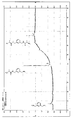
- 3 is a GC chart of amide compound A-1 obtained in Example A-1.
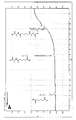
- 3 is a GC chart of amide compound B-1 obtained in Example B-1.
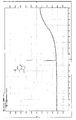
- 3 is a GC chart of imide compound C-1 obtained in Example C-1.
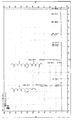
- 3 is a GC chart of the ester compound D-1 obtained in Example D-1.
- 2 is a GC chart of Compound E-1 obtained in Example E-1.
- 2 is a GC chart of Compound F-1 obtained in Example F-1.
- the oxygen absorbent of the present invention comprises at least one amide compound represented by the general formula (AI); at least one amide compound represented by the general formula (BI); At least one imide compound represented by CI); at least one ester compound represented by formula (DI); at least one compound represented by formula (EI); Or at least one compound represented by any one of the above general formulas (FI) to (F-III).
- an oxygen absorbent comprising at least one amide compound represented by the general formula (AI) (hereinafter sometimes referred to as “oxygen absorbent (A)”), the general formula (BI) An oxygen absorbent comprising at least one amide compound represented by the formula (hereinafter also referred to as “oxygen absorbent (B)”), at least one imide represented by the general formula (CI)
- An oxygen absorbent comprising a compound hereinafter also referred to as “oxygen absorbent (C)”
- an oxygen absorbent comprising at least one ester compound represented by the general formula (DI) hereinafter referred to as “ Oxygen absorber (D) ”
- an oxygen absorber comprising at least one compound represented by the general formula (EI) hereinafter also referred to as“ oxygen absorber (E) ”)
- the oxygen absorbent (A) is composed of at least one amide compound represented by the following general formula (AI).
- AI general formula
- R A1 represents a substituent
- R A2 represents an electron-donating group
- m A represents an integer of 1 to 4
- n A represents an integer of 0 to 3.
- m A + n A is an integer of 1 to 4.
- Q A is at least selected from the group consisting of an aromatic hydrocarbon group, a saturated or unsaturated alicyclic hydrocarbon group, a linear or branched saturated or unsaturated aliphatic hydrocarbon group, and a heterocyclic group.
- a (m A + n A ) -valent group containing one group is represented. However, Q A does not contain a carboxyl group. ]
- R A1 represents a substituent.
- substituents include a halogen atom (for example, a chlorine atom, a bromine atom, and an iodine atom), an alkyl group (1 to 15, preferably 1 to 6 carbon atoms).
- Straight chain, branched or cyclic alkyl group for example, methyl group, ethyl group, n-propyl group, isopropyl group, t-butyl group, n-octyl group, 2-ethylhexyl group, cyclopropyl group, cyclopentyl group), alkenyl group (Straight chain, branched or cyclic alkenyl groups having 2 to 10, preferably 2 to 6 carbon atoms, eg vinyl group, allyl group), alkynyl groups (2 to 10, preferably 2 to 6 An alkynyl group having a carbon atom, such as an ethynyl group, a propargyl group, an aryl group (an aryl group having 6 to 16, preferably 6 to 10 carbon atoms, such as a Nyl group, naphthyl group), heterocyclic group (5- to 6-membered aromatic or non-aromatic heterocyclic compound obtained by removing one hydrogen atom
- a rucarbonyl group for example, an acetyl group, a pivaloyl group, a benzoyl group), an amino group (amino group, an alkylamino group having 1 to 10, preferably 1 to 6 carbon atoms, 6 to 12, preferably 6 Anilino group having ⁇ 8 carbon atoms, or a heterocyclic amino group having 1-12, preferably 2-6 carbon atoms (eg amino, methylamino, anilino), mercapto, alkylthio A group (an alkylthio group having 1 to 10, preferably 1 to 6 carbon atoms, such as a methylthio group, an ethylthio group), an arylthio group (an arylthio having 6 to 12, preferably 6 to 8 carbon atoms) Groups such as phenylthio groups), heterocyclic thio groups (heterocyclic thio groups having 2 to 10, preferably 1 to 6 carbon atoms, such as 2-benzothiazo
- R A2 represents an electron donating group, for example, an amino group (amino group, an alkylamino group having 1 to 10, preferably 1 to 6 carbon atoms, 6 to 12, preferably 6 to 8 carbon atoms).
- An anilino group having a carbon atom, or a heterocyclic amino group having 1 to 12, preferably 2 to 6, carbon atoms such as an amino group, a methylamino group, an anilino group, a hydroxyl group, an alkoxy group (1 to 10 Linear, branched or cyclic alkoxy groups having 1 to 6 carbon atoms, for example methoxy, ethoxy groups, alkyl groups (1 to 15 and preferably having 1 to 6 carbon atoms) Linear, branched or cyclic alkyl groups such as methyl, ethyl, n-propyl, isopropyl, t-butyl, n-octyl, 2-ethylhexyl, cyclopropyl,
- those having a hydrogen atom may be further substituted with the above groups, for example, an alkyl group substituted with a hydroxyl group (for example, a hydroxyethyl group), an alkyl group substituted with an alkoxy group (Eg, methoxyethyl group), an alkyl group substituted with an aryl group (eg, benzyl group), an aryl group substituted with an alkyl group (eg, p-tolyl group), an aryloxy group substituted with an alkyl group ( Examples thereof include, but are not limited to, 2-methylphenoxy group.
- the carbon number mentioned above shall not include the carbon number of the further substituent.
- a benzyl group is regarded as a C 1 alkyl group substituted with a phenyl group, and is not regarded as a C 7 alkyl group substituted with a phenyl group.
- the following description of the number of carbon atoms shall be similarly understood unless otherwise specified.
- R A1 is preferably a substituted or unsubstituted alkyl group and a substituted or unsubstituted aryl group, a substituted or unsubstituted alkyl group having 1 to 6 carbon atoms and a substituted or unsubstituted aryl group having 6 to 10 carbon atoms.
- a substituted or unsubstituted alkyl group having 1 to 4 carbon atoms and a substituted or unsubstituted phenyl group are more preferable.
- preferable R A1 include methyl group, ethyl group, n-propyl group, isopropyl group, n-butyl group, t-butyl group, 1-methylpropyl group, 2-methylpropyl group, hydroxymethyl group, 1 Examples include, but are not limited to, -hydroxyethyl group, mercaptomethyl group, methylsulfanylethyl group, phenyl group, naphthyl group, benzyl group, 4-hydroxybenzyl group and the like.
- R A2 is preferably an amino group, a hydroxyl group, and an alkyl group from the viewpoint of oxygen absorption, more preferably an amino group, a hydroxyl group, and a substituted or unsubstituted alkyl group having 1 to 6 carbon atoms, and the amino group is further preferable.
- Q A is at least selected from the group consisting of an aromatic hydrocarbon group, a saturated or unsaturated alicyclic hydrocarbon group, a linear or branched saturated or unsaturated aliphatic hydrocarbon group, and a heterocyclic group.
- Represents a group containing one group, from an aromatic hydrocarbon group, a saturated or unsaturated alicyclic hydrocarbon group, a linear or branched saturated or unsaturated aliphatic hydrocarbon group and a heterocyclic group represents at least one group was removed from the parent compound which contains (m a + n a) hydrogen atoms (m a + n a) valent group selected from the group consisting of.
- the aromatic hydrocarbon group, saturated or unsaturated alicyclic hydrocarbon group, linear or branched saturated or unsaturated aliphatic hydrocarbon group and heterocyclic group may be substituted or unsubstituted.
- Q A may contain a hetero atom, and may contain an ether group, a sulfide group, a carbonyl group, a hydroxy group, an amino group, a sulfoxide group, a sulfone group, and the like. However, Q A does not contain a carboxyl group.
- Examples of the parent compound containing an aromatic hydrocarbon group include benzene, naphthalene, anthracene, phenanthrene, pyrene, biphenyl, diphenyl ether, diphenyl sulfide, diphenyl sulfoxide, diphenyl sulfone, diphenyl alkane (for example, diphenylmethane, diphenylethane, diphenylpropane). ), Diphenylmethanone, anthraquinone and the like.
- Examples of the group containing an aromatic hydrocarbon group include phenyl, benzyl, orthophenylene, metaphenylene, paraphenylene, orthoxylylene, metaxylylene, paraxylylene, naphthyl, naphthylene, anthracenyl.
- Examples of the parent compound containing a saturated or unsaturated alicyclic hydrocarbon group include 3 to 6 such as cyclopropane, cyclobutane, cyclopentane, cyclohexane, dicyclohexylalkane (for example, dicyclohexylmethane, dicyclohexylethane, dicyclohexylpropane).
- the compound containing a member ring is mentioned.
- crosslinking structures, such as norbornane and adamantane are also mentioned.
- Examples of the group containing a saturated or unsaturated alicyclic hydrocarbon group include a cyclopropyl group, a cyclobutyl group, a cyclopentyl group, a cyclohexyl group, a cyclohexylene group, a cyclohexylenemethylene group, a methylcyclohexyl group, and an alkylenedicyclohexylene.
- Groups for example, methylenedicyclohexylene group, ethylenedicyclohexylene group, propylenedicyclohexylene group), decahydronaphthalenyl group, decahydronaphthalenylene group, norbornyl group, adamantanyl group and the like.
- a linear or branched saturated or unsaturated aliphatic hydrocarbon group for example, a linear or branched alkane having 1 to 12 carbon atoms (for example, methane, ethane, propane, n-butane, n-hexane, n-octane, n-nonane, n-decane, n-dodecane, 2-methylpentane, 2,2,4-trimethylhexane, 2,4,4-trimethylhexane), ether group Containing alkanes (eg, dipropyl ether, 1,4-butanediol dipropyl ether, polyethylene oxide, polypropylene oxide), alkanes containing amino groups (eg, diethylamine, dihexylamine, triethylamine, polyethyleneamine), sulfide groups Containing alkanes (eg methylpropyl sulfide) etc.
- alkanes
- Examples of the group containing a linear or branched saturated or unsaturated aliphatic hydrocarbon group include a linear or branched alkyl group having 1 to 12 carbon atoms (for example, a methyl group, an ethyl group, n-propyl group, n-butyl group, n-hexyl group, n-octyl group), linear or branched alkylene group having 1 to 12 carbon atoms (for example, methylene group, ethylene group, n-propylene group, n-butylene group, n-hexylene group, n-octylene group, n-nonylene group, n-decylene group, n-dodecylene group, 2-methyl-1,5-pentylene group, 2,2,4-trimethylhexylene Group, 2,4,4-trimethylhexylene group), an alkylene group having an ether group (for example, oxydipropylene group,
- Examples of the parent compound containing a heterocyclic group include 5- to 6-membered heterocyclic compounds such as pyrrolidine, piperidine, pyridine, pyrimidine, and triazine, and condensed heterocyclic compounds such as quinoline and isoquinoline.
- Examples of the group containing a heterocyclic group include a pyrrolidinyl group, piperidinyl group, pyridinyl group, pyridinylene group, pyrimidinyl group, pyrimidinylene group, triazinyl group, triazinylene group, quinolinyl group, quinolinylene group, and isoquinolinyl group.
- n A represents an integer of 0 to 3.
- m A + n A represents the valence of Q A and represents an integer of 1 to 4.
- m A is 2 to 4, and n A is 0.
- a method for producing the amide compound represented by the general formula (AI) will be described.
- the method for producing the amide compound represented by the general formula (AI) is not particularly limited, but the compound represented by the following general formula (A-1) and the amine represented by the following general formula (A-2) A method of producing by dehydration condensation reaction with a compound is preferred.
- R A1 and R A2 has the same meaning as R A1 and R A2 in the general formula (A-I), and preferred ranges are also the same.
- m A + n A and Q A are as defined m A + n A and Q A in the general formula (A-I), and preferred ranges are also the same.
- Examples of the compound represented by the general formula (A-1) include alanine, 2-aminobutyric acid, valine, norvaline, leucine, norleucine, tert-leucine, isoleucine, serine, threonine, cysteine, methionine, 2-phenylglycine, ⁇ -amino acids having tertiary hydrogen at the ⁇ -carbon such as phenylalanine, tyrosine, histidine, tryptophan, proline; ⁇ -hydroxy acids such as 2-hydroxybutyric acid, malic acid, tartaric acid; 2-methylbutyric acid, methylmalonic acid, methylsuccinic acid Examples thereof include, but are not limited to, carboxylic acids having an alkyl group at the ⁇ -position.
- the compound represented by the general formula (A-1) has an asymmetric carbon, it may be any of D-form, L-form, and racemate, or allo-form.
- ⁇ -amino acids having tertiary hydrogen at the ⁇ carbon are particularly preferable from the viewpoints of availability of raw materials and improvement of oxygen absorption.
- alanine is most preferred from the viewpoint of ease of supply and inexpensive price.
- an amino compound containing an aromatic hydrocarbon group an amino compound containing a saturated or unsaturated alicyclic hydrocarbon group, linear or branched
- An amino compound containing a saturated saturated or unsaturated aliphatic hydrocarbon group or an amino compound containing a heterocyclic group is preferred.
- the amino compound containing an aromatic hydrocarbon group include orthoxylylenediamine, metaxylylenediamine, paraxylylenediamine, and paraphenylenediamine.
- amino compound containing a saturated or unsaturated alicyclic hydrocarbon group examples include 1,3-bis (aminomethyl) cyclohexane, 1,4-bis (aminomethyl) cyclohexane, 1,3-diaminocyclohexane, , 4-diaminocyclohexane and the like.
- amino compounds containing linear or branched saturated or unsaturated aliphatic hydrocarbon groups include ethylenediamine trimethylenediamine, tetramethylenediamine, pentamethylenediamine, hexamethylenediamine, heptamethylenediamine, and octamethylenediamine.
- Examples of the amino compound containing a heterocyclic group include diaminopyridine and diaminotriazine. Among these, from the viewpoint of oxygen absorption, metaxylylenediamine is preferable.
- the reaction conditions in the dehydration condensation reaction between the compound represented by the general formula (A-1) and the amine compound represented by the general formula (A-2) are not particularly limited and can be appropriately determined.
- the reaction temperature is usually 170 to 250 ° C., preferably 200 to 220 ° C.
- a phosphorus atom-containing compound such as sodium hypophosphite, potassium hypophosphite or lithium hypophosphite may be used as a catalyst.
- the oxygen absorbent (A) is composed of at least one amide compound represented by the general formula (AI). That is, the oxygen absorbent (A) may be a mixture of two or more amide compounds represented by the general formula (AI).
- AI amide compound represented by the general formula (A-2)
- the compound represented by the general formula (A-1) and the amine compound represented by the general formula (A-2) As a result of the dehydration condensation reaction, a dimer obtained by reacting one molecule of the compound represented by the general formula (A-1) with one molecule of the amine compound represented by the general formula (A-2)
- An amide compound and a trimeric amide compound in which two molecules of the compound represented by the general formula (A-1) and one molecule of the amine compound represented by the general formula (A-2) are reacted are formed. Can do.
- the oxygen absorbent (A) may be a mixture thereof.
- the amide compound constituting the oxygen absorbent (A) is excellent in oxygen absorbability.
- the amount of oxygen absorbed per gram of the amide compound constituting the oxygen absorbent (A) is preferably 3 cc / g or more, more preferably 10 cc / g or more.
- the upper limit value of the oxygen absorption amount is not particularly limited and is preferably as high as possible. However, 20 cc / g or less is suitable as an oxygen absorbent.
- the measuring method of oxygen absorption amount is performed by the method as described in an Example.
- the mechanism by which the amide compound constituting the oxygen absorbent (A) exhibits good oxygen absorption performance has not yet been clarified, it is estimated as follows.
- tertiary hydrogen bonded to the carbon atom adjacent to the amide bond dissociates as a proton to form a radical. That is, since the carbonyl group that is an electron withdrawing group and the electron donating group R A2 are bonded to the carbon atom to which the tertiary hydrogen is bonded, when the tertiary hydrogen is dissociated as a proton, It is considered that a very stable radical is generated by a phenomenon called a captative effect in which unpaired electrons existing on a carbon atom are energetically stabilized. When oxygen and water are present here, it is considered that oxygen reacts with this radical to show oxygen absorption performance. It has also been found that the higher the humidity and temperature, the higher the reactivity.
- the oxygen absorbent (A) As a more preferable usage form of the oxygen absorbent (A), a form in which the amide compound represented by the general formula (AI) is supported on a carrier from the viewpoint of easy handling and improvement of the oxygen absorption rate.
- a carrier used for loading include diatomaceous earth, activated carbon, zeolite, alumina, silica, titania, zirconia, and ceria.
- the oxygen absorbent (A) is used in a small bag.
- a sachet or the like filled with the oxygen absorbent (A) By disposing a sachet or the like filled with the oxygen absorbent (A) in the package, the oxygen concentration in the package can be lowered, and the stored product in the package can be stored in a good state.
- an oxygen absorbent (A) can also be mix
- Packaging materials and packaging containers obtained by molding and processing a resin composition in which an oxygen absorbent (A) is blended with a resin raw material can maintain the oxygen concentration in the packaging body low, and the stored material in the packaging body is excellent. Can be saved in state.
- the oxygen absorbent content in the resin composition is preferably 1 to 30% by mass from the viewpoint of oxygen absorption performance, resin moldability and appearance. More preferably, it is 3 to 20% by mass, and still more preferably 5 to 10% by mass.
- the oxygen absorbent (B) is composed of at least one amide compound represented by the following general formula (BI).
- R B1 represents a substituent.
- m B represents an integer of 1 to 4
- n B represents an integer of 0 to 3.
- m B + n B is an integer of 1 to 4.
- Q B is at least selected from the group consisting of an aromatic hydrocarbon group, a saturated or unsaturated alicyclic hydrocarbon group, a linear or branched saturated or unsaturated aliphatic hydrocarbon group, and a heterocyclic group. It represents a (m B + n B ) -valent group containing one group. However, Q B does not contain an amino group.
- R B1 represents a substituent, and examples of the substituent include the same as those exemplified as the substituent for R A1 . Suitable examples of R B1 are the same as those of R A1 .
- Q B is at least selected from the group consisting of an aromatic hydrocarbon group, a saturated or unsaturated alicyclic hydrocarbon group, a linear or branched saturated or unsaturated aliphatic hydrocarbon group, and a heterocyclic group.
- the aromatic hydrocarbon group, saturated or unsaturated alicyclic hydrocarbon group, linear or branched saturated or unsaturated aliphatic hydrocarbon group and heterocyclic group may be substituted or unsubstituted.
- Q B may contain a hetero atom, and may contain an ether group, a sulfide group, a carbonyl group, a hydroxy group, a sulfoxide group, a sulfone group, and the like. However, Q B does not contain an amino group.
- Examples of the parent compound containing an aromatic hydrocarbon group include benzene, naphthalene, anthracene, phenanthrene, pyrene, biphenyl, diphenyl ether, diphenyl sulfide, diphenyl sulfoxide, diphenyl sulfone, diphenyl alkane (for example, diphenylmethane, diphenylethane, diphenylpropane). ), Diphenylmethanone, anthraquinone and the like.
- Examples of the group containing an aromatic hydrocarbon group include a phenyl group, a hydroxyphenyl group, a benzyl group, an orthophenylene group, a metaphenylene group, a paraphenylene group, a hydroxyorthophenylene group, a hydroxymetaphenylene group, and a hydroxyparaphenylene group.
- Examples of the parent compound containing a saturated or unsaturated alicyclic hydrocarbon group include cyclopropane, cyclobutane, cyclopentane, cyclohexane, dicyclohexylalkane (eg, dicyclohexylmethane, dicyclohexylethane, dicyclohexylpropane), cyclopropene, cyclobutene , Cyclopentene, cyclohexene, cyclohexadiene, and other compounds containing a 3- to 6-membered ring.
- the compound containing condensed rings such as decahydronaphthalene
- crosslinking structures such as norbornane, norbornene, norbornadiene, adamantane
- examples of the group containing a saturated or unsaturated alicyclic hydrocarbon group include a cyclopropyl group, a cyclobutyl group, a cyclopentyl group, a cyclohexyl group, a hydroxycyclohexyl group, a cyclohexylene group, a methylcyclohexyl group, and an alkylenedicyclohexylene group.
- methylene dicyclohexylene group ethylene dicyclohexylene group, propylene dicyclohexylene group
- cyclopropenyl group cyclobutenyl group
- cyclopentenyl group cyclohexenyl group, cyclohexenylene group, cyclohexadienyl group, decahydronaphtha
- Examples include a rhenyl group, a decahydronaphthalenylene group, a norbornyl group, a norbornenyl group, a norbornadienyl group, an adamantanyl group, and the like.
- a linear or branched saturated or unsaturated aliphatic hydrocarbon group for example, a linear or branched alkane having 1 to 24 carbon atoms (for example, methane, ethane, propane, 2-methylpropane, n-butane, 2-methylbutane, n-hexane, n-octane, n-nonane, n-decane, n-dodecane, n-tetradecane, n-hexadecane, n-octadecane), carbon number 2 ⁇ 24 linear or branched alkenes (eg, ethylene, propylene, n-butene, n-heptene, n-hexene, n-hexadiene, n-octene, n-octadiene, n-decene, n-decadiene, n -Dodecene,
- Examples of the group containing a linear or branched saturated or unsaturated aliphatic hydrocarbon group include a linear or branched alkyl group having 1 to 24 carbon atoms (for example, a methyl group, an ethyl group, n-propyl group, 2-methylpropyl group, 2-hydroxypropyl group, n-butyl group, 2-methylbutyl group, 2-hydroxybutyl group, n-hexyl group, n-octyl group, n-decyl group, n- Dodecyl group, n-tetradecyl group, n-hexadecyl group, n-octadecyl group), linear or branched alkylene group having 1 to 24 carbon atoms (for example, methylene group, ethylene group, n-propylene group, 2- Methylpropylene group, 2-hydroxypropylene group, 2-propanonyl group, n-butylene group, 2-methyl
- Examples of the parent compound containing a heterocyclic group include 5- to 6-membered heterocyclic compounds such as tetrahydrofuran, furan, thiophene, and tetrahydropyran.
- Examples of the group containing a heterocyclic group include a tetrahydrofuranyl group, a furanyl group, a thiophenyl group, and a tetrahydropyranyl group.
- n B represents an integer of 0 to 3.
- m B + n B represents the valence of Q B and represents an integer of 1 to 4.
- m B is 2 to 4, and n B is 0.
- a method for producing the amide compound represented by the general formula (BI) will be described.
- the method for producing the amide compound represented by the general formula (BI) is not particularly limited, but the ⁇ -amino acid represented by the following general formula (B-1) and the following general formula (B-2) are represented.
- a method of producing by a dehydration condensation reaction with a carboxylic acid compound is preferred.
- R B1 has the same meaning as R B1 in the general formula ( BI ), and the preferred range is also the same.
- m B + n B and Q B have the same meanings as m B + n B and Q B in the general formula (B-I), and preferred ranges are also the same.
- Examples of the ⁇ -amino acid having tertiary hydrogen at the ⁇ carbon represented by the general formula (B-1) include alanine, 2-aminobutyric acid, valine, norvaline, leucine, norleucine, tert-leucine, isoleucine, serine, threonine. , Cysteine, methionine, 2-phenylglycine, phenylalanine, tyrosine, histidine, tryptophan, proline and the like, but are not limited thereto. Moreover, these can be used individually or in combination of 2 or more types.
- the ⁇ -amino acid represented by the general formula (B-1) may be any of D-form, L-form and racemate, and may be an allo-form. Among these, alanine is most preferable from the viewpoints of availability of raw materials and improvement of oxygen absorption.
- Examples of the carboxylic acid compound represented by the general formula (B-2) include a carboxylic acid compound containing an aromatic hydrocarbon group, a carboxylic acid compound containing a saturated or unsaturated alicyclic hydrocarbon group, and a straight chain.
- a carboxylic acid compound containing a linear or branched saturated or unsaturated aliphatic hydrocarbon group or a carboxylic acid compound containing a heterocyclic group is preferred.
- the carboxylic acid compound containing an aromatic hydrocarbon group include benzoic acid, terephthalic acid, isophthalic acid, orthophthalic acid, and the like.
- Examples of the carboxylic acid compound containing a saturated or unsaturated alicyclic hydrocarbon group include cyclohexane carboxylic acid, 1,4-cyclohexane dicarboxylic acid, 1,4-cyclohexene dicarboxylic acid, and the like.
- Examples of the carboxylic acid compound containing a linear or branched saturated or unsaturated aliphatic hydrocarbon group include malonic acid, methylmalonic acid, hydroxymalonic acid, succinic acid, methylsuccinic acid, malic acid, tartaric acid, Examples include crotonic acid, maleic acid, glutaric acid, adipic acid, sorbic acid, hexadienedioic acid, pimelic acid, suberic acid, azelaic acid, sebacic acid, and dodecanedioic acid.
- Examples of the carboxylic acid compound containing a heterocyclic group include tetrahydrofuran-2-carboxylic acid and 2-furancarboxylic acid.
- adipic acid is preferable from the viewpoint of availability of raw materials and oxygen absorption.
- the reaction conditions in the dehydration condensation reaction between the ⁇ -amino acid represented by the general formula (B-1) and the carboxylic acid compound represented by the general formula (B-2) are not particularly limited and can be appropriately determined.
- the reaction temperature is usually 160 to 250 ° C., preferably 180 to 220 ° C.
- a phosphorus atom-containing compound such as sodium hypophosphite, potassium hypophosphite or lithium hypophosphite may be used as a catalyst.
- the oxygen absorbent (B) is composed of at least one amide compound represented by the general formula (BI). That is, the oxygen absorbent (B) may be a mixture of two or more amide compounds represented by the general formula (BI).
- the carboxylic acid compound represented by the general formula (B-2) is a dicarboxylic acid
- the ⁇ -amino acid represented by the general formula (B-1) and the general formula (B-2) As a result of the dehydration condensation reaction with the carboxylic acid compound, one molecule of the ⁇ -amino acid represented by the general formula (B-1) and one molecule of the carboxylic acid compound represented by the general formula (B-2)
- a dimeric amide compound obtained by reacting with each other, two molecules of an ⁇ -amino acid represented by the general formula (B-1) and one molecule of a carboxylic acid compound represented by the general formula (B-2) Can react to form a trimer amide compound. A mixture of these may be sufficient as an oxygen absorber (B).
- the amide compound constituting the oxygen absorbent (B) is excellent in oxygen absorbability.
- the amount of oxygen absorbed per 1 g of the amide compound constituting the oxygen absorbent (B) is preferably 3 cc / g or more, more preferably 5 cc / g or more.
- the upper limit value of the oxygen absorption amount is not particularly limited and is preferably as high as possible. However, 20 cc / g or less is suitable as an oxygen absorbent.
- the measuring method of oxygen absorption amount is performed by the method as described in an Example.
- the mechanism by which the amide compound constituting the oxygen absorbent (B) exhibits good oxygen absorption performance has not yet been clarified, it is estimated as follows.
- tertiary hydrogen bonded to the carbon atom adjacent to the amide bond dissociates as a proton to form a radical. That is, when a tertiary hydrogen is dissociated as a proton because a carboxyl group that is an electron withdrawing group and an amino group that is an electron donating group are bonded to the carbon atom to which the tertiary hydrogen is bonded. It is considered that a very stable radical is generated by a phenomenon called a captative effect in which unpaired electrons existing on the carbon atom are energetically stabilized. When oxygen and water are present here, it is considered that oxygen reacts with this radical to show oxygen absorption performance. It has also been found that the higher the humidity and temperature, the higher the reactivity.
- the oxygen absorbent (B) As a more preferable usage form of the oxygen absorbent (B), a form in which the amide compound represented by the general formula (BI) is supported on a carrier from the viewpoint of easy handling and improvement of the oxygen absorption rate.
- the carrier used for loading include diatomaceous earth, activated carbon, zeolite, alumina, silica, titania, zirconia, and ceria.
- the oxygen absorbent (B) is used in a small bag. By disposing a sachet or the like filled with the oxygen absorbent (B) in the package, the oxygen concentration in the package can be lowered, and the stored product in the package can be stored in a good state.
- an oxygen absorbent (B) can also be mix
- Packaging materials and packaging containers obtained by molding and processing a resin composition in which an oxygen absorbent (B) is blended with a resin raw material can keep the oxygen concentration in the package low, and the stored material in the package is good. Can be saved in state.
- the content of the oxygen absorbent in the resin composition is preferably 1 to 30% by mass from the viewpoints of oxygen absorption performance and resin moldability and appearance. More preferably, it is 3 to 20% by mass, and still more preferably 5 to 10% by mass.
- the oxygen absorbent (C) is composed of at least one imide compound represented by the following general formula (CI).
- CI general formula
- R C1 represents a substituent.
- n C represents an integer of 1 or 2.
- Q C is at least selected from the group consisting of an aromatic hydrocarbon group, a saturated or unsaturated alicyclic hydrocarbon group, a linear or branched saturated or unsaturated aliphatic hydrocarbon group, and a heterocyclic group. Represents a 2n C- valent group containing one group.
- R C1 represents a substituent, and examples of the substituent include the same as those exemplified as the substituent for R A1 . Suitable examples of R C1 are the same as those of R A1 .
- Q C is at least selected from the group consisting of an aromatic hydrocarbon group, a saturated or unsaturated alicyclic hydrocarbon group, a linear or branched saturated or unsaturated aliphatic hydrocarbon group, and a heterocyclic group.
- the aromatic hydrocarbon group, saturated or unsaturated alicyclic hydrocarbon group, linear or branched saturated or unsaturated aliphatic hydrocarbon group and heterocyclic group may be substituted or unsubstituted.
- Q C may contain a hetero atom, an ether group, a sulfide group, a carbonyl group, hydroxy group, a carboxyl group, a sulfoxide group, may contain a sulfone group.
- Examples of the parent compound containing an aromatic hydrocarbon group include benzene, naphthalene, anthracene, phenanthrene, pyrene, biphenyl, diphenyl ether, diphenyl sulfide, diphenyl sulfoxide, diphenyl sulfone, diphenyl alkane (for example, diphenylmethane, diphenylethane, diphenylpropane). ), Diphenylmethanone, anthraquinone and the like.
- Examples of the group containing an aromatic hydrocarbon group include an orthophenylene group, a 4-carboxyorthophenylene group, a benzene-1,2,4,5-tetrayl group, a 2,3-naphthylene group, and a naphthalene-2,3.
- 6,7-tetrayl group 1,8-naphthylene group, naphthalene-1,4,5,8-tetrayl group, 2,3-anthracenylene group, 2,2'-biphenylylene group, biphenyl-2,3,3 ', 4'-tetrayl group, biphenyl-3,3', 4,4'-tetrayl group, diphenyl ether-2,3,3 ', 4'-tetrayl group, diphenyl ether-3,3', 4,4'- Tetrayl group, diphenylsulfone-3,3 ′, 4,4′-tetrayl group, diphenylmethanone-3,3 ′, 4,4′-tetrayl group, 2,3-anthraquinonylene group, etc. It is.
- Examples of the parent compound containing a saturated or unsaturated alicyclic hydrocarbon group include cyclopropane, cyclobutane, cyclopentane, cyclohexane, dicyclohexylalkane (for example, dicyclohexylmethane, dicyclohexylethane, dicyclohexylpropane), cyclohexene and the like. And compounds containing a 6-membered ring.
- compounds containing condensed rings such as decahydronaphthalene, norbornane, norbornene, norbornadiene, bicyclo [2,2,2] oct-5-ene, bicyclo [2,2,2] oct-7-ene, adamantane
- compounds containing a crosslinked structure such as Examples of the group containing a saturated or unsaturated alicyclic hydrocarbon group include a cyclopropylene group, a cyclobutane-1,2,3,4-tetrayl group, a 1,2-cyclopentylene group, and a cyclopentane-1 , 2,3,4-tetrayl group, 1,2-cyclohexylene group, 4-methyl-1,2-cyclohexylene group, 4-carboxy-1,2-cyclohexylene group, cyclohexane-1,2,4 5-tetrayl group, 4-cyclohexene-1,2-diyl group, 3-methyl-4-cyclo
- Examples of the base compound containing a linear or branched saturated or unsaturated aliphatic hydrocarbon group include, for example, a linear or branched alkane having 2 to 24 carbon atoms (for example, ethane, propane, n- Butane, n-hexane, n-octane, n-nonane, n-decane, n-dodecane, n-tetradecane, n-hexadecane, n-octadecane, n-eicosane, n-docosane, n-tetracosane), carbon number 2 To 24 linear or branched alkenes (eg, ethylene, propylene, n-butene, n-heptene, n-hexene, n-octene, n-decene, n-dodecene, n-tetradecene, n-
- Examples of the group containing a linear or branched saturated or unsaturated aliphatic hydrocarbon group include a linear or branched alkylene group having 2 to 24 carbon atoms (for example, ethylene group, butane-1 , 2-diyl group, hexane-1,2-diyl group, octane-1,2-diyl group, decane-1,2-diyl group, dodecane-1,2-diyl group, tetradecane-1,2-diyl group Hexadecane-1,2-diyl group, octadecane-1,2-diyl group, eicosane-1,2-diyl group), linear or branched alkenylene group having 2 to 24 carbon atoms (for example, ethenylene group, 2-propylene-1,2-diyl group, 2-butene-2,3-diyl group, 4-pentene-1,2-diyl group, 4-methyl-4
- Examples of the parent compound containing a heterocyclic group include 5- to 6-membered heterocyclic compounds such as tetrahydrofuran, tetrahydrothiophene, tetrahydropyran, tetrahydrothiopyran, dithiin and the like.
- Examples of the group containing a heterocyclic group include a 5,6-dihydro-1,4-dithiin-2,3-diyl group.
- n C represents an integer of 1 or 2, and is preferably 1.
- a method for producing the imide compound represented by the general formula (CI) will be described.
- the method for producing the imide compound represented by the general formula (CI) is not particularly limited, but the ⁇ -amino acid represented by the following general formula (C-1) and the following general formula (C-2) are represented.
- a method of producing by a dehydration condensation reaction with a carboxylic anhydride compound is preferred.
- R C1 has the same meaning as R C1 in the general formula (CI), and the preferred range is also the same.
- n C and Q C are the same as n C and Q C in the general formula (C-I), and preferred ranges are also the same.
- Examples of the ⁇ -amino acid having tertiary hydrogen at the ⁇ carbon represented by the general formula (C-1) include alanine, 2-aminobutyric acid, valine, norvaline, leucine, norleucine, tert-leucine, isoleucine, serine, threonine. , Cysteine, methionine, 2-phenylglycine, phenylalanine, tyrosine, histidine, tryptophan, proline and the like, but are not limited thereto. Moreover, these can be used individually or in combination of 2 or more types.
- the ⁇ -amino acid represented by the general formula (C-1) may be any of D-form, L-form, and racemate, or allo-form. Among these, alanine is most preferable from the viewpoints of availability of raw materials and improvement of oxygen absorption.
- Examples of the carboxylic anhydride compound represented by the general formula (C-2) include an carboxylic anhydride compound containing an aromatic hydrocarbon group and a carboxylic anhydride compound containing a saturated or unsaturated alicyclic hydrocarbon group.
- a carboxylic anhydride compound containing a linear or branched saturated or unsaturated aliphatic hydrocarbon group and a carboxylic anhydride compound containing a heterocyclic group are preferred.
- Examples of the carboxylic anhydride compound containing an aromatic hydrocarbon group include phthalic anhydride, trimellitic anhydride, pyromellitic anhydride, and the like.
- Examples of the carboxylic anhydride compound containing a saturated or unsaturated alicyclic hydrocarbon group include 1,2-cyclohexanedicarboxylic anhydride, 4-carboxy-1,2-cyclohexanedicarboxylic anhydride, 4-cyclohexene. -1,2-dicarboxylic acid anhydride, 5-norbornene-2,3-dicarboxylic acid anhydride and the like.
- Examples of the carboxylic acid compound containing a linear or branched saturated or unsaturated aliphatic hydrocarbon group include succinic anhydride, maleic anhydride, itaconic anhydride, and allyl succinic anhydride.
- Examples of the carboxylic acid compound containing a heterocyclic group include 5,6-dihydro-1,4-dithiin-2,3-dicarboxylic acid anhydride.
- succinic anhydride is preferable from the viewpoint of availability of raw materials and oxygen absorption.
- the reaction conditions in the dehydration condensation reaction between the ⁇ -amino acid represented by the general formula (C-1) and the carboxylic anhydride compound represented by the general formula (C-2) are not particularly limited and may be appropriately determined. it can.
- the reaction temperature is usually 160 to 250 ° C., preferably 180 to 220 ° C.
- a phosphorus atom-containing compound such as sodium hypophosphite, potassium hypophosphite or lithium hypophosphite may be used as a catalyst.
- the oxygen absorbent (C) is composed of at least one imide compound represented by the general formula (CI). That is, the oxygen absorbent (C) may be a mixture of two or more imide compounds represented by the above general formula (CI).
- the carboxylic anhydride compound represented by the general formula (C-2) is a tetracarboxylic anhydride
- the ⁇ -amino acid represented by the general formula (C-1) and the general formula (C-2) As a result of the dehydration condensation reaction with the carboxylic anhydride compound represented by (1), one molecule of ⁇ -amino acid represented by the general formula (C-1) and one molecule of the general formula (C-2)
- a trimer imide compound reacted with the carboxylic anhydride compound formed can be formed.
- the imide compound constituting the oxygen absorbent (C) is excellent in oxygen absorbability.
- the amount of oxygen absorbed per gram of the imide compound constituting the oxygen absorbent (C) is preferably 3 cc / g or more, more preferably 5 cc / g or more.
- the upper limit value of the oxygen absorption amount is not particularly limited and is preferably as high as possible. However, 20 cc / g or less is suitable as an oxygen absorbent.
- the measuring method of oxygen absorption amount is performed by the method as described in an Example.
- the mechanism by which the imide compound constituting the oxygen absorbent (C) exhibits good oxygen absorption performance has not yet been clarified, it is estimated as follows.
- the tertiary hydrogen bonded to the carbon atom to which R C1 is bonded dissociates as a proton to form a radical. That is, when a tertiary hydrogen is dissociated as a proton because a carboxyl group that is an electron withdrawing group and an amino group that is an electron donating group are bonded to the carbon atom to which the tertiary hydrogen is bonded.
- the oxygen absorbent (C) As a more preferable usage form of the oxygen absorbent (C), a form in which the imide compound represented by the general formula (CI) is supported on the carrier from the viewpoint of easy handling and improvement of the oxygen absorption rate.
- the carrier used for loading include diatomaceous earth, activated carbon, zeolite, alumina, silica, titania, zirconia, and ceria.
- the oxygen absorbent (C) is used in a small bag.
- the oxygen concentration in the package can be lowered, and the stored product in the package can be stored in a good state.
- an oxygen absorbent (C) can also be mix
- Packaging materials and packaging containers obtained by molding and processing a resin composition in which an oxygen absorbent (C) is blended with a resin raw material can maintain the oxygen concentration in the package low, and the stored material in the package is excellent. Can be saved in state.
- the oxygen absorbent (C) is blended in the resin raw material
- the content of the oxygen absorbent in the resin composition is preferably 1 to 30% by mass from the viewpoints of oxygen absorption performance and resin moldability and appearance. More preferably, it is 3 to 20% by mass, and still more preferably 5 to 10% by mass.
- the oxygen absorbent (D) is composed of at least one ester compound represented by the following general formula (DI).
- DI general formula
- R D1 represents a substituent
- R D2 represents an electron-donating group
- m D represents an integer of 1 to 4
- n D represents an integer of 0 to 3.
- m D + n D is an integer of 1 to 4.
- Q D is at least selected from the group consisting of an aromatic hydrocarbon group, a saturated or unsaturated alicyclic hydrocarbon group, a linear or branched saturated or unsaturated aliphatic hydrocarbon group, and a heterocyclic group.
- a (m D + n D ) -valent group containing one group is represented. ]
- R D1 represents a substituent, and examples of the substituent include the same as those exemplified as the substituent for R A1 . Suitable examples of R D1 are the same as those of R A1 .
- R D2 represents an electron donating group, and examples of the electron donating group include those exemplified as the electron donating group for R A2 . Suitable examples of R D2 are the same as those of R A2 .
- Q D is at least selected from the group consisting of an aromatic hydrocarbon group, a saturated or unsaturated alicyclic hydrocarbon group, a linear or branched saturated or unsaturated aliphatic hydrocarbon group, and a heterocyclic group.
- Represents a group containing one group, from an aromatic hydrocarbon group, a saturated or unsaturated alicyclic hydrocarbon group, a linear or branched saturated or unsaturated aliphatic hydrocarbon group and a heterocyclic group represents at least one group was removed from the parent compound which contains (m D + n D) hydrogen atoms (m D + n D) valent group selected from the group consisting of.
- the aromatic hydrocarbon group, saturated or unsaturated alicyclic hydrocarbon group, linear or branched saturated or unsaturated aliphatic hydrocarbon group and heterocyclic group may be substituted or unsubstituted.
- Q D may contain a hetero atom, and may contain an ether group, a sulfide group, a carbonyl group, an amino group, a sulfoxide group, a sulfone group, and the like.
- Examples of the parent compound containing an aromatic hydrocarbon group include benzene, naphthalene, anthracene, phenanthrene, pyrene, biphenyl, diphenyl ether, diphenyl sulfide, diphenyl sulfoxide, diphenyl sulfone, diphenyl alkane (for example, diphenylmethane, diphenylethane, diphenylpropane). ), Diphenylmethanone, anthraquinone and the like.
- Examples of the group containing an aromatic hydrocarbon group include a phenyl group, a methylphenyl group, a benzyl group, an orthophenylene group, a metaphenylene group, a paraphenylene group, a benzenetriyl group, a naphthyl group, a naphthylmethyl group, and a naphthylene group.
- Examples of the parent compound containing a saturated or unsaturated alicyclic hydrocarbon group include cyclopropane, cyclobutane, cyclopentane, cyclohexane, dicyclohexylalkane (eg, dicyclohexylmethane, dicyclohexylethane, dicyclohexylpropane), cyclopropene, cyclobutene , Cyclopentene, cyclohexene, and the like.
- the compound containing condensed rings such as decahydronaphthalene
- crosslinking structures such as norbornane, norbornene, norbornadiene, adamantane, are also mentioned.
- Examples of the group containing a saturated or unsaturated alicyclic hydrocarbon group include a cyclopropyl group, a cyclopropylene group, a cyclobutyl group, a cyclobutylene group, a cyclopentyl group, a cyclopentylene group, a cyclohexyl group, a cyclohexylene group, A cyclohexanetriyl group, a decahydronaphthalenyl group, a decahydronaphthalenylene group, a norbornyl group, a norbornylene group, a norbornenyl group, a norbornenylene group, an adamantanyl group, an adamantanilene group and the like can be mentioned.
- a linear or branched saturated or unsaturated aliphatic hydrocarbon group for example, a linear or branched alkane having 1 to 24 carbon atoms (for example, methane, ethane, propane, 2-methylpropane, n-butane, 2-methylbutane, n-hexane, n-octane, n-nonane, n-decane, n-dodecane, n-tetradecane, n-hexadecane, n-octadecane, n-eicosane, n -Docosane, n-tetracosane), linear or branched alkene having 2 to 24 carbon atoms (eg, ethylene, propylene, n-butene, n-hexene, n-octene, n-decene, n-dodecene, n -T
- Examples of the group containing a linear or branched saturated or unsaturated aliphatic hydrocarbon group include a linear or branched alkyl group having 1 to 24 carbon atoms (for example, a methyl group, an ethyl group, Propyl group, 2-methylpropyl group, n-butyl group, 2-methylbutyl group, n-hexyl group, n-octyl group, n-decyl group, n-dodecyl group, n-tetradecyl group, n-hexadecyl group, n -Octadecyl group, n-eicosanyl group, n-docosanyl group, n-tetracosanyl group), linear or branched alkylene group having 1 to 24 carbon atoms (for example, methylene group, ethylene group, propylene group, 2-methyl) Propylene group, n-butylene group, 2-methylbutylene
- Examples of the parent compound containing a heterocyclic group include 5- to 6-membered heterocyclic compounds such as pyrrolidine, tetrahydrofuran, tetrahydrothiophene, pyrrole, furan, thiophene, piperidine, tetrahydropyran, pyridine, indole, quinoline, chromene, etc. These condensed heterocyclic compounds are mentioned.
- Examples of the group containing a heterocyclic group include a pyrrolidinyl group, a tetrahydrofuranyl group, a piperidinyl group, a pyridinyl group, an indolyl group, and a quinolinyl group.
- n D represents an integer of 0 to 3.
- m D + n D represents the valence of Q D and represents an integer of 1 to 4.
- m D is 2 to 4, and n D is 0.
- ester compound represented by the general formula (DI) Preferred specific examples of the ester compound represented by the general formula (DI) are shown below, but the present invention is not limited thereto.
- the method for producing the ester compound represented by the general formula (DI) is not particularly limited, but the compound represented by the following general formula (D-1) and the alcohol represented by the following general formula (D-2) A method of producing by dehydration condensation reaction with a compound is preferred.
- R D1 and R D2 are the same meaning as R D1 and R D2 in the general formula (D-I), and preferred ranges are also the same.
- R D3 represents a hydrogen atom and a substituted or unsubstituted alkyl group, preferably a hydrogen atom and a substituted or unsubstituted alkyl group having 1 to 4 carbon atoms, and a hydrogen atom and a substituted or unsubstituted carbon group having 1 to 2 carbon atoms.
- An alkyl group is more preferable, and a hydrogen atom is still more preferable.
- m D + n D and Q D are as defined m D + n D and Q D in the general formula (D-I), and preferred ranges are also the same.
- Examples of the compound represented by the general formula (D-1) include alanine, 2-aminobutyric acid, valine, norvaline, leucine, norleucine, tert-leucine, isoleucine, serine, threonine, cysteine, methionine, 2-phenylglycine, ⁇ -amino acids having tertiary hydrogen at the ⁇ carbon such as phenylalanine, tyrosine, histidine, tryptophan, proline; alanine methyl, methyl 2-aminobutyrate, valine methyl, norvaline methyl, leucine methyl, norleucine methyl, tert-leucine methyl, Isoleucine methyl, serine methyl, threonine methyl, cysteine methyl, methionine methyl, 2-phenylglycine methyl, phenylalanine methyl, tyrosine methyl, histidine methyl, tryptophan methyl,
- ⁇ -amino acid alkyl ester having tertiary hydrogen at ⁇ -carbon ⁇ -hydroxy acid such as 2-hydroxybutyric acid, malic acid, tartaric acid; ⁇ -hydroxy acid alkyl ester such as ethyl 2-hydroxybutyrate, dimethyl malate, dimethyl tartrate
- carboxylic acid having an alkyl group at the ⁇ -carbon such as 2-methylbutyric acid, methylmalonic acid, methylsuccinic acid, etc .; Although ester etc. can be illustrated, it is not limited to these. Moreover, these can be used individually or in combination of 2 or more types.
- the compound represented by the general formula (D-1) may be any of D-form, L-form, racemate, and allo-form.
- ⁇ -amino acids having tertiary hydrogen at the ⁇ carbon are particularly preferable from the viewpoints of availability of raw materials and improvement of oxygen absorption.
- alanine is most preferred from the viewpoint of ease of supply and inexpensive price.
- Examples of the alcohol compound represented by the general formula (D-2) include an alcohol compound containing an aromatic hydrocarbon group, an alcohol compound containing a saturated or unsaturated alicyclic hydrocarbon group, linear or branched. An alcohol compound containing a saturated saturated or unsaturated aliphatic hydrocarbon group or an alcohol compound containing a heterocyclic group is preferred. Examples of the alcohol compound containing an aromatic hydrocarbon group include phenol, benzyl alcohol, 1,2-benzenediol, 1,3-benzenediol, 1,4-benzenediol, and the like.
- Examples of the alcohol compound containing a saturated or unsaturated alicyclic hydrocarbon group include cyclohexanol, 1,2-cyclohexanediol, 1,3-cyclohexanediol, 1,4-cyclohexanediol, and the like.
- Examples of the alcohol compound containing a linear or branched saturated or unsaturated aliphatic hydrocarbon group include ethylene glycol, 1,3-propanediol, 1,4-butanediol, and 1,5-pentanediol. 1,6-hexanediol and the like.
- Examples of the alcohol compound containing a heterocyclic group include 2-hydroxypyridine and 2-hydroxyquinoline. Among these, ethylene glycol is preferable from the viewpoint of availability of raw materials and oxygen absorption.
- the reaction conditions in the dehydration condensation reaction between the compound represented by the general formula (D-1) and the alcohol compound represented by the general formula (D-2) are not particularly limited and can be appropriately determined.
- the reaction temperature is usually 100 to 250 ° C, preferably 120 to 220 ° C.
- an inorganic acid such as hydrochloric acid or sulfuric acid may be used as a catalyst.
- the oxygen absorbent (D) is composed of at least one ester compound represented by the general formula (DI). That is, the oxygen absorbent (D) may be a mixture of two or more ester compounds represented by the general formula (DI).
- the alcohol compound represented by the general formula (D-2) is a diol compound
- the compound represented by the general formula (D-1) and the alcohol compound represented by the general formula (D-2) As a result of the dehydration-condensation reaction, a dimer obtained by reacting one molecule of the compound represented by the general formula (D-1) with one molecule of the alcohol compound represented by the general formula (D-2)
- the oxygen absorbent (D) may be a mixture thereof.
- the ester compound constituting the oxygen absorbent (D) is excellent in oxygen absorption.
- the amount of oxygen absorbed per 1 g of the ester compound constituting the oxygen absorbent (D) is preferably 3 cc / g or more, more preferably 5 cc / g or more.
- the upper limit value of the oxygen absorption amount is not particularly limited and is preferably as high as possible. However, 20 cc / g or less is suitable as an oxygen absorbent.
- the measuring method of oxygen absorption amount is performed by the method as described in an Example.
- the ester compound constituting the oxygen absorbent (D) exhibits good oxygen absorption performance.
- the tertiary hydrogen bonded to the carbon atom to which R D1 is bonded dissociates as a proton to form a radical. That is, since a carbonyl group that is an electron-withdrawing group and R D2 that is an electron-donating group such as an amino group are bonded to the carbon atom to which the tertiary hydrogen is bonded, the tertiary hydrogen is used as a proton.
- the oxygen absorbent (D) As a more preferable form of use of the oxygen absorbent (D), a form in which the ester compound represented by the general formula (DI) is supported on a carrier from the viewpoint of easy handling and improvement of the oxygen absorption rate.
- a carrier used for loading include diatomaceous earth, activated carbon, zeolite, alumina, silica, titania, zirconia, and ceria.
- the oxygen absorbent (D) is used in a small bag.
- a sachet or the like filled with the oxygen absorbent (D) By disposing a sachet or the like filled with the oxygen absorbent (D) in the package, the oxygen concentration in the package can be lowered, and the stored product in the package can be stored in a good state.
- an oxygen absorbent (D) can also be mix
- Packaging materials and packaging containers obtained by molding and processing a resin composition in which an oxygen absorbent (D) is blended with a resin raw material can keep the oxygen concentration in the package low, and the stored material in the package is good. Can be saved in state.
- the oxygen absorbent content in the resin composition is preferably 1 to 30% by mass from the viewpoints of oxygen absorption performance and resin moldability and appearance. More preferably, it is 3 to 20% by mass, and still more preferably 5 to 10% by mass.
- the oxygen absorbent (E) is composed of at least one compound represented by the following general formula (EI).
- R E1 represents a substituent.
- R E2 represents a hydrogen atom or a substituent.
- L E represents an imino group, an ether group, or sulfide group.
- m E represents an integer of 1 to 4
- n E represents an integer of 0 to 3, provided that m E + n E is 1 to 4.
- Q E represents a hydrogen atom or a (m E + n E ) -valent group.
- R E1 represents a substituent, and examples of the substituent include the same as those exemplified as the substituent for R A1 .
- a suitable example of R E1 is the same as that of R A1 .
- R E2 represents a hydrogen atom or a substituent, and examples of the substituent include the same functional groups as the substituent represented by R E1 .
- R E2 is preferably a hydrogen atom and a substituted or unsubstituted alkyl group, more preferably a hydrogen atom and a substituted or unsubstituted alkyl group having 1 to 4 carbon atoms, and a hydrogen atom and a substituted or unsubstituted carbon group having 1 to 4 carbon atoms. More preferred are 2 alkyl groups.
- R E2 examples include a hydrogen atom, a methyl group, an ethyl group, an n-propyl group, an isopropyl group, an n-butyl group, a t-butyl group, and the like, but are not limited thereto. Among these, a methyl group and an ethyl group are more preferable.
- L E is an imino group (-NH-), an ether group (-O-), a or sulfide groups (-S-), an imino group is preferred from the viewpoint of oxygen-absorbing.
- Q E represents a hydrogen atom or a (m E + n E ) -valent group
- examples of the (m E + n E ) -valent group include an aromatic hydrocarbon group, a saturated or unsaturated alicyclic hydrocarbon group, and Represents a group containing at least one group selected from the group consisting of linear or branched saturated or unsaturated aliphatic hydrocarbon groups, aromatic hydrocarbon groups, saturated or unsaturated alicyclic hydrocarbons Obtained by removing (m E + n E ) hydrogen atoms from a parent compound containing a group and at least one group selected from the group consisting of a linear or branched saturated or unsaturated aliphatic hydrocarbon group Residue.
- the aromatic hydrocarbon group, the saturated or unsaturated alicyclic hydrocarbon group, and the linear or branched saturated or unsaturated aliphatic hydrocarbon group may be substituted or unsubstituted.
- Q E may contain a hetero atom, and may contain an ether group, a sulfide group, a carbonyl group, a hydroxy group, an amino group, a sulfoxide group, a sulfone group, and the like.
- Q E represents a hydrogen atom
- Examples of the base compound containing an aromatic hydrocarbon group include benzene, naphthalene, anthracene, phenanthrene, pyrene, biphenyl, diphenyl ether, diphenyl sulfide, diphenyl sulfoxide, diphenyl sulfone, diphenyl alkane (for example, diphenylmethane, diphenylethane, diphenylpropane). ), Diphenylmethanone, anthraquinone and the like.
- Examples of the group containing an aromatic hydrocarbon group include a phenyl group, benzyl group, tolyl group, orthophenylene group, metaphenylene group, paraphenylene group, tolylene group, orthoxylylene group, metaxylylene group, paraxylylene group, and naphthyl.
- Examples of the parent compound containing a saturated or unsaturated alicyclic hydrocarbon group include 3 to 6 such as cyclopropane, cyclobutane, cyclopentane, cyclohexane, dicyclohexylalkane (for example, dicyclohexylmethane, dicyclohexylethane, dicyclohexylpropane).
- the compound containing a member ring is mentioned.
- crosslinking structures, such as norbornane and adamantane are also mentioned.
- Examples of the group containing a saturated or unsaturated alicyclic hydrocarbon group include a cyclopropyl group, a cyclobutyl group, a cyclopentyl group, a cyclohexyl group, a cyclohexylene group, a cyclohexylenedimethylene group, and an alkylenedicyclohexylene group (for example, Methylenedicyclohexylene group, ethylenedicyclohexylene group, propylenedicyclohexylene group), decahydronaphthalenyl group, decahydronaphthalenylene group, norbornyl group, adamantanyl group and the like.
- the base compound containing a linear or branched saturated or unsaturated aliphatic hydrocarbon group for example, a linear or branched alkane having 1 to 24 carbon atoms (for example, methane, ethane, propane, n-butane, n-hexane, n-octane, n-nonane, n-decane, n-dodecane, n-octadecane, 2,2,4-trimethylhexane, 2,4,4-trimethylhexane) and the like.
- a linear or branched alkane having 1 to 24 carbon atoms for example, methane, ethane, propane, n-butane, n-hexane, n-octane, n-nonane, n-decane, n-dodecane, n-octadecane, 2,2,4-trimethylhexane, 2,4,4-tri
- Examples of the group containing a linear or branched saturated or unsaturated aliphatic hydrocarbon group include a linear or branched alkyl group having 1 to 24 carbon atoms (for example, a methyl group, an ethyl group, n-propyl group, n-butyl group, n-hexyl group, n-octyl group, n-dodecyl group, n-octadecyl group), linear or branched alkylene group having 1 to 12 carbon atoms (for example, methylene Group, ethylene group, n-propylene group, n-butylene group, n-hexylene group, n-octylene group, n-nonylene group, n-decylene group, n-dodecylene group, 2,2,4-trimethylhexylene group 2,4,4-trimethylhexylene group) and the like.
- n E represents an integer of 1 to 4
- n E represents an integer of 0 to 3, provided that m E + n E is 1 to 4.
- m E is preferably 1 to 2, more preferably 2.
- n E is preferably 0.
- m E + n E is preferably 1 to 2, more preferably 2.
- a method for producing the compound represented by the general formula (EI) will be described.
- the production method of the compound represented by the general formula (EI) is not particularly limited, but the compound represented by the following general formula (E-1) and / or its hydrochloride and the following general formula (E-2) The method of manufacturing by reaction with the compound represented by these is preferable.
- R E1, R E2 and L E are as defined R E1, R E2 and L E in the general formula (E-I), and preferred ranges are also the same.
- m E , n E and Q E is, m E in the general formula (E-I), have the same meanings as n E and Q E, the preferable range is also the same .
- Examples of the compound represented by the general formula (E-1) include ⁇ -amino acids (for example, alanine, 2-aminobutyric acid, valine, norvaline, leucine, norleucine, tert-leucine, isoleucine, serine, threonine, cysteine, methionine).
- ⁇ -amino acids for example, alanine, 2-aminobutyric acid, valine, norvaline, leucine, norleucine, tert-leucine, isoleucine, serine, threonine, cysteine, methionine.
- the compound represented by the general formula (E-1) has an asymmetric carbon, it may be any of D-form, L-form, racemate, and allo-form.
- an ⁇ -amino acid alkyl ester having a tertiary hydrogen at the ⁇ carbon is particularly preferable from the viewpoint of ease of synthesis and improvement of oxygen absorption.
- alanine methyl is most preferred from the viewpoint of oxygen absorption.
- Examples of the compound represented by the general formula (E-2) include isocyanic acid (Q E is a hydrogen atom), a compound containing an aromatic hydrocarbon group, and a saturated or unsaturated alicyclic hydrocarbon group.
- Q E is a hydrogen atom
- a compound or a compound containing a linear or branched saturated or unsaturated aliphatic hydrocarbon group is preferred.
- Examples of the compound containing an aromatic hydrocarbon group include phenyl isocyanate, tolyl isocyanate, benzyl isocyanate, 1-naphthyl isocyanate, 2-biphenyl isocyanate, 1,4-phenylene diisocyanate, tolylene-2, Examples include 6-diisocyanate, metaxylylene diisocyanate, 3,3′-dimethyl-4,4′-diisocyanatobiphenyl, 4,4′-diphenylmethane diisocyanate, and the like.
- Examples of the compound containing a saturated or unsaturated alicyclic hydrocarbon group include cyclohexyl isocyanate, 1,3-bis (isocyanatomethyl) cyclohexane, 4,4′-dicyclohexylmethane diisocyanate, and the like.
- Examples of the compound containing a linear or branched saturated or unsaturated aliphatic hydrocarbon group include methyl isocyanate, ethyl isocyanate, propyl isocyanate, butyl isocyanate, hexyl isocyanate, dodecyl isocyanate, and isocyanate.
- Examples include octadecyl acid, hexamethylene diisocyanate, and trimethylhexamethylene diisocyanate.
- metaxylylene diisocyanate is preferable from the viewpoint of oxygen absorption.
- the reaction conditions for the reaction of the compound represented by the general formula (E-1) and / or its hydrochloride with the general formula (E-2) are not particularly limited and can be determined as appropriate.
- the reaction temperature is usually 30 to 150 ° C., preferably 40 to 100 ° C.
- a tertiary amine catalyst such as triethylamine, tripropylamine, triethylenediamine, diazabicycloundecene or the like may be used.
- the oxygen absorbent (E) comprises at least one compound represented by the general formula (EI). That is, the oxygen absorbent (E) may be a mixture of two or more compounds represented by the general formula (EI).
- the dimer compound reacted with the compound, and two molecules of the compound represented by the general formula (E-1) and one molecule of the compound represented by the general formula (E-2) reacted.
- Trimeric compounds can be formed.
- the oxygen absorbent (E) may be a mixture thereof.
- the compound constituting the oxygen absorbent (E) is excellent in oxygen absorption.
- the amount of oxygen absorbed per gram of the compound constituting the oxygen absorbent (E) is preferably 3 cc / g or more, more preferably 5 cc / g or more.
- the upper limit value of the oxygen absorption amount is not particularly limited and is preferably as high as possible. However, 20 cc / g or less is suitable as an oxygen absorbent.
- the measuring method of oxygen absorption amount is performed by the method as described in an Example.
- Compound constituting the oxygen absorbing agent (E) is a tertiary hydrogen bonded to the carbon atom located between the carbonyl group and L E to form a radical by dissociation as a proton. That is, since on the carbon atom to which tertiary hydrogen bonded and the L E is a carbonyl group and an electron-donating group is an electron withdrawing groups attached, when the tertiary hydrogen is dissociated as a proton It is considered that a very stable radical is generated by a phenomenon called a captative effect in which unpaired electrons existing on the carbon atom are energetically stabilized. When oxygen and water are present here, it is considered that oxygen reacts with this radical to show oxygen absorption performance. It has also been found that the higher the humidity and temperature, the higher the reactivity.
- the oxygen absorbent (E) As a more preferable usage form of the oxygen absorbent (E), a form in which the compound represented by the general formula (EI) is supported on a carrier is preferable from the viewpoint of easy handling and improvement of the oxygen absorption rate.
- the carrier used for loading include diatomaceous earth, activated carbon, zeolite, alumina, silica, titania, zirconia, and ceria.
- Oxygen absorbent (E) is preferably used in a small bag. By arranging a sachet or the like filled with the oxygen absorbent (E) in the package, the oxygen concentration in the package can be lowered, and the stored product in the package can be stored in a good state.
- an oxygen absorbent (E) can also be mix
- Packaging materials and packaging containers obtained by molding and processing a resin composition in which an oxygen absorbent (E) is blended with a resin raw material can maintain the oxygen concentration in the package low, and the stored material in the package is excellent. Can be saved in state.
- the oxygen absorbent (E) is blended in the resin raw material
- the content of the oxygen absorbent in the resin composition is preferably 1 to 30% by mass from the viewpoints of oxygen absorption performance and resin moldability and appearance. More preferably, it is 3 to 20% by mass, and still more preferably 5 to 10% by mass.
- the oxygen absorbent (F) is composed of at least one compound represented by any one of the following general formulas (FI) to (F-III).
- Ra F1 represents a substituent.
- Rb F1 represents a hydrogen atom or a substituent.
- Q F1 represents a hydrogen atom or a substituent.
- L F1 represents an imino group, an ether group, or a sulfide group.
- n F represents an integer of 1 to 2.
- Ra F2 represents a substituent.
- Q F2 represents a hydrogen atom or a substituent.
- L F2 represents an imino group, an ether group, a sulfide group, or a substituted or unsubstituted alkylene group.
- Ra F3 represents a substituent.
- Q F31 and Q F32 each represent a hydrogen atom or a substituent.
- L F3 represents an imino group, an ether group, or a sulfide group.
- Ra F1 in the general formula (FI), Ra F2 in the general formula (F-II), and Ra F3 in the general formula (F-III) each represent a substituent, and the substituent includes a substituent for R A1
- Suitable examples of Ra F1 , Ra F2 and Ra F3 are the same as those of R A1 .
- Rb F1 represents a hydrogen atom or a substituent, and examples of the substituent include the same functional groups as the substituents represented by Ra F1 , Ra F2 or Ra F3 .
- Rb F1 is preferably a hydrogen atom and a substituted or unsubstituted alkyl group, more preferably a hydrogen atom and a substituted or unsubstituted alkyl group having 1 to 4 carbon atoms, and a hydrogen atom and a substituted or unsubstituted carbon group having 1 to 4 carbon atoms. More preferred are 2 alkyl groups.
- Rb F1 examples include a hydrogen atom, a methyl group, an ethyl group, an n-propyl group, an isopropyl group, an n-butyl group, and a t-butyl group, but are not limited thereto. Among these, a methyl group and an ethyl group are more preferable.
- Q F1 in the general formula (FI), Q F2 in the general formula (F-II), and Q F31 and Q F32 in the general formula (F-III) each represent a hydrogen atom or a substituent. Is exemplified by the same functional group as the substituent represented by Ra F1 , Ra F2 or Ra F3 .
- Q F31 and Q F32 may be the same as or different from each other.
- Q F1 , Q F2 , Q F31 and Q F32 are each preferably a hydrogen atom, a substituted or unsubstituted alkyl group, a substituted or unsubstituted alkenyl group, and a substituted or unsubstituted aryl group.
- An unsubstituted alkyl group having 1 to 12 carbon atoms and a substituted or unsubstituted alkenyl group having 1 to 4 carbon atoms are more preferable.
- preferred Q F1 , preferred examples of Q F2 , preferred examples of Q F31 and preferred examples of Q F32 include a hydrogen atom, a methyl group, an ethyl group, an n-propyl group, an isopropyl group, n Examples include, but are not limited to, -butyl group, t-butyl group, 2-ethylhexyl group, decyl group, stearyl group, allyl group, phenyl group, benzyl group and the like. Among these, an allyl group is more preferable from the viewpoint of oxygen absorption.
- L F1 in formula (FI) represents an imino group (—NH—), an ether group (—O—), or a sulfide group (—S—).
- L F1 is preferably an imino group from the viewpoint of oxygen absorption performance.
- L F2 in formula (F-II) represents an imino group (—NH—), an ether group (—O—), a sulfide group (—S—) or a substituted or unsubstituted alkylene group.
- the alkylene group preferably has 1 to 4 carbon atoms.
- L F2 is preferably an imino group, an ether group, a sulfide group, and a methylene group from the viewpoint of oxygen absorption performance, and more preferably an imino group.
- L F3 in the general formula (F-III) represents an imino group (—NH—), an ether group (—O—), or a sulfide group (—S—).
- L F3 is preferably an imino group from the viewpoint of oxygen absorption performance.
- n F represents an integer of 1 to 2.
- the plurality of Ra F1 may be the same or different from each other, and the plurality of L F1 may be the same or different from each other.
- a method for producing the compound represented by any one of formulas (FI) to (F-III) will be described.
- the method for producing the compound represented by any one of the general formulas (FI) to (F-III) is not particularly limited, but the compound represented by the following general formula (Fi) and / or its hydrochloride And a compound produced by an epoxy ring-opening reaction between the compound represented by formula (F-ii) and
- Ra Fi represents a substituent.
- Rb Fi represents a hydrogen atom or a substituent.
- L Fi represents an imino group, an ether group, a sulfide group, or a substituted or unsubstituted alkylene group. However, when L Fi is a substituted or unsubstituted alkylene group, Rb Fi is a hydrogen atom.
- Q Fii represents a hydrogen atom or a substituent.
- Ra Fi in the general formula ( Fi ) corresponds to Ra F1 in the general formula (FI), Ra F2 in the general formula (F-II), or Ra F3 in the general formula (F-III) after the reaction. It is a part to do. Therefore, Ra Fi is synonymous with Ra F1 , Ra F2 and Ra F3 .
- Rb Fi in the general formula ( Fi ) is a portion corresponding to Rb F1 in the general formula (FI) after the reaction. Therefore, Rb Fi is synonymous with Rb F1 .
- L Fi is a substituted or unsubstituted alkylene group
- Rb Fi is a hydrogen atom.
- L Fi in the general formula ( Fi ) corresponds to L F1 in the general formula (FI), L F2 in the general formula (F-II), or L F3 in the general formula (F-III) after the reaction. It is a part to do. Therefore, L Fi represents an imino group (—NH—), an ether group (—O—), a sulfide group (—S—) or a substituted or unsubstituted alkylene group, and an imino group is preferred.
- Q Fii of the general formula (F-ii) is, after the reaction, Q F1 of the general formula (FI), Q F2 of the general formula (F-II), Q F31 or Q of the general formula (FI) This is the part corresponding to F32 . Therefore, Q Fii is synonymous with Q F1 , Q F2 , Q F31, and Q F32 .
- Examples of the compound represented by the general formula (Fi) include ⁇ -amino acids (for example, alanine, 2-aminobutyric acid, valine, norvaline, leucine, norleucine, tert-leucine, isoleucine, serine, threonine, cysteine, methionine).
- ⁇ -amino acids for example, alanine, 2-aminobutyric acid, valine, norvaline, leucine, norleucine, tert-leucine, isoleucine, serine, threonine, cysteine, methionine.
- the compound represented by the general formula (Fi) has an asymmetric carbon, it may be D-form, L-form, racemate, or allo-form.
- an ⁇ -amino acid alkyl ester having a tertiary hydrogen at the ⁇ carbon is particularly preferable from the viewpoint of ease of synthesis and improvement of oxygen absorption.
- alanine methyl is most preferred from the viewpoint of oxygen absorption.
- Examples of the compound represented by the general formula (F-ii) include glycidose, methyl glycidyl ether, ethyl glycidyl ether, allyl glycidyl ether, butyl glycidyl ether, tert-butyl glycidyl ether, 2-ethylhexyl glycidyl ether, decyl glycidyl ether, Examples include stearyl glycidyl ether, phenyl glycidyl ether, and benzyl glycidyl ether, but are not limited thereto. Moreover, these can be used individually or in combination of 2 or more types. Among these, allyl glycidyl ether is preferable from the viewpoints of availability of raw materials and oxygen absorption improvement.
- Reaction conditions in the epoxy ring-opening reaction between the compound represented by the general formula (Fi) and / or its hydrochloride and the compound represented by the general formula (F-ii) are not particularly limited and are appropriately determined. be able to.
- the reaction temperature is usually 30 to 150 ° C., preferably 40 to 100 ° C.
- the oxygen absorbent (F) comprises at least one compound represented by any one of the general formulas (FI) to (F-III). That is, the oxygen absorbent (F) may be a compound represented by any one of the general formulas (FI) to (F-III), or a mixture of these compounds (that is, two or more kinds of general Mixtures of compounds of formula (FI), mixtures of two or more compounds of general formula (F-II), mixtures of two or more compounds of general formula (F-III), one or more general formulas ( A mixture of a compound of FI) and one or more compounds of general formula (F-II), one or more compounds of general formula (FI) and one or more of general formulas (F-III) Mixtures with compounds, mixtures of one or more compounds of general formula (F-II) with one or more compounds of general formula (F-III), and one or more compounds of general formula (FI) A mixture of one or more compounds of general formula (F-II) and one or more compounds of general formula (F-III)) Good.
- one molecule of the general formula (Fi) A dimer compound obtained by reacting one compound of the general formula (F-ii) with one molecule, and two molecules of the general formula (Fi) and one molecule of the general formula (F-ii) Trimeric compounds can be formed that have reacted with the compound.
- the oxygen absorbent (F) is preferably composed of at least one compound represented by the general formula (FI) from the viewpoint of ease of synthesis.
- the compound constituting the oxygen absorbent (F) is excellent in oxygen absorption.
- the amount of oxygen absorbed per gram of the compound constituting the oxygen absorbent (F) is preferably 5 cc / g or more, more preferably 10 cc / g or more.
- the upper limit value of the oxygen absorption amount is not particularly limited and is preferably as high as possible, but is preferably 30 cc / g or less as an oxygen absorbent.
- the measuring method of oxygen absorption amount is performed by the method as described in an Example.
- the compound constituting the oxygen absorbent (F) exhibits good oxygen absorption performance.
- the tertiary hydrogen bonded to the carbon atom located between the carbonyl group and L F1 (L F2 or L F3 ) dissociates as a proton to form a radical.
- a more preferred form of use of the oxygen absorbent (F) is a compound represented by any one of the above general formulas (FI) to (F-III) from the viewpoint of easy handling and improvement of the oxygen absorption rate.
- a form in which is supported on a carrier is preferable.
- the carrier used for loading include diatomaceous earth, activated carbon, zeolite, alumina, silica, titania, zirconia, and ceria.
- the oxygen absorbent (F) is used in a small bag.
- the oxygen concentration in the package can be lowered, and the stored product in the package can be stored in a good state.
- an oxygen absorbent (F) can also be mix
- Packaging materials and packaging containers obtained by molding and processing a resin composition in which an oxygen absorbent (F) is blended with a resin raw material can maintain the oxygen concentration in the package low, and the stored material in the package is excellent. Can be saved in state.
- the oxygen absorbent content in the resin composition is preferably 1 to 30% by mass from the viewpoints of oxygen absorption performance, resin moldability and appearance. More preferably, it is 3 to 20% by mass, and still more preferably 5 to 10% by mass.
- Examples A-1 to A-13, Comparative Examples A-1 to A-3, Examples D-1 to D-13, and Comparative Examples D-1 to D-2 10 mg of the synthesized compound was added to methanol. It melt
- Examples B-1 to B-11, Comparative Examples B-1 to B-3, Examples C-1 to C-12, and Comparative Examples C-1 to C-3 10 mg of the synthesized compound was added to 10 ml of methanol. After dissolution, 100 ⁇ l of 10N HCl was added to esterify the carboxylic acid end, and then subjected to measurement.
- Example> cotton containing 2 g of the synthesized amide compound was used as a sample.
- Comparative Example A-3 a sample obtained by wrapping 2 g of a synthesized phthalimide compound powder in a medicine wrapping paper was used.
- Comparative Examples D-1 and D-2 a sample in which 2 g of the synthesized compound was wrapped in medicine wrapping paper was used as a sample.
- Examples E-1 to E-9, Comparative Examples E-1 to E-2, Examples F-1 to F-10, and Comparative Examples F-1 to F-3 a solution containing the synthesized compound as a sample Cotton containing 4 g was used.
- Comparative Examples C-4 to C-6, Examples D-14 to D-19 and Comparative Examples D-3 to D-4 as a sample, a film having a thickness of about 100 ⁇ m prepared by blending the synthesized compounds A test piece cut into 400 cm 2 was used.
- Example A-1 98.00 g of DL-alanine (manufactured by Musashino Chemical Laboratories) 98.00 g (1. 1 mol) and metaxylylenediamine (Mitsubishi Gas Chemical Co., Ltd.) 74.91 g (0.55 mol) were charged, the system was sufficiently purged with nitrogen, and then heated with stirring under a small amount of nitrogen stream to produce The temperature was raised to 220 ° C. while removing condensed water to be removed from the system. The mixture was kept at 220 ° C. until the generation of condensed water stopped, and then cooled to room temperature to obtain amide compound A-1.
- a GC chart of the synthesized amide compound A-1 is shown in FIG. From FIG. 1, the obtained amide compound A-1 is 2-amino-N- (3-aminomethylbenzyl) -propionamide (a dimeric amide of one DL-alanine molecule and one metaxylylenediamine molecule). Compound) and N, N′-metaxylylenebis (2-aminopropionamide) (trimeric amide compound of two DL-alanine molecules and one metaxylylenediamine molecule) could be identified. . In the following Examples A-2 to A-13 and Comparative Examples A-1 to A-3, the synthesized amide compounds or phthalimide compounds were identified by the same method.
- Example A-2 Amide compound A-2 was obtained in the same manner as in Example A-1, except that DL-alanine was changed to DL-2-aminobutyric acid (manufactured by Nippon Finechem Co., Ltd., purified product).
- Example A-3 Amide compound A-3 was obtained in the same manner as in Example A-1, except that DL-alanine was changed to DL-valine (manufactured by Sinogel Amino Acid Co., Ltd).
- Example A-4 Amide compound A-4 was obtained in the same manner as in Example A-1, except that DL-alanine was changed to DL-leucine (manufactured by Ningbo Haishu Bio-technology).
- Example A-5 Amide compound A-5 was obtained in the same manner as in Example A-1, except that DL-alanine was changed to DL-tert-leucine (a refined product manufactured by Nippon Finechem Co., Ltd.).
- Example A-6 Amide compound A-6 was obtained in the same manner as in Example A-1, except that DL-alanine was changed to DL-phenylalanine (manufactured by Sinogel Amino Acid Co., Ltd).
- Example A-7 Amide compound A-7 was obtained in the same manner as in Example A-1, except that DL-alanine was changed to DL-2-hydroxybutyric acid (manufactured by Tokyo Chemical Industry Co., Ltd.).
- Example A-8 Amide compound A-8 was obtained in the same manner as in Example A-1, except that DL-alanine was changed to DL-2-methylbutyric acid (manufactured by Tokyo Chemical Industry Co., Ltd.).
- Example A-9 Amide compound A-9 was obtained in the same manner as in Example A-1, except that metaxylylenediamine was changed to 4,4'-diaminodiphenyl ether (manufactured by Tokyo Chemical Industry Co., Ltd.).
- Example A-10 Amide compound A-10 was obtained in the same manner as in Example A-1, except that metaxylylenediamine was changed to 1,3-bis (aminomethyl) cyclohexane (Mitsubishi Gas Chemical Co., Ltd.).
- Example A-11 Amide compound A-11 was obtained in the same manner as in Example A-1, except that metaxylylenediamine was changed to hexamethylenediamine (manufactured by Wako Pure Chemical Industries, Ltd.) and the final reaction temperature was 200 ° C. .
- Example A-12 Amide compound A-12 was prepared in the same manner as in Example A-1, except that metaxylylenediamine was changed to 1,4-butanediol bis (3-aminopropyl) ether (manufactured by Tokyo Chemical Industry Co., Ltd.). Obtained.
- Example A-13 Amide compound A-13 was obtained in the same manner as in Example A-1, except that metaxylylenediamine was changed to benzylamine (manufactured by Wako Pure Chemical Industries, Ltd.).
- Comparative Example A-1 Amide compound A-14 was obtained in the same manner as in Example A-1, except that DL-alanine was changed to glycine having a secondary hydrogen at the ⁇ -position (manufactured by Kanto Chemical Co., Inc.).
- Comparative Example A-2 The same as Example A-1 except that DL-alanine was changed to 2-aminoisobutyric acid (2-amino-2-methylpropanoic acid, manufactured by Nippon Finechem Co., Ltd.) which does not have hydrogen at the ⁇ -position. By the method, amide compound A-15 was obtained.
- Comparative Example A-3 118.50 g (0) of phthalic anhydride (manufactured by Kanto Chemical Co., Inc.) precisely weighed in a reaction vessel having an internal volume of 300 ml equipped with a stirrer, a partial condenser, a full condenser, a thermometer, a dropping funnel, and a nitrogen introduction tube .80 mol) was charged, and the system was sufficiently purged with nitrogen, and then heated to 140 ° C. with stirring under a small nitrogen stream.
- phthalic anhydride manufactured by Kanto Chemical Co., Inc.
- Example A-14 An eggplant flask having an internal volume of 1000 ml was charged with 90 g of the amide compound A-1 obtained in Example A-1 and 500 g of methanol and stirred to dissolve the amide compound A-1, and then diatomaceous earth (Tokyo Diatomite Industry ( Co., Ltd., trade name: Microcell E) was added. While this was heated to 40 ° C. in an oil bath, methanol was removed using a rotary evaporator to obtain an amide compound carrier.
- diatomaceous earth Tokyo Diatomite Industry ( Co., Ltd., trade name: Microcell E) was added. While this was heated to 40 ° C. in an oil bath, methanol was removed using a rotary evaporator to obtain an amide compound carrier.
- amide compound carrier 10% by mass of an amide compound carrier was added to a linear low density polyethylene (LLDPE, manufactured by Nippon Polyethylene Co., Ltd., trade name: Novatec LL UF240) and dry blended.
- LLDPE linear low density polyethylene
- the obtained blend was formed into a film by a twin screw extruder having two screws with a diameter of 30 mm at an extrusion temperature of 180 ° C., a screw rotation speed of 40 rpm, a feed screw rotation speed of 18 rpm, and a take-off speed of 2.6 m / min.
- An amide compound blend film A-1 having a thickness of 200 mm and a thickness of 95 to 105 ⁇ m was produced.
- Example A-15 An amide compound blend film A-2 was produced in the same manner as in Example A-14, except that amide compound A-1 was changed to amide compound A-2 obtained in Example A-2.
- Example A-16 An amide compound blend film A-3 was produced in the same manner as in Example A-14 except that the amide compound A-1 was changed to the amide compound A-3 obtained in Example A-3.
- Example A-17 An amide compound blend film A-4 was produced in the same manner as in Example A-14, except that the amide compound A-1 was changed to the amide compound A-4 obtained in Example A-4.
- Example A-18 An amide compound blend film A-5 was produced in the same manner as in Example A-14, except that amide compound A-1 was changed to amide compound A-5 obtained in Example A-5.
- Example A-19 An amide compound blend film A-6 was produced in the same manner as in Example A-14, except that amide compound A-1 was changed to amide compound A-6 obtained in Example A-6.
- Comparative Example A-4 An amide compound blend film A-7 was produced in the same manner as in Example A-14 except that the amide compound A-1 was changed to the amide compound A-14 obtained in Comparative Example A-1.
- Comparative Example A-5 An amide compound blend film A-8 was produced in the same manner as in Example A-14, except that the amide compound A-1 was changed to the amide compound A-15 obtained in Comparative Example A-2.
- Comparative Example A-6 The phthalimide compound blend was prepared in the same manner as in Example A-14 except that the amide compound A-1 was changed to the phthalimide compound obtained in Comparative Example A-3 and the phthalimide compound was added to LLDPE without being supported on diatomaceous earth. Film A-9 was produced.
- the oxygen absorbent (A) can be blended with the resin raw material, and any film made of the resin composition containing the oxygen absorbent (A) absorbs oxygen without using a transition metal. Performance can be expressed (Examples A-14 to A-19).
- Example B-1 DL-alanine (manufactured by Musashino Chemical Laboratory Co., Ltd.) 106.91 g (1.) in a 300 ml internal volume reaction vessel equipped with a stirrer, partial condenser, total condenser, thermometer, and nitrogen introduction tube. 2 mol) and 58.46 g (0.40 mol) of adipic acid (manufactured by Asahi Kasei Chemicals Corporation), the system was sufficiently purged with nitrogen, and then heated with stirring under a small nitrogen stream to produce condensed water. The temperature was raised to 200 ° C. while removing from the system. The mixture was kept at 200 ° C. until the generation of condensed water stopped, and then cooled to room temperature to obtain amide compound B-1.
- adipic acid manufactured by Asahi Kasei Chemicals Corporation
- a GC chart of the synthesized amide compound B-1 is shown in FIG. 2.
- the obtained amide compound B-1 is N- (5-carboxypentanoyl) DL-alanine (a dimeric amide compound of one DL-alanine molecule and one adipic acid molecule) and N, N It could be identified as a mixture of '-adipoylbis (DL-alanine) (trimeric amide compound of two DL-alanine molecules and one adipic acid molecule).
- the synthesized amide compounds were identified by the same method.
- Example B-2 An amide compound B-2 was obtained in the same manner as in Example B-1, except that DL-alanine was changed to DL-2-aminobutyric acid (manufactured by Nippon Finechem Co., Ltd., purified product).
- Example B-3 An amide compound B-3 was obtained in the same manner as in Example B-1, except that DL-alanine was changed to DL-valine (Sinogel Amino Acid Co., Ltd.).
- Example B-4 Amide compound B-4 was obtained in the same manner as in Example B-1, except that DL-alanine was changed to DL-leucine (manufactured by Ningbo Haishu Bio-technology).
- Example B-5 Amide compound B-5 was obtained in the same manner as in Example B-1, except that DL-alanine was changed to DL-tert-leucine (a refined product manufactured by Nippon Finechem Co., Ltd.).
- Example B-6 Amide compound B-6 was obtained in the same manner as in Example B-1, except that DL-alanine was changed to DL-phenylalanine (manufactured by Sinogel Amino Acid Co., Ltd).
- Example B-7 Amide compound B-7 was obtained in the same manner as in Example B-1, except that adipic acid was changed to sebacic acid (manufactured by Ito Oil Co., Ltd.) and the final reaction temperature was 215 ° C.
- Example B-8 Amide compound B-8 was obtained in the same manner as in Example B-1, except that adipic acid was changed to dodecanedioic acid (manufactured by Tokyo Chemical Industry Co., Ltd.) and the final reaction temperature was 220 ° C.
- Example B-9 An amide compound B-9 was obtained in the same manner as in Example B-1, except that adipic acid was changed to sorbic acid (manufactured by Tokyo Chemical Industry Co., Ltd.).
- Example B-10 Amide compound B-10 was obtained in the same manner as in Example B-1, except that adipic acid was changed to benzoic acid (manufactured by Kanto Chemical Co., Inc.).
- Example B-11 Amide compound B-11 was obtained in the same manner as in Example B-1, except that adipic acid was changed to cyclohexanecarboxylic acid (manufactured by Tokyo Chemical Industry Co., Ltd.).
- Comparative Example B-1 The amide compound B- was prepared in the same manner as in Example B-1, except that DL-alanine was changed to glycine having secondary hydrogen at the ⁇ -position (manufactured by Kanto Chemical Co., Inc.) and the final reaction temperature was 165 ° C. 12 was obtained.
- Comparative Example B-2 The same as Example B-1, except that DL-alanine was changed to 2-aminoisobutyric acid (2-amino-2-methylpropanoic acid, manufactured by Nippon Finechem Co., Ltd.) which does not have hydrogen at the ⁇ -position. By the method, amide compound B-13 was obtained.
- Comparative Example B-3 65.76 g (0. 45 mol), and the inside of the system was sufficiently purged with nitrogen, and then heated to 160 ° C. with stirring under a small nitrogen stream.
- 96.44 g (0.90 mol) of benzylamine manufactured by Kanto Chemical Co., Inc. was added dropwise to the molten adipic acid, and the temperature was raised to 200 ° C. while removing the condensed water produced outside the system. After maintaining at 200 ° C. until the generation of condensed water ceased, the mixture was cooled to room temperature to obtain amide compound B-14.
- the amide compound obtained using glycine or 2-aminoisobutyric acid which is an ⁇ -amino acid having no tertiary hydrogen at the ⁇ -position, showed almost no oxygen absorption performance (Comparative Examples B-1 and B-2). Further, although the hexamethylene bisbenzylamide compound is used as an oxygen scavenger in combination with a transition metal catalyst such as cobalt, the system in which no transition metal is added showed little oxygen absorption performance (Comparative Example B-3). . In contrast, the amide compound represented by the general formula (BI) obtained by using an ⁇ -amino acid having tertiary hydrogen at the ⁇ -position can exhibit oxygen absorption performance without using a transition metal. (Examples B-1 to B-11).
- Example B-12 An eggplant flask having an internal volume of 1000 ml was charged with 60 g of the amide compound B-1 obtained in Example B-1 and 500 g of methanol and stirred to dissolve the amide compound B-1, and then diatomaceous earth (Tokyo Diatomite Industry ( Co., Ltd., trade name: Microcell E) was added. While this was heated to 40 ° C. in an oil bath, methanol was removed using a rotary evaporator to obtain an amide compound carrier.
- diatomaceous earth Tokyo Diatomite Industry ( Co., Ltd., trade name: Microcell E) was added. While this was heated to 40 ° C. in an oil bath, methanol was removed using a rotary evaporator to obtain an amide compound carrier.
- amide compound support 10% by mass of an amide compound support was added to a linear low density polyethylene (LLDPE, manufactured by Nippon Polyethylene Co., Ltd., trade name: Novatec LL UF240) and dry blended.
- LLDPE linear low density polyethylene
- the obtained blend was formed into a film by a twin screw extruder having two screws with a diameter of 30 mm at an extrusion temperature of 180 ° C., a screw rotation speed of 40 rpm, a feed screw rotation speed of 18 rpm, and a take-off speed of 2.6 m / min.
- An amide compound blend film B-1 having a thickness of 200 mm and a thickness of 95 to 105 ⁇ m was produced.
- Example B-13 An amide compound blend film B-2 was produced in the same manner as in Example B-12, except that the amide compound B-1 was changed to the amide compound B-2 obtained in Example B-2.
- Example B-14 An amide compound blend film B-3 was produced in the same manner as in Example B-12, except that the amide compound B-1 was changed to the amide compound B-3 obtained in Example B-3.
- Example B-15 An amide compound blend film B-4 was produced in the same manner as in Example B-12, except that the amide compound B-1 was changed to the amide compound B-4 obtained in Example B-4.
- Example B-16 An amide compound blend film B-5 was produced in the same manner as in Example B-12, except that the amide compound B-1 was changed to the amide compound B-5 obtained in Example B-5.
- Example B-17 An amide compound blend film B-6 was produced in the same manner as in Example B-12, except that the amide compound B-1 was changed to the amide compound B-6 obtained in Example B-6.
- Comparative Example B-4 An amide compound blend film B-7 was produced in the same manner as in Example B-12, except that the amide compound B-1 was changed to the amide compound B-12 obtained in Comparative Example B-1.
- Comparative Example B-5 An amide compound blend film B-8 was produced in the same manner as in Example B-12, except that the amide compound B-1 was changed to the amide compound B-13 obtained in Comparative Example B-2.
- Comparative Example B-6 Same as Example B-14 except that amide compound B-1 was changed to amide compound B-14 obtained in Comparative Example B-3 and amide compound B-14 was added to LLDPE without being supported on diatomaceous earth.
- An amide compound blend film B-9 was prepared by the method described above.
- the oxygen absorbent (B) can be blended with the resin raw material, and any film made of the resin composition containing the oxygen absorbent (B) absorbs oxygen without using a transition metal. Performance can be expressed (Examples B-12 to B-17).
- Example C-1 DL-alanine (manufactured by Musashino Chemical Laboratory Co., Ltd.) 80.18 g (0. 90 mol) and 90.06 g (0.90 mol) of succinic anhydride (manufactured by Tokyo Kasei Kogyo Co., Ltd.) are charged, and the inside of the system is sufficiently purged with nitrogen. The temperature was raised to 200 ° C. while removing condensed water out of the system. The mixture was heated and held at 200 ° C. until the generation of condensed water stopped, and then cooled to room temperature to obtain an imide compound C-1.
- succinic anhydride manufactured by Tokyo Kasei Kogyo Co., Ltd.
- a GC chart of the synthesized imide compound C-1 is shown in FIG. From FIG. 3, it was identified that the obtained imide compound C-1 was 2-succinimide propionic acid (a dimeric imide compound of one molecule of DL-alanine and one molecule of succinic anhydride).
- the synthesized imide compounds were identified by the same method.
- Example C-2 An imide compound C-2 was obtained in the same manner as in Example C-1, except that DL-alanine was changed to DL-2-aminobutyric acid (manufactured by Nippon Finechem Co., Ltd., purified product).
- Example C-3 Imide compound C-3 was obtained in the same manner as in Example C-1, except that DL-alanine was changed to DL-valine (manufactured by Sinogel Amino Acid Co., Ltd).
- Example C-4 An imide compound C-4 was obtained in the same manner as in Example C-1, except that DL-alanine was changed to DL-leucine (manufactured by Ningbo Haishu Bio-technology).
- Example C-5 Imide compound C-5 was obtained in the same manner as in Example C-1, except that DL-alanine was changed to DL-tert-leucine (a refined product manufactured by Nippon Finechem Co., Ltd.).
- Example C-6 An imide compound C-6 was obtained in the same manner as in Example C-1, except that DL-alanine was changed to DL-phenylalanine (manufactured by Sinogel Amino Acid Co., Ltd.).
- Example C-7 An imide compound C-7 was obtained in the same manner as in Example C-1, except that the succinic anhydride was changed to maleic anhydride (manufactured by Tokyo Chemical Industry Co., Ltd.).
- Example C-8 An imide compound C-8 was obtained in the same manner as in Example C-1, except that succinic anhydride was changed to phthalic anhydride (manufactured by Tokyo Chemical Industry Co., Ltd.).
- Example C-9 An imide compound C-9 was obtained in the same manner as in Example C-1, except that succinic anhydride was changed to trimellitic anhydride (manufactured by Mitsubishi Gas Chemical Co., Inc.).
- Example C-10 An imide compound C-10 was obtained in the same manner as in Example C-1, except that the succinic anhydride was changed to cis-1,2-cyclohexanedicarboxylic anhydride (manufactured by Tokyo Chemical Industry Co., Ltd.).
- Example C-11 An imide compound C-11 was obtained in the same manner as in Example C-1, except that the succinic anhydride was changed to 4-carboxy-1,2-cyclohexanedicarboxylic anhydride (Mitsubishi Gas Chemical Co., Ltd.). .
- Example C-12 An imide compound C-12 was obtained in the same manner as in Example C-1, except that the succinic anhydride was changed to 5-norbornene-2,3-dicarboxylic anhydride (manufactured by Tokyo Chemical Industry Co., Ltd.).
- Comparative Example C-1 The imide compound C- was prepared in the same manner as in Example C-1, except that DL-alanine was changed to glycine having secondary hydrogen at the ⁇ -position (manufactured by Kanto Chemical Co., Inc.) and the final reaction temperature was 165 ° C. 13 was obtained.
- Comparative Example C-2 The same as Example C-1, except that DL-alanine was changed to 2-aminoisobutyric acid (2-amino-2-methylpropanoic acid, manufactured by Nippon Finechem Co., Ltd.) which does not have hydrogen at the ⁇ -position.
- the imide compound C-14 was obtained by this method.
- Comparative Example C-3 118.50 g (0) of phthalic anhydride (manufactured by Kanto Chemical Co., Inc.) precisely weighed in a reaction vessel having an internal volume of 300 ml equipped with a stirrer, a partial condenser, a full condenser, a thermometer, a dropping funnel, and a nitrogen introduction tube .80 mol) was charged, and the system was sufficiently purged with nitrogen, and then heated to 140 ° C. with stirring under a small nitrogen stream. To the molten phthalic anhydride, 54.48 g (0.40 mol) of metaxylylenediamine (Mitsubishi Gas Chemical Co., Ltd.) was added dropwise, and the temperature was raised to 200 ° C. while removing the generated condensed water out of the system. The mixture was heated and maintained at 260 ° C. until generation of condensed water stopped, and then cooled to room temperature to obtain an imide compound C-15.
- phthalic anhydride manufactured by
- the imide compound obtained using glycine or 2-aminoisobutyric acid which is an ⁇ -amino acid having no tertiary hydrogen at the ⁇ -position, showed almost no oxygen absorption performance (Comparative Example C- 1 and C-2).
- the metaxylylene bisphthalimide compound is used as an oxygen scavenger in combination with a transition metal catalyst such as cobalt, the system in which no transition metal is added showed almost no oxygen absorption performance (Comparative Example C-3).
- the imide compound represented by the general formula (CI) obtained by using an ⁇ -amino acid having tertiary hydrogen at the ⁇ -position can exhibit oxygen absorption performance without using a transition metal. (Examples C-1 to C-12).
- Example C-13 An eggplant flask having an internal volume of 1000 ml was charged with 60 g of the imide compound C-1 obtained in Example C-1 and 500 g of methanol and stirred to dissolve the imide compound C-1, and then diatomaceous earth (Tokyo Diatomaceous Earth Industry ( Co., Ltd., trade name: Microcell E) was added. While this was heated to 40 ° C. in an oil bath, methanol was removed using a rotary evaporator to obtain an imide compound-carrying product.
- diatomaceous earth Tokyo Diatomaceous Earth Industry ( Co., Ltd., trade name: Microcell E) was added. While this was heated to 40 ° C. in an oil bath, methanol was removed using a rotary evaporator to obtain an imide compound-carrying product.
- LLDPE linear low density polyethylene
- Novatec LL UF240 linear low density polyethylene
- the obtained blend was formed into a film by a twin screw extruder having two screws with a diameter of 30 mm at an extrusion temperature of 180 ° C., a screw rotation speed of 40 rpm, a feed screw rotation speed of 18 rpm, and a take-off speed of 2.6 m / min.
- An imide compound blend film C-1 having a thickness of 200 mm and a thickness of 95 to 105 ⁇ m was produced.
- Example C-14 An imide compound blend film C-2 was produced in the same manner as in Example C-13, except that the imide compound C-1 was changed to the imide compound C-2 obtained in Example C-2.
- Example C-15 An imide compound blend film C-3 was produced in the same manner as in Example C-13, except that the imide compound C-1 was changed to the imide compound C-3 obtained in Example C-3.
- Example C-16 An imide compound blend film C-4 was produced in the same manner as in Example C-13, except that the imide compound C-1 was changed to the imide compound C-4 obtained in Example C-4.
- Example C-17 An imide compound blend film C-5 was produced in the same manner as in Example C-13, except that the imide compound C-1 was changed to the imide compound C-5 obtained in Example C-5.
- Example C-18 An imide compound blend film C-6 was produced in the same manner as in Example C-13, except that the imide compound C-1 was changed to the imide compound C-6 obtained in Example C-6.
- Comparative Example C-4 An imide compound blend film C-7 was produced in the same manner as in Example C-13, except that the imide compound C-1 was changed to the imide compound C-13 obtained in Comparative Example C-1.
- Comparative Example C-5 An imide compound blend film C-8 was produced in the same manner as in Example C-13, except that the imide compound C-1 was changed to the imide compound C-14 obtained in Comparative Example C-2.
- Comparative Example C-6 Similar to Example C-13, except that the imide compound C-1 was changed to the imide compound C-15 obtained in Comparative Example C-3, and the imide compound C-15 was added to LLDPE without being supported on diatomaceous earth.
- the imide compound blend film C-9 was produced by the method described above.
- the oxygen absorbent (C) can be blended with the resin raw material, and any film made of the resin composition containing the oxygen absorbent (C) absorbs oxygen without using a transition metal. Performance can be expressed (Examples C-13 to C-18).
- Example D-1 89.09 g of DL-alanine (manufactured by Musashino Chemical Laboratory Co., Ltd.) precisely weighed in a reaction vessel having an internal volume of 300 ml equipped with a stirrer, a partial condenser, a total condenser, a thermometer, and a nitrogen introduction tube. 00 mol), 31.03 g (0.50 mol) of ethylene glycol (Kanto Chemical Co., Ltd.) and 90.00 g (0.86 to 0.91 mol) of hydrochloric acid (35-37%, Kanto Chemical Co., Ltd.) After sufficiently replacing the inside of the system with nitrogen, the system was heated with stirring under a small nitrogen stream, and the temperature was raised to 150 ° C. while removing water contained in the charged raw materials and the condensed water to be produced out of the system. The mixture was heated and held at 150 ° C. until generation of condensed water stopped, and then cooled to room temperature to obtain ester compound D-1.
- a GC chart of the synthesized ester compound D-1 is shown in FIG. From FIG. 4, the obtained ester compound D-1 was ethylene glycol mono (2-aminopropanoyl) ether (a dimer ester compound of one DL-alanine molecule and one ethylene glycol molecule) and ethylene glycol bis ( 2-aminopropanoyl) ether (trimeric ester compound of two DL-alanine molecules and one ethylene glycol molecule) could be identified.
- the synthesized ester compounds were identified by the same method.
- Example D-2 The ester compound D-2 was obtained in the same manner as in Example D-1, except that DL-alanine was changed to DL-2-aminobutyric acid (manufactured by Nippon Finechem Co., Ltd., purified product).
- Example D-3 An ester compound D-3 was obtained in the same manner as in Example D-1, except that DL-alanine was changed to DL-valine (manufactured by Sinogel Amino Acid Co., Ltd).
- Example D-4 The ester compound D-4 was obtained in the same manner as in Example D-1, except that DL-alanine was changed to DL-leucine (manufactured by Ningbo Haishu Bio-technology).
- Example D-5 An ester compound D-5 was obtained in the same manner as in Example D-1, except that DL-alanine was changed to DL-tert-leucine (a refined product manufactured by Nippon Finechem Co., Ltd.).
- Example D-6 An ester compound D-6 was obtained in the same manner as in Example D-1, except that DL-alanine was changed to DL-phenylalanine (manufactured by Sinogel Amino Acid Co., Ltd).
- Example D-7 The ester compound D-7 was obtained in the same manner as in Example D-1, except that DL-alanine was changed to L-alanine methyl hydrochloride (manufactured by Tokyo Chemical Industry Co., Ltd.) and hydrochloric acid was not added. .
- Example D-8 An ester compound D-8 was obtained in the same manner as in Example D-1, except that DL-alanine was changed to DL-2-hydroxybutyric acid (manufactured by Tokyo Chemical Industry Co., Ltd.).
- Example D-9 An ester compound D-9 was obtained in the same manner as in Example D-1, except that DL-alanine was changed to DL-2-methylbutyric acid (manufactured by Tokyo Chemical Industry Co., Ltd.).
- Example D-10 An ester compound D-10 was obtained in the same manner as in Example D-1, except that ethylene glycol was changed to 1,6-hexanediol (manufactured by Tokyo Chemical Industry Co., Ltd.).
- Example D-11 Implemented except that DL-alanine was changed to L-alanine methyl hydrochloride (manufactured by Tokyo Chemical Industry Co., Ltd.), ethylene glycol was changed to benzyl alcohol (manufactured by Kanto Chemical Co., Ltd.), and hydrochloric acid was not added.
- the ester compound D-11 was obtained in the same manner as in Example D-1.
- Example D-12 An ester compound D-12 was obtained in the same manner as in Example D-1, except that ethylene glycol was changed to 1,4-benzenediol (manufactured by Tokyo Chemical Industry Co., Ltd.).
- Example D-13 An ester compound D-13 was obtained in the same manner as in Example D-1, except that ethylene glycol was changed to 1,4-cyclohexanediol (produced by Tokyo Chemical Industry Co., Ltd., cis / trans mixture).
- Comparative Example D-1 An ester compound D-14 was obtained in the same manner as in Example D-1, except that DL-alanine was changed to glycine having a secondary hydrogen at the ⁇ -position (manufactured by Kanto Chemical Co., Inc.).
- Comparative Example D-2 The same as Example D-1, except that DL-alanine was changed to 2-aminoisobutyric acid (2-amino-2-methylpropanoic acid, manufactured by Nippon Finechem Co., Ltd.) which has no hydrogen at the ⁇ -position.
- the ester compound D-15 was obtained by this method.
- the ester compound obtained using glycine or 2-aminoisobutyric acid which is an ⁇ -amino acid having no tertiary hydrogen at the ⁇ -position, showed almost no oxygen absorption performance (Comparative Examples D-1 and D-2).
- the ester compound represented by the general formula (DI) obtained by using an ⁇ -amino acid having tertiary hydrogen at the ⁇ -position can exhibit oxygen absorption performance without using a transition metal. (Examples D-1 to D-13).
- Example D-14 An eggplant flask having an internal volume of 1000 ml was charged with 60 g of the ester compound D-1 obtained in Example D-1 and 500 g of methanol, and stirred to dissolve the ester compound D-1, and then diatomaceous earth (Tokyo Diatomaceous Earth Industry ( Co., Ltd., trade name: Microcell E) was added. While heating this to 40 ° C. in an oil bath, methanol was removed using a rotary evaporator to obtain an ester compound-carrying product.
- diatomaceous earth Tokyo Diatomaceous Earth Industry ( Co., Ltd., trade name: Microcell E) was added. While heating this to 40 ° C. in an oil bath, methanol was removed using a rotary evaporator to obtain an ester compound-carrying product.
- an ester compound support 10% by mass of an ester compound support was added to a linear low density polyethylene (LLDPE, manufactured by Nippon Polyethylene Co., Ltd., trade name: Novatec LL UF240) and dry blended.
- LLDPE linear low density polyethylene
- the obtained blend was formed into a film by a twin screw extruder having two screws with a diameter of 30 mm at an extrusion temperature of 180 ° C., a screw rotation speed of 40 rpm, a feed screw rotation speed of 18 rpm, and a take-off speed of 2.6 m / min.
- An ester compound blend film D-1 having a thickness of 200 mm and a thickness of 95 to 105 ⁇ m was produced.
- Example D-15 An ester compound blend film D-2 was produced in the same manner as in Example D-14, except that the ester compound D-1 was changed to the ester compound D-2 obtained in Example D-2.
- Example D-16 An ester compound blend film D-3 was produced in the same manner as in Example D-14 except that the ester compound D-1 was changed to the ester compound D-3 obtained in Example D-3.
- Example D-17 An ester compound blend film D-4 was produced in the same manner as in Example D-14, except that the ester compound D-1 was changed to the ester compound D-4 obtained in Example D-4.
- Example D-18 An ester compound blend film D-5 was produced in the same manner as in Example D-14, except that the ester compound D-1 was changed to the ester compound D-5 obtained in Example D-5.
- Example D-19 An ester compound blend film D-6 was produced in the same manner as in Example D-14, except that the ester compound D-1 was changed to the ester compound D-6 obtained in Example D-6.
- Comparative Example D-3 An ester compound blend film D-7 was produced in the same manner as in Example D-14 except that the ester compound D-1 was changed to the ester compound D-14 obtained in Comparative Example D-1.
- Comparative Example D-4 An ester compound blend film D-8 was produced in the same manner as in Example D-14 except that the ester compound D-1 was changed to the ester compound D-15 obtained in Comparative Example D-2.
- the oxygen absorbent (D) can be blended with the resin raw material, and any film made of the resin composition containing the oxygen absorbent (D) absorbs oxygen without using a transition metal. Performance can be expressed (Examples D-14 to D-19).
- Example E-1 41.87 g (0.30 mol) of L-alanine methyl hydrochloride (manufactured by Tokyo Chemical Industry Co., Ltd.) was added to a 300 ml internal reaction vessel equipped with a stirrer, thermometer, dropping funnel, nitrogen inlet tube and nitrogen exhaust tube. , N, N-dimethylformamide (manufactured by Kanto Chemical Co., Inc.) 70.10 g (equivalent to the total weight of the raw material) was charged, and the system was sufficiently purged with nitrogen. The temperature was raised to ° C.
- a GC chart of the synthesized compound E-1 is shown in FIG. From FIG. 5, the obtained compound E-1 is N- (6-isocyanatohexylcarbamoyl) -L-alanine methyl (a dimer compound of one L-alanine methyl molecule and one metaxylylene diisocyanate molecule). ) And N, N′-metaxylylenebis (carbamoyl-L-alanine methyl) (a trimeric compound of two L-alanine methyl molecules and one metaxylylene diisocyanate molecule). It was. In the following Examples E-2 to E-9 and Comparative Examples E-1 to E-2, the synthesized compounds were identified by the same technique.
- Example E-2 The compound E-2 was synthesized in the same manner as in Example E-1, except that L-alanine methyl hydrochloride was changed to DL-2-aminobutyric acid methyl hydrochloride (manufactured by Tokyo Chemical Industry Co., Ltd.). Obtained.
- Example E-3 Synthesis was carried out in the same manner as in Example E-1, except that L-alanine methyl hydrochloride was changed to L-valine methyl hydrochloride (manufactured by Tokyo Chemical Industry Co., Ltd.) to obtain compound E-3.
- Example E-4 Synthesis was carried out in the same manner as in Example E-1, except that L-alanine methyl hydrochloride was changed to L-leucine methyl hydrochloride (manufactured by Tokyo Chemical Industry Co., Ltd.) to obtain compound E-4.
- Example E-5 Synthesis was performed in the same manner as in Example E-1, except that L-alanine methyl hydrochloride was changed to L-tert-leucine methyl hydrochloride (manufactured by Tokyo Chemical Industry Co., Ltd.) to obtain compound E-5. It was.
- Example E-6 Synthesis was carried out in the same manner as in Example E-1, except that L-alanine methyl hydrochloride was changed to L-phenylalanine methyl hydrochloride (manufactured by Tokyo Chemical Industry Co., Ltd.) to obtain compound E-6.
- Example E-7 Synthesis was performed in the same manner as in Example E-1, except that metaxylylene diisocyanate was changed to 4,4′-dicyclohexylmethane diisocyanate (manufactured by Tokyo Chemical Industry Co., Ltd.). Obtained.
- Example E-8 Synthesis was performed in the same manner as in Example E-1, except that metaxylylene diisocyanate was changed to hexamethylene diisocyanate (manufactured by Tokyo Chemical Industry Co., Ltd.) to obtain compound E-8.
- Example E-9 Synthesis was performed in the same manner as in Example E-1 except that metaxylylene diisocyanate was changed to butyl isocyanate (manufactured by Tokyo Chemical Industry Co., Ltd.) to obtain compound E-9.
- Example E-1 The compound E was synthesized in the same manner as in Example E-1, except that L-alanine methyl hydrochloride was changed to glycine methyl hydrochloride (manufactured by Tokyo Chemical Industry Co., Ltd.) having secondary hydrogen at the ⁇ -position. -10 was obtained.
- Comparative Example E-2 Synthesis was performed in the same manner as in Example E-1, except that L-alanine methyl hydrochloride was changed to ⁇ -aminoisobutyric acid methyl hydrochloride having no hydrogen at the ⁇ -position (manufactured by Sigma-Aldich Co.). E-11 was obtained.
- Example F-1 41.87 g (0) of L-alanine methyl hydrochloride (manufactured by Tokyo Chemical Industry Co., Ltd.) precisely weighed in a reaction vessel having an internal volume of 300 ml equipped with a stirrer, thermometer, dropping funnel, nitrogen introduction tube, and nitrogen exhaust tube. .30 mol), N, N-dimethylformamide (manufactured by Kanto Chemical Co., Inc.) 76.11 g (equivalent to the total weight of the raw materials), the system was thoroughly purged with nitrogen, and stirred under a small amount of nitrogen stream The temperature was raised to 60 ° C.
- a GC chart of the synthesized compound F-1 is shown in FIG. From FIG. 6, the obtained compound F-1 is N- (2-hydroxy-3-allyloxypropyl) L-alanine methyl (a dimer compound of one molecule of L-alanine methyl and one molecule of allyl glycidyl ether). ) And N- [N- (2-hydroxy-3-allyloxypropyl) L-alanyl] L-alanine methyl (trimeric compound of two L-alanine methyl molecules and one allyl glycidyl ether molecule) I was able to identify it. In the following Examples F-2 to F-10 and Comparative Examples F-1 to F-3, the synthesized compounds were identified by the same technique.
- Example F-2 The compound F-2 was synthesized in the same manner as in Example F-1, except that L-alanine methyl hydrochloride was changed to DL-2-aminobutyric acid methyl hydrochloride (manufactured by Tokyo Chemical Industry Co., Ltd.). Obtained.
- Example F-3 Synthesis was performed in the same manner as in Example F-1, except that L-alanine methyl hydrochloride was changed to L-valine methyl hydrochloride (manufactured by Tokyo Chemical Industry Co., Ltd.) to obtain compound F-3.
- Example F-4 Synthesis was carried out in the same manner as in Example F-1, except that L-alanine methyl hydrochloride was changed to L-leucine methyl hydrochloride (manufactured by Tokyo Chemical Industry Co., Ltd.) to obtain compound F-4.
- Example F-5 Synthesis was performed in the same manner as in Example F-1 except that L-alanine methyl hydrochloride was changed to L-tert-leucine methyl hydrochloride (manufactured by Tokyo Chemical Industry Co., Ltd.) to obtain compound F-5. It was.
- Example F-6 Synthesis was carried out in the same manner as in Example F-1, except that L-alanine methyl hydrochloride was changed to L-phenylalanine methyl hydrochloride (manufactured by Tokyo Chemical Industry Co., Ltd.) to obtain compound F-6.
- Example F-7 Synthesis was performed in the same manner as in Example F-1 except that allyl glycidyl ether was changed to butyl glycidyl ether (manufactured by Tokyo Chemical Industry Co., Ltd.) to obtain compound F-7.
- Example F-8 Synthesis was performed in the same manner as in Example F-1 except that allyl glycidyl ether was changed to 2-ethylhexyl glycidyl ether (manufactured by Tokyo Chemical Industry Co., Ltd.) to obtain compound F-8.
- Example F-9 Synthesis was performed in the same manner as in Example F-1 except that allyl glycidyl ether was changed to benzyl glycidyl ether (manufactured by Tokyo Chemical Industry Co., Ltd.) to obtain compound F-9.
- Example F-10 Except for changing L-alanine methyl hydrochloride to DL-alanine, N, N-dimethylformamide to water, and allyl glycidyl ether to phenol pentaethylene oxide glycidyl ether (manufactured by Nagase ChemteX Corporation, Denacol EX145) Synthesis was performed in the same manner as in Example F-1 to obtain compound F-10.
- Comparative Example F-1 Compound F-11 was obtained in the same manner as in Example F-1, except that L-alanine methyl hydrochloride was not charged.
- Comparative Example F-2 The compound F was synthesized in the same manner as in Example F-1, except that L-alanine methyl hydrochloride was changed to glycine methyl hydrochloride (manufactured by Tokyo Chemical Industry Co., Ltd.) having secondary hydrogen at the ⁇ -position. -12 was obtained.
- Comparative Example F-3 The compound F-13 was synthesized in the same manner as in Example F-1, except that DL-alanine was changed to ⁇ -aminoisobutyric acid methyl hydrochloride having no hydrogen at the ⁇ -position (manufactured by Sigma-Aldich Co.). Got.
- an ⁇ -amino acid having a tertiary hydrogen at the ⁇ -position or a compound obtained using an ⁇ -amino acid alkyl ester having a tertiary hydrogen at the ⁇ -position exhibits oxygen absorption performance without using a transition metal.
- the oxygen absorbent of the present invention can exhibit sufficient oxygen absorption performance without containing a metal.
- the oxygen absorbent of the present invention can exhibit sufficient oxygen absorption performance without containing a metal.
Landscapes
- Chemical & Material Sciences (AREA)
- Chemical Kinetics & Catalysis (AREA)
- Organic Chemistry (AREA)
- Analytical Chemistry (AREA)
- Engineering & Computer Science (AREA)
- Polymers & Plastics (AREA)
- Medicinal Chemistry (AREA)
- Health & Medical Sciences (AREA)
- Inorganic Chemistry (AREA)
- Life Sciences & Earth Sciences (AREA)
- Manufacturing & Machinery (AREA)
- Food Science & Technology (AREA)
- Zoology (AREA)
- Wood Science & Technology (AREA)
- Oil, Petroleum & Natural Gas (AREA)
- General Chemical & Material Sciences (AREA)
- Materials Engineering (AREA)
- Geochemistry & Mineralogy (AREA)
- Mechanical Engineering (AREA)
- Solid-Sorbent Or Filter-Aiding Compositions (AREA)
- Organic Low-Molecular-Weight Compounds And Preparation Thereof (AREA)
- Compositions Of Macromolecular Compounds (AREA)
- Gas Separation By Absorption (AREA)
- Pyrrole Compounds (AREA)
- Indole Compounds (AREA)
- Food Preservation Except Freezing, Refrigeration, And Drying (AREA)
Abstract
Priority Applications (4)
| Application Number | Priority Date | Filing Date | Title |
|---|---|---|---|
| JP2013515173A JP6020447B2 (ja) | 2011-05-18 | 2012-05-16 | 酸素吸収剤 |
| CN201280024129.5A CN103561862A (zh) | 2011-05-18 | 2012-05-16 | 吸氧剂 |
| US14/118,041 US20140117280A1 (en) | 2011-05-18 | 2012-05-16 | Oxygen absorber |
| EP12786081.5A EP2711077A4 (fr) | 2011-05-18 | 2012-05-16 | Absorbeur d'oxygène |
Applications Claiming Priority (12)
| Application Number | Priority Date | Filing Date | Title |
|---|---|---|---|
| JP2011-111144 | 2011-05-18 | ||
| JP2011111144 | 2011-05-18 | ||
| JP2011114563 | 2011-05-23 | ||
| JP2011-114563 | 2011-05-23 | ||
| JP2011-134574 | 2011-06-16 | ||
| JP2011134574 | 2011-06-16 | ||
| JP2011137350 | 2011-06-21 | ||
| JP2011-137369 | 2011-06-21 | ||
| JP2011137369 | 2011-06-21 | ||
| JP2011137355 | 2011-06-21 | ||
| JP2011-137355 | 2011-06-21 | ||
| JP2011-137350 | 2011-06-21 |
Publications (1)
| Publication Number | Publication Date |
|---|---|
| WO2012157656A1 true WO2012157656A1 (fr) | 2012-11-22 |
Family
ID=47176973
Family Applications (1)
| Application Number | Title | Priority Date | Filing Date |
|---|---|---|---|
| PCT/JP2012/062450 Ceased WO2012157656A1 (fr) | 2011-05-18 | 2012-05-16 | Absorbeur d'oxygène |
Country Status (6)
| Country | Link |
|---|---|
| US (1) | US20140117280A1 (fr) |
| EP (1) | EP2711077A4 (fr) |
| JP (1) | JP6020447B2 (fr) |
| CN (1) | CN103561862A (fr) |
| TW (1) | TW201309622A (fr) |
| WO (1) | WO2012157656A1 (fr) |
Cited By (8)
| Publication number | Priority date | Publication date | Assignee | Title |
|---|---|---|---|---|
| US20140335297A1 (en) * | 2011-12-26 | 2014-11-13 | Toyo Seikan Group Holdings, Ltd. | Oxygen-absorbing resin composition |
| JP2015093867A (ja) * | 2013-11-14 | 2015-05-18 | 雪印メグミルク株式会社 | 新規な静菌または抗菌剤 |
| US9700599B2 (en) | 2012-11-13 | 2017-07-11 | Adocia | Rapid-acting insulin formulation comprising a substituted anionic compound |
| US9795678B2 (en) | 2014-05-14 | 2017-10-24 | Adocia | Fast-acting insulin composition comprising a substituted anionic compound and a polyanionic compound |
| US10525133B2 (en) | 2014-05-14 | 2020-01-07 | Adocia | Aqueous composition comprising at least one protein and one solubilizing agent, preparation thereof and uses thereof |
| WO2020071563A1 (fr) * | 2018-10-05 | 2020-04-09 | 株式会社日本触媒 | Dérivé d'alkylène glycol, additif pour détergents et composition détergente |
| US10792335B2 (en) | 2015-11-16 | 2020-10-06 | Adocia | Rapid-acting insulin composition comprising a substituted citrate |
| WO2025115648A1 (fr) * | 2023-11-28 | 2025-06-05 | 川崎重工業株式会社 | Absorbeur solide et procédé d'absorption et de désorption de gaz acide l'utilisant |
Families Citing this family (3)
| Publication number | Priority date | Publication date | Assignee | Title |
|---|---|---|---|---|
| EP3027051A4 (fr) * | 2013-09-02 | 2017-04-12 | JP Patents L.L.C. | Compositions d'absorption d'oxygène et conservation de marchandises périssables sensibles à l'oxygène |
| US11104763B2 (en) * | 2017-04-06 | 2021-08-31 | Alliance For Sustainable Energy, Llc | Renewable polymers and resins and methods of making the same |
| CN107632318A (zh) * | 2017-08-09 | 2018-01-26 | 中国原子能科学研究院 | 一种用于核素迁移研究的气氛控制系统 |
Citations (7)
| Publication number | Priority date | Publication date | Assignee | Title |
|---|---|---|---|---|
| JPS5435189A (en) | 1977-08-24 | 1979-03-15 | Mitsubishi Gas Chem Co Inc | Oxygen absorber |
| JPS5498348A (en) | 1978-01-19 | 1979-08-03 | Toppan Printing Co Ltd | Freshness preserving agent |
| JPH09291120A (ja) | 1996-04-26 | 1997-11-11 | Ube Ind Ltd | ポリブタジエン粒子、その製造方法及び酸素吸収剤 |
| JP2000084407A (ja) * | 1998-09-10 | 2000-03-28 | Otsuka Pharmaceut Factory Inc | 脱酸素剤 |
| WO2005077494A1 (fr) * | 2004-02-04 | 2005-08-25 | Multisorb Technologies, Inc. | Compositions d'absorption d'oxygene et procede correspondant |
| JP2008530345A (ja) | 2005-02-15 | 2008-08-07 | コンスター インターナショナル インク. | 酸素捕捉組成物とその組成物を含む包装体 |
| JP2010527389A (ja) | 2007-05-10 | 2010-08-12 | コンスター インターナショナル, インコーポレイテッド | 脱酸素分子、脱酸素分子を含む物品およびこれらの使用方法 |
Family Cites Families (5)
| Publication number | Priority date | Publication date | Assignee | Title |
|---|---|---|---|---|
| ZA852614B (en) * | 1985-05-17 | 1986-10-09 | Takeda Chemical Industries, Ltd. | Ascorbic acid ethers and their production |
| JP3013860B2 (ja) * | 1991-03-22 | 2000-02-28 | 三菱瓦斯化学株式会社 | 食品保存剤およびこれを用いた食品の保存方法 |
| WO1994012590A1 (fr) * | 1992-11-24 | 1994-06-09 | Commonwealth Scientific And Industrial Research Organisation | Desoxygenants independants de catalyseurs a base de metaux de transition |
| CN1215381A (zh) * | 1995-12-15 | 1999-04-28 | 格雷斯公司 | 载金属离子交换除氧组合物 |
| JP2010174158A (ja) * | 2009-01-30 | 2010-08-12 | Toray Ind Inc | ポリアミド樹脂組成物、ポリアミド樹脂フィルム、およびポリアミド樹脂フィルムの製造法 |
-
2012
- 2012-05-16 CN CN201280024129.5A patent/CN103561862A/zh active Pending
- 2012-05-16 WO PCT/JP2012/062450 patent/WO2012157656A1/fr not_active Ceased
- 2012-05-16 EP EP12786081.5A patent/EP2711077A4/fr not_active Withdrawn
- 2012-05-16 US US14/118,041 patent/US20140117280A1/en not_active Abandoned
- 2012-05-16 JP JP2013515173A patent/JP6020447B2/ja active Active
- 2012-05-17 TW TW101117621A patent/TW201309622A/zh unknown
Patent Citations (7)
| Publication number | Priority date | Publication date | Assignee | Title |
|---|---|---|---|---|
| JPS5435189A (en) | 1977-08-24 | 1979-03-15 | Mitsubishi Gas Chem Co Inc | Oxygen absorber |
| JPS5498348A (en) | 1978-01-19 | 1979-08-03 | Toppan Printing Co Ltd | Freshness preserving agent |
| JPH09291120A (ja) | 1996-04-26 | 1997-11-11 | Ube Ind Ltd | ポリブタジエン粒子、その製造方法及び酸素吸収剤 |
| JP2000084407A (ja) * | 1998-09-10 | 2000-03-28 | Otsuka Pharmaceut Factory Inc | 脱酸素剤 |
| WO2005077494A1 (fr) * | 2004-02-04 | 2005-08-25 | Multisorb Technologies, Inc. | Compositions d'absorption d'oxygene et procede correspondant |
| JP2008530345A (ja) | 2005-02-15 | 2008-08-07 | コンスター インターナショナル インク. | 酸素捕捉組成物とその組成物を含む包装体 |
| JP2010527389A (ja) | 2007-05-10 | 2010-08-12 | コンスター インターナショナル, インコーポレイテッド | 脱酸素分子、脱酸素分子を含む物品およびこれらの使用方法 |
Non-Patent Citations (1)
| Title |
|---|
| See also references of EP2711077A4 |
Cited By (15)
| Publication number | Priority date | Publication date | Assignee | Title |
|---|---|---|---|---|
| US20140335297A1 (en) * | 2011-12-26 | 2014-11-13 | Toyo Seikan Group Holdings, Ltd. | Oxygen-absorbing resin composition |
| US10233306B2 (en) * | 2011-12-26 | 2019-03-19 | Toyo Seikan Group Holdings, Ltd. | Oxygen-absorbing resin composition |
| US10646551B2 (en) | 2012-11-13 | 2020-05-12 | Adocia | Rapid-acting insulin formulation comprising a substituted anionic compound |
| US9700599B2 (en) | 2012-11-13 | 2017-07-11 | Adocia | Rapid-acting insulin formulation comprising a substituted anionic compound |
| US11324808B2 (en) | 2012-11-13 | 2022-05-10 | Adocia | Rapid-acting insulin formulation comprising a substituted anionic compound |
| US10583175B2 (en) | 2012-11-13 | 2020-03-10 | Adocia | Rapid-acting insulin formulation comprising a substituted anionic compound |
| US10881716B2 (en) | 2012-11-13 | 2021-01-05 | Adocia | Rapid-acting insulin formulation comprising a substituted anionic compound |
| JP2015093867A (ja) * | 2013-11-14 | 2015-05-18 | 雪印メグミルク株式会社 | 新規な静菌または抗菌剤 |
| US9795678B2 (en) | 2014-05-14 | 2017-10-24 | Adocia | Fast-acting insulin composition comprising a substituted anionic compound and a polyanionic compound |
| US10525133B2 (en) | 2014-05-14 | 2020-01-07 | Adocia | Aqueous composition comprising at least one protein and one solubilizing agent, preparation thereof and uses thereof |
| US10792335B2 (en) | 2015-11-16 | 2020-10-06 | Adocia | Rapid-acting insulin composition comprising a substituted citrate |
| WO2020071563A1 (fr) * | 2018-10-05 | 2020-04-09 | 株式会社日本触媒 | Dérivé d'alkylène glycol, additif pour détergents et composition détergente |
| JPWO2020071563A1 (ja) * | 2018-10-05 | 2021-09-02 | 株式会社日本触媒 | アルキレングリコール誘導体、洗剤用添加剤、及び洗剤組成物 |
| JP7185702B2 (ja) | 2018-10-05 | 2022-12-07 | 株式会社日本触媒 | アルキレングリコール誘導体、洗剤用添加剤、及び洗剤組成物 |
| WO2025115648A1 (fr) * | 2023-11-28 | 2025-06-05 | 川崎重工業株式会社 | Absorbeur solide et procédé d'absorption et de désorption de gaz acide l'utilisant |
Also Published As
| Publication number | Publication date |
|---|---|
| EP2711077A4 (fr) | 2016-07-06 |
| TW201309622A (zh) | 2013-03-01 |
| JPWO2012157656A1 (ja) | 2014-07-31 |
| EP2711077A1 (fr) | 2014-03-26 |
| JP6020447B2 (ja) | 2016-11-02 |
| CN103561862A (zh) | 2014-02-05 |
| US20140117280A1 (en) | 2014-05-01 |
Similar Documents
| Publication | Publication Date | Title |
|---|---|---|
| JP6020447B2 (ja) | 酸素吸収剤 | |
| Martínez‐Ahumada et al. | SO2 capture using porous organic cages | |
| Shahrom et al. | The improvement of activated carbon as CO2 adsorbent with supported amine functionalized ionic liquids | |
| CN113490537B (zh) | 用于气体吸附的金属有机骨架 | |
| JP6300457B2 (ja) | 二酸化炭素分離材及び二酸化炭素を分離又は回収する方法 | |
| Zhang et al. | Construction of a hydrazone-linked chiral covalent organic framework–silica composite as the stationary phase for high performance liquid chromatography | |
| CN101804335B (zh) | 一种吸附二氧化碳的有机-无机多孔复合材料的制备方法 | |
| EP2540708A1 (fr) | Complexe métallique, et adsorbant, matériau d'occlusion et matériau séparateur obtenus à partir de ce complexe | |
| JP2005525218A (ja) | 新規な骨組材料によりガスを取り込む、貯蔵する、又は放出する方法 | |
| WO2023100986A1 (fr) | Adsorbant de dioxyde de carbone | |
| US10449514B2 (en) | Core-shell compositions, methods of making the same, and gas separation processes using the same | |
| CN1327934C (zh) | 用醇胺羧酸盐离子液体吸收so2气体的方法 | |
| CN101240067A (zh) | 一种基于二乙基三氮唑亚铜的微孔配位聚合物及其制备方法与应用 | |
| CN105695748A (zh) | 一种利用二氮酰胺腙吡啶衍生物吸附分离钯的方法 | |
| WO2026042482A1 (fr) | Polyalkylèneimine modifiée, et absorbant de dioxyde de carbone | |
| WO2023181676A1 (fr) | Séparateur de dioxyde de carbone et procédé de séparation ou de récupération de dioxyde de carbone | |
| CN107337626A (zh) | 一种烷基硫醇功能化芳香羧酸化合物及其制备方法 | |
| US12337274B2 (en) | Methods for absorption and desorption of carbon dioxide | |
| JP2023143289A (ja) | 二酸化炭素分離材、二酸化炭素を分離又は回収する方法、および、二酸化炭素分離材の製造方法 | |
| CN117126034B (zh) | 一种通过链长选择捕获分离1,2-二溴乙烷的方法 | |
| Li et al. | A Cage-based Porous Metal-organic Framework for Efficient C2H2 Storage and Separation | |
| Barton et al. | The synthesis of novel enclathration compounds: Bis (9-amino-9-aryl-9 H-thioxanthenes) and investigations of their host-guest inclusion potential | |
| CN105624397B (zh) | 一种利用二氮酰胺腙吡啶衍生物吸附分离钯和镍的方法 | |
| EP4616940A1 (fr) | Matériaux sorbants solides fonctionnalisés avec des polyamines ayant des unités contenant de l'oxygène sélectionnées parmi des unités carbonyle, des unités hydroxyle et leurs combinaisons | |
| JP2026068206A (ja) | 酸性ガス吸収剤、酸性ガスの除去方法、及び酸性ガス除去装置 |
Legal Events
| Date | Code | Title | Description |
|---|---|---|---|
| 121 | Ep: the epo has been informed by wipo that ep was designated in this application |
Ref document number: 12786081 Country of ref document: EP Kind code of ref document: A1 |
|
| ENP | Entry into the national phase |
Ref document number: 2013515173 Country of ref document: JP Kind code of ref document: A |
|
| NENP | Non-entry into the national phase |
Ref country code: DE |
|
| REEP | Request for entry into the european phase |
Ref document number: 2012786081 Country of ref document: EP |
|
| WWE | Wipo information: entry into national phase |
Ref document number: 2012786081 Country of ref document: EP |
|
| WWE | Wipo information: entry into national phase |
Ref document number: 14118041 Country of ref document: US |