WO2012157738A1 - Récepteur - Google Patents
Récepteur Download PDFInfo
- Publication number
- WO2012157738A1 WO2012157738A1 PCT/JP2012/062762 JP2012062762W WO2012157738A1 WO 2012157738 A1 WO2012157738 A1 WO 2012157738A1 JP 2012062762 W JP2012062762 W JP 2012062762W WO 2012157738 A1 WO2012157738 A1 WO 2012157738A1
- Authority
- WO
- WIPO (PCT)
- Prior art keywords
- application
- information
- management information
- receiver
- viewing state
- Prior art date
- Legal status (The legal status is an assumption and is not a legal conclusion. Google has not performed a legal analysis and makes no representation as to the accuracy of the status listed.)
- Ceased
Links
Images





Classifications
-
- H—ELECTRICITY
- H04—ELECTRIC COMMUNICATION TECHNIQUE
- H04N—PICTORIAL COMMUNICATION, e.g. TELEVISION
- H04N21/00—Selective content distribution, e.g. interactive television or video on demand [VOD]
- H04N21/40—Client devices specifically adapted for the reception of or interaction with content, e.g. set-top-box [STB]; Operations thereof
- H04N21/47—End-user applications
-
- H—ELECTRICITY
- H04—ELECTRIC COMMUNICATION TECHNIQUE
- H04H—BROADCAST COMMUNICATION
- H04H20/00—Arrangements for broadcast or for distribution combined with broadcast
- H04H20/53—Arrangements specially adapted for specific applications, e.g. for traffic information or for mobile receivers
- H04H20/59—Arrangements specially adapted for specific applications, e.g. for traffic information or for mobile receivers for emergency or urgency
-
- H—ELECTRICITY
- H04—ELECTRIC COMMUNICATION TECHNIQUE
- H04N—PICTORIAL COMMUNICATION, e.g. TELEVISION
- H04N21/00—Selective content distribution, e.g. interactive television or video on demand [VOD]
- H04N21/40—Client devices specifically adapted for the reception of or interaction with content, e.g. set-top-box [STB]; Operations thereof
- H04N21/43—Processing of content or additional data, e.g. demultiplexing additional data from a digital video stream; Elementary client operations, e.g. monitoring of home network or synchronising decoder's clock; Client middleware
- H04N21/434—Disassembling of a multiplex stream, e.g. demultiplexing audio and video streams, extraction of additional data from a video stream; Remultiplexing of multiplex streams; Extraction or processing of SI; Disassembling of packetised elementary stream
- H04N21/4345—Extraction or processing of SI, e.g. extracting service information from an MPEG stream
-
- H—ELECTRICITY
- H04—ELECTRIC COMMUNICATION TECHNIQUE
- H04N—PICTORIAL COMMUNICATION, e.g. TELEVISION
- H04N21/00—Selective content distribution, e.g. interactive television or video on demand [VOD]
- H04N21/40—Client devices specifically adapted for the reception of or interaction with content, e.g. set-top-box [STB]; Operations thereof
- H04N21/45—Management operations performed by the client for facilitating the reception of or the interaction with the content or administrating data related to the end-user or to the client device itself, e.g. learning user preferences for recommending movies, resolving scheduling conflicts
- H04N21/462—Content or additional data management e.g. creating a master electronic programme guide from data received from the Internet and a Head-end or controlling the complexity of a video stream by scaling the resolution or bit-rate based on the client capabilities
- H04N21/4622—Retrieving content or additional data from different sources, e.g. from a broadcast channel and the Internet
-
- H—ELECTRICITY
- H04—ELECTRIC COMMUNICATION TECHNIQUE
- H04N—PICTORIAL COMMUNICATION, e.g. TELEVISION
- H04N21/00—Selective content distribution, e.g. interactive television or video on demand [VOD]
- H04N21/40—Client devices specifically adapted for the reception of or interaction with content, e.g. set-top-box [STB]; Operations thereof
- H04N21/47—End-user applications
- H04N21/478—Supplemental services, e.g. displaying phone caller identification, shopping application
-
- H—ELECTRICITY
- H04—ELECTRIC COMMUNICATION TECHNIQUE
- H04N—PICTORIAL COMMUNICATION, e.g. TELEVISION
- H04N21/00—Selective content distribution, e.g. interactive television or video on demand [VOD]
- H04N21/40—Client devices specifically adapted for the reception of or interaction with content, e.g. set-top-box [STB]; Operations thereof
- H04N21/47—End-user applications
- H04N21/482—End-user interface for programme selection
-
- H—ELECTRICITY
- H04—ELECTRIC COMMUNICATION TECHNIQUE
- H04N—PICTORIAL COMMUNICATION, e.g. TELEVISION
- H04N21/00—Selective content distribution, e.g. interactive television or video on demand [VOD]
- H04N21/40—Client devices specifically adapted for the reception of or interaction with content, e.g. set-top-box [STB]; Operations thereof
- H04N21/47—End-user applications
- H04N21/488—Data services, e.g. news ticker
-
- H—ELECTRICITY
- H04—ELECTRIC COMMUNICATION TECHNIQUE
- H04N—PICTORIAL COMMUNICATION, e.g. TELEVISION
- H04N21/00—Selective content distribution, e.g. interactive television or video on demand [VOD]
- H04N21/40—Client devices specifically adapted for the reception of or interaction with content, e.g. set-top-box [STB]; Operations thereof
- H04N21/47—End-user applications
- H04N21/488—Data services, e.g. news ticker
- H04N21/4882—Data services, e.g. news ticker for displaying messages, e.g. warnings, reminders
-
- H—ELECTRICITY
- H04—ELECTRIC COMMUNICATION TECHNIQUE
- H04N—PICTORIAL COMMUNICATION, e.g. TELEVISION
- H04N21/00—Selective content distribution, e.g. interactive television or video on demand [VOD]
- H04N21/80—Generation or processing of content or additional data by content creator independently of the distribution process; Content per se
- H04N21/81—Monomedia components thereof
- H04N21/8166—Monomedia components thereof involving executable data, e.g. software
- H04N21/8173—End-user applications, e.g. Web browser, game
-
- H—ELECTRICITY
- H04—ELECTRIC COMMUNICATION TECHNIQUE
- H04H—BROADCAST COMMUNICATION
- H04H60/00—Arrangements for broadcast applications with a direct linking to broadcast information or broadcast space-time; Broadcast-related systems
- H04H60/29—Arrangements for monitoring broadcast services or broadcast-related services
- H04H60/31—Arrangements for monitoring the use made of the broadcast services
Definitions
- the present invention relates to a receiver that executes an application that can be linked to broadcasting.
- an application program such as a widget (or gadget) or a browser is used to distribute a communication on a display screen of a broadcast program that is a content distributed by broadcasting. It has been proposed to superimpose and display content such as text information, audio, and moving images.
- the viewing state may change frequently, such as when the user frequently selects a channel.
- the receiver appropriately presents an executable application according to the viewing state to the user of the receiver.
- An object of the present invention is to provide a receiver capable of appropriately presenting an executable application according to a viewing state.
- the receiver of the present invention is a receiver that is communicably connected to a server and that can receive broadcast waves from a broadcasting station, and that detects operation receiving means for receiving an operation from a user and a viewing state of the receiver.
- An application that includes viewing status detection means and one or a plurality of applications capable of acquiring content, and includes application identification information, executable information indicating the executable viewing status of the application, and location information indicating the location of the application
- Application management information storage means for storing management information, receiving means for receiving a program content signal formed by multiplexing program content and the application management information via broadcasting, and multiplexing to the program content signal Extracted application management information
- Application management information acquisition means to be stored in the application management information storage means, the viewing state detected by the viewing state detection means in response to receiving a predetermined operation by the operation receiving means, and the application management Based on the executable information included in the information, an executable application is specified, a menu generating unit that generates a menu screen including the specified application information, content acquired by the application,
- the receiver identifies an executable application based on the viewing state in the receiver and the executable information included in the application management information, and generates a menu screen including information on the identified application. .
- the receiver accepts an application selection through this menu screen. Therefore, the receiver can appropriately present an executable application according to the viewing state.
- the application management information includes identification information of a broadcasting station selected in the receiver in the executable information, and the viewing state detecting means is selected in the receiver.
- the broadcast station identification information is detected as the viewing state
- the menu generation unit is selected as the channel detected by the viewing state detection unit in response to receiving a predetermined operation by the operation receiving unit.
- An application corresponding to the application management information including the broadcast station identification information in the executable information may be specified as an executable application, and a menu screen including the specified application information may be generated.
- the receiver can present an application corresponding to the broadcast station being viewed as an executable application.
- the viewing state detection means detects identification information of the program content being viewed in the receiver as the viewing state
- the application management information storage means is multiplexed with the program content signal.
- the application management information stored in association with the identification information of the program content being viewed at the receiver, and the menu generation means receives the predetermined operation by the operation reception means.
- an application corresponding to the application management information associated with the identification information of the watched program detected by the viewing state detection means is identified and identified as an executable application Contains application information New screen may be configured to generate a.
- the receiver can present an application corresponding to the program content being viewed as an executable application.
- the viewing state detection unit detects identification information of an application being executed by the application execution unit as the viewing state
- the menu generation unit receives a predetermined operation by the operation reception unit. Accordingly, the application corresponding to the application management information including the application identification information that does not match the application identification information detected by the viewing state detection unit is identified as an executable application, and the identified application is identified. A menu screen including the information may be generated.
- the receiver can prevent duplicate execution of applications that have already been executed.
- the application management information includes a predetermined flag indicating whether or not the application can be executed when an emergency warning is issued in the executable information
- the viewing state detection unit is configured to broadcast or communicate with the receiver.
- the emergency alert is received via the menu
- the menu generation unit receives the predetermined operation by the operation reception unit, and the viewing state detection unit
- the executable application is identified based on a predetermined flag included in the executable information, and a menu screen including information on the identified application is generated. Also good.
- the receiver narrows down applications that can be executed in an emergency state in which an emergency alarm is issued to applications that can be executed even in an emergency state. Therefore, the receiver can suppress the execution of unnecessary applications in the emergency state, and can make the information required in the emergency state easy for the user of the receiver to view.
- an executable application can be appropriately presented according to the viewing state.
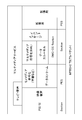
- FIG. 1 is an overall configuration diagram of a broadcasting / communication cooperation system. It is a figure which shows the stack
- FIG. 1 is an overall configuration diagram of a broadcasting / communication cooperation system 100 according to an embodiment of the present invention.
- the broadcasting / communication cooperation system 100 includes a broadcasting station 1, a broadcasting antenna 2, a service server 3 (distribution server), and a receiver 4.
- a receiver 4 uses a broadcasting service provided from a broadcasting station 1 by an ISDB (Integrated Services Digital Broadcasting) system and a communication network N configured by the Internet or the like.
- the communication service provided from the service server 3 is linked to provide the user of the receiver 4 as a broadcasting / communication cooperation service.
- ISDB Integrated Services Digital Broadcasting
- the broadcasting station 1 includes a general digital broadcasting broadcasting facility (not shown) configured to include a program organization facility, a program transmission facility, and a transmission facility. In FIG. 1, only one broadcasting station 1 is shown, but it is assumed that there are broadcasting stations of a plurality of communication carriers.
- the broadcasting station 1 produces contents, event information (Event Information Table: EIT), application management information (Application Information Table: AIT), and the like, using broadcasting equipment. Then, the broadcasting station 1 multiplexes these contents, event information, AIT, and the like into a broadcast signal by using broadcasting equipment.
- the broadcast station 1 modulates the broadcast signal into a broadcast wave by the broadcast facility, and broadcasts the broadcast wave via the broadcast antenna 2.
- the content included in the broadcast wave broadcast from the broadcast station 1 includes program content that is broadcast according to the broadcast schedule and includes video and audio, and earthquake early warnings that occur asynchronously with the program content. This includes emergency content that is content.
- the event information includes meta information related to the content such as the name of the program content, the broadcast date and time of the program content, and the description of the program content.
- the event information is referred to as EIT.
- the AIT is management information for managing one or a plurality of application programs (hereinafter referred to as applications) that can provide the receiver 4 with content linked to program content.
- the AIT includes one or more pieces of individual management information corresponding to one or more applications and managing each of the one or more applications.
- the individual management information includes an application ID for identifying the application, life cycle control information for controlling the life cycle of the application, and location information indicating the location of the application (see FIG. 4).
- the broadcast signal is the same as the broadcast signal of the conventional digital broadcast, and is defined by ARIB (registered trademark) (Association of Radio Industries and Broadcast) standard.
- PSI Program Specific Information
- SI Service Information
- Data transmission using TS packets is classified into a method of transmitting data using sections and a method of transmitting data using PES (Packetized Elementary Stream) packets (data stream transmission method).
- PES Packetized Elementary Stream
- the data carousel transmission method is a transmission method in which one or a plurality of data is repeatedly transmitted at a constant period, and each piece of data (module) transmitted by this transmission method has identification information for identifying individual data. It is attached.
- the data carousel transmission system is used for the purpose of causing the receiver 4 to acquire individual data at an arbitrary timing.
- the event message transmission method is a method for sending a trigger signal from the broadcasting station 1 to the receiver 4.
- the event message transmission method is used when a message with a small amount of data is transmitted from the broadcasting station 1 to the receiver 4.
- the data stream transmission method is a transmission method in which data to be transmitted is accommodated in a PES packet and transmitted as a stream.
- the data stream transmission method is used for transmitting real-time data such as video, audio, and caption data, and data that needs to be synchronized with other streams.
- AIT can be transmitted by various methods using TS packets. That is, the AIT can be transmitted by describing the EIT included in the SI of the TS packet.
- AIT can be transmitted by a data carousel transmission system using sections.
- identification information is attached to the module so that the receiver 4 can recognize the AIT.
- AIT can be transmitted as PES multiplexed with content video and audio.
- the AIT can be described in binary representation or text representation by XML (Extensible Markup Language) and stored in the TS packet.
- the AIT transmission method is defined in advance in at least one of the above transmission methods.
- Multimedia coding (BML: Broadcast Markup Language) is based on xHTML defined by W3C (Registered Trademark) (World Wide Web Consortium), and procedural language is based on JavaScript (Registered Trademark) using ECMAScript. It is a standard defined in consideration of consistency with international standards.
- the service server 3 is a content distribution server that distributes program content and content (application content) distributed to applications, and an application distribution server that distributes various applications that operate on the receiver 4. With.
- the service server 3 is communicably connected to the equipment of the broadcast station 1 and receives program content and program content metadata from the broadcast station 1.
- the service server 3 transmits the program content to the receiver 4 in response to receiving the program content acquisition request from the receiver 4.
- the service server 3 stores an application, and transmits the application to the receiver 4 in response to receiving an application acquisition request from the receiver 4. Furthermore, the service server 3 transmits video data, audio data, and the like of application content to the receiver 4 when an application is being executed in the receiver 4.
- the receiver 4 synchronizes and outputs the video data and audio data of the program content by performing predetermined processing on the program content received via the broadcast from the broadcast station 1.
- the receiver 4 cooperates with broadcasting from the broadcasting station 1 to perform predetermined processing on program content (for example, program content provided by the VOD service) received from the service server 3 via the communication network N. By doing so, the video data and audio data of the program content are output in synchronization.
- the receiver 4 acquires an application based on the AIT, and executes the acquired application. Subsequently, the receiver 4 acquires the video data and audio data of the application content from the service server 3 by the application being executed, and outputs the video data and audio data of the program content in cooperation with each other.
- functions of the receiver 4 will be described in detail.
- FIG. 3 is a block diagram showing a functional configuration of the receiver 4 according to the present embodiment.
- the receiver 4 includes a broadcast wave reception unit 11 as a reception unit, a first separation unit 12, a broadcast AIT acquisition unit 13 as an application management information acquisition unit, a communication unit 14, a second separation unit 15, and a communication
- An AIT acquisition unit 16 an operation reception unit 17 as an operation reception unit, a viewing state detection unit 18 as a viewing state detection unit, an application control unit 19, a voice control unit 20, and a display control as a composite display control unit A unit 21, a speaker 22, a display 23, a memory 24, an AIT storage unit 25 as an application management information storage unit, and an application storage unit 26 as an application storage unit.
- the broadcast wave receiving unit 11 receives a broadcast wave broadcast from the broadcast station 1 via the broadcast antenna 2.
- the first separation unit 12 demodulates the broadcast wave received by the broadcast wave reception unit 11, and extracts a broadcast signal, that is, a TS packet, from the broadcast wave. Then, the first separation unit 12 refers to the PSI / SI of the TS packet, determines the type of data included in the TS packet, and extracts various data such as video, audio, and EIT. In addition, the first separation unit 12 extracts the AIT by referring to the section and the PES according to a predetermined AIT transmission method.
- the first separation unit 12 outputs the voice data to the voice control unit 20.
- the first separation unit 12 outputs this video data to the display control unit 21.
- the first separation unit 12 stores the extracted EIT, data indicating an emergency warning, and other various data in the memory 24.
- the first separation unit 12 specifies identification information of the program content being viewed from the extracted EIT. Then, when extracting the AIT, the first separation unit 12 associates the extracted AIT with the identification information of the program content being viewed and outputs it to the broadcast AIT acquisition unit 13.
- the broadcast AIT acquisition unit 13 acquires the AIT output from the first separation unit 12 and the identification information of the program content being viewed. Then, the broadcast AIT acquisition unit 13 associates this AIT with the identification information of the program content being viewed and stores it in the AIT storage unit 25.
- the communication unit 14 is a communication interface that transmits and receives data to and from the service server 3 via the communication network N.
- the second separation unit 15 determines the type of data received by the communication unit 14. When the second separation unit 15 determines that the received data is an AIT, the second separation unit 15 outputs the AIT to the communication AIT acquisition unit 16. Further, when the second separation unit 15 determines that the received data is an application, the second separation unit 15 outputs the application to the application control unit 19. Further, when the received data is data indicating an emergency alert, the second separation unit 15 stores this data in the memory 24.
- the second separator 15 determines that the received data is a TS packet
- the second separator 15 extracts various data such as video, audio, and AIT from the TS packet.
- the second separation unit 15 outputs this AIT to the communication AIT acquisition unit 16 when the AIT is extracted, and outputs this data to the application control unit 19 when data other than the AIT is extracted.
- the operation accepting unit 17 accepts an operation from the user via the communication unit 14 via the remote controller R provided in the receiver 4.
- the remote control R is provided with a Hybridcast (registered trademark) button. When the Hybridcast button is pressed, a menu screen is generated by a menu generation unit 191 described later.
- the operation accepting unit 17 may accept an operation from an external terminal such as a mobile phone via the communication unit 14.
- the viewing state detection unit 18 detects the viewing state of the receiver 4. Specifically, the viewing state detection unit 18 detects the identification information of the broadcast station 1 corresponding to the broadcast selected by the receiver 4 as the viewing state. In addition, the viewing state detection unit 18 refers to the EIT, by identifying the identification information of the program content corresponding to the current time from the identification information of the program content corresponding to the detected identification information of the broadcast station 1, The identification information of the program content being viewed at the receiver 4 is detected. Also, the viewing state detection unit 18 detects identification information of an application being executed by an application execution control unit 192 described later. In addition, when the data indicating the emergency alert is stored in the memory 24, the viewing state detection unit 18 determines that the receiver has received the emergency alert via broadcasting or communication. And the viewing-and-listening state detection part 18 detects that a viewing-and-listening state is an emergency state, when it determines with having received the emergency alert.
- the application control unit 19 acquires an application based on a user's execution instruction via the AIT or the remote controller R, and controls the execution of the acquired application. Then, the application control unit 19 outputs the audio data of the application content acquired from the service server 3 by executing the application to the audio control unit 20, and displays the video data of the application content acquired from the service server 3. Output to the control unit 21.
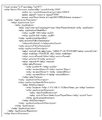
- FIG. 4 is a diagram illustrating an example of the AIT described in the XML format.
- the AIT includes one or more pieces of individual management information corresponding to one or more applications and managing each of the one or more applications.
- the codes described from the ⁇ mhp: Application> tag to the ⁇ / mhp: Application> tag shown in FIG. 4 correspond to the individual management information related to one application.
- a plurality of pieces of individual management information can be described by newly describing individual management information of other applications after the ⁇ / mhp: Application> tag.
- a code corresponding to the ⁇ mhp: orgId> tag indicates organization information that is information on the organization that created the application. In this embodiment, it is assumed that this organization information corresponds to the identification information of the broadcasting station.
- the code corresponding to the ⁇ mhp: appId> tag indicates application identification information (application ID).
- the code corresponding to the ⁇ mhp: serviceBound> tag indicates application linkage information (whether it is an application or a bound application).
- the code corresponding to the ⁇ mhp: policyLevel> tag indicates the policy level of the application that determines whether or not display is possible in an emergency state.
- the code corresponding to the ⁇ mhp: orgId> tag the code corresponding to the ⁇ mhp: appId> tag
- the code corresponding to the ⁇ mhp: serviceBound> tag the code corresponding to the ⁇ mhp: policyLevel> tag
- ⁇ mhp: controlCode mhp: type “ARIB-J”>
- the code corresponding to the ⁇ mhp: location> tag indicates location information indicating the location of this application.
- the location information describes the address of the service server 3 as the location of the application.
- the address (path) of the application storage unit 26 of the receiver 4 can be designated as the location of the application.
- the application control unit 19 performs application execution control and application storage control to the application storage unit 26.
- the application control unit 19 includes a menu generation unit 191 as a menu generation unit and an application execution control unit 192 as an application execution control unit.
- the menu generation unit 191 receives the pressing operation of the Hybridcast button as a predetermined operation from the user of the receiver 4 via the remote control R of the receiver 4 by the operation reception unit 17, and the viewing state detection unit 18
- the executable application is identified based on the viewing state detected by the above and the executable information included in the AIT, and a menu screen including information of the identified application is generated.
- the menu generation unit 191 is configured such that when the operation receiving unit 17 receives a pressing operation of the Hybridcast button, “PRESENT” indicating “executable” is described in the life cycle control information. Extract management information.
- the menu generation unit 191 extracts individual management information corresponding to an application (bound application) linked to program content and individual management information corresponding to an application (unbound application) not linked to program content.
- the menu generation unit 191 extracts the individual management information in which “true” is described in the linkage information as the individual management information corresponding to the bound application. Subsequently, the menu generation unit 191 narrows down the extracted individual management information to the individual management information in which the organization information corresponding to the broadcast station identification information detected by the viewing state detection unit 18 is described. Subsequently, the menu generation unit 191 narrows down the individual management information corresponding to the AIT associated with the program content identification information detected by the viewing state detection unit 18 from the narrowed down individual management information. Do. In this way, the menu generation unit 191 identifies executable individual management information from the individual management information corresponding to the bound application.
- the menu generation unit 191 extracts individual management information in which “false” is described in the linkage information as individual management information corresponding to the unbound application.
- the menu generation unit 191 determines whether or not an emergency state is detected by the viewing state detection unit 18.
- the menu generation unit 191 narrows down the extracted individual management information to the individual management information to which a policy level that can be executed in the emergency state is attached. Do.
- the menu generation unit 191 specifies information on the application corresponding to the extracted individual management information as information on the application to be posted on the menu.
- the application information is an application name or an application icon, and is included in the individual management information or can be acquired based on the individual management information.
- the menu generation unit 191 generates a menu screen on which information of the identified application is displayed, and outputs the generated menu screen to the display control unit 21. Thereafter, the display control unit 21 generates a composite screen in which the menu screen and the video output from the first separation unit 12 (video of the program content) are generated, and this composite screen is displayed on the display 23.
- the application execution control unit 192 combines the menu screen with the program content by the display control unit 21 and displays it on the display 23. Then, the application execution control unit 192 receives the application selection operation by the operation reception unit 17, and the AIT storage unit 25 The individual management information corresponding to the selected application is specified by referring to the AIT stored in the. Then, the application execution control unit 192 acquires an application from the service server 3 or the application storage unit 26 based on the location information included in the specified individual management information, and executes the acquired application.
- the application causes the application control unit 19 to acquire video data and audio data of application content from the service server 3. Then, the application control unit 19 outputs the audio data of the application content acquired by the application to the audio control unit 20 and outputs the video data of the application content acquired by the application to the display control unit 21.
- the application is an application that provides application content linked to the program content
- the video data and audio data of the application content are displayed on the display 23 in conjunction with the video data and audio data of the program content. .
- the application execution control unit 192 monitors the AIT storage unit 25 and refers to the life cycle control information described in the AIT when a new AIT is stored. Then, the application execution control unit 192 specifies an application to be automatically executed based on the life cycle control information of the individual management information included in the AIT stored in the AIT storage unit 25. Specifically, the application execution control unit 192 specifies an application corresponding to the individual management information in which “AUTOSTART” indicating “automatic execution” is described in the life cycle control information as an application to be automatically executed.
- the application execution control unit 192 uses the location information described in the individual management information corresponding to the identified application as the application acquisition destination, and the application from the service server 3 via the communication unit 14 and the second separation unit 15. Acquire and execute the acquired application. In this case, the application is automatically executed without receiving an explicit operation instruction from the user of the receiver 4.
- the application execution control unit 192 monitors the AIT storage unit 25, and when an AIT describing the individual management information corresponding to the application being executed is newly stored in the AIT storage unit 25, the application execution control unit 192 is included in the individual management information.
- the running application is controlled based on the life cycle control information. For example, when “DESTROY” indicating “end” is described in the life cycle control information of the individual management information corresponding to the application being executed, the execution of the application is ended.
- the audio control unit 20 outputs the audio data output from the first separation unit 12 to the speaker 22 while synchronizing with the video data whose display is controlled by the display control unit 21.
- the audio control unit 20 transmits the audio data to the speaker 22 while synchronizing with the video data. Output to.
- the display control unit 21 displays the video data output from the first separation unit 12 on the display 23 in synchronization with the audio data output-controlled by the audio control unit 20.
- the display control unit 21 combines the video data output from the application control unit 19 with the video data output from the first separation unit 12 (video data of program content), and displays the combined video data on the display 23.
- the display control unit 21 combines the menu screen output from the menu generation unit 191 with the video data output from the first separation unit 12 and causes the display 23 to display the combined video data.
- the memory 24 stores meta information of program content such as EIT, data indicating an emergency alert, and various other information.
- the AIT storage unit 25 stores the AIT acquired by the broadcast AIT acquisition unit 13 and the communication AIT acquisition unit 16.
- the AIT storage unit 25 stores an AIT corresponding to the application stored in the application storage unit 26.
- the AIT storage unit 25 stores the identification information of the program content being broadcast in association with the AIT.
- the application storage unit 26 stores applications preinstalled in the receiver 4 and applications registered by the user of the receiver 4.
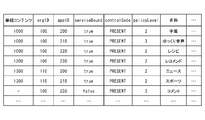
- the AIT storage unit 25 stores individual management information including the information shown in FIG. Further, it is assumed that the viewing state detection unit 18 detects the identification information of the broadcasting station 1 being viewed as “100” and the identification information of the program content being viewed as “1000”. In the receiver 4, it is assumed that the application is not executed and the image shown on the display 23 in FIG. 6 is displayed.
- the menu generating unit 191 displays “executable” in the life cycle control information.
- the individual management information in which “PRESENT” indicating “” is described is extracted.
- all the individual management information shown in FIG. 5 is extracted.
- the menu generation unit 191 extracts the individual management information in which “true” is described in the link information as the individual management information corresponding to the bound application.
- the menu generation unit 191 extracts individual management information corresponding to an application other than the comment application shown in FIG.
- the menu generation unit 191 narrows down the extracted individual management information to the individual management information in which the organization information corresponding to the identification information of the broadcasting station 1 detected by the viewing state detection unit 18 is described.
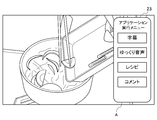
- the menu generation unit 191 narrows down to individual management information corresponding to a subtitle application in which “100” is described in orgID, slowly an audio application, a recommendation application, and a recipe application.
- the menu generation unit 191 extracts the individual management information corresponding to the AIT associated with the program content identification information detected by the viewing state detection unit 18 from the narrowed-down individual management information.
- the menu generation unit 191 narrows down the individual management information corresponding to the subtitle application, the slow audio application, and the recipe application as the individual management information corresponding to the program content “1000”.
- the menu generation unit 191 extracts individual management information in which “false” is described in the linkage information as individual management information corresponding to the unbound application.
- the menu generation unit 191 extracts individual management information corresponding to the comment application.
- the menu generation unit 191 corresponds to the bound application, and corresponds to the individual management information that has been narrowed down and the unbound application.
- a menu screen is generated based on the individual management information and output to the display control unit 21.
- the display control unit 21 composites and displays the video A corresponding to the menu screen and the video of the program content on the display 23 as shown in FIG.
- the comment application is selected based on the video A corresponding to the menu screen.
- the application execution control unit 192 acquires the comment application from the service server 3 or the application storage unit 26 based on the location information included in the individual management information of the comment application, and executes the acquired comment application.
- the display control unit 21 causes the display 23 to synthesize and display the video A1 corresponding to the comment application and the video of the program content.
- the menu generation unit 191 generates the menu screen as follows. I do.
- the menu generation unit 191 describes “PRESENT” indicating “executable” in the life cycle control information, “true” in the linkage information, and “100” in the orgID. ”Is extracted.
- the menu generation unit 191 extracts individual management information corresponding to the caption application, the slow audio application, and the recipe application.
- the menu generation unit 191 extracts the individual management information in which “false” is described in the linkage information as the individual management information corresponding to the unbound application.
- the menu generation unit 191 extracts individual management information corresponding to the comment application.
- the menu generation unit 191 excludes comment applications that have already been executed from the menu. Then, as shown in FIG. 9, the display control unit 21 displays the video A1 corresponding to the comment application, the video B corresponding to the menu screen not including information corresponding to the comment application, and the video of the program content. The composite image is displayed on the display 23.
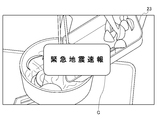
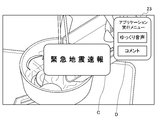
- the menu generation unit 191 When an emergency earthquake warning is issued as an emergency warning and an emergency earthquake warning video C is displayed, the user of the receiver 4 via the remote control R of the receiver 4 sets the Hybridcast button.
- the menu generation unit 191 When the pressing operation is accepted, the menu generation unit 191 generates a menu screen as follows. That is, as the individual management information corresponding to the bound application, the menu generation unit 191 describes “PRESENT” indicating “executable” in the life cycle control information, “true” in the linkage information, and “100” in the orgID. ”Is extracted.
- the menu generation unit 191 extracts individual management information corresponding to the caption application, the slow audio application, and the recipe application.
- the menu generation unit 191 extracts the individual management information in which “false” is described in the linkage information as the individual management information corresponding to the unbound application.
- the menu generation unit 191 extracts individual management information corresponding to the comment application.
- the menu generation unit 191 determines whether or not an emergency state is detected by the viewing state detection unit 18 without performing exclusion from the extracted individual management information. . Since the menu generation unit 191 determines that an emergency state is detected, the menu generation unit 191 narrows down the extracted individual management information to the individual management information with a policy level that can be executed in the emergency state. Here, when the policy level that can be executed in an emergency state is “3”, the menu generation unit 191 slowly narrows down the extracted individual management information to the individual management information corresponding to the voice application and the comment application. Do. Then, as shown in FIG. 11, the display control unit 21 synthesizes and displays the emergency earthquake warning video C, the video D corresponding to the menu screen, and the video of the program content on the display 23.
- FIG. 12 is a flowchart showing the flow of processing from when a predetermined operation according to the present embodiment is received until the application is executed via the menu screen.
- step S ⁇ b> 1 the menu generation unit 191 receives a predetermined operation (operation of pressing the hybridcast button) from the user of the receiver 4 via the remote controller R of the receiver 4 by the operation reception unit 17.
- step S2 the menu generation unit 191 extracts individual management information corresponding to the bound application from the AIT stored in the AIT storage unit 25. Specifically, the menu generation unit 191 extracts individual management information in which “PRESENT” indicating “executable” is described in the life cycle control information and “true” is described in the linkage information.
- step S3 the menu generating unit 191 narrows down the individual management information extracted in step S2 to the individual management information corresponding to the identification information of the broadcasting station 1 being viewed, detected by the viewing state detection unit 18. .
- step S4 the menu generation unit 191 corresponds to the AIT stored in the AIT storage unit 25 in association with the identification information of the program content being viewed from the individual management information narrowed down in step S3. Narrow down to individual management information.
- step S5 the menu generation unit 191 extracts the individual management information corresponding to the unbound application from the AIT stored in the AIT storage unit 25. Specifically, the menu generation unit 191 extracts the individual management information in which “PRESENT” indicating “executable” is described in the life cycle control information and “false” is described in the linkage information.
- step S6 the menu generation unit 191 determines whether or not the viewing state detection unit 18 has detected an emergency state. When this determination is YES, the menu generating unit 191 moves the process to step S7, and when this determination is NO, the menu generating unit 191 moves the process to step S8.
- step S7 the menu generation unit 191 narrows down to the individual management information at the policy level corresponding to the emergency state from the individual management information narrowed down in step S4 and the individual management information extracted in step S5. .
- step S8 the menu generation unit 191 generates a menu screen based on the narrowed down individual management information. Specifically, when the viewing state detection unit 18 does not detect an emergency state, the menu generation unit 191 converts the individual management information narrowed down in step S4 and the individual management information extracted in step S5. A menu screen is generated based on this. In addition, when detecting the emergency state of the viewing state detection unit 18, the menu generation unit 191 generates a menu screen based on the individual management information narrowed down in step S7.
- step S9 the display control unit 21 generates a composite video by combining the menu screen generated in step S8 and the video of the program content, and displays the composite video on the display 23.
- step S ⁇ b> 10 the application execution control unit 192 receives an application selection operation by the operation reception unit 17.
- step S11 the application execution control unit 192 refers to the AIT stored in the AIT storage unit 25, and acquires the application based on the location information included in the individual management information corresponding to the application selected in step S10. To do.
- the acquisition destination the address of the service server 3 or the path of the application storage unit 26 is described, and the application is acquired from the service server 3 or the application storage unit 26.
- step S12 the application execution control unit 192 executes the application acquired in step S11.
- the receiver 4 identifies an executable application based on the viewing state in the receiver 4 and the executable information included in the AIT, and includes a menu screen including information on the identified application. Is generated. And the receiver 4 receives selection of an application by this menu screen. Therefore, the receiver 4 can appropriately present an executable application according to the viewing state.
- the receiver 4 since the receiver 4 generates a menu screen including information on the application corresponding to the broadcast station 1 being viewed, it is possible to present the application corresponding to the broadcast station 1 being viewed as an executable application. it can.
- the receiver 4 since the receiver 4 generates a menu screen that includes information on the application corresponding to the program content being viewed, the application corresponding to the program content being viewed can be presented as an executable application.
- the receiver 4 can prevent duplicate execution of applications that have already been executed.
- the receiver 4 narrows down the applications that can be executed in the emergency state where the emergency alert is issued to the applications that can be executed in the emergency state. Therefore, the receiver 4 can suppress the execution of unnecessary applications in the emergency state, and can make the information necessary for the user of the receiver 4 easy to browse in the emergency state.
- the application control unit 19 stores the AIT in the AIT storage unit 25 when registering the application, but the present invention is not limited to this.
- the application control unit 19 may execute the application without registering the application, or may accept registration of the executing application after executing the application.
- the menu generation unit 191 may set the display order for the information of the application posted on the menu screen.
- the genre of the program content is stored in the EIT and the genre of the application is stored in the individual management information of the AIT, and the menu generation unit 191 generates the genre of the individual management information corresponding to the application posted on the menu screen. If the program content genres match, the display order of this application may be higher.
- the configuration and operation of the receiver have been mainly described.
- the present invention is not limited to this, and a method for appropriately presenting an application that includes each component and can be executed according to a viewing state, and It may be configured as a program.
- the program for realizing the function of the receiver may be recorded on a computer-readable recording medium, and the program recorded on the recording medium may be read into a computer system and executed.
- “computer system” includes an OS and hardware such as peripheral devices.
- the “computer-readable recording medium” refers to a storage device such as a flexible disk, a magneto-optical disk, a portable medium such as a ROM and a CD-ROM, and a hard disk incorporated in a computer system.
- “computer-readable recording medium” means that a program is dynamically held for a short time, like a communication line when transmitting a program via a network such as the Internet or a communication line such as a telephone line. It is also possible to include one that holds a program for a certain time, such as a volatile memory inside a computer system that becomes a server or client in that case. Further, the program may be a program for realizing a part of the functions described above, and may be a program capable of realizing the functions described above in combination with a program already recorded in a computer system. .
Landscapes
- Engineering & Computer Science (AREA)
- Signal Processing (AREA)
- Multimedia (AREA)
- Databases & Information Systems (AREA)
- General Engineering & Computer Science (AREA)
- Software Systems (AREA)
- Business, Economics & Management (AREA)
- Emergency Management (AREA)
- Human Computer Interaction (AREA)
- Two-Way Televisions, Distribution Of Moving Picture Or The Like (AREA)
Abstract
Priority Applications (3)
| Application Number | Priority Date | Filing Date | Title |
|---|---|---|---|
| EP12785830.6A EP2712184A4 (fr) | 2011-05-19 | 2012-05-18 | Récepteur |
| US14/117,834 US20140150015A1 (en) | 2011-05-19 | 2012-05-18 | Receiver |
| JP2013515213A JP5979646B2 (ja) | 2011-05-19 | 2012-05-18 | 受信機 |
Applications Claiming Priority (2)
| Application Number | Priority Date | Filing Date | Title |
|---|---|---|---|
| JP2011-112251 | 2011-05-19 | ||
| JP2011112251 | 2011-05-19 |
Publications (1)
| Publication Number | Publication Date |
|---|---|
| WO2012157738A1 true WO2012157738A1 (fr) | 2012-11-22 |
Family
ID=47177052
Family Applications (1)
| Application Number | Title | Priority Date | Filing Date |
|---|---|---|---|
| PCT/JP2012/062762 Ceased WO2012157738A1 (fr) | 2011-05-19 | 2012-05-18 | Récepteur |
Country Status (4)
| Country | Link |
|---|---|
| US (1) | US20140150015A1 (fr) |
| EP (1) | EP2712184A4 (fr) |
| JP (1) | JP5979646B2 (fr) |
| WO (1) | WO2012157738A1 (fr) |
Cited By (7)
| Publication number | Priority date | Publication date | Assignee | Title |
|---|---|---|---|---|
| JPWO2016035588A1 (ja) * | 2014-09-05 | 2017-06-15 | ソニー株式会社 | 受信装置、受信方法、送信装置、及び、送信方法 |
| JP2017153107A (ja) * | 2017-03-30 | 2017-08-31 | 日立マクセル株式会社 | 放送受信装置、及び放送受信装置における放送番組映像及びアプリケーション映像の表示方法 |
| JP2017184235A (ja) * | 2017-03-30 | 2017-10-05 | 日立マクセル株式会社 | 放送受信装置及び表示方法 |
| CN108495193A (zh) * | 2013-11-13 | 2018-09-04 | 麦克赛尔株式会社 | 广播接收装置 |
| JP2019126044A (ja) * | 2019-02-21 | 2019-07-25 | マクセル株式会社 | 放送受信装置及びコンテンツ出力方法 |
| JP2019146248A (ja) * | 2019-04-25 | 2019-08-29 | マクセル株式会社 | 放送受信装置及びコンテンツ出力方法 |
| US10638189B2 (en) | 2013-11-13 | 2020-04-28 | Maxell, Ltd. | Broadcast receiver |
Families Citing this family (1)
| Publication number | Priority date | Publication date | Assignee | Title |
|---|---|---|---|---|
| JP2015104055A (ja) * | 2013-11-27 | 2015-06-04 | ソニー株式会社 | 受信装置、受信方法、送信装置、及び、送信方法 |
Citations (6)
| Publication number | Priority date | Publication date | Assignee | Title |
|---|---|---|---|---|
| JP2002344407A (ja) * | 2001-05-21 | 2002-11-29 | Fujitsu Ltd | 双方向センタにおける情報処理方法、放送局における処理方法、データ放送受信機における情報処理方法、並びにデータ放送受信機 |
| JP2003209759A (ja) * | 2002-01-10 | 2003-07-25 | Nec Corp | データ放送受信装置およびデータ放送受信システム |
| JP2004538681A (ja) * | 2001-05-10 | 2004-12-24 | インターナショナル・ビジネス・マシーンズ・コーポレーション | 放送された番組をワールド・ワイド・ウェブ上の情報で拡張するシステムおよび方法 |
| JP2007534217A (ja) * | 2004-04-21 | 2007-11-22 | 松下電器産業株式会社 | デジタル放送再生装置、デジタル放送再生方法、コンピュータプログラム、及び記録媒体 |
| WO2008093780A1 (fr) * | 2007-02-02 | 2008-08-07 | Sony Corporation | Dispositif, procédé et programme de traitement d'informations |
| JP2010004498A (ja) | 2008-06-23 | 2010-01-07 | Panasonic Corp | コンテンツ表示装置およびコンテンツ表示方法 |
Family Cites Families (6)
| Publication number | Priority date | Publication date | Assignee | Title |
|---|---|---|---|---|
| CN1409919A (zh) * | 1999-12-10 | 2003-04-09 | 联合视频制品公司 | 在交互式电视系统上和先进的机顶应用一起使用的功能 |
| US7934232B1 (en) * | 2000-05-04 | 2011-04-26 | Jerding Dean F | Navigation paradigm for access to television services |
| US8281339B1 (en) * | 2004-01-12 | 2012-10-02 | United Video Properties, Inc. | Customizable flip and browse overlays in an interactive television system |
| US8799954B1 (en) * | 2006-07-31 | 2014-08-05 | Rovi Guides, Inc. | Systems and methods for providing custom media content flipping |
| US20100313231A1 (en) * | 2007-02-02 | 2010-12-09 | Sony Corporation | Information processing apparatus, information processing method, and program |
| US8813121B2 (en) * | 2008-12-02 | 2014-08-19 | At&T Intellectual Property I, L.P. | Delaying emergency alert system messages |
-
2012
- 2012-05-18 US US14/117,834 patent/US20140150015A1/en not_active Abandoned
- 2012-05-18 JP JP2013515213A patent/JP5979646B2/ja not_active Expired - Fee Related
- 2012-05-18 EP EP12785830.6A patent/EP2712184A4/fr not_active Withdrawn
- 2012-05-18 WO PCT/JP2012/062762 patent/WO2012157738A1/fr not_active Ceased
Patent Citations (6)
| Publication number | Priority date | Publication date | Assignee | Title |
|---|---|---|---|---|
| JP2004538681A (ja) * | 2001-05-10 | 2004-12-24 | インターナショナル・ビジネス・マシーンズ・コーポレーション | 放送された番組をワールド・ワイド・ウェブ上の情報で拡張するシステムおよび方法 |
| JP2002344407A (ja) * | 2001-05-21 | 2002-11-29 | Fujitsu Ltd | 双方向センタにおける情報処理方法、放送局における処理方法、データ放送受信機における情報処理方法、並びにデータ放送受信機 |
| JP2003209759A (ja) * | 2002-01-10 | 2003-07-25 | Nec Corp | データ放送受信装置およびデータ放送受信システム |
| JP2007534217A (ja) * | 2004-04-21 | 2007-11-22 | 松下電器産業株式会社 | デジタル放送再生装置、デジタル放送再生方法、コンピュータプログラム、及び記録媒体 |
| WO2008093780A1 (fr) * | 2007-02-02 | 2008-08-07 | Sony Corporation | Dispositif, procédé et programme de traitement d'informations |
| JP2010004498A (ja) | 2008-06-23 | 2010-01-07 | Panasonic Corp | コンテンツ表示装置およびコンテンツ表示方法 |
Non-Patent Citations (1)
| Title |
|---|
| See also references of EP2712184A4 |
Cited By (18)
| Publication number | Priority date | Publication date | Assignee | Title |
|---|---|---|---|---|
| US10659833B2 (en) | 2013-11-13 | 2020-05-19 | Maxell, Ltd. | Broadcast receiver and broadcast receiving system |
| US11076193B2 (en) | 2013-11-13 | 2021-07-27 | Maxell, Ltd. | Broadcast receiver and broadcast receiving system |
| US12526466B2 (en) | 2013-11-13 | 2026-01-13 | Maxell, Ltd. | Broadcast receiver and broadcast receiving system |
| CN108495193A (zh) * | 2013-11-13 | 2018-09-04 | 麦克赛尔株式会社 | 广播接收装置 |
| US10129580B2 (en) | 2013-11-13 | 2018-11-13 | Maxell, Ltd. | Broadcast receiver and broadcast receiving system |
| US12375747B2 (en) | 2013-11-13 | 2025-07-29 | Maxell, Ltd. | Broadcast receiver and broadcast receiving system |
| US11979629B1 (en) | 2013-11-13 | 2024-05-07 | Maxell, Ltd. | Broadcast receiver and broadcast receiving system |
| US10638189B2 (en) | 2013-11-13 | 2020-04-28 | Maxell, Ltd. | Broadcast receiver |
| US11516527B2 (en) | 2013-11-13 | 2022-11-29 | Maxell, Ltd. | Broadcast receiver and broadcast receiving system |
| US11140433B2 (en) | 2013-11-13 | 2021-10-05 | Maxell, Ltd. | Broadcast receiver |
| CN108495193B (zh) * | 2013-11-13 | 2021-01-08 | 麦克赛尔株式会社 | 广播接收装置 |
| US11388485B2 (en) | 2014-09-05 | 2022-07-12 | Saturn Licensing Llc | Receiving device, receiving method, transmission device, and transmission method |
| US10979780B2 (en) | 2014-09-05 | 2021-04-13 | Saturn Licensing Llc | Receiving device, receiving method, transmission device, and transmission method |
| JPWO2016035588A1 (ja) * | 2014-09-05 | 2017-06-15 | ソニー株式会社 | 受信装置、受信方法、送信装置、及び、送信方法 |
| JP2017153107A (ja) * | 2017-03-30 | 2017-08-31 | 日立マクセル株式会社 | 放送受信装置、及び放送受信装置における放送番組映像及びアプリケーション映像の表示方法 |
| JP2017184235A (ja) * | 2017-03-30 | 2017-10-05 | 日立マクセル株式会社 | 放送受信装置及び表示方法 |
| JP2019126044A (ja) * | 2019-02-21 | 2019-07-25 | マクセル株式会社 | 放送受信装置及びコンテンツ出力方法 |
| JP2019146248A (ja) * | 2019-04-25 | 2019-08-29 | マクセル株式会社 | 放送受信装置及びコンテンツ出力方法 |
Also Published As
| Publication number | Publication date |
|---|---|
| JP5979646B2 (ja) | 2016-08-24 |
| EP2712184A1 (fr) | 2014-03-26 |
| EP2712184A4 (fr) | 2014-10-22 |
| JPWO2012157738A1 (ja) | 2014-07-31 |
| US20140150015A1 (en) | 2014-05-29 |
Similar Documents
| Publication | Publication Date | Title |
|---|---|---|
| JP5979646B2 (ja) | 受信機 | |
| US9749667B2 (en) | Method for receiving broadcast service and reception device thereof | |
| JP6109736B2 (ja) | 番組切替制御装置及びプログラム | |
| US9596510B2 (en) | Method for transmitting broadcast service, method for receiving broadcast service, and apparatus for receiving broadcast service | |
| US20190082212A1 (en) | Method for receiving enhanced service and display apparatus thereof | |
| US9712864B2 (en) | Broadcast service receiving method and broadcast service receiving apparatus | |
| US9667902B2 (en) | Method for transmitting a broadcast service, method for receiving a broadcast service, and apparatus for receiving a broadcast service | |
| US20140351860A1 (en) | Media synchronization within home network using set-top box as gateway | |
| JP2012244340A (ja) | 受信機連携システム | |
| US20140143802A1 (en) | Signal processing device and program | |
| JP2012244286A (ja) | 情報処理端末、アプリケーション連携型コンテンツ管理サーバ及びロケーション解決サーバ | |
| JP5854637B2 (ja) | 受信機 | |
| JP2013005260A (ja) | 送出装置、受信装置、放送システム、送出方法、受信方法及びこれらのプログラム | |
| JP5717539B2 (ja) | 受信機及びプログラム | |
| JP5843481B2 (ja) | 放送通信連携受信端末及びプログラム | |
| JP5804771B2 (ja) | 放送通信連携受信装置及びサーバ | |
| JP2012244388A (ja) | 受信機 | |
| JP5846761B2 (ja) | 受信機 | |
| JPWO2012157753A1 (ja) | 放送通信連携受信装置 | |
| HK1217391A1 (zh) | 在数字电视广播中传输特定数据的方法、装置和接收终端 | |
| JP5584729B2 (ja) | 放送通信連携受信装置 | |
| JP2012257238A (ja) | 放送通信連携受信装置 |
Legal Events
| Date | Code | Title | Description |
|---|---|---|---|
| 121 | Ep: the epo has been informed by wipo that ep was designated in this application |
Ref document number: 12785830 Country of ref document: EP Kind code of ref document: A1 |
|
| ENP | Entry into the national phase |
Ref document number: 2013515213 Country of ref document: JP Kind code of ref document: A |
|
| NENP | Non-entry into the national phase |
Ref country code: DE |
|
| WWE | Wipo information: entry into national phase |
Ref document number: 2012785830 Country of ref document: EP |
|
| WWE | Wipo information: entry into national phase |
Ref document number: 14117834 Country of ref document: US |