WO2012157995A2 - Module de caméra et procédé d'actionnement - Google Patents
Module de caméra et procédé d'actionnement Download PDFInfo
- Publication number
- WO2012157995A2 WO2012157995A2 PCT/KR2012/003963 KR2012003963W WO2012157995A2 WO 2012157995 A2 WO2012157995 A2 WO 2012157995A2 KR 2012003963 W KR2012003963 W KR 2012003963W WO 2012157995 A2 WO2012157995 A2 WO 2012157995A2
- Authority
- WO
- WIPO (PCT)
- Prior art keywords
- image
- focusing
- subject
- pixels
- sections
- Prior art date
- Legal status (The legal status is an assumption and is not a legal conclusion. Google has not performed a legal analysis and makes no representation as to the accuracy of the status listed.)
- Ceased
Links
Images


Classifications
-
- H—ELECTRICITY
- H04—ELECTRIC COMMUNICATION TECHNIQUE
- H04N—PICTORIAL COMMUNICATION, e.g. TELEVISION
- H04N23/00—Cameras or camera modules comprising electronic image sensors; Control thereof
- H04N23/50—Constructional details
- H04N23/54—Mounting of pick-up tubes, electronic image sensors, deviation or focusing coils
-
- G—PHYSICS
- G03—PHOTOGRAPHY; CINEMATOGRAPHY; ANALOGOUS TECHNIQUES USING WAVES OTHER THAN OPTICAL WAVES; ELECTROGRAPHY; HOLOGRAPHY
- G03B—APPARATUS OR ARRANGEMENTS FOR TAKING PHOTOGRAPHS OR FOR PROJECTING OR VIEWING THEM; APPARATUS OR ARRANGEMENTS EMPLOYING ANALOGOUS TECHNIQUES USING WAVES OTHER THAN OPTICAL WAVES; ACCESSORIES THEREFOR
- G03B13/00—Viewfinders; Focusing aids for cameras; Means for focusing for cameras; Autofocus systems for cameras
- G03B13/32—Means for focusing
- G03B13/34—Power focusing
- G03B13/36—Autofocus systems
-
- H—ELECTRICITY
- H04—ELECTRIC COMMUNICATION TECHNIQUE
- H04N—PICTORIAL COMMUNICATION, e.g. TELEVISION
- H04N23/00—Cameras or camera modules comprising electronic image sensors; Control thereof
- H04N23/60—Control of cameras or camera modules
- H04N23/67—Focus control based on electronic image sensor signals
Definitions
- the present invention relates to a camera module and a driving method thereof.
- a camera module is one that can photograph a subject as a picture or a video, store the image data, and then edit and transmit the image data as necessary.
- the camera focuses on the lens according to the distance between the lens and the subject.
- the camera requires a function capable of automatically adjusting focus according to a change in distance from a subject, that is, an auto focus (AF) function, in order to capture a high quality photograph.
- AF auto focus
- the present invention solves the problem of obtaining a clear image, preventing the blurry image from being selected by the confusion circles and their overlapping, and improving the accuracy of extracting the best-focus image. .
- An imaging unit including a lens and photographing a subject
- a lens transfer unit which moves the lens of the imaging unit
- the focusing driver is controlled to divide the image area of the subject photographed by the imaging unit into a plurality of sections, and to photograph each of the sections by auto focusing (AF), and each of the sections is auto focusing.
- a camera module is provided that includes an image signal processor (ISP) that detects and compares a focusing level of the same pixel in images of a photographed subject and selects an autofocused image.
- ISP image signal processor
- the image signal processor selects an object image having pixels having the high focusing level as an autofocused image.
- the same pixel is a plurality of pixels, and the image signal processor calculates an average value of the focusing levels detected in each of the images of the subject, and converts the subject image having the pixels with the calculated average value into an autofocused image. Select.
- the image signal processor further detects a focusing level of adjacent pixels of the same pixel, calculates a deviation of the detected focusing level of the same pixel and a focusing level of adjacent pixels, and has the calculated high deviation pixels. Select the subject image as the autofocused image.
- the focusing level is a sharpness value or an edge value of the subject image.
- An imaging unit including a lens and photographing a subject
- a lens transfer unit which moves the lens of the imaging unit
- a camera including an image signal processor which detects and compares the focusing level of all the same pixels of the images of the photographed subject by auto focusing, and extracts and synthesizes the pixels having the high focusing level to obtain a clear subject image; Contains modules
- comparing the detected focusing level and selecting the subject image having the high focusing level among the same pixels as the autofocused image may select the subject image having the pixel having the high focusing level as the autofocused image. Step.
- detecting the focusing level of the same pixels in the images of the subject photographed by auto focusing each of the sections may further include detecting the focusing level of adjacent pixels of the same pixel, and detecting the detected focusing level.
- selecting the subject image having the high focusing level among the same pixels as an autofocused image may calculate a deviation between the detected focusing level of the same pixel and the focusing level of adjacent pixels, and the calculated deviation is high. In this step, a subject image having pixels is selected as an autofocused image.
- an image signal processor receives images of a subject photographed by auto focusing sections in an image pickup unit, and detects and compares a focusing level of the same pixel of images of a subject to obtain a subject image having a pixel having a high focusing level. By selecting the auto-focused image, a clear image can be obtained.
- the present invention has the effect of minimizing the depth of field (DOF: Depth of Field) caused by the unique characteristics of the lens to minimize the partially blurred image area during close-up photography.
- DOE Depth of Field
- the present invention has an effect of preventing the blurry image from being selected by the confusion sources and their overlapping, and improving the accuracy of extracting the best-focus image.
- FIG. 1 is a schematic structural block diagram of a camera module according to a first embodiment of the present invention
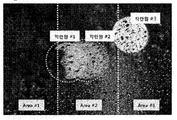
- FIG. 2 is a view for explaining an AF area of a subject image according to the first embodiment of the present invention
- 3 and 4 are diagrams for describing a method of selecting an autofocused image in a camera module according to a first embodiment of the present invention
- FIG. 5 is a flowchart for explaining an oppo focus method of a camera module according to a first embodiment of the present invention
- FIG. 6 is a schematic structural block diagram of a camera module according to a second embodiment of the present invention.
- FIGS. 7 to 9 are diagrams for describing a method for selecting an autofocused image in a camera module according to a second embodiment of the present invention.
- FIG. 10 is a flowchart for explaining an oppo focus method of a camera module according to a second exemplary embodiment of the present invention.
- FIG. 1 is a schematic structural block diagram of a camera module according to a first embodiment of the present invention.
- the camera module includes a lens, and an imaging unit 110 for photographing a subject; A lens transfer unit 120 for moving the lens of the imaging unit 110; A focusing driver 130 for operating the lens transfer part 120; The focusing driver 130 is controlled to divide the image area of the subject photographed by the imaging unit 110 into a plurality of sections, and to photograph each of the sections by auto focusing.
- An image signal processor (ISP) that selects a subject image having a pixel having a high focusing level as an autofocused image by detecting and comparing a focusing level of the same pixel in the images of a subject photographed by autofocusing the sections. 200).
- the image signal processor 200 controls the imaging unit 110 and the focusing driver 130.
- the focusing level is a degree of focusing well, and may be defined as, for example, a sharpness value or an edge value of the subject image.
- the camera module divides the image area of the subject photographed by the imaging unit 110 into a plurality of sections in the image signal processor 200, and automatically divides each of the sections.
- the focusing driver 130 is controlled to photograph by focusing (AF).
- the image pickup unit 110 receives the images of the photographed subject by auto focusing from the image signal processor 200, and detects and compares the focusing level of the same pixel of the images of the subject. By selecting a subject image having a high level pixel as an autofocus image, a clear image can be obtained.
- the image signal processor 200 detects and compares the focusing level of all the same pixels of the images of the photographed subject by auto focusing each of the sections, extracts and synthesizes the pixels having a high focusing level, It may be configured to acquire a subject image.
- the present invention has an advantage of minimizing a depth of field (DOF) caused by a unique characteristic of a lens, thereby minimizing a partially blurred image area during close-up photography.
- DOE depth of field
- FIGS. 3 and 4 are methods of selecting an autofocused image from a camera module according to the first exemplary embodiment of the present invention. A diagram for explaining.
- the image signal processor divides the image area 10 of the subject photographed by the imaging unit into a plurality of sections (eg, three sections of FIG. 2).
- Each of the sections is photographed by auto focusing (AF).
- the first AF area is autofocused and taken, then the second AF area is autofocused and taken, and then the third AF area is autofocused and taken.
- the focusing level of the same pixel of the three images is detected and the focusing levels are compared.
- the image signal processor selects the image of FIG. 4 as the best autofocused image.
- the image signal processor controls the focusing driver to divide the image area of the subject photographed by the imaging unit into a plurality of sections, and auto focus the respective sections, and the sections are autofocused and photographed.
- the subject image having the pixel having the high focusing level may be selected as the autofocused image.
- FIG. 5 is a flowchart illustrating a method of driving a camera module according to a first embodiment of the present invention.
- the image area of the subject photographed by the imaging unit 110 is divided into a plurality of sections, and each of the sections is subjected to auto focusing (AF). Shoot (S100 step).
- each of the sections is autofocused to detect the focusing level of the same pixels in the images of the photographed subject.
- the detected focusing level is compared, and a subject image having a higher focusing level among the same pixels is selected as an autofocused image (step S120).
- FIG. 6 is a schematic structural block diagram of a camera module according to a second embodiment of the present invention.
- the camera module includes a lens, the imaging unit 110 for photographing the subject; A lens transfer unit 120 for moving the lens of the imaging unit 110; A focusing driver 130 for operating the lens transfer part 120; The focusing driver 130 is controlled so that the image area of the subject photographed by the imaging unit 110 is divided into a plurality of sections, and each of the sections is photographed by auto focusing (AF). Each of the sections is auto-focused to detect focusing levels of the same plurality of pixels in the photographed subjects, calculate an average value of the focusing levels detected in each of the images of the subject, and calculate the pixels having the high average value. And an image signal processor 210 for selecting an image of the subject as an autofocus image.
- the camera module controls the focusing driver 130 in the image signal processor 210 to display a plurality of sections divided in the image area of the subject in the imaging unit 110.
- Shoot with auto focus the camera module according to the second exemplary embodiment of the present invention controls the focusing driver 130 in the image signal processor 210 to display a plurality of sections divided in the image area of the subject in the imaging unit 110. Shoot with auto focus.
- the image pickup unit 110 receives images of a subject photographed by auto focusing from the image signal processor 210 to detect focusing levels of the same plurality of pixels of the images of the subject, The average value of the focusing level detected in each of the images of the subject is calculated, and the subject image having pixels with the calculated average value is selected as the autofocused image, and the blurred image is selected by the confusion circles and their overlapping. It is possible to prevent the error, and to improve the accuracy of extracting the best-focus image.
- the confusion circle is mixed with other confusion circles around, blurring the image of the original subject, thereby reducing the difference in level values between the selected pixel and the surrounding pixels. Therefore, it can be determined that the focus is relatively accurate as the level difference with the surrounding pixels increases.
- FIGS. 7 to 9 are diagrams for describing a method for selecting an autofocused image in a camera module according to a second embodiment of the present invention.
- the image area of the subject photographed by the imaging unit is divided into a plurality of sections, and each of the sections is photographed by auto focusing (AF).
- the images 300, 310, and 320 of the three subjects are photographed with the same subject only differently from the auto focus region, the images having the same image region are composed of pixels.
- the plurality of pixels 301, 302, 303, 304, and 305 of the image 300 of the subject display the same image as the plurality of pixels 311, 312, 313, 314, 315 of the image 310 of the subject and the plurality of pixels 321, 322, 323, 324, 325 of the image 320 of the subject.
- an average value of respective focusing levels of the plurality of pixels 301, 302, 303, 304, and 305 of the image 300 of the subject an average value of respective focusing levels of the plurality of pixels 311, 312, 313, 314, 315 of the image 310 of the subject, and an image of the subject '
- An average value of focusing levels of the plurality of pixels 321, 322, 323, 324, and 325 of 320 ′ is calculated, and the subject image having pixels having the calculated average value is selected as an autofocused image.
- each of the sections is auto-focused to detect a focusing level of the same pixel and a focusing level of adjacent pixels of the same pixel in images of a photographed subject, and detects the focusing level of the same pixel and the adjacent pixel. And calculating a deviation of the focusing level of the subjects, and selecting the subject image having the high deviation pixels as the autofocused image.
- the respective focusing levels of the plurality of pixels 301, 302, 303, 304, 305 of the image 300 of the subject are (104,95,107,91,103), and the focusing levels of the plurality of pixels 311,312,313,314,315 of the image 310 of the subject.
- the focusing levels of the plurality of pixels 321,322,323,324,325 of the image '320' of the subject are (92,108,98,103,92)
- the plurality of pixels of the image '300' of the subject The deviation of the focusing level of the fields 301, 302, 303, 304, and 305 is 6.16
- the deviation of the focusing level of the plurality of pixels 311, 312, 313, 314, and 315 of the subject image 310 is 15.19
- the deviation of the focusing level is 6.24.
- the '310' subject image is selected as the autofocused image.
- Circle of Confusion # 1 and # 2 overlap, an error may occur when selecting the best-focused image with only the level value of the same region for three images due to interference of the confusion circle. Can be.
- FIG. 10 is a flowchart illustrating a method of driving a camera module according to a second embodiment of the present invention.
- the image area of the subject photographed by the imaging unit 110 is divided into a plurality of sections, and each of the sections is subjected to auto focusing (AF).
- AF auto focusing
- S200 step
- each of the sections is autofocused to detect a focusing level of the same plurality of pixels in the images of the photographed subject.
- An average value of the focusing levels detected in each of the images of the subject is calculated (S220).
- the subject image having pixels having the calculated average value is selected as the autofocused image (S230).
- an image signal processor receives images of a subject photographed by auto focusing sections in an image pickup unit, and detects and compares a focusing level of the same pixel of images of a subject to obtain a subject image having a pixel having a high focusing level.
- a camera module for obtaining a clear image is provided.
Landscapes
- Engineering & Computer Science (AREA)
- Multimedia (AREA)
- Signal Processing (AREA)
- Physics & Mathematics (AREA)
- General Physics & Mathematics (AREA)
- Studio Devices (AREA)
- Automatic Focus Adjustment (AREA)
- Focusing (AREA)
Abstract
L'invention concerne un module de caméra et un procédé d'actionnement de celui-ci. Le module de caméra comprend : une unité d'imagerie comprenant une lentille pour prendre un sujet en photo ; une unité de transfert de lentille pour déplacer la lentille de l'unité d'imagerie ; une unité d'actionnement de focalisation pour actionner l'unité de transfert de lentille ; et un processeur de signal d'image (ISP) afin de diviser la zone d'image du sujet pris en photo dans l'unité d'imagerie en plusieurs sections, afin de commander l'unité d'actionnement de focalisation pour chacune des sections de manière à faire une prise de vue en autofocus (AF), et afin de choisir une image en autofocus en détectant et en comparant les niveaux de focalisation d'un pixel identique dans les images des sujets dont chacune des sections est en autofocus et a été prise en photo.
Priority Applications (1)
| Application Number | Priority Date | Filing Date | Title |
|---|---|---|---|
| US14/118,506 US9467614B2 (en) | 2011-05-18 | 2012-05-18 | Camera module and method for driving the same to achieve fast focus of image being captured |
Applications Claiming Priority (2)
| Application Number | Priority Date | Filing Date | Title |
|---|---|---|---|
| KR10-2011-0046967 | 2011-05-18 | ||
| KR1020110046967A KR101940481B1 (ko) | 2011-05-18 | 2011-05-18 | 카메라 모듈 및 그의 구동 방법 |
Publications (2)
| Publication Number | Publication Date |
|---|---|
| WO2012157995A2 true WO2012157995A2 (fr) | 2012-11-22 |
| WO2012157995A3 WO2012157995A3 (fr) | 2013-03-21 |
Family
ID=47177513
Family Applications (1)
| Application Number | Title | Priority Date | Filing Date |
|---|---|---|---|
| PCT/KR2012/003963 Ceased WO2012157995A2 (fr) | 2011-05-18 | 2012-05-18 | Module de caméra et procédé d'actionnement |
Country Status (3)
| Country | Link |
|---|---|
| US (1) | US9467614B2 (fr) |
| KR (1) | KR101940481B1 (fr) |
| WO (1) | WO2012157995A2 (fr) |
Families Citing this family (2)
| Publication number | Priority date | Publication date | Assignee | Title |
|---|---|---|---|---|
| WO2019181515A1 (fr) * | 2018-03-23 | 2019-09-26 | 富士フイルム株式会社 | Dispositif de commande d'imagerie, dispositif d'imagerie, procédé de commande d'imagerie et programme de commande d'imagerie |
| US10917571B2 (en) * | 2018-11-05 | 2021-02-09 | Sony Corporation | Image capture device control based on determination of blur value of objects in images |
Family Cites Families (9)
| Publication number | Priority date | Publication date | Assignee | Title |
|---|---|---|---|---|
| JPH066659A (ja) | 1992-06-19 | 1994-01-14 | Mitsubishi Electric Corp | オートフォーカス装置 |
| GB0406730D0 (en) * | 2004-03-25 | 2004-04-28 | 1 Ltd | Focussing method |
| US8234923B2 (en) * | 2004-09-20 | 2012-08-07 | Innervision Medical Technologies Inc. | Systems and methods for ultrasound imaging |
| JP2007178480A (ja) | 2005-12-27 | 2007-07-12 | Samsung Techwin Co Ltd | デジタルカメラ、自動焦点調節方法、および自動焦点調節プログラム |
| JP2007215091A (ja) * | 2006-02-13 | 2007-08-23 | Casio Comput Co Ltd | 撮像装置及びそのプログラム |
| JP4538421B2 (ja) * | 2006-02-24 | 2010-09-08 | 株式会社日立ハイテクノロジーズ | 荷電粒子線装置 |
| KR101431536B1 (ko) | 2007-12-14 | 2014-08-19 | 삼성전자주식회사 | 디지털 촬영장치 및 이의 제어방법 |
| JP4524717B2 (ja) * | 2008-06-13 | 2010-08-18 | 富士フイルム株式会社 | 画像処理装置、撮像装置、画像処理方法及びプログラム |
| JP5428886B2 (ja) * | 2010-01-19 | 2014-02-26 | ソニー株式会社 | 情報処理装置、情報処理方法、及びそのプログラム |
-
2011
- 2011-05-18 KR KR1020110046967A patent/KR101940481B1/ko active Active
-
2012
- 2012-05-18 US US14/118,506 patent/US9467614B2/en active Active
- 2012-05-18 WO PCT/KR2012/003963 patent/WO2012157995A2/fr not_active Ceased
Also Published As
| Publication number | Publication date |
|---|---|
| US9467614B2 (en) | 2016-10-11 |
| KR101940481B1 (ko) | 2019-04-10 |
| KR20120128986A (ko) | 2012-11-28 |
| WO2012157995A3 (fr) | 2013-03-21 |
| US20140085530A1 (en) | 2014-03-27 |
Similar Documents
| Publication | Publication Date | Title |
|---|---|---|
| WO2014189232A1 (fr) | Capteur électronique et méthode de commande de celui-ci | |
| WO2017007096A1 (fr) | Appareil de capture d'image et son procédé de fonctionnement | |
| WO2018147581A1 (fr) | Appareil et procédé de sélection de configuration de capture sur la base d'analyse de scène | |
| WO2013073766A1 (fr) | Procédé et appareil de contrôle de zoom, et appareil photo numérique | |
| US8885090B2 (en) | Imaging apparatus and autofocus control method thereof | |
| WO2012157883A2 (fr) | Appareil de photographie numérique et procédé de commande de celui-ci afin d'augmenter la vitesse de prise de vues continue pour prendre des photographies panoramiques | |
| WO2020027607A1 (fr) | Dispositif de détection d'objets et procédé de commande | |
| WO2017034220A1 (fr) | Procédé de mise au point automatique sur une région d'intérêt par un dispositif électronique | |
| WO2013137637A1 (fr) | Appareil d'imagerie et capteur d'image correspondant | |
| JP2002287017A (ja) | 撮影レンズのピント状態検出装置 | |
| WO2018053908A1 (fr) | Procédé photographique à double caméra, système et terminal | |
| WO2018084536A1 (fr) | Serveur de fourniture d'images de tranche de temps, procédé et terminal d'utilisateur | |
| WO2020009543A1 (fr) | Dispositif électronique de capture de contenu multimédia à l'aide d'un affichage pliable et son procédé | |
| US7391461B2 (en) | Apparatus, method and control computer program for imaging a plurality of objects at different distances | |
| WO2020055196A1 (fr) | Appareil et procédés de génération d'un média à haute gamme dynamique sur la base d'une compensation de mouvement à étages multiples | |
| CN102404495A (zh) | 数字相机的拍摄参数的调整方法 | |
| WO2012161384A1 (fr) | Système de caméra à mise au point automatique et son procédé de commande | |
| WO2022039323A1 (fr) | Dispositif pour le zoomage et la mise au point à grande vitesse d'une caméra fournissant en continu des images de haute qualité par suivi et prédiction d'un objet mobile à grande vitesse, et procédé pour le zoomage et la mise au point à grande vitesse d'une caméra l'utilisant | |
| WO2015163653A1 (fr) | Dispositif d'imagerie et appareil de photographie | |
| EP3818689A1 (fr) | Procédé et dispositif électronique de commutation entre une première lentille et une seconde lentille | |
| WO2013073791A1 (fr) | Appareil photographique numérique et procédé de commande de prise de vues photographiques continue correspondant | |
| JP5703788B2 (ja) | 撮像装置、画像処理装置、画像処理プログラム | |
| WO2014017733A1 (fr) | Appareil de photographie numérique et son procédé de commande | |
| WO2021210887A1 (fr) | Procédés et systèmes de capture de multimédia amélioré en temps réel | |
| WO2016064107A1 (fr) | Procédé et appareil de lecture vidéo sur la base d'une caméra à fonctions de panoramique/d'inclinaison/de zoom |
Legal Events
| Date | Code | Title | Description |
|---|---|---|---|
| NENP | Non-entry into the national phase |
Ref country code: DE |
|
| WWE | Wipo information: entry into national phase |
Ref document number: 14118506 Country of ref document: US |
|
| 122 | Ep: pct application non-entry in european phase |
Ref document number: 12785872 Country of ref document: EP Kind code of ref document: A2 |