WO2012172429A2 - Anthocyanin based colorant compositions - Google Patents
Anthocyanin based colorant compositions Download PDFInfo
- Publication number
- WO2012172429A2 WO2012172429A2 PCT/IB2012/001389 IB2012001389W WO2012172429A2 WO 2012172429 A2 WO2012172429 A2 WO 2012172429A2 IB 2012001389 W IB2012001389 W IB 2012001389W WO 2012172429 A2 WO2012172429 A2 WO 2012172429A2
- Authority
- WO
- WIPO (PCT)
- Prior art keywords
- glu
- cyan
- sin
- anthocyanin
- soph
- Prior art date
- Legal status (The legal status is an assumption and is not a legal conclusion. Google has not performed a legal analysis and makes no representation as to the accuracy of the status listed.)
- Ceased
Links
Classifications
-
- C—CHEMISTRY; METALLURGY
- C09—DYES; PAINTS; POLISHES; NATURAL RESINS; ADHESIVES; COMPOSITIONS NOT OTHERWISE PROVIDED FOR; APPLICATIONS OF MATERIALS NOT OTHERWISE PROVIDED FOR
- C09B—ORGANIC DYES OR CLOSELY-RELATED COMPOUNDS FOR PRODUCING DYES, e.g. PIGMENTS; MORDANTS; LAKES
- C09B61/00—Dyes of natural origin prepared from natural sources, e.g. vegetable sources
-
- A—HUMAN NECESSITIES
- A23—FOODS OR FOODSTUFFS; TREATMENT THEREOF, NOT COVERED BY OTHER CLASSES
- A23L—FOODS, FOODSTUFFS OR NON-ALCOHOLIC BEVERAGES, NOT OTHERWISE PROVIDED FOR; PREPARATION OR TREATMENT THEREOF
- A23L5/00—Preparation or treatment of foods or foodstuffs, in general; Food or foodstuffs obtained thereby; Materials therefor
- A23L5/40—Colouring or decolouring of foods
- A23L5/42—Addition of dyes or pigments, e.g. in combination with optical brighteners
- A23L5/43—Addition of dyes or pigments, e.g. in combination with optical brighteners using naturally occurring organic dyes or pigments, their artificial duplicates or their derivatives
-
- C—CHEMISTRY; METALLURGY
- C09—DYES; PAINTS; POLISHES; NATURAL RESINS; ADHESIVES; COMPOSITIONS NOT OTHERWISE PROVIDED FOR; APPLICATIONS OF MATERIALS NOT OTHERWISE PROVIDED FOR
- C09B—ORGANIC DYES OR CLOSELY-RELATED COMPOUNDS FOR PRODUCING DYES, e.g. PIGMENTS; MORDANTS; LAKES
- C09B63/00—Lakes
- C09B63/005—Metal lakes of dyes
Definitions
- Coloring substances containing natural or synthetic coloring substances are commonly used in the manufacturing of food products and pharmaceutical products.
- a wide range of synthetic coloring substances are commercially available making it possible for the manufacturer of food products, sweets and pharmaceutical products, where a particular color tone is desired, to select a single coloring substance having the desired color or a mixture of coloring substances, which in appropriate combination impart the desired color to the product.
- the use of natural coloring substances implies various problems such as lack of blue color, acceptable in food substances, unpleasant taste and odor and bleeding, (i.e. diffusion of color from the food into the environment).
- a yellow material such as riboflavin (vitamin B2) safflower yellow, gardenia yellow, citrus yellow, celery yellow, or safflor yellow
- a green colored solution can be obtained.
- an aqueous anthocyanin based colorant composition is prepared by a procedure, whereby an aluminum containing compound is combined with the food coloring substances, followed by adjustment of the pH to a value of from about 2 to about 8, preferably from 4 to about 7.5.
- Figure 5 provides yellow to green colored solutions based on the combination of a blue anthocyanin containing compound (red cabbage extract), an aluminum containing compound and a yellow coloring substance (riboflavin) at a pH range of 5.0 at differing ratios of blue to yellow concentrations.
- a blue anthocyanin containing compound red cabbage extract
- an aluminum containing compound aluminum containing compound
- a yellow coloring substance riboflavin
- the colored solutions of the present invention can be subjected to a drying treatment, such as freeze drying or spray drying, to afford a powdered material.
- a drying treatment such as freeze drying or spray drying
- R' and IV are each independently H, OH or ⁇ ⁇
- the anthocyanin extracts described herein are purified or are considered isolated from the naturally occurring red cabbage plant material.
- 1 1 compounds have been identified by extraction, isolation, purification and/or characterization by HPLC, UV and/or mass spectral analysis.
- the present invention provides purified materials having a purity of at least 90%, ideally 95%, more ideally 98%) most ideally 99% or greater.
- the term "purified” as used herein does not require absolute purity; rather, it is intended as a relative term.
- a purified substance can be one in which the subject substance is at a higher concentration than the substance would be in its natural environment, e.g., within the raw cabbage.
- a red cabbage extract component can be considered purified if the content in the preparation represents at least 50%, 60%, 70%, 80%, 85%, 90%, 92%, 95%, 98%, or 99% of the total content of the preparation.
- red plant extract is elderberry extract and/or aronia extract.
- a blue anlhocyanin based colorant composition comprising one or more of Cyan-3(caf)(sin)soph-5-glu, Cyan-3(sin)triglu-5-glu, Cyan- 3(sin)(p-coum)triglu-5-glu, Cyan-3(sin)(sin)soph-5-glu, Cyan-3(sin)(fer)triglu-5- glu, Cyan-3(sin)soph-5-glu, Cyan-3(fer)soph-5-glu, Cyan-3(p-coum)glu-5-glu, Cyan-3(sin)(sin)soph-5-glu, Cyan-3(sin)(fer)soph-5-glu, Cyan-3(sm)(p- coum)soph-5-glu s or mixtures thereof; and
- Example 4 0.1 mg purified acylated anthocyanin (red cabbage extract) was combined with 60 g riboflavin /mL in 1 mL potassium phosphate buffer ( 1 , pH 4.5) by addition of 1 mg AICI3 to provide a green colored solution,
- FIG. 7 is an MPLC of the purified red cabbage extract.
- Figure 8 provides mass spectral information identifying the isolated/purified compounds within the red cabbage extract of Figure 7.
- Figure 9 is an MPLC of fresh red cabbage, i.e. Figure 9 represents naturally occurring components of red cabbage and their contents.
- a green colored solution was prepared at low pH by compounding the blue coloring solution with a yellow coloring substance. It is considered that any color that can be formed by compounding the blue color with other color(s). Other colors include, but are not limited to, (acid-stable) green, grape red, pomegranate red, and caramel color.
Landscapes
- Chemical & Material Sciences (AREA)
- Organic Chemistry (AREA)
- Health & Medical Sciences (AREA)
- Nutrition Science (AREA)
- Life Sciences & Earth Sciences (AREA)
- Engineering & Computer Science (AREA)
- Food Science & Technology (AREA)
- Polymers & Plastics (AREA)
- Coloring Foods And Improving Nutritive Qualities (AREA)
Abstract
The invention describes novel aluminum based aqueous anthocyanin solutions and compositions.
Description
ANTHOCYANIN BASED COLORANT COMPOSITIONS
CROSS REFERENCE TO RELATED APPLICATION(S)
[001] This application claims benefit to U.S. Patent Application Serial
No. (To Be Assigned), entitled "ANTHOCYANIN BASED COLORANT COMPOSITIONS", filed June 12, 2012 (attorney docket number
EPPT.P0049US), and to U.S. Provisional Application Serial No. (To Be
Assigned), entitled "ANTHOCYANIN BASED COLORANT
COMPOSITIONS", filed June 1 1 , 2012 (attorney docket number
EPPT.P0049US.P2) and to U.S. Provisional Application Serial No. 61 /496, 1 1 8, entitled "ANTHOCYANIN BASED COLORANT COMPOSITIONS", filed June 1 3, 201 1 (attorney docket number EPPT.P0049US.P 1 ), the contents of which are all incorporated herein by reference in their entirety.
FIELD OF THE INVENTION
[002] The invention relates generally to food coloring substances useful, for example in the manufacture of food products, sweets and pharmaceutical products.
BACKGROUND OF THE INVENTION
[003] Coloring substances containing natural or synthetic coloring substances are commonly used in the manufacturing of food products and pharmaceutical products. A wide range of synthetic coloring substances are commercially available making it possible for the manufacturer of food products, sweets and pharmaceutical products, where a particular color tone is desired, to select a single coloring substance having the desired color or a mixture of coloring substances, which in appropriate combination impart the desired color to the product.
[004] Due to consumer pressure there is a trend to replace the synthetic coloring substances with natural ones. However, the use of natural coloring substances implies various problems such as lack of blue color, acceptable in food substances, unpleasant taste and odor and bleeding, (i.e. diffusion of color from the food into the environment).
[005] Firstly, one problem is that most natural coloring substances used in food products are red, orange or yellow and not blue. There are presently no natural blue coloring substances that are legally approvable for use in foodstuffs marketed in Europe and the USA.
[006] The same problem applies to some extent to green colors. Copper chlorophyll and copper chlorophyllin are efficient and relatively stable green coloring substances but in some countries they are not considered "natural" from a legislation point of view. If a satisfactory natural blue coloring substance could be produced, one might produce a natural green by blending it with a natural yellow color substance like e.g. turmeric.
[007] Another problem by using natural coloring substances for obtaining a blue color is that extracts containing anthocyanins, especially red cabbage extract, are typically associated with unpleasant tastes and odors when applied in food products, sweets and pharmaceutical products which is a disadvantage. Prior references such as Sapers, G M, "Deodorization of a colorant prepared from red cabbage.", J Food Sci., 47, pp. 972-976, 1982 discloses methods for solving this problem through purification steps However, these methods suffer from being insufficient as the unpleasant tastes and odors often develop after the purification of the anthocyanin has been performed. In conclusion it has so far been technically impossible to permanently remove the organoleptical problems associated with extracts from vegetables such as red cabbage and purple carrot.
[008] Yet an additional problem by using natural coloring substances for obtaining a blue color, is that as anthocyanins are more or less water soluble, they
will leak and "bleed" if in an aqueous environment. This is particular a visible problem if used in a multi-compartment food system where the different compartments have different colors.
[009] None of the above references disclose any solution or
circumvention to firstly the desire of providing natural blue coloring substances that are legally approvable for use in foodstuffs and are blue at normal food pH values, and secondly the market need of providing a lasting removal of the organoleptical problems associated with extracts from vegetables such as e.g. red cabbage and purple carrot.
[010] Therefore, a need exists for a natural colorings that overcomes one or more of the current disadvantages noted above.
BRIEF SUMMARY OF THE INVENTION
[01 1] The present invention surprisingly provides aqueous anthocyanin based colorant compositions, methods to prepare the compositions and their use. The anthocyanin based colorant compositions generally comprise an aqueous food coloring solution which includes an anthocyanin and one or more of 1 ) an aluminum containing compound and optionally a flavonoid; 2) an excess of aluminum containing compound relative to anthocyanin and optionally a flavonoid; 3) a purified anthocyanin in the presence of one or more of an aluminum containing compound, wherein the aluminum containing compound can be in excess relative to the anthocyanin and optionally a flavonoid ; 4) a specific anthocyanin in the presence of one or more aluminum containing compounds, wherein one or more of the aluminum containing compound can be in excess relative to the anthocyanin and optionally a flavonoid 5) an acetylated anthocyanin in the presence of one or more aluminum containing compounds, wherein one or more of the aluminum containing compound can be in excess relative to the acetylated anthocyanin and optionally a flavonoid.
[012] When a yellow material (such as riboflavin (vitamin B2) safflower yellow, gardenia yellow, citrus yellow, celery yellow, or safflor yellow) is added
to one of the above anthocyanin based colorant compositions, a green colored solution can be obtained.
[013] In one aspect, a bicarbonate, such as sodium bicarbonate, is not included in the solutions or compositions of the invention.
[014] The term" flavonoid(s)" is intended to encompass flavonoids (2- phenylchromen-4-one (2 -phenyl- 1 ,4-benzopyrone), iso flavonoids (3- phenylchromen-4-one (3-phenyM ,4-benzopyrone) and neoilavonoids (4- phenylchromen-4-one (3-phenyl- l ,4-benzopyrone). Additionally, flavonoids include flavone glycosides and flavonoid derivatives. Suitable flavanols include rutin and quercitrin. A suitable source of flavonoids is from celery extract.
[015] A unique feature among the anthocyanin compositions is that they retain their bluish/purple color at low pH, e.g., from about 2 to about 4, which is unusual and unexpected. Generally, a "red" flavylium complex is formed and visualized at pH values below about 5. Blue color is generally imparted as the pH is raised to form an anhydrobase of an anthocyanin, at a pH of approximately 5 or 6.
[016] In another aspect, an aqueous anthocyanin based colorant composition, optionally with a flavonoid. is prepared by a procedure, whereby an aluminum containing compound is combined with the food coloring substances, followed by adjustment of the pH to a value of from about 2 to about 8, preferably from 4 to about 7.5.
[017] Also surprisingly, it has been found that the desire and need mentioned above can be met by preparation of an aluminum containing composition of the food colorants. The aluminum containing composition may be prepared by combining an aluminum containing compound with the food coloring substances, e.g., an anthocyanin and, optionally, a flavonoid, followed by adjustment of the pH to a value of from about 2 to about 8, preferably from about 3 to about 5, to cause desired color formation.
[018] Additional aspects of the disclosure pertain to (1 ) purified red cabbage extract and/or the specific components in such extract; (2) combinations of the extract of ( 1 ) and an aluminum compound, which exhibit a blue color at a pH of > about 2; the combination itself does not necessarily have a pi I of > about 2 and does not necessarily need to be in a solution; and (3) color compositions comprising the combination of (2) with other color substances to exhibit a green color, a grape red color, etc. in a solution, also, the composition of (3) itself is independent of pH and does not necessarily be a solution.
[019] While multiple embodiments are disclosed, still other
embodiments of the present invention will become apparent to those skilled in the art from the following detailed description. As will be apparent, the invention is capable of modifications in various obvious aspects, all without departing from the spirit and scope of the present invention. Accordingly, the detailed descriptions are to be regarded as illustrative in nature and not restrictive.
BRIEF DESCRIPTION OF THE DRAWINGS
[020] The patent or application file contains at least one drawing executed in color. Copies of this patent or patent application publication with color drawing(s) will be provided by the Office upon request and payment of the necessary fee.
[021] Figure I provides excellent blue colored aqueous solutions over a pH range of 2.3-4.0 wherein an anthocyanin containing compound (red cabbage extract) was combined with an aluminum containing compound.
[022] Figure 2 demonstrates that an anthocyanin containing compound
(red cabbage extract) when combined with an aluminum containing compound exhibited a blue color in an aqueous solution at a pH of 3 , whereas a comparative sample prepared according to US Patent No. 7,279, 1 89 that further contained sodium bicarbonate and was prepared from conventional red cabbage extract not enriched by acylated anthocyanins, provided an aqueous red solution.
[023] Figure 3 demonstrates that an anthocyanin containing compound
(red cabbage extract) when combined with an aluminum containing compound exhibited a blue color in an aqueous solution at a pl l of 3 ,5, whereas a
comparative sample prepared according to US Patent No. 7,279, 189 that further contained sodium bicarbonate and was prepared from conventional red cabbage extract not enriched by acylated anthocyanins, provided an aqueous red solution.
[024] Figure 4 demonstrates that an anthocyanin containing compound
(red cabbage extract) when combined with an aluminum containing compound exhibited a blue color in an aqueous solution at a pH of 3.7, whereas a
comparative sample prepared according to US Patent No. 7,279, 1 89 that further contained sodium bicarbonate and was prepared from conventional red cabbage extract not enriched by acylated anthocyanins, provided an aqueous red solution.
[025] Figure 5 provides yellow to green colored solutions based on the combination of a blue anthocyanin containing compound (red cabbage extract), an aluminum containing compound and a yellow coloring substance (riboflavin) at a pH range of 5.0 at differing ratios of blue to yellow concentrations.
[026] Figure 6 provides that a green color can be obtained at low pH by properly compounding a blue coloring solution according to the present invention in combination with a ye! low coloring substance (riboflavin).
[027] Figure 7 is an HPLC of the purified red cabbage extract.
[028] Figure 8 provides mass spectral information identifying the isolated/purified compounds within the red cabbage extract of Figure 7.
[029] Figure 9 is an HPLC of fresh red cabbage, i.e. Figure 9 represents naturally occurring components of red cabbage and their contents. Figure 9 demonstrates that fresh red cabbage contains a large amount of non-acylated anthocyanins.
[030] Figure 10 is the HPLC (UV detector with wavelength of 520 inn) of the purified red cabbage as described in Example 5.
[031] Figure 1 1 is the HPLC-MS of the purified red cabbage as described in Example 5.
[032] Figures 12 through 20 are mass spectra of the specific components of the red cabbage extract of Example 5 and noted in Figures 10 and 1 1 as described herein.
DETAILED DESCRIPTION
[033] In the specification and in the claims, the terms "including" and
"comprising" are open-ended terms and should be interpreted to mean "including, but not limited to. , . . " These terms encompass the more restrictive terms "consisting essentially of and "consisting of."
[034] It must be noted that as used herein and in the appended claims, the singular forms "a", "an", and "the" include plural reference unless the context clearly dictates otherwise. As well, the terms "a" (or "an"), "one or more" and "at least one" can be used interchangeably herein. It is also to be noted that the terms "comprising", "including", "characterized by" and "having" can be used interchangeably.
[035] Unless defined otherwise, all technical and scientific terms used herein have the same meanings as commonly understood by one of ordinary skill in the art to which this invention belongs. All publications and patents specifically mentioned herein are incorporated by reference in their entirety for ail purposes including describing and disclosing the chemicals, instruments, statistical analyses and methodologies which are reported in the publications which might be used in connection with the invention. All references cited in this specification are to be taken as indicative of the level of skill in the art. Nothing herein is to be construed as an admission that the invention is not entitled to antedate such disclosure by virtue of prior invention.
[036] In one embodiment, the food coloring substance is an extract of red cabbage, purple carrot, sweet potato, black carrot, black rice, bilberry, red radish, aronia. elderberry or black currant.
[037] In a particularly preferred embodiment, the food coloring substances are combinations of an extract of purple carrot, a red cabbage extract, or bilberry extract and riboflavin or safflor material.
[038] In one aspect, the compositions described herein are substances which may be added to food products, sweets, confectionary, beverages, pharmaceuticals and similar other products to be ingested orally.
[039] Likewise, food products in the present context is to be understood as any edible product comprising nutrients, sweets, confectionary, beverages and pharmaceuticals.
[040] A further aspect of the invention provides a process for producing a food coloring substance (e.g. an anthocyanin), having a blue color at a pH of greater than or equal to 2, more preferably in the range of from about 2 to about 7, preferably from about 2 to about 6, more preferably from about 2 to about 3.6, which process comprises treating a food coloring substance which contains an anthocyanin compound (as further described herein) with an aluminum
compound, and adjusting the pH to a value of from greater than or equal to 2, to produce an aqueous anthocyanin based colorant composition comprising the anthocyanin compound. Optionally, riboflavin or a safflor composition can be added to the anthocyanin based colorant composition to provide a green colored solution. Additionally, a flavonoid can be further included in the composition. In one embodiment, an acetylated anthocyanin is treated with an aluminum compound in the presence of a flavonoid, such as those found in celery extract. Addition of a flavonoid to a blue colored anthocyanin composition/solution provides a green solution/composition.
[041] The adjustment of the pH can be done after the anthocyanin and, optionally, the riboflavin, safflor or flavonoid have been combined with the aluminum compound. An example is a process wherein the materials are combined with a solution or suspension of an aluminum compound, and the pH is then maintained at or below a pH of about 8.
[042] In certain aspects, it lias been surprisingly found that a large excess of an aluminum compound, e.g., about a 30 molar ratio of Al3'1', in particular a provides an exceptional colored solution,
[043] In certain aspects, the colored solutions of the present invention can be subjected to a drying treatment, such as freeze drying or spray drying, to afford a powdered material.
[044] Food coloring substances typically characterized by having unpleasant taste and/or odor properties are in particular anthocyanins, in particular, an anthocyanin of the general formula:

[045] wherein R' and IV are each independently H, OH or ΟΟ ^, and
R3, R4 and R5 are each independently H, a sugar residue or an aeylated sugar residue.
[046] The sugar residues are most commonly residues derived from glucose, galactose, xylose, arabinose and rhamnose; substitution with
disaccharides also occurs e.g. rutinose, sophorose, sambubiose, and gentiobiose. These residues are examples only and are not to be understood as a complete list.
[047] The term "anthocyanin", therefore encompasses water soluble pigments that are generally red, purple or blue, depending on pH. Anthocyanins are the glucosides of anthocyanidins.
[048] Anthocyanidins are generally flavylium cation derivatives of anthocyanins (devoid of the sugar moit(ies)) and include aurantinidin, cyanidin, dephininidin, europinidin, luteolinidin, pelargonidin, ma!vidin, peonidin, petunidin and rosinidin, for example.
[049] "Acylated" anthocyanins, therefore, are anthocyanins wherein the sugar residue has been acetylated at one or more positions, generally as an acetate.
[050] "Acylated anthocyanidins, refer to anthocyanidins (the aglycone of an anthocyanin)
[051 ] The term "proanthocyanin", is an oligomer or polymer of an anthocyanin. Consequently, an "acylated proanthocyanin" is an oligomer or a polymer of an anthocyanin that is acetylated at one or more positions.
[052] The term, "proanthocyanidin", is an oligomer or polymer of an anthocyanidin. Similarly, an "acylated proanthocyanidin" is an oligomer or a polymer of an anthocyanidin that is acetylated at one or more positions.
[053] A particularly advantageous feature of the anthocyanin-based products of the present invention is that the blue to green color of the anthocyanin colorant is retained at pHs of greater than or equal to 2, more preferably in the range of from about 2 to abovit 7, preferably from about 2 to about 6, more preferably from about 2 to about 3.6.
[054] The anthocyanin extracts described herein are purified or are considered isolated from the naturally occurring red cabbage plant material. As such, 1 1 compounds have been identified by extraction, isolation, purification and/or characterization by HPLC, UV and/or mass spectral analysis. As such, the present invention provides purified materials having a purity of at least 90%, ideally 95%, more ideally 98%) most ideally 99% or greater. Thus, the term "purified" as used herein does not require absolute purity; rather, it is intended as a relative term. For example, a purified substance can be one in which the subject substance is at a higher concentration than the substance would be in its natural
environment, e.g., within the raw cabbage. For example, a red cabbage extract component can be considered purified if the content in the preparation represents at least 50%, 60%, 70%, 80%, 85%, 90%, 92%, 95%, 98%, or 99% of the total content of the preparation.
[055] The present invention provides 1 1 components of the red cabbage extract. Thus, the 1 1 components have been isolated, purified and/or identified as being components of the red cabbage extract. It is considered that the each component, each and by itself, is important and also that the combination of the components provides for the unique blue color of the aluminum
complexes/compositions described herein.
[056] The term "enriched" refers to a material, such as an extract, e.g., red cabbage extract, that has been subjected to a process to increase amounts of one or more components of the plant relative to the percentages that occur naturally in the plant. For example, the red cabbage extract described herein is enriched in about 10 or 1 1 components of those in the naturally occurring untreated red cabbage. It has been found that, in particular, two components appear to be major components of the extract after the red cabbage is subjected to the process conditions described herein.
[057] The following paragraphs enumerated consecutively from 1 through 1 5 provide for various aspects of the present invention. In one embodiment, in a first paragraph ( 1 ), the present invention provides an anthocyanin based colorant composition, comprising a food coloring substance which includes an aqueous solution of an anthocyanin combined with an aluminum containing compound in a pH range of greater than or equal to 2, more preferably in the range of from about 2 to about 7, preferably from about 2 to about 6, more preferably from about 2 to about 3.6 to form a blue colored solution.
[058] 2. The anthocyanin based colorant composition of paragraph
1 , wherein the food coloring substance is an anthocyanin, acylated anthocyanin,
anthocyanidin, acylated anthocyanidin, proanthocyanin, acylated proanthocyanin, proanthocyanidin, acylated proanthocyanidin, derivatives thereof, condensation products thereof and hydrates thereof.
[059] 3. A anthocyanin based colorant composition of paragraph 1 or 2, wherein the anthocyanin compound has the formula:

[060] wherein R! and R2 are each independently H, OH or OCI I3j and
RJ, R4 and R5 are each independently H, a sugar residue or an acylated sugar residue.
[061] 4. The anthocyanin based colorant composition of any of paragraphs 1 through 3, wherein the anthocyanin compound originates from plant parts other than petals or sepals.
[062] 5. The anthocyanin based colorant composition of paragraph
4, wherein the food coloring substance is an extract of red cabbage, purple carrot, sweet potato, black carrot, black rice, bilberry, or black currant.
[063] 6. The anthocyanin based colorant composition of any of paragraphs 1 through 5, wherein the aluminum containing compound is an aluminum halide, aluminum sulfate, and/or a potassium aluminum sulfate.
[064] 7. The anthocyanin based colorant composition of any of paragraphs 1 through 6, wherein the molar ratio of aluminum containing compound to anthocyanin is from about 1 : 100 to about 100: 1 .
[065] 8. The anthocyanin based colorant composition of any of paragraphs 1 through 7, further comprising a yellow plant extract to provide a green colored solution.
[066] 9. The anthocyanin based colorant composition of paragraph
8, wherein the yellow plant extract is riboflavin or safflor extract or combinations thereof
[067] 1 0. The anthocyanin based colorant composition of either paragraphs 8 or 9, wherein the ratio of anthocyanin to yeliow plant extract is from about 1 T OO to about 100: 1 on a molar basis.
[068] 1 1 . The anthocyanin based colorant composition of any of paragraphs 1 through 7, further comprising a flavonoid.
[069] 12. The anthocyanin based colorant composition of paragraph
1 1 , wherein the flavonoid is a celery extract which produces a green solution.
[070] 1 3. The anthocyanin based colorant composition of paragraph
1 Ϊ , wherein the flavonoid is derived from 2~phenylchromen-4-one, 3- phenylchromen-4-one or 4-phenylchromen-4-one.
[071] 14. The anthocyanin based colorant composition of any of paragraphs 1 through 13 , wherein the solution is removed to afford a blue or green solid,
[072] 1 5. The anthocyanin based colorant composition of paragraph
14, wherein the removal of solution is by freeze drying or by spraying.
[073] The following paragraphs enumerated consecutively from 1 through 47 also provide for various aspects of the present invention, in one embodiment, in a first paragraph ( 1 ), the present invention provides an anthocyanin based colorant composition, comprising a food coloring substance which includes one or more anthocyanin compound(s) combined with an aluminum containing compound in a pH range of greater than or equal to 2, more preferably in the range of from about 2 to about 7, preferably from about 2 to about 6, more preferably from about 2 to about 3.6.
[074] 2. The anthocyanin based colorant composition of paragraph
1 , wherein the anthocyanin compound is an acyiated anthocyanin, an
anthocyanidin, an acyiated anthocyanidin, a proanthocyanin, an acyiated proanthocyanin, a proantliocyanidin, an acyiated proantliocyanidin, derivatives thereof, condensation products thereof, hydrates thereof, or mixtures thereof,
[075] 3. The anthocyanin based colorant composition of paragraph
1 or 2, wherein the anthocyanin compound is selected from those having the formula:

[076] wherein R1 and R2 are each independently H, OH or OCH3, and
R"\ R4 and R5 are each independently H, a sugar residue or an acyiated sugar residue.
[077] 4. The anthocyanin based colorant composition of any of paragraphs I through 3 , wherein the acyiated anthocyanin is a monoacylated anthocyanin and/or a diacetylated anthocyanin.
[078] 5, The anthocyanin based colorant composition of any of paragraphs 1 through 4, wherein the anthocyanin compound is Cyan- 3(caf)(sin)soph-5-glu, Cyan-3(sin)triglu-5-glu, Cyan-3(sin)(p-coum)triglu-5-glu, Cyan-3(sin)(sin)soph-5-glu, Cyan-3(sin)(fer)trigtu-5-glu, Cyan-3(sin)soph-5-glu, Cyan-3(fer)soph-5-glu, Cyan-3(p-coum)glu-5-glu, Cyan-3(sin)(sin)soph-5-
glu,Cyan-3(sin)(fer)soph-5-giu, Cyan-3(sin)(p-coum)soph-5-glu or mixtures thereof.
[079] 6. The anthocyanin based colorant composition of any of paragraphs 1 through 5, wherein the anthocyanin compound originates from plant parts other than petals or sepals.
[080] 7. The anthocyanin based colorant composition of paragraph
6, wherein the food coloring substance is an extract of red cabbage, purple carrot, sweet potato, black, carrot, black rice, bilberry, red radish, aronia, elderberry or black currant.
[081] 8. The anthocyanin based colorant composition of any of paragraphs 1 through 7, wherein the food coloring substance is an acylated anthocyanin enriched red cabbage extract.
[082] 9. The anthocyanin based colorant composition of any of paragraphs 1 through 8, wherein the aluminum containing compound is an aluminum halide, aluminum sulfate, and/or a potassium aluminum sulfate.
[083] 10. The anthocyanin based colorant composition of any of paragraphs 1 through 9, wherein the molar ratio of aluminum containing compound to anthocyanin is from about 1 ,T 00 to about 100 : 1 .
[084] 1 1 . The anthocyanin based colorant composition of any of paragraphs 1 through 10, further comprising a yellow coloring substance to provide a green color.
[085] 12. The anthocyanin based colorant composition of paragraph
1 1 , wherein the yellow coloring substance is riboflavin (vitamin B2).
[086] 1 3. The anthocyanin based colorant composition of paragraph
1 1 , wherein the yellow coloring substance is a yellow plant extract.
[087] 14. The anthocyanin based colorant composition of paragraph
13 , wherein the yellow plant extract is safflower yellow, gardenia yellow, citrus yellow, celery yellow, saffron extract or combinations thereof.
[088] 1 5. The anthocyanin based colorant composition of either paragraph 1 3 or 14, wherein the ratio of anlhocyanin to yellow plant extract is from about 50: 1 to about 1 :50 on a weight basis.
[089] 16. The anthocyanin based colorant composition of any of paragraphs 1 through 10, further comprising a red coloring substance to provide a pomegranate red color and/or a grape red color.
[090] 17. The anthocyanin based colorant composition of paragraph
16, wherein the red coloring substance is red plant extract.
[091] 1 8. The anthocyanin based colorant composition of paragraph
17, wherein the red plant extract is elderberry extract and/or aronia extract.
[092] 1 9. The anthocyanin based colorant composition of any of paragraphs 1 through 1 0, further comprising a red coloring substance and a yellow coloring substance to provide a caramel color.
[093] 20. The anthocyanin based colorant composition of paragraph
19, wherein the red coloring substance is red plant extract, and/or the yellow coloring substance is yellow plant extract,
[094] 21 . The anthocyanin based colorant composition of paragraph
20, wherein the red plant extract is elderberry extract and/or aronia extract, and the yellow plant extract is safflower yellow, gardenia yellow, citrus yellow, celery yellow, saffron extract or combinations thereof.
[095] 22. The anthocyanin based colorant composition of any of paragraphs 1 through 3 0, further comprising a flavonoid.
[096] 23. The anthocyanin based colorant composition of paragraph
22, wherein the flavonoid is a celery extract.
[097] 24. The anthocyanin based colorant composition of paragraph
23, wherein the flavonoid is derived from 2-phenylchromen-4-one, 3- phenylchromen-4-one or 4-phenylchromen-4-one.
[098] 25. The anthocyanin based colorant composition of any of paragraphs 1 through 24, in the form of a solution.
[099] 26. The anlhocyanin based colorant composition of any of paragraphs 1 through 24, in the form of a solid.
[0100] 27. The anlhocyanin based colorant composition of paragraph
26, wherein the solid is obtained by removing the solvent from the solution by freeze drying or spray drying.
[0101 ] 28. Acylated anthocyanin-enriched red cabbage extract.
[0102] 29. The acylated anthocyanin-enriched red cabbage extract according to paragraph 28, wherein the acylated anlhocyanin is a mono acylated anlhocyanin and/or a diacylated anlhocyanin.
[0 03] 30. The acylated anthocyanin-enriched red cabbage extract according to paragraph 28, wherein the acylated anlhocyanin extract comprises Cyan-3(cai)(sin)soph-5-glu, Cyan-3(sin)triglu-5-glu, Cyan-3(sin)(p-coum)lriglu- 5-glu, Cyan-3(sin)(sin)soph-5-glu, Cyan-3(sin)(fer)triglu-5-glu, Cyan-3(sin)soph- 5-glu, Cyan-3(fer)soph-5-gIu, Cyan~3(p-coum)glu-5-glu, Cyan-3(shi)(sin)soph-5- glu, Cyan-3(sin)(fer)soph-5-glu, Cyan-3(sin)(p-coum)soph~5-glu, or mixtures thereof.
[0104] 3 1 . The anlhocyanin based colorant composition of any of paragraphs 1 through 27, wherein the combination of the anthocyanin and aluminum containing compound is characterized by forming a blue colored solution in a pH range of greater than or equal to 2, more preferably in the range of from about 2 to about 7, preferably from about 2 to about 6, more preferably from about 2 to about 3.6.
[0105] 32. A blue anthocyanin based colorant composition, comprising a food coloring substance which includes one or more anthocyanin compound(s) combined with an aluminum containing compound, wherein the blue colorant composition, when dissolved in water, having a pH range of greater than or equal to 2, more preferably in the range of from about 2 to about 7, preferably from about 2 lo about 6, more preferably from about 2 to about 3.6,
[0106J 33. A blue anthocyanin based colorant composition, comprising a food coloring substance which includes one or more anthocyanin compound(s) combined with an aluminum containing compound, wherein the blue colorant composition, when dissolved in water, provides an aqueous solution that has a pH range from acidic to neutral.
[0107] 34. A blue anthocyanin based colorant composition comprising one or more of Cyan-3(caf)(sin)soph-5-glu, Cyan-3(sin)trigiu-5-glu, Cyan- 3(sin)(p-coum)triglu-5-glu, Cyan-3(sin)(sin)soph-5-glu, Cyan-3(sin)(fer)trigIu-5- glu, Cyan-3(sin)soph-5-glu, Cyan-3(fer)soph-5-glu, Cyan-3(p-coum)glu-5-glu, Cyan-3(sin)(sin)soph-5-glu, Cyan-3(sin)(fer)soph-5-glu, Cyan-3(sin)(p- coum)soph-5-glu, or mixtures thereof and an aluminum containing compound.
[0108] 35. A blue anthocyanin based colorant composition, comprising Cyan-3(sin)soph-5-glu), (Cyan-3(sin)(sin)soph-5-glu) or both, and an aluminum compound,
[0109] 36. The blue anthocyanin based colorant composition of paragraph 35 further comprising one or more of Cyan-3(caf)(sin)soph-5-g!u diacyl, Cyan-3(sin)triglu-5-glu monoacyl, Cyan-3(sin)(p-coum)triglu-5-glu diacyl, Cyan-3(sin)(sin)soph-5-glu diacyl, Cyan-3(sin)(fer)triglu-5-glu diacyl, Cyan-3(fer)soph-5-glu monacyl, Cyan-3(p-coum)glu-5-glu monoacyl, Cyan- 3(sin)(fer)soph-5-glu diacyl or Cyan-3(sin)(p-coum)soph-5-glu diacyl.
[01 10] 37. The blue anthocyanin based colorant composition of paragraph 35, wherein Cyan-3(sin)soph~5-glu) and/or (Cyan-3(sin)(sin)soph-5- glu) are present from about 0 to 100 percent by weight.
[0 11] 38. The blue anthocyanin based colorant composition of paragraph 37, wherein one or more of Cyan-3(caf)(sin)soph-5-glu diacyl, Cyan- 3(sin)triglu-5-glu monoacyl. Cyan-3(sin)(p-coum)triglu-5-glu diacyS, Cyan- 3(sin)(sin)soph-5-glu diacyl, Cyan-3(sin)(ier)triglu-5-glu diacyl, Cyan-3(fer)soph~ 5-glu monacyl, Cyan-3(p-coum)glu-5-glu monoacyl, Cyan-3(sin)(fer)soph-5-glu diacyl or Cyan-3(sin)(p-coum)soph~5~glu diacyl are present in an amount of from
greater than 0 weight percent to about 20 percent by weight based on 100 weight percent.
[01 12] 39. The blue anthocyanin based colorant of paragraph 37, further comprising Cyan-3(caf)(sin)soph-5-glu diacyl in an amount of from greater than 0 weight percent to about 20 percent by weight based on 100 weight percent.
[0113] 40. The blue anthocyanin based colorant of paragraph 37, further comprising Cyan-3(sin)lriglu-5-glu monoacyl in an amount of from greater than 0 weight percent to about 20 percent by weight based on 100 weight percent.
[0 14] 41. The blue anthocyanin based colorant of paragraph 37, further comprising Cyan-3(sin)(p-coum)triglu-5-glu diacyl in an amount of from greater than 0 weight percent to about 20 percent by weight based on 1 00 weight percent.
[01 15] 42. The blue anthocyanin based colorant of paragraph 37, further comprising Cyan-3(sin)(sin)soph-5-glu diacyl in an amount of from greater than 0 weight percent to about 20 percent by weight based on 100 weight percent.
[0116] 43. The blue anthocyanin based colorant of paragraph 37, further comprising Cyan-3(sin)(fer)triglu-5-glu diacyl in an amount of from greater than 0 weight percent to about 20 percent by weight based on 1 00 weight percent.
[01 17] 44. The blue anthocyani based colorant of paragraph 37, further comprising Cyan-3(fer)soph-5-glu monacyl in an amount of from greater than 0 weight percent to about 20 percent by weight based on 1 00 weight percent.
[01 18] 45. The blue anthocyanin based colorant of paragraph 37, further comprising Cyan-3(p-coum)glu-5-glu monoacyl in an amount of from greater than 0 weight percent to about 20 percent by weight based on 100 weight percent.
[0119] 46. The blue anthocyanin based colorant of paragraph 37, further comprising Cyan-3(sin)(fer)soph-5-glu diacyl in an amount of from greater than 0 weight percent to about 20 percent by weight based on 100 weight percent.
[0120] 47. The blue anthocyanin based colorant of paragraph 37, further comprising Cyan-3(sin)(p-coum)soph-5-giu diacyl in an amount of from greater than 0 weight percent to about 20 percent by weight based on 100 weight percent.
[0121] The following paragraphs enumerated consecutively from 1 through 20 further provides for additional various aspects of the present invention. In one embodiment, in a first paragraph (1 ), the present invention provides an acyiated anthocyanin-enriched red cabbage extract, wherein the extract contains anthocyanin components in increased concentrations than the percentages that occur in non-processed red cabbage.
[0122] 2. The acyiated anthocyanin-enriched red cabbage extract according to paragraph 1 , wherein the acyiated anthocyanin is a mono acyiated anthocyanin and/or a diacylated anthocyanin.
[0123] 3. The acyiated anthocyanin-enriched red cabbage extract according to paragraph 1 , wherein the acyiated anthocyanin extract comprises Cyan-3(caf)(sin)soph-5-glu, Cyan-3(sin)triglu-5-glu, Cyan-3(sin)(p-coum)triglu- 5-glu, Cyan-3(sin)(sin)soph-5-glu, Cyan-3(sin)(fer)triglu-5-glu, Cyan-3(sin)soph- 5-glu, Cyan-3(fer)soph-5-glu, Cyan-3(p-coum)glu-5-glu, Cyan-3 (sin)(sin)soph-5- glu, Cyan-3 (sin)(fer)soph-5-glu, Cyan-3(sin)(p-coum)soph-5-glu, or mixtures thereof.
[0124] 4. The acyiated anthocyanin-enriched red cabbage according to paragraph 3, wherein Cyan-3(sin)soph-5-glu) and/or (Cyan-3(sin)(sin)soph-5- glu) are present from about 0 to 1 00 percent by weight.
[0125] 5. The acyiated anthocyanin-enriched red cabbage according to paragraph 4, wherein one or more of Cyan-3(caf)(sin)soph-5-glu diacyl, Cyan-
3(sin)triglu-5-glu monoacyl, Cyan-3(sin)(p-coum)triglu-5-glu diacyl, Cyan- 3(sin)(sin)soph-5-glu diacyl, Cyan-3(sin)(fer)triglu-5-glu diacyl, Cyan~3(fer)soph- 5-glu monacyl, Cyan-3(p-coum)glu-5-glu monoacyl, Cyan-3(sin)(fer)soph-5-glu diacyl or Cyan-3(sin)(p-coum)soph-5-glu diacyl are present in an amount of from greater than 0 weight percent to about 20 percent by weight based on 1 00 weight percent.
[0126] 6. A blue anlhocyanin based colorant composition comprising one or more of Cyan-3(caf)(sin)soph-5-glu, Cyan-3(sin)triglu-5-glu, Cyan- 3(sin)(p-coum)triglu-5-glu, Cyan-3(sin)(sin)soph-5-glu, Cyan-3(sin)(fer)triglu-5- glu, Cyan-3(sin)soph-5-glu, Cyan-3(fer)soph-5-glu, Cyan-3(p-coum)glu-5-glu, Cyan-3(sin)(sin)soph-5-glu, Cyan-3(sin)(fer)soph-5-glu, Cyan-3(sm)(p- coum)soph-5-glus or mixtures thereof; and
[0127] an aluminum containing compound.
[0128] 7. The blue anlhocyanin based colorant composition of paragraph 6, wherein the aluminum containing compound is an aluminum halide, aluminum sulfate, and/or a potassium aluminum sulfate.
[0129] 8. The blue anlhocyanin based colorant composition of paragraph 6, further comprising riboflavin (vitamin B2), safflower yellow, gardenia yellow, citrus yellow, celery yellow, saffron extract or combinations thereof, to provide a green color.
[0130] 9. The blue anlhocyanin based colorant composition of paragraph 6, further comprising elderberry extract and/or aronia extract, to provide a pomegranate or a grape red color.
[0131 ] 10. The blue anlhocyanin based colorant composition of paragraph 6, further comprising elderberry extract and/or aronia extract and safflower yellow, gardenia yellow, citrus yellow, celery yellow, saffron extract or combinations thereof, to provide a caramel color,
[0132] 1 1 . The blue anlhocyanin based colorant composition of paragraph 6, further comprising a flavonoid.
[0133] 12. The blue anlhocyanin based colorant composition of paragraph 1 1 , wherein the flavonoid is a celery extract", to provide a green color.
[0134] 1 3. The blue anthocyanin based colorant composition of paragraph 12, wherein the flavonoid is derived from 2-phenylchromen-4-one, 3- phenylchromen-4-one or 4-phenylchromen-4-one.
[0135] 14. A blue anthocyanin based colorant composition, comprising Cyan-3(sin)soph-5-glu), (Cyan-3(sin)(sin)soph-5-glu) or both; and
[0136] an aluminum compound.
[0137] 1 5. The blue anthocyanin based colorant composition of paragraph 14, wherein the aluminum containing compound is an aluminum halide, aluminum sulfate, and/or a potassium aluminum sulfate.
[0138] 16. The blue anthocyanin based colorant composition of paragraph 14. further comprising riboflavin (vitamin B2), safflower yellow, gardenia yellow, citrus yellow, celery yellow, saffron extract or combinations thereof, to provide a green color.
[0139] 17. The blue anthocyanin based colorant composition of paragraph 14, further comprising elderberry extract and/or aronia extract, to provide a pomegranate or a grape red color.
[0140] 1 8. The blue anthocyanin based colorant composition of paragraph 14, further comprising elderberry extract and/or aronia extract and safflower yellow, gardenia yellow, citrus yellow, celery yellow, saffron extract or combinations thereof, to provide a caramel color.
[0141] 19. The blue anthocyanin based colorant composition of paragraph 14, further comprising a flavonoid.
[01 2] 20. The blue anthocyanin based colorant composition of paragraph 19, wherein the flavonoid is a celery extract comprising 2- phenylchromen-4-one, 3-phenylchromen-4-one or 4-phenyichromen-4-one, to provide a green color.
[0143] The invention will be further described with reference to the following non-!imiting Examples. It will be apparent to those skil!ed in the art that many changes can be made in the embodiments described without departing from the scope of the present invention. Thus the scope of the present invention should not be limited to the embodiments described in this application, but only by embodiments described by the language of the claims and the equivalents of those embodiments. Unless otherwise indicated, all percentages are by weight.
[0144] Examples
[0145] Example 1 0.1 n g purified acylated anthocyanin (sweet potato extract) was combined with 0.5 mg safflor yeliow/ml in 1 ml buffer pH 7.5 (0, 1 M potassium phosphate buffer). To this was added 1 mg AlCVmi to afford a green solution. The green solution could be concentrated by spray drying to provide a green powder.
[0146] Example 2 0.1 mg purified acylated anthocyanin (sweet potato extract) was combined with 0.5 mg celery extract and l mg AlCl3 at pl l = 7.0 (0. 1 M potassium phosphate buffer). The solution turned a brilliant green.
[0147] Example 3 0. 1 g purified red cabbage anthocyanins (acylated anthocyanins) was combined with 0.1 M potassium phosphate buffer (pH = 4.0) and 0.1 mg AICI3 to provide a blue solution
[0148] Example 4 0.1 mg purified acylated anthocyanin (red cabbage extract) was combined with 60 g riboflavin /mL in 1 mL potassium phosphate buffer ( 1 , pH 4.5) by addition of 1 mg AICI3 to provide a green colored solution,
[0149] Example 5 : Preparation of purified red cabbage extract
12 g red cabbage extract (Wuhan Green Food Biological Engineering Co. Ltd.,
Lot: WGFC l 10930(11)) was loaded on 500 g Amerlite XAD-7HP (Rohm & Haas,
O70mm* 120mm), and was eluted with 1 L of 10%, 20%, 30%, and 40% aqueous ethanol solution sequentially. The 30% ethanol iiaction and 40% ethanol fraction were combined and concentrated, The concentrate was then spray dried to obtain purified red cabbage extract powder. Figure 7 is an MPLC of the purified red cabbage extract. Figure 8 provides mass spectral information identifying the isolated/purified compounds within the red cabbage extract of Figure 7. Figure 9 is an MPLC of fresh red cabbage, i.e. Figure 9 represents naturally occurring components of red cabbage and their contents. Figure 9 demonstrates that fresh red cabbage contains a large amount of non-acyiated anthocyanins. Figure 10 is the MPLC (UV detector with wavelength of 520 m) of the purified red cabbage as described above. Figure 1 1 is the HPLC-MS of the purified red cabbage as described above. Figures 12 through 20 are mass spectra of the specific components of the red cabbage extract described above and noted in Figures 10 and 1 1 as described herein.
[0150] The following abbreviations are used throughout.
£0151] Sin. . . sinapoyl
[0152] Caf. . . caffeoyi
[0153] Fer... feruloyl
[0154] Coum . . . coumaroyl
[0155] Glu. . . glucosyl
[0156] Soph. . . sophoryl
[0157] Triglu... tri-glucosyl residue
[0158] Cyan... cyanidin
[0159] Diacyi... Diacylated
[0160] Monoacyl ... monoacylated
[0161] Determination of Total Anthocyanins Contents in the purified Red
Cabbage Extract
[0162] UV Method
[0163] 1 , 1 . Instruments:
[0164] UV system Shimadzu 1700
[0165] Analytical balance Sartorius BP2 I I D
[0166] Volumetric flask 100 ml, 50 ml
[0167] 1 .2. Reagent:
[0168] MeOH A, R. (analytical reagent)
[0169] HCi A.R. (concentrated, 37%)
[0170] 2% HCL-MeOH: hydrochloric acid (37%) 56 ml, added in a 1000 ml volumetric flask, and diluted to volume with MeOH
[0171] 1 .3 Sample: Cabbage Red powder EPC-003-37-01 (The purified product prepared in Example 5)
[0172] 1 .4. Analysis condition: λ= 539 nm
[0173] 1 .5. Analysis procedure:
[0174] 1 .5.1 Preparation of sample solution
[0175] 0.1 g of sample was weighed, 60 ml 2% HCL-MeOH was added, the mixture was treated for 30 min at 80°C. After cooling to room temperature, the cooled solution was transferred into a 100 ml volumetric flask, and diluted to volume with 2% HCL-MeOH. A 1 ml diluted sample was added into a 50 ml volumetric bottle, and diluted to volume with 2% HCl-MeOH.
[0176] 1 .5.2 Analysis:
[0177] Absorption( A) of samples was determined at λ=539 nm, with 2%
HCL-MeOH as reference.
1 .6. Calculation of anthocyandins content contenl% = ^—Sms. x 100%
[0179] A: absorption of sample solution
[0180] I1 dilute- dilution factor (5000)
[0181] W(e): weight of sample (g)
[0182] f-coeif Specific extinction coefficient 1 036 at 539 nm
[0183] 1 .7. Results

[0184] Identification of specific anthocyanins in the purified red cabbage extract (HPLC-MS method) and fresh red cabbage
[0185] Column: Waters Symmetry RP 8 (250 x 4.6 mm)
[0186] Flow rate: 1 ml/min
[0 87] Column temperature: 30° C
[0188] Detection: 520 nm
[0189] injection volume: 20 μΐ
[0190] Solvent A: 4.5% formic acid in H20
[0191] Solvent B: Acetonitrile
[0192] Gradient: 5% to 20% B 0-25 min
[0193] 20% to 25% B 25. 1 -40 min
[0194] 25% to 25% B 40.1 -50 min
[0195]
[0196] MS settings:
[0197] pos. ESI (3500 keV)
[0198] Frag. 200-250
[0199] Na-Flow; 13 L/min
[0200] Drying gas temperature: 350° C
[0201] Nebulizing pressure: 50 psi
[0202] Scan m/z 120 - m/z 1 500
[0203] Example 6: Preparation of coloring solution and coloring powder
[0204] 1 g purified red cabbage extract powder prepared in example 1 was dissolved in 100 ml purified water to obtain a solution, 0.3 g A1C13 (The amount of Ai3+ did not influence the color of the solution significantly; not to be limited by theory, but it is possible that a hyperchromic effect may be involved in the resulting blue color) was added into the solution with stirring to obtain a blue colored solution.
[0205] The blue colored solution was spray dried to obtain a blue colored powder.
[0206] Example 7: Color of the colored solution prepared in Example 6 under low pH conditions.
[0207] The colored solution prepared in Example 6 was diluted to 0,3 g purified red cabbage extract/E, and the pH of the coloring solution was adjusted to 2.0-4.0 with a pH regulator. The pH regulator, for example, was acetic acid.
[0208] The results showed that the colored solution prepared in Example 6 exhibited a bluish color under low pH conditions. Figure 1 depicts an excellent blue color over a pH range of 2.3-4.0 was achieved, and a "bluish" color with a red tint was noted over a pH range of 2,0-2.2.
[0209] Example 8: Comparative experiments
[0210] Control samples were prepared according to the method disclosed in US 7,279, 1 89. 6,0 g red cabbage extract (Wuhan Green Food Biological Engineering Co. Ltd., Lot: WGFC 1 10930(11)) was placed in a container. 0.8 g aluminum sulfate was then added and vigorously mixed with the red cabbage extract in order to dissolve the aluminum sulfate in the red cabbage extract, 0,4 g
sodium bicarbonate was then added, in order to obtain the control colorant solution.
[0211] The control colorant solution and the solution prepared in Example
6 was diluted to 0.3 g red cabbage extract/L with purified water, respectively, and were tested at pH 3 ,0, 3.5 and 3.7.
[0212] The results showed that the solution prepared in Example 6 exhibit a blue color at pH 3.0, 3.5 and 3.7, whereas the control colorant solution exhibited a red color at the same pH values. See Figures 2 through 4 for the comparative results.
[0213] US Patent No. 7,279, 1 89 disclosed a blue solution, which comprises red cabbage liquid (i.e., an extract), aluminum sulfate, and sodium bicarbonate provides a natural blue colorant solution with a pH in the range of 3.7-4.2. Due to the color differences between the presently disclosed materials and that disclosed in the 7,279, 1 89 patent, it is believed that the red cabbage extract described herein is quite different from the extract used in the 7,279,1 89 patent and differentiates the present invention from that described in 7,279, 1 89. In order to prove the novelty and inventiveness of the present preparations, solutions described in 7,279, 189 were prepared and compared to the color of the materials prepared herein under low pH conditions. It was shown that the present solutions have a blue color while the 7,279, 1 89 solutions have a red color when compared at equivalent pH ranges.
[0214] Example 9: Color compounding
[0215] 30 mg purified red cabbage extract prepared in Example 5 was dissolved in 1 00 ml purified water to obtain a solution (0.3 g red cabbage exiract/L). 3 mg A1C13 was added to the solution (red cabbage extract: AlCl3= 10: l weight ratio) to provide a blue solution. 30 mg riboflavin (Sinopharm Chemical Reagent Beijing Co. Ltd.) was dissolved in 100 ml purified water to obtain a yellow solution (0.3 g riboflavin/L). The red cabbage extract-AlCl3 solution was
mixed with the riboflavin solution with volume ratios of 9: 1 , 8 :2, 7:3, 6:4, 5 :5, 4:6, 3 :7, 2: 8, 1 :9 at pH 5.0. The results showed that a spectrum of green colors can be obtained by properly combining the blue colored solution according to the present invention with a yellow colored substance by conventional methods. See Figure 5.
[0216] 30 mg purified red cabbage extract prepared in Example 5 was dissolved in 100 mi purified water to obtain a solution (0,3 g red cabbage extract/L). mg A1C13 was added to the solution (red cabbage extract:
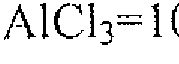 0: l weight ratio). 30 mg riboflavin (Sinopharm Chemical Reagent Beijing Co. Ltd.) was dissolved in 100 ml purified water to obtain a solution (0.3 g ribofiavin/L). The red cabbage extract-AiCl3 solution was mixed with the riboflavin solution with a volume ratio of 5 : 5 at pH 3.0 and 2.5, respectively. The results showed that green color can be obtained at low pH by properly compounding the blue colored solution according to the present invention with a yellow colored substance by conventional methods. See Figure 6.
[0217] A green colored solution was prepared at low pH by compounding the blue coloring solution with a yellow coloring substance. It is considered that any color that can be formed by compounding the blue color with other color(s). Other colors include, but are not limited to, (acid-stable) green, grape red, pomegranate red, and caramel color.
[0218] According to procedures detailed above, pomegranate red color and grape red color were obtained by compounding the blue solution of the present invention with elderberry extract and/or aronia extract, and caramel color was obtained by compounding the blue solution of the present invention with elderberry extract, aronia extract and/or safflower yellow.
[0219] The inventions illustratively disclosed herein suitably may be practiced in the absence of any element which is not specifically disclosed herein. Additionally, the inventions illustratively disclosed herein may be practiced in the absence of any element disclosed herein.
[0220] Although the present invention has been described with reference to preferred embodiments, persons skilled in the art will recognize that changes may be made in form and detail without departing from the spirit and scope of the invention. All references cited throughout the specification, including those in the background, are incorporated herein in their entirety. Those skilled in the art will recognize, or be able to ascertain, using no more than routine experimentation, many equivalents to specific embodiments of the invention described specifically herein. Such equivalents are intended to be encompassed in the scope of the following claims.
Claims
1 . An anthocyanin based colorant composition, comprising a food coloring substance which includes one or more anthocyanin compound(s) combined with an aluminum containing compound in a pi 1 range of greater than or equal to 2, more preferably in the range of from about 2 to about 7, preferably from about 2 to about 6, more preferably from about 2 to about 3.6.
2. The anthocyanin based colorant composition of claim 1 , wherein the anthocyanin compound is an acylated anthocyanin, an anthocyanidin, an acyiated anthocyanidin, a proanthocyanin, an acylated proanthocyanin, a proanthocyanidin, an acylated proanthocyanidin, derivatives thereof,
condensation products thereof, hydrates thereof, or mixtures thereof.
3. The anthocyanin based colorant composition of claim 1 or 2, wherein the anthocyanin compound is selected from those having the formula:

wherein I ' and R2 are each independently H, Oil or OCH3, and R3, R4 and each independently H, a sugar residue or an acylated sugar residue.
4. The anthocyanin based colorant composition of any of claims 1 through 3, wherein the acylated anthocyanin is a monoacylated anthocyanin and/or a diacetylated anthocyanin.
5. The anthocyanin based colorant composition of any of claims 1 through 4, wherein the anthocyanin compound is Cyan-3(caf)(sin)soph-5-glu, Cyan-3(sin)triglu-5-glu, Cyan-3(sin)(p-coum)triglu-5-glu, Cyan~3(sin)(sin)soph- 5-glu, Cyan-3(sin)(fer)triglu-5-glu, Cyan-3(sin)soph-5-glu, Cyan-3(fer)soph-5- glu, Cyan-3(p-coum)glu-5-glu, Cyan-3(sin)(sin)soph-5-glu,Cyan-3(sin)(fer)soph- 5-glu, Cyan-3(sin)(p-coum)soph-5-glu or mixtures thereof.
6. The anthocyanin based colorant composition of any of claims 1 through 5, wherein the anthocyanin compound originates from plant parts other than petals or sepals.
7. The anthocyanin based colorant composition of claim 6, wherein the food coloring substance is an extract of red cabbage, purple carrot, sweet potato, black carrot, black rice, bilberry, red radish, aronia, elderberry or black currant.
8. The anthocyanin based colorant composition of any of claims 1 through 7, wherein the food coloring substance is an acylated anthocyanin enriched red cabbage extract.
9. The anthocyanin based colorant composition of any of claims 1 through 8, wherein the aluminum containing compound is an aluminum halide, aluminum sulfate, and/or a potassium aluminum sulfate.
10. The anthocyanin based colorant composition of any of claims 1 through 9, wherein the molar ratio of aluminum containing compound to anthocyanin is from about 1 : 1 00 to about 100 : 1 .
1 1 . The anthocyanin based colorant composition of any of claims 1 through 10, further comprising a yellow coloring substance to provide a green color.
12. The anthocyanin based colorant composition of claim 1 1 , wherein the yellow coloring substance is riboflavin (vitamin B2).
1 3. The anthocyanin based colorant composition of claim 1 1 , wherein the yellow coloring substance is a yellow plant extract.
14. The anthocyanin based colorant composition of claim 13, wherein the yellow plant extract is safflower yellow, gardenia yellow, citrus yellow, celery yellow, saffron extract or combinations thereof.
1 5. The anthocyanin based colorant composition of either claim 13 or 14, wherein the ratio of anthocyanin to yellow plant extract is from about 50: 1 to about 1 : 50 on a weight basis.
16. The anthocyanin based colorant composition of any of claims 3 through 10, further comprising a red coloring substance to provide a pomegranate red color and/or a grape red color.
17. The anthocyanin based colorant composition of claim 16, wherein the red coloring substance is red plant extract.
1 8. The anthocyanin based colorant composition of claim 17, wherein the red plant extract is elderberry extract and/or aronia extract.
19. The anthocyanin based colorant composition of any of claims 1 through 10, further comprising a red coloring substance and a yellow coloring substance to provide a caramel color.
20. The anthocyanin based colorant composition of claim 19, wherein the red coloring substance is red plant extract, and/or the yellow coloring substance is yellow plant extract,
21 . The anthocyanin based colorant composition of claim 20, wherein the red plant extract is elderberry extract and/or aronia extract, and the yellow plant extract is saffiower yellow, gardenia yellow, citrus yellow, celery yellow, saffron extract or combinations thereof.
22. The anthocyanin based colorant composition of any of claims 1 through 10, further comprising a flavonoid.
23. The anthocyanin based colorant composition of claim 22, wherein the flavonoid is a celery extract.
24. The anthocyanin based colorant composition of claim 23, wherein the flavonoid is derived from 2-phenylchromen-4-one, 3-phenylchromen-4-one or 4-phenylchromen-4-one.
25. The anthocyanin based colorant composition of any of claims 1 through 24, in the form of a solution.
26. The anthocyanin based colorant composition of any of claims 1 through 24, in the form of a solid.
27. The anthocyanin based colorant composition of claim 26, wherein the solid is obtained by removing the solvent from the solution by freeze drying or spray drying.
28. Acylated anthocyanin-enriched red cabbage extract.
29. The acylated anthocyanin-enriched red cabbage extract according to claim 28, wherein the acylated anthocyanin is a mono acylated anthocyanin and/or a diacylatcd anthocyanin.
30. The acylated anthocyanin-enriched red cabbage extract according to claim 28, wherein the acylated anthocyanin extract comprises Cyan- 3(caf)(sin)soph-5-glu, Cyan-3(sin)lriglu-5-glu, Cyan-3(sin)(p-coum)triglu-5-glu, Cyan-3(sin)(sin)soph-5-glu, Cyan-3(sin)(fer)tngiu-5-glu, Cyan-3(sin)soph-5-glu, Cyan-3(fer)soph-5-glu, Cyan-3(p-coum)glu-5-glu, Cyan-3(sin)(sin)soph-5-glu, Cyan-3(sin)(fer)soph-5-glu, Cyan-3(sin)(p-coum)soph-5-glu, or mixtures thereof.
31 . The anthocyanin based colorant composition of any of claims 1 through 27, wherein the combination of the anthocyanin and aluminum containing compound is characterized by forming a blue colored solution in a pH range of greater than or equal to 2, more preferably in the range of from about 2 to about 7, preferably from about 2 to about 6, more preferably from about 2 to about 3.6.
32. A blue anthocyanin based colorant composition, comprising a food coloring substance which includes one or more anthocyanin compound(s) combined with an aluminum containing compound, wherein the blue colorant composition, when dissolved in water, having a pH range of greater than or equal to 2, more preferably in the range of from about 2 to about 7, preferably from about 2 to about 6, more preferably from about 2 to about 3.6.
33. A b!ue anthocyanin based colorant composition, comprising a food coloring substance which includes one or more anthocyanin compound(s) combined with an aluminum containing compound, wherein the blue colorant composition, when dissolved in water, provides an aqueous solution that has a pH range from acidic to neutral.
34. A blue anthocyanin based colorant composition comprising one or more of Cyan-3(caf)(sin)soph-5-glu, Cyan-3(sin)triglu-5-glu, Cyan-3(sin)(p- coum)triglu-5-glu, Cyan-3(sin)(sin)soph-5-glu, Cyan-3(sin)(fer)triglu-5-gIu, Cyan-3(sin)soph-5-glu, Cyan-3(fer)soph-5-glu, Cyan-3(p-coum)glu-5-glu, Cyan- 3(sin)(sin)soph-5~glu, Cyan-3(sin)(fer)soph-5-glu, Cyan-3(sin)(p-coum)soph-5- glu, or mixtures thereof and an aluminum containing compound.
35. A blue anthocyanin based colorant composition, comprising Cyan- 3(sin)soph-5-glu), (Cyan-3(sin)(sin)soph-5-glu) or both, and an aluminum compound.
36. The blue anthocyanin based colorant composition of claim 35 further comprising one or more of Cyan-3(caf)(sin)soph-5-glu diacyl, Cyan- 3(sin)triglu-5-glu monoacyl, Cyan-3(sin)(p-coum)triglu-5-glu diacyl, Cyan- 3(sin)(sin)soph-5-glu diacyl, Cyan-3(sin)(ier)tnglu-5-glu diacyl, Cyan-3(fer)soph- 5-glu monacyl, Cyan-3(p-coum)glu-5-glu monoacyl, Cyan-3(sin)(fer)soph-5-glu diacyl or Cyan-3(sm)(p-coum)soph-5~glu diacyl.
37. The blue anthocyanin based colorant composition of claim 35, wherein Cyan-3(sin)soph-5-glu) and/or (Cyan-3(sin)(sin)soph-5-glu) are present from about 0 to 100 percent by wei ht,
38. The blue anthocyanin based colorant composition of claim 37, wherein one or more of Cyan-3(caf)(sin)soph-5-glu diacyl, Cyan-3(sin)triglu-5- glu monoacyl, Cyan-3(sin)(p-coum)triglu-5-glu diacyl, Cyan-3(sin)(sin)soph-5- glu diacyl, Cyan-3(sin)(fer)trig!u-5-glu diacyl, Cyan-3(fer)soph-5-g!u monacyl, Cyan-3(p-coum)glu-5-glu monoacyl, Cyan-3(sin)(fer)soph-5-glu diacyl or Cyan- 3(sin)(p-coum)soph-5-glu diacyl are present in an amount of from greater than 0 weight percent to about 20 percent by weight based on 100 weight percent.
39. The blue anthocyanin based colorant of claim 37, further comprising Cyan-3(caf)(sin)soph-5-glu diacyl in an amount of from greater than 0 weight percent to about 20 percent by weight based on 100 weight percent.
40. The blue anthocyanin based colorant of claim 37, further comprising Cyan-3(sin)triglu-5-glu monoacyl in an amount of from greater than 0 weight percent to about 20 percent by weight based on 100 weight percent.
41. The blue anthocyanin based colorant of claim 37, further comprising Cyan-3(sin)(p-coum)triglu-5-glu diacyl in an amount of from greater than 0 weight percent to about 20 percent by weight based on 100 weight percent.
42. The blue anthocyanin based colorant of claim 37, further comprising Cyan-3(sin)(sin)soph-5-glu diacyl in an amount of from greater than 0 weight percent to about 20 percent by weight based on 100 weight percent.
43. The blue anthocyanin based colorant of claim 37, further comprising Cyan-3(sin)(fer)triglu-5-gtu diacyl in an amount of from greater than 0 weight percent to about 20 percent by weight based on 100 weight percent.
44. The blue anthocyanin based colorant of claim 37, further comprising Cyan-3(fer)soph-5-giu monacyl in an amount of from greater than 0 weight percent to about 20 percent by weight based on 100 weight percent.
45. The blue anthocyanin based colorant of claim 37, further comprising Cyan-3(p-coum)glu-5-glu monoacyl in an amount of from greater than 0 weight percent to about 20 percent by weight based on 100 weight percent.
46. The blue anthocyanin based colorant of claim 37, further comprising Cyan-3(sin)(fer)soph-5-glu diacyl in an amount of from greater than 0 weight percent to about 20 percent by weight based on 100 weight percent.
47. The blue anthocyanin based colorant of claim 37, further comprising Cyan-3(sin)(p-coum)soph-5-glu diacyl in an amount of from greater than 0 weight percent to about 20 percent by weight based on 100 weight percent.
48. An acylated anthocyanin-enriched red cabbage extract, wherein the extract contains anthocyanin components in increased concentrations than the percentages that occur in non-processed red cabbage.
49. The acylated anthocyanin-enriched red cabbage extract according to claim 48, wherein the acylated anthocyanin is a mono acylated anthocyanin and/or a di acylated anthocyanin.
50. The acylated anthocyanin-enriched red cabbage extract according to claim 48, wherein the acylated anthocyanin extract comprises Cyan- 3(caf)(sin)soph-5-glu, Cyan-3(sin)triglu-5-glu, Cyan-3(sin)(p-coum)triglu-5-glu, Cyan-3(sin)(sin)soph-5-glu, Cyan-3(sin)(fer)triglu-5-glu, Cyan-3(sin)soph-5-glu, Cyan-3(fer)soph-5-glu, Cyan-3(p-coum)glu-5-g!u, Cyan-3(sin)(sin)soph-5-glu, Cyan-3(sin)(fer)soph-5-glu) Cyan-3(sin)(p-coum)soph-5-glu, or mixtures thereof.
51. The acylated anthocyanin-enriched red cabbage according to claim
50, wherein Cyan-3(sin)soph-5-glu) and/or (Cyan-3(sin)(sin)soph-5-glu) are present irom about 0 to 100 percent by weight.
52. The acylated anthocyanin-enriched red cabbage according to claim
51 , wherein one or more of Cyan-3(caf)(sin)soph-5-glu diacyl, Cyan-3(sin)triglu~ 5-glu monoacyl, Cyan-3(sin)(p-coum)triglu-5-glu diacyl, Cyan-3(sin)(sin)soph-5- glu diacyl, Cyan-3(sin)(fer)triglu-5-glu diacyl, Cyan-3(fer)soph-5-glu monacyl, Cyan-3(p-coum)glu-5-glu monoacyl, Cyan-3(sin)(fer)soph-5-glu diacyl or Cyan- 3(sin)(p-coum)soph-5-glu diacyl are present in an amount of from greater than 0 weight percent to about 20 percent by weight based on 100 weight percent.
53. A blue anthocyanin based colorant composition comprising one or more of Cyan-3(caf)(sin)soph-5-glu, Cyan-3(sin)triglu-5-glu, Cyan-3(sin)(p- coum)triglu-5-glu, Cyan-3(sin)(sin)soph-5-giu, Cyan-3(sin)(fer)triglu-5-glu, Cyan-3(sin)soph-5-giu, Cyan~3(fer)soph-5-glu, Cyan-3(p-coum)gSu-5-glu, Cyan- 3(sin)(sin)soph-5-glu, Cyan-3(sin)(fer)soph-5-glu, Cyan-3(sin)(p-coum)soph-5- glu, or mixtures thereof; and
an aluminum containing compound.
54. The blue anthocyanin based colorant composition of claim 53, wherein the aluminum containing compound is an aluminum halide, aluminum sulfate, and/or a potassium aluminum sulfate.
55. The blue anthocyanin based colorant composition of claim 53, further comprising riboflavin (vitamin B2), safflower yellow, gardenia yellow, citrus yellow, celery yellow, saffron extract or combinations thereof, to provide a green color.
56. The blue anthocyanin based colorant composition of claim 53, further comprising elderberry extract and/or aronia extract, to provide a pomegranate or a grape red color.
57. The blue anthocyanin based colorant composition of claim 53, further comprising elderberry extract and/or aronia extract and safflower yellow, gardenia yellow, citrus yellow, celery yellow, saffron extract or combinations thereof, to provide a caramel color.
58. The blue anthocyanin based colorant composition of claim 53, further comprising a flavonoid,
59. The blue anthocyanin based colorant composition of claim 58, wherein the flavonoid is a celery extract, to provide a green color.
60. The blue anthocyanin based colorant composition of claim 59, wherein the flavonoid is derived from 2-phenylchromen-4-one, 3 -phenyl chromen- 4-one or 4-phenylchromen-4-one.
61 . A blue anthocyanin based colorant composition, comprising Cyan- 3(sin)soph-5-giu), (Cyan-3(sin)(sin)soph-5-glu) or both; and
an aluminum compound.
62. The blue anthocyanin based colorant composition of claim 61 , wherein the aluminum containing compound is an aluminum halide, aluminum sulfate, and/or a potassium aluminum sulfate.
63. The blue anthocyanin based colorant composition of claim 61 , further comprising riboflavin (vitamin B2), safflower yellow, gardenia yellow, citrus yellow, celery yellow, saffron extract or combinations thereof, to provide a green color.
64. The blue anthocyanin based colorant composition of claim 61 , further comprising elderberry extract and/or aronia extract, to provide a pomegranate or a grape red color.
65. The blue anthocyanin based colorant composition of claim 61 , further comprising elderberry extract and/or aronia extract and safflower yellow, gardenia yellow, citrus yellow, celery yellow, saffron extract or combinations thereof, to provide a caramel color.
66. The blue anthocyanin based colorant composition of claim 61 , further comprising a flavonoid.
67. The blue anthocyanin based colorant composition of claim 66, wherein the flavonoid is a celery extract comprising 2-phenylchromen-4-one, 3- phenylchromen-4-one or 4-phenylchromen-4-one, to provide a green color.
Priority Applications (1)
| Application Number | Priority Date | Filing Date | Title |
|---|---|---|---|
| EP12801031.1A EP2717719A4 (en) | 2011-06-13 | 2012-06-13 | Anthocyanin based colorant compositions |
Applications Claiming Priority (6)
| Application Number | Priority Date | Filing Date | Title |
|---|---|---|---|
| US201161496118P | 2011-06-13 | 2011-06-13 | |
| US61/496,118 | 2011-06-13 | ||
| US201261689726P | 2012-06-11 | 2012-06-11 | |
| US61/689,726 | 2012-06-11 | ||
| US13/507,186 US20130165531A1 (en) | 2011-06-13 | 2012-06-12 | Anthocyanin based colorant compositions |
| US13/507,186 | 2012-06-12 |
Publications (2)
| Publication Number | Publication Date |
|---|---|
| WO2012172429A2 true WO2012172429A2 (en) | 2012-12-20 |
| WO2012172429A3 WO2012172429A3 (en) | 2013-01-31 |
Family
ID=47357546
Family Applications (1)
| Application Number | Title | Priority Date | Filing Date |
|---|---|---|---|
| PCT/IB2012/001389 Ceased WO2012172429A2 (en) | 2011-06-13 | 2012-06-13 | Anthocyanin based colorant compositions |
Country Status (3)
| Country | Link |
|---|---|
| US (1) | US20130165531A1 (en) |
| EP (1) | EP2717719A4 (en) |
| WO (1) | WO2012172429A2 (en) |
Cited By (8)
| Publication number | Priority date | Publication date | Assignee | Title |
|---|---|---|---|---|
| CN103450139A (en) * | 2013-08-26 | 2013-12-18 | 吉林省工致科技开发有限公司 | Extraction method for high-purity high-oxidative-activity aronia melanocarpa procyanidine |
| WO2014152417A3 (en) * | 2013-03-15 | 2014-11-20 | Mars, Incorporated | Method of isolating blue anthocyanin fractions |
| WO2014152478A3 (en) * | 2013-03-15 | 2014-11-20 | Mars, Incorporated | Natural blue anthocyanin-containing colorants |
| EP3027039B1 (en) | 2013-08-02 | 2019-04-10 | Mars, Incorporated | Brown anthocyanin-containing colorant |
| US10750761B2 (en) | 2015-06-30 | 2020-08-25 | Mars, Incorporated | Colorant compositions and methods of use thereof |
| US10881119B2 (en) | 2013-08-02 | 2021-01-05 | Mars, Incorporated | Orange and red anthocyanin-containing colorants |
| WO2021067627A1 (en) * | 2019-10-01 | 2021-04-08 | Mars, Incorporated | Enzymatic treatment of anthocyanins |
| US11986006B2 (en) | 2018-08-31 | 2024-05-21 | Mars, Incorporated | Anthocyanin-based colorant compositions and methods of use thereof |
Families Citing this family (7)
| Publication number | Priority date | Publication date | Assignee | Title |
|---|---|---|---|---|
| EP2882306A1 (en) * | 2012-08-09 | 2015-06-17 | Nestec S.A. | Anthocyanin colouring composition |
| EP2934561B1 (en) * | 2012-12-20 | 2022-08-10 | Arabian German Medical Products Co. W.L.L. | Composition comprising raphanus, theobroma and passiflora for treating opioid and alcohol abuse |
| CN103509369A (en) * | 2013-10-09 | 2014-01-15 | 罗合春 | Method for preparing odorless radish red pigment powder |
| CN104292877B (en) * | 2014-09-23 | 2016-05-11 | 四川大学 | The preparation method of the liquid radish red pigment of a kind of odorless |
| CN104877390B (en) * | 2015-05-12 | 2017-03-01 | 湖北紫鑫生物科技有限公司 | A kind of preparation method of the black Radix Dauci Sativae pigment of high-purity |
| CN109575633B (en) * | 2018-12-28 | 2020-01-14 | 中国科学院西北高原生物研究所湖州高原生物资源产业化创新中心 | Lycium ruthenicum Murr blue extract and preparation method thereof |
| JP7681258B2 (en) * | 2021-04-23 | 2025-05-22 | セイコーエプソン株式会社 | Ink-jet ink composition and recording method |
Family Cites Families (15)
| Publication number | Priority date | Publication date | Assignee | Title |
|---|---|---|---|---|
| US4172902A (en) * | 1978-05-26 | 1979-10-30 | The United States Of America As Represented By The Secretary Of Agriculture | Stable foods and beverages containing the anthocyanin, peonidin 3-(dicaffeylsophoroside)-5-glucoside |
| US4208434A (en) * | 1978-07-11 | 1980-06-17 | The Coca-Cola Company | Color stable food containing anthocyanic pigments and bio-available vitamin C and process for its production |
| JPS62209173A (en) * | 1986-03-11 | 1987-09-14 | Hidekazu Idaka | Acylated anthocyanin |
| JPS63113078A (en) * | 1986-09-30 | 1988-05-18 | Hidekazu Idaka | Acylated anthocyanine |
| JPS63243167A (en) * | 1987-03-30 | 1988-10-11 | Hidekazu Idaka | Acylated anthocyanin |
| JPH06306966A (en) * | 1993-04-19 | 1994-11-01 | R Parker Kenneth | Heat insulating panel |
| US5908650A (en) * | 1995-10-20 | 1999-06-01 | Hauser, Inc. | Pigment composition containing anthocyanins stabilized by plant extracts |
| US6132791A (en) * | 1998-03-06 | 2000-10-17 | Barkley Seed, Inc. | Natural red sunflower anthocyanin colorant with naturally stabilized color qualities, and the process of making |
| ATE323744T1 (en) * | 2001-07-26 | 2006-05-15 | Hansens Lab | ANTHOCYANINE-BASED FOOD COLORING SUBSTANCES |
| US6881430B2 (en) * | 2001-07-26 | 2005-04-19 | Chr. Hansen A/S | Food coloring substances and method for their preparation |
| US7208181B1 (en) * | 2002-06-12 | 2007-04-24 | The United States Of America, As Represented By The Secretary Of Agriculture | Isolation of polyphenolic compounds from fruits or vegetables utilizing sub-critical water extraction |
| US7279189B2 (en) * | 2004-07-02 | 2007-10-09 | Colormaker, Inc. | Stabilized natural blue and green colorants |
| US8491670B2 (en) * | 2007-06-21 | 2013-07-23 | Suntava, Llc | Anthocyanin pigment/dye compositions and method of providing composition through extraction from corn |
| WO2010114568A1 (en) * | 2009-04-03 | 2010-10-07 | Dianaplantsciences, Inc. | Methods for creating color variation in anthocyanins produced by cell culture |
| WO2012033536A2 (en) * | 2010-09-09 | 2012-03-15 | Kalamazoo Holdings, Inc. | Red radish and rosemary compositions with enhanced color stability and use of same in foods, beverages, cosmetics and pharmaceuticals |
-
2012
- 2012-06-12 US US13/507,186 patent/US20130165531A1/en not_active Abandoned
- 2012-06-13 EP EP12801031.1A patent/EP2717719A4/en not_active Withdrawn
- 2012-06-13 WO PCT/IB2012/001389 patent/WO2012172429A2/en not_active Ceased
Non-Patent Citations (1)
| Title |
|---|
| See references of EP2717719A4 * |
Cited By (20)
| Publication number | Priority date | Publication date | Assignee | Title |
|---|---|---|---|---|
| GB2527453B (en) * | 2013-03-15 | 2017-03-15 | Mars Inc | Method of isolating blue anthocyanin fractions |
| WO2014152417A3 (en) * | 2013-03-15 | 2014-11-20 | Mars, Incorporated | Method of isolating blue anthocyanin fractions |
| WO2014152478A3 (en) * | 2013-03-15 | 2014-11-20 | Mars, Incorporated | Natural blue anthocyanin-containing colorants |
| US9598581B2 (en) | 2013-03-15 | 2017-03-21 | Mars, Incorporated | Method of isolating blue anthocyanin fractions |
| GB2527452A (en) * | 2013-03-15 | 2015-12-23 | Mars Inc | Natural blue anthocyanin-containing colorants |
| GB2527453A (en) * | 2013-03-15 | 2015-12-23 | Mars Inc | Method of isolating blue anthocyanin fractions |
| CN105229084A (en) * | 2013-03-15 | 2016-01-06 | 马斯公司 | Be separated the method for blue Kuromanine fraction |
| CN105339437A (en) * | 2013-03-15 | 2016-02-17 | 马斯公司 | Natural blue anthocyanin-containing colorants |
| JP2016519177A (en) * | 2013-03-15 | 2016-06-30 | マース インコーポレーテッドMars Incorporated | Isolation method of blue anthocyanin fraction |
| JP2016515811A (en) * | 2013-03-15 | 2016-06-02 | マース インコーポレーテッドMars Incorporated | Colorants containing natural blue anthocyanins |
| US10119029B2 (en) | 2013-03-15 | 2018-11-06 | Mars, Incorporated | Method of isolating blue anthocyanin fractions |
| EP3027039B1 (en) | 2013-08-02 | 2019-04-10 | Mars, Incorporated | Brown anthocyanin-containing colorant |
| US10687550B2 (en) | 2013-08-02 | 2020-06-23 | Mars, Incorporated | Brown anthocyanin-containing colorant |
| US10881119B2 (en) | 2013-08-02 | 2021-01-05 | Mars, Incorporated | Orange and red anthocyanin-containing colorants |
| CN103450139B (en) * | 2013-08-26 | 2015-06-24 | 吉林省工致科技开发有限公司 | Extraction method for high-purity high-oxidative-activity aronia melanocarpa procyanidine |
| CN103450139A (en) * | 2013-08-26 | 2013-12-18 | 吉林省工致科技开发有限公司 | Extraction method for high-purity high-oxidative-activity aronia melanocarpa procyanidine |
| US10750761B2 (en) | 2015-06-30 | 2020-08-25 | Mars, Incorporated | Colorant compositions and methods of use thereof |
| US11986006B2 (en) | 2018-08-31 | 2024-05-21 | Mars, Incorporated | Anthocyanin-based colorant compositions and methods of use thereof |
| WO2021067627A1 (en) * | 2019-10-01 | 2021-04-08 | Mars, Incorporated | Enzymatic treatment of anthocyanins |
| US11753664B2 (en) | 2019-10-01 | 2023-09-12 | Mars, Incorporated | Enzymatic treatment of anthocyanins |
Also Published As
| Publication number | Publication date |
|---|---|
| US20130165531A1 (en) | 2013-06-27 |
| EP2717719A2 (en) | 2014-04-16 |
| WO2012172429A3 (en) | 2013-01-31 |
| EP2717719A4 (en) | 2015-06-10 |
Similar Documents
| Publication | Publication Date | Title |
|---|---|---|
| WO2012172429A2 (en) | Anthocyanin based colorant compositions | |
| Azima et al. | Phenolics, antioxidants and color properties of aqueous pigmented plant extracts: Ardisia colorata var. elliptica, Clitoria ternatea, Garcinia mangostana and Syzygium cumini | |
| US6881430B2 (en) | Food coloring substances and method for their preparation | |
| AU706356B2 (en) | Foods and beverages containing anthocyanins stabilized by plant extracts | |
| Sari et al. | Colour properties, stability, and free radical scavenging activity of jambolan (Syzygium cumini) fruit anthocyanins in a beverage model system: Natural and copigmented anthocyanins | |
| Tang et al. | Black goji as a potential source of natural color in a wide pH range | |
| Gordillo et al. | Assessment of the color modulation and stability of naturally copigmented anthocyanin-grape colorants with different levels of purification | |
| ES2984371T3 (en) | Anthocyanin-based colorant | |
| CN105229084B (en) | The method for separating the anthocyanin fraction of blueness | |
| Sigurdson et al. | Impact of location, type, and number of glycosidic substitutions on the color expression of o-dihydroxylated anthocyanidins | |
| Neri-Numa et al. | Iridoid blue-based pigments of Genipa americana L.(Rubiaceae) extract: Influence of pH and temperature on color stability and antioxidant capacity during in vitro simulated digestion | |
| EP1414910B1 (en) | Anthocyanin derivatives treated with an aluminium salt as food colouring substances | |
| AU2002355159A1 (en) | Anthocyanin derivatives treated with an aluminum salt as food colouring substances | |
| Socha et al. | Phenolic profile and antioxidant activity of the selected edible flowers grown in Poland | |
| US20190133159A1 (en) | Uses of Acylated Anthocyanins Extracted from Black Goji (Lycium ruthenicum Murr.) as a Source of Natural Color | |
| HK1214835A1 (en) | Natural blue anthocyanin-containing colorants | |
| US7261769B2 (en) | Stabilized anthocyanin extract from Garcinia indica | |
| WO2009107179A1 (en) | Green tea extract and use and manufacturing method of same | |
| Marpaung et al. | Spectrophotometric Change of Butterfly Pea (Clitoria ternatea L.) Flower Extract in Various Metal Ion Solutions During Storage | |
| Bitard et al. | 3-Deoxyanthocyanidins and their derivatives: Modulation of their coloring properties as a function of pH and molecular binding to micelles and biopolymers | |
| JP4996807B2 (en) | Dye stabilizer and dye stabilization method | |
| JP2009040704A (en) | Method for producing 3-deoxyanthocyanidins | |
| Farr | Evaluating the mechanism of ascorbic acid bleaching of Anthocyanins and proposed ways to mitigate the interaction | |
| Tang | Petunidin derivatives from black goji and purple potato as promising natural colorants, and their co-pigmentation with metals and isoflavones | |
| Adaku et al. | Anthocyanin profile and antioxidant activity of edible leaves of Dissotis brazzae Cogn (Melastomataceae) |
Legal Events
| Date | Code | Title | Description |
|---|---|---|---|
| REEP | Request for entry into the european phase |
Ref document number: 2012801031 Country of ref document: EP |
|
| WWE | Wipo information: entry into national phase |
Ref document number: 2012801031 Country of ref document: EP |
|
| NENP | Non-entry into the national phase |
Ref country code: DE |
|
| 121 | Ep: the epo has been informed by wipo that ep was designated in this application |
Ref document number: 12801031 Country of ref document: EP Kind code of ref document: A2 |