WO2012173244A1 - Marqueur pour l'utilisation dans la détection d'une bactérie parodontopathique transmissible entre les hommes et les animaux - Google Patents
Marqueur pour l'utilisation dans la détection d'une bactérie parodontopathique transmissible entre les hommes et les animaux Download PDFInfo
- Publication number
- WO2012173244A1 WO2012173244A1 PCT/JP2012/065408 JP2012065408W WO2012173244A1 WO 2012173244 A1 WO2012173244 A1 WO 2012173244A1 JP 2012065408 W JP2012065408 W JP 2012065408W WO 2012173244 A1 WO2012173244 A1 WO 2012173244A1
- Authority
- WO
- WIPO (PCT)
- Prior art keywords
- antibody
- strain
- anone
- marker
- antigen
- Prior art date
- Legal status (The legal status is an assumption and is not a legal conclusion. Google has not performed a legal analysis and makes no representation as to the accuracy of the status listed.)
- Ceased
Links
Images








Classifications
-
- A—HUMAN NECESSITIES
- A61—MEDICAL OR VETERINARY SCIENCE; HYGIENE
- A61K—PREPARATIONS FOR MEDICAL, DENTAL OR TOILETRY PURPOSES
- A61K39/00—Medicinal preparations containing antigens or antibodies
- A61K39/02—Bacterial antigens
- A61K39/0216—Bacteriodetes, e.g. Bacteroides, Ornithobacter, Porphyromonas
-
- A—HUMAN NECESSITIES
- A61—MEDICAL OR VETERINARY SCIENCE; HYGIENE
- A61P—SPECIFIC THERAPEUTIC ACTIVITY OF CHEMICAL COMPOUNDS OR MEDICINAL PREPARATIONS
- A61P1/00—Drugs for disorders of the alimentary tract or the digestive system
- A61P1/02—Stomatological preparations, e.g. drugs for caries, aphtae, periodontitis
-
- G—PHYSICS
- G01—MEASURING; TESTING
- G01N—INVESTIGATING OR ANALYSING MATERIALS BY DETERMINING THEIR CHEMICAL OR PHYSICAL PROPERTIES
- G01N33/00—Investigating or analysing materials by specific methods not covered by groups G01N1/00 - G01N31/00
- G01N33/48—Biological material, e.g. blood, urine; Haemocytometers
- G01N33/50—Chemical analysis of biological material, e.g. blood, urine; Testing involving biospecific ligand binding methods; Immunological testing
- G01N33/53—Immunoassay; Biospecific binding assay; Materials therefor
- G01N33/569—Immunoassay; Biospecific binding assay; Materials therefor for microorganisms, e.g. protozoa, bacteria, viruses
- G01N33/56911—Bacteria
- G01N33/56955—Bacteria involved in periodontal diseases
-
- A—HUMAN NECESSITIES
- A61—MEDICAL OR VETERINARY SCIENCE; HYGIENE
- A61K—PREPARATIONS FOR MEDICAL, DENTAL OR TOILETRY PURPOSES
- A61K39/00—Medicinal preparations containing antigens or antibodies
- A61K2039/55—Medicinal preparations containing antigens or antibodies characterised by the host/recipient, e.g. newborn with maternal antibodies
- A61K2039/552—Veterinary vaccine
-
- G—PHYSICS
- G01—MEASURING; TESTING
- G01N—INVESTIGATING OR ANALYSING MATERIALS BY DETERMINING THEIR CHEMICAL OR PHYSICAL PROPERTIES
- G01N2469/00—Immunoassays for the detection of microorganisms
- G01N2469/20—Detection of antibodies in sample from host which are directed against antigens from microorganisms
Definitions
- the present invention relates to a marker for detecting periodontal pathogens common to humans, a method for determining infection by the bacteria, and a method for detecting the bacteria.
- Periodontal disease is inflammation that occurs in periodontal tissues such as gingiva, periodontal ligament, cementum and alveolar bone, and is a very common disease affecting about 30% of the world population.
- Periodontal diseases include gingivitis, periodontitis and occlusal trauma, but the most common periodontal disease is periodontitis, especially chronic periodontitis caused by periodontal disease bacteria ( Non-patent document 1).
- Chronic periodontitis gradually progresses with age from mild gingivitis. The percentage of gingival findings in people over the age of 5 was 64.3% in 1987 (Dental disease survey), 68.1% in 1993 (same survey), and 72.9% in 1999 (same survey). In recent years, it has been on an increasing trend.
- Chronic periodontitis is known to increase the risk of developing various systemic diseases such as cerebrovascular disease, heart disease, premature birth, as well as inflammation in the oral cavity. Therefore, it is important to detect the periodontal disease bacteria that cause the chronic periodontitis at the stage where chronic periodontitis has not become apparent in order to prevent and early treat chronic periodontitis.
- chronic periodontitis is accompanied by symptoms such as inflammation and bleeding of the gingiva, so that it is relatively easy to make a visual diagnosis after onset. Therefore, in the field of dentistry, periodontal disease bacteria have been detected from subjects at an early stage with a simple and high accuracy rate, predicting the possibility of chronic periodontitis in the subject, and based on the results. The development of methods for preventing chronic periodontitis has not been fully developed.
- Porphyromonas ginigivalis As a method for detecting periodontal disease, Porphyromonas ginigivalis (hereinafter referred to as "P. gingivalis”) is one of the resident bacteria in the oral cavity and is known as the most common periodontal disease bacterium. Is known using an antigen-antibody reaction.
- Patent Document 1 discloses P.P. having a specific amino acid sequence. Disclosed are a method for detecting the bacterium by immunoassay using an antibody against an antigen derived from Gingivalis, and a method for treating periodontitis by applying a mouthwash or a dentifrice containing the antibody to a patient. .
- Patent Document 2 P. Disclosed is a method for treating periodontitis by applying an oral cleanser, aerosol, paste or ointment comprising an antibody that binds to Gingivalis lipopolysaccharide to a patient.
- Patent Document 3 includes P.I. A method for diagnosing whether or not the bacterium is present in the gingival crevice using a monoclonal antibody against gingivalis is disclosed.
- the present invention is to provide a system for determining the infection of periodontal disease bacteria having a property that has not been conventionally known and has a common infectivity to humans and other mammals, particularly pets.
- Periodontal disease is not limited to humans, and other mammals can also develop.
- dogs and cats raised as pet animals have a high morbidity rate, and about 80% of dogs over 5 years old are reported to have periodontal disease (Hamp SE et al., 1975. Clinical and roentgengraphical observations, 53 rd . Gen. Meet. IARD, London, J. Dent. Res. 54: special issue A, L-5).
- Periodcheck Sunstar, Osaka
- all dogs under 1 year old were negative. All dogs older than 1 year were positive, and Porphyromonas was isolated from more than 80% of the positive dogs (Isogai H. et al., 1999, J Vet Med B46: 467-473,1999) .
- the Porphyromonas genus is considered to be a major periodontal disease bacterium even in mammals other than humans.
- Mammals have been treated as separate subjects that are totally epidemiologically unrelated.
- a vaccine for animals (Porphyromonas Denticanis-Gulae-Salivosa Bacterin TM (Porphyromonas Vaccine) Pfizer) has been put to practical use to prevent periodontal disease, but this vaccine is intended only for dogs.
- the periodontal disease bacterium can be transmitted from pets such as dogs and cats to humans. Therefore, by detecting such periodontal disease bacteria from other mammals such as companion animals and knowing the risk of infection in advance, prevention of human infection and early treatment can be expected.
- the present inventors have developed a dog food for preventing the disease based on the research results of the epidemiology, diagnostic method, and analysis of oral bacterial flora of dog periodontal disease, which has been a problem in the veterinary field.
- P. cerevisiae isolated from three different individuals.
- Gingivalis is a catalase-positive P. aeruginosa. It was found that it was not a gingivalis strain (P. grae) but a catalase negative strain (Isogai E, et al. 1995, Microbial Ecol Health Dis 8: 57-61).
- a peptide comprising the amino acid sequence represented by any one of SEQ ID NOs: 1 to 7, from a body fluid obtained by collecting an antibody that recognizes an epitope present in the peptide or an antigen-binding fragment thereof from a subject
- a method for determining infection of a zoonotic periodontal disease bacteria P. gingivalis anone comprising a step of detecting an antibody to be detected and a step of determining the presence or absence of infection of the subject against an anon strain based on the results of the antibody detection step.
- One or more polypeptides comprising the amino acid sequence represented by any one of SEQ ID NOs: 1 to 7, an antibody that recognizes an epitope present in a peptide comprising the amino acid sequence and / or an antigen-binding fragment thereof
- Zoo-common infectiousness containing, as an active ingredient, one or more antibodies that recognize an epitope present in the peptide consisting of the amino acid sequence represented by any one of SEQ ID NOs: 1 to 7 and / or antigen-binding fragments thereof Infection inhibitor or inflammation inhibitor of periodontal disease bacteria P. gingivalis anone.
- a kit for detecting a zoonotic periodontitis P. gingivalis anone comprising one or more markers according to (4) and one or more antibodies and / or antigen-binding fragments according to (5).
- P.P. Gingivalis anone can be detected.
- P.P. Gingivalis anon can be detected.
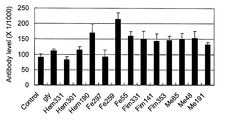
- the average antibody titer in P. gingivalis isolation negative Labrador from 2 to 8 months after birth is shown.
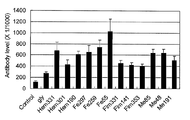
- the average antibody titer in P. gingivalis separation positive Labrador is shown.
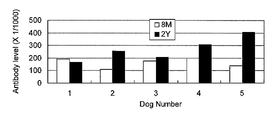
- the detection results of anti-anone strain antibodies against glycine (control) in the serum of anone strain-separation negative dogs at the age of 8 months (8M) and 2 years of age (2Y) are shown.
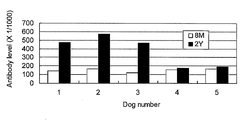
- the antibody detection result by ELISA with respect to the marker HEM331 for the detection of a zoonotic periodontal disease bacteria in the anone strain isolation negative dog serum at the age of 8 months (8M) and 2 years old (2Y) is shown.
- the antibody detection result by ELISA with respect to the marker HEM190 for the detection of the zoonotic periodontal disease bacteria in the anone strain isolation negative dog serum at the age of 8 months (8M) and 2 years old (2Y) is shown.
- the antibody detection result by ELISA with respect to the marker 55 for detecting the zoonotic periodontitis of zoonotic animals in the serum of anone strain-negative dogs at the age of 8 months (8M) and 2 years old (2Y) is shown.
- the antibody detection result by ELISA with respect to the marker Fim141 for detecting the zoonotic periodontal disease of the zoonosis in the serum of anone strain isolation negative dog at the age of 8 months (8M) and 2 years old (2Y) is shown.
- the antibody detection result by ELISA with respect to the marker Fim353 for detecting the zoonotic periodontal disease of the zoonosis in the serum of the anone strain isolation negative dog at the age of 8 months (8M) and 2 years old (2Y) is shown.
- the antibody detection result in ELISA with respect to the marker Me85 for a zoonotic periodontal disease bacteria detection is detected in the serum of the anone strain isolation negative dog at the age of 8 months (8M) and 2 years old (2Y).
- the antibody detection result by ELISA with respect to the marker 48 for the detection of a zoonotic periodontal disease bacteria in anone strain isolation negative dog serum at the age of 8 months (8M) and 2 years old (2Y) is shown.
- the antibody titer of 5 individuals (6 to 10) beagle dogs with onset of periodontal disease positive for anone strains aged 5 to 6 years is shown.
- the antibody response result with respect to Me85 in the human of various age groups is shown.
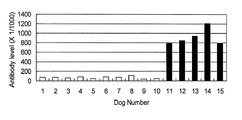
- the antibody titer against the peptide ANON-hexosaminidase as a beast specific infection marker is shown.
- Dog No. 1 to 10 indicate dogs with no periodontal disease
- Dog No. 11 to 15 indicate dogs with periodontal disease origin (bacteria isolation positive dogs).
- the antibody titer against peptide ANON-ASCP as a beast specific infection marker is shown.
- Dog No. 1 to 10 indicate dogs with no periodontal disease, and Dog No.
- 11 to 15 indicate dogs with periodontal disease origin (bacteria isolation positive dogs).
- the antibody titer against the peptide ANON-HagE as a beast specific infection marker is shown.
- Dog No. 1 to 10 indicate dogs with no periodontal disease
- Dog No. 11 to 15 indicate dogs with periodontal disease origin (bacteria isolation positive dogs).
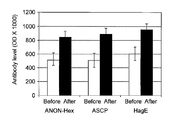
- Anon-Ab shows changes in antibody titer using a peptide specific to ANON strain.
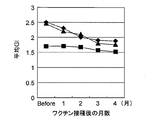
- the change of GI after vaccination is shown.
- diamonds, triangles, and squares indicate the average GI of each beagle dog.
- the change of GI of the front tooth and the canine region is shown.
- diamonds, triangles, and squares indicate the average GI of each beagle dog.
- the first embodiment of the present invention is a marker for detecting zoonotic periodontal disease bacteria.
- the marker for detecting a zoonotic periodontal disease bacterium refers to a marker for specifically detecting a zoonotic periodontal disease bacterium.
- the term “Zoo-infectious periodontal disease bacteria” is a pathogenic infectious bacterium that is commonly present in the oral cavity of humans and other mammals and can cause periodontal disease in both of them. . Specifically, P.I. This applies to P. ginigivalis ANON (hereinafter referred to as “Anon stock”).
- other mammals means all mammals other than humans, and are not particularly limited, but considering the infection rate to humans, the frequency of direct contact with humans High mammals such as dogs, cats, rabbits, hamsters, guinea pigs, pets such as mice, rats, ferrets, squirrels, wolfberry, monkeys and hedgehogs, horses, cows, sheep, goats, pigs, reindeers, camels And livestock such as llamas or laboratory animals.
- pet animals which are frequently contacted by humans, generally dogs and cats, are suitable as other mammals herein.
- This marker is composed of a peptide containing the amino acid sequence represented by any one of SEQ ID NOs: 1 to 7. These amino acid sequences are all described in P.P. It corresponds to a partial sequence of a protein involved in the pathogenicity and infectivity of Gingivalis. Specifically, it is as follows.
- the amino acid sequence represented by SEQ ID NO: 1 It is an amino acid sequence of an anon strain corresponding to hemagglutinin (HagB) positions 331 to 350 (starting methionine residue is number 1; the same shall apply hereinafter) encoded by the gene symbol PG1972 of Gindivaris strain W83.
- the peptide consisting of the amino acid sequence represented by SEQ ID NO: 1 is referred to as “Hem331” for convenience.
- the amino acid sequence shown in SEQ ID NO: 2 is P.I. It is an amino acid sequence of an Anon strain corresponding to positions 190 to 210 of the aforementioned HagB of Gingivalis strain W83.
- the peptide consisting of the amino acid sequence represented by SEQ ID NO: 2 is referred to as “Hem190” for convenience.
- the amino acid sequence shown in SEQ ID NO: 3 is P.I. It is an amino acid sequence of an Anon strain corresponding to positions 55 to 74 of ferrous transport protein B (FeoB-1) encoded by gene symbol PG1043 of Gindivaris W83 strain.
- Fe55 the peptide consisting of the amino acid sequence represented by SEQ ID NO: 3 is referred to as “Fe55” for convenience.
- the amino acid sequence shown in SEQ ID NO: 4 is P.I. It is an amino acid sequence of an anon strain corresponding to positions 141 to 160 of fimbrilin (fimA) encoded by the gene symbol PG2132 of Gingivalis strain W83.
- the peptide consisting of the amino acid sequence represented by SEQ ID NO: 4 is referred to as “Fim141” for convenience.
- the amino acid sequence shown in SEQ ID NO: 5 is P.I. It is an amino acid sequence of an Anon strain corresponding to positions 353 to 370 of the fimA of Gindivaris strain W83.
- the peptide consisting of the amino acid sequence represented by SEQ ID NO: 5 is referred to as “Fim353” for convenience.
- the amino acid sequence shown in SEQ ID NO: 6 is P.I. It is an amino acid sequence of an Anon strain corresponding to positions 85 to 106 of the metalloprotease encoded by the gene symbol PG0383 of Gingivalis strain W83.
- the peptide consisting of the amino acid sequence represented by SEQ ID NO: 6 is referred to as “Me85” for convenience.
- the amino acid sequence shown in SEQ ID NO: 7 is P.I.
- the peptide consisting of the amino acid sequence represented by SEQ ID NO: 7 is referred to as “Me48” for convenience.
- amino acid sequences represented by SEQ ID NOs: 1 to 7 are sequences that are specifically recognized only in Anon strains. Therefore, peptides containing these amino acid sequences can be useful markers for detecting Anon strains, ie, zoonotic periodontal disease bacteria.
- the marker of the present embodiment is not particularly limited as long as the number of amino acids of the peptide is a peptide including the amino acid sequence represented by SEQ ID NOs: 1 to 7.
- it is a peptide consisting of only the amino acid sequence represented by SEQ ID NOs: 1 to 7, ie, Hem331, Hem190, Fe55, Fim141, Me85 or Me48, preferably 40 amino acids or less, more preferably 30 amino acids or less.
- the marker of the present embodiment can be fused with, for example, a tag sequence that facilitates detection.
- tag acid sequences include histidine “His” tags (GentzGenet al., 1989, Proc. Natl. Acad. Sci. USA, 86: 821-824), hemagglutinin “HA” tags (Wilson et al., 1984). , Cell, 37: 767), and “Flag” tags (Knappik et al., Biotechniques, 1994, 17 (4): 754-761).
- the marker of this embodiment may be labeled with a label for detection.
- labeling agents include fluorescent dyes (fluorescein, FITC, rhodamine, umbelliferone, Texas red, Cy3, Cy5), fluorescent proteins (eg, PE, APC, GFP), enzymes (eg, horseradish peroxidase, alkaline phosphatase) , Glucose oxidase, ⁇ -galactosidase), biotin or (strept) avidin, or a radioisotope (eg, 32 P, 33 P, 35 S, 90 Y, 111 In, 112 In) and the like can be used.
- the marker labeling method of the present embodiment may be performed by a technique known in the art.
- the marker of this embodiment may be manufactured according to a known technique by biosynthesis or chemical synthesis.
- a polynucleotide fragment encoding the marker of the present embodiment is amplified by chemical synthesis, or from a genomic DNA or cDNA library of an Anon strain by a nucleic acid amplification method such as PCR.
- the fragment can be obtained by inserting it into an appropriate expression vector, introducing it into a host cell such as E. coli, and then expressing it in the cell.
- a host cell such as E. coli
- tag sequence is fused to the marker of the present embodiment, it is convenient for separating and purifying the target marker from the host cell.
- Such a recombinant protein technique is known in the art, and may be performed according to a known technique when biosynthesizes the marker of the present embodiment. For example, it is possible to refer to the recombinant protein technology described in a biotechnology experiment book (Japan Biotechnology Society, edited by Baifukan, 1996).
- peptide synthesis When chemical synthesis is performed, it may be synthesized using a known peptide synthesis technique.
- peptide synthesis for example, manufacturers such as Kobe Natural Product Chemical Co., Ltd., Takara Bio Inc., and EZBiolab® (US) Inc. conduct contract synthesis, and these can also be used.
- Marker antibody or antigen-binding fragment thereof for detecting anti-animal common infectious periodontal disease bacteria or antigen-binding fragment thereof The second embodiment of the present invention is a marker antibody or anti-human animal infectious periodontal disease detection marker antibody-binding fragment thereof. .
- Marker antibody for detection of anti-human common infectious periodontal disease bacteria refers to the animal of the first embodiment
- An antibody having a marker for detecting a common infectious periodontal disease bacteria as an antigen means an antibody that specifically recognizes an epitope present in the peptide consisting of the amino acid sequence represented by any one of SEQ ID NOs: 1 to 7, that is, Hem331, Hem190, Fe55, Fim141, Me85, or Me48.
- An “epitope” is a polypeptide fragment having antigenicity or immunogenicity, and consists of about 7 to 12 amino acids, preferably 8 to 11 amino acids.
- the anti-marker antibody of this embodiment may recognize any epitope. “Specifically recognizing an epitope” means that only a target epitope is specifically recognized and bound, and other epitopes are not recognized and do not substantially bind, that is, have no cross-reactivity. means.
- the anti-marker antibody of the present embodiment may be any kind of antibody as long as it can retain antigen binding.
- a polyclonal antibody, a monoclonal antibody, and a recombinant antibody can be mentioned.
- the anti-marker antibody of the present embodiment is a polyclonal antibody (anti-marker polyclonal antibody) or a monoclonal antibody (anti-marker monoclonal antibody), any class of immunoglobulin molecules such as IgG, IgE, IgM, IgA, IgD and IgY, Or any subclass, for example, IgG1, IgG2, IgG3, IgG4, IgA1, IgA2.
- Monoclonal antibodies include human monoclonal antibodies, non-human animal monoclonal antibodies (eg, mouse monoclonal antibodies), and chimeric monoclonal antibodies.
- the anti-marker polyclonal antibody and anti-marker monoclonal antibody of the present invention can be prepared by a known method.
- an anti-marker polyclonal antibody can be obtained by immunizing a suitable animal using Hem331, Hem190, Fe55, Fim141, Me85 or Me48 as an antigen.
- anti-marker monoclonal antibodies include spleen cells and myeloma cells from non-human mammals immunized with Hem331, Hem190, Fe55, Fim141, Me85 or Me48 as antigens (eg, mice, human antibody-producing mice, chickens, rabbits, etc.) It can produce by culturing the hybridoma obtained by fusion with.
- the “recombinant antibody” refers to, for example, a chimeric antibody, a humanized antibody, and a multispecific antibody.
- a “chimeric antibody” is an antibody prepared by combining amino acid sequences of antibodies from different animals, and is an antibody in which the constant region (C region) of one antibody is replaced with the C region of another antibody.
- C region constant region
- an antibody obtained by replacing the C region of a mouse monoclonal antibody that recognizes Hem331 with the C region of a human antibody is applicable. This can reduce the immune response to the antibody in the human body.
- a chimeric antibody can be prepared using a known method. For example, DNA encoding a variable region (V region) and DNA encoding the C region of a human antibody may be ligated, incorporated into an expression vector, and introduced into a host for production.
- the “humanized antibody” is a mosaic antibody in which the complementarity determining region (CDR) in the V region of a non-human mammal, for example, a mouse antibody, and the CDR of a human antibody are substituted.
- CDR complementarity determining region
- the antigen binding specificity of an antibody is mainly borne by CDR groups in the V region. Therefore, when producing a recombinant antibody having the same binding characteristics as a specific antibody, it is not necessary to obtain the entire amino acid sequence of the antibody.
- Recombinant antibody that mimics the properties of a specific antibody by preparing and expressing a mosaic antibody in which the DNA sequence encoding the CDR region is replaced with the corresponding DNA sequence encoding the CDR derived from a human antibody, respectively. Can be obtained.
- a humanized antibody can be prepared using, for example, the above-described anti-marker monoclonal antibody and various techniques known in the art based on the base sequence encoding the CDR group of the antibody. For example, the CDR grafting method (Jones et al., Nature (1986) Vol.321: 522-525), the veneering method (veneering) or the resurfacing method (Padlan, 1991, Molecular Immunology 28 (4/5 ): 489 498; Studnicka et al., 1994, Protein Engineering 7 (6): 805 814; and Roguska et al, 1994, Proc Natl Acad Sci USA 91: 969 973), chain shuffling (US patent) No. 5,565,332) and, for example, TanTet al, 2002, J. Immunol. 169: 1119 25, Caldas et al, 2000, Protein Eng. 13: 353 60, etc. That's fine.
- Multispecific antibody refers to a multivalent antibody, that is, an antibody having a plurality of antigen-binding sites in one molecule, each antigen-binding site binding to a different epitope.
- bispecific antibodies that have two antigen-binding sites, such as IgG, that bind to different epitopes on each antigen-binding site can be mentioned.
- this multispecific antibody is preferably capable of binding to different epitopes in which the respective antigen binding sites are present in Hem331, Hem190, Fe55, Fim141, Me85 or Me48.
- These antibodies can be obtained by artificially modifying IgG or the like by a known method using recombinant DNA technology.
- the framework regions (FR) and C regions of the variable region for example, Other amino acids may be substituted with 4 or less, 3 or less, or 2 or less amino acids, preferably 1 to 5 amino acids, more preferably 1 or 2 amino acids.
- “functionally equivalent” means the same biological or biochemical activity as that of an antibody before introduction of an amino acid substitution mutation, specifically the function of specifically recognizing the marker of the present invention as an antigen. It means having.
- the amino acid to be substituted is preferably a substitution between amino acids having similar properties such as charge, side chain, polarity and aromaticity (conservative amino acid substitution).
- basic amino acid group arginine, lysine, histidine
- acidic amino acid group aspartic acid, glutamic acid
- uncharged polar amino acid group glycine, asparagine, glutamine, serine, threonine, cysteine, tyrosine
- nonpolar amino acid group Amino acids within each group of leucine, isoleucine, alanine, valine, proline, phenylalanine, tryptophan, methionine), branched chain amino acid group (threonine, valine, isoleucine), aromatic amino acid group (phenylalanine, tyrosine, tryptophan, histidine) Replacement is applicable.
- the anti-marker antibody of this embodiment and its antigen-binding fragment described later may be modified. Modifications include glycosylation, acetylation, formylation, amidation, phosphorylation, or PEGylation in addition to modification with a label.
- the same indicator as that described in the first embodiment can be used as the indicator.
- the modification with the labeling is useful for detecting the anti-marker antibody of the present embodiment and the antigen-binding fragment thereof described later.
- the glycosylation modification may be a native glycosylation possessed by the endogenous antibody molecule, for example, a modified glycosylation in which the native glycosylation site has been altered by recombinant DNA techniques or by chemical treatment. It may be a site. Modified glycosylation sites are useful for altering the function of an antibody to a desired state, such as to adjust the affinity of the antibody for a target antigen.
- the glycosylation site can be modified by any method known to those skilled in the art.
- a method by genetic manipulation as described above a method using a glycosylation mutant, a method by co-expression with one or more enzymes such as DI N-acetylglucosamine transferase III (GnTIII), various organisms or various organisms
- GnTIII DI N-acetylglucosamine transferase III
- examples include a method in which the antigen-binding fragment of the present invention is expressed in a cell line derived from the cell line and purified, and then the sugar chain is modified.
- the modification by PEGylation is obtained by binding a water-soluble polymer molecule such as polyethylene glycol (PEG) to the anti-marker antibody of the present embodiment and an antigen-binding fragment thereof described later.
- PEGylation can be achieved by chemically coupling PEG to an N-terminal amino group such as an antibody, a C-terminal carboxyl group, or the ⁇ -amino group of a lysine (Lys) residue.
- Modification by PEGylation can increase the in vivo vivo half-life of the modified polypeptide.
- Antigen-binding fragment of marker antibody for detection of anti-animal infectious periodontal disease bacteria Is a partial fragment of the anti-marker antibody described in 2-1, above, and refers to a polypeptide chain or a complex thereof having an activity substantially equivalent to the antigen-specific binding activity of the antibody.
- an antibody part including at least one antigen-binding site described above that is, a polypeptide chain having at least one pair of light chain variable region (VL) and heavy chain variable region (VH) or a complex thereof is applicable.
- Specific examples include many well-characterized antibody fragments produced by cleaving immunoglobulins with various peptidases. More specifically, for example, Fab, F (ab ′) 2 , Fab ′ and the like can be mentioned.
- Fab is a fragment generated by cleaving IgG molecules at the N-terminal side of the hinge disulfide bond by papain, and is composed of three domains (CH1, CH2, CH3) is composed of a CH1 polypeptide adjacent to VH and a light chain.
- F (ab ′) 2 is a dimer of Fab ′ generated by cleaving IgG molecules at the C-terminal side of the disulfide bond at the hinge part by pepsin.
- Fab ′ has a structure substantially equivalent to that of Fab, although its H chain is slightly longer than that of the Fab, including the hinge part.
- Fab, F (ab ′) 2 and Fab ′ can be prepared by methods known in the art.
- Fab can be obtained by papain treatment, and F (ab ′) 2 can be obtained by pepsin treatment.
- Fab ′ can be obtained by reducing F (ab ′) 2 obtained by the pepsin treatment under mild conditions to cleave the disulfide linkage in the hinge region.
- Each of these antigen-binding fragments includes the antigen-binding site of the anti-marker antibody, and has the ability to specifically recognize and bind to the marker of the first embodiment, similarly to the anti-marker antibody. ing.
- the antigen-binding fragment of this embodiment may further be a synthetic antibody fragment synthesized chemically or by using a recombinant DNA method.
- an antibody fragment newly synthesized using a recombinant DNA method can be mentioned.
- scFv single chain fragment
- variable region a constituent antibody fragment
- scFv single chain fragment
- IL variable region
- Single-stranded Fv can be obtained by integrating and expressing a recombinant DNA encoding the same into a phage genome using known techniques.
- a diabody is a molecule having a structure based on a dimeric structure of a single chain Fv (Holliger et al., 1993, Proc. Natl. Acad. Sci. USA 90: 6444-6448). For example, if the linker is shorter than about 12 amino acid residues, a single-chain Fv cannot self-assemble its two variable sites, but forms a diabody and interacts with the two single-chain Fv.
- the VL of one Fv chain can be assembled with the VH of the other Fv chain to form two functional antigen-binding sites (Marvin et al., 2005, Acta Pharmacol. Sin. 26 : 649-658). Furthermore, by adding a cysteine residue to the C-terminus of the single chain Fv, it becomes possible to form a disulfide bond between the two Fv chains and to form a stable diabody (Olafsen et al., 2004). , Prot. Engr. Des. Sel. 17: 21-27).
- a diabody is a bivalent antibody fragment, but each antigen binding site does not need to bind to the same epitope, and each has a bispecificity that recognizes and specifically binds to a different epitope.
- Triabodies and tetrabodies are trivalent and tetravalent antibody fragments, respectively, having trimeric and tetrameric structures based on a single-chain Fv structure in the same way as diabodies. Alternatively, multispecific antibodies may be used.
- the anti-marker antibody and the antigen-binding fragment thereof may be a so-called neutralizing antibody having an activity of suppressing infection of an anon strain to a host and inflammation caused thereby.
- the anti-marker antibody and antigen-binding fragment thereof of this embodiment specifically recognize and bind to the epitope present in the marker of the first embodiment.
- all of the peptides constituting the marker of the first embodiment are P.I. It constitutes part of the protein involved in the pathogenicity and infectivity of Gingivalis. Therefore, the anti-marker antibody and / or antigen-binding fragment thereof of the present embodiment can have an activity of inhibiting or suppressing the original function of the protein by binding to the protein having the target epitope in the Anon strain. .
- the Anon strain loses its infectivity in the oral cavity of the host.
- “host” refers to humans and other mammals described above that can be infected by anone strains.
- an anon strain can be specifically recognized. Therefore, it is useful for detecting anone strains from plaques obtained from a subject in the fifth embodiment to be described later.
- composition of zoonotic periodontal disease infection or inflammation suppressor is a zoonotic periodontal disease infection or inflammation inhibitor.
- the zoonotic periodontal disease infection or inflammation inhibitor of the present embodiment (hereinafter simply referred to as “infection or inflammation inhibitor”) is one or more antibodies and / or one described in the second embodiment. It contains the above antigen-binding fragment as an active ingredient, and suppresses host infection by specifically inhibiting adhesion of the Anon strain to periodontal tissues and teeth (roots), etc. It is a pharmaceutical composition capable of suppressing inflammation via cytokine induced by the protein or the like by inhibiting.
- the antibody and antigen-binding fragment which are active ingredients of the infection or inflammation inhibitor of this embodiment, both have the activity of suppressing the infection of the aforementioned anone strain to the host.
- the antibody is preferably derived from the same species as the subject to which the infection or inflammation inhibitor is administered, or is a recombinant antibody.
- the antibody (monoclonal antibody or polyclonal antibody) which is an active ingredient is preferably a human antibody, a chimeric antibody whose C region is derived from a human antibody, or a humanized antibody.
- the infection or inflammation inhibitor of this embodiment can contain a pharmaceutically acceptable carrier in addition to the active ingredient.
- “Pharmaceutically acceptable carrier” refers to an additive that can be usually used in the field of pharmaceutical technology.
- Additives include collagen, polyvinyl alcohol, polyvinylpyrrolidone, carboxyvinyl polymer, sodium carboxymethylcellulose, sodium polyacrylate, sodium alginate, water-soluble dextran, sodium carboxymethyl starch, pectin, methylcellulose, ethylcellulose, xanthan gum, gum arabic, casein , Agar, polyethylene glycol, diglycerin, glycerin, propylene glycol, petrolatum, paraffin, stearyl alcohol, stearic acid, human serum albumin (HSA), mannitol, sorbitol, lactose, surfactants acceptable as pharmaceutical additives, etc. It is done.
- excipients binders, disintegrants, fillers, emulsifiers, flow additive regulators, lubricants, flavoring agents, solubilizers (solubilizers), suspending agents, dilutions as necessary Agents, surfactants, stabilizers, absorption enhancers, bulking agents, moisturizers, humectants (eg, glycerin and starch), adsorbents, disintegration inhibitors, coating agents, colorants, preservatives, antioxidants, fragrances , Flavoring agents, sweetening agents, buffering agents, and the like.
- the above carriers can be used alone or in appropriate combination depending on the dosage form of the infection or inflammation inhibitor of the present embodiment.
- a purified anti-marker antibody is dissolved in a pharmaceutically acceptable solvent, and an adsorption inhibitor (eg, Tween 80, Tween 20, gelatin and human What added serum albumin) can be used.
- pharmaceutically acceptable solvent refers to, for example, water, physiological saline, buffer solution, glucose solution, pharmaceutically acceptable organic solvent (eg, ethanol, propylene glycol, ethoxylated isostearyl alcohol). , Polyoxylated isostearyl alcohol, polyoxyethylene sorbitan fatty acid esters). These are preferably sterilized and preferably adjusted to be isotonic with blood as necessary.
- the infection or inflammation inhibitor of this embodiment may be lyophilized in order to obtain a dosage form that is reconstituted before use.
- excipients for example, sugar alcohols and saccharides such as mannitol and glucose
- mannitol and glucose can be used for lyophilization.
- composition of the present invention can be formulated according to a conventional method. See, for example, Remington's Pharmaceutical Science, latest edition, Mark Publishing Company, Easton, U.S.A. for formulation.
- the infection or inflammation inhibitor of this embodiment is administered orally, or into tissues (for example, oral mucosal administration, intramuscular administration and intravenous administration), or local administration (for example, transmucosal). Administration). Therefore, the dosage form of the infection or inflammation inhibitor is preferably in a form suitable for the administration method. For example, for intra-tissue administration, injection through the bloodstream is preferred and therefore the dosage form is a liquid.
- the injection site is not particularly limited.
- the infection site of the Anone strain is a periodontal tissue in the oral cavity, for example, in a blood vessel such as a vein or an artery, or in the oral mucosa (periodontal Preferably within the organization).
- the infection or inflammation inhibitor of the present invention can be immediately distributed throughout the body through the bloodstream, and is less invasive and less burdening the subject.
- the active ingredient can be directly applied to the Anon strain.
- an effective amount capable of exerting the infection or inflammation suppression activity is contained in one dosage unit.
- the term “effective amount” as used herein refers to an amount necessary for the anti-marker antibody or antigen-binding fragment thereof, which is an active ingredient, to exert its function, that is, the infection or inflammation inhibitor is transferred to the periodontal tissue of the Anon strain. Is an amount necessary to suppress the occurrence of infection and inflammation caused by the infection, and causes little or no harmful side effects on humans or other mammals as subjects to be administered. This effective amount may vary depending on various conditions such as subject information, dosage form and route of administration.
- Subject information '' refers to species, progression or severity of periodontal disease, general health, age (months, weeks), body weight, sex, diet, drug sensitivity, presence or absence of concomitant medications, and Including resistance to treatment.
- the final dose and effective amount of the above-mentioned infection or inflammation inhibitor are determined by the judgment of a doctor or veterinarian according to the information of individual subjects.
- a large-scale administration of the above-mentioned infection or anti-inflammatory agent is necessary to obtain the infection or inflammation-suppressing effect, it can be divided and administered in several times to reduce the burden on the subject.
- the effective amount of the infection or inflammation inhibitor is The dose is selected in the range of 0.01 mg to 100 mg per kg body weight, but is not limited to this dose.
- the agent for suppressing infection or inflammation of the present invention suppresses inflammation caused by the bacterium by specifically suppressing the infectivity of the Anone strain, prevents or treats periodontal disease caused by the Anone strain, And it is possible to prevent infection between other mammals.
- Kit for detecting zoonotic periodontal disease bacteria The fourth embodiment of the present invention is a kit for detecting zoonotic periodontal bacteria.
- the kit of this embodiment includes one or more markers described in the first embodiment and / or one or more anti-marker antibodies and / or one or more antigen-binding fragments of the second embodiment.
- this kit should contain a labeled secondary antibody, a substrate necessary for detection of the label, a positive control or negative control, a buffer used for dilution or washing of the sample, and / or instructions for use. You can also.
- the anti-marker antibody of the second embodiment or the antigen-binding fragment thereof is used to immunology the marker of the first embodiment derived from the anone strain contained in an appropriate sample such as plaque. It can be easily and simply measured by a manual measurement method. In addition, based on the result, it is possible to quickly determine whether or not the anone strain of the subject who provided the sample is carried.
- the anti-anone antibody contained in an appropriate sample such as a body fluid can be easily and simply measured by an immunological measurement method using the marker of the first embodiment. Further, based on the result, it is possible to quickly determine the presence or absence of current infection from the history of infection of the Anon strain of the subject who provided the sample or the value of the antibody titer.
- the fifth embodiment of the present invention is a method for determining infection of periodontopathic bacteria common to zoonosis.
- the method of the present embodiment can determine the history of anon strain in the subject and / or the current infection status.
- the determination method of this embodiment includes an antibody detection step and a determination step. Hereinafter, each step will be specifically described.
- Antibody detection step refers to an antibody that recognizes an epitope present in a peptide consisting of the amino acid sequence represented by any one of SEQ ID NOs: 1 to 7 contained in a body fluid collected from a subject. This is a step of detecting using one marker.
- Subject refers to an individual that is subjected to the test of the determination method of the present embodiment and can be infected with an Anon strain. For example, it refers to humans and other mammals.
- other mammals as used herein means all mammals other than the above-mentioned mammals, and companion animals, particularly dogs and cats are applicable.
- Body fluid refers to a liquid substance derived from a living body.
- blood including serum, plasma, interstitial fluid
- lymph fluid spinal fluid
- saliva urine
- sweat tears
- semen vaginal fluid
- nasal discharge or cell or tissue extract.
- the body fluid is not particularly limited as long as it can contain an antibody.
- Preferred are blood, cerebrospinal fluid, and lymph.
- serum is preferred.
- Antibody in the present embodiment refers to an antibody produced by the subject's own immune production system and contained in the body fluid.
- any class of immunoglobulin molecules from the subject such as IgG, IgE, IgM, IgA, IgD and IgY, or any subclass, such as IgG1, IgG2, IgG3, IgG4, IgA1, IgA2,
- the artificially modified and synthesized antibodies and fragments thereof such as the recombinant antibodies and antigen-binding fragments described in the second embodiment do not correspond to the antibodies referred to herein.
- the “antibody” of this embodiment is a peptide consisting of the amino acid sequence represented by any one of SEQ ID NOs: 1 to 7, Hem331, Hem190, Fe55, Fim141, Me85 or Me48 as an antigen, and as an epitope present in the antigen Recognize and join. That is, the antibody of the present embodiment is an anti-anone strain antibody that specifically recognizes and binds to an anon strain (hereinafter simply referred to as “anti-anone strain antibody”). Therefore, a subject having the antibody in a body fluid has a history of infection with the anone strain, and if the antibody titer contained in the body fluid is high, it is highly likely that the subject is still carrying the anone strain. Can be estimated.
- the collection of the body fluid from the subject may be performed according to a technique known in the field.
- the collection method may follow a known blood collection method.
- peripheral blood it may be collected by injection into a peripheral vein or the like, and in the case of bone marrow fluid, it may be collected by bone marrow puncture (Marc).
- a needle may be inserted into the umbilical cord before delivery of the postpartum placenta.
- Body fluid collected from the subject may be immediately subjected to the determination method of the present embodiment, or may be necessary after having been stored at a low temperature after appropriate treatment such as adding a blood coagulation inhibitor such as heparin. Occasionally, frozen or refrigerated blood may be thawed and heated by a known method and used for a determination test.
- the body fluid used in the determination method of the present embodiment varies depending on the type of subject, the type of body fluid, or the antibody detection method. For example, in the case of blood, a range of 20 ⁇ L to 200 ⁇ L is usually sufficient, and serum is sufficient. If it exists, the range of 10 ⁇ L to 100 ⁇ L is sufficient.
- any immunological detection method using the marker of the first embodiment can be used.
- it can be carried out by ELISA, fluorescence immunoassay, radioimmunoassay or luminescence immunoassay using the marker of the first embodiment.
- the ELISA method, the fluorescence immunoassay method, the radioimmunoassay method, and the luminescence immunoassay method are all common in that an antigen-antibody complex of a marker that is an antigen and a target antibody is detected by a labeled antibody.
- the labels for detecting the complex are different from each other.
- An enzyme label is used in the ELISA method, a fluorescent substance is used in the fluorescent immunoassay, a radioactive substance is used in the radioimmunoassay, and a luminescent substance is used in the luminescent immunoassay.
- examples of the enzyme include peroxidase (POD), alkaline phosphatase, ⁇ -galactosidase, urease, catalase, glucose oxidase, lactate dehydrogenase, amylase or biotin-avidin complex, etc.
- POD peroxidase
- alkaline phosphatase alkaline phosphatase
- ⁇ -galactosidase urease
- catalase glucose oxidase
- lactate dehydrogenase lactate dehydrogenase
- amylase or biotin-avidin complex
- Fluorescent dyes fluorescein, FITC, rhodamine, umbelliferone, Texas red, Cy3, Cy5
- fluorescent proteins eg, PE, APC, GFP
- radioactive substances such as 3 H, 125 I or 131
- NADH-FMNH 2 -luciferase system As the luminescent substance, NADH-FMNH 2 -luciferase system, luminol-hydrogen peroxide-POD system, acridinium ester system or dioxetane compound system can be used.
- the ELISA method will be described as an example.
- an anti-anone strain antibody which is a target molecule in a body fluid, is used as an antigen by using an antigen immobilized on a solid support and an enzyme-labeled antibody, etc.
- the antibody reaction is detected as a color density or fluorescence intensity, and the anti-anone antibody is quantified.
- the solid phase carrier includes beads made of materials such as polystyrene, polycarbonate, polyvinyltoluene, polypropylene, polyethylene, polyvinyl chloride, nylon, polymethacrylate, latex, gelatin, agarose, cellulose, sepharose, glass, metal, ceramics or magnetic material.
- Insoluble carriers in the form of microplates, test tubes, sticks or test pieces can be used. Immobilization of an antigen on a solid phase carrier can be achieved by binding according to a known method such as a physical adsorption method, a chemical binding method, or a combination of these methods.
- the enzyme-labeled antibody is obtained by labeling an antibody that recognizes an epitope present in the constant region with an appropriate detection enzyme, using the immunoglobulin molecule of the subject as an antigen.
- the class of the immunoglobulin molecule is not particularly limited, but is preferably IgG.
- the binding method between the labeling substance and the antibody may be a known method such as the glutaraldehyde method, the maleimide method, the pyridyl disulfide method or the periodic acid method. It should be noted that the enzyme-labeled antibody uses an anti-human IgG antibody or the like when a human is the subject, and an anti-dog IgG antibody or the like when the dog is the subject.
- Enzyme Immunoassay 3rd edition, Medical School, 1987, edited by Kitagawa Tsuneki et al., "Protein Nucleic Acid Enzyme Separate Volume No.31 Enzyme Immunoassay", Kyoritsu Shuppan, 1987, Kei Irie “Radioimmunoassay” Kodansha Scientific, 1974, Kei Irie, “Continuing Radioimmunoassay”, Kodansha Scientific, 1979.
- one of the markers described in the first embodiment for example, Fe55 is immobilized on a carrier as an antigen.
- the marker to be immobilized may be not only one type of Fe55 but also multiple types.
- human serum that can contain an anti-anone strain IgG antibody is allowed to act on the immobilized Fe55 to form a complex of Fe55 and the anti-anone strain antibody on the surface of the carrier.
- the unbound antibody other than the anti-anone strain antibody present in the sample is removed by sufficiently washing with a washing solution.
- an anti-human IgG antibody that specifically recognizes labeled human IgG is prepared, and this labeled antibody is allowed to act on the carrier on which the complex is formed. After sufficiently washing with the washing solution, the anti-anone strain antibody present in the sample can be detected by detecting the complex using the label.
- a body fluid that may contain an anti-anone strain antibody and the labeled antibody are first mixed to form an antibody complex, and then allowed to act on the immobilized marker.
- the marker to be immobilized is labeled with, for example, biotin, and a biotinylated marker, an anti-anone strain antibody, and a labeled antibody other than biotin are mixed in advance to form an antigen-antibody complex, and then avidin
- the antigen-antibody complex can also be detected by acting on a solid-phased carrier.
- a test strip for immunochromatography can be used as an immunological detection method.
- Immunochromatographic test strip means, for example, a sample receiving portion made of a material that easily absorbs a sample, a reagent portion containing the diagnostic agent of the present invention, a developing portion in which a reaction product of the sample and the diagnostic agent moves, and development It comprises a labeling unit for coloring the reaction product, a presentation unit for developing the colored reaction product, and the like.
- commercially available pregnancy diagnostic agents have the same form.
- the sample receiving portion absorbs the body fluid and reaches the reagent portion.
- the immunochromatographic test strip has low invasiveness and does not pose any pain or danger to the user due to the use of reagents, so it can be used for monitoring at home. It is possible to scrutinize and treat (surgical excision, etc.) and to prevent metastasis and recurrence. Such a test strip is also convenient in that it can be mass-produced at low cost by, for example, a manufacturing method described in JP-A-10-54830.
- immunological detection methods include immunoturbidimetry, latex agglutination, and the formation of immune complex aggregates such as erythrocyte agglutination or particle agglutination such as latex turbidimetry. Is measured by an optical method or visually measured. In that case, a phosphate buffer, glycine buffer, Tris buffer, Good buffer, or the like can be used as a solvent, and a reaction accelerator such as PEG or a nonspecific reaction inhibitor may be included. . Since these are all known methods, they may be detected based on known techniques.
- a surface plasmon resonance method can also be used.
- the surface plasmon resonance phenomenon is a phenomenon in which the intensity of reflected light is significantly attenuated when a metal thin film is irradiated with laser light at a specific incident angle (resonance angle).
- the SPR sensor using the principle of the SPR phenomenon can measure the adsorbate on the surface of the metal thin film with high sensitivity. Therefore, by preliminarily immobilizing antibodies and / or target antigens on the surface of the metal thin film and passing the sample over the surface of the metal thin film, adsorption on the metal surface before and after passing through the sample caused as a result of the antigen-antibody reaction. Differences in objects can be detected.
- a substitution method, an indirect competition method, and the like are known, and any of them may be used. This technique is well known in the art. For example, see Kazuhiro Nagata and Hiroshi Handa, real-time analysis method of biological material interaction, Springer Fairlark Tokyo, Tokyo, 2000.
- the measurement method of the present invention can use a quartz crystal microbalance measurement method (QCM method).
- QCM method utilizes a phenomenon in which when a substance is adsorbed on the surface of an electrode attached to a crystal oscillator, the resonance frequency of the crystal oscillator decreases according to its mass.
- a QCM sensor using this method is a mass measurement sensor that quantitatively captures a very small amount of adsorbate by the amount of change in the water resonance frequency.
- This technique is well known in the art. For example, J. et al. See Christopher Love, et.al., 2005, Chemical Review, 105: 1103-1169; Torihiro Moriizumi, Takamichi Nakamoto, 1997, Sensor Engineering, Shodo.
- the “determination step” is a step of determining the presence or absence of infection of the subject with respect to the Anon strain based on the result of the antibody detection step.
- Presence / absence of infection here includes both whether the subject has been infected with an anon strain in the past (infection history) and whether the subject is currently infected with an anon strain (infection status). .
- the subject As for the history of infection, when an anti-anone strain antibody is detected from the body fluid of the subject as a result of the antibody detection step, the subject has been or has been infected with at least the past and / or present Anone strain. It is determined that On the other hand, if no anti-anone strain antibody is detected, it is determined that the subject has a high possibility of having no history of infection with the anone strain.
- the antibody titer is the cutoff value (the antibody titer in the control + 3SD (standard deviation)) At this time, it is determined that the individual has a high possibility of being infected with an Anon strain. On the other hand, when the antibody titer falls below the cut-off value, it is determined that the individual has a history of infection with an anon strain in the past but is not likely to be infected at present.
- the cut-off value may be determined on the basis of the antibody titer of the anti-anone antibody in the body fluid, preferably serum, of a population of the same species as the subject and uninfected with the anone strain.
- the subject is a dog
- the cutoff value of the antibody titer for Fe55 may be “average value + 3SD” of the antibody titer of the uninfected individual.
- the antibody titer may be calculated based on the measurement value obtained by the immunological detection method described in the antibody detection step. For example, ELISA is applicable.
- the sixth embodiment of the present invention is a method for detecting periodontal disease bacteria that are zoonotic.
- the method of the present embodiment can detect whether or not a subject carries an anon strain.
- the detection method of this embodiment includes a polypeptide detection step.
- the “polypeptide detection step” uses one or more polypeptides containing the marker described in the first embodiment contained in plaque collected from a subject using the antigen-binding fragment described in the second embodiment. This is a detecting step.
- Pig is also called plaque, and is composed of normal oral bacteria including periodontal pathogens attached to periodontal tissues and teeth (roots) in the oral cavity and their metabolites.
- “One or more polypeptides comprising the marker described in the first embodiment” are specific to an anon strain comprising the amino acid sequence represented by SEQ ID NOs: 1 to 7. It refers to HagB, FeoB-1, fimA or metalloprotease or a polypeptide fragment thereof. That is, when one or more of the proteins or polypeptide fragments thereof are detected from the plaque, it means that Anon bacteria are present in the oral cavity of the subject from which the plaque was collected.
- Collecting plaque from a subject may be performed according to a technique known in the art. For example, it is collected using a cotton swab or a scraper. Thereafter, it may be suspended in an appropriate buffer as required.
- the marker protein contained in the plaque is basically the same except that the anti-anone strain antibody of the second embodiment and / or its antigen-binding fragment (hereinafter referred to as “anti-anone antibody” or the like) is used. It can detect by the immunological detection method used at the detection process of 5th Embodiment. That is, using the anti-anone antibody of the second embodiment, ELISA, fluorescence immunoassay, radioimmunoassay or luminescence immunoassay, surface plasmon resonance (SPR), or quartz crystal microbalance measurement The marker protein can be detected by the method (QCM method).
- the ELISA method in order to detect a marker protein including a marker that is an antigen from plaque using an anti-anone antibody or the like, the ELISA method also uses the sandwich method in addition to the direct method and the indirect method. Can do.
- this sandwich method is preferably applied.
- the “sandwich method” is a method in which a first antibody (solid-phased antibody) immobilized on a solid phase carrier is bound to an antigen, and then a second antibody (labeled antibody or primary antibody) that recognizes an epitope different from the first antibody. Is added to the antigen, and when the second antibody is a labeled antibody, the label is detected, and when the second antibody is a primary antibody, it is detected by a third antibody (secondary antibody).
- the detection method of the present embodiment will be described by a sandwich ELISA method with specific examples.
- the anti-anone antibody or the like of Embodiment 2 is immobilized on a carrier.
- a sample such as a buffer in which a plaque capable of containing a marker protein is suspended is allowed to act on a solid-phased anti-anone strain antibody (hereinafter referred to as “solid-phased antibody”).
- An antigen-antibody complex (solid-phase complex) consisting of is formed on the surface of the solid phase carrier.
- the substrate is sufficiently washed with a washing solution to remove the immobilized antibody and the unbound substance.
- an antibody that is present in the marker in the marker protein and specifically recognizes an epitope different from the immobilized antibody is labeled as a labeled antibody and allowed to act on the carrier to which the immobilized complex is bound. That is, as the immobilized antibody and the labeled antibody used here, the anti-anone strain antibody of the second embodiment that recognizes the same marker described in the first embodiment can be used. As a result, a triple complex composed of the immobilized antibody / marker protein / labeled antibody is formed on the solid support. Thereafter, the unbound labeled antibody is sufficiently washed with a washing solution, and then the marker protein present in the sample can be detected and quantified by detecting using the label of the labeled antibody in the triple complex.
- One kind or several kinds of labeled antibodies may be used, but two or more kinds are preferably used, and three kinds are more preferably used. If the animal species from which the immobilized antibody and the labeled antibody are derived are different, the primary antibody is recognized by acting on the immobilized antibody / marker protein as the primary antibody without labeling the labeled antibody. It can also be detected using a labeled secondary antibody. It should be noted that the antibody used for immobilization and the antibody used for labeling can be used in reverse.
- a sample containing a labeled antibody and a marker protein can be mixed in advance to form an antigen-antibody complex, and then allowed to act on the immobilized antibody.
- the immobilized antibody is labeled with biotin
- a biotinylated immobilized antibody, a sample containing a marker protein, and a labeled antibody other than biotin are mixed to form an antigen-antibody complex, and then avidin is immobilized.
- the antigen-antibody complex can be detected using a label other than biotinylation.
- the seventh embodiment of the present invention is a vaccine for treating periodontal disease bacteria.
- the vaccine of this embodiment can be obtained by inactivating or attenuating an anon strain.
- Anon strains are cultured on P. a.
- a known culture method may be used for Gingivalis.
- BHI medium (27.5 g of brain extract, heart extract and peptone mixture per liter of purified water, D-glucose 2.0 g, sodium chloride 5.0 g, disodium hydrogen phosphate 2.5 g; Merk) or GAM medium (purification Per liter of water 10.0 g peptone, 3.0 g soybean peptone, 10.0 g protease peptone, 13.5 g serum powder, 5.0 g yeast extract, 1.2 g meat extract, 3.0 g glucose, 2.5 g potassium dihydrogen phosphate, 3.0 g sodium chloride, soluble And a method of culturing under anaerobic conditions at 37 ° C.
- the anaerobic condition may be performed in an anaerobic glove box (N 2 70%, CO 2 15%, H 2 15%) or an anaerobic jar.
- Inactivation or attenuation treatment of anone strains for use as a vaccine may be performed by a known method. For example, it can be achieved by adding an inactivating agent such as formalin, ⁇ -propiolactone, glutardialdehyde, etc. to the culture solution containing the infectious anone strain and mixing well (Appaiahgari et al., 2004, Vaccine , 22: 3669-3675). Moreover, infectivity can also be rapidly lost by irradiating an infectious anone strain with ultraviolet rays. The inactivation method by ultraviolet irradiation is preferable in that it has little influence on proteins and the like constituting the Anon strain. As the ultraviolet ray source, a commercially available germicidal lamp, particularly a 15 W germicidal lamp, can be used, but it is not limited thereto.
- an inactivating agent such as formalin, ⁇ -propiolactone, glutardialdehyde, etc.
- the vaccine for the treatment of the zoonotic periodontal disease bacteria which inactivated or attenuated the Anone strain of the present invention can be used as a mixed vaccine together with two or more other vaccines.
- the kind of vaccine to mix is not specifically limited, Preferably it is a vaccine which inactivated or attenuated periodontal disease bacteria other than an Anon strain.
- a vaccine in which a bacterium belonging to the genus Porphyromonas is inactivated or attenuated by a known method similar to the above can be mentioned.
- Anonone-specific detection markers are isolated from P. gingivalisanone strains that have been identified as infectious periodontal disease bacteria common to humans and animals, which were not anticipated in the past.
- Method Using genomic analysis by array CGD, a region common to humans and other mammals and a region specific to an animal strain were determined from gene information decoded by Mutation Mapping. Specifically, Mutation Mapping and resequencing analysis were performed, and a peptide having a total of 12 amino acid sequences consisting of a common region of human-derived W83 strain and animal (dog) -derived anone strain, that is, 4 antigens ⁇ 3 regions (Hem331 , Hem301, Hem190, Fe297, Fe259, Fe55, Fim331, Fim141, Fim353, Me85, Me48, Me191) were synthesized as marker candidates.
- Mutation Mapping and resequencing analysis were performed, and a peptide having a total of 12 amino acid sequences consisting of a common region of human-derived W83 strain and animal (dog) -derived anone strain, that is, 4 antigens ⁇ 3 regions (Hem331 , Hem301, Hem190, Fe
- Hem301 indicates a peptide having an amino acid sequence corresponding to positions 301 to 320 of HagB in P. gingivalis strain W83.
- Fe297 and Fe259 indicate a peptide consisting of an amino acid sequence corresponding to positions 297 to 315 and a peptide consisting of an amino acid sequence corresponding to positions 259 to 278 of FeoB-1 in P. gingivalis strain W83, respectively.
- Fim331 and Fim141 indicate a peptide consisting of an amino acid sequence corresponding to positions 331 to 350 of fimA and a peptide consisting of an amino acid sequence corresponding to positions 141 to 160 in P. gingivalis strain W83, respectively.
- Me191 represents a peptide consisting of an amino acid sequence corresponding to positions 191 to 210 of the metalloprotease in P. gingivalis strain W83. Other peptides are as described above. Peptide synthesis was commissioned to KNC Bioresearch Center, Kobe Natural Products Chemicals.
- peptide coating kit (Takara Bio Inc.) was used to immobilize the peptide on the 96-well microplate. Specifically, 100 ⁇ g of peptide was dissolved in 25 mL of reaction buffer (reagent supplied with the kit) and dispensed into a 96-well microplate at 50 ⁇ L / well.
- a coupling reagent (dimethylaminopropylcarbodiimide hydrochloride ethyl acetate: reagent supplied with the kit) was dissolved in distilled water, and 10 ⁇ L / well was dispensed into a 96-well microplate. After thorough mixing, the reaction was allowed to proceed at room temperature for 2 hours to couple to free carboxyl groups. Subsequently, it was cross-linked with an amino group exposed on the bottom surface of the microplate to be solid-phased. Each well was washed three times, and the antibody in the sample was detected after blocking. Serum diluted 1: 100 was used for antibody detection. Serum was obtained from 5 to 8 months old P.
- separation negative means P. gingivalis culture negative, no inflammation in the oral cavity, and even if P. gingivalis is present in the oral cavity, the number of bacteria is very small. This means that there is no invasion of the bacteria into the body and therefore no antibody is produced.
- FIGS. 1 shows the mean antibody titer of sera from dogs negative for P. gingivalis separation.
- FIG. 2 shows the mean antibody values of the sera of dogs showing the same properties as P. gingivalis-separation positive dogs and Anon strains.
- antibody-negative dog serum is between the background (Control) antibody titer using fetal bovine serum and the control (gly) antibody titer using a 96-well microplate coated with glycine.
- control fetal bovine serum
- control gly antibody titer using a 96-well microplate coated with glycine.
- the seven types of peptides represented by SEQ ID NOs: 1 to 7 are often referred to as markers for detection of an anus strain of zoonotic periodontal disease bacteria (hereinafter referred to as “detection markers” in the examples of the present specification). ) Separated.
- Example 2 ⁇ Correlation between antibody titer and clinical findings in dogs (1)> It was verified using 10 beagle dogs whether or not the seven kinds of zoonotic periodontal disease bacteria Anon strain detection markers obtained in Example 1 can actually be used for determination of Anon infection.
- peripheral blood was similarly obtained from each of 5 females 5 to 6 years old (No. 6 to 10) who developed periodontal disease and anon strains were detected and were positive for isolation. It collected using.
- Peripheral blood collected from each individual was coagulated at room temperature, centrifuged at 3000 rpm / 10 minutes, and serum was separated.
- Example 1 10 ⁇ L of the obtained serum was used to detect the anti-anone strain antibody in the serum by ELISA using the detection marker separated in Example 1.
- a peptide coating kit (Takara Bio Inc.) was used to immobilize the detection marker on the 96-well microplate. Specifically, 100 ⁇ g of the detection marker was dissolved in 25 mL of a reaction buffer (described above), and dispensed to a 96-well microplate at 50 ⁇ L / well. The coupling reagent was dissolved with distilled water, and 10 ⁇ L / well was dispensed. After thorough mixing, coupling was performed at room temperature for 2 hours to solidify. Each well was washed 3 times and blocked.
- Each serum used was diluted 1: 100 with phosphate buffered saline (pH 7.4, blocking solution—containing 1% Block Ace). After reacting with serum for 1 hour at room temperature, wash 10 times with washing solution (phosphate buffered saline (pH 7.4); 0.05% Tween 20 and 0.1% blocking solution containing Block Ace) and peroxidase labeling at room temperature for 1 hour Reaction with protein A (Abcam, Co.). After washing 10 times with the washing solution, color was developed with the chromogenic substrate TMB (K-blue, Neogen. Co. Lexington KY), the reaction was stopped with 1N sulfuric acid, and the OD value (492 nm) was measured with an ELISA reader (ELNX96, TFB). It was measured.
- the results are shown in FIGS.
- the antibody titer was expressed as an OD value indicating the antibody level in ELISA.
- FIG. 3A shows the antibody titers at 8 months of age (8M) and 2 years of age (2Y) against glycine for control. As shown in this figure, the antibody titers at 8 months (8M) and 2 years old (2Y) were low in each of NO.
- the cut-off value for determining “positive” was set to 0.153+ (3 ⁇ 0.030) .
- 3B, 3C, 3D, 3E, 3F, 3G, and 3H are 8 postnatal markers for the detection of an anon strain of 7 common zoonotic periodontal fungi, Hem331, Hem190, Fe55, Fim141, Fim353, Me85, and Me48, respectively.
- the antibody titer at month (8M) and at age 2 (2Y) is shown. As shown in these figures, at 8 months after birth, the antibody titer was as low as 0.2 or less when any of the detection markers was used.
- FIG. 4 shows antibody titers against glycine and seven detection markers in 5 to 6-year-old individuals (No. 6 to 10) who are positive for Anon strain isolation.
- Anon strain isolation positive individual high antibody titers were obtained for all seven kinds of detection markers, and the antibody positive rate was 100%. It was proved that the history of anone strain of the individual can be estimated by using the detection marker of the present invention.
- Example 4 ⁇ Correlation between antibody titer and clinical findings in humans>
- anone strain detection marker obtained in Example 1 can be used for humans, anti-anone strain antibodies in human serum were detected.
- Example 5 ⁇ Synthesis of dog-specific peptides>
- the infecting bacterium is an animal-derived strain type with a dog as a natural host, or a human-derived strain with a human as a natural host Cannot determine whether it is the type. Therefore, we verified the antibody titer against each antigenic peptide in dogs with no periodontal disease and dogs with periodontal disease, and created peptide antigens (beast specific infection markers) that react specifically with animal-derived strain types. Tried.
- FIG. 6A shows the result of ANON-hexosaminidase
- FIG. 6B shows the result of ANON-ASCP
- FIG. 6C shows the result of ANON-HagE.
- 10 dogs with no periodontal disease No. 1 to 10
- dogs with periodontal disease (5 bacteria positive, No. 11).
- ⁇ 15 all were antibody positive.
- Antibody titers were as low as 0.032 to 0.116 in unaffected dogs.
- onset dogs showed high values of 0.586 to 1.214. Therefore, it was shown that ANON-hexosaminidase, ANON-ASCP, and ANON-HagE can all be beast-specific infection markers.
- GI was used as an index of inflammation. GI followed the method of Isogai et al. (Isogai H., et al., 1989, Jpn. J. Vet. Sci. 51, 1151-1162).
- the examination continues in order from the buccal side of the maxillary right, molars (M2 and M1), premolars (P4, P3, P2, P1), canines (C), anterior teeth (I3, I2, I1), then Move to maxillary left cheek side, left maxillary anterior teeth (I1, I2, I3), canine teeth (C), premolars (P1, P2, P3, P4), molars (M1, M2), and then to the lower jaw After confirming the left molar (M3, M2, M1), premolar (P4, P3, P2, P1), canine (C), anterior teeth (I3, I2, I1), move to the left side of the lower jaw and anterior teeth (I1, I2, I3), canine teeth (C), premolars (P1, P2, P3, P4) and molars (M1, M2, M3) were confirmed.
- the degree of inflammation of the gingival part of each tooth was scored as 0: no inflammation, 1 mild inflammation, 2 moderate inflammation, 2 severe inflammation.
- the inflammation at the intermediate stage of the score was set to 0.5, 1.5, and 2.5.
- the average value of the degree of inflammation of the gingival part of each tooth was expressed as the average GI of each dog.
- rgp1 and rgp2 have well-conserved regions (Mikolajczyk-Pawlinska J et al., 1998, Biol Chem 379, 205-211).
- the sequence of RgpB of P. gingivalis ATCC33277 (PubMed), W83 (PubMed), which is considered to be identical to P. gingivalis 381 strain, and the anon strain obtained from array analysis are almost identical (about 99%) ( unpublished). Even if an antibody is produced after infection with Anon strain or P.
- gingivalis which is also infectious to animals, the antibody is degraded by IgG protease (Vincents B et al, FAseB J, 2011, 25: 3741-3750). In this case, the pathogen cannot be eliminated and inflammation will persist. In addition, because P. gingivalis is present in the gingival pocket, Antigen stimulation is likely to be insufficient. Therefore, if the immune response is strengthened by subcutaneous vaccine administration, inflammation may be reduced. In this example, the effect is demonstrated. Permanent dentition of dog is maxillary anterior tooth I1-3, canine C, premolar P1-4, molar M1-2, mandible anterior tooth I1-3, canine C, premolar P1-4, molar M1-3 It consists of teeth.
- the gingival inflammation level of the part corresponding to each tooth was examined in 4 stages.
- the total GI value was divided by 42 to give the average GI.
- the average GI after vaccination decreased in 3 beagle dogs (FIG. 8).
- the average GI up to I1-3 and C with little calculus adhesion was remarkable (FIG. 9).
- Anon strains contain many gene regions of unknown function that are unique in resequencing, and some of these can be more promising candidates as protective antigens.
Landscapes
- Health & Medical Sciences (AREA)
- Life Sciences & Earth Sciences (AREA)
- Chemical & Material Sciences (AREA)
- Immunology (AREA)
- Engineering & Computer Science (AREA)
- Medicinal Chemistry (AREA)
- General Health & Medical Sciences (AREA)
- Urology & Nephrology (AREA)
- Pharmacology & Pharmacy (AREA)
- Microbiology (AREA)
- Animal Behavior & Ethology (AREA)
- Public Health (AREA)
- Veterinary Medicine (AREA)
- Biomedical Technology (AREA)
- Molecular Biology (AREA)
- Hematology (AREA)
- Epidemiology (AREA)
- Bioinformatics & Cheminformatics (AREA)
- Organic Chemistry (AREA)
- Tropical Medicine & Parasitology (AREA)
- Virology (AREA)
- General Chemical & Material Sciences (AREA)
- Biotechnology (AREA)
- Cell Biology (AREA)
- Chemical Kinetics & Catalysis (AREA)
- Nuclear Medicine, Radiotherapy & Molecular Imaging (AREA)
- Mycology (AREA)
- Food Science & Technology (AREA)
- Physics & Mathematics (AREA)
- Analytical Chemistry (AREA)
- Biochemistry (AREA)
- General Physics & Mathematics (AREA)
- Pathology (AREA)
- Peptides Or Proteins (AREA)
Abstract
L'objectif de la présente invention est de fournir un système pour la détermination de l'infection par une bactérie parodontopathique qui est transmissible entre les hommes et d'autres mammifères, en particulier des animaux domestiques, qui est jusqu'ici inconnu. P. gingivalis ANON qui est une bactérie parodontopathique transmissible entre les hommes et les animaux, a été nouvellement identifiée. Les antécédents d'infection par P. gingivalis ANON ou l'état actuel d'une infection par P. gingivalis ANON chez un sujet peuvent être déterminés par la détection d'un anticorps spécifique d'un marqueur dans un liquide organique collecté à partir du sujet à l'aide d'un antigène spécifique de la bactérie comme marqueur.
Applications Claiming Priority (2)
| Application Number | Priority Date | Filing Date | Title |
|---|---|---|---|
| JP2011135669 | 2011-06-17 | ||
| JP2011-135669 | 2011-06-17 |
Publications (1)
| Publication Number | Publication Date |
|---|---|
| WO2012173244A1 true WO2012173244A1 (fr) | 2012-12-20 |
Family
ID=47357221
Family Applications (1)
| Application Number | Title | Priority Date | Filing Date |
|---|---|---|---|
| PCT/JP2012/065408 Ceased WO2012173244A1 (fr) | 2011-06-17 | 2012-06-15 | Marqueur pour l'utilisation dans la détection d'une bactérie parodontopathique transmissible entre les hommes et les animaux |
Country Status (1)
| Country | Link |
|---|---|
| WO (1) | WO2012173244A1 (fr) |
Cited By (3)
| Publication number | Priority date | Publication date | Assignee | Title |
|---|---|---|---|---|
| JP2018154574A (ja) * | 2017-03-16 | 2018-10-04 | 合同会社チューモス | 点眼ワクチン及び免疫誘導方法 |
| JP2021521421A (ja) * | 2018-04-12 | 2021-08-26 | コーニンクレッカ フィリップス エヌ ヴェKoninklijke Philips N.V. | 歯肉炎の診断方法、使用、キット |
| JP2021521423A (ja) * | 2018-04-12 | 2021-08-26 | コーニンクレッカ フィリップス エヌ ヴェKoninklijke Philips N.V. | 歯肉炎の診断方法、使用、キット |
Citations (4)
| Publication number | Priority date | Publication date | Assignee | Title |
|---|---|---|---|---|
| WO1995010612A1 (fr) * | 1993-10-08 | 1995-04-20 | Lion Corporation | PROTEINE FIMBRILLINE DE $i(PORPHYROMONAS GINGIVALIS) |
| JP2000511041A (ja) * | 1994-12-09 | 2000-08-29 | ユニバーシティ オブ フロリダ | クローン化したポルフィロモナス・ジンジバリス(Porphiromonas gingivalis)の遺伝子、および歯周病の検出のためのプローブ |
| JP2007529195A (ja) * | 2003-08-15 | 2007-10-25 | ユニバーシティ オブ フロリダ リサーチ ファウンデーション,インク. | 歯周病の診断,治療,およびモニタリングのためのPorphyromonasgingivalis毒性ポリヌクレオチドの同定 |
| JP2009544279A (ja) * | 2006-06-27 | 2009-12-17 | オーラル ヘルス オーストラリア ピーティーワイ リミテッド | 歯周病の予防に有用なポルフィロモナス・ジンジバリスポリペプチド |
-
2012
- 2012-06-15 WO PCT/JP2012/065408 patent/WO2012173244A1/fr not_active Ceased
Patent Citations (4)
| Publication number | Priority date | Publication date | Assignee | Title |
|---|---|---|---|---|
| WO1995010612A1 (fr) * | 1993-10-08 | 1995-04-20 | Lion Corporation | PROTEINE FIMBRILLINE DE $i(PORPHYROMONAS GINGIVALIS) |
| JP2000511041A (ja) * | 1994-12-09 | 2000-08-29 | ユニバーシティ オブ フロリダ | クローン化したポルフィロモナス・ジンジバリス(Porphiromonas gingivalis)の遺伝子、および歯周病の検出のためのプローブ |
| JP2007529195A (ja) * | 2003-08-15 | 2007-10-25 | ユニバーシティ オブ フロリダ リサーチ ファウンデーション,インク. | 歯周病の診断,治療,およびモニタリングのためのPorphyromonasgingivalis毒性ポリヌクレオチドの同定 |
| JP2009544279A (ja) * | 2006-06-27 | 2009-12-17 | オーラル ヘルス オーストラリア ピーティーワイ リミテッド | 歯周病の予防に有用なポルフィロモナス・ジンジバリスポリペプチド |
Non-Patent Citations (7)
| Title |
|---|
| DASHPER,S.G. ET AL.: "A novel Porphyromonas gingivalis FeoB plays a role in manganese accumulation", J BIOL CHEM, vol. 280, no. 30, 2005, pages 28095 - 102 * |
| DESHPANDE,R.G. ET AL.: "Purification and characterization of hemolysin from Porphyromonas gingivalis A7436", FEMS MICROBIOL LETT, vol. 176, no. 2, 1999, pages 387 - 94 * |
| FUJIWARA,T. ET AL.: "Molecular cloning and sequencing of the fimbrilin gene of Porphyromonas gingivalis strains and characterization of recombinant proteins", BIOCHEM BIOPHYS RES COMMUN, vol. 197, no. 1, 1993, pages 241 - 7 * |
| ISOGAI, E ET AL.: "Effect of Japanese Green Tea Extract on Canine Periodontal Diseases", MICROBIAL ECOLOGY IN HEALTH AND DISEASE, vol. 8, no. 2, 1995, pages 57 - 61 * |
| NELSON,K.E. ET AL.: "Complete genome sequence of the oral pathogenic Bacterium porphyromonas gingivalis strain W83", J BACTERIOL, vol. 185, no. 18, 2003, pages 5591 - 5601 * |
| NOBUSHIRO HAMADA ET AL.: "Kokushoku Shikiso Sansei Gram Insei Kankin Porphyromonas gulae no Bunpu to Watage no Seijo", J ORAL BIOSCI, vol. 46, no. 5, 2004, pages 483 * |
| YASUATSU TAKEDA: "Cloning and Sequencing of Antigenically Different Fimbrial Protein Gene from Porphyromonas ginigivalis", KANAGAWA SHIGAKU, vol. 29, no. 4, 1995, pages 355 - 370 * |
Cited By (7)
| Publication number | Priority date | Publication date | Assignee | Title |
|---|---|---|---|---|
| JP2018154574A (ja) * | 2017-03-16 | 2018-10-04 | 合同会社チューモス | 点眼ワクチン及び免疫誘導方法 |
| JP2021521421A (ja) * | 2018-04-12 | 2021-08-26 | コーニンクレッカ フィリップス エヌ ヴェKoninklijke Philips N.V. | 歯肉炎の診断方法、使用、キット |
| JP2021521423A (ja) * | 2018-04-12 | 2021-08-26 | コーニンクレッカ フィリップス エヌ ヴェKoninklijke Philips N.V. | 歯肉炎の診断方法、使用、キット |
| JP7379368B2 (ja) | 2018-04-12 | 2023-11-14 | コーニンクレッカ フィリップス エヌ ヴェ | 歯肉炎の診断方法、使用、キット |
| JP2024020276A (ja) * | 2018-04-12 | 2024-02-14 | コーニンクレッカ フィリップス エヌ ヴェ | 歯肉炎の診断方法、使用、キット |
| JP7431747B2 (ja) | 2018-04-12 | 2024-02-15 | コーニンクレッカ フィリップス エヌ ヴェ | 歯肉炎の診断方法、使用、キット |
| JP7679441B2 (ja) | 2018-04-12 | 2025-05-19 | コーニンクレッカ フィリップス エヌ ヴェ | 歯肉炎の診断方法、使用、キット |
Similar Documents
| Publication | Publication Date | Title |
|---|---|---|
| JP5597128B2 (ja) | H5トリインフルエンザの診断および監視に有用なh5亜型特異的結合タンパク質 | |
| KR20220158053A (ko) | 중증 급성 호흡기 증후군 코로나바이러스 2(SARS-CoV-2)에 대한 인간 단클론 항체 | |
| CN105050621B (zh) | 防止和治疗多发性硬化症的方法 | |
| WO2021218947A1 (fr) | Anticorps monoclonal contre le nouveau coronavirus et son utilisation | |
| Schmitt et al. | Tissue deposits of IgA-binding streptococcal M proteins in IgA nephropathy and Henoch-Schönlein purpura | |
| JP6560195B2 (ja) | 黄色ブドウ球菌のLukGH(LukAB)毒素を中和する、非常に強力な抗体の生成 | |
| JP7656954B2 (ja) | ヘリコバクター・スイス感染の診断法 | |
| US20230122364A1 (en) | HUMAN MONOCLONAL ANTIBODIES TO SEVERE ACUTE RESPIRATORY SYNDROME CORONAVIRUS 2 (SARS-CoV-2) | |
| KR102748987B1 (ko) | 사스-코로나바이러스-2에 특이적으로 결합하는 항체 및 그의 용도 | |
| EP3534160A1 (fr) | Procédé pour la détection et la classification des infections prrsv dans les porcheries et compositions antigènes diagnostiques pour de tels procédés | |
| JP2023099009A (ja) | 新規な重症熱性血小板減少症候群ウイルス | |
| EP4359794A1 (fr) | Diagnostic pour porphyromonas gingivalis | |
| JP7667773B2 (ja) | カンジダ属に対する抗体およびその使用法 | |
| WO2012173244A1 (fr) | Marqueur pour l'utilisation dans la détection d'une bactérie parodontopathique transmissible entre les hommes et les animaux | |
| KR101647159B1 (ko) | 조성물, 방법 및 키트 | |
| WO2023079442A2 (fr) | Molécules de liaison à un antigène qui se lient à porphyromonas gingivalis | |
| CN104797597B (zh) | 针对胞壁肽的单克隆抗体 | |
| US20250347699A1 (en) | Sars-cov-2 polypeptide, anti-sars-cov-2 antibodies and uses thereof | |
| WO2022036337A1 (fr) | Compositions et méthodes pour un polypeptide recombinant imitant la protéine nucléocapside (np) du sars-cov-2 | |
| US11299535B2 (en) | Human IgE antibodies binding to aspergillus allergens | |
| CN114174516A (zh) | 制备抗原结合单元的方法 | |
| EP1791967B1 (fr) | Procedes et compositions se rapportant a des peptides se liant specifiquement a l'acide mannuronique | |
| KR102097989B1 (ko) | 신규한 중증열성혈소판감소증후군 바이러스 | |
| Lee et al. | Flagellin-adjuvanted trivalent mucosal vaccine targeting key periodontopathic bacteria | |
| CN103044546A (zh) | 一种朊蛋白抗体及其制备方法和应用 |
Legal Events
| Date | Code | Title | Description |
|---|---|---|---|
| 121 | Ep: the epo has been informed by wipo that ep was designated in this application |
Ref document number: 12800921 Country of ref document: EP Kind code of ref document: A1 |
|
| DPE1 | Request for preliminary examination filed after expiration of 19th month from priority date (pct application filed from 20040101) | ||
| NENP | Non-entry into the national phase |
Ref country code: DE |
|
| 122 | Ep: pct application non-entry in european phase |
Ref document number: 12800921 Country of ref document: EP Kind code of ref document: A1 |
|
| NENP | Non-entry into the national phase |
Ref country code: JP |