WO2012176792A1 - Composition pharmaceutique pour des maladies inflammatoires, maladies allergiques et maladies auto-immunes - Google Patents
Composition pharmaceutique pour des maladies inflammatoires, maladies allergiques et maladies auto-immunes Download PDFInfo
- Publication number
- WO2012176792A1 WO2012176792A1 PCT/JP2012/065706 JP2012065706W WO2012176792A1 WO 2012176792 A1 WO2012176792 A1 WO 2012176792A1 JP 2012065706 W JP2012065706 W JP 2012065706W WO 2012176792 A1 WO2012176792 A1 WO 2012176792A1
- Authority
- WO
- WIPO (PCT)
- Prior art keywords
- pharmaceutical composition
- composition according
- group
- alkyl
- fatty acid
- Prior art date
- Legal status (The legal status is an assumption and is not a legal conclusion. Google has not performed a legal analysis and makes no representation as to the accuracy of the status listed.)
- Ceased
Links
Images



Classifications
-
- C—CHEMISTRY; METALLURGY
- C07—ORGANIC CHEMISTRY
- C07D—HETEROCYCLIC COMPOUNDS
- C07D317/00—Heterocyclic compounds containing five-membered rings having two oxygen atoms as the only ring hetero atoms
- C07D317/08—Heterocyclic compounds containing five-membered rings having two oxygen atoms as the only ring hetero atoms having the hetero atoms in positions 1 and 3
- C07D317/10—Heterocyclic compounds containing five-membered rings having two oxygen atoms as the only ring hetero atoms having the hetero atoms in positions 1 and 3 not condensed with other rings
- C07D317/14—Heterocyclic compounds containing five-membered rings having two oxygen atoms as the only ring hetero atoms having the hetero atoms in positions 1 and 3 not condensed with other rings with substituted hydrocarbon radicals attached to ring carbon atoms
- C07D317/18—Radicals substituted by singly bound oxygen or sulfur atoms
- C07D317/20—Free hydroxyl or mercaptan
-
- A—HUMAN NECESSITIES
- A61—MEDICAL OR VETERINARY SCIENCE; HYGIENE
- A61K—PREPARATIONS FOR MEDICAL, DENTAL OR TOILETRY PURPOSES
- A61K39/00—Medicinal preparations containing antigens or antibodies
- A61K39/0005—Vertebrate antigens
-
- A—HUMAN NECESSITIES
- A61—MEDICAL OR VETERINARY SCIENCE; HYGIENE
- A61K—PREPARATIONS FOR MEDICAL, DENTAL OR TOILETRY PURPOSES
- A61K31/00—Medicinal preparations containing organic active ingredients
- A61K31/557—Eicosanoids, e.g. leukotrienes or prostaglandins
- A61K31/5575—Eicosanoids, e.g. leukotrienes or prostaglandins having a cyclopentane, e.g. prostaglandin E2, prostaglandin F2-alpha
-
- A—HUMAN NECESSITIES
- A61—MEDICAL OR VETERINARY SCIENCE; HYGIENE
- A61K—PREPARATIONS FOR MEDICAL, DENTAL OR TOILETRY PURPOSES
- A61K31/00—Medicinal preparations containing organic active ingredients
- A61K31/557—Eicosanoids, e.g. leukotrienes or prostaglandins
- A61K31/558—Eicosanoids, e.g. leukotrienes or prostaglandins having heterocyclic rings containing oxygen as the only ring hetero atom, e.g. thromboxanes
- A61K31/5585—Eicosanoids, e.g. leukotrienes or prostaglandins having heterocyclic rings containing oxygen as the only ring hetero atom, e.g. thromboxanes having five-membered rings containing oxygen as the only ring hetero atom, e.g. prostacyclin
-
- A—HUMAN NECESSITIES
- A61—MEDICAL OR VETERINARY SCIENCE; HYGIENE
- A61P—SPECIFIC THERAPEUTIC ACTIVITY OF CHEMICAL COMPOUNDS OR MEDICINAL PREPARATIONS
- A61P17/00—Drugs for dermatological disorders
-
- A—HUMAN NECESSITIES
- A61—MEDICAL OR VETERINARY SCIENCE; HYGIENE
- A61P—SPECIFIC THERAPEUTIC ACTIVITY OF CHEMICAL COMPOUNDS OR MEDICINAL PREPARATIONS
- A61P17/00—Drugs for dermatological disorders
- A61P17/14—Drugs for dermatological disorders for baldness or alopecia
-
- A—HUMAN NECESSITIES
- A61—MEDICAL OR VETERINARY SCIENCE; HYGIENE
- A61P—SPECIFIC THERAPEUTIC ACTIVITY OF CHEMICAL COMPOUNDS OR MEDICINAL PREPARATIONS
- A61P29/00—Non-central analgesic, antipyretic or antiinflammatory agents, e.g. antirheumatic agents; Non-steroidal antiinflammatory drugs [NSAID]
-
- A—HUMAN NECESSITIES
- A61—MEDICAL OR VETERINARY SCIENCE; HYGIENE
- A61P—SPECIFIC THERAPEUTIC ACTIVITY OF CHEMICAL COMPOUNDS OR MEDICINAL PREPARATIONS
- A61P37/00—Drugs for immunological or allergic disorders
- A61P37/02—Immunomodulators
-
- A—HUMAN NECESSITIES
- A61—MEDICAL OR VETERINARY SCIENCE; HYGIENE
- A61P—SPECIFIC THERAPEUTIC ACTIVITY OF CHEMICAL COMPOUNDS OR MEDICINAL PREPARATIONS
- A61P37/00—Drugs for immunological or allergic disorders
- A61P37/02—Immunomodulators
- A61P37/06—Immunosuppressants, e.g. drugs for graft rejection
-
- A—HUMAN NECESSITIES
- A61—MEDICAL OR VETERINARY SCIENCE; HYGIENE
- A61P—SPECIFIC THERAPEUTIC ACTIVITY OF CHEMICAL COMPOUNDS OR MEDICINAL PREPARATIONS
- A61P37/00—Drugs for immunological or allergic disorders
- A61P37/08—Antiallergic agents
-
- C—CHEMISTRY; METALLURGY
- C07—ORGANIC CHEMISTRY
- C07D—HETEROCYCLIC COMPOUNDS
- C07D319/00—Heterocyclic compounds containing six-membered rings having two oxygen atoms as the only ring hetero atoms
- C07D319/04—1,3-Dioxanes; Hydrogenated 1,3-dioxanes
- C07D319/06—1,3-Dioxanes; Hydrogenated 1,3-dioxanes not condensed with other rings
Definitions
- the present invention relates to a method and a pharmaceutical composition for immunosuppression with a fatty acid derivative having a specific structure.
- the invention further relates to methods and pharmaceutical compositions for the treatment of inflammatory, allergic and autoimmune diseases.
- Adaptive immune system cells are a specific type of white blood cell, called lymphocytes. Lymphocytes are roughly divided into B cells and T cells, both of which are derived from hematopoietic stem cells in the bone marrow, but B cells mature independently of the thymus, and T cells differentiate and mature in the thymus. Both recognize specific antigen targets, B cells are involved in the humoral immune response, and T cells are involved in the cellular immune response. B cells are differentiated into pre-B cells and mature B cells by stimulation of cytokines such as interleukins, and are activated by antigen stimulation, and finally become plasma cells capable of producing antibodies. .
- the T cells migrate to the thymus, and further undergo differentiation to become mature T cells.
- activated T cells are activated by antigen stimulation to become activated T cells having proliferation ability or cytotoxicity. Therefore, immunity can be suppressed by suppressing the proliferation of activated B cells and / or T cells.
- Inflammation is the first response the immune system makes to an infection or injury. Transient inflammation is effective in protecting against infection, etc., whereas uncontrolled inflammation damages tissues and is a potential factor in many diseases. Inflammation is usually caused by antigen binding to the T cell antigen receptor.
- Immune responses to foreign antigens such as bacteria and viruses protect and eliminate infection.
- abnormal immune responses that are not controlled cause allergic and autoimmune diseases.
- An allergic disease is a disease in which an immune reaction occurs excessively with respect to an antigen from the outside, and is characterized by activation of T cells and excessive production of IgE by B cells.
- an autoimmune disease is a disease in which an immune reaction occurs against an antigen derived from the self, and autoantibodies cause various disorders, characterized by activation of T cells and B cells and excessive production of inflammatory cytokines. is there.
- Allergic diseases and autoimmune diseases are closely related because they are caused by inflammation, and many allergic diseases, autoimmune diseases and diseases regarded as inflammatory diseases overlap.
- Fatty acid derivatives are a group of organic carboxylic acids that are contained in human or other mammalian tissues or organs and exhibit a wide range of physiological activities. Some naturally occurring fatty acid derivatives generally have a prostanoic acid skeleton as shown in formula (A).
- Natural PGs are classified into PGAs, PGBs, PGCs, PGDs, PGEs, PGFs, PGGs, PGHs, PGIs and PGJs according to the structural characteristics of the five-membered ring part, and the carbon chain part The following three types are classified according to the number and position of unsaturation. (Subscript 1). . . 13,14-unsaturated-15-OH (Subscript 2). . . 5,6- and 13,14-diunsaturated-15-OH (Subscript 3). . . 5,6-, 13,14- and 17,18-triunsaturated-15-OH
- PGFs are classified into ⁇ (hydroxyl group is alpha configuration) and ⁇ (hydroxyl group is beta configuration) according to the arrangement of the 9th and 11th hydroxyl groups.
- Patent Document 4 discloses that fatty acid derivatives having two heteroatoms in the 15th carbon are useful for promoting hair growth. Yes.
- An object of the present invention is to provide a method and a pharmaceutical composition for immunosuppression, and a method and a pharmaceutical composition for treating inflammatory diseases, allergic diseases and autoimmune diseases.
- the present inventor can suppress immunity by suppressing the proliferation of B cells and / or T cells in which fatty acid derivatives having a specific structure are activated, thereby having a specific structure.
- fatty acid derivatives are useful in the treatment of inflammatory diseases, allergic diseases and autoimmune diseases.
- a pharmaceutical composition for immunosuppression comprising a fatty acid derivative represented by the following general formula (I) as an active ingredient.
- L, M and N are hydrogen, hydroxy, halogen, lower alkyl, hydroxy (lower) alkyl, lower alkanoyloxy or oxo; wherein at least one of L and M is a group other than hydrogen;
- the member ring may have at least one double bond;
- A represents —CH 3, —CH 2 OH, —COCH 2 OH, —COOH or a functional derivative thereof;
- Z 1 and Z 2 are oxygen, nitrogen or sulfur;
- R 2
- Fatty acid derivative is isopropyl (Z) -7-[(1R, 2R, 3R, 5S) -2- (3,3-ethylenedioxydecyl) -3,5-dihydroxycyclopentyl] hept-5-enoate
- the pharmaceutical composition according to any one of (1) to (8) which is for treating an inflammatory disease.
- (11) The pharmaceutical composition according to (10), for treating alopecia associated with skin inflammation.
- (12) The pharmaceutical composition according to any one of (1) to (8), which is for treating allergic diseases.
- a method for immunosuppression in a mammalian subject comprising administering an effective amount of the fatty acid derivative represented by the general formula (I) described in (1) to a subject in need thereof.
- the above formula (A) has a basic skeleton of C-20, but the number of carbons is not limited by this in the present invention. That is, the numbers of carbons constituting the basic skeleton are 1 for carboxylic acid, 2 to 7 in order toward the 5-membered ring, carbon on the ⁇ chain, 8 to 12 for 5-membered carbon, and 13 to 20 for carbon. Is attached to the ⁇ chain, but when the carbon number decreases on the ⁇ chain, the number is deleted sequentially from the 2nd position, and when it increases on the ⁇ chain, it replaces the carboxyl group (1st position) at the 2nd position. It is named as having a substituent.
- PGD, PGE, and PGF refer to fatty acid derivatives having a hydroxyl group at the 9-position and / or the 11-position, but in the present invention, those having other groups instead of the 9-position and / or the 11-position hydroxyl group may also be used. Include. When naming these compounds, they are named in the form of 9-deoxy-9-substituted or 11-deoxy-11-substituted. In addition, when it has hydrogen instead of a hydroxyl group, it is simply called a 9 or 11-deoxy compound.
- the fatty acid derivative is named based on the prostanoic acid skeleton.
- the abbreviation “PG” is used for the sake of simplicity.
- the PG compound in which the ⁇ -chain skeleton carbon number is extended by two that is, the fatty acid derivative having the ⁇ -chain skeleton carbon number of 9, is a 2-decarboxy-2- (2-carboxyethyl) -PG compound. May be named.
- a fatty acid derivative having a skeleton carbon number of ⁇ chain of 11 may be named as 2-decarboxy-2- (4-carboxybutyl) -PG compound.
- a fatty acid derivative in which the number of skeletal carbon atoms of the ⁇ chain is extended by 2 that is, a fatty acid derivative having a skeletal carbon number of 10 in the ⁇ chain may be named 20-ethyl-PG compound. The naming can be performed based on the IUPAC nomenclature.
- the fatty acid derivative used in the present invention may include a substitution product or derivative of any fatty acid derivative.
- a fatty acid derivative having a double bond at the 13-14 position and a hydroxyl group at the 15 position a fatty acid derivative having another double bond at the 5-6 position, and a double bond at the 17-18 position.
- Examples of analogs containing a substituent or derivative include compounds in which the terminal carboxyl group of the ⁇ chain of the above compound is esterified or amidated, physiologically acceptable salts, carbon numbers of the ⁇ chain or ⁇ chain.
- the fatty acid derivatives used in the present invention are those represented by the following formula (I): Wherein L, M and N are hydrogen, hydroxy, halogen, lower alkyl, hydroxy (lower) alkyl, lower alkanoyloxy or oxo; wherein at least one of L and M is a group other than hydrogen;
- the member ring may have at least one double bond;
- A represents —CH 3, —CH 2 OH, —COCH 2 OH, —COOH or a functional derivative thereof;
- Z 1 and Z 2 are oxygen, nitrogen or sulfur;
- R 2 and R 3 are lower alkyl and may
- At least one carbon atom may be optionally substituted by oxygen, nitrogen or sulfur;
- R 4 is a single bond or lower alkylene; and
- R 5 is lower alkyl, lower alkoxy, lower alkanoyloxy, cyclo (lower) alkyl, cyclo (lower) alkyloxy, aryl, aryloxy, heterocyclic or heterocyclic oxy group].
- the term “unsaturated” in the definition of R 1 and Ra isolates one or more double and / or triple bonds as a bond between the main chain and / or side chain carbon atoms. , Means containing separately or sequentially. In accordance with normal nomenclature, unsaturated bonds between two consecutive positions are indicated by displaying the lower position number, and unsaturated bonds between two non-consecutive positions are indicated by displaying both position numbers.
- low to intermediate aliphatic hydrocarbon means a hydrocarbon group having a straight or branched chain having 1 to 14 carbon atoms (wherein the side chain is preferably one having 1 to 3 carbon atoms). Preferably, it is a hydrocarbon group having 1 to 10 carbon atoms, particularly 1 to 8 carbon atoms.
- halogen atom includes fluorine, chlorine, bromine and iodine.
- lower includes a group having 1 to 6 carbon atoms unless otherwise specified.
- lower alkyl means a straight or branched saturated hydrocarbon group having 1 to 6 carbon atoms, such as methyl, ethyl, propyl, isopropyl, butyl, isobutyl, t-butyl, pentyl and hexyl. including.
- lower alkylene means a linear or branched divalent saturated hydrocarbon group having 1 to 6 carbon atoms, such as methylene, ethylene, propylene, isopropylene, butylene, isobutylene, t-butylene, Contains pentylene and hexylene.
- lower alkoxy means a lower alkyl-O— group wherein lower alkyl is as defined above.
- hydroxy (lower) alkyl means a lower alkyl as described above substituted with at least one hydroxy group, for example hydroxymethyl, 1-hydroxyethyl, 2-hydroxyethyl and 1-methyl-1- Hydroxyethyl is mentioned.
- lower alkanoyloxy means a group represented by the formula RCO—O— (where RCO— is an acyl group formed by oxidation of a lower alkyl group as described above, for example, acetyl).
- cyclo (lower) alkyl means a cyclic group formed by ring closure of a lower alkyl group containing 3 or more carbon atoms, and includes, for example, cyclopropyl, cyclobutyl, cyclopentyl, and cyclohexyl.
- cyclo (lower) alkyloxy means a cyclo (lower) alkyl-O— group wherein cyclo (lower) alkyl is as defined above.
- aryl includes unsubstituted or substituted aromatic hydrocarbon ring groups (preferably monocyclic groups), for example phenyl, tolyl, xylyl.
- substituents include a halogen atom and halo (lower) alkyl (wherein the halogen atom and lower alkyl are as defined above).
- aryloxy means a group represented by the formula ArO— (wherein Ar is aryl as described above).
- heterocyclic group includes optionally substituted carbon atoms and 1 to 4 hetero atoms, preferably 1 to 3, selected from nitrogen, oxygen and sulfur atoms. 5 to 14 membered, preferably 5 to 10 membered, monocyclic to tricyclic, preferably monocyclic heterocyclic groups are included.
- Heterocyclic groups include furyl, thienyl, pyrrolyl, oxazolyl, isoxazolyl, thiazolyl, isothiazolyl, imidazolyl, pyrazolyl, furazanyl, pyranyl, pyridyl, pyridazinyl, pyrimidyl, pyrazinyl 2-pyrrolinyl group, pyrrolidinyl group, 2-imidazolinyl group, imidazolidinyl group, 2-pyrazolinyl group, pyrazolidinyl group, piperidino group, piperazinyl group, morpholino group, indolyl group, benzothienyl group, quinolyl group, isoquinolyl group, purinyl group, Examples include quinazolinyl group, carbazolyl group, acridinyl group, phenanthridinyl group, benzimidazolyl group, benz
- heterocyclic oxy group means a group represented by the formula HcO— (where Hc is a heterocyclic group as described above).
- the term “functional derivative” of A includes salts (preferably pharmaceutically acceptable salts), ethers, esters and amides.
- Suitable "pharmaceutically acceptable salts” include conventional non-toxic salts, such as salts with inorganic bases, such as alkali metal salts (sodium salts, potassium salts, etc.), alkaline earth metal salts (calcium salts, Magnesium salts, etc.), ammonium salts; or salts with organic bases such as amine salts (eg methylamine salts, dimethylamine salts, cyclohexylamine salts, benzylamine salts, piperidine salts, ethylenediamine salts, ethanolamine salts, diethanolamine salts, Ethanolamine salt, tris (hydroxymethylamino) ethane salt, monomethyl-monoethanolamine salt, procaine salt, caffeine salt, etc.), basic amino acid salt (eg arginine salt, lysine salt, etc.), tetraalkylammonium salt, etc. It is done. These salts can be prepared, for example, from the corresponding acids and bases by conventional reactions
- ethers include alkyl ethers, for example, lower alkyl ethers such as methyl ether, ethyl ether, propyl ether, isopropyl ether, butyl ether, isobutyl ether, t-butyl ether, pentyl ether, 1-cyclopropyl ethyl ether; Intermediate or higher alkyl ethers such as ethylhexyl ether, lauryl ether, cetyl ether; unsaturated ethers such as oleyl ether and linolenyl ether; lower alkenyl ethers such as vinyl ether and allyl ether; lower alkynyl ethers such as ethynyl ether and propynyl ether; hydroxy Hydroxy (lower) alkyl ethers such as ethyl ether and hydroxyisopropyl ether; methoxymethyl ether, 1- Lower alkoxy (lower)
- Esters include methyl esters, ethyl esters, propyl esters, isopropyl esters, butyl esters, isobutyl esters, t-butyl esters, pentyl esters, 1-cyclopropylethyl esters and the like lower alkyl esters; vinyl esters, allyl esters and the like.
- the amide of A means a group represented by the formula —CONR′R ′′, wherein R ′ and R ′′ are hydrogen, lower alkyl, aryl, alkyl- or aryl-sulfonyl, lower alkenyl and lower alkynyl, respectively.
- R ′ and R ′′ are hydrogen, lower alkyl, aryl, alkyl- or aryl-sulfonyl, lower alkenyl and lower alkynyl, respectively.
- Examples thereof include lower alkylamides such as methylamide, ethylamide, dimethylamide, and diethylamide; arylamides such as anilide and toluidide; and alkyl- or aryl-sulfonylamides such as methylsulfonylamide, ethylsulfonylamide, and tolylsulfonylamide.
- L and M include hydrogen, hydroxy and oxo, particularly L is hydroxy and M is hydroxy.
- a preferred example of A is —COOH, a functional derivative thereof.
- B are —CH 2 —CH 2 —, —CH ⁇ CH— or —C ⁇ C—.
- a preferred example of Z 1 and Z 2 is both oxygen.
- R 2 and R 3 include those in which R 2 and R 3 are joined together to form lower alkylene, and more preferably those that form alkylene having 3 carbon atoms.
- X 1 and X 2 are hydrogen or halogen, more preferably, both are hydrogen or fluorine.
- Preferred R 1 is a hydrocarbon residue having 1 to 10 carbon atoms, particularly preferably 6 to 10 carbon atoms. At least one carbon atom in the aliphatic hydrocarbon may be substituted with oxygen, nitrogen or sulfur.
- R 1 examples include, for example: —CH 2 —CH 2 —CH 2 —CH 2 —CH 2 —CH 2 —CH 2 —, —CH 2 —CH ⁇ CH—CH 2 —CH 2 —CH 2 —, —CH 2 —CH 2 —CH 2 —CH ⁇ CH—, —CH 2 —C ⁇ C—CH 2 —CH 2 —CH 2 —, —CH 2 —CH 2 —CH 2 —CH 2 —O—CH 2 —, —CH 2 —CH ⁇ CH—CH 2 —O—CH 2 —, —CH 2 —C ⁇ C—CH 2 —O—CH 2 —, —CH 2 —CH 2 —CH 2 —CH 2 —CH 2 —CH 2 —CH 2 —, —CH 2 —CH ⁇ CH—CH 2 —CH 2 —CH 2 —CH 2 —, —CH 2 —CH ⁇ CH—CH 2 —CH 2 —CH 2 —CH 2
- Ra is a hydrocarbon having 1-10 carbon atoms, more preferably 1-8 carbon atoms. Ra may have 1 or 2 side chains having 1 carbon atom.
- the arrangement of the ring and ⁇ - and / or ⁇ -chain in the above formulas (I) and (II) may be the same as or different from the arrangement of natural PGs.
- the present invention also encompasses mixtures of compounds having a natural type configuration and compounds having a non-natural type configuration.
- isomers such as individual tautomers, mixtures or optical isomers, mixtures, racemates and other stereoisomers can be used for the same purpose.
- the fatty acid derivative of the present invention is useful as a pharmaceutical composition for immunosuppression, and further useful as a pharmaceutical composition for the treatment of inflammatory diseases, allergic diseases and autoimmune diseases.
- treatment and / or “improvement” referred to in the present invention includes all managements such as prevention, treatment, symptom reduction, symptom reduction, progression stoppage, etc. of the target disease.
- Inflammatory diseases to be treated in the present invention include arthritis such as rheumatoid arthritis, pneumonia, viral hepatitis, inflammation associated with infection, inflammatory bowel disease, nephritis such as glomerulonephritis, gastritis, vasculitis Dermatitis such as pancreatitis, peritonitis, bronchitis, myocarditis, encephalitis, psoriasis, contact dermatitis, and the like.
- treatment of inflammatory diseases includes treatment of symptoms associated with inflammatory diseases, such as treatment of alopecia associated with dermatitis (such as dwarf alopecia, seborrheic alopecia, scarring alopecia, etc.). Is included.
- allergic diseases to be treated in the present invention include allergic conjunctivitis, allergic rhinitis, bronchial asthma, atopic dermatitis, food allergy, hay fever and the like.
- treatment of allergic diseases includes treatment of symptoms associated with allergic diseases, such as treatment of alopecia associated with atopic dermatitis.
- autoimmune diseases to be treated in the present invention include systemic lupus erythematosus, Sjogren's syndrome, multiple sclerosis, rheumatoid arthritis, pemphigoid, scleroderma, and ulcerative colitis.
- the treatment of autoimmune diseases includes treatment of symptoms associated with autoimmune diseases.
- the concentration of the fatty acid derivative used in the present invention varies depending on the compound used, the type of subject, age, body weight, symptoms to be treated, desired therapeutic effect, administration volume, treatment period, etc., and an appropriate dose is appropriately selected. sell.
- the fatty acid derivative of the present invention is administered at a dose of about 0.001 ⁇ g / kg to about 500 mg / kg per day, preferably about 0.01 ⁇ g / kg to about 50 mg / kg per day, once to 4 times a day.
- sufficient effects can be obtained by local administration or continuous administration.
- the fatty acid derivative can be applied systemically or locally.
- the fatty acid derivative can be administered by topical administration, oral administration, intranasal administration, buccal administration, administration by inhalation.
- the fatty acid derivative is preferably formulated as a pharmaceutical composition suitable for administration by conventional methods.
- the composition is suitable for topical administration, oral administration, intranasal administration, buccal administration, administration by inhalation, intravenous injection (including infusion), subcutaneous injection or perfusion, as well as rectal administration, vaginal administration, It may be a topical drug, suppository or suppository suitable for transdermal administration.
- the pharmaceutical composition of the present invention may further contain a physiologically acceptable additive.
- additives include components used with the compounds of the invention, such as excipients, diluents, extenders, solvents, lubricants, adjuvants, binders, disintegrants, coating agents, encapsulating agents, ointment bases.
- These additives are well known to those skilled in the art, and may be selected from those described in general pharmaceutical literature.
- the amount of the fatty acid derivative defined above in the pharmaceutical composition of the present invention may vary depending on the formulation of the composition, and is generally 0.001 to 10.0 w / v%, more preferably 0.005 to 5. It may be 0 w / v%, most preferably 0.01 to 1.0 w / v%.
- solid compositions for oral administration include tablets, troches, sublingual tablets, capsules, pills, powders, granules and the like.
- a solid composition may be prepared by mixing one or more active ingredients with at least one inert diluent.
- the composition may further include additives other than inert diluents, such as lubricants, disintegrants and stabilizers.
- Tablets and pills may be coated with enteric or gastroenteric films as desired. They may be covered by two or more layers. They can be absorbed into sustained-release materials or microencapsulated.
- the present composition may be encapsulated using an easily decomposable substance such as gelatin. They may be further dissolved in a suitable solvent such as fatty acid or its mono-, di- or triglycerides to form soft capsules. If immediate effect is required, sublingual tablets may be used.
- liquid compositions for oral administration include emulsions, solutions, suspensions, syrups and elixirs. Such compositions may further comprise a conventional inert diluent such as purified water or ethyl alcohol.
- the composition may contain additives other than inert diluents, for example, adjuvants such as wetting agents and suspending agents, sweeteners, flavoring agents, fragrances and preservatives.
- the pharmaceutical composition of the present invention may be in the form of a spray composition containing one or more active ingredients, which can be prepared by known methods.
- intranasal formulations may be aqueous or oily solutions, suspensions or emulsions containing one or more active ingredients.
- the compositions of the invention may be in the form of a suspension, solution or emulsion that can be provided as an aerosol, or in the form of a powder suitable for inhalation of a dry powder.
- a composition for administration by inhalation may further comprise a conventional propellant.
- Examples of the injectable composition of the present invention for parenteral administration include sterilized aqueous or non-aqueous solutions, suspensions and emulsions.
- Diluents for aqueous solutions or suspensions can include, for example, distilled water for injection, physiological saline, Ringer's solution, and the like.
- Non-aqueous diluents for solutions and suspensions can include, for example, propylene glycol, polyethylene glycol, vegetable oils (such as olive oil), alcohols (such as ethanol), and polysorbates.
- the composition may further contain additives such as preservatives, wetting agents, emulsifying agents, and dispersing agents. They may be sterilized, for example, by filtration through a bacteria-retaining filter, by incorporating a sterilizing agent, or by gas or radioisotope irradiation sterilization.
- injectable compositions can be provided as sterile powder compositions which can be dissolved in a sterile solvent for injection prior to use.
- the external medicine of the present invention includes all external preparations used in the fields of dermatology and otolaryngology, and includes ointments, creams, lotions and sprays.
- suppositories or suppositories which can be prepared by mixing the active ingredient with commonly used bases such as cocoa butter that softens at body temperature, improving absorption Therefore, a nonionic surfactant having an appropriate softening temperature may be used.
- composition of the present invention may further contain other components as long as the object of the present invention is not impaired.
- Concomitant administration means administration of another drug before, at the same time (same formulation or a combination of different formulations) or after administration of the fatty acid derivative of the present invention.
- Other drugs that can be administered in combination include, for example, steroids such as cortisol, prednisolone, triamcinolone, dexamethasone, immunosuppressants such as cyclosporine, tacrolimus, cyclophosphamide, and non-steroidal drugs such as aspirin, indomethacin, dichlorfenac Examples include anti-inflammatory analgesics.
- the solution was adjusted to pH 5 by adding ice-cold 1N aqueous hydrochloric acid dropwise at 0 ° C. to the residue.
- the solution was extracted with ethyl acetate and the organic layer was washed with a saturated aqueous sodium chloride solution, dried over magnesium sulfate and evaporated under reduced pressure.
- Ether was added to the residue, stirred for 17 hours at room temperature, and filtered through celite. The filtrate was evaporated under reduced pressure to give crude compound 9 (carboxylic acid).
- Test Example 1 (immunosuppressive effect)
- B cell growth inhibition test B lymphocyte cells isolated from the spleen of Balb / c mice (body weight 17 ⁇ 1 g), 2 ⁇ 10 6 / mL, pH 7 containing any concentration of Compound A and 10 mg / mL lipopolysaccharide (LPS) .4 After culturing at 37 ° C. for 24 hours in AIM-V medium, 120 nM 3 H thymidine was added and further cultured for 16 hours. The cells were collected by filtration and the cell growth inhibitory action was evaluated by measuring the thymidine incorporation into the cells using a liquid scintillation counter, and the IC 50 was determined. The results are shown in Table 1 and FIG.
- T cell growth inhibition test T lymphocyte cells isolated from the thymus of Balb / c mice (body weight 17 ⁇ 1 g), 5 ⁇ 10 6 / mL, compound A and 3.3 mg / mL concanavalin A (Con A) at any concentration After culturing at 37 ° C. for 24 hours in the pH7.4 AIM-V medium containing the mixture, 120 nM 3 H thymidine was added, and further cultured for 16 hours. The cells were collected by filtration and the cell growth inhibitory action was evaluated by measuring the thymidine incorporation into the cells using a liquid scintillation counter, and the IC 50 was determined. The results are shown in Table 1 and FIG.
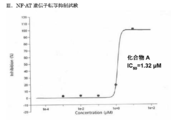
- NF-AT gene transcription repression test Human T lymphocyte Jurkat cells transformed with ⁇ -galactosidase gene (lacZ) having the DNA binding site of transcription factor NFAT-1 in the transcriptional regulatory region, 2.3 x 10 6 / mL, pH 7. 4. Incubate with 0.5 mM A23187 (Calcium ionophore) and 50 ng / mL PMA (Phorbol 12-myristate 13-acetate) together with any concentration of Compound A in RPMI-1640 medium at 37 ° C for 20 minutes. In addition, the cells were further cultured for 4 hours.
- lacZ ⁇ -galactosidase gene
- ⁇ -galactosidase activity was measured by conversion to the fluorescent dye from FDG (fluorochrome di-beta-D-galactopyranoside), fluorescence was measured using a Spectrofluor Plus plate reader, it was determined and IC 50 .
- FDG fluorochrome di-beta-D-galactopyranoside
- NF- ⁇ B gene transcription repression test Human T lymphocyte Jurkat cells transformed with ⁇ -galactosidase gene (lacZ), which has the DNA binding site of transcription factor NF- ⁇ B in the transcriptional regulatory region, 2.3 x 10 6 / mL, pH 7. 4. Incubate with 0.5 mM A23187 (Calcium ionophore) and 50 ng / mL PMA (Phorbol 12-myristate 13-acetate) together with any concentration of Compound A in RPMI-1640 medium at 37 ° C for 20 minutes. In addition, the cells were further cultured for 4 hours.
- lacZ ⁇ -galactosidase gene
- ⁇ -galactosidase activity was measured by conversion to the fluorescent dye from FDG (fluorochrome di-beta-D-galactopyranoside), fluorescence was measured using a Spectrofluor Plus plate reader, it was determined and IC 50 .
- FDG fluorochrome di-beta-D-galactopyranoside
- NF-kB a pleiotropic mediator of inducible and tissue specific gene control.
- Test example 2 (atopic dermatitis mouse model test) A mouse (NC / NgaTndCrlj, male) model of picryl chloride (PiCl) -induced atopic dermatitis was used to assess the effect on skin inflammation and the condition of hair in skin-inflamed skin.
- mice were sensitized by applying PiCl solution to the shaved abdomen and toes, and 5 days after sensitization, the shaved back and left and right ears (internal and external) The induction was repeated by applying a PiCl solution on both sides. Each group was administered once a day for 28 days from 18 days after PiCl sensitization. Compound A and tacrolimus ointment 0.1% were applied openly to a model animal on the back of the neck of about 3 cm ⁇ about 5 cm.
- the dermatitis score and the hair growth score were used for each evaluation. Each score was scored according to the following criteria for dermatitis and hair growth / hair growth on the first, eighth, fifteenth, twenty-second and twenty-nine days (the day after the last administration).
- Edema Qualitative observation of the edema of the auricle, the induction site 0: Asymptomatic: No thickness observed on left and right pinna 1: Mild: Slightly thick on either the left or right 2: Moderate: Clear thickness and tension in any pinna 3: Severe: Clear thickness, tension, and warp in any pinna, and firmness when touched with a finger (4) Scratch / tissue defect: Scratch and tissue defect symptoms at the induction site Observe 0: Asymptomatic: No state of scratch or tissue defect at the induction site 1: Mild: Locally observed at the induction site, non-continuous scratches, no tissue defects 2: Moderate: Scattered at the site of induction, or small continuous scratches, no tissue defects 3: Severe: Overall state at the induction site or widespread continuous scratches and tissue defects (5) Crust formation /
- ⁇ Hair growth and hair growth state The transdermal administration area (neck back: about 3 cm ⁇ about 5 cm) of each individual was used as the observation area.
- the compound A administration group tends to suppress the exacerbation of initial dermatitis with respect to the compound A base group. Moreover, it turns out that the exacerbation of the initial stage dermatitis is suppressed significantly in the combined use group of the compound A and tacrolimus ointment compared with the compound A base group.
- the fatty acid derivative of the present invention has the possibility of suppressing aggravation of dermatitis such as atopic property, and that an effect on atopic dermatitis can be expected by using an immunosuppressant in combination.
- the hair growth score decreased (hair loss progressed) as the dermatitis score increased (deterioration of dermatitis) and after the administration 15 days and 22 days and 29 days of administration.
- the hair growth score increased on the 22nd and 29th day of administration
- the hair growth score increased on the 29th day of administration (improved hair loss) compared to the 22nd day of administration. I understand that it is recognized. This effect is observed in a dose-dependent manner in the compound A administration group, and is also observed in the combination group with prednisolone and tacrolimus ointment.
- the fatty acid derivative of the present invention can suppress / improve the progression of hair loss associated with worsening skin inflammation, and can be used in combination with steroids and immunosuppressants. Especially for the alopecia associated with (atopic) dermatitis that requires treatment of dermatitis itself, the fatty acid derivative of the present invention can make it possible to suppress and improve hair loss even when skin inflammation worsens. I understand.
Landscapes
- Health & Medical Sciences (AREA)
- Chemical & Material Sciences (AREA)
- Organic Chemistry (AREA)
- Life Sciences & Earth Sciences (AREA)
- Pharmacology & Pharmacy (AREA)
- Veterinary Medicine (AREA)
- Public Health (AREA)
- General Health & Medical Sciences (AREA)
- Animal Behavior & Ethology (AREA)
- Medicinal Chemistry (AREA)
- Immunology (AREA)
- Chemical Kinetics & Catalysis (AREA)
- Nuclear Medicine, Radiotherapy & Molecular Imaging (AREA)
- General Chemical & Material Sciences (AREA)
- Bioinformatics & Cheminformatics (AREA)
- Engineering & Computer Science (AREA)
- Epidemiology (AREA)
- Dermatology (AREA)
- Mycology (AREA)
- Microbiology (AREA)
- Rheumatology (AREA)
- Pain & Pain Management (AREA)
- Pulmonology (AREA)
- Transplantation (AREA)
- Pharmaceuticals Containing Other Organic And Inorganic Compounds (AREA)
- Acyclic And Carbocyclic Compounds In Medicinal Compositions (AREA)
- Heterocyclic Compounds That Contain Two Or More Ring Oxygen Atoms (AREA)
Abstract
Priority Applications (5)
| Application Number | Priority Date | Filing Date | Title |
|---|---|---|---|
| CN201280040800.5A CN103974705A (zh) | 2011-06-21 | 2012-06-20 | 用于炎症性疾病、过敏性疾病和自身免疫性疾病的药物组合物 |
| CA2840875A CA2840875A1 (fr) | 2011-06-21 | 2012-06-20 | Composition pharmaceutique pour des maladies inflammatoires, maladies allergiques et maladies auto-immunes |
| US14/128,257 US20140212441A1 (en) | 2011-06-21 | 2012-06-20 | Pharmaceutical composition for inflammatory diseases, allergic diseases and autoimmune diseases |
| EP12802941.0A EP2730283A4 (fr) | 2011-06-21 | 2012-06-20 | Composition pharmaceutique pour des maladies inflammatoires, maladies allergiques et maladies auto-immunes |
| KR1020147000312A KR20140048196A (ko) | 2011-06-21 | 2012-06-20 | 염증성 질환, 알레르기성 질환 및 자가면역 질환을 위한 약학적 조성물 |
Applications Claiming Priority (2)
| Application Number | Priority Date | Filing Date | Title |
|---|---|---|---|
| JP2011-137213 | 2011-06-21 | ||
| JP2011137213 | 2011-06-21 |
Publications (1)
| Publication Number | Publication Date |
|---|---|
| WO2012176792A1 true WO2012176792A1 (fr) | 2012-12-27 |
Family
ID=47422624
Family Applications (1)
| Application Number | Title | Priority Date | Filing Date |
|---|---|---|---|
| PCT/JP2012/065706 Ceased WO2012176792A1 (fr) | 2011-06-21 | 2012-06-20 | Composition pharmaceutique pour des maladies inflammatoires, maladies allergiques et maladies auto-immunes |
Country Status (8)
| Country | Link |
|---|---|
| US (1) | US20140212441A1 (fr) |
| EP (1) | EP2730283A4 (fr) |
| JP (1) | JPWO2012176792A1 (fr) |
| KR (1) | KR20140048196A (fr) |
| CN (1) | CN103974705A (fr) |
| CA (1) | CA2840875A1 (fr) |
| TW (1) | TW201309301A (fr) |
| WO (1) | WO2012176792A1 (fr) |
Citations (8)
| Publication number | Priority date | Publication date | Assignee | Title |
|---|---|---|---|---|
| US4088775A (en) | 1974-07-12 | 1978-05-09 | Schering Aktiengesellschaft | 15-Ethylenedioxy-prostanoic acid derivatives and esters thereof and intermediates thereof |
| US4870104A (en) | 1983-07-08 | 1989-09-26 | Schering Aktiengesellschaft | 11-haloprostane derivatives, processes for their preparation and their use as medicinal agents |
| EP0454429A2 (fr) * | 1990-04-27 | 1991-10-30 | Kabushiki Kaisha Ueno Seiyaku Oyo Kenkyujo | Utilisation de dérivés de la 15-déhydroxy-16-oxoprostaglandine dans la traitement des allergies |
| EP0467564A2 (fr) * | 1990-07-10 | 1992-01-22 | R-Tech Ueno Ltd. | Traitement de maladies inflammatoires à l'aide de dérivés 15-céto-prostaglandines |
| JPH0770054A (ja) * | 1993-08-30 | 1995-03-14 | R Tec Ueno:Kk | 生化学的拮抗および疾患処置剤 |
| US6353014B1 (en) | 1996-11-12 | 2002-03-05 | Alcon Laboratories, Inc. | 15-ketal postaglandins for the treatment of glaucoma or ocular hypertension |
| WO2005013928A1 (fr) | 2003-08-12 | 2005-02-17 | Sucampo Ag | Composition et methode pour favoriser la croissance capillaire |
| WO2006070942A1 (fr) | 2004-12-29 | 2006-07-06 | R-Tech Ueno, Ltd | Preparation et methode pour le traitement du cuir chevelu et des cheveux |
Family Cites Families (6)
| Publication number | Priority date | Publication date | Assignee | Title |
|---|---|---|---|---|
| DE2328132A1 (de) * | 1973-05-30 | 1975-01-02 | Schering Ag | Neue prostansaeurederivate und verfahren zu ihrer herstellung |
| LU87090A1 (fr) * | 1987-12-22 | 1989-07-07 | Oreal | Association de derives de pyrimidine et d'agents anti-inflammatoires non steroidiens pour induire et stimuler la croissance des cheveux et diminuer leur chute |
| JP2002530332A (ja) * | 1998-11-20 | 2002-09-17 | ザ ゼネラル ホスピタル コーポレーション | 毛の成長を促進するためのピレスロイド化合物の使用 |
| JP2003500432A (ja) * | 1999-06-01 | 2003-01-07 | ザ・ユニバーシティ・オブ・テキサス・サウスウエスタン・メディカル・センター | ジフェニルエーテル誘導体を用いて脱毛症を処置する方法 |
| CN101160114B (zh) * | 2004-12-29 | 2013-02-06 | 株式会社·R-技术上野 | 头皮和毛发处理组合物及方法 |
| JP2009084298A (ja) * | 2009-01-28 | 2009-04-23 | Tsujido Kagaku Kk | 養毛・育毛剤 |
-
2012
- 2012-06-20 WO PCT/JP2012/065706 patent/WO2012176792A1/fr not_active Ceased
- 2012-06-20 JP JP2013521593A patent/JPWO2012176792A1/ja active Pending
- 2012-06-20 CA CA2840875A patent/CA2840875A1/fr not_active Abandoned
- 2012-06-20 EP EP12802941.0A patent/EP2730283A4/fr not_active Withdrawn
- 2012-06-20 TW TW101122004A patent/TW201309301A/zh unknown
- 2012-06-20 US US14/128,257 patent/US20140212441A1/en not_active Abandoned
- 2012-06-20 CN CN201280040800.5A patent/CN103974705A/zh active Pending
- 2012-06-20 KR KR1020147000312A patent/KR20140048196A/ko not_active Withdrawn
Patent Citations (8)
| Publication number | Priority date | Publication date | Assignee | Title |
|---|---|---|---|---|
| US4088775A (en) | 1974-07-12 | 1978-05-09 | Schering Aktiengesellschaft | 15-Ethylenedioxy-prostanoic acid derivatives and esters thereof and intermediates thereof |
| US4870104A (en) | 1983-07-08 | 1989-09-26 | Schering Aktiengesellschaft | 11-haloprostane derivatives, processes for their preparation and their use as medicinal agents |
| EP0454429A2 (fr) * | 1990-04-27 | 1991-10-30 | Kabushiki Kaisha Ueno Seiyaku Oyo Kenkyujo | Utilisation de dérivés de la 15-déhydroxy-16-oxoprostaglandine dans la traitement des allergies |
| EP0467564A2 (fr) * | 1990-07-10 | 1992-01-22 | R-Tech Ueno Ltd. | Traitement de maladies inflammatoires à l'aide de dérivés 15-céto-prostaglandines |
| JPH0770054A (ja) * | 1993-08-30 | 1995-03-14 | R Tec Ueno:Kk | 生化学的拮抗および疾患処置剤 |
| US6353014B1 (en) | 1996-11-12 | 2002-03-05 | Alcon Laboratories, Inc. | 15-ketal postaglandins for the treatment of glaucoma or ocular hypertension |
| WO2005013928A1 (fr) | 2003-08-12 | 2005-02-17 | Sucampo Ag | Composition et methode pour favoriser la croissance capillaire |
| WO2006070942A1 (fr) | 2004-12-29 | 2006-07-06 | R-Tech Ueno, Ltd | Preparation et methode pour le traitement du cuir chevelu et des cheveux |
Non-Patent Citations (6)
| Title |
|---|
| "Cell Proliferation in Selected Methods in Cellular Immunology", vol. XXIX, 1980, W.H. FREEMAN CO., pages: 153 - 160 |
| DAYTON JS; TURKA LA; THOMPSON CB; MITCHELL BS: "Comparison of the effects of myoribine with those of zothiaprine, 6 mercaptopurine and mycophenolic acid on T-lymphocyte proliferation and purine ribonucleotide metabolism", MOL PHARMACOL., vol. 41, 1992, pages 671 - 676 |
| EMMEL EA; VERWEIJ CL; DURAND DB; HIGGINS KM; LACY E; CRABTREE GR: "Cyclosporin A specifically inhibits function of the nuclear proteins involved in T cell activation", SCIENCE, vol. 246, 1989, pages 1617 - 1620 |
| KARTTUNEN J; SHASTRI N: "Measurement of ligand- induced activation in single viable T cells using the lacZ reporter gene", PROC NATL ACAD SCI USA., vol. 88, 1991, pages 3972 |
| LENARDO MJ; BALTIMAORE D: "NF-kB: a pleiotropic mediator of inducible and tissue specific gene control", CELL, vol. 58, 1989, pages 227 - 229 |
| See also references of EP2730283A4 |
Also Published As
| Publication number | Publication date |
|---|---|
| CN103974705A (zh) | 2014-08-06 |
| JPWO2012176792A1 (ja) | 2015-02-23 |
| TW201309301A (zh) | 2013-03-01 |
| EP2730283A4 (fr) | 2015-06-03 |
| KR20140048196A (ko) | 2014-04-23 |
| US20140212441A1 (en) | 2014-07-31 |
| CA2840875A1 (fr) | 2012-12-27 |
| EP2730283A1 (fr) | 2014-05-14 |
Similar Documents
| Publication | Publication Date | Title |
|---|---|---|
| JP5318837B2 (ja) | 育毛を促進する組成物および方法 | |
| KR100195430B1 (ko) | 15-케토-프로스타글란딘 화합물에 의한 염증성 질환 치료 | |
| US6956056B2 (en) | Method for providing a cathartic effect | |
| KR101354771B1 (ko) | 중추 신경계 질환 치료를 위한 방법 및 조성물 | |
| AU2017203092B2 (en) | Method for treating schizophrenia | |
| JPWO2012176792A1 (ja) | 炎症性疾患、アレルギー性疾患および自己免疫疾患用途のための医薬組成物 | |
| EP0454429A2 (fr) | Utilisation de dérivés de la 15-déhydroxy-16-oxoprostaglandine dans la traitement des allergies | |
| WO2016067620A1 (fr) | Procédé et composition pour le traitement de la maladie du reflux non érosif | |
| HK1149252A (en) | Composition and method for promoting hair growth | |
| HK1098949B (en) | Composition and method for promoting hair growth |
Legal Events
| Date | Code | Title | Description |
|---|---|---|---|
| 121 | Ep: the epo has been informed by wipo that ep was designated in this application |
Ref document number: 12802941 Country of ref document: EP Kind code of ref document: A1 |
|
| ENP | Entry into the national phase |
Ref document number: 2013521593 Country of ref document: JP Kind code of ref document: A |
|
| NENP | Non-entry into the national phase |
Ref country code: DE |
|
| ENP | Entry into the national phase |
Ref document number: 2840875 Country of ref document: CA |
|
| ENP | Entry into the national phase |
Ref document number: 20147000312 Country of ref document: KR Kind code of ref document: A |
|
| REEP | Request for entry into the european phase |
Ref document number: 2012802941 Country of ref document: EP |
|
| WWE | Wipo information: entry into national phase |
Ref document number: 2012802941 Country of ref document: EP |
|
| WWE | Wipo information: entry into national phase |
Ref document number: 14128257 Country of ref document: US |