WO2012176860A1 - Procédé de criblage de substances ayant un effet régulateur du poids corporel - Google Patents
Procédé de criblage de substances ayant un effet régulateur du poids corporel Download PDFInfo
- Publication number
- WO2012176860A1 WO2012176860A1 PCT/JP2012/065944 JP2012065944W WO2012176860A1 WO 2012176860 A1 WO2012176860 A1 WO 2012176860A1 JP 2012065944 W JP2012065944 W JP 2012065944W WO 2012176860 A1 WO2012176860 A1 WO 2012176860A1
- Authority
- WO
- WIPO (PCT)
- Prior art keywords
- expression
- synoviolin
- synoviolin gene
- gene
- regulating
- Prior art date
- Legal status (The legal status is an assumption and is not a legal conclusion. Google has not performed a legal analysis and makes no representation as to the accuracy of the status listed.)
- Ceased
Links
Images
Classifications
-
- G—PHYSICS
- G01—MEASURING; TESTING
- G01N—INVESTIGATING OR ANALYSING MATERIALS BY DETERMINING THEIR CHEMICAL OR PHYSICAL PROPERTIES
- G01N33/00—Investigating or analysing materials by specific methods not covered by groups G01N1/00 - G01N31/00
- G01N33/48—Biological material, e.g. blood, urine; Haemocytometers
- G01N33/50—Chemical analysis of biological material, e.g. blood, urine; Testing involving biospecific ligand binding methods; Immunological testing
- G01N33/5005—Chemical analysis of biological material, e.g. blood, urine; Testing involving biospecific ligand binding methods; Immunological testing involving human or animal cells
- G01N33/5008—Chemical analysis of biological material, e.g. blood, urine; Testing involving biospecific ligand binding methods; Immunological testing involving human or animal cells for testing or evaluating the effect of chemical or biological compounds, e.g. drugs, cosmetics
- G01N33/5044—Chemical analysis of biological material, e.g. blood, urine; Testing involving biospecific ligand binding methods; Immunological testing involving human or animal cells for testing or evaluating the effect of chemical or biological compounds, e.g. drugs, cosmetics involving specific cell types
-
- A—HUMAN NECESSITIES
- A61—MEDICAL OR VETERINARY SCIENCE; HYGIENE
- A61P—SPECIFIC THERAPEUTIC ACTIVITY OF CHEMICAL COMPOUNDS OR MEDICINAL PREPARATIONS
- A61P3/00—Drugs for disorders of the metabolism
- A61P3/04—Anorexiants; Antiobesity agents
-
- A—HUMAN NECESSITIES
- A61—MEDICAL OR VETERINARY SCIENCE; HYGIENE
- A61P—SPECIFIC THERAPEUTIC ACTIVITY OF CHEMICAL COMPOUNDS OR MEDICINAL PREPARATIONS
- A61P43/00—Drugs for specific purposes, not provided for in groups A61P1/00-A61P41/00
-
- C—CHEMISTRY; METALLURGY
- C12—BIOCHEMISTRY; BEER; SPIRITS; WINE; VINEGAR; MICROBIOLOGY; ENZYMOLOGY; MUTATION OR GENETIC ENGINEERING
- C12Q—MEASURING OR TESTING PROCESSES INVOLVING ENZYMES, NUCLEIC ACIDS OR MICROORGANISMS; COMPOSITIONS OR TEST PAPERS THEREFOR; PROCESSES OF PREPARING SUCH COMPOSITIONS; CONDITION-RESPONSIVE CONTROL IN MICROBIOLOGICAL OR ENZYMOLOGICAL PROCESSES
- C12Q1/00—Measuring or testing processes involving enzymes, nucleic acids or microorganisms; Compositions therefor; Processes of preparing such compositions
- C12Q1/68—Measuring or testing processes involving enzymes, nucleic acids or microorganisms; Compositions therefor; Processes of preparing such compositions involving nucleic acids
- C12Q1/6876—Nucleic acid products used in the analysis of nucleic acids, e.g. primers or probes
- C12Q1/6883—Nucleic acid products used in the analysis of nucleic acids, e.g. primers or probes for diseases caused by alterations of genetic material
-
- G—PHYSICS
- G01—MEASURING; TESTING
- G01N—INVESTIGATING OR ANALYSING MATERIALS BY DETERMINING THEIR CHEMICAL OR PHYSICAL PROPERTIES
- G01N33/00—Investigating or analysing materials by specific methods not covered by groups G01N1/00 - G01N31/00
- G01N33/48—Biological material, e.g. blood, urine; Haemocytometers
- G01N33/50—Chemical analysis of biological material, e.g. blood, urine; Testing involving biospecific ligand binding methods; Immunological testing
- G01N33/5005—Chemical analysis of biological material, e.g. blood, urine; Testing involving biospecific ligand binding methods; Immunological testing involving human or animal cells
- G01N33/5008—Chemical analysis of biological material, e.g. blood, urine; Testing involving biospecific ligand binding methods; Immunological testing involving human or animal cells for testing or evaluating the effect of chemical or biological compounds, e.g. drugs, cosmetics
-
- C—CHEMISTRY; METALLURGY
- C12—BIOCHEMISTRY; BEER; SPIRITS; WINE; VINEGAR; MICROBIOLOGY; ENZYMOLOGY; MUTATION OR GENETIC ENGINEERING
- C12Q—MEASURING OR TESTING PROCESSES INVOLVING ENZYMES, NUCLEIC ACIDS OR MICROORGANISMS; COMPOSITIONS OR TEST PAPERS THEREFOR; PROCESSES OF PREPARING SUCH COMPOSITIONS; CONDITION-RESPONSIVE CONTROL IN MICROBIOLOGICAL OR ENZYMOLOGICAL PROCESSES
- C12Q2600/00—Oligonucleotides characterized by their use
- C12Q2600/136—Screening for pharmacological compounds
-
- G—PHYSICS
- G01—MEASURING; TESTING
- G01N—INVESTIGATING OR ANALYSING MATERIALS BY DETERMINING THEIR CHEMICAL OR PHYSICAL PROPERTIES
- G01N2333/00—Assays involving biological materials from specific organisms or of a specific nature
- G01N2333/90—Enzymes; Proenzymes
- G01N2333/9015—Ligases (6)
Definitions
- the present invention relates to a method for screening a substance having a body weight regulating action.
- Synoviolin is a protein discovered as a membrane protein that is overexpressed in rheumatic patient-derived synovial cells (Patent Document 1). Studies using genetically modified animals revealed that Synoviolin is an essential molecule for the development of rheumatoid arthritis.
- Synoviolin has a RING finger motif. This motif is often found in an enzyme called E3 ubiquitin ligase, which plays an important role in protein ubiquitination.
- E3 ubiquitin ligase an enzyme that plays an important role in protein ubiquitination.
- cioviolin has self-ubiquitination activity, which is one of the characteristics of E3 ubiquitin ligase. It has been proven (Patent Document 1). However, many of the functions of Synoviolin in vivo are unknown. More specifically, there is no report that the disruption of the Synoviolin gene causes weight loss.
- Obesity is caused by lack of exercise, habitual overeating, or metabolic damage due to genetic causes or endocrine diseases. Obesity is a risk factor for inducing various adult diseases such as myocardial infarction and arteriosclerosis, and also aggravating those diseases, so early treatment and prevention are very important. Conventionally, hormone drugs, metabolism promoters, and the like have been used for drug therapy for obesity, but few drugs are known that can safely reduce weight or suppress weight gain.
- the present invention is as follows. [1] Screening for a substance having a body weight regulating action, comprising contacting a test substance with a Synoviolin gene-expressing cell and confirming whether the test substance affects the expression of Synoviolin gene Method. [2] The method according to [1], wherein the effect on the expression of the synoviolin gene is suppression of expression of the synoviolin gene or inactivation of the expressed protein. [3] The method according to [1], wherein the effect on the expression of the synoviolin gene is the promotion of the expression of the synoviolin gene or the activation of the expressed protein.
- a pharmaceutical composition for regulating body weight comprising a nucleic acid comprising 20 to 25 consecutive nucleotide sequences complementary to a transcription product of a synoviolin gene, the nucleic acid suppressing the expression of the synoviolin gene.
- a pharmaceutical composition for body weight regulation comprising an inhibitor of synoviolin protein ubiquitination activity.
- Screening a substance having an effect of regulating the amount of adipose tissue which comprises contacting a test substance with a Synoviolin gene-expressing cell and confirming whether the test substance affects the expression of Synoviolin gene. Way for.
- a pharmaceutical composition for regulating the amount of adipose tissue comprising a nucleic acid comprising 20 to 25 consecutive nucleotide sequences complementary to a transcription product of a synoviolin gene, the nucleic acid suppressing the expression of the synoviolin gene.
- a pharmaceutical composition for regulating the amount of adipose tissue comprising an inhibitor of synoviolin protein ubiquitination activity.
- a pharmaceutical composition for regulation of induction of adipocyte differentiation comprising a nucleic acid comprising 20 to 25 consecutive nucleotide sequences complementary to a transcription product of a synoviolin gene, the nucleic acid suppressing the expression of the synoviolin gene.
- a pharmaceutical composition for regulating adipocyte differentiation induction comprising an inhibitor of synoviolin protein ubiquitination activity.
- test substance used in the present invention.
- the kind of the test substance is not particularly limited, and may be a low molecular synthetic compound, a compound present in a natural product extract, or a synthetic peptide.
- the test substance can also be selected from a compound library, a phage display library or a combinatorial library.
- the body weight regulating action means that the body weight is changed with a significant difference before and after the treatment.
- the body weight regulating action acts through, for example, regulation of adipose tissue volume and regulation of adipocyte differentiation induction.
- Synoviolin is an E3 ubiquitin ligase that functions in endoplasmic reticulum-related degradation and is ubiquitous in mammals.
- the base sequence of Synoviolin can be obtained from a known database. For example, the Accession Number of human Synoviolin is AB024690.
- Synoviolin gene knockout mice mean that the synoviolin gene region has been artificially modified, thereby inhibiting its normal expression, and as a result, synoviolin is not functioning normally in the body. To do.
- the Synoviolin gene can be partially or entirely modified or deleted.
- “all” refers to the region from the 5 ′ end of exon 1 to the 3 ′ end of the last exon of Synoviolin genomic DNA.
- the “part” refers to a part of this region and a length necessary for inhibiting normal expression of the Synoviolin gene.
- “modification” refers to modifying the base sequence of a target region in genomic DNA to another base sequence by substituting, deleting, inserting, and / or transposing single or multiple nucleotides. .
- a knockout animal in which a part or all of the Synoviolin gene is modified or deleted can be produced by a known method. For example, it can be prepared using a gene targeting method as described in the Examples below. In this method, normal expression of Synoviolin can be inhibited by substituting the region containing at least the start codon of exon 1 of Synoviolin gene with another base sequence by homologous recombination. Moreover, the knockout animal used for the screening method of the present invention includes not only the knockout animal produced by the same method but also its offspring.
- the animal that is the target of the knockout animal of the present invention is a non-human animal and is not particularly limited.
- Examples thereof include mammals such as cows, pigs, sheep, goats, rabbits, dogs, cats, guinea pigs, hamsters, mice, rats and the like.
- rabbits, dogs, cats, guinea pigs, hamsters, mice, and rats are preferred for use as experimental animals, of which rodents are more preferred, and many inbred strains have been produced. Considering techniques such as in vitro fertilization, mice and rats are particularly preferable.
- a part of the Synoviolin gene of the target animal is isolated.
- a synoviolin gene is screened from a mouse genomic DNA library.
- a targeting vector for homologous recombination is constructed.
- the genomic DNA clone need not be the full length of the gene, but only the region necessary for disrupting the synoviolin gene and suppressing the expression of synoviolin.
- the targeting vector can be prepared by a known method. For example, using a commercially available plasmid as a backbone, the above genomic DNA clone, a positive selection marker, a negative selection marker, and other fragments are appropriately linked. Can be produced.
- the targeting vector prepared by the above method is introduced into a cell having an individual forming ability (differentiating totipotency) such as a fertilized egg, an early embryo, or an embryonic stem cell (ES cell) by electroporation, etc.
- a cell having an individual forming ability such as a fertilized egg, an early embryo, or an embryonic stem cell (ES cell) by electroporation, etc.
- Cells that have undergone homologous recombination are selected. Sorting can be done using drugs by a positive-negative selection method. After selection, the cells in which the desired homologous recombination has occurred are confirmed by Southern blotting or PCR.
- the cells finally confirmed to have the desired homologous recombination are introduced into 8-cell embryos or blastocysts (blast cysts) collected from the oviduct or uterus during pregnancy.
- the above 8-cell embryo or blastocyst is transferred to a temporary parent according to a conventional method.
- a germline chimeric animal preferably male
- a wild-type animal preferably female
- a wild-type JLP gene homozygously As a first generation (F1), A heterozygote in which one JLP gene is disrupted by homologous recombination can be obtained.
- a homozygote in which both JLP genes on the homologous chromosome are disrupted that is, the JLP knockout animal of the present invention can be obtained as the second generation (F2).
- the homozygote can be identified by cutting a part of the body (eg, tail), extracting the DNA, and examining the genotype by Southern blotting or PCR.
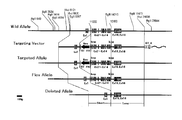
- FIG. 1 A design diagram of the gene targeting vector used for the production of the Synoviolin knockout mouse of this example is shown in FIG.
- normal synoviolin gene Wild allele
- targeting vector for synoviolin knockout mouse production allele that has undergone homologous recombination (Targeted) allele
- allele introduced with the loxP sequence Flox Allele
- Deleted Allele the allele from which the loxP-Exon2-14-loxP has been removed
- the gene region of 14.8 kb which is the region downstream of exon 16 from the upstream of exon 1 of the mouse synoviolin gene, was used for the construction of the targeting vector.
- a Neo resistance gene sandwiched between FRT sequences was inserted between exon 1 and exon 2.
- a loxP sequence was introduced upstream of exon 2 and downstream of exon 14.
- the above targeting vector was introduced into ES cells. Clones having the allele in which the desired homologous recombination occurred were selected by confirming the removal of the loxP-exon-loxP sequence by Cre treatment and the removal of FRT-neomycin-FRT by FLP treatment by the length of the PCR product. .
- ES cell clone in which homologous recombination occurred was introduced into a mouse embryo according to a known method (for example, EMBO J 16: 1850-1857) to obtain a chimeric mouse. Furthermore, this chimeric mouse was crossed with a wild type C57BL / 6 mouse to obtain a mouse from which the neomycin sequence was removed.
- loxP sequence between exon and Long arm incorporated in the targeting vector may be deleted during homologous recombination, its presence was confirmed by PCR.
- mice The obtained neomycin-free mice were crossed with CAG-CreER mice to obtain CAG-CreERsyno fl / fl mice.
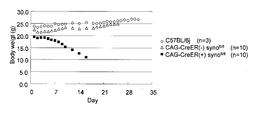
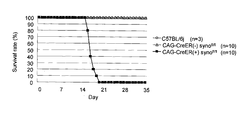
- Tamoxifen was administered to the obtained CAG-CreERsyno fl / fl mice (20 mg / ml (corn oil), 5 mg / 40 g body weight, intraperitoneal administration, administration continuously for 5 days from 0 to 4 days), and loxP-exon-loxP was administered. Elimination was induced (CAG-CreER (+) syno fl / fl ). As controls, groups of C57BL / 6J (solvent control, tamoxifen administration) and (CAG-CreER (-) syn fl / fl ) (solvent control, tamoxifen administration) were provided.
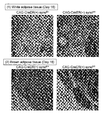
- mice on the 16th day after tamoxifen administration was fixed with 4% formaldehyde, embedded in paraffin, and adipose tissue sections were prepared with a microtome.
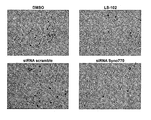
- 3T3-L1 cells were cultured with DMEM (10% FBS, Hihg Glucose) for 3 days after reaching confluence. Differentiation was induced by adding 500 ⁇ M IBMX, 1 ⁇ M Dexamethasone, 5 ⁇ g / ml Insulin. Simultaneously, 10 ⁇ M LS-102 (inhibitor of synoviolin ubiquitination activity) or DMSO was added. After culturing for 3 days, the medium was replaced with a medium containing 4 ⁇ g / ml Insulin, and 10 ⁇ M LS-102 or DMSO was added.
- DMEM 50% FBS, Hihg Glucose
- siRNA Syno770 was introduced with Lipofectamine 2000 two days before differentiation induction.
- Oil Red O Staining 3T3-L1 cells were washed with PBS ( ⁇ ) and fixed with 10% formalin. The plate was washed with PBS ( ⁇ ) and replaced with 60% Isopropanol. The cells were stained with 18 mg / ml OilRedO / Isopropanol for 20 minutes, washed with 60% Isopropanol and PBS ( ⁇ ), and observed with a microscope.
- the method of the present invention is useful for screening a substance having a body weight regulating action.
Landscapes
- Health & Medical Sciences (AREA)
- Life Sciences & Earth Sciences (AREA)
- Engineering & Computer Science (AREA)
- Chemical & Material Sciences (AREA)
- Immunology (AREA)
- Biomedical Technology (AREA)
- Molecular Biology (AREA)
- Hematology (AREA)
- Analytical Chemistry (AREA)
- Organic Chemistry (AREA)
- Urology & Nephrology (AREA)
- Bioinformatics & Cheminformatics (AREA)
- General Health & Medical Sciences (AREA)
- Proteomics, Peptides & Aminoacids (AREA)
- Pathology (AREA)
- Biochemistry (AREA)
- Physics & Mathematics (AREA)
- Microbiology (AREA)
- Biotechnology (AREA)
- Cell Biology (AREA)
- Medicinal Chemistry (AREA)
- Zoology (AREA)
- Genetics & Genomics (AREA)
- Wood Science & Technology (AREA)
- Tropical Medicine & Parasitology (AREA)
- General Physics & Mathematics (AREA)
- Food Science & Technology (AREA)
- Toxicology (AREA)
- Biophysics (AREA)
- General Engineering & Computer Science (AREA)
- Chemical Kinetics & Catalysis (AREA)
- Animal Behavior & Ethology (AREA)
- Pharmacology & Pharmacy (AREA)
- Nuclear Medicine, Radiotherapy & Molecular Imaging (AREA)
- General Chemical & Material Sciences (AREA)
- Veterinary Medicine (AREA)
- Public Health (AREA)
- Child & Adolescent Psychology (AREA)
- Diabetes (AREA)
- Obesity (AREA)
Abstract
Priority Applications (6)
| Application Number | Priority Date | Filing Date | Title |
|---|---|---|---|
| JP2013521622A JP5868403B2 (ja) | 2011-06-22 | 2012-06-22 | 体重調節作用を有する物質をスクリーニングするための方法 |
| CN201280030670.7A CN103635588B (zh) | 2011-06-22 | 2012-06-22 | 用于筛选具有体重调节作用的物质的方法 |
| HK14110142.0A HK1197269B (en) | 2011-06-22 | 2012-06-22 | Method for screening substances having body-weight-regulating effect |
| EP12802212.6A EP2725106B1 (fr) | 2011-06-22 | 2012-06-22 | Procédé de criblage de substances ayant un effet régulateur du poids corporel |
| US14/127,422 US9429567B2 (en) | 2011-06-22 | 2012-06-22 | Method for screening substances having weight-regulating action |
| RU2014101723/10A RU2603745C2 (ru) | 2011-06-22 | 2012-06-22 | Способ скрининга веществ, имеющих регулирующее вес действие |
Applications Claiming Priority (2)
| Application Number | Priority Date | Filing Date | Title |
|---|---|---|---|
| JP2011-138145 | 2011-06-22 | ||
| JP2011138145 | 2011-06-22 |
Publications (1)
| Publication Number | Publication Date |
|---|---|
| WO2012176860A1 true WO2012176860A1 (fr) | 2012-12-27 |
Family
ID=47422688
Family Applications (1)
| Application Number | Title | Priority Date | Filing Date |
|---|---|---|---|
| PCT/JP2012/065944 Ceased WO2012176860A1 (fr) | 2011-06-22 | 2012-06-22 | Procédé de criblage de substances ayant un effet régulateur du poids corporel |
Country Status (6)
| Country | Link |
|---|---|
| US (1) | US9429567B2 (fr) |
| EP (1) | EP2725106B1 (fr) |
| JP (1) | JP5868403B2 (fr) |
| CN (1) | CN103635588B (fr) |
| RU (1) | RU2603745C2 (fr) |
| WO (1) | WO2012176860A1 (fr) |
Cited By (2)
| Publication number | Priority date | Publication date | Assignee | Title |
|---|---|---|---|---|
| WO2014103863A1 (fr) * | 2012-12-26 | 2014-07-03 | Nakajima Toshihiro | Procédé de criblage d'un composé présentant une activité préventive ou thérapeutique contre l'obésité |
| WO2014104224A1 (fr) * | 2012-12-26 | 2014-07-03 | Nakajima Toshihiro | RÉGULATEUR DE FONCTION DE LA PROTÉINE PGC-1β, RÉGULATEUR DE FONCTION MITOCHONDRIALE, AGENT ANTI-OBÉSITÉ ET MÉTHODE DE CRIBLAGE ASSOCIÉE |
Families Citing this family (4)
| Publication number | Priority date | Publication date | Assignee | Title |
|---|---|---|---|---|
| EP4083225A1 (fr) | 2018-02-13 | 2022-11-02 | Illumina, Inc. | Séquençage d'adn à l'aide de billes d'hydrogel |
| KR20200026250A (ko) | 2018-04-20 | 2020-03-10 | 일루미나, 인코포레이티드 | 단일 세포를 캡슐화하는 방법, 캡슐화된 세포 및 이의 용도 |
| MY202795A (en) | 2018-10-26 | 2024-05-22 | Illumina Inc | Modulating polymer beads for dna processing |
| CN114470214B (zh) * | 2022-04-15 | 2022-06-21 | 中国人民解放军军事科学院军事医学研究院 | 去泛素化酶zranb1调节脂质代谢的功能及应用 |
Citations (2)
| Publication number | Priority date | Publication date | Assignee | Title |
|---|---|---|---|---|
| WO2002052007A1 (fr) | 2000-12-22 | 2002-07-04 | Locomogene, Inc. | Proteine de cellule de membrane synoviale |
| WO2010024852A1 (fr) * | 2008-08-28 | 2010-03-04 | Nestec S.A. | Profils d’expression génique associés avec un phénotype maigre et leurs utilisations |
Family Cites Families (3)
| Publication number | Priority date | Publication date | Assignee | Title |
|---|---|---|---|---|
| RU2346688C2 (ru) * | 2002-12-06 | 2009-02-20 | Фиброген, Инк. | Регулирование содержания жира |
| AU2004281142A1 (en) * | 2003-10-20 | 2005-04-28 | Locomogene, Inc. | Method of inhibiting secretase activity |
| WO2006004207A1 (fr) * | 2004-07-02 | 2006-01-12 | Locomogene, Inc. | Anticorps anti-synovioline |
-
2012
- 2012-06-22 WO PCT/JP2012/065944 patent/WO2012176860A1/fr not_active Ceased
- 2012-06-22 EP EP12802212.6A patent/EP2725106B1/fr not_active Not-in-force
- 2012-06-22 RU RU2014101723/10A patent/RU2603745C2/ru not_active IP Right Cessation
- 2012-06-22 JP JP2013521622A patent/JP5868403B2/ja not_active Expired - Fee Related
- 2012-06-22 CN CN201280030670.7A patent/CN103635588B/zh not_active Expired - Fee Related
- 2012-06-22 US US14/127,422 patent/US9429567B2/en not_active Expired - Fee Related
Patent Citations (2)
| Publication number | Priority date | Publication date | Assignee | Title |
|---|---|---|---|---|
| WO2002052007A1 (fr) | 2000-12-22 | 2002-07-04 | Locomogene, Inc. | Proteine de cellule de membrane synoviale |
| WO2010024852A1 (fr) * | 2008-08-28 | 2010-03-04 | Nestec S.A. | Profils d’expression génique associés avec un phénotype maigre et leurs utilisations |
Non-Patent Citations (3)
| Title |
|---|
| EMBO J, vol. 16, pages 1850 - 1857 |
| See also references of EP2725106A4 |
| TOSHIHIRO NAKAJIMA: "Watashi ga Nazuketa Idenshi 26 Synoviolin sono Nameraka na Neiro to Tomoni", EXPERIMENTAL MEDICINE, vol. 25, no. 3, 1 February 2007 (2007-02-01), pages 418 - 421, XP008172341 * |
Cited By (5)
| Publication number | Priority date | Publication date | Assignee | Title |
|---|---|---|---|---|
| WO2014103863A1 (fr) * | 2012-12-26 | 2014-07-03 | Nakajima Toshihiro | Procédé de criblage d'un composé présentant une activité préventive ou thérapeutique contre l'obésité |
| WO2014104224A1 (fr) * | 2012-12-26 | 2014-07-03 | Nakajima Toshihiro | RÉGULATEUR DE FONCTION DE LA PROTÉINE PGC-1β, RÉGULATEUR DE FONCTION MITOCHONDRIALE, AGENT ANTI-OBÉSITÉ ET MÉTHODE DE CRIBLAGE ASSOCIÉE |
| EP2940132A4 (fr) * | 2012-12-26 | 2016-08-17 | Nakajima Toshihiro | Procédé de criblage d'un composé présentant une activité préventive ou thérapeutique contre l'obésité |
| JPWO2014103863A1 (ja) * | 2012-12-26 | 2017-01-12 | 中島 利博 | 肥満症の予防及び治療作用を有する化合物のスクリーニング方法 |
| US9766241B2 (en) | 2012-12-26 | 2017-09-19 | Toshihiro Nakajima | PGC-1beta-protein-function regulator, mitochondria-function regulator, anti-obesity agent, and screening method therefor |
Also Published As
| Publication number | Publication date |
|---|---|
| EP2725106A1 (fr) | 2014-04-30 |
| HK1197269A1 (en) | 2015-01-09 |
| EP2725106B1 (fr) | 2018-08-22 |
| RU2603745C2 (ru) | 2016-11-27 |
| JP5868403B2 (ja) | 2016-02-24 |
| US9429567B2 (en) | 2016-08-30 |
| CN103635588A (zh) | 2014-03-12 |
| RU2014101723A (ru) | 2015-07-27 |
| JPWO2012176860A1 (ja) | 2015-02-23 |
| CN103635588B (zh) | 2015-04-08 |
| US20140127705A1 (en) | 2014-05-08 |
| EP2725106A4 (fr) | 2015-02-18 |
Similar Documents
| Publication | Publication Date | Title |
|---|---|---|
| JP5868403B2 (ja) | 体重調節作用を有する物質をスクリーニングするための方法 | |
| JP7193509B2 (ja) | 上位及び下位運動ニューロン機能並びに知覚の減衰を示す非ヒト動物 | |
| WO2017175745A1 (fr) | Procédé d'élaboration d'animal génétiquement modifié mettant en œuvre un animal à cellules reproductrices manquantes | |
| JP6230546B2 (ja) | 肥満症の予防及び治療作用を有する化合物のスクリーニング方法 | |
| HK1197269B (en) | Method for screening substances having body-weight-regulating effect | |
| JP4171256B2 (ja) | パピローマウイルスベクターを用いたRNAi表現型を有する非ヒト哺乳動物の作製方法 | |
| Tsuiji et al. | Animal models for neurodegenerative disorders | |
| JP2011217626A (ja) | Gm1遺伝子産物欠損非ヒト動物及びその利用法 | |
| US20200080091A1 (en) | Methods for Treating Obesity of a Subject Suffering from Obesity | |
| JP4510490B2 (ja) | Jab1/COP9シグナロソームを利用した細胞増殖等の制御方法 | |
| CN120174021A (zh) | 一种tau基因修饰的非人动物 | |
| Yamanaka | Animal models for neurodegenerative disorders | |
| CN119464380A (zh) | 一种erbb基因人源化非人动物的构建方法及应用 | |
| CN119464382A (zh) | 一种apoc3基因修饰的非人动物 | |
| US9955676B2 (en) | Transgenic model for delay-type hypersensitivity (DTH) and use thereof | |
| JP6078383B2 (ja) | トランスジェニック非ヒト哺乳動物 | |
| CN120099098A (zh) | 一种cldn1基因修饰的非人动物 | |
| HK40033699A (en) | Cell of a rodent exhibiting diminished upper and lower motor neuron function and sensory perception | |
| Tanabe | Modeling Aspects of DYT1 Dystonia at the Cellular and Systems Levels: Implications for TorsinA in Neural Development | |
| HK1249360B (en) | Non-human animal exhibiting diminished upper and lower motor neuron function and sensory perception | |
| JP2008061557A (ja) | Crerecombinaseを神経細胞特異的に発現するマウス | |
| JP2002119170A (ja) | Ube2g1遺伝子欠損非ヒト動物 |
Legal Events
| Date | Code | Title | Description |
|---|---|---|---|
| 121 | Ep: the epo has been informed by wipo that ep was designated in this application |
Ref document number: 12802212 Country of ref document: EP Kind code of ref document: A1 |
|
| ENP | Entry into the national phase |
Ref document number: 2013521622 Country of ref document: JP Kind code of ref document: A |
|
| WWE | Wipo information: entry into national phase |
Ref document number: 14127422 Country of ref document: US |
|
| NENP | Non-entry into the national phase |
Ref country code: DE |
|
| ENP | Entry into the national phase |
Ref document number: 2014101723 Country of ref document: RU Kind code of ref document: A |