WO2012176978A2 - 네트워크 접근 제어시스템 및 방법 - Google Patents
네트워크 접근 제어시스템 및 방법 Download PDFInfo
- Publication number
- WO2012176978A2 WO2012176978A2 PCT/KR2012/003215 KR2012003215W WO2012176978A2 WO 2012176978 A2 WO2012176978 A2 WO 2012176978A2 KR 2012003215 W KR2012003215 W KR 2012003215W WO 2012176978 A2 WO2012176978 A2 WO 2012176978A2
- Authority
- WO
- WIPO (PCT)
- Prior art keywords
- thread
- virtual address
- network
- address space
- access control
- Prior art date
- Legal status (The legal status is an assumption and is not a legal conclusion. Google has not performed a legal analysis and makes no representation as to the accuracy of the status listed.)
- Ceased
Links
Images




Classifications
-
- H—ELECTRICITY
- H04—ELECTRIC COMMUNICATION TECHNIQUE
- H04L—TRANSMISSION OF DIGITAL INFORMATION, e.g. TELEGRAPHIC COMMUNICATION
- H04L12/00—Data switching networks
- H04L12/02—Details
- H04L12/22—Arrangements for preventing the taking of data from a data transmission channel without authorisation
-
- H—ELECTRICITY
- H04—ELECTRIC COMMUNICATION TECHNIQUE
- H04L—TRANSMISSION OF DIGITAL INFORMATION, e.g. TELEGRAPHIC COMMUNICATION
- H04L63/00—Network architectures or network communication protocols for network security
- H04L63/14—Network architectures or network communication protocols for network security for detecting or protecting against malicious traffic
- H04L63/1441—Countermeasures against malicious traffic
-
- G—PHYSICS
- G06—COMPUTING OR CALCULATING; COUNTING
- G06F—ELECTRIC DIGITAL DATA PROCESSING
- G06F21/00—Security arrangements for protecting computers, components thereof, programs or data against unauthorised activity
- G06F21/50—Monitoring users, programs or devices to maintain the integrity of platforms, e.g. of processors, firmware or operating systems
- G06F21/55—Detecting local intrusion or implementing counter-measures
- G06F21/554—Detecting local intrusion or implementing counter-measures involving event detection and direct action
-
- H—ELECTRICITY
- H04—ELECTRIC COMMUNICATION TECHNIQUE
- H04L—TRANSMISSION OF DIGITAL INFORMATION, e.g. TELEGRAPHIC COMMUNICATION
- H04L63/00—Network architectures or network communication protocols for network security
- H04L63/02—Network architectures or network communication protocols for network security for separating internal from external traffic, e.g. firewalls
- H04L63/0227—Filtering policies
Definitions
- the present invention relates to a network access control system and method, and more particularly, to a system and method for controlling network access based on a thread inserted in a process based on code injection.
- the Internet is a network using TCP / IP (Transmission Control Protocol / Internet Protocol).
- TCP / IP Transmission Control Protocol / Internet Protocol
- the area of use of the Internet expands so that individuals and general corporations can access the Internet network and acquire various information. I use it.
- various hacking programs such as viruses are scattered on the Internet, and as the virus enters the network connected to the Internet, the system using the Internet is attacked.
- ICF Internet Connection Firewall
- An Internet connection firewall is a security technology that prevents computer users from influencing unwanted traffic from outside or out of the computer.
- Internet Connection Firewall builds a communication whitelist as a table, and uses network filtering technology to track inbound packets (outbound packets from outside) and outbound packets (outbound packets from computer). Compare with whitelist. If the packet is included in the communication allow list, the traffic of the packet is allowed. If the packet is not included in the communication allow list, the traffic of the packet is blocked. In this case, a process ID and a path of a process allowed for communication by the user are stored in the communication permission list.
- FIG. 1 is a flowchart illustrating a network access blocking method in a conventional Internet connection firewall.
- the Internet connection firewall analyzes the process information (process ID and path) of the process of transmitting or receiving the packet with respect to the network packet (S11), and if the process ID and path are included in the communication allow list (S12), Allow traffic of the packet (S13). However, if the corresponding process ID and path are not included in the communication allow list (S12), the user is verified whether or not to allow the packet to be transmitted or received by the process (S14). If the user allows the transmission of the packet (S15), the process ID and the path of the corresponding process are added to the communication permission list (S16) and the traffic of the corresponding packet is allowed (S13). On the other hand, if the user does not allow the transmission of the packet (S15), the traffic of the packet is blocked (S17).
- Internet Explorer iexplore.exe
- Windows OS a web browser program widely used under the Windows OS, and frequently generates outbound packets and inbound packets. Therefore, if verification is requested for the transmission of a packet originating from Internet Explorer, the user will accept it without any doubt, in which case both outbound packet that Internet Explorer leaks out and inbound packet that flows into Internet Explorer from outside Allowed without further verification by the user.
- the Internet connection firewall controls Internet Explorer's network access by searching the communication permission list using the process ID (ie, Internet Explorer (iexplore.exe)).
- the process ID ie, Internet Explorer (iexplore.exe)
- the Internet Connection Firewall controls access to the network based on the process ID for normal packets through other normal threads in Internet Explorer.
- An object of the present invention has been made in order to solve the above problems of the prior art, network access control system that improves the user's convenience and security strength by allowing or blocking the traffic of the network packet based on the thread ID as well as the process ID and It is to provide a method.
- the network access control system includes a process checker that detects a code injection-based thread included in a process, detects a network packet that accesses a network by performing network filtering, and detects a network packet of the detected network packet. If the injection-based thread is characterized in that it comprises a network monitoring unit to block the traffic of the detected network packet.
- the network access control method the first step of the network access control system to collect the process information running on the computer, the network access control system code injected virtual address space included in the collected process A second step of detecting an area, a third step of the network access control system detecting whether a code injection-based thread exists in the code injected virtual address space, and the network access control system performing network filtering to filter network packet traffic And a fourth step of collecting and a fifth step of allowing or blocking the traffic of the network packet by the network access control system using the code injection-based thread information.
- FIG. 1 is a flowchart illustrating a network access blocking method in a conventional Internet connection firewall.
- FIG. 2 is a view illustrating a problem of the network access blocking method according to the prior art.
- FIG. 3 is a block diagram of a network access control system according to the present invention.
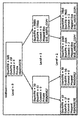
- FIG. 4 is an exemplary diagram illustrating the Bad tree structure of an arbitrary process.
- FIG. 5 is a diagram illustrating a memory structure representing a bad tree structure of the process of FIG. 4.
- FIG. 6 is an operation flowchart illustrating a network access control method according to the present invention.
- FIG. 7 is a detailed operation flowchart illustrating a step S62 of detecting a code injected virtual address space region of any one process in FIG. 6.
- FIG. 8 is a detailed operation flowchart illustrating a step S63 of detecting a thread, that is, a code injection-based thread, based on the code injected virtual address space detected in step S62 of FIG. 6.
- FIG. 9 is a detailed flowchart illustrating an operation S65 of controlling a network packet by using code injection-based thread information detected in operation S63 of FIG. 6.
- process inspecting unit 311 process information collecting unit
- code injection detection unit 313 code injection based thread detection unit
- FIG. 3 is a block diagram of a network access control system according to the present invention.
- the process inspection unit 310 detects a code injection-based thread in the process, and performs a network filtering to detect a network packet that accesses the network, and the communication subject of the detected network packet is If the code injection-based thread includes a network monitoring unit 320 to block the transmission of the detected network packet.
- the process inspecting unit 310 may include a process information collecting unit 311 for collecting process information running on a computer, a code injection detecting unit 312 for detecting an area where a code is injected into a process collected by the process information collecting unit, And a code injection-based thread detector 313 for detecting a thread generated based on the code injected region.
- the network monitoring unit 320 performs network filtering to detect the network packet, and the network monitoring unit 320 detects the network packet based on the process ID and thread ID of the subject communicating (sending or receiving) the network packet.
- Network blocker 322 to allow or block transmission.
- the process information collection unit 311 collects process information by collecting a process structure for each process for a process running on a computer. As a method of collecting process information for each process, the process information collecting unit 311 may enumerate processes using the EnumProcesses function of psapi.dll, collect process structures for each process, and process information using the ZwQuerySystemInformation function.
- the code injection detector 312 detects a code injected area in each process collected by the process information collector 311.
- the code injection detection unit 312 includes a virtual address space information collecting unit 312a for collecting the virtual address space information allocated to the process and a virtual address space research unit 312b for checking whether the code is injected into the collected virtual address space. Include.
- the virtual address space information collecting unit 312a may collect virtual address space information allocated to a process, including: checking a BadRoot member of a process structure at a kernel level; There is a way to use the VirtualQueryEx function at the user level.
- the virtual address space information collecting unit 312a describes in detail how to collect virtual address space information allocated to a process by inspecting a BadRoot member of the process structure EProcess.
- a bad is a virtual address descriptor (Virtual Address Descriptor), typically a plurality of virtual address spaces are allocated to one process, each bad represents each virtual address space allocated to the process. do.
- the process structure collected by the process information collecting unit 311 is an object managed at the kernel level (Kernel Level), includes the internal information of the process, and includes a double BadRoot member.
- This BadRoot is a tree-type data structure that manages memory address information allocated to processes.
- FIG. 4 is an exemplary diagram illustrating the Bad tree structure of an arbitrary process.
- each rectangular block corresponds to one bad, a start address (StartVPN) and an end address (EndVPN), and a memory type (Private /) of a virtual page number (VPN) of a virtual address space.
- Mapped Exe / Mapped and the protect flag value (READWRITE / READONLY / EXE_WRITE_COPY) are described.
- the virtual address space information collecting unit 312a is based on the BadRoot of the process structure, which virtual address ranges (start address and end address) are allocated to the virtual address space allocated to the process, and You can collect it by checking its properties (memory type, protection flag value).
- FIG. 5 is a diagram illustrating a memory structure representing a bad tree structure of the process of FIG. 4.
- the virtual address space information collecting unit 312a will be described in detail how to collect the virtual address space information allocated to the process using the VirtualQueryEx function at the user level. If you use the VirtualQueryEx function at the user level, you can get information about the queried virtual address.
- the query result of the VirtualQueryEx function is obtained in the form of a MEMORY_BASIC_INFORMATION structure.
- This MEMORY_BASIC_INFORMATION structure is similar to the information obtained through BadRoot described above, and the virtual address range (start address and end address) allocated to the virtual address space for each virtual address space allocated to the process, and its properties (memory). Type, and the protection flag value) can be checked. Detailed usage of the VirtualQueryEx function can be found at the link below.
- the virtual address space research unit 312b uses the attribute information of each virtual address space collected by the virtual address space information collection unit 312a to check whether code injection is performed in the corresponding virtual address space.
- the memory type of the virtual address space allocated to the DLL file is a mapped type, and the protection flag value is executable.
- the memory type of the code injected virtual address space is a private type and the protect flag value is executable.
- the virtual address space inspecting unit 312b checks the virtual address space if the memory type of the virtual address spaces allocated to the process is not a mapping type but a private type, and the protection flag value is executable. Determined as the code injection area.
- the virtual address space research unit 312b transmits virtual address range (start address and end address) information of the virtual address space determined as the code injection area to the code injection-based thread detector 313.
- the code injection-based thread detector 313 may include a thread information collector 313a which collects information about all threads executed in a process, a start address value Win32StartAddress of the collected threads, and the virtual address space researcher ( Comparing the virtual address range of the code injected virtual address space provided in 312b), and if the starting address value of the collected thread belongs to the virtual address range of the code injected virtual address space, code injection is performed into the code injected virtual address space. And an address comparison unit 313b for determining that the base thread exists.
- the thread information collecting unit 313a collects information about all threads executed in the process, such as checking the thread list head of the process structure (EProcess), using the ZwQuerySystemInformation function, and the like. Various methods are included.
- the EProcess is a structure that contains information about processes used at the kernel level.
- the ThreadListHead member of the process structure contains information about all threads running in the process. Included.
- the ThreadListHead member is in the form of a linked list, and the thread structure (EThread) can be obtained through each entry connected to it.
- the thread structure (EThread) is a structure that contains information about threads used at the kernel level. Accordingly, the thread information collecting unit 313a collects and examines a thread structure through a thread list head member and collects information on all threads existing in the process.
- the thread information collecting unit 313a collects thread information using the ZwQuerySystemInformation function.
- the ZwQuerySystemInformation function is used to obtain system information.
- the type of information obtained depends on the SystemInformationClass.
- the SystemInformationClass to SystemProcessesAndThreadsInformation to call the ZwQuerySystemInformation function, to obtain the process-specific thread information.
- SystemInformation is a memory space that contains all processes and thread information for each process. You can access the SYSTEM_PROCESSES structure through SystemInformation and eventually get SYSTEM_THREADS that exists as an array. You can also use the NextEntryDelta member of the SYSTEM_PROCESSES structure to navigate to the SYSTEM_PROCESSES structure area for the next process.
- the address comparison unit 313b compares the start address value (Win32StartAddress) of any thread executed in the process with the virtual address range of the code-injected virtual address space of the process to obtain the start address value of the collected thread. If it belongs to the virtual address range of the code injected virtual address space, it is determined that the code injection-based thread exists, the network injection unit 322 by adding the process ID and thread ID of the code injection-based thread to the blocking thread list To pass.
- Win32StartAddress start address value of any thread executed in the process with the virtual address range of the code-injected virtual address space of the process to obtain the start address value of the collected thread. If it belongs to the virtual address range of the code injected virtual address space, it is determined that the code injection-based thread exists, the network injection unit 322 by adding the process ID and thread ID of the code injection-based thread to the blocking thread list To pass.
- the network filter unit 321 monitors network packet traffic by performing normal network filtering.
- a network filtering method of the network filter unit 321 a network filter driver can be used at the kernel level, and the NDIS_OPEN_BLOCK hooking method, the Ndis Intermediate Driver implementation method, the TDI hooking method, and the WFP (Windows Filtering Platform) can be used at the kernel level. Various methods, including how to use).
- the network filtering method of the network filter unit 321 at the user level, it is possible to monitor the network packet traffic by hooking a socket function used by the specific process with a specific process as a target.
- the network blocker 322 allows or blocks the traffic of the corresponding network packet by using the process ID and thread ID of the sender or receiver of the network packet. That is, if the thread ID of the network packet is included in the blocking thread list, the traffic of the network packet is blocked, and if the process ID of the network packet is included in the allowed process list without including the thread ID of the network packet in the blocking thread list, Allow traffic from network packets. On the other hand, if the process ID of the network packet is not included in the allowed process list, the user is verified and the corresponding traffic is allowed or blocked based on the user verification result.
- FIG. 6 is an operation flowchart illustrating a network access control method according to the present invention.
- the network access control system collects process information executed in the computer (S61). Next, a code injected virtual address space area is detected for each collected process (S62). Next, it is detected whether a code injection-based thread exists in the code injected virtual address space (S63). Next, if network packet traffic is detected (S64), based on the code injection-based thread allows or blocks the traffic of the network packet (S65).
- FIG. 7 is a detailed operation flowchart illustrating a step S62 of detecting a code injected virtual address space region of any one process in FIG. 6.
- the step S62 of detecting the code injected virtual address space region is performed as follows.
- the network access control system collects information on the virtual address spaces forming the process (S71).
- One virtual address space is selected as the target virtual address space (S72), and it is checked whether the memory type of the target virtual address space is a private type (S73). If the memory type of the test target virtual address space is a private type in step S73, it is checked whether the protect flag value of the test target virtual address space is executable (EXECUTABLE) (S74). If the protection flag value of the test target virtual address space is executable in step S74, the test target virtual address space is determined as a code injection region (S75), and the virtual information range of the code injected virtual address space is code injection-based thread. Transfer to the detection unit (S76).
- step S77 it is checked whether the target virtual address space is the last virtual address space (S77), and if it is not the last virtual address space, the process is repeated from step S72. On the other hand, if the memory type of the inspected virtual address space is not a private type in step S73 or the protect flag value of the inspected virtual address space is not executable in step S74, the flow proceeds directly to step S77.
- FIG. 8 is a detailed operation flowchart illustrating a step S63 of detecting a thread, that is, a code injection-based thread, based on the code injected virtual address space detected in step S62 of FIG. 6.
- Detecting the code injection-based thread is performed as follows.
- the network access control system collects thread information running on the computer (S81).
- One thread of the collected thread information is selected as a thread to be examined (S82), and a comparison is made whether a starting address value of the thread to be checked belongs to a virtual address range of the code-injected virtual address space (S83).
- S83 a virtual address range of the code-injected virtual address space
- S84 determines a code injection-based thread exists in the code injected virtual address space (S84).
- step S85 the process ID and thread ID of the code injection-based thread is included in the blocking thread list and then transferred to the network blocking unit (S86).
- the process ID and thread ID of the code injection-based thread may be included in the blocked thread list after user verification.
- step S87 it is checked whether the thread to be inspected is the last thread (S87), and if it is not the last thread, the process is repeated from step S82. On the other hand, if the starting address value of the thread to be inspected in step S84 does not belong to the virtual address range of the code-injected virtual address space, the flow proceeds directly to step S87.
- FIG. 9 is a detailed flowchart illustrating an operation S65 of controlling a network packet by using code injection-based thread information detected in operation S63 of FIG. 6.
- the network packet control step S65 is performed as follows.
- the network access control system performs network filtering to collect network packets transmitted and received from the computer (S91).
- process ID, thread ID, and full path information of the collected network packet are collected.
- the process ID and the thread ID are included in the blocked thread list (S93)
- the traffic of the collected network packets is blocked (S94). If the process ID and thread ID of the collected network packet are not included in the blocked thread list in step S93, it is checked whether the process ID is included in the allowed process list (S95). If the process ID is included in the allowed process list in step S95, traffic of the collected network packets is allowed (S96).
- step S95 if the process ID is not included in the allowed process list in step S95, the user ID is requested for the process ID (S97), and if allowed by the user (S98), the process ID of the collected network packets is added to the allowed process list. After adding (S99), the traffic of the collected network packet is allowed (S96). On the other hand, if not allowed by the user in step S98, the traffic of the collected network packet is blocked (S94).
Landscapes
- Engineering & Computer Science (AREA)
- Computer Security & Cryptography (AREA)
- General Engineering & Computer Science (AREA)
- Computer Hardware Design (AREA)
- Computer Networks & Wireless Communication (AREA)
- Signal Processing (AREA)
- Computing Systems (AREA)
- Theoretical Computer Science (AREA)
- Software Systems (AREA)
- Physics & Mathematics (AREA)
- General Physics & Mathematics (AREA)
- Data Exchanges In Wide-Area Networks (AREA)
- Computer And Data Communications (AREA)
Abstract
Description
Claims (26)
- 프로세스에 포함된 코드 인젝션 기반 스레드를 탐지하는 프로세스 검사부와,네트워크 필터링을 수행하여 네트워크에 접근하는 네트워크 패킷을 탐지하고 상기 탐지된 네트워크 패킷의 통신 주체가 상기 코드 인젝션 기반 스레드이면 상기 탐지된 네트워크 패킷의 트래픽이 차단되도록 하는 네트워크 감시부를 포함한 것을 특징으로 하는 네트워크 접근 제어시스템.
- 제 1 항에 있어서, 상기 프로세스 검사부는 컴퓨터에서 실행중인 프로세스 정보를 수집하는 프로세스 정보 수집부와, 상기 프로세스 정보 수집부에서 수집된 프로세스에서 코드 인젝션된 영역을 탐지하는 코드 인젝션 탐지부와, 상기 코드 인젝션된 영역을 기반으로 생성된 스레드를 탐지하는 코드 인젝션 기반 스레드 탐지부를 포함한 것을 특징으로 하는 네트워크 접근 제어시스템.
- 제 2 항에 있어서, 상기 프로세스 정보 수집부는 상기 컴퓨터에서 실행중인 프로세스별로 프로세스구조체를 수집한 것을 특징으로 하는 네트워크 접근 제어시스템.
- 제 2 항에 있어서, 상기 코드 인젝션 탐지부는 상기 수집된 프로세스에 할당된 가상주소공간의 가상 주소 범위와 속성 정보를 수집하는 가상주소공간 정보 수집부와, 상기 가상주소공간 정보 수집부에서 수집된 가상주소공간에 코드 인젝션 여부를 조사하는 가상주소공간 조사부를 포함한 것을 특징으로 하는 네트워크 접근 제어시스템.
- 제 4 항에 있어서, 상기 가상주소공간 정보 수집부는 커널레벨(Kernel Level)에서 프로세스구조체(EProcess)의 배드루트(VadRoot) 멤버를 검사하여 상기 수집된 프로세스에 할당된 가상주소공간의 가상 주소 범위와 속성 정보를 수집하는 것을 특징으로 하는 네트워크 접근 제어시스템.
- 제 4 항에 있어서, 상기 가상주소공간 정보 수집부는 유저레벨(User Level)에서 VirtualQueryEx 함수 사용하여 상기 수집된 프로세스에 할당된 가상주소공간의 가상 주소 범위와 속성 정보를 수집하는 것을 특징으로 하는 네트워크 접근 제어시스템.
- 제 4 항에 있어서, 상기 가상주소공간 조사부는 상기 가상주소공간 정보 수집부에서 수집된 상기 가상주소공간의 속성 정보 중 메모리타입이 프라이빗 타입(Private type)이고, 프로텍트 플래그값이 실행가능(executable)이면, 상기 가상주소공간을 코드 인젝션 영역으로 판단하는 것을 특징으로 하는 네트워크 접근 제어시스템.
- 제 2 항에 있어서, 상기 코드 인젝션 기반 스레드 탐지부는 컴퓨터에서 실행중인 스레드 정보를 수집하는 스레드 정보 수집부와, 상기 스레드 정보 수집부에서 수집된 스레드의 시작 주소값과 상기 가상주소공간 조사부에서 제공된 코드 인젝션된 가상주소공간의 가상 주소 범위를 비교하여 상기 수집된 스레드의 시작 주소값이 상기 코드 인젝션된 가상주소공간의 가상 주소 범위에 속하면 상기 코드 인젝션된 가상주소공간에 코드 인젝션 기반 스레드가 존재하는 것으로 판단하는 주소 비교부를 포함한 것을 특징으로 하는 네트워크 접근 제어시스템.
- 제 8 항에 있어서, 상기 스레드 정보 수집부는 프로세스구조체(EProcess)의 스레드리스트헤드(ThreadListHead)를 검사하여 상기 컴퓨터에서 실행중인 스레드 정보를 수집하는 것을 특징으로 하는 네트워크 접근 제어시스템.
- 제 8 항에 있어서, 상기 스레드 정보 수집부는 ZwQuerySystemInformation 함수를 사용하여 상기 컴퓨터에서 실행중인 스레드 정보를 수집하는 것을 특징으로 하는 네트워크 접근 제어시스템.
- 제 1 항에 있어서, 상기 네트워크 감시부는 상기 네트워크 패킷을 필터링하는 네트워크 필터부와, 상기 네트워크 패킷의 통신 주체의 프로세스 아이디 및 스레드 아이디를 기반으로 상기 네트워크 패킷의 트래픽을 허용 또는 차단하는 네트워크 차단부를 포함한 것을 특징으로 하는 네트워크 접근 제어시스템.
- 제 11 항에 있어서, 상기 네트워크 필터부는 커널레벨에서 네트워크 필터 드라이버를 사용하여 네트워크 필터링하는 것을 특징으로 네트워크 접근 제어시스템.
- 제 11 항에 있어서, 상기 네트워크 필터부는 유저레벨에서 프로세스가 사용하는 소켓함수를 후킹하여 네트워크 필터링하는 것을 특징으로 하는 네트워크 접근 제어시스템.
- 네트워크 접근 제어시스템이 컴퓨터에서 실행되는 프로세스 정보를 수집하는 제1단계와,상기 네트워크 접근 제어시스템이 상기 수집된 프로세스에 포함된 코드 인젝션된 가상주소공간 영역을 탐지하는 제2단계와,상기 네트워크 접근 제어시스템이 상기 코드 인젝션된 가상주소공간에 코드 인젝션 기반 스레드가 존재하는지를 탐지하는 제3단계와,상기 네트워크 접근 제어시스템이 네트워크 필터링하여 네트워크 패킷 트래픽을 수집하는 제4단계와,상기 네트워크 접근 제어시스템이 상기 코드 인젝션 기반 스레드 정보를 이용하여 상기 네트워크 패킷의 트래픽을 허용 또는 차단하는 제5단계를 포함하는 것을 특징으로 하는 네트워크 접근 제어방법.
- 제 14 항에 있어서, 상기 제1단계는 상기 컴퓨터에서 실행중인 프로세스별로 프로세스구조체를 수집한 것을 특징으로 하는 네트워크 접근 제어방법.
- 제 14 항에 있어서, 상기 제2단계는, 상기 네트워크 접근 제어시스템이 상기 수집된 프로세스에 할당된 상기 가상주소공간들에 대한 정보를 수집하는 제21단계와,상기 네트워크 접근 제어시스템이 검사대상 가상주소공간을 선택하고, 상기 검사대상 가상주소공간의 메모리타입과 프로텍트 플래그값을 검사하는 제22단계와,상기 제22단계의 검사 결과, 상기 검사대상 가상주소공간의 메모리타입이 프라이빗 타입이고 프로텍트 플래그값이 실행가능(EXECUTABLE)이면 상기 검사대상 가상주소공간을 코드 인젝션 영역으로 판단하는 제23단계를 포함하는 것을 특징으로 하는 네트워크 접근 제어방법.
- 제 16 항에 있어서, 상기 제21단계는 커널레벨(Kernel Level)에서 프로세스구조체(EProcess)의 배드루트(VadRoot) 멤버를 검사하여 상기 수집된 프로세스에 할당된 가상주소공간의 가상 주소 범위와 속성 정보를 수집하는 것을 특징으로 하는 네트워크 접근 제어방법.
- 제 16 항에 있어서, 상기 제21단계는 유저레벨(User Level)에서 VirtualQueryEx 함수 사용하여 상기 수집된 프로세스에 할당된 가상주소공간의 가상 주소 범위와 속성 정보를 수집하는 것을 특징으로 하는 네트워크 접근 제어방법.
- 제 14 항에 있어서, 상기 제3단계는 상기 네트워크 접근 제어시스템이 상기 컴퓨터에서 실행되는 스레드 정보를 수집하는 제31단계와,상기 네트워크 접근 제어시스템이 검사대상 스레드를 선택하고 상기 검사대상 스레드의 시작 주소값이 상기 코드 인젝션된 가상주소공간의 가상 주소 범위에 속하는지를 비교하는 제32단계와,상기 제32단계의 비교 결과, 상기 검사대상 스레드의 시작 주소값이 상기 코드 인젝션된 가상주소공간의 가상 주소 범위에 속하면 상기 코드 인젝션된 가상주소공간에 코드 인젝션 기반 스레드가 존재하는 것으로 판단하는 제33단계를 포함하는 것을 특징으로 하는 네트워크 접근 제어방법.
- 제 19 항에 있어서, 상기 제33단계 후 상기 코드 인젝션 기반 스레드의 프로세스 아이디 및 스레드 아이디를 차단스레드목록에 포함하는 것을 특징으로 하는 네트워크 접근 제어방법.
- 제 19 항에 있어서, 상기 제31단계는 프로세스구조체(EProcess)의 스레드리스트헤드(ThreadListHead)를 검사하여 상기 컴퓨터에서 실행중인 스레드 정보를 수집하는 것을 특징으로 하는 네트워크 접근 제어방법.
- 제 19 항에 있어서, 상기 제31단계는 ZwQuerySystemInformation 함수를 사용하여 상기 컴퓨터에서 실행중인 스레드 정보를 수집하는 것을 특징으로 하는 네트워크 접근 제어방법.
- 제 14 항에 있어서, 상기 제4단계는 커널레벨에서 네트워크 필터 드라이버를 사용하여 네트워크 필터링하는 것을 특징으로 네트워크 접근 제어방법.
- 제 14 항에 있어서, 상기 제4단계는 유저레벨에서 프로세스가 사용하는 소켓함수를 후킹하여 네트워크 필터링하는 것을 특징으로 하는 네트워크 접근 제어방법.
- 제 14 항에 있어서, 상기 제5단계는 상기 네트워크 접근 제어시스템이 상기 코드 인젝션 기반 스레드의 프로세스 아이디 및 스레드 아이디를 차단스레드목록에 저장하는 제51단계와,상기 네트워크 접근 제어시스템이 상기 수집된 네트워크 패킷의 프로세스 아이디와 스레드 아이디 정보를 수집하는 제52단계와,상기 네트워크 접근 제어시스템이 상기 제52단계에서 수집된 상기 프로세스 아이디 및 스레드 아이디가 상기 차단 스레드 목록에 포함되면, 상기 수집된 네트워크 패킷의 트래픽을 차단하는 제53단계와,상기 네트워크 접근 제어시스템이 상기 수집된 네트워크 패킷의 프로세스 아이디 및 스레드 아이디가 차단 스레드 목록에 포함되지 않고 상기 프로세스 아이디가 허용 프로세스 목록에 포함되면, 상기 수집된 네트워크 패킷의 트래픽을 허용하는 제54단계를 포함하는 것을 특징으로 하는 네트워크 접근 제어방법.
- 제 25 항에 있어서, 상기 제51단계는 상기 네트워크 접근 제어시스템이 사용자 검증 후 상기 코드 인젝션 기반 스레드의 프로세스 아이디 및 스레드 아이디를 차단스레드목록에 저장하는 것을 특징으로 하는 네트워크 접근 제어방법.
Priority Applications (2)
| Application Number | Priority Date | Filing Date | Title |
|---|---|---|---|
| JP2014516890A JP5956570B2 (ja) | 2011-06-23 | 2012-04-26 | ネットワークアクセス制御システムおよび方法 |
| US14/127,199 US9246937B2 (en) | 2011-06-23 | 2012-04-26 | Network access control system and method |
Applications Claiming Priority (2)
| Application Number | Priority Date | Filing Date | Title |
|---|---|---|---|
| KR10-2011-0061162 | 2011-06-23 | ||
| KR1020110061162A KR101206853B1 (ko) | 2011-06-23 | 2011-06-23 | 네트워크 접근 제어시스템 및 방법 |
Publications (2)
| Publication Number | Publication Date |
|---|---|
| WO2012176978A2 true WO2012176978A2 (ko) | 2012-12-27 |
| WO2012176978A3 WO2012176978A3 (ko) | 2013-02-14 |
Family
ID=47423039
Family Applications (1)
| Application Number | Title | Priority Date | Filing Date |
|---|---|---|---|
| PCT/KR2012/003215 Ceased WO2012176978A2 (ko) | 2011-06-23 | 2012-04-26 | 네트워크 접근 제어시스템 및 방법 |
Country Status (4)
| Country | Link |
|---|---|
| US (1) | US9246937B2 (ko) |
| JP (1) | JP5956570B2 (ko) |
| KR (1) | KR101206853B1 (ko) |
| WO (1) | WO2012176978A2 (ko) |
Families Citing this family (20)
| Publication number | Priority date | Publication date | Assignee | Title |
|---|---|---|---|---|
| KR101421630B1 (ko) | 2013-01-28 | 2014-07-22 | 주식회사 잉카인터넷 | 코드 인젝션된 악성코드 탐지 시스템 및 방법 |
| GB2510641A (en) * | 2013-02-12 | 2014-08-13 | F Secure Corp | Detecting suspicious code injected into a process if function call return address points to suspicious memory area |
| KR101444141B1 (ko) * | 2013-05-03 | 2014-09-26 | 주식회사 잉카인터넷 | 악성스레드 처리 시스템 및 방법 |
| US9407602B2 (en) * | 2013-11-07 | 2016-08-02 | Attivo Networks, Inc. | Methods and apparatus for redirecting attacks on a network |
| US9710648B2 (en) | 2014-08-11 | 2017-07-18 | Sentinel Labs Israel Ltd. | Method of malware detection and system thereof |
| US11507663B2 (en) | 2014-08-11 | 2022-11-22 | Sentinel Labs Israel Ltd. | Method of remediating operations performed by a program and system thereof |
| US9690928B2 (en) * | 2014-10-25 | 2017-06-27 | Mcafee, Inc. | Computing platform security methods and apparatus |
| US20160357958A1 (en) * | 2015-06-08 | 2016-12-08 | Michael Guidry | Computer System Security |
| US11616812B2 (en) | 2016-12-19 | 2023-03-28 | Attivo Networks Inc. | Deceiving attackers accessing active directory data |
| US11695800B2 (en) | 2016-12-19 | 2023-07-04 | SentinelOne, Inc. | Deceiving attackers accessing network data |
| US10664594B2 (en) | 2017-06-30 | 2020-05-26 | Microsoft Technology Licensing, Llc | Accelerated code injection detection using operating system controlled memory attributes |
| EP3643040A4 (en) | 2017-08-08 | 2021-06-09 | SentinelOne, Inc. | Methods, systems, and devices for dynamically modeling and grouping endpoints for edge networking |
| US11470115B2 (en) | 2018-02-09 | 2022-10-11 | Attivo Networks, Inc. | Implementing decoys in a network environment |
| WO2020236981A1 (en) | 2019-05-20 | 2020-11-26 | Sentinel Labs Israel Ltd. | Systems and methods for executable code detection, automatic feature extraction and position independent code detection |
| US12056239B2 (en) | 2020-08-18 | 2024-08-06 | Micro Focus Llc | Thread-based malware detection |
| US11579857B2 (en) | 2020-12-16 | 2023-02-14 | Sentinel Labs Israel Ltd. | Systems, methods and devices for device fingerprinting and automatic deployment of software in a computing network using a peer-to-peer approach |
| US11899782B1 (en) | 2021-07-13 | 2024-02-13 | SentinelOne, Inc. | Preserving DLL hooks |
| US12452273B2 (en) | 2022-03-30 | 2025-10-21 | SentinelOne, Inc | Systems, methods, and devices for preventing credential passing attacks |
| WO2024044559A1 (en) | 2022-08-22 | 2024-02-29 | SentinelOne, Inc. | Systems and methods of data selection for iterative training using zero knowledge clustering |
| US12468810B2 (en) | 2023-01-13 | 2025-11-11 | SentinelOne, Inc. | Classifying cybersecurity threats using machine learning on non-euclidean data |
Family Cites Families (12)
| Publication number | Priority date | Publication date | Assignee | Title |
|---|---|---|---|---|
| KR20040089386A (ko) * | 2003-04-14 | 2004-10-21 | 주식회사 하우리 | 메모리를 감염시키는 바이러스의 치료방법, 프로그램을기록한 컴퓨터로 읽을 수 있는 기록매체 및 바이러스의치료장치 |
| KR20050053401A (ko) * | 2003-12-02 | 2005-06-08 | 주식회사 하우리 | 컴퓨터 바이러스 방역방법과 그 프로그램을 기록한 기록매체 |
| KR100468374B1 (ko) | 2004-07-06 | 2005-01-31 | 주식회사 잉카인터넷 | 네트워크 유해 트래픽 제어 장치 및 방법 |
| KR100645983B1 (ko) | 2005-08-31 | 2006-11-14 | (주)와이즈로직 | 불법 프로세스 검출 모듈 및 그 방법 |
| JP4811033B2 (ja) * | 2006-01-30 | 2011-11-09 | 富士ゼロックス株式会社 | 情報処理装置 |
| US8769672B2 (en) | 2006-08-03 | 2014-07-01 | Symantec Corporation | Code injection prevention |
| CN101350052B (zh) * | 2007-10-15 | 2010-11-03 | 北京瑞星信息技术有限公司 | 发现计算机程序的恶意行为的方法和装置 |
| US8387139B2 (en) | 2008-02-04 | 2013-02-26 | Microsoft Corporation | Thread scanning and patching to disable injected malware threats |
| KR20100078081A (ko) * | 2008-12-30 | 2010-07-08 | (주) 세인트 시큐리티 | 커널 기반 시스템 행위 분석을 통한 알려지지 않은 악성코드 탐지 시스템 및 방법 |
| KR101053470B1 (ko) | 2009-04-14 | 2011-08-03 | 박한규 | 유해 트래픽 제어 및 해킹을 차단하는 장치 및 방법 |
| KR101161008B1 (ko) * | 2009-06-30 | 2012-07-02 | 주식회사 잉카인터넷 | 악성코드 탐지시스템 및 방법 |
| KR101011145B1 (ko) * | 2010-06-15 | 2011-01-26 | 주식회사 파수닷컴 | 응용 모듈 삽입 장치, 응용 모듈 삽입 기능을 구비한 컴퓨팅 장치 및 응용 모듈 삽입 방법을 실행하기 위한 프로그램을 기록한 기록매체 |
-
2011
- 2011-06-23 KR KR1020110061162A patent/KR101206853B1/ko active Active
-
2012
- 2012-04-26 WO PCT/KR2012/003215 patent/WO2012176978A2/ko not_active Ceased
- 2012-04-26 US US14/127,199 patent/US9246937B2/en active Active
- 2012-04-26 JP JP2014516890A patent/JP5956570B2/ja active Active
Also Published As
| Publication number | Publication date |
|---|---|
| JP5956570B2 (ja) | 2016-07-27 |
| WO2012176978A3 (ko) | 2013-02-14 |
| KR101206853B1 (ko) | 2012-11-30 |
| US9246937B2 (en) | 2016-01-26 |
| US20140157366A1 (en) | 2014-06-05 |
| JP2014520338A (ja) | 2014-08-21 |
Similar Documents
| Publication | Publication Date | Title |
|---|---|---|
| WO2012176978A2 (ko) | 네트워크 접근 제어시스템 및 방법 | |
| US7870612B2 (en) | Antivirus protection system and method for computers | |
| WO2018182126A1 (ko) | 안전 소프트웨어 인증 시스템 및 방법 | |
| US9323925B2 (en) | Method and system for prevention of windowless screen capture | |
| WO2015178578A1 (ko) | 패치파일 분석시스템과 분석방법 | |
| WO2011055945A2 (ko) | 악성 사이트 검출 장치 및 방법 | |
| CN101017458A (zh) | 基于源代码静态分析的软件安全代码分析器及其检测方法 | |
| WO2011102605A2 (ko) | 웹 서비스의 실시간 취약성 진단 및 결과정보 제공 서비스 시스템 | |
| KR20160140316A (ko) | 악성코드를 검출하는 방법 및 시스템 | |
| WO2010090435A2 (ko) | 선별적 가상화를 이용한 악성 코드 사전 차단 장치 및 그 방법 | |
| WO2023075500A1 (ko) | Iot 기기 점검 방법 및 그 장치 | |
| CN101183414A (zh) | 一种程序检测的方法、装置及程序分析的方法 | |
| CN108667783A (zh) | 一种针对ip地址的精确拦截方法、装置和系统 | |
| CN111901348A (zh) | 主动网络威胁感知与拟态防御的方法及系统 | |
| WO2011002146A2 (ko) | 악성코드 탐지시스템 및 방법 | |
| CN107231360A (zh) | 基于云网络的网络病毒防护方法、安全无线路由器和系统 | |
| CN108566392B (zh) | 基于机器学习的防御cc攻击系统与方法 | |
| JP6407184B2 (ja) | 攻撃対策判定システム、攻撃対策判定方法及び攻撃対策判定プログラム | |
| KR100959274B1 (ko) | 네트워크 모니터링 정보를 이용한 악성 코드 조기방역 시스템 및 그 방법 | |
| WO2010093071A1 (ko) | 인터넷 사이트 보안 시스템 및 그 방법 | |
| WO2014168406A1 (ko) | 메모리 보호기능 우회 공격 진단 장치 및 방법 | |
| KR101240311B1 (ko) | 리눅스 기반 네트워크 패킷 침입 탐지 시스템 및 방법 | |
| CN100563160C (zh) | 客户端安全检测方法和权限控制系统 | |
| KR101053470B1 (ko) | 유해 트래픽 제어 및 해킹을 차단하는 장치 및 방법 | |
| CN107241334A (zh) | 网络病毒防护方法和用于网络病毒防护的路由器 |
Legal Events
| Date | Code | Title | Description |
|---|---|---|---|
| 121 | Ep: the epo has been informed by wipo that ep was designated in this application |
Ref document number: 12802624 Country of ref document: EP Kind code of ref document: A2 |
|
| WWE | Wipo information: entry into national phase |
Ref document number: 14127199 Country of ref document: US |
|
| NENP | Non-entry into the national phase |
Ref country code: DE |
|
| ENP | Entry into the national phase |
Ref document number: 2014516890 Country of ref document: JP Kind code of ref document: A |
|
| 122 | Ep: pct application non-entry in european phase |
Ref document number: 12802624 Country of ref document: EP Kind code of ref document: A2 |