WO2013009108A9 - Électrolyte pour batterie secondaire au lithium et batterie secondaire au lithium le comprenant - Google Patents
Électrolyte pour batterie secondaire au lithium et batterie secondaire au lithium le comprenant Download PDFInfo
- Publication number
- WO2013009108A9 WO2013009108A9 PCT/KR2012/005537 KR2012005537W WO2013009108A9 WO 2013009108 A9 WO2013009108 A9 WO 2013009108A9 KR 2012005537 W KR2012005537 W KR 2012005537W WO 2013009108 A9 WO2013009108 A9 WO 2013009108A9
- Authority
- WO
- WIPO (PCT)
- Prior art keywords
- group
- electrolyte
- carbonate
- secondary battery
- lithium secondary
- Prior art date
- Legal status (The legal status is an assumption and is not a legal conclusion. Google has not performed a legal analysis and makes no representation as to the accuracy of the status listed.)
- Ceased
Links
Images

Classifications
-
- H—ELECTRICITY
- H01—ELECTRIC ELEMENTS
- H01M—PROCESSES OR MEANS, e.g. BATTERIES, FOR THE DIRECT CONVERSION OF CHEMICAL ENERGY INTO ELECTRICAL ENERGY
- H01M10/00—Secondary cells; Manufacture thereof
- H01M10/05—Accumulators with non-aqueous electrolyte
- H01M10/052—Li-accumulators
- H01M10/0525—Rocking-chair batteries, i.e. batteries with lithium insertion or intercalation in both electrodes; Lithium-ion batteries
-
- H—ELECTRICITY
- H01—ELECTRIC ELEMENTS
- H01M—PROCESSES OR MEANS, e.g. BATTERIES, FOR THE DIRECT CONVERSION OF CHEMICAL ENERGY INTO ELECTRICAL ENERGY
- H01M10/00—Secondary cells; Manufacture thereof
- H01M10/05—Accumulators with non-aqueous electrolyte
- H01M10/056—Accumulators with non-aqueous electrolyte characterised by the materials used as electrolytes, e.g. mixed inorganic/organic electrolytes
- H01M10/0564—Accumulators with non-aqueous electrolyte characterised by the materials used as electrolytes, e.g. mixed inorganic/organic electrolytes the electrolyte being constituted of organic materials only
- H01M10/0566—Liquid materials
- H01M10/0567—Liquid materials characterised by the additives
-
- H—ELECTRICITY
- H01—ELECTRIC ELEMENTS
- H01M—PROCESSES OR MEANS, e.g. BATTERIES, FOR THE DIRECT CONVERSION OF CHEMICAL ENERGY INTO ELECTRICAL ENERGY
- H01M10/00—Secondary cells; Manufacture thereof
- H01M10/05—Accumulators with non-aqueous electrolyte
- H01M10/052—Li-accumulators
-
- H—ELECTRICITY
- H01—ELECTRIC ELEMENTS
- H01M—PROCESSES OR MEANS, e.g. BATTERIES, FOR THE DIRECT CONVERSION OF CHEMICAL ENERGY INTO ELECTRICAL ENERGY
- H01M10/00—Secondary cells; Manufacture thereof
- H01M10/05—Accumulators with non-aqueous electrolyte
- H01M10/056—Accumulators with non-aqueous electrolyte characterised by the materials used as electrolytes, e.g. mixed inorganic/organic electrolytes
- H01M10/0564—Accumulators with non-aqueous electrolyte characterised by the materials used as electrolytes, e.g. mixed inorganic/organic electrolytes the electrolyte being constituted of organic materials only
- H01M10/0566—Liquid materials
- H01M10/0569—Liquid materials characterised by the solvents
-
- Y—GENERAL TAGGING OF NEW TECHNOLOGICAL DEVELOPMENTS; GENERAL TAGGING OF CROSS-SECTIONAL TECHNOLOGIES SPANNING OVER SEVERAL SECTIONS OF THE IPC; TECHNICAL SUBJECTS COVERED BY FORMER USPC CROSS-REFERENCE ART COLLECTIONS [XRACs] AND DIGESTS
- Y02—TECHNOLOGIES OR APPLICATIONS FOR MITIGATION OR ADAPTATION AGAINST CLIMATE CHANGE
- Y02E—REDUCTION OF GREENHOUSE GAS [GHG] EMISSIONS, RELATED TO ENERGY GENERATION, TRANSMISSION OR DISTRIBUTION
- Y02E60/00—Enabling technologies; Technologies with a potential or indirect contribution to GHG emissions mitigation
- Y02E60/10—Energy storage using batteries
Definitions
- the present invention relates to a lithium secondary battery electrolyte and a lithium secondary battery comprising the same which can improve the life characteristics at room temperature and high temperature of the lithium secondary battery.
- the average discharge voltage of the lithium secondary battery is about 3.6 to 3.7V, and high power can be obtained as compared with other alkaline batteries, Ni-MH batteries, Ni-Cd batteries, and the like.
- an electrolyte having an electrochemically stable composition in a charge / discharge voltage region of 0 to 4.6V is required.
- lithium ions move from the positive electrode to the negative electrode during initial charging and are intercalated with the negative electrode. At this time, lithium reacts with the cathode to form Li 2 CO 3 , LiO, LiOH and the like to form a film on the surface of the cathode.
- Such a coating is called a solid electrolyte interface (SEI) film.
- the SEI film formed at the beginning of charging prevents the reaction of lithium ions with a negative electrode or other material during charging and discharging. In addition, it functions as an ion tunnel to pass only lithium ions.
- the ion tunnel serves to prevent organic solvents of a high molecular weight electrolyte which solvates lithium ions and move together to intercalate together in the carbon anode, thereby degrading the structure of the cathode, and lithium ions and other materials. Avoid side reactions in the liver.
- the electrolyte additive is insufficient to improve stability, lifespan characteristics and capacity of the battery to a required level.
- An object of the present invention is to provide an electrolyte solution for a lithium secondary battery that can improve the life characteristics at room temperature and high temperature of the lithium secondary battery.
- Another object of the present invention is to provide a lithium secondary battery including the electrolyte.
- the lithium secondary battery electrolyte according to an embodiment of the present invention is an organic solvent; Lithium salt mixed in the organic solvent; And an electrolyte additive represented by the following Chemical Formula 1 mixed with the organic solvent.
- R 1 to R 4 are each independently hydrogen, an alkyl group having 1 to 5 carbon atoms, a cycloalkyl group having 3 to 6 carbon atoms, an alkenyl group having 2 to 5 carbon atoms, an alkynyl group having 2 to 5 carbon atoms, and an allyl group , Alkoxy group, alkoxyalkyl group, silyl group, alkylsilyl group and cyano group.
- M is an integer of 1 to 4.
- R 1 and R 3 are each independently selected from the group consisting of alkenediyl group having 1 to 5 carbon atoms and alkenediyl group having 1 to 5 carbon atoms, and R 1 and R 3 are each connected to 4 member to 10-membered aliphatic rings can be formed.
- the electrolyte additive may include ethylene sulfide, propylene sulfide, 2-vinylthiirane, 2,3-epithiopropyl methyl ether, 2- (trimethylsilyl) -thiranne, 2,3-di (trimethylsilyl) -thiirane, 1-cyano-3 , 4-epithiobutane (1-cyano-3,4-epithiobutane), isobutylene sulfide (isobutylene sulfide), cyclohexene sulfide (cyclohexene sulfide) may be any one selected from the group consisting of.
- the electrolyte additive may be included in 0.1 to 5% by weight based on the total weight of the electrolyte.
- the organic solvent is ethylene carbonate (EC), propylene carbonate (PC), ethyl methyl carbonate (EMC), dimethyl carbonate (DMC), diethyl carbonate (DEC), fluoroethylene carbonate (FEC), methyl propyl carbonate (MPC) , Ethyl propyl carbonate (EPC), methyl ethyl carbonate (MEC), butylene carbonate (BC), ethyl acetate (ethyl acetate), methyl acetate (methyl acetate), propyl acetate (ethyl acetate), ethyl propionate ), Methyl propionate (methyl propionate), propyl propionate (propyl propionate) may be any one selected from the group consisting of a mixture thereof.
- the lithium salt may be LiPF 6 , LiClO 4 , LiAsF 6 , LiBF 4 , LiSbF 6 , LiAl0 4 , LiAlCl 4 , LiCF 3 SO 3 , LiC 4 F 9 SO 3 , LiN (C 2 F 5 SO 3 ) 2 , LiN ( C 2 F 5 SO 2 ) 2 , LiN (CF 3 SO 2 ) 2 , LiN (C x F 2x + 1 SO 2 ) (C y F 2y + 1 SO 2 ) (where x and y are natural numbers), LiCl , LiI and mixtures thereof may be selected.
- the electrolyte is vinylene carbonate, 1,3-propanesultone, metal fluoride, glutanonitrile, succino nitrile, adiponitril, 3,3'-thiodipropiodinitril, propene sultone, It may further include an additive selected from the group consisting of lithium bis (oxalato) borate, vinylethylene carbonate and mixtures thereof.
- a lithium secondary battery includes a positive electrode including a positive electrode active material disposed opposite to each other, a negative electrode including a negative electrode active material, and the electrolyte solution interposed between the positive electrode and the negative electrode.
- the lithium secondary battery electrolyte according to the present invention is decomposed prior to the organic solvent included in the electrolyte when discharged at room temperature and high temperature of the battery, thereby effectively and stably forming a solid electrolyte interface (SEI) film on the surface of the lithium lithium ion. It can be easily inserted into the surface. As a result, the room temperature and high temperature life characteristics of the battery can be improved.
- SEI solid electrolyte interface
- FIG. 1 is an exploded perspective view of a rechargeable lithium battery according to one embodiment of the present invention.
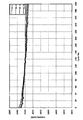
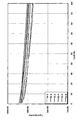
- Figure 3 is a graph showing the life characteristics at room temperature (25 °C) of the batteries (E1-1 to E1-4) prepared in Comparative Examples 1 and 2 and Examples 1 and 2.
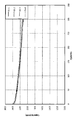
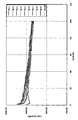
- FIG. 4 is a graph showing the life characteristics at high temperatures (45 ° C.) of the batteries E1-1 to E1-4 prepared in Comparative Examples 1 and 2 and Examples 1 and 2.
- FIG. 4 is a graph showing the life characteristics at high temperatures (45 ° C.) of the batteries E1-1 to E1-4 prepared in Comparative Examples 1 and 2 and Examples 1 and 2.
- FIG. 4 is a graph showing the life characteristics at high temperatures (45 ° C.) of the batteries E1-1 to E1-4 prepared in Comparative Examples 1 and 2 and Examples 1 and 2.
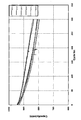
- FIG. 5 is a graph showing the life characteristics of the lithium secondary batteries (E2-1 to E2-6) at a high temperature (45 °C) according to the electrolyte additive type.
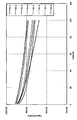
- FIG. 6 is a graph showing the life characteristics of the lithium secondary batteries (E3-1 to E3-6) at a high temperature (45 °C) according to the electrolyte additive content.
- FIG. 7 is a graph showing the life characteristics at low temperatures (25 ° C.) of lithium secondary batteries E4-1 to E4-10 according to electrolyte additive types.
- cathode 5 anode
- an 'alkyl group' includes a primary alkyl group, a secondary alkyl group, and a tertiary alkyl group.
- Examples of 'alkyl groups' used herein include, but are not limited to, methyl, ethyl, n-propyl, isopropyl, n-butyl, isobutyl, t-butyl, n-pentyl, isopentyl and hexyl.
- 'cycloalkyl group' includes monocyclic, bicyclic, tricyclic, tetracyclic. Moreover, the polycyclic cycloalkyl group containing an adamantyl group and a norbornyl group is included.
- an 'alkenyl group' refers to a linear or branched hydrocarbon radical chain having one or more carbon-carbon double bonds.
- Examples of the 'alkenyl group' used herein include, but are not limited to, ethenyl and propenyl.
- Alkynyl group means a linear or branched saturated hydrocarbon radical chain having one or more carbon-carbon triple bonds unless otherwise specified herein.
- Examples of 'alkynyl groups' used herein include, but are not limited to, acetylenyl and 1-propynyl.
- alkanediyl' is a divalent atom group minus two hydrogen atoms in alkanes, and may be represented by the general formula —C n H 2n ⁇ , and may be represented by “alkendi”.
- Alkenediyl ' is a divalent atomic group obtained by subtracting two hydrogen atoms from alkene, and may be represented by the general formula -C n H n- .
- alkoxy group means a -ORa group, where Ra is alkyl as defined above.
- alkoxy groups' used herein include methoxy, difluoromethoxy, trifluoromethoxy, ethoxy, n-propoxy, isopropoxy, n-butoxy and t-butoxy, but It is not limited.
- 'alkoxyalkyl group' refers to an -ORbRc group, where Rb and Rc are alkyl as defined above.
- Examples of 'alkoxyalkyl groups' used herein include, but are not limited to, methoxymethyl, ethoxymethyl, n-propoxymethyl, isopropoxymethyl, n-butoxyethyl and t-butoxyethyl. .
- 'alkylsilyl group' means —SiH 2 Rd, —SiHReRf or —SiRgRhRi, wherein Rd to Ri are alkyl as defined above.
- Rd to Ri are alkyl as defined above.
- Examples of the 'alkylsilyl group' used herein include, but are not limited to, methylsilyl group, ethylsilyl group, isopropylsilyl group.
- 'substituted' means that a hydrogen atom is a halogen atom, a hydroxy group, a carboxy group, a cyano group, a nitro group, an amino group, a thio group, a methyl thio group, an alkoxy group, a nitrile group, an aldehyde group, an epoxy group, an ether group, an ester group, It means substituted by any one selected from the group consisting of carbonyl group, acetal group, ketone group, alkyl group, cycloalkyl group, heterocycloalkyl group, allyl group, benzyl group, aryl group, heteroaryl group, derivatives thereof and combinations thereof .
- Lithium secondary battery electrolyte according to an embodiment of the present invention, an organic solvent; Lithium salt mixed in the organic solvent; An electrolyte solution additive represented by the following Chemical Formula 1 mixed in the organic solvent is included.
- R 1 to R 4 are each independently hydrogen, an alkyl group having 1 to 5 carbon atoms, a cycloalkyl group having 3 to 6 carbon atoms, an alkenyl group having 2 to 5 carbon atoms, an alkynyl group having 2 to 5 carbon atoms, and an allyl group , An alkoxy group, an alkoxyalkyl group, a silyl group, an alkylsilyl group, and a cyano group.
- M is an integer of 1 to 4.
- R 1 and R 3 may be connected to each other to form a 4 to 10 membered aliphatic ring.
- R 1 and R 3 may each independently be any one selected from the group consisting of alkenediyl group having 1 to 5 carbon atoms and alkenediyl group having 1 to 5 carbon atoms.
- R 1 to R 4 may each independently be any one selected from the group consisting of hydrogen, methyl and ethyl groups, wherein R 1 and R 3 may be linked to each other to form a 6-membered cyclohexyl group M may be an integer of 1 or 2.
- the electrolyte additive is ethylene sulfide, propylene sulfide, 2-vinyl thiirane, 2,3-ethiothiomethyl methyl ether, 2- (trimethylsilyl) -thiirane, 2,3-di (trimethylsilyl) -ti Iran, 1-cyano-3,4-ethiothiobutane, isobutylene sulfide, cyclohexene sulfide, and mixtures thereof.
- the electrolyte additive is decomposed before the organic solvent contained in the electrolyte when discharged at room temperature and high temperature, so that the lithium ion is easily inserted into the surface of the electrode by forming a solid electrolyte interface (SEI) film on the surface of the anode.
- SEI solid electrolyte interface
- the electrolyte additive may be included in the electrolyte solution 0.1 to 5% by weight, preferably 0.1 to 2% by weight.
- the effect of adding the electrolyte additive may be insignificant, and when included in excess of 5% by weight as impurities generated by the side reaction of the additive and the electrolyte solution. Due to this, the effect of increasing the charge and discharge efficiency may be insignificant, and the lifespan performance may be reduced.
- the organic solvent may be used as long as the ions involved in the electrochemical reaction of the battery can serve as a medium for moving.
- the organic solvent may be an ester solvent, an ether solvent, a ketone solvent, an aromatic hydrocarbon solvent, or propio.
- Nate solvent, carbonate solvent and combinations thereof may be any one selected from the group.
- ester solvent n-methyl acetate, n-ethyl acetate, n-propyl acetate and the like can be used.
- Dibutyl ether, tetraglyme, 2-methyltetrahydrofuran, tetrahydrofuran, etc. may be used as the ether solvent, and cyclohexanone may be used as the ketone solvent.
- aromatic hydrocarbon organic solvent benzene, fluorobenzene, chlorobenzene, iodobenzene, toluene, fluorotoluene, xylene or a mixture thereof may be used.
- propionate solvent ethyl propionate, methyl propionate, propyl propionate, or the like may be used.
- dimethyl carbonate dimethyl carbonate (dimethyl carbonate, DMC), diethyl carbonate (DEC), dipropyl carbonate (dipropyl carbonate, DPC), methyl propyl carbonate (methyl propyl carbonate, MPC), ethyl propyl carbonate (methyl propyl carbonate, EPC), methyl Ethyl Carbonate (methyl ethylcarbonate, MEC), Ethyl methylcarbonate (EMC), Ethylene carbonate (EC), Propylene carbonate (PC), Butylene carbonate (BC), Fluoroethylene Carbonate , FEC) and mixtures thereof.
- the organic solvent is preferably a carbonate-based solvent, and more preferably, a solvent having a high dielectric constant having a high ionic conductivity that can increase the charge / discharge performance of a battery, and a viscosity capable of appropriately adjusting the viscosity of the solvent having a high dielectric constant.
- a high dielectric constant mixed solvent having an appropriate viscosity may be applied as the organic solvent.
- any one selected from the group consisting of ethylene carbonate, propylene carbonate, and mixtures thereof and any one selected from the group consisting of ethyl methyl carbonate, dimethyl carbonate, diethyl carbonate, and mixtures thereof may be used.
- the lithium salt may be used as long as it is a compound providing a lithium ion used in a lithium secondary battery, LiPF 6 , LiClO 4 , LiAsF 6 , LiBF 4 , LiSbF 6 , LiAl0 4 , LiAlCl 4 , LiCF 3 SO 3 , LiC 4 F 9 SO 3 , LiN (C 2 F 5 SO 3 ) 2 , LiN (C 2 F 5 SO 2 ) 2 , LiN (CF 3 SO 2 ) 2 .
- LiN (C x F 2x + 1 SO 2 ) (C y F 2y + 1 SO 2 ) (where x, y is a natural number)
- LiCl, LiI, and a mixture thereof may be any one selected from the group consisting of Lithium hexafluorophosphate (LiPF 6 ).
- the lithium salt When the lithium salt is included in the electrolyte solution, the lithium salt is dissolved in the electrolyte solution and serves as a source of lithium ions in the battery, thereby promoting the movement of lithium ions between the positive electrode and the negative electrode.
- the lithium salt may be included in the electrolyte solution of 0.6 to 2 moles, preferably 0.7 to 1.6 moles.
- concentration of the lithium salt is less than 0.6 mole, the conductivity of the electrolyte may be lowered and the performance of the electrolyte may be lowered.
- concentration of the lithium salt is greater than 2 moles, the viscosity of the electrolyte may be increased to reduce the mobility of lithium ions.
- the electrolyte may further include additives (hereinafter, referred to as 'other additives') that may be generally included in the electrolyte for the purpose of improving the life characteristics of the battery, reducing battery capacity, and improving the discharge capacity of the battery. have.
- additives hereinafter, referred to as 'other additives'
- vinylene carbonate VC
- metal fluoride for example, LiF, RbF, TiF, AgF, AgF2, BaF 2 , CaF 2 , CdF 2 , FeF 2 , HgF 2 , Hg 2 F 2 , MnF 2 , NiF 2 , PbF 2 , SnF 2 , SrF 2 , XeF 2 , ZnF 2 , AlF 3 , BF 3 , BiF 3 , CeF 3 , CrF 3 , DyF 3 , EuF 3 , GaF 3 , GdF 3 , FeF 3 , HoF 3, InF 3, LaF 3, LuF 3, MnF 3, NdF 3, PrF 3, SbF 3, ScF 3, SmF 3, TbF 3, TiF 3, TmF 3, YF 3, YbF 3, TIF 3, CeF 4, GeF 4, HfF 4, SiF 4, SnF 4, TiF 4, VF 4, ZrF4 4, NbF 5, SbF 5, Sb
- the other additives may include 0.1 to 5% by weight based on the total weight of the organic solvent.
- the electrolyte according to the present invention having the composition as described above has excellent stability in the temperature range of -20 ° C to 60 ° C and can be electrochemically stable even at a voltage in the range of about 4V, so that the life of the battery when applied to a lithium secondary battery Can be extended.
- the lithium secondary battery may be classified into a lithium ion battery, a lithium ion polymer battery, and a lithium polymer battery according to the type of separator and electrolyte used, and may be classified into a cylindrical shape, a square shape, a coin type, a pouch type, and the like, Depending on the size, it can be divided into bulk type and thin film type.
- the electrolyte according to the present invention is particularly excellent for application to lithium ion batteries, aluminum laminate batteries and lithium polymer batteries.
- a lithium secondary battery includes a cathode including a cathode active material disposed opposite to each other, a cathode including an anode active material, and the electrolyte solution interposed between the cathode and the anode.
- FIG. 1 is an exploded perspective view of a lithium secondary battery 1 according to an embodiment of the present invention.
- the pouch type lithium secondary battery is shown in FIG. 1, the lithium secondary battery of this invention is not limited to this shape, As long as it can operate as a battery, it can be in any shape.
- a lithium secondary battery 1 includes a separator 7 between a negative electrode 3, a positive electrode 5, the negative electrode 3, and a positive electrode 5.
- the electrode assembly 9 is prepared and placed in the case 15, and the nonaqueous electrolyte is injected to prepare the negative electrode 3, the positive electrode 5, and the separator 7 in the electrolyte.
- Conductive lead members 10 and 13 may be attached to the negative electrode 3 and the positive electrode 5, respectively, and the lead members 10 and 13 may be attached to the positive electrode 5, respectively. And current generated at the cathode 3 to the anode and cathode terminals.
- the positive electrode 5 is prepared by mixing a positive electrode active material, a conductive agent and a binder to prepare a composition for forming a positive electrode active material layer, and then applying the composition for forming a positive electrode active material layer to a positive electrode current collector such as aluminum foil and rolling the same. can do.
- a compound (lithiated intercalation compound) capable of reversible intercalation and deintercalation of lithium may be used.
- the olivine compound represented by the following formula (2) can be used.
- M and M ' are independently of each other Fe, Ni, Co, Mn, Cr, Zr, Nb, Cu, V, Mo, Ti, Zn, Al, Ga, Mg, B and combinations thereof
- An element selected from the group consisting of P, As, Bi, Sb, Mo and combinations thereof, and B is an element selected from the group consisting of F, S and combinations thereof 0 ⁇ x ⁇ 1, 0 ⁇ y ⁇ 1, 0 ⁇ z ⁇ 1, 0 ⁇ x + y + z ⁇ 2, and 0 ⁇ w ⁇ 0.5.
- the positive electrode active material is preferably LiCoO 2 , LiMnO 2 , LiMn 2 O 4 , LiNiO 2 , LiNi x Mn (1-x) O 2 (where 0 ⁇ x ⁇ 1) and LiM lx M 2y O 2 (where 0 ⁇ x ⁇ 1, 0 ⁇ y ⁇ 1, 0 ⁇ x + y ⁇ 1, M 1 and M 2 are each independently selected from the group consisting of Al, Sr, Mg and La) and combinations thereof It may be any one lithium metal oxide selected from.
- lithium metal oxide as the positive electrode active material can increase the stability of the battery while having a high capacity.
- the negative electrode 3 may be prepared by mixing a negative electrode active material, a binder, and optionally a conductive agent to prepare a composition for forming a negative electrode active material layer, and then applying the same to a negative electrode current collector such as copper foil. have.
- the negative electrode active material a compound capable of reversible intercalation and deintercalation of lithium may be used.
- the negative electrode active material may be a carbonaceous material such as artificial graphite, natural graphite, graphitized carbon fiber, amorphous carbon, or the like.
- a metal compound or a compound including a metal compound and a carbonaceous material that can be alloyed with lithium may also be used as the negative electrode active material.
- Examples of the metal that can be alloyed with lithium include Si, Al, Sn, Pb, Zn, Bi, In, Mg, Ga, Cd, Si alloy, Sn alloy, Al alloy, and the like.
- a metal lithium thin film can also be used as said negative electrode active material.
- any one selected from the group consisting of crystalline carbon, amorphous carbon, carbon composite, lithium metal, an alloy containing lithium, and combinations thereof may be used in view of high stability.
- the positive electrode 5 is coated on an Al substrate by applying LiCoO 2 as a positive electrode active material, carbon black as a conductive agent, polyvinylidene fluoride (PVDF) as a binder, and NMP (n-methyl-2-pyrrolidone) as a solvent.
- the negative electrode 3 may be artificial graphite MCMB (MesoCarbon MicroBead) and carbon black, PVDF (Polyvinylidene Fluoride) as a binder, and NMP (n-methyl-2-pyrrolidone) as a solvent.
- the slurry using) may be coated on a Cu substrate.
- the electrolyte is the same as described above in the section relating to the electrolyte, and the description thereof is omitted.
- the lithium secondary battery is manufactured by a conventional method, the battery produced using the electrolyte solution containing the electrolyte additive of the present invention is excellent in room temperature and high temperature life characteristics.
- EMC ethylene carbonate
- DEC ethylmethyl carbonate
- DEC diethylene carbonate
- PS 1,3-propanesultone
- PRS propene sultone
- FEC fluoro ethylene carbonate
- VC vinylene Abbreviation for carbonate.
- LiCoO 2 is used as a positive electrode active material, carbon black (Carbon black) as a conductive material, PVDF (Polyvinylidene Fluoride) as a binder, and NMP (n-methyl-2-pyrrolidone) as a solvent are mixed on an Al substrate. Coating was used. In addition, MCMB (MesoCarbon MicroBead), carbon black (Carbon black), PVDF (Polyvinylidene Fluoride) as binder, and NMP (n-methyl-2-pyrrolidone) as solvent are used as the cathode. Coating was used.
- carbon black Carbon black
- PVDF Polyvinylidene Fluoride
- NMP n-methyl-2-pyrrolidone
- % related to the content means weight%.
- a lithium secondary battery was prepared in the same manner as in Comparative Example 1, except that 1,3-propanesultone was added to the mixed solution of EC / EMC / DEC in the preparation of the electrolyte solution to 1% by weight. 2) was prepared.
- Lithium secondary batteries were carried out in the same manner as in Comparative Example 1, except that propylene sulfide was added to the mixed solution of EC / EMC / DEC in the preparation of the electrolyte so as to be 1% by weight (hereinafter referred to as E1-3). Was prepared.
- a lithium secondary battery (hereinafter, referred to as E1-4) was prepared by the same method as in Comparative Example 1, except that 2 wt% of propylene sulfide was added to the mixed solution of EC / EMC / DEC when preparing the electrolyte. It was.
- the batteries E1-1 to E1-4 prepared in Comparative Examples 1 and 2 and Examples 1 and 2 were subjected to 4.2 V (Constant current) / CV (Constant vlotage) conditions at a current of 230 mA (0.1 C). Charging with cut-off 0.02C) evaluated the reaction between the additive and the cathode interface during the filling process.
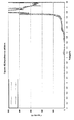
- the SEI film was first formed in the batteries E1-3 and E1-4 of propylene sulfide added as compared to the cells E1-1 and E1-2 of Comparative Examples 1 and 2. It became.
- CC constant current
- CV Constant vlotage
- the batteries of Examples 1 and 2 are superior to those of Comparative Examples 1 and 2 (E1-1 and E1-2) at room temperature and high temperature. It has a long service life, especially at high temperatures.
- a lithium secondary battery was manufactured by the same method as in Example 1, except that the prepared electrolyte solution was used.
- the prepared cells E2-1 to E2-6 were charged at 1.0 C / 4.2 V (cut-off 0.02 C) under constant current (CC) / CV (Constant vlotage) conditions with currents of 910 mA, respectively, and then again at 910 mA. It discharged to 2.7V by CC 1.0C conditions with the electric current of. This process was repeated 300 times to determine the life characteristics (cycle performance).
- CC constant current
- CV Constant vlotage
- the battery (E2-4) of the embodiment containing propylene sulfide showed better life characteristics at high temperature than the battery (E2-1) of the comparative example containing no electrolyte additive.
- EC ethylene carbonate
- EMC ethyl methyl carbonate
- DEC diethylene carbonate
- propylene sulfide propylene sulfide
- the content of the electrolyte was prepared by changing the content of the mixture as shown in the following table.
- a lithium secondary battery was manufactured by the same method as in Example 1, except that the prepared electrolyte solution was used.
- the prepared batteries E3-1 to E3-6 were charged at 1.0 C / 4.2 V (cut-off 0.02 C) under constant current (CC) / CV (Constant vlotage) conditions with currents of 910 mA, respectively, and then again at 910 mA. It discharged to 2.7V by CC 1.0C conditions with the electric current of. This process was repeated 100 times to determine the life characteristics (cycle performance).
- EC ethylene carbonate
- EMC ethyl methyl carbonate
- a lithium secondary battery was manufactured by the same method as in Example 1, except that the prepared electrolyte solution was used.
- the prepared batteries E4-1 to E4-10 were charged at 1.0 C / 4.2 V (cut-off 0.02 C) under CC (Constant current) / CV (Constant vlotage) conditions with currents of 910 mA, respectively, and then again at 910 mA. It discharged to 2.7V by CC 1.0C conditions with the electric current of. This process was repeated 100 times to determine the life characteristics (cycle performance).
- the electrolyte was prepared by adding various kinds of additives as shown in FIG.
- a lithium secondary battery was manufactured by the same method as in Example 1, except that the prepared electrolyte solution was used.
- the prepared batteries E5-1 to E5-8 were charged at 1.0 C / 4.2 V (cut-off 0.02 C) under constant current (CC) / CV (Constant vlotage) conditions with currents of 910 mA, respectively, and then again at 910 mA. It discharged to 2.7V by CC 1.0C conditions with the electric current of. This process was repeated 100 times to determine the life characteristics (cycle performance).
- the present invention relates to a lithium secondary battery electrolyte and a lithium secondary battery comprising the same, which can improve the life characteristics at room temperature and high temperature of the lithium secondary battery, the lithium secondary battery electrolyte is an electrolyte during discharge at room temperature and high temperature of the battery It decomposes earlier than the organic solvent contained therein to effectively and stably form a solid electrolyte interface (SEI) film on the surface of the cathode so that lithium ions can be easily inserted into the surface of the electrode. As a result, the room temperature and high temperature life characteristics of the battery can be improved.
- SEI solid electrolyte interface
Landscapes
- Chemical & Material Sciences (AREA)
- Engineering & Computer Science (AREA)
- Manufacturing & Machinery (AREA)
- Chemical Kinetics & Catalysis (AREA)
- Electrochemistry (AREA)
- General Chemical & Material Sciences (AREA)
- Physics & Mathematics (AREA)
- Condensed Matter Physics & Semiconductors (AREA)
- General Physics & Mathematics (AREA)
- Inorganic Chemistry (AREA)
- Materials Engineering (AREA)
- Secondary Cells (AREA)
Abstract
Priority Applications (1)
| Application Number | Priority Date | Filing Date | Title |
|---|---|---|---|
| US14/232,374 US20140141342A1 (en) | 2011-07-12 | 2012-07-12 | Electrolyte for lithium secondary battery and lithium secondary battery including same |
Applications Claiming Priority (2)
| Application Number | Priority Date | Filing Date | Title |
|---|---|---|---|
| KR20110068751A KR101335467B1 (ko) | 2011-07-12 | 2011-07-12 | 리튬 이차 전지용 전해액 및 이를 포함하는 리튬 이차 전지 |
| KR10-2011-0068751 | 2011-07-12 |
Publications (3)
| Publication Number | Publication Date |
|---|---|
| WO2013009108A2 WO2013009108A2 (fr) | 2013-01-17 |
| WO2013009108A9 true WO2013009108A9 (fr) | 2013-03-14 |
| WO2013009108A3 WO2013009108A3 (fr) | 2013-05-02 |
Family
ID=47506722
Family Applications (1)
| Application Number | Title | Priority Date | Filing Date |
|---|---|---|---|
| PCT/KR2012/005537 Ceased WO2013009108A2 (fr) | 2011-07-12 | 2012-07-12 | Électrolyte pour batterie secondaire au lithium et batterie secondaire au lithium le comprenant |
Country Status (3)
| Country | Link |
|---|---|
| US (1) | US20140141342A1 (fr) |
| KR (1) | KR101335467B1 (fr) |
| WO (1) | WO2013009108A2 (fr) |
Families Citing this family (9)
| Publication number | Priority date | Publication date | Assignee | Title |
|---|---|---|---|---|
| KR20170031530A (ko) | 2015-09-11 | 2017-03-21 | 에스케이케미칼주식회사 | 이차전지용 전해액 첨가제 및 이를 포함하는 이차전지용 전해액 |
| KR20170039369A (ko) | 2015-10-01 | 2017-04-11 | 에스케이케미칼주식회사 | 이차전지용 전해액 첨가제 및 이를 포함하는 이차전지 |
| DE102016217709A1 (de) | 2016-09-15 | 2018-03-15 | Robert Bosch Gmbh | Hybridsuperkondensator mit SEI-Additiven |
| KR102645104B1 (ko) | 2017-07-14 | 2024-03-08 | 주식회사 엘지에너지솔루션 | 비수전해액 첨가제, 이를 포함하는 리튬 이차전지용 비수전해액 및 리튬 이차전지 |
| JP2019139972A (ja) * | 2018-02-09 | 2019-08-22 | 住友化学株式会社 | 非水電解液二次電池 |
| KR102565048B1 (ko) * | 2018-03-08 | 2023-08-08 | 주식회사 아모그린텍 | 이차전지용 전해액, 이를 포함하는 배터리 및 플렉서블 배터리 |
| CN110400969B (zh) * | 2018-04-25 | 2022-06-10 | 比亚迪股份有限公司 | 一种非水电解液及含有该非水电解液的电池 |
| KR102722091B1 (ko) * | 2019-03-28 | 2024-10-28 | 현대자동차주식회사 | 리튬 이차전지 |
| CN114097122B (zh) | 2020-03-06 | 2024-10-08 | 株式会社Lg新能源 | 锂硫电池电解质和包含其的锂硫电池 |
Family Cites Families (4)
| Publication number | Priority date | Publication date | Assignee | Title |
|---|---|---|---|---|
| KR100326467B1 (ko) * | 2000-07-25 | 2002-02-28 | 김순택 | 리튬 설퍼 전지용 전해액 |
| JP5070753B2 (ja) * | 2005-12-13 | 2012-11-14 | ソニー株式会社 | 電池 |
| JP2010050026A (ja) | 2008-08-25 | 2010-03-04 | Bridgestone Corp | 電池用非水電解液及びそれを備えた非水電解液二次電池 |
| JP2010123331A (ja) | 2008-11-18 | 2010-06-03 | Sony Corp | 非水電解質二次電池 |
-
2011
- 2011-07-12 KR KR20110068751A patent/KR101335467B1/ko active Active
-
2012
- 2012-07-12 WO PCT/KR2012/005537 patent/WO2013009108A2/fr not_active Ceased
- 2012-07-12 US US14/232,374 patent/US20140141342A1/en not_active Abandoned
Also Published As
| Publication number | Publication date |
|---|---|
| WO2013009108A3 (fr) | 2013-05-02 |
| KR101335467B1 (ko) | 2013-11-29 |
| US20140141342A1 (en) | 2014-05-22 |
| WO2013009108A2 (fr) | 2013-01-17 |
| KR20130008174A (ko) | 2013-01-22 |
Similar Documents
| Publication | Publication Date | Title |
|---|---|---|
| WO2013009108A9 (fr) | Électrolyte pour batterie secondaire au lithium et batterie secondaire au lithium le comprenant | |
| WO2020009340A1 (fr) | Électrolyte pour batterie secondaire au lithium et batterie secondaire au lithium le comprenant | |
| WO2018062719A1 (fr) | Électrolyte pour un accumulateur au lithium et accumulateur au lithium comprenant ce dernier | |
| KR20150022654A (ko) | 전해질 및 이를 포함하는 리튬 이차 전지 | |
| KR102355697B1 (ko) | 전해질 및 이를 포함하는 리튬 이차 전지 | |
| WO2016052850A1 (fr) | Matière active d'électrode négative pour batterie rechargeable au lithium, son procédé de fabrication, électrode négative pour batterie rechargeable au lithium la comprenant, et batterie rechargeable au lithium | |
| WO2016052910A1 (fr) | Matière active d'anode pour batterie rechargeable au lithium, son procédé de fabrication, anode pour batterie rechargeable au lithium la comprenant, et batterie rechargeable au lithium | |
| WO2022186490A1 (fr) | Solution électrolytique pour batterie secondaire et batterie secondaire la comprenant | |
| WO2018021746A1 (fr) | Additif pour électrolyte de batterie au lithium, électrolyte pour batterie au lithium le comprenant, et batterie au lithium utilisant ledit électrolyte | |
| WO2019194407A1 (fr) | Électrolyte pour batterie au lithium rechargeable et batterie au lithium rechargeable le comprenant | |
| KR20190053365A (ko) | 리튬 이차 전지용 전해액 및 리튬 이차 전지 | |
| KR20150019994A (ko) | 전해액 및 이를 포함하는 리튬이차전지 | |
| WO2016105176A1 (fr) | Dispositif électrochimique | |
| KR101349750B1 (ko) | 전해액 첨가제, 이를 포함하는 전해액 및 상기 전해액을 포함하는 리튬이차전지 | |
| KR102504913B1 (ko) | 전해질 및 이를 포함하는 리튬 이차 전지 | |
| KR102371079B1 (ko) | 전해질 및 이를 포함하는 리튬 이차 전지 | |
| KR20150024225A (ko) | 전해액 및 이를 포함하는 리튬이차전지 | |
| KR20160063186A (ko) | 리튬 이차전지용 전해질 및 이를 포함하는 리튬 이차전지 | |
| KR102291944B1 (ko) | 전해질 및 이를 포함하는 리튬 이차 전지 | |
| KR20150032140A (ko) | 전해액 및 이를 포함하는 리튬이차전지 | |
| KR102414682B1 (ko) | 전해질 및 이를 포함하는 리튬 이차 전지 | |
| WO2021033986A1 (fr) | Solution électrolytique pour batterie secondaire et batterie secondaire la comprenant | |
| KR20180023569A (ko) | 전해액 및 이를 포함하는 리튬 이차 전지 | |
| KR102483368B1 (ko) | 리튬 이차 전지용 전해질 및 이를 포함하는 리튬 이차 전지 | |
| KR102375099B1 (ko) | 전해질 및 이를 포함하는 리튬 이차 전지 |
Legal Events
| Date | Code | Title | Description |
|---|---|---|---|
| 121 | Ep: the epo has been informed by wipo that ep was designated in this application |
Ref document number: 12810988 Country of ref document: EP Kind code of ref document: A2 |
|
| NENP | Non-entry into the national phase |
Ref country code: DE |
|
| WWE | Wipo information: entry into national phase |
Ref document number: 14232374 Country of ref document: US |
|
| 32PN | Ep: public notification in the ep bulletin as address of the adressee cannot be established |
Free format text: NOTING OF LOSS OF RIGHTS PURSUANT TO RULE 112(1) EPC (EPO FORM 1205A DATED 21/03/2014) |
|
| 122 | Ep: pct application non-entry in european phase |
Ref document number: 12810988 Country of ref document: EP Kind code of ref document: A2 |