WO2013012293A9 - 글리세롤 발효 미생물 변이체를 이용하여 디올화합물을 고수율로 생산하는 방법 - Google Patents
글리세롤 발효 미생물 변이체를 이용하여 디올화합물을 고수율로 생산하는 방법 Download PDFInfo
- Publication number
- WO2013012293A9 WO2013012293A9 PCT/KR2012/005832 KR2012005832W WO2013012293A9 WO 2013012293 A9 WO2013012293 A9 WO 2013012293A9 KR 2012005832 W KR2012005832 W KR 2012005832W WO 2013012293 A9 WO2013012293 A9 WO 2013012293A9
- Authority
- WO
- WIPO (PCT)
- Prior art keywords
- glycerol
- propanediol
- butanediol
- strain
- produce
- Prior art date
- Legal status (The legal status is an assumption and is not a legal conclusion. Google has not performed a legal analysis and makes no representation as to the accuracy of the status listed.)
- Ceased
Links
Images
Classifications
-
- C—CHEMISTRY; METALLURGY
- C12—BIOCHEMISTRY; BEER; SPIRITS; WINE; VINEGAR; MICROBIOLOGY; ENZYMOLOGY; MUTATION OR GENETIC ENGINEERING
- C12P—FERMENTATION OR ENZYME-USING PROCESSES TO SYNTHESISE A DESIRED CHEMICAL COMPOUND OR COMPOSITION OR TO SEPARATE OPTICAL ISOMERS FROM A RACEMIC MIXTURE
- C12P7/00—Preparation of oxygen-containing organic compounds
- C12P7/02—Preparation of oxygen-containing organic compounds containing a hydroxy group
-
- C—CHEMISTRY; METALLURGY
- C12—BIOCHEMISTRY; BEER; SPIRITS; WINE; VINEGAR; MICROBIOLOGY; ENZYMOLOGY; MUTATION OR GENETIC ENGINEERING
- C12N—MICROORGANISMS OR ENZYMES; COMPOSITIONS THEREOF; PROPAGATING, PRESERVING, OR MAINTAINING MICROORGANISMS; MUTATION OR GENETIC ENGINEERING; CULTURE MEDIA
- C12N1/00—Microorganisms; Compositions thereof; Processes of propagating, maintaining or preserving microorganisms or compositions thereof; Processes of preparing or isolating a composition containing a microorganism; Culture media therefor
- C12N1/32—Processes using, or culture media containing, lower alkanols, i.e. C1 to C6
-
- C—CHEMISTRY; METALLURGY
- C12—BIOCHEMISTRY; BEER; SPIRITS; WINE; VINEGAR; MICROBIOLOGY; ENZYMOLOGY; MUTATION OR GENETIC ENGINEERING
- C12N—MICROORGANISMS OR ENZYMES; COMPOSITIONS THEREOF; PROPAGATING, PRESERVING, OR MAINTAINING MICROORGANISMS; MUTATION OR GENETIC ENGINEERING; CULTURE MEDIA
- C12N1/00—Microorganisms; Compositions thereof; Processes of propagating, maintaining or preserving microorganisms or compositions thereof; Processes of preparing or isolating a composition containing a microorganism; Culture media therefor
- C12N1/20—Bacteria; Culture media therefor
-
- C—CHEMISTRY; METALLURGY
- C12—BIOCHEMISTRY; BEER; SPIRITS; WINE; VINEGAR; MICROBIOLOGY; ENZYMOLOGY; MUTATION OR GENETIC ENGINEERING
- C12N—MICROORGANISMS OR ENZYMES; COMPOSITIONS THEREOF; PROPAGATING, PRESERVING, OR MAINTAINING MICROORGANISMS; MUTATION OR GENETIC ENGINEERING; CULTURE MEDIA
- C12N9/00—Enzymes; Proenzymes; Compositions thereof; Processes for preparing, activating, inhibiting, separating or purifying enzymes
- C12N9/0004—Oxidoreductases (1.)
- C12N9/0006—Oxidoreductases (1.) acting on CH-OH groups as donors (1.1)
-
- C—CHEMISTRY; METALLURGY
- C12—BIOCHEMISTRY; BEER; SPIRITS; WINE; VINEGAR; MICROBIOLOGY; ENZYMOLOGY; MUTATION OR GENETIC ENGINEERING
- C12P—FERMENTATION OR ENZYME-USING PROCESSES TO SYNTHESISE A DESIRED CHEMICAL COMPOUND OR COMPOSITION OR TO SEPARATE OPTICAL ISOMERS FROM A RACEMIC MIXTURE
- C12P7/00—Preparation of oxygen-containing organic compounds
- C12P7/02—Preparation of oxygen-containing organic compounds containing a hydroxy group
- C12P7/04—Preparation of oxygen-containing organic compounds containing a hydroxy group acyclic
- C12P7/18—Preparation of oxygen-containing organic compounds containing a hydroxy group acyclic polyhydric
-
- C—CHEMISTRY; METALLURGY
- C12—BIOCHEMISTRY; BEER; SPIRITS; WINE; VINEGAR; MICROBIOLOGY; ENZYMOLOGY; MUTATION OR GENETIC ENGINEERING
- C12Y—ENZYMES
- C12Y101/00—Oxidoreductases acting on the CH-OH group of donors (1.1)
- C12Y101/01—Oxidoreductases acting on the CH-OH group of donors (1.1) with NAD+ or NADP+ as acceptor (1.1.1)
- C12Y101/01027—L-Lactate dehydrogenase (1.1.1.27)
Definitions
- the present invention relates to a method for producing a diol compound from glycerol using a mutant strain, a diol compound in a high yield using a variant lacking a gene encoding a lactate dehydrogenase in a microorganism having glycerol fermentation ability
- a method for producing phosphorous 1,3-propanediol and 2,3-butanediol is a method for producing phosphorous 1,3-propanediol and 2,3-butanediol.
- waste glycerol is generated in an amount equivalent to about 10% (w / w) of total production (Johnson and Taconi, Environ Prog, 26: 338, 2007).
- This waste glycerol not only affects the price of the traditional glycerol market, but also can be released into the environment, and thus has emerged as an important environmental problem such as treatment cost (da Silva et al . Biotechnol Adv , 27:30, 2009). Therefore, there is an active development of a method for converting low-cost waste glycerol into industrially valuable materials, including fuels and bioactive substances.
- Glycerol can be converted to a variety of chemical raw materials by microbial fermentation, a typical example is 1,3-propanediol.
- 1,3-propanediol is a material that can be used as a synthetic raw material such as polyester, polyether, or polyurethanes. Fiber and plastic films such as high-performance clothing, carpets, and automobile fabrics It is used for various purposes such as.
- polytrimethylene terephtalate (PTT) produced by the polymerization reaction of 1,3-propanediol and terephtalic acid has excellent physical properties and has a lower point than polyethylene terephthalate (PET) at 228 ° C.
- plastics and polymers made of 1,3-propanediol as monomers exhibit better optical stability than products made of butanediol and ethylene glycol.
- 1,3-propanediol can be used as a polyglycol-type lubricant and solvent, its commercial value is higher than that of glycerol.
- the microbial fermentation of glycerol can be utilized as a raw material for the production of synthetic rubber 2,3-butanediol can be produced.
- the present inventors have made intensive efforts to develop a method for producing chemical raw materials such as 1 and 3-propanediol in high yield using glycerol, resulting in a gene encoding a lactate dehydrogenase in a glycerol fermented microorganism strain.
- the present invention has been completed by improving the culture conditions of the modified variants to significantly increase the production yields of the diol compounds 1,3-propanediol and 2,3-butanediol.
- the present invention is to provide a method for producing a diol compound in high yield by culturing the glycerol fermentation microbial variant.
- the present invention is a microorganism having the ability to produce 1, 3-propanediol from glycerol by culturing the strain in which the lactate dehydrogenase gene is deleted in a glycerol containing medium 1, 3- propanediol Producing a; And it provides a method for producing 1, 3-propanediol comprising the step of obtaining the produced 1, 3-propanediol.
- the present invention also provides a method for producing 2,3-butanediol by culturing a strain in which a lactate dehydrogenase gene is deleted in a glycerol-containing medium in a microorganism having the ability to produce 2,3-butanediol from glycerol; And it provides a method for producing 2,3-butanediol comprising the step of obtaining the produced 2,3-butanediol.
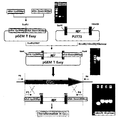
- Figure 1 shows the manufacturing process of K. pneumoniae ⁇ ldhA mutant strain.
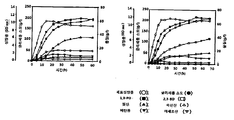
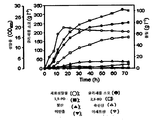
- Figure 2 shows the result of glycerol fermentation culture in neutral culture conditions (pH 7.0).
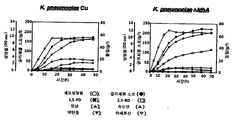
- Figure 3 shows the result of glycerol fermentation culture in acidic culture conditions (pH 6.0).
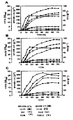
- Figure 4 shows the glycerol fermentation culture results in the air injection amount 1.0 (A), 2.0 (B), 3.5 (C).
- the present invention relates to a method for producing a diol compound from glycerol using a variant strain, and more particularly, to a method for producing 1,3-propanediol and 2,3-butanediol from glycerol using a variant strain.
- the present invention contains 30-80 g / l glycerol of a strain in which a lactate dehydrogenase gene is deleted in a microorganism having the ability to produce 1, 3-propanediol from glycerol, pH 5.5-6.5 Culturing with an air injection of 1.5-2.5vvm in phosphorus medium to produce 1, 3-propanediol; And it relates to a method for producing 1, 3-propanediol comprising the step of obtaining the produced 1, 3-propanediol.
- the microorganism having the ability to produce 1, 3-propanediol from the glycerol is preferably Krebsiella pneumoniae, it is preferable to culture in a medium containing glycerol as the only carbon source.
- the strain from which the D-lactate dehydrogenase gene ( ldhA ) is removed on the chromosome of K. pneumoniae is maintained in a medium of pH 6.0 maintained at a glycerol concentration of 30 to 80 g / L. Incubation with an air injection of 2.0 vvm yielded 102.7 g / L of 1,3 propanediol.
- the present invention is a medium containing 10 ⁇ 60g / l glycerol of a strain that deleted the lactate dehydrogenase gene in a microorganism having the ability to produce 2,3-butanediol from glycerol, pH 5.5 ⁇ 6.5 medium At 3.0 to 4 vvm of air injection, culturing to produce 2,3-butanediol; And it relates to a method for producing 2,3-butanediol comprising the step of obtaining the produced 2,3-butanediol.
- the microorganism having the ability to produce 2,3-butanediol from the glycerol is preferably Krebsiella pneumoniae, and preferably cultured in a medium containing glycerol as the only carbon source.
- the strain from which the D-lactate dehydrogenase gene ( ldhA ) is removed on the chromosome of K. pneumoniae is maintained in a medium of pH 6.0 maintained at a glycerol concentration of 10-60 g / L. Incubation with an air injection of 3.5 vvm yielded 71.5 g / L of 2,3-butanediol.
- deletion of a gene means a state in which the gene has been deleted on a chromosome or a plasmid to be unable to produce the protein encoded by the gene, and “disabling" of the gene means that the gene is inserted, By some deletion, it means a state in which the gene cannot be encoded.
- Cultivation of the variant according to the present invention can be carried out according to well-known methods, conditions such as the culture temperature and time, the pH of the medium can be appropriately adjusted.
- Recovery of 1,3-propanediol from the culture medium of the mutant may use a conventional separation technique, for example, distillation, electrodialysis, pervaporation, chromatography, solvent extraction, reaction extraction, etc., usually high purity These may be used in combination to separate the materials.
- the D-lactate dehydrogenase gene ( ldhA ) present on the chromosome of K. pneumoniae was replaced with the antibiotic apramycin resistance gene and removed on the chromosome.
- the upstream and downstream regions of the ldhA gene were amplified and linked by 900 bp, respectively, and then a DNA fragment into which the apramycin resistance gene was inserted was prepared.
- the prepared DNA fragments were introduced into K. pneumoniae strains (ATCC 20071), and recombinant strains forming colonies in the medium to which the antibiotic apramycin was added were obtained.
- the chromosomal DNA of the obtained recombinant strain was analyzed by PCR to confirm that homologous recombination occurred correctly, thereby finally obtaining a mutant strain ( ⁇ ldhA ) in which the ldhA gene was deleted.
- Metabolites were analyzed by fed-batch fermentation of the ⁇ ldhA strain prepared in Example 1 in a medium containing glycerol as the only carbon source.
- Medium composition was 20 g / l glycerol, 3.4g / l K 2 HPO 4 , 1.3g / l KH 2 PO 4 , 0.2g / l MgSO 4 , 0.002g / l CaCl 2 2H 2 O, 1g / l yeast extract, 1 ml / L iron solution [5 g / l FeSO 4 7H 2 O, 4 ml HCl (37%, w / v)] and 1 ml / L trace element solution [70 mg / l ZnCl 2 , 100 mg / l MnCl 2 4H 2 O, 60 mg / l H 3 BO 3 , 200 mg / l CoCl 2 4H 2 O, 20 mg / l CuCl 2 2H 2 O, 25 mg / l NiCl 2 6H 2 O, 35 mg / l Na 2 MoO 4 2H 2 O, 4 ml HCl (37% , w
- the control strain was lactic acid at the end of the culture.
- the yield increased rapidly to 35.2 g / L or more, whereas the ⁇ ldhA strain produced little lactic acid, and the production of 1,3-propanediol was about 69.3 g / L, which was about 10 compared to the wild type strain (Cu). Found to be high in%.
- the pH of the culture solution was confirmed to be optimal for 1,3-propanediol production by the ⁇ ldhA mutant strain.
- K. pneumoniae strains produced the highest 1,3-propanediol at neutral pH
- ⁇ ldhA mutant strains produced more 1,3-propanediol when the pH of the culture was reduced to 6. Appeared (FIG. 2).
- the yield of 1,3-propanediol was 80.8 g / L, and the conversion and hourly productivity from glycerol were 0.50 mol / mol and 1.39 g / h, respectively.
- the yield of 2,3-butanediol also increased to 38.0 g / l.
- FIG. 4 ⁇ ldhA mutant strains were cultured under various air injection conditions to examine 1,3-propanediol production (FIG. 4 1.0vvm: FIG. 4A, 2.0vvm: 4B, 3.5vvm: FIG. 4C).
- the production of 1,3-propanediol or 2,3-butanediol can be significantly improved through a new culture method of glycerol fermented microbial variants.
Landscapes
- Chemical & Material Sciences (AREA)
- Organic Chemistry (AREA)
- Life Sciences & Earth Sciences (AREA)
- Engineering & Computer Science (AREA)
- Wood Science & Technology (AREA)
- Health & Medical Sciences (AREA)
- Zoology (AREA)
- Bioinformatics & Cheminformatics (AREA)
- Genetics & Genomics (AREA)
- Biotechnology (AREA)
- General Health & Medical Sciences (AREA)
- Biochemistry (AREA)
- General Engineering & Computer Science (AREA)
- Microbiology (AREA)
- Biomedical Technology (AREA)
- Medicinal Chemistry (AREA)
- Chemical Kinetics & Catalysis (AREA)
- General Chemical & Material Sciences (AREA)
- Tropical Medicine & Parasitology (AREA)
- Virology (AREA)
- Molecular Biology (AREA)
- Preparation Of Compounds By Using Micro-Organisms (AREA)
Abstract
본 발명은 변이균주를 이용하여, 글리세롤로부터 디올화합물을 제조하는 방법에 관한 것으로, 글리세롤 발효능력을 보유한 미생물에서 락테이트 디하이드로게나아제를 코딩하는 유전자를 결손시킨 변이체를 이용하여 고수율로 1,3-프로판디올 및 2,3-부탄디올을 생산하는 방법에 관한 것이다. 본 발명에 따르면, 글리세롤 발효 미생물 변이체의 새로운 배양 방법을 통하여 1,3-프로판디올 및 2,3-부탄디올의 생산량을 월등히 개선할 수 있다.
Description
본 발명은 변이균주를 이용하여, 글리세롤로부터 디올 화합물을 제조하는 방법에 관한 것으로, 글리세롤 발효능력을 보유한 미생물에서 락테이트 디하이드로게나아제를 코딩하는 유전자를 결손시킨 변이체를 이용하여 고수율로 디올화합물인 1,3-프로판디올 및 2,3-부탄디올을 생산하는 방법에 관한 것이다.
현행 바이오 디젤 제조 공정의 주된 부산물로서 전체 생산의 약 10%(w/w)에 해당하는 양의 폐글리세롤 (crude glycerol)이 발생한다 (Johnson and Taconi, Environ Prog, 26:338,2007). 이러한 폐글리세롤은 기존의 전통적인 글리세롤 시장의 가격에 영향을 미칠 뿐 아니라, 직접 환경에 방출될 수 없기 때문에 처리 비용 등 중요한 환경 문제 요인으로 대두되고 있다 (da Silva et al. Biotechnol Adv, 27:30,2009). 따라서 저가의 폐글리세롤을 이용하여 연료 및 생리 활성 물질을 포함한 산업적으로 가치 있는 물질로 전환하기 위한 방법의 개발이 활발하게 진행 중이다.
글리세롤은 미생물 발효에 의해 다양한 화학원료 전환이 가능하며, 대표적인 예가 1,3-프로판디올이다. 1,3-프로판디올은 폴리에스터(polyester), 폴리에테르(polyether), 혹은 폴리우레탄(polyurethanes) 등의 합성원료로 사용될 수 있는 물질로, 고기능성 의류, 카펫, 자동차직물 등의 섬유와 플라스틱 필름 등의 다양한 용도로 쓰이고 있다. 특히 1,3-프로판디올과 테레프탈릭산(terephtalic acid)의 중합반응에 의해 생성되는 폴리트리메틸렌 테레프탈레이트(polytrimethylene terephtalate, PTT)는 물성이 우수하고 유점이 228℃로 폴리에틸렌 테레프탈레이트(PET) 보다 낮아 실질적인 효용성이 높아 향후 PET를 대체할 수 있는 차세대 섬유재료로서 주목을 받고 있다. 또한, 1,3-프로판디올을 단량체로 하여 만든 플라스틱과 중합체는 부탄디올, 에틸렌 글리콜(ethylene glycol)로 만든 제품보다 더 우수한 광학 안정성을 가지는 특성을 나타낸다. 또한 1,3-프로판디올은 폴리글리콜 형태(polyglycol-type)의 윤활제와 용매로 사용될 수 있어 글리세롤에 비해 그 상업적 가치를 높게 평가 받고 있다. 또한 글리세롤의 미생물 발효에 의해 합성고무의 제조 원료로 활용이 가능하 2,3-부탄디올이 생산될 수 있다.
글리세롤의 발효 대사가 가능한 미생물로는 클로스트리디움(Clostridium), 엔테로박터(Enterobacter), 크렙시엘라(Klebsiella), 락토바실러스(Lactobacillus)등이 알려져 있으며, 이들을 이용하여 1,3-프로판디올을 생성하는 방법(미국특허 제 5,254,467호), 유전공학적인 방법으로는 글리세롤디하이드로게나아제 유전자를 증폭 또는 넉아웃시킨 변이체를 이용하여 1,3-프로판디올의 생성능을 향상시킨 경우가 있으나(US 2007/0148749), 상용화를 위해서는 생산 수율의 개선이 필요한 실정이다.
이에, 본 발명자들은 글리세롤을 이용하여 1, 3-프로판디올과 같은 화학원료를 고수율로 생산하는 방법을 개발하고자 예의 노력한 결과, 글리세롤 발효미생물 균주에서 락테이트 디하이드로게나아제를 코딩하는 유전자가 결손된 변이체의 배양 조건을 개선하여 디올 화합물인 1,3-프로판디올 및 2,3-부탄디올의 생산수율을 크게 증가시킬수 있다는 것을 확인하고 본 발명을 완성하게 되었다.
발명의 요약
본 발명은 글리세롤 발효 미생물 변이체를 배양하여 디올화합물을 고수율로 생산하기 위한 방법을 제공하는 데 있다.
상기 목적을 달성하기 위하여, 본 발명은 글리세롤로부터 1, 3-프로판디올을 생산하는 능력을 가지는 미생물에서 락테이트 디하이드로게나아제 유전자를 결실시킨 균주를 글리세롤 함유 배지에서 배양하여 1, 3- 프로판디올을 생산하는 단계; 및 상기 생산된 1, 3-프로판디올을 수득하는 단계를 포함하는 1, 3-프로판디올의 제조방법을 제공한다.
본 발명은 또한, 글리세롤로부터 2,3-부탄디올을 생산하는 능력을 가지는 미생물에서 락테이트 디하이드로게나아제 유전자를 결실시킨 균주를 글리세롤 함유 배지에서 배양하여 2,3-부탄디올을 생산하는 단계; 및 상기 생산된 2,3-부탄디올을 수득하는 단계를 포함하는 2,3-부탄디올의 제조방법을 제공한다.
도 1은 K.pneumoniae △ldhA 변이 균주의 제작 과정을 나타낸 것이다.
도 2는 중성 배양조건 (pH 7.0)에서 글리세롤 발효 배양결과를 나타낸 것이다.
도 3은 산성 배양조건 (pH 6.0)에서 글리세롤 발효 배양결과를 나타낸 것이다.
도 4는 공기주입량 1.0 (A), 2.0 (B), 3.5 (C)에서 글리세롤 발효 배양결과를 나타낸 것이다.
도 5는 글리세롤 농도 30-80 g/l에서 글리세롤 발효 배양결과를 나타낸 것이다.
발명의 상세한 설명 및 구체적인 구현예
본 발명은 변이균주를 이용하여, 글리세롤로부터 디올 화합물을 제조하는 방법에 관한 것으로 구체적으로는 변이균주를 이용하여 글리세롤로부터 1,3-프로판디올과 2,3-부탄디올을 생산하는 방법에 관한 것이다.
일관점에서, 본 발명은 글리세롤로부터 1, 3-프로판디올을 생산하는 능력을 가지는 미생물에서 락테이트 디하이드로게나아제 유전자를 결실시킨 균주를 30~80 g/l의 글리세롤 함유하고, pH 5.5~6.5인 배지에서 1.5~2.5vvm의 공기주입량으로, 배양하여 1, 3- 프로판디올을 생산하는 단계; 및 상기 생산된 1, 3-프로판디올을 수득하는 단계를 포함하는 1, 3-프로판디올의 제조방법에 관한 것이다.
본 발명에 있어서, 상기 글리세롤로부터 1, 3-프로판디올을 생산하는 능력을 가지는 미생물은 크렙시엘라 뉴모니아인 것이 바람직하며, 글라이세롤을 유일 탄소원으로 함유하는 배지에서 배양하는 것이 바람직하다.
본 발명의 일 실시예에서는 K. pneumoniae의 염색체상에서 D-락테이트 디하이드라아제(lactate dehydrogenase) 유전자 (ldhA)가 제거된 균주를 30~80g/L의 글리세롤 농도로 유지되는 pH 6.0의 배지에서 2.0vvm의 공기주입량으로 배양하여, 102.7g/L의 1,3 프로판디올을 생산하였다.
이는 기존의 ldhA유전자가 제거된 변이체 균주를 20 g/l 글리세롤 함유 pH 7.0 배지에서, 0.5vvm의 공기공급량으로 배양하여, 1, 3 프로판디올을 생산할 때의 1, 3 프로판디올의 생산량이 69.3g/L이었던데 비하여 월등히 향상된 양이라고 할 수 있다.
다른 관점에서, 본 발명은 글리세롤로부터 2,3-부탄디올을 생산하는 능력을 가지는 미생물에서 락테이트 디하이드로게나아제 유전자를 결실시킨 균주를 10~60g/l의 글리세롤 함유하고, pH 5.5~6.5인 배지에서 3.0~4 vvm의 공기주입량으로, 배양하여 2,3-부탄디올을 생산하는 단계; 및 상기 생산된 2,3-부탄디올을 수득하는 단계를 포함하는 2,3-부탄디올의 제조방법에 관한 것이다.
본 발명에서 상기 글리세롤로부터 2,3-부탄디올을 생산하는 능력을 가지는 미생물은 크렙시엘라 뉴모니아인 것이 바람직하며, 글라이세롤을 유일 탄소원으로 함유하는 배지에서 배양하는 것이 바람직하다.
본 발명의 일 실시예에서는 K. pneumoniae의 염색체상에서 D-락테이트 디하이드라아제(lactate dehydrogenase) 유전자 (ldhA)가 제거된 균주를 10~60g/L의 글리세롤 농도로 유지되는 pH 6.0의 배지에서 3.5vvm의 공기주입량으로 배양하여, 71.5g/L의 2,3-부탄디올을 생산하였다.
이는 기존의 ldhA유전자가 제거된 변이체 균주를 20 g/l 글리세롤 함유 pH 7.0 배지에서, 0.5vvm의 공기공급량으로 배양하여, 2,3-부탄디올을 생산할 때의 생산량이 38.0g/L이었던데 비하여 월등히 향상된 양이라고 할 수 있다.
본 발명에 있어서, 유전자의 "결실"이란 상기 유전자가 염색체상 또는 플라스미드 상에서 삭제되어 상기 유전자가 코딩하는 단백질을 생산할 수 없게 된 상태를 의미하고, 유전자의 "불능화"란 상기 유전자가 삽입, 전좌, 일부결실 등에 의하여, 유전자가 코딩하는 단백질을 생산하지 못하게 된 상태를 의미한다.
본 발명에 따른 변이체의 배양은 널리 공지된 방법에 따라서 수행될 수 있으며, 배양 온도 및 시간, 배지의 pH 등의 조건은 적절하게 조절될 수 있다. 상기 변이체의 배양액으로부터의 1,3-프로판디올의 회수는 통상적인 분리 기술, 예를 들어 증류, 전기투석, 투과증발, 크로마토그라피, 용매추출, 반응추출 등을 이용할 수 있으며, 통상적으로 순도가 높은 물질을 분리하기 위하여 이들을 조합하여 이용할 수 있다.
이하 본 발명을 실시예에 의하여 더욱 상세하게 설명한다. 이들 실시예는 단지 본 발명을 보다 구체적으로 설명하기 위한 것으로, 본 발명의 범위가 이들 실시예에 국한되지 않는다는 것은 당업계에서 통상의 지식을 가진 자에게 있어서 자명할 것이다.
실시예 1: 크렙시엘라 뉴모니아에서 젖산 생성이 결손된 변이주의 제조
K. pneumoniae의 염색체 상에 존재하는 D-락테이트 디하이드라아제(lactate dehydrogenase) 유전자 (ldhA)를 항생제 아프라마이신(apramycin) 내성 유전자로 치환하여 염색체상에서 제거하였다.
이를 위하여, 먼저 ldhA 유전자의 상류 부위와 하류 부위를 각 900bp 정도 PCR법으로 증폭하여 연결한 후, 그 중간에 apramycin 내성유전자가 삽입된 DNA 단편을 제작하였다. 제작된 DNA 단편을 K. pneumoniae 균주(ATCC 20071)에 도입한 후 항생제 apramycin이 첨가된 배지에서 콜로니를 형성하는 재조합 균주를 획득하였다. 얻어진 재조합 균주의 염색체 DNA를 PCR로 분석하여 상동성재조합(homologous recombination)이 정확하게 일어났음을 확인하여 최종적으로 ldhA 유전자가 결손된 변이 균주 (ΔldhA)를 확보하였다.
표 1 
실시예 2: 젖산 생성 결손 변이균주의 배양
유일 탄소원으로 글리세롤을 포함하는 배지에서 실시예 1에서 제작된 ΔldhA균주를 유가식 발효 배양하여 대사물질을 분석하였다.
배지조성은 20 g/l 글리세롤, 3.4g/l K2HPO4, 1.3g/l KH2PO4, 0.2g/l MgSO4, 0.002g/l CaCl22H2O, 1g/l 효모추출물, 1ml/L 철용액 [5g/l FeSO47H2O, 4ml HCl(37%,w/v)] 및 1ml/L 미량원소용액 [70mg/l ZnCl2, 100mg/l MnCl24H2O, 60mg/l H3BO3, 200mg/l CoCl24H2O, 20mg/l CuCl22H2O, 25mg/l NiCl26H2O, 35mg/l Na2MoO42H2O, 4ml HCl(37%,w/v)]이다.
상기 배지 2 L를 첨가한 5-L 발효조에 균체 접종량 10%, 배양온도 37℃, 교반속도 200 rpm, pH 7.0, 공기 공급속도는 0.5 vvm)을 수행하였을 때, 대조 균주는 배양 후반부에 젖산의 생산량이 급격히 증가하여 35.2 g/L 이상인 반면, ΔldhA 균주는 젖산이 거의 생성되지 않았으며, 1,3-프로판디올의 생산량은 약 69.3 g/L로 야생형 균주인 대조구(Cu)에 비해 약 10%의 높은 것으로 나타났다. 이때 시간당 생산성과 전환율은 각각 1.33 g/h, 0.42 mol/mol (1,3-프로판디올/글리세롤)이었다 (도 1). 한편 2,3-부탄디올의 생산량은 32.5 g/l 이었다.
표 2 
실시예 3. ΔldhA 변이균주의 최적 배양 pH 조건
본 실시예에서는 ΔldhA 변이균주에 의한 1,3-프로판디올 생산에 최적인 배양액의 pH를 확인하였다. 일반적으로 K. pneumoniae 균주들이 중성의 pH에서 최고의 1,3-프로판디올 생산을 보이는 것과는 대조적으로 ΔldhA 변이균주는 배양액의 pH를 6으로 낮추어 주었을 때, 더 많은 1,3-프로판디올을 생산하는 것으로 나타났다 (도 2). 최종적으로 1,3-프로판디올의 생산량은 80.8 g/L였으며, 글리세롤로부터 전환율과 시간당 생산성은 각각 0.50 mol/mol과 1.39 g/h였다. 마찬가지로 2,3-부탄디올의 생산량 또한 38.0 g/l로 증가하였다.
표 3 
실시예 4. 최적 공기주입량 조건
ΔldhA 변이균주를 다양한 공기 주입량 조건에서 배양하여, 1,3-프로판디올 생산량을 조사하였다 (도 4 1.0vvm: 도 4A, 2.0vvm: 도 4B, 3.5vvm: 도 4C).
배양 조건은 2% 글리세롤을 함유 2 L 배지, 접종량 10%, pH 6, 배양온도 37℃, 교반속도 200 rpm이었다. 공기 주입량이 2.0 vvm일 때 1,3-프로판디올의 생산량이 가장 높은 것으로 나타났으며 (94.3 g/L), 3.5 vvm에서는 다시 감소하는 것으로 나타났다 (52.6 g/L). 한편, 글리세롤로부터 2,3-부탄디올의 생산량은 3.4 vvm일 때 가장 높은 것을 나타났다 (71.5 g/L) (표 4).
표 4 
실시예 5. 글리세롤 농도의 영향
ΔldhA 변이균주의 발효배양에서 글리세롤 농도의 영향을 조사하였다 (도 5). 배양 조건은 2% 글리세롤을 함유 2 L 배지, 접종량 10%, pH 6, 배양온도 37℃, 교반속도 200 rpm, 공기주입량은 2.0 vvm이었다. 발효배양액 중의 글리세롤 농도를 30~80 g/l 수준으로 높여주었을 때, 1,3-프로판디올의 생산량은 최대로 증가하는 것으로 나타났다 (102.7 g/l) (표 4).
이상으로 본 발명 내용의 특정한 부분을 상세히 기술하였는바, 당업계의 통상의 지식을 가진 자에게 있어서, 이러한 구체적 기술은 단지 바람직한 실시양태일 뿐이며, 이에 의해 본 발명의 범위가 제한되는 것이 아닌 점은 명백할 것이다. 따라서 본 발명의 실질적인 범위는 첨부된 청구항들과 그것들의 등가물에 의하여 정의된다고 할 것이다.
본 발명에 따르면, 글리세롤 발효 미생물 변이체의 새로운 배양 방법을 통하여 1,3-프로판디올 혹은 2,3-부탄디올의 생산량을 월등히 개선할 수 있다.
전자파일 첨부하였음.
Claims (6)
- 글리세롤로부터 1, 3-프로판디올을 생산하는 능력을 가지는 미생물에서 락테이트 디하이드로게나아제 유전자를 결실시킨 균주를 30~80 g/l의 글리세롤 함유하고, pH 5.5~6.5인 배지에서 1.5~2.5vvm의 공기주입량으로, 배양하여 1, 3- 프로판디올을 생산하는 단계; 및 상기 생산된 1, 3-프로판디올을 수득하는 단계를 포함하는 1, 3-프로판디올의 제조방법.
- 제1항에 있어서, 상기 글리세롤로부터 1, 3-프로판디올을 생산하는 능력을 가지는 미생물은 크렙시엘라 뉴모니아인 것을 특징으로 하는 방법.
- 제1항에 있어서, 상기 배지는 글라이세롤을 유일 탄소원으로 함유하는 것을 특징으로 하는 방법.
- 글리세롤로부터 2,3-부탄디올을 생산하는 능력을 가지는 미생물에서 락테이트 디하이드로게나아제 유전자를 결실시킨 균주를 10~60g/l의 글리세롤 함유하고, pH 5.5~6.5인 배지에서 3.0~4 vvm의 공기주입량으로, 배양하여 2,3-부탄디올을 생산하는 단계; 및 상기 생산된 2,3-부탄디올을 수득하는 단계를 포함하는 2,3-부탄디올의 제조방법.
- 제4항에 있어서, 상기 글리세롤로부터 2,3-부탄디올을 생산하는 능력을 가지는 미생물은 크렙시엘라 뉴모니아인 것을 특징으로 하는 방법.
- 제4항에 있어서, 상기 배지는 글라이세롤을 유일 탄소원으로 함유하는 것을 특징으로 하는 방법.
Applications Claiming Priority (2)
| Application Number | Priority Date | Filing Date | Title |
|---|---|---|---|
| KR1020110072431A KR20130011343A (ko) | 2011-07-21 | 2011-07-21 | 글리세롤 발효 미생물 변이체를 이용하여 디올화합물을 고수율로 생산하는 방법 |
| KR10-2011-0072431 | 2011-07-21 |
Publications (3)
| Publication Number | Publication Date |
|---|---|
| WO2013012293A2 WO2013012293A2 (ko) | 2013-01-24 |
| WO2013012293A3 WO2013012293A3 (ko) | 2013-03-28 |
| WO2013012293A9 true WO2013012293A9 (ko) | 2013-05-16 |
Family
ID=47558644
Family Applications (1)
| Application Number | Title | Priority Date | Filing Date |
|---|---|---|---|
| PCT/KR2012/005832 Ceased WO2013012293A2 (ko) | 2011-07-21 | 2012-07-20 | 글리세롤 발효 미생물 변이체를 이용하여 디올화합물을 고수율로 생산하는 방법 |
Country Status (2)
| Country | Link |
|---|---|
| KR (1) | KR20130011343A (ko) |
| WO (1) | WO2013012293A2 (ko) |
Families Citing this family (3)
| Publication number | Priority date | Publication date | Assignee | Title |
|---|---|---|---|---|
| KR101876980B1 (ko) | 2016-11-29 | 2018-07-11 | 한국생명공학연구원 | 글리세롤로부터 1,3-프로판디올을 고생산하는 락토바실러스 루테리 ch53 균주 및 이의 용도 |
| KR102401557B1 (ko) * | 2020-07-31 | 2022-05-26 | 경희대학교 산학협력단 | 글리세롤을 동화하는 메탄자화균의 개발 및 이를 이용한 고부가가치 알코올 생산방법 |
| KR102558672B1 (ko) * | 2022-05-17 | 2023-07-25 | 주식회사 엑티브온 | 1,3-프로판디올 생산 변이 미생물 및 이를 이용한 1,3-프로판디올의 생산 방법 |
Family Cites Families (2)
| Publication number | Priority date | Publication date | Assignee | Title |
|---|---|---|---|---|
| EP2084288A1 (en) * | 2006-10-31 | 2009-08-05 | Metabolic Explorer | Process for the biological production of 1,3-propanediol from glycerol with high yield |
| KR101189187B1 (ko) * | 2009-03-12 | 2012-10-10 | 한국생명공학연구원 | 글리세롤 산화대사경로를 차단시킨 재조합 균주를 이용한 1、3―프로판디올의 제조방법 |
-
2011
- 2011-07-21 KR KR1020110072431A patent/KR20130011343A/ko not_active Ceased
-
2012
- 2012-07-20 WO PCT/KR2012/005832 patent/WO2013012293A2/ko not_active Ceased
Also Published As
| Publication number | Publication date |
|---|---|
| KR20130011343A (ko) | 2013-01-30 |
| WO2013012293A2 (ko) | 2013-01-24 |
| WO2013012293A3 (ko) | 2013-03-28 |
Similar Documents
| Publication | Publication Date | Title |
|---|---|---|
| US20070054387A1 (en) | Novel rumen bacteria variants and process for preparing succinic acid employing the same | |
| US20120258521A1 (en) | Methods and genetically engineered micro-organisms for the combined production of pdo, bdo and php by fermentation | |
| US10287571B2 (en) | Genetically modified microorganism for improved production of fine chemicals on sucrose | |
| CN101307336B (zh) | 构建基因工程菌发酵联产pdo、bdo和php的方法 | |
| US8338148B2 (en) | Method of producing 1,3-propanediol using recombinant Klebsiella strain in which glycerol oxidative pathway has been blocked | |
| JP2017502677A (ja) | スポロラクトバチルス・テラエおよびその使用 | |
| CN110713940A (zh) | 一种高产重油出芽短梗霉菌株及其构建方法与用途 | |
| US9090919B2 (en) | Method of producing 3-hydroxypropionic acid from glycerol | |
| WO2013012293A9 (ko) | 글리세롤 발효 미생물 변이체를 이용하여 디올화합물을 고수율로 생산하는 방법 | |
| CN103509816A (zh) | 生产辅酶q10工程菌的构建方法、工程菌及其应用 | |
| CN103509728A (zh) | 生产辅酶q10工程菌的构建方法、工程菌与应用方法 | |
| US20160281096A1 (en) | Recombinant microorganism having enhanced 2,3-butanediol producing ability and method for producing 2,3-butanediol using the same | |
| KR101553383B1 (ko) | 글리세롤 또는 폐글리세롤로부터 1,3-프로판디올과 이소부탄올의 동시 생성능을 가지는 변이 미생물 및 이를 이용한 1,3-프로판디올과 이소부탄올의 동시 제조방법 | |
| WO2011149248A2 (ko) | 글리세롤로부터 3-하이드록시프로피온산을 고수율로 제조하는 방법 | |
| WO2019143089A1 (ko) | 1,3-프로판디올 생성능을 가지는 변이미생물 및 이를 이용한 1,3-pdo의 제조방법 | |
| CN102965324A (zh) | 产(r, r)-2,3-丁二醇的基因工程菌及其构建方法和应用 | |
| WO2015126112A1 (ko) | 2,3-부탄디올 합성 유전자가 결실된 미생물 변이체를 이용한 1,3-프로판디올의 제조방법 | |
| KR20050102827A (ko) | 신규 루멘 박테리아 변이균주 및 이를 이용한 숙신산의제조방법 | |
| WO2023224153A1 (ko) | 1,3-프로판디올 생산 변이 미생물 및 이를 이용한 1,3-프로판디올의 생산 방법 | |
| KR20150098117A (ko) | 미생물 변이체를 이용한 이소부탄올을 생성하는 방법 | |
| CN113881656A (zh) | 一种发酵生产精氨酸脱亚胺酶的方法 | |
| KR101516786B1 (ko) | 글리세롤 발효 미생물 변이체를 이용한 디올 화합물의 제조방법 | |
| KR100556099B1 (ko) | 루멘 박테리아 변이균주 및 이를 이용한 숙신산의 제조방법 | |
| CN107699532B (zh) | 3,7-二羟基卓酚酮高产菌株及其发酵培养方法 | |
| WO2010064744A1 (en) | Mutant blocked in glycerol oxidaion pathway for producing 1,3-propanediol |
Legal Events
| Date | Code | Title | Description |
|---|---|---|---|
| 121 | Ep: the epo has been informed by wipo that ep was designated in this application |
Ref document number: 12814938 Country of ref document: EP Kind code of ref document: A2 |
|
| NENP | Non-entry into the national phase |
Ref country code: DE |
|
| 122 | Ep: pct application non-entry in european phase |
Ref document number: 12814938 Country of ref document: EP Kind code of ref document: A2 |