WO2013115263A1 - Station de base radio et stations mobiles - Google Patents
Station de base radio et stations mobiles Download PDFInfo
- Publication number
- WO2013115263A1 WO2013115263A1 PCT/JP2013/052071 JP2013052071W WO2013115263A1 WO 2013115263 A1 WO2013115263 A1 WO 2013115263A1 JP 2013052071 W JP2013052071 W JP 2013052071W WO 2013115263 A1 WO2013115263 A1 WO 2013115263A1
- Authority
- WO
- WIPO (PCT)
- Prior art keywords
- timing reference
- reference cell
- cell
- activated
- random access
- Prior art date
- Legal status (The legal status is an assumption and is not a legal conclusion. Google has not performed a legal analysis and makes no representation as to the accuracy of the status listed.)
- Ceased
Links
Images





Classifications
-
- H—ELECTRICITY
- H04—ELECTRIC COMMUNICATION TECHNIQUE
- H04W—WIRELESS COMMUNICATION NETWORKS
- H04W56/00—Synchronisation arrangements
- H04W56/004—Synchronisation arrangements compensating for timing error of reception due to propagation delay
- H04W56/0045—Synchronisation arrangements compensating for timing error of reception due to propagation delay compensating for timing error by altering transmission time
-
- H—ELECTRICITY
- H04—ELECTRIC COMMUNICATION TECHNIQUE
- H04W—WIRELESS COMMUNICATION NETWORKS
- H04W74/00—Wireless channel access
- H04W74/08—Non-scheduled access, e.g. ALOHA
- H04W74/0833—Random access procedures, e.g. with 4-step access
Definitions
- the present invention relates to a radio base station and a mobile station.
- TA Group there are two types of pTAG (TA Group) including Pcell (Primary Cell, primary cell) and sTAG consisting only of Scell.
- Pcell Primary Cell, primary cell
- sTAG consisting only of Scell.
- RA Random Access, random access
- DL timing reference cell the cell performing the RA procedure
- the present invention has been made in view of the above-described problems, and provides a radio base station and a mobile station that can simplify the processing of the mobile station UE and determine a cell in which an RA procedure should be performed in the sTAG.
- the purpose is to do.
- a first feature of the present invention is a radio base station used in a mobile communication system configured to be able to perform carrier aggregation using a primary cell and a secondary cell, and in a group consisting only of secondary cells
- the random access procedure executing unit configured to perform a random access procedure in the timing reference cell when it is determined that the timing reference cell exists and the timing reference cell is determined to be activated.
- the random access procedure execution unit determines that the timing reference cell exists in the group and determines that the timing reference cell is not activated, the timing reference cell
- the timing reference after activating It is summarized as that is configured to perform a random access procedure in Le.
- a second feature of the present invention is a mobile station used in a mobile communication system configured to be able to perform carrier aggregation using a primary cell and a secondary cell.
- a transmission unit configured to transmit a link signal and a random configuration configured to perform a random access procedure in a timing reference cell within a group including only secondary cells in response to an instruction from the radio base station
- the transmission unit is in uplink in all secondary cells activated in the group. The main point is that it is configured not to transmit link signals.
- FIG. 1 is an overall configuration diagram of a mobile communication system according to a first embodiment of the present invention.
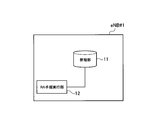
- FIG. 2 is a functional block diagram of the radio base station according to the first embodiment of the present invention.
- FIG. 3 is a diagram for explaining the operation of the radio base station according to the first embodiment of the present invention.
- FIG. 4 is a diagram for explaining the operation of the radio base station according to the first embodiment of the present invention.
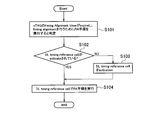
- FIG. 5 is a flowchart showing an operation of the radio base station according to the first embodiment of the present invention.
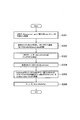
- FIG. 6 is a flowchart showing an operation of the radio base station according to the first embodiment of the present invention.
- FIG. 7 is a flowchart showing an operation of the radio base station according to the first embodiment of the present invention.
- FIG. 8 is a functional block diagram of a mobile station according to the first modification of the present invention.
- the mobile communication system supports the LTE-Advanced scheme and is configured to perform CA using Pcell and Scell.
- the mobile communication system manages a radio base station eNB # 1 that manages a cell # 11, a radio base station eNB # 11A that manages a cell # 11A, and a cell # 11B.
- Wireless base station eNB # 11B to perform.
- the cell # 11 may be a coverage band that supports a wide area, for example, a cell (for example, a macro cell) operated by a carrier (PCC: Primary Component Carrier) having a frequency f1.
- PCC Primary Component Carrier
- the cells # 11A / # 11B are arranged in the cover area of the cell # 11 and have a capacity band for improving the throughput at the hot spot, for example, a carrier of frequency f2 / f3 (SCC: Secondary Component Carrier). ) May be used (for example, a pico cell).
- a carrier of frequency f2 / f3 SCC: Secondary Component Carrier
- the cell # 11 operated by the carrier of the frequency f1 is set as the Pcell for the mobile station UE, and the cells # 11A / # 11B operated by the carrier of the frequency f2 / f3 are the mobile stations You may be set as Scell with respect to UE.
- the radio base station eNB # 1 includes a management unit 11 and an RA procedure execution unit 12.
- the management unit 11 is configured to manage the Pcell and Scell set for each mobile station UE for each group.
- the management unit 11 is configured to perform grouping for Pcell and Scell based on each propagation delay.
- the management unit 11 is configured to manage a pTAG including Pcell and Cell # 10 and an sTAG including Scell # 1 to Scell # 3 for the mobile station UE. Also good.
- Pcell may be a cell operated by a coverage band (for example, a macro cell), and Scell # 1 to # 3 / # 10 are cells operated by a capacity band (for example, a pico cell). It may be.
- a coverage band for example, a macro cell
- Scell # 1 to # 3 / # 10 are cells operated by a capacity band (for example, a pico cell). It may be.
- the RA procedure execution unit 12 is configured to perform the RA procedure in the Pcell and Scell set for each mobile station UE.
- the RA procedure execution unit 12 is configured to always perform the RA procedure in the Pcell in the pTAG managed by the management unit 11.
- the mobile station UE determines the transmission timing in the Pcell based on the downlink timing (DL timing) obtained by the RA procedure performed in the Pcell, and also determines the transmission timing in another Scell belonging to the pTAG. It is configured as follows.
- the RA procedure execution unit 12 is configured to always perform the RA procedure in the “DL timing reference cell” in the sTAG managed by the management unit 11.
- the RA procedure execution unit 12 is configured to instruct the mobile station UE to execute the RA procedure using the PDCCH in the “DL timing reference cell”. In such a case, the RA procedure execution unit 12 is configured to notify the mobile station UE of the dedicated RA preamble together with the PDCCH.
- the mobile station UE determines the uplink transmission timing in the Scell based on the downlink timing (DL timing) obtained by the RA procedure performed in the “DL timing reference cell”, and other mobile stations UE belonging to the sTAG.
- the uplink transmission timing in Scell is determined.
- the RA procedure execution unit 12 determines that the “DL timing reference cell” is present in the sTAG and determines that the “DL timing reference cell” is activated.
- the “DL timing reference cell” may be configured to perform an RA procedure.
- the RA procedure execution unit 12 determines that the “DL timing reference cell” exists in the sTAG and determines that the “DL timing reference cell” is not activated, the “DL timing reference” is determined. After activating the “reference cell”, the “DL timing reference cell” may be configured to perform the RA procedure.
- the RA procedure execution unit 12 determines that the “DL timing reference cell” does not exist in the sTAG (for example, the case where the “DL timing reference cell” is deleted or the timing alignment is not started until the CA is started). When it is determined that there is an activated Scell), one of the activated Scells is defined as “DL timing reference cell”, and the “DL timing reference cell” is selected. You may be comprised so that RA procedure may be performed in "timing reference cell”.
- the “DL timing reference cell” in the sTAG is not changed until the “DL timing reference cell” is deleted by RRC signaling or the like. It is configured.
- the RA procedure execution unit 12 determines that the “DL timing reference cell” does not exist in the sTAG and determines that there is no activated Scell, the RA procedure execution unit 12 After activating one, the activated Scell may be a “DL timing reference cell”, and the RA procedure may be performed in the “DL timing reference cell”.
- the RA procedure execution unit 12 determines that the “DL timing reference cell” does not exist in the sTAG and determines that there is an activated Scell, the RA procedure execution unit 12 is the most active Scell.
- a Scell to which a small Scellindex is assigned may be a “DL timing reference cell”, and the RA procedure may be performed in the “DL timing reference cell”.
- the RA procedure execution unit 12 replaces the Scell to which the smallest Scellindex is assigned with the Scell to which the largest Scellindex is assigned, the Scell to which the Scellindex satisfying a predetermined condition is assigned, etc. It may be configured to be “timing reference cell”.
- the RA procedure execution unit 12 determines that the “DL timing reference cell” does not exist in the sTAG and determines that there is no activated Scell
- the Scell to which the smallest Scellindex is assigned may be activated, the activated Scell may be referred to as a “DL timing reference cell”, and the RA procedure may be performed in the “DL timing reference cell”.
- the RA procedure execution unit 12 activates the Scell to which the largest Scellindex is assigned, the Scell to which the Scellindex satisfying the predetermined condition is assigned, instead of the Scell to which the smallest Scellindex is assigned. It may be configured to.
- the RA procedure execution unit 12 determines that the “DL timing reference cell” does not exist in the sTAG and determines that there is an activated Scell, the RA procedure execution unit 12 is the most active Scell.
- a Scell with high radio quality may be configured as a “DL timing reference cell”.
- the Scell having the highest radio quality may be configured as “DL timing reference cell”.
- the RA procedure execution unit 12 is assigned the smallest Scellindex among the activated Scells.
- the existing Scell may be “DL timing reference cell”, and the RA procedure may be performed in “DL timing reference cell”.
- the RA procedure execution unit 12 replaces the Scell to which the smallest Scellindex is assigned with the Scell to which the largest Scellindex is assigned, the Scell to which the Scellindex satisfying a predetermined condition is assigned, etc. It may be configured to be “timing reference cell”.
- the RA procedure execution unit 12 may be configured to determine the “DL timing reference cell” based on a predetermined criterion when it is determined in the sTAG that the “DL timing reference cell” does not exist. .
- the operation of the station eNB will be described.
- the radio base station eNB determines that the RA procedure is performed in order to perform the timing alignment because the “timing alignment timer” for sTAG has expired in step S101. It is determined whether or not “DL timing reference cell” in the sTAG is activated.
- step S104 If “YES”, the operation proceeds to step S104, and if “NO”, the operation proceeds to step S103.
- step S103 the radio base station eNB activates the “DL timing reference cell”.
- step S104 the radio base station eNB performs the RA procedure in the “DL timing reference cell”.
- the Scell used in CA is set for the mobile station UE, and the “DL timing reference cell” set in the sTAG consisting only of the Scell is deleted by RRC signaling.
- the operation of the radio base station eNB in the case where the operation is performed is described.
- the radio base station eNB when the radio base station eNB detects that “DL timing reference cell” set in the sTAG is deleted by RRC signaling in step S201, the radio base station eNB is active in the sTAG in step S202. It is determined whether there is a converted Scell.
- step S204 If “YES”, the operation proceeds to step S204, and if “NO”, the operation proceeds to step S203.
- Step S203 when there are a plurality of Scells set in the sTAG, the radio base station eNB activates any one of them.
- the radio base station eNB activates the Scell to which the smallest Scellindex is assigned among the Scells set in the sTAG.
- step S104 when there are a plurality of activated Scells in the sTAG, the radio base station eNB designates any one of them as “DL timing reference cell” and RA in the “DL timing reference cell”. Do the procedure.
- the radio base station eNB performs the RA procedure in the Scell to which the smallest Scellindex is assigned among the Scells set in the sTAG.
- the radio base station eNB receives “Measurement Report” such as “Event A3 / A4” from the mobile station UE.
- step S302 the radio base station eNB determines the Scell to be additionally set based on the “Measurement Report”, and adds and sets the Scell to the mobile station UE by RRC signaling. To instruct.
- the additionally set Scell is in an inactive state.
- the radio base station eNB When the radio base station eNB determines to perform scheduling for the downlink data signal or the uplink data signal in Scell in step S303, the radio base station eNB activates the Scell set in step S302 in step S304.
- step S305 when there are a plurality of activated Scells in the sTAG, the radio base station eNB sets one of them as a “DL timing reference cell” and performs the RA procedure in the “DL timing reference cell”. .
- the radio base station eNB performs the RA procedure in the Scell to which the smallest Scellindex is assigned among the Scells set in the sTAG.
- step S306 the radio base station eNB performs timing alignment according to the RA procedure, and then performs scheduling for the downlink data signal or the uplink data signal in the Scell.
- the radio base station eNB is configured to always perform the RA procedure in the “DL timing reference cell” in the sTAG. Therefore, the RA procedure is frequently performed in the sTAG. It is possible to avoid complication of processing in the mobile station UE caused by changing the Scell to be performed.
- the radio base station eNB determines that there is no “DL timing reference cell” in the sTAG
- the “DL timing reference cell” is determined based on a predetermined criterion. Since it is configured, the RA procedure can be performed in the sTAG by a simple procedure.
- Modification 1 With reference to FIG. 8, the mobile communication system (especially mobile station UE) which concerns on the modification 1 of this invention is demonstrated.
- the mobile communication system according to the first modification of the present invention will be described by focusing on the differences from the mobile communication system according to the first embodiment described above.
- the mobile station UE includes a management unit 21, a reception unit 22, an RA procedure execution unit 23, and a transmission unit 24.
- the management unit 21 is configured to manage the Pcell and Scell set for the mobile station UE for each group.
- the management unit 21 is configured to manage a pTAG including Pcell and Cell # 10 and an sTAG including Scell # 1 to Scell # 3 for the mobile station UE. Also good.
- the reception unit 22 is configured to receive a downlink signal transmitted by the radio base station eNB, and the transmission unit 24 is configured to transmit an uplink signal to the radio base station eNB. .
- the receiving unit 22 is configured to receive information instructing to perform the RA procedure from the radio base station eNB via the PDCCH. In such a case, the receiving unit 22 is configured to acquire an individual RA preamble.
- the RA procedure execution unit 23 is configured to perform an RA procedure in the Pcell and Scell set for the mobile station UE in response to an instruction from the radio base station eNB.
- the RA procedure execution unit 23 is configured to always perform the RA procedure in the Pcell in the pTAG managed by the management unit 21.
- the transmission unit 24 determines the transmission timing in the Pcell based on the downlink timing (DL timing) obtained by the RA procedure performed in the Pcell, and also determines the transmission timing in another Scell belonging to the pTAG. It is configured as follows.
- the RA procedure execution unit 23 is configured to always perform the RA procedure in the “DL timing reference cell” in the sTAG managed by the management unit 21.
- the transmission unit 24 determines the transmission timing in the “DL timing reference cell” based on the downlink timing (DL timing) obtained by the RA procedure performed in the “DL timing reference cell”, and transmits to the sTAG. It is comprised so that the transmission timing in the other Scell to which it belongs may be determined.
- the transmission unit 24 performs uplink in all the Scells activated in the sTAG. It is configured not to transmit a signal.
- the transmission unit 24 is activated in all Scells activated in the sTAG other than the sTAG in which the above-described RA procedure is performed, or is activated as a Pcell in the pTAG. All of the existing Scells are configured to be able to transmit uplink signals.
- the first feature of this embodiment is a radio base station eNB used in a mobile communication system configured to perform CA (carrier aggregation) using a Pcell (primary cell) and a Scell (secondary cell).
- CA carrier aggregation
- Pcell primary cell
- Scell secondary cell
- a DL timing reference cell exists in an sTAG (group) consisting only of Scells
- RA procedure execution unit random access procedure execution unit
- RA procedure random access procedure
- the sequential execution unit 12 determines that the “DL timing reference cell” exists in the sTAG and determines that the “DL timing reference cell” is not activated
- the “DL timing reference cell” is determined.
- the gist is that the “DL timing reference cell” is configured to perform the RA procedure.
- the RA procedure execution unit 12 determines that the “DL timing reference cell” does not exist in the sTAG and determines that there is an activated Scell
- the RA procedure execution unit 12 is activated.
- One of the registered Scells is “DL timing reference cell”, and the RA procedure is performed in the “DL timing reference cell”.
- the RA procedure executing unit 12 performs “DL timing” in the sTAG. If it is determined that there is no “reference cell” and that no activated Scell exists, after activating one of the non-activated Scells,
- the active of the Scell as "DL timing reference cell” such may be configured to perform a RA procedure in "DL timing reference cell".
- the RA procedure execution unit 12 determines that the “DL timing reference cell” does not exist in the sTAG and determines that there is an activated Scell, the RA procedure execution unit 12 is activated.
- the Scell to which the smallest Scellindex (index) is allocated is designated as “DL timing reference cell”, and the RA procedure is configured to perform the RA procedure in this “DL timing reference cell”.
- execution unit 12 in sTAG, determines that there is no "DL timing reference cell", and determines that the Scell being activated does not exist In this case, after activating the Scell to which the smallest Scellindex is allocated among the Scells that are not activated, the activated Scell is referred to as a “DL timing reference cell”, and the RA in the “DL timing reference cell” is used. It may be configured to perform a procedure.
- the RA procedure execution unit 12 when the RA procedure execution unit 12 determines that the “DL timing reference cell” does not exist in the sTAG and determines that there is an activated Scell, the RA procedure execution unit 12 is activated.
- the Scell with the highest radio quality among the Scells that have been configured is “DL timing reference cell”, and the RA procedure is configured to be performed in the “DL timing reference cell”.
- the Activated the Scell as "DL timing reference cell” such may be configured to perform a RA procedure in "DL timing reference cell”.
- the RA procedure execution unit 12 when the Scell is set and the set Scell is activated in a state where the Scell is not set, the RA procedure execution unit 12 includes the activated Scell.
- the Scell to which the smallest Scellindex is assigned may be “DL timing reference cell”, and the RA procedure may be performed in “DL timing reference cell”.
- the second feature of the present embodiment is a mobile station UE used in a mobile communication system configured to be able to perform CA using Pcell and Scell.
- the transmission unit 24 configured to transmit a link signal, and configured to perform the RA procedure in the “DL timing reference cell” in the sTAG including only Scells.
- the transmission unit 24 transmits the uplink in all Scells activated in the sTAG. The main point is that it is configured not to transmit link signals.
- radio base station eNB and the mobile station UE described above may be implemented by hardware, may be implemented by a software module executed by a processor, or may be implemented by a combination of both. .
- Software modules include RAM (Random Access Memory), flash memory, ROM (Read Only Memory), EPROM (Erasable Programmable ROM), EEPROM (Electronically Erasable and Programmable, Removable ROM, and Hard Disk). Alternatively, it may be provided in a storage medium of an arbitrary format such as a CD-ROM.
- the storage medium is connected to the processor so that the processor can read and write information from and to the storage medium. Further, such a storage medium may be integrated in the processor. Such a storage medium and processor may be provided in the ASIC. Such an ASIC may be provided in the radio base station eNB and the mobile station UE. Further, the storage medium and the processor may be provided in the radio base station eNB and the mobile station UE as discrete components.
- a radio base station and a mobile station that can simplify the processing of the mobile station UE and determine a cell on which an RA procedure should be performed in the sTAG.
- eNB radio base station 11, 21 ... management unit 12, 23 ... RA procedure execution unit 22 ... reception unit 24 ... transmission unit
Landscapes
- Engineering & Computer Science (AREA)
- Computer Networks & Wireless Communication (AREA)
- Signal Processing (AREA)
- Mobile Radio Communication Systems (AREA)
Abstract
L'objectif de l'invention est de faciliter le traitement avec des stations mobiles (UE) et de déterminer une cellule pour laquelle une procédure d'accès aléatoire doit être effectuée dans un sTAG. Une station de base radio (eNB) comprend une unité d'exécution de procédure d'accès aléatoire (RA) (12) qui est configurée pour effectuer une procédure d'accès aléatoire dans une « cellule de référence de synchronisation de Liaison Descendante (DL) » s'il est déterminé que la cellule de référence de synchronisation « DL » existe dans un sTAG et que la « cellule de référence de synchronisation de DL » a été activée; et effectuer une procédure d'accès aléatoire dans une « cellule de référence de synchronisation de Liaison Descendante (DL) » après l'activation de la « cellule de référence de synchronisation de Liaison Descendante (DL) » s'il est déterminé que la « cellule de référence de synchronisation DL » existe dans un sTAG et que la « cellule de référence de synchronisation de DL » n'a pas été activée.
Applications Claiming Priority (4)
| Application Number | Priority Date | Filing Date | Title |
|---|---|---|---|
| JP2012-017367 | 2012-01-30 | ||
| JP2012017367 | 2012-01-30 | ||
| JP2012060541A JP2013179551A (ja) | 2012-01-30 | 2012-03-16 | 無線基地局及び移動局 |
| JP2012-060541 | 2012-03-16 |
Publications (1)
| Publication Number | Publication Date |
|---|---|
| WO2013115263A1 true WO2013115263A1 (fr) | 2013-08-08 |
Family
ID=48905295
Family Applications (1)
| Application Number | Title | Priority Date | Filing Date |
|---|---|---|---|
| PCT/JP2013/052071 Ceased WO2013115263A1 (fr) | 2012-01-30 | 2013-01-30 | Station de base radio et stations mobiles |
Country Status (2)
| Country | Link |
|---|---|
| JP (1) | JP2013179551A (fr) |
| WO (1) | WO2013115263A1 (fr) |
Cited By (2)
| Publication number | Priority date | Publication date | Assignee | Title |
|---|---|---|---|---|
| WO2015064516A1 (fr) * | 2013-10-31 | 2015-05-07 | 株式会社Nttドコモ | Équipement utilisateur |
| US10177892B2 (en) | 2015-01-13 | 2019-01-08 | Telefonaktiebolaget Lm Ericsson (Publ) | Wireless terminals, nodes of wireless communication networks, and methods of operating the same |
Families Citing this family (1)
| Publication number | Priority date | Publication date | Assignee | Title |
|---|---|---|---|---|
| JP6194715B2 (ja) * | 2013-09-17 | 2017-09-13 | 富士通株式会社 | 基地局装置および通信システム |
-
2012
- 2012-03-16 JP JP2012060541A patent/JP2013179551A/ja active Pending
-
2013
- 2013-01-30 WO PCT/JP2013/052071 patent/WO2013115263A1/fr not_active Ceased
Non-Patent Citations (4)
| Title |
|---|
| MEDIATEK: "Transmission of Scell RACH", R2- 113102, 3GPP, 13 May 2011 (2011-05-13) * |
| NEW POSTCOM: "TAT related considerations for multiple TAs", R2-114121, 3GPP, 26 August 2011 (2011-08-26) * |
| NEW POSTCOM: "Timing reference cell selection for TA group", R2-115739, 3GPP, 18 November 2011 (2011-11-18) * |
| SAMSUNG: "Discussions on timing reference for SCell(s) in sTAG", R2-116067, 3GPP, 18 November 2011 (2011-11-18) * |
Cited By (6)
| Publication number | Priority date | Publication date | Assignee | Title |
|---|---|---|---|---|
| WO2015064516A1 (fr) * | 2013-10-31 | 2015-05-07 | 株式会社Nttドコモ | Équipement utilisateur |
| JP2015088997A (ja) * | 2013-10-31 | 2015-05-07 | 株式会社Nttドコモ | 移動局 |
| US10880054B2 (en) | 2013-10-31 | 2020-12-29 | Ntt Docomo, Inc. | Mobile station |
| US10177892B2 (en) | 2015-01-13 | 2019-01-08 | Telefonaktiebolaget Lm Ericsson (Publ) | Wireless terminals, nodes of wireless communication networks, and methods of operating the same |
| US10454655B2 (en) | 2015-01-13 | 2019-10-22 | Telefonaktiebolaget Lm Ericsson (Publ) | Wireless terminals, nodes of wireless communication networks, and methods of operating the same |
| US11082193B2 (en) | 2015-01-13 | 2021-08-03 | Telefonaktiebolaget Lm Ericsson (Publ) | Wireless terminals, nodes of wireless communication networks, and methods of operating the same |
Also Published As
| Publication number | Publication date |
|---|---|
| JP2013179551A (ja) | 2013-09-09 |
Similar Documents
| Publication | Publication Date | Title |
|---|---|---|
| JP5438046B2 (ja) | 移動通信方法及び無線基地局 | |
| JP5865770B2 (ja) | 移動局及び移動通信方法 | |
| US20170070985A1 (en) | User apparatus and uplink transmission timing control method | |
| EP2824979A1 (fr) | Station de base sans fil | |
| JP5859865B2 (ja) | 移動局 | |
| JP5426718B2 (ja) | 移動局及び無線基地局 | |
| JP2013197944A (ja) | 無線基地局及び移動局 | |
| US9596699B2 (en) | Mobile communication method, radio base station, and mobile station | |
| US9936471B2 (en) | Mobile station for performing component carrier-to-timing advance group mapping | |
| US9445295B2 (en) | Mobile communication method, radio base station and mobile station | |
| WO2013115263A1 (fr) | Station de base radio et stations mobiles | |
| JP6152252B2 (ja) | 移動局 | |
| JP6410774B2 (ja) | 移動局 | |
| WO2015064516A1 (fr) | Équipement utilisateur |
Legal Events
| Date | Code | Title | Description |
|---|---|---|---|
| 121 | Ep: the epo has been informed by wipo that ep was designated in this application |
Ref document number: 13744067 Country of ref document: EP Kind code of ref document: A1 |
|
| NENP | Non-entry into the national phase |
Ref country code: DE |
|
| 122 | Ep: pct application non-entry in european phase |
Ref document number: 13744067 Country of ref document: EP Kind code of ref document: A1 |