WO2013118736A1 - Agent de traitement de surface pour matériau hydrophobe, et procédé de traitement de surface - Google Patents
Agent de traitement de surface pour matériau hydrophobe, et procédé de traitement de surface Download PDFInfo
- Publication number
- WO2013118736A1 WO2013118736A1 PCT/JP2013/052632 JP2013052632W WO2013118736A1 WO 2013118736 A1 WO2013118736 A1 WO 2013118736A1 JP 2013052632 W JP2013052632 W JP 2013052632W WO 2013118736 A1 WO2013118736 A1 WO 2013118736A1
- Authority
- WO
- WIPO (PCT)
- Prior art keywords
- surface treatment
- polymer material
- group
- hydrophobic polymer
- copolymer
- Prior art date
- Legal status (The legal status is an assumption and is not a legal conclusion. Google has not performed a legal analysis and makes no representation as to the accuracy of the status listed.)
- Ceased
Links
Images



Classifications
-
- C—CHEMISTRY; METALLURGY
- C08—ORGANIC MACROMOLECULAR COMPOUNDS; THEIR PREPARATION OR CHEMICAL WORKING-UP; COMPOSITIONS BASED THEREON
- C08F—MACROMOLECULAR COMPOUNDS OBTAINED BY REACTIONS ONLY INVOLVING CARBON-TO-CARBON UNSATURATED BONDS
- C08F220/00—Copolymers of compounds having one or more unsaturated aliphatic radicals, each having only one carbon-to-carbon double bond, and only one being terminated by only one carboxyl radical or a salt, anhydride ester, amide, imide or nitrile thereof
- C08F220/02—Monocarboxylic acids having less than ten carbon atoms; Derivatives thereof
- C08F220/10—Esters
- C08F220/12—Esters of monohydric alcohols or phenols
- C08F220/16—Esters of monohydric alcohols or phenols of phenols or of alcohols containing two or more carbon atoms
- C08F220/18—Esters of monohydric alcohols or phenols of phenols or of alcohols containing two or more carbon atoms with acrylic or methacrylic acids
- C08F220/1808—C8-(meth)acrylate, e.g. isooctyl (meth)acrylate or 2-ethylhexyl (meth)acrylate
-
- C—CHEMISTRY; METALLURGY
- C08—ORGANIC MACROMOLECULAR COMPOUNDS; THEIR PREPARATION OR CHEMICAL WORKING-UP; COMPOSITIONS BASED THEREON
- C08F—MACROMOLECULAR COMPOUNDS OBTAINED BY REACTIONS ONLY INVOLVING CARBON-TO-CARBON UNSATURATED BONDS
- C08F230/00—Copolymers of compounds having one or more unsaturated aliphatic radicals, each having only one carbon-to-carbon double bond, and containing phosphorus, selenium, tellurium or a metal
- C08F230/02—Copolymers of compounds having one or more unsaturated aliphatic radicals, each having only one carbon-to-carbon double bond, and containing phosphorus, selenium, tellurium or a metal containing phosphorus
-
- C—CHEMISTRY; METALLURGY
- C08—ORGANIC MACROMOLECULAR COMPOUNDS; THEIR PREPARATION OR CHEMICAL WORKING-UP; COMPOSITIONS BASED THEREON
- C08F—MACROMOLECULAR COMPOUNDS OBTAINED BY REACTIONS ONLY INVOLVING CARBON-TO-CARBON UNSATURATED BONDS
- C08F220/00—Copolymers of compounds having one or more unsaturated aliphatic radicals, each having only one carbon-to-carbon double bond, and only one being terminated by only one carboxyl radical or a salt, anhydride ester, amide, imide or nitrile thereof
- C08F220/02—Monocarboxylic acids having less than ten carbon atoms; Derivatives thereof
- C08F220/10—Esters
- C08F220/12—Esters of monohydric alcohols or phenols
- C08F220/16—Esters of monohydric alcohols or phenols of phenols or of alcohols containing two or more carbon atoms
- C08F220/18—Esters of monohydric alcohols or phenols of phenols or of alcohols containing two or more carbon atoms with acrylic or methacrylic acids
- C08F220/1804—C4-(meth)acrylate, e.g. butyl (meth)acrylate, isobutyl (meth)acrylate or tert-butyl (meth)acrylate
Definitions
- the present invention relates to a polymer-type surface treatment agent capable of hydrophilizing the surface of a highly hydrophobic silicon-containing polymer and imparting lubricity, and a surface treatment method using the surface treatment agent.
- Silicon-containing polymers represented by polydimethylsiloxane (silicone (registered trademark) rubber) have excellent properties such as water repellency, chemical resistance, thermal stability, flexibility, gas permeability, and optical properties. Therefore, it is widely used not only in industry but also in medicine.
- hydrophobicity resulting from the chemical structure there are problems such as large irritation to tissues and adsorption of biological components on the surface when applied to medical treatment. Therefore, when a hydrophobic polymer material is used in a living environment, it is necessary to consider the familiarity between the material and the living body, and thus a hydrophilic treatment on the surface is required so that it can be immediately applied in an environment mainly composed of water. ing.
- Non-Patent Documents 1 to 7 Conventionally, a method of generating a hydrophilic functional group on the surface of a hydrophobic polymer material by a technique such as plasma treatment, glow discharge treatment or ion etching has been employed (see Non-Patent Documents 1 to 7).
- a technique such as plasma treatment, glow discharge treatment or ion etching
- the surface of a polymer material such as polydimethylsiloxane having high polymer chain mobility (the orientation of the functional group) cannot be stably hydrophilized for a long period of time. (See Non-Patent Documents 8 to 10).
- the hydrophilic functional group enters the polymer material again over time, so that there is a problem that stable surface hydrophilicity cannot be obtained over a long period of time. Furthermore, in the case of a thin tube-like member such as a catheter or an endoscope, it is difficult to perform plasma treatment on the inner surface.
- Non-Patent Document 11 As a method for hydrophilizing the surface of a hydrophobic polymer material, chemical modification with a hydrophilic polymer is also performed (see Non-Patent Document 11).
- this method is complicated in operation and is usually a process of surface treatment. Since non-polar organic solvents such as chloroform are used, there are concerns about adverse effects on living bodies.
- custom-made devices such as dentures are made using hydrophobic polymer materials, such devices must not be deformed by surface treatment. This method is not suitable, and it is considered that a method based on mild and simple processing conditions is necessary.
- An object of the present invention is to provide a polymer-type hydrophilization treatment agent (surface treatment agent) and a hydrophilization treatment method (surface treatment method) that can be improved without changing the structure and physical properties of the silicon-containing polymer.
- the present inventor has intensively studied to solve the above problems.
- the present inventors have found a polymer-type surface treatment agent and a surface treatment method that can be adsorbed and fixed on a surface from a medium centered on water and stabilized.
- both hydrophobic interaction and electrostatic interaction which are intermolecular forces acting in an aqueous medium, are effectively used, making it easy and stable.
- the present inventors have completed the present invention by finding a polymer-type surface treatment agent that can be adsorbed on the surface and conditions under which the surface treatment agent acts effectively.
- the present invention is a surface treatment agent for a hydrophobic polymer material, which has a monomer unit having a phosphorylcholine group in the side chain, a monomer unit having a hydrophobic group in the side chain, and a tertiary amine in the side chain.
- the present invention relates to a surface treatment agent comprising a copolymer having a monomer unit.
- the surface treating agent of this invention further contains the mixed solvent of water and ethanol.
- the water content in the mixed solvent is 20 to 80 volume percent.
- R 1 represents a linear or branched alkylene having 1 to 5 carbon atoms
- R 2 represents a linear or branched alkyl having 4 to 15 carbon atoms
- R 3 represents a carbon number of 1
- each R 4 is independently a linear or branched alkyl of 1 to 5 carbon atoms
- x, y, and z are independently of each other
- Each monomer unit is linked in a random order.
- R 1 is an ethylene group
- R 2 is an ethylhexyl group
- R 3 is an ethylene group
- each R 4 is a methyl group or an ethyl group.
- x / (x + y + z) is 0.15 to 0.4
- y / (x + y + z) is 0.6 to 0.8
- z / (x + y + z) is 0.05 to 0.2.
- the concentration of the copolymer component in the surface treatment agent of the present invention is preferably 0.2 to 1.5 weight percent.
- the hydrophobic polymer material treated with the surface treating agent of the present invention is preferably a silicon-containing polymer, and more preferably polydimethylsiloxane.
- the present invention relates to a method for treating a surface of a hydrophobic polymer material, comprising the step of applying the surface treatment agent to the surface of the hydrophobic polymer material.
- the surface treatment method of the present invention does not require a step of plasma treating the surface of the hydrophobic polymer material before the step of applying the surface treatment agent.
- the said method can be a method of hydrophilizing the surface of hydrophobic polymer material.
- the present invention provides a coating film of a copolymer having a monomer unit having a phosphorylcholine group in the side chain, a monomer unit having a hydrophobic group in the side chain, and a monomer unit having a tertiary amine in the side chain.
- a hydrophobic polymer material On the surface of a hydrophobic polymer material.
- the present invention relates to a hydrophobic polymer material that has been surface-treated by the above-described surface treatment method.
- the hydrophobic polymer material of the present invention is preferably a silicon-containing polymer, more preferably polydimethylsiloxane.
- the present invention it is possible to provide a surface treatment agent and a surface treatment method for the surface of a hydrophobic polymer material that are efficient and simple and excellent in durability. Further, the surface treating agent of the present invention can efficiently and easily hydrophilize the surface of various hydrophobic polymer materials.
- the surface treating agent can be applied to materials having high polymer chain mobility such as polydimethylsiloxane. However, it is extremely useful in that it can stably make the surface hydrophilic over a long period of time.
- the surface treatment agent of the present invention contains a copolymer having a hydrophobic group and a tertiary amine, the hydrophobic interaction between the copolymer side chain and the surface of the hydrophobic polymer material in a solvent containing water. Both electrostatic interaction and electrostatic interaction can be effectively utilized, thereby achieving the effect that the adsorption of the copolymer on the surface of the hydrophobic polymer material can be stabilized.
- the surface treatment method of the present invention can coat a hydrophilic copolymer using a mixed solvent of water and ethanol, it is possible to use both the hydrophobic interaction and the electrostatic interaction described above. In addition to improving the adsorption stability, it is not necessary to use a conventionally used nonpolar organic solvent, and adverse effects on living bodies or the environment can be suppressed.
- the surface treatment method of the present invention does not require pretreatment such as conventional plasma treatment, plasma treatment is performed on the inner surface like a thin tube-like member such as a catheter or an endoscope. If it is difficult, or if it should avoid deformation due to surface treatment under severe conditions such as plasma treatment, such as a custom-made device, mild conditions using the surface treatment agent of the present invention The surface treatment is possible, and the surface treatment can be performed according to the physical properties, shape, application, etc. of the hydrophobic polymer material to be treated. .
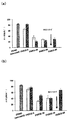
- FIG. 1 is a graph of the maximum wavelength peak of ANS-Na fluorescence in a copolymer solution.
- FIG. 2 is a graph showing the underwater contact angle on the surface of polydimethylsiloxane. Among the bar graphs, white is a value immediately after the surface treatment, and black is a value after being immersed in water for 1 hour.
- FIG. 3 is a graph showing the underwater contact angle with respect to the P / Si ratio on the polydimethylsiloxane surface.
- FIG. 4 is a graph showing the time dependence of the ratio of phosphorus atoms to silicon atoms (P / Si) on the surface of polydimethylsiloxane surface-treated with a PMED solution.
- FIG. 1 is a graph of the maximum wavelength peak of ANS-Na fluorescence in a copolymer solution.
- FIG. 2 is a graph showing the underwater contact angle on the surface of polydimethylsiloxane. Among the bar graphs, white is
- FIG. 5 is a graph showing the time dependence of the ratio of phosphorus atoms to silicon atoms (P / Si) on the surface of polydimethylsiloxane surface-treated with a PMEH solution.
- FIG. 6 is a graph showing the time dependence of the dynamic friction coefficient on the surface of polydimethylsiloxane surface-treated with a PMED solution.
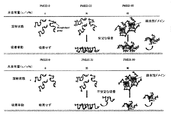
- FIG. 7 is a schematic diagram showing the adsorption behavior of PMED and PMEH on the polydimethylsiloxane surface.
- the surface treatment agent for the hydrophobic polymer material of the present invention comprises a monomer unit having a phosphorylcholine group in the side chain, a monomer unit having a hydrophobic group in the side chain, and a monomer unit having a tertiary amine in the side chain. It comprises a copolymer having a main component.
- the copolymer as a main component of the copolymer surface treatment agent comprises a monomer unit having a phosphorylcholine group in the side chain, a monomer unit having a hydrophobic group in the side chain, and a tertiary amine in the side chain.
- This is a so-called terpolymer (terpolymer).
- terpolymer terpolymer
- these monomer units each typically have a mode of randomly bonding, but a mode having some regularity and periodicity is also included in the scope of the present invention.
- a statistical polymer, an alternating polymer It may be a periodic polymer, a block copolymer, and in some cases, a graft polymer.
- the phosphorylcholine group (PC group) is a polar group having the same structure as the polar group of phospholipid (phosphatidylcholine) which is a main component of the biological membrane. Therefore, by including a phosphorylcholine group in the side chain, the copolymer has hydrophilicity (wetability), specifically, extremely good biocompatibility possessed by the surface of the biological membrane, in particular, non-adsorption of biomolecules. And non-activation properties can be imparted, and non-specific adsorption to various molecules can be effectively suppressed, so that excellent antifouling properties are imparted to the surface of hydrophobic polymer materials such as hydrophobic polymer materials. Can do. Further, in the copolymer, the hydrophobic group has an adsorptivity to the surface of the hydrophobic polymer material to be treated by hydrophobic interaction, and can improve the stability of the surface coating by the copolymer. it can.
- the tertiary amine has a positive charge when water is contained in the solvent, and therefore, between the surface of the hydrophobic polymer material (especially polydimethylsiloxane) having a negative charge.
- the surface adsorption of the copolymer can be stabilized together with the hydrophobic interaction.
- the skeleton site in the monomer unit forming the main chain (skeleton) in the copolymer is not particularly limited as long as it can form a polymer by polymerization reaction with each other.
- vinyl monomers are preferred.
- Residues are more preferred.
- the vinyl monomer residue is not limited.
- a methacryloxy group, a methacrylamide group, an acryloxy group, an acrylamide group, a styryloxy group, and a styrylamide group in which the vinyl moiety is addition-polymerized are preferable.
- a methacryloxy group, a methacrylamide group, an acryloxy group and an acrylamide group are more preferable, a methacrylamide group and an acrylamide group are more preferable, and a methacrylamide group is particularly preferable.
- part can also be the same about each monomer unit and can also each differ independently, the aspect which is all methacrylamide groups is preferable.
- specific examples of the monomer having a phosphorylcholine group include, but are not limited to, 2-methacryloyloxyethyl phosphorylcholine, 2-acryloyloxyethyl phosphorylcholine, N- (2-methacrylamide) ethyl phosphorylcholine, 4-methacryloyloxybutylphosphorylcholine, Preferred examples include structural units derived from 6-methacryloyloxyhexyl phosphorylcholine, 10-methacryloyloxydecylsylphosphorylcholine, ⁇ -methacryloyldioxyethylene phosphorylcholine, 4-styryloxybutylphosphorylcholine, and the like.
- 2-methacryloyloxyethyl phosphorylcholine a structural unit derived from 2-methacryloyloxyethyl phosphorylcholine is particularly preferable.
- 2-Methacryloyloxyethyl phosphorylcholine can be synthesized by the method described in “Kazuhiko Ishihara, Tomoko Ueda, and Nobuo Nakabayashi, Polymer Journal, 22, 355-360 (1990), etc. (Monomer compound) can also be easily synthesized based on this method and conventional methods.
- the said copolymer is not limited,
- the polymer which has a structure shown by following formula (1) is mentioned preferably.
- R 1 is linear or branched alkylene having 1 to 5 carbon atoms, preferably linear alkylene having 2 carbon atoms, that is, a monomer having a phosphorylcholine group is 2 -Methacryloyloxyethyl phosphorylcholine is preferred.
- R 2 is a linear or branched alkyl having 4 to 15 carbon atoms, preferably a branched alkyl having 4 to 10 carbon atoms, more preferably a branched alkyl having 8 carbon atoms. It is.
- the most preferred alkyl is an ethylhexyl group, that is, the monomer having a hydrophobic group is preferably 2-ethylhexyl methacrylate.
- R 3 is a linear or branched alkylene having 1 to 5 carbon atoms, preferably a linear alkylene having 2 to 4 carbon atoms, and more preferably an ethylene group.
- Each R 4 is independently a linear or branched alkyl having 1 to 5 carbon atoms, preferably each R 4 is a methyl group or an ethyl group, and most preferably both are methyl groups. It is. That is, the most preferred monomer having a tertiary amine is 2- (N, N-dimethylamino) ethyl methacrylate.
- x, y, and z each independently represent an integer of 2 or more.
- the value of x / (x + y + z) is preferably 0.15 to 0.4, more preferably 0.2 to 0. .35, most preferably 0.2 to 0.3. If the value exceeds 0.4, it is solubilized only in water, so that the surface adsorptivity to the hydrophobic polymer material is decreased, which is not preferable.
- the value of y / (x + y + z) is preferably 0.6 to 0.8, and more preferably 0.6 to 0.65 from the viewpoint of ensuring appropriate hydrophobicity of the polymer.
- the value of z / (x + y + z) is preferably 0.05 to 0.2, more preferably 0.05 to 0.10.
- the weight average molecular weight (Mw) of the copolymer used in the surface treatment agent of the present invention is not limited, but is preferably 5,000 to 1,000,000, and more preferably 10,000 to 300,000. It is.
- the copolymer used in the surface treatment agent of the invention may contain a structural unit derived from another monomer, if necessary, and is not limited, but is usually a structure derived from another monomer.
- the proportion of units is preferably 30 mol% or less, more preferably 10 mol% or less, based on all structural units constituting the polymer.
- the surface treatment agent for a hydrophobic polymer material of the present invention contains the above-mentioned copolymer as a main component, and can hydrophilize the surface of the hydrophobic polymer material. It is.
- the surface treatment agent of the present invention may contain any other component that is generally used as a component of the surface treatment agent of the base material in addition to the copolymer, and is not limited.
- the solvent a mixed solvent of water and ethanol or the like is preferable, and the content of water in the mixed solvent is preferably 20 to 80 volume percent, more preferably 20 to 50 volume percent.
- the solvent is water alone, the copolymer is insoluble, while when the water is 20 volume percent or less, the adsorption stability of the copolymer on the surface of the hydrophobic polymer material is decreased.
- the surface treatment agent of the present invention is usually preferably in the form of a solution, and the concentration of the copolymer contained as a main component is preferably, for example, 0.2 to 1.5 weight percent, more preferably 0.5 to 1.25 weight percent, more preferably 0.75 to 1.0 weight percent. When the concentration exceeds 1.5 weight percent, the association of the copolymer becomes remarkable in the solution, which is not preferable.
- hydrophobic polymer material used as the object of the surface treating agent of this invention
- various hydrophobic polymer materials etc. are mentioned preferably.
- hydrophobic polymer materials include acrylic polymers such as polymethyl methacrylate (methacrylic resin; PMMA) and silicon-substituted methacrylic acid ester polymers; various silicone rubbers such as polydimethylsiloxane (including substituted silicones and modified silicones).
- a material made of an organic material such as polystyrene, polyethylene terephthalate, polycarbonate and polyolefin; a metal, ceramics or glass-based substrate surface-treated with a silane coupling agent.
- a silicon-containing polymer is preferable, and polydimethylsiloxane is more preferable.
- the shape of the hydrophobic polymer material is not particularly limited.
- a plate shape, a bead shape, a fiber shape, and a hollow tubular shape holes and grooves provided in a plate-like substrate are also included.
- the use of the substrate is not limited, but examples thereof include dental materials, dental instruments, various medical devices, contact lenses, artificial organs, biochips, biosensors, oxygen-enriched membranes, and cell storage instruments. It is done.
- dental material for example, dental prostheses such as plate dentures, bridge dentures, implant dentures, and crowns are preferably mentioned.
- the surface treatment method of the present invention is a method of hydrophilizing the surface of a hydrophobic polymer material as a target substrate. Specifically, the surface treatment agent of the present invention described above is applied to the surface treatment agent of the present invention. It is a method including a step of applying a copolymer to the surface of a substrate by dipping or the like. The coating step may be performed using a surface treatment agent containing the copolymer, which is a photoreactive polymer, as a main component, and is not limited.
- the hydrophobic polymer material that is the target substrate of the surface treatment method of the present invention is not limited, but examples of the type, shape, and use thereof are the same as those listed in the above section 1. (2). it can.
- the hydrophobic polymer material of the present invention is a base material whose surface is coated with the above-mentioned copolymer, and the surface is hydrophilized, thus preventing the hydrophobic polymer material. It has excellent soiling properties.
- the hydrophobic polymer material of the present invention is stabilized by adsorbing the hydrophobic group and the tertiary amine in the copolymer to the surface by both hydrophobic interaction and electrostatic interaction, respectively. Since the surface coating is applied, the antifouling property due to the hydrophilization of the surface can be maintained for a long time.
- the hydrophobic polymer material of the present invention can be obtained by surface-treating the hydrophobic polymer material by the surface treatment method of the present invention described above.
- the hydrophobic polymer material of the present invention is not limited, but examples of the type, shape, use and the like are the same as those listed in the above section 1. (2).
- the monomer 2-methacryloyloxyethyl phosphorylcholine (MPC) was described in “Method of synthesis by Kazuhiko Ishihara, Tomoko Ueda, and Nobu Nakabayashi, Polymer Journal, 22, 355-360 (1990)” as described above.
- MPC monomer 2-methacryloyloxyethyl phosphorylcholine
- EHMA 2-ethylhexyl methacrylate
- BMA butyl methacrylate
- DMAEMA 2- (N, N-dimethylamino) ethyl methacrylate
- MPC-EHMA-DMAEMA Copolymer Under the condition that MPC: EHMA: DMAEMA has a molar ratio of 30:60:10, 2,2′-azobisisobutyronitrile (AIBN) was used as a polymerization initiator.
- the yield was 33%.
- the chemical structure of the obtained polymer was identified by H 1 -NMR (in CD 3 CD 2 OD), and the molecular weight was measured by gel permeation chromatography (JASCO).
- the structure of the obtained PMED (Example 1) is shown below.
- PDMS was used as a hydrophobic polymer material to be treated.
- the PMED polymer was dissolved in a predetermined ratio ethanol: water mixed solvent to obtain polymer solutions having water contents of 0, 20, 50, and 80 v / v%, respectively. Each polymer concentration was adjusted to 1.0 wt%.
- the PDMS substrate was previously washed with ethanol.
- the PDMS substrate was immersed in the PMED solution 5 times for several seconds and then dried. This process was repeated twice, and the substrate was dried under reduced pressure.
- an MPC-EHMA copolymer (PMEH) containing no DMAEMA unit was synthesized in the same manner as described above.
- a polymer solution of water: ethanol mixed solvent having a water content of 0, 20, 50, 80 v / v% was prepared in the same manner as described above, and the surface treatment of the PDMS substrate was performed under the same conditions. .
- the structure of PMEH is shown below.
- PMEH the smaller the angle, the higher the hydrophilicity of the substrate surface.
- FIG. 3 shows the contact angle with respect to the abundance ratio of phosphorus (P) atoms and silicon (Si) atoms on the PDMS surface.
- the contact angle uses a value after a PDMS substrate surface-treated with a polymer is immersed in water for 1 hour. Since the phosphorus atom is an element contained only in the phosphorylcholine group of the MPC unit in the polymer, the presence of the coating film can be evaluated by the P / Si ratio. From the results shown in FIG.
- PMEH-20 and 50 have a P / Si ratio decreased from 0.25 to 0.05 or less by immersion in water for 24 hours, and PMEH-80 has an approximately 0. There was a dramatic decrease from 15 to 0.05. In either case, the P / Si ratio was almost 0 after 72 hours of immersion.
- PMED has an amine in the side chain, and when water is contained in the solvent, it is protonated and has a positive charge, so it is more strongly adsorbed on the PDMS surface than PMEH. It is considered a thing.
- the DMAKa polymer has a pKa of about 8.0, and in the case of pH 5.6, 90% of the dimethylamino group is protonated and has a positive charge.
- FIG. 6 shows the time dependency of the obtained friction coefficient.
- Untreated PDMS and PMED-0 no polymer adsorbed
- the friction coefficients showed dramatic decreases of 0.030, 0.030, and 0.015, respectively.
- the surface treatment with hydrophilic PMED removes the strong hydrophobic interaction, forms a lubricating layer mainly composed of water, and reduces the frictional force.
- the result is consistent with the result of the above contact angle measurement.
- the fact that the low coefficient of friction was maintained after 1.0 ⁇ 10 3 cycles demonstrates the stability of the PMED layer formed on the surface of the PDMS substrate.
- FIG. 7 schematically shows the adsorption behavior of PMED and PMEH on the PDMS surface based on the above experimental results.
- PMED has a positive charge in aqueous solvents due to the inclusion of DMAEMA, while the PDMS surface is negatively charged, which is why the PMED layer has a very high stability compared to the PMEH layer. Conceivable. That is, the difference in stability between PMEH and PMED is not only due to hydrophobic interaction but also due to binding to the PDMS surface by electrostatic interaction. This results in a stable bond at the PDMS surface with the copolymer involved.
Landscapes
- Chemical & Material Sciences (AREA)
- Health & Medical Sciences (AREA)
- Chemical Kinetics & Catalysis (AREA)
- Medicinal Chemistry (AREA)
- Polymers & Plastics (AREA)
- Organic Chemistry (AREA)
- Coating Of Shaped Articles Made Of Macromolecular Substances (AREA)
- Addition Polymer Or Copolymer, Post-Treatments, Or Chemical Modifications (AREA)
- Materials For Medical Uses (AREA)
Priority Applications (1)
| Application Number | Priority Date | Filing Date | Title |
|---|---|---|---|
| JP2013557529A JP5898703B2 (ja) | 2012-02-07 | 2013-02-05 | 疎水性材料の表面処理剤、及び表面処理方法 |
Applications Claiming Priority (2)
| Application Number | Priority Date | Filing Date | Title |
|---|---|---|---|
| JP2012-023716 | 2012-02-07 | ||
| JP2012023716 | 2012-02-07 |
Publications (1)
| Publication Number | Publication Date |
|---|---|
| WO2013118736A1 true WO2013118736A1 (fr) | 2013-08-15 |
Family
ID=48947498
Family Applications (1)
| Application Number | Title | Priority Date | Filing Date |
|---|---|---|---|
| PCT/JP2013/052632 Ceased WO2013118736A1 (fr) | 2012-02-07 | 2013-02-05 | Agent de traitement de surface pour matériau hydrophobe, et procédé de traitement de surface |
Country Status (2)
| Country | Link |
|---|---|
| JP (1) | JP5898703B2 (fr) |
| WO (1) | WO2013118736A1 (fr) |
Cited By (8)
| Publication number | Priority date | Publication date | Assignee | Title |
|---|---|---|---|---|
| CN104479060A (zh) * | 2014-11-27 | 2015-04-01 | 广东多正化工科技有限公司 | 烯胺类共聚物表面处理剂及其制备方法 |
| WO2016121995A1 (fr) * | 2015-01-29 | 2016-08-04 | ダイキン工業株式会社 | Matériau de base et son application |
| WO2016163435A1 (fr) * | 2015-04-07 | 2016-10-13 | 国立大学法人東京大学 | Agent de traitement de surface et procédé de traitement de surface |
| EP3219400A2 (fr) | 2016-03-17 | 2017-09-20 | Tokyo Ohka Kogyo Co., Ltd. | Procédé de traitement de surface, agent antistatique et agent de traitement d'hydrophilisation |
| WO2018003822A1 (fr) * | 2016-06-29 | 2018-01-04 | 日油株式会社 | Agent conférant des propriétés de glissement, et procédé conférant des propriétés de glissement |
| US11015078B2 (en) | 2016-07-08 | 2021-05-25 | The University Of Tokyo | Surface treatment agent, surface treatment method, surface treatment base material, and surface treatment base material production method |
| WO2021144769A1 (fr) * | 2020-01-17 | 2021-07-22 | Wynnvision, Llc | Silicones antimicrobiens |
| JP2021161208A (ja) * | 2020-03-31 | 2021-10-11 | 株式会社朝日Fr研究所 | 親水性改質基材 |
Citations (6)
| Publication number | Priority date | Publication date | Assignee | Title |
|---|---|---|---|---|
| JP2006017458A (ja) * | 2004-06-30 | 2006-01-19 | Sumitomo Bakelite Co Ltd | バイオチップ用基板およびバイオチップ |
| JP2006258609A (ja) * | 2005-03-17 | 2006-09-28 | Sumitomo Bakelite Co Ltd | バイオマテリアル用高分子化合物およびそれを用いた高分子溶液 |
| JP2007326920A (ja) * | 2006-06-07 | 2007-12-20 | Sumitomo Bakelite Co Ltd | バイオアッセイ用高分子化合物およびこれを用いたバイオアッセイ用基材 |
| JP2010059346A (ja) * | 2008-09-05 | 2010-03-18 | Univ Of Tokyo | 疎水性ポリマー材料の光表面改質法 |
| JP2010059367A (ja) * | 2008-09-05 | 2010-03-18 | Univ Of Tokyo | 疎水性基材の表面処理方法 |
| WO2013002021A1 (fr) * | 2011-06-27 | 2013-01-03 | 日油株式会社 | Polymère et son procédé de production |
Family Cites Families (5)
| Publication number | Priority date | Publication date | Assignee | Title |
|---|---|---|---|---|
| JP2870727B2 (ja) * | 1996-07-04 | 1999-03-17 | 科学技術振興事業団 | 2−メタクリロイルオキシエチルホスホリルコリン共重合体 |
| JP3782851B2 (ja) * | 1996-07-31 | 2006-06-07 | 日本油脂株式会社 | 蛋白質の安定化方法および組成物 |
| JP3825513B2 (ja) * | 1996-11-22 | 2006-09-27 | 日本油脂株式会社 | 親水性樹脂及び医用材料 |
| JP3647840B2 (ja) * | 2002-11-25 | 2005-05-18 | 株式会社資生堂 | ホスホリルコリン基含有改質粉体及びその製造方法 |
| JP4191225B2 (ja) * | 2007-01-18 | 2008-12-03 | 株式会社資生堂 | 表面改質方法及び表面改質材料 |
-
2013
- 2013-02-05 WO PCT/JP2013/052632 patent/WO2013118736A1/fr not_active Ceased
- 2013-02-05 JP JP2013557529A patent/JP5898703B2/ja not_active Expired - Fee Related
Patent Citations (6)
| Publication number | Priority date | Publication date | Assignee | Title |
|---|---|---|---|---|
| JP2006017458A (ja) * | 2004-06-30 | 2006-01-19 | Sumitomo Bakelite Co Ltd | バイオチップ用基板およびバイオチップ |
| JP2006258609A (ja) * | 2005-03-17 | 2006-09-28 | Sumitomo Bakelite Co Ltd | バイオマテリアル用高分子化合物およびそれを用いた高分子溶液 |
| JP2007326920A (ja) * | 2006-06-07 | 2007-12-20 | Sumitomo Bakelite Co Ltd | バイオアッセイ用高分子化合物およびこれを用いたバイオアッセイ用基材 |
| JP2010059346A (ja) * | 2008-09-05 | 2010-03-18 | Univ Of Tokyo | 疎水性ポリマー材料の光表面改質法 |
| JP2010059367A (ja) * | 2008-09-05 | 2010-03-18 | Univ Of Tokyo | 疎水性基材の表面処理方法 |
| WO2013002021A1 (fr) * | 2011-06-27 | 2013-01-03 | 日油株式会社 | Polymère et son procédé de production |
Cited By (19)
| Publication number | Priority date | Publication date | Assignee | Title |
|---|---|---|---|---|
| CN104479060A (zh) * | 2014-11-27 | 2015-04-01 | 广东多正化工科技有限公司 | 烯胺类共聚物表面处理剂及其制备方法 |
| WO2016121995A1 (fr) * | 2015-01-29 | 2016-08-04 | ダイキン工業株式会社 | Matériau de base et son application |
| JP2016163988A (ja) * | 2015-01-29 | 2016-09-08 | ダイキン工業株式会社 | 基材及びその用途 |
| WO2016163435A1 (fr) * | 2015-04-07 | 2016-10-13 | 国立大学法人東京大学 | Agent de traitement de surface et procédé de traitement de surface |
| JP2016199620A (ja) * | 2015-04-07 | 2016-12-01 | 国立大学法人 東京大学 | 表面処理用剤および表面処理方法 |
| EP3219400A2 (fr) | 2016-03-17 | 2017-09-20 | Tokyo Ohka Kogyo Co., Ltd. | Procédé de traitement de surface, agent antistatique et agent de traitement d'hydrophilisation |
| KR20170108876A (ko) | 2016-03-17 | 2017-09-27 | 도오꾜오까고오교 가부시끼가이샤 | 표면 처리 방법, 대전 방지제 및 친수화 처리제 |
| US10940504B2 (en) | 2016-03-17 | 2021-03-09 | Tokyo Ohka Kogyo Co., Ltd. | Surface treatment method, anti-static agent, and hydrophilizing treatment agent |
| JPWO2018003822A1 (ja) * | 2016-06-29 | 2019-06-06 | 日油株式会社 | 滑り性付与剤および滑り性付与方法 |
| WO2018003822A1 (fr) * | 2016-06-29 | 2018-01-04 | 日油株式会社 | Agent conférant des propriétés de glissement, et procédé conférant des propriétés de glissement |
| US11015078B2 (en) | 2016-07-08 | 2021-05-25 | The University Of Tokyo | Surface treatment agent, surface treatment method, surface treatment base material, and surface treatment base material production method |
| WO2021144769A1 (fr) * | 2020-01-17 | 2021-07-22 | Wynnvision, Llc | Silicones antimicrobiens |
| CN115297908A (zh) * | 2020-01-17 | 2022-11-04 | 韦恩视野有限责任公司 | 抗菌硅酮 |
| US20230029153A1 (en) * | 2020-01-17 | 2023-01-26 | Wynnvision, Llc | Amtimicrobial silicones |
| US11666686B2 (en) | 2020-01-17 | 2023-06-06 | Wynnvision, Llc | Amtimicrobial silicones |
| US20240123122A1 (en) * | 2020-01-17 | 2024-04-18 | Wynnvision, Llc | Amtimicrobial silicones |
| CN115297908B (zh) * | 2020-01-17 | 2024-04-19 | 韦恩视野有限责任公司 | 抗菌硅酮 |
| JP2021161208A (ja) * | 2020-03-31 | 2021-10-11 | 株式会社朝日Fr研究所 | 親水性改質基材 |
| JP7305190B2 (ja) | 2020-03-31 | 2023-07-10 | 株式会社朝日Fr研究所 | 親水性改質基材 |
Also Published As
| Publication number | Publication date |
|---|---|
| JPWO2013118736A1 (ja) | 2015-05-11 |
| JP5898703B2 (ja) | 2016-04-06 |
Similar Documents
| Publication | Publication Date | Title |
|---|---|---|
| JP5898703B2 (ja) | 疎水性材料の表面処理剤、及び表面処理方法 | |
| Venault et al. | Designs of zwitterionic interfaces and membranes | |
| JP5597814B2 (ja) | 疎水性ポリマー材料の光表面改質法 | |
| Seo et al. | Surface tethering of phosphorylcholine groups onto poly (dimethylsiloxane) through swelling–deswelling methods with phospholipids moiety containing ABA-type block copolymers | |
| JP5598891B2 (ja) | 疎水性基材の表面処理方法 | |
| JP6305429B2 (ja) | ポリオキサゾリンコポリマー | |
| JP2010505993A (ja) | Si−H基を含有する表面を処理する方法 | |
| JP6407513B2 (ja) | 医療材料の表面修飾用ポリマー | |
| JP6560560B2 (ja) | 耐汚染性表面修飾剤、及び表面処理方法 | |
| WO2017209222A1 (fr) | Procédé de production d'un dispositif médical | |
| WO2016163435A1 (fr) | Agent de traitement de surface et procédé de traitement de surface | |
| Yu et al. | Bioinspired sulfobetaine borneol fluorinated amphiphilic polymers for marine antifouling and fouling release applications | |
| WO2009123191A1 (fr) | Polysiloxane, composé acrylique, et composé de vinyle | |
| Seo et al. | Quick and simple modification of a poly (dimethylsiloxane) surface by optimized molecular design of the anti-biofouling phospholipid copolymer | |
| JP2024117413A (ja) | 基材の親水化処理方法及び親水性改質基材 | |
| JPWO2018008663A1 (ja) | 表面処理剤、表面処理方法、表面処理基材、及び表面処理基材の製造方法 | |
| JP2025170041A (ja) | 被膜形成用組成物および被覆体の製造方法 | |
| JP6111052B2 (ja) | 耐汚染性を付与するための水溶性表面処理剤、および表面処理方法 | |
| JP3580022B2 (ja) | ブロック共重合体および医療用材料 | |
| JP6678959B2 (ja) | 樹脂成形物の表面へのコーティング層形成方法。 | |
| JP7829834B2 (ja) | コーティング剤及びこれを用いた医療用材料 | |
| JP2024117412A (ja) | 基材の親水化処理方法及び親水性改質基材 | |
| Tan et al. | Zwitterionic antifouling coating | |
| JP2023022689A (ja) | 抗菌防汚材料及び抗菌防汚表面処理方法 | |
| US20200369929A1 (en) | Adhesive hydrogels and uses thereof |
Legal Events
| Date | Code | Title | Description |
|---|---|---|---|
| 121 | Ep: the epo has been informed by wipo that ep was designated in this application |
Ref document number: 13746182 Country of ref document: EP Kind code of ref document: A1 |
|
| ENP | Entry into the national phase |
Ref document number: 2013557529 Country of ref document: JP Kind code of ref document: A |
|
| NENP | Non-entry into the national phase |
Ref country code: DE |
|
| 122 | Ep: pct application non-entry in european phase |
Ref document number: 13746182 Country of ref document: EP Kind code of ref document: A1 |