WO2013129130A1 - レニウムと砒素の分離方法、並びにレニウムの精製方法 - Google Patents
レニウムと砒素の分離方法、並びにレニウムの精製方法 Download PDFInfo
- Publication number
- WO2013129130A1 WO2013129130A1 PCT/JP2013/053634 JP2013053634W WO2013129130A1 WO 2013129130 A1 WO2013129130 A1 WO 2013129130A1 JP 2013053634 W JP2013053634 W JP 2013053634W WO 2013129130 A1 WO2013129130 A1 WO 2013129130A1
- Authority
- WO
- WIPO (PCT)
- Prior art keywords
- arsenic
- rhenium
- precipitate
- leachate
- solution
- Prior art date
- Legal status (The legal status is an assumption and is not a legal conclusion. Google has not performed a legal analysis and makes no representation as to the accuracy of the status listed.)
- Ceased
Links
Images


Classifications
-
- C—CHEMISTRY; METALLURGY
- C22—METALLURGY; FERROUS OR NON-FERROUS ALLOYS; TREATMENT OF ALLOYS OR NON-FERROUS METALS
- C22B—PRODUCTION AND REFINING OF METALS; PRETREATMENT OF RAW MATERIALS
- C22B61/00—Obtaining metals not elsewhere provided for in this subclass
-
- C—CHEMISTRY; METALLURGY
- C22—METALLURGY; FERROUS OR NON-FERROUS ALLOYS; TREATMENT OF ALLOYS OR NON-FERROUS METALS
- C22B—PRODUCTION AND REFINING OF METALS; PRETREATMENT OF RAW MATERIALS
- C22B3/00—Extraction of metal compounds from ores or concentrates by wet processes
- C22B3/20—Treatment or purification of solutions, e.g. obtained by leaching
- C22B3/44—Treatment or purification of solutions, e.g. obtained by leaching by chemical processes
-
- Y—GENERAL TAGGING OF NEW TECHNOLOGICAL DEVELOPMENTS; GENERAL TAGGING OF CROSS-SECTIONAL TECHNOLOGIES SPANNING OVER SEVERAL SECTIONS OF THE IPC; TECHNICAL SUBJECTS COVERED BY FORMER USPC CROSS-REFERENCE ART COLLECTIONS [XRACs] AND DIGESTS
- Y02—TECHNOLOGIES OR APPLICATIONS FOR MITIGATION OR ADAPTATION AGAINST CLIMATE CHANGE
- Y02P—CLIMATE CHANGE MITIGATION TECHNOLOGIES IN THE PRODUCTION OR PROCESSING OF GOODS
- Y02P10/00—Technologies related to metal processing
- Y02P10/20—Recycling
Definitions
- the present invention relates to a method for separating rhenium and arsenic and a method for purifying rhenium, and more particularly, in the rhenium purification process, rhenium and arsenic contained in non-ferrous metal sulfide minerals are efficiently separated and recovered stably.
- the present invention relates to a method for separating rhenium and arsenic, and a method for purifying rhenium.
- rhenium often exists mainly in molybdenite (MoS 2 ).
- MoS 2 molybdenite
- rhenium has been recovered as a by-product of the smelting process of molybdenum and copper because of the presence of pyroxenite in sulfide minerals such as chalcopyrite (CuFeS 2 ).
- a plurality of metals such as arsenic, copper, zinc, cadmium, etc., and a much larger excess of metal than rhenium coexist in addition to rhenium.
- a method for recovering these elements from the cleaning liquid a method of generating a sulfide precipitate by adding a sulfurizing agent such as hydrogen sulfide gas, sodium sulfide, or sodium hydrosulfide to the cleaning liquid has been used so far.
- a sulfurizing agent such as hydrogen sulfide gas, sodium sulfide, or sodium hydrosulfide
- Patent Document 1 the sulfuric acid concentration of the sulfurous acid gas cleaning liquid generated from the nonferrous metal smelting process is maintained at 70 g / l or more, and hydrogen sulfide gas is blown into the sulfurous acid gas cleaning liquid or a soluble sulfide is added. Then, a sulfide precipitate containing rhenium is produced under the condition of an oxidation-reduction potential of 120 to 150 mV (vs.
- a rhenium recovery method is described in which a rhenium-containing aqueous solution thus obtained is brought into contact with a quaternary ammonium salt anion exchange material to selectively adsorb and recover rhenium.
- an ammonium thiocyanide aqueous solution is used when eluting rhenium adsorbed on an anion exchange resin.
- an ammonium thiocyanide aqueous solution is used when eluting rhenium adsorbed on an anion exchange resin.
- toxic cyanide ions may be generated, and wastewater containing a compound in which ammonium thiocyanide is decomposed has a high chemical oxygen demand (COD) and nitrogen concentration.
- COD chemical oxygen demand
- the industrial implementation was not advantageous because of the large environmental load and the high cost of chemicals required to treat wastewater.
- the rhenium quality in the raw material is relatively high and stable, such as when refining the molybdenum smelting process or the spent catalyst containing rhenium, it will not be a big problem.
- the rhenium quality in the raw copper ore is unstable and fluctuates greatly. Therefore, it is not easy to design and operate a facility that operates efficiently and at low cost, and the impurity concentration is greatly influenced by the raw material, so that it is difficult to stably perform separation with high efficiency.
- Patent Document 2 for example, a process for selectively separating rhenium by combining precipitation separation methods has also been proposed.
- Patent Document 2 is a method that makes it possible to separate rhenium stably and efficiently at low cost even if the content of rhenium in the raw material varies greatly. Specifically, a method of separating rhenium from a solution containing one or more elements of copper, zinc, cadmium, and arsenic and perrhenic acid, wherein an alkali such as sodium hydroxide is added to the solution.
- impurities such as arsenic contained in these leachable residues and precipitates are chemically unstable, some impurities can be stabilized by repeating the leachable residues and precipitates in the dry smelting process. There is only an effective fixing method by distributing and separating the slag, and repeated arsenic is distributed again to the rhenium raw material, and the arsenic load continues to rise.
- Patent Document 3 As a method for fixing arsenic in a stable form, for example, as disclosed in Patent Document 3, there is a method of converting it into a form of iron arsenate called scorodite which is a stable form comparable to slag.
- the method of Patent Document 3 is a compact scorodite compound that has good crystallinity by treating the liquid even if some impurity element is present in the arsenic-containing liquid, and has a compact form with little swelling due to moisture or the like That is, the present invention provides a technique that enables the synthesis of an iron arsenic compound having excellent filterability.
- an oxidant is added to an aqueous solution containing arsenic ions and divalent iron ions, and the arsenic concentration is 15 g / L or more, and the precipitation reaction of the iron arsenic compound proceeds while stirring the liquid.
- the precipitation is terminated when the pH is in the range of 0 to 1.2.
- Patent Document 3 does not show any arsenic in a stable form while stably maintaining the quality of rhenium from a raw material such as a sulfide containing rhenium and arsenic.
- the method of Patent Document 3 is a method of leaching arsenic from sulfide to a high concentration to form a precipitate of iron (III) arsenate under low pH conditions, in which arsenic and rhenium are incompletely separated. Therefore, the ratio of arsenic to rhenium in the mother liquor after separation of arsenic (As / Re ratio) is high, and the arsenic removal load during refining of rhenium is extremely high.
- An object of the present invention is to provide a method for separating rhenium and arsenic, and a method for purifying rhenium, which can reduce the load by reducing the amount of arsenic in the purification process and stably obtain low-arsenic grade rhenium. To do.
- the inventors of the present invention have made extensive studies in order to achieve the above-described object.
- the leaching residue obtained by leaching the raw material containing rhenium and arsenic and the precipitate generated during the purification process are all mixtures of various arsenates that are difficult to dissolve in water having a solubility of less than 0.1 g / l.
- This is a form of hydration that reacts with alkali to leach and recover arsenic in a form that is easy to dissolve in water, while other impurities such as copper are difficult to dissolve in water. It was found that rhenium and arsenic can be effectively separated by fixing as an object, and the amount of arsenic circulation in the rhenium purification process can be reduced.
- a raw material containing rhenium and arsenic is oxidized and leached, and separated into a leachate containing perrhenic acid, arsenic acid and arsenous acid, and a leach residue containing arsenate.
- a method for separating rhenium and arsenic in a rhenium purification process for purifying rhenium from the leachate comprising adding alkali to the leachate to obtain a arsenic-containing precipitate and a rhenium-containing solution.
- the rhenium separation step for separating rhenium from the rhenium-containing solution obtained in the neutralization purification step, the arsenic-containing precipitate obtained in the neutralization purification step, and the arsenate Alkaline is added to one or both of the leaching residues, and a solution containing arsenic and a precipitate decomposition step for obtaining a hydroxide precipitate, and arsenic obtained in the precipitate decomposition step are contained. And having a arsenic fixing step of arsenic in the solution to fix as a precipitate to.
- a divalent water-soluble iron compound is added to the leachate and an oxidizing agent is added, and arsenic in the leachate is converted to iron arsenate. It is preferable to use a precipitate.
- the oxidant is air, and it is preferable to add the air by bubbling the air into the leachate.
- the redox potential of the leachate is set to ⁇ 400 mV or more with the oxidizing agent.
- the amount of the water-soluble iron compound added is such that the number of moles of trivalent iron in the leachate is three times or more the number of moles of pentavalent arsenic contained in the leachate. It is preferable that the amount corresponds to the amount.
- the pH it is preferable to adjust the pH to a range of 12.0 or higher and 13.3 or lower when alkali is added to a precipitate containing arsenic and / or a residue containing iron arsenate.
- the alkali added in the precipitate decomposition step is preferably an alkali hydroxide.
- a raw material containing rhenium and arsenic is oxidized and leached, and separated into a leachate containing perrhenic acid, arsenic acid and arsenous acid and an leaching residue containing arsenate, and the leachate is separated from the leachate.
- a rhenium purification method for purifying rhenium wherein an alkali is added to the leachate to obtain a precipitate containing arsenic and a solution containing rhenium, and obtained by the neutralization purification step.
- arsenic as an impurity can be separated and removed from a raw material such as sulfide containing rhenium and arsenic in a stable form, and the amount of arsenic circulation in the rhenium purification process can be reduced. .
- rhenium with low arsenic quality can be stably purified in the rhenium purification process.
- the amount of arsenic circulation can be reduced as described above, the amount of sediment circulating in the rhenium purification process is relatively reduced, and the rhenium purification operation can be performed with a compact facility. Furthermore, since copper in the raw material can be separated and recovered from arsenic, by transferring the copper from which arsenic has been separated to a copper smelting process, it is possible to perform a copper smelting operation that reduces the load caused by arsenic, Copper with less impurities can be purified.
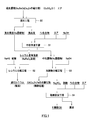
- FIG. 1 is a process diagram of a method for separating rhenium and arsenic in a rhenium purification process.
- FIG. 2 is a graph showing the relationship between the pH of the leach residue and / or neutralized starch slurry in the precipitate decomposition treatment and the As and Re elution concentrations of the obtained leachate (arsenic-containing solution).
- FIG. 3 is a graph showing the relationship between the arsenic removal rate with respect to the ORP and the arsenic quality in the purified rhenium sulfide when the ORP of the leachate is oxidized to 0 mV or more with an oxidizing agent.
- FIG. 4 is a diagram showing the relationship between the molar concentration ratio expressed by Fe / As in the leachate, the arsenic removal rate, and the arsenic quality in the purified rhenium sulfide.
- FIG. 1 shows an example, Comprising: Unless the summary of this invention is changed, it can change suitably.
- a raw material containing rhenium and arsenic is leached by oxidation to separate into a leachate containing perrhenic acid, arsenic acid, and arsenous acid, and a leach residue containing arsenate, This is a method for separating rhenium and arsenic in a rhenium purification process for purifying rhenium from the leachate.
- FIG. 1 a method for separating rhenium and arsenic in the rhenium purification process is shown in FIG. 1 as an example of a process, and an alkaline solution is added to a leachate obtained by leaching a solid containing sulfide containing rhenium and arsenic. Is added to obtain a precipitate containing arsenic and a solution containing rhenium, and a rhenium separation step of separating rhenium from the rhenium-containing solution obtained in the neutralization solution step S1.
- arsenic as an impurity can be separated and removed in a stable form from a raw material containing rhenium and arsenic, and the amount of arsenic circulation in the rhenium purification process can be reduced. Can do.
- a rhenium compound having a low arsenic quality (such as rhenium sulfide) can be stably purified in the rhenium purification process.
- a raw material containing rhenium and arsenic is oxidized and leached, and a leaching process is performed to obtain a leachate containing perrhenic acid, arsenic acid, and arsenous acid and a leach residue made of arsenate.
- the leaching solution obtained by this leaching treatment is purified through a neutralization clarification step S1 described later, and becomes a solution for refining the rhenium.
- the raw material containing rhenium and arsenic is, for example, a sulfide that contains other elements together with rhenium and arsenic and is difficult to dissolve in water.
- This sulfide is contained in a solid substance such as ore such as molybdenite. Therefore, in this leaching treatment, a solid substance such as ore is treated, and leaching is mainly performed by oxidizing sulfide containing rhenium and arsenic contained in the solid substance as described later.
- the ore as a raw material containing rhenium and arsenic as described above contains elements such as copper, zinc and cadmium in addition to rhenium and arsenic.
- elements such as copper, zinc and cadmium in addition to rhenium and arsenic.
- rhenium and arsenic are leached from the raw sulfide according to, for example, the following formulas (1) and (2) by oxidizing raw materials such as sulfides containing rhenium and arsenic in water. Then, a leaching solution containing perrhenic acid, arsenic acid, and arsenous acid and a leaching residue containing arsenate as described later are generated.
- an oxidizing agent used for oxidizing a raw material such as sulfide it is preferable to use an oxidizing agent that does not affect the subsequent process.
- an oxidizing agent that does not affect the subsequent process.
- air, oxygen, hydrogen peroxide, or the like can be used. Among these, it is particularly preferable to use air from the viewpoint of economy.
- the liquid property at the time of leaching according to the above formula is weakly acidic.
- the arsenic acid produced by the above formula (2) or formula (4) is hydrogen arsenate according to the following formula (5) when the coexisting cation is a copper (II) ion (copper (II) sulfate), for example.
- An arsenate such as copper (II) is formed to form a residue.
- this reaction is a reversible reaction when acidic, some arsenic acid remains in the mother liquor as it is.
- rhenium leachate a leachate containing perrhenic acid, arsenic acid and arsenous acid (hereinafter referred to as “rhenium leachate” or simply “leachate”), and copper (II) hydrogen arsenate And leaching residue composed of arsenate.
- the obtained rhenium leaching solution also contains elements such as copper, zinc and cadmium contained in the ore used as the leaching target.
- a rhenium leachate obtained by leaching a raw material containing rhenium and arsenic is neutralized and purified by adding an alkali to a neutralized starch (arsenate) containing arsenic. And a solution containing rhenium (rhenium-containing solution).
- neutralization purification liquid what processed the rhenium leaching solution with the neutralization purification liquid is called neutralization purification liquid.
- the rhenium leaching solution obtained by the above leaching treatment is weakly acidic. Therefore, in this neutralization liquid purification process S1, the rhenium leaching solution is neutralized by adding an alkali to the rhenium leaching solution.
- arsenic acid remaining in the rhenium leachate reacts with other remaining cations and is fixed as arsenate.
- the following formula (6) shows a reaction example in which arsenic is fixed as copper arsenate by copper contained in the raw material ore (sulfide) and leached into the rhenium leaching solution together with rhenium and arsenic. 2H 3 AsO 4 + 3CuSO 4 + 6NaOH ⁇ Cu 3 (AsO 4 ) 2 + 3Na 2 SO 4 + 6H 2 O (6)
- alkali as the neutralizing agent, it is preferable to use an aqueous sodium hydroxide solution in consideration of cost, ease of handling, generation of side reactions, and the like.
- a divalent water-soluble iron compound is added to the rhenium leachate, and an oxidizing agent is added to arsenic in the leachate. It is preferable to fix as an iron precipitate. Iron arsenate is a stable form. Therefore, rhenium and arsenic can be effectively separated by fixing arsenic, which is an impurity in the purification of rhenium, as iron arsenate, which is a stable form, and the arsenic content in the rhenium-containing solution used for rhenium purification The amount can be reduced.
- the water-soluble iron compound serving as the iron source to be added is a divalent water-soluble iron compound that becomes trivalent by an oxidizing agent.
- a divalent water-soluble iron compound that becomes trivalent by an oxidizing agent.
- Specific examples include ferrous sulfate, ferrous chloride, ferrous bromide, ferrous nitrate, and ferrous sulfate and ferrous chloride are particularly preferable because they are inexpensive and easily available.
- the oxidizing agent it is preferable to use an oxidizing agent that does not affect the subsequent process.
- air, oxygen, hydrogen peroxide, or the like can be used.
- air as an oxidant is added by bubbling into the rhenium leachate.
- this oxidant causes the iron of the water-soluble iron compound added to the rhenium leaching solution to be trivalently oxidized, and the arsenic contained in the rhenium leaching solution is pentavalently oxidized. Trivalent iron and pentavalent arsenic react to form iron arsenate precipitates.
- the oxidation with the oxidant described above is preferably carried out until the oxidation-reduction potential (ORP) (silver / silver chloride electrode standard) of the rhenium leaching solution becomes ⁇ 400 mV or more.
- ORP oxidation-reduction potential
- the added iron can be sufficiently trivalent and the arsenic in the leachate can be sufficiently pentavalent, and iron arsenate can be precipitated. It can be effectively advanced. And thereby, the arsenic quality in the solution (rhenium containing solution) obtained by isolate
- the amount of the water-soluble iron compound added as the iron source is pentavalent in which the arsenic in the leachate is pentavalent and the iron is trivalent and the number of moles of the trivalent iron is contained in the leachate. It is preferable to set the amount corresponding to the amount of the number of moles of three times or more (Fe / As ⁇ 3) with respect to the number of moles of arsenic. Thereby, precipitation production of iron arsenate can proceed more effectively, and the arsenic quality in the rhenium-containing solution can be further reduced.
- the arsenate that is a precipitate obtained by this neutralization purification treatment is only iron arsenate. It will not be.
- the arsenate of the formed precipitate includes, together with iron arsenate, arsenates such as copper, zinc, and cadmium that are contained in the raw material and are contained in the rhenium leaching solution by the leaching treatment.
- arsenates other than iron arsenate a precipitate is formed under the condition of pH 8 to 10 in the neutralization and purification treatment, so that unlike the leaching residue formed by the leaching treatment shown in the above formula (5), arsenic acid It can be presumed that copper (II) arsenate is mainly formed as an arsenate other than iron.
- Rhenium separation process In the rhenium separation step S2, rhenium is separated from the rhenium-containing solution (rhenium-containing solution) obtained in the neutralization and purification step S1. That is, in this rhenium separation step S2, rhenium in the rhenium-containing solution is purified by making it into a form such as rhenium sulfide.
- the method for separating rhenium in the rhenium separation step S2 is not particularly limited.
- a method of separating and recovering rhenium by adding a sulfiding agent to a rhenium-containing solution and sulfiding the rhenium to form rhenium sulfide is used. be able to.
- the perrhenate ion in the rhenium-containing solution has the form of an anion, so it is necessary to first change the perrhenate ion to the form of a cation in order to sulfidize rhenium and cause precipitation. It is thought that there is.
- the neutralization purification step S1 When rhenium is separated by sulfidation, neutralization is performed in the neutralization purification step S1 as described above, so that it is necessary to newly add an acid that coexists in the sulfidation.
- the acid to be added it is preferable to use a non-oxidizing acid which is a strong acid and does not decompose sulfides so that perrhenic acid can exist stably.
- an acid such as sulfuric acid or hydrochloric acid can be used, but it is preferable to use sulfuric acid in consideration of the cost, the corrosiveness of the apparatus material, or the volatility.
- the amount of acid added is such that the equivalent concentration in the rhenium-containing solution is in the range of 1.0 N to 4.0 N, preferably in the range of 2.0 N to 3.0 N. It is preferable to add to.
- rhenium is precipitated as sulfide by adding a sulfiding agent to a solution (preparation solution) obtained by adding an acid to the rhenium-containing solution.
- a sulfiding agent to be added for example, a water-soluble sulfide such as hydrogen sulfide gas, an alkali metal or alkaline earth metal sulfide, or a hydrogen sulfide salt can be used.
- sodium hydrogen sulfide or sodium hydrosulfide is preferably used from the viewpoints of cost and easy handling.
- the formed rhenium sulfide precipitate can be separated by a solid-liquid separation process such as filtration or centrifugation.
- rhenium in the rhenium separation step S2, rhenium can be separated and purified from the rhenium-containing solution.
- purification is isolate
- arsenate main component is copper hydrogen arsenate (II)
- arsenate precipitates mainly copper (II) arsenate or iron (III) arsenate
- arsenate precipitates have a solubility of less than 0.1 g / l and are difficult to dissolve in water. did.
- arsenate precipitates are reacted with alkali to recover arsenic in the form of sodium arsenate, which is easy to dissolve in water, and leaching, while other impurities such as copper are dissolved in water. It was found that the arsenic load in the rhenium purification process can be reduced by fixing as a difficult hydroxide.
- the precipitate decomposition step S3 in the precipitate decomposition step S3, the neutralized starch containing arsenic obtained in the neutralization liquid purification step S1 and the leaching treatment described above.
- An alkali is added to one or both of the leaching residues containing the arsenate obtained in this way.
- these precipitates are decomposed to leach arsenic in the precipitates to obtain a solution containing arsenic, and other copper and the like are precipitated as hydroxides.
- arsenic can be effectively separated from the arsenate precipitate obtained by the leaching process or the neutralization purification process. That is, arsenic can be separated and removed from the process of purifying rhenium. Thereby, the arsenic load in the rhenium purification process can be reduced, and precipitation of arsenic together with rhenium can be prevented in the rhenium separation step S2.
- alkali hydroxides such as sodium hydroxide and potassium hydroxide can be used, and sodium hydroxide is preferably used in consideration of economy.
- alkali carbonate may be used as a substitute for alkali hydroxide, but in many cases, the solubility of carbonate is higher than the solubility of metal hydroxide, so the reaction rate Tends to be lower than alkali hydroxide.
- the addition amount of alkali it is preferable to add in excess of the theoretical calculation amount.
- the decomposition reaction proceeds as the pH increases, and by adding an alkali in excess of the theoretical amount, the hydroxide concentration can be reduced by the principle of solubility product. Although it depends on the type of arsenate, the decomposition of the precipitate effectively proceeds at a pH of 12 or more. On the other hand, when the pH exceeds about 14, most of the metal hydroxide is dissolved as a hydroxo complex. Resulting in. Moreover, since it becomes difficult to manage the amount of alkali added in an industrially high pH range, the pH is preferably 13.3 or less.
- the arsenate may not be completely decomposed even if the pH is raised to exceed 14, if the amount of arsenic circulating in the entire smelting process is reduced, the arsenic load in the rhenium separation process S2 Is gradually reduced and the quality of rhenium can be maintained.
- alkali is added to the neutralized starch (arsenate) containing arsenic obtained in the neutralization and purification step S1 and / or the leaching residue containing arsenate obtained by the leaching treatment described above.
- the neutralized starch and the precipitate of the leaching residue can be decomposed and arsenic contained in the precipitate can be leached into the solution, and only arsenic can be effectively separated and removed.
- the hydroxide precipitate formed while the arsenic is leached by the precipitate decomposition is a hydroxide precipitate such as copper contained in the raw material.
- the arsenic fixing step S4 the arsenic-containing solution obtained in the precipitate decomposition step S3, that is, an arsenic-containing solution obtained by decomposing a water-insoluble arsenate with an alkali and separating a hydroxide precipitate (for example, From the aqueous solution of sodium arsenate, arsenic in the solution is fixed and separated as a solid (precipitate) according to a known method.
- the arsenic immobilization method is not particularly limited, and a known method can be used.
- a method of reducing with sulfur dioxide and fixing it as diarsenic trioxide crystals a method of adding calcium ions or iron ions and recovering calcium arsenate or iron (III) arsenate precipitates that are difficult to dissolve in water, etc.
- arsenic trioxide crystals and calcium arsenate can be used for industrial chemicals and agricultural chemicals.
- arsenic can be stably separated and immobilized as iron (III) arsenate, which is a low-solubility and stable form. It is preferable in that it can be separated and removed. From the viewpoint of storage, it is preferable to use a stable form of iron (III) arsenate. Therefore, in the following, a method of separating and fixing as iron (III) arsenate will be described as an example.
- a water-soluble iron compound and an acid are added to an arsenic-containing solution, whereby the arsenic in the solution is converted to a precipitate of iron (III) arsenate.
- a water-soluble iron compound to be added either a water-soluble iron (II) salt containing divalent iron or a water-soluble iron (III) salt containing trivalent iron may be added.
- iron (II) salt When iron (II) salt is added, it must be oxidized with an oxidizing agent.
- arsenic forms in different forms in different forms (precipitates) depending on the abundance ratio with metal ions.
- divalent metal ions such as iron
- the abundance ratio of divalent metal ions is less than 0.5 to 1.0 mol, it takes the form of dihydrogen arsenate and monohydrogen arsenate MHAsO 4 .
- M in the above composition formula of the arsenic compound represents a divalent metal.
- the acid added to the arsenic-containing solution for example, sulfuric acid, hydrochloric acid or the like can be used.
- the pH of the solution is set to 2.0 or less.
- a precipitate of iron (III) arsenate can be effectively formed.
- an oxidizing agent for oxidizing iron to trivalent is added.
- the oxidizing agent for example, air, oxygen, hydrogen peroxide, or the like can be used. Among these, it is preferable from the viewpoint of economy to use air.
- air as an oxidizing agent is added by bubbling into a solution to which a water-soluble iron compound has been added.
- the iron of the water-soluble iron compound is trivalently oxidized and reacts with pentavalent arsenic in the arsenic-containing solution to form iron (III) arsenate precipitates.
- neutralization purification treatment for separating rhenium and arsenic from the leachate obtained by leaching the raw material is performed
- a sediment decomposition treatment for decomposing the leaching residue obtained by the leaching treatment with respect to the neutralized starch or raw material obtained by the Japanese pure liquid treatment is performed.
- the amount of arsenic circulation can be reduced as described above, the amount of sediment circulating in the rhenium purification process is relatively reduced, and the rhenium purification operation can be performed with a compact facility. Furthermore, since copper in the raw material can be separated and recovered from arsenic, by transferring the copper from which arsenic has been separated to a copper smelting process, it is possible to perform a copper smelting operation that reduces the load caused by arsenic, Copper with less impurities can be purified.
- Leaching treatment 300 g (wet-g) of a sulfide mixture containing rhenium: 2.3% and arsenic: 24.4% and having a moisture content of 56% is an amount of copper sulfate to give a Cu concentration of 30 g / l.
- Pentahydrate was added and suspended in 3000 ml of an aqueous solution containing 35.5 g / l of Cl as hydrochloric acid and maintained at 80 ° C.
- the solution was obtained by leaching with air using a sinter glass until the oxidation-reduction potential (ORP) of the solution reached the maximum value (580 mV using a silver / silver chloride electrode as a reference electrode).
- ORP oxidation-reduction potential
- Table 1 shows the respective compositions of the leaching residue obtained by the above leaching treatment and the neutralized starch obtained by neutralizing and purifying the leaching solution. These leaching residues and neutralized precipitates were used as raw materials for arsenic recovery.
- the arsenic leaching rate when decomposed using the leaching residue obtained by the leaching treatment of (1) above is 70%, which is obtained by the neutralization purification treatment of (2) above.
- the arsenic leaching rate when decomposed using the neutralized starch was 68%, and it was found that arsenic in the precipitate can be leached at a high leaching rate by this sediment decomposition treatment. It was also found that rhenium remaining in the leach residue and neutralized starch precipitate was also leached out simultaneously.
- the arsenic leaching rate was determined by (weight of As leaching residue ⁇ As quality) / (weight of raw material used for leaching ⁇ As quality) ⁇ 100 (%).
- the leaching residue obtained by leaching raw materials such as sulfides containing rhenium and arsenic, and the neutralized starch obtained by neutralizing and purifying the leaching solution obtained by the leaching treatment are obtained by alkali. It was found that by performing the decomposition treatment (leaching treatment), arsenic as an impurity in the rhenium purification process can be effectively leached and separated and recovered as iron arsenate. This prevents the arsenic contained in the leaching residue and neutralized starch from being recycled again to the rhenium purification process, and effectively reduces the arsenic content as an impurity in the rhenium to be purified. Reduced and high quality rhenium can be purified.
- FIG. 2 is a graph showing the results of the investigation, showing the relationship between the pH of the leach residue and / or neutralized starch slurry in the precipitate decomposition treatment and the elution concentrations of As and Re in the obtained leachate (arsenic-containing solution). Is.
- an arsenic concentration of 1 g / l in the leaching solution corresponds to an arsenic leaching rate of 38%.
- FIG. 2 shows that, for example, in order to obtain a leaching rate of 30% or more which is considered industrially significant, it is necessary to maintain the pH at 12 or more. Moreover, when pH exceeded 13.3, elution of copper was also recognized. Therefore, it was found that the pH is preferably 13.3 or less.
- ORP oxidation-reduction potential
- the arsenic precipitation rate was measured from the analytical values of the filtrate (neutralized filtrate) and the precipitate (neutralized starch) thus obtained.
- the precipitation rate of arsenic was 99.97% or more.
- the arsenic grade in rhenium sulfide was less than 1.0%, and rhenium with very few impurities could be purified.
- FIG. 3 is a graph showing the relationship between the arsenic removal rate with respect to the ORP and the arsenic quality in the purified rhenium sulfide when the ORP of the solution is oxidized to 0 mV or more by air bubbling.
- the arsenic removal rate is effectively improved by oxidizing the solution until the ORP of the solution becomes 0 mV or more, and it is 99.20% or more by oxidizing until the solution becomes ⁇ 400 mV or more. It was found that the removal rate was as high as 99.97% or more by oxidation until it reached 0 mV or more as described above.
- Test Example 2 Arsenic precipitation in the treatment was carried out in the same manner as in Test Example 1 except that ferrous sulfate was added so that the molar concentration ratio of iron and arsenic (Fe / As) was 10 in the neutralized liquid treatment. The rate was examined.
- the molar concentration ratio of iron and arsenic is the molar concentration ratio of iron oxidized to trivalent by air bubbling and arsenic oxidized to pentavalent.
- the arsenic precipitation rate and the arsenic quality in the rhenium sulfide obtained from the solution after the removal of the precipitate are the same as those in Test Example 1, and arsenic can be effectively removed.
- FIG. 4 shows the molar concentration when the molar concentration ratio (Fe / As) of iron and arsenic is 1, 2, 3, 5, 10 by adding ferrous sulfate which is a water-soluble iron compound.
- the molar concentration ratio between iron and arsenic is also the molar concentration ratio between iron oxidized to trivalent and arsenic oxidized to pentavalent by air bubbling as described above.
- the ORP of the solution by air bubbling was 0 mV.
- Test Example 3 In the neutralization liquid treatment, ferrous sulfate was not added and air bubbling was not performed, and the other conditions were the same as in Test Example 1, and the arsenic precipitation rate in the treatment was examined.
- the arsenic precipitation rate remained at 98.30% at the maximum, and the arsenic quality in the manufactured rhenium sulfide remained as high as 5.3%.
- Test Example 4 In the neutralized liquid treatment, ferrous sulfate was added so that the molar concentration ratio of iron and arsenic was 3, and other conditions were processed in the same manner as in Test Example 1 without air bubbling. The arsenic precipitation rate was investigated.
- the arsenic precipitation rate was 98.97%
- the arsenic quality in rhenium sulfide produced using this solution was 4.1%
- the arsenic content in the purified rhenium was higher than that in Test Example 1. It was.
Landscapes
- Chemical & Material Sciences (AREA)
- Engineering & Computer Science (AREA)
- Manufacturing & Machinery (AREA)
- Materials Engineering (AREA)
- Mechanical Engineering (AREA)
- Metallurgy (AREA)
- Organic Chemistry (AREA)
- General Chemical & Material Sciences (AREA)
- Chemical Kinetics & Catalysis (AREA)
- Life Sciences & Earth Sciences (AREA)
- Environmental & Geological Engineering (AREA)
- General Life Sciences & Earth Sciences (AREA)
- Geochemistry & Mineralogy (AREA)
- Geology (AREA)
- Manufacture And Refinement Of Metals (AREA)
- Inorganic Compounds Of Heavy Metals (AREA)
- Compounds Of Iron (AREA)
- Removal Of Specific Substances (AREA)
Description
本出願は、日本国において2012年3月2日に出願された日本特許出願番号特願2012-046645を基礎として優先権を主張するものであり、これらの出願を参照することにより、本出願に援用される。
1.レニウム精製プロセスにおけるレニウムと砒素の分離方法
1-0.浸出工程
1-1.中和浄液工程
1-2.レニウム分離工程
1-3.沈殿物分解工程
1-4.砒素固定工程
2.実施例
本実施の形態に係るレニウムと砒素の分離方法は、レニウム及び砒素を含有する原料を酸化により浸出して過レニウム酸、砒酸、亜砒酸を含む浸出液と砒酸塩を含有する浸出残渣とに分離し、その浸出液からレニウムを精製するレニウム精製プロセスにおけるレニウムと砒素の分離方法である。
浸出工程S0では、レニウム及び砒素を含有する原料を酸化して浸出し、過レニウム酸、砒酸、亜砒酸を含む浸出液と砒酸塩からなる浸出残渣とを得る浸出処理を行う。この浸出処理により得られる浸出液が、後述する中和浄液工程S1を経て浄液され、レニウム精製のための溶液となる。
2Re2S7+7O2+2H2O → 4HReO4+14S ・・・(1)
2As2S3+5O2+6H2O → 4H3AsO4+6S ・・・(2)
As2S3+3CuSO4+3H2O
→ As2O3+3CuS+3H2SO4 ・・・(3)
As2O3+O2+3H2O → 2H3AsO4 ・・・(4)
H3AsO4+CuSO4 → CuHAsO4+H2SO4 ・・・(5)
中和浄液工程S1では、レニウム及び砒素を含有する原料を浸出して得られたレニウム浸出液に、アルカリを添加して中和浄液処理し、砒素を含有する中和澱物(砒酸塩)とレニウムを含有する溶液(レニウム含有溶液)とを得る。なお、以下では、レニウム浸出液を中和浄液処理したものを中和浄液という。この中和浄液を固液分離することによって、砒酸塩からなる中和澱物とレニウム含有溶液とを分離回収することができる。
2H3AsO4+3CuSO4+6NaOH
→ Cu3(AsO4)2+3Na2SO4+6H2O ・・・(6)
レニウム分離工程S2では、中和浄液工程S1にて得られたレニウムを含有する溶液(レニウム含有溶液)からレニウムを分離する。すなわち、このレニウム分離工程S2では、レニウム含有溶液中のレニウムを、例えば硫化レニウムなどの形態とすることによって、レニウムを精製する。
沈殿物分解工程S3では、中和浄液工程S1にて得られた砒素を含有する中和澱物(砒酸塩)、及び、上述した浸出処理にて得られた砒酸塩を含有する浸出残渣の、いずれか一方又は両方に、アルカリを添加することによって、砒素を含有する溶液と水酸化物沈殿を得る。
CuHAsO4+3NaOH
→ Cu(OH)2+Na3AsO4+H2O ・・・(7)
Cu3(AsO4)2+6NaOH
→ 3Cu(OH)2+2Na3AsO4 ・・・(8)
砒素固定工程S4では、沈殿物分解工程S3にて得られた砒素含有溶液、すなわち水に難溶性の砒酸塩をアルカリによって分解し水酸化物沈殿を分離して得られた砒素含有溶液(例えば、砒酸ナトリウム水溶液)から、公知の方法に従って、溶液中の砒素を固体(沈殿物)として固定化し分離する。
以下に本発明の実施例を説明するが、本発明は下記の実施例に限定されるものではない。
以下のようにして、レニウム精製プロセスにおいて砒素を分離させる処理を行った。
レニウム:2.3%、砒素:24.4%を含有し、水分率56%である硫化物混合物300g(wet-g)を、Cu濃度30g/lになる量の硫酸銅5水和物を添加しさらに塩酸としてCl:35.5g/lを含む水溶液3000ml中に懸濁し、80℃に維持した。この溶液に対して、液の酸化還元電位(ORP)が最大値(銀/塩化銀電極を参照電極として580mV)になるまでシンターガラスを用いて空気を吹き込んで浸出し、浸出して得られたスラリーを濾過して固液分離した。固液分離して得られた残渣を300mlの純水を用いて洗浄した。
次に、浸出処理により得られた浸出液に、25℃でpHが10になるまで濃度8mol/lの水酸化ナトリウムを添加して中和浄液処理し、処理して得られた沈殿(中和澱物)を固液分離して回収した。

次に、上記表1に組成を示した浸出残渣と中和澱物を、それぞれ50g(wet-g)ずつ分取し、25℃に維持しながら500mlの水中に懸濁した。このスラリーに、濃度8mol/lの水酸化ナトリウム溶液を添加し、溶液のpHを13.3に調整して、これら沈殿物の分解処理(砒素浸出処理)を行った。下記表2に、浸出残渣と中和澱物とをそれぞれ分解させた後の浸出残渣(水酸化物の沈殿物)の組成を示す。

次に、上記(3)の沈殿物分解処理で回収して得られた溶液(砒素浸出液)を、それぞれ浸出液中の砒素濃度が1g/lとなるように水を添加して調整後、600mlずつ採取した。これに濃度60%の硫酸を添加してpHを11.8に調整し、硫酸第一鉄(7水和物)を4.8g添加した後、80℃に維持しつつエアーを吹き込むことで溶液の酸化還元電位を約400mVまで酸化して沈殿物を生成させた。この砒素固定反応により、上記(1)の浸出残渣、上記(2)の中和澱物からの沈殿物量は、それぞれ0.70g、0.81gであった。
次に、上記(3)の沈殿物分解処理における、浸出残渣及び/又は中和澱物スラリーのpHと得られる浸出液(砒素含有溶液)の砒素濃度との関係を調査した。
(試験例1)
硫酸塩として、砒素濃度18.5g/l、レニウム2.1g/lを含む過レニウム酸水溶液に、後でのエアーバブリングによって得られる溶液中の5価の砒素と3価の鉄とのモル濃度比(Fe/As)が3となるように水溶性鉄化合物である硫酸第一鉄を添加した後、濃度8mol/lの水酸化ナトリウム水溶液を添加してpHを9に調整した。この溶液に対して、溶液の酸化還元電位(ORP)が銀-塩化銀電極の参照電極での測定値で0mV以上になるまで2.0リットル/minの量でエアーを送りバブリングを行い、その後濾過して濾液と沈殿物を分離した。
中和浄液処理に際して、硫酸第一鉄を、鉄と砒素のモル濃度比(Fe/As)が10となるように添加したこと以外は、試験例1と同様にし、その処理での砒素沈殿率を調べた。なお、この鉄と砒素のモル濃度比は、エアーバブリングにより3価に酸化された鉄と5価に酸化された砒素のモル濃度比である。
中和浄液処理に際して、硫酸第一鉄の添加やエアーバブリングを行わず、それ以外の条件は試験例1と同様にし、その処理での砒素沈殿率を調べた。
中和浄液処理に際して、硫酸第一鉄を、鉄と砒素のモル濃度比が3となるように添加し、エアーバブリング無しで他の条件は試験例1と同様にして処理し、その処理での砒素の沈殿率を調べた。
Claims (8)
- レニウム及び砒素を含有する原料を酸化して浸出し、過レニウム酸、砒酸、亜砒酸を含む浸出液と砒酸塩を含有する浸出残渣とに分離し、該浸出液からレニウムを精製するレニウム精製プロセスにおけるレニウムと砒素の分離方法であって、
上記浸出液にアルカリを添加し、砒素を含有する沈殿とレニウムを含有する溶液とを得る中和浄液工程と、
上記中和浄液工程にて得られたレニウムを含有する溶液からレニウムを分離するレニウム分離工程と、
上記中和浄液工程にて得られた砒素を含有する沈殿及び上記砒酸塩を含有する浸出残渣のいずれか一方又は両方にアルカリを添加し、砒素を含有する溶液と水酸化物沈殿を得る沈殿物分解工程と、
沈殿物分解工程にて得られた砒素を含有する溶液中の砒素を沈殿物として固定する砒素固定工程と
を有することを特徴とするレニウムと砒素の分離方法。 - 上記中和浄液工程では、上記浸出液にアルカリを添加する前又は同時に、該浸出液に2価の水溶性鉄化合物を添加するとともに酸化剤を添加し、該浸出液中の砒素を砒酸鉄の沈殿とすることを特徴とする請求項1記載のレニウムと砒素の分離方法。
- 上記酸化剤は空気であり、浸出液に該空気をバブリングすることを特徴とする請求項2記載のレニウムと砒素の分離方法。
- 上記酸化剤により、上記浸出液の酸化還元電位を-400mV以上とすることを特徴とする請求項2記載のレニウムと砒素の分離方法。
- 上記水溶性鉄化合物の添加量は、上記浸出液中の3価の鉄のモル数が、該浸出液中に含まれる5価の砒素のモル数に対して3倍量以上のモル数となる量に相当する量とすることを特徴とする請求項2記載のレニウムと砒素の分離方法。
- 上記沈殿物分解工程では、砒素を含有する沈殿及び/又は砒酸鉄を含有する浸出残渣にアルカリを添加する際に、pHを12.0以上13.3以下の範囲に調整することを特徴とする請求項1記載のレニウムと砒素の分離方法。
- 上記沈殿物分解工程において添加するアルカリは、水酸化アルカリであることを特徴とする請求項6記載のレニウムと砒素の分離方法。
- レニウム及び砒素を含有する原料を酸化して浸出し、過レニウム酸、砒酸、亜砒酸を含む浸出液と砒酸塩を含有する浸出残渣とに分離し、該浸出液からレニウムを精製するレニウムの精製方法であって、
上記浸出液にアルカリを添加し、砒素を含有する沈殿とレニウムを含有する溶液とを得る中和浄液工程と、
上記中和浄液工程にて得られたレニウムを含有する溶液を分離し、該溶液に硫化剤を添加して硫化レニウムを得るレニウム精製工程と、
上記中和浄液工程にて得られた砒素を含有する沈殿及び上記砒酸塩を含有する浸出残渣のいずれか一方又は両方にアルカリを添加し、砒素を含有する溶液と水酸化物沈殿を得る沈殿物分解工程と、
沈殿物分解工程にて得られた砒素を含有する溶液中の砒素を沈殿物として固定する砒素固定工程と
を有することを特徴とするレニウムの精製方法。
Priority Applications (5)
| Application Number | Priority Date | Filing Date | Title |
|---|---|---|---|
| US14/368,468 US8956583B2 (en) | 2012-03-02 | 2013-02-15 | Method for separating rhenium and arsenic, and method for purification of rhenium |
| EP13754732.9A EP2792758B1 (en) | 2012-03-02 | 2013-02-15 | Method for separating rhenium and arsenic, and method for purifying rhenium |
| KR1020147021004A KR101462847B1 (ko) | 2012-03-02 | 2013-02-15 | 레늄과 비소의 분리 방법, 및 레늄의 정제 방법 |
| AU2013227632A AU2013227632B2 (en) | 2012-03-02 | 2013-02-15 | Method for separating rhenium and arsenic, and method for purification of rhenium |
| JP2013527408A JP5382269B1 (ja) | 2012-03-02 | 2013-02-15 | レニウムと砒素の分離方法、並びにレニウムの精製方法 |
Applications Claiming Priority (2)
| Application Number | Priority Date | Filing Date | Title |
|---|---|---|---|
| JP2012-046645 | 2012-03-02 | ||
| JP2012046645 | 2012-03-02 |
Publications (1)
| Publication Number | Publication Date |
|---|---|
| WO2013129130A1 true WO2013129130A1 (ja) | 2013-09-06 |
Family
ID=49082332
Family Applications (1)
| Application Number | Title | Priority Date | Filing Date |
|---|---|---|---|
| PCT/JP2013/053634 Ceased WO2013129130A1 (ja) | 2012-03-02 | 2013-02-15 | レニウムと砒素の分離方法、並びにレニウムの精製方法 |
Country Status (7)
| Country | Link |
|---|---|
| US (1) | US8956583B2 (ja) |
| EP (1) | EP2792758B1 (ja) |
| JP (1) | JP5382269B1 (ja) |
| KR (1) | KR101462847B1 (ja) |
| AU (1) | AU2013227632B2 (ja) |
| CL (1) | CL2014002219A1 (ja) |
| WO (1) | WO2013129130A1 (ja) |
Cited By (4)
| Publication number | Priority date | Publication date | Assignee | Title |
|---|---|---|---|---|
| JP2015094012A (ja) * | 2013-11-13 | 2015-05-18 | 住友金属鉱山株式会社 | レニウム含有溶液の製造方法 |
| JP2015094013A (ja) * | 2013-11-13 | 2015-05-18 | 住友金属鉱山株式会社 | レニウム含有溶液の製造方法 |
| JP2015212401A (ja) * | 2014-05-01 | 2015-11-26 | 住友金属鉱山株式会社 | 硫化レニウムの製造方法 |
| JP2016069690A (ja) * | 2014-09-30 | 2016-05-09 | 住友金属鉱山株式会社 | 硫化レニウムの製造方法 |
Families Citing this family (6)
| Publication number | Priority date | Publication date | Assignee | Title |
|---|---|---|---|---|
| JP6698265B2 (ja) * | 2014-02-14 | 2020-05-27 | 大日本印刷株式会社 | 蒸着マスク装置の製造方法、基板付蒸着マスクおよび積層体 |
| CN107974557A (zh) * | 2017-12-04 | 2018-05-01 | 阳谷祥光铜业有限公司 | 一种从富铼渣中提取铼的方法 |
| CN113430385B (zh) * | 2021-05-13 | 2022-05-20 | 中南大学 | 一种从硫化砷渣中回收硫铼及砷无害化处置的方法 |
| CN116199320B (zh) * | 2023-02-16 | 2024-05-28 | 东北大学 | 一种高酸含蛋白质含砷废水优化晶种及其稳定固砷的方法 |
| GB2628468B (en) * | 2023-03-20 | 2025-04-30 | Johnson Matthey Zhangjiagang Precious Metal Tech Co Ltd | Method of treating a platinum group metal material |
| KR102807728B1 (ko) | 2024-11-21 | 2025-05-16 | 주식회사 폴테크 | 아암의 각도 조절이 가능한 도로용 지주 |
Citations (6)
| Publication number | Priority date | Publication date | Assignee | Title |
|---|---|---|---|---|
| JPH0770665A (ja) * | 1993-09-03 | 1995-03-14 | Sumitomo Metal Mining Co Ltd | レニウムと不純物の分離方法 |
| JPH07286221A (ja) | 1994-04-15 | 1995-10-31 | Sumitomo Metal Mining Co Ltd | 非鉄金属製錬工程からのレニウムの回収方法 |
| JP2008105921A (ja) | 2006-09-27 | 2008-05-08 | Dowa Metals & Mining Co Ltd | 結晶性の良い鉄砒素化合物の製法 |
| JP2009242935A (ja) * | 2007-07-13 | 2009-10-22 | Dowa Metals & Mining Co Ltd | 砒素を含むもののアルカリ処理方法 |
| JP2010077499A (ja) * | 2008-09-26 | 2010-04-08 | Dowa Metals & Mining Co Ltd | 白金族元素、レニウム及び砒素を含有する被処理物質の処理法 |
| JP2011058016A (ja) | 2009-09-07 | 2011-03-24 | Sumitomo Metal Mining Co Ltd | 過レニウム酸を含有する溶液からのレニウムの分離方法 |
Family Cites Families (5)
| Publication number | Priority date | Publication date | Assignee | Title |
|---|---|---|---|---|
| GB332627A (ja) * | 1928-11-22 | 1930-07-28 | Siemens & Halske Aktien-Gesellschaft | |
| JP5188296B2 (ja) | 2007-07-13 | 2013-04-24 | Dowaメタルマイン株式会社 | 銅砒素化合物の処理方法 |
| JP2009242223A (ja) | 2007-07-13 | 2009-10-22 | Dowa Metals & Mining Co Ltd | 三酸化二砒素の処理方法 |
| JP5188297B2 (ja) | 2007-07-13 | 2013-04-24 | Dowaメタルマイン株式会社 | 砒素を含む非鉄製錬中間産物の処理方法 |
| JP5188298B2 (ja) | 2007-08-09 | 2013-04-24 | Dowaメタルマイン株式会社 | 砒素を含む非鉄製錬中間産物の処理方法 |
-
2013
- 2013-02-15 WO PCT/JP2013/053634 patent/WO2013129130A1/ja not_active Ceased
- 2013-02-15 KR KR1020147021004A patent/KR101462847B1/ko active Active
- 2013-02-15 AU AU2013227632A patent/AU2013227632B2/en active Active
- 2013-02-15 JP JP2013527408A patent/JP5382269B1/ja active Active
- 2013-02-15 US US14/368,468 patent/US8956583B2/en active Active
- 2013-02-15 EP EP13754732.9A patent/EP2792758B1/en active Active
-
2014
- 2014-08-20 CL CL2014002219A patent/CL2014002219A1/es unknown
Patent Citations (6)
| Publication number | Priority date | Publication date | Assignee | Title |
|---|---|---|---|---|
| JPH0770665A (ja) * | 1993-09-03 | 1995-03-14 | Sumitomo Metal Mining Co Ltd | レニウムと不純物の分離方法 |
| JPH07286221A (ja) | 1994-04-15 | 1995-10-31 | Sumitomo Metal Mining Co Ltd | 非鉄金属製錬工程からのレニウムの回収方法 |
| JP2008105921A (ja) | 2006-09-27 | 2008-05-08 | Dowa Metals & Mining Co Ltd | 結晶性の良い鉄砒素化合物の製法 |
| JP2009242935A (ja) * | 2007-07-13 | 2009-10-22 | Dowa Metals & Mining Co Ltd | 砒素を含むもののアルカリ処理方法 |
| JP2010077499A (ja) * | 2008-09-26 | 2010-04-08 | Dowa Metals & Mining Co Ltd | 白金族元素、レニウム及び砒素を含有する被処理物質の処理法 |
| JP2011058016A (ja) | 2009-09-07 | 2011-03-24 | Sumitomo Metal Mining Co Ltd | 過レニウム酸を含有する溶液からのレニウムの分離方法 |
Non-Patent Citations (1)
| Title |
|---|
| See also references of EP2792758A4 |
Cited By (4)
| Publication number | Priority date | Publication date | Assignee | Title |
|---|---|---|---|---|
| JP2015094012A (ja) * | 2013-11-13 | 2015-05-18 | 住友金属鉱山株式会社 | レニウム含有溶液の製造方法 |
| JP2015094013A (ja) * | 2013-11-13 | 2015-05-18 | 住友金属鉱山株式会社 | レニウム含有溶液の製造方法 |
| JP2015212401A (ja) * | 2014-05-01 | 2015-11-26 | 住友金属鉱山株式会社 | 硫化レニウムの製造方法 |
| JP2016069690A (ja) * | 2014-09-30 | 2016-05-09 | 住友金属鉱山株式会社 | 硫化レニウムの製造方法 |
Also Published As
| Publication number | Publication date |
|---|---|
| AU2013227632B2 (en) | 2014-08-21 |
| EP2792758B1 (en) | 2016-04-27 |
| JP5382269B1 (ja) | 2014-01-08 |
| KR20140099336A (ko) | 2014-08-11 |
| JPWO2013129130A1 (ja) | 2015-07-30 |
| US20140356260A1 (en) | 2014-12-04 |
| US8956583B2 (en) | 2015-02-17 |
| CL2014002219A1 (es) | 2014-12-26 |
| KR101462847B1 (ko) | 2014-11-17 |
| EP2792758A4 (en) | 2015-02-18 |
| AU2013227632A1 (en) | 2014-07-17 |
| EP2792758A1 (en) | 2014-10-22 |
Similar Documents
| Publication | Publication Date | Title |
|---|---|---|
| JP5382269B1 (ja) | レニウムと砒素の分離方法、並びにレニウムの精製方法 | |
| JP5188298B2 (ja) | 砒素を含む非鉄製錬中間産物の処理方法 | |
| JP6304530B2 (ja) | テルルの分離回収方法 | |
| JP6241661B2 (ja) | ヒ素の分離固定化方法 | |
| EP2174912B1 (en) | Method of removing arsenic from smelting residues comprising copper-arsenic compounds | |
| CN101784488B (zh) | 含砷的有色金属冶炼中间产物的处理方法 | |
| JP7016463B2 (ja) | テルルの回収方法 | |
| JP5062111B2 (ja) | 脱銅スライムからの高純度亜砒酸水溶液の製造方法 | |
| JP5633129B2 (ja) | 過レニウム酸を含有する溶液からのレニウムの分離方法 | |
| JP5843069B2 (ja) | テルルの分離回収方法 | |
| JP6233177B2 (ja) | 硫化レニウムの製造方法 | |
| Wu et al. | Arsenic removal from Cu–As-containing filter cakes by Na2CO3 leaching | |
| JP4529969B2 (ja) | セレン酸含有液からセレンの除去方法 | |
| JPH11199231A (ja) | 砒酸カルシウムの製造方法 | |
| JP5091493B2 (ja) | 酸化アンチモンの製造方法及び金属アンチモンの製造方法 | |
| JP6102675B2 (ja) | 砒素の浸出方法 | |
| JP6102657B2 (ja) | 砒素の浸出方法 | |
| JP3171605B2 (ja) | 産業廃液の処理方法 | |
| JP6790561B2 (ja) | 重金属の回収方法 | |
| JP6060877B2 (ja) | レニウム含有溶液の製造方法 | |
| JP7572671B2 (ja) | セレン(vi)化合物の還元方法、セレンの回収方法 | |
| JP2024060408A (ja) | 銀粉の製造方法 | |
| JP2025012904A (ja) | ニッケル硫化物原料の処理方法、並びに含鉄粗塩化ニッケル水溶液の脱鉄方法 | |
| JP6779980B2 (ja) | 砒素を回収する方法 | |
| JP2016069690A (ja) | 硫化レニウムの製造方法 |
Legal Events
| Date | Code | Title | Description |
|---|---|---|---|
| ENP | Entry into the national phase |
Ref document number: 2013527408 Country of ref document: JP Kind code of ref document: A |
|
| 121 | Ep: the epo has been informed by wipo that ep was designated in this application |
Ref document number: 13754732 Country of ref document: EP Kind code of ref document: A1 |
|
| WWE | Wipo information: entry into national phase |
Ref document number: 14368468 Country of ref document: US |
|
| WWE | Wipo information: entry into national phase |
Ref document number: 2013754732 Country of ref document: EP |
|
| ENP | Entry into the national phase |
Ref document number: 2013227632 Country of ref document: AU Date of ref document: 20130215 Kind code of ref document: A |
|
| ENP | Entry into the national phase |
Ref document number: 20147021004 Country of ref document: KR Kind code of ref document: A |
|
| WWE | Wipo information: entry into national phase |
Ref document number: 2014002219 Country of ref document: CL |
|
| NENP | Non-entry into the national phase |
Ref country code: DE |