WO2013129364A1 - Station mobile - Google Patents
Station mobile Download PDFInfo
- Publication number
- WO2013129364A1 WO2013129364A1 PCT/JP2013/054873 JP2013054873W WO2013129364A1 WO 2013129364 A1 WO2013129364 A1 WO 2013129364A1 JP 2013054873 W JP2013054873 W JP 2013054873W WO 2013129364 A1 WO2013129364 A1 WO 2013129364A1
- Authority
- WO
- WIPO (PCT)
- Prior art keywords
- uplink signal
- scheduling information
- transmitting
- transmit
- transmission unit
- Prior art date
- Legal status (The legal status is an assumption and is not a legal conclusion. Google has not performed a legal analysis and makes no representation as to the accuracy of the status listed.)
- Ceased
Links
Images

Classifications
-
- H—ELECTRICITY
- H04—ELECTRIC COMMUNICATION TECHNIQUE
- H04W—WIRELESS COMMUNICATION NETWORKS
- H04W74/00—Wireless channel access
- H04W74/08—Non-scheduled access, e.g. ALOHA
- H04W74/0833—Random access procedures, e.g. with 4-step access
- H04W74/0841—Random access procedures, e.g. with 4-step access with collision treatment
- H04W74/085—Random access procedures, e.g. with 4-step access with collision treatment collision avoidance
-
- H—ELECTRICITY
- H04—ELECTRIC COMMUNICATION TECHNIQUE
- H04W—WIRELESS COMMUNICATION NETWORKS
- H04W72/00—Local resource management
- H04W72/20—Control channels or signalling for resource management
- H04W72/23—Control channels or signalling for resource management in the downlink direction of a wireless link, i.e. towards a terminal
Definitions
- the present invention relates to a mobile station.
- Uplink CA Carrier Aggregation
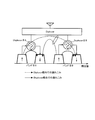
- a Duplexer is inserted in order to suppress leakage from the uplink band to the downlink band in the same band.
- Inter-band CA a signal leaks from the downlink band of its own band from the uplink band transmitted in a different band.
- it is generally considered to additionally insert a diplexer.
- Duplexer # A / # B is inserted in the signal from the uplink band to the downlink band in band # A / # B (solid line in FIG. 7) in order to suppress the leakage.
- the leaking signal is similarly suppressed by inserting a diplexer.
- the “REFSENS” is used to reduce the signal leakage from the uplink band to the downlink band in the same band via the duplexer. Etc. "are defined.
- the mobile station UE for the “1RF Uplink CA” is configured to be able to transmit an uplink signal using a plurality of bands, but in the same subframe (Subframe), any one band or It has a function of transmitting an uplink signal using one CC (RF: Radio Frequency).
- the mobile station UE for “1RF Uplink CA” is erroneously assigned to a plurality of bands as resources for transmitting an uplink signal due to an error in receiving scheduling information.
- failure when a false alarm occurs, there is a problem that it is impossible to determine which CC or which band of a plurality of CCs should be used to transmit an uplink signal.
- the present invention has been made in view of the above-described problems, and an object thereof is to provide a mobile station capable of transmitting an uplink signal using an appropriate CC in “1RF Uplink CA”.
- a first feature of the present invention is a mobile station configured to be able to transmit an uplink signal using a plurality of component carriers or bands, and receives scheduling information from a radio base station A receiving unit configured as described above and a transmitting unit configured to transmit the uplink signal based on the scheduling information.
- the uplink signal is configured to be transmitted using one component carrier or band, and the transmission unit includes two or more components as resources for transmitting the uplink signal according to the scheduling information at the same timing. If it is determined that a carrier or band is allocated, the uplink link And gist that it is configured not to transmit a signal.
- a second feature of the present invention is a mobile station configured to be able to transmit an uplink signal using a plurality of component carriers or bands, and receives scheduling information from a radio base station A receiving unit configured as described above and a transmitting unit configured to transmit the uplink signal based on the scheduling information.
- the uplink signal is configured to be transmitted using one component carrier or band, and the transmission unit includes two or more components as resources for transmitting the uplink signal according to the scheduling information at the same timing. If it is determined that a carrier or band is assigned, each component Based on the priority of the cement carrier or each band, it is a gist that is configured to determine the resources for transmitting said uplink link signal.
- a third feature of the present invention is a mobile station configured to be able to transmit an uplink signal using a plurality of component carriers or bands, and receives scheduling information from a radio base station.
- a receiving unit configured as described above and a transmitting unit configured to transmit the uplink signal based on the scheduling information.
- the uplink signal is configured to be transmitted using one component carrier or band, and the transmission unit includes two or more components as resources for transmitting the uplink signal according to the scheduling information at the same timing. If it is determined that a carrier or band is assigned, each component Based on the type of the signal transmitted by the cement carrier, it is a gist that is configured to determine the resources for transmitting said uplink link signal.
- a fourth feature of the present invention is a mobile station configured to be able to transmit an uplink signal using a plurality of component carriers or bands, and receives scheduling information from a radio base station.
- a receiving unit configured as described above and a transmitting unit configured to transmit the uplink signal based on the scheduling information.
- the uplink signal is configured to be transmitted using one component carrier or band, and the transmission unit includes two or more components as resources for transmitting the uplink signal according to the scheduling information at the same timing. If it is determined that a carrier or band is allocated, it is received in the past Based on the scheduling information, it is a gist that is configured to determine the resources for transmitting said uplink link signal.
- a fifth feature of the present invention is a mobile station configured to be able to transmit an uplink signal using a plurality of component carriers or bands, and receives scheduling information from a radio base station.
- a receiving unit configured as described above and a transmitting unit configured to transmit the uplink signal based on the scheduling information.
- the uplink signal is configured to be transmitted using one component carrier or band, and the transmission unit includes two or more components as resources for transmitting the uplink signal according to the scheduling information at the same timing. If it is determined that a carrier or band is assigned, each component Based on the radio quality of the cement carrier, it is a gist that is configured to determine the resources for transmitting said uplink link signal.
- a sixth feature of the present invention is a mobile station configured to be able to transmit an uplink signal using a plurality of component carriers or bands, and receives scheduling information from a radio base station A receiving unit configured as described above and a transmitting unit configured to transmit the uplink signal based on the scheduling information.
- the uplink signal is configured to be transmitted using one component carrier or band, and the transmission unit includes two or more components as resources for transmitting the uplink signal according to the scheduling information at the same timing. If it is determined that a carrier or band is assigned, it will be randomly It is summarized as being configured to determine the resources for transmitting said uplink link signal.
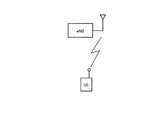
- FIG. 1 is an overall configuration diagram of a mobile communication system according to a first embodiment of the present invention.
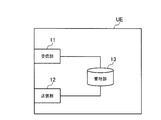
- FIG. 2 is a functional block diagram of the mobile station according to the first embodiment of the present invention.
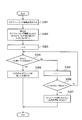
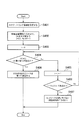
- FIG. 3 is a flowchart showing the operation of the mobile station according to the first embodiment of the present invention.
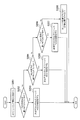
- FIG. 4 is a flowchart showing the operation of the mobile station according to the first embodiment of the present invention.
- FIG. 5 is a flowchart showing the operation of the mobile station according to the first embodiment of the present invention.
- FIG. 6 is a flowchart showing the operation of the mobile station according to the first embodiment of the present invention.
- FIG. 7 is a diagram for explaining problems of a conventional mobile communication system.
- the mobile communication system is an LTE (Release-10) and later LTE mobile communication system, and includes a radio base station eNB and a mobile station UE. is doing.
- LTE Long Term Evolution
- UE mobile station
- the mobile station UE according to the present embodiment is assumed to be a mobile station UE for “1RF Uplink CA” (or “1CC Uplink CA”).
- the mobile station UE is configured to be able to transmit an uplink signal using a plurality of CCs or bands, but in the same subframe, any one CC or band Is configured to transmit an uplink signal.
- the mobile station UE includes a reception unit 11, a transmission unit 12, and a management unit 13.
- the receiving unit 11 is configured to receive various signals from the radio base station eNB.
- the receiving unit 11 is configured to receive scheduling information from the radio base station eNB.
- the transmission unit 12 is configured to transmit various signals to the radio base station eNB.
- the transmission unit 12 is configured to transmit an uplink signal based on the scheduling information received by the reception unit 11.
- the transmission unit 12 is configured to transmit an uplink signal using any one CC or band in the same subframe. .
- the transmitting unit 12 determines that two or more CCs or bands are allocated as resources for transmitting an uplink signal according to scheduling information in the same subframe, how to transmit the uplink signal. It is configured to determine whether or not.
- the transmission unit 12 is configured not to transmit an uplink signal when it is determined that two or more CCs or bands are allocated as resources for transmitting an uplink signal according to scheduling information in the same subframe. (Method 1).
- the transmission unit 12 is assigned a predetermined number (for example, 3) or more CCs or a predetermined number (for example, 2) or more bands as resources for transmitting uplink signals according to scheduling information in the same subframe. When it is determined, it may be configured not to transmit an uplink signal.
- the transmission unit 12 determines that two or more CCs or bands are allocated as resources for transmitting an uplink signal according to scheduling information in the same subframe, based on the priority order of each CC, the transmission unit 12 It may be configured to determine resources for transmitting signals (method 2).
- the priority order of each CC may be designated in advance by an RRC message from the radio base station eNB.
- the transmission unit 12 sets the priority of “Pcell / PCC (Primary Component Carrier)” to the highest and the “Cell Index” assigned to “Scell / SCC (Secondary Component Carrier)” is in ascending order (or The priority may be increased in descending order.
- an index other than “Cell Index” may be assigned to each “Secll”.
- the transmission unit 12 determines that two or more CCs or bands are allocated as resources for transmitting an uplink signal according to scheduling information in the same subframe, based on the type of signal transmitted in each CC. Then, it may be configured to determine a resource for transmitting an uplink signal (method 3).
- the type of signal that can be transmitted differs depending on the type of CC.
- the transmission unit 12 can transmit a PUCCH (Physical Uplink Control Channel, physical uplink control channel) signal or the like via “Pcell”.
- PUCCH Physical Uplink Control Channel, physical uplink control channel
- the transmission part 12 can transmit with the PCell about the signal allocated by SPS (Semi-Persistent Scheduling).
- the transmission unit 12 can transmit a RACH (Random Access Channel) signal via a CC defined in “TA Group”.
- RACH Random Access Channel
- the transmission unit 12 transmits a PUCCH signal or a PHICH signal from two or more CCs. It may be configured to preferentially select a CC allocated as a resource to be transmitted, that is, to determine to transmit a PUCCH signal or a PHICH signal using the CC.
- the transmission unit 12 has two It is configured to preferentially select a CC allocated as a resource for transmitting a RACH signal from the above CCs or CCs in a band, that is, to determine to transmit a RACH signal using such a CC. It may be.
- the transmission unit 12 is configured not to determine a resource for transmitting an uplink signal using the method 3. May be.
- the transmission unit 12 allocates as a resource for transmitting a PUSCH signal from two or more CCs or CCs in a band.
- the selected CC may be selected, i.e., the PUSCH signal may be transmitted using the CC.
- the transmission unit 12 is configured not to determine a resource for transmitting an uplink signal using the method 3. It may be.
- the transmission unit 12 is configured to determine a CC or a PUSCH signal to be transmitted depending on the presence or absence of UCI (Uplink Control Information). May be.
- UCI Uplink Control Information
- the transmission unit 12 assigns the priority of the CC assigned as the resource for transmitting the PUSCH signal as the resource for transmitting the PUCCH signal or PHICH signal. It may be configured to be regarded as the same as the priority of the assigned CC.
- the transmission unit 12 determines that two or more CCs or bands are allocated as resources for transmitting an uplink signal according to scheduling information in the same subframe, based on the scheduling information received in the past, It may be configured to determine a resource to transmit the link signal (method 4).
- the transmission unit 12 is the CC having the oldest timing at which the latest scheduling information is received, or for HARQ in a state where transmission is not completed. It is configured to preferentially select the CC having the oldest timing at which the scheduling information corresponding to the data signal stored in the buffer is received, that is, to determine to transmit the PUSCH signal using the CC. Also good.
- the transmission unit 12 is the CC having the latest timing of receiving the latest scheduling information, or for HARQ in a state where transmission is not completed. It is configured to preferentially select the CC having the latest timing corresponding to the data signal stored in the buffer, that is, to determine to transmit the PUSCH signal using such CC. Also good.
- the transmission unit 12 preferentially deletes the old accumulated data signal in the HARQ buffer and overwrites the newly accumulated data signal to avoid buffer overflow in the HARQ buffer. It may be configured.
- the uplink unit 12 determines that two or more CCs or bands are allocated as resources for transmitting an uplink signal according to scheduling information in the same subframe, based on the radio quality of each CC, the uplink unit 12 It may be configured to determine a resource to transmit a signal (method 5).
- the transmission unit 12 uses, as the radio quality of each CC, RSRP (Reference Signal Received Power), RSRQ (Reference Signal Received Quality), reception sensitivity, etc. in the downlink, or MCS (Modulation and) assigned to the uplink. Coding Scheme) or the like may be used.
- RSRP Reference Signal Received Power
- RSRQ Reference Signal Received Quality
- MCS Modulation and
- the transmission unit 12 preferentially selects a CC having the best downlink radio quality among CCs assigned as resources for transmitting an uplink signal according to scheduling information or in-band CCs, that is, such You may be comprised so that it may determine using CC and transmitting an uplink signal.
- the transmission unit 12 considers that a high MCS is assigned when the radio quality in the uplink is good, and the CC assigned as a resource for transmitting the uplink signal according to the scheduling information or the CC in the band Among them, the CC having the highest MCS in the uplink may be preferentially selected, that is, the uplink signal may be determined to be transmitted using the CC.
- the transmission unit 12 determines that two or more CCs or bands are allocated as resources for transmitting an uplink signal according to scheduling information in the same subframe, a resource for transmitting an uplink signal is randomly assigned. It may be configured to determine (method 6).
- the transmission unit 12 may be configured to determine a resource for transmitting an uplink signal by combining at least two methods of the above-described methods 1 to 6.
- the management unit 13 is configured to manage information necessary for determination by the transmission unit 12 described above.
- the management unit 13 may be configured to manage the timing at which the above-described scheduling information is received in each CC, the radio quality of each CC, and the like.
- the mobile station UE determines that two or more CCs or bands are allocated as resources for transmitting an uplink signal according to scheduling information in the same subframe. In this case, an operation for determining a resource for transmitting an uplink signal using the method 2 will be described.
- the priority of CC is set higher as “i” becomes smaller.
- step S103 if “No”, the operation proceeds to step S104, and if “Yes”, the operation proceeds to step S107.
- step S105 If “No” in step S105, the operation returns to step S102, and if “Yes”, the operation proceeds to step S106.
- step S106 the mobile station UE does not transmit an uplink signal.
- step S107 the mobile station UE transmits an uplink signal using CC # i.
- the mobile station UE determines that two or more CCs or bands are allocated as resources for transmitting an uplink signal according to scheduling information in the same subframe. In this case, an operation for determining a resource for transmitting an uplink signal using the method 3 will be described.
- the mobile station UE determines in step S202 whether or not a resource for transmitting a PUCCH signal is assigned according to the scheduling information.
- step S202 if “No”, the operation returns to step S204, and if “Yes”, the operation proceeds to step S203.
- step S203 the mobile station UE preferentially selects a CC assigned as a resource for transmitting a PUCCH signal from two or more CCs, that is, transmits a PUCCH signal using the CC.
- step S204 the mobile station UE determines whether or not resources for transmitting the RACH signal are allocated according to the scheduling information.
- step S204 if “No”, the operation returns to step S206, and if “Yes”, the operation proceeds to step S205.
- step S205 the mobile station UE preferentially selects a CC assigned as a resource for transmitting a RACH signal from two or more CCs, that is, transmits a RACH signal using the CC.
- step S206 the mobile station UE determines whether or not a resource for transmitting the PUSCH signal is assigned according to the scheduling information.
- step S206 if “No”, the operation returns to step S208, and if “Yes”, the operation proceeds to step S207.
- step S207 the mobile station UE preferentially selects a CC allocated as a resource for transmitting a PUSCH signal from two or more CCs, that is, transmits a PUSCH signal using the CC.
- step S208 the mobile station UE does not transmit an uplink signal.
- the mobile station UE determines that two or more CCs or bands are allocated as resources for transmitting an uplink signal according to scheduling information in the same subframe. In this case, an operation for determining a resource for transmitting an uplink signal using the method 4 will be described.
- step S302 when the mobile station UE receives the scheduling information in step S301, in step S302, the mobile station UE corresponds to the latest scheduling information (the data signal stored in the HARQ buffer in a state where transmission is not completed).
- step S304 If “No” in step S304, the operation returns to step S305, and if “Yes”, the operation proceeds to step S308.
- step S306 if “No”, the operation returns to step S303, and if “Yes”, the operation proceeds to step S307.
- step S307 the mobile station UE does not transmit an uplink signal.
- step S308 the mobile station UE transmits an uplink signal using CC # i.
- the mobile station UE determines that two or more CCs or bands are allocated as resources for transmitting an uplink signal according to scheduling information in the same subframe. In this case, an operation for determining a resource for transmitting an uplink signal using the method 5 will be described.
- step S404 if “No”, the operation returns to step S405, and if “Yes”, the operation proceeds to step S408.
- step S406 if “No”, the operation returns to step S403, and if “Yes”, the operation proceeds to step S407.
- step S407 the mobile station UE does not transmit an uplink signal.
- step S408 the mobile station UE transmits an uplink signal using CC # i.
- the mobile station UE is assigned two or more CCs or bands as resources for transmitting an uplink signal according to scheduling information in the same subframe. Even if it is determined, it is possible to determine how to transmit the uplink signal using at least one of the above-described methods 1 to 6.
- a first feature of the present embodiment is a mobile station UE configured to be able to transmit an uplink signal using a plurality of CCs (component carriers) or bands, from a radio base station eNB
- a receiving unit 11 configured to receive scheduling information
- a transmitting unit 12 configured to transmit an uplink signal based on the scheduling information.
- the transmitting unit 12 includes: In the same subframe (same timing), it is configured to transmit an uplink signal using any one CC or band, and the transmission unit 12 transmits the uplink signal according to scheduling information in the same subframe. If it is determined that two or more CCs or bands are assigned as resources to be transmitted, And gist that it is configured not to transmit a signal.
- the second feature of the present embodiment is a mobile station UE configured to be able to transmit an uplink signal using a plurality of CCs or bands, and receives scheduling information from the radio base station eNB.
- a receiving unit 11 configured to receive and a transmitting unit 12 configured to transmit an uplink signal based on the scheduling information are provided.
- the transmitting unit 12 includes the same subframe. (Same timing) is configured to transmit an uplink signal using any one CC or band, and the transmission unit 12 is a resource for transmitting an uplink signal according to scheduling information in the same subframe.
- the uplink relay is based on the priority of each CC. And summarized in that it is configured to determine a resource for transmitting a click signal.
- a third feature of the present embodiment is a mobile station UE configured to be able to transmit an uplink signal using a plurality of CCs or bands, and receives scheduling information from the radio base station eNB.
- a receiving unit 11 configured to receive and a transmitting unit 12 configured to transmit an uplink signal based on the scheduling information are provided.
- the transmitting unit 12 includes the same subframe. (Same timing) is configured to transmit an uplink signal using any one CC or band, and the transmission unit 12 is a resource for transmitting an uplink signal according to scheduling information in the same subframe. If it is determined that two or more CCs or bands are allocated, it is based on the type of signal transmitted in each CC. Te, and summarized in that is configured to determine a resource for transmitting an uplink signal.
- Semi- It may be configured to prioritize a component carrier that transmits a signal assigned by persistent scheduling and to determine a resource for transmitting an uplink signal.
- a fourth feature of the present embodiment is a mobile station UE configured to be able to transmit an uplink signal using a plurality of CCs or bands, and receives scheduling information from the radio base station eNB.
- a receiving unit 11 configured to receive and a transmitting unit 12 configured to transmit an uplink signal based on the scheduling information are provided.
- the transmitting unit 12 includes the same subframe. (Same timing) is configured to transmit an uplink signal using any one CC or band, and the transmission unit 12 is a resource for transmitting an uplink signal according to scheduling information in the same subframe.
- a fifth feature of the present embodiment is a mobile station UE configured to be able to transmit an uplink signal using a plurality of CCs or bands, and receives scheduling information from the radio base station eNB.
- a receiving unit 11 configured to receive and a transmitting unit 12 configured to transmit an uplink signal based on the scheduling information are provided.
- the transmitting unit 12 includes the same subframe. (Same timing) is configured to transmit an uplink signal using any one CC or band, and the transmission unit 12 is a resource for transmitting an uplink signal according to scheduling information in the same subframe.
- the uplink relay is based on the radio quality of each CC. And summarized in that it is configured to determine a resource for transmitting a click signal.
- a sixth feature of the present embodiment is a mobile station UE configured to be able to transmit an uplink signal using a plurality of CCs (component carriers), and performs scheduling from the radio base station eNB.
- a receiving unit 11 configured to receive information and a transmitting unit 12 configured to transmit an uplink signal based on the scheduling information.
- a subframe (same timing) it is configured to transmit an uplink signal using any one CC or band, and the transmission unit 12 transmits the uplink signal according to scheduling information in the same subframe. If it is determined that two or more CCs or bands are allocated as resources, the uplink And summarized in that it is configured to determine a resource for transmitting a click signal.
- radio base station eNB and the mobile station UE described above may be implemented by hardware, may be implemented by a software module executed by a processor, or may be implemented by a combination of both. .
- Software modules include RAM (Random Access Memory), flash memory, ROM (Read Only Memory), EPROM (Erasable Programmable ROM), EEPROM (Electronically Erasable and Programmable, Removable ROM, and Hard Disk). Alternatively, it may be provided in an arbitrary format storage medium such as a CD-ROM.
- the storage medium is connected to the processor so that the processor can read and write information from and to the storage medium. Further, such a storage medium may be integrated in the processor. Such a storage medium and processor may be provided in the ASIC. Such an ASIC may be provided in the radio base station eNB and the mobile station UE. Further, the storage medium and the processor may be provided in the radio base station eNB and the mobile station UE as discrete components.
- eNB radio base station UE ... mobile station 11 ... receiving unit 12 ... transmitting unit 13 ... management unit
Landscapes
- Engineering & Computer Science (AREA)
- Computer Networks & Wireless Communication (AREA)
- Signal Processing (AREA)
- Mobile Radio Communication Systems (AREA)
Abstract
La présente invention transmet un signal de liaison montante à l'aide d'un CC approprié dans une agrégation de porteuses de liaison montante RF uniques. Cette station mobile (UE) est équipée d'une unité de réception (11) qui est configurée pour recevoir des informations de planification de la part d'une station de base sans fil (eNB), et une unité d'émission (12) qui est configurée pour émettre un signal de liaison montante sur la base de ces informations de planification. L'unité d'émission (12) est configurée pour émettre le signal de liaison montante à l'aide de l'un quelconque des CC ou bandes dans la même sous-trame, et l'unité d'émission (12) est configurée pour ne pas transmettre le signal de liaison montante s'il est établi que deux ou plusieurs CC ou bandes sont attribués comme ressources pour émettre le signal de liaison montante selon les informations de planification dans la même sous-trame.
Applications Claiming Priority (2)
| Application Number | Priority Date | Filing Date | Title |
|---|---|---|---|
| JP2012040733A JP5846962B2 (ja) | 2012-02-27 | 2012-02-27 | 移動局 |
| JP2012-040733 | 2012-02-27 |
Publications (1)
| Publication Number | Publication Date |
|---|---|
| WO2013129364A1 true WO2013129364A1 (fr) | 2013-09-06 |
Family
ID=49082561
Family Applications (1)
| Application Number | Title | Priority Date | Filing Date |
|---|---|---|---|
| PCT/JP2013/054873 Ceased WO2013129364A1 (fr) | 2012-02-27 | 2013-02-26 | Station mobile |
Country Status (2)
| Country | Link |
|---|---|
| JP (1) | JP5846962B2 (fr) |
| WO (1) | WO2013129364A1 (fr) |
Citations (2)
| Publication number | Priority date | Publication date | Assignee | Title |
|---|---|---|---|---|
| WO2011065407A1 (fr) * | 2009-11-25 | 2011-06-03 | シャープ株式会社 | Système de communication sans fil |
| JP2011238998A (ja) * | 2010-04-30 | 2011-11-24 | Ntt Docomo Inc | 移動通信方法及び移動局 |
Family Cites Families (1)
| Publication number | Priority date | Publication date | Assignee | Title |
|---|---|---|---|---|
| JP6041498B2 (ja) * | 2012-02-03 | 2016-12-07 | 株式会社Nttドコモ | 移動通信方法、無線基地局及び移動局 |
-
2012
- 2012-02-27 JP JP2012040733A patent/JP5846962B2/ja not_active Expired - Fee Related
-
2013
- 2013-02-26 WO PCT/JP2013/054873 patent/WO2013129364A1/fr not_active Ceased
Patent Citations (2)
| Publication number | Priority date | Publication date | Assignee | Title |
|---|---|---|---|---|
| WO2011065407A1 (fr) * | 2009-11-25 | 2011-06-03 | シャープ株式会社 | Système de communication sans fil |
| JP2011238998A (ja) * | 2010-04-30 | 2011-11-24 | Ntt Docomo Inc | 移動通信方法及び移動局 |
Non-Patent Citations (1)
| Title |
|---|
| NTT DOCOMO: "Discussion on 1CC transmission in a TTI for uplink inter-band carrier aggregation", 3GPP TSG RAN WG4 MEETING #62BIS, R4-121559, 3GPP, 30 March 2012 (2012-03-30), XP050612960 * |
Also Published As
| Publication number | Publication date |
|---|---|
| JP2013176027A (ja) | 2013-09-05 |
| JP5846962B2 (ja) | 2016-01-20 |
Similar Documents
| Publication | Publication Date | Title |
|---|---|---|
| US10856289B2 (en) | Uplink information sending method and apparatus and uplink information receiving method and apparatus | |
| EP3996318B1 (fr) | Attribution de ressources ar de liaison montante dans une nouvelle radio | |
| TWI672922B (zh) | 共享rf頻譜頻帶中的harq回饋 | |
| EP3448108B1 (fr) | Procédé et appareil de transmission d'informations de commande de liaison montante | |
| US10237744B2 (en) | Backhaul signaling support for UL-DL interference management for TDD eIMTA | |
| US20150230235A1 (en) | Mobile communication method, radio base station, and mobile station | |
| CN102577583A (zh) | 用户装置、基站装置以及移动通信方法 | |
| JP2018535604A (ja) | キャリアアグリゲーションにおけるダウンリンク割当てインデックス(dai)管理のための技法 | |
| KR20190025952A (ko) | 업링크 정보 전송 방법, 관련 디바이스 및 통신 시스템 | |
| EP2811800B1 (fr) | Procédé de communications mobiles, station de base radio et station mobile | |
| US8842627B2 (en) | Radio base station and mobile communication method | |
| EP3340512B1 (fr) | Procédé pour déterminer une sous-trame valide pour une bande non autorisée dans un système de communication sans fil, et appareil utilisant le procédé | |
| US20150264679A1 (en) | Mobile station and radio base station | |
| US9668262B2 (en) | Mobile communication method, radio base station, and mobile station | |
| US9986536B2 (en) | Mobile station for uplink carrier aggregation using component carriers | |
| JP6152252B2 (ja) | 移動局 | |
| JP5846962B2 (ja) | 移動局 | |
| JP6032904B2 (ja) | 移動局および無線基地局 | |
| JP2011238998A (ja) | 移動通信方法及び移動局 |
Legal Events
| Date | Code | Title | Description |
|---|---|---|---|
| 121 | Ep: the epo has been informed by wipo that ep was designated in this application |
Ref document number: 13755023 Country of ref document: EP Kind code of ref document: A1 |
|
| NENP | Non-entry into the national phase |
Ref country code: DE |
|
| 122 | Ep: pct application non-entry in european phase |
Ref document number: 13755023 Country of ref document: EP Kind code of ref document: A1 |