WO2013146201A1 - Solution contenant des composants de matériau de plante de départ, boisson et procédé associé à celles-ci - Google Patents
Solution contenant des composants de matériau de plante de départ, boisson et procédé associé à celles-ci Download PDFInfo
- Publication number
- WO2013146201A1 WO2013146201A1 PCT/JP2013/056521 JP2013056521W WO2013146201A1 WO 2013146201 A1 WO2013146201 A1 WO 2013146201A1 JP 2013056521 W JP2013056521 W JP 2013056521W WO 2013146201 A1 WO2013146201 A1 WO 2013146201A1
- Authority
- WO
- WIPO (PCT)
- Prior art keywords
- yeast
- raw material
- plant raw
- material liquid
- inactivated
- Prior art date
- Legal status (The legal status is an assumption and is not a legal conclusion. Google has not performed a legal analysis and makes no representation as to the accuracy of the status listed.)
- Ceased
Links
Images

Classifications
-
- A—HUMAN NECESSITIES
- A23—FOODS OR FOODSTUFFS; TREATMENT THEREOF, NOT COVERED BY OTHER CLASSES
- A23L—FOODS, FOODSTUFFS OR NON-ALCOHOLIC BEVERAGES, NOT OTHERWISE PROVIDED FOR; PREPARATION OR TREATMENT THEREOF
- A23L2/00—Non-alcoholic beverages; Dry compositions or concentrates therefor; Preparation or treatment thereof
- A23L2/52—Adding ingredients
- A23L2/56—Flavouring or bittering agents
-
- A—HUMAN NECESSITIES
- A23—FOODS OR FOODSTUFFS; TREATMENT THEREOF, NOT COVERED BY OTHER CLASSES
- A23L—FOODS, FOODSTUFFS OR NON-ALCOHOLIC BEVERAGES, NOT OTHERWISE PROVIDED FOR; PREPARATION OR TREATMENT THEREOF
- A23L2/00—Non-alcoholic beverages; Dry compositions or concentrates therefor; Preparation or treatment thereof
- A23L2/38—Other non-alcoholic beverages
-
- A—HUMAN NECESSITIES
- A23—FOODS OR FOODSTUFFS; TREATMENT THEREOF, NOT COVERED BY OTHER CLASSES
- A23L—FOODS, FOODSTUFFS OR NON-ALCOHOLIC BEVERAGES, NOT OTHERWISE PROVIDED FOR; PREPARATION OR TREATMENT THEREOF
- A23L2/00—Non-alcoholic beverages; Dry compositions or concentrates therefor; Preparation or treatment thereof
- A23L2/52—Adding ingredients
-
- A—HUMAN NECESSITIES
- A23—FOODS OR FOODSTUFFS; TREATMENT THEREOF, NOT COVERED BY OTHER CLASSES
- A23L—FOODS, FOODSTUFFS OR NON-ALCOHOLIC BEVERAGES, NOT OTHERWISE PROVIDED FOR; PREPARATION OR TREATMENT THEREOF
- A23L33/00—Modifying nutritive qualities of foods; Dietetic products; Preparation or treatment thereof
- A23L33/10—Modifying nutritive qualities of foods; Dietetic products; Preparation or treatment thereof using additives
- A23L33/105—Plant extracts, their artificial duplicates or their derivatives
-
- A—HUMAN NECESSITIES
- A23—FOODS OR FOODSTUFFS; TREATMENT THEREOF, NOT COVERED BY OTHER CLASSES
- A23V—INDEXING SCHEME RELATING TO FOODS, FOODSTUFFS OR NON-ALCOHOLIC BEVERAGES AND LACTIC OR PROPIONIC ACID BACTERIA USED IN FOODSTUFFS OR FOOD PREPARATION
- A23V2002/00—Food compositions, function of food ingredients or processes for food or foodstuffs
Definitions
- the present invention relates to plant raw material liquids and beverages and methods related thereto, and in particular to improvement of flavor of beverages produced using plant raw material liquids and the plant raw material liquids.
- Patent Document 1 describes a cold contact method for producing a non-alcoholic malt beverage, which includes contacting wort with yeast at a temperature exceeding 0 ° C. and less than 7 ° C. .
- This invention is made
- the method according to an embodiment of the present invention for solving the above-described problem produces a second plant raw material liquid used for beverage production by bringing the first plant raw material liquid into contact with inactivated yeast. It is characterized by including. ADVANTAGE OF THE INVENTION According to this invention, the method of manufacturing the plant raw material liquid and / or drink which have the outstanding flavor can be provided, avoiding the production of alcohol by yeast reliably.
- the first plant raw material liquid may be brought into contact with the inactivated yeast under heating.
- the live yeast is inactivated by adding the live yeast to the first plant raw material solution at a temperature at which the live yeast is inactivated, and The first plant raw material liquid may be brought into contact with the inactivated yeast obtained by inactivating the living yeast.
- the first plant raw material liquid may be brought into contact with the inactivated yeast at a temperature of 20 ° C. or higher.
- any one of the methods may further include producing the beverage using the second plant raw material liquid.
- the method of manufacturing the drink which has the outstanding flavor can be provided, avoiding the production of alcohol by yeast reliably.
- the beverage may be a non-alcoholic beverage.
- the method according to an embodiment of the present invention for solving the above-mentioned problem is that the plant raw material liquid is brought into contact with the inactivated yeast, so that the flavor of the plant raw material liquid is compared with that before contacting with the inactivated yeast. It is characterized by improving. ADVANTAGE OF THE INVENTION According to this invention, the method of improving the flavor of a plant raw material liquid effectively can be provided, avoiding the production of alcohol by yeast reliably.
- the method according to an embodiment of the present invention for solving the above problem is a method for improving the flavor of a beverage, and is a second method obtained by bringing the first plant raw material liquid into contact with inactivated yeast.
- the flavor of the beverage is improved as compared with the case of using the first plant raw material liquid not in contact with the inactivated yeast.
- ADVANTAGE OF THE INVENTION According to this invention, the method of improving the flavor of a drink effectively can be provided, avoiding the production of alcohol by yeast reliably.
- the beverage may be a non-alcoholic beverage.
- a plant raw material liquid according to an embodiment of the present invention for solving the above-mentioned problems is manufactured by any one of the methods described above.
- ADVANTAGE OF THE INVENTION According to this invention, the plant raw material liquid which contains the alcohol reliably and has the outstanding flavor can be provided.
- the beverage according to an embodiment of the present invention for solving the above-described problems is characterized by being manufactured by any one of the above methods. According to the present invention, it is possible to provide a beverage having an excellent flavor that reliably avoids the inclusion of alcohol due to the production of yeast.
- the beverage may be a non-alcoholic beverage.
- Example 1 which concerns on one Embodiment of this invention, an example of the result of having evaluated the relationship between the temperature which makes a 1st plant raw material liquid and inactivated yeast contact, and the flavor of the manufactured 2nd plant raw material liquid It is explanatory drawing which shows.
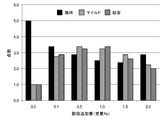
- Example 2 which concerns on one Embodiment of this invention, an example of the result of having evaluated the relationship between the quantity of the inactivated yeast made to contact with a 1st plant raw material liquid, and the flavor of the manufactured 2nd plant raw material liquid It is explanatory drawing shown.
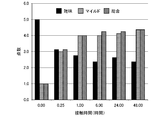
- Example 3 which concerns on one Embodiment of this invention, an example of the result of having evaluated the relationship between the time which makes a 1st plant raw material liquid and inactivated yeast contact, and the flavor of the manufactured 2nd plant raw material liquid It is explanatory drawing which shows.
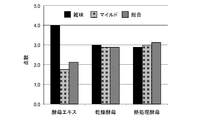
- Example 4 which concerns on one Embodiment of this invention, the flavor of the 2nd plant raw material liquid manufactured by making a 1st plant raw material liquid and dry inactivated yeast, heat processing inactivated yeast, or a yeast extract contact is evaluated. It is explanatory drawing which shows an example of the result obtained.
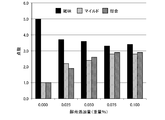
- Example 5 which concerns on one Embodiment of this invention, an example of the result of having evaluated the relationship between the quantity of the inactivated yeast made to contact with a 1st plant raw material liquid, and the flavor of the manufactured 2nd plant raw material liquid It is explanatory drawing shown.
- the method according to the present embodiment is, for example, by bringing the first plant raw material liquid into contact with inactivated yeast, thereby allowing the second plant raw material liquid used for beverage production to be used.
- a method comprising manufacturing.
- the method has improved flavor as compared to the first plant raw material liquid not in contact with the inactivated yeast.
- This is a method for producing a second plant raw material liquid.
- the first plant raw material liquid is not particularly limited as long as it is a solution containing a plant raw material-derived component. That is, the first plant raw material liquid is prepared using a plant raw material. Specifically, a 1st plant raw material liquid is prepared by mixing a plant raw material and water (preferably hot water), for example, and extracting the component contained in the said plant raw material.
- the plant raw material is not particularly limited as long as it can be used for the production of beverages.
- cereals for example, one or more selected from the group consisting of barley, wheat, rice, and corn
- beans for example, beans
- potatoes One or more selected from the group consisting of and / or one or more selected from the group may be germinated.
- the first plant raw material liquid is, for example, malt liquid.
- the malt liquid is a solution containing a malt-derived component.
- malt barley malt and / or wheat malt are preferably used.
- Barley malt and wheat malt are obtained by germinating barley and wheat, respectively.
- the malt liquid is prepared using, for example, malt and / or malt extract.
- the malt liquid is prepared by mixing at least the malt and water (preferably hot water) and extracting the components contained in the malt.
- the malt liquid may be prepared by saccharification.
- the malt liquid is prepared by mixing malt and water (preferably hot water) and saccharifying the obtained mixed liquid. Saccharification is performed, for example, by maintaining a mixed solution containing malt and water at a temperature (for example, 30 to 80 ° C.) at which a digestive enzyme (for example, amylolytic enzyme or proteolytic enzyme) contained in the malt works.
- the malt extract is a composition containing a malt-derived component. That is, the malt extract is a malt extract obtained by extracting an extract containing sugar and nitrogen from malt.
- the malt extract is prepared, for example, by extracting the extract from the malt with water (cold water or hot water).
- the malt liquid is prepared by mixing at least the malt extract and water (preferably hot water).
- the malt extract may be prepared by extracting the extract from the malt and then performing saccharification.
- the malt extract may be prepared by concentration after malt extraction or saccharification. As a malt extract, it is good also as using a commercially available malt extract.
- the first plant raw material liquid may be prepared by further using hops.
- the first plant raw material liquid is, for example, one or more selected from the group consisting of cereals, beans and potatoes and / or one or more selected from the group germinated, and hops It is prepared using
- the malt liquid is mixed with at least malt and / or malt extract and water (preferably hot water), and hops are added to the obtained mixed liquid. And prepared by boiling. In this case, saccharification may be performed before hop addition.
- first plant raw material liquid may be prepared without using malt and malt extract. Also in this case, the first plant raw material liquid may be prepared by further using hops.
- the first plant raw material liquid is produced without alcoholic fermentation. Therefore, the first plant raw material liquid does not substantially contain ethanol. That is, the ethanol content of the first plant raw material liquid is, for example, less than 1% by volume, preferably less than 0.05% by volume, and more preferably less than 0.005% by volume.
- This method may include a step of preparing the first plant raw material solution, and may not include a step of preparing the first plant raw material solution.
- this method does not include the step of preparing the first plant raw material solution, the first plant raw material solution prepared in advance is used in this method.
- such a first plant raw material solution is brought into contact with inactivated yeast.
- the inactivated yeast is not particularly limited as long as it is inactivated to such an extent that it does not substantially grow and / or metabolize.
- inactivated yeast inactivated alcohol-producing yeast and / or inactivated alcohol non-producing yeast can be used.
- the inactivated alcohol-producing yeast is, for example, an alcohol-producing yeast that has been inactivated to such an extent that alcohol is not substantially produced.
- the alcohol-producing yeast is not particularly limited as long as it is a yeast that performs alcohol fermentation.
- examples of the alcohol-producing yeast include beer yeast (for example, bottom fermentation beer yeast and top fermentation beer yeast), wine yeast, shochu yeast, sake yeast, yeast used for producing bioethanol, and baker's yeast.
- beer yeast for example, bottom fermentation beer yeast and top fermentation beer yeast
- wine yeast for example, shochu yeast
- sake yeast yeast
- yeast used for producing bioethanol and baker's yeast.
- the non-alcohol-producing yeast is not particularly limited as long as it does not perform alcoholic fermentation.
- the method and conditions for bringing the first plant raw material solution into contact with the inactivated yeast are not particularly limited as long as the effect of the contact can be obtained. That is, for example, the first plant raw material liquid may be brought into contact with the inactivated yeast by adding a previously inactivated yeast to the first plant raw material liquid.
- the inactivated yeast added to the first plant raw material liquid is not particularly limited as long as it is a yeast that has been inactivated before being added to the first plant raw material liquid.
- Dead yeast is yeast whose life activity has ceased.
- the dead yeast is obtained, for example, by subjecting a live yeast (hereinafter referred to as “live yeast”) to one or more treatments selected from the group consisting of heat treatment, acid treatment, freezing treatment and drying treatment.
- the yeast inactivated in advance is subjected to, for example, an artificial treatment (for example, one or more treatments selected from the group consisting of genetic manipulation, drug treatment, and light (eg, ultraviolet ray) treatment). It is good also as being yeast inactivated by.
- an artificial treatment for example, one or more treatments selected from the group consisting of genetic manipulation, drug treatment, and light (eg, ultraviolet ray) treatment. It is good also as being yeast inactivated by.
- the temperature at which the first plant raw material liquid and the inactivated yeast are brought into contact is particularly within the range where the effect of the contact can be obtained. Not limited. That is, in this case, in this method, for example, the first plant raw material liquid may be brought into contact with inactivated yeast at a temperature of 0 ° C. or higher.
- the live yeast is inactivated, and the first plant raw material liquid is It is good also as making it contact with the inactivated yeast obtained by inactivation of yeast. That is, in this case, the live yeast is inactivated by heat treatment by being added to the first plant raw material liquid.
- the temperature at which the live yeast is inactivated is appropriately determined depending on the type of the live yeast.
- the live yeast is generally inactivated at a temperature of 40 ° C. or higher. Therefore, the temperature at which the live yeast is inactivated may be, for example, 40 ° C. or higher, 50 ° C. or higher, or 60 ° C. or higher. The higher this temperature, the more reliably the live yeast can be inactivated.
- the temperature of the first plant raw material liquid is not particularly limited.
- the inactivated yeast obtained by inactivating the live yeast and the first plant raw material liquid May be brought into contact at 0 ° C. or higher.
- the inventors of the present invention are able to increase the effect of improving the flavor by the contact by increasing the temperature at which the first plant raw material liquid and the inactivated yeast are brought into contact with each other. I found my own.
- the first plant raw material liquid may be brought into contact with inactivated yeast under heating. That is, in this case, for example, the first plant raw material liquid containing the inactivated yeast is heated while the first plant raw material liquid is brought into contact with the inactivated yeast.
- the temperature of the heated first plant raw material liquid is not particularly limited, and may be, for example, 20 ° C. or higher. It may be higher than or equal to 40 ° C. or higher than or equal to 40 ° C.
- the temperature of the heated first plant raw material liquid is such that the live yeast described above is inactivated at least when the live yeast is added. Let it be temperature.
- the temperature of the heated first plant raw material liquid is not particularly limited, and may be, for example, 20 ° C or higher, or 30 ° C or higher. It may be 40 ° C. or higher.
- the first plant raw material liquid may be brought into contact with inactivated yeast at a temperature of 20 ° C. or higher, 30 ° C. or higher, or 40 ° C. or higher, regardless of the presence or absence of heating.
- the first plant raw material liquid may be heated or may not be heated. That is, for example, when the temperature of the first plant raw material liquid can be maintained at 20 ° C. or higher, 30 ° C. or higher, or 40 ° C. or higher depending on the environmental conditions (for example, region, season, temperature) in which the present method is performed. Does not need to heat the first plant raw material liquid.
- the temperature of the first plant raw material liquid is not particularly limited as long as it is 0 ° C. or higher. For example, it is 20 ° C. or higher. It is good also as it being 30 degreeC or more, and good also as being 40 degreeC or more.
- the temperature of the first plant raw material liquid is set to a temperature at which the live yeast is inactivated at least when the live yeast is added.
- the temperature of the first plant raw material liquid is not particularly limited as long as it is 0 ° C. or higher, and may be, for example, 20 ° C. or higher, and is 30 ° C. or higher. It is good also as it being 40 degreeC or more.
- the first plant raw material liquid Enzymatic treatment for example, saccharification
- live yeast and / or inactivated yeast may be added to the first plant raw material liquid after the enzyme treatment and / or sterilization treatment.
- the upper limit of the temperature at which the first plant raw material solution and the inactivated yeast are brought into contact is not particularly limited, but the temperature may be, for example, 100 ° C. or less, or less than 100 ° C.
- the time for bringing the first plant raw material solution into contact with the inactivated yeast is not particularly limited as long as the effect of the contact is obtained, but may be, for example, 0.25 hours or longer. It may be 00 hours or more.
- the upper limit of the time which makes a 1st plant raw material liquid and inactivated yeast contact is not restricted.
- the amount of inactivated yeast to be brought into contact with the first plant raw material liquid is not particularly limited as long as the effect of the contact can be obtained.
- 0.01 to 3 with respect to the first plant raw material liquid It may be in the range of 0.0% by weight (0.01 to 3.0 parts by weight with respect to 100 parts by weight of the first plant raw material liquid), or in the range of 0.025 to 1.5% by weight.
- it is preferably in the range of 0.05 to 1.5% by weight, more preferably in the range of 0.1 to 1.5% by weight.
- the method of bringing the first plant raw material liquid into contact with the inactivated yeast is not limited to the method of adding and dispersing live yeast and / or inactivated yeast in the first plant raw material liquid in the container, for example,
- the first plant raw material liquid is distributed in a container in which the live yeast and / or inactivated yeast are immobilized in advance (for example, a container containing a carrier in which the live yeast and / or inactivated yeast is immobilized). It is good also as using the method to make.
- the second plant raw material liquid is produced by contacting the first plant raw material liquid and the inactivated yeast.
- the second plant raw material liquid can be obtained by removing the inactivated yeast after the contact between the first plant raw material liquid and the inactivated yeast.
- the method in particular of removing inactivated yeast is not restricted, For example, centrifugation and / or filtration can be used.
- the second plant raw material liquid is also produced without performing alcoholic fermentation. Therefore, the second plant raw material liquid does not substantially contain ethanol. That is, the ethanol content of the second plant raw material liquid is, for example, less than 1% by volume, preferably less than 0.05% by volume, and more preferably less than 0.005% by volume.
- the flavor of the second plant raw material liquid thus produced is improved compared to that of the first plant raw material liquid not brought into contact with the inactivated yeast. That is, in this method, the 2nd plant which the flavor improved compared with the said 1st plant raw material liquid which is not made to contact the said inactivated yeast by making the 1st plant raw material liquid contact with the inactivated yeast. A raw material liquid is produced.
- the miscellaneous taste of the second plant raw material liquid is effectively reduced as compared with that of the first plant raw material liquid not in contact with the inactivated yeast.
- the flavor of the second plant raw material liquid is milder than that of the first plant raw material liquid not brought into contact with the inactivated yeast.
- the method may further include producing a beverage using the second plant raw material liquid produced as described above. That is, in this case, for example, the present method uses the second plant raw material liquid obtained by bringing the first plant raw material liquid into contact with the inactivated yeast to produce a beverage without performing alcoholic fermentation. Is the method.
- a beverage is produced by mixing the second plant raw material liquid and other raw materials. That is, when producing non-alcoholic beverages, as other raw materials, for example, one or more selected from the group consisting of sugars, dietary fibers, acidulants, pigments, fragrances, sweeteners and bitters can be used. it can.
- Non-alcoholic beverages are beverages whose ethanol content is less than 1% by volume.
- the ethanol content of the non-alcoholic beverage may be, for example, 0.05% by volume or less, and may be less than 0.005% by volume.
- an alcoholic beverage by mixing the 2nd plant raw material liquid and the solution containing ethanol.
- other raw materials may be further mixed.
- flavor, a sweetener, and a bitter agent can be used, for example.
- An alcoholic beverage is a beverage having an ethanol content of 1% by volume or more (1 degree or more of alcohol).
- the ethanol content of the alcoholic beverage is not particularly limited as long as it is 1% by volume or more, but may be, for example, 1 to 20% by volume.
- a beverage having an excellent flavor that is surely avoided from containing alcohol is produced. That is, since the first plant raw material liquid is brought into contact with the inactivated yeast, production of alcohol in the first plant raw material liquid is surely avoided. Furthermore, in order to use the 2nd plant raw material liquid which the flavor improved by the contact with a 1st plant raw material liquid and inactivated yeast, the said 1st plant raw material liquid which is not made to contact with the said inactivated yeast is used. Compared with the case, the flavor of a drink can be improved effectively.
- the beverage produced using the second plant raw material liquid in the present method is a beverage manufactured using the first plant raw material liquid not in contact with the inactivated yeast. It is effectively reduced compared to that.
- the flavor of the beverage produced in this method is milder than that of the beverage produced using the first plant raw material liquid that has not been brought into contact with the inactivated yeast.
- this method is good also as, for example, being a method of improving the flavor of the said plant raw material liquid by making a plant raw material liquid contact with the inactivated yeast compared with before making it contact with the said inactivated yeast.
- this method employs contacting the plant raw material solution with inactivated yeast as a technical means for improving the flavor of the plant raw material solution.
- the improvement of the flavor of a plant raw material liquid can be confirmed by a sensory test, for example, and specifically, it is evaluated as, for example, a reduction in miscellaneous taste and / or an increase in mildness.
- this method is, for example, a method for improving the flavor of a beverage, and by using the second plant raw material liquid obtained by contacting the first plant raw material liquid with inactivated yeast, It is good also as a method of improving the flavor of the said drink compared with the case where the said 1st plant raw material liquid which is not made to contact inactivated yeast is used.
- the present method is obtained by bringing the first plant raw material liquid into contact with inactivated yeast as a technical means for improving the flavor of the beverage produced using the plant raw material liquid. Adopting the use of plant raw material liquid.
- the improvement of the flavor of a drink can be confirmed by a sensory test, for example, and specifically, it is evaluated as, for example, a reduction in miscellaneous taste and / or an increase in mildness.
- the plant raw material liquid according to the present embodiment (hereinafter referred to as “main raw material liquid”) is a plant raw material liquid that is preferably produced by the above-described method. That is, this raw material liquid is, for example, a second plant raw material liquid obtained by bringing the first plant raw material liquid into contact with inactivated yeast as described above. This raw material liquid is used for manufacturing beverages.
- the content of ethanol in the raw material liquid may be, for example, less than 1% by volume, may be 0.05% by volume or less, and may be less than 0.005% by volume. .
- the beverage according to this embodiment (hereinafter referred to as “the present beverage”) is preferably produced by the above-described method.
- the beverage may be a sparkling beverage.
- An effervescent beverage is a beverage having foam properties including foaming properties and foam retention properties. That is, effervescent beverages, for example, are beverages containing carbon dioxide gas, and when foamed into a container such as a glass, the foaming property that a layer of foam is formed at the top of the liquid surface, and the foam that is formed is constant It is a beverage having a foam-holding property that is maintained for more than an hour.
- the method in particular which gives foaming property to a drink is not restricted, For example, use of carbonated water and / or blowing of carbon dioxide gas are employable.
- the sparkling beverage may be a sparkling non-alcoholic beverage or a sparkling alcoholic beverage.
- this beverage may be a non-foaming beverage.
- Non-effervescent beverages are beverages that do not have the above-mentioned foam characteristics.
- the non-foamable beverage may be a non-foamable non-alcoholic beverage or a non-foamable alcoholic beverage.
- Malt liquid (wort) was prepared as a first plant raw material liquid. That is, saccharification was performed by adding hot water at 50 ° C. to the crushed barley malt and maintaining the obtained mixed liquid at 65 ° C. Furthermore, the barley malt husk was removed from the mixed solution after saccharification, and then hops were added to perform boiling. The mixed liquid after boiling was obtained as malt liquid.
- Dry yeast was used as the inactivated yeast.
- This dry yeast was an inactivated yeast prepared by heat-killing and killing live bottom fermented beer yeast. Then, 0.1% by weight of inactivated yeast is added to the malt liquid prepared as described above, and six different temperatures (0 ° C, 20 ° C, 40 ° C, 60 ° C, 80 ° C or 100 ° C) are used. The malt liquid and the inactivated yeast were brought into contact by maintaining at 15 ° C. for 15 minutes.
- the inactivated yeast was removed from the malt liquid by centrifugation, thereby obtaining 6 types of malt liquids having different contact temperatures with the inactivated yeast as the second plant raw material liquid. Moreover, the malt liquid which was not made to contact the inactivated yeast was also prepared as a comparison control.
- FIG. 1 shows the results of the sensory test.
- the horizontal axis indicates the contact temperature (° C.) between the malt liquid and the inactivated yeast
- the vertical axis indicates the score obtained by the sensory test.
- “no addition” indicates a comparative example in which the malt liquid was not brought into contact with the inactivated yeast.
- the flavor tends to be improved as the temperature at which the malt liquid and the inactivated yeast are brought into contact with each other increases.
- the contact temperature between the malt liquid and the inactivated yeast was 40 ° C. or higher, the flavor was significantly improved.
- the contact temperature was 60 ° C. or higher, the flavor was further improved.
- malt liquid was prepared as the first plant raw material liquid, and dry yeast was used as the inactivated yeast. And inactivated yeast with five different concentrations (0.1 wt%, 0.5 wt%, 1.0 wt%, 1.5 wt% or 2.0 wt%) with respect to the malt liquid
- the malt liquid and the inactivated yeast were brought into contact by adding and maintaining at 20 ° C. for 15 minutes.
- the inactivated yeast was removed from the malt liquid by centrifugation to obtain five kinds of malt liquids having different amounts of the inactivated yeast contacted as the second plant raw material liquid. Moreover, the malt liquid which was not made to contact the inactivated yeast was also prepared as a comparison control. And the sensory test was done like the above-mentioned Example 1.
- Figure 2 shows the results of the sensory test.
- the horizontal axis indicates the added amount (% by weight) of inactivated yeast
- the vertical axis indicates the score obtained by the sensory test.
- “0.0” indicates a comparative example in which the inactivated yeast was not added (the malt liquid was not brought into contact with the inactivated yeast).
- the flavor of the malt liquid contacted with the inactivated yeast was evaluated to be improved compared to that of the malt liquid (“0.0”) not contacted with the inactivated yeast. . That is, by bringing it into contact with inactivated yeast, the misty taste of the malt liquid was effectively reduced, the mildness was increased, and the overall flavor was improved. In particular, when the inactivated yeast was added in an amount of 0.1 to 1.5% by weight, the flavor was significantly improved.
- malt liquid was prepared as the first plant raw material liquid, and dry yeast was used as the inactivated yeast. Then, 0.1% by weight of inactivated yeast is added to the malt liquid and maintained at 20 ° C. for five different times (0.25 hours, 1 hour, 6 hours, 24 hours or 48 hours). By this, the malt liquid and the inactivated yeast were contacted.
- the inactivated yeast was removed from the malt liquid by centrifugation to obtain five types of malt liquids having different contact times with the inactivated yeast as the second plant raw material liquid. Moreover, the malt liquid which was not made to contact the inactivated yeast was also prepared as a comparison control. And the sensory test was done like the above-mentioned Example 1.
- Figure 3 shows the results of the sensory test.
- the horizontal axis indicates the contact time (hour) between the malt liquid and the inactivated yeast
- the vertical axis indicates the score obtained by the sensory test.
- “0.0” indicates a comparative example in which the malt liquid was not contacted with the inactivated yeast.
- malt liquid was prepared as the first plant raw material liquid.
- the inactivated yeast the dry yeast similar to the above-mentioned Example 1 and the heat-treated yeast were used.
- This heat-treated yeast was an inactivated yeast prepared by heat-treating live bottom fermented beer yeast.
- yeast extract was used as a comparison control.
- This yeast extract extracts components such as amino acids and nucleic acids contained in the yeast by enzymatic treatment of live bottom fermented beer yeast and separates insoluble components (for example, yeast cell bodies). It was the composition obtained by removing. That is, the yeast extract was a composition containing components such as amino acids and nucleic acids derived from yeast and not including the yeast cell bodies.
- yeast extract 0.1% by weight was added to the malt liquid and maintained at 20 ° C. for 15 minutes. Thereafter, the yeast extract was removed from the malt liquid by centrifugation to obtain a malt liquid contacted with the yeast extract as the second plant raw material liquid. And the sensory test was done like the above-mentioned Example 1.
- Figure 4 shows the results of the sensory test.
- the horizontal axis indicates the type of inactivated yeast or yeast extract brought into contact with the malt liquid
- the vertical axis indicates the score obtained by the sensory test.
- the flavor of the malt liquid contacted with the inactivated yeast was improved as compared with that of the malt liquid to which the yeast extract was added without contacting the inactivated yeast. That is, by bringing it into contact with inactivated yeast, the misty taste of the malt liquid was effectively reduced, the mildness was increased, and the overall flavor was improved.
- malt liquid was prepared as the first plant raw material liquid, and dry yeast was used as the inactivated yeast. Then, inactivated yeast was added to the malt at four different concentrations (0.025 wt%, 0.05 wt%, 0.075 wt% or 0.100 wt%), and at 20 ° C By maintaining for 15 minutes, the malt liquid and the inactivated yeast were brought into contact.
- the inactivated yeast was removed from the malt liquid by centrifugation to obtain four types of malt liquids having different amounts of the inactivated yeast contacted as the second plant raw material liquid. Moreover, the malt liquid which was not made to contact the inactivated yeast was also prepared as a comparison control. And the sensory test was done like the above-mentioned Example 1.
- Fig. 5 shows the results of the sensory test.
- the horizontal axis indicates the added amount (% by weight) of inactivated yeast
- the vertical axis indicates the score obtained by the sensory test.
- “0.000” indicates a comparative example in which the inactivated yeast was not added (the malt liquid was not brought into contact with the inactivated yeast).
- the malt liquid contacted with the least 0.025% by weight of the inactivated yeast is significantly reduced in taste as compared with the malt liquid not contacted with the inactivated yeast.
- the overall flavor was improved.
- the added amount of inactivated yeast was 0.050% by weight or more, the overall flavor was significantly improved as compared with the case where the added amount was 0.025% by weight.
Landscapes
- Life Sciences & Earth Sciences (AREA)
- Health & Medical Sciences (AREA)
- Nutrition Science (AREA)
- Chemical & Material Sciences (AREA)
- Engineering & Computer Science (AREA)
- Food Science & Technology (AREA)
- Polymers & Plastics (AREA)
- Botany (AREA)
- Mycology (AREA)
- Non-Alcoholic Beverages (AREA)
Abstract
Priority Applications (3)
| Application Number | Priority Date | Filing Date | Title |
|---|---|---|---|
| JP2014504118A JP5671652B2 (ja) | 2012-03-28 | 2013-03-08 | 植物原料液及び飲料並びにこれらに関する方法 |
| CA2866238A CA2866238C (fr) | 2012-03-28 | 2013-03-08 | Solution contenant des composants de materiau de plante de depart, boisson et procede associe a celles-ci |
| US14/384,530 US20150030749A1 (en) | 2012-03-28 | 2013-03-08 | Solution containing components of starting plant raw material, beverage, and method relating thereto |
Applications Claiming Priority (2)
| Application Number | Priority Date | Filing Date | Title |
|---|---|---|---|
| JP2012-075130 | 2012-03-28 | ||
| JP2012075130 | 2012-03-28 |
Publications (1)
| Publication Number | Publication Date |
|---|---|
| WO2013146201A1 true WO2013146201A1 (fr) | 2013-10-03 |
Family
ID=49259469
Family Applications (1)
| Application Number | Title | Priority Date | Filing Date |
|---|---|---|---|
| PCT/JP2013/056521 Ceased WO2013146201A1 (fr) | 2012-03-28 | 2013-03-08 | Solution contenant des composants de matériau de plante de départ, boisson et procédé associé à celles-ci |
Country Status (4)
| Country | Link |
|---|---|
| US (1) | US20150030749A1 (fr) |
| JP (1) | JP5671652B2 (fr) |
| CA (1) | CA2866238C (fr) |
| WO (1) | WO2013146201A1 (fr) |
Cited By (1)
| Publication number | Priority date | Publication date | Assignee | Title |
|---|---|---|---|---|
| JP2014068559A (ja) * | 2012-09-27 | 2014-04-21 | Sapporo Breweries Ltd | 原料液、飲料及びこれらに関する方法 |
Families Citing this family (5)
| Publication number | Priority date | Publication date | Assignee | Title |
|---|---|---|---|---|
| EP4056046A1 (fr) * | 2016-10-26 | 2022-09-14 | Yissum Research Development Company of The Hebrew University of Jerusalem Ltd. | Produits alimentaires à faible teneur en sucre et à teneur élevée en fibres |
| EP3784058A1 (fr) | 2018-04-25 | 2021-03-03 | Carlsberg A/S | Boissons à base d'orge |
| JP6824222B2 (ja) * | 2018-05-18 | 2021-02-03 | サントリーホールディングス株式会社 | 泡保持性を有する発泡性飲料および発泡性飲料における泡保持性を改善する方法 |
| US11517031B2 (en) * | 2021-01-31 | 2022-12-06 | Ceria, Inc. | Rapid method of producing non-alcoholic and alcoholic beer |
| WO2022194378A1 (fr) | 2021-03-18 | 2022-09-22 | Carlsberg A/S | Boisson à base d'herbe de céréale et ses procédés de production |
Citations (3)
| Publication number | Priority date | Publication date | Assignee | Title |
|---|---|---|---|---|
| JPH06343434A (ja) * | 1993-06-11 | 1994-12-20 | Yanase & Arishieitsu Kk | 低アルコール発酵飲料及びその製造方法 |
| JP2002238494A (ja) * | 2000-12-15 | 2002-08-27 | Sunstar Inc | 乳酸菌発酵液の製造方法及び該発酵液を原料とする食品 |
| JP2007174967A (ja) * | 2005-12-28 | 2007-07-12 | Asahi Breweries Ltd | 発泡性炭酸飲料 |
Family Cites Families (6)
| Publication number | Priority date | Publication date | Assignee | Title |
|---|---|---|---|---|
| GB9811103D0 (en) * | 1998-05-23 | 1998-07-22 | Danstar Ferment Ag | Yeast |
| CN101155929B (zh) * | 2003-01-27 | 2012-03-21 | 帝斯曼知识产权资产管理有限公司 | 生产5′-核糖核苷酸的方法 |
| FR2865215B1 (fr) * | 2004-01-20 | 2006-04-28 | Lallemand Sas | Procede de prevention du vieillissement defectueux des vins blancs |
| FR2926559A1 (fr) * | 2008-01-23 | 2009-07-24 | Agronomique Inst Nat Rech | Composition pour la stabilisation d'un liquide aqueux alimentaire sensible a l'oxydation |
| JP4503700B1 (ja) * | 2008-11-18 | 2010-07-14 | アサヒビール株式会社 | グルタミン酸高含有酵母の製造方法 |
| EP2377409B1 (fr) * | 2008-12-18 | 2018-06-13 | Mercian Corporation | Méthode de production d'une boisson sans alcool |
-
2013
- 2013-03-08 US US14/384,530 patent/US20150030749A1/en not_active Abandoned
- 2013-03-08 WO PCT/JP2013/056521 patent/WO2013146201A1/fr not_active Ceased
- 2013-03-08 JP JP2014504118A patent/JP5671652B2/ja active Active
- 2013-03-08 CA CA2866238A patent/CA2866238C/fr active Active
Patent Citations (3)
| Publication number | Priority date | Publication date | Assignee | Title |
|---|---|---|---|---|
| JPH06343434A (ja) * | 1993-06-11 | 1994-12-20 | Yanase & Arishieitsu Kk | 低アルコール発酵飲料及びその製造方法 |
| JP2002238494A (ja) * | 2000-12-15 | 2002-08-27 | Sunstar Inc | 乳酸菌発酵液の製造方法及び該発酵液を原料とする食品 |
| JP2007174967A (ja) * | 2005-12-28 | 2007-07-12 | Asahi Breweries Ltd | 発泡性炭酸飲料 |
Cited By (1)
| Publication number | Priority date | Publication date | Assignee | Title |
|---|---|---|---|---|
| JP2014068559A (ja) * | 2012-09-27 | 2014-04-21 | Sapporo Breweries Ltd | 原料液、飲料及びこれらに関する方法 |
Also Published As
| Publication number | Publication date |
|---|---|
| JP5671652B2 (ja) | 2015-02-18 |
| CA2866238C (fr) | 2018-08-28 |
| JPWO2013146201A1 (ja) | 2015-12-10 |
| US20150030749A1 (en) | 2015-01-29 |
| CA2866238A1 (fr) | 2013-10-03 |
Similar Documents
| Publication | Publication Date | Title |
|---|---|---|
| DE10362026B4 (de) | Verwendung von Palatinose zur Verbesserung der Lagerungsstabilität eines bierähnlichen Erfrischungsgetränkes | |
| JP7784896B2 (ja) | ビールテイスト発酵麦芽飲料 | |
| JP5671652B2 (ja) | 植物原料液及び飲料並びにこれらに関する方法 | |
| JP5973315B2 (ja) | 刺激感が増強された発酵麦芽飲料の製造方法 | |
| WO2011158395A1 (fr) | Procédé de production d'une boisson maltée fermentée | |
| JP7799392B2 (ja) | ビールテイスト飲料、その製造方法及び香味向上方法 | |
| BR112020021811A2 (pt) | bebidas à base de cevada | |
| JP2026071382A (ja) | ビールテイスト飲料 | |
| JP5917166B2 (ja) | 発酵麦芽飲料の製造方法 | |
| JP5584446B2 (ja) | 発泡性アルコール飲料及びその製造方法 | |
| JP6005004B2 (ja) | 穀物原料液と酵母との接触を含む方法並びに穀物原料液及び発泡性飲料 | |
| WO2010123026A1 (fr) | Boisson alcoolisée pétillante et son procédé de fabrication | |
| JP4781342B2 (ja) | 発泡性アルコール飲料及びその製造方法 | |
| US11312929B2 (en) | Method for producing beverage and method for improving flavor of beverage | |
| KR101834112B1 (ko) | 기능성 맥주의 제조방법 | |
| JP2019030340A (ja) | 発泡性飲料、原料液及びこれらに関する方法 | |
| US20060240147A1 (en) | Alcoholic beverages containing corn syrup substitutes | |
| JP6068831B2 (ja) | 植物原料液及び飲料並びにこれらに関する方法 | |
| KR20120051951A (ko) | 속성 쌀 막걸리 제조방법 및 이에 따른 쌀 막걸리 | |
| US20180371384A1 (en) | Method for producing rooting-suppressed malt | |
| JP6169362B2 (ja) | 飲料、原料液及びこれらに関する方法 | |
| JP2023180387A (ja) | 麦汁のビール酵母発酵液、及びその製造方法 | |
| CN113073022A (zh) | 一种果酒的微生物澄清方法 | |
| JP2017063767A (ja) | 飲料の製造方法、及びホップ苦味成分の移行率を向上させる方法 | |
| Bruchmann et al. | Enzymes in potable alcohol and wine production |
Legal Events
| Date | Code | Title | Description |
|---|---|---|---|
| 121 | Ep: the epo has been informed by wipo that ep was designated in this application |
Ref document number: 13770199 Country of ref document: EP Kind code of ref document: A1 |
|
| ENP | Entry into the national phase |
Ref document number: 2014504118 Country of ref document: JP Kind code of ref document: A |
|
| ENP | Entry into the national phase |
Ref document number: 2866238 Country of ref document: CA |
|
| WWE | Wipo information: entry into national phase |
Ref document number: 14384530 Country of ref document: US |
|
| NENP | Non-entry into the national phase |
Ref country code: DE |
|
| 122 | Ep: pct application non-entry in european phase |
Ref document number: 13770199 Country of ref document: EP Kind code of ref document: A1 |