WO2013146448A1 - Objet fritté pour la formation d'un film à faible indice de réfraction et son procédé de fabrication - Google Patents
Objet fritté pour la formation d'un film à faible indice de réfraction et son procédé de fabrication Download PDFInfo
- Publication number
- WO2013146448A1 WO2013146448A1 PCT/JP2013/057754 JP2013057754W WO2013146448A1 WO 2013146448 A1 WO2013146448 A1 WO 2013146448A1 JP 2013057754 W JP2013057754 W JP 2013057754W WO 2013146448 A1 WO2013146448 A1 WO 2013146448A1
- Authority
- WO
- WIPO (PCT)
- Prior art keywords
- sintered body
- thin film
- less
- mgf
- magnesium
- Prior art date
- Legal status (The legal status is an assumption and is not a legal conclusion. Google has not performed a legal analysis and makes no representation as to the accuracy of the status listed.)
- Ceased
Links
Images

Classifications
-
- C—CHEMISTRY; METALLURGY
- C04—CEMENTS; CONCRETE; ARTIFICIAL STONE; CERAMICS; REFRACTORIES
- C04B—LIME, MAGNESIA; SLAG; CEMENTS; COMPOSITIONS THEREOF, e.g. MORTARS, CONCRETE OR LIKE BUILDING MATERIALS; ARTIFICIAL STONE; CERAMICS; REFRACTORIES; TREATMENT OF NATURAL STONE
- C04B35/00—Shaped ceramic products characterised by their composition; Ceramics compositions; Processing powders of inorganic compounds preparatory to the manufacturing of ceramic products
- C04B35/01—Shaped ceramic products characterised by their composition; Ceramics compositions; Processing powders of inorganic compounds preparatory to the manufacturing of ceramic products based on oxide ceramics
- C04B35/453—Shaped ceramic products characterised by their composition; Ceramics compositions; Processing powders of inorganic compounds preparatory to the manufacturing of ceramic products based on oxide ceramics based on zinc, tin, or bismuth oxides or solid solutions thereof with other oxides, e.g. zincates, stannates or bismuthates
-
- C—CHEMISTRY; METALLURGY
- C04—CEMENTS; CONCRETE; ARTIFICIAL STONE; CERAMICS; REFRACTORIES
- C04B—LIME, MAGNESIA; SLAG; CEMENTS; COMPOSITIONS THEREOF, e.g. MORTARS, CONCRETE OR LIKE BUILDING MATERIALS; ARTIFICIAL STONE; CERAMICS; REFRACTORIES; TREATMENT OF NATURAL STONE
- C04B35/00—Shaped ceramic products characterised by their composition; Ceramics compositions; Processing powders of inorganic compounds preparatory to the manufacturing of ceramic products
- C04B35/515—Shaped ceramic products characterised by their composition; Ceramics compositions; Processing powders of inorganic compounds preparatory to the manufacturing of ceramic products based on non-oxide ceramics
- C04B35/553—Shaped ceramic products characterised by their composition; Ceramics compositions; Processing powders of inorganic compounds preparatory to the manufacturing of ceramic products based on non-oxide ceramics based on fluorides
-
- C—CHEMISTRY; METALLURGY
- C23—COATING METALLIC MATERIAL; COATING MATERIAL WITH METALLIC MATERIAL; CHEMICAL SURFACE TREATMENT; DIFFUSION TREATMENT OF METALLIC MATERIAL; COATING BY VACUUM EVAPORATION, BY SPUTTERING, BY ION IMPLANTATION OR BY CHEMICAL VAPOUR DEPOSITION, IN GENERAL; INHIBITING CORROSION OF METALLIC MATERIAL OR INCRUSTATION IN GENERAL
- C23C—COATING METALLIC MATERIAL; COATING MATERIAL WITH METALLIC MATERIAL; SURFACE TREATMENT OF METALLIC MATERIAL BY DIFFUSION INTO THE SURFACE, BY CHEMICAL CONVERSION OR SUBSTITUTION; COATING BY VACUUM EVAPORATION, BY SPUTTERING, BY ION IMPLANTATION OR BY CHEMICAL VAPOUR DEPOSITION, IN GENERAL
- C23C14/00—Coating by vacuum evaporation, by sputtering or by ion implantation of the coating forming material
- C23C14/06—Coating by vacuum evaporation, by sputtering or by ion implantation of the coating forming material characterised by the coating material
-
- C—CHEMISTRY; METALLURGY
- C23—COATING METALLIC MATERIAL; COATING MATERIAL WITH METALLIC MATERIAL; CHEMICAL SURFACE TREATMENT; DIFFUSION TREATMENT OF METALLIC MATERIAL; COATING BY VACUUM EVAPORATION, BY SPUTTERING, BY ION IMPLANTATION OR BY CHEMICAL VAPOUR DEPOSITION, IN GENERAL; INHIBITING CORROSION OF METALLIC MATERIAL OR INCRUSTATION IN GENERAL
- C23C—COATING METALLIC MATERIAL; COATING MATERIAL WITH METALLIC MATERIAL; SURFACE TREATMENT OF METALLIC MATERIAL BY DIFFUSION INTO THE SURFACE, BY CHEMICAL CONVERSION OR SUBSTITUTION; COATING BY VACUUM EVAPORATION, BY SPUTTERING, BY ION IMPLANTATION OR BY CHEMICAL VAPOUR DEPOSITION, IN GENERAL
- C23C14/00—Coating by vacuum evaporation, by sputtering or by ion implantation of the coating forming material
- C23C14/22—Coating by vacuum evaporation, by sputtering or by ion implantation of the coating forming material characterised by the process of coating
- C23C14/34—Sputtering
- C23C14/3407—Cathode assembly for sputtering apparatus, e.g. Target
- C23C14/3414—Metallurgical or chemical aspects of target preparation, e.g. casting, powder metallurgy
-
- C—CHEMISTRY; METALLURGY
- C04—CEMENTS; CONCRETE; ARTIFICIAL STONE; CERAMICS; REFRACTORIES
- C04B—LIME, MAGNESIA; SLAG; CEMENTS; COMPOSITIONS THEREOF, e.g. MORTARS, CONCRETE OR LIKE BUILDING MATERIALS; ARTIFICIAL STONE; CERAMICS; REFRACTORIES; TREATMENT OF NATURAL STONE
- C04B2235/00—Aspects relating to ceramic starting mixtures or sintered ceramic products
- C04B2235/02—Composition of constituents of the starting material or of secondary phases of the final product
- C04B2235/30—Constituents and secondary phases not being of a fibrous nature
- C04B2235/32—Metal oxides, mixed metal oxides, or oxide-forming salts thereof, e.g. carbonates, nitrates, (oxy)hydroxides, chlorides
- C04B2235/3201—Alkali metal oxides or oxide-forming salts thereof
-
- C—CHEMISTRY; METALLURGY
- C04—CEMENTS; CONCRETE; ARTIFICIAL STONE; CERAMICS; REFRACTORIES
- C04B—LIME, MAGNESIA; SLAG; CEMENTS; COMPOSITIONS THEREOF, e.g. MORTARS, CONCRETE OR LIKE BUILDING MATERIALS; ARTIFICIAL STONE; CERAMICS; REFRACTORIES; TREATMENT OF NATURAL STONE
- C04B2235/00—Aspects relating to ceramic starting mixtures or sintered ceramic products
- C04B2235/02—Composition of constituents of the starting material or of secondary phases of the final product
- C04B2235/30—Constituents and secondary phases not being of a fibrous nature
- C04B2235/32—Metal oxides, mixed metal oxides, or oxide-forming salts thereof, e.g. carbonates, nitrates, (oxy)hydroxides, chlorides
- C04B2235/3205—Alkaline earth oxides or oxide forming salts thereof, e.g. beryllium oxide
- C04B2235/3206—Magnesium oxides or oxide-forming salts thereof
-
- C—CHEMISTRY; METALLURGY
- C04—CEMENTS; CONCRETE; ARTIFICIAL STONE; CERAMICS; REFRACTORIES
- C04B—LIME, MAGNESIA; SLAG; CEMENTS; COMPOSITIONS THEREOF, e.g. MORTARS, CONCRETE OR LIKE BUILDING MATERIALS; ARTIFICIAL STONE; CERAMICS; REFRACTORIES; TREATMENT OF NATURAL STONE
- C04B2235/00—Aspects relating to ceramic starting mixtures or sintered ceramic products
- C04B2235/02—Composition of constituents of the starting material or of secondary phases of the final product
- C04B2235/30—Constituents and secondary phases not being of a fibrous nature
- C04B2235/32—Metal oxides, mixed metal oxides, or oxide-forming salts thereof, e.g. carbonates, nitrates, (oxy)hydroxides, chlorides
- C04B2235/3231—Refractory metal oxides, their mixed metal oxides, or oxide-forming salts thereof
- C04B2235/3232—Titanium oxides or titanates, e.g. rutile or anatase
- C04B2235/3237—Substoichiometric titanium oxides, e.g. Ti2O3
-
- C—CHEMISTRY; METALLURGY
- C04—CEMENTS; CONCRETE; ARTIFICIAL STONE; CERAMICS; REFRACTORIES
- C04B—LIME, MAGNESIA; SLAG; CEMENTS; COMPOSITIONS THEREOF, e.g. MORTARS, CONCRETE OR LIKE BUILDING MATERIALS; ARTIFICIAL STONE; CERAMICS; REFRACTORIES; TREATMENT OF NATURAL STONE
- C04B2235/00—Aspects relating to ceramic starting mixtures or sintered ceramic products
- C04B2235/02—Composition of constituents of the starting material or of secondary phases of the final product
- C04B2235/30—Constituents and secondary phases not being of a fibrous nature
- C04B2235/32—Metal oxides, mixed metal oxides, or oxide-forming salts thereof, e.g. carbonates, nitrates, (oxy)hydroxides, chlorides
- C04B2235/3231—Refractory metal oxides, their mixed metal oxides, or oxide-forming salts thereof
- C04B2235/3239—Vanadium oxides, vanadates or oxide forming salts thereof, e.g. magnesium vanadate
-
- C—CHEMISTRY; METALLURGY
- C04—CEMENTS; CONCRETE; ARTIFICIAL STONE; CERAMICS; REFRACTORIES
- C04B—LIME, MAGNESIA; SLAG; CEMENTS; COMPOSITIONS THEREOF, e.g. MORTARS, CONCRETE OR LIKE BUILDING MATERIALS; ARTIFICIAL STONE; CERAMICS; REFRACTORIES; TREATMENT OF NATURAL STONE
- C04B2235/00—Aspects relating to ceramic starting mixtures or sintered ceramic products
- C04B2235/02—Composition of constituents of the starting material or of secondary phases of the final product
- C04B2235/30—Constituents and secondary phases not being of a fibrous nature
- C04B2235/32—Metal oxides, mixed metal oxides, or oxide-forming salts thereof, e.g. carbonates, nitrates, (oxy)hydroxides, chlorides
- C04B2235/3231—Refractory metal oxides, their mixed metal oxides, or oxide-forming salts thereof
- C04B2235/3256—Molybdenum oxides, molybdates or oxide forming salts thereof, e.g. cadmium molybdate
-
- C—CHEMISTRY; METALLURGY
- C04—CEMENTS; CONCRETE; ARTIFICIAL STONE; CERAMICS; REFRACTORIES
- C04B—LIME, MAGNESIA; SLAG; CEMENTS; COMPOSITIONS THEREOF, e.g. MORTARS, CONCRETE OR LIKE BUILDING MATERIALS; ARTIFICIAL STONE; CERAMICS; REFRACTORIES; TREATMENT OF NATURAL STONE
- C04B2235/00—Aspects relating to ceramic starting mixtures or sintered ceramic products
- C04B2235/02—Composition of constituents of the starting material or of secondary phases of the final product
- C04B2235/30—Constituents and secondary phases not being of a fibrous nature
- C04B2235/32—Metal oxides, mixed metal oxides, or oxide-forming salts thereof, e.g. carbonates, nitrates, (oxy)hydroxides, chlorides
- C04B2235/3286—Gallium oxides, gallates, indium oxides, indates, thallium oxides, thallates or oxide forming salts thereof, e.g. zinc gallate
-
- C—CHEMISTRY; METALLURGY
- C04—CEMENTS; CONCRETE; ARTIFICIAL STONE; CERAMICS; REFRACTORIES
- C04B—LIME, MAGNESIA; SLAG; CEMENTS; COMPOSITIONS THEREOF, e.g. MORTARS, CONCRETE OR LIKE BUILDING MATERIALS; ARTIFICIAL STONE; CERAMICS; REFRACTORIES; TREATMENT OF NATURAL STONE
- C04B2235/00—Aspects relating to ceramic starting mixtures or sintered ceramic products
- C04B2235/02—Composition of constituents of the starting material or of secondary phases of the final product
- C04B2235/30—Constituents and secondary phases not being of a fibrous nature
- C04B2235/32—Metal oxides, mixed metal oxides, or oxide-forming salts thereof, e.g. carbonates, nitrates, (oxy)hydroxides, chlorides
- C04B2235/3287—Germanium oxides, germanates or oxide forming salts thereof, e.g. copper germanate
-
- C—CHEMISTRY; METALLURGY
- C04—CEMENTS; CONCRETE; ARTIFICIAL STONE; CERAMICS; REFRACTORIES
- C04B—LIME, MAGNESIA; SLAG; CEMENTS; COMPOSITIONS THEREOF, e.g. MORTARS, CONCRETE OR LIKE BUILDING MATERIALS; ARTIFICIAL STONE; CERAMICS; REFRACTORIES; TREATMENT OF NATURAL STONE
- C04B2235/00—Aspects relating to ceramic starting mixtures or sintered ceramic products
- C04B2235/02—Composition of constituents of the starting material or of secondary phases of the final product
- C04B2235/30—Constituents and secondary phases not being of a fibrous nature
- C04B2235/32—Metal oxides, mixed metal oxides, or oxide-forming salts thereof, e.g. carbonates, nitrates, (oxy)hydroxides, chlorides
- C04B2235/3293—Tin oxides, stannates or oxide forming salts thereof, e.g. indium tin oxide [ITO]
-
- C—CHEMISTRY; METALLURGY
- C04—CEMENTS; CONCRETE; ARTIFICIAL STONE; CERAMICS; REFRACTORIES
- C04B—LIME, MAGNESIA; SLAG; CEMENTS; COMPOSITIONS THEREOF, e.g. MORTARS, CONCRETE OR LIKE BUILDING MATERIALS; ARTIFICIAL STONE; CERAMICS; REFRACTORIES; TREATMENT OF NATURAL STONE
- C04B2235/00—Aspects relating to ceramic starting mixtures or sintered ceramic products
- C04B2235/02—Composition of constituents of the starting material or of secondary phases of the final product
- C04B2235/30—Constituents and secondary phases not being of a fibrous nature
- C04B2235/32—Metal oxides, mixed metal oxides, or oxide-forming salts thereof, e.g. carbonates, nitrates, (oxy)hydroxides, chlorides
- C04B2235/3294—Antimony oxides, antimonates, antimonites or oxide forming salts thereof, indium antimonate
-
- C—CHEMISTRY; METALLURGY
- C04—CEMENTS; CONCRETE; ARTIFICIAL STONE; CERAMICS; REFRACTORIES
- C04B—LIME, MAGNESIA; SLAG; CEMENTS; COMPOSITIONS THEREOF, e.g. MORTARS, CONCRETE OR LIKE BUILDING MATERIALS; ARTIFICIAL STONE; CERAMICS; REFRACTORIES; TREATMENT OF NATURAL STONE
- C04B2235/00—Aspects relating to ceramic starting mixtures or sintered ceramic products
- C04B2235/02—Composition of constituents of the starting material or of secondary phases of the final product
- C04B2235/30—Constituents and secondary phases not being of a fibrous nature
- C04B2235/32—Metal oxides, mixed metal oxides, or oxide-forming salts thereof, e.g. carbonates, nitrates, (oxy)hydroxides, chlorides
- C04B2235/3296—Lead oxides, plumbates or oxide forming salts thereof, e.g. silver plumbate
-
- C—CHEMISTRY; METALLURGY
- C04—CEMENTS; CONCRETE; ARTIFICIAL STONE; CERAMICS; REFRACTORIES
- C04B—LIME, MAGNESIA; SLAG; CEMENTS; COMPOSITIONS THEREOF, e.g. MORTARS, CONCRETE OR LIKE BUILDING MATERIALS; ARTIFICIAL STONE; CERAMICS; REFRACTORIES; TREATMENT OF NATURAL STONE
- C04B2235/00—Aspects relating to ceramic starting mixtures or sintered ceramic products
- C04B2235/02—Composition of constituents of the starting material or of secondary phases of the final product
- C04B2235/30—Constituents and secondary phases not being of a fibrous nature
- C04B2235/32—Metal oxides, mixed metal oxides, or oxide-forming salts thereof, e.g. carbonates, nitrates, (oxy)hydroxides, chlorides
- C04B2235/3298—Bismuth oxides, bismuthates or oxide forming salts thereof, e.g. zinc bismuthate
-
- C—CHEMISTRY; METALLURGY
- C04—CEMENTS; CONCRETE; ARTIFICIAL STONE; CERAMICS; REFRACTORIES
- C04B—LIME, MAGNESIA; SLAG; CEMENTS; COMPOSITIONS THEREOF, e.g. MORTARS, CONCRETE OR LIKE BUILDING MATERIALS; ARTIFICIAL STONE; CERAMICS; REFRACTORIES; TREATMENT OF NATURAL STONE
- C04B2235/00—Aspects relating to ceramic starting mixtures or sintered ceramic products
- C04B2235/02—Composition of constituents of the starting material or of secondary phases of the final product
- C04B2235/30—Constituents and secondary phases not being of a fibrous nature
- C04B2235/34—Non-metal oxides, non-metal mixed oxides, or salts thereof that form the non-metal oxides upon heating, e.g. carbonates, nitrates, (oxy)hydroxides, chlorides
-
- C—CHEMISTRY; METALLURGY
- C04—CEMENTS; CONCRETE; ARTIFICIAL STONE; CERAMICS; REFRACTORIES
- C04B—LIME, MAGNESIA; SLAG; CEMENTS; COMPOSITIONS THEREOF, e.g. MORTARS, CONCRETE OR LIKE BUILDING MATERIALS; ARTIFICIAL STONE; CERAMICS; REFRACTORIES; TREATMENT OF NATURAL STONE
- C04B2235/00—Aspects relating to ceramic starting mixtures or sintered ceramic products
- C04B2235/02—Composition of constituents of the starting material or of secondary phases of the final product
- C04B2235/30—Constituents and secondary phases not being of a fibrous nature
- C04B2235/34—Non-metal oxides, non-metal mixed oxides, or salts thereof that form the non-metal oxides upon heating, e.g. carbonates, nitrates, (oxy)hydroxides, chlorides
- C04B2235/3409—Boron oxide, borates, boric acids, or oxide forming salts thereof, e.g. borax
-
- C—CHEMISTRY; METALLURGY
- C04—CEMENTS; CONCRETE; ARTIFICIAL STONE; CERAMICS; REFRACTORIES
- C04B—LIME, MAGNESIA; SLAG; CEMENTS; COMPOSITIONS THEREOF, e.g. MORTARS, CONCRETE OR LIKE BUILDING MATERIALS; ARTIFICIAL STONE; CERAMICS; REFRACTORIES; TREATMENT OF NATURAL STONE
- C04B2235/00—Aspects relating to ceramic starting mixtures or sintered ceramic products
- C04B2235/02—Composition of constituents of the starting material or of secondary phases of the final product
- C04B2235/30—Constituents and secondary phases not being of a fibrous nature
- C04B2235/38—Non-oxide ceramic constituents or additives
-
- C—CHEMISTRY; METALLURGY
- C04—CEMENTS; CONCRETE; ARTIFICIAL STONE; CERAMICS; REFRACTORIES
- C04B—LIME, MAGNESIA; SLAG; CEMENTS; COMPOSITIONS THEREOF, e.g. MORTARS, CONCRETE OR LIKE BUILDING MATERIALS; ARTIFICIAL STONE; CERAMICS; REFRACTORIES; TREATMENT OF NATURAL STONE
- C04B2235/00—Aspects relating to ceramic starting mixtures or sintered ceramic products
- C04B2235/02—Composition of constituents of the starting material or of secondary phases of the final product
- C04B2235/30—Constituents and secondary phases not being of a fibrous nature
- C04B2235/44—Metal salt constituents or additives chosen for the nature of the anions, e.g. hydrides or acetylacetonate
- C04B2235/444—Halide containing anions, e.g. bromide, iodate, chlorite
-
- C—CHEMISTRY; METALLURGY
- C04—CEMENTS; CONCRETE; ARTIFICIAL STONE; CERAMICS; REFRACTORIES
- C04B—LIME, MAGNESIA; SLAG; CEMENTS; COMPOSITIONS THEREOF, e.g. MORTARS, CONCRETE OR LIKE BUILDING MATERIALS; ARTIFICIAL STONE; CERAMICS; REFRACTORIES; TREATMENT OF NATURAL STONE
- C04B2235/00—Aspects relating to ceramic starting mixtures or sintered ceramic products
- C04B2235/02—Composition of constituents of the starting material or of secondary phases of the final product
- C04B2235/50—Constituents or additives of the starting mixture chosen for their shape or used because of their shape or their physical appearance
- C04B2235/54—Particle size related information
- C04B2235/5418—Particle size related information expressed by the size of the particles or aggregates thereof
- C04B2235/5436—Particle size related information expressed by the size of the particles or aggregates thereof micrometer sized, i.e. from 1 to 100 micron
-
- C—CHEMISTRY; METALLURGY
- C04—CEMENTS; CONCRETE; ARTIFICIAL STONE; CERAMICS; REFRACTORIES
- C04B—LIME, MAGNESIA; SLAG; CEMENTS; COMPOSITIONS THEREOF, e.g. MORTARS, CONCRETE OR LIKE BUILDING MATERIALS; ARTIFICIAL STONE; CERAMICS; REFRACTORIES; TREATMENT OF NATURAL STONE
- C04B2235/00—Aspects relating to ceramic starting mixtures or sintered ceramic products
- C04B2235/70—Aspects relating to sintered or melt-casted ceramic products
- C04B2235/72—Products characterised by the absence or the low content of specific components, e.g. alkali metal free alumina ceramics
- C04B2235/727—Phosphorus or phosphorus compound content
Definitions
- the present invention relates to a sintered body for forming a low refractive index film that is amorphous and a method for producing the same.
- the transmittance is high particularly in the entire visible light region.
- the refractive index is high, the optical loss increases and the viewing angle dependency of the display deteriorates. Therefore, the amorphous film is used to improve the cracking and etching performance of the film because of its low refractive index. desired.
- the amorphous film Since the amorphous film has low stress and is less likely to crack compared to the crystal film, it is considered that the amorphous film is required to be flexible in the future.
- a film obtained by adding tin to indium oxide that is, an ITO (Indium-Tin-Oxide) film is transparent and excellent in conductivity, and is used in a wide range of applications such as various displays.
- ITO Indium-Tin-Oxide
- this ITO needs to be crystallized in order to improve the low resistance value and the transmittance, and in the amorphous state, it absorbs in the short wavelength region and does not become a transparent film, so it is not suitable for flexible use.
- IZO Indium-Zinc-Oxide
- AZO Alluminium-Zinc-Oxide
- GZO Ga-Zinc-Oxide
- IZO can be a low-resistance amorphous film, it has a problem of absorption in a short wavelength region.
- AZO and GZO are ZnO c-axis oriented crystal films, so they are not suitable for flexible applications because of large stress and problems such as film peeling and film cracking.
- the refractive index of ITO, IZO, AZO, and GZO is 2.0 or more, a material that has a low refractive index, a high transmittance, and an amorphous film is desired.
- An object of the present invention is to provide a thin film capable of maintaining good visible light transmittance and a low refractive index of 2.0 or less, and a sintered body capable of obtaining an amorphous film. Since this thin film has a high transmittance, a low refractive index, and an amorphous film, it is useful as a transparent conductive film and a protective layer for displays, solar cells, and touch panels.
- Patent Document 4 discloses a light-transmitting conductive material that realizes a wide range of refractive index, mainly composed of ZnO and an alkaline earth metal fluoride compound. However, this is a crystallized film, and the effect of the amorphous film as in the present invention described later cannot be obtained.
- Patent Document 5 discloses a transparent conductive film that has a low refractive index and a low specific resistance and is amorphous. However, the composition system differs from the present invention, and the refractive index and the resistance value are disclosed. Cannot be adjusted together.
- the present invention provides a thin film capable of maintaining good visible light transmittance (extinction coefficient 0.01 or less (wavelength 450 nm)) and a low refractive index of 2.0 or less (wavelength 550 nm), and an amorphous film. It is an object of the present invention to provide a sintered body that can be used. Since this thin film has a high transmittance, a low refractive index, and an amorphous film, it is useful as a transparent conductive film and a protective layer for displays, solar cells, and touch panels.
- the present inventors have conducted intensive research. As a result, zinc (Zn), magnesium (Mg), oxygen (O), and fluorine (F) are the main components, and magnesium (Mg)
- Zn zinc
- Mg magnesium
- O oxygen
- F fluorine
- Mg magnesium
- MgF 2 magnesium fluoride
- the amorphous stability of the thin film after film formation is ensured and good visible light transmission is achieved. It was found that a thin film capable of maintaining a low refractive index having a refractive index (extinction coefficient of 0.01 or less (wavelength 450 nm)) and a refractive index of 2.0 or less (wavelength 550 nm) can be formed.
- the peak intensity ratio (magnesium fluoride peak intensity / background intensity) of magnesium fluoride (MgF 2 ) to the background intensity in X-ray diffraction is 1.50 or more.
- one or more elements selected from gallium (Ga), boron (B), germanium (Ge), indium (In), and tin (Sn) are contained in an amount of 0.2 to 10 mol% in terms of oxide of each element.
- the sintered body according to 4 which is one or more oxides selected from the group of MoO 3 .
- a thin film composed of zinc (Zn), magnesium (Mg), oxygen (O), and fluorine (F), and the magnesium (Mg) content is 1.0 to 1.0 in terms of magnesium fluoride (MgF 2 ).
- the oxides having a melting point of 1000 ° C. or less are B 2 O 3 , P 2 O 5 , K 2 O, V 2 O 5 , Sb 2 O 3 , TeO 2 , Ti 2 O 3 , PbO, Bi 2 O. 3.
- the thin film according to 11 which is at least one oxide selected from the group of MoO 3 . 13)
- the thin film according to any one of 9) to 12 which is amorphous.
- the thin film according to any one of 9) to 13) which has a refractive index of 2.0 or less (wavelength 550 nm).
- magnesium (Mg) As described above, zinc (Zn), magnesium (Mg), oxygen (O), and fluorine (F) are the main components, and the content of magnesium (Mg) is 1.0 to 27 mol in terms of magnesium fluoride (MgF 2 ).
- MgF 2 magnesium fluoride
- the sintered body of the present invention is a sintered body made of zinc (Zn), magnesium (Mg), oxygen (O), and fluorine (F), and the magnesium (Mg) content is magnesium fluoride (MgF). 2 ) It is characterized by containing 1.0 to 27 mol% in terms of conversion. Further, the sintered body of the present invention is characterized in that the peak intensity ratio (magnesium fluoride peak intensity / background intensity) of magnesium fluoride (MgF 2 ) to the background intensity in X-ray diffraction is 1.50 or more. One of them.
- the sintered body of the present invention includes at least one element selected from gallium (Ga), boron (B), germanium (Ge), indium (In), and tin (Sn) in terms of oxide of each element. It can be contained in an amount of 0.2 to 10 mol%.
- the sintered body of the present invention can contain 0.1 to 5 wt% of a metal that forms an oxide having a melting point of 1000 ° C. or less in terms of oxide weight. Examples of the oxide having a melting point of 1000 ° C. or lower include B 2 O 3 , P 2 O 5 , K 2 O, V 2 O 5 , Sb 2 O 3 , TeO 2 , Ti 2 O 3 , PbO, and Bi 2 O 3.
- One or more oxides selected from the group of MoO 3 may be used.
- the additive element (oxide) more than soot can be selected arbitrarily, and the characteristic according to each additive element can be improved.
- These sintered bodies are useful as sputtering targets and further as ion plating materials. The case where the sintered body of the present invention is applied will be described in detail below.
- the sintered body of the present invention is a sintered body made of zinc (Zn), magnesium (Mg), oxygen (O), and fluorine (F), and the magnesium (Mg) content is magnesium fluoride (MgF). 2 ) Containing 1.0 to 27 mol% in terms of conversion.
- each metal in the sintered body is specified in terms of oxide or fluoride.
- a part of each metal in the sintered body exists as a composite oxide. ing.
- each content is measured not as an oxide or fluoride but as a metal. Therefore, each composition range was calculated
- This magnesium fluoride is effective for making the film amorphous and lowering the refractive index. If it is less than 1.0 mol%, there is no effect of addition, and if it exceeds 27 mol%, there arises a problem of increasing the resistivity of the film.
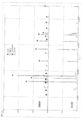
- magnesium fluoride (MgF 2 ) in this sintered body can be confirmed by X-ray diffraction. That is, the peak intensity ratio (magnesium fluoride peak intensity / background intensity) of magnesium fluoride (MgF 2 ) to the background intensity in X-ray diffraction is set to 1.50 or more.
- the peak intensity of MgF 2 is measured by an X-ray diffractometry using a product obtained by cutting the produced sputtering target or a powder obtained by pulverizing the sputtering target. That is, the intensity around 2 ⁇ : 27.3 ° where the peak of the (110) plane of MgF 2 appears is measured, and the background intensity (average value of the intensity of 28.0 to 29.0 °) is measured. Thereby, the peak intensity ratio of MgF 2 to the background intensity (MgF 2 peak intensity / background intensity) is obtained.
- Rigak Ultimate IV can be used as a measuring device.
- one or more elements selected from gallium (Ga), boron (B), germanium (Ge), indium (In), and tin (Sn) are included. 2 to 10 at% can be contained. Conductivity can be imparted by adding 0.2 to 10 mol% of an oxide of these elements in terms of element amount. When the amount of oxide of these elements is less than 0.2 mol% in terms of element amount, the effect is small, and when it exceeds 10 mol%, the effect is saturated, so the above range is preferable.
- germanium oxide and boron oxide are also glass-forming oxides, and are effective in making the film amorphous and lowering the refractive index. If the amount is less than 0.2 mol% in terms of element amount, the effect of addition is not present, and if it exceeds 10 mol%, there is a problem that the film has a high resistivity.
- the sintered body of the present invention is effective for the sintered body of the present invention to contain a metal that forms an oxide having a melting point of 1000 ° C. or lower (low melting point oxide). Since zinc oxide (ZnO) is easy to reduce and evaporate, the sintering temperature cannot be increased so much, and it may be difficult to improve the density of the sintered body. However, the addition of such a low-melting point oxide has an effect that a high density can be achieved without increasing the sintering temperature so much.
- the low melting point oxide include B 2 O 3 , P 2 O 5 , K 2 O, V 2 O 5 , Sb 2 O 3 , TeO 2 , Ti 2 O 3 , PbO, Bi 2 O 3 , MoO. 3 can be mentioned. These oxides can be added individually and in combination, respectively, and the object of the present invention can be achieved.
- the metal forming the low melting point oxide is preferably contained in an amount of 0.1 to 5 wt% in terms of oxide weight. If it is less than 0.1 wt%, the effect cannot be sufficiently exhibited, and if it exceeds 5 wt%, the characteristics may vary depending on the composition, which is not preferable.
- the relative density is preferably 90% or more. It is desirable that the relative density is 92% or more, and further the relative density is 99% or more. The present invention can obtain such a high-density target.
- the improvement in density has the effect of increasing the uniformity of the sputtered film and suppressing the generation of particles during sputtering.
- This sintered body industrially produces a thin film having particularly low visible light transmittance (extinction coefficient 0.01 or less (wavelength 450 nm)) and low refractive index 2.0 or less (wavelength 550 nm). Useful for. Furthermore, the extinction coefficient of ⁇ 0.005 (wavelength 450 nm) can be achieved.
- a thin film having good visible light transmittance and low refractive index is particularly useful as a thin film for a protective layer of an optical information recording medium, for flexible displays, for organic EL televisions, for touch panel electrodes.
- the present invention is mainly composed of zinc (Zn), magnesium (Mg), oxygen (O), and fluorine (F), and the content of magnesium (Mg) is converted to magnesium fluoride (MgF 2 ).
- a thin film formed using a sintered body containing 1.0 to 27 mol% ensures the amorphous stability of the thin film, and further has a good visible light transmittance (extinction coefficient of 0.01 or less (wavelength 450 nm)) and a low refractive index of 2.0 or less (wavelength 550 nm) can be formed.
- the sintered body of the present invention can be produced by subjecting each constituent element powder having an average particle size of 5 ⁇ m or less to atmospheric pressure sintering or high temperature pressure sintering in an inert atmosphere. Furthermore, by using the sintered body of the present invention, productivity can be improved and a material with excellent quality can be obtained. Good visible light transmittance (extinction coefficient of 0.01 or less (wavelength 450 nm)) In addition, a low refractive index thin film having a refractive index of 2.0 or less (wavelength 550 nm) can be produced stably at a low cost.
- this sintered body achieves a low bulk resistance of less than 10 ⁇ ⁇ cm and enables high-speed film formation by DC (direct current) sputtering. Further, the DC sputtering apparatus is advantageous in that it is inexpensive, easy to control, and consumes less power. In the present invention, depending on manufacturing conditions and selection of materials, it may be necessary to perform ion plating and RF sputtering.
- the sintered body of the present invention is used for ion plating.
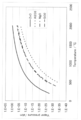
- the ion plating material for forming a low refractive index film of the present invention one or more elements selected from gallium (Ga), boron (B), germanium (Ge), indium (In), and tin (Sn) are used. Since oxides (Ga 2 O 3 , B 2 O 3 , GeO 2 , In 2 O 3 , SnO 2 ) and magnesium fluoride (MgF 2 ) have a vapor pressure similar to that of zinc oxide, the material for ion plating Can be used without any problem. The vapor pressure curve of each oxide and fluoride compared with ZnO is shown in FIG.
- the vapor pressure curve of the oxides of Al 2 O 3 , MgO, and SiO 2 compared with ZnO is shown in FIG.
- the oxide shown in FIG. 3 has a large difference in vapor pressure as compared with ZnO.
- the oxides of Al 2 O 3 , MgO, and SiO 2 shown in FIG. 2 are added to ZnO as a sputtering target material, but are slightly unsuitable as an ion plating material because of a large difference in vapor pressure. It can be said.
- sputtering targets are preferably produced and used.
- the raw material powder of magnesium fluoride (MgF 2 ) is used for zinc oxide (ZnO) as a main component, or gallium (Ga), boron (B), germanium (Ge).
- the component composition of the ion plating material can be arbitrarily adjusted according to the purpose of film formation. For example, it can be used for forming a protective layer for flexible displays, organic EL televisions, touch panel electrodes, and optical information recording media. As described above, since there is no significant change in the vapor pressure, the component composition of the ion plating material can be reflected in the component composition of the low refractive index film. Therefore, high-speed film formation is possible, and excellent characteristics such as stable amorphousness and high transmittance can be provided.
- Example 1 The average particle diameter of 5 ⁇ m or less of MgF 2 powder and at 5 ⁇ m following ZnO powder and 3N corresponding with 3N equivalent was prepared an average particle size 5 ⁇ m or less of GeO 2 powder with 3N equivalent.
- Hot press sintering was performed at 900 ° C. in an Ar atmosphere at a pressure of 250 kgf / cm 2 . This sintered body was finished into a target shape by machining.
- the sputtering target of Example 1 had a relative density of 92.0% and a bulk resistance value of 1.2 ⁇ ⁇ cm, and stable DC sputtering was possible.
- the film formation rate was 2.6 ⁇ / sec, and the film formation rate was good.
- the refractive index was 1.90 (wavelength 633 nm), indicating amorphousness.
- the XRD peak intensity of MgF 2 was measured by pulverizing the obtained sputtering target and using a powder X-ray diffraction method. That is, the peak intensity appearing in the vicinity of 2 ⁇ : 27.3 ° was 553, and the background intensity (average value of the intensity of 28.0 to 29.0 °) was measured.
- the peak intensity ratio of MgF 2 to the background intensity (MgF 2 peak intensity / background intensity) was 19.5.
- Rigak UltimaIV was used as a measuring device, and the measurement conditions were tube voltage 40 kv, tube current 30 mA, scan speed 8 ° / min, and step 0.02 °.
- Example 2 The average particle diameter of 5 ⁇ m or less of MgF 2 powder and at 5 ⁇ m following ZnO powder and 3N corresponding with 3N equivalent was prepared an average particle size 5 ⁇ m or less of GeO 2 powder with 3N equivalent.
- Hot press sintering was performed in air at 800 ° C. and a pressure of 250 kgf / cm 2 .
- the sintered body was pulverized to obtain an ion plating material as a granular body having a particle size of 1 to 6 mm.
- the peak intensity of MgF 2 was measured by pulverizing the obtained ion plating material and using a powder X-ray diffraction method. That is, the peak intensity appearing in the vicinity of 2 ⁇ : 27.3 ° was 553, and the background intensity (average value of the intensity of 28.0 to 29.0 °) was measured.
- the peak intensity ratio of MgF 2 to the background intensity was 16.3.
- Rigak UltimaIV was used as a measuring device, and the measurement conditions were tube voltage 40 kv, tube current 30 mA, scan speed 8 ° / min, and step 0.02 °.
- Example 3 ZnO powder of 3N equivalent to 5 ⁇ m or less, 3N equivalent to MgF 2 powder with an average particle size of 5 ⁇ m or less, 3N equivalent to an average particle size of 5 ⁇ m or less GeO 2 powder, 3N equivalent to an average particle size of 5 ⁇ m or less Ge 2 O 3 powder Got ready.
- the powder material was hot-press sintered at 1000 ° C. in an Ar atmosphere at a pressure of 250 kgf / cm 2 . This sintered body was finished into a target shape by machining.
- the sputtering target of Example 3 had a relative density of 99.6% and a bulk resistance value of 4 ⁇ 10 ⁇ 3 ⁇ ⁇ cm, and stable DC sputtering was possible.
- the refractive index was 1.84 (wavelength 633 nm), indicating amorphousness.
- the XRD peak intensity of MgF 2 was measured by pulverizing the obtained sputtering target and using a powder X-ray diffraction method. That is, the peak intensity appearing in the vicinity of 2 ⁇ : 27.3 ° was 553, and the background intensity (average value of the intensity of 28.0 to 29.0 °) was measured.
- the peak intensity ratio of MgF 2 to the background intensity (MgF 2 peak intensity / background intensity) was 24.1.
- Rigak UltimaIV was used as a measuring device, and the measurement conditions were tube voltage 40 kv, tube current 30 mA, scan speed 8 ° / min, and step 0.02 °.
- Example 4 ZnO powder of 3N equivalent and 5 ⁇ m or less was prepared, and 3N equivalent MgF 2 powder having an average particle size of 5 ⁇ m or less and 3N equivalent SnO 2 powder of 5 ⁇ m or less in average particle diameter were prepared.
- the powder material was hot-press sintered at 1050 ° C. in an Ar atmosphere at a pressure of 250 kgf / cm 2 . This sintered body was finished into a target shape by machining.
- the sputtering target of Example 4 had a relative density of 99.2% and a bulk resistance value of 6 ⁇ 10 ⁇ 3 ⁇ ⁇ cm, and stable DC sputtering was possible.
- the refractive index was 1.96 (wavelength 633 nm), indicating amorphousness.
- the XRD peak intensity of MgF 2 was measured by pulverizing the obtained sputtering target and using a powder X-ray diffraction method. That is, the peak intensity appearing in the vicinity of 2 ⁇ : 27.3 ° was 553, and the background intensity (average value of the intensity of 28.0 to 29.0 °) was measured.
- the peak intensity ratio of MgF 2 to the background intensity (MgF 2 peak intensity / background intensity) was 14.2.
- Rigak UltimaIV was used as a measuring device, and the measurement conditions were tube voltage 40 kv, tube current 30 mA, scan speed 8 ° / min, and step 0.02 °.
- Example 5 3N equivalent ZnO powder of 5 ⁇ m or less, 3N equivalent MgF 2 powder with an average particle size of 5 ⁇ m or less, 3N equivalent of In 2 O 3 powder with an average particle size of 5 ⁇ m or less, 3N equivalent GeO with an average particle size of 5 ⁇ m or less were prepared .
- the powder material was hot-press sintered at 1050 ° C. in an Ar atmosphere at a pressure of 250 kgf / cm 2 . This sintered body was finished into a target shape by machining.
- the sputtering target of Example 5 had a relative density of 99.3% and a bulk resistance value of 3 ⁇ 10 ⁇ 3 ⁇ ⁇ cm, and stable DC sputtering was possible.
- the refractive index was 1.93 (wavelength 633 nm), indicating amorphousness.
- the XRD peak intensity of MgF 2 was measured by pulverizing the obtained sputtering target and using a powder X-ray diffraction method. That is, the peak intensity appearing in the vicinity of 2 ⁇ : 27.3 ° was 553, and the background intensity (average value of the intensity of 28.0 to 29.0 °) was measured.
- the peak intensity ratio of MgF 2 to the background intensity was 9.8.
- Rigak UltimaIV was used as a measuring device, and the measurement conditions were tube voltage 40 kv, tube current 30 mA, scan speed 8 ° / min, and step 0.02 °.
- 3N corresponds with 5 ⁇ m following ZnO powder were prepared an average particle size 5 ⁇ m or less of MgF 2 powder with 3N equivalent.
- the sputtering target of Comparative Example 1 had a relative density of 98.0% and a bulk resistance value of 2 ⁇ 10 ⁇ 3 ⁇ ⁇ cm, and stable DC sputtering was possible.
- the refractive index was 1.93 (wavelength 633 nm), which was insufficient, and did not show amorphous properties.
- the XRD peak intensity of MgF 2 was measured by pulverizing the obtained sputtering target and using a powder X-ray diffraction method. That is, the peak intensity appearing in the vicinity of 2 ⁇ : 27.3 ° was 553, and the background intensity (average value of the intensity of 28.0 to 29.0 °) was measured.
- the peak intensity ratio of MgF 2 to the background intensity (MgF 2 peak intensity / background intensity) was 1.7.
- Rigak UltimaIV was used as a measuring device, and the measurement conditions were tube voltage 40 kv, tube current 30 mA, scan speed 8 ° / min, and step 0.02 °.
- the sputtering target of Comparative Example 2 had a relative density of 97.6% and a bulk resistance value of> 10 ⁇ ⁇ cm, and stable DC sputtering could not be performed.
- the refractive index was 1.78 (wavelength 633 nm), indicating amorphousness.
- the XRD peak intensity of MgF 2 was measured by pulverizing the obtained sputtering target and using a powder X-ray diffraction method. That is, the peak intensity appearing in the vicinity of 2 ⁇ : 27.3 ° was 553, and the background intensity (average value of the intensity of 28.0 to 29.0 °) was measured.
- the peak intensity ratio of MgF 2 to the background intensity (MgF 2 peak intensity / background intensity) was 36.4.
- Rigak UltimaIV was used as a measuring device, and the measurement conditions were tube voltage 40 kv, tube current 30 mA, scan speed 8 ° / min, and step 0.02 °.
- the thin film formed using the sintered body of the present invention is a thin film capable of maintaining a good visible light transmittance with an extinction coefficient of 0.01 or less (wavelength 450 nm) and a low refractive index of 2.0 or less. Further, it is possible to provide a sintered body capable of obtaining an amorphous film. Since this thin film has a high transmittance, a low refractive index, and an amorphous film, it is useful as a transparent conductive film and a protective layer for displays, solar cells, and touch panels. For example, it can be used for forming a protective layer for flexible displays, organic EL televisions, touch panel electrodes, and optical information recording media.
- the major features of the present invention are that the target bulk resistance value is reduced, conductivity is imparted, and stable DC sputtering is possible depending on the material. And there is a remarkable effect that the controllability of sputtering, which is the feature of this DC sputtering, can be facilitated, the film forming speed can be increased, and the sputtering efficiency can be improved. Ion plating and RF sputtering are performed as necessary, but even in this case, the film formation rate is improved. Thus, there is a remarkable effect that a thin film capable of maintaining a good visible light transmittance and a low refractive index of 2.0 or less can be stably produced at a low cost.
Landscapes
- Chemical & Material Sciences (AREA)
- Engineering & Computer Science (AREA)
- Materials Engineering (AREA)
- Organic Chemistry (AREA)
- Ceramic Engineering (AREA)
- Chemical Kinetics & Catalysis (AREA)
- Mechanical Engineering (AREA)
- Metallurgy (AREA)
- Manufacturing & Machinery (AREA)
- Structural Engineering (AREA)
- Compositions Of Oxide Ceramics (AREA)
- Physical Vapour Deposition (AREA)
Abstract
L'invention concerne un objet fritté qui comprend du zinc (Zn), du magnésium (Mg), de l'oxygène (O) et du fluor (F), caractérisé en ce qu'il contient le fluorure de magnésium (Mg) dans une quantité de 1,0-27 % en moles en termes de quantité de l'élément Mg. L'invention concerne, sur la base de cet objet fritté, un objet fritté qui peut être utilisé dans la formation d'un film mince destiné à être utilisé comme électrode pour des dispositifs flexibles, des télévisions électroluminescentes organiques ou des panneaux tactiles, comme film mince optique pour la formation de la couche protectrice, de la couche réfléchissante ou de la couche semi-transparente d'un milieu d'enregistrement d'information optique ou comme couche d'ensemencement d'un disque dur. Avec l'objet fritté, il est possible de proposer un film mince qui est optimal pour de telles applications et qui est amorphe, qui a une telle transmittance de la lumière visible satisfaisante que le coefficient d'extinction est 0,01 ou moins (longueur d'onde, 450 nm), et un indice de réfraction aussi faible que 2,0 ou moins.
Priority Applications (1)
| Application Number | Priority Date | Filing Date | Title |
|---|---|---|---|
| JP2014507743A JP5837183B2 (ja) | 2012-03-28 | 2013-03-19 | 低屈折率膜形成用焼結体及びその製造方法 |
Applications Claiming Priority (2)
| Application Number | Priority Date | Filing Date | Title |
|---|---|---|---|
| JP2012-073549 | 2012-03-28 | ||
| JP2012073549 | 2012-03-28 |
Publications (1)
| Publication Number | Publication Date |
|---|---|
| WO2013146448A1 true WO2013146448A1 (fr) | 2013-10-03 |
Family
ID=49259706
Family Applications (1)
| Application Number | Title | Priority Date | Filing Date |
|---|---|---|---|
| PCT/JP2013/057754 Ceased WO2013146448A1 (fr) | 2012-03-28 | 2013-03-19 | Objet fritté pour la formation d'un film à faible indice de réfraction et son procédé de fabrication |
Country Status (3)
| Country | Link |
|---|---|
| JP (1) | JP5837183B2 (fr) |
| TW (1) | TWI564267B (fr) |
| WO (1) | WO2013146448A1 (fr) |
Cited By (3)
| Publication number | Priority date | Publication date | Assignee | Title |
|---|---|---|---|---|
| WO2014112209A1 (fr) * | 2013-01-21 | 2014-07-24 | Jx日鉱日石金属株式会社 | Fritté compact pour fabriquer un film électroconducteur transparent amorphe ayant un indice de réfraction faible, et film électroconducteur transparent amorphe ayant un indice de réfraction faible |
| JP2016190757A (ja) * | 2015-03-31 | 2016-11-10 | Jx金属株式会社 | ZnO−MgO系スパッタリングターゲット用焼結体及びその製造方法 |
| CN117684137A (zh) * | 2023-12-07 | 2024-03-12 | 浙江大学 | 一种高性能多元掺杂氧化锌透明导电薄膜的制备方法 |
Families Citing this family (1)
| Publication number | Priority date | Publication date | Assignee | Title |
|---|---|---|---|---|
| CN105399413B (zh) * | 2015-12-09 | 2017-10-20 | 苏州博恩希普新材料科技有限公司 | 一种低介电常数、低损耗的微波介质陶瓷及制备方法 |
Citations (3)
| Publication number | Priority date | Publication date | Assignee | Title |
|---|---|---|---|---|
| JPS4840790B1 (fr) * | 1969-05-02 | 1973-12-03 | ||
| JP2005219982A (ja) * | 2004-02-06 | 2005-08-18 | Mitsubishi Heavy Ind Ltd | 透光性導電材料 |
| JP2009001835A (ja) * | 2007-06-19 | 2009-01-08 | Sumitomo Bakelite Co Ltd | アルミニウム添加酸化亜鉛系透明導電膜 |
Family Cites Families (2)
| Publication number | Priority date | Publication date | Assignee | Title |
|---|---|---|---|---|
| JP4828529B2 (ja) * | 2005-05-30 | 2011-11-30 | Jx日鉱日石金属株式会社 | スパッタリングターゲット及びその製造方法 |
| JP5630747B2 (ja) * | 2010-05-14 | 2014-11-26 | リンテック株式会社 | 酸化亜鉛系導電性積層体及びその製造方法並びに電子デバイス |
-
2013
- 2013-03-19 WO PCT/JP2013/057754 patent/WO2013146448A1/fr not_active Ceased
- 2013-03-19 JP JP2014507743A patent/JP5837183B2/ja active Active
- 2013-03-22 TW TW102110220A patent/TWI564267B/zh active
Patent Citations (3)
| Publication number | Priority date | Publication date | Assignee | Title |
|---|---|---|---|---|
| JPS4840790B1 (fr) * | 1969-05-02 | 1973-12-03 | ||
| JP2005219982A (ja) * | 2004-02-06 | 2005-08-18 | Mitsubishi Heavy Ind Ltd | 透光性導電材料 |
| JP2009001835A (ja) * | 2007-06-19 | 2009-01-08 | Sumitomo Bakelite Co Ltd | アルミニウム添加酸化亜鉛系透明導電膜 |
Cited By (3)
| Publication number | Priority date | Publication date | Assignee | Title |
|---|---|---|---|---|
| WO2014112209A1 (fr) * | 2013-01-21 | 2014-07-24 | Jx日鉱日石金属株式会社 | Fritté compact pour fabriquer un film électroconducteur transparent amorphe ayant un indice de réfraction faible, et film électroconducteur transparent amorphe ayant un indice de réfraction faible |
| JP2016190757A (ja) * | 2015-03-31 | 2016-11-10 | Jx金属株式会社 | ZnO−MgO系スパッタリングターゲット用焼結体及びその製造方法 |
| CN117684137A (zh) * | 2023-12-07 | 2024-03-12 | 浙江大学 | 一种高性能多元掺杂氧化锌透明导电薄膜的制备方法 |
Also Published As
| Publication number | Publication date |
|---|---|
| JP5837183B2 (ja) | 2015-12-24 |
| TW201348177A (zh) | 2013-12-01 |
| JPWO2013146448A1 (ja) | 2015-12-10 |
| TWI564267B (zh) | 2017-01-01 |
Similar Documents
| Publication | Publication Date | Title |
|---|---|---|
| JP5550768B1 (ja) | 焼結体及びアモルファス膜 | |
| CN105986230A (zh) | 氧化物烧结体、溅射靶和薄膜以及氧化物烧结体的制造方法 | |
| JP5735190B1 (ja) | 酸化物焼結体、スパッタリングターゲット及び酸化物薄膜 | |
| JP5837183B2 (ja) | 低屈折率膜形成用焼結体及びその製造方法 | |
| JP5695221B2 (ja) | 焼結体及びアモルファス膜 | |
| TWI631579B (zh) | Sintered body and amorphous film | |
| JP5866024B2 (ja) | 低屈折率のアモルファス透明導電膜作製用焼結体及び低屈折率のアモルファス透明導電膜 | |
| TWI579254B (zh) | Sintered and amorphous membranes | |
| JP5865711B2 (ja) | 低屈折率膜形成用イオンプレーティング用材料及び低屈折率膜 | |
| TW201431823A (zh) | 導電性氧化物燒結體及使用該導電性氧化物之低折射率膜 | |
| KR101945083B1 (ko) | 소결체 및 그 소결체로 이루어지는 스퍼터링 타깃 그리고 그 스퍼터링 타깃을 사용하여 형성한 박막 |
Legal Events
| Date | Code | Title | Description |
|---|---|---|---|
| 121 | Ep: the epo has been informed by wipo that ep was designated in this application |
Ref document number: 13770395 Country of ref document: EP Kind code of ref document: A1 |
|
| ENP | Entry into the national phase |
Ref document number: 2014507743 Country of ref document: JP Kind code of ref document: A |
|
| NENP | Non-entry into the national phase |
Ref country code: DE |
|
| 122 | Ep: pct application non-entry in european phase |
Ref document number: 13770395 Country of ref document: EP Kind code of ref document: A1 |