WO2013157597A1 - 4-ヒドロキシブチルアクリレートの製造方法 - Google Patents
4-ヒドロキシブチルアクリレートの製造方法 Download PDFInfo
- Publication number
- WO2013157597A1 WO2013157597A1 PCT/JP2013/061460 JP2013061460W WO2013157597A1 WO 2013157597 A1 WO2013157597 A1 WO 2013157597A1 JP 2013061460 W JP2013061460 W JP 2013061460W WO 2013157597 A1 WO2013157597 A1 WO 2013157597A1
- Authority
- WO
- WIPO (PCT)
- Prior art keywords
- acrylate
- meth
- alcohol
- butanediol
- methyl
- Prior art date
- Legal status (The legal status is an assumption and is not a legal conclusion. Google has not performed a legal analysis and makes no representation as to the accuracy of the status listed.)
- Ceased
Links
Classifications
-
- C—CHEMISTRY; METALLURGY
- C07—ORGANIC CHEMISTRY
- C07C—ACYCLIC OR CARBOCYCLIC COMPOUNDS
- C07C67/00—Preparation of carboxylic acid esters
- C07C67/39—Preparation of carboxylic acid esters by oxidation of groups which are precursors for the acid moiety of the ester
- C07C67/40—Preparation of carboxylic acid esters by oxidation of groups which are precursors for the acid moiety of the ester by oxidation of primary alcohols
-
- C—CHEMISTRY; METALLURGY
- C07—ORGANIC CHEMISTRY
- C07C—ACYCLIC OR CARBOCYCLIC COMPOUNDS
- C07C67/00—Preparation of carboxylic acid esters
- C07C67/03—Preparation of carboxylic acid esters by reacting an ester group with a hydroxy group
-
- C—CHEMISTRY; METALLURGY
- C07—ORGANIC CHEMISTRY
- C07C—ACYCLIC OR CARBOCYCLIC COMPOUNDS
- C07C67/00—Preparation of carboxylic acid esters
- C07C67/48—Separation; Purification; Stabilisation; Use of additives
- C07C67/58—Separation; Purification; Stabilisation; Use of additives by liquid-liquid treatment
Definitions
- the present invention relates to a method for producing 4-hydroxybutyl acrylate. More specifically, the present invention relates to a method for producing 4-hydroxybutyl acrylate, a method for producing hydroxyalkyl acrylate, and a method for producing (meth) acrylic acid ester.
- Hydroxyalkyl acrylates for example, fibers, fiber treatment agents, fiber dyeability improvers, paints, antistatic agents, adhesives, pressure-sensitive adhesives, paper strength enhancers, ion exchange resins, and other raw materials for the production of various organic compounds Useful as a raw material for intermediates and the like.
- 4-Hydroxybutyl acrylate is useful as a raw material for automobile paints, building material paints, electronic material coating agents, photosensitive resin compositions, medical adhesives, and the like.
- the (meth) acrylic acid ester is a compound useful as a raw material for, for example, a (meth) acrylic resin, a surfactant, an adhesive, or a paint, although depending on the type.
- methyl (meth) acrylate means “methyl acrylate” and / or “methyl methacrylate”. Therefore, methyl acrylate and methyl methacrylate may be used alone or in combination.
- (Meth) acrylic acid ester means “acrylic acid ester” and / or “methacrylic acid ester”. Accordingly, the acrylic acid ester and the methacrylic acid ester may be used alone or in combination.
- a method for producing 4-hydroxybutyl acrylate a method for producing 4-hydroxybutyl acrylate by subjecting 1,4-butanediol and acrylic acid to a dehydration esterification reaction using a catalyst such as sulfuric acid or paratoluenesulfonic acid.
- a catalyst such as sulfuric acid or paratoluenesulfonic acid.
- a large amount of side reaction products are produced and an acid is used as a catalyst. Therefore, a complicated neutralization step is required, and a large amount of salt produced by the neutralization is a waste product.
- the above-mentioned method has a drawback that unreacted acrylic acid remains in the produced 4-hydroxybutyl acrylate in an amount that hinders use as a raw material for medical adhesives, coating materials for electronic materials, and the like. There is.
- an alkanediol and an acrylate ester are transesterified using a distanoxane compound as a reaction catalyst.
- a method of bringing an organic solution containing an acid into contact with an alkaline aqueous solution has been proposed (see, for example, Patent Document 5).
- the above method requires an alkaline aqueous solution, so that the hydroxyalkyl acrylate is hydrolyzed, so that the productivity of the hydroxyalkyl acrylate is inferior.
- dialkyltin oxides such as dibutyltin oxide and di-n-butyltin oxide as transesterification catalysts (for example, paragraph [0004] of Patent Document 6 and Patent Document 7) (Refer to the first term of the range).
- the dialkyl tin oxide is an attractive catalyst because it is excellent in catalytic activity even if the amount used is small, and is relatively inexpensive.
- dialkyl tin oxide is used as a catalyst, dialkyl tin oxidation is performed by extraction operation.
- the produced 4-hydroxybutyl acrylate is represented by the formula: alkyltin oxide contained in the 4-hydroxybutyl acrylate.
- 1,4-butanediol diacrylate is by-produced.
- the by-produced 1,4-butanediol diacrylate has a boiling point close to that of 4-hydroxybutyl acrylate, and is easily self-polymerized in the presence of the catalyst, alkyl tin oxide. Therefore, it is very difficult to separate the by-produced 1,4-butanediol diacrylate by a purification method such as distillation.
- the methanol distilled off when the hydroxyalkyl acrylate is produced by the transesterification method contains not only n-hexane, which is an azeotropic solvent, but also methyl acrylate as a raw material. It has been proposed to recover methyl acrylate as a raw material by adding the solution and liquid-liquid separation of an aqueous methanol solution and the raw materials methyl acrylate and n-hexane (for example, see Patent Document 8).
- the methanol contained in the methanol aqueous solution cannot be easily separated from the water, the methanol aqueous solution is generally incinerated even though the methanol contained in the methanol aqueous solution is a valuable resource. Has been processed by.
- methyl (meth) acrylate present at the bottom of the reactor can be recovered, but after the methyl (meth) acrylate is recovered, it remains in the reactor. It is not possible to recover the methyl (meth) acrylate.
- an azeotropic solvent that forms an azeotropic composition with the by-produced alkyl alcohol is used as a method of producing the target (meth) acrylic acid ester by transesterification of the raw material (meth) acrylic acid alkyl ester and alcohol.
- an azeotropic solvent that forms an azeotropic composition with the by-produced alkyl alcohol is used as a method of producing the target (meth) acrylic acid ester by transesterification of the raw material (meth) acrylic acid alkyl ester and alcohol.
- the boiling point of the azeotropic solvent is not less than the azeotropic temperature of the azeotropic solvent and not more than 2 ° C higher than the azeotropic temperature, and the bottom temperature of the distillation column is not less than 10 ° C lower than the boiling point of the azeotropic solvent.
- a method for producing a (meth) acrylic acid ester has been proposed (see, for example, Patent Document 10). According to the method for producing the (meth) acrylic acid ester, it is said that the Michael addition reaction as a side reaction can be suppressed and the (meth) acrylic acid ester can be produced with high productivity. However, after producing the target (meth) acrylic acid ester, the raw material (meth) acrylic acid alkyl ester remains in the reaction system, and the remaining raw material (meth) acrylic acid alkyl ester A method that can efficiently recover the gas is not studied.
- a reactor equipped with a distillation column is used to azeotrope methyl (meth) acrylate and methyl alcohol.
- This is a method of taking out the obtained azeotrope from the top of the distillation column (for example, see Example 4 of Patent Document 11).
- the azeotrope obtained by this method is generally used as a raw material for producing methyl (meth) acrylate for effective use.
- the second method uses a reactor equipped with a distillation column when transesterifying methyl (meth) acrylate and alcohol, with methyl alcohol having a boiling point lower than that of methyl (meth) acrylate.
- An azeotropic hydrocarbon compound is added into the reaction system of methyl (meth) acrylate and alcohol, and an azeotrope of methyl alcohol and the hydrocarbon compound is formed at the azeotropic temperature of methyl alcohol and the hydrocarbon compound.
- This is a method of discharging from the top of the distillation column (for example, see Example 5 of Patent Document 9).
- preferred reaction solvents include carbon such as n-pentane, n-hexane, n-heptane, n-octane, 2,3-dimethylbutane, 2,5-dimethylhexane, and 2,2,4-trimethylpentane.
- carbon such as n-pentane, n-hexane, n-heptane, n-octane, 2,3-dimethylbutane, 2,5-dimethylhexane, and 2,2,4-trimethylpentane.
- An aliphatic saturated hydrocarbon compound having a number of 5 to 8 is mentioned (see, for example, paragraphs [0017] to [0018] of Patent Document 9).
- the azeotrope discharged from the top of the distillation column is not only n-hexane and methyl alcohol but also raw material (meth) Methyl acrylate is contained, and the methyl (meth) acrylate is difficult to separate from n-hexane and methyl alcohol. Therefore, in the second method, although the azeotrope contains methyl (meth) acrylate useful as a raw material for the (meth) acrylate ester, the azeotrope contains waste, fuel, etc. It is processed as.
- a part of the distillate distilled from the top of the distillation column is refluxed to the top of the distillation column, and water is added to the remainder of the distillate.
- the distillate is separated into two layers, and the upper layer containing mainly the reaction solvent among the separated layers is supplied to the middle stage of the distillation column, and mainly contains methyl alcohol and water. It is considered to dispose the lower layer as waste (for example, refer to claim 1 of Patent Document 2).
- methyl (meth) acrylate is difficult to extract only in the upper layer and is also contained in the lower layer, so that the methyl (meth) acrylate contained in the lower layer is After all, it is discarded as waste.
- the present invention has been made in view of the above prior art.
- An object of the present invention is to allow 4-hydroxybutyl acrylate to be efficiently produced by transesterification of 1,4-butanediol and an alkyl acrylate, and used in the transesterification.
- Another object of the present invention is to provide a method for producing 4-hydroxybutyl acrylate, which can efficiently recover a transesterification catalyst.
- Another object of the present invention is a low content of an acid component that can be suitably used as a raw material for medical pressure-sensitive adhesives, coating materials for electronic materials, photosensitive resin compositions and the like that are easily affected by acid. -To provide a process for producing hydroxybutyl acrylate.
- Another object of the present invention is to use 1,3-butanediol and an alkyl acrylate ester by transesterification to produce 4-hydroxybutyl acrylate even if alkyl tin oxide is used as the transesterification catalyst.
- An object of the present invention is to provide a method for producing 4-hydroxybutyl acrylate, which can produce 4-hydroxybutyl acrylate efficiently, with a small amount of by-produced 4-butanediol diacrylate.
- Another object of the present invention is to provide a method for producing hydroxyalkyl acrylate, which can efficiently recover alcohol produced as a by-product when producing hydroxyalkyl acrylate by a transesterification method.
- Another object of the present invention is to produce methyl (meth) acrylate by a transesterification method using methyl (meth) acrylate as a raw material.
- An object of the present invention is to provide a method for producing a (meth) acrylic acid ester by a transesterification method, which can efficiently recover the raw material methyl (meth) acrylate remaining in the system.
- Another object of the present invention is to efficiently use methyl (meth) acrylate when producing (meth) acrylic acid ester by a transesterification method using methyl (meth) acrylate as a raw material. It is providing the manufacturing method of (meth) acrylic acid ester.
- dialkyltin oxide when used as a transesterification catalyst when transesterifying 1,4-butanediol and an alkyl acrylate, the dialkyltin oxide is extracted from the produced 4-hydroxybutyl acrylate. Since it is difficult to separate by operation, it is considered that dialkyltin oxide is not suitable as a transesterification catalyst when transesterifying 1,4-butanediol and alkyl acrylate (for example, (See paragraph [0079] of Patent Document 2 and paragraph [0007] of Patent Document 6).
- dialkyltin oxide which has been considered to be unsuitable as a transesterification catalyst for transesterification of 1,4-butanediol and alkyl acrylate ester, 1,4-butanediol and alkyl acrylate
- dialkyltin oxide can be easily removed from the produced 4-hydroxybutyl acrylate, and the recovered dialkyltin oxide can be converted into 1,4-butanediol and alkyl acrylate.
- the first aspect of the present invention is (1) A method for producing 4-hydroxybutyl acrylate by transesterification of 1,4-butanediol and an alkyl acrylate, comprising a dialkyl tin oxide having an alkyl group having 4 to 18 carbon atoms
- the carbon number of the alkyl group per mole of the acrylic acid alkyl ester is Adjusting the amount of 4-18 dialkyltin oxide to 0.00001-0.01 mol
- R 1 represents an alkyl group having 1 to 4 carbon atoms
- the second aspect of the present invention (1) A process for producing 4-hydroxybutyl (meth) acrylate by transesterification of 1,4-butanediol and (meth) acrylic acid alkyl ester, wherein the formula (II):
- R 2 and R 3 are each independently an alkyl group having 1 to 18 carbon atoms, an aryl group having 6 to 12 carbon atoms or an aralkyl group having 7 to 12 carbon atoms, X is an alkali metal atom or an alkali Earth metal atom, n is a number representing the valence of X) 1,4-butanediol and (meth) acrylic acid alkyl ester are transesterified in the presence of a transesterification catalyst represented by the formula: (2) The 4-hydroxybutyl (meth) acrylate according to the above (1), wherein the amount of the transesterification catalyst represented by the formula (II) per mol of (meth) acrylic acid is 0.00001 to 0.01 mol Manufacturing method, (3) mixing a reaction mixture obtained by transesterification of 1,4-butanediol and an alkyl (meth) acrylate with an extraction solvent containing water and an aliphatic hydrocarbon compound; After the hydroxybutyl (meth)
- the exchange catalyst is recovered, and the recovered transesterification catalyst represented by the formula (I) is reused as the transesterification catalyst when the 1,4-butanediol and the (meth) acrylic acid alkyl ester are transesterified.
- the method for producing 4-hydroxybutyl (meth) acrylate according to any one of (1) to (3), (5) (Meth) acrylic acid alkyl ester is represented by formula (III):
- the third aspect of the present invention provides (1) A process for producing 4-hydroxybutyl acrylate by subjecting 1,4-butanediol and an acrylic acid alkyl ester to an ester exchange reaction, wherein 1,4-butanediol and acrylic acid are present in the presence of an ester exchange catalyst.
- a method for producing 4-hydroxybutyl acrylate comprising: transesterifying an acid alkyl ester and then extracting and recovering 4-hydroxybutyl acrylate from the resulting reaction mixture containing 4-hydroxybutyl acrylate; (2) Mixing a reaction mixture obtained by transesterifying 1,4-butanediol with an alkyl acrylate and an extraction solvent containing water and an aliphatic hydrocarbon compound, Is extracted into an aqueous layer, and then the aqueous layer and an extraction solvent containing an aromatic hydrocarbon compound are mixed to extract 4-hydroxybutyl acrylate contained in the aqueous layer into an aromatic hydrocarbon compound.
- the fourth aspect of the present invention is a method for producing 4-hydroxybutyl acrylate by transesterification of 1,4-butanediol and an alkyl acrylate, wherein a dialkyltin oxide is used as a transesterification catalyst.
- Transesterification of 1,4-butanediol and alkyl acrylate is carried out in the presence of dialkyltin oxide, and the resulting reaction mixture containing 4-hydroxybutyl acrylate is aliphatic as an extraction solvent at a temperature of 15 to 35 ° C.
- extraction is performed using an alicyclic hydrocarbon compound and water, and the aromatic or alicyclic hydrocarbon compound layer and the aqueous layer thus obtained are used as an extraction solvent at a temperature of 15 to 65 ° C.
- Aromatic charcoal of the aromatic hydrocarbon compound layer and aqueous layer obtained by extraction using the compound The method for producing a 4-hydroxybutyl acrylate, and recovering a hydrogen compound layer.
- the fifth aspect of the present invention relates to (1) A method for producing a hydroxyalkyl acrylate by subjecting a polyhydric alcohol and an alkyl acrylate ester to an ester exchange reaction, and an alcohol produced as a by-product when the polyhydric alcohol and an alkyl acrylate ester are subjected to an ester exchange reaction Is recovered using a polyhydric alcohol, a method for producing a hydroxyalkyl acrylate, (2)
- the polyhydric alcohol and the alkyl acrylate are transesterified in the presence of an organic solvent incompatible with the polyhydric alcohol, and the alcohol and the organic solvent by-produced during the transesterification reaction After the contained azeotrope is distilled from the transesterification reaction system, the distilled azeotrope and polyhydric alcohol are mixed, and alcohol and polyhydric alcohol by-produced from the resulting mixture are contained.
- the polyhydric alcohol used in the transesterification reaction is an aliphatic polyhydric alcohol having 2 to 6 carbon atoms, and an organic solvent incompatible with the polyhydric alcohol is a fatty acid having 6 to 8 carbon atoms.
- the method for producing a hydroxyalkyl acrylate according to the above (2) which is at least one hydrocarbon compound selected from the group consisting of an aromatic hydrocarbon compound and an alicyclic hydrocarbon compound having 6 to 8 carbon atoms, (4) The hydroxy according to any one of (1) to (3), wherein the polyhydric alcohol used for mixing with the azeotropic mixture is the same type as the polyhydric alcohol used for the transesterification reaction.
- Production method of alkyl acrylate, and (5) Polyhydric alcohol is recovered from the alcohol solution, and the recovered polyhydric alcohol is used as the polyhydric alcohol used in the transesterification reaction.
- the present invention relates to a method for producing a hydroxyalkyl acrylate as described above.
- the sixth invention relates to (1) Using methyl (meth) acrylate as a raw material and subjecting the methyl (meth) acrylate to an alcohol corresponding to the target (meth) acrylic ester, the target (meth) A method for producing an acrylate ester, wherein a reactor having a distillation tower is used as a reactor, and methyl (meth) acrylate and an alcohol corresponding to the target (meth) acrylate ester are contained in the reactor.
- the solvent azeotropes with the methyl alcohol at a temperature below the boiling point of methyl alcohol and azeotropes with the methyl (meth) acrylate at a temperature below the boiling point of methyl (meth) acrylate.
- Method 2 The method for producing a (meth) acrylic acid ester according to the above (1), wherein the azeotropic solvent is at least one selected from the group consisting of cyclohexane and n-hexane, (3) During the transesterification reaction between methyl (meth) acrylate and the alcohol corresponding to the desired (meth) acrylic ester, the vapor is taken out from the upper part of the distillation column, and the vapor taken out is condensed and obtained. The temperature of the upper part of the distillation column is adjusted to the azeotropic temperature of the alcohol and the azeotropic solvent by removing a part of the condensate to the distillation column and removing the remainder of the condensate from the reaction apparatus.
- the azeotropic solvent is at least one selected from the group consisting of cyclohexane and n-hexane
- a method for producing an acrylic ester (5) Water is added to the condensate removed to the outside of the reaction apparatus, the upper layer and the lower layer are separated into two layers, and the lower layer of the separated two layers is further placed in a distillation apparatus having a distillation tower and distilled ( (3) or (3) or (3) (4) (meth) acrylic acid ester production method according to (6)
- the vapor containing methyl methacrylate (meth) acrylate, by-produced methyl alcohol and an azeotropic solvent is used as a raw material in the transesterification reaction between methyl (meth) acrylate and the alcohol.
- the reaction mixture is further heated. Vapor containing unreacted methyl (meth) acrylate taken out from the upper part of the distillation tower is condensed, and the resulting condensate is used as a raw material in the transesterification reaction between methyl (meth) acrylate and the alcohol.
- the present invention relates to the method for producing a (meth) acrylic acid ester according to any one of (1) to (6).
- the seventh invention relates to (1) A method for producing a (meth) acrylic acid ester by a transesterification method using methyl (meth) acrylate as a raw material, and reacting when transesterifying methyl (meth) acrylate with an alcohol.
- (Meth) acrylic acid ester production method characterized by using isohexane and cyclohexane in combination as solvent, and (2) esterifying methyl (meth) acrylate and alcohol using a reactor equipped with a distillation column
- the reaction described in (1) above wherein the vapor discharged from the top of the distillation column is condensed, the obtained condensate is separated into two layers, and the upper layer of the separated two layers is supplied to the distillation column. It relates to the manufacturing method of (meth) acrylic acid ester.
- 4-hydroxybutyl acrylate can be efficiently produced by transesterification of 1,4-butanediol and alkyl acrylate.
- an excellent effect that the transesterification catalyst used in the transesterification reaction can be efficiently recovered is exhibited.
- 1,4-butanediol and (meth) acrylic acid alkyl ester are transesterified to give 4-hydroxybutyl (meth) )
- An acrylate can be produced efficiently, and the transesterification catalyst used in the transesterification reaction can be efficiently recovered and reused.
- the content of an acid component that can be suitably used as a raw material for a medical pressure-sensitive adhesive, a coating material for electronic materials, a photosensitive resin composition, or the like that is easily affected by acid is low.
- -Hydroxybutyl acrylate is provided.
- a transesterification catalyst is produced when 4-hydroxybutyl acrylate is produced by transesterifying 1,4-butanediol with an alkyl acrylate ester. Even when alkyl tin oxide is used, the by-product amount of 1,4-butanediol diacrylate is small and 4-hydroxybutyl acrylate can be produced efficiently.
- the method for producing a (meth) acrylic acid ester of the sixth aspect of the present invention in the method for producing a (meth) acrylic acid ester by a transesterification method using methyl (meth) acrylate as a raw material ( After the production of the (meth) acrylic acid ester, an excellent effect is obtained that methyl (meth) acrylate as a raw material remaining in the reaction system can be efficiently recovered.
- the method for producing 4-hydroxybutyl acrylate according to the first aspect of the present invention is a method for producing 4-hydroxybutyl acrylate by transesterifying 1,4-butanediol and alkyl acrylate.
- a transesterification catalyst containing a dialkyltin oxide having 4 to 18 carbon atoms in the alkyl group is used and 1,4-butanediol is transesterified with an alkyl acrylate in the presence of the dialkyltin oxide.
- the amount of the dialkyl tin oxide having 4 to 18 carbon atoms of the alkyl group per 1 mol of the acrylic acid alkyl ester is adjusted to 0.00001 to 0.01 mol.
- 1,4-butanediol and alkyl acrylate are transesterified.
- alkyl acrylate ester examples include methyl acrylate, ethyl acrylate, propyl acrylate, n-butyl acrylate, isobutyl acrylate, tert-butyl acrylate, and the like. You may use independently and may use 2 or more types together.
- acrylic acid alkyl esters from the viewpoint of efficiently separating the produced 4-hydroxybutyl acrylate and the acrylic acid alkyl ester, the formula (I):
- R 1 represents an alkyl group having 1 to 4 carbon atoms
- the alkyl acrylate ester represented by the formula ( 1) is preferred, the alkyl acrylate ester in which R 1 is a C 1-3 alkyl group is more preferred, and methyl acrylate is more preferred.
- the amount of acrylic acid alkyl ester per mole of 1,4-butanediol is preferably 0.5 mol or more from the viewpoint of increasing the reaction rate, and from the viewpoint of reducing the amount of unreacted acrylic acid alkyl ester, Preferably it is 5 mol or less, More preferably, it is 3 mol or less.
- a transesterification catalyst containing a dialkyltin oxide having 4 to 18 carbon atoms is used.
- the present invention has one major feature in that a transesterification catalyst containing a dialkyl tin oxide having 4 to 18 carbon atoms is used.
- dialkyltin oxide is used. 4-hydroxybutyl acrylate can be efficiently produced despite the use of a dialkyl tin oxide having 4 to 18 carbon atoms, which is a kind of the above ester, and the ester used in the transesterification reaction An excellent effect that the exchange catalyst can be recovered efficiently is exhibited.
- the transesterification catalyst dialkyl tin oxide having 4 to 18 carbon atoms is used.
- the dialkyl tin oxide having 4 to 18 carbon atoms has two alkyl groups, and the alkyl groups may be the same or different from each other.
- dialkyl tin oxide having 4 to 18 carbon atoms examples include dialkyl tin oxide having 4 to 18 carbon atoms in the alkyl group such as dibutyl tin oxide, dioctyl tin oxide, and dilauryl tin oxide.
- dialkyltin oxides may be used alone or in combination of two or more.
- dialkyltin oxides having 4 to 18 carbon atoms the transesterification reaction between 1,4-butanediol and alkyl acrylate is promoted, and the resulting 4-hydroxybutyl acrylate has 4 to 18 carbon atoms.
- dialkyl tin oxide having 4 to 12 carbon atoms in the alkyl group is preferable, and dioctyl tin oxide and dilauryl tin oxide are more preferable.
- the amount of the dialkyl tin oxide having 4 to 18 carbon atoms per mole of acrylic acid alkyl ester is 0.00001 mole or more, preferably 0.0001 mole or more from the viewpoint of efficiently producing 4-hydroxybutyl acrylate. From the viewpoint of efficiently removing dibutyltin oxide from the produced 4-hydroxybutyl acrylate and efficiently recovering the dialkyltin oxide having 4 to 18 carbon atoms, it is 0.01 mol or less, preferably 0.005 mol or less. .
- 1,4-butanediol and alkyl acrylate are added in the presence of a polymerization inhibitor from the viewpoint of suppressing polymerization of alkyl acrylate. It is preferable to react with an ester.
- polymerization inhibitor examples include 4-hydroxy-2,2,6,6-tetramethylpiperidine-N-oxyl, 4-acetamino-2,2,6,6-tetramethylpiperidine-N-oxyl, 4- Benzoyloxy-2,2,6,6-tetramethylpiperidine-N-oxyl, 4-oxo-2,2,6,6-tetramethylpiperidine-N-oxyl, 2,2,6,6-tetramethylpiperidine N-oxy radical compounds such as —N-oxyl; paramethoxyphenol, 2,2′-methylenebis (4-ethyl-6-tert-butylphenol), 2,6-ditert-butyl-4-methylphenol, 2 , 6-Ditert-butyl-N, N-dimethylamino-p-cresol, 2,4-dimethyl-6-tert-butylphenol, 4- phenolic compounds such as ert-butylcatechol, 4,4′-thio-bis (3-methyl-6-tert-butylphenol
- the amount of the polymerization inhibitor per 100 parts by mass of the acrylic acid alkyl ester is preferably 0.001 part by mass or more, more preferably 0.005 part by mass or more, further preferably from the viewpoint of suppressing the polymerization of the alkyl acrylate ester. From the viewpoint of increasing the purity of 4-hydroxybutyl acrylate, it is preferably 5 parts by mass or less, more preferably 3 parts by mass or less, and still more preferably 1 part by mass or less.
- An organic solvent can be used when transesterifying 1,4-butanediol and alkyl acrylate.
- the organic solvent is preferably an organic solvent which is inert in the transesterification reaction system.
- Suitable organic solvents include, for example, aliphatic hydrocarbon compounds such as n-hexane, n-heptane and n-octane, alicyclic hydrocarbon compounds such as cyclohexane and methylcyclohexane, and aromatics such as benzene, toluene and xylene.
- Examples include hydrocarbon compounds, ether compounds such as tetrahydrofuran, organic chlorine compounds such as dichloromethane and 1,1-dichloroethane, aromatic nitro compounds such as nitrobenzene, organic phosphorus compounds such as triethyl phosphate, and organic sulfur compounds such as dimethyl sulfoxide.
- ether compounds such as tetrahydrofuran
- organic chlorine compounds such as dichloromethane and 1,1-dichloroethane
- aromatic nitro compounds such as nitrobenzene
- organic phosphorus compounds such as triethyl phosphate
- organic sulfur compounds such as dimethyl sulfoxide.
- these organic solvents may be used alone or in combination of two or more.
- the amount of the organic solvent is not particularly limited, but it may be usually about 5 to 200 parts by mass per 100 parts by mass of the total amount of 1,4-butanediol and alkyl acrylate.
- the reaction temperature for carrying out the transesterification reaction of 1,4-butanediol with alkyl acrylate is preferably 30 ° C. or higher, more preferably 50 ° C. or higher. From the viewpoint of preventing polymerization of hydroxybutyl acrylate, the temperature is preferably 150 ° C. or lower.
- the atmosphere during the transesterification reaction between 1,4-butanediol and acrylic acid alkyl ester is preferably an oxygen-containing atmosphere from the viewpoint of preventing polymerization of the acrylic acid alkyl ester. Therefore, a gas having an oxygen concentration of 5% by volume to an atmospheric concentration is more preferable.
- the pressure of the atmosphere should just be atmospheric pressure normally, However, Pressurization or pressure reduction may be sufficient. For example, when the pressure of the atmosphere is reduced, the reaction temperature can be lowered, so that there is an advantage that side reactions can be suppressed.
- the reaction time for the transesterification reaction between 1,4-butanediol and alkyl acrylate is different depending on the amount of 1,4-butanediol and alkyl acrylate, reaction temperature, etc. In general, the time until the transesterification reaction is completed is selected. The end point of the transesterification reaction can be confirmed by, for example, gas chromatography, liquid chromatography or the like.
- the transesterification reaction between 1,4-butanediol and alkyl acrylate can be performed using, for example, a rectification column, a fluidized bed, a fixed bed, a reactive distillation column, etc., but the present invention is only such examples. It is not limited to. Further, the transesterification reaction between 1,4-butanediol and alkyl acrylate may be carried out by either a flow system or a batch system.
- Alcohol is by-produced as the transesterification of 1,4-butanediol and alkyl acrylate is progressed.
- the by-produced alcohol is usually preferably removed from the reaction system in order to advance the reaction.
- By-product alcohol can be removed out of the reaction system, for example, as an acrylate ester or an azeotrope with a suitable solvent.
- the dialkyl having 4 to 18 carbon atoms used as a transesterification catalyst Tin oxide can be recovered from the resulting reaction mixture, for example, by means such as filtration.
- 4-hydroxybutyl acrylate which is the target compound, can be recovered by distilling off the organic solvent, unreacted acrylic acid ester and alcohol from the produced reaction mixture. Removal of unreacted acrylic ester and alcohol from the reaction mixture can be performed, for example, by distillation, extraction treatment, or the like.
- the produced 4-hydroxybutyl acrylate comprises, for example, a reaction mixture obtained by subjecting 1,4-butanediol and an alkyl acrylate ester to a transesterification reaction with water and an aliphatic hydrocarbon compound. It is mixed with the extraction solvent contained, and 4-hydroxybutyl acrylate is extracted into the aqueous layer, and then the aqueous layer and the extraction solvent containing the aromatic hydrocarbon compound are mixed and contained in the aqueous layer. It can be recovered by extracting 4-hydroxybutyl acrylate into an aromatic hydrocarbon compound.
- reaction mixture When the reaction mixture is mixed with water and an extraction solvent containing an aliphatic hydrocarbon compound, 4-hydroxybutyl acrylate contained in the reaction mixture is extracted into an aqueous layer, and 1,4-butane as a by-product is extracted. Since diol diacrylate and the like can be extracted into the aliphatic hydrocarbon compound layer, the aqueous layer containing 4-hydroxybutyl acrylate can be recovered by separating the aqueous layer from the aliphatic hydrocarbon compound layer. it can.
- aliphatic hydrocarbon compound examples include aliphatic hydrocarbon compounds having 6 to 12 carbon atoms such as cyclohexane, n-hexane, n-heptane, n-octane, n-decane, isohexane, isooctane, and isodecane.
- an aliphatic hydrocarbon compound is a thing of the concept containing the hydrocarbon compound which has alicyclic structures, such as a cyclohexane, for example.
- the extraction solvent containing water and an aliphatic hydrocarbon compound may contain an aromatic hydrocarbon compound as long as the object of the present invention is not impaired.
- the temperature at which the extraction operation is performed is not particularly limited, but it is usually preferably about 5 to 50 ° C.
- the 4-hydroxybutyl acrylate contained in the aqueous layer is aromatic carbonized. Extraction into the hydrogen compound layer and separation of the aromatic hydrocarbon compound layer from the aqueous layer allow recovery of the aromatic hydrocarbon compound layer containing 4-hydroxybutyl acrylate.
- aromatic hydrocarbon compound examples include benzene, toluene, xylene, and ethylbenzene, but the present invention is not limited to such examples.
- the extraction solvent containing the aromatic hydrocarbon compound may contain an aliphatic hydrocarbon compound, water and the like within a range not impairing the object of the present invention.
- the amount of the aromatic hydrocarbon compound differs depending on the amount of the aqueous layer separated from the aliphatic hydrocarbon compound layer and the like, it cannot be unconditionally determined. It is preferable that butyl acrylate is extracted into the aromatic hydrocarbon compound layer and adjusted appropriately so as to have an amount suitable for separating the aromatic hydrocarbon compound layer and the aqueous layer.
- the temperature at which the extraction operation is performed is not particularly limited, but it is usually preferably about 5 to 50 ° C.
- 4-Hydroxybutyl acrylate contained in the aromatic hydrocarbon compound layer can be recovered, for example, by removing the aromatic hydrocarbon compound by a method such as evaporation.
- the temperature at which the aromatic hydrocarbon compound contained in the aromatic hydrocarbon compound layer is removed is not particularly limited, but it is usually preferably about 20 to 150 ° C.
- the 4-hydroxybutyl acrylate recovered as described above may be highly purified by distillation purification, washing or the like, if necessary.
- the aliphatic hydrocarbon compound layer contains by-produced 1,4-butanediol diacrylate, but the alkyl group has 4 to 18 carbon atoms in addition to the 1,4-butanediol diacrylate.
- dialkyltin oxide Of dialkyltin oxide. Therefore, from the viewpoint of effective utilization of dialkyltin oxide having 4 to 18 carbon atoms in the alkyl group, the alkyl group has 4 to 18 carbon atoms from the aliphatic hydrocarbon compound layer by a method such as distillation, concentration, or washing. The dialkyltin oxide may be recovered.
- the recovered alkyl group having 4 to 18 carbon atoms in the dialkyl tin oxide maintains its catalytic activity without deactivation, 1,4-butanediol, acrylic acid alkyl ester, Can be reused as a transesterification catalyst in the transesterification reaction. Therefore, the recovered alkyl group having 4 to 18 carbon atoms of the dialkyltin oxide is reused as a transesterification catalyst when transesterifying 1,4-butanediol with an alkyl acrylate ester and recovered.
- 1,4-butanediol and an alkyl acrylate can be transesterified in the presence of a dialkyltin oxide having 4 to 18 carbon atoms in the alkyl group.
- the recovered alkyl group having 4 to 18 carbon atoms in the dialkyltin oxide is used in the reaction system in which 1,4-butanediol and an alkyl acrylate ester are transesterified from the viewpoint of maintaining catalytic activity. It is preferable to reuse after drying so that the water content is 1000 ppm or less.
- the recovered alkyl group having 4 to 18 carbon atoms can be repeatedly used until its catalytic activity is deactivated. Therefore, the method for producing 4-hydroxybutyl acrylate of the present invention is excellent in industrial productivity.
- the 4-hydroxybutyl acrylate obtained by the production method of the present invention as described above is useful as a raw material for, for example, automobile paints, building material paints, electronic material coating agents, and photosensitive resin compositions.
- the method for producing 4-hydroxybutyl (meth) acrylate according to the present invention comprises transesterifying 1,4-butanediol and alkyl (meth) acrylate to give 4-hydroxybutyl (meth).
- R 2 and R 3 are each independently an alkyl group having 1 to 18 carbon atoms, an aryl group having 6 to 12 carbon atoms or an aralkyl group having 7 to 12 carbon atoms,
- X is an alkali metal atom or an alkali Earth metal atom,
- n is a number representing the valence of X) 1,4-butanediol and (meth) acrylic acid alkyl ester are transesterified in the presence of a transesterification catalyst represented by the formula:
- 1,4-butanediol and (meth) acrylic acid alkyl ester are transesterified.
- Examples of the (meth) acrylic acid alkyl ester include methyl (meth) acrylate, ethyl (meth) acrylate, propyl (meth) acrylate, n-butyl (meth) acrylate, isobutyl (meth) acrylate, ( Examples include tert-butyl (meth) acrylate, and these (meth) acrylic acid alkyl esters may be used alone or in combination of two or more.
- R 4 represents a hydrogen atom or a methyl group, and R 5 represents an alkyl group having 1 to 4 carbon atoms
- R 4 is a hydrogen atom or a methyl group
- R 5 is an alkyl group having 1 to 3 carbon atoms. Is more preferable, and methyl (meth) acrylate is more preferable.
- the amount of (meth) acrylic acid alkyl ester per mole of 1,4-butanediol is preferably 0.5 mol or more from the viewpoint of increasing the reaction rate, and the amount of unreacted (meth) acrylic acid alkyl ester. From the viewpoint of reducing the amount, it is preferably 5 mol or less, more preferably 3 mol or less.
- transesterification catalyst represented by the formula (II) When transesterifying 1,4-butanediol and (meth) acrylic acid alkyl ester, a transesterification catalyst represented by the formula (II) is used.
- the present invention has one major feature in that the transesterification catalyst represented by the formula (II) is used as described above.
- transesterification catalyst represented by the formula (II) 4-hydroxybutyl (meth) acrylate can be efficiently produced, and the transesterification catalyst used in the transesterification reaction is efficiently used. The excellent effect of being able to be collected and reused well is exhibited.
- R 2 and R 3 are each independently from the viewpoint of maintaining the catalytic activity and increasing the yield of 4-hydroxybutyl (meth) acrylate obtained by the transesterification reaction. And an alkyl group having 1 to 18 carbon atoms, an aryl group having 6 to 12 carbon atoms, or an aralkyl group having 7 to 12 carbon atoms. From the viewpoint of ease of production of the transesterification catalyst represented by the formula (II), R 2 and R 3 are preferably the same.
- an alkyl group having 1 to 12 carbon atoms is preferable from the viewpoint of maintaining catalytic activity and increasing the yield of 4-hydroxybutyl (meth) acrylate.
- An alkyl group having 8 to 4 carbon atoms is more preferable, and an alkyl group having 1 to 4 carbon atoms is more preferable from the viewpoint that the transesterification catalyst can be easily removed by washing with water after producing 4-hydroxybutyl (meth) acrylate.
- alkyl group having 1 to 4 carbon atoms examples include methyl group, ethyl group, n-propyl group, isopropyl group, n-butyl group, isobutyl group and tert-butyl group.
- aryl group having 6 to 12 carbon atoms examples include a phenyl group, a tolyl group, a xylyl group, a biphenyl group, a naphthyl group, an anthryl group, and a phenanthryl group, but the present invention is limited only to such examples. It is not a thing.
- aralkyl group having 7 to 12 carbon atoms examples include a benzyl group, a phenylethyl group, a methylbenzyl group, and a naphthylmethyl group, but the present invention is not limited to such examples.
- X is an alkali metal atom or an alkaline earth metal atom.
- the alkali metal atom include lithium, sodium, potassium, and the like.
- the alkaline earth metal atom include magnesium, calcium, barium and the like.
- sodium, potassium, magnesium and calcium are preferred, sodium, potassium and magnesium are more preferred, and sodium and potassium are preferred from the viewpoint of maintaining the catalytic activity and increasing the yield of 4-hydroxybutyl (meth) acrylate. Is more preferable.
- n is a number representing the valence of X. Therefore, when X is an alkali metal, n is 1, and when X is an alkaline earth metal atom, n is 2.
- transesterification catalyst represented by the formula (II) include sodium dimethyldithiocarbamate, sodium diethyldithiocarbamate, sodium dipropyldithiocarbamate, sodium dibutyldithiocarbamate, potassium dimethyldithiocarbamate, potassium diethyldithiocarbamate, dipropyldithiocarbamine Potassium acid, potassium dibutyldithiocarbamate, sodium methylethyldithiocarbamate, sodium methylpropyldithiocarbamate, sodium ethylpropyldithiocarbamate, sodium methylbutyldithiocarbamate, potassium methylethyldithiocarbamate, potassium methylpropyldithiocarbamate, potassium ethylpropyldithiocarbamate, Methyl butyl di Potassium carbamate, sodium diphenyldithiocarbamate,
- dialkyldithiocarbamates having 1 to 4 carbon atoms in the alkyl group are preferable because they can be separated and recovered by water washing after the transesterification reaction and reused.
- Dialkyldithiocarbamic acid alkali metal salts having 1 to 4 carbon atoms in the alkyl group are more preferable, sodium dimethyldithiocarbamate, sodium diethyldithiocarbamate, sodium dipropyldithiocarbamate, sodium dibutyldithiocarbamate, potassium dimethyldithiocarbamate, diethyldithiocarbamate More preferred are potassium, potassium dipropyldithiocarbamate and potassium dibutyldithiocarbamate.
- the transesterification catalyst represented by the formula (II) may be used alone or in combination of two or more.
- the transesterification catalyst represented by the formula (II) is used, but other transesterification catalysts may be used in combination as long as the object of the present invention is not impaired.
- Examples of other transesterification catalysts include those described in paragraph [0043] of JP-A No. 2002-326973, but the present invention is not limited to such examples.
- the amount of the transesterification catalyst represented by the formula (II) varies depending on the type of (meth) acrylic acid ester used for the transesterification, it cannot be determined unconditionally.
- the amount of the transesterification catalyst represented by the formula (I) is selected from the viewpoint of accelerating the transesterification reaction between 1,4-butanediol and the alkyl (meth) acrylate.
- the amount per mole is preferably 0.00001 to 0.01 mole, more preferably 0.0001 to 0.005 mole.
- 1,4-butanediol When reacting 1,4-butanediol with (meth) acrylic acid alkyl ester, 1,4-butanediol is reacted in the presence of a polymerization inhibitor from the viewpoint of suppressing polymerization of (meth) acrylic acid alkyl ester. It is preferable to react butanediol with an alkyl (meth) acrylate.
- polymerization inhibitor examples include those used in the first invention. Only one type of polymerization inhibitor may be used, or two or more types may be used in combination.
- the amount of the polymerization inhibitor per 100 parts by mass of the (meth) acrylic acid alkyl ester is preferably 0.001 part by mass or more, more preferably 0.005 mass, from the viewpoint of suppressing the polymerization of the (meth) acrylic acid alkyl ester. Part or more, more preferably 0.01 part by weight or more, and from the viewpoint of increasing the purity of 4-hydroxybutyl (meth) acrylate, preferably 5 parts by weight or less, more preferably 3 parts by weight or less, and even more preferably 1 part by weight. Or less.
- An organic solvent can be used for the transesterification reaction between 1,4-butanediol and (meth) acrylic acid alkyl ester.
- organic solvent examples include those used in the first invention. Only one type of organic solvent may be used, or two or more types may be used in combination.
- the amount of the organic solvent is not particularly limited, but it may be usually about 5 to 200 parts by mass per 100 parts by mass of the total amount of 1,4-butanediol and (meth) acrylic acid alkyl ester.
- the reaction temperature at the time of carrying out the transesterification reaction between 1,4-butanediol and the alkyl (meth) acrylate is preferably 30 ° C. or higher, more preferably 50 ° C. or higher. From the viewpoint of preventing polymerization of 4-hydroxybutyl (meth) acrylate, the temperature is preferably 150 ° C. or lower.
- the atmosphere during the transesterification reaction between 1,4-butanediol and the alkyl (meth) acrylate is preferably an atmosphere containing oxygen from the viewpoint of preventing polymerization of the alkyl (meth) acrylate. From the viewpoint of enhancing safety, a gas having an oxygen concentration of 5% by volume to atmospheric concentration is more preferable.
- the pressure of the atmosphere should just be atmospheric pressure normally, However, Pressurization or pressure reduction may be sufficient. For example, when the pressure of the atmosphere is reduced, the reaction temperature can be lowered, so that there is an advantage that side reactions can be suppressed.
- the reaction time for the transesterification reaction between 1,4-butanediol and (meth) acrylic acid alkyl ester varies depending on the amount of 1,4-butanediol and (meth) acrylic acid alkyl ester, the reaction temperature, etc. Since it cannot be generally determined, the time until the transesterification reaction is completed is usually selected. The end point of the transesterification reaction can be confirmed by, for example, gas chromatography, liquid chromatography or the like.
- the transesterification reaction between 1,4-butanediol and (meth) acrylic acid alkyl ester can be performed using, for example, a rectification column, a fluidized bed, a fixed bed, a reactive distillation column, and the like. It is not limited only to such illustration. Further, the transesterification reaction between 1,4-butanediol and alkyl (meth) acrylate may be carried out by either a flow system or a batch system.
- Alcohol is by-produced as the transesterification of 1,4-butanediol and alkyl (meth) acrylate proceeds.
- the by-produced alcohol is usually preferably removed from the reaction system in order to advance the reaction.
- By-product alcohol can be removed out of the reaction system, for example, as a (meth) acrylic acid ester or an azeotrope with a suitable solvent.
- transesterification catalyst represented by the formula (II) 1,4-butanediol and (meth) acrylic acid alkyl ester were transesterified, and then used as the transesterification catalyst in the formula (II)
- the transesterification catalyst represented can be recovered from the resulting reaction mixture, for example, by means such as filtration.
- 4-hydroxybutyl (meth) acrylate which is the target compound, can be recovered by distilling off the organic solvent, unreacted (meth) acrylic acid ester and alcohol from the produced reaction mixture. Removal of unreacted (meth) acrylic acid ester and alcohol from the reaction mixture can be carried out, for example, by distillation, extraction treatment or the like.
- the produced 4-hydroxybutyl (meth) acrylate is obtained by transesterifying 1,4-butanediol and (meth) acrylic acid alkyl ester with water and water. After mixing with an extraction solvent containing an aliphatic hydrocarbon compound and extracting 4-hydroxybutyl (meth) acrylate into an aqueous layer, the aqueous layer and an extraction solvent containing an aromatic hydrocarbon compound are mixed. The 4-hydroxybutyl (meth) acrylate contained in the aqueous layer can be recovered by extracting it into an aromatic hydrocarbon compound.
- aliphatic hydrocarbon compound examples include aliphatic hydrocarbon compounds having 6 to 12 carbon atoms such as cyclohexane, n-hexane, n-heptane, n-octane, n-decane, isohexane, isooctane, and isodecane.
- an aliphatic hydrocarbon compound is a thing of the concept including what has alicyclic structures, such as cyclohexane, for example.
- the extraction solvent containing water and an aliphatic hydrocarbon compound may contain an aromatic hydrocarbon compound as long as the object of the present invention is not impaired.
- the temperature at which the extraction operation is performed is not particularly limited, but it is usually preferably about 5 to 50 ° C.
- aromatic hydrocarbon compound examples include benzene, ethylbenzene, toluene, xylene, and the like, but the present invention is not limited to such examples.
- the extraction solvent containing the aromatic hydrocarbon compound may contain an aliphatic hydrocarbon compound, water and the like within a range not impairing the object of the present invention.
- the amount of the aromatic hydrocarbon compound differs depending on the amount of the aqueous layer separated from the aliphatic hydrocarbon compound layer and the like, it cannot be unconditionally determined. It is preferable to appropriately adjust an amount suitable for extracting butyl (meth) acrylate into the aromatic hydrocarbon compound layer and separating the aromatic hydrocarbon compound layer and the aqueous layer.
- the temperature at which the extraction operation is performed is not particularly limited, but it is usually preferably about 5 to 50 ° C.
- 4-Hydroxybutyl (meth) acrylate contained in the aromatic hydrocarbon compound layer can be recovered, for example, by removing the aromatic hydrocarbon compound by a method such as evaporation.
- the temperature at which the aromatic hydrocarbon compound contained in the aromatic hydrocarbon compound layer is removed is not particularly limited, but it is usually preferably about 20 to 150 ° C.
- the 4-hydroxybutyl (meth) acrylate recovered as described above may be highly purified by distillation purification, washing or the like, if necessary.
- the aliphatic hydrocarbon compound layer contains by-produced 1,4-butanediol di (meth) acrylate, but other than the 1,4-butanediol di (meth) acrylate, the formula (II)
- the transesterification catalyst represented by) is included. Therefore, from the viewpoint of effective utilization of the transesterification catalyst represented by formula (I), the transesterification catalyst represented by formula (II) is recovered from the aliphatic hydrocarbon compound layer by a method such as distillation, concentration, or washing. May be.
- the recovered transesterification catalyst represented by the formula (II) since the recovered transesterification catalyst represented by the formula (II) maintains its catalytic activity without deactivation, 1,4-butanediol, (meth) acrylic acid alkyl ester, Can be reused as a transesterification catalyst in the transesterification reaction. Therefore, the recovered transesterification catalyst represented by the formula (I) is reused as the transesterification catalyst when transesterifying 1,4-butanediol and (meth) acrylic acid alkyl ester, and is recovered. In addition, 1,4-butanediol and (meth) acrylic acid alkyl ester can be transesterified in the presence of a transesterification catalyst represented by the formula (I).
- the recovered transesterification catalyst represented by the formula (I) is a reaction system for transesterification of 1,4-butanediol and (meth) acrylic acid alkyl ester from the viewpoint of maintaining catalytic activity. It is preferable to reuse after drying so that the moisture content in the inside becomes 1000 ppm or less.
- the recovered transesterification catalyst represented by the formula (II) can be used repeatedly until its catalytic activity is deactivated. Therefore, the method for producing 4-hydroxybutyl (meth) acrylate of the present invention is excellent in industrial productivity.
- the 4-hydroxybutyl (meth) acrylate obtained by the production method of the present invention as described above is useful as a raw material for, for example, automobile paints, building material paints, coating materials for electronic materials, and photosensitive resin compositions. It is.
- the method for producing 4-hydroxybutyl acrylate according to the third aspect of the present invention is a method for producing 4-hydroxybutyl acrylate by transesterifying 1,4-butanediol and alkyl acrylate.
- 4-hydroxybutyl acrylate is extracted from the resulting reaction mixture containing 4-hydroxybutyl acrylate. It is characterized by collecting.
- 1,4-butanediol and alkyl acrylate are transesterified.
- alkyl acrylate ester examples include methyl acrylate, ethyl acrylate, propyl acrylate, n-butyl acrylate, isobutyl acrylate, tert-butyl acrylate, and the like. You may use independently and may use 2 or more types together.
- acrylic acid alkyl esters from the viewpoint of efficiently separating the produced 4-hydroxybutyl acrylate and the raw material acrylic acid alkyl ester, alkyl alkyl esters having 1 to 4 carbon atoms in the alkyl group are preferred. More preferred are alkyl acrylates having 1 to 3 carbon atoms in the group, and even more preferred is methyl acrylate.
- the amount of acrylic acid alkyl ester per mole of 1,4-butanediol is preferably 0.5 mol or more from the viewpoint of increasing the reaction rate, and from the viewpoint of reducing the amount of unreacted acrylic acid alkyl ester, Preferably it is 5 mol or less, More preferably, it is 3 mol or less.
- a transesterification catalyst is used when 1,4-butanediol is transesterified with an acrylic acid alkyl ester.
- transesterification catalyst examples include a tin compound, a metal salt of dithiocarbamate, a titanium compound, a thallium compound, a lead compound, a chromium compound, a metal alcoholate, and lithium hydroxide, but the present invention is limited only to such examples. It is not something. These transesterification catalysts may be used alone or in combination of two or more.
- transesterification catalysts a tin compound and a metal salt of dithiocarbamate are preferable, and a tin compound is more preferable.
- a tin compound or a metal salt of dithiocarbamate is used as the transesterification catalyst, 1,4-butanediol and methyl acrylate are transesterified to produce 4-hydroxybutyl acrylate.
- -4-Hydroxybutyl acrylate which allows efficient transesterification reaction between butanediol and alkyl acrylate, does not require the use of organic acids such as acrylic acid and acetic acid, and has a low acid content The outstanding effect that it can manufacture efficiently is show
- tin compounds include dialkyltin oxides, tin carboxylates such as tin octylate, dialkyltin dialkyl esters such as dibutyltin dilaurate, monoalkyltin oxides such as monobutyltin oxide, and stannous chloride.
- dialkyltin oxides such as tin carboxylates such as tin octylate
- dialkyltin dialkyl esters such as dibutyltin dilaurate
- monoalkyltin oxides such as monobutyltin oxide
- stannous chloride stannous chloride
- dialkyl tin oxide is preferred.
- dialkyltin oxide is used as a transesterification catalyst, 1,4-butanediol and 1,4-butanediol and methyl acrylate are transesterified to produce 4-hydroxybutyl acrylate.
- the transesterification reaction with the alkyl acrylate can be carried out efficiently, and 4-hydroxybutyl acrylate with a low content of acid components is efficiently used without the use of organic acids such as acrylic acid and acetic acid. There is an advantage that it can be manufactured.
- dialkyl tin oxide examples include dialkyl tin oxide having 4 to 18 carbon atoms in the alkyl group such as dibutyl tin oxide, dioctyl tin oxide, and dilauryl tin oxide.
- dialkyltin oxides may be used alone or in combination of two or more.
- dialkyl tin oxides having 4 to 12 carbon atoms in the alkyl group are preferable from the viewpoint of promoting the transesterification reaction between 1,4-butanediol and alkyl acrylate. More preferred are dialkyltin oxides having 4 to 8 carbon atoms, more preferred are dibutyltin oxide and dioctyltin oxide, and even more preferred is dioctyltin oxide.
- Examples of the metal salt of dithiocarbamate include sodium dimethyldithiocarbamate, sodium diethyldithiocarbamate, sodium dipropyldithiocarbamate, sodium dibutyldithiocarbamate, potassium dimethyldithiocarbamate, potassium diethyldithiocarbamate, potassium dipropyldithiocarbamate, potassium dibutyldithiocarbamate , Sodium methylethyldithiocarbamate, sodium methylpropyldithiocarbamate, sodium ethylpropyldithiocarbamate, sodium methylbutyldithiocarbamate, potassium methylethyldithiocarbamate, potassium methylpropyldithiocarbamate, potassium ethylpropyldithiocarbamate, methylbutyldithiocarbamate Potassium acid, sodium diphenyldithiocarbamate, sodium dito
- dialkyldithiocarbamate having 1 to 4 carbon atoms in the alkyl group is preferable, since it can be separated and recovered by washing with water after the transesterification reaction and reused.
- an alkali metal dialkyldithiocarbamate having 1 to 4 sodium dimethyldithiocarbamate, sodium diethyldithiocarbamate, sodium dipropyldithiocarbamate, sodium dibutyldithiocarbamate, potassium dimethyldithiocarbamate, potassium diethyldithiocarbamate, dipropyldithiocarbamate More preferred are potassium and potassium dibutyldithiocarbamate.
- titanium compound examples include tetraethyl titanate, tetraisopropyl titanate, tetrabutyl titanate, tetramethoxy titanate, tetraethoxy titanate, tetrabutoxy titanate and the like, but the present invention is not limited only to such examples. These titanium compounds may be used alone or in combination of two or more.
- metal alcoholate examples include alkali metal alcoholates such as sodium methylate, sodium ethylate, lithium methylate, and lithium ethylate; alkaline earth metal alcoholates such as calcium methylate, calcium ethylate, magnesium methylate, and magnesium ethylate. And aluminum alcoholates such as aluminum methylate and aluminum ethylate, and the like, but the present invention is not limited to such examples. These metal alcoholates may be used alone or in combination of two or more.
- the amount of the transesterification catalyst per 1 mol of the acrylic acid alkyl ester is preferably 0.00001 mol or more, more preferably from the viewpoint of efficiently proceeding the transesterification reaction between 1,4-butanediol and the alkyl acrylate. It is 0.0001 mol or more, preferably 0.01 mol or less, more preferably 0.005 mol or less.
- 1,4-butanediol and alkyl acrylate are added in the presence of a polymerization inhibitor from the viewpoint of suppressing polymerization of alkyl acrylate. It is preferable to react with an ester.
- polymerization inhibitor examples include those used in the first invention. Only one type of polymerization inhibitor may be used, or two or more types may be used in combination.
- the amount of the polymerization inhibitor per 100 parts by mass of the acrylic acid alkyl ester is preferably 0.001 part by mass or more, more preferably 0.005 part by mass or more, further preferably from the viewpoint of suppressing the polymerization of the alkyl acrylate ester. From the viewpoint of increasing the purity of 4-hydroxybutyl acrylate, it is preferably 5 parts by mass or less, more preferably 3 parts by mass or less, and still more preferably 1 part by mass or less.
- An organic solvent can be used when transesterifying 1,4-butanediol and alkyl acrylate.
- organic solvent examples include those used in the first invention. Only one type of organic solvent may be used, or two or more types may be used in combination.
- the amount of the organic solvent is not particularly limited, but it may be usually about 5 to 200 parts by mass per 100 parts by mass of the total amount of 1,4-butanediol and alkyl acrylate.
- the reaction temperature for carrying out the transesterification reaction of 1,4-butanediol with alkyl acrylate is preferably 30 ° C. or higher, more preferably 50 ° C. or higher. From the viewpoint of preventing polymerization of hydroxybutyl acrylate, the temperature is preferably 150 ° C. or lower.
- the atmosphere during the transesterification reaction between 1,4-butanediol and acrylic acid alkyl ester is preferably an oxygen-containing atmosphere from the viewpoint of preventing the polymerization of the acrylic acid alkyl ester, thereby improving safety.
- a gas having an oxygen concentration of 5% by volume to an atmospheric concentration is more preferable.
- the pressure of the atmosphere should just be atmospheric pressure normally, However, Pressurization or pressure reduction may be sufficient. For example, when the pressure of the atmosphere is reduced, the reflux temperature can be lowered, so that there is an advantage that side reactions can be suppressed.
- the reaction time for the transesterification reaction between 1,4-butanediol and alkyl acrylate is different depending on the amount of 1,4-butanediol and alkyl acrylate, reaction temperature, etc. In general, the time until the transesterification reaction is completed is selected.
- the end point of the transesterification reaction between 1,4-butanediol and alkyl acrylate can be confirmed, for example, by gas chromatography, liquid chromatography or the like.
- the transesterification reaction between 1,4-butanediol and alkyl acrylate can be performed using, for example, a rectification column, a fluidized bed, a fixed bed, a reactive distillation column, etc., but the present invention is only such examples. It is not limited to. Further, the transesterification reaction between 1,4-butanediol and alkyl acrylate may be carried out by either a flow system or a batch system.
- Alcohol is by-produced as the transesterification of 1,4-butanediol and alkyl acrylate is progressed.
- the by-produced alcohol is usually preferably removed from the reaction system in order to advance the reaction.
- By-product alcohol can be removed out of the reaction system, for example, as an acrylate ester or an azeotrope with a suitable solvent.
- the produced 4-hydroxybutyl acrylate comprises, for example, a reaction mixture obtained by subjecting 1,4-butanediol and an alkyl acrylate ester to a transesterification reaction with water and an aliphatic hydrocarbon compound. It is mixed with the extraction solvent contained, and 4-hydroxybutyl acrylate is extracted into the aqueous layer, and then the aqueous layer and the extraction solvent containing the aromatic hydrocarbon compound are mixed and contained in the aqueous layer. It can be recovered by extracting 4-hydroxybutyl acrylate into an aromatic hydrocarbon compound.
- reaction mixture When the reaction mixture is mixed with water and an extraction solvent containing an aliphatic hydrocarbon compound, 4-hydroxybutyl acrylate contained in the reaction mixture is extracted into an aqueous layer, and 1,4-butane as a by-product is extracted. Since diol diacrylate and the like can be extracted into the aliphatic hydrocarbon compound layer, the aqueous layer containing 4-hydroxybutyl acrylate can be recovered by separating the aqueous layer from the aliphatic hydrocarbon compound layer. it can.
- aliphatic hydrocarbon compound examples include aliphatic hydrocarbon compounds having 6 to 12 carbon atoms such as cyclohexane, n-hexane, n-heptane, n-octane, n-decane, isohexane, isooctane, and isodecane.
- an aliphatic hydrocarbon compound is a thing of the concept including what has alicyclic structures, such as cyclohexane, for example.
- the extraction solvent containing water and an aliphatic hydrocarbon compound may contain an aromatic hydrocarbon compound as long as the object of the present invention is not impaired.
- the amount of the aliphatic hydrocarbon compound and water varies depending on the amount of the reaction mixture and the like, and cannot be determined unconditionally, 4-hydroxybutyl acrylate contained in the reaction mixture is added to the aqueous layer. It is preferable to appropriately adjust the amount suitable for separating the aliphatic hydrocarbon compound layer and the aqueous layer.
- the temperature at which the extraction operation is performed is not particularly limited, but it is usually preferably about 5 to 50 ° C.
- the aqueous layer is preferably contacted with an ion exchange resin.
- an ion exchange resin 4-hydroxybutyl acrylate having a much lower acid component content
- the ion exchange resin examples include an anion exchange resin having a basic group based on a quaternary ammonium salt, an acidic cation exchange resin having an acid group based on an acid such as phosphoric acid, carboxylic acid, and sulfonic acid.
- anion exchange resins include strongly basic anion resins, weakly basic anion resins, and mixtures of strongly basic cation resins and strongly basic anion resins, but the present invention is limited only to such examples. is not.
- acidic ion exchange resins include strongly acidic cation resins, weakly acidic cation resins, and mixtures of strongly acidic cation resins and strongly basic anion resins. However, the present invention is limited only to such examples. is not.
- anion exchange resins anion exchange resins are preferred from the viewpoint of obtaining 4-hydroxybutyl acrylate having a much lower acid component content.
- the amount of ion exchange resin varies depending on the type of the ion exchange resin and cannot be determined in general. However, it is usually about 0.0001 to 0.1 volume times the amount of the aqueous layer to be contacted with the ion exchange resin. Is preferred.
- the 4-hydroxybutyl acrylate contained in the aqueous layer is aromatic carbonized. Extraction into the hydrogen compound layer and separation of the aromatic hydrocarbon compound layer from the aqueous layer allow recovery of the aromatic hydrocarbon compound layer containing 4-hydroxybutyl acrylate.
- aromatic hydrocarbon compound examples include benzene, ethylbenzene, toluene, xylene, and the like, but the present invention is not limited to such examples.
- the extraction solvent containing the aromatic hydrocarbon compound may contain an aliphatic hydrocarbon compound, water and the like within a range not impairing the object of the present invention.
- the amount of the aromatic hydrocarbon compound differs depending on the amount of the aqueous layer separated from the aliphatic hydrocarbon compound layer and the like, it cannot be unconditionally determined. It is preferable to appropriately adjust the amount suitable for extracting butyl acrylate into the aromatic hydrocarbon compound layer and separating the aromatic hydrocarbon compound layer and the aqueous layer.
- the temperature at which the extraction operation is performed is not particularly limited, but it is usually preferably about 5 to 50 ° C.
- 4-Hydroxybutyl acrylate contained in the aromatic hydrocarbon compound layer can be recovered, for example, by removing the aromatic hydrocarbon compound by a method such as evaporation.
- the temperature at which the aromatic hydrocarbon compound contained in the aromatic hydrocarbon compound layer is removed is not particularly limited, but it is usually preferably about 20 to 150 ° C.
- the 4-hydroxybutyl acrylate recovered as described above may be highly purified by distillation purification, washing or the like, if necessary.
- the aliphatic hydrocarbon compound layer contains by-produced 1,4-butanediol diacrylate, but also contains dialkyltin oxide in addition to the 1,4-butanediol diacrylate. Therefore, from the viewpoint of effective utilization of dialkyltin oxide, dialkyltin oxide may be recovered from the aliphatic hydrocarbon compound layer by a method such as distillation, concentration, or washing.
- the transesterification catalyst is used in the transesterification reaction of 1,4-butanediol and acrylic acid alkyl ester. Can be reused as Therefore, the recovered dialkyltin oxide is reused as a transesterification catalyst when transesterifying 1,4-butanediol and alkyl acrylate, and 1,1 in the presence of the recovered dialkyltin oxide. 4-Butanediol and an acrylic acid alkyl ester can be transesterified.
- the recovered dialkyltin oxide has a water content of 1000 ppm or less in the reaction system when 1,4-butanediol and acrylic acid alkyl ester are transesterified from the viewpoint of maintaining catalytic activity. It is preferable to reuse after drying.
- the recovered dialkyltin oxide can be used repeatedly until its catalytic activity is deactivated.
- the production method of acrylate is excellent in industrial productivity.
- the 4-hydroxybutyl acrylate recovered as described above may be highly purified by distillation purification, washing or the like, if necessary.
- 4-hydroxybutyl acrylate having an acrylic acid content of 50 ppm or less, preferably 30 ppm or less, more preferably 15 ppm or less can be produced. Accordingly, the 4-hydroxybutyl acrylate has a low content of acrylic acid, which is an acid component, and therefore has low skin irritation and is unlikely to cause irritation or inflammation.
- a medical adhesive such as a poultice It is useful as a raw material for coating materials for electronic materials, photosensitive resin compositions and the like.
- the method for producing 4-hydroxybutyl acrylate according to the fourth aspect of the present invention is a method for producing 4-hydroxybutyl acrylate by transesterifying 1,4-butanediol and alkyl acrylate.
- a reaction mixture containing 4-hydroxybutyl acrylate produced by transesterifying 1,4-butanediol with an alkyl acrylate ester in the presence of the dialkyl tin oxide using a dialkyl tin oxide as a transesterification catalyst Is extracted using an aliphatic or alicyclic hydrocarbon compound and water as an extraction solvent at a temperature of 15 to 35 ° C., and 15 of the obtained aliphatic or alicyclic hydrocarbon compound layer and aqueous layer are mixed with 15 Extracted with aromatic hydrocarbon compound as extraction solvent at a temperature of ⁇ 65 ° C Obtained aromatic hydrocarbon compound layer and of the water layer and recovering the aromatic hydrocarbon compound layer.
- 1,4-butanediol and alkyl acrylate are transesterified.
- acrylic acid alkyl ester examples include, for example, formula (I):
- alkyl acrylates may be used alone or in combination of two or more.
- the alkyl acrylate ester represented by the formula (I) is an alkyl acrylate ester in which the alkyl group has 1 to 4 carbon atoms.
- R 1 is an alkyl group having 1 to 4 carbon atoms.
- Specific examples of the alkyl acrylate represented by the formula (I) include methyl acrylate, ethyl acrylate, propyl acrylate, n-butyl acrylate, isobutyl acrylate, tert-butyl acrylate, and the like. These alkyl acrylates may be used alone or in combination of two or more.
- alkyl acrylates represented by the formula (I) an alkyl acrylate having an alkyl group having 1 to 3 carbon atoms from the viewpoint of efficiently separating the produced 4-hydroxybutyl acrylate and the alkyl acrylate.
- Esters are preferred, and methyl acrylate is more preferred.
- p is an integer of 1 to 8, preferably an integer of 1 to 6, more preferably an integer of 1 to 4, and still more preferably 4.
- the alkyl acrylates represented by the formula (I) are preferable from the viewpoint of efficiently separating the produced 4-hydroxybutyl acrylate and the alkyl acrylate.
- the amount of acrylic acid alkyl ester per mole of 1,4-butanediol is preferably 0.5 mol or more from the viewpoint of increasing the reaction rate, and from the viewpoint of reducing the amount of unreacted acrylic acid alkyl ester, Preferably it is 5 mol or less, More preferably, it is 3 mol or less.
- dialkyltin oxide is used as a transesterification catalyst.
- dialkyltin oxide is used as a transesterification catalyst.
- dialkyl tin oxide having excellent catalytic activity is used as a catalyst, 4-hydroxybutyl acrylate can be produced efficiently.
- dialkyl tin oxide examples include dialkyl tin oxide having 4 to 18 carbon atoms in the alkyl group such as dibutyl tin oxide, dioctyl tin oxide, and dilauryl tin oxide.
- dialkyltin oxides may be used alone or in combination of two or more.
- dialkyl tin oxides having 4 to 12 carbon atoms in the alkyl group are preferable from the viewpoint of promoting the transesterification reaction between 1,4-butanediol and alkyl acrylate. More preferred are dialkyltin oxides having 4 to 8 carbon atoms, more preferred are dibutyltin oxide and dioctyltin oxide, and even more preferred is dioctyltin oxide.
- the amount of dialkyltin oxide per mole of acrylic acid alkyl ester is preferably 0.00001 mole or more, more preferably from the viewpoint of promoting the transesterification reaction between 1,4-butanediol and alkyl acrylate. From the viewpoint of suppressing the disproportionation reaction of 4-hydroxybutyl acrylate, it is preferably 0.01 mol or less, more preferably 0.005 mol or less.
- the disproportionation reaction of 4-hydroxybutyl acrylate is a reaction in which 4-hydroxybutyl acrylate is changed to 1,4-butanediol diacrylate and 1,4-butanediol.
- 1,4-butanediol and alkyl acrylate are added in the presence of a polymerization inhibitor from the viewpoint of suppressing polymerization of alkyl acrylate. It is preferable to react with an ester.
- polymerization inhibitor examples include those used in the first invention. Only one type of polymerization inhibitor may be used, or two or more types may be used in combination.
- the amount of the polymerization inhibitor per 100 parts by mass of the acrylic acid alkyl ester is preferably 0.001 part by mass or more, more preferably 0.005 part by mass or more, further preferably from the viewpoint of suppressing the polymerization of the alkyl acrylate ester. From the viewpoint of increasing the purity of 4-hydroxybutyl acrylate, it is preferably 5 parts by mass or less, more preferably 3 parts by mass or less, and still more preferably 1 part by mass or less.
- An organic solvent can be used when transesterifying 1,4-butanediol and alkyl acrylate.
- the organic solvent is preferably an organic solvent that is inert to 1,4-butanediol and alkyl acrylate in the transesterification reaction system.
- a suitable organic solvent what is used by 1st invention can be illustrated. Only one type of organic solvent may be used, or two or more types may be used in combination.
- the amount of the organic solvent is not particularly limited, but it may be usually about 5 to 200 parts by mass per 100 parts by mass of the total amount of 1,4-butanediol and alkyl acrylate.
- the reaction temperature for carrying out the transesterification reaction of 1,4-butanediol with alkyl acrylate is preferably 30 ° C. or higher, more preferably 50 ° C. or higher. From the viewpoint of preventing polymerization of hydroxybutyl acrylate, the temperature is preferably 150 ° C. or lower.
- the atmosphere during the transesterification reaction between 1,4-butanediol and acrylic acid alkyl ester is preferably an atmosphere containing oxygen from the viewpoint of preventing polymerization of the acrylic acid alkyl ester. Therefore, a gas having an oxygen concentration of 5% by volume to an atmospheric concentration is preferable.
- the pressure of the atmosphere should just be atmospheric pressure normally, However, Pressurization or pressure reduction may be sufficient. For example, when the pressure of the atmosphere is reduced, the reflux temperature can be lowered, so that there is an advantage that side reactions can be suppressed.
- the reaction time for the transesterification reaction between 1,4-butanediol and alkyl acrylate is different depending on the amount of 1,4-butanediol and alkyl acrylate, reaction temperature, etc. In general, the time until the transesterification reaction is completed is selected. The end point of the transesterification reaction can be confirmed by, for example, gas chromatography, liquid chromatography or the like.
- the transesterification reaction between 1,4-butanediol and alkyl acrylate can be performed using, for example, a rectification column, a fluidized bed, a fixed bed, a reactive distillation column, etc., but the present invention is only such examples. It is not limited to. Further, the transesterification reaction between 1,4-butanediol and alkyl acrylate may be carried out by either a flow system or a batch system.
- Alcohol is by-produced as the transesterification of 1,4-butanediol and alkyl acrylate is progressed.
- the by-produced alcohol is usually preferably removed from the reaction system in order to advance the reaction.
- By-product alcohol can be removed out of the reaction system, for example, as an acrylate ester or an azeotrope with a suitable solvent.
- the target compound is obtained by distilling off the organic solvent, unreacted acrylate and alcohol used in the reaction from the resulting reaction mixture. Hydroxybutyl alcohol can be recovered. Removal of unreacted acrylic ester and alcohol from the reaction mixture can be carried out by distillation or extraction treatment.
- a reaction mixture containing 4-hydroxybutyl acrylate produced by transesterification of 1,4-butanediol and alkyl acrylate is used as an extraction solvent at a temperature of 15 to 35 ° C.
- One of the features of the present invention is that extraction is performed using an alicyclic hydrocarbon compound and water.
- an aliphatic or alicyclic hydrocarbon compound and water are used as the extraction solvent, and the extraction operation of the reaction mixture is performed at a specific temperature, so that alkyl tin oxide is also used as the transesterification catalyst. Regardless, the amount of by-produced 1,4-butanediol diacrylate is small, and 4-hydroxybutyl acrylate can be produced efficiently.
- an aliphatic or alicyclic hydrocarbon compound means an aliphatic hydrocarbon compound or an alicyclic hydrocarbon compound. In the present specification, for convenience, it is described as an aliphatic or alicyclic hydrocarbon compound, but the aliphatic hydrocarbon compound and the alicyclic hydrocarbon compound may be used alone or in combination. .
- aliphatic hydrocarbon compound examples include aliphatic hydrocarbon compounds having 6 to 12 carbon atoms such as n-hexane, n-heptane, n-octane, n-decane, isohexane, isooctane and isodecane.
- the present invention is not limited to such examples.
- These aliphatic hydrocarbon compounds may be used alone or in combination of two or more.
- alicyclic hydrocarbon compound examples include alicyclic hydrocarbon compounds having 6 to 12 carbon atoms such as cyclohexane, cycloheptane, and cyclooctane.
- alicyclic hydrocarbon compounds having 6 to 12 carbon atoms such as cyclohexane, cycloheptane, and cyclooctane.
- the present invention is limited only to such examples. It is not a thing.
- These alicyclic hydrocarbon compounds may be used alone or in combination of two or more.
- the amount of the aliphatic or alicyclic hydrocarbon compound per 100 mL (milliliter) of the reaction mixture is preferably 50 mL or more, more preferably 100 mL or more, further from the viewpoint of efficiently removing 1,4-butanediol diacrylate.
- the amount is preferably 150 mL or more, and is preferably 300 mL or less, more preferably 250 mL or less, and still more preferably 200 mL or less, from the viewpoint of efficiently extracting 4-hydroxybutyl acrylate.
- the amount of water per 100 mL of the reaction mixture is preferably 20 mL or more, more preferably 30 mL or more, further preferably 40 mL or more, from the viewpoint of efficiently extracting 4-hydroxybutyl acrylate, and 1,4-butane From the viewpoint of efficiently removing diol diacrylate, it is preferably 100 mL or less, more preferably 90 mL or less, and still more preferably 80 mL or less.
- the extraction of 4-hydroxybutyl acrylate from the reaction mixture can be performed by supplying an aliphatic or alicyclic hydrocarbon compound and water to the reaction mixture.
- the extraction of 4-hydroxybutyl acrylate from the reaction mixture is performed by mixing the reaction mixture, the aliphatic or alicyclic hydrocarbon compound, and water so as to have a uniform composition, and then allowing to stand. It is preferable to do so.
- the extraction temperature for extracting 4-hydroxybutyl acrylate from the reaction mixture is preferably 15 ° C. or more from the viewpoint of efficiently extracting 4-hydroxybutyl acrylate and efficiently removing 1,4-butanediol diacrylate. Is 20 ° C. or higher, and is 35 ° C. or lower, preferably 30 ° C. or lower, from the viewpoint of efficiently removing alkyltin oxide used as a transesterification catalyst.
- an aliphatic or alicyclic hydrocarbon compound and water are supplied to the reaction mixture, the reaction mixture, the aliphatic or alicyclic hydrocarbon compound and water are mixed, and the extraction temperature is set to a predetermined temperature.
- the mixture is separated and separated into an aqueous layer and an aliphatic or alicyclic hydrocarbon compound layer.
- 4-hydroxybutyl acrylate and 1,4-butanediol are mainly extracted into the aqueous layer
- 1,4-butanediol diacrylate, acrylic acid alkyl ester and alkyltin oxide are mainly aliphatic or cycloaliphatic hydrocarbon compounds. Extracted into layers.
- the alkyl tin oxide contained in the aliphatic or alicyclic hydrocarbon compound layer can be reused as a transesterification catalyst by recovery.
- the recovered alkyltin oxide should be used after adjusting the water content in the system for carrying out the transesterification reaction to 1000 ppm or less from the viewpoint of maintaining the catalytic activity. preferable.
- 1,4-butanediol diacrylate contained in the aliphatic or alicyclic hydrocarbon compound layer can be recovered and used as, for example, a crosslinking agent.
- the aqueous layer is recovered from the aliphatic or alicyclic hydrocarbon compound layer and the aqueous layer, and the aqueous layer is removed to remove 1,4-butanediol contained in the aqueous layer.
- one feature of the present invention is that the aqueous layer is extracted using an aromatic hydrocarbon compound as an extraction solvent at a temperature of 15 to 65 ° C.
- an aromatic hydrocarbon compound is used as the extraction solvent, and the extraction operation of the aqueous layer is performed at a specific temperature, so that 4-hydroxybutyl acrylate can be produced efficiently.
- aromatic hydrocarbon compound examples include toluene, benzene, xylene, ethylbenzene and the like, but the present invention is not limited only to such examples. These aromatic hydrocarbon compounds may be used alone or in combination of two or more.
- the amount of the aromatic hydrocarbon compound per 100 mL of the aqueous layer is preferably 100 mL or more, more preferably 150 mL or more, further preferably 200 mL or more, from the viewpoint of efficiently extracting 4-hydroxybutyl acrylate. -From the viewpoint of efficiently removing butanediol, it is preferably 500 mL or less, more preferably 450 mL or less, and still more preferably 400 mL or less.
- Extraction of 4-hydroxybutyl acrylate from the aqueous layer can be performed by supplying an aromatic hydrocarbon compound to the aqueous layer.
- the extraction of 4-hydroxybutyl acrylate from the aqueous layer is preferably performed by mixing the aqueous layer and the aromatic hydrocarbon compound so as to have a uniform composition and then allowing to stand.
- the extraction temperature at the time of extracting 4-hydroxybutyl acrylate from the aqueous layer is 15 ° C. or more from the viewpoint of efficiently extracting 4-hydroxybutyl acrylate, and the aromatic hydrocarbon compound used as the extraction solvent is scattered. From the viewpoint of suppression, it is 65 ° C. or lower, preferably 60 ° C. or lower.
- an aromatic hydrocarbon compound as an extraction solvent to the aqueous layer as described above, mixing the aqueous layer and the aromatic hydrocarbon compound, adjusting the extraction temperature to a predetermined temperature, and allowing to stand, Separated into a layer and an aromatic hydrocarbon compound layer.
- 4-hydroxybutyl acrylate is mainly extracted into the aromatic hydrocarbon compound layer
- 1,4-butanediol is mainly extracted into the aqueous layer.
- the 1,4-butanediol contained in the aqueous layer can be reused as a raw material such as 4-hydroxybutyl acrylate by being recovered.
- the 4-hydroxybutyl acrylate contained in the aromatic hydrocarbon compound layer can be used as it is, that is, as a solution of the aromatic hydrocarbon compound using the aromatic hydrocarbon compound as a solvent, You may use after removing an aromatic hydrocarbon compound from the said aromatic hydrocarbon compound layer.
- the 4-hydroxybutyl acrylate recovered as described above may be highly purified by distillation purification, washing or the like, if necessary.
- 1,4-butanediol is contained in 4-hydroxybutyl acrylate
- the 1,4-butanediol since the 1,4-butanediol has two hydroxyl groups, it reacts with a polyfunctional compound such as a polyisocyanate compound, There is a risk of forming a crosslinked structure. Therefore, when 4-hydroxybutyl acrylate is used for an application that is not suitable for forming a crosslinked structure, it is preferable to wash 4-hydroxybutyl acrylate with water or the like.
- the content of 1,4-butanediol in 4-hydroxybutyl acrylate is 0.1%. It is preferable to wash 4-hydroxybutyl acrylate until the mass is less than or equal to mass%.
- the 4-hydroxybutyl acrylate obtained by the production method of the present invention as described above is useful as a raw material for, for example, automobile paints, building material paints, electronic material coating agents, and photosensitive resin compositions.
- the method for producing a hydroxyalkyl acrylate according to the fifth aspect of the present invention is a method for producing a hydroxyalkyl acrylate by transesterifying a polyhydric alcohol and an alkyl acrylate ester.
- the alcohol produced as a by-product in the transesterification reaction with the acid alkyl ester is recovered using a polyhydric alcohol.
- a polyhydric alcohol and an alkyl acrylate ester are transesterified.
- the polyhydric alcohol becomes a hydroxyalkyl acrylate by transesterification with an alkyl acrylate ester
- the polyhydric alcohol having an alkyl group corresponding to the alkyl group of the target hydroxyalkyl acrylate is preferable. More specifically, the carbon number of the polyhydric alcohol is preferably the same as the carbon number of the hydroxyalkyl acrylate from the viewpoint of producing the target hydroxyalkyl acrylate.
- polyhydric alcohol examples include aliphatic diols having 2 to 8 carbon atoms such as ethylene glycol, 1,3-propanediol, 1,4-butanediol, 1,5-pentanediol, 1,6-hexanediol, Examples thereof include aliphatic triols having 3 to 8 carbon atoms such as glycerin, but the present invention is not limited to such examples. These polyhydric alcohols may be used alone or in combination of two or more.
- polyhydric alcohols aliphatic polyhydric alcohols having 2 to 4 carbon atoms are preferable, and aliphatic diols having 2 to 4 carbon atoms are more preferable because the polyhydric alcohol can be easily recovered. 1,4-butanediol is more preferred.
- alkyl acrylate ester examples include methyl acrylate, ethyl acrylate, propyl acrylate, n-butyl acrylate, isobutyl acrylate, tert-butyl acrylate, and the like. It is not limited. These alkyl acrylates may be used alone or in combination of two or more.
- the carbon number of the alkyl group is An alkyl acrylate ester having 1 to 4 is preferable, an alkyl acrylate ester having 1 to 3 carbon atoms in the alkyl group is more preferable, and methyl acrylate is more preferable.
- the amount of alkyl acrylate ester per mole of polyhydric alcohol is preferably 0.5 mol or more from the viewpoint of increasing the reaction rate, and preferably from the viewpoint of reducing the remaining amount of unreacted alkyl acrylate ester. 5 mol or less, more preferably 3 mol or less.
- the transesterification reaction between the polyhydric alcohol and the alkyl acrylate is preferably performed in the presence of an organic solvent.
- an organic solvent that is incompatible with the polyhydric alcohol is preferable from the viewpoint of efficiently recovering the alcohol by-produced by the transesterification reaction between the polyhydric alcohol and the alkyl acrylate.
- the present invention from the viewpoint of efficiently recovering the alcohol by-produced by the transesterification reaction between the polyhydric alcohol and the alkyl acrylate ester, in the presence of an organic solvent incompatible with the polyhydric alcohol. It is preferable to transesterify the polyhydric alcohol and the alkyl acrylate.
- suitable organic solvents incompatible with polyhydric alcohols include aliphatic hydrocarbon compounds having 6 to 8 carbon atoms such as n-hexane, n-heptane, and n-octane, cyclohexane, methylcyclohexane, and the like. Examples thereof include alicyclic hydrocarbon compounds having 6 to 8 carbon atoms, but the present invention is not limited to such examples. These organic solvents may be used alone or in combination of two or more. Among the organic solvents, from the viewpoint of efficiently distilling from the reaction system by azeotroping the alcohol and the organic solvent by-produced when the polyhydric alcohol and the alkyl acrylate are transesterified. An alicyclic hydrocarbon compound having a number of 6 to 8 is preferred, cyclohexane and methylcyclohexane are more preferred, and cyclohexane is more preferred.
- the polyhydric alcohol is an aliphatic polyhydric alcohol having 2 to 6 carbon atoms
- an organic solvent incompatible with the polyhydric alcohol is an aliphatic carbonization having 6 to 8 carbon atoms.
- it is at least one selected from the group consisting of a hydrogen compound and an alicyclic hydrocarbon compound having 6 to 8 carbon atoms, and among the organic solvents, an alicyclic hydrocarbon compound having 6 to 8 carbon atoms is More preferred.
- the amount of the organic solvent per 100 parts by mass of the total amount of the polyhydric alcohol and the alkyl acrylate is determined by combining the alcohol produced as a by-product during the transesterification reaction between the polyhydric alcohol and the alkyl acrylate and the organic solvent.
- the organic solvent is preferably 5 parts by mass or more, more preferably 10 parts by mass or more.
- it is preferably 300 parts by mass or less, more preferably 250 parts by mass or less, and still more preferably 200 parts by mass or less.
- a transesterification catalyst can be used when the polyhydric alcohol and the alkyl acrylate are transesterified.
- transesterification catalyst examples include monomethyl stannic acid, monobutyl tin oxide, monobutyl tin hydroxychloride, monobutyl tin trioctoate, monobutyl stannic acid, monobutyl tin tris (2-ethylhexoate), butyl tin trichloride, monobutyl tin trimethylate , Dibutyltin dilaurate, monophenyltin tribromide, dimethyltin oxide, dibutyltin oxide, dibutyltin dibromide, dibutyltin dichloride, dibutyltin diacetate, dibutyltin maleate, dibutyltin dithiol, dibutyltin bis (2-ethylhexoate) , Dibutyltin sulfide, tributyltin chloride, dioctyltin diacetate, dioctyltin oxide,
- transesterification catalysts may be used alone or in combination of two or more.
- a dialkyl tin oxide having an alkyl group having 4 to 12 carbon atoms is preferred, and the alkyl group has a carbon number. 4-8 dialkyltin oxides are more preferred, dibutyltin oxide and dioctyltin oxide are more preferred, and dioctyltin oxide is even more preferred.
- the amount of the transesterification catalyst per 1 mol of the acrylic acid alkyl ester is preferably 0.00001 mol or more, more preferably 0.0001, from the viewpoint of efficiently proceeding the transesterification reaction between the polyhydric alcohol and the alkyl acrylate. From the viewpoint of suppressing the disproportionation reaction of the produced hydroxyalkyl acrylate, it is preferably 0.01 mol or less, more preferably 0.005 mol or less.
- the disproportionation reaction of hydroxyalkyl acrylate is a reaction in which hydroxyalkyl acrylate is changed into a polyacrylate diacrylate and a polyhydric alcohol.
- the transesterification reaction between the polyhydric alcohol and the alkyl acrylate is preferably performed in the presence of a polymerization inhibitor from the viewpoint of suppressing the polymerization of the alkyl acrylate.
- polymerization inhibitor examples include those used in the first invention. Only one type of polymerization inhibitor may be used, or two or more types may be used in combination.
- the amount of the polymerization inhibitor per 100 parts by mass of the acrylic acid alkyl ester is preferably 0.001 part by mass or more, more preferably 0.005 part by mass or more, from the viewpoint of sufficiently suppressing the polymerization of the alkyl acrylate ester.
- the amount is preferably 0.01 parts by mass or more, and preferably 5 parts by mass or less, more preferably 3 parts by mass or less, and still more preferably 1 part by mass or less from the viewpoint of increasing the purity of the hydroxyalkyl acrylate to be generated.
- the reaction temperature during the transesterification reaction between the polyhydric alcohol and the acrylic acid alkyl ester is preferably 30 ° C. or higher, more preferably 50 ° C. or higher. From the viewpoint of preventing the temperature, it is preferably 150 ° C. or lower.
- the atmosphere during the transesterification reaction between the polyhydric alcohol and the alkyl acrylate is preferably an atmosphere containing oxygen from the viewpoint of preventing the polymerization of the alkyl acrylate, from the viewpoint of improving safety, A gas having an oxygen concentration of 5% by volume to atmospheric concentration is more preferable.
- the pressure of the atmosphere should just be atmospheric pressure normally, However, Pressurization or pressure reduction may be sufficient. For example, when the pressure of the atmosphere is reduced, the reflux temperature can be lowered, so that there is an advantage that side reactions can be suppressed.
- the reaction time for the transesterification reaction between the polyhydric alcohol and the alkyl acrylate is different depending on the amount of the polyhydric alcohol and the alkyl acrylate, the reaction temperature, etc., it cannot be generally determined.
- the time until the transesterification reaction is completed is selected.
- the end point of the transesterification reaction between the polyhydric alcohol and the acrylic acid alkyl ester can be confirmed by, for example, gas chromatography, liquid chromatography, or the like.
- the transesterification reaction between the polyhydric alcohol and the acrylic acid alkyl ester can be performed using, for example, a rectification column, a fluidized bed, a fixed bed, a reactive distillation column, etc., but the present invention is limited to such examples only. It is not something.
- the transesterification reaction between the polyhydric alcohol and the alkyl acrylate may be performed by either a flow system or a batch system.
- Alcohol is by-produced as the transesterification of polyhydric alcohol and alkyl acrylate ester proceeds. From the viewpoint of efficiently proceeding the transesterification reaction between the polyhydric alcohol and the alkyl acrylate, it is preferable to distill off the alcohol by-produced during the transesterification reaction from the transesterification reaction system.
- the organic solvent When the organic solvent is used in the transesterification reaction between the polyhydric alcohol and the alkyl acrylate, the alcohol produced as a by-product in the transesterification reaction is transesterified with the organic solvent. Can be distilled off. Since the distilled azeotropic mixture contains valuable by-produced alcohol, it is preferable to recover the by-produced alcohol from the azeotropic mixture. In addition, since the azeotropic mixture contains a valuable organic solvent, the organic solvent is recovered from the azeotropic mixture, for example, when a polyhydric alcohol and an alkyl acrylate ester are subjected to a transesterification reaction. It is preferable to reuse as the organic solvent to be used.
- one of the great features is that the alcohol produced as a by-product in the transesterification reaction between the polyhydric alcohol and the alkyl acrylate is recovered using the polyhydric alcohol.
- the by-produced alcohol contains almost no water, so that the by-produced alcohol can be efficiently recovered.
- the polyhydric alcohol and the alkyl acrylate ester are subjected to a transesterification reaction in the presence of an organic solvent incompatible with the polyhydric alcohol, and the alcohol produced as a by-product during the transesterification reaction and After distilling off the azeotrope containing the organic solvent from the reaction system of the transesterification reaction, mixing the distilled azeotrope with polyhydric alcohol efficiently recovers the by-produced alcohol It is preferable from the viewpoint.
- the azeotropic mixture usually contains an insoluble organic solvent in the by-produced alcohol and polyhydric alcohol.
- the by-produced alcohol contained in the azeotropic mixture is extracted into the polyhydric alcohol. Is separated into an alcoholic solution containing the organic solvent and an organic solvent incompatible with the polyhydric alcohol. Therefore, by separating the alcohol solution from the mixture obtained by mixing the azeotropic mixture and the polyhydric alcohol, the by-produced alcohol can be efficiently recovered in the state of the alcohol solution.
- polyhydric alcohol used when mixing the azeotropic mixture and the polyhydric alcohol examples include ethylene glycol, 1,3-propanediol, 1,4-butanediol, 1,5-pentanediol, 1,6 Examples thereof include aliphatic diols having 2 to 8 carbon atoms such as hexanediol, and aliphatic triols having 3 to 8 carbon atoms such as glycerin, but the present invention is not limited to such examples. These polyhydric alcohols may be used alone or in combination of two or more.
- polyhydric alcohols aliphatic polyhydric alcohols having 2 to 4 carbon atoms are preferable, and aliphatic diols having 2 to 4 carbon atoms are more preferable because the polyhydric alcohol can be easily recovered. Butanediol is more preferred.
- the polyhydric alcohol used when mixing the azeotrope with the polyhydric alcohol is the same type as the polyhydric alcohol used in the transesterification reaction between the polyhydric alcohol and the alkyl acrylate.
- the amount of the polyhydric alcohol mixed with the azeotrope is not particularly limited, but is preferably about 10 to 100 parts by mass per 100 parts by mass of the azeotrope from the viewpoint of efficiently recovering by-produced alcohol.
- the by-produced alcohol contained in the alcohol solution can be recovered by removing the alcohol solution under reduced pressure.
- the method for distilling off the alcohol solution under reduced pressure is not particularly limited.
- the alcohol solution is heated to an appropriate temperature within a temperature range of 30 to 100 ° C.
- the present invention is not limited to such examples.
- the residue after distilling off the alcohol produced as a by-product from the alcohol solution mainly contains polyhydric alcohol.
- the residue can be used, for example, as a polyhydric alcohol used when transesterifying a polyhydric alcohol and an alkyl acrylate ester newly, or as a raw material for preparing other organic compounds. can do.
- the method for producing hydroxyalkyl acrylate of the present invention is a method friendly to the global environment.
- the resulting reaction mixture contains the hydroxyalkyl acrylate which is the target compound in the present invention.
- this reaction mixture contains mainly the target compound, hydroxybutyl alcohol, unreacted acrylic acid ester, organic solvent, and the like.
- This reaction mixture may be used as it is depending on the purpose of use, but may be purified by a purification method such as distillation or extraction, if necessary.
- the reaction mixture is mixed with an extraction solvent containing water and an aliphatic hydrocarbon compound, and after the hydroxyalkyl acrylate contained in the reaction mixture is extracted into the aqueous layer, the aqueous layer and the aromatic are extracted.
- the hydroxyalkyl acrylate may be recovered by mixing with an extraction solvent containing a hydrocarbon compound and extracting the hydroxyalkyl acrylate contained in the aqueous layer into an aromatic hydrocarbon compound.
- the hydroxyalkyl acrylate recovered as described above may be highly purified by distillation purification, washing or the like, if necessary.
- alcohol produced as a by-product when the hydroxyalkyl acrylate is produced by a transesterification method can be efficiently recovered.
- the recovered alcohol since the recovered alcohol has a relatively high purity, it can be used as a raw material when synthesizing various organic compounds, and can be burned as a fuel for boilers.
- a special incinerator such as a waste water incinerator is not required to incinerate the alcohol aqueous solution as in the prior art, but the water contained in the alcohol aqueous solution is also removed. Since it is not necessary to incinerate, the energy consumption can be reduced, and the running cost can be reduced.
- (Meth) acrylic acid methyl is a temperature-sensitive compound and polymerizes easily, so that (meth) acrylic remaining in the reactor is used to suppress the polymerization of the methyl (meth) acrylate.
- a method for recovering methyl acid a method of recovering methyl (meth) acrylate by distillation under reduced pressure at low temperature can be considered.
- the present inventors conducted extensive research and as a result, azeotropically azeotroped with the methyl alcohol at a temperature below the boiling point of methyl alcohol as a solvent, and the (meth) acrylic at a temperature below the boiling point of methyl (meth) acrylate.
- azeotropic solvent that azeotropes with methyl acid
- transesterification of methyl (meth) acrylate and the alcohol corresponding to the desired (meth) acrylic acid ester is conducted, and then the resulting reaction mixture is heated and reacted.
- methyl (meth) acrylate present in the apparatus is azeotroped with the azeotropic solvent, it remains in the reaction apparatus without taking the pressure reduction operation as described above (meth).
- methyl acrylate can be efficiently recovered from the reactor under normal pressure. Furthermore, the recovered methyl (meth) acrylate is a methyl (meth) acrylate as a raw material when transesterification of methyl (meth) acrylate and alcohol corresponding to the target (meth) acrylic ester is newly performed. It was also found that it can be used as
- the method for producing a (meth) acrylic acid ester of the present invention the methyl (meth) acrylate remaining in the reaction apparatus is not required to be depressurized even at normal pressure. Since it can be efficiently recovered and the recovered methyl (meth) acrylate can be reused, the method for producing the (meth) acrylic acid ester of the present invention is a method with excellent industrial productivity. is there.
- the method for producing a (meth) acrylic acid ester of the present invention uses methyl (meth) acrylate as a raw material, and corresponds to the methyl (meth) acrylate and a target (meth) acrylic acid ester.
- This is a method for producing a target (meth) acrylic acid ester by transesterification with alcohol, and using a reaction apparatus having a distillation tower as a reaction apparatus, methyl (meth) acrylate and When transesterifying the alcohol corresponding to the target (meth) acrylic acid ester, it azeotropes with the methyl alcohol as a solvent at a temperature below the boiling point of methyl alcohol, and below the boiling point of methyl (meth) acrylate.
- a reaction apparatus having a distillation column when transesterifying a methyl (meth) acrylate with an alcohol corresponding to the target (meth) acrylic ester, a reaction apparatus having a distillation column is used.
- Examples of the reaction apparatus having a distillation column include a reaction apparatus having a distillation column such as a rectification column, a fluidized bed, a fixed bed, and a reactive distillation column.
- a reaction apparatus having a distillation column such as a rectification column, a fluidized bed, a fixed bed, and a reactive distillation column.
- the present invention is limited only to such examples. is not.
- Suitable distillation columns include, for example, a packed column distillation column and a tray type distillation column.
- the number of theoretical columns of the distillation column is preferably 7 or more from the viewpoint of efficiently and stably proceeding the transesterification reaction between methyl (meth) acrylate and the alcohol corresponding to the target (meth) acrylate ester.
- it is 10 steps or more, more preferably 15 steps or more. From the viewpoint of improving economy, it is preferably 100 steps or less, more preferably 70 steps or less, and
- the transesterification reaction between the methyl (meth) acrylate and the alcohol corresponding to the target (meth) acrylate ester may be carried out by either a flow system or a batch system.
- methyl (meth) acrylate is subjected to a transesterification reaction with an alcohol corresponding to the target (meth) acrylic ester.
- the alcohol used for transesterification of methyl (meth) acrylate and alcohol is appropriately selected according to the target (meth) acrylic ester. More specifically, an alcohol that forms an ester group of the target (meth) acrylic acid ester is used as the alcohol. As an example, for example, when the target (meth) acrylic acid ester is n-propyl (meth) acrylate, n-propyl alcohol is used as the alcohol that forms the propyl group.
- Examples of the alcohol corresponding to the target (meth) acrylic acid ester include ethyl alcohol, n-propyl alcohol, isopropyl alcohol, n-butyl alcohol, isobutyl alcohol, sec-butyl alcohol, tert-butyl alcohol, and n-pentyl.
- n-hexyl alcohol isohexyl alcohol, cyclohexyl alcohol, 3,3,5-trimethylcyclohexyl alcohol, 4-tert-butylcyclohexyl alcohol, n-heptyl alcohol, n-octyl alcohol, isooctyl alcohol, 2-ethylhexyl Alcohol, 3,4-dimethylhexyl alcohol, 3,4-dimethylheptyl alcohol, lauryl alcohol, nonyl alcohol, isononyl alcohol, Stearyl alcohol, expressions such as 2-heptyl undecanoic-1-ol (V):
- Aliphatic or alicyclic alcohol represented by: aromatic alcohol such as phenol, benzyl alcohol, 1-phenylethyl alcohol, 2-phenylethyl alcohol, phenoxyethanol; dimethylaminoethyl alcohol, diethylaminoethyl alcohol, dipropylaminoethyl alcohol, Dibutylaminoethyl alcohol, dipentylaminoethyl alcohol, dihexylaminoethyl alcohol, dioctylaminoethyl alcohol, methylethylaminoethyl alcohol, methylpropylaminoethyl alcohol, methylbutylaminoethyl alcohol, methylhexylaminoethyl alcohol, ethylpropylaminoethyl alcohol, Ethylbutylaminoethyl alcohol, ethylpenty
- R 7 and R 8 each independently represents a hydrogen atom or an alkyl group having 1 to 8 carbon atoms, and R 9 represents an alkylene group having 1 to 4 carbon atoms
- the amount of methyl (meth) acrylate per hydroxyl group equivalent of the alcohol corresponding to the target (meth) acrylate ester is from the viewpoint of increasing the reaction rate of the transesterification reaction between methyl (meth) acrylate and the alcohol. , Preferably 0.3 equivalents or more, more preferably 0.5 equivalents or more, still more preferably 0.8 equivalents or more, and preferably 5 equivalents from the viewpoint of reducing the amount of unreacted methyl (meth) acrylate. Hereinafter, it is preferably 4 equivalents or less, more preferably 3 equivalents or less.
- a transesterification catalyst When transesterifying the methyl (meth) acrylate with the alcohol corresponding to the target (meth) acrylic ester, a transesterification catalyst can be used.
- transesterification catalyst examples include lithium hydroxide, sodium hydroxide, potassium hydroxide, cesium hydroxide, magnesium hydroxide, calcium hydroxide, barium hydroxide, strontium hydroxide and the like; lithium hydrogen carbonate, carbonic acid Hydrogen carbonate compounds such as sodium hydrogen carbonate, potassium hydrogen carbonate, cesium hydrogen carbonate, magnesium hydrogen carbonate, calcium hydrogen carbonate, barium hydrogen carbonate, strontium hydrogen carbonate; lithium carbonate, sodium carbonate, potassium carbonate, cesium carbonate, magnesium carbonate, calcium carbonate, Carbonates such as barium carbonate and strontium carbonate; acetates such as lithium acetate, sodium acetate, potassium acetate, cesium acetate, magnesium acetate, calcium acetate, barium acetate and strontium acetate; lithium borohydride Boron hydride compounds such as sodium borohydride, potassium borohydride, cesium borohydride; lithium stearate, sodium stearate, potassium stearate, cesium stea
- Benzoates such as dilithium hydrogen phosphate, disodium hydrogen phosphate, dipotassium hydrogen phosphate, and cesium hydrogen phosphate; dilithium phenyl phosphate, Phenyl phosphate compounds such as disodium phenyl phosphate, dipotassium phenyl phosphate, and cesium phenyl phosphate; metal alkoxides such as sodium alkoxide and titanium alkoxide; tetramethoxy titanium, tetraethoxy titanium, tetrapropoxy titanium, tetrabutoxy titanium, etc.
- Tetraalkoxytitanium dialkyltin oxides such as dialkyltin oxide having 4 to 18 carbon atoms in the alkyl group such as dibutyltin oxide, dioctyltin oxide, dilauryltin oxide; titanium alcoholate, aluminum alcoholate, magnesium alcoholate Although metal alcoholates such as copper are listed, the present invention is not limited to only such examples. These transesterification catalysts may be used alone or in combination of two or more.
- transesterification catalysts from the viewpoint of promoting the transesterification reaction, tetraalkoxytitanium and dialkyltin oxide having 4 to 12 carbon atoms in the alkyl group are preferable, and tetraalkoxytitanium and alkyl groups having 4 to 4 carbon atoms. More preferred are 8 dialkyltin oxides, and tetramethoxytitanium, dibutyltin oxide and dioctyltin oxide are more preferred.
- the amount of the transesterification catalyst varies depending on the type of the transesterification catalyst and cannot be determined unconditionally, it is preferably determined appropriately according to the type of the transesterification catalyst.
- the amount of the transesterification catalyst per 1 mol of methyl (meth) acrylate is preferably 0.00001 mol or more, more preferably from the viewpoint of efficiently proceeding the transesterification reaction between methyl (meth) acrylate and alcohol. Is 0.0001 mol or more, and is preferably 0.10 mol or less, more preferably 0.05 mol or less, from the viewpoint of improving economy.
- a polymerization inhibitor when the transesterification of methyl (meth) acrylate and alcohol is carried out, a polymerization inhibitor can be used.
- the polymerization inhibitor include those used in the first invention. Only one type of polymerization inhibitor may be used, or two or more types may be used in combination.
- the amount of the polymerization inhibitor per 100 parts by mass of methyl (meth) acrylate is preferably 0.00001 parts by mass or more, from the viewpoint of suppressing polymerization of methyl (meth) acrylate as a raw material and alkyl acrylate produced. More preferably it is 0.00005 parts by mass or more, more preferably 0.0001 parts by mass or more, and from the viewpoint of increasing the purity of the (meth) acrylic acid ester to be produced, it is preferably 0.1 parts by mass or less, more preferably 0. 0.05 parts by mass or less, more preferably 0.01 parts by mass or less.
- the solvent When transesterifying the methyl (meth) acrylate with the alcohol corresponding to the desired (meth) acrylic ester in the reaction apparatus, the solvent is azeotroped with the methyl alcohol at a temperature below the boiling point of methyl alcohol.
- An azeotropic solvent that azeotropes with the methyl (meth) acrylate at a temperature lower than the boiling point of the methyl (meth) acrylate is used.
- the solvent azeotropes with the methyl alcohol at a temperature below the boiling point of methyl alcohol and azeotropes with the methyl (meth) acrylate at a temperature below the boiling point of methyl (meth) acrylate.
- the said methyl alcohol is alcohol byproduced when transesterifying the (meth) acrylate methyl and the alcohol corresponding to the target (meth) acrylate ester.
- azeotropic solvent that azeotropes with the methyl alcohol at a temperature below the boiling point of methyl alcohol and azeotropes with the methyl (meth) acrylate at a temperature below the boiling point of methyl (meth) acrylate
- azeotropic solvent for example, cyclohexane, n
- -hexane etc. these azeotropic solvents may be used alone or in combination.
- cyclohexane is preferable from the viewpoint of shortening the reaction time of the transesterification reaction and efficiently recovering methyl (meth) acrylate.
- the amount of the azeotropic solvent is not particularly limited, but is usually about 5 to 200 parts by mass per 100 parts by mass of the total amount of methyl (meth) acrylate and alcohol corresponding to the target (meth) acrylic ester. That's fine.
- solvents may be used as long as the object of the present invention is not impaired.
- examples of other solvents include n-pentane, n-hexane, isohexane, n-heptane, n-octane, 2,3-dimethylbutane, 2,5-dimethylhexane, and 2,2,4-trimethylpentane.
- examples include aliphatic hydrocarbon compounds having 5 to 8 carbon atoms other than cyclohexane, but the present invention is not limited to such examples.
- a reaction apparatus is obtained by azeotropically azeotropically azeotropically solvating the solvent and by-product methyl alcohol. It is preferred to remove by-product methyl alcohol vapor from the top of the distillation column attached to the column, preferably from the top of the column. From the viewpoint of efficiently removing the azeotropic solvent and by-produced methyl alcohol from the reactor, the top temperature of the distillation column is 5 ° C. higher than the azeotropic temperature from the azeotropic temperature of methyl alcohol and the azeotropic solvent. It is preferable to adjust the temperature so that it is within a temperature range, preferably up to 2 ° C. higher.
- a condensate is obtained by taking out the vapor from the upper part of the distillation column and condensing the vapor.
- methyl alcohol can be recovered.
- a part of this condensate is refluxed to the distillation column, and the remainder of the condensate is removed from the reactor, so that the temperature at the top of the distillation column can be shared with methyl alcohol without controlling the heating temperature of the reactor. It can be easily adjusted to the azeotropic temperature with the boiling solvent.
- the condensate By adding water to the condensate removed outside the reactor, the condensate can be efficiently separated into two layers, an upper layer and a lower layer.
- the amount of water per 100 parts by volume of the condensate to be added to the condensate is not particularly limited, but is usually preferably 10 parts by volume or more, more preferably 20 parts by volume or more from the viewpoint of efficiently separating the upper layer and the lower layer. From the viewpoint of reducing the amount of the lower layer to be generated, it is preferably 300 parts by volume or less, more preferably 200 parts by volume or less.
- the temperature of the condensate when water is added to the condensate is preferably 0 to 50 ° C., more preferably 0 to 40 ° C., from the viewpoint of efficiently separating the condensate into two layers of an upper layer and a lower layer. More preferably, it is 0 to 30 ° C.
- an upper layer and a lower layer for example, a separation device such as a decanter or a separatory funnel can be used.
- the upper layer mainly contains an azeotropic solvent.
- the azeotropic solvent contained in this upper layer can be effectively used as a solvent for transesterification of methyl (meth) acrylate and the alcohol corresponding to the target (meth) acrylic ester.
- the upper layer is preferably refluxed to the distillation column.
- the upper layer is preferably supplied to the middle part of the distillation column from the viewpoint of efficiently proceeding the transesterification reaction between methyl (meth) acrylate and alcohol.
- the middle part of the distillation tower means a stage near the center of the multistage distillation tower. For example, if the distillation column has 15 theoretical plates, 6 to 9 plates correspond to the middle portion of the distillation column.
- the distillation capability of the distillation column can be increased.
- the amount of the condensate to be refluxed to the top of the distillation column is not particularly limited, but is about 20 to 95% by mass of the total amount of the condensate from the viewpoint of increasing the fractionation ability of the distillation column and increasing the reaction rate. It is preferably about 50 to 90% by mass.
- the azeotropic solvent is mainly contained in the upper layer of the two separated layers, the alcohol corresponding to the (meth) acrylic acid ester and the desired (meth) acrylic acid ester is formed in the same manner as described above. Can be effectively used as a reaction solvent in the transesterification reaction.
- the upper layer is preferably supplied to the middle part of the distillation column in the same manner as described above from the viewpoint of efficiently proceeding the transesterification reaction between methyl (meth) acrylate and alcohol.
- the lower layer mainly contains methyl alcohol and water.
- azeotropic solvent and methyl (meth) acrylate are contained at a content of about 1 to 10% by mass, respectively. ing.
- the azeotropic solvent and methyl (meth) acrylate contained in the lower layer can be azeotroped with methyl alcohol and removed from the lower layer as an azeotrope.
- water is added to the condensate removed outside the reaction apparatus to separate the upper layer and the lower layer into two layers, and the lower layer of the separated two layers is further placed in a distillation apparatus having a distillation tower for distillation.
- a distillation apparatus having a distillation tower for distillation.
- this lower layer was distilled, by adjusting the temperature at the top of the column to 64 ° C. or less, first, a vapor containing methyl (meth) acrylate, by-produced methyl alcohol and an azeotropic solvent was generated, and then the lower layer
- the temperature By adjusting the temperature to 64 to 66 ° C., it is possible to generate steam containing methyl alcohol as a main component by-produced by the transesterification reaction. Any generated steam can be taken out from the upper part of the distillation column.
- the lower layer can be distilled using a distillation apparatus having a distillation column.
- the distillation apparatus may be either a batch type or a flow type.
- the pressure when distilling the lower layer may be either atmospheric pressure or reduced pressure.
- the number of theoretical columns of the distillation column used in the distillation is preferably 5 or more, more preferably 7 or more, and still more preferably from the viewpoint of efficiently azeotropically azeotropic solvent, methyl (meth) acrylate and methyl alcohol. Is 10 stages or more, and from the viewpoint of improving economy, it is preferably 100 stages or less, more preferably 70 stages or less, and even more preferably 50 stages or less.
- the distillation temperature when distilling the lower layer is preferably 20 ° C.
- methyl (meth) acrylate Preferably it is 120 degrees C or less, More preferably, it is 110 degrees C or less, More preferably, it is 105 degrees C or less.
- the vapor containing the methyl (meth) acrylate and by-produced methyl alcohol and the azeotropic solvent contains the azeotropic solvent, methyl (meth) acrylate and methyl alcohol, the vapor is condensed.
- the condensate obtained is preferably used as a raw material for transesterification of methyl (meth) acrylate and the alcohol corresponding to the desired (meth) acrylate ester from the viewpoint of reducing the amount of waste.
- methyl alcohol and water can be used, for example, as water added to the condensate removed outside the reaction apparatus. Further, methyl alcohol and water can be easily separated by, for example, distillation purification. Since methyl alcohol separated from water contained in the residue does not contain impurities other than moisture, the methyl alcohol can be used as, for example, industrial raw materials, solvents, etc. Can be used.
- the reaction temperature at the time of carrying out the transesterification reaction of methyl (meth) acrylate and alcohol is preferably 70 ° C. or higher, more preferably 75 ° C. or higher, from the viewpoint of increasing the reaction rate. From the viewpoint of preventing polymerization of methyl acid and (meth) acrylic acid ester to be formed, it is preferably 140 ° C. or lower, more preferably 130 ° C. or lower, and further preferably 120 ° C. or lower.
- the atmosphere for performing the transesterification reaction of methyl (meth) acrylate and alcohol is an atmosphere containing oxygen from the viewpoint of preventing polymerization of raw material (meth) acrylate and (meth) acrylate produced. It is preferable that the gas has an oxygen concentration of 5% by volume to an atmospheric concentration from the viewpoint of improving safety.
- the pressure of the atmosphere should just be atmospheric pressure normally, However, Pressurization or pressure reduction may be sufficient. For example, when the pressure of the atmosphere is reduced, the reflux temperature can be lowered, so that there is an advantage that side reactions can be suppressed.
- the by-product rate of methyl alcohol decreases, and the transesterification reaction can be terminated when a predetermined reaction rate is reached.
- methyl (meth) acrylate in the reaction apparatus disappears by azeotropy with the azeotropic solvent.
- the top temperature of the distillation column finally reaches the boiling point of the azeotropic solvent. Therefore, the disappearance of methyl (meth) acrylate can be confirmed by the top temperature of the distillation column.
- the transesterification of methyl (meth) acrylate and alcohol can be completed when the top temperature of the distillation column becomes about 5 ° C. higher than the azeotropic temperature of the azeotropic solvent and methyl alcohol.
- the end point of the transesterification reaction between methyl (meth) acrylate and alcohol can be confirmed, for example, by gas chromatography, liquid chromatography or the like.
- reaction time for the transesterification reaction between methyl (meth) acrylate and alcohol varies depending on the amount of methyl (meth) acrylate and alcohol, reaction temperature, etc., it cannot be determined unconditionally, The time until the target reaction rate is reached is selected.
- the target (meth) acrylic acid ester can be obtained by carrying out the transesterification of methyl (meth) acrylate and alcohol as described above.
- the resulting reaction mixture is further heated and unreacted from the top of the distillation column. Vapor containing methyl (meth) acrylate is removed.
- the reaction mixture in the reaction apparatus is further heated to take out the vapor containing unreacted methyl (meth) acrylate from the upper part of the distillation column.
- the temperature at which the reaction mixture in the reaction apparatus is heated varies depending on the type of azeotropic solvent used, so it should be determined in a general manner.
- the temperature of the transesterification reaction between methyl (meth) acrylate and alcohol preferably 70 ° C. or higher, more preferably 75 ° C. or higher, is the raw material methyl (meth) acrylate and produced ( From the viewpoint of preventing polymerization of the (meth) acrylic acid ester, it is preferably 140 ° C. or lower, more preferably 130 ° C. or lower, and further preferably 120 ° C. or lower.
- the pressure at the time of heating the reaction mixture in the reaction apparatus can be atmospheric pressure, an apparatus for pressurization or depressurization is not required, but if necessary, the pressure is higher than atmospheric pressure. Or a low pressure.
- the vapor generated by heating the reaction mixture in the reaction apparatus can be recovered as a condensate by taking it out of the reaction apparatus from the upper part of the reaction apparatus, preferably from the top of the reaction apparatus, and cooling it.
- the azeotropic solvent is removed from the reaction apparatus together with methyl (meth) acrylate. Since the amount of the azeotropic solvent removed and present in the reactor is reduced, in order to efficiently azeotrope methyl (meth) acrylate and the azeotropic solvent, if necessary, An azeotropic solvent may be added.
- the addition amount of the azeotropic solvent is not particularly limited as long as it is usually an amount that can azeotrope methyl (meth) acrylate and the azeotropic solvent.
- the end point of the operation for azeotroping methyl (meth) acrylate and the azeotropic solvent is not particularly limited, but it may be reduced as the amount of methyl (meth) acrylate remaining in the reactor decreases. Since the azeotropic temperature of the boiling matter approaches the boiling point of the azeotropic solvent, it is preferable to carry out until the boiling point of the azeotropic solvent is reached from the viewpoint of increasing the recovery efficiency of methyl (meth) acrylate.
- the recovered condensate as described above mainly contains recovered methyl (meth) acrylate, azeotropic solvent and methyl alcohol by-produced by transesterification, but the amount of by-produced methyl alcohol.
- the condensate since the amount of the condensed liquid is very small compared with the amount of the recovered methyl (meth) acrylate and the azeotropic solvent, the condensate is used as a raw material methyl (meth) acrylate when the transesterification reaction is newly performed. It can be used effectively.
- the target compound (meth) acrylic acid ester is present in the reaction mixture in the reaction apparatus, and can be recovered, for example, by removing the reaction mixture from the lower part of the reaction apparatus.
- the reaction mixture contains the azeotropic solvent used in the transesterification reaction, a small amount of unreacted methyl (meth) acrylate and by-product methyl alcohol. Therefore, if necessary, the (meth) acrylic acid ester as the target compound can be recovered by removing these components. Removal of unreacted methyl (meth) acrylate, azeotropic solvent and by-produced methyl alcohol from the reaction mixture can be easily performed, for example, by distillation, extraction or the like.
- the methyl (meth) acrylate is a malodorous substance and emits a strong odor when released into the atmosphere. Therefore, it is necessary not to discharge into the atmosphere or to reduce the amount released into the atmosphere as much as possible. .
- the methyl (meth) acrylate remaining in the reaction mixture after completion of the transesterification reaction is gently removed from the reaction mixture by azeotropy with an azeotropic solvent at atmospheric pressure. Since it can be easily removed, the amount of methyl (meth) acrylate discharged into the atmosphere can be minimized.
- the production method of the (meth) acrylic acid ester of the present invention is an environment-friendly production method in consideration of the environment.
- the reactor is provided with an alkali scrubber, for example, at the exhaust port to the atmosphere provided in the reactor to absorb methyl (meth) acrylate and the atmosphere.
- an alkali scrubber for example, at the exhaust port to the atmosphere provided in the reactor to absorb methyl (meth) acrylate and the atmosphere. The release of methyl (meth) acrylate may be suppressed.
- the (meth) acrylic acid ester obtained by the method for producing a (meth) acrylic acid ester of the present invention as described above is used as a raw material for, for example, a (meth) acrylic resin, a surfactant, an adhesive, and a paint. It is a useful compound.
- the raw material (meth) acrylic acid ester does not mix with the (meth) acrylic acid ester.
- the method for producing a (meth) acrylic acid ester is also useful as a method for preventing the raw material (meth) acrylic acid ester from being mixed with methyl (meth) acrylate as a raw material.
- the manufacturing method of the (meth) acrylic acid ester of the seventh aspect of the present invention is a method of manufacturing a (meth) acrylic acid ester by a transesterification method using methyl (meth) acrylate as a raw material, as described above.
- transesterifying methyl (meth) acrylate with alcohol, isohexane and cyclohexane are used in combination as a reaction solvent.
- isohexane and cyclohexane are used in combination as reaction solvents.
- isohexane and cyclohexane are used as the reaction solvent, for example, methyl (meth) acrylate and alcohol are transesterified using a reactor equipped with a distillation column, and the top of the distillation column.
- the vapor discharged from the water is condensed, and the resulting condensate is separated into two layers, an upper layer and a lower layer.
- the separated upper layer mainly contains isohexane and a small amount of methyl alcohol
- the lower layer mainly contains methyl alcohol and isohexane.
- the upper layer mainly contains isohexane and a small amount of methyl alcohol, the upper layer is separated and returned to the reaction system of the transesterification reaction of methyl (meth) acrylate and alcohol to thereby convert methyl (meth) acrylate. It can be reused efficiently.
- the lower layer surprisingly contains almost no methyl (meth) acrylate and little cyclohexane.
- the lower layer can be recovered without returning to the reaction system of the transesterification reaction of methyl (meth) acrylate and alcohol. it can.
- high purity methyl alcohol can be taken out from the lower layer by distilling the recovered lower layer. Isohexane from which methyl alcohol has been removed can be reused as a reaction solvent for transesterification of methyl (meth) acrylate and alcohol.
- the separated methyl alcohol can be effectively used as a raw material, a solvent, a fuel and the like of a compound such as methyl (meth) acrylate.
- methyl (meth) acrylate used as a raw material can be effectively used but also isohexane used as a reaction solvent. Can be efficiently recovered and reused as a reaction solvent.
- methyl alcohol is produced as a by-product, and the methyl alcohol is, as described above, such as methyl (meth) acrylate. It can be effectively used as a raw material for compounds, a solvent, a fuel and the like.
- the method for producing a (meth) acrylic acid ester of the present invention is friendly to the global environment and has a high potential for industrial use. Is the method.
- the alcohol used for transesterification of methyl (meth) acrylate and alcohol is appropriately selected according to the target (meth) acrylic ester. More specifically, alcohol is suitably selected according to the ester group which the target (meth) acrylic acid ester has.
- Examples of the alcohol include ethyl alcohol, propyl alcohol, isopropyl alcohol, butyl alcohol, isobutyl alcohol, sec-butyl alcohol, tert-butyl alcohol, n-pentyl alcohol, n-hexyl alcohol, isohexyl alcohol, cyclohexyl alcohol, 3, 3,5-trimethylcyclohexyl alcohol, 4-tert-butylcyclohexyl alcohol, n-heptyl alcohol, n-octyl alcohol, isooctyl alcohol, 2-ethylhexyl alcohol, lauryl alcohol, nonyl alcohol, isononyl alcohol, stearyl alcohol, etc.
- Aliphatic or alicyclic alcohol represented by: aromatic alcohol such as phenol, benzyl alcohol, 1-phenylethyl alcohol, 2-phenylethyl alcohol, phenoxyethanol; dimethylaminoethyl alcohol, diethylaminoethyl alcohol, dipropylaminoethyl alcohol, Dibutylaminoethyl alcohol, dipentylaminoethyl alcohol, dihexylaminoethyl alcohol, dioctylaminoethyl alcohol, methylethylaminoethyl alcohol, methylpropylaminoethyl alcohol, methylbutylaminoethyl alcohol, methylhexylaminoethyl alcohol, ethylpropylaminoethyl alcohol, Ethylbutylaminoethyl alcohol, ethylpenty
- R 11 and R 12 each independently represents a hydrogen atom or an alkyl group having 1 to 8 carbon atoms, and R 13 represents an alkylene group having 1 to 4 carbon atoms
- the amount of methyl (meth) acrylate per equivalent of hydroxyl group of alcohol is preferably 0.3 equivalent or more, more preferably 0, from the viewpoint of increasing the reaction rate of the transesterification reaction between methyl (meth) acrylate and alcohol. From the viewpoint of reducing the amount of unreacted methyl (meth) acrylate, preferably 5 equivalents or less, more preferably 4 equivalents or less, and even more preferably 3 equivalents or more, more preferably 0.8 equivalents or more. It is below the equivalent.
- a transesterification catalyst When transesterifying methyl (meth) acrylate with alcohol, a transesterification catalyst can be used.
- the transesterification catalyst include metal alkoxides such as sodium alkoxide and titanium alkoxide; tetraalkoxy titanium such as tetramethoxy titanium, tetraethoxy titanium, tetrapropoxy titanium, and tetrabutoxy titanium; dibutyl tin oxide, dioctyl tin oxide, and dilauryl tin oxide.
- Examples include dialkyl tin oxides such as dialkyl tin oxide having 4 to 18 carbon atoms in the alkyl group; metal alcoholates such as titanium alcoholates, aluminum alcoholates, magnesium alcoholates, etc., but the present invention is limited only to such examples. is not.
- These transesterification catalysts may be used alone or in combination of two or more.
- tetraalkoxytitanium and dialkyltin oxide having 4 to 12 carbon atoms in the alkyl group are preferable, and tetraalkoxytitanium and alkyl groups having 4 to 4 carbon atoms. More preferred are 8 dialkyltin oxides, and tetramethoxytitanium, dibutyltin oxide and dioctyltin oxide are more preferred.
- the amount of the transesterification catalyst per mole of methyl (meth) acrylate is preferably 0.00001 mol or more, more preferably 0, from the viewpoint of efficiently proceeding the transesterification reaction between methyl (meth) acrylate and alcohol. From the viewpoint of improving economic efficiency, it is preferably 0.10 mol or less, more preferably 0.05 mol or less.
- a polymerization inhibitor when the transesterification of methyl (meth) acrylate and alcohol is carried out, a polymerization inhibitor can be used.
- the polymerization inhibitor include those used in the first invention. Only one type of polymerization inhibitor may be used, or two or more types may be used in combination.
- the amount of the polymerization inhibitor per 100 parts by mass of methyl (meth) acrylate is preferably 0.00001 parts by mass or more, from the viewpoint of suppressing polymerization of methyl (meth) acrylate as a raw material and alkyl acrylate produced. More preferably it is 0.00005 parts by mass or more, more preferably 0.0001 parts by mass or more, and from the viewpoint of increasing the purity of the (meth) acrylic acid ester to be produced, it is preferably 0.1 parts by mass or less, more preferably 0. 0.05 parts by mass or less, more preferably 0.01 parts by mass or less.
- isohexane and cyclohexane are used as the reaction solvent.
- Other solvents may be used as long as the object of the present invention is not impaired.
- examples of other solvents include isohexane such as n-pentane, n-hexane, n-heptane, n-octane, 2,3-dimethylbutane, 2,5-dimethylhexane, 2,2,4-trimethylpentane, and the like.
- examples include aliphatic hydrocarbon compounds having 5 to 8 carbon atoms other than cyclohexane, but the present invention is not limited to such examples.
- the mass ratio of isohexane and cyclohexane varies depending on the size of the reactor, the volume of the distillation column, etc., it cannot be determined unconditionally.
- the mass ratio of isohexane to cyclohexane is preferably 10/90 to 70/30, more preferably 15 / 85 to 60/40.
- the amount of the reaction solvent is not particularly limited, and is usually about 5 to 200 parts by mass per 100 parts by mass of the total amount of methyl (meth) acrylate and alcohol.
- isohexane and cyclohexane may be fractionated in the distillation column. it can.
- the vapor discharged from the top of the distillation column is condensed, and the resulting condensate is separated into two layers, an upper layer and a lower layer.
- the separated upper layer mainly contains isohexane
- the lower layer mainly contains methyl alcohol and isohexane, but hardly contains cyclohexane and methyl (meth) acrylate.
- the condensate may be cooled.
- the cooling temperature of the condensate is preferably 0 to 30 ° C., more preferably 0 to 25 ° C., and still more preferably 0 to 20 ° C. from the viewpoint of efficiently separating the condensate into two layers, an upper layer and a lower layer.
- the upper layer mainly contains a small amount of methyl alcohol in addition to isohexane. Since isohexane contained in the upper layer is used as a reaction solvent in the present invention and methyl alcohol is a byproduct, it is preferable to reflux the upper layer to a distillation column from the viewpoint of effectively using isohexane. When the upper layer is refluxed to the distillation column, it is preferable to reflux the upper layer to the middle part of the distillation column from the viewpoint of efficiently proceeding the transesterification reaction between methyl (meth) acrylate and alcohol.
- the lower layer mainly contains by-produced methyl alcohol.
- the lower layer essentially contains methyl alcohol and contains isohexane and a small amount of cyclohexane.
- the lower layer can be substantially effectively used as methyl alcohol by, for example, distillation purification.
- isohexane has a boiling point of about 62 ° C. at atmospheric pressure
- the reaction temperature in the reaction system is lowered.
- cyclohexane having a boiling point of about 81 ° C. at the atmospheric pressure is used together, the reaction temperature can be adjusted to 70 ° C. or higher, so that methyl (meth) acrylate and alcohol are efficiently transesterified. be able to.
- the reaction temperature during the transesterification reaction between methyl (meth) acrylate and alcohol is preferably 70 ° C. or higher, more preferably 75 ° C. or higher. From the viewpoint of preventing polymerization of the (meth) acrylic acid ester to be generated, it is preferably 140 ° C. or lower, more preferably 130 ° C. or lower, and further preferably 120 ° C. or lower.
- the atmosphere for performing the transesterification reaction of methyl (meth) acrylate and alcohol is an atmosphere containing oxygen from the viewpoint of preventing polymerization of raw material (meth) acrylate and (meth) acrylate produced. It is preferable that the gas has an oxygen concentration of 5% by volume to an atmospheric concentration from the viewpoint of improving safety.
- the pressure of the atmosphere should just be atmospheric pressure normally, However, Pressurization or pressure reduction may be sufficient. For example, when the pressure of the atmosphere is reduced, the reflux temperature can be lowered, so that there is an advantage that side reactions can be suppressed.
- reaction time for the transesterification reaction between methyl (meth) acrylate and alcohol varies depending on the amount of methyl (meth) acrylate and alcohol, reaction temperature, etc., it cannot be determined unconditionally, The time until the target reaction rate is reached is selected.
- the end point of the transesterification reaction between methyl (meth) acrylate and alcohol can be confirmed, for example, by gas chromatography, liquid chromatography or the like.
- the transesterification reaction of methyl (meth) acrylate and alcohol can be performed using, for example, a reactor having a distillation column such as a rectification column, a fluidized bed, a fixed bed, and a reactive distillation column.
- a reactor having a distillation column such as a rectification column, a fluidized bed, a fixed bed, and a reactive distillation column.
- the present invention is not limited to such examples.
- the transesterification reaction between methyl (meth) acrylate and alcohol may be carried out by either a flow system or a batch system.
- the transesterification of methyl (meth) acrylate and alcohol is preferably performed using a reactor having a distillation column.
- a reactor having a distillation column for example, a reactor equipped with a distillation column at the top of a reactor called a reaction kettle, or a distillation can can be used as a reactor. It is not limited to.
- the structure and type of the distillation column are not particularly limited, but the distillation column is preferably one having high gas-liquid contact efficiency. Suitable distillation columns include, for example, a packed column distillation column and a tray type distillation column.
- the number of theoretical columns of the distillation column is preferably 7 or more, more preferably 10 or more, and still more preferably 15 or more, from the viewpoint of efficiently and stably proceeding the transesterification reaction of methyl (meth) acrylate and alcohol. From the viewpoint of improving economy, it is preferably 100 stages or less, more preferably 70 stages or less, and even more preferably 50 stages or less.
- Methyl alcohol is by-produced as the transesterification of methyl (meth) acrylate and alcohol proceeds.
- By-product methyl alcohol is usually preferably removed from the reaction system in order to advance the reaction.
- by-product methyl alcohol can be removed out of the reaction system by azeotropy with isohexane.
- methyl alcohol can be effectively used as a raw material for a compound such as methyl (meth) acrylate, a solvent, and a fuel.
- the transesterification reaction between methyl (meth) acrylate and alcohol is, for example, methyl (meth) acrylate, alcohol, isohexane, cyclohexane, and if necessary, a transesterification catalyst and a polymerization inhibitor are charged into the reactor. Can be carried out by heating and refluxing.
- the vapor is taken out from the top of the distillation column, and the condensate of the vapor is separated into two layers using a separating device such as a decanter or a separatory funnel. It is preferable to make it.
- a part of the condensate may be refluxed to a distillation column.
- the top temperature of the distillation column is preferably adjusted to 40 to 50 ° C. so that isohexane and methyl alcohol efficiently azeotrope.
- the upper layer essentially contains isohexane
- the upper layer is supplied to a distillation column, for example, the middle stage of the distillation column, and the lower layer essentially contains methyl alcohol. Therefore, it is preferable to recover without returning to the distillation column.
- Example I-1 A 2 L glass 4-necked flask was equipped with 20 stages of Old Show, a reflux condenser and a gas introduction tube, 675 g (7.5 mol) of 1,4-butanediol, and 430 g (5.0 mol) of methyl acrylate. After adding 101.39 g of cyclohexane and 0.72 g of phenothiazine as a polymerization inhibitor, 3.6 g of dioctyltin oxide was added into the flask, and nitrogen gas containing 7% by volume of oxygen gas was blown at a flow rate of 20 mL / min. Then, 1,4-butanediol and methyl acrylate were reacted at a temperature of 85 ° C. for 10 hours.
- reaction solution was heated to 88 ° C., and unreacted methyl acrylate was distilled off by azeotropy with cyclohexane, whereby 1109 g of reaction mixture was obtained.
- a cyclohexane layer containing 1,4-butanediol diacrylate and an aqueous layer containing the produced 4-hydroxybutyl acrylate and unreacted 1,4-butanediol were obtained.
- the cyclohexane layer and the aqueous layer no insoluble matter was present.
- 4-hydroxybutyl acrylate can be produced with good yield by using dioctyltin oxide as a transesterification catalyst.
- Example I-2 A 2 L glass 4-necked flask was equipped with 20 stages of Old Show, a reflux condenser and a gas introduction tube, 675 g (7.5 mol) of 1,4-butanediol, and 430 g (5.0 mol) of methyl acrylate. Then, 67.59 g of cyclohexane and 3.60 g of phenothiazine as a polymerization inhibitor were charged, and 4.73 g of dilauryl tin oxide was added to the flask, and 1,4-distilled while blowing nitrogen gas containing 7% by volume of oxygen gas. Butanediol and methyl acrylate were reacted at a temperature of 85 ° C. for 10 hours.
- the produced azeotrope of methanol and cyclohexane is placed in a decanter, 50 mL of water is continuously added to the decanter, and 1,4-butanediol is removed until the methanol is almost distilled off while removing the separated aqueous methanol solution from the decanter. And methyl acrylate were reacted at a temperature of 85 ° C.
- Example I-3 In a 2 L glass 4-necked flask, 20 stages of Oldsho, a reflux condenser and a gas introduction tube were attached, 675 g (7.5 mol) of 1,4-butanediol, 430 g (5.0 mol) of methyl acrylate. ), 67.59 g of cyclohexane and 3.60 g of phenothiazine as a polymerization inhibitor were added, and 2.49 g of dibutyltin oxide was added to the flask, and 1,4-butanediol and methyl acrylate were added at 85 ° C. while blowing air. The reaction was carried out at a temperature of
- the produced azeotrope of methanol and cyclohexane is placed in a decanter, 50 mL of water is continuously added to the decanter, and 1,4-butanediol is removed until the methanol is almost distilled off while removing the separated aqueous methanol solution from the decanter. And methyl acrylate were reacted at a temperature of 85 ° C.
- Example I-4 In Example I-1, except that 2.36 g of dioctyltin oxide recovered in Example I-1 (water content: 1000 ppm or less) was used instead of 2.36 g of dioctyltin oxide, The same operation was performed, and the reaction solution was analyzed by gas chromatography when 10 hours had elapsed from the start of the reaction. As a result, it was found that three components of 4-hydroxybutyl acrylate, 1,4-butanediol and 1,4-butanediol diacrylate were obtained. The content of 4-hydroxybutyl acrylate contained therein was 53.3% by mass.
- Example I-5 In Example I-4, except that 2.36 g of dioctyltin oxide recovered in Example I-4 (water content: 1000 ppm or less) was used instead of 2.36 g of dioctyltin oxide, The same operation was performed, and the reaction solution was analyzed by gas chromatography when 10 hours passed from the start of the reaction. As a result, it was found that 3 of 4-hydroxybutyl acrylate, 1,4-butanediol and 1,4-butanediol diacrylate were obtained. The content of 4-hydroxybutyl acrylate contained in the component was 52.8% by mass.
- Example I-6 In Example I-5, except that 2.36 g of dioctyltin oxide recovered in Example I-5 (water content: 1000 ppm or less) was used instead of 2.36 g of dioctyltin oxide, The same operation was performed, and the reaction solution was analyzed by gas chromatography when 10 hours had elapsed from the start of the reaction. As a result, it was found that three components of 4-hydroxybutyl acrylate, 1,4-butanediol and 1,4-butanediol diacrylate were obtained. The content of 4-hydroxybutyl acrylate contained therein was 54.3% by mass.
- Example I-7 In Example I-6, except that 2.36 g of dioctyltin oxide recovered in Example I-6 (water content: 1000 ppm or less) was used instead of 2.36 g of dioctyltin oxide, The same operation was performed, and the reaction solution was analyzed by gas chromatography when 10 hours had elapsed from the start of the reaction. As a result, it was found that three components of 4-hydroxybutyl acrylate, 1,4-butanediol and 1,4-butanediol diacrylate were obtained. The content of 4-hydroxybutyl acrylate contained therein was 52.5% by mass.
- Example I-8 In Example I-7, except that 2.36 g of dioctyltin oxide recovered in Example I-7 (water content: 1000 ppm or less) was used instead of 2.36 g of dioctyltin oxide, The same operation was performed, and the reaction solution was analyzed by gas chromatography when 10 hours had elapsed from the start of the reaction. As a result, it was found that three components of 4-hydroxybutyl acrylate, 1,4-butanediol and 1,4-butanediol diacrylate were obtained. The content of 4-hydroxybutyl acrylate contained therein was 52.6% by mass.
- Example I-9 In Example I-8, except that 2.36 g of dioctyltin oxide recovered in Example I-8 (water content: 1000 ppm or less) was used instead of 2.36 g of dioctyltin oxide, The same operation was performed, and the reaction solution was analyzed by gas chromatography when 10 hours had elapsed from the start of the reaction. As a result, it was found that three components of 4-hydroxybutyl acrylate, 1,4-butanediol and 1,4-butanediol diacrylate were obtained. The content of 4-hydroxybutyl acrylate contained therein was 52.8% by mass.
- Example I-10 In Example I-9, except that 2.36 g of dioctyltin oxide recovered in Example I-9 (water content: 1000 ppm or less) was used instead of 2.36 g of dioctyltin oxide, The same operation was performed, and the reaction solution was analyzed by gas chromatography when 10 hours had elapsed from the start of the reaction. As a result, it was found that three components of 4-hydroxybutyl acrylate, 1,4-butanediol and 1,4-butanediol diacrylate were obtained. The content of 4-hydroxybutyl acrylate contained therein was 53.8% by mass.
- Example I-11 In Example I-10, except that 2.36 g of dioctyltin oxide recovered in Example I-10 (water content: 1000 ppm or less) was used instead of 2.36 g of dioctyltin oxide, Example I-10 The same operation was performed, and the reaction solution was analyzed by gas chromatography when 10 hours had elapsed from the start of the reaction. As a result, it was found that three components of 4-hydroxybutyl acrylate, 1,4-butanediol and 1,4-butanediol diacrylate were obtained. The content of 4-hydroxybutyl acrylate contained therein was 53.0% by mass.
- Example I-12 is the same as Example I-11 except that 2.36 g of dioctyltin oxide recovered in Example I-11 (water content: 1000 ppm or less) was used instead of 2.36 g of dioctyltin oxide.
- water content 1000 ppm or less
- the reaction solution was analyzed by gas chromatography when 10 hours had elapsed from the start of the reaction, it was found that among the three components of 4-hydroxybutyl acrylate, 1,4-butanediol and 1,4-butanediol diacrylate.
- the content of 4-hydroxybutyl acrylate contained in the product was 52.1% by mass.
- dialkyltin oxide having 4 to 18 carbon atoms in the alkyl group used in the transesterification reaction of 1,4-butanediol and alkyl acrylate was It was recovered after the transesterification reaction between 1,4-butanediol and alkyl acrylate, and repeatedly used as a transesterification catalyst in the transesterification reaction between 1,4-butanediol and alkyl acrylate. However, since the catalytic activity is maintained, it can be reused.
- the method for producing 4-hydroxybutyl acrylate according to the present invention provides an alkyl group having 4 to 18 carbon atoms in the alkyl group as a transesterification catalyst when transesterifying 1,4-butanediol with an alkyl acrylate ester. Since tin oxide can be used repeatedly, there is an advantage that the catalyst can be effectively utilized.
- Example I-13 In Example I-1, in order to investigate the influence of water on dialkyltin oxide, Example 9 was used except that 9 g of dioctyltin oxide and 6 g of water (water content in the reaction system: 0.5% by mass) were added. The same operation as in I-1 was performed. The obtained reaction solution was analyzed by gas chromatography, and the content of 4-hydroxybutyl acrylate contained in the three components of 4-hydroxybutyl acrylate, 1,4-butanediol and 1,4-butanediol diacrylate was determined. When the time required for the rate to reach 48 mass% was measured, it was 9 hours.
- Example I-14 In Example I-1, in order to investigate the influence of water on dialkyltin oxide, Example 9 was used except that 9 g of dioctyltin oxide and 12 g of water (water content in the reaction system: 1.0% by mass) were added. The same operation as in I-1 was performed. The obtained reaction solution was analyzed by gas chromatography, and the content of 4-hydroxybutyl acrylate contained in the three components of 4-hydroxybutyl acrylate, 1,4-butanediol and 1,4-butanediol diacrylate was determined. When the time required for the rate to reach 48 mass% was measured, it was 10.5 hours.
- Example I-15 In Example I-1, in order to investigate the influence of water on dialkyltin oxide, Example 9 was used except that 9 g of dioctyltin oxide and 24 g of water (water content in the reaction system: 2.0% by mass) were added. The same operation as in I-1 was performed. The obtained reaction solution was analyzed by gas chromatography, and the content of 4-hydroxybutyl acrylate contained in the three components of 4-hydroxybutyl acrylate, 1,4-butanediol and 1,4-butanediol diacrylate was determined. The time required for the rate to reach 48 mass% was measured and found to be 12.5 hours.
- Example I-16 In Example I-1, in order to investigate the influence of moisture on dialkyltin oxide, Example 9 was conducted except that 9 g of dioctyltin oxide and 36 g of water (water content in the reaction system: 3.0% by mass) were added. The same operation as in I-1 was performed. The obtained reaction solution was analyzed by gas chromatography, and the content of 4-hydroxybutyl acrylate contained in the three components of 4-hydroxybutyl acrylate, 1,4-butanediol and 1,4-butanediol diacrylate was determined. When the time required for the rate to reach 48 mass% was measured, it was 15 hours.
- Example I-17 In Example I-1, in order to investigate the influence of moisture on the dialkyltin oxide, except that 9 g of dioctyltin oxide and 1.2 g of water (water content in the reaction system: 0.1% by mass) were added, The same operation as in Example I-1 was performed. The obtained reaction solution was analyzed by gas chromatography, and the content of 4-hydroxybutyl acrylate contained in the three components of 4-hydroxybutyl acrylate, 1,4-butanediol and 1,4-butanediol diacrylate was determined. When the time required for the rate to reach 48 mass% was measured, it was 7 hours.
- the water content in the reaction system in which the 1,4-butanediol and alkyl acrylate are transesterified is preferably 0.00. 5 mass% or less, More preferably, it turns out that it is 0.1 mass% (1000 ppm) or less.
- Example I-18 In Example I-1, the same operation as in Example I-1 was performed except that the amount of dioctyltin oxide was changed to 0.18 g in order to examine the influence of the amount of the transesterification catalyst added. As a result, the reaction time required to prepare 4-hydroxybutyl acrylate in the same amount as 4-hydroxybutyl acrylate obtained in Example I-1 was 40 hours.
- 4-hydroxybutyl acrylate of the present invention 4-hydroxybutyl acrylate is efficiently produced by transesterification of 1,4-butanediol and alkyl acrylate. Further, it can be seen that the transesterification catalyst used in the transesterification can be efficiently recovered.
- Example II-1 In a 2 L glass 4-necked flask, 20 stages of Oldshaw, a reflux condenser and a gas introduction tube were attached, and 675 g (7.5 mol) of 1,4-butanediol and 500.6 g of methyl methacrylate (5. 0 mol), 101.39 g of cyclohexane and 0.72 g of phenothiazine as a polymerization inhibitor were added, then 0.563 g (0.0025 mol) of sodium diethyldithiocarbamate was added to the flask, and oxygen gas was contained in an amount of 7% by volume. 1,4-butanediol and methyl methacrylate were reacted at a temperature of 87 ° C. for 5 hours while blowing nitrogen gas at a flow rate of 20 mL / min.
- reaction solution was heated to 80 ° C. under reduced pressure, and cyclohexane and unreacted methyl methacrylate were distilled off to obtain 1015 g of the reaction mixture. Obtained.
- the component excluding the solvent from the reaction mixture obtained above was analyzed by gas chromatography. As a result, 49.65% by mass of 4-hydroxybutyl methacrylate, 37.37% by mass of 1,4-butanediol, and 1,1 It contained 12.45% by mass of 4-butanediol dimethacrylate.
- Example II-2 In a 2 L glass 4-necked flask, 20 stages of Oldshaw, a reflux condenser and a gas introduction tube were attached, and 675 g (7.5 mol) of 1,4-butanediol and 500.6 g of methyl methacrylate (5. 0 mol), 101.39 g of cyclohexane and 0.72 g of phenothiazine as a polymerization inhibitor were added, and 0.500 g (0.0025 mol) of potassium diethyldithiocarbamate was added to the flask, and oxygen gas was contained in an amount of 7% by volume. 1,4-butanediol and methyl methacrylate were reacted at a temperature of 85 ° C. for 10 hours while blowing nitrogen gas at a flow rate of 20 mL / min.
- the produced azeotrope of methanol and cyclohexane is placed in a decanter, 50 mL of water is continuously added to the decanter, and 1,4-butanediol is removed until the methanol is almost distilled off while removing the separated aqueous methanol solution from the decanter. And methyl methacrylate were reacted at a temperature of 85 ° C.
- the component excluding the solvent from the reaction mixture obtained above was analyzed by gas chromatography. As a result, 49.15% by mass of 4-hydroxybutyl methacrylate, 38.37% by mass of 1,4-butanediol, and 1,1 It contained 11.95% by mass of 4-butanediol dimethacrylate.
- Example II-3 A 3 L separatory funnel was charged with 1000 g of the reaction mixture obtained in Example II-1 and 500 g of cyclohexane, stirred, washed with 500 g of pure water and allowed to stand, whereby the reaction mixture was mixed with 1064 g of cyclohexane layer and water. Separated into 934 g of layer.
- pure water is supplied from the upper part of a pulsating continuous extraction tower (a packed tower having a diameter of 25 mm and a length of 1.4 m) at a flow rate of 50 mL / h, and the cyclohexane is supplied from the lower part of the continuous extraction tower.
- a pulsating continuous extraction tower a packed tower having a diameter of 25 mm and a length of 1.4 m
- a cyclohexane layer containing 1,4-butanediol dimethacrylate as a by-product by supplying 1064 g of the layer at a flow rate of 50 mL / h over 20 hours, heating the inside of the tower to 30 to 35 ° C., and continuously extracting; An aqueous layer containing the produced 4-hydroxybutyl methacrylate and unreacted 1,4-butanediol was obtained. In the cyclohexane layer and the aqueous layer, no insoluble matter was present.
- the aqueous layer obtained above and the aqueous layer obtained in the first extraction operation are mixed, and 1200 mL of the obtained mixture is supplied from the upper part of the continuous extraction tower at a flow rate of 50 mL / h, Toluene was supplied from the lower part of the continuous extraction tower as an extraction solvent at a flow rate of 87.5 mL / h over 24 hours.
- the inside of the tower was heated to 35 to 40 ° C. and continuously extracted to obtain a toluene layer containing 4-hydroxybutyl methacrylate and an aqueous layer containing 1,4-butanediol.
- the components contained in the concentrate obtained above were analyzed by gas chromatography. As a result, 98.57% by mass of 4-hydroxybutyl methacrylate and 0.09% by mass of 1,4-butanediol dimethacrylate were contained in the components. And 1.08% by weight of 1,4-butanediol.
- Example II-4 In a 2 L glass 4-necked flask, 20 stages of Oldsho, a reflux condenser and a gas introduction tube were attached, 675 g (7.5 mol) of 1,4-butanediol, 430 g (5.0 mol) of methyl acrylate. ), 101.39 g of cyclohexane and 0.72 g of phenothiazine as a polymerization inhibitor were added, 0.563 g (0.0025 mol) of sodium diethyldithiocarbamate was added to the flask, and nitrogen gas containing 7% by volume of oxygen gas was added. 1,4-butanediol and methyl acrylate were reacted at a temperature of 85 ° C. for 5 hours while blowing at a flow rate of 20 mL / min.
- the produced azeotrope of methanol and cyclohexane is placed in a decanter, 50 mL of water is continuously added to the decanter, and 1,4-butanediol is removed until the methanol is almost distilled off while removing the separated aqueous methanol solution from the decanter. And methyl acrylate were reacted at a temperature of 85 ° C.
- reaction solution was heated to 88 ° C., and unreacted methyl acrylate was distilled off by azeotropy with cyclohexane, whereby 1109 g of reaction mixture was obtained.
- the component excluding the solvent from the reaction mixture obtained above was analyzed by gas chromatography. As a result, 39.25% by mass of 4-hydroxybutyl acrylate, 52.37% by mass of 1,4-butanediol and 1,1 It contained 7.35% by mass of 4-butanediol diacrylate.
- the second extraction operation 1200 mL of the aqueous layer obtained above is supplied from the upper part of the continuous extraction tower at a flow rate of 50 mL / h, and toluene is extracted from the lower part of the continuous extraction tower as an extraction solvent at a flow rate of 87.5 mL / h. Supply over time.
- the inside of the tower was heated to 35 to 40 ° C. and continuously extracted to obtain a toluene layer containing 4-hydroxybutyl acrylate and an aqueous layer containing 1,4-butanediol.
- the content of 1,4-butanediol diacrylate in components other than toluene contained in the toluene layer was examined by gas chromatography, the content was 0.11% by mass.
- Example II-5 (first reuse of recovered catalyst)
- the aqueous layer obtained by the second extraction operation of Example II-3 was concentrated to recover 367 g of a mixture of 1,4-butanediol and sodium diethyldithiocarbamate.
- Example II-1 Next, in place of 1,4-butanediol used in Example II-1, 367 g of the mixture recovered above was charged, and the same as 1,4-butanediol used in Example II-1. A new 1,4-butanediol was charged so as to obtain a quantity. At that time, since the mixture contained sodium diethyldithiocarbamate, no transesterification catalyst was newly added.
- reaction solution was heated to 80 ° C. under reduced pressure, and unreacted methyl methacrylate was distilled off to obtain 1012 g of a reaction mixture. .
- the component excluding the solvent from the reaction mixture obtained above was analyzed by gas chromatography. As a result, 49.35% by mass of 4-hydroxybutyl methacrylate, 37.97% by mass of 1,4-butanediol and 1,1 It contained 12.32% by mass of 4-butanediol dimethacrylate.
- a 3 L separatory funnel was charged with 1000 g of the reaction mixture obtained in Example II-5 and 500 g of cyclohexane, stirred, washed with 500 g of pure water and allowed to stand, whereby the reaction mixture was mixed with 1062 g of cyclohexane layer and water. Separated into 936 g of layer.
- pure water is supplied from the upper part of a pulsating continuous extraction tower (a packed tower having a diameter of 25 mm and a length of 1.4 m) at a flow rate of 50 mL / h, and the cyclohexane is supplied from the lower part of the continuous extraction tower.
- a pulsating continuous extraction tower a packed tower having a diameter of 25 mm and a length of 1.4 m
- the aqueous layer obtained above and the aqueous layer obtained in the first extraction operation are mixed, and 1200 mL of the obtained mixture is supplied from the upper part of the continuous extraction tower at a flow rate of 50 mL / h, Toluene was supplied from the lower part of the continuous extraction tower as an extraction solvent at a flow rate of 87.5 mL / h over 24 hours.
- the inside of the tower was heated to 35 to 40 ° C. and continuously extracted to obtain a toluene layer containing 4-hydroxybutyl methacrylate and an aqueous layer containing 1,4-butanediol and sodium diethyldithiocarbamate.
- the components contained in the concentrate obtained above were analyzed by gas chromatography. As a result, 98.42% by mass of 4-hydroxybutyl methacrylate and 0.08% by mass of 1,4-butanediol dimethacrylate were contained in the components. And 1.25% by weight of 1,4-butanediol.
- Example II-6 (second reuse of recovered catalyst) By concentrating the aqueous layer obtained by the second extraction operation obtained in the extraction operation of Example II-5, 353 g of a mixture of 1,4-butanediol and sodium diethyldithiocarbamate was recovered.
- Example II-1 instead of 1,4-butanediol used in Example II-1, 353 g of the mixture recovered above was used, and further 1,4 used in Example II-1. -The same operation as in Example II-1 was carried out except that the same amount of new 1,4-butanediol as that of butanediol was used. Since the mixture contained sodium diethyldithiocarbamate, no new transesterification catalyst was added.
- reaction solution was heated to 80 ° C. under reduced pressure, and unreacted methyl methacrylate was distilled off to obtain 1018 g of a reaction mixture. .
- the component excluding the solvent from the reaction mixture obtained above was analyzed by gas chromatography. As a result, 48.13% by mass of 4-hydroxybutyl methacrylate, 39.71% by mass of 1,4-butanediol and 1,1 It contained 11.82% by mass of 4-butanediol dimethacrylate.
- the transesterification catalyst used in the transesterification reaction of 1,4-butanediol and (meth) acrylic acid alkyl ester in each Example is an unreacted 1,4-butene by an extraction operation after the transesterification reaction. It can be seen that the catalyst activity is maintained even if it is recovered together with butanediol and repeatedly reused in the transesterification reaction between 1,4-butanediol and alkyl (meth) acrylate.
- the production method of 4-hydroxybutyl (meth) acrylate according to the present invention can be used repeatedly for transesterification catalyst, so that the transesterification catalyst can be effectively utilized, and industrial productivity is thus improved. It can be seen that this is an excellent method.
- Example III of the third invention A 20-liter Oldshaw, reflux condenser and air inlet tube were attached to a 2 L glass 4-neck flask, and 675 g (7.5 mol) of 1,4-butanediol and 430.45 g of methyl acrylate were placed in the flask. (5.0 mol), 100 g of cyclohexane and 0.72 g of phenothiazine as a polymerization inhibitor were added, 3.61 g of dioctyltin oxide was added to the flask, and nitrogen gas containing 7% by volume of oxygen gas was added at 20 mL / min.
- the reaction mixture was obtained by reacting 1,4-butanediol and methyl acrylate at a temperature of 85 ° C. for 10 hours while blowing at a flow rate of 5 ° C.
- the components excluding the solvent from the obtained reaction mixture were analyzed by gas chromatography.
- the content of 4-hydroxybutyl acrylate was 50.9% by mass
- the content of 1,4-butanediol was 37.9% by mass
- the content of 1,4-butanediol diacrylate was 11.2% by mass.
- a cyclohexane layer containing the produced 1,4-butanediol diacrylate and an aqueous layer containing the produced 4-hydroxybutyl acrylate and unreacted 1,4-butanediol were obtained.
- the second extraction operation 1200 mL of the aqueous layer obtained above is supplied from the upper part of the continuous extraction tower at a flow rate of 50 mL / h, and toluene is extracted from the lower part of the continuous extraction tower as an extraction solvent at a flow rate of 87.5 mL / h. Supply over time.
- the inside of the tower was heated to 35 to 40 ° C. and continuously extracted to obtain a toluene layer containing 4-hydroxybutyl acrylate and an aqueous layer containing 1,4-butanediol.
- the content of 1,4-butanediol diacrylate in components other than toluene contained in the toluene layer was examined by gas chromatography, the content was 0.11% by mass.
- Example III-2 A 20-liter Oldshaw, reflux condenser and gas inlet tube were mounted in a 2 L glass four-necked flask, 675 g of 1,4-butanediol, 430.45 g (5.0 mol) of methyl acrylate, and 100 g of cyclohexane. Then, after adding 0.72 g of phenothiazine as a polymerization inhibitor, 3.00 g of dioctyltin oxide was added to the flask, and nitrogen gas containing 7% by volume of oxygen gas was blown in at a flow rate of 20 mL / min while 1,4- Butanediol and methyl acrylate were reacted at a temperature of 85 ° C. for 10 hours.
- the produced azeotrope of methanol and cyclohexane is placed in a decanter, 50 mL of water is continuously added to the decanter, and 1,4-butanediol is removed until the methanol is almost distilled off while removing the separated aqueous methanol solution from the decanter. And methyl acrylate were reacted at a temperature of 85 ° C.
- reaction solution was heated to 80 ° C. under reduced pressure, and cyclohexane and unreacted methyl acrylate were distilled off to obtain 1080 g of the reaction mixture. Obtained.
- the second extraction operation 1200 mL of the aqueous layer obtained above is supplied from the upper part of the continuous extraction tower at a flow rate of 50 mL / h, and toluene is extracted from the lower part of the continuous extraction tower as an extraction solvent at a flow rate of 87.5 mL / h. Supply over time.
- the inside of the tower was heated to 35 to 40 ° C. and continuously extracted to obtain a toluene layer containing 4-hydroxybutyl acrylate and an aqueous layer containing 1,4-butanediol.
- the content of 1,4-butanediol diacrylate in components other than toluene contained in the toluene layer was examined by gas chromatography, the content was 0.10% by mass.
- Example III-3 A 20-liter Oldshaw, reflux condenser and gas inlet tube were mounted in a 2 L glass four-necked flask, 675 g of 1,4-butanediol, 430.45 g (5.0 mol) of methyl acrylate, and 100 g of cyclohexane. Then, 0.72 g of phenothiazine as a polymerization inhibitor was charged, 3.80 g of dioctyltin oxide was added to the flask, and 1,4-nitrogen gas containing 7% by volume of oxygen gas was blown in at a flow rate of 20 mL / min. Butanediol and methyl acrylate were reacted at a temperature of 85 ° C. for 5 hours.
- the produced azeotrope of methanol and cyclohexane is placed in a decanter, 50 mL of water is continuously added to the decanter, and 1,4-butanediol is removed until the methanol is almost distilled off while removing the separated aqueous methanol solution from the decanter. And methyl acrylate were reacted at a temperature of 85 ° C.
- reaction solution was heated to 88 ° C., and unreacted methyl acrylate was distilled off by azeotropy with cyclohexane, whereby 1109 g of reaction mixture was obtained.
- the aqueous layer obtained above was dropped at a flow rate of 95 g / h into a column packed with 16 g of a strongly basic anion exchange resin [manufactured by Organo Corporation, trade name: Amberlite IRA900JCL]
- the layer was contacted with a strongly basic cation exchange resin.
- 1200 mL of the aqueous layer obtained above is supplied from the upper part of the continuous extraction tower at a flow rate of 50 mL / h, and toluene is supplied from the lower part of the continuous extraction tower as an extraction solvent at a flow rate of 87.5 mL / h.
- the inside of the tower was heated to 35 to 40 ° C.
- Example III-3 4-hydroxybutyl acrylate having an acrylic acid content of 15 ppm or less was obtained by using dioctyltin oxide as a transesterification catalyst and further contacting the aqueous layer with a basic ion exchange resin. It turns out that it can manufacture efficiently.
- Example III-4 The aqueous layer obtained by the second extraction operation of Example III-1 was concentrated to recover 340 g of a mixture of 1,4-butanediol and dioctyltin oxide.
- Example III-1 instead of 1,4-butanediol used in Example III-1, 340 g of the mixture recovered above was charged, and the same as 1,4-butanediol used in Example III-1. A new 1,4-butanediol was charged so as to obtain a quantity. At that time, since the mixture contained dialkyltin oxide, no transesterification catalyst was newly added.
- reaction solution was heated to 88 ° C. under reduced pressure, and unreacted methyl acrylate was distilled off to obtain 1080 g of a reaction mixture. .
- the content of 4-hydroxybutyl acrylate in the component was 50.1% by mass, and the content of 1,4-butanediol was The content of 37.3% by mass and 1,4-butanediol diacrylate was 12.2% by mass.
- a cyclohexane layer containing the produced 1,4-butanediol diacrylate and an aqueous layer containing the produced 4-hydroxybutyl acrylate and unreacted 1,4-butanediol were obtained.
- the aqueous layer obtained above was dropped at a flow rate of 95 g / h into a column packed with 16 g of a weakly basic anion exchange resin [manufactured by Organo Corporation, trade name: Amberlite IRA98]. By doing so, the aqueous layer was brought into contact with the weakly basic cation exchange resin.
- the components contained in the concentrate obtained above were analyzed by gas chromatography. As a result, 98.3% by mass of 4-hydroxybutyl acrylate and 0.11% by mass of 1,4-butanediol diacrylate were contained in the components. And 1,4-butanediol 1.2% by mass. Next, when the concentrate obtained was distilled with a thin-film distiller and the acid content of the distillate was measured, the acrylic acid content in the distillate was 0.0015% by mass (15 ppm).
- Example III-5 In Example III-1, the same procedure as in Example III-1 was repeated except that 6.14 g (0.025 mol) of tetramethyl titanate (purity: 70% by mass) was used as the transesterification catalyst.
- a reaction mixture was obtained by reacting butanediol and methyl acrylate at a temperature of 85 ° C. for 10 hours.
- the components excluding the solvent were analyzed from the obtained reaction mixture by gas chromatography, the content of 4-hydroxybutyl acrylate was 51.1% by mass, the content of 1,4-butanediol was 36.5% by mass, The content of 1,4-butanediol diacrylate was 12.4% by mass.
- Example III-1 Comparative Example III-1
- 1,4-butanediol and methyl acrylate were reacted in the same manner as in Example III-1, except that dioctyltin oxide as a catalyst was not used. After 3 hours, the amount of methanol produced was examined, but methanol was not produced, and the reaction mixture was analyzed by gas chromatography, but no production of 4-hydroxybutyl acrylate was observed.
- Comparative Example III-2 A 2-liter glass 4-necked flask was equipped with 20 stages of Old Show, a reflux condenser and an air inlet tube. In the flask, 676 g (7.5 mol) of 1,4-butanediol and 360.5 g of acrylic acid ( 5.0 mol), 400 g of cyclohexane and 0.721 g of phenothiazine as a polymerization inhibitor were added, 3.6 g of purified 98% sulfuric acid was added to the flask, and 20 mL of nitrogen gas containing 7% by volume of oxygen gas was added. 1,4-butanediol and acrylic acid are heated to a temperature of 85 ° C. while blowing at a flow rate of / min, and water produced is removed from the system by azeotropic dehydration. Was reacted at a temperature of 85 ° C. for 12 hours.
- reaction solution was neutralized with a 10% aqueous sodium hydroxide solution, and the first extraction operation and the second extraction operation were performed in the same manner as in Example III-1. To obtain a toluene solution of 4-hydroxybutyl acrylate.
- the acrylic acid content in the distillate was 0.075% by mass (750 ppm).
- the 4-hydroxybutyl acrylate obtained by the production method of each example has an acrylic acid content of 50 ppm or less in the 4-hydroxybutyl acrylate.
- Example IV-1 A 20-liter Oldshaw, reflux condenser and air inlet tube were attached to a 2 L glass 4-neck flask, and 676 g (7.5 mol) of 1,4-butanediol and 430.5 g of methyl acrylate were placed in the flask. (5.0 mol), 101 g of cyclohexane and 0.72 g of phenothiazine as a polymerization inhibitor were added, then 3.62 g of dioctyltin oxide was added, and nitrogen gas containing 7% by volume of oxygen gas was added at a flow rate of 20 mL / min. While blowing, 1,4-butanediol and methyl acrylate were reacted at a temperature of 85 ° C. for 10 hours.
- the content of 1,4-butanediol diacrylate contained in the aqueous layer obtained above was analyzed by gas chromatography. As a result, it was confirmed that the removal rate of 1,4-butanediol diacrylate from the reaction mixture to the cyclohexane layer was 98.58% by the first extraction operation.
- the extraction rate of 4-hydroxybutyl acrylate from the aqueous layer extracted in the first extraction operation to the toluene layer was analyzed by gas chromatography. As a result, the extraction rate of 4-hydroxybutyl acrylate was 86.3%.
- Example IV-2 In Example IV-1, the same operation as in Example IV-1 except that the temperature of the entire pulsation type continuous extraction tower during the first extraction operation and the second extraction operation was changed from 20 ° C. to 30 ° C. Was done.
- Example IV-3 In Example IV-1, the same operation as in Example IV-1 except that the temperature of the entire pulsation type continuous extraction tower during the first extraction operation and the second extraction operation was changed from 20 ° C. to 35 ° C. Was done.
- Example IV-1 Comparative Example IV-1 In Example IV-1, the same operation as in Example IV-1 except that the temperature of the entire pulsation type continuous extraction tower during the first extraction operation and the second extraction operation was changed from 20 ° C. to 40 ° C. Was done.
- Example IV-2 In Example IV-1, the same operation as in Example IV-1 except that the temperature of the entire pulsation type continuous extraction tower during the first extraction operation and the second extraction operation was changed from 20 ° C. to 50 ° C. Was done.
- Example IV-1 Comparative Example IV-3 In Example IV-1, the same operation as in Example IV-1 except that the temperature of the entire pulsation type continuous extraction tower during the first extraction operation and the second extraction operation was changed from 20 ° C to 60 ° C. Was done.
- an aromatic hydrocarbon compound is used as an extraction solvent in the second extraction operation, and the extraction temperature is adjusted to a predetermined temperature, so that 4-hydroxybutyl acrylate is extracted by 90% or more. It can be seen that it can be extracted stably at a high rate.
- a transesterification catalyst is produced when 4-hydroxybutyl acrylate is produced by transesterifying 1,4-butanediol with an alkyl acrylate ester.
- the alkyl tin oxide is used, 4-hydroxybutyl acrylate can be produced efficiently, and the by-product amount of 1,4-butanediol diacrylate is reduced despite the use of the alkyl tin oxide. It can be seen that it can be reduced.
- Example V-1 An Oldershaw distillation column (20 stages), a reflux condenser, and an air introduction tube were attached to a 2 L glass four-necked flask. In this flask, 675 g (7.5 mol) of 1,4-butanediol, 430.45 g (5.0 mol) of methyl acrylate, 100 g of cyclohexane and 0.721 g of phenothiazine as a polymerization inhibitor were added, and then a transesterification catalyst.
- the azeotropic mixture of methanol and cyclohexane by-produced when 1,4-butanediol and methyl acrylate were transesterified was taken out from the distillation column at any time and introduced into a 500 mL decanter.
- 50 mL of 1,4-butanediol was gradually added, and the separated alcohol solution containing methanol and 1,4-butanediol was taken out from the decanter, whereby 200 g of this alcohol solution was separated from cyclohexane.
- reaction mixture obtained above was heated to 88 ° C., and unreacted methyl acrylate was distilled off by azeotropic distillation with cyclohexane to obtain 1088 g of crude 4-hydroxybutyl acrylate.
- Example V-2 A 20-liter Old Show, a reflux condenser, and an air introduction tube were attached to a 2 L glass 4-necked flask. After adding 70.5 g of 1,4-butanediol recovered in Example V-1 to this flask, 604.5 g of new 1,4-butanediol, 430.45 g of methyl acrylate, 100 g of cyclohexane and a polymerization inhibitor As a transesterification catalyst, 0.71 g of phenothiazine was added to the flask, 3.61 g of dioctyltin oxide was added to the flask, and nitrogen gas containing oxygen at a concentration of 7% by volume was blown in at a flow rate of 20 mL / min. -Butanediol and methyl acrylate were reacted at a temperature of 85 ° C.
- the azeotropic mixture of methanol and cyclohexane by-produced when 1,4-butanediol and methyl acrylate were transesterified was taken out from the distillation column at any time and introduced into a 500 mL decanter. Into this decanter, 50 mL of 1,4-butanediol was gradually added, and the separated alcohol solution of methanol and 1,4-butanediol was taken out from the decanter, whereby the alcohol solution was separated from cyclohexane.
- reaction mixture obtained above was heated to 88 ° C., and unreacted methyl acrylate was distilled off by azeotropic distillation with cyclohexane to obtain 1088 g of crude 4-hydroxybutyl acrylate.
- Example V-3 An Oldershaw distillation column (20 stages), a reflux condenser, and an air introduction tube were attached to a 2 L glass four-necked flask. The flask was charged with 270.4 g (3.0 mol) of 1,4-butanediol, 1033.1 g (12.0 mol) of methyl acrylate, 81 g of cyclohexane and 2.163 g of phenothiazine as a polymerization inhibitor, and then esterified.
- the azeotropic mixture of methanol and cyclohexane by-produced when 1,4-butanediol and methyl acrylate were transesterified was taken out from the distillation column at any time and introduced into a 500 mL decanter. Into this decanter, 43 mL of 1,4-butanediol was gradually added, and the separated alcohol solution containing methanol and 1,4-butanediol was taken out from the decanter, whereby 436 g of this alcohol solution was separated from cyclohexane.
- reaction mixture obtained above was heated to 90 ° C., and unreacted methyl acrylate was distilled off azeotropically with cyclohexane to obtain 1054 g of crude 1,4-butyl diacrylate.
- Example V-4 An Oldershaw distillation column (20 stages), a reflux condenser, and an air introduction tube were attached to a 2 L glass four-necked flask. In this flask, 250.3 g of 1,4-butanediol recovered in Example V-3, 20.1 g of fresh 1,4-butanediol, 1033.1 g of methyl acrylate, 81 g of cyclohexane, and phenothiazine 2.
- the azeotropic mixture of methanol and cyclohexane by-produced when 1,4-butanediol and methyl acrylate were transesterified was taken out from the distillation column at any time and introduced into a 500 mL decanter.
- 50 mL of 1,4-butanediol was gradually added, and the separated alcohol solution containing methanol and 1,4-butanediol was taken out from the decanter, whereby 437 g of the alcohol solution was separated from cyclohexane.
- reaction mixture obtained above was heated to 90 ° C., and unreacted methyl acrylate was distilled off azeotropically with cyclohexane to obtain 1054 g of crude 4-hydroxybutyl acrylate.
- 1,4-butanediol was newly used as a raw material 1,4-butanediol in the transesterification reaction of 1,4-butanediol and methyl acrylate. -It was confirmed that the transesterification reaction between butanediol and methyl acrylate can be carried out efficiently.
- Example V-5 A 20-liter Old Show, a reflux condenser, and an air introduction tube were attached to a 2 L glass 4-necked flask. After adding 886.5 g (7.5 mol) of 1,6-hexanediol to the flask, 430.45 g (5.0 mol) of methyl acrylate, 100 g of cyclohexane and 0.721 g of phenothiazine as a polymerization inhibitor were charged.
- the azeotropic mixture of methanol and cyclohexane by-produced when transesterifying 1,6-hexanediol and methyl acrylate is taken out from the distillation column at any time and placed in a 500 mL heatable decanter. Introduced. Into this decanter, 50 mL of 1,6-hexanediol heated to 45 ° C. was gradually added, and the separated alcohol solution of methanol and 1,6-hexanediol was taken out from the decanter, whereby 200 g of this alcohol solution was added to cyclohexane. Separated from.
- reaction mixture obtained above was heated to 88 ° C., and unreacted methyl acrylate was distilled off azeotropically with cyclohexane to obtain 1285 g of crude 6-hydroxyhexyl acrylate.
- the yield of (meth) acrylic acid ester of the target compound is determined from the ratio of the actual amount of (meth) acrylic acid ester to the theoretical amount of (meth) acrylic acid ester of the target compound. It was.
- the amounts of raw material alcohol, (meth) acrylic acid ester, azeotropic solvent and methyl (meth) acrylate produced from the raw material alcohol and raw material alcohol in the reaction mixtures of the following examples are all gas chromatography (hereinafter referred to as GC).
- GC gas chromatography
- Example VI-1 A 2 L four-necked flask equipped with a reflux apparatus at the top of the column and having a 20-stage Oldershaw distillation column (theoretical plate number: 15) having side tubes and an air introduction tube was used as the reaction apparatus.
- 694 g (8.06 mol) of methyl acrylate, 552 g (6.20 mol) of N, N-dimethylaminoethanol, 1.76 g of phenothiazine, 22.1 g of dibutyltin oxide and 100 g of cyclohexane were charged. .
- the transesterification reaction was performed while air was blown into the flask at a flow rate of 20 mL / min from the air introduction tube.
- the vapor taken out from the top of the distillation column installed in the reactor is condensed, a part of the resulting condensate is refluxed to the top of the column, and the remaining condensate is removed from the reactor. Removed.
- the top temperature of the distillation column was adjusted to 54 to 56 ° C., which is the azeotropic temperature of methyl alcohol and cyclohexane, by adjusting the amount of condensate removed outside the reaction apparatus.
- the amount of the lower layer is 410 g.
- methyl acrylate 3.6% by mass (15 g) and water 48. 9% by mass (200 g) was contained.
- the upper layer was effectively used by supplying it to the position of the 10th stage from the bottom of the distillation tower, which is the middle stage of the distillation tower.
- the reaction temperature is 85 to 102 ° C, with appropriate addition of cyclohexane in the flask. Ended. After completion of the reaction, the amount of methyl acrylate contained in the reaction mixture obtained by the transesterification reaction was 160 g.
- the reaction mixture obtained by the transesterification reaction is further heated, the reflux ratio is set to 10 to 15, the vapor is taken out from the top of the distillation column, and the vapor is condensed to obtain a condensate. It was collected.
- cyclohexane was added to the flask so that the temperature of the reaction mixture in the flask was maintained at 85 to 100 ° C.
- the top temperature of the distillation tower gradually increased, and distillation was continued until the top temperature of the distillation tower reached 80 ° C., which is the boiling point of cyclohexane.
- the content of methyl acrylate in the reaction mixture in the flask was 0.1% by mass or less.
- the amount of the condensate taken out and recovered from the tower top was 490 g, and this condensate contained 5 g of methanol, 145 g of methyl acrylate, and 340 g of cyclohexane. This condensate contained most of the methyl acrylate used in excess.
- This recovered condensate could be used in the transesterification reaction between methyl acrylate and N, N-dimethylaminoethanol. From this, it was confirmed that the loss of methyl acrylate can be prevented by using the condensate in the transesterification reaction between methyl acrylate and N, N-dimethylaminoethanol.
- the yield of acrylic acid-N, N-dimethylaminoethyl was 852 g (based on N, N-dimethylaminoethanol). Yield of 96% by mass, yield based on the charged amount of methyl acrylate: 73.8% by mass, yield after reusing methyl acrylate recovered by azeotropy with cyclohexane after completion of the reaction Rate: 93.3% by mass).
- Example VI-1 the condensate removed from the top of the distillation column of the reactor and water were mixed, the resulting mixed solution was separated, and the resulting upper layer was used as a distillation column.
- the reaction mixture obtained by the transesterification reaction can be further heated, and the condensate recovered from the top of the distillation column can be effectively utilized for a new transesterification reaction. It can also be seen that the target acrylic acid-N, N-dimethylaminoethyl can be prepared in high yield.
- Example VI-2 A 1 L four-necked flask equipped with a reflux device at the top of the column and having a 10-stage Oldershaw distillation column (theoretical plate number: 7 plates) having side tubes and an air introduction tube was used as the distillation device. The lower layer obtained in Example VI-1 was charged into the flask of the reactor.
- fraction B had a composition of 99.9% by mass of methyl alcohol and 0.1% by mass of water, and it was not confirmed that methyl acrylate was contained.
- fraction B does not contain components other than methyl alcohol and a small amount of water, it was confirmed that it can be used effectively as an industrial raw material, a solvent, and the like. In addition, since methyl acrylate was not detected in fraction B, it was confirmed that there was no loss of methyl acrylate, so that it did not adversely affect the yield of acrylic acid-N, N-dimethylaminoethyl. .
- composition of 203 g of the residual liquid in the flask was 3% by mass of methyl alcohol and 97% by mass of water, and other components contained therein were not detected and mainly composed of water.
- the liquid could be used as water in mixing the condensate and water in Example VI-1.
- Example VI-2 the condensate removed from the top of the distillation column of the reactor recovered in Example VI-1 was mixed with water, and the resulting mixture was separated. It turns out that the lower layer obtained by doing can be used effectively.
- Example VI-3 The same reactor used in Example VI-1 was used. Into the reactor flask, 517 g (6.00 mol) of methyl acrylate, 651 g (5.00 mol) of n-octyl alcohol, 1.76 g of phenothiazine, 0.72 g of tetramethyltitanium and 117 g of n-hexane were charged. . The transesterification reaction was performed while air was blown into the flask at a flow rate of 20 mL / min from the air introduction tube.
- the vapor taken out from the top of the distillation column installed in the reactor is condensed, a part of the resulting condensate is refluxed to the top of the column, and the remaining condensate is removed from the reactor. Removed.
- the top temperature of the distillation column was adjusted to 48 to 50 ° C., which is the azeotropic temperature of methyl alcohol and n-hexane, by adjusting the amount of the condensate removed outside the reaction apparatus.
- the amount of the lower layer is 257 g.
- methyl acrylate 3.1% by mass (8 g) and water 38.9% by mass (100 g) was contained.
- the upper layer was effectively used by supplying it to the position of the 10th stage from the bottom of the distillation tower, which is the middle stage of the distillation tower.
- the reaction temperature in the transesterification reaction between methyl acrylate and n-octyl alcohol was 90 to 110 ° C., and the transesterification reaction was completed after 8 hours from the start of the reaction. After completion of the reaction, the amount of methyl acrylate contained in the reaction mixture obtained by the transesterification reaction was 86 g.
- the reaction mixture obtained by the transesterification reaction is further heated, the reflux ratio is set to 10 to 15, the vapor is taken out from the top of the distillation column, and the vapor is condensed to obtain a condensate. It was collected.
- n-hexane was added to the flask so that the temperature of the reaction mixture in the flask was maintained at 90 to 110 ° C.
- the top temperature of the distillation tower gradually increased, and distillation was continued until the top temperature of the distillation tower reached 68 ° C., the boiling point of n-hexane.
- the content of methyl acrylate in the reaction mixture in the flask was 0.2% by mass or less.
- the amount of the condensate taken out from the top of the column and recovered was 392 g.
- 3.8% by mass of methanol (15 g) 18.6% by mass of methyl acrylate (73 g) and 77. 6% by mass (304 g) was contained.
- This condensate contained most of the methyl acrylate used in excess.
- This recovered condensate could be used in the transesterification reaction between methyl acrylate and n-octyl alcohol. From this, it was confirmed that the loss of methyl acrylate can be prevented by using the condensate in the transesterification reaction between methyl acrylate and n-octyl alcohol.
- the yield of n-octyl acrylate was 912 g (yield based on n-octyl alcohol: 99.0% by mass, methyl acrylate The yield is 82.5% by mass based on the charged amount of styrene, and the yield when reusing methyl acrylate recovered by azeotropy with n-hexane after completion of the reaction is 96.0% by mass).
- Example VI-4 A 2 L four-necked flask having a reflux device at the top of the column and having a 10-stage Oldershaw distillation column (theoretical plate number: 7 plates) having a side tube and an air introduction tube was used as the distillation device. The lower layer obtained in Example 3 was charged into the flask of the reactor.
- fraction A Distillation was performed with the reflux ratio set to 10 to 15, and fraction A was recovered when the column top temperature was 64 ° C. or lower. As a result, the amount of fraction A recovered was 32 g.
- the composition of A was 62.5 mass% (20 g) of methyl alcohol, 25.0 mass% (8 g) of methyl acrylate, 12.5 mass% (4 g) of n-hexane, and 0.1 mass% of water. This fraction A could be used in the transesterification reaction between methyl acrylate and n-octyl alcohol.
- fraction B does not contain components other than methyl alcohol and a small amount of water, it was confirmed that it can be used effectively as an industrial raw material, a solvent, and the like. Further, since methyl acrylate was not detected in fraction B, it was confirmed that there was no loss of methyl acrylate, and therefore no adverse effect was exerted on the yield of n-octyl acrylate.
- the composition of the residual liquid 103 g in the flask is 3% by mass (3 g) of methyl alcohol and 97% by mass (100 g) of water, and other components are not detected and are mainly composed of water. Therefore, the residual liquid could be used as water when mixing the condensate and water in Example VI-3.
- Example VI-5 The same reactor used in Example VI-1 was used. Into the flask of the reactor, 430 g (5.0 mol) of methyl acrylate, 675 g (7.5 mol) of 1,4-butanediol, 0.72 g of phenothiazine, 3.6 g of dioctyltin oxide and 100 g of cyclohexane were charged. . The transesterification reaction was performed while air was blown into the flask at a flow rate of 20 mL / min from the air introduction tube.
- the vapor taken out from the top of the distillation column installed in the reactor is condensed, a part of the resulting condensate is refluxed to the top of the column, and the remaining condensate is removed from the reactor. Removed.
- the top temperature of the distillation column was adjusted to 54 to 56 ° C., which is the azeotropic temperature of methyl alcohol and cyclohexane, by adjusting the amount of condensate removed outside the reaction apparatus.
- the amount of the lower layer is 303 g.
- methyl acrylate 3.3% by mass (10 g) and water 46. 4 mass% (140 g) was contained.
- the upper layer was effectively used by supplying it to the position of the 10th stage from the bottom of the distillation tower, which is the middle stage of the distillation tower.
- the reaction was carried out while appropriately adding cyclohexane to the flask so that the reaction temperature in the transesterification reaction between methyl acrylate and 1,4-butanediol was 85 to 100 ° C. finished. After completion of the reaction, the amount of methyl acrylate contained in the reaction mixture obtained by the transesterification reaction was 20 g.
- the reaction mixture obtained by the transesterification reaction is further heated, the reflux ratio is set to 10 to 15, the vapor is taken out from the top of the distillation column, and the vapor is condensed to obtain a condensate. It was collected.
- cyclohexane was added to the flask so that the temperature of the reaction mixture in the flask was maintained at 85 to 100 ° C.
- the top temperature of the distillation tower gradually increased, and distillation was continued until the top temperature of the distillation tower reached 80 ° C., which is the boiling point of cyclohexane.
- the content of methyl acrylate in the reaction mixture in the flask was 0.2% by mass or less.
- the amount of the condensate taken out and recovered from the tower top was 75 g, and this condensate contained 5 g of methanol, 10 g of methyl acrylate and 60 g of cyclohexane. This condensate contained most of the methyl acrylate used in excess.
- the recovered condensate could be used in the transesterification reaction between methyl acrylate and 1,4-butanediol. From this, it was confirmed that the loss of methyl acrylate can be prevented by using the condensate in the transesterification reaction between methyl acrylate and 1,4-butanediol.
- Example VI-6 A 1 L four-necked flask equipped with a reflux device at the top of the column and having a 10-stage Oldershaw distillation column (theoretical plate number: 7 plates) having side tubes and an air introduction tube was used as the distillation device. The lower layer obtained in Example VI-5 was charged into the flask of the reactor.
- fraction B had a composition of 99.9% by mass of methyl alcohol and 0.1% by mass of water, and it was not confirmed that methyl acrylate was contained.
- fraction B does not contain components other than methyl alcohol and a small amount of water, it was confirmed that it can be used effectively as an industrial raw material, a solvent, and the like. Further, since methyl acrylate was not detected in fraction B, there was no loss of methyl acrylate, and it was confirmed that the yield of 4-hydroxybutyl acrylate was not adversely affected.
- composition of the residual liquid 142 g in the flask was 3% by mass of methyl alcohol and 97% by mass of water, and other components contained therein were not detected and mainly composed of water.
- the liquid could be used as water in mixing the condensate and water in Example VI-5.
- Example VI-7 In the same reactor used in Example VI-1, methyl methacrylate 780.9 (7.80 mol), N, N-dimethylaminoethanol 372.4 g (6.00 mol) and phenothiazine 1.89 g was transesterified in the same manner as in Example VI-1, except that was charged. After completion of the reaction, the amount of methyl methacrylate contained in the reaction mixture obtained by the transesterification reaction was 178 g.
- the lower layer of the decanter was distilled in the same manner as in Example VI-2 to recover 5 g of a fraction A.
- the composition of this fraction A was 86.9% by mass of methyl alcohol, 13.0% by mass of cyclohexane and 0.1% by mass of water.
- This fraction A could be used for a transesterification reaction between methyl methacrylate and N, N-dimethylaminoethanol.
- fraction B was recovered in the same manner as in Example VI-2 and the composition thereof was examined.
- the composition of fraction B was 99.9% by mass of methyl alcohol and 0.1% by mass of water.
- Example VI-8 In the same reactor used in Example VI-1, methyl methacrylate 1041.2 (10.4 mol), ethylene glycol 248.3 g (4.00 mol), phenothiazine 1.59 and lithium hydroxide 0 A transesterification reaction was carried out in the same manner as in Example VI-1, except that .96 g was charged. After completion of the reaction, the amount of methyl methacrylate contained in the reaction mixture obtained by the transesterification reaction was 235 g.
- the lower layer of the decanter was distilled in the same manner as in Example VI-2 to recover 5 g of a fraction A.
- the composition of this fraction A was 86.9% by mass of methyl alcohol, 13.0% by mass of cyclohexane and 0.1% by mass of water.
- This fraction A could be used for the transesterification reaction between methyl methacrylate and ethylene glycol.
- fraction B was recovered in the same manner as in Example VI-2 and the composition thereof was examined.
- the composition of fraction B was 99.9% by mass of methyl alcohol and 0.1% by mass of water.
- Example VI-9 A transesterification reaction was carried out in the same manner as in Example VI-1, except that 633.2 g (6.20 mol) of tetrahydrofurfuryl alcohol was used instead of N, N-dimethylaminoethanol. I did it. After completion of the reaction, the amount of methyl acrylate contained in the reaction mixture obtained by the transesterification reaction was 147 g.
- the composition of the fraction A was 62.3% by mass of methyl alcohol, 32.1% by mass of methyl acrylate, 5.5% by mass of cyclohexane, and Water was 0.1% by mass.
- This fraction A could be used for a transesterification reaction between methyl acrylate and tetrahydrofurfuryl alcohol.
- the fraction B was recovered in the same manner as in Example VI-2 and the composition thereof was examined.
- the composition of the fraction B was 99.9% by mass of methyl alcohol and 0.1% by mass of water. It was not confirmed that methyl acid was contained.
- Example VI-10 Transesterification was carried out in the same manner as in Example VI-1, except that 805.0 g (6.00 mol) of diethylene glycol monoethyl ether was used instead of N, N-dimethylaminoethanol. Reaction was performed. After completion of the reaction, the amount of methyl acrylate contained in the reaction mixture obtained by the transesterification reaction was 140 g.
- the fraction A had a composition of 62.3% by mass of methyl alcohol, 32.3% by mass of methyl acrylate, 5.3% by mass of cyclohexane. And 0.1% by mass of water.
- This fraction A could be used for a transesterification reaction between methyl acrylate and diethylene glycol monoethyl ether.
- the fraction B was recovered in the same manner as in Example VI-2 and the composition thereof was examined.
- the composition of the fraction B was 99.9% by mass of methyl alcohol and 0.1% by mass of water. It was not confirmed that methyl acid was contained.
- Example VI-11 Example VI-1 except that methyl acrylate 894.8 (5.20 mol), 1,6-hexanediol 472.7 g (4.00 mol) and dioctyltin oxide 3.7 g were used. A transesterification reaction was carried out in the same manner as in Example VI-1. After completion of the reaction, the amount of methyl acrylate contained in the reaction mixture obtained by the transesterification reaction was 189 g.
- the content of methyl acrylate in the reaction mixture in the flask was examined.
- the content of methyl acrylate was 0.1% by mass. It was the following.
- the composition of the fraction A was 62.1% by mass of methyl alcohol, 32.4% by mass of methyl acrylate, 5.4% by mass of cyclohexane. And 0.1% by mass of water.
- This fraction A could be used for a transesterification reaction between methyl acrylate and 1,6-hexanediol.
- the fraction B was recovered in the same manner as in Example VI-2 and the composition thereof was examined.
- the composition of the fraction B was 99.9% by mass of methyl alcohol and 0.1% by mass of water. It was not confirmed that methyl acid was contained.
- Example VI-12 In Example VI-1, Example VI- was used except that 1006.7 g (11.7 mol) of methyl acrylate, 402.5 g (3.00 mol) of trimethylolpropane and 8.4 g of dioctyltin oxide were used. Transesterification was carried out in the same manner as in 1. After completion of the reaction, the amount of methyl acrylate contained in the reaction mixture obtained by the transesterification reaction was 216 g.
- the content of methyl acrylate in the reaction mixture in the flask was examined.
- the content of methyl acrylate was 0.1% by mass. It was the following.
- the composition of the fraction A was 62.1% by mass of methyl alcohol, 32.3% by mass of methyl acrylate, and 5.5% by mass of cyclohexane. And 0.1% by mass of water.
- This fraction A could be used for a transesterification reaction between methyl acrylate and trimethylolpropane.
- the fraction B was recovered in the same manner as in Example VI-2 and the composition thereof was examined.
- the composition of the fraction B was 99.9% by mass of methyl alcohol and 0.1% by mass of water. It was not confirmed that methyl acid was contained.
- Example VI-13 In Example VI-1, methyl acrylate 559.3 (6.5 mol), 2-ethyl-2-methyl-1,3-dioxolane-4-methanol 1041.5 g (5.00 mol) and dioctyltin oxide A transesterification reaction was carried out in the same manner as in Example VI-1, except that 4.7 g was used. After completion of the reaction, the amount of methyl acrylate contained in the reaction mixture obtained by the transesterification reaction was 117 g.
- the content of methyl acrylate in the reaction mixture in the flask was examined.
- the content of methyl acrylate was 0.1% by mass. It was the following.
- the composition of the fraction A was 62.5% by mass of methyl alcohol, 32.1% by mass of methyl acrylate, 5.3% by mass of cyclohexane. And 0.1% by mass of water.
- This fraction A could be used for a transesterification reaction between methyl acrylate and 2-ethyl-2-methyl-1,3-dioxolane-4-methanol.
- the fraction B was recovered in the same manner as in Example VI-2 and the composition thereof was examined.
- the composition of the fraction B was 99.9% by mass of methyl alcohol and 0.1% by mass of water. It was not confirmed that methyl acid was contained.
- Example VI-14 In Example VI-1, methyl acrylate 615.2 (7.15 mole), 3-ethyl-3-oxetanylmethyl alcohol 892.1 g (5.50 mole) and dioctyltin oxide 5. A transesterification reaction was carried out in the same manner as in Example VI-1, except that lg was used. After completion of the reaction, the amount of methyl acrylate contained in the reaction mixture obtained by the transesterification reaction was 123 g.
- the content of methyl acrylate in the reaction mixture in the flask was examined.
- the content of methyl acrylate was 0.1% by mass. It was the following.
- the fraction A had a composition of 62.3% by weight of methyl alcohol, 32.1% by weight of methyl acrylate, and 5.5% by weight of cyclohexane. And 0.1% by mass of water.
- This fraction A could be used for the transesterification reaction between methyl acrylate and 3-ethyl-3-oxetanylmethyl alcohol.
- the fraction B was recovered in the same manner as in Example VI-2 and the composition thereof was examined.
- the composition of the fraction B was 99.9% by mass of methyl alcohol and 0.1% by mass of water. It was not confirmed that methyl acid was contained.
- Comparative Example VI-1 The same reactor used in Example VI-1 was used. Into the reactor flask, 694 g (8.06 mol) of methyl acrylate, 552 g (6.20 mol) of N, N-dimethylaminoethanol, 1.76 g of phenothiazine, 22.1 g of dibutyltin oxide and 100 g of isohexane were charged. .
- a transesterification reaction was performed at a reaction temperature of 76 to 93 ° C. while air was blown into the flask at a flow rate of 20 mL / min. More specifically, the vapor taken out from the top of the distillation column installed in the reactor is condensed, a part of the resulting condensate is refluxed to the top of the column, and the remaining condensate is removed outside the reactor. did.
- the top temperature of the distillation column was adjusted to 45 to 46 ° C., which is the azeotropic temperature of methyl alcohol and isohexane, by adjusting the amount of condensate removed outside the reaction apparatus.
- the amount of methyl acrylate remaining in the reaction apparatus when the steal exchange reaction was completed was 160 g.
- the reflux ratio was set to 10 to 15, and the condensate was taken out from the top of the column.
- the top temperature quickly reached 62 ° C., which is the boiling point of isohexane.
- the amount of condensate taken out from the top of the column was 300 g.
- the residual amount of methyl acrylate in the reaction apparatus was 10.8% by mass.
- 300 g of the condensate taken out from the top of the tower contained 5 g of methanol, 5 g of methyl acrylate, and 290 g of isohexane. From this, it was confirmed that the condensate contained almost no methyl acrylate used as a raw material, and most of the methyl acrylate remained in the reactor.
- the amount of methyl acrylate remaining in the reaction apparatus at the end of the reaction was 160 g. Further, in the operation after completion of the reaction, methyl acrylate was not azeotroped with isohexane, and only 5 g was recovered.
- Comparative Example VI-2 A 2 L four-necked flask equipped with a reflux apparatus at the top of the column and having a 20-stage Oldershaw distillation column (theoretical plate number: 15) having side tubes and an air introduction tube was used as the reaction apparatus.
- 694 g (8.06 mol) of methyl acrylate, 552 g (6.20 mol) of N, N-dimethylaminoethanol, 1.76 g of phenothiazine, 22.1 g of dibutyltin oxide and 100 g of cyclohexane were charged. .
- the transesterification reaction was performed while air was blown into the flask at a flow rate of 20 mL / min from the air introduction tube.
- the vapor taken out from the top of the distillation tower installed in the reaction apparatus is condensed, a part of the resulting condensate is refluxed to the top of the tower, and the remaining condensate is removed from the reaction apparatus. Removed.
- the top temperature of the distillation column was adjusted to 54 to 56 ° C., which is the azeotropic temperature of methyl alcohol and cyclohexane, by adjusting the amount of condensate removed outside the reaction apparatus.
- the reaction temperature is 85 to 102 ° C, with appropriate addition of cyclohexane in the flask. Ended.
- the yield of acrylic acid-N, N-dimethylaminoethyl was 96.0% by mass, and the yield based on methyl acrylate was 73.8% by mass.
- the composition of the aqueous layer obtained by extracting methanol from the condensate was 48.0% by mass of methanol, 0.1% by mass of n-hexane and 3.6% by mass of methyl acrylate, but remained in the reactor.
- the residual amount of methyl acrylate was 160 g.
- the yield of the (meth) acrylic acid ester of the target compound was determined from the ratio of the actual production amount to the theoretical production amount of the target (meth) acrylic acid ester based on the alcohol.
- Each yield of methyl alcohol, cyclohexane, isohexane and methyl (meth) acrylate was measured using a gas chromatography (hereinafter referred to as GC) analyzer (manufactured by Agilent, detector FID, column capillary DB-1: 30 m). , Determined from the area percentage by GC.
- GC gas chromatography
- Example VII-1 A 20-liter Oldershaw, reflux condenser and air inlet tube were attached to a 2 L glass 4-neck flask, and 694 g (8.06 mol) of methyl acrylate and N, N-dimethylaminoethyl alcohol were placed in the flask. 552 g (6.20 mol), 1.76 g of phenothiazine as a polymerization inhibitor, 22.1 g of dibutyltin oxide as a transesterification catalyst, 20 g of isohexane and 60 g of cyclohexane as a reaction solvent were charged.
- the reflux ratio at the top of the distillation tower was adjusted so that the temperature at the top of the distillation tower was maintained at 45 to 46 ° C., which is the azeotropic temperature of by-product methyl alcohol and isohexane as the reaction solvent.
- the condensate distilled out of the system from the top of the column was cooled to 20 ° C. and led to a decanter.
- the upper layer composed mainly of isohexane was refluxed to the 10th stage from the bottom of the distillation column.
- the lower layer mainly composed of methyl alcohol was continuously taken out so that the separation interface of the decanter was constant. Since the extracted lower layer contains isohexane in addition to methyl alcohol, in order to prevent the amount of isohexane in the reaction system from decreasing, an isohexane equivalent to the isohexane contained in the removed lower layer is added.
- the reaction temperature was adjusted to 83 to 94 ° C. while being added to the reaction system.
- the transesterification reaction of methyl acrylate and N, N-dimethylaminoethyl alcohol was completed in about 12 hours from the start of the reaction.
- the yield of the produced N, N-dimethylaminoethyl acrylate was 852 g (yield: 96%), and the total concentration of Michael adducts in the reaction solution was 0.02% by mass or less.
- the lower layer mainly composed of methyl alcohol taken out during the reaction contained 54.7% by mass of methyl alcohol, 0.6% by mass of cyclohexane and 44.7% by mass of isohexane. The amount of was less than the detection limit (detection limit: 10 ppm).
- the lower layer was distilled using an Oldershaw 10-stage distillation column.
- the fraction contained 82% by weight of isohexane, 17.6% by weight of methyl alcohol and 0.4% by weight of cyclohexane. .
- This fraction could be used as a reaction solvent.
- the residual liquid in the flask contained 99.6% by weight of methyl alcohol, 0.3% by weight of isohexane, and 0.1% by weight of cyclohexane.
- Example VII-2 A 2 L glass 4-necked flask is equipped with 20 stages of Oldershaw, a reflux condenser and an air inlet tube. In the flask, 781 g (6.00 mol) of 2-ethylhexyl alcohol and 672 g of methyl acrylate ( 7.80 mol), 0.55 g of 4-acetamino-2,2,6,6-tetramethylpiperidine-N-oxyl, 2.1 g of tetramethoxytitanium as a transesterification catalyst, 20 g of isohexane as a reaction solvent and 80 g of cyclohexane It is.
- the reflux ratio at the top of the distillation column was adjusted so that the top temperature of the distillation column was maintained at 45 to 46 ° C., which is the azeotropic temperature of by-product methyl alcohol and the reaction solvent isohexane.
- the condensate distilled out of the system from the top of the column was cooled to 20 ° C. and led to a decanter.
- the upper layer composed mainly of isohexane was refluxed to the 10th stage from the bottom of the distillation column.
- the lower layer mainly composed of methyl alcohol was continuously taken out so that the separation interface of the decanter was constant. Since the extracted lower layer contains isohexane in addition to methyl alcohol, in order to prevent the amount of isohexane from decreasing in the reaction system, isohexane equivalent to the isohexane contained in the removed lower layer is added. While adding to the reaction system, the reaction temperature was adjusted to 90-110 ° C. The transesterification reaction between methyl acrylate and 2-ethylhexyl alcohol was completed in about 6 hours from the start of the reaction.
- the yield of 2-ethylhexyl acrylate produced was 1078 g (yield: 98%), and the total concentration of Michael adducts in the reaction solution was 0.05% by mass or less.
- the lower layer mainly composed of methyl alcohol taken out during the reaction contained 54.7% by mass of methyl alcohol, 0.6% by mass of cyclohexane and 44.7% by mass of isohexane. The amount of was less than the detection limit (detection limit: 10 ppm).
- the lower layer was distilled using an Oldershaw 10-stage distillation column.
- the fraction contained 82% by weight of isohexane, 17.6% by weight of methyl alcohol and 0.4% by weight of cyclohexane. .
- This fraction could be used as a reaction solvent.
- the residual liquid in the flask contained 99.6% by weight of methyl alcohol, 0.3% by weight of isohexane, and 0.1% by weight of cyclohexane.
- Example VII-3 A 20-liter Oldershaw, reflux condenser and air inlet tube were attached to a 2 L glass four-necked flask, and 659 g (7.00 mol) of benzyl alcohol and 783 g (9.1 mol) of methyl acrylate were placed in the flask. ), 4-acetamino-2,2,6,6-tetramethylpiperidine-N-oxyl 0.52 g, 1.1 g tetramethoxytitanium, 20 g isohexane and 80 g cyclohexane.
- the reflux ratio at the top of the distillation column was adjusted so that the top temperature of the distillation column was maintained at 45 to 46 ° C., which is the azeotropic temperature of methyl alcohol by-produced in the reaction and isohexane as the reaction solvent.
- the condensate distilled out of the system from the top of the column was cooled to 20 ° C. and led to a decanter.
- the upper layer composed mainly of isohexane was refluxed to the 10th stage from the bottom of the distillation column.
- the lower layer mainly composed of methyl alcohol was continuously taken out so that the separation interface of the decanter was constant. Since the extracted lower layer contains isohexane in addition to methyl alcohol, in order to prevent the amount of isohexane from decreasing in the reaction system, isohexane equivalent to the isohexane contained in the removed lower layer is added. While adding to the reaction system, the reaction temperature was adjusted to 85-100 ° C. The transesterification reaction between methyl acrylate and benzyl alcohol was completed in about 8 hours from the start of the reaction.
- the yield of the produced benzyl acrylate was 996 g (yield: 96%), and the total concentration of the Michael adduct in the reaction solution was 0.1% by mass or less.
- the lower layer mainly composed of methyl alcohol taken out during the reaction contained 55.0% by mass of methyl alcohol, 0.6% by mass of cyclohexane and 44.4% by mass of isohexane. The amount of was less than the detection limit (detection limit: 10 ppm).
- the lower layer was distilled using an Oldershaw 10-stage distillation column.
- the fraction contained 82% by weight of isohexane, 17.6% by weight of methyl alcohol and 0.4% by weight of cyclohexane. .
- This fraction could be used as a reaction solvent.
- the residual liquid in the flask contained 99.6% by weight of methyl alcohol, 0.3% by weight of isohexane, and 0.1% by weight of cyclohexane.
- Example VII-4 A 20-liter Oldshaw, reflux condenser and air inlet tube were attached to a 2 L glass 4-necked flask. In the flask, 647 g (8.50 mol) of 2-methoxyethyl alcohol and 951 g of methyl acrylate (11 0.05 mol), 4-acetamino-2,2,6,6-tetramethylpiperidine-N-oxyl 0.6 g, dibutyltin oxide 6.4 g, isohexane 20 g and cyclohexane 60 g were charged.
- the reflux ratio at the top of the distillation column was adjusted so that the top temperature of the distillation column was maintained at 45 to 46 ° C., which is the azeotropic temperature of methyl alcohol by-produced in the reaction and isohexane as the reaction solvent.
- the condensate distilled out of the system from the top of the column was cooled to 20 ° C. and led to a decanter.
- the upper layer composed mainly of isohexane was refluxed to the 10th stage from the bottom of the distillation column.
- the lower layer mainly composed of methyl alcohol was continuously taken out so that the separation interface of the decanter was constant. Since the extracted lower layer contains isohexane in addition to methyl alcohol, in order to prevent the amount of isohexane from decreasing in the reaction system, isohexane equivalent to the isohexane contained in the removed lower layer is added. While adding to the reaction system, the reaction temperature was adjusted to 85-100 ° C. The transesterification reaction between methyl acrylate and 2-methoxyethyl alcohol was completed in about 12 hours from the start of the reaction.
- the yield of 2-methoxyethyl acrylate produced was 1051 g (yield: 95%), and the total concentration of Michael adducts in the reaction solution was 0.1% by mass or less.
- the lower layer mainly composed of methyl alcohol taken out during the reaction contained 54.9% by mass of methyl alcohol, 0.6% by mass of cyclohexane and 44.5% by mass of isohexane. The amount of was less than the detection limit (detection limit: 10 ppm).
- the lower layer was distilled using an Oldershaw 10-stage distillation column.
- the fraction contained 82% by weight of isohexane, 17.6% by weight of methyl alcohol and 0.4% by weight of cyclohexane. .
- This fraction could be used as a reaction solvent.
- the residual liquid in the flask contained 99.6% by weight of methyl alcohol, 0.3% by weight of isohexane, and 0.1% by weight of cyclohexane.
- Example VII-5 A 20-liter Oldershaw, reflux condenser and air inlet tube were attached to a 2 L glass 4-necked flask, and 616 g (7.0 mol) of tetrahydrofurfuryl alcohol and 911 g of methyl methacrylate (9. 9) were attached to the flask. 1 mol), 4-acetamino-2,2,6,6-tetramethylpiperidine-N-oxyl 0.6 g, dibutyltin oxide 6.4 g, isohexane 30 g and cyclohexane 70 g were charged.
- the reflux ratio at the top of the distillation column was adjusted so that the top temperature of the distillation column was maintained at 45 to 46 ° C., which is the azeotropic temperature of methyl alcohol by-produced in the reaction and isohexane as the reaction solvent.
- the condensate distilled out of the system from the top of the column was cooled to 20 ° C. and led to a decanter.
- the upper layer composed mainly of isohexane was refluxed to the 10th stage from the bottom of the distillation column.
- the lower layer mainly composed of methyl alcohol was continuously taken out so that the separation interface of the decanter was constant. Since the extracted lower layer contains isohexane in addition to methyl alcohol, in order to prevent the amount of isohexane from decreasing in the reaction system, isohexane equivalent to the isohexane contained in the removed lower layer is added. While adding to the reaction system, the reaction temperature was adjusted to 85-100 ° C. The transesterification reaction between methyl acrylate and tetotahydrofurfuryl alcohol was completed in about 12 hours from the start of the reaction.
- the yield of tetrahydrofurfuryl methacrylate produced was 1039 g (yield: 95%), and the total concentration of Michael adducts in the reaction solution was 0.1% by mass or less.
- the lower layer mainly composed of methyl alcohol taken out during the reaction contained 57.0% by mass of methyl alcohol, 0.5% by mass of cyclohexane and 42.5% by mass of isohexane. The amount of was less than the detection limit (detection limit: 10 ppm).
- the lower layer was distilled using an Oldershaw 10-stage distillation column.
- the fraction contained 82% by weight of isohexane, 17.6% by weight of methyl alcohol and 0.4% by weight of cyclohexane. .
- This fraction could be used as a reaction solvent.
- the residual liquid in the flask contained 99.6% by weight of methyl alcohol, 0.3% by weight of isohexane, and 0.1% by weight of cyclohexane.
- Example VII-6 A 20-liter Oldershaw, reflux condenser and air inlet tube were attached to a 2 L glass 4-necked flask, and 616 g (7.0 mol) of tetrahydrofurfuryl alcohol and 911 g of methyl methacrylate (9. 9) were attached to the flask. 1 mol), 4-acetamino-2,2,6,6-tetramethylpiperidine-N-oxyl 0.6 g, dibutyltin oxide 6.4 g, isohexane 40 g and cyclohexane 60 g were charged.
- the reflux ratio at the top of the distillation column was adjusted so that the top temperature of the distillation column was maintained at 45 to 46 ° C., which is the azeotropic temperature of methyl alcohol by-produced in the reaction and isohexane as the reaction solvent.
- the condensate distilled out of the system from the top of the column was cooled to 20 ° C. and led to a decanter.
- the upper layer composed mainly of isohexane was refluxed to the 10th stage from the bottom of the distillation column.
- the lower layer mainly composed of methyl alcohol was continuously taken out so that the separation interface of the decanter was constant. Since the extracted lower layer contains isohexane in addition to methyl alcohol, in order to prevent the amount of isohexane from decreasing in the reaction system, isohexane equivalent to the isohexane contained in the removed lower layer is added. While adding to the reaction system, the reaction temperature was adjusted to 85-100 ° C. The transesterification reaction of methyl methacrylate and tetrahydrofurfuryl alcohol was completed in about 12 hours from the start of the reaction.
- the yield of tetrahydrofurfuryl methacrylate produced was 1039 g (yield: 95%), and the total concentration of Michael adducts in the reaction solution was 0.1% by mass or less.
- the lower layer mainly composed of methyl alcohol taken out during the reaction contained 55.2% by mass of methyl alcohol, 0.3% by mass of cyclohexane and 44.5% by mass of isohexane. The amount of was less than the detection limit (detection limit: 10 ppm).
- the lower layer was distilled using an Oldershaw 10-stage distillation column.
- the fraction contained 82% by weight of isohexane, 17.6% by weight of methyl alcohol and 0.4% by weight of cyclohexane. .
- This fraction could be used as a reaction solvent.
- the residual liquid in the flask contained 99.6% by weight of methyl alcohol, 0.3% by weight of isohexane, and 0.1% by weight of cyclohexane.
- Comparative Example VII-1 A 2 L glass four-necked flask was equipped with 30 stages of Oldershaw, a reflux condenser and an air introduction tube. In the flask, 647 g (8.50 mol) of 2-methoxyethyl alcohol and 951 g of methyl acrylate (11 0.05 mol), 0.6 g of 4-acetamino-2,2,6,6-tetramethylpiperidine-N-oxyl, 6.4 g of dibutyltin oxide and 200 g of cyclohexane were charged.
- the reflux ratio at the top of the distillation column was adjusted so that the top temperature of the distillation column was maintained at 54 to 56 ° C., which is the azeotropic temperature of methyl alcohol by-produced in the reaction and cyclohexane as the reaction solvent.
- the condensate distilled out of the system from the top of the column was cooled to 20 ° C. and led to a decanter.
- the upper layer composed mainly of cyclohexane was refluxed to the 10th stage from the bottom of the distillation column.
- the lower layer mainly composed of methyl alcohol was continuously taken out so that the separation interface of the decanter was constant. Since the extracted lower layer contains cyclohexane in addition to methyl alcohol, in order to prevent the amount of cyclohexane from decreasing in the reaction system, cyclohexane in the same amount as the cyclohexane contained in the removed lower layer is used. While adding to the reaction system, the reaction temperature was adjusted to 87-94 ° C. The transesterification reaction between methyl acrylate and 2-methoxyethyl alcohol was completed in about 10 hours from the start of the reaction.
- the yield of 2-methoxyethyl acrylate produced was 1029 g (yield: 93%), and the total concentration of Michael adducts in the reaction solution was 0.2% by mass or less.
- the lower layer mainly composed of methyl alcohol extracted during the reaction contained 61% by mass of methyl alcohol, 30% by mass of cyclohexane, and 9% by mass of methyl acrylate.
- Comparative Example VII-2 A 2 L glass four-necked flask was equipped with 30 stages of Oldershaw, a reflux condenser and an air introduction tube. In the flask, 647 g (8.50 mol) of 2-methoxyethyl alcohol and 951 g of methyl acrylate (11 0.05 mol), 0.6 g of 4-acetamino-2,2,6,6-tetramethylpiperidine-N-oxyl, 6.4 g of dibutyltin oxide and 150 g of normal hexane were charged.
- the reflux ratio at the top of the distillation column was adjusted so that the temperature at the top of the distillation column was maintained at 49 to 51 ° C., which is the azeotropic temperature of methyl alcohol produced as a by-product in the reaction and normal hexane as the reaction solvent.
- the condensate distilled out of the system from the top of the column was cooled to 20 ° C. and led to a decanter.
- the upper layer of normal hexane as the main component was refluxed to the 10th stage from the bottom of the distillation column.
- the lower layer mainly composed of methyl alcohol was continuously taken out so that the separation interface of the decanter was constant. Since the extracted lower layer contains normal hexane in addition to methyl alcohol, in order to prevent the amount of normal hexane in the reaction system from decreasing, the same amount as normal hexane contained in the extracted lower layer
- the reaction temperature was adjusted to 82-91 ° C. while adding normal hexane to the reaction system.
- the transesterification reaction between methyl acrylate and 2-methoxyethyl alcohol was completed in about 11 hours from the start of the reaction.
- the yield of 2-methoxyethyl acrylate produced was 1040 g (yield: 94%), and the total concentration of Michael adducts in the reaction solution was 0.2% by mass or less.
- the lower layer mainly composed of methyl alcohol taken out during the reaction contained 60% by mass of methyl alcohol, 35% by mass of normal hexane, and 5% by mass of methyl acrylate.
- Comparative Example VII-3 A 20-liter Oldshaw, reflux condenser and air inlet tube were attached to a 2 L glass 4-necked flask. In the flask, 647 g (8.50 mol) of 2-methoxyethyl alcohol and 951 g of methyl acrylate (11 0.05 mol), 0.6 g of 4-acetamino-2,2,6,6-tetramethylpiperidine-N-oxyl, 6.4 g of dibutyltin oxide and 80 g of isohexane were charged. While the nitrogen gas containing 8% by volume of oxygen gas was blown into the flask at a flow rate of 20 mL / min, the contents in the flask were heated to 72 to 82 ° C. to initiate the transesterification reaction under atmospheric pressure.
- the reflux ratio at the top of the distillation column was adjusted so that the top temperature of the distillation column was maintained at 45 to 46 ° C., which is the azeotropic temperature of methyl alcohol by-produced in the reaction and isohexane as the reaction solvent.
- the condensate distilled out of the system from the top of the column was cooled to 20 ° C. and led to a decanter.
- the upper layer composed mainly of isohexane was refluxed to the 10th stage from the bottom of the distillation column.
- the lower layer mainly composed of methyl alcohol was continuously taken out so that the separation interface of the decanter was constant. Since the extracted lower layer contains isohexane in addition to methyl alcohol, in order to prevent the amount of isohexane from decreasing in the reaction system, isohexane equivalent to the isohexane contained in the removed lower layer is added. While adding to the reaction system, the reaction temperature was adjusted to 72-82 ° C. The transesterification reaction between methyl acrylate and 2-methoxyethyl alcohol was completed in about 17 hours from the start of the reaction.
- the yield of 2-methoxyethyl acrylate produced was 1040 g (yield: 94%), and the total concentration of Michael adducts in the reaction solution was 0.2% by mass or less.
- the lower layer mainly composed of methyl alcohol extracted during the reaction contained 55% by mass of methyl alcohol and 45% by mass of isohexane, but did not contain methyl acrylate.
- Comparative Example VII-3 is inferior in industrial productivity because it takes a long time to carry out the transesterification reaction between methyl acrylate and 2-methoxyethyl alcohol.
- isohexane and cyclohexane are used together when producing (meth) acrylic acid ester by a transesterification method using methyl (meth) acrylate as a raw material. It can be seen that the reaction time can be shortened because the reaction temperature can be increased. Furthermore, according to each Example, since the methyl (meth) acrylate of the raw material is hardly mixed in the methyl alcohol taken out of the reaction system, the methyl alcohol is, for example, methyl (meth) acrylate, etc. It can be seen that these compounds can be efficiently used as raw materials, solvents, fuels, and the like.
Landscapes
- Chemical & Material Sciences (AREA)
- Organic Chemistry (AREA)
- Organic Low-Molecular-Weight Compounds And Preparation Thereof (AREA)
- Low-Molecular Organic Synthesis Reactions Using Catalysts (AREA)
Abstract
アルキル基の炭素数が4~18のジアルキルスズオキシドを含有するエステル交換触媒を用い、当該ジアルキルスズオキシドの存在下で1,4-ブタンジオールとアクリル酸アルキルエステルとをエステル交換反応させる際に、アクリル酸アルキルエステル1モルあたりの当該アルキル基の炭素数が4~18のジアルキルスズオキシドの量を0.00001~0.01モルに調整することを特徴とする4-ヒドロキシブチルアクリレートの製造方法。
Description
本発明は、4-ヒドロキシブチルアクリレートの製造方法に関する。さらに詳しくは、本発明は、4-ヒドロキシブチルアクリレートの製造方法、ヒドロキシアルキルアクリレートの製造方法、および(メタ)アクリル酸エステルの製造方法に関する。
ヒドロキシアルキルアクリレートは、例えば、繊維、繊維処理剤、繊維の染色性改良剤、塗料、帯電防止剤、接着剤、粘着剤、紙力増強剤、イオン交換樹脂などの樹脂原料、各種有機化合物の製造中間体などの原料として有用である。4-ヒドロキシブチルアクリレートは、自動車用塗料、建材用塗料、電子材料用コーティング剤、感光性樹脂組成物、医療用粘着剤などの原料として有用である。(メタ)アクリル酸エステルは、その種類にもよるが、例えば、(メタ)アクリル系樹脂、界面活性剤、接着剤、塗料などの原料として有用な化合物である。
なお、本明細書において、「(メタ)アクリル酸メチル」は、「アクリル酸メチル」および/または「メタクリル酸メチル」を意味する。したがって、アクリル酸メチルおよびメタクリル酸メチルは、それぞれ単独で用いてもよく、併用してもよい。また、「(メタ)アクリル酸エステル」は、「アクリル酸エステル」および/または「メタクリル酸エステル」を意味する。したがって、アクリル酸エステルおよびメタクリル酸エステルは、それぞれ単独で用いてもよく、併用してもよい。
4-ヒドロキシブチルアクリレートを製造する方法として、硫酸、パラトルエンスルホン酸などの触媒を用いて1,4-ブタンジオールとアクリル酸とを脱水エステル化反応させることによって4-ヒドロキシブチルアクリレートを製造する方法が知られている(例えば、特許文献1参照)。しかし、前記方法には、副反応生成物の生成量が多く、さらに触媒として酸が使用されているため、煩雑な中和工程を必要とするとともに、中和によって生成した多量の塩が廃棄物となるという欠点がある。また、前記方法には、未反応のアクリル酸が、医療用粘着剤、電子材料用コーティング剤などの原料として使用するのに支障を生じる量で、生成した4-ヒドロキシブチルアクリレートに残留するという欠点がある。
前記方法が有する欠点を解消する方法として、反応触媒としてスタノキサン化合物を用いてアクリル酸誘導体とアルカンジオールとをエステル化反応させることにより、ヒドロキシアルキルモノアクリレートを製造する方法(例えば、特許文献2参照)、反応触媒としてスタノキサン触媒を用いて1,4-ブタンジオールとアクリル酸メチルとをエステル交換反応させることにより、4-ヒドロキシブチルアクリレートを製造する方法(例えば、特許文献3の段落[0020]、特許文献4の段落[0033]-[0034]参照)などが提案されている。しかし、これらの方法によって得られたアクリレートには、アクリル酸などの酸成分が皮膚刺激性を有し、腐食を発生させるおそれがある量で残存するため、当該アクリレートは、医療用粘着剤、電子材料用コーティング剤などの原料に適しているとはいえない。
そこで、生成したヒドロキシアルキルアクリレートに含まれている遊離カルボン酸を除去する方法として、反応触媒としてジスタノキサン化合物を用いてアルカンジオールとアクリル酸エステルとをエステル交換反応させ、生成したヒドロキシアルキルアクリレートおよび遊離カルボン酸を含む有機溶液をアルカリ水溶液と接触させる方法が提案されている(例えば、特許文献5参照)。しかし、前記方法には、アルカリ水溶液を必要とするため、ヒドロキシアルキルアクリレートが加水分解することから、ヒドロキシアルキルアクリレートの生産性に劣るという欠点がある。
また、エステル交換触媒としてジブチル錫オキシド、ジ-n-ブチル錫酸化物などのジアルキル錫酸化物を用いることが知られている(例えば、特許文献6の段落[0004]、特許文献7の特許請求の範囲第1項参照)。当該ジアルキル錫酸化物は、その使用量が少量であっても触媒活性に優れており、比較的安価であることから、魅力のある触媒である。しかし、1,4-ブタンジオールとアクリル酸メチルとをエステル交換反応させることによって4-ヒドロキシブチルアクリレートを調製する際に、触媒としてジアルキル錫酸化物を用いた場合には、抽出操作によってジアルキル錫酸化物を分離することが困難であるため、触媒として使用することが困難とされている(例えば、特許文献2の段落[0079]および特許文献6の段落[0007]参照)。また、生成した4-ヒドロキシブチルアクリレートは、当該4-ヒドロキシブチルアクリレートに含まれているアルキルスズオキシドにより、式:

で表わされるように不均化反応を起こし、1,4-ブタンジオールジアクリレートが副生する。この副生した1,4-ブタンジオールジアクリレートは、4-ヒドロキシブチルアクリレートに近い沸点を有するうえに、触媒であるアルキルスズオキシドの存在下にあるため自己重合しやすく、さらにアクリレート基2個を有することから架橋反応も生じやすいため、副生した1,4-ブタンジオールジアクリレートを蒸留などの精製方法によって分離することが極めて困難であるとされている。
また、ヒドロキシアルキルアクリレートをエステル交換法によって製造する際に留去したメタノールには、共沸溶媒であるn-ヘキサンのみならず、原料のアクリル酸メチルが含まれているため、このメタノールに水を添加し、メタノール水溶液と原料のアクリル酸メチルおよびn-ヘキサンとを液-液分離させることにより、原料のアクリル酸メチルを回収することが提案されている(例えば、特許文献8参照)。しかし、メタノール水溶液に含まれているメタノールを水から容易に分離することができないため、当該メタノール水溶液に含まれているメタノールは、有価物であるにもかかわらず、一般に当該メタノール水溶液を焼却することによって処理されている。このような処理操作を行なった場合、メタノール水溶液を焼却するために廃水焼却炉などの特殊な焼却炉が必要となるのみならず、メタノール水溶液を焼却するための多大なエネルギーを要することからランニングコストが上昇するという欠点がある。
また、蒸留塔を有する反応装置を用いて(メタ)アクリル酸メチルとメタノールの混合物からメタノールを効率よく分離する方法として、メタノールと共沸混合物を形成する共沸溶媒を用い、蒸留塔の塔頂から留出した蒸気の凝縮液の一部を蒸留塔に還流させ、残りの凝縮液を2層に分離させて分離した上層を蒸留塔の中段に供給し、下層を蒸留塔外に取り出し、反応装置の底部から(メタ)アクリル酸メチルを回収する方法が提案されている(例えば、特許文献9参照)。しかし、前記方法によれば、反応装置の底部に存在している(メタ)アクリル酸メチルを回収することができるが、当該(メタ)アクリル酸メチルを回収した後、反応装置の内部に残存している(メタ)アクリル酸メチルを回収することができない。
また、原料の(メタ)アクリル酸アルキルエステルとアルコールとのエステル交換反応によって目的とする(メタ)アクリル酸エステルを製造する方法として、副生するアルキルアルコールと共沸組成を形成する共沸溶媒の存在下でエステル交換反応を行なう際に、副生するアルキルアルコールを共沸溶媒とともに蒸留塔の上部の留出口から除去し、留出口から留出する蒸気の温度を副生するアルキルアルコールと共沸する共沸溶媒との共沸温度以上でかつ当該共沸温度よりも2℃高い温度以下とし、蒸留塔の塔底温度を共沸溶媒の沸点から10℃低い温度以上でかつ共沸溶媒の沸点以下とする(メタ)アクリル酸エステルの製造方法が提案されている(例えば、特許文献10参照)。前記(メタ)アクリル酸エステルの製造方法によれば、副反応であるマイケル付加反応を抑制し、(メタ)アクリル酸エステルを生産性よく製造することができるとされている。しかし、目的とする(メタ)アクリル酸エステルを製造した後、反応系内には原料の(メタ)アクリル酸アルキルエステルが残存しており、当該残存している原料の(メタ)アクリル酸アルキルエステルを効率よく回収することができる方法については検討されていない。
したがって、原料として(メタ)アクリル酸メチルを用い、エステル交換法によって(メタ)アクリル酸エステルを製造する方法において、目的とする(メタ)アクリル酸エステルを製造した後、反応系内に残存している原料の(メタ)アクリル酸メチルを効率よく回収することができるエステル交換法による(メタ)アクリル酸エステルの製造方法の開発が望まれている。
また、一般に、(メタ)アクリル酸メチルとアルコールとをエステル交換反応させることによって(メタ)アクリル酸エステルを製造する際には、当該(メタ)アクリル酸エステルを効率よく製造するために、副生するメチルアルコールが除去される。(メタ)アクリル酸エステルを製造する際に副生するメチルアルコールを除去する方法は、一般に、以下の2つの方法に大別されている。
第1の方法は、(メタ)アクリル酸メチルとアルコールとをエステル交換反応させる際に、蒸留塔が取り付けられた反応器を用い、(メタ)アクリル酸メチルとメチルアルコールとを共沸させ、得られた共沸物を蒸留塔の塔頂から取り出す方法である(例えば、特許文献11の実施例4参照)。この方法で得られた共沸物は、有効利用するために一般に(メタ)アクリル酸メチルを製造する際の原料として利用されている。しかし、前記共沸物を(メタ)アクリル酸エステルを製造する際の原料として使用した場合、(メタ)アクリル酸メチルは原料として有効利用することができるが、副生成物であるメチルアルコールは、(メタ)アクリル酸メチルとアルコールとのエステル交換反応を阻害するという欠点がある。
第2の方法は、(メタ)アクリル酸メチルとアルコールとをエステル交換反応させる際に、蒸留塔が取り付けられた反応器を用い、(メタ)アクリル酸メチルの沸点よりも低い沸点でメチルアルコールと共沸する炭化水素化合物を(メタ)アクリル酸メチルとアルコールとの反応系内に添加し、メチルアルコールと当該炭化水素化合物との共沸温度でメチルアルコールと当該炭化水素化合物との共沸物を蒸留塔の塔頂から排出する方法である(例えば、特許文献9の実施例5参照)。この方法では、好ましい反応溶媒として、n-ペンタン、n-ヘキサン、n-ヘプタン、n-オクタン、2,3-ジメチルブタン、2,5-ジメチルヘキサン、2,2,4-トリメチルペンタンなどの炭素数が5~8の脂肪族飽和炭化水素化合物が挙げられている(例えば、特許文献9の段落[0017]-[0018]参照)。しかし、第2の方法によれば、例えば、反応溶媒としてn-ヘキサンを用いた場合、蒸留塔の塔頂から排出される共沸物にn-ヘキサンおよびメチルアルコール以外にも原料の(メタ)アクリル酸メチルが含まれ、当該(メタ)アクリル酸メチルは、n-ヘキサンおよびメチルアルコールと分離することが困難である。したがって、第2の方法では、共沸物に(メタ)アクリル酸エステルの原料として有用な(メタ)アクリル酸メチルが含まれているにもかかわらず、当該共沸物は、廃棄物、燃料などとして処理されている。
第2の方法で得られた共沸物を有効利用する方法として、蒸留塔の塔頂から留出した留出物の一部を蒸留塔の塔頂に還流させ、留出物の残部に水を添加することにより、留出物を2層に分離させ、分離した層のうち、主として反応溶媒が含まれている上層を蒸留塔の中段に供給し、主としてメチルアルコールおよび水が含まれている下層を廃棄物として処分することが考えられている(例えば、特許文献2の請求項1参照)。しかし、第2の方法では、(メタ)アクリル酸メチルは、上層のみに抽出することが困難であり、下層にも含まれることから、当該下層に含まれている(メタ)アクリル酸メチルは、結局、廃棄物として廃棄されている。
本発明は、前記従来技術に鑑みてなされたものである。
本発明の目的は、1,4-ブタンジオールとアクリル酸アルキルエステルとをエステル交換反応させることにより、4-ヒドロキシブチルアクリレートを効率よく製造することができ、しかも当該エステル交換反応の際に使用されるエステル交換触媒を効率よく回収することができる4-ヒドロキシブチルアクリレートの製造方法を提供することにある。
本発明の目的は、1,4-ブタンジオールとアクリル酸アルキルエステルとをエステル交換反応させることにより、4-ヒドロキシブチルアクリレートを効率よく製造することができ、しかも当該エステル交換反応の際に使用されるエステル交換触媒を効率よく回収することができる4-ヒドロキシブチルアクリレートの製造方法を提供することにある。
本発明のもう1つ目的は、酸によって悪影響を受けやすい医療用粘着剤、電子材料用コーティング剤、感光性樹脂組成物などの原料として好適に使用することができる酸成分の含有率が低い4-ヒドロキシブチルアクリレートの製造方法を提供することにある。
本発明の他の目的は、1,4-ブタンジオールとアクリル酸アルキルエステルとをエステル交換反応させることによって4-ヒドロキシブチルアクリレートを製造する際にエステル交換触媒としてアルキルスズオキシドを用いても1,4-ブタンジオールジアクリレートの副生量が少なく、4-ヒドロキシブチルアクリレートを効率よく製造することができる4-ヒドロキシブチルアクリレートの製造方法を提供することにある。
本発明の他の目的は、ヒドロキシアルキルアクリレートをエステル交換法によって製造する際に副生したアルコールを効率よく回収することができるヒドロキシアルキルアクリレートの製造方法を提供することにある。
本発明の他の目的は、原料として(メタ)アクリル酸メチルを用い、エステル交換法によって(メタ)アクリル酸エステルを製造する方法において、目的とする(メタ)アクリル酸エステルを製造した後、反応系内に残存している原料の(メタ)アクリル酸メチルを効率よく回収することができるエステル交換法による(メタ)アクリル酸エステルの製造方法を提供することにある。
本発明の他の目的は、原料として(メタ)アクリル酸メチルを用いてエステル交換法によって(メタ)アクリル酸エステルを製造する際に、当該(メタ)アクリル酸メチルを効率よく利用することができる(メタ)アクリル酸エステルの製造方法を提供することにある。
従来、1,4-ブタンジオールとアクリル酸アルキルエステルとをエステル交換反応させる際に、エステル交換触媒としてジアルキルスズオキシドを用いた場合には、生成する4-ヒドロキシブチルアクリレートから当該ジアルキルスズオキシドを抽出操作によって分離することが困難であるため、ジアルキルスズオキシドは、1,4-ブタンジオールとアクリル酸アルキルエステルとをエステル交換反応させる際のエステル交換触媒に適していないと考えられている(例えば、前記特許文献2の段落[0079]および前記特許文献6の段落[0007]参照)。
従来、1,4-ブタンジオールとアクリル酸アルキルエステルとをエステル交換反応させる際のエステル交換触媒に適していないと考えられているジアルキルスズオキシドに着目し、1,4-ブタンジオールとアクリル酸アルキルエステルとのエステル交換反応について鋭意研究を重ねたところ、意外なことに、ジアルキルスズオキシドの存在下で1,4-ブタンジオールとアクリル酸アルキルエステルとを反応させた場合であっても、両者を効率よく反応させることができるのみならず、生成する4-ヒドロキシブチルアクリレートから当該ジアルキルスズオキシドを容易に除去することができるとともに、回収されたジアルキルスズオキシドを1,4-ブタンジオールとアクリル酸アルキルエステルとのエステル交換反応の際に再利用することができるというまったく新しい4-ヒドロキシブチルアクリレートの製造方法が見出された。第1の本発明は、かかる知見に基づいて完成されたものである。
すなわち、第1の本発明は、
(1)1,4-ブタンジオールとアクリル酸アルキルエステルとをエステル交換反応させることによって4-ヒドロキシブチルアクリレートを製造する方法であって、アルキル基の炭素数が4~18のジアルキルスズオキシドを含有するエステル交換触媒を用い、当該ジアルキルスズオキシドの存在下で1,4-ブタンジオールとアクリル酸アルキルエステルとをエステル交換反応させる際に、アクリル酸アルキルエステル1モルあたりの当該アルキル基の炭素数が4~18のジアルキルスズオキシドの量を0.00001~0.01モルに調整することを特徴とする4-ヒドロキシブチルアクリレートの製造方法、
(2)1,4-ブタンジオールとアクリル酸アルキルエステルとをエステル交換反応させることによって得られた反応混合物と水および脂肪族炭化水素化合物を含有する抽出溶媒とを混合し、4-ヒドロキシブチルアクリレートを水層に抽出させた後、当該水層と芳香族炭化水素化合物を含有する抽出溶媒とを混合し、当該水層に含まれている4-ヒドロキシブチルアクリレートを芳香族炭化水素化合物に抽出させることにより、4-ヒドロキシブチルアクリレートを回収する前記(1)に記載の4-ヒドロキシブチルアクリレートの製造方法、
(3)1,4-ブタンジオールとアクリル酸アルキルエステルとをエステル交換反応させることによって得られた4-ヒドロキシブチルアクリレートを含有する反応混合物からジアルキルスズオキシドを回収し、当該回収されたジアルキルスズオキシドを1,4-ブタンジオールとアクリル酸アルキルエステルとをエステル交換反応させる際にエステル交換触媒として再利用する前記(1)または(2)に記載の4-ヒドロキシブチルアクリレートの製造方法、および
(4)アクリル酸アルキルエステルが式(I):
(1)1,4-ブタンジオールとアクリル酸アルキルエステルとをエステル交換反応させることによって4-ヒドロキシブチルアクリレートを製造する方法であって、アルキル基の炭素数が4~18のジアルキルスズオキシドを含有するエステル交換触媒を用い、当該ジアルキルスズオキシドの存在下で1,4-ブタンジオールとアクリル酸アルキルエステルとをエステル交換反応させる際に、アクリル酸アルキルエステル1モルあたりの当該アルキル基の炭素数が4~18のジアルキルスズオキシドの量を0.00001~0.01モルに調整することを特徴とする4-ヒドロキシブチルアクリレートの製造方法、
(2)1,4-ブタンジオールとアクリル酸アルキルエステルとをエステル交換反応させることによって得られた反応混合物と水および脂肪族炭化水素化合物を含有する抽出溶媒とを混合し、4-ヒドロキシブチルアクリレートを水層に抽出させた後、当該水層と芳香族炭化水素化合物を含有する抽出溶媒とを混合し、当該水層に含まれている4-ヒドロキシブチルアクリレートを芳香族炭化水素化合物に抽出させることにより、4-ヒドロキシブチルアクリレートを回収する前記(1)に記載の4-ヒドロキシブチルアクリレートの製造方法、
(3)1,4-ブタンジオールとアクリル酸アルキルエステルとをエステル交換反応させることによって得られた4-ヒドロキシブチルアクリレートを含有する反応混合物からジアルキルスズオキシドを回収し、当該回収されたジアルキルスズオキシドを1,4-ブタンジオールとアクリル酸アルキルエステルとをエステル交換反応させる際にエステル交換触媒として再利用する前記(1)または(2)に記載の4-ヒドロキシブチルアクリレートの製造方法、および
(4)アクリル酸アルキルエステルが式(I):

(式中、R1は炭素数1~4のアルキル基を示す)
で表わされるアクリル酸アルキルエステルである前記(1)~(3)のいずれかに記載の4-ヒドロキシブチルアクリレートの製造方法
に関する。
で表わされるアクリル酸アルキルエステルである前記(1)~(3)のいずれかに記載の4-ヒドロキシブチルアクリレートの製造方法
に関する。
第2の本発明は、
(1)1,4-ブタンジオールと(メタ)アクリル酸アルキルエステルとをエステル交換反応させることによって4-ヒドロキシブチル(メタ)アクリレートを製造する方法であって、式(II):
(1)1,4-ブタンジオールと(メタ)アクリル酸アルキルエステルとをエステル交換反応させることによって4-ヒドロキシブチル(メタ)アクリレートを製造する方法であって、式(II):
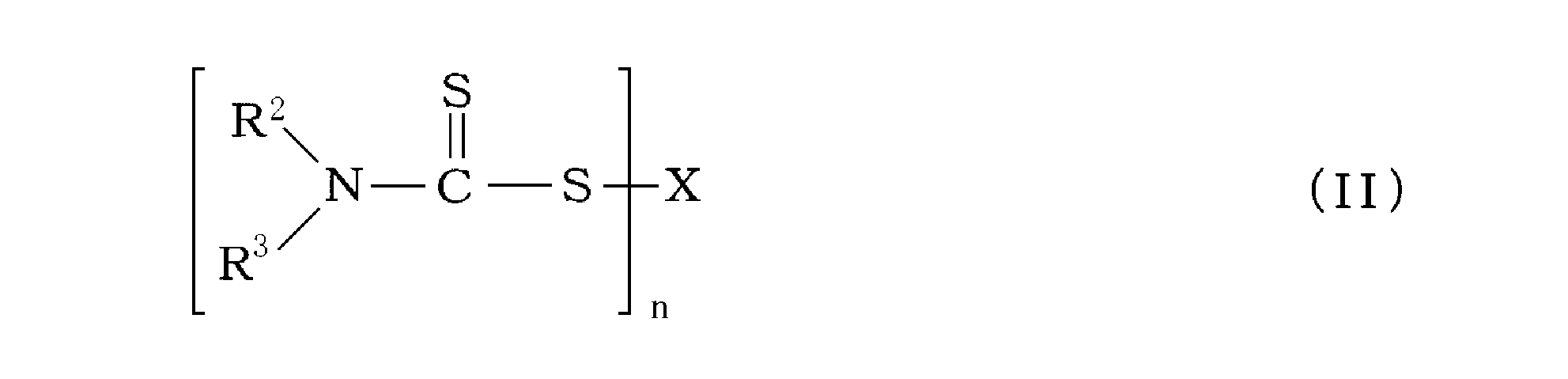
(式中、R2およびR3は、それぞれ独立して、炭素数1~18のアルキル基、炭素数6~12のアリール基または炭素数7~12のアラルキル基、Xはアルカリ金属原子またはアルカリ土類金属原子、nはXの原子価を表わす数を示す)
で表されるエステル交換触媒の存在下で1,4-ブタンジオールと(メタ)アクリル酸アルキルエステルとをエステル交換反応させることを特徴とする4-ヒドロキシブチル(メタ)アクリレートの製造方法、
(2)(メタ)アクリル酸1モルあたりの式(II)で表わされるエステル交換触媒の量が0.00001~0.01モルである前記(1)に記載の4-ヒドロキシブチル(メタ)アクリレートの製造方法、
(3)1,4-ブタンジオールと(メタ)アクリル酸アルキルエステルとをエステル交換反応させることによって得られた反応混合物と水および脂肪族炭化水素化合物を含有する抽出溶媒とを混合し、4-ヒドロキシブチル(メタ)アクリレートを水層に抽出させた後、当該水層と芳香族炭化水素化合物を含有する抽出溶媒とを混合し、当該水層に含まれている4-ヒドロキシブチル(メタ)アクリレートを芳香族炭化水素化合物に抽出させることにより、4-ヒドロキシブチル(メタ)アクリレートを回収する前記(1)または(2)に記載の4-ヒドロキシブチル(メタ)アクリレートの製造方法、
(4)1,4-ブタンジオールと(メタ)アクリル酸アルキルエステルとをエステル交換反応させることによって得られた4-ヒドロキシブチル(メタ)アクリレートを含有する反応混合物から式(I)で表わされるエステル交換触媒を回収し、当該回収された式(I)で表わされるエステル交換触媒を1,4-ブタンジオールと(メタ)アクリル酸アルキルエステルとをエステル交換反応させる際にエステル交換触媒として再利用する前記(1)~(3)のいずれかに記載の4-ヒドロキシブチル(メタ)アクリレートの製造方法、
(5)(メタ)アクリル酸アルキルエステルが式(III):
で表されるエステル交換触媒の存在下で1,4-ブタンジオールと(メタ)アクリル酸アルキルエステルとをエステル交換反応させることを特徴とする4-ヒドロキシブチル(メタ)アクリレートの製造方法、
(2)(メタ)アクリル酸1モルあたりの式(II)で表わされるエステル交換触媒の量が0.00001~0.01モルである前記(1)に記載の4-ヒドロキシブチル(メタ)アクリレートの製造方法、
(3)1,4-ブタンジオールと(メタ)アクリル酸アルキルエステルとをエステル交換反応させることによって得られた反応混合物と水および脂肪族炭化水素化合物を含有する抽出溶媒とを混合し、4-ヒドロキシブチル(メタ)アクリレートを水層に抽出させた後、当該水層と芳香族炭化水素化合物を含有する抽出溶媒とを混合し、当該水層に含まれている4-ヒドロキシブチル(メタ)アクリレートを芳香族炭化水素化合物に抽出させることにより、4-ヒドロキシブチル(メタ)アクリレートを回収する前記(1)または(2)に記載の4-ヒドロキシブチル(メタ)アクリレートの製造方法、
(4)1,4-ブタンジオールと(メタ)アクリル酸アルキルエステルとをエステル交換反応させることによって得られた4-ヒドロキシブチル(メタ)アクリレートを含有する反応混合物から式(I)で表わされるエステル交換触媒を回収し、当該回収された式(I)で表わされるエステル交換触媒を1,4-ブタンジオールと(メタ)アクリル酸アルキルエステルとをエステル交換反応させる際にエステル交換触媒として再利用する前記(1)~(3)のいずれかに記載の4-ヒドロキシブチル(メタ)アクリレートの製造方法、
(5)(メタ)アクリル酸アルキルエステルが式(III):

(式中、R4は水素原子またはメチル基、R5は炭素数1~4のアルキル基を示す)
で表わされる(メタ)アクリル酸アルキルエステルである前記(1)~(4)のいずれかに記載の4-ヒドロキシブチル(メタ)アクリレートの製造方法
に関する。
で表わされる(メタ)アクリル酸アルキルエステルである前記(1)~(4)のいずれかに記載の4-ヒドロキシブチル(メタ)アクリレートの製造方法
に関する。
第3の本発明は、
(1)1,4-ブタンジオールとアクリル酸アルキルエステルとをエステル交換反応させることによって4-ヒドロキシブチルアクリレートを製造する方法であって、エステル交換触媒の存在下で1,4-ブタンジオールとアクリル酸アルキルエステルとをエステル交換反応させた後、生成した4-ヒドロキシブチルアクリレートを含有する反応混合物から4-ヒドロキシブチルアクリレートを抽出し、回収することを特徴とする4-ヒドロキシブチルアクリレートの製造方法、
(2)1,4-ブタンジオールとアクリル酸アルキルエステルとをエステル交換反応させることによって得られた反応混合物と水および脂肪族炭化水素化合物を含有する抽出溶媒とを混合し、4-ヒドロキシブチルアクリレートを水層に抽出させた後、当該水層と芳香族炭化水素化合物を含有する抽出溶媒とを混合し、当該水層に含まれている4-ヒドロキシブチルアクリレートを芳香族炭化水素化合物に抽出させることにより、4-ヒドロキシブチルアクリレートを回収する前記(1)に記載の4-ヒドロキシブチルアクリレートの製造方法、
(4)反応混合物と水および脂肪族炭化水素化合物を含有する抽出溶媒とを混合し、4-ヒドロキシブチルアクリレートを水層に抽出させた後、当該水層をイオン交換樹脂と接触させ、次いで芳香族炭化水素化合物を含有する抽出溶媒とを混合する前記(3)に記載の4-ヒドロキシブチルアクリレートの製造方法、および
(5)1,4-ブタンジオールとアクリル酸アルキルエステルとをエステル交換反応させることによって得られる4-ヒドロキシブチルアクリレートであって、アクリル酸の含有率が50ppm以下であることを特徴とする4-ヒドロキシブチルアクリレート
に関する。
(1)1,4-ブタンジオールとアクリル酸アルキルエステルとをエステル交換反応させることによって4-ヒドロキシブチルアクリレートを製造する方法であって、エステル交換触媒の存在下で1,4-ブタンジオールとアクリル酸アルキルエステルとをエステル交換反応させた後、生成した4-ヒドロキシブチルアクリレートを含有する反応混合物から4-ヒドロキシブチルアクリレートを抽出し、回収することを特徴とする4-ヒドロキシブチルアクリレートの製造方法、
(2)1,4-ブタンジオールとアクリル酸アルキルエステルとをエステル交換反応させることによって得られた反応混合物と水および脂肪族炭化水素化合物を含有する抽出溶媒とを混合し、4-ヒドロキシブチルアクリレートを水層に抽出させた後、当該水層と芳香族炭化水素化合物を含有する抽出溶媒とを混合し、当該水層に含まれている4-ヒドロキシブチルアクリレートを芳香族炭化水素化合物に抽出させることにより、4-ヒドロキシブチルアクリレートを回収する前記(1)に記載の4-ヒドロキシブチルアクリレートの製造方法、
(4)反応混合物と水および脂肪族炭化水素化合物を含有する抽出溶媒とを混合し、4-ヒドロキシブチルアクリレートを水層に抽出させた後、当該水層をイオン交換樹脂と接触させ、次いで芳香族炭化水素化合物を含有する抽出溶媒とを混合する前記(3)に記載の4-ヒドロキシブチルアクリレートの製造方法、および
(5)1,4-ブタンジオールとアクリル酸アルキルエステルとをエステル交換反応させることによって得られる4-ヒドロキシブチルアクリレートであって、アクリル酸の含有率が50ppm以下であることを特徴とする4-ヒドロキシブチルアクリレート
に関する。
第4の本発明は、1,4-ブタンジオールとアクリル酸アルキルエステルとをエステル交換反応させることによって4-ヒドロキシブチルアクリレートを製造する方法であって、エステル交換触媒としてジアルキルスズオキシドを用い、当該ジアルキルスズオキシドの存在下で1,4-ブタンジオールとアクリル酸アルキルエステルとをエステル交換反応させ、生成した4-ヒドロキシブチルアクリレートを含有する反応混合物を15~35℃の温度で抽出溶媒として脂肪族または脂環式炭化水素化合物および水を用いて抽出し、得られた脂肪族または脂環式炭化水素化合物層および水層のうち水層を15~65℃の温度で抽出溶媒として芳香族炭化水素化合物を用いて抽出し、得られた芳香族炭化水素化合物層および水層のうち芳香族炭化水素化合物層を回収することを特徴とする4-ヒドロキシブチルアクリレートの製造方法に関する。
第5の本発明は、
(1)多価アルコールとアクリル酸アルキルエステルとをエステル交換反応させることによってヒドロキシアルキルアクリレートを製造する方法であって、多価アルコールとアクリル酸アルキルエステルとをエステル交換反応させる際に副生したアルコールを、多価アルコールを用いて回収することを特徴とするヒドロキシアルキルアクリレートの製造方法、
(2)多価アルコールに対して非相溶の有機溶媒の存在下で当該多価アルコールとアクリル酸アルキルエステルとをエステル交換反応させ、エステル交換反応の際に副生したアルコールおよび当該有機溶媒を含有する共沸混合物を当該エステル交換反応の反応系から留去した後、留去された共沸混合物と多価アルコールとを混合し、得られた混合物から副生したアルコールおよび多価アルコールを含有するアルコール溶液を分離し、分離されたアルコール溶液から副生したアルコールを回収する前記(1)に記載のヒドロキシアルキルアクリレートの製造方法、
(3)エステル交換反応の際に用いられる多価アルコールが炭素数2~6の脂肪族多価アルコールであり、当該多価アルコールに対して非相溶の有機溶媒が炭素数6~8の脂肪族炭化水素化合物および炭素数6~8の脂環式炭化水素化合物からなる群より選ばれた少なくとも1種の炭化水素化合物である前記(2)に記載のヒドロキシアルキルアクリレートの製造方法、
(4)共沸混合物と混合する際に用いられる多価アルコールが、エステル交換反応の際に用いられる多価アルコールと同一の種類である前記(1)~(3)のいずれかに記載のヒドロキシアルキルアクリレートの製造方法、ならびに
(5)アルコール溶液から多価アルコールを回収し、回収された多価アルコールを、エステル交換反応させる際に用いられる多価アルコールとして用いる前記(2)~(4)のいずれかに記載のヒドロキシアルキルアクリレートの製造方法
に関する。
(1)多価アルコールとアクリル酸アルキルエステルとをエステル交換反応させることによってヒドロキシアルキルアクリレートを製造する方法であって、多価アルコールとアクリル酸アルキルエステルとをエステル交換反応させる際に副生したアルコールを、多価アルコールを用いて回収することを特徴とするヒドロキシアルキルアクリレートの製造方法、
(2)多価アルコールに対して非相溶の有機溶媒の存在下で当該多価アルコールとアクリル酸アルキルエステルとをエステル交換反応させ、エステル交換反応の際に副生したアルコールおよび当該有機溶媒を含有する共沸混合物を当該エステル交換反応の反応系から留去した後、留去された共沸混合物と多価アルコールとを混合し、得られた混合物から副生したアルコールおよび多価アルコールを含有するアルコール溶液を分離し、分離されたアルコール溶液から副生したアルコールを回収する前記(1)に記載のヒドロキシアルキルアクリレートの製造方法、
(3)エステル交換反応の際に用いられる多価アルコールが炭素数2~6の脂肪族多価アルコールであり、当該多価アルコールに対して非相溶の有機溶媒が炭素数6~8の脂肪族炭化水素化合物および炭素数6~8の脂環式炭化水素化合物からなる群より選ばれた少なくとも1種の炭化水素化合物である前記(2)に記載のヒドロキシアルキルアクリレートの製造方法、
(4)共沸混合物と混合する際に用いられる多価アルコールが、エステル交換反応の際に用いられる多価アルコールと同一の種類である前記(1)~(3)のいずれかに記載のヒドロキシアルキルアクリレートの製造方法、ならびに
(5)アルコール溶液から多価アルコールを回収し、回収された多価アルコールを、エステル交換反応させる際に用いられる多価アルコールとして用いる前記(2)~(4)のいずれかに記載のヒドロキシアルキルアクリレートの製造方法
に関する。
第6の本発明は、
(1)原料として(メタ)アクリル酸メチルを用い、当該(メタ)アクリル酸メチルと目的とする(メタ)アクリル酸エステルに対応するアルコールとをエステル交換反応させることにより、目的とする(メタ)アクリル酸エステルを製造する方法であって、反応装置として蒸留塔を有する反応装置を用い、当該反応装置内で(メタ)アクリル酸メチルと目的とする(メタ)アクリル酸エステルに対応するアルコールとをエステル交換反応させる際に、溶媒としてメチルアルコールの沸点以下の温度で当該メチルアルコールと共沸し、(メタ)アクリル酸メチルの沸点以下の温度で当該(メタ)アクリル酸メチルと共沸する共沸溶媒を用い、(メタ)アクリル酸メチルと目的とする(メタ)アクリル酸エステルに対応するアルコールとをエステル交換反応させた後、得られた反応混合物をさらに加熱し、蒸留塔の上部から未反応の(メタ)アクリル酸メチルを含有する蒸気を取り出すことを特徴とする(メタ)アクリル酸エステルの製造方法、
(2)共沸溶媒が、シクロヘキサンおよびn-ヘキサンからなる群より選ばれた少なくとも1種である前記(1)に記載の(メタ)アクリル酸エステルの製造方法、
(3)(メタ)アクリル酸メチルと目的とする(メタ)アクリル酸エステルに対応するアルコールとのエステル交換反応の際に、蒸留塔の上部から蒸気を取り出し、取り出した蒸気を凝縮し、得られた凝縮液の一部を蒸留塔に還流させ、凝縮液の残りを反応装置外に除去することにより、蒸留塔の上部の温度をアルコールと共沸溶媒との共沸温度に調整する前記(1)または(2)に記載の(メタ)アクリル酸エステルの製造方法、
(4)反応装置外に除去した凝縮液に水を添加し、上層と下層の2層に分離させ、分離した2層のうち上層を蒸留塔に還流させる前記(3)に記載の(メタ)アクリル酸エステルの製造方法、
(5)反応装置外に除去した凝縮液に水を添加し、上層と下層の2層に分離させ、分離した2層のうち下層をさらに蒸留塔を有する蒸留装置内に入れて蒸留させ、(メタ)アクリル酸メチルと副生したメチルアルコールと共沸溶媒を含有する蒸気、およびエステル交換反応によって副生したメチルアルコールを主成分として含有する蒸気をそれぞれ蒸留塔の上部から取り出す前記(3)または(4)に記載の(メタ)アクリル酸エステルの製造方法、
(6)(メタ)アクリル酸メチルと副生したメチルアルコールと共沸溶媒を含有する蒸気を(メタ)アクリル酸メチルと前記アルコールとのエステル交換反応の際に原料として用いる前記(5)に記載の(メタ)アクリル酸エステルの製造方法、および
(7)(メタ)アクリル酸メチルと目的とする(メタ)アクリル酸エステルに対応するアルコールとのエステル交換反応後、反応混合物をさらに加熱することによって蒸留塔の上部から取り出された未反応の(メタ)アクリル酸メチルを含有する蒸気を凝縮させ、得られた凝縮液を(メタ)アクリル酸メチルと前記アルコールとのエステル交換反応の際に原料として用いる前記(1)~(6)のいずれかに記載の(メタ)アクリル酸エステルの製造方法
に関する。
(1)原料として(メタ)アクリル酸メチルを用い、当該(メタ)アクリル酸メチルと目的とする(メタ)アクリル酸エステルに対応するアルコールとをエステル交換反応させることにより、目的とする(メタ)アクリル酸エステルを製造する方法であって、反応装置として蒸留塔を有する反応装置を用い、当該反応装置内で(メタ)アクリル酸メチルと目的とする(メタ)アクリル酸エステルに対応するアルコールとをエステル交換反応させる際に、溶媒としてメチルアルコールの沸点以下の温度で当該メチルアルコールと共沸し、(メタ)アクリル酸メチルの沸点以下の温度で当該(メタ)アクリル酸メチルと共沸する共沸溶媒を用い、(メタ)アクリル酸メチルと目的とする(メタ)アクリル酸エステルに対応するアルコールとをエステル交換反応させた後、得られた反応混合物をさらに加熱し、蒸留塔の上部から未反応の(メタ)アクリル酸メチルを含有する蒸気を取り出すことを特徴とする(メタ)アクリル酸エステルの製造方法、
(2)共沸溶媒が、シクロヘキサンおよびn-ヘキサンからなる群より選ばれた少なくとも1種である前記(1)に記載の(メタ)アクリル酸エステルの製造方法、
(3)(メタ)アクリル酸メチルと目的とする(メタ)アクリル酸エステルに対応するアルコールとのエステル交換反応の際に、蒸留塔の上部から蒸気を取り出し、取り出した蒸気を凝縮し、得られた凝縮液の一部を蒸留塔に還流させ、凝縮液の残りを反応装置外に除去することにより、蒸留塔の上部の温度をアルコールと共沸溶媒との共沸温度に調整する前記(1)または(2)に記載の(メタ)アクリル酸エステルの製造方法、
(4)反応装置外に除去した凝縮液に水を添加し、上層と下層の2層に分離させ、分離した2層のうち上層を蒸留塔に還流させる前記(3)に記載の(メタ)アクリル酸エステルの製造方法、
(5)反応装置外に除去した凝縮液に水を添加し、上層と下層の2層に分離させ、分離した2層のうち下層をさらに蒸留塔を有する蒸留装置内に入れて蒸留させ、(メタ)アクリル酸メチルと副生したメチルアルコールと共沸溶媒を含有する蒸気、およびエステル交換反応によって副生したメチルアルコールを主成分として含有する蒸気をそれぞれ蒸留塔の上部から取り出す前記(3)または(4)に記載の(メタ)アクリル酸エステルの製造方法、
(6)(メタ)アクリル酸メチルと副生したメチルアルコールと共沸溶媒を含有する蒸気を(メタ)アクリル酸メチルと前記アルコールとのエステル交換反応の際に原料として用いる前記(5)に記載の(メタ)アクリル酸エステルの製造方法、および
(7)(メタ)アクリル酸メチルと目的とする(メタ)アクリル酸エステルに対応するアルコールとのエステル交換反応後、反応混合物をさらに加熱することによって蒸留塔の上部から取り出された未反応の(メタ)アクリル酸メチルを含有する蒸気を凝縮させ、得られた凝縮液を(メタ)アクリル酸メチルと前記アルコールとのエステル交換反応の際に原料として用いる前記(1)~(6)のいずれかに記載の(メタ)アクリル酸エステルの製造方法
に関する。
第7の本発明は、
(1)原料として(メタ)アクリル酸メチルを用いてエステル交換法によって(メタ)アクリル酸エステルを製造する方法であって、(メタ)アクリル酸メチルとアルコールとをエステル交換反応させる際に、反応溶媒としてイソヘキサンとシクロヘキサンとを併用することを特徴とする(メタ)アクリル酸エステルの製造方法、および
(2)蒸留塔が取り付けられた反応器を用いて(メタ)アクリル酸メチルとアルコールとをエステル交換反応させ、蒸留塔の塔頂から排出された蒸気を凝縮させ、得られた凝縮液を2層に分離し、当該分離した2層のうち上層を蒸留塔に供給する前記(1)に記載の(メタ)アクリル酸エステルの製造方法
に関する。
(1)原料として(メタ)アクリル酸メチルを用いてエステル交換法によって(メタ)アクリル酸エステルを製造する方法であって、(メタ)アクリル酸メチルとアルコールとをエステル交換反応させる際に、反応溶媒としてイソヘキサンとシクロヘキサンとを併用することを特徴とする(メタ)アクリル酸エステルの製造方法、および
(2)蒸留塔が取り付けられた反応器を用いて(メタ)アクリル酸メチルとアルコールとをエステル交換反応させ、蒸留塔の塔頂から排出された蒸気を凝縮させ、得られた凝縮液を2層に分離し、当該分離した2層のうち上層を蒸留塔に供給する前記(1)に記載の(メタ)アクリル酸エステルの製造方法
に関する。
第1の本発明の4-ヒドロキシブチルアクリレートの製造方法によれば、1,4-ブタンジオールとアクリル酸アルキルエステルとをエステル交換反応させることにより、4-ヒドロキシブチルアクリレートを効率よく製造することができ、さらに当該エステル交換反応の際に使用されるエステル交換触媒を効率よく回収することができるという優れた効果が奏される。
第2の本発明の4-ヒドロキシブチル(メタ)アクリレートの製造方法によれば、1,4-ブタンジオールと(メタ)アクリル酸アルキルエステルとをエステル交換反応させることにより、4-ヒドロキシブチル(メタ)アクリレートを効率よく製造することができ、しかも当該エステル交換反応の際に使用されるエステル交換触媒を効率よく回収し、再利用することができるという優れた効果が奏される。
第3の本発明によれば、酸によって悪影響を受けやすい医療用粘着剤、電子材料用コーティング剤、感光性樹脂組成物などの原料として好適に使用することができる酸成分の含有率が低い4-ヒドロキシブチルアクリレートが提供される。
第4の本発明の4-ヒドロキシブチルアクリレートの製造方法によれば、1,4-ブタンジオールとアクリル酸アルキルエステルとをエステル交換反応させることによって4-ヒドロキシブチルアクリレートを製造する際にエステル交換触媒としてアルキルスズオキシドを用いても1,4-ブタンジオールジアクリレートの副生量が少なく、4-ヒドロキシブチルアクリレートを効率よく製造することができるという優れた効果が奏される。
第5の本発明のヒドロキシアルキルアクリレートの製造方法によれば、ヒドロキシアルキルアクリレートをエステル交換法によって製造する際に副生したアルコールを効率よく回収することができるという優れた効果が奏される。
第6の本発明の(メタ)アクリル酸エステルの製造方法によれば、原料として(メタ)アクリル酸メチルを用い、エステル交換法によって(メタ)アクリル酸エステルを製造する方法において、目的とする(メタ)アクリル酸エステルを製造した後、反応系内に残存している原料の(メタ)アクリル酸メチルを効率よく回収することができるという優れた効果が奏される。
〔第1の発明〕
以下に第1の発明について説明する。
第1の本発明の4-ヒドロキシブチルアクリレートの製造方法は、前記したように、1,4-ブタンジオールとアクリル酸アルキルエステルとをエステル交換反応させることによって4-ヒドロキシブチルアクリレートを製造する方法であり、アルキル基の炭素数が4~18のジアルキルスズオキシドを含有するエステル交換触媒を用い、当該ジアルキルスズオキシドの存在下で1,4-ブタンジオールとアクリル酸アルキルエステルとをエステル交換反応させる際に、アクリル酸アルキルエステル1モルあたりの当該アルキル基の炭素数が4~18のジアルキルスズオキシドの量を0.00001~0.01モルに調整することを特徴とする。
以下に第1の発明について説明する。
第1の本発明の4-ヒドロキシブチルアクリレートの製造方法は、前記したように、1,4-ブタンジオールとアクリル酸アルキルエステルとをエステル交換反応させることによって4-ヒドロキシブチルアクリレートを製造する方法であり、アルキル基の炭素数が4~18のジアルキルスズオキシドを含有するエステル交換触媒を用い、当該ジアルキルスズオキシドの存在下で1,4-ブタンジオールとアクリル酸アルキルエステルとをエステル交換反応させる際に、アクリル酸アルキルエステル1モルあたりの当該アルキル基の炭素数が4~18のジアルキルスズオキシドの量を0.00001~0.01モルに調整することを特徴とする。
本発明においては、まず、1,4-ブタンジオールとアクリル酸アルキルエステルとをエステル交換反応させる。
アクリル酸アルキルエステルとしては、例えば、アクリル酸メチル、アクリル酸エチル、アクリル酸プロピル、アクリル酸n-ブチル、アクリル酸イソブチル、アクリル酸tert-ブチルなどが挙げられ、これらのアクリル酸アルキルエステルは、それぞれ単独で用いてもよく、2種類以上を併用してもよい。アクリル酸アルキルエステルのなかでは、生成する4-ヒドロキシブチルアクリレートとアクリル酸アルキルエステルとを効率よく分離する観点から、式(I):

(式中、R1は炭素数1~4のアルキル基を示す)
で表わされるアクリル酸アルキルエステルが好ましく、R1が炭素数1~3のアルキル基であるアクリル酸アルキルエステルがより好ましく、アクリル酸メチルがさらに好ましい。
で表わされるアクリル酸アルキルエステルが好ましく、R1が炭素数1~3のアルキル基であるアクリル酸アルキルエステルがより好ましく、アクリル酸メチルがさらに好ましい。
1,4-ブタンジオール1モルあたりのアクリル酸アルキルエステルの量は、反応速度を高める観点から、好ましくは0.5モル以上であり、未反応のアクリル酸アルキルエステルの量を低減させる観点から、好ましくは5モル以下、より好ましくは3モル以下である。
1,4-ブタンジオールとアクリル酸アルキルエステルとをエステル交換反応させる際に、炭素数が4~18のジアルキルスズオキシドを含有するエステル交換触媒が用いられる。本発明においては、このように炭素数が4~18のジアルキルスズオキシドを含有するエステル交換触媒が用いられる点に1つの大きな特徴がある。
ジアルキルスズオキシドを含有するエステル交換触媒を用いた場合、生成した4-ヒドロキシブチルアクリレートからジブチルスズオキシドを除去することが困難であるとされている従来技術の予想に反し、本発明では、ジアルキルスズオキシドの一種である炭素数が4~18のジアルキルスズオキシドが用いられているにもかかわらず、4-ヒドロキシブチルアクリレートを効率よく製造することができ、しかも当該エステル交換反応の際に使用されるエステル交換触媒を効率よく回収することができるという優れた効果が発現される。
本発明においては、1,4-ブタンジオールとアクリル酸アルキルエステルとのエステル交換反応を促進させるとともに、生成した4-ヒドロキシブチルアクリレートからエステル交換触媒を容易に除去することができるようにする観点から、当該エステル交換触媒として、炭素数が4~18のジアルキルスズオキシドが用いられる。
炭素数が4~18のジアルキルスズオキシドは、アルキル基2個を有するが、当該アルキル基は、それぞれ同一であってもよく、あるいは異なっていてもよい。
炭素数が4~18のジアルキルスズオキシドとしては、例えば、ジブチルスズオキシド、ジオクチルスズオキシド、ジラウリルスズオキシドなどのアルキル基の炭素数が4~18のジアルキルスズオキシドなどが挙げられるが、本発明は、かかる例示のみに限定されるものではない。これらのジアルキルスズオキシドは、それぞれ単独で用いてもよく、2種類以上を併用してもよい。
炭素数が4~18のジアルキルスズオキシドのなかでは、1,4-ブタンジオールとアクリル酸アルキルエステルとのエステル交換反応を促進させるとともに、生成した4-ヒドロキシブチルアクリレートから当該炭素数が4~18のジアルキルスズオキシドを容易に除去することができるようにする観点から、アルキル基の炭素数が4~12のジアルキルスズオキシドが好ましく、ジオクチルスズオキシドおよびジラウリルスズオキシドがより好ましい。
アクリル酸アルキルエステル1モルあたりの炭素数が4~18のジアルキルスズオキシドの量は、4-ヒドロキシブチルアクリレートを効率よく製造する観点から、0.00001モル以上、好ましくは0.0001モル以上であり、生成した4-ヒドロキシブチルアクリレートからジブチルスズオキシドを効率よく除去し、炭素数が4~18のジアルキルスズオキシドを効率よく回収する観点から、0.01モル以下、好ましくは0.005モル以下である。
1,4-ブタンジオールとアクリル酸アルキルエステルとを反応させる際には、アクリル酸アルキルエステルが重合することを抑制する観点から、重合防止剤の存在下で1,4-ブタンジオールとアクリル酸アルキルエステルとを反応させることが好ましい。
重合防止剤としては、例えば、4-ヒドロキシ-2,2,6,6-テトラメチルピペリジン-N-オキシル、4-アセトアミノ-2,2,6,6-テトラメチルピペリジン-N-オキシル、4-ベンゾイルオキシ-2,2,6,6-テトラメチルピペリジン-N-オキシル、4-オキソ-2,2,6,6-テトラメチルピペリジン-N-オキシル、2,2,6,6-テトラメチルピペリジン-N-オキシルなどのN-オキシラジカル系化合物;パラメトキシフェノール、2,2’-メチレンビス(4-エチル-6-tert-ブチルフェノール)、2,6-ジtert-ブチル-4-メチルフェノール、2,6-ジtert-ブチル-N,N-ジメチルアミノ-p-クレゾール、2,4-ジメチル-6-tert-ブチルフェノール、4-tert-ブチルカテコール、4,4’-チオ-ビス(3-メチル-6-tert-ブチルフェノール)、4,4’-ブチリデン-ビス(3-メチル-6-tert-ブチルフェノール)などのフェノール系化合物;メトキノン、ハイドロキノン、2,5-ジtert-ブチルハイドロキノン、2,6-ジtert-ブチルハイドロキノン、ベンゾキノンなどのキノン系化合物;塩化第一銅;ジメチルジチオカルバミン酸銅などのジアルキルジチオカルバミン酸銅;フェノチアジン、N,N’-ジフェニル-p-フェニレンジアミン、フェニル-β-ナフチルアミン,N,N’-ジβ-ナフチル-p-フェニレンジアミン、N-フェニル-N’-イソプロピル-p-フェニレンジアミンなどのアミノ化合物;1,4-ジヒドロキシ-2,2,6,6-テトラメチルピペリジン、1-ヒドロキシ-2,2,6,6-テトラメチルピペリジン、4-ヒドロキシ-2,2,6,6-テトラメチルピペリジンなどのヒドロキシアミン系化合物などが挙げられるが、本発明は、かかる例示のみに限定されるものではない。これらの重合禁止剤は、それぞれ単独で用いてもよく、2種類以上を併用してもよい。
アクリル酸アルキルエステル100質量部あたりの重合防止剤の量は、アクリル酸アルキルエステルの重合を抑制する観点から、好ましくは0.001質量部以上、より好ましくは0.005質量部以上、さらに好ましくは0.01質量部以上であり、4-ヒドロキシブチルアクリレートの純度を高める観点から、好ましくは5質量部以下、より好ましくは3質量部以下、さらに好ましくは1質量部以下である。
なお、1,4-ブタンジオールとアクリル酸アルキルエステルとをエステル交換反応させる際には、有機溶媒を用いることができる。
有機溶媒は、エステル交換反応の反応系内で不活性な有機溶媒であることが好ましい。好適な有機溶媒としては、例えば、n-ヘキサン、n-ヘプタン、n-オクタンなどの脂肪族炭化水素化合物、シクロヘキサン、メチルシクロヘキサンなどの脂環式炭化水素化合物、ベンゼン、トルエン、キシレンなどの芳香族炭化水素化合物、テトラヒドロフランなどのエーテル化合物、ジクロロメタン、1,1-ジクロロエタンなどの有機塩素化合物、ニトロベンゼンなどの芳香族ニトロ化合物、トリエチルホスフェートなどの有機リン化合物、ジメチルスルホキシドなどの有機硫黄化合物などが挙げられるが、本発明は、かかる例示のみに限定されるものではない。これらの有機溶媒は、それぞれ単独で用いてもよく、2種類以上を併用してもよい。
有機溶媒の量は、特に限定されないが、通常、1,4-ブタンジオールとアクリル酸アルキルエステルとの合計量100質量部あたり5~200質量部程度であればよい。
1,4-ブタンジオールとアクリル酸アルキルエステルとのエステル交換反応を行なう際の反応温度は、反応速度を高める観点から、好ましくは30℃以上、より好ましくは50℃以上であり、生成する4-ヒドロキシブチルアクリレートの重合を防止する観点から、好ましくは150℃以下である。
1,4-ブタンジオールとアクリル酸アルキルエステルとのエステル交換反応を行なう際の雰囲気は、アクリル酸アルキルエステルの重合を防止する観点から、好ましくは酸素を含有する雰囲気であり、安全性を高める観点から、より好ましくは酸素濃度が5体積%~大気濃度のガスである。また、その雰囲気の圧力は、通常、大気圧であればよいが、加圧または減圧であってもよい。例えば、その雰囲気の圧力を減圧させた場合には、反応温度を低下させることができるので、副反応を抑制することができるという利点がある。
1,4-ブタンジオールとアクリル酸アルキルエステルとのエステル交換反応を行なう際の反応時間は、1,4-ブタンジオールおよびアクリル酸アルキルエステルの量、反応温度などによって異なるので一概には決定することができないことから、通常、エステル交換反応が完了するまでの時間が選択される。エステル交換反応の終点は、例えば、ガスクロマトグラフィー、液体クロマトグラフィーなどによって確認することができる。
1,4-ブタンジオールとアクリル酸アルキルエステルとのエステル交換反応は、例えば、精留塔、流動床、固定床、反応蒸留塔などを用いて行なうことかできるが、本発明は、かかる例示のみに限定されるものではない。また、1,4-ブタンジオールとアクリル酸アルキルエステルとのエステル交換反応は、流通式および回分式のいずれの方式によって行なってもよい。
1,4-ブタンジオールとアクリル酸アルキルエステルとのエステル交換反応の進行とともにアルコールが副生する。副生するアルコールは、通常、反応を進行させるために反応系外に除去することが好ましい。副生するアルコールは、例えば、アクリル酸エステルまたは適当な溶媒との共沸混合物として反応系外に除去することができる。
炭素数が4~18のジアルキルスズオキシドの存在下で1,4-ブタンジオールとアクリル酸アルキルエステルとのエステル交換反応を行なった後、エステル交換触媒として使用された炭素数が4~18のジアルキルスズオキシドは、例えば、濾過などの手段により、生成した反応混合物から回収することができる。
また、目的化合物である4-ヒドロキシブチルアクリレートは、生成した反応混合物から有機溶媒、未反応のアクリル酸エステルおよびアルコールを留去することにより、回収することができる。反応混合物からの未反応のアクリル酸エステルおよびアルコールの除去は、例えば、蒸留、抽出処理などによって行なうことができる。
より具体的には、生成した4-ヒドロキシブチルアクリレートは、例えば、1,4-ブタンジオールとアクリル酸アルキルエステルとをエステル交換反応させることによって得られた反応混合物と水および脂肪族炭化水素化合物を含有する抽出溶媒とを混合し、4-ヒドロキシブチルアクリレートを水層に抽出させた後、当該水層と芳香族炭化水素化合物を含有する抽出溶媒とを混合し、当該水層に含まれている4-ヒドロキシブチルアクリレートを芳香族炭化水素化合物に抽出させることにより、回収することができる。
反応混合物と水および脂肪族炭化水素化合物を含有する抽出溶媒とを混合した場合には、反応混合物に含まれている4-ヒドロキシブチルアクリレートを水層に抽出させ、副生した1,4-ブタンジオールジアクリレートなどを脂肪族炭化水素化合物層に抽出させることができるので、当該水層を脂肪族炭化水素化合物層と分離することにより、4-ヒドロキシブチルアクリレートを含有する水層を回収することができる。
脂肪族炭化水素化合物としては、例えば、シクロヘキサン、n-ヘキサン、n-ヘプタン、n-オクタン、n-デカン、イソヘキサン、イソオクタン、イソデカンなどの炭素数が6~12の脂肪族炭化水素化合物などが挙げられるが、本発明は、かかる例示のみに限定されるものではない。なお、本願明細書において、脂肪族炭化水素化合物は、例えば、シクロヘキサンなどの脂環構造を有する炭化水素化合物を含む概念のものである。水および脂肪族炭化水素化合物を含有する抽出溶媒には、本発明の目的を阻害しない範囲内で芳香族炭化水素化合物が含まれていてもよい。
脂肪族炭化水素化合物および水の量は、反応混合物の量などによって異なるので一概には決定することができないことから、反応混合物に含まれている4-ヒドロキシブチルアクリレートを水層に抽出させ、脂肪族炭化水素化合物層と水層とを分離するのに適した量となるように適宜調整することが好ましい。また、前記抽出操作を行なう際の温度は、特に限定されないが、通常、5~50℃程度であることが好ましい。
次に、4-ヒドロキシブチルアクリレートが抽出された水層と、芳香族炭化水素化合物を含有する抽出溶媒とを混合することにより、当該水層に含まれている4-ヒドロキシブチルアクリレートを芳香族炭化水素化合物層に抽出させ、当該芳香族炭化水素化合物層を水層と分離することにより、4-ヒドロキシブチルアクリレートを含有する芳香族炭化水素化合物層を回収することができる。
芳香族炭化水素化合物としては、例えば、ベンゼン、トルエン、キシレン、エチルベンゼンなどが挙げられるが、本発明は、かかる例示のみに限定されるものではない。なお、芳香族炭化水素化合物を含有する抽出溶媒には、本発明の目的を阻害しない範囲内で脂肪族炭化水素化合物、水などが含まれていてもよい。
芳香族炭化水素化合物の量は、前記脂肪族炭化水素化合物層と分離された水層の量などによって異なるので一概には決定することができないことから、当該水層に含まれている4-ヒドロキシブチルアクリレートを芳香族炭化水素化合物層に抽出させ、芳香族炭化水素化合物層と水層とを分離するのに適した量となるように適宜調整することが好ましい。前記抽出操作を行なう際の温度は、特に限定されないが、通常、5~50℃程度であることが好ましい。
前記芳香族炭化水素化合物層に含まれている4-ヒドロキシブチルアクリレートは、例えば、芳香族炭化水素化合物を蒸発させるなどの方法によって除去することにより、回収することができる。芳香族炭化水素化合物層に含まれている芳香族炭化水素化合物を除去する際の温度は、特に限定されないが、通常、20~150℃程度であることが好ましい。以上のようにして回収された4-ヒドロキシブチルアクリレートは、必要により、蒸留精製、洗浄などにより、高純度化させてもよい。
一方、脂肪族炭化水素化合物層には、副生した1,4-ブタンジオールジアクリレートが含まれているが、当該1,4-ブタンジオールジアクリレート以外にもアルキル基の炭素数が4~18のジアルキルスズオキシドが含まれている。したがって、アルキル基の炭素数が4~18のジアルキルスズオキシドの有効活用を図る観点から、蒸留、濃縮、洗浄などの方法により、脂肪族炭化水素化合物層から当該アルキル基の炭素数が4~18のジアルキルスズオキシドを回収してもよい。
本発明においては、回収されたアルキル基の炭素数が4~18のジアルキルスズオキシドは、触媒活性があまり失活せずに維持されているので、1,4-ブタンジオールとアクリル酸アルキルエステルとをエステル交換反応させる際にエステル交換触媒として再利用することができる。したがって、回収されたアルキル基の炭素数が4~18のジアルキルスズオキシドは、1,4-ブタンジオールとアクリル酸アルキルエステルとをエステル交換反応させる際にエステル交換触媒として再利用し、当該回収されたアルキル基の炭素数が4~18のジアルキルスズオキシドの存在下で1,4-ブタンジオールとアクリル酸アルキルエステルとをエステル交換反応させることができる。その際、回収されたアルキル基の炭素数が4~18のジアルキルスズオキシドは、触媒活性を維持する観点から、1,4-ブタンジオールとアクリル酸アルキルエステルとをエステル交換反応させる反応系内の含水率が1000ppm以下となるように乾燥させた後に、再利用することが好ましい。
このように本発明の4-ヒドロキシブチルアクリレートの製造方法によれば、回収されたアルキル基の炭素数が4~18のジアルキルスズオキシドは、その触媒活性が失活するまで繰り返して使用することができるので、本発明の4-ヒドロキシブチルアクリレートの製造方法は、工業的生産性に優れている。
以上のようにして本発明の製造方法によって得られた4-ヒドロキシブチルアクリレートは、例えば、自動車用塗料、建材用塗料、電子材料用コーティング剤、感光性樹脂組成物などの原料として有用である。
〔第2の発明〕
本発明の4-ヒドロキシブチル(メタ)アクリレートの製造方法は、前記したように、1,4-ブタンジオールと(メタ)アクリル酸アルキルエステルとをエステル交換反応させることによって4-ヒドロキシブチル(メタ)アクリレートを製造する方法であり、式(II):

(式中、R2およびR3は、それぞれ独立して、炭素数1~18のアルキル基、炭素数6~12のアリール基または炭素数7~12のアラルキル基、Xはアルカリ金属原子またはアルカリ土類金属原子、nはXの原子価を表わす数を示す)
で表されるエステル交換触媒の存在下で1,4-ブタンジオールと(メタ)アクリル酸アルキルエステルとをエステル交換反応させることを特徴とする。
で表されるエステル交換触媒の存在下で1,4-ブタンジオールと(メタ)アクリル酸アルキルエステルとをエステル交換反応させることを特徴とする。
本発明においては、まず、1,4-ブタンジオールと(メタ)アクリル酸アルキルエステルとをエステル交換反応させる。
(メタ)アクリル酸アルキルエステルとしては、例えば、(メタ)アクリル酸メチル、(メタ)アクリル酸エチル、(メタ)アクリル酸プロピル、(メタ)アクリル酸n-ブチル、(メタ)アクリル酸イソブチル、(メタ)アクリル酸tert-ブチルなどが挙げられ、これらの(メタ)アクリル酸アルキルエステルは、それぞれ単独で用いてもよく、2種類以上を併用してもよい。(メタ)アクリル酸アルキルエステルのなかでは、生成する4-ヒドロキシブチル(メタ)アクリレートと(メタ)アクリル酸アルキルエステルとを効率よく分離する観点から、式(III):

(式中、R4は水素原子またはメチル基、R5は炭素数1~4のアルキル基を示す)
で表わされる(メタ)アクリル酸アルキルエステルが好ましく、式(III)において、R4が水素原子またはメチル基であり、R5が炭素数1~3のアルキル基である(メタ)アクリル酸アルキルエステルがより好ましく、(メタ)アクリル酸メチルがさらに好ましい。
で表わされる(メタ)アクリル酸アルキルエステルが好ましく、式(III)において、R4が水素原子またはメチル基であり、R5が炭素数1~3のアルキル基である(メタ)アクリル酸アルキルエステルがより好ましく、(メタ)アクリル酸メチルがさらに好ましい。
1,4-ブタンジオール1モルあたりの(メタ)アクリル酸アルキルエステルの量は、反応速度を高める観点から、好ましくは0.5モル以上であり、未反応の(メタ)アクリル酸アルキルエステルの量を低減させる観点から、好ましくは5モル以下、より好ましくは3モル以下である。
1,4-ブタンジオールと(メタ)アクリル酸アルキルエステルとをエステル交換反応させる際に、式(II)で表わされるエステル交換触媒が用いられる。本発明においては、このように式(II)で表わされるエステル交換触媒が用いられる点に1つの大きな特徴がある。
式(II)で表わされるエステル交換触媒を用いた場合には、4-ヒドロキシブチル(メタ)アクリレートを効率よく製造することができ、しかも当該エステル交換反応の際に使用されるエステル交換触媒を効率よく回収し、再利用することができるという優れた効果が発現される。
式(II)で表わされるエステル交換触媒において、R2およびR3は、触媒活性を持続させる観点およびエステル交換反応によって得られる4-ヒドロキシブチル(メタ)アクリレートの収率を高める観点から、それぞれ独立して、炭素数1~18のアルキル基、炭素数6~12のアリール基または炭素数7~12のアラルキル基である。なお、式(II)で表わされるエステル交換触媒の製造の容易さの観点から、R2およびR3は、それぞれ同一であることが好ましい。
炭素数1~18のアルキル基のなかでは、触媒活性を持続させる観点および4-ヒドロキシブチル(メタ)アクリレートの収率を高める観点から、炭素数1~12のアルキル基が好ましく、炭素数1~8のアルキル基がより好ましく、4-ヒドロキシブチル(メタ)アクリレートを製造した後に水洗によって当該エステル交換触媒を容易に除去することができる観点から、炭素数1~4のアルキル基がさらに好ましい。炭素数1~4のアルキル基としては、メチル基、エチル基、n-プロピル基、イソプロピル基、n-ブチル基、イソブチル基およびtert-ブチル基が挙げられる。
炭素数6~12のアリール基としては、例えば、フェニル基、トリル基、キシリル基、ビフェニル基、ナフチル基、アントリル基、フェナントリル基などが挙げられるが、本発明は、かかる例示のみに限定されるものではない。
炭素数7~12のアラルキル基としては、例えば、ベンジル基、フェニルエチル基、メチルベンジル基、ナフチルメチル基などが挙げられるが、本発明は、かかる例示のみに限定されるものではない。
式(II)において、Xは、アルカリ金属原子またはアルカリ土類金属原子である。アルカリ金属原子としては、例えば、リチウム、ナトリウム、カリウムなどが挙げられる。アルカリ土類金属原子としては、例えば、マグネシウム、カルシウム、バリウムなどが挙げられる。Xのなかでは、触媒活性を持続させる観点および4-ヒドロキシブチル(メタ)アクリレートの収率を高める観点から、ナトリウム、カリウム、マグネシウムおよびカルシウムが好ましく、ナトリウム、カリウムおよびマグネシウムがより好ましく、ナトリウムおよびカリウムがさらに好ましい。
式(II)において、nは、Xの原子価を表わす数である。したがって、Xがアルカリ金属である場合、nは1であり、Xがアルカリ土類金属原子である場合、nは2である。
式(II)で表わされるエステル交換触媒の具体例としては、ジメチルジチオカルバミン酸ナトリウム、ジエチルジチオカルバミン酸ナトリウム、ジプロピルジチオカルバミン酸ナトリウム、ジブチルジチオカルバミン酸ナトリウム、ジメチルジチオカルバミン酸カリウム、ジエチルジチオカルバミン酸カリウム、ジプロピルジチオカルバミン酸カリウム、ジブチルジチオカルバミン酸カリウム、メチルエチルジチオカルバミン酸ナトリウム、メチルプロピルジチオカルバミン酸ナトリウム、エチルプロピルジチオカルバミン酸ナトリウム、メチルブチルジチオカルバミン酸ナトリウム、メチルエチルジチオカルバミン酸カリウム、メチルプロピルジチオカルバミン酸カリウム、エチルプロピルジチオカルバミン酸カリウム、メチルブチルジチオカルバミン酸カリウム、ジフェニルジチオカルバミン酸ナトリウム、ジトリルジチオカルバミン酸ナトリウム、ジキシリルジチオカルバミン酸ナトリウム、ジビフェニルジチオカルバミン酸ナトリウム、ジナフチルジチオカルバミン酸ナトリウム、ジアントリルジチオカルバミン酸ナトリウム、ジフェナントリルジチオカルバミン酸ナトリウム、ジフェニルジチオカルバミン酸カリウム、ジトリルジチオカルバミン酸カリウム、ジキシリルジチオカルバミン酸カリウム、ジビフェニルジチオカルバミン酸カリウム、ジナフチルジチオカルバミン酸カリウム、ジアントリルジチオカルバミン酸カリウム、ジフェナントリルジチオカルバミン酸カリウム、ジベンジルジチオカルバミン酸ナトリウム、ジフェニルエチルジチオカルバミン酸ナトリウム、ジメチルベンジルジチオカルバミン酸ナトリウム、ジナフチルメチルジチオカルバミン酸ナトリウム、ジベンジルジチオカルバミン酸カリウム、ジフェニルエチルジチオカルバミン酸カリウム、ジメチルベンジルジチオカルバミン酸カリウム、ジナフチルメチルジチオカルバミン酸カリウムなどのジチオカルバミン酸アルカリ金属塩;およびジメチルジチオカルバミン酸マグネシウム、ジエチルジチオカルバミン酸マグネシウム、ジプロピルジチオカルバミン酸マグネシウム、ジブチルジチオカルバミン酸マグネシウム、ジメチルジチオカルバミン酸カルシウム、ジエチルジチオカルバミン酸カルシウム、ジプロピルジチオカルバミン酸カルシウム、ジブチルジチオカルバミン酸カルシウム、メチルエチルジチオカルバミン酸マグネシウム、メチルプロピルジチオカルバミン酸マグネシウム、エチルプロピルジチオカルバミン酸マグネシウム、メチルブチルジチオカルバミン酸マグネシウム、メチルエチルジチオカルバミン酸カルシウム、メチルプロピルジチオカルバミン酸カルシウム、エチルプロピルジチオカルバミン酸カルシウム、メチルブチルジチオカルバミン酸カルシウム、ジフェニルジチオカルバミン酸マグネシウム、ジトリルジチオカルバミン酸マグネシウム、ジキシリルジチオカルバミン酸マグネシウム、ジビフェニルジチオカルバミン酸マグネシウム、ジナフチルジチオカルバミン酸マグネシウム、ジアントリルジチオカルバミン酸マグネシウム、ジフェナントリルジチオカルバミン酸マグネシウム、ジフェニルジチオカルバミン酸カルシウム、ジトリルジチオカルバミン酸カルシウム、ジキシリルジチオカルバミン酸カルシウム、ジビフェニルジチオカルバミン酸カルシウム、ジナフチルジチオカルバミン酸カルシウム、ジアントリルジチオカルバミン酸カルシウム、ジフェナントリルジチオカルバミン酸カルシウム、ジベンジルジチオカルバミン酸マグネシウム、ジフェニルエチルジチオカルバミン酸マグネシウム、ジメチルベンジルジチオカルバミン酸マグネシウム、ジナフチルメチルジチオカルバミン酸マグネシウム、ジベンジルジチオカルバミン酸カルシウム、ジフェニルエチルジチオカルバミン酸カルシウム、ジメチルベンジルジチオカルバミン酸カルシウム、ジナフチルメチルジチオカルバミン酸カルシウムなどのジチオカルバミン酸アルカリ土類金属塩が挙げられるが、本発明は、かかる例示のみに限定されるものではない。
式(II)で表わされるエステル交換触媒のなかでは、エステル交換反応後に水洗によって分離させて回収し、再利用することができることから、アルキル基の炭素数が1~4のジアルキルジチオカルバミン酸塩が好ましく、アルキル基の炭素数が1~4のジアルキルジチオカルバミン酸アルカリ金属塩がより好ましく、ジメチルジチオカルバミン酸ナトリウム、ジエチルジチオカルバミン酸ナトリウム、ジプロピルジチオカルバミン酸ナトリウム、ジブチルジチオカルバミン酸ナトリウム、ジメチルジチオカルバミン酸カリウム、ジエチルジチオカルバミン酸カリウム、ジプロピルジチオカルバミン酸カリウムおよびジブチルジチオカルバミン酸カリウムがさらに好ましい。
式(II)で表わされるエステル交換触媒は、その1種類だけで用いてもよく、2種類以上を併用してもよい。
本発明において、式(II)で表わされるエステル交換触媒が用いられるが、本発明の目的が阻害されない範囲内であれば、他のエステル交換触媒が併用されていてもよい。他のエステル交換触媒としては、例えば、特開2002-326973号公報の段落[0043]に記載のものなどが挙げられるが、本発明は、かかる例示のみに限定されるものではない。
式(II)で表わされるエステル交換触媒の量は、エステル交換に供される原料の(メタ)アクリル酸エステルの種類などによって異なるので一概には決定することができない。通常、式(I)で表わされるエステル交換触媒の量は、1,4-ブタンジオールと(メタ)アクリル酸アルキルエステルとのエステル交換反応を促進させる観点から、原料の(メタ)アクリル酸エステル1モルあたり、好ましくは0.00001~0.01モル、より好ましくは0.0001~0.005モルである。
1,4-ブタンジオールと(メタ)アクリル酸アルキルエステルとを反応させる際には、(メタ)アクリル酸アルキルエステルが重合することを抑制する観点から、重合防止剤の存在下で1,4-ブタンジオールと(メタ)アクリル酸アルキルエステルとを反応させることが好ましい。
重合防止剤として、第1の発明で用いられるものを例示することができる。重合禁止剤は、1種類のみで用いてもよく、2種類以上を併用してもよい。
(メタ)アクリル酸アルキルエステル100質量部あたりの重合防止剤の量は、(メタ)アクリル酸アルキルエステルの重合を抑制する観点から、好ましくは0.001質量部以上、より好ましくは0.005質量部以上、さらに好ましくは0.01質量部以上であり、4-ヒドロキシブチル(メタ)アクリレートの純度を高める観点から、好ましくは5質量部以下、より好ましくは3質量部以下、さらに好ましくは1質量部以下である。
なお、1,4-ブタンジオールと(メタ)アクリル酸アルキルエステルとをエステル交換反応させる際には、有機溶媒を用いることができる。
有機溶媒は、第1の発明で用いられるものを例示することができる。有機溶媒は、1種類のみで用いてもよく、2種類以上を併用してもよい。
有機溶媒の量は、特に限定されないが、通常、1,4-ブタンジオールと(メタ)アクリル酸アルキルエステルとの合計量100質量部あたり5~200質量部程度であればよい。
1,4-ブタンジオールと(メタ)アクリル酸アルキルエステルとのエステル交換反応を行なう際の反応温度は、反応速度を高める観点から、好ましくは30℃以上、より好ましくは50℃以上であり、生成する4-ヒドロキシブチル(メタ)アクリレートの重合を防止する観点から、好ましくは150℃以下である。
1,4-ブタンジオールと(メタ)アクリル酸アルキルエステルとのエステル交換反応を行なう際の雰囲気は、(メタ)アクリル酸アルキルエステルの重合を防止する観点から、好ましくは酸素を含有する雰囲気であり、安全性を高める観点から、より好ましくは酸素濃度が5体積%~大気濃度のガスである。また、その雰囲気の圧力は、通常、大気圧であればよいが、加圧または減圧であってもよい。例えば、その雰囲気の圧力を減圧させた場合には、反応温度を低下させることができるので、副反応を抑制することができるという利点がある。
1,4-ブタンジオールと(メタ)アクリル酸アルキルエステルとのエステル交換反応を行なう際の反応時間は、1,4-ブタンジオールおよび(メタ)アクリル酸アルキルエステルの量、反応温度などによって異なるので一概には決定することができないことから、通常、エステル交換反応が完了するまでの時間が選択される。エステル交換反応の終点は、例えば、ガスクロマトグラフィー、液体クロマトグラフィーなどによって確認することができる。
1,4-ブタンジオールと(メタ)アクリル酸アルキルエステルとのエステル交換反応は、例えば、精留塔、流動床、固定床、反応蒸留塔などを用いて行なうことかできるが、本発明は、かかる例示のみに限定されるものではない。また、1,4-ブタンジオールと(メタ)アクリル酸アルキルエステルとのエステル交換反応は、流通式および回分式のいずれの方式によって行なってもよい。
1,4-ブタンジオールと(メタ)アクリル酸アルキルエステルとのエステル交換反応の進行とともにアルコールが副生する。副生するアルコールは、通常、反応を進行させるために反応系外に除去することが好ましい。副生するアルコールは、例えば、(メタ)アクリル酸エステルまたは適当な溶媒との共沸混合物として反応系外に除去することができる。
式(II)で表わされるエステル交換触媒の存在下で1,4-ブタンジオールと(メタ)アクリル酸アルキルエステルとのエステル交換反応を行なった後、エステル交換触媒として使用された式(II)で表わされるエステル交換触媒は、例えば、濾過などの手段により、生成した反応混合物から回収することができる。
また、目的化合物である4-ヒドロキシブチル(メタ)アクリレートは、生成した反応混合物から有機溶媒、未反応の(メタ)アクリル酸エステルおよびアルコールを留去することにより、回収することができる。反応混合物からの未反応の(メタ)アクリル酸エステルおよびアルコールの除去は、例えば、蒸留、抽出処理などによって行なうことができる。
より具体的には、生成した4-ヒドロキシブチル(メタ)アクリレートは、例えば、1,4-ブタンジオールと(メタ)アクリル酸アルキルエステルとをエステル交換反応させることによって得られた反応混合物と水および脂肪族炭化水素化合物を含有する抽出溶媒とを混合し、4-ヒドロキシブチル(メタ)アクリレートを水層に抽出させた後、当該水層と芳香族炭化水素化合物を含有する抽出溶媒とを混合し、当該水層に含まれている4-ヒドロキシブチル(メタ)アクリレートを芳香族炭化水素化合物に抽出させることにより、回収することができる。
反応混合物と水および脂肪族炭化水素化合物を含有する抽出溶媒とを混合した場合には、反応混合物に含まれている4-ヒドロキシブチル(メタ)アクリレートを水層に抽出させ、副生した1,4-ブタンジオールジ(メタ)アクリレートなどを脂肪族炭化水素化合物層に抽出させることができるので、当該水層を脂肪族炭化水素化合物層と分離することにより、4-ヒドロキシブチル(メタ)アクリレートを含有する水層を回収することができる。
脂肪族炭化水素化合物としては、例えば、シクロヘキサン、n-ヘキサン、n-ヘプタン、n-オクタン、n-デカン、イソヘキサン、イソオクタン、イソデカンなどの炭素数が6~12の脂肪族炭化水素化合物などが挙げられるが、本発明は、かかる例示のみに限定されるものではない。なお、本願明細書において、脂肪族炭化水素化合物は、例えば、シクロヘキサンなどの脂環構造を有するものを含む概念のものである。水および脂肪族炭化水素化合物を含有する抽出溶媒には、本発明の目的を阻害しない範囲内で芳香族炭化水素化合物が含まれていてもよい。
前記抽出溶媒において、脂肪族炭化水素化合物および水の量は、反応混合物の量などによって異なるので一概には決定することができないことから、反応混合物に含まれている4-ヒドロキシブチル(メタ)アクリレートを水層に抽出させ、脂肪族炭化水素化合物層と水層とを分離するのに適した量を適宜調整することが好ましい。また、前記抽出操作を行なう際の温度は、特に限定されないが、通常、5~50℃程度であることが好ましい。
次に、4-ヒドロキシブチル(メタ)アクリレートが抽出された水層と、芳香族炭化水素化合物を含有する抽出溶媒とを混合することにより、当該水層に含まれている4-ヒドロキシブチル(メタ)アクリレートを芳香族炭化水素化合物層に抽出させ、当該芳香族炭化水素化合物層を水層と分離することにより、4-ヒドロキシブチル(メタ)アクリレートを含有する芳香族炭化水素化合物層を回収することができる。
芳香族炭化水素化合物としては、例えば、ベンゼン、エチルベンゼン、トルエン、キシレンなどが挙げられるが、本発明は、かかる例示のみに限定されるものではない。なお、芳香族炭化水素化合物を含有する抽出溶媒には、本発明の目的を阻害しない範囲内で脂肪族炭化水素化合物、水などが含まれていてもよい。
芳香族炭化水素化合物の量は、前記脂肪族炭化水素化合物層と分離された水層の量などによって異なるので一概には決定することができないことから、当該水層に含まれている4-ヒドロキシブチル(メタ)アクリレートを芳香族炭化水素化合物層に抽出させ、芳香族炭化水素化合物層と水層とを分離するのに適した量を適宜調整することが好ましい。前記抽出操作を行なう際の温度は、特に限定されないが、通常、5~50℃程度であることが好ましい。
前記芳香族炭化水素化合物層に含まれている4-ヒドロキシブチル(メタ)アクリレートは、例えば、芳香族炭化水素化合物を蒸発させるなどの方法によって除去することにより、回収することができる。芳香族炭化水素化合物層に含まれている芳香族炭化水素化合物を除去する際の温度は、特に限定されないが、通常、20~150℃程度であることが好ましい。以上のようにして回収された4-ヒドロキシブチル(メタ)アクリレートは、必要により、蒸留精製、洗浄などにより、高純度化させてもよい。
一方、脂肪族炭化水素化合物層には、副生した1,4-ブタンジオールジ(メタ)アクリレートが含まれているが、当該1,4-ブタンジオールジ(メタ)アクリレート以外にも式(II)で表わされるエステル交換触媒が含まれている。したがって、式(I)で表わされるエステル交換触媒の有効活用を図る観点から、蒸留、濃縮、洗浄などの方法により、脂肪族炭化水素化合物層から式(II)で表わされるエステル交換触媒を回収してもよい。
本発明においては、回収された式(II)で表わされるエステル交換触媒は、触媒活性があまり失活せずに維持されているので、1,4-ブタンジオールと(メタ)アクリル酸アルキルエステルとをエステル交換反応させる際にエステル交換触媒として再利用することができる。したがって、回収された式(I)で表わされるエステル交換触媒は、1,4-ブタンジオールと(メタ)アクリル酸アルキルエステルとをエステル交換反応させる際にエステル交換触媒として再利用し、当該回収された式(I)で表わされるエステル交換触媒の存在下で1,4-ブタンジオールと(メタ)アクリル酸アルキルエステルとをエステル交換反応させることができる。その際、回収された式(I)で表わされるエステル交換触媒は、触媒活性を維持する観点から、1,4-ブタンジオールと(メタ)アクリル酸アルキルエステルとをエステル交換反応させる際の反応系内における含水率が1000ppm以下となるように乾燥させた後に、再利用することが好ましい。
このように本発明の4-ヒドロキシブチル(メタ)アクリレートの製造方法によれば、回収された式(II)で表わされるエステル交換触媒は、その触媒活性が失活するまで繰り返して使用することができるので、本発明の4-ヒドロキシブチル(メタ)アクリレートの製造方法は、工業的生産性に優れている。
以上のようにして本発明の製造方法によって得られた4-ヒドロキシブチル(メタ)アクリレートは、例えば、自動車用塗料、建材用塗料、電子材料用コーティング剤、感光性樹脂組成物などの原料として有用である。
〔第3の発明〕
以下に第3の発明について説明する。
第3の本発明の4-ヒドロキシブチルアクリレートの製造方法は、前記したように、1,4-ブタンジオールとアクリル酸アルキルエステルとをエステル交換反応させることによって4-ヒドロキシブチルアクリレートを製造する方法であり、エステル交換触媒の存在下で1,4-ブタンジオールとアクリル酸アルキルエステルとをエステル交換反応させた後、生成した4-ヒドロキシブチルアクリレートを含有する反応混合物から4-ヒドロキシブチルアクリレートを抽出し、回収することを特徴とする。
以下に第3の発明について説明する。
第3の本発明の4-ヒドロキシブチルアクリレートの製造方法は、前記したように、1,4-ブタンジオールとアクリル酸アルキルエステルとをエステル交換反応させることによって4-ヒドロキシブチルアクリレートを製造する方法であり、エステル交換触媒の存在下で1,4-ブタンジオールとアクリル酸アルキルエステルとをエステル交換反応させた後、生成した4-ヒドロキシブチルアクリレートを含有する反応混合物から4-ヒドロキシブチルアクリレートを抽出し、回収することを特徴とする。
本発明においては、まず、1,4-ブタンジオールとアクリル酸アルキルエステルとをエステル交換反応させる。
アクリル酸アルキルエステルとしては、例えば、アクリル酸メチル、アクリル酸エチル、アクリル酸プロピル、アクリル酸n-ブチル、アクリル酸イソブチル、アクリル酸tert-ブチルなどが挙げられ、これらのアクリル酸アルキルエステルは、それぞれ単独で用いてもよく、2種類以上を併用してもよい。アクリル酸アルキルエステルのなかでは、生成する4-ヒドロキシブチルアクリレートと原料のアクリル酸アルキルエステルとを効率よく分離する観点から、アルキル基の炭素数が1~4であるアクリル酸アルキルエステルが好ましく、アルキル基の炭素数が1~3であるアクリル酸アルキルエステルがより好ましく、アクリル酸メチルがさらに好ましい。
1,4-ブタンジオール1モルあたりのアクリル酸アルキルエステルの量は、反応速度を高める観点から、好ましくは0.5モル以上であり、未反応のアクリル酸アルキルエステルの量を低減させる観点から、好ましくは5モル以下、より好ましくは3モル以下である。
本発明においては、1,4-ブタンジオールとアクリル酸アルキルエステルとをエステル交換反応させる際に、エステル交換触媒が用いられる。
エステル交換触媒としては、例えば、錫化合物、ジチオカルバミン酸金属塩、チタン化合物、タリウム化合物、鉛化合物、クロム化合物、金属アルコラート、水酸化リチウムなどが挙げられるが、本発明は、かかる例示のみに限定されるものではない。これらのエステル交換触媒は、それぞれ単独で用いてもよく、2種類以上を併用してもよい。
エステル交換触媒のなかでは、錫化合物およびジチオカルバミン酸金属塩が好ましく、錫化合物がより好ましい。エステル交換触媒として錫化合物またはジチオカルバミン酸金属塩を用いた場合には、1,4-ブタンジオールとアクリル酸メチルとをエステル交換反応させることによって4-ヒドロキシブチルアクリレートを製造する際に、1,4-ブタンジオールとアクリル酸アルキルエステルとのエステル交換反応を効率よく進行させることができるとともに、アクリル酸、酢酸などの有機酸の使用を必要とせず、酸成分の含有率が低い4-ヒドロキシブチルアクリレートを効率よく製造することができるという優れた効果が奏される。
錫化合物としては、例えば、ジアルキルスズオキシド、オクチル酸スズなどのカルボン酸スズ、ジブチルスズジラウレートなどのジアルキルスズジアルキルエステル、モノブチルスズオキサイドなどのモノアルキルスズオキシド、塩化第一錫などが挙げられるが、本発明は、かかる例示のみに限定されるものではない。これらの錫化合物は、それぞれ単独で用いてもよく、2種類以上を併用してもよい。
錫化合物のなかでは、ジアルキルスズオキシドが好ましい。エステル交換触媒としてジアルキルスズオキシドを用いた場合には、1,4-ブタンジオールとアクリル酸メチルとをエステル交換反応させることによって4-ヒドロキシブチルアクリレートを製造する際に、1,4-ブタンジオールとアクリル酸アルキルエステルとのエステル交換反応を効率よく進行させることができるとともに、アクリル酸、酢酸などの有機酸の使用を必要とせずに、酸成分の含有率が低い4-ヒドロキシブチルアクリレートを効率よく製造することができるという利点がある。
ジアルキルスズオキシドとしては、例えば、ジブチルスズオキシド、ジオクチルスズオキシド、ジラウリルスズオキシドなどのアルキル基の炭素数が4~18のジアルキルスズオキシドなどが挙げられるが、本発明は、かかる例示のみ限定されるものではない。これらのジアルキルスズオキシドは、それぞれ単独で用いてもよく、2種類以上を併用してもよい。これらのジアルキルスズオキシドのなかでは、1,4-ブタンジオールとアクリル酸アルキルエステルとのエステル交換反応を促進させる観点から、アルキル基の炭素数が4~12のジアルキルスズオキシドが好ましく、アルキル基の炭素数が4~8のジアルキルスズオキシドがより好ましく、ジブチルスズオキシドおよびジオクチルスズオキシドがさらに好ましく、ジオクチルスズオキシドがさらに一層好ましい。
ジチオカルバミン酸金属塩としては、例えば、ジメチルジチオカルバミン酸ナトリウム、ジエチルジチオカルバミン酸ナトリウム、ジプロピルジチオカルバミン酸ナトリウム、ジブチルジチオカルバミン酸ナトリウム、ジメチルジチオカルバミン酸カリウム、ジエチルジチオカルバミン酸カリウム、ジプロピルジチオカルバミン酸カリウム、ジブチルジチオカルバミン酸カリウム、メチルエチルジチオカルバミン酸ナトリウム、メチルプロピルジチオカルバミン酸ナトリウム、エチルプロピルジチオカルバミン酸ナトリウム、メチルブチルジチオカルバミン酸ナトリウム、メチルエチルジチオカルバミン酸カリウム、メチルプロピルジチオカルバミン酸カリウム、エチルプロピルジチオカルバミン酸カリウム、メチルブチルジチオカルバミン酸カリウム、ジフェニルジチオカルバミン酸ナトリウム、ジトリルジチオカルバミン酸ナトリウム、ジキシリルジチオカルバミン酸ナトリウム、ジビフェニルジチオカルバミン酸ナトリウム、ジナフチルジチオカルバミン酸ナトリウム、ジアントリルジチオカルバミン酸ナトリウム、ジフェナントリルジチオカルバミン酸ナトリウム、ジフェニルジチオカルバミン酸カリウム、ジトリルジチオカルバミン酸カリウム、ジキシリルジチオカルバミン酸カリウム、ジビフェニルジチオカルバミン酸カリウム、ジナフチルジチオカルバミン酸カリウム、ジアントリルジチオカルバミン酸カリウム、ジフェナントリルジチオカルバミン酸カリウム、ジベンジルジチオカルバミン酸ナトリウム、ジフェニルエチルジチオカルバミン酸ナトリウム、ジメチルベンジルジチオカルバミン酸ナトリウム、ジナフチルメチルジチオカルバミン酸ナトリウム、ジベンジルジチオカルバミン酸カリウム、ジフェニルエチルジチオカルバミン酸カリウム、ジメチルベンジルジチオカルバミン酸カリウム、ジナフチルメチルジチオカルバミン酸カリウムなどのジチオカルバミン酸アルカリ金属塩;およびジメチルジチオカルバミン酸マグネシウム、ジエチルジチオカルバミン酸マグネシウム、ジプロピルジチオカルバミン酸マグネシウム、ジブチルジチオカルバミン酸マグネシウム、ジメチルジチオカルバミン酸カルシウム、ジエチルジチオカルバミン酸カルシウム、ジプロピルジチオカルバミン酸カルシウム、ジブチルジチオカルバミン酸カルシウム、メチルエチルジチオカルバミン酸マグネシウム、メチルプロピルジチオカルバミン酸マグネシウム、エチルプロピルジチオカルバミン酸マグネシウム、メチルブチルジチオカルバミン酸マグネシウム、メチルエチルジチオカルバミン酸カルシウム、メチルプロピルジチオカルバミン酸カルシウム、エチルプロピルジチオカルバミン酸カルシウム、メチルブチルジチオカルバミン酸カルシウム、ジフェニルジチオカルバミン酸マグネシウム、ジトリルジチオカルバミン酸マグネシウム、ジキシリルジチオカルバミン酸マグネシウム、ジビフェニルジチオカルバミン酸マグネシウム、ジナフチルジチオカルバミン酸マグネシウム、ジアントリルジチオカルバミン酸マグネシウム、ジフェナントリルジチオカルバミン酸マグネシウム、ジフェニルジチオカルバミン酸カルシウム、ジトリルジチオカルバミン酸カルシウム、ジキシリルジチオカルバミン酸カルシウム、ジビフェニルジチオカルバミン酸カルシウム、ジナフチルジチオカルバミン酸カルシウム、ジアントリルジチオカルバミン酸カルシウム、ジフェナントリルジチオカルバミン酸カルシウム、ジベンジルジチオカルバミン酸マグネシウム、ジフェニルエチルジチオカルバミン酸マグネシウム、ジメチルベンジルジチオカルバミン酸マグネシウム、ジナフチルメチルジチオカルバミン酸マグネシウム、ジベンジルジチオカルバミン酸カルシウム、ジフェニルエチルジチオカルバミン酸カルシウム、ジメチルベンジルジチオカルバミン酸カルシウム、ジナフチルメチルジチオカルバミン酸カルシウムなどのジチオカルバミン酸アルカリ土類金属塩が挙げられるが、本発明は、かかる例示のみに限定されるものではない。これらのジチオカルバミン酸金属塩は、それぞれ単独で用いてもよく、2種類以上を併用してもよい。
ジチオカルバミン酸金属塩のなかでは、エステル交換反応後に水洗によって分離させて回収し、再利用することができることから、アルキル基の炭素数が1~4のジアルキルジチオカルバミン酸塩が好ましく、アルキル基の炭素数が1~4のジアルキルジチオカルバミン酸アルカリ金属塩がより好ましく、ジメチルジチオカルバミン酸ナトリウム、ジエチルジチオカルバミン酸ナトリウム、ジプロピルジチオカルバミン酸ナトリウム、ジブチルジチオカルバミン酸ナトリウム、ジメチルジチオカルバミン酸カリウム、ジエチルジチオカルバミン酸カリウム、ジプロピルジチオカルバミン酸カリウムおよびジブチルジチオカルバミン酸カリウムがさらに好ましい。
チタン化合物としては、例えば、テトラエチルチタネート、テトライソプロピルチタネート、テトラブチルチタネート、テトラメトキシチタネート、テトラエトキシチタネート、テトラブトキシチタネートなどが挙げられるが、本発明は、かかる例示のみに限定されるものではない。これらのチタン化合物は、それぞれ単独で用いてもよく、2種類以上を併用してもよい。
金属アルコラートとしては、例えば、ナトリウムメチラート、ナトリウムエチラート、リチウムメチラート、リチウムエチラートなどのアルカリ金属アルコラート;カルシウムメチラート、カルシウムエチラート、マグネシウムメチラート、マグネシウムエチラートなどのアルカリ土類金属アルコラート;アルミニウムメチラート、アルミニウムエチラートなどのアルミニウムアルコラートなどが挙げられるが、本発明は、かかる例示のみに限定されるものではない。これらの金属アルコラートは、それぞれ単独で用いてもよく、2種類以上を併用してもよい。
アクリル酸アルキルエステル1モルあたりのエステル交換触媒の量は、1,4-ブタンジオールとアクリル酸アルキルエステルとのエステル交換反応を効率よく進行させる観点から、好ましくは0.00001モル以上、より好ましくは0.0001モル以上であり、好ましくは0.01モル以下、より好ましくは0.005モル以下である。
1,4-ブタンジオールとアクリル酸アルキルエステルとを反応させる際には、アクリル酸アルキルエステルが重合することを抑制する観点から、重合防止剤の存在下で1,4-ブタンジオールとアクリル酸アルキルエステルとを反応させることが好ましい。
重合防止剤としては、第1の発明で用いられるものを例示することができる。重合禁止剤は、1種類のみで用いてもよく、2種類以上を併用してもよい。
アクリル酸アルキルエステル100質量部あたりの重合防止剤の量は、アクリル酸アルキルエステルの重合を抑制する観点から、好ましくは0.001質量部以上、より好ましくは0.005質量部以上、さらに好ましくは0.01質量部以上であり、4-ヒドロキシブチルアクリレートの純度を高める観点から、好ましくは5質量部以下、より好ましくは3質量部以下、さらに好ましくは1質量部以下である。
なお、1,4-ブタンジオールとアクリル酸アルキルエステルとをエステル交換反応させる際には、有機溶媒を用いることができる。
有機溶媒として、第1の発明で用いられるものを例示することができる。有機溶媒は、1種類のみで用いてもよく、2種類以上を併用してもよい。
有機溶媒の量は、特に限定されないが、通常、1,4-ブタンジオールとアクリル酸アルキルエステルとの合計量100質量部あたり5~200質量部程度であればよい。
1,4-ブタンジオールとアクリル酸アルキルエステルとのエステル交換反応を行なう際の反応温度は、反応速度を高める観点から、好ましくは30℃以上、より好ましくは50℃以上であり、生成する4-ヒドロキシブチルアクリレートの重合を防止する観点から、好ましくは150℃以下である。
1,4-ブタンジオールとアクリル酸アルキルエステルとのエステル交換反応を行なう際の雰囲気は、アクリル酸アルキルエステルの重合を防止する観点から、酸素を含有する雰囲気であることが好ましく、安全性を高める観点から、酸素濃度が5体積%~大気濃度のガスであることがより好ましい。また、その雰囲気の圧力は、通常、大気圧であればよいが、加圧または減圧であってもよい。例えば、その雰囲気の圧力を減圧させた場合には、還流温度を低下させることができるので、副反応を抑制することができるという利点がある。
1,4-ブタンジオールとアクリル酸アルキルエステルとのエステル交換反応を行なう際の反応時間は、1,4-ブタンジオールおよびアクリル酸アルキルエステルの量、反応温度などによって異なるので一概には決定することができないことから、通常、エステル交換反応が完了するまでの時間が選択される。1,4-ブタンジオールとアクリル酸アルキルエステルとのエステル交換反応の終点は、例えば、ガスクロマトグラフィー、液体クロマトグラフィーなどによって確認することができる。
1,4-ブタンジオールとアクリル酸アルキルエステルとのエステル交換反応は、例えば、精留塔、流動床、固定床、反応蒸留塔などを用いて行なうことかできるが、本発明は、かかる例示のみに限定されるものではない。また、1,4-ブタンジオールとアクリル酸アルキルエステルとのエステル交換反応は、流通式および回分式のいずれの方式によって行なってもよい。
1,4-ブタンジオールとアクリル酸アルキルエステルとのエステル交換反応の進行とともにアルコールが副生する。副生するアルコールは、通常、反応を進行させるために反応系外に除去することが好ましい。副生するアルコールは、例えば、アクリル酸エステルまたは適当な溶媒との共沸混合物として反応系外に除去することができる。
1,4-ブタンジオールとアクリル酸アルキルエステルとのエステル交換反応を行なった後、生成した反応混合物から、反応に使用した有機溶媒、未反応のアクリル酸エステルおよびアルコールを留去することにより、目的化合物であるヒドロキシブチルアルコールを回収することができる。反応混合物からの未反応のアクリル酸エステルおよびアルコールの除去は、抽出処理によって行なうことができる。
より具体的には、生成した4-ヒドロキシブチルアクリレートは、例えば、1,4-ブタンジオールとアクリル酸アルキルエステルとをエステル交換反応させることによって得られた反応混合物と水および脂肪族炭化水素化合物を含有する抽出溶媒とを混合し、4-ヒドロキシブチルアクリレートを水層に抽出させた後、当該水層と芳香族炭化水素化合物を含有する抽出溶媒とを混合し、当該水層に含まれている4-ヒドロキシブチルアクリレートを芳香族炭化水素化合物に抽出させることにより、回収することができる。
反応混合物と水および脂肪族炭化水素化合物を含有する抽出溶媒とを混合した場合には、反応混合物に含まれている4-ヒドロキシブチルアクリレートを水層に抽出させ、副生した1,4-ブタンジオールジアクリレートなどを脂肪族炭化水素化合物層に抽出させることができるので、当該水層を脂肪族炭化水素化合物層と分離することにより、4-ヒドロキシブチルアクリレートを含有する水層を回収することができる。
脂肪族炭化水素化合物としては、例えば、シクロヘキサン、n-ヘキサン、n-ヘプタン、n-オクタン、n-デカン、イソヘキサン、イソオクタン、イソデカンなどの炭素数が6~12の脂肪族炭化水素化合物などが挙げられるが、本発明は、かかる例示のみに限定されるものではない。なお、本願明細書において、脂肪族炭化水素化合物は、例えば、シクロヘキサンなどの脂環構造を有するものを含む概念のものである。水および脂肪族炭化水素化合物を含有する抽出溶媒には、本発明の目的を阻害しない範囲内で芳香族炭化水素化合物が含まれていてもよい。
前記抽出溶媒において、脂肪族炭化水素化合物および水の量は、反応混合物の量などによって異なるので一概には決定することができないことから、反応混合物に含まれている4-ヒドロキシブチルアクリレートを水層に抽出させ、脂肪族炭化水素化合物層と水層とを分離するのに適した量を適宜調整することが好ましい。また、前記抽出操作を行なう際の温度は、特に限定されないが、通常、5~50℃程度であることが好ましい。
なお、反応混合物と水および脂肪族炭化水素化合物を含有する抽出溶媒とを混合し、4-ヒドロキシブチルアクリレートを水層に抽出させた後には、当該水層をイオン交換樹脂と接触させることが好ましい。このように前記水層をイオン交換樹脂と接触させた場合には、酸成分の含有率がより一層低い4-ヒドロキシブチルアクリレートを得ることができる。
イオン交換樹脂としては、例えば、四級アンモニウム塩に基づく塩基性基を有するアニオン交換樹脂、リン酸、カルボン酸、スルホン酸など酸に基づく酸基を有する酸性カチオン交換樹脂などが挙げられるが、本発明は、かかる例示のみに限定されるものではない。アニオン交換樹脂としては、強塩基性アニオン樹脂、弱塩基性アニオン樹脂、強塩基性カチオン樹脂と強塩基性アニオン樹脂との混合物などが挙げられるが、本発明は、かかる例示のみに限定されるものではない。酸性イオン交換樹脂としては、例えば、強酸性カチオン樹脂、弱酸性カチオン樹脂、強酸性カチオン樹脂と強塩基性アニオン樹脂との混合物などが挙げられるが、本発明は、かかる例示のみに限定されるものではない。これらのイオン交換樹脂のなかでは、酸成分の含有率がより一層低い4-ヒドロキシブチルアクリレートを得る観点から、アニオン交換樹脂が好ましい。
イオン交換樹脂の量は、その種類などによって異なるので一概には決定することができないが、通常、当該イオン交換樹脂と接触させる水層の量の0.0001~0.1容量倍程度であることが好ましい。
次に、4-ヒドロキシブチルアクリレートが抽出された水層と、芳香族炭化水素化合物を含有する抽出溶媒とを混合することにより、当該水層に含まれている4-ヒドロキシブチルアクリレートを芳香族炭化水素化合物層に抽出させ、当該芳香族炭化水素化合物層を水層と分離することにより、4-ヒドロキシブチルアクリレートを含有する芳香族炭化水素化合物層を回収することができる。
芳香族炭化水素化合物としては、例えば、ベンゼン、エチルベンゼン、トルエン、キシレンなどが挙げられるが、本発明は、かかる例示のみに限定されるものではない。なお、芳香族炭化水素化合物を含有する抽出溶媒には、本発明の目的を阻害しない範囲内で脂肪族炭化水素化合物、水などが含まれていてもよい。
芳香族炭化水素化合物の量は、前記脂肪族炭化水素化合物層と分離された水層の量などによって異なるので一概には決定することができないことから、当該水層に含まれている4-ヒドロキシブチルアクリレートを芳香族炭化水素化合物層に抽出させ、芳香族炭化水素化合物層と水層とを分離するのに適した量を適宜調整することが好ましい。前記抽出操作を行なう際の温度は、特に限定されないが、通常、5~50℃程度であることが好ましい。
前記芳香族炭化水素化合物層に含まれている4-ヒドロキシブチルアクリレートは、例えば、芳香族炭化水素化合物を蒸発させるなどの方法によって除去することにより、回収することができる。芳香族炭化水素化合物層に含まれている芳香族炭化水素化合物を除去する際の温度は、特に限定されないが、通常、20~150℃程度であることが好ましい。以上のようにして回収された4-ヒドロキシブチルアクリレートは、必要により、蒸留精製、洗浄などにより、高純度化させてもよい。
一方、脂肪族炭化水素化合物層には、副生した1,4-ブタンジオールジアクリレートが含まれているが、当該1,4-ブタンジオールジアクリレート以外にもジアルキルスズオキシドが含まれている。したがって、ジアルキルスズオキシドの有効活用を図る観点から、蒸留、濃縮、洗浄などの方法により、脂肪族炭化水素化合物層からジアルキルスズオキシドを回収してもよい。
本発明においては、回収されたジアルキルスズオキシドは、触媒活性があまり失活せずに維持されているので、1,4-ブタンジオールとアクリル酸アルキルエステルとをエステル交換反応させる際にエステル交換触媒として再利用することができる。したがって、回収されたジアルキルスズオキシドは、1,4-ブタンジオールとアクリル酸アルキルエステルとをエステル交換反応させる際にエステル交換触媒として再利用し、当該回収されたジアルキルスズオキシドの存在下で1,4-ブタンジオールとアクリル酸アルキルエステルとをエステル交換反応させることができる。その際、回収されたジアルキルスズオキシドは、触媒活性を維持する観点から、1,4-ブタンジオールとアクリル酸アルキルエステルとをエステル交換反応させる際の反応系内における含水率が1000ppm以下となるように乾燥させた後に、再利用することが好ましい。
このように本発明の4-ヒドロキシブチルアクリレートの製造方法によれば、回収されたジアルキルスズオキシドは、その触媒活性が失活するまで繰り返して使用することができるので、本発明の4-ヒドロキシブチルアクリレートの製造方法は、工業的生産性に優れている。
以上のようにして回収された4-ヒドロキシブチルアクリレートは、必要により、蒸留精製、洗浄などにより、高純度化させてもよい。
本発明の製造方法によれば、酸成分であるアクリル酸の含有率が50ppm以下、好ましくは30ppm以下、より好ましくは15ppm以下である4-ヒドロキシブチルアクリレートを製造することができる。したがって、当該4-ヒドロキシブチルアクリレートは、酸成分であるアクリル酸の含有率が低いので、皮膚刺激性が低く、かぶれや炎症が発生しがたいことから、例えば、パップ剤などの医療用粘着剤、電子材料用コーティング剤、感光性樹脂組成物などの原料として有用である。
〔第4の発明〕
以下に第4の発明について説明する。
第4の本発明の4-ヒドロキシブチルアクリレートの製造方法は、前記したように、1,4-ブタンジオールとアクリル酸アルキルエステルとをエステル交換反応させることによって4-ヒドロキシブチルアクリレートを製造する方法であり、エステル交換触媒としてジアルキルスズオキシドを用い、当該ジアルキルスズオキシドの存在下で1,4-ブタンジオールとアクリル酸アルキルエステルとをエステル交換反応させ、生成した4-ヒドロキシブチルアクリレートを含有する反応混合物を15~35℃の温度で抽出溶媒として脂肪族または脂環式炭化水素化合物および水を用いて抽出し、得られた脂肪族または脂環式炭化水素化合物層および水層のうち水層を15~65℃の温度で抽出溶媒として芳香族炭化水素化合物を用いて抽出し、得られた芳香族炭化水素化合物層および水層のうち芳香族炭化水素化合物層を回収することを特徴とする。
以下に第4の発明について説明する。
第4の本発明の4-ヒドロキシブチルアクリレートの製造方法は、前記したように、1,4-ブタンジオールとアクリル酸アルキルエステルとをエステル交換反応させることによって4-ヒドロキシブチルアクリレートを製造する方法であり、エステル交換触媒としてジアルキルスズオキシドを用い、当該ジアルキルスズオキシドの存在下で1,4-ブタンジオールとアクリル酸アルキルエステルとをエステル交換反応させ、生成した4-ヒドロキシブチルアクリレートを含有する反応混合物を15~35℃の温度で抽出溶媒として脂肪族または脂環式炭化水素化合物および水を用いて抽出し、得られた脂肪族または脂環式炭化水素化合物層および水層のうち水層を15~65℃の温度で抽出溶媒として芳香族炭化水素化合物を用いて抽出し、得られた芳香族炭化水素化合物層および水層のうち芳香族炭化水素化合物層を回収することを特徴とする。
本発明においては、まず、1,4-ブタンジオールとアクリル酸アルキルエステルとをエステル交換反応させる。
アクリル酸アルキルエステルとしては、例えば、式(I):

(式中、R1は炭素数1~4のアルキル基を示す)
で表わされるアクリル酸アルキルエステル、式(IV):
で表わされるアクリル酸アルキルエステル、式(IV):

(式中、pは1~8の整数を示す)
で表わされるアクリル酸アルキルエステルなどが挙げられるが、本発明は、かかる例示のみに限定されるものではない。これらのアクリル酸アルキルエステルは、それぞれ単独で用いてもよく、2種類以上を併用してもよい。
で表わされるアクリル酸アルキルエステルなどが挙げられるが、本発明は、かかる例示のみに限定されるものではない。これらのアクリル酸アルキルエステルは、それぞれ単独で用いてもよく、2種類以上を併用してもよい。
式(I)で表わされるアクリル酸アルキルエステルは、アルキル基の炭素数が1~4であるアクリル酸アルキルエステルである。式(I)で表わされるアクリル酸アルキルエステルにおいて、R1は、炭素数1~4のアルキル基である。式(I)で表わされるアクリル酸アルキルエステルの具体例としては、アクリル酸メチル、アクリル酸エチル、アクリル酸プロピル、アクリル酸n-ブチル、アクリル酸イソブチル、アクリル酸tert-ブチルなどが挙げられ、これらのアクリル酸アルキルエステルは、それぞれ単独で用いてもよく、2種類以上を併用してもよい。式(I)で表わされるアクリル酸アルキルエステルのなかでは、生成する4-ヒドロキシブチルアクリレートとアクリル酸アルキルエステルとを効率よく分離する観点から、アルキル基の炭素数が1~3であるアクリル酸アルキルエステルが好ましく、アクリル酸メチルがより好ましい。
式(IV)で表わされるアクリル酸アルキルエステルにおいて、pは、1~8の整数であるが、好ましくは1~6の整数、より好ましくは1~4の整数、さらに好ましくは4である。
アクリル酸アルキルエステルのなかでは、生成する4-ヒドロキシブチルアクリレートとアクリル酸アルキルエステルとを効率よく分離する観点から、式(I)で表わされるアクリル酸アルキルエステルが好ましい。
1,4-ブタンジオール1モルあたりのアクリル酸アルキルエステルの量は、反応速度を高める観点から、好ましくは0.5モル以上であり、未反応のアクリル酸アルキルエステルの量を低減させる観点から、好ましくは5モル以下、より好ましくは3モル以下である。
本発明においては、エステル交換触媒としてジアルキルスズオキシドが用いられる。このようにエステル交換触媒としてジアルキルスズオキシドが用いられる点に本発明の特徴の1つがある。本発明では、触媒として触媒活性に優れているジアルキルスズオキシドが用いられているので、4-ヒドロキシブチルアクリレートを効率よく製造することができる。
ジアルキルスズオキシドとしては、例えば、ジブチルスズオキシド、ジオクチルスズオキシド、ジラウリルスズオキシドなどのアルキル基の炭素数が4~18のジアルキルスズオキシドなどが挙げられるが、本発明は、かかる例示のみ限定されるものではない。これらのジアルキルスズオキシドは、それぞれ単独で用いてもよく、2種類以上を併用してもよい。これらのジアルキルスズオキシドのなかでは、1,4-ブタンジオールとアクリル酸アルキルエステルとのエステル交換反応を促進させる観点から、アルキル基の炭素数が4~12のジアルキルスズオキシドが好ましく、アルキル基の炭素数が4~8のジアルキルスズオキシドがより好ましく、ジブチルスズオキシドおよびジオクチルスズオキシドがさらに好ましく、ジオクチルスズオキシドがさらに一層好ましい。
アクリル酸アルキルエステル1モルあたりのジアルキルスズオキシドの量は、1,4-ブタンジオールとアクリル酸アルキルエステルとのエステル交換反応を促進させる観点から、好ましくは0.00001モル以上、より好ましくは0.0001モル以上であり、4-ヒドロキシブチルアクリレートの不均化反応を抑制する観点から、好ましくは0.01モル以下、より好ましくは0.005モル以下である。
なお、4-ヒドロキシブチルアクリレートの不均化反応は、4-ヒドロキシブチルアクリレートが1,4-ブタンジオールジアクリレートと1,4-ブタンジオールに変化する反応である。
1,4-ブタンジオールとアクリル酸アルキルエステルとを反応させる際には、アクリル酸アルキルエステルが重合することを抑制する観点から、重合防止剤の存在下で1,4-ブタンジオールとアクリル酸アルキルエステルとを反応させることが好ましい。
重合防止剤としては、第1の発明で用いられるものを例示することができる。重合禁止剤は、1種類のみで用いてもよく、2種類以上を併用してもよい。
アクリル酸アルキルエステル100質量部あたりの重合防止剤の量は、アクリル酸アルキルエステルの重合を抑制する観点から、好ましくは0.001質量部以上、より好ましくは0.005質量部以上、さらに好ましくは0.01質量部以上であり、4-ヒドロキシブチルアクリレートの純度を高める観点から、好ましくは5質量部以下、より好ましくは3質量部以下、さらに好ましくは1質量部以下である。
なお、1,4-ブタンジオールとアクリル酸アルキルエステルとをエステル交換反応させる際には、有機溶媒を用いることができる。
有機溶媒は、エステル交換反応の反応系内で1,4-ブタンジオールおよびアクリル酸アルキルエステルに対して不活性な有機溶媒であることが好ましい。好適な有機溶媒としては、第1の発明で用いられるものを例示することができる。有機溶媒は、1種類のみで用いてもよく、2種類以上を併用してもよい。
有機溶媒の量は、特に限定されないが、通常、1,4-ブタンジオールとアクリル酸アルキルエステルとの合計量100質量部あたり5~200質量部程度であればよい。
1,4-ブタンジオールとアクリル酸アルキルエステルとのエステル交換反応を行なう際の反応温度は、反応速度を高める観点から、好ましくは30℃以上、より好ましくは50℃以上であり、生成する4-ヒドロキシブチルアクリレートの重合を防止する観点から、好ましくは150℃以下である。
1,4-ブタンジオールとアクリル酸アルキルエステルとのエステル交換反応を行なう際の雰囲気は、アクリル酸アルキルエステルの重合を防止する観点から酸素を含有する雰囲気であることが好ましく、安全性を高める観点から酸素濃度が5体積%~大気濃度のガスであることが好ましい。また、その雰囲気の圧力は、通常、大気圧であればよいが、加圧または減圧であってもよい。例えば、その雰囲気の圧力を減圧させた場合には、還流温度を低下させることができるので、副反応を抑制することができるという利点がある。
1,4-ブタンジオールとアクリル酸アルキルエステルとのエステル交換反応を行なう際の反応時間は、1,4-ブタンジオールおよびアクリル酸アルキルエステルの量、反応温度などによって異なるので一概には決定することができないことから、通常、エステル交換反応が完了するまでの時間が選択される。エステル交換反応の終点は、例えば、ガスクロマトグラフィー、液体クロマトグラフィーなどによって確認することができる。
1,4-ブタンジオールとアクリル酸アルキルエステルとのエステル交換反応は、例えば、精留塔、流動床、固定床、反応蒸留塔などを用いて行なうことかできるが、本発明は、かかる例示のみに限定されるものではない。また、1,4-ブタンジオールとアクリル酸アルキルエステルとのエステル交換反応は、流通式および回分式のいずれの方式によって行なってもよい。
1,4-ブタンジオールとアクリル酸アルキルエステルとのエステル交換反応の進行とともにアルコールが副生する。副生するアルコールは、通常、反応を進行させるために反応系外に除去することが好ましい。副生するアルコールは、例えば、アクリル酸エステルまたは適当な溶媒との共沸混合物として反応系外に除去することができる。
1,4-ブタンジオールとアクリル酸アルキルエステルとのエステル交換反応後、生成した反応混合物から、反応に使用した有機溶媒、未反応のアクリル酸エステルおよびアルコールを留去することにより、目的化合物であるヒドロキシブチルアルコールを回収することができる。反応混合物からの未反応のアクリル酸エステルおよびアルコールの除去は、蒸留または抽出処理によって行なうことができる。
本発明においては、1,4-ブタンジオールとアクリル酸アルキルエステルとをエステル交換反応させることによって生成した4-ヒドロキシブチルアクリレートを含有する反応混合物を15~35℃の温度で抽出溶媒として脂肪族または脂環式炭化水素化合物および水を用いて抽出する点にも本発明の特徴の1つがある。本発明では、抽出溶媒として脂肪族または脂環式炭化水素化合物および水が用いられ、前記反応混合物の抽出操作が特定温度で行なわれるので、エステル交換触媒としてアルキルスズオキシドが用いられているにもかかわらず、1,4-ブタンジオールジアクリレートの副生量が少なく、4-ヒドロキシブチルアクリレートを効率よく製造することができる。
本明細書において、脂肪族または脂環式炭化水素化合物は、脂肪族炭化水素化合物または脂環式炭化水素化合物を意味する。本明細書では、便宜上、脂肪族または脂環式炭化水素化合物と記載されているが、脂肪族炭化水素化合物および脂環式炭化水素化合物は、それぞれ単独で用いてもよく、併用してもよい。
脂肪族炭化水素化合物としては、例えば、n-ヘキサン、n-ヘプタン、n-オクタン、n-デカン、イソヘキサン、イソオクタン、イソデカンなどの炭素数が6~12の脂肪族炭化水素化合物などが挙げられるが、本発明は、かかる例示のみに限定されるものではない。これらの脂肪族炭化水素化合物は、それぞれ単独で用いてもよく、2種類以上を併用してもよい。
脂環式炭化水素化合物としては、例えば、シクロヘキサン、シクロヘプタン、シクロオクタンなどの炭素数が6~12の脂環式炭化水素化合物などが挙げられるが、本発明は、かかる例示のみに限定されるものではない。これらの脂環式炭化水素化合物は、それぞれ単独で用いてもよく、2種類以上を併用してもよい。
前記反応混合物100mL(ミリリットル)あたりの脂肪族または脂環式炭化水素化合物の量は、1,4-ブタンジオールジアクリレートを効率よく除去する観点から、好ましくは50mL以上、より好ましくは100mL以上、さらに好ましくは150mL以上であり、4-ヒドロキシブチルアクリレートを効率よく抽出する観点から、好ましくは300mL以下、より好ましくは250mL以下、さらに好ましくは200mL以下である。また、前記反応混合物100mLあたりの水の量は、4-ヒドロキシブチルアクリレートを効率よく抽出する観点から、好ましくは20mL以上、より好ましくは30mL以上、さらに好ましくは40mL以上であり、1,4-ブタンジオールジアクリレートを効率よく除去する観点から、好ましくは100mL以下、より好ましくは90mL以下、さらに好ましくは80mL以下である。
前記反応混合物からの4-ヒドロキシブチルアクリレートの抽出は、前記反応混合物に脂肪族または脂環式炭化水素化合物および水を供給することによって行なうことができる。なお、前記反応混合物からの4-ヒドロキシブチルアクリレートの抽出は、前記反応混合物と脂肪族または脂環式炭化水素化合物と水とを均一な組成となるように混合した後、静置することにより、行なうことが好ましい。
前記反応混合物から4-ヒドロキシブチルアクリレートを抽出する際の抽出温度は、4-ヒドロキシブチルアクリレートを効率よく抽出するとともに1,4-ブタンジオールジアクリレートを効率よく除去する観点から、15℃以上、好ましくは20℃以上であり、エステル交換触媒として用いられるアルキルスズオキシドを効率よく除去する観点から、35℃以下、好ましくは30℃以下である。
以上のようにして前記反応混合物に脂肪族または脂環式炭化水素化合物および水を供給し、前記反応混合物と脂肪族または脂環式炭化水素化合物と水とを混合し、抽出温度を所定の温度に調整し、静置することにより、水層と脂肪族または脂環式炭化水素化合物層とに分離する。4-ヒドロキシブチルアクリレートおよび1,4-ブタンジオールは、主として水層に抽出され、1,4-ブタンジオールジアクリレート、アクリル酸アルキルエステルおよびアルキルスズオキシドは、主として脂肪族または脂環式炭化水素化合物層に抽出される。
前記脂肪族または脂環式炭化水素化合物層に含まれているアルキルスズオキシドは、回収することにより、エステル交換触媒として再利用することができる。エステル交換触媒として再利用する際には、回収されたアルキルスズオキシドは、触媒活性を維持する観点から、エステル交換反応を行なう系内の含水率が1000ppm以下となるように調整した後に用いることが好ましい。
また、前記脂肪族または脂環式炭化水素化合物層に含まれている1,4-ブタンジオールジアクリレートは、回収することにより、例えば、架橋剤などとして用いることができる。
次に、前記脂肪族または脂環式炭化水素化合物層および前記水層のうち、水層を回収し、当該水層に含まれている1,4-ブタンジオールを除去するために、当該水層を15~65℃の温度で抽出溶媒として芳香族炭化水素化合物を用いて抽出し、得られた芳香族炭化水素化合物層および水層のうち芳香族炭化水素化合物層を回収する。
本発明においては、前記水層を15~65℃の温度で抽出溶媒として芳香族炭化水素化合物を用いて抽出する点にも本発明の特徴の1つがある。本発明では、抽出溶媒として芳香族炭化水素化合物が用いられ、前記水層の抽出操作が特定温度で行なわれるので、4-ヒドロキシブチルアクリレートを効率よく製造することができる。
芳香族炭化水素化合物としては、例えば、トルエン、ベンゼン、キシレン、エチルベンゼンなどが挙げられるが、本発明は、かかる例示のみに限定されるものではない。これらの芳香族炭化水素化合物は、それぞれ単独で用いてもよく、2種類以上を併用してもよい。
前記水層100mLあたりの芳香族炭化水素化合物の量は、4-ヒドロキシブチルアクリレートを効率よく抽出する観点から、好ましくは100mL以上、より好ましくは150mL以上、さらに好ましくは200mL以上であり、1,4-ブタンジオールを効率よく除去する観点から、好ましくは500mL以下、より好ましくは450mL以下、さらに好ましくは400mL以下である。
前記水層からの4-ヒドロキシブチルアクリレートの抽出は、前記水層に芳香族炭化水素化合物を供給することによって行なうことができる。なお、前記水層からの4-ヒドロキシブチルアクリレートの抽出は、前記水層と芳香族炭化水素化合物とを均一な組成となるように混合した後、静置することにより、行なうことが好ましい。
前記水層から4-ヒドロキシブチルアクリレートを抽出する際の抽出温度は、4-ヒドロキシブチルアクリレートを効率よく抽出する観点から、15℃以上であり、抽出溶媒として用いられる芳香族炭化水素化合物の飛散を抑制する観点から、65℃以下、好ましくは60℃以下である。
以上のようにして抽出溶媒として芳香族炭化水素化合物を前記水層に供給し、水層と芳香族炭化水素化合物とを混合し、抽出温度を所定温度に調整し、静置することにより、水層と芳香族炭化水素化合物層とに分離する。4-ヒドロキシブチルアクリレートは、主として芳香族炭化水素化合物層に抽出され、1,4-ブタンジオールは、主として水層に抽出される。
前記水層に含まれている1,4-ブタンジオールは、回収することにより、例えば、4-ヒドロキシブチルアクリレートなどの原料などとして再利用することができる。
前記芳香族炭化水素化合物層に含まれている4-ヒドロキシブチルアクリレートは、そのままの状態で、すなわち芳香族炭化水素化合物を溶媒として用いて当該芳香族炭化水素化合物の溶液として用いることができるほか、当該芳香族炭化水素化合物層から芳香族炭化水素化合物を除去した後に用いてもよい。
以上のようにして回収された4-ヒドロキシブチルアクリレートは、必要により、蒸留精製、洗浄などにより、高純度化させてもよい。例えば、4-ヒドロキシブチルアクリレートに1,4-ブタンジオールが含まれている場合、当該1,4-ブタンジオールは、水酸基を2個有することから、ポリイソシアネート化合物などの多官能化合物と反応し、架橋構造を形成するおそれがある。したがって、架橋構造を形成するのに適さない用途に4-ヒドロキシブチルアクリレートが用いられる場合には、水などを用いて4-ヒドロキシブチルアクリレートを洗浄することが好ましい。この場合、4-ヒドロキシブチルアクリレートに含まれている1,4-ブタンジオールの架橋反応を十分に抑制するためには、4-ヒドロキシブチルアクリレートにおける1,4-ブタンジオールの含有率が0.1質量%以下となるまで4-ヒドロキシブチルアクリレートを洗浄することが好ましい。
以上のようにして本発明の製造方法によって得られた4-ヒドロキシブチルアクリレートは、例えば、自動車用塗料、建材用塗料、電子材料用コーティング剤、感光性樹脂組成物などの原料として有用である。
〔第5の発明〕
以下に第5の発明について説明する。
第5の本発明のヒドロキシアルキルアクリレートの製造方法は、前記したように、多価アルコールとアクリル酸アルキルエステルとをエステル交換反応させることによってヒドロキシアルキルアクリレートを製造する方法であり、多価アルコールとアクリル酸アルキルエステルとをエステル交換反応させる際に副生したアルコールを、多価アルコールを用いて回収することを特徴とする。
以下に第5の発明について説明する。
第5の本発明のヒドロキシアルキルアクリレートの製造方法は、前記したように、多価アルコールとアクリル酸アルキルエステルとをエステル交換反応させることによってヒドロキシアルキルアクリレートを製造する方法であり、多価アルコールとアクリル酸アルキルエステルとをエステル交換反応させる際に副生したアルコールを、多価アルコールを用いて回収することを特徴とする。
本発明においては、まず、多価アルコールとアクリル酸アルキルエステルとをエステル交換反応させる。
多価アルコールは、アクリル酸アルキルエステルとのエステル交換反応により、ヒドロキシアルキルアクリレートとなることから、目的とするヒドロキシアルキルアクリレートのアルキル基に対応するアルキル基を有する多価アルコールであることが好ましい。より具体的には、多価アルコールの炭素数は、目的とするヒドロキシアルキルアクリレートを製造する観点から、当該ヒドロキシアルキルアクリレートの炭素数と同一であることが好ましい。
多価アルコールとしては、例えば、エチレングリコール、1,3-プロパンジオール、1,4-ブタンジオール、1,5-ペンタンジオール、1,6-ヘキサンジオールなどの炭素数2~8の脂肪族ジオール、グリセリンなどの炭素数3~8の脂肪族トリオールなどが挙げられるが、本発明は、かかる例示のみに限定されるものではない。これらの多価アルコールは、それぞれ単独で用いてもよく、2種類以上を併用してもよい。これらの多価アルコールのなかでは、当該多価アルコールを容易に回収することができることから、炭素数2~4の脂肪族多価アルコールが好ましく、炭素数2~4の脂肪族ジオールがより好ましく、1,4-ブタンジオールがさらに好ましい。
アクリル酸アルキルエステルとしては、例えば、アクリル酸メチル、アクリル酸エチル、アクリル酸プロピル、アクリル酸n-ブチル、アクリル酸イソブチル、アクリル酸tert-ブチルなどが挙げられるが、本発明は、かかる例示のみに限定されるものではない。これらのアクリル酸アルキルエステルは、それぞれ単独で用いてもよく、2種類以上を併用してもよい。アクリル酸アルキルエステルのなかでは、多価アルコールとアクリル酸アルキルエステルとのエステル交換反応後、生成したヒドロキシアルキルアクリレートと原料のアクリル酸アルキルエステルとを効率よく分離させる観点から、アルキル基の炭素数が1~4であるアクリル酸アルキルエステルが好ましく、アルキル基の炭素数が1~3であるアクリル酸アルキルエステルがより好ましく、アクリル酸メチルがさらに好ましい。
多価アルコール1モルあたりのアクリル酸アルキルエステルの量は、反応速度を高める観点から、好ましくは0.5モル以上であり、未反応のアクリル酸アルキルエステルの残存量を低減させる観点から、好ましくは5モル以下、より好ましくは3モル以下である。
なお、多価アルコールとアクリル酸アルキルエステルとのエステル交換反応は、有機溶媒の存在下で行なうことが好ましい。有機溶媒のなかでは、多価アルコールとアクリル酸アルキルエステルとのエステル交換反応によって副生したアルコールを効率よく回収する観点から、多価アルコールに対して非相溶の有機溶媒が好ましい。
したがって、本発明においては、多価アルコールとアクリル酸アルキルエステルとのエステル交換反応によって副生したアルコールを効率よく回収する観点から、多価アルコールに対して非相溶の有機溶媒の存在下で当該多価アルコールとアクリル酸アルキルエステルとをエステル交換反応させることが好ましい。
好適な多価アルコールに対して非相溶の有機溶媒としては、例えば、n-ヘキサン、n-ヘプタン、n-オクタンなどの炭素数6~8の脂肪族炭化水素化合物、シクロヘキサン、メチルシクロヘキサンなどの炭素数6~8の脂環式炭化水素化合物などが挙げられるが、本発明は、かかる例示のみに限定されるものではない。これらの有機溶媒は、それぞれ単独で用いてもよく、2種類以上を併用してもよい。前記有機溶媒のなかでは、多価アルコールとアクリル酸アルキルエステルとをエステル交換反応させる際に副生したアルコールと当該有機溶媒とを共沸させることによって反応系から効率よく留去する観点から、炭素数6~8の脂環式炭化水素化合物が好ましく、シクロヘキサンおよびメチルシクロヘキサンがより好ましく、シクロヘキサンがさらに好ましい。
また、多価アルコールとアクリル酸アルキルエステルとをエステル交換反応させる際に副生したアルコールと前記有機溶媒とを共沸させることによって当該副生したアルコールおよび当該有機溶媒を効率よくエステル交換反応の反応系内から留去する観点から、多価アルコールが炭素数2~6の脂肪族多価アルコールであり、当該多価アルコールに対して非相溶の有機溶媒が炭素数6~8の脂肪族炭化水素化合物および炭素数6~8の脂環式炭化水素化合物からなる群より選ばれた少なくとも1種であることが好ましく、前記有機溶媒のなかでは炭素数6~8の脂環式炭化水素化合物がより好ましい。
多価アルコールとアクリル酸アルキルエステルとの合計量100質量部あたりの有機溶媒の量は、多価アルコールとアクリル酸アルキルエステルとのエステル交換反応の際に副生したアルコールと当該有機溶媒とを共沸させることによって当該副生したアルコールおよび当該有機溶媒を効率よくエステル交換反応の反応系内から留去する観点から、好ましくは5質量部以上、より好ましくは10質量部以上であり、当該有機溶媒と副生したアルコールとの分離効率を高める観点から、好ましくは300質量部以下、より好ましくは250質量部以下、さらに好ましくは200質量部以下である。
本発明においては、多価アルコールとアクリル酸アルキルエステルとをエステル交換反応させる際に、エステル交換触媒を用いることができる。
エステル交換触媒としては、例えば、モノメチル錫酸、モノブチル錫オキシド、モノブチル錫ヒドロキシクロリド、モノブチル錫トリオクトエート、モノブチル錫酸、モノブチル錫トリス(2-エチルヘキソエート)、ブチル錫トリクロリド、モノブチル錫トリメチレート、ジブチル錫ジラウレート、モノフェニル錫トリブロミド、ジメチル錫オキシド、ジブチル錫オキシド、ジブチル錫ジブロミド、ジブチル錫ジクロリド、ジブチル錫ジアセテート、ジブチル錫マレエート、ジブチル錫ジチオール、ジブチル錫ビス(2-エチルヘキソエート)、ジブチル錫スルフィド、トリブチル錫クロリド、ジオクチル錫ジアセテート、ジオクチル錫オキシド、ジオクチル錫ジラウレート、ジオクチル錫ジメトキシド、ジオクチル錫ジブトキシド、ジフェニル錫ジクロリド、ジフェニル錫スルフィド、ジフェニル錫ジクロリド、トリフェニル錫アセテート、テトラ-n-ブチル-1,3-ジアセトキシジスタノキサン、テトラ-n-ブチル-1,3-ジオクチルオキシジスタノキサン、テトラ-n-ブチル-1,3-ジラウリルオキシジスタノキサンなどの有機錫化合物;テトラエチルチタネート、テトライソプロピルチタネート、テトラブチルチタネート、テトラメトキシチタネート、テトラエトキシチタネートなどのチタン化合物、タリウム化合物、銅化合物、鉛化合物、クロム化合物などの遷移金属化合物;ナトリウムメチラート、ナトリウムエチラート、リチウムメチラート、リチウムエチラートなどのアルカリ金属アルコラート;カルシウムメチラート、カルシウムエチラート、マグネシウムメチラート、マグネシウムエチラートなどのアルカリ土類金属アルコラート;アルミニウムメチラート、アルミニウムエチラートなどのアルミニウムアルコラート;水酸化リチウムなどが挙げられるが、本発明は、かかる例示のみ限定されるものではない。これらのエステル交換触媒は、それぞれ単独で用いてもよく、2種類以上を併用してもよい。これらのエステル交換触媒のなかでは、多価アルコールとアクリル酸アルキルエステルとのエステル交換反応を促進させる観点から、アルキル基の炭素数が4~12のジアルキル錫オキシドが好ましく、アルキル基の炭素数が4~8のジアルキル錫オキシドがより好ましく、ジブチル錫オキシドおよびジオクチル錫オキシドがさらに好ましく、ジオクチル錫オキシドがさらに一層好ましい。
アクリル酸アルキルエステル1モルあたりのエステル交換触媒の量は、多価アルコールとアクリル酸アルキルエステルとのエステル交換反応を効率よく進行させる観点から、好ましくは0.00001モル以上、より好ましくは0.0001モル以上であり、生成するヒドロキシアルキルアクリレートの不均化反応を抑制する観点から、好ましくは0.01モル以下、より好ましくは0.005モル以下である。なお、ヒドロキシアルキルアクリレートの不均化反応は、ヒドロキシアルキルアクリレートが多価アルコールのジアクリレートと多価アルコールとに変化する反応である。
多価アルコールとアクリル酸アルキルエステルとのエステル交換反応は、アクリル酸アルキルエステルが重合することを抑制する観点から、重合防止剤の存在下で行なうことが好ましい。
重合防止剤としては、第1の発明で用いられるものを例示することができる。重合禁止剤は、1種類のみで用いてもよく、2種類以上を併用してもよい。
アクリル酸アルキルエステル100質量部あたりの重合防止剤の量は、アクリル酸アルキルエステルの重合を十分に抑制する観点から、好ましくは0.001質量部以上、より好ましくは0.005質量部以上、さらに好ましくは0.01質量部以上であり、生成するヒドロキシアルキルアクリレートの純度を高める観点から、好ましくは5質量部以下、より好ましくは3質量部以下、さらに好ましくは1質量部以下である。
多価アルコールとアクリル酸アルキルエステルとのエステル交換反応を行なう際の反応温度は、反応速度を高める観点から、好ましくは30℃以上、より好ましくは50℃以上であり、生成するヒドロキシアルキルアクリレートの重合を防止する観点から、好ましくは150℃以下である。
多価アルコールとアクリル酸アルキルエステルとのエステル交換反応を行なう際の雰囲気は、アクリル酸アルキルエステルの重合を防止する観点から、酸素を含有する雰囲気であることが好ましく、安全性を高める観点から、酸素濃度が5体積%~大気濃度のガスであることがより好ましい。また、その雰囲気の圧力は、通常、大気圧であればよいが、加圧または減圧であってもよい。例えば、その雰囲気の圧力を減圧させた場合には、還流温度を低下させることができるので、副反応を抑制することができるという利点がある。
多価アルコールとアクリル酸アルキルエステルとのエステル交換反応を行なう際の反応時間は、多価アルコールおよびアクリル酸アルキルエステルの量、反応温度などによって異なるので一概には決定することができないことから、通常、当該エステル交換反応が完了するまでの時間が選択される。多価アルコールとアクリル酸アルキルエステルとのエステル交換反応の終点は、例えば、ガスクロマトグラフィー、液体クロマトグラフィーなどによって確認することができる。
多価アルコールとアクリル酸アルキルエステルとのエステル交換反応は、例えば、精留塔、流動床、固定床、反応蒸留塔などを用いて行なうことかできるが、本発明は、かかる例示のみに限定されるものではない。また、多価アルコールとアクリル酸アルキルエステルとのエステル交換反応は、流通式および回分式のいずれの方式で行なってもよい。
多価アルコールとアクリル酸アルキルエステルとのエステル交換反応の進行とともにアルコールが副生する。多価アルコールとアクリル酸アルキルエステルとのエステル交換反応を効率よく進行させる観点から、当該エステル交換反応の際に副生したアルコールをエステル交換反応系から留去することが好ましい。
なお、多価アルコールとアクリル酸アルキルエステルとをエステル交換反応させる際に、前記有機溶媒を用いた場合には、当該エステル交換反応の際に副生したアルコールは、当該有機溶媒とともにエステル交換反応系から留去することができる。留去された共沸混合物には、有価な副生したアルコールが含まれていることから、当該共沸混合物から副生したアルコールを回収することが好ましい。また、前記共沸混合物には、有価な有機溶媒が含まれていることから、当該共沸混合物から有機溶媒を回収し、例えば、多価アルコールとアクリル酸アルキルエステルとをエステル交換反応させる際に用いられる有機溶媒などとして再利用することが好ましい。
本発明においては、多価アルコールとアクリル酸アルキルエステルとをエステル交換反応させる際に副生したアルコールを、多価アルコールを用いて回収する点に、大きな特徴の1つがある。このように多価アルコールを用いて副生したアルコールを回収した場合には、副生したアルコールには水がほとんど含まれないので、当該副生したアルコールを効率よく回収することができる。
本発明においては、さらに、多価アルコールに対して非相溶の有機溶媒の存在下で当該多価アルコールとアクリル酸アルキルエステルとをエステル交換反応させ、エステル交換反応の際に副生したアルコールおよび当該有機溶媒を含有する共沸混合物を当該エステル交換反応の反応系から留去した後、留去された共沸混合物と多価アルコールとを混合することが、副生したアルコールを効率よく回収する観点から好ましい。
前記共沸混合物には、通常、副生したアルコールおよび多価アルコールに非相溶の有機溶媒が含まれている。前記共沸混合物と多価アルコールとを混合した場合には、この共沸混合物に含まれている副生したアルコールは、当該多価アルコールに抽出されるため、当該副生したアルコールおよび多価アルコールを含有するアルコール溶液と、当該多価アルコールに非相溶の有機溶媒とに分離する。したがって、前記共沸混合物と多価アルコールとを混合することによって得られた混合物からアルコール溶液を分離することにより、副生したアルコールをアルコール溶液の状態で効率よく回収することができる。
共沸混合物と多価アルコールとを混合する際に用いられる多価アルコールとしては、例えば、エチレングリコール、1,3-プロパンジオール、1,4-ブタンジオール、1,5-ペンタンジオール、1,6-ヘキサンジオールなどの炭素数2~8の脂肪族ジオール、グリセリンなどの炭素数3~8の脂肪族トリオールなどが挙げられるが、本発明は、かかる例示のみに限定されるものではない。これらの多価アルコールは、それぞれ単独で用いてもよく、2種類以上を併用してもよい。これらの多価アルコールのなかでは、当該多価アルコールを容易に回収することができることから、炭素数2~4の脂肪族多価アルコールが好ましく、炭素数2~4の脂肪族ジオールがより好ましく、ブタンジオールがさらに好ましい。
また、共沸混合物と多価アルコールとを混合する際に用いられる多価アルコールは、多価アルコールとアクリル酸アルキルエステルとのエステル交換反応の際に用いられる多価アルコールと同一の種類であることが、多価アルコールとアクリル酸アルキルエステルとを新たにエステル交換反応させる際に用いられる多価アルコールとして再利用することができることから好ましい。
共沸混合物と混合される多価アルコールの量は、特に限定されないが、副生したアルコールを効率よく回収する観点から、共沸混合物100質量部あたり10~100質量部程度であることが好ましい。
なお、アルコール溶液に含まれている副生したアルコールは、当該アルコール溶液を減圧留去することにより、回収することができる。
アルコール溶液を減圧留去させる方法は、特に限定されないが、当該アルコール溶液を減圧留去させる方法の一例として、アルコール溶液を30~100℃の温度範囲内の適当な温度に加熱し、当該アルコール溶液の周囲雰囲気を500kPa以下に減圧させる方法などが挙げられるが、本発明は、かかる例示のみに限定されるものではない。アルコール溶液から副生したアルコールを留去した後の残渣には、主として多価アルコールが含まれている。当該残渣は、例えば、新たに多価アルコールとアクリル酸アルキルエステルとをエステル交換反応させる際に用いられる多価アルコールとして利用することができるほか、他の有機化合物を調製する際の原料などとして利用することができる。
このように、副生したアルコールおよび多価アルコールを含有するアルコール溶液から副生したアルコールを回収した後の残渣を多価アルコールとアクリル酸アルキルエステルとをエステル交換反応させる際に用いた場合には、副生したアルコールのみならず、回収した残渣を有効利用することができることから廃液量を低減させることができるので、本発明のヒドロキシアルキルアクリレートの製造方法は、地球環境に優しい方法である。
一方、多価アルコールとアクリル酸アルキルエステルとのエステル交換反応の終了後、生成した反応混合物には、本発明における目的化合物であるヒドロキシアルキルアクリレートが含まれている。多価アルコールとアクリル酸アルキルエステルとのエステル交換反応の際に、副生したアルコール、多価アルコール、有機溶媒などは共沸混合物として反応系から留去される。したがって、この反応混合物には、主として目的化合物であるヒドロキシブチルアルコール、未反応のアクリル酸エステル、有機溶媒などが含まれている。この反応混合物は、その使用目的によってはそのままの状態で使用してもよいが、必要により、例えば、蒸留、抽出などの精製方法により、精製してもよい。
また、例えば、反応混合物と水および脂肪族炭化水素化合物を含有する抽出溶媒とを混合し、当該反応混合物に含まれているヒドロキシアルキルアクリレートを水層に抽出させた後、当該水層と芳香族炭化水素化合物を含有する抽出溶媒とを混合し、当該水層に含まれているヒドロキシアルキルアクリレートを芳香族炭化水素化合物に抽出させることにより、ヒドロキシアルキルアクリレートを回収してもよい。
以上のようにして回収されたヒドロキシアルキルアクリレートは、必要により、蒸留精製、洗浄などにより、高純度化させてもよい。
以上説明したように、本発明のヒドロキシアルキルアクリレートの製造方法によれば、ヒドロキシアルキルアクリレートをエステル交換法によって製造する際に副生したアルコールを効率よく回収することができる。また、回収されたアルコールは、比較的純度が高いので、各種有機化合物を合成するときの原料として使用することができるほか、ボイラー用燃料などとして燃焼することができる。さらに、回収されたアルコールを燃焼する場合には、従来のようにアルコール水溶液を焼却するために廃水焼却炉などの特殊な焼却炉が不要であるのみならず、アルコール水溶液に含まれている水を焼却する必要がないため、エネルギーの消費量を低減させ、ひいてはランニングコストを低減させることができる。
〔第6の発明〕
以下に第6の発明について説明する。
(メタ)アクリル酸メチルは、温度に敏感な化合物であり、容易に重合することから、当該(メタ)アクリル酸メチルの重合を抑制するために、反応装置内に残存している(メタ)アクリル酸メチルを回収する方法として、(メタ)アクリル酸メチルを低温下で減圧蒸留によって回収する方法が考えられる。
以下に第6の発明について説明する。
(メタ)アクリル酸メチルは、温度に敏感な化合物であり、容易に重合することから、当該(メタ)アクリル酸メチルの重合を抑制するために、反応装置内に残存している(メタ)アクリル酸メチルを回収する方法として、(メタ)アクリル酸メチルを低温下で減圧蒸留によって回収する方法が考えられる。
しかしながら、(メタ)アクリル酸メチルを低温下で減圧蒸留によって回収する際、(メタ)アクリル酸メチルの沸点が低く、(メタ)アクリル酸メチルの蒸気圧が高いことから、(メタ)アクリル酸メチルの蒸気を凝縮器で捕捉することが困難であり、当該蒸気が大気中に飛散するため、(メタ)アクリル酸メチルを効率よく回収することができないのみならず、(メタ)アクリル酸メチルによる悪臭が発生するおそれがある。そこで、(メタ)アクリル酸メチルの蒸気が大気中に放散されないようにするために排気ガス処理装置を凝縮器に配設することが考えられる。しかし、排気ガス処理装置を用いた場合には、当該排気ガス処理装置で発生した廃液の処理、排気ガス処理装置の使用による設備費、維持費などの経費の増加などの副次的な問題が発生する。
そこで、本発明者らは、鋭意研究を重ねたところ、溶媒としてメチルアルコールの沸点以下の温度で当該メチルアルコールと共沸し、(メタ)アクリル酸メチルの沸点以下の温度で当該(メタ)アクリル酸メチルと共沸する共沸溶媒を用い、(メタ)アクリル酸メチルと目的とする(メタ)アクリル酸エステルに対応するアルコールとをエステル交換反応させた後、生成した反応混合物を加熱し、反応装置内に存在している(メタ)アクリル酸メチルを前記共沸溶媒とともに共沸させた場合には、前記のような減圧操作を採らなくても、反応装置内に残存している(メタ)アクリル酸メチルを常圧下で効率よく当該反応装置から回収することができることが見出された。さらに回収された(メタ)アクリル酸メチルは、新たに(メタ)アクリル酸メチルと目的とする(メタ)アクリル酸エステルに対応するアルコールとをエステル交換反応させる際に原料の(メタ)アクリル酸メチルとして用いることができることも見出された。
このように、本発明の(メタ)アクリル酸エステルの製造方法によれば、あえて減圧操作を採る必要がなく常圧であっても、反応装置内に残存している(メタ)アクリル酸メチルを効率よく回収することができ、しかも回収された(メタ)アクリル酸メチルを再利用することができるので、本発明の(メタ)アクリル酸エステルの製造方法は、工業的生産性に優れた方法である。
本発明の(メタ)アクリル酸エステルの製造方法は、前記したように、原料として(メタ)アクリル酸メチルを用い、当該(メタ)アクリル酸メチルと目的とする(メタ)アクリル酸エステルに対応するアルコールとをエステル交換反応させることにより、目的とする(メタ)アクリル酸エステルを製造する方法であり、反応装置として蒸留塔を有する反応装置を用い、当該反応装置内で(メタ)アクリル酸メチルと目的とする(メタ)アクリル酸エステルに対応するアルコールとをエステル交換反応させる際に、溶媒としてメチルアルコールの沸点以下の温度で当該メチルアルコールと共沸し、(メタ)アクリル酸メチルの沸点以下の温度で当該(メタ)アクリル酸メチルと共沸する共沸溶媒を用い、(メタ)アクリル酸メチルと目的とする(メタ)アクリル酸エステルに対応するアルコールとをエステル交換反応させた後、得られた反応混合物をさらに加熱し、蒸留塔の上部から未反応の(メタ)アクリル酸メチルを含有する蒸気を取り出すことを特徴とする。
本発明においては、(メタ)アクリル酸メチルと目的とする(メタ)アクリル酸エステルに対応するアルコールとをエステル交換反応させる際に、反応装置として、蒸留塔を有する反応装置を用いる。
蒸留塔を有する反応装置としては、例えば、精留塔、流動床、固定床、反応蒸留塔などの蒸留塔を有する反応装置などが挙げられるが、本発明は、かかる例示のみに限定されるものではない。蒸留塔の構造および型式にも特に限定がない。蒸留塔のなかでは、気液接触効率が高いものが好ましい。好適な蒸留塔としては、例えば、充填塔型蒸留塔、トレイ型蒸留塔などが挙げられる。蒸留塔の理論段数は、(メタ)アクリル酸メチルと目的とする(メタ)アクリル酸エステルに対応するアルコールとのエステル交換反応を効率よく安定して進行させる観点から、好ましくは7段以上、より好ましくは10段以上、さらに好ましくは15段以上であり、経済性を向上させる観点から、好ましくは100段以下、より好ましくは70段以下、さらに好ましくは50段以下である。
(メタ)アクリル酸メチルと目的とする(メタ)アクリル酸エステルに対応するアルコールのエステル交換反応は、流通式および回分式のいずれの方式によって行なってもよい。
本発明においては、まず、(メタ)アクリル酸メチルと、目的とする(メタ)アクリル酸エステルに対応するアルコールとをエステル交換反応させる。
(メタ)アクリル酸メチルとアルコールとをエステル交換反応させる際に用いるアルコールは、目的とする(メタ)アクリル酸エステルに応じて適宜選択される。より具体的には、前記アルコールには、目的とする(メタ)アクリル酸エステルが有するエステル基を形成するアルコールが用いられる。その一例として、例えば、目的とする(メタ)アクリル酸エステルが(メタ)アクリル酸n-プロピルである場合には、当該プロピル基を形成するアルコールとしてn-プロピルアルコールが用いられる。
目的とする(メタ)アクリル酸エステルに対応するアルコールとしては、例えば、エチルアルコール、n-プロピルアルコール、イソプロピルアルコール、n-ブチルアルコール、イソブチルアルコール、sec-ブチルアルコール、tert-ブチルアルコール、n-ペンチルアルコール、n-ヘキシルアルコール、イソヘキシルアルコール、シクロヘキシルアルコール、3,3,5-トリメチルシクロヘキシルアルコール、4-tert-ブチルシクロヘキシルアルコール、n-へプチルアルコール、n-オクチルアルコール、イソオクチルアルコール、2-エチルヘキシルアルコール、3,4-ジメチルヘキシルアルコール、3,4-ジメチルへプチルアルコール、ラウリルアルコール、ノニルアルコール、イソノニルアルコール、ステアリルアルコール、2-ヘプチルウンデカン-1-オールなどの式(V):

(式中、R6は炭素数2~30の環構造を有していてもよいアルキル基を示す)
で表わされる脂肪族または脂環式アルコール;フェノール、ベンジルアルコール、1-フェニルエチルアルコール、2-フェニルエチルアルコール、フェノキシエタノールなどの芳香族アルコール;ジメチルアミノエチルアルコール、ジエチルアミノエチルアルコール、ジプロピルアミノエチルアルコール、ジブチルアミノエチルアルコール、ジペンチルアミノエチルアルコール、ジヘキシルアミノエチルアルコール、ジオクチルアミノエチルアルコール、メチルエチルアミノエチルアルコール、メチルプロピルアミノエチルアルコール、メチルブチルアミノエチルアルコール、メチルヘキシルアミノエチルアルコール、エチルプロピルアミノエチルアルコール、エチルブチルアミノエチルアルコール、エチルペンチルアミノエチルアルコール、エチルオクチルアミノエチルアルコール、プロピルブチルアミノエチルアルコール、ジメチルアミノプロピルアルコール、ジエチルアミノプロピルアルコール、ジプロピルアミノプロピルアルコール、ジブチルアミノプロピルアルコール、ブチルペンチルアミノプロピルアルコールなどの式(VI):
で表わされる脂肪族または脂環式アルコール;フェノール、ベンジルアルコール、1-フェニルエチルアルコール、2-フェニルエチルアルコール、フェノキシエタノールなどの芳香族アルコール;ジメチルアミノエチルアルコール、ジエチルアミノエチルアルコール、ジプロピルアミノエチルアルコール、ジブチルアミノエチルアルコール、ジペンチルアミノエチルアルコール、ジヘキシルアミノエチルアルコール、ジオクチルアミノエチルアルコール、メチルエチルアミノエチルアルコール、メチルプロピルアミノエチルアルコール、メチルブチルアミノエチルアルコール、メチルヘキシルアミノエチルアルコール、エチルプロピルアミノエチルアルコール、エチルブチルアミノエチルアルコール、エチルペンチルアミノエチルアルコール、エチルオクチルアミノエチルアルコール、プロピルブチルアミノエチルアルコール、ジメチルアミノプロピルアルコール、ジエチルアミノプロピルアルコール、ジプロピルアミノプロピルアルコール、ジブチルアミノプロピルアルコール、ブチルペンチルアミノプロピルアルコールなどの式(VI):

(式中、R7およびR8は、それぞれ独立して、水素原子または炭素数1~8のアルキル基、R9は炭素数1~4のアルキレン基を示す)
で表わされるアミノアルコール;2-メトキシエチルアルコール、エトキシエチルアルコール、ブトキシエチルアルコール、エチレングリコールモノメチルエーテル、エチレングリコールモノエチルエーテル(エチルカルビトール)、トリエチレングリコールモノメチルエーテル、テトラヒドロフルフリルアルコール、2-エチル-2-メチル-1,3-ジオキソラン-4-メチルアルコール、シクロヘキサンスピロ-2-1,3-ジオキソラン-4-メチルアルコール、3-エチル-3-オキセタニルメチルアルコール、3-エチル-3-オキセタニルメチルアルコールなどのアルコキシアルコール;アリルアルコール、メタリルアルコール、テトラヒドロフルフリルアルコールなどの一価アルコール;エチレングリコール、2,3-プロパンジオール、1,3-ブタンジオール、1,4-ブタンジオール、1,6-ヘキサンジオール、トリメチロールプロパン、シクロヘキサンジオールなどの二価アルコール;グリセリンなどの水酸基を3個以上有する多価アルコールなどが挙げられるが、本発明は、かかる例示のみに限定されるものではない。これらのアルコールは、それぞれ単独で用いてもよく、2種類以上を併用してもよい。
で表わされるアミノアルコール;2-メトキシエチルアルコール、エトキシエチルアルコール、ブトキシエチルアルコール、エチレングリコールモノメチルエーテル、エチレングリコールモノエチルエーテル(エチルカルビトール)、トリエチレングリコールモノメチルエーテル、テトラヒドロフルフリルアルコール、2-エチル-2-メチル-1,3-ジオキソラン-4-メチルアルコール、シクロヘキサンスピロ-2-1,3-ジオキソラン-4-メチルアルコール、3-エチル-3-オキセタニルメチルアルコール、3-エチル-3-オキセタニルメチルアルコールなどのアルコキシアルコール;アリルアルコール、メタリルアルコール、テトラヒドロフルフリルアルコールなどの一価アルコール;エチレングリコール、2,3-プロパンジオール、1,3-ブタンジオール、1,4-ブタンジオール、1,6-ヘキサンジオール、トリメチロールプロパン、シクロヘキサンジオールなどの二価アルコール;グリセリンなどの水酸基を3個以上有する多価アルコールなどが挙げられるが、本発明は、かかる例示のみに限定されるものではない。これらのアルコールは、それぞれ単独で用いてもよく、2種類以上を併用してもよい。
目的とする(メタ)アクリル酸エステルに対応するアルコールの水酸基1当量あたりの(メタ)アクリル酸メチルの量は、(メタ)アクリル酸メチルと当該アルコールとのエステル交換反応の反応速度を高める観点から、好ましくは0.3当量以上、より好ましくは0.5当量以上、さらに好ましくは0.8当量以上であり、未反応の(メタ)アクリル酸メチルの量を低減させる観点から、好ましくは5当量以下、より好ましくは4当量以下、さらに好ましくは3当量以下である。
(メタ)アクリル酸メチルと目的とする(メタ)アクリル酸エステルに対応するアルコールとをエステル交換反応させる際には、エステル交換触媒を用いることができる。
エステル交換触媒としては、例えば、水酸化リチウム、水酸化ナトリウム、水酸化カリウム、水酸化セシウム、水酸化マグネシウム、水酸化カルシウム、水酸化バリウム、水酸化ストロンチウムなどの水酸化物;炭酸水素リチウム、炭酸水素ナトリウム、炭酸水素カリウム、炭酸水素セシウム、炭酸水素マグネシウム、炭酸水素カルシウム、炭酸水素バリウム、炭酸水素ストロンチウムなどの炭酸水素化合物;炭酸リチウム、炭酸ナトリウム、炭酸カリウム、炭酸セシウム、炭酸マグネシウム、炭酸カルシウム、炭酸バリウム、炭酸ストロンチウムなどの炭酸塩;酢酸リチウム、酢酸ナトリウム、酢酸カリウム、酢酸セシウム、酢酸マグネシウム、酢酸カルシウム、酢酸バリウム、酢酸ストロンチウムなどの酢酸塩;水素化ホウ素リチウム、水素化ホウ素ナトリウム、水素化ホウ素カリウム、水素化ホウ素セシウムなどの水素化ホウ素化合物;ステアリン酸リチウム、ステアリン酸ナトリウム、ステアリン酸カリウム、ステアリン酸セシウム、ステアリン酸マグネシウム、ステアリン酸カルシウム、ステアリン酸バリウム、ステアリン酸ストロンチウムなどのステアリン酸塩;フェニル化ホウ素リチウム、フェニル化ホウ素ナトリウム、フェニル化ホウ素カリウム、フェニル化ホウ素セシウムなどのフェニル化ホウ素化合物;安息香酸リチウム、安息香酸ナトリウム、安息香酸カリウム、安息香酸セシウムなどの安息香酸塩;リン酸水素二リチウム、リン酸水素二ナトリウム、リン酸水素二カリウム、リン酸水素二セシウムなどのリン酸水素化合物;フェニルリン酸二リチウム、フェニルリン酸二ナトリウム、フェニルリン酸二カリウム、フェニルリン酸二セシウムなどのフェニルリン酸化合物;ナトリウムアルコキシド、チタンアルコキシドなどの金属アルコキシド;テトラメトキシチタン、テトラエトキシチタン、テトラプロポキシチタン、テトラブトキシチタンなどのテトラアルコキシチタン;ジブチルスズオキシド、ジオクチルスズオキシド、ジラウリルスズオキシドなどのアルキル基の炭素数が4~18のジアルキルスズオキシドなどのジアルキルスズオキシド;チタンアルコラ-ト、アルミニウムアルコラ-ト、マグネシウムアルコラ-トなどの金属アルコラ-トなどが挙げられるが、本発明は、かかる例示のみ限定されるものではない。これらのエステル交換触媒は、それぞれ単独で用いてもよく、2種類以上を併用してもよい。これらのエステル交換触媒のなかでは、エステル交換反応を促進させる観点から、テトラアルコキシチタンおよびアルキル基の炭素数が4~12のジアルキルスズオキシドが好ましく、テトラアルコキシチタンおよびアルキル基の炭素数が4~8のジアルキルスズオキシドがより好ましく、テトラメトキシチタン、ジブチルスズオキシドおよびジオクチルスズオキシドがさらに好ましい。
エステル交換触媒の量は、当該エステル交換触媒の種類によって異なるので一概には決定することができないことから、当該エステル交換触媒の種類に応じて適宜決定することが好ましい。通常、(メタ)アクリル酸メチル1モルあたりのエステル交換触媒の量は、(メタ)アクリル酸メチルとアルコールとのエステル交換反応を効率よく進行させる観点から、好ましくは0.00001モル以上、より好ましくは0.0001モル以上であり、経済性を向上させる観点から、好ましくは0.10モル以下、より好ましくは0.05モル以下である。
また、(メタ)アクリル酸メチルとアルコールとをエステル交換反応させる際には、重合防止剤を用いることができる。重合防止剤としては、第1の発明で用いられるものを例示することができる。重合禁止剤は、1種類のみで用いてもよく、2種類以上を併用してもよい。
(メタ)アクリル酸メチル100質量部あたりの重合防止剤の量は、原料の(メタ)アクリル酸メチルおよび生成するアクリル酸アルキルエステルの重合を抑制する観点から、好ましくは0.00001質量部以上、より好ましくは0.00005質量部以上、さらに好ましくは0.0001質量部以上であり、生成する(メタ)アクリル酸エステルの純度を高める観点から、好ましくは0.1質量部以下、より好ましくは0.05質量部以下、さらに好ましくは0.01質量部以下である。
反応装置内で(メタ)アクリル酸メチルと目的とする(メタ)アクリル酸エステルに対応するアルコールとをエステル交換反応させる際には、溶媒としてメチルアルコールの沸点以下の温度で当該メチルアルコールと共沸し、(メタ)アクリル酸メチルの沸点以下の温度で当該(メタ)アクリル酸メチルと共沸する共沸溶媒を用いる。本発明においては、このように、溶媒としてメチルアルコールの沸点以下の温度で当該メチルアルコールと共沸し、(メタ)アクリル酸メチルの沸点以下の温度で当該(メタ)アクリル酸メチルと共沸する共沸溶媒が用いられているので、(メタ)アクリル酸メチルと目的とする(メタ)アクリル酸エステルに対応するアルコールとをエステル交換反応させた後、反応装置内に存在している(メタ)アクリル酸メチルを効率よく反応装置内から回収することができる。
なお、前記メチルアルコールは、(メタ)アクリル酸メチルと目的とする(メタ)アクリル酸エステルに対応するアルコールとをエステル交換反応させたときに副生するアルコールである。
メチルアルコールの沸点以下の温度で当該メチルアルコールと共沸し、(メタ)アクリル酸メチルの沸点以下の温度で当該(メタ)アクリル酸メチルと共沸する共沸溶媒としては、例えば、シクロヘキサン、n-ヘキサンなどが挙げられるが、本発明は、かかる例示のみに限定されるものではない。これらの共沸溶媒は、それぞれ単独で用いてもよく、併用してもよい。これらの共沸溶媒のなかでは、エステル交換反応の反応時間を短縮化させるとともに、(メタ)アクリル酸メチルを効率よく回収する観点から、シクロヘキサンが好ましい。
共沸溶媒の量は、特に限定されないが、通常、(メタ)アクリル酸メチルと目的とする(メタ)アクリル酸エステルに対応するアルコールとの合計量100質量部あたり5~200質量部程度であればよい。
なお、本発明の目的を阻害しない範囲内であれば、他の溶媒を用いてもよい。他の溶媒としては、例えば、n-ペンタン、n-ヘキサン、イソヘキサン、n-ヘプタン、n-オクタン、2,3-ジメチルブタン、2,5-ジメチルヘキサン、2,2,4-トリメチルペンタンなどのシクロヘキサン以外の炭素数が5~8の脂肪族炭化水素化合物などが挙げられるが、本発明は、かかる例示のみに限定されるものではない。
(メタ)アクリル酸メチルと目的とする(メタ)アクリル酸エステルに対応するアルコールとを効率よくエステル交換反応させる観点から、共沸溶媒と副生するメチルアルコールとを共沸させることにより、反応装置に取り付けられている蒸留塔の上部、好ましくは塔頂から、副生したメチルアルコールの蒸気を除去することが好ましい。蒸留塔の塔頂温度は、共沸溶媒と副生したメチルアルコールとを反応装置から効率よく除去させる観点から、メチルアルコールと共沸溶媒との共沸温度から当該共沸温度よりも5℃高い温度、好ましくは2℃高い温度までの温度範囲となるように調節することが好ましい。
(メタ)アクリル酸メチルと目的とする(メタ)アクリル酸エステルに対応するアルコールとをエステル交換反応させているとき、前記蒸留塔の上部から蒸気を取り出し、当該蒸気を凝縮させることにより、凝縮液としてメチルアルコールを回収することができる。この凝縮液の一部を蒸留塔に還流させ、当該凝縮液の残りを反応装置外に除去することにより、反応装置の加熱温度を制御しなくても蒸留塔の上部の温度をメチルアルコールと共沸溶媒との共沸温度に容易に調整することができる。
反応装置外に除去した凝縮液に水を添加することにより、凝縮液を効率よく上層と下層の2層に分離させることができる。凝縮液に添加する凝縮液100容量部あたりの水の量は、特に限定されないが、通常、上層と下層とを効率よく分離させる観点から、好ましくは10容量部以上、より好ましくは20容量部以上であり、生成する下層の量を低減させる観点から、好ましくは300容量部以下、より好ましくは200容量部以下である。
なお、凝縮液に水を添加するときの凝縮液の温度は、当該凝縮液を上層と下層との2層に効率よく分離させる観点から、好ましくは0~50℃、より好ましくは0~40℃、さらに好ましくは0~30℃である。
凝縮液を上層と下層の2層に分離させる際には、例えば、デカンター、分液漏斗などの分離装置を用いることができる。
分離した2層のうち、上層には主として共沸溶媒が含まれる。この上層に含まれる共沸溶媒は、(メタ)アクリル酸メチルと目的とする(メタ)アクリル酸エステルに対応するアルコールとをエステル交換反応させる際の溶媒として有効利用することができる。
したがって、本発明においては、前記上層に含まれている共沸溶媒を有効利用する観点から、前記上層を蒸留塔に還流することが好ましい。前記上層を蒸留塔に供給する際、前記上層は、(メタ)アクリル酸メチルとアルコールとのエステル交換反応を効率よく進行させる観点から、蒸留塔の中段部分に供給することが好ましい。なお、前記蒸留塔の中段部分は、多段蒸留塔の中央近辺の段を意味する。例えば、蒸留塔として、理論段数が15段の蒸留塔であれば、6~9段が蒸留塔の中段部分に該当する。
また、凝縮液の一部を蒸留塔に還流させることにより、蒸留塔の分留能力を高めることができる。蒸留塔の塔頂に還流させる凝縮液の量は、特に限定されないが、蒸留塔の分留能力を高める観点および反応速度を高める観点から、凝縮液の全量の20~95質量%程度であることが好ましく、50~90質量%程度であることがより好ましい。
蒸留塔の上部から取り出した蒸気の凝縮液の一部を蒸留塔の塔頂に還流させたとき、前記と同様にして凝縮液の残りに水を添加し、上層と下層の2層に分離させることが好ましい。分離した2層のうち上層には、主として共沸溶媒が含まれていることから、前記と同様にして当該上層を(メタ)アクリル酸メチルと目的とする(メタ)アクリル酸エステルに対応するアルコールとをエステル交換反応させる際の反応溶媒として有効利用することができる。その際、前記上層は、(メタ)アクリル酸メチルとアルコールとのエステル交換反応を効率よく進行させる観点から、前記と同様にして蒸留塔の中段部分に供給することが好ましい。
一方、前記下層には、主としてメチルアルコールおよび水が含まれているが、これらの成分以外にも、共沸溶媒および(メタ)アクリル酸メチルがそれぞれ1~10質量%程度の含有率で含まれている。
前記下層を蒸留すれば、当該下層に含まれている共沸溶媒および(メタ)アクリル酸メチルは、メチルアルコールと共沸し、共沸物として当該下層から除去することができる。
反応装置外に除去した凝縮液に水を添加し、上層と下層の2層に分離させ、分離した2層のうち下層をさらに蒸留塔を有する蒸留装置内に入れて蒸留させることが好ましい。この下層を蒸留させたとき、塔頂の温度を64℃以下に調整することにより、まず(メタ)アクリル酸メチルと副生したメチルアルコールと共沸溶媒を含有する蒸気を発生させ、その後、下層の温度を64~66℃に調整することにより、エステル交換反応によって副生したメチルアルコールを主成分として含有する蒸気を発生させることができる。発生した蒸気は、いずれも蒸留塔の上部から取り出すことができる。
前記下層は、蒸留塔を有する蒸留装置を用いて蒸留することができる。蒸留装置は、回分式および流通式のいずれであってもよい。また、前記下層を蒸留する際の圧力は、大気圧および減圧のいずれであってもよい。蒸留の際に用いられる蒸留塔の理論段数は、共沸溶媒、(メタ)アクリル酸メチルおよびメチルアルコールを効率よく共沸させる観点から、好ましくは5段以上、より好ましくは7段以上、さらに好ましくは10段以上であり、経済性を向上させる観点から、好ましくは100段以下、より好ましくは70段以下、さらに好ましくは50段以下である。また、前記下層を蒸留する際の蒸留温度は、好ましくは20℃以上、より好ましくは40℃以上、さらに好ましくは50℃以上であるが、(メタ)アクリル酸メチルの重合を防止する観点から、好ましくは120℃以下、より好ましくは110℃以下、さらに好ましくは105℃以下である。
(メタ)アクリル酸メチルと副生したメチルアルコールと共沸溶媒を含有する蒸気には、共沸溶媒、(メタ)アクリル酸メチルおよびメチルアルコールが含まれていることから、当該蒸気を凝縮させ、得られた凝縮液を(メタ)アクリル酸メチルと目的とする(メタ)アクリル酸エステルに対応するアルコールとをエステル交換反応させる際の原料として用いることが、廃棄物量を低減させる観点から好ましい。また、前記蒸気を凝縮させ、得られた凝縮液を蒸留することにより、メチルアルコールおよび水と分離した後、(メタ)アクリル酸メチルと目的とする(メタ)アクリル酸エステルに対応するアルコールとをエステル交換反応させる際の原料として用いることが、副生したメチルアルコールおよび水を含有させずに有効利用する観点から好ましい。分離されたメチルアルコールおよび水は、例えば、反応装置外に除去した凝縮液に添加する水として用いることができる。また、メチルアルコールと水とは、例えば、蒸留精製などにより、容易に分離することができる。残渣に含まれる水と分離されたメチルアルコールには、水分以外の不純物が含まれていないことから、当該メチルアルコールは、通常用いられているメチルアルコールと同様に、例えば、工業原料、溶媒などとして用いることができる。
ところで、(メタ)アクリル酸メチルとアルコールのエステル交換反応を行なう際の反応温度は、反応速度を高める観点から、好ましくは70℃以上、より好ましくは75℃以上であり、原料の(メタ)アクリル酸メチルおよび生成する(メタ)アクリル酸エステルの重合を防止する観点から、好ましくは140℃以下、より好ましくは130℃以下、さらに好ましくは120℃以下である。
(メタ)アクリル酸メチルとアルコールのエステル交換反応を行なう際の雰囲気は、原料の(メタ)アクリル酸メチルおよび生成する(メタ)アクリル酸エステルの重合を防止する観点から、酸素を含有する雰囲気であることが好ましく、安全性を高める観点から、酸素濃度が5体積%~大気濃度のガスであることがより好ましい。また、その雰囲気の圧力は、通常、大気圧であればよいが、加圧または減圧であってもよい。例えば、その雰囲気の圧力を減圧させた場合には、還流温度を低下させることができるので、副反応を抑制することができるという利点がある。
(メタ)アクリル酸メチルとアルコールのエステル交換反応が進行するにしたがってメチルアルコールの副生速度が低下し、所定の反応率に到達した時点でエステル交換反応を終了することができる。なお、反応装置内の(メタ)アクリル酸メチルは、共沸溶媒との共沸によって消滅するようになる。このように反応装置内の(メタ)アクリル酸メチルが消滅した場合には、蒸留塔の塔頂温度は、最終的には共沸溶媒の沸点に到達するようになる。したがって、(メタ)アクリル酸メチルの消滅は、当該蒸留塔の塔頂温度によって確認することができる。例えば、蒸留塔の塔頂温度が共沸溶媒とメチルアルコールの共沸温度よりも5℃程度高くなった時点で、(メタ)アクリル酸メチルとアルコールのエステル交換反応を終了することができる。なお、(メタ)アクリル酸メチルとアルコールのエステル交換反応の終点は、例えば、ガスクロマトグラフィー、液体クロマトグラフィーなどによって確認することができる。
(メタ)アクリル酸メチルとアルコールのエステル交換反応を行なう際の反応時間は、(メタ)アクリル酸メチルとアルコールの量、反応温度などによって異なるので一概には決定することができないことから、通常、目的とする反応率に到達するまでの時間が選択される。
以上のようにして(メタ)アクリル酸メチルとアルコールのエステル交換反応を行なうことにより、目的とする(メタ)アクリル酸エステルを得ることができる。
次に、(メタ)アクリル酸メチルと目的とする(メタ)アクリル酸エステルに対応するアルコールとをエステル交換反応させた後、得られた反応混合物をさらに加熱し、蒸留塔の上部から未反応の(メタ)アクリル酸メチルを含有する蒸気を取り出す。本発明においては、このようにエステル交換反応後に、反応装置内の反応混合物をさらに加熱し、蒸留塔の上部から未反応の(メタ)アクリル酸メチルを含有する蒸気を取り出す点にも1つの大きな特徴がある。本発明では、前記操作が採られているので、原料として用いられる(メタ)アクリル酸メチルを反応装置から効率よく回収することができる。
(メタ)アクリル酸メチルとアルコールとのエステル交換反応の終了後に、反応装置内の反応混合物を加熱する際の温度は、用いられている共沸溶媒の種類によって異なることから一概には決定することができないが、通常、(メタ)アクリル酸メチルとアルコールとのエステル交換反応の温度、好ましくは70℃以上、より好ましくは75℃以上であるが、原料の(メタ)アクリル酸メチルおよび生成する(メタ)アクリル酸エステルの重合を防止する観点から、好ましくは140℃以下、より好ましくは130℃以下、さらに好ましくは120℃以下である。また、反応装置内の反応混合物を加熱する際の圧力は、大気圧とすることができるので、加圧または減圧のための装置を要しないが、必要により、当該圧力は大気圧よりも高い圧力であってもよく、あるいは低い圧力であってもよい。
反応装置内の反応混合物を加熱することによって生成した蒸気は、反応装置の上部、好ましくは反応装置の塔頂部から反応装置の外部に取り出し、冷却することによって凝縮液として回収することができる。
反応装置内の反応混合物を加熱することによって生成した蒸気を反応装置から取り出すとき、当該蒸気に共沸溶媒の蒸気が含まれているため、共沸溶媒が(メタ)アクリル酸メチルとともに反応装置から取り出され、反応装置内に存在している共沸溶媒の量が低減することから、(メタ)アクリル酸メチルと共沸溶媒とを効率よく共沸させるために、必要により、反応装置内に当該共沸溶媒を添加してもよい。当該共沸溶媒の添加量は、特に限定されず、通常、(メタ)アクリル酸メチルと前記共沸溶媒とを共沸させることができる量であればよい。
なお、(メタ)アクリル酸メチルと共沸溶媒とを共沸させる操作の終点は、特に限定がないが、反応装置内に残存している(メタ)アクリル酸メチルの量が少なくなるにしたがって共沸物の共沸温度が共沸溶媒の沸点に近づくので、(メタ)アクリル酸メチルの回収効率を高める観点から、前記共沸溶媒の沸点に到達するまで行なうことが好ましい。
以上のようにして回収された凝縮液には、主として、回収された(メタ)アクリル酸メチル、共沸溶媒およびエステル交換反応によって副生したメチルアルコールが含まれるが、副生したメチルアルコールの量が、回収された(メタ)アクリル酸メチルおよび共沸溶媒の量と対比して微量であることから、当該凝縮液は、新たにエステル交換反応させる際に、原料の(メタ)アクリル酸メチルとして有効利用することができる。
目的化合物である(メタ)アクリル酸エステルは、反応装置内の反応混合物に存在しており、例えば、反応装置の下部から反応混合物を取り出すことによって回収することができる。反応混合物には、目的化合物である(メタ)アクリル酸エステルのほかに、エステル交換反応の際に使用した共沸溶媒、微量の未反応の(メタ)アクリ酸メチルおよび副生したメチルアルコールが含まれているので、必要により、これらの成分を除去することにより、目的化合物である(メタ)アクリル酸エステルを回収することができる。反応混合物からの未反応の(メタ)アクリ酸メチル、共沸溶媒および副生したメチルアルコールの除去は、例えば、蒸留、抽出などによって容易に行なうことができる。
以上のようにして(メタ)アクリル酸メチルを効率よく回収することができる。
前記(メタ)アクリル酸メチルは、悪臭物質であり、大気中に放出したとき強い臭気を発することから、大気中へ排出させないか、または大気中への排出量をできるだけ低減させることが必要となる。
これに対して、本発明によれば、エステル交換反応終了後に反応混合物中に残存している(メタ)アクリル酸メチルを大気圧下で共沸溶媒との共沸により、反応混合物から穏やかにかつ容易に除去することができるので、大気中に(メタ)アクリル酸メチルが排出される量を極力少なくすることができる。
したがって、本発明の(メタ)アクリル酸エステルの製造方法は、環境に配慮した環境に優しい製造方法であるといえる。
なお、前記反応装置には、必要により、反応装置に配設されている大気への排気口には、例えば、アルカリスクラバ-などを設置することにより、(メタ)アクリル酸メチルを吸収し、大気中に(メタ)アクリル酸メチルが放出されることを抑制してもよい。
以上のようにして本発明の(メタ)アクリル酸エステルの製造方法によって得られた(メタ)アクリル酸エステルは、例えば、(メタ)アクリル系樹脂、界面活性剤、接着剤、塗料などの原料として有用な化合物である。
また、目的とする(メタ)アクリル酸エステルの種類、用途などによっては、当該(メタ)アクリル酸エステルに原料の(メタ)アクリル酸メチルが混入しないことが望まれることがあるが、本発明の(メタ)アクリル酸エステルの製造方法は、目的とする(メタ)アクリル酸エステルに原料の(メタ)アクリル酸メチルが混入することを防止する方法としても有用である。
〔第7の発明〕
以下に第7の発明について説明する。
第7の本発明の(メタ)アクリル酸エステルの製造方法は、前記したように、原料として(メタ)アクリル酸メチルを用いてエステル交換法によって(メタ)アクリル酸エステルを製造する方法であり、(メタ)アクリル酸メチルとアルコールとをエステル交換反応させる際に、反応溶媒としてイソヘキサンとシクロヘキサンとを併用することを特徴とする。
以下に第7の発明について説明する。
第7の本発明の(メタ)アクリル酸エステルの製造方法は、前記したように、原料として(メタ)アクリル酸メチルを用いてエステル交換法によって(メタ)アクリル酸エステルを製造する方法であり、(メタ)アクリル酸メチルとアルコールとをエステル交換反応させる際に、反応溶媒としてイソヘキサンとシクロヘキサンとを併用することを特徴とする。
本発明では、前記したように(メタ)アクリル酸メチルとアルコールとをエステル交換反応させる際に、反応溶媒としてイソヘキサンとシクロヘキサンとを併用する点に、大きな特徴の1つがある。このように反応溶媒としてイソヘキサンおよびシクロヘキサンを用いた場合には、例えば、蒸留塔が取り付けられた反応器などを用いて(メタ)アクリル酸メチルとアルコールとをエステル交換反応させ、蒸留塔の塔頂から排出された蒸気を凝縮させ、得られた凝縮液を上層と下層の2層に分離する。分離した上層には、主としてイソヘキサンおよび少量のメチルアルコールが含まれ、下層には、主としてメチルアルコールおよびイソヘキサンが含まれる。
前記上層には主としてイソヘキサンおよび少量のメチルアルコールが含まれるので、当該上層を分離し、(メタ)アクリル酸メチルとアルコールのエステル交換反応の反応系内に戻すことにより、(メタ)アクリル酸メチルを効率よく再利用することができる。
一方、前記下層には、意外なことに、(メタ)アクリル酸メチルがほとんど含まれておらず、しかもシクロヘキサンもほとんど含まれていない。このように下層には(メタ)アクリル酸メチルがほとんど含まれていないことから、当該下層は、(メタ)アクリル酸メチルとアルコールのエステル交換反応の反応系内に戻さずに、回収することができる。さらに、例えば、回収された下層を蒸留することにより、高純度のメチルアルコールを当該下層から取出すことができる。メチルアルコールが除去されたイソヘキサンは、(メタ)アクリル酸メチルとアルコールとをエステル交換反応させる際の反応溶媒として再利用することができる。また、分離したメチルアルコールは、例えば、(メタ)アクリル酸メチルなどの化合物の原料、溶媒、燃料などとして有効に利用することができる。
このように、本発明の(メタ)アクリル酸エステルの製造方法によれば、原料として使用される(メタ)アクリル酸メチルを有効に利用することができるのみならず、反応溶媒として使用されるイソヘキサンを効率よく回収し、反応溶媒として再利用することができる。また、本発明の(メタ)アクリル酸エステルの製造方法において、副生成物として生成するのは、ほぼメチルアルコールのみであり、当該メチルアルコールは、前記したように、(メタ)アクリル酸メチルなどの化合物の原料、溶媒、燃料などとして有効に利用することができる。
したがって、本発明によれば、原料として使用される(メタ)アクリル酸メチルおよび反応溶媒を有効活用することができるのみならず、原料の(メタ)アクリル酸メチルを反応系外に排出することを防止することができ、さらにメチルアルコール以外の副生成物がほとんど生成しないので、本発明の(メタ)アクリル酸エステルの製造方法は、地球環境に優しく、産業上の利用価値が高い将来性のある方法である。
(メタ)アクリル酸メチルとアルコールとをエステル交換反応させる際に用いるアルコールは、目的とする(メタ)アクリル酸エステルに応じて適宜選択される。より具体的には、アルコールは、目的とする(メタ)アクリル酸エステルが有するエステル基に応じて適宜選択される。
アルコールとしては、例えば、エチルアルコール、プロピルアルコール、イソプロピルアルコール、ブチルアルコール、イソブチルアルコール、sec-ブチルアルコール、tert-ブチルアルコール、n-ペンチルアルコール、n-ヘキシルアルコール、イソヘキシルアルコール、シクロヘキシルアルコール、3,3,5-トリメチルシクロヘキシルアルコール、4-tert-ブチルシクロヘキシルアルコール、n-へプチルアルコール、n-オクチルアルコール、イソオクチルアルコール、2-エチルヘキシルアルコール、ラウリルアルコール、ノニルアルコール、イソノニルアルコール、ステアリルアルコールなどの式(VII):

(式中、R10は炭素数2~30の環構造を有していてもよいアルキル基を示す)
で表わされる脂肪族または脂環式アルコール;フェノール、ベンジルアルコール、1-フェニルエチルアルコール、2-フェニルエチルアルコール、フェノキシエタノールなどの芳香族アルコール;ジメチルアミノエチルアルコール、ジエチルアミノエチルアルコール、ジプロピルアミノエチルアルコール、ジブチルアミノエチルアルコール、ジペンチルアミノエチルアルコール、ジヘキシルアミノエチルアルコール、ジオクチルアミノエチルアルコール、メチルエチルアミノエチルアルコール、メチルプロピルアミノエチルアルコール、メチルブチルアミノエチルアルコール、メチルヘキシルアミノエチルアルコール、エチルプロピルアミノエチルアルコール、エチルブチルアミノエチルアルコール、エチルペンチルアミノエチルアルコール、エチルオクチルアミノエチルアルコール、プロピルブチルアミノエチルアルコール、ジメチルアミノプロピルアルコール、ジエチルアミノプロピルアルコール、ジプロピルアミノプロピルアルコール、ジブチルアミノプロピルアルコール、ブチルペンチルアミノプロピルアルコールなどの式(VIII):
で表わされる脂肪族または脂環式アルコール;フェノール、ベンジルアルコール、1-フェニルエチルアルコール、2-フェニルエチルアルコール、フェノキシエタノールなどの芳香族アルコール;ジメチルアミノエチルアルコール、ジエチルアミノエチルアルコール、ジプロピルアミノエチルアルコール、ジブチルアミノエチルアルコール、ジペンチルアミノエチルアルコール、ジヘキシルアミノエチルアルコール、ジオクチルアミノエチルアルコール、メチルエチルアミノエチルアルコール、メチルプロピルアミノエチルアルコール、メチルブチルアミノエチルアルコール、メチルヘキシルアミノエチルアルコール、エチルプロピルアミノエチルアルコール、エチルブチルアミノエチルアルコール、エチルペンチルアミノエチルアルコール、エチルオクチルアミノエチルアルコール、プロピルブチルアミノエチルアルコール、ジメチルアミノプロピルアルコール、ジエチルアミノプロピルアルコール、ジプロピルアミノプロピルアルコール、ジブチルアミノプロピルアルコール、ブチルペンチルアミノプロピルアルコールなどの式(VIII):

(式中、R11およびR12は、それぞれ独立して、水素原子または炭素数1~8のアルキル基、R13は炭素数1~4のアルキレン基を示す)
で表わされるアミノアルコール;メトキシエチルアルコール、エトキシエチルアルコール、ブトキシエチルアルコールなどのアルコキシアルコール;アリルアルコール、メタリルアルコール、テトラヒドロフルフリルアルコールなどの一価アルコール;エタンジオール、プロパンジオール、1,3-ブタンジオール、1,4-ブタンジオール、シクロヘキサンジオールなどの二価アルコール;グリセリンなどの水酸基を3個以上有する多価アルコールなどが挙げられるが、本発明は、かかる例示のみに限定されるものではない。これらのアルコールは、それぞれ単独で用いてもよく、2種類以上を併用してもよい。
で表わされるアミノアルコール;メトキシエチルアルコール、エトキシエチルアルコール、ブトキシエチルアルコールなどのアルコキシアルコール;アリルアルコール、メタリルアルコール、テトラヒドロフルフリルアルコールなどの一価アルコール;エタンジオール、プロパンジオール、1,3-ブタンジオール、1,4-ブタンジオール、シクロヘキサンジオールなどの二価アルコール;グリセリンなどの水酸基を3個以上有する多価アルコールなどが挙げられるが、本発明は、かかる例示のみに限定されるものではない。これらのアルコールは、それぞれ単独で用いてもよく、2種類以上を併用してもよい。
アルコールの水酸基1当量あたりの(メタ)アクリル酸メチルの量は、(メタ)アクリル酸メチルとアルコールとのエステル交換反応の反応速度を高める観点から、好ましくは0.3当量以上、より好ましくは0.5当量以上、さらに好ましくは0.8当量以上であり、未反応の(メタ)アクリル酸メチルの量を低減させる観点から、好ましくは5当量以下、より好ましくは4当量以下、さらに好ましくは3当量以下である。
(メタ)アクリル酸メチルとアルコールとをエステル交換反応させる際には、エステル交換触媒を用いることができる。エステル交換触媒としては、例えば、ナトリウムアルコキシド、チタンアルコキシドなどの金属アルコキシド;テトラメトキシチタン、テトラエトキシチタン、テトラプロポキシチタン、テトラブトキシチタンなどのテトラアルコキシチタン;ジブチルスズオキシド、ジオクチルスズオキシド、ジラウリルスズオキシドなどのアルキル基の炭素数が4~18のジアルキルスズオキシドなどのジアルキルスズオキシド;チタンアルコラート、アルミニウムアルコラート、マグネシウムアルコラートなどの金属アルコラートなどが挙げられるが、本発明は、かかる例示のみ限定されるものではない。これらのエステル交換触媒は、それぞれ単独で用いてもよく、2種類以上を併用してもよい。これらのエステル交換触媒のなかでは、エステル交換反応を促進させる観点から、テトラアルコキシチタンおよびアルキル基の炭素数が4~12のジアルキルスズオキシドが好ましく、テトラアルコキシチタンおよびアルキル基の炭素数が4~8のジアルキルスズオキシドがより好ましく、テトラメトキシチタン、ジブチルスズオキシドおよびジオクチルスズオキシドがさらに好ましい。
(メタ)アクリル酸メチル1モルあたりのエステル交換触媒の量は、(メタ)アクリル酸メチルとアルコールとのエステル交換反応を効率よく進行させる観点から、好ましくは0.00001モル以上、より好ましくは0.0001モル以上であり、経済性を向上させる観点から、好ましくは0.10モル以下、より好ましくは0.05モル以下である。
また、(メタ)アクリル酸メチルとアルコールとをエステル交換反応させる際には、重合防止剤を用いることができる。重合防止剤としては、第1の発明で用いられるものを例示することができる。重合禁止剤は、1種類のみで用いてもよく、2種類以上を併用してもよい。
(メタ)アクリル酸メチル100質量部あたりの重合防止剤の量は、原料の(メタ)アクリル酸メチルおよび生成するアクリル酸アルキルエステルの重合を抑制する観点から、好ましくは0.00001質量部以上、より好ましくは0.00005質量部以上、さらに好ましくは0.0001質量部以上であり、生成する(メタ)アクリル酸エステルの純度を高める観点から、好ましくは0.1質量部以下、より好ましくは0.05質量部以下、さらに好ましくは0.01質量部以下である。
本発明においては、反応溶媒として、イソヘキサンおよびシクロヘキサンが用いられる。なお、本発明の目的を阻害しない範囲内であれば、他の溶媒を用いてもよい。他の溶媒としては、例えば、n-ペンタン、n-ヘキサン、n-ヘプタン、n-オクタン、2,3-ジメチルブタン、2,5-ジメチルヘキサン、2,2,4-トリメチルペンタンなどのイソヘキサンおよびシクロヘキサン以外の炭素数が5~8の脂肪族炭化水素化合物などが挙げられるが、本発明は、かかる例示のみに限定されるものではない。
本発明では、このように反応溶媒としてイソヘキサンおよびシクロヘキサンが併用されているので、(メタ)アクリル酸メチルとアルコールとのエステル交換法によって(メタ)アクリル酸エステルを製造する際に、当該(メタ)アクリル酸メチルを効率よく利用することができる。
イソヘキサンとシクロヘキサンの質量比は、反応器の大きさ、蒸留塔の容積などによって異なるので一概には決定することができない。しかし、(メタ)アクリル酸メチルとアルコールとのエステル交換反応を効率よく進行させる観点から、イソヘキサンとシクロヘキサンの質量比(イソヘキサン/シクロヘキサン)は、好ましくは10/90~70/30、より好ましくは15/85~60/40である。
反応溶媒の量は、特に限定されず、通常、(メタ)アクリル酸メチルとアルコールの合計量100質量部あたり5~200質量部程度であればよい。
(メタ)アクリル酸メチルとアルコールとをエステル交換反応させる際に、例えば、反応器として蒸留塔を有する反応器を用いた場合には、当該蒸留塔内でイソヘキサンとシクロヘキサンとを分留することができる。
前記蒸留塔の塔頂から排出された蒸気を凝縮させ、得られた凝縮液を上層と下層の2層に分離する。分離した上層には、主としてイソヘキサンが含まれ、下層には、主としてメチルアルコールおよびイソヘキサンが含まれるが、シクロヘキサンおよび(メタ)アクリル酸メチルはほとんど含まれない。凝縮液を上層と下層の2層に分離させるには、当該凝縮液を冷却すればよい。凝縮液の冷却温度は、凝縮液を上層と下層の2層に効率よく分離させる観点から、好ましくは0~30℃、より好ましくは0~25℃、さらに好ましくは0~20℃である。
2層に分離した凝縮液のうち、上層には主としてイソヘキサンのほか少量のメチルアルコールが含まれる。この上層に含まれるイソヘキサンは本発明で反応溶媒として用いられるものであり、メチルアルコールは副生物であるので、イソヘキサンを有効利用する観点から、前記上層を蒸留塔に還流させることが好ましい。前記上層を蒸留塔に還流させる際には、(メタ)アクリル酸メチルとアルコールとのエステル交換反応を効率よく進行させる観点から、当該上層を蒸留塔の中段部分に還流させることが好ましい。
2層に分離した凝縮液のうち、下層には主として副生したメチルアルコールが含まれる。当該下層は、本質的にメチルアルコールを含有し、その他イソヘキサンおよび微量のシクロヘキサンが含まれる。前記下層は、例えば、蒸留精製などを行なうことにより、実質的にメチルアルコールとして有効使用することができる。
また、イソヘキサンは、大気圧における沸点が約62℃であるため、反応溶媒として当該イソヘキサンを単独で用いた場合には、反応系内の反応温度が低くなるのに対し、本発明では、反応溶媒として大気圧における沸点が約81℃であるシクロヘキサンが併用されているので、当該反応温度を70℃以上に調整することができることから、(メタ)アクリル酸メチルとアルコールとを効率よくエステル交換反応させることができる。
(メタ)アクリル酸メチルとアルコールのエステル交換反応を行なう際の反応温度は、反応速度を高める観点から、好ましくは70℃以上、より好ましくは75℃以上であり、原料の(メタ)アクリル酸メチルおよび生成する(メタ)アクリル酸エステルの重合を防止する観点から、好ましくは140℃以下、より好ましくは130℃以下、さらに好ましくは120℃以下である。
(メタ)アクリル酸メチルとアルコールのエステル交換反応を行なう際の雰囲気は、原料の(メタ)アクリル酸メチルおよび生成する(メタ)アクリル酸エステルの重合を防止する観点から、酸素を含有する雰囲気であることが好ましく、安全性を高める観点から、酸素濃度が5体積%~大気濃度のガスであることがより好ましい。また、その雰囲気の圧力は、通常、大気圧であればよいが、加圧または減圧であってもよい。例えば、その雰囲気の圧力を減圧させた場合には、還流温度を低下させることができるので、副反応を抑制することができるという利点がある。
(メタ)アクリル酸メチルとアルコールのエステル交換反応を行なう際の反応時間は、(メタ)アクリル酸メチルとアルコールの量、反応温度などによって異なるので一概には決定することができないことから、通常、目的とする反応率に到達するまでの時間が選択される。(メタ)アクリル酸メチルとアルコールのエステル交換反応の終点は、例えば、ガスクロマトグラフィー、液体クロマトグラフィーなどによって確認することができる。
(メタ)アクリル酸メチルとアルコールのエステル交換反応は、例えば、精留塔、流動床、固定床、反応蒸留塔などの蒸留塔を有する反応器などを用いて行なうことかできるが、本発明は、かかる例示のみに限定されるものではない。また、(メタ)アクリル酸メチルとアルコールのエステル交換反応は、流通式および回分式のいずれの方式によって行なってもよい。
本発明において、(メタ)アクリル酸メチルとアルコールのエステル交換反応は、蒸留塔を有する反応器を用いて行なうことが好ましい。蒸留塔を有する反応器としては、例えば、反応釜と呼ばれる反応器の上部に蒸留塔を備えた反応器、蒸留缶を反応器として使用することも可能であるが、本発明は、かかる例示のみに限定されるものではない。蒸留塔の構造および型式には特に限定がないが、蒸留塔は、気液接触効率が高いものであることが好ましい。好適な蒸留塔としては、例えば、充填塔型蒸留塔、トレイ型蒸留塔などが挙げられる。蒸留塔の理論段数は、(メタ)アクリル酸メチルとアルコールのエステル交換反応を効率よく安定して進行させる観点から、好ましくは7段以上、より好ましくは10段以上、さらに好ましくは15段以上であり、経済性を向上させる観点から、好ましくは100段以下、より好ましくは70段以下、さらに好ましくは50段以下である。
(メタ)アクリル酸メチルとアルコールのエステル交換反応の進行とともにメチルアルコールが副生する。副生するメチルアルコールは、通常、反応を進行させるために反応系外に除去することが好ましい。副生するメチルアルコールは、前記したように、イソヘキサンとの共沸により、反応系外に除去することができる。メチルアルコールは、例えば、(メタ)アクリル酸メチルなどの化合物の原料、溶媒、燃料などとして有効に利用することができる。
(メタ)アクリル酸メチルとアルコールのエステル交換反応は、例えば、(メタ)アクリル酸メチル、アルコール、イソヘキサン、シクロヘキサン、必要により、エステル交換触媒および重合防止剤を反応器に仕込み、反応器の内容物を加熱し、還流させることによって行なうことができる。
反応器として、蒸留塔を有する反応器を用いる場合には、例えば、蒸留塔の塔頂から蒸気を取り出し、当該蒸気の凝縮液をデカンター、分液漏斗などの分離装置を用いて2層に分離させることが好ましい。なお、前記凝縮液の一部は、蒸留塔に還流させてもよい。蒸留塔の塔頂温度は、イソヘキサンとメチルアルコールとが効率よく共沸するようにするために、40~50℃に調節することが好ましい。
2層に分離した凝縮液のうち、上層には本質的にイソヘキサンが含まれているので、当該上層を蒸留塔、例えば、蒸留塔の中段に供給し、下層には本質的にメチルアルコールが含まれているので、蒸留塔に戻さずに回収することが好ましい。
(メタ)アクリル酸メチルとアルコールのエステル交換反応を行なった後、生成した反応混合物から、反応に使用した有機溶媒であるイソヘキサンおよびシクロヘキサン、未反応の(メタ)アクリ酸メチルおよびアルコールを留去することにより、目的化合物である(メタ)アクリル酸エステルを回収することができる。反応混合物からの未反応の(メタ)アクリ酸メチルおよびアルコールの除去は、例えば、蒸留、抽出などによって行なうことができる。
以上説明したように、本発明の製造方法によれば、(メタ)アクリル酸メチルとアルコールのエステル交換反応を行なう際に、反応溶媒としてイソヘキサンおよびシクロヘキサンが用いられるので、(メタ)アクリル酸メチルを効率よく利用することができる。
次に、本発明を実施例に基づいてさらに詳細に説明するが、本発明は、かかる実施例のみに限定されるものではない。
〔第1の発明の実施例I〕
実施例I-1
2L容のガラス製の4口フラスコにオールダショウ20段、還流冷却器および気体導入管を取り付け、1,4-ブタンジオール675g(7.5モル)、アクリル酸メチル430g(5.0モル)、シクロヘキサン101.39gおよび重合防止剤としてフェノチアジン0.72gを仕込んだ後、ジオクチルスズオキシド3.6gをフラスコ内に添加し、酸素ガスを7体積%含有する窒素ガスを20mL/minの流量で吹き込みながら1,4-ブタンジオールとアクリル酸メチルとを85℃の温度で10時間反応させた。
実施例I-1
2L容のガラス製の4口フラスコにオールダショウ20段、還流冷却器および気体導入管を取り付け、1,4-ブタンジオール675g(7.5モル)、アクリル酸メチル430g(5.0モル)、シクロヘキサン101.39gおよび重合防止剤としてフェノチアジン0.72gを仕込んだ後、ジオクチルスズオキシド3.6gをフラスコ内に添加し、酸素ガスを7体積%含有する窒素ガスを20mL/minの流量で吹き込みながら1,4-ブタンジオールとアクリル酸メチルとを85℃の温度で10時間反応させた。
生成したメタノールとシクロヘキサンとの共沸混合物をデカンター内に入れた後、水50mLをデカンター内に連続添加し、分離したメタノール水溶液をデカンターから除去しながらメタノールの留出がほとんどなくなるまで1,4-ブタンジオールとアクリル酸メチルとを85℃の温度で反応させた。
1,4-ブタンジオールとアクリル酸メチルとの反応終了後、得られた反応液を88℃に加熱し、未反応のアクリル酸メチルをシクロヘキサンとの共沸によって留去することにより、反応混合物1109gを得た。
連続抽出(第1抽出)として、脈動型連続抽出塔(直径25mm、長さ1.4mの充填塔)の上部から前記で得られた反応混合物1109gを50mL/hの流量で、また純水を29.5mL/hの流量で供給し、連続抽出塔の下部からシクロヘキサンを87.8mL/hの流量で供給し、塔内を20~25℃に加熱し、連続抽出することにより、副生した1,4-ブタンジオールジアクリレートを含むシクロヘキサン層と、生成した4-ヒドロキシブチルアクリレートおよび未反応の1,4-ブタンジオールを含む水層とを得た。なお、シクロヘキサン層および水層には、不溶物は存在していなかった。
連続抽出(第2抽出)として、前記で得られた水層1200mLを連続抽出塔の上部から50mL/hの流量で供給し、連続抽出塔の下部から抽出溶媒としてトルエンを87.5mL/hの流量で24時間かけて供給した。塔内を35~40℃に加熱し、連続抽出することにより、4-ヒドロキシブチルアクリレートを含むトルエン層と1,4-ブタンジオールを含む水層とを得た。
前記トルエン層に含まれているトルエン以外の成分をガスクロマトグラフィーによって調べたところ、当該成分には、4-ヒドロキシブチルアクリレート97.68質量%、1,4-ブタンジオール2.01質量%、1,4-ブタンジオールジアクリレート0.11質量%が含まれていた。
以上の結果から、エステル交換触媒としてジオクチルスズオキシドを用いることにより、4-ヒドロキシブチルアクリレートを収率よく製造することができる。
実施例I-2
2L容のガラス製の4口フラスコにオールダショウ20段、還流冷却器および気体導入管を取り付け、1,4-ブタンジオール675g(7.5モル)、アクリル酸メチル430g(5.0モル)、シクロヘキサン67.59gおよび重合防止剤としてフェノチアジン3.60gを仕込んだ後、ジラウリルスズオキシド4.73gをフラスコ内に添加し、酸素ガスを7体積%含有する窒素ガスを吹き込みながら1,4-ブタンジオールとアクリル酸メチルとを85℃の温度で10時間反応させた。
2L容のガラス製の4口フラスコにオールダショウ20段、還流冷却器および気体導入管を取り付け、1,4-ブタンジオール675g(7.5モル)、アクリル酸メチル430g(5.0モル)、シクロヘキサン67.59gおよび重合防止剤としてフェノチアジン3.60gを仕込んだ後、ジラウリルスズオキシド4.73gをフラスコ内に添加し、酸素ガスを7体積%含有する窒素ガスを吹き込みながら1,4-ブタンジオールとアクリル酸メチルとを85℃の温度で10時間反応させた。
生成したメタノールとシクロヘキサンとの共沸混合物をデカンター内に入れ、水50mLをデカンター内に連続添加し、分離したメタノール水溶液をデカンターから除去しながらメタノールの留出がほとんどなくなるまで1,4-ブタンジオールとアクリル酸メチルとを85℃の温度で反応させた。
1,4-ブタンジオールとアクリル酸メチルとの反応終了後、得られた反応液を88℃に加熱し、未反応のアクリル酸メチルをシクロヘキサンとの共沸によって留去することにより、反応混合物1156gを得た。
連続抽出(第1抽出)として、脈動型連続抽出塔の上部から前記で得られた反応混合物1128gを50mL/hの流量で、純水を29.5mL/hの流量で供給し、連続抽出塔の下部からシクロヘキサンを89.8mL/hの流量で24時間かけて供給し、塔内を30~35℃に加熱し、連続抽出することにより、副生した1,4-ブタンジオールジアクリレートを含むシクロヘキサン層と、生成した4-ヒドロキシブチルアクリレートおよび未反応の1,4-ブタンジオールを含む水層とを得た。
連続抽出(第2抽出)として、前記で得られた水層1230mLを連続抽出塔の上部から50mL/hの流量で供給し、連続抽出塔の下部から抽出溶媒としてトルエンを87.5mL/hの流量で24時間かけて供給した。塔内を35~40℃に加熱し、連続抽出することにより、4-ヒドロキシブチルアクリレートを含むトルエン層と1,4-ブタンジオールを含む水層とを得た。前記トルエン層に含まれているトルエン以外の成分における1,4-ブタンジオールジアクリレートの含有率をガスクロマトグラフィーによって調べたところ、その含有率は0.12質量%であった。
以上の結果から、エステル交換触媒としてジラウリルスズオキシドを用いることにより、4-ヒドロキシブチルアクリレートを収率よく製造することができ、しかも4-ヒドロキシブチルアクリレートを加熱によって濃縮させても1,4-ブタンジオールがほとんど生成していないことがわかる。
実施例I-3
2L容のガラス製の4口フラスコ内にオールダショウ20段、還流冷却器および気体導入管を取り付け、1,4-ブタンジオール675g(7.5モル)、アクリル酸メチル430g(5.0モル)、シクロヘキサン67.59gおよび重合防止剤としてフェノチアジン3.60gを仕込んだ後、ジブチルスズオキシド2.49gをフラスコ内に添加し、空気を吹き込みながら1,4-ブタンジオールとアクリル酸メチルとを85℃の温度で反応させた。
2L容のガラス製の4口フラスコ内にオールダショウ20段、還流冷却器および気体導入管を取り付け、1,4-ブタンジオール675g(7.5モル)、アクリル酸メチル430g(5.0モル)、シクロヘキサン67.59gおよび重合防止剤としてフェノチアジン3.60gを仕込んだ後、ジブチルスズオキシド2.49gをフラスコ内に添加し、空気を吹き込みながら1,4-ブタンジオールとアクリル酸メチルとを85℃の温度で反応させた。
生成したメタノールとシクロヘキサンとの共沸混合物をデカンター内に入れ、水50mLをデカンター内に連続添加し、分離したメタノール水溶液をデカンターから除去しながらメタノールの留出がほとんどなくなるまで1,4-ブタンジオールとアクリル酸メチルとを85℃の温度で反応させた。
1,4-ブタンジオールとアクリル酸メチルとの反応終了後、得られた反応液を88℃に加熱し、未反応のアクリル酸メチルをシクロヘキサンとの共沸によって留去することにより、反応混合物1138gを得た。
連続抽出(第1抽出)として、脈動型連続抽出塔の上部から前記で得られた反応混合物1115gを50mL/hの流量で、また純水を29.5mL/hの流量で供給し、連続抽出塔の下部からシクロヘキサンを89.8mL/hの流量で24時間かけて供給し、塔内を30~35℃に加熱し、連続抽出することにより、副生した1,4-ブタンジオールジアクリレートを含むシクロヘキサン層と、生成した4-ヒドロキシブチルアクリレートおよび未反応の1,4-ブタンジオールを含む水層とを得た。
連続抽出(第2抽出)として、前記で得られた水層1210mLを連続抽出塔の上部から50mL/hの流量で供給し、連続抽出塔の下部から抽出溶媒としてトルエンを87.5mL/hの流量で24時間かけて供給した。塔内を35~40℃に加熱し、連続抽出することにより、4-ヒドロキシブチルアクリレートを含むトルエン層と1,4-ブタンジオールを含む水層とを得た。前記トルエン層に含まれているトルエン以外の成分における1,4-ブタンジオールジアクリレートの含有率をガスクロマトグラフィーによって調べたところ、その含有率は0.11質量%であった。
実施例I-4
実施例I-1において、ジオクチルスズオキシド2.36gの代わりに実施例I-1で回収したジオクチルスズオキシド2.36g(含水率:1000ppm以下)を用いたこと以外は、実施例I-1と同様の操作を行ない、反応開始から10時間経過した時点で反応液をガスクロマトグラフィーで分析したところ、4-ヒドロキシブチルアクリレートと1,4-ブタンジオールと1,4-ブタンジオールジアクリレートの3成分中に含まれている4-ヒドロキシブチルアクリレートの含有率は53.3質量%であった。
実施例I-1において、ジオクチルスズオキシド2.36gの代わりに実施例I-1で回収したジオクチルスズオキシド2.36g(含水率:1000ppm以下)を用いたこと以外は、実施例I-1と同様の操作を行ない、反応開始から10時間経過した時点で反応液をガスクロマトグラフィーで分析したところ、4-ヒドロキシブチルアクリレートと1,4-ブタンジオールと1,4-ブタンジオールジアクリレートの3成分中に含まれている4-ヒドロキシブチルアクリレートの含有率は53.3質量%であった。
実施例I-5
実施例I-4において、ジオクチルスズオキシド2.36gの代わりに実施例I-4で回収したジオクチルスズオキシド2.36g(含水率:1000ppm以下)を用いたこと以外は、実施例I-4と同様の操作を行ない、反応開始から10時間経過した時点で反応液をガスクロマトグラフィーで分析したところ、4-ヒドロキシブチルアクリレートと1,4-ブタンジオールと1,4-ブタンジオールジアクリレートとの3成分中に含まれている4-ヒドロキシブチルアクリレートの含有率は52.8質量%であった。
実施例I-4において、ジオクチルスズオキシド2.36gの代わりに実施例I-4で回収したジオクチルスズオキシド2.36g(含水率:1000ppm以下)を用いたこと以外は、実施例I-4と同様の操作を行ない、反応開始から10時間経過した時点で反応液をガスクロマトグラフィーで分析したところ、4-ヒドロキシブチルアクリレートと1,4-ブタンジオールと1,4-ブタンジオールジアクリレートとの3成分中に含まれている4-ヒドロキシブチルアクリレートの含有率は52.8質量%であった。
実施例I-6
実施例I-5において、ジオクチルスズオキシド2.36gの代わりに実施例I-5で回収したジオクチルスズオキシド2.36g(含水率:1000ppm以下)を用いたこと以外は、実施例I-5と同様の操作を行ない、反応開始から10時間経過した時点で反応液をガスクロマトグラフィーで分析したところ、4-ヒドロキシブチルアクリレートと1,4-ブタンジオールと1,4-ブタンジオールジアクリレートの3成分中に含まれている4-ヒドロキシブチルアクリレートの含有率は54.3質量%であった。
実施例I-5において、ジオクチルスズオキシド2.36gの代わりに実施例I-5で回収したジオクチルスズオキシド2.36g(含水率:1000ppm以下)を用いたこと以外は、実施例I-5と同様の操作を行ない、反応開始から10時間経過した時点で反応液をガスクロマトグラフィーで分析したところ、4-ヒドロキシブチルアクリレートと1,4-ブタンジオールと1,4-ブタンジオールジアクリレートの3成分中に含まれている4-ヒドロキシブチルアクリレートの含有率は54.3質量%であった。
実施例I-7
実施例I-6において、ジオクチルスズオキシド2.36gの代わりに実施例I-6で回収したジオクチルスズオキシド2.36g(含水率:1000ppm以下)を用いたこと以外は、実施例I-6と同様の操作を行ない、反応開始から10時間経過した時点で反応液をガスクロマトグラフィーで分析したところ、4-ヒドロキシブチルアクリレートと1,4-ブタンジオールと1,4-ブタンジオールジアクリレートの3成分中に含まれている4-ヒドロキシブチルアクリレートの含有率は52.5質量%であった。
実施例I-6において、ジオクチルスズオキシド2.36gの代わりに実施例I-6で回収したジオクチルスズオキシド2.36g(含水率:1000ppm以下)を用いたこと以外は、実施例I-6と同様の操作を行ない、反応開始から10時間経過した時点で反応液をガスクロマトグラフィーで分析したところ、4-ヒドロキシブチルアクリレートと1,4-ブタンジオールと1,4-ブタンジオールジアクリレートの3成分中に含まれている4-ヒドロキシブチルアクリレートの含有率は52.5質量%であった。
実施例I-8
実施例I-7において、ジオクチルスズオキシド2.36gの代わりに実施例I-7で回収したジオクチルスズオキシド2.36g(含水率:1000ppm以下)を用いたこと以外は、実施例I-7と同様の操作を行ない、反応開始から10時間経過した時点で反応液をガスクロマトグラフィーで分析したところ、4-ヒドロキシブチルアクリレートと1,4-ブタンジオールと1,4-ブタンジオールジアクリレートの3成分中に含まれている4-ヒドロキシブチルアクリレートの含有率は52.6質量%であった。
実施例I-7において、ジオクチルスズオキシド2.36gの代わりに実施例I-7で回収したジオクチルスズオキシド2.36g(含水率:1000ppm以下)を用いたこと以外は、実施例I-7と同様の操作を行ない、反応開始から10時間経過した時点で反応液をガスクロマトグラフィーで分析したところ、4-ヒドロキシブチルアクリレートと1,4-ブタンジオールと1,4-ブタンジオールジアクリレートの3成分中に含まれている4-ヒドロキシブチルアクリレートの含有率は52.6質量%であった。
実施例I-9
実施例I-8において、ジオクチルスズオキシド2.36gの代わりに実施例I-8で回収したジオクチルスズオキシド2.36g(含水率:1000ppm以下)を用いたこと以外は、実施例I-8と同様の操作を行ない、反応開始から10時間経過した時点で反応液をガスクロマトグラフィーで分析したところ、4-ヒドロキシブチルアクリレートと1,4-ブタンジオールと1,4-ブタンジオールジアクリレートの3成分中に含まれている4-ヒドロキシブチルアクリレートの含有率は52.8質量%であった。
実施例I-8において、ジオクチルスズオキシド2.36gの代わりに実施例I-8で回収したジオクチルスズオキシド2.36g(含水率:1000ppm以下)を用いたこと以外は、実施例I-8と同様の操作を行ない、反応開始から10時間経過した時点で反応液をガスクロマトグラフィーで分析したところ、4-ヒドロキシブチルアクリレートと1,4-ブタンジオールと1,4-ブタンジオールジアクリレートの3成分中に含まれている4-ヒドロキシブチルアクリレートの含有率は52.8質量%であった。
実施例I-10
実施例I-9において、ジオクチルスズオキシド2.36gの代わりに実施例I-9で回収したジオクチルスズオキシド2.36g(含水率:1000ppm以下)を用いたこと以外は、実施例I-9と同様の操作を行ない、反応開始から10時間経過した時点で反応液をガスクロマトグラフィーで分析したところ、4-ヒドロキシブチルアクリレートと1,4-ブタンジオールと1,4-ブタンジオールジアクリレートの3成分中に含まれている4-ヒドロキシブチルアクリレートの含有率は53.8質量%であった。
実施例I-9において、ジオクチルスズオキシド2.36gの代わりに実施例I-9で回収したジオクチルスズオキシド2.36g(含水率:1000ppm以下)を用いたこと以外は、実施例I-9と同様の操作を行ない、反応開始から10時間経過した時点で反応液をガスクロマトグラフィーで分析したところ、4-ヒドロキシブチルアクリレートと1,4-ブタンジオールと1,4-ブタンジオールジアクリレートの3成分中に含まれている4-ヒドロキシブチルアクリレートの含有率は53.8質量%であった。
実施例I-11
実施例I-10において、ジオクチルスズオキシド2.36gの代わりに実施例I-10で回収したジオクチルスズオキシド2.36g(含水率:1000ppm以下)を用いたこと以外は、実施例I-10と同様の操作を行ない、反応開始から10時間経過した時点で反応液をガスクロマトグラフィーで分析したところ、4-ヒドロキシブチルアクリレートと1,4-ブタンジオールと1,4-ブタンジオールジアクリレートの3成分中に含まれている4-ヒドロキシブチルアクリレートの含有率は53.0質量%であった。
実施例I-10において、ジオクチルスズオキシド2.36gの代わりに実施例I-10で回収したジオクチルスズオキシド2.36g(含水率:1000ppm以下)を用いたこと以外は、実施例I-10と同様の操作を行ない、反応開始から10時間経過した時点で反応液をガスクロマトグラフィーで分析したところ、4-ヒドロキシブチルアクリレートと1,4-ブタンジオールと1,4-ブタンジオールジアクリレートの3成分中に含まれている4-ヒドロキシブチルアクリレートの含有率は53.0質量%であった。
実施例I-12
実施例I-11において、ジオクチルスズオキシド2.36gの代わりに実施例I-11で回収したジオクチルスズオキシド2.36g(含水率:1000ppm以下)を用いたこと以外は、実施例I-11同様の操作を行ない、反応開始から10時間経過した時点で反応液をガスクロマトグラフィーで分析したところ、4-ヒドロキシブチルアクリレートと1,4-ブタンジオールと1,4-ブタンジオールジアクリレートの3成分中に含まれている4-ヒドロキシブチルアクリレートの含有率は52.1質量%であった。
実施例I-11において、ジオクチルスズオキシド2.36gの代わりに実施例I-11で回収したジオクチルスズオキシド2.36g(含水率:1000ppm以下)を用いたこと以外は、実施例I-11同様の操作を行ない、反応開始から10時間経過した時点で反応液をガスクロマトグラフィーで分析したところ、4-ヒドロキシブチルアクリレートと1,4-ブタンジオールと1,4-ブタンジオールジアクリレートの3成分中に含まれている4-ヒドロキシブチルアクリレートの含有率は52.1質量%であった。
実施例I-4~I-12の結果から、1,4-ブタンジオールとアクリル酸アルキルエステルとのエステル交換反応の際に使用されたアルキル基の炭素数が4~18のジアルキルスズオキシドは、1,4-ブタンジオールとアクリル酸アルキルエステルとのエステル交換反応後に回収し、1,4-ブタンジオールとアクリル酸アルキルエステルとをエステル交換反応させる際にエステル交換触媒として繰り返して使用した場合であっても触媒活性を持続しているので、再利用することができることがわかる。
したがって、本発明の4-ヒドロキシブチルアクリレートの製造方法は、1,4-ブタンジオールとアクリル酸アルキルエステルとをエステル交換反応させる際に、エステル交換触媒としてアルキル基の炭素数が4~18のアルキルスズオキシドを繰り返して使用することができるので、触媒の有効活用を図ることができるという利点を有する。
実施例I-13
実施例I-1において、ジアルキルスズオキシドへの水分の影響を調べるために、ジオクチルスズオキシド9gと水6g(反応系内における含水率:0.5質量%)を添加したこと以外は、実施例I-1と同様の操作を行なった。得られた反応液をガスクロマトグラフィーで分析し、4-ヒドロキシブチルアクリレートと1,4-ブタンジオールと1,4-ブタンジオールジアクリレートの3成分中に含まれている4-ヒドロキシブチルアクリレートの含有率が48質量%に到達するのに要する時間を測定したところ、9時間であった。
実施例I-1において、ジアルキルスズオキシドへの水分の影響を調べるために、ジオクチルスズオキシド9gと水6g(反応系内における含水率:0.5質量%)を添加したこと以外は、実施例I-1と同様の操作を行なった。得られた反応液をガスクロマトグラフィーで分析し、4-ヒドロキシブチルアクリレートと1,4-ブタンジオールと1,4-ブタンジオールジアクリレートの3成分中に含まれている4-ヒドロキシブチルアクリレートの含有率が48質量%に到達するのに要する時間を測定したところ、9時間であった。
実施例I-14
実施例I-1において、ジアルキルスズオキシドへの水分の影響を調べるために、ジオクチルスズオキシド9gと水12g(反応系内における含水率:1.0質量%)を添加したこと以外は、実施例I-1と同様の操作を行なった。得られた反応液をガスクロマトグラフィーで分析し、4-ヒドロキシブチルアクリレートと1,4-ブタンジオールと1,4-ブタンジオールジアクリレートの3成分中に含まれている4-ヒドロキシブチルアクリレートの含有率が48質量%に到達するのに要する時間を測定したところ、10.5時間であった。
実施例I-1において、ジアルキルスズオキシドへの水分の影響を調べるために、ジオクチルスズオキシド9gと水12g(反応系内における含水率:1.0質量%)を添加したこと以外は、実施例I-1と同様の操作を行なった。得られた反応液をガスクロマトグラフィーで分析し、4-ヒドロキシブチルアクリレートと1,4-ブタンジオールと1,4-ブタンジオールジアクリレートの3成分中に含まれている4-ヒドロキシブチルアクリレートの含有率が48質量%に到達するのに要する時間を測定したところ、10.5時間であった。
実施例I-15
実施例I-1において、ジアルキルスズオキシドへの水分の影響を調べるために、ジオクチルスズオキシド9gと水24g(反応系内における含水率:2.0質量%)を添加したこと以外は、実施例I-1と同様の操作を行なった。得られた反応液をガスクロマトグラフィーで分析し、4-ヒドロキシブチルアクリレートと1,4-ブタンジオールと1,4-ブタンジオールジアクリレートの3成分中に含まれている4-ヒドロキシブチルアクリレートの含有率が48質量%に到達するのに要する時間を測定したところ、12.5時間であった。
実施例I-1において、ジアルキルスズオキシドへの水分の影響を調べるために、ジオクチルスズオキシド9gと水24g(反応系内における含水率:2.0質量%)を添加したこと以外は、実施例I-1と同様の操作を行なった。得られた反応液をガスクロマトグラフィーで分析し、4-ヒドロキシブチルアクリレートと1,4-ブタンジオールと1,4-ブタンジオールジアクリレートの3成分中に含まれている4-ヒドロキシブチルアクリレートの含有率が48質量%に到達するのに要する時間を測定したところ、12.5時間であった。
実施例I-16
実施例I-1において、ジアルキルスズオキシドへの水分の影響を調べるために、ジオクチルスズオキシド9gと水36g(反応系内における含水率:3.0質量%)を添加したこと以外は、実施例I-1と同様の操作を行なった。得られた反応液をガスクロマトグラフィーで分析し、4-ヒドロキシブチルアクリレートと1,4-ブタンジオールと1,4-ブタンジオールジアクリレートの3成分中に含まれている4-ヒドロキシブチルアクリレートの含有率が48質量%に到達するのに要する時間を測定したところ、15時間であった。
実施例I-1において、ジアルキルスズオキシドへの水分の影響を調べるために、ジオクチルスズオキシド9gと水36g(反応系内における含水率:3.0質量%)を添加したこと以外は、実施例I-1と同様の操作を行なった。得られた反応液をガスクロマトグラフィーで分析し、4-ヒドロキシブチルアクリレートと1,4-ブタンジオールと1,4-ブタンジオールジアクリレートの3成分中に含まれている4-ヒドロキシブチルアクリレートの含有率が48質量%に到達するのに要する時間を測定したところ、15時間であった。
実施例I-17
実施例I-1において、ジアルキルスズオキシドへの水分の影響を調べるために、ジオクチルスズオキシド9gと水1.2g(反応系内における含水率:0.1質量%)を添加したこと以外は、実施例I-1と同様の操作を行なった。得られた反応液をガスクロマトグラフィーで分析し、4-ヒドロキシブチルアクリレートと1,4-ブタンジオールと1,4-ブタンジオールジアクリレートの3成分中に含まれている4-ヒドロキシブチルアクリレートの含有率が48質量%に到達するのに要する時間を測定したところ、7時間であった。
実施例I-1において、ジアルキルスズオキシドへの水分の影響を調べるために、ジオクチルスズオキシド9gと水1.2g(反応系内における含水率:0.1質量%)を添加したこと以外は、実施例I-1と同様の操作を行なった。得られた反応液をガスクロマトグラフィーで分析し、4-ヒドロキシブチルアクリレートと1,4-ブタンジオールと1,4-ブタンジオールジアクリレートの3成分中に含まれている4-ヒドロキシブチルアクリレートの含有率が48質量%に到達するのに要する時間を測定したところ、7時間であった。
実施例I-13~I-17の結果から、ジアルキルスズオキサイドの存在下で1,4-ブタンジオールとアクリル酸アルキルエステルとをエステル交換反応させる際に水分が存在する場合には、1,4-ブタンジオールとアクリル酸アルキルエステルとのエステル交換反応が阻害されることから、当該1,4-ブタンジオールとアクリル酸アルキルエステルとをエステル交換反応させる反応系内における含水率は、好ましくは0.5質量%以下、より好ましくは0.1質量%(1000ppm)以下であることがわかる。
実施例I-18
実施例I-1において、エステル交換触媒の添加量による影響を調べるために、ジオクチルスズオキシドの量を0.18gに変更したこと以外は、実施例I-1と同様の操作を行なった。その結果、実施例I-1で得られた4-ヒドロキシブチルアクリレートと同量で4-ヒドロキシブチルアクリレートを調製するのに要する反応時間は40時間であった。
実施例I-1において、エステル交換触媒の添加量による影響を調べるために、ジオクチルスズオキシドの量を0.18gに変更したこと以外は、実施例I-1と同様の操作を行なった。その結果、実施例I-1で得られた4-ヒドロキシブチルアクリレートと同量で4-ヒドロキシブチルアクリレートを調製するのに要する反応時間は40時間であった。
以上の結果から、本発明の4-ヒドロキシブチルアクリレートの製造方法によれば、1,4-ブタンジオールとアクリル酸アルキルエステルとをエステル交換反応させることにより、4-ヒドロキシブチルアクリレートを効率よく製造することができ、さらに当該エステル交換反応の際に使用されるエステル交換触媒を効率よく回収することができることがわかる。
〔第2の発明の実施例II〕
実施例II-1
2L容のガラス製の4口フラスコ内にオールダショウ20段、還流冷却器および気体導入管を取り付け、1,4-ブタンジオール675g(7.5モル)、メタクリル酸メチル500.6g(5.0モル)、シクロヘキサン101.39gおよび重合防止剤としてフェノチアジン0.72gを仕込んだ後、ジエチルジチオカルバミン酸ナトリウム0.563g(0.0025モル)をフラスコ内に添加し、酸素ガスを7体積%含有する窒素ガスを20mL/minの流量で吹き込みながら1,4-ブタンジオールとメタクリル酸メチルとを87℃の温度で5時間反応させた。
実施例II-1
2L容のガラス製の4口フラスコ内にオールダショウ20段、還流冷却器および気体導入管を取り付け、1,4-ブタンジオール675g(7.5モル)、メタクリル酸メチル500.6g(5.0モル)、シクロヘキサン101.39gおよび重合防止剤としてフェノチアジン0.72gを仕込んだ後、ジエチルジチオカルバミン酸ナトリウム0.563g(0.0025モル)をフラスコ内に添加し、酸素ガスを7体積%含有する窒素ガスを20mL/minの流量で吹き込みながら1,4-ブタンジオールとメタクリル酸メチルとを87℃の温度で5時間反応させた。
生成したメタノールとシクロヘキサンとの共沸混合物をデカンター内に入れた後、水50mLをデカンター内に連続添加し、分離したメタノール水溶液をデカンターから除去しながらメタノールの留出がほとんどなくなるまで1,4-ブタンジオールとメタクリル酸メチルとを87℃の温度で反応させた。
1,4-ブタンジオールとメタクリル酸メチルとの反応終了後、得られた反応液を減圧下で80℃に加熱し、シクロヘキサンおよび未反応のメタクリル酸メチルを留去することにより、反応混合物1015gを得た。
前記で得られた反応混合物から溶媒を除く成分をガスクロマトグラフィーで分析したところ、当該成分中に4-ヒドロキシブチルメタクリレート49.65質量%、1,4-ブタンジオール37.37質量%および1,4-ブタンジオールジメタクリレート12.45質量%が含まれていた。
以上の結果から、エステル交換触媒としてジエチルジチオカルバミン酸ナトリウムを用いることにより、4-ヒドロキシブチルメタクリレートを効率よく製造することができることがわかる。
実施例II-2
2L容のガラス製の4口フラスコ内にオールダショウ20段、還流冷却器および気体導入管を取り付け、1,4-ブタンジオール675g(7.5モル)、メタクリル酸メチル500.6g(5.0モル)、シクロヘキサン101.39gおよび重合防止剤としてフェノチアジン0.72gを仕込んだ後、ジエチルジチオカルバミン酸カリウム0.500g(0.0025モル)をフラスコ内に添加し、酸素ガスを7体積%含有する窒素ガスを20mL/minの流量で吹き込みながら1,4-ブタンジオールとメタクリル酸メチルとを85℃の温度で10時間反応させた。
2L容のガラス製の4口フラスコ内にオールダショウ20段、還流冷却器および気体導入管を取り付け、1,4-ブタンジオール675g(7.5モル)、メタクリル酸メチル500.6g(5.0モル)、シクロヘキサン101.39gおよび重合防止剤としてフェノチアジン0.72gを仕込んだ後、ジエチルジチオカルバミン酸カリウム0.500g(0.0025モル)をフラスコ内に添加し、酸素ガスを7体積%含有する窒素ガスを20mL/minの流量で吹き込みながら1,4-ブタンジオールとメタクリル酸メチルとを85℃の温度で10時間反応させた。
生成したメタノールとシクロヘキサンとの共沸混合物をデカンター内に入れ、水50mLをデカンター内に連続添加し、分離したメタノール水溶液をデカンターから除去しながらメタノールの留出がほとんどなくなるまで1,4-ブタンジオールとメタクリル酸メチルとを85℃の温度で反応させた。
1,4-ブタンジオールとメタクリル酸メチルとの反応終了後、得られた反応液を減圧下で80℃に加熱し、シクロヘキサンおよび未反応のメタクリル酸メチルを留去することにより、反応混合物1010gを得た。
前記で得られた反応混合物から溶媒を除く成分をガスクロマトグラフィーで分析したところ、当該成分中に4-ヒドロキシブチルメタクリレート49.15質量%、1,4-ブタンジオール38.37質量%および1,4-ブタンジオールジメタクリレート11.95質量%が含まれていた。
以上の結果から、エステル交換触媒としてジエチルジチオカルバミン酸カリウムを用いることにより、4-ヒドロキシブチルメタクリレートを効率よく製造することができることがわかる。
実施例II-3
3L容の分液ロートに実施例II-1で得られた反応混合物1000gおよびシクロヘキサン500gを仕込み、撹拌した後、純水500gで水洗し、静置することにより、反応混合物をシクロヘキサン層1064gと水層934gとに分離させた。
3L容の分液ロートに実施例II-1で得られた反応混合物1000gおよびシクロヘキサン500gを仕込み、撹拌した後、純水500gで水洗し、静置することにより、反応混合物をシクロヘキサン層1064gと水層934gとに分離させた。
次に、第1抽出操作として、脈動型連続抽出塔(直径25mm、長さ1.4mの充填塔)の上部から純水を50mL/hの流量で供給し、連続抽出塔の下部から前記シクロヘキサン層1064gを50mL/hの流量で20時間かけて供給し、塔内を30~35℃に加熱し、連続抽出することにより、副生した1,4-ブタンジオールジメタクリレートを含むシクロヘキサン層と、生成した4-ヒドロキシブチルメタクリレートおよび未反応の1,4-ブタンジオールを含む水層とを得た。なお、シクロヘキサン層および水層には、不溶物は存在していなかった。
第2抽出操作として、前記で得られた水層と第1抽出操作で得られた水層とを混合し、得られた混合物1200mLを連続抽出塔の上部から50mL/hの流量で供給し、連続抽出塔の下部から抽出溶媒としてトルエンを87.5mL/hの流量で24時間かけて供給した。塔内を35~40℃に加熱し、連続抽出することにより、4-ヒドロキシブチルメタクリレートを含むトルエン層と1,4-ブタンジオールを含む水層とを得た。
前記トルエン層に含まれているトルエン以外の成分をガスクロマトグラフィーで分析したところ、当該成分中に1,4-ブタンジオールジメタクリレート0.08質量%が含まれていた。
次に、第2抽出操作で得られたトルエン層1400gを2L容のガラス製の3口フラスコ内に仕込み、重合防止剤としてハイドロキノンモノメチルエーテル0.008gを当該フラスコ内に添加し、このフラスコ内の底部における温度を74~85℃に調節し、280~20hPaの減圧下で14時間トルエンを留去することにより、4-ヒドロキシブチルメタクリレートを濃縮した。
前記で得られた濃縮物に含まれている成分をガスクロマトグラフィーで分析したところ、当該成分中に4-ヒドロキシブチルメタクリレート98.57質量%、1,4-ブタンジオールジメタクリレート0.09質量%および1,4-ブタンジオール1.08質量%が含まれていた。
以上の結果から、エステル交換触媒としてジエチルジチオカルバミン酸ナトリウムを用い、前記抽出操作を行なうことにより、4-ヒドロキシブチルメタクリレートを効率よく回収することができることがわかる。
実施例II-4
2L容のガラス製の4口フラスコ内にオールダショウ20段、還流冷却器および気体導入管を取り付け、1,4-ブタンジオール675g(7.5モル)、アクリル酸メチル430g(5.0モル)、シクロヘキサン101.39gおよび重合防止剤としてフェノチアジン0.72gを仕込んだ後、ジエチルジチオカルバミン酸ナトリウム0.563g(0.0025モル)をフラスコ内に添加し、酸素ガスを7体積%含有する窒素ガスを20mL/minの流量で吹き込みながら1,4-ブタンジオールとアクリル酸メチルとを85℃の温度で5時間反応させた。
2L容のガラス製の4口フラスコ内にオールダショウ20段、還流冷却器および気体導入管を取り付け、1,4-ブタンジオール675g(7.5モル)、アクリル酸メチル430g(5.0モル)、シクロヘキサン101.39gおよび重合防止剤としてフェノチアジン0.72gを仕込んだ後、ジエチルジチオカルバミン酸ナトリウム0.563g(0.0025モル)をフラスコ内に添加し、酸素ガスを7体積%含有する窒素ガスを20mL/minの流量で吹き込みながら1,4-ブタンジオールとアクリル酸メチルとを85℃の温度で5時間反応させた。
生成したメタノールとシクロヘキサンとの共沸混合物をデカンター内に入れ、水50mLをデカンター内に連続添加し、分離したメタノール水溶液をデカンターから除去しながらメタノールの留出がほとんどなくなるまで1,4-ブタンジオールとアクリル酸メチルとを85℃の温度で反応させた。
1,4-ブタンジオールとアクリル酸メチルとの反応終了後、得られた反応液を88℃に加熱し、未反応のアクリル酸メチルをシクロヘキサンとの共沸によって留去することにより、反応混合物1109gを得た。
前記で得られた反応混合物から溶媒を除く成分をガスクロマトグラフィーで分析したところ、当該成分中に4-ヒドロキシブチルアクリレート39.25質量%、1,4-ブタンジオール52.37質量%および1,4-ブタンジオールジアクリレート7.35質量%が含まれていた。
以上の結果から、エステル交換触媒としてジエチルジチオカルバミン酸ナトリウムを用いることにより、4-ヒドロキシブチルアクリレートを効率よく製造することができることがわかる。
次に、第1抽出操作として、脈動型連続抽出塔(直径25mm、長さ1.4mの充填塔)の上部から前記で得られた反応混合物1088gを50mL/hの流量で、また純水を29.5mL/hの流量で供給し、連続抽出塔の下部からシクロヘキサンを87.8mL/hの流量で22時間かけて供給し、塔内を30~35℃に加熱し、連続抽出することにより、副生した1,4-ブタンジオールジアクリレートを含むシクロヘキサン層と、生成した4-ヒドロキシブチルアクリレートおよび未反応の1,4-ブタンジオールを含む水層とを得た。
第2抽出操作として、前記で得られた水層1200mLを連続抽出塔の上部から50mL/hの流量で供給し、連続抽出塔の下部から抽出溶媒としてトルエンを87.5mL/hの流量で24時間かけて供給した。塔内を35~40℃に加熱し、連続抽出することにより、4-ヒドロキシブチルアクリレートを含むトルエン層と1,4-ブタンジオールを含む水層とを得た。前記トルエン層に含まれているトルエン以外の成分における1,4-ブタンジオールジアクリレートの含有率をガスクロマトグラフィーによって調べたところ、その含有率は0.11質量%であった。
次に、第2抽出操作で得られたトルエン層1400gを2L容のガラス製の3口フラスコ内に仕込み、重合防止剤としてハイドロキノンモノメチルエーテル0.008gを当該フラスコ内に添加し、このフラスコ内の底部における温度を74~85℃に調節し、280~20hPaの減圧下で14時間トルエンを留去することにより、4-ヒドロキシブチルアクリレートを濃縮した。
前記で得られた濃縮物に含まれている成分をガスクロマトグラフィーで分析したところ、4-ヒドロキシブチルアクリレートの含有率が97.75質量%、1,4-ブタンジオールジアクリレートの含有率が0.14質量%、1,4-ブタンジオールの含有率が1.98質量%であった。
以上の結果から、エステル交換触媒としてジエチルジチオカルバミン酸ナトリウムを用い、前記抽出操作を行なうことにより、4-ヒドロキシブチルアクリレートを効率よく回収することができることがわかる。
実施例II-5(回収触媒の1回目の再利用)
実施例II-3の第2抽出操作で得られた水層を濃縮することにより、1,4-ブタンジオールとジエチルジチオカルバミン酸ナトリウムとの混合物367gを回収した。
実施例II-3の第2抽出操作で得られた水層を濃縮することにより、1,4-ブタンジオールとジエチルジチオカルバミン酸ナトリウムとの混合物367gを回収した。
次に、実施例II-1で用いられた1,4-ブタンジオールの代わりに、前記で回収された混合物367gを仕込み、さらに実施例II-1で用いられた1,4-ブタンジオールと同量となるように、新たな1,4-ブタンジオールを仕込んだ。その際、前記混合物にジエチルジチオカルバミン酸ナトリウムが含まれていることから、エステル交換触媒を新たに添加しなかった。
その後、実施例II-1と同様にして1,4-ブタンジオールとメタクリル酸メチルとを87℃の温度で5時間反応させた。
1,4-ブタンジオールとメタクリル酸メチルとの反応終了後、得られた反応液を減圧下で80℃に加熱し、未反応のメタクリル酸メチルを留去することにより、反応混合物1012gを得た。
前記で得られた反応混合物から溶媒を除く成分をガスクロマトグラフィーで分析したところ、当該成分中に4-ヒドロキシブチルメタクリレート49.35質量%、1,4-ブタンジオール37.97質量%および1,4-ブタンジオールジメタクリレート12.32質量%が含まれていた。
3L容の分液ロートに実施例II-5で得られた反応混合物1000gおよびシクロヘキサン500gを仕込み、撹拌した後、純水500gで水洗し、静置することにより、反応混合物をシクロヘキサン層1062gと水層936gとに分離させた。
次に、第1抽出操作として、脈動型連続抽出塔(直径25mm、長さ1.4mの充填塔)の上部から純水を50mL/hの流量で供給し、連続抽出塔の下部から前記シクロヘキサン層1062gを50mL/hの流量で20時間かけて供給し、塔内を30~35℃に加熱し、連続抽出することにより、副生した1,4-ブタンジオールジメタクリレートを含むシクロヘキサン層と、生成した4-ヒドロキシブチルメタクリレートおよび未反応の1,4-ブタンジオールを含む水層とを得た。なお、シクロヘキサン層および水層には、不溶物は存在していなかった。
第2抽出操作として、前記で得られた水層と第1抽出操作で得られた水層とを混合し、得られた混合物1200mLを連続抽出塔の上部から50mL/hの流量で供給し、連続抽出塔の下部から抽出溶媒としてトルエンを87.5mL/hの流量で24時間かけて供給した。塔内を35~40℃に加熱し、連続抽出することにより、4-ヒドロキシブチルメタクリレートを含むトルエン層と、1,4-ブタンジオールおよびジエチルジチオカルバミン酸ナトリウムを含む水層とを得た。
前記トルエン層に含まれているトルエン以外の成分をガスクロマトグラフィーで分析したところ、当該成分中に1,4-ブタンジオールジメタクリレート0.08質量%が含まれていた。
次に、第2抽出操作で得られたトルエン層1400gを2L容のガラス製の3口フラスコ内に仕込み、重合防止剤としてハイドロキノンモノメチルエーテル0.008gを当該フラスコ内に添加し、このフラスコ内の底部における温度を74~85℃に調節し、280~20hPaの減圧下で14時間トルエンを留去することにより、4-ヒドロキシブチルメタクリレートを濃縮した。
前記で得られた濃縮物に含まれている成分をガスクロマトグラフィーで分析したところ、当該成分中に4-ヒドロキシブチルメタクリレート98.42質量%、1,4-ブタンジオールジメタクリレート0.08質量%および1,4-ブタンジオール1.25質量%が含まれていた。
以上の結果から、エステル交換触媒としてジエチルジチオカルバミン酸ナトリウムを再利用し、前記抽出操作を行なった場合であっても、4-ヒドロキシブチルアクリレートを効率よく回収することができることがわかる。
実施例II-6(回収触媒の2回目の再利用)
実施例II-5の抽出操作で得られた第2抽出操作によって得られた水層を濃縮することにより、1,4-ブタンジオールとジエチルジチオカルバミン酸ナトリウムとの混合物353gを回収した。
実施例II-5の抽出操作で得られた第2抽出操作によって得られた水層を濃縮することにより、1,4-ブタンジオールとジエチルジチオカルバミン酸ナトリウムとの混合物353gを回収した。
次に、実施例II-1において、実施例II-1で用いた1,4-ブタンジオールの代わりに、前記で回収された混合物353gを用い、さらに実施例II-1で用いた1,4-ブタンジオールと同量の新たな1,4-ブタンジオールを用いたこと以外は、実施例II-1と同様の操作を行なった。なお、前記混合物にはジエチルジチオカルバミン酸ナトリウムが含まれていることから、新たなエステル交換触媒を添加しなかった。
その後、実施例II-1と同様にして1,4-ブタンジオールとメタクリル酸メチルとを87℃の温度で6時間反応させた。
1,4-ブタンジオールとメタクリル酸メチルとの反応終了後、得られた反応液を減圧下で80℃に加熱し、未反応のメタクリル酸メチルを留去することにより、反応混合物1018gを得た。
前記で得られた反応混合物から溶媒を除く成分をガスクロマトグラフィーで分析したところ、当該成分中に4-ヒドロキシブチルメタクリレート48.13質量%、1,4-ブタンジオール39.71質量%および1,4-ブタンジオールジメタクリレート11.82質量%が含まれていた。
以上の結果から、エステル交換触媒としてジエチルジチオカルバミン酸ナトリウムを2回再利用し、前記抽出操作を行なった場合であっても、4-ヒドロキシブチルアクリレートを効率よく回収することができることがわかる。
したがって、各実施例で1,4-ブタンジオールと(メタ)アクリル酸アルキルエステルとのエステル交換反応の際に使用されたエステル交換触媒は、エステル交換反応後に抽出操作によって未反応の1,4-ブタンジオールとともに回収し、1,4-ブタンジオールと(メタ)アクリル酸アルキルエステルとのエステル交換反応の際に繰り返して再利用しても触媒活性を維持するものであることがわかる。
このことから、本発明の4-ヒドロキシブチル(メタ)アクリレートの製造方法は、エステル交換触媒を繰り返して使用することができるので、エステル交換触媒の有効活用を図ることができることから、工業的生産性に優れた方法であることがわかる。
〔第3の発明の実施例III〕
実施例III-1
2L容のガラス製の4口フラスコにオールダショウ20段、還流冷却器および空気導入管を取り付け、当該フラスコ内に1,4-ブタンジオール675g(7.5モル)、アクリル酸メチル430.45g(5.0モル)、シクロヘキサン100gおよび重合防止剤としてフェノチアジン0.72gを仕込んだ後、ジオクチルスズオキシド3.61gをフラスコ内に添加し、酸素ガスを7体積%含有する窒素ガスを20mL/minの流量で吹き込みながら1,4-ブタンジオールとアクリル酸メチルとを85℃の温度で10時間反応させることにより、反応混合物を得た。得られた反応混合物から溶媒を除く成分をガスクロマトグラフィーで分析したところ、4-ヒドロキシブチルアクリレートの含有率は50.9質量%、1,4-ブタンジオールの含有率は37.9質量%、1,4-ブタンジオールジアクリレートの含有率は11.2質量%であった。
実施例III-1
2L容のガラス製の4口フラスコにオールダショウ20段、還流冷却器および空気導入管を取り付け、当該フラスコ内に1,4-ブタンジオール675g(7.5モル)、アクリル酸メチル430.45g(5.0モル)、シクロヘキサン100gおよび重合防止剤としてフェノチアジン0.72gを仕込んだ後、ジオクチルスズオキシド3.61gをフラスコ内に添加し、酸素ガスを7体積%含有する窒素ガスを20mL/minの流量で吹き込みながら1,4-ブタンジオールとアクリル酸メチルとを85℃の温度で10時間反応させることにより、反応混合物を得た。得られた反応混合物から溶媒を除く成分をガスクロマトグラフィーで分析したところ、4-ヒドロキシブチルアクリレートの含有率は50.9質量%、1,4-ブタンジオールの含有率は37.9質量%、1,4-ブタンジオールジアクリレートの含有率は11.2質量%であった。
次に、生成したメタノールとシクロヘキサンとの共沸混合物をデカンター内に入れ、水50mLをデカンター内に連続添加し、分離したメタノール水溶液をデカンターから除去しながらメタノールの留出がほとんどなくなるまで1,4-ブタンジオールとアクリル酸メチルとを85℃の温度で反応させた。1,4-ブタンジオールとアクリル酸メチルとの反応終了後、得られた反応液を88℃に加熱し、シクロヘキサンおよび未反応のアクリル酸メチルを共沸によって留去することにより、反応混合物1088gを得た。
第1抽出操作として、脈動型連続抽出塔(直径:25mm、長さ:1.4mの充填塔)の上部から前記で得られた反応混合物1088gを50mL/hの流量で、純水を29.5mL/hの流量で供給し、連続抽出塔の下部からシクロヘキサンを87.8mL/hの流量で22時間かけて供給し、塔内を30~35℃に加熱し、連続抽出することにより、副生した1,4-ブタンジオールジアクリレートを含むシクロヘキサン層と、生成した4-ヒドロキシブチルアクリレートおよび未反応の1,4-ブタンジオールを含む水層とを得た。
第2抽出操作として、前記で得られた水層1200mLを連続抽出塔の上部から50mL/hの流量で供給し、連続抽出塔の下部から抽出溶媒としてトルエンを87.5mL/hの流量で24時間かけて供給した。塔内を35~40℃に加熱し、連続抽出することにより、4-ヒドロキシブチルアクリレートを含むトルエン層と1,4-ブタンジオールを含む水層とを得た。前記トルエン層に含まれているトルエン以外の成分における1,4-ブタンジオールジアクリレートの含有率をガスクロマトグラフィーによって調べたところ、その含有率は0.11質量%であった。
次に、第2抽出操作で得られたトルエン層1400gを2L容のガラス製の3口フラスコ内に仕込み、重合防止剤としてハイドロキノンモノメチルエーテル0.008gをフラスコ内に添加し、フラスコ内の底部における温度を74~85℃に調整し、減圧度280~20hPaにて14時間トルエンを留去することにより、4-ヒドロキシブチルアクリレートを濃縮した。次に得られた濃縮物を薄膜蒸留器で蒸留し、留出液の酸分を測定したところ、留出液におけるアクリル酸の含有率は0.0065質量%(65ppm)であった。
実施例III-2
2L容のガラス製の4口フラスコ内にオールダショウ20段、還流冷却器および気体導入管を取り付け、1,4-ブタンジオール675g、アクリル酸メチル430.45g(5.0モル)、シクロヘキサン100gおよび重合防止剤としてフェノチアジン0.72gを仕込んだ後、ジオクチルスズオキシド3.00gをフラスコ内に添加し、酸素ガスを7体積%含有する窒素ガスを20mL/minの流量で吹き込みながら1,4-ブタンジオールとアクリル酸メチルとを85℃の温度で10時間反応させた。
2L容のガラス製の4口フラスコ内にオールダショウ20段、還流冷却器および気体導入管を取り付け、1,4-ブタンジオール675g、アクリル酸メチル430.45g(5.0モル)、シクロヘキサン100gおよび重合防止剤としてフェノチアジン0.72gを仕込んだ後、ジオクチルスズオキシド3.00gをフラスコ内に添加し、酸素ガスを7体積%含有する窒素ガスを20mL/minの流量で吹き込みながら1,4-ブタンジオールとアクリル酸メチルとを85℃の温度で10時間反応させた。
生成したメタノールとシクロヘキサンとの共沸混合物をデカンター内に入れ、水50mLをデカンター内に連続添加し、分離したメタノール水溶液をデカンターから除去しながらメタノールの留出がほとんどなくなるまで1,4-ブタンジオールとアクリル酸メチルとを85℃の温度で反応させた。
1,4-ブタンジオールとアクリル酸メチルとの反応終了後、得られた反応液を減圧下で80℃に加熱し、シクロヘキサンおよび未反応のアクリル酸メチルを留去することにより、反応混合物1080gを得た。
次に、第1抽出操作として、脈動型連続抽出塔(直径25mm、長さ1.4mの充填塔)の上部から前記で得られた反応混合物1080gを50mL/hの流量で、また純水を29.5mL/hの流量で供給し、連続抽出塔の下部からシクロヘキサンを87.8mL/hの流量で22時間かけて供給し、塔内を30~35℃に加熱し、連続抽出することにより、副生した1,4-ブタンジオールジアクリレートを含むシクロヘキサン層と、生成した4-ヒドロキシブチルアクリレートおよび未反応の1,4-ブタンジオールを含む水層とを得た。
第2抽出操作として、前記で得られた水層1200mLを連続抽出塔の上部から50mL/hの流量で供給し、連続抽出塔の下部から抽出溶媒としてトルエンを87.5mL/hの流量で24時間かけて供給した。塔内を35~40℃に加熱し、連続抽出することにより、4-ヒドロキシブチルアクリレートを含むトルエン層と1,4-ブタンジオールを含む水層とを得た。前記トルエン層に含まれているトルエン以外の成分における1,4-ブタンジオールジアクリレートの含有率をガスクロマトグラフィーによって調べたところ、その含有率は0.10質量%であった。
次に、第2抽出操作で得られたトルエン層1400gを2L容のガラス製の3口フラスコ内に仕込み、重合防止剤としてハイドロキノンモノメチルエーテル0.008gを当該フラスコ内に添加し、このフラスコ内の底部における温度を74~85℃に調節し、280~20hPaの減圧下で14時間トルエンを留去することにより、4-ヒドロキシブチルアクリレートを濃縮した。
次に、第2抽出操作で得られたトルエン層1400gを2L容のガラス製の3口フラスコ内に仕込み、重合防止剤としてハイドロキノンモノメチルエーテル0.008gをフラスコ内に添加し、フラスコ内の底部における温度を74~85℃に調整し、減圧度280~20hPaにて14時間トルエンを留去することにより、4-ヒドロキシブチルアクリレートを濃縮した。次に得られた濃縮物を薄膜蒸留器で蒸留し、留出液の酸分を測定したところ、留出液におけるアクリル酸の含有率は0.0076質量%(76ppm)であった。
実施例III-3
2L容のガラス製の4口フラスコ内にオールダショウ20段、還流冷却器および気体導入管を取り付け、1,4-ブタンジオール675g、アクリル酸メチル430.45g(5.0モル)、シクロヘキサン100gおよび重合防止剤としてフェノチアジン0.72gを仕込んだ後、ジオクチルスズオキシド3.80gをフラスコ内に添加し、酸素ガスを7体積%含有する窒素ガスを20mL/minの流量で吹き込みながら1,4-ブタンジオールとアクリル酸メチルとを85℃の温度で5時間反応させた。
2L容のガラス製の4口フラスコ内にオールダショウ20段、還流冷却器および気体導入管を取り付け、1,4-ブタンジオール675g、アクリル酸メチル430.45g(5.0モル)、シクロヘキサン100gおよび重合防止剤としてフェノチアジン0.72gを仕込んだ後、ジオクチルスズオキシド3.80gをフラスコ内に添加し、酸素ガスを7体積%含有する窒素ガスを20mL/minの流量で吹き込みながら1,4-ブタンジオールとアクリル酸メチルとを85℃の温度で5時間反応させた。
生成したメタノールとシクロヘキサンとの共沸混合物をデカンター内に入れ、水50mLをデカンター内に連続添加し、分離したメタノール水溶液をデカンターから除去しながらメタノールの留出がほとんどなくなるまで1,4-ブタンジオールとアクリル酸メチルとを85℃の温度で反応させた。
1,4-ブタンジオールとアクリル酸メチルとの反応終了後、得られた反応液を88℃に加熱し、未反応のアクリル酸メチルをシクロヘキサンとの共沸によって留去することにより、反応混合物1109gを得た。
次に、第1抽出操作として、脈動型連続抽出塔(直径25mm、長さ1.4mの充填塔)の上部から前記で得られた反応混合物1109gを50mL/hの流量で、また純水を29.5mL/hの流量で供給し、連続抽出塔の下部からシクロヘキサンを87.8mL/hの流量で22時間かけて供給し、塔内を30~35℃に加熱し、連続抽出することにより、副生した1,4-ブタンジオールジアクリレートを含むシクロヘキサン層と、生成した4-ヒドロキシブチルアクリレートおよび未反応の1,4-ブタンジオールを含む水層とを得た。
次に、前記で得られた水層を95g/hの流量で強塩基性アニオン交換樹脂〔オルガノ(株)製、商品名:アンバーライトIRA900JCL〕16gを充填したカラム内に滴下することにより、水層を強塩基性カチオン交換樹脂と接触させた。その後、第2抽出操作として、前記で得られた水層1200mLを連続抽出塔の上部から50mL/hの流量で供給し、連続抽出塔の下部から抽出溶媒としてトルエンを87.5mL/hの流量で24時間かけて供給した。塔内を35~40℃に加熱し、連続抽出することにより、4-ヒドロキシブチルアクリレートを含むトルエン層と1,4-ブタンジオールを含む水層とを得た。前記トルエン層に含まれているトルエン以外の成分における1,4-ブタンジオールジアクリレートの含有率をガスクロマトグラフィーによって調べたところ、その含有率は0.12質量%であった。
次に、第2抽出操作で得られたトルエン層1400gを2L容のガラス製の3口フラスコ内に仕込み、重合防止剤としてハイドロキノンモノメチルエーテル0.008gを当該フラスコ内に添加し、このフラスコ内の底部における温度を74~85℃に調節し、280~20hPaの減圧下で14時間トルエンを留去することにより、4-ヒドロキシブチルアクリレートを濃縮した。
第2抽出操作で得られたトルエン層1400gを2L容のガラス製の3口フラスコ内に仕込み、重合防止剤としてハイドロキノンモノメチルエーテル0.008gをフラスコ内に添加し、フラスコ内の底部における温度を74~85℃に調整し、減圧度280~20hPaにて14時間トルエンを留去することにより、4-ヒドロキシブチルアクリレートを濃縮した。次に得られた濃縮物を薄膜蒸留器で蒸留し、留出液の酸分を測定したところ、留出液におけるアクリル酸の含有率は0.0013質量%(13ppm)であった。
実施例III-3の結果から、エステル交換触媒としてジオクチルスズオキシドを用い、さらに水層を塩基性イオン交換樹脂と接触させることにより、アクリル酸の含有率が15ppm以下である4-ヒドロキシブチルアクリレートを効率よく製造することができることがわかる。
実施例III-4
実施例III-1の第2抽出操作で得られた水層を濃縮することにより、1,4-ブタンジオールとジオクチルスズオキシドとの混合物340gを回収した。
実施例III-1の第2抽出操作で得られた水層を濃縮することにより、1,4-ブタンジオールとジオクチルスズオキシドとの混合物340gを回収した。
次に、実施例III-1で用いられた1,4-ブタンジオールの代わりに、前記で回収された混合物340gを仕込み、さらに実施例III-1で用いられた1,4-ブタンジオールと同量となるように、新たな1,4-ブタンジオールを仕込んだ。その際、前記混合物にジアルキルスズオキシドが含まれていることから、エステル交換触媒を新たに添加しなかった。
その後、実施例III-1と同様にして1,4-ブタンジオールとアクリル酸メチルとを85℃の温度で10時間反応させた。
1,4-ブタンジオールとアクリル酸メチルとの反応終了後、得られた反応液を減圧下で88℃に加熱し、未反応のアクリル酸メチルを留去することにより、反応混合物1080gを得た。
前記で得られた反応混合物から溶媒を除く成分をガスクロマトグラフィーで分析したところ、当該成分中に4-ヒドロキシブチルアクリレートの含有率は50.1質量%、1,4-ブタンジオールの含有率は37.3質量%および1,4-ブタンジオールジアクリレートの含有率は12.2質量%であった。
第1抽出操作として、脈動型連続抽出塔(直径:25mm、長さ:1.4mの充填塔)の上部から前記で得られた反応混合物1088gを50mL/hの流量で、純水を29.5mL/hの流量で供給し、連続抽出塔の下部からシクロヘキサンを87.8mL/hの流量で22時間かけて供給し、塔内を30~35℃に加熱し、連続抽出することにより、副生した1,4-ブタンジオールジアクリレートを含むシクロヘキサン層と、生成した4-ヒドロキシブチルアクリレートおよび未反応の1,4-ブタンジオールを含む水層とを得た。
前記で得られた水層を弱塩基性アニオン交換樹脂〔オルガノ(株)製、商品名:アンバーライトIRA98〕16gを充填したカラム内に前記で得られた水層を95g/hの流量で滴下することにより、水層を弱塩基性カチオン交換樹脂と接触させた。
次に、第2抽出操作として、前記で得られた水層1200mLを連続抽出塔の上部から50mL/hの流量で供給し、連続抽出塔の下部から抽出溶媒としてトルエンを87.5mL/hの流量で24時間かけて供給した。塔内を35~40℃に加熱し、連続抽出することにより、4-ヒドロキシブチルアクリレートを含むトルエン層と1,4-ブタンジオールを含む水層とを得た。前記トルエン層に含まれているトルエン以外の成分における1,4-ブタンジオールジアクリレートの含有率をガスクロマトグラフィーによって調べたところ、その含有率は0.11質量%であった。
第2抽出操作で得られたトルエン層1400gを2L容のガラス製の3口フラスコ内に仕込み、重合防止剤としてハイドロキノンモノメチルエーテル0.008gを当該フラスコ内に添加し、このフラスコ内の底部における温度を74~85℃に調節し、280~20hPaの減圧下で14時間トルエンを留去することにより、4-ヒドロキシブチルアクリレートを濃縮した。
前記で得られた濃縮物に含まれている成分をガスクロマトグラフィーで分析したところ、当該成分中に4-ヒドロキシブチルアクリレート98.3質量%、1,4-ブタンジオールジアクリレート0.11質量%および1,4-ブタンジオール1.2質量%が含まれていた。次に得られた濃縮物を薄膜蒸留器で蒸留し、留出液の酸分を測定したところ、留出液におけるアクリル酸の含有率は0.0015質量%(15ppm)であった。
以上の結果から、エステル交換触媒を再利用し、前記抽出操作を行なった場合であっても、酸性分の含有率が低い4-ヒドロキシブチルアクリレートを効率よく回収することができることがわかる。
実施例III-5
実施例III-1において、エステル交換触媒としてテトラメチルチタネート(純度:70質量%)6.14g(0.025モル)を用いたこと以外は、実施例III-1と同様の操作で1,4-ブタンジオールとアクリル酸メチルとを85℃の温度で10時間反応させることにより、反応混合物を得た。得られた反応混合物から溶媒を除く成分をガスクロマトグラフィーで分析したところ、4-ヒドロキシブチルアクリレートの含有率は51.1質量%、1,4-ブタンジオールの含有率は36.5質量%、1,4-ブタンジオールジアクリレートの含有率は12.4質量%であった。
実施例III-1において、エステル交換触媒としてテトラメチルチタネート(純度:70質量%)6.14g(0.025モル)を用いたこと以外は、実施例III-1と同様の操作で1,4-ブタンジオールとアクリル酸メチルとを85℃の温度で10時間反応させることにより、反応混合物を得た。得られた反応混合物から溶媒を除く成分をガスクロマトグラフィーで分析したところ、4-ヒドロキシブチルアクリレートの含有率は51.1質量%、1,4-ブタンジオールの含有率は36.5質量%、1,4-ブタンジオールジアクリレートの含有率は12.4質量%であった。
次に、第1抽出操作として、脈動型連続抽出塔(直径:25mm、長さ:1.4mの充填塔)の上部から前記で得られた反応混合物1088gを50mL/hの流量で、純水を29.5mL/hの流量で供給し、連続抽出塔の下部からシクロヘキサンを87.8mL/hの流量で供給した。その結果、連続抽出塔の反応混合物が白濁し、不溶物が析出したため、生成した1,4-ブタンジオールジアクリレートを当該反応混合物から分離することができなかった。
実施例III-1~III-5の結果から、エステル交換触媒として錫化合物であるジアルキルスズオキシドを用いた場合には(実施例III-1~III-4)、エステル交換触媒としてテトラメチルチタネートを用いた場合と対比して(実施例III-5)、反応混合物から4-ヒドロキシブチルメタクリレートを容易に単離することができることがわかる。
比較例III-1
実施例III-1において、触媒であるジオクチルスズオキシドを使用しなかったこと以外は、実施例III-1と同様の操作で1,4-ブタンジオールとアクリル酸メチルとを反応させ、反応開始から3時間経過後にメタノールの生成量を調べたが、メタノールが生成しておらず、反応混合物をガスクロマトグラフィーで分析したが、4-ヒドロキシブチルアクリレートの生成がまったく認められなかった。
実施例III-1において、触媒であるジオクチルスズオキシドを使用しなかったこと以外は、実施例III-1と同様の操作で1,4-ブタンジオールとアクリル酸メチルとを反応させ、反応開始から3時間経過後にメタノールの生成量を調べたが、メタノールが生成しておらず、反応混合物をガスクロマトグラフィーで分析したが、4-ヒドロキシブチルアクリレートの生成がまったく認められなかった。
比較例III-2
2L容のガラス製の4口フラスコにオールダショウ20段、還流冷却器および空気導入管を取り付け、当該フラスコ内に1,4-ブタンジオール676g(7.5モル)、アクリル酸360.5g(5.0モル)、シクロヘキサン400gおよび重合防止剤としてフェノチアジン0.721gを仕込んだ後、精製された98%硫酸3.6gをフラスコ内に添加し、酸素ガスを7体積%含有する窒素ガスを20mL/minの流量で吹き込みながら1,4-ブタンジオールとアクリル酸とを85℃の温度に加熱し、共沸脱水により生成水を系外に除去し、1,4-ブタンジオールとアクリル酸メチルとを85℃の温度で12時間反応させた。
2L容のガラス製の4口フラスコにオールダショウ20段、還流冷却器および空気導入管を取り付け、当該フラスコ内に1,4-ブタンジオール676g(7.5モル)、アクリル酸360.5g(5.0モル)、シクロヘキサン400gおよび重合防止剤としてフェノチアジン0.721gを仕込んだ後、精製された98%硫酸3.6gをフラスコ内に添加し、酸素ガスを7体積%含有する窒素ガスを20mL/minの流量で吹き込みながら1,4-ブタンジオールとアクリル酸とを85℃の温度に加熱し、共沸脱水により生成水を系外に除去し、1,4-ブタンジオールとアクリル酸メチルとを85℃の温度で12時間反応させた。
1,4-ブタンジオールとアクリル酸メチルとの反応終了後、得られた反応液を10%水酸化ナトリウム水溶液で中和し、実施例III-1と同様に第1抽出操作および第2抽出操作を行なうことにより、4-ヒドロキシブチルアクリレートのトルエン溶液を得た。
次に、第2抽出操作で得られた4-ヒドロキシブチルアクリレートのトルエン溶液(トルエン層)1400gを2L容のガラス製の3口フラスコ内に仕込み、重合防止剤としてハイドロキノンモノメチルエーテル0.008gをフラスコ内に添加し、フラスコ内の底部における温度を74~85℃に調整し、減圧度280~20hPaにて14時間トルエンを留去することにより、4-ヒドロキシブチルアクリレートを濃縮した。
次に得られた濃縮物を薄膜蒸留器で蒸留し、留出液の酸分を測定したところ、留出液におけるアクリル酸の含有率は0.075質量%(750ppm)であった。
比較例III-2の結果から、アクリル酸メチルの代わりにアクリル酸を用い、エステル交換反応ではなく、エステル化反応によって4-ヒドロキシブチルアクリレートを製造した場合には、アクリル酸の含有率が50ppmを大幅に超えるため、アクリル酸の含有率が50ppm以下である4-ヒドロキシブチルアクリレートを製造することができないことがわかる。
以上の結果から、各実施例の製造方法によって得られた4-ヒドロキシブチルアクリレートは、当該4-ヒドロキシブチルアクリレートにおけるアクリル酸の含有率が50ppm以下であるので、皮膚刺激性が低く、かぶれや炎症が問題となる医療用粘着剤の原料に適しているのみならず、電子材料用コーティング剤、作業環境が重視される紫外線硬化、電子線硬化などによる感光性樹脂組成物などの原料として好適に使用することができることがわかる。
〔第4の発明の実施例IV〕
実施例IV-1
2L容のガラス製の4口フラスコにオールダショウ20段、還流冷却器および空気導入管を取り付け、当該フラスコ内に1,4-ブタンジオール676g(7.5モル)、アクリル酸メチル430.5g(5.0モル)、シクロヘキサン101gおよび重合防止剤としてフェノチアジン0.72gを仕込んだ後、ジオクチルスズオキシド3.62gを添加し、酸素ガスを7体積%含有する窒素ガスを20mL/分の流量で吹き込みながら1,4-ブタンジオールとアクリル酸メチルとを85℃の温度で10時間反応させた。
実施例IV-1
2L容のガラス製の4口フラスコにオールダショウ20段、還流冷却器および空気導入管を取り付け、当該フラスコ内に1,4-ブタンジオール676g(7.5モル)、アクリル酸メチル430.5g(5.0モル)、シクロヘキサン101gおよび重合防止剤としてフェノチアジン0.72gを仕込んだ後、ジオクチルスズオキシド3.62gを添加し、酸素ガスを7体積%含有する窒素ガスを20mL/分の流量で吹き込みながら1,4-ブタンジオールとアクリル酸メチルとを85℃の温度で10時間反応させた。
生成したメタノールとシクロヘキサンとの共沸混合物をデカンター内に入れた後、水50mLをデカンター内に連続添加し、分離したメタノール水溶液をデカンターから除去しながらメタノールの留出がほとんどなくなるまで1,4-ブタンジオールとアクリル酸メチルとを85℃の温度で反応させた。
1,4-ブタンジオールとアクリル酸メチルとの反応終了後、得られた反応液を88℃に加熱し、未反応のアクリル酸メチルをシクロヘキサンとの共沸によって留去することにより、反応混合物1220gを得た。
第1抽出操作として、脈動型連続抽出塔(25mmφ×1.4m充填塔)全体の温度を20℃に維持しながら、当該連続抽出塔の上部から前記で得られた反応混合物1220gを40mL/hの流量で供給するとともに純水を23.6mL/hの流量で供給し、当該連続抽出塔の下部からシクロヘキサンを70.2mL/hの流量で24時間かけて供給し、連続抽出することにより、副生した1,4-ブタンジオールジアクリレートを含むシクロヘキサン層と、生成した4-ヒドロキシブチルアクリレートおよび未反応の1,4-ブタンジオールを含む水層を得た。
前記で得られた水層に含まれている1,4-ブタンジオールジアクリレートの含有率をガスクロマトグラフィーで分析した。その結果、第1抽出操作により、前記反応混合物からシクロヘキサン層への1,4-ブタンジオールジアクリレートの除去率が98.58%であることが確認された。
次に、第2抽出操作として、脈動型連続抽出塔(25mmφ×1.4m充填塔)全体の温度を20℃に維持しながら、前記で得られた水層1200mLを連続抽出塔の上部から30mL/hの流量で供給し、連続抽出塔の下部から抽出溶媒としてトルエンを100mL/hの流量で24時間かけて供給した。その結果、4-ヒドロキシブチルアクリレートを含むトルエン層と1,4-ブタンジオールを含む水層とを得た。
前記第1抽出操作で抽出された水層からトルエン層への4-ヒドロキシブチルアクリレートの抽出率をガスクロマトグラフィーで分析した。その結果、4-ヒドロキシブチルアクリレートの抽出率は86.3%であった。
次に、前記で得られたトルエン層を85℃に加熱しながら7時間かけて280hPaから20hPaまで減圧させて濃縮したところ、得られた濃縮物における1,4-ブタンジオールジアクリレートの含有率は0.61質量%であった。
実施例IV-2
実施例IV-1において、第1抽出操作及び第2抽出操作を行なう際の脈動型連続抽出塔全体の温度を20℃から30℃に変更したこと以外は、実施例IV-1と同様の操作を行なった。
実施例IV-1において、第1抽出操作及び第2抽出操作を行なう際の脈動型連続抽出塔全体の温度を20℃から30℃に変更したこと以外は、実施例IV-1と同様の操作を行なった。
前記操作を行なう際に、第1抽出操作で抽出された水層に含まれている1,4-ブタンジオールジアクリレートの含有率をガスクロマトグラフィーで分析した。その結果、前記反応混合物からシクロヘキサン層への1,4-ブタンジオールジアクリレートの除去率が98.89%であることが確認された。
また、第2抽出操作により、第1抽出操作で抽出された水層からトルエン層への4-ヒドロキシブチルアクリレートの抽出率をガスクロマトグラフィーで分析したところ、4-ヒドロキシブチルアクリレートの抽出率は89.32%であった。
次に、前記で得られたトルエン層を85℃に加熱しながら7時間かけて280hPaから20hPaまで減圧させて濃縮したところ、得られた濃縮物における1,4-ブタンジオールジアクリレートの含有率は、1.26質量%であった。
実施例IV-3
実施例IV-1において、第1抽出操作及び第2抽出操作を行なう際の脈動型連続抽出塔全体の温度を20℃から35℃に変更したこと以外は、実施例IV-1と同様の操作を行なった。
実施例IV-1において、第1抽出操作及び第2抽出操作を行なう際の脈動型連続抽出塔全体の温度を20℃から35℃に変更したこと以外は、実施例IV-1と同様の操作を行なった。
前記操作を行なう際に、第1抽出操作で抽出された水層に含まれている1,4-ブタンジオールジアクリレートの含有率をガスクロマトグラフィーで分析した。その結果、前記反応混合物からシクロヘキサン層への1,4-ブタンジオールジアクリレートの除去率が98.93%であることが確認された。
また、第2抽出操作により、第1抽出操作で抽出された水層からトルエン層への4-ヒドロキシブチルアクリレートの抽出率をガスクロマトグラフィーで分析したところ、4-ヒドロキシブチルアクリレートの抽出率は90.46%であった。
次に、前記で得られたトルエン層を85℃に加熱しながら7時間かけて280hPaから20hPaまで減圧させて濃縮したところ、得られた濃縮物における1,4-ブタンジオールジアクリレートの含有率は、1.94質量%であった。
比較例IV-1
実施例IV-1において、第1抽出操作及び第2抽出操作を行なう際の脈動型連続抽出塔全体の温度を20℃から40℃に変更したこと以外は、実施例IV-1と同様の操作を行なった。
実施例IV-1において、第1抽出操作及び第2抽出操作を行なう際の脈動型連続抽出塔全体の温度を20℃から40℃に変更したこと以外は、実施例IV-1と同様の操作を行なった。
前記操作を行なう際に、第1抽出操作で抽出された水層に含まれている1,4-ブタンジオールジアクリレートの含有率をガスクロマトグラフィーで分析した。その結果、前記反応混合物からシクロヘキサン層への1,4-ブタンジオールジアクリレートの除去率が98.94%であることが確認された。
また、第2抽出操作により、第1抽出操作で抽出された水層からトルエン層への4-ヒドロキシブチルアクリレートの抽出率をガスクロマトグラフィーで分析したところ、4-ヒドロキシブチルアクリレートの抽出率は91.62%であった。
次に、前記で得られたトルエン層を85℃に加熱しながら7時間かけて280hPaから20hPaまで減圧させて濃縮したところ、得られた濃縮物における1,4-ブタンジオールジアクリレートの含有率は、3.60質量%であった。
比較例IV-2
実施例IV-1において、第1抽出操作及び第2抽出操作を行なう際の脈動型連続抽出塔全体の温度を20℃から50℃に変更したこと以外は、実施例IV-1と同様の操作を行なった。
実施例IV-1において、第1抽出操作及び第2抽出操作を行なう際の脈動型連続抽出塔全体の温度を20℃から50℃に変更したこと以外は、実施例IV-1と同様の操作を行なった。
前記操作を行なう際に、第1抽出操作で抽出された水層に含まれている1,4-ブタンジオールジアクリレートの含有率をガスクロマトグラフィーで分析した。その結果、前記反応混合物からシクロヘキサン層への1,4-ブタンジオールジアクリレートの除去率が98.94%であることが確認された。
また、第2抽出操作により、第1抽出操作で抽出された水層からトルエン層への4-ヒドロキシブチルアクリレートの抽出率をガスクロマトグラフィーで分析したところ、4-ヒドロキシブチルアクリレートの抽出率は92.86%であった。
次に、前記で得られたトルエン層を85℃に加熱しながら7時間かけて280hPaから20hPaまで減圧させて濃縮したところ、得られた濃縮物における1,4-ブタンジオールジアクリレートの含有率は、4.04質量%であった。
比較例IV-3
実施例IV-1において、第1抽出操作及び第2抽出操作を行なう際の脈動型連続抽出塔全体の温度を20℃から60℃に変更したこと以外は、実施例IV-1と同様の操作を行なった。
実施例IV-1において、第1抽出操作及び第2抽出操作を行なう際の脈動型連続抽出塔全体の温度を20℃から60℃に変更したこと以外は、実施例IV-1と同様の操作を行なった。
前記操作を行なう際に、第1抽出操作で抽出された水層に含まれている1,4-ブタンジオールジアクリレートの含有率をガスクロマトグラフィーで分析した。その結果、前記反応混合物からシクロヘキサン層への1,4-ブタンジオールジアクリレートの除去率が98.94%であることが確認された。
また、第2抽出操作により、第1抽出操作で抽出された水層からトルエン層への4-ヒドロキシブチルアクリレートの抽出率をガスクロマトグラフィーで分析したところ、4-ヒドロキシブチルアクリレートの抽出率は94.45%であった。
次に、前記で得られたトルエン層を85℃に加熱しながら7時間かけて280hPaから20hPaまで減圧させて濃縮したところ、得られた濃縮物における1,4-ブタンジオールジアクリレートの含有率は、4.77質量%であった。
以上の結果から、各実施例では、抽出溶媒として脂肪族または脂環式炭化水素化合物が用いられ、第1抽出操作の際の抽出温度が所定温度の範囲内にあることから、各比較例と対比して、1,4-ブタンジオールジアクリレートの残存量を大幅に低減させることができることがわかる。
また、各実施例では、第2抽出操作の際に抽出溶媒として芳香族炭化水素化合物が用いられ、抽出温度が所定温度に調整されていることから、4-ヒドロキシブチルアクリレートを90%以上の抽出率で安定して抽出させることができることがわかる。
したがって、各実施例の4-ヒドロキシブチルアクリレートの製造方法によれば、1,4-ブタンジオールとアクリル酸アルキルエステルとをエステル交換反応させることによって4-ヒドロキシブチルアクリレートを製造する際にエステル交換触媒としてアルキルスズオキシドが用いられているので4-ヒドロキシブチルアクリレートを効率よく製造することができ、当該アルキルスズオキシドが用いられているにもかかわらず1,4-ブタンジオールジアクリレートの副生量を低減させることができることがわかる。
実験例
各実施例の第1抽出操作で得られたシクロヘキサン層(ジオクチルスズオキシド含有)と第2抽出操作で得られた水層(1,4-ブタンジオール含有)とをそれぞれ濃縮し、得られた濃縮液を用い、さらに1,4-ブタンジオールおよびアクリル酸メチルを用いて実施例IV-1と同様の組成となるように各成分量を調整した後、実施例IV-1と同様の操作を行なうことにより、4-ヒドロキシブチルアクリレートを調製した。その結果、1,4-ブタンジオールジアクリレートおよび1,4-ブタンジオールの含有率が低く、実施例IV-1と同様の抽出率で4-ヒドロキシブチルアクリレートが得られることが確認された。
各実施例の第1抽出操作で得られたシクロヘキサン層(ジオクチルスズオキシド含有)と第2抽出操作で得られた水層(1,4-ブタンジオール含有)とをそれぞれ濃縮し、得られた濃縮液を用い、さらに1,4-ブタンジオールおよびアクリル酸メチルを用いて実施例IV-1と同様の組成となるように各成分量を調整した後、実施例IV-1と同様の操作を行なうことにより、4-ヒドロキシブチルアクリレートを調製した。その結果、1,4-ブタンジオールジアクリレートおよび1,4-ブタンジオールの含有率が低く、実施例IV-1と同様の抽出率で4-ヒドロキシブチルアクリレートが得られることが確認された。
以上の結果から、各実施例の第1抽出操作で得られたシクロヘキサン層および第2抽出操作で得られた水層を再利用することができることから、廃棄の対象となる廃液の量を低減させることができるので、各実施例の4-ヒドロキシブチルアクリレートの製造方法は、いずれも環境保護の面でも優れていることがわかる。
〔第5の発明の実施例V〕
実施例V-1
2L容のガラス製の4口フラスコにオールダショウ式蒸留塔(20段)、還流冷却器および空気導入管を取り付けた。このフラスコ内に1,4-ブタンジオール675g(7.5モル)、アクリル酸メチル430.45g(5.0モル)、シクロヘキサン100gおよび重合防止剤としてフェノチアジン0.721gを仕込んだ後、エステル交換触媒としてジオクチル錫オキシド3.61gを当該フラスコ内に添加し、7体積%の濃度で酸素を含有する窒素ガスを20mL/minの流量で吹き込みながら1,4-ブタンジオールとアクリル酸メチルとを85℃の温度でエステル交換反応させた。
実施例V-1
2L容のガラス製の4口フラスコにオールダショウ式蒸留塔(20段)、還流冷却器および空気導入管を取り付けた。このフラスコ内に1,4-ブタンジオール675g(7.5モル)、アクリル酸メチル430.45g(5.0モル)、シクロヘキサン100gおよび重合防止剤としてフェノチアジン0.721gを仕込んだ後、エステル交換触媒としてジオクチル錫オキシド3.61gを当該フラスコ内に添加し、7体積%の濃度で酸素を含有する窒素ガスを20mL/minの流量で吹き込みながら1,4-ブタンジオールとアクリル酸メチルとを85℃の温度でエステル交換反応させた。
なお、1,4-ブタンジオールとアクリル酸メチルとをエステル交換反応させる際に副生したメタノールとシクロヘキサンとの共沸混合物は、随時、蒸留塔から取り出し、500mL容のデカンター内に導入した。このデカンター内に1,4-ブタンジオール50mLを徐々に添加し、分離したメタノールおよび1,4-ブタンジオールを含有するアルコール溶液をデカンターから取り出すことにより、このアルコール溶液200gをシクロヘキサンから分離させた。
メタノールの留出がほとんどなくなるまで1,4-ブタンジオールとアクリル酸メチルとを85℃の温度でエステル交換反応させることにより、1,4-ブタンジオールとアクリル酸メチルとのエステル交換反応を終了し、反応混合物を得た。
前記で得られた反応混合物を88℃に加熱し、未反応のアクリル酸メチルをシクロヘキサンとの共沸によって留去することにより、粗4-ヒドロキシブチルアクリレート1088gを得た。
次に、前記で得られた粗4-ヒドロキシブチルアクリレートを抽出することによって回収し、さらに薄膜蒸留を行なうことにより、精製された4-ヒドロキシブチルアクリレート489gを得た。
一方、デカンターから取り出したアルコール溶液200gを80℃に加熱し、徐々に減圧度を高め、最終的に減圧度を250kPaに調整することにより、メタノールを留去した。その結果、留出したメタノールの量は128.5gであり、残留した1,4-ブタンジオールの量は70.5gであった。このことから、1,4-ブタンジオールとアクリル酸メチルとをエステル交換反応させる際に副生したメタノールを効率よく回収することができることがわかる。
なお、回収したメタノールをガスクロマトグラフィーにて分析したところ、シクロヘキサンおよびアクリル酸メチルに帰属するピークが若干認められたものの、メタノールに帰属する顕著なピークが認められた。このことから、副生したメタノールを比較的純度が高い状態で容易に回収することができ、当該メタノールは、有機化合物を合成する際の原料のみならず、燃料として有効利用することができるものであることが確認された。
実施例V-2
2L容のガラス製の4口フラスコにオールダショウ20段、還流冷却器および空気導入管を取り付けた。このフラスコ内に実施例V-1で回収した1,4-ブタンジオール70.5gを添加した後、新しい1,4-ブタンジオール604.5g、アクリル酸メチル430.45g、シクロヘキサン100gおよび重合防止剤としてフェノチアジン0.721gを仕込み、エステル交換触媒としてジオクチル錫オキシド3.61gをこのフラスコ内に添加し、7体積%の濃度で酸素を含有する窒素ガスを20mL/minの流量で吹き込みながら1,4-ブタンジオールとアクリル酸メチルとを85℃の温度で反応させた。
2L容のガラス製の4口フラスコにオールダショウ20段、還流冷却器および空気導入管を取り付けた。このフラスコ内に実施例V-1で回収した1,4-ブタンジオール70.5gを添加した後、新しい1,4-ブタンジオール604.5g、アクリル酸メチル430.45g、シクロヘキサン100gおよび重合防止剤としてフェノチアジン0.721gを仕込み、エステル交換触媒としてジオクチル錫オキシド3.61gをこのフラスコ内に添加し、7体積%の濃度で酸素を含有する窒素ガスを20mL/minの流量で吹き込みながら1,4-ブタンジオールとアクリル酸メチルとを85℃の温度で反応させた。
なお、1,4-ブタンジオールとアクリル酸メチルとをエステル交換反応させる際に副生したメタノールとシクロヘキサンとの共沸混合物は、随時、蒸留塔から取り出し、500mL容のデカンター内に導入した。このデカンター内に1,4-ブタンジオール50mLを徐々に添加し、分離したメタノールと1,4-ブタンジオールとのアルコール溶液をデカンターから取り出すことにより、このアルコール溶液をシクロヘキサンから分離させた。
メタノールの留出がほとんどなくなるまで1,4-ブタンジオールとアクリル酸メチルとを85℃の温度でエステル交換反応させることにより、1,4-ブタンジオールとアクリル酸メチルとのエステル交換反応を終了し、反応混合物を得た。
前記で得られた反応混合物を88℃に加熱し、未反応のアクリル酸メチルをシクロヘキサンとの共沸によって留去することにより、粗4-ヒドロキシブチルアクリレート1088gを得た。
次に、前記で得られた粗4-ヒドロキシブチルアクリレートを抽出することによって回収し、さらに薄膜蒸留を行なうことにより、精製された4-ヒドロキシブチルアクリレート483gを得た。
一方、デカンターから取り出したアルコール溶液200gを80℃に加熱し、徐々に減圧度を高め、最終的に減圧度を250kPaに調整することにより、メタノールを留去した。その結果、留出したメタノールの量は128.5gであり、残留した1,4-ブタンジオールの量は70.5gであった。このことから、1,4-ブタンジオールとアクリル酸メチルとをエステル交換反応させる際に副生したメタノールを効率よく回収することができることがわかる。
なお、回収したメタノールをガスクロマトグラフィーにて分析したところ、シクロヘキサンおよびアクリル酸メチルに帰属するピークが若干認められたものの、メタノールに帰属する顕著なピークが認められた。このことから、副生したメタノールを比較的純度が高い状態で容易に回収することができ、当該メタノールは、有機化合物を合成する際の原料のみならず、燃料として有効利用することができるものであることが確認された。
実施例V-3
2L容のガラス製の4口フラスコにオールダショウ式蒸留塔(20段)、還流冷却器および空気導入管を取り付けた。このフラスコ内に1,4-ブタンジオール270.4g(3.0モル)、アクリル酸メチル1033.1g(12.0モル)、シクロヘキサン81gおよび重合防止剤としてフェノチアジン2.163gを仕込んだ後、エステル交換触媒としてジオクチル錫オキシド3.47gを当該フラスコ内に添加し、7体積%の濃度で酸素を含有する窒素ガスを10mL/minの流量で吹き込みながら1,4-ブタンジオールとアクリル酸メチルとを85℃の温度でエステル交換反応させた。
2L容のガラス製の4口フラスコにオールダショウ式蒸留塔(20段)、還流冷却器および空気導入管を取り付けた。このフラスコ内に1,4-ブタンジオール270.4g(3.0モル)、アクリル酸メチル1033.1g(12.0モル)、シクロヘキサン81gおよび重合防止剤としてフェノチアジン2.163gを仕込んだ後、エステル交換触媒としてジオクチル錫オキシド3.47gを当該フラスコ内に添加し、7体積%の濃度で酸素を含有する窒素ガスを10mL/minの流量で吹き込みながら1,4-ブタンジオールとアクリル酸メチルとを85℃の温度でエステル交換反応させた。
なお、1,4-ブタンジオールとアクリル酸メチルとをエステル交換反応させる際に副生したメタノールとシクロヘキサンとの共沸混合物は、随時、蒸留塔から取り出し、500mL容のデカンター内に導入した。このデカンター内に1,4-ブタンジオール43mLを徐々に添加し、分離したメタノールおよび1,4-ブタンジオールを含有するアルコール溶液をデカンターから取り出すことにより、このアルコール溶液436gをシクロヘキサンから分離させた。
メタノールの留出がほとんどなくなるまで1,4-ブタンジオールとアクリル酸メチルとを85℃の温度でエステル交換反応させることにより、1,4-ブタンジオールとアクリル酸メチルとのエステル交換反応を終了し、反応混合物を得た。
前記で得られた反応混合物を90℃に加熱し、未反応のアクリル酸メチルをシクロヘキサンとの共沸によって留去することにより、粗1,4-ブチルジアクリレート1054gを得た。
次に、前記で得られた粗1,4-ブチルジアクリレートを抽出することによって回収し、シクロヘキサンを濃縮後さらに薄膜蒸留を行なうことにより、精製された4-ヒドロキシブチルアクリレート508gを得た。
一方、デカンターから取り出したアルコール溶液436gを80℃に加熱し、徐々に減圧度を高め、最終的に減圧度を250kPaに調整することにより、メタノールを留去した。その結果、留出したメタノールの量は182.7gであり、残留した1,4-ブタンジオールの量は253gであった。このことから、1,4-ブタンジオールとアクリル酸メチルとをエステル交換反応させる際に副生したメタノールを効率よく回収することができることがわかる。
なお、回収したメタノールをガスクロマトグラフィーにて分析したところ、シクロヘキサンおよびアクリル酸メチルに帰属するピークが若干認められたものの、メタノールに帰属する顕著なピークが認められた。このことから、副生したメタノールを比較的純度が高い状態で容易に回収することができ、当該メタノールは、有機化合物を合成する際の原料のみならず、燃料として有効利用することができるものであることが確認された。
実施例V-4
2L容のガラス製の4口フラスコにオールダショウ式蒸留塔(20段)、還流冷却器および空気導入管を取り付けた。このフラスコ内に実施例V-3で回収した1,4-ブタンジオール250.3g、新しい1,4-ブタンジオール20.1g、アクリル酸メチル1033.1g、シクロヘキサン81gおよび重合防止剤としてフェノチアジン2.163gを仕込み、エステル交換触媒としてジオクチル錫オキシド3.47gを当該フラスコ内に添加し、7体積%の濃度で酸素を含有する窒素ガスを10mL/minの流量で吹き込みながら1,4-ブタンジオールとアクリル酸メチルとを85℃の温度でエステル交換反応させた。
2L容のガラス製の4口フラスコにオールダショウ式蒸留塔(20段)、還流冷却器および空気導入管を取り付けた。このフラスコ内に実施例V-3で回収した1,4-ブタンジオール250.3g、新しい1,4-ブタンジオール20.1g、アクリル酸メチル1033.1g、シクロヘキサン81gおよび重合防止剤としてフェノチアジン2.163gを仕込み、エステル交換触媒としてジオクチル錫オキシド3.47gを当該フラスコ内に添加し、7体積%の濃度で酸素を含有する窒素ガスを10mL/minの流量で吹き込みながら1,4-ブタンジオールとアクリル酸メチルとを85℃の温度でエステル交換反応させた。
なお、1,4-ブタンジオールとアクリル酸メチルとをエステル交換反応させる際に副生したメタノールとシクロヘキサンとの共沸混合物は、随時、蒸留塔から取り出し、500mL容のデカンター内に導入した。このデカンター内に1,4-ブタンジオール50mLを徐々に添加し、分離したメタノールおよび1,4-ブタンジオールを含有するアルコール溶液をデカンターから取り出すことにより、このアルコール溶液437gをシクロヘキサンから分離させた。
メタノールの留出がほとんどなくなるまで1,4-ブタンジオールとアクリル酸メチルとを85℃の温度でエステル交換反応させることにより、1,4-ブタンジオールとアクリル酸メチルとのエステル交換反応を終了し、反応混合物を得た。
前記で得られた反応混合90℃に加熱し、未反応のアクリル酸メチルをシクロヘキサンとの共沸によって留去することにより、粗4-ヒドロキシブチルアクリレート1054gを得た。
次に、前記で得られた粗4-ヒドロキシブチルアクリレートを抽出することによって回収し、さらに薄膜蒸留を行なうことにより、精製された4-ヒドロキシブチルアクリレート508gを得た。
一方、デカンターから取り出したアルコール溶液436gを80℃に加熱し、徐々に減圧度を高め、最終的に減圧度を250kPaに調整することにより、メタノールを留去した。その結果、留出したメタノールの量は182.7gであり、残留した1,4-ブタンジオールの量は253gであった。このことから、1,4-ブタンジオールとアクリル酸メチルとをエステル交換反応させる際に副生したメタノールを効率よく回収することができることがわかる。
なお、回収したメタノールをガスクロマトグラフィーにて分析したところ、シクロヘキサンおよびアクリル酸メチルに帰属するピークが若干認められたものの、メタノールに帰属する顕著なピークが認められた。このことから、副生したメタノールを比較的純度が高い状態で容易に回収することができ、当該メタノールは、有機化合物を合成する際の原料のみならず、燃料として有効利用することができるものであることが確認された。
次に、残留している1,4-ブタンジオールを新たに1,4-ブタンジオールとアクリル酸メチルとをエステル交換反応させる際に原料の1,4-ブタンジオールとして使用したが、1,4-ブタンジオールとアクリル酸メチルとを効率よくエステル交換反応させることができることが確認された。
以上の結果から、本発明のアルキルジアクリレートの製造方法によれば、アルキルジアクリレートをエステル交換法によって製造する際に副生したアルコールを効率よく回収することができるのみならず、副生したアルコールから分離された多価アルコールは、多価アルコールとアクリル酸アルキルエステルとを新たにエステル交換反応させる際に再利用することができることがわかる。
実施例V-5
2L容のガラス製の4口フラスコにオールダショウ20段、還流冷却器および空気導入管を取り付けた。このフラスコ内に1,6-ヘキサンジオール886.5g(7.5モル)を添加した後、アクリル酸メチル430.45g(5.0モル)、シクロヘキサン100gおよび重合防止剤としてフェノチアジン0.721gを仕込み、エステル交換触媒としてジオクチル錫オキシド3.61gをこのフラスコ内に添加し、7体積%の濃度で酸素を含有する窒素ガスを20mL/minの流量で吹き込みながら1,6-ヘキサンジオールとアクリル酸メチルとを85℃の温度で反応させた。
2L容のガラス製の4口フラスコにオールダショウ20段、還流冷却器および空気導入管を取り付けた。このフラスコ内に1,6-ヘキサンジオール886.5g(7.5モル)を添加した後、アクリル酸メチル430.45g(5.0モル)、シクロヘキサン100gおよび重合防止剤としてフェノチアジン0.721gを仕込み、エステル交換触媒としてジオクチル錫オキシド3.61gをこのフラスコ内に添加し、7体積%の濃度で酸素を含有する窒素ガスを20mL/minの流量で吹き込みながら1,6-ヘキサンジオールとアクリル酸メチルとを85℃の温度で反応させた。
なお、1,6-ヘキサンジオールとアクリル酸メチルとをエステル交換反応させる際に副生したメタノールとシクロヘキサンとの共沸混合物は、随時、蒸留塔から取り出し、500mL容の加温可能なデカンター内に導入した。このデカンター内に45℃に加温した1,6-ヘキサンジオール50mLを徐々に添加し、分離したメタノールと1,6-ヘキサンジオールとのアルコール溶液をデカンターから取り出すことにより、このアルコール溶液200gをシクロヘキサンから分離させた。
メタノールの留出がほとんどなくなるまで1,6-ヘキサンジオールとアクリル酸メチルとを85℃の温度でエステル交換反応させることにより、1,6-ヘキサンジオールとアクリル酸メチルとのエステル交換反応を終了し、反応混合物を得た。
前記で得られた反応混合物を88℃に加熱し、未反応のアクリル酸メチルをシクロヘキサンとの共沸によって留去することにより、粗6-ヒドロキシヘキシルアクリレート1285gを得た。
次に、前記で得られた粗6-ヒドロキシヘキシルアクリレートを抽出することによって回収し、さらに薄膜蒸留を行なうことにより、精製された6-ヒドロキシヘキシルアクリレート242gを得た。
一方、デカンターから取り出したアルコール溶液200gを80℃に加熱し、徐々に減圧度を高め、最終的に減圧度を250kPaに調整することにより、メタノールを留去した。その結果、留出したメタノールの量は115.9gであり、残留した1,6-ヘキサンジオールの量は83.3gであった。このことから、1,6-ヘキサンジオールとアクリル酸メチルとをエステル交換反応させる際に副生したメタノールを効率よく回収することができることがわかる。
なお、回収したメタノールをガスクロマトグラフィーにて分析したところ、シクロヘキサンおよびアクリル酸メチルに帰属するピークが若干認められたものの、メタノールに帰属する顕著なピークが認められた。このことから、副生したメタノールを比較的純度が高い状態で容易に回収することができ、当該メタノールは、有機化合物を合成する際の原料のみならず、燃料として有効利用できるものであることが確認された。
以上の結果から、本発明のヒドロキシアルキルアクリレートの製造方法によれば、ヒドロキシアルキルアクリレートをエステル交換法によって製造する際に副生したアルコールを効率よく回収することができるのみならず、副生したアルコールから分離された多価アルコールは、多価アルコールとアクリル酸アルキルエステルとをエステル交換反応させることによってヒドロキシアルキルアクリレートを製造する際に再利用することができることがわかる。
〔第6の発明の実施例VI〕
以下の実施例において、目的化合物の(メタ)アクリル酸エステルの収率は、当該目的化合物の(メタ)アクリル酸エステルの理論生成量に対する実際の(メタ)アクリル酸エステルの生成量の比率から求めた。
以下の実施例において、目的化合物の(メタ)アクリル酸エステルの収率は、当該目的化合物の(メタ)アクリル酸エステルの理論生成量に対する実際の(メタ)アクリル酸エステルの生成量の比率から求めた。
また、以下の実施例の反応混合物における原料アルコール、原料アルコールから生成する(メタ)アクリル酸エステル、共沸溶媒および(メタ)アクリル酸メチルの量は、いずれもガスクロマトグラフィー(以下、GCという)分析装置(アジレント社製、検出器FID、カラムキャピラリーDB-1:30m)を用い、GCによる面積百分率から求めた。
実施例VI-1
塔頂部に還流装置を備え、側管を有する20段オルダーショウ蒸留塔(理論段数:15段)と、空気導入管とを有する2L容の四つ口フラスコを反応装置として用いた。当該反応装置のフラスコ内に、アクリル酸メチル694g(8.06モル)、N,N-ジメチルアミノエタノール552g(6.20モル)、フェノチアジン1.76g、ジブチルスズオキサイド22.1gおよびシクロヘキサン100gを仕込んだ。空気導入管から空気を20mL/分の流量でフラスコ内に吹き込みながらエステル交換反応を行なった。より具体的には、反応装置に設置されている蒸留塔の塔頂から取り出された蒸気を凝縮し、得られた凝縮液の一部を塔頂に還流させ、残りの凝縮液を反応装置外に除去した。反応装置外に除去した凝縮液の量を調節することにより、蒸留塔の塔頂温度をメチルアルコールとシクロヘキサンとの共沸温度である54~56℃に調整した。
塔頂部に還流装置を備え、側管を有する20段オルダーショウ蒸留塔(理論段数:15段)と、空気導入管とを有する2L容の四つ口フラスコを反応装置として用いた。当該反応装置のフラスコ内に、アクリル酸メチル694g(8.06モル)、N,N-ジメチルアミノエタノール552g(6.20モル)、フェノチアジン1.76g、ジブチルスズオキサイド22.1gおよびシクロヘキサン100gを仕込んだ。空気導入管から空気を20mL/分の流量でフラスコ内に吹き込みながらエステル交換反応を行なった。より具体的には、反応装置に設置されている蒸留塔の塔頂から取り出された蒸気を凝縮し、得られた凝縮液の一部を塔頂に還流させ、残りの凝縮液を反応装置外に除去した。反応装置外に除去した凝縮液の量を調節することにより、蒸留塔の塔頂温度をメチルアルコールとシクロヘキサンとの共沸温度である54~56℃に調整した。
反応装置の蒸留塔の塔頂部から除去した凝縮液700gと水200gとを20℃の温度で混合し、得られた混合液をデカンターに導入した。この混合液は上層と下層の2層に分離した。凝縮液に含まれていたメチルアルコールは水で抽出されて下層に含まれ、凝縮液に含まれていたシクロヘキサンは抽出液の上層に含まれていた。
前記下層の量は410gであり、当該下層には、メチルアルコール47.0質量%(193g)、シクロヘキサン0.5質量%(2g)、アクリル酸メチル3.6質量%(15g)および水48.9質量%(200g)が含まれていた。
一方、前記上層を蒸留塔の中段である蒸留塔の下から10段目の位置に供給することにより有効利用した。
アクリル酸メチルとN,N-ジメチルアミノエタノールとのエステル交換反応における反応温度が85~102℃となるようにフラスコ内に適宜シクロヘキサンを追加しながら反応させ、反応開始から4時間経過時にエステル交換反応が終了した。反応終了後、前記エステル交換反応によって得られた反応混合物に含まれているアクリル酸メチルの量は160gであった。
反応終了後、前記エステル交換反応によって得られた反応混合物をさらに加熱し、還流比を10~15に設定し、蒸留塔の塔頂から蒸気を取り出し、当該蒸気を凝縮させることにより、凝縮液を回収した。このとき、フラスコ内の反応混合物の温度が85~100℃に保たれるようにシクロヘキサンをフラスコ内に添加した。蒸留塔の塔頂から凝縮液の取り出しを行なうにしたがって蒸留塔の塔頂温度が徐々に上昇し、蒸留塔の塔頂温度がシクロヘキサンの沸点である80℃になるまで蒸留を続けた。
その結果、フラスコ内の反応混合物におけるアクリル酸メチルの含有率は0.1質量%以下であった。また、塔頂から取り出し、回収した凝縮液の量は490gであり、この凝縮液にはメタノール5g、アクリル酸メチル145gおよびシクロヘキサン340gが含まれていた。この凝縮液には、過剰量で使用されたアクリル酸メチルのほとんどの部分が含まれていた。この回収された凝縮液は、アクリル酸メチルとN,N-ジメチルアミノエタノールとのエステル交換反応の際に利用することができた。このことから、前記凝縮液をアクリル酸メチルとN,N-ジメチルアミノエタノールとのエステル交換反応の際に利用することにより、アクリル酸メチルの損失を防ぐことができることが確認された。
以上のようにしてアクリル酸-N,N-ジメチルアミノエチルを調製した結果、アクリル酸-N,N-ジメチルアミノエチルの収量は852gであった(N,N-ジメチルアミノエタノールを基準としたときの収率:96質量%、アクリル酸メチルの仕込み量を基準としたときの収率:73.8質量%、反応終了後にシクロヘキサンとの共沸により回収したアクリル酸メチルを再使用したときの収率:93.3質量%)。
以上の結果から、実施例VI-1によれば、反応装置の蒸留塔の塔頂部から除去した凝縮液と水とを混合し、得られた混合液を分離し、得られた上層を蒸留塔に供給することにより有効利用することができ、エステル交換反応によって得られた反応混合物をさらに加熱し、蒸留塔の塔頂から回収された凝縮液を新たなエステル交換反応に有効利用することができるとともに、目的とするアクリル酸-N,N-ジメチルアミノエチルを高収率で調製することができることがわかる。
実施例VI-2
塔頂部に還流装置を備え、側管を有する10段オルダーショウ蒸留塔(理論段数:7段)と、空気導入管とを有する1L容の四つ口フラスコを蒸留装置として用いた。当該反応装置のフラスコ内に、実施例VI-1で得られた下層を仕込んだ。
塔頂部に還流装置を備え、側管を有する10段オルダーショウ蒸留塔(理論段数:7段)と、空気導入管とを有する1L容の四つ口フラスコを蒸留装置として用いた。当該反応装置のフラスコ内に、実施例VI-1で得られた下層を仕込んだ。
還流比を10~15に設定して蒸留を行ない、塔頂温度が64℃以下のときの留分Aを回収した、その結果、回収された留分Aの量は40gであり、この留分Aの組成は、メチルアルコール62.1質量%(25g)、アクリル酸メチル32.5質量%(13g)、シクロヘキサン5.3質量%(2g)および水0.1質量%であった。この留分Aは、アクリル酸メチルとN,N-ジメチルアミノエタノールとのエステル交換反応の際に用いることができた。
前記蒸留を継続し、還流比を5~10に設定して蒸留を行ない、塔頂温度が64~66℃のときの留分Bを回収した、その結果、回収された留分Bの量は167gであり、この留分Bの組成は、メチルアルコール99.9質量%および水0.1質量%であり、アクリル酸メチルが含まれていることが確認されなかった。
前記留分Bは、メチルアルコールおよび微量の水以外の成分を含まないため、工業用原料、溶媒などとして有効利用使用することができることが確認された。また、留分Bにはアクリル酸メチルが検出されなかったことから、アクリル酸メチルの損失がないので、アクリル酸-N,N-ジメチルアミノエチルの収率に悪影響を及ぼさないことが確認された。
また、フラスコ内の残液203gの組成は、メチルアルコール3質量%および水97質量%であり、それら以外に含まれている成分が検出されず、主として水で構成されていることから、当該残液を実施例VI-1において凝縮液と水とを混合する際の水として用いることができた。
以上の結果より、実施例VI-2によれば、実施例VI-1で回収された反応装置の蒸留塔の塔頂部から除去した凝縮液と水とを混合し、得られた混合液を分離することによって得られた下層を有効利用することができることがわかる。
実施例VI-3
実施例VI-1で用いたのと同じ反応装置を用いた。当該反応装置のフラスコ内に、アクリル酸メチル517g(6.00モル)、n-オクチルアルコール651g(5.00モル)、フェノチアジン1.76g、テトラメチルチタン0.72gおよびn-ヘキサン117gを仕込んだ。空気導入管から空気を20mL/分の流量でフラスコ内に吹き込みながらエステル交換反応を行なった。より具体的には、反応装置に設置されている蒸留塔の塔頂から取り出された蒸気を凝縮し、得られた凝縮液の一部を塔頂に還流させ、残りの凝縮液を反応装置外に除去した。反応装置外に除去した凝縮液の量を調節することにより、蒸留塔の塔頂温度をメチルアルコールとn-ヘキサンとの共沸温度である48~50℃に調整した。
実施例VI-1で用いたのと同じ反応装置を用いた。当該反応装置のフラスコ内に、アクリル酸メチル517g(6.00モル)、n-オクチルアルコール651g(5.00モル)、フェノチアジン1.76g、テトラメチルチタン0.72gおよびn-ヘキサン117gを仕込んだ。空気導入管から空気を20mL/分の流量でフラスコ内に吹き込みながらエステル交換反応を行なった。より具体的には、反応装置に設置されている蒸留塔の塔頂から取り出された蒸気を凝縮し、得られた凝縮液の一部を塔頂に還流させ、残りの凝縮液を反応装置外に除去した。反応装置外に除去した凝縮液の量を調節することにより、蒸留塔の塔頂温度をメチルアルコールとn-ヘキサンとの共沸温度である48~50℃に調整した。
反応装置の蒸留塔の塔頂部から除去した凝縮液549gと水100gとを20℃の温度で混合し、得られた混合液をデカンターに導入した。この混合液は上層と下層の2層に分離した。凝縮液に含まれていたメチルアルコールは水で抽出されて下層に含まれ、凝縮液に含まれていたn-ヘキサンは抽出液の上層に含まれていた。
前記下層の量は257gであり、当該下層には、メチルアルコール56.4質量%(145g)、n-ヘキサン1.6質量%(4g)、アクリル酸メチル3.1質量%(8g)および水38.9質量%(100g)が含まれていた。
一方、前記上層を蒸留塔の中段である蒸留塔の下から10段目の位置に供給することにより有効利用した。
アクリル酸メチルとn-オクチルアルコールとのエステル交換反応における反応温度は90~110℃であり、反応開始から8時間経過時にエステル交換反応が終了した。反応終了後、前記エステル交換反応によって得られた反応混合物に含まれているアクリル酸メチルの量は86gであった。
反応終了後、前記エステル交換反応によって得られた反応混合物をさらに加熱し、還流比を10~15に設定し、蒸留塔の塔頂から蒸気を取り出し、当該蒸気を凝縮させることにより、凝縮液を回収した。このとき、フラスコ内の反応混合物の温度が90~110℃に保たれるようにn-ヘキサンをフラスコ内に添加した。蒸留塔の塔頂から凝縮液の取り出しを行なうにしたがって蒸留塔の塔頂温度が徐々に上昇し、蒸留塔の塔頂温度がn-ヘキサンの沸点である68℃になるまで蒸留を続けた。
その結果、フラスコ内の反応混合物におけるアクリル酸メチルの含有率は0.2質量%以下であった。また、塔頂から取り出し、回収した凝縮液の量は392gであり、この凝縮液にはメタノール3.8質量%(15g)、アクリル酸メチル18.6質量%(73g)およびn-ヘキサン77.6質量%(304g)が含まれていた。この凝縮液には、過剰量で使用されたアクリル酸メチルのほとんどの部分が含まれていた。この回収された凝縮液は、アクリル酸メチルとn-オクチルアルコールとのエステル交換反応の際に利用することができた。このことから、前記凝縮液をアクリル酸メチルとn-オクチルアルコールとのエステル交換反応の際に利用することにより、アクリル酸メチルの損失を防ぐことができることが確認された。
以上のようにしてアクリル酸n-オクチルを調製した結果、アクリル酸n-オクチルの収量は912gであった(n-オクチルアルコールを基準としたときの収率:99.0質量%、アクリル酸メチルの仕込み量を基準としたときの収率:82.5質量%、反応終了後にn-ヘキサンとの共沸により回収したアクリル酸メチルを再使用したときの収率:96.0質量%)。
実施例VI-4
塔頂部に還流装置を備え、側管を有する10段オルダーショウ蒸留塔(理論段数:7段)と、空気導入管とを有する2L容の四つ口フラスコを蒸留装置として用いた。当該反応装置のフラスコ内に、実施例3で得られた下層を仕込んだ。
塔頂部に還流装置を備え、側管を有する10段オルダーショウ蒸留塔(理論段数:7段)と、空気導入管とを有する2L容の四つ口フラスコを蒸留装置として用いた。当該反応装置のフラスコ内に、実施例3で得られた下層を仕込んだ。
還流比を10~15に設定して蒸留を行ない、塔頂温度が64℃以下のときの留分Aを回収した、その結果、回収された留分Aの量は32gであり、この留分Aの組成は、メチルアルコール62.5質量%(20g)、アクリル酸メチル25.0質量%(8g)、n-ヘキサン12.5質量%(4g)および水0.1質量%であった。この留分Aは、アクリル酸メチルとn-オクチルアルコールとのエステル交換反応の際に用いることができた。
前記蒸留を継続し、還流比を5~10に設定して蒸留を行ない、塔頂温度が64~66℃のときの留分Bを回収した、その結果、回収された留分Bの量は122gであり、この留分Bの組成は、メチルアルコール99.9質量%(122g)および水0.1質量%であり、アクリル酸メチルが含まれていることが確認されなかった。
前記留分Bは、メチルアルコールおよび微量の水以外の成分を含まないため、工業用原料、溶媒などとして有効利用使用することができることが確認された。また、留分Bにはアクリル酸メチルが検出されなかったことから、アクリル酸メチルの損失がないので、アクリル酸n-オクチルの収率に悪影響を及ぼさないことが確認された。
また、フラスコ内の残液103gの組成は、メチルアルコール3質量%(3g)および水97質量%(100g)であり、それら以外に含まれている成分が検出されず、主として水で構成されていることから、当該残液を実施例VI-3において凝縮液と水とを混合する際の水として用いることができた。
実施例VI-5
実施例VI-1で用いたのと同じ反応装置を用いた。当該反応装置のフラスコ内に、アクリル酸メチル430g(5.0モル)、1,4-ブタンジオール675g(7.5モル)、フェノチアジン0.72g、ジオクチルスズオキサイド3.6gおよびシクロヘキサン100gを仕込んだ。空気導入管から空気を20mL/分の流量でフラスコ内に吹き込みながらエステル交換反応を行なった。より具体的には、反応装置に設置されている蒸留塔の塔頂から取り出された蒸気を凝縮し、得られた凝縮液の一部を塔頂に還流させ、残りの凝縮液を反応装置外に除去した。反応装置外に除去した凝縮液の量を調節することにより、蒸留塔の塔頂温度をメチルアルコールとシクロヘキサンとの共沸温度である54~56℃に調整した。
実施例VI-1で用いたのと同じ反応装置を用いた。当該反応装置のフラスコ内に、アクリル酸メチル430g(5.0モル)、1,4-ブタンジオール675g(7.5モル)、フェノチアジン0.72g、ジオクチルスズオキサイド3.6gおよびシクロヘキサン100gを仕込んだ。空気導入管から空気を20mL/分の流量でフラスコ内に吹き込みながらエステル交換反応を行なった。より具体的には、反応装置に設置されている蒸留塔の塔頂から取り出された蒸気を凝縮し、得られた凝縮液の一部を塔頂に還流させ、残りの凝縮液を反応装置外に除去した。反応装置外に除去した凝縮液の量を調節することにより、蒸留塔の塔頂温度をメチルアルコールとシクロヘキサンとの共沸温度である54~56℃に調整した。
反応装置の蒸留塔の塔頂部から除去した凝縮液490gと水140gとを20℃の温度で混合し、得られた混合液をデカンターに導入した。この混合液は上層と下層の2層に分離した。凝縮液に含まれていたメチルアルコールは水で抽出されて下層に含まれ、凝縮液に含まれていたシクロヘキサンは抽出液の上層に含まれていた。
前記下層の量は303gであり、当該下層には、メチルアルコール48.7質量%(148g)、シクロヘキサン1.6質量%(5g)、アクリル酸メチル3.3質量%(10g)および水46.4質量%(140g)が含まれていた。
一方、前記上層を蒸留塔の中段である蒸留塔の下から10段目の位置に供給することにより有効利用した。
アクリル酸メチルと1,4-ブタンジオールとのエステル交換反応における反応温度が85~100℃となるようにフラスコ内にシクロヘキサンを適宜添加しながら反応させ、反応開始から8時間経過時にエステル交換反応が終了した。反応終了後、前記エステル交換反応によって得られた反応混合物に含まれているアクリル酸メチルの量は20gであった。
反応終了後、前記エステル交換反応によって得られた反応混合物をさらに加熱し、還流比を10~15に設定し、蒸留塔の塔頂から蒸気を取り出し、当該蒸気を凝縮させることにより、凝縮液を回収した。このとき、フラスコ内の反応混合物の温度が85~100℃に保たれるようにシクロヘキサンをフラスコ内に添加した。蒸留塔の塔頂から凝縮液の取り出しを行なうにしたがって蒸留塔の塔頂温度が徐々に上昇し、蒸留塔の塔頂温度がシクロヘキサンの沸点である80℃になるまで蒸留を続けた。
その結果、フラスコ内の反応混合物におけるアクリル酸メチルの含有率は0.2質量%以下であった。また、塔頂から取り出し、回収した凝縮液の量は75gであり、この凝縮液にはメタノール5g、アクリル酸メチル10gおよびシクロヘキサン60gが含まれていた。この凝縮液には、過剰量で使用されたアクリル酸メチルのほとんどの部分が含まれていた。この回収された凝縮液は、アクリル酸メチルと1,4-ブタンジオールとのエステル交換反応の際に利用することができた。このことから、前記凝縮液をアクリル酸メチルと1,4-ブタンジオールとのエステル交換反応の際に利用することにより、アクリル酸メチルの損失を防ぐことができることが確認された。
以上のようにしてアクリル酸4-ヒドロキシブチルを調製した結果、得られた反応混合物には、アクリル酸4-ヒドロキシブチル496g、1,4-ブタンジオールジアクリレ-ト131gおよび1,4-ブタンジオール305gが含まれていた。この反応混合物に含まれているアクリル酸4-ヒドロキシブチルは、当該反応混合物を抽出、蒸留または吸着塔を用いた吸着により、分離することができた。
実施例VI-6
塔頂部に還流装置を備え、側管を有する10段オルダーショウ蒸留塔(理論段数:7段)と、空気導入管とを有する1L容の四つ口フラスコを蒸留装置として用いた。当該反応装置のフラスコ内に、実施例VI-5で得られた下層を仕込んだ。
塔頂部に還流装置を備え、側管を有する10段オルダーショウ蒸留塔(理論段数:7段)と、空気導入管とを有する1L容の四つ口フラスコを蒸留装置として用いた。当該反応装置のフラスコ内に、実施例VI-5で得られた下層を仕込んだ。
還流比を10~15に設定して蒸留を行ない、塔頂温度が64℃以下のときの留分Aを回収した、その結果、回収された留分Aの量は42gであり、この留分Aの組成は、メチルアルコール64.3質量%(27g)、アクリル酸メチル23.8質量%(10g)、シクロヘキサン12.5質量%(5g)および水0.1質量%(0.04g)であった。この留分Aは、アクリル酸メチルと1,4-ブタンジオールとのエステル交換反応の際に用いることができた。
前記蒸留を継続し、還流比を5~10に設定して蒸留を行ない、塔頂温度が64~65℃のときの留分Bを回収した、その結果、回収された留分Bの量は118gであり、この留分Bの組成は、メチルアルコール99.9質量%および水0.1質量%であり、アクリル酸メチルが含まれていることが確認されなかった。
前記留分Bは、メチルアルコールおよび微量の水以外の成分を含まないため、工業用原料、溶媒などとして有効利用使用することができることが確認された。また、留分Bにはアクリル酸メチルが検出されなかったことから、アクリル酸メチルの損失がないので、アクリル酸4-ヒドロキシブチルの収率に悪影響を及ぼさないことが確認された。
また、フラスコ内の残液142gの組成は、メチルアルコール3質量%および水97質量%であり、それら以外に含まれている成分が検出されず、主として水で構成されていることから、当該残液を実施例VI-5において凝縮液と水とを混合する際の水として用いることができた。
実施例VI-7
実施例VI-1で使用したのと同じ反応装置内に、メタクリル酸メチル780.9(7.80モル)、N,N-ジメチルアミノエタノール372.4g(6.00モル)およびフェノチアジン1.89gを仕込んだこと以外は、実施例VI-1と同様にしてエステル交換反応を行なった。反応終了後、エステル交換反応によって得られた反応混合物に含まれているメタクリル酸メチルの量は178gであった。
実施例VI-1で使用したのと同じ反応装置内に、メタクリル酸メチル780.9(7.80モル)、N,N-ジメチルアミノエタノール372.4g(6.00モル)およびフェノチアジン1.89gを仕込んだこと以外は、実施例VI-1と同様にしてエステル交換反応を行なった。反応終了後、エステル交換反応によって得られた反応混合物に含まれているメタクリル酸メチルの量は178gであった。
フラスコ内にシクロヘキサンを添加し、未反応のメタクリル酸メチル175gを回収した後、フラスコ内の反応混合物におけるメタクリル酸メチルの含有率を調べたところ、メタクリル酸メチルの含有率は0.1質量%以下であった。
次に、実施例VI-2と同様にしてデカンターの下層を蒸留し、留分A5gを回収した。この留分Aの組成は、メチルアルコール86.9質量%、シクロヘキサン13.0質量%および水0.1質量%であった。この留分Aは、メタクリル酸メチルとN,N-ジメチルアミノエタノールとのエステル交換反応に利用することができた。引き続いて実施例VI-2と同様にして留分Bを回収し、その組成を調べたところ、この留分Bの組成はメチルアルコール99.9質量%および水0.1質量%であった。
実施例VI-8
実施例VI-1で使用したのと同じ反応装置内に、メタクリル酸メチル1041.2(10.4モル)、エチレングリコール248.3g(4.00モル)、フェノチアジン1.59および水酸化リチウム0.96gを仕込んだこと以外は、実施例VI-1と同様にしてエステル交換反応を行なった。反応終了後、エステル交換反応によって得られた反応混合物に含まれているメタクリル酸メチルの量は235gであった。
実施例VI-1で使用したのと同じ反応装置内に、メタクリル酸メチル1041.2(10.4モル)、エチレングリコール248.3g(4.00モル)、フェノチアジン1.59および水酸化リチウム0.96gを仕込んだこと以外は、実施例VI-1と同様にしてエステル交換反応を行なった。反応終了後、エステル交換反応によって得られた反応混合物に含まれているメタクリル酸メチルの量は235gであった。
フラスコ内にシクロヘキサンを添加し、未反応のメタクリル酸メチル233gを回収した後、フラスコ内の反応混合物におけるメタクリル酸メチルの含有率を調べたところ、メタクリル酸メチルの含有率は0.1質量%以下であった。
次に、実施例VI-2と同様にしてデカンターの下層を蒸留し、留分A5gを回収した。この留分Aの組成は、メチルアルコール86.9質量%、シクロヘキサン13.0質量%および水0.1質量%であった。この留分Aは、メタクリル酸メチルとエチレングリコールとのエステル交換反応に用いることができた。引き続いて実施例VI-2と同様にして留分Bを回収し、その組成を調べたところ、この留分Bの組成はメチルアルコール99.9質量%および水0.1質量%であった。
実施例VI-9
実施例VI-1において、N,N-ジメチルアミノエタノールの代わりにテトラヒドロフルフリルアルコール633.2g(6.20モル)を用いたこと以外は、実施例VI-1と同様にしてエステル交換反応を行なった。反応終了後、エステル交換反応によって得られた反応混合物に含まれているアクリル酸メチルの量は147gであった。
実施例VI-1において、N,N-ジメチルアミノエタノールの代わりにテトラヒドロフルフリルアルコール633.2g(6.20モル)を用いたこと以外は、実施例VI-1と同様にしてエステル交換反応を行なった。反応終了後、エステル交換反応によって得られた反応混合物に含まれているアクリル酸メチルの量は147gであった。
フラスコ内にシクロヘキサンを添加し、未反応のアクリル酸メチル146gを回収した後、フラスコ内の反応混合物におけるアクリル酸メチルの含有率を調べたところ、アクリル酸メチルの含有率は0.1質量%以下であった。
次に、実施例VI-2と同様にしてデカンターの下層を蒸留したところ、留分Aの組成はメチルアルコール62.3質量%、アクリル酸メチル32.1質量%、シクロヘキサン5.5質量%および水0.1質量%であった。この留分Aは、アクリル酸メチルとテトラヒドロフルフリルアルコールとのエステル交換反応に用いることができた。引き続いて実施例VI-2と同様にして留分Bを回収し、その組成を調べたところ、この留分Bの組成はメチルアルコール99.9質量%および水0.1質量%であり、アクリル酸メチルが含まれていることが確認されなかった。
実施例VI-10
実施例VI-1において、N,N-ジメチルアミノエタノールの代わりにジエチレングリコールモノエチルエ-テル805.0g(6.00モル)を用いたこと以外は、実施例VI-1と同様にしてエステル交換反応を行なった。反応終了後、エステル交換反応によって得られた反応混合物に含まれているアクリル酸メチルの量は140gであった。
実施例VI-1において、N,N-ジメチルアミノエタノールの代わりにジエチレングリコールモノエチルエ-テル805.0g(6.00モル)を用いたこと以外は、実施例VI-1と同様にしてエステル交換反応を行なった。反応終了後、エステル交換反応によって得られた反応混合物に含まれているアクリル酸メチルの量は140gであった。
フラスコ内にシクロヘキサンを添加し、未反応のアクリル酸メチル138gを回収した後、フラスコ内の反応混合物におけるアクリル酸メチルの含有率を調べたところ、アクリル酸メチルの含有率は0.1質量%以下であった。
次に、実施例VI-2と同様にしてデカンターの下層を蒸留したところ、留分Aの組成は、メチルアルコール62.3質量%、アクリル酸メチル32.3質量%、シクロヘキサン5.3質量%および水0.1質量%であった。この留分Aは、アクリル酸メチルとジエチレングリコールモノエチルエ-テルとのエステル交換反応に用いることができた。引き続いて実施例VI-2と同様にして留分Bを回収し、その組成を調べたところ、この留分Bの組成はメチルアルコール99.9質量%および水0.1質量%であり、アクリル酸メチルが含まれていることが確認されなかった。
実施例VI-11
実施例VI-1において、アクリル酸メチル894.8(5.20モル)、1,6-ヘキサンジオール472.7g(4.00モル)およびジオクチルスズオキサイド3.7gを用いたこと以外は、実施例VI-1と同様にしてエステル交換反応を行なった。反応終了後、エステル交換反応によって得られた反応混合物に含まれているアクリル酸メチルの量は189gであった。
実施例VI-1において、アクリル酸メチル894.8(5.20モル)、1,6-ヘキサンジオール472.7g(4.00モル)およびジオクチルスズオキサイド3.7gを用いたこと以外は、実施例VI-1と同様にしてエステル交換反応を行なった。反応終了後、エステル交換反応によって得られた反応混合物に含まれているアクリル酸メチルの量は189gであった。
フラスコ内にシクロヘキサンを添加し、未反応応のアクリル酸メチル188gを回収した後、フラスコ内の反応混合物におけるアクリル酸メチルの含有率を調べたところ、アクリル酸メチルの含有率は0.1質量%以下であった。
次に、実施例VI-2と同様にしてデカンターの下層を蒸留したところ、留分Aの組成は、メチルアルコール62.1質量%、アクリル酸メチル32.4質量%、シクロヘキサン5.4質量%および水0.1質量%であった。この留分Aは、アクリル酸メチルと1,6-ヘキサンジオールとのエステル交換反応に用いることができた。引き続いて実施例VI-2と同様にして留分Bを回収し、その組成を調べたところ、この留分Bの組成はメチルアルコール99.9質量%および水0.1質量%であり、アクリル酸メチルが含まれていることが確認されなかった。
実施例VI-12
実施例VI-1において、アクリル酸メチル1006.7g(11.7モル)、トリメチロールプロパン402.5g(3.00モル)およびジオクチルスズオキサイド8.4gを用いたこと以外は、実施例VI-1と同様にしてエステル交換反応を行なった。反応終了後、エステル交換反応によって得られた反応混合物に含まれているアクリル酸メチルの量は216gであった。
実施例VI-1において、アクリル酸メチル1006.7g(11.7モル)、トリメチロールプロパン402.5g(3.00モル)およびジオクチルスズオキサイド8.4gを用いたこと以外は、実施例VI-1と同様にしてエステル交換反応を行なった。反応終了後、エステル交換反応によって得られた反応混合物に含まれているアクリル酸メチルの量は216gであった。
フラスコ内にシクロヘキサンを添加し、未反応応のアクリル酸メチル214gを回収した後、フラスコ内の反応混合物におけるアクリル酸メチルの含有率を調べたところ、アクリル酸メチルの含有率は0.1質量%以下であった。
次に、実施例VI-2と同様にしてデカンターの下層を蒸留したところ、留分Aの組成は、メチルアルコール62.1質量%、アクリル酸メチル32.3質量%、シクロヘキサン5.5質量%および水0.1質量%であった。この留分Aは、アクリル酸メチルとトリメチロールプロパンとのエステル交換反応に用いることができた。引き続いて実施例VI-2と同様にして留分Bを回収し、その組成を調べたところ、この留分Bの組成はメチルアルコール99.9質量%および水0.1質量%であり、アクリル酸メチルが含まれていることが確認されなかった。
実施例VI-13
実施例VI-1において、アクリル酸メチル559.3(6.5モル)、2-エチル-2-メチル-1,3-ジオキソラン-4-メタノール1041.5g(5.00モル)およびジオクチルスズオキサイド4.7gを用いたこと以外は、実施例VI-1と同様にしてエステル交換反応を行なった。反応終了後、エステル交換反応によって得られた反応混合物に含まれているアクリル酸メチルの量は117gであった。
実施例VI-1において、アクリル酸メチル559.3(6.5モル)、2-エチル-2-メチル-1,3-ジオキソラン-4-メタノール1041.5g(5.00モル)およびジオクチルスズオキサイド4.7gを用いたこと以外は、実施例VI-1と同様にしてエステル交換反応を行なった。反応終了後、エステル交換反応によって得られた反応混合物に含まれているアクリル酸メチルの量は117gであった。
フラスコ内にシクロヘキサンを添加し、未反応応のアクリル酸メチル116gを回収した後、フラスコ内の反応混合物におけるアクリル酸メチルの含有率を調べたところ、アクリル酸メチルの含有率は0.1質量%以下であった。
次に、実施例VI-2と同様にしてデカンターの下層を蒸留したところ、留分Aの組成は、メチルアルコール62.5質量%、アクリル酸メチル32.1質量%、シクロヘキサン5.3質量%および水0.1質量%であった。この留分Aは、アクリル酸メチルと2-エチル-2-メチル-1,3-ジオキソラン-4-メタノールとのエステル交換反応に用いることができた。引き続いて実施例VI-2と同様にして留分Bを回収し、その組成を調べたところ、この留分Bの組成はメチルアルコール99.9質量%および水0.1質量%であり、アクリル酸メチルが含まれていることが確認されなかった。
実施例VI-14
実施例VI-1において、アクリル酸メチル615.2(7.15モル)、3-エチル-3-オキセタニルメチルアルコール892.1g(5.50モル)およびジオクチルスズオキサイド5.lgを用いたこと以外は、実施例VI-1と同様にしてエステル交換反応を行なった。反応終了後、エステル交換反応によって得られた反応混合物に含まれているアクリル酸メチルの量は123gであった。
実施例VI-1において、アクリル酸メチル615.2(7.15モル)、3-エチル-3-オキセタニルメチルアルコール892.1g(5.50モル)およびジオクチルスズオキサイド5.lgを用いたこと以外は、実施例VI-1と同様にしてエステル交換反応を行なった。反応終了後、エステル交換反応によって得られた反応混合物に含まれているアクリル酸メチルの量は123gであった。
フラスコ内にシクロヘキサンを添加し、未反応応のアクリル酸メチル122gを回収した後、フラスコ内の反応混合物におけるアクリル酸メチルの含有率を調べたところ、アクリル酸メチルの含有率は0.1質量%以下であった。
次に、実施例VI-2と同様にしてデカンターの下層を蒸留したところ、留分Aの組成は、メチルアルコール62.3質量%、アクリル酸メチル32.1質量%、シクロヘキサン5.5質量%および水0.1質量%であった。この留分Aは、アクリル酸メチルと3-エチル-3-オキセタニルメチルアルコールとのエステル交換反応に用いることができた。引き続いて実施例VI-2と同様にして留分Bを回収し、その組成を調べたところ、この留分Bの組成はメチルアルコール99.9質量%および水0.1質量%であり、アクリル酸メチルが含まれていることが確認されなかった。
比較例VI-1
実施例VI-1で用いたのと同じ反応装置を用いた。当該反応装置のフラスコ内に、アクリル酸メチル694g(8.06モル)、N,N-ジメチルアミノエタノール552g(6.20モル)、フェノチアジン1.76g、ジブチルスズオキサイド22.1gおよびイソヘキサン100gを仕込んだ。
実施例VI-1で用いたのと同じ反応装置を用いた。当該反応装置のフラスコ内に、アクリル酸メチル694g(8.06モル)、N,N-ジメチルアミノエタノール552g(6.20モル)、フェノチアジン1.76g、ジブチルスズオキサイド22.1gおよびイソヘキサン100gを仕込んだ。
次に、フラスコ内に20mL/分の流量で空気を吹き込みながら76~93℃の反応温度でエステル交換反応を行なった。より具体的には、反応装置に設置された蒸留塔の塔頂から取り出される蒸気を凝縮し、得られた凝縮液の一部を塔頂に還流させ、残りの凝縮液を反応装置外に除去した。反応装置外に除去する凝縮液の量を調節することにより、蒸留塔の塔頂温度をメチルアルコールとイソヘキサンとの共沸温度である45~46℃に調整した。
反応装置外に除去した凝縮液950gと水200gとを20℃の温度で混合し、得られた混合液をデカンターに導入し、2層に分離した。2層のうち下層には、凝縮液に含まれているメチルアルコールが含まれていた。一方、上層にはイソヘキサンが含まれており、当該上層を蒸留塔の中段に該当する下から10段目に供給した。
アクリル酸メチルとN,N-ジメチルアミノエタノールとを13時間反応させることにより、アクリル酸メチルとN,N-ジメチルアミノエタノールとのエステル交換反応が終了した。
前記ステル交換反応が終了した時点で反応装置内に残存しているアクリル酸メチルの量は160gであった。
次に、フラスコ内の反応混合物の温度が80~90℃となるようにイソヘキサンをフラスコ内に添加しながら、還流比を10~15に設定し、塔頂から凝縮液を取り出した。凝縮液を塔頂から取り出すと塔頂温度はイソヘキサンの沸点である62℃に速やかに到達した。塔頂から取り出された凝縮液の量は300gであった。
その結果、反応装置内のアクリル酸メチルの残存量は10.8質量%であった。また、塔頂から取り出された凝縮液300gには、メタノール5g、アクリル酸メチル5gおよびイソヘキサン290gが含まれていた。このことから、前記凝縮液には、原料として使用されたアクリル酸メチルがほとんど含まれておらず、アクリル酸メチルのほとんどが反応装置内に残存していることが確認された。
以上の結果から、反応終了時に反応装置内に残存しているアクリル酸メチルの量は160gであった。また、反応終了後の操作では、アクリル酸メチルは、イソヘキサンと共沸せず、その5gが回収されただけであった。
比較例VI-2
塔頂部に還流装置を備え、側管を有する20段オルダーショウ蒸留塔(理論段数:15段)と、空気導入管とを有する2L容の四つ口フラスコを反応装置として用いた。当該反応装置のフラスコ内に、アクリル酸メチル694g(8.06モル)、N,N-ジメチルアミノエタノール552g(6.20モル)、フェノチアジン1.76g、ジブチルスズオキサイド22.1gおよびシクロヘキサン100gを仕込んだ。空気導入管から空気を20mL/分の流量でフラスコ内に吹き込みながらエステル交換反応を行なった。
塔頂部に還流装置を備え、側管を有する20段オルダーショウ蒸留塔(理論段数:15段)と、空気導入管とを有する2L容の四つ口フラスコを反応装置として用いた。当該反応装置のフラスコ内に、アクリル酸メチル694g(8.06モル)、N,N-ジメチルアミノエタノール552g(6.20モル)、フェノチアジン1.76g、ジブチルスズオキサイド22.1gおよびシクロヘキサン100gを仕込んだ。空気導入管から空気を20mL/分の流量でフラスコ内に吹き込みながらエステル交換反応を行なった。
具体的には、反応装置に設置されている蒸留塔の塔頂から取り出された蒸気を凝縮し、得られた凝縮液の一部を塔頂に還流させ、残りの凝縮液を反応装置外に除去した。反応装置外に除去した凝縮液の量を調節することにより、蒸留塔の塔頂温度をメチルアルコールとシクロヘキサンとの共沸温度である54~56℃に調整した。
反応装置の蒸留塔の塔頂部から除去した凝縮液700gと水200gとを20℃の温度で混合し、得られた混合液をデカンターに導入した。この混合液は上層と下層の2層に分離した。凝縮液に含まれていたメチルアルコールは水で抽出されて下層に含まれ、凝縮液に含まれていたシクロヘキサンは抽出液の上層に含まれていた。下層の量は410gであり、当該下層には、メチルアルコール47.0質量%(193g)、シクロヘキサン0.5質量%(2g)、アクリル酸メチル3.6質量%(15g)および水48.9質量%(200g)が含まれていた。
アクリル酸メチルとN,N-ジメチルアミノエタノールとのエステル交換反応における反応温度が85~102℃となるようにフラスコ内に適宜シクロヘキサンを追加しながら反応させ、反応開始から4時間経過時にエステル交換反応が終了した。
その結果、アクリル酸-N,N-ジメチルアミノエチルの収率は96.0質量%、アクリル酸メチル基準の収率は73.8質量%であった。また、凝縮液からメタノールを抽出した水層の組成は、メタノール48.0質量%、n-ヘキサン0.1質量%およびアクリル酸メチル3.6質量%であったが、反応装置内に残存しているアクリル酸メチルの残存量は160gであった。
したがって、比較例VI-2の方法では、アクリル酸メチルが大量に反応装置内に残存することがわかる。
以上の結果から、本発明の各実施例VI-によれば、(メタ)アクリル酸メチルとアルコールとをエステル交換反応させた後に残存している(メタ)アクリル酸エステルを効率よく回収することができ、しかも回収された(メタ)アクリル酸メチルは、(メタ)アクリル酸メチルとアルコールとをエステル交換反応させる際に再利用することができることがわかる。
〔第7の発明の実施例VII〕
以下の実施例において、目的化合物の(メタ)アクリル酸エステルの収率は、アルコールを基準にし、目的とする(メタ)アクリル酸エステルの理論生成量に対する実際の生成量の比から求めた。また、メチルアルコール、シクロヘキサン、イソヘキサンおよび(メタ)アクリル酸メチルの各収量は、ガスクロマトグラフィー(以下、GCという)分析装置(アジレント社製、検出器FID、カラムキャピラリーDB-1:30m)を用い、GCによる面積百分率から求めた。
以下の実施例において、目的化合物の(メタ)アクリル酸エステルの収率は、アルコールを基準にし、目的とする(メタ)アクリル酸エステルの理論生成量に対する実際の生成量の比から求めた。また、メチルアルコール、シクロヘキサン、イソヘキサンおよび(メタ)アクリル酸メチルの各収量は、ガスクロマトグラフィー(以下、GCという)分析装置(アジレント社製、検出器FID、カラムキャピラリーDB-1:30m)を用い、GCによる面積百分率から求めた。
実施例VII-1
2L容のガラス製の4口フラスコにオールダーショウ20段、還流冷却器および空気導入管を取り付け、当該フラスコ内に、アクリル酸メチル694g(8.06モル)、N,N-ジメチルアミノエチルアルコール552g(6.20モル)、重合防止剤としてフェノチアジン1.76g、エステル交換触媒としてジブチルスズオキシド22.1g、反応溶媒としてイソヘキサン20gおよびシクロヘキサン60gを仕込んだ。酸素ガスを8体積%含有する窒素ガスを20mL/minの流量でフラスコ内に吹き込みながらフラスコ内の内容物を83~94℃に加熱し、大気圧下でエステル交換反応を開始した。
2L容のガラス製の4口フラスコにオールダーショウ20段、還流冷却器および空気導入管を取り付け、当該フラスコ内に、アクリル酸メチル694g(8.06モル)、N,N-ジメチルアミノエチルアルコール552g(6.20モル)、重合防止剤としてフェノチアジン1.76g、エステル交換触媒としてジブチルスズオキシド22.1g、反応溶媒としてイソヘキサン20gおよびシクロヘキサン60gを仕込んだ。酸素ガスを8体積%含有する窒素ガスを20mL/minの流量でフラスコ内に吹き込みながらフラスコ内の内容物を83~94℃に加熱し、大気圧下でエステル交換反応を開始した。
蒸留塔の塔頂温度は、副生するメチルアルコールと反応溶媒であるイソヘキサンとの共沸温度である45~46℃が保たれるように塔頂の還流比を調節した。塔頂から系外に留出した凝縮液を20℃に冷却し、デカンターに導いた。
デカンター内で分離した2層のうち、上層のイソヘキサンを主成分とする層を蒸留塔の下から10段目に還流させた。メチルアルコールを主成分とする下層は、デカンターの分離界面が一定となるように連続的に取出した。取出した下層にはメチルアルコール以外にイソヘキサンが含まれていることから、反応系内におけるイソヘキサンの量が減少することを防止するために、取り出した下層に含まれているイソヘキサンと等量のイソヘキサンを反応系内に追加しながら反応温度を83~94℃に調整した。アクリル酸メチルとN,N-ジメチルアミノエチルアルコールのエステル交換反応は、反応開始から約12時間で終了した。
生成したアクリル酸N,N-ジメチルアミノエチルの収量は852gであり(収率:96%)、反応溶液中のマイケル付加物の合計濃度は0.02質量%以下であった。また、反応の際に取出したメチルアルコールを主成分とする下層には、メチルアルコール54.7質量%、シクロヘキサン0.6質量%およびイソヘキサン44.7質量%が含まれていたが、アクリル酸メチルの量は検出限界(検出限界:10ppm)以下であった。
次に、前記下層をオールダーショウ10段の蒸留塔を用いて蒸留を行なった。当該蒸留塔の塔頂から沸点45~50℃の留分を取出したところ、その留分には、イソヘキサン82重量%、メチルアルコール17.6重量%およびシクロヘキサン0.4質量%が含まれていた。この留分は、反応溶媒として使用することができた。また、前記フラスコ内の残液には、メチルアルコール99.6重量%、イソヘキサン0.3重量%およびシクロヘキサン0.1重量%が含まれていた。
実施例VII-2
2L容のガラス製の4口フラスコにオールダーショウ20段、還流冷却器および空気導入管を取り付け、当該フラスコ内に、2-エチルへキシルアルコール781g(6.00モル)、アクリル酸メチル672g(7.80モル)、4-アセトアミノ-2,2,6,6-テトラメチルピペリジン-N-オキシル0.55g、エステル交換触媒としてテトラメトキシチタン2.1g、反応溶媒としてイソヘキサン20gおよびシクロヘキサン80gを仕込んだ。酸素ガスを8体積%含有する窒素ガスを20mL/minの流量でフラスコ内に吹き込みながらフラスコ内の内容物を90~110℃に加熱し、大気圧下でエステル交換反応を開始した。
2L容のガラス製の4口フラスコにオールダーショウ20段、還流冷却器および空気導入管を取り付け、当該フラスコ内に、2-エチルへキシルアルコール781g(6.00モル)、アクリル酸メチル672g(7.80モル)、4-アセトアミノ-2,2,6,6-テトラメチルピペリジン-N-オキシル0.55g、エステル交換触媒としてテトラメトキシチタン2.1g、反応溶媒としてイソヘキサン20gおよびシクロヘキサン80gを仕込んだ。酸素ガスを8体積%含有する窒素ガスを20mL/minの流量でフラスコ内に吹き込みながらフラスコ内の内容物を90~110℃に加熱し、大気圧下でエステル交換反応を開始した。
蒸留塔の塔頂温度は、副生するメチルアルコールと反応溶媒であるイソヘキサンとの共沸温度である45~46℃に保つように塔頂の還流比を調節した。塔頂から系外に留出した凝縮液を20℃に冷却し、デカンターに導いた。
デカンター内で分離した2層のうち、上層のイソヘキサンを主成分とする層を蒸留塔の下から10段目に還流させた。メチルアルコールを主成分とする下層は、デカンターの分離界面が一定となるように連続的に取出した。取出した下層にはメチルアルコール以外にイソヘキサンが含まれていることから、反応系内におけるイソヘキサンの量が減少することを防止するために、取り出した下層に含まれているイソヘキサンと等量のイソヘキサンを反応系内に追加しながら反応温度を90~110℃に調整した。アクリル酸メチルと2-エチルヘキシルアルコールのエステル交換反応は、反応開始から約6時間で終了した。
生成したアクリル酸2-エチルへキシルの収量は1078gであり(収率:98%)、反応溶液中のマイケル付加物の合計濃度は0.05質量%以下であった。また、反応の際に取出したメチルアルコールを主成分とする下層には、メチルアルコール54.7質量%、シクロヘキサン0.6質量%およびイソヘキサン44.7質量%が含まれていたが、アクリル酸メチルの量は検出限界(検出限界:10ppm)以下であった。
次に、前記下層をオールダーショウ10段の蒸留塔を用いて蒸留を行なった。当該蒸留塔の塔頂から沸点45~50℃の留分を取出したところ、その留分には、イソヘキサン82重量%、メチルアルコール17.6重量%およびシクロヘキサン0.4質量%が含まれていた。この留分は、反応溶媒として使用することができた。また、前記フラスコ内の残液には、メチルアルコール99.6重量%、イソヘキサン0.3重量%およびシクロヘキサン0.1重量%が含まれていた。
実施例VII-3
2L容のガラス製の4口フラスコにオールダーショウ20段、還流冷却器および空気導入管を取り付け、当該フラスコ内に、ベンジルアルコール659g(7.00モル)、アクリル酸メチル783g(9.1モル)、4-アセトアミノ-2,2,6,6-テトラメチルピペリジン-N-オキシル0.52g、テトラメトキシチタン1.1g、イソヘキサン20gおよびシクロヘキサン80gを仕込んだ。酸素ガスを8体積%含有する窒素ガスを20mL/minの流量でフラスコ内に吹き込みながらフラスコ内の内容物を85~100℃に加熱し、大気圧下でエステル交換反応を開始した。
2L容のガラス製の4口フラスコにオールダーショウ20段、還流冷却器および空気導入管を取り付け、当該フラスコ内に、ベンジルアルコール659g(7.00モル)、アクリル酸メチル783g(9.1モル)、4-アセトアミノ-2,2,6,6-テトラメチルピペリジン-N-オキシル0.52g、テトラメトキシチタン1.1g、イソヘキサン20gおよびシクロヘキサン80gを仕込んだ。酸素ガスを8体積%含有する窒素ガスを20mL/minの流量でフラスコ内に吹き込みながらフラスコ内の内容物を85~100℃に加熱し、大気圧下でエステル交換反応を開始した。
蒸留塔の塔頂温度は、反応で副生するメチルアルコールと反応溶媒であるイソヘキサンとの共沸温度である45~46℃に保つように、塔頂の還流比を調節した。塔頂から系外に留出した凝縮液を20℃に冷却し、デカンターに導いた。
デカンター内で分離した2層のうち、上層のイソヘキサンを主成分とする層を蒸留塔の下から10段目に還流させた。メチルアルコールを主成分とする下層は、デカンターの分離界面が一定となるように連続的に取出した。取出した下層にはメチルアルコール以外にイソヘキサンが含まれていることから、反応系内におけるイソヘキサンの量が減少することを防止するために、取り出した下層に含まれているイソヘキサンと等量のイソヘキサンを反応系内に追加しながら反応温度を85~100℃に調整した。アクリル酸メチルとベンジルアルコールのエステル交換反応は、反応開始から約8時間で終了した。
生成したアクリル酸ベンジルの収量は996gであり(収率:96%)、反応溶液中のマイケル付加物の合計濃度は0.1質量%以下であった。また、反応の際に取出したメチルアルコールを主成分とする下層には、メチルアルコール55.0質量%、シクロヘキサン0.6質量%およびイソヘキサン44.4質量%が含まれていたが、アクリル酸メチルの量は検出限界(検出限界:10ppm)以下であった。
次に、前記下層をオールダーショウ10段の蒸留塔を用いて蒸留を行なった。当該蒸留塔の塔頂から沸点45~50℃の留分を取出したところ、その留分には、イソヘキサン82重量%、メチルアルコール17.6重量%およびシクロヘキサン0.4質量%が含まれていた。この留分は、反応溶媒として使用することができた。また、前記フラスコ内の残液には、メチルアルコール99.6重量%、イソヘキサン0.3重量%およびシクロヘキサン0.1重量%が含まれていた。
実施例VII-4
2L容のガラス製の4口フラスコにオールダーショウ20段、還流冷却器および空気導入管を取り付け、当該フラスコ内に、2-メトキシエチルアルコール647g(8.50モル)、アクリル酸メチル951g(11.05モル)、4-アセトアミノ-2,2,6,6-テトラメチルピペリジン-N-オキシル0.6g、ジブチルスズオキシド6.4g、イソヘキサン20gおよびシクロヘキサン60gを仕込んだ。酸素ガスを8体積%含有する窒素ガスを20mL/minの流量でフラスコ内に吹き込みながらフラスコ内の内容物を85~100℃に加熱し、大気圧下でエステル交換反応を開始した。
2L容のガラス製の4口フラスコにオールダーショウ20段、還流冷却器および空気導入管を取り付け、当該フラスコ内に、2-メトキシエチルアルコール647g(8.50モル)、アクリル酸メチル951g(11.05モル)、4-アセトアミノ-2,2,6,6-テトラメチルピペリジン-N-オキシル0.6g、ジブチルスズオキシド6.4g、イソヘキサン20gおよびシクロヘキサン60gを仕込んだ。酸素ガスを8体積%含有する窒素ガスを20mL/minの流量でフラスコ内に吹き込みながらフラスコ内の内容物を85~100℃に加熱し、大気圧下でエステル交換反応を開始した。
蒸留塔の塔頂温度は、反応で副生するメチルアルコールと反応溶媒であるイソヘキサンとの共沸温度である45~46℃に保つように、塔頂の還流比を調節した。塔頂から系外に留出した凝縮液を20℃に冷却し、デカンターに導いた。
デカンター内で分離した2層のうち、上層のイソヘキサンを主成分とする層を蒸留塔の下から10段目に還流させた。メチルアルコールを主成分とする下層は、デカンターの分離界面が一定となるように連続的に取出した。取出した下層にはメチルアルコール以外にイソヘキサンが含まれていることから、反応系内におけるイソヘキサンの量が減少することを防止するために、取り出した下層に含まれているイソヘキサンと等量のイソヘキサンを反応系内に追加しながら反応温度を85~100℃に調整した。アクリル酸メチルと2-メトキシエチルアルコールのエステル交換反応は、反応開始から約12時間で終了した。
生成したアクリル酸2-メトキシエチルの収量は1051gであり(収率:95%)、反応溶液中のマイケル付加物の合計濃度は0.1質量%以下であった。また、反応の際に取出したメチルアルコールを主成分とする下層には、メチルアルコール54.9質量%、シクロヘキサン0.6質量%およびイソヘキサン44.5質量%が含まれていたが、アクリル酸メチルの量は検出限界(検出限界:10ppm)以下であった。
次に、前記下層をオールダーショウ10段の蒸留塔を用いて蒸留を行なった。当該蒸留塔の塔頂から沸点45~50℃の留分を取出したところ、その留分には、イソヘキサン82重量%、メチルアルコール17.6重量%およびシクロヘキサン0.4質量%が含まれていた。この留分は、反応溶媒として使用することができた。また、前記フラスコ内の残液には、メチルアルコール99.6重量%、イソヘキサン0.3重量%およびシクロヘキサン0.1重量%が含まれていた。
実施例VII-5
2L容のガラス製の4口フラスコにオールダーショウ20段、還流冷却器および空気導入管を取り付け、当該フラスコ内に、テトラヒドロフルフリルアルコール616g(7.0モル)、メタクリル酸メチル911g(9.1モル)、4-アセトアミノ-2,2,6,6-テトラメチルピペリジン-N-オキシル0.6g、ジブチルスズオキシド6.4g、イソヘキサン30gおよびシクロヘキサン70gを仕込んだ。酸素ガスを8体積%含有する窒素ガスを20mL/minの流量でフラスコ内に吹き込みながらフラスコ内の内容物を85~100℃に加熱し、大気圧下でエステル交換反応を開始した。
2L容のガラス製の4口フラスコにオールダーショウ20段、還流冷却器および空気導入管を取り付け、当該フラスコ内に、テトラヒドロフルフリルアルコール616g(7.0モル)、メタクリル酸メチル911g(9.1モル)、4-アセトアミノ-2,2,6,6-テトラメチルピペリジン-N-オキシル0.6g、ジブチルスズオキシド6.4g、イソヘキサン30gおよびシクロヘキサン70gを仕込んだ。酸素ガスを8体積%含有する窒素ガスを20mL/minの流量でフラスコ内に吹き込みながらフラスコ内の内容物を85~100℃に加熱し、大気圧下でエステル交換反応を開始した。
蒸留塔の塔頂温度は、反応で副生するメチルアルコールと反応溶媒であるイソヘキサンとの共沸温度である45~46℃に保つように、塔頂の還流比を調節した。塔頂から系外に留出した凝縮液を20℃に冷却し、デカンターに導いた。
デカンター内で分離した2層のうち、上層のイソヘキサンを主成分とする層を蒸留塔の下から10段目に還流させた。メチルアルコールを主成分とする下層は、デカンターの分離界面が一定となるように連続的に取出した。取出した下層にはメチルアルコール以外にイソヘキサンが含まれていることから、反応系内におけるイソヘキサンの量が減少することを防止するために、取り出した下層に含まれているイソヘキサンと等量のイソヘキサンを反応系内に追加しながら反応温度を85~100℃に調整した。アクリル酸メチルとテトタヒドロフルフリルアルコールのエステル交換反応は、反応開始から約12時間で終了した。
生成したメタクリル酸テトラヒドロフルフリルの収量は1039gであり(収率:95%)、反応溶液中のマイケル付加物の合計濃度は0.1質量%以下であった。また、反応の際に取出したメチルアルコールを主成分とする下層には、メチルアルコール57.0質量%、シクロヘキサン0.5質量%およびイソヘキサン42.5質量%が含まれていたが、メタクリル酸メチルの量は検出限界(検出限界:10ppm)以下であった。
次に、前記下層をオールダーショウ10段の蒸留塔を用いて蒸留を行なった。当該蒸留塔の塔頂から沸点45~50℃の留分を取出したところ、その留分には、イソヘキサン82重量%、メチルアルコール17.6重量%およびシクロヘキサン0.4質量%が含まれていた。この留分は、反応溶媒として使用することができた。また、前記フラスコ内の残液には、メチルアルコール99.6重量%、イソヘキサン0.3重量%およびシクロヘキサン0.1重量%が含まれていた。
実施例VII-6
2L容のガラス製の4口フラスコにオールダーショウ20段、還流冷却器および空気導入管を取り付け、当該フラスコ内に、テトラヒドロフルフリルアルコール616g(7.0モル)、メタクリル酸メチル911g(9.1モル)、4-アセトアミノ-2,2,6,6-テトラメチルピペリジン-N-オキシル0.6g、ジブチルスズオキシド6.4g、イソヘキサン40gおよびシクロヘキサン60gを仕込んだ。酸素ガスを8体積%含有する窒素ガスを20mL/minの流量でフラスコ内に吹き込みながらフラスコ内の内容物を80~97℃に加熱し、大気圧下でエステル交換反応を開始した。
2L容のガラス製の4口フラスコにオールダーショウ20段、還流冷却器および空気導入管を取り付け、当該フラスコ内に、テトラヒドロフルフリルアルコール616g(7.0モル)、メタクリル酸メチル911g(9.1モル)、4-アセトアミノ-2,2,6,6-テトラメチルピペリジン-N-オキシル0.6g、ジブチルスズオキシド6.4g、イソヘキサン40gおよびシクロヘキサン60gを仕込んだ。酸素ガスを8体積%含有する窒素ガスを20mL/minの流量でフラスコ内に吹き込みながらフラスコ内の内容物を80~97℃に加熱し、大気圧下でエステル交換反応を開始した。
蒸留塔の塔頂温度は、反応で副生するメチルアルコールと反応溶媒であるイソヘキサンとの共沸温度である45~46℃に保つように、塔頂の還流比を調節した。塔頂から系外に留出した凝縮液を20℃に冷却し、デカンターに導いた。
デカンター内で分離した2層のうち、上層のイソヘキサンを主成分とする層を蒸留塔の下から10段目に還流させた。メチルアルコールを主成分とする下層は、デカンターの分離界面が一定となるように連続的に取出した。取出した下層にはメチルアルコール以外にイソヘキサンが含まれていることから、反応系内におけるイソヘキサンの量が減少することを防止するために、取り出した下層に含まれているイソヘキサンと等量のイソヘキサンを反応系内に追加しながら反応温度を85~100℃に調整した。メタクリル酸メチルとテトラヒドロフルフリルアルコールのエステル交換反応は、反応開始から約12時間で終了した。
生成したメタクリル酸テトラヒドロフルフリルの収量は1039gであり(収率:95%)、反応溶液中のマイケル付加物の合計濃度は0.1質量%以下であった。また、反応の際に取出したメチルアルコールを主成分とする下層には、メチルアルコール55.2質量%、シクロヘキサン0.3質量%およびイソヘキサン44.5質量%が含まれていたが、アクリル酸メチルの量は検出限界(検出限界:10ppm)以下であった。
次に、前記下層をオールダーショウ10段の蒸留塔を用いて蒸留を行なった。当該蒸留塔の塔頂から沸点45~50℃の留分を取出したところ、その留分には、イソヘキサン82重量%、メチルアルコール17.6重量%およびシクロヘキサン0.4質量%が含まれていた。この留分は、反応溶媒として使用することができた。また、前記フラスコ内の残液には、メチルアルコール99.6重量%、イソヘキサン0.3重量%およびシクロヘキサン0.1重量%が含まれていた。
比較例VII-1
2L容のガラス製の4口フラスコにオールダーショウ30段、還流冷却器および空気導入管を取り付け、当該フラスコ内に、2-メトキシエチルアルコール647g(8.50モル)、アクリル酸メチル951g(11.05モル)、4-アセトアミノ-2,2,6,6-テトラメチルピペリジン-N-オキシル0.6g、ジブチルスズオキシド6.4gおよびシクロヘキサン200gを仕込んだ。酸素ガスを8体積%含有する窒素ガスを20mL/minの流量でフラスコ内に吹き込みながらフラスコ内の内容物を87~94℃に加熱し、大気圧下でエステル交換反応を開始した。
2L容のガラス製の4口フラスコにオールダーショウ30段、還流冷却器および空気導入管を取り付け、当該フラスコ内に、2-メトキシエチルアルコール647g(8.50モル)、アクリル酸メチル951g(11.05モル)、4-アセトアミノ-2,2,6,6-テトラメチルピペリジン-N-オキシル0.6g、ジブチルスズオキシド6.4gおよびシクロヘキサン200gを仕込んだ。酸素ガスを8体積%含有する窒素ガスを20mL/minの流量でフラスコ内に吹き込みながらフラスコ内の内容物を87~94℃に加熱し、大気圧下でエステル交換反応を開始した。
蒸留塔の塔頂温度は、反応で副生するメチルアルコールと反応溶媒であるシクロヘキサンとの共沸温度である54~56℃に保つように、塔頂の還流比を調節した。塔頂から系外に留出した凝縮液を20℃に冷却し、デカンターに導いた。
デカンター内で分離した2層のうち、上層のシクロヘキサンを主成分とする層を蒸留塔の下から10段目に還流させた。メチルアルコールを主成分とする下層は、デカンターの分離界面が一定となるように連続的に取出した。取出した下層にはメチルアルコール以外にシクロヘキサンが含まれていることから、反応系内におけるシクロヘキサンの量が減少することを防止するために、取り出した下層に含まれているシクロヘキサンと等量のシクロヘキサンを反応系内に追加しながら反応温度を87~94℃に調整した。アクリル酸メチルと2-メトキシエチルアルコールのエステル交換反応は、反応開始から約10時間で終了した。
生成したアクリル酸2-メトキシエチルの収量は1029gであり(収率:93%)、反応溶液中のマイケル付加物の合計濃度は0.2質量%以下であった。また、反応の際に取出したメチルアルコールを主成分とする下層には、メチルアルコール61質量%、シクロヘキサン30質量%およびアクリル酸メチル9質量%が含まれていた。
比較例VII-2
2L容のガラス製の4口フラスコにオールダーショウ30段、還流冷却器および空気導入管を取り付け、当該フラスコ内に、2-メトキシエチルアルコール647g(8.50モル)、アクリル酸メチル951g(11.05モル)、4-アセトアミノ-2,2,6,6-テトラメチルピペリジン-N-オキシル0.6g、ジブチルスズオキシド6.4gおよびノルマルヘキサン150gを仕込んだ。酸素ガスを8体積%含有する窒素ガスを20mL/minの流量でフラスコ内に吹き込みながらフラスコ内の内容物を82~91℃に加熱し、大気圧下でエステル交換反応を開始した。
2L容のガラス製の4口フラスコにオールダーショウ30段、還流冷却器および空気導入管を取り付け、当該フラスコ内に、2-メトキシエチルアルコール647g(8.50モル)、アクリル酸メチル951g(11.05モル)、4-アセトアミノ-2,2,6,6-テトラメチルピペリジン-N-オキシル0.6g、ジブチルスズオキシド6.4gおよびノルマルヘキサン150gを仕込んだ。酸素ガスを8体積%含有する窒素ガスを20mL/minの流量でフラスコ内に吹き込みながらフラスコ内の内容物を82~91℃に加熱し、大気圧下でエステル交換反応を開始した。
蒸留塔の塔頂温度は、反応で副生するメチルアルコールと反応溶媒であるノルマルヘキサンとの共沸温度である49~51℃に保つように塔頂の還流比を調節した。塔頂から系外に留出した凝縮液を20℃に冷却し、デカンターに導いた。
デカンター内で分離した2層のうち、上層のノルマルヘキサンを主成分とする層を蒸留塔の下から10段目に還流させた。メチルアルコールを主成分とする下層は、デカンターの分離界面が一定となるように連続的に取出した。取出した下層にはメチルアルコール以外にノルマルヘキサンが含まれていることから、反応系内におけるノルマルヘキサンの量が減少することを防止するために、取り出した下層に含まれているノルマルヘキサンと等量のノルマルヘキサンを反応系内に追加しながら反応温度を82~91℃に調整した。アクリル酸メチルと2-メトキシエチルアルコールのエステル交換反応は、反応開始から約11時間で終了した。
生成したアクリル酸2-メトキシエチルの収量は1040gであり(収率:94%)、反応溶液中のマイケル付加物の合計濃度は0.2質量%以下であった。また、反応の際に取出したメチルアルコールを主成分とする下層には、メチルアルコール60質量%、ノルマルヘキサン35質量%およびアクリル酸メチル5質量%が含まれていた。
比較例VII-3
2L容のガラス製の4口フラスコにオールダーショウ20段、還流冷却器および空気導入管を取り付け、当該フラスコ内に、2-メトキシエチルアルコール647g(8.50モル)、アクリル酸メチル951g(11.05モル)、4-アセトアミノ-2,2,6,6-テトラメチルピペリジン-N-オキシル0.6g、ジブチルスズオキシド6.4gおよびイソヘキサン80gを仕込んだ。酸素ガスを8体積%含有する窒素ガスを20mL/minの流量でフラスコ内に吹き込みながらフラスコ内の内容物を72~82℃に加熱し、大気圧下でエステル交換反応を開始した。
2L容のガラス製の4口フラスコにオールダーショウ20段、還流冷却器および空気導入管を取り付け、当該フラスコ内に、2-メトキシエチルアルコール647g(8.50モル)、アクリル酸メチル951g(11.05モル)、4-アセトアミノ-2,2,6,6-テトラメチルピペリジン-N-オキシル0.6g、ジブチルスズオキシド6.4gおよびイソヘキサン80gを仕込んだ。酸素ガスを8体積%含有する窒素ガスを20mL/minの流量でフラスコ内に吹き込みながらフラスコ内の内容物を72~82℃に加熱し、大気圧下でエステル交換反応を開始した。
蒸留塔の塔頂温度は、反応で副生するメチルアルコールと反応溶媒であるイソヘキサンとの共沸温度である45~46℃に保つように、塔頂の還流比を調節した。塔頂から系外に留出した凝縮液を20℃に冷却し、デカンターに導いた。
デカンター内で分離した2層のうち、上層のイソヘキサンを主成分とする層を蒸留塔の下から10段目に還流させた。メチルアルコールを主成分とする下層は、デカンターの分離界面が一定となるように連続的に取出した。取出した下層にはメチルアルコール以外にイソヘキサンが含まれていることから、反応系内におけるイソヘキサンの量が減少することを防止するために、取り出した下層に含まれているイソヘキサンと等量のイソヘキサンを反応系内に追加しながら反応温度を72~82℃に調整した。アクリル酸メチルと2-メトキシエチルアルコールのエステル交換反応は、反応開始から約17時間で終了した。
生成したアクリル酸2-メトキシエチルの収量は1040gであり(収率:94%)、反応溶液中のマイケル付加物の合計濃度は0.2質量%以下であった。また、反応の際に取出したメチルアルコールを主成分とする下層には、メチルアルコール55質量%およびイソヘキサン45質量%が含まれていたが、アクリル酸メチルは含まれていなかった。
したがって、比較例VII-3の方法は、アクリル酸メチルと2-メトキシエチルアルコールのエステル交換反応を行なうのに長時間を要することから、工業的生産性に劣ることがわかる。
以上の結果より、各実施例によれば、原料として(メタ)アクリル酸メチルを用いてエステル交換法によって(メタ)アクリル酸エステルを製造する際に、イソヘキサンとシクロヘキサンとが併用されていることから、反応温度を高めることができるので、反応時間を短縮させることができることがわかる。さらに、各実施例によれば、反応系外に取り出されたメチルアルコールには、原料の(メタ)アクリル酸メチルがほとんど混入しないことから、当該メチルアルコールは、例えば、(メタ)アクリル酸メチルなどの化合物の原料、溶媒、燃料などとして効率よく利用することができることがわかる。
Claims (4)
- 1,4-ブタンジオールとアクリル酸アルキルエステルとをエステル交換反応させることによって4-ヒドロキシブチルアクリレートを製造する方法であって、アルキル基の炭素数が4~18のジアルキルスズオキシドを含有するエステル交換触媒を用い、当該ジアルキルスズオキシドの存在下で1,4-ブタンジオールとアクリル酸アルキルエステルとをエステル交換反応させる際に、アクリル酸アルキルエステル1モルあたりの当該アルキル基の炭素数が4~18のジアルキルスズオキシドの量を0.00001~0.01モルに調整することを特徴とする4-ヒドロキシブチルアクリレートの製造方法。
- 1,4-ブタンジオールとアクリル酸アルキルエステルとをエステル交換反応させることによって得られた反応混合物と水および脂肪族炭化水素化合物を含有する抽出溶媒とを混合し、4-ヒドロキシブチルアクリレートを水層に抽出させた後、当該水層と芳香族炭化水素化合物を含有する抽出溶媒とを混合し、当該水層に含まれている4-ヒドロキシブチルアクリレートを芳香族炭化水素化合物に抽出させることにより、4-ヒドロキシブチルアクリレートを回収する請求項1に記載の4-ヒドロキシブチルアクリレートの製造方法。
- 1,4-ブタンジオールとアクリル酸アルキルエステルとをエステル交換反応させることによって得られた4-ヒドロキシブチルアクリレートを含有する反応混合物からジアルキルスズオキシドを回収し、当該回収されたジアルキルスズオキシドを1,4-ブタンジオールとアクリル酸アルキルエステルとをエステル交換反応させる際にエステル交換触媒として再利用する請求項1または2に記載の4-ヒドロキシブチルアクリレートの製造方法。
- アクリル酸アルキルエステルが式(I):

で表わされるアクリル酸アルキルエステルである請求項1~3のいずれかに記載の4-ヒドロキシブチルアクリレートの製造方法。
Priority Applications (3)
| Application Number | Priority Date | Filing Date | Title |
|---|---|---|---|
| CN201380019941.3A CN104220413B (zh) | 2012-04-21 | 2013-04-18 | 丙烯酸-4-羟丁酯的制造方法 |
| EP13778712.3A EP2860170B1 (en) | 2012-04-21 | 2013-04-18 | Process for preparing 4-hydroxybutyl acrylate |
| US14/516,979 US9670129B2 (en) | 2012-04-21 | 2014-10-17 | Process for preparing 4-hydroxybutyl acrylate |
Applications Claiming Priority (14)
| Application Number | Priority Date | Filing Date | Title |
|---|---|---|---|
| JP2012-097208 | 2012-04-21 | ||
| JP2012097208A JP6018402B2 (ja) | 2012-04-21 | 2012-04-21 | 4−ヒドロキシブチルアクリレートの製造方法 |
| JP2012-107166 | 2012-05-09 | ||
| JP2012107166A JP5981763B2 (ja) | 2012-05-09 | 2012-05-09 | 4−ヒドロキシブチル(メタ)アクリレートの製造方法 |
| JP2012-133380 | 2012-06-13 | ||
| JP2012133380A JP6008600B2 (ja) | 2012-06-13 | 2012-06-13 | 4−ヒドロキシブチルアクリレートの製造方法 |
| JP2012-157301 | 2012-07-13 | ||
| JP2012157301A JP6039281B2 (ja) | 2012-07-13 | 2012-07-13 | 4−ヒドロキシブチルアクリレートの製造方法 |
| JP2012186422A JP5964180B2 (ja) | 2012-08-27 | 2012-08-27 | (メタ)アクリル酸エステルの製造方法 |
| JP2012-186422 | 2012-08-27 | ||
| JP2013-019961 | 2013-02-04 | ||
| JP2013019961A JP6132570B2 (ja) | 2013-02-04 | 2013-02-04 | (メタ)アクリル酸エステルの製造方法 |
| JP2013027400A JP6159538B2 (ja) | 2013-02-15 | 2013-02-15 | ヒドロキシアルキルアクリレートの製造方法 |
| JP2013-027400 | 2013-02-15 |
Related Child Applications (1)
| Application Number | Title | Priority Date | Filing Date |
|---|---|---|---|
| US14/516,979 Continuation US9670129B2 (en) | 2012-04-21 | 2014-10-17 | Process for preparing 4-hydroxybutyl acrylate |
Publications (1)
| Publication Number | Publication Date |
|---|---|
| WO2013157597A1 true WO2013157597A1 (ja) | 2013-10-24 |
Family
ID=49383550
Family Applications (1)
| Application Number | Title | Priority Date | Filing Date |
|---|---|---|---|
| PCT/JP2013/061460 Ceased WO2013157597A1 (ja) | 2012-04-21 | 2013-04-18 | 4-ヒドロキシブチルアクリレートの製造方法 |
Country Status (4)
| Country | Link |
|---|---|
| US (1) | US9670129B2 (ja) |
| EP (1) | EP2860170B1 (ja) |
| CN (1) | CN104220413B (ja) |
| WO (1) | WO2013157597A1 (ja) |
Families Citing this family (7)
| Publication number | Priority date | Publication date | Assignee | Title |
|---|---|---|---|---|
| CN106748749B (zh) * | 2016-11-10 | 2019-06-18 | 万华化学集团股份有限公司 | 一种分离丙烯酸叔丁酯反应液中三异丁烯的方法 |
| EP3668831B1 (de) * | 2017-08-17 | 2021-06-23 | Basf Se | Verfahren zur kontinuierlichen herstellung von acrylsäure-n-butylester oder acrylsäure-isobutylester |
| CN109053450A (zh) * | 2018-07-03 | 2018-12-21 | 青岛科技大学 | 一种通过萃取分离的4-丙烯酸羟丁酯的制备方法 |
| TWI689491B (zh) * | 2018-10-24 | 2020-04-01 | 中國石油化學工業開發股份有限公司 | 鄰苯基苯氧烷基丙烯酸酯及其製備方法 |
| CN110467563B (zh) * | 2019-08-19 | 2021-07-23 | 万华化学集团股份有限公司 | 一种含氟含氮氧自由基阻聚剂及其制备方法和一种4-丙烯酸羟丁酯的连续精制工艺 |
| JP6919733B2 (ja) * | 2019-09-30 | 2021-08-18 | ダイキン工業株式会社 | プロピオン酸誘導体の製造方法 |
| DE202020103215U1 (de) | 2020-06-04 | 2020-06-17 | Basf Se | Klebstoff, enthaltend Polymere aus 4-Hydroxybutylacrylat und weiterem Monomer, und Artikel umfassend den Klebstoff |
Citations (14)
| Publication number | Priority date | Publication date | Assignee | Title |
|---|---|---|---|---|
| DE1518572A1 (de) | 1965-07-20 | 1969-01-30 | Basf Ag | Verfahren zur kontinuierlichen Herstellung von Monoestern zweiwertiger Alkohole |
| JPH0639848B2 (ja) | 1991-05-13 | 1994-05-25 | 積水ハウス株式会社 | 壁体パネル取付工法 |
| EP0663386A1 (de) * | 1994-01-17 | 1995-07-19 | Röhm GmbH | Verfahren zur Umesterung von (Meth)acrylsäureestern |
| JPH08268938A (ja) | 1995-03-29 | 1996-10-15 | Osaka Organic Chem Ind Ltd | アクリル酸メチルまたはメタクリル酸メチルとメタノールの分離方法 |
| JPH1143466A (ja) | 1997-05-30 | 1999-02-16 | Mitsubishi Chem Corp | ヒドロキシアルキルモノアクリレートの製造方法 |
| JP2000063371A (ja) * | 1998-08-12 | 2000-02-29 | Osaka Organic Chem Ind Ltd | オキセタン環含有(メタ)アクリル酸エステルの製法 |
| JP2000128831A (ja) | 1998-10-27 | 2000-05-09 | Mitsubishi Chemicals Corp | 4−ヒドロキシブチルアクリレートの製造方法 |
| JP2000159727A (ja) | 1998-11-30 | 2000-06-13 | Mitsubishi Chemicals Corp | ヒドロキシアルキルアクリレートの製造方法 |
| JP2000319225A (ja) | 1999-04-28 | 2000-11-21 | Mitsubishi Rayon Co Ltd | メタクリル酸アルキルエステルの製造方法 |
| JP2002326973A (ja) | 2001-02-28 | 2002-11-15 | Nippon Shokubai Co Ltd | ビニルエーテル基含有(メタ)アクリル酸エステル類の製造方法及び精製方法 |
| JP2003155263A (ja) | 2001-11-16 | 2003-05-27 | Nippon Kasei Chem Co Ltd | 4−ヒドロキシブチルアクリレート |
| JP2004189650A (ja) | 2002-12-10 | 2004-07-08 | Mitsubishi Rayon Co Ltd | (メタ)アクリル酸エステルの製造方法 |
| JP2006016322A (ja) * | 2004-06-30 | 2006-01-19 | Mitsubishi Rayon Co Ltd | スズ化合物の除去方法 |
| JP2007161636A (ja) | 2005-12-13 | 2007-06-28 | Nippon Kasei Chem Co Ltd | 4−ヒドロキシブチルアクリレート及び精製4−ヒドロキシブチルアクリレートの製造方法 |
Family Cites Families (7)
| Publication number | Priority date | Publication date | Assignee | Title |
|---|---|---|---|---|
| EP0881209B1 (en) * | 1997-05-30 | 2002-08-28 | Mitsubishi Chemical Corporation | Process for producing hydroxyalkyl monoacrylate |
| EP0906902B1 (en) * | 1997-10-01 | 2002-08-28 | Nippon Shokubai Co., Ltd. | A method for the production of an alkylamino (meth)acrylate and apparatus therefor. |
| JP4196454B2 (ja) * | 1998-11-30 | 2008-12-17 | 日本化成株式会社 | ヒドロキシアルキルアクリレートの製造方法 |
| JP2007254384A (ja) * | 2006-03-23 | 2007-10-04 | Nippon Shokubai Co Ltd | ヒドロキシアルキル(メタ)アクリレートの製造方法 |
| FR2901272B1 (fr) * | 2006-05-18 | 2008-06-27 | Arkema France | Procede perfectionne de fabrication de (meth)acrylates d'alkyle en c1-c4 |
| JP2008231003A (ja) * | 2007-03-19 | 2008-10-02 | Toagosei Co Ltd | 多官能(メタ)アクリレートの製造方法 |
| FR2946046B1 (fr) * | 2009-05-26 | 2012-04-20 | Arkema France | Composition comprenant un oxyde de dialkyl etain et son utilisation comme catalyseur de transesterification pour la synthese d'esters (meth)acryliques. |
-
2013
- 2013-04-18 WO PCT/JP2013/061460 patent/WO2013157597A1/ja not_active Ceased
- 2013-04-18 EP EP13778712.3A patent/EP2860170B1/en active Active
- 2013-04-18 CN CN201380019941.3A patent/CN104220413B/zh active Active
-
2014
- 2014-10-17 US US14/516,979 patent/US9670129B2/en active Active
Patent Citations (15)
| Publication number | Priority date | Publication date | Assignee | Title |
|---|---|---|---|---|
| DE1518572A1 (de) | 1965-07-20 | 1969-01-30 | Basf Ag | Verfahren zur kontinuierlichen Herstellung von Monoestern zweiwertiger Alkohole |
| JPH0639848B2 (ja) | 1991-05-13 | 1994-05-25 | 積水ハウス株式会社 | 壁体パネル取付工法 |
| EP0663386A1 (de) * | 1994-01-17 | 1995-07-19 | Röhm GmbH | Verfahren zur Umesterung von (Meth)acrylsäureestern |
| JP3585989B2 (ja) | 1995-03-29 | 2004-11-10 | 大阪有機化学工業株式会社 | アクリル酸メチルまたはメタクリル酸メチルとメタノールの分離方法 |
| JPH08268938A (ja) | 1995-03-29 | 1996-10-15 | Osaka Organic Chem Ind Ltd | アクリル酸メチルまたはメタクリル酸メチルとメタノールの分離方法 |
| JPH1143466A (ja) | 1997-05-30 | 1999-02-16 | Mitsubishi Chem Corp | ヒドロキシアルキルモノアクリレートの製造方法 |
| JP2000063371A (ja) * | 1998-08-12 | 2000-02-29 | Osaka Organic Chem Ind Ltd | オキセタン環含有(メタ)アクリル酸エステルの製法 |
| JP2000128831A (ja) | 1998-10-27 | 2000-05-09 | Mitsubishi Chemicals Corp | 4−ヒドロキシブチルアクリレートの製造方法 |
| JP2000159727A (ja) | 1998-11-30 | 2000-06-13 | Mitsubishi Chemicals Corp | ヒドロキシアルキルアクリレートの製造方法 |
| JP2000319225A (ja) | 1999-04-28 | 2000-11-21 | Mitsubishi Rayon Co Ltd | メタクリル酸アルキルエステルの製造方法 |
| JP2002326973A (ja) | 2001-02-28 | 2002-11-15 | Nippon Shokubai Co Ltd | ビニルエーテル基含有(メタ)アクリル酸エステル類の製造方法及び精製方法 |
| JP2003155263A (ja) | 2001-11-16 | 2003-05-27 | Nippon Kasei Chem Co Ltd | 4−ヒドロキシブチルアクリレート |
| JP2004189650A (ja) | 2002-12-10 | 2004-07-08 | Mitsubishi Rayon Co Ltd | (メタ)アクリル酸エステルの製造方法 |
| JP2006016322A (ja) * | 2004-06-30 | 2006-01-19 | Mitsubishi Rayon Co Ltd | スズ化合物の除去方法 |
| JP2007161636A (ja) | 2005-12-13 | 2007-06-28 | Nippon Kasei Chem Co Ltd | 4−ヒドロキシブチルアクリレート及び精製4−ヒドロキシブチルアクリレートの製造方法 |
Non-Patent Citations (1)
| Title |
|---|
| See also references of EP2860170A4 |
Also Published As
| Publication number | Publication date |
|---|---|
| EP2860170A1 (en) | 2015-04-15 |
| US20150126766A1 (en) | 2015-05-07 |
| CN104220413B (zh) | 2018-12-04 |
| EP2860170B1 (en) | 2019-08-28 |
| EP2860170A4 (en) | 2016-03-30 |
| US9670129B2 (en) | 2017-06-06 |
| CN104220413A (zh) | 2014-12-17 |
Similar Documents
| Publication | Publication Date | Title |
|---|---|---|
| JP6363599B2 (ja) | (メタ)アクリル酸エステルの製造システム | |
| US9670129B2 (en) | Process for preparing 4-hydroxybutyl acrylate | |
| JP5582032B2 (ja) | (メタ)アクリル酸エステルの製造方法 | |
| JP2010511681A (ja) | ポリオールチタネートによって触媒される(メタ)アクリルエステルの合成方法 | |
| KR20050111322A (ko) | 메타크릴산 에스터의 제조방법 | |
| JP5093103B2 (ja) | (メタ)アクリル酸エステルの製造方法 | |
| JP5516090B2 (ja) | ヒドロキシアルキル(メタ)アクリル酸エステルの製造方法 | |
| JP5548618B2 (ja) | ヒドロキシアルキル(メタ)アクリル酸エステルの製造方法 | |
| JP2006315960A (ja) | トリシクロデカンジオールジ(メタ)アクリレート及びその製造方法 | |
| JP2003190819A (ja) | エステル交換触媒の回収方法 | |
| JP6008600B2 (ja) | 4−ヒドロキシブチルアクリレートの製造方法 | |
| JP6039281B2 (ja) | 4−ヒドロキシブチルアクリレートの製造方法 | |
| JP5964180B2 (ja) | (メタ)アクリル酸エステルの製造方法 | |
| JP5302026B2 (ja) | エステル交換触媒 | |
| JP6132570B2 (ja) | (メタ)アクリル酸エステルの製造方法 | |
| JP5981763B2 (ja) | 4−ヒドロキシブチル(メタ)アクリレートの製造方法 | |
| JP6159538B2 (ja) | ヒドロキシアルキルアクリレートの製造方法 | |
| JP5606132B2 (ja) | (メタ)アクリル酸エステルの製造方法 | |
| JP6018402B2 (ja) | 4−ヒドロキシブチルアクリレートの製造方法 | |
| JP2006347919A (ja) | 不飽和カルボン酸エステルの製造方法 |
Legal Events
| Date | Code | Title | Description |
|---|---|---|---|
| 121 | Ep: the epo has been informed by wipo that ep was designated in this application |
Ref document number: 13778712 Country of ref document: EP Kind code of ref document: A1 |
|
| NENP | Non-entry into the national phase |
Ref country code: DE |
|
| WWE | Wipo information: entry into national phase |
Ref document number: 2013778712 Country of ref document: EP |