WO2013161077A1 - Dispositif, programme et procédé d'authentification biométrique - Google Patents
Dispositif, programme et procédé d'authentification biométrique Download PDFInfo
- Publication number
- WO2013161077A1 WO2013161077A1 PCT/JP2012/061438 JP2012061438W WO2013161077A1 WO 2013161077 A1 WO2013161077 A1 WO 2013161077A1 JP 2012061438 W JP2012061438 W JP 2012061438W WO 2013161077 A1 WO2013161077 A1 WO 2013161077A1
- Authority
- WO
- WIPO (PCT)
- Prior art keywords
- information
- biological
- unit
- authentication
- outline
- Prior art date
- Legal status (The legal status is an assumption and is not a legal conclusion. Google has not performed a legal analysis and makes no representation as to the accuracy of the status listed.)
- Ceased
Links
Images





Classifications
-
- G—PHYSICS
- G06—COMPUTING OR CALCULATING; COUNTING
- G06V—IMAGE OR VIDEO RECOGNITION OR UNDERSTANDING
- G06V40/00—Recognition of biometric, human-related or animal-related patterns in image or video data
- G06V40/10—Human or animal bodies, e.g. vehicle occupants or pedestrians; Body parts, e.g. hands
- G06V40/12—Fingerprints or palmprints
-
- G—PHYSICS
- G06—COMPUTING OR CALCULATING; COUNTING
- G06V—IMAGE OR VIDEO RECOGNITION OR UNDERSTANDING
- G06V40/00—Recognition of biometric, human-related or animal-related patterns in image or video data
- G06V40/60—Static or dynamic means for assisting the user to position a body part for biometric acquisition
- G06V40/63—Static or dynamic means for assisting the user to position a body part for biometric acquisition by static guides
-
- G—PHYSICS
- G06—COMPUTING OR CALCULATING; COUNTING
- G06V—IMAGE OR VIDEO RECOGNITION OR UNDERSTANDING
- G06V40/00—Recognition of biometric, human-related or animal-related patterns in image or video data
- G06V40/10—Human or animal bodies, e.g. vehicle occupants or pedestrians; Body parts, e.g. hands
- G06V40/14—Vascular patterns
Definitions
- the present invention relates to a biometric authentication device, a biometric authentication program, and a biometric authentication method.
- biometric authentication systems that perform biometric authentication using human body biometric information have been used.
- biometric information used for biometric authentication include veins, fingerprints, and irises.
- Such a biometric authentication system acquires biometric information from a user in advance as registration data, acquires biometric information from the user as authentication data at the time of authentication, and performs authentication by collating the registration data with the authentication data. Do.
- Such a biometric authentication system may prompt the user to input authentication data again when authentication fails.
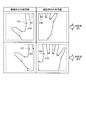
- FIG. 1 is a diagram illustrating an example of authentication processing by the biometric authentication system according to the reference example.
- the upper part of FIG. 1 shows an example of registration data
- the lower part of FIG. 1 shows an example of authentication data.
- the guide G1 shown in FIG. 1 supports the user's hand U1 and guides the imaging position to the user.
- the biometric authentication system according to the reference example acquires, for example, an authentication image P2 to be authenticated from the captured image P1 of the hand U1 placed on the guide G1, and holds biometric information extracted from the acquired authentication image P2 as registration data. To do. Further, when performing the authentication process, the biometric authentication system according to the reference example extracts biometric information as authentication data from the authentication image P4 out of the captured image P3 of the hand U1 placed on the guide G1. And the biometric authentication system which concerns on a reference example collates registration data and authentication data.
- the user does not always place the hand U1 at the same position of the guide G1 at the time of registration and authentication.
- region of authentication image P2 and authentication image P4 may differ, depending on the position where a user puts hand U1
- the biometric image extracted at the time of registration and at the time of authentication differs, and the biometric according to the reference example
- the authentication rate by the authentication system decreases. For example, when the biometric authentication system according to the reference example re-enters authentication data when authentication fails, if the authentication rate is low, the user is prompted to input authentication data many times, resulting in a decrease in usability. It becomes.
- the disclosed technique has been made in view of the above, and an object thereof is to provide a biometric authentication device, a biometric authentication program, and a biometric authentication method that can improve the authentication rate.
- the biometric authentication device disclosed in the present application is characterized by the first outline information regarding the outline of the living body acquired from the first living body image obtained by imaging the living body, and the characteristics of the living body in the first living body image.
- the first external information extracted from the area to be displayed is stored in the storage unit that stores the first external information and the registered data acquisition unit that acquires the first biological information, and the second external information is acquired from the second biological image.
- an outer shape information acquisition unit an extraction unit that extracts second biological information from the second biological image, and outer shape information related to the same biological part included in both the first outer shape information and the second outer shape information
- a registration unit that aligns the region from which the first biological information is extracted and the region from which the second biological information is extracted, and the registration unit that is aligned by the registration unit. It comprises a collating unit for collating 1 biometric information and the second biological information.
- the biometric authentication device According to one aspect of the biometric authentication device, the biometric authentication program, and the biometric authentication method disclosed in the present application, there is an effect that the authentication rate can be improved.
- FIG. 1 is a diagram illustrating an example of authentication processing by the biometric authentication system according to the reference example.
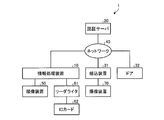
- FIG. 2 is a diagram illustrating a configuration example of the biometric authentication system according to the first embodiment.
- FIG. 3 is a diagram schematically illustrating a cross section of the imaging apparatus according to the first embodiment.
- FIG. 4 is a diagram schematically showing the A arrow view shown in FIG. 3.
- FIG. 5 is a diagram illustrating a configuration example of the imaging apparatus according to the first embodiment.
- FIG. 6 is a diagram illustrating an example of a biological image generated by the imaging device.
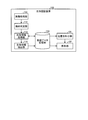
- FIG. 7 is a diagram illustrating a configuration example of the biometric authentication device according to the first embodiment.
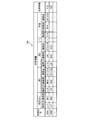
- FIG. 8 is a diagram illustrating an example of a registration data storage unit according to the first embodiment.
- FIG. 1 is a diagram illustrating an example of authentication processing by the biometric authentication system according to the reference example.
- FIG. 2 is a diagram illustrating a configuration example of the biometric authentication system according
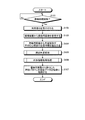
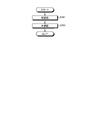
- FIG. 9 is a flowchart showing an example of registration processing by the biometric authentication apparatus according to the first embodiment.
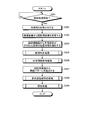
- FIG. 10 is a flowchart illustrating an example of authentication processing by the biometric authentication device according to the first embodiment.
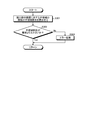
- FIG. 11 is a flowchart illustrating an example of a gap determination process performed by the gap determination unit according to the first embodiment.
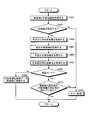
- FIG. 12 is a flowchart illustrating an example of an outline information acquisition process performed by the outline information acquisition unit according to the first embodiment.
- FIG. 13 is a diagram for explaining the outer shape information acquisition process by the outer shape information acquisition unit according to the first embodiment.
- FIG. 14 is a diagram for explaining the correspondence determination processing by the outer shape information acquisition unit according to the first embodiment.
- FIG. 15 is a flowchart illustrating an example of non-common area specifying processing by the non-common area specifying unit according to the first embodiment.
- FIG. 16 is a diagram for explaining the non-common area specifying process by the non-common area specifying unit according to the first embodiment.
- FIG. 17 is a flowchart illustrating an example of a collation process by the collation unit according to the first embodiment.
- FIG. 18 is a flowchart illustrating an example of authentication processing by the biometric authentication apparatus according to the second embodiment.
- FIG. 19 is a diagram illustrating an example of a computer that executes a biometric authentication program.
- biometric authentication device a biometric authentication program
- the biometric authentication device the biometric authentication program, and the biometric authentication method disclosed in the present application are not limited by this embodiment.
- symbol is attached
- vein authentication using biometric information “palm vein pattern” will be described as an example.
- 1 to 1 authentication” will be mainly described as an example.
- FIG. 2 is a diagram illustrating a configuration example of the biometric authentication system according to the first embodiment.
- the information processing device 10 the authentication server 20, the embedded device 31, and the door 32 are connected via a network 40.
- the information processing apparatus 10 is, for example, a PC (Personal Computer) or the like, and is connected to the imaging apparatus 50 and the reader / writer 61.
- the imaging device 50 generates a biological image by imaging a user's hand.
- the information processing apparatus 10 extracts a palm vein pattern from the biological image generated by the imaging apparatus 50.
- the reader / writer 61 reads information from an IC card (Integrated Circuit card) 62.
- the IC card 62 stores a user's vein pattern and the like as registration data.
- the information processing apparatus 10 collates the vein pattern obtained from the biological image generated by the imaging device 50 with the vein pattern stored as registration data in the IC card 62. Then, the information processing apparatus 10 permits the user to log on when the authentication is successful.
- the authentication server 20 stores the user's vein pattern as registration data. Further, when the authentication server 20 receives the authentication request, the authentication server 20 performs an authentication process using the registration data, and returns an authentication result to the transmission source of the authentication request.
- the built-in device 31 is incorporated into, for example, an entrance / exit device or the like and connected to the imaging device 70. Similar to the imaging device 50, the imaging device 70 captures a user's hand and generates a biological image.
- the door 32 is installed in the vicinity of the built-in device 31 and is unlocked by the built-in device 31.
- the embedded device 31 transmits an authentication request including the user ID and the biometric image generated by the imaging device 70 to the authentication server 20.
- the authentication server 20 collates the vein pattern corresponding to the user ID received from the embedded device 31 with the vein pattern obtained from the biometric image received from the embedded device 31, and responds to the embedded device 31 with authentication success or failure. To do.
- the built-in device 31 unlocks the door 32 when the authentication server 20 receives a successful authentication response, and does not unlock the door 32 when the authentication server 20 receives an authentication failure.
- the authentication form by the biometric authentication system 1 is not limited to the above example.
- the information processing apparatus 10 may cause the authentication server 20 to perform authentication processing by transmitting an authentication request to the authentication server 20 without performing authentication processing.
- the information processing apparatus 10 may cause the authentication server 20 to perform not only the authentication process but also the process of extracting the vein pattern by transmitting an authentication request including a biometric image to the authentication server 20.
- the embedded device 31 may perform an authentication process in the embedded device 31 that is its own device without transmitting an authentication request to the authentication server 20.
- the authentication server 20 may be a physical device or a cloud server in which calculation resources are provided by one or more physical devices.
- the built-in device 31 may be a device built into an ATM (Automatic Teller Machine) or the like.
- FIG. 3 is a diagram schematically illustrating a cross section of the imaging apparatus 50 according to the first embodiment.
- FIG. 4 is a diagram schematically showing the A arrow view shown in FIG. 3.
- the guide G1 is formed by a bottom wall G11 and a side wall G12 extending in a substantially vertical direction from the peripheral edge of the bottom wall G11.
- the side wall G12 forms an opening in which a position facing the bottom wall G11 is opened.
- Such a guide G1 guides the hand U1 to the imaging position of the imaging device 50 by supporting the user's hand U1 by the edge of the side wall G12.
- the imaging device 50 is provided on the bottom wall G11 and images the opening.
- FIG. 5 is a diagram illustrating a configuration example of the imaging device 50 according to the first embodiment.
- the imaging device 50 includes an imaging unit 51, a communication unit 52, a storage unit 53, and a control unit 54.
- the imaging unit 51 is realized by, for example, the illumination 51a, the lens 51b, and the camera 51c.
- the illumination 51a emits near-infrared rays to the hand U1 that is an imaging target located in the opening.
- the lens 51b forms an image of near infrared light reflected by the hand U1.
- the camera 51c has an image sensor that receives near-infrared light imaged by the lens 51b, and generates a biological image from the image received by the image sensor.
- the communication unit 52 is realized by, for example, the communication port 52a.
- the communication port 52a communicates with other devices.
- the communication port 52 a transmits the biological image generated by the imaging unit 51 to the information processing apparatus 10.
- the storage unit 53 is realized by, for example, the storage device 53a.
- the storage device 53a stores various information such as biological images.
- the storage device 53a is, for example, a RAM (Random Access Memory) or a flash memory.
- the control unit 54 is realized by, for example, the control device 54a.
- the control device 54a controls the illumination 51a, the camera 51c, the communication port 52a, and the storage device 53a.
- the control device 54a is, for example, a CPU (Central Processing Unit) or an MPU (Micro Processing Unit).
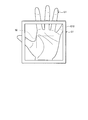
- FIG. 6 shows an example of a biological image generated by the imaging device 50.
- the imaging device 50 generates a biological image P10 in which a vein pattern image P11 of the hand U1 is depicted by irradiating the hand U1 with near infrared rays.
- the hatched area drawn on the peripheral edge of the biological image P10 corresponds to the side wall G12 of the guide G1.
- the above-described imaging device 50 is used both when the user performs an operation for starting registration of biometric information (here, a vein pattern) and when an operation for starting authentication is performed. Then, a biological image as illustrated in FIG. 6 is generated.
- biometric image generated during the registration operation may be referred to as “registration image”
- authentication image the biometric image generated during the authentication operation
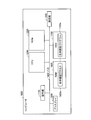
- FIG. 7 is a diagram illustrating a configuration example of the biometric authentication device according to the first embodiment.
- the biometric authentication device 100 illustrated in FIG. 7 may be any of the information processing device 10, the authentication server 20, and the embedded device 31 illustrated in FIG. In the first embodiment, the biometric authentication device 100 will be described as the information processing device 10.
- the biometric authentication device 100 operates in a “registration mode” for performing vein pattern registration processing and an “authentication mode” for performing authentication processing using a vein pattern.
- the biometric authentication device 100 includes an image processing unit 111, a gap determination unit 112, an outline information acquisition unit 113, a biometric information extraction unit 114, a registration data storage unit 120, and an alignment unit. 131 and a collation unit 132.
- the image processing unit 111, the gap determination unit 112, the outer shape information acquisition unit 113, and the biometric information extraction unit 114 perform various processes described below in both the registration mode and the authentication mode.
- the alignment unit 131 and the collation unit 132 perform various processes described below in the authentication mode.
- the image processing unit 111 performs image processing on the biological image generated by the imaging device 50. For example, the image processing unit 111 extracts position information of a hand region in which a hand is drawn and position information of a palm region in which a hand is drawn from a biological image.
- the gap determination unit 112 uses the position information of the hand region acquired by the image processing unit 111 to provide a gap of a predetermined value or more between the outer edge of the opening of the guide G1 depicted in the biological image and the hand region. It is determined whether or not exists.
- the outer shape information acquisition unit 113 acquires outer shape information related to the outer shape of the living body from the biological image using the position information of the hand region and the palm region acquired by the image processing unit 111. Specifically, the outer shape information acquisition unit 113 acquires outer shape information of each living body part for each of the living body parts “palm”, “finger”, and “wrist” that form the living body “hand”. Then, when the biometric authentication device 100 is operating in the registration mode, the outline information acquisition unit 113 stores various outline information acquired from the registration image in the registration data storage unit 120.
- the biometric information extraction unit 114 extracts biometric information from a region indicating the characteristics of the biopsy in the biometric image generated by the imaging device 50.
- the biometric information extraction unit 114 according to the first embodiment extracts, as a vein pattern, a vein segment group obtained by converting a vein image drawn in the palm region into a line figure from the palm region of the biometric image.
- the biometric information extraction unit 114 extracts a straight or curved vein segment group as a vein pattern as in the example illustrated in FIG.
- the registration data storage unit 120 stores biometric external shape information and biometric information as registration data.
- FIG. 8 shows an example of the registration data storage unit 120 according to the first embodiment. In the example illustrated in FIG. 8, the registration data storage unit 120 stores “outer shape information” and “biological information” in association with each “user ID”.
- “User ID” is identification information for identifying a user.
- the user ID is stored in the IC card 62 shown in FIG.
- Outer shape information is information stored by the outer shape information acquisition unit 113, and is classified into a biological part “palm”, “finger N (N is 1 to 5)”, and “wrist”. Then, “contour” and “circumscribed rectangle” are stored in “palm”, “contour”, “circumscribed rectangle”, and “connection point” are stored in “finger N”, and similarly, “wrist” Stores “contour”, “circumscribed rectangle”, and “connection point”.
- the “connection point” of “finger N” indicates the position information of the connection point connecting the palm and the finger, and the “connection point” of “wrist” is the position information of the connection point connecting the palm and the wrist. Indicates.
- Various types of external shape information stored in the registered data storage unit 120 will be described later.
- Biometric information stores the vein pattern extracted by the biometric information extraction unit 114.
- Such “biological information” may store digitized vein pattern information, or may store a biological image of a palm region in which a vein pattern is depicted. In FIG. 8, in order to simplify the notation, the vein pattern is indicated by a symbol such as “F10” or “F20”.
- the alignment unit 131 uses the external shape related to the same living body part included in both the external shape information stored in the registered data storage unit 120 and the external shape information acquired by the external shape information acquisition unit 113 during authentication.
- a predetermined alignment method is selected in accordance with the combination of information, and the palm region in the registration image and the palm region in the authentication image are aligned according to the selected method. Further, the alignment unit 131 identifies a non-common area that is a difference area between the palm area in the registration image and the palm area in the authentication image.
- registration outline information the outline information stored in the registration data storage unit 120
- authentication outline information the outline information acquired by the outline information acquisition unit 113 at the time of authentication. May be written.
- the collation unit 132 collates both biometric information extracted from the registration image and the authentication image aligned by the alignment unit 131. At this time, the collation unit 132 reduces the weight of the non-common area specified by the alignment unit 131 and is extracted by the vein pattern stored in the registered data storage unit 120 and the biometric information extraction unit 114 at the time of authentication. Match the vein pattern.
- the vein pattern stored in the registration data storage unit 120 is referred to as “registration vein pattern”
- the vein pattern extracted by the biometric information extraction unit 114 at the time of authentication is referred to as “authentication vein pattern”. May be written.
- FIG. 7 shows an example in which the biometric authentication device 100 includes the registration data storage unit 120, but the registration data storage unit 120 may be held by a storage device other than the biometric authentication device 100. .
- the image processing unit 111, the gap determination unit 112, the external shape information acquisition unit 113, the biometric information extraction unit 114, the alignment unit 131, and the collation unit 132 illustrated in FIG. 7 are, for example, an ASIC (Application Specific Integrated Circuit) or FPGA. Realized by integrated circuits such as (Field Programmable Gate Array). Further, the registration data storage unit 120 shown in FIG. 7 is realized by a hard disk, an optical disk, or a semiconductor memory element such as a RAM or a flash memory.
- FIG. 9 is a flowchart illustrating an example of a registration process performed by the biometric authentication device 100 according to the first embodiment.
- the biometric authentication device 100 determines whether or not to start biometric information registration processing (step S101). For example, the biometric authentication device 100 determines whether an operation for registering biometric information has been performed by the user.
- the biometric authentication device 100 accepts a user ID via an input unit (for example, a keyboard) (not shown) (Step S102). In addition, the biometric authentication device 100 receives a registration image from the imaging device 50 (step S103).
- the image processing unit 111 of the biometric authentication device 100 extracts the position information of the hand region and the palm region from the registration image received in step S103 (step S104).
- the image processing unit 111 extracts a hand region in which a hand is depicted and a palm region in which a palm is depicted from the registration image. For example, the image processing unit 111 extracts a hand region and a palm region by performing edge detection, pattern matching, and the like on the registration image. Then, the image processing unit 111 acquires the position information of the hand region and the position information of the palm region.
- the position information of the hand region is formed by a set of position information of each pixel depicting the hand in the biological image.
- the position information of the palm region is formed by a set of position information of each pixel depicting the palm in the biological image.
- the image processing unit 111 acquires, as position information, information representing each pixel in XY coordinates with a predetermined position in the biological image (for example, one of the four corners of the biological image) as the origin, for example.
- the gap determination unit 112 performs a gap determination process (step S105). Such gap determination processing will be described later with reference to FIG.
- the outline information acquisition unit 113 performs outline information acquisition processing (step S106).
- the outer shape information acquisition unit 113 stores the outer shape information in the registered data storage unit 120.
- the outline information acquisition process will be described later with reference to FIG.
- the biometric information extraction unit 114 extracts a vein pattern from the palm region of the registration image, and stores the extracted vein pattern in the registration data storage unit 120 (step S107). At this time, the biometric information extraction unit 114 stores the vein pattern in the registration data storage unit 120 in association with the user ID received in step S102.
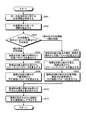
- FIG. 10 is a flowchart illustrating an example of authentication processing performed by the biometric authentication device 100 according to the first embodiment.
- the biometric authentication device 100 determines whether or not to start the authentication process (step S201). For example, the biometric authentication device 100 determines whether an operation for performing authentication is performed by the user.
- the biometric authentication device 100 accepts a user ID from an input unit (not shown) or the like (Step S202) and receives an authentication image from the imaging device 50 (Step S201). S203). Subsequently, the image processing unit 111 extracts position information of the hand region and the palm region from the authentication image received in step S203 (step S204).
- the gap determination unit 112 performs a gap determination process (step S205).
- the outer shape information acquisition unit 113 performs outer shape information acquisition processing (step S206).
- the biometric information extraction unit 114 extracts a vein pattern from the authentication image (step S207).
- step S208 the alignment unit 131 performs non-common area specifying processing. This non-common area specifying process will be described later with reference to FIG.
- the collation unit 132 performs collation processing (step S209). Such collation processing will be described later with reference to FIG.
- FIG. 11 is a flowchart illustrating an example of a gap determination process by the gap determination unit 112 according to the first embodiment.
- the gap determination unit 112 uses the position information of the hand region acquired by the image processing unit 111 to open the opening of the guide G1 depicted in the biometric image (registration image or authentication image).
- a hand region ratio that is a ratio of the area of the hand region to the area in the part is calculated (step S301).
- the gap determination unit 112 calculates the hand region ratio by dividing the area of the hand region by the area of the opening.
- the gap determination unit 112 uses the area of the biological image P10 excluding the hatched area as the area of the opening, and determines the area of the area where the hand is drawn. The area of the region.
- the gap determination unit 112 calculates the hand region ratio using the fixed area.
- the image processing unit 111 may calculate the area of the opening by performing edge detection or the like on the biological image. In such a case, the gap determination unit 112 calculates the hand area ratio using the area of the opening calculated by the image processing unit 111.
- the gap determination unit 112 determines whether or not the hand area ratio is smaller than a predetermined threshold (step S302). Then, when the hand area ratio is smaller than the predetermined threshold (Yes at Step S302), the gap determination unit 112 determines that there is a gap of a predetermined value or more between the outer edge of the opening and the hand area. The determination process ends.
- the gap determination unit 112 determines that there is no gap of a predetermined value or more between the outer edge of the opening and the hand area. Error processing is performed (step S303). For example, the gap determination unit 112 ends the registration process when the biometric authentication device 100 operates in the registration mode, and ends the authentication process when the biometric authentication device 100 operates in the authentication mode. Let At this time, the biometric authentication device 100 may display guidance so that the user holds his hand over the imaging device 50.
- the biometric authentication device 100 performs an authentication process using various types of outline information acquired by the outline information acquisition unit 113.
- the gap determination unit 112 performs the above-described gap determination process in order to determine whether or not the outline information can be acquired by the outline information acquisition unit 113.
- the biometric authentication device 100 can end the registration process and the authentication process before performing the outline information acquisition process. The authentication process can be speeded up and the processing load can be reduced.
- predetermined threshold value used in the gap determination process described above is experimentally obtained from the viewpoint of, for example, whether or not the external shape information can be acquired.
- the gap determination unit 112 may determine whether the difference between the area of the opening and the area of the hand region is greater than a predetermined threshold.
- the gap determination unit 112 may determine whether the difference between the area of the opening and the area of the hand region is greater than a predetermined threshold.
- the “predetermined threshold value” may be varied.
- the gap determination unit 112 changes the predetermined threshold to a smaller value as the distance from the imaging device 50 to the opening is longer, and sets the predetermined threshold as the distance from the imaging device 50 to the opening is shorter. Change to a larger value.
- FIG. 12 is a flowchart illustrating an example of the outer shape information acquisition process performed by the outer shape information acquisition unit 113 according to the first embodiment.
- the external shape information acquisition unit 113 uses the position information of the hand region and the position information of the palm region acquired by the image processing unit 111 to use the palm from the hand region of the biological image received from the imaging device 50. By removing the area, the position information of the finger area and the position information of the wrist area are acquired (step S401).
- the outline information acquisition unit 113 sets a region located above the palm region as a finger region and a region located below the palm region among the regions obtained by removing the palm region from the hand region as the wrist region. Further, for example, the outline information acquisition unit 113 uses, as a finger region, a region having a short boundary line with the palm region, and a region having a long boundary line with the palm region as a wrist region among the regions obtained by removing the palm region from the hand region. Also good.
- the position information of the finger area acquired by the outer shape information acquisition unit 113 is formed by a set of position information of each pixel depicting the finger in the biological image.
- the position information of the wrist region is formed by a set of position information of each pixel depicting the wrist in the biological image.
- the process of acquiring the finger area and the wrist area may be performed by the image processing unit 111.
- the image processing unit 111 may specify the finger region and the wrist region from the biological image by performing pattern matching or the like instead of removing the palm region from the hand region.
- the outline information acquisition unit 113 determines whether or not at least one finger region exists in the biological image (step S402).
- the outline information acquisition unit 113 performs error processing similar to the processing at Step S303 illustrated in FIG. 11 (Step S403). Note that the “finger region” whose presence or absence is determined by the outer shape information acquisition unit 113 requires two lines extending from the palm, but does not need to be drawn to the fingertip.
- the reason for performing the presence / absence determination of the finger area will be described.
- the alignment unit 131 described later performs alignment between the palm region in the registration image and the palm region in the authentication image, using the registration outer shape information and the authentication outer shape information.
- the outer shape information acquisition unit 113 determines the presence / absence of a finger region in order to determine whether the palm region is a biometric image that can be aligned.
- the biometric authentication device 100 can end the registration process and the authentication process before performing the non-common area specifying process when the biometric image is incomplete. The processing load can be reduced.
- the outline information acquisition unit 113 acquires the outline information of the palm from the palm area (Step S404). Further, the outline information acquisition unit 113 acquires the outline information of the finger from the finger area acquired in step S401 (step S405). Further, the outer shape information acquisition unit 113 acquires the outer shape information of the wrist from the wrist region acquired in step S401 (step S406). Subsequently, the outer shape information acquisition unit 113 acquires connection points between biological parts such as “palm”, “finger”, and “wrist” that form the hand (step S407).
- a region R11 surrounded by a solid line indicates a hand region acquired by the image processing unit 111.
- a region R12 surrounded by a solid line indicates a palm region acquired by the image processing unit 111.
- the outer shape information acquisition unit 113 acquires the finger region R13 illustrated in FIG. 13C and the wrist region R14 illustrated in FIG. 13D by excluding the palm region R12 from the hand region R11.
- the determination process in step S402 is performed.
- five finger regions R13 each have two lines extending from the palm. Therefore, the outline information acquisition unit 113 determines that there is one or more finger areas, and proceeds to the outline information acquisition process after step S404.
- the outer shape information acquisition unit 113 acquires “the palm outline” and “the palm circumscribed rectangle” as the palm outer shape information from the palm region R12 illustrated in FIG. Specifically, the outer shape information acquisition unit 113 acquires the position information group of each continuous pixel in the outermost part (solid line shown in FIG. 13B) in the palm region R12 as “palm outline”. Further, the outer shape information acquisition unit 113 acquires position information of a rectangle obtained by connecting points having a curvature equal to or greater than a predetermined value in the palm outline as a “circumference rectangle of the palm”.
- the outline information acquisition unit 113 acquires “finger outline” and “finger circumscribed rectangle” as the outline information of the finger from the finger region R13 illustrated in FIG.
- the outer shape information acquisition unit 113 acquires outer shape information for each finger region R13 when a plurality of finger regions R13 exist as in the example illustrated in FIG.
- the outer shape information acquiring unit 113 acquires “wrist outline” and “wrist circumscribed rectangle” as wrist outer shape information from the wrist region R14 shown in FIG.
- the outer shape information acquisition unit 113 acquires the position information of the pixel connecting the “palm contour” and the “finger contour” for each finger region R13 as “the palm-finger connection point”.
- the outer shape information acquisition unit 113 includes position information of palm and thumb connection points C11 and C12, position information of palm and index finger connection points C13 and C14, and palm and middle finger information.
- Position information of connection points C15 and C16, position information of palm and ring finger connection points C17 and C18, and position information of palm and little finger connection points C19 and C20 are acquired.
- the outer shape information acquisition unit 113 acquires a maximum of two “connection points between palms and fingers” for one finger.
- the outer shape information acquisition unit 113 acquires the position information of the pixel connecting the “palm contour” and the “wrist contour” as “the connection point between the palm and the wrist”. In the example shown in FIG. 13A, the outer shape information acquisition unit 113 acquires position information of the connection points C21 and C22 between the palm and the wrist. In this way, the outer shape information acquisition unit 113 acquires a maximum of two “wrist-finger connection points”.
- FIG. 13 shows an example in which the outer shape information acquisition unit 113 acquires various types of outer shape information.
- the outer shape information acquisition unit 113 acquires all the above-described outer shape information. It is not always possible.
- the hand is placed with the little finger and the wrist removed from the opening of the guide G1.
- the outline information acquisition unit 113 cannot acquire the outline information of the little finger, the connection point between the palm and the little finger, the outline information of the wrist, the connection point between the palm and the wrist, and the like. Even in such a case, the outer shape information acquisition unit 113 acquires the outer shape information that can be acquired.
- the outline information acquisition unit 113 associates with the user ID received at the start of the registration process. Then, the various outline information acquired in steps S404 to S407 is stored in the registered data storage unit 120 (step S409).
- the outline information acquisition unit 113 stores the “palm outline” acquired in step S404 in the “contour” of the “palm” in the registration data storage unit 120 illustrated in FIG. 8, and the “circumference rectangle of the palm” is stored.
- the data is stored in the “circumscribed rectangle” of the “palm” in the registered data storage unit 120.
- the outer shape information acquisition unit 113 stores “finger outline” and “finger circumscribed rectangle” corresponding to each finger acquired in step S 405 in “finger N” in the registration data storage unit 120.
- the outline information acquisition unit 113 stores the outline information in “finger 1” of the registration data storage unit 120 and acquires the outline information of five fingers.
- the external information of each finger is stored in “finger 1” to “finger 5” of the registration data storage unit 120.
- the outer shape information acquisition unit 113 stores the “wrist outline” and the “wrist circumscribed rectangle” acquired in step S406 in the “wrist” of the registration data storage unit 120. Further, the outer shape information acquisition unit 113 stores the “palm-finger connection point” acquired in step S407 in the “connection point” of “finger N” in the registration data storage unit 120, and the “wrist-finger connection point”. Is stored in the “connection point” of the “wrist” in the registered data storage unit 120.
- the position information group of each pixel is represented by a single code.
- “L11” is stored in the palm contour corresponding to the user ID “AAA”, but this contour “L11” is actually the position information group of each pixel depicting the palm contour. Indicates. This is the same for the circumscribed rectangle (“M11”, etc.).
- the outer shape information acquisition unit 113 acquires a maximum of two connection points between the living body parts.
- FIG. 8 shows an example in which two connection points are separated by “,” and stored in each connection point of the registration data storage unit 120.
- the connection point is “finger 1” corresponding to the user ID “AAA” in FIG. “C11, C12” is stored.
- the connection point is acquired as the connection point “C33, ⁇ ” of “finger 2” corresponding to the user ID “BBB” in FIG. “ ⁇ ” Is stored for connection points that did not exist.
- “C11”, “C33”, and the like stored in the connection point of the registered data storage unit 120 actually indicate the position information (coordinates) of the connection point.
- the outline information acquisition unit 113 can take the correspondence between the outline information for registration and the outline information for authentication. It is determined whether or not (step S410).
- the outer shape information acquisition unit 113 acquires the outer shape information for registration corresponding to the user ID received at the start of the authentication process from the registration data storage unit 120.
- the outer shape information acquisition unit 113 compares the outer shape information for registration with the outer shape information for authentication acquired in steps S404 to S407 in the authentication mode, and includes two or more pieces of predetermined outer shape information regarding the same living body part. It is determined whether or not.
- the outline information acquisition unit 113 according to the first embodiment determines whether or not both outline information includes at least two connection points in the outline information of the same finger.
- the outer shape information acquisition unit 113 calculates, for example, the position of the finger relative to the palm and the angle of the finger relative to the palm using the outer shape information for registration, and the outer shape information for registration based on the calculated position and angle.
- the type of finger included in the is identified.
- the outer shape information acquisition unit 113 identifies the type of finger included in the outer shape information for authentication.
- the outline information acquisition unit 113 can determine whether or not the outline information for the same finger is included in both the outline information for registration and the outline information for authentication.
- the outline information acquisition unit 113 is not limited to this example, and the outline information acquisition unit 113 associates the outline information for registration with the outline information for authentication by using a matching method such as shape context matching, so that both outline information are related to the same finger. It can be determined whether or not outline information is included.
- the outline information acquisition unit 113 performs error processing such as terminating the authentication process (Step S410). S403).
- the outline information acquisition unit 113 ends the outline information acquisition process.
- both the registration outline information and the authentication outline information do not include two connection points of the same finger.
- the registration outline information includes two connection points “C41, C42” that connect the palm and the index finger, but the authentication outline information connects the palm and the index finger. Only one connection point “C43” is included.
- the outline information acquisition unit 113 determines “no correspondence”. .
- the external shape information for registration includes two connection points “C51, C52” for connecting the palm and the index finger
- the external shape information for authentication includes 2 for connecting the palm and the index finger.
- the connection points “C53, C54” are included.
- the outline information acquisition unit 113 determines that “there is correspondence”.
- the alignment unit 131 described later aligns the palm region using the registration outline information and the authentication outline information.
- the outer shape information acquisition unit 113 determines the presence / absence of a finger region in order to determine whether the palm region is a biometric image that can be aligned.
- the biometric authentication device 100 can end the registration process and the authentication process before performing the non-common area specifying process when the biometric image is incomplete. The processing load can be reduced.
- FIG. 15 is a flowchart illustrating an example of the non-common area specifying process by the alignment unit 131 according to the first embodiment.
- the alignment unit 131 compares the registration outline information stored in the registration data storage unit 120 with the outline information for authentication, thereby including the same outline information included in both of the outline information.
- Outline information about the living body part is acquired (step S501).
- the alignment unit 131 calculates the position and angle of the finger with respect to the palm, or uses a matching method such as shape context matching, similar to the outline information acquisition unit 113 described above, thereby registering outline information and authentication.
- the same finger included in the external shape information can be specified.
- the outline information for registration includes outline information regarding “palm”, “thumb”, “index finger”, and “wrist”, and the outline information for authentication includes “palm”. ”,“ Index finger ”,“ middle finger ”,“ ring finger ”, and“ little finger ”. Therefore, in the case of this example, the alignment unit 131 acquires the outer shape information about “palm” and the outer shape information about “index finger” from both the outer shape information for registration and the outer shape information for authentication.
- the outer shape information for authentication includes a part of the outer shape information related to “thumb”. However, since there is only one connection point and the information is incomplete, the alignment unit 131 uses the outer shape information related to “thumb”. Do not get information.
- the alignment unit 131 extracts position information of the same side surface included in both circumscribed rectangles from the circumscribed rectangle of “palm” included in the outer shape information for registration and the outer shape information for authentication (step S502). .
- the alignment unit 131 extracts “a side surface between the index finger and the thumb”, “a side surface between the thumb and the wrist”, and “a side surface between the little finger and the wrist”.
- the area between the connection point C13 and the connection point C12 corresponds to the “side surface between the index finger and the thumb”, and the area between the connection point C11 and the connection point C21. It corresponds to “a side surface between the thumb and the wrist”, and between the connection point C20 and the connection point C22 corresponds to “a side surface between the little finger and the wrist”.
- the alignment unit 131 extracts the position information of the same side from both circumscribed rectangles.
- the alignment unit 131 extracts the “side surface between the index finger and the thumb” from the circumscribed rectangle for registration, and similarly, from the circumscribed rectangle for authentication, the position between the index finger and the thumb. Extract side.
- the alignment unit 131 determines the alignment method according to the combination of the external shape information of the living body part acquired in steps S501 and S502 (step S503). Specifically, as described below, the alignment unit 131 uses “angle parameter” and “scaling parameter” as parameters for aligning the palm region in the registration image and the palm region in the authentication image. And “translation parameter” are calculated.
- the “angle parameter” is a parameter for matching the angles of both palm regions.
- the “scaling parameter” is a parameter for matching the sizes of both palm regions.
- the “translation parameter” is a parameter for matching the positions of both palm regions.
- FIG. 15 as an example of the alignment method, only “one finger outline information” is acquired in steps S501 and S502, and “one finger outline information” and “one finger outline information” The case where the “side surface” is acquired will be described.
- the alignment unit 131 acquires two points included in the registration finger outline information.
- the angle between the line segment connecting the connection points (referred to as “line segment X1”) and the two connection points included in the outline information of the finger for authentication (referred to as “line segment X2”) is referred to as “angle parameter”. "(Step S504).
- the alignment unit 131 calculates the angle formed by the line segment X1 and the line segment X2 as an “angle parameter”.
- the alignment unit 131 calculates a scale where the lengths of the line segment X1 and the line segment X2 are substantially the same as the “scaling parameter” (step S505). Further, the alignment unit 131 calculates a movement vector for matching the positions of the registration connection point and the authentication connection point as a “parallel movement parameter” (step S506).
- steps S504 to S506 an example in which each parameter is calculated individually has been shown, but the alignment unit 131 can also calculate each parameter in a lump by using affine transformation.
- step S503 when the alignment unit 131 acquires “one finger outline information” and “one side face” (step S503: one finger outline information + 1 side face), a line In addition to the inclination of the segment X1 and the line segment X2, the side surface (referred to as “side surface Y1”) acquired from the external shape information for registration and the side surface acquired from external information for authentication (referred to as “side surface Y2”). ) And the “angle parameter” is calculated (step S507). For example, the alignment unit 131 calculates an average of the inclination of the line segment X1 and the line segment X2 and the inclination of the side surface Y1 and the side surface Y2 as an “angle parameter”.
- the alignment unit 131 calculates, as a “scaling parameter”, a scale in which the lengths of the line segment X1 and the line segment X2 are approximately the same, and the lengths of the side surface Y1 and the side surface Y2 are approximately the same (Ste S508).
- the alignment unit 131 calculates, as the “parallel movement parameter”, a movement vector that matches the positions of both the connection points and further matches the positions of the side surface Y1 and the side surface Y2 (step S509).
- the alignment unit 131 aligns the palm region in the registration image and the palm region in the authentication image (step S510). ).
- the alignment unit 131 can specify the palm region in the registration image based on the position information stored in the “contour” of the “palm” in the registration data storage unit 120.
- the alignment unit 131 identifies a difference area between the palm area in the registration image and the palm area in the authentication image as a non-common area (step S511).
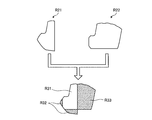
- FIG. 16 shows a palm region R21 for registration and a palm region R22 for authentication.
- the alignment unit 131 aligns the palm region R21 and the palm region R22 as shown in the lower part of FIG.
- the alignment unit 131 identifies a non-common area R32 that exists only in the palm area R21.
- the alignment unit 131 identifies a non-common region R33 that exists only in the palm region R22.
- the alignment unit 131 may further specify a common region R31 that overlaps both the palm region R21 and the region R22.
- the alignment method in the case where only “one finger outline information” is acquired, “one finger outline information”, and “one side face”.
- the registration method in the case where “ However, the alignment unit 131 selects an alignment method other than the above example according to the combination of the outline information acquired in steps S501 and S502.
- alignment methods other than the above example will be described.
- the alignment unit 131 has acquired “five-finger contour information” from the contour information for registration and authentication in step S501. In such a case, for example, the alignment unit 131 calculates various parameters such that the connection points (total 10 points) of each finger match.
- the alignment unit 131 has acquired “five finger outline information” and “one side” in steps S501 and S502.
- the alignment unit 131 extracts, for example, “one finger outline information” from “five finger outline information”, and includes two points included in the extracted registration finger outline information.
- the angle between the line segment connecting the connection points (referred to as “line segment X3”) and the two connection points included in the outer shape information of the finger for authentication (referred to as “line segment X4”) to “angle” Calculated as “parameter”.
- the alignment unit 131 calculates the inclination between the side surface Y1 and the side surface Y2 as an “angle parameter”.
- the alignment unit 131 sets either one as the “angle parameter” used for alignment, or sets both of the “angle parameters”.
- the average value is an “angle parameter” used for alignment.
- the alignment unit 131 obtains another “one finger outline information” from the “five finger outline information”. Extract and perform the same process as in the above example.
- the alignment unit 131 has acquired a contour or a circumscribed rectangle in which the upper and lower ends and the left and right ends of the palm are not missing in step S501.
- the alignment unit 131 has acquired a palm outline or circumscribed rectangle such that the entire palm is located within the opening of the guide G1.
- the alignment unit 131 calculates various parameters such that the upper and lower ends and the left and right ends of the palm match.
- the alignment unit 131 selects an alignment method that uses as much as possible each piece of external shape information acquired in steps S501 and S502.
- the registration unit 131 matches the palm region for registration and the authentication so that points (for example, connection points) and lines (for example, side surfaces, contours, circumscribed rectangles), which are each outline information that can be acquired, coincide with each other. Align with the palm area.
- the alignment part 131 can improve the alignment precision of a palm area, so that many types and the number of the same external shape information are acquired.
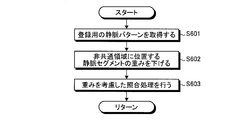
- FIG. 17 is a flowchart illustrating an example of a collation process performed by the collation unit 132 according to the first embodiment.
- the collation unit 132 acquires a registration vein pattern corresponding to the user ID received at the start of the authentication process from the registration data storage unit 120 (step S601). .
- the collation unit 132 applies the registration vein pattern acquired in step S601 and the authentication vein pattern extracted by the biometric information extraction unit 114 to the non-common area specified by the alignment unit 131.
- the matching processing weight is lowered for the vein segment located (step S602). Specifically, the collation unit 132 lowers the weight of the collation processing in the vein segments located in the non-common area rather than the vein segments located in the common area.
- the collation unit 132 collates the registration vein pattern with the authentication vein pattern in consideration of the weight (step S603). Specifically, when the verification unit 132 determines authentication success / failure, the collation unit 132 places more importance on the matching degree of the vein pattern in the common area than the matching degree of the vein pattern in the non-common area. For example, when the verification unit 132 determines whether or not the authentication has succeeded by determining whether or not the matching degree of the vein pattern is equal to or higher than a predetermined verification threshold value, the verification unit 132 corresponds to the non-common area rather than the verification threshold value corresponding to the common area. Reduce the matching threshold.
- the collation unit 132 displays the authentication result on a display unit (for example, a display) (not shown), transmits the authentication result to the imaging device 50, or records the authentication result in a log.
- a display unit for example, a display
- the collation unit 132 reduces the weight of the collation processing in the vein segment located in the non-common area.
- the present invention is not limited to this example.
- the collation unit 132 may reduce the weight of the entire vein segment including the portion located in the common area for the vein segment straddling the common area and the non-common area only partly in the non-common area. Good.
- the collation unit 132 may set a stepwise value for the weight of the non-common area. For example, the collation unit 132 may set a larger weight for a vein segment located in a region close to the common region among non-common regions, and set a smaller weight for a vein segment located in a region far from the common region. That is, even if the collation unit 132 reduces the weight of the non-common area, the non-common area close to the common area may be more important than the non-common area far from the common area. Good. By doing so, the collation unit 132 improves the authentication accuracy even when the common region exists in the non-common region due to an error in the palm region alignment accuracy by the alignment unit 131 or the like. Can do.
- the collation unit 132 may change the weight set for the non-common region in accordance with the area ratio between the common region and the non-common region. Specifically, if the weight of the non-common area is too low, the authentication result depends on the common area having a small area. For this reason, when the area ratio of the non-common area to the common area is large, even if it should be an authentication failure, the authentication succeeds if the vein pattern coincides in the common area with a small area. On the other hand, when the area ratio of the non-common area to the common area is small, it is expected that a highly accurate authentication result can be obtained by using only the vein pattern in the common area having a large area. For this reason, the matching unit 132 may set a larger value for the weight of the non-common region when the area ratio of the non-common region is large than when the area ratio of the non-common region is small. Good.
- the registration unit 131 extracts biometric information for registration using the external shape information for registration and the external shape information for authentication.
- a non-common area that is a difference between the area and the area from which the biometric information for authentication is extracted is specified.
- the collation unit 132 collates the biometric information for registration with the biometric information for authentication by lowering the weight of the non-common region specified by the alignment unit 131 to be lower than that of the common region.
- the biometric authentication device 100 reduces the weight of the non-common area even when the entire palm is not placed in the opening of the guide G1 at the time of registration or authentication.
- the authentication rate can be improved by performing. For example, even if the biometric authentication device 100 is a system that re-inputs biometric information when authentication fails, the authentication rate can be improved, and thus the user can be prevented from inputting biometric information authentication data many times. As a result, usability can be improved.
- the biometric authentication device 100 collates the biometric information for registration by reducing the weight of the non-common area, so that it is not necessary for the user to register the biometric information with high accuracy, thereby improving usability. Can do.
- the outer shape information acquisition unit 113 acquires outer shape information about the outer shape of the living body part for each living body part forming the living body, and the outer shape information for registration and the authentication are used. It is determined whether or not two or more pieces of predetermined external shape information regarding the same living body part are included in both external shape information.
- the alignment unit 131 uses the predetermined outer shape information to extract a palm region from which biometric information for registration is extracted. The non-common area is specified after aligning the palm area from which the biometric information for authentication is extracted.
- the collation unit 132 performs collation processing when a non-common area is specified by the alignment unit 131.
- the biometric authentication device 100 can determine whether or not the palm image is a biometric image in which the palm region can be aligned. Registration processing and authentication processing can be terminated before the non-common area specifying processing is performed by the unit 131. As a result, the registration processing and authentication processing can be speeded up and the processing load can be reduced.
- the alignment unit 131 is configured according to a combination of outer shape information related to the same biological part included in both the outer shape information for registration and the outer shape information for authentication. Change the alignment process.
- the biometric authentication device 100 can select an optimal alignment method.
- the biometric authentication device 100 performs the alignment process even when only the minimum external shape information (two connection points connecting the palm and the finger) can be acquired as the external information related to the same biological part. be able to.
- the biometric authentication device 100 selects a registration method that uses as much external information about the same biological part as possible, and the more the external information about the same biological part is acquired, the higher the registration accuracy of the palm region. As a result, the authentication accuracy can be improved.
- the gap determination unit 112 determines whether or not the biometric area included in the biometric image is smaller than a predetermined threshold.
- the outline information acquisition unit 113 acquires outline information when the gap determination unit 112 determines that the living body area is smaller than a predetermined threshold.
- the biometric information extraction unit 114 extracts biometric information when the gap determination unit 112 determines that the biometric area is smaller than a predetermined threshold.
- the biometric authentication apparatus 100 can determine whether or not the external shape information can be acquired by the external shape information acquisition unit 113, the biometric image is incomplete.
- the registration process and the authentication process can be terminated before the outline information acquisition unit 113 performs the outline information acquisition process.
- the registration process and the authentication process can be speeded up and the processing load can be reduced. it can.
- the biometric authentication device 100 described above may be implemented in various different forms other than the first embodiment. In the second embodiment, another embodiment of the biometric authentication device 100 will be described.
- the biometric authentication apparatus 100 performs the vein authentication using the “palm vein pattern” as the biometric information.
- the biometric authentication device 100 is not limited to vein authentication, and biometric information includes “palm print”, “vein on the back of the hand”, “print on the back of the hand”, “outside of the hand”, “outside of the finger”, “ Biometric authentication using “foot veins”, “foot prints”, “wrist veins”, “wrist prints”, “wrist outlines”, “finger joint wrinkles (knuckle authentication)”, etc.
- the present invention can also be applied to multi-biometric authentication combining biometric information.
- the biometric authentication device 100 performs one-to-one authentication.
- the biometric authentication device 100 is not limited to one-to-one authentication, and can be applied to one-to-N authentication that does not require input of a user ID.
- the biometric authentication device 100 does not perform the process in step S102 illustrated in FIG. 9 or the process in step S202 illustrated in FIG. 10 when performing one-to-N authentication.
- the biometric authentication apparatus 100 may perform the authentication process illustrated in FIG. 10 as temporary authentication when performing two-step authentication of temporary authentication and main authentication.
- FIG. 18 is a flowchart illustrating an example of authentication processing by the biometric authentication device 100 according to the second embodiment.
- the biometric authentication device 100 performs, for example, the authentication process illustrated in FIG. 10 with a high success rate as temporary authentication (step S701), and when the temporary authentication is successful, the weight of the non-common area
- the main authentication may be performed in which the verification process is performed without lowering (step S702).
- the biometric authentication device 100 performs a process with a high processing load in the main authentication, for example, performing a strict alignment in consideration of a palm bulge or the like. By performing temporary authentication with a high success rate, the biometric authentication device 100 can narrow down the users who are the targets of the main authentication with a high processing load, and can reduce the load on the authentication processing.
- the external shape information acquisition part 113 which concerns on the said 1st Embodiment may detect the positional information regarding foreign materials, such as a ring and a bandage, as external shape information.
- the outer shape information acquisition unit 113 detects a foreign object such as a ring by performing edge detection or the like. Accordingly, the alignment unit 131 performs the alignment process by excluding the foreign substance region, and the collation unit 132 performs the verification process by excluding the foreign substance region.
- the outline information acquisition unit 113 does not have to acquire all the outline information shown in FIG.
- the outline information acquisition unit 113 may not acquire “finger outline”, “finger circumscribed rectangle”, “wrist outline”, “wrist circumscribed rectangle”, and the like.
- the biometrics apparatus 100 showed the example which performs a registration process (FIG. 9) and an authentication process (FIG. 10).
- the biometric authentication device 100 may perform only the authentication process.
- the biometric authentication device 100 may perform only authentication processing.
- each component of each illustrated apparatus does not necessarily need to be physically configured as illustrated.
- the specific form of distribution / integration of each device is not limited to that shown in the figure, and all or a part thereof may be functionally or physically distributed or arbitrarily distributed in arbitrary units according to various loads or usage conditions.
- the image processing unit 111, the gap determination unit 112, the external shape information acquisition unit 113, the biological information extraction unit 114, the alignment unit 131, or the collation unit 132 have different devices, respectively, and are connected via a network to cooperate.
- the functions of the biometric authentication device 100 may be realized.
- 100 may include a registration data acquisition unit that acquires external information and biometric information from the registration data storage unit 120 at the start of registration processing or authentication processing.
- Biometric authentication program it is possible to create a program in which processing executed by the biometric authentication device 100 described in the above embodiment is described in a language that can be executed by a computer.
- a biometric authentication program in which processing executed by the biometric authentication device 100 is described in a language that can be executed by a computer can be created.
- the computer executes the biometric authentication program, the same effect as that of the above embodiment can be obtained.
- the biometric authentication program is recorded on a computer-readable recording medium, and the biometric authentication program recorded on the recording medium is read by the computer and executed, thereby realizing the same processing as in the above embodiment. Also good.
- an example of a computer that executes a biometric authentication program that realizes the same function as the biometric authentication device 100 illustrated in FIG. 7 will be described.
- FIG. 19 is a diagram illustrating an example of a computer that executes a biometric authentication program.
- the computer 1000 includes an operation unit 1100, a display 1200, and a communication unit 1300.
- the computer 1000 further includes a CPU 1500, a ROM 1600, an HDD 1700, and a RAM 1800. These units are connected via a bus 1400.
- the HDD 1700 includes the image processing unit 111, the gap determination unit 112, the external shape information acquisition unit 113, the biometric information extraction unit 114, the alignment unit 131, and the collation unit 132 described in the first embodiment.
- a biometric authentication program 1700a that exhibits the same function as is stored in advance.
- the CPU 1500 reads the biometric authentication program 1700a from the HDD 1700 and expands it in the RAM 1800. Accordingly, as shown in FIG. 19, the biometric authentication program 1700a functions as a biometric authentication process 1800a.
- the biometric authentication process 1800a expands various data read from the HDD 1700 in the area allocated to itself on the RAM 1800 as appropriate, and executes various processes based on the expanded various data.
- the biometric authentication program 1700a is not necessarily stored in the HDD 1700 or the ROM 1600 from the beginning.
- each program is stored in a portable physical medium such as a flexible disk inserted into the computer 1000, so-called FD, CD-ROM, DVD disk, magneto-optical disk, and IC card. Then, the computer 1000 may acquire and execute each program from these portable physical media.
- Each program is stored in another computer or server device connected to the computer 1000 via a public line, the Internet, a LAN, a WAN, etc., and the computer 1000 acquires and executes each program from these. It may be.
Landscapes
- Engineering & Computer Science (AREA)
- Human Computer Interaction (AREA)
- Physics & Mathematics (AREA)
- General Physics & Mathematics (AREA)
- Multimedia (AREA)
- Theoretical Computer Science (AREA)
- Collating Specific Patterns (AREA)
- Measurement Of The Respiration, Hearing Ability, Form, And Blood Characteristics Of Living Organisms (AREA)
Priority Applications (1)
| Application Number | Priority Date | Filing Date | Title |
|---|---|---|---|
| PCT/JP2012/061438 WO2013161077A1 (fr) | 2012-04-27 | 2012-04-27 | Dispositif, programme et procédé d'authentification biométrique |
Applications Claiming Priority (1)
| Application Number | Priority Date | Filing Date | Title |
|---|---|---|---|
| PCT/JP2012/061438 WO2013161077A1 (fr) | 2012-04-27 | 2012-04-27 | Dispositif, programme et procédé d'authentification biométrique |
Publications (1)
| Publication Number | Publication Date |
|---|---|
| WO2013161077A1 true WO2013161077A1 (fr) | 2013-10-31 |
Family
ID=49482443
Family Applications (1)
| Application Number | Title | Priority Date | Filing Date |
|---|---|---|---|
| PCT/JP2012/061438 Ceased WO2013161077A1 (fr) | 2012-04-27 | 2012-04-27 | Dispositif, programme et procédé d'authentification biométrique |
Country Status (1)
| Country | Link |
|---|---|
| WO (1) | WO2013161077A1 (fr) |
Cited By (13)
| Publication number | Priority date | Publication date | Assignee | Title |
|---|---|---|---|---|
| EP3193277A1 (fr) * | 2016-01-13 | 2017-07-19 | Fujitsu Limited | Dispositif d'authentification biométrique, système d'authentification biométrique, programme d'authentification biométrique |
| US10719765B2 (en) | 2015-06-25 | 2020-07-21 | Biocatch Ltd. | Conditional behavioral biometrics |
| US10834090B2 (en) | 2015-07-09 | 2020-11-10 | Biocatch Ltd. | System, device, and method for detection of proxy server |
| US10949514B2 (en) | 2010-11-29 | 2021-03-16 | Biocatch Ltd. | Device, system, and method of differentiating among users based on detection of hardware components |
| US11055395B2 (en) | 2016-07-08 | 2021-07-06 | Biocatch Ltd. | Step-up authentication |
| US11210674B2 (en) | 2010-11-29 | 2021-12-28 | Biocatch Ltd. | Method, device, and system of detecting mule accounts and accounts used for money laundering |
| US11223619B2 (en) | 2010-11-29 | 2022-01-11 | Biocatch Ltd. | Device, system, and method of user authentication based on user-specific characteristics of task performance |
| US11250435B2 (en) | 2010-11-29 | 2022-02-15 | Biocatch Ltd. | Contextual mapping of web-pages, and generation of fraud-relatedness score-values |
| US11314849B2 (en) | 2010-11-29 | 2022-04-26 | Biocatch Ltd. | Method, device, and system of detecting a lie of a user who inputs data |
| US11330012B2 (en) | 2010-11-29 | 2022-05-10 | Biocatch Ltd. | System, method, and device of authenticating a user based on selfie image or selfie video |
| US11425563B2 (en) | 2010-11-29 | 2022-08-23 | Biocatch Ltd. | Method, device, and system of differentiating between a cyber-attacker and a legitimate user |
| US11606353B2 (en) | 2021-07-22 | 2023-03-14 | Biocatch Ltd. | System, device, and method of generating and utilizing one-time passwords |
| US11838118B2 (en) | 2010-11-29 | 2023-12-05 | Biocatch Ltd. | Device, system, and method of detecting vishing attacks |
Citations (5)
| Publication number | Priority date | Publication date | Assignee | Title |
|---|---|---|---|---|
| JP2006500662A (ja) * | 2002-09-25 | 2006-01-05 | ザ・ホンコン・ポリテクニック・ユニバーシティ | 掌紋認証方法及び装置 |
| JP2008040619A (ja) * | 2006-08-02 | 2008-02-21 | Tekusupiaa:Kk | 手の甲認証システム及び手の甲認証方法 |
| JP2009230692A (ja) * | 2008-03-25 | 2009-10-08 | Fujitsu Ltd | 生体認証装置、生体情報登録装置および生体認証方法 |
| JP2010152706A (ja) * | 2008-12-25 | 2010-07-08 | Fujitsu Ltd | 生体認証装置 |
| WO2010146675A1 (fr) * | 2009-06-17 | 2010-12-23 | 富士通株式会社 | Dispositif, procédé et programme informatique d'authentification biométrique |
-
2012
- 2012-04-27 WO PCT/JP2012/061438 patent/WO2013161077A1/fr not_active Ceased
Patent Citations (5)
| Publication number | Priority date | Publication date | Assignee | Title |
|---|---|---|---|---|
| JP2006500662A (ja) * | 2002-09-25 | 2006-01-05 | ザ・ホンコン・ポリテクニック・ユニバーシティ | 掌紋認証方法及び装置 |
| JP2008040619A (ja) * | 2006-08-02 | 2008-02-21 | Tekusupiaa:Kk | 手の甲認証システム及び手の甲認証方法 |
| JP2009230692A (ja) * | 2008-03-25 | 2009-10-08 | Fujitsu Ltd | 生体認証装置、生体情報登録装置および生体認証方法 |
| JP2010152706A (ja) * | 2008-12-25 | 2010-07-08 | Fujitsu Ltd | 生体認証装置 |
| WO2010146675A1 (fr) * | 2009-06-17 | 2010-12-23 | 富士通株式会社 | Dispositif, procédé et programme informatique d'authentification biométrique |
Cited By (18)
| Publication number | Priority date | Publication date | Assignee | Title |
|---|---|---|---|---|
| US11314849B2 (en) | 2010-11-29 | 2022-04-26 | Biocatch Ltd. | Method, device, and system of detecting a lie of a user who inputs data |
| US11838118B2 (en) | 2010-11-29 | 2023-12-05 | Biocatch Ltd. | Device, system, and method of detecting vishing attacks |
| US11580553B2 (en) | 2010-11-29 | 2023-02-14 | Biocatch Ltd. | Method, device, and system of detecting mule accounts and accounts used for money laundering |
| US11425563B2 (en) | 2010-11-29 | 2022-08-23 | Biocatch Ltd. | Method, device, and system of differentiating between a cyber-attacker and a legitimate user |
| US10949514B2 (en) | 2010-11-29 | 2021-03-16 | Biocatch Ltd. | Device, system, and method of differentiating among users based on detection of hardware components |
| US11330012B2 (en) | 2010-11-29 | 2022-05-10 | Biocatch Ltd. | System, method, and device of authenticating a user based on selfie image or selfie video |
| US11210674B2 (en) | 2010-11-29 | 2021-12-28 | Biocatch Ltd. | Method, device, and system of detecting mule accounts and accounts used for money laundering |
| US11223619B2 (en) | 2010-11-29 | 2022-01-11 | Biocatch Ltd. | Device, system, and method of user authentication based on user-specific characteristics of task performance |
| US11250435B2 (en) | 2010-11-29 | 2022-02-15 | Biocatch Ltd. | Contextual mapping of web-pages, and generation of fraud-relatedness score-values |
| US10719765B2 (en) | 2015-06-25 | 2020-07-21 | Biocatch Ltd. | Conditional behavioral biometrics |
| US11238349B2 (en) | 2015-06-25 | 2022-02-01 | Biocatch Ltd. | Conditional behavioural biometrics |
| US10834090B2 (en) | 2015-07-09 | 2020-11-10 | Biocatch Ltd. | System, device, and method for detection of proxy server |
| US11323451B2 (en) | 2015-07-09 | 2022-05-03 | Biocatch Ltd. | System, device, and method for detection of proxy server |
| EP3193277A1 (fr) * | 2016-01-13 | 2017-07-19 | Fujitsu Limited | Dispositif d'authentification biométrique, système d'authentification biométrique, programme d'authentification biométrique |
| US10102416B2 (en) | 2016-01-13 | 2018-10-16 | Fujitsu Limited | Biometric authentication device, biometric authentication method and computer-readable non-transitory medium |
| JP2017126168A (ja) * | 2016-01-13 | 2017-07-20 | 富士通株式会社 | 生体認証装置、生体認証方法、および生体認証プログラム |
| US11055395B2 (en) | 2016-07-08 | 2021-07-06 | Biocatch Ltd. | Step-up authentication |
| US11606353B2 (en) | 2021-07-22 | 2023-03-14 | Biocatch Ltd. | System, device, and method of generating and utilizing one-time passwords |
Similar Documents
| Publication | Publication Date | Title |
|---|---|---|
| JP5747642B2 (ja) | 生体認証装置、生体認証システム、生体認証サーバ、生体認証クライアント及び生体認証装置制御方法 | |
| KR101706290B1 (ko) | 생체 측정 인증 디바이스 및 방법 | |
| JP5445584B2 (ja) | 生体認証装置、生体認証方法及び生体認証用コンピュータプログラム | |
| JP5831018B2 (ja) | 生体認証装置及び生体認証装置における利用者の手の位置の調整方法 | |
| US9251396B2 (en) | Touchless fingerprinting acquisition and processing application for mobile devices | |
| JP5930023B2 (ja) | 生体認証装置、生体認証方法及び生体認証用コンピュータプログラム | |
| JP6589309B2 (ja) | 端末装置、生体認証プログラム及び生体認証方法 | |
| US7747043B2 (en) | Registration method for biometrics authentication system, biometrics authentication system, and program for same | |
| JP5812109B2 (ja) | 生体情報処理装置、生体情報処理方法及び生体情報処理用コンピュータプログラム | |
| JP6467852B2 (ja) | 生体情報補正装置、生体情報補正方法及び生体情報補正用コンピュータプログラム | |
| US20140241593A1 (en) | Authentication apparatus, authentication method, and non-transitory computer readable medium | |
| JP2007206991A (ja) | 生体情報処理装置及び生体情報処理プログラム | |
| WO2014112081A1 (fr) | Dispositif d'authentification biométrique, système d'authentification biométrique, et procédé d'authentification biométrique | |
| JP6160148B2 (ja) | 生体情報入力装置、生体情報入力プログラム、生体情報入力方法 | |
| JP5888390B2 (ja) | 生体認証装置 | |
| JP6617570B2 (ja) | 生体認証装置、生体認証方法、および生体認証プログラム | |
| JP6187262B2 (ja) | 生体情報処理装置、生体情報処理方法及び生体情報処理用コンピュータプログラム | |
| JP4945505B2 (ja) | 生体情報処理装置 | |
| JP6364828B2 (ja) | 生体認証装置および携帯型電子装置 | |
| JP2012073905A (ja) | 生体認証装置 | |
| JP2010165132A (ja) | 個人識別装置 | |
| JP2017162301A (ja) | 生体認証装置、生体認証方法および生体認証プログラム |
Legal Events
| Date | Code | Title | Description |
|---|---|---|---|
| 121 | Ep: the epo has been informed by wipo that ep was designated in this application |
Ref document number: 12875107 Country of ref document: EP Kind code of ref document: A1 |
|
| NENP | Non-entry into the national phase |
Ref country code: DE |
|
| 122 | Ep: pct application non-entry in european phase |
Ref document number: 12875107 Country of ref document: EP Kind code of ref document: A1 |
|
| NENP | Non-entry into the national phase |
Ref country code: JP |