WO2013162025A1 - リチウム二次電池の電極形成用組成物、電極及びリチウム二次電池 - Google Patents
リチウム二次電池の電極形成用組成物、電極及びリチウム二次電池 Download PDFInfo
- Publication number
- WO2013162025A1 WO2013162025A1 PCT/JP2013/062485 JP2013062485W WO2013162025A1 WO 2013162025 A1 WO2013162025 A1 WO 2013162025A1 JP 2013062485 W JP2013062485 W JP 2013062485W WO 2013162025 A1 WO2013162025 A1 WO 2013162025A1
- Authority
- WO
- WIPO (PCT)
- Prior art keywords
- active material
- particles
- group
- electrode
- dispersant
- Prior art date
- Legal status (The legal status is an assumption and is not a legal conclusion. Google has not performed a legal analysis and makes no representation as to the accuracy of the status listed.)
- Ceased
Links
Classifications
-
- C—CHEMISTRY; METALLURGY
- C01—INORGANIC CHEMISTRY
- C01B—NON-METALLIC ELEMENTS; COMPOUNDS THEREOF; METALLOIDS OR COMPOUNDS THEREOF NOT COVERED BY SUBCLASS C01C
- C01B25/00—Phosphorus; Compounds thereof
- C01B25/16—Oxyacids of phosphorus; Salts thereof
- C01B25/26—Phosphates
- C01B25/45—Phosphates containing plural metal, or metal and ammonium
-
- C—CHEMISTRY; METALLURGY
- C01—INORGANIC CHEMISTRY
- C01B—NON-METALLIC ELEMENTS; COMPOUNDS THEREOF; METALLOIDS OR COMPOUNDS THEREOF NOT COVERED BY SUBCLASS C01C
- C01B32/00—Carbon; Compounds thereof
- C01B32/05—Preparation or purification of carbon not covered by groups C01B32/15, C01B32/20, C01B32/25, C01B32/30
-
- H—ELECTRICITY
- H01—ELECTRIC ELEMENTS
- H01M—PROCESSES OR MEANS, e.g. BATTERIES, FOR THE DIRECT CONVERSION OF CHEMICAL ENERGY INTO ELECTRICAL ENERGY
- H01M4/00—Electrodes
- H01M4/02—Electrodes composed of, or comprising, active material
- H01M4/13—Electrodes for accumulators with non-aqueous electrolyte, e.g. for lithium-accumulators; Processes of manufacture thereof
- H01M4/136—Electrodes based on inorganic compounds other than oxides or hydroxides, e.g. sulfides, selenides, tellurides, halogenides or LiCoFy
-
- H—ELECTRICITY
- H01—ELECTRIC ELEMENTS
- H01M—PROCESSES OR MEANS, e.g. BATTERIES, FOR THE DIRECT CONVERSION OF CHEMICAL ENERGY INTO ELECTRICAL ENERGY
- H01M4/00—Electrodes
- H01M4/02—Electrodes composed of, or comprising, active material
- H01M4/36—Selection of substances as active materials, active masses, active liquids
- H01M4/362—Composites
- H01M4/364—Composites as mixtures
-
- H—ELECTRICITY
- H01—ELECTRIC ELEMENTS
- H01M—PROCESSES OR MEANS, e.g. BATTERIES, FOR THE DIRECT CONVERSION OF CHEMICAL ENERGY INTO ELECTRICAL ENERGY
- H01M4/00—Electrodes
- H01M4/02—Electrodes composed of, or comprising, active material
- H01M4/36—Selection of substances as active materials, active masses, active liquids
- H01M4/362—Composites
- H01M4/366—Composites as layered products
-
- H—ELECTRICITY
- H01—ELECTRIC ELEMENTS
- H01M—PROCESSES OR MEANS, e.g. BATTERIES, FOR THE DIRECT CONVERSION OF CHEMICAL ENERGY INTO ELECTRICAL ENERGY
- H01M4/00—Electrodes
- H01M4/02—Electrodes composed of, or comprising, active material
- H01M4/36—Selection of substances as active materials, active masses, active liquids
- H01M4/58—Selection of substances as active materials, active masses, active liquids of inorganic compounds other than oxides or hydroxides, e.g. sulfides, selenides, tellurides, halogenides or LiCoFy; of polyanionic structures, e.g. phosphates, silicates or borates
- H01M4/5825—Oxygenated metallic salts or polyanionic structures, e.g. borates, phosphates, silicates, olivines
-
- H—ELECTRICITY
- H01—ELECTRIC ELEMENTS
- H01M—PROCESSES OR MEANS, e.g. BATTERIES, FOR THE DIRECT CONVERSION OF CHEMICAL ENERGY INTO ELECTRICAL ENERGY
- H01M4/00—Electrodes
- H01M4/02—Electrodes composed of, or comprising, active material
- H01M4/62—Selection of inactive substances as ingredients for active masses, e.g. binders, fillers
- H01M4/621—Binders
- H01M4/622—Binders being polymers
- H01M4/623—Binders being polymers fluorinated polymers
-
- H—ELECTRICITY
- H01—ELECTRIC ELEMENTS
- H01M—PROCESSES OR MEANS, e.g. BATTERIES, FOR THE DIRECT CONVERSION OF CHEMICAL ENERGY INTO ELECTRICAL ENERGY
- H01M4/00—Electrodes
- H01M4/02—Electrodes composed of, or comprising, active material
- H01M4/62—Selection of inactive substances as ingredients for active masses, e.g. binders, fillers
- H01M4/624—Electric conductive fillers
- H01M4/625—Carbon or graphite
-
- H—ELECTRICITY
- H01—ELECTRIC ELEMENTS
- H01M—PROCESSES OR MEANS, e.g. BATTERIES, FOR THE DIRECT CONVERSION OF CHEMICAL ENERGY INTO ELECTRICAL ENERGY
- H01M10/00—Secondary cells; Manufacture thereof
- H01M10/05—Accumulators with non-aqueous electrolyte
- H01M10/052—Li-accumulators
-
- H—ELECTRICITY
- H01—ELECTRIC ELEMENTS
- H01M—PROCESSES OR MEANS, e.g. BATTERIES, FOR THE DIRECT CONVERSION OF CHEMICAL ENERGY INTO ELECTRICAL ENERGY
- H01M4/00—Electrodes
- H01M4/02—Electrodes composed of, or comprising, active material
- H01M4/13—Electrodes for accumulators with non-aqueous electrolyte, e.g. for lithium-accumulators; Processes of manufacture thereof
- H01M4/139—Processes of manufacture
- H01M4/1397—Processes of manufacture of electrodes based on inorganic compounds other than oxides or hydroxides, e.g. sulfides, selenides, tellurides, halogenides or LiCoFy
-
- Y—GENERAL TAGGING OF NEW TECHNOLOGICAL DEVELOPMENTS; GENERAL TAGGING OF CROSS-SECTIONAL TECHNOLOGIES SPANNING OVER SEVERAL SECTIONS OF THE IPC; TECHNICAL SUBJECTS COVERED BY FORMER USPC CROSS-REFERENCE ART COLLECTIONS [XRACs] AND DIGESTS
- Y02—TECHNOLOGIES OR APPLICATIONS FOR MITIGATION OR ADAPTATION AGAINST CLIMATE CHANGE
- Y02E—REDUCTION OF GREENHOUSE GAS [GHG] EMISSIONS, RELATED TO ENERGY GENERATION, TRANSMISSION OR DISTRIBUTION
- Y02E60/00—Enabling technologies; Technologies with a potential or indirect contribution to GHG emissions mitigation
- Y02E60/10—Energy storage using batteries
Definitions
- the present invention relates to a composition for forming a lithium secondary battery electrode, an electrode using the composition, and a lithium secondary battery.
- an electrode of a lithium secondary battery may be composed of a positive electrode having a positive electrode mixture layer on the current collector surface of the metal foil and a negative electrode having a negative electrode mixture layer on the current collector surface of the metal foil.
- the said positive mix layer can be formed from the composition for electrode formation containing the positive electrode active material containing a lithium ion, a conductive support agent, and binder resin, for example.
- the negative electrode mixture layer can be formed from, for example, a composition for forming an electrode including a negative electrode active material from which lithium ions can be inserted and removed, a conductive additive, and a binder resin.
- the distribution state of each component in the composite layer is important for the electrode. The reason is that the dispersed state not only affects the electrode physical properties but also the battery performance. Therefore, various methods for controlling the distribution state of each component including the active material have been studied so far.
- Patent Documents 1 to 4 disclose a method of using active material particles having different primary particle sizes as active materials having different average particle sizes.
- the charge / discharge rate varies depending on the particle size, so that a load is easily applied to the active material having a small particle size, and the cycle characteristics tend to be deteriorated.
- the performance of an active material having low ion diffusibility and low electron conductivity deteriorates as the primary particle size increases. Therefore, when the above active material is used, it is difficult to adapt the above method.
- Patent Documents 3 and 4 disclose a method of pulverizing particles in order to obtain active materials having different average particle diameters.
- pulverizing by giving a large share to the active material particles tends to result in a loss of the inherent performance of the active material.
- lithium metal phosphate composite particles having an olivine structure have a particle surface coated with conductive carbon. Therefore, when they are used as an active material and the above method is applied, in the process of pulverizing the particles and obtaining an active material having a small particle diameter, many uncoated surfaces are exposed, and battery performance is greatly improved. There is a tendency to decrease.
- Patent Document 5 a method of using a dispersant in addition to conventional materials at the time of preparing an electrode forming composition has also been reported (Patent Document 5).
- a dispersing agent By using a dispersing agent, it becomes possible to arrange
- improvements are still desired in terms of the strength and thickening of the composite material layer, the adhesion between the composite material layer and the current collector, and high-speed charge / discharge characteristics. ing. Thus, further improvement is desired in order to realize desired electrode and secondary battery characteristics.
- JP 2006-310311 A JP 2009-146788 A JP 2009-283354 A JP 2003-109592 A Japanese Patent No. 3213944
- the present invention can provide a highly filled active material in the composite material layer, and also provides a very excellent charge even when using a positive electrode material having an olivine structure inferior in lithium diffusibility and electronic conductivity. It aims at providing the composition for lithium secondary battery electrode formation which has discharge capacity. Furthermore, in the production of an electrode having a current collector and a composite layer, the present invention cracks the coating film even when the composition is applied so that a sufficient film thickness is obtained on the current collector. It aims at providing the composition for lithium secondary battery electrode formation which can form the compound-material layer excellent in adhesiveness with an electrical power collector, and excellent also in durability.
- the present inventors As a result of intensive studies in order to solve the above-described problems in the prior art, the present inventors, as a result, two kinds of active materials having a primary particle size that is both fine and different in secondary particle size, a dispersing agent, It came to complete the composition for lithium secondary battery electrode formation using this. That is, the present invention relates to the embodiments described below.
- a composition for forming a lithium secondary battery electrode comprising a first active material, a second active material, a dispersant, a binder, and a solvent, wherein the first active material is , Secondary particles formed from coated primary particles in which the surface of primary particles of lithium phosphate metal composite particles represented by the following general formula (1) is coated with conductive carbon, and the average particle diameter of the coated primary particles Is 50 to 300 nm, the average particle diameter of the secondary particles is 300 nm to 5 ⁇ m, and the second active material is a surface of primary particles of lithium phosphate metal composite particles represented by the following general formula (1) Is a granulated particle formed from coated primary particles coated with conductive carbon, the average particle size of the coated primary particles is 50 to 300 nm, and the average particle size of the granulated particles is 5 to 30 ⁇ m.
- the composition characterized by the above-mentioned.
- An electrode for a lithium secondary battery having a current collector and a composite material layer formed on the surface of the current collector, wherein the composite material layer is the above ⁇ 1> to ⁇ 6>
- the electrode which is a dry coating film formed using the composition as described in any one.
- a lithium secondary battery having a positive electrode, a negative electrode, and an electrolyte, wherein the positive electrode is the electrode according to ⁇ 7> or ⁇ 8>.
- the active material can be arranged in a highly filled layer in the composite material layer, and even if it is applied so as to obtain a sufficient film thickness on the current collector, the lithium secondary film does not crack.
- a composition for forming a battery electrode can be provided.
- the composition for forming a lithium secondary battery electrode of the present invention it is possible to form a composite layer having excellent adhesion to the current collector, and excellent durability, charge / discharge capacity, and high-speed charge / discharge characteristics.
- a secondary battery can be provided.
- composition for forming a lithium secondary battery electrode The first aspect of the present invention relates to a composition for forming a lithium secondary battery electrode.
- the composition includes first and second active materials, a dispersant, a binder, and a solvent.
- first and second active materials include first and second active materials, a dispersant, a binder, and a solvent.
- lithium phosphate metal composite particles represented by the following general formula (1) whose surface is coated with conductive carbon are used as the active material.
- Specific examples of the lithium metal phosphate composite particles represented by the general formula (1) include LiFePO 4 , LiMnPO 4 , and LiFe 0.5 Mn 0.5 PO 4 .
- the active material in the composition of the present invention is not limited to the above specific examples, and may be any compound represented by the above general formula (1).
- composition of the present invention is characterized in that two types of particles formed from the above compounds and having different average particle diameters are used as an active material. That is, the present invention requires a combination of the first active material and the second active material described below.
- the first active material is secondary particles formed from coated primary particles in which the surfaces of primary particles of the lithium phosphate metal composite particles represented by the general formula (1) are coated with conductive carbon.
- the coated primary particles have an average particle size of 50 to 300 nm, preferably 60 to 250 nm.
- the average particle diameter of the secondary particles is 300 nm to 5 ⁇ m, preferably 400 nm to 3 ⁇ m.
- the first active material is secondary particles formed by agglomeration of primary particles obtained in a normal synthesis process of lithium metal phosphate composite particles.
- each of the primary particles constituting the secondary particles has a conductive carbon coating layer on the surface thereof. That is, “secondary particles” described in the present specification means the aggregates (essentially untreated) of the coated primary particles obtained without going through the intentional aggregation step or granulation step. To do.
- any treatment for the secondary particles is not excluded.
- the aggregate (secondary particles) of primary particles of lithium metal phosphate composite particles obtained in a normal synthesis process is a coarse particle, it was obtained via a step of pulverizing the coarse particle.
- Secondary particles may be used.
- the crushing step is intended to crush the aggregate. That is, the pulverization step does not mean a step in which excessive shearing force is applied to the particles and D50 is reduced to half or less.
- the secondary particles may be referred to as first active material particles.
- the second active material is a granulated particle formed from coated primary particles in which the surface of primary particles of the lithium phosphate metal composite particles represented by the general formula (1) is coated with conductive carbon.
- the coated primary particles have an average particle size of 50 to 300 nm, preferably 60 to 250 nm.
- the average particle diameter of the granulated particles is 5 to 30 ⁇ m, preferably 8 to 20 ⁇ m.
- the second active material is a granulated particle formed using primary particles obtained in a normal synthesis process of lithium phosphate metal composite particles.
- the primary particles constituting the granulated particles each have a conductive carbon coating layer on the surface.
- the granulated particles may be particles obtained by granulating the first active material.
- the granulated particles and the second active material particles may be referred to.
- the first and second active materials used in the composition of the present invention are each composed of fine coated primary particles having an average particle diameter of 50 to 300 nm. Therefore, when the composition of the present invention is used as an electrode material for a lithium secondary battery, the distance from the center of each particle to the electrolytic solution is short, and it becomes easy to improve the diffusibility of lithium ions.
- the average particle diameter of the coated primary particles constituting the first and second active materials is not particularly limited as long as it is within the above range.
- the average particle diameter of the coated primary particles in each of the active materials may be the same or different.
- the difference in average particle diameter between the coated primary particles of the first active material and the second active material is preferably 100 nm or less.
- the method for synthesizing the above compound used as an active material in the present invention is not particularly limited.
- known methods such as a solid phase method, a hydrothermal method, and a spray pyrolysis method are used. Can be applied.
- the method for coating the surface of the metal composite particles with conductive carbon is not particularly limited.
- a method of firing a conductive carbon precursor together with metal composite particles in an inert atmosphere can be applied.
- a method of supporting the conductive fine particle carbon material on the surface of the metal composite particles using a dry method or a wet method can be applied. When the latter method is used, a stronger coating can be formed by adding a step of firing the carbon material in an inert atmosphere.
- Whether or not the surface of the metal composite particle is coated with conductive carbon can be confirmed by observing the cross section of the particle using a transmission electron microscope or analyzing the Raman band of the particle surface by Raman spectroscopy. it can.
- the first active material used in the present invention is secondary particles formed by agglomeration of the coated primary particles obtained by the above-described steps. However, after synthesizing the active material according to the above-described steps, it may be produced through a step of reducing the particle size of the obtained secondary particles. However, it is assumed that the coated carbon on the surface of the coated primary particles is not damaged.
- the second active material used in the present invention can be produced by granulating the coated primary particles obtained by the above-described steps.
- the second active material is prepared by granulating together the metal composite particles not coated with conductive carbon and a precursor of conductive carbon, and then firing the particles. There may be.
- the second active material may be prepared by granulating the first active material of the present invention.
- the granulation method for forming the second active material is not particularly limited. For example, a method in which a slurry in which active material particles are dispersed in a solvent is prepared and then the solvent is removed from the slurry can be applied. If necessary, an additive such as a conductive carbon precursor, a binder or an antifoaming agent may be added to the slurry. In addition, conductive fine particle carbon materials such as acetylene black, ketjen black, or carbon nanotubes may be added. In the present invention, the type of additive and the amount of the additive are not particularly limited.
- the granulated particles serving as the second active material may be produced by any manufacturing method as long as it has a predetermined average particle diameter.
- a manufacturing method is not limited, as a preferable embodiment, for example, a step (A) of obtaining a slurry in which an active material, a dispersant, and a solvent are mixed, and a step (B) of removing the solvent from the slurry. The method containing these is mentioned.
- a method of applying an active material dispersed in a solvent is applied.
- an active material is added to a solution containing a dispersant, and these are mixed and stirred.
- the dispersion and mixing apparatus to be used include an ultrasonic dispersion machine, a stirring dispersion machine, a high-speed rotary shear dispersion machine, a mill dispersion machine, and a high-pressure jet dispersion machine.
- the “state in which the active material is dispersed” described in the present specification means that when the slurry is sampled and diluted to a predetermined concentration, and the particle size (JIS K5101) by a grind gauge is measured, the particle size is less than 15 ⁇ m. Means a state.
- a method of removing the solvent from the slurry and obtaining granulated particles is applied.
- a known method can be applied as a granulation method such as heat drying with a high-speed stirrer or spray drying.
- the spray drying is a method in which an active material is dispersed in a solvent together with a dispersant, and then sprayed in a high-temperature atmosphere.
- the solvent is instantaneously blown to form granulated particles of the active material bound by the dispersant. be able to.
- the slurry prepared during the production of the granulated particles is preferably in a state where the active material particles are well dispersed in the solvent. Further, at the time of granulation, for example, it is preferable to produce granulated particles in which the particles are closely bonded by utilizing the interaction between an acidic group and a basic group. Such granulated particles can be obtained by mixing a slurry in which active material particles are dispersed with an acidic dispersant and a slurry in which the active material particles are dispersed with a basic dispersant, and then dry granulating the mixed slurry. .
- the method for removing the solvent is not particularly limited.
- it can be selected from spray drying, stirring drying, standing drying and the like.
- a spray dryer can be suitably used because it can be granulated into a spherical shape that can be easily filled with particles.
- organic substances such as a binder
- the organic substance is carbonized by firing the obtained granulated particles in an inert atmosphere.
- Organic substances can be suitably used because they do not adversely affect battery performance.
- the inert atmosphere may be, for example, an atmosphere filled with nitrogen or argon.
- a vacuum atmosphere may be used.
- the average particle diameter of the coated primary particles described in the present invention refers to 100 particles randomly extracted by observing the coated primary particles with a scanning electron microscope (SEM) enlarged image (1000 to 50000 times). The major axis of the particle is measured, and is an average value of 100 obtained measurement values.
- the average particle diameter of the first active material as the secondary particles and the second active material as the granulated particles is determined by observing the secondary particles and the granulated particles with a scanning electron microscope. It is a value obtained by measuring the long axis of the secondary particles and the granulated particles and averaging the obtained 100 measured values for 100 extracted in the above.
- the content of the first active material particles is preferably in the range of 10 to 90% by weight with respect to the total weight of the first active material particles and the second active material particles.
- the content of the first active material particles is more preferably in the range of 20 to 90% by weight.
- the content of the first active material particles is less than 50% by weight, the ratio of the second active material particles is increased, which is close to the result of using only the second active material particles. Specifically, adhesion and battery characteristics at high density tend to be reduced.
- the content of the first active material particles is more than 80% by weight, the combined use effect with the second active material particles is weakened and it is difficult to increase the thickness.
- the content of the first active material particles is more preferably in the range of 50 to 80% by weight.
- the active material can be easily and highly filled in the composite material layer, and various characteristics are balanced by the combined use of the first and second active materials. It becomes easy to improve well.
- the compressive fracture strength (MPa) of the second active material particles is not particularly limited.
- an active material having a small primary particle diameter is granulated, it can be set in the range of 0.2 to 20 MPa. The above range is evidence that an active material having a small primary particle diameter is granulated.
- the compression fracture strength (MPa) can be measured using a micro compression tester (trade name: MCT-W501, Shimadzu Corporation).
- the dispersant in the composition of the present invention is not particularly limited as long as the active material can be satisfactorily dispersed in the dispersion solvent.
- a composition in which active materials having different particle diameters are well dispersed is obtained. Can be easily obtained.
- the dispersant has at least one functional group selected from the group consisting of an acidic functional group, a basic functional group, and a hydroxyl group. More specifically, a resin-type dispersant having various functional groups, or various derivatives such as organic pigment derivatives, anthraquinone derivatives, acridone derivatives, and triazine derivatives are preferable.
- a resin-type dispersant having various functional groups, or various derivatives such as organic pigment derivatives, anthraquinone derivatives, acridone derivatives, and triazine derivatives are preferable.
- the dispersant that can be used in the present invention will be specifically described.
- one preferred embodiment of the dispersant is a resin-type dispersant.
- the resin-type dispersant include an anionic dispersant, a cationic dispersant, an amphoteric dispersant, and a hydroxyl group-containing dispersant.
- These resin-type dispersants may be in the form of a polymer having at least one functional group selected from the group consisting of an acidic functional group, a basic functional group and a hydroxyl group, or a neutralized product of the above polymer.
- the resin-type dispersant can be more suitably used in an embodiment using an aqueous solvent as a solvent for the composition.
- the hydrophobic site of the resin-type dispersant can be the main site of adsorption to the active material in the aqueous liquid medium.
- the hydrophilic portion containing at least one functional group selected from the group consisting of an acidic functional group, a basic functional group and a hydroxyl group has a function of dissolving or dispersing the neutralized product of the polymer in an aqueous liquid medium. .
- the resin type dispersant that can be used in the present invention will be described more specifically.
- amphoteric dispersant As an example of the amphoteric dispersant, an ethylenically unsaturated monomer (a1) having an aromatic ring, an ethylenically unsaturated monomer (a2) having a carboxyl group, and an ethylenically unsaturated monomer having an amino group And a copolymer of the body (a3) with an ethylenically unsaturated monomer (a4) other than (a1) and (a2) and (a3), and a neutralized product of the copolymer.
- the ratio of the monomers constituting the copolymer in the amphoteric dispersant is such that (a1) is 5 to 70% by weight and (a2) is 15 based on the total weight of the monomers (a1) to (a4). -60 wt%, (a3) is 1-80 wt%, and (a4) is 0-79 wt%.
- (A1) An ethylenically unsaturated monomer having an aromatic ring The (a1) is not particularly limited as long as it is an ethylenically unsaturated monomer having an aromatic ring. Examples include styrene, ⁇ -methylstyrene, and benzyl (meth) acrylate.
- (A2) Ethylenically unsaturated monomer having a carboxyl group The (a2) is not particularly limited as long as it is an ethylenically unsaturated monomer having a carboxyl group.
- maleic acid, fumaric acid, itaconic acid, and citraconic acid their alkyl or alkenyl monoesters, phthalic acid ⁇ - (meth) acryloxyethyl monoester, isophthalic acid ⁇ - (meth) acryloxyethyl monoester, terephthalic acid Acid ⁇ - (meth) acryloxyethyl monoester and succinic acid ⁇ - (meth) acryloxyethyl monoester; acrylic acid, methacrylic acid, crotonic acid, and cinnamic acid. In particular, methacrylic acid and acrylic acid are preferable.
- the (a3) is not particularly limited as long as it is an ethylenically unsaturated monomer having an aliphatic amino group or an aromatic amino group.
- monomers having an aliphatic amino group and having one ethylenically unsaturated group in one molecule include dimethylaminoethyl (meth) acrylate, diethylaminoethyl (meth) acrylate, and methylethylaminoethyl.
- Examples of the monomer having two ethylenically unsaturated groups in one molecule include diallylamine and diallylmethylamine.
- Examples of the monomer having an aromatic amino group include aminostyrene, dimethylaminostyrene, and diethylaminostyrene.
- An example of the (a4) is a (meth) acrylate compound. More specific examples include alkyl (meth) acrylates and alkylene glycol (meth) acrylates.
- anionic dispersant As an example of the anionic dispersant, a resin having at least one functional group of carboxylic acid and sulfonic acid can be used as the anionic site.
- the anionic dispersant preferably has an acid value of 100 to 600 mgKOH / g, a hydroxyl value of 0 to 400 mgKOH / g, and a weight average molecular weight of 5000 or more.
- the anionic dispersant having sulfonic acid is not particularly limited as long as it is a resin having sulfonic acid.
- a formalin condensate of aromatic sulfonic acid can be used.
- the formalin condensate of aromatic sulfonic acid is obtained, for example, by condensing benzenesulfonic acid, alkylbenzenesulfonic acid, naphthalenesulfonic acid (or an alkali metal salt thereof) with formalin.
- the anionic dispersant having a carboxylic acid is not particularly limited as long as it is a resin having a carboxyl group.
- a preferred embodiment of the present invention includes a polymer of an unsaturated monomer having a carboxyl group such as (meth) acrylic acid.
- it may be a copolymer of an unsaturated monomer having a carboxyl group and another polymerizable compound. More specifically, an ethylenically unsaturated monomer (a1) having an aromatic ring, an ethylenically unsaturated monomer (a2) having a carboxyl group, and the ethylenically unsaturated monomer (a4) And a neutralized product of the above copolymer. Details of the monomers (a1), (a2) and (a4) are as described above. In the dispersant, the monomers (a1) and (a4) are optional components.
- the ratio of the ethylenically unsaturated monomer constituting the copolymer in the anionic dispersant is 10 to 80% by weight of (a1) based on the total weight of the monomers (a1) to (a4), It is preferable that (a2) is 20 to 75% by weight and (a4) is 0 to 70% by weight. More preferably, (a1) is 10 to 60% by weight, (a2) is 40 to 75% by weight, and (a4) is 0 to 50% by weight.
- the anionic dispersant can be produced by polymerizing or condensing a monomer having a carboxyl group or a sulfonic acid group.
- the acid value of the anionic dispersant is preferably in the range of 100 mgKOH / g to 600 mgKOH / g, and more preferably in the range of 300 mgKOH / g to 600 mgKOH / g. It is preferable to adjust the constituent ratio of the monomer having an anionic functional group with respect to all monomers constituting the dispersant so that the acid value of the anionic dispersant is within the above range.
- the acid value is a value obtained by converting an acid value (mgKOH / g) measured in accordance with JIS K 0070 potentiometric titration method into a solid content.
- a cationic dispersant is a resin having an amino group as a cationic site.
- the resin preferably has an amine value of 110 to 1000 mg KOH / g, a hydroxyl value of 0 to 400 mg KOH / g, and a weight average molecular weight of 5000 or more.
- the amino group may be an aliphatic amine or an aromatic amine.
- the cationic dispersant having an aliphatic amine or an aromatic amine is not particularly limited as long as it is a resin having an aliphatic amine or an aromatic amine.
- it is a resin obtained by polymerizing or condensing a monomer having an aliphatic amino group or an aromatic amino group.
- it is a resin obtained by polymerizing an ethylenically unsaturated monomer having an aliphatic amino group or an aromatic amino group, exemplified above as (a3).
- a3 ethylenically unsaturated monomer having an aliphatic amino group or an aromatic amino group
- the cationic dispersant in the present invention may be a copolymer of the above-mentioned aliphatic amino group or aromatic amino group and an ethylenically unsaturated monomer and other polymerizable compounds.
- an ethylenically unsaturated monomer (a1) having an aromatic ring an ethylenically unsaturated monomer (a3) having an aliphatic amino group or an aromatic amino group, and the ethylenically unsaturated monomer ( and a copolymer obtained by copolymerizing with a4) and a neutralized product of the copolymer.
- the monomers (a1), (a3) and (a4) are as described above.
- the monomer (a1) or (a4) is an optional component.
- the ratio of the ethylenically unsaturated monomer constituting the copolymer in the cationic dispersant is 0 to 30% by weight of (a1) based on the total weight of the monomers (a1) to (a4), It is preferable that (a3) is 30 to 80% by weight and (a4) is 0 to 70% by weight. More preferably, (a1) is 0 to 30% by weight, (a3) is 50 to 80% by weight, and (a4) is 0 to 50% by weight.
- the cationic dispersant can be produced by polymerizing or condensing a monomer having an amino group.
- the amine value of the cationic dispersant is preferably in the range of 110 mgKOH / g or more and less than 1000 mgKOH / g, and more preferably in the range of 250 mgKOH / g or more and less than 1000 mgKOH / g. It is preferable to adjust the constituent ratio of the monomer having a cationic functional group with respect to all monomers constituting the dispersant so that the amine value of the cationic dispersant is within the above range.
- the amine value of the cationic dispersant When the amine value of the cationic dispersant is lower than the above range, the dispersion stability of the dispersion tends to decrease and the viscosity tends to increase. On the other hand, if the amine value is higher than the above range, the adhesion of the cationic dispersant to the pigment surface is lowered, and the storage stability of the dispersion tends to be lowered.
- the amine value is expressed in mg of potassium hydroxide equivalent to perchloric acid required to neutralize all basic nitrogen contained in 1 g of the sample.
- the measurement method is a value obtained by converting the solid content obtained by the potentiometric titration method described in JIS K 7237 (1995).
- the dispersant having a hydroxyl group can be produced by polymerizing or condensing an ethylenically unsaturated monomer having a hydroxyl group. It can also be produced by copolymerizing a vinyl ester which is a derivative of vinyl alcohol, and saponifying the obtained copolymer.
- a dispersant having a hydroxyl group a copolymer obtained by copolymerizing an ethylenically unsaturated monomer having a hydroxyl group and another ethylenically unsaturated monomer can be given.
- the other ethylenically unsaturated monomers constituting the copolymer are optional components, and the dispersant is not limited to the copolymer, and may be a homopolymer.
- the monomer containing a hydroxyl group is not particularly limited as long as it is an ethylenically unsaturated monomer containing a hydroxyl group.
- examples include 2-hydroxyethyl (meth) acrylate, 2-hydroxypropyl (meth) acrylate, 4-hydroxybutyl (meth) acrylate, glycerol mono (meth) acrylate, 4-hydroxystyrene, vinyl alcohol, allyl alcohol, and the like.
- One example of the vinyl alcohol derivative may be a vinyl ester. More specific compounds include vinyl acetate, vinyl propionate, vinyl versatate, and the like.
- polyvinyl alcohol, polyvinyl acetal, or the like can be used as a dispersant.
- the hydroxyl group value of the resin-type dispersant having a hydroxyl group is preferably 0 mgKOH / g or more and 400 mgKOH / g or less, and more preferably 0 mgKOH / g or more and 250 mgKOH / g or less.
- a dispersant having a hydroxyl value of less than 400 mgKOH / g is used, it is less susceptible to the interaction between molecules in an aqueous medium, and suppresses problems such as an increase in viscosity of the dispersant solution and a decrease in dispersibility of the active material. It becomes easy.
- the resin-type dispersant used in the present invention may be a resin composed of any combination of the various monomers described above.
- the preparation of the dispersant can be carried out by applying methods well known in the art.
- additives such as a polymerization initiator may be used.
- the initiator that can be used in the present invention is not particularly limited.
- an azo initiator such as “V-601” manufactured by Wako Pure Chemical Industries, Ltd. can be used.
- the addition amount is preferably in the range of 1 to 10% by weight based on the total weight of all monomers.
- the weight average molecular weight of the resin dispersant used in the present invention is preferably 4000 or more, more preferably 6000 or more. Further, the upper limit is preferably 100,000 or less, more preferably 50000 or less from the viewpoint of handleability. By setting the weight average molecular weight to 4000 or more, it becomes easy to achieve good dispersion of the carbon material that is the electrode active material or the conductive assistant. In addition, when the weight average molecular weight of the dispersant is 6000 or more, the dispersant is less likely to elute into the electrolytic solution, and battery performance can be easily improved.
- a neutralizing agent may be formed by adding a neutralizing agent during the preparation of the resin-type dispersant.
- the obtained salt of an acidic functional group and a basic functional group is easily dissociated in an aqueous medium, and more easily charged. Therefore, the conductive carbon surface and the positive and negative electrode active material surfaces adsorbed with the neutralized resin-type dispersant are charged and the dispersibility is further improved by the repulsion.
- composition of the present invention another preferred embodiment of the dispersant is an organic dye derivative, an anthraquinone derivative, an acridone derivative, or a triazine derivative (hereinafter sometimes abbreviated as various derivatives).
- the various derivatives are compounds having at least one functional group selected from the group consisting of acidic functional groups, basic functional groups, and hydroxyl groups.
- the above various derivatives are also described in JP2010-061934A and JP2010-061934A.
- JP2010-061934A for the synthesis of derivatives having an acidic functional group, for example, Japanese Patent Publication No. 39-28884, Japanese Patent Publication No. 45-11026, Japanese Patent Publication No. 45-29755, Japanese Patent Publication No.
- the above-mentioned various derivatives can be more suitably used in the embodiment using a non-aqueous solvent as a solvent for the composition.
- the organic dye part, or anthraquinone, acridone, or triazine part acts on the surface of the active material, respectively (for example, adsorption), It is considered to exert a dispersion effect.
- an electrical interaction is induced by polarization or dissociation of a functional group such as an acidic functional group, a basic functional group, or a hydroxyl group in various derivatives acting on the surface of the active material.
- a functional group such as an acidic functional group, a basic functional group, or a hydroxyl group in various derivatives acting on the surface of the active material.
- various derivatives having an acidic functional group that can be used in the present invention include triazine derivatives represented by the following general formula (11) or organic dye derivatives represented by the general formula (14).
- X 1 is, -NH -, - O -, - CONH -, - SO 2 NH -, - CH 2 NH -, - CH 2 NHCOCH 2 NH- or -X 3 -Y-X 4 - represents a.
- X 2 and X 4 each independently represent —NH— or —O—.
- X 3 is, -CONH -, - SO 2 NH -, - CH 2 NH -, - NHCO- or -NHSO 2 - represents a.
- Y represents an alkylene group, an alkenylene group or an arylene group composed of 1 to 20 carbon atoms, and each of them may have a substituent.
- Z represents —SO 3 M or —COOM, or —P (O) (— OM) 2 .
- M represents one equivalent of a monovalent to trivalent cation.
- R 1 represents an organic dye residue, a heterocyclic residue which may have a substituent, an aromatic ring residue which may have a substituent, or a group represented by the following general formula (12) Represents.
- Q represents —O—R 2 , —NH—R 2 , a halogen group, —X 1 —R 1 or —X 2 —YZ.
- R 2 represents a hydrogen atom, an alkyl group that may have a substituent, or an alkenyl group that may have a substituent.
- n an integer of 1 to 4.
- X 5 represents —NH— or —O—.
- X 6 and X 7 are each independently, -NH -, - O -, - CONH -, - SO 2 NH -, - CH 2 NH- or an -CH 2 NHCOCH 2 NH-.
- R 3 and R 4 each independently represents an organic dye residue, an optionally substituted heterocyclic residue, an optionally substituted aromatic ring residue, or —YZ. Represents. Y and Z are synonymous with General formula (11).
- Examples of the organic dye residue represented by R 1 in the general formula (11) and R 3 and R 4 in the general formula (12) include the following: diketopyrrolopyrrole dyes; azo, disazo, polyazo and the like Azo dyes; phthalocyanine dyes; anthraquinone dyes such as diaminodianthraquinone, anthrapyrimidine, flavantron, anthanthrone, indanthrone, pyrantrone, violanthrone; quinacridone dyes; dioxazine dyes; perinone dyes; Thioindigo dyes; isoindoline dyes; isoindolinone dyes; quinophthalone dyes; selenium dyes; metal complex dyes.
- an organic dye residue that is not a metal complex dye.
- azo dyes diketopyrrolopyrrole dyes, metal-free phthalocyanine dyes, quinacridone dyes, and dioxazine dyes are preferable. When these are used as a dispersant, it is easy to obtain excellent dispersibility.
- heterocyclic residue and aromatic ring residue represented by R 1 in the general formula (11) and R 3 and R 4 in the general formula (12) include thiophene, furan, pyridine, pyrazole, pyrrole, and imidazole. , Isoindoline, isoindolinone, benzimidazolone, benzthiazole, benztriazole, indole, quinoline, carbazole, acridine, benzene, naphthalene, anthracene, fluorene, phenanthrene, anthraquinone and the like.
- a heterocyclic residue containing at least one of S, N, and O heteroatoms is preferable. When these are used, it is easy to obtain excellent dispersibility.
- Y in the general formula (11) and the general formula (12) represents an alkylene group, an alkenylene group or an arylene group composed of 20 or less carbon atoms, and each of them may have a substituent.
- Preferable specific examples include an alkylene group which may be substituted, which may be a phenylene group, a biphenylene group or a naphthylene group, or which may have a side chain having 10 or less carbon atoms.
- the alkyl group and alkenyl group, which may have a substituent, represented by R 2 contained in Q of the general formula (11) are preferably composed of 20 or less carbon atoms. More preferably, R 2 includes an alkyl group which may have a side chain having 10 or less carbon atoms.
- the alkyl group or alkenyl group having a substituent is a group in which a hydrogen atom of an alkyl group or alkenyl group is substituted with a halogen group such as a fluorine atom, a chlorine atom or a bromine atom, a hydroxyl group or a mercapto group. .
- M represents one equivalent of a monovalent to trivalent cation.
- it represents one of a hydrogen atom (proton), a metal cation, and a quaternary ammonium cation.
- M may be only one of a proton, a metal cation, and a quaternary ammonium cation, or a combination thereof.
- the metal include lithium, sodium, potassium, calcium, barium, magnesium, aluminum, nickel, cobalt, and the like.
- the quaternary ammonium cation is a single compound having a structure represented by the general formula (13) or a mixture.
- R 5 , R 6 , R 7 , and R 8 each represent hydrogen or an alkyl group, an alkenyl group, or an aryl group, each of which may have a substituent.
- R 5 , R 6 , R 7 and R 8 in the general formula (13) may be the same or different. Further, when R 5 , R 6 , R 7 , and R 8 have a carbon atom, the carbon number is 1 to 40, preferably 1 to 30, and more preferably 1 to 20. If the carbon number exceeds 40, the conductivity of the electrode may be reduced.
- X 8 is a direct bond, -NH -, - O -, - CONH -, - SO 2 NH -, - CH 2 NH -, - CH 2 NHCOCH 2 NH- or -X 9 -Y- or -X 9 - Y—X 10 — is represented.
- X 9 is, -CONH -, - SO 2 NH -, - CH 2 NH -, - NHCO- or -NHSO 2 - represents a.
- X 10 represents —NH— or —O—.
- Y represents an alkylene group, an alkenylene group or an arylene group composed of 1 to 20 carbon atoms, each of which may have a substituent.
- Z represents —SO 3 M or —COOM, or —P (O) (— OM) 2 .
- M represents one equivalent of a monovalent to trivalent cation.
- R 9 represents an organic dye residue, and n represents an integer of 1 to 4.
- Examples of the organic dye residue represented by R 9 in the general formula (14) include diketopyrrolopyrrole dyes; azo dyes such as azo, disazo and polyazo; phthalocyanine dyes; diaminodianthraquinones; anthrapyrimidines; Anthraquinone dyes such as flavantron, anthanthrone, indanthrone, pyranthrone, violanthrone; quinacridone dyes; dioxazine dyes; perinone dyes; perylene dyes; thioindigo dyes; isoindoline dyes; Quinophthalone dyes, selenium dyes, metal complex dyes, and the like.
- the organic dye residue represented by R 9 includes a light yellow anthraquinone residue that is not generally called a dye.
- a dye in order to enhance the effect of suppressing the short circuit of the battery due to metal, it is preferable to use an organic dye residue that is not a metal complex dye.
- azo dyes, diketopyrrolopyrrole dyes, metal-free phthalocyanine dyes, quinacridone dyes, and dioxazine dyes are preferable. When they are used as a dispersant, it is easy to obtain excellent dispersibility.
- M represents one equivalent of a monovalent to trivalent cation.
- it represents one of a hydrogen atom (proton), a metal cation, and a quaternary ammonium cation.
- M may be only one of a proton, a metal cation, and a quaternary ammonium cation, or a combination thereof.
- the metal include lithium, sodium, potassium, calcium, barium, magnesium, aluminum, nickel, cobalt, and the like.
- X 1 is, -NH -, - O -, - CONH -, - SO 2 NH -, - CH 2 NH -, - CH 2 NHCOCH 2 NH- or -X 2 -Y-X 3 - represents a.
- X 2 is, -NH -, - O -, - CONH -, - SO 2 NH -, - CH 2 NH -, - NHCO- or -NHSO 2 - represents a.
- X 3 each independently represents —NH— or —O—.
- Y represents an alkylene group, an alkenylene group or an arylene group having 1 to 20 carbon atoms, each of which may have a substituent.
- P represents a substituent represented by any one of the general formulas (22), (23) and the general formula (24).
- Q represents —O—R 2 , —NH—R 2 , a halogen group, —X 1 —R 1 or a substituent represented by any one of the general formulas (22), (23), or (24) .
- R 2 represents a hydrogen atom or represents an alkyl group, an alkenyl group, or an aryl group, and each of them may have a substituent.
- X 4 is a direct bond, -SO 2 -, - CO - , - CH 2 NHCOCH 2 -, - CH 2 NHCONHCH 2 -, - CH 2 - or, -X 5 -Y-X 6 - represents a.
- X 5 is -NH- or represents -O-, X 6 represents a direct bond, -SO 2 -, - CO - , - CH 2 NHCOCH 2 -, - CH 2 NHCONHCH 2 - or -CH 2 - Represents.
- Y represents an alkylene group having 1 to 20 carbon atoms which may have a substituent, an alkenylene group which may have a substituent, or an arylene group which may have a substituent.
- V represents an integer of 1 to 10.
- R 3 and R 4 are each independently a hydrogen atom, an optionally substituted alkyl group, an optionally substituted alkenyl group, an optionally substituted aryl group, or R 3 and R 4. Represents an optionally substituted heterocyclic residue containing additional nitrogen, oxygen or sulfur atoms.
- a hydrogen atom is preferable because it is considered that the effect of suppressing metal deposition in the battery is high.
- R 5 , R 6 , R 7 and R 8 are each independently a hydrogen atom, an alkyl group, an alkenyl group or an aryl group, which may each be substituted.
- R 9 represents an alkyl group, an alkenyl group or an aryl group, each of which may be substituted.
- N represents an integer of 1 to 4.
- R 1 represents an organic dye residue, a heterocyclic residue which may have a substituent, an aromatic ring residue which may have a substituent, or a group represented by the following general formula (25).
- T represents —X 8 —R 10 or W 1
- U represents —X 9 —R 11 or W 2 .
- W 1 and W 2 each independently represent —O—R 2 , —NH—R 2 , a halogen group, or a substituent represented by any one of the general formulas (22), (23), or (24) .
- R 2 represents a hydrogen atom or represents an alkyl group, an alkenyl group, or an aryl group, and each of them may have a substituent.
- X 7 represents an -NH- or -O-
- X 8 and X 9 are each independently -NH -, - O -, - CONH -, - SO 2 NH -, - CH 2 NH- or -CH 2 represents NHCOCH 2 NH—.
- Y represents an alkylene group, an alkenylene group, or an arylene group having 1 to 20 carbon atoms, and each of them may have a substituent.
- R 10 and R 11 each independently represent an organic dye residue, a heterocyclic residue that may have a substituent, or an aromatic ring residue that may have a substituent.
- Examples of the organic dye residue represented by R 1 in the general formula (21) and R 10 and R 11 in the general formula (25) include diketopyrrolopyrrole dyes; azo dyes such as azo, disazo and polyazo Dye; Phthalocyanine dye; Anthraquinone dye such as diaminodianthraquinone, anthrapyrimidine, flavantron, anthanthrone, indanthrone, pyrantrone, violanthrone; quinacridone dye; dioxazine dye; perinone dye; perylene dye; thioindigo Examples thereof include an indyne dye, an isoindolinone dye, a quinophthalone dye, a selenium dye, and a metal complex dye. In particular, in order to enhance the effect of suppressing the short circuit of the battery due to metal, it is preferable to use an organic dye residue that is not a metal complex dye.
- heterocyclic residue and aromatic ring residue represented by R 1 in the general formula (21) and R 10 and R 11 in the general formula (25) have the following substituents. May also be: thiophene, furan, pyridine, pyrazine, triazine, pyrazole, pyrrole, imidazole, isoindoline, isoindolinone, benzimidazolone, benzthiazole, benztriazole, indole, quinoline, carbazole, acridine, benzene, naphthalene, anthracene, Fluorene, phenanthrene, anthraquinone, acridone and the like can be mentioned.
- heterocyclic residues and aromatic ring residues are alkyl groups (for example, methyl group, ethyl group, butyl group, etc.), amino groups, alkylamino groups (for example, dimethylamino group, diethylamino group, dibutylamino group, etc.) ), Nitro group, hydroxyl group, alkoxy group (eg methoxy group, ethoxy group, butoxy group etc.), halogen (eg chlorine, bromine, fluorine etc.), phenyl group (eg alkyl group, amino group, alkylamino group, A nitro group, a hydroxyl group, or an alkoxy group, each of which may be substituted with a halogen or the like, and a phenylamino group (an alkyl group, an amino group, an alkylamino group, a nitro group, a hydroxyl group, or an alkoxy group) They may each be substituted with halogen or the like).
- Y in the general formula (21) and the general formula (25) represents an alkylene group, an alkenylene group, or an arylene group each having a substituent, each having 20 or less carbon atoms.
- Preferable specific examples include an alkylene group which is a phenylene group, a biphenylene group, or a naphthylene group, each of which may be substituted, or may have a side chain having 10 or less carbon atoms.
- Z is at least one selected from the group represented by the following general formula (27), (28) or general formula (29).
- n represents an integer of 1 to 4.
- X 4 is a direct bond, -SO 2 -, - CO - , - CH 2 NHCOCH 2 -, - CH 2 NHCONHCH 2 -, - CH 2 - or, -X 5 -Y-X 6 - represents a.
- X 5 is -NH- or represents -O-
- X 6 represents a direct bond, -SO 2 -, - CO - , - CH 2 NHCOCH 2 -, - CH 2 NHCONHCH 2 - or -CH 2 -
- Y represents an alkylene group, an alkenylene group or an arylene group composed of 1 to 20 carbon atoms, and each of them may have a substituent.
- V represents an integer of 1 to 10.
- R 3 and R 4 each independently represent a hydrogen atom, an alkyl group, an alkenyl group, or a phenyl group, and each of them may be substituted. Alternatively, R 3 and R 4 together represent an optionally substituted heterocyclic residue containing a further nitrogen, oxygen or sulfur atom. In particular, a hydrogen atom is preferable because it is considered that the effect of suppressing metal deposition in the battery is high.
- R 5 , R 6 , R 7 and R 8 each independently represents a hydrogen atom, an optionally substituted alkyl group, an optionally substituted alkenyl group or an optionally substituted aryl group.
- R 9 represents an alkyl group, an alkenyl group, or an aryl group, each of which may be substituted.
- R 12 represents an organic dye residue, a heterocyclic residue which may have a substituent, or an aromatic ring residue which may have a substituent.
- Examples of the organic dye residue represented by R 12 include diketopyrrolopyrrole dyes; azo dyes such as azo, disazo and polyazo; phthalocyanine dyes; diaminodianthraquinone, anthrapyrimidine, flavantrons, anthanthrone Anthraquinone dyes such as indanthrone, pyranthrone, violanthrone, quinacridone dyes, dioxazine dyes, perinone dyes, perylene dyes, thioindigo dyes, isoindoline dyes, isoindolinone dyes, quinophthalone dyes, selenium System dyes; metal complex dyes and the like.
- an organic dye residue that is not a metal complex dye.
- heterocyclic residue and aromatic ring residue represented by R 12 examples include thiophene, furan, pyridine, pyrazole, pyrrole, imidazole, isoindoline, isoindolinone, benzimidazolone, benzthiazole, benzine.
- examples include triazole, indole, quinoline, carbazole, acridine, benzene, naphthalene, anthracene, fluorene, phenanthrene, anthraquinone, acridone and the like.
- heterocyclic residues and aromatic ring residues are alkyl groups (methyl group, ethyl group, butyl group, etc.), amino groups, alkylamino groups (dimethylamino group, diethylamino group, dibutylamino group, etc.), nitro groups.
- the content of the dispersant is preferably in the range of 0.05 to 10% by weight based on the total weight of the first active material and the second active material, The range of 1 to 5% by weight is more preferable.
- the binder in the composition of the present invention is used to bind other particles such as a conductive fine particle carbon material and an active material described later. Usually, the dispersion effect of the particles in the solvent by the binder is small.
- the binder is not particularly limited, and various resins well known in the art can be used. Examples thereof include cellulose resins such as acrylic resins, polyurethane resins, polyester resins, phenol resins, epoxy resins, phenoxy resins, urea resins, melamine resins, alkyd resins, formaldehyde resins, silicone resins, fluororesins, and carboxymethylcellulose.
- the binder may be a modified product, a mixture, or a copolymer of the above resin.
- the above binders can be used alone or in combination.
- the solvent in the composition of the present invention will be described.
- the solvent that can be used in the present invention is not particularly limited.
- amides such as dimethylformamide, dimethylacetamide, and methylformamide
- amines such as N-methyl-2-pyrrolidone (NMP) and dimethylamine
- ketones such as methyl ethyl ketone, acetone, and cyclohexanone
- alcohols glycols; cellosolve Amino alcohols; sulfoxides; carboxylic acid esters; phosphate esters; ethers; nitriles; water and the like.
- the composition of the present invention includes various embodiments composed of the various components described above.
- the first and second active materials and the dispersant are selected from organic dye derivatives, anthraquinone derivatives, acridone derivatives and triazine derivatives. It contains at least one kind, polyvinylidene fluoride as a binder, and NMP as a solvent.
- the first and second active materials, a resin-type dispersant as a dispersant, an acrylic resin, a cellulose resin, a styrene-butadiene rubber, and a poly as a binder are used. It contains at least one selected from the group consisting of tetrafluoroethylene and water as a solvent.
- the composition may further contain a conductive fine particle carbon material in addition to the above components.
- the conductive fine particle carbon material functions as a conductive additive (hereinafter sometimes abbreviated as conductive additive).
- the conductive fine particle carbon material in the present invention is not particularly limited as long as it is a carbon material having conductivity.
- graphite, carbon black, conductive carbon fiber (carbon nanotube, carbon nanofiber, carbon fiber), fullerene, or the like can be used alone or in combination of two or more. Carbon black is preferred from the viewpoints of conductivity, availability, and cost.
- Specific examples include ketjen black using ethylene heavy oil as a raw material; channel black obtained by burning a raw material gas and quenching the flame against the bottom surface of the channel steel to cause precipitation.
- thermal black obtained by periodically repeating combustion and thermal decomposition using a gas as a raw material, particularly acetylene black using an acetylene gas as a raw material, and the like can be mentioned.
- various compounds can be used individually or in combination of 2 or more types. Ordinarily oxidized carbon black, hollow carbon and the like can also be used.
- the carbon oxidation treatment is carried out by treating the carbon at a high temperature in the air or by treating it with nitric acid, nitrogen dioxide, ozone or the like.
- an oxygen-containing polar functional group such as a phenol group, a quinone group, a carboxyl group, or a carbonyl group is directly introduced (covalently bonded) to the carbon surface.
- Such treatment is generally performed to improve the dispersibility of carbon.
- the greater the amount of functional group introduced the lower the carbon conductivity. Therefore, it is preferable to use carbon that has not been oxidized.
- the specific surface area (BET) determined from the adsorption amount of nitrogen is 20 m 2 / g or more and 1500 m 2 / g or less, preferably 50 m 2 / g or more and 1500 m 2 / g or less, More preferably, it is desirable to use carbon black of 100 m 2 / g or more and 1500 m 2 / g or less.
- carbon black having a specific surface area of 20 m 2 / g or more it becomes easy to obtain sufficient conductivity.
- carbon black having a specific surface area exceeding 1500 m 2 / g may be difficult to obtain as a commercially available material.
- the particle size of the carbon black to be used is preferably in the range of 0.005 to 1 ⁇ m in terms of average primary particle size, and particularly preferably in the range of 0.01 to 0.2 ⁇ m.
- the average primary particle diameter here indicates a value obtained in the same manner as in the method for measuring active material particles.
- the conductive fine particle carbon material is desirably refined so that the dispersed particle size in the composition for forming a lithium secondary battery electrode is 0.03 ⁇ m or more and 5 ⁇ m or less, preferably 2 ⁇ m or less. It may be difficult to produce a composition having a dispersed particle size of the carbon material as the conductive aid of less than 0.03 ⁇ m. In addition, when a composition in which the dispersed particle size of the carbon material as the conductive additive is 2 ⁇ m or less is used, the occurrence of problems such as variations in the material distribution of the composite coating film and variations in the resistance distribution of the electrode is suppressed. Easy to do.
- the dispersed particle diameter means a particle diameter (D50) that is 50% in the volume particle size distribution when the volume ratio of the particles is integrated in ascending order of the particle diameter.
- the dispersed particle size can be measured using a general particle size distribution meter, for example, a dynamic light scattering type particle size distribution meter (“Microtrac UPA” manufactured by Nikkiso Co., Ltd.).
- Carbon blacks include, for example, Talker Black # 4300, # 4400, # 4500, # 5500, etc. (Tokai Carbon, Furnace Black); Printex L, etc. (Degussa, Furnace Black); Raven 7000, 5750, 5250, 5000 ULTRA III, 5000 ULTRA, etc., Conductex SC ULTRA, Conductex 975 ULTRA, etc., PUER BLACK100, 115, 205, etc. (manufactured by Colombian, furnace black). Also, # 2350, # 2400B, # 2600B, # 30050B, # 3030B, # 3230B, # 3350B, # 3400B, # 5400B, etc.
- the conductive carbon fibers are preferably those obtained by firing from petroleum-derived raw materials, but those obtained by firing from plant-derived raw materials can also be used.
- VGCF manufactured by Showa Denko Co., Ltd. manufactured from petroleum-derived raw materials can be used.
- the composition for forming a lithium secondary battery electrode may further include a film forming aid, an antifoaming agent, a leveling agent, a preservative, as necessary, in addition to the above-described components.
- a film forming aid such as a pH adjusting agent and a viscosity adjusting agent may be included.
- a thickener such as a cellulosic material.
- CMC carboxymethylcellulose
- HEC hydroxyethylcellulose
- HPC hydroxypropylcellulose
- EHEC ethylhydroxyethylcellulose
- MC hydroxy Hydroxypropyl methylcellulose
- MC methylcellulose
- the composition of the present invention can be suitably used as a material for forming a lithium secondary battery electrode. More specifically, the electrode has a current collector and a composite material layer formed on the surface of the current collector. In one embodiment of the present invention, the composition is formed on the surface of the current collector. A composite layer can be formed by applying an object and drying. That is, the composition for forming a lithium secondary battery electrode of the present invention may be prepared as a composite ink.
- the constituent components are combined so that the solid content is in the range of 30 to 90% by weight, depending on the coating method. Is preferred. In particular, in order to obtain excellent electrode characteristics, it is preferable to increase the content of the active material as much as possible within the viscosity range that can be applied.
- the ratio of the active material to the solid content of the composition (hereinafter also referred to as composite ink) is preferably 80% by weight or more and 99% by weight or less.
- active material in the present invention means a combination of the first active material particles and the second active material particles.
- the viscosity of the composite ink is preferably adjusted to 100 mPa ⁇ s or more and 30,000 mPa ⁇ s or less.
- the proportion of the dispersant in the solid content of the composite ink is preferably in the range of 0.1 to 15% by weight.
- the ratio of the conductive assistant to the solid content of the composite ink is preferably in the range of 0.1 to 15% by weight.
- the ratio of the binder to the solid content of the composite ink is preferably in the range of 0.1 to 15% by weight.
- the above composite ink can be obtained by various methods. For example, when preparing a composite ink containing an active material, a conductive additive, a dispersant, a binder, and a solvent, for example, the following method can be applied.
- a composite ink can be obtained by preparing an active material dispersion containing an active material, a dispersant, and a solvent, and then adding a conductive additive and a binder to the dispersion.
- the conductive auxiliary agent and the binder can be added simultaneously, or after adding the conductive auxiliary agent, the binder may be added, or vice versa.
- a mixed material ink can be obtained by preparing a conductive auxiliary agent dispersion containing a conductive auxiliary agent, a dispersing agent and a solvent, and then adding an active material and a binder to the dispersion.
- the active material and the binder can be added simultaneously, or after adding the active material, the binder may be added, or vice versa.
- a mixed material ink can be obtained by preparing an active material dispersion containing an active material, a dispersant, a binder, and a solvent, and then adding a conductive additive to the dispersion.
- a mixed material ink can be obtained by preparing a conductive additive dispersion containing a conductive additive, a dispersant, a binder, and a solvent, and then adding an active material to the dispersion.
- a mixed ink can be obtained by mixing an active material, a conductive additive, a dispersant, a binder, and a solvent almost simultaneously.
- the apparatus used for preparing the composite ink may be a disperser or a mixer that is usually used for pigment dispersion or the like.
- mixers such as disperser, homomixer, or planetary mixer; homogenizers such as “Clearmix” manufactured by M Technique, or “Fillmix” manufactured by PRIMIX; paint conditioner (manufactured by Red Devil), ball mill, sand mill (Shinmaru Enterprises "Dynomill”, etc.), Attritor, Pearl Mill (Eirich “DCP Mill”, etc.), or Coball Mill, etc .; Media type dispersers; Wet Jet Mill (Genus, “Genus PY”, Sugino Media-less dispersers such as “Starburst” manufactured by Machine, “Nanomizer” manufactured by Nanomizer, etc., “Claire SS-5” manufactured by M Technique, or “MICROS” manufactured by Nara Machinery; or other roll mills, etc. Can be mentioned. However, it is not limited to these. Moreover, as the
- a disperser in which the agitator and the vessel are made of ceramic or resin, and a disperser in which the surface of the metal agitator and the vessel is subjected to treatment such as tungsten carbide spraying or resin coating.
- the media it is preferable to use glass beads, ceramic beads such as zirconia beads or alumina beads.
- a roll mill it is preferable to use a ceramic roll. Only one type of dispersion device may be used, or a plurality of types of devices may be used in combination.
- a medialess disperser such as a roll mill or a homogenizer is preferable to a media type disperser.
- the second aspect of the present invention relates to an electrode for a lithium secondary battery.
- the electrode includes a current collector and a composite material layer formed on the surface of the current collector, and the composite material layer is formed by using the composition according to the first aspect of the present invention. It is a coating film.
- the above composition is applied to the surface of the current collector and dried, so that the active material is highly filled, and even if a thick coating film is formed, the mixture layer without cracks is formed. Can be formed.
- the current collector that can be used in the present invention will be described.
- the material and shape of the current collector used in the present invention are not particularly limited, and those that can be adapted to various secondary batteries can be appropriately selected.
- examples of the material for the current collector include metals and alloys such as aluminum, copper, nickel, titanium, and stainless steel.
- aluminum is particularly preferable as the positive electrode material.
- copper is preferable as the negative electrode material.
- shape of a collector generally flat metal foil is used. However, any of a metal foil having a roughened surface, a perforated metal foil, and a mesh-shaped metal foil may be used as a current collector.
- the method for applying the mixture ink on the current collector is not particularly limited, and a known method can be used. Specific examples include a die coating method, a dip coating method, a roll coating method, a doctor coating method, a knife coating method, a spray coating method, a gravure coating method, a screen printing method, and an electrostatic coating method.
- a drying method a standing drying, a blow dryer, a warm air dryer, an infrared heater, a far infrared heater, and the like can be used.
- the drying method is not particularly limited thereto. Moreover, you may perform the rolling process by a lithographic press, a calender roll, etc. after application
- the film thickness of the dried coating film in the present invention refers to the thickness of the coating film after applying the mixture ink on the current collector and drying it according to the above method, and means the thickness of the mixture layer. .
- the thickness of the composite material layer is 1 ⁇ m or more and 500 ⁇ m or less, preferably 10 ⁇ m or more, and more preferably 90 ⁇ m or more and 300 ⁇ m or less.
- the film thickness can be measured, for example, by using a Digimicro series device manufactured by Nikon Instech Co., Ltd.
- the thickness of the composite layer it is technically very difficult to increase the thickness of the composite layer and maintain the battery performance.
- the film thickness of the composite layer is increased, there are active material particles that are separated from the current collector, and high conductivity is required for the entire composite layer. Further, when the film thickness is increased, cracks are likely to occur, and thus the flexibility of the entire composite layer is also required.
- the composition for forming a lithium secondary battery electrode of the present invention it is possible to provide a composite layer that satisfies these requirements. According to the present invention, it is possible to maintain good battery performance even when the dry coating film constituting the composite material layer is thickened to 90 ⁇ m or more.
- the third aspect of the present invention relates to a lithium secondary battery having a positive electrode, a negative electrode, and an electrolyte solution, wherein the positive electrode is composed of the electrode of the second aspect of the present invention.
- the composition of the present invention is preferably used for forming a positive electrode mixture layer.
- the lithium secondary battery of the present invention will be described.
- the structure of the lithium secondary battery using the composition of the present invention is not particularly limited.
- a lithium secondary battery can be composed of a positive electrode and a negative electrode, a separator provided as necessary, and an electrolytic solution.
- the battery can have various shapes such as a paper type, a cylindrical type, a button type, and a laminated type depending on the purpose of use.
- a case of a lithium ion secondary battery will be described as an example.
- an electrolyte containing lithium dissolved in a non-aqueous solvent is used.
- the electrolyte LiBF 4 , LiClO 4 , LiPF 6 , LiAsF 6 , LiSbF 6 , LiCF 3 SO 3 , Li (CF 3 SO 2 ) 2 N, LiC 4 F 9 SO 3 , Li (CF 3 SO 2 ) 3 C , LiI, LiBr, LiCl, LiAlCl, LiHF 2 , LiSCN, or LiBPh 4, but are not limited thereto.
- the above non-aqueous solvent is not particularly limited.
- carbonates such as ethylene carbonate, propylene carbonate, butylene carbonate, dimethyl carbonate, ethyl methyl carbonate, and diethyl carbonate
- lactones such as ⁇ -butyrolactone, ⁇ -valerolactone, and ⁇ -octanoic lactone
- tetrahydrofuran, 2 -Glymes such as methyltetrahydrofuran, 1,3-dioxolane, 4-methyl-1,3-dioxolane, 1,2-methoxyethane, 1,2-ethoxyethane, and 1,2-dibutoxyethane
- methyl formate Esters such as methyl acetate and methyl propionate
- sulfoxides such as dimethyl sulfoxide and sulfolane
- nitriles such as acetonitrile.
- the electrolyte solution can be a polymer electrolyte that is held in a polymer matrix and made into a gel.
- the polymer matrix include, but are not limited to, an acrylate resin having a polyalkylene oxide segment, a polyphosphazene resin having a polyalkylene oxide segment, and a polysiloxane having a polyalkylene oxide segment.
- separator examples include, but are not limited to, a polyethylene nonwoven fabric, a polypropylene nonwoven fabric, a polyamide nonwoven fabric and those obtained by subjecting them to a hydrophilic treatment.
- the acid value of the copolymer (1) was 219.1 (mgKOH / g).
- Mw weight average molecular weight of the copolymer (1) was 6800. The molecular weight was measured by dissolving the dried sample in THF and using HLC-8320GPC (manufactured by Tosoh Corporation) as an apparatus. The column used was G-2000 and the eluent was THF. The molecular weight is a value obtained by converting the measured value into polystyrene.
- the solution of the obtained copolymer (1) was cooled to room temperature, and then 74.2 parts of dimethylaminoethanol was added to the solution for neutralization.
- the amount of methylaminoethanol acrylic acid added corresponds to the amount that achieves 100% neutralization.
- 400 parts of water was added to the neutralized solution to make it aqueous, and then heated to 100 ° C. to azeotrope butanol with water to distill off butanol.
- an aqueous solution of the dispersant (1) having a nonvolatile content of 20% was obtained as an aqueous dispersion.
- Dispersants (2) to (21) Each component was used in the composition shown in Table 1, and each dispersant was obtained in the same manner as in Synthesis Example 1. Corresponding to each of Synthesis Examples 2 to 21, the obtained dispersants were designated as Dispersants (2) to (21).
- the dispersants (22) to (25) used in the examples and comparative examples are as follows.
- Dispersant (24) Commercially available dispersant (“Epomin P-1000” manufactured by Nippon Shokubai Co., Ltd.). Polyethyleneimine compound, weight average molecular weight: about 70,000, amine value: 1008 mg KOH / g. All values are descriptions based on the catalog.
- Dispersant (25) Commercially available dispersant (product name “GOHSENOL NL-05” manufactured by Nippon Synthetic Chemical Co., Ltd.). Polyvinyl alcohol compound, saponification degree: 98.5 mol%, weight average molecular weight: about 22000. All values are descriptions based on the catalog.
- Preparation Example 2 Production of Second Active Material Particles (1)
- the first active material particles (1) obtained in Preparation Example 1 described above were weighed against distilled water so as to have a solid content of 15 wt%. Was premixed with a disper to obtain a mixture.
- the mixture was subjected to a dispersion treatment using a Ginsen ultrasonic disperser GSD300RCVP for a residence time of 10 minutes to obtain a slurry in which the first active material particles (1) were dispersed in water.
- granulated particles of LiFePO 4 fine particles were obtained by spray drying the slurry at 125 ° C. using a spray dryer Mini Spray Dryer B-290 manufactured by Nippon Büch.
- the granulated particles were formed from primary particles having an average primary particle diameter of 200 nm, and the average secondary particle diameter was 15 ⁇ m.
- a dry powder (Preparation Example 3) LiFePO 4 synthesized by the second manufacturing water heat treating process of the active material particles (2) was added 5 wt% sucrose solution, water until it becomes a solid content of 20 wt% Dilution gave a solution.
- the amount of the sucrose aqueous solution added was adjusted so that the amount of carbon after firing was 5% by weight.
- the slurry was spray-dried at 125 ° C. using a spray dryer mini spray dryer B-290 manufactured by Nippon Büch, to obtain a powder.
- the obtained powder was heated at 700 ° C. in a nitrogen atmosphere for 5 hours to obtain granulated particles of LiFePO 4 fine particles in which the surface layer of the primary particles was coated with a conductive carbon layer.
- the granulated particles were formed from primary particles having an average primary particle size of 200 nm and an average secondary particle size of 50 ⁇ m.
- Preparation Example 4 Production of first active material particles (2) The second active material particles (2) obtained in Preparation Example 3 above were used for 5 hours in a dry ball mill using zirconia balls having a diameter of 0.5 mm. The grinding process was performed. The LiFePO 4 fine particles thus obtained had an average primary particle size of 200 nm and an average secondary particle size of 2 ⁇ m.
- Preparation Example 5 Production of first active material particles (3) Li source, P source, Fe source, and C source were respectively pulverized and mixed by a dry ball mill, and then heated at 700 ° C for 8 hours in a nitrogen atmosphere. The product was obtained.
- the obtained product was cooled to room temperature, aggregates were removed using a screen to obtain LiFePO 4 fine particles in which the surface layer of the primary particles was coated with a conductive carbon layer.
- the obtained fine particles had an average primary particle size of 90 nm and an average secondary particle size of 1 ⁇ m.
- Preparation Example 6 Production of second active material particles (3)
- the first active material particles (3) obtained in Preparation Example 5 above were weighed against distilled water so as to have a solid content of 15 wt%.
- a dispersant was added, and these were premixed with a disper to obtain a mixture.
- the dispersing agent is BYK-190 manufactured by Big Chemie, and was used in an amount of 2% by weight (solid content) based on the first active material (3).
- the mixture was subjected to a dispersion treatment using a Ginsen ultrasonic disperser GSD300RCVP for a residence time of 10 minutes to obtain a slurry in which the first active material particles (3) were dispersed in water.
- granulated particles of LiFePO 4 fine particles were obtained by spray drying the slurry at 125 ° C. using a spray dryer Mini Spray Dryer B-290 manufactured by Nippon Büch. Thereafter, the granulated particles were heated at 700 ° C. for 5 hours in a nitrogen atmosphere.
- the granulated particles obtained as described above were formed from primary particles having an average primary particle diameter of 90 nm, and the average secondary particle diameter was 20 ⁇ m.
- Preparation Example 7 Production of first active material particles (4) Li source, P source, Fe source, and C source were respectively pulverized and mixed by a dry ball mill, and then heated at 700 ° C for 8 hours in a nitrogen atmosphere. The product was obtained. After the obtained product was cooled to room temperature, aggregates were removed using a screen to obtain LiFePO 4 fine particles in which the surface layer of the primary particles was coated with a conductive carbon layer. The obtained fine particles had an average primary particle size of 300 nm and an average secondary particle size of 10 ⁇ m.
- Li source, P source, Fe source, and C source were respectively pulverized and mixed by a dry ball mill, and then heated at 700 ° C for 8 hours in a nitrogen atmosphere. The product was obtained. After the obtained product was cooled to room temperature, aggregates were removed using a screen to obtain LiFePO 4 fine particles in which the surface layer of the primary particles was coated with a conductive carbon layer. The obtained fine particles had an average primary particle size of 90 nm and an average secondary particle size of 400 nm.
- a dry powder of LiFePO 4 synthesized by making a hydrothermal treatment method (Preparation Example 11) the second active material particles (5), was added 5 wt% sucrose solution, water until it becomes a solid content of 30 wt% Dilution gave a solution.
- a zirconia ball having a diameter of 1.25 mm, the solution was dispersed by a ball mill for 5 hours to obtain a slurry.
- the amount of the sucrose aqueous solution added was adjusted so that the amount of carbon after firing was 5% by weight.
- the slurry was spray-dried at 125 ° C. using a spray dryer mini spray dryer B-290 manufactured by Nippon Büch, to obtain a powder.
- the obtained powder was heated at 700 ° C. in a nitrogen atmosphere for 5 hours to obtain granulated particles of LiFePO 4 fine particles in which the surface layer of the primary particles was coated with a conductive carbon layer.
- the granulated particles were formed from primary particles having an average primary particle size of 150 nm, and the average secondary particle size was 5 ⁇ m.
- composition for lithium secondary battery electrode, electrode and lithium secondary battery> Example 1 1.
- the first active material particles (1) are LiFePO 4 having an average primary particle diameter of 200 nm and an average secondary particle diameter of 2 ⁇ m.
- the second active material particles (1) are granulated LiFePO 4 having an average primary particle diameter of 200 nm and an average secondary particle diameter of 15 ⁇ m.
- Dispersed tetrafluoroethylene 30-J used as the binder is manufactured by Mitsui DuPont Fluorochemical Co., Ltd. and is a 60% aqueous dispersion.
- the lithium secondary battery electrode forming composition obtained as described above was applied onto a current collector using a doctor blade to form a coating film.
- the current collector was an aluminum foil having a thickness of 20 ⁇ m.
- the said coating film was heat-dried under reduced pressure and the electrode sample was produced by forming the compound-material layer which consists of a dry coating film.
- the coating amount of the composition was adjusted so that the thickness of the composite layer was 60 ⁇ m.
- Electrode samples with a composite layer thickness of 90 ⁇ m and 120 ⁇ m were prepared in the same manner as described above, except that the amount of the secondary battery electrode forming composition was changed. Further, each of the electrode samples was subjected to a rolling process by a roll press so that the density of the composite layer was adjusted to 2.0 g / cc.
- the electrode produced as described above was used as a punching working electrode with a diameter of 16 mm to produce a coin-type battery.
- a coin-type battery comprising the working electrode, a counter electrode of the metal lithium foil, a separator (porous polypropylene film) inserted between the working electrode and the counter electrode, and an electrolytic solution was produced.
- the electrolytic solution a non-aqueous electrolytic solution in which LiPF 6 was dissolved at a concentration of 1M in a mixed solvent in which ethylene carbonate and diethyl carbonate were mixed at a ratio of 1: 1 (volume ratio) was used.
- the above coin-type battery was produced in a glove box substituted with argon gas.
- Example 2 Preparation of composition for lithium secondary battery electrode 5.6 parts of acetylene black (DENKA BLACK HS-100) as a conductive auxiliary agent and 2.5 parts of the dispersant obtained in Synthesis Example (2) 5 parts) and 85 parts of water were mixed in a mixer. To the mixture, 20 parts of the first active material particles (1), 80 parts of the second active material particles (1) and polytetrafluoroethylene 30-J6 parts as a binder are added and mixed. Thus, a composition for a lithium secondary battery electrode was prepared.
- the first active material particles (1) are LiFePO 4 having an average primary particle diameter of 200 nm and an average secondary particle diameter of 2 ⁇ m.
- the second active material particles (1) are granulated LiFePO 4 having an average primary particle diameter of 200 nm and an average secondary particle diameter of 15 ⁇ m.
- the polytetrafluoroethylene 30-J used as the binder is manufactured by Mitsui DuPont Fluorochemicals and is a 60% aqueous dispersion. Using the composition obtained as described above, an electrode sample and a coin-type battery were produced in the same manner as in Example 1.
- Lithium secondary battery electrode compositions were prepared in the same manner as in Example 1 except that the materials and conditions shown in Tables 2-1 to 2-3 were applied. Moreover, the electrode sample and the coin-type battery were produced like Example 1 using the prepared composition, respectively.
- PVDF polyvinylidene fluoride (Kureha Co., Ltd .: W # 7200) 30-J: Polytetrafluoroethylene 30-J (Mitsui / DuPont Fluorochemicals)
- AB Acetylene black (Denka Black HS-100)
- KB Ketjen Black (Lion: EC-300J)
- CNT Carbon nanotube (Showa Denko KK: VGCF-H) (*)
- the amount of dispersant and thickener listed in the table is% by weight based on the total weight of the active material in the composition.
- the first active material (2) * used in Comparative Examples 9 and 10 is particles prepared through a pulverization process not intended in the present invention.
- Electrode flexibility Each electrode sample produced in the above Examples and Comparative Examples was formed into a strip shape and wound so that the current collector side was in contact with a metal rod having a diameter of 3 mm. The state of cracks on the electrode surface that occurred during winding was determined by visual observation. It means that the one that does not crack is more flexible.
- the evaluation criteria are as follows. Usually, if the evaluation is B or more, it is at a level where there is no practical problem.
- Rate of change is 80% or more and less than 90%. There is a problem, but it is a usable level.
- the rate of change is less than 80%. There is a problem in practical use, and the level is unusable.
Landscapes
- Chemical & Material Sciences (AREA)
- Chemical Kinetics & Catalysis (AREA)
- Electrochemistry (AREA)
- General Chemical & Material Sciences (AREA)
- Composite Materials (AREA)
- Inorganic Chemistry (AREA)
- Organic Chemistry (AREA)
- Crystallography & Structural Chemistry (AREA)
- Engineering & Computer Science (AREA)
- Materials Engineering (AREA)
- Battery Electrode And Active Subsutance (AREA)
- Secondary Cells (AREA)
Description
本発明は、リチウム二次電池電極形成用組成物、上記組成物を用いた電極、及びリチウム二次電池に関する。
近年、デジタルカメラや携帯電話のような、小型携帯型の電子機器が広く用いられるようになってきている。これらの電子機器に搭載される電池は、小型で、軽量であり、かつ大容量の電池性能を有する必要がある。そのような電池として、リチウム二次電池が注目されている。一方、定置で使用される大型の二次電池の分野においても、従来の鉛蓄電池に代えて、大型の非水電解質の二次電池が望まれている。また、近年、資源枯渇や環境問題の観点から、ハイブリッド自動車や電気自動車などに見られるように、二次電池を動力源として使用することも検討されている。
上述の要求に応えるために、リチウム二次電池の開発が活発に行われている。例えば、リチウム二次電池の電極は、金属箔の集電体表面に正極合剤層を備えた正極と、金属箔の集電体表面に負極合剤層を備えた負極とから構成することができる。上記正極合剤層は、例えば、リチウムイオンを含む正極活物質、導電助剤、及びバインダー樹脂を含む電極形成用組成物から形成することができる。一方、上記負極合剤層は、例えば、リチウムイオンの脱挿入可能な負極活物質、導電助剤、及びバインダー樹脂を含む電極形成用組成物から形成することができる。
上記電極は、合材層中の各成分の分布状態が重要である。その理由は、分散状態は、電極物性に影響するだけでなく、電池性能にも影響するからである。そのため、これまでに、活物質を含む各成分の分布状態を制御する、様々な方法が検討されている。
例えば、平均粒子径の異なる複数の活物質粒子を併用し、合材層中に高充填に活物質を配置する様々な方法が報告されている(特許文献1~4)。これらの方法は、電池容量を向上させる方法として有効である。特許文献1及び2は、異なる平均粒子径を有する活物質として、一次粒子径の異なる活物質粒子を使用する方法を開示している。しかし、上記方法によれば、粒子径の違いで、充放電速度が変わるため、小粒子径の活物質に負荷がかかりやすく、サイクル特性の劣化につながり易い傾向がある。また、イオン拡散性や電子伝導性の低い活物質は、一次粒子径が大きくなると、性能が悪化する。そのため、上記の活物質を使用した場合、上記方法を適合することは困難である。
また、特許文献3及び4は、異なる平均粒子径の活物質を得るために、粒子の粉砕を行う方法を開示している。しかし、活物質粒子に大きなシェアを与えて粉砕することは、活物質が本来有する性能を損なう結果につながりやすい。特に、オリビン構造を有するリチウムリン酸金属複合粒子は、粒子の表面が導電性炭素で被覆されている。そのため、それらを活物質として使用し、上記方法を適用した場合、上記粒子を粉砕し、小粒子径の活物質を得る過程で、非被覆面が多く露出されることとなり、電池性能が大幅に低下する傾向がある。
その他、電極形成用組成物の作製時に、従来の材料に加えて分散剤を用いる方法も報告されている(特許文献5)。分散剤を使用することによって、各成分を均一に合材層中に配置することが可能となる。しかし、それら分散剤を使用した場合であっても、合材層の強度や厚膜化、合材層と集電体との密着性、高速充放電特性などの観点では、未だ改善が望まれている。このように、所望とする電極および二次電池の特性を実現するために、さらなる改善が望まれている。
本発明は、合材層中で、活物質を高充填に配置させることができ、又、リチウム拡散性や電子伝導性に劣るオリビン構造を有する正極材料を用いる場合にも、非常に優れた充放電容量を有するリチウム二次電池電極形成用組成物を提供することを目的とする。さらに、本発明は、集電体と合材層とを有する電極の作製において、集電体上に十分な膜厚が得られるように組成物を塗布した場合であっても、塗膜がひび割れることなく、集電体との密着性に優れ、耐久性にも優れた合材層を形成することができる、リチウム二次電池電極形成用組成物を提供することを目的とする。
本発明者らは、上記従来技術における課題を解決すべく、鋭意研究を重ねた結果、一次粒子径は共に微細であり、かつ二次粒子径が互いに異なる二種の活物質と、分散剤とを用いたリチウム二次電池電極形成用組成物を完成するに至った。すなわち、本発明は、以下に記載の実施形態に関する。
<1>第一の活物質と、第二の活物質と、分散剤と、バインダーと、溶媒とを含む、リチウム二次電池電極形成用の組成物であって、上記第一の活物質が、下記一般式(1)で示されるリチウムリン酸金属複合粒子の一次粒子の表面を導電性炭素で被覆した、被覆一次粒子から形成される二次粒子であり、上記被覆一次粒子の平均粒子径が50~300nmであり、上記二次粒子の平均粒子径が300nm~5μmであり、上記第二の活物質が、下記一般式(1)で示されるリチウムリン酸金属複合粒子の一次粒子の表面を導電性炭素で被覆した、被覆一次粒子から形成される造粒粒子であり、上記被覆一次粒子の平均粒子径が50~300nmであり、上記造粒粒子の平均粒子径が5~30μmであることを特徴とする、組成物。
一般式(1): LiFe1-xMxPO4 (0≦x≦1)
(式中、Mは、Mn、Co、Ni及びVからなる群から選ばれる少なくとも1種の金属元素を示す。)
<2>上記第二の活物質が、上記第一の活物質を用いて作製された造粒粒子である、上記<1>に記載の組成物。
(式中、Mは、Mn、Co、Ni及びVからなる群から選ばれる少なくとも1種の金属元素を示す。)
<2>上記第二の活物質が、上記第一の活物質を用いて作製された造粒粒子である、上記<1>に記載の組成物。
<3>上記分散剤が、酸性官能基、塩基性官能基および水酸基からなる群から選ばれる少なくとも一種の官能基を有する、上記<1>又は<2>に記載の組成物。
<4>上記第一の活物質粒子と上記第二の活物質粒子の合計重量を基準として、上記第一の活物質の含有量が10~90重量%の範囲である、上記<1>~<3>のいずれか一つに記載の組成物。
<5>さらに、導電性微粒子炭素材料を含有する、上記<1>~<4>のいずれか一つに記載の組成物。
<6>上記導電性微粒子炭素材料が、カーボンブラック、黒鉛、繊維状炭素およびグラフェンからなる群から選ばれる少なくとも1種を含む、上記<1>~<5>のいずれか一つに記載の組成物。
<7>集電体と、該集電体の表面に形成された合材層とを有するリチウム二次電池用の電極であって、上記合材層が、上記<1>~<6>のいずれか一つに記載の組成物を用いて形成された乾燥塗膜である、電極。
<8>上記乾燥塗膜の膜厚が90μm以上である、上記<7>に記載の電極。
<9>正極と負極と電解液とを有するリチウム二次電池であって、上記正極が、上記<7>又は<8>に記載の電極である、リチウム二次電池。
本発明によれば、合材層中で活物質を高充填に配置させることができ、集電体上に十分な膜厚が得られるよう塗布しても、塗膜がひび割れることないリチウム二次電池電極形成用組成物を提供することができる。また、本発明のリチウム二次電池電極形成用組成物によれば、集電体との密着性に優れた合材層を形成でき、耐久性、充放電容量、高速充放電特性にも優れる二次電池を提供することができる。
本発明の開示は、2012年4月27日に出願された特願2012-103198号の主題に関し、これらの明細書の開示は全体的に参照のために本明細書に組み込むものとする。
以下、本発明について詳細に説明する。
<I>リチウム二次電池電極形成用の組成物
本発明の第1の態様は、リチウム二次電池電極形成用の組成物に関する。上記組成物は、第一及び第二の活物質と、分散剤と、バインダーと、溶媒とを含む。以下、各構成成分について具体的に説明する。
本発明の第1の態様は、リチウム二次電池電極形成用の組成物に関する。上記組成物は、第一及び第二の活物質と、分散剤と、バインダーと、溶媒とを含む。以下、各構成成分について具体的に説明する。
<第一及び第二の活物質>
本発明の組成物では、活物質として、表面が導電性炭素で被覆された、下記一般式(1)で示されるリチウムリン酸金属複合粒子を使用する。
一般式(1): LiFe1-xMxPO4 (0≦x≦1)
(式中、Mは、Mn、Co、Ni及びVからなる群から選ばれる少なくとも1種の金属元素を示す。)
上記一般式(1)で示されるリチウムリン酸金属複合粒子の具体例として、LiFePO4、LiMnPO4、LiFe0.5Mn0.5PO4が挙げられる。しかし、本発明の組成物における活物質は、上記具体例に限定されることなく、上記一般式(1)で示される、いかなる化合物であってもよい。
本発明の組成物では、活物質として、表面が導電性炭素で被覆された、下記一般式(1)で示されるリチウムリン酸金属複合粒子を使用する。
一般式(1): LiFe1-xMxPO4 (0≦x≦1)
(式中、Mは、Mn、Co、Ni及びVからなる群から選ばれる少なくとも1種の金属元素を示す。)
上記一般式(1)で示されるリチウムリン酸金属複合粒子の具体例として、LiFePO4、LiMnPO4、LiFe0.5Mn0.5PO4が挙げられる。しかし、本発明の組成物における活物質は、上記具体例に限定されることなく、上記一般式(1)で示される、いかなる化合物であってもよい。
本発明の組成物では、上記化合物から形成される、平均粒子径が異なる2種の粒子を活物質として使用することを特徴とする。すなわち、本発明は、以下に記載する第一の活物質と第二の活物質との組み合わせを必須とする。
上記第一の活物質は、上記一般式(1)で示されるリチウムリン酸金属複合粒子の一次粒子の表面を導電性炭素で被覆した、被覆一次粒子から形成される二次粒子である。上記被覆一次粒子の平均粒子径は、50~300nmであり、好ましくは60~250nmである。また、上記二次粒子の平均粒子径は、300nm~5μmであり、好ましくは400nm~3μmである。
本発明において、上記第一の活物質は、リチウムリン酸金属複合粒子の通常の合成過程で得られる、一次粒子の凝集によって形成される二次粒子である。ここで、上記二次粒子を構成する上記一次粒子は、各々、表面に導電性炭素の被覆層を有する。すなわち、本明細書で記載する「二次粒子」は、意図的な凝集工程又は造粒工程を経由することなく得られる、被覆一次粒子の凝集体そのもの(本質的に未処理の状態)を意味する。
しかし、本発明では、上記二次粒子に対するいかなる処理も除外するものではない。例えば、通常の合成過程において得られる、リチウムリン酸金属複合粒子の一次粒子の凝集体(二次粒子)が、粗大粒子である場合には、上記粗大粒子を粉砕する工程を経由して得た二次粒子であってもよい。但し、上記粉砕工程は、上記凝集体の解砕を意図している。すなわち、上記粉砕工程は、粒子に過大なせん断力が加わり、D50が半分以下になるような工程を意味するものではない。なお、本明細書では、上記二次粒子を第一の活物質粒子と称することもある。
一方、上記第二の活物質は、上記一般式(1)で示されるリチウムリン酸金属複合粒子の一次粒子の表面を導電性炭素で被覆した、被覆一次粒子から形成される造粒粒子である。上記被覆一次粒子の平均粒子径は50~300nmであり、好ましくは60~250nmである。上記造粒粒子の平均粒子径は5~30μmであり、好ましくは8~20μmである。
本発明において、上記第二の活物質は、リチウムリン酸金属複合粒子の通常の合成過程で得られる、一次粒子を用いて形成される造粒粒子である。ここで、上記造粒粒子を構成する上記一次粒子は、各々、表面に導電性炭素の被覆層を有する。本発明において、上記造粒粒子は、上記第一の活物質を造粒して得られる粒子であってもよい。なお、本明細書では、上記造粒粒子と第二の活物質粒子を称することもある。
上述のように、本発明の組成物で使用する上記第一及び第二の活物質は、それぞれ、平均粒子径が50~300nmである、微細な被覆一次粒子から構成される。そのため、本発明の組成物をリチウム二次電池の電極材料として使用した場合、上記各粒子の中心部から電解液までの距離が近く、リチウムイオンの拡散性を改善することが容易となる。
上記第一及び第二の活物質を構成する被覆一次粒子の平均粒子径は、上記範囲内であれば特に限定されない。上記各々の活物質における被覆一次粒子の平均粒子径は、同じであっても、異なっていても良い。本発明の一実施形態では、上記第一の活物質と上記第二の活物質の各被覆一次粒子の平均粒子径の差は、100nm以下であることが好ましい。上記被覆一次粒子の平均粒子径の差を上記範囲内にすることによって、一部の活物質に負荷が偏り、耐久性が悪化するなどの不具合を容易に回避することができる。
本発明において活物質として使用する上記化合物の合成方法は、特に限定されない。例えば、表面が導電性炭素で被覆された、一般式(1)で示されるリチウムリン酸金属複合粒子を合成するためには、固相法、水熱法、噴霧熱分解法などの公知の方法を適用することができる。
上記金属複合粒子の表面を導電性炭素で被覆する方法は、特に限定されない。例えば、導電性炭素の前駆体を金属複合粒子と共に、不活性雰囲気下で焼成する方法を適用することができる。また、導電性微粒子炭素材料を、乾式、または湿式法を用い、上記金属複合粒子表面に担持させる方法を適用することもできる。後者の方法を用いた場合、さらに、不活性雰囲気下で上記炭素材料を焼成する工程を追加することによって、より強固な被覆を形成することができる。
上記金属複合粒子の表面が導電性炭素で被覆されているか否かは、透過電子顕微鏡を用いた上記粒子の断面の観察や、ラマン分光法による上記粒子表面のラマンバンドの解析によって確認することができる。
本発明で使用する第一の活物質は、上述の工程によって得られる被覆一次粒子が凝集することによって形成される二次粒子である。しかし、上述の工程に従い活物質を合成した後、得られた二次粒子の粒径を小さくする工程を経て作製しても構わない。但し、被覆一次粒子表面の被覆炭素を傷つけないことを前提とする。
本発明で使用する第二の活物質は、上述の工程によって得られる被覆一次粒子の造粒を行うことによって作製することができる。また、上記第二の活物質は、導電性炭素で被覆されていない上記金属複合粒子と、導電性炭素の前駆体とを共に造粒し、その後、粒子の焼成を行うことによって作製したものであってもよい。上記第二の活物質は、本発明の第一の活物質を造粒することによって作製したものであってもよい。
上記第二の活物質を形成するための造粒方法は、特に限定されない。例えば、溶媒中に活物質粒子を分散させたスラリーを作製し、次いで、そのスラリーから溶媒を除去する方法を適用することができる。必要に応じて、上記スラリー中に、導電性炭素の前駆体、結着剤又は消泡剤などの添加剤を加えてもよい。その他、アセチレンブラック、ケッチェンブラック、又はカーボンナノチューブなどの導電性微粒子炭素材料を添加してもよい。本発明において、上記添加剤の種類及びその添加量は、特に限定されない。
本発明において、上記第二の活物質となる造粒粒子は、所定の平均粒子径を有するものであれば、いかなる製法によって作製されたものでもよい。製法を限定するものではないが、好ましい一実施形態として、例えば、活物質と、分散剤と、溶媒とを混合したスラリーを得る工程(A)と、上記スラリーから溶媒を除去する工程(B)とを含む方法が挙げられる。
上記スラリーを得る工程(A)では、溶媒中に活物質を分散させた状態にする方法を適用する。例えば、分散剤を含む溶液中に、活物質を添加して、これらを混合攪拌する方法が挙げられる。使用する分散及び混合装置の例として、超音波型分散機、攪拌型分散機、高速回転せん断型分散機、ミル型分散機、高圧噴射型分散機などが挙げられる。ここで、本明細書に記載の上記「活物質が分散した状態」とは、スラリーをサンプリングして所定濃度に希釈し、グラインドゲージによる粒度(JIS K5101)を測定した時に、その粒度が15μm未満となる状態を意味する。
上記溶媒を除去する工程(B)では、スラリーから溶媒を除去し、造粒粒子を得る方法を適用する。例えば、高速攪拌機による加熱乾燥、又は噴霧乾燥など、造粒方法として公知の方法を適用することができる。上記噴霧乾燥は、活物質を分散剤とともに溶媒中に分散させ、次いで高温雰囲気下に噴霧する方法であり、瞬時に溶媒を飛ばして分散剤で結着された活物質の造粒粒子を形成することができる。
造粒粒子の製造時に調製するスラリーは、溶媒中に活物質粒子がよく分散している状態であることが好ましい。また、造粒時に、例えば、酸性基と塩基性基との相互作用を利用して、粒子が密に結合した造粒粒子を作製することが好ましい。そのような造粒粒子は、活物質粒子を酸性分散剤で分散させたスラリーと、塩基性分散剤で分散させたスラリーとを混合し、その混合スラリーを乾燥造粒することによって得ることができる。
上記工程(B)において、溶媒を除去する方法は、特に限定されない。例えば、噴霧乾燥、攪拌乾燥、静置乾燥等の中から選択することができる。中でも、粒子を充填しやすい球状に造粒できることから、スプレードライヤーを好適に用いることができる。
また、造粒後に、焼成などの工程を追加することも可能である。添加剤として結着剤等の有機物を上記スラリーに加えた場合、得られた造粒粒子を不活性雰囲気下で焼成することで有機物は炭化する。有機物は、電池性能に悪影響を与えないため、好適に用いることができる。
上記不活性雰囲気としては、例えば、窒素、又はアルゴンで満たされた雰囲気であってよい。別の例として、真空雰囲気であってもよい。
本発明で記載する、被覆一次粒子の平均粒子径とは、上記被覆一次粒子を走査型電子顕微鏡(SEM)の拡大画像(1000倍~50000倍)により観察し、無作為に抽出した100個について、上記粒子の長軸を測定し、得られた100個の測定値の平均した値である。また、二次粒子である第一の活物質、および造粒粒子である第二の活物質の平均粒子径とは、上記二次粒子および造粒粒子を走査型電子顕微鏡により観察し、無作為に抽出した100個について、上記二次粒子および造粒粒子の長軸を測定し、得られた100個の測定値を平均した値である。
本発明の組成物において、上記第一の活物質粒子と上記第二の活物質粒子の合計重量に対し、上記第一の活物質粒子の含有量は10~90重量%の範囲が好ましい。上記第一の活物質粒子の含有量は、より好ましくは20~90重量%の範囲である。上記第一の活物質粒子の含有量が50重量%より少ないと、第二の活物質粒子の割合が大きくなり、第二の活物質粒子のみを使用した結果に近くなる。具体的には、密着性、高密度時の電池特性が低下しやすい傾向がある。一方、上記第一の活物質粒子の含有量が80重量%よりも多いと、第二の活物質粒子との併用効果が薄れ、厚膜化が困難になる傾向がある。このような観点から、本発明の一実施形態において、上記第一の活物質粒子の含有量は、50~80重量%の範囲がさらに好ましい。上記第一の活物質粒子の含有量を上記範囲内にすることで、合材層中に活物質を容易に高充填でき、また上記第1及び第2の活物質の併用によって各種特性をバランスよく改善することが容易となる。
本発明の組成物において、上記第二の活物質粒子の圧縮破壊強度(MPa)は、特に限定されない。例えば、本発明では、一次粒子径の小さな活物質を造粒し作製していることから、0.2~20MPaの範囲に設定することが可能である。上記範囲であることが、一次粒子径の小さな活物質を造粒している証拠となる。
上記圧縮破壊強度(MPa)は、微小圧縮試験機(商品名:MCT-W501、(株)島津製作所)を用いて測定することができる。
<分散剤>
本発明の組成物における分散剤は、分散溶媒中で活物質を良好に分散できるものであれば特に限定されない。しかし、本発明では、適切な分散剤を使用して、上記第一の活物質粒子および上記第二の活物質粒子を分散することによって、粒子径の異なる活物質を良好に分散した組成物を容易に得ることができる。さらに、そのような組成物を使用することによって、活物質が高充填され、密着性、柔軟性、電池特性に優れる合剤層を提供することが可能となる。
本発明の組成物における分散剤は、分散溶媒中で活物質を良好に分散できるものであれば特に限定されない。しかし、本発明では、適切な分散剤を使用して、上記第一の活物質粒子および上記第二の活物質粒子を分散することによって、粒子径の異なる活物質を良好に分散した組成物を容易に得ることができる。さらに、そのような組成物を使用することによって、活物質が高充填され、密着性、柔軟性、電池特性に優れる合剤層を提供することが可能となる。
本発明の一実施形態として、上記分散剤は、酸性官能基、塩基性官能基および水酸基からなる群から選ばれる少なくとも一種の官能基を有する。より具体的には、上記官能基を有する、樹脂型分散剤、または有機色素誘導体、アントラキノン誘導体、アクリドン誘導体、及びトリアジン誘導体といった各種誘導体であることが好ましい。以下、本発明で使用可能な分散剤について具体的に説明する。
(樹脂型分散剤)
本発明の組成物において、分散剤の好ましい一実施形態は、樹脂型分散剤である。上記樹脂型分散剤の具体例として、アニオン性分散剤、カチオン性分散剤、両性分散剤、水酸基を有する分散剤などを挙げることができる。これら樹脂型分散剤は、酸性官能基、塩基性官能基および水酸基からなる群から選ばれる少なくとも一種の官能基を有する重合体、または上記重合体の中和物の形態であってよい。
本発明の組成物において、分散剤の好ましい一実施形態は、樹脂型分散剤である。上記樹脂型分散剤の具体例として、アニオン性分散剤、カチオン性分散剤、両性分散剤、水酸基を有する分散剤などを挙げることができる。これら樹脂型分散剤は、酸性官能基、塩基性官能基および水酸基からなる群から選ばれる少なくとも一種の官能基を有する重合体、または上記重合体の中和物の形態であってよい。
上記樹脂型分散剤は、組成物の溶媒として水系溶媒を用いる実施形態において、より好適に使用できる。理論によって拘束するものではないが、水性液状媒体中で、樹脂型分散剤の疎水性部位は、活物質への主たる吸着部位となり得る。その一方で、酸性官能基、塩基性官能基および水酸基からなる群から選ばれる少なくとも一種の官能基を含む親水性部位は、重合体の中和物を水性液状媒体に溶解又は分散させる機能を有する。その結果、電価反発によって、水性液状媒体中における活物質の分散状態を安定に保つことが可能になったと考察される。以下、本発明で使用可能な樹脂型分散剤について、より具体的に説明する。
(両性分散剤)
上記両性分散剤の一例として、芳香環を有するエチレン性不飽和単量体(a1)と、カルボキシル基を有するエチレン性不飽和単量体(a2)と、アミノ基を有するエチレン性不飽和単量体(a3)と、(a1)及び(a2)及び(a3)以外のエチレン性不飽和単量体(a4)との共重合体、および上記共重合体の中和物が挙げられる。両性分散剤中の共重合体を構成する単量体の比率は、単量体(a1)~(a4)の合計重量を基準として、(a1)が5~70重量%、(a2)が15~60重量%、(a3)が1~80重量%、(a4)が0~79重量%である。好ましくは、(a1):20~70重量%、(a2):15~45重量%、(a3):1~70重量%、(a4):0~50重量%である。より好ましくは、(a1):30~70重量%、(a2):15~35重量%、(a3):1~40重量%、(a4):0~40重量%である。
上記両性分散剤の一例として、芳香環を有するエチレン性不飽和単量体(a1)と、カルボキシル基を有するエチレン性不飽和単量体(a2)と、アミノ基を有するエチレン性不飽和単量体(a3)と、(a1)及び(a2)及び(a3)以外のエチレン性不飽和単量体(a4)との共重合体、および上記共重合体の中和物が挙げられる。両性分散剤中の共重合体を構成する単量体の比率は、単量体(a1)~(a4)の合計重量を基準として、(a1)が5~70重量%、(a2)が15~60重量%、(a3)が1~80重量%、(a4)が0~79重量%である。好ましくは、(a1):20~70重量%、(a2):15~45重量%、(a3):1~70重量%、(a4):0~50重量%である。より好ましくは、(a1):30~70重量%、(a2):15~35重量%、(a3):1~40重量%、(a4):0~40重量%である。
ここで、分散剤を構成する上記単量体(a1)~(a4)の具体例は、以下のとおりである。
(a1)芳香環を有するエチレン性不飽和単量体:
上記(a1)は、芳香環を有するエチレン性不飽和単量体であれば、特に限定されない。例えば、スチレン、α-メチルスチレン、及びベンジル(メタ)アクリレートが挙げられる。
(a1)芳香環を有するエチレン性不飽和単量体:
上記(a1)は、芳香環を有するエチレン性不飽和単量体であれば、特に限定されない。例えば、スチレン、α-メチルスチレン、及びベンジル(メタ)アクリレートが挙げられる。
(a2)カルボキシル基を有するエチレン性不飽和単量体:
上記(a2)は、カルボキシル基を有するエチレン性不飽和単量体であれば、特に限定されない。例えば、マレイン酸、フマル酸、イタコン酸、及びシトラコン酸;これらのアルキル又はアルケニルモノエステル、フタル酸β-(メタ)アクリロキシエチルモノエステル、イソフタル酸β-(メタ)アクリロキシエチルモノエステル、テレフタル酸β-(メタ)アクリロキシエチルモノエステル、及びコハク酸β-(メタ)アクリロキシエチルモノエステル;アクリル酸、メタクリル酸、クロトン酸、及びけい皮酸が挙げられる。特に、メタクリル酸、アクリル酸が好ましい。
上記(a2)は、カルボキシル基を有するエチレン性不飽和単量体であれば、特に限定されない。例えば、マレイン酸、フマル酸、イタコン酸、及びシトラコン酸;これらのアルキル又はアルケニルモノエステル、フタル酸β-(メタ)アクリロキシエチルモノエステル、イソフタル酸β-(メタ)アクリロキシエチルモノエステル、テレフタル酸β-(メタ)アクリロキシエチルモノエステル、及びコハク酸β-(メタ)アクリロキシエチルモノエステル;アクリル酸、メタクリル酸、クロトン酸、及びけい皮酸が挙げられる。特に、メタクリル酸、アクリル酸が好ましい。
(a3)アミノ基を有するエチレン性不飽和単量体:
上記(a3)は、脂肪族アミノ基又は芳香族アミノ基を有するエチレン性不飽和単量体であれば、特に限定されない。脂肪族アミノ基を有する単量体に関し、1分子中に1つのエチレン性不飽和基を有する単量体の一例として、ジメチルアミノエチル(メタ)アクリレート、ジエチルアミノエチル(メタ)アクリレート、メチルエチルアミノエチル(メタ)アクリレート、N,N-ジメチルアミノプロピル(メタ)アクリレート、及びアリルアミンが挙げられる。また、1分子中に2つのエチレン性不飽和基を有する上記単量体の一例として、ジアリルアミン、及びジアリルメチルアミンが挙げられる。芳香族アミノ基を有する単量体の一例として、アミノスチレン、ジメチルアミノスチレン、及びジエチルアミノスチレンが挙げられる。
上記(a3)は、脂肪族アミノ基又は芳香族アミノ基を有するエチレン性不飽和単量体であれば、特に限定されない。脂肪族アミノ基を有する単量体に関し、1分子中に1つのエチレン性不飽和基を有する単量体の一例として、ジメチルアミノエチル(メタ)アクリレート、ジエチルアミノエチル(メタ)アクリレート、メチルエチルアミノエチル(メタ)アクリレート、N,N-ジメチルアミノプロピル(メタ)アクリレート、及びアリルアミンが挙げられる。また、1分子中に2つのエチレン性不飽和基を有する上記単量体の一例として、ジアリルアミン、及びジアリルメチルアミンが挙げられる。芳香族アミノ基を有する単量体の一例として、アミノスチレン、ジメチルアミノスチレン、及びジエチルアミノスチレンが挙げられる。
(a4)上記(a1)~(a3)以外のエチレン性不飽和単量体:
上記(a4)の一例として、(メタ)アクリレート系化合物が挙げられる。より具体的な例として、アルキル系(メタ)アクリレート、アルキレングリコール系(メタ)アクリレートが挙げられる。
上記(a4)の一例として、(メタ)アクリレート系化合物が挙げられる。より具体的な例として、アルキル系(メタ)アクリレート、アルキレングリコール系(メタ)アクリレートが挙げられる。
(アニオン性分散剤)
上記アニオン性分散剤の一例として、アニオン性部位として、カルボン酸及びスルホン酸の少なくとも一方の官能基を有する樹脂が挙げられる。上記アニオン性分散剤は、酸価が100~600mgKOH/gであり、水酸基価が0~400mgKOH/gであり、重量平均分子量が5000以上であることが好ましい。
上記アニオン性分散剤の一例として、アニオン性部位として、カルボン酸及びスルホン酸の少なくとも一方の官能基を有する樹脂が挙げられる。上記アニオン性分散剤は、酸価が100~600mgKOH/gであり、水酸基価が0~400mgKOH/gであり、重量平均分子量が5000以上であることが好ましい。
スルホン酸を有するアニオン性分散剤としては、スルホン酸を有する樹脂であれば特に限定されない。例えば、芳香族スルホン酸のホルマリン縮合物を用いることができる。芳香族スルホン酸のホルマリン縮合物は、例えば、ベンゼンスルホン酸、アルキルベンゼンスルホン酸、ナフタレンスルホン酸(又はそれらのアルカリ金属塩)をホルマリンで縮合して得られる。
カルボン酸を有するアニオン性分散剤としては、カルボキシル基を有する樹脂であれば特に限定されない。例えば、本発明の好ましい一実施形態として、(メタ)アクリル酸等のカルボキシル基を有する不飽和単量体の重合体が挙げられる。その他、カルボキシル基を有する不飽和単量体と他の重合性化合物との共重合体であってもよい。より具体的には、芳香環を有するエチレン性不飽和単量体(a1)と、カルボキシル基を有するエチレン性不飽和単量体(a2)と、上記エチレン性不飽和単量体(a4)とを共重合して得られる共重合体および上記共重合体の中和物が挙げられる。上記単量体(a1)、(a2)及び(a4)の詳細は、先に説明した通りである。また、上記分散剤において上記単量体(a1)および(a4)は任意成分である。
アニオン性分散剤中の共重合体を構成するエチレン性不飽和単量体の比率は、単量体(a1)~(a4)の合計重量を基準として、(a1)が10~80重量%、(a2)が20~75重量%、(a4)が0~70重量%であることが好ましい。より好ましくは(a1)が10~60重量%、(a2)が40~75重量%、(a4)が0~50重量%である。
アニオン性分散剤は、カルボキシル基又はスルホン酸基を有する単量体を、重合又は縮合することによって製造することができる。上記アニオン性分散剤の酸価は、100mgKOH/g以上600mgKOH/g以下の範囲であることが好ましく、300mgKOH/g以上600mgKOH/g以下の範囲であることがより好ましい。アニオン性分散剤の酸価が、上記範囲内になるように、上記分散剤を構成する全単量体に対するアニオン性官能基を有する単量体の構成比率を調整することが好ましい。
上記アニオン性分散剤の酸価が上記範囲よりも低いと、分散体の分散安定性が低下し、粘度が増加する傾向がある。また、酸価が上記範囲より高いと、顔料表面に対するアニオン性分散剤の付着力が低下し、分散体の保存安定性が低下する傾向がある。なお、酸価は、JIS K 0070の電位差滴定法に準拠して測定した酸価(mgKOH/g)を固形分換算した値である。
(カチオン性分散剤)
カチオン性分散剤の一例として、カチオン性部位としてアミノ基を有する樹脂が挙げられる。上記樹脂は、アミン価が110~1000mgKOH/gであり、水酸基価が0~400mgKOH/gであり、重量平均分子量が5000以上である、ことが好ましい。上記アミノ基は、脂肪族アミン又は芳香族アミンであってもよい。
カチオン性分散剤の一例として、カチオン性部位としてアミノ基を有する樹脂が挙げられる。上記樹脂は、アミン価が110~1000mgKOH/gであり、水酸基価が0~400mgKOH/gであり、重量平均分子量が5000以上である、ことが好ましい。上記アミノ基は、脂肪族アミン又は芳香族アミンであってもよい。
上記脂肪族アミン又は芳香族アミンを有するカチオン性分散剤としては、脂肪族アミン又は芳香族アミンを有する樹脂であればよく、特に限定されない。例えば、脂肪族アミノ基又は芳香族アミノ基を有する単量体を、重合又は縮合して得られる樹脂である。好ましくは、先に(a3)として例示した、脂肪族アミノ基又は芳香族アミノ基を有するエチレン性不飽和単量体を重合して得られる樹脂である。上記単量体としては、1種類を用いてもよいし、複数種類を組み合わせて用いてもよい。
また、本発明におけるカチオン性分散剤は、上記脂肪族アミノ基又は芳香族アミノ基を有するエチレン性不飽和単量体と、その他の重合性化合物との共重合体であってもよい。例えば、芳香環を有するエチレン性不飽和単量体(a1)と、脂肪族アミノ基又は芳香族アミノ基を有するエチレン性不飽和単量体(a3)と、上記エチレン性不飽和単量体(a4)とを共重合して得られる共重合体および上記共重合体の中和物が挙げられる。上記単量体(a1)、(a3)及び(a4)の詳細は、先に説明した通りである。また、上記分散剤の実施形態において、上記単量体(a1)又は(a4)は任意成分である。
カチオン性分散剤中の共重合体を構成するエチレン性不飽和単量体の比率は、単量体(a1)~(a4)の合計重量を基準として、(a1)が0~30重量%、(a3)が30~80重量%、(a4)が0~70重量%であることが好ましい。より好ましくは(a1)が0~30重量%、(a3)が50~80重量%、(a4)が0~50重量%である。
カチオン性分散剤は、アミノ基を有する単量体を重合又は縮合することによって製造することができる。上記カチオン性分散剤のアミン価は、110mgKOH/g以上1000mgKOH/g未満の範囲であることが好ましく、250mgKOH/g以上1000mgKOH/g未満の範囲であることがより好ましい。上記カチオン性分散剤のアミン価が上記範囲内になるように、上記分散剤を構成する全単量体に対するカチオン性官能基を有する単量体の構成比率を調整することが好ましい。
上記カチオン性分散剤のアミン価が上記範囲よりも低いと、分散体の分散安定性が低下し、粘度が増加する傾向がある。また、アミン価が上記範囲より高いと、顔料表面に対するカチオン性分散剤の付着力が低下し、分散体の保存安定性が低下する傾向がある。なお、アミン価は、試料1g中に含まれる全塩基性窒素を中和するのに要する過塩素酸と当量の水酸化カリウムのmg数で表したものである。測定方法は、JIS K 7237(1995)に記載されている電位差滴定法により求めたものを固形分換算した値である。
(水酸基を有する分散剤)
上記水酸基を有する分散剤は、水酸基を有するエチレン性不飽和単量体を、重合又は縮合することによって製造することができる。また、ビニルアルコールの誘導体であるビニルエステルを共重合し、得られた共重合体を鹸化することによっても製造することもできる。水酸基を有する分散剤の一例として、水酸基を含むエチレン性不飽和単量体と、その他のエチレン性不飽和単量体とを共重合して得られる共重合体が挙げられる。上記共重合体を構成する上記その他のエチレン性不飽和単量体は任意成分であり、分散剤は共重合体に限らず、単重合体であってもよい。
上記水酸基を有する分散剤は、水酸基を有するエチレン性不飽和単量体を、重合又は縮合することによって製造することができる。また、ビニルアルコールの誘導体であるビニルエステルを共重合し、得られた共重合体を鹸化することによっても製造することもできる。水酸基を有する分散剤の一例として、水酸基を含むエチレン性不飽和単量体と、その他のエチレン性不飽和単量体とを共重合して得られる共重合体が挙げられる。上記共重合体を構成する上記その他のエチレン性不飽和単量体は任意成分であり、分散剤は共重合体に限らず、単重合体であってもよい。
上記水酸基を含む単量体としては、水酸基を含むエチレン性不飽和単量体であれば、特に限定されない。例えば、2-ヒドロキシエチル(メタ)アクリレート、2-ヒドロキシプロピル(メタ)アクリレート、4-ヒドロキシブチル(メタ)アクリレート、グリセロールモノ(メタ)アクリレート、4-ヒドロキシスチレン、ビニルアルコール、アリルアルコール等が挙げられる。また、上記ビニルアルコールの誘導体の一例はビニルエステルであってよい。より具体的な化合物としては、酢酸ビニル、プロピオン酸ビニル、及びバーサチック酸ビニル等が挙げられる。本発明の一実施形態において、ポリビニルアルコールやポリビニルアセタール等を分散剤として使用することができる。
上記水酸基を有する樹脂型分散剤の水酸基価は、0mgKOH/g以上400mgKOH/g以下であることが望ましく、更には、0mgKOH/g以上250mgKOH/g以下であることが好ましい。水酸基価が400mgKOH/g未満の分散剤を使用した場合、水媒体中での分子間の相互作用の影響を受け難く、分散剤溶液の粘度上昇、活物質の分散性の低下といった不具合を抑制することが容易となる。
本発明で使用する樹脂型分散剤は、上述の各種単量体の任意の組合せから構成される樹脂であってよい。分散剤の調製は、当技術分野で周知の方法を適用することによって実施することができる。必要に応じて、重合開始剤等の添加剤を使用してもよい。本発明で使用できる開始剤は、特に限定されるものではないが、例えば、和光純薬(株)製の「V-601」等のアゾ系開始剤を使用することができる。重合開始剤を使用する場合、その添加量は、全単量体の合計重量を基準として、1~10重量%の範囲とすることが好ましい。
本発明で使用する樹脂分散剤の重量平均分子量は、4000以上が好ましく、より好ましくは6000以上である。また、その上限値は、取り扱い性の観点から、100000以下が好ましく、50000以下がさらに好ましい。重量平均分子量を4000以上とすることで、電極活物質又は導電助剤である炭素材料の良好な分散を達成することが容易となる。また、上記分散剤の重量平均分子量を6000以上とすることによって、電解液に分散剤が溶出し難くなり、電池性能の向上が容易に達成できるようになる。
本発明の一実施形態では、上記樹脂型分散剤の調製時に中和剤を添加し、中和物(塩)を形成してもよい。得られた酸性官能基および塩基性官能基の塩は、水媒体中で解離しやすくなり、より電荷を帯びやすくなる。そのため、中和した樹脂型分散剤が吸着した導電性炭素表面、正負極活物質表面は電荷を帯び、その反発によってさらに分散性が向上することになる。
(各種誘導体)
本発明の組成物において、分散剤の好ましい別の実施形態は、有機色素誘導体、アントラキノン誘導体、アクリドン誘導体、又はトリアジン誘導体(以下、各種誘導体と略記することがある)である。上記各種誘導体は、酸性官能基、塩基性官能基および水酸基からなる群から選ばれる少なくとも一種の官能基を有する化合物である。上記各種誘導体は、特開2010-061934号公報及び特開2010-061934号公報にも記載されている。特に、酸性官能基を有する誘導体の合成法については、例えば、特公昭39-28884号公報、特公昭45-11026号公報、特公昭45-29755号公報、特公昭64-5070号公報、特開2004-217842号公報を参照することができる。また、塩基性官能基を有する各種誘導体の合成法については、例えば、特開昭54-62227号公報、特開昭56-118462号公報、特開昭56-166266号公報、特開昭60-88185号公報、特開昭63-305173号公報、特開平3-2676号公報、特開平11-199796号公報を参照することができる。本発明では、それらを参照することによって、本明細書の一部として組み込むものとする。
本発明の組成物において、分散剤の好ましい別の実施形態は、有機色素誘導体、アントラキノン誘導体、アクリドン誘導体、又はトリアジン誘導体(以下、各種誘導体と略記することがある)である。上記各種誘導体は、酸性官能基、塩基性官能基および水酸基からなる群から選ばれる少なくとも一種の官能基を有する化合物である。上記各種誘導体は、特開2010-061934号公報及び特開2010-061934号公報にも記載されている。特に、酸性官能基を有する誘導体の合成法については、例えば、特公昭39-28884号公報、特公昭45-11026号公報、特公昭45-29755号公報、特公昭64-5070号公報、特開2004-217842号公報を参照することができる。また、塩基性官能基を有する各種誘導体の合成法については、例えば、特開昭54-62227号公報、特開昭56-118462号公報、特開昭56-166266号公報、特開昭60-88185号公報、特開昭63-305173号公報、特開平3-2676号公報、特開平11-199796号公報を参照することができる。本発明では、それらを参照することによって、本明細書の一部として組み込むものとする。
上記各種誘導体は、組成物の溶媒として非水系溶媒を用いる実施形態において、より好適に使用できる。理論によって拘束するものではないが、上記各種誘導体を分散剤として使用した時、有機色素部位、あるいはアントラキノン、アクリドン、またはトリアジン部位が、それぞれ、活物質の表面に作用(例えば吸着)することによって、分散効果を発揮すると考えられる。そして、活物質材料の表面に作用した各種誘導体における酸性官能基、塩基性官能基、又は水酸基といった官能基が分極又は解離することによって、電気的な相互作用(反発作用)が誘起される。その結果、活物質の非水性液状媒体中における活物質の分散状態を安定に保つことが可能になったと考察される。以下、本発明で分散剤として使用可能な各種誘導体について、より具体的に説明する。
(酸性官能基を有する各種誘導体)
本発明で使用できる酸性官能基を有する各種誘導体の好ましい一例として、下記一般式(11)で示されるトリアジン誘導体、または一般式(14)で示される有機色素誘導体が挙げられる。

本発明で使用できる酸性官能基を有する各種誘導体の好ましい一例として、下記一般式(11)で示されるトリアジン誘導体、または一般式(14)で示される有機色素誘導体が挙げられる。
上記式中、
X1は、-NH-、-O-、-CONH-、-SO2NH-、-CH2NH-、-CH2NHCOCH2NH-または-X3-Y-X4-を表す。X2及びX4は、それぞれ独立に-NH-または-O-を表す。X3は、-CONH-、-SO2NH-、-CH2NH-、-NHCO-または-NHSO2-を表す。
X1は、-NH-、-O-、-CONH-、-SO2NH-、-CH2NH-、-CH2NHCOCH2NH-または-X3-Y-X4-を表す。X2及びX4は、それぞれ独立に-NH-または-O-を表す。X3は、-CONH-、-SO2NH-、-CH2NH-、-NHCO-または-NHSO2-を表す。
Yは、炭素数1~20で構成される、アルキレン基、アルケニレン基、またはアリーレン基を表し、それらは、各々置換基を有してもよい。
Zは、-SO3Mまたは-COOM、または-P(O)(-OM)2を表す。
Zは、-SO3Mまたは-COOM、または-P(O)(-OM)2を表す。
Mは、1~3価のカチオンの一当量を表す。
R1は、有機色素残基、置換基を有していてもよい複素環残基、置換基を有していてもよい芳香族環残基、または下記一般式(12)で表される基を表す。
Qは、-O-R2、-NH-R2、ハロゲン基、-X1-R1または-X2-Y-Zを表す。R2は、水素原子、置換基を有してもよいアルキル基、または置換基を有してもよいアルケニル基を表す。
R1は、有機色素残基、置換基を有していてもよい複素環残基、置換基を有していてもよい芳香族環残基、または下記一般式(12)で表される基を表す。
Qは、-O-R2、-NH-R2、ハロゲン基、-X1-R1または-X2-Y-Zを表す。R2は、水素原子、置換基を有してもよいアルキル基、または置換基を有してもよいアルケニル基を表す。
nは、1~4の整数を表す。
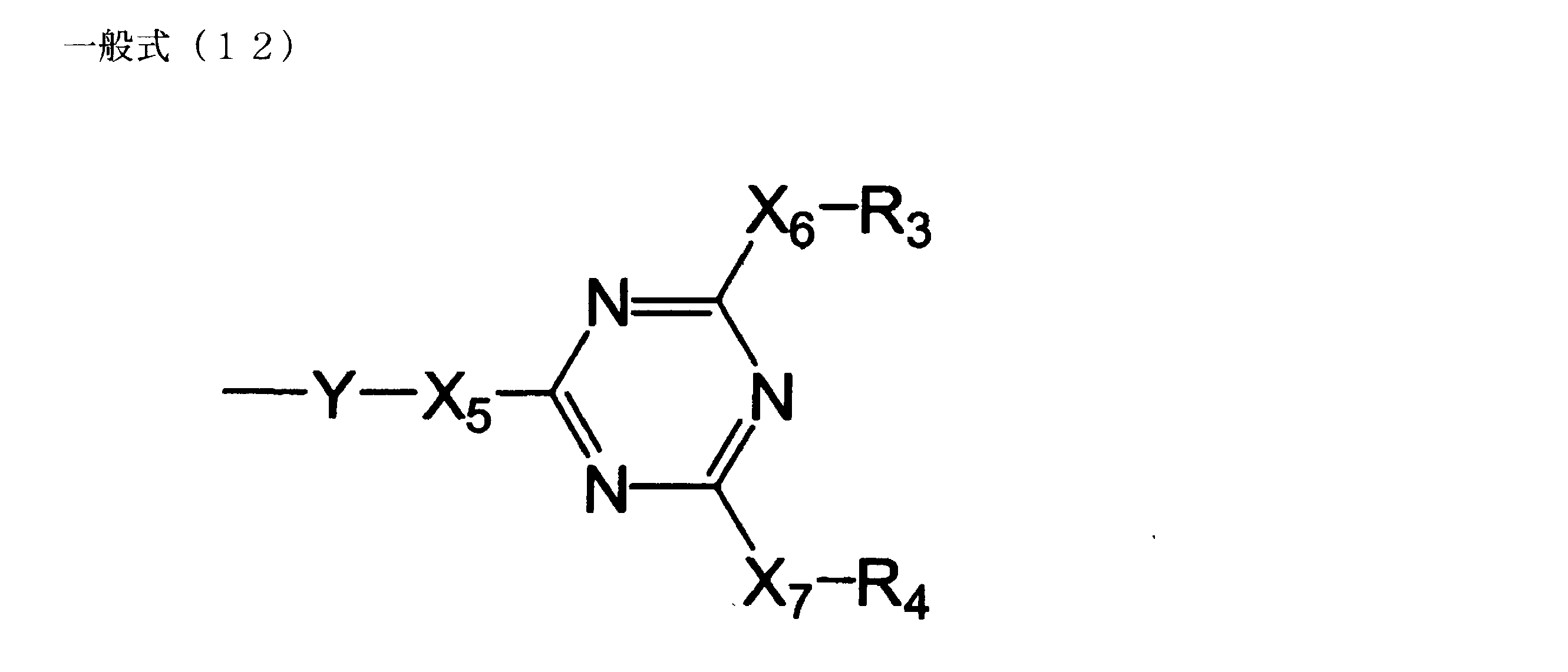
上記式中、
X5は、-NH-または-O-を表す。X6及びX7は、それぞれ独立に、-NH-、-O-、-CONH-、-SO2NH-、-CH2NH-または-CH2NHCOCH2NH-を表す。
X5は、-NH-または-O-を表す。X6及びX7は、それぞれ独立に、-NH-、-O-、-CONH-、-SO2NH-、-CH2NH-または-CH2NHCOCH2NH-を表す。
R3及びR4は、それぞれ独立に、有機色素残基、置換基を有していてもよい複素環残基、置換基を有していてもよい芳香族環残基、または-Y-Zを表す。Y及びZは、一般式(11)と同義である。
一般式(11)のR1及び一般式(12)のR3、R4で表される有機色素残基として、例えば、以下が挙げられる:ジケトピロロピロール系色素;アゾ、ジスアゾ、ポリアゾ等のアゾ系色素;、フタロシアニン系色素;ジアミノジアントラキノン、アントラピリミジン、フラバントロン、アントアントロン、インダントロン、ピラントロン、ビオラントロン等のアントラキノン系色素;キナクリドン系色素;ジオキサジン系色素;ぺリノン系色素;ぺリレン系色素;チオインジゴ系色素;イソインドリン系色素;イソインドリノン系色素;キノフタロン系色素;スレン系色素;金属錯体系色素等。とりわけ、金属による電池の短絡を抑制する効果を高めるためには、金属錯体系色素ではない有機色素残基の使用が好ましい。中でも、アゾ系色素、ジケトピロロピロール系色素、無金属フタロシアニン系色素、キナクリドン系色素、ジオキサジン系色素が好ましい。これらを分散剤として使用した時、優れた分散性を得ることが容易である。
一般式(11)のR1及び一般式(12)のR3、R4で表される複素環残基および芳香族環残基としては、例えば、チオフェン、フラン、ピリジン、ピラゾール、ピロール、イミダゾール、イソインドリン、イソインドリノン、ベンズイミダゾロン、ベンズチアゾール、ベンズトリアゾール、インドール、キノリン、カルバゾール、アクリジン、ベンゼン、ナフタリン、アントラセン、フルオレン、フェナントレン、アントラキノン等が挙げられる。とりわけ、少なくともS、N、Oのヘテロ原子のいずれかを含む複素環残基が好ましい。これらを使用した時、優れた分散性を得ることが容易である。
一般式(11)及び一般式(12)のYは、炭素数20以下から構成される、アルキレン基、アルケニレン基またはアリーレン基を表し、それらは、各々置換基を有してもよい。好ましい具体例として、各々置換されていてもよい、フェニレン基、ビフェニレン基、ナフチレン基であるか、または炭素数が10以下の側鎖を有していてもよいアルキレン基が挙げられる。
一般式(11)のQ中に含まれるR2で表される、置換基を有してもよい、アルキル基、及びアルケニル基は、好ましくは、炭素数20以下から構成される。更に好ましくは、R2は、炭素数が10以下の側鎖を有していてもよいアルキル基が挙げられる。置換基を有しているアルキル基またはアルケニル基とは、アルキル基またはアルケニル基の水素原子が、フッ素原子、塩素原子、臭素原子等のハロゲン基、水酸基、メルカプト基等に置換されたものである。
一般式(11)の式中、Mは、1~3価のカチオンの一当量を表す。例えば、水素原子(プロトン)、金属カチオン、4級アンモニウムカチオンのいずれかを表す。また、分散剤構造中にMを2つ以上有する場合、Mはプロトン、金属カチオン、4級アンモニウムカチオンのいずれかひとつのみでも良いし、これらの組み合わせでも良い。金属の一例としては、リチウム、ナトリウム、カリウム、カルシウム、バリウム、マグネシウム、アルミニウム、ニッケル、コバルト等が挙げられる。
上記4級アンモニウムカチオンとしては、一般式(13)で示される構造を有する単一化合物または、混合物である。
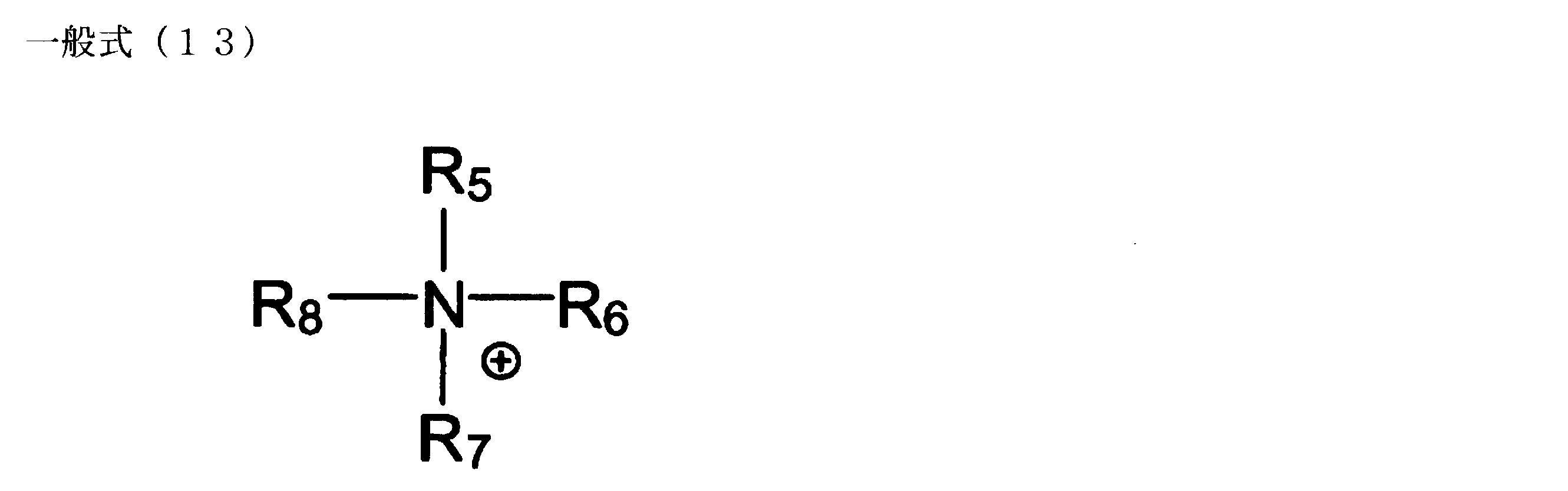
上記式中、
R5、R6、R7、R8は、水素であるか、各々置換基を有してもよい、アルキル基、アルケニル基、またはアリール基のいずれかを表す。
R5、R6、R7、R8は、水素であるか、各々置換基を有してもよい、アルキル基、アルケニル基、またはアリール基のいずれかを表す。
一般式(13)のR5、R6、R7、R8は、それぞれ同一でもよいし、異なっていてもよい。また、R5、R6、R7、R8が炭素原子を有する場合、炭素数は1~40、好ましくは1~30、更に好ましくは1~20である。炭素数が40を超えると電極の導電性が低下する場合がある。
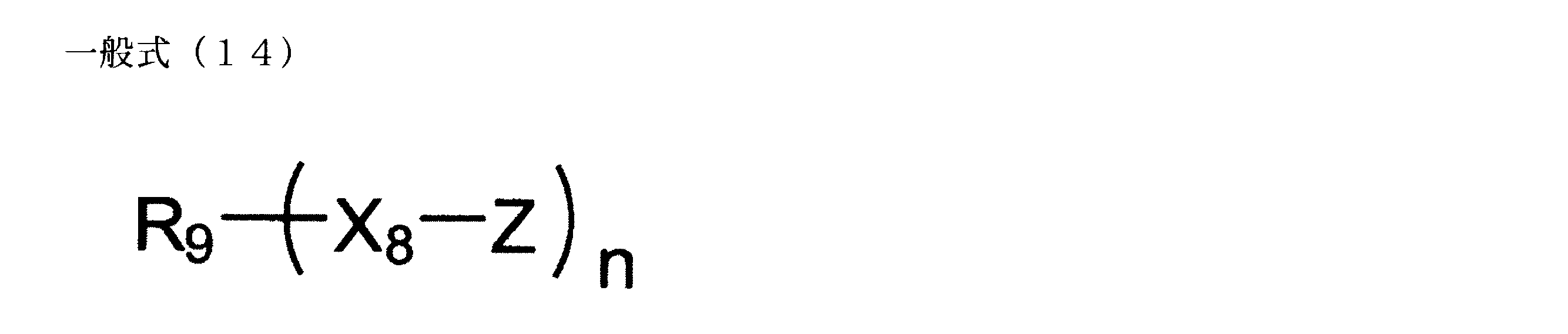
上記式中、
X8は、直接結合、-NH-、-O-、-CONH-、-SO2NH-、-CH2NH-、-CH2NHCOCH2NH-または-X9-Y-または-X9-Y-X10-を表す。
X8は、直接結合、-NH-、-O-、-CONH-、-SO2NH-、-CH2NH-、-CH2NHCOCH2NH-または-X9-Y-または-X9-Y-X10-を表す。
X9は、-CONH-、-SO2NH-、-CH2NH-、-NHCO-または-NHSO2-を表す。X10は、-NH-または-O-を表す。Yは、炭素数1~20で構成される、アルキレン基、アルケニレン基またはアリーレン基を表し、それらは各々置換基を有してもよい。
Zは、-SO3Mまたは-COOM、または-P(O)(-OM)2を表す。Mは1~3価のカチオンの一当量を表す。
R9は、有機色素残基を表し、nは1~4の整数を表す。
一般式(14)のR9で表される有機色素残基としては、例えば、ジケトピロロピロール系色素;アゾ、ジスアゾ、ポリアゾ等のアゾ系色素;フタロシアニン系色素;ジアミノジアントラキノン;アントラピリミジン;フラバントロン、アントアントロン、インダントロン、ピラントロン、ビオラントロン等のアントラキノン系色素;キナクリドン系色素;ジオキサジン系色素;ぺリノン系色素;ぺリレン系色素;チオインジゴ系色素;イソインドリン系色素;イソインドリノン系色素;キノフタロン系色素;スレン系色素;金属錯体系色素等が挙げられる。R9で表される有機色素残基には、一般的には色素と呼ばれていない淡黄色のアントラキノン残基を含む。とりわけ、金属による電池の短絡を抑制する効果を高めるためには、金属錯体系色素ではない有機色素残基の使用が好ましい。中でもアゾ系色素、ジケトピロロピロール系色素、無金属フタロシアニン系色素、キナクリドン系色素、ジオキサジン系色素が好ましい。それらを分散剤として使用した時、優れた分散性を得ることが容易である。
一般式(14)の式中のMは、1~3価のカチオンの一当量を表す。例えば、水素原子(プロトン)、金属カチオン、4級アンモニウムカチオンのいずれかを表す。また、分散剤構造中にMを2つ以上有する場合、Mはプロトン、金属カチオン、4級アンモニウムカチオンのいずれかひとつのみでも良いし、これらの組み合わせでも良い。金属の一例としては、リチウム、ナトリウム、カリウム、カルシウム、バリウム、マグネシウム、アルミニウム、ニッケル、コバルト等が挙げられる。
(塩基性官能基を有する各種誘導体)
塩基性官能基を有する各種誘導体としては、下記一般式(21)で示されるトリアジン誘導体、または一般式(26)で示される有機色素誘導体の使用が好ましい。

塩基性官能基を有する各種誘導体としては、下記一般式(21)で示されるトリアジン誘導体、または一般式(26)で示される有機色素誘導体の使用が好ましい。
上記式中、
X1は、-NH-、-O-、-CONH-、-SO2NH-、-CH2NH-、-CH2NHCOCH2NH-または-X2-Y-X3-を表す。X2は、-NH-、-O-、-CONH-、-SO2NH-、-CH2NH-、-NHCO-または-NHSO2-を表す。X3は、それぞれ独立に-NH-または、-O-を表す。Yは炭素数1~20で構成される、アルキレン基、アルケニレン基または、アリーレン基を表し、それらは各々置換基を有してもよい。
X1は、-NH-、-O-、-CONH-、-SO2NH-、-CH2NH-、-CH2NHCOCH2NH-または-X2-Y-X3-を表す。X2は、-NH-、-O-、-CONH-、-SO2NH-、-CH2NH-、-NHCO-または-NHSO2-を表す。X3は、それぞれ独立に-NH-または、-O-を表す。Yは炭素数1~20で構成される、アルキレン基、アルケニレン基または、アリーレン基を表し、それらは各々置換基を有してもよい。
Pは、一般式(22)、(23)または、一般式(24)のいずれかで示される置換基を表す。
Qは、-O-R2、-NH-R2、ハロゲン基、-X1-R1または、一般式(22)、(23)、又は(24)のいずれかで示される置換基を表す。
R2は、水素原子であるか、アルキル基、アルケニル基、又はアリール基を表し、それらは各々置換基を有してもよい。
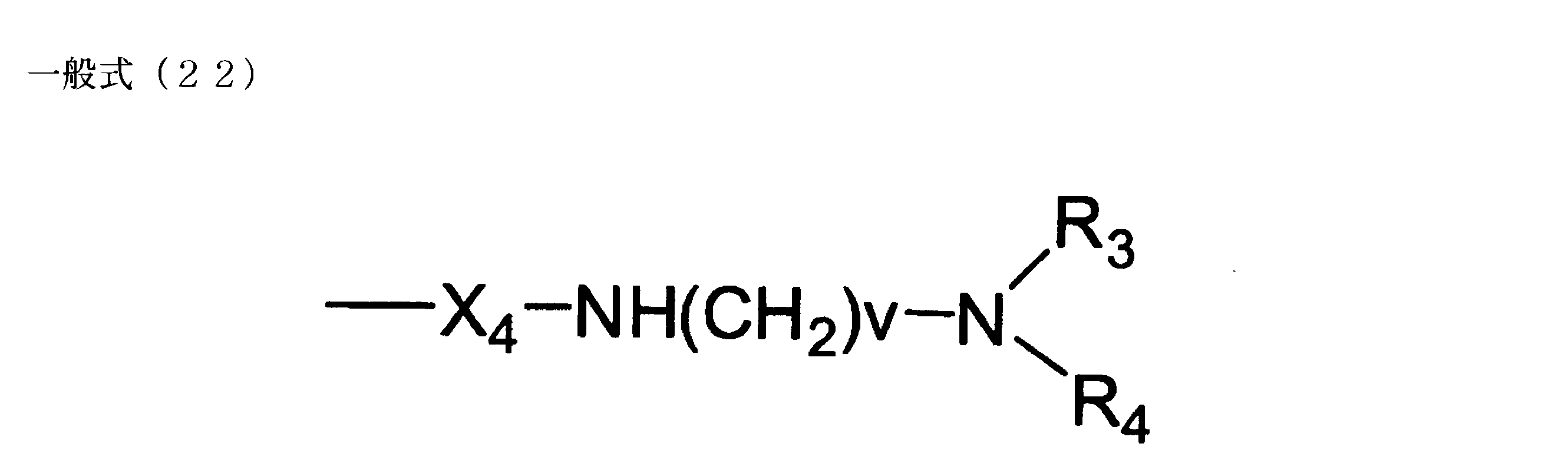

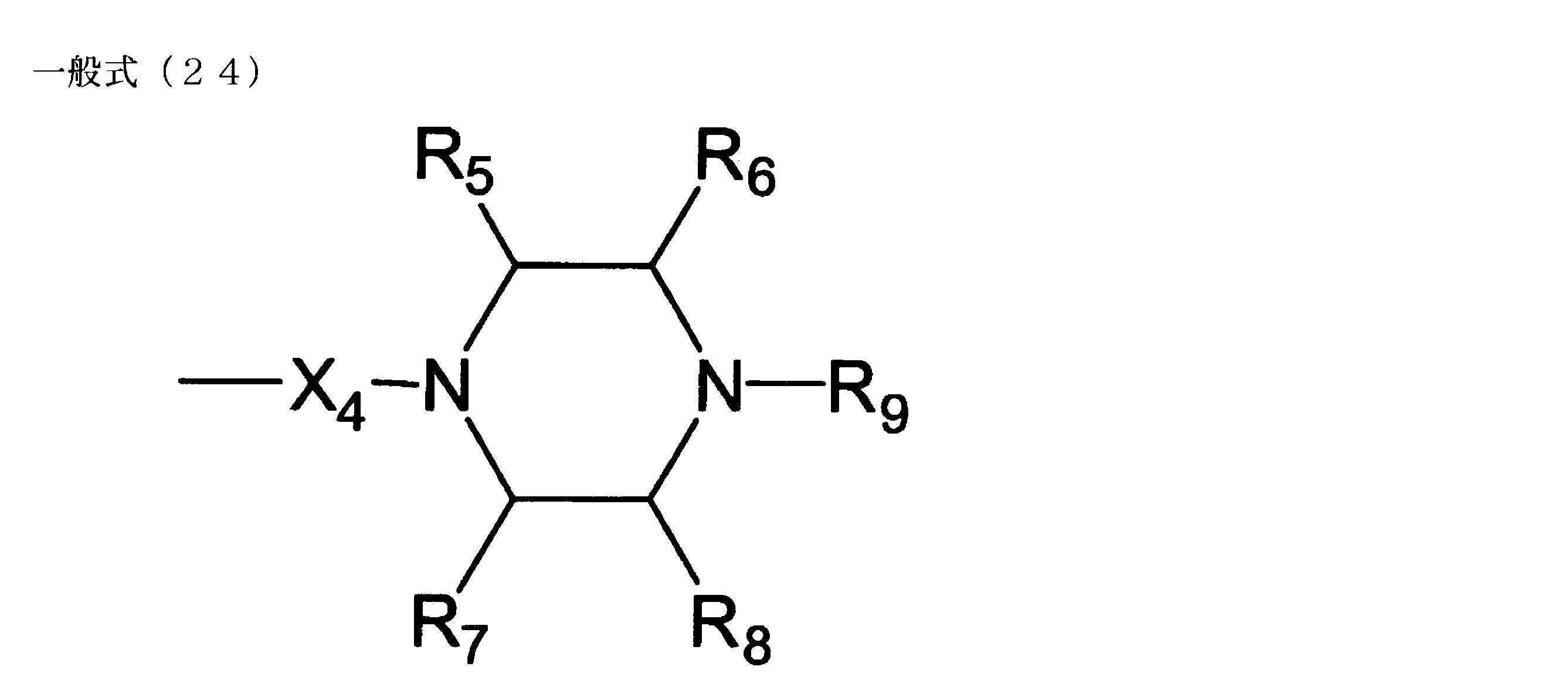
上記式(22)~(24)において、
X4は、直接結合、-SO2-、-CO-、-CH2NHCOCH2-、-CH2NHCONHCH2-、-CH2-または、-X5-Y-X6-を表す。
X4は、直接結合、-SO2-、-CO-、-CH2NHCOCH2-、-CH2NHCONHCH2-、-CH2-または、-X5-Y-X6-を表す。
X5は、-NH-または、-O-を表し、X6は、直接結合、-SO2-、-CO-、-CH2NHCOCH2-、-CH2NHCONHCH2-または、-CH2-を表す。
Yは炭素数1~20で構成された、置換基を有してもよいアルキレン基、置換基を有してもよいアルケニレン基または、置換基を有してもよいアリーレン基を表す。
vは、1~10の整数を表す。
R3、R4はそれぞれ独立に、水素原子、置換されていてもよいアルキル基、置換されていてもよいアルケニル基、置換されていてもよいアリール基、またはR3 、R4とで一体となって更なる窒素、酸素または硫黄原子を含む置換されていてもよい複素環残基を表す。とりわけ、水素原子であることが、電池内での金属析出を抑える効果が高いと思われ好ましい。
R5、R6、R7、R8は、それぞれ独立に、水素原子であるか、アルキル基、アルケニル基またはアリール基を表し、それらは各々置換されていてもよい。
R9は、アルキル基、アルケニル基またはアリール基を表し、それらは各々置換されていてもよい。
nは、1~4の整数を表す。
R1は有機色素残基、置換基を有していてもよい複素環残基、置換基を有していてもよい芳香族環残基または下記一般式(25)で示される基を表す。

上記式中、
Tは、-X8-R10または、W1を表し、Uは、-X9-R11または、W2を表す。
W1およびW2は、それぞれ独立に-O-R2、-NH-R2、ハロゲン基または、一般式(22)、(23)、又は(24)のいずれかで示される置換基を表す。
R2は、水素原子であるか、アルキル基、アルケニル基、又はアリール基を表し、それらは各々置換基を有してもよい。
X7は、-NH-または-O-を表し、X8およびX9は、それぞれ独立に-NH-、-O-、-CONH-、-SO2NH-、-CH2NH-または-CH2NHCOCH2NH-を表す。
Yは、炭素数1~20で構成される、アルキレン基、アルケニレン基、又はアリーレン基を表し、それらは各々置換基を有してもよい。
R10およびR11は、それぞれ独立に、有機色素残基、置換基を有していてもよい複素環残基、置換基を有していてもよい芳香族環残基を表す。
一般式(21)のR1および、一般式(25)のR10、R11で表される有機色素残基としては、例えば、ジケトピロロピロール系色素;アゾ、ジスアゾ、ポリアゾ等のアゾ系色素;フタロシアニン系色素;ジアミノジアントラキノン、アントラピリミジン、フラバントロン、アントアントロン、インダントロン、ピラントロン、ビオラントロン等のアントラキノン系色素;キナクリドン系色素;ジオキサジン系色素;ぺリノン系色素;ぺリレン系色素;チオインジゴ系色素;イソインドリン系色素;イソインドリノン系色素;キノフタロン系色素;スレン系色素;金属錯体系色素等が挙げられる。とりわけ、金属による電池の短絡を抑制する効果を高めるためには、金属錯体系色素ではない有機色素残基の使用が好ましい。
一般式(21)のR1および、一般式(25)のR10、R11で表される複素環残基および芳香族環残基としては、例えば、以下に挙げる置換基を有していてもよい:チオフェン、フラン、ピリジン、ピラジン、トリアジン、ピラゾール、ピロール、イミダゾール、イソインドリン、イソインドリノン、ベンズイミダゾロン、ベンズチアゾール、ベンズトリアゾール、インドール、キノリン、カルバゾール、アクリジン、ベンゼン、ナフタリン、アントラセン、フルオレン、フェナントレン、アントラキノン、アクリドン等が挙げられる。これらの複素環残基および芳香族環残基は、アルキル基(例えば、メチル基、エチル基、ブチル基等)、アミノ基、アルキルアミノ基(例えば、ジメチルアミノ基、ジエチルアミノ基、ジブチルアミノ基等)、ニトロ基、水酸基、アルコキシ基(例えば、メトキシ基、エトキシ基、ブトキシ基等)、ハロゲン(例えば、塩素、臭素、フッ素等)、フェニル基(例えば、アルキル基、アミノ基、アルキルアミノ基、ニトロ基、水酸基、又はアルコキシ基であり、それらは各々ハロゲン等で置換されていてもよい)、およびフェニルアミノ基(アルキル基、アミノ基、アルキルアミノ基、ニトロ基、水酸基、又はアルコキシ基であり、それらは各々ハロゲン等で置換されていてもよい)等。
一般式(21)、一般式(25)のYは、炭素数20以下から構成される、各々置換基を有していてもよい、アルキレン基、アルケニレン基またはアリーレン基を表す。好ましい具体例として、各々置換されていてもよい、フェニレン基、ビフェニレン基、又はナフチレン基であるか、炭素数が10以下の側鎖を有していてもよいアルキレン基が挙げられる。
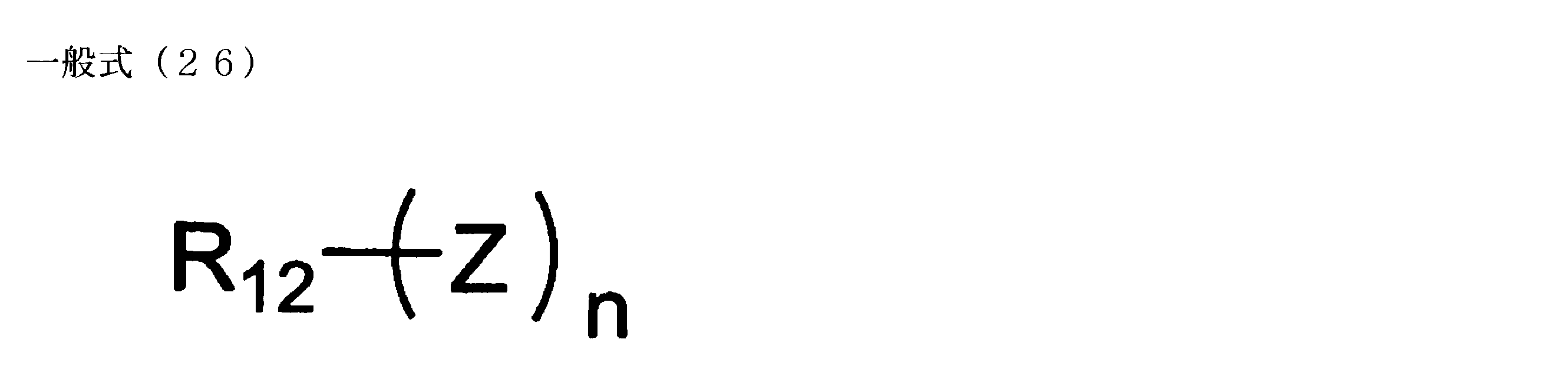
上記式中、Zは、下記一般式(27)、(28)または、一般式(29)で示される群から選ばれる少なくとも1つである。nは、1~4の整数を表す。


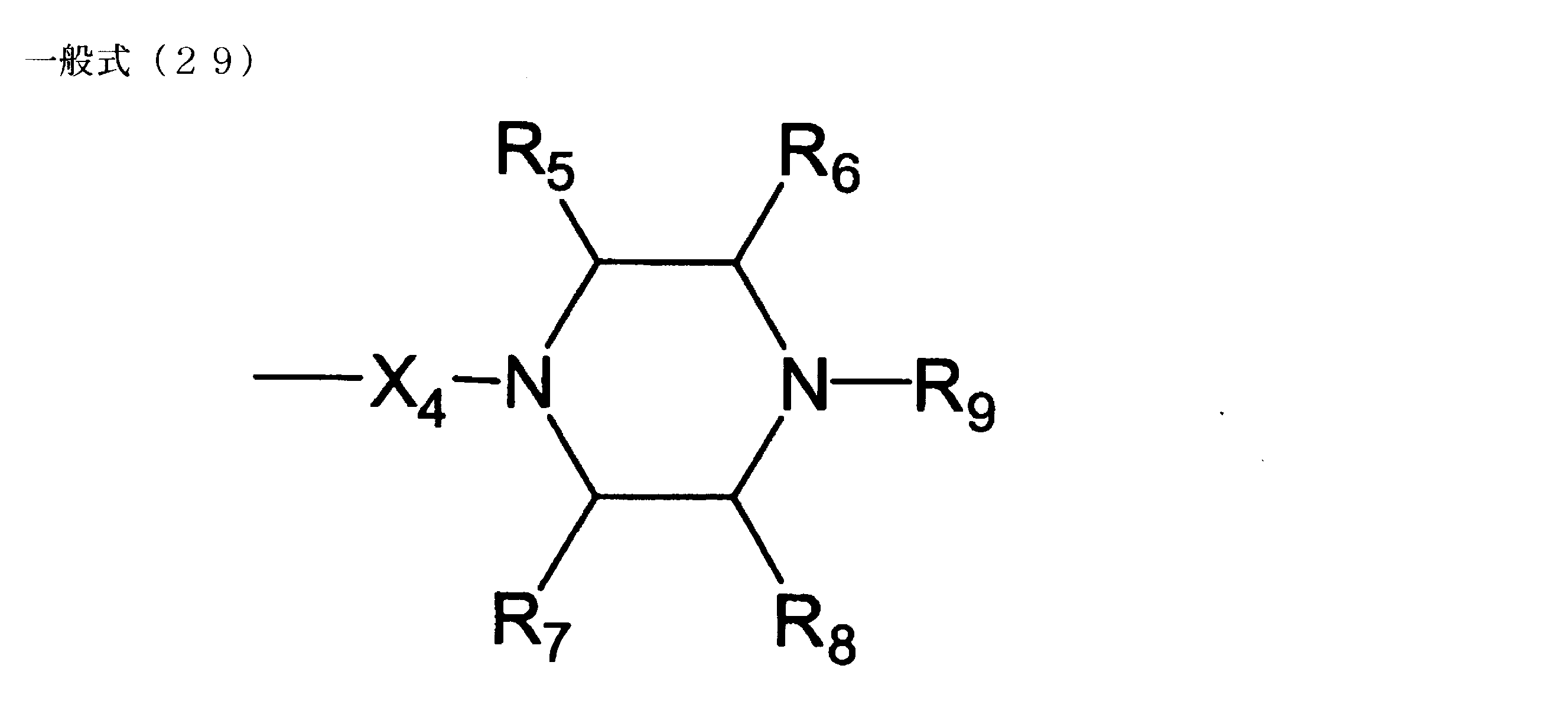
上記式(27)~(29)において、
X4は、直接結合、-SO2-、-CO-、-CH2NHCOCH2-、-CH2NHCONHCH2-、-CH2-または、-X5-Y-X6-を表す。X5は、-NH-または、-O-を表し、X6は、直接結合、-SO2-、-CO-、-CH2NHCOCH2-、-CH2NHCONHCH2-または、-CH2-を表す。Yは、炭素数1~20で構成された、アルキレン基、アルケニレン基、またはアリーレン基を表し、それらは各々置換基を有してもよい。
X4は、直接結合、-SO2-、-CO-、-CH2NHCOCH2-、-CH2NHCONHCH2-、-CH2-または、-X5-Y-X6-を表す。X5は、-NH-または、-O-を表し、X6は、直接結合、-SO2-、-CO-、-CH2NHCOCH2-、-CH2NHCONHCH2-または、-CH2-を表す。Yは、炭素数1~20で構成された、アルキレン基、アルケニレン基、またはアリーレン基を表し、それらは各々置換基を有してもよい。
vは、1~10の整数を表す。
R3、R4は、それぞれ独立に、水素原子であるか、アルキル基、アルケニル基、又はフェニル基を表し、それらは各々置換されていてもよい。または、R3、R4とで一体となって更なる窒素、酸素または硫黄原子を含む置換されていてもよい複素環残基を表す。とりわけ、水素原子であることが、電池内での金属析出を抑える効果が高いと思われ好ましい。
R5、R6、R7、R8は、それぞれ独立に、水素原子、置換されていてもよいアルキル基、置換されていてもよいアルケニル基または置換されていてもよいアリール基を表す。
R9は、アルキル基、アルケニル基、又はアリール基を表し、それらは各々置換されていてもよい。
R12は有機色素残基、置換基を有していてもよい複素環残基、置換基を有していてもよい芳香族環残基を表す。
R12で表される有機色素残基としては、例えば、ジケトピロロピロール系色素;アゾ、ジスアゾ、ポリアゾ等のアゾ系色素;フタロシアニン系色素;ジアミノジアントラキノン、アントラピリミジン、フラバントロン、アントアントロン、インダントロン、ピラントロン、ビオラントロン等のアントラキノン系色素;キナクリドン系色素;ジオキサジン系色素;ぺリノン系色素;ぺリレン系色素;チオインジゴ系色素;イソインドリン系色素;イソインドリノン系色素;キノフタロン系色素、スレン系色素;金属錯体系色素等が挙げられる。とりわけ、金属による電池の短絡を抑制する効果を高めるためには、金属錯体系色素ではない有機色素残基の使用が好ましい。
また、R12で表される複素環残基および芳香族環残基としては、例えば、チオフェン、フラン、ピリジン、ピラゾール、ピロール、イミダゾール、イソインドリン、イソインドリノン、ベンズイミダゾロン、ベンズチアゾール、ベンズトリアゾール、インドール、キノリン、カルバゾール、アクリジン、ベンゼン、ナフタリン、アントラセン、フルオレン、フェナントレン、アントラキノン、アクリドン等が挙げられる。これらの複素環残基および芳香族環残基は、アルキル基(メチル基、エチル基、ブチル基等)、アミノ基、アルキルアミノ基(ジメチルアミノ基、ジエチルアミノ基、ジブチルアミノ基等)、ニトロ基、水酸基、アルコキシ基(メトキシ基、エトキシ基、ブトキシ基等)、ハロゲン(塩素、臭素、フッ素等)、フェニル基(アルキル基、アミノ基、アルキルアミノ基、ニトロ基、水酸基、アルコキシ基、ハロゲン等で置換されていてもよい)、およびフェニルアミノ基(アルキル基、アミノ基、アルキルアミノ基、ニトロ基、水酸基、アルコキシ基、ハロゲン等で置換されていてもよい)等の置換基を有していてもよい。
本発明の組成物の一実施形態において、分散剤の含有量は、第一の活物質と第二の活物質との合計重量を基準として、0.05~10重量%の範囲が好ましく、0.1~5重量%の範囲がより好ましい。
本発明の組成物の一実施形態において、分散剤の含有量は、第一の活物質と第二の活物質との合計重量を基準として、0.05~10重量%の範囲が好ましく、0.1~5重量%の範囲がより好ましい。
<バインダー>
本発明の組成物におけるバインダーは、後述する導電性微粒子炭素材料や、活物質などのその他の粒子を結着させるために使用される。通常、バインダーによる溶媒中への粒子の分散効果は小さい。上記バインダーは、特に限定されず、当技術分野で周知の様々な樹脂を使用することができる。例えば、アクリル樹脂、ポリウレタン樹脂、ポリエステル樹脂、フェノール樹脂、エポキシ樹脂、フェノキシ樹脂、尿素樹脂、メラミン樹脂、アルキッド樹脂、ホルムアルデヒド樹脂、シリコン樹脂、フッ素樹脂、カルボキシメチルセルロース等のセルロース樹脂が挙げられる。その他、スチレン-ブタジエンゴムやフッ素ゴム等の合成ゴム、ポリアニリンやポリアセチレン等の導電性樹脂等、及びポリフッ化ビニリデン、ポリフッ化ビニル、及びテトラフルオロエチレン等のフッ素原子を含む高分子化合物が挙げられる。又、バインダーは、上述の樹脂の変性物、混合物、又は共重合体であっても良い。上記バインダーは、1種または複数を組み合わせて使用することも出来る。
本発明の組成物におけるバインダーは、後述する導電性微粒子炭素材料や、活物質などのその他の粒子を結着させるために使用される。通常、バインダーによる溶媒中への粒子の分散効果は小さい。上記バインダーは、特に限定されず、当技術分野で周知の様々な樹脂を使用することができる。例えば、アクリル樹脂、ポリウレタン樹脂、ポリエステル樹脂、フェノール樹脂、エポキシ樹脂、フェノキシ樹脂、尿素樹脂、メラミン樹脂、アルキッド樹脂、ホルムアルデヒド樹脂、シリコン樹脂、フッ素樹脂、カルボキシメチルセルロース等のセルロース樹脂が挙げられる。その他、スチレン-ブタジエンゴムやフッ素ゴム等の合成ゴム、ポリアニリンやポリアセチレン等の導電性樹脂等、及びポリフッ化ビニリデン、ポリフッ化ビニル、及びテトラフルオロエチレン等のフッ素原子を含む高分子化合物が挙げられる。又、バインダーは、上述の樹脂の変性物、混合物、又は共重合体であっても良い。上記バインダーは、1種または複数を組み合わせて使用することも出来る。
<溶媒>
本発明の組成物における溶媒について説明する。本発明で使用できる溶媒としては、特に限定されない。例えば、ジメチルホルムアミド、ジメチルアセトアミド、メチルホルムアミドなどのアミド類;N-メチル-2-ピロリドン(NMP)、ジメチルアミンなどのアミン類;メチルエチルケトン、アセトン、シクロヘキサノンなどのケトン類;アルコール類;グリコール類;セロソルブ類;アミノアルコール類;スルホキシド類;カルボン酸エステル類;リン酸エステル類;エーテル類;ニトリル類;水等が挙げられる。
本発明の組成物における溶媒について説明する。本発明で使用できる溶媒としては、特に限定されない。例えば、ジメチルホルムアミド、ジメチルアセトアミド、メチルホルムアミドなどのアミド類;N-メチル-2-ピロリドン(NMP)、ジメチルアミンなどのアミン類;メチルエチルケトン、アセトン、シクロヘキサノンなどのケトン類;アルコール類;グリコール類;セロソルブ類;アミノアルコール類;スルホキシド類;カルボン酸エステル類;リン酸エステル類;エーテル類;ニトリル類;水等が挙げられる。
本発明の組成物は、先に説明した各種成分から構成される様々な実施形態を含む。特に限定するものではないが、本発明の組成物の好ましい一実施形態では、第1及び第2の活物質と、分散剤として、有機色素誘導体、アントラキノン誘導体、アクリドン誘導体及びトリアジン誘導体から選択される少なくとも1種と、バインダーとしてポリフッ化ビニリデンと、溶媒としてNMPとを含む。また、本発明の組成物の好ましい別の実施形態では、第1及び第2の活物質と、分散剤として樹脂型分散剤と、バインダーとして、アクリル樹脂、セルロース樹脂、スチレン-ブタジエンゴム、及びポリテトラフルオロエチレンからなる群から選択される少なくとも1種と、溶媒として水を含む。
<導電性微粒子炭素材料>
本発明の組成物の好ましい一実施形態として、組成物は上記構成成分に、さらに導電性微粒子炭素材料を含んでもよい。上記導電性微粒子炭素材料は、導電助剤として機能する(以下、導電助剤と略記する場合がある)。本発明における導電性微粒子炭素材料としては、導電性を有する炭素材料であれば特に限定されるものではない。例えば、グラファイト、カーボンブラック、導電性炭素繊維(カーボンナノチューブ、カーボンナノファイバー、カーボンファイバー)、フラーレン等を単独で、又は2種類以上併せて使用することができる。導電性、入手の容易さ、およびコスト面から、カーボンブラックが好ましい。
本発明の組成物の好ましい一実施形態として、組成物は上記構成成分に、さらに導電性微粒子炭素材料を含んでもよい。上記導電性微粒子炭素材料は、導電助剤として機能する(以下、導電助剤と略記する場合がある)。本発明における導電性微粒子炭素材料としては、導電性を有する炭素材料であれば特に限定されるものではない。例えば、グラファイト、カーボンブラック、導電性炭素繊維(カーボンナノチューブ、カーボンナノファイバー、カーボンファイバー)、フラーレン等を単独で、又は2種類以上併せて使用することができる。導電性、入手の容易さ、およびコスト面から、カーボンブラックが好ましい。
本発明で使用できるカーボンブラックの一例として、気体、又は液体の原料を反応炉中で連続的に熱分解することで製造することができる、ファーネスブラックが挙げられる。具体例として、エチレン重油を原料としたケッチェンブラック;原料ガスを燃焼させて、その炎をチャンネル鋼底面にあて急冷し析出させたチャンネルブラックが挙げられる。また、ガスを原料として燃焼と熱分解を周期的に繰り返すことにより得られるサーマルブラック、特にアセチレンガスを原料とするアセチレンブラックなどが挙げられる。本発明では、各種化合物を単独で、又は2種類以上併せて使用することができる。また、通常行われている酸化処理されたカーボンブラックや、中空カーボン等も使用できる。
カーボンの酸化処理は、カーボンを空気中で高温処理するか、硝酸や二酸化窒素、オゾン等で二次的に処理することによって実施される。例えば、フェノール基、キノン基、カルボキシル基、カルボニル基といった酸素含有極性官能基をカーボン表面に直接導入(共有結合)する処理する。このような処理は、カーボンの分散性を向上させるために一般的に行われている。しかしながら、一般的に、官能基の導入量が多くなる程、カーボンの導電性が低下する傾向にある。そのため、酸化処理をしていないカーボンを使用することが好ましい。
カーボンブラックの比表面積は、その値が大きいほど、カーボンブラック粒子どうしの接触点が増えるため、電極の内部抵抗を下げるのに有利となる。そのため、本発明の一実施形態では、窒素の吸着量から求められる比表面積(BET)で、20m2/g以上、1500m2/g以下、好ましくは50m2/g以上、1500m2/g以下、更に好ましくは100m2/g以上、1500m2/g以下のカーボンブラックを使用することが望ましい。比表面積が20m2/g以上のカーボンブラックを使用することによって、十分な導電性を得ることが容易となる。一方、比表面積が1500m2/gを超えるカーボンブラックは、市販材料での入手が困難となる場合がある。
また、用いるカーボンブラックの粒径は、平均一次粒子径で0.005~1μmの範囲であることが好ましく、特に、0.01~0.2μmの範囲が好ましい。ただし、ここでいう平均一次粒子径とは、活物質粒子の測定方法と同様にして得た値を示す。
導電性微粒子炭素材料は、リチウム二次電池電極形成用組成物中の分散粒径が、0.03μm以上、5μm以下、好ましくは2μm以下となるように微細化されることが望ましい。導電助剤としての炭素材料の分散粒径が0.03μm未満の組成物は、その作製が難しい場合がある。又、導電助剤としての炭素材料の分散粒径が2μm以下となる組成物を用いた場合には、合材塗膜の材料分布のバラつき、電極の抵抗分布のバラつき等の不具合の発生を抑制することが容易である。
ここでいう分散粒径とは、体積粒度分布において、粒子径の小さい順にその粒子の体積割合を積算していったときに、50%となるところの粒子径(D50)を意味する。分散粒径は、一般的な粒度分布計、例えば、動的光散乱方式の粒度分布計(日機装社製の「マイクロトラックUPA」)等を使用して測定することができる。
市販として入手可能なカーボンブラックは、例えば、トーカブラック#4300、#4400、#4500、#5500等(東海カーボン社製、ファーネスブラック);プリンテックスL等(デグサ社製、ファーネスブラック);Raven7000、5750、5250、5000ULTRAIII、5000ULTRA等、Conductex SC ULTRA、Conductex 975 ULTRA等、PUER BLACK100、115、205等(コロンビヤン社製、ファーネスブラック)が挙げられる。また、#2350、#2400B、#2600B、#30050B、#3030B、#3230B、#3350B、#3400B、#5400B等(三菱化学社製、ファーネスブラック);MONARCH1400、1300、900、VulcanXC-72R、BlackPearls2000等(キャボット社製、ファーネスブラック);Ensaco250G、Ensaco260G、Ensaco350G、SuperP-Li(TIMCAL社製);ケッチェンブラックEC-300J、EC-600JD(アクゾ社製);デンカブラック、デンカブラックHS-100、FX-35(電気化学工業社製、アセチレンブラック)等が挙げられる。また、本発明で使用できるグラファイトの具体例として、人造黒鉛や燐片状黒鉛、塊状黒鉛、土状黒鉛などの天然黒鉛が挙げられる。しかし、これらに限定されるものではなく、2種以上を組み合わせて用いても良い。
上記導電性炭素繊維としては、石油由来の原料から焼成して得られるものが良いが、植物由来の原料からも焼成して得られるものも用いることができる。例えば、市販品として、石油由来の原料で製造される昭和電工社製の「VGCF」などを挙げることができる。
<添加剤>
本発明の一実施形態において、リチウム二次電池電極形成用の組成物は、上述の構成成分に加えて、必要に応じて、さらに、成膜助剤、消泡剤、レベリング剤、防腐剤、pH調整剤、粘性調整剤といった各種添加剤を含んでもよい。本発明の組成物の好ましい実施形態において、組成物は、セルロース系等の増粘剤を含む。セルロース系増粘剤としては、特に限定はされないが、例えば、カルボキシメチルセルロース(CMC)、カルボキシエチルセルロース、ヒドロキシエチルセルロース(HEC)、ヒドロキシプロピルセルロース(HPC)、エチルヒドロキシエチルセルロース(EHEC)、ヒドロキシメチルエチルセルロース、ヒドロキシヒドロキシプロピルメチルセルロース、メチルセルロース(MC)、ヒドロキシアルキルメチルセルロース等が挙げられる。
本発明の一実施形態において、リチウム二次電池電極形成用の組成物は、上述の構成成分に加えて、必要に応じて、さらに、成膜助剤、消泡剤、レベリング剤、防腐剤、pH調整剤、粘性調整剤といった各種添加剤を含んでもよい。本発明の組成物の好ましい実施形態において、組成物は、セルロース系等の増粘剤を含む。セルロース系増粘剤としては、特に限定はされないが、例えば、カルボキシメチルセルロース(CMC)、カルボキシエチルセルロース、ヒドロキシエチルセルロース(HEC)、ヒドロキシプロピルセルロース(HPC)、エチルヒドロキシエチルセルロース(EHEC)、ヒドロキシメチルエチルセルロース、ヒドロキシヒドロキシプロピルメチルセルロース、メチルセルロース(MC)、ヒドロキシアルキルメチルセルロース等が挙げられる。
本発明の組成物は、リチウム二次電池電極を形成する材料として好適に使用することができる。より具体的には、上記電極は、集電体と、該集電体の表面に形成された合材層とを有し、本発明の一実施形態では、上記集電体の表面に上記組成物を塗布し、乾燥させることによって合材層を形成することができる。すなわち、本発明のリチウム二次電池電極形成用組成物は、合材インキとして調製してもよい。
上記合材層を形成する合材インキとして本発明の組成物を調製する場合、塗工方法にもよるが、固形分が30~90重量%の範囲となるように各構成成分を組合せることが好ましい。特に、優れた電極特性を得るためには、塗工可能な粘度範囲内において、活物質の含有量をできるだけ多くすることが好ましい。例えば、組成物(以下、合材インキとも称す)の固形分に占める活物質の割合は、80重量%以上、99重量%以下とすることが好ましい。なお、以下、本発明において「活物質」と記載した場合、第一の活物質粒子と第二の活物質粒子との組み合わせを意味する。また、合材インキの粘度は、100mPa・s以上、30,000mPa・s以下に調整することが好ましい。また、合材インキの固形分に占める分散剤の割合は、0.1~15重量%の範囲であることが好ましい。また、上記合材インキの構成成分として導電助剤を使用する場合、合材インキ固形分に占める導電助剤の割合は、0.1~15重量%の範囲であることが好ましい。さらに、上記合材インキがバインダーを含む場合、合材インキ固形分に占めるバインダーの割合は、0.1~15重量%の範囲であることが好ましい。
上記合材インキは、種々の方法で得ることができる。例えば、活物質と導電助剤と分散剤とバインダーと溶媒とを含有する、合材インキを調製する場合、例えば、以下のような方法を適用することができる。
(1)活物質と分散剤と溶媒とを含有する活物質分散体を調製し、次いで、該分散体に導電助剤とバインダーとを加えることによって、合材インキを得ることができる。導電助剤とバインダーは、同時に加えることもできるし、導電助剤を加えた後、バインダーを加えてもよいし、その逆であってもよい。
(2)導電助剤と分散剤と溶媒とを含有する導電助剤分散体を調製し、次いで該分散体に活物質とバインダーとを加えることによって、合材インキを得ることができる。活物質とバインダーは、同時に加えることもできるし、活物質を加えた後、バインダーを加えてもよいし、その逆であってもよい。
(3)活物質と分散剤とバインダーと溶媒とを含有する活物質分散体を調製し、次いで、該分散体に導電助剤を加えることによって、合材インキを得ることができる。
(4)導電助剤と分散剤とバインダーと溶媒とを含有する導電助剤分散体を調製し、次いで、該分散体に活物質を加えることによって、合材インキを得ることができる。
(5)活物質と導電助剤と分散剤とバインダーと溶媒とをほとんど同時に混合することによって、合材インキを得ることができる。
上記合材インキを調製するために使用する装置は、顔料分散等に通常用いられている分散機、混合機であってよい。例えば、ディスパー、ホモミキサー、若しくはプラネタリーミキサー等のミキサー類;エム・テクニック社製「クレアミックス」、若しくはPRIMIX社「フィルミックス」等のホモジナイザー類;ペイントコンディショナー(レッドデビル社製)、ボールミル、サンドミル(シンマルエンタープライゼス社製「ダイノミル」等)、アトライター、パールミル(アイリッヒ社製「DCPミル」等)、若しくはコボールミル等のメディア型分散機;湿式ジェットミル(ジーナス社製「ジーナスPY」、スギノマシン社製「スターバースト」、ナノマイザー社製「ナノマイザー」等)、エム・テクニック社製「クレアSS-5」、若しくは奈良機械社製「MICROS」等のメディアレス分散機;または、その他ロールミル等が挙げられる。しかし、これらに限定されるものではない。また、分散機としては、分散機からの金属混入防止処理を施したものを用いることが好ましい。
例えば、メディア型分散機を使用する場合は、アジテーター及びベッセルがセラミック製又は樹脂製の分散機、金属製アジテーター及びベッセル表面をタングステンカーバイド溶射や樹脂コーティング等の処理をした分散機を用いることが好ましい。そして、メディアとしては、ガラスビーズ、または、ジルコニアビーズ、若しくはアルミナビーズ等のセラミックビーズを用いることが好ましい。また、ロールミルを使用する場合についても、セラミック製ロールを用いることが好ましい。分散装置は、1種のみを使用しても良いし、複数種の装置を組み合わせて使用しても良い。また、強い衝撃で粒子が割れたり、潰れたりしやすい正または負極活物質の場合は、メディア型分散機よりは、ロールミルやホモジナイザー等のメディアレス分散機が好ましい。
<II>リチウム二次電池用の電極
本発明の第2の態様は、リチウム二次電池の電極に関する。上記電極は、集電体と、該集電体の表面に形成された合材層とを有し、上記合材層が、本発明の第1の態様の組成物を用いて形成された乾燥塗膜であることを特徴とする。本発明によれば、集電体の表面に上記組成物を塗布し、乾燥させることによって、活物質が高充填され、厚い塗膜を形成した場合であっても、ひび割れのない合材層を形成することができる。
本発明の第2の態様は、リチウム二次電池の電極に関する。上記電極は、集電体と、該集電体の表面に形成された合材層とを有し、上記合材層が、本発明の第1の態様の組成物を用いて形成された乾燥塗膜であることを特徴とする。本発明によれば、集電体の表面に上記組成物を塗布し、乾燥させることによって、活物質が高充填され、厚い塗膜を形成した場合であっても、ひび割れのない合材層を形成することができる。
本発明で使用できる集電体について説明する。本発明に使用する集電体の材質や形状は特に限定されず、各種二次電池に適合できるものを適宜選択することができる。例えば、集電体の材質としては、アルミニウム、銅、ニッケル、チタン、又はステンレス等の金属や合金が挙げられる。リチウムイオン電池の場合、特に正極材料としてはアルミニウムが好ましい。また、負極材料としては銅が好ましい。又、集電体の形状としては、一般的には平板状の金属箔が用いられる。しかし、表面を粗面化した金属箔、穴あきの金属箔、及びメッシュ状の金属箔のいずれかを集電体として使用してもよい。
集電体上に合材インキを塗工する方法としては、特に制限はなく公知の方法を用いることができる。具体的には、ダイコーティング法、ディップコーティング法、ロールコーティング法、ドクターコーティング法、ナイフコーティング法、スプレーコティング法、グラビアコーティング法、スクリーン印刷法または静電塗装法等を挙げる事ができる。乾燥方法としては、放置乾燥、送風乾燥機、温風乾燥機、赤外線加熱機、遠赤外線加熱機などを使用できるが、特にこれらに限定されるものではない。又、塗布後に平版プレスやカレンダーロール等による圧延処理を行っても良い。
本発明における乾燥塗膜の膜厚について説明する。本発明において、乾燥塗膜の膜厚とは、上記方法に従って、集電体上に合材インキを塗布し、乾燥させた後の塗膜の膜さであり、合材層の厚みを意味する。一般的に、合材層の厚みは、1μm以上、500μm以下であり、好ましくは10μm以上、より好ましくは膜厚を90μm以上、300μm以下であることが好ましい。膜厚は、例えば、株式会社ニコンインステック社製のデジマイクロシリーズの装置を用いることによって測定することができる。
一般に、合材層の膜厚を厚くし、かつ電池性能を維持することは、技術的に大変難しい。合材層の膜厚を厚くすると、集電体から距離が離れる活物質粒子が存在することとなり、合材層全体で高い導電性が要求される。また、膜厚を厚くすると、ひび割れが起きやすくなるため、合材層全体の柔軟性も要求される。これに対して、本発明のリチウム二次電池電極形成用組成物によれば、これらの要求を満たす合材層を提供することが可能である。本発明によれば、上記合材層を構成する乾燥塗膜を90μm以上に厚膜化した場合であっても、電池性能を良好に維持することが可能である。
<III>リチウム二次電池
本発明の第3の態様は、正極と負極と電解液とを有するリチウム二次電池に関し、上記正極が、本発明の第2の態様の電極から構成されることを特徴とする。すなわち、本発明の一実施形態では、本発明の組成物を正極の合材層を形成するために使用することが好ましい。
本発明の第3の態様は、正極と負極と電解液とを有するリチウム二次電池に関し、上記正極が、本発明の第2の態様の電極から構成されることを特徴とする。すなわち、本発明の一実施形態では、本発明の組成物を正極の合材層を形成するために使用することが好ましい。
本発明のリチウム二次電池について説明する。本発明の組成物を用いたリチウム二次電池の構造については特に限定されない。代表的に、リチウム二次電池は、正極及び負極と、必要に応じて設けられるセパレーターと、電解液とから構成することができる。それら電池の形状は、ペーパー型、円筒型、ボタン型、積層型等、使用する目的に応じた種々の形状とすることができる。
リチウムイオン二次電池の場合を例にとって説明する。電解液としては、リチウムを含んだ電解質を非水系の溶剤に溶解したものを用いる。電解質としては、LiBF4、LiClO4、LiPF6、LiAsF6、LiSbF6、LiCF3SO3、Li(CF3SO2)2N、LiC4F9SO3、Li(CF3SO2)3C、LiI、LiBr、LiCl、LiAlCl、LiHF2、LiSCN、又はLiBPh4等が挙げられるが、これらに限定されない。
上記非水系の溶剤としては、特に限定はされない。例えば、エチレンカーボネート、プロピレンカーボネート、ブチレンカーボネート、ジメチルカーボネート、エチルメチルカーボネート、及びジエチルカーボネート等のカーボネート類;γ-ブチロラクトン、γ-バレロラクトン、及びγ-オクタノイックラクトン等のラクトン類;テトラヒドロフラン、2-メチルテトラヒドロフラン、1,3-ジオキソラン、4-メチル-1,3-ジオキソラン、1,2-メトキシエタン、1,2-エトキシエタン、及び1,2-ジブトキシエタン等のグライム類;メチルフォルメート、メチルアセテート、及びメチルプロピオネート等のエステル類;ジメチルスルホキシド、及びスルホラン等のスルホキシド類;並びに、アセトニトリル等のニトリル類等が挙げられる。又これらの溶剤は、それぞれ単独で使用しても良いが、2種以上を混合して使用しても良い。
さらに上記電解液を、ポリマーマトリクスに保持しゲル状とした高分子電解質とすることもできる。ポリマーマトリクスとしては、ポリアルキレンオキシドセグメントを有するアクリレート系樹脂、ポリアルキレンオキシドセグメントを有するポリホスファゼン系樹脂、及びポリアルキレンオキシドセグメントを有するポリシロキサン等が挙げられるがこれらに限定されない。
上記セパレーターとしては、例えば、ポリエチレン不織布、ポリプロピレン不織布、ポリアミド不織布及びそれらに親水性処理を施したものが挙げられるが、特にこれらに限定されるものではない。
以下、実施例により本発明をさらに具体的に説明する。しかし、本発明の権利範囲は以下の実施形態に制限されるものでなく、本発明の要旨を逸脱しない範囲において種々変更可能であることは言うまでもない。なお、以降に記載する「部」は、全て「重量部」を意味する。
<分散剤の合成>
実施例及び比較例で使用する分散剤は、以下のようにして調製した。
実施例及び比較例で使用する分散剤は、以下のようにして調製した。
(合成例1) 分散剤(1)
ガス導入管、温度計、コンデンサー、攪拌機を備えた反応容器に、n-ブタノール200.0部を仕込み、窒素ガスで置換した。反応容器内を110℃に加熱し、次いでスチレン100.0部、アクリル酸60.0部、ジメチルアミノエチルメタクリレート40.0部、およびV-601(和光純薬製)12.0部の混合物を2時間かけて滴下し、重合反応を行った。滴下終了後、さらに110℃で3時間反応させた後、V-601(和光純薬製)0.6部を添加した。上記添加後、さらに110℃で1時間反応を続けて、共重合体(1)の溶液を得た。共重合体(1)の酸価は219.1(mgKOH/g)であった。また、共重合体(1)の重量平均分子量(Mw)は、6800であった。上記分子量の測定は、乾燥させたサンプルをTHFに溶解させ、装置としてHLC-8320GPC(東ソー株式会社製)を用いて実施した。使用したカラムはG-2000であり、溶離液はTHFであった。上記分子量は、測定した値をポリスチレン換算して得た値である。
ガス導入管、温度計、コンデンサー、攪拌機を備えた反応容器に、n-ブタノール200.0部を仕込み、窒素ガスで置換した。反応容器内を110℃に加熱し、次いでスチレン100.0部、アクリル酸60.0部、ジメチルアミノエチルメタクリレート40.0部、およびV-601(和光純薬製)12.0部の混合物を2時間かけて滴下し、重合反応を行った。滴下終了後、さらに110℃で3時間反応させた後、V-601(和光純薬製)0.6部を添加した。上記添加後、さらに110℃で1時間反応を続けて、共重合体(1)の溶液を得た。共重合体(1)の酸価は219.1(mgKOH/g)であった。また、共重合体(1)の重量平均分子量(Mw)は、6800であった。上記分子量の測定は、乾燥させたサンプルをTHFに溶解させ、装置としてHLC-8320GPC(東ソー株式会社製)を用いて実施した。使用したカラムはG-2000であり、溶離液はTHFであった。上記分子量は、測定した値をポリスチレン換算して得た値である。
得られた共重合体(1)の溶液を室温まで冷却した後、上記溶液にジメチルアミノエタノール74.2部を添加し、中和した。上記メチルアミノエタノールアクリル酸の添加量は、中和を100%達成する量に相当する。さらに、中和処理後の溶液に水を400部添加して水性化した後、100℃まで加熱し、ブタノールを水と共沸させて、ブタノールを留去した。得られた残留物を水で希釈することによって、不揮発分20%の分散剤(1)の水溶液を水性分散体として得た。
(合成例2~21) 分散剤(2)~(21)
表1に示す配合組成で各成分を使用し、合成例1と同様の方法に従い、各々の分散剤を得た。合成例2~21のそれぞれに対応して、得られた分散剤を分散剤(2)~(21)とした。
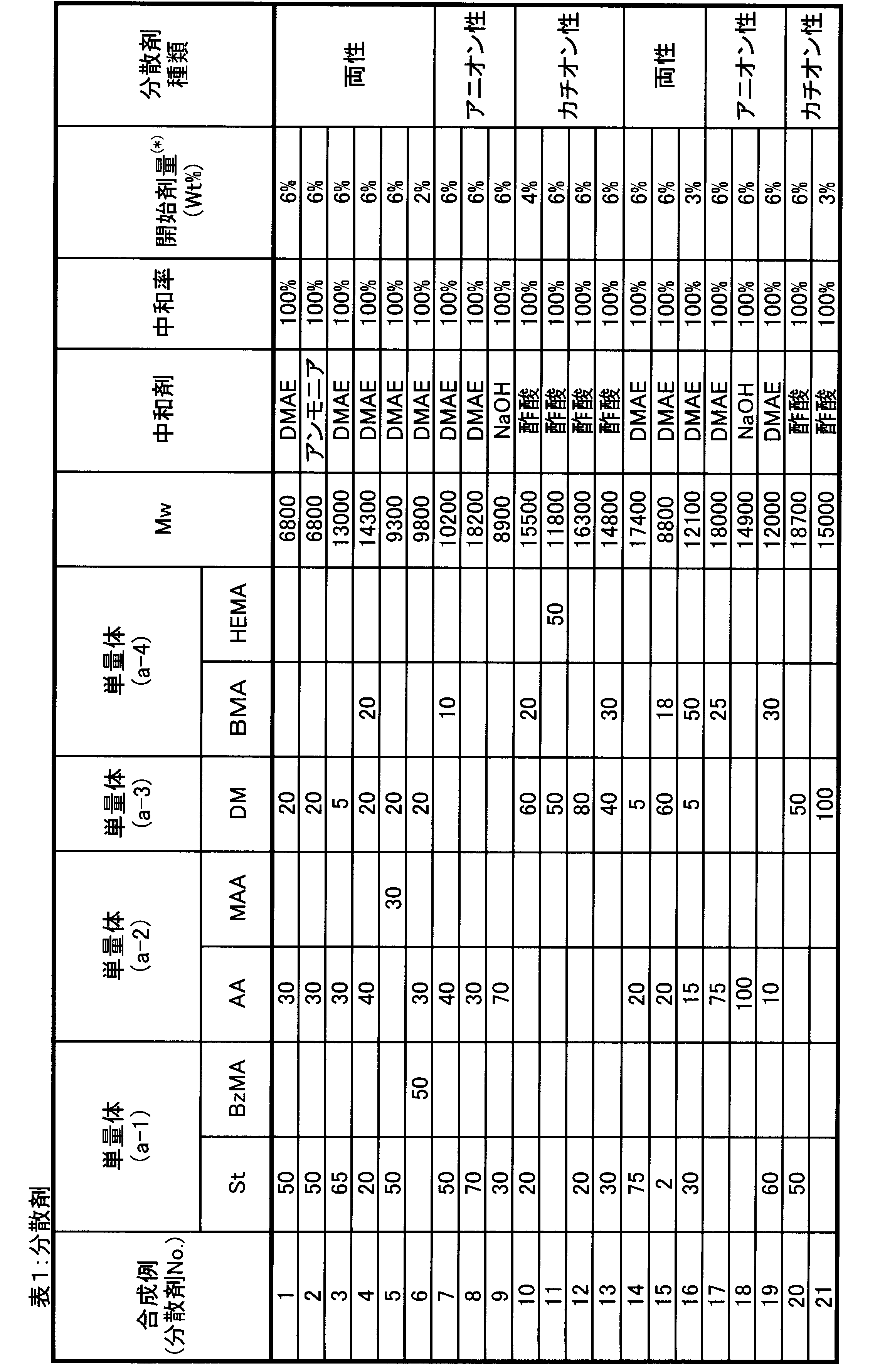
表1に示す配合組成で各成分を使用し、合成例1と同様の方法に従い、各々の分散剤を得た。合成例2~21のそれぞれに対応して、得られた分散剤を分散剤(2)~(21)とした。
表1に記載された略記の詳細は以下のとおりである。
St:スチレン
BzMA:ベンジルメタクリレート
AA:アクリル酸
MAA:メタクリル酸
DM:ジメチルアミノエチルメタクリレート
BMA:ブチルメタクリレート
HEMA:ヒドロキシエチルメタクリレート
DMAE:ジメチルアミノエタノール
(*):使用した開始剤は、全て和光純薬(株)の「V-601」である。表1に記載した開始剤の量は、単量体の合計重量を基準とした重量%である。
BzMA:ベンジルメタクリレート
AA:アクリル酸
MAA:メタクリル酸
DM:ジメチルアミノエチルメタクリレート
BMA:ブチルメタクリレート
HEMA:ヒドロキシエチルメタクリレート
DMAE:ジメチルアミノエタノール
(*):使用した開始剤は、全て和光純薬(株)の「V-601」である。表1に記載した開始剤の量は、単量体の合計重量を基準とした重量%である。
実施例及び比較例において使用する分散剤(22)~(25)は、以下のとおりである。
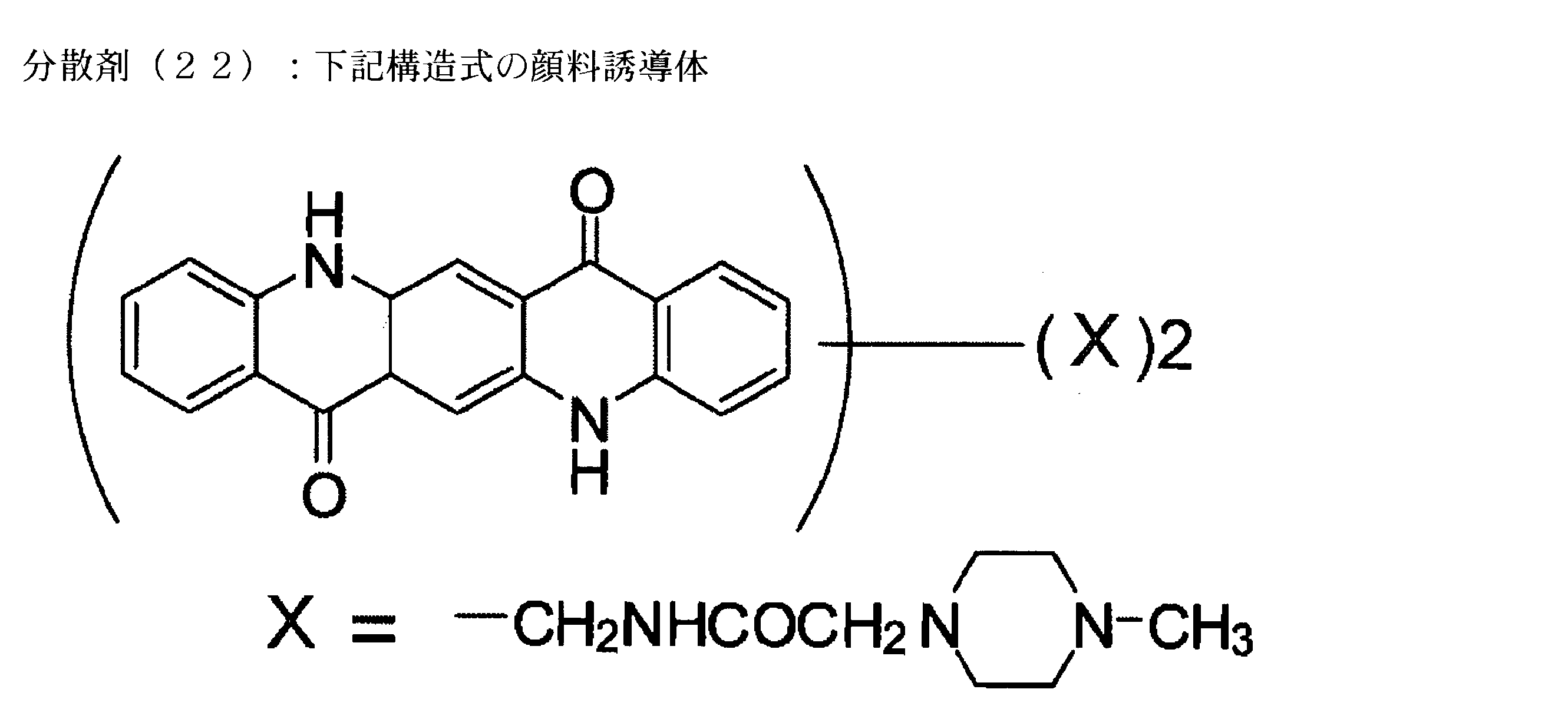
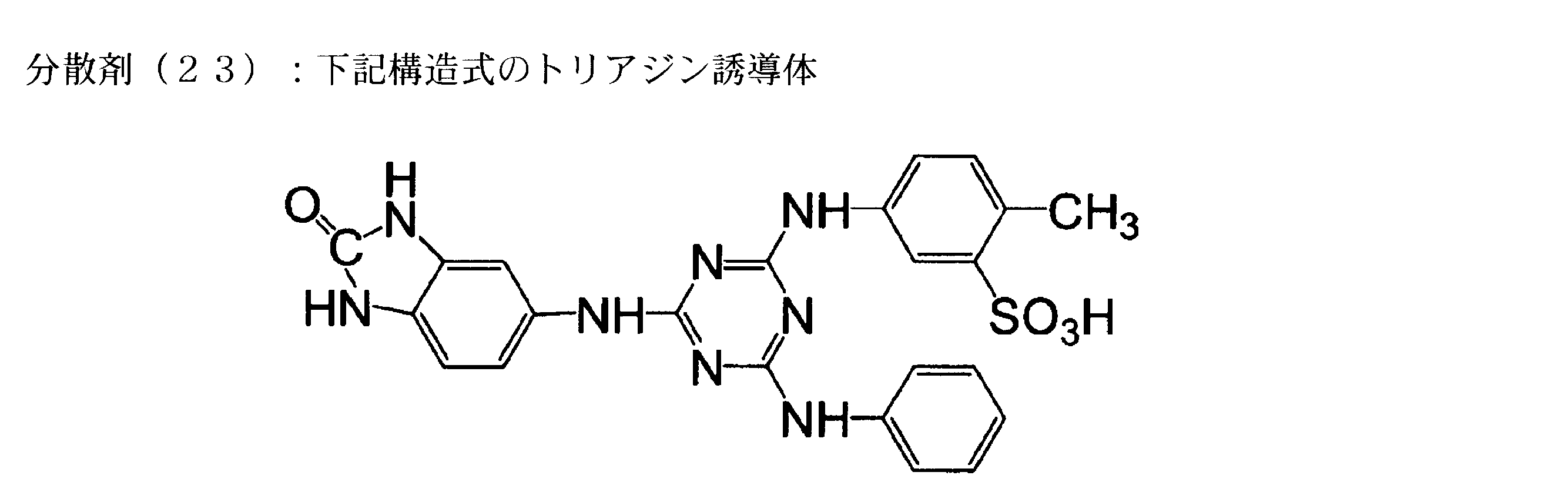
分散剤(24):市販の分散剤(日本触媒社製の「エポミンP-1000」)。ポリエチレンイミン化合物、重量平均分子量:約70000、アミン価:1008mgKOH/g。いずれの値もカタログに基づく記載である。
分散剤(25):市販の分散剤(日本合成化学社製の製品名「ゴーセノールNL-05」)。ポリビニルアルコール化合物、けん化度:98.5mol%、重量平均分子量:約22000。いずれの値もカタログに基づく記載である。
<活物質の調製>
実施例及び比較例で使用する活物質は、以下のようにして調製した。なお、以降の記載では、特に言及しない限り、「平均一次粒子径」とは、被覆一次粒子の平均粒子径を意味するものとする。
実施例及び比較例で使用する活物質は、以下のようにして調製した。なお、以降の記載では、特に言及しない限り、「平均一次粒子径」とは、被覆一次粒子の平均粒子径を意味するものとする。
(調製例1) 第一の活物質粒子(1)の作製
水熱処理法によって合成したLiFePO4の乾燥粉末に、1重量%のポリエチレングリコール水溶液を添加し、次いでそれらを混合し、70℃にて真空乾燥することにより、生成物を得た。上記ポリエチレングリコール水溶液の添加量は、焼成後の炭素量が2重量%となるように調整した。上記生成物を乳鉢で解砕した後、窒素雰囲気下、700℃で5時間加熱した。解砕後の生成物を室温まで冷却した後、スクリーンを用いて凝集物の除去を行い、炭素前駆体の炭化によって一次粒子の表層が導電性炭素層で被覆されたLiFePO4微粒子を得た。上記微粒子の平均一次粒子径は200nmであり、平均二次粒子径は2μmであった。
水熱処理法によって合成したLiFePO4の乾燥粉末に、1重量%のポリエチレングリコール水溶液を添加し、次いでそれらを混合し、70℃にて真空乾燥することにより、生成物を得た。上記ポリエチレングリコール水溶液の添加量は、焼成後の炭素量が2重量%となるように調整した。上記生成物を乳鉢で解砕した後、窒素雰囲気下、700℃で5時間加熱した。解砕後の生成物を室温まで冷却した後、スクリーンを用いて凝集物の除去を行い、炭素前駆体の炭化によって一次粒子の表層が導電性炭素層で被覆されたLiFePO4微粒子を得た。上記微粒子の平均一次粒子径は200nmであり、平均二次粒子径は2μmであった。
(調製例2) 第二の活物質粒子(1)の作製
蒸留水に対して、上記調製例1で得た第一の活物質粒子(1)を固形分15wt%となるよう計量し、これらをディスパーで予備混合することにより混合物を得た。次いで、上記混合物を、ギンセン社の超音波分散機GSD300RCVPを使用し、滞留時間10分で分散処理することによって、上記第一の活物質粒子(1)を水に分散させたスラリーを得た。続いて、日本ビュッヒ社の噴霧乾燥器ミニスプレードライヤーB-290を使用し、上記スラリーを125℃で噴霧乾燥することによって、LiFePO4微粒子の造粒粒子を得た。上記造粒粒子は、平均一次粒子径200nmの一次粒子から形成され、平均二次粒子径が15μmであった。
蒸留水に対して、上記調製例1で得た第一の活物質粒子(1)を固形分15wt%となるよう計量し、これらをディスパーで予備混合することにより混合物を得た。次いで、上記混合物を、ギンセン社の超音波分散機GSD300RCVPを使用し、滞留時間10分で分散処理することによって、上記第一の活物質粒子(1)を水に分散させたスラリーを得た。続いて、日本ビュッヒ社の噴霧乾燥器ミニスプレードライヤーB-290を使用し、上記スラリーを125℃で噴霧乾燥することによって、LiFePO4微粒子の造粒粒子を得た。上記造粒粒子は、平均一次粒子径200nmの一次粒子から形成され、平均二次粒子径が15μmであった。
(調製例3) 第二の活物質粒子(2)の作製
水熱処理法によって合成したLiFePO4の乾燥粉末に、5重量%のスクロース水溶液を添加し、さらに固形分20重量%となるまで水で希釈し、溶液を得た。直径1.25mmのジルコニアボールを用い、ボールミルによって上記溶液を5時間にわたって分散処理し、スラリーを得た。上記スクロース水溶液の添加量は、焼成後の炭素量が5重量%となるように調整した。続いて、日本ビュッヒ社の噴霧乾燥器ミニスプレードライヤーB-290を使用し、上記スラリーを125℃で噴霧乾燥し、粉末を得た。その後、得られた粉末を、窒素雰囲気下、700℃で5時間加熱することによって、一次粒子の表層が導電性炭素層で被覆された、LiFePO4微粒子の造粒粒子を得た。上記造粒粒子は、平均一次粒子径が200nmの一次粒子から形成され、平均二次粒子径が50μmであった。
水熱処理法によって合成したLiFePO4の乾燥粉末に、5重量%のスクロース水溶液を添加し、さらに固形分20重量%となるまで水で希釈し、溶液を得た。直径1.25mmのジルコニアボールを用い、ボールミルによって上記溶液を5時間にわたって分散処理し、スラリーを得た。上記スクロース水溶液の添加量は、焼成後の炭素量が5重量%となるように調整した。続いて、日本ビュッヒ社の噴霧乾燥器ミニスプレードライヤーB-290を使用し、上記スラリーを125℃で噴霧乾燥し、粉末を得た。その後、得られた粉末を、窒素雰囲気下、700℃で5時間加熱することによって、一次粒子の表層が導電性炭素層で被覆された、LiFePO4微粒子の造粒粒子を得た。上記造粒粒子は、平均一次粒子径が200nmの一次粒子から形成され、平均二次粒子径が50μmであった。
(調製例4) 第一の活物質粒子(2)の作製
上記調製例3で得た第二の活物質粒子(2)を、直径0.5mmのジルコニアボールを用い、乾式ボールミルにて5時間粉砕処理を行った。このようにして得たLiFePO4微粒子は、平均一次粒子径が200nmであり、平均二次粒子径が2μmであった。
(調製例5) 第一の活物質粒子(3)の作製
Li源、P源、Fe源、C源を、乾式ボールミルによってそれぞれ粉砕及び混合し、次いで窒素雰囲気下、700℃で8時間加熱することによって生成物を得た。得られた生成物を室温まで冷却した後、スクリーンを用いて凝集物の除去を行い、一次粒子の表層が導電性炭素層で被覆されたLiFePO4の微粒子を得た。得られた上記微粒子の平均一次粒子径は90nmであり、平均二次粒子径は1μmであった。
上記調製例3で得た第二の活物質粒子(2)を、直径0.5mmのジルコニアボールを用い、乾式ボールミルにて5時間粉砕処理を行った。このようにして得たLiFePO4微粒子は、平均一次粒子径が200nmであり、平均二次粒子径が2μmであった。
(調製例5) 第一の活物質粒子(3)の作製
Li源、P源、Fe源、C源を、乾式ボールミルによってそれぞれ粉砕及び混合し、次いで窒素雰囲気下、700℃で8時間加熱することによって生成物を得た。得られた生成物を室温まで冷却した後、スクリーンを用いて凝集物の除去を行い、一次粒子の表層が導電性炭素層で被覆されたLiFePO4の微粒子を得た。得られた上記微粒子の平均一次粒子径は90nmであり、平均二次粒子径は1μmであった。
(調製例6) 第二の活物質粒子(3)の作製
蒸留水に対して、上記調製例5で得た第一の活物質粒子(3)を固形分15wt%となるよう計量し、さらに分散剤を加え、これらをディスパーで予備混合することにより混合物を得た。上記分散剤は、ビックケミー社製のBYK-190であり、上記第一の活物質(3)に対して2重量%(固形分)となる量で使用した。次いで、上記混合物を、ギンセン社の超音波分散機GSD300RCVPを使用し、滞留時間10分で分散処理することによって、上記第一の活物質粒子(3)を水に分散させたスラリーを得た。続いて、日本ビュッヒ社の噴霧乾燥器ミニスプレードライヤーB-290を使用し、上記スラリーを125℃で噴霧乾燥することによって、LiFePO4微粒子の造粒粒子を得た。その後、上記造粒粒子を、窒素雰囲気下、700℃で5時間加熱した。以上のようにして得た造粒粒子は、平均一次粒子径が90nmの一次粒子から形成され、平均二次粒子径が20μmであった。
蒸留水に対して、上記調製例5で得た第一の活物質粒子(3)を固形分15wt%となるよう計量し、さらに分散剤を加え、これらをディスパーで予備混合することにより混合物を得た。上記分散剤は、ビックケミー社製のBYK-190であり、上記第一の活物質(3)に対して2重量%(固形分)となる量で使用した。次いで、上記混合物を、ギンセン社の超音波分散機GSD300RCVPを使用し、滞留時間10分で分散処理することによって、上記第一の活物質粒子(3)を水に分散させたスラリーを得た。続いて、日本ビュッヒ社の噴霧乾燥器ミニスプレードライヤーB-290を使用し、上記スラリーを125℃で噴霧乾燥することによって、LiFePO4微粒子の造粒粒子を得た。その後、上記造粒粒子を、窒素雰囲気下、700℃で5時間加熱した。以上のようにして得た造粒粒子は、平均一次粒子径が90nmの一次粒子から形成され、平均二次粒子径が20μmであった。
(調製例7) 第一の活物質粒子(4)の作製
Li源、P源、Fe源、C源を、乾式ボールミルによってそれぞれ粉砕及び混合し、次いで窒素雰囲気下、700℃で8時間加熱することによって、生成物を得た。得られた生成物を室温まで冷却した後、スクリーンを用いて凝集物の除去を行い、一次粒子の表層が導電性炭素層で被覆されたLiFePO4微粒子を得た。得られた上記微粒子の平均一次粒子径は300nmであり、平均二次粒子径は10μmであった。
Li源、P源、Fe源、C源を、乾式ボールミルによってそれぞれ粉砕及び混合し、次いで窒素雰囲気下、700℃で8時間加熱することによって、生成物を得た。得られた生成物を室温まで冷却した後、スクリーンを用いて凝集物の除去を行い、一次粒子の表層が導電性炭素層で被覆されたLiFePO4微粒子を得た。得られた上記微粒子の平均一次粒子径は300nmであり、平均二次粒子径は10μmであった。
(調製例8) 第一の活物質粒子(5)の作製
Li源、P源、Fe源、C源を、乾式ボールミルによってそれぞれ粉砕及び混合し、次いで窒素雰囲気下、700℃で8時間加熱することによって生成物を得た。得られた生成物を室温まで冷却した後、スクリーンを用いて凝集物の除去を行い、一次粒子の表層が導電性炭素層で被覆されたLiFePO4微粒子を得た。得られた上記微粒子の平均一次粒子径は90nmであり、平均二次粒子径は400nmであった。
Li源、P源、Fe源、C源を、乾式ボールミルによってそれぞれ粉砕及び混合し、次いで窒素雰囲気下、700℃で8時間加熱することによって生成物を得た。得られた生成物を室温まで冷却した後、スクリーンを用いて凝集物の除去を行い、一次粒子の表層が導電性炭素層で被覆されたLiFePO4微粒子を得た。得られた上記微粒子の平均一次粒子径は90nmであり、平均二次粒子径は400nmであった。
(調製例9) 第一の活物質粒子(6)の作製
水熱処理法によって合成したLiFePO4の乾燥粉末に、1重量%のポリエチレングリコール水溶液を添加し、これらを混合し、次いで70℃にて真空乾燥することによって、生成物を得た。上記ポリエチレングリコール水溶液の添加量は、焼成後の炭素量が2重量%となるように調整した。上記生成物を乳鉢で解砕した後、窒素雰囲気下、700℃で5時間加熱した。解砕後の生成物を室温まで冷却した後、スクリーンを用いて、凝集物の除去を行い、炭素前駆体の炭化によって一次粒子の表層が導電性炭素層で被覆されたLiFePO4微粒子を得た。上記微粒子の平均一次粒子径は500nmであり、平均二次粒子径は5μmであった。
水熱処理法によって合成したLiFePO4の乾燥粉末に、1重量%のポリエチレングリコール水溶液を添加し、これらを混合し、次いで70℃にて真空乾燥することによって、生成物を得た。上記ポリエチレングリコール水溶液の添加量は、焼成後の炭素量が2重量%となるように調整した。上記生成物を乳鉢で解砕した後、窒素雰囲気下、700℃で5時間加熱した。解砕後の生成物を室温まで冷却した後、スクリーンを用いて、凝集物の除去を行い、炭素前駆体の炭化によって一次粒子の表層が導電性炭素層で被覆されたLiFePO4微粒子を得た。上記微粒子の平均一次粒子径は500nmであり、平均二次粒子径は5μmであった。
(調製例10) 第二の活物質粒子(4)の作製
蒸留水に対して、上記調製例9で得た第一の活物質粒子(6)を固形分15wt%となるよう計量し、これらをディスパーで予備混合することによって、混合物を得た。次いで、上記混合物を、ギンセン社の超音波分散機GSD300RCVPを使用し、滞留時間10分で分散処理することによって、上記第一の活物質粒子(6)を水に分散させたスラリーを得た。続いて、日本ビュッヒ社の噴霧乾燥器ミニスプレードライヤーB-290を使用し、上記スラリーを125℃で噴霧乾燥することによって、LiFePO4微粒子の造粒粒子を得た。上記造粒粒子は、平均一次粒子径が500nmの一次粒子から形成され、平均二次粒子径が20μmであった。
蒸留水に対して、上記調製例9で得た第一の活物質粒子(6)を固形分15wt%となるよう計量し、これらをディスパーで予備混合することによって、混合物を得た。次いで、上記混合物を、ギンセン社の超音波分散機GSD300RCVPを使用し、滞留時間10分で分散処理することによって、上記第一の活物質粒子(6)を水に分散させたスラリーを得た。続いて、日本ビュッヒ社の噴霧乾燥器ミニスプレードライヤーB-290を使用し、上記スラリーを125℃で噴霧乾燥することによって、LiFePO4微粒子の造粒粒子を得た。上記造粒粒子は、平均一次粒子径が500nmの一次粒子から形成され、平均二次粒子径が20μmであった。
(調製例11) 第二の活物質粒子(5)の作製
水熱処理法によって合成したLiFePO4の乾燥粉末に、5重量%のスクロース水溶液を添加し、さらに固形分30重量%となるまで水で希釈し、溶液を得た。直径1.25mmのジルコニアボールを用い、ボールミルによって上記溶液を5時間にわたって分散処理し、スラリーを得た。上記スクロース水溶液の添加量は、焼成後の炭素量が5重量%となるように調整した。続いて、日本ビュッヒ社の噴霧乾燥器ミニスプレードライヤーB-290を使用し、上記スラリーを125℃で噴霧乾燥し、粉末を得た。その後、得られた粉末を、窒素雰囲気下、700℃で5時間加熱することによって、一次粒子の表層が導電性炭素層で被覆された、LiFePO4微粒子の造粒粒子を得た。上記造粒粒子は、平均一次粒子径が150nmの一次粒子から形成され、平均二次粒子径が5μmであった。
水熱処理法によって合成したLiFePO4の乾燥粉末に、5重量%のスクロース水溶液を添加し、さらに固形分30重量%となるまで水で希釈し、溶液を得た。直径1.25mmのジルコニアボールを用い、ボールミルによって上記溶液を5時間にわたって分散処理し、スラリーを得た。上記スクロース水溶液の添加量は、焼成後の炭素量が5重量%となるように調整した。続いて、日本ビュッヒ社の噴霧乾燥器ミニスプレードライヤーB-290を使用し、上記スラリーを125℃で噴霧乾燥し、粉末を得た。その後、得られた粉末を、窒素雰囲気下、700℃で5時間加熱することによって、一次粒子の表層が導電性炭素層で被覆された、LiFePO4微粒子の造粒粒子を得た。上記造粒粒子は、平均一次粒子径が150nmの一次粒子から形成され、平均二次粒子径が5μmであった。
<リチウム二次電池電極用組成物、電極及びリチウム二次電池>
(実施例1)
1.リチウム二次電池電極用組成物の調製
導電助剤としてアセチレンブラック(デンカブラックHS-100)5.6部と、合成例(1)で得た分散剤10部(固形分換算で2部)と、水85部とをミキサーに入れて混合した。その混合物に、第一の活物質粒子(1)20部と、第二の活物質粒子(1)80部と、バインダーとして、ポリテトラフルオロエチレン30-J6部とを加え、それらを混合することによって、リチウム二次電池電極用組成物を調製した。なお、上記組成物において、上記第一の活物質粒子(1)は、平均一次粒子径が200nmであり、平均二次粒子径が2μmのLiFePO4である。また、上記第二の活物質粒子(1)は、平均一次粒子径が200nmであり、平均二次粒子径が15μmの造粒されたLiFePO4である。また、上記バインダーとして使用した、分散テトラフルオロエチレン30-Jは、三井・デュポンフロロケミカル社製であり、60%水系分散体である。
(実施例1)
1.リチウム二次電池電極用組成物の調製
導電助剤としてアセチレンブラック(デンカブラックHS-100)5.6部と、合成例(1)で得た分散剤10部(固形分換算で2部)と、水85部とをミキサーに入れて混合した。その混合物に、第一の活物質粒子(1)20部と、第二の活物質粒子(1)80部と、バインダーとして、ポリテトラフルオロエチレン30-J6部とを加え、それらを混合することによって、リチウム二次電池電極用組成物を調製した。なお、上記組成物において、上記第一の活物質粒子(1)は、平均一次粒子径が200nmであり、平均二次粒子径が2μmのLiFePO4である。また、上記第二の活物質粒子(1)は、平均一次粒子径が200nmであり、平均二次粒子径が15μmの造粒されたLiFePO4である。また、上記バインダーとして使用した、分散テトラフルオロエチレン30-Jは、三井・デュポンフロロケミカル社製であり、60%水系分散体である。
2.リチウム二次電池の電極の作製
上述のようにして得たリチウム二次電池電極形成用組成物を、集電体の上にドクターブレードを用いて塗布し、塗膜を形成した。上記集電体は厚さ20μmのアルミ箔とした。その後、上記塗膜を減圧加熱乾燥して、乾燥塗膜からなる合材層を形成することにより、電極サンプルを作製した。上記組成物の塗布量は、合材層の厚みが60μmとなるように調整した。
上述のようにして得たリチウム二次電池電極形成用組成物を、集電体の上にドクターブレードを用いて塗布し、塗膜を形成した。上記集電体は厚さ20μmのアルミ箔とした。その後、上記塗膜を減圧加熱乾燥して、乾燥塗膜からなる合材層を形成することにより、電極サンプルを作製した。上記組成物の塗布量は、合材層の厚みが60μmとなるように調整した。
二次電池電極形成用組成物の塗布量を変えた以外は、上記方法と同様にして、合材層の厚みが90μmおよび120μmの電極サンプルをそれぞれ作製した。さらに、各々の各電極サンプルについて、ロールプレスによる圧延処理を行い、合材層の密度が2.0g/ccとなるように調整した。
3.リチウム二次電池の作製
上述のようにして作製した電極を、直径16mmに打ち抜き作用極として使用し、コイン型電池を作製した。具体的には、上記作用極と、金属リチウム箔の対極と、上記作用極及び対極の間に挿入されるセパレーター(多孔質ポリプロピレンフィルム)と、電解液とからなるコイン型電池を作製した。上記電解液としては、エチレンカーボネートとジエチルカーボネートを1:1(体積比)の割合で混合した混合溶媒にLiPF6を1Mの濃度で溶解させた非水系電解液を使用した。上述のコイン型電池の作製は、アルゴンガスで置換したグロ-ブボックス内で行った。
上述のようにして作製した電極を、直径16mmに打ち抜き作用極として使用し、コイン型電池を作製した。具体的には、上記作用極と、金属リチウム箔の対極と、上記作用極及び対極の間に挿入されるセパレーター(多孔質ポリプロピレンフィルム)と、電解液とからなるコイン型電池を作製した。上記電解液としては、エチレンカーボネートとジエチルカーボネートを1:1(体積比)の割合で混合した混合溶媒にLiPF6を1Mの濃度で溶解させた非水系電解液を使用した。上述のコイン型電池の作製は、アルゴンガスで置換したグロ-ブボックス内で行った。
(実施例2)
1.リチウム二次電池電極用組成物の調製
導電助剤としてアセチレンブラック(デンカブラックHS-100)5.6部と、合成例(2)で得た分散剤2.5部(固形分換算で0.5部)と、水85部とをミキサーに入れて混合した。その混合物に、第一の活物質粒子(1)20部と、第二の活物質粒子(1)80部と、バインダーとして、ポリテトラフルオロエチレン30-J6部とを加え、それらを混合することによって、リチウム二次電池電極用組成物を調製した。なお、上記組成物において、第一の活物質粒子(1)は、平均一次粒子径が200nmであり、平均二次粒子径が2μmのLiFePO4である。また、上記第二の活物質粒子(1)は、平均一次粒子径が200nmであり、平均二次粒子径が15μmの造粒されたLiFePO4である。また、上記バインダーとして使用した、ポリテトラフルオロエチレン30-Jは、三井・デュポンフロロケミカル社製であり、60%水系分散体である。 上述のようにして得た組成物を使用し、実施例1と同様にして、電極サンプルと、コイン型電池を作製した。
1.リチウム二次電池電極用組成物の調製
導電助剤としてアセチレンブラック(デンカブラックHS-100)5.6部と、合成例(2)で得た分散剤2.5部(固形分換算で0.5部)と、水85部とをミキサーに入れて混合した。その混合物に、第一の活物質粒子(1)20部と、第二の活物質粒子(1)80部と、バインダーとして、ポリテトラフルオロエチレン30-J6部とを加え、それらを混合することによって、リチウム二次電池電極用組成物を調製した。なお、上記組成物において、第一の活物質粒子(1)は、平均一次粒子径が200nmであり、平均二次粒子径が2μmのLiFePO4である。また、上記第二の活物質粒子(1)は、平均一次粒子径が200nmであり、平均二次粒子径が15μmの造粒されたLiFePO4である。また、上記バインダーとして使用した、ポリテトラフルオロエチレン30-Jは、三井・デュポンフロロケミカル社製であり、60%水系分散体である。 上述のようにして得た組成物を使用し、実施例1と同様にして、電極サンプルと、コイン型電池を作製した。
(実施例3~45、比較例1~10)
表2-1~表2-3に示す材料および条件を適用したこと以外、全て実施例1と同様にしてリチウム二次電池電極用組成物を調製した。また、それぞれ調製した組成物を使用し、実施例1と同様にして、電極サンプルと、コイン型電池を作製した。
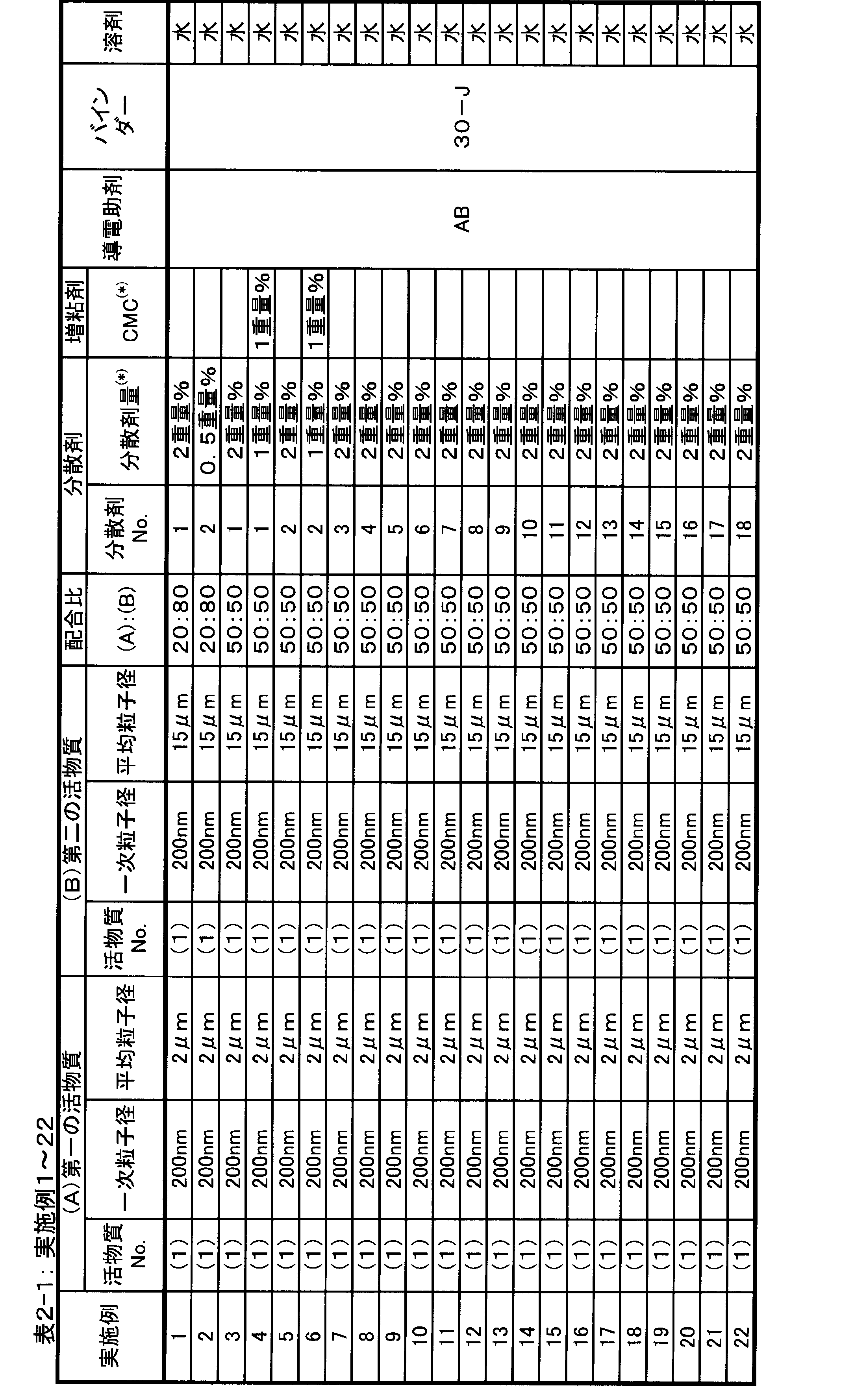


表2-1~表2-3に示す材料および条件を適用したこと以外、全て実施例1と同様にしてリチウム二次電池電極用組成物を調製した。また、それぞれ調製した組成物を使用し、実施例1と同様にして、電極サンプルと、コイン型電池を作製した。
表2-1~表2-3に記載された略記の詳細は以下のとおりである。
PVDF:ポリフッ化ビニリデン(クレハ社製:W#7200)
30-J:ポリテトラフルオロエチレン30-J(三井・デュポンフロロケミカル社製)
AB:アセチレンブラック(デンカブラックHS-100)
KB:ケッチェンブラック(ライオン社製:EC-300J)
CNT:カーボンナノチューブ(昭和電工社製:VGCF-H)
(*)表に記載した分散剤及び増粘剤の量は、組成物中の活物質の全重量を基準とした重量%である。
30-J:ポリテトラフルオロエチレン30-J(三井・デュポンフロロケミカル社製)
AB:アセチレンブラック(デンカブラックHS-100)
KB:ケッチェンブラック(ライオン社製:EC-300J)
CNT:カーボンナノチューブ(昭和電工社製:VGCF-H)
(*)表に記載した分散剤及び増粘剤の量は、組成物中の活物質の全重量を基準とした重量%である。
比較例9及び10で使用した第一の活物質(2)*は、本願発明では意図していない粉砕工程を経て調製された粒子である。
<各種評価>
上述の実施例及び比較例で作製した組成物、電極、コイン型電池について、以下に記載する方法に従い、各特性を評価した。それぞれの評価結果を表3-1及び表3-2に示す。
上述の実施例及び比較例で作製した組成物、電極、コイン型電池について、以下に記載する方法に従い、各特性を評価した。それぞれの評価結果を表3-1及び表3-2に示す。
(塗液の安定性)
上記実施例及び比較例で調製した各リチウム二次電池電極形成用組成物を25℃で保管し、固形物の凝集、沈降、及び溶媒との分離といった現象について観察した。判定は、目視によって行い、以下の基準に従い、評価した。通常、B以上の評価であれば、実用上問題のないレベルである。
上記実施例及び比較例で調製した各リチウム二次電池電極形成用組成物を25℃で保管し、固形物の凝集、沈降、及び溶媒との分離といった現象について観察した。判定は、目視によって行い、以下の基準に従い、評価した。通常、B以上の評価であれば、実用上問題のないレベルである。
(評価基準)
A:三週間以上、上記現象が見られなかった。
A:三週間以上、上記現象が見られなかった。
B:二週間から三週間の間に、上記現象が見られた。
C:一週間から二週間の間に、上記現象が見られた。
D:一週間以内で上記現象が見られた。
(電極の柔軟性)
上記実施例及び比較例で作製した各電極サンプルを短冊状にして集電体側を直径3mmの金属棒に接するように巻きつけた。巻きつけ時に起こる電極表面のひび割れの状態について、目視観察によって判定した。ひび割れが起こらないものほど、柔軟性が良いことを意味する。評価基準は以下のとおりである。通常、B以上の評価であれば、実用上問題のないレベルである。
上記実施例及び比較例で作製した各電極サンプルを短冊状にして集電体側を直径3mmの金属棒に接するように巻きつけた。巻きつけ時に起こる電極表面のひび割れの状態について、目視観察によって判定した。ひび割れが起こらないものほど、柔軟性が良いことを意味する。評価基準は以下のとおりである。通常、B以上の評価であれば、実用上問題のないレベルである。
(評価基準)
A:ひび割れなし。
A:ひび割れなし。
B:極一部ひび割れが見られる。
C:部分的にひび割れが見られる。
D:全体的にひび割れが見られる。
(剥離強度、密着性)
上記実施例及び比較例で作製した、合材層の膜厚が90μmの電極サンプルに対して、ナイフを用いて電極表面から集電体に達する深さまでの切込みを入れた。上記切込みは、2mm間隔で縦横それぞれ6本形成し、これらによって碁盤目の切込みが形成された。この切込みに対して粘着テープを貼り付けて直ちに引き剥がし、活物質の脱落の程度を目視判定によって評価した。評価基準は以下のとおりである。通常、B以上の評価であれば、実用上問題のないレベルである。
上記実施例及び比較例で作製した、合材層の膜厚が90μmの電極サンプルに対して、ナイフを用いて電極表面から集電体に達する深さまでの切込みを入れた。上記切込みは、2mm間隔で縦横それぞれ6本形成し、これらによって碁盤目の切込みが形成された。この切込みに対して粘着テープを貼り付けて直ちに引き剥がし、活物質の脱落の程度を目視判定によって評価した。評価基準は以下のとおりである。通常、B以上の評価であれば、実用上問題のないレベルである。
(評価基準)
A:剥離なし。
A:剥離なし。
B:極一部剥離が見られる。
C:半分程度の剥離が見られる
D:ほとんどの部分で剥離が見られる。
D:ほとんどの部分で剥離が見られる。
(電池特性)
上記実施例及び比較例で作製した各コイン型電池について、充放電装置(北斗電工社製SM-8)を用い、充放電測定を行った。使用する活物質がLiFePO4の場合は、充電電流1.2mAにて充電終止電圧4.2Vまで定電流充電を続けた。電池の電圧が4.2Vに達した後、放電電流1.2mAで放電終止電圧2.0Vに達するまで定電流放電を行った。これらの充電・放電サイクルを1サイクルとして5サイクルの充電・放電を繰り返し、5サイクル目の放電容量を初回放電容量とした。なお、初回放電容量を維持率100%とする。
上記実施例及び比較例で作製した各コイン型電池について、充放電装置(北斗電工社製SM-8)を用い、充放電測定を行った。使用する活物質がLiFePO4の場合は、充電電流1.2mAにて充電終止電圧4.2Vまで定電流充電を続けた。電池の電圧が4.2Vに達した後、放電電流1.2mAで放電終止電圧2.0Vに達するまで定電流放電を行った。これらの充電・放電サイクルを1サイクルとして5サイクルの充電・放電を繰り返し、5サイクル目の放電容量を初回放電容量とした。なお、初回放電容量を維持率100%とする。
次に、5サイクル目までと同様に充電を行った後、60℃恒温槽にて100時間保存後に、放電電流1.2mAで放電終止電圧2.0Vに達するまで定電流放電を行い、変化率を算出した。数値が100%に近いほど電池特性が良好であることを示す。表3-1及び表3-2に示した結果は、以下の基準に従って評価した結果である。
(評価基準)
A:変化率が95%以上。特に優れている。
A:変化率が95%以上。特に優れている。
B:変化率が90%以上、95%未満である。実用上問題のないレベルである。
C:変化率が80%以上、90%未満である。問題はあるが、使用可能なレベルである。
D:変化率が80%未満である。実用上問題あり、使用不可なレベルである。
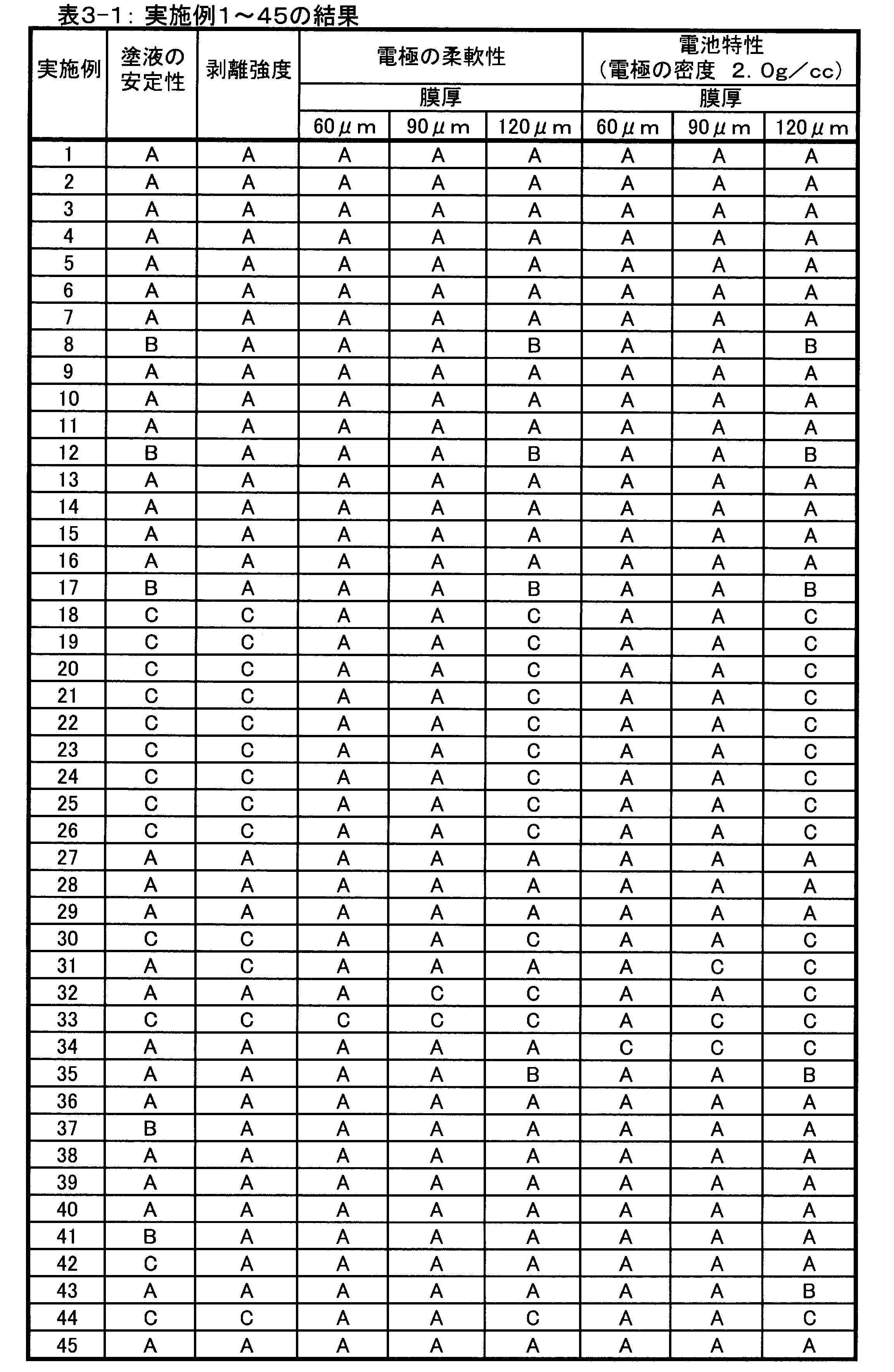

Claims (9)
- 第一の活物質と、第二の活物質と、分散剤と、バインダーと、溶媒とを含む、リチウム二次電池電極形成用の組成物であって、
前記第一の活物質が、下記一般式(1)で示されるリチウムリン酸金属複合粒子の一次粒子の表面を導電性炭素で被覆した、被覆一次粒子から形成される二次粒子であり、前記被覆一次粒子の平均粒子径が50~300nmであり、前記二次粒子の平均粒子径が300nm~5μmであり、
前記第二の活物質が、下記一般式(1)で示されるリチウムリン酸金属複合粒子の一次粒子の表面を導電性炭素で被覆した、被覆一次粒子から形成される造粒粒子であり、前記被覆一次粒子の平均粒子径が50~300nmであり、前記造粒粒子の平均粒子径が5~30μmであることを特徴とする、組成物。
一般式(1): LiFe1-xMxPO4 (0≦x≦1)
(式中、Mは、Mn、Co、Ni及びVからなる群から選ばれる少なくとも1種の金属元素を示す。) - 前記第二の活物質が、前記第一の活物質を用いて作製された造粒粒子である、請求項1に記載の組成物。
- 前記分散剤が、酸性官能基、塩基性官能基および水酸基からなる群から選ばれる少なくとも一種の官能基を有する、請求項1又は2に記載の組成物。
- 前記第一の活物質粒子と前記第二の活物質粒子の合計重量を基準として、前記第一の活物質の含有量が10~90重量%の範囲である、請求項1~3のいずれか一項に記載の組成物。
- さらに、導電性微粒子炭素材料を含有する、請求項1~4のいずれか一項に記載の組成物。
- 前記導電性微粒子炭素材料が、カーボンブラック、黒鉛、繊維状炭素およびグラフェンからなる群から選ばれる少なくとも1種を含む、請求項1~5のいずれか一項に記載の組成物。
- 集電体と、該集電体の表面に形成された合材層とを有するリチウム二次電池用の電極であって、前記合材層が、請求項1~6のいずれか一項に記載の組成物を用いて形成された塗膜である、電極。
- 前記塗膜の乾燥膜厚が90μm以上である、請求項7に記載の電極。
- 正極と負極と電解液とを有するリチウム二次電池であって、前記正極が、請求項7又は8に記載の電極である、リチウム二次電池。
Priority Applications (4)
| Application Number | Priority Date | Filing Date | Title |
|---|---|---|---|
| CN201380021753.4A CN104247104B (zh) | 2012-04-27 | 2013-04-26 | 锂二次电池的电极形成用组合物、电极和锂二次电池 |
| US14/397,356 US20150118559A1 (en) | 2012-04-27 | 2013-04-26 | Composition for forming electrode of lithium secondary battery, electrode and lithium secondary battery |
| EP13782353.0A EP2843738A4 (en) | 2012-04-27 | 2013-04-26 | COMPOSITION FOR FORMING AN ELECTRODE OF A LITHIUM SUBSTANCE BATTERY, ELECTRODE AND LITHIUM CENTRIC BATTERY |
| US15/695,798 US20170365844A1 (en) | 2012-04-27 | 2017-09-05 | Method to prepare a composition for forming an electrode of a lithium secondary battery |
Applications Claiming Priority (2)
| Application Number | Priority Date | Filing Date | Title |
|---|---|---|---|
| JP2012103198A JP5273274B1 (ja) | 2012-04-27 | 2012-04-27 | リチウム二次電池電極形成用組成物、二次電池用電極 |
| JP2012-103198 | 2012-04-27 |
Related Child Applications (2)
| Application Number | Title | Priority Date | Filing Date |
|---|---|---|---|
| US14/397,356 A-371-Of-International US20150118559A1 (en) | 2012-04-27 | 2013-04-26 | Composition for forming electrode of lithium secondary battery, electrode and lithium secondary battery |
| US15/695,798 Continuation US20170365844A1 (en) | 2012-04-27 | 2017-09-05 | Method to prepare a composition for forming an electrode of a lithium secondary battery |
Publications (1)
| Publication Number | Publication Date |
|---|---|
| WO2013162025A1 true WO2013162025A1 (ja) | 2013-10-31 |
Family
ID=49179204
Family Applications (1)
| Application Number | Title | Priority Date | Filing Date |
|---|---|---|---|
| PCT/JP2013/062485 Ceased WO2013162025A1 (ja) | 2012-04-27 | 2013-04-26 | リチウム二次電池の電極形成用組成物、電極及びリチウム二次電池 |
Country Status (5)
| Country | Link |
|---|---|
| US (2) | US20150118559A1 (ja) |
| EP (1) | EP2843738A4 (ja) |
| JP (1) | JP5273274B1 (ja) |
| CN (1) | CN104247104B (ja) |
| WO (1) | WO2013162025A1 (ja) |
Cited By (2)
| Publication number | Priority date | Publication date | Assignee | Title |
|---|---|---|---|---|
| JP2015181090A (ja) * | 2014-03-05 | 2015-10-15 | 日本ケミコン株式会社 | 電極の製造方法 |
| JP2016096023A (ja) * | 2014-11-14 | 2016-05-26 | 株式会社半導体エネルギー研究所 | 蓄電装置及び電子機器 |
Families Citing this family (34)
| Publication number | Priority date | Publication date | Assignee | Title |
|---|---|---|---|---|
| JP5861650B2 (ja) * | 2013-01-29 | 2016-02-16 | 住友大阪セメント株式会社 | 電極材料及び電極並びにリチウムイオン電池 |
| WO2015016642A1 (ko) | 2013-08-01 | 2015-02-05 | 주식회사 엘지화학 | 도전재 조성물, 이를 사용한 리튬 이차 전지의 전극 형성용 슬러리 조성물 및 리튬 이차 전지 |
| JP6205981B2 (ja) * | 2013-08-23 | 2017-10-04 | 東洋インキScホールディングス株式会社 | リチウム二次電池の電極形成用組成物、電極及びリチウム二次電池 |
| JP6621664B2 (ja) * | 2013-10-17 | 2019-12-18 | 日本ケミコン株式会社 | 導電性カーボンの製造方法、このカーボンを含む電極材料の製造方法、この電極材料を用いた電極の製造方法及びこの電極を備えた蓄電デバイスの製造方法 |
| KR101595625B1 (ko) * | 2013-11-26 | 2016-02-18 | 지에스에너지 주식회사 | 금속산화물/그래핀 복합 마이크로입자 및 이를 포함하는 리튬 이차전지용 양극 |
| JP2015170554A (ja) * | 2014-03-10 | 2015-09-28 | 株式会社豊田自動織機 | 複数の正極活物質、結着剤及び溶剤を含む組成物の製造方法 |
| CN107078275A (zh) * | 2014-09-30 | 2017-08-18 | 三井化学株式会社 | 锂电池用电极、锂电池以及电化学单体电池用糊料 |
| JP6428342B2 (ja) * | 2015-02-13 | 2018-11-28 | 日本ゼオン株式会社 | リチウムイオン二次電池電極用バインダー組成物、リチウムイオン二次電池電極用スラリー組成物、リチウムイオン二次電池用電極およびリチウムイオン二次電池 |
| JP6364437B2 (ja) * | 2016-03-28 | 2018-07-25 | 太平洋セメント株式会社 | 非水電解質二次電池用電極の合材層及びその製造方法 |
| US20180013151A1 (en) | 2016-07-08 | 2018-01-11 | Semiconductor Energy Laboratory Co., Ltd. | Positive electrode active material, power storage device, electronic device, and method for manufacturing positive electrode active material |
| JP6176381B1 (ja) * | 2016-09-30 | 2017-08-09 | 住友大阪セメント株式会社 | リチウムイオン二次電池、及びリチウムイオン二次電池用正極材料 |
| US11114668B2 (en) | 2017-02-15 | 2021-09-07 | HYDRO-QUéBEC | Electrode materials and processes for their preparation |
| KR102359103B1 (ko) * | 2018-02-01 | 2022-02-08 | 주식회사 엘지에너지솔루션 | 이차전지용 양극 활물질, 그 제조방법 및 이를 포함하는 리튬 이차전지 |
| KR102420800B1 (ko) * | 2018-03-02 | 2022-07-15 | 주식회사 엘지화학 | 음극 슬러리 조성물, 이를 이용하여 제조된 음극 및 이차전지 |
| KR102816376B1 (ko) | 2018-08-15 | 2025-06-04 | 하이드로-퀘벡 | 전극 물질 및 이의 제조 방법 |
| US11349119B2 (en) * | 2018-10-15 | 2022-05-31 | GM Global Technology Operations LLC | Method for making silicon-containing composite electrodes for lithium-based batteries |
| CN113451548B (zh) * | 2020-03-25 | 2022-09-09 | 比亚迪股份有限公司 | 磷酸铁锂正极片及制备方法、磷酸铁锂锂离子电池 |
| CN114204015B (zh) * | 2020-09-18 | 2023-01-06 | 比亚迪股份有限公司 | 正极材料、正极浆料、正极片及电池 |
| CN114204016B (zh) * | 2020-09-18 | 2023-01-06 | 比亚迪股份有限公司 | 正极材料、正极浆料、正极片及电池 |
| CN112436120A (zh) * | 2020-11-24 | 2021-03-02 | 上海华谊(集团)公司 | 磷酸锰铁锂复合物,其制造方法及锂离子电池正极 |
| JP7222002B2 (ja) * | 2021-01-29 | 2023-02-14 | プライムプラネットエナジー&ソリューションズ株式会社 | 正極活物質複合粒子および正極板の製造方法および正極活物質複合粒子の製造方法 |
| US11978880B2 (en) | 2021-06-01 | 2024-05-07 | GM Global Technology Operations LLC | Electrochemical exchange for the fabrication of a layered anode material |
| US12034144B2 (en) | 2021-09-27 | 2024-07-09 | GM Global Technology Operations LLC | Solid-state synthesis for the fabrication of a layered anode material |
| EP4318656A4 (en) * | 2021-12-24 | 2025-07-16 | Lg Energy Solution Ltd | POSITIVE ELECTRODE SLURRY COMPOSITION, POSITIVE ELECTRODE MANUFACTURED USING SAME, AND LITHIUM SECONDARY BATTERY |
| WO2023121315A1 (ko) * | 2021-12-24 | 2023-06-29 | 주식회사 엘지에너지솔루션 | 양극 슬러리 조성물, 이를 이용하여 제조된 리튬 이차전지 |
| US12388085B2 (en) | 2022-09-21 | 2025-08-12 | Rivian Ip Holdings, Llc | Electrodes comprising blended active materials |
| KR20240088617A (ko) * | 2022-12-13 | 2024-06-20 | 주식회사 엘지화학 | 양극 및 이를 포함하는 리튬 이차전지 |
| KR102866654B1 (ko) | 2022-12-16 | 2025-09-30 | 주식회사 나노신소재 | 메조페이스 피치계 도전재 분산액 제조방법 |
| KR20250135196A (ko) * | 2023-01-26 | 2025-09-12 | 니폰 제온 가부시키가이샤 | 비수계 이차 전지 전극용 슬러리 조성물, 비수계 이차 전지용 전극 및 비수계 이차 전지 |
| KR102866670B1 (ko) | 2023-04-17 | 2025-09-30 | 주식회사 나노신소재 | 고연화점 피치계 도전재 분산액 제조방법 |
| KR102866661B1 (ko) | 2023-04-17 | 2025-09-30 | 주식회사 나노신소재 | 메조페이스 피치계 도전재 분산액 제조방법 |
| WO2025115780A1 (ja) * | 2023-12-01 | 2025-06-05 | エリーパワー株式会社 | リチウムイオン二次電池用正極およびリチウムイオン二次電池 |
| CN117343375B (zh) * | 2023-12-06 | 2024-03-01 | 新乡市中科膜材料科技有限公司 | 一种低闭孔高安全性的复合隔膜及其制备方法和应用 |
| KR102923987B1 (ko) | 2023-12-21 | 2026-02-06 | 주식회사 나노신소재 | 피치계 도전성 조성물 제조방법 및 이를 이용한 이차전지 양극재 |
Citations (26)
| Publication number | Priority date | Publication date | Assignee | Title |
|---|---|---|---|---|
| JPS5462227A (en) | 1977-10-28 | 1979-05-19 | Toyo Ink Mfg Co Ltd | Phthalocyanine pigment composition |
| JPS56118462A (en) | 1980-02-25 | 1981-09-17 | Toyo Ink Mfg Co Ltd | Pigment composition |
| JPS56166266A (en) | 1980-05-23 | 1981-12-21 | Toyo Ink Mfg Co Ltd | Dispersing method of pigment |
| JPS6088185A (ja) | 1983-10-18 | 1985-05-17 | 東洋インキ製造株式会社 | 顔料分散剤 |
| JPS63305173A (ja) | 1987-06-05 | 1988-12-13 | Toyo Ink Mfg Co Ltd | 顔料分散剤 |
| JPS645070B2 (ja) | 1980-08-28 | 1989-01-27 | Toyo Ink Mfg Co | |
| JPH032676A (ja) | 1989-05-31 | 1991-01-09 | Mitsubishi Electric Corp | 全波整流回路 |
| WO1993007648A1 (en) * | 1991-10-09 | 1993-04-15 | Yuasa Corporation | Depolarizing mixture |
| JPH11199796A (ja) | 1997-11-17 | 1999-07-27 | Toyo Ink Mfg Co Ltd | 顔料分散剤、及びそれを含有する顔料組成物 |
| JP2003109592A (ja) | 2001-09-28 | 2003-04-11 | Sanyo Electric Co Ltd | リチウム二次電池およびその製造方法 |
| JP2004119218A (ja) * | 2002-09-26 | 2004-04-15 | Seimi Chem Co Ltd | リチウム二次電池用の正極活物質及びその製造方法 |
| JP2004217842A (ja) | 2003-01-17 | 2004-08-05 | Toyo Ink Mfg Co Ltd | 顔料分散剤及びそれを含有する顔料組成物並びに顔料分散体 |
| JP2006134777A (ja) * | 2004-11-08 | 2006-05-25 | Erekuseru Kk | リチウム電池用正極及びこれを用いたリチウム電池 |
| JP2006310311A (ja) | 2005-04-28 | 2006-11-09 | Samsung Sdi Co Ltd | リチウム二次電池用陽極及びこれを含むリチウム二次電池 |
| JP2007294461A (ja) * | 2006-04-25 | 2007-11-08 | Aquire Energy Co Ltd | 充電式バッテリ製造用の陰極材料 |
| JP2009146788A (ja) | 2007-12-14 | 2009-07-02 | Panasonic Corp | リチウム二次電池用正極形成用塗工液、リチウム二次電池用正極およびリチウム二次電池 |
| JP2009152188A (ja) * | 2007-11-30 | 2009-07-09 | Sony Corp | 正極活物質、正極および非水電解質二次電池 |
| JP2009283354A (ja) | 2008-05-23 | 2009-12-03 | Panasonic Corp | 非水電解質二次電池用電極およびその製造方法ならびに非水電解質二次電池 |
| JP2010061934A (ja) | 2008-09-03 | 2010-03-18 | Toyo Ink Mfg Co Ltd | 負極合材およびそれを用いたリチウム二次電池 |
| JP2010113874A (ja) * | 2008-11-05 | 2010-05-20 | Furukawa Battery Co Ltd:The | リチウム二次電池用正極の製造法及びリチウム二次電池 |
| WO2010137889A2 (ko) * | 2009-05-27 | 2010-12-02 | 주식회사 엘지화확 | 양극 활물질, 및 이를 포함하는 양극, 리튬 이차 전지 |
| KR20100127949A (ko) * | 2009-05-27 | 2010-12-07 | 주식회사 엘지화학 | 리튬 이차 전지용 전극체, 및 이를 포함하는 리튬 이차 전지 |
| KR20100131921A (ko) * | 2009-06-08 | 2010-12-16 | 주식회사 엘지화학 | 양극 활물질, 및 이를 포함하는 양극, 리튬 이차 전지 |
| JP2011181293A (ja) * | 2010-02-27 | 2011-09-15 | Mitsubishi Materials Corp | Liイオン電池用正極活物質、およびその製造方法 |
| JP2011216233A (ja) * | 2010-03-31 | 2011-10-27 | Sumitomo Osaka Cement Co Ltd | 電極材料及び膜 |
| JP2012506611A (ja) * | 2008-10-22 | 2012-03-15 | エルジー・ケム・リミテッド | 電極の効率及びエネルギー密度を改良するカソード活性材料 |
Family Cites Families (5)
| Publication number | Priority date | Publication date | Assignee | Title |
|---|---|---|---|---|
| JP4420123B2 (ja) * | 2007-06-18 | 2010-02-24 | 東洋インキ製造株式会社 | 電池用組成物 |
| CA2614634C (en) * | 2007-12-14 | 2013-04-30 | Phostech Lithium Inc. | Lithium iron phosphate cathode materials with enhanced energy density and power performance |
| EP2296208B1 (en) * | 2008-06-04 | 2017-05-10 | Toyo Ink Mfg. Co., Ltd | Composition for battery |
| JP5957728B2 (ja) * | 2008-10-22 | 2016-07-27 | エルジー・ケム・リミテッド | オリビン構造を有するリン酸リチウム鉄の製造方法 |
| US20130040199A1 (en) * | 2010-04-26 | 2013-02-14 | Hideyuki Yamamura | Method for manufacturing electrode active material |
-
2012
- 2012-04-27 JP JP2012103198A patent/JP5273274B1/ja active Active
-
2013
- 2013-04-26 WO PCT/JP2013/062485 patent/WO2013162025A1/ja not_active Ceased
- 2013-04-26 CN CN201380021753.4A patent/CN104247104B/zh active Active
- 2013-04-26 EP EP13782353.0A patent/EP2843738A4/en not_active Withdrawn
- 2013-04-26 US US14/397,356 patent/US20150118559A1/en not_active Abandoned
-
2017
- 2017-09-05 US US15/695,798 patent/US20170365844A1/en not_active Abandoned
Patent Citations (31)
| Publication number | Priority date | Publication date | Assignee | Title |
|---|---|---|---|---|
| JPS5462227A (en) | 1977-10-28 | 1979-05-19 | Toyo Ink Mfg Co Ltd | Phthalocyanine pigment composition |
| JPS56118462A (en) | 1980-02-25 | 1981-09-17 | Toyo Ink Mfg Co Ltd | Pigment composition |
| JPS56166266A (en) | 1980-05-23 | 1981-12-21 | Toyo Ink Mfg Co Ltd | Dispersing method of pigment |
| JPS645070B2 (ja) | 1980-08-28 | 1989-01-27 | Toyo Ink Mfg Co | |
| JPS6088185A (ja) | 1983-10-18 | 1985-05-17 | 東洋インキ製造株式会社 | 顔料分散剤 |
| JPS63305173A (ja) | 1987-06-05 | 1988-12-13 | Toyo Ink Mfg Co Ltd | 顔料分散剤 |
| JPH032676A (ja) | 1989-05-31 | 1991-01-09 | Mitsubishi Electric Corp | 全波整流回路 |
| WO1993007648A1 (en) * | 1991-10-09 | 1993-04-15 | Yuasa Corporation | Depolarizing mixture |
| JP3213944B2 (ja) | 1991-10-09 | 2001-10-02 | 株式会社ユアサコーポレーション | 正極合剤 |
| JPH11199796A (ja) | 1997-11-17 | 1999-07-27 | Toyo Ink Mfg Co Ltd | 顔料分散剤、及びそれを含有する顔料組成物 |
| JP2003109592A (ja) | 2001-09-28 | 2003-04-11 | Sanyo Electric Co Ltd | リチウム二次電池およびその製造方法 |
| JP2004119218A (ja) * | 2002-09-26 | 2004-04-15 | Seimi Chem Co Ltd | リチウム二次電池用の正極活物質及びその製造方法 |
| JP2004217842A (ja) | 2003-01-17 | 2004-08-05 | Toyo Ink Mfg Co Ltd | 顔料分散剤及びそれを含有する顔料組成物並びに顔料分散体 |
| JP2006134777A (ja) * | 2004-11-08 | 2006-05-25 | Erekuseru Kk | リチウム電池用正極及びこれを用いたリチウム電池 |
| JP2006310311A (ja) | 2005-04-28 | 2006-11-09 | Samsung Sdi Co Ltd | リチウム二次電池用陽極及びこれを含むリチウム二次電池 |
| JP2007294461A (ja) * | 2006-04-25 | 2007-11-08 | Aquire Energy Co Ltd | 充電式バッテリ製造用の陰極材料 |
| JP2009152188A (ja) * | 2007-11-30 | 2009-07-09 | Sony Corp | 正極活物質、正極および非水電解質二次電池 |
| JP2009146788A (ja) | 2007-12-14 | 2009-07-02 | Panasonic Corp | リチウム二次電池用正極形成用塗工液、リチウム二次電池用正極およびリチウム二次電池 |
| JP2009283354A (ja) | 2008-05-23 | 2009-12-03 | Panasonic Corp | 非水電解質二次電池用電極およびその製造方法ならびに非水電解質二次電池 |
| JP2010061934A (ja) | 2008-09-03 | 2010-03-18 | Toyo Ink Mfg Co Ltd | 負極合材およびそれを用いたリチウム二次電池 |
| JP2012506611A (ja) * | 2008-10-22 | 2012-03-15 | エルジー・ケム・リミテッド | 電極の効率及びエネルギー密度を改良するカソード活性材料 |
| JP2010113874A (ja) * | 2008-11-05 | 2010-05-20 | Furukawa Battery Co Ltd:The | リチウム二次電池用正極の製造法及びリチウム二次電池 |
| EP2437336A2 (en) * | 2009-05-27 | 2012-04-04 | LG Chem, Ltd. | Positive electrode active material, and positive electrode and lithium secondary battery comprising same |
| KR20100127949A (ko) * | 2009-05-27 | 2010-12-07 | 주식회사 엘지화학 | 리튬 이차 전지용 전극체, 및 이를 포함하는 리튬 이차 전지 |
| WO2010137889A2 (ko) * | 2009-05-27 | 2010-12-02 | 주식회사 엘지화확 | 양극 활물질, 및 이를 포함하는 양극, 리튬 이차 전지 |
| CN102449822A (zh) * | 2009-05-27 | 2012-05-09 | 株式会社Lg化学 | 正极活性材料及包含该正极活性材料的正极和锂二次电池 |
| US20120156560A1 (en) * | 2009-05-27 | 2012-06-21 | Lg Chem. Ltd. | Positive electrode active material, and positive electrode and lithium secondary battery including the same |
| JP2012528451A (ja) * | 2009-05-27 | 2012-11-12 | エルジー・ケム・リミテッド | 正極活物質、及びこれを含む正極、リチウム二次電池 |
| KR20100131921A (ko) * | 2009-06-08 | 2010-12-16 | 주식회사 엘지화학 | 양극 활물질, 및 이를 포함하는 양극, 리튬 이차 전지 |
| JP2011181293A (ja) * | 2010-02-27 | 2011-09-15 | Mitsubishi Materials Corp | Liイオン電池用正極活物質、およびその製造方法 |
| JP2011216233A (ja) * | 2010-03-31 | 2011-10-27 | Sumitomo Osaka Cement Co Ltd | 電極材料及び膜 |
Non-Patent Citations (1)
| Title |
|---|
| See also references of EP2843738A4 * |
Cited By (2)
| Publication number | Priority date | Publication date | Assignee | Title |
|---|---|---|---|---|
| JP2015181090A (ja) * | 2014-03-05 | 2015-10-15 | 日本ケミコン株式会社 | 電極の製造方法 |
| JP2016096023A (ja) * | 2014-11-14 | 2016-05-26 | 株式会社半導体エネルギー研究所 | 蓄電装置及び電子機器 |
Also Published As
| Publication number | Publication date |
|---|---|
| JP5273274B1 (ja) | 2013-08-28 |
| US20150118559A1 (en) | 2015-04-30 |
| CN104247104A (zh) | 2014-12-24 |
| CN104247104B (zh) | 2016-11-09 |
| JP2013232313A (ja) | 2013-11-14 |
| EP2843738A1 (en) | 2015-03-04 |
| EP2843738A4 (en) | 2015-04-22 |
| US20170365844A1 (en) | 2017-12-21 |
Similar Documents
| Publication | Publication Date | Title |
|---|---|---|
| JP5273274B1 (ja) | リチウム二次電池電極形成用組成物、二次電池用電極 | |
| JP7669897B2 (ja) | カーボンナノチューブ分散液およびその利用 | |
| JP6205981B2 (ja) | リチウム二次電池の電極形成用組成物、電極及びリチウム二次電池 | |
| JP4240157B2 (ja) | 電池用組成物 | |
| JP5470780B2 (ja) | 電池用組成物 | |
| US20230307642A1 (en) | Carbon nanotube dispersion, carbon nanotube resin composition, mixture slurry, electrode film, nonaqueous electrolyte secondary battery, and method of producing mixture slurry | |
| JP2014194927A (ja) | 合材スラリーおよびその製造方法とそれを用いた電極、電池 | |
| JP5446178B2 (ja) | リチウム二次電池用正極合剤ペースト | |
| JP5954322B2 (ja) | 二次電池電極形成用組成物、二次電池電極、及び二次電池 | |
| JP5369550B2 (ja) | 電池用組成物 | |
| WO2020017656A1 (ja) | 化合物、分散剤、電池用分散組成物、電極、電池 | |
| JP6746875B2 (ja) | 二次電池電極形成用組成物、二次電池用電極および二次電池 | |
| JP5900111B2 (ja) | 二次電池電極形成用組成物、二次電池電極、及び二次電池 | |
| JP5374973B2 (ja) | 負極合材およびそれを用いたリチウム二次電池 | |
| JP2015125964A (ja) | 二次電池電極形成用組成物、二次電池用電極および二次電池 | |
| JP6036260B2 (ja) | 二次電池電極形成用組成物、二次電池電極、及び二次電池 | |
| JP2009283232A (ja) | 電池用組成物の製造方法 | |
| JP2014135198A (ja) | 二次電池電極形成用組成物、二次電池用電極および二次電池 | |
| JP2015191760A (ja) | 分散剤、分散組成物、電池用分散組成物、電池 | |
| JP2013073724A (ja) | リチウムイオン二次電池正極用合材ペースト | |
| JP6040783B2 (ja) | 二次電池電極形成用組成物、二次電池用電極および二次電池 | |
| JP2015176688A (ja) | 二次電池用組成物およびそれを用いた二次電池用電極および二次電池 | |
| JP2012195243A (ja) | 電池用分散剤、及びそれを用いた電池用組成物、及びリチウム二次電池 | |
| JP2017016745A (ja) | ポリフッ化ビニリデン系樹脂を溶解した導電性炭素材料分散体の製造方法およびその利用 | |
| KR20240028301A (ko) | 카본 나노 튜브 분산체 |
Legal Events
| Date | Code | Title | Description |
|---|---|---|---|
| 121 | Ep: the epo has been informed by wipo that ep was designated in this application |
Ref document number: 13782353 Country of ref document: EP Kind code of ref document: A1 |
|
| NENP | Non-entry into the national phase |
Ref country code: DE |
|
| WWE | Wipo information: entry into national phase |
Ref document number: 14397356 Country of ref document: US |
|
| WWE | Wipo information: entry into national phase |
Ref document number: 2013782353 Country of ref document: EP |