WO2013176149A1 - Article chromé et film de chromage - Google Patents
Article chromé et film de chromage Download PDFInfo
- Publication number
- WO2013176149A1 WO2013176149A1 PCT/JP2013/064126 JP2013064126W WO2013176149A1 WO 2013176149 A1 WO2013176149 A1 WO 2013176149A1 JP 2013064126 W JP2013064126 W JP 2013064126W WO 2013176149 A1 WO2013176149 A1 WO 2013176149A1
- Authority
- WO
- WIPO (PCT)
- Prior art keywords
- chromium
- plating film
- plating
- particles
- film
- Prior art date
- Legal status (The legal status is an assumption and is not a legal conclusion. Google has not performed a legal analysis and makes no representation as to the accuracy of the status listed.)
- Ceased
Links
Images


Classifications
-
- C—CHEMISTRY; METALLURGY
- C25—ELECTROLYTIC OR ELECTROPHORETIC PROCESSES; APPARATUS THEREFOR
- C25D—PROCESSES FOR THE ELECTROLYTIC OR ELECTROPHORETIC PRODUCTION OF COATINGS; ELECTROFORMING; APPARATUS THEREFOR
- C25D15/00—Electrolytic or electrophoretic production of coatings containing embedded materials, e.g. particles, whiskers, wires
Definitions
- the present invention relates to a chromium plating product and a chromium plating film manufactured using a chromium plating bath.
- Chrome plating is widely used as decorative plating because it does not corrode in the atmosphere and does not lose its luster. In addition, since it has a high hardness and a low coefficient of friction, it is widely used for machine parts that require wear resistance. However, a large amount of hexavalent chromium is used in the plating solution used for this plating. Hexavalent chromium is feared to have a high environmental load, and various developments of chromium plating using a trivalent chromium plating solution with little concern are being studied.
- Patent Document 1 describes that trivalent chromium plating film contains hard wear-resistant particles and self-lubricating particles. According to the technique described in this document, since trivalent chromium is used as the chromium source, the environmental load is smaller than when hexavalent chromium is used. In addition, since the plating film contains hard particles and the like, the wear resistance of the plating film is improved.
- An object of the present invention is to provide a chromium plating product and a chromium plating film capable of solving various disadvantages of the above-described conventional technology.
- the present invention is a chromium plating product in which a chromium plating film is provided on the surface of a base material, In the chromium plating film, a plurality of particles made of nitride, carbide or oxide are uniformly dispersed, By providing the chromium plating product, wherein the particles are contained in the chromium plating film in an amount of 10 to 30% by volume, and are present in the chromium plating film in a monodispersed state, The problem is solved.
- the present invention is a chromium plating film in which a plurality of ceramic particles are uniformly dispersed, By providing the chromium plating film, wherein the ceramic particles are contained in the chromium plating film in an amount of 10 to 30% by volume and are present in the chromium plating film in a monodispersed state. The above-mentioned problem is solved.
- a chromium plating product and a chromium plating film which are manufactured using trivalent chromium as a chromium source and have improved wear resistance.
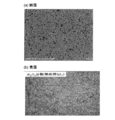
- FIGS. 1A and 1B are a scanning electron microscope image of a longitudinal section and a surface of a plating film in the chromium plating product obtained in Example 1.
- FIG. 2A and 2B are a scanning electron microscopic image of the longitudinal section and surface of the plating film in the chromium plating product obtained in Example 1.
- FIG. 3 is a scanning electron microscope image of the surface of the plating film in the chromium plating product obtained in Example 4.
- FIG. 4 is a scanning electron microscope image of the surface of the plating film in the chromium plating product obtained in Example 5.
- the chrome plated product of the present invention has a chrome plating film provided on the surface of a base material.
- This chromium plating film is manufactured using a plating solution containing trivalent chromium and substantially free of hexavalent chromium.
- trivalent chromium as the chromium source, a dense plating film can be produced.
- hexavalent chromium when used, the film does not become dense, and a plating film having a large number of cracks on the surface is formed.
- a material capable of chrome plating using the plating solution can be used as a material constituting the base material of the chrome plating product.
- a material generally includes a metal material, but may be a non-metal material.
- the metal material include cast products and forged products of iron, aluminum, or alloys containing them.
- the chromium plating film in the chromium plating product may be formed on the entire surface of the base material, or may be formed only on a part of the surface of the base material, depending on the specific use of the chromium plating product. Good.
- the portion excluding the particles is substantially composed of chromium (metallic chromium), but may further contain an element other than chromium.
- chromium carbide may be included.
- the chromium plating film preferably contains 93 to 99.5% by mass of chromium, and further contains 0.5 to 7% by mass of carbon, excluding the particles, and 99.3 to 99.99% of chromium. It is preferable that 5% by mass is contained, and further 0.5 to 0.7% by mass of carbon is contained.
- the amount of chromium and carbon contained in the chromium plating film is measured by elemental analysis of the chromium plating film with EPMA.
- ⁇ Particles are contained in the chrome plating film. These particles are contained for the purpose of increasing the wear resistance of the chromium plating film (in this sense, these particles are hereinafter also referred to as “hard particles”).
- the hard particles are dispersed in the matrix using chromium deposited by plating as a matrix. Hard particles are mainly present at grain boundaries and defects, thereby suppressing the propagation of cracks and effectively mitigating fatigue, destruction, and peeling.
- the hard particles exposed on the surface act as a sliding surface in contact with the mating sliding surface in the friction and wear action with the mating sliding surface, thereby improving wear resistance and seizure resistance and helping to form an oil film. Become.
- the present invention has one of the characteristics in the dispersion state of the hard particles in the chromium plating film.
- the hard particles are uniformly dispersed in the plating film.
- Uniformly dispersed means that the number of hard particles present in the plating film is substantially constant when an arbitrary cross section of the plating film is observed. For example, when an arbitrary cross section of the plating film is observed with an electron microscope at five magnifications of 100 ⁇ m ⁇ 100 ⁇ m at a magnification of 1000 times, the distribution state of the hard particles present therein is uneven or unevenly distributed. If this is not observed, it can be said that the hard particles are uniformly dispersed.
- the hard particles are uniformly dispersed in the plating film, whereby the wear resistance of the plating film is improved.
- a plating film is formed using a hexavalent chromium plating solution
- a crack extending in the thickness direction of the plating film is formed, and hard particles are unevenly distributed in the crack. It has been.
- the plating film formed using the hexavalent chromium plating solution has a limit in improving the wear resistance even if it contains hard particles.
- the hard particles contained in the plating film are present in a monodispersed state in addition to being uniformly dispersed in the film.
- the monodispersed state is a state in which primary hard particles are present without substantially agglomerating.
- the total number of hard particles (the total number of primary particles and secondary particles)
- the ratio of the total number of secondary particles to the total number of particles) is 5% or less, it can be said that the hard particles exist in a monodispersed state.
- the hard particles contained in the plating film have a high content of 10 to 30% by volume in the plating film.
- the wear resistance of the plating film can be improved by a synergistic effect with the dispersion of the hard particles uniformly and in a monodispersed state.
- the content of the hard particles is less than 10% by volume, the effect of containing the hard particles is insufficient, and the wear resistance of the plating film cannot be sufficiently increased.
- the content of hard particles is more than 30% by volume, the balance of the ratio between chromium and hard particles is lost, and as a result, improvement in wear resistance cannot be expected.
- the content of hard particles in the plating film is preferably 15 to 30% by volume.
- the ratio of the hard particles contained in the plating film is observed at a magnification of 1000 times using a laser microscope. And the ratio of the area which the ceramic particle which exists in a 30 micrometers square frame occupies is calculated. Strictly speaking, the value measured by this method is the area% occupied by the ceramic particles, but in the present invention, this is called “volume%” for convenience (the same applies hereinafter).
- chromium plating may be performed using a plating solution described later.
- the thickness of the plating film may be appropriately set according to the specific use of the chrome plating.
- the chromium plated product of the present invention is applicable to both hard plating and decorative plating, and the thickness of the plating film including both hard plating and decorative plating is 1 to 500 ⁇ m, particularly 3 to 300 ⁇ m. It is preferable. Particularly in the case of hard plating, the thickness is preferably 10 to 500 ⁇ m, particularly preferably 5 to 300 ⁇ m, and in the case of decorative plating, the thickness is preferably 1 to 5 ⁇ m, particularly 2 to 4 ⁇ m.
- the thickness of the plating film can be measured by enlarging the longitudinal section thereof at a magnification of 400 times using a laser microscope (LEXTO OLS1100 manufactured by OLYMPUS).
- the hard particles contained in the plating film those capable of improving the wear resistance of the film can be used.
- the hard particles for example, those made of nitride, carbide or oxide can be used. These hard particles can be used alone or in combination of two or more.
- the hard particles are preferably ceramic particles from the viewpoint of improving the wear resistance of the plating film. Examples of such ceramic particles include metal or semimetal nitrides such as AlN, Si 3 N 4 and BN, metal or semimetal carbides such as TiC, SiC, Cr 3 C 2 , B 4 C and WC, Examples thereof include metal oxides such as Al 2 O 3 , Fe 3 O 4 and TiO 2 .
- the size of the hard particles can be appropriately selected according to the specific use of the chromium plating product, the thickness of the plating film, and the like. In particular, when the particle size is preferably 0.1 to 10 ⁇ m, more preferably 0.3 to 5 ⁇ m, the effects such as fatigue, breakage, and separation described above are effectively relieved. .
- the average particle diameter of the hard particles in the plating film is measured by a laser microscope (OLS1100 manufactured by OLYMPUS).
- the shape of the hard particles can also be appropriately selected according to the specific use of the chrome plating product, the thickness of the plating film, and the like.
- a spherical shape, a polyhedral shape, a spindle shape, a needle shape, or a combination thereof can be used.
- Spherical particles are preferably used from the viewpoint of reducing friction with the mating sliding surface and improving the wear action.
- the wear resistance of the plating film can be further improved.
- the self-lubricating particles include graphite, molybdenum disulfide, tungsten disulfide, fluororesin, and boron nitride. These particles are preferably contained in the plating film in an amount of 10 to 30% by volume, more preferably 15 to 30% by volume. Similar to the hard particles described above, these particles may be uniformly dispersed in the plating film, or may be contained in the microcracks (A1) described later.
- the shape of these particles can be, for example, spherical, polyhedral, spindle-shaped, needle-shaped, or a combination thereof.
- a spherical shape is particularly preferable.
- the plating film has a groove width of preferably 0.1 to 6.0 ⁇ m, more preferably 0.2 to 6.0 ⁇ m, in addition to the above method. More preferably, there is a method in which a plurality of microcracks (A1) of 0.2 to 2.0 ⁇ m are actively generated and particles having self-lubricating properties are contained in the microcracks (A1).
- the plurality of microcracks (A1) preferably have a surface occupancy ratio of 2 to 12 area%, more preferably 4 to 10 area%, on the surface of the chromium plating product.
- the distribution density is preferably 200 to 2000 lines / cm, more preferably 250 to 1500 lines / cm. It is preferable that the surface occupancy rate and the distribution density are within this range because the wear resistance of the chromium plated product can be further improved without deteriorating various physical properties such as the strength of the chromium plated film.
- the groove widths of the microcracks (A1) were obtained by observing the surface of the plating film with a microscope at a magnification of 1000, extracting arbitrarily five cracks in a field of 100 ⁇ m ⁇ 100 ⁇ m, measuring the groove widths, The average value of
- the surface occupancy of the microcrack (A1) is determined by image analysis from a scanning electron micrograph of the plating film surface. Specifically, a scanning electron micrograph of the exposed surface is taken, the obtained photograph is taken into an image processing analysis apparatus, and image processing is performed using image software. The area of the surface of the plating film in the photograph (128 ⁇ m ⁇ 16 ⁇ m) minus the total area of the portions without microcracks is defined as the area of microcracks. Then, the ratio of the area of the microcracks is obtained by setting the area (128 ⁇ m ⁇ 16 ⁇ m) of the plating film surface to 100 area%.
- the distribution density (lines / cm) of the microcracks (A1) formed in the plating film was obtained by taking a photograph of the exposed surface at an area magnification of 10 ⁇ 10 times, and having a length of 10 cm on the film surface of the obtained photograph. It is obtained by arbitrarily drawing 5 to 10 straight lines, counting the intersections of the straight lines and microcracks, and averaging them.
- the self-lubricating particles contained in the microcracks (A1) may be (i) completely located in the microcracks (A1) and not exposed outward from the surface of the plating film. Good. Or conversely, (ii) the particles having self-lubricating properties may be exposed outward from the surface of the plating film.
- the use of the chromium plating product of the present invention causes the plating film to be depleted, so that the self-lubricating particles present in the microcracks (A1) are more than the surface of the plating film. It begins to be exposed to the outside and exerts a lubricating effect.
- a specific method for incorporating self-lubricating particles in the chromium plating film includes the following steps (A) and (B).
- the chromium plating film is heat-treated (P1), and the groove width is preferably 0.1 to 6.0 ⁇ m, more preferably 0.2 to 6.0 ⁇ m, and still more preferably 0.2 to 4.
- This is a step of generating a micro crack of 0 ⁇ m.
- the conditions for heat-treating (P1) the chromium plating film are preferably 200 ° C. or higher, particularly 200 to 400 ° C. in the atmosphere.
- the heating time is preferably 30 to 120 minutes, provided that the temperature is within this range.
- step (b) particles having self-lubricating properties are contained in the microcracks (A1).
- the chromium plating product having the microcracks (A1) is immersed in a solution in which particles having self-lubricating properties are dissolved under reduced pressure or in a vacuum atmosphere.
- grains which have self-lubricating property in a micro crack (A1) can be penetrate
- drying and removing the solvent can precipitate and contain particles having self-lubricating properties in the microcracks (A1).
- the concentration of the solution in which the self-lubricating particles are dissolved is not particularly limited, and may be not more than the saturation solubility of the self-lubricating particles.
- the chromium plating film of the present invention has a groove width of preferably 0.2 to 2.0 ⁇ m, more preferably 0.2 to 0.5 ⁇ m among those obtained in the step (a) microcrack (A1) generation step.
- Those having a chromium plating film having a micro crack (A1) can be used as they are as a chromium plating product.
- the oil film penetrates into the microcrack (A1) and a stable oil film is maintained.
- the plurality of micro cracks (A1) has a surface occupancy of preferably 2 to 15 area%, more preferably 4 to 12 area%, and a distribution density of 150 to 2000 on the surface of the chromium plating. / Cm, more preferably 200 to 1500 / cm, a stable oil film can be formed.
- the chromium plating film of the present invention preferably has a plurality of network-like fine particles having a groove width of preferably 0.1 to 2.0 ⁇ m, more preferably 0.2 to 2.0 ⁇ m, and still more preferably 0.2 to 0.5 ⁇ m. It may be a chromium plating film having a crack (A2) and having a surface occupation ratio of the microcrack (A2) of preferably 2 to 12 area%, more preferably 5 to 10 area%.
- the plating film having a mesh-like microcrack (A2) is formed by a crack that extends in the thickness direction of the plating film so that the crack reaches the base material, or the groove width of the microcrack (A2) is widened. Since the deterioration of physical properties can be suppressed, it has excellent corrosion resistance.
- the distribution density of the mesh-like microcracks (A2) is preferably 150 to 1500 / cm, and more preferably 200 to 1500 / cm, the corrosion resistance of the chromium plated product can be further improved.
- the measurement of the groove width, the surface occupancy, and the distribution density in the fine mesh crack (A2) can be performed according to the measurement for the fine crack (A1) described above.
- one or more base films may be provided between the surface of the base material and the plating film.
- one layer or two or more upper layers may be provided on the plating film.
- the undercoat film for example, a hard particle composite dispersed plating film made of alumina particles or a nitride layer can be used.
- the upper layer film for example, a film composed of a solid lubricating particle composite dispersion plating film made of molybdenum disulfide particles or a nickel-cobalt-phosphorus alloy composite plating film containing silicon nitride particles can be used.
- the plating film is produced using a plating solution containing trivalent chromium and substantially free of hexavalent chromium.
- the phrase “substantially free of hexavalent chromium” means that trace amounts of hexavalent chromium inevitably mixed in and / or remaining in the plating solution manufacturing process, for example, hexavalent chromium present at 2 ppm or less are allowed. In other words, the hexavalent chromium added and / or left behind is excluded.
- This plating solution preferably contains a trivalent chromium compound, a pH buffer, an aminocarboxylic acid compound, a sulfamate compound, an aminocarbonyl compound, and hard particles.
- a water-soluble compound having a trivalent chromium valence can be used without particular limitation.
- examples of such compounds include inorganic acid chromium such as chromium chloride, chromium nitrate, chromium sulfate and chromium phosphate, chromium lactate, chromium gluconate, chromium glycolate, chromium oxalate, chromium malate, chromium maleate, and malon.
- Organic acid chromium such as chromium acid chromium, chromium citrate, chromium acetate and chromium tartrate can be mentioned.
- trivalent chromium compounds can be used singly or in combination of two or more.
- concentration of trivalent chromium in the plating solution is preferably from 0.2 to 1.4 mol / liter, more preferably from 0.4 to 1.1, from the viewpoint that a chromium plating film having a target structure can be successfully formed. 2 mol / liter.
- the pH buffer contained in the plating solution is blended for the purpose of successfully forming a chromium plating film having a desired structure by adjusting the pH at the time of chromium plating.
- Suitable pH buffering agents for this purpose include, for example, boric acid, sodium borate, potassium borate, ammonium sulfate, phosphoric acid, disodium hydrogen phosphate, dipotassium hydrogen phosphate, sodium carbonate, and sodium bicarbonate. . It is particularly preferable to use boric acid, sodium borate or potassium borate. These compounds can be used alone or as a buffer system combining two or more.
- the blending amount of the pH buffering agent may be an amount that can maintain the pH of the plating solution preferably at 0.5 to 2.0, more preferably at 0.8 to 1.5.
- boric acid when used as a pH buffering agent, there is an advantage that, in addition to the pH buffering action, the metal chromium crystals produced by the reduction become finer.
- the aminocarboxylic acid compound contained in the plating solution forms a complex with trivalent chromium in the plating solution to stabilize the plating solution and to successfully form a chromium plating film with the desired structure.
- An aminocarboxylic acid compound is a compound having at least one amino group and at least one carboxyl group in the molecule.
- the aminocarboxylic acid compound include glycine, alanine, aspartic acid, glutamic acid, and arginine. In particular, glycine or alanine is preferably used. These compounds can be used alone or in combination of two or more.
- the aminocarboxylic acid compound When the aminocarboxylic acid compound is blended in an amount of 0.3 to 2 mol, particularly 0.5 to 1.7 mol, with respect to 1 mol of trivalent chromium in the plating solution, a stable plating solution of a chromium complex is obtained. This is preferable because proper electrolytic plating can be performed.
- the concentration of the aminocarboxylic acid compound in the plating solution is preferably 0.4 to 1.7 mol / liter, particularly 0.5 to 0.9 mol / liter.
- the sulfamate compound contained in the plating solution mainly has a role as a supporting electrolyte in the plating solution, and is blended for the purpose of increasing the electrical conductivity of the plating solution to a predetermined level. Further, since the sulfamate compound also has a pH buffering action of the plating solution, the pH of the plating solution is further stabilized by the combined use with the pH buffer described above. Further, the sulfamate compound also has a catalytic action when trivalent chromium is reduced, thereby exhibiting the effect of refining metal chromium crystals and the effect of glossing the chromium film.
- sulfamate for example, ammonium sulfamate, sodium sulfamate, or potassium sulfamate can be used. These compounds can be used alone or in combination of two or more.
- the sulfamate is preferably added in an amount of 0.3 to 2.5 mol, particularly 0.5 to 2 mol, with respect to 1 mol of trivalent chromium in the plating solution.
- the concentration of the sulfamate in the plating solution is preferably 0.4 to 2.1 mol / liter, particularly 0.8 to 1.9 mol / liter.
- the aminocarbonyl compound contained in the plating solution is a compound having at least one carbonyl group and at least one amino group in the molecule.
- the aminocarbonyl compound has the effect of increasing the reduction rate of trivalent chromium.
- the reason is considered as follows. That is, in the process where trivalent chromium is reduced to metallic chromium, divalent chromium is generated. It is considered that divalent chromium is present adsorbed on the cathode or in the electric double layer.
- the reduction of trivalent chromium to metallic chromium is the rate-limiting step.
- the aminocarbonyl compound has a function of increasing the rate at which divalent chromium is reduced to metallic chromium.
- the present inventor believes that the rate at which trivalent chromium is reduced to metallic chromium is increased.
- the aminocarbonyl compound has an action of suppressing the triation of trivalent chromium.
- trivalent chromium is reduced to metallic chromium
- hydrolysis and olation reactions occur near the cathode, which may inhibit metal chromium electrodeposition.
- an aminocarbonyl compound is present in the plating solution, the compound forms a complex with trivalent chromium. Since this complex formation reaction is a competitive reaction with the trivalent chromium olation, the trivalent chromium olation can be minimized. This also increases the reduction rate of trivalent chromium.
- the aminocarbonyl compound serves as a pH buffer that hardens the plating film by supplying nitrogen atoms contained in the compound to the plating film and maintains the pH of the plating solution. It also has an effect.
- aminocarbonyl compounds have a remarkable effect when used in combination with the sulfamate compounds described above. Details are as follows. The advantages of blending the sulfamate compound in the plating solution are as described above, and the electrodeposition stress of the plating film tends to increase due to the use of the sulfamate compound. An increase in electrodeposition stress causes cracks in the plating film. On the other hand, when the sulfamate compound and the aminocarbonyl compound coexist, the growth rate of the chromium crystal is increased by the aminocarbonyl compound, so that the development of the magnetic field is inhibited, and as a result, the electrodeposition stress is lowered.
- the amount of sulfamate added to the aminocarbonyl compound is preferably in the range of 0.4 to 1.5 in terms of molar ratio.
- the hard particles are mixed in the plating solution so as to be 10 to 100 g / liter, particularly 20 to 60 g / liter, because the fluidity of the plating solution is suitable, so that the hard particles are taken into the plating film. It is preferable from the viewpoint that the amount becomes an appropriate amount.
- Surfactants include anionic surfactants such as monoalkyl sulfates and alkylpolyoxyethylene sulfates, cationic surfactants such as alkyltrimethylammonium salts and dialkyldimethylammonium salts, polyoxyethylene alkyl ethers and fatty acid sorbitans
- anionic surfactants such as esters are exemplified.
- aluminum chloride exhibits an advantageous effect of controlling the zeta potential of hard particles to improve the dispersibility of the particles and preventing aggregation of the hard particles. Moreover, it becomes easy to take in hard particles uniformly in a plating film. From the viewpoint of making these effects even more prominent, 0.005 to 0.5 mol, particularly 0.01 to 0.3 mol, of aluminum chloride is added to 1 mol of trivalent chromium in the plating solution. Is preferred. For the same reason, the concentration of aluminum chloride in the plating solution is preferably 0.02 to 0.5 mol / liter, particularly 0.05 to 0.3 mol / liter.
- hard particles having a zeta potential of 20 to 100 mV, particularly 40 to 70 mV from the viewpoint of dispersion of the particles in a uniform and monodispersed state.
- the zeta potential of the hard particles is measured by, for example, Zetasizer Nano Series (manufactured by Malvern Instruments Ltd.).
- a water-soluble organic solvent can be added to the plating solution.
- the water-soluble organic solvent By blending the water-soluble organic solvent, it is possible to effectively prevent plating plating. Further, the dispersibility of the hard particles is improved. From these viewpoints, the water-soluble organic solvent is preferably blended in an amount of 0.4 to 2.1 mol, particularly 0.6 to 1.3 mol, with respect to 1 mol of trivalent chromium in the plating solution.
- the water-soluble organic solvent include glycerin, polyethylene glycol, ethanol, methanol, and n-propanol.
- the plating solution contains a pH buffer, and the pH of the solution is preferably kept in the range of 0.5 to 2.0, more preferably 0.8 to 1.5.
- Examples of water used as a plating solution medium include pure water, ion exchange water, industrial water, tap water, and distilled water. Among these, it is preferable to use industrial water and tap water from the economical aspect on the premise that the storage stability of the plating solution and the film properties are not affected.
- the sulfonic acid group-containing compound or a salt thereof By adding a sulfonic acid group-containing compound or a salt thereof to the plating solution, it is possible to form the chromium plating film having the plurality of network-like microcracks (A2) described above.
- the sulfonic acid group-containing compound or a salt thereof has an action of increasing the density of microcracks (A2) of the film, and imparts excellent corrosion resistance to the chromium plating film.
- sulfonic acid group-containing compound or salt thereof that can be used
- sulfonic acid, disulfonic acid, and salts thereof are preferable.
- Specific examples of the sulfonic acid and disulfonic acid include aliphatic sulfonic acid (eg, methanesulfonic acid, ethanesulfonic acid, etc.), aliphatic disulfonic acid (eg, methanedisulfonic acid, ethanedisulfonic acid, etc.), and aromatic sulfonic acid (eg, benzene).
- Sulfonic acid Sulfonic acid, p-toluenesulfonic acid, etc.
- aromatic disulfonic acid for example, benzene disulfonic acid, etc.
- concentration of the sulfonic acid group-containing compound or salt thereof in the plating solution is preferably 0.02 to 0.1 mol / L, more preferably 0.04 to 0.07 mol / L, based on the sulfonic acid group.
- the temperature of the plating bath is preferably set to 30 to 60 ° C., more preferably 40 to 60 ° C.
- the current density is preferably set to 15 to 60 A / dm 2 , more preferably 20 to 40 A / dm 2 .
- the anode graphite or various dimensionally stabilized anodes (DSA) such as a Ti—Pt electrode can be used, and as the cathode, an object to be plated can be used.
- the thickness of the plating film can be controlled by the plating time. Hard particles are taken into the plating film in the process of electrodeposition of chromium metal.
- chromium is generally amorphous. Amorphous chromium plating films tend to have lower hardness than crystalline ones. Therefore, the plating film formed by electrolytic plating can be crystallized by heat treatment (P2) to form a crystalline chromium film.
- the conditions for the heat treatment are preferably 150 to 300 ° C. in the atmosphere.
- the heating time is preferably 30 to 60 minutes, provided that the temperature is within this range.
- the said heat processing (P2) may serve as the heat processing (P1) mentioned above in the chromium plating film.
- the plating film formed by electrolytic plating generally contains a carbon component derived from a carbon-containing compound contained in the plating solution.
- the carbon component and chromium react to generate chromium carbide in the plating film.
- This carbide is preferable because it contributes to increasing the hardness of the plating film.
- the degree of formation of this carbide can be controlled by controlling the amount of the carbon-containing compound remaining in the plating film depending on the degree of formation of the organic complex of the plating film formed by electrolytic plating.
- An additional step can be performed prior to and / or after the electrolytic plating on the surface of the base material.
- a step of forming one or more additional base films between the surface of the base material and the plating film can be performed prior to performing electrolytic plating on the surface of the base material.
- a step of forming one or more additional upper layer films on the plating film can be performed.
- a method known in the technical field can be appropriately employed.
- the step (a) may be performed in order to form the above-described minute crack (A1), and further, particles having self-lubricating properties are contained in the minute crack (A1).
- the step (b) may be performed following the step.
- the chrome plated product thus manufactured is particularly suitable as a sliding member for, for example, a piston ring, various rolls, and a shock absorber of a reciprocating internal combustion engine.
- Examples 1 and 2 and Comparative Example 1 The components shown in Table 1 below were added to water to prepare a trivalent chromium plating solution having the composition shown in the same table. Using the obtained plating solution, electrolytic plating was performed under the conditions shown in the same table. A high density graphite plate was used as the anode. An S45C polished steel plate was used as the cathode. The longitudinal section of the plating film and the scanning electron microscope image of the surface of the chromium plating product obtained in Examples 1 and 2 are shown in FIGS.
- Example 2 The follow-up test of Example 1 of Patent Document 1 (Japanese Patent Laid-Open No. 6-316789) was conducted. That is, the trivalent chromium plating bath composition contained 100 g / l CrCl 3 6H 2 O, 80 g / l HCOOK, 10 g / l NH 3 Br, 50 g / l NH 4 Cl, and was adjusted to pH 3.0. Using a bath, an anodic ferrite electrode, a brass plate as the cathode, 5 g / l of ⁇ -SiC (average particle size 0.5 ⁇ m) as hard particles were added, and electrodeposition was performed at 8 A / dm 2 for 120 minutes.
- the trivalent chromium plating bath composition contained 100 g / l CrCl 3 6H 2 O, 80 g / l HCOOK, 10 g / l NH 3 Br, 50 g / l NH 4 Cl, and was adjusted to pH 3.
- the amount of chromium and carbon contained in the chromium plating film in the obtained plated product was measured by the following method. Moreover, the thickness of the plating film was measured by the method described above. Furthermore, the appearance of the surface of the plating film was visually observed to evaluate the degree of gloss and the presence or absence of cracks. Further, the content of hard particles in the plating film was measured by the following method, and the dispersibility of the hard particles was evaluated by the following method. Further, the Vickers hardness of the plating film was measured by the following method, and the wear resistance was evaluated by the following method. The results are shown in Table 2 below.
- the area ratio (volume%) of the ceramic particles in the observation field per unit area was determined. This area ratio is measured by the following method. That is, the longitudinal section of the plating film is observed at a magnification of 1000 times using a laser microscope (LEXTO OLS1100 manufactured by OLYMPUS). Then, the ratio of the total number of secondary particles to the ratio of the area occupied by the ceramic particles present in the 30 ⁇ m square frame and the total number of hard particles is measured and measured using the laser microscope.
- the evaluation of the dispersibility of the hard particles was evaluated by observing whether or not the hard particles were uniformly present in the 30 ⁇ m square using a laser microscope (LEXTO OLS1100 manufactured by OLYMPUS). When it was uniform, it was evaluated as “ ⁇ ”, and when it was not uniform, it was evaluated as “x”.
- the wear resistance of the plating film was evaluated using a Kaken type corrosion wear tester.
- Cast iron FC250 conforming to JIS G 5501-1995
- the contact load in the friction tester was 39N.
- the temperature of the corrosive liquid was normal temperature.
- the amount of wear of the plating film was measured, and the value was used as an index of wear resistance.
- the plated product of each example has higher hardness and wear resistance than the plated product of each comparative example. Moreover, in the plated product of each Example, the hard particles are uniformly and monodispersed in the plating film. On the other hand, in the plated product of Comparative Example 2, cracks are generated, the dispersion of hard particles is non-uniform, and particle aggregation is observed.
- Example 3 The chromium plated product obtained in Example 2 was heat-treated at 400 ° C. for 1 hour in the atmosphere.
- the chromium plated product after the heat treatment was measured for Vickers hardness in the same manner as in Example 1. The result was 1550. It was found that a plating film having a higher hardness than that before the heat treatment was formed.
- Example 4 (A) process The chromium plating product (T1) obtained in Example 2 was heat-treated at 200 ° C. for 1 hour to obtain a chromium plating product (T2) having a minute crack (A1).
- the physical properties of the chromium plating product (T2) were evaluated by the method described above.
- the plating film on the chromium plating product (T2) had a groove width of 0.2 ⁇ m, a surface occupation ratio of 5 area%, and a distribution density of It was confirmed that the micro cracks (A1) were 400 / cm.
- a scanning electron microscope image of the surface of the plating film in the chromium plating product (T2) is shown in FIG.
- (B) step (Molybdenum disulfide) was used as self-lubricating particles, which were dissolved in ethanol to prepare a 10% solution.
- 50 g of a chromium plating product having a microcrack (A1) obtained in the step (ii) and the 10% solution prepared above were charged into the flask.
- the inside of the flask was gradually evacuated and allowed to stand for 1 hour at 20 ° C. with stirring.
- the chromium plating product having a microcrack (A1) was collected by filtration, and dried at 200 ° C. to obtain a chromium plating product (T3) containing particles having self-lubricating properties in the microcrack (A1). .
- the chromium plating product (T3) was subjected to fluorescent X-ray analysis, and the amount of self-lubricating particles contained in the microcracks (A1) was measured and found to be 3%.
- Example 5 The chromium plated product obtained in Example 1 was heat-treated at 200 ° C. for 1 hour to obtain a chromium plated product (T4) having a minute crack (A1).
- a scanning electron microscope image of the surface of the plating film in the chromium plating product (T4) is shown in FIG.
- the physical properties of the chromium plating product (T4) were evaluated by the method described above.
- the plating film on the chromium plating product (T4) had a groove width of 3.5 ⁇ m, a surface occupation ratio of 12 area%, and a distribution density of It was confirmed that the micro cracks (A1) were 350 / cm.
- a chromium plated product containing self-lubricating particles (molybdenum disulfide) in microcracks (A1) was obtained.
- the chromium plating product was subjected to fluorescent X-ray analysis, and the amount of self-lubricating particles contained in the microcracks (A1) was measured and found to be 11.5 area%.
- Example 6 The following components were added to water to prepare a trivalent chromium plating solution having the composition shown in Table 3 below. Using the obtained plating solution, electrolytic plating was performed under the conditions shown in the same table to obtain a chromium plating product (T5). A high density graphite plate was used as the anode, and an S45C polished steel plate was used as the cathode.
- the groove width was 0.5 ⁇ m
- the surface occupation ratio was 6.0 area%
- the distribution density was 650 lines / cm, and before the heat treatment It was confirmed that there was almost no change from the chromium plating product (T5).
Landscapes
- Chemical & Material Sciences (AREA)
- Engineering & Computer Science (AREA)
- Chemical Kinetics & Catalysis (AREA)
- Electrochemistry (AREA)
- Materials Engineering (AREA)
- Metallurgy (AREA)
- Organic Chemistry (AREA)
- Electroplating Methods And Accessories (AREA)
Abstract
La présente invention a pour but de fournir un article chromé et un film de chromage, dont chacun est obtenu à l'aide de chrome trivalent comme source de chrome et a une résistance à l'usure améliorée. Un article chromé de la présente invention est obtenu par la formation d'un film de chromage sur la surface d'une base. Des particules formées d'un nitrure, d'un carbure ou d'un oxyde sont dispersées de façon uniforme dans le film de chromage. Les particules sont contenues dans le film de chromage dans une quantité de 10-30 % en masse et sont présentes dans le film de chromage dans un état monodispersé.
Applications Claiming Priority (2)
| Application Number | Priority Date | Filing Date | Title |
|---|---|---|---|
| JP2012-116499 | 2012-05-22 | ||
| JP2012116499A JP6055611B2 (ja) | 2012-05-22 | 2012-05-22 | クロムめっき物及びクロムめっき皮膜 |
Publications (1)
| Publication Number | Publication Date |
|---|---|
| WO2013176149A1 true WO2013176149A1 (fr) | 2013-11-28 |
Family
ID=49623837
Family Applications (1)
| Application Number | Title | Priority Date | Filing Date |
|---|---|---|---|
| PCT/JP2013/064126 Ceased WO2013176149A1 (fr) | 2012-05-22 | 2013-05-21 | Article chromé et film de chromage |
Country Status (2)
| Country | Link |
|---|---|
| JP (1) | JP6055611B2 (fr) |
| WO (1) | WO2013176149A1 (fr) |
Cited By (1)
| Publication number | Priority date | Publication date | Assignee | Title |
|---|---|---|---|---|
| CN109154092A (zh) * | 2016-04-21 | 2019-01-04 | 麦克德米德尖端有限公司 | 基于深色铬的电沉积物 |
Families Citing this family (6)
| Publication number | Priority date | Publication date | Assignee | Title |
|---|---|---|---|---|
| US11542621B1 (en) * | 2016-09-02 | 2023-01-03 | Maxterial, Inc. | Coatings and coated surfaces including low-surface energy inorganic particles |
| JP6417438B2 (ja) * | 2017-03-22 | 2018-11-07 | 株式会社リケン | 複合クロムめっき皮膜、及び当該皮膜を有するピストンリング |
| WO2019067950A1 (fr) | 2017-09-28 | 2019-04-04 | Maxterial, Inc. | Articles comprenant des revêtements de surface et leurs procédés de production |
| CA3224552A1 (fr) | 2021-06-18 | 2022-12-22 | Maxterial, Inc. | Surfaces revetues, revetements et articles les utilisant |
| JP7384317B2 (ja) | 2021-11-18 | 2023-11-21 | Dic株式会社 | 複合硬質クロムめっき |
| JP7835870B2 (ja) * | 2022-09-07 | 2026-03-25 | Astemo株式会社 | めっき部材およびその製造方法 |
Citations (6)
| Publication number | Priority date | Publication date | Assignee | Title |
|---|---|---|---|---|
| JPS6431996A (en) * | 1987-07-28 | 1989-02-02 | Nippon Steel Corp | Method for preventing coagulation of fine grain in electroplating bath |
| JPH0633300A (ja) * | 1992-07-14 | 1994-02-08 | Seiko Epson Corp | 共析めっき方法 |
| JPH06316789A (ja) * | 1993-08-27 | 1994-11-15 | Matsufumi Takatani | 複合クロムめっきおよびめっき方法 |
| JPH10130891A (ja) * | 1996-09-05 | 1998-05-19 | Teikoku Piston Ring Co Ltd | 複合Crめっき皮膜およびこれを有する摺動部材 |
| JP2003277978A (ja) * | 2002-03-25 | 2003-10-02 | Mitsubishi Heavy Ind Ltd | 摺動部材およびピストンリング |
| JP2012077356A (ja) * | 2010-10-01 | 2012-04-19 | Yamagata Prefecture | 複合めっき処理方法および処理装置 |
Family Cites Families (3)
| Publication number | Priority date | Publication date | Assignee | Title |
|---|---|---|---|---|
| JP2005240180A (ja) * | 2004-01-30 | 2005-09-08 | Riken Corp | 複合クロムめっき皮膜を有する摺動部材及びその製造方法 |
| JP4650157B2 (ja) * | 2005-01-12 | 2011-03-16 | マツダ株式会社 | 摺動部用メッキ皮膜及び同皮膜の形成方法 |
| JP2007009294A (ja) * | 2005-07-01 | 2007-01-18 | Mazda Motor Corp | 摺動部材 |
-
2012
- 2012-05-22 JP JP2012116499A patent/JP6055611B2/ja not_active Expired - Fee Related
-
2013
- 2013-05-21 WO PCT/JP2013/064126 patent/WO2013176149A1/fr not_active Ceased
Patent Citations (6)
| Publication number | Priority date | Publication date | Assignee | Title |
|---|---|---|---|---|
| JPS6431996A (en) * | 1987-07-28 | 1989-02-02 | Nippon Steel Corp | Method for preventing coagulation of fine grain in electroplating bath |
| JPH0633300A (ja) * | 1992-07-14 | 1994-02-08 | Seiko Epson Corp | 共析めっき方法 |
| JPH06316789A (ja) * | 1993-08-27 | 1994-11-15 | Matsufumi Takatani | 複合クロムめっきおよびめっき方法 |
| JPH10130891A (ja) * | 1996-09-05 | 1998-05-19 | Teikoku Piston Ring Co Ltd | 複合Crめっき皮膜およびこれを有する摺動部材 |
| JP2003277978A (ja) * | 2002-03-25 | 2003-10-02 | Mitsubishi Heavy Ind Ltd | 摺動部材およびピストンリング |
| JP2012077356A (ja) * | 2010-10-01 | 2012-04-19 | Yamagata Prefecture | 複合めっき処理方法および処理装置 |
Cited By (2)
| Publication number | Priority date | Publication date | Assignee | Title |
|---|---|---|---|---|
| CN109154092A (zh) * | 2016-04-21 | 2019-01-04 | 麦克德米德尖端有限公司 | 基于深色铬的电沉积物 |
| EP3443145A4 (fr) * | 2016-04-21 | 2020-01-08 | MacDermid Acumen, Inc. | Électrodépôts de couleur sombre à base de chrome |
Also Published As
| Publication number | Publication date |
|---|---|
| JP2013241656A (ja) | 2013-12-05 |
| JP6055611B2 (ja) | 2016-12-27 |
Similar Documents
| Publication | Publication Date | Title |
|---|---|---|
| JP6055611B2 (ja) | クロムめっき物及びクロムめっき皮膜 | |
| Alizadeh et al. | Electrodeposition of Ni-Mo/Al2O3 nano-composite coatings at various deposition current densities | |
| Ünal et al. | Production and characterization of electrodeposited Ni-B/hBN composite coatings | |
| Sangeetha et al. | Tribological and electrochemical corrosion behavior of Ni–W/BN (hexagonal) nano-composite coatings | |
| JP5890394B2 (ja) | 三価クロムめっき液 | |
| Yari et al. | Deposition and characterization of nanocrystalline and amorphous Ni–W coatings with embedded alumina nanoparticles | |
| JP6240274B2 (ja) | クロムめっき物及びクロムめっき皮膜 | |
| JP6262710B2 (ja) | 三価クロムめっき液 | |
| Hashemi et al. | Effect of SiC nanoparticles on microstructure and wear behavior of Cu-Ni-W nanocrystalline coating | |
| Shahri et al. | Electrodeposition and characterization of Co–BN (h) nanocomposite coatings | |
| Hyie et al. | Effect of deposition time on wear and corrosion performance of Co–Ni–Fe alloy coated mild steel | |
| Bacal et al. | Electrodeposition of high-tungsten W-Ni-Cu alloys. Impact of copper on deposition process and coating structure | |
| Aruna et al. | Effect of probe sonication and sodium hexametaphosphate on the microhardness and wear behavior of electrodeposited Ni–SiC composite coating | |
| Li et al. | Pulse electrodepsoited Ni-Cu/TiN-ZrO2 nanocomposite coating: microstructural and electrochemical properties | |
| Gül | The effect of TiO2 concentration on morphology, wear and corrosion properties of NiB-TiO2 composite coatings by ultrasonic-assisted pulse electrodeposition | |
| Xu et al. | Enhancement of wear and corrosion resistance of pulsed electrodeposited Ni–Mo amorphous/nanocrystalline coatings by heat treatment | |
| Malatji et al. | Tribological and corrosion performance of electrodeposited nickel composite coatings | |
| Cheng et al. | Tribology and corrosion barriers of WS2/MoS2/h-BN: application in Ni-based coatings and simulated studies | |
| Li et al. | Preparation of Sol‐Enhanced Ni–P–Al2O3 Nanocomposite Coating by Electrodeposition | |
| Fahami et al. | Influence of surfactants on the characteristics of nickel matrix nanocomposite coatings | |
| Keskin et al. | Characterization of Ni-W/hBN nanocomposite electrodeposits | |
| RU2449063C1 (ru) | Электролит никелирования | |
| Gao et al. | Influence of the bath pH value on the microstructure and properties of a novel electrodeposited Ni-W-Ti3C2TX composite coating | |
| RU2280109C1 (ru) | Электролит для получения композиционных электрохимических покрытий на основе никеля | |
| Nagayama et al. | Electrodeposition of invar Fe-Ni alloy/SiC particle composite |
Legal Events
| Date | Code | Title | Description |
|---|---|---|---|
| 121 | Ep: the epo has been informed by wipo that ep was designated in this application |
Ref document number: 13794562 Country of ref document: EP Kind code of ref document: A1 |
|
| NENP | Non-entry into the national phase |
Ref country code: DE |
|
| 122 | Ep: pct application non-entry in european phase |
Ref document number: 13794562 Country of ref document: EP Kind code of ref document: A1 |