WO2013180279A1 - 車載情報システム、情報端末、アプリケーション実行方法、プログラム - Google Patents
車載情報システム、情報端末、アプリケーション実行方法、プログラム Download PDFInfo
- Publication number
- WO2013180279A1 WO2013180279A1 PCT/JP2013/065220 JP2013065220W WO2013180279A1 WO 2013180279 A1 WO2013180279 A1 WO 2013180279A1 JP 2013065220 W JP2013065220 W JP 2013065220W WO 2013180279 A1 WO2013180279 A1 WO 2013180279A1
- Authority
- WO
- WIPO (PCT)
- Prior art keywords
- application
- communication interface
- vehicle
- vehicle device
- information
- Prior art date
- Legal status (The legal status is an assumption and is not a legal conclusion. Google has not performed a legal analysis and makes no representation as to the accuracy of the status listed.)
- Ceased
Links
Images




Classifications
-
- H—ELECTRICITY
- H04—ELECTRIC COMMUNICATION TECHNIQUE
- H04N—PICTORIAL COMMUNICATION, e.g. TELEVISION
- H04N21/00—Selective content distribution, e.g. interactive television or video on demand [VOD]
- H04N21/40—Client devices specifically adapted for the reception of or interaction with content, e.g. set-top-box [STB]; Operations thereof
- H04N21/41—Structure of client; Structure of client peripherals
- H04N21/414—Specialised client platforms, e.g. receiver in car or embedded in a mobile appliance
- H04N21/41422—Specialised client platforms, e.g. receiver in car or embedded in a mobile appliance located in transportation means, e.g. personal vehicle
-
- H—ELECTRICITY
- H04—ELECTRIC COMMUNICATION TECHNIQUE
- H04N—PICTORIAL COMMUNICATION, e.g. TELEVISION
- H04N21/00—Selective content distribution, e.g. interactive television or video on demand [VOD]
- H04N21/40—Client devices specifically adapted for the reception of or interaction with content, e.g. set-top-box [STB]; Operations thereof
- H04N21/41—Structure of client; Structure of client peripherals
- H04N21/4104—Peripherals receiving signals from specially adapted client devices
- H04N21/4126—The peripheral being portable, e.g. PDAs or mobile phones
- H04N21/41265—The peripheral being portable, e.g. PDAs or mobile phones having a remote control device for bidirectional communication between the remote control device and client device
Definitions
- the present invention relates to an in-vehicle information system, an information terminal used in the in-vehicle information system, an application execution method, and a program.
- Patent Document 2 when a cooperative operation state is established between a mobile phone and a vehicle communication device, the mobile phone is switched to an operation restriction mode, and the mobile phone and the vehicle communication device are operated in cooperation with each other.
- a vehicular communication system is disclosed in which an operation input from a mobile phone to a specific application is prohibited, thereby safely executing a cooperative operation of the specific application.
- An in-vehicle information system includes a portable information terminal and an in-vehicle device, and the information terminal executes a storage unit that stores an application and an application stored in the storage unit.
- a control unit In this in-vehicle information system, the control unit establishes a first communication interface between the information terminal and the in-vehicle device, and a second different from the first communication interface between the information terminal and the in-vehicle device. When the communication interface is established, the application stored in the storage unit is activated and executed.
- the information terminal further includes an image output unit that transmits image information corresponding to the application being executed by the control unit to the in-vehicle device
- the in-vehicle device includes a display unit that displays an image based on the image information output from the information terminal, an operation input unit for inputting an operation by the user, and operation information corresponding to the operation input by the operation input unit. You may further provide the operation information transmission part transmitted to a terminal.
- the information transmitted from the in-vehicle device to the information terminal via the first communication interface includes operation information
- the information transmitted from the information terminal to the in-vehicle device via the second communication interface includes image information.
- the control unit in the in-vehicle information system according to the first or second aspect, establishes the first communication interface and the second communication interface between the information terminal and the in-vehicle device. In this case, it is preferable to start and execute an application having an operation restriction function for restricting operation during traveling of the vehicle for at least one of the information terminal and the in-vehicle device.
- the control unit in the in-vehicle information system according to any one of the first to third aspects, includes a first communication interface and a second communication interface between the information terminal and the in-vehicle device.
- An information terminal includes a storage unit that stores an application, and a control unit that executes the application stored in the storage unit.
- the control unit establishes a first communication interface between the information terminal and the in-vehicle device, and a second communication different from the first communication interface between the information terminal and the in-vehicle device.
- the application stored in the storage unit is activated and executed.
- An application execution method uses an in-vehicle information system having a portable information terminal and an in-vehicle device, stores the application in the information terminal in advance, and the in-vehicle device uses the information terminal.
- a first communication interface is established between the first communication interface and the in-vehicle device, a second communication interface different from the first communication interface is established, and a second communication interface is established.
- the information terminal starts and executes the application.
- the program according to the seventh aspect of the present invention causes the information terminal to determine whether or not the first communication interface has been established with the in-vehicle device, and differs from the first communication interface with the in-vehicle device. Whether or not the second communication interface has been established is determined. When it is determined that both the first communication interface and the second communication interface have been established, a prestored application is activated and executed. .
- the application of the information terminal can be executed safely by correctly linking the portable information terminal and the in-vehicle device at an appropriate timing.
- FIG. 1 is a diagram showing a configuration of an in-vehicle information system according to an embodiment of the present invention.
- the in-vehicle information system shown in FIG. 1 is used by being mounted on a vehicle, and the in-vehicle device 1 and the mobile terminal 2 are connected to each other by short-range wireless communication and wired communication via the video / audio cable 3. It is realized by.
- the in-vehicle device 1 is fixed in the vehicle, and is installed, for example, in an instrument panel of the vehicle.
- the mobile terminal 2 is a portable information terminal that can be carried by a user, and is, for example, a mobile phone or a smartphone.
- Bluetooth can be used for short-range wireless communication performed between the in-vehicle device 1 and the mobile terminal 2.
- HDMI High Definition Multimedia Interface
- the in-vehicle device 1 is provided with a display unit 11 and operation keys (operation switches) 12a, 12b, 12c, 12d, and 12e.
- the display unit 11 is a display monitor capable of displaying various images and videos, and is configured by a liquid crystal display, for example.
- the operation keys 12a to 12e are operation switches for detecting a user's input operation, and various functions are assigned according to the process being executed by the in-vehicle device 1. The user can cause the in-vehicle device 1 to execute a desired function by operating any one of the operation keys 12a to 12e.
- the operation keys 12a to 12d are button-type switches that can be pressed and the operation key 12e is a dial-type switch that can be rotated left and right, the arrangement, structure, The number is not limited to this example.
- the display unit 11 may be a touch panel display monitor, and some or all of the operation keys may be omitted.
- the mobile terminal 2 is provided with a display unit 21.
- the display unit 21 is a touch panel display monitor capable of displaying various images and videos, and is configured by combining, for example, a touch sensor that detects a touch position and a liquid crystal display. The user can cause the portable terminal 2 to execute a desired function by touching an arbitrary position on the display unit 21 with a finger or the like according to the content of the image or video displayed on the display unit 21.
- the display part 21 as the touchscreen type display monitor was demonstrated here, it is good also as a normal display monitor which is not a touchscreen type. In that case, it is preferable to provide the portable terminal 2 with various operation switches according to the contents of the process executed by the portable terminal 2.
- the display unit 21 as a display monitor of the touch panel may be provided with an operating switch which further corresponds to a predetermined operation to the mobile terminal 2.
- FIG. 2 is a block diagram showing the configuration of the in-vehicle device 1 and the portable terminal 2.
- the in-vehicle device 1 includes a control unit 10, a display unit 11, an operation unit 12, an audio output unit 13, a memory unit 14, a short-range wireless communication interface unit 15, and a video / audio signal input unit 16.
- the portable terminal 2 includes a control unit 20, a display unit 21, an operation unit 22, an audio output unit 23, a memory unit 24, a short-range wireless communication interface unit 25, a video / audio signal output unit 26, a wireless communication unit 27, and a GPS. (Global Positioning System)
- the receiving unit 28 is included.
- control unit 10 includes a microprocessor, various peripheral circuits, a RAM, a ROM, and the like, and executes various processes based on a control program recorded in the memory unit 14. By the processing performed by the control unit 10, various image display processing, audio output processing, and the like are executed.
- control unit 10 acquires a vehicle speed signal and a parking signal output from the vehicle. Based on the vehicle speed signal and the parking signal, the control unit 10 determines whether the traveling state of the vehicle is traveling or stopped.
- the output of the vehicle speed signal and the parking signal from the vehicle to the control unit 10 is, for example, the vehicle speed mounted on the vehicle via a CAN (Controller Area Network) not shown which is a communication network provided in the vehicle. This is done by outputting a vehicle speed pulse from the sensor.
- CAN Controller Area Network
- the display unit 11 is a display monitor configured by a liquid crystal display or the like as described above with reference to FIG.
- Operation unit 12 is a switch for detecting an input operation of the user, for example, is realized by the operation keys 12a ⁇ 12e shown in FIG.
- the display unit 11 and the operation unit 12 may be integrated by using the display unit 11 as a touch panel display monitor. Input operation content of the user made to the operation unit 12 is output to the control unit 10, it is reflected in the processing of the control unit 10 performs.
- the sound output unit 13 includes an amplifier, a speaker, and the like, and can output various sounds under the control of the control unit 10. For example, music that reproduces music data read from the portable terminal 2 or a recording medium (not shown), guidance voice for guiding the vehicle to the destination, and the like are output from the voice output unit 13.
- the memory unit 14 is a non-volatile data storage device, and is realized by, for example, an HDD (hard disk drive) or a flash memory.
- the memory unit 14 stores various data such as the above-described control program used in the control unit 10, for example. Reading and writing of data in the memory unit 14 is performed as necessary under the control of the control unit 10.
- the short-range wireless communication interface unit 15 performs a wireless interface process required when performing short-range wireless communication with the mobile terminal 2 under the control of the control unit 10. For example, the information output from the control unit 10 is converted into a predetermined radio signal format and transmitted to the mobile terminal 2, or the information output from the mobile terminal 2 in the predetermined radio signal format is received and sent to the control unit 10. Or output. Interface processing by the short-range wireless communication interface unit 15 is performed according to a predetermined communication standard such as Bluetooth.
- the video / audio signal input unit 16 converts the video signal and audio signal input from the mobile terminal 2 via the video / audio cable 3 into video data for screen display and audio data for audio output, respectively. 10 is output.
- the control unit 10 controls the display unit 11 to display a screen based on the video data on the display unit 11, and
- the sound output unit 13 is controlled to cause the sound output unit 13 to output sound based on the sound data.
- control unit 20 is configured by a microprocessor, various peripheral circuits, RAM, ROM, and the like, similar to the control unit 10 of the in-vehicle device 1, and is stored in a control program recorded in the memory unit 24. Various processes are executed based on the above.
- the display unit 21 is a touch panel display monitor as described above.
- the operation unit 22 is a part for detecting a user input operation.
- the display unit 21 and the operation unit 22 are shown as separate configurations, but actually, the operation unit 22 has a structure integrated with the touch panel display unit 21.
- the operation switch corresponds to the operation unit 22.
- Input operation content of the user made to the operation unit 22 is output to the control unit 20, it is reflected in the processing of the control unit 20 performs.
- the audio output unit 23 includes an amplifier, a speaker, and the like, and can output various types of audio under the control of the control unit 20. For example, when a call is made using the mobile terminal 2, the voice of the other party is output from the voice output unit 23.
- the memory unit 24 is a non-volatile data storage device similar to the memory unit 14 of the in-vehicle device 1, and stores various data to be used in the processing of the control unit 20.
- This memory unit 24 various application programs that the user has previously obtained (hereinafter, simply referred to as application) it is stored.
- the user can implement various functions in the mobile terminal 2 by selecting any one of the various applications stored in the memory unit 24 and causing the control unit 20 to execute the selected application.
- the short-range wireless communication interface unit 25 performs a wireless interface process based on a predetermined communication standard, similarly to the short-range wireless communication interface unit 15 of the in-vehicle device 1. That is, information communication between the in-vehicle device 1 and the mobile terminal 2 is realized by the short-range wireless communication interface unit 15 and the short-range wireless communication interface unit 25 exchanging information with each other through wireless communication.
- the video / audio signal output unit 26 converts the image (video) and audio generated by the control unit 20 into a video signal and an audio signal according to a predetermined communication standard such as HDMI, respectively, and the video / audio cable 3 To the in-vehicle device 1 via
- a predetermined communication standard such as HDMI, respectively
- the video signal and the audio signal are input to the video / audio signal input unit 16 in the in-vehicle device 1
- the same screen as that displayed on the display unit 21 in the mobile terminal 2 is also displayed on the display unit 11 of the in-vehicle device 1. Is displayed.
- the same voice and being outputted from the audio output unit 23 in the portable terminal 2 is output from the audio output unit 13 of the in-vehicle apparatus 1.
- Such a function is called video mirroring.
- the wireless communication unit 27 performs wireless communication for connecting the mobile terminal 2 to another mobile terminal or a server via a wireless communication network (not shown).
- the portable terminal 2 can make a call with another portable terminal or download an arbitrary application from the server by wireless communication performed by the wireless communication unit 27.
- a wireless communication performed by the wireless communication unit 27 for example, a cellular phone network or an Internet network via a wireless LAN can be used as the wireless communication network.
- the GPS receiver 28 receives a GPS signal transmitted from a GPS satellite and outputs it to the controller 20.
- the GPS signal includes information on the position and transmission time of the GPS satellite that transmitted the GPS signal as information for obtaining the current position and the current time of the mobile terminal 2. Accordingly, by receiving GPS signals from a predetermined number or more of GPS satellites, the control unit 20 can calculate the current position and the current time based on these pieces of information.
- This in-vehicle information system has a cooperation function between the in-vehicle device 1 and the mobile terminal 2.
- the in-vehicle device 1 performs image display and audio output according to the application. be able to.
- the user's operation performed on the in-vehicle device 1 can be reflected in the operation of the application executed on the mobile terminal 2.
- navigation processing for guiding the vehicle to the destination can be performed.
- a map screen on which a map near the current position is drawn is created on the mobile terminal 2, and a video signal corresponding to the map screen is transmitted from the video / audio signal output unit 26 via the video / audio cable 3.
- a map screen is transmitted from the portable terminal 2 to the in-vehicle device 1 so that the map screen near the current position can be displayed on the display unit 11 of the in-vehicle device 1.
- the recommended route from the current position of the vehicle to the set destination is set as the departure point.
- Search in the portable terminal 2. When the vehicle approaches a guidance point on the recommended route, a guidance voice corresponding to the traveling direction of the vehicle at the guidance point is transmitted from the mobile terminal 2 to the in-vehicle device 1. Thereby, the guidance voice can be output from the voice output unit 13 of the in-vehicle device 1. At this time, a predetermined signal may be output from the mobile terminal 2 to the in-vehicle device 1 according to the start and end timings of the guidance voice output.
- the in-vehicle device 1 can drive the vehicle to the destination without the user getting lost. To notify the user.
- various data such as map data necessary for the mobile terminal 2 to execute the navigation application may be stored in advance in the memory unit 24 of the mobile terminal 2.
- the wireless communication unit 27 is used to connect to a predetermined server and the necessary data is stored. You may make it acquire each time.
- the portable terminal 2 out of the plurality of applications, including applications for navigation as described above, it executes an application selected by the user.
- the user can select an application to be executed by the mobile terminal 2 by operating the operation unit 22 and selecting a desired application on the menu screen displayed on the display unit 21 of the mobile terminal 2.
- On this menu screen for example, icons of applications that can use the cooperation function are displayed side by side.
- an application corresponding to the icon is executed on the mobile terminal 2.
- the mobile terminal 2 transmits a menu screen to the in-vehicle device 1 by the video signal from the video / audio signal output unit 26.
- the in-vehicle device 1 displays a menu screen on the display unit 11 based on the video signal transmitted from the mobile terminal 2.
- operation information corresponding to the operation content is transmitted from the in-vehicle device 1 to the portable terminal 2 by the short-range wireless communication interface unit 15.
- the in-vehicle device 1 outputs, as operation information, for example, button information representing the contents of the user's button operation or coordinate information representing the position on the screen of the display unit 11 designated by the touch panel operation.
- the operation information transmitted from the in-vehicle device 1 is received by the short-range wireless communication interface unit 25 in the mobile terminal 2 and output to the control unit 20. Based on the operation information received in this way, the control unit 20 recognizes which application is selected by the user in the in-vehicle device 1 and executes the application. Thereby, the user can select a desired application in the in-vehicle device 1 and cause the mobile terminal 2 to execute the same as in the case where the menu screen displayed on the display unit 21 of the mobile terminal 2 is used.
- control unit 20 can execute each application in the foreground or the background.
- the application When executed in the foreground, the application is a target of image display or operation input in the in-vehicle device 1 and the portable terminal 2.
- the process according to the application is executed by the control unit 20, but the application is not subjected to image display or operation input in the in-vehicle device 1 and the portable terminal 2.
- audio may be output from an application executing in the background.
- an application called an application manager is installed in the mobile terminal 2 in advance and stored in the memory unit 24. That is, the memory unit 24 stores a plurality of applications including an application manager.
- the application manager is read from the memory unit 24, it is executed in the control unit 20.
- FIG. 3 is a diagram showing a schematic configuration of software in the mobile terminal 2.
- the application manager 201 includes a sub application Ma and a sub application Ms.
- the sub application Ma has a launcher function for starting an application other than the application manager 201 and a restriction information acquisition function for acquiring restriction information of each application.
- the control unit 20 can use these functions by executing the sub application Ma in the foreground. For example, it is possible to call another application using the launcher function, and cause the control unit 20 to execute the application in the foreground instead of the sub application Ma.
- restriction information acquisition function restriction information indicating the contents of operation restriction during traveling of the vehicle for each application stored in the memory unit 24 can be obtained from the memory unit 24, an external server, or the like.
- the sub application Ms has a communication function for connecting the mobile terminal 2 to the in-vehicle device 1 and an operation restriction function for restricting the operation while the vehicle is running.
- the control unit 20 can use these functions by executing the sub application Ms in the background. For example, it is possible to execute a communication process for transmitting and receiving information necessary for cooperation between the mobile terminal 2 and the in-vehicle device 1 using the communication function.
- the restriction information acquired by the sub-application Ma using the restriction information acquisition function is referred to, and the contents of the operation restriction while the vehicle is running for the application being executed in the foreground are determined. can do.
- the restriction information indicating the determination result is transmitted from the portable terminal 2 to the in-vehicle device 1 by the communication function, and is used when the in-vehicle device 1 performs operation restriction during traveling of the vehicle.
- the application manager 201 is configured by being divided into the sub application Ma executed in the foreground in the control unit 20 and the sub application Ms executed in the background in the control unit 20. By doing so, the function sharing of the application manager 201 can be optimized, and the function sharing suitable for execution in the foreground and the background can be achieved. Note that an application that is always executed in the background, such as the sub application Ms, may be called a daemon or a service.
- Application manager 201 calls one of the applications included in application 202 by the launcher function of sub application Ma. Then, the control unit 20 executes this application in the foreground instead of the sub application Ma. In the following description of FIG. 3, it is assumed that the application A is being executed.
- the OS (Operating System) 203 is software for managing the overall operation of the mobile terminal 2.
- the OS 203 is between the sub application Ms executed in the background in the control unit 20, the SPP (Serial Port Profile) 204 and the HID (Human Interface Interface) profile 205. Mediates input / output information.
- the SPP 204 and the HID profile 205 are drivers used in short-range wireless communication performed between the in-vehicle device 1 and the portable terminal 2, and are standardized as a part of the standard used in Bluetooth.
- the SPP 204 receives a process for transmitting the above-described restriction information indicating the determination result of the operation restriction content by the operation restriction function of the sub-application Ms, and traveling information transmitted from the in-vehicle device 1 according to the traveling state of the vehicle. Process to do.
- HID profile 205 performs processing for receiving the operation information which is output in accordance with the user's operation of the vehicle-mounted device 1.
- the contents of each information received by the SPP 204 and the HID profile 205 are output to the sub application Ms via the OS 203 and transferred to the application being executed by the communication function of the sub application Ms. Note that these pieces of information are transmitted and received between the short-range wireless communication interface unit 15 of the in-vehicle device 1 and the short-range wireless communication interface unit 25 of the mobile terminal 2 by wireless communication.
- the sub application Ma When the sub application Ma is being executed in the foreground in the control unit 20, the sub application Ma generates an image of a menu screen for allowing the user to select an application to be executed by the above-described launcher function. Further, when the application A is being executed in the foreground in the control unit 20, the application A uses the traveling information and operation information passed from the sub application Ms as necessary to generate a predetermined image or sound. . These images and sound are temporarily stored in the sound / image memory 206 and then output to the HDMI driver 207.
- the HDMI driver 207 performs a process of converting an image or sound generated by the sub application Ma or application A into a video signal or an audio signal according to a method defined by HDMI.
- the video signal and audio signal, the video and audio signal output unit 26 is output to the in-vehicle apparatus 1 via the video and audio cables 3.
- the mobile terminal 2 has a software configuration as described above.
- a software configuration can be realized by using Android, for example.
- the sub-application Ma is executed by a thread called “Activity” and the sub-application Ma is executed by a thread called “Service”, so that the sub-application Ma is executed in the foreground in the control unit 20.
- the application Ms can be executed in the background.
- FIG. 4 is a conceptual diagram of application operation restriction during vehicle travel.
- four types of applications A, B, C, and D installed in advance in the mobile terminal 2 are stored in the memory unit 24, and any of these applications is stored in the user's
- the operation restriction of the application while the vehicle is traveling will be described as being selected and executed according to the operation.
- the control unit 20 activates the sub application Ma and executes it in the foreground. Then, using the restriction information acquisition function of the sub application Ma, the restriction information indicating the contents of the operation restriction during traveling of the vehicle for each application is obtained from a predetermined acquisition source such as a server connected via the wireless communication network. get. The restriction information acquired in this way is stored in the memory unit 24.
- the security policy illustrated in FIG. 4 is acquired as restriction information.
- This security policy permits both image display and operation input from the user for application A, permits image display for application B and prohibits operation input from the user. In other words, both the image display and the operation input from the user are prohibited.
- no restriction information is recorded in the security policy.
- control unit 20 reads the application from the memory unit 24 using the launcher function of the sub application Ma and activates the application. Then, instead of the sub application Ma that has been executed in the foreground until then, the application is executed in the foreground.
- the control unit 20 applies the application (hereinafter referred to as a start application) to the sub application Ms that is constantly executed in the background from the sub application Ma. Notify what is.
- the sub-application Ms can determine which application has been activated using the operation restriction function of the sub-application Ms. Then, by referring to the security policy stored in the memory unit 24, determines the content of operation restriction in the vehicle traveling with respect to the application.
- the content of the operation restriction during traveling of the vehicle with respect to the application A is determined by referring to the portion corresponding to the application A in the security policy. That is, for application A, it is determined that both image display and operation input from the user are permitted while the vehicle is traveling.
- the content of the operation restriction during traveling of the vehicle with respect to the application B is determined by referring to the part corresponding to the application B in the security policy. That is, for the application B, it is determined that only image display is permitted while the vehicle is traveling, and operation input from the user is prohibited.
- the content of the operation restriction during traveling of the vehicle with respect to the application C is determined by referring to the part corresponding to the application C in the security policy. That is, for the application C, it is determined that both image display and operation input from the user are prohibited while the vehicle is traveling.
- the control unit 20 determines the operation restriction content during the vehicle traveling for the application. Then, the restriction information corresponding to the determination result is transmitted to the in-vehicle device 1 using the communication function of the sub application Ms. The restriction information is transmitted via the short-range wireless communication interface unit 25.
- the restriction information transmitted from the mobile terminal 2 is received via the short-range wireless communication interface unit 15 by the control application executed in the control unit 10. Then, based on the received restriction information, the content of the operation restriction during traveling of the vehicle for the application executed in the portable terminal 2 is determined. If the vehicle is traveling, the display restriction or operation according to the content of the movement restriction is performed. Make restrictions.
- both the image display from the mobile terminal 2 and the operation input from the user are permitted without performing the display restriction and the operation restriction even when the vehicle is running. To do. That is, the image by the application A output from the portable terminal 2 is output and displayed on the display unit 11, and operation information corresponding to the operation input performed by the user using the operation unit 12 is displayed on the short-range wireless communication interface unit 15. To send from.
- the OS 203 displays a menu screen different from the launcher function, and starts and executes another application from the menu screen.
- the control unit 20 uses the operation restriction function of the sub application Ms to execute the launcher function in which the application is a normal startup procedure. It is determined that it was not activated by using. Then, the cooperative operation with the in-vehicle device 1 is prohibited regardless of the contents of the security policy for the application. This is realized by the following processing.
- the control unit 20 After starting the application, the control unit 20 periodically inquires the OS 203 about the application currently being executed. When an application being executed (hereinafter referred to as an execution application) is notified from the OS 203 in response to this inquiry, the control unit 20 compares the execution application with the activation application that is finally notified from the sub application Ma. . As a result, if these applications match, the control unit 20 determines that the application activated by the regular activation procedure is being executed.
- an execution application an application being executed
- the control unit 20 compares the execution application with the activation application that is finally notified from the sub application Ma. . As a result, if these applications match, the control unit 20 determines that the application activated by the regular activation procedure is being executed.
- the control unit 20 determines that the execution application is not started by a normal start procedure.
- the image display by the execution application and the operation input from the user are performed by using the communication function of the sub-application Ms so that they are prohibited in the in-vehicle device 1 while the vehicle is running. Similar restriction information is transmitted to the in-vehicle device 1.
- the restriction information is transmitted through the short-range wireless communication interface unit 25 as described above.
- the restriction information transmitted from the mobile terminal 2 is received via the short-range wireless communication interface unit 15 by the control application executed in the control unit 10, similar to the above-described application activation. Then, based on the received restriction information, the content of the operation restriction during traveling of the vehicle for the application executed in the portable terminal 2 is determined. If the vehicle is traveling, the display restriction or operation according to the content of the movement restriction is performed. Make restrictions. That is, the display unit 11 is prohibited from displaying an image, and the short-range wireless communication interface unit 15 is prohibited from transmitting operation information. In this way, the cooperative operation between the in-vehicle device 1 and the portable terminal 2 is prohibited.
- the control application executed in the control unit 10 determines whether the vehicle is running or stopped based on a vehicle speed signal and a parking signal output from the vehicle. To do. As a result, when the traveling state of the vehicle is changed to detect it, and outputs the traveling information indicating a traveling state after the change to the mobile terminal 2. The travel information is transmitted via the short-range wireless communication interface unit 15.
- the mobile terminal 2 receives the travel information transmitted from the in-vehicle device 1 via the short-range wireless communication interface unit 25 by using the communication function of the sub application Ms executed in the control unit 20. Then, the received travel information is transferred to the application being executed in the foreground. Based on this travel information, the application determines the travel state of the vehicle, and performs processing according to the travel state as necessary. For example, the image to be drawn is changed depending on whether the vehicle is running or stopped, or the use of some functions is restricted when the vehicle is running. By doing in this way, the operation restriction during the traveling of the vehicle is also performed in the portable terminal 2. Note that the content of the operation restriction performed by each application is predetermined for each application.
- the above-described sub application Ms is normally executed in the background in the control unit 20.
- a predetermined connection process is performed between the short-range wireless communication interface unit 15 of the in-vehicle device 1 and the short-range wireless communication interface unit 25 of the portable terminal 2. And a short-range wireless communication interface is established between them.
- the in-vehicle device 1 and the mobile terminal 2 are connected to each other via the video / audio cable 3, between the video / audio signal input unit 16 of the in-vehicle device 1 and the video / audio signal output unit 26 of the mobile terminal 2.
- a wired communication interface is established.
- the sub application Ma is started from the sub application Ms, and is executed in the foreground by the control unit 20. Accordingly, the menu screen is displayed on the display unit 21 of the mobile terminal 2 and the display unit 11 of the in-vehicle device 1 using the launcher function of the sub application Ma.
- the application is executed by the control unit 20 in the portable terminal 2, and the application operation using the cooperation function as described above is performed in the in-vehicle device 1 and the portable terminal 2, respectively. Done.
- FIG. 5 is a flowchart of processing executed in the in-vehicle device 1 at the start of cooperation as described above. The process shown in this flowchart is executed by the control unit 10 when the power of the in-vehicle device 1 is turned on.
- step S10 the control unit 10 uses the short-range wireless communication interface unit 15 to determine whether or not the mobile terminal 2 exists within a predetermined communication range.
- This communication range is determined in advance according to the specifications of the short-range wireless communication interface unit 15 and is, for example, about 10 m.
- the process proceeds to the next step S20.
- step S20 the control unit 10 uses the short-range wireless communication interface unit 15 to issue a connection request for establishing short-range wireless communication to the mobile terminal 2 determined to be within the communication range in step S10. Send.
- the portable terminal 2 Upon receiving this connection request, the portable terminal 2 returns a response to the in-vehicle device 1 as will be described later.
- step S20 When there are a plurality of mobile terminals 2 that can communicate within the communication range, it is preferable to select one of them and transmit a connection request in step S20. For example, when the mobile terminal 2 connected last time is within the communication range, the mobile terminal 2 can be preferentially selected and a connection request can be transmitted. Alternatively, the mobile terminal 2 to be connected in the in-vehicle device 1 may be registered in advance according to the priority, and the mobile terminal 2 that transmits the connection request may be selected based on this. In addition to this, it is possible to select one that transmits a connection request from a plurality of portable terminals 2 by various methods.
- step S30 the control unit 10 determines whether there is a response from the mobile terminal 2 to the connection request transmitted in step S20. If there is a response, the process proceeds to step S40, and if there is no response, the process proceeds to step S50.
- step S40 the control unit 10 establishes a short-range wireless communication interface with the mobile terminal 2 that has transmitted the connection request in step S20.
- the control unit 10 uses the short-range wireless communication interface unit 15 to transmit information necessary for the mobile terminal 2 to operate in cooperation with the in-vehicle device 1, for example, information such as the model of the in-vehicle device 1. May be sent to.
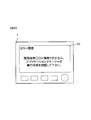
- step S50 the control unit 10 displays a predetermined error screen on the display unit 11 for notifying the user that the short-range wireless communication interface cannot be established with the mobile terminal 2.
- FIG. 6 is a diagram illustrating an example of the error screen displayed in step S50.
- the error screen 50 shown in FIG. 6 explains that the short-range wireless communication interface cannot be established with the mobile terminal 2 that has made the connection request, and also confirms the execution state of the application manager in the mobile terminal 2.
- the text that prompts In other words, in a state where the application manager (sub-application Ms) is not installed in the portable terminal 2 or is installed but not executed, the portable terminal 2 can receive a connection request from the in-vehicle device 1 to the portable terminal 2.
- step S40 or step S50 the control unit 10 ends the flowchart of FIG. Thereafter, when step S40 is executed, the control unit 10 performs a predetermined image display or the like in cooperation with the application being executed on the mobile terminal 2. On the other hand, when step S50 is executed, an error screen as illustrated in FIG. 6 is displayed for a predetermined time, and then the process is restarted from step S10.
- FIG. 7 is a flowchart of processing executed in the mobile terminal 2 at the start of cooperation. The processing shown in this flowchart is executed by the control unit 20 when the sub application Ms is executed in the background in the mobile terminal 2.
- step S110 the control unit 20 determines whether or not there is a connection request from the in-vehicle device 1.
- the connection request transmitted from the in-vehicle device 1 is received by the short-range wireless communication interface unit 25 by the processing in step S20 in FIG. 5 being executed in the in-vehicle device 1, it is determined that there is a connection request and step S120 is performed. Proceed to On the other hand, if there is no connection request from the in-vehicle device 1, the process proceeds to step S140.
- step S120 the control unit 20 returns a response to the connection request received from the in-vehicle device 1 to the in-vehicle device 1 using the short-range wireless communication interface unit 25 in the determination in step S110.
- this response is received by the short-range wireless communication interface unit 15 in the in-vehicle device 1, it is determined that there is a response in step S30 of FIG.
- step S130 the control unit 20 establishes a short-range wireless communication interface with the in-vehicle device 1 that has returned a response in step S120.
- the control unit 20 uses the short-range wireless communication interface unit 25 to transmit information necessary for the in-vehicle device 1 to operate in cooperation with the mobile terminal 2, for example, information such as the resolution of the display unit 21. May be sent to.
- the short-range wireless communication interface unit 15 of the in-vehicle device 1 and the short-range wireless communication interface unit 25 of the mobile terminal 2 are in accordance with a predetermined communication format. Short-range wireless communication is performed.
- the communication function of the sub application Ms in the mobile terminal 2 is realized by the short-range wireless communication. That is, the above-described travel information and operation information are transmitted from the in-vehicle device 1 to the mobile terminal 2, and the mobile device 2 transmits the restriction according to the content of the operation regulation during vehicle travel for the application being executed. Information etc. are transmitted.
- step S140 the control unit 20 determines whether or not the short-range wireless communication interface is established between the mobile terminal 2 and the in-vehicle device 1. If the above-described step S130 has been executed, and the short-range wireless communication interface has already been established with the in-vehicle device 1, the process proceeds to step S150. On the other hand, when step S130 is not executed and the short-range wireless communication interface is not established with the in-vehicle device 1, the process returns to step S110.
- step S150 the control unit 20 determines whether or not the connection with the in-vehicle device 1 is performed via the video / audio cable 3. This determination can be realized, for example, by performing well-known HDMI connection detection using the above-described HDMI driver 207. As a result, if the video / audio signal output unit 26 of the portable terminal 2 and the video / audio signal input unit 16 of the in-vehicle device 1 are connected via the video / audio cable 3, the process proceeds to step S160. If not, the process returns to step S110. By performing the determination in step S150 in this way, the control unit 20 transmits and receives video and audio between the mobile terminal 2 and the in-vehicle device 1 separately from the short-range wireless communication interface determined in step S140. It is possible to determine whether or not a wired communication interface is established.
- step S160 the control unit 20 activates the sub application Ma.
- the sub application Ma is executed in the foreground in the control unit 20, and the launcher function as described above is activated.
- the sub application Ms is continuously executed in the background.
- step S160 the control part 20 will complete
- the control unit 20 generates a menu screen by the launcher function of the sub application Ma, displays the menu screen on the display unit 21, and from the video / audio signal output unit 26 through the video / audio cable 3 to the in-vehicle device.
- the menu screen is displayed on the display unit 11 of the in-vehicle device 1.
- an application selected by the user on any menu screen is executed, and an image or sound corresponding to the application is output to the in-vehicle device 1, thereby realizing a cooperation function with the in-vehicle device 1.
- the mobile terminal 2 determines whether or not the short-range wireless communication interface as the first communication interface has been established with the in-vehicle device 1 by the processing of the control unit 20 ( Together with step S140), it is determined whether a wired communication interface as the second communication interface has been established (step S150). As a result, if it is determined in step S140 that the first communication has been established and it is determined in step S150 that the second communication has been established, the sub application Ma is activated and stored in the memory unit 24. A launcher function for executing the current application in the foreground is activated (step S160). Since this is done, it is possible to safely perform the portable terminal 2 applications by properly cooperate in a timely vehicle apparatus 1 and the portable terminal 2.
- the portable terminal 2 by using the video and audio signal output unit 26, and outputs an image corresponding to the application being executed in the foreground by the control unit 20 to the in-vehicle apparatus 1.
- the in-vehicle device 1 displays an image output from the mobile terminal 2 on the display unit 11, inputs an operation by the user through the operation unit 12, and transmits operation information corresponding to the operation to the short-range wireless communication interface unit 15. Is transmitted to the portable terminal 2. That is, the information transmitted from the in-vehicle device 1 to the portable terminal 2 via the short-range wireless communication interface as the first communication interface includes operation information transmitted by the short-range wireless communication interface unit 15.
- the information transmitted from the portable terminal 2 to the in-vehicle device 1 via the wired communication interface as the second communication interface includes image information transmitted as a video signal by the video / audio signal output unit 26. Since it did in this way, execution of the application which cooperated the portable terminal 2 and the vehicle-mounted apparatus 1 is realizable.
- step S160 the launcher function is activated by causing the control unit 20 to execute the sub-application Ma having the launcher function in the foreground. Since it did in this way, starting of a launcher function is realizable reliably.
- the control unit 20 executes the sub application Ma in the foreground, and executes the sub application Ms having a communication function for establishing the short-range wireless communication interface as the first communication interface described above in the background. To do. Since it did in this way, a communication function can be implement
- the in-vehicle device 1 displays a predetermined error screen as illustrated in FIG. 5 on the display unit 11 (step S50). Since it did in this way, it can notify a user that the 1st communication interface cannot be established and can prompt a necessary measure.
- a predetermined connection process is performed between the short-range wireless communication interface unit 15 of the in-vehicle device 1 and the short-range wireless communication interface unit 25 of the mobile terminal 2, A short-range wireless communication interface is established between them.
- the control unit 20 activates the application manager, and starts the execution of the sub-application Ma in the foreground, starts execution of the sub-application Ms in the background.
- the menu screen is displayed on the display unit 21 of the mobile terminal 2 and the display unit 11 of the in-vehicle device 1 using the launcher function of the sub-application Ma as in the first embodiment.
- the application is executed by the control unit 20 in the portable terminal 2, and the application operation using the cooperation function as described above is performed in the in-vehicle device 1 and the portable terminal 2, respectively. Done.
- restriction information acquisition function of the sub application Ma restriction information indicating the contents of the operation restriction during traveling of the vehicle for each application from a predetermined acquisition source such as a server connected via a wireless communication network. get.
- the restriction information acquired in this way is stored in the memory unit 24.
- the operation restriction function of the sub-application Ms restricts the application being executed according to a predetermined action restriction when the vehicle is running.
- FIG. 8 is a flowchart of processing executed by the control unit 20 of the mobile terminal 2 at the start of cooperation in the present embodiment.
- the processing steps of the same contents as the flowchart of the process according to the first embodiment shown in FIG. 7 are denoted by the same step numbers.
- the processing steps having the same step numbers as those in FIG. 7 will not be described below unless particularly required.
- step S161 the control unit 20 activates the application manager.
- the sub application Ma is executed in the foreground in the control unit 20, and the sub application Ms is executed in the background.
- the functions for realizing the cooperative operation with the in-vehicle device 1, that is, the above-described launcher function, restriction information acquisition function, communication function, and operation restriction function are activated.
- step S162 the control unit 20 uses the functions of the application manager activated in step S161 to perform the operation restriction process during traveling of the vehicle for the application being executed as described in the first embodiment. That is, the security policy is acquired using the restriction information acquisition function of the sub application Ma, and the application being executed is checked using the operation restriction function of the sub application Ms based on the restriction information recorded in the security policy. The contents of predetermined operation restrictions are determined. Then, by using the communication function of the sub-application Ms, the restriction information corresponding to the determination result is transmitted to the in-vehicle device 1, so that the display restriction or the operation restriction according to the operation restriction content is performed in the in-vehicle device 1 while the vehicle is traveling. To be done. Furthermore, in the case of running and when the vehicle is stopped, the content of the image and sound may be changed to be output in accordance with the applications running on the controller 20.
- a short-range wireless communication interface as a first communication interface is established between the mobile terminal 2 and the in-vehicle device 1, and the second communication
- the application manager stored in the memory unit 24 is activated and executed (step S161). Since this is done, it is possible to safely perform the portable terminal 2 applications by properly cooperate in a timely vehicle apparatus 1 and the portable terminal 2.
- the application manager activated in step S161 has an operation restriction function for restricting at least one of the mobile terminal 2 and the in-vehicle device 1 while the vehicle is running as the sub application Ms. Therefore, it is possible to improve the safety by preventing the output of images and sounds that adversely affect driving.
- the in-vehicle device 1 and the mobile terminal 2 are connected to each other via the video / audio cable 3, so that the video signal and the mobile device 1 can be transmitted from the mobile terminal 2 to the in-vehicle device 1 via a wired communication interface.
- An example of transmitting an audio signal has been described.
- through the short-range wireless communication interface is carried out according to a predetermined communication standard such as Bluetooth, it has been described an example of performing communication with the in-vehicle apparatus 1 and the portable terminal 2.
- the present invention can also be realized using other communication methods and signal transmission methods.
- the portable terminal 2 to the vehicle-mounted apparatus 1 instead of transmitting the video and audio signals by wired communication, may transmit the image data and audio data by wireless communication.
- step S150 of FIG. 6 it is possible to determine whether or not a communication interface is established between the mobile terminal 2 and the in-vehicle device 1 using the same determination method as in step S140. That is, prior to the determination of step S150, the performing a predetermined process for establishing a communication interface used for wireless communication of the image data and audio data between the portable terminal 2 and the in-vehicle apparatus 1. If the communication interface can be established by this process, an affirmative decision is made in step S150, and if it cannot be established, a negative decision is made in step S150. Further, as a communication interface for transmitting and receiving operation information with the in-vehicle apparatus 1 and the portable terminal 2, it is also possible to use a communication interface wired communication such as USB.
- a communication interface wired communication such as USB.
- connection request may be transmitted from the portable terminal 2 to the in-vehicle device 1.
- Any communication method may be adopted as long as necessary signals and information can be transmitted and received between the in-vehicle device 1 and the portable terminal 2.
- the first communication interface is a short-range wireless communication interface and the second communication interface is a wired communication interface, both of which are established between the in-vehicle device 1 and the portable terminal 2.
- the example in which the sub application Ma or the application manager is activated in the mobile terminal 2 has been described.
- the types of communication interfaces to which the present invention can be applied are not limited to this example. As long as it transmits and receives information to and from the information terminal and the in-vehicle device using two different communication interfaces, it is also applicable to the present invention in any vehicle information system.
- vehicle information acquired at this time may be used in processing executed by the in-vehicle device 1 or may be output from the in-vehicle device 1 to the portable terminal 2 and used in processing executed by the portable terminal 2. .
- activation conditions corresponding to vehicle information are set in advance for each application, and when vehicle information that satisfies the activation conditions is output from the vehicle, the application is automatically activated on the mobile terminal 2. can do.
- information indicating the activation condition of each application may be transmitted from the mobile terminal 2 to the in-vehicle device 1 to determine whether the in-vehicle device 1 satisfies the activation condition based on the vehicle information.
- transmits the vehicle information to the portable terminal 2 from the in-vehicle apparatus 1 may determine whether the start condition is satisfied whether on the basis of the vehicle information in the mobile terminal 2.
- button information representing the contents of the user's button operation and coordinate information representing the position on the screen specified by the touch panel operation are transmitted as operation information from the in-vehicle device 1 to the portable terminal 2,
- the example which the portable terminal 2 judges the user's operation content based on operation information was demonstrated.
- the user's operation content may be determined in the in-vehicle device 1, and an application start command, a stop command, or the like may be transmitted from the in-vehicle device 1 to the mobile terminal 2 according to the determination result.
- FIG. 9 shows the state.
- the personal computer 200 is connected to the mobile terminal 2, and supplies the application manager program provided from the server device 201 via the communication line 202 or the application manager program read from the CD-ROM 203 to the mobile terminal 2.
- the application manager program can be supplied from the server apparatus 201 to the mobile terminal 2 via the communication line 202 without using the personal computer 200.
- the communication line 202 is a communication line such as the Internet or personal computer communication, a dedicated communication line, a mobile phone line network, or the like.
- the server 201 transmits an application manager program to the personal computer 200 and the portable terminal 2 via the communication line 202. That is, the program is converted into a data signal on a carrier wave and transmitted via the communication line 202.
- computer readable program product such as a recording medium and a carrier wave, it is possible to provide a viable application manager program in the mobile terminal 2.
- 1 vehicle-mounted device
- 2 portable terminal
- 3 video / audio cable
- 10 control unit
- 11 display unit
- 12 operation unit
- 13 audio output unit
- 14 memory unit
- 15 short-range wireless communication interface Unit
- 16 video / audio signal input unit
- 20 control unit
- 21 display unit
- 22 operation unit
- 23 audio output unit
- 24 memory unit
- 25 short-range wireless communication interface unit
- 26 video / audio unit Audio signal output unit
- 27 wireless communication unit
- 28 GPS receiving unit
Landscapes
- Engineering & Computer Science (AREA)
- Multimedia (AREA)
- Signal Processing (AREA)
- Stored Programmes (AREA)
- Telephone Function (AREA)
Description
本発明は、車載情報システムと、この車載情報システムにおいて用いられる情報端末、アプリケーション実行方法およびプログラムとに関する。
従来、携帯電話やスマートフォンなどの携帯型の情報端末と車載装置とを連携することで、情報端末において様々なアプリケーションを実行して画像や音声を情報端末から車載装置へ出力し、その画像や音声を車載装置において出力するシステムが知られている。たとえば特許文献1には、車両に装備された装置が有する機能を特定するための機能情報を無線ICタグ等に保持しておき、この機能情報を情報端末が読み取って対応するアプリケーションのプログラムを自動的に起動することで、情報端末と車両内の装置との間で通信を確立するシステムが開示されている。また特許文献2には、携帯電話機と車両用通信装置の間に連携動作状態が確立されると、携帯電話機を操作規制モードに切り替えて、携帯電話機と車両用通信装置において互いに連携して動作される特定アプリケーションに対する携帯電話機からの操作入力を禁止することで、この特定アプリケーションの連携動作を安全に実行する車両用通信システムが開示されている。
特許文献1に開示されているシステムでは、無線ICタグから所定の通信可能範囲内に情報端末を近づけると、その無線ICタグに保持された機能情報が情報端末において読み取られ、所望のアプリケーションのプログラムが起動される。したがって、この通信可能範囲内に情報端末を誤って近づけると、ユーザが意図しないにも関わらず当該アプリケーションのプログラムが勝手に起動されて通信が確立されてしまうことがある。また、通信可能範囲内に複数の情報端末が存在する場合、車両内の装置では、どの情報端末との間で通信を確立すればよいのかを判断することができない。一方、特許文献2に開示されている車両用通信システムでは、特定アプリケーション以外のアプリケーションについては、操作規制モード中であっても、携帯電話機に表示されるホーム画面からの操作が可能である。そのため、アプリケーションによっては、運転に悪影響を与える可能性のある画像や音声が意図せずに携帯電話機から車両用通信装置を経由して出力される場合がある。また、運転者が携帯電話機を操作した場合、運転に集中できないため、安全性を十分に確保することができない。このように、従来のシステムでは、携帯型の情報端末と車載装置を適切なタイミングで正しく連携させて情報端末のアプリケーションを安全に実行するのが困難であった。
本発明の第1の態様による車載情報システムは、携帯型の情報端末と車載装置とを有するものであり、情報端末は、アプリケーションを記憶する記憶部と、記憶部に記憶されているアプリケーションを実行する制御部とを備える。この車載情報システムにおいて、制御部は、情報端末と車載装置との間で第1の通信インタフェースが確立し、かつ、情報端末と車載装置との間で第1の通信インタフェースとは異なる第2の通信インタフェースが確立した場合に、記憶部に記憶されているアプリケーションを起動して実行する。
本発明の第2の態様によると、第1の態様の車載情報システムにおいて、情報端末は、制御部により実行されているアプリケーションに応じた画像情報を車載装置へ送信する画像出力部をさらに備え、車載装置は、情報端末から出力された画像情報に基づく画像を表示する表示部と、ユーザによる操作を入力するための操作入力部と、操作入力部により入力された操作に応じた操作情報を情報端末へ送信する操作情報送信部とをさらに備えてもよい。さらに、第1の通信インタフェースを介して車載装置から情報端末へ送信される情報は、操作情報を含み、第2の通信インタフェースを介して情報端末から車載装置へ送信される情報は、画像情報を含むのが好ましい。
本発明の第3の態様によると、第1または第2の態様の車載情報システムにおいて、制御部は、情報端末と車載装置との間で第1の通信インタフェースおよび第2の通信インタフェースが確立した場合に、情報端末および車載装置のいずれか少なくとも一方に対する車両走行中の動作規制を行うための動作規制機能を有するアプリケーションを起動して実行するのが好ましい。
本発明の第4の態様によると、第1乃至第3のいずれかの態様の車載情報システムにおいて、制御部は、情報端末と車載装置との間で第1の通信インタフェースおよび第2の通信インタフェースが確立した場合に、記憶部に記憶されている他のアプリケーションをフォアグランドで実行するためのランチャ機能を有するアプリケーションを起動して実行するのが好ましい。
本発明の第5の態様による情報端末は、アプリケーションを記憶する記憶部と、記憶部に記憶されているアプリケーションを実行する制御部とを備える。この情報端末において、制御部は、情報端末と車載装置との間で第1の通信インタフェースが確立し、かつ、情報端末と車載装置との間で第1の通信インタフェースとは異なる第2の通信インタフェースが確立した場合に、記憶部に記憶されているアプリケーションを起動して実行する。
本発明の第6の態様によるアプリケーション実行方法は、携帯型の情報端末と車載装置とを有する車載情報システムを用いたものであって、アプリケーションを情報端末に予め記憶し、情報端末により、車載装置との間で第1の通信インタフェースが確立したか否かを判断すると共に、車載装置との間で第1の通信インタフェースとは異なる第2の通信インタフェースが確立したか否かを判断し、第1の通信インタフェースおよび第2の通信インタフェースが両方とも確立したと判断された場合に、情報端末により、アプリケーションを起動して実行する。
本発明の第7の態様によるプログラムは、情報端末に、車載装置との間で第1の通信インタフェースが確立したか否かを判断させ、車載装置との間で第1の通信インタフェースとは異なる第2の通信インタフェースが確立したか否かを判断させ、第1の通信インタフェースおよび第2の通信インタフェースが両方とも確立したと判断された場合に、予め記憶されているアプリケーションを起動して実行させる。
本発明の第2の態様によると、第1の態様の車載情報システムにおいて、情報端末は、制御部により実行されているアプリケーションに応じた画像情報を車載装置へ送信する画像出力部をさらに備え、車載装置は、情報端末から出力された画像情報に基づく画像を表示する表示部と、ユーザによる操作を入力するための操作入力部と、操作入力部により入力された操作に応じた操作情報を情報端末へ送信する操作情報送信部とをさらに備えてもよい。さらに、第1の通信インタフェースを介して車載装置から情報端末へ送信される情報は、操作情報を含み、第2の通信インタフェースを介して情報端末から車載装置へ送信される情報は、画像情報を含むのが好ましい。
本発明の第3の態様によると、第1または第2の態様の車載情報システムにおいて、制御部は、情報端末と車載装置との間で第1の通信インタフェースおよび第2の通信インタフェースが確立した場合に、情報端末および車載装置のいずれか少なくとも一方に対する車両走行中の動作規制を行うための動作規制機能を有するアプリケーションを起動して実行するのが好ましい。
本発明の第4の態様によると、第1乃至第3のいずれかの態様の車載情報システムにおいて、制御部は、情報端末と車載装置との間で第1の通信インタフェースおよび第2の通信インタフェースが確立した場合に、記憶部に記憶されている他のアプリケーションをフォアグランドで実行するためのランチャ機能を有するアプリケーションを起動して実行するのが好ましい。
本発明の第5の態様による情報端末は、アプリケーションを記憶する記憶部と、記憶部に記憶されているアプリケーションを実行する制御部とを備える。この情報端末において、制御部は、情報端末と車載装置との間で第1の通信インタフェースが確立し、かつ、情報端末と車載装置との間で第1の通信インタフェースとは異なる第2の通信インタフェースが確立した場合に、記憶部に記憶されているアプリケーションを起動して実行する。
本発明の第6の態様によるアプリケーション実行方法は、携帯型の情報端末と車載装置とを有する車載情報システムを用いたものであって、アプリケーションを情報端末に予め記憶し、情報端末により、車載装置との間で第1の通信インタフェースが確立したか否かを判断すると共に、車載装置との間で第1の通信インタフェースとは異なる第2の通信インタフェースが確立したか否かを判断し、第1の通信インタフェースおよび第2の通信インタフェースが両方とも確立したと判断された場合に、情報端末により、アプリケーションを起動して実行する。
本発明の第7の態様によるプログラムは、情報端末に、車載装置との間で第1の通信インタフェースが確立したか否かを判断させ、車載装置との間で第1の通信インタフェースとは異なる第2の通信インタフェースが確立したか否かを判断させ、第1の通信インタフェースおよび第2の通信インタフェースが両方とも確立したと判断された場合に、予め記憶されているアプリケーションを起動して実行させる。
本発明によれば、携帯型の情報端末と車載装置を適切なタイミングで正しく連携させて情報端末のアプリケーションを安全に実行することができる。
-第1の実施形態-
図1は、本発明の一実施の形態による車載情報システムの構成を示す図である。図1に示す車載情報システムは、車両に搭載されて使用されるものであり、車載装置1と携帯端末2が近距離無線通信および映像・音声ケーブル3を介した有線通信で互いに接続されることによって実現される。車載装置1は、車両内に固定されており、たとえば車両のインストルメントパネル内などに設置されている。携帯端末2は、ユーザが持ち運び可能な携帯型の情報端末であり、たとえば携帯電話やスマートフォンなどである。なお、車載装置1と携帯端末2の間で行われる近距離無線通信には、たとえばBluetoothなどを用いることができる。また、映像・音声ケーブル3を介した有線通信には、たとえばHDMI(High Definition Multimedia Interface)などを用いることができる。
図1は、本発明の一実施の形態による車載情報システムの構成を示す図である。図1に示す車載情報システムは、車両に搭載されて使用されるものであり、車載装置1と携帯端末2が近距離無線通信および映像・音声ケーブル3を介した有線通信で互いに接続されることによって実現される。車載装置1は、車両内に固定されており、たとえば車両のインストルメントパネル内などに設置されている。携帯端末2は、ユーザが持ち運び可能な携帯型の情報端末であり、たとえば携帯電話やスマートフォンなどである。なお、車載装置1と携帯端末2の間で行われる近距離無線通信には、たとえばBluetoothなどを用いることができる。また、映像・音声ケーブル3を介した有線通信には、たとえばHDMI(High Definition Multimedia Interface)などを用いることができる。
車載装置1には、表示部11と、操作キー(操作スイッチ)12a、12b、12c、12dおよび12eとが設けられている。表示部11は、各種の画像や映像を表示可能な表示モニタであり、たとえば液晶ディスプレイによって構成される。操作キー12a~12eは、ユーザの入力操作を検出するための操作スイッチ類であり、車載装置1が実行中の処理に応じて様々な機能が割り当てられる。ユーザは、操作キー12a~12eのうち任意の操作キーを操作することで、所望の機能を車載装置1に実行させることができる。なお、図1では操作キー12a~12dを押圧可能なボタン式のスイッチとし、操作キー12eを左右に回転可能なダイヤル式のスイッチとした例を示しているが、各操作キーの配置、構造、数などはこの例に限定されない。また、表示部11をタッチパネル式の表示モニタとし、操作キーの一部または全部を省略してもよい。
携帯端末2には、表示部21が設けられている。表示部21は、各種の画像や映像を表示可能なタッチパネル式の表示モニタであり、たとえばタッチ位置を検出するタッチセンサと液晶ディスプレイとを組み合わせて構成される。ユーザは、表示部21に表示される画像や映像の内容に応じて、表示部21上で任意の位置を指等でタッチすることで、所望の機能を携帯端末2に実行させることができる。なお、ここでは表示部21をタッチパネル式の表示モニタとした例を説明したが、タッチパネル式ではない通常の表示モニタとしてもよい。その場合、携帯端末2が実行する処理の内容に応じた各種の操作スイッチを携帯端末2に設けることが好ましい。あるいは、表示部21をタッチパネル式の表示モニタとし、さらに所定の操作に対応する操作スイッチを携帯端末2に設けてもよい。
図2は、車載装置1および携帯端末2の構成を示すブロック図である。図2に示すように車載装置1は、制御部10、表示部11、操作部12、音声出力部13、メモリ部14、近距離無線通信インタフェース部15および映像・音声信号入力部16を有する。一方、携帯端末2は、制御部20、表示部21、操作部22、音声出力部23、メモリ部24、近距離無線通信インタフェース部25、映像・音声信号出力部26、無線通信部27およびGPS(Global Positioning System)受信部28を有する。
車載装置1において、制御部10は、マイクロプロセッサや各種周辺回路、RAM、ROM等によって構成されており、メモリ部14に記録されている制御プログラムに基づいて各種の処理を実行する。この制御部10が行う処理により、各種の画像表示処理や音声出力処理などが実行される。
さらに制御部10は、車両から出力される車速信号およびパーキング信号を取得する。この車速信号およびパーキング信号に基づいて、制御部10は、車両の走行状態が走行中または停車中のいずれであるかを判断する。なお、車両から制御部10への車速信号およびパーキング信号の出力は、たとえば、車両内に設けられた通信ネットワークである不図示のCAN(Controller Area Network)を経由して、車両に搭載された車速センサから車速パルスが出力されることにより行われる。
表示部11は、図1を用いて前述したように、液晶ディスプレイ等によって構成される表示モニタである。操作部12は、ユーザの入力操作を検出するためのスイッチであり、たとえば図1に示した操作キー12a~12eによって実現される。なお、前述のように表示部11をタッチパネル式の表示モニタとすることで、表示部11と操作部12を一体化された構成としてもよい。操作部12に対して行われたユーザの入力操作内容は制御部10へ出力され、制御部10が行う処理に反映される。
音声出力部13は、アンプ、スピーカ等を有しており、制御部10の制御によって各種の音声を出力することができる。たとえば、携帯端末2または不図示の記録媒体から読み出された音楽データを再生した音楽や、車両を目的地まで誘導するための誘導音声などが音声出力部13から出力される。
メモリ部14は、不揮発性のデータ格納装置であり、たとえばHDD(ハードディスクドライブ)やフラッシュメモリ等によって実現される。メモリ部14には、たとえば制御部10において用いられる前述の制御プログラムなど、各種のデータが記憶されている。メモリ部14におけるデータの読み出しおよび書き込みは、制御部10の制御により必要に応じて行われる。
近距離無線通信インタフェース部15は、制御部10の制御により、携帯端末2との間で近距離無線通信を行う際に必要な無線インタフェース処理を行う。たとえば、制御部10から出力された情報を所定の無線信号形式に変換して携帯端末2へ送信したり、携帯端末2から所定の無線信号形式で出力された情報を受信して制御部10へ出力したりする。近距離無線通信インタフェース部15によるインタフェース処理は、Bluetooth等の所定の通信規格に従って行われる。
映像・音声信号入力部16は、映像・音声ケーブル3を介して携帯端末2から入力される映像信号と音声信号を画面表示用の映像データと音声出力用の音声データにそれぞれ変換し、制御部10へ出力する。映像・音声信号入力部16から制御部10へ映像データと音声データが出力されると、制御部10は、表示部11を制御してその映像データに基づく画面を表示部11に表示させると共に、音声出力部13を制御してその音声データに基づく音声を音声出力部13に出力させる。
一方、携帯端末2において、制御部20は、車載装置1の制御部10と同様にマイクロプロセッサや各種周辺回路、RAM、ROM等によって構成されており、メモリ部24に記録されている制御プログラムに基づいて各種の処理を実行する。
表示部21は、前述したようなタッチパネル式の表示モニタである。操作部22は、ユーザの入力操作を検出するための部分である。なお、図2では表示部21と操作部22を別々の構成として示しているが、実際には、操作部22はタッチパネル式の表示部21と一体化された構造を有している。あるいは、前述のように操作スイッチを携帯端末2に設けた場合は、その操作スイッチが操作部22に対応する。操作部22に対して行われたユーザの入力操作内容は制御部20へ出力され、制御部20が行う処理に反映される。
音声出力部23は、アンプ、スピーカ等を有しており、制御部20の制御によって各種の音声を出力することができる。たとえば、携帯端末2を用いて通話を行ったときには、通話相手の音声が音声出力部23から出力される。
メモリ部24は、車載装置1のメモリ部14と同様の不揮発性のデータ格納装置であり、制御部20の処理において利用するための各種のデータが記憶されている。このメモリ部24には、ユーザが予め入手した様々なアプリケーションプログラム(以下、単にアプリケーションと称する)が記憶されている。ユーザは、メモリ部24に記憶された各種アプリケーションの中からいずれかを選択して制御部20に実行させることにより、様々な機能を携帯端末2において実現することができる。
近距離無線通信インタフェース部25は、車載装置1の近距離無線通信インタフェース部15と同様に、所定の通信規格に基づいた無線インタフェース処理を行う。すなわち、車載装置1と携帯端末2との間の情報通信は、近距離無線通信インタフェース部15と近距離無線通信インタフェース部25とが互いに無線通信で情報を授受することにより実現される。
映像・音声信号出力部26は、制御部20により生成された画像(映像)と音声を、たとえばHDMI等の所定の通信規格に応じた映像信号と音声信号にそれぞれ変換し、映像・音声ケーブル3を介して車載装置1へ出力する。この映像信号と音声信号が車載装置1において映像・音声信号入力部16に入力されると、携帯端末2において表示部21に表示されるのと同一の画面が車載装置1の表示部11にも表示される。また、携帯端末2において音声出力部23から出力されるのと同一の音声が車載装置1の音声出力部13からも出力される。こうした機能はビデオミラーリングと呼ばれている。
無線通信部27は、不図示の無線通信回線網を介して携帯端末2を他の携帯端末やサーバに接続するための無線通信を行う。携帯端末2は、無線通信部27が行う無線通信により、他の携帯端末との間で通話を行ったり、サーバから任意のアプリケーションをダウンロードしたりすることができる。なお、無線通信部27が行う無線通信では、たとえば携帯電話回線網や、無線LANを介したインターネット回線網などを無線通信回線網として利用することができる。
GPS受信部28は、GPS衛星から送信されるGPS信号を受信して制御部20へ出力する。GPS信号には、携帯端末2の現在位置と現在時刻を求めるための情報として、そのGPS信号を送信したGPS衛星の位置と送信時刻に関する情報が含まれている。したがって、所定数以上のGPS衛星からGPS信号を受信することにより、これらの情報に基づいて現在位置と現在時刻を制御部20において算出することができる。
次に、本車載情報システムにおける車載装置1と携帯端末2との連携機能について説明する。本車載情報システムは、車載装置1と携帯端末2との連携機能を有している。この連携機能を用いることで、車載装置1と携帯端末2とが互いに接続された状態で携帯端末2において様々なアプリケーションを実行すると、車載装置1において当該アプリケーションに応じた画像表示や音声出力を行うことができる。また、車載装置1に対して行われたユーザの操作内容を、携帯端末2において実行されているアプリケーションの動作に反映させることができる。
たとえば、携帯端末2においてナビゲーション用のアプリケーションを実行することにより、車両を目的地まで誘導するためのナビゲーション処理を行うことができる。このナビゲーション処理では、携帯端末2において現在位置付近の地図を描画した地図画面を作成し、その地図画面に応じた映像信号を映像・音声信号出力部26から映像・音声ケーブル3を介して映像・音声信号入力部16へ出力する。これにより、携帯端末2から車載装置1へ地図画面を送信し、車載装置1の表示部11において現在位置付近の地図画面を表示できるようにする。また、車載装置1の操作部12または携帯端末2の操作部22を操作してユーザが目的地を設定すると、車両の現在位置を出発地として、そこから設定された目的地までの推奨経路を携帯端末2において探索する。そして、推奨経路上の誘導地点に車両が近づくと、その誘導地点における車両の進行方向に応じた誘導音声を携帯端末2から車載装置1へ送信する。これにより、車載装置1の音声出力部13から誘導音声を出力できるようにする。なお、このとき携帯端末2から車載装置1に対して、誘導音声出力の開始と終了のタイミングに応じてそれぞれ所定の信号を出力してもよい。このようにすれば、車載装置1においてラジオ放送や再生中のCD等による音声が出力されている場合であっても、その音声のボリュームを誘導音声の出力中には低下させ、ユーザが誘導音声を聞き取りやすくすることができる。以上説明したように、表示部11に地図画像を表示したり、音声出力部13から誘導音声を出力したりすることで、車載装置1は、ユーザが迷わずに車両を目的地まで運転できるようにするための報知をユーザに対して行う。
なお、携帯端末2がナビゲーション用のアプリケーションを実行するために必要な地図データ等の各種データは、携帯端末2のメモリ部24において予め記憶されたものを使用してもよい。あるいは、メモリ部24には必要最小限のデータのみを記憶しておき、携帯端末2がナビゲーション用のアプリケーションを実行したときには、無線通信部27を用いて所定のサーバに接続し、必要なデータをその都度取得するようにしてもよい。
携帯端末2では、上記のようなナビゲーション用のアプリケーションを含む複数のアプリケーションのうち、ユーザに選択されたアプリケーションを実行する。ユーザは、携帯端末2の表示部21に表示されるメニュー画面において、操作部22を操作して所望のアプリケーションを選択することにより、携帯端末2に実行させるアプリケーションの選択を行うことができる。このメニュー画面には、たとえば、連携機能を利用可能な各アプリケーションのアイコンが並べて表示されている。ユーザがメニュー画面上でいずれかのアイコンをタッチパネル操作等により選択すると、そのアイコンに対応するアプリケーションが携帯端末2において実行される。
さらに携帯端末2は、映像・音声信号出力部26からの映像信号によりメニュー画面を車載装置1へ送信する。車載装置1は、携帯端末2から送信された映像信号に基づいて、表示部11にメニュー画面を表示する。このメニュー画面において、ユーザが操作部12を操作して所望のアプリケーションを選択すると、その操作内容に応じた操作情報が近距離無線通信インタフェース部15により車載装置1から携帯端末2へ送信される。なお、車載装置1は、操作情報として、たとえばユーザのボタン操作の内容を表すボタン情報、またはタッチパネル操作により指定された表示部11の画面上の位置を表す座標情報を携帯端末2へ出力する。
車載装置1から送信された操作情報は、携帯端末2において近距離無線通信インタフェース部25により受信され、制御部20へ出力される。こうして受信された操作情報に基づいて、制御部20は、車載装置1においてどのアプリケーションがユーザに選択されたかを認識し、当該アプリケーションを実行する。これによりユーザは、携帯端末2の表示部21に表示されるメニュー画面を用いた場合と同様に、所望のアプリケーションを車載装置1において選択し、携帯端末2に実行させることができる。
なお、制御部20は、各アプリケーションをフォアグランドまたはバックグランドで実行することができる。フォアグランドで実行した場合、そのアプリケーションは車載装置1および携帯端末2において画像表示や操作入力の対象とされる。一方、バックグランドで実行した場合、そのアプリケーションに応じた処理が制御部20により実行されるが、そのアプリケーションは車載装置1および携帯端末2において画像表示や操作入力の対象とはされない。ただし、音声についてはバックグランド実行中のアプリケーションから出力してもよい。
車載装置1と携帯端末2とを互いに接続して前述のような連携機能を実現するために、携帯端末2には、アプリケーションマネージャと呼ばれるアプリケーションが予めインストールされてメモリ部24に記憶されている。すなわち、メモリ部24には、アプリケーションマネージャを含む複数のアプリケーションが記憶されている。車載装置1に携帯端末2が接続されると、このアプリケーションマネージャがメモリ部24から読み出され、制御部20において実行される。
図3は、携帯端末2におけるソフトウェアの概略構成を示す図である。図3において、アプリケーションマネージャ201は、サブアプリケーションMaと、サブアプリケーションMsとを有している。
サブアプリケーションMaは、アプリケーションマネージャ201以外のアプリケーションを起動するためのランチャ機能と、各アプリケーションの規制情報を取得するための規制情報取得機能とを有している。制御部20は、サブアプリケーションMaをフォアグランドで実行することにより、これらの機能を利用することができる。たとえば、ランチャ機能を用いて、他のアプリケーションを呼び出し、サブアプリケーションMaに代えてそのアプリケーションを制御部20にフォアグランドで実行させることができる。また、規制情報取得機能を用いて、メモリ部24に記憶されている各アプリケーションに対する車両走行中の動作規制の内容を示す規制情報を、メモリ部24や外部のサーバ等から取得することができる。
サブアプリケーションMsは、携帯端末2を車載装置1に接続するための通信機能と、車両走行中の動作規制を行うための動作規制機能とを有している。制御部20は、サブアプリケーションMsをバックグランドで実行することにより、これらの機能を利用することができる。たとえば、通信機能を用いて、携帯端末2と車載装置1との間で連携時に必要な情報を送受信するための通信処理を実行することができる。また、動作規制機能を用いて、上記のサブアプリケーションMaにより規制情報取得機能を用いて取得された規制情報を参照して、フォアグランドで実行中のアプリケーションに対する車両走行中の動作規制の内容を判断することができる。この判断結果を示した制限情報は、上記の通信機能により携帯端末2から車載装置1へ送信され、車載装置1において車両走行中の動作制限を行う際に利用される。
以上説明したように、アプリケーションマネージャ201は、制御部20においてフォアグランドで実行されるサブアプリケーションMaと、制御部20においてバックグランドで実行されるサブアプリケーションMsとに分けて構成されている。このようにすることで、アプリケーションマネージャ201の機能分担を最適化し、フォアグランドとバックグランドでそれぞれ実行するのに適した機能分担とすることができる。なお、サブアプリケーションMsのように常時バックグランドで実行されるアプリケーションは、デーモンやサービスと呼ばれることもある。
アプリケーションマネージャ201は、サブアプリケーションMaのランチャ機能により、アプリケーション202に含まれる各アプリケーションのいずれかを呼び出す。すると、制御部20により、このアプリケーションがサブアプリケーションMaに代えてフォアグランドで実行される。なお、図3に対する以下の説明では、アプリケーションAが実行されているものとして説明する。
OS(オペレーティングシステム)203は、携帯端末2の全体的な動作を管理するためのソフトウェアである。携帯端末2を車載装置1に接続した場合、OS203は、制御部20においてバックグランドで実行されるサブアプリケーションMsと、SPP(Serial Port Profile)204およびHID(Human Interface Device)プロファイル205との間で入出力される情報の仲介を行う。SPP204およびHIDプロファイル205は、車載装置1と携帯端末2の間で行われる近距離無線通信において利用されるドライバであり、Bluetoothで用いられる規格の一部として標準化されている。
SPP204は、サブアプリケーションMsの動作規制機能による動作規制内容の判断結果を示した前述の制限情報を送信するための処理や、車両の走行状態に応じて車載装置1から送信される走行情報を受信するための処理を行う。一方、HIDプロファイル205は、車載装置1におけるユーザの操作内容に応じて出力される操作情報を受信するための処理を行う。SPP204およびHIDプロファイル205により受信された各情報の内容は、OS203を介してサブアプリケーションMsに出力され、サブアプリケーションMsの通信機能により実行中のアプリケーションへと受け渡される。なお、これらの各情報の送受信は、車載装置1の近距離無線通信インタフェース部15と携帯端末2の近距離無線通信インタフェース部25との間で無線通信により行われる。
制御部20においてサブアプリケーションMaをフォアグランドで実行中の場合、サブアプリケーションMaは、前述のランチャ機能により、ユーザに実行するアプリケーションを選択させるためのメニュー画面の画像を生成する。また、制御部20においてアプリケーションAをフォアグランドで実行中の場合、アプリケーションAは、サブアプリケーションMsから受け渡された走行情報や操作情報を必要に応じて利用し、所定の画像や音声を生成する。これらの画像や音声は、音声・画像メモリ206に一時的に記憶された後、HDMIドライバ207へ出力される。
HDMIドライバ207は、HDMIで定められた方式に従って、サブアプリケーションMaやアプリケーションAにより生成された画像や音声を映像信号や音声信号に変換する処理を行う。この映像信号や音声信号は、映像・音声信号出力部26により、映像・音声ケーブル3を介して車載装置1へ出力される。
携帯端末2は、以上説明したようなソフトウェア構成を有している。なお、こうしたソフトウェア構成は、たとえばAndroidを用いて実現することができる。この場合、たとえばサブアプリケーションMaを「Activity」と呼ばれるスレッドで実行し、サブアプリケーションMaを「Service」と呼ばれるスレッドで実行することにより、制御部20においてサブアプリケーションMaをフォアグランドで実行しつつ、サブアプリケーションMsをバックグランドで実行することができる。
次に、車両走行中におけるアプリケーションの動作制限について説明する。携帯端末2が実行可能なアプリケーションの中には、前述のような連携機能を用いた車載装置1での画像表示やユーザからの操作入力を車両の走行中において許可すると、運転者の注意をそらして運転に悪影響を与える可能性を生じるものがある。そのため、こうしたアプリケーションが車両走行中に携帯端末2において実行された場合、車載装置1では、当該アプリケーションによる画像表示やユーザからの操作入力を制限することが好ましい。これを実現するため、車載装置1および携帯端末2では、以下に説明するような方法により、車両走行中におけるアプリケーションの動作制限を行う。
図4は、車両走行中のアプリケーション動作制限の概念図である。以下では、図4に例示したように、携帯端末2において予めインストールされたA、B,CおよびDの四種類のアプリケーションがメモリ部24に記憶されており、これらのアプリケーションのいずれかをユーザの操作に応じて選択して実行するものとして、車両走行中におけるアプリケーションの動作制限について説明する。
車載装置1と携帯端末2が接続されると、制御部20はサブアプリケーションMaを起動してフォアグランドで実行する。そして、サブアプリケーションMaの規制情報取得機能を用いて、無線通信回線網を介して接続されたサーバ等の所定の取得先から、各アプリケーションに対する車両走行中の動作規制の内容を示した規制情報を取得する。こうして取得した規制情報は、メモリ部24に記憶される。
以下では、図4に例示したようなセキュリティポリシーを規制情報として取得したものとして説明する。このセキュリティポリシーは、アプリケーションAに対しては画像表示とユーザからの操作入力を両方とも許可し、アプリケーションBに対しては画像表示を許可してユーザからの操作入力を禁止し、アプリケーションCに対しては画像表示とユーザからの操作入力を両方とも禁止することを示している。なお、図4の例では、アプリケーションDについてはセキュリティポリシーに規制情報が記録されていない。
携帯端末2においてアプリケーションA~Dのいずれかがユーザの操作に応じて選択されると、制御部20は、サブアプリケーションMaのランチャ機能を用いて、当該アプリケーションをメモリ部24から読み出して起動する。そして、それまでフォアグランドで実行されていたサブアプリケーションMaに代えて、当該アプリケーションをフォアグランドで実行する。
上記のようにしてアプリケーションA~Dのいずれかを起動したら、制御部20は、サブアプリケーションMaからバックグランドで常時実行されているサブアプリケーションMsに対して、そのアプリケーション(以下、起動アプリケーションと称する)が何であるかを通知する。この通知をサブアプリケーションMsが受けることで、サブアプリケーションMsの動作規制機能を用いて、どのアプリケーションが起動されたかを判断することができる。そして、メモリ部24に記憶されているセキュリティポリシーを参照することにより、当該アプリケーションに対する車両走行中の動作規制の内容を判断する。
たとえば、アプリケーションAが起動された場合は、セキュリティポリシーにおいてアプリケーションAに対応する部分を参照することで、アプリケーションAに対する車両走行中の動作規制の内容を判断する。すなわち、アプリケーションAに対しては、車両走行中において画像表示とユーザからの操作入力が両方とも許可されていると判断する。
一方、アプリケーションBが起動された場合は、セキュリティポリシーにおいてアプリケーションBに対応する部分を参照することで、アプリケーションBに対する車両走行中の動作規制の内容を判断する。すなわち、アプリケーションBに対しては、車両走行中において画像表示のみが許可されており、ユーザからの操作入力は禁止されていると判断する。
また、アプリケーションCが起動された場合は、セキュリティポリシーにおいてアプリケーションCに対応する部分を参照することで、アプリケーションCに対する車両走行中の動作規制の内容を判断する。すなわち、アプリケーションCに対しては、車両走行中において画像表示とユーザからの操作入力が両方とも禁止されていると判断する。
なお、制御部20においてアプリケーションDが起動された場合は、セキュリティポリシーにおいてアプリケーションDに対応する部分がないため、これを参照することができない。このような場合は、アプリケーションCの場合と同様に、画像表示とユーザからの操作入力を両方とも禁止すると判断することが好ましい。このようにすれば、セキュリティポリシーに未反映のアプリケーションが実行されている場合においても、運転への悪影響を防いで安全性を確保することができる。
制御部20は、以上説明したように、任意のアプリケーションを起動して実行を開始したら、そのアプリケーションに対する車両走行中の動作規制内容を判断する。そして、サブアプリケーションMsの通信機能を用いて、その判断結果に応じた制限情報を車載装置1へ送信する。この制限情報の送信は、近距離無線通信インタフェース部25を介して行われる。
車載装置1では、制御部10において実行されている制御アプリケーションにより、携帯端末2から送信された制限情報を、近距離無線通信インタフェース部15を介して受信する。そして、受信した制限情報に基づいて、携帯端末2において実行されているアプリケーションに対する車両走行中の動作規制内容を判断し、車両が走行中であれば、その動作規制内容に応じた表示制限や操作制限を行う。
たとえば、携帯端末2においてアプリケーションAが実行されている場合は、車両が走行中であっても表示制限と操作制限を行わずに、携帯端末2からの画像表示とユーザからの操作入力を共に許可する。すなわち、携帯端末2から出力されたアプリケーションAによる画像を表示部11に出力して表示させると共に、ユーザが操作部12を用いて行った操作入力に応じた操作情報を近距離無線通信インタフェース部15から送信させるようにする。
一方、携帯端末2においてアプリケーションBが実行されている場合は、車両が走行中のときに操作制限のみを行い、携帯端末2からの画像表示を許可してユーザからの操作入力を禁止する。すなわち、携帯端末2から出力されたアプリケーションBによる画像を表示部11に出力して表示させる一方で、近距離無線通信インタフェース部15に対しては操作情報の送信を禁止する。
また、携帯端末2においてアプリケーションCまたはDが実行されている場合は、車両が走行中のときに表示制限と操作制限の両方を行い、携帯端末2からの画像表示とユーザからの操作入力を共に禁止する。すなわち、表示部11に対しては画像の表示を禁止し、近距離無線通信インタフェース部15に対しては操作情報の送信を禁止する。
ところで、携帯端末2では、以上説明したようにランチャ機能を用いてアプリケーションを起動した後で、OS203によりランチャ機能とは別のメニュー画面を表示し、そのメニュー画面から他のアプリケーションを起動して実行することもできる。このように、ランチャ機能を用いて起動したアプリケーションとは異なるアプリケーションを実行中の場合、制御部20は、サブアプリケーションMsの動作規制機能を用いて、そのアプリケーションが正規の起動手順であるランチャ機能を用いて起動されたものではないと判断する。そして、当該アプリケーションに対するセキュリティポリシーの内容に関わらず、車載装置1との連携動作を禁止する。これは、次のような処理により実現される。
アプリケーション起動後、制御部20は、現在実行中のアプリケーションをOS203に定期的に問い合わせる。この問い合わせに応じてOS203から実行中のアプリケーション(以下、実行アプリケーションと称する)が通知されると、制御部20は、この実行アプリケーションと、最後にサブアプリケーションMaから通知された起動アプリケーションとを比較する。その結果、これらのアプリケーションが一致していれば、制御部20では正規の起動手順で起動されたアプリケーションが実行されていると判断する。
一方、最後に通知された起動アプリケーションと実行アプリケーションが異なる場合、制御部20は、実行アプリケーションが正規の起動手順で起動されたものではないと判断する。そして、この実行アプリケーションによる画像表示およびユーザからの操作入力については、車両走行中にこれらが車載装置1において禁止されるように、サブアプリケーションMsの通信機能を用いて、前述のアプリケーションC、Dと同様の制限情報を車載装置1へ送信する。この制限情報の送信は、前述のように近距離無線通信インタフェース部25を介して行われる。
車載装置1では、前述のアプリケーション起動時と同様に、制御部10において実行されている制御アプリケーションにより、携帯端末2から送信された制限情報を、近距離無線通信インタフェース部15を介して受信する。そして、受信した制限情報に基づいて、携帯端末2において実行されているアプリケーションに対する車両走行中の動作規制内容を判断し、車両が走行中であれば、その動作規制内容に応じた表示制限や操作制限を行う。すなわち、表示部11に対しては画像の表示を禁止し、近距離無線通信インタフェース部15に対しては操作情報の送信を禁止する。このようにして、車載装置1と携帯端末2の連携動作が禁止される。
また、車載装置1では、制御部10において実行されている制御アプリケーションにより、車両から出力される車速信号およびパーキング信号に基づいて、車両の走行状態が走行中または停車中のいずれであるかを判断する。その結果、車両の走行状態が変化した場合はそれを検知し、変化後の走行状態を示す走行情報を携帯端末2へ出力する。この走行情報の送信は、近距離無線通信インタフェース部15を介して行われる。
携帯端末2では、制御部20において実行されているサブアプリケーションMsの通信機能を用いて、車載装置1から送信された走行情報を、近距離無線通信インタフェース部25を介して受信する。そして、受信した走行情報をフォアグランドで実行中のアプリケーションに受け渡す。この走行情報に基づいて、当該アプリケーションは車両の走行状態を判断し、その走行状態に応じた処理を必要に応じて行う。たとえば、車両が走行中の場合と停車中の場合とで描画する画像を変化させたり、車両が走行中の場合は一部の機能の利用を制限したりする。このようにすることで、車両の走行中における動作制限を携帯端末2においても行うようにする。なお、各アプリケーションが行う動作制限の内容は、アプリケーションごとに予め定められている。
次に、車載装置1と携帯端末2の間で連携を開始するときの動作について説明する。携帯端末2では、通常、制御部20において前述のサブアプリケーションMsがバックグランドで常に実行されている。このサブアプリケーションMsの通信機能により、車両内に携帯端末2が持ち込まれると、車載装置1の近距離無線通信インタフェース部15と携帯端末2の近距離無線通信インタフェース部25の間で所定の接続処理が行われ、これらの間で近距離無線通信インタフェースが確立される。その後、車載装置1と携帯端末2が映像・音声ケーブル3を介して互いに接続されると、車載装置1の映像・音声信号入力部16と携帯端末2の映像・音声信号出力部26の間で有線通信インタフェースが確立される。すると、サブアプリケーションMsからサブアプリケーションMaが起動され、制御部20においてフォアグランドで実行される。これにより、サブアプリケーションMaのランチャ機能を用いて、携帯端末2の表示部21および車載装置1の表示部11においてメニュー画面がそれぞれ表示される。その後、ユーザが任意のアプリケーションをメニュー画面上で選択すると、そのアプリケーションが携帯端末2において制御部20により実行され、前述のような連携機能を用いたアプリケーション動作が車載装置1と携帯端末2でそれぞれ行われる。
図5は、以上説明したような連携開始時に車載装置1において実行される処理のフローチャートである。このフローチャートに示す処理は、車載装置1の電源が投入されると制御部10により実行されるものである。
ステップS10において、制御部10は、近距離無線通信インタフェース部15を用いて、所定の通信範囲内に携帯端末2が存在するか否かを判定する。この通信範囲は、近距離無線通信インタフェース部15の仕様に応じて予め定められており、たとえば10m程度である。車載装置1と無線通信可能な携帯端末2が通信範囲内に存在する場合は、次のステップS20へ進む。
ステップS20において、制御部10は、ステップS10で通信範囲内にあると判定した携帯端末2に対して、近距離無線通信インタフェース部15を用いて、近距離無線通信を確立するための接続要求を送信する。この接続要求を受けると、携帯端末2は後で説明するように、車載装置1に対して応答を返信する。
なお、通信範囲内に通信可能な携帯端末2が複数存在する場合、ステップS20では、そのうちいずれかを選択して接続要求を送信することが好ましい。たとえば、前回接続した携帯端末2が通信範囲内にある場合は、その携帯端末2を優先的に選択して接続要求を送信することができる。あるいは、車載装置1において接続対象とする携帯端末2を優先度に応じて予め登録しておき、これを基にして接続要求を送信する携帯端末2を選択してもよい。この他にも様々な方法により、複数の携帯端末2の中から接続要求を送信するものを選択することができる。
ステップS30において、制御部10は、ステップS20で送信した接続要求に対して携帯端末2からの応答があったか否かを判定する。応答があった場合はステップS40へ進み、応答がない場合はステップS50へ進む。
ステップS40において、制御部10は、ステップS20で接続要求を送信した携帯端末2との間で、近距離無線通信インタフェースを確立する。このとき制御部10は、近距離無線通信インタフェース部15を用いて、携帯端末2が車載装置1と連携して動作するために必要な情報、たとえば車載装置1の機種などの情報を携帯端末2に対して送信してもよい。
ステップS50において、制御部10は、携帯端末2との間で近距離無線通信インタフェースが確立できない旨をユーザに通知するための所定のエラー画面を表示部11に表示する。図6は、ステップS50で表示されるエラー画面の例を示す図である。図6に示すエラー画面50には、接続要求を行った携帯端末2との間で近距離無線通信インタフェースが確立できないことを説明すると共に、携帯端末2におけるアプリケーションマネージャの実行状態を確認するようユーザに促す文章が記載されている。すなわち、アプリケーションマネージャ(サブアプリケーションMs)が携帯端末2においてインストールされていないか、インストールされていても実行されていない状態では、車載装置1から携帯端末2へ接続要求を行っても、携帯端末2からの応答は返信されず、近距離無線通信インタフェースを確立することができない。そのため、携帯端末2がこのような状態であるか否かをユーザに確認させることで、近距離無線通信インタフェースが確立できない原因を特定して必要な措置を取るようユーザに促すようにする。なお、図6に示したエラー画面50は一例であり、これ以外の内容としてもよい。
ステップS40またはステップS50を実行したら、制御部10は図5のフローチャートを終了する。その後、制御部10は、ステップS40を実行した場合は、携帯端末2において実行中のアプリケーションと連携して所定の画像表示等を行う。一方、ステップS50を実行した場合は、図6に例示したようなエラー画面を所定時間表示した後、ステップS10から処理を再開する。
図7は、連携開始時に携帯端末2において実行される処理のフローチャートである。このフローチャートに示す処理は、携帯端末2において、サブアプリケーションMsがバックグランドで実行されているときに制御部20により実行されるものである。
ステップS110において、制御部20は、車載装置1からの接続要求があったか否かを判定する。図5のステップS20の処理が車載装置1において実行されることで、車載装置1から送信された接続要求を近距離無線通信インタフェース部25により受信した場合は、接続要求ありと判定してステップS120へ進む。一方、こうした車載装置1からの接続要求がない場合は、ステップS140へ進む。
ステップS120において、制御部20は、近距離無線通信インタフェース部25を用いて、ステップS110の判定時に車載装置1から受信した接続要求に対する応答を車載装置1へ返信する。この応答が車載装置1において近距離無線通信インタフェース部15により受信されることで、図5のステップS30で応答ありとの判定が行われる。
ステップS130において、制御部20は、ステップS120で応答を返信した車載装置1との間で、近距離無線通信インタフェースを確立する。このとき制御部20は、近距離無線通信インタフェース部25を用いて、車載装置1が携帯端末2と連携して動作するために必要な情報、たとえば表示部21の解像度などの情報を車載装置1に対して送信してもよい。
なお、ステップS130において近距離無線通信インタフェースが確立された後は、車載装置1の近距離無線通信インタフェース部15と携帯端末2の近距離無線通信インタフェース部25との間で、所定の通信形式に従って近距離無線通信が行われる。この近距離無線通信により、携帯端末2におけるサブアプリケーションMsの通信機能が実現される。すなわち、車載装置1から携帯端末2には、前述の走行情報や操作情報が送信され、携帯端末2から車載装置1には、実行中のアプリケーションに対する車両走行中の動作規制の内容に応じた制限情報などが送信される。
ステップS140において、制御部20は、携帯端末2と車載装置1の間で近距離無線通信インタフェースが確立された状態であるか否かを判定する。前述のステップS130が実行済みであり、それによって車載装置1との間で既に近距離無線通信インタフェースが確立されている場合は、ステップS150へ進む。一方、ステップS130を未実行であり、車載装置1との間で近距離無線通信インタフェースが確立されていない場合は、ステップS110へ戻る。
ステップS150において、制御部20は、映像・音声ケーブル3を介して車載装置1との接続が行われているか否かを判定する。この判定は、たとえば前述のHDMIドライバ207を用いて周知のHDMI接続検出を行うことによって実現できる。その結果、携帯端末2の映像・音声信号出力部26と車載装置1の映像・音声信号入力部16との間が映像・音声ケーブル3を介して接続されている場合はステップS160へ進み、接続されていない場合はステップS110へ戻る。このようにしてステップS150の判定を行うことにより、制御部20は、ステップS140で判定した前述の近距離無線通信インタフェースとは別に、携帯端末2と車載装置1との間で映像および音声を送受信するための有線通信インタフェースが確立されているか否かを判断することができる。
ステップS160において、制御部20は、サブアプリケーションMaを起動する。これにより、制御部20においてサブアプリケーションMaがフォアグランドで実行され、前述のようなランチャ機能が起動される。なお、このときサブアプリケーションMsは、そのままバックグランドでの実行が継続される。
ステップS160を実行したら、制御部20は図7のフローチャートを終了する。その後、制御部20は、サブアプリケーションMaのランチャ機能によりメニュー画面を生成し、そのメニュー画面を表示部21に表示すると共に、映像・音声信号出力部26から映像・音声ケーブル3を介して車載装置1へ出力することで、車載装置1の表示部11にメニュー画面を表示させる。そして、いずれかのメニュー画面上でユーザに選択されたアプリケーションを実行し、そのアプリケーションに応じた画像や音声を車載装置1へ出力することで、車載装置1との連携機能を実現する。
以上説明した本発明の第1の実施の形態によれば、次の(1)~(5)のような作用効果を奏する。
(1)車載情報システムにおいて、携帯端末2は、制御部20の処理により、車載装置1との間で、第1の通信インタフェースとしての近距離無線通信インタフェースが確立したか否かを判断する(ステップS140)と共に、第2の通信インタフェースとしての有線通信インタフェースが確立したか否かを判断する(ステップS150)。その結果、第1の通信が確立したとステップS140で判断し、かつ第2の通信が確立したとステップS150で判断した場合に、サブアプリケーションMaを起動することで、メモリ部24に記憶されているアプリケーションをフォアグランドで実行するためのランチャ機能を起動する(ステップS160)。このようにしたので、携帯端末2と車載装置1を適切なタイミングで正しく連携させて携帯端末2のアプリケーションを安全に実行することができる。
(2)携帯端末2は、映像・音声信号出力部26を用いて、制御部20によりフォアグランドで実行されているアプリケーションに応じた画像を車載装置1へ出力する。一方、車載装置1は、携帯端末2から出力された画像を表示部11に表示すると共に、ユーザによる操作を操作部12により入力し、その操作に応じた操作情報を近距離無線通信インタフェース部15により携帯端末2へ送信する。すなわち、上記の第1の通信インタフェースとしての近距離無線通信インタフェースを介して車載装置1から携帯端末2へ送信される情報は、近距離無線通信インタフェース部15により送信される操作情報を含む。また、第2の通信インタフェースとしての有線通信インタフェースを介して携帯端末2から車載装置1へ送信される情報は、映像・音声信号出力部26により映像信号として送信される画像の情報を含む。このようにしたので、携帯端末2と車載装置1を連携させたアプリケーションの実行を実現することができる。
(3)ステップS160では、ランチャ機能を有するサブアプリケーションMaをフォアグランドで制御部20に実行させることでランチャ機能を起動する。このようにしたので、ランチャ機能の起動を確実に実現することができる。
(4)制御部20は、サブアプリケーションMaをフォアグランドで実行すると共に、前述の第1の通信インタフェースとしての近距離無線通信インタフェースを確立するための通信機能を有するサブアプリケーションMsをバックグランドで実行する。このようにしたので、ランチャ機能を実現しつつ、同時に通信機能を実現することができる。
(5)車載装置1は、第1の通信インタフェースとしての近距離無線通信インタフェースが確立できない場合に、図5に例示したような所定のエラー画面を表示部11に表示する(ステップS50)。このようにしたので、第1の通信インタフェースが確立できないことをユーザに通知して必要な措置を促すことができる。
-第2の実施形態-
次に、本発明の第2の実施形態について説明する。前述の第1の実施形態では、携帯端末2において、制御部20によりサブアプリケーションMsがバックグランドで常時実行されている例を説明した。これに対して、以下に説明する第2の実施形態では、車載装置1と携帯端末2が連携動作を開始するときに、サブアプリケーションMsの実行が開始される例を説明する。
次に、本発明の第2の実施形態について説明する。前述の第1の実施形態では、携帯端末2において、制御部20によりサブアプリケーションMsがバックグランドで常時実行されている例を説明した。これに対して、以下に説明する第2の実施形態では、車載装置1と携帯端末2が連携動作を開始するときに、サブアプリケーションMsの実行が開始される例を説明する。
本実施形態では、車両内に携帯端末2が持ち込まれると、車載装置1の近距離無線通信インタフェース部15と携帯端末2の近距離無線通信インタフェース部25の間で所定の接続処理が行われ、これらの間で近距離無線通信インタフェースが確立される。その後、車載装置1と携帯端末2が映像・音声ケーブル3を介して互いに接続されると、車載装置1の映像・音声信号入力部16と携帯端末2の映像・音声信号出力部26の間で有線通信インタフェースが確立される。すると、制御部20は、アプリケーションマネージャを起動して、フォアグランドでサブアプリケーションMaの実行を開始すると共に、バックグランドでサブアプリケーションMsの実行を開始する。
これにより、前述の第1の実施形態と同様に、サブアプリケーションMaのランチャ機能を用いて、携帯端末2の表示部21および車載装置1の表示部11においてメニュー画面がそれぞれ表示される。その後、ユーザが任意のアプリケーションをメニュー画面上で選択すると、そのアプリケーションが携帯端末2において制御部20により実行され、前述のような連携機能を用いたアプリケーション動作が車載装置1と携帯端末2でそれぞれ行われる。
また、サブアプリケーションMaの規制情報取得機能を用いて、無線通信回線網を介して接続されたサーバ等の所定の取得先から、各アプリケーションに対する車両走行中の動作規制の内容を示した規制情報を取得する。こうして取得した規制情報は、メモリ部24に記憶される。この規制情報に基づいて、サブアプリケーションMsの動作規制機能により、車両が走行中のときには、予め定められた動作制限の内容に従って、実行中のアプリケーションに対する動作制限が行われる。
図8は、本実施形態において連携開始時に携帯端末2の制御部20により実行される処理のフローチャートである。なお、図8のフローチャートでは、図7に示した第1の実施形態による処理のフローチャートと同じ内容の処理ステップに対して、同一のステップ番号を付している。この図7と同一ステップ番号の処理ステップについては、特に必要ない限り、以下では説明を省略する。
ステップS161において、制御部20は、アプリケーションマネージャを起動する。これにより、制御部20においてサブアプリケーションMaがフォアグランドで実行されると共に、サブアプリケーションMsがバックグランドで実行される。その結果、携帯端末2において、車載装置1との連携動作を実現するための各機能、すなわち前述のランチャ機能、規制情報取得機能、通信機能および動作規制機能が起動される。
ステップS162において、制御部20は、ステップS161で起動したアプリケーションマネージャの各機能を用いて、第1の実施形態で説明したような実行中のアプリケーションに対する車両走行中の動作制限処理を行う。すなわち、サブアプリケーションMaの規制情報取得機能を用いてセキュリティポリシーを取得し、このセキュリティポリシーに記録された規制情報に基づいて、サブアプリケーションMsの動作規制機能を用いて、実行中のアプリケーションに対して予め定められた動作規制の内容を判断する。そして、サブアプリケーションMsの通信機能を用いて、その判断結果に応じた制限情報を車載装置1へ送信することにより、車載装置1において動作規制内容に応じた表示制限や操作制限が車両走行中に行われるようにする。さらに、車両が停止している場合と走行中の場合とで、制御部20で実行中のアプリケーションに応じて出力される画像や音声の内容を変化させてもよい。
以上説明した本発明の第2の実施の形態によれば、携帯端末2と車載装置1との間で、第1の通信インタフェースとしての近距離無線通信インタフェースが確立し、かつ、第2の通信インタフェースとしての有線通信インタフェースが確立した場合に、メモリ部24に記憶されているアプリケーションマネージャを起動して実行する(ステップS161)。このようにしたので、携帯端末2と車載装置1を適切なタイミングで正しく連携させて携帯端末2のアプリケーションを安全に実行することができる。
また、ステップS161で起動されるアプリケーションマネージャは、サブアプリケーションMsとして、携帯端末2および車載装置1のいずれか少なくとも一方に対する車両走行中の動作規制を行うための動作規制機能を有する。そのため、運転に悪影響を与えるような画像や音声が出力されるのを防止して、安全性を向上させることができる。
なお、以上説明した各実施の形態では、映像・音声ケーブル3を介して車載装置1と携帯端末2を互いに接続することで、携帯端末2から車載装置1へ有線通信インタフェースを介して映像信号と音声信号を送信する例を説明した。また、Bluetooth等の所定の通信規格に従って行われる近距離無線通信インタフェースを介して、車載装置1と携帯端末2との間で通信を行う例を説明した。しかし、他の通信方式や信号伝送方式を用いても本発明は実現可能である。たとえば、携帯端末2から車載装置1へ有線通信による映像信号や音声信号を送信する代わりに、画像データや音声データを無線通信で送信してもよい。この場合、図6のステップS150では、ステップS140と同様の判定方法を用いて、携帯端末2と車載装置1の間で通信インタフェースが確立されているか否かを判断することができる。すなわち、ステップS150の判定に先だって、携帯端末2と車載装置1の間で画像データや音声データの無線通信に用いられる通信インタフェースを確立するための所定の処理を行う。この処理によって通信インタフェースが確立できた場合はステップS150を肯定判定し、確立できなかった場合はステップS150を否定判定する。また、車載装置1と携帯端末2との間で操作情報を送受信するための通信インタフェースとして、USB等の有線通信による通信インタフェースを用いることもできる。あるいは、上記の各実施形態では、近距離無線通信により車載装置1と携帯端末2を接続する際に、車載装置1から携帯端末2へ接続要求を送信する例を説明したが、これとは反対に、携帯端末2から車載装置1へ接続要求を送信するようにしてもよい。車載装置1と携帯端末2との間で必要な信号や情報を送受信可能なものである限り、どのような通信方式を採用してもよい。
また、以上説明した各実施の形態では、第1の通信インタフェースを近距離無線通信インタフェースとし、第2の通信インタフェースを有線通信インタフェースとして、これらの両方が車載装置1と携帯端末2の間で確立した場合に、携帯端末2においてサブアプリケーションMaやアプリケーションマネージャを起動する例を説明した。しかし、本発明を適用可能な通信インタフェースの種類はこの例に限定されない。互いに異なる2つの通信インタフェースを用いて情報端末と車載装置の間で情報の送受信を行うものであれば、どのような車載情報システムにおいても本発明を適用可能である。
以上説明した各実施の形態において、車速信号やパーキング信号以外にも、車両から出力される様々な車両情報を車載装置1において取得するようにしてもよい。このとき取得された車両情報は、車載装置1が実行する処理において利用してもよいし、あるいは、車載装置1から携帯端末2へ出力し、携帯端末2が実行する処理において利用してもよい。一例として、車両情報に応じた起動条件をアプリケーションごとに予め設定しておき、その起動条件を満たす車両情報が車両から出力されたときに、当該アプリケーションを携帯端末2において自動的に起動するようにすることができる。この場合、各アプリケーションの起動条件を示す情報を携帯端末2から車載装置1へ送信し、車載装置1において起動条件を満たすか否かを車両情報に基づいて判定してもよい。あるいは、車載装置1から携帯端末2へ車両情報を送信し、その車両情報に基づいて起動条件を満たすか否かを携帯端末2において判定してもよい。これにより、たとえば、燃料残量が所定値未満まで減ってきたという車両情報が車両から出力されたときに、現在位置周辺のガソリンスタンドを検索するためのアプリケーションを携帯端末2において自動的に起動することができる。
以上説明した各実施の形態では、ユーザのボタン操作の内容を表すボタン情報やタッチパネル操作で指定された画面上の位置を表す座標情報を操作情報として車載装置1から携帯端末2へ送信し、その操作情報に基づいてユーザの操作内容を携帯端末2が判断する例を説明した。しかし、このようにはせず、ユーザの操作内容を車載装置1において判断し、その判断結果に応じて車載装置1から携帯端末2へアプリケーションの起動指令や停止指令などを送信してもよい。
なお、上述した各実施形態におけるアプリケーションマネージャを実現するためのプログラムは、CD-ROMなどの記録媒体やインターネットなどの電気通信回線を通じて、携帯端末2に提供することができる。図9はその様子を示す図である。パーソナルコンピュータ200は、携帯端末2と接続されており、サーバ装置201から通信回線202を介して提供されたアプリケーションマネージャのプログラム、またはCD-ROM203から読み出したアプリケーションマネージャのプログラムを携帯端末2へ供給する。また、パーソナルコンピュータ200を介さずに、サーバ装置201から通信回線202を介して携帯端末2へアプリケーションマネージャのプログラムを供給することもできる。通信回線202は、インターネット、パソコン通信などの通信回線、専用通信回線、携帯電話回線網などである。サーバ201は、通信回線202を介してアプリケーションマネージャのプログラムをパーソナルコンピュータ200や携帯端末2に送信する。すなわち、プログラムを搬送波上のデータ信号に変換して、通信回線202を介して送信する。このように、記録媒体や搬送波などの種々の形態のコンピュータ読み込み可能なプログラム製品として、携帯端末2において実行可能なアプリケーションマネージャのプログラムを提供することができる。
以上説明した各実施の形態や各種の変形例はあくまで一例であり、発明の特徴が損なわれない限り、本発明はこれらの内容に限定されるものではない。また、上記実施の形態と変形例とを任意に組み合わせて用いてもよい。
次の優先権基礎出願の開示内容は引用文としてここに組み込まれる。
日本国特許出願2012年第124542号(2012年5月31日出願)
日本国特許出願2012年第124542号(2012年5月31日出願)
1:車載装置、2:携帯端末、3:映像・音声ケーブル、10:制御部、11:表示部、12:操作部、13:音声出力部、14:メモリ部、15:近距離無線通信インタフェース部、16:映像・音声信号入力部、20:制御部、21:表示部、22:操作部、23:音声出力部、24:メモリ部、25:近距離無線通信インタフェース部、26:映像・音声信号出力部、27:無線通信部、28:GPS受信部
Claims (7)
- 携帯型の情報端末と車載装置とを有する車載情報システムであって、
前記情報端末は、
アプリケーションを記憶する記憶部と、
前記記憶部に記憶されているアプリケーションを実行する制御部とを備え、
前記制御部は、前記情報端末と前記車載装置との間で第1の通信インタフェースが確立し、かつ、前記情報端末と前記車載装置との間で前記第1の通信インタフェースとは異なる第2の通信インタフェースが確立した場合に、前記記憶部に記憶されているアプリケーションを起動して実行する車載情報システム。 - 請求項1に記載の車載情報システムにおいて、
前記情報端末は、前記制御部により実行されているアプリケーションに応じた画像情報を前記車載装置へ送信する画像出力部をさらに備え、
前記車載装置は、
前記情報端末から出力された画像情報に基づく画像を表示する表示部と、
ユーザによる操作を入力するための操作入力部と、
前記操作入力部により入力された前記操作に応じた操作情報を前記情報端末へ送信する操作情報送信部とをさらに備え、
前記第1の通信インタフェースを介して前記車載装置から前記情報端末へ送信される情報は、前記操作情報を含み、
前記第2の通信インタフェースを介して前記情報端末から前記車載装置へ送信される情報は、前記画像情報を含む車載情報システム。 - 請求項1または2に記載の車載情報システムにおいて、
前記制御部は、前記情報端末と前記車載装置との間で前記第1の通信インタフェースおよび前記第2の通信インタフェースが確立した場合に、前記情報端末および前記車載装置のいずれか少なくとも一方に対する車両走行中の動作規制を行うための動作規制機能を有するアプリケーションを起動して実行する車載情報システム。 - 請求項1乃至3のいずれか一項に記載の車載情報システムにおいて、
前記制御部は、前記情報端末と前記車載装置との間で前記第1の通信インタフェースおよび前記第2の通信インタフェースが確立した場合に、前記記憶部に記憶されている他のアプリケーションをフォアグランドで実行するためのランチャ機能を有するアプリケーションを起動して実行する車載情報システム。 - アプリケーションを記憶する記憶部と、
前記記憶部に記憶されているアプリケーションを実行する制御部とを備え、
前記制御部は、前記情報端末と車載装置との間で第1の通信インタフェースが確立し、かつ、前記情報端末と前記車載装置との間で前記第1の通信インタフェースとは異なる第2の通信インタフェースが確立した場合に、前記記憶部に記憶されているアプリケーションを起動して実行する情報端末。 - 携帯型の情報端末と車載装置とを有する車載情報システムを用いたアプリケーション実行方法であって、
アプリケーションを前記情報端末に予め記憶し、
前記情報端末により、前記車載装置との間で第1の通信インタフェースが確立したか否かを判断すると共に、前記車載装置との間で前記第1の通信インタフェースとは異なる第2の通信インタフェースが確立したか否かを判断し、
前記第1の通信インタフェースおよび前記第2の通信インタフェースが両方とも確立したと判断された場合に、前記情報端末により、前記アプリケーションを起動して実行するアプリケーション実行方法。 - 情報端末に、
車載装置との間で第1の通信インタフェースが確立したか否かを判断させ、
前記車載装置との間で前記第1の通信インタフェースとは異なる第2の通信インタフェースが確立したか否かを判断させ、
前記第1の通信インタフェースおよび前記第2の通信インタフェースが両方とも確立したと判断された場合に、予め記憶されているアプリケーションを起動して実行させるプログラム。
Applications Claiming Priority (2)
| Application Number | Priority Date | Filing Date | Title |
|---|---|---|---|
| JP2012124542A JP2015148831A (ja) | 2012-05-31 | 2012-05-31 | 車載情報システム、情報端末、アプリケーション実行方法 |
| JP2012-124542 | 2012-05-31 |
Publications (1)
| Publication Number | Publication Date |
|---|---|
| WO2013180279A1 true WO2013180279A1 (ja) | 2013-12-05 |
Family
ID=49673462
Family Applications (1)
| Application Number | Title | Priority Date | Filing Date |
|---|---|---|---|
| PCT/JP2013/065220 Ceased WO2013180279A1 (ja) | 2012-05-31 | 2013-05-31 | 車載情報システム、情報端末、アプリケーション実行方法、プログラム |
Country Status (2)
| Country | Link |
|---|---|
| JP (1) | JP2015148831A (ja) |
| WO (1) | WO2013180279A1 (ja) |
Cited By (3)
| Publication number | Priority date | Publication date | Assignee | Title |
|---|---|---|---|---|
| WO2016013203A1 (ja) * | 2014-07-23 | 2016-01-28 | 株式会社デンソー | 車両用表示制御装置、及び車両用表示システム |
| CN113687757A (zh) * | 2020-05-18 | 2021-11-23 | 丰田自动车株式会社 | 智能体控制装置、智能体控制方法以及非临时性的记录介质 |
| WO2022057802A1 (zh) * | 2020-09-17 | 2022-03-24 | 华为技术有限公司 | 一种车辆控制方法、移动终端、车载设备和网络设备 |
Families Citing this family (2)
| Publication number | Priority date | Publication date | Assignee | Title |
|---|---|---|---|---|
| US11381950B2 (en) * | 2019-12-17 | 2022-07-05 | Google Llc | In-vehicle detection of a charge-only connection with a mobile computing device |
| JP2025097133A (ja) * | 2023-12-18 | 2025-06-30 | トヨタ自動車株式会社 | 車両機能設定システム、車両機能設定方法および車両 |
Citations (5)
| Publication number | Priority date | Publication date | Assignee | Title |
|---|---|---|---|---|
| JP2001159527A (ja) * | 1999-12-03 | 2001-06-12 | Matsushita Electric Ind Co Ltd | 通信対応ナビゲーション装置 |
| JP2011176591A (ja) * | 2010-02-24 | 2011-09-08 | Nec Corp | 携帯端末を用いた無線通信システム |
| JP2012018587A (ja) * | 2010-07-09 | 2012-01-26 | Toyota Motor Corp | 画像表示システム |
| WO2012036279A1 (ja) * | 2010-09-17 | 2012-03-22 | クラリオン株式会社 | 車載情報システム、車載装置、情報端末 |
| JP2012074771A (ja) * | 2010-09-27 | 2012-04-12 | Toshiba Corp | 情報出力装置、情報処理システムおよび情報処理方法 |
-
2012
- 2012-05-31 JP JP2012124542A patent/JP2015148831A/ja active Pending
-
2013
- 2013-05-31 WO PCT/JP2013/065220 patent/WO2013180279A1/ja not_active Ceased
Patent Citations (5)
| Publication number | Priority date | Publication date | Assignee | Title |
|---|---|---|---|---|
| JP2001159527A (ja) * | 1999-12-03 | 2001-06-12 | Matsushita Electric Ind Co Ltd | 通信対応ナビゲーション装置 |
| JP2011176591A (ja) * | 2010-02-24 | 2011-09-08 | Nec Corp | 携帯端末を用いた無線通信システム |
| JP2012018587A (ja) * | 2010-07-09 | 2012-01-26 | Toyota Motor Corp | 画像表示システム |
| WO2012036279A1 (ja) * | 2010-09-17 | 2012-03-22 | クラリオン株式会社 | 車載情報システム、車載装置、情報端末 |
| JP2012074771A (ja) * | 2010-09-27 | 2012-04-12 | Toshiba Corp | 情報出力装置、情報処理システムおよび情報処理方法 |
Cited By (7)
| Publication number | Priority date | Publication date | Assignee | Title |
|---|---|---|---|---|
| WO2016013203A1 (ja) * | 2014-07-23 | 2016-01-28 | 株式会社デンソー | 車両用表示制御装置、及び車両用表示システム |
| JP2016022898A (ja) * | 2014-07-23 | 2016-02-08 | 株式会社デンソー | 車両用表示制御装置、及び車両用表示システム |
| CN106660498A (zh) * | 2014-07-23 | 2017-05-10 | 株式会社电装 | 车辆用显示控制装置以及车辆用显示系统 |
| CN106660498B (zh) * | 2014-07-23 | 2018-11-09 | 株式会社电装 | 车辆用显示控制装置以及车辆用显示系统 |
| CN113687757A (zh) * | 2020-05-18 | 2021-11-23 | 丰田自动车株式会社 | 智能体控制装置、智能体控制方法以及非临时性的记录介质 |
| CN113687757B (zh) * | 2020-05-18 | 2024-02-13 | 丰田自动车株式会社 | 智能体控制装置、智能体控制方法以及非临时性的记录介质 |
| WO2022057802A1 (zh) * | 2020-09-17 | 2022-03-24 | 华为技术有限公司 | 一种车辆控制方法、移动终端、车载设备和网络设备 |
Also Published As
| Publication number | Publication date |
|---|---|
| JP2015148831A (ja) | 2015-08-20 |
Similar Documents
| Publication | Publication Date | Title |
|---|---|---|
| JP6058654B2 (ja) | 車載情報システム、情報端末、アプリケーション実行方法 | |
| JP6074150B2 (ja) | 車載情報システム、情報端末、アプリケーション実行方法、プログラム | |
| JP6103620B2 (ja) | 車載情報システム、情報端末、アプリケーション実行方法、プログラム | |
| JP6124169B2 (ja) | 表示装置 | |
| US9728187B2 (en) | Electronic device, information terminal system, and method of starting sound recognition function | |
| JP6559825B2 (ja) | 表示装置、情報端末操作方法 | |
| JP2012010287A (ja) | 携帯機器と連携し、携帯機器のアプリケーションを自動的に起動する車載機器 | |
| JP6362875B2 (ja) | 車載装置、車載情報システム | |
| WO2013180279A1 (ja) | 車載情報システム、情報端末、アプリケーション実行方法、プログラム | |
| JP6221739B2 (ja) | 車載用電子機器、制御方法、およびプログラム | |
| JP5626794B2 (ja) | 車載機器システム及び該車載機器システムを構成する車載機器及び携帯端末 | |
| JP6033186B2 (ja) | 携帯端末装置 | |
| JP2022153363A (ja) | サーバ装置及び情報処理方法並びにサーバプログラム | |
| JP6397530B2 (ja) | 表示装置 | |
| KR20140098383A (ko) | 외부기기와 차량 avn 간의 연동시스템 | |
| JP7377883B2 (ja) | 端末装置、情報処理方法及び端末装置用プログラム | |
| JP2019185668A (ja) | 電子装置およびシステム | |
| JP7193904B2 (ja) | 電子装置および電子システム | |
| JP2014037980A (ja) | 車載機器 | |
| JP2017163460A (ja) | 再生装置 |
Legal Events
| Date | Code | Title | Description |
|---|---|---|---|
| 121 | Ep: the epo has been informed by wipo that ep was designated in this application |
Ref document number: 13796620 Country of ref document: EP Kind code of ref document: A1 |
|
| NENP | Non-entry into the national phase |
Ref country code: DE |
|
| 122 | Ep: pct application non-entry in european phase |
Ref document number: 13796620 Country of ref document: EP Kind code of ref document: A1 |
|
| NENP | Non-entry into the national phase |
Ref country code: JP |