WO2013183801A1 - Procédé de rendu d'une page web en 3d et terminal l'utilisant - Google Patents
Procédé de rendu d'une page web en 3d et terminal l'utilisant Download PDFInfo
- Publication number
- WO2013183801A1 WO2013183801A1 PCT/KR2012/004544 KR2012004544W WO2013183801A1 WO 2013183801 A1 WO2013183801 A1 WO 2013183801A1 KR 2012004544 W KR2012004544 W KR 2012004544W WO 2013183801 A1 WO2013183801 A1 WO 2013183801A1
- Authority
- WO
- WIPO (PCT)
- Prior art keywords
- factor
- eye
- terminal
- browser
- depth information
- Prior art date
- Legal status (The legal status is an assumption and is not a legal conclusion. Google has not performed a legal analysis and makes no representation as to the accuracy of the status listed.)
- Ceased
Links
Images

Classifications
-
- G—PHYSICS
- G06—COMPUTING OR CALCULATING; COUNTING
- G06F—ELECTRIC DIGITAL DATA PROCESSING
- G06F40/00—Handling natural language data
- G06F40/10—Text processing
- G06F40/12—Use of codes for handling textual entities
- G06F40/14—Tree-structured documents
- G06F40/143—Markup, e.g. Standard Generalized Markup Language [SGML] or Document Type Definition [DTD]
-
- G—PHYSICS
- G06—COMPUTING OR CALCULATING; COUNTING
- G06T—IMAGE DATA PROCESSING OR GENERATION, IN GENERAL
- G06T15/00—Three-dimensional [3D] image rendering
- G06T15/005—General purpose rendering architectures
-
- H—ELECTRICITY
- H04—ELECTRIC COMMUNICATION TECHNIQUE
- H04N—PICTORIAL COMMUNICATION, e.g. TELEVISION
- H04N13/00—Stereoscopic video systems; Multi-view video systems; Details thereof
- H04N13/10—Processing, recording or transmission of stereoscopic or multi-view image signals
- H04N13/106—Processing image signals
- H04N13/128—Adjusting depth or disparity
-
- H—ELECTRICITY
- H04—ELECTRIC COMMUNICATION TECHNIQUE
- H04N—PICTORIAL COMMUNICATION, e.g. TELEVISION
- H04N13/00—Stereoscopic video systems; Multi-view video systems; Details thereof
- H04N13/20—Image signal generators
- H04N13/275—Image signal generators from three-dimensional [3D] object models, e.g. computer-generated stereoscopic image signals
Definitions
- the present disclosure relates to a rendering method of a 3D web-page and a terminal using the same.
- Internet technology provides Internet application developers with combination of declarative and programming elements used to develop applications.
- the Internet application developers use programming elements such as JavaScript for providing computational and interactive behaviors based on declarative elements and documents such as a hyper-text markup language (HTML) and cascading style sheets (CSS) that provide structures, contents and decorations in the documents.
- JavaScript for providing computational and interactive behaviors based on declarative elements and documents
- HTML hyper-text markup language
- CSS cascading style sheets
- the Internet technology has provided a browser with browser-deployable and responsive applications.
- the Internet technology mainly provides 2D image and text services.
- the Internet technology is currently remained in the state in which a 2D image is three-dimensionally displayed by simply using a perspective view, etc.
- the Internet technology does not provide a substantial 3D image to which an anaglyph scheme is applied in a 3D TV, etc.
- an object of the present disclosure is to provide a rendering method of a 3D web-page and a terminal using the same for rendering a 3D object by incorporating depth information in a source text for a 3D web-page.
- another object of the present disclosure is to provide a rendering method of a 3D web-page and a terminal using the same for stereoscopically displaying a 3D object on a 3D browser according to a change in the depth of the 3D object, a scrolling operation, a change in the position of a browser window, etc.
- a rendering method of a 3D web-page including: loading a source text including depth information on one or more 3D objects constituting the 3D web-page; creating a document object model (DOM) tree and style rules including the depth information by parsing the source text; generating a render tree based on the DOM tree and the style rules; performing a layout on the render tree; painting left-eye and right-eye pages by applying, to the result obtained by performing the layout, a 3D factor including one or more the position, size, disparity, shape and arrangement of the 3D object; and merging the left-eye and right-eye pages and displaying the merged left-eye and right-eye pages on the 3D browser.
- DOM document object model
- the performing of the layout may include forming one or more layers by incorporating 3D objects having the same depth information among the one or more 3D objects in the same layer, and determining a painting order by arraying the one or more layers based on the depth information.
- the determining of the painting order includes determining the painting order based on a z-index or order indicated in the source text with respect to the 3D objects having the same depth information, which are included in the same layer.
- the performing of the layout may include computing the 3D factor so as to paint the 3D objects based on the depth information; and storing the 3D factor.
- the painting of the left-eye and right-eye pages may include computing the 3D factor based on the depth information, and painting the left-eye and right-eye pages by applying the computed 3D factor.
- the 3D factor may be computed so that the size of the 3D object is larger than the original size of the 3D object in proportion to a positive increase in the depth information on the 3D object, and the 3D factor may be computed so that the size of the 3D object is smaller than the original size of the 3D object in proportion to a negative increase in the depth information on the 3D object.
- the 3D factor may be computed based on the position of the 3D object on the 3D browser.
- the 3D factor may be computed so that the size of the 3D object is larger than a value in proportion to the depth information as the 3D object is close to a specific position of the 3D browser, and the 3D factor may be computed so that the size of the 3D object is smaller than a value in proportion to the depth information as the 3D object is distant from the specific position of the 3D browser.
- the 3D factor When the 3D factor is positioned in an arbitrary direction with respect to the specific position of the 3D browser, the 3D factor may be computed by further moving the position of the 3D object by an arbitrary distance in the arbitrary direction.
- the specific position may be a center of the 3D browser.
- the 3D factor may be computed based on the position of the 3D browser on a display unit on which the 3D browser is displayed.
- the displaying of the left-eye and right-eye pages may include displaying the 3D web-page using one of a side-by-side scheme, a top-and-bottom scheme and a line-by-line scheme.
- the rendering method may further include determining whether or not the 3D object moves, and performing the layout by re-computing the 3D factor based on a new position of the 3D object on the 3D browser, when the 3D object moves.
- a terminal including: a control unit configured to render a 3D web-page; and a display unit configured to display the rendered 3D web-page, wherein the control unit loads a source text including depth information on one or more 3D objects constituting the 3D web-page, creates a DOM tree and style rules including the depth information by parsing the source text, generates a render tree based on the DOM tree and the style rules, performs layout on the render tree, paints left-eye and right-eye pages by applying, to the result obtained by performing the layout, a 3D factor including one or more of the position, size, disparity, shape and arrangement of the 3D object, and controls the display unit to merge the left-eye and right-eye pages and display the merged left-eye and right-eye pages on a 3D browser.
- the control unit may form one or more layers by incorporating 3D objects having the same depth information among the one or more 3D objects in the same layer, and determine a painting order by arraying the one or more layers based on the depth information.
- the control unit may determine the painting order based on a z-index or order indicated in the source text with respect to the 3D objects having the same depth information, which are included in the same layer.
- the terminal may further include a storage unit configured to store the 3D factor.
- the control unit may compute the 3D factor so as to paint the 3D object based on the depth information, and control the storage unit to store the 3D factor.
- the control unit may compute the 3D factor based on the depth information, and paints the left-eye and right-eye pages by applying the computed 3D factor.
- the control unit may compute the 3D factor so that the size of the 3D object is larger than the original size of the 3D object in proportion to a positive increase in the depth information on the 3D object, and the control unit may compute the 3D factor so that the size of the 3D object is smaller than the original size of the 3D object in proportion to a negative increase in the depth information on the 3D object.
- the control unit may compute the 3D factor for the 3D object based on the position of the 3D object on the 3D browser.
- the control unit may compute the 3D factor so that the size of the 3D object is larger than a value in proportion to the depth information as the 3D object is close to a specific position of the 3D browser, and the control unit may compute the 3D factor so that the size of the 3D object is smaller than a value in proportion to the depth information as the 3D object is distant from the specific position of the 3D browser.
- control unit may compute the 3D factor by further moving the position of the 3D object by an arbitrary distance in the arbitrary direction.
- the specific position may be a center of the 3D web-browser.
- the control unit the control unit computes the 3D factor for the 3D object based on the position of the 3D browser on the display unit.
- the display unit may display the 3D web-page using one of a side-by-side scheme, a top-and-bottom scheme and a line-by-line scheme.
- the control unit may determine whether or not the 3D object moves, and perform the layout by re-computing the 3D factor based on a new position of the 3D object on the 3D browser, when the 3D object moves.
- a 3D object can be stereoscopically display together with a 2D image on a 3D browser by rendering the 3D browser using a HTML/CSS source including depth information on the 3D object.
- a 3D object can be more realistically displayed by rendering a 3D browser in consideration of a change in the depth of the 3D object, a scrolling operation of the 3D browser and a change in the position of a browser window according to the use of the Internet.
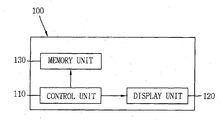
- FIG. 1 is a block diagram illustrating a configuration of a terminal according to an embodiment of the present disclosure
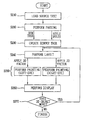
- FIG. 2 is a flowchart illustrating a rendering method according to an embodiment of the present disclosure
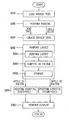
- FIG. 3 is a flowchart illustrating an example of a layout process according to an embodiment of the present disclosure
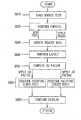
- FIG. 4 is a flowchart illustrating an example of a painting process according to an embodiment of the present disclosure
- FIG. 5 is a view illustrating a result displayed on a 3D web-page according to a first embodiment of the present disclosure
- FIG. 6 is a view illustrating a result displayed on a 3D web-page according to a second embodiment of the present disclosure
- FIG. 7 is a view illustrating a result displayed on a 3D web-page according to a third embodiment of the present disclosure.
- FIG. 8 is a flowchart illustrating an operating process of a 3D browser using the rendering method according to an embodiment of the present disclosure.
- the technology disclosed in this specification may be applied to terminals providing 3D contents.
- the technology disclosed in this specification is not limited thereto, and may be applied to all image display devices, multimedia devices, equipments and control methods thereof, to which the spirit of the technology can be applied.
- the technology disclosed in this specification may be applied to various terminals such as a smart phone, a portable terminal, a mobile terminal, a personal digital assistant (PDA), a portable multimedia player (PMP) terminal, a notebook computer, a Wibro terminal, an Internet protocol television (IPTV) terminal, a terminal for digital broadcasting, a telematics terminal, a navigation terminal, an audio video navigation (AVN) terminal, a television, a 3D television, an audio/video (A/V) system, a home theater system, an information providing center and a call center.
- PDA personal digital assistant
- PMP portable multimedia player
- IPTV Internet protocol television
- IPTV Internet protocol television
- A/V audio/video
- the 3D contents may include various 3D (or three-dimensional) images (or stereoscopic images) or 3D objects, which generate 3D effects.
- a 3-dimensional stereoscopic image (hereinafter, will be referred to as a 3D image) indicates an image through which a viewer can feel depth and reality of an object disposed on a monitor or a screen as if in the real space.
- the 3-dimensional stereoscopic image (hereinafter, referred to as the 3D image).
- the 3D image may be implemented using binocular disparity.
- the binocular disparity refers to a parallax obtained by the positions of user’s two eyes away from each other. Therefore, when the two eyes see mutually different 2D images and the images are transferred to the brain through retinas and merged, the user may feel the depth and reality of a 3D image.
- the 3D image may be displayed using display methods including a stereoscopic method (glass method), an auto-stereoscopic method (glassless method), a projection method (holographic method), etc.
- the stereoscopic method is frequently used for home television receivers, etc. and includes a Wheatstone stereoscopic method, etc.
- the auto-stereoscopic method is frequently used for mobile terminals, etc. and includes a parallax barrier method, a lenticular method, etc.
- the projection method includes a reflective holographic method, a transmission type holographic method, etc.
- a 3D image includes a left image (left eye image) and a right image (right eye image).
- the method of merging the left and right images into the 3D image may be classified into a top-down scheme in which the left and right images are disposed up and down in one frame, an L-to-R (left-to-right, side by side) scheme in which the left and right images are disposed left and right in one frame, a checker board scheme in which fragments of the left and right images are disposed in a tile form, an interlaced scheme in which the left and right images are alternately disposed by the column or by the row, a time division (time sequential, frame by frame) scheme in which the left and right images are alternately displayed by the time, etc.
- the reason of the generation of the 3D effect for a 3D image or 3D object is that a depth (or depth value) in the 3D image or 3D object exists.
- the depth may also be called as disparity.
- the depth (or depth value) in the 3D image refers to an indicator indicating the 3D distance between objects within an image.
- the depth is defined as 256 levels (a maximum value is 255 and a minimum value is 0), and a higher value represents a position closer to a viewer or a user. Therefore, the adjustment of a depth in a 3D image means that the depth of the 3D image is adjusted to its original depth when the 3D image is displayed in an original size and the depth of the 3D image is adjusted to a lower depth than the original depth when a content of the 3D image is displayed as a small image.
- the depth of a 3D image is adjusted to 255 when the 3D image is displayed in its original size, and the depth of the 3D image is adjusted to a smaller value than 255 when the 3D image is displayed in a smaller size than its original size.
- FIG. 1 is a block diagram illustrating a configuration of a terminal according to an embodiment of the present disclosure.
- the terminal 100 may include a control unit 110, a display unit 120 and a storage unit 130.
- the control unit 110 may provide a general operation of the terminal 100.
- the control unit 110 may render a 3D web-page implemented through the terminal 100.
- control unit 110 may load a source text including depth information on one or more 3D objects constituting the 3D web-page, and create style rules including a document object model (DOM) tree and the depth information by parsing the source text.
- DOM document object model
- the control unit 110 may generate a render tree based on the DOM tree and the style rules, and perform layout on the render tree.
- the control unit 110 may paint left-eye and right-eye pages by applying, to the result obtained by performing the layout, a 3D factor including one or more of the position, size, disparity, shape and arrangement of the 3D objects.
- the control unit 110 may merge the left-eye and right-eye pages under the control of the display unit 120 and display the merged left-eye and right-eye pages on a 3D browser.
- the control unit 110 may determine a painting order for the 3D objects or compute the 3D factor through the performance of the layout. Alternatively, the control unit 110 may compute the 3D factor before the painting is performed.
- the control unit 110 may compute the 3D factor based on the position (or direction) of the 3D object on the 3D browser or the position of the 3D object in the display unit 120 on which the 3D browser is displayed. The control unit 110 may determine whether or not the 3D object moves. When the 3D object moves, the display unit 120 may perform the layout by re-computing the 3D factor based on a new position of the 3D object on the 3D browser.
- the display unit 120 may display (or output) information processed in the terminal 100. For example, when performing a specific function of the terminal 100, the display unit 120 may display a user interface (UI) or graphic user interface (GUI) related to the specific function.
- UI user interface
- GUI graphic user interface
- the display unit 120 may display a 3D browser provided by the terminal 100.
- the display unit 120 may display various 3D contents such as 3D images and 3D objects included in the 3D browser.
- the display unit 120 may include at least one of a display unit 141 and a sound output unit 142.
- the display unit 141 may include at least one of a liquid crystal display (LCD), a thin film transistor-liquid crystal display (TFT LCD), an organic light-emitting diode (OLED), a flexible display, a 3D display and an electronic-ink (e-ink) display.
- LCD liquid crystal display
- TFT LCD thin film transistor-liquid crystal display
- OLED organic light-emitting diode
- a flexible display a 3D display
- e-ink electronic-ink
- Some of the displays may be configured as transparent or light-transmissive displays through which a user can see an outside view. These displays may be called as transparent displays, and a transparent OLED (TOLED), etc. may be used as a representative of the transparent displays.
- the rear structure of the display unit 120 may also be configured as a light-transmissive structure. Through such a structure, the user can see an object positioned at the rear of a body of the terminal 100 through an area occupied by the display unit 120 of the body of the terminal 100.
- the information may be displayed in the form of a character, number, symbol, graphic, icon, etc., and may be implemented as a 3D stereoscopic image.
- the display unit 120 may be operated as the entire area or may be operated by being divided into a plurality of areas. In case of the latter, the plurality of areas may be configured to operate in relation to one another.
- output or input windows may be displayed at upper and lower portions of the display unit 120, respectively.
- Each of the input and output windows may be an area assigned for the output or input of information.
- Soft keys on which numbers for inputting a telephone number, etc. are displayed may be output on the input window. If a soft key is touched, a number, etc. corresponding to the touched soft key is displayed on the output window. If a manipulating unit is operated, an attempt to connect a call for a telephone number displayed on the output window may be made, or a text displayed on the output window may be input to an application.
- the display unit 120 may be configured to receive a touch input by scrolling the display unit 120.
- the user may move a cursor or pointer positioned on an object, e.g., an icon, etc. displayed on the display unit 120 by scrolling the display unit 120. Further, when a user’s finger is moved on the display unit 120, the path along which the user’s finger is moved may be visually displayed on the display unit 120. This may be useful in editing images displayed on the display unit 120.
- the display unit 120 may include a touch screen.
- one function of the terminal 100 may be performed, corresponding to a case in which the touch screen of the display unit 120 is touched together with the display unit 120 within a certain range of time.
- the case in which the touch screen is touched together with the display unit In addition to the case may include a case in which the user clamps the body of the terminal 100 using user’s thumb and forefinger.
- the one function may be, for example, activation or non-activation for the display unit 120.
- the storage unit 130 may function to store information processed in the terminal 100.
- the storage unit 130 may store a 3D content provided by the terminal 100. Specifically, the storage unit 130 may store 3D images or 3D objects constituting the 3D content, and store depth information on the 3D images or 3D objects, etc.
- the storage unit 130 may store a 3D factor for the 3D object processed by the terminal 100, etc.
- the storage unit 130 may store various UIs and/or GUIs related to functions performed by the terminal 100.
- the storage unit 130 may store data and programs necessary for the operation of the terminal 100.
- the storage unit 130 may include a storage medium of at least one of a flash memory type, a hard disk type, a multimedia card micro type, a card type memory (e.g., an SD or XD memory, etc.), a random access memory (RAM), a static random access memory (SRAM), a read-only memory (ROM), an electrically erasable programmable read-only memory (EEPROM) and a programmable read-only memory (PROM).
- a flash memory type e.g., a hard disk type, a multimedia card micro type, a card type memory (e.g., an SD or XD memory, etc.), a random access memory (RAM), a static random access memory (SRAM), a read-only memory (ROM), an electrically erasable programmable read-only memory (EEPROM) and a programmable read-only memory (PROM).
- a flash memory type e.g., an SD or XD memory, etc.
- RAM random access memory
- the terminal 100 may operate a web storage performing a storage function of the storage unit 130 on the Internet or may operate in relation to the web storage.
- the components shown in FIG. 1 are not essential, and therefore, the terminal 100 may be implemented to have a larger number of components or to have a smaller number of components.
- FIG. 2 is a flowchart illustrating a rendering method according to an embodiment of the present disclosure.
- the rendering method of the 3D web-page according to the embodiment of the present disclosure may include the following order.
- the terminal 100 loads a source text (or source code) for the 3D web-page (S210).
- the terminal 100 may receive the source text transmitted from a HTTP module or file system and load the received source text.
- the source text may be implemented by various kinds of programming languages.
- the source text may be implemented by HTML or CSS.
- the source text may include depth information on one or more 3D objects constituting the 3D web-page.
- the source text may include depth information (or depth attribute) on the one or more 3D objects constituting the 3D web-page so that the rendering result of the 3D web-page can have a 3D effect.
- the terminal 100 may identify whether or not the source text is previously read data, determine whether or not to open a popup window, or determine whether or not to download a file existing in a web server.
- the terminal 100 parses the source text (S220).
- the terminal 100 may create a document object model, i.e., DOM tree by parsing the source text.
- the DOM tree may be called as a content model according to the web engine employed by the terminal.
- the terminal 100 may parse the source text using a parser corresponding to the programming language by which the source text is implemented. For example, the terminal 100 may parse the HTML by which the source text is implemented, using an HTML parser. When the source text uses an XML body, the terminal 100 may parse SYG, MathML, etc. in an XML format using an XML parser.
- the terminal 100 may create the DOM tree by structuring the source text and representing, as a tree structure, roots and objects constituting the source text, elements, attributes, texts, etc. as a sub-structures.
- the terminal 100 may create style rules by parsing the source text.
- the terminal 100 may create necessary style sheet and re-perform parsing for determining the style.
- the terminal 100 may parse the source text using a parser corresponding to the language by which the source text is implemented. For example, the terminal 100 may parse the CSS by which the source text is implemented, using a CSS parser.
- the terminal 100 may parse the depth information on the 3D objects included in the source text and store the parsed depth information in the style rules.
- the terminal 100 may generate a render tree (S230).
- the terminal 100 may generate the render tree based on the DOM tree and the style rules.
- the terminal 100 may generate the render tree through attachment or frame construction of the DOM tree and the style rules.
- the render tree may be called as a frame tree according to the web engine employed by the terminal 100.
- the render tree may be generated to include only contents except objects of types, not displayed on the 3D browser in the DOM tree or style rules, e.g., ⁇ head>, ⁇ title> and ⁇ body> tags in the HTML document, a tag in which the value of a “display” property is none in the CSS document, etc.
- the render tree may be divided into left-eye and right-eye render trees so as to stereoscopically display the one or more 3D objects included in the 3D web-page.
- the terminal 100 performs layout on the render tree (S240).
- the terminal 100 may perform the layout for determining the position, size and painting order of various objects constituting the render tree in the 3D web-page.
- the layout may be called as reflow according to the web engine employed by the terminal 100.
- the terminal 100 may determine a painting order for the one or more 3D objects constituting the 3D web-page by performing the layout.
- the terminal 100 may form one or more layers by incorporating 3D objects having the same depth information among the one or more 3D objects in the same layer, and determine the painting order by arraying the one or more layers based on the depth information.
- the painting order for the 3D objects may be determined by arraying the one or more layers in an ascending series according to the depth information between the one or more layers.
- the painting order may be determined based on a z-index or order indicated in the source text with respect to the 3D objects having the same depth information, which are included in the same layer.
- the terminal 100 may compute a 3D factor for the one or more 3D objects by performing the layout. Specifically, the terminal may compute the 3D factor in the performing of the layout, and store the computed 3D factor. Then, the terminal 100 may perform painting by the applying the stored 3D.
- the terminal 100 paints the left-eye and right-eye pages (S250).
- the painting may be performed by searching the render tree on which the layout is performed and filling RGB values in a specific memory space.
- the terminal 100 may paint the left-eye and right-eye pages so as to stereoscopically display the one or more 3D objects constituting the 3D web-page.
- the left-eye and right-eye pages are, respectively, input to user’s left and right eyes, so that the user can recognize as if the 3D objects included in the left-eye and right-eye pages were stereoscopically floated at the position of a perceived 3D image.
- the left-eye and right-eye pages may be painted so that the 3D objects have an arbitrary disparity (or LR shift).
- the 3D objects may have the disparity based on the result obtained by performing the layout, and the depths of the 3D objects may be adjusted by the disparity.
- the disparity may be determined by computing the 3D factor.
- the 3D objects may be painted with red and blue so as to express the 3D effect of the 3D objects using an anaglyph scheme. That is, the 3D object in any one of the left-eye and right-eye pages may be painted with the red, and the 3D object in the other of the left-eye and right-eye pages may be painted with the blue.
- the user may wear red and blue glasses, polarized glasses, shutter glasses, etc. so as to view a stereoscopic image using the left-eye and right-eye pages.
- the terminal 100 may paint the left-eye and right-eye pages based on the result obtained by performing the layout. For example, may paint the left-eye and right-eye pages based on the painting order determined by the result obtained by performing the layout. The terminal 100 may paint the left-eye and right-eye pages by applying the 3D factor to the result obtained by performing the layout.
- the terminal 100 may compute the 3D factor for the one or more 3D objects for the purpose of the painting. Specifically, the terminal 100 may compute the 3D factor before performing the painting, and perform the painting by applying the computed 3D factor.
- the terminal 100 merges the left-eye and right-eye pages and displays the merged left-eye and right-eye pages on the 3D browser (S260).
- the terminal 100 may merge the painted left-eye and right-eye pages and simultaneously display the merged left-eye and right-eye pages in one frame of the 3D browser so that the one or more 3D objects can be stereoscopically viewed.
- the terminal 100 may display the left-eye and right-eye pages on the 3D browser, according to the merging scheme, using a top-down scheme in which the left and right images are disposed up and down in one frame, an L-to-R (left-to-right, side by side) scheme in which the left and right images are disposed left and right in one frame, a checker board scheme in which fragments of the left and right images are disposed in a tile form, an interlaced scheme in which the left and right images are alternately disposed by the column or by the row or a time division (time sequential, frame by frame) scheme in which the left and right images are alternately displayed by the time.
- a top-down scheme in which the left and right images are disposed up and down in one frame
- an L-to-R (left-to-right, side by side) scheme in which the left and right images are disposed left and right in one frame
- a checker board scheme in which fragments of the left and right images are disposed in a tile form
- the terminal 100 determines whether or not the 3D object moves (S270).
- the movement of the 3D object may be caused by a user’s input or re-search of the 3D browser.
- the movement of the 3D object may be caused by top and bottom/left and right scrolling of the 3D browser, mode conversion of a screen display, or movement of the position of the 3D browser in the display unit 120 on which the 3D browser is displayed.
- the terminal 100 re-performs the layout on the render tree for the 3D object (S240).
- the terminal 100 may re-perform the layout on the 3D object based on a new position of the 3D object on the 3D browser or a new position of the 3D browser displayed on the display unit 120.
- the terminal 100 may re-compute the 3D factor as occasion demands, and apply the re-computed 3D factor to the result obtained by re-performing the layout.
- FIG. 3 is a flowchart illustrating an example of a layout process according to an embodiment of the present disclosure.
- the layout process according to the embodiment of the present disclosure may include the following order.
- the terminal 100 performs layout on a render tree (S241).
- the terminal 100 may perform the layout for determining the position, size and painting order of various objects constituting the render tree in the 3D web-page.
- the terminal 100 may determine a painting order for the one or more 3D objects constituting the 3D web-page by performing the layout.
- the determining of the painting order is a separate process from the layout, and may be performed on only the 3D objects.
- the terminal 100 computes a 3D factor (S242).
- the 3D factor may include one or more of the size, display position, disparity, shape and arrangement of the 3D factor.
- the terminal 100 may compute the 3D factor based on depth information on the one or more 3D objects included in the render tree. For example, the terminal may compute the size of the 3D object as a large value in proportion to a positive increase in depth information on the 3D object, and compute the size of the 3D object as a small value in proportion to a negative increase in the depth information on the 3D object.
- the terminal 100 may compute the shape of the 3D object to be concave or convex according to the depth information.
- the terminal 100 may allow the 3D object to be viewed as a protruded or recessed 3D object by computing the disparity of the 3D object according to the depth information.
- the terminal 100 may compute one or more of the size and position of the 3D object based on the position of the 3D object on the 3D browser or the position of the 3D object in the display unit 120 on which the 3D browser is displayed. For example, the terminal 100 may compute the size of the 3D object to be larger or smaller than the value in proportion to the depth information, as the 3D object is close to or distant from a specific position of the 3D browser or the display unit 120. Alternatively, when the 3D object is positioned in an arbitrary direction with respect to the specific position of the 3D browser or the display unit 120, the terminal 100 may compute the position of the 3D object as a position obtained by further moving the position of the 3D object by an arbitrary distance in the arbitrary direction.
- the terminal 100 may change the shape of the 3D object to be distorted, symmetric, rotated or lengthened.
- the terminal 100 may allow the 3D object to be viewed as a protruded or recessed by computing the disparity of the 3D object based on the position of the 3D object.
- the specific position may be a position of the user’s sight, and the position of the user’s sight may be a center of the 3D browser or a center of the display unit 120 on which the 3D browser is displayed.
- the terminal 100 may compute the 3D factor by determining the position of the user’s sight, sensed through the sight sensing unit, as the specific position.
- the terminal 100 stores the 3D factor (S243).
- the terminal 100 may store the calculated 3D factor together with layout information of the 3D web-page or may separately store the 3D factor.
- the stored 3D factor may be applied when the left-eye and right-eye pages are painted.
- the computation and storage of the 3D factor may be performed before the layout of the render tree or may be simultaneously performed together with the layout of the render tree.
- FIG. 4 is a flowchart illustrating an example of a painting process according to an embodiment of the present disclosure.
- the paining process according to the embodiment of the present disclosure may include the following order.
- the terminal 100 perform layout on a render tree (S240).
- the terminal 100 may perform the layout for determining the position, size and painting order of various objects constituting the render tree in the 3D web-page.
- the terminal 100 may determine a painting order for the one or more 3D objects constituting the 3D web-page by performing the layout.
- the terminal 100 computes a 3D factor (S251).
- the terminal 100 may compute the 3D factor so as to paint left-eye and right-eye pages.
- the terminal 100 paints the left-eye and right-eye pages (S250).
- the terminal 100 may paint the left-eye and right-eye pages by applying the 3D factor to the result obtained by performing the layout.
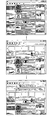
- FIG. 5 is a view illustrating a result displayed on a 3D web-page according to a first embodiment of the present disclosure.
- the terminal 100 may render the 3D web-page according to the embodiment of the present disclosure so as to display the one or more 3D objects having the depth information among various objects constituting the 3D web-page.
- the 3D objects may be stereoscopically displayed by displaying the left-eye and right-eye pages in one frame through the rendering.
- the terminal 100 may compute the size information among the 3D factor for the 3D object to be larger than the size corresponding to the depth information.
- the terminal 100 may adjust the disparity of the 3D object so that the 3D object is viewed as a protruded 3D object, or may control the shape of the 3D object to be viewed as a convex 3D object.
- the terminal 100 may compute the size information among the 3D factor for the 3D object to be smaller than the size corresponding to the depth information.
- the terminal 100 may adjust the disparity of the 3D object so that the 3D object is viewed as a recessed 3D object, or may control the shape of the 3D object to be viewed as a concave 3D object.
- the terminal 100 may compute the size of the 3D object to be larger than the value in proportion to the depth information as the 3D object is closer to a specific position of the 3D browser.
- the terminal may adjust the disparity of the 3D object so that the 3D object is viewed as a protruded 3D object, or may control the shape of the 3D object to be viewed as a convex 3D object.
- the terminal 100 may compute the size of the 3D object to be smaller than the value in proportion to the depth information as the 3D object is closer to a specific position of the 3D browser.
- the terminal may adjust the disparity of the 3D object so that the 3D object is viewed as a recessed 3D object, or may control the shape of the 3D object to be viewed as a concave 3D object.
- the specific position may be a position of the user’s sight.
- the position of the user’s sight may be a center of the 3D browser or a center of the display unit 120 on which the 3D browser is displayed.
- the terminal 100 may compute the 3D factor by determining the position of the user’s sight, sensed through the sight sensing unit, as the specific position.
- FIG. 6 is a view illustrating a result displayed on a 3D web-page according to a second embodiment of the present disclosure.
- the terminal 100 may compute the position of the 3D object as a position obtained by further moving the position of the 3D object by an arbitrary distance in the arbitrary direction.
- the specific position may be a position of the user’s sight, and the position of the user’s sight may be a center of the 3D browser or a center of the display unit 120 on which the 3D browser is displayed.
- the terminal 100 may compute the 3D factor by determining the position of the user’s sight, sensed through the sight sensing unit, as the specific position.
- the arbitrary direction may be changed by top and bottom/left and right scrolling of the 3D browser, caused by a user’s input or re-search of the 3D web browser, mode conversion of a screen display, or movement of the position of the 3D browser in the display unit 120 on which the 3D browser is displayed.
- the terminal 100 may determined the display position of the 3D object as a lower position so that the position of the 3D object is viewed lower by an arbitrary distance than the original position of the 3D object.
- the terminal 100 may compute the 3D factor so that the size of the 3D object is viewed to be decreased or that the 3D object is displayed in a compressed, rotated or symmetric shape.
- the terminal 100 may determined the display position of the 3D object as an upper position so that the position of the 3D object is viewed upper by an arbitrary distance than the original position of the 3D object.
- the terminal 100 may compute the 3D factor so that the size of the 3D object is viewed to be decreased or that the 3D object is displayed in a compressed, rotated or symmetric shape.
- the terminal 100 may compute the display position of the 3D object based on the depth information.
- the terminal 100 may determine the display position of the 3D object by increasing the movement range of the display position in proportion to the positive increase of the depth information. This is because the size of an object positioned close is larger than that of an object positioned distant. To allow the 3D object to exist relatively close, the terminal 100 may determine the display position of the 3D object by increasing the movement range of the 3D object of which depth information is large as a positive value.
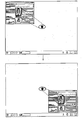
- FIG. 7 is a view illustrating a result displayed on a 3D web-page according to a third embodiment of the present disclosure.
- the terminal 100 may compute the 3D factor based on the position of the 3D browser on the display unit 120 on which the 3D browser is displayed.
- the position of the 3D browser may be changed by the top and bottom/left and right movement of the 3D browser through a user’s input, etc.
- the terminal 100 may compute one or more of the size and position of the 3D object based on the position of the 3D browser with respect to a specific position.
- the specific position may be a position of the user’s sight, and the position of the user’s sight may be a center of the 3D browser or a center of the display unit 120 on which the 3D browser is displayed.
- the terminal 100 may compute the 3D factor by determining the position of the user’s sight, sensed through the sight sensing unit, as the specific position.
- the terminal 100 may compute the 3D factor so that the size of the 3D factor is decreased, that the display position of the 3D object is further moved to the top side and/or the left side, or that the shape of the 3D object is changed.
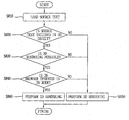
- FIG. 8 is a flowchart illustrating an operating process of a 3D browser using the rendering method according to an embodiment of the present disclosure.
- the operating process of the 3D browser using the rendering method according to the embodiment of the present invention may be performed in the following order.
- the terminal 100 loads a source text (S810).
- the terminal 100 may receive the source text transmitted from a HTTP module or file system and load the received source text.
- the source text may be implemented by various kinds of programming languages.
- the source text may be implemented by HTML or CSS.
- the terminal 100 determine whether or not the source text includes a 3D object (S820).
- the terminal 100 may determine that the source text includes the 3D object in the following cases;
- the source text includes 3D information such as depth information on one or more 3D objects
- the source text includes an object such as video/audio that can be three-dimensionally expressed (e.g., a case in which the object is clearly stated as a 3D object using a mime-type source text or HTML source text),
- the terminal 100 may perform 2D rendering on the source text.
- the terminal 100 determines whether or not to render the 3D object (S830).
- the terminal 100 may determine whether or not to support a 3D operation and to render the 3D object.
- the terminal 100 When the terminal 100 does not support the 3D operation, the terminal performs 2D rendering on the source text (S850).
- the terminal 100 may provide the user with a notification for informing the user that the terminal 100 does not support the 3D operation.
- the notification may be provided in the form of an icon, favicon, status bar, etc.
- the terminal 100 may continuously perform a subsequent operation or inform the user of the subsequent operation.
- the terminal 100 determines whether or not the 3D browser is operated in a 3D mode (S840).
- the 3D browser may configure or change a rendering mode for determining the rendering method of the 3D browser through a user’s input or requirement.
- the terminal 100 When the 3D browser is not operated in the 3D mode, i.e., when the 3D browser is operated in a 2D mode, the terminal 100 performs 2D rendering on the source text (S850).
- the terminal 100 may provide the user with the notification for informing the user that the 3D browser is not operated in the 3D mode.
- the notification may be provided in the form of an icon, favicon, status bar, etc.
- the terminal 100 may advise the user to change the 3D browser to be operated in the 3D mode or may inquire the user’s intension.
- the terminal 100 may control the 3D browser to be operated in the 3D mode.
- the terminal 100 may control the 3D browser to be operated in the 3D mode by configuring or changing the rendering mode of the 3D browser into the 3D mode.
- the terminal 100 When the 3D browser is operated in the 3D mode, the terminal 100 performs 3D rendering on the source text (S860).
- the terminal 100 may perform the 3D rendering on the source text using the rendering method according to the embodiments of the present disclosure.
Landscapes
- Engineering & Computer Science (AREA)
- Theoretical Computer Science (AREA)
- Multimedia (AREA)
- Signal Processing (AREA)
- Physics & Mathematics (AREA)
- General Physics & Mathematics (AREA)
- Artificial Intelligence (AREA)
- Health & Medical Sciences (AREA)
- Audiology, Speech & Language Pathology (AREA)
- Computational Linguistics (AREA)
- General Health & Medical Sciences (AREA)
- General Engineering & Computer Science (AREA)
- Computer Graphics (AREA)
- Processing Or Creating Images (AREA)
- User Interface Of Digital Computer (AREA)
- Information Transfer Between Computers (AREA)
Priority Applications (4)
| Application Number | Priority Date | Filing Date | Title |
|---|---|---|---|
| CN201280073777.XA CN104350487B (zh) | 2012-06-08 | 2012-06-08 | 3d网页的绘制方法和使用该方法的终端 |
| PCT/KR2012/004544 WO2013183801A1 (fr) | 2012-06-08 | 2012-06-08 | Procédé de rendu d'une page web en 3d et terminal l'utilisant |
| EP12878335.4A EP2859463B1 (fr) | 2012-06-08 | 2012-06-08 | Procédé de rendu d'une page web en 3d et terminal l'utilisant |
| US14/406,342 US9773338B2 (en) | 2012-06-08 | 2012-06-08 | Rendering method of 3D web-page and terminal using the same |
Applications Claiming Priority (1)
| Application Number | Priority Date | Filing Date | Title |
|---|---|---|---|
| PCT/KR2012/004544 WO2013183801A1 (fr) | 2012-06-08 | 2012-06-08 | Procédé de rendu d'une page web en 3d et terminal l'utilisant |
Publications (1)
| Publication Number | Publication Date |
|---|---|
| WO2013183801A1 true WO2013183801A1 (fr) | 2013-12-12 |
Family
ID=49712180
Family Applications (1)
| Application Number | Title | Priority Date | Filing Date |
|---|---|---|---|
| PCT/KR2012/004544 Ceased WO2013183801A1 (fr) | 2012-06-08 | 2012-06-08 | Procédé de rendu d'une page web en 3d et terminal l'utilisant |
Country Status (4)
| Country | Link |
|---|---|
| US (1) | US9773338B2 (fr) |
| EP (1) | EP2859463B1 (fr) |
| CN (1) | CN104350487B (fr) |
| WO (1) | WO2013183801A1 (fr) |
Cited By (4)
| Publication number | Priority date | Publication date | Assignee | Title |
|---|---|---|---|---|
| CN104837005A (zh) * | 2014-02-11 | 2015-08-12 | 深圳市云帆世纪科技有限公司 | 一种2d视频与3d视频转换播放的方法及其装置 |
| CN105096368A (zh) * | 2015-04-30 | 2015-11-25 | 华为技术有限公司 | 三维对象处理方法和相关装置 |
| US9940404B2 (en) | 2013-10-01 | 2018-04-10 | Aaron Scott Dishno | Three-dimensional (3D) browsing |
| US10809894B2 (en) | 2014-08-02 | 2020-10-20 | Samsung Electronics Co., Ltd. | Electronic device for displaying object or information in three-dimensional (3D) form and user interaction method thereof |
Families Citing this family (10)
| Publication number | Priority date | Publication date | Assignee | Title |
|---|---|---|---|---|
| US10067634B2 (en) | 2013-09-17 | 2018-09-04 | Amazon Technologies, Inc. | Approaches for three-dimensional object display |
| US20150082145A1 (en) * | 2013-09-17 | 2015-03-19 | Amazon Technologies, Inc. | Approaches for three-dimensional object display |
| US10592064B2 (en) | 2013-09-17 | 2020-03-17 | Amazon Technologies, Inc. | Approaches for three-dimensional object display used in content navigation |
| FR3038995B1 (fr) * | 2015-07-15 | 2018-05-11 | F4 | Dispositif interactif a affichage personnalisable |
| FR3042620B1 (fr) | 2015-10-16 | 2017-12-08 | F4 | Dispositif web interactif a affichage personnalisable |
| US10691880B2 (en) | 2016-03-29 | 2020-06-23 | Microsoft Technology Licensing, Llc | Ink in an electronic document |
| CN105975259A (zh) * | 2016-04-27 | 2016-09-28 | 乐视控股(北京)有限公司 | 一种3d空间用户界面的实现方法及其装置 |
| CN108235143B (zh) | 2016-12-15 | 2020-07-07 | 广州市动景计算机科技有限公司 | 视频播放模式转换方法、装置及移动终端 |
| CN114969606B (zh) * | 2022-06-08 | 2025-03-25 | 武汉联影医疗科技有限公司 | 引导页面的显示方法、装置、计算机设备和存储介质 |
| CN117762407A (zh) * | 2022-09-16 | 2024-03-26 | 腾讯科技(深圳)有限公司 | 页面渲染方法、装置、设备、存储介质及计算机程序产品 |
Citations (5)
| Publication number | Priority date | Publication date | Assignee | Title |
|---|---|---|---|---|
| US20060005114A1 (en) * | 2004-06-25 | 2006-01-05 | Richard Williamson | Procedurally expressing graphic objects for web pages |
| US20070130525A1 (en) * | 2005-12-07 | 2007-06-07 | 3Dlabs Inc., Ltd. | Methods for manipulating web pages |
| US20100064209A1 (en) * | 2008-09-10 | 2010-03-11 | Advanced Digital Broadcast S.A. | Method for transforming web page objects |
| US20110032330A1 (en) * | 2009-06-05 | 2011-02-10 | Lg Electronics Inc. | Image display apparatus and method for operating the same |
| US20110064383A1 (en) * | 2009-09-15 | 2011-03-17 | International Business Machines Corporation | Method and system of circumventing content filters |
Family Cites Families (6)
| Publication number | Priority date | Publication date | Assignee | Title |
|---|---|---|---|---|
| US6734873B1 (en) * | 2000-07-21 | 2004-05-11 | Viewpoint Corporation | Method and system for displaying a composited image |
| US6882755B2 (en) * | 2001-10-19 | 2005-04-19 | Hewlett-Packard Development Company, L.P. | Image transmission for low bandwidth with region of interest |
| GB0806183D0 (en) * | 2008-04-04 | 2008-05-14 | Picsel Res Ltd | Presentation of objects in 3D displays |
| US8964013B2 (en) * | 2009-12-31 | 2015-02-24 | Broadcom Corporation | Display with elastic light manipulator |
| US8692870B2 (en) * | 2010-06-28 | 2014-04-08 | Microsoft Corporation | Adaptive adjustment of depth cues in a stereo telepresence system |
| US9196075B2 (en) * | 2011-11-14 | 2015-11-24 | Microsoft Technology Licensing, Llc | Animation of computer-generated display components of user interfaces and content items |
-
2012
- 2012-06-08 WO PCT/KR2012/004544 patent/WO2013183801A1/fr not_active Ceased
- 2012-06-08 CN CN201280073777.XA patent/CN104350487B/zh not_active Expired - Fee Related
- 2012-06-08 EP EP12878335.4A patent/EP2859463B1/fr not_active Not-in-force
- 2012-06-08 US US14/406,342 patent/US9773338B2/en not_active Expired - Fee Related
Patent Citations (5)
| Publication number | Priority date | Publication date | Assignee | Title |
|---|---|---|---|---|
| US20060005114A1 (en) * | 2004-06-25 | 2006-01-05 | Richard Williamson | Procedurally expressing graphic objects for web pages |
| US20070130525A1 (en) * | 2005-12-07 | 2007-06-07 | 3Dlabs Inc., Ltd. | Methods for manipulating web pages |
| US20100064209A1 (en) * | 2008-09-10 | 2010-03-11 | Advanced Digital Broadcast S.A. | Method for transforming web page objects |
| US20110032330A1 (en) * | 2009-06-05 | 2011-02-10 | Lg Electronics Inc. | Image display apparatus and method for operating the same |
| US20110064383A1 (en) * | 2009-09-15 | 2011-03-17 | International Business Machines Corporation | Method and system of circumventing content filters |
Non-Patent Citations (2)
| Title |
|---|
| JOHANNES BEHR ET AL., X3DOM - A DOM-BASED HTML5/X3D INTEGRATION MODEL, 17 June 2009 (2009-06-17) |
| See also references of EP2859463A4 |
Cited By (4)
| Publication number | Priority date | Publication date | Assignee | Title |
|---|---|---|---|---|
| US9940404B2 (en) | 2013-10-01 | 2018-04-10 | Aaron Scott Dishno | Three-dimensional (3D) browsing |
| CN104837005A (zh) * | 2014-02-11 | 2015-08-12 | 深圳市云帆世纪科技有限公司 | 一种2d视频与3d视频转换播放的方法及其装置 |
| US10809894B2 (en) | 2014-08-02 | 2020-10-20 | Samsung Electronics Co., Ltd. | Electronic device for displaying object or information in three-dimensional (3D) form and user interaction method thereof |
| CN105096368A (zh) * | 2015-04-30 | 2015-11-25 | 华为技术有限公司 | 三维对象处理方法和相关装置 |
Also Published As
| Publication number | Publication date |
|---|---|
| US9773338B2 (en) | 2017-09-26 |
| EP2859463A4 (fr) | 2016-03-02 |
| EP2859463B1 (fr) | 2018-08-29 |
| EP2859463A1 (fr) | 2015-04-15 |
| CN104350487A (zh) | 2015-02-11 |
| CN104350487B (zh) | 2017-03-08 |
| US20150170397A1 (en) | 2015-06-18 |
Similar Documents
| Publication | Publication Date | Title |
|---|---|---|
| EP2859463A1 (fr) | Procédé de rendu d'une page web en 3d et terminal l'utilisant | |
| WO2020111594A1 (fr) | Dispositif électronique, dispositif de réalité augmentée destiné à fournir un service de réalité augmentée, et son procédé de fonctionnement | |
| WO2015026030A1 (fr) | Dispositif d'affichage et son procédé de commande | |
| WO2011059261A2 (fr) | Afficheur d'image et son précédé de fonctionnement | |
| WO2010151028A2 (fr) | Appareil d'affichage d'images, lunettes 3d, et procédé de fonctionnement dudit appareil | |
| WO2012144666A1 (fr) | Dispositif d'affichage et procédé de commande associé | |
| WO2011059270A2 (fr) | Afficheur d'image et son procédé de fonctionnement | |
| WO2014021658A1 (fr) | Appareil d'affichage transparent et procédé d'affichage associé | |
| WO2012050366A2 (fr) | Appareil d'affichage d'image 3d et son procédé d'affichage | |
| WO2015053449A1 (fr) | Dispositif d'affichage d'image de type lunettes et son procédé de commande | |
| WO2017175942A1 (fr) | Terminal mobile et son procédé de commande | |
| WO2015133701A1 (fr) | Terminal mobile et son procédé de commande | |
| WO2016108547A1 (fr) | Appareil d'affichage et procédé d'affichage | |
| EP3635525A2 (fr) | Appareil électronique et procédé de commande associé | |
| WO2010151027A4 (fr) | Dispositif d'affichage vidéo et méthode pour le faire fonctionner | |
| WO2016056723A1 (fr) | Terminal mobile et son procédé de commande | |
| EP3129859A1 (fr) | Appareil d'affichage en verre flexible et son procédé de commande | |
| WO2019139367A1 (fr) | Dispositif d'affichage et procédé de pour interface tactile | |
| WO2022065722A1 (fr) | Dispositif électronique et procédé d'affichage de notification concernant un objet externe | |
| WO2012128399A1 (fr) | Dispositif d'affichage et procédé de commande associé | |
| WO2017126709A1 (fr) | Terminal mobile et procédé de commande associé | |
| WO2014007414A1 (fr) | Terminal conçu pour accroître la sensation de confort visuel apportée par un objet 3d, et procédé de commande correspondant | |
| WO2013015466A1 (fr) | Dispositif électronique pour affichage d'image tridimensionnelle et son procédé d'utilisation | |
| WO2018070756A1 (fr) | Procédé, appareil, et support d'enregistrement pour traiter une image | |
| WO2018155750A1 (fr) | Système et procédé de recherche de contenus de réalité virtuelle et de réalité augmentée au moyen d'un catalogue de processus d'enseignement |
Legal Events
| Date | Code | Title | Description |
|---|---|---|---|
| 121 | Ep: the epo has been informed by wipo that ep was designated in this application |
Ref document number: 12878335 Country of ref document: EP Kind code of ref document: A1 |
|
| WWE | Wipo information: entry into national phase |
Ref document number: 2012878335 Country of ref document: EP |
|
| NENP | Non-entry into the national phase |
Ref country code: DE |
|
| WWE | Wipo information: entry into national phase |
Ref document number: 14406342 Country of ref document: US |