WO2013187380A1 - 非水電解液電池用電解液、及びこれを用いた非水電解液電池 - Google Patents
非水電解液電池用電解液、及びこれを用いた非水電解液電池 Download PDFInfo
- Publication number
- WO2013187380A1 WO2013187380A1 PCT/JP2013/066005 JP2013066005W WO2013187380A1 WO 2013187380 A1 WO2013187380 A1 WO 2013187380A1 JP 2013066005 W JP2013066005 W JP 2013066005W WO 2013187380 A1 WO2013187380 A1 WO 2013187380A1
- Authority
- WO
- WIPO (PCT)
- Prior art keywords
- group
- electrolyte
- battery
- compound
- aqueous electrolyte
- Prior art date
- Legal status (The legal status is an assumption and is not a legal conclusion. Google has not performed a legal analysis and makes no representation as to the accuracy of the status listed.)
- Ceased
Links
Classifications
-
- H—ELECTRICITY
- H01—ELECTRIC ELEMENTS
- H01M—PROCESSES OR MEANS, e.g. BATTERIES, FOR THE DIRECT CONVERSION OF CHEMICAL ENERGY INTO ELECTRICAL ENERGY
- H01M10/00—Secondary cells; Manufacture thereof
- H01M10/05—Accumulators with non-aqueous electrolyte
- H01M10/056—Accumulators with non-aqueous electrolyte characterised by the materials used as electrolytes, e.g. mixed inorganic/organic electrolytes
- H01M10/0564—Accumulators with non-aqueous electrolyte characterised by the materials used as electrolytes, e.g. mixed inorganic/organic electrolytes the electrolyte being constituted of organic materials only
- H01M10/0566—Liquid materials
- H01M10/0567—Liquid materials characterised by the additives
-
- H—ELECTRICITY
- H01—ELECTRIC ELEMENTS
- H01M—PROCESSES OR MEANS, e.g. BATTERIES, FOR THE DIRECT CONVERSION OF CHEMICAL ENERGY INTO ELECTRICAL ENERGY
- H01M10/00—Secondary cells; Manufacture thereof
- H01M10/05—Accumulators with non-aqueous electrolyte
- H01M10/052—Li-accumulators
-
- H—ELECTRICITY
- H01—ELECTRIC ELEMENTS
- H01M—PROCESSES OR MEANS, e.g. BATTERIES, FOR THE DIRECT CONVERSION OF CHEMICAL ENERGY INTO ELECTRICAL ENERGY
- H01M10/00—Secondary cells; Manufacture thereof
- H01M10/05—Accumulators with non-aqueous electrolyte
- H01M10/056—Accumulators with non-aqueous electrolyte characterised by the materials used as electrolytes, e.g. mixed inorganic/organic electrolytes
- H01M10/0564—Accumulators with non-aqueous electrolyte characterised by the materials used as electrolytes, e.g. mixed inorganic/organic electrolytes the electrolyte being constituted of organic materials only
- H01M10/0566—Liquid materials
- H01M10/0568—Liquid materials characterised by the solutes
-
- H—ELECTRICITY
- H01—ELECTRIC ELEMENTS
- H01M—PROCESSES OR MEANS, e.g. BATTERIES, FOR THE DIRECT CONVERSION OF CHEMICAL ENERGY INTO ELECTRICAL ENERGY
- H01M10/00—Secondary cells; Manufacture thereof
- H01M10/05—Accumulators with non-aqueous electrolyte
- H01M10/056—Accumulators with non-aqueous electrolyte characterised by the materials used as electrolytes, e.g. mixed inorganic/organic electrolytes
- H01M10/0564—Accumulators with non-aqueous electrolyte characterised by the materials used as electrolytes, e.g. mixed inorganic/organic electrolytes the electrolyte being constituted of organic materials only
- H01M10/0566—Liquid materials
- H01M10/0569—Liquid materials characterised by the solvents
-
- H—ELECTRICITY
- H01—ELECTRIC ELEMENTS
- H01M—PROCESSES OR MEANS, e.g. BATTERIES, FOR THE DIRECT CONVERSION OF CHEMICAL ENERGY INTO ELECTRICAL ENERGY
- H01M2220/00—Batteries for particular applications
- H01M2220/20—Batteries in motive systems, e.g. vehicle, ship, plane
-
- H—ELECTRICITY
- H01—ELECTRIC ELEMENTS
- H01M—PROCESSES OR MEANS, e.g. BATTERIES, FOR THE DIRECT CONVERSION OF CHEMICAL ENERGY INTO ELECTRICAL ENERGY
- H01M2220/00—Batteries for particular applications
- H01M2220/30—Batteries in portable systems, e.g. mobile phone, laptop
-
- H—ELECTRICITY
- H01—ELECTRIC ELEMENTS
- H01M—PROCESSES OR MEANS, e.g. BATTERIES, FOR THE DIRECT CONVERSION OF CHEMICAL ENERGY INTO ELECTRICAL ENERGY
- H01M2300/00—Electrolytes
- H01M2300/0017—Non-aqueous electrolytes
- H01M2300/0025—Organic electrolyte
-
- H—ELECTRICITY
- H01—ELECTRIC ELEMENTS
- H01M—PROCESSES OR MEANS, e.g. BATTERIES, FOR THE DIRECT CONVERSION OF CHEMICAL ENERGY INTO ELECTRICAL ENERGY
- H01M2300/00—Electrolytes
- H01M2300/0017—Non-aqueous electrolytes
- H01M2300/0025—Organic electrolyte
- H01M2300/0028—Organic electrolyte characterised by the solvent
- H01M2300/0037—Mixture of solvents
-
- Y—GENERAL TAGGING OF NEW TECHNOLOGICAL DEVELOPMENTS; GENERAL TAGGING OF CROSS-SECTIONAL TECHNOLOGIES SPANNING OVER SEVERAL SECTIONS OF THE IPC; TECHNICAL SUBJECTS COVERED BY FORMER USPC CROSS-REFERENCE ART COLLECTIONS [XRACs] AND DIGESTS
- Y02—TECHNOLOGIES OR APPLICATIONS FOR MITIGATION OR ADAPTATION AGAINST CLIMATE CHANGE
- Y02E—REDUCTION OF GREENHOUSE GAS [GHG] EMISSIONS, RELATED TO ENERGY GENERATION, TRANSMISSION OR DISTRIBUTION
- Y02E60/00—Enabling technologies; Technologies with a potential or indirect contribution to GHG emissions mitigation
- Y02E60/10—Energy storage using batteries
-
- Y—GENERAL TAGGING OF NEW TECHNOLOGICAL DEVELOPMENTS; GENERAL TAGGING OF CROSS-SECTIONAL TECHNOLOGIES SPANNING OVER SEVERAL SECTIONS OF THE IPC; TECHNICAL SUBJECTS COVERED BY FORMER USPC CROSS-REFERENCE ART COLLECTIONS [XRACs] AND DIGESTS
- Y02—TECHNOLOGIES OR APPLICATIONS FOR MITIGATION OR ADAPTATION AGAINST CLIMATE CHANGE
- Y02T—CLIMATE CHANGE MITIGATION TECHNOLOGIES RELATED TO TRANSPORTATION
- Y02T10/00—Road transport of goods or passengers
- Y02T10/60—Other road transportation technologies with climate change mitigation effect
- Y02T10/70—Energy storage systems for electromobility, e.g. batteries
Definitions
- the present invention relates to an electrolyte for a non-aqueous electrolyte battery constituting a non-aqueous electrolyte secondary battery having a large initial electric capacity and excellent cycle characteristics and low-temperature characteristics, and a non-aqueous electrolyte battery using the same. is there.
- Patent Document 1 describes the internal resistance of a battery by adding difluoro (bis (oxalato)) lithium phosphate and difluoro (oxalato) lithium borate to a non-aqueous electrolyte.
- JP 2002-134169 A Patent Document 2
- JP 2004-71458 A Patent Document 3
- a silicon compound such as a disiloxane compound, a siloxane compound, or a cyclic siloxane compound as a non-aqueous electrolyte.
- JP 2009-164030 A discloses that 1,3-divinyltetramethyldisiloxane and bis (oxalato) lithium borate are combined and added to a non-aqueous electrolyte, thereby providing a non-aqueous electrolyte.
- Patent Document 4 discloses that 1,3-divinyltetramethyldisiloxane and bis (oxalato) lithium borate are combined and added to a non-aqueous electrolyte, thereby providing a non-aqueous electrolyte.
- a method for improving the cycle characteristics and low temperature characteristics of an electrolyte battery has been proposed.
- the present invention relates to a nonaqueous electrolytic solution to which at least one compound selected from the group consisting of lithium difluoro (bis (oxalato)) phosphate, lithium tetrafluoro (oxalato) phosphate, and lithium difluoro (oxalato) borate is added.
- at least one compound selected from the group consisting of lithium difluoro (bis (oxalato)) phosphate, lithium tetrafluoro (oxalato) phosphate, and lithium difluoro (oxalato) borate is added.
- the inventors of the present invention have compared difluoro (bis (oxalato)) lithium phosphate with respect to a nonaqueous electrolyte solution for a nonaqueous electrolyte battery containing a nonaqueous solvent and a solute. Even if the electrolytic solution is added with a compound selected from the group consisting of lithium tetrafluoro (oxalato) phosphate and lithium difluoro (oxalato) borate, by adding a siloxane compound having a specific structure to the electrolytic solution, An important finding was found that the free acid concentration after preparation of the electrolyte solution can be reduced.
- the non-aqueous electrolyte battery using the electrolytic solution for the non-aqueous electrolyte battery can suppress the decrease in the initial electric capacity probably due to the suppression effect of the free acid.
- the non-aqueous electrolyte battery having such a configuration in addition to the improvement of the initial characteristics, improves the storage stability (capacity retention rate after a long time), improves the cycle characteristics, and suppresses the increase in internal resistance. As a result, it was found that the battery as a whole exhibited excellent performance.
- the present inventors when using a specific “fluorinated alkoxy group-containing siloxane” as the siloxane compound in the electrolyte solution for a non-aqueous electrolyte battery, the present inventors, in addition to the improvement of the initial characteristics described above, a long time elapse. It was found that significant improvement was observed in the residual amount (rate) of the later siloxane compound. As a result, it was found that the storage stability of the non-aqueous electrolyte was further increased, and the capacity retention rate after a long charge / discharge cycle was further increased. Thus, the inventors have found an electrolyte solution for a non-aqueous electrolyte battery having excellent physical properties and a non-aqueous electrolyte battery using the same, and completed the present invention.
- the present invention provides a nonaqueous electrolytic solution for a nonaqueous electrolytic battery containing a nonaqueous solvent and a solute, wherein the first compound is difluoro (bis (oxalato)) lithium phosphate, tetrafluoro (oxalato) lithium phosphate, At least one compound selected from the group consisting of lithium difluoro (oxalato) borate and at least one siloxane compound represented by general formula (1) or general formula (2) as the second compound is contained in the electrolytic solution.
- the present invention provides an electrolyte for a non-aqueous electrolyte battery (hereinafter sometimes simply referred to as “non-aqueous electrolyte” or “electrolyte”).
- R 1 to R 8 are each independently an alkyl group, an alkoxy group, an alkenyl group, an alkenyloxy group, an alkynyl group, an alkynyloxy group, an aryl group, and The group selected from the aryloxy group is shown, These groups may have a fluorine atom and an oxygen atom.
- N represents an integer of 1 to 10.
- n is 2 or more, the plurality of R 4 , R 6 , R 7 or R 8 may be the same as or different from each other.
- alkyl groups alkoxy groups, alkenyl groups, alkenyloxy groups, alkynyl groups, and alkynyloxy groups
- it is usually 1 to 6 in view of the availability of raw materials.
- a group having 1 to 3 carbon atoms can be preferably used.
- a branched chain or cyclic structure can also be used.
- an unsubstituted phenyl group is preferable from the viewpoint of availability, but an “alkyl group, alkoxy group, alkenyl group” may be present at any position of the phenyl group.
- “when these groups have a fluorine atom” specifically refers to those in which H atoms in these groups are substituted with F atoms.
- “when these groups have an oxygen atom” specifically includes groups in which “—O—” (ether bond) is interposed between carbon atoms of these groups.
- the amount of the first compound added is preferably in the range of 0.01 to 5.0% by mass with respect to the total amount of the electrolyte for nonaqueous electrolyte batteries.
- the amount of the second compound added is preferably in the range of 0.01 to 5.0% by mass with respect to the total amount of the electrolyte for nonaqueous electrolyte batteries.
- the group represented by R 1 to R 6 in the general formula (1) and the group represented by R 7 to R 8 in the general formula (2) are each independently a methyl group, ethyl A group selected from a group, a propyl group, a vinyl group, an aryl group, and a fluorine-containing alkoxy group is preferable.
- the group represented by R 1 to R 6 in the general formula (1) and the group represented by R 7 to R 8 in the general formula (2) are each independently a methyl group, ethyl Group, propyl group, 2,2-difluoroethoxy group, 2,2,2-trifluoroethoxy group, 2,2,3,3-tetrafluoropropoxy group, 2,2,3,3,3-pentafluoropropoxy group
- a group selected from a group, 1,1,1-trifluoroisopropoxy group, and 1,1,1,3,3,3-hexafluoroisopropoxy group is preferable.
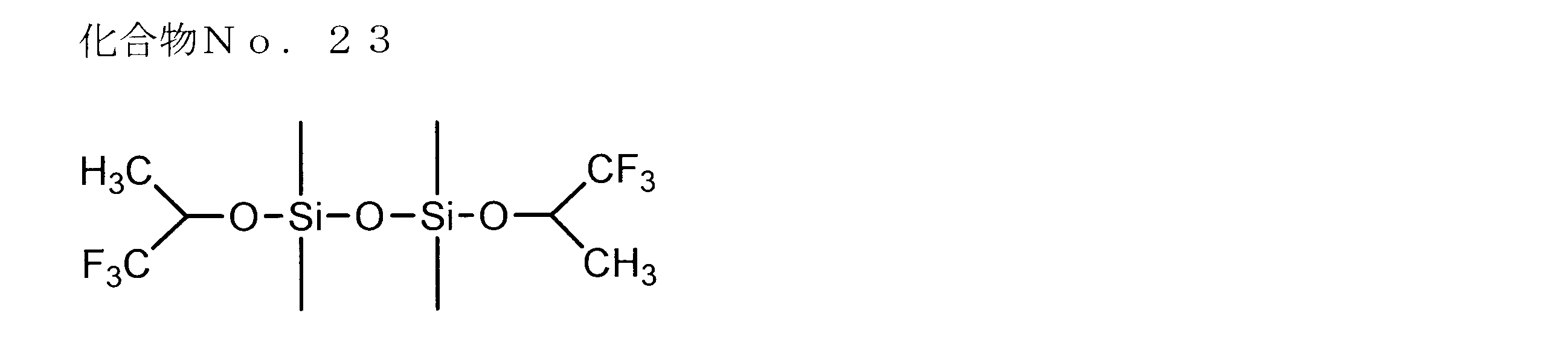
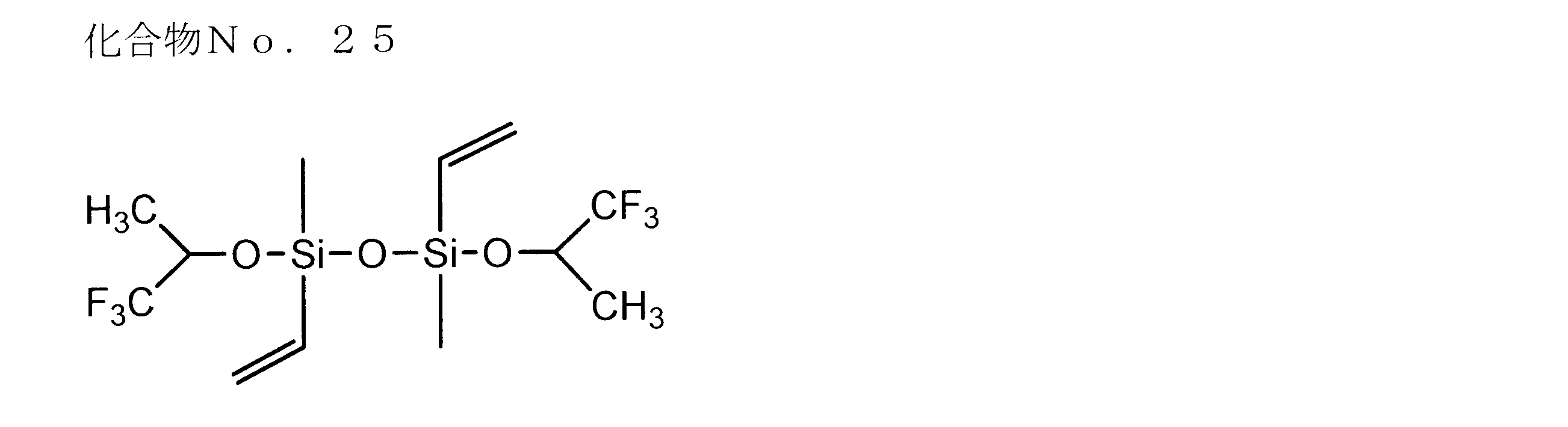
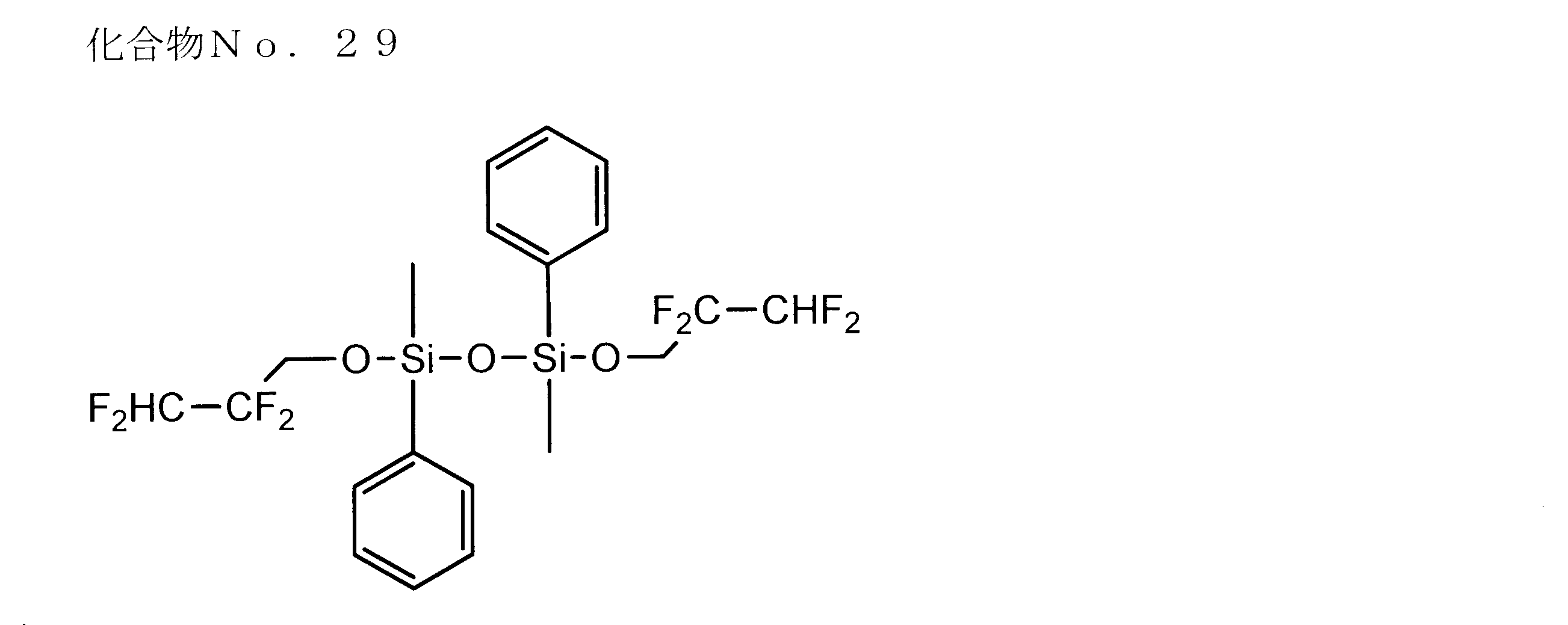
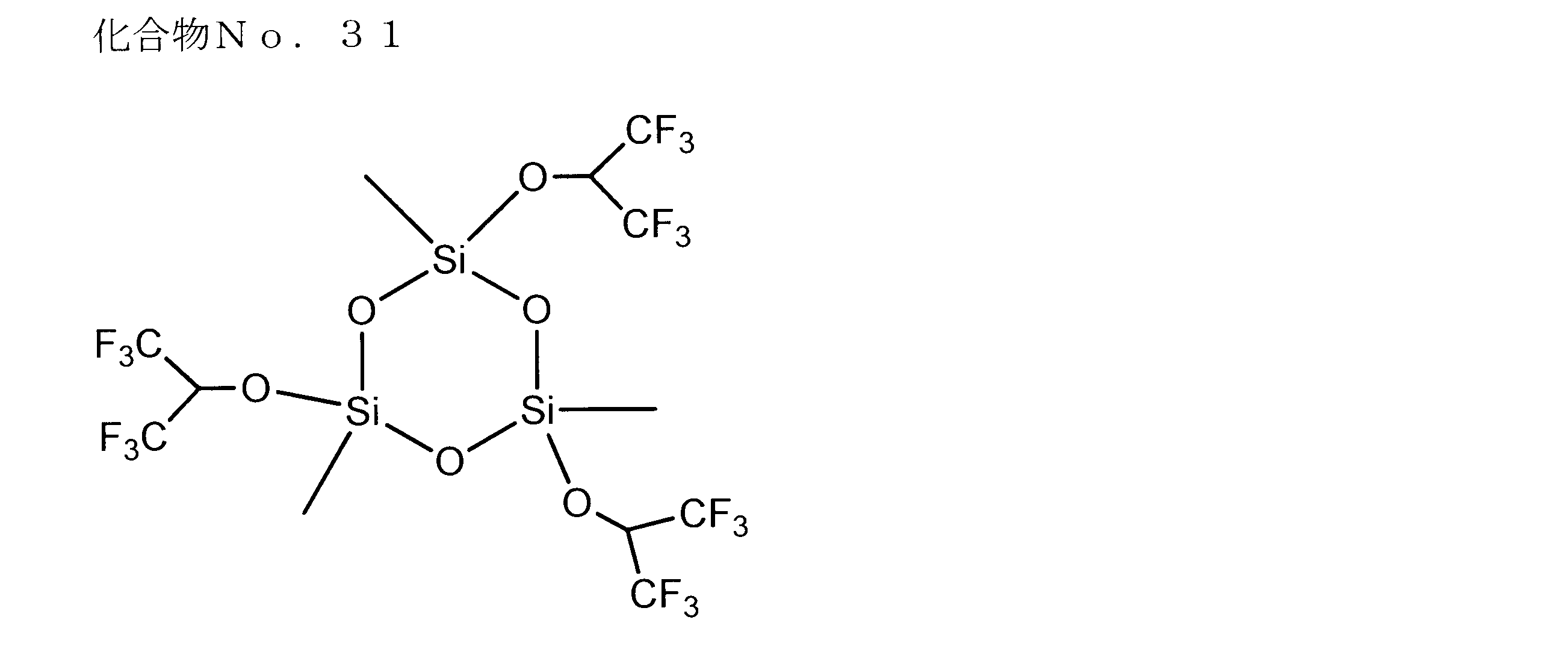
- At least one fluorine-containing alkoxy group-containing siloxane compound represented by the general formula (3) or the general formula (4) is particularly preferable.
- R 9 , R 10 and R 15 are independently selected from alkyl groups, alkenyl groups, alkynyl groups and aryl groups containing at least one fluorine atom. These groups may have an oxygen atom.
- R 11 to R 14 and R 16 each independently represent a group selected from an alkyl group, an alkoxy group, an alkenyl group, an alkenyloxy group, an alkynyl group, an alkynyloxy group, an aryl group, and an aryloxy group; These groups may have a fluorine atom and an oxygen atom.
- N represents an integer of 1 to 10. When n is 2 or more, the plurality of R 13 , R 14 , R 15 or R 16 may be the same as or different from each other. ]
- alkyl groups alkoxy groups, alkenyl groups, alkenyloxy groups, alkynyl groups, and alkynyloxy groups
- it is usually 1 to 6 in view of the availability of raw materials.
- a group having 1 to 3 carbon atoms can be preferably used.
- a branched chain or cyclic structure can also be used.
- an unsubstituted phenyl group is preferable from the viewpoint of availability, but an “alkyl group, alkoxy group, alkenyl group” may be present at any position of the phenyl group.
- “when these groups have a fluorine atom” specifically refers to those in which H atoms in these groups are substituted with F atoms.
- “when these groups have an oxygen atom” specifically includes groups in which “—O—” (ether bond) is interposed between carbon atoms of these groups.
- the solutes include lithium hexafluorophosphate (LiPF 6 ), lithium tetrafluoroborate (LiBF 4 ), bis (trifluoromethanesulfonyl) imidolithium (LiN (CF 3 SO 2 ) 2 ), bis (fluorosulfonyl).
- Imidolithium LiN (FSO 2 ) 2
- bis (pentafluoroethanesulfonyl) imide lithium LiN (C 2 F 5 SO 2 ) 2
- lithium difluorophosphate LiPO 2 F 2
- bis (oxalato) boro It is preferably at least one solute selected from the group consisting of lithium acid (LiB (C 2 O 4 ) 2 ).
- the non-aqueous solvent is at least one non-aqueous solvent selected from the group consisting of cyclic carbonates, chain carbonates, cyclic esters, chain esters, cyclic ethers, chain ethers, sulfones or sulfoxide compounds, and ionic liquids. It is preferable that
- the present invention also provides a nonaqueous electrolyte battery comprising at least a positive electrode, a negative electrode, and an electrolyte for a nonaqueous electrolyte battery, wherein the electrolyte for a nonaqueous electrolyte battery is the nonaqueous electrolyte battery described above.
- the present invention provides a non-aqueous electrolyte battery characterized by being an electrolyte solution for use.
- a nonaqueous electrolytic solution to which at least one compound selected from the group consisting of lithium difluoro (bis (oxalato)) phosphate, lithium tetrafluoro (oxalato) phosphate, and lithium difluoro (oxalato) borate is added
- the free acid concentration after the preparation of the electrolyte can be reduced, and the non-aqueous electrolyte battery using the electrolyte for a non-aqueous electrolyte battery can suppress an initial decrease in electric capacity. There is an effect.
- the non-aqueous electrolyte battery having the above-mentioned configuration shows an excellent tendency in storage stability (capacity maintenance ratio after a long time), low-temperature characteristics, etc. in addition to the improvement of the initial characteristics as described above. As an excellent balance of performance.
- a specific “fluorinated alkoxy group-containing siloxane” is used as the siloxane compound, the remaining ratio of the siloxane compound after a long period of time is further markedly improved. As a result, the storage stability of the non-aqueous electrolyte is increased. Has the effect of further increasing.
- the non-aqueous electrolyte battery electrolyte of the present invention is a non-aqueous electrolyte battery non-aqueous electrolyte solution containing a non-aqueous solvent and a solute.
- the first compound lithium difluoro (bis (oxalato)) phosphate, tetra
- the alkyl group and alkoxy group represented by R 1 to R 8 include methyl, ethyl, propyl, isopropyl, butyl, sec-butyl, tert-butyl, and pentyl. Examples thereof include an alkyl group having 1 to 12 carbon atoms such as an alkoxy group derived from these groups.
- Examples of the alkenyl group and alkenyloxy group include alkenyl groups having 2 to 8 carbon atoms such as vinyl, allyl, 1-propenyl, isopropenyl, 2-butenyl, 1,3-butadienyl, and alkenyloxy derived from these groups. Groups.
- alkynyl group and alkynyloxy group examples include alkynyl groups having 2 to 8 carbon atoms such as ethynyl, 2-propynyl, 1,1-dimethyl-2-propynyl, and alkynyloxy groups derived from these groups.
- aryl group and aryloxy group examples include aryl groups having 6 to 12 carbon atoms such as phenyl, tolyl and xylyl, and aryloxy groups derived from these groups.
- the above group may have a fluorine atom and an oxygen atom.
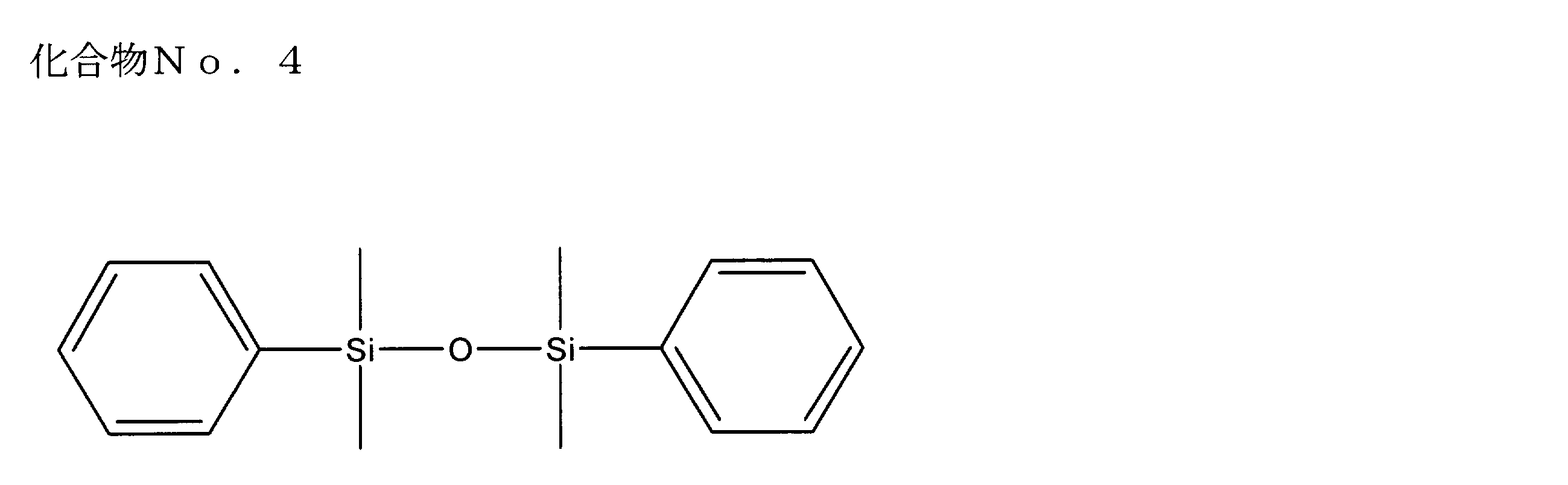
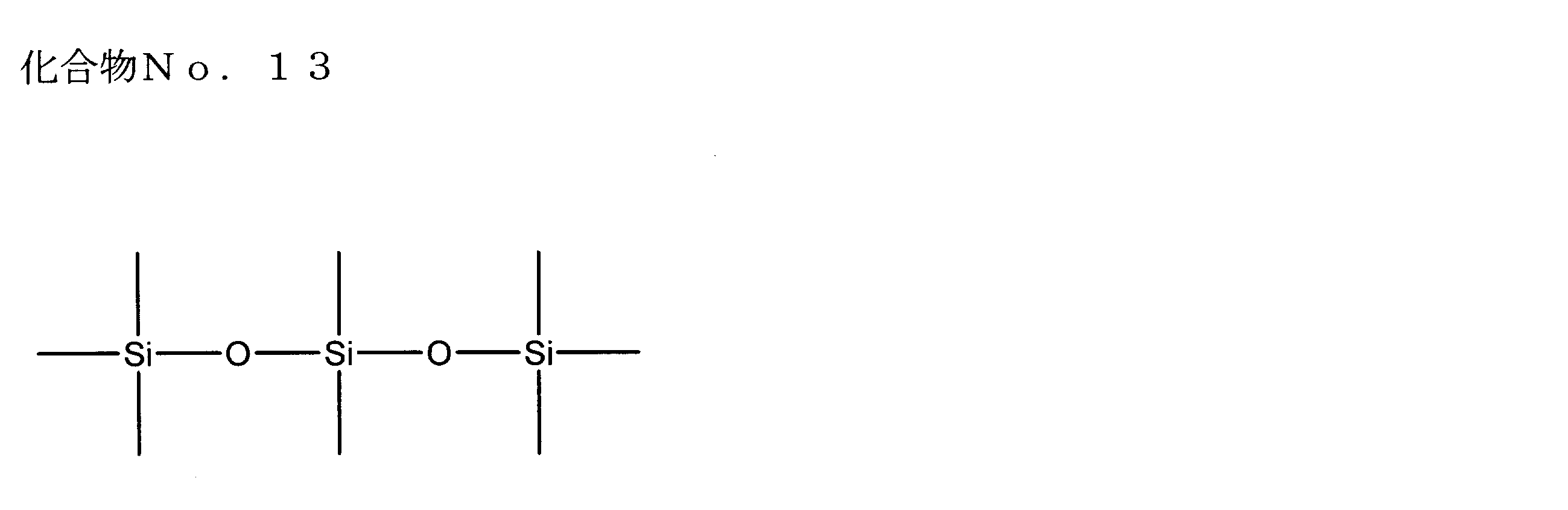
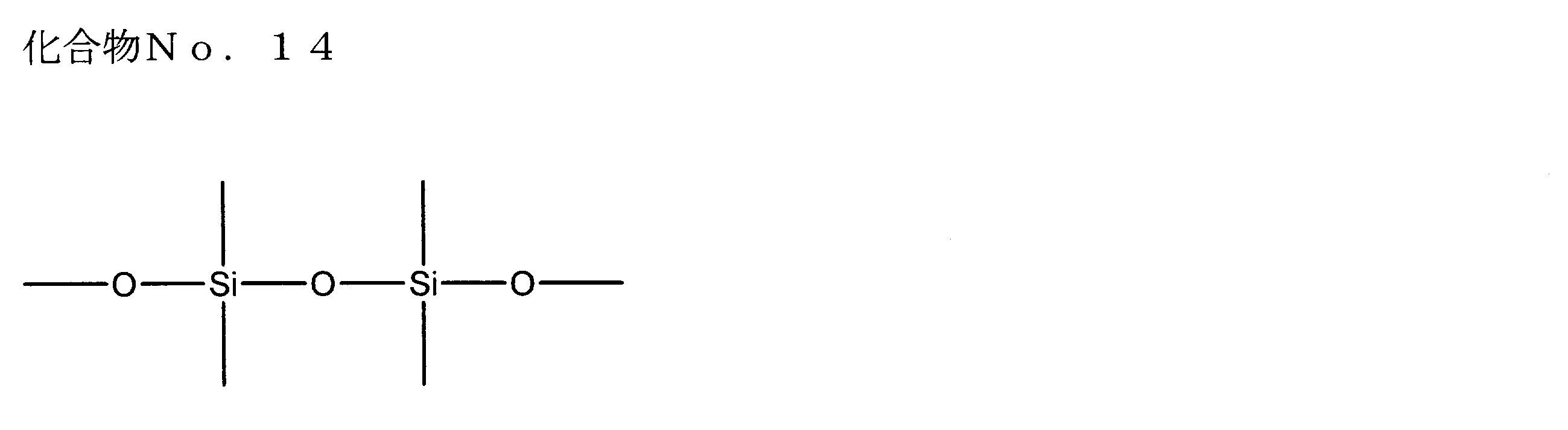
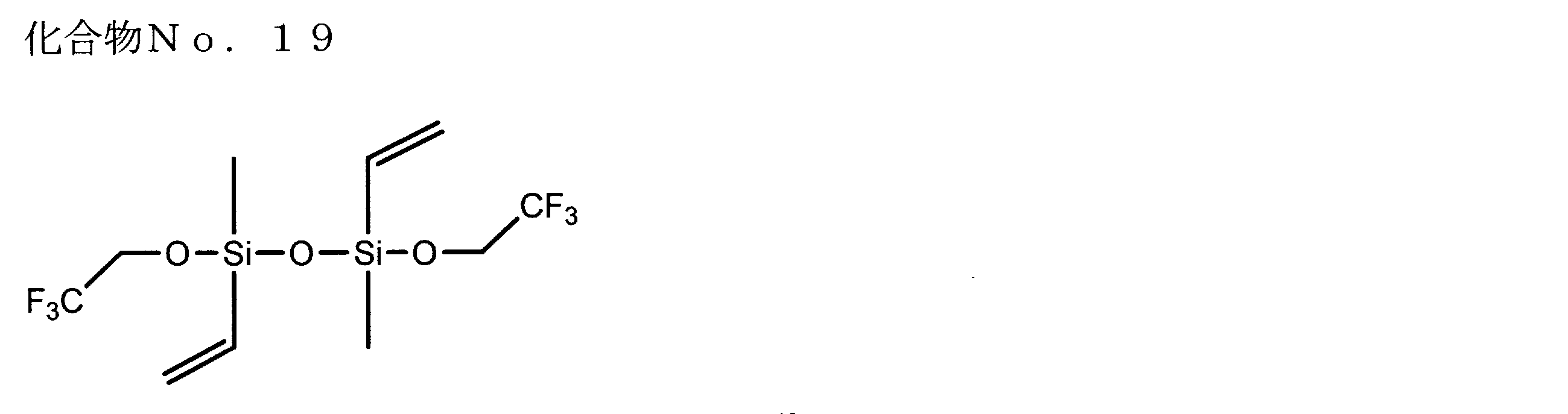
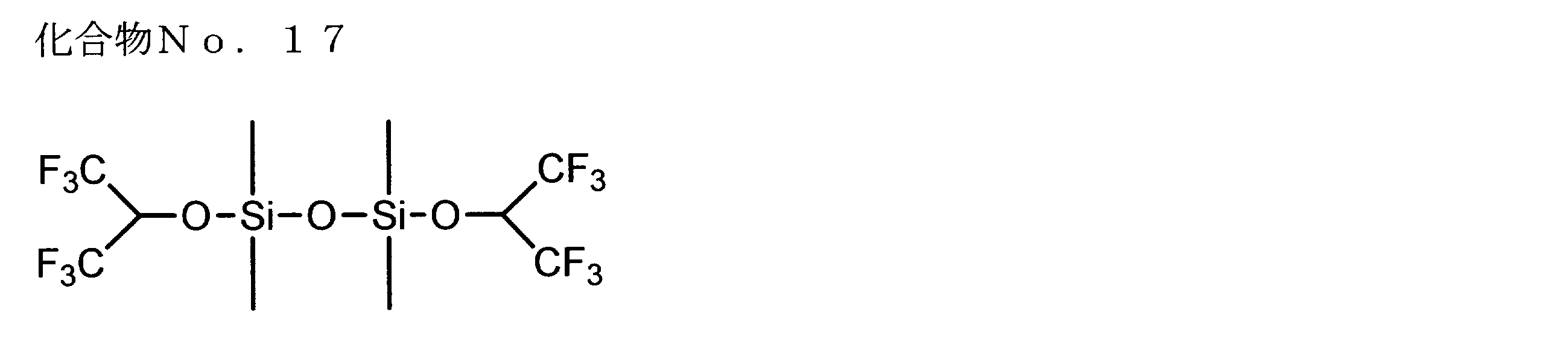
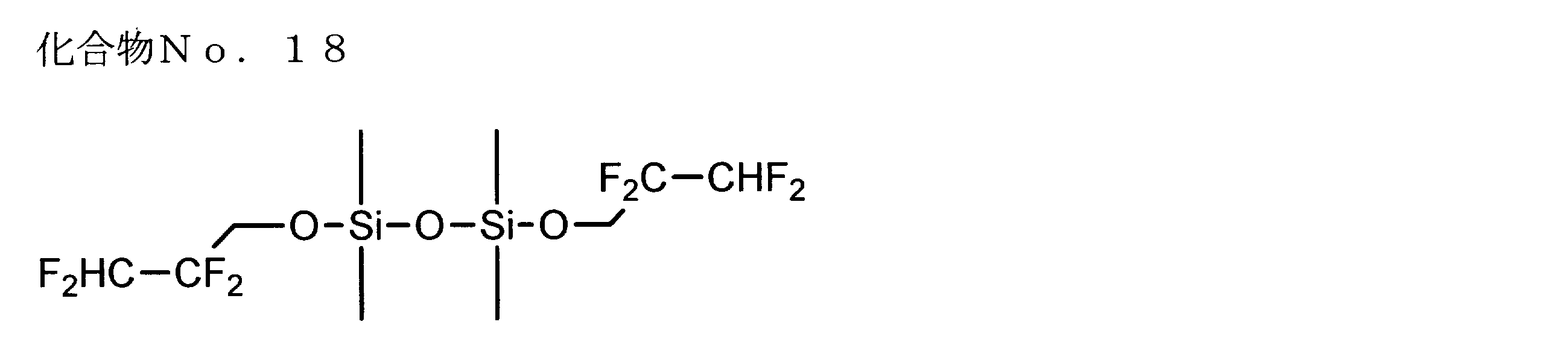
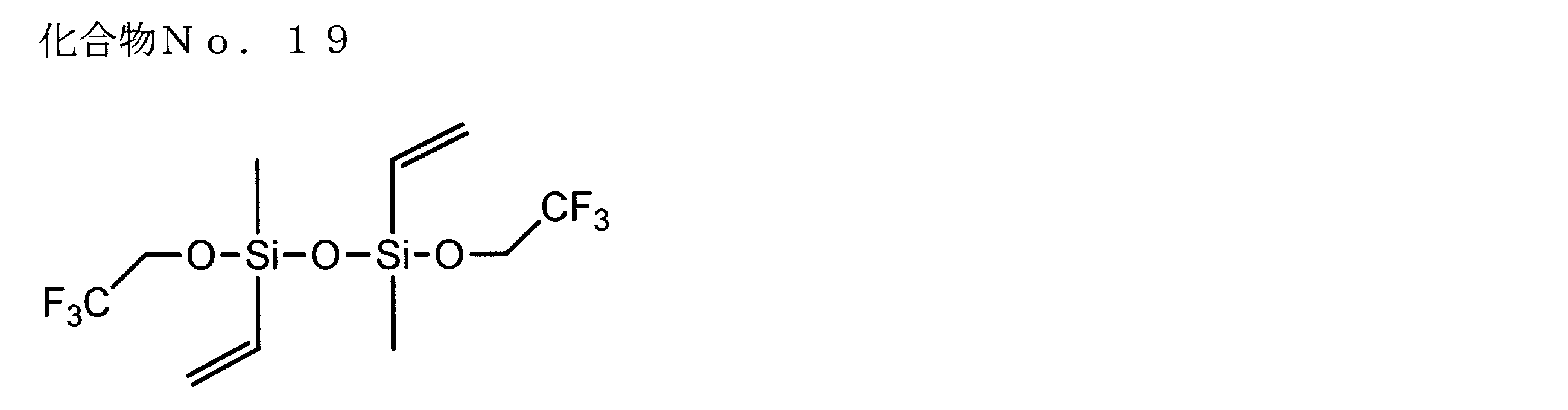
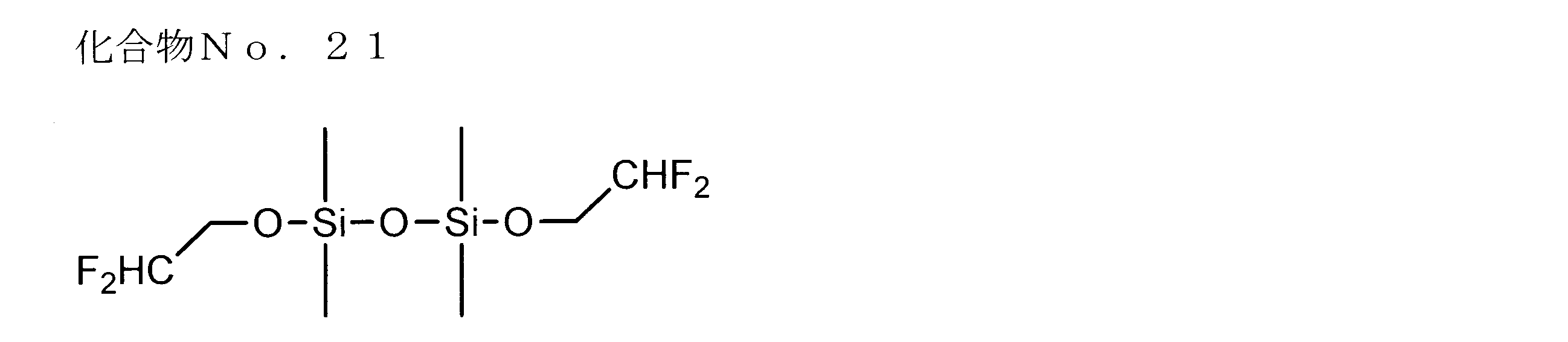
- examples of the siloxane compound represented by the general formula (1) or the general formula (2) include the following compound Nos. 1-No. 20 etc. are mentioned.
- the siloxane compound used in the present invention is not limited by the following examples.
- the groups represented by R 1 to R 6 in the general formula (1) and the groups represented by R 7 to R 8 in the general formula (2) are alkenyl groups such as vinyl groups and ethynyl.
- a group containing no polymerizable functional group such as an alkynyl group including a group is preferred. If the group contains a polymerizable functional group, the resistance when a film is formed on the electrode tends to be relatively large.
- the group represented by R 1 to R 6 in the general formula (1) and the group represented by R 7 to R 8 in the general formula (2) are alkyl groups, the resistance tends to be smaller.
- a group selected from a methyl group, an ethyl group, and a propyl group is preferable because a nonaqueous electrolyte battery having better cycle characteristics and low temperature characteristics can be obtained.
- the fluorine-containing alkoxy group-containing siloxane represented by the general formulas (3) and (4) in addition to the improvement of the battery characteristics described above, the residual rate of the siloxane compound after a long time has passed.
- the inventors have found that a significant improvement is seen. As a result, it was found that the storage stability of the non-aqueous electrolyte was further increased, and the capacity retention rate after a long charge / discharge cycle was further increased (increase in internal resistance was suppressed).
- alkyl group, alkoxy group, alkenyl group, alkenyloxy group, alkynyl group, alkynyloxy group the number of carbon atoms is usually 1 to 6
- at least one of the H atoms is Examples include groups in which F atoms are replaced. All H atoms may be replaced with F atoms, but this is not necessary, and a group in which a part of F atoms are replaced with F atoms is also preferably employed.
- fluorinated alkoxy groups include 2,2-difluoroethoxy group, 2,2,2-trifluoroethoxy group, 2,2,3,3-tetrafluoropropoxy group, 2,2,3, 3,3-pentafluoropropoxy group, 1,1,1-trifluoroisopropoxy group, 1,1,1,3,3,3-hexafluoroisopropoxy group, especially 2,2-difluoroethoxy group 2,2,2-trifluoroethoxy group, 2,2,3,3-tetrafluoropropoxy group and 1,1,1,3,3,3-hexafluoroisopropoxy group are preferable.
- the difluoro (bis (oxalato)) lithium phosphate, tetrafluoro (oxalato) lithium phosphate, and difluoro (oxalato) lithium borate compounds used as the first compound are all decomposed on the positive electrode and the negative electrode.
- a film having good lithium ion conductivity is formed on the positive electrode and negative electrode surfaces. This film suppresses direct contact between the non-aqueous solvent or solute and the active material, prevents decomposition of the non-aqueous solvent or solute, and suppresses deterioration of battery performance.
- the siloxane compound used as the second compound also has an effect of forming a stable film on the surfaces of the positive electrode and the negative electrode and suppressing deterioration of the battery.
- the initial electric capacity is improved as compared with the case where the first compound is added alone.
- the coexistence of the first compound and the second compound forms a film having a good mixed composition of the first compound and the second compound. It is presumed that the reaction is suppressed, or the side reaction of the first compound is suppressed by covering the surface of the film formed by the first compound with the film formed by the second compound.
- the film formed from the first compound and the second compound has good lithium ion conductivity and excellent durability as compared with the film formed by each, and as a result, each film cannot be achieved alone. It is estimated that the improvement of the cycle characteristics and low temperature characteristics of the battery is achieved.
- the inclusion of the second compound in the electrolytic solution tends to reduce the free acid concentration in the electrolytic solution, and as a result, an electrolytic solution having a reduced free acid concentration is obtained, which is preferable. .
- the addition amount of the first compound is 0.01% by mass or more, preferably 0.05% by mass or more, more preferably 0.1% by mass or more, with respect to the total amount of the non-aqueous electrolyte, and the upper limit is 5.0 mass% or less, preferably 4 mass% or less, more preferably 3 mass% or less. If the added amount is less than 0.01% by mass, it is not preferable because it is difficult to improve the cycle characteristics of the nonaqueous electrolyte battery using the nonaqueous electrolyte and to suppress the increase in internal resistance.
- the addition amount exceeds 5.0% by mass
- the excess first compound that is not used for film formation tends to generate gas due to a decomposition reaction other than the film formation reaction, and the battery swells or performance deteriorates. It is not preferable because it is easy to cause.
- These first compounds may be used alone as long as they do not exceed 5.0% by mass, or two or more of them may be used in any combination and ratio according to the application. good.
- the addition amount of the second compound is 0.01% by mass or more, preferably 0.05% by mass or more, more preferably 0.1% by mass or more, with respect to the total amount of the non-aqueous electrolyte, and the upper limit is 5.0 mass% or less, preferably 4 mass% or less, more preferably 3 mass% or less. If the amount added is less than 0.01% by mass, the effect of improving the electric capacity of a non-aqueous electrolyte battery using the non-aqueous electrolyte is not sufficiently obtained, which is not preferable.
- addition amount exceeds 5.0% by mass
- These second compounds may be used alone as long as they do not exceed 5.0% by mass, or two or more kinds may be used in any combination and ratio according to the application. good.
- the type of the non-aqueous solvent used in the non-aqueous electrolyte battery electrolyte of the present invention is not particularly limited, and any non-aqueous solvent can be used.
- Specific examples include cyclic carbonates such as propylene carbonate, ethylene carbonate and butylene carbonate, chain carbonates such as diethyl carbonate, dimethyl carbonate and ethyl methyl carbonate, cyclic esters such as ⁇ -butyrolactone and ⁇ -valerolactone, methyl acetate, propion
- chain esters such as methyl acid, cyclic ethers such as tetrahydrofuran, 2-methyltetrahydrofuran and dioxane, chain ethers such as dimethoxyethane and diethyl ether, sulfones such as dimethyl sulfoxide and sulfolane, and sulfoxide compounds.
- an ionic liquid etc. can be mentioned although a category differs from an aqueous solvent.
- the nonaqueous solvent used for this invention may be used individually by 1 type, and may mix and use two or more types by arbitrary combinations and a ratio according to a use.
- propylene carbonate, ethylene carbonate, diethyl carbonate, dimethyl carbonate, and ethyl methyl carbonate are particularly preferable from the viewpoint of electrochemical stability to redox and chemical stability related to the reaction with heat and the solute. .
- the kind of the said solute used for the electrolyte solution for nonaqueous electrolyte batteries of this invention is not specifically limited, Lithium salt etc. containing arbitrary fluorine can be used. Specific examples include LiPF 6 , LiBF 4 , LiClO 4 , LiAsF 6 , LiSbF 6 , LiCF 3 SO 3 , LiN (CF 3 SO 2 ) 2 , LiN (FSO 2 ) 2 , LiN (C 2 F 5 SO 2 ).
- LiPO 2 F 2 LiN (CF 3 SO 2 ) (C 4 F 9 SO 2 ), LiC (CF 3 SO 2 ) 3 , LiPF 3 (C 3 F 7 ) 3 , LiB (CF 3 ) 4 , LiBF 3 (C 2 F 5 ), electrolyte lithium salts represented by LiPO 2 F 2 and the like.
- One kind of these solutes may be used alone, or two or more kinds of solutes may be mixed and used in any combination and ratio according to the application. Among these, considering the energy density, output characteristics, life, etc.
- LiPF 6 LiBF 4 , LiN (CF 3 SO 2 ) 2 , LiN (FSO 2 ) 2 , LiN (C 2 F 5 SO 2 ) 2 , LiPO 2 F 2 is preferred.
- LiPF 6 lithium hexafluorophosphate
- LiPF 6 lithium hexafluorophosphate
- the concentration of these solutes is not particularly limited, but the lower limit is 0.5 mol / L or more, preferably 0.7 mol / L or more, more preferably 0.9 mol / L or more, and the upper limit is 2.5 mol / L. / L or less, preferably 2.0 mol / L or less, more preferably 1.5 mol / L or less. If the concentration is less than 0.5 mol / L, the ionic conductivity tends to decrease and the cycle characteristics and output characteristics of the nonaqueous electrolyte battery tend to decrease. On the other hand, if the concentration exceeds 2.5 mol / L, the nonaqueous electrolyte battery is used. When the viscosity of the electrolytic solution increases, the ionic conductivity also tends to be lowered, and the cycle characteristics and output characteristics of the nonaqueous electrolytic battery may be lowered.
- the temperature of the non-aqueous electrolyte may increase due to the heat of dissolution of the solute.
- the liquid temperature rises remarkably decomposition of the lithium salt containing fluorine is promoted and hydrogen fluoride may be generated.
- Hydrogen fluoride is not preferable because it causes deterioration of battery performance.
- the temperature of the nonaqueous electrolytic solution when the solute is dissolved in the nonaqueous solvent is not particularly limited, but is preferably ⁇ 20 to 80 ° C., more preferably 0 to 60 ° C.
- the electrolyte solution for a non-aqueous electrolyte battery of the present invention is generally used as long as the gist of the present invention is not impaired.
- non-aqueous electrolyte battery electrolyte in a quasi-solid state with a gelling agent or a crosslinked polymer as used in a non-aqueous electrolyte battery called a lithium polymer battery.
- the non-aqueous electrolyte battery according to the present invention is characterized by using the above-described electrolyte for a non-aqueous electrolyte battery according to the present invention, and the other components are those used in general non-aqueous electrolyte batteries. Is used. That is, it comprises a positive electrode and a negative electrode capable of inserting and extracting lithium, a current collector, a separator, a container, and the like.
- the negative electrode material is not particularly limited, but lithium metal, alloys of lithium and other metals or intermetallic compounds, various carbon materials, artificial graphite, natural graphite, metal oxides, metal nitrides, tin (single), A tin compound, silicon (simple substance), a silicon compound, activated carbon, a conductive polymer, or the like is used.
- the positive electrode material is not particularly limited.
- lithium-containing transition metal composite oxides such as LiCoO 2 , LiNiO 2 , LiMnO 2 , LiMn 2 O 4 , and lithium-containing transition metals A composite oxide in which a plurality of transition metals such as Co, Mn, Ni, etc.
- transition metal in the lithium-containing transition metal composite oxide is replaced with a metal other than the transition metal, olivine and LiFePO 4, LiCoPO 4, phosphoric acid compound of a transition metal such as LiMnPO 4 called, oxides such as TiO 2, V 2 O 5, MoO 3, TiS 2, sulfides such as FeS, or polyacetylene, polyparaphenylene, polyaniline , And conductive polymers such as polypyrrole, activated carbon, polymers that generate radicals, carbon materials, etc. It is use.
- acetylene black, ketjen black, carbon fiber, graphite as a conductive material, polytetrafluoroethylene, polyvinylidene fluoride, SBR resin, etc. as a binder to the positive electrode or negative electrode material, and forming into a sheet shape It can be an electrode sheet.
- a separator for preventing contact between the positive electrode and the negative electrode a nonwoven fabric or a porous sheet made of polypropylene, polyethylene, paper, glass fiber, or the like is used.
- a non-aqueous electrolyte battery having a coin shape, cylindrical shape, square shape, aluminum laminate sheet shape or the like is assembled from the above elements.
- Example 1-1 Using a mixed solvent of ethylene carbonate and ethyl methyl carbonate in a volume ratio of 1: 2 as a non-aqueous solvent, LiPF 6 is 1.0 mol / L as a solute in the solvent, and difluoro (bis (oxalato)) phosphorus as a first compound. 0.01% by mass of lithium acid and the compound No. 2 as the second compound. 1 was dissolved in an amount of 1% by mass, and an electrolyte solution for a non-aqueous electrolyte battery was prepared as shown in Table 1. In addition, said preparation was performed maintaining the temperature of electrolyte solution at 25 degreeC. The concentration of the free acid in the electrolytic solution 1 hour after the preparation was 54 mass ppm, and the concentration of the free acid in the electrolytic solution 24 hours after the preparation was 2 mass ppm. The free acid was measured by titration.
- a cell was prepared using LiCoO 2 as a positive electrode material and graphite as a negative electrode material, and the initial electric capacity, cycle characteristics, internal resistance characteristics and low temperature characteristics of the battery were actually evaluated.
- the test cell was prepared as follows.
- LiCoO 2 powder 90% by mass of LiCoO 2 powder was mixed with 5% by mass of 5% by mass of polyvinylidene fluoride (PVDF) as a binder and 5% by mass of acetylene black as a conductive material, and further N-methylpyrrolidone was added to form a paste.
- the paste was applied on an aluminum foil and dried to obtain a test positive electrode body.
- 90% by mass of graphite powder was mixed with 10% by mass of polyvinylidene fluoride (PVDF) as a binder, and N-methylpyrrolidone was further added to form a slurry. This slurry was applied on a copper foil and dried at 150 ° C. for 12 hours to obtain a test negative electrode body. Then, an electrolytic solution was immersed in a polyethylene separator to assemble a 50 mAh cell with an aluminum laminate exterior.
- Example 1-1 an electrolyte solution for a non-aqueous electrolyte battery was prepared by changing the types and addition amounts of the first compound and the second compound. Using this nonaqueous electrolytic solution, a cell was prepared in the same manner as in Example 1-1, and the battery was evaluated.
- Table 1 shows the preparation conditions of the non-aqueous electrolyte, the concentration of free acid in the electrolyte 1 hour and 24 hours after the preparation, and Table 2 shows the evaluation results of the battery using the electrolyte.
- the swelling of the laminate cell after the cycle test is larger than those in Examples 1-1 to 1-13, and the amount of gas generated inside the battery is relatively large. It was confirmed.
- the battery characteristics of the cells of Examples 1-15 and 1-16 were superior to those of the cell of Comparative Example 1-1. However, because of the effect of gas generation, the cells of Examples 1-1 to 1-13 The battery performance was not obtained.
- the electrolytic solution of Comparative Example 1-6 was prepared in the same manner as in Example 1-1, except that neither the first compound nor the second compound was added.
- Table 1 shows the preparation conditions of the non-aqueous electrolyte, the concentration of free acid in the electrolyte 1 hour and 24 hours after the preparation, and Table 2 shows the evaluation results of the battery using the electrolyte.
- Examples 1-38 to 1-33, Comparative Examples 1-7 to 1-10 The negative electrode body used in Example 1-1 was changed, and non-aqueous electrolyte No. 1 was used as the electrolyte for non-aqueous electrolyte batteries. Using 1-8, 1-20, 1-32, 1-38, or 1-42, the initial electric capacity, cycle characteristics, internal resistance characteristics, and low-temperature characteristics of the battery were evaluated in the same manner as in Example 1-1. did. In Examples 1-38 to 1-40 and Comparative Examples 1-7 to 1-8 in which the negative electrode active material was Li 4 Ti 5 O 12 , the negative electrode body was 90% by mass of Li 4 Ti 5 O 12 powder.
- the negative electrode active material is silicon (simple substance)
- the negative electrode body is composed of 80% by mass of silicon powder and 5% by mass as a binder.
- PVDF Polyvinylidene fluoride
- acetylene black as a conductive material
- N-methylpyrrolidone is added, and the resulting paste is applied on a copper foil and dried to evaluate the battery.
- the end-of-charge voltage and end-of-discharge voltage were the same as in Example 1-1.
- Table 3 shows the initial electric capacity, cycle characteristics, internal resistance characteristics, and low temperature characteristics of the battery.
- Examples 2-1 to 2-9, Comparative Examples 2-1 to 2-6 The positive electrode body and the negative electrode body used in Example 1-1 were changed, and the nonaqueous electrolyte solution No. 1 was used as the electrolyte solution for the nonaqueous electrolyte battery. Using 1-8, 1-20, 1-32, 1-38, or 1-42, the initial electric capacity, cycle characteristics, internal resistance characteristics, and low-temperature characteristics of the battery were evaluated in the same manner as in Example 1-1. did.
- the positive electrode body whose positive electrode active material is LiNi 1/3 Co 1/3 Mn 1/3 O 2 is 5% by mass as a binder in 90% by mass of LiNi 1/3 Co 1/3 Mn 1/3 O 2 powder.
- Example 1-1 in Examples 2-1 to 2-3 and Comparative Examples 2-1 to 2-2 in which the negative electrode active material is graphite, the end-of-charge voltage during battery evaluation was 4.3 V, The final discharge voltage was 3.0V.
- Example 1-41 in Examples 2-7 to 2-9 and Comparative Examples 2-5 to 2-6 in which the negative electrode active material is silicon (simple substance), the end-of-charge voltage during battery evaluation was 4 .3V and the discharge end voltage were set to 3.0V.
- Table 3 shows the initial electric capacity, cycle characteristics, internal resistance characteristics, and low temperature characteristics of the battery.
- Examples 3-1 to 3-6, Comparative examples 3-1 to 3-4 The positive electrode body and the negative electrode body used in Example 1-1 were changed, and the nonaqueous electrolyte solution No. 1 was used as the electrolyte solution for the nonaqueous electrolyte battery. Using 1-8, 1-20, 1-32, 1-38, or 1-42, the initial electric capacity, cycle characteristics, internal resistance characteristics, and low-temperature characteristics of the battery were evaluated in the same manner as in Example 1-1. did.
- the positive electrode body in which the positive electrode active material is LiMn 1.95 Al 0.05 O 4 is 90% by mass of LiMn 1.95 Al 0.05 O 4 powder, 5% by mass of polyvinylidene fluoride (PVDF) as a binder, and 5% of acetylene black as a conductive material. %, Further N-methylpyrrolidone was added, and the resulting paste was applied on an aluminum foil and dried.
- the negative electrode active material is graphite as in Example 1-1
- the charge end voltage and the discharge end voltage at the time of battery evaluation are The same as Example 1-1.
- Example 3-4 to 3-6 and Comparative Examples 3-3 to 3-4 in which the negative electrode active material is Li 4 Ti 5 O 12 as in Example 1-38 the end-of-charge voltage at the time of battery evaluation was 2.7 V, and the final discharge voltage was 1.5 V.
- Table 3 shows the initial electric capacity, cycle characteristics, internal resistance characteristics, and low temperature characteristics of the battery.
- Examples 4-1 to 4-3, Comparative Examples 4-1 to 4-2 The positive electrode used in Example 1-1 was changed, and non-aqueous electrolyte No. 1 was used as the electrolyte for non-aqueous electrolyte batteries. Using 1-8, 1-20, 1-32, 1-38, or 1-42, the initial electric capacity, cycle characteristics, internal resistance characteristics, and low-temperature characteristics of the battery were evaluated in the same manner as in Example 1-1. did.
- the positive electrode body in which the positive electrode active material is LiFePO 4 is obtained by adding 90% by mass of LiFePO 4 powder coated with amorphous carbon to 5% by mass of polyvinylidene fluoride (PVDF) as a binder and 5% by mass of acetylene black as a conductive material. %, And further, N-methylpyrrolidone was added, and the resulting paste was applied on an aluminum foil and dried to produce a charge end voltage of 3.6 V and a discharge end voltage of battery evaluation. 2.0V. Table 3 shows the initial electric capacity, cycle characteristics, internal resistance characteristics, and low temperature characteristics of the battery.
- PVDF polyvinylidene fluoride
- the non-aqueous electrolysis of the present invention Confirmed that the initial electric capacity, cycle characteristics, internal resistance characteristics, and low-temperature characteristics of laminate cells using electrolytes for liquid batteries show generally superior trends compared to the corresponding comparative examples. It was done. Therefore, by using the electrolyte for a non-aqueous electrolyte battery of the present invention, an excellent initial electric capacity is given regardless of the type of the positive electrode active material, and physical properties such as cycle characteristics, internal resistance characteristics, and low temperature characteristics are given. It was shown that an excellent nonaqueous electrolyte battery can be obtained.
- the laminate cell using the electrolyte solution for non-aqueous electrolyte battery of the present invention was used. It was confirmed that the initial electric capacity, cycle characteristics, internal resistance characteristics, and low temperature characteristics were generally superior to the corresponding comparative examples. Therefore, by using the electrolyte for a non-aqueous electrolyte battery of the present invention, excellent initial electric capacity is provided regardless of the type of the negative electrode active material, and physical properties such as cycle characteristics, internal resistance characteristics, and low temperature characteristics are given. It was shown that an excellent nonaqueous electrolyte battery can be obtained.
- Examples 1-44, 1-45 As the second compound, the compound No. 1 was used. 16, no. A nonaqueous electrolyte battery electrolyte was prepared in the same manner as in Example 1-6 except that each of 17 was used, a cell was prepared, and the battery was evaluated. Table 4 shows the preparation conditions of the non-aqueous electrolyte, the concentration of free acid in the electrolyte 1 hour and 24 hours after preparation, and Table 5 shows the evaluation results of the battery using the electrolyte.
- Examples 1-46 to 1-48 As the second compound, the compound No. 1 was used. 18-No. A nonaqueous electrolyte battery electrolyte was prepared in the same manner as in Example 1-7, except that 20 was used, a cell was prepared, and the battery was evaluated. Table 4 shows the preparation conditions of the non-aqueous electrolyte, the concentration of free acid in the electrolyte 1 hour and 24 hours after preparation, and Table 5 shows the evaluation results of the battery using the electrolyte.
- Table 6 shows the preparation conditions of the nonaqueous electrolytic solution and the storage stability evaluation result of the electrolytic solution
- Table 7 shows the evaluation result of the battery using the electrolytic solution.
- each value of the cycle characteristics and internal resistance characteristics of the battery in Table 7 is the same as the electrolyte No. 1 after standing for 1 month after preparation. This is a relative value when the evaluation results of the initial electric capacity and internal resistance of the laminated cell produced using 10-37 are each 100.
- a mixed solvent of ethylene carbonate and ethyl methyl carbonate having a volume ratio of 1: 2 was used as the non-aqueous solvent, and 1.0 mol / L of LiPF 6 was used as the solute in the solvent, and lithium difluorobis (oxalato) phosphate as the first compound.
- Examples 10-27 to 10-36 Table 6 shows the preparation conditions of the nonaqueous electrolytic solution and the storage stability evaluation result of the electrolytic solution, and Table 7 shows the evaluation result of the battery using the electrolytic solution.
- Examples 10-26 the types and addition amounts of the first compound and the second compound were changed to prepare electrolytes for non-aqueous electrolyte batteries. Using this nonaqueous electrolytic solution, a cell was prepared in the same manner as in Example 10-26, and the battery was evaluated.
- Table 6 shows the preparation conditions of the nonaqueous electrolytic solution and the storage stability evaluation result of the electrolytic solution
- Table 7 shows the evaluation result of the battery using the electrolytic solution.
- the electrolytic solution of Comparative Example 10-1 was prepared in the same manner as in Example 10-26, except that neither the first compound nor the second compound was added.
- the electrolytic solution of Comparative Example 10-2 was the same as Example 10-26 except that 1% by mass of the first compound, lithium difluorobis (oxalato) phosphate, was dissolved without adding the second compound. Prepared similarly.
- the electrolytes of Reference Examples 10-3 to 10-6 were siloxane compound No. 2 as the second compound. 1, no. 2 or the following alkoxy group-containing siloxane No. Prepared in the same manner as in Examples 10 to 26 except that 32% was added in an amount of 0.5% by mass or 1% by mass, respectively.
- the residual amount of the second compound (fluorine-containing alkoxy group-containing siloxane) after standing for one month is 90% or more. It showed high storage stability in the electrolyte compared with the siloxane compound containing no fluorine-containing alkoxy group.
- the fluorine-containing alkoxy group-containing siloxane showed excellent cycle characteristics and internal resistance characteristics equal to or better than those of siloxane compounds not containing fluorine-containing alkoxy groups. .
- the battery characteristics using the electrolytic solution before standing for one month after preparation and the electrolytic solution after standing for one month are compared, the battery characteristics are compared in the case of using a siloxane compound not containing a fluorine-containing alkoxy group.
- the siloxane compound containing a fluorine-containing alkoxy group was used, there was a tendency that almost no difference was observed. Therefore, it was shown that by using the fluorine-containing alkoxy group-containing siloxane as the second compound, an excellent non-aqueous electrolyte battery that is well balanced even after standing for one month after preparation was obtained.
Landscapes
- Chemical & Material Sciences (AREA)
- Engineering & Computer Science (AREA)
- Manufacturing & Machinery (AREA)
- Chemical Kinetics & Catalysis (AREA)
- Electrochemistry (AREA)
- General Chemical & Material Sciences (AREA)
- Physics & Mathematics (AREA)
- Condensed Matter Physics & Semiconductors (AREA)
- General Physics & Mathematics (AREA)
- Inorganic Chemistry (AREA)
- Secondary Cells (AREA)
Description
本発明は、ジフルオロ(ビス(オキサラト))リン酸リチウム、テトラフルオロ(オキサラト)リン酸リチウム、ジフルオロ(オキサラト)ホウ酸リチウムからなる群から選ばれた少なくとも一つの化合物が添加された非水電解液電池用電解液であっても、該電解液を非水電解液電池に用いた場合に、サイクル特性の向上、内部抵抗の上昇を抑制する効果、低温特性の向上等を損なわないで、初期の電気容量が増大した非水電解液電池用電解液、及びこれを用いた非水電解液電池を提供するものである。
そして、この遊離酸の抑制効果に恐らく起因して、該電解液を非水電解液電池に用いた非水電解液電池は、初期の電気容量の低下が抑制できることが分かった。
該構成を有する非水電解液電池は、このような初期特性の向上の他に、保存安定性(長時間経過後の容量の維持率)の向上、サイクル特性の向上、内部抵抗の上昇を抑制する効果、若しくは、低温特性の向上、等の傾向も示し、電池全体として優れた性能を発揮することが判った。
このように、発明者らは、優れた物性を示す非水電解液電池用電解液、及びこれを用いた非水電解液電池を見出し、本発明を完成した。

アリール基、アリールオキシ基の「アリール」部位としては、無置換のフェニル基が、入手の容易性の観点から好適であるが、該フェニル基の任意の位置に「アルキル基、アルコキシ基、アルケニル基、アルケニルオキシ基、アルキニル基、アルキニルオキシ基(炭素数に制限はないが、典型的な炭素数は1~6)」から選ばれた基が置換したものも用いることができる。
なお「これらの基がフッ素原子を有する場合」とは、具体的にはこれらの基におけるH原子がF原子に置換されたものを指す。
また「これらの基が酸素原子を有する場合」とは、具体的にはこれらの基の炭素原子の間に「-O-」(エーテル結合)が介在する基が挙げられる。

アリール基、アリールオキシ基の「アリール」部位としては、無置換のフェニル基が、入手の容易性の観点から好適であるが、該フェニル基の任意の位置に「アルキル基、アルコキシ基、アルケニル基、アルケニルオキシ基、アルキニル基、アルキニルオキシ基(炭素数に制限はないが、典型的な炭素数は1~6)」から選ばれた基が置換したものも用いることができる。
なお「これらの基がフッ素原子を有する場合」とは、具体的にはこれらの基におけるH原子がF原子に置換されたものを指す。
また「これらの基が酸素原子を有する場合」とは、具体的にはこれらの基の炭素原子の間に「-O-」(エーテル結合)が介在する基が挙げられる。
また、シロキサン化合物として、特定の「含フッ素アルコキシ基含有シロキサン」を用いる場合、長時間経過後のシロキサン化合物の残存率にさらに顕著な改善が見られ、この結果、非水電解液の保存安定性は一層高まるという効果を奏する。














これらのうちでも、商業的に大量に用いられているヘキサフルオロリン酸リチウム(LiPF6)は、本発明に用いる溶質として、特に好ましいものの1つである。
非水溶媒としてエチレンカーボネートとエチルメチルカーボネートの体積比1:2の混合溶媒を用い、該溶媒中に溶質としてLiPF6を1.0mol/L、第1の化合物としてジフルオロ(ビス(オキサラト))リン酸リチウムを0.01質量%、第2の化合物として前記化合物No.1を1質量%溶解し、表1に示すように非水電解液電池用電解液を調製した。なお、上記の調製は、電解液の温度を25℃に維持しながら行った。上記の調製1時間後の電解液中の遊離酸の濃度は54質量ppmであり、調製24時間後の電解液中の遊離酸の濃度は2質量ppmであった。なお、遊離酸の測定は滴定で行った。
作成したセルを用い、電流密度0.35mA/cm2で4.2Vまで充電した後に、電流密度0.35mA/cm2で3.0Vまで放電を行い、このときの初放電容量を初期の電気容量とした。尚、測定は25℃の環境温度で行った。
上記のセルを用いて、60℃の環境温度での充放電試験を実施し、サイクル特性を評価した。充電、放電ともに電流密度0.35mA/cm2で行い、充電は、4.2Vに達した後、1時間4.2Vを維持、放電は、3.0Vまで行い、充放電サイクルを繰り返した。そして、500サイクル後の放電容量維持率でセルの劣化の具合を評価した(サイクル特性評価)。放電容量維持率は下記式で求めた。結果を表2に示す。
<500サイクル後の放電容量維持率>
放電容量維持率(%)=(500サイクル後の放電容量/初放電容量)×100
サイクル試験後のセルを25℃の環境温度で、電流密度0.35mA/cm2で4.2Vまで充電した後に、電池の内部抵抗を測定した。
-20℃の環境温度でのセルの放電容量と内部抵抗を測定した。セルの充放電は電流密度0.35mA/cm2、充電終止電圧は4.2V、放電終止電圧は3.0Vとした。


前記実施例1-1において、第1の化合物及び第2の化合物の種類、添加量をそれぞれ変えて非水電解液電池用電解液を調製した。この非水電解液を用いて実施例1-1と同様にセルを作成し、電池評価を行った。非水電解液の調製条件、調製1時間後及び24時間後の電解液中の遊離酸の濃度を表1に示し、該電解液を用いた電池の評価結果を表2に示す。なお、実施例1-15、1-16では、サイクル試験後のラミネートセルの膨れが、実施例1-1~1-13のセルに比べて大きく、電池内部でのガス発生量が比較的多いことが確認された。実施例1-15、1-16のセルの電池特性は、比較例1-1のセルに比べて優れていたが、ガス発生の影響のため、実施例1-1~1-13のセルほどの電池性能は得られなかった。
比較例1-1~1-3の電解液は、第2の化合物は添加せず、第1の化合物であるジフルオロ(ビス(オキサラト))リン酸リチウム、テトラフルオロ(オキサラト)リン酸リチウム、またはジフルオロ(オキサラト)ホウ酸リチウムを1質量%溶解すること以外は、前記実施例1-1と同様に調製した。比較例1-4~1-5の電解液は、第1の化合物は添加せず、第2の化合物として前記の化合物No.1または化合物No.2を2質量%溶解すること以外は、前記実施例1-1と同様に調製した。比較例1-6の電解液は、第1の化合物及び第2の化合物ともに添加せずに、それ以外は、前記実施例1-1と同様に調製した。非水電解液の調製条件、調製1時間後及び24時間後の電解液中の遊離酸の濃度を表1に示し、該電解液を用いた電池の評価結果を表2に示す。
「初期の充放電容量」「500サイクル後の容量維持率」「25℃における内部抵抗値」「-20℃における低温特性(放電容量、内部抵抗)」についても、「第1の化合物と第2の化合物を併用した電解液」の方が優れた傾向を示しており、本発明の構成を充足する電解液によって、バランスのとれた優れた非水電解液電池が得られることが示された。
実施例1-1で用いた負極体を変更し、非水電解液電池用電解液として、非水電解液No.1-8、1-20、1-32、1-38または1-42を用いて、実施例1-1と同様に、電池の初期の電気容量、サイクル特性、内部抵抗特性及び低温特性を評価した。なお、負極活物質がLi4Ti5O12である実施例1-38~1-40、及び比較例1-7~1-8において、負極体は、Li4Ti5O12粉末90質量%に、バインダーとして5質量%のポリフッ化ビニリデン(PVDF)、導電剤としてアセチレンブラックを5質量%混合し、さらにN-メチルピロリドンを添加し、得られたペーストを銅箔上に塗布して、乾燥させることにより作製し、電池評価の際の充電終止電圧を2.7V、放電終止電圧を1.5Vとした。また、負極活物質がケイ素(単体)である実施例1-41~1-43、及び比較例1-9~1-10において、負極体は、ケイ素粉末80質量%に、バインダーとして5質量%のポリフッ化ビニリデン(PVDF)、導電材としてアセチレンブラックを15質量%混合しさらにN-メチルピロリドンを添加し、得られたペーストを銅箔上に塗布して、乾燥させることにより作製し、電池評価の際の充電終止電圧と放電終止電圧は実施例1-1と同様とした。上記の電池の初期の電気容量、サイクル特性、内部抵抗特性及び低温特性を表3に示す。

実施例1-1で用いた正極体と負極体を変更し、非水電解液電池用電解液として、非水電解液No.1-8、1-20、1-32、1-38または1-42を用いて、実施例1-1と同様に、電池の初期の電気容量、サイクル特性、内部抵抗特性及び低温特性を評価した。なお、正極活物質がLiNi1/3Co1/3Mn1/3O2である正極体は、LiNi1/3Co1/3Mn1/3O2粉末90質量%にバインダーとして5質量%のポリフッ化ビニリデン(PVDF)、導電材としてアセチレンブラックを5質量%混合し、さらにN-メチルピロリドンを添加し、得られたペーストをアルミニウム箔上に塗布して、乾燥させることにより作製した。実施例1-1と同様に負極活物質が黒鉛である実施例2-1~2-3、及び比較例2-1~2-2において、電池評価の際の充電終止電圧を4.3V、放電終止電圧を3.0Vとした。実施例1-38と同様に負極活物質がLi4Ti5O12である実施例2-4~2-6、及び比較例2-3~2-4において、電池評価の際の充電終止電圧を2.8V、放電終止電圧を1.5Vとした。実施例1-41と同様に負極活物質がケイ素(単体)である実施例2-7~2-9、及び比較例2-5~2-6において、電池評価の際の充電終止電圧を4.3V、放電終止電圧を3.0Vとした。上記の電池の初期の電気容量、サイクル特性、内部抵抗特性及び低温特性を表3に示す。
実施例1-1で用いた正極体と負極体を変更し、非水電解液電池用電解液として、非水電解液No.1-8、1-20、1-32、1-38または1-42を用いて、実施例1-1と同様に、電池の初期の電気容量、サイクル特性、内部抵抗特性及び低温特性を評価した。なお、正極活物質がLiMn1.95Al0.05O4である正極体は、LiMn1.95Al0.05O4粉末90質量%にバインダーとして5質量%のポリフッ化ビニリデン(PVDF)、導電材としてアセチレンブラックを5質量%混合し、さらにN-メチルピロリドンを添加し、得られたペーストをアルミニウム箔上に塗布して、乾燥させることにより作製した。実施例1-1と同様に負極活物質が黒鉛である実施例3-1~3-3、及び比較例3-1~3-2において、電池評価の際の充電終止電圧と放電終止電圧は実施例1-1と同様とした。実施例1-38と同様に負極活物質がLi4Ti5O12である実施例3-4~3-6、及び比較例3-3~3-4において、電池評価の際の充電終止電圧を2.7V、放電終止電圧を1.5Vとした。上記の電池の初期の電気容量、サイクル特性、内部抵抗特性及び低温特性を表3に示す。
実施例1-1で用いた正極体を変更し、非水電解液電池用電解液として、非水電解液No.1-8、1-20、1-32、1-38または1-42を用いて、実施例1-1と同様に、電池の初期の電気容量、サイクル特性、内部抵抗特性及び低温特性を評価した。なお、正極活物質がLiFePO4である正極体は、非晶質炭素で被覆されたLiFePO4粉末90質量%にバインダーとして5質量%のポリフッ化ビニリデン(PVDF)、導電材としてアセチレンブラックを5質量%混合し、さらにN-メチルピロリドンを添加し、得られたペーストをアルミニウム箔上に塗布して、乾燥させることにより作製し、電池評価の際の充電終止電圧を3.6V、放電終止電圧を2.0Vとした。上記の電池の初期の電気容量、サイクル特性、内部抵抗特性及び低温特性を表3に示す。
第2の化合物として前記化合物No.16、No.17をそれぞれ用いた以外は実施例1-6と同様に、非水電解液電池用電解液を調製し、セルを作製し、電池評価を行った。非水電解液の調製条件、調製1時間後及び24時間後の電解液中の遊離酸の濃度を表4に示し、該電解液を用いた電池の評価結果を表5に示す。
第2の化合物として前記化合物No.18~No.20をそれぞれ用いた以外は実施例1-7と同様に、非水電解液電池用電解液を調製し、セルを作製し、電池評価を行った。非水電解液の調製条件、調製1時間後及び24時間後の電解液中の遊離酸の濃度を表4に示し、該電解液を用いた電池の評価結果を表5に示す。
比較例1-11、1-12の電解液は、第1の化合物は添加せず、第2の化合物として前記の化合物No.16または化合物No.17を0.5質量%溶解すること以外は、それぞれ、前記実施例1-44、1-45と同様に調製した。非水電解液の調製条件、調製1時間後及び24時間後の電解液中の遊離酸の濃度を表4に示し、該電解液を用いた電池の評価結果を表5に示す。


表6に、非水電解液の調製条件及び電解液の保存安定性評価結果を示し、表7に、該電解液を用いた電池の評価結果を示す。なお、表7中の電池のサイクル特性、内部抵抗特性のそれぞれの値は、調製後1ヶ月静置前の電解液No.10-37を用いて作製したラミネートセルの初期の電気容量と内部抵抗の評価結果をそれぞれ100としたときの相対値である。
非水溶媒としてエチレンカーボネートとエチルメチルカーボネートの体積比1:2の混合溶媒を用い、該溶媒中に溶質としてLiPF6を1.0mol/L、第1の化合物としてジフルオロビス(オキサラト)リン酸リチウムを1質量%、第2の化合物として前記含フッ素アルコキシ基含有シロキサンNo.16を1質量%溶解し、非水電解液電池用電解液を調製した。なお、上記の調製は、電解液の温度を20~30℃の範囲に維持しながら行った。
調製した電解液をアルゴン雰囲気下において25℃にて1か月間静置し、電解液中の前記第2の化合物(含フッ素アルコキシ基含有シロキサンNo.16)の残存量を測定した。残存量の測定には1H NMR、19F NMR法を用いた。
調製後1か月静置前の電解液と調製後1か月静置後の電解液を用いてLiNi1/3Mn1/3Co1/3O2を正極材料、黒鉛を負極材料としてセルを作成し、実際に電池のサイクル特性、内部抵抗特性を評価した。試験用セルは以下のように作成した。
上記のセルを用いて、60℃の環境温度での充放電試験を実施し、サイクル特性を評価した。充電、放電ともに電流密度0.35mA/cm2で行い、充電は、4.3Vに達した後、1時間4.3Vを維持、放電は、3.0Vまで行い、充放電サイクルを繰り返した。そして、500サイクル後の放電容量維持率でセルの劣化の具合を評価した(サイクル特性評価)。放電容量維持率は下記式で求めた。
<500サイクル後の放電容量維持率>
放電容量維持率(%)=(500サイクル後の放電容量/初放電容量)×100
サイクル試験後のセルを25℃の環境温度で、電流密度0.35mA/cm2で4.2Vまで充電した後に、電池の内部抵抗を測定した。


表6に、非水電解液の調製条件及び電解液の保存安定性評価結果を示し、表7に、該電解液を用いた電池の評価結果を示す。
前記実施例10-26において、第1の化合物及び第2の化合物の種類、添加量をそれぞれ変えて非水電解液電池用電解液を調製した。この非水電解液を用いて実施例10-26と同様にセルを作成し、電池評価を行った。
表6に、非水電解液の調製条件及び電解液の保存安定性評価結果を示し、表7に、該電解液を用いた電池の評価結果を示す。
比較例10-1の電解液は、第1の化合物及び第2の化合物ともに添加せずに、それ以外は、前記実施例10-26と同様に調製した。比較例10-2の電解液は、第2の化合物は添加せず、第1の化合物であるジフルオロビス(オキサラト)リン酸リチウムを1質量%溶解すること以外は、前記実施例10-26と同様に調製した。参考例10-3~10-6の電解液は、第2の化合物としてシロキサン化合物No.1、No.2又は下記のフッ素原子を含まないアルコキシ基含有シロキサンNo.32をそれぞれ0.5質量%又は1質量%添加すること以外は、前記実施例10-26と同様に調製した。

調製後1か月静置前の電解液を用いた電池評価結果では、含フッ素アルコキシ基含有シロキサンは含フッ素アルコキシ基を含まないシロキサン化合物と同等以上の優れたサイクル特性、内部抵抗特性を示した。また、調製後1か月静置前の電解液と1か月静置後の電解液を用いた電池特性を比較すると、含フッ素アルコキシ基を含まないシロキサン化合物を用いた場合では電池特性が比較的大きく変化し、含フッ素アルコキシ基を含有するシロキサン化合物を用いた場合ではほぼ違いは見られない傾向が示された。従って、第2の化合物として含フッ素アルコキシ基含有シロキサンを用いることで、調製後1か月静置後においてもバランスのとれた優れた非水電解液電池が得られることが示された。
Claims (9)
- 非水溶媒と溶質とを含む非水電解液電池用非水電解液において、第1の化合物としてジフルオロ(ビス(オキサラト))リン酸リチウム、テトラフルオロ(オキサラト)リン酸リチウム、ジフルオロ(オキサラト)ホウ酸リチウムからなる群から選ばれた少なくとも一つの化合物と、第2の化合物として一般式(1)又は一般式(2)で示される少なくとも一つのシロキサン化合物を電解液中に含有することを特徴とする、非水電解液電池用電解液。

- 前記第1の化合物の添加量が非水電解液電池用電解液の総量に対して0.01~5.0質量%の範囲であることを特徴とする、請求項1に記載の非水電解液電池用電解液。
- 前記第2の化合物の添加量が非水電解液電池用電解液の総量に対して0.01~5.0質量%の範囲であることを特徴とする、請求項1又は請求項2に記載の非水電解液電池用電解液。
- 前記一般式(1)のR1~R6で表された基、及び前記一般式(2)のR7~R8で表された基が、それぞれ互いに独立して、メチル基、エチル基、プロピル基、ビニル基、アリール基、及び含フッ素アルコキシ基から選ばれた基であることを特徴とする、請求項1乃至請求項3のいずれかに記載の非水電解液電池用電解液。
- 前記一般式(1)のR1~R6で表された基、及び前記一般式(2)のR7~R8で表された基が、それぞれ互いに独立して、メチル基、エチル基、プロピル基、2,2-ジフルオロエトキシ基、2,2,2-トリフルオロエトキシ基、2,2,3,3-テトラフルオロプロポキシ基、2,2,3,3,3-ペンタフルオロプロポキシ基、1,1,1-トリフルオロイソプロポキシ基、及び1,1,1,3,3,3-ヘキサフルオロイソプロポキシ基から選ばれた基であることを特徴とする、請求項1乃至請求項4のいずれかに記載の非水電解液電池用電解液。
- 前記第2の化合物が、一般式(3)又は一般式(4)で示される少なくとも一つの含フッ素アルコキシ基含有シロキサン化合物である、請求項1乃至請求項5のいずれかに記載の非水電解液電池用電解液。

- 前記溶質が、ヘキサフルオロリン酸リチウム(LiPF6)、テトラフルオロホウ酸リチウム(LiBF4)、ビス(トリフルオロメタンスルホニル)イミドリチウム(LiN(CF3SO2)2)、ビス(フルオロスルホニル)イミドリチウム(LiN(FSO2)2)、ビス(ペンタフルオロエタンスルホニル)イミドリチウム(LiN(C2F5SO2)2)、ジフルオロリン酸リチウム(LiPO2F2)、及びビス(オキサラト)ホウ酸リチウム(LiB(C2O4)2)からなる群から選ばれた少なくとも一つの溶質であることを特徴とする、請求項1乃至請求項6のいずれかに記載の非水電解液電池用電解液。
- 前記非水溶媒が、環状カーボネート、鎖状カーボネート、環状エステル、鎖状エステル、環状エーテル、鎖状エーテル、スルホン又はスルホキシド化合物、及びイオン液体からなる群から選ばれた少なくとも一つの非水溶媒であることを特徴とする、請求項1乃至請求項7のいずれかに記載の非水電解液電池用電解液。
- 少なくとも正極と、負極と、非水電解液電池用電解液とを備えた非水電解液電池において、非水電解液電池用電解液が請求項1乃至請求項8のいずれかに記載の非水電解液電池用電解液であることを特徴とする、非水電解液電池。
Priority Applications (4)
| Application Number | Priority Date | Filing Date | Title |
|---|---|---|---|
| CN201380031269.XA CN104380517B (zh) | 2012-06-13 | 2013-06-10 | 非水电解液电池用电解液及使用其的非水电解液电池 |
| KR1020147034861A KR101650851B1 (ko) | 2012-06-13 | 2013-06-10 | 비수전해액 전지용 전해액 및 이것을 이용한 비수전해액 전지 |
| EP13805083.6A EP2851989A4 (en) | 2012-06-13 | 2013-06-10 | ELECTROLYTE FOR NONATURATED ELECTROLYTE BATTERIES AND BATTERY WITH THIS NON-WATER ELECTROLYTE |
| US14/407,801 US20150171475A1 (en) | 2012-06-13 | 2013-06-10 | Electrolyte for Non-Aqueous Electrolyte Battery, and Non-Aqueous Electrolyte Battery Using Same |
Applications Claiming Priority (8)
| Application Number | Priority Date | Filing Date | Title |
|---|---|---|---|
| JP2012133553 | 2012-06-13 | ||
| JP2012-133553 | 2012-06-13 | ||
| JP2013105784 | 2013-05-20 | ||
| JP2013-105784 | 2013-05-20 | ||
| JP2013-105746 | 2013-05-20 | ||
| JP2013105746 | 2013-05-20 | ||
| JP2013-120482 | 2013-06-07 | ||
| JP2013120482A JP6221365B2 (ja) | 2012-06-13 | 2013-06-07 | 非水電解液電池用電解液、及びこれを用いた非水電解液電池 |
Publications (1)
| Publication Number | Publication Date |
|---|---|
| WO2013187380A1 true WO2013187380A1 (ja) | 2013-12-19 |
Family
ID=49758202
Family Applications (1)
| Application Number | Title | Priority Date | Filing Date |
|---|---|---|---|
| PCT/JP2013/066005 Ceased WO2013187380A1 (ja) | 2012-06-13 | 2013-06-10 | 非水電解液電池用電解液、及びこれを用いた非水電解液電池 |
Country Status (7)
| Country | Link |
|---|---|
| US (1) | US20150171475A1 (ja) |
| EP (1) | EP2851989A4 (ja) |
| JP (1) | JP6221365B2 (ja) |
| KR (1) | KR101650851B1 (ja) |
| CN (1) | CN104380517B (ja) |
| TW (1) | TWI511348B (ja) |
| WO (1) | WO2013187380A1 (ja) |
Cited By (8)
| Publication number | Priority date | Publication date | Assignee | Title |
|---|---|---|---|---|
| WO2015166620A1 (ja) * | 2014-05-02 | 2015-11-05 | ソニー株式会社 | 電池、電池パック、バッテリモジュール、電子機器、電動車両、蓄電装置および電力システム |
| JP2015220200A (ja) * | 2014-05-21 | 2015-12-07 | 株式会社Gsユアサ | 蓄電素子の製造方法及び蓄電素子 |
| WO2015199328A1 (ko) * | 2014-06-27 | 2015-12-30 | 주식회사 엘지화학 | 전기화학소자용 첨가제와, 이를 포함하는 전해액, 전극 및 전기화학소자 |
| WO2018093152A1 (ko) * | 2016-11-15 | 2018-05-24 | 주식회사 엘지화학 | 리튬 이차전지용 비수전해액 및 이를 포함하는 리튬 이차전지 |
| US9985316B1 (en) * | 2017-02-24 | 2018-05-29 | Wildcat Discovery Technologies, Inc | Electrolyte additives |
| CN110380150A (zh) * | 2019-08-02 | 2019-10-25 | 中国科学院宁波材料技术与工程研究所 | 一种废旧动力电池电解液的无害化回收方法 |
| US10541447B2 (en) | 2016-11-15 | 2020-01-21 | Lg Chem, Ltd. | Non-aqueous electrolyte solution for lithium secondary battery and lithium secondary battery including the same |
| US20240279259A1 (en) * | 2021-05-31 | 2024-08-22 | Shenzhen Yanyi New Materials Co., Ltd. | Lithium difluoro-bis(oxalate)phosphate, preparation method therefor, and application thereof |
Families Citing this family (25)
| Publication number | Priority date | Publication date | Assignee | Title |
|---|---|---|---|---|
| US11165099B2 (en) | 2018-12-21 | 2021-11-02 | Enevate Corporation | Silicon-based energy storage devices with cyclic organosilicon containing electrolyte additives |
| JP6582880B2 (ja) * | 2014-12-01 | 2019-10-02 | セントラル硝子株式会社 | 2価のアニオンを有するイミド酸化合物及びその製造方法 |
| US10388989B2 (en) * | 2015-03-17 | 2019-08-20 | Adeka Corporation | Non-aqueous electrolyte, and non-aqueous electrolyte secondary cell |
| CN105047886A (zh) * | 2015-06-18 | 2015-11-11 | 田东 | 一种锂离子电池石墨负极浆料及其制备方法 |
| JP2017069145A (ja) * | 2015-10-02 | 2017-04-06 | 旭化成株式会社 | 化合物、添加剤、電解液及びリチウムイオン二次電池 |
| CN105355968B (zh) * | 2015-11-24 | 2019-01-08 | 宁德新能源科技有限公司 | 电解液以及包括该电解液的锂离子电池 |
| CN105449278A (zh) * | 2015-12-25 | 2016-03-30 | 中南大学 | 一种硅氧烷衍生物锂离子电池电解液及高电压锂离子电池 |
| KR102148895B1 (ko) | 2016-07-01 | 2020-08-27 | 샌트랄 글래스 컴퍼니 리미티드 | 비수계 전해액, 및 비수계 전해액 이차전지 |
| JP6860783B2 (ja) | 2016-07-01 | 2021-04-21 | セントラル硝子株式会社 | 非水系電解液、及び非水系電解液二次電池 |
| US10879564B2 (en) * | 2017-02-28 | 2020-12-29 | Robert Bosch Gmbh | Polar cyclicsiloxanes as high voltage stable electrolytes for lithium batteries |
| WO2018221346A1 (ja) | 2017-05-29 | 2018-12-06 | 日本電気株式会社 | リチウムイオン二次電池 |
| KR102347979B1 (ko) * | 2017-10-20 | 2022-01-07 | 주식회사 엘지에너지솔루션 | 비수전해액 및 이를 포함하는 리튬 이차전지 |
| US11322778B2 (en) | 2018-05-29 | 2022-05-03 | Wildcat Discovery Technologies, Inc. | High voltage electrolyte additives |
| CN108878978B (zh) * | 2018-06-29 | 2021-11-05 | 桑顿新能源科技(长沙)有限公司 | 一种含有机硅添加剂的防过充锂电池电解液 |
| CN108565514B (zh) * | 2018-06-29 | 2021-09-17 | 桑顿新能源科技(长沙)有限公司 | 一种电解液防过充添加剂及电解液与锂离子电池 |
| JP7404056B2 (ja) * | 2018-12-13 | 2023-12-25 | 三菱ケミカル株式会社 | 非水系電解液及び非水系電解液二次電池 |
| CN109802180B (zh) * | 2019-01-25 | 2021-08-03 | 宁德新能源科技有限公司 | 电解液及电化学装置 |
| MY207746A (en) * | 2019-08-08 | 2025-03-16 | Mitsubishi Chem Corp | Nonaqueous electrolytic solution and nonaqueous-electrolytic-solution battery |
| CN112510257A (zh) * | 2019-09-16 | 2021-03-16 | 浙江省化工研究院有限公司 | 一种电解液添加剂、含该添加剂的电解液及锂离子电池 |
| JP2021122006A (ja) * | 2020-01-31 | 2021-08-26 | 三菱ケミカル株式会社 | 非水系電解液及び非水系電解液電池 |
| CN111883831A (zh) * | 2020-07-24 | 2020-11-03 | 香河昆仑化学制品有限公司 | 一种锂离子电池电解液以及电池负极和电化学储能器件 |
| CN112072180A (zh) * | 2020-09-27 | 2020-12-11 | 珠海冠宇电池股份有限公司 | 一种电解液及包括该电解液的锂离子电池 |
| CN113782831A (zh) * | 2021-08-03 | 2021-12-10 | 华中科技大学 | 一种耐高压锂离子电池电解液及其制备方法和应用 |
| CN116284099A (zh) * | 2023-03-15 | 2023-06-23 | 上海如鲲新材料股份有限公司 | 一种含有三键的硅氧烷的制备方法及其应用 |
| WO2024219896A1 (ko) * | 2023-04-21 | 2024-10-24 | 주식회사 엘지에너지솔루션 | 비수 전해질 및 이를 포함하는 리튬 이차전지 |
Citations (6)
| Publication number | Priority date | Publication date | Assignee | Title |
|---|---|---|---|---|
| JP2002134169A (ja) | 2000-10-30 | 2002-05-10 | Denso Corp | 非水電解液及び該電解液を用いた非水電解液二次電池 |
| JP2004071458A (ja) | 2002-08-08 | 2004-03-04 | Mitsubishi Chemicals Corp | 非水電解液二次電池 |
| JP2005032714A (ja) | 2003-06-16 | 2005-02-03 | Toyota Central Res & Dev Lab Inc | リチウムイオン二次電池 |
| JP2007188871A (ja) * | 2005-12-13 | 2007-07-26 | Mitsubishi Chemicals Corp | リチウムイオン二次電池 |
| JP2008288214A (ja) * | 2003-06-11 | 2008-11-27 | Sony Corp | リチウムイオン二次電池 |
| JP2009164030A (ja) | 2008-01-09 | 2009-07-23 | Toyota Central R&D Labs Inc | 非水電解液及びそれを備えたリチウムイオン二次電池 |
Family Cites Families (12)
| Publication number | Priority date | Publication date | Assignee | Title |
|---|---|---|---|---|
| US20050170254A1 (en) * | 2004-02-04 | 2005-08-04 | West Robert C. | Electrochemical device having electrolyte including disiloxane |
| KR100670448B1 (ko) * | 2004-05-31 | 2007-01-16 | 삼성에스디아이 주식회사 | 리튬이온 이차전지용 전해액 및 이를 포함하는 리튬이온이차전지 |
| JP4821161B2 (ja) * | 2005-04-11 | 2011-11-24 | 三菱化学株式会社 | リチウム二次電池用非水系電解液およびリチウム二次電池 |
| CN102931434B (zh) * | 2005-10-20 | 2015-09-16 | 三菱化学株式会社 | 锂二次电池以及其中使用的非水电解液 |
| JP2007165292A (ja) * | 2005-11-16 | 2007-06-28 | Mitsubishi Chemicals Corp | 二次電池用非水系電解液及びそれを用いた二次電池 |
| US8546021B2 (en) * | 2007-12-17 | 2013-10-01 | Lg Chem, Ltd. | Non-aqueous electrolyte solution for lithium secondary battery and lithium secondary battery comprising the same |
| JP5230341B2 (ja) * | 2008-10-09 | 2013-07-10 | 株式会社デンソー | 二次電池用非水電解液及び該電解液を用いた非水電解液二次電池 |
| JP2011054406A (ja) * | 2009-09-01 | 2011-03-17 | Mitsui Chemicals Inc | 非水電解液及びそれを用いた非水電解質二次電池 |
| JP5694833B2 (ja) * | 2010-09-22 | 2015-04-01 | 富士フイルム株式会社 | 非水二次電池用電解液及びリチウム二次電池 |
| JP5680468B2 (ja) * | 2010-09-22 | 2015-03-04 | 富士フイルム株式会社 | 非水二次電池用電解液及びリチウム二次電池 |
| US9391345B2 (en) * | 2010-09-30 | 2016-07-12 | Uchicago Argonne, Llc | Non-aqueous electrolytes for electrochemical cells |
| CN102142580A (zh) * | 2011-02-18 | 2011-08-03 | 海霸能源有限公司 | 300Ah高低温兼顾型磷酸铁锂电池 |
-
2013
- 2013-06-07 JP JP2013120482A patent/JP6221365B2/ja active Active
- 2013-06-10 US US14/407,801 patent/US20150171475A1/en not_active Abandoned
- 2013-06-10 EP EP13805083.6A patent/EP2851989A4/en not_active Withdrawn
- 2013-06-10 CN CN201380031269.XA patent/CN104380517B/zh active Active
- 2013-06-10 KR KR1020147034861A patent/KR101650851B1/ko active Active
- 2013-06-10 WO PCT/JP2013/066005 patent/WO2013187380A1/ja not_active Ceased
- 2013-06-13 TW TW102120948A patent/TWI511348B/zh not_active IP Right Cessation
Patent Citations (6)
| Publication number | Priority date | Publication date | Assignee | Title |
|---|---|---|---|---|
| JP2002134169A (ja) | 2000-10-30 | 2002-05-10 | Denso Corp | 非水電解液及び該電解液を用いた非水電解液二次電池 |
| JP2004071458A (ja) | 2002-08-08 | 2004-03-04 | Mitsubishi Chemicals Corp | 非水電解液二次電池 |
| JP2008288214A (ja) * | 2003-06-11 | 2008-11-27 | Sony Corp | リチウムイオン二次電池 |
| JP2005032714A (ja) | 2003-06-16 | 2005-02-03 | Toyota Central Res & Dev Lab Inc | リチウムイオン二次電池 |
| JP2007188871A (ja) * | 2005-12-13 | 2007-07-26 | Mitsubishi Chemicals Corp | リチウムイオン二次電池 |
| JP2009164030A (ja) | 2008-01-09 | 2009-07-23 | Toyota Central R&D Labs Inc | 非水電解液及びそれを備えたリチウムイオン二次電池 |
Non-Patent Citations (1)
| Title |
|---|
| See also references of EP2851989A4 |
Cited By (10)
| Publication number | Priority date | Publication date | Assignee | Title |
|---|---|---|---|---|
| WO2015166620A1 (ja) * | 2014-05-02 | 2015-11-05 | ソニー株式会社 | 電池、電池パック、バッテリモジュール、電子機器、電動車両、蓄電装置および電力システム |
| JP2015220200A (ja) * | 2014-05-21 | 2015-12-07 | 株式会社Gsユアサ | 蓄電素子の製造方法及び蓄電素子 |
| WO2015199328A1 (ko) * | 2014-06-27 | 2015-12-30 | 주식회사 엘지화학 | 전기화학소자용 첨가제와, 이를 포함하는 전해액, 전극 및 전기화학소자 |
| JP2017527946A (ja) * | 2014-06-27 | 2017-09-21 | エルジー・ケム・リミテッド | 電気化学素子用添加剤と、これを含む電解液、電極及び電気化学素子 |
| US10490852B2 (en) | 2014-06-27 | 2019-11-26 | Lg Chem, Ltd. | Additive for electrochemical element, electrolyte comprising same, electrode, and electrochemical element |
| WO2018093152A1 (ko) * | 2016-11-15 | 2018-05-24 | 주식회사 엘지화학 | 리튬 이차전지용 비수전해액 및 이를 포함하는 리튬 이차전지 |
| US10541447B2 (en) | 2016-11-15 | 2020-01-21 | Lg Chem, Ltd. | Non-aqueous electrolyte solution for lithium secondary battery and lithium secondary battery including the same |
| US9985316B1 (en) * | 2017-02-24 | 2018-05-29 | Wildcat Discovery Technologies, Inc | Electrolyte additives |
| CN110380150A (zh) * | 2019-08-02 | 2019-10-25 | 中国科学院宁波材料技术与工程研究所 | 一种废旧动力电池电解液的无害化回收方法 |
| US20240279259A1 (en) * | 2021-05-31 | 2024-08-22 | Shenzhen Yanyi New Materials Co., Ltd. | Lithium difluoro-bis(oxalate)phosphate, preparation method therefor, and application thereof |
Also Published As
| Publication number | Publication date |
|---|---|
| CN104380517A (zh) | 2015-02-25 |
| JP6221365B2 (ja) | 2017-11-01 |
| EP2851989A4 (en) | 2016-01-13 |
| TWI511348B (zh) | 2015-12-01 |
| JP2015005328A (ja) | 2015-01-08 |
| TW201405912A (zh) | 2014-02-01 |
| US20150171475A1 (en) | 2015-06-18 |
| CN104380517B (zh) | 2018-01-02 |
| KR20150020197A (ko) | 2015-02-25 |
| EP2851989A1 (en) | 2015-03-25 |
| KR101650851B1 (ko) | 2016-08-24 |
Similar Documents
| Publication | Publication Date | Title |
|---|---|---|
| JP6221365B2 (ja) | 非水電解液電池用電解液、及びこれを用いた非水電解液電池 | |
| US11652238B2 (en) | Electrolyte solution for non-aqueous electrolytic solution battery and non-aqueous electrolyte solution battery using same | |
| JP6255722B2 (ja) | 非水電解液電池用電解液、及びこれを用いた非水電解液電池 | |
| CN108475824B (zh) | 非水电解液电池用电解液和使用其的非水电解液电池 | |
| JP6665396B2 (ja) | 非水電解液電池用電解液、及びこれを用いた非水電解液電池 | |
| CN103797634B (zh) | 非水电解液电池用电解液及非水电解液电池 | |
| JP7172015B2 (ja) | 非水電解液用添加剤、非水電解液電池用電解液、及び非水電解液電池 | |
| JP6476611B2 (ja) | 非水電解液電池用電解液、及びこれを用いた非水電解液電池 | |
| JP2019057356A (ja) | 非水電解液電池用電解液、及びこれを用いた非水電解液電池 | |
| WO2011125397A1 (ja) | 非水電解液電池用電解液及びこれを用いる非水電解液電池 | |
| WO2012176871A1 (ja) | 非水電解液電池用電解液及び非水電解液電池 |
Legal Events
| Date | Code | Title | Description |
|---|---|---|---|
| 121 | Ep: the epo has been informed by wipo that ep was designated in this application |
Ref document number: 13805083 Country of ref document: EP Kind code of ref document: A1 |
|
| ENP | Entry into the national phase |
Ref document number: 20147034861 Country of ref document: KR Kind code of ref document: A |
|
| WWE | Wipo information: entry into national phase |
Ref document number: 14407801 Country of ref document: US |
|
| NENP | Non-entry into the national phase |
Ref country code: DE |
|
| REEP | Request for entry into the european phase |
Ref document number: 2013805083 Country of ref document: EP |
|
| WWE | Wipo information: entry into national phase |
Ref document number: 2013805083 Country of ref document: EP |