WO2014007530A1 - 혐기소화공정에서 판크레아틴을 이용한 바이오가스 생산 촉진 방법 - Google Patents
혐기소화공정에서 판크레아틴을 이용한 바이오가스 생산 촉진 방법 Download PDFInfo
- Publication number
- WO2014007530A1 WO2014007530A1 PCT/KR2013/005883 KR2013005883W WO2014007530A1 WO 2014007530 A1 WO2014007530 A1 WO 2014007530A1 KR 2013005883 W KR2013005883 W KR 2013005883W WO 2014007530 A1 WO2014007530 A1 WO 2014007530A1
- Authority
- WO
- WIPO (PCT)
- Prior art keywords
- pancreatin
- organic waste
- anaerobic digestion
- composition
- active ingredient
- Prior art date
- Legal status (The legal status is an assumption and is not a legal conclusion. Google has not performed a legal analysis and makes no representation as to the accuracy of the status listed.)
- Ceased
Links
Images
Classifications
-
- C—CHEMISTRY; METALLURGY
- C02—TREATMENT OF WATER, WASTE WATER, SEWAGE, OR SLUDGE
- C02F—TREATMENT OF WATER, WASTE WATER, SEWAGE, OR SLUDGE
- C02F11/00—Treatment of sludge; Devices therefor
- C02F11/02—Biological treatment
- C02F11/04—Anaerobic treatment; Production of methane by such processes
-
- C—CHEMISTRY; METALLURGY
- C02—TREATMENT OF WATER, WASTE WATER, SEWAGE, OR SLUDGE
- C02F—TREATMENT OF WATER, WASTE WATER, SEWAGE, OR SLUDGE
- C02F11/00—Treatment of sludge; Devices therefor
- C02F11/02—Biological treatment
-
- C—CHEMISTRY; METALLURGY
- C12—BIOCHEMISTRY; BEER; SPIRITS; WINE; VINEGAR; MICROBIOLOGY; ENZYMOLOGY; MUTATION OR GENETIC ENGINEERING
- C12N—MICROORGANISMS OR ENZYMES; COMPOSITIONS THEREOF; PROPAGATING, PRESERVING, OR MAINTAINING MICROORGANISMS; MUTATION OR GENETIC ENGINEERING; CULTURE MEDIA
- C12N9/00—Enzymes; Proenzymes; Compositions thereof; Processes for preparing, activating, inhibiting, separating or purifying enzymes
-
- C—CHEMISTRY; METALLURGY
- C12—BIOCHEMISTRY; BEER; SPIRITS; WINE; VINEGAR; MICROBIOLOGY; ENZYMOLOGY; MUTATION OR GENETIC ENGINEERING
- C12N—MICROORGANISMS OR ENZYMES; COMPOSITIONS THEREOF; PROPAGATING, PRESERVING, OR MAINTAINING MICROORGANISMS; MUTATION OR GENETIC ENGINEERING; CULTURE MEDIA
- C12N9/00—Enzymes; Proenzymes; Compositions thereof; Processes for preparing, activating, inhibiting, separating or purifying enzymes
- C12N9/94—Pancreatin
-
- C—CHEMISTRY; METALLURGY
- C02—TREATMENT OF WATER, WASTE WATER, SEWAGE, OR SLUDGE
- C02F—TREATMENT OF WATER, WASTE WATER, SEWAGE, OR SLUDGE
- C02F3/00—Biological treatment of water, waste water, or sewage
- C02F3/34—Biological treatment of water, waste water, or sewage characterised by the microorganisms used
- C02F3/342—Biological treatment of water, waste water, or sewage characterised by the microorganisms used characterised by the enzymes used
-
- Y—GENERAL TAGGING OF NEW TECHNOLOGICAL DEVELOPMENTS; GENERAL TAGGING OF CROSS-SECTIONAL TECHNOLOGIES SPANNING OVER SEVERAL SECTIONS OF THE IPC; TECHNICAL SUBJECTS COVERED BY FORMER USPC CROSS-REFERENCE ART COLLECTIONS [XRACs] AND DIGESTS
- Y02—TECHNOLOGIES OR APPLICATIONS FOR MITIGATION OR ADAPTATION AGAINST CLIMATE CHANGE
- Y02E—REDUCTION OF GREENHOUSE GAS [GHG] EMISSIONS, RELATED TO ENERGY GENERATION, TRANSMISSION OR DISTRIBUTION
- Y02E50/00—Technologies for the production of fuel of non-fossil origin
- Y02E50/30—Fuel from waste, e.g. synthetic alcohol or diesel
-
- Y—GENERAL TAGGING OF NEW TECHNOLOGICAL DEVELOPMENTS; GENERAL TAGGING OF CROSS-SECTIONAL TECHNOLOGIES SPANNING OVER SEVERAL SECTIONS OF THE IPC; TECHNICAL SUBJECTS COVERED BY FORMER USPC CROSS-REFERENCE ART COLLECTIONS [XRACs] AND DIGESTS
- Y02—TECHNOLOGIES OR APPLICATIONS FOR MITIGATION OR ADAPTATION AGAINST CLIMATE CHANGE
- Y02W—CLIMATE CHANGE MITIGATION TECHNOLOGIES RELATED TO WASTEWATER TREATMENT OR WASTE MANAGEMENT
- Y02W10/00—Technologies for wastewater treatment
- Y02W10/20—Sludge processing
Definitions
- the present invention relates to a method for promoting biogas production using pancreatin in an anaerobic digestion process, comprising a composition for promoting hydrolysis efficiency or promoting biogas production including pancreatin as an active ingredient, and bio-industrial livestock manure using the same.
- a method of promoting (or increasing) the production of a gas comprising a composition for promoting hydrolysis efficiency or promoting biogas production including pancreatin as an active ingredient, and bio-industrial livestock manure using the same.
- Organic waste includes livestock manure, food waste, vegetable residues such as vegetables and vegetables, agricultural by-products, and by-products of food and paper mills.They are recycled into livestock feed and fertilizer through various treatment processes, It may be a cause of environmental pollution by treatment method.
- the biogas plant project is becoming a national project as an alternative to organic waste treatment.
- biogas is a gas generated in the process of decomposing organic matter such as food waste, waste and livestock manure by anaerobic microorganisms in the absence of oxygen (anaerobic state), and methane gas and carbon dioxide have main components.
- biogas generation technology is being developed in recent years, and technologies related to the utilization of energy resources using organic waste have been continuously developed.
- a method of producing biogas by anaerobic digestion of organic waste The produced biogas can be converted into electricity and heat energy and used as a by-product as fertilizer.
- anaerobic digestion is referred to as biodegradation.
- Possible organic matter is defined as the process of decomposition into carbon dioxide and methane in the absence of oxygen, but in reality it consists of a complex reaction involving several microorganisms and a reaction pathway depending on the substrate.
- the anaerobic decomposition reaction in which the solid organic material is converted into methane can be roughly divided into a hydrolysis step, an acidiogenesis step, and a methanogenesis step.
- the biodegradable organics in the waste can be converted to methane and, furthermore, the sludge produced after the anaerobic digestion by stabilizing the organic waste does not cause any environmental hazards to the soil and water, and improves soil fertilizers and fertilizers. It can be used as a further energy savings.
- methane the main component of biogas, is a flexible form of renewable energy that can be converted into heat and electricity and used as a vehicle fuel.
- anaerobic digestion reduces the potential risks to global climate change in two ways: First, methane, which has about 21 times the global warming contribution compared to carbon dioxide, Since it accounts for about 15%, the capture of biogas through anaerobic digestion can reduce methane emissions in the natural state. Second, if biogas produced in anaerobic digestion can be replaced with fossil fuels, carbon dioxide generated from chemical fuels can be avoided, thereby reducing global warming agents.
- the present inventors while studying the efficiency of the anaerobic digestion process, when using pancreatin for the treatment of livestock manure, hydrolysis of organic matter is very effective, it is possible to quickly shorten the waste treatment process and promote the production of biogas.
- the present invention was completed by experimentally confirming.
- Patent Document 1 Korean Patent Publication No. 10-2011-0019079
- Patent Document 2 Korean Patent Publication No. 10-2011-0129210
- an object of the present invention is to provide a composition capable of promoting hydrolysis efficiency or promoting biogas production in an anaerobic digestion process for treating organic waste.
- the present invention in the anaerobic digestion process for treating organic waste, a composition for enhancing hydrolysis efficiency or biogas production promoting composition comprising pancreatin (pancreatin) as an active ingredient to provide.
- the organic waste may be livestock manure.
- the composition may have an optimal activity at pH 7.0 ⁇ pH 8.0.
- the composition may further include a microorganism having excellent decomposition ability of the degradable organic matter.
- the present invention also provides a method for treating organic waste by using an anaerobic digestion process, the organic waste comprising the step of reacting by adding a composition containing a creatine (pancreatin) as an active ingredient and a spawn mixture.
- a method for treating organic waste by using an anaerobic digestion process comprising the step of reacting by adding a composition containing a creatine (pancreatin) as an active ingredient and a spawn mixture.
- the organic waste may be livestock manure.
- the composition containing the pancreatin (pancreatin) as an active ingredient may include a pancreatin at a concentration of 1 to 100 ⁇ g / ml.
- the composition containing the pancreatin (pancreatin) as an active ingredient may have an effect of promoting hydrolysis efficiency or biogas production.
- the composition containing the pancreatin (pancreatin) as an active ingredient may have an optimal activity at pH 7.0 ⁇ pH 8.0.
- the composition containing the pancreatin (pancreatin) as an active ingredient may further include a microorganism having excellent degradation of the degradable organic matter.
- pancreatin an active ingredient of the present invention
- pancreatin has an optimal activity at pH 7.0 to 8.0, so that when used in a single-phase system for anaerobic digestion of organic substances in one digester, the optimum pH for methane fermentation is Consistent with 7.0-8.0 can be used more effectively in single-phase systems.
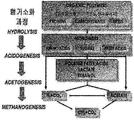
- 1 is a schematic diagram showing an anaerobic digestion process briefly.
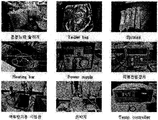
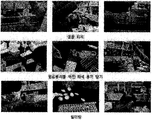
- Figure 2 is a photograph showing the experimental tools used in the experiment of the present invention.
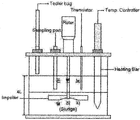
- FIG. 3 is a schematic diagram briefly showing the experimental apparatus used in the experiment of the present invention.
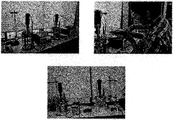
- Figure 4 is a photograph of adding pancreatin to the experimental group reactor in the experiment of the present invention.
- the present invention relates to a novel use of pancreatin that can enhance the hydrolysis efficiency in the anaerobic digestion process for organic waste treatment, in detail, in the anaerobic digestion process for organic waste treatment, the pancreatin (pancreatin) as an active ingredient It is characterized by providing a composition for promoting hydrolysis efficiency or promoting biogas production, including.
- the anaerobic digestion process is defined as a process in which biologically degradable organic matter is decomposed into carbon dioxide and methane in the absence of oxygen, and in general, an anaerobic decomposition reaction in which organic matter is decomposed and converted into methane is largely a hydrolysis step. It can be divided into acidiogenesis stage and methanogenesis stage (see FIG. 1).
- the hydrolysis step is the first step in the fermentation process, in which organic compounds (carbohydrates, proteins, lipids) of complex structure are degraded by hydrolysates and hydrolases of fermented bacteria.
- organic compounds carbohydrates, proteins, lipids
- Complex organic substances such as lignin and cellulose are decomposed into monomers and oligomers such as soluble sugars, alcohols, fatty acids, amino acids, and polypeptides.
- the hydrolysis step is a low-molecular-molecule chain of macromolecules by extracellular enzymes such as cellobiase, amylase, protease, and lipase secreted by various microorganisms. It is known as the rate-limiting stem of the entire anaerobic digestion reaction, and is affected by pH, temperature, hydrolase, solid form, size and residual concentration. It is a complex reaction that is inhibited by organic acids. In order to overcome the limitation of the anaerobic reaction due to the rate determining step and to increase the efficiency of the anaerobic reaction, studies on chemical, physical or biological pretreatment on solids are being actively studied.
- the acidiogenesis or fermentation stage is where amino acids, sugars and some fatty acids are further broken down to produce acetic acid, propionic acid, butyric acid and a small amount of valeric acid along with hydrogen and carbon dioxide. Propionic and butyric acids are further broken down to produce hydrogen, carbon dioxide and acetate, precursors of methane production.
- Influence factors of the acid production stage are pH range of 5.7 to 6.0, and there are two types of optimum temperatures: medium temperature (37 °C) and high temperature (52 °C). It is more stable than high temperature.
- the methanogenesis stage is the process of producing methane, the final product of anaerobic decomposition, in which substrates are converted to methane and carbon dioxide in cooperation with methane and non-methane microorganisms.
- Methane microorganisms use acetic acid, hydrogen, carbon dioxide, formic acid and methanol directly as substrates, and other fatty acids and alcohols use non-methane microorganisms.
- acetic acid is produced and about 70% of the final fermentation product, methane, is converted from acetic acid.
- Methane microorganisms are very sensitive to the environment. The optimum temperature is medium and high temperature, and the optimum pH is known to be 7.0 to 8.0.
- various microbial groups work until organic matter is fermented with methane, specifically, hydrolyzing and fermenting microorganisms (hydrolytic fermentative bacteria) that hydrolyze complex polymer organic matters; Syntrophic acetogenic bacteria which decompose lactate, ethanol, propinate, butyrate and the like into acetate and hydrogen which methane-producing bacteria can use in an environment of low hydrogen concentration; Methane microorganisms for fermenting acetate, formate, hydrogen, carbon dioxide and the like with methane; And sulfate-reducing microorganisms and denitrifying bacteria involved in the reduction of the sulfur component and the nitrogen component by participating in methanal effect tablets.
- pancreatin' is a substance secreted by the pancreas of animals and mainly pigs. It is an enzyme preparation containing digestive enzymes such as amylase, lipase, protease, and trypsin. It is white to pale yellow powder and has a characteristic smell. It has optimal activity at pH 7.0 to 8.0. Such pancreatin has been used as a food additive, a digestive enzyme, and a feed additive for digestive efficiency.
- the present inventors when used in the anaerobic digestion process for the treatment of organic waste (eg, livestock manure) having the above characteristics, it is very effective to promote the production of biogas (methane) at the same time to improve the hydrolysis efficiency It was first identified that it can.
- Example 1 of the present invention as a result of the anaerobic digestion process by adding pancreatin to the livestock manure, it was confirmed that the gas generation time is shortened by two times or more as compared with the control group (pancreatin-free group).
- pancreatin has an excellent effect of promoting hydrolysis efficiency and promoting biogas production in the anaerobic digestion process for organic waste treatment.
- the present invention is characterized in that in the anaerobic digestion process for treating organic waste, it provides a composition for enhancing hydrolysis efficiency or promoting biogas production comprising pancreatin as an active ingredient.
- organic waste may include household waste, agricultural livestock waste, forestry waste, fish processing waste, animal and vegetable residues, sewage sludge, and the like, and preferably, livestock manure, and more preferably pig manure days. Can be.
- Pig manure is relatively faster than other livestock manure due to its low content of hardly degradable substances such as cellulose and lignin, and high starch or protein content. Basically, however, the emissions are high and the water content is also 92-93%, making it difficult to store and process the farm.
- manure is bad smell, high BOD, COD, phosphorus content if discharged without treatment process can cause a lot of pollution to the surrounding environment, it is required to develop a technology that effectively utilizes in accordance with the domestic situation.
- the composition since the composition includes pancreatin as an active ingredient, in one embodiment of the present invention, the composition is preferably pH 7.0 to pH 8.0 that can exhibit the optimal activity.
- composition of the present invention may further comprise a microorganism having excellent degradation of the degradable organic matter in addition to pancreatin as an active ingredient.
- non-structural carbohydrates such as cellulose, hemicellulose, and pectin
- hardly decomposable organic components such as lignin (mainly vegetable substances)
- the hydrolysis efficiency can be further improved.
- the microorganisms excellent in the resolution of the degradable organic substance which can be used in the present invention are not particularly limited as long as they are known known degradable degradable microorganisms.
- Bacillus subtilis EDS disclosed in Korean Patent Publication No. 2011-0019079 -1 (KCTC18122P), novel Bacillus rickenformis EDS-2 (KCTC 18128P), etc. can also be used.
- the invention also relates to the invention.
- It provides a method for treating organic waste comprising the step of adding a composition containing a creatine (pancreatin) as an active ingredient and a spawn mixture to the organic waste.
- the anaerobic digestion process of the present invention can be carried out at low temperature (5 ⁇ 25 °C), medium temperature (35 ⁇ 38 °C) or high temperature (55 ⁇ 60 °C), in the case of low temperature digestion digestion rate is slow digestion residence time 3 ⁇
- low temperature digestion digestion rate is slow digestion residence time 3 ⁇
- high-temperature fire extinguishing there are many disadvantages of energy consumption due to heating and keeping warm, and preferably medium-temperature fire extinguishing can be used.
- anaerobic digestion process of the present invention may use a continuous type (how the organic material is continuously added to the digestion tank and discharged as the injected organic material) or a batch system according to the organic material input method.
- the anaerobic digestion process of the present invention may use a single phase (method of anaerobic digestion by putting organic matter in one digester) or an ideal diet (method of acid fermentation tank and methane fermentation tank) according to the classification of digestion tank (reactor). Since pancreatin of the present invention has an optimal activity at pH 7.0 to 8.0, it is more consistent with the optimum pH for methane fermentation in a single-phase system in which organic matter is put in one digester for anaerobic digestion. Can be effective.
- the organic waste treatment method of the present invention is characterized in that it comprises the step of adding a composition containing a creatine (pancreatin) as an active ingredient and a spawn mixture to the organic waste.
- the organic waste may be exemplified as household waste, agricultural and livestock waste, forestry waste, fish processing waste, animal and vegetable residues, sewage sludge, and the like. More preferably pig manure.
- the composition containing the pancreatin (pancreatin) as an active ingredient may comprise a pancreatin at a concentration of 1 to 100 ⁇ g / ml.
- the composition containing the pancreatin (pancreatin) as an active ingredient may be pH 7.0 ⁇ pH 8.0 that can exhibit the optimal activity of pancreatin.
- the composition containing the pancreatin (pancreatin) as an active ingredient may further include a microorganism having excellent degradation ability of the degradable organic matter, usable hardly degradable microorganisms that can be used to specifically limit the kind
- a microorganism having excellent degradation ability of the degradable organic matter usable hardly degradable microorganisms that can be used to specifically limit the kind
- Bacillus subtilis EDS-1 KCTC18122P
- novel Bacillus rickenformis EDS-2 KCTC 18128P
- Korean Patent Publication No. 2011-0019079 Korean Patent Publication No. 2011-0019079
- the "seed mixture” of the present invention is a material in which a plurality of microorganisms required in the anaerobic digestion process are mixed, and examples thereof include a seed agent or a seed sludge.
- 'Strainer' refers to agglomerates of microorganisms and culture aids used for various purposes by preparing fermented broth concentrated in culture or single or mixed microbial strains in liquid or powder form. Therefore, microbial groups having appropriate degradability must be separated and reconstituted to the main waste components to be removed (decomposed). In response to the characteristics of the various components of the waste, the spawning agent also has a wide variety of microbiological, biochemical and metabolic processes. Eggplants can be configured as a multi-family of microorganisms.
- Spawn sludge means a sludge that contains the spawns needed for decomposition in a fermenter where the decomposition of waste occurs.
- the spawn mixture of the present invention may be generally used in the market, or may be prepared by combining the appropriate spawn according to the type of organic waste.
- a spawning agent that can be used in an anaerobic digestion process may be used, or a seed sludge derived from an anaerobic digestion plant may be used.
- hydrolyzing and fermenting microorganisms hydrolyze complex polymer organic matter
- Syntrophic acetogenic bacteria which decompose lactate, ethanol, propinate, butyrate and the like into acetate and hydrogen which methane-producing bacteria can use in an environment of low hydrogen concentration
- sulfate-reducing microorganisms, denitrifying bacteria, and the like which are involved in methane-balancing effects tablets and are involved in the reduction of sulfur and nitrogen components.
- Hydrolysing and fermenting microorganisms that hydrolyze the polymer organic matter include Clostridium formicoaceticum , Clostridium thermoaceticum , Clostridium propy sludge glutamicum (Clostridium propionicum), Clostridium boot Lili glutamicum (Clostridium butryricum), luminometer Lactococcus Plastic bepa sieon switch (Ruminococus flavefaciens), watermelon teroyi des succinate open field Nurse (Bacteroides succinogenes), celecoxib grandma eggplant rumin tium (Selenomonas rumintium) Etc., but is not limited thereto.
- the acid producing bacteria symbiotic (syntrophic acetogenic bacteria), but is such as Shin troponin Pseudomonas (Syntrophomonas) or Shin Trojan bakteo (Syntrobacter), but is not limited thereto.
- the methane microorganism is generally represented by the genus Methanobacterium ( Methanobacterium ), Methanococcus ( Methanococcus ), Methanosarcina ( Methanosarcina ), Methanospirillium ( Methanospirillium ) 4 genus, more specifically, metanobacterium teomo Auto Trophy Qom (Methanobacterium thermoautotrophicum), meta Nobre non bakteo Abo refill Russ (Methanobrevibacter arboriphilus), meta-no caucus Barney elriyi (Methanococcus vanniellii), meta North blood rilrum hunga table (Methanospirillum hungatei), meta labor reusi or Apply K (Methanosarcina barkeri), meta labor reusi or majeyi (Methanosarcina mazei), meta notes Riggs soen jeniyi (Methanothrix soehng
- Anaerobic digestion involves three stages of biochemical and chemical digestion: hydrolysis, acid production and methane production.
- ASBR anaerobic sequencing batch reactor
- the ASBR process operates the organic materials to be injected, and the ASBR process operates in single-phase or two-phase conditions depending on the number of reactors.
- the ideal reaction tank is composed of a reaction tank of the front end including acid producing microorganisms (acidogens) and a reaction tank of the rear end including methane generating microorganisms (methanogens) to control the optimum pH and temperature of each microorganism. .
- Single-phase reactors are easy to configure and operate using a single reactor.
- the efficiency of the anomaly reactor is expected to be high, but due to the difficulty of maintenance and the cost of the experimental equipment, the single-phase condition is adopted as the process method to be used in this investigation.
- Pancreatin is a substance secreted by the pancreas and includes digestive enzymes such as amylase, lipase, protease, and trypsin.
- Amylases are polysaccharides
- lipases are fatty
- proteases and trypsin are cocatalysts of the hydrolysis of proteins. Therefore, it is assumed that when pancreatin is added to the reactor, it is possible to accelerate the progress of hydrolysis, which is the first step of anaerobic digestion, to accelerate the time of gas generation and end of operation.
- Swine manure was collected directly from nearby farms, and spawn sludge was obtained from an anaerobic digestion plant at the livestock manure public treatment plant in Hongseong, Chungnam. In particular, spawn sludge and pig manure were sampled at their initial state and when they were first placed in the reactor.
- the reactor used as the experimental group was first found gas (Bubble) on the 13th day of the experiment (12.04.26). Since then, I have seen gas come out almost once a day. In general, 30-40 days of hydrolysis step and acid production step have to go through, it can be seen that pancreatin can significantly reduce the time.
Landscapes
- Life Sciences & Earth Sciences (AREA)
- Chemical & Material Sciences (AREA)
- Health & Medical Sciences (AREA)
- Engineering & Computer Science (AREA)
- Organic Chemistry (AREA)
- Molecular Biology (AREA)
- Zoology (AREA)
- Genetics & Genomics (AREA)
- Wood Science & Technology (AREA)
- Bioinformatics & Cheminformatics (AREA)
- Hydrology & Water Resources (AREA)
- Water Supply & Treatment (AREA)
- Environmental & Geological Engineering (AREA)
- General Health & Medical Sciences (AREA)
- General Engineering & Computer Science (AREA)
- Biomedical Technology (AREA)
- Medicinal Chemistry (AREA)
- Chemical Kinetics & Catalysis (AREA)
- General Chemical & Material Sciences (AREA)
- Oil, Petroleum & Natural Gas (AREA)
- Biochemistry (AREA)
- Microbiology (AREA)
- Biotechnology (AREA)
- Treatment Of Sludge (AREA)
- Processing Of Solid Wastes (AREA)
Description
혐기소화공정에서 판크레아틴을 이용한 바이오가스 생산 촉진을 위한 방법에 관한 것으로서, 판크레아틴(pancreatin)을 유효성분으로 포함하는 가수분해 효율 증진용 또는 바이오가스 생산 촉진용 조성물 및 이를 이용한 유기성 축산분뇨에서 바이오가스의 생산을 촉진(또는 증대)시키는 방법에 관한 것이다.
유기성 폐기물은 축산분뇨, 음식물 쓰레기, 채소 및 야채 등의 식물성 잔재물 및 농업부산물, 식품공장과 제지공장의 부산물 등이 포함되며, 다양한 처리공정을 통해서 가축사료, 비료 등으로 재활용되기도 하지만 매립이나 해양투기 등의 처리방법으로 환경오염의 원인이 되기도 한다. 특히, “런던협약 96의정서”에 의해서 유기성 폐기물의 해양배출이 2012년 전면 금지가 예상됨에 따라 유기성 폐기물 처리 대안으로 바이오가스 플랜트 사업이 국가사업으로 중요성이 대두되고 있다.
국내 축산분뇨의 경우에는 80% 정도 퇴비 및 액비로 자원화되고 있으나 2012년부터 해양배출 금지가 되면 전량 육상처리가 불가피하다. 축산분뇨는 고농도의 유기물로 이루어져 있어 별도의 처리과정을 거치지 않고 방류하게 되면 하천과 호수를 오염시키게 된다. 특히 질소와 인이 다량 함유되어 수계에 부영양화를 초래하여 음용수뿐만 아니라 농업용수 등 하천수의 이용을 불가능하게 만든다.
한편, 바이오가스란 음식물쓰레기, 폐기물, 가축분뇨 등 유기물이 산소가 없는 상태(혐기상태)에서 혐기소화미생물에 의해 분해되는 과정에서 발생되는 가스로서 메탄가스와 이산화탄소 등이 주성분을 이루고 있다.
바이오가스 발생기술에 대하여 보다 구체적으로 설명하면, 최근에 유기성 폐기물을 이용한 에너지 자원 활용화에 관련한 기술들이 지속적으로 개발되고 있는 것으로, 그 일례로 유기성 폐기물을 혐기성 소화시켜 바이오가스를 생산하는 방법으로서 이는 생산된 바이오가스를 이용하여 전기, 열에너지로 전환하여 사용할 수 있으며, 부산물로 비료 등으로 사용할 수 있기 때문에 그 활용도가 높아 지속적인 개발이 요구되고 있는 기술이다.
특히, 유기성 폐기물을 자원화하는 과정의 일환으로 최근에는 음식물쓰레기 또는 축산분뇨를 메탄가스로 자원화하여 재활용하는 연구 즉, 혐기소화에 대한 연구가 활발히 진행되고 있는데, 일반적으로 혐기소화라 함은 생물학적으로 분해 가능한 유기물이 산소가 없는 상태에서 이산화탄소와 메탄으로 분해되는 과정으로 정의되지만, 실제로는 기질에 따른 반응경로 및 여러 미생물이 관련된 복잡한 반응으로 이루어진다. 고형 유기물을 메탄으로 전환되는 혐기성 분해반응은 크게 가수분해(hydrolysis) 단계, 산생성(acidiogenesis) 단계 및 메탄생성(methanogenesis) 단계로 구분할 수 있다.
이론적으로 폐기물 중 생물분해가 가능한 유기물의 약 90%가 메탄으로 전환될 수 있고 더욱이 유기성 폐기물을 안정화시켜 혐기소화 과정 후에 생성되는 슬러지는 토양과 물에는 아무런 환경상의 위해를 가하지 않으면서 토양 개량제와 비료로서 이용될 수 있기 때문에 또 다른 에너지 절감을 가능하게 한다. 뿐만 아니라, 바이오가스의 주요성분인 메탄은 융통성이 많은 형태의 재생에너지로서 열과 전기로 전환될 수 있으며, 차량 연료로도 사용될 수 있다.
결론적으로, 혐기소화는 다음과 같은 두 가지 방법으로 지구 기후변화에 대한 잠재적인 위험성을 감소시키는데, 첫째, 이산화탄소에 비해 약 21배에 해당하는 지구 온난화 기여 가능성을 갖는 메탄은 우리나라에서 온실가스 방출량의 약 15%를 차지하고 있으므로 혐기소화를 통하여 바이오가스를 포착함으로써 자연 상태에서의 메탄 방출량을 줄일 수 있다. 둘째, 혐기소화에서 생산된 바이오가스를 화석연료로 대체할 수 있다면 화학연료로부터 생성되는 이산화탄소를 회피할 수 있어 결과적으로 지구온난화 원인 물질을 감소시킬 수 있다.
그러나 종래 사용되고 있는 혐기소화공정은 미생물의 낮은 성장률, 처리된 유출수의 악취 문제, pH 조절을 위한 많은 양의 버퍼의 필요성 등이 문제점 내지 한계점으로 대두되고 있고, 기존의 기술력으로는 이러한 문제점들을 극복하기 어려워 호기성 처리 공정에 비해 크게 주목받지 못하고 있는 실정이다.
이에 본 발명자는 혐기소화공정의 효율 향상을 연구하던 중 축산분뇨의 처리에 판크레아틴을 이용하는 경우 매우 효과적으로 유기물의 가수분해가 이루어짐으로써 폐기물 처리 과정을 빠르게 단축시킴과 동시에 바이오가스 생성을 촉진시킬 수 있음을 실험적으로 확인함으로써 본 발명을 완성하였다.
<선행기술문헌>
<특허문헌>
(특허문헌 1) 한국공개특허 제10-2011-0019079
(특허문헌 2) 한국공개특허 제10-2011-0129210
따라서 본 발명의 목적은 유기성 폐기물 처리를 위한 혐기소화공정에 있어서, 가수분해 효율 증진 또는 바이오가스 생산을 촉진할 수 있는 조성물을 제공하는 것이다.
또한 본 발명의 다른 목적은 상기 조성물을 이용하여 유기성 폐기물의 가수분해를 효과적으로 처리하면서 바이오가스 생산을 촉진시키는 유기성 폐기물 처리방법을 제공하는 것이다.
상기와 같은 본 발명의 목적을 달성하기 위해서, 본 발명은 유기성 폐기물 처리를 위한 혐기소화공정에 있어서, 판크레아틴(pancreatin)을 유효성분으로 포함하는 가수분해 효율 증진용 또는 바이오가스 생산 촉진용 조성물을 제공한다.
본 발명의 일실시예에 있어서, 상기 유기성 폐기물은 축산분뇨일 수 있다.
본 발명의 일실시예에 있어서, 상기 조성물은 pH 7.0 ~ pH 8.0에서 최적의 활성을 가질 수 있다.
*본 발명의 일실시예에 있어서, 상기 조성물은 난분해성 유기물 분해능이 우수한 미생물을 더 포함할 수 있다.
본 발명은 또한, 혐기소화공정을 이용하여 유기성 폐기물을 처리하는 방법으로서, 유기성 폐기물에 판크레아틴(pancreatin)을 유효성분으로 함유하는 조성물 및 종균혼합물을 첨가하여 반응시키는 단계를 포함하는 유기성 폐기물의 처리방법을 제공한다.
본 발명의 일실시예에 있어서, 상기 유기성 폐기물은 축산분뇨일 수 있다.
본 발명의 일실시예에 있어서, 상기 판크레아틴(pancreatin)을 유효성분으로 함유하는 조성물은 판크레아틴을 1 내지 100μg/ml의 농도로 포함할 수 있다.
본 발명의 일실시예에 있어서, 상기 판크레아틴(pancreatin)을 유효성분으로 함유하는 조성물은 가수분해 효율 증진 또는 바이오가스 생산 촉진 효과를 가질 수 있다.
본 발명의 일실시예에 있어서, 상기 판크레아틴(pancreatin)을 유효성분으로 함유하는 조성물은 pH 7.0 ~ pH 8.0에서 최적의 활성을 가질 수 있다.
본 발명의 일실시예에 있어서, 상기 판크레아틴(pancreatin)을 유효성분으로 함유하는 조성물은 난분해성 유기물 분해능이 우수한 미생물을 더 포함할 수 있다.
본 발명의 판크레아틴(pancreatin)을 유효성분으로 함유하는 조성물은 유기성 폐기물 처리를 위한 혐기소화공정에 있어서 가수분해 효율을 증진시키고 바이오가스 생산을 촉진시키는 효과를 가지므로, 이를 유효성분으로 포함하는 본 발명의 조성물은 혐기소화공정을 이용한 유기성 폐기물 처리과정에 유용하게 사용될 수 있다. 특히 본 발명의 유효성분인 판크레아틴(pancreatin)은 pH 7.0 내지 8.0에서 최적의 활성을 가지므로 유기물을 하나의 소화조에서 넣어 혐기소화시키는 단상식 시스템에서 사용하는 경우, 메탄발효를 위한 최적의 pH인 7.0~8.0와 일치함에 따라 단상식 시스템에서 더욱 효과적으로 사용될 수 있다.
도 1은 혐기소화공정을 간략하게 나타낸 모식도이다.
도 2는 본 발명의 실험에서 사용한 실험 도구들을 나타낸 사진이다.
도 3은 본 발명의 실험에서 사용한 실험 장치를 간략하게 나타낸 모식도이다.
도 4는 본 발명의 실험에서 실험군 반응조에 판크레아틴을 첨가하는 사진이다.
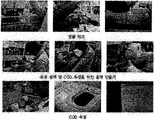
도 5는 본 발명의 실험에서 유기산을 측정하는 과정을 사진으로 나타낸 것이다.
도 6은 본 발명의 실험에서 COD를 측정하는 과정을 사진으로 나타낸 것이다.
본 발명은 유기성 폐기물 처리를 위한 혐기소화공정에서 가수분해 효율을 증진시킬 수 있는 판크레아틴의 신규 용도에 관한 것으로서, 자세하게는 유기성 폐기물 처리를 위한 혐기소화공정에 있어서, 판크레아틴(pancreatin)을 유효성분으로 포함하는 가수분해 효율 증진용 또는 바이오가스 생산 촉진용 조성물을 제공함에 그 특징이 있다.
‘혐기소화공정’이란 생물학적으로 분해 가능한 유기물이 산소가 없는 상태에서 이산화탄소와 메탄으로 분해되는 과정으로 정의되며, 일반적으로 유기물이 분해되어 메탄으로 전환되는 혐기성 분해반응은 크게 가수분해(hydrolysis) 단계, 산생성(acidiogenesis) 단계 및 메탄생성(methanogenesis) 단계로 구분할 수 있다(도 1 참조).
‘가수분해(hydrolysis) 단계’는 발효공정의 첫 단계로서 복잡한 구조의 유기화합물(탄수화물, 단백질, 지질)이 가수분해균과 발효균의 가수분해효소에 의해 분해되는 과정으로 다당류, 탄수화물, 단백질, 지방, 리그닌, 셀룰로오스 등의 복잡한 유기물이 용해성의 당, 알코올, 지방산, 아미노산, 폴리펩타이드 등의 모노머나 올리고머로 분해된다.
즉 가수분해 단계는 여러 미생물이 분비하는 실로비아제(cellobiase), 아밀라제(amylase), 프로테아지(protease), 리파아제(lipase) 등의 체외효소(extracellular enzymes)에 의해 고분자 물질이 연쇄적으로 저분자물질로 가수분해되는 과정으로 전체 혐기성 분해반응의 속도결정단계(rate-limiting stem)로 알려져 있으며, pH, 온도, 가수분해효소뿐만 아니라, 고형물의 형태, 크기 및 잔류농도에 영향을 받고, 또한 생성된 유기산에 의해 저해를 받는 복잡한 반응이다. 이러한 속도결정단계로 인한 혐기성 반응의 제한성을 극복하여 혐기성 반응의 효율을 증가시키기 위해서 고형물에 화학적, 물리적 또는 생물학적인 전처리에 대한 연구가 활발히 연구되고 있다.
‘산생성(acidiogenesis or fermentation) 단계’는 아미노산, 당류, 일부 지방산은 더 분해되어 수소, 이산화탄소와 함께 아세트산, 프로피온산, 부틸산과 소량의 발레르산이 생성되는 단계이다. 프로피온산과 부틸산은 더 분해되어 메탄생성의 전구물질인 수소, 이산화탄소, 아세테이트를 생성한다. 산생성 단계의 영향인자로는 pH 5.7~6.0이 최적범위이고, 최적온도는 중온(37℃)과 고온(52℃)의 두 가지가 있지만, 중온의 경우 산생성물의 분포가 일정하기 때문에 고부하에서 고온보다 안정적이다.
‘메탄생성(methanogenesis) 단계’는 혐기성 분해반응의 최종 산물인 메탄이 생성되는 과정으로 메탄미생물과 비 메탄미생물의 협력 하에 기질물질을 메탄과 이산화탄소로 전환하는 단계이다. 메탄미생물은 아세트산, 수소, 이산화탄소, 포름산, 메탄올을 직접 기질로 이용하고, 그 외의 지방산과 알코올 등은 비 메탄미생물을 이용한다. 지방 및 단백질을 혐기성으로 발효시킬 때 가장 많이 생성되는 중간물질이 아세트산이며 최종발효산물인 메탄의 약 70%가 아세트산으로부터 전환된다. 메탄미생물은 환경에 매우 민감한 종으로써 최적 온도는 중온과 고온 두 종류가 있으며, 최적의 pH는 7.0 내지 8.0로 알려져 있다.
이러한 혐기소화공정에서는 유기물이 메탄으로 발효될 때까지는 여러 가지 미생물 군이 작용하는데, 자세하게는 복잡한 고분자유기물을 가수분해하는 가수분해 및 발효하는 미생물(hydrolytic fermentative bacteria); 수소의 농도가 낮은 환경에서 락테이트, 에탄올, 프로피네이트, 부티레이트 등을 메탄생성균이 이용할 수 있는 아세테이트와 수소로 분해하는 공생 초산 생성균(syntrophic acetogenic bacteria); 아세테이트, 포름산염, 수소 및 이산화탄소 등을 메탄으로 발효시키는 메탄미생물; 및 메탄발효과정에 관여하여 유황 성분과 질소 성분의 환원에 관여하는 황산염환원 미생물과 탈질 세균 등을 예시할 수 있다.
한편‘판크레아틴(pancreatin)’은 동물, 주로 돼지의 췌장에서 분비되는 물질로 아밀라아제, 리파아제, 프로테아제, 트립신 등의 소화 효소를 포함하는 효소제제이며, 백색에서 엷은 황색의 분말로 특유의 냄새를 가지며 pH 7.0 내지 8.0에서 최적의 활성을 가진다. 이러한 판크레아틴은 현재까지 식품제조용 첨가물, 소화효소제, 소화효율증진용 사료첨가제 등으로 사용되고 있다.
본 발명자는 상기와 같은 특징을 갖는 판크레아틴을 유기성 폐기물(예, 축산분뇨) 처리를 위한 혐기소화공정에서 사용하는 경우, 가수분해 효율을 증진시킴과 동시에 바이오가스(메탄) 생성을 매우 효과적으로 촉진시킬 수 있다는 사실을 최초로 규명하였다.
본 발명의 하기 실시예 1에서는, 축산분뇨에 판크레아틴을 첨가하여 혐기소화공정을 진행시킨 결과, 대조군(판크레아틴 무첨가군)과 비교하여 가스 생성 시간이 2배 이상으로 단축되는 것을 확인할 수 있었다.
이와 같은 결과를 통해, 본 발명자는 판크레아틴이 유기성 폐기물 처리를 위한 혐기소화공정에 있어서 가수분해 효율을 증진시키고 바이오가스 생산을 촉진시키는 효과가 우수함을 실험적으로 입증하였다.
즉, 상기에서도 언급한 바와 같이, 혐기소화공정 중 가수분해 단계인 고분자 물질이 연쇄적으로 저분자물질로 가수분해되는 과정은 전체 혐기성 분해반응의 속도결정단계(rate-limiting stem)이며, 본 발명의 판크레아틴이 이러한 가수분해 진행을 효과적으로 가속화시킴으로써 혐기성 분해반응을 빠르게 단축시키는 것을 실험적으로 입증한 것이다.
그러므로 본 발명은 유기성 폐기물 처리를 위한 혐기소화공정에 있어서, 판크레아틴(pancreatin)을 유효성분으로 포함하는 가수분해 효율 증진용 또는 바이오가스 생산 촉진용 조성물을 제공함에 그 특징이 있다.
상기 유기성 폐기물의 종류로는 생활쓰레기, 농축산 폐기물, 임업폐기물, 수산가공폐기물, 동·식물성 잔재물, 하수 슬러지 등을 예시할 수 있으며, 바람직하게는 축산분뇨일 수 있으며, 더욱 바람직하게는 돈 분뇨일 수 있다.
돈 분뇨는 셀룰로오스, 리그닌 등 난분해성 물질들의 함량이 적고, 전분이나 단백질의 함량이 높기 때문에 다른 축산분뇨보다는 분해가 비교적 빠른 편이다. 그러나 기본적으로 그 배출량이 많으며, 수분 함량도 92~93% 정도로 많기 때문에 농장 내 저장 및 처리가 곤란하다. 이러한 돈 분뇨는 악취가 심하고 BOD, COD, 인 함량이 높아 처리공정 없이 방류하는 경우 주변 환경에 많은 오염을 유발할 수 있어 국내 실정에 맞게 효율적으로 활용하는 기술의 개발이 요구되어 진다.
또한 상기 조성물은 판크레아틴을 유효성분으로 포함하기 때문에, 본 발명의 일실시예에서, 상기 조성물은 판크레아틴이 최적의 활성을 나타낼 수 있는 pH 7.0 ~ pH 8.0이 바람직하다.
또한, 본 발명의 상기 조성물은 유효성분으로 판크레아틴 이외에 난분해성 유기물 분해능이 우수한 미생물을 더 포함할 수 있다.
일반적으로 축산분뇨 및 음식물 쓰레기의 경우 셀룰로오스, 헤미셀룰로오스, 펙틴 등의 비구조적 탄수화물, 리그닌과 같은 난분해성 유기물 성분(주로 식물성 물질)이 존재하게 되는데, 판크레아틴은 탄수화물, 단백질 및 지방의 분해만을 촉매할 수 있기 때문에, 상기와 같은 난분해성 유기물을 분해할 수 있는 미생물을 추가로 첨가하는 경우, 가수분해 효율을 더욱 증진시킬 수 있다.
본 발명에서 사용할 수 있는 난분해성 유기물 분해능이 우수한 미생물은, 종래 알려진 난분해성 분해 미생물이면 그 종류를 특별히 제한하는 것은 아니며, 예를 들어 한국특허공개 제2011-0019079호에서 개시하는 바실러스 서브틸리스 EDS-1(KCTC18122P), 신규한 바실러스 리케니포르미스 EDS-2(KCTC 18128P) 등을 사용할 수도 있다.
본 발명은 또한
혐기소화공정을 이용하여 유기성 폐기물을 처리하는 방법으로서,
유기성 폐기물에 판크레아틴(pancreatin)을 유효성분으로 함유하는 조성물 및 종균혼합물을 첨가하여 반응시키는 단계를 포함하는 유기성 폐기물의 처리방법을 제공한다.
본 발명의 상기 혐기소화공정은 저온(5~25℃), 중온(35~38℃) 또는 고온(55~60℃)에서 진행될 수 있으나, 저온소화의 경우 소화속도가 느려서 소화조 체류시간이 3~12개월로 장시간이 소요되는 단점이 있고, 고온소화의 경우 고온을 유지하기 위하여 가온 및 보온 등에 따른 에너지소비가 많은 단점이 있는 바, 바람직하게는 중온소화를 이용할 수 있다.
또한 본 발명의 상기 혐기소화공정은 유기물 투입방식에 따라 연속식(소화조에 유기물을 지속적으로 투입하고 투입된 유기물만큼 배출되는 방식) 또는 회분식 시스템을 이용할 수 있다.
또한 본 발명의 상기 혐기소화공정은 소화조(반응조)의 구분에 따라 단상식(유기물을 한 개의 소화조에 넣어서 혐기소화시키는 방법) 또는 이상식(산발효조와 메탄발효조로 구분하는 방법)을 이용할 수 있으나, 본 발명의 판크레아틴(pancreatin)이 pH 7.0 내지 8.0에서 최적의 활성을 가지므로 유기물을 하나의 소화조에서 넣어 혐기소화시키는 단상식 시스템에서 메탄발효를 위한 최적의 pH인 7.0~8.0과 일치함에 따라 더욱 효과적일 수 있다.
이러한 혐기소화공정을 이용한, 본 발명의 유기성 폐기물의 처리방법은 유기성 폐기물에 판크레아틴(pancreatin)을 유효성분으로 함유하는 조성물 및 종균혼합물을 첨가하여 반응시키는 단계를 포함하는 것을 그 특징으로 한다.
본 발명의 일실시예에서, 상기 유기성 폐기물의 종류로는 생활쓰레기, 농축산 폐기물, 임업폐기물, 수산가공폐기물, 동·식물성 잔재물, 하수 슬러지 등을 예시할 수 있으며, 바람직하게는 축산분뇨일 수 있으며, 더욱 바람직하게는 돈 분뇨일 수 있다.
본 발명의 다른 일실시예에서, 상기 판크레아틴(pancreatin)을 유효성분으로 함유하는 조성물은 판크레아틴을 1 내지 100μg/ml의 농도로 포함할 수 있다.
본 발명의 또 다른 일실시예에서, 상기 판크레아틴(pancreatin)을 유효성분으로 함유하는 조성물은 판크레아틴이 최적의 활성을 나타낼 수 있는 pH 7.0 ~ pH 8.0일 수 있다.
본 발명의 또 다른 일실시예에서, 상기 판크레아틴(pancreatin)을 유효성분으로 함유하는 조성물은 난분해성 유기물 분해능이 우수한 미생물을 더 포함할 수 있으며, 사용가능한 난분해성 분해 미생물은 그 종류를 특별히 제한하는 것은 아니며, 예를 들어 한국특허공개 제2011-0019079호에서 개시하는 바실러스 서브틸리스 EDS-1(KCTC18122P), 신규한 바실러스 리케니포르미스 EDS-2(KCTC 18128P) 등을 사용할 수도 있다.
본 발명의 상기 ‘종균혼합물’이란 혐기소화공정에서 필요로 하는 다수의 미생물들이 혼합된 물질로서, 종균제 또는 종균 슬러지를 예로 들 수 있다.
‘종균제’는 단일 혹은 혼합 미생물 균주를 배양하여 농축한 발효액을 액상이나 분말형태로 제조하여 다양한 목적으로 사용하는 미생물과 배양보조물질의 덩어리를 말한다. 따라서 제거(분해)하고자하는 주요 폐기물 성분에 적절한 분해 능력을 갖는 미생물 군이 분리되어 재구성되어야 하는데, 폐기물의 다양한 구성성분상의 특성에 대응하여 종균제 역시 매우 다양한 미생물학적, 생화학적 특성과 대사 과정을 가지는 다종의 미생물 군으로서 구성될 수 있다.
‘종균 슬러지’는 폐기물의 분해가 일어나는 발효조에서 분해에 필요한 종균들을 포함하고 있는 슬러지를 의미한다.
본 발명의 상기 종균혼합물은 일반적으로 시중에서 판매되는 것을 이용할 수도 있으며, 유기성 폐기물의 종류에 따라 필요로 하는 적정 종균들을 배합하여 제조할 수도 있다. 특히 본 발명의 유기성 폐기물의 처리방법에서는 혐기소화공정을 이용하기 때문에 혐기소화공정에 사용될 수 있는 종균제를 사용할 수 있으며, 또는 혐기소화 플랜트에서 유래한 종균 슬러지를 사용할 수도 있다.
본 발명의 종균혼합물을 제조하는 경우, 복잡한 고분자유기물을 가수분해하는 가수분해 및 발효하는 미생물(hydrolytic fermentative bacteria); 수소의 농도가 낮은 환경에서 락테이트, 에탄올, 프로피네이트, 부티레이트 등을 메탄생성균이 이용할 수 있는 아세테이트와 수소로 분해하는 공생 초산 생성균(syntrophic acetogenic bacteria); 아세테이트, 포름산염, 수소 및 이산화탄소 등을 메탄으로 발효시키는 메탄미생물; 및 메탄발효과정에 관여하여 유황 성분과 질소 성분의 환원에 관여하는 황산염환원 미생물과 탈질 세균 등을 적절히 배합하여 제조할 수 있다.
상기 고분자유기물을 가수분해하는 가수분해 및 발효하는 미생물(hydrolytic fermentative bacteria)의 종류로는 클로스트리듐 포미코아세티쿰(Clostridium formicoaceticum), 클로스트리듐 터모아세티쿰(Clostridium thermoaceticum), 클로스트리듐 프로피오니쿰(Clostridium propionicum), 클로스트리듐 부트리리쿰(Clostridium butryricum), 루미노코커스 플라베파시언스(Ruminococus flavefaciens), 박테로이데스 숙시노지너스(Bacteroides succinogenes), 셀레노모나스 루민티움(Selenomonas rumintium) 등이 있으나, 이에 제한되는 것은 아니다.
상기 공생 초산 생성균(syntrophic acetogenic bacteria)의 종류로는 신트로포모나스(Syntrophomonas) 또는 신트로박터(Syntrobacter) 등이 있으나, 이에 제한되는 것은 아니다.
상기 메탄미생물로는 일반적으로 메타노박테리움(Methanobacterium), 메타노코커스(Methanococcus), 메타노사르시나(Methanosarcina), 메타노스피릴리움(Methanospirillium) 4속이 대표되며, 더욱 자세하게는 메타노박테리움 터모오토트로피쿰(Methanobacterium thermoautotrophicum), 메타노브레비박터 아보리필러스(Methanobrevibacter arboriphilus), 메타노코커스 바니엘리이(Methanococcus vanniellii), 메타노스피릴룸 훈가테이(Methanospirillum hungatei), 메타노사르시나 바르케이(Methanosarcina barkeri), 메타노사르시나 마제이(Methanosarcina mazei), 메타노트릭스 소엔제니이(Methanothrix soehngenii), 메타놀로버스 틴다리우스(Methanolobus tindarius), 메타노코코이데스 메틸루텐스(Methanococcoides methylutens), 메타노플라너스 리미콜라(Methanoplanus limicola), 아세토박테리움 우디이(Acetobacterium woodii), 프로피오니박테리움 아라비노숨(Propionibacterium arabinosum), 사르시나 맥시마(Sarcina maxima), 부티리박테리움 메틸로트리피움(Butyribacterium methylotrophium), 락토바실러스 아밀로필러스(Lactobacillus amylophilus) 등이 있으나, 이에 제한되는 것은 아니다.
이하, 실시예를 통하여 본 발명을 보다 상세히 설명하고자 한다. 이들 실시예는 본 발명을 보다 구체적으로 설명하기 위한 것으로, 본 발명의 범위가 이들 실시예에 한정되는 것은 아니다.
<실시예>
<실시예 1>
혐기소화공정에서 판크레아틴이 미치는 영향
<1-1> 가설설정 및 실험설계
혐기 소화공정은 가수분해, 산 생성, 메탄생성으로 이루어진 세 단계의 생물·화학적 소화과정을 거친다. 본 실험에 사용할 혐기 소화공정 방식으로는 반응조의 구성 및 운영 방법에 따른 여러 공법 중 ASBR (anaerobic sequencing batch reactor)공법을 채택하였다. ASBR 공법은 투입할 유기물을 ASBR 공법은 반응조의 개수에 따라 단상(single-phase) 또는 이상(two-phase)의 조건으로 운전된다. 이상 반응조는 산 생성 미생물(acidogens)을 포함하여 산 생성이 목적인 전단의 반응조와 메탄 생성 미생물(methanogens)을 포함하여 메탄 생성이 목적인 후단의 반응조로 구성되어 각 미생물의 최적 pH와 온도를 조절할 수 있다. 반면 단상 반응조는 하나의 반응조를 사용하여 구성과 운전이 용이하다. 대체로 이상 반응조의 효율이 높을 것으로 예상되지만 유지 관리의 어려움과 실험 장비의 가격 등의 이유로 이번 탐구실험에 사용할 공정 방식으로서는 단상 조건을 채택하였다.
판크레아틴은 췌장에서 분비되는 물질로, 아밀라아제, 리파아제, 프로테아제, 트립신 등의 소화 효소를 포함한다. 아밀라아제는 다당류의, 리파아제는 지방의, 프로테아제와 트립신은 단백질의 가수분해 반응의 정촉매이다. 따라서, 판크레아틴이 반응조에 투입될 경우 혐기소화의 첫 번째 단계인 가수분해의 진행을 가속하여 가스 발생 시점과 운전 종료 시점을 앞당길 수 있을 것이라 가정하였다.
가. 실험 준비물
종균 슬러지, 돈분뇨, 혐기 반응조 2개, Impeller, Temperature Controller, Heating Bar, Thermistor, 샘플링에 사용할 Syringe, Plastic Container, Tedler Bag를 준비하였다. 돈분뇨는 인근 농가에서 직접 채취하였으며, 종균 슬러지는 충남 홍성의 가축분뇨공공처리장의 혐기소화 플랜트에서 얻어서 사용하였다. 특히 종균 슬러지와 돈분뇨는 그 초기상태와 반응조에 처음 넣었을 때를 샘플링하였다.
나. 실험설계(도 3 참조)

(2) 실험군
대조군과 다른 조건은 모두 동일하게 하되, 판크레아틴을 10μg/ml의 농도로 희석해서 투입함(가수분해 단계 때 한 번, 가스가 발생되었을 때 한 번 더 투입).
다. 유기산 측정(도 5 참조)
(1) 샘플 정렬
(2) 마이크로 피펫을 이용하여 채집한 샘플을 1mL넣고 증류수를 9mL 넣어 농도를 10%로 희석시킴
(3) 날짜 및 세부사항을 기록한 후 튜브에 약 1.5mL씩 희석한 용액을 넣음
(4) 튜브를 균형을 맞추어 원심분리기에 넣은 후 약 20분 동안 원심분리함
(5) 원심분리한 용액의 상등액만을 Syringe로 뽑아내서 필터를 이용해 걸러내어 라벨링한 작은 유리병에 담기
(6) 샘플에 대한 분석을 POSTECH에 의뢰함
라. COD 측정(도 6 참조)
(1) 샘플을 정렬
(2) 마이크로피펫을 이용하여 유기산 측정 시 희석시킨 10% 용액을 다시 1% 용액으로 희석시킴
(3) Vial에 (2)에서 만든 샘플 2.5mL, COD digestion solution 1.5mL, Sulfuric acid 3.5mL를 넣고 2시간 동안 150℃로 가열함
(4) 샘플 대신 증류수를 사용한 표준 용액도 0ppm, 250ppm, 500ppm 농도로 각각 제조함
(5) 1시간 동안 냉각시킨 다음 COD 함량을 측정함
<1-2> 실험에 대한 결론
가. 기존 혐기 소화 공정 방식에 대한 평가
대조군으로 사용하였던 기존 혐기 소화 공정 방식의 반응조에서는 실험 26일(12.05.09)까지도 가스의 발생이 확인되지 않았다. 일반적인 경우에 30~40일 정도의 가수분해 단계와 산 생성 단계를 거친다. 실험을 끝마칠 때까지도 상기 대조군 반응조는 여전히 가수분해 단계, 혹은 산 생성 단계에 머물러 있었다. 간혹 샘플링을 할 때 샘플이 잘 빨려오지 않는다 던가 고형물이 발견되는 경우가 있었는데, 이는 첫째, 우리가 사용한 돈분뇨가 필터링을 거치지 않았기 때문이며, 둘째로는 아직 분해단계가 많이 진행되지 않았기 때문이라고 생각되었다.
나. 혐기소화공정에서 판크레아틴이 미치는 영향
실험군으로 사용하였던 반응조는 실험 13일 째(12.04.26)에 처음으로 가스(Bubble)이 발견되었다. 그 후로는 거의 하루에 한 번 정도 가스가 나오는 것을 목격하였다. 일반적인 경우 30~40일 정도의 가수분해단계와 산 생성 단계를 거쳐야 하는데 판크레아틴이 그 시간을 확연히 줄일 수 있다는 것을 확인할 수 있었다.
결론적으로, 판크레아틴 공정 방식의 경우(실험군) 그 공정 시간을 눈에 띄게 단축되는 것을 알 수 있었다. 대조군의 경우 실험 26일째에도 가스가 발견되지 않은 반면, 실험군은 실험 13일 째부터 꾸준히 가스가 발생하고 있음을 관찰할 수 있었다.
회분식, 단상식 소화공법으로 실험군 A와 대조군 B를 운전했을 때 판크레아틴을 초기에 투입한 실험군의 가수분해 단계에서의 시간 지체가 줄어들고 생성된 메탄가스의 양과 화학적 산소 요구량(COD)의 제거율이 증대되는 것으로 미루어 보면, 재래식 소화공법에 이어 개발되어온 혐기성 필터(Anaerobic Filter; Young and McCarty, 1969), 혐기성 유동상 반응조(Anaerobic Fluidized Bed Reactor; Frostell, 1982), 다단혐기성 반응조(Anaerobic Baffled Reactor, ABR; Williamet al., 1999) 및 상향류식 혐기성 블랭킷 반응조(Upflow Anaerobic Sludge Blanket, UASB; Lettinga et al., 1980) 등의 공법이 실규모 플랜트에서 운전될 때도 같은 방식으로 적용시켜 본 연구에 준하는 효과를 얻을 수 있을 것으로 기대된다.
이제까지 본 발명에 대하여 그 바람직한 실시예들을 중심으로 살펴보았다. 본 발명이 속하는 기술 분야에서 통상의 지식을 가진 자는 본 발명이 본 발명의 본질적인 특성에서 벗어나지 않는 범위에서 변형된 형태로 구현될 수 있음을 이해할 수 있을 것이다. 그러므로 개시된 실시예들은 한정적인 관점이 아니라 설명적인 관점에서 고려되어야 한다. 본 발명의 범위는 전술한 설명이 아니라 특허청구범위에 나타나 있으며, 그와 동등한 범위 내에 있는 모든 차이점은 본 발명에 포함된 것으로 해석되어야 할 것이다.
Claims (10)
- 유기성 폐기물 처리를 위한 혐기소화공정에 있어서, 판크레아틴(pancreatin)을 유효성분으로 포함하는 가수분해 효율 증진용 또는 바이오가스 생산 촉진용 조성물.
- 제1항에 있어서,상기 유기성 폐기물은 축산분뇨인 것을 특징으로 하는 가수분해 효율 증진용 또는 바이오가스 생산 촉진용 조성물.
- 제1항에 있어서,상기 조성물은 pH 7.0 ~ pH 8.0에서 최적의 활성을 갖는 것을 특징으로 하는 가수분해 효율 증진용 또는 바이오가스 생산 촉진용 조성물.
- 제1항에 있어서,상기 조성물은 난분해성 유기물 분해능이 우수한 미생물을 더 포함하는 것을 특징으로 가수분해 효율 증진용 또는 바이오가스 생산 촉진용 조성물.
- 혐기소화공정을 이용하여 유기성 폐기물을 처리하는 방법으로서,유기성 폐기물에 판크레아틴(pancreatin)을 유효성분으로 함유하는 조성물 및 종균혼합물을 첨가하여 반응시키는 단계를 포함하는 유기성 폐기물의 처리방법.
- 제5항에 있어서,상기 유기성 폐기물은 축산분뇨인 것을 특징으로 하는 유기성 폐기물의 처리방법.
- 제5항에 있어서,상기 판크레아틴(pancreatin)을 유효성분으로 함유하는 조성물은 판크레아틴을 1 내지 100μg/ml의 농도로 포함하는 것을 특징으로 하는 유기성 폐기물의 처리방법.
- 제5항에 있어서,상기 판크레아틴(pancreatin)을 유효성분으로 함유하는 조성물은 가수분해 효율 증진 또는 바이오가스 생산 촉진 효과를 가지는 것을 특징으로 하는 유기성 폐기물의 처리방법.
- 제5항에 있어서,상기 판크레아틴(pancreatin)을 유효성분으로 함유하는 조성물은 pH 7.0 ~ pH 8.0에서 최적의 활성을 갖는 것을 특징으로 하는 유기성 폐기물의 처리방법.
- 제5항에 있어서,상기 판크레아틴(pancreatin)을 유효성분으로 함유하는 조성물은 난분해성 유기물 분해능이 우수한 미생물을 더 포함하는 것을 특징으로 하는 유기성 폐기물의 처리방법.
Priority Applications (1)
| Application Number | Priority Date | Filing Date | Title |
|---|---|---|---|
| US14/412,993 US20150175462A1 (en) | 2012-07-04 | 2013-07-03 | Method for Promoting Production of Biogas Using Pancreatin in an Anaerobic Digestion Process |
Applications Claiming Priority (2)
| Application Number | Priority Date | Filing Date | Title |
|---|---|---|---|
| KR1020120072675A KR101255972B1 (ko) | 2012-07-04 | 2012-07-04 | 혐기소화공정에서 판크레아틴을 이용한 바이오가스 생산 촉진 방법 |
| KR10-2012-0072675 | 2012-07-04 |
Publications (1)
| Publication Number | Publication Date |
|---|---|
| WO2014007530A1 true WO2014007530A1 (ko) | 2014-01-09 |
Family
ID=48443393
Family Applications (1)
| Application Number | Title | Priority Date | Filing Date |
|---|---|---|---|
| PCT/KR2013/005883 Ceased WO2014007530A1 (ko) | 2012-07-04 | 2013-07-03 | 혐기소화공정에서 판크레아틴을 이용한 바이오가스 생산 촉진 방법 |
Country Status (3)
| Country | Link |
|---|---|
| US (1) | US20150175462A1 (ko) |
| KR (1) | KR101255972B1 (ko) |
| WO (1) | WO2014007530A1 (ko) |
Families Citing this family (5)
| Publication number | Priority date | Publication date | Assignee | Title |
|---|---|---|---|---|
| DE102016004026B4 (de) | 2016-04-04 | 2019-02-14 | Nefigmann GmbH | Biokonverter mit kohlehaltigen Schwebekörpern |
| DE102019001727B4 (de) | 2019-03-13 | 2023-02-09 | LUCRAT GmbH | Feste, poröse, pyrogene Pflanzenkohlen, enthaltend adsobierte anorganische Nitrate, Verfahren zu ihrer Herstellung und ihre Verwendung |
| JP7038417B2 (ja) * | 2019-07-29 | 2022-03-18 | サイエンスシード株式会社 | 有機物処理設備管理装置及び有機物処理設備管理方法 |
| CN111704315B (zh) * | 2020-06-16 | 2022-11-29 | 沈阳环境科学研究院 | 一种高氮高浓度有机废水处理系统及实现所述系统的方法 |
| JP2023059838A (ja) * | 2021-10-15 | 2023-04-27 | イビデン株式会社 | メタン発酵の処理方法、ならびにメタン発酵の処理装置、発電プラントおよび発電システム |
Citations (4)
| Publication number | Priority date | Publication date | Assignee | Title |
|---|---|---|---|---|
| US4975106A (en) * | 1985-12-16 | 1990-12-04 | Biotherm International, Inc. | Anaerobic digestion of fish wastes |
| KR100191396B1 (ko) * | 1996-10-05 | 1999-06-15 | 권오범 | 동물로부터 얻어진 부산물을 이용한 액체 비료의 제조방법 |
| KR100235935B1 (ko) * | 1997-06-05 | 1999-12-15 | 최철호 | 유기성 폐기물과 석회질을 이용한 저공해 제설제 및 이의 제조방법 |
| KR20090132254A (ko) * | 2008-06-20 | 2009-12-30 | 경기도(보건환경연구원) | 음식물쓰레기를 이용한 메탄 생산방법 |
Family Cites Families (2)
| Publication number | Priority date | Publication date | Assignee | Title |
|---|---|---|---|---|
| US5464766A (en) * | 1994-04-04 | 1995-11-07 | Enzyme Research & Development Corporation | Multienzyme powdered composition containing bacteria for treatment of waste |
| US20090162923A1 (en) * | 2007-12-20 | 2009-06-25 | Young Jeffrey W | Methods and Compositions for Digestion of Organic Waste |
-
2012
- 2012-07-04 KR KR1020120072675A patent/KR101255972B1/ko not_active Expired - Fee Related
-
2013
- 2013-07-03 WO PCT/KR2013/005883 patent/WO2014007530A1/ko not_active Ceased
- 2013-07-03 US US14/412,993 patent/US20150175462A1/en not_active Abandoned
Patent Citations (4)
| Publication number | Priority date | Publication date | Assignee | Title |
|---|---|---|---|---|
| US4975106A (en) * | 1985-12-16 | 1990-12-04 | Biotherm International, Inc. | Anaerobic digestion of fish wastes |
| KR100191396B1 (ko) * | 1996-10-05 | 1999-06-15 | 권오범 | 동물로부터 얻어진 부산물을 이용한 액체 비료의 제조방법 |
| KR100235935B1 (ko) * | 1997-06-05 | 1999-12-15 | 최철호 | 유기성 폐기물과 석회질을 이용한 저공해 제설제 및 이의 제조방법 |
| KR20090132254A (ko) * | 2008-06-20 | 2009-12-30 | 경기도(보건환경연구원) | 음식물쓰레기를 이용한 메탄 생산방법 |
Also Published As
| Publication number | Publication date |
|---|---|
| KR101255972B1 (ko) | 2013-04-23 |
| US20150175462A1 (en) | 2015-06-25 |
Similar Documents
| Publication | Publication Date | Title |
|---|---|---|
| Gong et al. | Effects of different temperatures and pH values on volatile fatty acids production during codigestion of food waste and thermal-hydrolysed sewage sludge and subsequent volatile fatty acids for polyhydroxyalkanoates production | |
| Wang et al. | Revealing the link between evolution of electron transfer capacity of humic acid and key enzyme activities during anaerobic digestion | |
| Demirel et al. | The roles of acetotrophic and hydrogenotrophic methanogens during anaerobic conversion of biomass to methane: a review | |
| Miao et al. | Codigestion of Taihu blue algae with swine manure for biogas production | |
| Liang et al. | Effect of substrate load on anaerobic fermentation of rice straw with rumen liquid as inoculum: Hydrolysis and acidogenesis efficiency, enzymatic activities and rumen bacterial community structure | |
| Zhang et al. | Extracellular enzyme activities during regulated hydrolysis of high-solid organic wastes | |
| Miao et al. | Enhancement of Taihu blue algae anaerobic digestion efficiency by natural storage | |
| Yang et al. | Efficient methane production from waste activated sludge and Fenton-like pretreated rice straw in an integrated bio-electrochemical system | |
| Chu et al. | Dairy cow solid waste hydrolysis and hydrogen/methane productions by anaerobic digestion technology | |
| Yan et al. | Improving the efficiency of anaerobic digestion: Domesticated paddy soil microbes enhance the hydrolytic acidification of rice straw and pig manure | |
| Xu et al. | Hydrogen generation performance from Taihu algae and food waste by anaerobic codigestion | |
| Wang et al. | Multiple hydrolyses of rice straw by domesticated paddy soil microbes for methane production via liquid anaerobic digestion | |
| Guo et al. | Optimization of dry anaerobic co-fermentation of sludge and corn straw with magnetite (Fe3O4) | |
| KR101255972B1 (ko) | 혐기소화공정에서 판크레아틴을 이용한 바이오가스 생산 촉진 방법 | |
| Du et al. | Microbial community structures and antibiotic biodegradation characteristics during anaerobic digestion of chicken manure containing residual enrofloxacin | |
| Zhang et al. | Nanobubble water promotes anaerobic digestion of high-solids cattle manure under mesophilic and thermophilic conditions | |
| Deng et al. | Effect of cow dung on anaerobic digestion characteristics of poplar fuel ethanol wastewater | |
| Chen et al. | Effect of the inoculum from different substrates on anaerobic digestion performance of corn stover and the microbial mechanisms analysis | |
| Liu et al. | Study on anaerobic digestion characteristics of Hulless barley straw and livestock manure | |
| Makri et al. | Enhanced Anaerobic Digestion of Cotton Stalk Residues Using Rumen Microbiota as Hydrolytic and Fermentative Inoculum for Renewable Energy Production: A. Makri et al | |
| Feng et al. | Combined anaerobic digestion of chicken manure and corn straw: study on methanogenic potential and microbial diversity | |
| Iweh et al. | Novel wet-solid states serial anaerobic digestion process for enhancing methane recovery of aquatic plant biomass | |
| Yang et al. | Upgrading methanization of anaerobic digestion: Based on introduction of static magnetic field | |
| Chen et al. | Effect of the organic loading rates increase on process stability and microbial community composition during the anaerobic digestion of fresh vinegar residue | |
| Alvionita et al. | Biogas production from palm oil mill effluent with indigenous bacteria |
Legal Events
| Date | Code | Title | Description |
|---|---|---|---|
| 121 | Ep: the epo has been informed by wipo that ep was designated in this application |
Ref document number: 13812940 Country of ref document: EP Kind code of ref document: A1 |
|
| NENP | Non-entry into the national phase |
Ref country code: DE |
|
| WWE | Wipo information: entry into national phase |
Ref document number: 14412993 Country of ref document: US |
|
| 122 | Ep: pct application non-entry in european phase |
Ref document number: 13812940 Country of ref document: EP Kind code of ref document: A1 |