WO2014034754A1 - Psf1由来ペプチド - Google Patents
Psf1由来ペプチド Download PDFInfo
- Publication number
- WO2014034754A1 WO2014034754A1 PCT/JP2013/073084 JP2013073084W WO2014034754A1 WO 2014034754 A1 WO2014034754 A1 WO 2014034754A1 JP 2013073084 W JP2013073084 W JP 2013073084W WO 2014034754 A1 WO2014034754 A1 WO 2014034754A1
- Authority
- WO
- WIPO (PCT)
- Prior art keywords
- peptide
- cells
- ctl
- psf1
- cell
- Prior art date
- Legal status (The legal status is an assumption and is not a legal conclusion. Google has not performed a legal analysis and makes no representation as to the accuracy of the status listed.)
- Ceased
Links
Images


Classifications
-
- A—HUMAN NECESSITIES
- A61—MEDICAL OR VETERINARY SCIENCE; HYGIENE
- A61K—PREPARATIONS FOR MEDICAL, DENTAL OR TOILETRY PURPOSES
- A61K38/00—Medicinal preparations containing peptides
-
- A—HUMAN NECESSITIES
- A61—MEDICAL OR VETERINARY SCIENCE; HYGIENE
- A61K—PREPARATIONS FOR MEDICAL, DENTAL OR TOILETRY PURPOSES
- A61K39/00—Medicinal preparations containing antigens or antibodies
- A61K39/0005—Vertebrate antigens
- A61K39/0011—Cancer antigens
-
- A—HUMAN NECESSITIES
- A61—MEDICAL OR VETERINARY SCIENCE; HYGIENE
- A61P—SPECIFIC THERAPEUTIC ACTIVITY OF CHEMICAL COMPOUNDS OR MEDICINAL PREPARATIONS
- A61P35/00—Antineoplastic agents
-
- A—HUMAN NECESSITIES
- A61—MEDICAL OR VETERINARY SCIENCE; HYGIENE
- A61P—SPECIFIC THERAPEUTIC ACTIVITY OF CHEMICAL COMPOUNDS OR MEDICINAL PREPARATIONS
- A61P43/00—Drugs for specific purposes, not provided for in groups A61P1/00-A61P41/00
-
- C—CHEMISTRY; METALLURGY
- C07—ORGANIC CHEMISTRY
- C07K—PEPTIDES
- C07K14/00—Peptides having more than 20 amino acids; Gastrins; Somatostatins; Melanotropins; Derivatives thereof
- C07K14/435—Peptides having more than 20 amino acids; Gastrins; Somatostatins; Melanotropins; Derivatives thereof from animals; from humans
- C07K14/46—Peptides having more than 20 amino acids; Gastrins; Somatostatins; Melanotropins; Derivatives thereof from animals; from humans from vertebrates
- C07K14/47—Peptides having more than 20 amino acids; Gastrins; Somatostatins; Melanotropins; Derivatives thereof from animals; from humans from vertebrates from mammals
- C07K14/4701—Peptides having more than 20 amino acids; Gastrins; Somatostatins; Melanotropins; Derivatives thereof from animals; from humans from vertebrates from mammals not used
- C07K14/4702—Regulators; Modulating activity
-
- C—CHEMISTRY; METALLURGY
- C07—ORGANIC CHEMISTRY
- C07K—PEPTIDES
- C07K7/00—Peptides having 5 to 20 amino acids in a fully defined sequence; Derivatives thereof
- C07K7/04—Linear peptides containing only normal peptide links
- C07K7/06—Linear peptides containing only normal peptide links having 5 to 11 amino acids
-
- C—CHEMISTRY; METALLURGY
- C07—ORGANIC CHEMISTRY
- C07K—PEPTIDES
- C07K7/00—Peptides having 5 to 20 amino acids in a fully defined sequence; Derivatives thereof
- C07K7/04—Linear peptides containing only normal peptide links
- C07K7/08—Linear peptides containing only normal peptide links having 12 to 20 amino acids
-
- A—HUMAN NECESSITIES
- A61—MEDICAL OR VETERINARY SCIENCE; HYGIENE
- A61K—PREPARATIONS FOR MEDICAL, DENTAL OR TOILETRY PURPOSES
- A61K39/00—Medicinal preparations containing antigens or antibodies
- A61K2039/51—Medicinal preparations containing antigens or antibodies comprising whole cells, viruses or DNA/RNA
- A61K2039/53—DNA (RNA) vaccination
-
- A—HUMAN NECESSITIES
- A61—MEDICAL OR VETERINARY SCIENCE; HYGIENE
- A61K—PREPARATIONS FOR MEDICAL, DENTAL OR TOILETRY PURPOSES
- A61K39/00—Medicinal preparations containing antigens or antibodies
- A61K2039/57—Medicinal preparations containing antigens or antibodies characterised by the type of response, e.g. Th1, Th2
- A61K2039/572—Medicinal preparations containing antigens or antibodies characterised by the type of response, e.g. Th1, Th2 cytotoxic response
-
- A—HUMAN NECESSITIES
- A61—MEDICAL OR VETERINARY SCIENCE; HYGIENE
- A61K—PREPARATIONS FOR MEDICAL, DENTAL OR TOILETRY PURPOSES
- A61K48/00—Medicinal preparations containing genetic material which is inserted into cells of the living body to treat genetic diseases; Gene therapy
Definitions
- the present invention relates to a PSF1-derived peptide useful for specific immunotherapy for HLA-A * 02 positive cancer patients.
- PSF1 forms a tetramer (GINS complex) composed of SLD5, PSF2 and PSF3, and is associated with MCM (mini-chromosome maintenance complex) and cdc45 and is involved in the initiation and elongation of DNA replication. It is known (Non-Patent Document 1-2). Regarding the relationship with cancer, increased expression of PSF1 was observed in human breast cancer cell lines, and when PSF1 expression was decreased, significant growth suppression was observed. Furthermore, it has been shown that a patient group having a low PSF1 expression level in a cancer tissue derived from a human breast cancer patient has a significantly higher overall survival rate than a high patient group (Non-patent Document 3).
- Non-patent Documents 4-5 and Patent Document 1 the expression of lung cancer and esophageal cancer in cancer tissues has also been reported.
- Patent Document 5 the relationship between PSF1 and cancer stem cells has also been reported.
- An object of the present invention is to provide a peptide useful for specific immunotherapy for cancer patients.
- the present inventors have identified a peptide derived from PSF1 that binds to the extracellular region of the HLA-A * 02 molecule in a human breast cancer cell line. Furthermore, the present invention was completed by confirming that these peptides induce peptide-specific CTL (cytotoxic T cells).
- the present invention (1) is a part of a polypeptide consisting of the amino acid sequence of SEQ ID NO: 1, a peptide having CTL inducing ability, (2) a peptide having a sequence of 8 to 14 residues contained in positions 70 to 110 of SEQ ID NO: 1 and having the ability to induce CTL, (3) a peptide comprising the amino acid sequence shown in any of SEQ ID NOs: 3 to 5 and having a CTL-inducing ability, (4) a peptide comprising the amino acid sequence shown in any one of SEQ ID NOs: 3 to 5, (5) a peptide capable of inducing CTL, wherein one, two, or several amino acids are substituted, deleted, and / or inserted in the amino acid sequence shown in any of SEQ ID NOs: 3 to 5, (6) a nucleic acid molecule encoding the peptide according to any one of (1) to (5), (7) a vector comprising the nucleic acid molecule according to (6), (8) A pharmaceutical composition comprising the
- a peptide having CTL-inducing ability wherein one or two amino acids are substituted in the amino acid sequence shown in any of SEQ ID NOs: 3 to 5, wherein the substitution is Substitution of isoleucine, leucine, valine, methionine, alanine or threonine of the second amino acid from the N-terminal in the amino acid sequence shown in any of SEQ ID NOs: 3 to 5, A peptide selected from the substitution of the C-terminal amino acid in the amino acid sequence shown in any of SEQ ID NOs: 3 to 5 with isoleucine, leucine, valine, methionine, alanine or threonine, (12) In the peptide comprising the amino acid sequence shown in SEQ ID NO: 3, an alanine added to the N-terminal side in the amino acid sequence shown in SEQ ID NO: 3, or arginine on the C-terminal side in the amino acid sequence shown in SEQ ID NO: 3 A peptide to which is added, (13)
- a peptide to which is added (14) A method for inducing antigen-presenting cells by contacting antigen-presenting cells collected from a living body with the peptide according to any one of (1) to (5), (15) An antigen-presenting cell comprising a complex formed between an HLA antigen and the peptide according to any one of (1) to (5), (16) A method for inducing cytotoxic T cells by contacting T cells collected from a living body with the peptide according to any one of (1) to (5), (17) A cytotoxic T cell induced by contacting a T cell collected from a living body with the peptide according to any one of (1) to (5), (18) The cancer of a patient is treated by administering to the patient the peptide according to any one of (1) to (5), the nucleic acid molecule according to (6), or the vector according to (7).
- a PSF1-derived peptide capable of inducing CTL that can damage cancer cells in HLA-A * 02 positive cancer patients was provided.
- the PSF1-derived peptide of the present invention enables specific immunotherapy for HLA-A * 02 positive cancer patients.
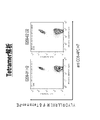
- CTL cells obtained by culture were double-stained with PE-labeled tetramer and APC-H7-labeled anti-CD8 antibody, and the fluorescence intensity was measured with FACS Aria.
- the cell fraction stained with both labels was detected at the position surrounded by a line (upper side of each panel). Positive cells were confirmed in the two types of CTL lines (0209-01 H2, 0209-02 D2), which revealed that CTLs that recognize YLYDRLLRI (SEQ ID NO: 3) were obtained.
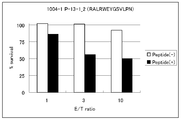
- the cytotoxic activity by a peptide-specific CTL line is shown.
- CTL E; effector cell
- T2 cells T2 cells
- E T ratio
- the survival rate of the target cell was calculated on the next day, and the survival rate was lower in the target cell that was pulsed with the peptide than in the non-pulsed target cell.
- the survival rate decreased according to the ratio of the co-cultured cells, the cytotoxic activity by peptide-specific CTL was shown.
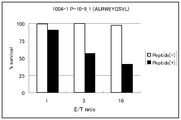
- the cytotoxic activity by a peptide-specific CTL line is shown.
- CTL E; effector cell
- T2 cells T2 cells
- E T2 cells
- T target cell
- the survival rate of the target cell was calculated on the next day, and the survival rate was lower in the target cell that was pulsed with the peptide than in the non-pulsed target cell.
- the survival rate decreased according to the ratio of the co-cultured cells, the cytotoxic activity by peptide-specific CTL was shown.
- the cytotoxic activity by a peptide-specific CTL line is shown.
- CTL E; effector cell
- T2 cells T2 cells
- E T2 cells
- T target cell
- the survival rate of the target cell was calculated on the next day, and the survival rate was lower in the target cell that was pulsed with the peptide than in the non-pulsed target cell.
- the survival rate decreased according to the ratio of the co-cultured cells, the cytotoxic activity by peptide-specific CTL was shown.
- Peptides and polypeptides The present invention provides peptides having the ability to induce CTL derived from PSF1 (hereinafter referred to as peptides of the present invention).
- PSF1-derived peptide means a peptide fragment consisting of a part of the amino acid sequence of PSF1.
- the amino acid sequence (SEQ ID NO: 1) and nucleic acid sequence (SEQ ID NO: 2) of PSF1 are disclosed in GeneBank (NP_066545 and NM_021067, respectively).
- the peptide of the present invention was found as a peptide having high binding affinity with the HLA-A * 02 antigen. This means that the peptide can be complexed with HLA-A * 02 and presented on the cell surface.
- “having the ability to induce CTL” means that the peptide is recognized by a specific CTL, in other words, has the ability to induce a peptide-specific CTL.
- Peptides with high binding affinity for HLA antigens as described above are expected to be highly effective as cancer vaccines, but candidate peptides selected as pharmaceutical active ingredients are about the presence of actual CTL inducibility. It is necessary to investigate. Whether or not it has the ability to induce peptide-specific CTL is determined by, for example, interferon- ⁇ (IFN- ⁇ ) in response to peptide-stimulated peripheral blood mononuclear cells (PBMC) in response to antigen-presenting cells pulsed with the corresponding peptide.
- IFN- ⁇ interferon- ⁇
- PBMC peripheral blood mononuclear cells
- the number of amino acid residues of the peptide of the present invention is preferably within the range of 8 to 14, more preferably 8 to 11, particularly preferably 9 or 10.
- peptides having high binding affinity for HLA antigens do not necessarily have high inducing ability.
- peptides selected from peptides comprising the amino acid sequence shown by YLYDRLLRI (SEQ ID NO: 3), RALRWEYGSVLPN (SEQ ID NO: 4) and ALRWEYGSV (SEQ ID NO: 5) showed particularly high CTL inducing ability and cytotoxic activity. . It can be seen that all of these three types of peptides belong to the region of positions 79 to 100 of PSF1 (see FIG. 3).
- YLYDRLLRI® SEQ ID NO: 3
- AYLYDRLLRI® SEQ ID NO: 6
- YLYDRLLRIR® SEQ ID NO: 7
- ALRWEYGSV SEQ ID NO: 5
- ALRWEYGSVL SEQ ID NO: 8
- RALRWEYGSV SEQ ID NO: 9
- the present invention also provides derivatives of PSF1-derived peptides (hereinafter referred to as derivatives of the present invention).
- derivatives of the present invention refers to a peptide having an CTL-inducing ability consisting of an amino acid sequence in which 1 or 2 amino acid substitutions, deletions and / or insertions are made in the amino acid sequence of the PSF1-derived peptide. means. Whether the derivative has a desired property can be examined by the above-described method.
- Amino acid substitution should be performed between homologous amino acids (polar amino acids, nonpolar amino acids, hydrophobic amino acids, hydrophilic amino acids, positively charged amino acids, negatively charged amino acids, aromatic amino acids, etc.) from the viewpoint of not changing the properties of the peptide. Is preferred. Deletion and insertion of amino acids are preferably performed so that the number of amino acid residues of the derivative is 8-14.
- peptides that bind to HLA have a regular amino acid sequence that depends on the type of HLA.
- the regular amino acid sequence is called a binding motif.
- the binding motif for HLA-A * 02 is the second amino acid from the N-terminus is isoleucine, leucine, valine, methionine, alanine or threonine, and the C-terminal amino acid is isoleucine, leucine, valine, methionine, alanine or threonine. It refers to a sequence (Current Pharmaceutical Design 2010, 16, 3149-3157).
- Binding of peptides having an HLA-A02 binding motif to HLA-A * 02 can be determined by computer analysis such as Bioinformatics and Molecular Analysis Section (NIH, Bethesda, MD) (Parker KC, et al., J. Immunol., 152: 163-175, 1994).
- amino acid substitutions, deletions and / or insertions are preferably allowed on the HLA-binding motif.
- the second amino acid from the N-terminal of the amino acid sequence of the derivative is isoleucine, leucine, valine, methionine, alanine or threonine
- the C-terminal amino acid is isoleucine, leucine, It is preferable to carry out so that it becomes valine, methionine, alanine or threonine.
- the amino acids constituting the peptides and derivatives of the present invention may be natural amino acids or amino acid analogs.
- amino acid analogs include N-acylated products, O-acylated products, esterified products, acid amidated products, and alkylated products of amino acids. Is mentioned.
- the peptides and derivatives of the present invention may be modified in their constituent amino acids or carboxyl groups as long as the functions are not significantly impaired. Modifications include N-terminal and free amino groups bound to formyl, acetyl, t-butoxycarbonyl, etc., and C-terminal and free carboxyl groups to methyl, ethyl, t-butyl, and benzyl groups. And the like. Others include, for example, the introduction of D-amino acids and other amino acid mimetics that can be used to increase the serum half-life of the peptides.
- the peptides and derivatives of the present invention can be produced by conventional peptide synthesis.
- such peptides can be prepared synthetically using either recombinant DNA techniques or chemical synthesis. Examples of such methods include the methods described in Peptide Synthesis, Interscience, New York, 1966; 'The Proteins, Vol2, Academic Press Inc., New York, 1976.
- Nucleic acid / vector The present invention further provides a nucleic acid molecule encoding the peptide or derivative of the present invention and a vector comprising the nucleic acid molecule.
- the vector containing the nucleic acid molecule of the present invention expresses the peptide or derivative of the present invention and presents them on the cell surface as a complex with HLA. This antigen-presenting cell can efficiently proliferate CTL that damages cancer cells in a peptide-specific manner.
- vectors incorporating the nucleic acid molecule of the present invention include various plasmids and viral vectors such as adenovirus, adeno-associated virus, retrovirus, vaccinia virus (Liu M, Acres B, Balloul JM, Bizouarne N, Paul S, Slos. P, Squiban P.eneGene-based vaccines and immunotherapeutics. Proc Natl Acad Sci USA 101 Suppl, 56714567-71, 2004). Methods for preparing vectors are well known in the art (Molecular Cloning: A laboraroy manual, 2nd edn. New York, Cold Spring Harbor Laboratory).
- the vector of the present invention can be administered to a patient in order to express the peptide or derivative of the present invention in an antigen-presenting cell in the patient.
- the vector of the present invention may be introduced into a patient-derived dendritic cell outside the patient's body, and the cell expressing the peptide or derivative of the present invention may be returned to the patient.
- These methods are well known in the art (Hrouda D, Dalgleish AG. Gene therapy for prostate cancer. Gene Ther 3: 845-52, 1996).
- the dosage varies depending on the disease state, the age, weight, etc. of each individual patient.
- the DNA amount is 0.1 ⁇ g to 100 mg, preferably 1 ⁇ g to 50 mg.
- the administration method include intravenous injection, subcutaneous administration, intradermal administration and the like.
- compositions further provides a pharmaceutical composition comprising a peptide or derivative of the present invention, a nucleic acid molecule encoding said peptide or derivative, or a vector comprising said nucleic acid molecule.
- the pharmaceutical composition of the present invention is useful in treating or preventing cancer.
- PSF1 is associated with the regeneration of cancer stem cells, it is also useful in the treatment or prevention of cancers that are resistant to chemotherapy or radiation therapy, relapsed, or metastatic.
- the pharmaceutical composition of the present invention may contain one type of peptide or derivative, or may contain a combination of two or more types of peptides and / or derivatives.
- CTLs in cancer patients are a collection of cells that recognize different cancer antigen peptides, it is more effective to use a combination of multiple types of peptides and / or derivatives. You may combine with cancer antigen peptides other than the peptide of this invention.
- the pharmaceutical composition of the present invention can contain a pharmaceutically acceptable carrier and the like in addition to the peptide or derivative.
- a pharmaceutically acceptable carrier cellulose, polymerized amino acid, albumin and the like can be used.
- the pharmaceutical composition of the present invention may be a liposome preparation, a particulate preparation bound to beads having a diameter of several ⁇ m, a preparation bound to a lipid, and the like.
- it can also administer with the adjuvant conventionally known to be used for vaccine administration so that an immune response may be effective. Suitable adjuvants are described in the literature (Johnson AG. (1994) Clin. Microbiol. Rev.,. 7: 277-89).
- Exemplary adjuvants include, but are not limited to, aluminum phosphate, aluminum hydroxide, and alum.
- the administration method is, for example, intradermal administration or subcutaneous administration.
- the pharmaceutical composition of the present invention can be used as a cancer vaccine.
- the dose can be appropriately adjusted depending on the disease state, the age, weight, etc. of the individual patient.
- the amount of the peptide or derivative in the pharmaceutical composition is 0.0001 to 1000 mg, preferably 0.001 to mg to 100. mg, more preferably 0.01 to 10 mg, even more preferably 0.1 to 5 mg or 0.5 to 30 mg. This is preferably administered daily, weekly, or once every few days, weeks or months for 1-3 years.
- the present invention further provides a method for inducing CTL.
- CTL has cytotoxicity against HLA-A * 02 positive cancer cells.
- Cytotoxic means to recognize a complex of a cancer antigen peptide and HLA on a cancer cell and to have the ability to damage the cell.
- CTL can be obtained, for example, by culturing PBMC collected from an HLA-A * 02 positive cancer patient in vitro in the presence of the peptide or derivative of the present invention.
- the CTL induction method of the present invention is useful for adoptive immunotherapy in which CTL induced in the body of a patient from whom PBMC has been collected is returned to damage cancer cells.
- the present invention further provides a method for inducing antigen-presenting cells.
- the method of the present invention induces antigen-presenting cells that can induce CTLs that damage HLA-A * 02-positive cancer cells.
- the method of the present invention includes, for example, culturing a cell having antigen-presenting ability derived from a patient having HLA-A * 02-positive cancer together with the peptide or derivative of the present invention, binding the peptide or derivative to HLA-A * 02, and We do by letting you present.
- a vector capable of expressing such a peptide may be introduced into a cell having antigen-presenting ability derived from a cancer patient who is positive for HLA-A * 02.
- a cell having an antigen presenting ability is, for example, a dendritic cell.
- the patient-derived dendritic cells can be obtained, for example, by separating cultured plate adherent cells from PBMC collected from the patient and culturing the cells in the presence of IL-4 and GM-CSF for about 1 week.
- Antigen-presenting cells induced by the method of the present invention can induce CTLs that specifically recognize complexes of peptides or derivatives presented on the cell surface and HLA-A * 02, and are administered to cancer patients. Induction of cancer-reactive CTL in the patient can be promoted.
- the present invention further provides a method for treating or preventing cancer, comprising administering to a patient a peptide, nucleic acid, or vector of the present invention.
- the present invention also provides a peptide, nucleic acid, or vector of the present invention for use in treating or preventing cancer.
- Example 1 Direct epitope discovery Cytotoxic T cells (CTLs) induced by cancer vaccines are thought to recognize and attack complexes of HLA-A * 02 molecules and peptides expressed on the surface of cancer cells. Therefore, the protein from which the peptide is derived may be a cancer antigen. Therefore, we searched for a PSF1 sequence peptide that binds to HLA-A * 02 molecules in cancer cells, and investigated the possibility that PSF1 becomes a cancer antigen.
- CTLs Cytotoxic T cells
- the extracted peptides were ultrafiltered using Amicon Ultra 10K (Millipore), and the peptides were fractionated by SCX (GL Sciences). For each fraction, the peptide was purified with a C18 column (GL Sciences), and centrifuged with Speed Vac. The sample after centrifugal concentration is redissolved in 0.1% TFA / 2% acetonitrile, measured using LTQ Orbitrap XL (Thermo Fisher Scientific), and then searched for the peptide sequence derived from PSF1 by MASCOT algorithm (Matrix Science) did.
- Example 2 In silico prediction In Example 1, PSF1 was shown to be a cancer antigen, and a plurality of cancer vaccine candidate peptides were identified. On the other hand, in reverse immunology, peptides that can bind to HLA-A * 02 molecules are obtained using software (Immunology and Cell Biology (2006) 84, 318-330). Therefore, a software search was performed to obtain PSF1 peptide candidates other than Example 1.
- Example 3 Mouse CTL induction experiment (ELISPOT assay) It is confirmed whether the PSF1 peptide obtained by the above example induces a peptide-specific CTL via HLA-A * 02.
- mice obtained CB6F1-Tg (HLA-A * 0201 / H2-Kb) A * 0201 from Taconic.
- a PBS solution was prepared by mixing up to 5 types of each peptide solution dissolved in DMSO, and mixed with the same amount of MOTANIDE ISA 51VG (SEPPIC) to prepare an emulsion antigen solution.
- Stimulator cell T2 cells used for ELISPOT assay were prepared by overnight culture in AIM-V medium supplemented with each immunized evaluation peptide (30 ⁇ g / mL) or negative control peptide (ELAGIGILTV) .
- the ELISPOT assay was performed by detecting IFN- ⁇ produced from the responder cell. The method followed the attachment of Mouse IFN- ⁇ ELISpot PLUS (MABTECH), a measurement kit. Pre-culture for IFN- ⁇ production was performed by adding cells to the 96-wel plate included in the measurement kit. Each stimulator cell was seeded at 5 ⁇ 10 4 cell / 100 ⁇ L / well in duplicate or single well, and then a responder cell was added at 2 ⁇ 10 6 cell / 100 ⁇ L / well. After overnight co-culture, the cells were removed, the wells were washed, and the primary antibody (biotin-anti-mouse IFN- ⁇ antibody) included in the measurement kit was added.
- the primary antibody biotin-anti-mouse IFN- ⁇ antibody
- the number of blue spots seen at the bottom of the well was measured with an ImmunoSpot® S5 Verse Analyzer (Cellular Technology Limited). In addition, the measured value when the spot was unclear due to being colored in a wide range was not adopted. In duplicate well, an average value was obtained, and the difference from the negative control was calculated to obtain the number of peptide-specific spots. The average value and SD were calculated using the values for each mouse, and when the difference between the average value and the SD value was a positive number, it was judged positive.
- Example 4 Human CTL induction experiment (ELISPOT assay) It is confirmed whether the PSF1 peptide obtained by Examples 1 and 2 induces a peptide-specific human CTL.
- HBSS (-) (Wako Pure Chemicals), to which HEPES (SIGMA) was added to 5 mM, was added to the cell pellet, suspended, and overlaid on Ficoll-paque PREMIUM (GE Healthcare). Centrifugation was carried out at 400 g for 40 minutes to collect peripheral blood monocyte cells (PBMC) separated in the intermediate layer.
- PBMC peripheral blood monocyte cells
- CD14 microbeads (Miltenyi Biotec) were added to PBMC and reacted at 4 ° C. for 15 minutes while rotating. Cells were passed through an LS column (Miltenyi Biotec), and CD14-positive cells were obtained using QuadroMACS (TM) Separator (Miltenyi Biotec). The remaining cells were collected and washed, and CD8 microbeads (Miltenyi Biotec) were added and reacted at 4 ° C. for 15 minutes. Thereafter, the same treatment was performed to obtain CD8 positive cells. The CD14 positive cells were subsequently induced to differentiate into monocyte-derived dendritic cells (Mo-DC), and the CD8 positive cells were once stored frozen.
- TM QuadroMACS Separator
- OK-432 (Chugai Pharmaceutical Co., Ltd.) was added to one plate at a concentration of 0.1 KE / ml, and the cells were collected the next day and seeded on a 96-well U bottom plate.
- One type of evaluation peptide was added at 20 ⁇ g / ml per half surface (48 wells) of the plate and cultured in a 37 ° C., 5% CO 2 incubator for one day to produce peptide-presenting cells.
- the second preparation was performed in the same manner on the other plate 12-14 days after the start of culture.
- peptide-presenting cells in the 96-well plate were irradiated with X-rays (30 Gy), and then cryopreserved CD8 positive cells were added to all wells for the first antigen stimulation.
- the culture solution used was an AIM-V medium containing antibiotics and serum supplemented with 10 ng / ml IL-7 (R & D Systems). After culturing for 7 days, the cells contained in the supernatant were collected, and co-cultured with the peptide-presented cells (X-irradiated) prepared in the second round, followed by second antigen stimulation in a 96-well plate.
- the stimulator cell T2 cells used in the ELISPOT assay were prepared by culturing overnight in AIM-V medium supplemented with the evaluation peptide (20 ⁇ g / mL). As a negative control stimulator cell, only T2 cells were used (no peptide). Each cell was irradiated with X-rays (30 Gy), washed with an AIM-V medium containing antibiotics and serum, and adjusted to a concentration of 2 ⁇ 10 5 cells / ml.
- the ELISPOT assay was performed by detecting IFN- ⁇ produced from the responder cell. The method followed the attachment of ELISpotPRO for Human IFN- ⁇ (MABTECH), which is a measurement kit. Responder cells were added to each 96-well plate of the measurement kit at 100 ⁇ L / well for 2 wells, and each cell was seeded with 100 ⁇ L / well of a stimulator cell to which the evaluation peptide was added or a negative control stimulator cell (no peptide). After overnight culture, cells in each well were removed and the wells were washed, and ALP-labeled anti-IFN- ⁇ antibody included in the measurement kit was added. After 2 hours of reaction at room temperature, the plate was thoroughly washed, and the substrate solution was added and left at room temperature for 5 minutes. Thorough washing with running water was performed to complete the color reaction, and the plate was air-dried.
- ELISpotPRO for Human IFN- ⁇ MABTECH
- the number of blue spots seen at the bottom of the well was measured with an ImmunoSpot® S5 Verse Analyzer.
- the number of peptide-specific spots was calculated by subtracting the number of spots from the negative control stimulator cell (no peptide) from the number of spots from the stimulator cell to which the peptide was added. When the difference was 50 or more, the following 7 peptides were positive in the examination for a plurality of donors.
- Tetramer assay Human CTL induction experiment (Tetramer assay) Tetramer assay was performed to confirm that PSF1 peptide-specific CTL was induced by another method.
- Tetramer assay A tetramer (MBL) for PSF1 peptide (YLYDRLLR) was prepared.
- CTL line cells were collected, stained with tetramer and APC H7-labeled anti-CD8 antibody (SK-1) (BD), and measured with FACS Aria (BD).
- Two types of CTL lines (0209-01 H2, 0209-02 D2) were used.
- TM cytotoxicity testing CellTracker
- the effector cells used for the cytotoxicity test were the three types of CTL lines (0209-1 H2; YLYDRLLRI, 1004-1 P-13-) obtained by the culture after the ELISPOT assay described above. 1_2; RALRWEYGSVLPN, 1004-1 P-10-9_1; ALRWEYGSVL). Cells were prepared to a concentration of 50, 15, 5 ⁇ 10 4 cells / ml after washing with AIM-V. The preparation was performed in AIM-V medium containing antibiotics and serum.
- E Effector cell
- cell ratio E / T ratio 10: 1, 3 : 1 and 1: 1 and co-cultured overnight.
- MACS Quant Miltenyi Biotec
- FACS Aria 0.1 ⁇ g / ml DAPI was added to separate live and dead cells.
- the percentage of DAPI negative cells (live cells) in the target cells labeled with CMFDA was determined, and the survival rate of the target cells was determined with the culture conditions (only target cells) that were not co-cultured with the effector cells as 100%.
- a peptide capable of significantly inducing CTL a DNA encoding the peptide, a pharmaceutical composition containing these peptides or DNA, and a cancer vaccine using these peptides or DNA. It was.
Landscapes
- Health & Medical Sciences (AREA)
- Chemical & Material Sciences (AREA)
- Life Sciences & Earth Sciences (AREA)
- Organic Chemistry (AREA)
- General Health & Medical Sciences (AREA)
- Medicinal Chemistry (AREA)
- Proteomics, Peptides & Aminoacids (AREA)
- Veterinary Medicine (AREA)
- Public Health (AREA)
- Animal Behavior & Ethology (AREA)
- Pharmacology & Pharmacy (AREA)
- Biochemistry (AREA)
- Molecular Biology (AREA)
- Genetics & Genomics (AREA)
- Biophysics (AREA)
- Immunology (AREA)
- Epidemiology (AREA)
- Engineering & Computer Science (AREA)
- Bioinformatics & Cheminformatics (AREA)
- Oncology (AREA)
- Mycology (AREA)
- Microbiology (AREA)
- Gastroenterology & Hepatology (AREA)
- Zoology (AREA)
- Toxicology (AREA)
- Nuclear Medicine, Radiotherapy & Molecular Imaging (AREA)
- General Chemical & Material Sciences (AREA)
- Chemical Kinetics & Catalysis (AREA)
- Peptides Or Proteins (AREA)
- Medicines Containing Antibodies Or Antigens For Use As Internal Diagnostic Agents (AREA)
- Medicines That Contain Protein Lipid Enzymes And Other Medicines (AREA)
- Pharmaceuticals Containing Other Organic And Inorganic Compounds (AREA)
Abstract
本発明はがん患者に対する特異的免疫療法に有用な、PSF1由来ペプチドを提供することを目的とする。本発明はPSF1由来ペプチドであって、CTLを誘導するペプチド、および本発明のペプチドを含むがんを治療または予防するための医薬組成物を提供する。
Description
本発明は、HLA- A*02陽性癌患者に対する特異的免疫療法に有用なPSF1由来ペプチドに関する。
PSF1はSLD5、 PSF2、 PSF3を構成タンパクとする4量体(GINS complex)を形成し、MCM(mini-chromosome maintenance complex)やcdc45と結合してDNA複製の開始や伸長に関係していることが知られている(非特許文献1-2)。
癌との関係については、ヒト乳癌細胞株においてPSF1の発現増加が認められており、PSF1を発現低下させると有意な増殖抑制がみられる。さらに、ヒト乳癌患者由来の癌組織内においてPSF1発現レベルが低い患者群では、高い患者群に比して有意に全生存率が高いことが示されている(非特許文献3)。
また、悪性度の高いメラノーマの他、肺癌や食道癌の癌組織内での発現も報告されている(非特許文献4-5、特許文献1)。
一方、PSF1と癌幹細胞との関連性についても報告されている(非特許文献5)。
癌との関係については、ヒト乳癌細胞株においてPSF1の発現増加が認められており、PSF1を発現低下させると有意な増殖抑制がみられる。さらに、ヒト乳癌患者由来の癌組織内においてPSF1発現レベルが低い患者群では、高い患者群に比して有意に全生存率が高いことが示されている(非特許文献3)。
また、悪性度の高いメラノーマの他、肺癌や食道癌の癌組織内での発現も報告されている(非特許文献4-5、特許文献1)。
一方、PSF1と癌幹細胞との関連性についても報告されている(非特許文献5)。
Structure of the human GINS complex and its assembly and functional interface in replication initiation. Kamada K. et al. Nat Struct Mol Biol 2007;14:388-396
The human GINS complex associates with cdc45 and MCM and is essential for DNA replication. Aparicio T. et al. Nucleic Acid Res 2009; 37:2087-2095
Up-regulation of psf1 promotes the growth of breast cancer cells. Nakahara I. et al. Genes to Cells 2010;15:1025-1024.
Comprehensive expression profiling of tumor cell lines identifies molecular signatures of melanoma progression. Ryu B. et al. ProsOne 2007;7:e594
PSF1, a DNA replication factor expressed widely in stem and progenitor cells, drives tumorigenic and metastatic properties. Nagahama Y. et al Cancer Res. 2010; 70: 1215-24
本発明は、癌患者に対する特異的免疫療法に有用なペプチドを提供することを目的とする。
本発明者らは、ヒト乳癌細胞株においてHLA-A*02分子の細胞外領域に結合するPSF1に由来するペプチドを同定した。さらにこれらのペプチドが、ペプチド特異的CTL(細胞傷害性T細胞)を誘導することを確認したことにより、本発明を完成した。
即ち本発明は、
(1) 配列番号1のアミノ酸配列からなるポリペプチドの一部であり、CTL誘導能をもつペプチド、
(2) 配列番号1の70~110位に含まれる連続した8~14残基の配列を有し、CTL誘導能をもつペプチド、
(3) 配列番号3~5のいずれかに示されるアミノ酸配列を含み、CTL誘導能をもつペプチド、
(4) 配列番号3~5のいずれかに示されるアミノ酸配列からなるペプチド、
(5) 配列番号3~5のいずれかに示されるアミノ酸配列において、1個、2個、または数個のアミノ酸が置換、欠失、および/または挿入されている、CTL誘導能をもつペプチド、
(6) 前記(1)から(5)のいずれかに記載のペプチドをコードする核酸分子、
(7) 前記(6)記載の核酸分子を含むベクター、
(8) 前記(1)から(5)のいずれかに記載のペプチド、前記(6)記載の核酸分子、または前記(7)記載のベクターを含む、医薬組成物、
(9) 癌を治療するための前記(8)記載の医薬組成物、
(10) 癌が転移性、化学療法もしくは放射線療法に耐性、または再発性である前記(9)記載の医薬組成物、
(11) 配列番号3~5のいずれかに示されるアミノ酸配列において、1個、または2個のアミノ酸が置換されている、CTL誘導能をもつペプチドであって、前記置換が、
配列番号3~5のいずれかに示されるアミノ酸配列におけるN末端から2番目のアミノ酸のイソロイシン、ロイシン、バリン、メチオニン、アラニンまたはスレオニンへの置換と、
配列番号3~5のいずれかに示されるアミノ酸配列におけるC末端アミノ酸のイソロイシン、ロイシン、バリン、メチオニン、アラニンまたはスレオニンへの置換から選択されるペプチド、
(12) 配列番号3に示されるアミノ酸配列を含むペプチドにおいて、配列番号3に示されるアミノ酸配列におけるN末端側にアラニンが付加したもの、もしくは配列番号3に示されるアミノ酸配列におけるC末端側にアルギニンが付加したものであるペプチド、
(13) 配列番号5に示されるアミノ酸配列を含むペプチドにおいて、配列番号5に示されるアミノ酸配列におけるN末端側にアルギニンが付加したもの、もしくは配列番号5に示されるアミノ酸配列におけるC末端側にロイシンが付加したものであるペプチド、
(14) 生体から採取された抗原提示細胞を前記(1)から(5)のいずれかに記載のペプチドと接触させることにより、抗原提示細胞を誘導する方法、
(15) HLA抗原と、前記(1)から(5)のいずれかに記載のペプチドの間で形成された複合体を含む、抗原提示細胞、
(16) 生体から採取されたT細胞を前記(1)から(5)のいずれかに記載のペプチドと接触させることにより、細胞傷害性T細胞を誘導する方法、
(17) 生体から採取されたT細胞を前記(1)から(5)のいずれかに記載のペプチドと接触させることにより誘導される、細胞傷害性T細胞、
(18) 前記(1)から(5)のいずれかに記載のペプチド、前記(6)記載の核酸分子、または前記(7)記載のベクターを患者に投与することにより、患者の癌を治療する方法、
(19) 癌を治療薬または予防薬としての使用のための前記(1)から(5)のいずれかに記載のペプチド、前記(6)記載の核酸分子、または前記(7)記載のベクター、および
(20) 癌を治療または予防するための医薬の製造のための前記(1)から(5)のいずれかに記載のペプチド、前記(6)記載の核酸分子、または前記(7)記載のベクターの使用
に関する。
(1) 配列番号1のアミノ酸配列からなるポリペプチドの一部であり、CTL誘導能をもつペプチド、
(2) 配列番号1の70~110位に含まれる連続した8~14残基の配列を有し、CTL誘導能をもつペプチド、
(3) 配列番号3~5のいずれかに示されるアミノ酸配列を含み、CTL誘導能をもつペプチド、
(4) 配列番号3~5のいずれかに示されるアミノ酸配列からなるペプチド、
(5) 配列番号3~5のいずれかに示されるアミノ酸配列において、1個、2個、または数個のアミノ酸が置換、欠失、および/または挿入されている、CTL誘導能をもつペプチド、
(6) 前記(1)から(5)のいずれかに記載のペプチドをコードする核酸分子、
(7) 前記(6)記載の核酸分子を含むベクター、
(8) 前記(1)から(5)のいずれかに記載のペプチド、前記(6)記載の核酸分子、または前記(7)記載のベクターを含む、医薬組成物、
(9) 癌を治療するための前記(8)記載の医薬組成物、
(10) 癌が転移性、化学療法もしくは放射線療法に耐性、または再発性である前記(9)記載の医薬組成物、
(11) 配列番号3~5のいずれかに示されるアミノ酸配列において、1個、または2個のアミノ酸が置換されている、CTL誘導能をもつペプチドであって、前記置換が、
配列番号3~5のいずれかに示されるアミノ酸配列におけるN末端から2番目のアミノ酸のイソロイシン、ロイシン、バリン、メチオニン、アラニンまたはスレオニンへの置換と、
配列番号3~5のいずれかに示されるアミノ酸配列におけるC末端アミノ酸のイソロイシン、ロイシン、バリン、メチオニン、アラニンまたはスレオニンへの置換から選択されるペプチド、
(12) 配列番号3に示されるアミノ酸配列を含むペプチドにおいて、配列番号3に示されるアミノ酸配列におけるN末端側にアラニンが付加したもの、もしくは配列番号3に示されるアミノ酸配列におけるC末端側にアルギニンが付加したものであるペプチド、
(13) 配列番号5に示されるアミノ酸配列を含むペプチドにおいて、配列番号5に示されるアミノ酸配列におけるN末端側にアルギニンが付加したもの、もしくは配列番号5に示されるアミノ酸配列におけるC末端側にロイシンが付加したものであるペプチド、
(14) 生体から採取された抗原提示細胞を前記(1)から(5)のいずれかに記載のペプチドと接触させることにより、抗原提示細胞を誘導する方法、
(15) HLA抗原と、前記(1)から(5)のいずれかに記載のペプチドの間で形成された複合体を含む、抗原提示細胞、
(16) 生体から採取されたT細胞を前記(1)から(5)のいずれかに記載のペプチドと接触させることにより、細胞傷害性T細胞を誘導する方法、
(17) 生体から採取されたT細胞を前記(1)から(5)のいずれかに記載のペプチドと接触させることにより誘導される、細胞傷害性T細胞、
(18) 前記(1)から(5)のいずれかに記載のペプチド、前記(6)記載の核酸分子、または前記(7)記載のベクターを患者に投与することにより、患者の癌を治療する方法、
(19) 癌を治療薬または予防薬としての使用のための前記(1)から(5)のいずれかに記載のペプチド、前記(6)記載の核酸分子、または前記(7)記載のベクター、および
(20) 癌を治療または予防するための医薬の製造のための前記(1)から(5)のいずれかに記載のペプチド、前記(6)記載の核酸分子、または前記(7)記載のベクターの使用
に関する。
本発明により、HLA-A*02陽性癌患者において癌細胞を傷害しうるCTLを誘導することができるPSF1由来ペプチドが提供された。本発明のPSF1由来ペプチドは、HLA-A*02陽性癌患者に対する特異的免疫療法を可能とする。
ペプチドおよびポリペプチド
本発明は、PSF1由来のCTL誘導能をもつペプチド(以下、本発明のペプチド)を提供する。
本発明は、PSF1由来のCTL誘導能をもつペプチド(以下、本発明のペプチド)を提供する。
本発明において「PSF1由来ペプチド」とは、PSF1のアミノ酸配列の一部からなるペプチド断片を意味する。PSF1のアミノ酸配列(配列番号1)および核酸配列(配列番号2)は、GeneBankにおいて開示されている(それぞれNP_066545およびNM_021067)。
本発明のペプチドは、HLA-A*02抗原と高い結合親和性をもつペプチドして見出された。このことは、そのペプチドがHLA-A*02と複合体を形成し細胞表面に提示されうることを意味する。
本発明において「CTL誘導能をもつ」とは、そのペプチドが特異的なCTLに認識される、言い換えればペプチド特異的CTLを誘導する能力を有することを意味する。上記のようなHLA抗原に対する高い結合親和性をもつペプチドは、癌ワクチンとして大いに効果的であることが期待されるが、医薬有効成分として選択される候補ペプチドは、実際のCTL誘導能の存在について調べる必要がある。ペプチド特異的なCTLを誘導する能力を有するか否かは、例えば、ペプチドで刺激した末梢血単核細胞(PBMC)が対応ペプチドをパルスした抗原提示細胞に反応してインターフェロン-γ(IFN-γ)のようなサイトカインを産生するか否かをELISA法等で測定して調べることができる。また、誘導されたCTLの細胞傷害活性は、51Cr放出試験等により確認することができる。CTLによる認識性を考慮すると、本発明のペプチドのアミノ酸残基数は8~14個の範囲内であることが好ましく、より好ましくは8~11個、特に好ましくは9または10個である。
上記のようにペプチドのCTL誘導能を調べた結果として、HLA抗原に対する高い結合親和性をもつペプチドは必ずしも高い誘導能をもつとは限らないことが発見された。しかしながら、YLYDRLLRI (配列番号3)、RALRWEYGSVLPN (配列番号4)およびALRWEYGSV (配列番号5) により示されたアミノ酸配列を含むペプチドから選択されたペプチドは、特に高いCTL誘導能および細胞傷害活性を示した。これらの3種類のペプチドは、いずれもPSF1の79~100位の領域に属していることがわかる(図3参照)。YLYDRLLRI (配列番号3)についてはこのアミノ酸配列を含むペプチドであるAYLYDRLLRI (配列番号6)やYLYDRLLRIR (配列番号7)についても高いCTL誘導能を示した。また、ALRWEYGSV(配列番号5) についても、このアミノ酸配列を含むペプチドであるALRWEYGSVL (配列番号8)やRALRWEYGSV (配列番号9)についても高いCTL誘導能を示した。
本発明は、またPSF1由来ペプチドの誘導体(以下、本発明の誘導体)も提供する。本発明において「PSF1由来ペプチドの誘導体」とは、PSF1由来ペプチドのアミノ酸配列において1または2個のアミノ酸の置換、欠失および/または挿入されたアミノ酸配列からなり、かつCTL誘導能をもつペプチドを意味する。誘導体が所望の性質を有するか否かは、前述の方法により調べることができる。
アミノ酸の置換は、ペプチドの性質を変化させない観点から、同族アミノ酸(極性アミノ酸、非極性アミノ酸、疎水性アミノ酸、親水性アミノ酸、陽性荷電アミノ酸、陰性荷電アミノおよび芳香族アミノ酸等)の間で行うことが好ましい。アミノ酸の欠失および挿入は、誘導体のアミノ酸残基数が8~14個となるように行うことが好ましい。
一般にHLAに結合するペプチドは、HLAの型に依存する規則性あるアミノ酸配列を有する。その規則性あるアミノ酸配列は、結合モチーフと呼ばれる。HLA- A*02に対する結合モチーフとは、N末端から第2番目のアミノ酸がイソロイシン、ロイシン、バリン、メチオニン、アラニンまたはスレオニンであり、C末端アミノ酸がイソロイシン、ロイシン、バリン、メチオニン、アラニンまたはスレオニンである配列をいう(Current Pharmaceutical Design 2010, 16, 3149-3157)。HLA-A02結合モチーフを有するペプチドのHLA- A*02に対する結合は、Bioinformatics and Molecular Analysis Section(NIH, Bethesda, MD)等のコンピューター解析により決定することができる(Parker KC, et al., J. Immunol., 152: 163-175, 1994)。
本発明において、アミノ酸の置換、欠失および/または挿入は、HLA結合モチーフ上許容されるものが好ましい。すなわち、アミノ酸の置換、欠失および/または挿入は、誘導体のアミノ酸配列のN末端から第2番目のアミノ酸がイソロイシン、ロイシン、バリン、メチオニン、アラニンまたはスレオニンであり、C末端アミノ酸がイソロイシン、ロイシン、バリン、メチオニン、アラニンまたはスレオニンとなるように行うことが好ましい。
本発明において、アミノ酸の置換、欠失および/または挿入は、HLA結合モチーフ上許容されるものが好ましい。すなわち、アミノ酸の置換、欠失および/または挿入は、誘導体のアミノ酸配列のN末端から第2番目のアミノ酸がイソロイシン、ロイシン、バリン、メチオニン、アラニンまたはスレオニンであり、C末端アミノ酸がイソロイシン、ロイシン、バリン、メチオニン、アラニンまたはスレオニンとなるように行うことが好ましい。
本発明のペプチドおよび誘導体を構成するアミノ酸は、天然のアミノ酸またはアミノ酸アナログであってよく、アミノ酸アナログとしては、アミノ酸のN-アシル化物、O-アシル化物、エステル化物、酸アミド化物、アルキル化物等が挙げられる。本発明のペプチドおよび誘導体は、機能を著しく損なわない限りにおいてその構成アミノ酸またはカルボキシル基などが修飾されていてもよい。修飾は、N末端や遊離のアミノ基にホルミル基、アセチル基、t-ブトキシカルボニル基等を結合するものや、C末端や遊離のカルボキシル基にメチル基、エチル基、t-ブチル基、ベンジル基等を結合するものが挙げられる。他に、例えば、ペプチドの血清半減期を増加させるために用いることができるD-アミノ酸や他のアミノ酸の模倣体の導入も含まれる。
本発明のペプチドおよび誘導体は、通常のペプチド合成により製造することができる。例えば、そのようなペプチドは、組換えDNA技術または化学合成のいずれかを用いて、合成的に調整することができる。そのような方法として、例えば、Peptide Synthesis, Interscience, New York,1966; The Proteins, Vol2, Academic Press Inc.,New York, 1976に記載されている方法が挙げられる。
核酸・ベクター
本発明は、さらに本発明のペプチドまたは誘導体をコードする核酸分子および前記核酸分子を含むベクターを提供する。本発明の核酸分子を含むベクターは、抗原提示細胞に導入されると本発明のペプチドまたは誘導体を発現し、それらをHLAとの複合体として細胞表面に提示させる。この抗原提示細胞は、ペプチド特異的に癌細胞を傷害するCTLを効率的に増殖させることができる。
本発明は、さらに本発明のペプチドまたは誘導体をコードする核酸分子および前記核酸分子を含むベクターを提供する。本発明の核酸分子を含むベクターは、抗原提示細胞に導入されると本発明のペプチドまたは誘導体を発現し、それらをHLAとの複合体として細胞表面に提示させる。この抗原提示細胞は、ペプチド特異的に癌細胞を傷害するCTLを効率的に増殖させることができる。
本発明の核酸分子を組み込むベクターとしては、各種プラスミドおよびウィルスベクター、例えばアデノウィルス、アデノ関連ウィルス、レトロウィルス、ワクシニアウィルス等が挙げられる(Liu M, Acres B, Balloul JM, Bizouarne N, Paul S, Slos P, Squiban P. Gene-based vaccines and immunotherapeutics. Proc Natl Acad Sci USA 101 Suppl, 14567-71, 2004)。ベクターの調製方法は当業界にて周知である(Molecular Cloning: A laboraroy manual, 2nd edn. New York, Cold Spring Harbor Laboratory)。
本発明のベクターは、患者体内の抗原提示細胞において本発明のペプチドまたは誘導体を発現させるため患者に投与することができる。あるいは、患者体外において例えば患者由来の樹状細胞に本発明のベクターを導入し、本発明のペプチドまたは誘導体を発現させた細胞を患者に戻しても良い。これら方法は当業界において周知である(Hrouda D, Dalgleish AG. Gene therapy for prostate cancer. Gene Ther 3: 845-52, 1996)。
本発明のベクターを患者に投与する場合、投与量は疾患の状態、個々の患者の年齢、体重等により変化するが、例えばDNA量として、0.1μg~100mg、好ましくは1μg~50mgである。投与方法には、静脈注射、皮下投与、皮内投与等が挙げられる。
医薬組成物
本発明は、さらに本発明のペプチドまたは誘導体、前記ペプチドまたは誘導体をコードする核酸分子、または前記核酸分子を含むベクターを含む医薬組成物を提供する。本発明の医薬組成物は、癌を治療または予防において有用である。特に、PSF1は癌幹細胞の再生に関連していることから、化学療法や放射線療法に治療抵抗性、再発性、または転移性の癌の治療または予防においても有用である。本発明の医薬組成物は、1種類のペプチドまたは誘導体を含むものであってもよく、2種類以上のペプチドおよび/または誘導体を組み合わせて含んでも良い。癌患者のCTLは相異なる癌抗原ペプチドを認識する細胞の集合なので、複数種類のペプチドおよび/また誘導体を組み合わせて使用するとさらに効果的である。本発明のペプチド以外の癌抗原ペプチドと組み合わせても良い。
本発明は、さらに本発明のペプチドまたは誘導体、前記ペプチドまたは誘導体をコードする核酸分子、または前記核酸分子を含むベクターを含む医薬組成物を提供する。本発明の医薬組成物は、癌を治療または予防において有用である。特に、PSF1は癌幹細胞の再生に関連していることから、化学療法や放射線療法に治療抵抗性、再発性、または転移性の癌の治療または予防においても有用である。本発明の医薬組成物は、1種類のペプチドまたは誘導体を含むものであってもよく、2種類以上のペプチドおよび/または誘導体を組み合わせて含んでも良い。癌患者のCTLは相異なる癌抗原ペプチドを認識する細胞の集合なので、複数種類のペプチドおよび/また誘導体を組み合わせて使用するとさらに効果的である。本発明のペプチド以外の癌抗原ペプチドと組み合わせても良い。
本発明の医薬組成物は、ペプチドまたは誘導体に加えて、医薬上許容される担体などを含むことができる。担体としては、セルロース、重合アミノ酸、アルブミン等が使用できる。本発明の医薬組成物は、リポソーム製剤、直径数μmのビーズに結合させた粒子状の製剤、リピッドを結合させた製剤などであってもよい。また、免疫応答が効果的に成立するように、従来からワクチン投与に用いられることが知られているアジュバントとともに投与することもできる。適切なアジュバントは、文献 ( Johnson AG. (1994) Clin. Microbiol. Rev., 7:277-89) に記載されている。例示的なアジュバントは、リン酸アルミニウム、水酸化アルミニウム、およびミョウバンを含むが、これに限定されない。投与方法は、例えば皮内投与または皮下投与などである。
本発明の医薬組成物は、癌ワクチンとして使用可能である。投与量は、疾患の状態、個々の患者の年齢、体重等により適宜調整することができるが、通常医薬組成物中のペプチドまたは誘導体の量は、0.0001 mg ~ 1000 mg、好ましくは0.001 mg ~ 100 mg、より好ましくは0.01 mg ~10 mg、より一層好ましくは0.1 mg ~ 5 mgまたは0.5 mg ~ 30 mgである。これを毎日、毎週、または数日、数週または数ヶ月に1回、1~3年間継続して投与することが好ましい。
CTLの誘導方法
本発明はさらにCTLの誘導方法を提供する。本発明においては、CTLはHLA-A*02陽性癌細胞に対して細胞傷害性を有する。「細胞傷害性」とは、癌細胞上の癌抗原ペプチドとHLAとの複合体を認識し、その細胞を傷害する能力を有することを意味する。CTLは、例えば、HLA-A*02陽性癌患者から採取されたPBMCを、in vitroで本発明のペプチドまたは誘導体の存在下において培養することにより得られる。本発明のCTL誘導方法は、PBMCを採取した患者の体内に誘導したCTLを戻して癌細胞を傷害する養子免疫療法に有用である。
本発明はさらにCTLの誘導方法を提供する。本発明においては、CTLはHLA-A*02陽性癌細胞に対して細胞傷害性を有する。「細胞傷害性」とは、癌細胞上の癌抗原ペプチドとHLAとの複合体を認識し、その細胞を傷害する能力を有することを意味する。CTLは、例えば、HLA-A*02陽性癌患者から採取されたPBMCを、in vitroで本発明のペプチドまたは誘導体の存在下において培養することにより得られる。本発明のCTL誘導方法は、PBMCを採取した患者の体内に誘導したCTLを戻して癌細胞を傷害する養子免疫療法に有用である。
抗原提示細胞の誘導方法
本発明はさらに抗原提示細胞の誘導方法を提供する。本発明の方法は、HLA-A*02陽性癌細胞を傷害するCTLを誘導しうる抗原提示細胞を誘導するものである。本発明の方法は、例えば、HLA-A*02陽性癌である患者由来の抗原提示能を有する細胞を本発明のペプチドまたは誘導体とともに培養し、そのペプチドまたは誘導体をHLA-A*02に結合および提示させることにより行う。あるいはそのようなペプチドを発現可能なベクターを、HLA-A*02陽性である癌患者由来の抗原提示能を有する細胞に導入し発現させてもよい。抗原提示能を有する細胞は、例えば樹状細胞である。患者由来の樹状細胞は、例えば、患者より採取したPBMCから培養プレート接着細胞を分離し、その細胞をIL-4およびGM-CSFの存在下で約1週間培養することで得られる。本発明の方法により誘導された抗原提示細胞は、その細胞表面に提示するペプチドまたは誘導体とHLA-A*02との複合体を特異的に認識するCTLを誘導することができ、癌患者に投与された場合患者体内で癌反応性CTLの誘導を促進することができる。
本発明はさらに抗原提示細胞の誘導方法を提供する。本発明の方法は、HLA-A*02陽性癌細胞を傷害するCTLを誘導しうる抗原提示細胞を誘導するものである。本発明の方法は、例えば、HLA-A*02陽性癌である患者由来の抗原提示能を有する細胞を本発明のペプチドまたは誘導体とともに培養し、そのペプチドまたは誘導体をHLA-A*02に結合および提示させることにより行う。あるいはそのようなペプチドを発現可能なベクターを、HLA-A*02陽性である癌患者由来の抗原提示能を有する細胞に導入し発現させてもよい。抗原提示能を有する細胞は、例えば樹状細胞である。患者由来の樹状細胞は、例えば、患者より採取したPBMCから培養プレート接着細胞を分離し、その細胞をIL-4およびGM-CSFの存在下で約1週間培養することで得られる。本発明の方法により誘導された抗原提示細胞は、その細胞表面に提示するペプチドまたは誘導体とHLA-A*02との複合体を特異的に認識するCTLを誘導することができ、癌患者に投与された場合患者体内で癌反応性CTLの誘導を促進することができる。
その他
本発明はさらに、本発明のペプチド、核酸、またはベクターを患者に投与することを含む、癌を治療または予防する方法を提供する。また本発明は、癌を治療または予防するために使用する本発明のペプチド、核酸、またはベクターを提供する。
本発明はさらに、本発明のペプチド、核酸、またはベクターを患者に投与することを含む、癌を治療または予防する方法を提供する。また本発明は、癌を治療または予防するために使用する本発明のペプチド、核酸、またはベクターを提供する。
本発明を以下の実施例によりさらに詳細に説明するが、本発明はいかなる意味においてもこれらの実施例により制限されるものではない。
<実施例1 > Direct epitope discovery
癌ワクチンによって誘導される細胞傷害性T細胞(CTL)は、癌細胞表面に発現するHLA-A*02分子とペプチドの複合体を認識して攻撃すると考えられている。よって、ペプチドの由来となるタンパク質は癌抗原となる可能性がある。そこで、癌細胞のHLA-A*02分子に結合するPSF1配列ペプチドを探索し、PSF1が癌抗原となる可能性を調べた。
癌ワクチンによって誘導される細胞傷害性T細胞(CTL)は、癌細胞表面に発現するHLA-A*02分子とペプチドの複合体を認識して攻撃すると考えられている。よって、ペプチドの由来となるタンパク質は癌抗原となる可能性がある。そこで、癌細胞のHLA-A*02分子に結合するPSF1配列ペプチドを探索し、PSF1が癌抗原となる可能性を調べた。
(方法)
Direct epitope discovery法は既報 (Hawkins et al. J. Proteome. Res: 7, 1445-1457, 2008)を参考に条件設定して実施した。
Direct epitope discovery法は既報 (Hawkins et al. J. Proteome. Res: 7, 1445-1457, 2008)を参考に条件設定して実施した。
可溶性HLAベクターの構築と安定発現株の作製
ヒトHLA-A*02配列の細胞外タンパク領域をコードする遺伝子にCIIタグ(collargen typeII)配列を結合した発現ベクターを構築し、ヒト乳癌細胞株(MDA-MB-231、ATCC)に導入して安定発現株を作製した。
ヒトHLA-A*02配列の細胞外タンパク領域をコードする遺伝子にCIIタグ(collargen typeII)配列を結合した発現ベクターを構築し、ヒト乳癌細胞株(MDA-MB-231、ATCC)に導入して安定発現株を作製した。
PSF1エピトープペプチドの精製および同定
本細胞または本細胞に対してヒトPSF1を一過性に強制発現させた細胞の培養上清を回収し、発現させたHLA-A*02分子を抗CIIタグ抗体カラムで精製した(国際公開公報 WO2011/034128号)。150 mM NaCl/20 mM Tris緩衝液および400 mM NaCl/20 mM Tris緩衝液により抗CIIタグ抗体カラムを洗浄後、HLA-A*02分子に結合するペプチドを10%酢酸にて抽出した。抽出したペプチドをAmicon Ultra 10K(Millipore社)を用いて限外濾過し、SCX(GL Sciences社)によるペプチドの分画を行った。各フラクションに対し、C18カラム(GL Sciences社)にてペプチド精製を行い、Speed Vacによる遠心濃縮を行った。遠心濃縮後のサンプルを0.1% TFA/2% アセトニトリルに再溶解し、LTQ Orbitrap XL(Thermo Fisher Scientific社)を用いて測定後、MASCOTアルゴリズム(Matrix Science社)により、PSF1に由来するペプチド配列を検索した。
本細胞または本細胞に対してヒトPSF1を一過性に強制発現させた細胞の培養上清を回収し、発現させたHLA-A*02分子を抗CIIタグ抗体カラムで精製した(国際公開公報 WO2011/034128号)。150 mM NaCl/20 mM Tris緩衝液および400 mM NaCl/20 mM Tris緩衝液により抗CIIタグ抗体カラムを洗浄後、HLA-A*02分子に結合するペプチドを10%酢酸にて抽出した。抽出したペプチドをAmicon Ultra 10K(Millipore社)を用いて限外濾過し、SCX(GL Sciences社)によるペプチドの分画を行った。各フラクションに対し、C18カラム(GL Sciences社)にてペプチド精製を行い、Speed Vacによる遠心濃縮を行った。遠心濃縮後のサンプルを0.1% TFA/2% アセトニトリルに再溶解し、LTQ Orbitrap XL(Thermo Fisher Scientific社)を用いて測定後、MASCOTアルゴリズム(Matrix Science社)により、PSF1に由来するペプチド配列を検索した。
(結果)
PSF1のアミノ酸配列(配列番号1)と一致する5個のペプチドを見出した。その結果を表1に示した。癌細胞から回収したHLA-A*02分子ペプチド複合体の中にPSF1ペプチドが含まれていたことから、PSF1が癌抗原となる可能性が得られた。また、同定されたペプチドの中にはHLA-A*02結合ルール(Nature (1991) 351 290-296)に当てはまるペプチドが存在したことから、これらが癌ワクチンペプチドとしてCTL誘導活性を示す可能性が考えられた。
PSF1のアミノ酸配列(配列番号1)と一致する5個のペプチドを見出した。その結果を表1に示した。癌細胞から回収したHLA-A*02分子ペプチド複合体の中にPSF1ペプチドが含まれていたことから、PSF1が癌抗原となる可能性が得られた。また、同定されたペプチドの中にはHLA-A*02結合ルール(Nature (1991) 351 290-296)に当てはまるペプチドが存在したことから、これらが癌ワクチンペプチドとしてCTL誘導活性を示す可能性が考えられた。

<実施例2> in silico予測
実施例1においてPSF1が癌抗原であることが示され、複数の癌ワクチン候補ペプチドが同定された。一方、reverse immunologyではソフトウェアを用いてHLA-A*02分子に結合する可能性があるペプチドを得る(Immunology and Cell Biology (2006) 84, 318-330)。そこで、実施例1以外のPSF1ペプチド候補を得るためにソフトウェア検索を行った。
実施例1においてPSF1が癌抗原であることが示され、複数の癌ワクチン候補ペプチドが同定された。一方、reverse immunologyではソフトウェアを用いてHLA-A*02分子に結合する可能性があるペプチドを得る(Immunology and Cell Biology (2006) 84, 318-330)。そこで、実施例1以外のPSF1ペプチド候補を得るためにソフトウェア検索を行った。
(方法)
HLA-A*02分子に結合するペプチドの予測は3種類のソフトウェア
NetMHC http://www.cbs.dtu.dk/services/NetMHC、
BIMAS http://www-bimas.cit.nih.gov/molbio/hla_bind/、
SYFPEITHI http://www.syfpeithi.de/
を用いて実施した。これらのソフトウェアにPSF1全長アミノ酸配列を入力し、9 merおよび10 merのペプチドに関する結合スコアを得た。
HLA-A*02分子に結合するペプチドの予測は3種類のソフトウェア
NetMHC http://www.cbs.dtu.dk/services/NetMHC、
BIMAS http://www-bimas.cit.nih.gov/molbio/hla_bind/、
SYFPEITHI http://www.syfpeithi.de/
を用いて実施した。これらのソフトウェアにPSF1全長アミノ酸配列を入力し、9 merおよび10 merのペプチドに関する結合スコアを得た。
(結果)
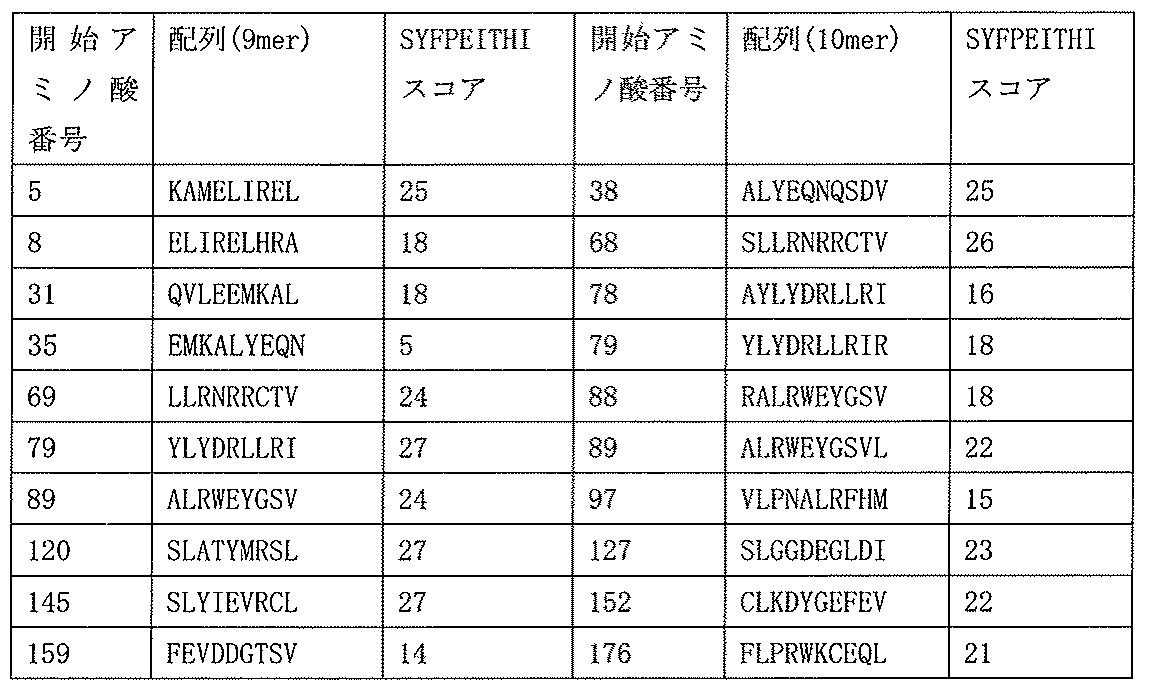
PSF1全長に由来する9 merおよび10 merのペプチドにおいてスコアが高いペプチドが複数得られた。SYFPEITHI によって得られたスコアを表2に示す。これらのペプチドはHLA-A*02分子に結合できる可能性があることを示している。
PSF1全長に由来する9 merおよび10 merのペプチドにおいてスコアが高いペプチドが複数得られた。SYFPEITHI によって得られたスコアを表2に示す。これらのペプチドはHLA-A*02分子に結合できる可能性があることを示している。
<実施例3> マウスCTL誘導実験(ELISPOT assay)
上記の実施例によって得られたPSF1ペプチドが、HLA-A*02を介してペプチド特異的なCTLを誘導するかどうか確認する。
上記の実施例によって得られたPSF1ペプチドが、HLA-A*02を介してペプチド特異的なCTLを誘導するかどうか確認する。
(方法)
ペプチド免疫とresponder cellの回収
ペプチドによるマウスCTL誘導活性の測定はマウス免疫モデルを用いて実施した。マウスは、CB6F1-Tg (HLA-A*0201/H2-Kb)A*0201をタコニック社より入手した。DMSOに溶解した各ペプチド液を最大5種類混合してPBS溶液を作製し、同量のMONTANIDE ISA 51VG(SEPPIC社)と混合してエマルジョン抗原液を作製した。抗原液はマウスの腹部の両側2箇所に50 μLずつ皮下注射した(各ペプチド50 μg/マウス、N=3-4)。注射してから2週間後に脾臓を摘出し、溶解液(BD Pharm LyseTM、BD社)にて赤血球を除去した脾臓細胞をELISPOT assayのresponder cellとして回収した。
ペプチド免疫とresponder cellの回収
ペプチドによるマウスCTL誘導活性の測定はマウス免疫モデルを用いて実施した。マウスは、CB6F1-Tg (HLA-A*0201/H2-Kb)A*0201をタコニック社より入手した。DMSOに溶解した各ペプチド液を最大5種類混合してPBS溶液を作製し、同量のMONTANIDE ISA 51VG(SEPPIC社)と混合してエマルジョン抗原液を作製した。抗原液はマウスの腹部の両側2箇所に50 μLずつ皮下注射した(各ペプチド50 μg/マウス、N=3-4)。注射してから2週間後に脾臓を摘出し、溶解液(BD Pharm LyseTM、BD社)にて赤血球を除去した脾臓細胞をELISPOT assayのresponder cellとして回収した。
stimulator cellの作製
ELISPOT assayに使用するstimulator cellのT2細胞(ATCC)は、免疫したそれぞれの評価ペプチド(30 μg/mL)または、ネガティブコントロールペプチド(ELAGIGILTV)を添加したAIM-V培地で一晩培養して作製した。
ELISPOT assayに使用するstimulator cellのT2細胞(ATCC)は、免疫したそれぞれの評価ペプチド(30 μg/mL)または、ネガティブコントロールペプチド(ELAGIGILTV)を添加したAIM-V培地で一晩培養して作製した。
ELISPOT assay
ELISPOT assayは、responder cellから産生されるIFN-γを検出することによって実施した。方法は測定キットであるMouse IFN-γ ELISpotPLUS(MABTECH社)の添付書に従った。IFN-γ産生のための前培養は、測定キットに含まれる96-welプレートに細胞を添加して実施した。各stimulator cellを5×10⁴ cell /100 μL/wellにてduplicate wellまたはsingle wellで播種後、responder cellを2×10⁶ cell /100 μL/wellにて添加した。一晩共培養後,細胞を除去してwellを洗浄し、測定キットに含まれる1次抗体(biotin-抗マウスIFN-γ抗体)を添加した。室温で2時間反応後にwellを洗浄し、2次抗体(streptavidin-ALP)を加えて1時間室温で反応させた。十分な洗浄後,基質液を添加して1分間室温で放置した。発色反応を終了させるために流水で十分洗浄し、プレートを風乾した。
ELISPOT assayは、responder cellから産生されるIFN-γを検出することによって実施した。方法は測定キットであるMouse IFN-γ ELISpotPLUS(MABTECH社)の添付書に従った。IFN-γ産生のための前培養は、測定キットに含まれる96-welプレートに細胞を添加して実施した。各stimulator cellを5×10⁴ cell /100 μL/wellにてduplicate wellまたはsingle wellで播種後、responder cellを2×10⁶ cell /100 μL/wellにて添加した。一晩共培養後,細胞を除去してwellを洗浄し、測定キットに含まれる1次抗体(biotin-抗マウスIFN-γ抗体)を添加した。室温で2時間反応後にwellを洗浄し、2次抗体(streptavidin-ALP)を加えて1時間室温で反応させた。十分な洗浄後,基質液を添加して1分間室温で放置した。発色反応を終了させるために流水で十分洗浄し、プレートを風乾した。
スポット数の測定と判定方法
Well底に見られる青色のスポットの数をImmunoSpot (R) S5 Verse Analyzer(Cellular Technology Limited社)にて計測した。なお、広範囲に着色されてスポットが不鮮明となった場合の計測値は不採用とした。duplicate wellは平均値を求め、さらにペプチド特異的なスポット数を得るためにネガティブコントロールとの差を計算した。マウスごとの値を用いて平均値とSDを計算し、平均値とSD値の差が正数となった場合に陽性と判断した。
Well底に見られる青色のスポットの数をImmunoSpot (R) S5 Verse Analyzer(Cellular Technology Limited社)にて計測した。なお、広範囲に着色されてスポットが不鮮明となった場合の計測値は不採用とした。duplicate wellは平均値を求め、さらにペプチド特異的なスポット数を得るためにネガティブコントロールとの差を計算した。マウスごとの値を用いて平均値とSDを計算し、平均値とSD値の差が正数となった場合に陽性と判断した。
(結果)
表3に示すペプチドについてペプチド特異的なスポットがみられ、このうち10個のペプチドを陽性と判断した。PSF1由来ペプチドによって特異的なCTLが誘導されたことから、ペプチドがHLA-A*02に提示され、さらにPSF1由来ペプチドを認識するマウスCTLが誘導されることが分かった。マウス免疫システムでの結果であるが、ヒトMHCであるHLA-A*02を介した反応であるため、ヒトでも同様にしてCTLが誘導される可能性が示唆された。
表3に示すペプチドについてペプチド特異的なスポットがみられ、このうち10個のペプチドを陽性と判断した。PSF1由来ペプチドによって特異的なCTLが誘導されたことから、ペプチドがHLA-A*02に提示され、さらにPSF1由来ペプチドを認識するマウスCTLが誘導されることが分かった。マウス免疫システムでの結果であるが、ヒトMHCであるHLA-A*02を介した反応であるため、ヒトでも同様にしてCTLが誘導される可能性が示唆された。

<実施例4> ヒトCTL誘導実験(ELISPOT assay)
実施例1および2によって得られたPSF1ペプチドが、ペプチド特異的なヒトCTLを誘導するかどうか確認する。
実施例1および2によって得られたPSF1ペプチドが、ペプチド特異的なヒトCTLを誘導するかどうか確認する。
(方法)
ヒトCTL誘導実験は既報 (Harano et al. Int. J. Cancer: 123, 2616-2625, 2008)を参考に条件設定して実施した。
ヒトCTL誘導実験は既報 (Harano et al. Int. J. Cancer: 123, 2616-2625, 2008)を参考に条件設定して実施した。
末梢血単核球細胞の回収
HLA-A*0201を有する健常人ボランティアのヘパリン加末梢血を3000 rpmで20分間遠心して血漿を除去した。HEPES(SIGMA社)を5 mMとなるように添加したHBSS(-)(和光純薬)を細胞ペレットに加えて懸濁し、Ficoll-paque PREMIUM(GE Healthcare社)に重層した。400 gで40分間遠心し、中間層に分離される末梢血単核球細胞(Peripheral Blood Monocyte cell; PBMC)を回収した。
HLA-A*0201を有する健常人ボランティアのヘパリン加末梢血を3000 rpmで20分間遠心して血漿を除去した。HEPES(SIGMA社)を5 mMとなるように添加したHBSS(-)(和光純薬)を細胞ペレットに加えて懸濁し、Ficoll-paque PREMIUM(GE Healthcare社)に重層した。400 gで40分間遠心し、中間層に分離される末梢血単核球細胞(Peripheral Blood Monocyte cell; PBMC)を回収した。
CD14陽性細胞およびCD8陽性細胞の調製
PBMCにCD14マイクロビーズ(Miltenyi Biotec社)を添加して4℃で15分間回転しながら反応させた。細胞をLSカラム(Miltenyi Biotec社)に通し、QuadroMACS(TM) Separator(Miltenyi Biotec社)を用いてCD14陽性細胞を得た。残りの細胞を回収して洗浄し、CD8マイクロビーズ(Miltenyi Biotec社)を添加して4℃で15分間反応させた。その後、同様に処理してCD8陽性細胞を得た。CD14陽性細胞については、引き続いて単球由来樹状細胞(Monocyte-derived dendritic cells:Mo-DC)への分化誘導を行い、CD8陽性細胞は一旦凍結保存した。
PBMCにCD14マイクロビーズ(Miltenyi Biotec社)を添加して4℃で15分間回転しながら反応させた。細胞をLSカラム(Miltenyi Biotec社)に通し、QuadroMACS(TM) Separator(Miltenyi Biotec社)を用いてCD14陽性細胞を得た。残りの細胞を回収して洗浄し、CD8マイクロビーズ(Miltenyi Biotec社)を添加して4℃で15分間反応させた。その後、同様に処理してCD8陽性細胞を得た。CD14陽性細胞については、引き続いて単球由来樹状細胞(Monocyte-derived dendritic cells:Mo-DC)への分化誘導を行い、CD8陽性細胞は一旦凍結保存した。
Mo-DCへの分化誘導とペプチド提示細胞の作製
CD8陽性細胞に対する抗原刺激は2回実施するので、これにあわせてペプチド提示細胞の作製も2回行った。RepCellプレート(CellSeed社)2枚にCD14陽性細胞を播種し、抗生物質と血清を含むAIM-V(Invitrogen社)培地に100 ng/ml GM-CSF(R&D Systems社)と10 ng/ml IL-4(R&D Systems社)を添加した培養液で37℃、5% CO2インキュベーター内で培養した(Mo-DC分化誘導)。
初回のペプチド提示細胞の作製は培養開始から5-7日後に実施した。一方のプレートに0.1 KE/mlの濃度でOK-432(中外製薬)を添加して、翌日に細胞を回収し96-well U底プレートに播種した。プレートの半面(48wells)当たりに一種類の評価ペプチドを20 μg/mlずつ添加し、37℃、5% CO2インキュベーター内で一日培養してペプチド提示細胞を作製した。2回目の作製は、培養開始から12-14日後にもう一方のプレートに対して同様に実施した。
CD8陽性細胞に対する抗原刺激は2回実施するので、これにあわせてペプチド提示細胞の作製も2回行った。RepCellプレート(CellSeed社)2枚にCD14陽性細胞を播種し、抗生物質と血清を含むAIM-V(Invitrogen社)培地に100 ng/ml GM-CSF(R&D Systems社)と10 ng/ml IL-4(R&D Systems社)を添加した培養液で37℃、5% CO2インキュベーター内で培養した(Mo-DC分化誘導)。
初回のペプチド提示細胞の作製は培養開始から5-7日後に実施した。一方のプレートに0.1 KE/mlの濃度でOK-432(中外製薬)を添加して、翌日に細胞を回収し96-well U底プレートに播種した。プレートの半面(48wells)当たりに一種類の評価ペプチドを20 μg/mlずつ添加し、37℃、5% CO2インキュベーター内で一日培養してペプチド提示細胞を作製した。2回目の作製は、培養開始から12-14日後にもう一方のプレートに対して同様に実施した。
ペプチド提示細胞を用いた抗原刺激によるCTLの誘導およびresponder cellの調製
96-wellプレート内のペプチド提示細胞に対してX線照射(30 Gy)した後、凍結保存していたCD8陽性細胞を全ウェルに添加して1回目の抗原刺激を行った。培養液は抗生物質と血清を含むAIM-V培地に10 ng/ml IL-7(R&D Systems社)を添加したものを用いた。7日間培養後、上清に含まれる細胞を回収して、2回目に作製したペプチド提示細胞(X線照射済み)と共培養して96-wellプレート内で2度目の抗原刺激を行った。この時の培養液には20 U/mL IL-2(塩野義製薬)を添加した。さらに7日間培養後、CTLを含む上清内細胞を回収して抗生物質と血清を含むAIM-V培地で洗浄し、ウェル当たり約2 x 10⁵ cells/mlの濃度に調製してELISPOT assayのresponder cellとした。
96-wellプレート内のペプチド提示細胞に対してX線照射(30 Gy)した後、凍結保存していたCD8陽性細胞を全ウェルに添加して1回目の抗原刺激を行った。培養液は抗生物質と血清を含むAIM-V培地に10 ng/ml IL-7(R&D Systems社)を添加したものを用いた。7日間培養後、上清に含まれる細胞を回収して、2回目に作製したペプチド提示細胞(X線照射済み)と共培養して96-wellプレート内で2度目の抗原刺激を行った。この時の培養液には20 U/mL IL-2(塩野義製薬)を添加した。さらに7日間培養後、CTLを含む上清内細胞を回収して抗生物質と血清を含むAIM-V培地で洗浄し、ウェル当たり約2 x 10⁵ cells/mlの濃度に調製してELISPOT assayのresponder cellとした。
stimulator cellの作製
ELISPOT assayに使用するstimulator cellのT2細胞は、評価ペプチド(20 μg/mL)を添加したAIM-V培地で一晩培養して作製した。ネガティブコントロールのstimulator cellはT2細胞のみを用いた(ペプチドなし)。各細胞に対してX線照射(30 Gy)し、抗生物質と血清を含むAIM-V培地で洗浄して2 x 10⁵ cells/mlの濃度に調製した。
ELISPOT assayに使用するstimulator cellのT2細胞は、評価ペプチド(20 μg/mL)を添加したAIM-V培地で一晩培養して作製した。ネガティブコントロールのstimulator cellはT2細胞のみを用いた(ペプチドなし)。各細胞に対してX線照射(30 Gy)し、抗生物質と血清を含むAIM-V培地で洗浄して2 x 10⁵ cells/mlの濃度に調製した。
ELISPOT assay
ELISPOT assayは、responder cellから産生されるIFN-γを検出することによって実施した。方法は測定キットであるELISpotPRO for Human IFN-γ(MABTECH社)の添付書に従った。測定キットの96-wellプレートにresponder cellを100 μL/wellで2wellずつ添加し、各wellに評価ペプチドを添加したstimulator cellまたはネガティブコントロールのstimulator cell(ペプチドなし)を100 μL/wellずつ播種した。一晩培養後,各wellの細胞を除去してwellを洗浄し、測定キットに含まれるALP標識抗IFN-γ抗体を添加した。室温で2時間反応後に十分洗浄し、基質液を添加して5分間室温で放置した。発色反応を終了させるために流水で十分な洗浄を実施し、プレートを風乾した。
ELISPOT assayは、responder cellから産生されるIFN-γを検出することによって実施した。方法は測定キットであるELISpotPRO for Human IFN-γ(MABTECH社)の添付書に従った。測定キットの96-wellプレートにresponder cellを100 μL/wellで2wellずつ添加し、各wellに評価ペプチドを添加したstimulator cellまたはネガティブコントロールのstimulator cell(ペプチドなし)を100 μL/wellずつ播種した。一晩培養後,各wellの細胞を除去してwellを洗浄し、測定キットに含まれるALP標識抗IFN-γ抗体を添加した。室温で2時間反応後に十分洗浄し、基質液を添加して5分間室温で放置した。発色反応を終了させるために流水で十分な洗浄を実施し、プレートを風乾した。
スポット数の測定と判定方法
Well底に見られる青色のスポットの数をImmunoSpot (R) S5 Verse Analyzerにて計測した。同一のresponder cellが入ったウェルにおいて、ペプチド添加したstimulator cellによるスポット数からネガティブコントロールのstimulator cell(ペプチドなし)によるスポット数を引いてペプチド特異的スポット数を計算した。差が50以上の場合を陽性としたところ、複数のドナーに対する検討において以下の7個のペプチドが陽性であった。
Well底に見られる青色のスポットの数をImmunoSpot (R) S5 Verse Analyzerにて計測した。同一のresponder cellが入ったウェルにおいて、ペプチド添加したstimulator cellによるスポット数からネガティブコントロールのstimulator cell(ペプチドなし)によるスポット数を引いてペプチド特異的スポット数を計算した。差が50以上の場合を陽性としたところ、複数のドナーに対する検討において以下の7個のペプチドが陽性であった。
(結果)
以下の表4に示す7個のペプチドが特異的なヒトCTLを誘導した。PSF1由来ペプチドによって特異的なCTLが誘導されたことから、ヒトにおいてPSF1由来ペプチドを認識するCTLが存在することが分かった。これにより、これらのPSF1ペプチドが癌ワクチンとなる可能性が示唆された。
以下の表4に示す7個のペプチドが特異的なヒトCTLを誘導した。PSF1由来ペプチドによって特異的なCTLが誘導されたことから、ヒトにおいてPSF1由来ペプチドを認識するCTLが存在することが分かった。これにより、これらのPSF1ペプチドが癌ワクチンとなる可能性が示唆された。
ELISPOT assay解析結果
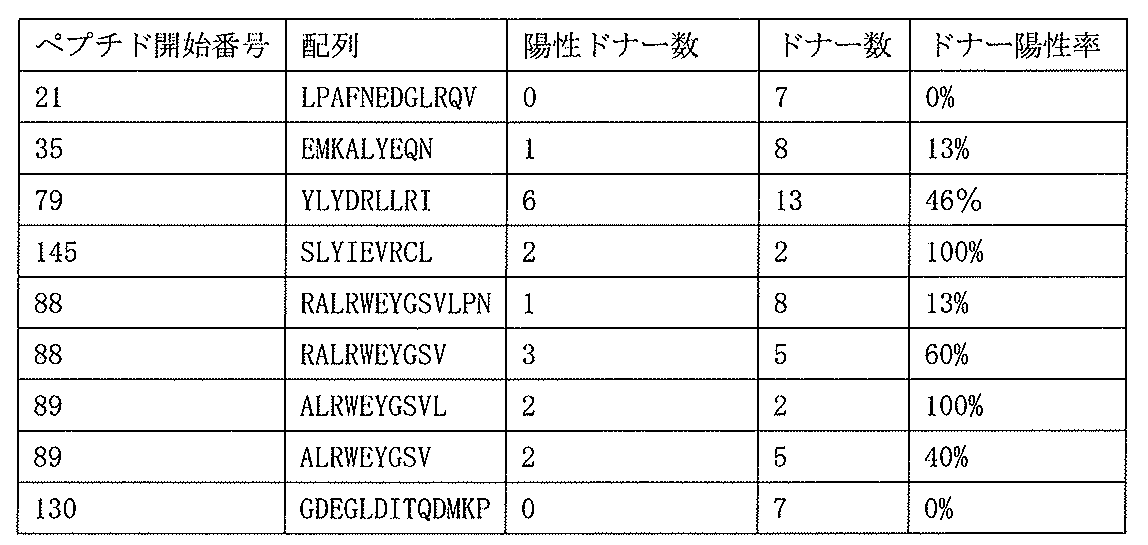
<実施例5> ヒトCTL誘導実験(Tetramer assay)
PSF1ペプチド特異的CTLが誘導されていることを別法にて確認するためにTetramer assayを実施した。
PSF1ペプチド特異的CTLが誘導されていることを別法にて確認するためにTetramer assayを実施した。
(方法)
CTLラインの作製
前述したELISPOT assayにおいて陽性が確認できた細胞について、抗生物質と血清を含むAIM-V培地に100 ng/mlのIL-15(Miltenyi Biotec社)を添加した培養液で培養を継続した。
CTLラインの作製
前述したELISPOT assayにおいて陽性が確認できた細胞について、抗生物質と血清を含むAIM-V培地に100 ng/mlのIL-15(Miltenyi Biotec社)を添加した培養液で培養を継続した。
Tetramer assay
PSF1ペプチド(YLYDRLLR)に対するtetramer(MBL社)を作製した。CTLラインの細胞を回収し、tetramerおよびAPC H7標識抗CD8抗体(SK-1)(BD社)で染色してFACS Aria(BD社)で測定した。CTLラインは2種類(0209-01 H2、0209-02 D2)使用した。
PSF1ペプチド(YLYDRLLR)に対するtetramer(MBL社)を作製した。CTLラインの細胞を回収し、tetramerおよびAPC H7標識抗CD8抗体(SK-1)(BD社)で染色してFACS Aria(BD社)で測定した。CTLラインは2種類(0209-01 H2、0209-02 D2)使用した。
(結果)
図1に示すとおり、いずれのCTLラインにおいても抗CD8抗体とtetramerの両方に反応する細胞集団が見られたことからPSF1ペプチドを認識するCTLラインが作製されていることが明らかになった。Tetramer陽性の細胞が見られたことから、ペプチド特異的ヒトCTLが存在することが直接的に明らかになった。
図1に示すとおり、いずれのCTLラインにおいても抗CD8抗体とtetramerの両方に反応する細胞集団が見られたことからPSF1ペプチドを認識するCTLラインが作製されていることが明らかになった。Tetramer陽性の細胞が見られたことから、ペプチド特異的ヒトCTLが存在することが直接的に明らかになった。
<実施例6> ヒトCTL細胞傷害性試験
CTLラインが、細胞を攻撃する活性を有するかどうか調べるために細胞傷害性試験を実施した。
CTLラインが、細胞を攻撃する活性を有するかどうか調べるために細胞傷害性試験を実施した。
具体的には、既報(New CFSE-based assay to determine susceptibility to lysis by cytotoxic T cells of leukemic precursor cells within a heterogeneous target cell population. Jedema I. et al. Blood (2004)103, 2677-2682) の方法を参考にして実験条件を設定した。
target cellの作製
細胞傷害性試験に使用するtarget cellとしてT2細胞に1 μMのCellTracker(TM) Green CMFDA(5-chloromethylfluorescein diacetate) (Invitrogen社)を添加して、37℃で15分間反応した。蛍光標識体である CMFDAでラベルした後、AIM-Vで洗浄し、各評価ペプチド(20 μg/ml)をT2細胞に添加して一晩培養した。ネガティブコントロールのtarget cellは蛍光ラベルのみ行ったT2細胞を用いた(ペプチド添加なし)。各細胞を抗生物質と血清を含むAIM-V培地で洗浄して5 x 10⁴ cells/mlの濃度に調製した。
細胞傷害性試験に使用するtarget cellとしてT2細胞に1 μMのCellTracker(TM) Green CMFDA(5-chloromethylfluorescein diacetate) (Invitrogen社)を添加して、37℃で15分間反応した。蛍光標識体である CMFDAでラベルした後、AIM-Vで洗浄し、各評価ペプチド(20 μg/ml)をT2細胞に添加して一晩培養した。ネガティブコントロールのtarget cellは蛍光ラベルのみ行ったT2細胞を用いた(ペプチド添加なし)。各細胞を抗生物質と血清を含むAIM-V培地で洗浄して5 x 10⁴ cells/mlの濃度に調製した。
effector cellの作製
細胞傷害性試験に使用するeffector cellは、前述のELISPOT assay後の培養によって得られた3種類のCTLライン(0209-1 H2; YLYDRLLRI、 1004-1 P-13-1_2; RALRWEYGSVLPN、 1004-1 P-10-9_1; ALRWEYGSVL)を用いた。細胞は、AIM-Vで洗浄後50, 15, 5 x 10⁴ cells/mlの濃度となるように調製した。調製は抗生物質と血清を含むAIM-V培地で行った。
細胞傷害性試験に使用するeffector cellは、前述のELISPOT assay後の培養によって得られた3種類のCTLライン(0209-1 H2; YLYDRLLRI、 1004-1 P-13-1_2; RALRWEYGSVLPN、 1004-1 P-10-9_1; ALRWEYGSVL)を用いた。細胞は、AIM-Vで洗浄後50, 15, 5 x 10⁴ cells/mlの濃度となるように調製した。調製は抗生物質と血清を含むAIM-V培地で行った。
細胞傷害性試験
CTL誘導した際に使用したペプチドを添加したtarget cell(T)またはペプチド未添加のネガティブコントロールのtarget cell(T)をそれぞれEffector cell(E)と細胞比(E/T比)10:1、 3:1、1:1で混合して一晩共培養した。MACS Quant(Miltenyi Biotec)もしくはFACS Ariaでの測定の直前に、生細胞と死細胞を染め分けるために0.1 μg/ml DAPIを添加した。解析は、CMFDAでラベルしたtarget cellにおけるDAPI陰性細胞(生細胞)の割合を求め、さらにeffector cellとの共培養を実施しなかった培養条件(target cellのみ)を100%としてtarget cellの生存率を計算した。
CTL誘導した際に使用したペプチドを添加したtarget cell(T)またはペプチド未添加のネガティブコントロールのtarget cell(T)をそれぞれEffector cell(E)と細胞比(E/T比)10:1、 3:1、1:1で混合して一晩共培養した。MACS Quant(Miltenyi Biotec)もしくはFACS Ariaでの測定の直前に、生細胞と死細胞を染め分けるために0.1 μg/ml DAPIを添加した。解析は、CMFDAでラベルしたtarget cellにおけるDAPI陰性細胞(生細胞)の割合を求め、さらにeffector cellとの共培養を実施しなかった培養条件(target cellのみ)を100%としてtarget cellの生存率を計算した。
(結果)
図2に示すとおり、いずれのCTLラインに対する実験でも、ネガティブコントロールのtarget cell(ペプチドなし)に比し、ペプチドを添加したtarget cellの生存率の方が低かった。各ペプチドによって誘導された3種類のCTLラインは、ペプチドを特異的に認識して細胞傷害効果を示すことがわかった。このことからPSF1ペプチドを細胞表面に提示する癌細胞がPSF1ペプチドを認識するCTLによって傷害される可能性が示唆され、PSF1ペプチドが癌ワクチンになりえることが示された。
図2に示すとおり、いずれのCTLラインに対する実験でも、ネガティブコントロールのtarget cell(ペプチドなし)に比し、ペプチドを添加したtarget cellの生存率の方が低かった。各ペプチドによって誘導された3種類のCTLラインは、ペプチドを特異的に認識して細胞傷害効果を示すことがわかった。このことからPSF1ペプチドを細胞表面に提示する癌細胞がPSF1ペプチドを認識するCTLによって傷害される可能性が示唆され、PSF1ペプチドが癌ワクチンになりえることが示された。
本発明によって、CTLを有意に誘導できるペプチド、そのペプチドをコードするDNA、これらのペプチドやDNAを含有する医薬組成物、およびこれらのペプチドやDNAを利用した癌ワクチンを提供することが可能となった。
Claims (10)
- 配列番号1のアミノ酸配列からなるポリペプチドの一部であり、CTL誘導能をもつペプチド。
- 配列番号:1の70~110位に含まれる連続した8~14残基の配列を有し、CTL誘導能をもつペプチド。
- 配列番号3~5のいずれかに示されるアミノ酸配列を含み、CTL誘導能をもつペプチド。
- 配列番号3~5のいずれかに示されるアミノ酸配列からなるペプチド。
- 配列番号3~5のいずれかに示されるアミノ酸配列において、1個、2個、または数個のアミノ酸が置換、欠失、および/または挿入されている、CTL誘導能をもつペプチド。
- 請求項1から5のいずれかに記載のペプチドをコードする核酸分子。
- 請求項6記載の核酸分子を含むベクター。
- 請求項1から5のいずれかに記載のペプチド、請求項6記載の核酸分子、または請求項7記載のベクターを含む、医薬組成物。
- 癌を治療するための請求項8記載の医薬組成物。
- 癌が転移性、化学療法もしくは放射線療法に耐性、または再発性である請求項9記載の医薬組成物。
Priority Applications (9)
| Application Number | Priority Date | Filing Date | Title |
|---|---|---|---|
| US14/424,981 US9683016B2 (en) | 2012-08-31 | 2013-08-29 | PSF1-derived peptide |
| DK13833212.7T DK2891663T3 (en) | 2012-08-31 | 2013-08-29 | PSF1-Derived Peptide |
| NO13833212A NO2891663T3 (ja) | 2012-08-31 | 2013-08-29 | |
| EP13833212.7A EP2891663B8 (en) | 2012-08-31 | 2013-08-29 | Psf1-derived peptide |
| JP2014533063A JP5920742B2 (ja) | 2012-08-31 | 2013-08-29 | Psf1由来ペプチド |
| ES13833212.7T ES2662808T3 (es) | 2012-08-31 | 2013-08-29 | Péptido obtenido de PSF1 |
| US15/413,343 US9919039B2 (en) | 2012-08-31 | 2017-01-23 | Partner of SLD five 1 (PSF1)-derived peptide |
| US15/891,238 US10617750B2 (en) | 2012-08-31 | 2018-02-07 | Partner of SLD five 1 (PSF1)-derived peptide |
| US16/815,068 US20200206330A1 (en) | 2012-08-31 | 2020-03-11 | Partner of sld five 1 (psf1)-derived peptide |
Applications Claiming Priority (2)
| Application Number | Priority Date | Filing Date | Title |
|---|---|---|---|
| JP2012-191050 | 2012-08-31 | ||
| JP2012191050 | 2012-08-31 |
Related Child Applications (2)
| Application Number | Title | Priority Date | Filing Date |
|---|---|---|---|
| US14/424,981 A-371-Of-International US9683016B2 (en) | 2012-08-31 | 2013-08-29 | PSF1-derived peptide |
| US15/413,343 Continuation US9919039B2 (en) | 2012-08-31 | 2017-01-23 | Partner of SLD five 1 (PSF1)-derived peptide |
Publications (1)
| Publication Number | Publication Date |
|---|---|
| WO2014034754A1 true WO2014034754A1 (ja) | 2014-03-06 |
Family
ID=50183559
Family Applications (1)
| Application Number | Title | Priority Date | Filing Date |
|---|---|---|---|
| PCT/JP2013/073084 Ceased WO2014034754A1 (ja) | 2012-08-31 | 2013-08-29 | Psf1由来ペプチド |
Country Status (9)
| Country | Link |
|---|---|
| US (4) | US9683016B2 (ja) |
| EP (1) | EP2891663B8 (ja) |
| JP (1) | JP5920742B2 (ja) |
| DK (1) | DK2891663T3 (ja) |
| ES (1) | ES2662808T3 (ja) |
| HU (1) | HUE036243T2 (ja) |
| NO (1) | NO2891663T3 (ja) |
| PT (1) | PT2891663T (ja) |
| WO (1) | WO2014034754A1 (ja) |
Families Citing this family (1)
| Publication number | Priority date | Publication date | Assignee | Title |
|---|---|---|---|---|
| CN111518216B (zh) * | 2019-02-02 | 2024-02-02 | 上海细胞治疗集团有限公司 | 多肽、含有多肽的组合物及其在肿瘤免疫中的应用 |
Citations (4)
| Publication number | Priority date | Publication date | Assignee | Title |
|---|---|---|---|---|
| WO2003042661A2 (en) | 2001-11-13 | 2003-05-22 | Protein Design Labs, Inc. | Methods of diagnosis of cancer, compositions and methods of screening for modulators of cancer |
| WO2007119515A1 (ja) * | 2006-03-28 | 2007-10-25 | Dainippon Sumitomo Pharma Co., Ltd. | 新規腫瘍抗原ペプチド |
| WO2008102557A1 (en) * | 2007-02-21 | 2008-08-28 | Oncotherapy Science, Inc. | Peptide vaccines for cancers expressing tumor-associated antigens |
| WO2011034128A1 (ja) | 2009-09-16 | 2011-03-24 | 塩野義製薬株式会社 | コラーゲンネオエピトープ抗体 |
Family Cites Families (6)
| Publication number | Priority date | Publication date | Assignee | Title |
|---|---|---|---|---|
| US4966848A (en) * | 1988-02-08 | 1990-10-30 | The General Hospital Corporation | Isolation, purification, characterization, cloning and sequencing of N α-acetyltransferase |
| US5223421A (en) * | 1989-10-25 | 1993-06-29 | The General Hospital Corporation | Identification of methionine Nα-acetyltransferase |
| US5595756A (en) * | 1993-12-22 | 1997-01-21 | Inex Pharmaceuticals Corporation | Liposomal compositions for enhanced retention of bioactive agents |
| US5688489A (en) * | 1995-09-15 | 1997-11-18 | Resolution Pharmaceuticals, Inc. | Non-receptor mediated imaging agents |
| WO2003033675A2 (en) * | 2001-10-19 | 2003-04-24 | Dgi Bio Technologies, Inc. | Identification of binding partners for specific proteins |
| GB0518877D0 (en) * | 2005-09-15 | 2005-10-26 | Medical Res Council | Markers and methods |
-
2013
- 2013-08-29 NO NO13833212A patent/NO2891663T3/no unknown
- 2013-08-29 HU HUE13833212A patent/HUE036243T2/hu unknown
- 2013-08-29 WO PCT/JP2013/073084 patent/WO2014034754A1/ja not_active Ceased
- 2013-08-29 US US14/424,981 patent/US9683016B2/en not_active Expired - Fee Related
- 2013-08-29 PT PT138332127T patent/PT2891663T/pt unknown
- 2013-08-29 JP JP2014533063A patent/JP5920742B2/ja not_active Expired - Fee Related
- 2013-08-29 DK DK13833212.7T patent/DK2891663T3/en active
- 2013-08-29 EP EP13833212.7A patent/EP2891663B8/en active Active
- 2013-08-29 ES ES13833212.7T patent/ES2662808T3/es active Active
-
2017
- 2017-01-23 US US15/413,343 patent/US9919039B2/en not_active Expired - Fee Related
-
2018
- 2018-02-07 US US15/891,238 patent/US10617750B2/en not_active Expired - Fee Related
-
2020
- 2020-03-11 US US16/815,068 patent/US20200206330A1/en not_active Abandoned
Patent Citations (4)
| Publication number | Priority date | Publication date | Assignee | Title |
|---|---|---|---|---|
| WO2003042661A2 (en) | 2001-11-13 | 2003-05-22 | Protein Design Labs, Inc. | Methods of diagnosis of cancer, compositions and methods of screening for modulators of cancer |
| WO2007119515A1 (ja) * | 2006-03-28 | 2007-10-25 | Dainippon Sumitomo Pharma Co., Ltd. | 新規腫瘍抗原ペプチド |
| WO2008102557A1 (en) * | 2007-02-21 | 2008-08-28 | Oncotherapy Science, Inc. | Peptide vaccines for cancers expressing tumor-associated antigens |
| WO2011034128A1 (ja) | 2009-09-16 | 2011-03-24 | 塩野義製薬株式会社 | コラーゲンネオエピトープ抗体 |
Non-Patent Citations (21)
| Title |
|---|
| "Molecular Cloning: A laboratory manual", COLD SPRING HARBOR LABORATORY |
| "Peptide Synthesis", 1966, INTERSCIENCE |
| "The Proteins", vol. 2, 1976, ACADEMIC PRESS INC. |
| APARICIO ET AL., NUCLEIC ACID RES, vol. 37, 2009, pages 2087 - 2095 |
| CURRENT PHARMACEUTICAL DESIGN, vol. 16, 2010, pages 3149 - 3157 |
| HARANO ET AL., INT. J. CANCER, vol. 123, 2008, pages 2616 - 2625 |
| HAWKINS ET AL., J. PROTEOME. RES, vol. 7, 2008, pages 1445 - 1457 |
| HROUDA D; DALGLEISH A G.: "Gene therapy for prostate cancer", GENE THER, vol. 3, 1996, pages 845 - 52, XP000616512 |
| IMMUNOLOGY AND CELL BIOLOGY, vol. 84, 2006, pages 318 - 330 |
| IZUMI ET AL., GENES TO CELLS, vol. 15, 2010, pages 1025 - 1024 |
| IZUMI NAKAHARA ET AL.: "PSF1 Idenshi no Kajo Hatsugen wa Nyugan Saibo no Zoshoku o Sokushin suru", 32ND ANNUAL MEETING OF THE MOLECULAR BIOLOGY SOCIETY OF JAPAN YOSHISHU, 2009, pages 1P-0755, XP008176884 * |
| JEDEMA I. ET AL.: "New CFSE-based assay to determine susceptibility to lysis by cytotoxic T cells of leukemic precursor cells within a heterogeneous target cell population", BLOOD, vol. 103, 2004, pages 2677 - 2682 |
| JOHNSON A G., CLIN. MICROBIOL. REV., vol. 7, 1994, pages 277 - 89 |
| KAMADA ET AL., NAT STRUCT MOL BIOL, vol. 14, 2007, pages 388 - 396 |
| LIU M; ACRES B; BALLOUL J M; BIZOUARNE N; PAUL S; SLOS P; SQUIBAN P.: "Gene-based vaccines and immunotherapeutics", PROC NATL ACAD SCI USA, vol. 101, 2004, pages 14567 - 71, XP002384828, DOI: doi:10.1073/pnas.0404845101 |
| NAGAHAMA Y. ET AL., CANCER RES., vol. 70, 2010, pages 1215 - 24 |
| NAKAHARA, I. ET AL.: "Up-regulation of PSF1 promotes the growth of breast cancer cells", GENES TO CELLS, vol. 15, 2010, pages 1015 - 1024, XP055196485 * |
| NATURE, vol. 351, 1991, pages 290 - 296 |
| PARKER K C ET AL., J. IMMUNOL., vol. 152, 1994, pages 153 - 175 |
| RYU B. ET AL., PROSONE, vol. 7, 2007, pages E594 |
| See also references of EP2891663A4 |
Also Published As
| Publication number | Publication date |
|---|---|
| NO2891663T3 (ja) | 2018-05-19 |
| US9683016B2 (en) | 2017-06-20 |
| US20150218216A1 (en) | 2015-08-06 |
| US20170173133A1 (en) | 2017-06-22 |
| JPWO2014034754A1 (ja) | 2016-08-08 |
| EP2891663B8 (en) | 2018-04-04 |
| PT2891663T (pt) | 2018-03-20 |
| HUE036243T2 (hu) | 2018-06-28 |
| US10617750B2 (en) | 2020-04-14 |
| EP2891663B1 (en) | 2017-12-20 |
| US20180169203A1 (en) | 2018-06-21 |
| US9919039B2 (en) | 2018-03-20 |
| US20200206330A1 (en) | 2020-07-02 |
| EP2891663A1 (en) | 2015-07-08 |
| DK2891663T3 (en) | 2018-03-26 |
| JP5920742B2 (ja) | 2016-05-18 |
| EP2891663A4 (en) | 2016-04-13 |
| ES2662808T3 (es) | 2018-04-09 |
Similar Documents
| Publication | Publication Date | Title |
|---|---|---|
| US11707512B2 (en) | Cancer vaccine composition | |
| RU2464275C2 (ru) | Пептидные вакцины для раков, экспрессирующих опухолеспецифические антигены | |
| CN1921878B (zh) | 属于Bcl-2家族的蛋白和其片段,和它们在癌症患者中的用途 | |
| JP5065273B2 (ja) | Hla−a24分子結合性kif由来ペプチド | |
| JP5920742B2 (ja) | Psf1由来ペプチド | |
| US10722563B2 (en) | Prostate-specific tumor antigens and uses thereof | |
| HK1261028A1 (en) | Cancer vaccine composition | |
| HK1143552A (en) | Cancer vaccine composition | |
| HK1143552B (en) | Cancer vaccine composition |
Legal Events
| Date | Code | Title | Description |
|---|---|---|---|
| 121 | Ep: the epo has been informed by wipo that ep was designated in this application |
Ref document number: 13833212 Country of ref document: EP Kind code of ref document: A1 |
|
| WWE | Wipo information: entry into national phase |
Ref document number: 14424981 Country of ref document: US |
|
| ENP | Entry into the national phase |
Ref document number: 2014533063 Country of ref document: JP Kind code of ref document: A |
|
| NENP | Non-entry into the national phase |
Ref country code: DE |