WO2014061728A1 - 化粧料組成物 - Google Patents
化粧料組成物 Download PDFInfo
- Publication number
- WO2014061728A1 WO2014061728A1 PCT/JP2013/078152 JP2013078152W WO2014061728A1 WO 2014061728 A1 WO2014061728 A1 WO 2014061728A1 JP 2013078152 W JP2013078152 W JP 2013078152W WO 2014061728 A1 WO2014061728 A1 WO 2014061728A1
- Authority
- WO
- WIPO (PCT)
- Prior art keywords
- hair
- cosmetic composition
- protein
- composition according
- protein glutaminase
- Prior art date
- Legal status (The legal status is an assumption and is not a legal conclusion. Google has not performed a legal analysis and makes no representation as to the accuracy of the status listed.)
- Ceased
Links
Images


Classifications
-
- A—HUMAN NECESSITIES
- A61—MEDICAL OR VETERINARY SCIENCE; HYGIENE
- A61K—PREPARATIONS FOR MEDICAL, DENTAL OR TOILETRY PURPOSES
- A61K8/00—Cosmetics or similar toiletry preparations
- A61K8/18—Cosmetics or similar toiletry preparations characterised by the composition
- A61K8/30—Cosmetics or similar toiletry preparations characterised by the composition containing organic compounds
- A61K8/64—Proteins; Peptides; Derivatives or degradation products thereof
- A61K8/66—Enzymes
-
- A—HUMAN NECESSITIES
- A61—MEDICAL OR VETERINARY SCIENCE; HYGIENE
- A61K—PREPARATIONS FOR MEDICAL, DENTAL OR TOILETRY PURPOSES
- A61K8/00—Cosmetics or similar toiletry preparations
- A61K8/18—Cosmetics or similar toiletry preparations characterised by the composition
- A61K8/30—Cosmetics or similar toiletry preparations characterised by the composition containing organic compounds
- A61K8/33—Cosmetics or similar toiletry preparations characterised by the composition containing organic compounds containing oxygen
- A61K8/34—Alcohols
-
- A—HUMAN NECESSITIES
- A61—MEDICAL OR VETERINARY SCIENCE; HYGIENE
- A61K—PREPARATIONS FOR MEDICAL, DENTAL OR TOILETRY PURPOSES
- A61K8/00—Cosmetics or similar toiletry preparations
- A61K8/18—Cosmetics or similar toiletry preparations characterised by the composition
- A61K8/30—Cosmetics or similar toiletry preparations characterised by the composition containing organic compounds
- A61K8/40—Cosmetics or similar toiletry preparations characterised by the composition containing organic compounds containing nitrogen
- A61K8/41—Amines
- A61K8/416—Quaternary ammonium compounds
-
- A—HUMAN NECESSITIES
- A61—MEDICAL OR VETERINARY SCIENCE; HYGIENE
- A61K—PREPARATIONS FOR MEDICAL, DENTAL OR TOILETRY PURPOSES
- A61K8/00—Cosmetics or similar toiletry preparations
- A61K8/18—Cosmetics or similar toiletry preparations characterised by the composition
- A61K8/30—Cosmetics or similar toiletry preparations characterised by the composition containing organic compounds
- A61K8/40—Cosmetics or similar toiletry preparations characterised by the composition containing organic compounds containing nitrogen
- A61K8/44—Aminocarboxylic acids or derivatives thereof, e.g. aminocarboxylic acids containing sulfur; Salts; Esters or N-acylated derivatives thereof
-
- A—HUMAN NECESSITIES
- A61—MEDICAL OR VETERINARY SCIENCE; HYGIENE
- A61P—SPECIFIC THERAPEUTIC ACTIVITY OF CHEMICAL COMPOUNDS OR MEDICINAL PREPARATIONS
- A61P17/00—Drugs for dermatological disorders
-
- A—HUMAN NECESSITIES
- A61—MEDICAL OR VETERINARY SCIENCE; HYGIENE
- A61Q—SPECIFIC USE OF COSMETICS OR SIMILAR TOILETRY PREPARATIONS
- A61Q19/00—Preparations for care of the skin
-
- A—HUMAN NECESSITIES
- A61—MEDICAL OR VETERINARY SCIENCE; HYGIENE
- A61Q—SPECIFIC USE OF COSMETICS OR SIMILAR TOILETRY PREPARATIONS
- A61Q5/00—Preparations for care of the hair
-
- A—HUMAN NECESSITIES
- A61—MEDICAL OR VETERINARY SCIENCE; HYGIENE
- A61Q—SPECIFIC USE OF COSMETICS OR SIMILAR TOILETRY PREPARATIONS
- A61Q5/00—Preparations for care of the hair
- A61Q5/04—Preparations for permanent waving or straightening the hair
-
- A—HUMAN NECESSITIES
- A61—MEDICAL OR VETERINARY SCIENCE; HYGIENE
- A61Q—SPECIFIC USE OF COSMETICS OR SIMILAR TOILETRY PREPARATIONS
- A61Q5/00—Preparations for care of the hair
- A61Q5/06—Preparations for styling the hair, e.g. by temporary shaping or colouring
-
- A—HUMAN NECESSITIES
- A61—MEDICAL OR VETERINARY SCIENCE; HYGIENE
- A61Q—SPECIFIC USE OF COSMETICS OR SIMILAR TOILETRY PREPARATIONS
- A61Q5/00—Preparations for care of the hair
- A61Q5/06—Preparations for styling the hair, e.g. by temporary shaping or colouring
- A61Q5/065—Preparations for temporary colouring the hair, e.g. direct dyes
-
- A—HUMAN NECESSITIES
- A61—MEDICAL OR VETERINARY SCIENCE; HYGIENE
- A61Q—SPECIFIC USE OF COSMETICS OR SIMILAR TOILETRY PREPARATIONS
- A61Q5/00—Preparations for care of the hair
- A61Q5/10—Preparations for permanently dyeing the hair
-
- A—HUMAN NECESSITIES
- A61—MEDICAL OR VETERINARY SCIENCE; HYGIENE
- A61Q—SPECIFIC USE OF COSMETICS OR SIMILAR TOILETRY PREPARATIONS
- A61Q5/00—Preparations for care of the hair
- A61Q5/12—Preparations containing hair conditioners
-
- C—CHEMISTRY; METALLURGY
- C12—BIOCHEMISTRY; BEER; SPIRITS; WINE; VINEGAR; MICROBIOLOGY; ENZYMOLOGY; MUTATION OR GENETIC ENGINEERING
- C12N—MICROORGANISMS OR ENZYMES; COMPOSITIONS THEREOF; PROPAGATING, PRESERVING, OR MAINTAINING MICROORGANISMS; MUTATION OR GENETIC ENGINEERING; CULTURE MEDIA
- C12N9/00—Enzymes; Proenzymes; Compositions thereof; Processes for preparing, activating, inhibiting, separating or purifying enzymes
- C12N9/14—Hydrolases (3)
- C12N9/78—Hydrolases (3) acting on carbon to nitrogen bonds other than peptide bonds (3.5)
- C12N9/80—Hydrolases (3) acting on carbon to nitrogen bonds other than peptide bonds (3.5) acting on amide bonds in linear amides (3.5.1)
-
- C—CHEMISTRY; METALLURGY
- C12—BIOCHEMISTRY; BEER; SPIRITS; WINE; VINEGAR; MICROBIOLOGY; ENZYMOLOGY; MUTATION OR GENETIC ENGINEERING
- C12Y—ENZYMES
- C12Y203/00—Acyltransferases (2.3)
- C12Y203/02—Aminoacyltransferases (2.3.2)
- C12Y203/02013—Protein-glutamine gamma-glutamyltransferase (2.3.2.13), i.e. transglutaminase or factor XIII
-
- C—CHEMISTRY; METALLURGY
- C12—BIOCHEMISTRY; BEER; SPIRITS; WINE; VINEGAR; MICROBIOLOGY; ENZYMOLOGY; MUTATION OR GENETIC ENGINEERING
- C12Y—ENZYMES
- C12Y305/00—Hydrolases acting on carbon-nitrogen bonds, other than peptide bonds (3.5)
- C12Y305/01—Hydrolases acting on carbon-nitrogen bonds, other than peptide bonds (3.5) in linear amides (3.5.1)
- C12Y305/01044—Protein-glutamine glutaminase (3.5.1.44)
-
- A—HUMAN NECESSITIES
- A61—MEDICAL OR VETERINARY SCIENCE; HYGIENE
- A61K—PREPARATIONS FOR MEDICAL, DENTAL OR TOILETRY PURPOSES
- A61K2800/00—Properties of cosmetic compositions or active ingredients thereof or formulation aids used therein and process related aspects
- A61K2800/20—Chemical, physico-chemical or functional or structural properties of the composition as a whole
- A61K2800/30—Characterized by the absence of a particular group of ingredients
-
- A—HUMAN NECESSITIES
- A61—MEDICAL OR VETERINARY SCIENCE; HYGIENE
- A61K—PREPARATIONS FOR MEDICAL, DENTAL OR TOILETRY PURPOSES
- A61K2800/00—Properties of cosmetic compositions or active ingredients thereof or formulation aids used therein and process related aspects
- A61K2800/40—Chemical, physico-chemical or functional or structural properties of particular ingredients
- A61K2800/42—Colour properties
- A61K2800/43—Pigments; Dyes
- A61K2800/432—Direct dyes
- A61K2800/4322—Direct dyes in preparations for temporarily coloring the hair further containing an oxidizing agent
-
- C—CHEMISTRY; METALLURGY
- C12—BIOCHEMISTRY; BEER; SPIRITS; WINE; VINEGAR; MICROBIOLOGY; ENZYMOLOGY; MUTATION OR GENETIC ENGINEERING
- C12Y—ENZYMES
- C12Y305/00—Hydrolases acting on carbon-nitrogen bonds, other than peptide bonds (3.5)
- C12Y305/01—Hydrolases acting on carbon-nitrogen bonds, other than peptide bonds (3.5) in linear amides (3.5.1)
Definitions
- the present invention relates to a cosmetic composition containing protein glutaminase.
- the present invention also relates to a protein hydrophilicity-improving agent and a penetration enhancer containing protein glutaminase.
- the swelling treatment of hair is performed using an alkaline substance such as ammonia or monoethanolamine (see, for example, Patent Document 1). This is because an alkaline substance is allowed to act on the hair to ionize the polar group of the protein in the hair and induce a structural change.
- hair treatment using such alkaline substances also causes side effects such as protein hydrolysis and loss of lipids in the hair, resulting in hair damage and skin irritation. become.
- An object of the present invention is to provide a cosmetic composition having excellent protein hydrophilicity-improving effects and penetration-promoting effects while suppressing hair damage and skin irritation. Moreover, this invention makes it a subject to provide the agent which has the hydrophilicity improvement effect of the outstanding protein, and the penetration promotion effect.
- the present inventors have been able to improve the hydrophilicity of protein glutaminase with respect to proteins in tissues, in particular, to swell hair, skin, etc. In addition, hair It was found that damage to the skin and the like hardly occurred. Furthermore, the present inventors have found that protein glutaminase effectively promotes penetration of the active ingredient contained in cosmetics or skin external preparations into hair and skin. Based on these findings, the present inventors have completed the present invention by further research.
- the present invention relates to the following.
- a cosmetic composition containing protein glutaminase [2] The cosmetic composition according to [1], wherein the protein glutaminase has a molecular weight of 10 to 40 kDa. [3] The cosmetic composition according to [1] or [2], wherein the content of protein glutaminase is 0.00001 to 10% by mass. [4] The cosmetic composition according to any one of [1] to [3], wherein the protein glutaminase is derived from a bacterium belonging to the genus Chryseobacterium . [5] The cosmetic composition according to any one of [1] to [4], further containing transglutaminase.
- these proteins swell due to an increase in electrostatic repulsion within the protein molecules in the hair, skin, etc., and as a result, the active ingredients contained in cosmetics or skin preparations for hair, skin, etc. Improves permeability.
- the hydrophilicity of the protein can be improved without causing damage to the hair, skin, etc. and skin irritation, and the hair, skin, etc. can be effectively swollen.
- an agent for improving the hydrophilicity of a protein in a tissue for example, hair, skin, etc.
- tissues (for example, hair, skin, etc.) of the active ingredient contained in cosmetics or a skin external preparation is provided. Any of these agents can be used not only for cosmetics but also for medicines such as external preparations for skin and transdermal absorption agents.
- FIG. 1 is a graph showing the degree of swelling of hair when treated with various samples.
- the vertical axis of the graph indicates the degree of swelling (%) of the hair, and the horizontal axis indicates the type of sample and the treatment time (3 minutes and 5 minutes).
- FIG. 2 is a microscopic image (400 magnifications) showing the state of the hair when treated with various samples for 3 minutes.
- “PG” indicates protein glutaminase.
- FIG. 3 is a graph showing the amount of ammonia produced when treated with various samples.
- the vertical axis of the graph indicates the amount of ammonia produced ( ⁇ g / mL), and the horizontal axis indicates the type of sample.
- FIG. 4 is a graph showing the amount of active ingredient that has passed through the cultured skin.
- the vertical axis of the graph shows the fluorescence intensity of the active ingredient labeled with fluorescein, and the horizontal axis shows the time (hour) after the addition of the active ingredient to the cultured skin.
- GGG-FITC ( ⁇ PG) indicates the fluorescence intensity when protein glutaminase is not used
- GGG-FITC (+ PG) indicates the fluorescence intensity when protein glutaminase is used.
- the protein glutaminase in the present invention is not particularly limited, and for example, the EC number (Enzyme Commission No.) is represented by EC3.5.1 (or EC3.5.1.1.X (X is an arbitrary number such as 44)). Can be used. Moreover, although not specifically limited, the protein glutaminase in this invention can use the thing derived from microorganisms. Examples of the microorganism include bacteria belonging to the genus Chryseobacterium , among which bacteria named as Chryseobacterium proteolyticum and Chryseobacterium gleum are preferable. As strains of Chryseobacterium proteolyticum , various strains can be used as long as the effects of the present invention are exhibited.
- Examples thereof include 9670 strains. These microorganisms are easily available from depositary institutions.
- the Chryseobacterium proteolyticum 9670 strain as described in JP-A-2005-52158, has the accession number FERM BP-7351, the National Institute of Advanced Industrial Science and Technology, Patent Biological Depositary Center (Higashi 1-chome, Tsukuba City, Ibaraki Prefecture 305-8566) No. 1 No. 3 center 6) is deposited.
- Protein glutaminase derived from Chryseobacterium proteolyticum 9670 strain is a single-chain polypeptide having a total length of 320 amino acids, and its amino acid sequence is registered as Genbank Accession No. BAB21508 (SEQ ID NO: 2).
- the base sequence encoding the polypeptide is registered as Genbank Accession No. AB046594 (SEQ ID NO: 1).
- polypeptide is encoded as a prepro form, with 135 residues on the N-terminal side corresponding to the prepro region and the remaining 185 residues corresponding to the mature form.
- the matured amino acid sequence is represented by SEQ ID NO: 4, and the base sequence encoding it is represented by SEQ ID NO: 3. Therefore, in the present invention, protein glutaminase can be referred to as a polypeptide comprising the same or substantially the same amino acid sequence as the amino acid sequence represented by SEQ ID NO: 4, for example.
- 135 residues of the prepro region 21 residues on the N-terminal side are presumed to be pre regions because they have signal sequence characteristics, and the remaining 114 residues are presumed to be pro regions. Yes.
- amino acid sequence substantially the same as the amino acid sequence represented by SEQ ID NO: 4 is 50% or more, preferably 60% or more, more preferably 70% or more, more preferably, the amino acid sequence represented by SEQ ID NO: 4.
- An amino acid sequence having 80% or more, still more preferably 90% or more, particularly preferably 95% or more, and most preferably 99% or more is mentioned.
- identity means the ratio of the same amino acid to all overlapping amino acid residues in an optimal alignment when two amino acid sequences are aligned using a mathematical algorithm known in the art ( %).
- amino acid sequence substantially the same as the amino acid sequence represented by SEQ ID NO: 4 examples include, for example, (1) one or more amino acid sequences represented by SEQ ID NO: 4 (preferably about 1 to 30) More preferably, about 1 to 10, more preferably 1 or 2 amino acid sequences deleted, (2) one or more amino acid sequences represented by SEQ ID NO: 4 (preferably 1 About 30 amino acids, more preferably about 1-10, more preferably 1 or 2 amino acid sequences added, and (3) one or more amino acid sequences represented by SEQ ID NO: 4 (preferably Is an amino acid sequence in which about 1 to 30, more preferably about 1 to 10, more preferably 1 or 2 amino acids are inserted, (4) in the amino acid sequence represented by SEQ ID NO: 4 Or an amino acid sequence in which two or more (preferably about 1 to 30, more preferably about 1 to 10, more preferably 1 or 2) amino acids are substituted with other amino acids, or (5) Examples include a combined amino acid sequence.
- the position of the insertion, deletion, addition or substitution is particularly limited as long as the polypeptide having such an amino acid sequence exhibits the effects of the present invention. It is not limited.
- the length of protein glutaminase is not particularly limited as long as the effects of the present invention are exhibited, but from the viewpoint of ease of preparation and polypeptide stability, for example, 400 amino acids or less, preferably 300 amino acids or less, more preferably 200 amino acids or less. It is.
- the method for producing protein glutaminase is not particularly limited, and can be produced using a known method.
- a bacterium belonging to the genus Chryseobacterium for example, Chryseobacterium proteolyticum 9670
- liquid culture for example, using LB medium at 25 ° C. for 40 hours
- the obtained culture solution is sterilized and filtered by ultrafiltration. It can be obtained by desalting and concentrating and purifying using ion exchange chromatography.
- the method and conditions for filtration and ion exchange chromatography can be appropriately selected using a technique known per se.
- a gene encoding protein glutaminase (for example, a polynucleotide sequence represented by SEQ ID NO: 1 or 3) is introduced into a host such as E. coli and Corynebacterium , and A method of expressing protein glutaminase and isolating and purifying it can also be used.
- methods using genes are described in, for example, Y. Kikuchi et al., Applied microbiology and biotechnology 78, 67-74 (2008), and S. Yamaguchi et al., Eur. J. Biochem. 268, 1410-1421. (2001).
- a commercially available protein glutaminase can also be used.
- the molecular weight of the protein glutaminase in the present invention is not particularly limited as long as the molecule has the activity of protein glutaminase, preferably 1 to 200 kDa, more preferably 5 to 100 kDa, still more preferably 10 to 60 kDa, and more preferably 10 to 40 kDa. Is even more preferred.
- the molecular weight can be calculated from the amino acid sequence, or can be measured using SDS polyacrylamide gel electrophoresis or the like. SDS polyacrylamide gel electrophoresis can be performed using a method known per se.
- Protein glutaminase activity is produced by reaction with protein glutaminase using N-carbobenzoxy-L-glutamyl-glycine (CBZ-Gln-Gly) as a substrate. It can be measured by examining the amount of ammonia (see, for example, S. Yamaguchi et al. Appl. Environ. Microbiol 66, 3337-3343 (2000)).
- CBZ-Gln-Gly used for the substrate may be produced by a method known per se, a commercially available product may be used, or consignment production to a subcontractor or the like may be used.
- the protein glutaminase is contained in a cosmetic composition.
- the content of protein glutaminase in the cosmetic composition of the present invention varies depending on the form of the preparation, frequency of use, treatment time, titer of protein glutaminase, etc., but is preferably 0.00001% by mass or more, more preferably It is 0.00005 mass% or more, More preferably, it is 0.0001 mass% or more.
- the said content becomes like this.
- it is 10 mass% or less, More preferably, it is 5 mass% or less, More preferably, it is 2 mass% or less.
- the cosmetic composition of the present invention preferably further contains, for example, transglutaminase as an active ingredient.
- Transglutaminase is a protein modifying enzyme that catalyzes the reaction between the ⁇ -carboxylamido group of a glutamine residue and the ⁇ -amino group of a lysine residue in a protein or peptide, and ⁇ - ( ⁇ - Glutamyl) has a function of catalyzing a cross-linking formation reaction via a lysine bond.
- Transglutaminase itself catalyzes the reaction between free glutamine residues and lysine residues, which are mainly present in the outermost layer of the hair, as described above, and crosslinks consisting of ⁇ - ( ⁇ -glutamyl) lysine bonds.
- the hair surface structure is refined, the damaged hair is improved, the moisture retention function is enhanced, the moisture retention of the hair is improved, and further, the damaged hair is improved by giving the hair gloss, flexibility and elasticity. Demonstrate.
- the hair can be essentially improved, and the strength (particularly, tensile strength) of the hair can be effectively increased.
- the transglutaminase in the present invention is not particularly limited, and for example, an EC number (Enzyme Commission No.) represented by EC 2.3.2.13 can be used.
- Transglutaminase is mainly present in various animal tissues and blood cells. Therefore, the transglutaminase used in the present invention is isolated and purified from the liver, serum, platelets, epidermis, etc. of mammals such as humans, mice, rats, guinea pigs, pigs, cows, sheep, etc. using a method known per se. be able to.
- transglutaminase derived not only from animals but also from microorganisms such as Streptomyces mobaraensis or from plants can be used regardless of the origin.
- transglutaminase a commercially available product can be preferably used.
- transglutaminase since transglutaminase is widely available in the food field, it can be easily obtained.
- the transglutaminase used in the present invention may be produced by a genetic recombination method.
- Transglutaminase usually requires calcium ions in its reaction, but depending on the type, transglutaminase independent of calcium ions also exists (for example, JP-A-1-27471). Therefore, although it is not essential to the composition of this invention, a calcium ion can be added as needed.
- Examples of the compound that can supply calcium ions in the present invention include calcium chloride, calcium sulfate, and calcium bromide. Of these, calcium chloride is preferred.
- the added amount is usually 1 to 20 mM as calcium concentration, preferably 3 to 10 mM.
- the molecular weight of the transglutaminase in the present invention is not particularly limited as long as the molecule has the activity of transglutaminase, preferably 1 to 200 kDa, more preferably 5 to 100 kDa, still more preferably 10 to 80 kDa, 30 Even more preferred is ⁇ 60 kDa.
- the molecular weight can be measured using SDS polyacrylamide gel electrophoresis. SDS polyacrylamide gel electrophoresis can be performed using a method known per se.
- the transglutaminase activity was determined by reacting benzyloxycarbonyl-L-glutaminylglycine and hydroxylamine as a substrate and adding calcium ions in the required amount when calcium ions were required. Can be measured by forming an iron complex in the presence of trichloroacetic acid, measuring the absorbance at 525 nm, and calculating and calculating the amount of hydroxamic acid from a calibration curve.
- the content of transglutaminase in the cosmetic composition of the present invention varies depending on the form of the preparation, frequency of use, treatment time, transglutaminase titer, etc., but is preferably 0.001% by mass or more, more preferably It is 0.01 mass% or more, More preferably, it is 0.02 mass% or more. Moreover, the said content becomes like this. Preferably it is 2 mass% or less, More preferably, it is 1 mass% or less, More preferably, it is 0.5 mass% or less.
- the mixing ratio of protein glutaminase and transglutaminase is not necessarily limited by the titer of both enzymes, but preferably 1
- the ratio is from 1: 1 to 1: 10000, more preferably from 1: 2 to 1: 1000, and even more preferably from 1:10 to 1: 100.
- the blending ratio of both enzymes is within the above range, the combined effect of protein glutaminase and transglutaminase is further enhanced, which can contribute to a significant improvement in hair strength.
- the cosmetic composition of the present invention further contains, for example, as an active ingredient, an amino acid or a salt thereof, an acylamino acid, an ester or amide thereof or a salt thereof, a peptide or a salt thereof, an acyl peptide or a salt thereof. It is preferable. These may be used alone or in combination of two or more.
- Acyl amino acids are not particularly limited, but include acylated amino acids identical to those exemplified above.
- Examples of acyl groups of acylamino acids and acylpeptides include acyl groups derived from saturated or unsaturated fatty acids having 2 to 23 carbon atoms.
- Specific examples thereof include acetyl groups, propanoyl groups, isopropanoyl groups, Butanoyl group, isobutanoyl group, sec-butanoyl group, tert-butanoyl group, pentanoyl group, isopentanoyl group, sec-pentanoyl group, tert-pentanoyl group, hexanoyl group, heptanoyl group, octanoyl group, tert-octanoyl group, 2- Examples include ethylhexanoyl group, nonanoyl group, isononanoyl group, decanoyl group, isodecanoyl group, undecanoyl group, lauroyl group, myristoyl group, palmitoyl group, stearoyl group, behenoyl group, undecylenoyl group and oleoyl group.
- acyl groups derived from acids of a single composition derived from naturally-occurring mixed fatty acids such as coconut oil fatty acid, castor oil fatty acid, olive oil fatty acid, palm oil fatty acid, or synthetically obtained fatty acids (including branched fatty acids) It may be an acyl group. Of these, one type may be used, or two or more types may be mixed and used.
- an acyl group derived from a saturated or unsaturated fatty acid having 2 to 18 carbon atoms more preferably an acyl group derived from a saturated or unsaturated fatty acid having 2 to 12 carbon atoms, More preferred is an acyl group derived from a saturated or unsaturated fatty acid having 2 to 6 atoms.
- An acyl group derived from a saturated fatty acid is preferred to an acyl group derived from an unsaturated fatty acid.
- the ester group of the acylamino acid ester includes an alkyl ester or an aralkyl ester, and examples thereof include an ester having a C 1-24 alkyl group or a C 1-24 alkenyl group.
- Alkyl esters having a C 1-6 alkyl group are preferred.
- Examples of the C 1-24 alkyl group include methyl, ethyl, propyl, isopropyl, butyl, isobutyl, sec-butyl, tert-butyl, pentyl, isopentyl, sec-pentyl, neopentyl, tert-pentyl, hexyl, sec-hexyl.
- C 1-6 alkyl groups include methyl, ethyl, isopropyl, propyl, butyl, isobutyl, sec-butyl, tert-butyl, pentyl, sec-pentyl, tert-pentyl, isopentyl, and hexyl.
- C 1-24 alkenyl groups include, for example, vinyl, allyl, propenyl, isopropenyl, butenyl, isobutenyl, pentenyl, isopentenyl, hexenyl, heptenyl, octenyl, nonenyl, decenyl, undecenyl, dodecenyl, tetradecenyl, oleyl, linoleyl and the like Can be mentioned.
- Examples of the amide group of the acylamino acid amide include alkylamide and aralkylamide, and examples thereof include an amide having a C 1-24 alkyl group or a C 1-24 alkenyl group. Alkyl amides having C 1-6 alkyl groups are preferred.
- the peptide is preferably a dipeptide, tripeptide or tetrapeptide composed of one or more of the amino acids exemplified above.
- a tripeptide is more preferable, and glycylglycylglycine (Gly-Gly-Gly) is particularly preferable.
- the content of the amino acid or salt thereof, acylamino acid, ester or amide or salt thereof, peptide or salt thereof, acyl peptide or salt thereof in the cosmetic composition of the present invention depends on the form of the preparation, frequency of use, treatment Although it varies depending on time, type and the like, it is preferably 0.005% by mass or more, more preferably 0.01% by mass or more, and further preferably 0.1% by mass or more. Moreover, the said content becomes like this. Preferably it is 50 mass% or less, More preferably, it is 30 mass% or less, More preferably, it is 20 mass% or less.
- the cosmetic composition of the present invention preferably further contains an alcohol in addition to the various components described above.
- an alcohol By containing alcohol, the permeability of the enzyme increases and the enzyme reaction proceeds more effectively. Thereby, for example, improvement of damaged hair, enhancement of moisture retention function, improvement of moisture retention of hair, and improvement of damaged hair improvement effect that gives gloss, flexibility and elasticity to hair can be expected.
- the alcohol contained in the cosmetic composition of the present invention is not particularly limited, and examples thereof include saturated or unsaturated monovalent C 1-6 alcohols, saturated or unsaturated monovalent C 8-38 alcohols, A polyhydric alcohol is mentioned.
- Saturated or unsaturated monovalent C 1-6 alcohols include ethanol, propanol, isopropanol, butanol and the like.
- Saturated or unsaturated monovalent C 8-38 alcohols include linear saturated alcohols such as capryl alcohol, lauryl alcohol, myristyl alcohol, cetyl alcohol, stearyl alcohol, aragidinyl alcohol, behenyl alcohol; 2-hexyldecyl alcohol; And branched chain saturated alcohols such as 2-octyldodecyl alcohol, isostearyl alcohol, and decyltetradecyl alcohol; linear unsaturated alcohols such as oleyl alcohol and linoleyl alcohol; and the like.
- polyhydric alcohol examples include ethylene glycol, propylene glycol, trimethylene glycol, 1,2-butylene glycol, 1,3-butylene glycol, tetramethylene glycol, 2,3-butylene glycol, pentamethylene glycol, 2-butene-1, Dihydric alcohols such as 4-diol, 1,2-hexanediol, hexylene glycol, octylene glycol; trivalent alcohols such as glycerin, trimethylolpropane, 1,2,6-hexanetriol; pentaerythritol, etc.
- Dihydric alcohols such as 4-diol, 1,2-hexanediol, hexylene glycol, octylene glycol
- trivalent alcohols such as glycerin, trimethylolpropane, 1,2,6-hexanetriol; pentaerythritol, etc.
- Tetravalent alcohol pentavalent alcohol such as xylitol; hexavalent alcohol such as sorbitol and mannitol, diethylene glycol, dipropylene glycol, triethylene glycol, polypropylene glycol, triglycerin , Tetraglycerin, polyglycerin and other polyhydric alcohol copolymers; ethylene glycol monomethyl ether, ethylene glycol monoethyl ether, ethylene glycol nomobutyl ether, ethylene glycol monophenyl ether, ethylene glycol monohexyl ether, ethylene glycol mono-2-methyl Divalent alcohol alkyl ethers such as hexyl ether, ethylene glycol isoamyl ether, ethylene glycol benzyl ether, ethylene glycol isopropyl ether, ethylene glycol dimethyl ether, ethylene glycol diethyl ether, ethylene glycol dibutyl ether; diethylene glycol monomethyl ether, diethylene glycol
- the alcohols exemplified above can be used singly or in combination of two or more.
- a saturated or unsaturated monovalent C 1-6 alcohol or polyhydric alcohol is preferable, and ethanol, propanol, ethylene glycol, propylene glycol, 1,2-butylene glycol, 1,3-butylene glycol, and 1,2-hexanediol are more preferable, and ethanol and 1,2-hexanediol are more preferable.
- the alcohol content in the cosmetic composition of the present invention varies depending on the form of the preparation, frequency of use, treatment time, type of alcohol used, etc., but is preferably 0.005% by mass or more, more preferably 0. It is 0.01 mass% or more, More preferably, it is 0.1 mass% or more. Moreover, the said content becomes like this. Preferably it is 50 mass% or less, More preferably, it is 30 mass% or less, More preferably, it is 20 mass% or less.
- the permeability of the enzyme increases, the enzyme reaction proceeds more effectively, the damaged hair is improved, the moisture retention function is enhanced, the moisture retention of the hair is improved, and the hair is further improved. It can be expected to improve the effect of improving damaged hair which gives glossiness, flexibility and elasticity.
- the pH of the cosmetic composition of the present invention is not particularly limited as long as it does not inhibit the effects of the present invention.
- the pH of the cosmetic composition of the present invention is preferably pH 2.5 to 10.0, preferably pH 3.0 to 9.0, and more preferably pH 4.0 to 7.5.
- the cosmetic composition of the present invention can further contain, for example, a medicinal component that can be generally used in cosmetics, in addition to the above components.
- a medicinal component that can be generally used in cosmetics, in addition to the above components.
- the component which can maintain the soundness of hair such as a whitening agent, a hair restorer, and a conditioning agent, or the component which can promote hair growth, etc. are preferable.
- whitening agents include hydroquinone and derivatives thereof such as hydroquinone and arbutin; ascorbic acid, sodium ascorbate, sodium ascorbate sulfate, magnesium ascorbate phosphate, sodium ascorbate phosphate, sodium glucoside, ascorbate glucoside, vitamin C ethyl, etc. Ascorbic acid and its derivatives; plant extracts; ellagic acid, gallic acid, pentagalloylglucose, resveratrol polyphenols and the like.
- pantothenic acid and its derivatives As hair restorer, pantothenic acid and its derivatives, allantoin, biotin, mononitroguaiacol, adenosine, pentadecanoic acid glyceride, dialkyl monoamine derivative, coleus extract, chlorophyll, photosensitizer, estradiol, ethinylestradiol, pyridoxine hydrochloride, thioxolone, sulfur, organic A sulfur substance etc. are mentioned.
- the content of various medicinal ingredients in the cosmetic composition of the present invention can be appropriately set within a range that does not impair the effects of the present invention, depending on the type of medicinal ingredients.
- the cosmetic composition of the present invention further contains components such as oil, surfactant, moisturizer, thickener, antioxidant, chelating agent, pH adjuster, preservative, fragrance, and pigment.
- components such as oil, surfactant, moisturizer, thickener, antioxidant, chelating agent, pH adjuster, preservative, fragrance, and pigment.
- the cosmetic composition of the present invention can be produced according to a conventional method, for example, a preparation of any form applicable to hair, skin and the like. Although it does not specifically limit, For example, it can be set as liquid forms, cream form, gel form, paste form, etc. Further, the liquid form can be used as a propellant by filling a pressure vessel in combination with, for example, carbon dioxide gas, oxygen gas, LPG or the like, if necessary.
- the appearance of the protein hydrophilicity-improving agent of the present invention is not particularly limited, and an arbitrary appearance such as transparency, white turbidity, and pearl shape can be appropriately selected.
- the cosmetic composition of the present invention is not particularly limited, but specific examples include a permanent agent, a color agent, a hair nourishing agent, a hair restorer, a hair cream, a hair lotion, a skin lotion for hair, an emulsion for hair, a hair ointment, a hair treatment.
- Hair conditioners, shampoos, rinses and other hair cosmetics face wash, lotion, milky lotion, cream, gel, serum, pack, mask, soap, body shampoo, white powder, foundation, lipstick, teak, eyeliner, mascara, Skin cosmetics such as eye shadow and eyebrow are listed.
- the effect of the cosmetic composition of the present invention described above is a characteristic action of protein glutaminase that improves the hydrophilicity of the protein in the tissue without damaging the tissue (for example, hair, skin, etc.). Is due to. This is probably because protein glutaminase has the effect of converting a glutamine residue in a protein or peptide to a glutamic acid residue, and such amino acid conversion is performed without breaking the peptide bond of the protein or peptide. Conceivable. Thus, protein glutaminase is useful in that it improves the hydrophilicity of proteins in tissues. Therefore, the present invention further provides a protein hydrophilicity-improving agent containing protein glutaminase.
- the protein in the “protein hydrophilicity-improving agent” of the present invention means a protein constituting human hair, skin, nails and the like.
- the effect of improving the hydrophilicity of the protein can promote the penetration of the active ingredient contained in the composition into tissues (for example, hair, skin, etc.). Therefore, the present invention further provides a penetration enhancer (active ingredient) containing protein glutaminase.
- the protein hydrophilicity improver and the penetration enhancer are collectively referred to as “the agent of the present invention”.
- the agent of the present invention is useful not only as a cosmetic but also as a medicine, and can be applied to mammals (eg, humans, mice, rats, hamsters, rabbits, cats, dogs, cows, sheep, monkeys, etc.). Is mentioned.
- mammals eg, humans, mice, rats, hamsters, rabbits, cats, dogs, cows, sheep, monkeys, etc.
- the subject of application of the agent of the present invention is preferably a human.
- the dose of the agent of the present invention may be appropriately adjusted according to the weight or size of the animal.
- the administration method when the agent of the present invention is used as a medicine is not particularly limited, but it is preferably parenteral administration and particularly preferably transdermal administration from the viewpoint of its effect.
- the dosage form of the agent of the present invention is preferably an external preparation (eg, external solid preparation (external powder etc.), external liquid preparation (liniment, lotion etc.), spray (external aerosol, pump spray etc.), Ointments, creams, gels, patches (tapes, poultices, etc.), but are not particularly limited thereto.
- the agent of the present invention can be produced by a method commonly used in the field of pharmaceutical technology, such as the method described in the Japanese Pharmacopoeia.
- the agent of the present invention may be the protein glutaminase as it is, or may be formulated by blending an appropriate pharmaceutically acceptable carrier as necessary in the formulation.
- the pharmaceutically acceptable carrier is not particularly limited, and examples thereof include an aqueous carrier, a milky carrier, a gel carrier, a cream base, and an ointment base. Specific examples include animal and vegetable oils and fats, waxes, and the like.
- the content of protein glutaminase in the agent of the present invention when formulated using a carrier is not particularly limited, and should be appropriately adjusted so as to contain the amount necessary to achieve the effects of the present invention. Can do.
- the content of protein glutaminase varies depending on the type of dosage form and the type of carrier used, but is, for example, 0.1 to 30% by mass, preferably 0.5 to 20% by mass, more preferably 1 to It is 20% by mass, more preferably 1 to 10% by mass.
- the dose of the agent of the present invention varies depending on the administration subject, target organ, symptom, administration method, etc., but when administered parenterally to humans, for example, in an adult weighing 60 kg, , About 0.01 to 10 mg per day, preferably about 0.1 to 5 mg, more preferably about 1 to 4 mg.
- an amount converted per 60 kg body weight can be administered.
- an appropriate dose may be set according to the administration subject.
- the above-mentioned daily dose can be administered once or divided into 2 to 4 times, preferably 2 to 3 times as necessary, with appropriate intervals.
- the agent of the present invention is generally used in, for example, the above-mentioned transglutaminase, amino acid or salt thereof, acylamino acid, ester or amide or salt thereof, peptide or salt thereof, acyl peptide or salt thereof, alcohol, and cosmetics. It can be used in combination with the obtained medicinal ingredients. Moreover, the agent of this invention can also be used together with the active ingredient normally used for an external preparation from the viewpoint of the effect.
- the term “combination” means the use of the agent of the present invention before, simultaneously with, or after the administration of the above-mentioned various components, and also includes the use as a combination agent in which both are mixed. To do. As long as both the agent of the present invention and the above various components are used and the effects of the above various components are enhanced, their dosage forms are not limited.
- the protein glutaminase solution was prepared according to the method described in Y. Kikuchi et al., Applied microbiology and biotechnology 78, 67-74 (2008). That is, an expression plasmid is prepared using a gene encoding the protein glutaminase of Chryseobacterium proteolyticum (polynucleotide sequence represented by SEQ ID NO: 3), introduced into Corynebacterium glutamicum, and proprotein glutaminase is secreted and expressed. This was purified and dissolved in a phosphate buffer.
- the transglutaminase solution was prepared by purifying transglutaminase obtained from the culture supernatant of Streptomyces mobaraense according to the method described in K. Yokoyama et al., Protein Expression and Purification 26 329-335 (2002), and using phosphate buffer. Prepared by dissolving in liquid.
- Example 1 protein glutaminase solution
- Comparative Example 1 ion-exchanged water
- Comparative Example 2 phosphoric acid
- Buffer 40 mM phosphoric acid, 40 mM acetic acid, 40 mM boric acid, sodium hydroxide, pH 4.5
- Table 4 shows that protein glutaminase is reacting with perm-treated hair when the protein glutaminase solution has a concentration of 0.01 mg / ml or more.
- the protein glutaminase solution and transglutaminase solution used as solution A and solution B were adjusted to pH 6.0 with a phosphate buffer.
- Ten hairs were collected from each hair bundle after the reaction, and the major axis and minor axis of each hair were measured with a laser size measuring instrument (LS-7010MR: manufactured by Keyence Corporation). Thereafter, the tensile strength of the hair was measured in pure water using a tensile tester (KES-G1: manufactured by Kato Tech Co., Ltd.) (measurement length 40 mm).
- the hair treated with the protein glutaminase solution was drier compared to the hair not treated with the protein glutaminase solution (Comparative Example 7 and Comparative Example 8).
- the hair was smooth and smooth, and the hair end was excellent, and there was no crispness.
- the treatment with a protein glutaminase solution improves the hydrophilicity of the hair surface, increases the adsorption of conditioning components (stearamidopropyldimethylamine, behentrimonium chloride, quaternium-80), and is an active ingredient for hair conditioners. (Panthenol) is the result of more permeation into the hair.
- the component of the used hair conditioner (“Proline” hair conditioner chamomile & honey, APITITA company) is as follows. Water, cetanol, stearamidopropyldimethylamine, behentrimonium chloride, cetyl esters, quaternium-80, fragrance, citric acid, BG, ceteareth-12, benzyl alcohol, phenoxyethanol, panthenol, glycerin, sorbic acid K, hydrolyzed oats , Tocopherol acetate, Tocopherol, Hachimis extract, Chamomile flower extract, White rose extract, Rosemary leaf extract, Butylphenylmethylpropanal, Sage leaf extract, Hypericum flower / leaf / stem extract, Coumarin, ⁇ -glucan oligosaccharide, Onisalvia oil , Orange peel oil
- Gly-Gly-Gly protein glutaminase Glycylglycylglycine (Peptide Institute, Inc.) ) was used to evaluate the permeability of Gly-Gly-Gly to commercially available artificially cultured skin (three-dimensional cultured human skin model: TESTSKIN LSE-high, manufactured by Toyobo Co., Ltd.).
- Gly-Gly-Gly was labeled with fluorescein using fluorescein isothiocyanate (FITC-I, manufactured by Dojindo) in order to enable highly sensitive detection.
- the cultured skin is cultured on a polycarbonate membrane at the bottom of the transwell and set on a 6-well assay plate.
- a phosphate buffer ( ⁇ ) was added so that the lower part (dermal side) of the cultured skin was immersed. Attach the assay ring to the top of the cultured skin (the stratum corneum side), add the FITC-labeled Gly-Gly-Gly sample, incubate for a certain period of time, permeate the cultured skin, and phosphate buffer (-) Permeability was evaluated by measuring the amount of FITC-labeled Gly-Gly-Gly that migrated to.
- the fluorescence intensity was measured under conditions of an excitation wavelength of 492 nm and a fluorescence wavelength of 520 nm.
- the fluorescence intensity was measured using a plate reader SpectraMaxM2 (manufactured by Molecular Devices). These results are shown in FIG.
- Formulation examples 1-5 Perm pretreatment agent (Formulation Example 1), permanent wave agent reducing agent (Formulation Example 2), oxidation hair dye (Formulation Example 3), color rinse (formulation example) 4) and the gel-like whitening serum (formulation example 5) are both useful for improving the hydrophilicity of proteins contained in hair, skin and the like.
- surface is a mass fraction (%) when the whole prescription is set to 100.
- the hair can be effectively swollen without causing damage to the hair, and further the strength of the hair can be effectively improved.
- Hair cosmetics can be provided.
- an agent that effectively improves the hydrophilicity of a protein can be provided, and in addition, an agent that promotes penetration of an active ingredient into a tissue can be provided.
Landscapes
- Health & Medical Sciences (AREA)
- Life Sciences & Earth Sciences (AREA)
- General Health & Medical Sciences (AREA)
- Public Health (AREA)
- Veterinary Medicine (AREA)
- Animal Behavior & Ethology (AREA)
- Chemical & Material Sciences (AREA)
- Organic Chemistry (AREA)
- Engineering & Computer Science (AREA)
- Bioinformatics & Cheminformatics (AREA)
- Genetics & Genomics (AREA)
- Wood Science & Technology (AREA)
- Zoology (AREA)
- Biochemistry (AREA)
- General Engineering & Computer Science (AREA)
- Birds (AREA)
- Epidemiology (AREA)
- Dermatology (AREA)
- Medicinal Chemistry (AREA)
- Molecular Biology (AREA)
- Biomedical Technology (AREA)
- Biotechnology (AREA)
- Microbiology (AREA)
- Emergency Medicine (AREA)
- Nuclear Medicine, Radiotherapy & Molecular Imaging (AREA)
- General Chemical & Material Sciences (AREA)
- Chemical Kinetics & Catalysis (AREA)
- Pharmacology & Pharmacy (AREA)
- Cosmetics (AREA)
- Enzymes And Modification Thereof (AREA)
- Medicines That Contain Protein Lipid Enzymes And Other Medicines (AREA)
- Micro-Organisms Or Cultivation Processes Thereof (AREA)
- Medicinal Preparation (AREA)
Abstract
本発明は、タンパク質より構成される毛髪、皮膚等の損傷を抑制しながら効果的に毛髪、皮膚等の浸水性を増大(膨潤)し得るタンパク質の親水性向上化剤を提供することを課題とする。 本発明は、プロテイングルタミナーゼを含有するタンパク質の親水性向上化剤、並びにプロテイングルタミナーゼ及びトランスグルタミナーゼの両方を含有するタンパク質の親水性向上化剤を提供することによって課題を解決する。
Description
本発明は、プロテイングルタミナーゼを含有する化粧料組成物に関する。また、本発明は、プロテイングルタミナーゼを含有する、タンパク質の親水性向上化剤および浸透促進剤に関する。
パーマやカラーリング等の毛髪処理を行うに際して、薬液の毛髪への浸透を促進するためには、毛髪を構成するタンパク質の親水性を向上させること、即ち、毛髪を膨潤させることが重要である。かくして、パーマ剤やカラーリング剤等の薬剤が浸透し易くなる。毛髪の膨潤処理は、多くの場合、アンモニアやモノエタノールアミン等のアルカリ性物質を用いて行われる(例えば、特許文献1を参照のこと)。これは、毛髪にアルカリ性物質を作用させることにより毛髪中タンパク質の極性基をイオン化させ、構造変化を誘発させるためである。しかしながら、このようなアルカリ性物質を用いた毛髪処理は、同時に毛髪中のタンパク質の加水分解や脂質の損失などの副作用も招き、結果として毛髪の損傷を引き起こしたり、皮膚刺激性を誘発したりすることになる。
一方、化粧料または皮膚外用剤に含まれる有効成分を毛髪や皮膚に浸透させるとともに、その浸透を促進させることは、有効成分の効果を高めるために重要である。そのため、従来から種々の浸透促進剤が用いられている。このような浸透促進剤としては、例えばジメチルスルホキシド、オレイン酸、ベンジルアルコール等が知られている(例えば、特許文献2を参照のこと)。しかしながら、これらの浸透促進剤は皮膚刺激性等の問題を同時に有しており、安全性の面で十分なものではない。また、その使用感も良好なものではない。従って、従来の浸透促進剤は使用者にとって十分に満足できるものとはいえない。
本発明は、毛髪の損傷および皮膚刺激を抑制しながら、優れたタンパク質の親水性向上効果および浸透促進効果を有する化粧料組成物を提供することを課題とする。また、本発明は、優れたタンパク質の親水性向上効果および浸透促進効果を有する剤を提供することを課題とする。
本発明者らは、上記課題に対して鋭意検討を行った結果、プロテイングルタミナーゼが組織中のタンパク質に対して親水性を向上させること、特に毛髪、皮膚等を膨潤させることができ、加えて毛髪、皮膚等の損傷を生起しにくいことを見出した。さらに、本発明者らは、プロテイングルタミナーゼが、化粧料または皮膚外用剤に含まれる有効成分の毛髪および皮膚への浸透を効果的に促進することを見出した。これら知見に基づき、本発明者らは、さらに研究を重ねることによって本発明を完成するに至った。
即ち、本発明は以下に関する。
[1] プロテイングルタミナーゼを含有する、化粧料組成物。
[2] プロテイングルタミナーゼの分子量が10~40kDaである、[1]に記載の化粧料組成物。
[3] プロテイングルタミナーゼの含有量が0.00001~10質量%である、[1]または[2]に記載の化粧料組成物。
[4] プロテイングルタミナーゼが、Chryseobacterium属に属する細菌に由来するものである、[1]~[3]のいずれかに記載の化粧料組成物。
[5] トランスグルタミナーゼをさらに含有する、[1]~[4]のいずれかに記載の化粧料組成物。
[6] トランスグルタミナーゼの含有量が0.001~2質量%である、[5]に記載の化粧料組成物。
[7] プロテイングルタミナーゼ及びトランスグルタミナーゼの配合比(プロテイングルタミナーゼ:トランスグルタミナーゼ(質量:質量))が、1:1~1:10000である、[5]または[6]に記載の化粧料組成物。
[8] アミノ酸、アシルアミノ酸、アシルアミノ酸エステル、アシルアミノ酸アミド、ペプチド、アシルペプチドまたはそれらの塩をさらに含有する、[1]~[7]のいずれかに記載の化粧料組成物。
[9] アミノ酸、アシルアミノ酸、アシルアミノ酸エステル、アシルアミノ酸アミド、ペプチド、アシルペプチドまたはそれらの塩の含有量が、0.005~50質量%である、[8]に記載の化粧料組成物。
[10] アルコールをさらに含有する、[1]~[9]のいずれかに記載の化粧料組成物。
[11] アルコールの含有量が0.005~50質量%である、[10]に記載の化粧料組成物。
[12] アルコールが、飽和または不飽和の一価のC1-6アルコールあるいは多価アルコールである、[10]または[11]に記載の化粧料組成物。
[13] 皮膚化粧料である、[1]~[12]のいずれかに記載の化粧料組成物。
[14] 毛髪化粧料である、[1]~[12]のいずれかに記載の化粧料組成物。
[15] 毛髪化粧料がパーマ剤またはカラー剤である、[14]に記載の化粧料組成物。
[16] プロテイングルタミナーゼを含有する、タンパク質の親水性向上化剤。
[17] タンパク質の親水性を向上させるための、プロテイングルタミナーゼの使用。
[18] プロテイングルタミナーゼを含有する、浸透促進剤。
[19] 有効成分の浸透を促進させるための、プロテイングルタミナーゼの使用。
[20] 有効成分がトランスグルタミナーゼである、[19]記載の使用。
[21] 有効成分がアミノ酸、アシルアミノ酸、アシルアミノ酸エステル、アシルアミノ酸アミド、ペプチド、アシルペプチドまたはそれらの塩である、[19]記載の使用。
本発明によれば、毛髪、皮膚等におけるタンパク質の分子内の静電的反発が増加することによってこれらが膨潤し、その結果、化粧料または皮膚外用剤に含まれる有効成分の毛髪、皮膚等への浸透性が改善される。しかも、毛髪、皮膚等の損傷、皮膚刺激を引き起こすことなくタンパク質の親水性を向上し、効果的に毛髪、皮膚等を膨潤させることができる。
また、本発明によれば、組織(例えば、毛髪、皮膚等)におけるタンパク質の親水性を向上させる剤が提供される。さらに、化粧料または皮膚外用剤に含まれる有効成分の組織(例えば、毛髪、皮膚等)への浸透を促進させる剤が提供される。いずれの剤も、化粧料のみならず、皮膚外用剤や経皮吸収剤等のような医薬にも利用可能である。
本発明におけるプロテイングルタミナーゼは、特に限定されないが、例えばEC番号(Enzyme Commission No.)がEC3.5.1(またはEC3.5.1.X(Xは任意の数字、例えば44等))で表されるものを用いることができる。また、特に限定されないが、本発明におけるプロテイングルタミナーゼは微生物由来のものを用いることができる。当該微生物としては、例えばChryseobacterium属に属する細菌等が挙げられ、その中でもChryseobacterium proteolyticum、Chryseobacterium gleumと命名される細菌が好ましい。Chryseobacterium proteolyticumの菌株としては、本発明の効果を奏するものであれば種々の菌株を用いることができるが、例えば9670株等を挙げることができる。これら微生物は寄託機関等から容易に入手可能である。例えば、Chryseobacterium proteolyticum 9670株は、特開2005-52158号公報に記載の通り、受託番号FERM BP-7351として独立行政法人産業技術総合研究所 特許生物寄託センター(〒305-8566 茨城県つくば市東1丁目1番3号中央第6)に寄託されている。
Chryseobacterium proteolyticum 9670株由来のプロテイングルタミナーゼは、全長320アミノ酸の1本鎖ポリペプチドであり、そのアミノ酸配列はGenbank Accession No. BAB21508として登録されている(配列番号2)。また、当該ポリペプチドをコードする塩基配列は、Genbank Accession No. AB046594として登録されている(配列番号1)。
上記ポリペプチドはプレプロ体としてコードされており、N末端側の135残基がプレプロ領域で、残りの185残基が成熟体に対応する。当該成熟体のアミノ酸配列は配列番号4で表され、またそれをコードする塩基配列は配列番号3で表される。そのため、本発明においてプロテイングルタミナーゼは、例えば、配列番号4で表されるアミノ酸配列と同一または実質的に同一のアミノ酸配列を含むポリペプチドということができる。尚、上記プレプロ領域135残基のうちN末端側の21残基が、シグナル配列の特徴を有していることからプレ領域と推定されており、残りの114残基がプロ領域と推定されている。
配列番号4で表されるアミノ酸配列と実質的に同一のアミノ酸配列としては、配列番号4で表されるアミノ酸配列と50%以上、好ましくは60%以上、より好ましくは70%以上、さらに好ましくは80%以上、更により好ましくは90%以上、特に好ましくは95%以上、最も好ましくは99%以上の同一性を有するアミノ酸配列が挙げられる。ここで「同一性」とは、当該技術分野において公知の数学的アルゴリズムを用いて2つのアミノ酸配列をアラインさせた場合の、最適なアラインメントにおける、オーバーラップする全アミノ酸残基に対する同一アミノ酸の割合(%)を意味する。
配列番号4で表されるアミノ酸配列と実質的に同一のアミノ酸配列としては、例えば、(1)配列番号4で表されるアミノ酸配列中の1または2個以上(好ましくは、1~30個程度、より好ましくは1~10個程度、さらに好ましくは1または2個)のアミノ酸が欠失したアミノ酸配列、(2)配列番号4で表されるアミノ酸配列に1または2個以上(好ましくは、1~30個程度、より好ましくは1~10個程度、さらに好ましくは1または2個)のアミノ酸が付加したアミノ酸配列、(3)配列番号4で表されるアミノ酸配列に1または2個以上(好ましくは、1~30個程度、より好ましくは1~10個程度、さらに好ましくは1または2個)のアミノ酸が挿入されたアミノ酸配列、(4)配列番号4で表されるアミノ酸配列中の1または2個以上(好ましくは、1~30個程度、より好ましくは1~10個程度、さらに好ましくは1または2個)のアミノ酸が他のアミノ酸で置換されたアミノ酸配列、または(5)それらを組み合わせたアミノ酸配列等が挙げられる。
上記のようにアミノ酸配列が挿入、欠失、付加または置換されている場合、その挿入、欠失、付加または置換の位置は、かかるアミノ酸配列を有するポリペプチドが、本発明の効果を奏する限り特に限定されない。
プロテイングルタミナーゼの長さは、本発明の効果を奏する限り特に限定されないが、調製の容易さ及びポリペプチドの安定性の観点から、例えば400アミノ酸以下、好ましくは300アミノ酸以下、より好ましくは200アミノ酸以下である。
プロテイングルタミナーゼの製造方法としては、特に限定されず、公知の方法を用いて製造することができる。例えば、Chryseobacterium属の細菌(例えば、Chryseobacterium proteolyticum 9670株)を液体培養し(例えば、LB培地を用いて25℃で40時間)、得られた培養液を除菌ろ過したものについて、限外ろ過により脱塩及び濃縮を行い、イオン交換クロマトグラフィーを用いて精製することにより得ることができる。ろ過やイオン交換クロマトグラフィーの方法及び条件は、自体公知の技術を用いて適宜選択することができる。また、上記のほかにも、プロテイングルタミナーゼをコードする遺伝子(例えば、配列番号1または3で表されるポリヌクレオチド配列)を用いて、E.coliおよびCorynebacterium等の宿主に導入して、宿主内でプロテイングルタミナーゼを発現させ、これを単離及び精製する方法を利用することもできる。なお、遺伝子を利用する方法は、例えば、Y. Kikuchi et al., Applied microbiology and biotechnology 78, 67-74(2008)、およびS. Yamaguchi et al., Eur. J. Biochem. 268, 1410-1421 (2001)に記載の方法に準じて行うことができる。また、プロテイングルタミナーゼは市販品を用いることもできる。
本発明におけるプロテイングルタミナーゼの分子量は、その分子がプロテイングルタミナーゼの活性を有している限り特に限定されないが、1~200kDaが好ましく、5~100kDaがより好ましく、10~60kDaがさらに好ましく、10~40kDaがさらにより好ましい。当該分子量は、アミノ酸配列から計算することができ、またはSDSポリアクリルアミドゲル電気泳動法等を用いて測定することもできる。SDSポリアクリルアミドゲル電気泳動は、自体公知の方法を用いて行うことができる。尚、プロテイングルタミナーゼの活性は、N-カルボベンゾキシ-L-グルタミル-グリシン(N-carbobenzoxy-L-glutamyl-glycine)(CBZ-Gln-Gly)を基質として用い、プロテイングルタミナーゼとの反応により生成されたアンモニアの量を調べることにより測定することができる(例えば、S. Yamaguchi et al. Appl. Environ. Microbiol. 66, 3337-3343 (2000)を参照)。基質に用いられるCBZ-Gln-Glyは、自体公知の方法を用いて製造してもよく、市販品を用いてもよく、または外注先等への委託製造を利用してもよい。
本発明において、上記プロテイングルタミナーゼは化粧料組成物に含有される。本発明の化粧料組成物におけるプロテイングルタミナーゼの含有量は、その製剤の形態、使用頻度、処理時間、プロテイングルタミナーゼの力価等によって異なるが、好ましくは0.00001質量%以上であり、より好ましくは0.00005質量%以上であり、さらに好ましくは0.0001質量%以上である。また、当該含有量は、好ましくは10質量%以下であり、より好ましくは5質量%以下であり、さらに好ましくは2質量%以下である。
本発明の化粧料組成物は、例えば有効成分として、トランスグルタミナーゼをさらに含有することが好ましい。トランスグルタミナーゼはタンパク質修飾酵素の一つであり、タンパク質またはペプチド中のグルタミン残基のγ-カルボキシルアミド基と、リジン残基のε-アミノ基との間の反応を触媒し、ε-(γ-グルタミル)リジン結合を介する架橋形成反応を触媒する作用を有する。トランスグルタミナーゼ自体は、例えば毛髪においては、主に毛髪最外層に存在する遊離のグルタミン残基とリジン残基との反応を上記の通り触媒し、ε-(γ-グルタミル)リジン結合からなる架橋を形成することにより、毛髪の表面構造を緻密化し、損傷毛の改善、水分保持機能の亢進、毛髪の保湿性の改善を行い、更に毛髪に光沢性、柔軟性、弾力性を与える損傷毛髪改善効果を発揮する。本発明では、さらに上記プロテイングルタミナーゼを組み合わせることにより、例えば毛髪に関しては、毛髪を本質的に改善させて、毛髪の強度(特に、引張強度)を効果的に高めることができる。
本発明におけるトランスグルタミナーゼは、特に限定されないが、例えばEC番号(Enzyme Commission No.)がEC2.3.2.13で表されるものを用いることができる。トランスグルタミナーゼは、主に動物の諸組織や血液細胞に存在している。そのため、本発明において用いられるトランスグルタミナーゼは、ヒト、マウス、ラット、モルモット、ブタ、ウシ、ヒツジ等の哺乳動物の肝臓、血清、血小板、表皮等から自体公知の方法を用いて単離・精製することができる。また、本発明においては、動物由来だけでなく、その起源にかかわらず、例えばStreptomyces mobaraensis等の微生物由来や植物由来のトランスグルタミナーゼを用いることもできる。トランスグルタミナーゼは、好適には市販品を用いることができ、例えば食品分野等において広く市販されているので容易に入手することができる。本発明に用いるトランスグルタミナーゼは遺伝子組み換え法で生産したものでも構わない。
トランスグルタミナーゼは、その反応において通常カルシウムイオンを必要とするが、種類によってはカルシウムイオン非依存性のトランスグルタミナーゼも存在している(例えば、特開平1-27471号等)。そのため本発明の組成物には、必須ではないが、必要に応じてカルシウムイオンを添加させることができる。本発明においてカルシウムイオンを供給し得る化合物としては、例えば、塩化カルシウム、硫酸カルシウム、および臭化カルシウム等が挙げられる。これらのうち、好ましくは塩化カルシウムである。その添加量としては、通常、カルシウム濃度として1~20mMであり、好ましくは3~10mMである。
また、本発明におけるトランスグルタミナーゼの分子量は、その分子がトランスグルタミナーゼの活性を有している限り特に限定されないが、1~200kDaが好ましく、5~100kDaがより好ましく、10~80kDaがさらに好ましく、30~60kDaがさらにより好ましい。当該分子量は、SDSポリアクリルアミドゲル電気泳動法を用いて測定することができる。SDSポリアクリルアミドゲル電気泳動は、自体公知の方法を用いて行うことができる。尚、トランスグルタミナーゼの活性は、ベンジルオキシカルボニル-L-グルタミニルグリシンとヒドロキシルアミンとを基質として、カルシウムイオンを必要とする場合は必要量のカルシウムイオンを添加して反応を行い、生成したヒドロキサム酸をトリクロロ酢酸存在下で鉄錯体を形成させ、525nmの吸光度を測定し、ヒドロキサム酸の量を検量線より求めて算出することにより測定することができる。
本発明の化粧料組成物におけるトランスグルタミナーゼの含有量は、その製剤の形態、使用頻度、処理時間、トランスグルタミナーゼの力価等によって異なるが、好ましくは0.001質量%以上であり、より好ましくは0.01質量%以上であり、さらに好ましくは0.02質量%以上である。また、当該含有量は、好ましくは2質量%以下であり、より好ましくは1質量%以下であり、さらに好ましくは0.5質量%以下である。上記範囲内においてトランスグルタミナーゼが含有されることにより、プロテイングルタミナーゼと協同して毛髪の強度を効果的に向上させることができる。
本発明の化粧料組成物において、プロテイングルタミナーゼ及びトランスグルタミナーゼの配合比(プロテイングルタミナーゼ:トランスグルタミナーゼ(質量:質量))は、両酵素の力価等によって必ずしも制限されるわけではないが、好ましくは1:1~1:10000であり、より好ましくは1:2~1:1000であり、さらに好ましくは1:10~1:100である。両酵素の配合比が上記範囲内であることにより、プロテイングルタミナーゼ及びトランスグルタミナーゼの併用効果がさらに高くなり、顕著な毛髪強度の向上に寄与することができる。
別の態様として、本発明の化粧料組成物は、例えば有効成分として、アミノ酸またはその塩、アシルアミノ酸、そのエステルもしくはアミドまたはそれらの塩、ペプチドまたはその塩、アシルペプチドまたはその塩をさらに含有することが好ましい。これらは1種のみを用いてもよく、あるいは2種以上を組み合わせて用いてもよい。
アミノ酸としては、例えば、アルギニン、リジン、グルタミン酸、アスパラギン酸、バリン、ロイシン、イソロイシン、セリン、グリシン、アラニン、プロリン、ヒドロキシプロリン、スレオニン、ヒスチジン、フェニルアラニン、トリプトファン、チロシン、グルタミン、アスパラギン、システイン、シスチン、ピロリドンカルボン酸、メチオニンが挙げられる。
アシルアミノ酸としては、特に限定されないが、上記に例示したアミノ酸と同じアミノ酸がアシル化されたものが挙げられる。アシルアミノ酸およびアシルペプチドのアシル基としては、炭素原子数2~23の飽和または不飽和脂肪酸より誘導されるアシル基が挙げられ、その具体例としては、アセチル基、プロパノイル基、イソプロパノイル基、ブタノイル基、イソブタノイル基、sec-ブタノイル基、tert-ブタノイル基、ペンタノイル基、イソペンタノイル基、sec-ペンタノイル基、tert-ペンタノイル基、ヘキサノイル基、ヘプタノイル基、オクタノイル基、tert-オクタノイル基、2-エチルヘキサノイル基、ノナノイル基、イソノナノイル基、デカノイル基、イソデカノイル基、ウンデカノイル基、ラウロイル基、ミリストイル基、パルミトイル基、ステアロイル基、ベヘノイル基、ウンデシレノイル基およびオレオイル基等が挙げられる。単一組成の酸より誘導されるアシル基のほか、ヤシ油脂肪酸、ヒマシ油脂肪酸、オリーブ油脂肪酸、パーム油脂肪酸等の天然より得られる混合脂肪酸あるいは合成により得られる脂肪酸(分岐脂肪酸を含む)より誘導されるアシル基であっても良い。これらのうち1種類を使用しても良いし、2種以上を混合して使用しても構わない。炭素原子数2~18の飽和または不飽和脂肪酸より誘導されるアシル基であることが好ましく、炭素原子数2~12の飽和または不飽和脂肪酸より誘導されるアシル基であることがより好ましく、炭素原子数2~6の飽和または不飽和脂肪酸より誘導されるアシル基であることがさらに好ましい。なお、飽和脂肪酸より誘導されるアシル基が不飽和脂肪酸より誘導されるアシル基よりも好ましい。
アシルアミノ酸エステルのエステル基としてはアルキルエステルまたはアラルキルエステルが挙げられ、たとえば、C1-24アルキル基またはC1-24アルケニル基を有するエステルが挙げられる。C1-6アルキル基を有するアルキルエステルが好ましい。
C1-24アルキル基としては、例えば、メチル、エチル、プロピル、イソプロピル、ブチル、イソブチル、sec-ブチル、tert-ブチル、ペンチル、イソペンチル、sec-ペンチル、ネオペンチル、tert-ペンチル、ヘキシル、sec-ヘキシル、ヘプチル、sec-ヘプチル、オクチル、2-エチルヘキシル、sec-オクチル、ノニル、sec-ノニル、デシル、sec-デシル、ウンデシル、sec-ウンデシル、ドデシル、sec-ドデシル、トリデシル、イソトリデシル、sec-トリデシル、テトラデシル、sec-テトラデシル、ヘキサデシル、sec-ヘキサデシル、ステアリル、モノメチル分枝-イソステアリル、イコシル、ドコシル、テトラコシル、トリアコンチル、2-ブチルオクチル、2-ヘキシルオクチル、2-ブチルデシル、2-ヘキシルデシル、2-オクチルデシル、2-ヘキシルドデシル、2-オクチルドデシル、2-デシルドデシル、2-オクチルテトラデシル、2-デシルテトラデシル、2-ドデシルテトラデシル、2-デシルヘキサデシル、2-ドデシルヘキサデシル、2-テトラデシルヘキサデシル、2-ドデシルオクタデシル、2-テトラデシルオクタデシル、2-ヘキサデシルオクタデシル、2-テトラデシルイコシル、2-ヘキサデシルイコシル、および2-オクタデシルイコシル等が挙げられる。
特に、C1-6アルキル基としては、メチル、エチル、イソプロピル、プロピル、ブチル、イソブチル、sec-ブチル、tert-ブチル、ペンチル、sec-ペンチル、tert-ペンチル、イソペンチル、およびヘキシルが挙げられる。
C1-24アルケニル基としては例えば、ビニル、アリル、プロペニル、イソプロペニル、ブテニル、イソブテニル、ペンテニル、イソペンテニル、ヘキセニル、ヘプテニル、オクテニル、ノネニル、デセニル、ウンデセニル、ドデセニル、テトラデセニル、オレイル、およびリノレイル等が挙げられる。
アシルアミノ酸アミドのアミド基としては、アルキルアミドまたはアラルキルアミドが挙げられ、たとえば、C1-24アルキル基またはC1-24アルケニル基を有するアミド挙げられる。C1-6アルキル基を有するアルキルアミドが好ましい。
ペプチドとしては、上記に例示したアミノ酸の1種以上から構成されるジペプチド、トリペプチド、テトラペプチドが好ましい。本発明において、より好ましくはトリペプチドであり、特に好ましくはグリシルグリシルグリシン(Gly-Gly-Gly)である。
本発明の化粧料組成物における上記アミノ酸またはその塩、アシルアミノ酸、そのエステルもしくはアミドまたはそれらの塩、ペプチドまたはその塩、アシルペプチドまたはその塩の含有量は、その製剤の形態、使用頻度、処理時間、種類等によって異なるが、好ましくは0.005質量%以上であり、より好ましくは0.01質量%以上であり、さらに好ましくは0.1質量%以上である。また、当該含有量は、好ましくは50質量%以下であり、より好ましくは30質量%以下であり、さらに好ましくは20質量%以下である。
本発明の化粧料組成物は、上記の各種成分に加えて、さらにアルコールを含有することが好ましい。アルコールが含有されることにより、酵素の透過性が増し、より効果的に酵素反応が進行する。これにより、例えば、損傷毛の改善、水分保持機能の亢進、毛髪の保湿性の改善、更に毛髪に光沢性、柔軟性、弾力性を与える損傷毛髪改善効果の向上が期待できる。
本発明の化粧料組成物に含有されるアルコールとしては、特に限定されず、例えば、飽和または不飽和の一価のC1-6アルコール、飽和または不飽和の一価のC8-38アルコール、多価アルコールが挙げられる。
飽和または不飽和の一価のC1-6アルコールとしては、エタノール、プロパノール、イソプロパノール、ブタノールなどが挙げられる。
飽和または不飽和の一価のC8-38アルコールとしては、カプリルアルコール、ラウリルアルコール、ミリスチルアルコール、セチルアルコール、ステアリルアルコール、アラギジニルアルコール、ベヘニルアルコール等の直鎖飽和アルコール;2-ヘキシルデシルアルコール、2-オクチルドデシルアルコール、イソステアリルアルコール、デシルテトラデシルアルコール等の分岐鎖飽和アルコール;オレイルアルコール、リノレイルアルコール等の直鎖不飽和アルコール;等が挙げられる。
多価アルコールとしてはエチレングリコール、プロピレングリコール、トリメチレングリコール、1,2-ブチレングリコール、1,3-ブチレングリコール、テトラメチレングリコール、2,3-ブチレングリコール、ペンタメチレングリコール、2-ブテン-1,4-ジオール、1,2-ヘキサンジオール、ヘキシレングリコール、オクチレングリコール等の2価のアルコール;グリセリン、トリメチロールプロパン、1,2,6-ヘキサントリオール等の3価のアルコール;ペンタエリスリトール等の4価のアルコール;キシリトール等の5価のアルコール;ソルビトール、マンニトール等の6価のアルコール、ジエチレングリコール、ジプロピレングリコール、トリエチレングリコール、ポリプロピレングリコール、トリグリセリン、テトラグリセリン、ポリグリセリン等の多価アルコール共重合体;エチレングリコールモノメチルエーテル、エチレングリコールモノエチルエーテル、エチレングリコールノモブチルエーテル、エチレングリコールモノフェニルエーテル、エチレングリコールモノヘキシルエーテル、エチレングリコールモノ-2-メチルヘキシルエーテル、エチレングリコールイソアミルエーテル、エチレングリコールベンジルエーテル、エチレングリコールイソプロピルエーテル、エチレングリコールジメチルエーテル、エチレングリコールジエチルエーテル、エチレングリコールジブチルエーテル等の2価のアルコールアルキルエーテル類;ジエチレングリコールモノメチルエーテル、ジエチレングリコールモノエチルエーテル、ジエチレングリコールモノブチルエーテル、ジエチレングリコール、ジメチルエーテル、ジエチレングリコールジエチルエーテル、ジエチレングリコールジブチルエーテル、ジエチレングリコールメチルエチルエーテル、トリエチレングリコールモノメチルエーテル、トリエチレングリコールモノエチルエーテル、トリエチレングリコールモノエチルエーテル、プロピレングリコールモノメチルエーテル、プロピレングリコールモノエチルエーテル、プロピレングリコールモノブチルエーテル、プロピレングリコールモノイソプロピルエーテル、ジプロピレングリコールメチルエーテル、ジプロピレングリコールエチルエーテル、ジプロピレングリコールブチルエーテル等の2価のアルコールアルキルエーテル類;エチレングリコールモノメチルエーテルアセテート、エチレングリコールモノエチルエーテルアセテート、エチレングリコールモノブチルエーテルアセテート、エチレングリコールモノフェニルエーテルアセテート、エチレングリコールジアジペート、エチレングリコールジサクシネート、エチレングリコールモノエチルエーテルアセテート、ジエチレングリコールモノブチルエーテルアセテート、プロピレングリコールモノメチルエーテルアセテート、プロピレングリコールモノエチルエーテルアセテート、プロピレングリコールモノプロピルエーテルアセテート、プロピレングリコールモノフェニルエーテルアセテート等の2価のアルコールエーテルエステル類;キシルアルコール、セラキルアルコール、バチルアルコール等のグリセリンモノアルキルエーテル;ソルビトール、マルチトール、マンニトール、エリスリトール、キシリトール、デンプン分解糖還元アルコール等の糖アルコール;グリソリッド、テトラハイドロフルフリルアルコール、POEテトラハイドロフルフリルアルコール、POPブチルエーテル、POP・POEブチルエーテル、チルポリオキシプロピレングリセリンエーテル、POPグリセリンエーテル、POPグリセリンエーテルリン酸、POP・POEペンタエリスルトールエーテル等が挙げられる。
上記に例示されたアルコールは1種単独でまたは2種以上を組み合わせて用いることができる。例示されたアルコールのうち、本発明の効果の観点から、好ましくは飽和または不飽和の一価のC1-6アルコールまたは多価アルコールであり、より好ましくはエタノール、プロパノール、エチレングリコール、プロピレングリコール、1,2-ブチレングリコール、1,3-ブチレングリコール、および1,2-ヘキサンジオールであり、より好ましくは、エタノール、1,2-ヘキサンジオールである。
本発明の化粧料組成物におけるアルコールの含有量は、その製剤の形態、使用頻度、処理時間、使用するアルコールの種類等によって異なるが、好ましくは0.005質量%以上であり、より好ましくは0.01質量%以上であり、さらに好ましくは0.1質量%以上である。また、当該含有量は、好ましくは50質量%以下であり、より好ましくは30質量%以下であり、さらに好ましくは20質量%以下である。上記範囲内においてアルコールが含有されることにより、酵素の透過性が増し、より効果的に酵素反応が進行し、損傷毛の改善、水分保持機能の亢進、毛髪の保湿性の改善、更に毛髪に光沢性、柔軟性、弾力性を与える損傷毛髪改善効果の向上が期待できる。
本発明の化粧料組成物のpHは、本発明の効果を阻害しない範囲であれば特に限定されない。本発明の化粧料組成物のpHは、好ましくはpH2.5~10.0であり、好ましくはpH3.0~9.0であり、より好ましくはpH4.0~7.5である。
本発明の化粧料組成物は、上記の成分に加え、例えば化粧料に一般に使用され得る薬効成分をさらに含有することができる。当該薬効成分としては、特に限定されないが、美白剤や、育毛剤およびコンディショニング剤など毛髪の健全性を保持し得る成分または発毛を促進し得る成分等が好ましい。
たとえば、美白剤としてはハイドロキノン、アルブチン等のハイドロキノンおよびその誘導体;アスコルビン酸、アスコルビン酸ナトリウム、アスコルビン酸硫酸ナトリウム、アスコルビン酸リン酸マグネシウム塩、アスコルビン酸リン酸ナトリウム塩、アスコルビン酸グルコシド、ビタミンCエチル等のアスコルビン酸およびその誘導体;植物抽出物;エラグ酸、没食子酸、ペンタガロイルグルコース、レスベラトロールのポリフェノール等が挙げられる。
育毛剤としては、パントテン酸およびその誘導体、アラントイン、ビオチン、モノニトログアヤコール、アデノシン、ペンタデカン酸グリセリド、ジアルキルモノアミン誘導体、コレウスエキス、クロロフィル、感光素、エストラジオール、エチニルエストラジオール、塩酸ピリドキシン、チオキソロン、硫黄、有機硫黄物質等が挙げられる。本発明の化粧料組成物における各種薬効成分の含有量は、薬効成分の種類等に応じて本発明の効果を阻害しない範囲で適宜設定することができる。
育毛剤としては、パントテン酸およびその誘導体、アラントイン、ビオチン、モノニトログアヤコール、アデノシン、ペンタデカン酸グリセリド、ジアルキルモノアミン誘導体、コレウスエキス、クロロフィル、感光素、エストラジオール、エチニルエストラジオール、塩酸ピリドキシン、チオキソロン、硫黄、有機硫黄物質等が挙げられる。本発明の化粧料組成物における各種薬効成分の含有量は、薬効成分の種類等に応じて本発明の効果を阻害しない範囲で適宜設定することができる。
また、本発明の化粧料組成物は、その他、油分、界面活性剤、保湿剤、増粘剤、酸化防止剤、キレート剤、pH調整剤、防腐剤、香料、色素等の成分をさらに含有することができる。これらの成分の具体的な種類及び含有量は、その目的等に応じて本発明の効果を阻害しない範囲で適宜設定することができる。
本発明の化粧料組成物は、常法に従って製造することができ、例えば毛髪、皮膚等に適用可能な任意の形態の製剤とすることができる。特に限定されないが、例えば、液状、クリーム状、ゲル状、ペースト状等の形態とすることができる。また、液状形態のものは、必要に応じて、例えば炭酸ガス、酸素ガス、LPG等と併用して耐圧容器に充填し、噴射剤として用いることもできる。本発明のタンパク質の親水性向上化剤の外観も特に制限されず、透明、白濁、パール状等、任意の外観を適宜選択することができる。
本発明の化粧料組成物は、特に限定されないが、具体例として、パーマ剤、カラー剤、養毛剤、育毛剤、ヘアクリーム、ヘアローション、毛髪用化粧水、毛髪用乳液、毛髪用軟膏、ヘアトリートメント、ヘアコンディショナー、シャンプー、リンス等の毛髪化粧料、洗顔料、化粧水、乳液、クリーム、ジェル、美容液、パック、マスク、石鹸、ボディシャンプー、白粉、ファンデーション、口紅、チーク、アイライナー、マスカラ、アイシャドー、眉墨等の皮膚化粧料等が挙げられる。
以上の通り説明した本発明の化粧料組成物の効果は、組織(例えば、毛髪、皮膚等)に対してダメージを与えることなく当該組織におけるタンパク質の親水性を向上させるというプロテイングルタミナーゼの特有の作用によるものである。これは、おそらくプロテイングルタミナーゼがタンパク質またはペプチド中のグルタミン残基をグルタミン酸残基に変換する作用を有するとともに、かかるアミノ酸の変換が、当該タンパク質またはペプチドのペプチド結合が切断されることなく行われるためと考えられる。このように、プロテイングルタミナーゼは組織中のタンパク質の親水性を向上させるという点において有用である。従って、本発明はさらに、プロテイングルタミナーゼを含有するタンパク質の親水性向上化剤を提供する。尚、本発明の「タンパク質の親水性向上化剤」におけるタンパク質とは、ヒトの毛髪、皮膚、爪等を構成しているタンパク質を意味する。
またタンパク質の親水性向上効果により、組成物に含まれる有効成分の組織(例えば、毛髪、皮膚等)への浸透を促進させることができる。従って、本発明はさらに、プロテイングルタミナーゼを含有する(有効成分の)浸透促進剤を提供する。上記タンパク質の親水性向上化剤および浸透促進剤を併せて、以下、「本発明の剤」と称する。
またタンパク質の親水性向上効果により、組成物に含まれる有効成分の組織(例えば、毛髪、皮膚等)への浸透を促進させることができる。従って、本発明はさらに、プロテイングルタミナーゼを含有する(有効成分の)浸透促進剤を提供する。上記タンパク質の親水性向上化剤および浸透促進剤を併せて、以下、「本発明の剤」と称する。
本発明の剤は、化粧料のみならず医薬としても有用であり、その適用対象としては、哺乳動物(例えば、ヒト、マウス、ラット、ハムスター、ウサギ、ネコ、イヌ、ウシ、ヒツジ、サル等)が挙げられる。本発明の剤の適用対象は、好ましくはヒトである。尚、ヒト以外の哺乳動物に適応する場合、本発明の剤の投与量は、動物の体重若しくは大きさに応じて適宜加減すればよい。
本発明の剤を医薬として用いる場合の投与方法は、特に限定されないが、その効果の観点から非経口投与とすることが好ましく、経皮投与とすることが特に好ましい。
本発明の剤の剤形は、好適には外用剤(例、外用固形剤(外用散剤等)、外用液剤(リニメント剤、ローション剤等)、スプレー剤(外用エアゾール剤、ポンプスプレー剤等)、軟膏剤、クリーム剤、ゲル剤、貼付剤(テープ剤、パップ剤等)等)であるが、特にこれに限定されない。本発明の剤は、製剤技術分野において慣用の方法、例えば日本薬局方に記載の方法等により製造することができる。
本発明の剤は、上記プロテイングルタミナーゼそのままであってもよく、或いは、製剤上の必要に応じて、適宜の薬学的に許容される担体を配合して製剤化されていてもよい。薬学的に許容される担体としては、特に限定されないが、例えば、水性担体、乳状担体、ゲル状担体、クリーム基剤及び軟膏基剤等が挙げられ、具体的には、動植物性油脂類、ロウ類、脂肪酸、脂肪族アルコール、エステル油類、炭化水素油類、シリコーン油類等の油性成分;非イオン性界面活性剤、陰イオン性界面活性剤、両性界面活性剤、陽イオン性界面活性剤等の界面活性剤;エタノール等の低級アルコール類;グリセリン、1,3-ブタンジオール等の多価アルコール類;カルボキシビニルポリマー、ヒドロキシセルロース等の増粘剤類;乳酸及びその塩、クエン酸及びその塩等のpH調整剤;水酸化カリウム、水酸化ナトリウム、L-アルギニン等の塩基類;トコフェロール及びその誘導体等の抗酸化剤;紫外線防止剤、防菌防黴剤、香料、色素、顔料等、医薬分野において通常に使用される成分等が挙げられる。
担体を用いて製剤化された場合の本発明の剤におけるプロテイングルタミナーゼの含有量は、特に限定されるものではなく、本発明の効果を奏するのに必要な量を含有するように適宜調整することができる。プロテイングルタミナーゼの含有量は、剤形の種類や使用される担体の種類によっても異なるが、例えば、0.1~30質量%であり、好ましくは0.5~20質量%、より好ましくは1~20質量%、さらに好ましくは1~10質量%である。
本発明の剤の投与量は、投与対象、対象臓器、症状、投与方法等によって異なるが、ヒトに対して非経口的に投与する場合は、例えば、体重60kgの成人において、プロテイングルタミナーゼの質量として、一日につき約0.01~10mg程度、好ましくは約0.1~5mg程度、より好ましくは1~4mg程度である。投与対象がヒト以外の場合も、体重60kg当たりに換算した量を投与することができる。あるいは投与対象にあわせて、適切な投与量を設定してもよい。本発明においては、上記の一日量を、1回、または必要に応じて2~4回、好ましくは2~3回に分割して適宜の間隔をあけて投与することができる。
本発明の剤は、例えば、上述したトランスグルタミナーゼ、アミノ酸またはその塩、アシルアミノ酸、そのエステルもしくはアミドまたはそれらの塩、ペプチドまたはその塩、アシルペプチドまたはその塩、アルコール、および化粧料に一般に使用され得る薬効成分等と併用することができる。また、本発明の剤は、その効果の観点から外用剤に通常用いられる有効成分と併用することもできる。
本明細書において「併用」とは、上記各種成分の投与の前、同時、または後における本発明の剤の使用を意味し、また、両者を混合させた配合剤としての使用も含むことを意味する。本発明の剤及び上記各種成分の両方を使用し、且つ、上記各種成分の効果が増強される限り、それらの投与形態は限定されない。
以下、実施例により、本発明を更に詳細に説明するが、本発明は以下の実施例に限定されるものではない。
1.プロテイングルタミナーゼ溶液、トランスグルタミナーゼ溶液の調製
プロテイングルタミナーゼ溶液の調製は、Y. Kikuchi et al., Applied microbiology and biotechnology 78, 67-74(2008)に記載の方法に準じて行った。すなわち、Chryseobacterium proteolyticumのプロテイングルタミナーゼをコードする遺伝子(配列番号3で表されるポリヌクレオチド配列)を用いて発現プラスミドを作成し、Corynebacterium glutamicumに導入して、プロプロテイングルタミナーゼを分泌発現させ、プロテアーゼによる活性化後、これを精製し、リン酸緩衝液に溶解した。
トランスグルタミナーゼ溶液は、Streptomyces mobaraenseの培養上清から得られたトランスグルタミナーゼを、K.Yokoyama et al., Protein Expression and Purification 26 329-335(2002)に記載の方法に準じて精製し、リン酸緩衝液に溶解することにより、調製した。
2.膨潤度の測定
凹部深さが200μmの生化学カウント用スライドグラス(日本ジェネティクス社製)の凹部に毛髪を固定し、凹部を被覆するようにカバーグラスをスライドグラス上に乗せて毛髪の直径を10~14回測定し、その平均値を求めた(D0)。その後カバーグラスとスライドグラスとの隙間から試料を注入し、3分または5分間静置し、毛髪の直径を10~14回測定し、その平均値を求めた(D1)。
試料としては、イオン交換水、リン酸緩衝液(pH6.2)、プロテイングルタミナーゼ溶液(6.2mg/mL、pH6.2)及び1%アンモニア水(pH11.8)を使用した。 測定した毛髪の直径(D0およびD1)より、膨潤度を下記式により求めた。
膨潤度(%)=(D1-D0)/D0×100
結果を表1および図1に示した。

表1および図1の結果より、実施例1(プロテイングルタミナーゼ溶液)の毛髪の膨潤度は、3分後及び5分後の両方において、比較例1(イオン交換水)および比較例2(リン酸緩衝液)よりも高く、毛髪の膨潤剤として一般に使用されているアンモニア水と同程度であることが示された。
3.毛髪損傷の観察
上記1の試験において、イオン交換水、プロテイングルタミナーゼ溶液または1%アンモニア水を注入してから3分後における毛髪の状態を観察した。各種試料に供した毛髪の顕微鏡画像(倍率:400倍)を図2に示した。
その結果、アンモニア水を用いた場合(比較例3)は毛髪表面のキューティクルが毛羽立っていることが確認されたが、プロテイングルタミナーゼを用いた場合(実施例1)は、イオン交換水を用いた場合(比較例1)と同等に毛髪表面は全く損傷していないことが示された。
上記1及び2の結果より、プロテイングルタミナーゼは毛髪の損傷を引き起こすことなく、毛髪を効果的に膨潤させることが明らかとなった。
上記1の試験において、イオン交換水、プロテイングルタミナーゼ溶液または1%アンモニア水を注入してから3分後における毛髪の状態を観察した。各種試料に供した毛髪の顕微鏡画像(倍率:400倍)を図2に示した。
その結果、アンモニア水を用いた場合(比較例3)は毛髪表面のキューティクルが毛羽立っていることが確認されたが、プロテイングルタミナーゼを用いた場合(実施例1)は、イオン交換水を用いた場合(比較例1)と同等に毛髪表面は全く損傷していないことが示された。
上記1及び2の結果より、プロテイングルタミナーゼは毛髪の損傷を引き起こすことなく、毛髪を効果的に膨潤させることが明らかとなった。
4.パーマ処理毛に対するプロテイングルタミナーゼの反応性評価
<1>パーマ処理毛髪の調製
20代の日本人女性の毛髪にパーマ処理を行い、その毛髪を実験試料とした。パーマ処理は、1)毛髪を33℃のパーマ1液中に15分間漬け、35~40℃の水道水で1液を洗い流し、2)33℃のパーマ2液中に15分間漬け、35~40℃の水道水で十分に洗い流すことで実施した。この1)、2)の連続操作を4回繰り返し、15%ラウレス硫酸ナトリウム(エマールE27C;花王株式会社)で毛髪を洗浄した後、35~40℃の水道水で十分にすすいだ。緩衝液に漬け、時々攪拌しながら室温で10分間処理した。櫛で毛髪の流れを整え、毛髪が重なり合わないようにつり下げて恒温恒湿室(23℃・40%R.H.)で乾燥させた。
使用したパーマ1液、パーマ2液、および緩衝液は以下の通りである。
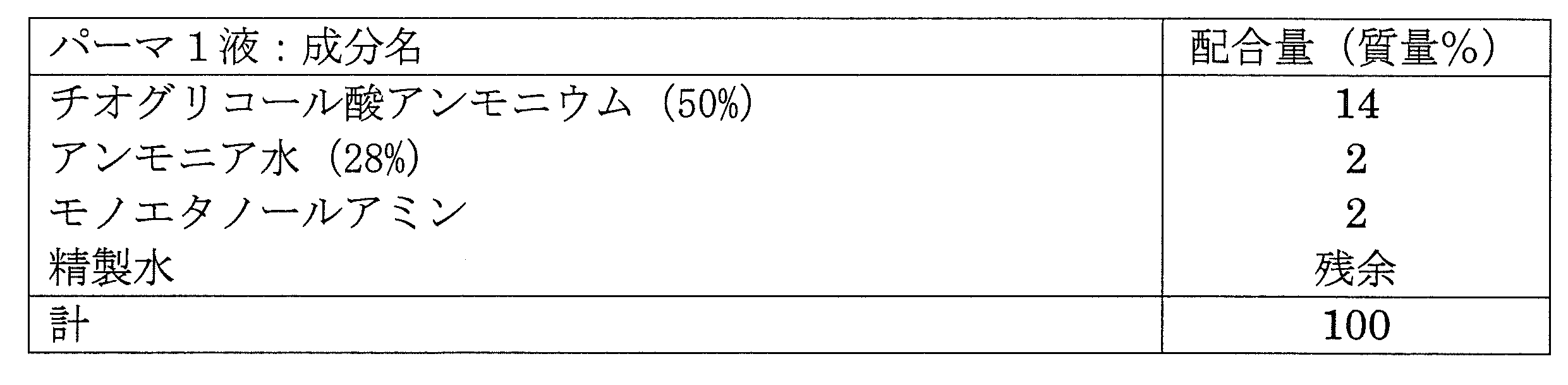

緩衝液:
40mMリン酸・40mM酢酸・40mMホウ酸・水酸化ナトリウム、pH4.5
40mMリン酸・40mM酢酸・40mMホウ酸・水酸化ナトリウム、pH4.5
<2>生成する遊離アンモニア量の定量
アンモニアテストキット(和光純薬工業社製)を用いて、プロテイングルタミナーゼが上記パーマ処理毛髪に反応することにより生成する遊離アンモニア量を定量した。
0.25gの上記パーマ処理毛髪の束に、表4記載の濃度のプロテイングルタミナーゼ溶液2mlを添加し、37℃で1時間反応させたサンプルのアンモニア量を測定した。結果を表4および図3に示す。アンモニア生成量は、プロテイングルタミナーゼ無添加の場合(比較例4)のアンモニア量を差し引いた値で示した。
アンモニアテストキット(和光純薬工業社製)を用いて、プロテイングルタミナーゼが上記パーマ処理毛髪に反応することにより生成する遊離アンモニア量を定量した。
0.25gの上記パーマ処理毛髪の束に、表4記載の濃度のプロテイングルタミナーゼ溶液2mlを添加し、37℃で1時間反応させたサンプルのアンモニア量を測定した。結果を表4および図3に示す。アンモニア生成量は、プロテイングルタミナーゼ無添加の場合(比較例4)のアンモニア量を差し引いた値で示した。
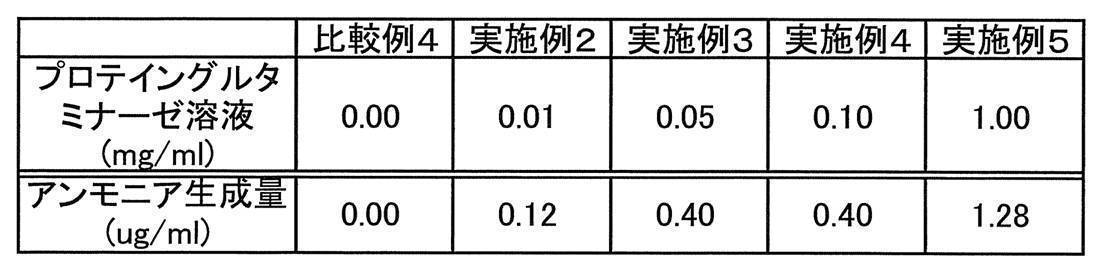
表4より、プロテイングルタミナーゼ溶液が0.01mg/ml以上の濃度であるとき、パーマ処理毛髪に対してプロテイングルタミナーゼが反応していることが示された。
5.プロテイングルタミナーゼによる毛髪への有効成分(トランスグルタミナーゼ)浸透性向上評価
5gの上記パーマ処理毛髪の束に、表5記載のA液2mlを添加し、サランラップ(登録商標)(旭化成社製)で包み、37℃で30分間反応させた。反応後、超純水で振り洗いを2回(各30秒)行った後、表5記載のB液2mlを添加し、サランラップで包み、37℃で30分間反応させた。反応後、超純水で振り洗いを2回(各30秒)行った後、自然乾燥した。なお、A液、B液として使用したプロテイングルタミナーゼ溶液およびトランスグルタミナーゼ溶液は、リン酸緩衝液でpH6.0に調整した。
反応後の各毛束から毛髪を10本ずつ採取し、レーザー寸法測定器(LS-7010MR:キーエンス社製)で各々の毛髪の長径および短径を測定した。その後、引張試験機(KES-G1:カトーテック社製)を用い、純水中で毛髪の引っ張り強度を測定した(測定長40mm)。短径、長径および引っ張り強度の測定値より、長径、短径ともに80μmの毛髪1本あたりの強度を求め、10本の毛髪の測定結果の平均値を比較した。結果を表5に示す。
比較例5および比較例6を見ると、トランスグルタミナーゼの適用により、パーマ処理毛髪の引っ張り強度が13.2(gf/p)から、15.8(gf/p)へ上昇した。この結果は、トランスグルタミナーゼが毛髪に浸透、反応し、強度が上昇したことを示している。予めプロテイングルタミナーゼで処理した実施例6および7と比較例6とを比較すると、引っ張り強度が15.8(gf/p)から、18.2、18.4(gf/p)へ上昇した。プロテイングルタミナーゼによってトランスグルタミナーゼの浸透度が向上し、トランスグルタミナーゼの反応性が向上することで強度が上昇した結果である。
この結果から、プロテイングルタミナーゼが、毛髪強度に対する有効成分であるトランスグルタミナーゼの毛髪への浸透性を向上させることが確認できた。
この結果から、プロテイングルタミナーゼが、毛髪強度に対する有効成分であるトランスグルタミナーゼの毛髪への浸透性を向上させることが確認できた。
6.プロテイングルタミナーゼによる毛髪への有効成分(ヘアコンディショナー)の浸透性向上評価
1gの毛髪(20代の日本人女性の毛髪(通常毛)および上記パーマ処理毛髪)を50mlのリン酸緩衝液で、5分間3回洗浄した。その後、実施例8および実施例9については、各毛髪を4mlのプロテイングルタミナーゼ溶液(2mg/ml)に浸し、比較例7および比較例8は、各毛髪を4mlのリン酸緩衝液に浸し、それぞれ37℃、30分間反応させた。反応後の各毛髪は、50mlのリン酸緩衝液で、5分間3回洗浄した後、水洗し自然乾燥した。
各毛髪1gあたり0.5gのヘアコンディショナー(「Propoline」ヘアコンディショナー カモミール&ハニー、APIVITA社製)を30秒間塗布し、40℃の水道水(流水)で30秒間すすいだのち、恒温恒湿室(25℃・40%R.H.)で自然乾燥させた。
乾燥後の毛髪のしっとり感、なめらかさ、毛先のぱさつき感のなさ、毛先のまとまりについて、下記の評点で、男女5人のパネルによる官能評価を行った。
<しっとり感>
2点:強いしっとり感がある
1点:しっとり感がある
0点:しっとり感を感じない
-1点:乾いて感じられる
<なめらかさ>
2点:非常になめらか
1点:なめらか
0点:なめらかさを感じない
-1点:粗さを感じる
<毛先のぱさつき感のなさ>
2点:毛先が全くぱさつかない
1点:毛先がぱさつかない
0点:やや毛先のぱさつきがある
-1点:毛先が非常にぱさつく
<毛先のまとまり>
2点:毛先が非常によくまとまっている
1点:毛先がまとまっている
0点:やや毛先のまとまりに欠ける
-1点:毛先のまとまりが全くない
評価は、5人のパネルの評点を合計し、かかる合計点が10~8点の場合を◎とし、7~5点の場合を○とし、4~0点の場合を△とし、-1~―5点の場合を×とした。結果を表6に示す。
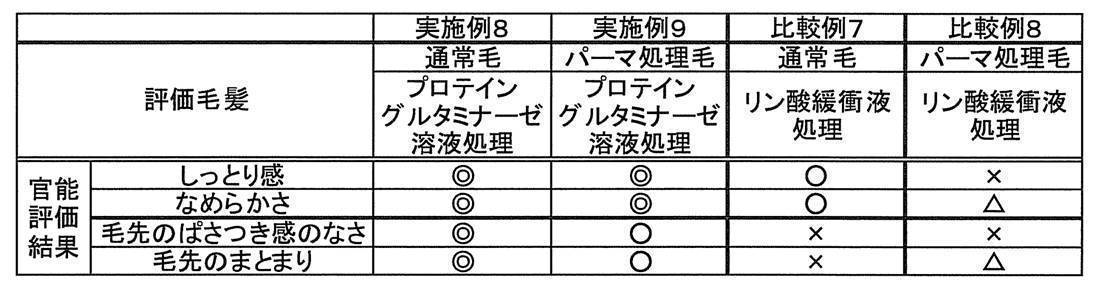
表6に示されるように、プロテイングルタミナーゼ溶液で処理した毛髪(実施例8および実施例9)は、プロテイングルタミナーゼ溶液で処理していない毛髪(比較例7および比較例8)に比較して、乾燥後の毛髪のしっとり感、なめらかさ、毛先のまとまりに優れ、ぱさつき感がなかった。これはプロテイングルタミナーゼ溶液で処理することにより、毛髪表面の親水性が向上し、コンディショニング成分(ステアラミドプロピルジメチルアミン、ベヘントリモニウムクロリド、クオタニウム-80)の吸着が増加するとともに、ヘアコンディショナーの有効成分(パンテノール)が毛髪へより浸透した結果である。
なお、使用したヘアコンディショナー(「Propoline」ヘアコンディショナー カモミール&ハニー、APIVITA社製)の成分は、以下の通りである。
水、セタノール、ステアラミドプロピルジメチルアミン、ベヘントリモニウムクロリド、セチルエステルズ、クオタニウム-80、香料、クエン酸、BG、セテアレスー12、ベンジルアルコール、フェノキシエタノール、パンテノール、グリセリン、ソルビン酸K、加水分解カラスムギ、酢酸トコフェロール、トコフェロール、ハチミスエキス、カミツレ花エキス、シロバナワタエキス、ローズマリー葉エキス、ブチルフェニルメチルプロパナール、セージ葉エキス、セイヨウオトギリソウ花/葉/茎エキス、クマリン、α-グルカンオリゴサッカリド、オニサルビア油、オレンジ果皮油
水、セタノール、ステアラミドプロピルジメチルアミン、ベヘントリモニウムクロリド、セチルエステルズ、クオタニウム-80、香料、クエン酸、BG、セテアレスー12、ベンジルアルコール、フェノキシエタノール、パンテノール、グリセリン、ソルビン酸K、加水分解カラスムギ、酢酸トコフェロール、トコフェロール、ハチミスエキス、カミツレ花エキス、シロバナワタエキス、ローズマリー葉エキス、ブチルフェニルメチルプロパナール、セージ葉エキス、セイヨウオトギリソウ花/葉/茎エキス、クマリン、α-グルカンオリゴサッカリド、オニサルビア油、オレンジ果皮油
7.プロテイングルタミナーゼによる皮膚への有効成分(ペプチド)の浸透性向上評価
皮膚への浸透性を評価するペプチドとしてグリシルグリシルグリシン(以下、「Gly-Gly-Gly」と表記する)(ペプチド研究所社製)を用いて、市販の人工培養皮膚(3次元培養ヒト皮膚モデル:TESTSKIN LSE-high、東洋紡社製)に対するGly-Gly-Glyの浸透性評価を実施した。Gly-Gly-Glyは、高感度検出を可能とするためフルオレセインイソチオシアネート(FITC-I、同仁化学社製)を用いてフルオレセイン標識を行った。
培養皮膚はトランスウェル底部のポリカーボネート膜上に培養されており、6穴のアッセイプレート上にセットされる。アッセイプレートには培養皮膚の下部(真皮側)が浸るようにリン酸緩衝液(-)1.2mlを添加した。培養皮膚の上部(角質層側)にはアッセイリングを装着して、FITCラベル化Gly-Gly-Glyサンプルを添加し、一定時間インキュベートした後、培養皮膚を透過してリン酸緩衝液(-)に移動したFITCラベル化Gly-Gly-Glyの量を測定することにより透過性を評価した。
まずプロテイングルタミナーゼ溶液(4mg/ml)100μlを培養皮膚の上部に添加して30分間37℃でインキュベートし、その後、FITCラベル化Gly-Gly-Glyサンプル100μlを培養皮膚の上部に添加して、2、5、および20時間後に、培養皮膚を透過してリン酸緩衝液(-)に移動したFITCラベル化Gly-Gly-Glyの量を測定した。その比較対象として、プロテイングルタミナーゼ溶液の代わりにリン酸緩衝液(-)を培養皮膚の上部に添加した。蛍光強度は、励起波長492nm及び蛍光波長520nmの条件で測定した。蛍光強度の測定は、プレートリーダーSpectraMaxM2(モレキュラーデバイス社製)を用いて行った。これらの結果を図4に示した。
図4に示されるように、プロテイングルタミナーゼで培養皮膚を処理した場合の方が、処理をしなかった培養皮膚を用いた場合よりもペプチドの透過性が向上することが明らかとなった。この結果により、ヒトの皮膚に対してプロテイングルタミナーゼを作用させることにより角質層の親水性が高まり、アミノ酸やペプチド等の親水性物質の皮膚への浸透性が向上することが示唆された。また、アミノ酸やペプチド等(上述したアシルアミノ酸、アシルペプチド及びそれらの誘導体を含む)はその種類に応じて皮膚や毛髪に対する有効成分となり得ることから、これらをプロテイングルタミナーゼと組み合わせて使用することは皮膚や毛髪に対して極めて有用であると考えられた。
8.処方例1~5
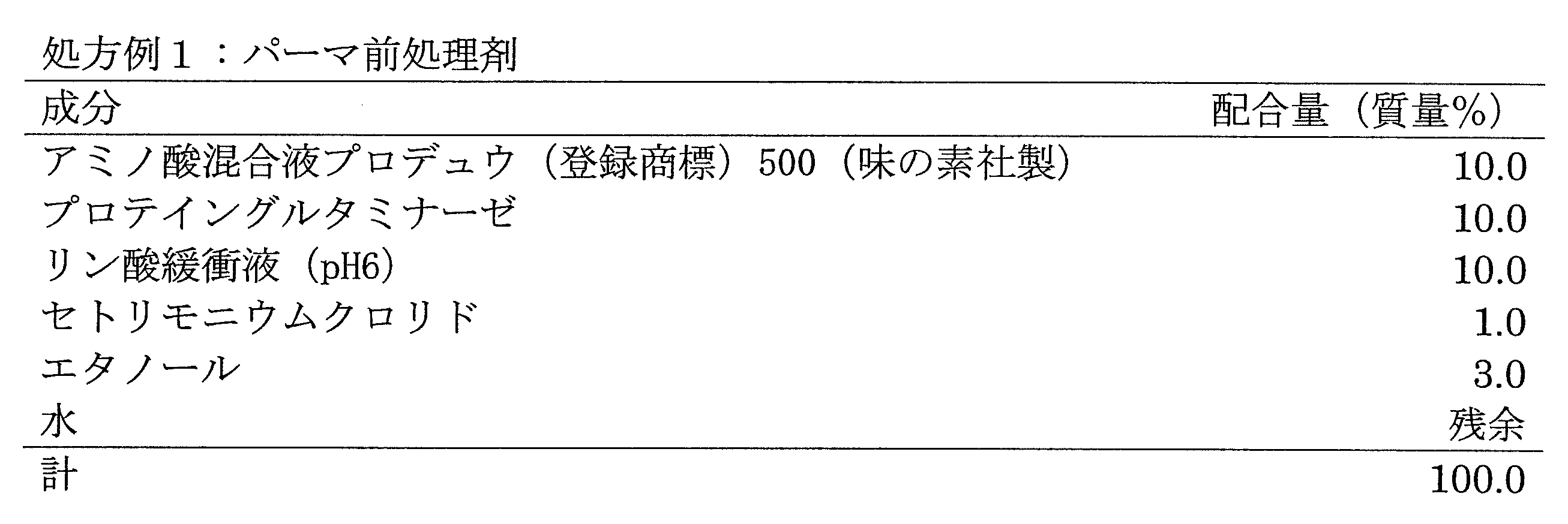
下記の表に示す処方で常法に従って調製されるパーマ前処理剤(処方例1)、パーマネントウェーブ用剤還元剤(処方例2)、酸化染毛剤(処方例3)、カラーリンス(処方例4)及びジェル状美白美容液(処方例5)は、いずれも毛髪、皮膚等に含まれるタンパク質の親水性向上に有用なものである。なお、各表に記載の各成分の配合量(表中の数値)は、処方全体を100としたときの質量分率(%)である。
下記の表に示す処方で常法に従って調製されるパーマ前処理剤(処方例1)、パーマネントウェーブ用剤還元剤(処方例2)、酸化染毛剤(処方例3)、カラーリンス(処方例4)及びジェル状美白美容液(処方例5)は、いずれも毛髪、皮膚等に含まれるタンパク質の親水性向上に有用なものである。なお、各表に記載の各成分の配合量(表中の数値)は、処方全体を100としたときの質量分率(%)である。
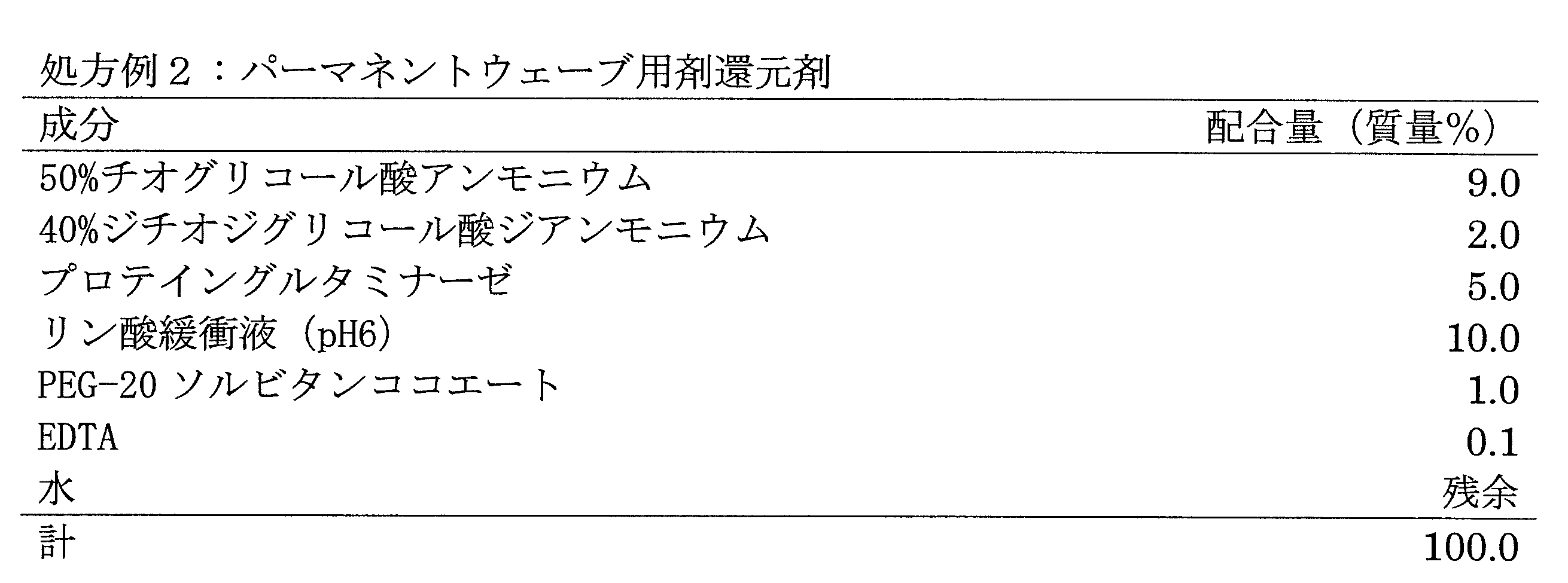
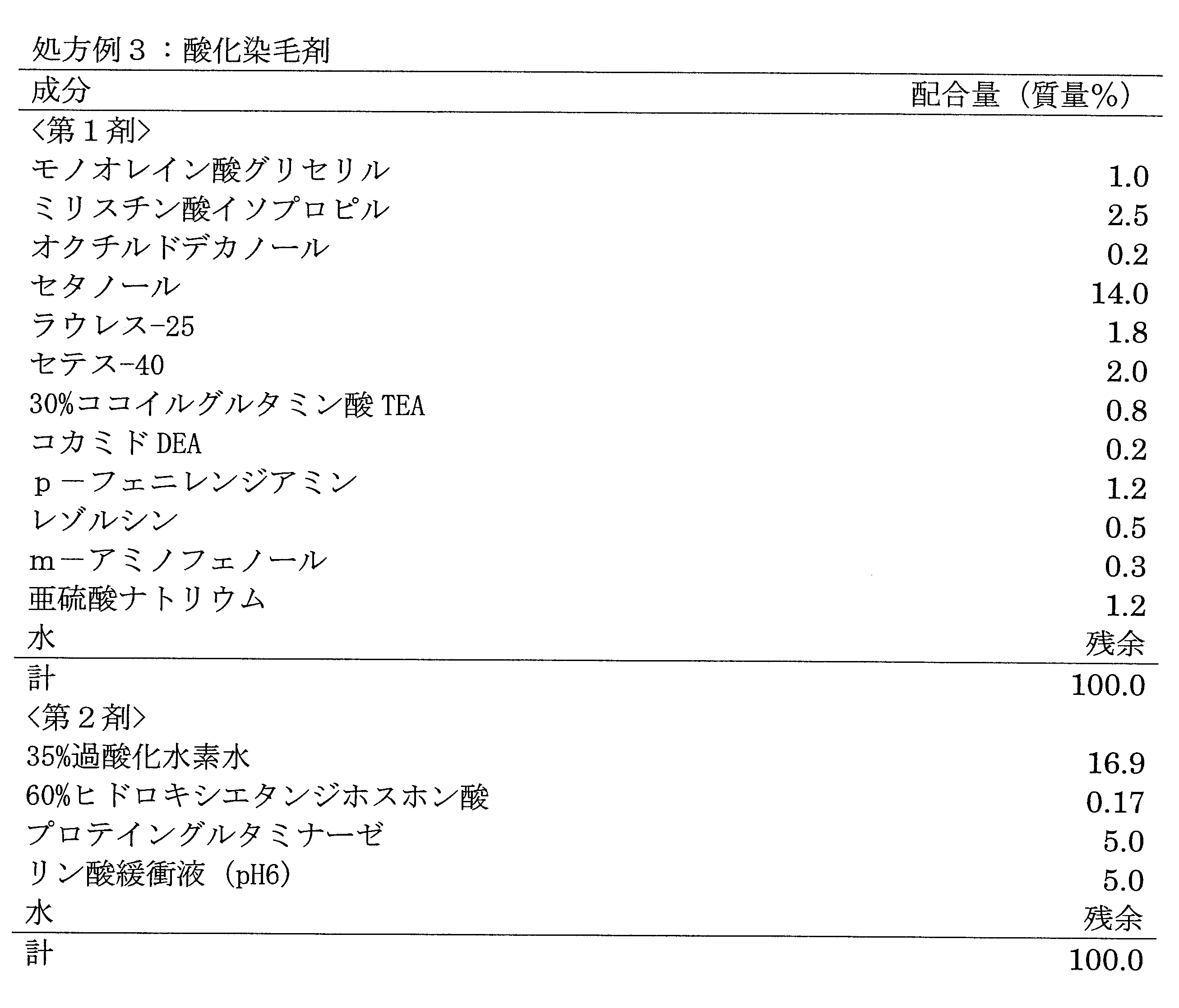


本発明によれば、毛髪、皮膚等に含まれるタンパク質の親水性向上に有用な化粧料を提供することができる。特に、本発明によれば、毛髪の損傷を引き起こすことなく毛髪を効果的に膨潤させることができ、さらに毛髪の強度を効果的に向上させ得ることから、例えばパーマ剤やカラー剤等に有用な毛髪化粧料を提供することができる。また、本発明によれば、効果的にタンパク質の親水性を向上させる剤を提供することができ、加えて有効成分の組織への浸透を促進する剤も提供することができる。これらの剤は、化粧料のみならず医薬の分野においても有用である。
本出願は、日本で出願された特願2012-229590(出願日:2012年10月17日)を基礎としており、その内容は本明細書に全て包含されるものである。
Claims (21)
- プロテイングルタミナーゼを含有する、化粧料組成物。
- プロテイングルタミナーゼの分子量が10~40kDaである、請求項1に記載の化粧料組成物。
- プロテイングルタミナーゼの含有量が0.00001~10質量%である、請求項1または2に記載の化粧料組成物。
- プロテイングルタミナーゼが、Chryseobacterium属に属する細菌に由来するものである、請求項1~3のいずれか1項に記載の化粧料組成物。
- トランスグルタミナーゼをさらに含有する、請求項1~4のいずれか1項に記載の化粧料組成物。
- トランスグルタミナーゼの含有量が0.001~2質量%である、請求項5に記載の化粧料組成物。
- プロテイングルタミナーゼ及びトランスグルタミナーゼの配合比(プロテイングルタミナーゼ:トランスグルタミナーゼ(質量:質量))が、1:1~1:10000である、請求項5または6に記載の化粧料組成物。
- アミノ酸、アシルアミノ酸、アシルアミノ酸エステル、アシルアミノ酸アミド、ペプチド、アシルペプチドまたはそれらの塩をさらに含有する、請求項1~7のいずれか1項に記載の化粧料組成物。
- アミノ酸、アシルアミノ酸、アシルアミノ酸エステル、アシルアミノ酸アミド、ペプチド、アシルペプチドまたはそれらの塩の含有量が、0.005~50質量%である、請求項8に記載の化粧料組成物。
- アルコールをさらに含有する、請求項1~9のいずれか1項に記載の化粧料組成物。
- アルコールの含有量が0.005~50質量%である、請求項10に記載の化粧料組成物。
- アルコールが、飽和または不飽和の一価のC1-6アルコールあるいは多価アルコールである、請求項10または11に記載の化粧料組成物。
- 皮膚化粧料である、請求項1~12のいずれか1項に記載の化粧料組成物。
- 毛髪化粧料である、請求項1~12のいずれか1項に記載の化粧料組成物。
- 毛髪化粧料がパーマ剤またはカラー剤である、請求項14に記載の化粧料組成物。
- プロテイングルタミナーゼを含有する、タンパク質の親水性向上化剤。
- タンパク質の親水性を向上させるための、プロテイングルタミナーゼの使用。
- プロテイングルタミナーゼを含有する、浸透促進剤。
- 有効成分の浸透を促進させるための、プロテイングルタミナーゼの使用。
- 有効成分がトランスグルタミナーゼである、請求項19記載の使用。
- 有効成分がアミノ酸、アシルアミノ酸、アシルアミノ酸エステル、アシルアミノ酸アミド、ペプチド、アシルペプチドまたはそれらの塩である、請求項19記載の使用。
Priority Applications (5)
| Application Number | Priority Date | Filing Date | Title |
|---|---|---|---|
| JP2014542167A JP6341091B2 (ja) | 2012-10-17 | 2013-10-17 | 化粧料組成物 |
| CN201380054137.9A CN104736135B (zh) | 2012-10-17 | 2013-10-17 | 化妆品组合物 |
| EP13847620.5A EP2913045B1 (en) | 2012-10-17 | 2013-10-17 | Cosmetic composition |
| US14/688,575 US20150290108A1 (en) | 2012-10-17 | 2015-04-16 | Cosmetic composition |
| US15/399,347 US10463594B2 (en) | 2012-10-17 | 2017-01-05 | Cosmetic composition |
Applications Claiming Priority (2)
| Application Number | Priority Date | Filing Date | Title |
|---|---|---|---|
| JP2012-229590 | 2012-10-17 | ||
| JP2012229590 | 2012-10-17 |
Related Child Applications (1)
| Application Number | Title | Priority Date | Filing Date |
|---|---|---|---|
| US14/688,575 Continuation US20150290108A1 (en) | 2012-10-17 | 2015-04-16 | Cosmetic composition |
Publications (1)
| Publication Number | Publication Date |
|---|---|
| WO2014061728A1 true WO2014061728A1 (ja) | 2014-04-24 |
Family
ID=50488288
Family Applications (1)
| Application Number | Title | Priority Date | Filing Date |
|---|---|---|---|
| PCT/JP2013/078152 Ceased WO2014061728A1 (ja) | 2012-10-17 | 2013-10-17 | 化粧料組成物 |
Country Status (5)
| Country | Link |
|---|---|
| US (2) | US20150290108A1 (ja) |
| EP (1) | EP2913045B1 (ja) |
| JP (2) | JP6341091B2 (ja) |
| CN (1) | CN104736135B (ja) |
| WO (1) | WO2014061728A1 (ja) |
Cited By (2)
| Publication number | Priority date | Publication date | Assignee | Title |
|---|---|---|---|---|
| JP2018177655A (ja) * | 2017-04-04 | 2018-11-15 | 味の素株式会社 | 組成物 |
| WO2022065433A1 (ja) * | 2020-09-28 | 2022-03-31 | 日産化学株式会社 | 毛髪用化粧料 |
Families Citing this family (5)
| Publication number | Priority date | Publication date | Assignee | Title |
|---|---|---|---|---|
| BR112019003816B1 (pt) * | 2016-10-05 | 2022-07-19 | Unilever Ip Holdings B.V | Composição de tratamento de enxágue dos cabelos, método para tratamento de cabelos quimicamente danificados e usos de uma composição |
| US11260008B2 (en) * | 2016-10-05 | 2022-03-01 | Conopco, Inc. | Hair treatment composition |
| EP4150062A4 (en) * | 2020-05-13 | 2024-08-14 | Curie Co. Inc. | TRANSGLUTAMINASE VARIANTS AND METHODS OF USE THEREOF |
| CN114149934B (zh) * | 2020-09-07 | 2023-05-09 | 华东师范大学 | 一种蛋白质谷氨酰胺酶生产菌株、筛选、及特性分析方法 |
| CN115960873B (zh) * | 2022-12-20 | 2024-12-20 | 天津科技大学 | 一种蛋白质谷氨酰胺酶及其应用 |
Citations (7)
| Publication number | Priority date | Publication date | Assignee | Title |
|---|---|---|---|---|
| JPH01127471A (ja) | 1988-09-30 | 1989-05-19 | Yamaha Motor Co Ltd | 自動二輪車のカウリング装置 |
| JPH01503064A (ja) | 1986-06-27 | 1989-10-19 | ジーエイエフ・コーポレーション | 毛髪の永久変色に用いる組成物 |
| JPH0338511A (ja) * | 1989-07-05 | 1991-02-19 | Pola Chem Ind Inc | 外用剤 |
| JPH08500365A (ja) | 1992-12-31 | 1996-01-16 | スンキョン インダストリイズ カンパニイ リミテッド | 皮膚浸透力を高めた医薬組成物 |
| JP2000050887A (ja) * | 1998-06-04 | 2000-02-22 | Amano Pharmaceut Co Ltd | 新規蛋白質脱アミド酵素、それをコ―ドする遺伝子、その製造法並びにその用途 |
| JP2005052158A (ja) | 1999-12-03 | 2005-03-03 | Amano Enzyme Inc | 新規蛋白質脱アミド酵素、それを生産する微生物、それをコードする遺伝子、その製造法及び用途 |
| WO2009113628A1 (ja) * | 2008-03-14 | 2009-09-17 | 味の素株式会社 | 酵素によるタンパク質の改質方法 |
Family Cites Families (23)
| Publication number | Priority date | Publication date | Assignee | Title |
|---|---|---|---|---|
| JPH0713027B2 (ja) | 1985-09-05 | 1995-02-15 | 一美 緒方 | 保湿性皮膚用剤 |
| US5143925A (en) * | 1990-12-20 | 1992-09-01 | Douglas Shander | Alteration of rate and character of hair growth |
| GB9222772D0 (en) * | 1992-10-30 | 1992-12-09 | Unilever Plc | Cosmetic composition |
| JPH07258038A (ja) | 1994-03-18 | 1995-10-09 | Shiseido Co Ltd | 頭髪化粧料 |
| US6919076B1 (en) * | 1998-01-20 | 2005-07-19 | Pericor Science, Inc. | Conjugates of agents and transglutaminase substrate linking molecules |
| US6051033A (en) * | 1998-05-20 | 2000-04-18 | Novo Nordisk Brochem North America Inc. | Method for enzymatic treatment of wool |
| US6251651B1 (en) * | 1998-06-04 | 2001-06-26 | Amano Pharmaceutical Co., Ltd. | Protein-deamidating enzyme, gene encoding the same, production process therefor, and use thereof |
| FR2807317B1 (fr) * | 2000-04-10 | 2002-08-16 | Indena Sa | Compositions de soin capillaire |
| ES2558861T3 (es) * | 2002-12-05 | 2016-02-09 | E-L Management Corp. | Procedimiento de retención de rizos en cabello y pestañas |
| FR2850024B1 (fr) * | 2003-01-16 | 2007-08-24 | Oreal | Compositions pour applicaton topique comprenant au moins un polypeptide de la famille des hydrolases a activite amidasique et/ou un produit capable de moduler son activite. |
| US20040197299A1 (en) * | 2003-01-16 | 2004-10-07 | Societe L'oreal, S.A. | Topically applicable cosmetic/dermatological compositions comprising hydrolase polypeptides having amidase activity and/or products modulating the activity thereof |
| US20040166069A1 (en) * | 2003-02-21 | 2004-08-26 | Gupta Shyam K. | Boosting Tyrosinase Inhibiting Activity of Skin Whitening and Sunscreen Compositions |
| JP4906509B2 (ja) | 2004-09-22 | 2012-03-28 | 峰川 すみ子 | 変性絹およびその抽出水性溶液 |
| KR20070104528A (ko) * | 2005-01-13 | 2007-10-26 | 아지노모토 가부시키가이샤 | 식육 가공품 또는 수산연 제품 및 이의 제조방법 |
| US7820147B2 (en) * | 2005-11-18 | 2010-10-26 | Mata Michael T | Hair restorative compositions and methods for treating damaged hair and safely chemically treating hair |
| US20110064847A1 (en) * | 2008-03-14 | 2011-03-17 | Ajinomoto Co., Inc. | Method of denaturing protein with enzymes |
| CN103479538B (zh) * | 2008-06-13 | 2015-11-18 | 株式会社爱茉莉太平洋 | 含有人参的花或人参的种子提取物的皮肤外用剂组合物 |
| JP5643099B2 (ja) * | 2008-09-29 | 2014-12-17 | 味の素株式会社 | 改質乳の製造方法 |
| KR20120052263A (ko) * | 2009-07-17 | 2012-05-23 | 아마노 엔자임 가부시키가이샤 | β?아밀라제를 이용한 식품의 개질 방법 |
| NL2003494C2 (en) * | 2009-09-15 | 2011-03-21 | Friesland Brands Bv | Food products having improved heat stability. |
| US20120186596A1 (en) * | 2011-01-25 | 2012-07-26 | Jean Harry Xavier | Compositions And Methods For Permanent Straightening Of Hair |
| FI126442B (en) * | 2011-11-01 | 2016-12-15 | Valio Oy | Liquid enzyme preparation and process for its preparation |
| JP2015524276A (ja) * | 2012-08-10 | 2015-08-24 | ネステク ソシエテ アノニム | 脱アミド化タンパク質を含む水中油型エマルジョン |
-
2013
- 2013-10-17 JP JP2014542167A patent/JP6341091B2/ja active Active
- 2013-10-17 CN CN201380054137.9A patent/CN104736135B/zh active Active
- 2013-10-17 EP EP13847620.5A patent/EP2913045B1/en active Active
- 2013-10-17 WO PCT/JP2013/078152 patent/WO2014061728A1/ja not_active Ceased
-
2015
- 2015-04-16 US US14/688,575 patent/US20150290108A1/en not_active Abandoned
-
2017
- 2017-01-05 US US15/399,347 patent/US10463594B2/en active Active
-
2018
- 2018-04-02 JP JP2018070735A patent/JP6729624B2/ja active Active
Patent Citations (7)
| Publication number | Priority date | Publication date | Assignee | Title |
|---|---|---|---|---|
| JPH01503064A (ja) | 1986-06-27 | 1989-10-19 | ジーエイエフ・コーポレーション | 毛髪の永久変色に用いる組成物 |
| JPH01127471A (ja) | 1988-09-30 | 1989-05-19 | Yamaha Motor Co Ltd | 自動二輪車のカウリング装置 |
| JPH0338511A (ja) * | 1989-07-05 | 1991-02-19 | Pola Chem Ind Inc | 外用剤 |
| JPH08500365A (ja) | 1992-12-31 | 1996-01-16 | スンキョン インダストリイズ カンパニイ リミテッド | 皮膚浸透力を高めた医薬組成物 |
| JP2000050887A (ja) * | 1998-06-04 | 2000-02-22 | Amano Pharmaceut Co Ltd | 新規蛋白質脱アミド酵素、それをコ―ドする遺伝子、その製造法並びにその用途 |
| JP2005052158A (ja) | 1999-12-03 | 2005-03-03 | Amano Enzyme Inc | 新規蛋白質脱アミド酵素、それを生産する微生物、それをコードする遺伝子、その製造法及び用途 |
| WO2009113628A1 (ja) * | 2008-03-14 | 2009-09-17 | 味の素株式会社 | 酵素によるタンパク質の改質方法 |
Non-Patent Citations (4)
| Title |
|---|
| K. YOKOYAMA ET AL., PROTEIN EXPRESSION AND PURIFICATION, vol. 26, 2002, pages 329 - 335 |
| S. YAMAGUCHI ET AL., APPL. ENVIRON. MICROBIOL., vol. 66, 2000, pages 3337 - 3343 |
| S. YAMAGUCHI ET AL., EUR. J. BIOCHEM., vol. 268, 2001, pages 1410 - 1421 |
| Y. KIKUCHI ET AL., APPLIED MICROBIOLOGY AND BIOTECHNOLOGY, vol. 78, 2008, pages 67 - 74 |
Cited By (3)
| Publication number | Priority date | Publication date | Assignee | Title |
|---|---|---|---|---|
| JP2018177655A (ja) * | 2017-04-04 | 2018-11-15 | 味の素株式会社 | 組成物 |
| JP7200472B2 (ja) | 2017-04-04 | 2023-01-10 | 味の素株式会社 | 組成物 |
| WO2022065433A1 (ja) * | 2020-09-28 | 2022-03-31 | 日産化学株式会社 | 毛髪用化粧料 |
Also Published As
| Publication number | Publication date |
|---|---|
| US20170112751A1 (en) | 2017-04-27 |
| JPWO2014061728A1 (ja) | 2016-09-05 |
| US10463594B2 (en) | 2019-11-05 |
| US20150290108A1 (en) | 2015-10-15 |
| EP2913045B1 (en) | 2019-04-10 |
| CN104736135B (zh) | 2019-07-09 |
| EP2913045A1 (en) | 2015-09-02 |
| JP6341091B2 (ja) | 2018-06-13 |
| EP2913045A4 (en) | 2016-04-06 |
| JP6729624B2 (ja) | 2020-07-22 |
| JP2018104467A (ja) | 2018-07-05 |
| CN104736135A (zh) | 2015-06-24 |
Similar Documents
| Publication | Publication Date | Title |
|---|---|---|
| JP6729624B2 (ja) | 化粧料組成物 | |
| EP1638991B1 (fr) | Composition cosmetique ou dermopharmaceutique pour reduire les signes du vieillissement cutane | |
| EP3648784B1 (en) | Compounds useful for the treatment and/or care of the skin, hair, nails and/or mucous membranes | |
| ES2397890B1 (es) | Péptidos útiles en el tratamiento y/o cuidado de la piel y/o mucosas y su uso en composiciones cosméticas o farmacéuticas. | |
| US8877713B2 (en) | Anti-aging peptides and cosmetic and/or pharmaceutical composition containing same | |
| JP2000327591A (ja) | 皮膚外用剤用界面活性剤及びそれを含有する皮膚外用剤 | |
| CN103052375A (zh) | 头发护理组合物 | |
| JP2004323401A (ja) | 皮膚外用剤 | |
| KR20230048515A (ko) | 천연 스킨케어 조성물 | |
| JP2007169192A (ja) | 毛髪化粧料 | |
| JP7534759B2 (ja) | 抗酸化剤、抗糖化剤、ヒアルロニダーゼ阻害剤、および、化粧料 | |
| CN102988193A (zh) | 一种能促进细胞新生及延缓皮肤老化的医学美容多胜肽 | |
| JP2012149062A (ja) | ヒトコラーゲン含有化粧料 | |
| JP4950571B2 (ja) | コラーゲン産生促進能を有する組成物 | |
| JP2004168732A (ja) | 活性酸素消去剤、ヒアルロン酸合成促進・分解抑制剤およびアクアポリン合成促進剤 | |
| JP4916143B2 (ja) | ビール酵母で発酵させたアルコール飲料からコラーゲン産生促進作用を有する組成物を製造する方法及びその組成物 | |
| JP2011046690A (ja) | 育毛剤組成物 | |
| WO2022230959A1 (ja) | シワ改善のための皮膚外用剤 | |
| JP2023547390A (ja) | ペプチドベースのヘアトリートメント | |
| JP2005008837A (ja) | ポリグルタミン酸又はその塩を含有する帯電防止剤 | |
| EP4628067A1 (en) | Composition | |
| JP2006290844A (ja) | 化粧料 | |
| JP2025159713A (ja) | 皮膚機能改善剤及び皮膚機能改善用組成物 | |
| JP2025159644A (ja) | 細胞賦活剤及び細胞賦活用組成物 | |
| ES2396582T3 (es) | Nuevo péptido y composición cosmética y/o farmacéutica que lo contiene |
Legal Events
| Date | Code | Title | Description |
|---|---|---|---|
| 121 | Ep: the epo has been informed by wipo that ep was designated in this application |
Ref document number: 13847620 Country of ref document: EP Kind code of ref document: A1 |
|
| ENP | Entry into the national phase |
Ref document number: 2014542167 Country of ref document: JP Kind code of ref document: A |
|
| NENP | Non-entry into the national phase |
Ref country code: DE |
|
| WWE | Wipo information: entry into national phase |
Ref document number: 2013847620 Country of ref document: EP |