WO2014065239A1 - エポキシ化合物の製造方法 - Google Patents
エポキシ化合物の製造方法 Download PDFInfo
- Publication number
- WO2014065239A1 WO2014065239A1 PCT/JP2013/078480 JP2013078480W WO2014065239A1 WO 2014065239 A1 WO2014065239 A1 WO 2014065239A1 JP 2013078480 W JP2013078480 W JP 2013078480W WO 2014065239 A1 WO2014065239 A1 WO 2014065239A1
- Authority
- WO
- WIPO (PCT)
- Prior art keywords
- group
- compound
- formula
- independently
- reaction
- Prior art date
- Legal status (The legal status is an assumption and is not a legal conclusion. Google has not performed a legal analysis and makes no representation as to the accuracy of the status listed.)
- Ceased
Links
Classifications
-
- C—CHEMISTRY; METALLURGY
- C07—ORGANIC CHEMISTRY
- C07D—HETEROCYCLIC COMPOUNDS
- C07D405/00—Heterocyclic compounds containing both one or more hetero rings having oxygen atoms as the only ring hetero atoms, and one or more rings having nitrogen as the only ring hetero atom
- C07D405/14—Heterocyclic compounds containing both one or more hetero rings having oxygen atoms as the only ring hetero atoms, and one or more rings having nitrogen as the only ring hetero atom containing three or more hetero rings
-
- C—CHEMISTRY; METALLURGY
- C07—ORGANIC CHEMISTRY
- C07D—HETEROCYCLIC COMPOUNDS
- C07D251/00—Heterocyclic compounds containing 1,3,5-triazine rings
- C07D251/02—Heterocyclic compounds containing 1,3,5-triazine rings not condensed with other rings
- C07D251/12—Heterocyclic compounds containing 1,3,5-triazine rings not condensed with other rings having three double bonds between ring members or between ring members and non-ring members
- C07D251/26—Heterocyclic compounds containing 1,3,5-triazine rings not condensed with other rings having three double bonds between ring members or between ring members and non-ring members with only hetero atoms directly attached to ring carbon atoms
- C07D251/30—Only oxygen atoms
- C07D251/34—Cyanuric or isocyanuric esters
-
- C—CHEMISTRY; METALLURGY
- C07—ORGANIC CHEMISTRY
- C07D—HETEROCYCLIC COMPOUNDS
- C07D253/00—Heterocyclic compounds containing six-membered rings having three nitrogen atoms as the only ring hetero atoms, not provided for by group C07D251/00
- C07D253/02—Heterocyclic compounds containing six-membered rings having three nitrogen atoms as the only ring hetero atoms, not provided for by group C07D251/00 not condensed with other rings
- C07D253/04—1,2,3-Triazines
Definitions
- the present invention relates to a method for producing an epoxy compound from an olefin compound. Furthermore, the present invention relates to a method for efficiently producing an epoxy compound by reacting an olefin compound having a specific structure with hydrogen peroxide, a nitrile compound, or an alkaline substance in a solvent.
- a crystalline epoxy resin has high heat resistance because its main chain skeleton is rigid or polyfunctional, and is used in fields that require heat-resistant reliability such as electric and electronic fields.
- heat-resistant reliability such as electric and electronic fields.
- the epoxy resin that is crystalline is limited to applications that use a solid material such as transfer molding, and therefore the range of use is limited.
- epoxy resins used for liquid molding such as casting molding are liquid epoxy resins, such as heat resistance, which are becoming increasingly demanding in recent fields of adhesion, casting, sealing, molding, lamination, etc. The demand for improved cured properties cannot be fully satisfied. Therefore, there is an increasing demand for liquefying a crystalline polyfunctional epoxy resin that gives a cured product having high heat resistance.
- hydrogen peroxide is used as an oxidizing agent for olefin-substituted isocyanurate, tungstate or molybdate as a catalyst, and a surfactant (a quaternary ammonium salt as a phase transfer catalyst).
- a surfactant a quaternary ammonium salt as a phase transfer catalyst.
- 3 to 15 monoolefin compounds or 3 to 15 carbon atoms such as butadiene, t-1,3-pentadiene, c-1,3-pentadiene, cyclopentadiene, cyclohexadiene, norbornadiene, cyclooctadiene, vinylcyclohexene, etc.
- polymers having a carbon-carbon double bond in the molecule such as polyester compounds and polyesters and polyimides.
- Patent Document 1 In the method of epoxidizing an olefin described in Patent Document 1, it is necessary to remove tungstate, molybdate and surfactant (a quaternary ammonium salt used as a phase transfer catalyst) remaining in the reaction medium. In addition, in relation to the epoxidation rate, it is necessary to separate a compound in which all three double bonds existing in one molecule are epoxidized and a compound having double bonds remaining in the molecule. And the process is complex. Patent Document 2 does not describe an efficient method for producing an epoxy compound from a specific triolefin compound.
- An object of the present invention is to provide a method for producing an epoxy compound in which an epoxy ring is bonded to a triazine trione ring via a long-chain alkylene group in which such problems are solved.
- the present inventors have found that an epoxy compound in which the olefin moiety is epoxidized can be obtained efficiently by using an olefin compound having a specific structure in the production method of this type of epoxy compound, and the present invention has been completed. did.
- a production method according to any one of the first to fourth aspects, As a sixth aspect, the production method according to the fifth aspect, wherein the hydroxyl protecting group of the unsaturated alcohol is a sulfonyl group, and as the seventh aspect, the hydroxyl protecting group of the unsaturated alcohol is a p-toluenesulfonyl group, o- It is a manufacturing method as described in the 5th viewpoint which is a nitrobenzene sulfonyl group or a methanesulfonyl group.
- the present invention relates to a novel method for producing an epoxy compound in which an epoxy ring is linked to a triazine trione ring via a long-chain alkylene group.
- An olefin compound bonded to a triazine trione ring via a long-chain alkylene group having a carbon-carbon double bond at or near the end is obtained by reacting hydrogen peroxide, a nitrile compound, and an alkaline substance in a solvent,
- the double bond epoxidizes, and when the long chain alkylene group has a specific chain length, the inventors have found that the double bond is converted into an epoxy group very efficiently. I found it.
- an epoxy compound can be efficiently produced from an olefin compound with high purity.
- the triolefin compound used in the present invention is obtained by reaction of cyanuric acid or cyanuric acid salt with unsaturated alcohol or unsaturated alcohol in which a hydroxyl group is protected.
- a sulfonyl group is used as the protecting group of the unsaturated alcohol in which the hydroxyl group is protected, but the present inventors have also found that an intermediate olefin compound can be efficiently obtained at a specific sulfonyl group.
- the property causes triazine stacking trouble due to reduction of intermolecular hydrogen bond, and liquefaction occurs. Achieved.
- the glass transition temperature of the cured product obtained therefrom is stabilized, whereby the crosslink density is stable even in a heating environment, and the toughness is strong. Can maintain sex.
- the curing reaction of the epoxy group is completed at the initial stage of curing, the bending strength and elastic modulus of the obtained cured product are stabilized.
- liquid epoxy compounds having a long-chain alkylene group can be photocured or thermally cured using a photoacid generator or a thermal acid generator.
- the photocuring material using the liquid epoxy compound of the present invention has characteristics such as fast curing, transparency and small curing shrinkage, and can be used for coating and bonding electronic parts, optical parts and precision mechanism parts.
- electronic parts optical parts and precision mechanism parts.
- cellular phones and camera lenses optical elements such as light emitting diodes (LEDs) and semiconductor lasers (LD), liquid crystal panels, biochips, camera lenses and prisms, hard disk magnetic parts such as personal computers, CDs and DVDs
- bonding player pickups parts that capture optical information reflected from the disk
- speaker cones and coils motor magnets
- circuit boards electronic components, automotive internal components, and the like.
- the epoxy compound of the present invention is used for hard coat materials for surface protection of automobile bodies, lamps, electrical appliances, building materials, plastics, etc., for example, automobiles, motorcycle bodies, headlight lenses and mirrors, glasses plastics. It can be applied to lenses, mobile phones, game machines, optical films, ID cards, and the like.
- the epoxy compound of the present invention is suitable for ink materials to be printed on metals such as aluminum and plastics, for example, credit cards, cards such as membership cards, switches for electrical appliances and OA equipment, ink for printing on keyboards, Application to ink for inkjet printers on CD, DVD and the like can be mentioned.
- the epoxy compound of the present invention is combined with a three-dimensional CAD to cure a resin to create a complex three-dimensional object, applied to optical modeling such as model production of industrial products, optical fiber coating, adhesion, optical waveguide And application to thick film resists (for MEMS).
- the present invention relates to an epoxy compound represented by the formula (2) comprising reacting a triolefin compound represented by the formula (1), hydrogen peroxide, a nitrile compound, and an alkaline substance in a solvent. It is a manufacturing method.
- R 1 to R 9 are each independently a hydrogen atom or a methyl group
- n1 to n3 are each independently an integer of 1 to 4.
- R 1 to R 9 are each independently a hydrogen atom or a methyl group
- n1 to n3 are each independently an integer of 1 to 4.
- R 1 to R 9 are each independently a hydrogen atom or a methyl group, but a hydrogen atom can be preferably used.
- the side chain extending from the isocyanurate ring (triazinetrione ring) has 3 to 9 carbon atoms
- the following alkyl group having 2 to 6 carbon atoms may be used instead of a hydrogen atom and a methyl group. Can do.
- alkyl group having 2 to 6 carbon atoms examples include ethyl group, n-propyl group, i-propyl group, cyclopropyl group, n-butyl group, i-butyl group, s-butyl group, t-butyl group, and cyclobutyl group.
- the triazine trione ring and the epoxy group are connected via an alkylene group in which n1 to n3 are each independently an integer of 1 to 4.
- the amount of hydrogen peroxide used when obtaining an epoxy compound from a triolefin compound is 0.5 to 50 equivalents, or 0.5 to 30 equivalents, or 1 equivalent of a double bond in the triolefin compound, or 1 to 10 equivalents.
- Hydrogen peroxide is added to the reaction system as, for example, 35 mass% hydrogen peroxide water. Hydrogen peroxide can be added all at once, but a predetermined addition amount can be divided into several times (for example, about 2 to 5 times) and added sequentially.
- the addition of the hydrogen peroxide solution here is carried out by a dropping method, and it can be carried out for 1 to 2 hours per dropping. Thereafter, the reaction can be carried out for 1 to 2 hours.
- the yield of the reaction from an olefin to an epoxy group can be improved by repeating the combination (dropping and reaction) of performing the reaction after the addition (dropping) several times (for example, about 2 to 5 times).
- Examples of the nitrile compound used when obtaining an epoxy compound from a triolefin compound include aliphatic nitrile compounds and aromatic nitriles.
- the aromatic nitrile is benzonitrile, and the aliphatic nitrile includes acetonitrile, propionitrile and the like.
- an aliphatic nitrile is preferable, and acetonitrile is preferably used.
- the amount of the nitrile compound used is 0.5 to 50 equivalents, or 1 to 30 equivalents, or 3 to 10 equivalents with respect to 1 equivalent of the double bond in the olefin compound.
- Examples of the alkaline substance used when obtaining the epoxy compound from the triolefin compound of the present invention include phosphoric acid compounds, carbonate compounds, alkali metal hydroxides, and more specifically, as phosphoric acid compounds. Includes phosphoric acid, pyrophosphoric acid, polyphosphoric acid, and salts thereof.
- Examples of the carbonate compound include sodium carbonate, potassium carbonate, ammonium carbonate, sodium hydrogen carbonate, potassium hydrogen carbonate, ammonium hydrogen carbonate, and the like.
- Examples of the metal hydroxide include sodium hydroxide and potassium hydroxide. In particular, phosphates, carbonates, and alkali metal hydroxides are preferred. Sodium phosphate, potassium phosphate, ammonium phosphate, etc.
- a buffer solution can be added to the reaction.
- the buffer solution include a sodium carbonate-sodium bicarbonate buffer solution (pH is 9.2 to 10.6).
- a 0.1 mol / liter sodium carbonate aqueous solution and a 0.1 mol / liter sodium hydrogen carbonate aqueous solution can be mixed and adjusted so as to have a predetermined pH value.
- An alcohol solvent is used as the solvent used in the reaction for obtaining the epoxy compound from the triolefin compound.
- the alcohol solvent linear, branched or cyclic alcohols such as methanol, ethanol, isopropanol, n-butanol, t-amyl alcohol and cyclohexanol are used.
- methanol can be preferably used.
- non-alcohol solvents such as toluene, can also be mixed with this alcohol solvent.
- the reaction for obtaining the epoxy compound from the triolefin compound can be carried out at 5 to 60 ° C. for 5 to 20 hours.
- the solution after the reaction is filtered if necessary, after adding an inorganic salt, water is added, the solvent and the nitrile compound are removed by distillation under reduced pressure, chloroform is added to the aqueous layer, and the organic layer is extracted.
- a sodium thiosulfate aqueous solution, an acidic aqueous solution (for example, a 0.1 to 2N phosphoric acid aqueous solution) and pure water can be alternately added for cleaning. And it can dry and can obtain a product.
- the conversion rate from olefin to epoxy group is 60% or more, for example, 75% or more, or 90% or more.
- the epoxy compound obtained from the said triolefin compound is illustrated below, for example.
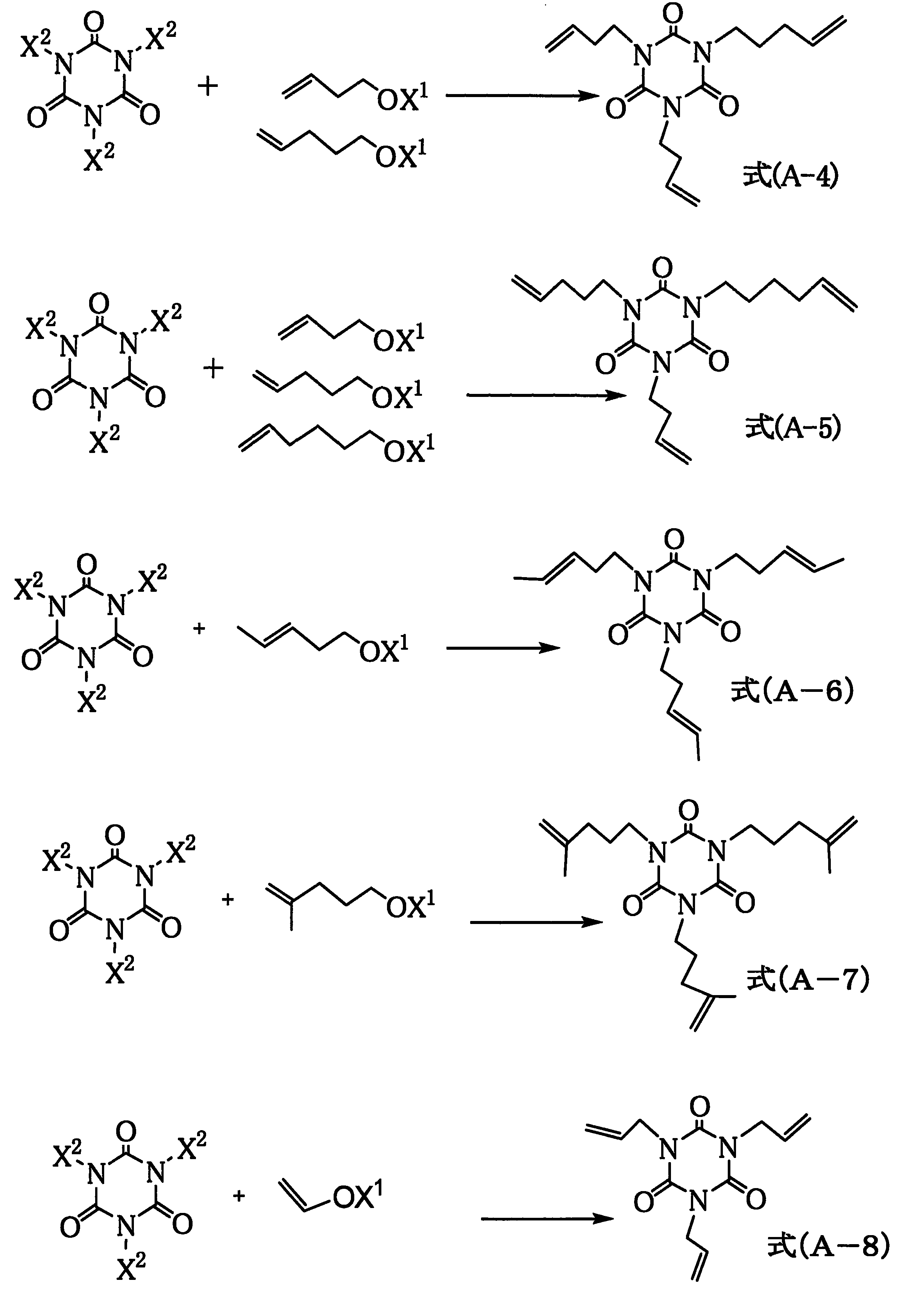
- the triolefin compound used in the present invention can be obtained by reacting cyanuric acid or cyanuric acid salt with an unsaturated alcohol having 3 to 9 carbon atoms or a hydroxyl group protected in a solvent.
- An alkaline substance can be used for this reaction.
- Examples of the alkaline substance used in the above reaction include sodium hydroxide, sodium carbonate, potassium carbonate, potassium hydrogen carbonate, triethylamine and the like. These alkaline substances can be contained at a ratio of 1 to 10 mol with respect to 1 mol of cyanuric acid or cyanuric acid salt.
- Examples of the solvent used in this reaction include N-methylpyrrolidone, N, N-dimethylformamide, N, N-dimethylacetamide, 1,3-dimethyl-2-imidazolidinone, dimethyl sulfoxide and the like.
- Examples of the cyanurate include trisodium cyanurate and tripotassium cyanurate derived from cyanuric acid.
- the cyanuric acid or cyanuric acid salt and the unsaturated alcohol having 3 to 9 carbon atoms or the unsaturated alcohol in which the hydroxyl group is protected are 3 to 3 carbon atoms per mole of cyanuric acid or cyanuric acid salt.
- 9 unsaturated alcohols or unsaturated alcohols in which hydroxyl groups are protected can be reacted, for example, in a proportion of 0.3 to 9 mol, or in a proportion of 0.3 to 27 mol. Furthermore, it is also possible to use a large excess of unsaturated alcohol or the unsaturated alcohol in which the hydroxyl group is protected.
- the unsaturated alcohol or hydroxyl group-protected unsaturated alcohol is used in order to selectively obtain a tris form by making the relatively expensive unsaturated alcohol or hydroxyl group-protected unsaturated alcohol unnecessarily involved in the reaction. Can be reacted with the main point in a range deviating from the equivalent ratio. That is, in the above reaction, the cyanuric acid or cyanuric acid salt and the unsaturated alcohol having 3 to 9 carbon atoms or the protected hydroxyl group are protected with respect to 1 mol of cyanuric acid or cyanuric acid salt. The unsaturated alcohol having 3 to 9 unsaturated alcohol or hydroxyl group protected can be reacted at a ratio of 0.3 to 5 mol.
- 1 mol of cyanuric acid can react with the unsaturated alcohol having 3 to 9 carbon atoms or the unsaturated alcohol having a hydroxyl group protected at a ratio of 1 to 5 mol or 2 to 5 mol. Then, 1 mole of cyanuric acid salt reacts with the unsaturated alcohol having 3 to 9 carbon atoms or the unsaturated alcohol having a hydroxyl group protected at a ratio of 0.3 to 1 mole, or 0.3 to 2 mole. Can do.
- a tris body can be selectively produced by using a cyanurate with a relatively expensive unsaturated alcohol at an equivalent ratio or less.
- Cyanuric acid and cyanuric acid salt have low solubility in solvents.
- cyanuric acid salts have lower solubility in solvents than cyanuric acid.
- cyanuric acid is first introduced in the reaction process.
- One N—Na group in one molecule of the above reacts with the unsaturated alcohol or the unsaturated alcohol in which the hydroxyl group is protected to produce an intermediate in which one alkenyl group is substituted for cyanuric acid.
- the molecule (intermediate) is considered to have improved solubility in a solvent.
- Intermediates with improved solubility in solvents have improved reactivity compared to other cyanurate salts (unsubstituted), resulting in substitution of the second alkenyl group, substitution of the third alkenyl group, It is believed that triolefin isocyanurate is synthesized. Although such a tendency also occurs with cyanuric acid, it is considered that cyanuric acid salt having lower solubility is more prominent.
- metal halides such as potassium bromide and potassium iodide can be used as additives.
- the metal halide can be used at a ratio of 0.01 to 1 mol with respect to 1 mol of isocyanuric acid.
- the above additives are preferably added.
- Examples of the unsaturated alcohol or hydroxyl group protected for synthesizing the triolefin compound include unsaturated alcohols having 3 to 9 carbon atoms or unsaturated alcohols in which the hydroxyl group of these alcohols is protected with a protecting group. It is done.
- the said C3-C9 shows carbon number of the unsaturated hydrocarbon group except a protective group.
- Examples of the protecting group include p-toluenesulfonyl group, o-nitrobenzenesulfonyl group, and methanesulfonyl group.
- a p-toluenesulfonyl group and a methanesulfonyl group are preferred, and the use of a methanesulfonyl group is particularly preferred because the yield of the olefin compound obtained is high.
- X 1 represents a hydrogen atom, a p-toluenesulfonyl group, an o-nitrobenzenesulfonyl group, or a methanesulfonyl group.
- the unsaturated alcohol in which the hydroxyl group is protected includes an unsaturated alcohol having 3 to 9 carbon atoms and p-toluenesulfonyl halide, o-nitrobenzenesulfonyl halide, or methanesulfonyl halide in a solvent in the presence of an alkaline substance. It is obtained by reacting.
- halide halogenated substances such as fluorine, chlorine, bromine and iodine are used.
- alkaline substance used in the above reaction include sodium hydroxide, sodium carbonate, potassium carbonate, potassium hydrogen carbonate, triethylamine and the like.
- solvent used in this reaction examples include N-methylpyrrolidone, N, N-dimethylformamide, N, N-dimethylacetamide, 1,3-dimethyl-2-imidazolidinone, dimethyl sulfoxide, toluene and the like.
- X 1 represents a hydrogen atom, a p-toluenesulfonyl group, an o-nitrobenzenesulfonyl group, or a methanesulfonyl group
- X 2 represents a hydrogen atom, sodium, or potassium.
- the apparatus used for analyzing the samples is as follows. HPLC (high performance liquid chromatography) Equipment: 1200 Series, manufactured by Agilent Technologies GC (gas chromatography) Apparatus: 7890A, manufactured by Agilent Technologies
- aqueous hydrogen peroxide solution (2.32 ml, 27 mmol) was added dropwise over 1 hour and then reacted for 2 hours, and then the reaction was repeated 3 times, followed by an additional 4 hours of reaction.
- the reaction solution was analyzed by GC, the conversion of olefin was 99%.
- the reaction mixture was filtered to remove inorganic salts, and the resulting solution was analyzed by HPLC. The yield of 1,3,5-tris- (4,5-epoxypentyl) -isocyanurate was 94%. It was confirmed that there was.
- Example 4 1,3,5-tris- (4-pentenyl) -isocyanurate (10.0 g, 30.0 mmol), trisodium phosphate dodecahydrate (23.9 g, 63.0 mmol), acetonitrile (11 g, 270 0.0 mmol) and methanol (30 g) were mixed and the temperature was adjusted to 20 ° C., and a 35 mass% hydrogen peroxide aqueous solution (7.74 ml, 90 mmol) was added dropwise over 1 hour, followed by reaction for 4 hours.
- an epoxy compound in which an epoxy ring is bonded to a triazinetrione ring via a long-chain alkylene group an epoxy compound in which the olefin portion is epoxidized can be obtained efficiently and with good yield by using an olefin compound having a specific structure.
Landscapes
- Chemical & Material Sciences (AREA)
- Organic Chemistry (AREA)
- Plural Heterocyclic Compounds (AREA)
- Epoxy Compounds (AREA)
- Inorganic Chemistry (AREA)
Abstract
Description
しかしながら使用する用途によってはキャスティング成型など液状組成物でないと成型できない分野もあり、結晶性であるエポキシ樹脂はトランスファー成型など固形材料を使用する用途に限られ、そのため使用範囲が限定されている。
また、従来、キャスティング成型など液状成型に使用されるエポキシ樹脂は液状のエポキシ樹脂であり、昨今の接着、注型、封止、成型、積層等の分野で要求が厳しくなっている耐熱性等の硬化物性の向上の要求には十分に満足できない。そこで高い耐熱性を有する硬化物性を与える結晶性の多官能エポキシ樹脂を液状化させる要求が高まっている。
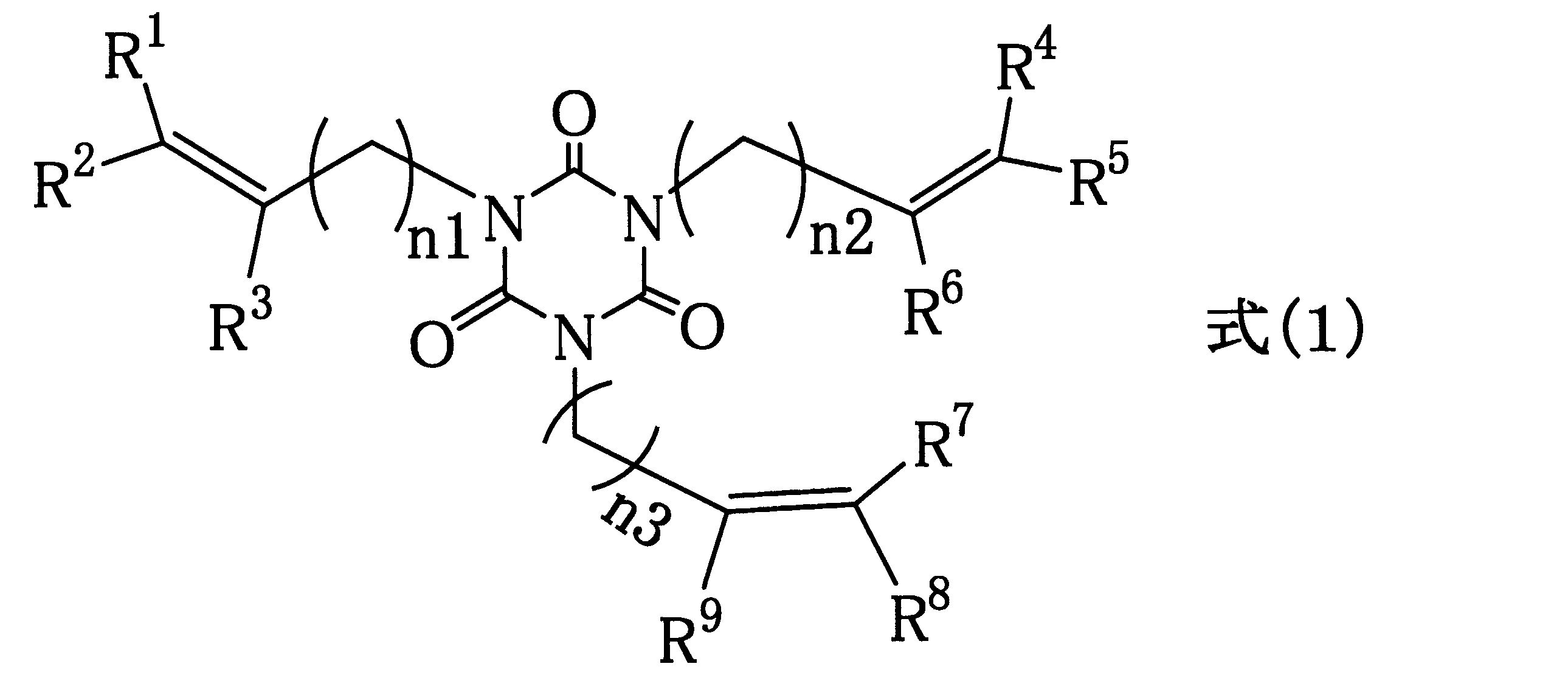
(式(1)中、R1乃至R9はそれぞれ独立に水素原子又はメチル基であり、n1乃至n3はそれぞれ独立に1乃至4の整数である。)で示されるトリオレフィン化合物、過酸化水素、ニトリル化合物、及びアルカリ性物質を溶剤中で反応させることを含む、式(2):
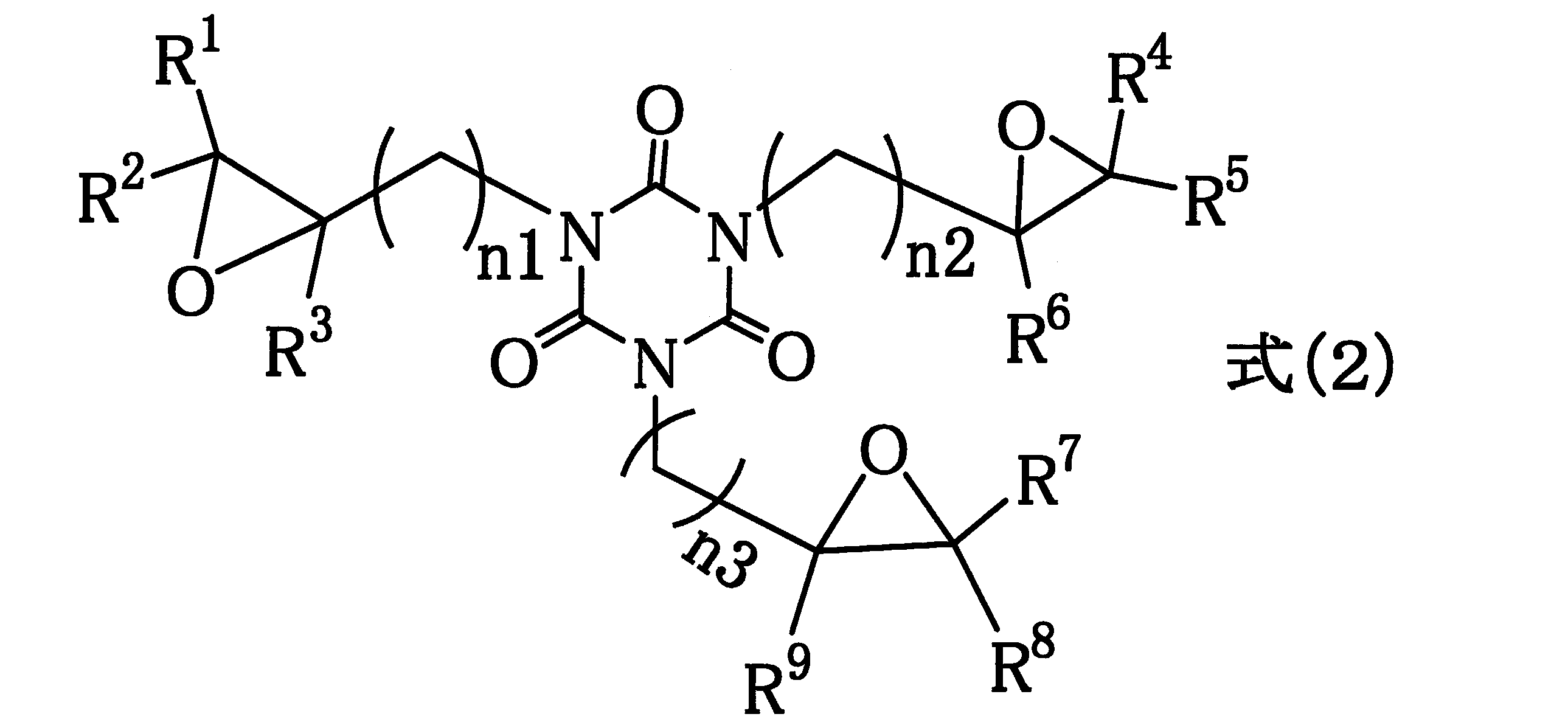
(式(2)中、R1乃至R9はそれぞれ独立に水素原子又はメチル基であり、n1乃至n3はそれぞれ独立に1乃至4の整数である。)で示されるエポキシ化合物の製造方法、
第2観点として、ニトリル化合物が脂肪族ニトリル化合物又は芳香族ニトリル化合物である第1観点に記載の製造方法、
第3観点として、アルカリ性物質がリン酸塩、炭酸塩、又はアルカリ金属水酸化物である第1観点又は第2観点に記載の製造方法、
第4観点として、溶剤がアルコールである第1観点乃至第3観点のいずれか一つに記載の製造方法、
第5観点として、式(1)で示されるトリオレフィン化合物がシアヌル酸又はシアヌル酸塩と、炭素数3乃至9の不飽和アルコール又は水酸基が保護された該不飽和アルコールとを溶剤中で反応させて得られたものである第1観点乃至第4観点のいずれか一つに記載の製造方法、
第6観点として、不飽和アルコールの水酸基の保護基がスルホニル基である第5観点に記載の製造方法、及び
第7観点として、不飽和アルコールの水酸基の保護基がp-トルエンスルホニル基、o-ニトロベンゼンスルホニル基、又はメタンスルホニル基である第5観点に記載の製造方法である。
さらに、遷移金属酸化物塩や、界面活性剤(相間移動触媒)を用いることがないので、生成物からそれらを除去する必要がない。
従って、本発明によればオレフィン化合物から効率よく高純度でエポキシ化合物を製造することができる。
これらの効果は、上記の長鎖アルキレン基を介したエポキシ環は自由度が大きく、反応性が高いのでエポキシ基がすべて反応に関与して靱性の高い硬化物に変化したためであると考えられる。
上記式(1)中で、R1乃至R9はそれぞれ独立に水素原子又はメチル基であり、n1乃至n3はそれぞれ独立に1乃至4の整数である。
R1乃至R9はそれぞれ独立に水素原子又はメチル基であるが、水素原子である場合が好ましく用いることができる。また、イソシアヌレート環(トリアジントリオン環)から伸びる側鎖は総炭素数が3乃至9になるものであれば、水素原子及びメチル基に替えて下記の炭素数2乃至6のアルキル基を用いることができる。
この添加(滴下)した後に反応を行う組み合わせ(滴下と反応)を数回(例えば2回乃至5回程度)繰り返すことによりオレフィンからエポキシ基への反応の収率を向上させることができる。
上記反応には緩衝溶液を添加することができる。この緩衝溶液としては例えば炭酸ナトリウム-炭酸水素ナトリウム緩衝溶液(pHは9.2乃至10.6)が挙げられる。例えば、0.1モル/リットルの炭酸ナトリウム水溶液と0.1モル/リットルの炭酸水素ナトリウム水溶液を所定pH値になるように混合して調整することができる。


上記反応に用いられるアルカリ性物質としては水酸化ナトリウム、炭酸ナトリウム、炭酸カリウム、炭酸水素カリウム、トリエチルアミン等が挙げられる。これらアルカリ性物質はシアヌル酸又はシアヌル酸塩の1モルに対して、1乃至10モルの割合で含有することができる。
この反応に用いられる溶剤としては、例えばN-メチルピロリドン、N,N-ジメチルホルムアミド、N,N-ジメチルアセトアミド、1,3-ジメチル-2-イミダゾリジノン、ジメチルスルホキシド等が挙げられる。
上記シアヌル酸塩はシアヌル酸から誘導されるシアヌル酸三ナトリウム、シアヌル酸三カリウム等が挙げられる。
即ち、上記反応においてシアヌル酸又はシアヌル酸塩と、炭素数3乃至9の不飽和アルコール又は水酸基が保護された該不飽和アルコールとは、シアヌル酸又はシアヌル酸塩の1モルに対して、炭素数3乃至9の不飽和アルコール又は水酸基が保護された該不飽和アルコールを0.3乃至5モルの割合で反応させることができる。

上記反応に用いられるアルカリ性物質としては水酸化ナトリウム、炭酸ナトリウム、炭酸カリウム、炭酸水素カリウム、トリエチルアミン等が挙げられる。
この反応に用いられる溶剤としては、例えばN-メチルピロリドン、N,N-ジメチルホルムアミド、N,N-ジメチルアセトアミド、1,3-ジメチル-2-イミダゾリジノン、ジメチルスルホキシド、トルエン等が挙げられる。

HPLC(高速液体クロマトグラフィー)
装置:Agilent Technologies社製、1200Series
GC(ガスクロマトグラフィー)
装置:Agilent Technologies社製、7890A
イソシアヌル酸三ナトリウム塩(5.3g、27.0mmol)、4-ペンテニルメタンスルホナート(4.4g、27.0mmol)、ジメチルスルホキシド(44.4g)を混合し、65℃に加熱して19時間反応させた。反応溶液をHPLCで分析したところ、1,3,5-トリス-(4-ペンテニル)-イソシアヌレートの収率は91%であることが確認された。
イソシアヌル酸(45mg、0.35mmol)、炭酸ナトリウム(106mg、1mmol)、臭化カリウム(12mg、0.1mmol)、ジメチルスルホキシド(1.6g)を混合して、100℃に加熱した後、1時間攪拌した。反応溶液を65℃に冷却した後に、4-ペンテニルメタンスルホナート(164mg、1mmol)とジメチルスルホキシド(164mg)の混合溶液を1時間かけて滴下した。16時間反応させた後に反応溶液をHPLCで分析したところ、1,3,5-トリス-(4-ペンテニル)-イソシアヌレートの収率は77%であることが確認された。
イソシアヌル酸(135mg、1.1mmol)、炭酸ナトリウム(318mg、3.0mmol)、臭化カリウム(36mg、0.3mmol)、ジメチルスルホキシド(4.1g)を混合して、65℃に加熱した後、2-プロペニルメタンスルホナート(409mg、3.0mmol)とジメチルスルホキシド(409mg)の混合溶液を30分かけて滴下した。1時間反応させた後に反応溶液をGCで分析したところ、1,3,5-トリス-(2-プロペニル)-イソシアヌレートの収率は68%であることが確認された。
イソシアヌル酸(4.8g、37.5mmol)、トリエチルアミン(11.4g、112.6mmol)、N-メチルピロリドン(75.0g)を混合して、90℃に加熱した後、11-ブロモウンデセン(25.0g、107.2mmol)を1時間かけて滴下した。3時間反応させた後に、反応溶液をろ過し、ヘプタン(100.0g)、5質量%食塩水(75.0g)の混合溶媒を加えて、分液した。
水層にヘプタン(100.0g)を加えて抽出した後に、先の有機層と合わせて、5質量%食塩水(75.0g)で2回洗浄を行った。得られた有機層の溶媒を減圧留去して、完全濃縮したところ、1,3,5-トリス-(10-ウンデセニル)-イソシアヌレートの収率は65%であることが確認された。
1,3,5-トリス-(4-ペンテニル)-イソシアヌレート(3.0g、9.0mmol)、リン酸三ナトリウム・12水和物(7.2g、18.9mmol)、アセトニトリル(10g、243.0mmol)、メタノール(6g)、炭酸ナトリウム-炭酸水素ナトリウム緩衝溶液(ph=10.6)(10g)を混合し、温度を20℃とした後に、35質量%過酸化水素水溶液(2.32ml、27mmol)を1時間かけて滴下した後に2時間反応させた。更に、35質量%過酸化水素水溶液(2.32ml、27mmol)を1時間かけて滴下した後に2時間反応させることを3回繰り返した後に、追加で4時間反応させた。反応溶液をGCで分析したところ、オレフィンの転化率は99%であった。
反応混合物から無機塩を取り除くためにろ過を行い、得られた溶液をHPLCで分析したところ、1,3,5-トリス-(4,5-エポキシペンチル)-イソシアヌレートの収率は94%であることが確認された。
1,3,5-トリス-(2-プロペニル)-イソシアヌレート(2.2g、9.0mmol)、リン酸三ナトリウム・12水和物(7.2g、18.9mmol)、アセトニトリル(10g、243.0mmol)、メタノール(6g)、炭酸ナトリウム-炭酸水素ナトリウム緩衝溶液(ph=10.6)(10g)を混合し、温度を20℃とした後に、35質量%過酸化水素水溶液(2.32ml、27mmol)を1時間かけて滴下した後に2時間反応させた。更に、35質量%過酸化水素水溶液(2.32ml、27mmol)を1時間かけて滴下した後に2時間反応させることを4回繰り返した後に、追加で4時間反応させた。反応溶液をGCで分析したところ、オレフィンの転化率は99%であった。
反応混合物に水を加えて均一にした後に、メタノールとアセトニトリルを減圧留去した。残った水層にクロロホルム(50g)を加えて分液した後に、水層にクロロホルム(50g)を加えて抽出を行った。得られた有機層を合わせて、2%チオ硫酸ナトリウム水溶液(50g)、1規定リン酸水溶液(50g)、イオン交換水(50g)2回、で洗浄を行った後、真空ポンプで減圧乾燥した。結果、1,3,5-トリス-(2,3-エポキシプロピル)-イソシアヌレートが収量0.8g、収率28%、GC面積百分率純度は90%で得られた。
1,3,5-トリス-(4-ペンテニル)-イソシアヌレート(10.0g、30.0mmol)、アセトニトリル(11g、270.0mmol)、メタノール(30g)を混合し、温度を25℃とした後に、35質量%過酸化水素水溶液(23.2ml、270.0mmol)を15時間かけて滴下した。35質量%過酸化水素水溶液の滴下開始と同時に、8質量%水酸化ナトリウム水溶液を、反応溶液がpH=10.0乃至10.5に維持するように滴下し始めた。反応溶液をGCで分析したところ、オレフィンの転化率は99%であった。
得られた溶液をHPLCで分析したところ、1,3,5-トリス-(4,5-エポキシペンチル)-イソシアヌレートの収率は71%であることが確認された。
1,3,5-トリス-(4-ペンテニル)-イソシアヌレート(10.0g、30.0mmol)、リン酸三ナトリウム・12水和物(23.9g、63.0mmol)、アセトニトリル(11g、270.0mmol)、メタノール(30g)を混合し、温度を20℃とした後に、35質量%過酸化水素水溶液(7.74ml、90mmol)を1時間かけて滴下した後に4時間反応させた。更に、35質量%過酸化水素水溶液(7.74ml、90mmol)を1時間かけて滴下した後に4時間反応させることを2回繰り返した後に、追加で4時間反応させた。反応溶液をGCで分析したところ、オレフィンの転化率は99%であった。
反応混合物から無機塩を取り除くためにろ過を行い、得られた溶液をHPLCで分析したところ、1,3,5-トリス-(4,5-エポキシペンチル)-イソシアヌレートの収率は75%であることが確認された。
1,3,5-トリス-(10-ウンデセニル)-イソシアヌレート(5.3g、9.0mmol)、リン酸三ナトリウム・12水和物(7.2g、18.9mmol)、アセトニトリル(10g、243.0mmol)、メタノール(6g)、炭酸ナトリウム-炭酸水素ナトリウム緩衝溶液(ph=10.6)(10g)を混合し、温度を20℃とした後に、35質量%過酸化水素水溶液(2.32ml、27mmol)を1時間かけて滴下した後に2時間反応させた。更に、35質量%過酸化水素水溶液(2.32ml、27mmol)を1時間かけて滴下した後に2時間反応させることを3回繰り返した後に、追加で4時間反応させた。反応溶液をGCで分析したところ、オレフィンの転化率は0%であった。
Claims (7)
- 下記式(1):
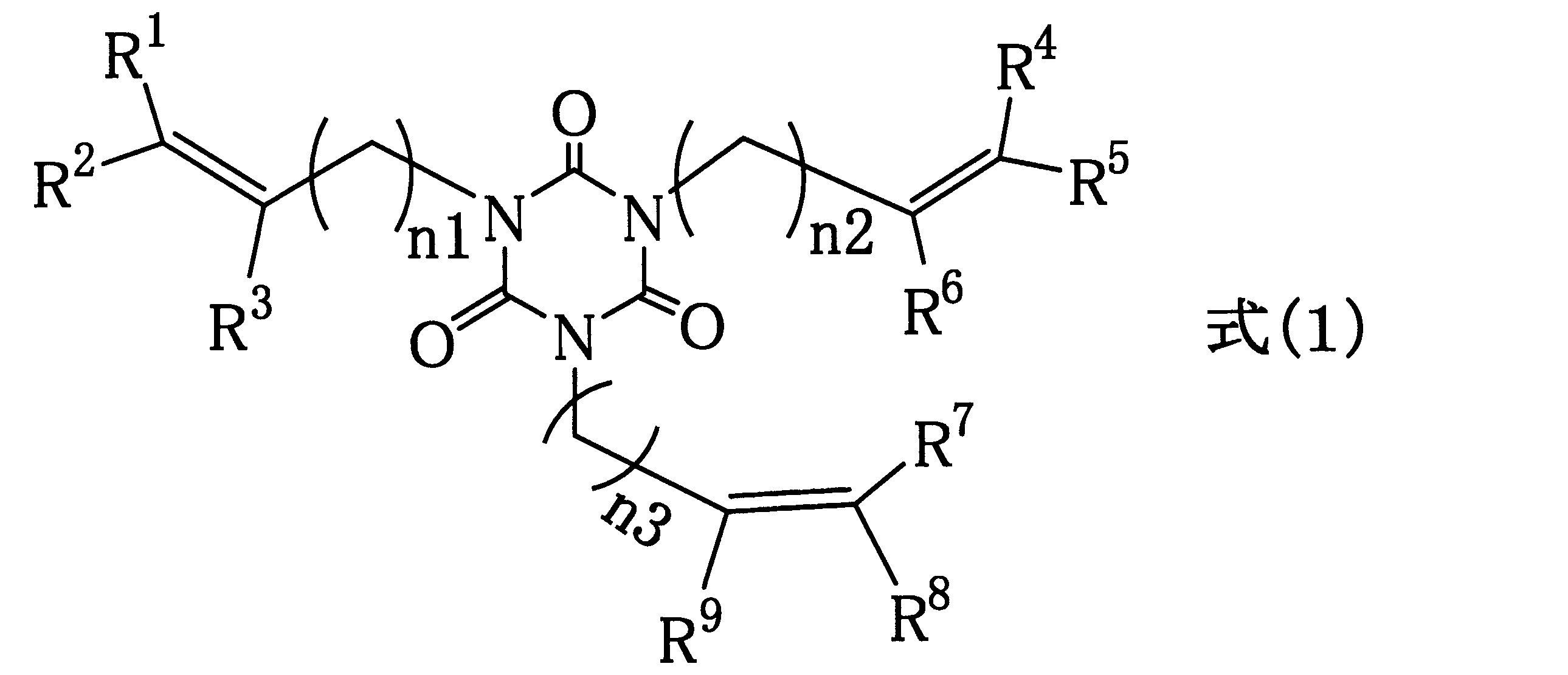
(式(1)中、R1乃至R9はそれぞれ独立に水素原子又はメチル基であり、n1乃至n3はそれぞれ独立に1乃至4の整数である。)で示されるトリオレフィン化合物、過酸化水素、ニトリル化合物、及びアルカリ性物質を溶剤中で反応させることを含む、式(2):

(式(2)中、R1乃至R9はそれぞれ独立に水素原子又はメチル基であり、n1乃至n3はそれぞれ独立に1乃至4の整数である。)で示されるエポキシ化合物の製造方法。 - ニトリル化合物が脂肪族ニトリル化合物又は芳香族ニトリル化合物である請求項1に記載の製造方法。
- アルカリ性物質がリン酸塩、炭酸塩、又はアルカリ金属水酸化物である請求項1又は請求項2に記載の製造方法。
- 溶剤がアルコールである請求項1乃至請求項3のいずれか1項に記載の製造方法。
- 式(1)で示されるトリオレフィン化合物がシアヌル酸又はシアヌル酸塩と、炭素数3乃至9の不飽和アルコール又は水酸基が保護された該不飽和アルコールとを溶剤中で反応させて得られたものである請求項1乃至請求項4のいずれか1項に記載の製造方法。
- 不飽和アルコールの水酸基の保護基がスルホニル基である請求項5に記載の製造方法。
- 不飽和アルコールの水酸基の保護基がp-トルエンスルホニル基、o-ニトロベンゼンスルホニル基、又はメタンスルホニル基である請求項5に記載の製造方法。
Priority Applications (5)
| Application Number | Priority Date | Filing Date | Title |
|---|---|---|---|
| CN201380048998.6A CN104797576B (zh) | 2012-10-25 | 2013-10-21 | 环氧化合物的制造方法 |
| KR1020157010410A KR102126788B1 (ko) | 2012-10-25 | 2013-10-21 | 에폭시 화합물의 제조방법 |
| JP2014543283A JP6315205B2 (ja) | 2012-10-25 | 2013-10-21 | エポキシ化合物の製造方法 |
| EP13849469.5A EP2913331B8 (en) | 2012-10-25 | 2013-10-21 | Method for producing epoxy compound |
| US14/438,374 US9464074B2 (en) | 2012-10-25 | 2013-10-21 | Method for producing epoxy compound |
Applications Claiming Priority (2)
| Application Number | Priority Date | Filing Date | Title |
|---|---|---|---|
| JP2012-235374 | 2012-10-25 | ||
| JP2012235374 | 2012-10-25 |
Publications (1)
| Publication Number | Publication Date |
|---|---|
| WO2014065239A1 true WO2014065239A1 (ja) | 2014-05-01 |
Family
ID=50544619
Family Applications (1)
| Application Number | Title | Priority Date | Filing Date |
|---|---|---|---|
| PCT/JP2013/078480 Ceased WO2014065239A1 (ja) | 2012-10-25 | 2013-10-21 | エポキシ化合物の製造方法 |
Country Status (7)
| Country | Link |
|---|---|
| US (1) | US9464074B2 (ja) |
| EP (1) | EP2913331B8 (ja) |
| JP (1) | JP6315205B2 (ja) |
| KR (1) | KR102126788B1 (ja) |
| CN (1) | CN104797576B (ja) |
| TW (1) | TWI643852B (ja) |
| WO (1) | WO2014065239A1 (ja) |
Cited By (3)
| Publication number | Priority date | Publication date | Assignee | Title |
|---|---|---|---|---|
| CN104892586A (zh) * | 2015-05-31 | 2015-09-09 | 黄山华惠科技有限公司 | 制备异氰脲酸三缩水甘油酯的新方法 |
| WO2016027735A1 (ja) * | 2014-08-20 | 2016-02-25 | 日産化学工業株式会社 | 過酸化水素の安定化剤を含有するエポキシ化合物の製造方法 |
| CN111253329A (zh) * | 2020-04-14 | 2020-06-09 | 湖南方锐达科技有限公司 | 一种三烯丙基异氰脲酸酯的制备工艺 |
Families Citing this family (3)
| Publication number | Priority date | Publication date | Assignee | Title |
|---|---|---|---|---|
| TWI631193B (zh) * | 2016-02-26 | 2018-08-01 | 奇美實業股份有限公司 | 防濕絕緣塗料及其應用 |
| KR20190140474A (ko) * | 2017-05-09 | 2019-12-19 | 닛산 가가쿠 가부시키가이샤 | 에폭시 화합물의 제조방법 |
| CN112500399B (zh) * | 2020-12-02 | 2024-03-12 | 黄山华惠科技有限公司 | 一种低氯无ech残留tgic固化剂及其制备方法 |
Citations (10)
| Publication number | Priority date | Publication date | Assignee | Title |
|---|---|---|---|---|
| JPS59227872A (ja) * | 1983-06-08 | 1984-12-21 | Sumitomo Chem Co Ltd | エポキシ化合物の製造方法 |
| JPS62114979A (ja) * | 1985-11-13 | 1987-05-26 | Sanyo Kokusaku Pulp Co Ltd | オレフインのエポキシ化法 |
| JPH07206835A (ja) * | 1994-01-26 | 1995-08-08 | Idemitsu Kosan Co Ltd | スチレンオキシド誘導体の製造方法 |
| JP2002145872A (ja) | 2000-11-01 | 2002-05-22 | Maruzen Petrochem Co Ltd | エポキシ化合物の製造方法 |
| JP2008239579A (ja) * | 2007-03-28 | 2008-10-09 | Tokuyama Corp | エポキシ化合物の製造方法 |
| JP2009256260A (ja) * | 2008-04-18 | 2009-11-05 | Daiso Co Ltd | エポキシアルコールの製造方法 |
| WO2011093188A1 (ja) * | 2010-01-26 | 2011-08-04 | 日産化学工業株式会社 | ポジ型レジスト組成物及びマイクロレンズの製造方法 |
| WO2012008308A1 (ja) * | 2010-07-14 | 2012-01-19 | 昭和電工株式会社 | エポキシ化合物の製造方法 |
| JP2012025688A (ja) | 2010-07-22 | 2012-02-09 | National Institute Of Advanced Industrial Science & Technology | エポキシ化合物の製造方法 |
| CN102603721A (zh) * | 2012-02-17 | 2012-07-25 | 湖南大学 | 一种异氰脲酸三缩水甘油酯的制备方法 |
Family Cites Families (5)
| Publication number | Priority date | Publication date | Assignee | Title |
|---|---|---|---|---|
| US3376301A (en) * | 1960-08-24 | 1968-04-02 | Gulf Oil Corp | Method of producing triallylic isocyanurates |
| US3793321A (en) * | 1970-07-02 | 1974-02-19 | Ciba Geigy Ag | Process for the manufacture of triglycidylisocyanurate |
| KR20000022144A (ko) * | 1996-07-01 | 2000-04-25 | 이노우에 노리유끼 | 불소 함유 트리알릴이소시아누레이트, 이를 함유한 가황용 엘라스토머 조성물 및 가황 방법 |
| CN102449001B (zh) * | 2009-05-25 | 2014-04-23 | 日本化成株式会社 | 异氰脲酸三烯丙酯的储藏方法 |
| JP2011195483A (ja) * | 2010-03-18 | 2011-10-06 | Nippon Steel Chem Co Ltd | トリエポキシエチルシクロヘキサン及びエポキシ樹脂の製造方法 |
-
2013
- 2013-10-21 EP EP13849469.5A patent/EP2913331B8/en active Active
- 2013-10-21 WO PCT/JP2013/078480 patent/WO2014065239A1/ja not_active Ceased
- 2013-10-21 US US14/438,374 patent/US9464074B2/en active Active
- 2013-10-21 CN CN201380048998.6A patent/CN104797576B/zh active Active
- 2013-10-21 JP JP2014543283A patent/JP6315205B2/ja active Active
- 2013-10-21 KR KR1020157010410A patent/KR102126788B1/ko active Active
- 2013-10-25 TW TW102138683A patent/TWI643852B/zh active
Patent Citations (10)
| Publication number | Priority date | Publication date | Assignee | Title |
|---|---|---|---|---|
| JPS59227872A (ja) * | 1983-06-08 | 1984-12-21 | Sumitomo Chem Co Ltd | エポキシ化合物の製造方法 |
| JPS62114979A (ja) * | 1985-11-13 | 1987-05-26 | Sanyo Kokusaku Pulp Co Ltd | オレフインのエポキシ化法 |
| JPH07206835A (ja) * | 1994-01-26 | 1995-08-08 | Idemitsu Kosan Co Ltd | スチレンオキシド誘導体の製造方法 |
| JP2002145872A (ja) | 2000-11-01 | 2002-05-22 | Maruzen Petrochem Co Ltd | エポキシ化合物の製造方法 |
| JP2008239579A (ja) * | 2007-03-28 | 2008-10-09 | Tokuyama Corp | エポキシ化合物の製造方法 |
| JP2009256260A (ja) * | 2008-04-18 | 2009-11-05 | Daiso Co Ltd | エポキシアルコールの製造方法 |
| WO2011093188A1 (ja) * | 2010-01-26 | 2011-08-04 | 日産化学工業株式会社 | ポジ型レジスト組成物及びマイクロレンズの製造方法 |
| WO2012008308A1 (ja) * | 2010-07-14 | 2012-01-19 | 昭和電工株式会社 | エポキシ化合物の製造方法 |
| JP2012025688A (ja) | 2010-07-22 | 2012-02-09 | National Institute Of Advanced Industrial Science & Technology | エポキシ化合物の製造方法 |
| CN102603721A (zh) * | 2012-02-17 | 2012-07-25 | 湖南大学 | 一种异氰脲酸三缩水甘油酯的制备方法 |
Non-Patent Citations (3)
| Title |
|---|
| DATABASE CAPLUS 7 October 2008 (2008-10-07), retrieved from STN Database accession no. 2008:1203108 * |
| THE CHEMICAL SOCIETY OF JAPAN, JIKKEN KAGAKU KOZA 20 YUKI GOSEI II -ALCOHOL, AMINE, 6 July 1992 (1992-07-06), pages 284 - 290, XP009188729 * |
| THE CHEMICAL SOCIETY OF JAPAN, SHIN JIKKEN KAGAKU KOZA 14 YUKI KAGOBUTSU NO GOSEI TO HANNO III, 20 February 1978 (1978-02-20), pages 1342 - 1353, 1356 TO 1359, XP003019960 * |
Cited By (11)
| Publication number | Priority date | Publication date | Assignee | Title |
|---|---|---|---|---|
| WO2016027735A1 (ja) * | 2014-08-20 | 2016-02-25 | 日産化学工業株式会社 | 過酸化水素の安定化剤を含有するエポキシ化合物の製造方法 |
| CN106536492A (zh) * | 2014-08-20 | 2017-03-22 | 日产化学工业株式会社 | 含有过氧化氢稳定剂的环氧化合物的制造方法 |
| KR20170042507A (ko) * | 2014-08-20 | 2017-04-19 | 닛산 가가쿠 고교 가부시키 가이샤 | 과산화수소의 안정화제를 함유하는 에폭시 화합물의 제조방법 |
| JPWO2016027735A1 (ja) * | 2014-08-20 | 2017-06-01 | 日産化学工業株式会社 | 過酸化水素の安定化剤を含有するエポキシ化合物の製造方法 |
| US10005742B2 (en) | 2014-08-20 | 2018-06-26 | Nissan Chemical Industries, Ltd. | Method for producing epoxy compound containing hydrogen peroxide stabilizer |
| TWI680966B (zh) * | 2014-08-20 | 2020-01-01 | 日商日產化學工業股份有限公司 | 含有過氧化氫之安定化劑的環氧化合物的製造方法 |
| CN106536492B (zh) * | 2014-08-20 | 2020-04-03 | 日产化学工业株式会社 | 含有过氧化氢稳定剂的环氧化合物的制造方法 |
| KR102411424B1 (ko) * | 2014-08-20 | 2022-06-22 | 닛산 가가쿠 가부시키가이샤 | 과산화수소의 안정화제를 함유하는 에폭시 화합물의 제조방법 |
| CN104892586A (zh) * | 2015-05-31 | 2015-09-09 | 黄山华惠科技有限公司 | 制备异氰脲酸三缩水甘油酯的新方法 |
| CN111253329A (zh) * | 2020-04-14 | 2020-06-09 | 湖南方锐达科技有限公司 | 一种三烯丙基异氰脲酸酯的制备工艺 |
| CN111253329B (zh) * | 2020-04-14 | 2022-11-29 | 湖南方锐达科技有限公司 | 一种三烯丙基异氰脲酸酯的制备工艺 |
Also Published As
| Publication number | Publication date |
|---|---|
| EP2913331B8 (en) | 2018-10-31 |
| US20150284372A1 (en) | 2015-10-08 |
| KR102126788B1 (ko) | 2020-06-25 |
| TW201429961A (zh) | 2014-08-01 |
| CN104797576A (zh) | 2015-07-22 |
| US9464074B2 (en) | 2016-10-11 |
| EP2913331A4 (en) | 2016-04-06 |
| KR20150070190A (ko) | 2015-06-24 |
| EP2913331B1 (en) | 2018-09-12 |
| EP2913331A1 (en) | 2015-09-02 |
| JP6315205B2 (ja) | 2018-04-25 |
| JPWO2014065239A1 (ja) | 2016-09-08 |
| TWI643852B (zh) | 2018-12-11 |
| CN104797576B (zh) | 2018-05-01 |
Similar Documents
| Publication | Publication Date | Title |
|---|---|---|
| JP6315205B2 (ja) | エポキシ化合物の製造方法 | |
| CN103068876B (zh) | 具有单环式脂肪族烃环的环氧树脂组合物 | |
| CN103210012B (zh) | 多官能环氧化合物 | |
| JP6124013B2 (ja) | 光硬化性樹脂組成物 | |
| JP6681007B2 (ja) | 過酸化水素の安定化剤を含有するエポキシ化合物の製造方法 | |
| TWI520953B (zh) | 具有含氮環之環氧化合物 | |
| US9102663B2 (en) | Method for producing epoxy compound having cyanuric acid skeleton | |
| JP6875660B2 (ja) | 含窒素環状化合物及びその製造方法 |
Legal Events
| Date | Code | Title | Description |
|---|---|---|---|
| 121 | Ep: the epo has been informed by wipo that ep was designated in this application |
Ref document number: 13849469 Country of ref document: EP Kind code of ref document: A1 |
|
| ENP | Entry into the national phase |
Ref document number: 2014543283 Country of ref document: JP Kind code of ref document: A |
|
| ENP | Entry into the national phase |
Ref document number: 20157010410 Country of ref document: KR Kind code of ref document: A |
|
| WWE | Wipo information: entry into national phase |
Ref document number: 14438374 Country of ref document: US |
|
| NENP | Non-entry into the national phase |
Ref country code: DE |
|
| WWE | Wipo information: entry into national phase |
Ref document number: 2013849469 Country of ref document: EP |