WO2014104032A1 - Procédé de production d'une poudre de cuivre, poudre de cuivre et pâte de cuivre - Google Patents
Procédé de production d'une poudre de cuivre, poudre de cuivre et pâte de cuivre Download PDFInfo
- Publication number
- WO2014104032A1 WO2014104032A1 PCT/JP2013/084525 JP2013084525W WO2014104032A1 WO 2014104032 A1 WO2014104032 A1 WO 2014104032A1 JP 2013084525 W JP2013084525 W JP 2013084525W WO 2014104032 A1 WO2014104032 A1 WO 2014104032A1
- Authority
- WO
- WIPO (PCT)
- Prior art keywords
- copper
- suspension
- copper powder
- particles
- cuprous oxide
- Prior art date
- Legal status (The legal status is an assumption and is not a legal conclusion. Google has not performed a legal analysis and makes no representation as to the accuracy of the status listed.)
- Ceased
Links
Images



Classifications
-
- H—ELECTRICITY
- H01—ELECTRIC ELEMENTS
- H01B—CABLES; CONDUCTORS; INSULATORS; SELECTION OF MATERIALS FOR THEIR CONDUCTIVE, INSULATING OR DIELECTRIC PROPERTIES
- H01B1/00—Conductors or conductive bodies characterised by the conductive materials; Selection of materials as conductors
- H01B1/20—Conductive material dispersed in non-conductive organic material
- H01B1/22—Conductive material dispersed in non-conductive organic material the conductive material comprising metals or alloys
-
- B—PERFORMING OPERATIONS; TRANSPORTING
- B22—CASTING; POWDER METALLURGY
- B22F—WORKING METALLIC POWDER; MANUFACTURE OF ARTICLES FROM METALLIC POWDER; MAKING METALLIC POWDER; APPARATUS OR DEVICES SPECIALLY ADAPTED FOR METALLIC POWDER
- B22F1/00—Metallic powder; Treatment of metallic powder, e.g. to facilitate working or to improve properties
- B22F1/05—Metallic powder characterised by the size or surface area of the particles
-
- B—PERFORMING OPERATIONS; TRANSPORTING
- B22—CASTING; POWDER METALLURGY
- B22F—WORKING METALLIC POWDER; MANUFACTURE OF ARTICLES FROM METALLIC POWDER; MAKING METALLIC POWDER; APPARATUS OR DEVICES SPECIALLY ADAPTED FOR METALLIC POWDER
- B22F9/00—Making metallic powder or suspensions thereof
- B22F9/16—Making metallic powder or suspensions thereof using chemical processes
- B22F9/18—Making metallic powder or suspensions thereof using chemical processes with reduction of metal compounds
- B22F9/24—Making metallic powder or suspensions thereof using chemical processes with reduction of metal compounds starting from liquid metal compounds, e.g. solutions
-
- C—CHEMISTRY; METALLURGY
- C09—DYES; PAINTS; POLISHES; NATURAL RESINS; ADHESIVES; COMPOSITIONS NOT OTHERWISE PROVIDED FOR; APPLICATIONS OF MATERIALS NOT OTHERWISE PROVIDED FOR
- C09D—COATING COMPOSITIONS, e.g. PAINTS, VARNISHES OR LACQUERS; FILLING PASTES; CHEMICAL PAINT OR INK REMOVERS; INKS; CORRECTING FLUIDS; WOODSTAINS; PASTES OR SOLIDS FOR COLOURING OR PRINTING; USE OF MATERIALS THEREFOR
- C09D11/00—Inks
- C09D11/52—Electrically conductive inks
-
- C—CHEMISTRY; METALLURGY
- C22—METALLURGY; FERROUS OR NON-FERROUS ALLOYS; TREATMENT OF ALLOYS OR NON-FERROUS METALS
- C22C—ALLOYS
- C22C9/00—Alloys based on copper
-
- H—ELECTRICITY
- H01—ELECTRIC ELEMENTS
- H01B—CABLES; CONDUCTORS; INSULATORS; SELECTION OF MATERIALS FOR THEIR CONDUCTIVE, INSULATING OR DIELECTRIC PROPERTIES
- H01B1/00—Conductors or conductive bodies characterised by the conductive materials; Selection of materials as conductors
- H01B1/02—Conductors or conductive bodies characterised by the conductive materials; Selection of materials as conductors mainly consisting of metals or alloys
- H01B1/026—Alloys based on copper
-
- B—PERFORMING OPERATIONS; TRANSPORTING
- B22—CASTING; POWDER METALLURGY
- B22F—WORKING METALLIC POWDER; MANUFACTURE OF ARTICLES FROM METALLIC POWDER; MAKING METALLIC POWDER; APPARATUS OR DEVICES SPECIALLY ADAPTED FOR METALLIC POWDER
- B22F1/00—Metallic powder; Treatment of metallic powder, e.g. to facilitate working or to improve properties
- B22F1/10—Metallic powder containing lubricating or binding agents; Metallic powder containing organic material
- B22F1/107—Metallic powder containing lubricating or binding agents; Metallic powder containing organic material containing organic material comprising solvents, e.g. for slip casting
Definitions
- the present invention relates to a production method capable of producing a copper powder having a uniform particle size distribution, excellent dispersibility, and free of connected particles and coarse particles without using an expensive noble metal or polymer dispersant, In particular, it is related with the manufacturing method of the copper powder for copper pastes used as an electrically conductive paste.
- pastes using metal powders such as copper, silver, copper alloys, gold, platinum, silver-palladium have been used as conductors on circuit boards.
- copper powders for external electrodes such as multilayer ceramic capacitors, conductive pastes for through holes, thick film conductive pastes, etc.
- the size of the copper powder particles used in these is about 0.5 to 10 ⁇ m, and copper fine particles having various shapes such as spherical shape, flake shape, and irregular shape are used.
- These copper powders are mainly produced by an electrolytic method or an atomizing method.
- a method for printing these conductive pastes on a substrate is widely known, and the conductive paste is directly applied to a substrate or the like by using an inkjet printer, a screen printing machine, an offset printing machine, or the like.
- a method for easily forming wiring and the like has been developed and put into practical use.
- the metal fine particles for conductive paste which is a raw material such as conductive ink, are desired to be finer, have a narrow particle size distribution, excellent dispersibility, and have no connected particles or coarse particles.
- Patent Document 1 alkali hydroxide is added to an aqueous copper salt solution containing a complexing agent such as an amino acid, reducing sugar is added to precipitate cuprous oxide in the aqueous solution, and hydrazine is added thereto to reduce cuprous oxide.
- a method for obtaining copper powder is described.
- Patent Document 2 alkali hydroxide is added to a copper salt aqueous solution containing a complexing agent and heated and aged to form black cupric oxide, and then reducing sugar is added to precipitate cuprous oxide in the aqueous solution.
- a method is described in which hydrazine is added thereto to reduce cuprous oxide to obtain a copper powder.
- Patent Document 3 alkali hydroxide is added to a copper salt aqueous solution containing a complexing agent and heat-aged to produce black cupric oxide. Then, reducing sugar is added to precipitate cuprous oxide in the aqueous solution.
- a method is described in which a mixture of hydrazine and a borohydride compound is added thereto to reduce cuprous oxide to obtain a copper ultrafine particle slurry.
- Patent Document 4 discloses a method of reducing a copper sulfate solution with L-alkosbic acid or L-ascorbates
- Patent Document 5 discloses a method of reducing a copper sulfate solution with D-erythorbic acid or D-erythorbates.
- Non-Patent Document 1 describes a method for producing copper fine particles in which an aqueous copper sulfate solution is reduced with ascorbic acid in the presence of a dispersant.
- Patent Document 6 an alkali borohydride or the like is added as a reaction initiator to a mixed aqueous solution of copper ions, a reducing agent, and a complexing agent to cause a reduction reaction, and then copper ions, a reducing agent, and a pH adjusting agent are added.
- a method for producing copper fine powder is described.
- Patent Document 7 describes a method for producing copper fine particles in which an unsaturated fatty acid solution containing copper ions and a glucose solution are mixed to form an emulsion, and then an ascorbic acid aqueous solution is added to the emulsion.
- noble metal ultrafine particles containing a water-soluble polymer such as polyethyleneimine as a dispersant as a reaction accelerator are added to at least one of an aqueous copper sulfate solution or a reducing agent, and the aqueous copper sulfate solution and the reducing agent are mixed.
- a method for producing copper powder is described.
- an aqueous metal salt solution is used to reduce most of metal ions using a strong reducing agent such as a borohydride salt in the first reduction step, and an alkylamine or alkanolamine having a weak reducing power in the second reduction step.
- a strong reducing agent such as a borohydride salt
- an alkylamine or alkanolamine having a weak reducing power in the second reduction step.
- the average particle diameter of the copper fine particles obtained by the method of Patent Document 3 is as fine as 0.1 ⁇ m or less, it may be difficult to industrially adapt to the copper paste due to complicated cleaning and recovery processes.
- the reaction of sodium borohydride and the reaction of hydrazine can occur simultaneously, the particle size distribution may be broader than when a nucleating agent or a reaction accelerator is added.
- the nucleation is non-uniform and the particle size distribution is relatively broad.
- the pH of the aqueous copper sulfate solution is 5 or less, the growing copper fine particles may agglomerate with each other and be connected.
- the copper fine particles obtained by the method of Non-Patent Document 1 can prevent aggregation with a dispersant, the average particle diameter is 1.5 ⁇ m and cannot be said to be sufficiently fine.
- the average particle size of the obtained copper fine particles is 0.16 to 0.61 ⁇ m, and the particle size distribution is improved by the effect of the initiator.
- the reaction tends to be rapid and non-uniform, and linked particles may be easily generated.
- the copper fine particles obtained by the methods of Patent Documents 7 and 8 can be prevented from aggregating with a dispersant, the dispersant does not easily desorb from the copper surface even after recovery of the copper particles, so that the surface becomes excessively organic.
- the dispersant does not easily desorb from the copper surface even after recovery of the copper particles, so that the surface becomes excessively organic.
- it becomes covered copper particles and used as a conductive paste there is a disadvantage that it is necessary to remove the organic matter by raising the firing temperature.
- it is necessary to separately adjust a reaction accelerator (nucleating agent) containing an expensive noble metal which is not industrially preferable.
- Patent Document 9 in the first reduction step, most of the metal ions are reduced using a reducing agent having a strong reducing power, and in the second reduction step, all of the metal ions are reduced using a reducing agent having a weak reducing power.
- a reducing agent having a strong reducing power in the first reduction step, most of the metal ions are reduced using a reducing agent having a strong reducing power, and in the second reduction step, all of the metal ions are reduced using a reducing agent having a weak reducing power.
- the present invention provides a copper powder having a uniform particle size distribution, excellent dispersibility, and free of connected particles and coarse particles without using an expensive noble metal or polymer dispersant.
- the present invention relates to a manufacturing method that can be manufactured, and particularly relates to a manufacturing method of copper powder for copper paste used as a conductive paste.
- the present invention is as follows.
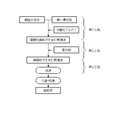
- the present invention provides a first step of obtaining a suspension containing cuprous oxide particles by adding an alkali hydroxide to a mixture of an aqueous copper salt solution having divalent copper ions and a reducing saccharide as a first reducing agent.
- a method for producing a copper powder comprising a second step of adding one or more reducing agents selected from a hydrazine compound or ascorbic acid to the suspension containing the cuprous oxide particles to produce copper fine particles. (Invention 1).
- the present invention is the method for producing a copper powder according to the present invention 1, wherein the amount of the reducing saccharide that is the first reducing agent is 1.00 to 1.20 times the reaction equivalent (this book) Invention 2).
- this invention is manufacturing copper powder of this invention 1 or 2 whose time after adding an alkali hydroxide in said 1st process until it adds a reducing agent in said 2nd process is less than 60 minutes. This is a method (Invention 3).
- the present invention provides the method for producing a copper powder according to any one of the present inventions 1 to 3, wherein the pH of the suspension to which the reducing agent is added is 7.0 to 9.5 in the second step. (Invention 4).
- the present invention also includes a step 2-1 for obtaining a suspension containing cuprous oxide particles and copper ultrafine particles by adding a second reducing agent to the suspension containing cuprous oxide particles, Any one of the present inventions 1 to 4 comprising the step 2-2 of adding one or more reducing agents selected from a hydrazine compound or ascorbic acid to a suspension containing particles and ultrafine copper particles to produce copper fine particles. It is a manufacturing method of the copper powder as described in (Item 5).
- the present invention is the method for producing a copper powder according to the present invention 5, wherein the amount of the second reducing agent added is 10 ⁇ 3 to 10 ⁇ 5 times the reaction equivalent (Invention 6).
- the time until adding one or more reducing agents selected from hydrazine compounds or ascorbic acid in the step 2-2 is within 60 minutes. It is the manufacturing method of the copper powder of this invention 5 or 6 which is (this invention 7).
- the present invention is the method for producing a copper powder according to any one of the present inventions 5 to 7, wherein the pH of the suspension is 7.0 to 9.5 in the step 2-1 ( Invention 8).
- the present invention is the method for producing copper powder according to any one of the present inventions 1 to 8, further comprising a third step of cleaning the copper fine particles contained in the suspension, wherein the cleaning liquid is an organic acid aqueous solution. (Invention 9).
- the present invention also relates to a copper powder obtained by the method for producing a copper powder according to any one of the present inventions 1 to 9, wherein the average particle size of the copper particles observed by SEM is 0.1 to A copper powder having a ratio of the average particle diameter of aggregated particles observed by a dynamic light scattering particle size distribution measuring apparatus to 5.0 ⁇ m or less, which is 1.3 ⁇ m and the average particle diameter of copper particles observed by SEM There is (Invention 10).
- this invention is a copper paste containing the copper powder of this invention 10 (this invention 11).
- copper powder having a uniform particle size distribution and excellent dispersibility and free of connected particles and coarse particles can be stably produced without using an expensive noble metal or polymer dispersant.
- the copper powder obtained by the present invention is a copper powder having a uniform particle size distribution, excellent dispersibility, and free of connected particles and coarse particles, it is preferably used for a conductive paste.
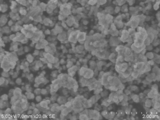
- Manufacturing process diagram of copper powder in the present invention Manufacturing process diagram of copper powder in the present invention SEM photograph of the copper powder obtained in Example 3 SEM photograph of the copper powder obtained in Comparative Example 2. SEM photograph of the cuprous oxide powder obtained after the first reduction reaction of Example 1 SEM photograph of the cuprous oxide powder obtained after the first reduction reaction of Comparative Example 2
- the method for producing a copper powder according to the present invention comprises mixing an alkali hydroxide with a mixture of a copper salt aqueous solution having divalent copper ions and a reducing saccharide as a first reducing agent.
- the present invention may include a third step of washing the copper fine particles contained in the suspension obtained in the second step.
- the first step of the present invention it is essential to previously mix a copper salt aqueous solution having a divalent copper ion and a first reducing agent.
- alkali hydroxide is added to this mixed liquid while stirring, neutralization and dehydration of divalent copper ion hydroxide and reduction of copper divalent ion by the first reducing agent proceed almost simultaneously.
- a suspension containing cuprous oxide particles having a uniform particle diameter and excellent reactivity in the process is produced. By using the suspension, subsequent reduction can proceed rapidly, and copper particles having a uniform particle diameter can be generated.
- the viscosity of the suspension increases significantly with the formation of copper hydroxide due to the addition of alkali hydroxide.
- the reaction becomes non-uniform, and a suspension containing cuprous oxide with a uniform particle size cannot be obtained, and as a result, copper particles with a uniform particle size cannot be produced.
- copper salt having a divalent copper ion used in the present invention copper sulfate, copper chloride, copper nitrate, copper acetate and the like can be used, but copper sulfate is industrially preferable.
- the first reducing agent used in the present invention is a reducing saccharide.
- Glucose, fructose, lactose, etc. can be used as the reducing saccharide, but glucose is preferred industrially.
- the amount of the first reducing agent added is preferably 1.10 to 1.20 times the reaction equivalent. If the addition amount of the first reducing agent is less than 1.10 times the reaction equivalent, in the subsequent reduction reaction, there are many divalent copper ions, copper hydroxide, and copper oxide together with the monovalent copper complex ions. The production of reproducible copper ultrafine particles is hindered. When the addition amount of the first reducing agent exceeds 1.20 times the reaction equivalent, disproportionation reaction may occur and coarse particles may be mixed into the finally obtained copper fine particles.
- alkali hydroxide used in the present invention sodium hydroxide, potassium hydroxide, ammonia and the like can be used, but sodium hydroxide is preferred industrially.
- the temperature of the reaction solution in the first step is preferably 70 ° C. or higher, more preferably 80 ° C. or higher. If the temperature of the reaction solution is less than 70 ° C., the reduction reaction to cuprous oxide does not proceed rapidly, such being undesirable.
- a complexing agent is present in the suspension in the second step.
- the complexing agent may be added in advance to the copper salt aqueous solution in the first step, or may be added after the alkali hydroxide is added, or may be added to the suspension in which the cuprous oxide particles are formed. Due to the presence of the complexing agent in the suspension in the second step, a part of the cuprous oxide contained in the suspension becomes a monovalent copper complex, which becomes the nucleus of copper particle generation in the second step. Helps produce ultrafine copper particles.
- the complexing agent at least one compound selected from amino acids and salts thereof, ammonia and ammonium salts, organic amines tartaric acid, oxycarboxylic acids such as gluconic acid or alkali metal salts thereof, and the like can be used.
- An amino acid is preferable from the viewpoint of workability, and glycine is particularly preferable.
- the cuprous oxide particles contained in the suspension obtained in the first step of the present invention are fine particles having a uniform particle diameter and excellent dispersibility. If the cuprous oxide particles are non-uniform, agglomerated, or easily settled, a uniform cuprous oxide suspension cannot be obtained, and as a result, copper particles having a uniform particle diameter may be generated. Can not.
- the suspension obtained in the first step of the present invention contains reaction by-products together with cuprous oxide particles.
- the reaction by-product that is contained in the suspension at a high concentration stabilizes the subsequent reaction by exhibiting a thickening / buffering action. Used as it is in the second step.
- the reaction by-product varies depending on the copper salt and sugar used in the reaction, and examples thereof include gluconic acid and sodium sulfate.
- a reducing agent is added to a suspension containing cuprous oxide particles to produce copper fine particles.
- a hydrazine compound As the reducing agent used in the second step of the present invention, a hydrazine compound, ascorbic acid or the like can be used.
- the hydrazine compound is a generic name including hydrazine, hydrazine hydrate, hydrazine salt, hydrazine substituent derivative, and hydrazine substituent derivative salt.
- the compounds belonging to the hydrazine compounds include hydrazine hydrate, hydrazine monohydrochloride, hydrazine dihydrochloride, hydrazine sulfate, hydrazine odorate, hydrazine carbonate, methyl hydrazine, phenyl hydrazine, tert-butyl hydrazine hydrochloride, carbohydrazide, 1-phenyl Examples include -4,4-dimethyl-3-pyrazolidone, 1-phenyl-4-methyl-3-pyrazolidone, and 1-phenyl-3-pyrazolidone.
- Ascorbic acid includes ascorbic acid and its stereoisomer erythorbic acid and its alkali metal salts (sodium and potassium salts).
- the amount of the reducing agent added is preferably 1.1 times or more of the reaction equivalent in order to completely react the cuprous oxide.
- the upper limit of the addition amount is not particularly limited, but it is preferably 4 times or less of the reaction equivalent amount from the economical viewpoint.
- the reducing agent used in the second step of the present invention may use a plurality of reducing agents in order in order to perform stepwise reduction.
- a second reducing agent is added to a suspension containing cuprous oxide particles to obtain a suspension containing cuprous oxide particles and copper ultrafine particles.
- a step 2-2 of generating a copper fine particle by adding one or more reducing agents selected from a hydrazine compound or ascorbic acid to a suspension containing cuprous oxide particles and copper ultrafine particles. preferable.
- the second reducing agent used in step 2-1 of the present invention is preferably a hydride.
- a hydride for example, an aluminum hydride compound, a boron hydride compound, or the like can be used.
- the aluminum hydride compound include lithium aluminum hydride and diisopropylaluminum hydride.
- boron hydride compounds include sodium borohydride, potassium borohydride, lithium borohydride, sodium cyanotrihydroborate, lithium triethylborohydride, tetrahydrofuran / borane complex, dimethylamine / borane complex, diphenylamine / borane complex, pyridine. -Examples include borane complexes. Industrially, it is preferable to use sodium borohydride.
- the amount of the second reducing agent added is preferably 10 ⁇ 3 to 10 ⁇ 5 times the reaction equivalent.
- the reaction equivalent defined here is defined on the assumption that 1 mol of borohydride reacts with 4 mol of cuprous oxide.
- the amount of borohydride added is appropriately selected from the pH and temperature of the reaction solution, the complexing agent concentration and the desired particle size of the copper particles, and when adjusting the particle size of the copper particles to the desired size of the present invention,
- the amount of borohydride added is preferably 10 ⁇ 3 to 10 ⁇ 5 times in terms of reaction equivalent.
- the amount of borohydride added is less than 10 ⁇ 5 times the reaction equivalent, copper ultrafine particles are not significantly produced, and the finally obtained copper fine particles are relatively large particles.
- the reaction equivalent exceeds 10 ⁇ 3 times, the finally obtained copper fine particles have a particle diameter of less than 0.1 ⁇ m, so that they are easy to oxidize and difficult to disperse, so as copper powder for copper paste It is not preferable.
- the second reducing agent used in the step 2-1 of the present invention may use a plurality of reducing agents in order to perform stepwise reduction.
- cuprous oxide particles contained in the suspension obtained in the step 2-1 of the present invention have the same particle size as the cuprous oxide particles contained in the suspension obtained in the first step of the present invention. Fine particles with excellent dispersibility.
- the ultrafine copper particles contained in the suspension obtained in step 2-1 of the present invention exist as colloidal particles having a particle size of 10 nm or less, and the particle size varies depending on the pH and temperature when the second reducing agent is added. . Further, the number of particles increases according to the amount of the second reducing agent to be added.
- reducing agent used in Step 2-2 of the present invention one or more selected from hydrazine compounds or ascorbic acid can be used.
- ascorbic acid is preferably used because of easy management of the working environment, but hydrazine is preferably used from the viewpoint of economy.
- the addition amount of one or more reducing agents selected from a hydrazine compound or ascorbic acid is preferably 1.1 times or more of the reaction equivalent in order to completely react cuprous oxide.
- the upper limit of the addition amount is not particularly limited, but it is preferably 4 times or less of the reaction equivalent amount from the economical viewpoint.
- the pH of the suspension to which the reducing agent is added is preferably 7.0 to 9.5.
- the pH of the suspension after adding the reducing agent to the suspension containing cuprous oxide particles is 5.0 to 8.0. It is preferable that If the pH in the second step is less than 5.0, the finally obtained copper fine particles are easy to be connected to each other and poor in filling properties, which is not preferable as copper fine particles for copper paste. On the other hand, if the pH exceeds 8, ascorbic acid does not function significantly as a reducing agent.
- the pH of the suspension after adding the reducing agent to the suspension containing cuprous oxide particles is 7.0 to 11. 0.0 is preferred. If the pH is less than 7.0, hydrazines are not preferable because they do not function significantly as reducing agents. On the other hand, if the pH in the second step exceeds 11, the finally obtained copper fine particles are easily connected to each other and poor in filling properties, which is not preferable as copper fine particles for copper paste.
- the pH of the suspension containing cuprous oxide is preferably 7.0 to 9.5.
- a borohydride salt generates hydrogen and decomposes, so that copper ultrafine particles are not significantly generated, and finally obtained copper fine particles are coarse particles.
- the pH of the suspension exceeds 9.5, the generated copper ultrafine particles are likely to aggregate, so that the finally obtained copper fine particles are easy to be connected to each other, and have poor filling properties. It is not preferable.
- the pH of the suspension to which the reducing agent is added is preferably 7.0 to 9.5.
- the pH of the suspension after adding the reducing agent to the suspension containing cuprous oxide particles and copper ultrafine particles is 5 It is preferably from 0.0 to 8.0. If the pH in step 2-2 is less than 5.0, the finally obtained copper fine particles are easily connected to each other and poor in filling properties, which is not preferable as copper fine particles for copper paste. On the other hand, if the pH exceeds 8, ascorbic acid does not function significantly as a reducing agent.
- the pH of the suspension after adding the reducing agent to the suspension containing cuprous oxide particles and copper ultrafine particles is preferably 7.0 to 11.0. If the pH is less than 7.0, hydrazines are not preferable because they do not function significantly as reducing agents. On the other hand, if the pH in the step 2-2 exceeds 11, the finally obtained copper fine particles are easily connected to each other and poor in filling properties, which is not preferable as copper fine particles for copper paste.
- the temperature of the reaction solution in the second step is selected depending on the type of reducing agent used. Since the copper powder having a uniform particle size distribution is obtained by the rapid progress of the reaction in the second step, for example, when ascorbic acid is used, it is preferably 80 ° C. or higher, and when hydrazine is used, 60 ° C. or higher is preferable.
- the time from the addition of alkali hydroxide to the addition of one or more reducing agents selected from hydrazine compounds or ascorbic acid in the second step is 60 minutes or less.
- the time until the addition of one or more reducing agents selected from a hydrazine compound or ascorbic acid in the second step exceeds 60 minutes, a disproportionation reaction occurs and coarse particles are formed in the finally obtained copper powder. There is a risk of contamination.
- the time from the addition of alkali hydroxide to the addition of one or more reducing agents selected from hydrazine compounds or ascorbic acid in step 2-2 is within 60 minutes. If the time until the addition of one or more reducing agents selected from a hydrazine compound or ascorbic acid in step 2-2 exceeds 60 minutes, a disproportionation reaction occurs and the finally obtained copper powder is coarse. There is a risk of particle contamination.
- the copper fine particles contained in the suspension obtained through the second step are washed by a general method.
- the cleaning liquid pure water can be generally used. However, in order to prevent oxidation by promoting aggregation of particles in the cleaning liquid to promote sedimentation and collecting in a short time.
- the cleaning liquid is preferably an organic acid aqueous solution.
- the organic acid used here citric acid, malic acid, tartaric acid, ethylenediaminetetraacetic acid, ascorbic acid, gluconic acid, and the like can be used, but the viewpoint of further preventing oxidation of the obtained copper powder and improving dispersibility. Therefore, it is preferable to use ascorbic acids.
- the concentration of the organic acid aqueous solution is preferably 0.05 wt% to 5%, more preferably 0.1% to 2%.
- the copper powder which concerns on this invention can be obtained by performing filtration, drying, etc. by the general method for the copper fine particle wash
- the copper powder of the present invention preferably has an average particle diameter of copper particles observed by SEM in the range of 0.1 ⁇ m to 1.3 ⁇ m.
- the average particle diameter of the copper particles observed by SEM is more preferably in the range of 0.15 ⁇ m to 1.0 ⁇ m.
- the average particle diameter (D50) of the copper powder observed by a dynamic light scattering particle size distribution measuring device is preferably in the range of 0.1 ⁇ m to 1.5 ⁇ m.
- the average particle diameter (D50) of the copper powder observed by the dynamic light scattering particle size distribution analyzer is more preferably in the range of 0.15 ⁇ m to 1.2 ⁇ m.
- the ratio of the average particle diameter (D50) of the copper powder observed by the dynamic light scattering particle size distribution measuring apparatus to the average particle diameter of the copper particles observed by SEM is 5.0 or less. It is preferable. When the ratio of the average particle size of the aggregated particles observed by the dynamic light scattering particle size distribution analyzer is larger than 5.0, the copper particles observed by the SEM are often connected to each other, and the packing property Therefore, it is not preferable as a copper powder for copper paste.
- the ratio of the average particle diameter (D50) of the copper powder observed by the dynamic light scattering particle size distribution measuring device to the average particle diameter of the copper particles observed by SEM is more preferably 2.0 or less, and further preferably 1 .5 or less.
- the copper powder of the present invention is suitable as a conductive powder for a conductive paste used for forming a conductive coating film on a substrate.
- the copper paste of the present invention usually comprises a copper powder, a solvent, and an organic binder.
- the proportion of each component is preferably in the range of 20 to 400 parts by weight of solvent and 5 to 30 parts by weight of binder resin with respect to 100 parts by weight of copper powder. If the amount of the binder resin in the copper paste is less than 5 parts by weight with respect to 100 parts by weight of the copper powder, the adhesion between the coating film formed by the copper paste and the substrate to which the copper paste is applied is lowered.
- the solvent used in the copper paste of the present invention is selected from those that dissolve the organic binder, and may be organic or water.
- the solvent has a role of adjusting the viscosity of the dispersion in addition to the role of dispersing the copper powder in the copper paste.
- preferred organic solvents include alcohols, ethers, ketones, esters, aromatic hydrocarbons, amides and the like.
- Examples of the organic binder used in the copper paste of the present invention include resins such as polyester, polyurethane, polycarbonate, polyether, polyamide, polyamideimide, polyimide, and acrylic. Those having an ester bond, a urethane bond, an amide bond, an ether bond, an imide bond, etc. in the resin are preferred from the stability of the copper powder.
- the copper paste of the present invention may contain a polymer containing a functional group capable of adsorbing to a metal such as a sulfonate group or a carboxylate group. Furthermore, you may mix
- the dispersant include higher fatty acids such as stearic acid, oleic acid, and myristic acid, fatty acid amides, fatty acid metal salts, phosphoric acid esters, and sulfonic acid esters.
- the amount of the dispersant used is preferably in the range of 0.1 to 10% by weight of the binder resin.
- the copper paste of the present invention may contain a curing agent as necessary.
- the curing agent that can be used in the present invention include phenol resins, amino resins, isocyanate compounds, and epoxy resins.
- the amount of the curing agent used is preferably in the range of 1 to 50% by weight of the binder resin.
- a general method for dispersing powder in a liquid can be used. For example, after mixing a mixture of copper powder and a binder resin solution and, if necessary, an additional solvent, dispersion may be performed by an ultrasonic method, a mixer method, a three-roll method, a ball mill method, or the like. Of these dispersing means, a plurality of dispersing means can be combined for dispersion. These dispersion treatments may be performed at room temperature, or may be performed by heating in order to reduce the viscosity of the dispersion.
- the average particle diameter of copper particles observed by SEM is the particle diameter of 100 particles from a SEM photograph taken with a scanning electron microscope S-4800 (manufactured by Hitachi High-Technologies Corporation) at a magnification of 5000 times. Was obtained on average. When particles were connected, the particle diameter measured as separated at the constricted portion of the connected particles was obtained by averaging.
- the coefficient of variation of the average particle diameter of the copper particles observed by SEM is the ratio of the standard deviation of the particle diameter of the 100 particles obtained by the above measurement to the average, expressed as 100 fractions.
- the coarse particles in the present invention are particles having a particle size of 3 times or more the average particle size of copper particles observed by SEM.
- the number of coarse particles was counted in an SEM photograph obtained by photographing a field of view measured at a magnification of 5000 with a “scanning electron microscope S-4800” (manufactured by Hitachi High-Technologies Corporation).
- the average particle size (D50) of the copper powder observed by a dynamic light scattering particle size distribution measuring device was measured by SK Laser Micron Sizer LMS-2000e (Seishin Company). The measurement was carried out by adding 0.4 g of 3% sodium hexametaphosphate as a dispersion medium using water as a dispersion medium, and then adding copper powder until an appropriate scattering intensity was obtained while dispersing with an attached ultrasonic disperser.
- the produced powder was identified by a powder X-ray diffractometer (XRD, manufactured by Rigaku Corporation, RINT-2500).
- Oxygen content (% by weight): Oxygen content was measured at 250 ° C. to 550 ° C. in a 2% hydrogen-nitrogen atmosphere using a differential thermothermal gravimetric analyzer “TG / DTA6300” (manufactured by Seiko Instruments Inc.). It was obtained by calculating the reduced weight reduction amount of.
- Example 1 A reaction vessel equipped with a 3 L capacity stirrer was charged with 500 g of copper sulfate, 180 g of D-glucose (1.0 equivalent), 15 g of glycine, and 1.5 L of water, and heated with stirring to a liquid temperature of 70 ° C. An aqueous copper salt solution was prepared. While stirring this aqueous solution, 809 g of 26 wt% sodium hydroxide solution was added over about 3 minutes, and stirred at a liquid temperature of 85 ° C. for 10 minutes to carry out a first reduction reaction. At this time, the pH of the suspension was 8.5.
- a copper fine particle suspension was obtained.
- the addition of ascorbic acid was 20 minutes after the addition of sodium hydroxide in the first step.
- the pH at the end of the reduction reaction with ascorbic acid was 6.4.
- Step 2-2 The obtained suspension was washed with pure water by repeated decantation, and a copper powder cake was obtained by centrifugation.
- the obtained cake was dried with a vacuum dryer to obtain the copper powder of Example 1 shown in Table 1. From the powder X-ray diffraction of the obtained copper powder, it was confirmed that it was all metallic copper. Further, a small amount of cuprous oxide was taken out from the suspension of cuprous oxide obtained after the first reduction reaction, followed by SEM observation after washing. The taken cuprous oxide had a uniform particle size of about 0.3 ⁇ m.
- Example 2 A reaction vessel equipped with a 3 L capacity stirrer was charged with 500 g of copper sulfate, 180 g of D-glucose (1.0 equivalent), 15 g of glycine, and 1.5 L of water, and heated with stirring to a liquid temperature of 70 ° C. An aqueous copper salt solution was prepared. While stirring this aqueous solution, 809 g of 26 wt% sodium hydroxide solution was added over about 3 minutes, and stirred at a liquid temperature of 85 ° C. for 10 minutes to carry out a first reduction reaction. At this time, the pH of the suspension was 8.5.
- Example 3 A reaction vessel equipped with a 3 L capacity stirrer was charged with 500 g of copper sulfate, 180 g of D-glucose (1.0 equivalent), 15 g of glycine, and 1.5 L of water, and heated with stirring to a liquid temperature of 70 ° C. An aqueous copper salt solution was prepared. While stirring this aqueous solution, 815 g of 26 wt% sodium hydroxide solution was added over about 3 minutes, and stirred at a liquid temperature of 85 ° C. for 10 minutes to carry out the first reduction reaction. At this time, the pH of the suspension was 9.0.
- Example 4 A reaction vessel equipped with a 3 L capacity stirrer was charged with 500 g of copper sulfate, 180 g of D-glucose (1.0 equivalent), 15 g of glycine, and 1.5 L of water, and heated with stirring to a liquid temperature of 70 ° C. An aqueous copper salt solution was prepared. While stirring this aqueous solution, 815 g of 26 wt% sodium hydroxide solution was added over about 3 minutes, and stirred at a liquid temperature of 85 ° C. for 10 minutes to carry out the first reduction reaction. At this time, the pH of the suspension was 9.0.
- Example 5 The copper powder of Example 5 shown in Table 1 was obtained in the same manner as in Example 3 except that the amount of D-glucose added was changed to 198 g (1.1 equivalents).
- Example 6 The copper of Example 6 shown in Table 1 was changed in the same manner as in Example 3 except that the amount of D-glucose added was changed to 216 g (1.2 equivalents) and the time of the first reduction reaction was changed to 60 minutes. I got a powder.
- Example 7 A reaction vessel equipped with a 3 L capacity stirrer was charged with 500 g of copper sulfate, 180 g of D-glucose (1.0 equivalent), 15 g of glycine, and 1.5 L of water, and heated with stirring to a liquid temperature of 70 ° C. An aqueous copper salt solution was prepared. While stirring this aqueous solution, 815 g of 26 wt% sodium hydroxide solution was added over about 3 minutes, and stirred at a liquid temperature of 85 ° C. for 10 minutes to carry out the first reduction reaction. The resulting orange cuprous oxide suspension was heated with stirring for 20 minutes. At this time, the pH of the suspension was 9.0.
- Example 8 A reaction vessel equipped with a 3 L capacity stirrer was charged with 500 g of copper sulfate, 180 g of D-glucose (1.0 equivalent), 15 g of glycine, and 1.5 L of water, and heated with stirring to a liquid temperature of 70 ° C. An aqueous copper salt solution was prepared. While stirring this aqueous solution, 815 g of 26 wt% sodium hydroxide solution was added over about 3 minutes, and stirred at a liquid temperature of 85 ° C. for 10 minutes to carry out the first reduction reaction. At this time, the pH of the suspension was 9.0.
- the pH at the end of the reduction reaction with hydrazine was 10.5.
- the obtained suspension was washed by repeating decantation with pure water, and a copper powder cake was obtained by centrifugation.
- the obtained cake was dried with a vacuum dryer to obtain the copper powder of Example 8 shown in Table 1.
- Example 9 A reaction vessel equipped with a 3 L capacity stirrer was charged with 500 g of copper sulfate, 180 g of D-glucose (1.0 equivalent), 15 g of glycine, and 1.5 L of water, and heated with stirring to a liquid temperature of 70 ° C. An aqueous copper salt solution was prepared. While stirring this aqueous solution, 824 g of 26 wt% sodium hydroxide solution was added over about 3 minutes, and stirred at a liquid temperature of 85 ° C. for 10 minutes to carry out a first reduction reaction. At this time, the pH of the suspension was 9.5.
- Example 10 In a reaction vessel equipped with a stirring device having a capacity of 60 L, 8.5 kg of copper sulfate and D-glucose 3.0 6 kg (1.0 equivalent), 255 g of glycine, and 25.5 L of water were charged and heated with stirring to prepare a copper salt aqueous solution having a liquid temperature of 70 ° C. While stirring this aqueous solution, 13.75 k of 26 wt% sodium hydroxide solution g was added over about 3 minutes, and the mixture was stirred at a liquid temperature of 85 ° C. for 10 minutes to carry out a first reduction reaction. At this time, the pH of the suspension was 8.5.
- the addition of hydrazine was 20 minutes after the addition of sodium hydroxide in the first step.
- the pH at the end of the reduction reaction with hydrazine was 10.7.
- the obtained suspension was dehydrated with a centrifuge, repulped with pure water, then dehydrated with a centrifuge and washed repeatedly, and a copper powder cake was obtained by centrifugation.
- the obtained cake was dried with a vacuum dryer to obtain the copper powder of Example 10 shown in Table 1.
- the obtained copper powder had an oxygen content of 0.53 wt%.
- Example 11 In the same manner as in Example 10, a copper fine particle suspension was obtained. The obtained suspension was dehydrated with a centrifuge, repulped with a 1 wt% ascorbic acid aqueous solution, then washed repeatedly with a centrifuge, and a copper powder cake was obtained by centrifugation. The obtained cake was dried with a vacuum dryer to obtain the copper powder of Example 11 shown in Table 1. The obtained copper powder had an oxygen content of 0.23 wt%.
- Comparative Example 1 A reaction vessel provided with a 3 L capacity stirring device was charged with 500 g of copper sulfate, 15 g of glycine and 1.5 L of water, and heated with stirring to prepare a copper salt aqueous solution having a liquid temperature of 70 ° C. At this time, the pH of the suspension was 2.3. While stirring this aqueous solution, 0.002 g (2.1 ⁇ 10 ⁇ 4 equivalent) of sodium borohydride was added as a 0.1% aqueous sodium hydroxide solution having a volume of 100 ml. At this time, the pH of the suspension was 2.5. Next, 400 g of ascorbic acid was added to this suspension, heated while stirring, and reacted at a liquid temperature of 90 ° C.
- Comparative Example 2 A reaction vessel provided with a 3 L capacity stirring device was charged with 500 g of copper sulfate, 15 g of glycine and 1.5 L of water, and heated with stirring to prepare a copper salt aqueous solution having a liquid temperature of 70 ° C. While stirring this aqueous solution, 815 g of 26 wt% sodium hydroxide solution was added over about 3 minutes and stirred at a liquid temperature of 85 ° C. for 30 minutes to obtain a copper oxide suspension. Next, a slurry obtained by adding 180 g (1.0 equivalent) of D-glucose to 100 ml of water was added to the obtained copper oxide suspension, and the mixture was heated to 85 ° C. with stirring to perform a first reduction reaction. .
- the pH of the suspension was 9.1.
- sodium borohydride was added as a 0.01% aqueous sodium hydroxide solution having a volume of 100 ml.
- the obtained suspension was further stirred for 10 minutes to obtain a suspension of a mixture of cuprous oxide and copper ultrafine particles.
- the pH of the suspension was 9.1.
- 225 g of ascorbic acid was neutralized with sodium hydroxide, added to this suspension, heated with stirring, reacted at a liquid temperature of 90 ° C. for 1 hour, and cuprous oxide was reduced to reduce copper. A fine particle suspension was obtained.
- the pH at the end of the reduction reaction with ascorbic acid was 6.4.
- the obtained suspension was washed by repeating decantation with pure water, and a copper powder cake was obtained by centrifugation.
- the obtained cake was dried with a vacuum dryer to obtain the copper powder of Comparative Example 2 shown in Table 1.
- the obtained copper powder had an average particle size of 0.27 ⁇ m as observed by SEM, but had a non-uniform particle size in which fine particles having a particle size of about 0.2 ⁇ m and large particles of about 1 ⁇ m were mixed.
- a small amount of cuprous oxide was taken out from the suspension of cuprous oxide obtained after the first reduction reaction, followed by SEM observation after washing. The taken cuprous oxide was non-uniform in particle size in which fine particles having a particle size of about 0.3 ⁇ m and large particles having a particle size of 0.6 to 1 ⁇ m were mixed.
- Comparative Example 3 A reaction vessel equipped with a 3 L capacity stirrer was charged with 500 g of copper sulfate, 180 g of D-glucose (1.0 equivalent) and 1.5 L of water, and heated with stirring to produce a copper salt with a liquid temperature of 70 ° C. An aqueous solution was prepared. While stirring this aqueous solution, 815 g of 26 wt% sodium hydroxide solution was added over about 3 minutes, and stirred at a liquid temperature of 85 ° C. for 10 minutes to carry out the first reduction reaction. The obtained orange cuprous oxide suspension was filtered and washed with water for about 1 hour to obtain cuprous oxide fine particles.
- cuprous oxide fine particles and 15 g of glycine were suspended in 2 L of water, and the pH was adjusted to 9.0 with sodium hydroxide.
- the time from the addition of sodium hydroxide in the first step to the completion of the suspension was about 1 hour 30 minutes.
- 0.002 g (2.1 ⁇ 10 ⁇ 4 equivalent) of sodium borohydride was added as a 0.01% aqueous sodium hydroxide solution having a volume of 100 ml.
- the pH of the suspension was 9.2.
- the suspension was further stirred for 10 minutes to obtain a suspension of a mixture of cuprous oxide and copper ultrafine particles.
- the pH of the suspension was 9.2.
- the obtained copper powder was non-uniform, showing a coarse particle shape, with some of the fine particles having a particle size of about 0.2 ⁇ m coalesced.
- the average particle diameter of copper particles observed by SEM is the average particle diameter measured as separated at the constricted portions of the connected particles.
- the particle size of the copper particles can be controlled, and a copper powder having a narrow particle size distribution made of fine copper particles can be obtained.
- the copper powder of the present invention is a copper powder having a uniform particle size distribution, excellent dispersibility, and no connected particles or coarse particles, it can be formed into a conductive ink or conductive paste to form a conductive coating film. It is suitably used for materials, metal wiring materials, conductive materials and the like.
Landscapes
- Chemical & Material Sciences (AREA)
- Engineering & Computer Science (AREA)
- Materials Engineering (AREA)
- Organic Chemistry (AREA)
- Physics & Mathematics (AREA)
- Spectroscopy & Molecular Physics (AREA)
- Dispersion Chemistry (AREA)
- Metallurgy (AREA)
- Life Sciences & Earth Sciences (AREA)
- Wood Science & Technology (AREA)
- General Chemical & Material Sciences (AREA)
- Chemical Kinetics & Catalysis (AREA)
- Mechanical Engineering (AREA)
- Manufacture Of Metal Powder And Suspensions Thereof (AREA)
- Powder Metallurgy (AREA)
- Conductive Materials (AREA)
Abstract
Priority Applications (3)
| Application Number | Priority Date | Filing Date | Title |
|---|---|---|---|
| JP2014554462A JP6274444B2 (ja) | 2012-12-25 | 2013-12-24 | 銅粉末の製造方法 |
| KR1020157018840A KR20150099778A (ko) | 2012-12-25 | 2013-12-24 | 구리분말의 제조방법 및 구리분말, 구리 페이스트 |
| CN201380068052.6A CN105026079B (zh) | 2012-12-25 | 2013-12-24 | 铜粉的制造方法以及铜粉、铜膏 |
Applications Claiming Priority (2)
| Application Number | Priority Date | Filing Date | Title |
|---|---|---|---|
| JP2012-281377 | 2012-12-25 | ||
| JP2012281377 | 2012-12-25 |
Publications (1)
| Publication Number | Publication Date |
|---|---|
| WO2014104032A1 true WO2014104032A1 (fr) | 2014-07-03 |
Family
ID=51021113
Family Applications (1)
| Application Number | Title | Priority Date | Filing Date |
|---|---|---|---|
| PCT/JP2013/084525 Ceased WO2014104032A1 (fr) | 2012-12-25 | 2013-12-24 | Procédé de production d'une poudre de cuivre, poudre de cuivre et pâte de cuivre |
Country Status (4)
| Country | Link |
|---|---|
| JP (1) | JP6274444B2 (fr) |
| KR (1) | KR20150099778A (fr) |
| CN (1) | CN105026079B (fr) |
| WO (1) | WO2014104032A1 (fr) |
Cited By (15)
| Publication number | Priority date | Publication date | Assignee | Title |
|---|---|---|---|---|
| JP2016023348A (ja) * | 2014-07-23 | 2016-02-08 | 住友金属鉱山株式会社 | 銅粉末とその製造方法、及びそれを用いた銅ペースト |
| JP2016131078A (ja) * | 2015-01-13 | 2016-07-21 | Dowaエレクトロニクス株式会社 | 導電性ペーストおよびそれを用いた導電膜の製造方法 |
| WO2017130812A1 (fr) | 2016-01-29 | 2017-08-03 | 東洋インキScホールディングス株式会社 | Composition électroconductrice, procédé de production associé, et matériau électroconducteur |
| JP2017179428A (ja) * | 2016-03-29 | 2017-10-05 | Dowaエレクトロニクス株式会社 | 導電性材料、導電膜の形成方法、回路基板、半導体装置及び半導体装置の製造方法 |
| WO2018025562A1 (fr) * | 2016-08-03 | 2018-02-08 | 株式会社Adeka | Procédé de production de poudre de cuivre |
| KR20190122675A (ko) | 2017-03-08 | 2019-10-30 | 가부시키가이샤 아데카 | 구리 분말의 제조 방법, 수지 조성물, 경화물을 형성하는 방법 및 경화물 |
| WO2020017564A1 (fr) | 2018-07-17 | 2020-01-23 | Dowaエレクトロニクス株式会社 | Procédé de production de poudre d'argent sphérique |
| JP2020075833A (ja) * | 2018-11-07 | 2020-05-21 | Jx金属株式会社 | 亜酸化銅粒子および、亜酸化銅粒子の製造方法 |
| WO2020130078A1 (fr) * | 2018-12-20 | 2020-06-25 | 出光興産株式会社 | Procédé de fabrication d'un composite dans lequel sont supportés un métal et un oxyde métallique |
| JP2022026615A (ja) * | 2020-07-31 | 2022-02-10 | 京セラ株式会社 | 被覆銅粒子、被覆銅粒子の製造方法、銅ペースト、銅ペーストの製造方法、及び半導体装置 |
| WO2022209267A1 (fr) * | 2021-03-30 | 2022-10-06 | 三井金属鉱業株式会社 | Particules de cuivre et leur procédé de fabrication |
| CN117427637A (zh) * | 2023-11-08 | 2024-01-23 | 中北大学 | 碳点调控铜和氧化亚铜比例的纳米复合材料制备方法 |
| CN118106498A (zh) * | 2023-11-28 | 2024-05-31 | 重庆有研重冶新材料有限公司 | 一种多面体微纳米铜粉的制备方法 |
| CN119387606A (zh) * | 2024-12-13 | 2025-02-07 | 长沙市鹏楚新材料有限公司 | 一种高分散性超细铜粉及其制备方法 |
| CN121004281A (zh) * | 2025-10-27 | 2025-11-25 | 云南斯铂林新材料有限公司 | 一种单分散高结晶铜粉的制备方法 |
Families Citing this family (7)
| Publication number | Priority date | Publication date | Assignee | Title |
|---|---|---|---|---|
| JP7081064B2 (ja) * | 2016-01-19 | 2022-06-07 | ナミックス株式会社 | 樹脂組成物、導電性銅ペースト、および半導体装置 |
| JP6549298B1 (ja) * | 2018-09-21 | 2019-07-24 | Jx金属株式会社 | 易解砕性銅粉及びその製造方法 |
| CN110116218B (zh) * | 2019-05-29 | 2022-06-17 | 西安工程大学 | 一种高纯粒径分布窄铜粉的制备方法 |
| CN110919022A (zh) * | 2019-08-19 | 2020-03-27 | 张博成 | 一种表面修饰纳米铜微粒的制备方法 |
| JP7000621B1 (ja) * | 2021-06-17 | 2022-01-19 | 古河ケミカルズ株式会社 | 銅微粒子の製造方法 |
| CN113976881B (zh) * | 2021-11-01 | 2024-03-08 | 南通天盛新能源股份有限公司 | 一种一锅内合成导电浆料用高振实银包铜粉的制备方法 |
| CN116586626B (zh) * | 2023-05-16 | 2026-04-03 | 达高工业技术研究院(广州)有限公司 | 球形铜粉的制备方法和球形铜粉 |
Citations (5)
| Publication number | Priority date | Publication date | Assignee | Title |
|---|---|---|---|---|
| JP2001240904A (ja) * | 2000-03-01 | 2001-09-04 | Dowa Mining Co Ltd | 粒度分布の小さい銅粉の製造法 |
| JP2006265585A (ja) * | 2005-03-22 | 2006-10-05 | Dowa Mining Co Ltd | 銅粉の製造法および銅粉 |
| JP2008050650A (ja) * | 2006-08-24 | 2008-03-06 | Shoei Chem Ind Co | 銅粉末の製造方法 |
| JP2008050661A (ja) * | 2006-08-25 | 2008-03-06 | Shoei Chem Ind Co | 銅粉末の製造方法 |
| JP2010077495A (ja) * | 2008-09-26 | 2010-04-08 | Sumitomo Metal Mining Co Ltd | 銀被覆銅微粒子とその分散液及びその製造方法 |
Family Cites Families (4)
| Publication number | Priority date | Publication date | Assignee | Title |
|---|---|---|---|---|
| KR100936623B1 (ko) * | 2007-07-26 | 2010-01-13 | 주식회사 엘지화학 | 구리 입자 조성물의 제조방법 |
| CN101279377A (zh) * | 2008-05-15 | 2008-10-08 | 金川集团有限公司 | 一种球形超细铜粉的制备方法 |
| CN101524763A (zh) * | 2009-04-23 | 2009-09-09 | 金川集团有限公司 | 一种制备亚微米球形铜粉的方法 |
| CN101590530B (zh) * | 2009-06-30 | 2012-10-03 | 广东风华高新科技股份有限公司 | 一种高抗氧化性类球形铜粉的制备方法 |
-
2013
- 2013-12-24 KR KR1020157018840A patent/KR20150099778A/ko not_active Withdrawn
- 2013-12-24 WO PCT/JP2013/084525 patent/WO2014104032A1/fr not_active Ceased
- 2013-12-24 JP JP2014554462A patent/JP6274444B2/ja active Active
- 2013-12-24 CN CN201380068052.6A patent/CN105026079B/zh not_active Expired - Fee Related
Patent Citations (5)
| Publication number | Priority date | Publication date | Assignee | Title |
|---|---|---|---|---|
| JP2001240904A (ja) * | 2000-03-01 | 2001-09-04 | Dowa Mining Co Ltd | 粒度分布の小さい銅粉の製造法 |
| JP2006265585A (ja) * | 2005-03-22 | 2006-10-05 | Dowa Mining Co Ltd | 銅粉の製造法および銅粉 |
| JP2008050650A (ja) * | 2006-08-24 | 2008-03-06 | Shoei Chem Ind Co | 銅粉末の製造方法 |
| JP2008050661A (ja) * | 2006-08-25 | 2008-03-06 | Shoei Chem Ind Co | 銅粉末の製造方法 |
| JP2010077495A (ja) * | 2008-09-26 | 2010-04-08 | Sumitomo Metal Mining Co Ltd | 銀被覆銅微粒子とその分散液及びその製造方法 |
Cited By (28)
| Publication number | Priority date | Publication date | Assignee | Title |
|---|---|---|---|---|
| JP2016023348A (ja) * | 2014-07-23 | 2016-02-08 | 住友金属鉱山株式会社 | 銅粉末とその製造方法、及びそれを用いた銅ペースト |
| JP2016131078A (ja) * | 2015-01-13 | 2016-07-21 | Dowaエレクトロニクス株式会社 | 導電性ペーストおよびそれを用いた導電膜の製造方法 |
| WO2016114105A1 (fr) * | 2015-01-13 | 2016-07-21 | Dowaエレクトロニクス株式会社 | Pâte électroconductrice et procédé de fabrication d'un film électroconducteur l'utilisant |
| WO2017130812A1 (fr) | 2016-01-29 | 2017-08-03 | 東洋インキScホールディングス株式会社 | Composition électroconductrice, procédé de production associé, et matériau électroconducteur |
| JP2017179428A (ja) * | 2016-03-29 | 2017-10-05 | Dowaエレクトロニクス株式会社 | 導電性材料、導電膜の形成方法、回路基板、半導体装置及び半導体装置の製造方法 |
| CN109475942A (zh) * | 2016-08-03 | 2019-03-15 | 株式会社Adeka | 铜粉的制造方法 |
| WO2018025562A1 (fr) * | 2016-08-03 | 2018-02-08 | 株式会社Adeka | Procédé de production de poudre de cuivre |
| JPWO2018025562A1 (ja) * | 2016-08-03 | 2019-05-30 | 株式会社Adeka | 銅粉の製造方法 |
| CN109475942B (zh) * | 2016-08-03 | 2022-10-28 | 株式会社Adeka | 铜粉的制造方法 |
| KR20190122675A (ko) | 2017-03-08 | 2019-10-30 | 가부시키가이샤 아데카 | 구리 분말의 제조 방법, 수지 조성물, 경화물을 형성하는 방법 및 경화물 |
| US11440092B2 (en) | 2017-03-08 | 2022-09-13 | Adeka Corporation | Method for manufacturing copper powder, resin composition, method for forming cured product, and cured product |
| WO2020017564A1 (fr) | 2018-07-17 | 2020-01-23 | Dowaエレクトロニクス株式会社 | Procédé de production de poudre d'argent sphérique |
| US11548068B2 (en) | 2018-07-17 | 2023-01-10 | Dowa Electronics Materials Co., Ltd. | Method of producing spherical silver powder |
| KR20210033975A (ko) | 2018-07-17 | 2021-03-29 | 도와 일렉트로닉스 가부시키가이샤 | 구형상 은분의 제조방법 |
| JP7012630B2 (ja) | 2018-11-07 | 2022-01-28 | Jx金属株式会社 | 亜酸化銅粒子 |
| JP2020075833A (ja) * | 2018-11-07 | 2020-05-21 | Jx金属株式会社 | 亜酸化銅粒子および、亜酸化銅粒子の製造方法 |
| JPWO2020130078A1 (ja) * | 2018-12-20 | 2021-11-04 | 出光興産株式会社 | 金属、金属酸化物が担持された複合体の製造方法 |
| US12046760B2 (en) | 2018-12-20 | 2024-07-23 | Idemitsu Kosan Co., Ltd. | Method for manufacturing composite in which metal and metal oxide are supported |
| WO2020130078A1 (fr) * | 2018-12-20 | 2020-06-25 | 出光興産株式会社 | Procédé de fabrication d'un composite dans lequel sont supportés un métal et un oxyde métallique |
| JP7328991B2 (ja) | 2018-12-20 | 2023-08-17 | 出光興産株式会社 | 金属、金属酸化物が担持された複合体の製造方法 |
| JP7465747B2 (ja) | 2020-07-31 | 2024-04-11 | 京セラ株式会社 | 被覆銅粒子、被覆銅粒子の製造方法、銅ペースト、銅ペーストの製造方法、及び半導体装置 |
| JP2022026615A (ja) * | 2020-07-31 | 2022-02-10 | 京セラ株式会社 | 被覆銅粒子、被覆銅粒子の製造方法、銅ペースト、銅ペーストの製造方法、及び半導体装置 |
| JPWO2022209267A1 (fr) * | 2021-03-30 | 2022-10-06 | ||
| WO2022209267A1 (fr) * | 2021-03-30 | 2022-10-06 | 三井金属鉱業株式会社 | Particules de cuivre et leur procédé de fabrication |
| CN117427637A (zh) * | 2023-11-08 | 2024-01-23 | 中北大学 | 碳点调控铜和氧化亚铜比例的纳米复合材料制备方法 |
| CN118106498A (zh) * | 2023-11-28 | 2024-05-31 | 重庆有研重冶新材料有限公司 | 一种多面体微纳米铜粉的制备方法 |
| CN119387606A (zh) * | 2024-12-13 | 2025-02-07 | 长沙市鹏楚新材料有限公司 | 一种高分散性超细铜粉及其制备方法 |
| CN121004281A (zh) * | 2025-10-27 | 2025-11-25 | 云南斯铂林新材料有限公司 | 一种单分散高结晶铜粉的制备方法 |
Also Published As
| Publication number | Publication date |
|---|---|
| CN105026079A (zh) | 2015-11-04 |
| CN105026079B (zh) | 2017-12-26 |
| JPWO2014104032A1 (ja) | 2017-01-12 |
| KR20150099778A (ko) | 2015-09-01 |
| JP6274444B2 (ja) | 2018-02-07 |
Similar Documents
| Publication | Publication Date | Title |
|---|---|---|
| JP6274444B2 (ja) | 銅粉末の製造方法 | |
| JP5826435B1 (ja) | 銅粉 | |
| KR101193762B1 (ko) | 고분산성 구상 은 분말 입자의 제조 방법 및 그로부터 형성된 은 입자 | |
| JP5820202B2 (ja) | 導電性ペースト用銅粉およびその製造方法 | |
| TW201619400A (zh) | 銀粉末及其製造方法、以及導電性糊 | |
| JPWO2009060803A1 (ja) | 銅微粒子とその製造方法及び銅微粒子分散液 | |
| JP2012526191A (ja) | 銀粒子およびその製造方法 | |
| JP2012525506A (ja) | 銀粒子およびその製造方法 | |
| JP2013541640A (ja) | 銀粒子およびその製造方法 | |
| WO2013099818A1 (fr) | Particules fines d'argent, procédé de production associé, et pâte conductrice, membrane conductrice et dispositif électrique contenant lesdites particules fines d'argent | |
| JP4662760B2 (ja) | 超微粒銅粉、超微粒銅粉スラリー及び超微粒銅粉スラリーの製造方法 | |
| JP7175218B2 (ja) | 銀粉およびその製造方法 | |
| JP2017039991A (ja) | 銀コート銅粉とその製造方法、及びそれを用いた導電性ペースト | |
| CN103930226B (zh) | 银粉 | |
| JP2017039990A (ja) | 銅粉とその製造方法、及びそれを用いた導電性ペースト | |
| WO2013018645A1 (fr) | Fines particules d'argent, pâte conductrice contenant de fines particules d'argent, film conducteur et dispositif électronique | |
| JP5773147B2 (ja) | 銀微粒子並びに該銀微粒子を含有する導電性ペースト、導電性膜及び電子デバイス | |
| JP6031571B2 (ja) | 導電性ペースト用銅粉およびその製造方法 | |
| WO2013031670A1 (fr) | Dispersant, et composition de nanoparticules métalliques susceptibles de dispersion | |
| JP6608378B2 (ja) | ニッケル粒子の製造方法 | |
| JP7069311B2 (ja) | 銀粉末の製造方法及び銀粉末を含む導電性ペースト |
Legal Events
| Date | Code | Title | Description |
|---|---|---|---|
| WWE | Wipo information: entry into national phase |
Ref document number: 201380068052.6 Country of ref document: CN |
|
| 121 | Ep: the epo has been informed by wipo that ep was designated in this application |
Ref document number: 13868046 Country of ref document: EP Kind code of ref document: A1 |
|
| ENP | Entry into the national phase |
Ref document number: 2014554462 Country of ref document: JP Kind code of ref document: A |
|
| NENP | Non-entry into the national phase |
Ref country code: DE |
|
| ENP | Entry into the national phase |
Ref document number: 20157018840 Country of ref document: KR Kind code of ref document: A |
|
| 122 | Ep: pct application non-entry in european phase |
Ref document number: 13868046 Country of ref document: EP Kind code of ref document: A1 |