WO2014125933A1 - スチレン系樹脂押出発泡体及びそのリサイクル方法 - Google Patents
スチレン系樹脂押出発泡体及びそのリサイクル方法 Download PDFInfo
- Publication number
- WO2014125933A1 WO2014125933A1 PCT/JP2014/052135 JP2014052135W WO2014125933A1 WO 2014125933 A1 WO2014125933 A1 WO 2014125933A1 JP 2014052135 W JP2014052135 W JP 2014052135W WO 2014125933 A1 WO2014125933 A1 WO 2014125933A1
- Authority
- WO
- WIPO (PCT)
- Prior art keywords
- weight
- foam
- parts
- styrene resin
- styrene
- Prior art date
- Legal status (The legal status is an assumption and is not a legal conclusion. Google has not performed a legal analysis and makes no representation as to the accuracy of the status listed.)
- Ceased
Links
- 0 Cc1ccccc1O* Chemical compound Cc1ccccc1O* 0.000 description 1
Images


Classifications
-
- C—CHEMISTRY; METALLURGY
- C08—ORGANIC MACROMOLECULAR COMPOUNDS; THEIR PREPARATION OR CHEMICAL WORKING-UP; COMPOSITIONS BASED THEREON
- C08J—WORKING-UP; GENERAL PROCESSES OF COMPOUNDING; AFTER-TREATMENT NOT COVERED BY SUBCLASSES C08B, C08C, C08F, C08G or C08H
- C08J9/00—Working-up of macromolecular substances to porous or cellular articles or materials; After-treatment thereof
- C08J9/04—Working-up of macromolecular substances to porous or cellular articles or materials; After-treatment thereof using blowing gases generated by a previously added blowing agent
- C08J9/12—Working-up of macromolecular substances to porous or cellular articles or materials; After-treatment thereof using blowing gases generated by a previously added blowing agent by a physical blowing agent
- C08J9/14—Working-up of macromolecular substances to porous or cellular articles or materials; After-treatment thereof using blowing gases generated by a previously added blowing agent by a physical blowing agent organic
- C08J9/149—Mixtures of blowing agents covered by more than one of the groups C08J9/141 - C08J9/143
-
- B—PERFORMING OPERATIONS; TRANSPORTING
- B29—WORKING OF PLASTICS; WORKING OF SUBSTANCES IN A PLASTIC STATE IN GENERAL
- B29B—PREPARATION OR PRETREATMENT OF THE MATERIAL TO BE SHAPED; MAKING GRANULES OR PREFORMS; RECOVERY OF PLASTICS OR OTHER CONSTITUENTS OF WASTE MATERIAL CONTAINING PLASTICS
- B29B17/00—Recovery of plastics or other constituents of waste material containing plastics
- B29B17/0026—Recovery of plastics or other constituents of waste material containing plastics by agglomeration or compacting
-
- B—PERFORMING OPERATIONS; TRANSPORTING
- B29—WORKING OF PLASTICS; WORKING OF SUBSTANCES IN A PLASTIC STATE IN GENERAL
- B29C—SHAPING OR JOINING OF PLASTICS; SHAPING OF MATERIAL IN A PLASTIC STATE, NOT OTHERWISE PROVIDED FOR; AFTER-TREATMENT OF THE SHAPED PRODUCTS, e.g. REPAIRING
- B29C44/00—Shaping by internal pressure generated in the material, e.g. swelling or foaming ; Producing porous or cellular expanded plastics articles
- B29C44/34—Auxiliary operations
- B29C44/36—Feeding the material to be shaped
- B29C44/46—Feeding the material to be shaped into an open space or onto moving surfaces, i.e. to make articles of indefinite length
- B29C44/50—Feeding the material to be shaped into an open space or onto moving surfaces, i.e. to make articles of indefinite length using pressure difference, e.g. by extrusion or by spraying
- B29C44/505—Feeding the material to be shaped into an open space or onto moving surfaces, i.e. to make articles of indefinite length using pressure difference, e.g. by extrusion or by spraying extruding the compound through a flat die
-
- B—PERFORMING OPERATIONS; TRANSPORTING
- B29—WORKING OF PLASTICS; WORKING OF SUBSTANCES IN A PLASTIC STATE IN GENERAL
- B29C—SHAPING OR JOINING OF PLASTICS; SHAPING OF MATERIAL IN A PLASTIC STATE, NOT OTHERWISE PROVIDED FOR; AFTER-TREATMENT OF THE SHAPED PRODUCTS, e.g. REPAIRING
- B29C48/00—Extrusion moulding, i.e. expressing the moulding material through a die or nozzle which imparts the desired form; Apparatus therefor
- B29C48/001—Combinations of extrusion moulding with other shaping operations
- B29C48/0012—Combinations of extrusion moulding with other shaping operations combined with shaping by internal pressure generated in the material, e.g. foaming
-
- B—PERFORMING OPERATIONS; TRANSPORTING
- B29—WORKING OF PLASTICS; WORKING OF SUBSTANCES IN A PLASTIC STATE IN GENERAL
- B29C—SHAPING OR JOINING OF PLASTICS; SHAPING OF MATERIAL IN A PLASTIC STATE, NOT OTHERWISE PROVIDED FOR; AFTER-TREATMENT OF THE SHAPED PRODUCTS, e.g. REPAIRING
- B29C48/00—Extrusion moulding, i.e. expressing the moulding material through a die or nozzle which imparts the desired form; Apparatus therefor
- B29C48/03—Extrusion moulding, i.e. expressing the moulding material through a die or nozzle which imparts the desired form; Apparatus therefor characterised by the shape of the extruded material at extrusion
- B29C48/07—Flat, e.g. panels
-
- B—PERFORMING OPERATIONS; TRANSPORTING
- B29—WORKING OF PLASTICS; WORKING OF SUBSTANCES IN A PLASTIC STATE IN GENERAL
- B29C—SHAPING OR JOINING OF PLASTICS; SHAPING OF MATERIAL IN A PLASTIC STATE, NOT OTHERWISE PROVIDED FOR; AFTER-TREATMENT OF THE SHAPED PRODUCTS, e.g. REPAIRING
- B29C48/00—Extrusion moulding, i.e. expressing the moulding material through a die or nozzle which imparts the desired form; Apparatus therefor
- B29C48/25—Component parts, details or accessories; Auxiliary operations
- B29C48/275—Recovery or reuse of energy or materials
- B29C48/277—Recovery or reuse of energy or materials of materials
-
- B—PERFORMING OPERATIONS; TRANSPORTING
- B29—WORKING OF PLASTICS; WORKING OF SUBSTANCES IN A PLASTIC STATE IN GENERAL
- B29C—SHAPING OR JOINING OF PLASTICS; SHAPING OF MATERIAL IN A PLASTIC STATE, NOT OTHERWISE PROVIDED FOR; AFTER-TREATMENT OF THE SHAPED PRODUCTS, e.g. REPAIRING
- B29C48/00—Extrusion moulding, i.e. expressing the moulding material through a die or nozzle which imparts the desired form; Apparatus therefor
- B29C48/25—Component parts, details or accessories; Auxiliary operations
- B29C48/92—Measuring, controlling or regulating
-
- C—CHEMISTRY; METALLURGY
- C08—ORGANIC MACROMOLECULAR COMPOUNDS; THEIR PREPARATION OR CHEMICAL WORKING-UP; COMPOSITIONS BASED THEREON
- C08J—WORKING-UP; GENERAL PROCESSES OF COMPOUNDING; AFTER-TREATMENT NOT COVERED BY SUBCLASSES C08B, C08C, C08F, C08G or C08H
- C08J11/00—Recovery or working-up of waste materials
- C08J11/04—Recovery or working-up of waste materials of polymers
-
- C—CHEMISTRY; METALLURGY
- C08—ORGANIC MACROMOLECULAR COMPOUNDS; THEIR PREPARATION OR CHEMICAL WORKING-UP; COMPOSITIONS BASED THEREON
- C08J—WORKING-UP; GENERAL PROCESSES OF COMPOUNDING; AFTER-TREATMENT NOT COVERED BY SUBCLASSES C08B, C08C, C08F, C08G or C08H
- C08J9/00—Working-up of macromolecular substances to porous or cellular articles or materials; After-treatment thereof
- C08J9/0014—Use of organic additives
- C08J9/0023—Use of organic additives containing oxygen
-
- C—CHEMISTRY; METALLURGY
- C08—ORGANIC MACROMOLECULAR COMPOUNDS; THEIR PREPARATION OR CHEMICAL WORKING-UP; COMPOSITIONS BASED THEREON
- C08J—WORKING-UP; GENERAL PROCESSES OF COMPOUNDING; AFTER-TREATMENT NOT COVERED BY SUBCLASSES C08B, C08C, C08F, C08G or C08H
- C08J9/00—Working-up of macromolecular substances to porous or cellular articles or materials; After-treatment thereof
- C08J9/0014—Use of organic additives
- C08J9/0038—Use of organic additives containing phosphorus
-
- C—CHEMISTRY; METALLURGY
- C08—ORGANIC MACROMOLECULAR COMPOUNDS; THEIR PREPARATION OR CHEMICAL WORKING-UP; COMPOSITIONS BASED THEREON
- C08J—WORKING-UP; GENERAL PROCESSES OF COMPOUNDING; AFTER-TREATMENT NOT COVERED BY SUBCLASSES C08B, C08C, C08F, C08G or C08H
- C08J9/00—Working-up of macromolecular substances to porous or cellular articles or materials; After-treatment thereof
- C08J9/0061—Working-up of macromolecular substances to porous or cellular articles or materials; After-treatment thereof characterized by the use of several polymeric components
-
- C—CHEMISTRY; METALLURGY
- C08—ORGANIC MACROMOLECULAR COMPOUNDS; THEIR PREPARATION OR CHEMICAL WORKING-UP; COMPOSITIONS BASED THEREON
- C08J—WORKING-UP; GENERAL PROCESSES OF COMPOUNDING; AFTER-TREATMENT NOT COVERED BY SUBCLASSES C08B, C08C, C08F, C08G or C08H
- C08J9/00—Working-up of macromolecular substances to porous or cellular articles or materials; After-treatment thereof
- C08J9/0066—Use of inorganic compounding ingredients
-
- C—CHEMISTRY; METALLURGY
- C08—ORGANIC MACROMOLECULAR COMPOUNDS; THEIR PREPARATION OR CHEMICAL WORKING-UP; COMPOSITIONS BASED THEREON
- C08J—WORKING-UP; GENERAL PROCESSES OF COMPOUNDING; AFTER-TREATMENT NOT COVERED BY SUBCLASSES C08B, C08C, C08F, C08G or C08H
- C08J9/00—Working-up of macromolecular substances to porous or cellular articles or materials; After-treatment thereof
- C08J9/04—Working-up of macromolecular substances to porous or cellular articles or materials; After-treatment thereof using blowing gases generated by a previously added blowing agent
- C08J9/12—Working-up of macromolecular substances to porous or cellular articles or materials; After-treatment thereof using blowing gases generated by a previously added blowing agent by a physical blowing agent
- C08J9/125—Water, e.g. hydrated salts
-
- C—CHEMISTRY; METALLURGY
- C08—ORGANIC MACROMOLECULAR COMPOUNDS; THEIR PREPARATION OR CHEMICAL WORKING-UP; COMPOSITIONS BASED THEREON
- C08J—WORKING-UP; GENERAL PROCESSES OF COMPOUNDING; AFTER-TREATMENT NOT COVERED BY SUBCLASSES C08B, C08C, C08F, C08G or C08H
- C08J9/00—Working-up of macromolecular substances to porous or cellular articles or materials; After-treatment thereof
- C08J9/04—Working-up of macromolecular substances to porous or cellular articles or materials; After-treatment thereof using blowing gases generated by a previously added blowing agent
- C08J9/12—Working-up of macromolecular substances to porous or cellular articles or materials; After-treatment thereof using blowing gases generated by a previously added blowing agent by a physical blowing agent
- C08J9/14—Working-up of macromolecular substances to porous or cellular articles or materials; After-treatment thereof using blowing gases generated by a previously added blowing agent by a physical blowing agent organic
- C08J9/141—Hydrocarbons
-
- C—CHEMISTRY; METALLURGY
- C08—ORGANIC MACROMOLECULAR COMPOUNDS; THEIR PREPARATION OR CHEMICAL WORKING-UP; COMPOSITIONS BASED THEREON
- C08J—WORKING-UP; GENERAL PROCESSES OF COMPOUNDING; AFTER-TREATMENT NOT COVERED BY SUBCLASSES C08B, C08C, C08F, C08G or C08H
- C08J9/00—Working-up of macromolecular substances to porous or cellular articles or materials; After-treatment thereof
- C08J9/04—Working-up of macromolecular substances to porous or cellular articles or materials; After-treatment thereof using blowing gases generated by a previously added blowing agent
- C08J9/12—Working-up of macromolecular substances to porous or cellular articles or materials; After-treatment thereof using blowing gases generated by a previously added blowing agent by a physical blowing agent
- C08J9/14—Working-up of macromolecular substances to porous or cellular articles or materials; After-treatment thereof using blowing gases generated by a previously added blowing agent by a physical blowing agent organic
- C08J9/142—Compounds containing oxygen but no halogen atom
-
- B—PERFORMING OPERATIONS; TRANSPORTING
- B29—WORKING OF PLASTICS; WORKING OF SUBSTANCES IN A PLASTIC STATE IN GENERAL
- B29C—SHAPING OR JOINING OF PLASTICS; SHAPING OF MATERIAL IN A PLASTIC STATE, NOT OTHERWISE PROVIDED FOR; AFTER-TREATMENT OF THE SHAPED PRODUCTS, e.g. REPAIRING
- B29C2948/00—Indexing scheme relating to extrusion moulding
- B29C2948/92—Measuring, controlling or regulating
- B29C2948/92504—Controlled parameter
- B29C2948/92704—Temperature
-
- B—PERFORMING OPERATIONS; TRANSPORTING
- B29—WORKING OF PLASTICS; WORKING OF SUBSTANCES IN A PLASTIC STATE IN GENERAL
- B29K—INDEXING SCHEME ASSOCIATED WITH SUBCLASSES B29B, B29C OR B29D, RELATING TO MOULDING MATERIALS OR TO MATERIALS FOR MOULDS, REINFORCEMENTS, FILLERS OR PREFORMED PARTS, e.g. INSERTS
- B29K2025/00—Use of polymers of vinyl-aromatic compounds or derivatives thereof as moulding material
- B29K2025/04—Polymers of styrene
-
- B—PERFORMING OPERATIONS; TRANSPORTING
- B29—WORKING OF PLASTICS; WORKING OF SUBSTANCES IN A PLASTIC STATE IN GENERAL
- B29K—INDEXING SCHEME ASSOCIATED WITH SUBCLASSES B29B, B29C OR B29D, RELATING TO MOULDING MATERIALS OR TO MATERIALS FOR MOULDS, REINFORCEMENTS, FILLERS OR PREFORMED PARTS, e.g. INSERTS
- B29K2025/00—Use of polymers of vinyl-aromatic compounds or derivatives thereof as moulding material
- B29K2025/04—Polymers of styrene
- B29K2025/06—PS, i.e. polystyrene
-
- B—PERFORMING OPERATIONS; TRANSPORTING
- B29—WORKING OF PLASTICS; WORKING OF SUBSTANCES IN A PLASTIC STATE IN GENERAL
- B29K—INDEXING SCHEME ASSOCIATED WITH SUBCLASSES B29B, B29C OR B29D, RELATING TO MOULDING MATERIALS OR TO MATERIALS FOR MOULDS, REINFORCEMENTS, FILLERS OR PREFORMED PARTS, e.g. INSERTS
- B29K2105/00—Condition, form or state of moulded material or of the material to be shaped
- B29K2105/04—Condition, form or state of moulded material or of the material to be shaped cellular or porous
-
- C—CHEMISTRY; METALLURGY
- C08—ORGANIC MACROMOLECULAR COMPOUNDS; THEIR PREPARATION OR CHEMICAL WORKING-UP; COMPOSITIONS BASED THEREON
- C08J—WORKING-UP; GENERAL PROCESSES OF COMPOUNDING; AFTER-TREATMENT NOT COVERED BY SUBCLASSES C08B, C08C, C08F, C08G or C08H
- C08J2201/00—Foams characterised by the foaming process
- C08J2201/02—Foams characterised by the foaming process characterised by mechanical pre- or post-treatments
- C08J2201/03—Extrusion of the foamable blend
-
- C—CHEMISTRY; METALLURGY
- C08—ORGANIC MACROMOLECULAR COMPOUNDS; THEIR PREPARATION OR CHEMICAL WORKING-UP; COMPOSITIONS BASED THEREON
- C08J—WORKING-UP; GENERAL PROCESSES OF COMPOUNDING; AFTER-TREATMENT NOT COVERED BY SUBCLASSES C08B, C08C, C08F, C08G or C08H
- C08J2203/00—Foams characterized by the expanding agent
- C08J2203/10—Water or water-releasing compounds
-
- C—CHEMISTRY; METALLURGY
- C08—ORGANIC MACROMOLECULAR COMPOUNDS; THEIR PREPARATION OR CHEMICAL WORKING-UP; COMPOSITIONS BASED THEREON
- C08J—WORKING-UP; GENERAL PROCESSES OF COMPOUNDING; AFTER-TREATMENT NOT COVERED BY SUBCLASSES C08B, C08C, C08F, C08G or C08H
- C08J2203/00—Foams characterized by the expanding agent
- C08J2203/12—Organic compounds only containing carbon, hydrogen and oxygen atoms, e.g. ketone or alcohol
-
- C—CHEMISTRY; METALLURGY
- C08—ORGANIC MACROMOLECULAR COMPOUNDS; THEIR PREPARATION OR CHEMICAL WORKING-UP; COMPOSITIONS BASED THEREON
- C08J—WORKING-UP; GENERAL PROCESSES OF COMPOUNDING; AFTER-TREATMENT NOT COVERED BY SUBCLASSES C08B, C08C, C08F, C08G or C08H
- C08J2203/00—Foams characterized by the expanding agent
- C08J2203/14—Saturated hydrocarbons, e.g. butane; Unspecified hydrocarbons
-
- C—CHEMISTRY; METALLURGY
- C08—ORGANIC MACROMOLECULAR COMPOUNDS; THEIR PREPARATION OR CHEMICAL WORKING-UP; COMPOSITIONS BASED THEREON
- C08J—WORKING-UP; GENERAL PROCESSES OF COMPOUNDING; AFTER-TREATMENT NOT COVERED BY SUBCLASSES C08B, C08C, C08F, C08G or C08H
- C08J2203/00—Foams characterized by the expanding agent
- C08J2203/20—Ternary blends of expanding agents
- C08J2203/202—Ternary blends of expanding agents of physical blowing agents
-
- C—CHEMISTRY; METALLURGY
- C08—ORGANIC MACROMOLECULAR COMPOUNDS; THEIR PREPARATION OR CHEMICAL WORKING-UP; COMPOSITIONS BASED THEREON
- C08J—WORKING-UP; GENERAL PROCESSES OF COMPOUNDING; AFTER-TREATMENT NOT COVERED BY SUBCLASSES C08B, C08C, C08F, C08G or C08H
- C08J2300/00—Characterised by the use of unspecified polymers
- C08J2300/30—Polymeric waste or recycled polymer
-
- C—CHEMISTRY; METALLURGY
- C08—ORGANIC MACROMOLECULAR COMPOUNDS; THEIR PREPARATION OR CHEMICAL WORKING-UP; COMPOSITIONS BASED THEREON
- C08J—WORKING-UP; GENERAL PROCESSES OF COMPOUNDING; AFTER-TREATMENT NOT COVERED BY SUBCLASSES C08B, C08C, C08F, C08G or C08H
- C08J2325/00—Characterised by the use of homopolymers or copolymers of compounds having one or more unsaturated aliphatic radicals, each having only one carbon-to-carbon double bond, and at least one being terminated by an aromatic carbocyclic ring; Derivatives of such polymers
- C08J2325/02—Homopolymers or copolymers of hydrocarbons
- C08J2325/04—Homopolymers or copolymers of styrene
- C08J2325/06—Polystyrene
-
- C—CHEMISTRY; METALLURGY
- C08—ORGANIC MACROMOLECULAR COMPOUNDS; THEIR PREPARATION OR CHEMICAL WORKING-UP; COMPOSITIONS BASED THEREON
- C08J—WORKING-UP; GENERAL PROCESSES OF COMPOUNDING; AFTER-TREATMENT NOT COVERED BY SUBCLASSES C08B, C08C, C08F, C08G or C08H
- C08J2400/00—Characterised by the use of unspecified polymers
- C08J2400/10—Polymers characterised by the presence of specified groups, e.g. terminal or pendant functional groups
- C08J2400/102—Polymers characterised by the presence of specified groups, e.g. terminal or pendant functional groups containing halogen atoms
-
- C—CHEMISTRY; METALLURGY
- C08—ORGANIC MACROMOLECULAR COMPOUNDS; THEIR PREPARATION OR CHEMICAL WORKING-UP; COMPOSITIONS BASED THEREON
- C08J—WORKING-UP; GENERAL PROCESSES OF COMPOUNDING; AFTER-TREATMENT NOT COVERED BY SUBCLASSES C08B, C08C, C08F, C08G or C08H
- C08J2400/00—Characterised by the use of unspecified polymers
- C08J2400/30—Polymeric waste or recycled polymer
-
- C—CHEMISTRY; METALLURGY
- C08—ORGANIC MACROMOLECULAR COMPOUNDS; THEIR PREPARATION OR CHEMICAL WORKING-UP; COMPOSITIONS BASED THEREON
- C08J—WORKING-UP; GENERAL PROCESSES OF COMPOUNDING; AFTER-TREATMENT NOT COVERED BY SUBCLASSES C08B, C08C, C08F, C08G or C08H
- C08J2425/00—Characterised by the use of homopolymers or copolymers of compounds having one or more unsaturated aliphatic radicals, each having only one carbon-to-carbon double bond, and at least one being terminated by an aromatic carbocyclic ring; Derivatives of such polymers
- C08J2425/02—Homopolymers or copolymers of hydrocarbons
- C08J2425/04—Homopolymers or copolymers of styrene
- C08J2425/06—Polystyrene
-
- C—CHEMISTRY; METALLURGY
- C08—ORGANIC MACROMOLECULAR COMPOUNDS; THEIR PREPARATION OR CHEMICAL WORKING-UP; COMPOSITIONS BASED THEREON
- C08J—WORKING-UP; GENERAL PROCESSES OF COMPOUNDING; AFTER-TREATMENT NOT COVERED BY SUBCLASSES C08B, C08C, C08F, C08G or C08H
- C08J2453/00—Characterised by the use of block copolymers containing at least one sequence of a polymer obtained by reactions only involving carbon-to-carbon unsaturated bonds; Derivatives of such polymers
- C08J2453/02—Characterised by the use of block copolymers containing at least one sequence of a polymer obtained by reactions only involving carbon-to-carbon unsaturated bonds; Derivatives of such polymers of vinyl aromatic monomers and conjugated dienes
-
- C—CHEMISTRY; METALLURGY
- C08—ORGANIC MACROMOLECULAR COMPOUNDS; THEIR PREPARATION OR CHEMICAL WORKING-UP; COMPOSITIONS BASED THEREON
- C08J—WORKING-UP; GENERAL PROCESSES OF COMPOUNDING; AFTER-TREATMENT NOT COVERED BY SUBCLASSES C08B, C08C, C08F, C08G or C08H
- C08J2463/00—Characterised by the use of epoxy resins; Derivatives of epoxy resins
- C08J2463/02—Polyglycidyl ethers of bis-phenols
-
- C—CHEMISTRY; METALLURGY
- C08—ORGANIC MACROMOLECULAR COMPOUNDS; THEIR PREPARATION OR CHEMICAL WORKING-UP; COMPOSITIONS BASED THEREON
- C08J—WORKING-UP; GENERAL PROCESSES OF COMPOUNDING; AFTER-TREATMENT NOT COVERED BY SUBCLASSES C08B, C08C, C08F, C08G or C08H
- C08J2463/00—Characterised by the use of epoxy resins; Derivatives of epoxy resins
- C08J2463/04—Epoxynovolacs
-
- C—CHEMISTRY; METALLURGY
- C08—ORGANIC MACROMOLECULAR COMPOUNDS; THEIR PREPARATION OR CHEMICAL WORKING-UP; COMPOSITIONS BASED THEREON
- C08K—Use of inorganic or non-macromolecular organic substances as compounding ingredients
- C08K5/00—Use of organic ingredients
- C08K5/04—Oxygen-containing compounds
- C08K5/10—Esters; Ether-esters
- C08K5/101—Esters; Ether-esters of monocarboxylic acids
- C08K5/103—Esters; Ether-esters of monocarboxylic acids with polyalcohols
-
- C—CHEMISTRY; METALLURGY
- C08—ORGANIC MACROMOLECULAR COMPOUNDS; THEIR PREPARATION OR CHEMICAL WORKING-UP; COMPOSITIONS BASED THEREON
- C08K—Use of inorganic or non-macromolecular organic substances as compounding ingredients
- C08K5/00—Use of organic ingredients
- C08K5/04—Oxygen-containing compounds
- C08K5/13—Phenols; Phenolates
- C08K5/134—Phenols containing ester groups
- C08K5/1345—Carboxylic esters of phenolcarboxylic acids
-
- C—CHEMISTRY; METALLURGY
- C08—ORGANIC MACROMOLECULAR COMPOUNDS; THEIR PREPARATION OR CHEMICAL WORKING-UP; COMPOSITIONS BASED THEREON
- C08K—Use of inorganic or non-macromolecular organic substances as compounding ingredients
- C08K5/00—Use of organic ingredients
- C08K5/49—Phosphorus-containing compounds
- C08K5/51—Phosphorus bound to oxygen
- C08K5/52—Phosphorus bound to oxygen only
- C08K5/521—Esters of phosphoric acids, e.g. of H3PO4
-
- C—CHEMISTRY; METALLURGY
- C08—ORGANIC MACROMOLECULAR COMPOUNDS; THEIR PREPARATION OR CHEMICAL WORKING-UP; COMPOSITIONS BASED THEREON
- C08K—Use of inorganic or non-macromolecular organic substances as compounding ingredients
- C08K5/00—Use of organic ingredients
- C08K5/49—Phosphorus-containing compounds
- C08K5/51—Phosphorus bound to oxygen
- C08K5/52—Phosphorus bound to oxygen only
- C08K5/524—Esters of phosphorous acids, e.g. of H3PO3
- C08K5/526—Esters of phosphorous acids, e.g. of H3PO3 with hydroxyaryl compounds
-
- C—CHEMISTRY; METALLURGY
- C08—ORGANIC MACROMOLECULAR COMPOUNDS; THEIR PREPARATION OR CHEMICAL WORKING-UP; COMPOSITIONS BASED THEREON
- C08K—Use of inorganic or non-macromolecular organic substances as compounding ingredients
- C08K5/00—Use of organic ingredients
- C08K5/49—Phosphorus-containing compounds
- C08K5/51—Phosphorus bound to oxygen
- C08K5/52—Phosphorus bound to oxygen only
- C08K5/527—Cyclic esters
-
- C—CHEMISTRY; METALLURGY
- C08—ORGANIC MACROMOLECULAR COMPOUNDS; THEIR PREPARATION OR CHEMICAL WORKING-UP; COMPOSITIONS BASED THEREON
- C08K—Use of inorganic or non-macromolecular organic substances as compounding ingredients
- C08K5/00—Use of organic ingredients
- C08K5/49—Phosphorus-containing compounds
- C08K5/51—Phosphorus bound to oxygen
- C08K5/53—Phosphorus bound to oxygen bound to oxygen and to carbon only
- C08K5/5397—Phosphine oxides
-
- Y—GENERAL TAGGING OF NEW TECHNOLOGICAL DEVELOPMENTS; GENERAL TAGGING OF CROSS-SECTIONAL TECHNOLOGIES SPANNING OVER SEVERAL SECTIONS OF THE IPC; TECHNICAL SUBJECTS COVERED BY FORMER USPC CROSS-REFERENCE ART COLLECTIONS [XRACs] AND DIGESTS
- Y02—TECHNOLOGIES OR APPLICATIONS FOR MITIGATION OR ADAPTATION AGAINST CLIMATE CHANGE
- Y02P—CLIMATE CHANGE MITIGATION TECHNOLOGIES IN THE PRODUCTION OR PROCESSING OF GOODS
- Y02P20/00—Technologies relating to chemical industry
- Y02P20/141—Feedstock
- Y02P20/143—Feedstock the feedstock being recycled material, e.g. plastics
-
- Y—GENERAL TAGGING OF NEW TECHNOLOGICAL DEVELOPMENTS; GENERAL TAGGING OF CROSS-SECTIONAL TECHNOLOGIES SPANNING OVER SEVERAL SECTIONS OF THE IPC; TECHNICAL SUBJECTS COVERED BY FORMER USPC CROSS-REFERENCE ART COLLECTIONS [XRACs] AND DIGESTS
- Y02—TECHNOLOGIES OR APPLICATIONS FOR MITIGATION OR ADAPTATION AGAINST CLIMATE CHANGE
- Y02P—CLIMATE CHANGE MITIGATION TECHNOLOGIES IN THE PRODUCTION OR PROCESSING OF GOODS
- Y02P70/00—Climate change mitigation technologies in the production process for final industrial or consumer products
- Y02P70/10—Greenhouse gas [GHG] capture, material saving, heat recovery or other energy efficient measures, e.g. motor control, characterised by manufacturing processes, e.g. for rolling metal or metal working
-
- Y—GENERAL TAGGING OF NEW TECHNOLOGICAL DEVELOPMENTS; GENERAL TAGGING OF CROSS-SECTIONAL TECHNOLOGIES SPANNING OVER SEVERAL SECTIONS OF THE IPC; TECHNICAL SUBJECTS COVERED BY FORMER USPC CROSS-REFERENCE ART COLLECTIONS [XRACs] AND DIGESTS
- Y02—TECHNOLOGIES OR APPLICATIONS FOR MITIGATION OR ADAPTATION AGAINST CLIMATE CHANGE
- Y02W—CLIMATE CHANGE MITIGATION TECHNOLOGIES RELATED TO WASTEWATER TREATMENT OR WASTE MANAGEMENT
- Y02W30/00—Technologies for solid waste management
- Y02W30/50—Reuse, recycling or recovery technologies
- Y02W30/62—Plastics recycling; Rubber recycling
Definitions
- the present invention relates to a styrene resin extruded foam having both thermal stability and flame retardancy, and a recycling method thereof.
- a method for continuously producing a styrene resin foam by melting a styrene resin with an extruder or the like, then adding a foaming agent, cooling it, and extruding it to a low pressure region is already known. Yes.
- the main required characteristic of a flame retardant suitable for a styrene resin extruded foam is that it does not decompose at a temperature of about 230 ° C., which is a general styrene resin extrusion process condition. This is because decomposition of the flame retardant under the extrusion process causes deterioration of the resin, and thus adverse effects such as deterioration of moldability and difficulty in controlling the bubble diameter of the foam on the obtained foam.
- Another necessary characteristic of a flame retardant suitable for styrene resin extruded foam is to efficiently decompose it before decomposition of the styrene resin.
- Polystyrene is known to decompose from around 300 ° C. Therefore, if the flame retardant is not efficiently decomposed at a temperature lower than around 300 ° C., the flammability standard described in JIS A9511 may not be satisfied.
- the number of added flame retardants must be increased, which tends to adversely affect the product cost and the moldability of the resulting foam. is there.
- HBCD hexabromocyclododecane
- HBCD is a highly degradable and highly accumulating compound for ecology, it is not preferable for environmental hygiene, and it is desirable to reduce the amount of HBCD used and to develop a flame retardant that replaces HBCD. ing.
- Patent Document 1 As a flame retardant to replace HBCD, a polymer type flame retardant as described in Patent Document 1 has been developed to replace the conventional low-molecular flame retardant.
- brominated styrene-butadiene block copolymers are attracting attention as having flame retardant performance equivalent to that of HBCD.
- brominated styrene-butadiene block copolymer has a problem in thermal stability, and in Patent Document 2, the thermal stability of brominated polymer flame retardant is improved by using alkyl phosphite and epoxy compound as stabilizers. Disclosed techniques are disclosed. Certainly, the use of the stabilizer improves the thermal stability of the brominated polymer flame retardant, while the flame retardant performance of the flame retardant is known to conflict with thermal stability, Patent Document 2 does not mention any flame retardancy when using each stabilizer.
- Patent Document 2 discloses that an alkyl phosphite / epoxy compound is effective for the decomposition of the flame retardant during recycling and the measures for preventing the gelation of the resin. As a result, in order to obtain the desired flame retardant performance, the number of added flame retardants must be increased, and there remains a problem in terms of cost.
- Patent Document 3 discloses an inorganic compound and a bromine-based organic compound, and a specific amount of polyglycerin fatty acid ester, and a method for producing a styrene-based resin extruded foam characterized by containing a specific amount of an inorganic compound. It is disclosed that, in a styrene resin foam added in a large amount, a styrene resin foam having high heat insulation and flammability and excellent appearance can be obtained. However, there is no disclosure about obtaining a foam having the same heat insulation and flammability by repeated recycling.
- the present invention has been made to solve the above-mentioned problems of the flame-retardant styrene resin extruded foam, and is a styrene-based resin extruded excellent in heat stability performance, flame retardant performance, heat insulation performance, and recyclability.
- An object is to provide a foam and a recycling method thereof.
- a styrene resin foam obtained by melt-kneading a styrene resin and a foaming agent in an extruder and extrusion-foaming under a low pressure region.
- An aliphatic bromine-containing polymer is contained as a flame retardant, and (a) an epoxy compound, (b) a polyhydric alcohol partial ester, (c) a phenol stabilizer and (d) a phosphite stabilizer as stabilizers.
- a styrene resin extruded foam obtained by extrusion foaming using a styrene resin and a foaming agent, 1 to 75% by weight of the styrene resin is a recycled styrene resin (hereinafter referred to as recycled styrene resin 2) obtained by reducing the volume of the styrene resin foam by heat shrinkage and / or heat melting.
- the phosphite stabilizer is 3,9-bis (2,4-di-tert-butylphenoxy) -2,4,8,10-tetraoxa-3,9-diphosphaspiro [5.5] undecane, 3,9-bis (2,6-di-tert-butyl-4-methylphenoxy) -2,4,8,
- the radical generator is at least one selected from the group consisting of 2,3-dimethyl-2,3-diphenylbutane and poly-1,4-diisopropylbenzene.
- Styrene resin extruded foam according to the description [9] The method according to any one of [1] to [8], further comprising at least one selected from the group consisting of a phosphate ester and a phosphine oxide with respect to 100 parts by weight of a styrene resin.
- Styrene resin extruded foam according to the description, [10]
- the phosphate ester is at least one selected from the group consisting of triphenyl phosphate and tris (tribromoneopentyl) phosphate, and the phosphine oxide is triphenylphosphine oxide.
- Styrenic resin extruded foam as described in [11] The styrene resin extrusion according to any one of [1] to [10], wherein the foaming agent contains at least one selected from saturated hydrocarbons having 3 to 5 carbon atoms.
- the foaming agent further includes at least one selected from the group consisting of water, carbon dioxide, nitrogen, alcohols having 2 to 5 carbon atoms, dimethyl ether, methyl chloride, and ethyl chloride. ], A styrene resin extruded foam according to [13] Any one of [1] to [12], further comprising at least one selected from the group consisting of graphite, carbon black, aluminum paste, titanium oxide, and barium sulfate as a heat ray radiation inhibitor.
- the bubble diameter of the bubbles forming the foam is mainly composed of bubbles having a bubble diameter of 0.2 mm or less and bubbles having a bubble diameter of 0.25 to 1 mm.
- the extruded foam of the styrenic resin of the present invention uses a raw material containing a recycled styrenic resin that has been reduced in volume by heat shrinkage and / or heat melting. It is possible to provide a styrene-based resin extruded foam excellent in performance, heat stability performance and heat insulation performance.
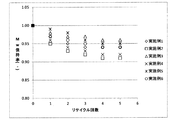
- 6 is a graph showing changes in the weight average molecular weight retention rate of the foam according to the number of times the extruded foam is recycled in Examples 1 to 6 of the present invention.
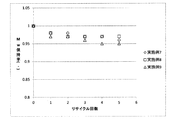
- 6 is a graph showing changes in the weight average molecular weight retention rate of a foam according to the number of times the extruded foam is recycled in Examples 7 to 9 of the present invention.
- 6 is a graph showing changes in the weight average molecular weight retention rate of the foam according to the number of times the extruded foam is recycled in Comparative Examples 1 to 6 of the present invention.
- 6 is a graph showing a change in the weight average molecular weight retention rate of the foam according to the number of times the extruded foam is recycled in Comparative Examples 7 to 9 of the present invention.
- the styrene resin extruded foam according to the present invention is obtained by extrusion foaming using a styrene resin and a foaming agent.
- the styrene resin used in the present invention accounts for 1 to 75% by weight of the recycled styrene resin (recycled styrene resin 2) reduced in volume by a predetermined heat treatment, and the others are virgin styrene resins and will be described later. It is a normal styrene resin made of recycled styrene resin 1.
- the styrene resin used in the present invention is not particularly limited, and styrene monomers such as styrene, methyl styrene, ethyl styrene, isopropyl styrene, dimethyl styrene, bromo styrene, chloro styrene, vinyl toluene, and vinyl xylene are used alone.
- examples thereof include a copolymer obtained by copolymerizing at least one monomer such as acid and itaconic anhydride.
- monomers such as acrylic acid, methacrylic acid, methyl acrylate, methyl methacrylate, maleic anhydride, and itaconic anhydride to be copolymerized with styrenic monomers are compressed from the styrene resin extruded foam produced. It can be used in an amount that does not degrade physical properties such as strength.
- the styrene resin used in the present invention is not limited to the homopolymer or copolymer of the styrene monomer, and the homopolymer or copolymer of the styrene monomer and the other single monomer. It may be a blend of a monomer with a homopolymer or a copolymer, and a diene rubber reinforced polystyrene or an acrylic rubber reinforced polystyrene can also be blended.
- the styrene resin used in the present invention may be a styrene resin having a branched structure for the purpose of adjusting the melt flow rate (hereinafter referred to as MFR), the melt viscosity at the time of molding, the melt tension, and the like. Good.
- styrenic resins styrene homopolymer, styrene acrylonitrile copolymer, (meth) acrylic acid copolymer polystyrene, maleic anhydride-modified polystyrene, impact-resistant polystyrene, and the like are preferable from the viewpoint of extrusion foam moldability and the like.
- styrene homopolymer from the viewpoint of cost.
- the styrene resin used in the present invention is not limited to virgin styrene resin, but styrene resin foam such as fish box EPS, household appliance cushioning material, food foam polystyrene tray, or polystyrene tray as refrigerator interior material. Recycled styrene resin can also be used. Hereinafter, this is referred to as a recycled styrene resin 1.
- the recycled styrene resin 1 in the present invention is preferably used at a ratio of 100 parts by weight or less with respect to 100 parts by weight of the virgin styrene resin. If the ratio of the recycled styrene resin 1 exceeds 100 parts by weight, various physical properties of the styrene resin extruded foam may be greatly affected by the physical properties of the recycled styrene resin 1.
- the virgin styrene-based resin and the recycled styrene-based resin 1 in the present invention those having an MFR of 1 to 15 g / 10 minutes are excellent in molding processability at the time of extrusion foam molding, the discharge amount at the molding process, It is easy to adjust the thickness, width, density, or closed cell ratio of the resulting styrene resin foam to a desired value, and foamability (foam thickness, width, density, closed cell ratio, surface properties, etc. is desired.
- Styrene resin foam with excellent appearance and the like, and mechanical strength such as compressive strength, bending strength or bending deflection, and balance of characteristics such as toughness are obtained.
- the MFR of the styrenic resin is more preferably 2 to 12 g / 10 min in order to suppress as much as possible the shearing heat generated during melt kneading in the extruder.
- MFR in this invention is a value measured by A method and test condition H of JIS K7210 (1999).
- Recycled styrene resin 2 In addition to the recycled styrene-based resin 1, cut waste generated in a finish cutting process of a product made of an extruded foam molded body, and scrap of an extruded foam molded body generated at the start-up of an extrusion operation are also used as the raw material of the present invention. Can be used. These extruded foam molded article scraps may be put into the extruder as they are, but since the bulk specific gravity is too small, it is generally preferable to reduce the volume so as to be easily put into the extruder.
- the recycled styrene resin 2 used in the present invention is used as a raw material after the volume reduction.
- the processing temperature at the time of volume reduction is preferably a temperature at which molecular degradation of the resin is suppressed as much as possible, including influence on flame retardants.
- the processing temperature at the time of volume reduction is preferably 180 ° C. or less, specifically in the range of 120 to 180 ° C.
- 240 ° C. or lower specifically, more than 180 ° C. and 240 ° C. or lower is preferable.
- the amount of the recycled styrene resin 2 used in the present invention is 1 to 4 in the total amount of the virgin styrene resin, the recycled styrene resin 1 and the recycled styrene resin 2, that is, the total amount of the styrene resin used as a raw material resin during extrusion foam molding. 75% by weight, more preferably 1 to 50% by weight, even more preferably 25 to 50% by weight. As the content of the recycled styrene-based resin 2 increases, recycling of cutting waste generated in the finish cutting process of the product progresses, and it becomes possible to reduce the production cost. , There is a tendency to cause deterioration of heat insulation performance due to foam formability, cell shape enlargement, and the like.
- the use of an aliphatic bromine-containing polymer as a flame retardant can satisfy the flame retardant performance and oxygen index of 26% or more required by JIS A9511.
- Examples of the aliphatic bromine-containing polymer used in the present invention include brominated styrene-butadiene block copolymer, brominated styrene-butadiene random copolymer, brominated styrene-butadiene graft polymer, brominated butadiene polymer, brominated / epoxidized styrene. -Butadiene block copolymer. These may be used alone or in combination of two or more. Of these, brominated styrene-butadiene block copolymers are preferred from the viewpoints of performance, cost, and supply stability.
- the content of the aliphatic bromine-containing polymer in the present invention is preferably 0.5 to 10 parts by weight with respect to 100 parts by weight of the styrenic resin, and is more preferable in view of the influence on cost and other required physical properties.
- the range is 0.5 to 5 parts by weight.
- epoxy compound in the present invention, by including an epoxy compound as a stabilizer, the thermal stability can be improved without impairing the flame retardancy of the flame retardant.
- the chemical structure of the epoxy compound used in the present invention is a bisphenol A diglycidyl ether type epoxy resin represented by the following structural formula (1) in terms of cost, performance, and supply stability,
- a phenol novolac type epoxy resin represented by the following structural formula (3) is desirable.
- epoxy compounds may be used alone or in combination of two or more.
- the epoxy compound used in the present invention preferably has an epoxy equivalent of less than 1000 g / eq. It is thought that the epoxy group suppresses the decomposition of the brominated flame retardant and improves the thermal stability performance of the styrene resin. Therefore, when the epoxy equivalent is 1000 g / eq or more, the decomposition suppressing effect of the flame retardant is very high. Therefore, since it is necessary to add a large amount as a result, it is not practical in terms of cost. In view of the balance between cost and performance, it is more preferably less than 500 g / eq, and still more preferably less than 400 g / eq.
- the content of the epoxy compound in the present invention is preferably 4 to 20 parts by weight with respect to 100 parts by weight of the brominated flame retardant.
- the content of the epoxy compound is less than 4 parts by weight, the flame retardant stabilizing effect is not sufficiently exhibited, the flame retardant and the resin are decomposed, and the molecular weight of the resin tends to decrease, resulting in foaming.
- the bubble diameter of the bubbles forming the body is enlarged, and the heat insulation performance tends to deteriorate.
- the smoothness of the foam surface tends to deteriorate and the moldability tends to deteriorate.
- decomposition of the flame retardant causes other additives or resins to turn black, leading to poor appearance.
- the thermal stability of the flame retardant can be improved by using a polyhydric alcohol partial ester in combination as a stabilizer, and in particular, the decomposition of the resin and the flame retardant is suppressed even in the case of repeated recycling. As a result, a foam excellent in moldability, flame retardancy and heat insulation performance can be obtained.
- polyhydric alcohol partial ester used in the present invention examples include polyhydric alcohols such as pentaerythritol, dipentaerythritol and tripentaerythritol, and monovalent carboxylic acids such as acetic acid and propionic acid, or adipic acid and glutamic acid. It is a partial ester which is a reaction product with a divalent carboxylic acid, and is a mixture of compounds having one or more hydroxyl groups in the molecule, and may contain a small amount of a starting polyhydric alcohol.
- polyhydric alcohol partial ester examples include Pleniser (registered trademark) ST-210 manufactured by Ajinomoto Fine Techno Co., which is a partial ester of dipentaerythritol and adipic acid.
- the content X (parts by weight) of the polyhydric alcohol partial ester in the present invention is preferably 0 to 20 parts by weight with respect to 100 parts by weight of the flame retardant.
- the content X (parts by weight) of the polyhydric alcohol ester is determined by the following formula (1) and formula (2) according to the processing temperature T (° C.) when the recycled styrene resin 2 is obtained by volume reduction. It is determined.
- the polyhydric alcohol partial ester is not always necessary.
- the content of the polyhydric alcohol partial ester is preferably 4 to 20 parts by weight.
- the thermal stabilization effect tends to be small.
- the stabilizing effect is excessively exerted, and the flame retardancy of the flame retardant itself may be deteriorated.
- the phenolic stabilizer used in the present invention is not particularly limited, and commercially available substances can be used. Specific examples include triethylene glycol-bis-3- (3-tert-butyl-4-hydroxy-5-methylphenyl) propionate, pentaerythritol tetrakis [3- (3 ′, 5′-di-tert-butyl- 4'-hydroxyphenyl) propionate], octadecyl 3- (3,5-di-tert-butyl-4-hydroxyphenyl) propionate, and these may be used alone or in combination of two or more. You may do it. Of these, pentaerythritol tetrakis [3- (3 ', 5'-di-tert-butyl-4'-hydroxyphenyl) propionate] is preferably used in terms of price and performance.
- the content of the phenol-based stabilizer in the present invention is preferably 4 to 20 parts by weight with respect to 100 parts by weight of the flame retardant.
- the content of the phenol-based stabilizer exceeds 20 parts by weight, it affects the foam formation of the foam and tends to make it difficult to control moldability and heat insulation.
- the content of the phenol-based stabilizer is less than 4 parts by weight, the flame retardant stabilizing effect may not be sufficiently exhibited.
- Examples of the phosphite stabilizer used in the present invention include 3,9-bis (2,4-di-tert-butylphenoxy) -2,4,8,10-tetraoxa-3,9-diphosphaspiro [5 .5] undecane, 3,9-bis (2,6-di-tert-butyl-4-methylphenoxy) -2,4,8,10-tetraoxa-3,9-diphosphaspiro [5.5] undecane, and Tetrakis (2,4-di-tert-butyl-5-methylphenyl) -4,4′-biphenylenediphosphonite) does not reduce the flame retardant performance of the foam, and the thermal stability of the foam Is preferable.
- the content of the phosphite stabilizer is preferably 0.9 parts by weight or less with respect to 100 parts by weight of the flame retardant. If the content of the phosphite stabilizer exceeds 0.9 parts by weight, the stabilization effect is greatly exerted, and the flame retardancy of the flame retardant itself may be reduced.
- the flame retardant performance of the styrene resin extruded foam can be further improved by using a radical generator in combination.
- radical generator used in the present invention examples include 2,3-dimethyl-2,3-diphenylbutane, poly-1,4-diisopropylbenzene, 2,3-diethyl-2,3-diphenylbutane, 3, 4-dimethyl-3,4-diphenylhexane, 3,4-diethyl-3,4-diphenylhexane, 2,4-diphenyl-4-methyl-1-pentene, 2,4-diphenyl-4-ethyl-1- Examples include pentene and peroxides such as dicumyl peroxide.
- the content of the radical generator in the present invention is preferably 0.05 to 0.5 parts by weight with respect to 100 parts by weight of the styrene resin.
- a phosphorus-based flame retardant such as a phosphate ester or a phosphine oxide can be used in combination as long as the thermal stability performance is not impaired for the purpose of improving the flame-retardant performance.
- Examples of the phosphoric ester type flame retardant used in the present invention include triphenyl phosphate, tricresyl phosphate, trixylenyl phosphate, cresyl diphenyl phosphate, 2-ethylhexyl diphenyl phosphate, trimethyl phosphate, triethyl And halogen-containing phosphate esters such as phosphate, tributyl phosphate, tris (2-ethylhexyl) phosphate, tris (butoxyethyl) phosphate, condensed phosphate ester, and tris (tribromoneopentyl) phosphate. Fate and tris (tribromoneopentyl) phosphate are preferred.
- triphenylphosphine oxide is preferable.
- phosphate esters and phosphine oxides may be used alone or in combination of two or more.
- the content of the phosphorus flame retardant in the present invention is preferably 0 to 2 parts by weight with respect to 100 parts by weight of the styrene resin.
- the foaming agent used in the present invention is not particularly limited, but by using a saturated hydrocarbon having 3 to 5 carbon atoms, excellent environmental compatibility can be imparted to the resulting extruded foam. .
- saturated hydrocarbon having 3 to 5 carbon atoms used in the present invention examples include propane, n-butane, i-butane, n-pentane, i-pentane, neopentane and the like.
- propane, n-butane, i-butane, or a mixture thereof is preferable from the viewpoint of foamability.
- n-butane, i-butane, or a mixture thereof is preferable, and i-butane is particularly preferable.
- i-butane is a flammable gas
- the flame retardant performance of the foam tends to be deteriorated by adding a large amount.
- a preferable content for balancing thermal conductivity and flame retardancy is 2.7 to 3.7 parts by weight with respect to 100 parts by weight of the styrene resin.
- the plasticizing effect and auxiliary foaming effect of the styrene resin at the time of foam production can be obtained, the extrusion pressure can be reduced, and the foam can be produced stably. It becomes.
- the amount used may be limited, and the extrusion foam moldability may not be sufficient.
- foaming agents used in the present invention for example, Ethers such as dimethyl ether, diethyl ether, methyl ethyl ether, isopropyl ether, n-butyl ether, diisopropyl ether, furan, furfural, 2-methyl furan, tetrahydrofuran, tetrahydropyran; dimethyl ketone, methyl ethyl ketone, diethyl ketone, methyl n-propyl ketone , Ketones such as methyl-n-butyl ketone, methyl-i-butyl ketone, methyl-n-amyl ketone, methyl-n-hexyl ketone, ethyl-n-propyl ketone, ethyl-n-butyl ketone; methanol, ethanol, propyl alcohol, C1-C4 saturated alcohols such as i-propyl alcohol, butyl alcohol,
- saturated alcohols having 1 to 4 carbon atoms dimethyl ether, diethyl ether, methyl ethyl ether, methyl chloride, ethyl chloride and the like are preferable from the viewpoint of foamability and foam moldability.
- dimethyl ether is preferable from the viewpoint of the plasticizing effect, and water is preferable from the viewpoint of the effect of improving the heat insulation by controlling the cost and the bubble diameter.
- the amount of the foaming agent used in the present invention is preferably 2 to 20 parts by weight and more preferably 4 to 10 parts by weight with respect to 100 parts by weight of the styrene resin. If the amount of the foaming agent used is less than 2 parts by weight, the foaming ratio is low, and the characteristics such as light weight and heat insulation as the resin foam may be difficult to be exhibited. Defects such as voids may occur in the foam.
- Bubble diameter In the present invention, by using water as the other foaming agent, bubbles having a relatively small bubble diameter (hereinafter referred to as small bubbles) having a bubble diameter of approximately 0.2 mm or less in the styrene resin extruded foam. And a foam having a characteristic bubble structure in which bubbles having a relatively large bubble diameter (hereinafter referred to as large bubbles) having a bubble diameter of about 0.25 mm to 1 mm are mixed in a sea-island shape. The heat insulation performance of the foamed product can be improved.
- the ratio of the area of the small bubbles to the cross-sectional area of the foam is preferably 5 to 95%, more preferably 10 to 90%, still more preferably 20 to 80%, and more preferably 25 to 70% is particularly preferred.
- Water-absorbing substance In the present invention, when water is used as the other foaming agent, it is preferable to add a water-absorbing substance in order to stably perform extrusion foaming.
- Specific examples of the water-absorbing substance used in the present invention include hydroxyethyl cellulose, polyacrylate polymer, starch-acrylic acid graft copolymer, polyvinyl alcohol polymer, vinyl alcohol-acrylate copolymer.
- anhydrous silica having silanol groups on the surface Silicon oxide
- AEROSIL registered trademark
- a fine powder having a particle size of 1000 nm or less having a hydroxyl group on the surface smectite, water-swelling layered silicates such as swellable fluorine mica, and organically treated products thereof, zeolite, activated carbon, alumina, Examples thereof include porous substances such as silica gel, porous glass, activated clay, and diatomaceous earth.
- the addition amount of the water-absorbing substance in the present invention is appropriately adjusted depending on the addition amount of water and the like, but is preferably 0.01 to 5 parts by weight with respect to 100 parts by weight of the styrenic resin. More preferred is ⁇ 3 parts by weight.
- the foam which has high heat insulation is obtained by adding a heat ray radiation inhibitor for the purpose of improving the heat insulation of a foam.
- the heat ray radiation suppressing agent refers to a substance having a characteristic of reflecting, scattering, and absorbing light in the near infrared or infrared region (for example, a wavelength region of about 800 to 3000 nm).
- heat ray radiation inhibitor in the present invention examples include graphite, carbon black, aluminum paste, titanium oxide, and barium sulfate. These heat ray radiation suppressors may be used alone or in combination of two or more.
- heat ray radiation inhibitors graphite, carbon black, and aluminum paste are preferred, and graphite is particularly preferred from the viewpoint of the heat ray radiation inhibiting effect.
- processing aids such as fatty acid metal salts, fatty acid amides, fatty acid esters, liquid paraffin, and olefinic wax, flame retardants other than those described above, and flame retardant, as long as the effects of the present invention are not impaired.
- Additives such as auxiliaries, antioxidants, antistatic agents, and colorants such as pigments can be contained.
- styrene resin extruded foam As a method for producing a styrene resin extruded foam according to the present invention and a method for recycling a styrene resin foam, a styrene resin containing a recycled styrene resin, a flame retardant, other additives, etc. are heated and melted by an extruder or the like.
- the foaming agent is added to the styrenic resin under high-pressure conditions at any stage to form a fluid gel, cooled to a temperature suitable for extrusion foaming, and then the fluid gel is extruded and foamed into a low pressure region through a die. This is carried out by forming a foam.
- the styrene resin is mixed with brominated flame retardant and other additives, and then heated and melted; styrene A brominated flame retardant and other additives are added and mixed after the resin is heated and melted; a composition obtained by previously mixing a styrene resin with a brominated flame retardant, a stabilizer and other additives, and then heated and melted the composition. Are prepared, supplied to the extruder again, and melted by heating.
- melt kneading time melt kneading means when the styrene resin and additives such as a foaming agent are heat melt kneaded.
- the heating temperature only needs to be equal to or higher than the temperature at which the styrenic resin to be used is melted, but is preferably a temperature at which molecular degradation of the resin is suppressed as much as possible, including the influence of a flame retardant, for example, about 160 to 240 ° C. Preferably it is 225 degrees C or less.
- the melt-kneading time varies depending on the amount of extrusion per unit time, the melt-kneading means, etc., and thus cannot be determined unconditionally. However, the time required for uniformly dispersing and mixing the styrene-based resin and the foaming agent is appropriately selected.
- melt-kneading means examples include a screw-type extruder, but there is no particular limitation as long as it is used for normal extrusion foaming.
- the foam molding method is also not particularly limited.
- a foam obtained by releasing pressure from a slit die is used to form a large cross-sectional area using a molding die and a molding roll installed in close contact with or in contact with the slit die.
- a general method for forming a plate-like foam can be used.
- the thickness of the styrene resin extruded foam of the present invention is not particularly limited, and is appropriately selected depending on the application.
- a material having a certain thickness like a normal plate is preferable. It is 10 to 150 mm, preferably 20 to 100 mm.
- the density of the extruded foam of the styrenic resin of the present invention is preferably 15 to 50 kg / m 3 in order to give light weight and excellent heat insulation, bending strength and compressive strength, and preferably 25 to 40 kg / m 3. More preferably, it is m 3 .
- the use of the styrene resin extruded foam of the present invention is not limited, but it is suitably used as a heat insulating material for building materials from the viewpoint of excellent thermal stability, flame retardancy and heat insulating performance.
- the raw materials used in the examples and comparative examples are as follows.
- Oxygen index The oxygen index of the foam was measured by a method based on JIS K 7201: 1999.
- a portion corresponding to the area of a circle having a diameter of 7.5 mm or less that is, a portion having a long diameter in the thickness direction but only an area of a circle having a diameter of 7.5 mm or less. Is lightened to correct the dark portion.
- Bubble diameter of the obtained styrene resin extruded foam was measured by a method based on ASTM D 3567.
- large and small bubbles as described in the [Bubble diameter] column are mixed in the shape of a sea island, that is, when the small bubble occupation area ratio is 5% or more, a large bubble diameter of 0.25 mm or more. Only the bubble diameter of the bubbles was measured.
- Weight average molecular weight retention of foam (hereinafter abbreviated as “Mw retention”)
- Mw retention Weight average molecular weight retention of foam
- the value obtained by dividing the weight average molecular weight Mw of the foam obtained by each number of recycles by the weight average molecular weight Mw of the foam of 0 recycles was evaluated as the Mw retention rate of the foam at each recycle number. .
- Example 1 [Preparation of resin mixture] Brominated SBS block copolymer (EMERALD INNOVATION 3000) /3.0 parts by weight as a flame retardant, and cresol novolac type epoxy resin (ARALDITE ECN-1280) / 0.
- the obtained GP was supplied at a rate of about 800 kg / hr to a single-screw extruder having a diameter of 150 mm, a single-screw extruder having a diameter of 200 mm, and an extruder in which a cooler was connected in series.
- the resin mixture supplied to the first extruder is heated to a resin temperature of 225 ° C.
- the obtained foam was pulverized with a crusher, and the cut waste generated when the foam was cut into a predetermined size with a cutter was supplied to a single-screw extruder having a diameter of 120 mm, and the resin temperature was about 230 ° C.
- the mixture was heated, melted or plasticized, kneaded, the foaming agent remaining in the foam was removed under open vent conditions, and then discharged from a die and pelletized by strand cutting.
- the pellet is referred to as [RP2-1] (recycled styrene resin 2).
- Example 2 As shown in Table 1, except for changing the type and amount of foaming agent, the type and amount of flame retardant and flame retardant aid, the type and amount of stabilizer, and the type and amount of other compounding agents Obtained a foam by the same operation as in Example 1.
- Example 7 Brominated SBS block copolymer (EMERALD INNOVATION 3000) /3.0 parts by weight as a flame retardant, and cresol novolac type epoxy resin (ARALDITE ECN-1280) / 0. 15 parts by weight, bisphenol A glycidyl ether (EP-13) /0.15 parts by weight, pentaerythritol tetrakis [3- (3 ′, 5′-di-tert-butyl-4′-hydroxyphenyl) as a phenol-based stabilizer Propionate] (ANOX20) /0.3 parts by weight, 3,9-bis (2,4-di-tert-butylphenoxy) -2,4,8,10-tetraoxa-3,9- as phosphite stabilizer Diphosphaspiro [5.5] undecane (Ultrano) 626) /0.015 part by weight, poly-1,4-diisopropylbenzene / 0.2 part by weight as
- the obtained GP was supplied at a rate of about 800 kg / hr to a twin-screw extruder with a rotor having a diameter of 150 mm (DSM type), a single-screw extruder having a diameter of 200 mm, and an extruder connected in series with a cooler.
- the resin mixture supplied to the first extruder is heated to a resin temperature of 225 ° C.
- Example 8 As shown in Table 1, a foam was obtained in the same manner as in Example 7, except that the type and amount of styrene resin, and the amounts of flame retardant and stabilizer were changed.
- Table 1 shows the properties of the foams obtained in Examples 7 to 9.
- the Mw retention rate of the foam according to the number of recycling is shown in Table 2 and FIG.
- Table 3 shows the characteristics of the foams obtained in Comparative Examples 1 to 9.
- the Mw retention rate of the foam according to the number of recyclings is shown in Table 4, FIG. 3, and FIG.
- the styrene-based resin contains an aliphatic bromine-containing polymer as a flame retardant, and further to 100 parts by weight of the flame retardant.
- stabilizers (a) 4 to 20 parts by weight of an epoxy compound, (b) polyhydric alcohol partial esters in the range of 0 to 20 parts by weight depending on the recycling processing temperature, and (c) 4 to 4 parts of a phenol-based stabilizer.
- the styrene resin extruded foam containing the flame retardant and stabilizer is subjected to heat shrinkage and / or heat. It can be seen that a styrene resin extruded foam having good moldability and improved flame retardancy, heat stability, and heat insulation performance can be stably obtained even when recycled by reducing the volume by melting.
Landscapes
- Chemical & Material Sciences (AREA)
- Engineering & Computer Science (AREA)
- Health & Medical Sciences (AREA)
- Materials Engineering (AREA)
- Chemical Kinetics & Catalysis (AREA)
- Medicinal Chemistry (AREA)
- Polymers & Plastics (AREA)
- Organic Chemistry (AREA)
- Mechanical Engineering (AREA)
- Life Sciences & Earth Sciences (AREA)
- Sustainable Development (AREA)
- Inorganic Chemistry (AREA)
- Environmental & Geological Engineering (AREA)
- Emergency Medicine (AREA)
- Manufacture Of Porous Articles, And Recovery And Treatment Of Waste Products (AREA)
- Compositions Of Macromolecular Compounds (AREA)
- Extrusion Moulding Of Plastics Or The Like (AREA)
Abstract
スチレン系樹脂発泡体を加熱収縮および/または熱溶融により減容化したリサイクルスチレン系樹脂を1~75重量%の含有するスチレン系樹脂および発泡剤を用いて押出発泡してスチレン系樹脂押出発泡体を得るスチレン系樹脂押出発泡体のリサイクル方法であり、難燃剤として、脂肪族臭素含有ポリマーを含有し、更に、難燃剤100重量部に対して、安定剤として、(a)エポキシ化合物を4~20重量部、(b)多価アルコール部分エステルを0~20重量部、(c)フェノール系安定剤を4~20重量部、および(d)ホスファイト系安定剤を0~0.9重量部を含有する。
Description
本発明は、熱安定性及び難燃性を兼ね備えたスチレン系樹脂押出発泡体、およびそのリサイクル方法に関する。
スチレン系樹脂を押出機等にて加熱溶融し、次いで発泡剤を添加し、冷却させ、これを低圧域に押し出すことにより、スチレン系樹脂発泡体を連続的に製造する方法は、既に知られている。
スチレン系樹脂押出発泡体には、JIS A9511記載の押出スチレンフォーム保温板の燃焼性規格を満たすために、難燃剤が添加される。
スチレン系樹脂押出発泡体に適した難燃剤の主な必要特性としては、一般的なスチレン系樹脂の押出加工条件である230℃程度の温度では分解しないことである。押出加工条件下で難燃剤が分解すると、樹脂の劣化が引き起こされるため、得られる発泡体に対して、成形性の悪化、発泡体気泡径が制御し難い、等の悪影響を及ぼすからである。
スチレン系樹脂押出発泡体に適した難燃剤のもう一つの必要特性としては、スチレン系樹脂の分解前に、効率良く分解することである。ポリスチレンは300℃付近から分解することが知られている。そのため、300℃付近よりも低い温度において難燃剤が効率よく分解しないと、JIS A9511記載の燃焼性規格を満たさない恐れがあるからである。また、必要な難燃性能を得るために、結果として難燃剤の添加部数を多くしなければならず、製品コストアップや、得られる発泡体の成形性悪化等の悪影響を及ぼす傾向にあるからである。
以上のような背景から、スチレン系樹脂押出発泡体の難燃剤としては、ヘキサブロモシクロドデカン(以下、「HBCD」と略する。)が広く用いられてきた。HBCDは、押出加工条件下では比較的安定であり、且つポリスチレンの分解時には効率良く分解することが知られており、少ない添加部数で高度な難燃性能を発現することができる。
しかし、HBCDは難分解性で生態に対して高蓄積性の化合物である懸念があることから、環境衛生上好ましいものではなく、HBCD使用量の削減、およびHBCDに代わる難燃剤の開発が望まれている。
そこで、HBCD以外の臭素系難燃剤を用いたスチレン系樹脂押出発泡体の検討がなされている。
例えば、HBCDに代わる難燃剤として、従来の低分子型の難燃剤に取って代わり、特許文献1に記載されるような、ポリマー型の難燃剤の開発がなされている。
その中で、臭素化スチレン-ブタジエンブロックコポリマーがHBCDと同等レベルの難燃性能を有するものとして注目されている。但し、臭素化スチレン-ブタジエンブロックコポリマーは、熱安定性に問題があり、特許文献2では、アルキルホスファイトとエポキシ化合物を安定剤として使用することにより、臭素化ポリマー難燃剤の熱安定性が改善される技術が開示されている。確かに、上記安定剤を使用することにより、臭素化ポリマー難燃剤の熱安定性が改善されるが、一方で難燃剤の難燃性能は、熱安定性と相反することが知られており、特許文献2には、各安定剤を使用した際の難燃性能については、一切触れられていない。
また、スチレン系樹脂押出発泡体を製造する場合においては、一般的に押し出された発泡体を、所定の寸法にするために、切削機を用いてカットするが、その際に発泡体のスクラップが発生する。このスクラップを、加熱収縮させ、もしくは押出機で再度溶融・ペレット化することで減容化し、再び原料として、リサイクルすることが同業者間では一般的である。特許文献2において、リサイクル時の難燃剤の分解及び樹脂のゲル化防止策について、アルキルホスファイト・エポキシ化合物が有効であると開示されているが、前述の如く安定剤を添加することは難燃剤の難燃性能を低下させる傾向にあり、結果として、所望の難燃性能を得るためには難燃剤の添加部数を増加しなければならず、コスト面での課題が残る。
また、特許文献3には、無機化合物および臭素系有機化合物を含有し、且つ特定量のポリグリセリン脂肪酸エステルを含有することを特徴とするスチレン系樹脂押出発泡体の製造方法により、特に無機化合物を多量に添加したスチレン系樹脂発泡体において、高い断熱性と燃焼性を有し、外観が優れたスチレン系樹脂発泡体が得られることが開示されている。しかし、繰り返しリサイクルして同様の断熱性と燃焼性を有する発泡体を得ることについての開示はない。
このように、スチレン系樹脂押出発泡体の熱安定性能、難燃性能、断熱性能をバランスよく発現させ、しかも繰り返しリサイクル可能な技術は、未だ完成されていなかった。
本発明は、難燃性スチレン系樹脂押出発泡体が有する前記課題を解決するためになされたものであって、熱安定性能、難燃性能、断熱性能、更にはリサイクル性に優れるスチレン系樹脂押出発泡体および、そのリサイクル方法を提供することを目的とする。
本発明者らは、前記課題の解決のために鋭意研究した結果、スチレン系樹脂および発泡剤を、押出機内にて溶融混練して低圧域下に押出発泡してなるスチレン系樹脂発泡体に、難燃剤として脂肪族臭素含有ポリマーを含有し、更に、(a)エポキシ化合物、(b)多価アルコール部分エステル、(c)フェノール系安定剤および(d)ホスファイト系安定剤を、安定剤として、それぞれ所定量含有せしめることによって、上記難燃剤および安定剤が含有されたスチレン系樹脂押出発泡体を加熱収縮および/または熱溶融により減容化してリサイクルした場合においても、成形性が良好であり、JIS A9511の燃焼試験法に合格する、および/または、酸素指数が26%以上の難燃性能を示し、断熱性能などの発泡体としての諸特性を満たし得ることを見出し、本発明に至った。
すなわち、本発明は、
[1]スチレン系樹脂および発泡剤を用いて押出発泡して得られるスチレン系樹脂押出発泡体であって、
前記スチレン系樹脂の1~75重量%が、スチレン系樹脂発泡体を加熱収縮および/または熱溶融により減容化したリサイクルスチレン系樹脂(以下、リサイクルスチレン系樹脂2という。)であり、
難燃剤として、脂肪族臭素含有ポリマーを含有し、
更に、難燃剤100重量部に対して、安定剤として、
(a)エポキシ化合物を4~20重量部、
(b)多価アルコール部分エステルを0~20重量部、
(c)フェノール系安定剤を4~20重量部、および
(d)ホスファイト系安定剤を0~0.9重量部
を含有し、
かつ、難燃剤100重量部に対する前記(b)多価アルコール部分エステルの含有量X(重量部)が、リサイクルスチレン系樹脂2の減容化時の加工温度をT(℃)とした場合、下記式(1)及び(2)を満足し、
JIS A9511の燃焼試験法に合格する、及び/又は、酸素指数が26%以上であることを特徴とする、スチレン系樹脂押出発泡体。
T≦180の場合、0≦X≦20・・・(式1)
180<T≦240の場合、4≦X≦20・・・(式2)
[2]脂肪族臭素含有ポリマーが、臭素化スチレン-ブタジエンブロックコポリマーであることを特徴とする、[1]に記載のスチレン系樹脂押出発泡体、
[3]スチレン系樹脂100重量部に対して、脂肪族臭素含有ポリマーを0.5~5重量部含むことを特徴とする、[1]または[2]に記載のスチレン系樹脂押出発泡体、
[4]エポキシ化合物が、下記構造式(1)で示されるビスフェノールAジグリシジルエーテル型エポキシ樹脂

、
下記構造式(2)で示されるクレゾールノボラック型エポキシ樹脂

、
及び下記構造式(3)で示されるフェノールノボラック型エポキシ樹脂

よりなる群から選ばれる少なくとも1種であることを特徴とする[1]~[3]のいずれかに記載のスチレン系樹脂押出発泡体、
[5]多価アルコール部分エステルが、ジペンタエリスリトールとアジピン酸との反応物であることを特徴とする、[1]~[4]のいずれかに記載のスチレン系樹脂押出発泡体、
[6]ホスファイト系安定剤が、3,9-ビス(2,4-ジ-tert-ブチルフェノキシ)-2,4,8,10-テトラオキサ-3,9-ジホスファスピロ[5.5]ウンデカン、3,9-ビス(2,6-ジ-tert-ブチル-4-メチルフェノキシ)-2,4,8,10-テトラオキサ-3,9-ジホスファスピロ[5.5]ウンデカン及びテトラキス(2,4-ジ-tert-ブチル-5-メチルフェニル)-4,4’-ビフェニレンジホスホナイト)よりなる群から選ばれる少なくとも1種であることを特徴とする、[1]~[5]のいずれかに記載のスチレン系樹脂押出発泡体、
[7]更に、スチレン系樹脂100重量部に対して、ラジカル発生剤を0.05~0.5重量部含有することを特徴とする、[1]~[6]のいずれかに記載のスチレン系樹脂押出発泡体、
[8]ラジカル発生剤が、2,3-ジメチル-2,3-ジフェニルブタン、ポリ-1,4-ジイソプロピルベンゼンよりなる群から選ばれる少なくとも1種であることを特徴とする、[7]に記載のスチレン系樹脂押出発泡体、
[9]更に、スチレン系樹脂100重量部に対して、リン酸エステル、ホスフィンオキシドよりなる群から選ばれる少なくとも1種を含有することを特徴とする、[1]~[8]のいずれかに記載のスチレン系樹脂押出発泡体、
[10]リン酸エステルが、トリフェニルホスフェート、トリス(トリブロモネオペンチル)ホスフェートよりなる群から選ばれる少なくとも1種であり、ホスフィンオキシドがトリフェニルホスフィンオキシドであることを特徴とする、[9]に記載のスチレン系樹脂押出発泡体、
[11]前記発泡剤が、炭素数が3~5である飽和炭化水素から選ばれる少なくとも1種を含むことを特徴とする、[1]~[10]のいずれかに記載のスチレン系樹脂押出発泡体、
[12]発泡剤として、さらに、水、二酸化炭素、窒素、炭素数が2~5のアルコール類、ジメチルエーテル、塩化メチル、塩化エチルよりなる群から選ばれる少なくとも一種含むことを特徴とする、[11]に記載のスチレン系樹脂押出発泡体、
[13]さらに、熱線輻射抑制剤として、グラファイト、カーボンブラック、アルミニウムペースト、酸化チタン、硫酸バリウムよりなる群から選ばれる少なくとも1種を含むことを特徴とする、[1]~[12]のいずれかに記載のスチレン系樹脂押出発泡体、
[14]発泡体を形成する気泡の気泡径が、主として、気泡径0.2mm以下の気泡と気泡径0.25~1mmの気泡より構成されることを特徴とする、[1]~[13]のいずれかに記載のスチレン系樹脂押出発泡体、
[15]発泡体を形成する気泡の内、気泡径0.2mm以下の気泡が、発泡体断面積あたり5~95%の占有面積率を有することを特徴とする、[14]に記載のスチレン系樹脂押出発泡体、
[16]リサイクルスチレン系樹脂を含有するスチレン系樹脂および発泡剤を用いて押出発泡してスチレン系樹脂押出発泡体を得るスチレン系樹脂押出発泡体のリサイクル方法であって、
前記スチレン系樹脂の1~75重量%が、スチレン系樹脂発泡体を加熱収縮および/または熱溶融により減容化したリサイクルスチレン系樹脂2であり、
難燃剤として、脂肪族臭素含有ポリマーを含有し、
更に、難燃剤100重量部に対して、安定剤として、
(a)エポキシ化合物を4~20重量部、
(b)多価アルコール部分エステルを0~20重量部、
(c)フェノール系安定剤を4~20重量部、および
(d)ホスファイト系安定剤を0~0.9重量部
を含有し、
かつ、難燃剤100重量部に対する前記(b)多価アルコール部分エステルの含有量X(重量部)が、リサイクルスチレン系樹脂2の減容化時の加工温度をT(℃)とした場合、下記式(1)及び(2)を満足することを特徴とするスチレン系樹脂押出発泡体のリサイクル方法、
T≦180の場合、0≦X≦20・・・(式1)
180<T≦240の場合、4≦X≦20・・・(式2)、
に関する。
[1]スチレン系樹脂および発泡剤を用いて押出発泡して得られるスチレン系樹脂押出発泡体であって、
前記スチレン系樹脂の1~75重量%が、スチレン系樹脂発泡体を加熱収縮および/または熱溶融により減容化したリサイクルスチレン系樹脂(以下、リサイクルスチレン系樹脂2という。)であり、
難燃剤として、脂肪族臭素含有ポリマーを含有し、
更に、難燃剤100重量部に対して、安定剤として、
(a)エポキシ化合物を4~20重量部、
(b)多価アルコール部分エステルを0~20重量部、
(c)フェノール系安定剤を4~20重量部、および
(d)ホスファイト系安定剤を0~0.9重量部
を含有し、
かつ、難燃剤100重量部に対する前記(b)多価アルコール部分エステルの含有量X(重量部)が、リサイクルスチレン系樹脂2の減容化時の加工温度をT(℃)とした場合、下記式(1)及び(2)を満足し、
JIS A9511の燃焼試験法に合格する、及び/又は、酸素指数が26%以上であることを特徴とする、スチレン系樹脂押出発泡体。
T≦180の場合、0≦X≦20・・・(式1)
180<T≦240の場合、4≦X≦20・・・(式2)
[2]脂肪族臭素含有ポリマーが、臭素化スチレン-ブタジエンブロックコポリマーであることを特徴とする、[1]に記載のスチレン系樹脂押出発泡体、
[3]スチレン系樹脂100重量部に対して、脂肪族臭素含有ポリマーを0.5~5重量部含むことを特徴とする、[1]または[2]に記載のスチレン系樹脂押出発泡体、
[4]エポキシ化合物が、下記構造式(1)で示されるビスフェノールAジグリシジルエーテル型エポキシ樹脂
下記構造式(2)で示されるクレゾールノボラック型エポキシ樹脂
及び下記構造式(3)で示されるフェノールノボラック型エポキシ樹脂
[5]多価アルコール部分エステルが、ジペンタエリスリトールとアジピン酸との反応物であることを特徴とする、[1]~[4]のいずれかに記載のスチレン系樹脂押出発泡体、
[6]ホスファイト系安定剤が、3,9-ビス(2,4-ジ-tert-ブチルフェノキシ)-2,4,8,10-テトラオキサ-3,9-ジホスファスピロ[5.5]ウンデカン、3,9-ビス(2,6-ジ-tert-ブチル-4-メチルフェノキシ)-2,4,8,10-テトラオキサ-3,9-ジホスファスピロ[5.5]ウンデカン及びテトラキス(2,4-ジ-tert-ブチル-5-メチルフェニル)-4,4’-ビフェニレンジホスホナイト)よりなる群から選ばれる少なくとも1種であることを特徴とする、[1]~[5]のいずれかに記載のスチレン系樹脂押出発泡体、
[7]更に、スチレン系樹脂100重量部に対して、ラジカル発生剤を0.05~0.5重量部含有することを特徴とする、[1]~[6]のいずれかに記載のスチレン系樹脂押出発泡体、
[8]ラジカル発生剤が、2,3-ジメチル-2,3-ジフェニルブタン、ポリ-1,4-ジイソプロピルベンゼンよりなる群から選ばれる少なくとも1種であることを特徴とする、[7]に記載のスチレン系樹脂押出発泡体、
[9]更に、スチレン系樹脂100重量部に対して、リン酸エステル、ホスフィンオキシドよりなる群から選ばれる少なくとも1種を含有することを特徴とする、[1]~[8]のいずれかに記載のスチレン系樹脂押出発泡体、
[10]リン酸エステルが、トリフェニルホスフェート、トリス(トリブロモネオペンチル)ホスフェートよりなる群から選ばれる少なくとも1種であり、ホスフィンオキシドがトリフェニルホスフィンオキシドであることを特徴とする、[9]に記載のスチレン系樹脂押出発泡体、
[11]前記発泡剤が、炭素数が3~5である飽和炭化水素から選ばれる少なくとも1種を含むことを特徴とする、[1]~[10]のいずれかに記載のスチレン系樹脂押出発泡体、
[12]発泡剤として、さらに、水、二酸化炭素、窒素、炭素数が2~5のアルコール類、ジメチルエーテル、塩化メチル、塩化エチルよりなる群から選ばれる少なくとも一種含むことを特徴とする、[11]に記載のスチレン系樹脂押出発泡体、
[13]さらに、熱線輻射抑制剤として、グラファイト、カーボンブラック、アルミニウムペースト、酸化チタン、硫酸バリウムよりなる群から選ばれる少なくとも1種を含むことを特徴とする、[1]~[12]のいずれかに記載のスチレン系樹脂押出発泡体、
[14]発泡体を形成する気泡の気泡径が、主として、気泡径0.2mm以下の気泡と気泡径0.25~1mmの気泡より構成されることを特徴とする、[1]~[13]のいずれかに記載のスチレン系樹脂押出発泡体、
[15]発泡体を形成する気泡の内、気泡径0.2mm以下の気泡が、発泡体断面積あたり5~95%の占有面積率を有することを特徴とする、[14]に記載のスチレン系樹脂押出発泡体、
[16]リサイクルスチレン系樹脂を含有するスチレン系樹脂および発泡剤を用いて押出発泡してスチレン系樹脂押出発泡体を得るスチレン系樹脂押出発泡体のリサイクル方法であって、
前記スチレン系樹脂の1~75重量%が、スチレン系樹脂発泡体を加熱収縮および/または熱溶融により減容化したリサイクルスチレン系樹脂2であり、
難燃剤として、脂肪族臭素含有ポリマーを含有し、
更に、難燃剤100重量部に対して、安定剤として、
(a)エポキシ化合物を4~20重量部、
(b)多価アルコール部分エステルを0~20重量部、
(c)フェノール系安定剤を4~20重量部、および
(d)ホスファイト系安定剤を0~0.9重量部
を含有し、
かつ、難燃剤100重量部に対する前記(b)多価アルコール部分エステルの含有量X(重量部)が、リサイクルスチレン系樹脂2の減容化時の加工温度をT(℃)とした場合、下記式(1)及び(2)を満足することを特徴とするスチレン系樹脂押出発泡体のリサイクル方法、
T≦180の場合、0≦X≦20・・・(式1)
180<T≦240の場合、4≦X≦20・・・(式2)、
に関する。
本発明のスチレン系樹脂押出発泡体は、加熱収縮および/または熱溶融により減容化したリサイクルスチレン系樹脂を含有する原料を使用し、繰り返しリサイクルしても、成形性が良好であり、難燃性能、熱安定性能および断熱性能に優れたスチレン系樹脂押出発泡体を提供できる。
以下、本発明の実施形態を説明する。なお、本実施の形態は本発明の一部にすぎず、本発明の要旨を変更しない範囲で本実施形態を適宜変更できることは言うまでもない。
本発明に係るスチレン系樹脂押出発泡体は、スチレン系樹脂及び発泡剤を用いて押出発泡して得られる。本発明で用いられる前記スチレン系樹脂は、所定の加熱処理により減容化したリサイクルスチレン系樹脂(リサイクルスチレン系樹脂2)が1~75重量%を占め、それ以外がバージンスチレン系樹脂や後述するリサイクルスチレン系樹脂1からなる通常のスチレン系樹脂である。
〔スチレン系樹脂〕
本発明で用いられるスチレン系樹脂としては、特に限定はなく、スチレン、メチルスチレン、エチルスチレン、イソプロピルスチレン、ジメチルスチレン、ブロモスチレン、クロロスチレン、ビニルトルエン、ビニルキシレン等のスチレン系単量体の単独重合体、または、2種以上の単量体の組み合わせからなる共重合体;前記スチレン系単量体とジビニルベンゼン、ブタジエン、アクリル酸、メタクリル酸、アクリル酸メチル、メタクリル酸メチル、アクリロニトリル、無水マレイン酸、無水イタコン酸などの単量体の少なくとも1種を共重合させた共重合体などが挙げられる。
本発明で用いられるスチレン系樹脂としては、特に限定はなく、スチレン、メチルスチレン、エチルスチレン、イソプロピルスチレン、ジメチルスチレン、ブロモスチレン、クロロスチレン、ビニルトルエン、ビニルキシレン等のスチレン系単量体の単独重合体、または、2種以上の単量体の組み合わせからなる共重合体;前記スチレン系単量体とジビニルベンゼン、ブタジエン、アクリル酸、メタクリル酸、アクリル酸メチル、メタクリル酸メチル、アクリロニトリル、無水マレイン酸、無水イタコン酸などの単量体の少なくとも1種を共重合させた共重合体などが挙げられる。
なお、スチレン系単量体と共重合させるアクリル酸、メタクリル酸、アクリル酸メチル、メタクリル酸メチル、無水マレイン酸、無水イタコン酸などの単量体は、製造されるスチレン系樹脂押出発泡体の圧縮強度等の物性を低下させない範囲内の量で用いることができる。
また、本発明で用いられるスチレン系樹脂は、前記スチレン系単量体の単独重合体または共重合体に限られず、前記スチレン系単量体の単独重合体または共重合体と、前記他の単量体の単独重合体または共重合体とのブレンド物であってもよく、ジエン系ゴム強化ポリスチレンやアクリル系ゴム強化ポリスチレンをブレンドすることもできる。
さらに、本発明で用いられるスチレン系樹脂は、メルトフローレート(以下、MFRという。)、成形加工時の溶融粘度、溶融張力などを調整する目的で、分岐構造を有するスチレン系樹脂であってもよい。
これらのスチレン系樹脂のうちでは、押出発泡成形性などの面から、スチレンホモポリマー、スチレンアクリロニトリル共重合体、(メタ)アクリル酸共重合ポリスチレン、無水マレイン酸変性ポリスチレン、耐衝撃性ポリスチレンなどが好ましい。特に好ましくは、コスト面から、スチレンホモポリマーである。
〔リサイクルスチレン系樹脂1〕
また、本発明で用いられるスチレン系樹脂は、バージンスチレン系樹脂に限定されず、魚箱EPS、家電緩衝材、食品発泡ポリスチレントレーなどのスチレン系樹脂発泡体、または、冷蔵庫内装材としてのポリスチレントレーをリサイクルしたスチレン系樹脂も使用できる。以下、これをリサイクルスチレン系樹脂1と称する。
また、本発明で用いられるスチレン系樹脂は、バージンスチレン系樹脂に限定されず、魚箱EPS、家電緩衝材、食品発泡ポリスチレントレーなどのスチレン系樹脂発泡体、または、冷蔵庫内装材としてのポリスチレントレーをリサイクルしたスチレン系樹脂も使用できる。以下、これをリサイクルスチレン系樹脂1と称する。
本発明におけるリサイクルスチレン系樹脂1は、バージンスチレン系樹脂100重量部に対して、100重量部以下の比率で用いることが好ましい。リサイクルスチレン系樹脂1の比率が100重量部を超えると、スチレン系樹脂押出発泡体の各種物性が、リサイクルスチレン系樹脂1の物性に大きく影響される恐れがある。本発明におけるバージンスチレン系樹脂およびリサイクルスチレン系樹脂1としては、MFRが1~15g/10分のものを用いることが、押出発泡成形する際の成形加工性に優れ、成形加工時の吐出量、得られたスチレン系樹脂発泡体の厚みや幅、密度または独立気泡率を所望の値に調整しやすく、発泡性(発泡体の厚みや幅、密度、独立気泡率、表面性などを所望の状況に調整しやすいほど、発泡性が良い。)、外観などに優れたスチレン系樹脂発泡体が得られると共に、圧縮強度、曲げ強度または曲げたわみ量といった機械的強度や、靱性などの特性のバランスがとれた、スチレン系樹脂発泡体が得られる点から、好ましい。さらに、スチレン系樹脂のMFRは、押出機内での溶融混練時に発生するせん断発熱を出来るだけ抑えるために2~12g/10分がさらに好ましい。なお、本発明におけるMFRは、JIS K7210(1999年)のA法、試験条件Hにより測定される値である。
〔リサイクルスチレン系樹脂2〕
また、前記リサイクルスチレン系樹脂1とは別に、押出発泡成形体からなる製品の仕上げカット工程等で発生したカット屑や押出運転のスタートアップ時に発生する押出発泡成形体のスクラップも、本発明の原料として使用することができる。これら押出発泡成形体のスクラップは、そのまま押出機へ投入しても良いが、かさ比重が小さすぎる為、一般的には押出機に投入しやすいように、減容化を行なうことが好ましい。本発明で用いられるリサイクルスチレン系樹脂2とは、前記減容化を行って原料として使用するものである。減容化の方法としては、減容化時の加工方法及び温度により、熱風乾燥炉等での収縮・減容化と、単軸・2軸押出機等による溶融・混練によりペレット化する減容化等に分けることができる。減容化時の加工温度は、難燃剤などへの影響も含め、樹脂の分子劣化ができる限り抑制される温度が好ましい。例えば、熱風乾燥炉での収縮・減容化の場合には、180℃以下、具体的には120~180℃の範囲が好ましく、押出機等を用いた溶融・混練によりペレット化する場合には、240℃以下、具体的には180℃を超え240℃以下が好ましい。
また、前記リサイクルスチレン系樹脂1とは別に、押出発泡成形体からなる製品の仕上げカット工程等で発生したカット屑や押出運転のスタートアップ時に発生する押出発泡成形体のスクラップも、本発明の原料として使用することができる。これら押出発泡成形体のスクラップは、そのまま押出機へ投入しても良いが、かさ比重が小さすぎる為、一般的には押出機に投入しやすいように、減容化を行なうことが好ましい。本発明で用いられるリサイクルスチレン系樹脂2とは、前記減容化を行って原料として使用するものである。減容化の方法としては、減容化時の加工方法及び温度により、熱風乾燥炉等での収縮・減容化と、単軸・2軸押出機等による溶融・混練によりペレット化する減容化等に分けることができる。減容化時の加工温度は、難燃剤などへの影響も含め、樹脂の分子劣化ができる限り抑制される温度が好ましい。例えば、熱風乾燥炉での収縮・減容化の場合には、180℃以下、具体的には120~180℃の範囲が好ましく、押出機等を用いた溶融・混練によりペレット化する場合には、240℃以下、具体的には180℃を超え240℃以下が好ましい。
本発明におけるリサイクルスチレン系樹脂2の使用量は、バージンスチレン系樹脂、リサイクルスチレン系樹脂1及びリサイクルスチレン系樹脂2の総和、即ち押出発泡成形時の原料樹脂として用いるスチレン系樹脂全量中で1~75重量%であり、1~50重量%がより好ましく、25~50重量%がさらに好ましい。リサイクルスチレン系樹脂2の含有量が多いほど、製品の仕上げカット工程で発生するカット屑等のリサイクルが進み、生産コストを低減することが可能となるが、原料樹脂中で75重量%を超えると、発泡体の成形性・セル形状肥大などによる断熱性能の悪化等を引き起こす傾向がある。
〔難燃剤〕
本発明のスチレン系樹脂押出発泡体においては、脂肪族臭素含有ポリマーを難燃剤として使用することにより、JIS A9511に要求される難燃性能および酸素指数26%以上を満たすことができる。
本発明のスチレン系樹脂押出発泡体においては、脂肪族臭素含有ポリマーを難燃剤として使用することにより、JIS A9511に要求される難燃性能および酸素指数26%以上を満たすことができる。
本発明で用いられる脂肪族臭素含有ポリマーとしては、例えば、臭素化スチレン-ブタジエンブロックコポリマー、臭素化スチレン-ブタジエンランダムコポリマー、臭素化スチレン-ブタジエングラフトポリマー、臭素化ブタジエンポリマー、臭素化・エポキシ化スチレン-ブタジエンブロックコポリマーなどがあげられる。これらは、単独で使用しても良いし、2種以上を併用しても良い。これらのうちでも、臭素化スチレン-ブタジエンブロックコポリマーが、性能、コスト、供給安定性の面から、好ましい。
本発明における脂肪族臭素含有ポリマーの含有量は、スチレン系樹脂100重量部に対して、0.5~10重量部が好ましく、コスト、及び他の要求諸物性への影響を鑑みると、更に好ましい範囲としては、0.5~5重量部である。
〔エポキシ化合物〕
本発明においては、安定剤としてエポキシ化合物を含有することにより、難燃剤の難燃性能を損なうことなく、熱安定性を向上させることができる。
本発明においては、安定剤としてエポキシ化合物を含有することにより、難燃剤の難燃性能を損なうことなく、熱安定性を向上させることができる。
本発明で用いられるエポキシ化合物の化学構造としては、コスト、性能、供給安定性の面から、下記構造式(1)で示されるビスフェノールAジグリシジルエーテル型エポキシ樹脂、

下記構造式(2)で示されるクレゾールノボラック型エポキシ樹脂、

下記構造式(3)で示されるフェノールノボラック型エポキシ樹脂が望ましい。

また、下記構造式(4)で示される、ビスフェノールA骨格に臭素が付加したものを用いてもよい。

これらのエポキシ化合物は、単独で使用しても良いし、2種類以上を混合して使用しても良い。
本発明で用いられるエポキシ化合物としては、エポキシ当量が1000g/eq未満であることが好ましい。エポキシ基が臭素系難燃剤の分解を抑制し、スチレン系樹脂の熱安定性能を向上させていると考えられることから、エポキシ当量が1000g/eq以上であると、難燃剤の分解抑制効果が非常に低いため、結果的に、多量添加する必要があることから、コスト的に現実的ではない。コスト・性能のバランスを鑑みると、より好ましくは、500g/eq未満、更に好ましくは、400g/eq未満である。
本発明におけるエポキシ化合物の含有量としては、臭素系難燃剤100重量部に対して、4~20重量部が好ましい。エポキシ化合物の含有量が4重量部未満であると、難燃剤の安定化効果が十分に発揮されず、難燃剤及び樹脂の分解が発生し、樹脂の分子量が低下する傾向にあり、結果として発泡体を形成する気泡の気泡径の肥大化が生じ、断熱性能が悪化する傾向にある。又、分子量分布の低下に伴い、発泡体表面の平滑性が悪化し、成形性が悪化する傾向にある。更に、難燃剤の分解によって、他の添加剤もしくは樹脂が黒変し、外観不良に繋がる。また、製品カット時等に発生するスクラップを加熱溶融・混練するリサイクル時においても、難燃剤・樹脂の分解が発生することによって、樹脂の黒色化・分子量分布低下が発生しやすくなる傾向にあり、結果としてリサイクル化が困難となり、コストアップに繋がる。一方、エポキシ化合物の含有量が20重量部を越えると、逆に安定剤の安定化効果が過剰となり、難燃剤が発泡体の燃焼時に効果的に分解できず、難燃性能が低下する傾向にある。
〔多価アルコール部分エステル〕
本発明においては、安定剤として多価アルコール部分エステルを併用することにより、難燃剤の熱安定性を向上させることができ、特に、繰り返しリサイクルをする場合においても樹脂や難燃剤の分解を抑制することにより、成形性、難燃性能、断熱性能に優れた発泡体を得ることができる。
本発明においては、安定剤として多価アルコール部分エステルを併用することにより、難燃剤の熱安定性を向上させることができ、特に、繰り返しリサイクルをする場合においても樹脂や難燃剤の分解を抑制することにより、成形性、難燃性能、断熱性能に優れた発泡体を得ることができる。
本発明で用いられる多価アルコール部分エステルとしては、ペンタエリスリトール、ジペンタエリスリトール、トリペンタエリスリトール等の多価アルコールと、酢酸、プロピオン酸等の一価のカルボン酸、または、アジピン酸、グルタミン酸等の二価のカルボン酸との反応物である部分エステルであって、その分子中に一個以上の水酸基を持つ化合物の混合物であり、原料の多価アルコールを少量含有していても良い。
具体的な多価アルコール部分エステルとしては、ジペンタエリスリトールとアジピン酸との部分エステルである、味の素ファインテクノ(株)製プレンライザー(登録商標)ST-210等があげられる。
本発明における多価アルコール部分エステルの含有量X(重量部)は、難燃剤100重量部に対して0~20重量部であることが好ましい。尚、多価アルコールエステルの含有量X(重量部)は、減容化によりリサイクルスチレン系樹脂2を得る際の加工温度T(℃)に応じて、下記式(1)及び式(2)により決定される。
T≦180の場合、0≦X≦20・・・式(1)
180<T≦240の場合、4≦X≦20・・・式(2)
T≦180の場合、0≦X≦20・・・式(1)
180<T≦240の場合、4≦X≦20・・・式(2)
熱風乾燥炉等での収縮・減容化の場合のように、スクラップの減容化に際しての加工温度条件が難燃剤である臭素含有ポリマーの分解温度よりも十分に低いリサイクル工程においては、式(1)に示すように、多価アルコール部分エステルは必ずしも必要ではない。
一方、単軸・2軸押出機等による溶融・混練によるペレット化等のように、減容化に際しての加工温度条件が難燃剤の分解温度領域に近いリサイクル工程においては、式(2)に示すように、多価アルコール部分エステルの含有量は4~20重量部が好ましい。多価アルコール部分エステルの含有量が4重量部未満では、熱安定化効果が小さい傾向にある。
但し、いずれもの場合も、多価アルコール部分エステルの含有量が20重量部超では、安定化効果が過剰に発揮されてしまい、難燃剤自体の難燃性能を低下させる恐れがある。
〔フェノール系安定剤〕
本発明においては、フェノール系安定剤を併用することにより、難燃剤の難燃性能を損なうことなく、熱安定性を向上させることができる。
本発明においては、フェノール系安定剤を併用することにより、難燃剤の難燃性能を損なうことなく、熱安定性を向上させることができる。
本発明で用いられるフェノール系安定剤としては、特に限定されるものではなく、市販の物質を用いることができる。具体例としては、トリエチレングリコール-ビス-3-(3-t-ブチル-4-ヒドロキシ-5-メチルフェニル)プロピオネート、ペンタエリトリトールテトラキス[3-(3’,5’-ジ-tert-ブチル-4’-ヒドロキシフェニル)プロピオネート]、オクタデシル3-(3,5-ジ-tert-ブチル-4-ヒドロキシフェニル)プロピオナートがあげられ、これらは、単独で使用しても良いし、2種以上を併用しても良い。これらのなかでは、ペンタエリトリトールテトラキス[3-(3’,5’-ジ-tert-ブチル-4’-ヒドロキシフェニル)プロピオネート]が、価格および性能面で好ましく用いられる。
本発明におけるフェノール系安定剤の含有量は、難燃剤100重量部に対して4重量部~20重量部であることが好ましい。フェノール系安定剤の含有量が20重量部を超えると、発泡体の気泡形成に影響を及ぼし、成形性及び断熱性の制御が困難となる傾向にある。一方、フェノール系安定剤の含有量が4重量部未満であると、難燃剤の安定化効果を十分に発揮できない恐れがある。
〔ホスファイト系安定剤〕
本発明においては、ホスファイト系安定剤を併用することにより、難燃剤の難燃性能を損なうことなく、熱安定性を向上させることができる。
本発明においては、ホスファイト系安定剤を併用することにより、難燃剤の難燃性能を損なうことなく、熱安定性を向上させることができる。
本発明で用いられるホスファイト系安定剤としては、例えば、3,9-ビス(2,4-ジ-tert-ブチルフェノキシ)-2,4,8,10-テトラオキサ-3,9-ジホスファスピロ[5.5]ウンデカン、3,9-ビス(2,6-ジ-tert-ブチル-4-メチルフェノキシ)-2,4,8,10-テトラオキサ-3,9-ジホスファスピロ[5.5]ウンデカン、及びテトラキス(2,4-ジ-tert-ブチル-5-メチルフェニル)-4,4’-ビフェニレンジホスホナイト)が、発泡体の難燃性能を低下させることなく、かつ、発泡体の熱安定性を向上させることから、好適である。
本発明におけるホスファイト系安定剤の含有量は、難燃剤100重量部に対して0.9重量部以下であることが好ましい。ホスファイト系安定剤の含有量が0.9重量部を超えると、安定化効果が大きく発揮されてしまい、難燃剤自体の難燃性能を低下させる恐れがある。
〔ラジカル発生剤〕
本発明においては、さらに、ラジカル発生剤を併用することにより、スチレン系樹脂押出発泡体の難燃性能を向上させることができる。
本発明においては、さらに、ラジカル発生剤を併用することにより、スチレン系樹脂押出発泡体の難燃性能を向上させることができる。
本発明で用いられるラジカル発生剤としては、例えば、2,3-ジメチル-2,3-ジフェニルブタン、ポリ-1,4-ジイソプロピルベンゼン、2,3-ジエチル-2,3-ジフェニルブタン、3,4-ジメチル-3,4-ジフェニルヘキサン、3,4-ジエチル-3,4-ジフェニルヘキサン、2,4-ジフェニル-4-メチル-1-ペンテン、2,4-ジフェニル-4-エチル-1-ペンテン等が挙げられ、ジクミルパーオキサイドのような過酸化物も含まれる。
これらの中でも、樹脂加工温度条件にて、安定なものが好ましく、具体的には2,3-ジメチル-2,3-ジフェニルブタン、ポリ-1,4-ジイソプロピルベンゼンが好ましい。
本発明におけるラジカル発生剤の含有量としては、スチレン系樹脂100重量部に対して、0.05~0.5重量部が好ましい。
〔リン系難燃剤〕
本発明においては、更に、難燃性能を向上させる目的で、熱安定性能を損なわない範囲で、リン酸エステル、ホスフィンオキシドのようなリン系難燃剤を併用することができる。
本発明においては、更に、難燃性能を向上させる目的で、熱安定性能を損なわない範囲で、リン酸エステル、ホスフィンオキシドのようなリン系難燃剤を併用することができる。
本発明で用いられるリン酸エステル型のリン系難燃剤としては、例えば、トリフェニルホスフェート、トリクレジルホスフェート、トリキシリレニルホスフェート、クレジルジフェニルフォスフェート、2-エチルヘキシルジフェニルホスフェート、トリメチルホスフェート、トリエチルホスフェート、トリブチルホスフェート、トリス(2-エチルヘキシル)ホスフェート、トリス(ブトキシエチル)ホスフェート、縮合リン酸エステル、及びトリス(トリブロモネオペンチル)ホスフェート等のハロゲン含有リン酸エステル等が挙げられ、特にトリフェニルホフェート及びトリス(トリブロモネオペンチル)ホスフェートが好ましい。
本発明で用いられるホスフィンオキシド型のリン系難燃剤としては、トリフェニルホスフィンオキシドが好ましい。
これらリン酸エステル及びホスフィンオキシドは単独または2種以上併用しても良い。
本発明におけるリン系難燃剤の含有量としては、スチレン系樹脂100重量部に対して、0~2重量部が好ましい。
〔発泡剤〕
本発明で用いられる発泡剤としては、特に限定するものではないが、炭素数3~5の飽和炭化水素を使用することにより、得られる押出発泡体に優れた環境適合性を付与することができる。
本発明で用いられる発泡剤としては、特に限定するものではないが、炭素数3~5の飽和炭化水素を使用することにより、得られる押出発泡体に優れた環境適合性を付与することができる。
本発明で用いられる炭素数3~5の飽和炭化水素としては、例えば、プロパン、n-ブタン、i-ブタン、n-ペンタン、i-ペンタン、ネオペンタンなどが挙げられる。これらの炭素数3~5の飽和炭化水素のなかでは、発泡性の点から、プロパン、n-ブタン、i-ブタン、または、これらの混合物が好ましい。また、発泡体の断熱性能の点から、n-ブタン、i-ブタン、または、これらの混合物が好ましく、特に好ましくはi-ブタンである。
尚、発泡体の熱伝導率向上の観点から、スチレン系樹脂100重量部に対して、i-ブタンは2.5~4.0重量部含有させることが好ましい。但し、i-ブタンは可燃性ガスであることから、多量添加によって、発泡体の難燃性能を悪化させる傾向にある。熱伝導率と難燃性能とのバランスを取るための好ましい含有量としては、スチレン系樹脂100重量部に対して、2.7~3.7重量部である。
本発明では、さらに、他の発泡剤を用いることにより、発泡体製造時のスチレン系樹脂の可塑化効果や助発泡効果が得られ、押出圧力を低減し、安定的に発泡体の製造が可能となる。ただし、目的とする発泡倍率、難燃性等の発泡体の諸特性いかんによっては、その使用量などが制限される場合があり、押出発泡成形性などが充分でない場合がある。
本発明で用いられる他の発泡剤としては、例えば、
ジメチルエーテル、ジエチルエーテル、メチルエチルエーテル、イソプロピルエーテル、n-ブチルエーテル、ジイソプロピルエーテル、フラン、フルフラール、2-メチルフラン、テトラヒドロフラン、テトラヒドロピランなどのエーテル類; ジメチルケトン、メチルエチルケトン、ジエチルケトン、メチルn-プロピルケトン、メチル-n-ブチルケトン、メチル-i-ブチルケトン、メチル-n-アミルケトン、メチル-n-ヘキシルケトン、エチル-n-プロピルケトン、エチル-n-ブチルケトンなどのケトン類;メタノール、エタノール、プロピルアルコール、i-プロピルアルコール、ブチルアルコール、i-ブチルアルコール、t-ブチルアルコールなどの炭素数1~4の飽和アルコール類; 蟻酸メチルエステル、蟻酸エチルエステル、蟻酸プロピルエステル、蟻酸ブチルエステル、蟻酸アミルエステル、プロピオン酸メチルエステル、プロピオン酸エチルエステルなどのカルボン酸エステル類; 塩化メチル、塩化エチルなどのハロゲン化アルキル、トランス-1,3,3,3-テトラフルオロプロパ-1-エンなどの有機発泡剤、
水、二酸化炭素などの無機発泡剤、
アゾ化合物、テトラゾールなどの化学発泡剤、
などを用いることができる。これら他の発泡剤は、単独で用いてもよいし、2種以上を混合して用いてもよい。
ジメチルエーテル、ジエチルエーテル、メチルエチルエーテル、イソプロピルエーテル、n-ブチルエーテル、ジイソプロピルエーテル、フラン、フルフラール、2-メチルフラン、テトラヒドロフラン、テトラヒドロピランなどのエーテル類; ジメチルケトン、メチルエチルケトン、ジエチルケトン、メチルn-プロピルケトン、メチル-n-ブチルケトン、メチル-i-ブチルケトン、メチル-n-アミルケトン、メチル-n-ヘキシルケトン、エチル-n-プロピルケトン、エチル-n-ブチルケトンなどのケトン類;メタノール、エタノール、プロピルアルコール、i-プロピルアルコール、ブチルアルコール、i-ブチルアルコール、t-ブチルアルコールなどの炭素数1~4の飽和アルコール類; 蟻酸メチルエステル、蟻酸エチルエステル、蟻酸プロピルエステル、蟻酸ブチルエステル、蟻酸アミルエステル、プロピオン酸メチルエステル、プロピオン酸エチルエステルなどのカルボン酸エステル類; 塩化メチル、塩化エチルなどのハロゲン化アルキル、トランス-1,3,3,3-テトラフルオロプロパ-1-エンなどの有機発泡剤、
水、二酸化炭素などの無機発泡剤、
アゾ化合物、テトラゾールなどの化学発泡剤、
などを用いることができる。これら他の発泡剤は、単独で用いてもよいし、2種以上を混合して用いてもよい。
これら他の発泡剤の中では、発泡性、発泡体成形性などの点からは、炭素数1~4の飽和アルコール、ジメチルエーテル、ジエチルエーテル、メチルエチルエーテル、塩化メチル、塩化エチルなどが好ましく、発泡剤の燃焼性、発泡体の難燃性、あるいは、後述する断熱性等の点からは、水、二酸化炭素が好ましい。さらに、可塑化効果の点から、ジメチルエーテルが好ましく、コスト、気泡径の制御による断熱性向上効果の点からは、水が好ましい。
本発明における発泡剤の使用量は、スチレン系樹脂100重量部に対して、2~20重量部が好ましく、4~10重量部がより好ましい。発泡剤の使用量が2重量部未満では、発泡倍率が低く、樹脂発泡体としての軽量、断熱などの特性が発揮されにくい場合があり、20重量部超では、過剰な発泡剤量のため、発泡体中にボイドなどの不良を生じる場合がある。
〔気泡径〕
本発明においては、前記他の発泡剤として水を用いることにより、スチレン系樹脂押出発泡体中に、気泡径が概ね0.2mm以下の比較的気泡径の小さい気泡(以下、小気泡という。)と、気泡径が概ね0.25mm~1mm程度の比較的気泡径の大きな気泡(以下、大気泡という。)が海島状に混在してなる特徴的な気泡構造を有する発泡体が得られ、得られる発泡体の断熱性能を向上させることができる。
本発明においては、前記他の発泡剤として水を用いることにより、スチレン系樹脂押出発泡体中に、気泡径が概ね0.2mm以下の比較的気泡径の小さい気泡(以下、小気泡という。)と、気泡径が概ね0.25mm~1mm程度の比較的気泡径の大きな気泡(以下、大気泡という。)が海島状に混在してなる特徴的な気泡構造を有する発泡体が得られ、得られる発泡体の断熱性能を向上させることができる。
気泡径0.2mm以下の小気泡および気泡径0.25~1mmの大気泡が混在してなる特定の気泡構造の発泡体においては、発泡体断面積あたりに占める小気泡の面積の割合(小気泡の単位断面積あたりの占有面積率、以下、「小気泡占有面積率」という。)は、5~95%が好ましく、10~90%がより好ましく、20~80%がさらに好ましく、25~70%が特に好ましい。
〔吸水性物質〕
本発明において、前記他の発泡剤として水を用いる場合には、安定して押出発泡成形を行うために、吸水性物質を添加することが好ましい。本発明に用いられる吸水性物質の具体例としては、ヒドロキシエチルセルロース、ポリアクリル酸塩系重合体、澱粉-アクリル酸グラフト共重合体、ポリビニルアルコール系重合体、ビニルアルコール-アクリル酸塩系共重合体、エチレン-ビニルアルコール系共重合体、アクリロニトリル-メタクリル酸メチル-ブタジエン系共重合体、ポリエチレンオキサイド系共重合体およびこれらの誘導体などの吸水性高分子の他、表面にシラノール基を有する無水シリカ(酸化ケイ素)[例えば、日本アエロジル(株)製「AEROSIL(登録商標)」などが市販されている。]などのように表面に水酸基を有する粒子径1000nm以下の微粉末、スメクタイト、膨潤性フッ素雲母などの吸水性あるいは水膨潤性の層状珪酸塩並びにこれらの有機化処理品、ゼオライト、活性炭、アルミナ、シリカゲル、多孔質ガラス、活性白土、けい藻土などの多孔性物質等があげられる。
本発明において、前記他の発泡剤として水を用いる場合には、安定して押出発泡成形を行うために、吸水性物質を添加することが好ましい。本発明に用いられる吸水性物質の具体例としては、ヒドロキシエチルセルロース、ポリアクリル酸塩系重合体、澱粉-アクリル酸グラフト共重合体、ポリビニルアルコール系重合体、ビニルアルコール-アクリル酸塩系共重合体、エチレン-ビニルアルコール系共重合体、アクリロニトリル-メタクリル酸メチル-ブタジエン系共重合体、ポリエチレンオキサイド系共重合体およびこれらの誘導体などの吸水性高分子の他、表面にシラノール基を有する無水シリカ(酸化ケイ素)[例えば、日本アエロジル(株)製「AEROSIL(登録商標)」などが市販されている。]などのように表面に水酸基を有する粒子径1000nm以下の微粉末、スメクタイト、膨潤性フッ素雲母などの吸水性あるいは水膨潤性の層状珪酸塩並びにこれらの有機化処理品、ゼオライト、活性炭、アルミナ、シリカゲル、多孔質ガラス、活性白土、けい藻土などの多孔性物質等があげられる。
本発明における吸水性物質の添加量は、水の添加量などによって、適宜調整されるものであるが、スチレン系樹脂100重量部に対して、0.01~5重量部が好ましく、0.1~3重量部がより好ましい。
〔熱線輻射抑制剤〕
本発明においては、発泡体の断熱性を向上させる目的で、熱線輻射抑制剤を添加することにより、高い断熱性を有する発泡体が得られる。ここで、熱線輻射抑制剤とは、近赤外または赤外領域(例えば、800~3000nm程度の波長域)の光を反射・散乱・吸収する特性を有する物質をいう。
本発明においては、発泡体の断熱性を向上させる目的で、熱線輻射抑制剤を添加することにより、高い断熱性を有する発泡体が得られる。ここで、熱線輻射抑制剤とは、近赤外または赤外領域(例えば、800~3000nm程度の波長域)の光を反射・散乱・吸収する特性を有する物質をいう。
本発明における熱線輻射抑制剤としては、例えば、グラファイト、カーボンブラック、アルミニウムペースト、酸化チタン、硫酸バリウムが挙げられる。これら熱線輻射抑制剤は、単独で使用しても良く、2種類以上を併用しても良い。
これら熱線輻射抑制剤の中では、熱線輻射抑制効果の面から、グラファイト、カーボンブラック、アルミニウムペーストが好ましく、グラファイトが特に好ましい。
〔添加剤〕
本発明においては、必要に応じて、本発明の効果を阻害しない範囲で、脂肪酸金属塩、脂肪酸アミド、脂肪酸エステル、流動パラフィン、オレフィン系ワックスなどの加工助剤、前記以外の難燃剤、難燃助剤、酸化防止剤、帯電防止剤、顔料などの着色剤などの添加剤を含有させることができる。
本発明においては、必要に応じて、本発明の効果を阻害しない範囲で、脂肪酸金属塩、脂肪酸アミド、脂肪酸エステル、流動パラフィン、オレフィン系ワックスなどの加工助剤、前記以外の難燃剤、難燃助剤、酸化防止剤、帯電防止剤、顔料などの着色剤などの添加剤を含有させることができる。
〔スチレン系樹脂押出発泡体の製造、スチレン系樹脂発泡体のリサイクル〕
本発明のスチレン系樹脂押出発泡体の製造方法及びスチレン系樹脂発泡体のリサイクル方法としては、リサイクルスチレン系樹脂を含むスチレン系樹脂、難燃剤、他の添加剤等を押出機等の加熱溶融手段に供給し、任意の段階で高圧条件下にて発泡剤をスチレン系樹脂に添加し、流動ゲルとなし、押出発泡に適する温度に冷却した後、ダイを通して該流動ゲルを低圧領域に押出発泡して、発泡体を形成することにより実施される。
本発明のスチレン系樹脂押出発泡体の製造方法及びスチレン系樹脂発泡体のリサイクル方法としては、リサイクルスチレン系樹脂を含むスチレン系樹脂、難燃剤、他の添加剤等を押出機等の加熱溶融手段に供給し、任意の段階で高圧条件下にて発泡剤をスチレン系樹脂に添加し、流動ゲルとなし、押出発泡に適する温度に冷却した後、ダイを通して該流動ゲルを低圧領域に押出発泡して、発泡体を形成することにより実施される。
スチレン系樹脂、臭素系難燃剤、安定剤、および他の添加剤等の加熱溶融の形態としては、スチレン系樹脂に臭素系難燃剤、及び他の添加剤を混合した後、加熱溶融する;スチレン系樹脂を加熱溶融した後に臭素系難燃剤、及び他の添加剤を添加混合する;予めスチレン系樹脂に臭素系難燃剤、安定剤、及び他の添加剤を混合した後、加熱溶融した組成物を準備し、改めて押出機に供給し加熱溶融する;などが挙げられる。
スチレン系樹脂と発泡剤などの添加剤を加熱溶融混練する際の加熱温度、溶融混練時間および溶融混練手段については、特に制限するものではない。
加熱温度は、使用するスチレン系樹脂が溶融する温度以上であればよいが、難燃剤などの影響も含め、樹脂の分子劣化ができる限り抑制される温度、例えば160~240℃程度が好ましく、更に好ましくは225℃以下である。
溶融混練時間は、単位時間当たりの押出量、溶融混練手段などによって異なるので一概には決定することができないが、スチレン系樹脂と発泡剤が均一に分散混合するのに要する時間が適宜選ばれる。
溶融混練手段としては、例えばスクリュー型の押出機などが挙げられるが、通常の押出発泡に用いられているものであれば特に限定はない。
発泡成形方法も、特に制限されないが、例えば、スリットダイより圧力開放して得られた発泡体を、スリットダイと密着または接して設置した成形金型および成形ロールなどを用いて、断面積の大きい板状発泡体を成形する一般的な方法を用いることができる。
本発明のスチレン系樹脂押出発泡体の厚さは特に制限されず、用途に応じて適宜選択される。例えば、建材などの用途に使用される断熱材の場合、好ましい断熱性、曲げ強度および圧縮強度を付与せしめるためには、通常の板状物のようにある程度の厚さのあるものが好ましく、通常10~150mm、好ましくは20~100mmである。
本発明のスチレン系樹脂押出発泡体の密度については、軽量でかつ優れた断熱性および曲げ強度、圧縮強度を付与せしめるためには、15~50kg/m3であることが好ましく、25~40kg/m3であるのがさらに好ましい。
本発明のスチレン系樹脂押出発泡体の用途に限定はないが、優れた熱安定性、難燃性能および断熱性能の点から、建材用途の断熱材として好適に用いられる。
次に、本発明のスチレン系樹脂押出発泡体及びそのリサイクル方法を実施例に基づいてさらに詳細に説明するが、本発明はかかる実施例のみに制限されるものではない。
実施例および比較例において使用した原料は、次の通りである。
(A)スチレン系樹脂
・バージンスチレン系樹脂
[PSジャパン(株)製、680:MFR=7.0g/10分]
・バージンスチレン系樹脂
[PSジャパン(株)製、G9401:MFR=2.0g/10分]
・リサイクルスチレン系樹脂1
[(株)名濃製、SOP(魚箱EPSリサイクル品):MFR=8.0g/10分]
・バージンスチレン系樹脂
[PSジャパン(株)製、680:MFR=7.0g/10分]
・バージンスチレン系樹脂
[PSジャパン(株)製、G9401:MFR=2.0g/10分]
・リサイクルスチレン系樹脂1
[(株)名濃製、SOP(魚箱EPSリサイクル品):MFR=8.0g/10分]
(B)難燃剤
・臭素化スチレン-ブタジエンブロックコポリマー
[ケムチュラ社(Chemtura)製、EMERALD INNOVATION 3 000]
・臭素化スチレン-ブタジエンブロックコポリマー
[ケムチュラ社(Chemtura)製、EMERALD INNOVATION 3 000]
(C)エポキシ化合物
・ビスフェノール-A-グリシジルエーテル型エポキシ樹脂
[(株)ADEKA製、EP-13,エポキシ当量180~200g/eq.]
・クレゾールノボラック型エポキシ樹脂
[ハンツマンジャパン(株)製、ECN-1280,エポキシ当量212~233g/eq.]
・ビスフェノール-A-グリシジルエーテル型エポキシ樹脂
[(株)ADEKA製、EP-13,エポキシ当量180~200g/eq.]
・クレゾールノボラック型エポキシ樹脂
[ハンツマンジャパン(株)製、ECN-1280,エポキシ当量212~233g/eq.]
(D)多価アルコール部分エステル
・ジペンタエリスリトール-アジピン酸反応混合物
[味の素ファインテクノ(株)製、プレンライザー(登録商標)ST-210]
・ジペンタエリスリトール-アジピン酸反応混合物
[味の素ファインテクノ(株)製、プレンライザー(登録商標)ST-210]
(E)フェノール系安定剤
・ペンタエリトリトールテトラキス[3-(3’,5’-ジ-tert-ブチル-4’-ヒドロキシフェニル)プロピオネート]
[ケムチュラ社(Chemtura)製 ANOX20]
・ペンタエリトリトールテトラキス[3-(3’,5’-ジ-tert-ブチル-4’-ヒドロキシフェニル)プロピオネート]
[ケムチュラ社(Chemtura)製 ANOX20]
(F)ホスファイト系安定剤
・3,9-ビス(2,4-ジ-tert-ブチルフェノキシ)-2,4,8,10-テトラオキサ-3,9-ジホスファスピロ[5.5]ウンデカン
[ケムチュラ社(Chemtura)製 Ultranox(登録商標)626]
・3,9-ビス(2,4-ジ-tert-ブチルフェノキシ)-2,4,8,10-テトラオキサ-3,9-ジホスファスピロ[5.5]ウンデカン
[ケムチュラ社(Chemtura)製 Ultranox(登録商標)626]
(G)ラジカル発生剤
・ポリ-1,4-ジイソプロピルベンゼン
[UNITED INITIATORS製、CCPIB]
・ポリ-1,4-ジイソプロピルベンゼン
[UNITED INITIATORS製、CCPIB]
(H)リン系難燃剤
・トリフェニルホスフィンオキシド[住友商事ケミカル(株)]
・トリフェニルホスフィンオキシド[住友商事ケミカル(株)]
(I)熱線輻射抑制剤
・グラファイト[西村黒鉛(株)製、PS-85(1次粒径10.5μm、固定炭素分85%)]
・酸化チタン[堺化学工業(株)製、R-7E]
・グラファイト[西村黒鉛(株)製、PS-85(1次粒径10.5μm、固定炭素分85%)]
・酸化チタン[堺化学工業(株)製、R-7E]
(J)発泡剤
・イソブタン[三井化学(株)製]
・無臭ブタン[岩谷産業(株)製、n-ブタン:i-ブタン=65:35(モル)]
・水[水道水]
・ジメチルエーテル[三井化学(株)製]
・イソブタン[三井化学(株)製]
・無臭ブタン[岩谷産業(株)製、n-ブタン:i-ブタン=65:35(モル)]
・水[水道水]
・ジメチルエーテル[三井化学(株)製]
(K)その他添加剤
・タルク[林化成(株)製、タルカンパウダーPK-Z]
・ベントナイト[(株)ホージュン製、ベンゲルブライト11K]
・シリカ[エボニックデグサジャパン(株)製、カープレックス(登録商標)BS304F]
・タルク[林化成(株)製、タルカンパウダーPK-Z]
・ベントナイト[(株)ホージュン製、ベンゲルブライト11K]
・シリカ[エボニックデグサジャパン(株)製、カープレックス(登録商標)BS304F]
実施例および比較例にて実施した評価方法は、次の通りである。
(1)発泡体密度
発泡体密度は、発泡体密度(g/cm3)=発泡体重量(g)/発泡体体積(cm3)に基づいて求め、単位を(kg/m3)に換算して示した。
発泡体密度は、発泡体密度(g/cm3)=発泡体重量(g)/発泡体体積(cm3)に基づいて求め、単位を(kg/m3)に換算して示した。
(2)JIS燃焼性
得られたサンプルを室内に保管し、製造後7日経過した発泡体について、JIS A9511に準拠して測定した。
○:3秒以内に炎が消えて、残じんがなく、燃焼限界指示線を超えて燃焼しないとの基準を満たす。
×:上記基準を満たさない。
得られたサンプルを室内に保管し、製造後7日経過した発泡体について、JIS A9511に準拠して測定した。
○:3秒以内に炎が消えて、残じんがなく、燃焼限界指示線を超えて燃焼しないとの基準を満たす。
×:上記基準を満たさない。
(3)酸素指数
発泡体の酸素指数は、JIS K 7201:1999に準拠する方法で測定した。
発泡体の酸素指数は、JIS K 7201:1999に準拠する方法で測定した。
(4)小気泡占有面積率
押出発泡体について、気泡形状が〔気泡径〕の欄に記載したような大小の気泡が海島状に混在してなる場合においては、気泡径0.2mm以下の気泡の発泡体断面積あたりの占有面積率を、以下のようにして求めた。ここで、気泡径0.2mm以下の気泡とは、円相当直径が0.2mm以下の気泡とする。
a)走査型電子顕微鏡[(株)日立製作所製、品番:S-450]にて30倍に拡大して発泡体の縦断面を写真撮影する。
b)撮影した写真の上にOHPシートを置き、その上に厚さ方向の径が7.5mmよりも大きい気泡(実寸法が0.2mmより大きい気泡に相当する)に対応する部分を黒インキで塗りつぶして写しとる(一次処理)。
c)画像処理装置[(株)ピアス製、品番:PIAS-II]に一次処理画像を取り込み、濃色部分と淡色部分を、即ち黒インキで塗られた部分か否かを識別する。
d)濃色部分のうち、直径7.5mm以下の円の面積に相当する部分、即ち、厚さ方向の径は長いが、面積的には直径7.5mm以下の円の面積にしかならない部分を淡色化して、濃色部分の補正を行う。
e)画像解析計算機能中の「FRACTAREA(面積率)」を用い、画像全体に占める気泡径7.5mm以下(濃淡で分割した淡色部分)の面積率を次式により求める。
小気泡占有面積率(%)=(1-濃色部分の面積/画像全体の面積)×100
押出発泡体について、気泡形状が〔気泡径〕の欄に記載したような大小の気泡が海島状に混在してなる場合においては、気泡径0.2mm以下の気泡の発泡体断面積あたりの占有面積率を、以下のようにして求めた。ここで、気泡径0.2mm以下の気泡とは、円相当直径が0.2mm以下の気泡とする。
a)走査型電子顕微鏡[(株)日立製作所製、品番:S-450]にて30倍に拡大して発泡体の縦断面を写真撮影する。
b)撮影した写真の上にOHPシートを置き、その上に厚さ方向の径が7.5mmよりも大きい気泡(実寸法が0.2mmより大きい気泡に相当する)に対応する部分を黒インキで塗りつぶして写しとる(一次処理)。
c)画像処理装置[(株)ピアス製、品番:PIAS-II]に一次処理画像を取り込み、濃色部分と淡色部分を、即ち黒インキで塗られた部分か否かを識別する。
d)濃色部分のうち、直径7.5mm以下の円の面積に相当する部分、即ち、厚さ方向の径は長いが、面積的には直径7.5mm以下の円の面積にしかならない部分を淡色化して、濃色部分の補正を行う。
e)画像解析計算機能中の「FRACTAREA(面積率)」を用い、画像全体に占める気泡径7.5mm以下(濃淡で分割した淡色部分)の面積率を次式により求める。
小気泡占有面積率(%)=(1-濃色部分の面積/画像全体の面積)×100
(5)気泡径
得られたスチレン系樹脂押出発泡体の気泡径は、ASTM D 3567に準拠する方法で測定した。尚、〔気泡径〕の欄に記載したような大小の気泡が海島状に混在してなる場合、すなわち、小気泡占有面積率が5%以上の場合においては、気泡径0.25mm以上の大気泡の気泡径のみを測定した。
得られたスチレン系樹脂押出発泡体の気泡径は、ASTM D 3567に準拠する方法で測定した。尚、〔気泡径〕の欄に記載したような大小の気泡が海島状に混在してなる場合、すなわち、小気泡占有面積率が5%以上の場合においては、気泡径0.25mm以上の大気泡の気泡径のみを測定した。
(6)熱伝導率
発泡体作成後7日経過したスチレン系樹脂押出発泡体の熱伝導率を、JIS A9511に準じて測定した。
発泡体作成後7日経過したスチレン系樹脂押出発泡体の熱伝導率を、JIS A9511に準じて測定した。
(7)成形性
押出発泡体を目視し、下記の評価基準によって評価した。
〇:押出発泡体表面に、ボイド・シワ・突起物・異物が見られず、外観良好な発泡体である。
×:押出発泡体表面に、ボイド・シワ・突起物・異物が顕著に存在し、外観が悪い発泡体である。
押出発泡体を目視し、下記の評価基準によって評価した。
〇:押出発泡体表面に、ボイド・シワ・突起物・異物が見られず、外観良好な発泡体である。
×:押出発泡体表面に、ボイド・シワ・突起物・異物が顕著に存在し、外観が悪い発泡体である。
(8)発泡体の重量平均分子量保持率(以下、「Mw保持率」と略す)
押出機内での熱履歴に伴う樹脂劣化の程度を評価する為に、各リサイクル回数で得られた発泡体の重量平均分子量Mwを、ゲル浸透クロマトグラフ法にて、以下の手順により求めた。
a)試料濃度:2.5mg/mL(溶媒;クロロホルム)
b)使用機器:Waters社製 e2695
c)使用カラム:Shodex社製 GPC-K-806M 2本直結
d)測定条件:温度;40℃、溶媒;クロロホルム、試料注入量;50μL、流速;1.0mL/min、検出方法;UV(254nm)、標準ポリスチレン;昭和電工(株)製「Shodex STANDARD SM-105」
押出機内での熱履歴に伴う樹脂劣化の程度を評価する為に、各リサイクル回数で得られた発泡体の重量平均分子量Mwを、ゲル浸透クロマトグラフ法にて、以下の手順により求めた。
a)試料濃度:2.5mg/mL(溶媒;クロロホルム)
b)使用機器:Waters社製 e2695
c)使用カラム:Shodex社製 GPC-K-806M 2本直結
d)測定条件:温度;40℃、溶媒;クロロホルム、試料注入量;50μL、流速;1.0mL/min、検出方法;UV(254nm)、標準ポリスチレン;昭和電工(株)製「Shodex STANDARD SM-105」
得られた各リサイクル回数で得られた発泡体の重量平均分子量Mwをリサイクル0回の発泡体の重量平均分子量Mwで除した値を、各リサイクル回数での発泡体のMw保持率として、評価した。
(実施例1)
[樹脂混合物の作製]
スチレン系樹脂(680)100重量部に対して、難燃剤として臭素化SBSブロックコポリマー(EMERALD INNOVATION 3000)/3.0重量部、エポキシ化合物としてクレゾールノボラック型エポキシ樹脂(ARALDITE ECN-1280)/0.15重量部、ビスフェノールAグリシジルエーテル(EP-13)/0.15重量部、多価アルコール部分エステル(プレンライザーST210)/0.2重量部、フェノール系安定剤としてペンタエリトリトールテトラキス[3-(3’,5’-ジ-tert-ブチル-4’-ヒドロキシフェニル)プロピオネート](ANOX20)/0.3重量部、ホスファイト系安定剤として3,9-ビス(2,4-ジ-tert-ブチルフェノキシ)-2,4,8,10-テトラオキサ-3,9-ジホスファスピロ[5.5]ウンデカン(Ultranox626)/0.015重量部、リン系難燃剤としてトリフェニルホスフィンオキシド/0.5重量部、ラジカル発生剤としてポリ-1,4-ジイソプロピルベンゼン/0.1重量部、さらに、ステアリン酸カルシウム/0.1重量部、タルク/0.5重量部、ベントナイト/0.5重量部およびシリカ/0.2重量部からなる樹脂混合物をドライブレンドした。該ドライブレント物を[GP]と略する。
[樹脂混合物の作製]
スチレン系樹脂(680)100重量部に対して、難燃剤として臭素化SBSブロックコポリマー(EMERALD INNOVATION 3000)/3.0重量部、エポキシ化合物としてクレゾールノボラック型エポキシ樹脂(ARALDITE ECN-1280)/0.15重量部、ビスフェノールAグリシジルエーテル(EP-13)/0.15重量部、多価アルコール部分エステル(プレンライザーST210)/0.2重量部、フェノール系安定剤としてペンタエリトリトールテトラキス[3-(3’,5’-ジ-tert-ブチル-4’-ヒドロキシフェニル)プロピオネート](ANOX20)/0.3重量部、ホスファイト系安定剤として3,9-ビス(2,4-ジ-tert-ブチルフェノキシ)-2,4,8,10-テトラオキサ-3,9-ジホスファスピロ[5.5]ウンデカン(Ultranox626)/0.015重量部、リン系難燃剤としてトリフェニルホスフィンオキシド/0.5重量部、ラジカル発生剤としてポリ-1,4-ジイソプロピルベンゼン/0.1重量部、さらに、ステアリン酸カルシウム/0.1重量部、タルク/0.5重量部、ベントナイト/0.5重量部およびシリカ/0.2重量部からなる樹脂混合物をドライブレンドした。該ドライブレント物を[GP]と略する。
[押出発泡体の作製]
得られたGPを口径150mmの単軸押出機、口径200mmの単軸押出機、及び冷却機を直列に連結した押出機へ、約800kg/hrで供給した。第一押出機に供給した樹脂混合物を、樹脂温度225℃に加熱して溶融ないし可塑化、混練し、発泡剤(スチレン系樹脂100重量部に対して、水(水道水)0.7重量部、イソブタン3.5重量部およびジメチルエーテル2重量部)を第一押出機の先端付近で樹脂中に圧入した。その後、第一押出機に連結された第二押出機及び冷却機中にて、樹脂温度を120℃に冷却し、冷却機先端に設けた厚さ2mm×幅400mmの長方形断面の口金より大気中へ押出発泡させた後、口金に密着させて設置した成形金型とその下流側に設置した成形ロールにより、厚さ60mm×幅1000mmである断面形状の押出発泡体を得、カッターにて厚み50mm×幅910mm×長さ1820mmにカットした。上記発泡体をリサイクル0回目の発泡体とする。
得られたGPを口径150mmの単軸押出機、口径200mmの単軸押出機、及び冷却機を直列に連結した押出機へ、約800kg/hrで供給した。第一押出機に供給した樹脂混合物を、樹脂温度225℃に加熱して溶融ないし可塑化、混練し、発泡剤(スチレン系樹脂100重量部に対して、水(水道水)0.7重量部、イソブタン3.5重量部およびジメチルエーテル2重量部)を第一押出機の先端付近で樹脂中に圧入した。その後、第一押出機に連結された第二押出機及び冷却機中にて、樹脂温度を120℃に冷却し、冷却機先端に設けた厚さ2mm×幅400mmの長方形断面の口金より大気中へ押出発泡させた後、口金に密着させて設置した成形金型とその下流側に設置した成形ロールにより、厚さ60mm×幅1000mmである断面形状の押出発泡体を得、カッターにて厚み50mm×幅910mm×長さ1820mmにカットした。上記発泡体をリサイクル0回目の発泡体とする。
[リサイクル樹脂の作製]
得られた発泡体を破砕機にて粉砕したもの、および、カッターにて所定の寸法にカットした際に発生したカット屑を、口径120mmの単軸押出機に供給し、樹脂温度を約230℃に加熱して溶融ないし可塑化、混練し、オープンベント条件下、発泡体に残存する発泡剤を除去した後、ダイスより吐出させ、ストランドカットにてペレット化を行った。該ペレットを[RP2-1](リサイクルスチレン系樹脂2)と称する。
得られた発泡体を破砕機にて粉砕したもの、および、カッターにて所定の寸法にカットした際に発生したカット屑を、口径120mmの単軸押出機に供給し、樹脂温度を約230℃に加熱して溶融ないし可塑化、混練し、オープンベント条件下、発泡体に残存する発泡剤を除去した後、ダイスより吐出させ、ストランドカットにてペレット化を行った。該ペレットを[RP2-1](リサイクルスチレン系樹脂2)と称する。
[リサイクル樹脂含有押出発泡体の作製]
上記のようにして得られたRP2-1とGPを重量比で50対50の割合で、口径150mmの単軸押出機、口径200mmの単軸押出機、及び冷却機を直列に連結した押出機へ、約800kg/hrで供給した以外は、上記押出発泡体の作製条件と同様の操作により、押出発泡体を得た。得られた発泡体を、リサイクル1回目の発泡体とした。以降、同様のリサイクル樹脂およびリサイクル樹脂含有押出発泡体の作製条件により、リサイクルを2~5回行った。得られた発泡体の評価結果を、表1に示す。なお、リサイクル回数での発泡体のMw保持率に関しては、表3及び図1に示した。
上記のようにして得られたRP2-1とGPを重量比で50対50の割合で、口径150mmの単軸押出機、口径200mmの単軸押出機、及び冷却機を直列に連結した押出機へ、約800kg/hrで供給した以外は、上記押出発泡体の作製条件と同様の操作により、押出発泡体を得た。得られた発泡体を、リサイクル1回目の発泡体とした。以降、同様のリサイクル樹脂およびリサイクル樹脂含有押出発泡体の作製条件により、リサイクルを2~5回行った。得られた発泡体の評価結果を、表1に示す。なお、リサイクル回数での発泡体のMw保持率に関しては、表3及び図1に示した。
(実施例2~6)
表1に示すように、発泡剤の種類・使用量、難燃剤及び難燃助剤の種類・使用量、安定剤の種類・使用量、及び他の配合剤の種類・使用量を変更した以外は、実施例1と同様の操作により、発泡体を得た。
表1に示すように、発泡剤の種類・使用量、難燃剤及び難燃助剤の種類・使用量、安定剤の種類・使用量、及び他の配合剤の種類・使用量を変更した以外は、実施例1と同様の操作により、発泡体を得た。
(実施例7)
スチレン系樹脂(680)100重量部に対して、難燃剤として臭素化SBSブロックコポリマー(EMERALD INNOVATION 3000)/3.0重量部、エポキシ化合物としてクレゾールノボラック型エポキシ樹脂(ARALDITE ECN-1280)/0.15重量部、ビスフェノールAグリシジルエーテル(EP-13)/0.15重量部、フェノール系安定剤としてペンタエリトリトールテトラキス[3-(3’,5’-ジ-tert-ブチル-4’-ヒドロキシフェニル)プロピオネート](ANOX20)/0.3重量部、ホスファイト系安定剤として3,9-ビス(2,4-ジ-tert-ブチルフェノキシ)-2,4,8,10-テトラオキサ-3,9-ジホスファスピロ[5.5]ウンデカン(Ultranox626)/0.015重量部、ラジカル発生剤としてポリ-1,4-ジイソプロピルベンゼン/0.2重量部、ステアリン酸カルシウム/0.1重量部、タルク/0.5重量部、ベントナイト/0.5重量部およびシリカ/0.2重量部からなる樹脂混合物をドライブレンドした。該ドライブレント物を[GP]と略する。
スチレン系樹脂(680)100重量部に対して、難燃剤として臭素化SBSブロックコポリマー(EMERALD INNOVATION 3000)/3.0重量部、エポキシ化合物としてクレゾールノボラック型エポキシ樹脂(ARALDITE ECN-1280)/0.15重量部、ビスフェノールAグリシジルエーテル(EP-13)/0.15重量部、フェノール系安定剤としてペンタエリトリトールテトラキス[3-(3’,5’-ジ-tert-ブチル-4’-ヒドロキシフェニル)プロピオネート](ANOX20)/0.3重量部、ホスファイト系安定剤として3,9-ビス(2,4-ジ-tert-ブチルフェノキシ)-2,4,8,10-テトラオキサ-3,9-ジホスファスピロ[5.5]ウンデカン(Ultranox626)/0.015重量部、ラジカル発生剤としてポリ-1,4-ジイソプロピルベンゼン/0.2重量部、ステアリン酸カルシウム/0.1重量部、タルク/0.5重量部、ベントナイト/0.5重量部およびシリカ/0.2重量部からなる樹脂混合物をドライブレンドした。該ドライブレント物を[GP]と略する。
[押出発泡体の作製]
得られたGPを口径150mmのローター付き2軸押出機(DSM型)、口径200mmの単軸押出機、及び冷却機を直列に連結した押出機へ、約800kg/hrで供給した。第一押出機に供給した樹脂混合物を、樹脂温度225℃に加熱して溶融ないし可塑化、混練し、発泡剤(スチレン系樹脂100重量部に対して、水(水道水)0.7重量部、イソブタン3.5重量部およびジメチルエーテル2重量部)を第一押出機の先端付近で樹脂中に圧入した。その後、第一押出機に連結された第二押出機及び冷却機中にて、樹脂温度を120℃に冷却し、冷却機先端に設けた厚さ2mm×幅400mmの長方形断面の口金より大気中へ押出発泡させた後、口金に密着させて設置した成形金型とその下流側に設置した成形ロールにより、厚さ60mm×幅1000mmである断面形状の押出発泡体を得、カッターにて厚み50mm×幅910mm×長さ1820mmにカットした。上記発泡体をリサイクル0回目の発泡体とする。
得られたGPを口径150mmのローター付き2軸押出機(DSM型)、口径200mmの単軸押出機、及び冷却機を直列に連結した押出機へ、約800kg/hrで供給した。第一押出機に供給した樹脂混合物を、樹脂温度225℃に加熱して溶融ないし可塑化、混練し、発泡剤(スチレン系樹脂100重量部に対して、水(水道水)0.7重量部、イソブタン3.5重量部およびジメチルエーテル2重量部)を第一押出機の先端付近で樹脂中に圧入した。その後、第一押出機に連結された第二押出機及び冷却機中にて、樹脂温度を120℃に冷却し、冷却機先端に設けた厚さ2mm×幅400mmの長方形断面の口金より大気中へ押出発泡させた後、口金に密着させて設置した成形金型とその下流側に設置した成形ロールにより、厚さ60mm×幅1000mmである断面形状の押出発泡体を得、カッターにて厚み50mm×幅910mm×長さ1820mmにカットした。上記発泡体をリサイクル0回目の発泡体とする。
[リサイクル樹脂の作製]
得られた発泡体を破砕機にて粉砕したもの、および、カッターにて所定の寸法にカットした際に発生したカット屑を、炉内温度150℃の熱風乾燥炉内にて1分加熱・減容化し、発泡体に残存する発泡剤を除去した。該物質をRP2-2(リサイクルスチレン系樹脂2)と称する。
得られた発泡体を破砕機にて粉砕したもの、および、カッターにて所定の寸法にカットした際に発生したカット屑を、炉内温度150℃の熱風乾燥炉内にて1分加熱・減容化し、発泡体に残存する発泡剤を除去した。該物質をRP2-2(リサイクルスチレン系樹脂2)と称する。
[リサイクル樹脂含有押出発泡体の作製]
上記のようにして得られたRP2-2とGPを重量比で50対50の割合で、口径150mmのローター付き2軸押出機(DSM型)、口径200mmの単軸押出機、及び冷却機を直列に連結した押出機へ、約800kg/hrで供給した以外は、上記押出発泡体の作製条件と同様の操作により、押出発泡体を得た。得られた発泡体を、リサイクル1回目の発泡体とした。以降、同様のリサイクル樹脂およびリサイクル樹脂含有押出発泡体の作製条件により、リサイクルを2~5回行った。得られた発泡体の評価結果を、表1に示す。なお、リサイクル回数での発泡体のMw保持率に関しては、表2及び図2に示す。
上記のようにして得られたRP2-2とGPを重量比で50対50の割合で、口径150mmのローター付き2軸押出機(DSM型)、口径200mmの単軸押出機、及び冷却機を直列に連結した押出機へ、約800kg/hrで供給した以外は、上記押出発泡体の作製条件と同様の操作により、押出発泡体を得た。得られた発泡体を、リサイクル1回目の発泡体とした。以降、同様のリサイクル樹脂およびリサイクル樹脂含有押出発泡体の作製条件により、リサイクルを2~5回行った。得られた発泡体の評価結果を、表1に示す。なお、リサイクル回数での発泡体のMw保持率に関しては、表2及び図2に示す。
(実施例8~9)
表1に示すように、スチレン系樹脂の種類・使用量、難燃剤及び安定剤の使用量を変更した以外は、実施例7と同様の操作により、発泡体を得た。
表1に示すように、スチレン系樹脂の種類・使用量、難燃剤及び安定剤の使用量を変更した以外は、実施例7と同様の操作により、発泡体を得た。
実施例7~9で得られた発泡体の特性を、表1に示す。なお、リサイクル回数による発泡体のMw保持率に関しては、表2及び図2に示す。

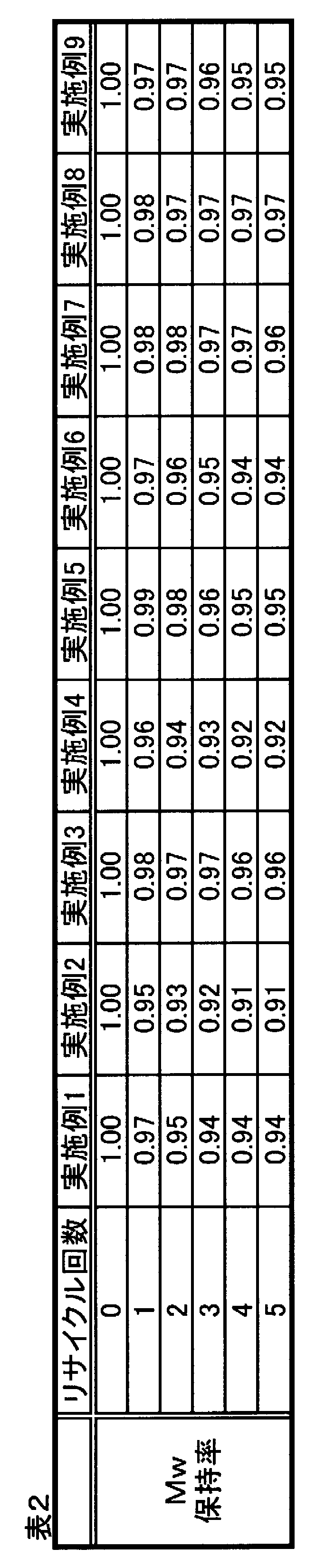
(比較例1~6)
表3に示すように、発泡剤、難燃剤、難燃助剤、安定剤及び他の配合剤の種類・使用量を変更した以外は、実施例1と同様の操作により、発泡体を得た。
表3に示すように、発泡剤、難燃剤、難燃助剤、安定剤及び他の配合剤の種類・使用量を変更した以外は、実施例1と同様の操作により、発泡体を得た。
(比較例7~9)
表3に示すように、発泡剤、難燃剤、難燃助剤、安定剤及び他の配合剤の種類・使用量を変更した以外は、実施例7と同様の操作により、発泡体を得た。
表3に示すように、発泡剤、難燃剤、難燃助剤、安定剤及び他の配合剤の種類・使用量を変更した以外は、実施例7と同様の操作により、発泡体を得た。
比較例1~9で得られた発泡体の特性を、表3に示す。なお、リサイクル回数による発泡体のMw保持率に関しては、表4及び図3、図4に示す。
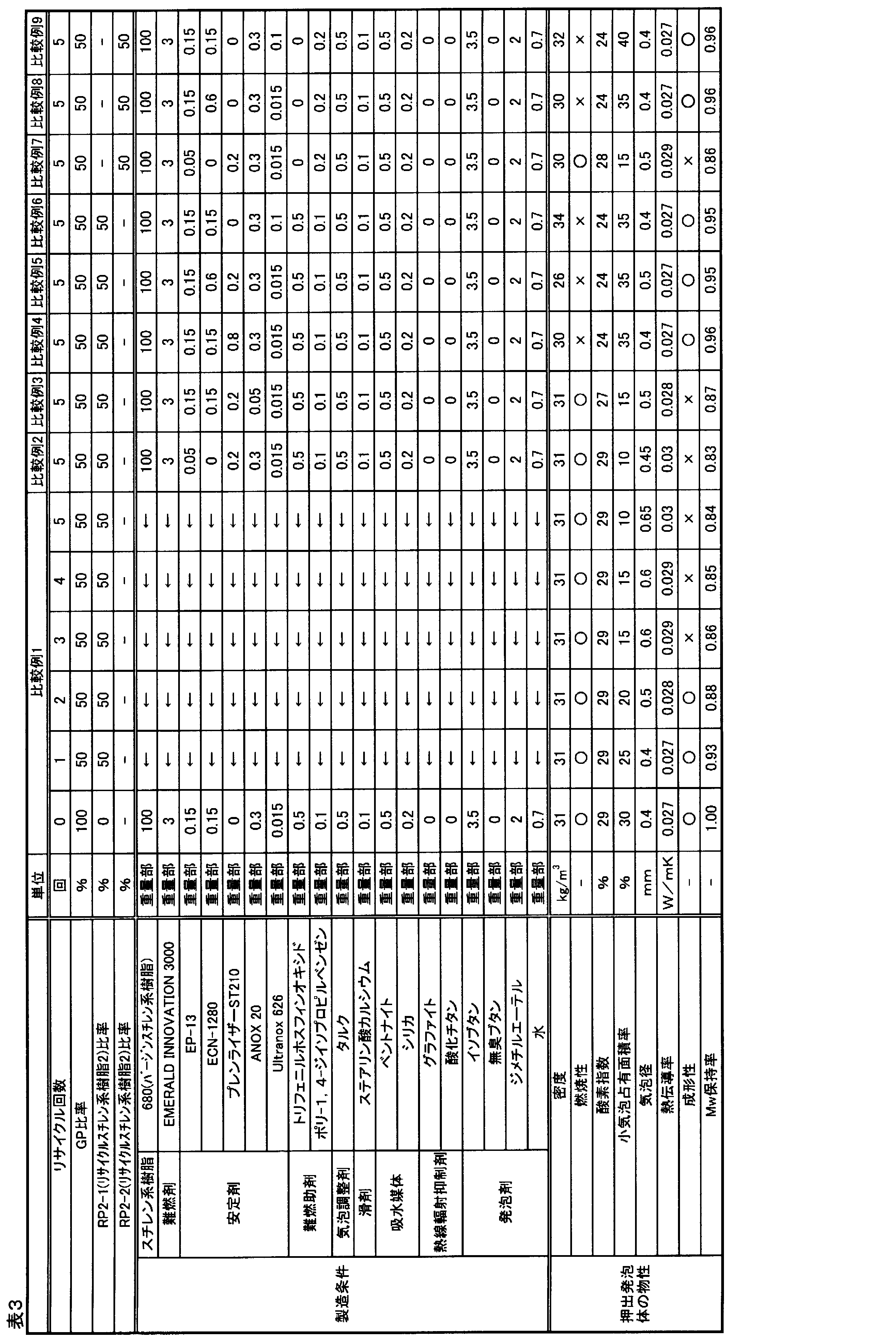
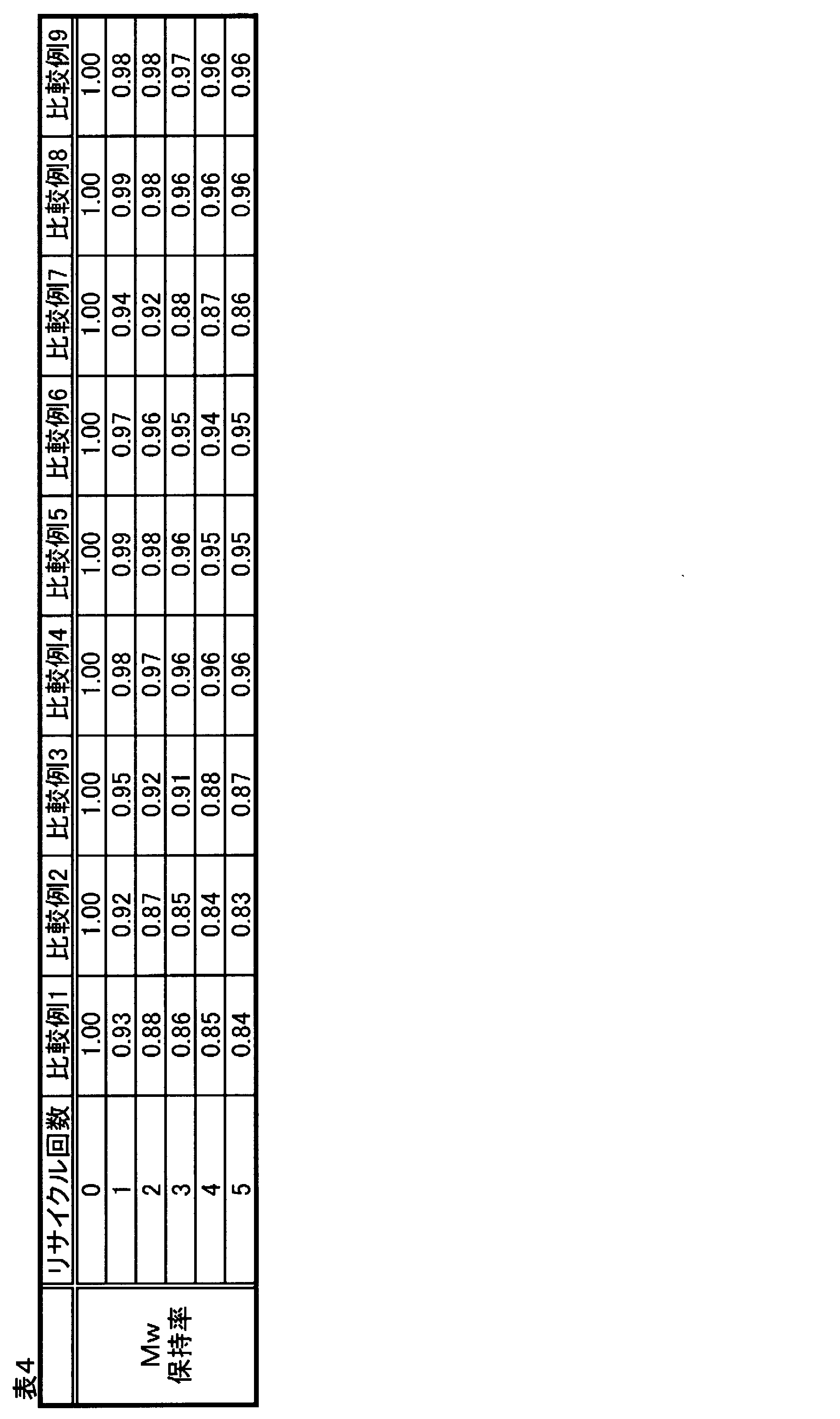
実施例1~9および比較例1~9を比較して明らかなように、スチレン系樹脂に対して、難燃剤として、脂肪族臭素含有ポリマーを含有し、更に、難燃剤100重量部に対して安定剤として、(a)エポキシ化合物を4~20重量部、(b)多価アルコール部分エステルをリサイクル加工温度に応じて0~20重量部の範囲で、(c)フェノール系安定剤を4~20重量部および(d)ホスファイト系安定剤を0~0.9重量部を含有することにより、上記難燃剤および安定剤が含有されたスチレン系樹脂押出発泡体を、加熱収縮および/または熱溶融により減容化してリサイクルした場合においても、成形性が良好であり、且つ難燃性能、熱安定性能、及び断熱性能が改善されたスチレン系樹脂押出発泡体を安定して得られることが判る。
Claims (16)
- スチレン系樹脂および発泡剤を用いて押出発泡して得られるスチレン系樹脂押出発泡体であって、
前記スチレン系樹脂の1~75重量%が、スチレン系樹脂発泡体を加熱収縮および/または熱溶融により減容化したリサイクルスチレン系樹脂(以下、リサイクルスチレン系樹脂2という。)であり、
難燃剤として、脂肪族臭素含有ポリマーを含有し、
更に、難燃剤100重量部に対して、安定剤として、
(a)エポキシ化合物を4~20重量部、
(b)多価アルコール部分エステルを0~20重量部、
(c)フェノール系安定剤を4~20重量部、および
(d)ホスファイト系安定剤を0~0.9重量部
を含有し、
かつ、難燃剤100重量部に対する前記(b)多価アルコール部分エステルの含有量X(重量部)が、リサイクルスチレン系樹脂2の減容化時の加工温度をT(℃)とした場合、下記式(1)及び(2)を満足し、
JIS A9511の燃焼試験法に合格する、及び/又は、酸素指数が26%以上であることを特徴とする、スチレン系樹脂押出発泡体。
T≦180の場合、0≦X≦20・・・(式1)
180<T≦240の場合、4≦X≦20・・・(式2) - 脂肪族臭素含有ポリマーが、臭素化スチレン-ブタジエンブロックコポリマーであることを特徴とする、請求項1に記載のスチレン系樹脂押出発泡体。
- スチレン系樹脂100重量部に対して、脂肪族臭素含有ポリマーを0.5~5重量部含むことを特徴とする、請求項1または2に記載のスチレン系樹脂押出発泡体。
- エポキシ化合物が、下記構造式(1)で示されるビスフェノールAジグリシジルエーテル型エポキシ樹脂

下記構造式(2)で示されるクレゾールノボラック型エポキシ樹脂
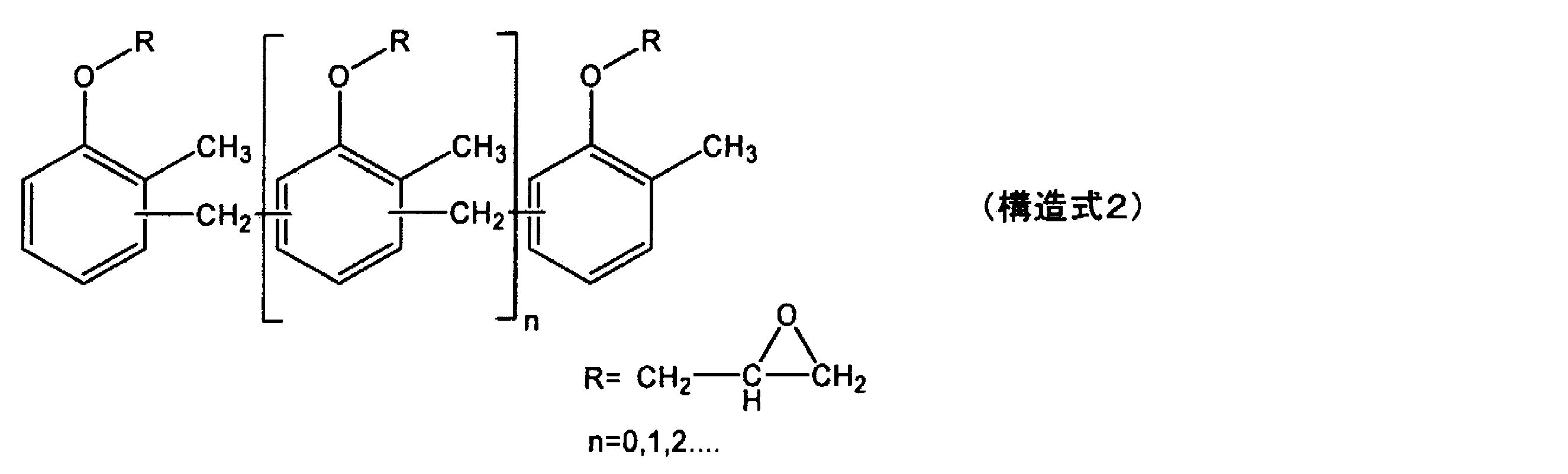
及び下記構造式(3)で示されるフェノールノボラック型エポキシ樹脂
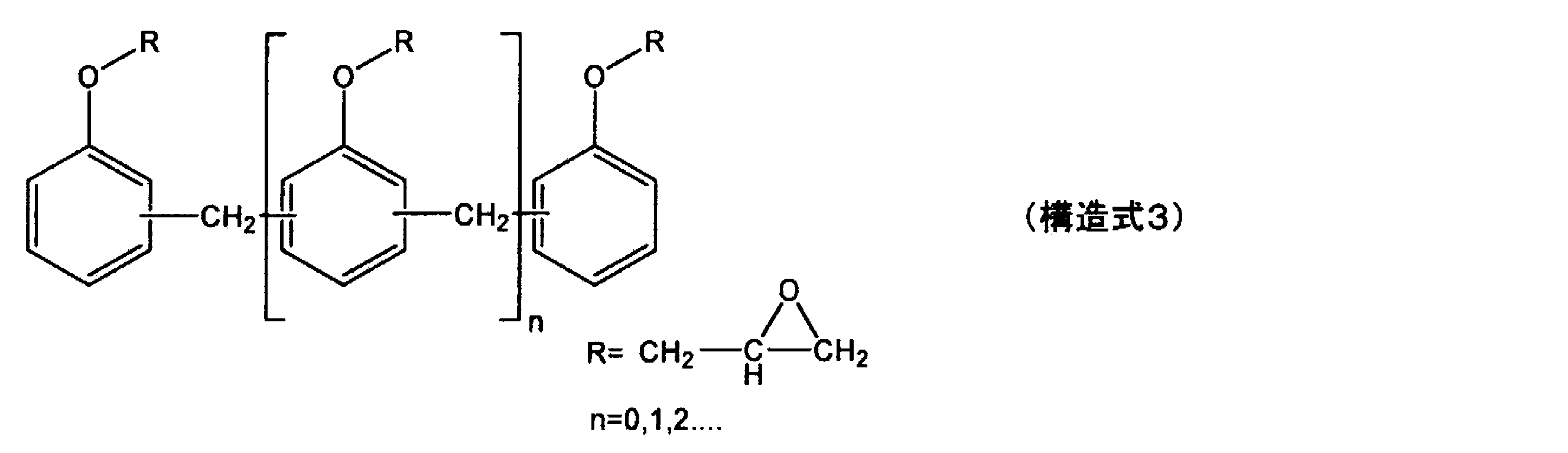
- 多価アルコール部分エステルが、ジペンタエリスリトールとアジピン酸との反応物であることを特徴とする、請求項1~4のいずれかに記載のスチレン系樹脂押出発泡体。
- ホスファイト系安定剤が、3,9-ビス(2,4-ジ-tert-ブチルフェノキシ)-2,4,8,10-テトラオキサ-3,9-ジホスファスピロ[5.5]ウンデカン、3,9-ビス(2,6-ジ-tert-ブチル-4-メチルフェノキシ)-2,4,8,10-テトラオキサ-3,9-ジホスファスピロ[5.5]ウンデカン及びテトラキス(2,4-ジ-tert-ブチル-5-メチルフェニル)-4,4’-ビフェニレンジホスホナイト)よりなる群から選ばれる少なくとも1種であることを特徴とする、請求項1~5のいずれかに記載のスチレン系樹脂押出発泡体。
- 更に、スチレン系樹脂100重量部に対して、ラジカル発生剤を0.05~0.5重量部含有することを特徴とする、請求項1~6のいずれかに記載のスチレン系樹脂押出発泡体。
- ラジカル発生剤が、2,3-ジメチル-2,3-ジフェニルブタン、ポリ-1,4-ジイソプロピルベンゼンよりなる群から選ばれる少なくとも1種であることを特徴とする、請求項7に記載のスチレン系樹脂押出発泡体。
- 更に、スチレン系樹脂100重量部に対して、リン酸エステル、ホスフィンオキシドよりなる群から選ばれる少なくとも1種を含有することを特徴とする、請求項1~8のいずれかに記載のスチレン系樹脂押出発泡体。
- リン酸エステルが、トリフェニルホスフェート、トリス(トリブロモネオペンチル)ホスフェートよりなる群から選ばれる少なくとも1種であり、ホスフィンオキシドがトリフェニルホスフィンオキシドであることを特徴とする、請求項9に記載のスチレン系樹脂押出発泡体。
- 前記発泡剤が、炭素数が3~5である飽和炭化水素から選ばれる少なくとも1種を含むことを特徴とする、請求項1~10のいずれかに記載のスチレン系樹脂押出発泡体。
- 発泡剤として、さらに、水、二酸化炭素、窒素、炭素数が2~5のアルコール類、ジメチルエーテル、塩化メチル、塩化エチルよりなる群から選ばれる少なくとも一種含むことを特徴とする、請求項11に記載のスチレン系樹脂押出発泡体。
- さらに、熱線輻射抑制剤として、グラファイト、カーボンブラック、アルミニウムペースト、酸化チタン、硫酸バリウムよりなる群から選ばれる少なくとも1種を含むことを特徴とする、請求項1~12のいずれかに記載のスチレン系樹脂押出発泡体。
- 発泡体を形成する気泡の気泡径が、主として、気泡径0.2mm以下の気泡と気泡径0.25~1mmの気泡より構成されることを特徴とする、請求項1~13のいずれかに記載のスチレン系樹脂押出発泡体。
- 発泡体を形成する気泡の内、気泡径0.2mm以下の気泡が、発泡体断面積あたり5~95%の占有面積率を有することを特徴とする、請求項14に記載のスチレン系樹脂押出発泡体。
- リサイクルスチレン系樹脂を含有するスチレン系樹脂および発泡剤を用いて押出発泡してスチレン系樹脂押出発泡体を得るスチレン系樹脂押出発泡体のリサイクル方法であって、
前記スチレン系樹脂の1~75重量%が、スチレン系樹脂発泡体を加熱収縮および/または熱溶融により減容化したリサイクルスチレン系樹脂2であり、
難燃剤として、脂肪族臭素含有ポリマーを含有し、
更に、難燃剤100重量部に対して、安定剤として、
(a)エポキシ化合物を4~20重量部、
(b)多価アルコール部分エステルを0~20重量部、
(c)フェノール系安定剤を4~20重量部、および
(d)ホスファイト系安定剤を0~0.9重量部
を含有し、
かつ、難燃剤100重量部に対する前記(b)多価アルコール部分エステルの含有量X(重量部)が、リサイクルスチレン系樹脂2の減容化時の加工温度をT(℃)とした場合、下記式(1)及び(2)を満足することを特徴とするスチレン系樹脂押出発泡体のリサイクル方法。
T≦180の場合、0≦X≦20・・・(式1)
180<T≦240の場合、4≦X≦20・・・(式2)
Priority Applications (2)
| Application Number | Priority Date | Filing Date | Title |
|---|---|---|---|
| JP2015500180A JP5794406B2 (ja) | 2013-02-14 | 2014-01-30 | スチレン系樹脂押出発泡体及びそのリサイクル方法 |
| EP14751710.6A EP2960272B1 (en) | 2013-02-14 | 2014-01-30 | Styrenic resin extruded foam and method for recycling same |
Applications Claiming Priority (2)
| Application Number | Priority Date | Filing Date | Title |
|---|---|---|---|
| JP2013-026197 | 2013-02-14 | ||
| JP2013026197 | 2013-02-14 |
Publications (1)
| Publication Number | Publication Date |
|---|---|
| WO2014125933A1 true WO2014125933A1 (ja) | 2014-08-21 |
Family
ID=51353942
Family Applications (1)
| Application Number | Title | Priority Date | Filing Date |
|---|---|---|---|
| PCT/JP2014/052135 Ceased WO2014125933A1 (ja) | 2013-02-14 | 2014-01-30 | スチレン系樹脂押出発泡体及びそのリサイクル方法 |
Country Status (3)
| Country | Link |
|---|---|
| EP (1) | EP2960272B1 (ja) |
| JP (2) | JP5794406B2 (ja) |
| WO (1) | WO2014125933A1 (ja) |
Cited By (11)
| Publication number | Priority date | Publication date | Assignee | Title |
|---|---|---|---|---|
| JP2014218609A (ja) * | 2013-05-09 | 2014-11-20 | 株式会社ジェイエスピー | ポリスチレン系樹脂押出発泡板の製造方法 |
| JP2014227463A (ja) * | 2013-05-22 | 2014-12-08 | 株式会社ジェイエスピー | ポリスチレン系樹脂押出発泡体の製造方法 |
| JP2015089921A (ja) * | 2013-11-06 | 2015-05-11 | 株式会社ジェイエスピー | ポリスチレン系樹脂押出発泡板の製造方法 |
| CN106589638A (zh) * | 2016-11-18 | 2017-04-26 | 安徽柳峰包装材料有限责任公司 | 一种阻燃型保温材料 |
| EP3070118A4 (en) * | 2013-11-14 | 2017-06-28 | Kaneka Corporation | Extruded styrenic resin foam and method for manufacturing same |
| JP2017149996A (ja) * | 2017-06-13 | 2017-08-31 | 株式会社ジェイエスピー | ポリスチレン系樹脂押出発泡板の製造方法 |
| JP2017149997A (ja) * | 2017-06-13 | 2017-08-31 | 株式会社ジェイエスピー | ポリスチレン系樹脂押出発泡板 |
| JP2017160461A (ja) * | 2017-06-13 | 2017-09-14 | 株式会社ジェイエスピー | ポリスチレン系樹脂押出発泡板の製造方法 |
| JP2022067964A (ja) * | 2020-10-21 | 2022-05-09 | 株式会社カネカ | スチレン系樹脂押出発泡体 |
| JP2022101097A (ja) * | 2020-12-24 | 2022-07-06 | 株式会社ジェイエスピー | 発泡性スチレン系樹脂粒子の製造方法 |
| US11447613B2 (en) | 2016-05-11 | 2022-09-20 | Owens Corning Intellectual Capital, Llc | Polymeric foam comprising low levels of brominated flame retardant and method of making same |
Families Citing this family (7)
| Publication number | Priority date | Publication date | Assignee | Title |
|---|---|---|---|---|
| JP7032231B2 (ja) * | 2018-05-14 | 2022-03-08 | シャープ株式会社 | 難燃ポリスチレン再生材の信頼性評価方法および品質管理方法 |
| DE102019200905A1 (de) * | 2019-01-24 | 2020-07-30 | Fraunhofer-Gesellschaft zur Förderung der angewandten Forschung e.V. | Verfahren zur Stabilisierung von halogenfreien thermoplastischen Kunststoff-Rezyklaten, Kunststoff-Zusammensetzung, Stabilisator-Zusammensetzung sowie Verwendung der Stabilisator-Zusammensetzung |
| JP7532196B2 (ja) * | 2020-10-14 | 2024-08-13 | 株式会社カネカ | スチレン系樹脂押出発泡体、及びその製造方法 |
| CN116333429A (zh) * | 2021-12-24 | 2023-06-27 | 朗盛化学(中国)有限公司 | 聚合物组合物、聚合物母料组合物以及包含其或由其制备的板材 |
| CN116333446A (zh) * | 2021-12-24 | 2023-06-27 | 朗盛化学(中国)有限公司 | 阻燃剂组合物、包含阻燃剂组合物的聚合物组合物及其制备方法 |
| CN116333428A (zh) * | 2021-12-24 | 2023-06-27 | 朗盛化学(中国)有限公司 | 聚合物组合物、聚合物母料组合物以及包含其或由其制备的板材 |
| JP7757217B2 (ja) * | 2022-03-16 | 2025-10-21 | 株式会社カネカ | スチレン系樹脂押出発泡体およびその製造方法 |
Citations (11)
| Publication number | Priority date | Publication date | Assignee | Title |
|---|---|---|---|---|
| JPH07238195A (ja) * | 1994-02-28 | 1995-09-12 | Daicel Chem Ind Ltd | 難燃性スチレン系樹脂組成物 |
| JPH08269275A (ja) * | 1995-03-30 | 1996-10-15 | Dai Ichi Kogyo Seiyaku Co Ltd | 難燃性熱可塑性スチレン系樹脂組成物 |
| JP2001139714A (ja) * | 1999-09-02 | 2001-05-22 | Toray Ind Inc | 発泡成形体用樹脂組成物の製造法および発泡成形体 |
| WO2007058736A1 (en) | 2005-11-12 | 2007-05-24 | Dow Global Technologies Inc. | Brominated butadiene/vinyl aromatic copolymers, blends of such copolymers with a vinyl aromatic polymer, and polymeric foams formed from such blends |
| JP2008163185A (ja) | 2006-12-28 | 2008-07-17 | Kaneka Corp | スチレン系樹脂押出発泡体の製造方法 |
| WO2010080285A2 (en) | 2008-12-18 | 2010-07-15 | Dow Global Technologies Inc. | Stabilizers for polymers containing aliphatically-bound bromine |
| JP2010527399A (ja) * | 2007-05-15 | 2010-08-12 | ダウ グローバル テクノロジーズ インコーポレイティド | 良好な表面品質、高断熱性および低密度を有するアルケニル芳香族発泡体 |
| JP2011513537A (ja) * | 2008-02-26 | 2011-04-28 | ダウ グローバル テクノロジーズ リミティド ライアビリティ カンパニー | 難燃添加剤としての臭素化ポリマー及びそれを含むポリマー系 |
| WO2011073141A1 (de) * | 2009-12-18 | 2011-06-23 | Basf Se | Flammgeschützte polymerschaumstoffe |
| WO2012082332A1 (en) * | 2010-12-17 | 2012-06-21 | Dow Global Technologies Llc | Polystyrene melt extrusion process |
| JP2012528921A (ja) * | 2009-06-04 | 2012-11-15 | ダウ グローバル テクノロジーズ エルエルシー | 難燃性性能を有する赤外線減衰化ポリマーフォーム断熱材 |
Family Cites Families (5)
| Publication number | Priority date | Publication date | Assignee | Title |
|---|---|---|---|---|
| JP2735963B2 (ja) * | 1991-06-04 | 1998-04-02 | 積水化成品工業株式会社 | 易熱変性添加剤を有する熱可塑性樹脂粒子の製造方法 |
| JP2007277294A (ja) * | 2006-04-03 | 2007-10-25 | Kaneka Corp | スチレン系樹脂押出発泡体の製造方法 |
| US20080064774A1 (en) * | 2006-09-07 | 2008-03-13 | Stobby William G | Stabilized extruded alkenyl aromatic polymer foams and processes for extruding stabilized alkenyl aromatic polymer foams |
| JP5190484B2 (ja) * | 2009-04-28 | 2013-04-24 | 第一工業製薬株式会社 | 難燃性発泡スチレン系樹脂組成物 |
| JP5740177B2 (ja) * | 2011-02-24 | 2015-06-24 | 株式会社カネカ | スチレン系樹脂押出発泡体及びその製造方法 |
-
2014
- 2014-01-30 JP JP2015500180A patent/JP5794406B2/ja active Active
- 2014-01-30 WO PCT/JP2014/052135 patent/WO2014125933A1/ja not_active Ceased
- 2014-01-30 EP EP14751710.6A patent/EP2960272B1/en active Active
-
2015
- 2015-03-30 JP JP2015068159A patent/JP5892279B2/ja active Active
Patent Citations (12)
| Publication number | Priority date | Publication date | Assignee | Title |
|---|---|---|---|---|
| JPH07238195A (ja) * | 1994-02-28 | 1995-09-12 | Daicel Chem Ind Ltd | 難燃性スチレン系樹脂組成物 |
| JPH08269275A (ja) * | 1995-03-30 | 1996-10-15 | Dai Ichi Kogyo Seiyaku Co Ltd | 難燃性熱可塑性スチレン系樹脂組成物 |
| JP2001139714A (ja) * | 1999-09-02 | 2001-05-22 | Toray Ind Inc | 発泡成形体用樹脂組成物の製造法および発泡成形体 |
| WO2007058736A1 (en) | 2005-11-12 | 2007-05-24 | Dow Global Technologies Inc. | Brominated butadiene/vinyl aromatic copolymers, blends of such copolymers with a vinyl aromatic polymer, and polymeric foams formed from such blends |
| JP2009516019A (ja) * | 2005-11-12 | 2009-04-16 | ダウ グローバル テクノロジーズ インコーポレイティド | 臭素化ブタジエン・ビニル芳香族炭化水素共重合体、その共重合体とビニル芳香族炭化水素重合体との配合物、およびその配合物から形成された重合体発泡体 |
| JP2008163185A (ja) | 2006-12-28 | 2008-07-17 | Kaneka Corp | スチレン系樹脂押出発泡体の製造方法 |
| JP2010527399A (ja) * | 2007-05-15 | 2010-08-12 | ダウ グローバル テクノロジーズ インコーポレイティド | 良好な表面品質、高断熱性および低密度を有するアルケニル芳香族発泡体 |
| JP2011513537A (ja) * | 2008-02-26 | 2011-04-28 | ダウ グローバル テクノロジーズ リミティド ライアビリティ カンパニー | 難燃添加剤としての臭素化ポリマー及びそれを含むポリマー系 |
| WO2010080285A2 (en) | 2008-12-18 | 2010-07-15 | Dow Global Technologies Inc. | Stabilizers for polymers containing aliphatically-bound bromine |
| JP2012528921A (ja) * | 2009-06-04 | 2012-11-15 | ダウ グローバル テクノロジーズ エルエルシー | 難燃性性能を有する赤外線減衰化ポリマーフォーム断熱材 |
| WO2011073141A1 (de) * | 2009-12-18 | 2011-06-23 | Basf Se | Flammgeschützte polymerschaumstoffe |
| WO2012082332A1 (en) * | 2010-12-17 | 2012-06-21 | Dow Global Technologies Llc | Polystyrene melt extrusion process |
Non-Patent Citations (1)
| Title |
|---|
| See also references of EP2960272A4 |
Cited By (14)
| Publication number | Priority date | Publication date | Assignee | Title |
|---|---|---|---|---|
| JP2014218609A (ja) * | 2013-05-09 | 2014-11-20 | 株式会社ジェイエスピー | ポリスチレン系樹脂押出発泡板の製造方法 |
| JP2014227463A (ja) * | 2013-05-22 | 2014-12-08 | 株式会社ジェイエスピー | ポリスチレン系樹脂押出発泡体の製造方法 |
| JP2015089921A (ja) * | 2013-11-06 | 2015-05-11 | 株式会社ジェイエスピー | ポリスチレン系樹脂押出発泡板の製造方法 |
| EP3070118B1 (en) | 2013-11-14 | 2020-02-26 | Kaneka Corporation | Extruded styrenic resin foam and method for manufacturing same |
| EP3070118A4 (en) * | 2013-11-14 | 2017-06-28 | Kaneka Corporation | Extruded styrenic resin foam and method for manufacturing same |
| US11447613B2 (en) | 2016-05-11 | 2022-09-20 | Owens Corning Intellectual Capital, Llc | Polymeric foam comprising low levels of brominated flame retardant and method of making same |
| CN106589638A (zh) * | 2016-11-18 | 2017-04-26 | 安徽柳峰包装材料有限责任公司 | 一种阻燃型保温材料 |
| JP2017149997A (ja) * | 2017-06-13 | 2017-08-31 | 株式会社ジェイエスピー | ポリスチレン系樹脂押出発泡板 |
| JP2017160461A (ja) * | 2017-06-13 | 2017-09-14 | 株式会社ジェイエスピー | ポリスチレン系樹脂押出発泡板の製造方法 |
| JP2017149996A (ja) * | 2017-06-13 | 2017-08-31 | 株式会社ジェイエスピー | ポリスチレン系樹脂押出発泡板の製造方法 |
| JP2022067964A (ja) * | 2020-10-21 | 2022-05-09 | 株式会社カネカ | スチレン系樹脂押出発泡体 |
| JP7599306B2 (ja) | 2020-10-21 | 2024-12-13 | 株式会社カネカ | スチレン系樹脂押出発泡体 |
| JP2022101097A (ja) * | 2020-12-24 | 2022-07-06 | 株式会社ジェイエスピー | 発泡性スチレン系樹脂粒子の製造方法 |
| JP7588511B2 (ja) | 2020-12-24 | 2024-11-22 | 株式会社ジェイエスピー | 発泡性スチレン系樹脂粒子の製造方法 |
Also Published As
| Publication number | Publication date |
|---|---|
| EP2960272B1 (en) | 2019-04-10 |
| JP5892279B2 (ja) | 2016-03-23 |
| JP2015120935A (ja) | 2015-07-02 |
| EP2960272A1 (en) | 2015-12-30 |
| JP5794406B2 (ja) | 2015-10-14 |
| JPWO2014125933A1 (ja) | 2017-02-02 |
| EP2960272A4 (en) | 2016-08-31 |
Similar Documents
| Publication | Publication Date | Title |
|---|---|---|
| JP5892279B2 (ja) | スチレン系樹脂押出発泡体及びそのリサイクル方法 | |
| JP5950056B2 (ja) | スチレン系樹脂押出発泡体及びその製造方法 | |
| JP5454730B2 (ja) | スチレン系樹脂押出発泡体及びその製造方法 | |
| JP7080714B2 (ja) | スチレン系樹脂押出発泡体 | |
| JP6139294B2 (ja) | スチレン系樹脂押出発泡体及びその製造方法 | |
| JP6491430B2 (ja) | 難燃剤含有スチレン系樹脂組成物の製造方法 | |
| JP7011422B2 (ja) | スチレン系樹脂押出発泡体およびその製造方法 | |
| JP5403169B2 (ja) | スチレン系樹脂押出発泡体及びその製造方法 | |
| JP2012136674A (ja) | スチレン系樹脂押出発泡体及びその製造方法 | |
| JP6412801B2 (ja) | スチレン系樹脂押出発泡体 | |
| JP7017381B2 (ja) | スチレン系樹脂押出発泡体 | |
| JP6348723B2 (ja) | スチレン系樹脂押出発泡体その製造方法 | |
| JPWO2017141888A1 (ja) | スチレン系樹脂押出発泡体及びその製造方法 | |
| JP2016199674A (ja) | スチレン系樹脂押出発泡体及びその製造方法 | |
| JP7042038B2 (ja) | スチレン系樹脂押出発泡体の製造方法 | |
| JP7663382B2 (ja) | スチレン系樹脂押出発泡体の製造方法 | |
| JP7850580B2 (ja) | スチレン系樹脂押出発泡体およびその製造方法 | |
| JP7599306B2 (ja) | スチレン系樹脂押出発泡体 | |
| JP7479175B2 (ja) | スチレン系樹脂押出発泡体の製造方法 | |
| JP2024142607A (ja) | スチレン系樹脂押出発泡体およびその製造方法 | |
| JP2022064639A (ja) | スチレン系樹脂押出発泡体、及びその製造方法 |
Legal Events
| Date | Code | Title | Description |
|---|---|---|---|
| 121 | Ep: the epo has been informed by wipo that ep was designated in this application |
Ref document number: 14751710 Country of ref document: EP Kind code of ref document: A1 |
|
| ENP | Entry into the national phase |
Ref document number: 2015500180 Country of ref document: JP Kind code of ref document: A |
|
| NENP | Non-entry into the national phase |
Ref country code: DE |
|
| WWE | Wipo information: entry into national phase |
Ref document number: 2014751710 Country of ref document: EP |