WO2014128917A1 - 船舶の目的地点への到着時刻を決定するための装置、システム、プログラム、記録媒体および方法 - Google Patents
船舶の目的地点への到着時刻を決定するための装置、システム、プログラム、記録媒体および方法 Download PDFInfo
- Publication number
- WO2014128917A1 WO2014128917A1 PCT/JP2013/054518 JP2013054518W WO2014128917A1 WO 2014128917 A1 WO2014128917 A1 WO 2014128917A1 JP 2013054518 W JP2013054518 W JP 2013054518W WO 2014128917 A1 WO2014128917 A1 WO 2014128917A1
- Authority
- WO
- WIPO (PCT)
- Prior art keywords
- time
- ship
- fuel consumption
- data
- arrival
- Prior art date
- Legal status (The legal status is an assumption and is not a legal conclusion. Google has not performed a legal analysis and makes no representation as to the accuracy of the status listed.)
- Ceased
Links
Images




Classifications
-
- B—PERFORMING OPERATIONS; TRANSPORTING
- B63—SHIPS OR OTHER WATERBORNE VESSELS; RELATED EQUIPMENT
- B63B—SHIPS OR OTHER WATERBORNE VESSELS; EQUIPMENT FOR SHIPPING
- B63B49/00—Arrangements of nautical instruments or navigational aids
-
- G—PHYSICS
- G08—SIGNALLING
- G08G—TRAFFIC CONTROL SYSTEMS
- G08G3/00—Traffic control systems for marine craft
Definitions
- the present invention relates to a technique for determining the arrival time of a ship at a destination point.
- Patent Document 1 provides a mechanism for providing the time when a ship arrives at the port area of a destination point or the time when the ship arrives to a portable terminal of a crew member of a transport vehicle that transports the cargo of the ship via a network. Proposed. According to this mechanism, the crew of the transport vehicle can know the berthing time of the ship in advance, and can make a delivery plan so as to arrive at the port at a desired time according to the berthing time. As a result, effects such as reduction of traffic congestion in the vicinity of the harbor can be obtained.
- arrival time at the ship destination must satisfy several conditions.
- the time that can be reached at the destination is a fixed period determined mainly by the departure time from the departure point and the distance from the departure point to the destination point. (Hereinafter referred to as “arrival period”).
- the period during which the ship can use the port at the destination point is limited to the period assigned by the port management company by the ship agency that arranges the port entry of the ship (hereinafter referred to as “the period of berthing”). Therefore, the arrival time of the ship must first be after the start time of the anchorage period.
- the arrival time of the ship must be earlier than the time required for berthing, loading and unloading, leaving the berth, etc. (hereinafter referred to as “necessary berthing time”) from the end time of the berthing period .
- the shipping company's flight manager must determine the desired arrival time within a period that satisfies all of the above conditions.
- the desired arrival time is usually not uniquely determined. Although it is desirable that the amount of fuel consumed for navigation is small, generally the fuel consumption is smaller when the arrival time is later. Therefore, it is often desirable that the arrival time is later from the viewpoint of fuel consumption.
- the requester of the cargo delivery desires an earlier arrival time. Therefore, from the viewpoint of service quality, it is often desirable that the arrival time is earlier.
- the operation manager since the desired arrival time of a ship is generally not uniquely determined, the operation manager considers various conditions (such as the navigation budget and the importance of the client's request) regarding each navigation. In many cases, the arrival time must be determined individually.
- the operation manager In order to determine the arrival time of a ship, in general, the operation manager first informs the ship operator of the arrival period by telephone or e-mail, and then calls the person in charge of the ship agent. Inquire about the necessary berthing time and the berthing period before and after the arrival period by e-mail etc. Subsequently, the flight manager compares the possible arrival period, the required berthing time, and the berthable period, and specifies a period that can be selected as the arrival time of the ship (hereinafter referred to as “arrival time candidate period”).
- the flight manager selects an arrival time that satisfies the request of the client, for example, within the specified arrival time candidate period, and navigates so that the ship arrives at the destination at the selected arrival time. Estimate the amount of fuel used. Subsequently, the operation manager checks whether or not the fuel cost corresponding to the estimated fuel consumption is within a budget, for example. If the fuel cost of the estimated fuel consumption is not within the budget, the flight manager will select the other arrival time and estimate the fuel consumption. Repeat until is estimated. As a result, the arrival time that satisfies the request of the client and the fuel cost is within the budget is specified.
- the flight manager notifies the ship operator of the arrival time specified in this way by telephone or e-mail.
- the ship operator navigates while adjusting the navigation speed so as to arrive at the destination at the arrival time notified by the operation manager (hereinafter referred to as “request arrival time”).
- From the second device means for obtaining fuel consumption data indicating fuel consumption per unit time or unit distance in the navigation of the ship, the ship from the departure point to the destination point, A method for calculating an estimated fuel consumption amount when the vehicle travels with the fuel consumption indicated by the fuel consumption data from the time indicated by the departure time data to the time indicated by the requested arrival time data.
- the means for the display provides an apparatus for displaying an image representative of the estimated fuel consumption amount on the display means.
- the means for displaying causes the display means to display an image including an operator that continuously moves in response to an operation of the second user with respect to the operation means
- the means for calculating includes: The means for sequentially calculating and displaying the estimated fuel consumption based on the request arrival time data sequentially acquired from the operation means by the means for acquiring the operation data in response to the operation of the second user on the operation element, A configuration may be employed in which images representing estimated fuel consumption sequentially calculated by the calculating means are sequentially displayed on the display means.
- the calculating means sets a plurality of times within one period as request arrival times, and for each of the plurality of request arrival times, the ship from the departure point to the destination point,
- the means for calculating the estimated fuel consumption when the navigation is performed with the fuel consumption indicated by the fuel consumption data from the time indicated by the departure time data to the request arrival time A configuration may be employed in which an image representing the estimated fuel consumption calculated for each is displayed on the display means.
- spent fuel consumption data indicating a consumption amount of fuel used by the ship via a network from a device arranged in the ship, and a current state of the ship
- the calculating means calculates the distance indicated by the data for the ship to specify the distance from the current time to the request arrival.
- the data indicating the request arrival time input by the second user indicated by the request arrival time data acquired by the means for acquiring the request arrival time data is transmitted via the network to the first It is also possible to employ a configuration that includes a means for providing the apparatus.
- the navigation speed of the ship for arriving at the destination point at the request arrival time data acquired by the means for acquiring the request arrival time data and the request arrival time indicated by the request arrival time data may be adopted in which means for transmitting at least one of the data to be shown is transmitted to a device arranged on the ship via a network.
- the present invention also includes a server device, a first device operated by a first user and capable of data communication with the server device via a network, and a second device operated by a second user.
- the second device is arranged in the same housing as the server device, or is configured separately from the server device and can communicate data with the server device via a network.
- means for obtaining departure time data indicating the time at which the ship leaves the departure point, and arrival time at the destination point when the vessel has navigated at the highest speed Means for obtaining the earliest possible arrival time data indicating the latest arrival possible time data indicating the arrival time at the destination point when the ship sailed at the slowest speed, and the first ,
- the anchorage period start time data indicating the start time of the period in which the ship can be anchored at the destination point
- the anchorage period end time data indicating the end time of the period in which the ship can anchor at the destination point;
- the time indicated by the earliest possible arrival time data, the time indicated by the latest arrival possible time data, the time indicated by the berthing available period start time data, and the berthing available period end time data Means for displaying an image representing a time on the display means of the first device, and an operation in which the second user inputs an arbitrary time as a requested arrival time according to the display of the image.
- the means for obtaining request arrival time data indicating the request arrival time generated by the operation means from the second device Means for acquiring fuel consumption data indicating fuel consumption per unit time or unit distance, and from the time when the ship is from the departure point to the destination point, from the time indicated by the departure time data to the time indicated by the requested arrival time data Means for calculating an estimated fuel consumption amount when navigating at the fuel consumption indicated by the fuel consumption data for a period of time, and the display means displays an image representing the estimated fuel consumption amount on the display means.
- the first device includes means for providing the berthing period start time data and the berthing period end time data to the server device, and the second device includes the display unit and the operation unit. And a means for providing the requested arrival time data to the server device.
- the present invention relates to navigation of a ship from a departure point to a destination point in a computer provided with communication means for performing data communication with other devices via a network, and the time at which the ship leaves the departure point.
- Processing to obtain departure time data indicating the earliest possible arrival time data indicating the arrival time at the destination when the ship sailed at the highest speed, and the destination to the destination when the ship sailed at the lowest speed A process of obtaining latest arrival time data indicating arrival time, and a start time of a period during which the ship can be anchored at the destination point via the network from the first device used by the first user
- processing for obtaining request arrival time data indicating the request arrival time generated by the operation means from the second device, and fuel consumption per unit time or unit distance in navigation of the ship Processing for obtaining fuel consumption data indicating the amount of the ship, from the departure point to the destination point, from the time indicated by the departure time data to the time indicated by the requested arrival time data.
- a program for executing a process for calculating an estimated fuel consumption amount when navigating at the fuel consumption indicated by the fuel efficiency data and a process for displaying an image representing the estimated fuel consumption amount on the display means provide.
- the present invention relates to navigation of a ship from a departure point to a destination point in a computer provided with communication means for performing data communication with other devices via a network, and the time at which the ship leaves the departure point.
- Processing to obtain departure time data indicating the earliest possible arrival time data indicating the arrival time at the destination when the ship sailed at the highest speed, and the destination to the destination when the ship sailed at the lowest speed A process of obtaining latest arrival time data indicating arrival time, and a start time of a period during which the ship can be anchored at the destination point via the network from the first device used by the first user
- processing for obtaining request arrival time data indicating the request arrival time generated by the operation means from the second device, and fuel consumption per unit time or unit distance in navigation of the ship Processing for obtaining fuel consumption data indicating the amount of the ship, from the departure point to the destination point, from the time indicated by the departure time data to the time indicated by the requested arrival time data.
- a program for executing a process for calculating an estimated fuel consumption amount when navigating at the fuel consumption indicated by the fuel efficiency data and a process for displaying an image representing the estimated fuel consumption amount on the display means A computer-readable recording medium for persistent storage is provided.
- the present invention relates to navigation of a ship from a departure point to a destination point, wherein the server device acquires departure time data indicating a time at which the vessel leaves the departure point, and the server device includes: The earliest possible arrival time data indicating the arrival time at the destination when the ship navigates at the highest speed, and the latest arrival possible time data indicating the arrival time at the destination when the ship navigates at the lowest speed. And a berthing available period start time data indicating a start time of a period in which the ship can berth at the destination point via the network from the first device used by the first user.
- the time indicated by the earliest possible arrival time data, the time indicated by the latest arrival possible time data, the time indicated by the berthing available period start time data, and the berthing available period end time data are
- a step of displaying an image representing a time to be displayed, and when the second user performs an operation for inputting an arbitrary time as a requested arrival time in response to the display of the image A second device providing request arrival time data indicating the request arrival time to the server device; and the server device indicates fuel consumption per unit time or unit distance in navigation of the ship.
- the first user can easily know the arrival time candidate period by looking at the time displayed on the first device. Further, according to the present invention, the first user inputs an arbitrary time within the arrival time candidate period to the first device, so that the estimated fuel consumption when the time is set as the requested arrival time is set to the first time. Can be displayed on other devices. Therefore, the first user can easily determine the requested arrival time that satisfies the request of the client and the fuel cost corresponding to the fuel consumption is within the budget. Further, the requested arrival time determined by the first user is automatically notified to the second device arranged on the ship. Therefore, it is not necessary for the first user to notify the operator of the requested arrival time.
- the navigation schedule adjustment system 1 is a server in which each of a shipping company's operation manager, a ship agent's person in charge, and a ship's ship operator at the start and during navigation of a ship uses a terminal device used by the ship. This is a system for accessing a management page provided by the device, inputting various data related to a navigation schedule, and sharing the data by browsing the various data.
- the operation manager performs an operation of determining a requested arrival time that is a time at which the ship should arrive at the destination point.
- temporary request arrival time a temporary request arrival time
- the ship navigates at the navigation speed at which the ship arrives at the destination at the input temporary request arrival time.
- the estimated fuel consumption from the starting point to the destination point is calculated by the server device and displayed on the management page. More specifically, the flight manager can input the provisional request arrival time by sliding the slider displayed on the management page, and can see the estimated fuel consumption continuously changing according to the operation. .
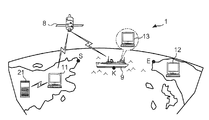
- FIG. 1 is a diagram schematically showing the overall configuration of the navigation schedule adjustment system 1.
- the navigation schedule adjustment system 1 includes a shipping company terminal device 11 that is arranged on land and is used by a shipping company's operation manager (hereinafter simply referred to as “operation manager”), and a ship agency person in charge ( Hereinafter, the ship agency terminal device 12 used by the “agent agent”), the ship terminal device 13 arranged on the ship 9 and used by the operator of the ship 9, and each of these terminal devices is managed.
- a server device 21 that provides a page (Web page) is provided. The ship 9 navigates on the route from the departure point S to the destination point E.
- Each of the shipping company terminal device 11, the vessel agency terminal device 12, and the vessel terminal device 13 (hereinafter, these devices are collectively referred to simply as “terminal devices”) are variously connected to the server device 21 via the network. Perform data communication.
- the communication satellite 8 relays data communication between these terminal devices and the server device 21 as necessary.
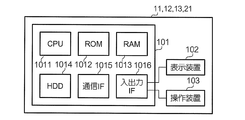
- the shipping company terminal device 11, the ship agency terminal device 12, the ship terminal device 13, and the server device 21 are general computers including communication means for performing data communication with other information processing devices via a network. is there. That is, each of these devices includes a main body 101, a display device 102, and an operation device 103 as shown in FIG.
- the main body 101 is a CPU 1011 that performs various data processing according to a program, a ROM 1012 that stores basic programs such as BIOS, a RAM 1013 that temporarily stores data and is used as a work area by the CPU 1011, programs such as an OS and application programs, and others
- An HDD 1014 for storing various types of data
- a communication IF (InterFace) 1015 for performing data communication with other information processing devices
- an input / output IF 1016 for performing input / output of various types of data with the display device 102 and the operation device 103.
- the display device 102 is a display device such as a liquid crystal display, and displays an image according to the image data output from the main body 101.
- the operation device 103 is an operation device such as a keyboard, a mouse, or a touch panel, and receives a data input to the user's main body 101 by generating a signal corresponding to the user's operation and outputting the signal to the main body 101.
- one or both of the display device 102 and the operation device 103 may be arranged in the same housing as the main body 101, or may be arranged in a different housing from the main body 101, and a cable or the like may be installed in the main body 101.
- the structure connected by may be employ
- FIG. 3 is a diagram schematically showing a functional configuration of the shipping company terminal device 11.
- the shipping company terminal device 11 functions as a device including the functional components shown in FIG. 3 by executing processing according to the application program stored in the HDD 1014 of the shipping company terminal device 11.
- the shipping company terminal device 11 transmits various data to the server device 21 as a function component, a display unit 111 that displays a management page to the operation manager, an operation unit 112 that receives data input by the operation manager, and the server device 21.
- a transmission unit 113 and a reception unit 114 that receives various data from the server device 21 are provided.
- the transmission means 113 is means for transmitting departure time data indicating the departure time input by the flight manager, means for transmitting temporary request arrival time data indicating the temporary request arrival time input by the flight manager, and the flight manager. It serves as a means for transmitting the request arrival time data indicating the request arrival time input by.
- the receiving means 114 serves as means for receiving estimated fuel consumption data indicating the estimated fuel consumption from the departure point S to the destination point E.
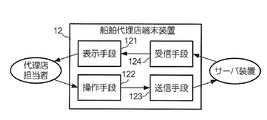
- FIG. 4 is a diagram schematically showing a functional configuration of the ship agency terminal device 12. That is, the ship agency terminal device 12 functions as an apparatus including the functional components shown in FIG. 4 by executing processing according to an application program stored in the HDD 1014 of the ship agency terminal device 12.
- the ship agency terminal device 12 includes, as a function configuration unit, a display unit 121 that displays a management page for the agent in charge, an operation unit 122 that receives data input from the agent in charge, and various data for the server device 21. Is provided, and a receiving means 124 for receiving various data from the server device 21 is provided.
- the transmission means 123 plays a role as means for transmitting berthing available period start time data indicating the start time of the berthing available period inputted by the agent person in charge.
- the receiving means 124 plays a role as means for receiving the request arrival time data.
- FIG. 5 is a diagram schematically showing a functional configuration of the ship terminal device 13. That is, the ship terminal device 13 functions as a device including the function configuration unit illustrated in FIG. 5 by executing processing according to an application program stored in the HDD 1014 of the ship terminal device 13.
- the ship terminal device 13 includes a display unit 131 that displays a management page for a ship operator, an operation unit 132 that receives data input from the boat operator, and a transmission unit 133 that transmits various data to the server device 21 as a function configuration unit. And receiving means 134 for receiving various data from the server device 21.
- the ship terminal device 13 includes spent fuel consumption data acquisition means 135 and current location data acquisition means 136.
- the spent fuel consumption data acquisition means 135 acquires used fuel consumption data indicating the amount of fuel consumed by the ship 9 during the navigation from the departure point S to the current point K during the navigation of the ship 9.
- the spent fuel consumption data is data indicating a fuel consumption calculated based on a value measured by a fuel flow meter provided in the ship 9, for example.
- the current location data acquisition unit 136 acquires current location data indicating the location of the current location K.
- the current position data is data indicating the latitude and longitude measured by the GPS provided in the ship 9, for example.
- the transmission means 133 is a means for transmitting the earliest possible arrival time data indicating the earliest time at which the ship 9 can arrive at the destination point, which is input by the operator, means for transmitting spent fuel consumption data, and current position data. Serves as a means of transmission.
- the receiving means 134 plays a role as means for receiving the request arrival time data.
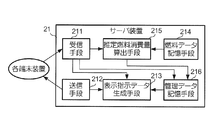
- FIG. 6 is a diagram schematically showing a functional configuration of the server device 21.
- the server device 21 functions as a device including the functional configuration unit illustrated in FIG. 6 by executing processing according to an application program stored in the HDD 1014 of the server device 21.
- the server device 21 includes, as function components, a receiving unit 211 that receives various data from each terminal device, a transmitting unit 212 that transmits various data to each terminal device, and display instruction data that instructs display of a management page.
- Display instruction data generating means 213 for generating is provided.
- the server device 21 includes a fuel data storage unit 214 that stores fuel data indicating a correspondence table between the navigation speed of the ship 9 (speed of ground ship or speed of water ship) and fuel consumption (fuel consumption per unit time);
- FIG. 7 is a diagram schematically showing the data structure of the fuel data.
- the fuel data indicates the correspondence between the navigation speed of the ship 9 and the fuel consumption.
- the fuel data is, for example, data generated based on the navigation speed actually measured in the past navigation of the ship 9 and the fuel consumption at the navigation speed, or data calculated according to the physical simulation model of the ship 9.
- the receiving means 211 is means for receiving departure time data from the shipping company terminal device 11, means for receiving earliest possible arrival time data from the shipping terminal device 13, provisional request arrival time data and request arrival time data from the shipping company terminal device 11. , Means for receiving spent fuel consumption data from the ship terminal device 13, and means for receiving current location data from the ship terminal device 13.
- the transmission means 212 serves as a means for transmitting the estimated fuel consumption data to the shipping company terminal device 11 and a means for transmitting the requested arrival time data to the ship agency terminal device 12 and the ship terminal device 13.
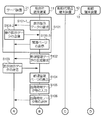
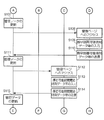
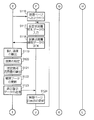
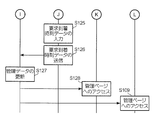
- FIG. 8A, FIG. 8B, FIG. 8C, and FIG. 8D are diagrams showing a flow of processing executed by the navigation schedule adjustment system 1.
- the operation manager operates the shipping company terminal device 11 to start the browser and inputs the URL of the management page
- the shipping company terminal device 11 displays the display instruction data of the management page.
- a request for (for example, HTML data) is transmitted to the server device 21 (step S101-1).
- the server device 21 transmits management page display instruction data to the shipping company terminal device 11 (step S101-2).
- the shipping company terminal device 11 displays a management page according to the received display instruction data (step S101-3).
- a series of processes from a process in which each terminal device transmits a request for management page display instruction data to the server device 21 to a process to display the management page is described as “accessing the management page” ( Step S101).
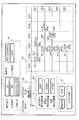
- FIG. 9 is a diagram illustrating a management page displayed on each terminal device.
- the process of FIG. 8 will be described below with reference to FIG.
- the management page largely includes areas A1 to A5.
- a navigation number for identifying the navigation, a ship name of the ship performing the navigation, a departure point, a destination point, and a departure time input column are displayed.
- a departure time 701 and a current time 702 are displayed.
- Area A3 is an area for displaying a time chart with the left-right direction as a time axis (right direction is positive). For this reason, in the area A3, firstly, a date that covers a period required for navigation and a vertical broken line that divides the dates are displayed. In the area A3, lines 801 to 805 indicated by solid lines in the left-right direction and objects 901 to 910 arranged on these lines are displayed.
- Lateral position of the object 901 indicates the earliest arrival possible time AW S is an estimate of the time of arrival at the destination point E in the case of a ship 9 is sailing at the fastest. Further, the position in the lateral direction of the object 902 shows an estimate of the time of arrival at the destination point E in the case of a ship 9 is sailing at the slowest latest arrival possible time AW E. Therefore, an object 903 that connects these objects indicates a time period in which the ship 9 is estimated to be able to reach the destination point E.
- the user typically the rider by operating such drag, by moving to the left and right along the objects 901 and 902 to the line 801, to enter the earliest arrival possible time AW S and latest arrival possible time AW E Can do.
- Lateral position of the object 904 shows the mooring period start time BW S is the start time of the mooring period of vessels 9 in harbors destination point E allocated from the port management company.
- the position of the lateral direction of the object 905 shows the mooring period end time BW E is an end time of the mooring period.
- an object 906 connecting these objects indicates a berthing period.
- the user (usually agency personnel) by operating such drag, by moving to the left and right along the objects 904 and 905 to the line 802, the mooring period start time BW S and mooring period end time BW E Can be entered.
- the position in the left-right direction of the object 907 indicates the scheduled arrival time ETB that is the arrival time proposed by the agent in charge to the operation manager. Further, the position in the left-right direction of the object 908 indicates a scheduled departure time ETD that is a departure time proposed by the agent in charge to the operation manager.
- the length of the object 909 connecting these objects indicates a necessary berthing time, which is the time required for the ship 9 to berth at the port for loading and unloading.
- a user (usually an agent in charge of the agency) can input the scheduled arrival time ETB and the planned departure time ETD by moving the objects 907 and 908 to the left and right along the line 803 by an operation such as dragging. .
- Lateral position of the object 910 indicates a provisional request arrival time RTA S which is a time when the marine vessel 9 is operated administrator as a time to be arrived at the destination point E is set tentatively.
- Operations administrator by operation such as dragging, by moving to the left and right along the object 910 to the line 804, may enter the temporary request arrival time RTA S.
- the navigation manager moves right and left along the object 910 to the line 804, calculated estimated fuel consumption amount corresponding to the temporary request arrival time RTA S indicated lateral position of the object 910 in real time (Described later) and displayed in the column of the provisional estimated fuel consumption amount in the region A4.
- the position in the left-right direction of the object 911 indicates a requested arrival time RTA that is a time set by the operation manager as a time at which the ship 9 should arrive at the destination point E.
- RTA requested arrival time
- the flight manager moves the object 910 left and right along the line 804 and specifies the desired requested arrival time while considering the estimated estimated fuel consumption displayed in the area A4, the “RTA” displayed in the area A5 Click the "Update” button.
- the horizontal position of the object 911 is automatically moved along the line 805 so as to coincide with the horizontal position of the object 910 at that time. Note that the user cannot move the object 911 directly by an operation such as dragging.
- the area A4 corresponding to the tentative request arrival time RTA S inputted spent fuel consumption which is a fuel consumption used in sailing from the departure point S to the current position K, by operating the administrator by the movement of the object 910
- a certain estimated fuel consumption is displayed.
- the provisional estimated fuel consumption value is updated and displayed in real time as the operation manager moves the object 910 as described above.
- a “new creation” button, an “update” button, and an “RTA update” button that are operated by the user by clicking or the like are displayed.
- the “New” button is a button for instructing generation of a management page related to new navigation.
- the “update” button is a button for confirming data input on the management page.
- "Updating the RTA” button as described above, it is a button to reflect the provisional request arrival time RTA S that has been input by the movement of the object 910 to request arrival time RTA.
- the shipping company terminal device 11 transmits a request for generating new management data to the server device 21 (step S102).
- the server device 21 generates and stores management data of empty data for each item, and generates display instruction data for a new management page using the generated management data. 11 (step S103).
- the shipping company terminal device 11 displays a new management page according to the received display instruction data (step S104).
- the fields in the areas A1 and A4 of the management page displayed in step S104 are empty, and for example, the current time is displayed as the initial values of the departure time 701 and the current time 702 in the area A2.
- the objects in the area A3 are displayed as initial values, for example, at positions roughly aligned on a broken line indicating the start of the current date.
- the operation manager inputs a navigation number, a ship name, a departure point, a destination point, and a departure time in each column of the area A1 of the management page, and clicks an “update” button (step S105).
- These input data (departure time data and the like) are transmitted from the shipping company terminal device 11 to the server device 21 (step S106).
- the server device 21 updates the management data with the received data (step S107).
- each terminal from the server device 21 is updated. A notification to that effect is sent to the device.
- step S107 the ship operator looks at the notification of the management data update displayed on the ship terminal device 13 and accesses the management page (step S108).
- Marine vessel operator the starting time to be displayed on the management page, sailing distance from the starting point to the destination point, taking into account the forecast concerning weather and sea conditions which is separately available, the earliest arrival possible time AW S with the latest arrival possible time to estimate the AW E.
- Marine vessel operator equal drag objects 901 and 902 in the management page, enter the estimated earliest arriving available time AW S and latest arrival possible time AW E, clicks, etc. "Update" button (step S109).
- Data indicating a longer data indicating the reachable time AW S (earliest arrival possible time data) and latest arrival possible time AW E input by the ship operator (latest arrival possible time data) the server device from the ship terminal 13 21 (step S110).
- the server device 21 updates the management data with the received data (step S111).
- step S111 the person in charge of the agency looks at the notification of management data update displayed on the ship agency terminal device 12 and accesses the management page (step S112).
- Agency personnel taking into account longer and arrival possible time AW S and latest arrival possible time AW E is displayed on the management page, the necessary berthing time and the like, get in touch with the port management company, desirable berth possible period receiving the assignment, equal drag objects 904 and 905 in the management page, enter the mooring period start time BW S and berthing period end time BW E.
- the agent person in charge determines the planned arrival time ETB and the planned departure time ETD in consideration of the allocated berthing period and the required berthing time, and drags the objects 907 and 908 on the management page, Enter the time.
- Agency personnel after the anchorage possible period start time BW S and berthing period the input of the end time BW E and will wear crosspiece time ETB scheduled departure time ETD, click, such as the "update" button (step S113 ).
- data indicating these times (such as anchoring period start time data) input by the agent staff is transmitted from the ship agent terminal device 12 to the server device 21 (step S114).
- the server device 21 updates the management data with the received data (step S115).
- step S115 the flight manager views the management data update notification displayed on the shipping company terminal device 11 and accesses the management page (step S116).
- Operations administrator earliest arrival possible time AW S with the latest arrival possible time AW E, anchored possible period start time BW S and berthing period end time BW E, departure schedule and will wear crosspiece time ETB, which is displayed on the management page taking into account the time ETD, drag, etc. objects 910, inputs a provisional request arrival time RTA S (step S117).
- step S118 When operated administrator moves in the lateral direction by the operation such as dragging the object 910 (operator), data indicating the temporary request arrival time RTA S corresponding to the lateral position of the object 910 (provisional request arrival time data) are sequentially Then, it is transmitted from the shipping company terminal device 11 to the server device 21 (step S118).
- the server device 21 Upon receiving the temporary request arrival time data, the server device 21 calculates the navigation speed based on the temporary request arrival time data (step S119). Specifically, the server device 21 a distance d from the departure point S to the destination point E, by dividing the time t from the starting time to the temporary request arrival time RTA S, vessels 9 provisional request arrival time RTA S The navigation speed v for arriving at the destination point E is calculated.
- the server device 21 specifies the fuel efficiency f corresponding to the calculated navigation speed v from the fuel efficiency data (FIG. 7) (step S120).
- the server device 21 interpolates the fuel consumption values corresponding to the navigation speeds before and after the navigation speed v, thereby calculating the fuel consumption f corresponding to the navigation speed v. Is identified.
- the server device 21 calculates an estimated fuel consumption amount F based on the identified fuel consumption f (step S121). Specifically, the server device 21 to the fuel f, by multiplying the time t from the starting time to the temporary request arrival time RTA S, navigation such vessels 9 arrives at the destination point E in the provisional request arrival time RTA S The estimated fuel consumption amount F when performing the above is calculated.
- the server device 21 After updating the management data using the data indicating the calculated estimated fuel consumption F (step S122), the server device 21 generates display instruction data to be displayed in the temporary estimated fuel consumption column of the management page, and the shipping company It transmits to the terminal device 11 (step S123). Note that the processing in steps S118 to S123 is performed for each temporary request arrival time data sequentially transmitted from the shipping company terminal device 11 to the server device 21 as the object 910 moves.
- the shipping company terminal device 11 sequentially updates the display of the management page according to the display instruction data sequentially transmitted from the server device 21 (step S124). Operations administrator, the value in the column of temporary estimated fuel consumption of Administration in this way is sequentially updated, the estimated fuel consumption amount in the case of adopting a provisional request arrival time RTA S inputted by operating the object 910 You can know immediately.
- the operation manager determines whether or not the value in the column of the provisional estimated fuel consumption is an appropriate value in view of, for example, a budget, and if not, the operation manager operates the object 910 to request a provisional request. to re-input of the arrival time RTA S. In response to the operation, the processes in steps S117 to S124 are repeated.
- the value of the column of the temporary estimated fuel consumption indicates a reasonable value, and no longer on the schedule in light of the arrival possible time AW S or the like also to identify a reasonable provisional request arrival time RTA S, "an update of the RTA" Click a button.
- This operation is an operation of inputting the temporary request arrival time RTA S as the request arrival time RTA (step S125).
- the shipping company terminal device 11 transmits data (request arrival time data) indicating the request arrival time RTA (that is, the temporary request arrival time RTA S when the “RTA update” button is clicked) to the server device 21 (Ste S126).
- the server device 21 updates the management data with the received data (step S127).
- the value of the estimated fuel consumption column matches the value of the temporary estimated fuel consumption column, and the object 911 indicating the requested arrival time RTA is displayed.
- position of the lateral direction coincides with the position of the object 910 indicating a temporary request arrival time RTA S.
- each of the operator and the agent in charge of the manager looks at the notification of the update of the management data displayed on the ship terminal device 13 or the ship agent terminal device 12, and accesses the management page (step S128).
- Step S129 the request arrival time RTA displayed in the management data is confirmed.
- the vessel operator starts navigation while adjusting the navigation speed so as to arrive at the destination point E at the requested arrival time RTA notified by the management page.
- the spent fuel consumption and the remaining distance change continuously.
- the management data is continuously updated in accordance with changes in spent fuel consumption and remaining distance during navigation.
- FIG. 10 is a diagram showing a flow of processing performed by the navigation schedule adjustment system 1 during the navigation of the ship 9.
- the ship terminal device 13 stores, for example, spent fuel consumption data obtained from a fuel flow meter provided in the ship 9 and current location data obtained from GPS every time a predetermined time elapses (step S201; Yes). It transmits to the apparatus 21 (step S202).
- the server device 21 Each time the server device 21 receives the spent fuel consumption data and the current location data from the ship terminal device 13, the server device 21 performs processing similar to the above-described steps S119 to S122. That is, the server device 21 first calculates the navigation speed (step S203). Specifically, the server device 21 requests the ship 9 by dividing the distance d ′ from the current point K to the destination point E indicated by the current point data by the time t ′ from the current time to the requested arrival time RTA. A navigation speed v ′ for arriving at the destination point E at the arrival time RTA is calculated.
- the server device 21 specifies the fuel efficiency f ′ corresponding to the calculated navigation speed v ′ from the fuel efficiency data (FIG. 7) (step S204). Subsequently, the server device 21 calculates an estimated fuel consumption amount F ′ for the remaining flight from the current point K to the destination point E based on the identified fuel consumption f ′ (step S205). Specifically, the server device 21 navigates so that the ship 9 arrives at the destination E at the requested arrival time RTA by multiplying the fuel consumption f ′ by the time t ′ from the current time to the requested arrival time RTA. In this case, the estimated fuel consumption F ′ is calculated.
- the server device 21 adds the estimated fuel consumption amount F ′ calculated in step 205 to the spent fuel consumption amount indicated by the spent fuel consumption amount data received in step 202, and starts from the departure point S to the destination point E.
- the estimated fuel consumption F for all the navigation up to is calculated (step S206).
- the server device 21 updates the management data using the data indicating the calculated estimated fuel consumption F (step S207).
- the estimated fuel consumption F updated according to the spent fuel consumption and the current position is displayed in the column of estimated fuel consumption. Will be displayed.
- the flight manager can quickly know when the estimated fuel consumption displayed on the management page becomes an invalid value such as not within the budget. In that case, for example, the flight manager requests the agent staff to change the berthing period BW, and the estimated arrival of fuel consumption F corresponding to the newly allocated berthing period BW becomes a reasonable value. By inputting the time RTA on the management page, it is possible to instruct the operator to change the navigation schedule.
- the operation manager, the agent in charge of the agency, and the vessel operator can share information on the navigation schedule through the management page, and the operation administrator can edit the schedule and fuel consumption. Therefore, it is possible to easily determine the request arrival time RTA appropriate from both viewpoints.
- the estimated fuel consumption amount F which is calculated according to the temporary request arrival time RTA S input in response to a drag or the like of the object 910 is displayed in the column of temporary estimated fuel consumption Aspect is employed. Additionally, or alternatively, for example, the estimated fuel consumption amount F in the case of variously changing the provisional request arrival time RTA S in earliest arrival possible time within a predetermined time period, such as from AW S to latest arrival possible time AW E was calculated, the correspondence between the temporary request arrival time RTA S and the estimated fuel consumption amount F, for example, graphs and configured to list in the correspondence table format may be employed.
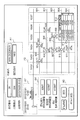
- Figure 11 shows, as an example, the management page shown in FIG. 9, was longer in the period from the arrival possible time AW S to latest arrival possible time AW E, changing the temporary request arrival time RTA S by the hour If a diagram correspondence table 912 showing a state that appears provisional request arrival time RTA S and temporary estimated fuel consumption. However, in the example of FIG. 11, no longer among the reachable time AW S in time to latest arrival possible time AW E, the temporary request arrival time RTA S in some periods fit in the display area of the correspondence table 912 The temporary estimated fuel consumption is displayed, and the display content is automatically scrolled up and down as the object 910 moves.
- the tentative request arrival time data indicating a temporary request arrival time RTA S corresponding to the lateral position of the object 910 is transmitted from the shipping company terminal device 11 to the server device 21, the server in the apparatus 21, the tentative request arrival time data temporary request arrival time RTA S shown and the calculation of each relates estimated fuel consumption amount F of the plurality of temporary request arrival time RTA S before and after is performed, the calculated estimated fuel consumption Data indicating F is included in the display instruction data transmitted from the server device 21 to the shipping company terminal device 11.
- the correspondence table 912 is displayed in a pop-up near the object 910 only while the object 910 is moved by dragging or the like by the user, for example.
- other display modes may be employed such that the correspondence table 912 is always displayed at a fixed position on the management page.
- the left arrow 913 of the correspondence table 912 indicates the temporary request arrival time RTA S that is currently input by the user. That is, when the user moves the object 910, the arrow 913 moves in the vertical direction along with the movement.
- a plurality of temporary request arrival time RTA S that are listed in the correspondence table 912 candidates by selecting the desired temporary request arrival time RTA S from the configuration that enables input of provisional request arrival time RTA S may be employed.
- the ship terminal device 13 adopts a configuration in which the request arrival time RTA is acquired from the server device 21 in the format of the management page display instruction data.
- the marine terminal device 13 obtains a navigation speed v (before starting navigation) or a navigation speed v ′ (during navigation) for arriving at the destination point E at the requested arrival time RTA from the server device 21.
- a configuration for acquiring the data to be shown may be employed. In this case, the boat operator may navigate at the navigation speed v or the navigation speed v ′ notified on the management page.
- the ship terminal device 13 acquires data indicating the navigation speed v or the navigation speed v ′ from the server device 21, the ship terminal device 13 inputs the data to a control unit of a driving device such as an engine of the ship 9.
- a configuration in which the ship 9 is automatically controlled so as to navigate at the navigation speed v or the navigation speed v ′ may be adopted.
- the server apparatus 21 is comprised as an apparatus independent from the shipping company terminal device 11, the ship agency terminal device 12, and the ship terminal device 13.
- the server device 21 may be configured integrally with any of these terminal devices.
- the server device 21 and the shipping company terminal device 11 may be arranged in one housing. In this case, delivery of various data between the server device 21 and the shipping company terminal device 11 is performed within the device without going through a network.
- the fuel consumption f increases approximately in proportion to the cube of the navigation speed, assuming that the constant is a and the navigation speed is v, the fuel consumption f is approximated by the following formula 1.
- the server device 21 may calculate the estimated fuel consumption according to the data representing the above-described functional formula instead of the tabular data shown in FIG. 7 as the fuel consumption data.
- the estimated fuel consumption F related to the entire navigation before the start of navigation is as follows, assuming that the distance from the departure point S to the destination point E is d, the departure time is t 0 , and the temporary request arrival time RTA S is t 2. It is calculated as follows.
- the estimated fuel consumption F ′ relating to the remaining voyage includes the navigation speed v ′, the distance from the current location K to the destination E, d ′, the current time t 1 , and the provisionally requested arrival time RTA S. Is t 2 and fuel consumption is f ′, it is calculated as follows.
- the estimated fuel consumption F for all navigations is calculated as follows, where G represents the spent fuel consumption in navigation from the departure point S to the current time K.
- said Formula 1 is an illustration of the function formula which approximates the relationship between a navigation speed and a fuel consumption to the last, Comprising: Various other function formulas can be employ
- a configuration is adopted in which only the navigation speed is considered as a parameter when specifying the fuel consumption for calculating the estimated fuel consumption.
- the parameter considered in specifying the fuel efficiency is not limited to the navigation speed alone, and a configuration that considers various other parameters that affect the fuel efficiency in navigation may be adopted.
- Such parameters include, for example, parameters related to weather such as wind direction and wind speed, parameters related to sea conditions such as wave height, wave direction, wave period, tide speed and tide direction, parameters according to cargo such as draft and trim, hull contamination And parameters depending on the state of the hull such as dirt on the propeller.
- the fuel consumption data indicating the fuel consumption corresponding to various combinations of these parameters is stored in the server device 21.
- the server device 21 acquires prediction data such as wind direction, wind speed, wave height, wave direction, wave period, tide speed, and tide direction on the route during the navigation period from the server device that distributes weather / sea state data.
- the ship operator inputs data indicating drafts, trims, and the like using the ship terminal device 13, and causes the ship terminal device 13 to transmit the data to the server device 21.
- the operation manager inputs data indicating hull dirt, propeller dirt, and the like using the shipping company terminal device 11, and causes the shipping company terminal device 11 to transmit the data to the server device 21.
- the server device 21 may specify the fuel consumption corresponding to the parameters indicated in the received data based on the fuel consumption data and use it for calculating the estimated fuel consumption.
- the method of reflecting parameters other than the navigation speed in specifying the fuel consumption for calculating the estimated fuel consumption is not limited to the method using the fuel consumption data indicating the fuel consumption corresponding to the combination of various parameters as described above.
- a configuration that predicts an increase / decrease ( ⁇ dv) in navigation speed (vessel speed) due to ocean currents and tidal currents on the channel, and specifies fuel efficiency according to navigation speed v + dv or v-dvd according to the fuel efficiency data shown in FIG. May be adopted.
- the fuel consumption per unit time is adopted as the fuel consumption, but instead, the fuel consumption per unit distance may be adopted as the fuel consumption.
- the estimated fuel consumption F before navigation is calculated by multiplying the distance d from the departure point S to the destination point E by the fuel efficiency
- the estimated fuel consumption F ′ during navigation is calculated from the current point K to the destination point. It is calculated by multiplying the distance d ′ to E by the fuel efficiency.
- departure time data is input to the shipping company terminal device 11 by the operation manager and transmitted from the shipping company terminal device 11 to the server device 21.
- the earliest possible arrival time data is input to the ship terminal device 13 by the ship operator and transmitted from the ship terminal device 13 to the server device 21.
- Which data the server device 21 obtains from which of the shipping company terminal device 11 and the ship terminal device 13 can be arbitrarily changed.
- the departure time data may be input to the ship terminal device 13 by the vessel operator and transmitted from the vessel terminal device 13 to the server device 21.
- the flight manager can specify the earliest arrival time and the latest arrival time from the departure time and the speed at which the ship 9 can navigate
- the earliest arrival time data and the latest arrival time data are It may be input to the shipping company terminal device 11 by the administrator and transmitted from the shipping company terminal device 11 to the server device 21.
- the server device 21 acquires data indicating the speed at which the ship 9 can navigate, and calculates the earliest arrival time data and the latest arrival time data based on the departure time data and those data. May be.
- the current position data indicating the current position measured by the ship terminal device 13 during navigation of the ship 9 is used as the server device.
- the server device 21 specifies the remaining cruising distance of the vessel 9 (distance d ′ from the current location K to the destination location E) based on the current location data received from the vessel terminal device 13.
- the method by which the server device 21 specifies the remaining travel distance of the ship 9 is not limited to this.
- data indicating the remaining travel distance estimated by the operator based on the future travel route is input to the ship terminal device 13, and the ship terminal device 13 inputs the data.
- the server device 21 transmits the data indicating the remaining travel distance to the server device 21, and the server device 21 specifies the remaining travel distance indicated by the data received from the ship terminal device 13 as the distance d ′ from the current point K to the destination point E. It is good. According to such a configuration, for example, even when the ship operator navigates a route different from the planned route in consideration of conditions such as weather and sea conditions, the server device 21 has a relatively accurate estimated fuel. The consumption amount F can be estimated.
- each terminal device and the server device 21 adopt a configuration realized by causing a general computer to execute processing according to an application program.
- at least one of each terminal device and server device 21 may be configured as a so-called dedicated device that implements the functional configuration unit schematically illustrated in FIGS. 3 to 6 in hardware.
- the present invention relates to a ship company terminal device 11, a ship agency terminal device 12, a ship terminal device 13 and a server device 21, a system exemplified in the navigation schedule adjustment system 1, and a computer.
- a ship agent terminal device 12, a ship terminal device 13 or a server device 21 functioning program, a computer-readable recording medium for continuously storing the program, and each device constituting the navigation schedule adjustment system 1 (shipping company The terminal device 11, the ship agency terminal device 12, the ship terminal device 13, and the server device 21) are grasped as respective processing methods.
- reception means 212 ... transmission means, 213 ... display instruction data Generation means 214 ...
- Fuel data storage means 215 ...
Landscapes
- Engineering & Computer Science (AREA)
- Ocean & Marine Engineering (AREA)
- Radar, Positioning & Navigation (AREA)
- Remote Sensing (AREA)
- Physics & Mathematics (AREA)
- General Physics & Mathematics (AREA)
- Chemical & Material Sciences (AREA)
- Combustion & Propulsion (AREA)
- Mechanical Engineering (AREA)
- Traffic Control Systems (AREA)
- Management, Administration, Business Operations System, And Electronic Commerce (AREA)
- Navigation (AREA)
Abstract
船舶の航行において、運航管理者が行う要求到着時刻の決定および通知の作業を容易にする。運航管理者、代理店担当者および操船者は、各自の端末装置を用いてサーバ装置から提供される管理ページを表示させる。管理ページにおいて、運航管理者は出発時刻等を入力し、操船者は最早到着可能時刻等を入力し、代理店担当者は停泊可能期間開始時刻等を入力する。管理ページに入力された情報は運航管理者、代理店担当者および操船者の各々により閲覧、共有される。運航管理者は、管理ページに表示される情報を参照しつつ、操作子907を操作して仮要求到着時刻RTASを入力する。サーバ装置は入力された仮要求到着時刻RTASに目的地点に到着するように航行を行った場合の推定燃料消費量を算出する。算出された推定燃料消費量は管理ページに表示され、運航管理者が要求到着時刻RTAを決定する際に利用される。
Description
本発明は、船舶の目的地点への到着時刻を決定するための技術に関する。
船舶の航行において、船舶が目的地点の港に到着する時刻や停泊している期間等の情報を、関係者の間で共有する必要がある。
例えば、特許文献1には、船舶が目的地点の港域に到着する時刻や着岸する時刻を、ネットワークを介して船舶の積荷を運搬する運搬車の乗務者の携帯端末等に対し提供する仕組みが提案されている。この仕組みによれば、運搬車の乗務員は船舶の着岸時刻を事前に知ることができ、着岸時刻に応じた望ましい時刻に港湾に到着するように配送計画を立てることができる。その結果、港湾近辺における渋滞が軽減される等の効果が得られる。
船舶の目的地点への到着時刻は、いくつかの条件を満たす必要がある。まず、船舶の航行可能速度には上限と下限があるため、目的地点へ到着可能な時刻は、主として出発地点からの出発時刻と、出発地点から目的地点までの距離とに応じて定まる一定の期間(以下、「到着可能期間」という)内に限られる。
また、船舶が目的地点の港を利用できる期間は、船舶の入港手配等を行う船舶代理店により港湾管理事業者から割り当てを受けた期間(以下、「停泊可能期間」という)内に限られる。従って、船舶の到着時刻は、まず、停泊可能期間の開始時刻以降でなければならない。
さらに、船舶は、停泊可能期間内に着岸、積荷の積み卸し、離岸等の作業を全て完了する必要がある。従って、船舶の到着時刻は、停泊可能期間の終了時刻より、これらの着岸、積荷の積み卸し、離岸等に要する時間(以下、「必要停泊時間」という)だけ前の時刻以前でなければならない。
船会社の運航管理者は、上記のような条件を全て満たす期間内において望ましい到着時刻を決定する必要がある。ただし、望ましい到着時刻は通常、一義的に定まらないことが多い。航行に要する燃料の消費量は少ない方が望ましいが、一般的に到着時刻は遅い方が燃料消費量は少なくなる。従って、燃料消費量の観点からは、到着時刻は遅い方が望ましいことが多い。一方、積荷配送の依頼主は多くの場合、より早い到着時刻を希望する。従って、サービス品質の観点からは、到着時刻は早い方が望ましいことが多い。
上記のように、望ましい船舶の到着時刻は一般的に一義的には定まらないため、運航管理者が個々の航行に関し、様々な条件(航行の予算や依頼主の希望の重要度等)を考慮して、個別に到着時刻を決定しなければならないケースが多くある。
船舶の到着時刻を決定するために、一般的に、運航管理者はまず、船舶の操船者から電話や電子メール等で到着可能期間を知らせてもらい、続いて船舶代理店の担当者に電話や電子メール等で必要停泊時間と到着可能期間の前後における停泊可能期間を問い合わせる。続いて、運航管理者は到着可能期間、必要停泊時間、停泊可能期間を照らし合わせ、船舶の到着時刻として選択可能な期間(以下、「到着時刻候補期間」という)を特定する。
続いて、運航管理者は、特定した到着時刻候補期間内において、例えば依頼主の希望を満たす到着時刻を選択し、選択した到着時刻に船舶が目的地点に到着するように航行を行った場合に使用される燃料の消費量を推計する。続いて、運航管理者は推計した燃料消費量に応じた燃料費用が、例えば予算内であるか否かを確認する。運航管理者は、推計した燃料消費量の燃料費用が予算内でなければ、他の到着時刻を選択して燃料消費量の推計を行う、という作業を、燃料費用が予算内となる燃料消費量が推計されるまで繰り返す。その結果、依頼主の希望を満たし、燃料費用が予算内となる到着時刻が特定される。
運航管理者はこのように特定した到着時刻を、電話や電子メール等により船舶の操船者に通知する。操船者は運航管理者から通知された到着時刻(以下、「要求到着時刻」という)に目的地点に到着するように、航行速度を調節しつつ航行を行うことになる。
上記のように、運航管理者は要求到着時刻の決定および通知のために、船舶代理店の担当者や操船者と情報のやりとりを行うとともに、燃料消費量の推計を繰り返し行う必要がある。これらの作業は繁雑であり、よりユーザフレンドリーな仕組みが望まれる。
このような事情に鑑み、本発明は、運航管理者が行う要求到着時刻の決定および通知の作業を従来と比較し容易に可能とする手段の提供を目的とする。
上記課題を解決するため、出発地点から目的地点に至る船舶の航行に関し、前記船舶が前記出発地点を出発する時刻を示す出発時刻データを取得する手段と、前記船舶が最も高速で航行した場合の目的地点への到着時刻を示す最早到着可能時刻データと、前記船舶が最も低速で航行した場合の目的地点への到着時刻を示す最遅到着可能時刻データとを取得する手段と、第1のユーザが使用する第1の装置からネットワークを介して、前記船舶が前記目的地点に停泊可能な期間の開始時刻を示す停泊可能期間開始時刻データと、前記船舶が前記目的地点に停泊可能な期間の終了時刻を示す停泊可能期間終了時刻データとを取得する手段と、前記最早到着可能時刻データが示す時刻と、前記最遅到着可能時刻データが示す時刻と、前記停泊可能期間開始時刻データが示す時刻と、前記停泊可能期間終了時刻データが示す時刻とを表す画像を、第2のユーザが使用する第2の装置の表示手段に表示させる手段と、前記第2のユーザが前記画像の表示に応じて、任意の時刻を要求到着時刻として入力する操作を前記第2の装置の操作手段に対し行った場合、前記操作手段が生成した前記要求到着時刻を示す要求到着時刻データを前記第2の装置から取得する手段と、前記船舶の航行における単位時間あたり又は単位距離あたりの燃料消費量を示す燃費データを取得する手段と、前記船舶が前記出発地点から前記目的地点まで、前記出発時刻データが示す時刻から前記要求到着時刻データが示す時刻までの時間で、前記燃費データが示す燃費で航行を行った場合の推定燃料消費量を算出する手段とを備え、前記表示させる手段は、前記推定燃料消費量を表す画像を前記表示手段に表示させる装置
を提供する。
を提供する。
上記の装置において、前記表示させる手段は、前記第2のユーザの前記操作手段に対する操作に応じて連続的に移動する操作子を含む画像を前記表示手段に表示させ、前記算出する手段は、前記操作子に対する前記第2のユーザの操作に応じて、前記操作データを取得する手段が前記操作手段から順次取得する要求到着時刻データに基づき、推定燃料消費量を順次算出し、前記表示させる手段は、前記算出する手段により順次算出される推定燃料消費量を表す画像を前記表示手段に順次表示させる、という構成が採用されてもよい。
また、上記の装置において、前記算出する手段は、一の期間内の複数の時刻を要求到着時刻とし、前記複数の要求到着時刻の各々に関し、前記船舶が前記出発地点から前記目的地点まで、前記出発時刻データが示す時刻から当該要求到着時刻までの時間で、前記燃費データが示す燃費で航行を行った場合の推定燃料消費量を算出し、前記表示させる手段は、前記複数の要求到着時刻の各々に関し算出された推定燃料消費量を一度に表す画像を前記表示手段に表示させる、という構成が採用されてもよい。
また、上記の装置において、前記船舶の航行中において、前記船舶に配置された装置からネットワークを介して、前記船舶が使用した燃料の消費量を示す使用済み燃料消費量データと、前記船舶の現在地点から前記目的地点までの距離を特定するためのデータとを受信する手段を備え、前記算出する手段は、前記船舶が前記距離を特定するためのデータが示す距離を、現在時刻から前記要求到着時刻データが示す時刻までの時間で、前記燃費データが示す燃費で航行を行った場合の推定燃料消費量を算出し、当該算出した推定燃料消費量と前記使用済み燃料消費量データが示す燃料消費量との合計値を更新された推定燃料消費量として算出し、前記表示させる手段は、前記更新された推定燃料消費量を表す画像を前記表示手段に表示させる、という構成が採用されてもよい。
また、上記の装置において、前記要求到着時刻データを取得する手段が取得した要求到着時刻データが示す前記第2のユーザにより入力された要求到着時刻を示すデータを、ネットワークを介して、前記第1の装置に提供する手段を備える、という構成が採用されてもよい。
また、上記の装置において、前記要求到着時刻データを取得する手段が取得した要求到着時刻データ、および当該要求到着時刻データが示す要求到着時刻に前記目的地点に到着するための前記船舶の航行速度を示すデータの少なくとも一方を、ネットワークを介して、前記船舶に配置された装置に送信する手段を備える、という構成が採用されてもよい。
また、上記の装置において、前記第2の装置と同一筐体内に配置される、という構成が採用されてもよい。
また、本発明は、サーバ装置と、第1のユーザにより操作され前記サーバ装置とネットワークを介してデータ通信可能な第1の装置と、第2のユーザにより操作される第2の装置とを備え、前記第2の装置は、前記サーバ装置と同一筐体内に配置されるか、もしくは前記サーバ装置と別体に構成され前記サーバ装置とネットワークを介してデータ通信可能であり、前記サーバ装置は、出発地点から目的地点に至る前記船舶の航行に関し、前記船舶が前記出発地点を出発する時刻を示す出発時刻データを取得する手段と、前記船舶が最も高速で航行した場合の目的地点への到着時刻を示す最早到着可能時刻データと、前記船舶が最も低速で航行した場合の目的地点への到着時刻を示す最遅到着可能時刻データとを取得する手段と、前記第1の装置から、前記船舶が前記目的地点に停泊可能な期間の開始時刻を示す停泊可能期間開始時刻データと、前記船舶が前記目的地点に停泊可能な期間の終了時刻を示す停泊可能期間終了時刻データとを取得する手段と、前記最早到着可能時刻データが示す時刻と、前記最遅到着可能時刻データが示す時刻と、前記停泊可能期間開始時刻データが示す時刻と、前記停泊可能期間終了時刻データが示す時刻とを表す画像を、前記第1の装置の表示手段に表示させる手段と、前記第2のユーザが前記画像の表示に応じて、任意の時刻を要求到着時刻として入力する操作を前記第2の装置の操作手段に対し行った場合、前記操作手段が生成した前記要求到着時刻を示す要求到着時刻データを前記第2の装置から取得する手段と、前記船舶の航行における単位時間あたり又は単位距離あたりの燃料消費量を示す燃費データを取得する手段と、前記船舶が前記出発地点から前記目的地点まで、前記出発時刻データが示す時刻から前記要求到着時刻データが示す時刻までの時間で、前記燃費データが示す燃費で航行を行った場合の推定燃料消費量を算出する手段とを備え、前記表示させる手段は、前記推定燃料消費量を表す画像を前記表示手段に表示させ、前記第1の装置は、前記停泊可能期間開始時刻データと前記停泊可能期間終了時刻データとを前記サーバ装置に提供する手段を備え、前記第2の装置は、前記表示手段と、前記操作手段と、前記要求到着時刻データを前記サーバ装置に提供する手段とを備えるシステムを提供する。
また、本発明は、ネットワークを介して他の装置との間でデータ通信を行う通信手段を備えるコンピュータに、出発地点から目的地点に至る船舶の航行に関し、前記船舶が前記出発地点を出発する時刻を示す出発時刻データを取得する処理と、前記船舶が最も高速で航行した場合の目的地点への到着時刻を示す最早到着可能時刻データと、前記船舶が最も低速で航行した場合の目的地点への到着時刻を示す最遅到着可能時刻データとを取得する処理と、第1のユーザが使用する第1の装置からネットワークを介して、前記船舶が前記目的地点に停泊可能な期間の開始時刻を示す停泊可能期間開始時刻データと、前記船舶が前記目的地点に停泊可能な期間の終了時刻を示す停泊可能期間終了時刻データとを取得する処理と、前記最早到着可能時刻データが示す時刻と、前記最遅到着可能時刻データが示す時刻と、前記停泊可能期間開始時刻データが示す時刻と、前記停泊可能期間終了時刻データが示す時刻とを表す画像を、第2のユーザが使用する第2の装置の表示手段に表示させる処理と、前記第2のユーザが前記画像の表示に応じて、任意の時刻を要求到着時刻として入力する操作を前記第2の装置の操作手段に対し行った場合、前記操作手段が生成した前記要求到着時刻を示す要求到着時刻データを前記第2の装置から取得する処理と、前記船舶の航行における単位時間あたり又は単位距離あたりの燃料消費量を示す燃費データを取得する処理と、前記船舶が前記出発地点から前記目的地点まで、前記出発時刻データが示す時刻から前記要求到着時刻データが示す時刻までの時間で、前記燃費データが示す燃費で航行を行った場合の推定燃料消費量を算出する処理と、前記推定燃料消費量を表す画像を前記表示手段に表示させる処理とを実行させるためのプログラムを提供する。
また、本発明は、ネットワークを介して他の装置との間でデータ通信を行う通信手段を備えるコンピュータに、出発地点から目的地点に至る船舶の航行に関し、前記船舶が前記出発地点を出発する時刻を示す出発時刻データを取得する処理と、前記船舶が最も高速で航行した場合の目的地点への到着時刻を示す最早到着可能時刻データと、前記船舶が最も低速で航行した場合の目的地点への到着時刻を示す最遅到着可能時刻データとを取得する処理と、第1のユーザが使用する第1の装置からネットワークを介して、前記船舶が前記目的地点に停泊可能な期間の開始時刻を示す停泊可能期間開始時刻データと、前記船舶が前記目的地点に停泊可能な期間の終了時刻を示す停泊可能期間終了時刻データとを取得する処理と、前記最早到着可能時刻データが示す時刻と、前記最遅到着可能時刻データが示す時刻と、前記停泊可能期間開始時刻データが示す時刻と、前記停泊可能期間終了時刻データが示す時刻とを表す画像を、第2のユーザが使用する第2の装置の表示手段に表示させる処理と、前記第2のユーザが前記画像の表示に応じて、任意の時刻を要求到着時刻として入力する操作を前記第2の装置の操作手段に対し行った場合、前記操作手段が生成した前記要求到着時刻を示す要求到着時刻データを前記第2の装置から取得する処理と、前記船舶の航行における単位時間あたり又は単位距離あたりの燃料消費量を示す燃費データを取得する処理と、前記船舶が前記出発地点から前記目的地点まで、前記出発時刻データが示す時刻から前記要求到着時刻データが示す時刻までの時間で、前記燃費データが示す燃費で航行を行った場合の推定燃料消費量を算出する処理と、前記推定燃料消費量を表す画像を前記表示手段に表示させる処理とを実行させるためのプログラムを持続的に記憶するコンピュータ読み取り可能な記録媒体を提供する。
また、本発明は、出発地点から目的地点に至る船舶の航行に関し、前記サーバ装置が、前記船舶が前記出発地点を出発する時刻を示す出発時刻データを取得するステップと、前記サーバ装置が、前記船舶が最も高速で航行した場合の目的地点への到着時刻を示す最早到着可能時刻データと、前記船舶が最も低速で航行した場合の目的地点への到着時刻を示す最遅到着可能時刻データとを取得するステップと、前記サーバ装置が、第1のユーザが使用する第1の装置からネットワークを介して、前記船舶が前記目的地点に停泊可能な期間の開始時刻を示す停泊可能期間開始時刻データと、前記船舶が前記目的地点に停泊可能な期間の終了時刻を示す停泊可能期間終了時刻データとを取得するステップと、第2のユーザが使用する第2の装置が前記サーバ装置の指示に従い、前記最早到着可能時刻データが示す時刻と、前記最遅到着可能時刻データが示す時刻と、前記停泊可能期間開始時刻データが示す時刻と、前記停泊可能期間終了時刻データが示す時刻とを表す画像を表示するステップと、前記第2のユーザが前記画像の表示に応じて、任意の時刻を要求到着時刻として入力する操作を前記第2の装置に対し行った場合、前記第2の装置が前記サーバ装置に対し、前記要求到着時刻を示す要求到着時刻データを提供するステップと、前記サーバ装置が、前記船舶の航行における単位時間あたり又は単位距離あたりの燃料消費量を示す燃費データを取得するステップと、前記サーバ装置が、前記船舶が前記出発地点から前記目的地点まで、前記出発時刻データが示す時刻から前記要求到着時刻データが示す時刻までの時間で、前記燃費データが示す燃費で航行を行った場合の推定燃料消費量を算出するステップと、前記第2の装置が前記サーバ装置の指示に従い前記推定燃料消費量を表す画像を表示するステップとを備える方法を提供する。
本発明によれば、第1のユーザ(運航管理者)は第1の装置に表示される時刻を見ることにより到着時刻候補期間を容易に知ることができる。また、本発明によれば、第1のユーザは到着時刻候補期間内の任意の時刻を第1の装置に入力することにより、当該時刻を要求到着時刻とした場合の推定燃料消費量を第1の装置に表示させることができる。従って、第1のユーザは、依頼主の希望等を満たし、かつ、燃料消費量に応じた燃料費用が予算内となるような要求到着時刻を容易に決定することができる。さらに、第1のユーザにより決定された要求到着時刻は船舶に配置された第2の装置に自動的に通知される。そのため、第1のユーザが要求到着時刻を操船者等に通知する手間を要しない。
[1.実施形態]
以下に本発明の一実施形態にかかる航行スケジュール調整システム1を説明する。航行スケジュール調整システム1は、船舶の航行開始時および航行中において、船会社の運航管理者、船舶代理店の担当者、船舶の操船者、の各々が、各自の使用する端末装置を用いてサーバ装置が提供する管理ページにアクセスして航行スケジュールに関する各種データを入力するとともに、それらの各種データを閲覧することで共有するためのシステムである。
以下に本発明の一実施形態にかかる航行スケジュール調整システム1を説明する。航行スケジュール調整システム1は、船舶の航行開始時および航行中において、船会社の運航管理者、船舶代理店の担当者、船舶の操船者、の各々が、各自の使用する端末装置を用いてサーバ装置が提供する管理ページにアクセスして航行スケジュールに関する各種データを入力するとともに、それらの各種データを閲覧することで共有するためのシステムである。
また、航行スケジュール調整システム1においてサーバ装置から運航管理者の端末装置に提供される管理ページにおいては、運航管理者が、船舶が目的地点に到着すべき時刻である要求到着時刻を決定する作業を支援するために、運航管理者が仮の要求到着時刻(以下、「仮要求到着時刻」という)を入力すると、入力された仮要求到着時刻に船舶が目的地点に到着する航行速度で航行した場合の出発地点から目的地点までの推定燃料消費量がサーバ装置により算出され、管理ページに表示される。より具体的には、運航管理者は管理ページに表示されるスライダをスライドさせる操作により仮要求到着時刻の入力を行い、その操作に応じて連続的に変化する推定燃料消費量を見ることができる。
[1.1.構成]
まず、航行スケジュール調整システム1の構成を説明する。図1は、航行スケジュール調整システム1の全体構成を模式的に示した図である。航行スケジュール調整システム1は、陸上に配置され船会社の運航管理者(以下、単に「運航管理者」という)により使用される船会社端末装置11と、陸上に配置され船舶代理店の担当者(以下、「代理店担当者」という)により使用される船舶代理店端末装置12と、船舶9に配置され船舶9の操船者により使用される船舶端末装置13と、これらの端末装置の各々に管理ページ(Webページ)の提供を行うサーバ装置21を備えている。なお、船舶9は出発地点Sから目的地点Eに至る航路上を航行する。
まず、航行スケジュール調整システム1の構成を説明する。図1は、航行スケジュール調整システム1の全体構成を模式的に示した図である。航行スケジュール調整システム1は、陸上に配置され船会社の運航管理者(以下、単に「運航管理者」という)により使用される船会社端末装置11と、陸上に配置され船舶代理店の担当者(以下、「代理店担当者」という)により使用される船舶代理店端末装置12と、船舶9に配置され船舶9の操船者により使用される船舶端末装置13と、これらの端末装置の各々に管理ページ(Webページ)の提供を行うサーバ装置21を備えている。なお、船舶9は出発地点Sから目的地点Eに至る航路上を航行する。
船会社端末装置11、船舶代理店端末装置12および船舶端末装置13(以下、これらの装置を総称して、単に「端末装置」という)は各々、ネットワークを介してサーバ装置21との間で各種データ通信を行う。なお、通信衛星8が必要に応じてこれらの端末装置とサーバ装置21との間のデータ通信を中継する。
船会社端末装置11、船舶代理店端末装置12、船舶端末装置13およびサーバ装置21は、ネットワークを介して他の情報処理装置との間でデータ通信を行う通信手段を備えた一般的なコンピュータである。すなわち、これらの装置は各々、図2に示すように、本体101、表示装置102および操作装置103を備えている。
本体101は、プログラムに従い各種データ処理を行うCPU1011、BIOS等の基本的なプログラムを記憶するROM1012、データを一時的に記憶しCPU1011が作業領域として利用するRAM1013、OSやアプリケーションプログラム等のプログラムやその他の各種データを記憶するHDD1014、他の情報処理装置との間でデータ通信を行う通信IF(InterFace)1015、表示装置102や操作装置103との間で各種データの入出力を行う入出力IF1016を備えている。
表示装置102は、液晶ディスプレイ等の表示装置であり、本体101から出力される画像データに従い画像を表示する。操作装置103は、キーボード、マウス、タッチパネル等の操作装置であり、ユーザの操作に応じた信号を生成し本体101に対し出力することで、ユーザの本体101に対するデータ入力を受け付ける。
なお、表示装置102および操作装置103の一方もしくは両方は、本体101と同じ筐体内に配置される構成が採用されてもよいし、本体101とは異なる筐体内に配置され、本体101にケーブル等で接続される構成が採用されてもよい。
図3は、船会社端末装置11の機能構成を模式的に示した図である。すなわち、船会社端末装置11は、船会社端末装置11のHDD1014に記憶されているアプリケーションプログラムに従う処理を実行することにより、図3に示す機能構成部を備える装置として機能する。
船会社端末装置11は、機能構成部として、運航管理者に対し管理ページを表示する表示手段111と、運航管理者のデータ入力を受け付ける操作手段112と、サーバ装置21に対し各種データを送信する送信手段113と、サーバ装置21から各種データを受信する受信手段114を備えている。
送信手段113は、運航管理者により入力された出発時刻を示す出発時刻データを送信する手段、運航管理者により入力された仮要求到着時刻を示す仮要求到着時刻データを送信する手段、運航管理者により入力された要求到着時刻を示す要求到着時刻データを送信する手段としての役割を果たす。
また、受信手段114は、出発地点Sから目的地点Eまでの推定燃料消費量を示す推定燃料消費量データを受信する手段としての役割を果たす。
図4は、船舶代理店端末装置12の機能構成を模式的に示した図である。すなわち、船舶代理店端末装置12は、船舶代理店端末装置12のHDD1014に記憶されているアプリケーションプログラムに従う処理を実行することにより、図4に示す機能構成部を備える装置として機能する。
船舶代理店端末装置12は、機能構成部として、代理店担当者に対し管理ページを表示する表示手段121と、代理店担当者のデータ入力を受け付ける操作手段122と、サーバ装置21に対し各種データを送信する送信手段123と、サーバ装置21から各種データを受信する受信手段124を備えている。
送信手段123は、代理店担当者により入力された停泊可能期間の開始時刻を示す停泊可能期間開始時刻データを送信する手段としての役割を果たす。
また、受信手段124は、要求到着時刻データを受信する手段としての役割を果たす。
図5は、船舶端末装置13の機能構成を模式的に示した図である。すなわち、船舶端末装置13は、船舶端末装置13のHDD1014に記憶されているアプリケーションプログラムに従う処理を実行することにより、図5に示す機能構成部を備える装置として機能する。
船舶端末装置13は、機能構成部として、操船者に対し管理ページを表示する表示手段131と、操船者のデータ入力を受け付ける操作手段132と、サーバ装置21に対し各種データを送信する送信手段133と、サーバ装置21から各種データを受信する受信手段134を備えている。
また、船舶端末装置13は、使用済み燃料消費量データ取得手段135と、現在地点データ取得手段136を備えている。使用済み燃料消費量データ取得手段135は、船舶9の航行中に船舶9が出発地点Sから現在地点Kまでの航行で使用した燃料の消費量を示す使用済み燃料消費量データを取得する。使用済み燃料消費量データは、例えば船舶9に設けられた燃料流量計により計測された値に基づき算出された燃料消費量を示すデータである。現在地点データ取得手段136は、現在地点Kの位置を示す現在位置データを取得する。現在位置データは、例えば船舶9に設けられたGPSにより計測された緯度経度を示すデータである。
送信手段133は、操船者により入力された船舶9が目的地点に到着可能な最も早い時刻を示す最早到着可能時刻データを送信する手段、使用済み燃料消費量データを送信する手段、現在位置データを送信する手段としての役割を果たす。
また、受信手段134は、要求到着時刻データを受信する手段としての役割を果たす。
図6は、サーバ装置21の機能構成を模式的に示した図である。すなわち、サーバ装置21は、サーバ装置21のHDD1014に記憶されているアプリケーションプログラムに従う処理を実行することにより、図6に示す機能構成部を備える装置として機能する。
サーバ装置21は、機能構成部として、各端末装置から各種データを受信する受信手段211と、各端末装置に対し各種データを送信する送信手段212と、管理ページの表示を指示する表示指示データを生成する表示指示データ生成手段213を備えている。
また、サーバ装置21は、船舶9の航行速度(対地船速または対水船速)と燃費(単位時間当たりの燃料消費量)との対応表を示す燃料データを記憶する燃料データ記憶手段214と、推定燃料消費量を算出する推定燃料消費量算出手段215と、管理ページにおいて表示され運航管理者、代理店担当者および操船者により共有されるデータである管理データを記憶する管理データ記憶手段216を備えている。
図7は、燃料データのデータ構成を模式的に示した図である。図7に示されるように、燃料データは船舶9の航行速度と燃費との対応関係を示す。なお、燃料データは、例えば、船舶9の過去の航行において実測された航行速度と当該航行速度における燃費に基づき生成されたデータ、もしくは、船舶9の物理シミュレーションモデルに従い演算されたデータである。
受信手段211は、船会社端末装置11から出発時刻データを受信する手段、船舶端末装置13から最早到着可能時刻データを受信する手段、船会社端末装置11から仮要求到着時刻データおよび要求到着時刻データを受信する手段、船舶端末装置13から使用済み燃料消費量データを受信する手段、船舶端末装置13から現在地点データを受信する手段としての役割を果たす。
送信手段212は、船会社端末装置11に推定燃料消費量データを送信する手段、船舶代理店端末装置12および船舶端末装置13に要求到着時刻データを送信する手段としての役割を果たす。
[1.2.動作]
続いて、航行スケジュール調整システム1の動作を説明する。図8A、図8B、図8C及び図8D(以下、これらの図を総称して「図8」という)は、航行スケジュール調整システム1が実行する処理のフローを示した図である。船舶9の航行が開始する前に、まず、運航管理者が船会社端末装置11を操作してブラウザを起動し、管理ページのURLを入力すると、船会社端末装置11は管理ページの表示指示データ(例えば、HTMLデータ)の要求をサーバ装置21に送信する(ステップS101-1)。この要求に応じて、サーバ装置21は管理ページの表示指示データを船会社端末装置11に送信する(ステップS101-2)。船会社端末装置11は受信した表示指示データに従い、管理ページを表示する(ステップS101-3)。以下、各端末装置がサーバ装置21に対し管理ページの表示指示データの要求を送信する処理から管理ページを表示する処理までの一連の処理を、「管理ページにアクセスする」のように記載する(ステップS101)。
続いて、航行スケジュール調整システム1の動作を説明する。図8A、図8B、図8C及び図8D(以下、これらの図を総称して「図8」という)は、航行スケジュール調整システム1が実行する処理のフローを示した図である。船舶9の航行が開始する前に、まず、運航管理者が船会社端末装置11を操作してブラウザを起動し、管理ページのURLを入力すると、船会社端末装置11は管理ページの表示指示データ(例えば、HTMLデータ)の要求をサーバ装置21に送信する(ステップS101-1)。この要求に応じて、サーバ装置21は管理ページの表示指示データを船会社端末装置11に送信する(ステップS101-2)。船会社端末装置11は受信した表示指示データに従い、管理ページを表示する(ステップS101-3)。以下、各端末装置がサーバ装置21に対し管理ページの表示指示データの要求を送信する処理から管理ページを表示する処理までの一連の処理を、「管理ページにアクセスする」のように記載する(ステップS101)。
図9は、各端末装置において表示される管理ページを例示した図である。以下、図9を参照しつつ図8の処理の説明を行う。管理ページには、大きく領域A1~A5の領域が含まれている。領域A1には、この航行を識別する航行番号、航行を行う船舶の船舶名、出発地点、目的地点、出発時刻の入力欄が表示される。領域A2には、出発時刻701と現在時刻702が表示される。
領域A3は、左右方向を時間軸(右方向を正)とするタイムチャートを表示するための領域である。そのため、領域A3には、まず、概ね航行に要する期間をカバーする日付と、それらの日付を区切る縦方向の破線が表示される。また、領域A3には、左右方向の実線で示されるライン801~805と、これらのライン上に配置されるオブジェクト901~910が表示される。
オブジェクト901の左右方向の位置は、船舶9が最も高速で航行した場合の目的地点Eへの到着時刻の推定値である最早到着可能時刻AWSを示す。また、オブジェクト902の左右方向の位置は、船舶9が最も低速で航行した場合の目的地点Eへの到着時刻の推定値である最遅到着可能時刻AWEを示す。従って、これらのオブジェクトを結ぶオブジェクト903は、船舶9が目的地点Eに到着可能と推定される時間帯を示す。ユーザ(通常は操船者)は、ドラッグ等の操作により、オブジェクト901および902をライン801に沿って左右に移動することにより、最早到着可能時刻AWSおよび最遅到着可能時刻AWEを入力することができる。
オブジェクト904の左右方向の位置は、港湾管理事業者から割り当てられた目的地点Eの港湾における船舶9の停泊可能期間の開始時刻である停泊可能期間開始時刻BWSを示す。また、オブジェクト905の左右方向の位置は、停泊可能期間の終了時刻である停泊可能期間終了時刻BWEを示す。従って、これらのオブジェクトを結ぶオブジェクト906は停泊可能期間を示す。ユーザ(通常は代理店担当者)は、ドラッグ等の操作により、オブジェクト904および905をライン802に沿って左右に移動することにより、停泊可能期間開始時刻BWSおよび停泊可能期間終了時刻BWEを入力することができる。
オブジェクト907の左右方向の位置は、代理店担当者が運航管理者に対し提案する着桟時刻である予定着桟時刻ETBを示す。また、オブジェクト908の左右方向の位置は、代理店担当者が運航管理者に対し提案する出港時刻である予定出港時刻ETDを示す。これらのオブジェクトを結ぶオブジェクト909の長さは、荷積みや荷下ろし等のために船舶9が港湾に停泊を要する時間である必要停泊時間を示す。ユーザ(通常は代理店担当者)は、ドラッグ等の操作により、オブジェクト907および908をライン803に沿って左右に移動することにより、予定着桟時刻ETBおよび予定出港時刻ETDを入力することができる。
オブジェクト910の左右方向の位置は、船舶9が目的地点Eに到着すべき時刻として運航管理者が暫定的に設定する時刻である仮要求到着時刻RTASを示す。運航管理者は、ドラッグ等の操作により、オブジェクト910をライン804に沿って左右に移動することにより、仮要求到着時刻RTASを入力することができる。本実施形態においては、運航管理者がオブジェクト910をライン804に沿って左右に移動させると、オブジェクト910の左右方向の位置が示す仮要求到着時刻RTASに応じた推定燃料消費量がリアルタイムに算出(後述)され、領域A4の仮推定燃料消費量の欄に表示される。
オブジェクト911の左右方向の位置は、船舶9が目的地点Eに到着すべき時刻として運航管理者が設定した時刻である要求到着時刻RTAを示す。運航管理者は、オブジェクト910をライン804に沿って左右に移動させ、領域A4に表示される仮推定燃料消費量を考慮しつつ、望ましい要求到着時刻を特定すると、領域A5に表示される「RTAの更新」ボタンをクリック等により操作する。その操作に応じて、その時点におけるオブジェクト910の左右方向の位置と一致するように、オブジェクト911の左右方向の位置がライン805に沿って自動的に移動する。なお、ユーザはオブジェクト911を直接、ドラッグ等の操作により移動させることはできない。
領域A4には、出発地点Sから現在位置Kまでの航行において使用した燃料消費量である使用済み燃料消費量、オブジェクト910の移動により運航管理者によって入力される仮要求到着時刻RTASに応じた全航行における燃料消費量の推定値である仮推定燃料消費量、「RTAの更新」ボタンの操作により運航管理者によって入力される要求到着時刻RTAに応じた全航行における燃料消費量の推定値である推定燃料消費量、が表示される。なお、仮推定燃料消費量の値は、運航管理者によるオブジェクト910の移動に伴いリアルタイムに更新表示される点は既述のとおりである。
領域A5には、ユーザによりクリック等により操作される「新規作成」ボタン、「更新」ボタン、「RTAの更新」ボタン、が表示される。「新規作成」ボタンは、新たな航行に関する管理ページの生成を指示するためのボタンである。「更新」ボタンは、管理ページにおいて入力したデータを確定するためのボタンである。「RTAの更新」ボタンは、既述のように、オブジェクト910の移動により入力された仮要求到着時刻RTASを要求到着時刻RTAに反映させるためのボタンである。
以上が管理ページの説明である。引き続き、図8の処理の説明を行う。運航管理者は、管理ページにおいて「新規作成」ボタンをクリック等する。この操作に応じて、船会社端末装置11はサーバ装置21に新規の管理データの生成の要求を送信する(ステップS102)。この要求に応じて、サーバ装置21は、各項目が空データの管理データを生成し記憶するとともに、生成した管理データを用いて新たな管理ぺージの表示指示データを生成し、船会社端末装置11に送信する(ステップS103)。船会社端末装置11は受信した表示指示データに従い、新規の管理ページを表示する(ステップS104)。なお、ステップS104で表示される管理ページの領域A1およびA4の各欄は空であり、領域A2には出発時刻701と現在時刻702の初期値として、例えば現在時刻が表示される。また、領域A3の各オブジェクトは初期値として、例えば現在の日付の開始を示す破線上に概ね並ぶ位置に表示される。
続いて、運航管理者は管理ページの領域A1の各欄に、航行番号、船舶名、出発地点、目的地点、出発時刻を入力し、「更新」ボタンをクリック等する(ステップS105)。入力されたこれらのデータ(出発時刻データ等)は、船会社端末装置11からサーバ装置21に送信される(ステップS106)。サーバ装置21は受信したデータにより、管理データを更新する(ステップS107)。
なお、図8のフローでは図示を省略しているが、運航管理者、代理店担当者または操船者により管理ページにおいてデータ入力が行われ、管理データが更新された場合、サーバ装置21から各端末装置にその旨の通知が送信される。
ステップS107が完了した後、操船者は船舶端末装置13に表示される管理データの更新の通知を見て、管理ページにアクセスする(ステップS108)。操船者は、管理ページに表示される出発時刻と、出発地点から目的地点までの航行距離、別途入手した気象・海象に関する予報等を考慮して、最早到着可能時刻AWSと最遅到着可能時刻AWEを推定する。
操船者は、管理ページにおいてオブジェクト901および902をドラッグ等し、推定した最早到着可能時刻AWSおよび最遅到着可能時刻AWEを入力し、「更新」ボタンをクリック等する(ステップS109)。操船者により入力された最早到着可能時刻AWSを示すデータ(最早到着可能時刻データ)および最遅到着可能時刻AWEを示すデータ(最遅到着可能時刻データ)は、船舶端末装置13からサーバ装置21に送信される(ステップS110)。サーバ装置21は受信したデータにより、管理データを更新する(ステップS111)。
ステップS111が完了した後、代理店担当者は船舶代理店端末装置12に表示される管理データの更新の通知を見て、管理ページにアクセスする(ステップS112)。代理店担当者は、管理ページに表示される最早到着可能時刻AWSおよび最遅到着可能時刻AWEと、必要停泊時間等を考慮して、港湾管理事業者と連絡を取り、望ましい停泊可能期間の割り当てを受け、管理ページにおいてオブジェクト904および905をドラッグ等し、停泊可能期間開始時刻BWSと停泊可能期間終了時刻BWEを入力する。
また、代理店担当者は、割り当てられた停泊可能期間および必要停泊時間を考慮して予定着桟時刻ETBと予定出港時刻ETDを決定すると、管理ページにおいてオブジェクト907および908をドラッグ等し、それらの時刻を入力する。代理店担当者は、停泊可能期間開始時刻BWSと停泊可能期間終了時刻BWEおよび予定着桟時刻ETBと予定出港時刻ETDの入力を行った後、「更新」ボタンをクリック等する(ステップS113)。この操作に応じて、代理店担当者により入力されたこれらの時刻を示すデータ(停泊可能期間開始時刻データ等)は、船舶代理店端末装置12からサーバ装置21に送信される(ステップS114)。サーバ装置21は受信したデータにより、管理データを更新する(ステップS115)。
ステップS115が完了した後、運航管理者は船会社端末装置11に表示される管理データの更新の通知を見て、管理ページにアクセスする(ステップS116)。運航管理者は、管理ページに表示される最早到着可能時刻AWSと最遅到着可能時刻AWE、停泊可能期間開始時刻BWSと停泊可能期間終了時刻BWE、予定着桟時刻ETBと予定出港時刻ETDを考慮しつつ、オブジェクト910をドラッグ等して、仮要求到着時刻RTASを入力する(ステップS117)。
運航管理者がオブジェクト910(操作子)をドラッグ等の操作により左右方向に移動すると、オブジェクト910の左右方向の位置に応じた仮要求到着時刻RTASを示すデータ(仮要求到着時刻データ)が順次、船会社端末装置11からサーバ装置21に送信される(ステップS118)。サーバ装置21は仮要求到着時刻データを受信すると、それらの仮要求到着時刻データに基づき、航行速度の算出を行う(ステップS119)。具体的には、サーバ装置21は出発地点Sから目的地点Eまでの距離dを、出発時刻から仮要求到着時刻RTASまでの時間tで除すことにより、船舶9が仮要求到着時刻RTASに目的地点Eに到着するための航行速度vを算出する。
続いて、サーバ装置21は、算出した航行速度vに応じた燃費fを、燃費データ(図7)から特定する(ステップS120)。なお、燃費データが、航行速度vと一致するデータを含まない場合、サーバ装置21は航行速度vの前後の航行速度に応じた燃費の値を補間することにより、航行速度vに応じた燃費fを特定する。
続いて、サーバ装置21は、特定した燃費fに基づき、推定燃料消費量Fを算出する(ステップS121)。具体的には、サーバ装置21は燃費fに、出発時刻から仮要求到着時刻RTASまでの時間tを乗ずることにより、船舶9が仮要求到着時刻RTASに目的地点Eに到着するように航行を行った場合の推定燃料消費量Fを算出する。
サーバ装置21は算出した推定燃料消費量Fを示すデータを用いて管理データを更新した後(ステップS122)、管理ページの仮推定燃料消費量の欄に表示させる表示指示データを生成し、船会社端末装置11に送信する(ステップS123)。なお、ステップS118~S123の処理は、オブジェクト910の移動に伴い船会社端末装置11からサーバ装置21に順次送信される仮要求到着時刻データの各々に関し行われる。船会社端末装置11は、サーバ装置21から順次送信されてくる表示指示データに従い管理ページの表示を順次更新する(ステップS124)。運航管理者は、このように順次更新される管理ページの仮推定燃料消費量の欄の値により、オブジェクト910を操作して入力した仮要求到着時刻RTASを採用した場合の推定燃料消費量を即座に知ることができる。
運航管理者は、仮推定燃料消費量の欄の値が、例えば予算等に照らして妥当な値であるか否かを判断し、妥当な値でない場合には、オブジェクト910を操作して仮要求到着時刻RTASの再入力を行う。その操作に応じて、ステップS117~S124の処理が繰り返される。
運航管理者は、仮推定燃料消費量の欄の値が妥当な値を示し、最早到着可能時刻AWS等に照らしスケジュール上も妥当な仮要求到着時刻RTASを特定すると、「RTAの更新」ボタンをクリック等する。この操作は、仮要求到着時刻RTASを要求到着時刻RTAとして入力する操作である(ステップS125)。船会社端末装置11は、要求到着時刻RTA(すなわち、「RTAの更新」ボタンをクリック等した際の仮要求到着時刻RTAS)を示すデータ(要求到着時刻データ)をサーバ装置21に送信する(ステップS126)。サーバ装置21は受信したデータにより、管理データを更新する(ステップS127)。
なお、ステップS126の更新直後の管理データに従い表示される管理ページにおいては、推定燃料消費量の欄の値が仮推定燃料消費量の欄の値と一致し、要求到着時刻RTAを示すオブジェクト911の左右方向の位置が、仮要求到着時刻RTASを示すオブジェクト910の位置と一致する。
ステップS126が完了した後、操船者および代理店担当者は各々、船舶端末装置13または船舶代理店端末装置12に表示される管理データの更新の通知を見て、管理ページにアクセスし(ステップS128、ステップS129)、管理データに表示される要求到着時刻RTAを確認する。
その後、出発時刻になると、操船者は管理ページにより通知される要求到着時刻RTAに目的地点Eに到着するように航行速度を調整しつつ、航行を開始する。船舶9の航行中、使用済み燃料消費量と残航距離が継続的に変化する。航行スケジュール調整システム1においては、航行中における使用済み燃料消費量と残航距離の変化に応じて、管理データが継続的に更新される。
図10は、船舶9の航行中に航行スケジュール調整システム1が行う処理のフローを示した図である。船舶端末装置13は、例えば所定時間の経過毎に(ステップS201;Yes)、船舶9に設けられた燃料の流量計から得られる使用済み燃料消費量データと、GPSから得られる現在地点データをサーバ装置21に送信する(ステップS202)。
サーバ装置21は、船舶端末装置13から使用済み燃料消費量データと現在地点データを受信する毎に、上述したステップS119~S122と類似の処理を行う。すなわち、サーバ装置21はまず、航行速度の算出を行う(ステップS203)。具体的には、サーバ装置21は現在地点データが示す現在地点Kから目的地点Eまでの距離d’を、現在時刻から要求到着時刻RTAまでの時間t’で除すことにより、船舶9が要求到着時刻RTAに目的地点Eに到着するための航行速度v’を算出する。
続いて、サーバ装置21は、算出した航行速度v’に応じた燃費f’を、燃費データ(図7)から特定する(ステップS204)。続いて、サーバ装置21は、特定した燃費f’に基づき、現在地点Kから目的地点Eまでの残航における推定燃料消費量F’を算出する(ステップS205)。具体的には、サーバ装置21は燃費f’に、現在時刻から要求到着時刻RTAまでの時間t’を乗ずることにより、船舶9が要求到着時刻RTAに目的地点Eに到着するように航行を行った場合の推定燃料消費量F’を算出する。
続いて、サーバ装置21は、ステップ202において受信した使用済み燃料消費量データが示す使用済み燃料消費量に、ステップ205において算出した推定燃料消費量F’を加算し、出発地点Sから目的地点Eまでの全航行に関する推定燃料消費量Fを算出する(ステップS206)。
サーバ装置21は算出した推定燃料消費量Fを示すデータを用いて管理データを更新する(ステップS207)。その結果、航行中に各端末装置が管理ページへのアクセスを行うと、管理ページにおいては、使用済み燃料消費量および現在位置に応じて更新された推定燃料消費量Fが推定燃料消費量の欄に表示されることになる。
運航管理者は、管理ページに表示される推定燃料消費量が、例えば予算内に収まらない等の妥当でない値となった場合、速やかにそれを知ることができる。その場合、運航管理者は、例えば代理店担当者に停泊可能期間BWの変更を依頼し、新たに割り当てられた停泊可能期間BWに応じた、推定燃料消費量Fが妥当な値となる要求到着時刻RTAを管理ページで入力することにより、操船者に対し航行スケジュールの変更を指示することができる。
以上のように、航行スケジュール調整システム1によれば、運航管理者、代理店担当者および操船者は航行スケジュールに関する情報を管理ページにより共有することができるとともに、運航管理者はスケジュールと燃料消費量の両方の観点から妥当な要求到着時刻RTAを容易に決定することができる。
[2.変形例]
上述した実施形態は本発明の一具体例であって、本発明の技術的思想の範囲内で様々に変形することができる。以下にそれらの変形の例を示す。
上述した実施形態は本発明の一具体例であって、本発明の技術的思想の範囲内で様々に変形することができる。以下にそれらの変形の例を示す。
(1)上述した実施形態においては、オブジェクト910のドラッグ等に応じて入力される仮要求到着時刻RTASに応じて算出される推定燃料消費量Fが仮推定燃料消費量の欄に表示される態様が採用されている。これに加えて、または代えて、例えば最早到着可能時刻AWSから最遅到着可能時刻AWEまでといった所定の期間内において仮要求到着時刻RTASを様々に変化させた場合の推定燃料消費量Fを算出し、仮要求到着時刻RTASと推定燃料消費量Fとの対応関係を、例えばグラフや対応表の形式で一覧表示する構成が採用されてもよい。
図11は、例として、図9に示した管理ページに、最早到着可能時刻AWSから最遅到着可能時刻AWEまでの期間内において、仮要求到着時刻RTASを1時間単位で変化させた場合の仮要求到着時刻RTASと仮推定燃料消費量の対応表912が表示される様子を示した図である。ただし、図11の例では、最早到着可能時刻AWSから最遅到着可能時刻AWEまでの期間内のうち、対応表912の表示領域内に収まる一部期間内の仮要求到着時刻RTASと仮推定燃料消費量が表示され、オブジェクト910の移動に伴い、表示内容が上下方向に自動的にスクロールする。
この場合、オブジェクト910の移動に伴い、オブジェクト910の左右方向の位置に応じた仮要求到着時刻RTASを示す仮要求到着時刻データが船会社端末装置11からサーバ装置21に送信されると、サーバ装置21において、当該仮要求到着時刻データが示す仮要求到着時刻RTASとその前後の複数の仮要求到着時刻RTASの各々に関し推定燃料消費量Fの算出が行われ、算出した推定燃料消費量Fを示すデータがサーバ装置21から船会社端末装置11へ送信される表示指示データに含まれることになる。
また、図11の例では、対応表912は、例えばユーザによりオブジェクト910がドラッグ等により移動されている間のみ、オブジェクト910の近傍にポップアップ表示される。ただし、対応表912は管理ページの固定位置に常時表示される等、他の表示態様が採用されてもよい。なお、対応表912の左側の矢印913は現在ユーザにより入力されている仮要求到着時刻RTASを示している。すなわち、ユーザがオブジェクト910を移動させると、その移動に伴い矢印913が上下方向に移動する。
このように、表やグラフによって様々な仮要求到着時刻RTASに応じた仮推定燃料消費量が一覧できれば、運航管理者は要求到着時刻RTAの変更に応じた推定燃料消費量Fの変化を直感的に知ることができ、要求到着時刻RTAの決定がより容易となる。
また、オブジェクト910を操作することにより仮要求到着時刻RTASを入力することに加えて、もしくはそれに代えて、ユーザが、例えば対応表912に一覧表示される複数の仮要求到着時刻RTASの候補の中から望ましい仮要求到着時刻RTASを選択することにより、仮要求到着時刻RTASの入力を可能とする構成が採用されてもよい。
(2)上述した実施形態においては、船舶端末装置13はサーバ装置21から、管理ページの表示指示データの形式で、要求到着時刻RTAを取得する構成が採用されている。これに加えて、もしくは代えて、船舶端末装置13はサーバ装置21から、要求到着時刻RTAに目的地点Eに到着するための航行速度v(航行開始前)または航行速度v’(航行中)を示すデータを取得する構成が採用されてもよい。この場合、操船者は管理ページにおいて通知される航行速度vまたは航行速度v’で航行を行えばよい。
また、船舶端末装置13がサーバ装置21から航行速度vまたは航行速度v’を示すデータを取得する場合、船舶端末装置13が当該データを船舶9のエンジン等の駆動装置の制御部に入力することにより、船舶9が航行速度vまたは航行速度v’で航行するように自動制御される構成が採用されてもよい。
(3)上述した実施形態においては、サーバ装置21は船会社端末装置11、船舶代理店端末装置12および船舶端末装置13から独立した装置として構成されている。これに代えて、サーバ装置21がこれらの端末装置のいずれかと一体に構成されてもよい。例えば、サーバ装置21と船会社端末装置11が1つの筐体内に配置されてもよい。この場合、サーバ装置21と船会社端末装置11との間の各種データの受け渡しは、ネットワークを介さずに装置内で行われることになる。
(4)上述した実施形態においては、航行速度に応じた燃費を特定するにあたり、航行速度と燃費の対応関係を表形式で示す燃費データ(図7)が用いられる構成が採用されている。これに代えて、例えば航行速度と燃費との関係を関数式により示す燃費データが、航行速度に応じた燃費の特定に用いられてもよい。
例えば、燃費fが概ね航行速度の3乗に比例して増加する場合、定数をa、航行速度をvとすると、燃費fは以下の式1により近似される。

従って、サーバ装置21は燃費データとして、図7に示す表形式のデータに代えて、上記の関数式を示すデータに従い、推定燃料消費量の算出を行ってもよい。
その場合、航行開始前において、全航行に関する推定燃料消費量Fは、出発地点Sから目的地点Eまでの距離をd、出発時刻をt0、仮要求到着時刻RTASをt2とすると、以下のように算出される。
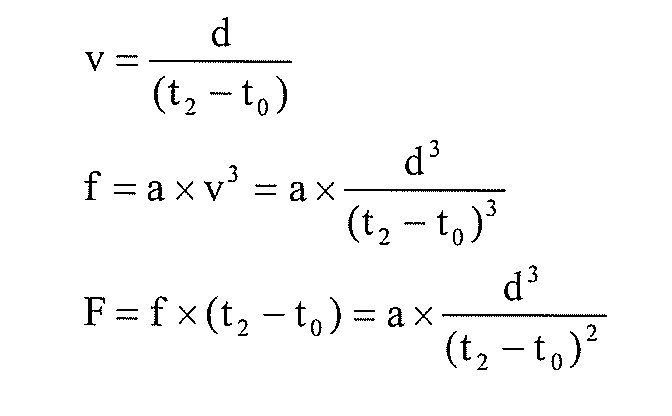
また、航行開始後において、残航に関する推定燃料消費量F’は、航行速度をv’、現在地点Kから目的地点Eまでの距離をd’、現在時刻をt1、仮要求到着時刻RTASをt2、燃費をf’とすると、以下のように算出される。
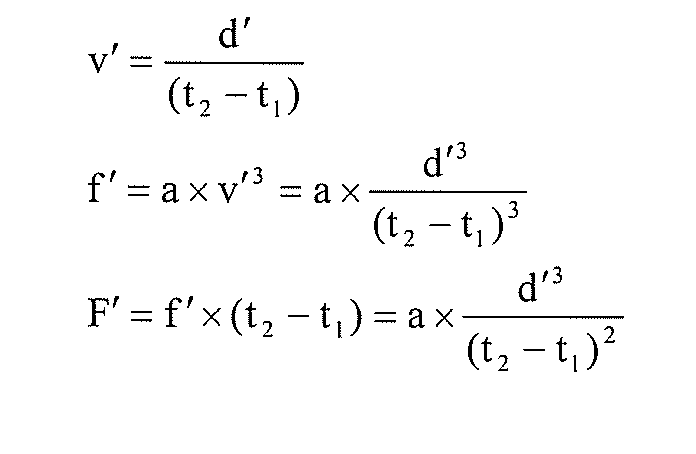
従って、航行開始後において、全航行に関する推定燃料消費量Fは、出発地点Sから現在時点Kまでの航行における使用済み燃料消費量をGとすると、以下のように算出される。

なお、上記の式1はあくまで航行速度と燃費との関係を近似する関数式の例示であって、他の様々な関数式が採用され得る。
(5)上述した実施形態においては、推定燃料消費量を算出するための燃費の特定にあたり、航行速度のみをパラメータとして考慮する構成が採用されている。燃費の特定にあたり考慮されるパラメータは航行速度のみに限定されず、航行における燃費に影響を与える他の様々なパラメータを考慮する構成が採用されてもよい。そのようなパラメータとしては、例えば、風向、風速等の気象に関するパラメータ、波高、波向、波周期、潮速、潮向等の海象に関するパラメータ、喫水やトリム等の積荷に応じたパラメータ、船体汚れやプロペラ汚れ等の船体の状態に応じたパラメータ等がある。
この場合、図7に示した燃費データに代えて、これらのパラメータの様々な組み合わせに応じた燃費を示す燃費データをサーバ装置21に記憶させておく。そして、例えばサーバ装置21が気象・海象データを配信するサーバ装置から、航行期間における航路上の風向、風速、波高、波向、波周期、潮速、潮向等の予測データを取得する。また、操船者が船舶端末装置13を用いて喫水やトリム等を示すデータを入力し、船舶端末装置13からサーバ装置21にそれらのデータを送信させる。また、運航管理者が船会社端末装置11を用いて船体汚れやプロペラ汚れ等を示すデータを入力し、船会社端末装置11からサーバ装置21にそれらのデータを送信させる。サーバ装置21は、受信したこれらのデータに示されるパラメータに応じた燃費を燃費データに基づき特定し、推定燃料消費量の算定に用いるようにすればよい。
また、推定燃料消費量を算出するための燃費の特定にあたり航行速度以外のパラメータを反映させる方法は、上記のように、各種パラメータの組み合わせに応じた燃費を示す燃費データを用いる方法に限られない。例えば、航路上の海流・潮流による航行速度(対水船速)の増減(±dv)を予想し、図7に示した燃費データに従い航行速度v+dvまたはv-dvに応じた燃費を特定する構成が採用されてもよい。
(6)上述した実施形態においては、燃費として単位時間あたりの燃料消費量が採用されているが、これに代えて、燃費として単位距離あたりの燃料消費量が採用されてもよい。この場合、航行前における推定燃料消費量Fは、出発地点Sから目的地点Eまでの距離dに燃費を乗じることで算出され、航行中における推定燃料消費量F’は、現在地点Kから目的地点Eまでの距離d’に燃費を乗じることで算出される。
(7)上述した実施形態においては、例えば出発時刻データは運航管理者により船会社端末装置11に入力され、船会社端末装置11からサーバ装置21に送信される。また、最早到着可能時刻データは操船者により船舶端末装置13に入力され、船舶端末装置13からサーバ装置21に送信される。サーバ装置21がいずれのデータを船会社端末装置11および船舶端末装置13のいずれから取得するかは任意に変更可能である。例えば、出発時刻データが操船者により管理されている場合、出発時刻データは操船者により船舶端末装置13に入力され、船舶端末装置13からサーバ装置21に送信されてもよい。また、運航管理者が、例えば出発時刻と船舶9の航行可能な速度等から最早到着可能時刻や最遅到着可能時刻を特定可能な場合、最早到着可能時刻データや最遅到着可能時刻データは運航管理者により船会社端末装置11に入力され、船会社端末装置11からサーバ装置21に送信されてもよい。さらに、サーバ装置21が船舶9の航行可能な速度等を示すデータを取得し、出発時刻データとそれらのデータに基づき、最早到着可能時刻データや最遅到着可能時刻データを算出する構成が採用されてもよい。
(8)上述した実施形態においては、船舶9の航行中に、船舶端末装置13がGPSにより計測された現在位置を示す現在位置データ(残航行距離を特定するためのデータの一例)をサーバ装置21に送信し、サーバ装置21は船舶端末装置13から受信した現在地点データに基づき船舶9の残航行距離(現在地点Kから目的地点Eまでの距離d’)を特定する。サーバ装置21が船舶9の残航行距離を特定する方法はこれに限られない。例えば、操船者が今後の航行ルートを踏まえて推定した残航行距離を示すデータ(残航行距離を特定するためのデータの他の一例)を船舶端末装置13に入力し、船舶端末装置13が入力された残航行距離を示すデータをサーバ装置21に送信し、サーバ装置21は船舶端末装置13から受信したデータが示す残航行距離を現在地点Kから目的地点Eまでの距離d’として特定する構成としてもよい。そのような構成によれば、例えば操船者が気象・海象等の状況を考慮して予定のルートとは異なるルートを航行するような場合であっても、サーバ装置21において比較的正確な推定燃料消費量Fの推定を行うことができる。
(9)上述した実施形態においては、各端末装置およびサーバ装置21は、一般的なコンピュータに、アプリケーションプログラムに従った処理を実行させることにより実現される構成が採用されている。これに代えて、各端末装置およびサーバ装置21の少なくとも一つが、ハードウェア的に図3~図6に模式的に示される機能構成部を実現する、いわゆる専用装置として構成されてもよい。
なお、本発明は、船会社端末装置11、船舶代理店端末装置12、船舶端末装置13およびサーバ装置21に例示される装置、航行スケジュール調整システム1に例示されるシステム、コンピュータを船会社端末装置11、船舶代理店端末装置12、船舶端末装置13またはサーバ装置21として機能させるプログラム、当該プログラムを持続的に記憶するコンピュータ読み取り可能な記録媒体、航行スケジュール調整システム1を構成する各装置(船会社端末装置11、船舶代理店端末装置12、船舶端末装置13およびサーバ装置21)が実行する処理の方法、の各々として把握される。
1…航行スケジュール調整システム、8…通信衛星、9…船舶、11…船会社端末装置、12…船舶代理店端末装置、13…船舶端末装置、21…サーバ装置、101…本体、102…表示装置、103…操作装置、111…表示手段、112…操作手段、113…送信手段、114…受信手段、121…表示手段、122…操作手段、123…送信手段、124…受信手段、131…表示手段、132…操作手段、133…送信手段、134…受信手段、135…使用済み燃料消費量データ取得手段、136…現在地点データ取得手段、211…受信手段、212…送信手段、213…表示指示データ生成手段、214…燃料データ記憶手段、215…推定燃料消費量算出手段、216…管理データ記憶手段、1011…CPU、1012…ROM、1013…RAM、1014…HDD、1015…通信IF、1016…入出力IF
Claims (11)
- 出発地点から目的地点に至る船舶の航行に関し、前記船舶が前記出発地点を出発する時刻を示す出発時刻データを取得する手段と、
前記船舶が最も高速で航行した場合の目的地点への到着時刻を示す最早到着可能時刻データと、前記船舶が最も低速で航行した場合の目的地点への到着時刻を示す最遅到着可能時刻データとを取得する手段と、
第1のユーザが使用する第1の装置からネットワークを介して、前記船舶が前記目的地点に停泊可能な期間の開始時刻を示す停泊可能期間開始時刻データと、前記船舶が前記目的地点に停泊可能な期間の終了時刻を示す停泊可能期間終了時刻データとを取得する手段と、
前記最早到着可能時刻データが示す時刻と、前記最遅到着可能時刻データが示す時刻と、前記停泊可能期間開始時刻データが示す時刻と、前記停泊可能期間終了時刻データが示す時刻とを表す画像を、第2のユーザが使用する第2の装置の表示手段に表示させる手段と、
前記第2のユーザが前記画像の表示に応じて、任意の時刻を要求到着時刻として入力する操作を前記第2の装置の操作手段に対し行った場合、前記操作手段が生成した前記要求到着時刻を示す要求到着時刻データを前記第2の装置から取得する手段と、
前記船舶の航行における単位時間あたり又は単位距離あたりの燃料消費量を示す燃費データを取得する手段と、
前記船舶が前記出発地点から前記目的地点まで、前記出発時刻データが示す時刻から前記要求到着時刻データが示す時刻までの時間で、前記燃費データが示す燃費で航行を行った場合の推定燃料消費量を算出する手段と
を備え、
前記表示させる手段は、前記推定燃料消費量を表す画像を前記表示手段に表示させる
装置。 - 前記表示させる手段は、前記第2のユーザの前記操作手段に対する操作に応じて連続的に移動する操作子を含む画像を前記表示手段に表示させ、
前記算出する手段は、前記操作子に対する前記第2のユーザの操作に応じて、前記操作データを取得する手段が前記操作手段から順次取得する要求到着時刻データに基づき、推定燃料消費量を順次算出し、
前記表示させる手段は、前記算出する手段により順次算出される推定燃料消費量を表す画像を前記表示手段に順次表示させる
請求項1に記載の装置。 - 前記算出する手段は、一の期間内の複数の時刻を要求到着時刻とし、前記複数の要求到着時刻の各々に関し、前記船舶が前記出発地点から前記目的地点まで、前記出発時刻データが示す時刻から当該要求到着時刻までの時間で、前記燃費データが示す燃費で航行を行った場合の推定燃料消費量を算出し、
前記表示させる手段は、前記複数の要求到着時刻の各々に関し算出された推定燃料消費量を一度に表す画像を前記表示手段に表示させる
請求項1または2に記載の装置。 - 前記船舶の航行中において、前記船舶に配置された装置からネットワークを介して、前記船舶が使用した燃料の消費量を示す使用済み燃料消費量データと、前記船舶の現在地点から前記目的地点までの距離を特定するためのデータとを受信する手段
を備え、
前記算出する手段は、前記船舶が前記距離を特定するためのデータが示す距離を、現在時刻から前記要求到着時刻データが示す時刻までの時間で、前記燃費データが示す燃費で航行を行った場合の推定燃料消費量を算出し、当該算出した推定燃料消費量と前記使用済み燃料消費量データが示す燃料消費量との合計値を更新された推定燃料消費量として算出し、
前記表示させる手段は、前記更新された推定燃料消費量を表す画像を前記表示手段に表示させる
請求項1乃至3のいずれか1項に記載の装置。 - 前記要求到着時刻データを取得する手段が取得した要求到着時刻データが示す前記第2のユーザにより入力された要求到着時刻を示すデータを、ネットワークを介して、前記第1の装置に提供する手段
を備える請求項1乃至4のいずれか1項に記載の装置。 - 前記要求到着時刻データを取得する手段が取得した要求到着時刻データ、および当該要求到着時刻データが示す要求到着時刻に前記目的地点に到着するための前記船舶の航行速度を示すデータの少なくとも一方を、ネットワークを介して、前記船舶に配置された装置に送信する手段
を備える請求項1乃至5のいずれか1項に記載の装置。 - 前記第2の装置と同一筐体内に配置される
請求項1乃至6のいずれか1項に記載の装置。 - サーバ装置と、第1のユーザにより操作され前記サーバ装置とネットワークを介してデータ通信可能な第1の装置と、第2のユーザにより操作される第2の装置とを備え、
前記第2の装置は、前記サーバ装置と同一筐体内に配置されるか、もしくは前記サーバ装置と別体に構成され前記サーバ装置とネットワークを介してデータ通信可能であり、
前記サーバ装置は、
出発地点から目的地点に至る前記船舶の航行に関し、前記船舶が前記出発地点を出発する時刻を示す出発時刻データを取得する手段と、
前記船舶が最も高速で航行した場合の目的地点への到着時刻を示す最早到着可能時刻データと、前記船舶が最も低速で航行した場合の目的地点への到着時刻を示す最遅到着可能時刻データとを取得する手段と、
前記第1の装置から、前記船舶が前記目的地点に停泊可能な期間の開始時刻を示す停泊可能期間開始時刻データと、前記船舶が前記目的地点に停泊可能な期間の終了時刻を示す停泊可能期間終了時刻データとを取得する手段と、
前記最早到着可能時刻データが示す時刻と、前記最遅到着可能時刻データが示す時刻と、前記停泊可能期間開始時刻データが示す時刻と、前記停泊可能期間終了時刻データが示す時刻とを表す画像を、前記第1の装置の表示手段に表示させる手段と、
前記第2のユーザが前記画像の表示に応じて、任意の時刻を要求到着時刻として入力する操作を前記第2の装置の操作手段に対し行った場合、前記操作手段が生成した前記要求到着時刻を示す要求到着時刻データを前記第2の装置から取得する手段と、
前記船舶の航行における単位時間あたり又は単位距離あたりの燃料消費量を示す燃費データを取得する手段と、
前記船舶が前記出発地点から前記目的地点まで、前記出発時刻データが示す時刻から前記要求到着時刻データが示す時刻までの時間で、前記燃費データが示す燃費で航行を行った場合の推定燃料消費量を算出する手段と
を備え、
前記表示させる手段は、前記推定燃料消費量を表す画像を前記表示手段に表示させ、
前記第1の装置は、
前記停泊可能期間開始時刻データと前記停泊可能期間終了時刻データとを前記サーバ装置に提供する手段
を備え、
前記第2の装置は、
前記表示手段と、
前記操作手段と、
前記要求到着時刻データを前記サーバ装置に提供する手段と
を備える
システム。 - ネットワークを介して他の装置との間でデータ通信を行う通信手段を備えるコンピュータに、
出発地点から目的地点に至る船舶の航行に関し、前記船舶が前記出発地点を出発する時刻を示す出発時刻データを取得する処理と、
前記船舶が最も高速で航行した場合の目的地点への到着時刻を示す最早到着可能時刻データと、前記船舶が最も低速で航行した場合の目的地点への到着時刻を示す最遅到着可能時刻データとを取得する処理と、
第1のユーザが使用する第1の装置からネットワークを介して、前記船舶が前記目的地点に停泊可能な期間の開始時刻を示す停泊可能期間開始時刻データと、前記船舶が前記目的地点に停泊可能な期間の終了時刻を示す停泊可能期間終了時刻データとを取得する処理と、
前記最早到着可能時刻データが示す時刻と、前記最遅到着可能時刻データが示す時刻と、前記停泊可能期間開始時刻データが示す時刻と、前記停泊可能期間終了時刻データが示す時刻とを表す画像を、第2のユーザが使用する第2の装置の表示手段に表示させる処理と、
前記第2のユーザが前記画像の表示に応じて、任意の時刻を要求到着時刻として入力する操作を前記第2の装置の操作手段に対し行った場合、前記操作手段が生成した前記要求到着時刻を示す要求到着時刻データを前記第2の装置から取得する処理と、
前記船舶の航行における単位時間あたり又は単位距離あたりの燃料消費量を示す燃費データを取得する処理と、
前記船舶が前記出発地点から前記目的地点まで、前記出発時刻データが示す時刻から前記要求到着時刻データが示す時刻までの時間で、前記燃費データが示す燃費で航行を行った場合の推定燃料消費量を算出する処理と、
前記推定燃料消費量を表す画像を前記表示手段に表示させる処理と
を実行させるためのプログラム。 - ネットワークを介して他の装置との間でデータ通信を行う通信手段を備えるコンピュータに、
出発地点から目的地点に至る船舶の航行に関し、前記船舶が前記出発地点を出発する時刻を示す出発時刻データを取得する処理と、
前記船舶が最も高速で航行した場合の目的地点への到着時刻を示す最早到着可能時刻データと、前記船舶が最も低速で航行した場合の目的地点への到着時刻を示す最遅到着可能時刻データとを取得する処理と、
第1のユーザが使用する第1の装置からネットワークを介して、前記船舶が前記目的地点に停泊可能な期間の開始時刻を示す停泊可能期間開始時刻データと、前記船舶が前記目的地点に停泊可能な期間の終了時刻を示す停泊可能期間終了時刻データとを取得する処理と、
前記最早到着可能時刻データが示す時刻と、前記最遅到着可能時刻データが示す時刻と、前記停泊可能期間開始時刻データが示す時刻と、前記停泊可能期間終了時刻データが示す時刻とを表す画像を、第2のユーザが使用する第2の装置の表示手段に表示させる処理と、
前記第2のユーザが前記画像の表示に応じて、任意の時刻を要求到着時刻として入力する操作を前記第2の装置の操作手段に対し行った場合、前記操作手段が生成した前記要求到着時刻を示す要求到着時刻データを前記第2の装置から取得する処理と、
前記船舶の航行における単位時間あたり又は単位距離あたりの燃料消費量を示す燃費データを取得する処理と、
前記船舶が前記出発地点から前記目的地点まで、前記出発時刻データが示す時刻から前記要求到着時刻データが示す時刻までの時間で、前記燃費データが示す燃費で航行を行った場合の推定燃料消費量を算出する処理と、
前記推定燃料消費量を表す画像を前記表示手段に表示させる処理と
を実行させるためのプログラムを持続的に記憶するコンピュータ読み取り可能な記録媒体。 - 出発地点から目的地点に至る船舶の航行に関し、前記サーバ装置が、前記船舶が前記出発地点を出発する時刻を示す出発時刻データを取得するステップと、
前記サーバ装置が、前記船舶が最も高速で航行した場合の目的地点への到着時刻を示す最早到着可能時刻データと、前記船舶が最も低速で航行した場合の目的地点への到着時刻を示す最遅到着可能時刻データとを取得するステップと、
前記サーバ装置が、第1のユーザが使用する第1の装置からネットワークを介して、前記船舶が前記目的地点に停泊可能な期間の開始時刻を示す停泊可能期間開始時刻データと、前記船舶が前記目的地点に停泊可能な期間の終了時刻を示す停泊可能期間終了時刻データとを取得するステップと、
第2のユーザが使用する第2の装置が前記サーバ装置の指示に従い、前記最早到着可能時刻データが示す時刻と、前記最遅到着可能時刻データが示す時刻と、前記停泊可能期間開始時刻データが示す時刻と、前記停泊可能期間終了時刻データが示す時刻とを表す画像を表示するステップと、
前記第2のユーザが前記画像の表示に応じて、任意の時刻を要求到着時刻として入力する操作を前記第2の装置に対し行った場合、前記第2の装置が前記サーバ装置に対し、前記要求到着時刻を示す要求到着時刻データを提供するステップと、
前記サーバ装置が、前記船舶の航行における単位時間あたり又は単位距離あたりの燃料消費量を示す燃費データを取得するステップと、
前記サーバ装置が、前記船舶が前記出発地点から前記目的地点まで、前記出発時刻データが示す時刻から前記要求到着時刻データが示す時刻までの時間で、前記燃費データが示す燃費で航行を行った場合の推定燃料消費量を算出するステップと、
前記第2の装置が前記サーバ装置の指示に従い前記推定燃料消費量を表す画像を表示するステップと
を備える方法。
Priority Applications (3)
| Application Number | Priority Date | Filing Date | Title |
|---|---|---|---|
| SG11201506665SA SG11201506665SA (en) | 2013-02-22 | 2013-02-22 | Method, recording medium, program, system and device for determining a time of arrival of a ship at its destination point |
| JP2013543452A JP5438871B1 (ja) | 2013-02-22 | 2013-02-22 | 船舶の目的地点への到着時刻を決定するための装置、システム、プログラム、記録媒体および方法 |
| PCT/JP2013/054518 WO2014128917A1 (ja) | 2013-02-22 | 2013-02-22 | 船舶の目的地点への到着時刻を決定するための装置、システム、プログラム、記録媒体および方法 |
Applications Claiming Priority (1)
| Application Number | Priority Date | Filing Date | Title |
|---|---|---|---|
| PCT/JP2013/054518 WO2014128917A1 (ja) | 2013-02-22 | 2013-02-22 | 船舶の目的地点への到着時刻を決定するための装置、システム、プログラム、記録媒体および方法 |
Publications (1)
| Publication Number | Publication Date |
|---|---|
| WO2014128917A1 true WO2014128917A1 (ja) | 2014-08-28 |
Family
ID=50396719
Family Applications (1)
| Application Number | Title | Priority Date | Filing Date |
|---|---|---|---|
| PCT/JP2013/054518 Ceased WO2014128917A1 (ja) | 2013-02-22 | 2013-02-22 | 船舶の目的地点への到着時刻を決定するための装置、システム、プログラム、記録媒体および方法 |
Country Status (3)
| Country | Link |
|---|---|
| JP (1) | JP5438871B1 (ja) |
| SG (1) | SG11201506665SA (ja) |
| WO (1) | WO2014128917A1 (ja) |
Cited By (2)
| Publication number | Priority date | Publication date | Assignee | Title |
|---|---|---|---|---|
| CN118574173A (zh) * | 2024-07-31 | 2024-08-30 | 杭州北岑科技有限公司 | 基于海防应用的动态时空监测方法、设备、介质及产品 |
| WO2025018115A1 (ja) * | 2023-07-14 | 2025-01-23 | 株式会社ザブーン | 情報処理システム、情報処理方法及びプログラム |
Citations (3)
| Publication number | Priority date | Publication date | Assignee | Title |
|---|---|---|---|---|
| JP2003036299A (ja) * | 2001-07-23 | 2003-02-07 | Nec Soft Ltd | 船舶・ゲート情報公開システム、船舶・ゲート情報公開方法、および、船舶・ゲート情報公開プログラム |
| JP2012515395A (ja) * | 2009-01-16 | 2012-07-05 | ザ・ボーイング・カンパニー | 航海効率の解析 |
| JP2012153342A (ja) * | 2011-01-28 | 2012-08-16 | Mitsubishi Heavy Ind Ltd | 船舶の電力制御方法及び船舶電力制御システム |
-
2013
- 2013-02-22 SG SG11201506665SA patent/SG11201506665SA/en unknown
- 2013-02-22 WO PCT/JP2013/054518 patent/WO2014128917A1/ja not_active Ceased
- 2013-02-22 JP JP2013543452A patent/JP5438871B1/ja active Active
Patent Citations (3)
| Publication number | Priority date | Publication date | Assignee | Title |
|---|---|---|---|---|
| JP2003036299A (ja) * | 2001-07-23 | 2003-02-07 | Nec Soft Ltd | 船舶・ゲート情報公開システム、船舶・ゲート情報公開方法、および、船舶・ゲート情報公開プログラム |
| JP2012515395A (ja) * | 2009-01-16 | 2012-07-05 | ザ・ボーイング・カンパニー | 航海効率の解析 |
| JP2012153342A (ja) * | 2011-01-28 | 2012-08-16 | Mitsubishi Heavy Ind Ltd | 船舶の電力制御方法及び船舶電力制御システム |
Cited By (2)
| Publication number | Priority date | Publication date | Assignee | Title |
|---|---|---|---|---|
| WO2025018115A1 (ja) * | 2023-07-14 | 2025-01-23 | 株式会社ザブーン | 情報処理システム、情報処理方法及びプログラム |
| CN118574173A (zh) * | 2024-07-31 | 2024-08-30 | 杭州北岑科技有限公司 | 基于海防应用的动态时空监测方法、设备、介质及产品 |
Also Published As
| Publication number | Publication date |
|---|---|
| JPWO2014128917A1 (ja) | 2017-02-02 |
| JP5438871B1 (ja) | 2014-03-12 |
| SG11201506665SA (en) | 2015-09-29 |
Similar Documents
| Publication | Publication Date | Title |
|---|---|---|
| JP5649016B1 (ja) | 船舶の航行スケジュールの管理を支援するための装置、プログラム、記録媒体および方法 | |
| US9262874B2 (en) | Real-time performance models for vessels | |
| EP1481221B1 (en) | Method and apparatus for sending, retrieving, and planning location relevant information | |
| JP5591429B1 (ja) | 船舶に対する補油の港および補油量の決定を支援するための装置、プログラム、記録媒体および方法 | |
| JP5649014B1 (ja) | 船舶の航行速度を決定するための装置、プログラム、記録媒体および方法 | |
| US9109895B2 (en) | Estimating probabilities of arrival times for voyages | |
| AU2019253884B2 (en) | Systems and associated methods for generating navigation charts and navigable routes in an open environment | |
| EP2339515A2 (en) | Harbor berth information system | |
| JP5913750B2 (ja) | 船舶の航行における燃料消費量の分析を支援するための装置、プログラム、記録媒体および方法 | |
| JP2019012029A (ja) | 最適航路探索方法及び装置 | |
| JP5438871B1 (ja) | 船舶の目的地点への到着時刻を決定するための装置、システム、プログラム、記録媒体および方法 | |
| JP2021093092A (ja) | 漁業管理システム、情報処理装置、それらの制御方法、及びプログラム | |
| JP5433117B1 (ja) | 配船装置、配船方法、プログラム及び記録媒体 | |
| JP7833338B2 (ja) | 航路編集支援装置及び航路編集支援方法 | |
| US12228931B2 (en) | Systems and methods for managing positions of watercrafts | |
| JP2024000184A (ja) | 船舶停止判定装置、船舶停止判定方法 |
Legal Events
| Date | Code | Title | Description |
|---|---|---|---|
| ENP | Entry into the national phase |
Ref document number: 2013543452 Country of ref document: JP Kind code of ref document: A |
|
| 121 | Ep: the epo has been informed by wipo that ep was designated in this application |
Ref document number: 13875582 Country of ref document: EP Kind code of ref document: A1 |
|
| NENP | Non-entry into the national phase |
Ref country code: DE |
|
| 122 | Ep: pct application non-entry in european phase |
Ref document number: 13875582 Country of ref document: EP Kind code of ref document: A1 |