WO2014132902A1 - Nouveau composé, procédé de production correspondant, utilisation dudit composé et nouveau microorganisme - Google Patents
Nouveau composé, procédé de production correspondant, utilisation dudit composé et nouveau microorganisme Download PDFInfo
- Publication number
- WO2014132902A1 WO2014132902A1 PCT/JP2014/054256 JP2014054256W WO2014132902A1 WO 2014132902 A1 WO2014132902 A1 WO 2014132902A1 JP 2014054256 W JP2014054256 W JP 2014054256W WO 2014132902 A1 WO2014132902 A1 WO 2014132902A1
- Authority
- WO
- WIPO (PCT)
- Prior art keywords
- structural formula
- compound represented
- compound
- culture
- agent
- Prior art date
- Legal status (The legal status is an assumption and is not a legal conclusion. Google has not performed a legal analysis and makes no representation as to the accuracy of the status listed.)
- Ceased
Links
Images







Classifications
-
- C—CHEMISTRY; METALLURGY
- C12—BIOCHEMISTRY; BEER; SPIRITS; WINE; VINEGAR; MICROBIOLOGY; ENZYMOLOGY; MUTATION OR GENETIC ENGINEERING
- C12P—FERMENTATION OR ENZYME-USING PROCESSES TO SYNTHESISE A DESIRED CHEMICAL COMPOUND OR COMPOSITION OR TO SEPARATE OPTICAL ISOMERS FROM A RACEMIC MIXTURE
- C12P17/00—Preparation of heterocyclic carbon compounds with only O, N, S, Se or Te as ring hetero atoms
- C12P17/10—Nitrogen as only ring hetero atom
- C12P17/12—Nitrogen as only ring hetero atom containing a six-membered hetero ring
-
- A—HUMAN NECESSITIES
- A61—MEDICAL OR VETERINARY SCIENCE; HYGIENE
- A61P—SPECIFIC THERAPEUTIC ACTIVITY OF CHEMICAL COMPOUNDS OR MEDICINAL PREPARATIONS
- A61P1/00—Drugs for disorders of the alimentary tract or the digestive system
- A61P1/04—Drugs for disorders of the alimentary tract or the digestive system for ulcers, gastritis or reflux esophagitis, e.g. antacids, inhibitors of acid secretion, mucosal protectants
-
- A—HUMAN NECESSITIES
- A61—MEDICAL OR VETERINARY SCIENCE; HYGIENE
- A61P—SPECIFIC THERAPEUTIC ACTIVITY OF CHEMICAL COMPOUNDS OR MEDICINAL PREPARATIONS
- A61P31/00—Antiinfectives, i.e. antibiotics, antiseptics, chemotherapeutics
- A61P31/04—Antibacterial agents
-
- A—HUMAN NECESSITIES
- A61—MEDICAL OR VETERINARY SCIENCE; HYGIENE
- A61P—SPECIFIC THERAPEUTIC ACTIVITY OF CHEMICAL COMPOUNDS OR MEDICINAL PREPARATIONS
- A61P35/00—Antineoplastic agents
-
- C—CHEMISTRY; METALLURGY
- C07—ORGANIC CHEMISTRY
- C07D—HETEROCYCLIC COMPOUNDS
- C07D215/00—Heterocyclic compounds containing quinoline or hydrogenated quinoline ring systems
- C07D215/02—Heterocyclic compounds containing quinoline or hydrogenated quinoline ring systems having no bond between the ring nitrogen atom and a non-ring member or having only hydrogen atoms or carbon atoms directly attached to the ring nitrogen atom
- C07D215/16—Heterocyclic compounds containing quinoline or hydrogenated quinoline ring systems having no bond between the ring nitrogen atom and a non-ring member or having only hydrogen atoms or carbon atoms directly attached to the ring nitrogen atom with hetero atoms or with carbon atoms having three bonds to hetero atoms with at the most one bond to halogen, e.g. ester or nitrile radicals, directly attached to ring carbon atoms
- C07D215/20—Oxygen atoms
- C07D215/22—Oxygen atoms attached in position 2 or 4
- C07D215/233—Oxygen atoms attached in position 2 or 4 only one oxygen atom which is attached in position 4
-
- C—CHEMISTRY; METALLURGY
- C12—BIOCHEMISTRY; BEER; SPIRITS; WINE; VINEGAR; MICROBIOLOGY; ENZYMOLOGY; MUTATION OR GENETIC ENGINEERING
- C12N—MICROORGANISMS OR ENZYMES; COMPOSITIONS THEREOF; PROPAGATING, PRESERVING, OR MAINTAINING MICROORGANISMS; MUTATION OR GENETIC ENGINEERING; CULTURE MEDIA
- C12N1/00—Microorganisms; Compositions thereof; Processes of propagating, maintaining or preserving microorganisms or compositions thereof; Processes of preparing or isolating a composition containing a microorganism; Culture media therefor
- C12N1/20—Bacteria; Culture media therefor
- C12N1/205—Bacterial isolates
-
- C—CHEMISTRY; METALLURGY
- C12—BIOCHEMISTRY; BEER; SPIRITS; WINE; VINEGAR; MICROBIOLOGY; ENZYMOLOGY; MUTATION OR GENETIC ENGINEERING
- C12P—FERMENTATION OR ENZYME-USING PROCESSES TO SYNTHESISE A DESIRED CHEMICAL COMPOUND OR COMPOSITION OR TO SEPARATE OPTICAL ISOMERS FROM A RACEMIC MIXTURE
- C12P11/00—Preparation of sulfur-containing organic compounds
-
- C—CHEMISTRY; METALLURGY
- C12—BIOCHEMISTRY; BEER; SPIRITS; WINE; VINEGAR; MICROBIOLOGY; ENZYMOLOGY; MUTATION OR GENETIC ENGINEERING
- C12R—INDEXING SCHEME ASSOCIATED WITH SUBCLASSES C12C - C12Q, RELATING TO MICROORGANISMS
- C12R2001/00—Microorganisms ; Processes using microorganisms
- C12R2001/01—Bacteria or Actinomycetales ; using bacteria or Actinomycetales
- C12R2001/365—Nocardia
Definitions
- the present invention relates to a novel compound, a production method thereof, a novel microorganism capable of producing the novel compound, and a composition, an anticancer agent, and an anti-Helicobacter pylori agent containing the novel compound.
- Cancer tissue is composed of not only cancer cells but also surrounding normal tissues called stroma.
- the stroma is composed of various factors such as blood vessels, extracellular matrix, and fibroblast-like cells (sometimes simply referred to as “stromal cells”), and is closely related to cancer growth. It is becoming clear.
- stromal cells in particular, regulate cancer cell growth both positively and negatively through adhesion and secretory factors (see, for example, Non-Patent Document 1). Under such circumstances, new anticancer agents that are more useful are being searched for, and there is a strong demand for prompt provision thereof.
- quinolone compounds have been proposed as compounds having anti-Helicobacter pylori activity (see, for example, Non-Patent Document 2 and Patent Document 1).
- the proposed quinolone compound is not sufficient for use as a medicine, and a new compound having anti-Helicobacter pylori activity is required.
- the present invention has been made in view of the above-described prior art, and an object thereof is to achieve the following object. That is, the present invention provides a novel compound having excellent anticancer activity or superior anti-Helicobacter pylori activity, a method for producing the novel compound, a novel microorganism that is a bacterium producing the novel compound, and the novel An object is to provide a compound-containing composition, an anticancer agent, and an anti-Helicobacter pylori agent using the compound.
- Means for solving the problems are as follows. That is, ⁇ 1> A compound represented by the following structural formula (1). ⁇ 2> A method for producing the compound according to ⁇ 1>, A culture step of culturing a microorganism belonging to the genus Nocardia and having the ability to produce the compound according to ⁇ 1>above; And a collecting step of collecting the compound according to ⁇ 1> from the culture obtained in the culturing step. ⁇ 3> A microorganism belonging to the genus Nocardia and having the ability to produce the compound according to ⁇ 1>.
- ⁇ 4> A method for producing the compound according to ⁇ 1>, In the presence of acetonitrile, a compound represented by the following structural formula (9) is reacted with sodium thiomethoxide, and then the reaction product is reacted with a methylating agent. Is the method.
- ⁇ 5> A compound-containing composition comprising the compound according to ⁇ 1>.
- ⁇ 6> An anticancer agent comprising the compound according to ⁇ 1>.
- ⁇ 7> An anti-Helicobacter pylori agent comprising the compound according to ⁇ 1>.
- ⁇ 8> A method for preventing or treating cancer, comprising administering the anticancer agent according to ⁇ 6> to an individual.
- ⁇ 9> A method for preventing or treating an infection caused by Helicobacter pylori, comprising administering the anti-Helicobacter pylori agent according to ⁇ 7> to an individual.
- ⁇ 10> A method for preventing or treating gastric and duodenal disorders caused by Helicobacter pylori, comprising administering the anti-Helicobacter pylori agent according to ⁇ 7> to an individual. is there.
- the above-mentioned object can be achieved, a novel compound having excellent anticancer activity or excellent anti-Helicobacter pylori activity, a method for producing the novel compound, and a bacterium producing the novel compound And a compound-containing composition, an anticancer agent, and an anti-Helicobacter pylori agent using the novel compound.
- FIG. 1 is a chart of a proton nuclear magnetic resonance spectrum at 400 MHz measured in deuterated chloroform of a compound represented by the structural formula (1).
- FIG. 2 is a chart of carbon-13 nuclear magnetic resonance spectrum at 100 MHz measured in deuterated chloroform of the compound represented by the structural formula (1).
- FIG. 3A is a graph showing the results when a compound represented by the structural formula (1) is used as an evaluation sample in the cell proliferation test 1 of Test Example 1.
- FIG. 3B is a graph showing the results when CJ-13, 136 was used as an evaluation sample in the cell proliferation test 1 of Test Example 1.
- FIG. 3C is a graph showing the results when CJ13 and 217 were used as evaluation samples in the cell proliferation test 1 of Test Example 1.
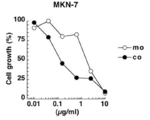
- FIG. 3D is a graph showing the results of cell proliferation test 2 of Test Example 1.
- FIG. 3E is a graph showing the results of cell proliferation test 3 in Test Example 1.
- FIG. 4A is a graph showing changes in tumor volume in Test Example 2-1-1.
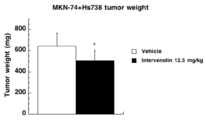
- FIG. 4B is a graph showing the tumor weight (21 days after tumor inoculation) in Test Example 2-1-1.
- FIG. 4C is a graph showing changes in tumor volume in Test Example 2-1-2.
- FIG. 4D is a graph showing the tumor weight (21 days after tumor inoculation) in Test Example 2-1-2.
- FIG. 4E is a graph showing changes in tumor volume in Test Example 2-2-1.
- FIG. 4F is a graph showing the tumor weight (Test Day 21 after tumor inoculation) in Test Example 2-2-1.
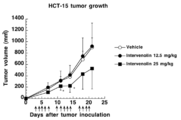
- FIG. 4G is a graph showing changes in tumor volume in Test Example 2-2-2.
- FIG. 4H is a graph showing the tumor weight (Test Day 21 after tumor inoculation) in Test Example 2-2-2.
- the compound of the present invention is a compound represented by the following structural formula (1), and is a novel compound separated by the present inventors (hereinafter sometimes referred to as “intervenolin”).
- FIG. 1 shows a proton nuclear magnetic resonance spectrum chart.
- FIG. 2 shows a chart of carbon-13 nuclear magnetic resonance spectrum.
- Table 1 below shows the NMR chemical shift of the compound represented by the structural formula (1).
- the compound has the structure represented by the structural formula (1) can be confirmed by various analysis methods selected as appropriate.
- the mass spectrometry, the ultraviolet spectroscopy, the red Analytical methods such as external spectroscopy, proton nuclear magnetic resonance spectroscopy, and carbon-13 nuclear magnetic resonance spectroscopy.
- the measurement values obtained by the respective analysis methods may have some errors, but those skilled in the art can easily identify that the compound has the structure represented by the structural formula (1). It is possible.
- the compound may be a salt of the compound represented by the structural formula (1).
- the salt is not particularly limited as long as it is a pharmacologically acceptable salt, and can be appropriately selected according to the purpose. Examples thereof include organic salts such as acetates and citrates, hydrochlorides and carbonates. Examples include salt.
- the compound represented by the structural formula (1) may be a tautomer thereof.
- the compound represented by the structural formula (1) may be obtained from a microorganism that produces the compound represented by the structural formula (1), or may be obtained by chemical synthesis. Also good.
- the compound represented by the structural formula (1) is a highly safe compound having excellent anticancer activity or excellent anti-Helicobacter pylori activity. Therefore, the compound represented by the structural formula (1) is preferably used as an active ingredient such as a compound-containing composition of the present invention described later, the anticancer agent of the present invention, and the anti-Helicobacter pylori agent of the present invention. Is available.
- One embodiment of the method for producing the compound of the present invention includes at least a culture step and a collection step, and further includes other steps as necessary.
- the culturing step is a culturing step for culturing a microorganism belonging to the genus Nocardia and having the ability to produce the compound represented by the structural formula (1).
- the microorganism is not particularly limited as long as it belongs to the genus Nocardia and has the ability to produce the compound represented by the structural formula (1), and can be appropriately selected according to the purpose.
- Nocardia sp. ML96-86F2 strain (NITE BP-01464, details are described in the section of the microorganism of the present invention to be described later) isolated by the present inventors.
- other strains capable of producing the compound represented by the structural formula (1) can be isolated from the natural world by a conventional method.
- the structural formula by subjecting the bacteria producing the compound represented by the structural formula (1), including the Nocardia sp. ML96-86F2 strain, to irradiation or other mutation treatment, the structural formula ( It is also possible to increase the productivity of the compound represented by 1).
- Examples of a method for analyzing that the microorganism has the ability to produce the compound represented by the structural formula (1) include, for example, a culture of the microorganism, preferably in a culture supernatant after liquid culture or solid culture Examples thereof include a method for analyzing the anti-cancer action or anti-Helicobacter pylori activity of the components in the subsequent solid medium, and a method for detecting the compound represented by the structural formula (1) by various analysis methods.
- a producing bacterium that produces the compound represented by the structural formula (1) may be referred to as a nutrient medium (hereinafter simply referred to as “medium”). ) And culturing at a good temperature for the production of the compound represented by the structural formula (1).
- the nutrient source added to the nutrient medium is not particularly limited and can be appropriately selected according to the purpose.
- inorganic salts such as sodium chloride and calcium carbonate can be added to the medium for use, and in addition, a trace amount of metal salt can be added to the medium for use. Any of these materials may be used as long as they are useful for the production of the compound represented by the structural formula (1) by the compound-producing bacteria, and all known culture materials can be used.
- a liquid culture medium, a plate culture medium, a sloping culture medium, a half sloping culture medium A growth product obtained by culturing the compound-producing bacteria on a medium such as the above can be used.
- the culture method is not particularly limited and may be appropriately selected depending on the intended purpose. Examples thereof include shaking culture, static culture, and tank culture.
- the culture temperature is not particularly limited as long as it is within a range in which the compound represented by the structural formula (1) can be produced without substantially inhibiting the growth of the compound-producing bacteria. Although it can be appropriately selected depending on the bacteria, it is preferably 25 ° C to 35 ° C.
- the pH of the culture is not particularly limited as long as the compound represented by the structural formula (1) can be produced without substantially inhibiting the growth of the compound-producing bacteria. It can be appropriately selected depending on the bacteria, and examples thereof include pH 6.0 to 7.5. There is no restriction
- the collecting step is a step of collecting the compound represented by the structural formula (1) from the culture obtained in the culturing step. Since the compound represented by the structural formula (1) has the physicochemical properties described above, it can be collected from the culture according to the properties.
- the culture is not particularly limited as long as it contains the compound represented by the structural formula (1) obtained in the culture step, and can be appropriately selected according to the purpose. Examples include a culture supernatant after liquid culture, a solid medium after solid culture, and a mixture thereof.
- the compound represented by the structural formula (1) is obtained from the cells by an extraction method using an appropriate organic solvent or an elution method by disrupting the cells. It may be extracted and subjected to separation and / or purification.
- the collection method is not particularly limited, and a method used for collecting a metabolite produced by a microorganism can be appropriately selected.
- a solvent extraction method a method using a difference in adsorption affinity for various adsorbents, a chromatographic method, and the like can be mentioned.
- These compounds can be used alone or in appropriate combination, and repeatedly used in some cases, whereby the separated and / or purified compound represented by the structural formula (1) can be collected.
- the solvent used in the solvent extraction method is not particularly limited and may be appropriately selected depending on the intended purpose. Examples thereof include ethanol, methanol, acetone, butanol, and acetonitrile.
- adsorbent there is no restriction
- the chromatographic method is not particularly limited and may be appropriately selected depending on the intended purpose. Examples thereof include a thin layer chromatographic method, a high-performance liquid chromatograph for fractionation using a normal phase or reverse phase column (preparation). HPLC) method and the like. There is no restriction
- ion exchange resins such as Amberlite (registered trademark) CG50 (manufactured by Sigma Aldrich); Toyopearl (registered trademark) HW-40F (manufactured by Tosoh Corporation) And gel filtration such as Sephadex (registered trademark) LH-20 (manufactured by GE Healthcare); silica gel such as CAPCELL PAK C18 UG120, CAPCELL PAK SG120 (manufactured by Shiseido Co., Ltd.), and the like.
- Amberlite registered trademark
- HW-40F manufactured by Tosoh Corporation
- gel filtration such as Sephadex (registered trademark) LH-20 (manufactured by GE Healthcare)
- silica gel such as CAPCELL PAK C18 UG120, CAPCELL PAK SG120 (manufactured by Shiseido Co., Ltd.), and the like.
- the method for eluting the compound represented by the general formula (I) from the adsorbent or the carrier in the chromatographic method is not particularly limited, and is appropriately selected depending on the kind and properties of the adsorbent and the carrier. can do.
- a method of elution using water-containing alcohol, water-containing acetone or the like as an elution solvent can be mentioned.
- the compound represented by the structural formula (1) can be produced.
- Method for producing compound Another aspect of the method for producing the compound of the present invention is a method for producing by chemical synthesis.
- a production method by the chemical synthesis a compound represented by the following structural formula (9) is reacted with sodium thiomethoxide in the presence of acetonitrile, and then the reaction product is reacted with a methylating agent.
- a methylating agent As long as it is a method to be used, there is no particular limitation, and it can be appropriately selected according to the purpose.
- the methylating agent is not particularly limited and may be appropriately selected depending on the intended purpose. Examples thereof include iodomethane, methyl trifluoromethanesulfonate, dimethyl sulfate, and myavine reagent.
- the said methylating agent may be used individually by 1 type, and may use 2 or more types together. Among these, iodomethane is preferable.
- the compound represented by the structural formula (2) can be produced, for example, as follows. Diethyl methylmalonate is dissolved in a mixed solvent of tetrahydrofuran (hereinafter sometimes referred to as “THF”) and water, and a 0.25 M aqueous potassium hydroxide solution is added dropwise in an ice bath. After completion of dropping, the mixture is further stirred at room temperature. After completion of the reaction, 1N hydrochloric acid is added to adjust the pH to 3, followed by extraction with ethyl acetate, drying the organic layer with sodium sulfate, and distilling off the solvent. In addition, you may use the residue obtained by the said reaction for next reaction, without refine
- reaction formula “Et” represents an ethyl group.
- the compound represented by the structural formula (3) can be produced, for example, as follows.
- the compound represented by the structural formula (2) is dissolved in methylene chloride, oxalyl chloride is added dropwise in an ice bath, and N, N-dimethylformamide (hereinafter sometimes referred to as “DMF”) is several times. Add drops. After stirring at room temperature for 3 hours, the solvent is distilled off. The obtained residue is dissolved in methylene chloride, and aniline and triethylamine are added dropwise to a solution of methylene chloride in an ice bath.
- DMF N, N-dimethylformamide
- the compound represented by the structural formula (4) can be produced, for example, as follows.
- the compound represented by the structural formula (3) is dissolved in a mixed solvent of THF: H 2 O: methanol (4: 1: 1), and sodium hydroxide is added. After stirring at room temperature for 1 hour, 1N hydrochloric acid is added to adjust the pH to 4, and the mixture is extracted with ethyl acetate. The obtained organic layer can be dried with sodium sulfate, and then the solvent is distilled off to obtain the compound represented by the structural formula (4).
- “Et” represents an ethyl group.
- the compound represented by the structural formula (5) can be produced, for example, as follows. A mixture of the compound represented by the structural formula (4) and the Eaton's reagent (80 mL) is stirred at 80 ° C. for 2.5 hours. The reaction solution is returned to room temperature, and 10% aqueous sodium hydrogen carbonate solution is added until the pH is 7 in an ice bath. The produced white solid is subjected to suction filtration, and further washed with a 10% aqueous sodium hydrogen carbonate solution and water to obtain a compound represented by the structural formula (5).
- TBSCl tert-butyldimethylchlorosilane
- the compound represented by the structural formula (8) can be produced, for example, as follows. Under an argon atmosphere, anhydrous toluene is added to a mixture containing the compound represented by the structural formula (7), Pd (PPh 3 ) 2 Cl 2 and a geranylboronic acid pinacol ester derivative, and the mixture is stirred at room temperature for 30 minutes. Absolute ethanol (hereinafter sometimes referred to as “EtOH”) and 2M aqueous sodium hydrogen carbonate solution are sequentially added thereto, and the mixture is stirred at 90 ° C. for 4 hours. The reaction is quenched with brine and extracted with ethyl acetate.
- EtOH Absolute ethanol
- 2M aqueous sodium hydrogen carbonate solution 2M aqueous sodium hydrogen carbonate solution
- the organic layer is dried with sodium sulfate and the solvent is distilled off.
- the Pd (PPh 3 ) 2 Cl 2 may be (PPh 3 ) 4 Pd or Pd (dppf) Cl 2 .
- the 2M sodium hydrogen carbonate aqueous solution may be a 1M sodium carbonate aqueous solution.
- the anhydrous toluene may be THF or 1,4-dioxane.
- reaction conditions, the compound to be used, the amount used thereof, the solvent, etc. in the production method of the compound represented by each structural formula are not particularly limited as long as the effects of the present invention are not impaired, and are appropriately selected according to the purpose. Can do. Whether or not each compound has a structure represented by each structural formula can be confirmed by various analysis methods selected as appropriate. For example, the mass spectrometry, the ultraviolet spectroscopy, the infrared Analysis methods such as spectroscopy, proton nuclear magnetic resonance spectroscopy, and carbon-13 nuclear magnetic resonance spectroscopy can be used.
- the microorganism of the present invention belongs to Nocardia and has the ability to produce the above-described compound of the present invention, that is, intervenolin.
- the microorganism has an ability to produce intervenolin (Intervenolin), and therefore, in the above-described method for producing the compound of the present invention, the microorganism can be used as a microorganism producing intervenolin (Intervenolin).
- Intervenolin intervenolin
- microorganisms in particular, in 1999, a microorganism that was isolated from the soil in Tokyo at the Institute of Microbial Chemistry, Microbial Chemistry Research Institute, and was assigned a strain number of ML96-86F2 Is preferably used.
- the mycological properties of the ML96-86F2 strain are as follows.
- the strain ML96-86F2 extends hook-like or spiral-like aerial hyphae from the branched basic mycelium in which fragmentation is slightly observed.
- the mature spore chain links 3 to 10 columnar spores.
- the size of the spore is about 0.5 ⁇ m to 0.7 ⁇ m ⁇ 0.7 ⁇ m to 1.2 ⁇ m, and the spore surface is smooth.
- C Glycerin / asparagine agar medium (ISP-medium 5, 30 ° C. culture) On the development of light yellow [3 ea, Lt Melon Yellow] to light red tea [5 ec, Duty Peach], a white [The gray scale, a, White] aerial mycelia is established. Soluble pigments are reddish.
- D Sucrose / nitrate agar medium (30 ° C. culture) On the growth of light yellow [3 ca, Shell], aerial mycelium of white [The gray scale, a, White] grows. No soluble pigment is observed.
- Growth temperature range (a) Growth temperature range Glucose asparagine agar medium (glucose 1%, L-asparagine 0.05%, K 2 HPO 4 0.05%, string agar 2.6%, pH 7.0) As a result of testing at 10 ° C., 24 ° C., 27 ° C., 30 ° C., 37 ° C., 42 ° C. and 50 ° C., no growth was observed at 10 ° C. and 37 ° C. or higher, and the temperature range was from 24 ° C. to 30 ° C. Growing up. The optimum temperature for growth is around 27 ° C.
- Cellular component 2,6-diaminopimelic acid in the cell wall is LL-type.
- the bacterial cell component was analyzed by thin layer chromatography.
- 2,6-Diaminopimelic acid in the cell wall is meso -type. Contains mycolic acid as a cell component.
- the strain ML96-86F2 elongates aerial hyphae having hook-like and spiral formation from the basic hyphae that are well branched and fragmented. Its tip is linked to columnar spores. In various media, white-pink-white aerial hyphae are grown on the development of light yellow to light red tea. The optimum temperature for growth is around 27 ° C.
- 2,6-Diaminopimelic acid in the cell wall of the ML96-86F2 strain is meso -type and contains mycolic acid as a cell component.
- the ML96-86F2 strain is considered to belong to the genus Nocardia . Therefore, the ML96-86F2 strain was designated as Nocardia sp. ML96-86F2.
- the ML96-86F2 strain was filed with the National Institute for Product Evaluation Technology Patent Microorganisms Deposit Center (2-5-8, Kazusa Kamashichi, Kisarazu City, Chiba Prefecture, 292-0818, Japan) on November 15, 2012. After that, on December 2, 2013, a request for transfer to an international deposit based on the Budapest Treaty was received and deposited internationally under the deposit number NITE BP-01464.
- the ML96-86F2 strain is susceptible to changes in properties, but for example, mutant strains derived from the ML96-86F2 strain (for example, natural mutant strains, ultraviolet rays, X-rays, etc.) , Artificial mutants that can be obtained by mutation treatment of radiation, drugs, etc.), zygotes, recombinants, etc., which have the ability to produce the compound represented by the structural formula (1) Included in the microorganism of the invention.
- the compound-containing composition of the present invention includes at least the compound represented by the structural formula (1), and further includes other components as necessary.
- the content of the compound represented by the structural formula (1) in the compound-containing composition is not particularly limited and may be appropriately selected depending on the intended purpose.
- the compound-containing composition may be the compound itself represented by the structural formula (1).
- the additive or the adjuvant is not particularly limited and may be appropriately selected depending on the intended purpose.
- examples thereof include bactericides, preservatives, binders, thickeners, fixing agents, binders, and coloring agents. , Stabilizers, pH adjusters, buffers, isotonic agents, solvents, antioxidants, UV inhibitors, crystal precipitation inhibitors, antifoaming agents, physical property improvers, preservatives, and the like.
- the bactericidal agent is not particularly limited and may be appropriately selected depending on the intended purpose. Examples thereof include cationic surfactants such as benzalkonium chloride, benzethonium chloride and cetylpyridinium chloride.
- the preservative is not particularly limited and may be appropriately selected depending on the intended purpose. Examples thereof include p-hydroxybenzoates, chlorobutanol, and cresol.
- the binder, thickener and fixing agent are not particularly limited and may be appropriately selected depending on the intended purpose.
- the binder is not particularly limited and may be appropriately selected depending on the intended purpose.
- examples include propyl starch, methyl cellulose, ethyl cellulose, shellac, calcium phosphate, and polyvinyl pyrrolidone.
- the colorant is not particularly limited and may be appropriately selected depending on the intended purpose. Examples thereof include titanium oxide and iron oxide.
- the stabilizer is not particularly limited and may be appropriately selected depending on the intended purpose. Examples thereof include tragacanth, gum arabic, gelatin, sodium pyrosulfite, ethylenediaminetetraacetic acid (EDTA), thioglycolic acid, and thiolactic acid. Is mentioned.
- the pH adjusting agent or the buffering agent is not particularly limited and may be appropriately selected depending on the intended purpose. Examples thereof include sodium citrate, sodium acetate, and sodium phosphate.
- the isotonic agent is not particularly limited and may be appropriately selected depending on the intended purpose. Examples thereof include sodium chloride and glucose.
- the compound-containing composition contains the compound represented by the structural formula (1), it has excellent anticancer activity, excellent anti-Helicobacter pylori activity, high safety, for example, a pharmaceutical composition It can be suitably used for anticancer agents, anti-Helicobacter pylori agents, and the like.
- the said compound containing composition may be used independently and may be used in combination with the pharmaceutical which uses another component as an active ingredient.
- the said compound containing composition may be used in the state mix
- the anticancer agent of this invention contains at least the compound represented by the said Structural formula (1), and also contains another component as needed.
- the content of the compound represented by the structural formula (1) in the anticancer agent is not particularly limited and may be appropriately selected depending on the intended purpose.
- the anticancer agent may be the compound itself represented by the structural formula (1).
- the anticancer agent contains the compound represented by the structural formula (1), it has an excellent anticancer activity, high safety, stomach cancer, colon cancer, prostate cancer, lung cancer, pancreas It can be suitably used as a prophylactic or therapeutic agent for a wide range of cancers such as cancer and breast cancer. Among these, it can be particularly suitably used for stomach cancer and colon cancer.
- the said anticancer agent may be used independently and may be used in combination with the pharmaceutical which uses another component as an active ingredient.
- the said anticancer agent may be used in the state mix
- the compound represented by the structural formula (1) of the present invention can further suppress the growth of cancer cells in the presence of normal stromal cells.
- the present invention also relates to a method for preventing or treating cancer, which comprises administering the anticancer agent to an individual.
- the anti-Helicobacter pylori agent of the present invention contains at least the compound represented by the structural formula (1), and further contains other components as necessary.
- the content of the compound represented by the structural formula (1) in the anti-Helicobacter pylori agent is not particularly limited and may be appropriately selected depending on the intended purpose.
- the anti-Helicobacter pylori agent may be the compound itself represented by the structural formula (1).
- the anti-Helicobacter pylori agent contains the compound represented by the structural formula (1), it has excellent anti-Helicobacter pylori activity, is highly safe, and originates from Helicobacter pylori such as gastric ulcer and duodenal ulcer It can be suitably used as an agent for preventing or treating gastric and duodenal disorders.
- the said anti- Helicobacter pylori agent may be used independently and may be used together with the pharmaceutical which uses another component as an active ingredient.
- the anti-Helicobacter pylori agent may be used in a state of being blended in a medicine containing another component as an active ingredient.
- the present invention also relates to a method for preventing or treating infection caused by Helicobacter pylori, which comprises administering the anti-Helicobacter pylori agent to an individual.
- administration of the anti-Helicobacter pylori agent to an individual can prevent the occurrence of stomach and duodenal disorders caused by Helicobacter pylori, or treat an individual suffering from stomach and duodenal disorders caused by Helicobacter pylori. it can. Therefore, the present invention also relates to a method for preventing or treating gastric and duodenal disorders caused by Helicobacter pylori, which comprises administering the anti-Helicobacter pylori agent to an individual.
- the dosage form of the compound-containing composition, anticancer agent, and anti-Helicobacter pylori agent is not particularly limited and may be appropriately selected depending on the intended purpose. Examples thereof include solid agents, semisolid agents, and liquid agents. Is mentioned. These compound-containing compositions, anticancer agents, and anti-Helicobacter pylori agents in these dosage forms can be produced according to conventional methods.
- the solid preparation is not particularly limited and may be appropriately selected depending on the intended purpose.
- a suppository, a poultice, a plaster agent etc. are mentioned, for example.
- liquid agent a syrup agent, a drink agent, a suspension agent, an alcoholic agent etc. are mentioned, for example.
- a liquid agent, eye drops, an aerosol agent, a spray agent etc. are mentioned, for example.
- administering There is no restriction
- the administration method include a local administration method, an enteral administration method, a parenteral administration method and the like.
- the dose is not particularly limited, and is appropriately selected in consideration of various factors such as the age, weight, constitution, symptom, and presence / absence of administration of a drug or drug containing other ingredients as active ingredients. be able to.
- the animal species to be administered is not particularly limited and can be appropriately selected according to the purpose. For example, human, monkey, pig, cow, sheep, goat, dog, cat, mouse, rat, bird, etc. Among them, among these, it can be suitably used for humans.
- Non-Patent Document 2 For the production medium, see Non-Patent Document 2 above, 1 mass% glucose, 2 mass% corn starch, 0.5 mass% wheat germ, 0.5 mass% NZ amine type A (manufactured by Wako Pure Chemical Industries, Ltd.), 0 A liquid medium (pH 6.7) containing 0.5% by mass yeast extract, 0.4% by mass calcium carbonate and 0.0001% by mass cobalt chloride was used. 2% of the seed culture solution was inoculated into the production medium, and cultured with shaking at 25 ° C. and 220 rpm for 11 days.
- FIG. 1 shows a proton nuclear magnetic resonance spectrum chart.
- FIG. 2 shows a chart of carbon-13 nuclear magnetic resonance spectrum.
- Normal stromal cells Hs738 ((CRL-7869), ATCC) derived from human stomach are 10% FBS, 100 units / mL penicillin G (manufactured by Invitrogen), 100 ⁇ g / mL streptomycin (manufactured by Invitrogen), 5 ⁇ g / mL Of DMEM supplemented with 5 ⁇ g / mL transferrin (manufactured by Wako Pure Chemical Industries, Ltd.), 1.4 ⁇ M hydrocortisone (manufactured by Sigma), 5 mg / mL basic-FGF (manufactured by Pepro Tech) at 37 ° C. and cultured in 5% CO 2.
- the human gastric cancer cell MKN-74 was dispersed at 5 ⁇ 10 5 cells / mL with DMEM, and 10 ⁇ L / well was spread on a plate on which the human stomach-derived normal stromal cells Hs738 were cultured, and further 37 ° C. Co-cultured with 5% CO 2 for 3 days.
- the human gastric cancer cell MKN-74 was dispersed in DMEM at 5 ⁇ 10 5 cells / mL, seeded at 10 ⁇ L / well on the plate, and further co-cultured at 37 ° C. and 5% CO 2 for 3 days.
- ⁇ Cell proliferation test 2 (human gastric cancer cell MKN-7)> -Preparation of cells- Human gastric cancer cell MKN-7 (RIKEN Cell Bank) is DMEM containing 10% FBS (GIBCO), 100 units / mL penicillin G (Invitrogen), 100 ⁇ g / mL streptomycin (Invitrogen) at 37 ° C. Cultured with 5% CO 2 .
- GFP green fluorescence protein
- Normal stromal cells Hs738 ((CRL-7869), ATCC) derived from human stomach are 10% FBS, 100 units / mL penicillin G (manufactured by Invitrogen), 100 ⁇ g / mL streptomycin (manufactured by Invitrogen), 5 ⁇ g / mL Of DMEM supplemented with 5 ⁇ g / mL transferrin (manufactured by Wako Pure Chemical Industries, Ltd.), 1.4 ⁇ M hydrocortisone (manufactured by Sigma), 5 mg / mL basic-FGF (manufactured by Pepro Tech) at 37 ° C. and cultured in 5% CO 2.
- the human gastric cancer cell MKN-7 was dispersed at 5 ⁇ 10 5 cells / mL with DMEM, and 10 ⁇ L / well was plated on a plate on which the human stomach-derived normal stromal cells Hs738 were cultured, and further 37 ° C. Co-cultured with 5% CO 2 for 3 days.
- the human gastric cancer cell MKN-7 was dispersed in DMEM at 5 ⁇ 10 5 cells / mL, seeded at 10 ⁇ L / well on the plate, and further co-cultured at 37 ° C. and 5% CO 2 for 3 days.
- ⁇ Cell proliferation test 3 human colorectal cancer cell HCT-15> -Preparation of cells- Human colorectal cancer cell HCT-15 (ATCC) in DMEM containing 10% FBS (manufactured by GIBCO), 100 units / mL penicillin G (manufactured by Invitrogen), 100 ⁇ g / mL streptomycin (manufactured by Invitrogen), 37 ° C., and cultured in 5% CO 2.
- GFP green fluorescence protein
- Normal stromal cell CCD-18Co ((CRL-1459), ATCC) derived from human colon is 10% FBS, 100 units / mL penicillin G (manufactured by Invitrogen), 100 ⁇ g / mL streptomycin (manufactured by Invitrogen), 5 ⁇ g DMEM supplemented with / mL insulin, 5 ⁇ g / mL transferrin (manufactured by Wako Pure Chemical Industries), 1.4 ⁇ M hydrocortisone (manufactured by Sigma), 5 mg / mL basic-FGF (manufactured by Pepro Tech), 37 ° C., and cultured in 5% CO 2.
- the human colon cancer cells HCT-15 are dispersed at 5 ⁇ 10 5 cells / mL with DMEM, and 10 ⁇ L / well is seeded on a plate on which the human colon-derived normal stromal cells CCD-18Co are cultured. Further, the cells were co-cultured at 37 ° C. and 5% CO 2 for 3 days.
- normal stromal cell CCD-18Co derived from human large intestine was dispersed at 5 ⁇ 10 5 cells / mL with DMEM, and 10 ⁇ L / well was dispersed on the plate, and further 3 ° C. at 37 ° C. with 5% CO 2 . Co-cultured for days.
- FIGS. 3A to 3E The results of the cell proliferation tests 1 to 3 are shown in FIGS. 3A to 3E.
- FIG. 3A shows the results when the compound represented by the structural formula (1) is used as an evaluation sample in the cell proliferation test 1
- FIG. 3B shows CJ as an evaluation sample in the cell proliferation test 1.
- FIG. 3C shows the results when CJ13,217 was used as an evaluation sample in the cell proliferation test 1
- FIG. 3D shows the results when the cell proliferation test 2 was used.
- FIG. 3E shows the results of the cell proliferation test 3.
- “ ⁇ ” indicates the result of the co-culture test (co)
- ⁇ indicates the result of the single culture test (mo).
- the values in FIGS. 3A to 3E show the average value of duplicates, and the standard error (SE) was 10% or less.
- the compound represented by the structural formula (1) inhibits the growth of human gastric cancer cell MKN-74 alone with an IC 50 of 3.0 ⁇ g / mL.
- the growth of human gastric cancer cells MKN-74 was strongly inhibited at a lower concentration of IC 50 0.17 ⁇ g / mL.
- CJ-13,136 inhibits the proliferation of human gastric cancer cells MKN-74 alone with an IC 50 of 0.22 ⁇ g / mL, but co-cultured with gastric stromal cells.
- CJ-13,217 inhibits the growth of human gastric cancer cell MKN-74 alone with an IC 50 of 0.03 ⁇ g / mL, but co-cultured with gastric stromal cells. In this case, the growth of human gastric cancer cell MKN-74 was strongly inhibited at a lower concentration of IC 50 0.006 ⁇ g / mL.
- CJ-13,136 and CJ-13,217 inhibited the growth of human gastric cancer cell MKN-74 at a lower concentration than the compound represented by structural formula (1). As shown, it was much more toxic than the compound represented by Structural Formula (1).
- the compound represented by the structural formula (1) inhibits the proliferation of human gastric cancer cells MKN-7 alone with an IC 50 of 1.6 ⁇ g / mL, but gastric stromal cells.
- the growth of human gastric cancer cell MKN-7 was strongly inhibited at a lower concentration of IC 50 0.13 ⁇ g / mL.
- the compound represented by the structural formula (1) inhibits its proliferation with an IC 50 of 1.6 ⁇ g / mL in the culture of only human colon cancer HCT-15 cells.
- the proliferation of human colon cancer HCT-15 cells was strongly inhibited at a lower concentration of IC 50 0.21 ⁇ g / mL.
- Example 2-1-1 Human gastric cancer cell MKN-74 alone> BALB / c nu / nu nude mice (female, 5 weeks old, manufactured by Charles River) were bred under SPF conditions. The cultured human gastric cancer cell MKN-74 was trypsinized, and the human gastric cancer cell MKN-74 (8 ⁇ 10 6 cells) detached from the culture dish was dispersed in 0.3 mL of DMEM containing 10% FBS, and 0.5 mL Of growth factor-reduced Matrigel (BD Biosciences). 0.1 mL of the mixed cell solution (1 ⁇ 10 6 cancer cells) was inoculated subcutaneously into the left shin of the mouse.
- the compound represented by the structural formula (1) was intravenously administered for a predetermined period, and a tumor formed subcutaneously was cut out and its weight was measured.
- the dose of the compound represented by the structural formula (1) was 12.5 mg / kg as the dose per day of administration.
- the tumor volume was calculated from the following equation with reference to Non-Patent Document 1.
- Tumor volume (mm 3 ) (major axis ⁇ minor axis 2 ) / 2
- Example 2-1-2 Human stomach cancer cell MKN-74 and human stomach-derived normal stromal cell Hs738> Test Example 2-1-1 except that human gastric cancer cell MKN-74 was used alone in Test Example 2-1-1 except that human gastric cancer cell MKN-74 and human stomach-derived normal stromal cell Hs738 were used. The test was performed in the same manner as in 1-1. Inoculation of the cell fluid and the cell fluid into mice was performed as follows. Each of cultured human gastric cancer cell MKN-74 and human stomach-derived normal stromal cell Hs738 was treated with trypsin and detached from the culture dish.
- the human stomach cancer cells MKN-74 (8 ⁇ 10 6 cells) and the human stomach-derived normal stromal cells Hs738 (8 ⁇ 10 6 cells) were dispersed in DMEM containing 0.3 mL of 10% FBS, and 0 Mixed with 5 mL growth factor-reduced Matrigel (BD Biosciences).
- the mixed cell solution 0.1 mL (cancer 1 ⁇ 10 6 cells, and stromal cells 1 ⁇ 10 6 cells mixed) were inoculated subcutaneously in the left mouse shins of the mouse.
- Test Example 2-1-1 Human colon cancer cell HCT-15 alone>
- human gastric cancer cell MKN-74 was replaced with human colon cancer cell HCT-15, and the dose of the compound represented by Structural Formula (1) was 25 mg / kg.
- a test was conducted in the same manner as in Test Example 2-1-1 except for the addition.
- Test Example 2-2-2 Human colon cancer cell HCT-15 and human colon derived normal stromal cell CCD-18Co>
- human stomach cancer cell MKN-74 was replaced with human colon cancer cell HCT-15
- human stomach-derived normal stromal cell Hs738 was replaced with human colon-derived normal stromal cell CCD-18Co. Further, the test was conducted in the same manner as in Test Example 2-1-2 except that a compound represented by the structural formula (1) was added at a dose of 25 mg / kg.
- FIGS. 4A to 4H The results of Test Example 2 are shown in FIGS. 4A to 4H.
- FIG. 4A shows the change in tumor volume in Test Example 2-1-1
- FIG. 4B shows the tumor weight (Day 21 after tumor inoculation) in Test Example 2-1-1
- FIG. 4D shows the tumor weight (the 21st day after tumor inoculation) in Test Example 2-1-2
- FIG. 4E shows the test example 2-1-2.
- -F shows the change in tumor volume in Fig. 2-F
- Fig. 4F shows the tumor weight in Test Example 2-2-1 (21 days after tumor inoculation)
- Fig. 4G shows the test example 2-2-2.
- 4H shows the tumor weight in Test Example 2-2-2 (21 days after tumor inoculation).
- FIGS. 4A to 4H represent the average value and standard deviation (SD) of five mice, * indicates P ⁇ 0.05, and ** indicates P ⁇ 0.01.
- human gastric cancer cells MKN-74 alone and tumors transplanted together with human gastric cancer cells MKN-74 and human stomach-derived normal stromal cells Hs738 have the structural formula
- the compound represented by (1) was significantly suppressed by intravenous administration of 12.5 mg / kg.
- human colon cancer cell HCT-15 alone, and human colon cancer cell HCT-15 and human stromal cell-derived normal stromal cell CCD-18Co are transplanted together. All of the tumors treated were significantly suppressed by intravenous administration of 25 mg / kg of the compound represented by the structural formula (1).
- mice Male, 4 weeks old, Charles River
- mice were bred under SPF conditions.
- the maximum tolerated dose (MTD) in this experiment was defined as one half of the dose at which death or severe toxicity was observed during the 2-week observation period.
- MTD maximum tolerated dose
- Test Example 4 Antibacterial activity
- the antibacterial activity of the compound (Intervenolin) represented by Structural Formula (1) obtained in Production Example 1 was tested as follows. For comparison, clarithromycin and ampicillin (ABPC) were similarly tested.
- MIC minimum growth inhibitory concentration
- the culture broth was suspended in HP medium and diluted so that Helicobacter pylori was 2 ⁇ 10 6 CFU / mL to 9 ⁇ 10 6 CFU / mL.
- Each test sample (compound represented by structural formula (1), clarithromycin, ampicillin) was prepared to 256 mg / L in the HP medium. From this, a 2-fold serial dilution was performed, and an 11-stage dilution was performed to 0.125 mg / L. 50 ⁇ L / well of each diluted bacterial solution is added to 50 ⁇ L / well of the HP medium containing the test sample at each concentration, and the mixture is added at 37 ° C.
- ⁇ Test Example 4-2 Measurement of MIC against Staphylococcus aureus and Escherichia coli> The minimum growth inhibitory concentration (MIC) of Staphylococcus aureus and Escherichia coli of the compound represented by Structural Formula (1) obtained in Production Example 1 was measured.
- Staphylococcus aureus FDA209P strain and Escherichia coli K-12 strain with normal bouillon medium Polypeptone (Nippon Pharmaceutical Co., Ltd.) 1%, Bacteria fish extract (Kyokuto Pharmaceutical Co., Ltd.) 1%, Sodium chloride 0.2%) The culture was shaken overnight at 37 ° C.
- each bacterium was diluted with normal bouillon medium to 2 ⁇ 10 6 CFU / mL to 9 ⁇ 10 6 CFU / mL.
- Each test sample (compound represented by structural formula (1), clarithromycin, ampicillin) was prepared to 256 mg / L in a normal bouillon medium. From here, 2-fold serial dilution was performed, and 15-stage dilution was performed to 0.0078 mg / L. 50 ⁇ L / well of each diluted bacterial solution was added to 50 ⁇ L / well of a normal bouillon medium containing the test samples of the respective concentrations, and statically cultured at 37 ° C. overnight. After completion of the culture, the presence or absence of growth of each bacterium was determined visually by turbidity, and the MIC of each strain was determined. The results are shown in Table 3.
- MIC minimum growth inhibitory concentration
- Enterococcus faecalis strain JCM5803 was cultured with shaking in a heart infusion broth medium (Becton Dickinson) at 37 ° C. overnight. After completion of the culture, the mixture was diluted with a heart infusion broth medium to dilute each bacterium to 2 ⁇ 10 4 CFU / mL to 9 ⁇ 10 4 CFU / mL.
- Each test sample (compound represented by structural formula (1), clarithromycin, ampicillin) was prepared to 256 mg / L in a heart infusion broth medium.
- ⁇ Test Example 4-4 Measurement of MIC against Haemophilus influenzae> The minimum growth inhibitory concentration (MIC) of the compound represented by Structural Formula (1) obtained in Production Example 1 against Haemophilus influenzae was measured.
- Influenzae ARD476 strain was added to HI medium (Muller Hinton medium (Becton Dickinson) with 5% Phils enrichment (Becton Dickinson) added) at 37 ° C under 5% carbon dioxide containing aerobic conditions. The culture was stationary overnight.
- each test sample (compound represented by structural formula (1), clarithromycin, ampicillin) was prepared to 256 mg / L in HI medium. From this, a 2-fold serial dilution was performed, and an 11-stage dilution was performed to 0.125 mg / L. 50 ⁇ L / well of each of the diluted bacterial solutions was added to 50 ⁇ L / well of HI medium containing the test sample at each concentration, followed by stationary culture at 37 ° C. under aerobic conditions containing 5% carbon dioxide gas for 18 hours. After completion of the culture, the presence or absence of growth of each bacterium was determined visually by turbidity, and the MIC of each strain was determined. The results are shown in Table 3.
- the compound represented by the structural formula (1) (Intervenolin) has a MIC of 0.016 ⁇ g / mL and 0.008 ⁇ g / mL for Helicobacter pylori strain JCM12093 and JCM12095, respectively. Although it showed strong antibacterial activity, it showed only weak antibacterial activity against other common infectious agents.
- Examples of the aspect of the present invention include the following.
- ⁇ 1> A compound represented by the following structural formula (1).
- ⁇ 2> A method for producing the compound according to ⁇ 1>, A culture step of culturing a microorganism belonging to the genus Nocardia and having the ability to produce the compound according to ⁇ 1>above; And a collecting step of collecting the compound according to ⁇ 1> from the culture obtained in the culturing step.
- the microorganism belonging to the genus Nocardia and having the ability to produce the compound according to ⁇ 1> is Nocardia sp.
- ML96-86F2 strain having an accession number of NITE BP-01464 It is a manufacturing method of the compound as described in said ⁇ 2>.
- ⁇ 4> A microorganism belonging to the genus Nocardia and having the ability to produce the compound according to ⁇ 1>.
- the microorganism according to ⁇ 4> which is a Nocardia sp. ML96-86F2 strain having an accession number of NITE BP-01464.
- ⁇ 6> A method for producing the compound according to ⁇ 1>, In the presence of acetonitrile, a compound represented by the following structural formula (9) is reacted with sodium thiomethoxide, and then the reaction product is reacted with a methylating agent. Is the method.
- ⁇ 7> A compound-containing composition comprising the compound according to ⁇ 1>.
- An anticancer agent comprising the compound according to ⁇ 1>.
- An anti-Helicobacter pylori agent comprising the compound according to ⁇ 1>.
- a method for preventing or treating cancer comprising administering the anticancer agent according to ⁇ 8> to an individual.
- a method for preventing or treating infection caused by Helicobacter pylori comprising administering the anti-Helicobacter pylori agent according to ⁇ 9> to an individual.
- ⁇ 12> A method for preventing or treating gastric and duodenal disorders caused by Helicobacter pylori, comprising administering the anti-Helicobacter pylori agent according to ⁇ 9> to an individual. is there.
- the compound represented by the structural formula (1) of the present invention is a highly safe compound having excellent anticancer activity or excellent anti-Helicobacter pylori activity. It can be suitably used as an active ingredient such as a cancer agent or an anti-Helicobacter pylori agent.
Landscapes
- Chemical & Material Sciences (AREA)
- Organic Chemistry (AREA)
- Health & Medical Sciences (AREA)
- Life Sciences & Earth Sciences (AREA)
- Engineering & Computer Science (AREA)
- Zoology (AREA)
- Wood Science & Technology (AREA)
- General Health & Medical Sciences (AREA)
- Bioinformatics & Cheminformatics (AREA)
- Chemical Kinetics & Catalysis (AREA)
- General Chemical & Material Sciences (AREA)
- Medicinal Chemistry (AREA)
- Biotechnology (AREA)
- Genetics & Genomics (AREA)
- Veterinary Medicine (AREA)
- General Engineering & Computer Science (AREA)
- Animal Behavior & Ethology (AREA)
- Pharmacology & Pharmacy (AREA)
- Microbiology (AREA)
- Nuclear Medicine, Radiotherapy & Molecular Imaging (AREA)
- Public Health (AREA)
- Biochemistry (AREA)
- Communicable Diseases (AREA)
- Oncology (AREA)
- Tropical Medicine & Parasitology (AREA)
- Virology (AREA)
- Biomedical Technology (AREA)
- Pharmaceuticals Containing Other Organic And Inorganic Compounds (AREA)
- Preparation Of Compounds By Using Micro-Organisms (AREA)
- Micro-Organisms Or Cultivation Processes Thereof (AREA)
- Quinoline Compounds (AREA)
Abstract
L'invention concerne: un composé représenté par la formule structurale (1); un procédé de production correspondant; un microorganisme pouvant produire ledit composé; et une composition contenant le composé, un agent anticancéreux et un agent anti-Helicobacter pylori qui comprend ledit composé.
Priority Applications (1)
| Application Number | Priority Date | Filing Date | Title |
|---|---|---|---|
| JP2015502902A JP6238956B2 (ja) | 2013-02-26 | 2014-02-24 | 新規化合物、その製造方法、及びその用途、並びに、新規微生物 |
Applications Claiming Priority (2)
| Application Number | Priority Date | Filing Date | Title |
|---|---|---|---|
| JP2013-035731 | 2013-02-26 | ||
| JP2013035731 | 2013-02-26 |
Publications (1)
| Publication Number | Publication Date |
|---|---|
| WO2014132902A1 true WO2014132902A1 (fr) | 2014-09-04 |
Family
ID=51428169
Family Applications (1)
| Application Number | Title | Priority Date | Filing Date |
|---|---|---|---|
| PCT/JP2014/054256 Ceased WO2014132902A1 (fr) | 2013-02-26 | 2014-02-24 | Nouveau composé, procédé de production correspondant, utilisation dudit composé et nouveau microorganisme |
Country Status (2)
| Country | Link |
|---|---|
| JP (1) | JP6238956B2 (fr) |
| WO (1) | WO2014132902A1 (fr) |
Cited By (1)
| Publication number | Priority date | Publication date | Assignee | Title |
|---|---|---|---|---|
| WO2016190383A1 (fr) * | 2015-05-27 | 2016-12-01 | 公益財団法人微生物化学研究会 | Nouveau composé de type coccoquinone, procédé de production de ce dernier, utilisation de ce dernier, et nouveau micro-organisme |
Citations (4)
| Publication number | Priority date | Publication date | Assignee | Title |
|---|---|---|---|---|
| JPH06306074A (ja) * | 1993-02-23 | 1994-11-01 | Banyu Pharmaceut Co Ltd | 抗腫瘍性物質be−32030類 |
| JPH06343480A (ja) * | 1993-06-11 | 1994-12-20 | Nippon Kayaku Co Ltd | Sf2315aの製造法及びその薬学的用途 |
| JPH10251289A (ja) * | 1997-03-13 | 1998-09-22 | Microbial Chem Res Found | 新規抗生物質ノスラマイシンとその製造方法 |
| JP2000344768A (ja) * | 1999-06-02 | 2000-12-12 | Sankyo Co Ltd | 新規化合物a−77543及びその製造法 |
-
2014
- 2014-02-24 JP JP2015502902A patent/JP6238956B2/ja active Active
- 2014-02-24 WO PCT/JP2014/054256 patent/WO2014132902A1/fr not_active Ceased
Patent Citations (4)
| Publication number | Priority date | Publication date | Assignee | Title |
|---|---|---|---|---|
| JPH06306074A (ja) * | 1993-02-23 | 1994-11-01 | Banyu Pharmaceut Co Ltd | 抗腫瘍性物質be−32030類 |
| JPH06343480A (ja) * | 1993-06-11 | 1994-12-20 | Nippon Kayaku Co Ltd | Sf2315aの製造法及びその薬学的用途 |
| JPH10251289A (ja) * | 1997-03-13 | 1998-09-22 | Microbial Chem Res Found | 新規抗生物質ノスラマイシンとその製造方法 |
| JP2000344768A (ja) * | 1999-06-02 | 2000-12-12 | Sankyo Co Ltd | 新規化合物a−77543及びその製造法 |
Non-Patent Citations (3)
| Title |
|---|
| ABE H ET AL.: "Synthesis of intervenolin, an antitumor natural quinolone with unusual substituents", ORG LETT., vol. 15, May 2013 (2013-05-01), pages 2124 - 2127 * |
| DEKKER KA ET AL.: "New quinolone compounds from Pseudonocardia sp. with selective and potent anti-Helicobacter pylori activity: taxonomy of producing strain, fermentation, isolation, structural elucidation and biological activities", J ANTIBIOT, vol. 51, 1998, pages 145 - 152 * |
| KAWADA M ET AL.: "Intervenolin, a new antitumor compound with anti-Helicobacter pylori activity, from Nocardia sp. ML96-86F2", J ANTIBIOT, vol. 66, September 2013 (2013-09-01), pages 543 - 548 * |
Cited By (3)
| Publication number | Priority date | Publication date | Assignee | Title |
|---|---|---|---|---|
| WO2016190383A1 (fr) * | 2015-05-27 | 2016-12-01 | 公益財団法人微生物化学研究会 | Nouveau composé de type coccoquinone, procédé de production de ce dernier, utilisation de ce dernier, et nouveau micro-organisme |
| JP2021008498A (ja) * | 2015-05-27 | 2021-01-28 | 公益財団法人微生物化学研究会 | 新規化合物コッコキノン類、その製造方法、及びその用途、並びに新規微生物 |
| JP7026185B2 (ja) | 2015-05-27 | 2022-02-25 | 公益財団法人微生物化学研究会 | 新規化合物コッコキノン類、その製造方法、及びその用途、並びに新規微生物 |
Also Published As
| Publication number | Publication date |
|---|---|
| JPWO2014132902A1 (ja) | 2017-02-02 |
| JP6238956B2 (ja) | 2017-11-29 |
Similar Documents
| Publication | Publication Date | Title |
|---|---|---|
| KR101568724B1 (ko) | 신규한 화합물, 이의 생산 방법, 및 히스톤 디메틸라제 저해제로서 이의 용도 | |
| WO2011148959A1 (fr) | Composé peptidique cyclique inédit, son procédé de production, agent anti-infectieux, fraction contenant un antibiotique, antibiotique, procédé de production d'antibiotiques, microorganisme produisant un antibiotique et antibiotique ainsi produit | |
| KR20100132518A (ko) | 환형 화합물을 생산하는 미생물 | |
| JP6238956B2 (ja) | 新規化合物、その製造方法、及びその用途、並びに、新規微生物 | |
| KR20110005691A (ko) | 환형 화합물 및 그 염 | |
| CN105085613B (zh) | 新型硫链丝菌素类似物及其制法和用途 | |
| JP6326040B2 (ja) | 新規化合物及びその製造方法、並びにその用途 | |
| JP6130248B2 (ja) | 新規化合物キノフラシン類、その製造方法、及びその用途、並びに新規微生物 | |
| US20190127313A1 (en) | Antimicrobial agents | |
| EP2423319A1 (fr) | Nouveau composé amycolamycine, son procédé de production et son utilisation | |
| US8952140B2 (en) | Compound amycolose derivative, method for producing the same, and use of the same | |
| JP6154382B2 (ja) | 新規化合物及びその製造方法、並びに、医薬組成物、及び抗腫瘍剤 | |
| JP2012005480A (ja) | 抗生物質産生微生物及びそれが産生した抗生物質 | |
| JP7026185B2 (ja) | 新規化合物コッコキノン類、その製造方法、及びその用途、並びに新規微生物 | |
| JP7389448B2 (ja) | 新規フザラミン物質を有効成分とする白血病細胞増殖抑制剤 | |
| WO2013031239A1 (fr) | Nouveau composé de mangromycine et son procédé de production | |
| JP4836783B2 (ja) | 抗腫瘍剤、抗腫瘍剤の製造方法、抗腫瘍剤を含む医薬組成物、及び抗腫瘍剤産生菌 | |
| JP7057945B2 (ja) | 上皮間葉転換誘導細胞阻害剤 | |
| CA3133156A1 (fr) | Macrocycles presentant des activites antioxydantes et neuroprotectrices | |
| WO2013065383A1 (fr) | Nouveau composé, son procédé de production et utilisation | |
| JP2006213703A (ja) | 新規発酵生産物 | |
| JP2013147429A (ja) | デプシペプチド化合物 | |
| JP2006213704A (ja) | 新規発酵生産物 | |
| JPWO1998056809A1 (ja) | 生理活性物質ポリオキシペプチンおよびデオキシポリオキシペプチンとそれを含む抗癌剤 |
Legal Events
| Date | Code | Title | Description |
|---|---|---|---|
| 121 | Ep: the epo has been informed by wipo that ep was designated in this application |
Ref document number: 14756989 Country of ref document: EP Kind code of ref document: A1 |
|
| ENP | Entry into the national phase |
Ref document number: 2015502902 Country of ref document: JP Kind code of ref document: A |
|
| NENP | Non-entry into the national phase |
Ref country code: DE |
|
| 122 | Ep: pct application non-entry in european phase |
Ref document number: 14756989 Country of ref document: EP Kind code of ref document: A1 |