WO2014132965A1 - Dispositif électronique portatif, son procédé de commande, et programme - Google Patents
Dispositif électronique portatif, son procédé de commande, et programme Download PDFInfo
- Publication number
- WO2014132965A1 WO2014132965A1 PCT/JP2014/054564 JP2014054564W WO2014132965A1 WO 2014132965 A1 WO2014132965 A1 WO 2014132965A1 JP 2014054564 W JP2014054564 W JP 2014054564W WO 2014132965 A1 WO2014132965 A1 WO 2014132965A1
- Authority
- WO
- WIPO (PCT)
- Prior art keywords
- portable electronic
- housing
- electronic device
- display device
- contact
- Prior art date
- Legal status (The legal status is an assumption and is not a legal conclusion. Google has not performed a legal analysis and makes no representation as to the accuracy of the status listed.)
- Ceased
Links
Images



Classifications
-
- G—PHYSICS
- G06—COMPUTING OR CALCULATING; COUNTING
- G06F—ELECTRIC DIGITAL DATA PROCESSING
- G06F3/00—Input arrangements for transferring data to be processed into a form capable of being handled by the computer; Output arrangements for transferring data from processing unit to output unit, e.g. interface arrangements
- G06F3/14—Digital output to display device ; Cooperation and interconnection of the display device with other functional units
- G06F3/1423—Digital output to display device ; Cooperation and interconnection of the display device with other functional units controlling a plurality of local displays, e.g. CRT and flat panel display
-
- G—PHYSICS
- G06—COMPUTING OR CALCULATING; COUNTING
- G06F—ELECTRIC DIGITAL DATA PROCESSING
- G06F1/00—Details not covered by groups G06F3/00 - G06F13/00 and G06F21/00
- G06F1/16—Constructional details or arrangements
- G06F1/1601—Constructional details related to the housing of computer displays, e.g. of CRT monitors, of flat displays
-
- G—PHYSICS
- G06—COMPUTING OR CALCULATING; COUNTING
- G06F—ELECTRIC DIGITAL DATA PROCESSING
- G06F3/00—Input arrangements for transferring data to be processed into a form capable of being handled by the computer; Output arrangements for transferring data from processing unit to output unit, e.g. interface arrangements
- G06F3/01—Input arrangements or combined input and output arrangements for interaction between user and computer
- G06F3/03—Arrangements for converting the position or the displacement of a member into a coded form
- G06F3/041—Digitisers, e.g. for touch screens or touch pads, characterised by the transducing means
-
- G—PHYSICS
- G06—COMPUTING OR CALCULATING; COUNTING
- G06F—ELECTRIC DIGITAL DATA PROCESSING
- G06F3/00—Input arrangements for transferring data to be processed into a form capable of being handled by the computer; Output arrangements for transferring data from processing unit to output unit, e.g. interface arrangements
- G06F3/14—Digital output to display device ; Cooperation and interconnection of the display device with other functional units
- G06F3/1423—Digital output to display device ; Cooperation and interconnection of the display device with other functional units controlling a plurality of local displays, e.g. CRT and flat panel display
- G06F3/1431—Digital output to display device ; Cooperation and interconnection of the display device with other functional units controlling a plurality of local displays, e.g. CRT and flat panel display using a single graphics controller
-
- G—PHYSICS
- G06—COMPUTING OR CALCULATING; COUNTING
- G06F—ELECTRIC DIGITAL DATA PROCESSING
- G06F3/00—Input arrangements for transferring data to be processed into a form capable of being handled by the computer; Output arrangements for transferring data from processing unit to output unit, e.g. interface arrangements
- G06F3/14—Digital output to display device ; Cooperation and interconnection of the display device with other functional units
- G06F3/1423—Digital output to display device ; Cooperation and interconnection of the display device with other functional units controlling a plurality of local displays, e.g. CRT and flat panel display
- G06F3/1446—Digital output to display device ; Cooperation and interconnection of the display device with other functional units controlling a plurality of local displays, e.g. CRT and flat panel display display composed of modules, e.g. video walls
-
- G—PHYSICS
- G06—COMPUTING OR CALCULATING; COUNTING
- G06F—ELECTRIC DIGITAL DATA PROCESSING
- G06F3/00—Input arrangements for transferring data to be processed into a form capable of being handled by the computer; Output arrangements for transferring data from processing unit to output unit, e.g. interface arrangements
- G06F3/14—Digital output to display device ; Cooperation and interconnection of the display device with other functional units
- G06F3/147—Digital output to display device ; Cooperation and interconnection of the display device with other functional units using display panels
-
- G—PHYSICS
- G09—EDUCATION; CRYPTOGRAPHY; DISPLAY; ADVERTISING; SEALS
- G09G—ARRANGEMENTS OR CIRCUITS FOR CONTROL OF INDICATING DEVICES USING STATIC MEANS TO PRESENT VARIABLE INFORMATION
- G09G2330/00—Aspects of power supply; Aspects of display protection and defect management
- G09G2330/02—Details of power systems and of start or stop of display operation
- G09G2330/021—Power management, e.g. power saving
-
- G—PHYSICS
- G09—EDUCATION; CRYPTOGRAPHY; DISPLAY; ADVERTISING; SEALS
- G09G—ARRANGEMENTS OR CIRCUITS FOR CONTROL OF INDICATING DEVICES USING STATIC MEANS TO PRESENT VARIABLE INFORMATION
- G09G2354/00—Aspects of interface with display user
-
- H—ELECTRICITY
- H04—ELECTRIC COMMUNICATION TECHNIQUE
- H04M—TELEPHONIC COMMUNICATION
- H04M1/00—Substation equipment, e.g. for use by subscribers
- H04M1/02—Constructional features of telephone sets
- H04M1/0202—Portable telephone sets, e.g. cordless phones, mobile phones or bar type handsets
- H04M1/0254—Portable telephone sets, e.g. cordless phones, mobile phones or bar type handsets comprising one or a plurality of mechanically detachable modules
- H04M1/0256—Portable telephone sets, e.g. cordless phones, mobile phones or bar type handsets comprising one or a plurality of mechanically detachable modules wherein the modules are operable in the detached state, e.g. one module for the user interface and one module for the transceiver
-
- H—ELECTRICITY
- H04—ELECTRIC COMMUNICATION TECHNIQUE
- H04M—TELEPHONIC COMMUNICATION
- H04M1/00—Substation equipment, e.g. for use by subscribers
- H04M1/72—Mobile telephones; Cordless telephones, i.e. devices for establishing wireless links to base stations without route selection
- H04M1/724—User interfaces specially adapted for cordless or mobile telephones
- H04M1/72448—User interfaces specially adapted for cordless or mobile telephones with means for adapting the functionality of the device according to specific conditions
- H04M1/72454—User interfaces specially adapted for cordless or mobile telephones with means for adapting the functionality of the device according to specific conditions according to context-related or environment-related conditions
-
- H—ELECTRICITY
- H04—ELECTRIC COMMUNICATION TECHNIQUE
- H04M—TELEPHONIC COMMUNICATION
- H04M2250/00—Details of telephonic subscriber devices
- H04M2250/16—Details of telephonic subscriber devices including more than one display unit
-
- H—ELECTRICITY
- H04—ELECTRIC COMMUNICATION TECHNIQUE
- H04M—TELEPHONIC COMMUNICATION
- H04M2250/00—Details of telephonic subscriber devices
- H04M2250/22—Details of telephonic subscriber devices including a touch pad, a touch sensor or a touch detector
Definitions
- the present invention is based on the priority claim of Japanese patent application: Japanese Patent Application No. 2013-037506 (filed on Feb. 27, 2013), the entire description of which is incorporated herein by reference. Shall.
- the present invention relates to a portable electronic device, a control method thereof, and a program.
- the present invention relates to a portable electronic device including a plurality of display devices, a control method thereof, and a program.
- portable electronic devices such as mobile phones, smartphones, PHS (Personal Handyphone System), PDA (Personal Digital Assistants; personal digital assistants) and the like have become highly functional.
- portable electronic devices that include a plurality of display devices such as liquid crystal panels.
- Such a portable electronic device includes a plurality of display devices (for example, the size and resolution of a display area) having different specifications, and uses these depending on the situation. For example, the display device to be used is properly used according to the content to be displayed on the display device.
- a display device with a high resolution is selected although it is disadvantageous in terms of power consumption.
- the content for example, character information
- a display device with excellent power consumption is selected.
- Patent Document 1 discloses a technology for switching selection of an operation surface in accordance with a use state of a user in a portable electronic device having two operation surfaces.
- portable electronic devices including a plurality of display devices.
- portable electronic devices there are many devices in which a user determines in advance which display surface to operate the portable electronic device. That is, there is a device that has no room for the user to select which display device is used to operate the portable electronic device.
- a user's face is recognized via a lens installed on each operation surface (display surface), and an operation using the operation surface that can acquire a face image is accepted.
- it is necessary to provide a lens on each operation surface and a plurality of lenses are prepared for the purpose of determining the operation surface.
- devices having a camera function are widely used.
- a portable electronic device in order for a portable electronic device to function as an imaging device, only one lens is required, and a plurality of lenses are not necessary. That is, in the portable electronic device disclosed in Patent Document 1, an unnecessary lens is prepared, and an operation surface desired by the user is determined, which causes an increase in the cost of the portable electronic device.
- the first display device disposed in the first housing and the second disposed in the second housing connected to the first housing. Based on a detection result of the display device, a contact detection unit that detects whether an object has touched either the first housing or the second housing, and a detection result in the contact detection unit. Or a portable electronic device provided with the control part which validates a 2nd display device is provided.
- the first display device disposed in the first housing and the second disposed in the second housing connected to the first housing.
- a method for controlling a portable electronic device including a device determination step for enabling the first or second display device based on a detection result in the contact detection step.
- the method is associated with a specific machine, a portable electronic device comprising first and second display devices.
- the display device is a program executed by a computer controlled by a portable electronic device, and detects whether an object has touched either the first housing or the second housing.
- a program for executing a detection process and a device determination process for enabling the first or second display device based on a detection result in the contact detection process can be recorded on a computer-readable storage medium.
- the storage medium may be non-transient such as a semiconductor memory, a hard disk, a magnetic recording medium, an optical recording medium, or the like.
- the present invention can also be embodied as a computer program product.
- a portable electronic device that contributes to a user being able to determine a display device desired to be used from a plurality of display devices without increasing costs, a control method thereof, and a program are provided. .
- FIG. 1 is a diagram illustrating an example of an internal configuration of a mobile electronic device 1.
- 4 is a flowchart illustrating an example of the operation of the mobile electronic device 1. It is a figure which shows an example at the time of visually recognizing the portable electronic device 1 from the side surface.
- 4 is a flowchart illustrating an example of the operation of the mobile electronic device 2.
- 5 is a flowchart illustrating an example of the operation of the mobile electronic device 3.
- 10 is a flowchart illustrating another example of the operation of the mobile electronic device 3.
- a portable electronic device that allows a user to determine a display device desired to be used from a plurality of display devices without increasing costs is desired.
- the portable electronic device 100 shown in FIG. 1 is provided as an example.
- the portable electronic device 100 includes a first display device 101 disposed in a first housing, and a second display device 102 disposed in a second housing connected to the first housing.
- the contact detection unit 103 that detects whether the user has touched either the first housing or the second housing, and the first display device 101 or the And a control unit 104 that enables the second display device 102.
- the contact detection unit 103 detects whether or not the user has touched the casing of the portable electronic device 100. Moreover, since the contact detection part 103 can detect the contact to the portable electronic device 100 by a user, the function can be implement
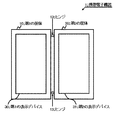
- FIG. 2 is a diagram illustrating an example of the appearance of the mobile electronic device 1 according to the present embodiment.
- the portable electronic device 1 includes a first housing 10 and a second housing 20, and each housing is connected by a hinge 13.
- the portable electronic device 1 can also fold or open the first housing 10 and the second housing 20.
- FIG. 2 shows a state in which two housings are opened.
- a first display device 30 and a second display device 31 are installed in each of the first housing 10 and the second housing 20.
- the portable electronic device 1 can take two forms when the casing is opened. In the first form, the user can view the first display device 30 and the second display device 31 simultaneously.
- the second form is a form in which the back surfaces of the first casing 10 and the second casing 20 are brought into contact with each other. In the second mode, the user cannot view the first display device 30 and the second display device 31 at the same time.
- the display device that the user desires to use can be determined.
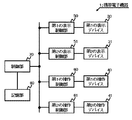
- FIG. 3 is a diagram illustrating an example of the internal configuration of the mobile electronic device 1.
- the portable electronic device 3 includes a first display device 30, a second display device 31, a first operation device 40, a second operation device 41, a first display control unit 50, a second display device
- the display control unit 51 includes a first operation control unit 60, a second operation control unit 61, a control unit 70, and a storage unit 80.
- FIG. 3 only the modules related to the portable electronic device 1 according to the present embodiment are described for simplicity.
- the first display device 30 is, for example, a liquid crystal panel or the like, and provides information to a user who operates the mobile electronic device 1.
- the first display control unit 50 is a driver corresponding to the first display device 30, and drives the first display device 30 according to an instruction from the control unit 70.
- the functions of the second display device 31 and the second display control unit 51 are the same as the functions of the first display device 30 and the first display control unit 50.
- the first operation device 40 is, for example, a touch panel or the like, and accepts a user's operation on the portable electronic device 1.
- the first operation control unit 60 is a driver corresponding to the first operation device 40, and outputs information related to user operations to the control unit 70.
- the functions of the second operation device 41 and the second operation control unit 61 are the same as the functions of the first operation device 40 and the first operation control unit 60. Note that the first operation device 40, the first operation control unit 60, the second operation device 41, and the second operation control unit 61 correspond to the contact detection unit 103 described above.
- the control unit 70 controls each unit shown in FIG. 3 and controls the entire portable electronic device 1.
- the control unit 70 determines a display device to be used when the user operates the portable electronic device 1 based on information obtained from the first operation control unit 60 or the second operation control unit 61. That is, the control unit 70 validates either the first display device 30 or the second display device 31 based on information obtained from the first operation control unit 60 or the second operation control unit 61. To decide.
- the control unit 70 can be realized by, for example, a CPU (Central Processing Unit). Furthermore, the control unit 70 can also be realized by a computer program that causes a computer mounted on the portable electronic device 1 to execute processing of the control unit 70 described in detail later using the hardware thereof.
- a CPU Central Processing Unit
- the control unit 70 can also be realized by a computer program that causes a computer mounted on the portable electronic device 1 to execute processing of the control unit 70 described in detail later using the hardware thereof.
- the storage unit 80 stores data necessary for the operation of the mobile electronic device 1 and programs to be executed by the CPU.
- FIG. 4 is a flowchart showing an example of the operation of the mobile electronic device 1.
- step S01 the control unit 70 determines the presence or absence of contact on the first operation device 40.
- step S01, Yes branch the control unit 70 enables the first display device 30 (step S02).
- control unit 70 determines the presence or absence of contact with the second operation device 41 (step S03).
- control unit 70 enables the second display device 31 (step S04).
- step S03 If the user is not in contact with the second operation device 41 (step S03, No branch), the control unit 70 repeats the process of step S01.
- the mobile electronic device 1 determines a display device to be activated according to whether the user has touched either the first operation device 40 or the second operation device 41. .
- the display device to be activated is determined based on whether the user has touched either the first operation device 40 or the second operation device 41. Yes. At that time, in the portable electronic device 1, there is no particular limitation on the number of fingers that touch the operation device, but normally, contact with one finger is scheduled (contact with a single object is scheduled). )
- the portable electronic device 1 when used in the first form as shown in FIG. 2 (the state in which the first housing 10 and the second housing 20 can be viewed simultaneously), for example, the first hand This is because it is considered a normal operation to hold the first housing 10 and touch the second display device 31 with the right hand.
- FIG. 5 is a diagram illustrating an example when the mobile electronic device 1 is viewed from the side.
- the state shown in FIG. 5 corresponds to the above-described second form.
- the user's finger often touches a display device (operation device) located on the back of the display device that the user is viewing. More specifically, in order to operate the portable electronic device 1 as shown in FIG. 5, the user often touches an operation device on a side different from the side on which a plurality of fingers are in contact.
- a display device operation device
- the operation device detects the presence or absence of contact with a plurality of fingers (a plurality of objects), and determines the display device to be activated based on the detection result.
- a plurality of fingers a plurality of objects
- the display device determines the display device to be activated based on the detection result.
- contacting the operating device with a plurality of fingers is referred to as multipoint contact.
- the overall configuration and internal configuration of the portable electronic device 2 are not different from the content described using FIG. 2 and FIG.
- FIG. 6 is a flowchart showing an example of the operation of the mobile electronic device 2.
- step S ⁇ b> 11 the control unit 70 determines the presence or absence of multipoint contact on the first operation device 40.
- the control unit 70 enables the second display device 31 (step S12).
- step S11 If the user is not in multipoint contact with the first operating device 40 (step S11, No branch), the control unit 70 determines the presence or absence of multipoint contact in the second operating device 41 (step S13). When the user is in multipoint contact with the second operation device 41 (step S13, Yes branch), the control unit 70 enables the first display device 30 (step S14).
- step S13 If the user is not in multipoint contact with the second operation device 41 (step S13, No branch), the control unit 70 repeats the process of step S11.
- the portable electronic device 2 has a display device to be activated depending on whether the user makes multipoint contact with either the first operation device 40 or the second operation device 41. decide. That is, when the multi-point contact is detected in the operation device, it is considered that the user is operating the portable electronic device 2 in the second form shown in FIG. Therefore, in such a case, the display device on the side different from the operation device that has detected multipoint contact is validated.
- FIG. 7 is a flowchart showing an example of the operation of the mobile electronic device 3.
- the operation device on the side touched by the user is validated. For example, if the user has touched the first operating device 40 (step S21, Yes branch), the first operating device 40 is validated.
- FIG. 8 is a flowchart showing another example of the operation of the mobile electronic device 3. Or as demonstrated in 2nd Embodiment, you may validate the operation device of the side different from the side which detected multipoint contact.
- the mobile electronic device 3 determines an operation device to be activated according to whether the user has touched either the first operation device 40 or the second operation device 41. .
- the portable electronic device that determines the display device or the operation device to be activated according to the contact on the operation device has been described.
- the display device or the like to be activated can be determined not only by touching the operation device, but also by using an image recognition technique and a posture detection technique.
- the portable electronic device has a camera function, the display device or the operation device on the side that recognizes the human face can be validated.
- the portable electronic device when the portable electronic device includes an angular velocity sensor or the like and can detect the posture of the portable electronic device, the display device or the operation device on the side facing the direction opposite to the gravity direction is enabled. be able to.
- the operation device detects whether or not the user's finger has touched, but the device that detects the user's finger is separate from the operation device.
- each of the first housing 10 and the second housing 20 is provided with a contact sensor (such as an electrostatic sensor or a pressure sensor) or a hardware key, and can be obtained from these sensors and keys. Based on the information, the contact of the user's finger may be detected.
- a touch of a user's finger may be detected by mixing an operation device and a contact sensor.
- the first operation device 40 can be used to detect contact on the first display device 30 side
- a contact sensor can be used to detect contact on the second display device 31 side.
- the operation device is prepared corresponding to each display device, but it is not limited to such a form.
- the first operation device 40 exists, but the second operation device 41 may not exist. In this case, it is not necessary to determine an operation device to be activated.
- the display device to be activated since the display device to be activated needs to be determined, the display device to be activated is determined by the method described in the first or second embodiment.
- [Form 1] It is as the portable electronic device which concerns on the above-mentioned 1st viewpoint.
- [Form 2] The portable electronic device according to mode 1, wherein the control unit validates the first display device when the contact detection unit detects contact by a single object in the first housing.
- [Form 3] The portable electronic device according to mode 1 or 2, wherein the control unit enables the second display device when the contact detection unit detects contact by a plurality of objects in the first housing.
- the said control part is a portable electronic device as described in any one of the form 1 thru
- the control unit includes a display disposed in the casing in which the contact detection unit detects contact with a single object when the first and second casings form the first form. Activate the device or operation device, When the first and second casings form the second form, the display device is disposed in a casing different from the casing in which the contact detection unit detects contact by a plurality of objects. Or the portable electronic device of the form 7 which makes an operation device effective. [Form 9] It is as the control method of the portable electronic device which concerns on the above-mentioned 2nd viewpoint.
- the control method of the portable electronic device according to the ninth aspect in which the first display device is validated when the contact detection step detects contact by a single object in the first housing.
- the control of the portable electronic device according to the ninth or tenth aspect that enables the second display device Method.
- the control of the portable electronic device according to the ninth or tenth aspect that enables the second display device Method.
- the control of the portable electronic device according to the ninth or tenth aspect that enables the second display device Method.
- the device determination process according to the twelfth aspect wherein the first display device is enabled when the contact detection process detects a contact by a single object in the first casing.
- the second display device is validated when the contact detection process detects contact by a plurality of objects in the first housing.
Landscapes
- Engineering & Computer Science (AREA)
- Theoretical Computer Science (AREA)
- General Engineering & Computer Science (AREA)
- Human Computer Interaction (AREA)
- Physics & Mathematics (AREA)
- General Physics & Mathematics (AREA)
- Multimedia (AREA)
- Computer Graphics (AREA)
- Computer Hardware Design (AREA)
- User Interface Of Digital Computer (AREA)
- Controls And Circuits For Display Device (AREA)
- Computer Vision & Pattern Recognition (AREA)
- Signal Processing (AREA)
Abstract
Priority Applications (4)
| Application Number | Priority Date | Filing Date | Title |
|---|---|---|---|
| EP14757113.7A EP2963639A4 (fr) | 2013-02-27 | 2014-02-25 | Dispositif électronique portatif, son procédé de commande, et programme |
| CN201480010709.8A CN105074810A (zh) | 2013-02-27 | 2014-02-25 | 便携电子装置、控制便携电子装置的方法和程序 |
| JP2015502934A JP6304232B2 (ja) | 2013-02-27 | 2014-02-25 | 携帯電子機器、その制御方法及びプログラム |
| US14/764,649 US20150370523A1 (en) | 2013-02-27 | 2014-02-25 | Portable electronic apparatus, method for controlling the same, and program |
Applications Claiming Priority (2)
| Application Number | Priority Date | Filing Date | Title |
|---|---|---|---|
| JP2013037506 | 2013-02-27 | ||
| JP2013-037506 | 2013-02-27 |
Publications (1)
| Publication Number | Publication Date |
|---|---|
| WO2014132965A1 true WO2014132965A1 (fr) | 2014-09-04 |
Family
ID=51428229
Family Applications (1)
| Application Number | Title | Priority Date | Filing Date |
|---|---|---|---|
| PCT/JP2014/054564 Ceased WO2014132965A1 (fr) | 2013-02-27 | 2014-02-25 | Dispositif électronique portatif, son procédé de commande, et programme |
Country Status (5)
| Country | Link |
|---|---|
| US (1) | US20150370523A1 (fr) |
| EP (1) | EP2963639A4 (fr) |
| JP (1) | JP6304232B2 (fr) |
| CN (1) | CN105074810A (fr) |
| WO (1) | WO2014132965A1 (fr) |
Families Citing this family (4)
| Publication number | Priority date | Publication date | Assignee | Title |
|---|---|---|---|---|
| CN105164608B (zh) * | 2013-03-22 | 2018-09-28 | 惠普发展公司,有限责任合伙企业 | 手持电子设备 |
| US10340580B2 (en) * | 2017-03-22 | 2019-07-02 | Motorola Mobility Llc | Attenuation of cavity modes on foldable wireless electronic devices using prescribed dimensions |
| US10243259B2 (en) | 2017-03-22 | 2019-03-26 | Motorola Mobility Llc | Attenuation of cavity modes on foldable wireless electronic devices using capacitive coupling |
| US10608320B2 (en) | 2017-03-22 | 2020-03-31 | Motorola Mobility Llc | Attenuation of cavity modes on foldable wireless electronic devices using ohmic contacts |
Citations (10)
| Publication number | Priority date | Publication date | Assignee | Title |
|---|---|---|---|---|
| JP2005150936A (ja) * | 2003-11-12 | 2005-06-09 | Sanyo Electric Co Ltd | 通信装置 |
| JP2008532185A (ja) * | 2005-03-04 | 2008-08-14 | アップル インコーポレイテッド | マルチタッチセンシングデバイスを持つハンドヘルド電子装置 |
| JP2009005039A (ja) * | 2007-06-21 | 2009-01-08 | Casio Hitachi Mobile Communications Co Ltd | 電子機器及びプログラム |
| JP2009267809A (ja) | 2008-04-25 | 2009-11-12 | Ntt Docomo Inc | 携帯装置及びその制御方法 |
| JP2010193355A (ja) * | 2009-02-20 | 2010-09-02 | Nec Corp | 携帯電子機器 |
| JP2011109457A (ja) * | 2009-11-18 | 2011-06-02 | Nec Corp | 携帯電子機器、その制御方法及びその制御プログラム |
| WO2011099581A1 (fr) * | 2010-02-12 | 2011-08-18 | 京セラ株式会社 | Dispositif électronique portable |
| WO2012049942A1 (fr) * | 2010-10-13 | 2012-04-19 | Necカシオモバイルコミュニケーションズ株式会社 | Dispositif de terminal mobile et procédé d'affichage pour un panneau tactile dans un dispositif de terminal mobile |
| JP2013047866A (ja) * | 2011-08-29 | 2013-03-07 | Kyocera Corp | 携帯電子機器 |
| WO2013047182A1 (fr) * | 2011-09-27 | 2013-04-04 | Necカシオモバイルコミュニケーションズ株式会社 | Dispositif électronique portable, procédé de traitement d'opération tactile et programme |
Family Cites Families (10)
| Publication number | Priority date | Publication date | Assignee | Title |
|---|---|---|---|---|
| KR100405018B1 (ko) * | 1998-02-25 | 2003-11-07 | 샤프 가부시키가이샤 | 표시 장치 |
| JP2005346244A (ja) * | 2004-06-01 | 2005-12-15 | Nec Corp | 情報表示装置及びその操作方法 |
| CN101471997B (zh) * | 2007-12-28 | 2013-07-03 | 比亚迪股份有限公司 | 双面系统手机和控制方法 |
| US8417297B2 (en) * | 2009-05-22 | 2013-04-09 | Lg Electronics Inc. | Mobile terminal and method of providing graphic user interface using the same |
| KR20110081040A (ko) * | 2010-01-06 | 2011-07-13 | 삼성전자주식회사 | 투명 디스플레이를 구비한 휴대단말에서 컨텐츠 운용 방법 및 장치 |
| JP5359958B2 (ja) * | 2010-03-29 | 2013-12-04 | 株式会社デンソー | ヘッドアップディスプレイ装置の製造方法 |
| JP5679891B2 (ja) * | 2011-04-26 | 2015-03-04 | 京セラ株式会社 | 携帯電子機器、制御方法および制御プログラム |
| CN103019554A (zh) * | 2011-09-20 | 2013-04-03 | 联想(北京)有限公司 | 命令识别方法及使用该方法的电子设备 |
| KR101899812B1 (ko) * | 2012-05-14 | 2018-09-20 | 엘지전자 주식회사 | 포터블 디바이스 및 그 제어 방법 |
| US9098991B2 (en) * | 2013-01-15 | 2015-08-04 | Fitbit, Inc. | Portable monitoring devices and methods of operating the same |
-
2014
- 2014-02-25 JP JP2015502934A patent/JP6304232B2/ja active Active
- 2014-02-25 EP EP14757113.7A patent/EP2963639A4/fr active Pending
- 2014-02-25 CN CN201480010709.8A patent/CN105074810A/zh active Pending
- 2014-02-25 US US14/764,649 patent/US20150370523A1/en not_active Abandoned
- 2014-02-25 WO PCT/JP2014/054564 patent/WO2014132965A1/fr not_active Ceased
Patent Citations (10)
| Publication number | Priority date | Publication date | Assignee | Title |
|---|---|---|---|---|
| JP2005150936A (ja) * | 2003-11-12 | 2005-06-09 | Sanyo Electric Co Ltd | 通信装置 |
| JP2008532185A (ja) * | 2005-03-04 | 2008-08-14 | アップル インコーポレイテッド | マルチタッチセンシングデバイスを持つハンドヘルド電子装置 |
| JP2009005039A (ja) * | 2007-06-21 | 2009-01-08 | Casio Hitachi Mobile Communications Co Ltd | 電子機器及びプログラム |
| JP2009267809A (ja) | 2008-04-25 | 2009-11-12 | Ntt Docomo Inc | 携帯装置及びその制御方法 |
| JP2010193355A (ja) * | 2009-02-20 | 2010-09-02 | Nec Corp | 携帯電子機器 |
| JP2011109457A (ja) * | 2009-11-18 | 2011-06-02 | Nec Corp | 携帯電子機器、その制御方法及びその制御プログラム |
| WO2011099581A1 (fr) * | 2010-02-12 | 2011-08-18 | 京セラ株式会社 | Dispositif électronique portable |
| WO2012049942A1 (fr) * | 2010-10-13 | 2012-04-19 | Necカシオモバイルコミュニケーションズ株式会社 | Dispositif de terminal mobile et procédé d'affichage pour un panneau tactile dans un dispositif de terminal mobile |
| JP2013047866A (ja) * | 2011-08-29 | 2013-03-07 | Kyocera Corp | 携帯電子機器 |
| WO2013047182A1 (fr) * | 2011-09-27 | 2013-04-04 | Necカシオモバイルコミュニケーションズ株式会社 | Dispositif électronique portable, procédé de traitement d'opération tactile et programme |
Non-Patent Citations (2)
| Title |
|---|
| See also references of EP2963639A4 |
| YUKI KAI: "MEDIAS W N-05E', First Impression", 20 February 2013 (2013-02-20), XP055292607, Retrieved from the Internet <URL:HTTP://WEB.ARCHIVE.ORG/WEB/20130223111308/HTTP://K-TAI.IMPRESS.CO.JP/DOCS/REVIEW/20130220_588422.HTML?> [retrieved on 20140519] * |
Also Published As
| Publication number | Publication date |
|---|---|
| JP6304232B2 (ja) | 2018-04-04 |
| CN105074810A (zh) | 2015-11-18 |
| EP2963639A1 (fr) | 2016-01-06 |
| EP2963639A4 (fr) | 2016-10-05 |
| JPWO2014132965A1 (ja) | 2017-02-02 |
| US20150370523A1 (en) | 2015-12-24 |
Similar Documents
| Publication | Publication Date | Title |
|---|---|---|
| KR102199806B1 (ko) | 곡형 디스플레이 모듈을 갖는 전자 장치 및 그 운용 방법 | |
| KR20250171243A (ko) | 전자 장치 및 전자 장치의 디스플레이 제어 방법 | |
| KR102120930B1 (ko) | 포터블 디바이스의 사용자 입력 방법 및 상기 사용자 입력 방법이 수행되는 포터블 디바이스 | |
| US10289258B2 (en) | Foldable portable device including different folded states | |
| JP6161078B2 (ja) | 表示領域エッジでのユーザ入力の検知 | |
| KR102085267B1 (ko) | 변환가능한 컴퓨팅 디바이스의 동작 상태를 변경하기 위한 가속도계 입력의 사용 | |
| JP6225911B2 (ja) | 情報処理装置、情報処理方法及びプログラム | |
| US11003328B2 (en) | Touch input method through edge screen, and electronic device | |
| KR102859432B1 (ko) | 전자 장치 및 전자 장치의 디스플레이 제어 방법 | |
| JP5846129B2 (ja) | 情報処理端末およびその制御方法 | |
| US10114481B2 (en) | Flexible display sensing | |
| US20150177972A1 (en) | Unlocking method and electronic device | |
| US20120249445A1 (en) | Electronic device | |
| WO2014157357A1 (fr) | Terminal d'information, procédé de commande d'affichage et programme associé | |
| KR20170059815A (ko) | 롤러블 이동 단말기 | |
| JP6304232B2 (ja) | 携帯電子機器、その制御方法及びプログラム | |
| KR102788918B1 (ko) | 터치 센서를 포함하는 전자 장치 | |
| KR102838574B1 (ko) | 전자 장치 및 전자 장치의 화면 캡쳐 운용 방법 | |
| KR102247667B1 (ko) | 플렉서블 디스플레이 장치 및 플렉서블 디스플레이 장치의 제어 방법. | |
| KR102559030B1 (ko) | 터치 패널을 포함하는 전자 장치 및 그 제어 방법 | |
| KR102501527B1 (ko) | 터치키를 포함하는 전자 장치 | |
| KR102719976B1 (ko) | 터치 입력에 기반한 동작 방법 및 그 전자 장치 | |
| EP2941860B1 (fr) | Procédé et appareil pour détecter la flexion d'un dispositif | |
| CN104777898B (zh) | 信息处理方法、设备和产品 | |
| KR20160000534U (ko) | 터치패드를 구비한 스마트폰 |
Legal Events
| Date | Code | Title | Description |
|---|---|---|---|
| WWE | Wipo information: entry into national phase |
Ref document number: 201480010709.8 Country of ref document: CN |
|
| 121 | Ep: the epo has been informed by wipo that ep was designated in this application |
Ref document number: 14757113 Country of ref document: EP Kind code of ref document: A1 |
|
| WWE | Wipo information: entry into national phase |
Ref document number: 14764649 Country of ref document: US |
|
| WWE | Wipo information: entry into national phase |
Ref document number: 2014757113 Country of ref document: EP |
|
| ENP | Entry into the national phase |
Ref document number: 2015502934 Country of ref document: JP Kind code of ref document: A |
|
| NENP | Non-entry into the national phase |
Ref country code: DE |