WO2014141704A1 - Procédé de présentation de contenu, dispositif de présentation de contenu et programme - Google Patents
Procédé de présentation de contenu, dispositif de présentation de contenu et programme Download PDFInfo
- Publication number
- WO2014141704A1 WO2014141704A1 PCT/JP2014/001410 JP2014001410W WO2014141704A1 WO 2014141704 A1 WO2014141704 A1 WO 2014141704A1 JP 2014001410 W JP2014001410 W JP 2014001410W WO 2014141704 A1 WO2014141704 A1 WO 2014141704A1
- Authority
- WO
- WIPO (PCT)
- Prior art keywords
- content
- user
- active time
- viewed
- time interval
- Prior art date
- Legal status (The legal status is an assumption and is not a legal conclusion. Google has not performed a legal analysis and makes no representation as to the accuracy of the status listed.)
- Ceased
Links
Images






Classifications
-
- H—ELECTRICITY
- H04—ELECTRIC COMMUNICATION TECHNIQUE
- H04N—PICTORIAL COMMUNICATION, e.g. TELEVISION
- H04N21/00—Selective content distribution, e.g. interactive television or video on demand [VOD]
- H04N21/40—Client devices specifically adapted for the reception of or interaction with content, e.g. set-top-box [STB]; Operations thereof
- H04N21/45—Management operations performed by the client for facilitating the reception of or the interaction with the content or administrating data related to the end-user or to the client device itself, e.g. learning user preferences for recommending movies, resolving scheduling conflicts
- H04N21/466—Learning process for intelligent management, e.g. learning user preferences for recommending movies
- H04N21/4661—Deriving a combined profile for a plurality of end-users of the same client, e.g. for family members within a home
-
- H—ELECTRICITY
- H04—ELECTRIC COMMUNICATION TECHNIQUE
- H04N—PICTORIAL COMMUNICATION, e.g. TELEVISION
- H04N21/00—Selective content distribution, e.g. interactive television or video on demand [VOD]
- H04N21/40—Client devices specifically adapted for the reception of or interaction with content, e.g. set-top-box [STB]; Operations thereof
- H04N21/43—Processing of content or additional data, e.g. demultiplexing additional data from a digital video stream; Elementary client operations, e.g. monitoring of home network or synchronising decoder's clock; Client middleware
- H04N21/442—Monitoring of processes or resources, e.g. detecting the failure of a recording device, monitoring the downstream bandwidth, the number of times a movie has been viewed, the storage space available from the internal hard disk
- H04N21/44213—Monitoring of end-user related data
- H04N21/44222—Analytics of user selections, e.g. selection of programmes or purchase activity
- H04N21/44224—Monitoring of user activity on external systems, e.g. Internet browsing
-
- G—PHYSICS
- G06—COMPUTING OR CALCULATING; COUNTING
- G06Q—INFORMATION AND COMMUNICATION TECHNOLOGY [ICT] SPECIALLY ADAPTED FOR ADMINISTRATIVE, COMMERCIAL, FINANCIAL, MANAGERIAL OR SUPERVISORY PURPOSES; SYSTEMS OR METHODS SPECIALLY ADAPTED FOR ADMINISTRATIVE, COMMERCIAL, FINANCIAL, MANAGERIAL OR SUPERVISORY PURPOSES, NOT OTHERWISE PROVIDED FOR
- G06Q30/00—Commerce
- G06Q30/06—Buying, selling or leasing transactions
- G06Q30/0601—Electronic shopping [e-shopping]
- G06Q30/0631—Recommending goods or services
-
- H—ELECTRICITY
- H04—ELECTRIC COMMUNICATION TECHNIQUE
- H04N—PICTORIAL COMMUNICATION, e.g. TELEVISION
- H04N21/00—Selective content distribution, e.g. interactive television or video on demand [VOD]
- H04N21/20—Servers specifically adapted for the distribution of content, e.g. VOD servers; Operations thereof
- H04N21/25—Management operations performed by the server for facilitating the content distribution or administrating data related to end-users or client devices, e.g. end-user or client device authentication, learning user preferences for recommending movies
- H04N21/258—Client or end-user data management, e.g. managing client capabilities, user preferences or demographics, processing of multiple end-users preferences to derive collaborative data
- H04N21/25866—Management of end-user data
- H04N21/25891—Management of end-user data being end-user preferences
-
- H—ELECTRICITY
- H04—ELECTRIC COMMUNICATION TECHNIQUE
- H04N—PICTORIAL COMMUNICATION, e.g. TELEVISION
- H04N21/00—Selective content distribution, e.g. interactive television or video on demand [VOD]
- H04N21/20—Servers specifically adapted for the distribution of content, e.g. VOD servers; Operations thereof
- H04N21/25—Management operations performed by the server for facilitating the content distribution or administrating data related to end-users or client devices, e.g. end-user or client device authentication, learning user preferences for recommending movies
- H04N21/262—Content or additional data distribution scheduling, e.g. sending additional data at off-peak times, updating software modules, calculating the carousel transmission frequency, delaying a video stream transmission, generating play-lists
- H04N21/26258—Content or additional data distribution scheduling, e.g. sending additional data at off-peak times, updating software modules, calculating the carousel transmission frequency, delaying a video stream transmission, generating play-lists for generating a list of items to be played back in a given order, e.g. playlist, or scheduling item distribution according to such list
-
- H—ELECTRICITY
- H04—ELECTRIC COMMUNICATION TECHNIQUE
- H04N—PICTORIAL COMMUNICATION, e.g. TELEVISION
- H04N21/00—Selective content distribution, e.g. interactive television or video on demand [VOD]
- H04N21/20—Servers specifically adapted for the distribution of content, e.g. VOD servers; Operations thereof
- H04N21/25—Management operations performed by the server for facilitating the content distribution or administrating data related to end-users or client devices, e.g. end-user or client device authentication, learning user preferences for recommending movies
- H04N21/266—Channel or content management, e.g. generation and management of keys and entitlement messages in a conditional access system, merging a VOD unicast channel into a multicast channel
- H04N21/2668—Creating a channel for a dedicated end-user group, e.g. insertion of targeted commercials based on end-user profiles
-
- H—ELECTRICITY
- H04—ELECTRIC COMMUNICATION TECHNIQUE
- H04N—PICTORIAL COMMUNICATION, e.g. TELEVISION
- H04N21/00—Selective content distribution, e.g. interactive television or video on demand [VOD]
- H04N21/40—Client devices specifically adapted for the reception of or interaction with content, e.g. set-top-box [STB]; Operations thereof
- H04N21/43—Processing of content or additional data, e.g. demultiplexing additional data from a digital video stream; Elementary client operations, e.g. monitoring of home network or synchronising decoder's clock; Client middleware
- H04N21/44—Processing of video elementary streams, e.g. splicing a video clip retrieved from local storage with an incoming video stream or rendering scenes according to encoded video stream scene graphs
- H04N21/44008—Processing of video elementary streams, e.g. splicing a video clip retrieved from local storage with an incoming video stream or rendering scenes according to encoded video stream scene graphs involving operations for analysing video streams, e.g. detecting features or characteristics in the video stream
-
- H—ELECTRICITY
- H04—ELECTRIC COMMUNICATION TECHNIQUE
- H04N—PICTORIAL COMMUNICATION, e.g. TELEVISION
- H04N21/00—Selective content distribution, e.g. interactive television or video on demand [VOD]
- H04N21/40—Client devices specifically adapted for the reception of or interaction with content, e.g. set-top-box [STB]; Operations thereof
- H04N21/45—Management operations performed by the client for facilitating the reception of or the interaction with the content or administrating data related to the end-user or to the client device itself, e.g. learning user preferences for recommending movies, resolving scheduling conflicts
- H04N21/4508—Management of client data or end-user data
- H04N21/4532—Management of client data or end-user data involving end-user characteristics, e.g. viewer profile, preferences
-
- H—ELECTRICITY
- H04—ELECTRIC COMMUNICATION TECHNIQUE
- H04N—PICTORIAL COMMUNICATION, e.g. TELEVISION
- H04N21/00—Selective content distribution, e.g. interactive television or video on demand [VOD]
- H04N21/40—Client devices specifically adapted for the reception of or interaction with content, e.g. set-top-box [STB]; Operations thereof
- H04N21/45—Management operations performed by the client for facilitating the reception of or the interaction with the content or administrating data related to the end-user or to the client device itself, e.g. learning user preferences for recommending movies, resolving scheduling conflicts
- H04N21/454—Content or additional data filtering, e.g. blocking advertisements
- H04N21/4545—Input to filtering algorithms, e.g. filtering a region of the image
- H04N21/45457—Input to filtering algorithms, e.g. filtering a region of the image applied to a time segment
-
- H—ELECTRICITY
- H04—ELECTRIC COMMUNICATION TECHNIQUE
- H04N—PICTORIAL COMMUNICATION, e.g. TELEVISION
- H04N21/00—Selective content distribution, e.g. interactive television or video on demand [VOD]
- H04N21/40—Client devices specifically adapted for the reception of or interaction with content, e.g. set-top-box [STB]; Operations thereof
- H04N21/45—Management operations performed by the client for facilitating the reception of or the interaction with the content or administrating data related to the end-user or to the client device itself, e.g. learning user preferences for recommending movies, resolving scheduling conflicts
- H04N21/466—Learning process for intelligent management, e.g. learning user preferences for recommending movies
- H04N21/4667—Processing of monitored end-user data, e.g. trend analysis based on the log file of viewer selections
-
- H—ELECTRICITY
- H04—ELECTRIC COMMUNICATION TECHNIQUE
- H04N—PICTORIAL COMMUNICATION, e.g. TELEVISION
- H04N21/00—Selective content distribution, e.g. interactive television or video on demand [VOD]
- H04N21/40—Client devices specifically adapted for the reception of or interaction with content, e.g. set-top-box [STB]; Operations thereof
- H04N21/47—End-user applications
- H04N21/482—End-user interface for programme selection
- H04N21/4825—End-user interface for programme selection using a list of items to be played back in a given order, e.g. playlists
-
- H—ELECTRICITY
- H04—ELECTRIC COMMUNICATION TECHNIQUE
- H04N—PICTORIAL COMMUNICATION, e.g. TELEVISION
- H04N21/00—Selective content distribution, e.g. interactive television or video on demand [VOD]
- H04N21/80—Generation or processing of content or additional data by content creator independently of the distribution process; Content per se
- H04N21/83—Generation or processing of protective or descriptive data associated with content; Content structuring
- H04N21/84—Generation or processing of descriptive data, e.g. content descriptors
- H04N21/8405—Generation or processing of descriptive data, e.g. content descriptors represented by keywords
-
- H—ELECTRICITY
- H04—ELECTRIC COMMUNICATION TECHNIQUE
- H04N—PICTORIAL COMMUNICATION, e.g. TELEVISION
- H04N21/00—Selective content distribution, e.g. interactive television or video on demand [VOD]
- H04N21/80—Generation or processing of content or additional data by content creator independently of the distribution process; Content per se
- H04N21/83—Generation or processing of protective or descriptive data associated with content; Content structuring
- H04N21/845—Structuring of content, e.g. decomposing content into time segments
- H04N21/8456—Structuring of content, e.g. decomposing content into time segments by decomposing the content in the time domain, e.g. in time segments
Definitions
- the present invention relates to a content presentation method, apparatus, and program for presenting content according to user preferences and situations.
- e-commerce sites and content distribution sites sites that distribute content such as news articles, videos or games
- This recommendation function extracts information about the user's interests and preferences from the user's purchase history, browsing history or viewing history, etc., and recommends items and content that the user is likely to be interested based on the extracted information That's it.
- many Web sites identify an individual by performing user login authentication or by using a cookie function of a Web browser.
- a machine for personal authentication is attached to the TV, individuals can be identified. For example, fingerprint authentication, face recognition, voice recognition, etc. can be considered.
- fingerprint authentication face recognition
- voice recognition voice recognition
- a button for personal identification it is a burden for the user to operate such a button before viewing on a television with a passive viewing style in the living room.
- Patent Document 1 There has been known a content selection viewing device for viewing (see Patent Document 1).
- the invention disclosed in Patent Document 1 includes a receiving unit, a content metadata group storage unit, a viewing history recording unit, a user preference data generation unit, a user preference data recording unit, an input unit, A search filtering unit, an input switching output unit, and an MPEG decoder unit are provided.
- a program information providing device that predicts a viewable time zone, which is a time zone in which a user can view a TV program, for each day of the week (see Patent Document 2).
- the program information providing apparatus analyzes user preferences.
- the program information providing apparatus predicts a viewable time zone, which is a time zone in which the user can view the television program, for each day of the week.
- the program information providing apparatus can be viewed by the user during the viewable time zone of each day of the week based on the analyzed preference information, the predicted viewable time zone information, and the program information of the broadcast TV program.
- a TV program suitable for the user's preference is selected.
- the user terminal device transmits information on the television program suitable for the selected user's preference to the user terminal device. Subsequently, the user terminal device displays the transmitted program guide information on the television receiver. Thereby, information on a TV program that can be viewed can be provided to the user.
- Patent Documents 1 and 2 require further improvement.
- one aspect of the present invention is a content presentation method in a content presentation apparatus that presents content to a user, and collects viewing history of a user viewing the content output to an output unit
- a history collecting step analyzing the collected viewing history, determining an active time period in which the output unit is in a state of being watched, and metadata provided to the content viewed by the user
- a data collection step to collect, an analysis step of analyzing the collected metadata and extracting words representing the viewed content, and viewing in the target active time interval for each determined active time interval
- a generation step a current time is acquired, an active time interval including the acquired current time is specified, and a prediction is a length from the acquired current time to a time at which the specified active time interval ends
- a calculation step of calculating viewing time and selecting content based on the user profile generated corresponding to the specified active time interval so as to match the calculated predicted viewing time, and the selected
- a user profile is generated for each active time interval, so that content that matches the preferences of individual users can be selected, and a playlist that matches the lifestyle patterns of individual users can be selected. Can be generated.
- the figure which shows the structure of the whole system in this Embodiment The block diagram which shows the structure of the content presentation apparatus in this Embodiment
- the figure which shows the example of the active time area in this Embodiment The figure which shows the example of the play list in this Embodiment
- disassembly in this Embodiment The figure which shows the independent component analysis in this Embodiment
- the figure which shows the example of the moving image content information in this Embodiment The figure which shows schematically the specific example of profile vector calculation in this Embodiment.
- Patent Documents 1 and 2 present content to the viewer on the current day of the week based on the viewing history for each day of the week. Therefore, it is difficult to handle moving image viewing via the Internet (for example, moving image viewing on demand). For this reason, in the configurations described in Patent Documents 1 and 2, when viewing moving image content via the Internet or the like, the user selects the next moving image content to be viewed every time reproduction of one moving image content ends. There was a problem that it was necessary.
- Patent Document 1 the device described in the above-mentioned Patent Document 1 is described that content suitable for the lifestyle of each viewer is presented.
- a plurality of viewers share a single television
- there is no description of a technique for identifying individual viewers there is no description of a technique for identifying individual viewers.
- Patent Document 2 it is only demonstrated supposing the case where there is one viewer. Therefore, it is difficult to apply the apparatuses described in Patent Documents 1 and 2 when a plurality of viewers share one television set.
- TV viewing patterns are determined to some extent in many homes. For example, in one home, a father watches a news program early in the morning on weekdays. The mother then watches the morning information program. When a 4-year-old boy wakes up, he watches a program for young children. When part of the family is absent due to work or attending school, grandpa and grandma watch information programs. In the evening, children watch anime for children. Grandpa and grandma then watch their favorite travel or gourmet program. When I get home around 10pm, my dad watches a news program or business information program. The program to be watched differs depending on the day. However, the life patterns of each individual are determined to some extent. For this reason, it is considered that there is a certain fixed viewing pattern between the main viewer at each time of the day and the genre of the content viewed by the viewer.
- One aspect according to the present disclosure is a content presentation method in a content presentation apparatus that presents content to a user, the history collection step collecting the viewing history of the user viewing the content output to the output unit, and the collected Analyzing a viewing history, determining an active time section in which the output unit is viewed, a data collecting step for collecting metadata attached to content viewed by the user, and the collection Analyzing the extracted metadata and extracting words representing the viewed content, and for each of the determined active time intervals, the extracted corresponding to the content viewed in the target active time interval
- a profile generation step to generate a user profile based on the word and the current time
- an output step of outputting the selected content to the output unit in a playback order defined in the generated playlist may be further included.
- the user can passively view moving image content including a net moving image that can be viewed on demand via the Internet, like a television broadcast program.
- the profile generation step generates a matrix having the tf-idf value of the extracted word as a row element for each column corresponding to the determined active time interval; Generating a latent profile vector as the user profile for each of the active time intervals from the generated matrix using singular value decomposition or independent component analysis.
- the playlist generation step includes a step of identifying selection candidate content that can be viewed at the acquired current time, and a word representing the identified selection candidate content from metadata assigned to the identified selection candidate content A potential video content vector using a singular value decomposition or independent component analysis from the generated vector, a step of generating a vector whose elements are tf-idf values of the extracted word, Generating, comparing the potential video content vector of the selection candidate content with the latent profile vector, and selecting the content to be put on the playlist from the selection candidate content based on the similarity of the compared vectors And the step of performing.
- the potential moving image content vector of the selection candidate content and the latent profile vector are respectively compared, and the content to be put on the playlist is selected from the selection candidate content based on the similarity of the compared vectors. Therefore, even when there are few common words between the word representing the content viewed in the active time section and the word representing the specified selection candidate content, the content belonging to the same genre can be selected with high accuracy. .
- the broadcast time of the content viewed by the user exceeds a time interval in which the output unit is in a state of being viewed and is equal to or less than a predetermined threshold value
- the content viewed by the user may not be collected as the viewing history.
- content that has been viewed by the user but has been stopped for a short time below a predetermined threshold is not included in the viewing history. Therefore, noise related to the viewing history can be reduced.
- the broadcast time of the content viewed by the user is less than or equal to the time interval in which the output unit is viewed, the content may be viewed until the end. Therefore, in that case, the content is collected as a viewing history.
- the output unit may be a television receiver.
- the history collection step after the user changes the channel, if the user returns from the changed channel to the channel before the change within a predetermined threshold time, the content is changed while the channel after the change is continued. Except for the case where the broadcast of the user is terminated, the channel change by the user may not be collected as the viewing history.
- channel changes such as zapping by the user are not included in the viewing history. Therefore, noise related to channel change can be reduced.
- the channel change is collected as a viewing history.
- the playlist generation step may include a step of counting the number of times that the selected content is included in the playlist and has not been viewed by the user.
- the playlist generation step may not include the content whose counted number reaches a predetermined number in the playlist even when the content is selected based on the user profile.
- a content presentation device which includes an output unit that outputs content, a history collection unit that collects a viewing history of a user who views the content output to the output unit, and the collected content Analyzing a viewing history and determining an active time section in which the output unit is viewed; a data collection unit collecting metadata attached to content viewed by the user; and the collection Analyzing the generated metadata and extracting a word representing the viewed content, and for each of the determined active time intervals, the extracted corresponding to the content viewed in the target active time interval
- a profile generation unit that generates a user profile based on the acquired word, and an active time that acquires the current time and includes the acquired current time
- a calculation unit that specifies a section and calculates a predicted viewing time that is a length from the acquired current time to a time at which the specified active time section ends, and is adapted to the calculated predicted viewing time
- a playlist generating unit that selects content based on the user profile generated corresponding to the specified active time interval and generates a playlist that
- Another aspect according to the present disclosure is a program for controlling a content presentation device that presents content to a user, and collecting a viewing history of a user viewing the content output to an output unit in a computer of the content presentation device
- a history collecting step analyzing the collected viewing history, determining an active time period in which the output unit is in a state of being watched, and metadata provided to the content viewed by the user
- a data collection step to collect, an analysis step of analyzing the collected metadata and extracting words representing the viewed content, and viewing in the target active time interval for each determined active time interval
- a profile generation step acquiring a current time, specifying an active time interval including the acquired current time, and a length from the acquired current time to a time at which the specified active time interval ends.
- a recording medium such as a method, an integrated circuit, a computer program, or a computer-readable CD-ROM, and the method, the integrated circuit, the computer program, and the recording medium. You may implement
- FIG. 1 is a diagram showing a configuration of the entire system in the present embodiment.
- a device 102 having a function of connecting to a network is connected to an external server apparatus 101 via the network.
- Data transmission / reception such as transmission / reception of a program, transmission / reception of data related to a user, transmission / reception of control data for controlling the apparatus 102 is performed between the device 102 and the server apparatus 101 via a network.
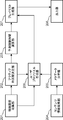
- FIG. 2 is a block diagram showing the configuration of the content presentation device in the present embodiment.
- the content presentation apparatus includes a viewing history collection unit 201, an active time interval determination unit 202, a predicted viewing time calculation unit 203, a content information collection unit 204, a metadata analysis unit 205, a user A profile generation unit 206, a playlist generation unit 207, and an output unit 208 are provided.
- the output unit 208 outputs various information.
- the output unit 208 receives a television broadcast program (content) and displays the received television broadcast program.
- the output unit 208 displays moving image content acquired on demand via the Internet.
- the output unit 208 is a television receiver in this embodiment.
- the output unit 208 may be a display device of a personal computer.
- the output unit 208 may be a portable terminal such as a tablet or a so-called smartphone.
- the viewing history collection unit 201 collects viewing history of a user who views content displayed on the output unit 208 when the output unit 208 is turned on.
- the viewing history collection unit 201 includes a storage device such as a hard disk or a semiconductor memory.
- the viewing history collection unit 201 stores the time (viewing start time and viewing end time) when the user viewed the content displayed on the output unit 208.
- the viewing history collection unit 201 stores a title of a content such as a TV broadcast program or Internet video viewed by the user.
- the viewing history collection unit 201 further stores the time when the channel of the output unit 208 is switched by the user.
- Content information collection unit 204 collects metadata attached to content.
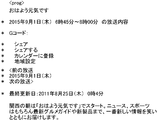
- the metadata is text data provided by an electronic program guide (EPG) if the content is a television broadcast program, for example (see FIG. 7 described later).
- EPG electronic program guide
- the metadata is text data added to the net moving image and describing the net moving image.
- the content information collection unit 204 collects and stores metadata attached to all content displayed on the output unit 208 and viewed by the user.
- the content information collection unit 204 includes a storage device such as a hard disk or a semiconductor memory.
- the viewing history collection unit 201 and the content information collection unit 204 may share a storage device.
- the metadata analysis unit 205 analyzes the collected metadata.
- the metadata analysis unit 205 performs morphological analysis on the collected metadata and extracts words.
- the metadata analysis unit 205 extracts words (index words) including specific parts of speech (nouns and verbs) from the analysis result of the morphological analysis.
- the metadata analysis unit 205 acquires the number of appearances of the extracted word (index word).
- the active time interval determining unit 202 analyzes the viewing history collected by the viewing history collecting unit 201 and determines the time during which the output unit 208 is viewed as the active time interval.
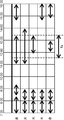
- FIG. 3 is a diagram illustrating an example of an active time interval in the present embodiment.
- the active time interval determining unit 202 estimates a time interval in which the output unit 208 is likely to be turned on. Specifically, as shown in FIG. 3, for example, the viewing history collection unit 201 records the time when the power is turned on and the time when the power is turned off (and the time when the channel is switched) of the output unit 208. To do.
- the active time interval determination unit 202 specifies a time with a high probability that the power of the output unit 208 is turned on in a certain day of the week (however, in the present embodiment, the day of the week is not specified). To do.
- the active time section determination unit 202 specifies the time by scanning 24 hours a day, for example, at 10-minute intervals. In FIG. 3, there is a time around 12:30 as one of the times with a high probability that the output unit 208 is turned on. Therefore, the active time section determination unit 202 specifies 12:30 as a time with a high probability that the output unit 208 is powered on.
- the active time interval determining unit 202 extracts all time interval logs from on to off when the power of the output unit 208 is turned on at the specified time. For example, in FIG. 3, Monday 11: 10-12: 40, Tuesday 11: 00-14: 00, Wednesday 11: 30-13: 30, Friday 11: 30-12: 30 Two time interval logs are extracted.
- the active time interval determination unit 202 calculates an average of start times (11:30 in the example of FIG. 3) and an average of end times (13:30 in the example of FIG. 3) from each time interval log. . In this way, the active time interval determination unit 202 determines 11: 30-13: 30, which is a time interval with a high probability that the power of the output unit 208 is turned on, as the active time interval Ta.
- the active time section determination unit 202 scans 24 hours a day at intervals of, for example, 10 minutes, first, the time when the output unit 208 is most likely to be turned on is identified and identified. The time interval centered on the time is determined as the first active time interval. Thereafter, the active time interval determining unit 202 specifies the time when the output unit 208 is most likely to be turned on next in the time zone excluding the determined active time interval, and the determined time is the center. Is determined as the second active time interval. In this way, the active time interval determining unit 202 determines the active time interval in 24 hours per day.
- the active time section determination unit 202 determines the time when the power of the output unit 208 is turned on, for example, 50% or more for one month in the user's viewing history collected by the viewing history collection unit 201. It may be determined that the time is turned on.
- the active time interval determining unit 202 determines the active time interval regardless of the day of the week. However, the present disclosure is not limited to this. The active time interval determining unit 202 may determine the active time intervals separately for weekends and holidays and weekdays.
- the active time interval determining unit 202 determines the time interval with a high probability that the power of the output unit 208 is turned on as the active time interval.
- the output unit 208 is shared by a plurality of users, as described above, the life patterns of individual users are considered to be substantially constant. For this reason, the user who views the output unit 208 during a specific active time period is always considered to be the same user. Therefore, it can be said that determining the active time interval specifies a user in a pseudo manner.
- the predicted viewing time calculation unit 203 acquires the current time when the power of the output unit 208 is switched from off to on.
- the predicted viewing time calculation unit 203 identifies an active time interval including the acquired current time among the active time intervals determined by the active time interval determination unit 202.
- the predicted viewing time calculation unit 203 has a length from the current time to the time when the user is predicted to interrupt viewing (the end time of the specified active time section) based on the specified active time section and the current time. A certain predicted viewing time is calculated.
- the user profile generation unit 206 (an example of a profile generation unit) generates a user profile for each active time interval determined by the active time interval determination unit 202.
- the user profile generation unit 206 calculates a tf-idf value from the number of appearances of the word (index word) extracted by the metadata analysis unit 205. The tf-idf value will be described later.
- the user profile generation unit 206 generates a vector (hereinafter referred to as “moving image content vector”) having the tf-idf value as an element for each content viewed by the user. Furthermore, the user profile generation unit 206 generates a vector whose element is the average value (addition average) of each element of all moving image content vectors viewed by the user in the target active time section. This vector is called a profile vector in the active time interval. The user profile generation unit 206 generates a profile vector as a user profile for the active time interval.
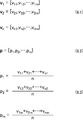
- FIG. 8 is a diagram schematically showing a specific example of profile vector calculation in the present embodiment.
- Expression (8.1) represents moving image content vectors v 1 to v n of n moving image contents viewed in the active active period.
- the profile vector p is expressed as in Expression (8.2).
- the user profile generation unit 206 sets each element of the profile vector p as an average value of each element of the moving image content vectors v 1 to v n as shown in Expression (8.3).
- the playlist generation unit 207 selects content to be recommended based on the user profile generated by the user profile generation unit 206 so as to match the predicted viewing time calculated by the predicted viewing time calculation unit 203.
- the playlist generation unit 207 generates a playlist that defines the playback order of the selected content.
- the playlist generation unit 207 outputs the generated playlist to the output unit 208 and presents it to the user.
- the playlist generation unit 207 selects content based on a vector space model well known in the field of information search.
- the playlist generation unit 207 selects content when the power of the output unit 208 is turned on. In this case, the playlist generation unit 207 first acquires the current time when the output unit 208 is turned on. Next, the playlist generation unit 207 specifies an active time section including the current time. Next, the playlist generation unit 207 acquires the profile vector of the identified active time section from the user profile generation unit 206.
- the playlist generation unit 207 includes video content information (metadata) between the TV broadcast program (video content) broadcast at the current time and the video content that can be acquired on demand at the current time via the Internet. To get.
- the playlist generation unit 207 generates a moving image content vector by the same method as described above.
- the playlist generation unit 207 may control the content information collection unit 204, the metadata analysis unit 205, and the user profile generation unit 206 to generate a moving image content vector by the same method as described above.
- the playlist generation unit 207 calculates the similarity between the moving image content vector and the profile vector of each moving image content.
- the playlist generation unit 207 calculates, for example, a cosine distance (also referred to as “cosine similarity”) as a similarity calculation method.
- the playlist generation unit 207 selects moving image content whose calculated similarity is greater than a predetermined threshold.
- the playlist generation unit 207 may control the output unit 208 in accordance with the generated playlist, and automatically output the content to the output unit 208 in the order of reproduction defined in the playlist.
- the playlist generation unit 207 may simply present the playlist to the output unit 208 without automatically outputting the content to the output unit 26. In this case, the user may view the content placed on the playlist by operating the output unit 208.
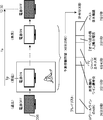
- FIG. 4 is a diagram showing an example of a play list in the present embodiment.
- the playlist generation unit 207 generates a playlist of the selected video content based on the predicted viewing time calculated by the predicted viewing time calculation unit 203. For example, as shown in FIG. 4, it is assumed that the current time Tp when the power of the output unit 208 is turned on is included in the active time interval Ta. In addition, it is assumed that the predicted viewing time from the current time Tp to the end time 12:30 of the active time interval Ta is 48 minutes 30 seconds and is calculated by the predicted viewing time calculation unit 203. In this case, the playlist generation unit 207 generates a playlist so as to conform to a preset time width around the end time of the predicted viewing time.
- the time width is set to 4 minutes.
- the playlist generation unit 207 generates a playlist so that the viewing time of the selected content falls within 46 minutes 30 seconds to 50 minutes 30 seconds.
- the total viewing time of all contents is 46 minutes 30 seconds.
- the time width may be set to 2% of the predicted viewing time.
- the playlist generation unit 207 basically puts content on a playlist in descending order of similarity.
- the similarity of “Loire wine ABC” is the highest.
- the similarity of “passenger aircraft wine screening” is high.
- “Paris Japan Expo” has a high degree of similarity.
- the similarity of “The Phantom of the Opera” stage practice is high.
- the “best Japanese dance” as the last content in the playlist of FIG. 4 is selected in consideration of the predicted viewing time and duration and the viewing time of the content. For example, since the viewing time of the content having the next highest similarity after “Phantom of the Opera” stage training is long, the total viewing time may not be within 50 minutes 30 seconds. In that case, the playlist generation unit 207 selects the content to be put on the playlist in consideration of the content viewing time. For example, in FIG. 4, the playlist generation unit 207 selects “Best Japanese Dance” with a viewing time of 7 minutes and 2 seconds and places it on the playlist.
- the content presentation device shown in FIG. 2 may be the device 102 in FIG. 1 or the server device 101 in FIG.
- the content presentation apparatus shown in FIG. 2 includes a microprocessor, ROM, RAM, hard disk, etc., not specifically shown.
- a computer program is stored in the ROM, RAM, and hard disk, and the server device performs its function when the microprocessor operates according to the program.
- the functional blocks of the viewing history collection unit 201, the active time section determination unit 202, the predicted viewing time calculation unit 203, the content information collection unit 204, the metadata analysis unit 205, the user profile generation unit 206, and the playlist generation unit 207 are as follows. It may be realized by software, a combination of a large scale integrated circuit (LSI) and software, or may be realized by LSI.
- LSI large scale integrated circuit
- the information that is the basis of recommendation is moving image content information expressed in text.
- the program information of the TV broadcast program is given by EPG.
- the program information in the EPG includes many proper nouns such as names of actors to appear, names of destinations for travel programs, and song names for music programs. Therefore, when there are a plurality of programs belonging to the same genre, there are cases where few words appear in the program information of these programs in common.
- the words that appear in the program information of “Good trip” are “Odawara, Sugawara, Haruko Sashiro”, and the words that appear in the program information of “Aki trip” are “Nanno Tenmangu, Wanda cafe, In some cases, it is “Kitaya Mitamura”.
- the user profile generation unit 206 when the user profile generation unit 206 can acquire a plurality (for example, 50 or 100) of video content viewed by the user in the active time section, the content information (metadata) of the video content is acquired. ) To estimate the potential topic of the video content. Specifically, in the above-described example, the user profile generation unit 206 may statistically extract a latent topic “travel” that is not included in the words appearing in the program information from the program information. Note that as the number of contents viewed increases, the estimation accuracy of the latent topic improves.
- the user profile generation unit 206 estimates a potential topic using one of the following three methods (A) clustering, (B) singular value decomposition, and (C) independent component analysis. .
- Clustering When a large number of moving image contents can be acquired, they can be divided into a plurality of clusters each including similar moving image contents. A technique for performing this automatically is called clustering. In this embodiment, clustering is performed using a well-known clustering algorithm. As an applicable clustering algorithm, three types of hierarchical clustering based on the K-means method, the aggregation method (Tree-clustering), and Newman modularity are applicable.
- the moving image content vector and the profile vector are expressed as a latent moving image content vector and a latent profile vector with each cluster as an element.
- the K-means method and the aggregation method it is necessary to give the number of clusters in advance. This is determined by trial and error.
- the user profile generation unit 206 may determine the optimum number of clusters by another calculation.
- Hierarchical clustering based on Newman's modularity automatically determines the appropriate number of clusters.
- this clustering algorithm is used when clustering nodes in the network. Therefore, if it is performed on the moving image content, it is necessary to link the moving image content in advance. For example, it is conceivable to establish a link depending on the similarity between moving image content vectors.
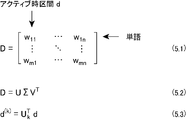
- FIG. 5 is a diagram showing singular value decomposition in the present embodiment.
- ⁇ There is a technique that, when some elements in a vector are related to each other, that is regarded as a potential feature.
- a typical method is based on singular value decomposition. This is what is called latent semantic indexing (LSI) in the field of information retrieval.
- LSI latent semantic indexing
- this matrix D When this matrix D is subjected to singular value decomposition, it is expressed as in equation (5.2).
- the matrix U is a unitary matrix of m rows and m columns.
- the matrix ⁇ is a real diagonal matrix with m rows and n columns. Note that the diagonal component of the matrix ⁇ is non-negative.
- the matrix V T is an adjoint matrix (complex conjugate and transposed matrix) of the unitary matrix V of n rows and n columns.
- the active time interval d is expressed as a vector d (k) as shown in Equation (5.3). Where r is the rank of the matrix D.
- the playlist generation unit 207 generates the latent profile vector d (k) .
- the playlist generation unit 207 also performs the processing for obtaining the expression (5.3) for the moving image content that can be viewed at the current time. Thereby, the playlist generation unit 207 generates a latent moving image content vector.
- FIG. 6 is a diagram illustrating independent component analysis in the present embodiment.
- ICA independent component analysis
- ICA is a famous technique for sound source separation in speech recognition.
- ICA can be used to extract latent topics in the fields of natural language processing and information retrieval.
- an m-by-n matrix D of Expression (6.1) having words appearing in the metadata of the moving image content as elements.
- the ICA such as formula (6.7), for each column corresponding to the topic t s, the words appearing in the metadata for the video content and elements, m rows and n columns of topic matrix S (signal source Think of it as a matrix.
- Topic t s of formula (6.7) is intended to be extracted by ICA from words appearing in the metadata, such as "travel", "food”, and the like "baseball”.
- a column vector t dj in the matrix D is a weight vector of index words (words) in each active time interval t d .
- Column vector t sj similarly in topic matrix S, defined as the weight vector of the index word (word) in each topic t s.
- the weight of the words in the column vector t dj is considered to be a mixture of weight t sj of words included in each topic t s, is expressed by equation (6.2).
- Matrix A in equation (6.2) is an unknown n ⁇ m mixing matrix. Equation (6.2) can be described as Equation (6.3) when considered in a matrix.
- ICA is a method of estimating the topic matrix S using only the active time interval-word matrix D when the topic matrix S and the mixing matrix A are unknown.
- the restoration matrix W and the restoration signal Y are obtained as shown in Expression (6.4).
- FastICA As a method for estimating these, there is FastICA. If the restoration signal Y is obtained, the latent profile matrix D hat is obtained by the equation (6.5).
- the playlist generating unit 207 For each active time slot, the playlist generating unit 207, by the equation (6.6), to produce a potential profile vector t d hat is a column vector of the matrix D hat.
- the playlist generation unit 207 also performs the process of obtaining Equation (6.6) for moving image content that can be viewed at the current time. Thereby, the playlist generation unit 207 generates a latent moving image content vector.
- the playlist generation unit 207 recommends video content using a latent topic in the same manner as when no latent topic is used. However, the playlist generation unit 207 uses a latent video content vector instead of a video content vector, and uses a latent profile vector instead of a profile vector.
- FIG. 9 is a diagram for explaining the vector representation of the vector space model in the present embodiment.
- FIG. 10 is a diagram illustrating an example of a document and an index word in the present embodiment.
- FIG. 11 is a diagram illustrating an example of a search question and a document in the present embodiment.
- FIG. 12 is a diagram for explaining the tf-idf value in the present embodiment. Specific examples of operations in the vector space model will be described with reference to FIGS.
- the vector space model is one of algorithms for performing information retrieval.
- the document and the search question are expressed by vectors as shown in the equation (9.1) in FIG.
- the document is represented by a matrix D as shown in Expression (9.2).
- Documents D 1 to D 5 correspond to content information (metadata) of moving image content.
- the metadata analysis unit 205 performs morphological analysis on the documents D 1 to D 5 to extract index words w 1 to w 10 .
- An index word is an important word for characterizing the content of a document.
- the document D 1 includes index words w 1 to w 3 and does not include other index words. Therefore, the vector representing the document D1 is [ 1 , 1 , 1 , 0, 0, 0, 0, 0, 0].
- Document D 2 includes index words w 1 to w 4 and does not include other index words. Thus, the vector representing the document D 2 will [1,1,1,1,0,0,0,0,0].
- a vector representing the document D 3 will [1,1,0,0,1,0,0,0,0,0].
- Vector representing the document D 4 will [1,1,0,1,0,1,1,1,0,0].
- Vector representing the document D 5 will [2,1,0,0,1,0,0,0,1,1].
- the matrix D representing the entire document is represented by the equation (11.2) in FIG.
- the tf-idf value is used as an element of the moving image content vector as described above, not the index word w i as it is.
- the tf-idf value is an index representing the importance of the index word w i in representing the contents of the document.
- the tf-idf value is calculated by the product of the word appearance frequency (tf) and the inverse document frequency (idf) as shown in the equation (12.1) in FIG.
- the word appearance frequency tf ij is the appearance frequency of the index word w i in the document Dj.
- the reverse document frequency idf ij is expressed by the equation (12.2) in FIG.
- reference numeral n denotes the number of documents of the entire
- code n i represents the number of documents including the index terms w i.
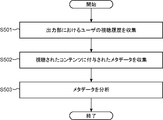
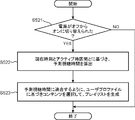
- FIG. 13 to FIG. 15 are flowcharts showing the processing flow of the content presentation device in the present embodiment, respectively.
- step S501 of FIG. 13 an example of a history collection step
- the viewing history collection unit 201 collects and stores the viewing history of the user viewing the content output to the output unit 208.
- step S502 an example of a data collection step
- the content information collection unit 204 collects and stores content information (metadata) of all the content displayed on the output unit 208 and viewed by the user.
- step S503 an example of an analysis step
- the metadata analysis unit 205 analyzes the collected metadata, extracts a predetermined word, and acquires the number of appearances of the extracted word.
- step S511 an example of a determination step
- the active time interval determining unit 202 analyzes the collected viewing history and determines an active time interval in which the output unit 208 is in the viewing state.
- step S512 profile generation step
- the user profile generation unit 206 generates a profile vector as a user profile for each active time interval.
- the process in FIG. 14 may be executed by the active time section determination unit 202 and the user profile generation unit 206 following the process in FIG.
- the active time interval determination unit 202 and the user profile generation unit 206 may execute the process of FIG. 14 while the output unit 208 is powered off.
- the predicted viewing time calculation unit 203 determines whether or not the power of the output unit 208 has been switched from off to on. If the power source of the output unit 208 is not switched from off to on (NO in step S521), this flow ends. On the other hand, when the power source of the output unit 208 is switched from off to on (YES in step S521), in step S522 (an example of a calculation step), the predicted viewing time calculation unit 203 acquires the current time, and acquires the current time and the current A predicted viewing time is calculated based on the active time interval including the time.
- step S523 an example of a playlist generation step
- the playlist generation unit 207 selects recommended content based on the user profile of the current active time period so as to match the predicted viewing time, Create a playlist.
- the content presentation device generates a playlist even if no information (in many cases, information about a family) about the user of the output unit 208 (TV in this embodiment) is input. Appropriate content can be recommended. However, after purchasing a television, the user may be willing to enter information about family members only once before starting to use the television. For example, information of granularity such as the number of family members and their roles (father, mother, child, etc.) can be input with a television remote controller.
- the user profile generation unit 206 may cluster the obtained user profiles for each active time section.
- the user profile of each active time interval is represented by a latent profile vector having a latent topic as an element.
- the user profile generation unit 206 may cluster the latent profile vectors.
- the number k of family members is known in advance. Therefore, assuming that the number of clusters to be divided is k, the user profile generation unit 206 performs clustering on the latent profile vector using the k-Means method or the aggregation method. As a result, the latent profile vector is divided into k clusters.
- the user profile generation unit 206 combines the generated user profiles of all active time periods belonging to the k clusters to create k new user profiles (referred to as “cluster user profiles”).
- the user profiles of the k clusters correspond to k family members.
- the user profile generation unit 206 may combine the user profiles, for example, by taking an average value. That is, the user profile generation unit 206 may generate a new latent profile vector having the average value of each element of all the latent profile vectors belonging to the cluster as an element, and may use this as the user profile of the cluster.
- the playlist generating unit 207 When recommending moving image content (when generating a playlist), the playlist generating unit 207 first acquires an active time section and its user profile at the time that the user wants to recommend (when the output unit 208 is powered on). Next, the playlist generation unit 207 specifies a cluster to which the latent profile vector of the user profile belongs.
- the playlist generation unit 207 uses the user profile of the cluster (the combined user profile) as a user profile for recommendation. As described above, the active time interval is expanded to a group of active time intervals (cluster) including an active time interval having a viewing tendency similar to that of the active time interval by clustering. Then, the playlist generation unit 207 uses the user profile of the cluster.
- the playlist generation unit 207 performs clustering on the latent video content vectors of all video content that can be viewed when the output unit 208 is turned on, and divides the latent video content vectors into k clusters.
- the playlist generation unit 207 calculates a centroid vector serving as the centroid of the cluster based on the values of the elements of the latent video content vector included in each cluster.
- the playlist generation unit 207 calculates the cosine distance between the centroid vector of each cluster and the user profile of the cluster (the combined user profile).
- the playlist generation unit 207 selects recommended content from the cluster having the maximum calculated cosine distance.
- the order of content selection within a cluster is the order close to the center of gravity of the cluster. In this way, by performing clustering using the number of family members k, it is possible to increase the proportion of recommended video content that the user is interested in among all video content that can be viewed at the current time.
- the viewing history collection unit 201 may delete the viewing history within a certain threshold (for example, 10 minutes) in order to ignore the short-term viewing that the user hardly views. However, when the viewing time of one program is included in the viewing time section, the viewing history collection unit 201 may not delete the viewing history. This is to leave a viewing history of a program having a length of about 5-10 minutes as a viewing history.
- a certain threshold for example, 10 minutes
- zapping may be performed to return to the original first channel after changing to the second channel.
- the viewing time on the second channel is within a certain threshold (for example, 10 minutes)
- the viewing history collection unit 201 may not change to the second channel in order to ignore zapping.
- the viewing history collection unit 201 does not delete the change history to the second channel. It is good.
- FIG. 7 is a diagram showing an example of moving image content information in the present embodiment.
- the program information in the EPG data and the explanation text of the moving picture content include contents not directly related to the explanation of the contents of the program or the moving picture.
- the line marked with * is not a description representing the contents of the program. Therefore, in order to delete these descriptions, the metadata analysis unit 205 deletes information that satisfies the following conditions (P) to (S) from the video content information (metadata) as unnecessary text. May be.
- the playlist generation unit 207 may register the title name of the moving image content in the list. This list is called a stop video list. For example, the playlist generation unit 207 may count the number of times content recommendation is ignored, and register the content in the stop video list when the number of ignored times reaches a predetermined number. Then, even if the similarity between the moving image content vector (latent moving image content vector) of a certain content and the user profile is high, the playlist generating unit 207 selects the content if it is registered in the stop moving image list. Do not put on playlist.
- the time when the user turns on the power of the output unit 208 (television) is a time other than the active time period that happens to be determined in advance.
- the playlist generating unit 207 may replace the nearest active time section and recommend using the user profile of the replaced active time section.
- the playlist generation unit 207 may make a recommendation using a user profile created based on all viewing histories of the output unit 208 (television) regardless of the active time interval.
- the playlist generation unit 207 may not only recommend video content based on the user profile of the active time interval to which the current time belongs, but also recommend video content based on the user profile of the next active time interval. .
- Adaptation to length of active section It is assumed that when the active time section including the current time when the power of the output unit 208 is turned on is 30 minutes, a program that is broadcast at the current time has a broadcast time of 2 hours. In that case, even if the two-hour program is recommended, all cannot be viewed. Also, assume that when the active time interval including the current time when the power of the output unit 208 is turned on is 2 hours, there is a program broadcast at the current time for 30 minutes. In that case, even if the 30-minute program is recommended, the remaining one and a half hours are left. Therefore, the playlist generation unit 207 may weight the recommended moving image content according to the length of the active period.
- the cosine distance (cosine similarity) between the video content vector of the target content and the profile vector (user profile) is defined as Score
- the length of the active section is defined as AL
- the length of the airing time of the target content is defined as CL.
- the playlist generation unit 207 adjusts the cosine distance Score to the cosine distance AScore using the following equation.
- Base is a coefficient for performing the minimum adjustment of the cosine distance even if the adjustment term (CL / AL or AL / CL) is a very small value.
- a time interval with a high probability that the output unit 208 (television) is turned on is determined as an active time interval, and a user profile is generated for each active time interval.
- video content that matches the viewing history of the active time period is recommended as a playlist based on the user profile. It can be said that determining the active time section is to artificially specify an individual user having a life pattern for viewing the output unit 208 in the active time section. As a result, according to the present embodiment, it is possible to recommend moving image content suitable for individual users.
- the present embodiment performs pseudo personal authentication without providing special hardware and does not impose a new burden on the user for personal authentication, and allows TV broadcast programs and net moving images to be displayed. It can be said that the video content is recommended.
- the user profile generation unit 206 may estimate the latent topic of the moving image content from the content information. As a result, the matching between the moving image content and the user profile can be performed with high accuracy. In addition, it is possible to solve the problem that the content is not recommended because it is determined to be a different genre because there is no common word even though the content is originally the same genre. As a result, it is possible to increase the recommended ratio among all the moving image contents that can be viewed at the current time.
- a time interval with a high probability that the output unit 208 (television) is turned on is obtained as an active time interval, and a user profile is generated for each active time interval.
- the present embodiment in which the user profile is generated for each active time interval in which the life pattern of the browsing user is accurately modeled is better than the above alternative method.
- the playlist generation unit 207 generates a playlist including content that matches the predicted viewing time and the user's preference, and presents the generated playlist to the user.
- the playlist generation unit 207 may further control the output unit 208 according to the generated playlist, and output the content to the output unit 208 in the order of reproduction defined in the playlist.
- the user does not have to perform an operation of searching for or selecting content to be viewed.
- moving image content such as a net moving image that is viewed on demand, it can be expected that passive viewing is realized as in the case of a television broadcast program.
- the content presentation device has been described based on the embodiment and the modifications thereof.
- the present invention is not limited to these embodiments or modifications thereof. Unless it deviates from the gist of the present invention, various modifications conceived by those skilled in the art are applied to the present embodiment or the modified examples thereof, or a form constructed by combining the components in the different embodiments or modified examples thereof. It is included within the scope of the present invention.
- the content presentation device is specifically a computer system including a microprocessor, ROM, RAM, a hard disk unit, a display unit, a keyboard, a mouse, and the like.
- a computer program is stored in the ROM, the RAM, or the hard disk unit.
- the content presentation apparatus achieves its functions by the microprocessor operating according to the computer program.
- the computer program is configured by combining a plurality of instruction codes indicating instructions for the computer in order to achieve a predetermined function.
- the content presentation apparatus is not limited to a computer system including all of a microprocessor, a ROM, a RAM, a hard disk unit, a display unit, a keyboard, a mouse, and the like, but may be a computer system including a part thereof. Good.
- a part or all of the components constituting the content presentation device may be configured by one system LSI.
- the system LSI is an ultra-multifunctional LSI manufactured by integrating a plurality of components on a single chip, and specifically, a computer system including a microprocessor, ROM, RAM, and the like. .
- a computer program is stored in the ROM or the RAM.
- the system LSI achieves its functions by the microprocessor operating according to the computer program.
- system LSI may be called IC, LSI, super LSI, or ultra LSI depending on the degree of integration.
- method of circuit integration is not limited to LSI's, and implementation using dedicated circuitry or general purpose processors is also possible.
- An FPGA Field Programmable Gate Array
- a reconfigurable processor that can reconfigure the connection and setting of circuit cells inside the LSI may be used.
- Part or all of the constituent elements constituting the content presentation device may be constituted by an IC card or a single module that can be attached to and detached from each device.
- the IC card or the module is a computer system including a microprocessor, a ROM, a RAM, and the like.
- the IC card or the module may include the super multifunctional LSI described above.
- the IC card or the module achieves its function by the microprocessor operating according to the computer program. This IC card or this module may have tamper resistance.
- the present invention may be a method in which the operation of a characteristic component included in the content presentation device described above is a step. Further, the present invention may be a computer program that realizes these methods by a computer, or may be a digital signal composed of the computer program.
- the present invention also provides a computer-readable recording medium such as a flexible disk, hard disk, CD-ROM, MO, DVD, DVD-ROM, DVD-RAM, BD (Blu-ray ( (Registered trademark) Disc), or a semiconductor memory or the like. Further, the present invention may be the computer program or the digital signal recorded on these recording media.
- a computer-readable recording medium such as a flexible disk, hard disk, CD-ROM, MO, DVD, DVD-ROM, DVD-RAM, BD (Blu-ray ( (Registered trademark) Disc), or a semiconductor memory or the like.
- the present invention may be the computer program or the digital signal recorded on these recording media.
- the computer program or the digital signal may be transmitted via an electric communication line, a wireless or wired communication line, a network represented by the Internet, a data broadcast, or the like.
- the present invention may also be a computer system including a microprocessor and a memory.
- the memory may store the computer program, and the microprocessor may operate according to the computer program.
- the program or the digital signal is recorded on the recording medium and transferred, or the program or the digital signal is transferred via the network or the like, and is executed by another independent computer system. It is good.
- the content presentation device is useful as a device that presents content that suits the user's preference and situation.
Landscapes
- Engineering & Computer Science (AREA)
- Databases & Information Systems (AREA)
- Signal Processing (AREA)
- Multimedia (AREA)
- Business, Economics & Management (AREA)
- Finance (AREA)
- Social Psychology (AREA)
- General Health & Medical Sciences (AREA)
- Health & Medical Sciences (AREA)
- Accounting & Taxation (AREA)
- General Business, Economics & Management (AREA)
- Theoretical Computer Science (AREA)
- General Physics & Mathematics (AREA)
- Computer Graphics (AREA)
- Development Economics (AREA)
- Physics & Mathematics (AREA)
- Human Computer Interaction (AREA)
- Strategic Management (AREA)
- Marketing (AREA)
- Economics (AREA)
- Computer Networks & Wireless Communication (AREA)
- Two-Way Televisions, Distribution Of Moving Picture Or The Like (AREA)
- Information Retrieval, Db Structures And Fs Structures Therefor (AREA)
Abstract
Priority Applications (2)
| Application Number | Priority Date | Filing Date | Title |
|---|---|---|---|
| US14/402,550 US9402101B2 (en) | 2013-03-15 | 2014-03-12 | Content presentation method, content presentation device, and program |
| JP2015505300A JP6235556B2 (ja) | 2013-03-15 | 2014-03-12 | コンテンツ提示方法、コンテンツ提示装置及びプログラム |
Applications Claiming Priority (2)
| Application Number | Priority Date | Filing Date | Title |
|---|---|---|---|
| JP2013053938 | 2013-03-15 | ||
| JP2013-053938 | 2013-03-15 |
Publications (1)
| Publication Number | Publication Date |
|---|---|
| WO2014141704A1 true WO2014141704A1 (fr) | 2014-09-18 |
Family
ID=51536382
Family Applications (1)
| Application Number | Title | Priority Date | Filing Date |
|---|---|---|---|
| PCT/JP2014/001410 Ceased WO2014141704A1 (fr) | 2013-03-15 | 2014-03-12 | Procédé de présentation de contenu, dispositif de présentation de contenu et programme |
Country Status (3)
| Country | Link |
|---|---|
| US (1) | US9402101B2 (fr) |
| JP (1) | JP6235556B2 (fr) |
| WO (1) | WO2014141704A1 (fr) |
Cited By (2)
| Publication number | Priority date | Publication date | Assignee | Title |
|---|---|---|---|---|
| CN108536789A (zh) * | 2018-03-29 | 2018-09-14 | 联想(北京)有限公司 | 内容推送方法和电子设备 |
| JP2020064662A (ja) * | 2019-12-27 | 2020-04-23 | Kddi株式会社 | 番組推薦装置、番組推薦方法及び番組推薦プログラム |
Families Citing this family (26)
| Publication number | Priority date | Publication date | Assignee | Title |
|---|---|---|---|---|
| US10805102B2 (en) | 2010-05-21 | 2020-10-13 | Comcast Cable Communications, Llc | Content recommendation system |
| US9510057B2 (en) | 2014-01-03 | 2016-11-29 | Gracenote, Inc. | Interactive programming guide |
| US11455086B2 (en) | 2014-04-14 | 2022-09-27 | Comcast Cable Communications, Llc | System and method for content selection |
| KR20150137499A (ko) * | 2014-05-29 | 2015-12-09 | 엘지전자 주식회사 | 영상 표시 기기 및 그의 동작 방법 |
| US20170180809A1 (en) * | 2014-06-03 | 2017-06-22 | Lg Electronics Inc. | Broadcast signal transmission device, broadcast signal reception device, broadcast signal transmission method and broadcast signal reception method |
| US9420351B2 (en) * | 2014-06-06 | 2016-08-16 | Google Inc. | Systems and methods for prefetching online content items for low latency display to a user |
| US11553251B2 (en) | 2014-06-20 | 2023-01-10 | Comcast Cable Communications, Llc | Content viewing tracking |
| US10776414B2 (en) * | 2014-06-20 | 2020-09-15 | Comcast Cable Communications, Llc | Dynamic content recommendations |
| US10362978B2 (en) | 2015-08-28 | 2019-07-30 | Comcast Cable Communications, Llc | Computational model for mood |
| US9986272B1 (en) * | 2015-10-08 | 2018-05-29 | The Nielsen Company (Us), Llc | Methods and apparatus to determine a duration of media presentation based on tuning session duration |
| US10152547B2 (en) * | 2016-02-05 | 2018-12-11 | Flipboard, Inc. | Pattern matching for content in digital magazine |
| US20170366592A1 (en) * | 2016-06-21 | 2017-12-21 | Facebook, Inc. | Systems and methods for event broadcasts |
| US11086936B2 (en) * | 2016-12-30 | 2021-08-10 | Spotify Ab | Media content item recommendation system |
| US12182339B2 (en) | 2017-08-29 | 2024-12-31 | Home Control Singapore Pte Ltd | Subtle user recognition |
| US10409916B2 (en) * | 2017-12-13 | 2019-09-10 | Dell Products L.P. | Natural language processing system |
| CN108307240B (zh) * | 2018-02-12 | 2019-10-22 | 北京百度网讯科技有限公司 | 视频推荐方法和装置 |
| US10546069B2 (en) * | 2018-03-01 | 2020-01-28 | Dell Products L.P. | Natural language processing system |
| US11163817B2 (en) * | 2018-05-24 | 2021-11-02 | Spotify Ab | Descriptive media content search |
| CN118503532A (zh) * | 2018-10-02 | 2024-08-16 | 松下电器(美国)知识产权公司 | 信息提供方法 |
| US11163842B2 (en) | 2018-11-16 | 2021-11-02 | International Business Machines Corporation | Personalized table of contents (TOC) generation based on search results |
| CN109495764B (zh) * | 2018-12-07 | 2022-04-01 | 晶晨半导体(上海)股份有限公司 | 一种直播时移的视频断网续播的方法和iptv播放装置 |
| US11061961B2 (en) * | 2019-05-14 | 2021-07-13 | Accenture Global Solutions Limited | Artificial intelligence based music playlist curation |
| CN110381364A (zh) * | 2019-06-13 | 2019-10-25 | 北京奇艺世纪科技有限公司 | 视频数据处理方法、装置、计算机设备和存储介质 |
| US11184672B2 (en) | 2019-11-04 | 2021-11-23 | Comcast Cable Communications, Llc | Synchronizing content progress |
| US12022153B2 (en) * | 2021-06-29 | 2024-06-25 | Rovi Guides, Inc. | Methods and systems for generating a playlist of content items and content item segments |
| CN115734010B (zh) * | 2022-10-31 | 2025-07-29 | 杭州当虹科技股份有限公司 | 基于大数据分析的智能轮播方法及系统 |
Citations (4)
| Publication number | Priority date | Publication date | Assignee | Title |
|---|---|---|---|---|
| JP2004266396A (ja) * | 2003-02-28 | 2004-09-24 | Toshiba Corp | お好みチャンネル選局装置及びお好みチャンネル選局方法 |
| JP2008011365A (ja) * | 2006-06-30 | 2008-01-17 | Hitachi Ltd | 番組選択支援方法 |
| JP2010283656A (ja) * | 2009-06-05 | 2010-12-16 | Ntt Docomo Inc | 番組情報提供装置、番組情報提供システム、番組情報提供方法 |
| US20130035086A1 (en) * | 2010-12-22 | 2013-02-07 | Logitech Europe S.A. | Remote control system for providing content suggestions |
Family Cites Families (16)
| Publication number | Priority date | Publication date | Assignee | Title |
|---|---|---|---|---|
| US6460036B1 (en) * | 1994-11-29 | 2002-10-01 | Pinpoint Incorporated | System and method for providing customized electronic newspapers and target advertisements |
| US5801747A (en) * | 1996-11-15 | 1998-09-01 | Hyundai Electronics America | Method and apparatus for creating a television viewer profile |
| US6983478B1 (en) * | 2000-02-01 | 2006-01-03 | Bellsouth Intellectual Property Corporation | Method and system for tracking network use |
| US7240355B1 (en) * | 1998-12-03 | 2007-07-03 | Prime Research Alliance E., Inc. | Subscriber characterization system with filters |
| US7260823B2 (en) * | 2001-01-11 | 2007-08-21 | Prime Research Alliance E., Inc. | Profiling and identification of television viewers |
| ES2261527T3 (es) * | 2001-01-09 | 2006-11-16 | Metabyte Networks, Inc. | Sistema, procedimiento y aplicacion de software para publicidad dirigida mediante una agrupacion de modelos de comportamiento, y preferencias de programacion basadas en grupos de modelos de comportamiento. |
| JP4095479B2 (ja) | 2003-03-27 | 2008-06-04 | 日本放送協会 | コンテンツ選択視聴装置、コンテンツ選択視聴方法およびコンテンツ選択視聴プログラム |
| US7440947B2 (en) * | 2004-11-12 | 2008-10-21 | Fuji Xerox Co., Ltd. | System and method for identifying query-relevant keywords in documents with latent semantic analysis |
| US7685210B2 (en) * | 2005-12-30 | 2010-03-23 | Microsoft Corporation | Media discovery and curation of playlists |
| US20080092169A1 (en) * | 2006-09-29 | 2008-04-17 | United Video Properties, Inc. | Systems and methods for modifying an interactive media guidance application interface based on time of day |
| US8280885B2 (en) * | 2007-10-29 | 2012-10-02 | Cornell University | System and method for automatically summarizing fine-grained opinions in digital text |
| US8280886B2 (en) * | 2008-02-13 | 2012-10-02 | Fujitsu Limited | Determining candidate terms related to terms of a query |
| US11076189B2 (en) * | 2009-03-30 | 2021-07-27 | Time Warner Cable Enterprises Llc | Personal media channel apparatus and methods |
| EP2724549A1 (fr) * | 2011-06-24 | 2014-04-30 | The Directv Group, Inc. | Procédé et système pour obtenir des données d'observation et donner des recommandations au niveau d'un boîtier décodeur |
| US8869208B2 (en) * | 2011-10-30 | 2014-10-21 | Google Inc. | Computing similarity between media programs |
| US9201876B1 (en) * | 2012-05-29 | 2015-12-01 | Google Inc. | Contextual weighting of words in a word grouping |
-
2014
- 2014-03-12 JP JP2015505300A patent/JP6235556B2/ja active Active
- 2014-03-12 WO PCT/JP2014/001410 patent/WO2014141704A1/fr not_active Ceased
- 2014-03-12 US US14/402,550 patent/US9402101B2/en active Active
Patent Citations (4)
| Publication number | Priority date | Publication date | Assignee | Title |
|---|---|---|---|---|
| JP2004266396A (ja) * | 2003-02-28 | 2004-09-24 | Toshiba Corp | お好みチャンネル選局装置及びお好みチャンネル選局方法 |
| JP2008011365A (ja) * | 2006-06-30 | 2008-01-17 | Hitachi Ltd | 番組選択支援方法 |
| JP2010283656A (ja) * | 2009-06-05 | 2010-12-16 | Ntt Docomo Inc | 番組情報提供装置、番組情報提供システム、番組情報提供方法 |
| US20130035086A1 (en) * | 2010-12-22 | 2013-02-07 | Logitech Europe S.A. | Remote control system for providing content suggestions |
Cited By (3)
| Publication number | Priority date | Publication date | Assignee | Title |
|---|---|---|---|---|
| CN108536789A (zh) * | 2018-03-29 | 2018-09-14 | 联想(北京)有限公司 | 内容推送方法和电子设备 |
| JP2020064662A (ja) * | 2019-12-27 | 2020-04-23 | Kddi株式会社 | 番組推薦装置、番組推薦方法及び番組推薦プログラム |
| JP6998933B2 (ja) | 2019-12-27 | 2022-01-18 | Kddi株式会社 | 番組推薦装置、番組推薦方法及び番組推薦プログラム |
Also Published As
| Publication number | Publication date |
|---|---|
| US20150143394A1 (en) | 2015-05-21 |
| US9402101B2 (en) | 2016-07-26 |
| JPWO2014141704A1 (ja) | 2017-02-16 |
| JP6235556B2 (ja) | 2017-11-22 |
Similar Documents
| Publication | Publication Date | Title |
|---|---|---|
| JP6235556B2 (ja) | コンテンツ提示方法、コンテンツ提示装置及びプログラム | |
| US11636335B2 (en) | System and method for content discovery | |
| US20210173860A1 (en) | Systems and methods for automatic program recommendations based on user interactions | |
| JP5285196B1 (ja) | お薦めコンテンツ提供装置、お薦めコンテンツ提供プログラムおよびお薦めコンテンツ提供方法 | |
| US20120317123A1 (en) | Systems and methods for providing media recommendations | |
| JP4370850B2 (ja) | 情報処理装置および方法、プログラム、並びに記録媒体 | |
| JP2005056361A (ja) | 情報処理装置および方法、プログラム、並びに記録媒体 | |
| JP4333254B2 (ja) | 情報処理装置および方法、記録媒体、並びにプログラム | |
| JP2007272451A (ja) | 推薦番組情報提供装置、推薦番組情報提供方法及びプログラム | |
| US20140379456A1 (en) | Methods and systems for determining impact of an advertisement | |
| JP2005352754A (ja) | 情報ナビゲーション装置、方法、プログラム、及び記録媒体 | |
| JP2008542870A (ja) | コンテンツに対するユーザの群の全体の関心を推定するため方法及び装置 | |
| JP2008131339A (ja) | 番組情報提供装置、番組情報提供方法及びそのプログラム | |
| JP6767808B2 (ja) | 視聴ユーザログ蓄積システム、視聴ユーザログ蓄積サーバ、及び視聴ユーザログ蓄積方法 | |
| JP5882262B2 (ja) | 端末装置およびプログラム | |
| JP2004254077A (ja) | デジタル放送受信方法、デジタル放送受信装置、デジタル放送受信プログラム | |
| JP2016163175A (ja) | 情報処理システム、端末装置、情報処理方法、及びプログラム | |
| TWI504273B (zh) | 多媒體內容推薦系統以及方法 | |
| JP4305865B2 (ja) | 番組自動選択装置、番組自動選択方法、及び番組自動選択プログラム | |
| JP5008250B2 (ja) | 情報処理装置および方法、プログラム、並びに記録媒体 | |
| JP4305862B2 (ja) | 番組順位付け装置、番組順位付け方法、及び番組順位付けプログラム | |
| JP2008092016A (ja) | 情報処理装置及び方法及びプログラム並びに記憶媒体 | |
| JP4305861B2 (ja) | 番組順位付け装置、番組順位付け方法、及び番組順位付けプログラム | |
| JP4305860B2 (ja) | 番組自動選択装置、番組自動選択方法、及び番組自動選択プログラム | |
| JP4305863B2 (ja) | 番組順位付け装置、番組順位付け方法、及び番組順位付けプログラム |
Legal Events
| Date | Code | Title | Description |
|---|---|---|---|
| 121 | Ep: the epo has been informed by wipo that ep was designated in this application |
Ref document number: 14764409 Country of ref document: EP Kind code of ref document: A1 |
|
| ENP | Entry into the national phase |
Ref document number: 2015505300 Country of ref document: JP Kind code of ref document: A |
|
| WWE | Wipo information: entry into national phase |
Ref document number: 14402550 Country of ref document: US |
|
| NENP | Non-entry into the national phase |
Ref country code: DE |
|
| 122 | Ep: pct application non-entry in european phase |
Ref document number: 14764409 Country of ref document: EP Kind code of ref document: A1 |