WO2014167704A1 - Dispositif et procédé pour traiter des données de disposition, et procédé pour charger et décharger un article - Google Patents
Dispositif et procédé pour traiter des données de disposition, et procédé pour charger et décharger un article Download PDFInfo
- Publication number
- WO2014167704A1 WO2014167704A1 PCT/JP2013/061031 JP2013061031W WO2014167704A1 WO 2014167704 A1 WO2014167704 A1 WO 2014167704A1 JP 2013061031 W JP2013061031 W JP 2013061031W WO 2014167704 A1 WO2014167704 A1 WO 2014167704A1
- Authority
- WO
- WIPO (PCT)
- Prior art keywords
- article
- data
- storage area
- arrangement
- time
- Prior art date
- Legal status (The legal status is an assumption and is not a legal conclusion. Google has not performed a legal analysis and makes no representation as to the accuracy of the status listed.)
- Ceased
Links
Images









Classifications
-
- G—PHYSICS
- G06—COMPUTING OR CALCULATING; COUNTING
- G06Q—INFORMATION AND COMMUNICATION TECHNOLOGY [ICT] SPECIALLY ADAPTED FOR ADMINISTRATIVE, COMMERCIAL, FINANCIAL, MANAGERIAL OR SUPERVISORY PURPOSES; SYSTEMS OR METHODS SPECIALLY ADAPTED FOR ADMINISTRATIVE, COMMERCIAL, FINANCIAL, MANAGERIAL OR SUPERVISORY PURPOSES, NOT OTHERWISE PROVIDED FOR
- G06Q10/00—Administration; Management
- G06Q10/08—Logistics, e.g. warehousing, loading or distribution; Inventory or stock management
-
- G—PHYSICS
- G06—COMPUTING OR CALCULATING; COUNTING
- G06F—ELECTRIC DIGITAL DATA PROCESSING
- G06F3/00—Input arrangements for transferring data to be processed into a form capable of being handled by the computer; Output arrangements for transferring data from processing unit to output unit, e.g. interface arrangements
- G06F3/06—Digital input from, or digital output to, record carriers, e.g. RAID, emulated record carriers or networked record carriers
- G06F3/0601—Interfaces specially adapted for storage systems
- G06F3/0628—Interfaces specially adapted for storage systems making use of a particular technique
- G06F3/0638—Organizing or formatting or addressing of data
- G06F3/064—Management of blocks
-
- G—PHYSICS
- G06—COMPUTING OR CALCULATING; COUNTING
- G06F—ELECTRIC DIGITAL DATA PROCESSING
- G06F16/00—Information retrieval; Database structures therefor; File system structures therefor
-
- G—PHYSICS
- G06—COMPUTING OR CALCULATING; COUNTING
- G06F—ELECTRIC DIGITAL DATA PROCESSING
- G06F3/00—Input arrangements for transferring data to be processed into a form capable of being handled by the computer; Output arrangements for transferring data from processing unit to output unit, e.g. interface arrangements
- G06F3/06—Digital input from, or digital output to, record carriers, e.g. RAID, emulated record carriers or networked record carriers
- G06F3/0601—Interfaces specially adapted for storage systems
- G06F3/0602—Interfaces specially adapted for storage systems specifically adapted to achieve a particular effect
- G06F3/0604—Improving or facilitating administration, e.g. storage management
-
- G—PHYSICS
- G06—COMPUTING OR CALCULATING; COUNTING
- G06F—ELECTRIC DIGITAL DATA PROCESSING
- G06F3/00—Input arrangements for transferring data to be processed into a form capable of being handled by the computer; Output arrangements for transferring data from processing unit to output unit, e.g. interface arrangements
- G06F3/06—Digital input from, or digital output to, record carriers, e.g. RAID, emulated record carriers or networked record carriers
- G06F3/0601—Interfaces specially adapted for storage systems
- G06F3/0668—Interfaces specially adapted for storage systems adopting a particular infrastructure
- G06F3/0671—In-line storage system
- G06F3/0673—Single storage device
Definitions
- the present invention relates to an apparatus and a method for determining a position where an article is placed in a storage area (land, building, and transportation facility). In addition, the present invention relates to a method for performing an article entry / exit operation using the determined arrangement position.
- Patent Document 1 discloses an apparatus that performs a simulation of packing a plurality of products into a plurality of containers. This device is devised to pack in a high density in consideration of the weight and size of the product.
- Patent Document 2 discloses a method of displaying an animation of a change in the situation of a yard where articles are optimally arranged. However, a specific method for determining the optimum arrangement position of the article is not disclosed.
- Non-Patent Document 1 discloses a method of using a four-dimensional model in which a time axis is added to a three-dimensional shape (time-series data of the three-dimensional model) in order to handle a time change of the three-dimensional shape.
- the conventional method or a combination of these methods creates multiple characteristic date and time layouts, such as immediately after a new article is received or immediately after the available storage area changes. It is necessary to plan the arrangement of the articles while doing so. Even if the arrangement at one date and time is automatically determined by the simulation of the prior art, it is difficult to associate this arrangement with the arrangement at another date and time.
- the present invention has been made in view of the above, and is arrangement data capable of determining a time-series arrangement position of articles sequentially entering and exiting an available storage area that changes with time as time elapses.
- An object of the present invention is to provide a processing apparatus and a processing method. It is another object of the present invention to provide a method for performing an efficient loading / unloading operation of articles.
- An arrangement data processing apparatus includes an article data storage unit that stores article data including an article form and a storage period, and a storage area data storage that stores storage area data including the shape of the storage area in which the article is arranged.
- a spatio-temporal map data storage unit that stores the article in the spatio-temporal space designated by the user and spatio-temporal map data indicating the position of the storage area, and creates the spatio-temporal map data,
- an arithmetic unit for obtaining a time-series arrangement position of the article in the storage area using the data, the storage area data, and the spatiotemporal map data.
- FIG. 6 is a diagram showing spatiotemporal map data decomposed at times t1 to t5, and showing storage areas.
- FIG. 6 is a diagram showing spatio-temporal map data decomposed at times t1 to t5, and showing positions where articles can be arranged.
- “storage area” refers to land, buildings, and transportation facilities where articles are placed and stored. “Arrangement data” refers to data necessary to determine a position where an article is arranged in a storage area. The arrangement data is time series data including time elements.
- the present invention provides an arrangement data processing apparatus and processing method capable of determining a time-series arrangement position of articles sequentially entering and exiting an available storage area that changes with time.
- the arrangement position in order to reduce costs, the arrangement position can be determined in consideration of the size, mass, ease of handling, storage period, and the like for each article.
- the present invention provides a method for efficiently placing an article in a storage area using the determined placement position, that is, a method for efficiently carrying out an article entry / exit operation.
- the present invention it is possible to improve the efficiency of determining the arrangement position of an article, to obtain the arrangement position of an article without mutual interference, and to obtain an effect of reducing costs related to entering / exiting.
- FIG. 1 is a schematic diagram showing an arrangement data processing apparatus 100 and peripheral devices according to Embodiment 1 of the present invention.
- the processing device 100 includes an input / output interface 110, a storage device 130, and an arithmetic device 140, and the input / output device 101 is connected as a peripheral device.
- the input / output device 101 inputs various data and information such as user commands, and outputs an article placement result.
- the data input by the input / output device 101 represents storage area data representing an article storage area, article data representing an article, arrangement condition data representing an arrangement order or arrangement location of articles, and conditions necessary for processing. Processing condition data is included.
- the input / output device 101 is preferably composed of a keyboard, mouse, display device, printer, and the like, which are general input / output devices of computers, but the device configuration is not limited to this.
- the user can input data and commands to the processing device 100 using the input / output device 101.
- the storage area data, the article data, and the arrangement condition data are arrangement data (data necessary for determining the position where the article is arranged in the storage area).
- the storage area data includes data indicating the shape of the storage area and the usable period.
- the article data includes data indicating the form of the article and the storage period.
- the form of the article includes size, mass, ease of handling, shape, and the like. An area necessary for storing the article can be determined from the form of the article.
- the input / output interface 110 is an interface for the processing device 100 to input / output information to / from the input / output device 101. That is, the input / output interface 110 inputs information input from the input / output device 101 and transfers the information to the storage device 130 or the arithmetic device 140, and the data stored in the storage device 130 or the result obtained by the arithmetic device 140. Is transferred to the input / output device 101.
- the storage device 130 is a device that stores various types of data, and includes the following five storage units: a storage area data storage unit 131, an article data storage unit 132, a spatio-temporal map data storage unit 133, and a candidate position data storage unit. 134 and an arrangement position data storage unit 135.
- a general storage device such as a hard disk or a flash memory can be used.
- the storage area data storage unit 131 stores storage area data input from the input / output device 101.
- the format of data stored in the storage area data storage unit 131 is not limited.
- the article data storage unit 132 stores article data input from the input / output device 101.
- the format of data stored in the article data storage unit 132 is not limited.
- the spatio-temporal map data storage unit 133 stores spatio-temporal map data created by the disposition position extraction unit 143 described later during processing.
- the spatiotemporal map data is data indicating the position of the article and the storage area in the spatiotemporal space.
- the spatiotemporal map data is three-dimensional data that combines one-dimensional time and two-dimensional space, and is data that indicates the position of an article and a storage area in this three-dimensional spatiotemporal.
- the spatiotemporal map data may be four-dimensional data that combines one-dimensional time and three-dimensional space.
- the candidate position data storage unit 134 stores the candidate position data created by the arrangeable position extraction unit 143 described later.
- the candidate position data is data representing a position where an article can be placed, and is created for each article.
- the candidate position data has as many pieces of data as the number of positions that can be arranged for each article. For example, there are three candidate position data for articles that can be arranged in three places, and zero candidate position data for articles that cannot be arranged (that is, there is candidate position data). Not)
- the arrangement position data storage unit 135 stores arrangement position data created by an arrangement position determination unit 144 described later.
- the arrangement position data is data representing the determined arrangement position of the article, and is created for each article.
- the arrangement position determination unit 144 selects one data from the plurality of candidate position data, and the arrangement position data
- the storage unit 135 records the selected data as arrangement position data.
- the arithmetic device 140 is a device that processes information input from the input / output interface 110 and data stored in the storage device 130, and includes the following five processing units: an input control unit 141 and a position determination order determination unit 142. , An arrangement possible position extraction unit 143, an arrangement position determination unit 144, and an output control unit 150.
- a central processing unit used in a computer can be used.
- the input control unit 141 divides information input from the input / output device 101 into data, commands, and the like, and transfers them to each unit of the storage device 130 and the arithmetic device 140. In particular, as the main data, the storage area data is transferred to the storage area data storage unit 131, and the article data is transferred to the article data storage unit 132.
- the position determination order determination unit 142 determines the order of the articles for which the arrangement position is determined based on the form of the article included in the article data stored in the article data storage unit 132, and stores the order data as the order data. Add to part 132. In this embodiment, the order data is added to the article data storage unit 132 in order to simplify the data record structure, but may be stored in another storage unit. The present invention does not limit the storage location of the order data.
- the form of the article used to determine the order of the article for which the arrangement position is to be obtained is the size and mass. Which of the article forms is used to determine the order can be determined based on a user instruction input via the input / output interface 110.
- the order of the articles for determining the arrangement position can be determined by using one characteristic of the article such as the order of the size or the order of the mass, such as the order of the average value of the indexed size and the mass. It is also possible to decide by combining a plurality of features of the article.
- the present invention does not limit the method of determining the order of articles for which the arrangement position is determined.
- the position possible position extraction unit 143 sequentially searches for positions where articles can be arranged in accordance with the order determined by the position determination order determination unit 142, creates candidate position data for each article, and records the candidate position data in the candidate position data storage unit 134.
- the position where the article can be arranged is a position in the storage area that can be used during the storage period of the article for which the arrangement position is determined and no other article is arranged. More specifically, it is a position in a storage area that can be used during the storage period of the target article and does not interfere with an already placed article.
- the “position not interfering with an already placed article” is a position where no article is placed, and is a position where a part of the target article does not overlap with a part or all of the already placed article.
- three-dimensional spatio-temporal map data combining the one-dimensional time and the two-dimensional space is used.
- the possible position extraction unit 143 creates spatiotemporal map data, records it in the spatiotemporal map data storage unit 133, and performs processing while sequentially updating the spatiotemporal map data. Details of the spatio-temporal map data will be described later.
- the arrangement position determination unit 144 obtains the arrangement position of the article within the storage area. Specifically, the arrangement position determination unit 144 selects the arrangement position data considered to be most appropriate from the candidate position data stored in the candidate position data storage unit 134 for each article, and arranges the arrangement position data. Is recorded in the arrangement position data storage unit 135. If an article is stored in the storage area near an entrance or a passage, the article can be easily moved. For this reason, for example, the position where the distance from the entrance / exit is the minimum can be selected as the most appropriate article placement position.
- the conditions for determining the most appropriate article placement position can be determined based on a user command input via the input / output interface 110. For example, the distance from the entrance / exit, the distance from the passage, and stored at the same time. It can be a distance to similar products or a combination thereof.
- the present invention does not limit the types of conditions for determining the arrangement position.
- the output control unit 150 performs control to output data stored in each unit in the storage device 130, and transfers these data to the input / output device 101.
- the main process is a process of outputting the arrangement position data of each article stored in the arrangement position data storage unit 135 and transferring it to the input / output device 101.
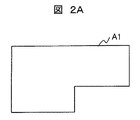
- FIG. 2A and 2B are diagrams illustrating examples of storage areas represented by storage area data stored in the storage area data storage unit 131.
- FIG. FIG. 2A shows a storage area at a certain time t1
- FIG. 2B shows a storage area at a time t5 after the time t1.
- FIG. 2A there is an L-shaped storage area A1 as shown in FIG. 2A, and at time t5, a storage area A2 is added to the storage area A1 as shown in FIG. 2B.
- the case where the storage area changes with time and the area thereof increases or decreases as shown in FIGS. 2A and 2B can be handled.
- the case where the shape of the storage area changes with time can be handled regardless of the increase or decrease of the area of the storage area.
- the two storage areas A1 and A2 are adjacent to each other.
- the storage areas are not adjacent to each other but can be handled.
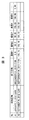
- FIG. 3 is a diagram showing an example of the table structure and data of the storage area data stored in the storage area data storage unit 131.
- “No” is a symbol for distinguishing each storage area.
- “Start date and time” represents the date and time when each storage area can be used, and “End date and time” represents the date and time when each storage area cannot be used.
- the available period of the storage area starts from “start date and time” and ends at “end date and time”.
- Coordinats are the coordinates of a point, and each storage area has a plurality of “coordinates”.
- An area that can be used as a storage area is represented by an area surrounded by a line segment connecting points represented by “coordinates”.
- a simple table structure is shown as the storage area data.
- the structure of the storage area data is not limited to such a structure, and a structure that handles a storage area having a curved boundary line, a storage area having a spatial three-dimensional shape, or the like can also be employed.
- FIG. 4 is a diagram showing an example of articles stored in the storage area.
- three articles P1, P2, and P3 are shown as articles to be stored.
- a plan view is sufficient for the figure showing the article.
- the storage area has a roof, it is necessary to consider the height direction.
- a plan view and an elevation view can be used for the figure showing the article.
- FIG. 5 is a diagram showing an example of the table structure and data of the article data stored in the article data storage unit 132.
- “No” is a symbol for distinguishing each article.
- “Start date and time” represents the date and time when storage of each article starts, and “End date and time” represents the date and time when storage of each article ends.
- the article storage period starts from “start date and time” and ends at “end date and time”.
- Mass represents the mass of each article.
- Coordinats are the coordinates of a point, and each article has a plurality of “coordinates”. An area necessary for storing an article is represented by an area surrounded by a line segment connecting points represented by “coordinates”.
- the “arrangement order” is data (order data) indicating the order of determining the arrangement position of each article, and is added to the article data by the processing of the position determination order determination unit 142.
- the order of determining the arrangement position is determined in descending order of mass.
- a simple table structure is shown as the article data.
- the structure of the article data is not limited to such a structure, and a structure that handles an article represented by a spatial three-dimensional shape or an article having a curve or a curved surface can also be adopted.
- the order data since the order data is recorded in a different procedure from the other data of the article data, the order data may be recorded independently in a table different from the article data.
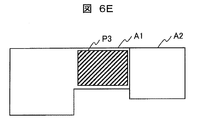
- FIG. 6A, FIG. 6B, FIG. 6C, FIG. 6D, and FIG. 6E are diagrams showing a state in which the articles P1, P2, and P3 shown in FIG. 4 are stored in the storage areas A1 and A2 shown in FIG. 2A and FIG. 2B. It is. 6A to 6E show time-series changes in the storage areas A1 and A2 and the articles P1, P2, and P3, and the time advances in the order of FIGS. 6A to 6E.
- FIG. 6A shows that the article P1 is stored in the storage area A1 at time t1.
- FIG. 6B shows that the article P1 and the article P2 are stored in the storage area A1 at the time t2 after the time t1.
- FIG. 6C shows that at time t3 after time t2, the article P1 is taken out from the storage area A1, and only the article P2 is stored in the storage area A1.
- FIG. 6D shows that the article P2 and the article P3 are stored in the storage area A1 at time t4 after time t3.
- FIG. 6E shows that, at time t5 after time t4, the article P2 is taken out from the storage area A1, only the article P3 is stored in the storage area A1, and the storage area A2 is added.
- FIG. 7 is a diagram showing time-series changes in the storage areas A1, A2 and the articles P1, P2, P3 described with reference to FIGS. 6A to 6E.
- the horizontal axis represents time t
- the usable periods of the storage areas A1 and A2 and the storage periods of the articles P1, P2, and P3 are represented by straight lines parallel to the horizontal axis.
- an article can be placed across two or more storage areas. For example, when a storage area is added, an article can be arranged across the storage area before the addition and the added storage area.
- FIG. 14 is a diagram showing that the article P4 is arranged across the two storage areas A1 and A2 shown in FIG. 6E.
- a storage area A2 is added to the storage area A1, and the article P4 is arranged across the storage area A1 before the addition and the added storage area A2.
- articles can be arranged in a storage area whose shape and size change with time, and an efficient arrangement of articles that can effectively use the storage area is obtained. Can do.
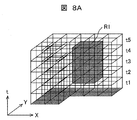
- FIG. 8A and 8B are diagrams showing images of spatiotemporal map data stored in the spatiotemporal map data storage unit 133.
- the spatio-temporal map data is data created by dividing the time space (calculation time space) specified by the user into a plurality of cells (partial areas) for each unit distance and unit time.
- the calculation space-time is a space-time that includes all of the storage area and storage period of articles to be stored, and may be a space-time that is the same size as the storage area or storage period, or a space-time that is larger than the storage area or storage period. .
- the calculation space-time always includes a storage space and a space-time region that is a storage period, and may include a space-time region that is not a storage region or a storage period (an area that cannot be used as a storage area or a period outside the storage period). .
- the user can specify an operation time space having an arbitrary size.
- the unit distance can be arbitrarily determined by the user in relation to the size of the article, such as 1 mm or 1 m.
- the unit time can be arbitrarily determined by the user in relation to the storage period of the article, such as one hour or one day.
- the spatiotemporal map data is three-dimensional spatiotemporal data composed of a two-dimensional space (X, Y) and a one-dimensional time (t), as shown in FIGS. 8A and 8B. It is created by dividing a three-dimensional space-time into a plurality of three-dimensional cells for each unit distance and unit time.
- the calculation space-time is a space having the same size as the article storage area and storage period (that is, does not include the space-time area that is not the storage area or storage period).
- FIG. 8A shows that an article B1 whose storage area is a square is stored in an L-shaped storage area only between times t2 and t5.
- the X axis and the Y axis represent the position of the article B1
- the t axis represents the storage period of the article B1
- the space in which the article B1 is stored is indicated by a region R1.
- FIG. 8B shows that in the same L-shaped storage area as in FIG. 8A, an article B1 whose area required for storage is a square is stored only between times t2 and t5, and an article B2 whose area required for storage is a rectangle is stored at time. It represents storing only between t1 and t4.
- the X-axis and the Y-axis represent the positions of the articles B1 and B2
- the t-axis represents the storage period of the articles B1 and B2
- the time space in which the article B1 is stored is the region R1, and the article B2 is stored.
- the space-time is indicated by a region R2.
- FIG. 8B if the region R1 and the region R2 interfere with each other, the articles B1 and B2 interfere with each other, which indicates an arrangement position where the articles B1 and B2 cannot actually be arranged. If they do not interfere with each other, this indicates the arrangement position where the articles B1 and B2 can actually be arranged.
- the plan views as shown in FIGS. 6A to 6E are used, even if a plurality of diagrams having different times are created, interference between a plurality of articles may not be completely detected.
- the spatio-temporal map data as shown in FIGS. 8A and 8B it can be reliably and easily found that a plurality of articles do not interfere with each other.
- Array data is the data that represents the cell (partial area) that divides the computation time space specified by the user.
- Each array of the array data corresponds to each partial area, and whether each partial area can be used for each array Is recorded by the position-possible position extraction unit 143. Thereby, it is possible to record whether each cell of the spatio-temporal map data can be used.
- the storage space and the storage space of the space-time area that is the storage period of the calculation time space can be used, and the other storage space (the area that cannot be used as the storage area or outside the storage period) The scale of the period) is not available.
- one article is arranged in an available grid in the spatio-temporal map data, and the grid corresponding to the range of the storage period that is the space area occupied by this article is made unusable.
- the cells other than the storage region and the storage space of the spatiotemporal region and the cells where the item has already been arranged are not usable. Is available. Therefore, a place where the next article can be arranged is searched within the range of the available cell.
- FIG. 9 is a diagram illustrating a flow of processing performed by the processing apparatus 100.
- 10A to 10D are diagrams showing spatiotemporal map data.
- the data corresponding to FIG. 8A is displayed at times t1 to t5 along the t-axis representing time (vertical direction in FIG. 8A).
- Spatio-temporal map data is shown in an exploded view.
- the possible position extraction unit 143 creates spatiotemporal map data if the spatiotemporal map data is not stored in the spatiotemporal map data storage unit 133.
- the input / output interface 110 receives the data made by the user from the input / output device 101, and the arrangement possible position Transfer to the extraction unit 143.
- the possible position extracting unit 143 divides the calculation space-time into a plurality of cells (partial areas) for each unit distance and unit time based on the transferred data, creates space-time map data, and stores the space-time map data. Stored in the unit 133.
- step 1201 when the user inputs storage area data with the input / output device 101, the input / output interface 110 reads the storage area data from the input / output device 101.
- the storage area data storage unit 131 stores storage area data read by the input / output device 101.
- the stored storage area data has a format as shown in FIG.
- the arrangeable position extraction unit 143 uses the storage area data to reflect the storage area data in the spatiotemporal map data stored in the spatiotemporal map data storage unit 133.
- FIG. 10A is a diagram showing a storage area in the calculation time space.
- an area R0 that is not included in the storage area that is, an area R0 that cannot be used as the storage area is indicated by hatching.
- the region R0 that is not included in the storage region is unchanged from time t1 to time t5.
- the input / output interface 110 reads the article data from the input / output device 101.
- the article data storage unit 132 stores article data read by the input / output device 101.
- the stored article data has a format as shown in FIG. However, the value of “arrangement order” is not yet determined because it is undetermined.
- the position determination order determination unit 142 determines the order of the articles for which the arrangement position is determined, and records the determined order in the article data storage unit 132 as order data.
- the order data is added to the article data.
- the process for determining the order of the articles for which the arrangement position is to be determined can be performed by a general process called sorting. For example, it is possible to sort the articles using the area required to store the articles, the mass of the articles, or a combination thereof as a key to determine the order of the articles for which the arrangement position is obtained.
- the sorting key can be obtained from the article data recorded in the article data storage unit 132. Which key is used is determined by a condition command input to the processing apparatus 100 by the user using the input / output device 101. You can make a decision based on it.
- the article data is extracted one by one from the article data storage unit 132 in the order determined in step 1202, and the arrangement position of the articles is determined (steps 1203 to 1206).
- step 1203 the possible position extraction unit 143 extracts one item data from the item data storage unit 132 according to the order determined in step 1202.
- step 1204 the placeable position extraction unit 143 uses the spatiotemporal map data stored in the spatiotemporal map data storage unit 133, and the place where the article taken out in step 1203 can be placed from the calculated spatiotemporal space. To extract.
- FIG. 10B is a diagram showing positions where articles can be arranged in the computation time space.
- the area R0 not included in the storage area and the area R1 in which the article B1 is stored are hatched, and the area where the article cannot be arranged is only the area R0 at the time t1, and the time t2 From t5 to region R0 and region R1.
- an area not indicated by hatching is an area that can be used as a storage area.
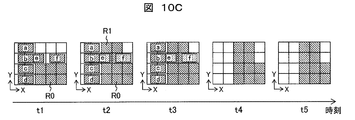
- FIG. 10C is a diagram illustrating a process of extracting a place where an article can be placed in the computation time space shown in FIG. 10B.
- FIG. 10C as an example, a case will be described in which a place where an article B3 (article such as the article B2 shown in FIG. 8B) necessary for storage of the two cells arranged in the X direction can be placed is extracted.
- the article B3 is stored only between the times t1 and t3.
- the arrangement possible position extraction unit 143 creates data representing the coordinate values of the four locations a, b, c, and d, and uses the created data as candidate position data as the candidate position data storage unit 134.
- the format of the candidate position data may be data representing a cell including one point constituting the article to be arranged, or may be coordinates of one point constituting the article to be arranged.
- the present invention does not limit the format of candidate position data.
- the arrangement position determination unit 144 selects the most appropriate position as the arrangement position of the article from the candidate position data recorded in the candidate position data storage unit 134, and uses the coordinates of the selected position as the arrangement position.
- the data is recorded in the arrangement position data storage unit 135 as data. Which position is most appropriate can be determined based on conditions specified by the user using the input / output device 101 to input to the processing device 100. Typical examples of the conditions are a condition of disposing at the closest position from the doorway and a condition of disposing at the closest position to other articles having the same storage period. In such a condition, the distance used in the condition is calculated for each position in the candidate position data, and the position with the shortest distance is selected.
- the arrangement position determination unit 144 records the arrangement position of the selected article in the spatiotemporal map data of the spatiotemporal map data storage unit 133. For example, in FIG. 10C, when the arrangement position determination unit 144 selects the arrangement candidate c from among the arrangement candidates a to f as the arrangement position of the article B3, the arrangement candidate c is recorded in the spatiotemporal map data (however, the article B3 Is stored only between times t1 and t3).
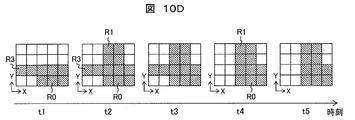
- FIG. 10D is a diagram illustrating positions where the article can be arranged in the calculation time space after considering the arrangement of the article B3.
- a region R3 in which the article B3 is stored from time t1 to t3 is added to the calculation time space indicating the position where the article can be arranged shown in FIG. 10B. That is, in FIG. 10D, the region R0, the region R1, and the region R3 are hatched, and the regions where the article cannot be arranged are the region R0 and the region R3 at time t1, and the region R0 from time t2 to t3. Region R1 and region R3, and region R0 and region R1 at times t4 to t5. At each time, an area not indicated by hatching is an area that can be used as a storage area. In this way, the arrangement position determination unit 144 updates the spatiotemporal map data as shown in FIGS. 10B to 10D.
- the conditions for selecting the most appropriate position as the arrangement position of the article include those that do not depend on other articles and those that depend on it.
- the condition of being placed closest to the entrance / exit is an example of a condition that does not depend on other articles
- the condition of being placed closest to other articles having the same storage period is a condition that depends on other articles. It is an example. If the condition is the former, when placing an article, the same location (the same grid in the spatio-temporal map data) is selected for all articles. You may keep it.
- the output control unit 150 uses the input / output device to store the arrangement position data (coordinates of the position of the article) recorded in the arrangement position data storage unit 135. 101.
- the arrangement position data may be output as a numerical value, or may be displayed graphically on a display device and output. For example, it is preferable for the user to display the diagrams as shown in FIGS. 6A to 6E, 7 and 8A to 8B on the display device. More preferably, when the user inputs the date and time with the input / output device 101, the arrangement position of the article at the input date and time is displayed on the display device as shown in FIGS. 6A to 6E.
- the arrangement position of the articles can be determined after the date and time designated by the user.
- this date and time is transmitted to the arithmetic device 140 via the input / output interface 110, and the arrangement position extraction unit 143 and the arrangement position determination unit 144 have a storage period of this date and time.
- the processing from step 1203 to step 1206 is performed for the subsequent article and the storage area whose usable period is after this date and time.
- the article storage period and the storage area availability period are obtained from the article data and the storage area data, respectively.
- the user inputs a future date and time, determines an arrangement position only for articles that are stored after the input date and time, or inputs a past date and reproduces an arrangement position of the article from the input past date and time. Can be.
- an area smaller than the unit distance and unit time of the spatio-temporal map data may not be used and may remain vacant. If the unit distance and unit time are reduced, the vacant area can be reduced. However, if the unit distance or unit time is reduced, there arises a problem that a recording area necessary for processing is enlarged and a processing time is increased. However, these problems can be avoided by making the cells in the spatio-temporal map data not a simple cell but changing the size of the cell depending on the location.
- the present invention does not limit the method of expressing the spatiotemporal map data, and such a device is also included in the scope of the present invention.
- the arrangement data such as the storage area data and the article data are spatial three-dimensional data, and each have one-dimensional data of a time period in which it can be used and a period in which storage is necessary.
- a three-dimensional space and the shape of an object are common in a CAD system or the like, and can be realized by using the technology.
- the spatio-temporal map data is 4D data that combines 1D of time and 3D of space. Although it is difficult to illustrate the four-dimensional space-time map data on the display device, when the processing device 100 holds the data as the data, the space-time map data may be represented by four-dimensional array data. A value indicating whether each cell (each partial region) of the spatio-temporal map data can be used is recorded in each array of the four-dimensional array data by the arrangeable position extraction unit 143.
- the place where the article can be placed in step 1204
- the place where the article can be placed by moving the position of the article in two directions, the X axis direction and the Y axis direction. Extracted.
- the position of the article can be determined by moving the article in the X-axis direction, the Y-axis direction, and the three Z-axis directions perpendicular to the X-axis direction and the Y-axis direction. Possible locations can be extracted.
- the arrangement positions of articles sequentially entering and exiting the available storage area that changes with time are determined in time series. be able to.
- Example 1 a position where an article can be arranged is extracted in advance (step 1204 in FIG. 9), and then one arrangement position is selected from the positions (step 1205 in FIG. 9).
- Example 2 the order (priority order) of positions to be preferentially arranged with respect to each article is obtained, and then whether or not the articles are arranged is determined according to this order, and it is determined that the arrangement is possible first. Select the position as the placement position.
- the second embodiment is different from the first embodiment only in this process.
- FIG. 11 is a schematic diagram showing the arrangement data processing apparatus 200 and peripheral devices according to the second embodiment of the present invention. 11, the same reference numerals as those in FIG. 1 denote the same or common elements as those in FIG. 1, and the description of these elements will be omitted. Below, only a different part from Example 1 is demonstrated.
- the processing device 200 includes a storage device 230 and an arithmetic device 240.
- the storage device 130 according to the first embodiment includes the candidate position data storage unit 134, but the storage device 230 according to the present embodiment includes a placement priority position data storage unit 234 instead.
- the arithmetic device 140 according to the first embodiment includes the spatio-temporal map data storage unit 133 and the candidate position data storage unit 134.
- the arithmetic device 240 according to the present embodiment replaces the arrangement priority position extraction unit 243 with the arrangement availability.
- a determination unit 244 is provided.
- the arrangement priority position data storage unit 234 stores arrangement priority position data that is created by the arrangement priority position extraction unit 243 and represents the arrangement position candidates of the articles and the priority order of the arrangement positions.
- the placement priority position data may include a position that protrudes from the storage area and a position that interferes with other articles. There is sex.
- the placement priority position extraction unit 243 creates placement priority position data representing the placement position candidates of the articles and the priority order of the placement positions. Specifically, based on the order determined by the position determination order determination unit 142, the position where the article is to be preferentially arranged is sequentially obtained as a candidate for the arrangement position of the article, and the arrangement priority position data storage together with the priority of the arrangement position is stored. Recorded in the unit 234. The placement priority position extraction unit 243 determines that the target article can be placed without determining whether the target article can be placed without interfering with an unplaceable region as described with reference to FIG. 10C in the first embodiment.
- the priority of the arrangement is high is calculated for each square of the spatio-temporal map data, the priority is assigned to the arrangement, and this priority is set as the priority of the arrangement position.
- the priority given to the arrangement is determined according to the order determined by the position determination order determination unit 142. If it is inefficient to determine all of the cells, it may be possible to determine whether or not only some of the cells, such as the reference cell (interference check), are possible.
- the condition for selecting the arrangement position of the article does not depend on other articles as described in the first embodiment, when placing the article, the same place (the same in the spatio-temporal map data) Since there is a possibility that priority is given to all items, the priority order for arranging the items for each item may be determined in advance.
- the present invention can also include such additional processing.
- data representing the position is recorded in the arrangement position data storage unit 135.
- Whether or not the articles can be arranged in the priority order is determined based on whether or not the articles can be arranged in the spatio-temporal map data according to the priority order and arranged so as not to interfere with an area where the articles cannot be arranged (that is, in the first embodiment). It is determined by a method almost similar to that shown in FIG.
- the arrangement availability determination unit 244 reflects the spatiotemporal map data stored in the spatiotemporal map data storage unit 133 by reflecting the position where the obtained article can be arranged for the next article interference determination process.
- Update that is, update as in FIGS. 10B to 10D of the first embodiment.
- FIG. 12 is a diagram showing a flow of processing performed by the processing apparatus 200. 12, the same steps as those in FIG. 9 indicate the same or common steps as those in FIG. 9, and description of these steps is omitted. Below, only a different part from Example 1 is demonstrated.
- the processing flow of the present embodiment is different from the processing flow of the first embodiment in place of the extraction of the position where the article can be arranged in step 1204 and the determination of the arrangement position of the article in step 1205 of the processing flow of the first embodiment.
- the priority position of the article arrangement in step 1304 is extracted, and the determination of whether or not the article can be arranged in step 1305 is included.
- step 1304 the arrangement priority position extraction unit 243 sequentially obtains and obtains the position where the article is preferentially arranged based on the order data determined by the position determination order determination unit 142 and recorded in the article data storage unit 132. The result is recorded in the arrangement priority position data storage unit 234.
- the arrangement availability determination unit 244 uses the spatiotemporal map data stored in the spatiotemporal map data storage unit 133 to use the arrangement priority position data (priority attached) stored in the arrangement priority position data storage unit 234. In accordance with the position data), it is determined whether or not the article can be arranged in the priority order. When a position where the article can be arranged is obtained, data representing the position is recorded in the arrangement position data storage unit 135. In addition, the arrangement availability determination unit 244 reflects the spatiotemporal map data stored in the spatiotemporal map data storage unit 133 by reflecting the position where the obtained article can be arranged for the next article interference determination process. Update.
- the arrangement data processing apparatus and processing method according to the present embodiment also determine the arrangement positions of articles sequentially entering and leaving the storage area that changes with time as time passes. be able to.
- the article loading / unloading work method will be described.
- a method for arranging an article in a storage area using the arrangement data processing apparatus according to the first embodiment or the second embodiment, that is, a method for performing an article entry / exit operation will be described.
- FIG. 13 is a diagram showing a processing flow of the article loading / unloading work method according to the embodiment of the present invention.
- step 1401 the arrangement data processing device reads in / out plan data.
- the entry / exit plan data includes storage area data of an available storage area and article data of an article that is scheduled for entry / exit.
- step 1402 the user compares the entry / exit plan data with the actual article arrangement. If the entry / exit plan data is different from the actual article arrangement, the entry / exit plan data is changed to match the actual article arrangement. This is because the actual loading / unloading work may not be as planned, and there is a difference between the loading / unloading plan data and the actual arrangement of articles. For example, the actual loading / unloading work may not be as planned when the loading / unloading time changes from the planned time, the size of the article changes from the planned time, and the arrangement position changes due to the convenience of the cargo handling device.
- the arrangement data processing apparatus determines the arrangement position of the articles after the date and time designated by the user. For example, the user can specify the current date and time and determine the arrangement position for only articles that will be stored in the future. This is because the fact that an article has actually been arranged in the past cannot be changed, so only the article that is scheduled to be received in the future is targeted.
- the position of the article arranged before the date and time designated by the user may be handled as an area not included in the storage area.
- the order of the articles already arranged before the date and time specified by the user is the highest.
- the arrangement position of the article is selected in the process of the arrangement position determination unit 144, the arrangement may be performed so that the arranged article is arranged in accordance with the current arrangement position. Note that even an already placed article can be moved again to change its position. If the arrangement is determined based on a plan for taking out the arranged article and immediately entering it, the result is the same as changing the position of the arranged article.
- step 1404 the user performs a loading / unloading operation based on the arrangement position of the article determined in step 1403. If the user creates an instruction sheet showing the incoming / outgoing goods of the day in chronological order, or an instruction sheet compiled for each article to be stored / extracted at the same time, and presents it to the worker for instructions, the work can be made more efficient.
- step 1405 the user inputs the result of the entry / exit operation to the arrangement data processing device. For example, if the article arrangement position determined in step 1403 and the actual article arrangement position are different, the actual article arrangement position is input to the arrangement data processing device during or after the loading / unloading operation. The actual arrangement position of the article is reflected in the space map data. For confirmation, data indicating that entry / exit has been completed may be input to an article entered / exited according to the instruction.
- the arrangement data processing apparatus reads the changed entry / exit plan data and updates the entry / exit plan data. For example, if there is a change in the available storage area or the entry / exit schedule of the article, the arrangement data processing device reads the change and updates the entry / exit plan data.
- the storage area can be used effectively and the number of man-hours for loading and unloading operations can be reduced. Therefore, in the article entry / exit operation method according to the present embodiment, an article entry / exit operation can be performed efficiently.
- each or all of the components of the processing apparatus according to the present invention may be realized by hardware, for example, by designing a part or all of them with an integrated circuit.
- some or all of these may be realized by software such that the processor interprets and executes a program that realizes each function.
- Information such as programs, tables, files, measurement information, and calculation information for realizing each function is stored in a memory, a hard disk, a recording device such as an SSD (Solid State Drive), an IC card, an SD card, a DVD, or the like. It can be recorded on a recording medium. Therefore, each function of the processing apparatus according to the present invention can be realized as a processing unit, a processing unit, a program module, and the like.
- control lines and information lines are described as necessary for explanation, and not all control lines and information lines necessary for products are necessarily described. In an actual product, it may be considered that almost all components are connected to each other.
- Arrangement determination unit A1, A2 ... Storage area, B1, B2, B3, P1, P2, P3, P4 ... Articles to be stored, R0 ... Area not included in the storage area, R1 ... Area where the article B1 is stored, R2 ... Article B2 is stored Area, the region R3 ... goods B3 is stored.
Landscapes
- Engineering & Computer Science (AREA)
- Theoretical Computer Science (AREA)
- General Physics & Mathematics (AREA)
- Physics & Mathematics (AREA)
- Business, Economics & Management (AREA)
- General Engineering & Computer Science (AREA)
- Economics (AREA)
- Human Computer Interaction (AREA)
- Operations Research (AREA)
- Development Economics (AREA)
- Entrepreneurship & Innovation (AREA)
- Human Resources & Organizations (AREA)
- Marketing (AREA)
- Quality & Reliability (AREA)
- Strategic Management (AREA)
- Tourism & Hospitality (AREA)
- General Business, Economics & Management (AREA)
- Databases & Information Systems (AREA)
- Data Mining & Analysis (AREA)
Abstract
Priority Applications (3)
| Application Number | Priority Date | Filing Date | Title |
|---|---|---|---|
| PCT/JP2013/061031 WO2014167704A1 (fr) | 2013-04-12 | 2013-04-12 | Dispositif et procédé pour traiter des données de disposition, et procédé pour charger et décharger un article |
| JP2015511044A JP6064038B2 (ja) | 2013-04-12 | 2013-04-12 | 配置データの処理装置と処理方法、及び物品の入出庫作業方法 |
| US14/783,519 US9727270B2 (en) | 2013-04-12 | 2013-04-12 | Device and method for processing placement data, and method for loading and unloading article |
Applications Claiming Priority (1)
| Application Number | Priority Date | Filing Date | Title |
|---|---|---|---|
| PCT/JP2013/061031 WO2014167704A1 (fr) | 2013-04-12 | 2013-04-12 | Dispositif et procédé pour traiter des données de disposition, et procédé pour charger et décharger un article |
Publications (1)
| Publication Number | Publication Date |
|---|---|
| WO2014167704A1 true WO2014167704A1 (fr) | 2014-10-16 |
Family
ID=51689137
Family Applications (1)
| Application Number | Title | Priority Date | Filing Date |
|---|---|---|---|
| PCT/JP2013/061031 Ceased WO2014167704A1 (fr) | 2013-04-12 | 2013-04-12 | Dispositif et procédé pour traiter des données de disposition, et procédé pour charger et décharger un article |
Country Status (3)
| Country | Link |
|---|---|
| US (1) | US9727270B2 (fr) |
| JP (1) | JP6064038B2 (fr) |
| WO (1) | WO2014167704A1 (fr) |
Cited By (6)
| Publication number | Priority date | Publication date | Assignee | Title |
|---|---|---|---|---|
| JP2018180821A (ja) * | 2017-04-10 | 2018-11-15 | 株式会社オープンロジ | 倉庫管理サーバ及び倉庫管理方法 |
| JP2018205861A (ja) * | 2017-05-31 | 2018-12-27 | Necフィールディング株式会社 | 管理装置、管理システム、管理方法及びプログラム |
| WO2020009024A1 (fr) * | 2018-07-02 | 2020-01-09 | 株式会社 Preferred Networks | Dispositif de traitement d'informations, dispositif de traitement de génération de modèle et procédé de traitement d'informations |
| WO2022038784A1 (fr) * | 2020-08-21 | 2022-02-24 | 株式会社Fuji | Dispositif de commande, système de distribution et procédé de commande |
| JP2024084017A (ja) * | 2022-12-12 | 2024-06-24 | 南進住宅株式会社 | 荷物収納管理ソフトウェア及び荷物収納管理方法 |
| WO2024166458A1 (fr) * | 2023-02-08 | 2024-08-15 | 株式会社Ihi | Système de génération de plan d'agencement, procédé de génération de plan d'agencement et programme de génération de plan d'agencement |
Families Citing this family (3)
| Publication number | Priority date | Publication date | Assignee | Title |
|---|---|---|---|---|
| CN108712988B (zh) * | 2016-03-02 | 2020-02-14 | 株式会社日立物流 | 仓库管理系统以及仓库管理方法 |
| JP7555800B2 (ja) * | 2020-11-18 | 2024-09-25 | 株式会社東芝 | 対象物の配置位置決定方法、制御装置、プログラム、荷役装置、及び、荷役システム |
| TWI909285B (zh) * | 2023-12-28 | 2025-12-21 | 財團法人工業技術研究院 | 揀貨方法、搬運車及揀貨系統 |
Citations (3)
| Publication number | Priority date | Publication date | Assignee | Title |
|---|---|---|---|---|
| JPH06234423A (ja) * | 1993-02-05 | 1994-08-23 | Lion Corp | 荷積方法 |
| JP2012079096A (ja) * | 2010-10-01 | 2012-04-19 | Canon It Solutions Inc | 配置計画作成装置、制御方法、及びプログラム |
| JP2012086984A (ja) * | 2010-09-21 | 2012-05-10 | Jfe Steel Corp | 倉庫作業計画作成装置 |
Family Cites Families (4)
| Publication number | Priority date | Publication date | Assignee | Title |
|---|---|---|---|---|
| JPH06219518A (ja) | 1993-01-26 | 1994-08-09 | Sumitomo Metal Ind Ltd | コンテナ積載方法決定シミュレーション装置 |
| JP2001142926A (ja) | 1999-11-16 | 2001-05-25 | Hitachi Ltd | プラント建設におけるヤード計画支援システム |
| JP4786146B2 (ja) | 2004-06-11 | 2011-10-05 | 株式会社日立物流 | 製品保管システム |
| US8271497B2 (en) * | 2009-12-03 | 2012-09-18 | Sony Computer Entertainment Inc. | Information processing apparatus and information processing method outputting information on movement of person |
-
2013
- 2013-04-12 WO PCT/JP2013/061031 patent/WO2014167704A1/fr not_active Ceased
- 2013-04-12 JP JP2015511044A patent/JP6064038B2/ja not_active Expired - Fee Related
- 2013-04-12 US US14/783,519 patent/US9727270B2/en not_active Expired - Fee Related
Patent Citations (3)
| Publication number | Priority date | Publication date | Assignee | Title |
|---|---|---|---|---|
| JPH06234423A (ja) * | 1993-02-05 | 1994-08-23 | Lion Corp | 荷積方法 |
| JP2012086984A (ja) * | 2010-09-21 | 2012-05-10 | Jfe Steel Corp | 倉庫作業計画作成装置 |
| JP2012079096A (ja) * | 2010-10-01 | 2012-04-19 | Canon It Solutions Inc | 配置計画作成装置、制御方法、及びプログラム |
Cited By (12)
| Publication number | Priority date | Publication date | Assignee | Title |
|---|---|---|---|---|
| JP2018180821A (ja) * | 2017-04-10 | 2018-11-15 | 株式会社オープンロジ | 倉庫管理サーバ及び倉庫管理方法 |
| JP2018205861A (ja) * | 2017-05-31 | 2018-12-27 | Necフィールディング株式会社 | 管理装置、管理システム、管理方法及びプログラム |
| WO2020009024A1 (fr) * | 2018-07-02 | 2020-01-09 | 株式会社 Preferred Networks | Dispositif de traitement d'informations, dispositif de traitement de génération de modèle et procédé de traitement d'informations |
| JP2020191104A (ja) * | 2018-07-02 | 2020-11-26 | 株式会社Preferred Networks | 情報処理装置、モデル生成処理装置、および情報処理方法 |
| JP7417486B2 (ja) | 2018-07-02 | 2024-01-18 | 株式会社Preferred Networks | 情報処理装置、モデル生成処理装置、および情報処理方法 |
| US12154031B2 (en) | 2018-07-02 | 2024-11-26 | Preferred Networks, Inc. | Information processing system, model generation processing system, and information processing method |
| WO2022038784A1 (fr) * | 2020-08-21 | 2022-02-24 | 株式会社Fuji | Dispositif de commande, système de distribution et procédé de commande |
| JPWO2022038784A1 (fr) * | 2020-08-21 | 2022-02-24 | ||
| JP7421658B2 (ja) | 2020-08-21 | 2024-01-24 | 株式会社Fuji | 制御装置、配送システム及び制御方法 |
| JP2024084017A (ja) * | 2022-12-12 | 2024-06-24 | 南進住宅株式会社 | 荷物収納管理ソフトウェア及び荷物収納管理方法 |
| JP7691747B2 (ja) | 2022-12-12 | 2025-06-12 | 南進貿易株式会社 | 荷物収納管理ソフトウェア及び荷物収納管理方法 |
| WO2024166458A1 (fr) * | 2023-02-08 | 2024-08-15 | 株式会社Ihi | Système de génération de plan d'agencement, procédé de génération de plan d'agencement et programme de génération de plan d'agencement |
Also Published As
| Publication number | Publication date |
|---|---|
| JPWO2014167704A1 (ja) | 2017-02-16 |
| JP6064038B2 (ja) | 2017-01-18 |
| US20160054923A1 (en) | 2016-02-25 |
| US9727270B2 (en) | 2017-08-08 |
Similar Documents
| Publication | Publication Date | Title |
|---|---|---|
| JP6064038B2 (ja) | 配置データの処理装置と処理方法、及び物品の入出庫作業方法 | |
| US11106196B2 (en) | Method and apparatus for shaping a production process for producing a product made up of multiple subproducts | |
| US12427674B2 (en) | Task-oriented 3D reconstruction for autonomous robotic operations | |
| JP7416597B2 (ja) | 情報処理装置、及び情報処理方法 | |
| JP6464612B2 (ja) | データ解析装置、データ解析システム、売上予測装置、売上予測システム、データ解析方法、売上予測方法、プログラムおよび記録媒体 | |
| CN109408996B (zh) | 用于智能设备控制的交互方法、装置、系统及存储介质 | |
| US20130346138A1 (en) | Creation of production process workflow diagrams | |
| CN111324978B (zh) | 设计结构产品 | |
| US20160277715A1 (en) | Method and system for automated datacenter floor volume calculation applied to datacenter thermal management | |
| JP6952650B2 (ja) | 作業指示生成装置および作業指示生成方法 | |
| Wu et al. | A digital twin-based modularized design approach for smart warehouses | |
| JP6216480B1 (ja) | 商品ピッキング・格納作業指示装置 | |
| JP5785864B2 (ja) | 製造ラインシミュレーション装置、データ入力支援装置、およびデータ入力支援方法 | |
| Gao et al. | Minimizing running buffers for tabletop object rearrangement: Complexity, fast algorithms, and applications | |
| CN119047967A (zh) | 基于web仿真仓储立库的控制方法、系统、介质及设备 | |
| KR102372155B1 (ko) | 선박을 3d 모델링하는 장치 및 방법 | |
| Shin et al. | Heuristic and metaheuristic spatial planning of assembly blocks with process schedules in an assembly shop using differential evolution | |
| JP2009271572A (ja) | 制御システム開発支援装置 | |
| CN111986553B (zh) | 基于语义标签进行地图关联的方法、设备及存储介质 | |
| Truong et al. | Building management algorithms in automated warehouse using continuous cluster analysis method | |
| JP6408224B2 (ja) | 端末、情報処理装置、情報表示方法および情報表示プログラム | |
| JP4025121B2 (ja) | 部品配置演算装置、部品配置演算方法、部品配置演算用プログラム、該プログラムを記録した記録媒体および部品配置支援システム | |
| CN118886643A (zh) | 一种机器人发药回收方法及系统 | |
| KR102001318B1 (ko) | 3차원 저장소적재 모델 알고리즘을 이용한 블록배치 최적화 방법 | |
| WO2024141874A1 (fr) | Systèmes et procédés de traitement numérique pour gérer des sprints à l'aide de cartes électroniques liées |
Legal Events
| Date | Code | Title | Description |
|---|---|---|---|
| 121 | Ep: the epo has been informed by wipo that ep was designated in this application |
Ref document number: 13881651 Country of ref document: EP Kind code of ref document: A1 |
|
| ENP | Entry into the national phase |
Ref document number: 2015511044 Country of ref document: JP Kind code of ref document: A |
|
| WWE | Wipo information: entry into national phase |
Ref document number: 14783519 Country of ref document: US |
|
| NENP | Non-entry into the national phase |
Ref country code: DE |
|
| 122 | Ep: pct application non-entry in european phase |
Ref document number: 13881651 Country of ref document: EP Kind code of ref document: A1 |