WO2014171570A2 - Production de l-xylulose par couplage d'une nouvelle nadh oxydase dérivée de streptococcus pyogenes et d'une l-arabinitol oxydase - Google Patents
Production de l-xylulose par couplage d'une nouvelle nadh oxydase dérivée de streptococcus pyogenes et d'une l-arabinitol oxydase Download PDFInfo
- Publication number
- WO2014171570A2 WO2014171570A2 PCT/KR2013/003316 KR2013003316W WO2014171570A2 WO 2014171570 A2 WO2014171570 A2 WO 2014171570A2 KR 2013003316 W KR2013003316 W KR 2013003316W WO 2014171570 A2 WO2014171570 A2 WO 2014171570A2
- Authority
- WO
- WIPO (PCT)
- Prior art keywords
- nadh oxidase
- water
- producing
- gene
- xylulose
- Prior art date
- Legal status (The legal status is an assumption and is not a legal conclusion. Google has not performed a legal analysis and makes no representation as to the accuracy of the status listed.)
- Ceased
Links
Images


Classifications
-
- C—CHEMISTRY; METALLURGY
- C12—BIOCHEMISTRY; BEER; SPIRITS; WINE; VINEGAR; MICROBIOLOGY; ENZYMOLOGY; MUTATION OR GENETIC ENGINEERING
- C12N—MICROORGANISMS OR ENZYMES; COMPOSITIONS THEREOF; PROPAGATING, PRESERVING, OR MAINTAINING MICROORGANISMS; MUTATION OR GENETIC ENGINEERING; CULTURE MEDIA
- C12N9/00—Enzymes; Proenzymes; Compositions thereof; Processes for preparing, activating, inhibiting, separating or purifying enzymes
- C12N9/0004—Oxidoreductases (1.)
- C12N9/0012—Oxidoreductases (1.) acting on nitrogen containing compounds as donors (1.4, 1.5, 1.6, 1.7)
- C12N9/0036—Oxidoreductases (1.) acting on nitrogen containing compounds as donors (1.4, 1.5, 1.6, 1.7) acting on NADH or NADPH (1.6)
-
- C—CHEMISTRY; METALLURGY
- C07—ORGANIC CHEMISTRY
- C07K—PEPTIDES
- C07K14/00—Peptides having more than 20 amino acids; Gastrins; Somatostatins; Melanotropins; Derivatives thereof
- C07K14/195—Peptides having more than 20 amino acids; Gastrins; Somatostatins; Melanotropins; Derivatives thereof from bacteria
- C07K14/315—Peptides having more than 20 amino acids; Gastrins; Somatostatins; Melanotropins; Derivatives thereof from bacteria from Streptococcus (G), e.g. Enterococci
-
- C—CHEMISTRY; METALLURGY
- C12—BIOCHEMISTRY; BEER; SPIRITS; WINE; VINEGAR; MICROBIOLOGY; ENZYMOLOGY; MUTATION OR GENETIC ENGINEERING
- C12N—MICROORGANISMS OR ENZYMES; COMPOSITIONS THEREOF; PROPAGATING, PRESERVING, OR MAINTAINING MICROORGANISMS; MUTATION OR GENETIC ENGINEERING; CULTURE MEDIA
- C12N9/00—Enzymes; Proenzymes; Compositions thereof; Processes for preparing, activating, inhibiting, separating or purifying enzymes
- C12N9/0004—Oxidoreductases (1.)
- C12N9/0006—Oxidoreductases (1.) acting on CH-OH groups as donors (1.1)
Definitions
- the present invention relates to a method for producing L-xylulose by coupling a reaction of NADH oxidase and L-arabinitol oxidase to produce novel water derived from P. aureus, more specifically P. aureus-derived.
- NADH oxidase producing a novel water, nucleic acid molecule encoding the same, a vector comprising the nucleic acid molecule, a transformant comprising the vector and a combination of NADH oxidase and L-arabinitol oxidase using the same
- It relates to a method for preparing L-xylulose through a ring reaction.
- redox reactions are not only important for asymmetric reactions, but are also areas of interest in chemicals and pharmaceuticals with optical purity.
- such redox reactions require expensive coenzymes such as NAD (P) + or NAD (P) H, which makes industrial applications difficult. Therefore, it is necessary to economically secure such expensive coenzymes and use them continuously.
- Regeneration of coenzymes is usually accomplished by adding chemical, electrical or photocatalytic substances or adding enzymes during the enzyme reaction. There are two ways to regenerate coenzymes using enzymes. The first method involves regenerating enzymes and chemical additives. The second method involves regenerating coenzymes by adding and coupling two enzymes.
- NAD + and NAD (P) H are well known methods using formate dehydrogenase and glucose dehydrogenase.
- byproducts are generated during the reaction to reduce the purity of the product and increase the purification cost.
- NADH oxidase that produces water can ensure high economy because only water is produced as a by-product.
- the present invention proposes a novel water-producing NADH oxidase, which is coupled with L-arabinitol dehydrogenase to regenerate coenzyme to produce L-xylulose from L-arabinitol in high yield and continuously.
- L-arabinitol dehydrogenase By presenting the optimum reaction conditions, it is intended to provide a method for mass production of L-xylulose inexpensively and in high yield.
- a second object of the present invention is to provide a NADH oxidase that produces water expressed from the gene.
- a fifth object of the present invention is to provide a NADH oxidase that produces a recombinant using transformed recombinant E. coli.
- a sixth object of the present invention is to propose the optimum conditions for producing L-xylulose by regenerating the coenzyme by coupling the enzyme with L-arabinitol dehydrogenase.
- the present invention in the production method of L-xylulose, purulent streptococci NADH oxidase and Hippocrea zecorina, which produce water of the strain Hypocrea jecorina L-arabinitol dehydrogenase derived from the) is characterized in that to regenerate the coenzyme.
- the present invention is characterized by cloning the NADH oxidase gene that produces water from Streptococcus through Southern hybridization and colony hybridization.
- the present invention provides a NADH oxidase that produces water having an amino acid sequence of SEQ ID NO: 4 or a functional fragment thereof.
- the water-producing NADH oxidase is preferably derived from P. aureus, but is not limited thereto.
- the molecular weight of the enzyme of the present invention is characterized in that 50 kDa.
- the present invention also provides a NADH oxidase gene for producing water encoding the enzyme of the present invention.
- the gene of the present invention preferably has a nucleotide sequence of SEQ ID NO: 3.
- the present invention provides a method for producing NADH oxidase to produce water by culturing the strain transformed with a recombinant expression vector containing the water-producing NADH oxidase gene.
- the present invention also relates to the L-arabinitol L-arabinitol by regenerating the NADH oxidase of the present invention through the coupling reaction with Hypocrea jecorina L-arabinitol dehydrogenase.
- Provided is a method for preparing xylulose at low cost and high yield.
- the present invention provides a composition for producing L-xylulose comprising the enzyme of the present invention as an active ingredient.
- NADH oxidase producing water of the present invention is characterized by having the amino acid sequence represented by SEQ ID NO: 4.
- at least one amino acid sequence of SEQ ID NO: 4 may be deleted, substituted, or added to one or more amino acids within a range in which the NADH oxidase activity that generates the water indicated by the protein having these amino acid sequences is not impaired.
- Variant introduced NADH oxidase is also included in the NADH oxidase producing water according to the present invention.
- the present invention includes an NADH oxidase gene encoding a NADH oxidase that generates water having an amino acid sequence of SEQ ID NO: 4, and the gene sequence thereof is represented by SEQ ID NO: 3.
- generates the above-mentioned variant water obtained by changing these nucleotide sequences of SEQ ID NO: 3 is also included in the NADH oxidase gene which produces the water which concerns on this invention.
- the present invention includes a recombinant vector containing the NADH oxidase gene to produce the water, transformants transformed by the recombinant vector.
- the present invention also includes a method for producing NADH oxidase for producing water, which is characterized by separating NADH oxidase for producing water from the culture obtained by culturing the transformant.
- the NADH oxidase gene which produces the water of this invention is isolate
- chromosomal DNA is obtained from a strain having a NADH oxidase gene that produces water.
- PCR polymerase chain reaction
- PCR amplification fragments are labeled with appropriate reagents, and colony hybridization is performed on the chromosomal DNA library to select NADH oxidase genes that produce water (Current Protocols in Molecular Biology, Vol. 1, p. 603). , 1994).
- the transformed microorganism of the present invention is obtained by introducing the recombinant vector of the present invention into a host suitable for the expression vector used in the preparation of the recombinant vector.
- a host suitable for the expression vector used in the preparation of the recombinant vector for example, when a bacterium such as E. coli is used as a host, the recombinant vector according to the present invention is capable of autonomous replication in the host, and at the same time, contains a DNA and a transcription sequence containing a NADH oxidase gene that generates a promoter and water. It is preferable to have what is necessary for expression of these.
- pET28a was used as the expression vector used in the present invention, any expression vector satisfying the above requirements can be used.
- Production of the NADH oxidase producing water according to the present invention comprises culturing a transformant obtained by transforming a host with a recombinant vector having a gene encoding the same, and generating a gene product in a culture (culture medium or culture supernatant). It is performed by generating and accumulating NADH oxidase which produces phosphorus, and obtaining an enzyme from the culture.
- Acquisition and purification of NADH oxidase producing water can be carried out by recovering the cells of the obtained culture by centrifugation, and by using cell disruption, affinity chromatography, cation or anion exchange chromatography alone or in combination. .
- the present inventors cloned the gene of NADH oxidase which produces water from Streptococcus to develop NADH oxidase which produces water.
- the coupling reaction between the recombinant NADH oxidase and the hypocreatic zecorina L-arabinitol dehydrogenase incorporating the above-described genes can be used to prepare L-xylulose in high yield from L-arabinitol.
- it was confirmed that the production of by-products can be greatly reduced, and the present invention was completed.
- the present invention clones a gene encoding NADH oxidase from a gene of P. aureus to produce NADH oxidase producing industrially useful water, and analyzes the nucleotide sequence of the gene and the amino acid sequence inferred therefrom.
- NADH can be oxidized by the recombinant strain inserted with the above gene, and can be used for the purpose of not generating by-products except water in regenerating the coenzymes NADH and NAD + .
- the optimum conditions for producing L-xylulose through the coupling reaction between water-producing NADH oxidase and hypocreas zecorina L-arabinitol dehydrogenase were found to be 4.9 U / ml, 8.2 mM NAD + , The reaction is characterized in that the pH 8.0, the reaction temperature 30.9 °C.
- the NADH oxidase which produces P. aureus derivative isolated from the present invention can be used to regenerate the coenzyme NAD + , and in particular, the dehydration of L-arabinitol derived from NADH oxidase and Hypocrea zecolina which produce water.
- L-xylulose can be produced efficiently by the coupling reaction of the digestive enzymes.
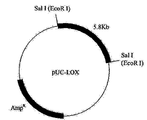
- Figure 1 is a vector map of the vector pUC-LOX to find a fragment containing a NADH oxidase gene that produces water in the chromosome of Streptococcus, and cloned into a vector used in E. coli.
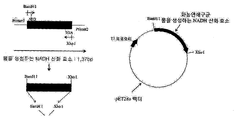
- Figure 2 is a view showing a method for producing an expression vector containing the NADH oxidase gene to produce water derived from P. aureus strains.
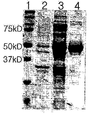
- FIG. 3 is a SDS-PAGE gel photograph of NADH oxidase producing water derived from P. aureus strains. One; Size markers, 2; Insoluble protein of NADH oxidase, which produces water, 3; Water soluble protein of NADH oxidase to produce water, 4; NADH oxidase to produce purified water.
- FIG. 4 shows the conversion of L-xylulose produced from L-aravinitol with the concentration of L-arabinitol.
- FIG. 5 to 7 are analysis of the conversion rate of L-xylulose produced from L-arabinitol through reaction surface analysis.
- FIG. 5 Correlation between L-arabinitol dehydrogenase concentration (U / ml) and NAD concentration (mM)
- FIG. 6 L-arabinitol dehydrogenase concentration (U / ml) and pH Correlation between
- FIG. 7 Correlation between L-aravinitol dehydrogenase concentration (U / ml) and production temperature (° C.).
- FIG. 8 is a diagram showing the results of analysis by high pressure liquid chromatography (HPLC) that L-xylulose is produced from L-arabinitol during L-xylulose production using a coupling reaction.
- HPLC high pressure liquid chromatography
- FIG. 9 is a diagram showing the production of L-xylulose over time under optimized conditions through a coupling reaction.
- the bacterium Pseudomonas aeruginosa (KCTC 3208) was used to obtain the nucleotide sequence of the NADH oxidase gene that produces L-arabinitol lyase.
- genes with similar functions are known to be somewhat similar in size to each nucleotide sequence. Therefore, it is assumed that the gene of NADH oxidase that produces water of Streptococcus pneumoniae (KCTC 3208) is about 1.4 kb in size, and is based on the NADH oxidase nucleotide sequence that generates water known from other bacteria.
- the entire gene of NADH oxidase producing (KCTC 3208) water was cloned.
- E. coli XL1-Blue and pUC18 vectors were used for cloning.
- LB medium having a general composition was used, and the peptone agar medium (Malt extract peptone agar) was used for culturing P. aureus (KCTC 3208).
- P. aureus KCTC 3208.
- plate medium of E. coli plates containing LB agar, 3-5% sugar, 0.3-0.5% beef extract, 0.9-1.1% bactopeptone, and 1.3-1.7% agar were used. 50 ⁇ g / ml ampicillin was added as needed.
- the culture method was inoculated into 250 ml Erlenmeyer flask containing 50 ml of P. aeruginosa (KCTC 3208) and incubated at 37 ° C and 200 rpm for 1 day, and E. coli at 37 ° C and 200 rpm. Incubated for 16 hours.
- KCTC 3208 P. aeruginosa
- RNA extraction of P. aeruginosa was performed using a Qiagen plant total RNA kit (QIAGEN), and a reverse transcriptase for cDNA synthesis was used with Oligo-dT RT-mix (intron).
- KCTC 3208 chromosome was isolated to clone the NADH oxidase gene producing water.
- Degenerated primer, DhLOX F-5'-TCH TTY based on the NADH oxidase sequencing, which produces water known from other bacteria to amplify a portion of the NADH oxidase gene in P. aeruginosa (KCTC 3208) YTH TCW TGT GGD AT -3 '(SEQ ID NO: 1) and DhLOX R-5'-CGH AYV GCR TTV GTD GCY A -3' (SEQ ID NO: 2) were prepared.
- the genomic DNA of Streptococcus pneumoniae (KCTC 3208) was completely cleaved using restriction enzymes BamHI, EcoRI, HindIII, SalI, and XbaI which do not have a cleavage site in the amplified partial sequences. And a radiolabeled probe was made using a DNA fragment obtained through the polymerase chain reaction. Using this, we searched for DNA fragments containing genes to be searched by Southern hybridization. When the chromosome was cut with BamHI, HindIII, and XbaI, the DNA having the NADH oxidase gene, which produced water as a result of Southern hybridization, was about 20 to 23 kb.
- the desired gene was searched for using the fragment cut with EcoRI of about 2.5 kb and the fragment with SalI of about 5.8 kb.
- the 2.5 kb DNA fragment and the 5.8 kb DNA fragment separated by SalI were cloned into pUC18 after chromosome cleavage with EcoRI and named as pUC-LOX (FIG. 1).
- Colonies hybridization was performed using the 1 kb probe made in the pUC-LOX library to determine clones with the gene of NADH oxidase that produced the desired water.
- the nucleotide sequence of the determined clone was analyzed to find 1,371 bp of the entire gene sequence of NADH oxidase generating water (SEQ ID NO: 3). As expected, it was similar in size to the NADH oxidase gene that produced water found in many other bacteria.
- NADH oxidase that produces P. aureus (KCTC 3208) water has a nucleotide sequence common to other water-producing NADH oxidase.
- the enzyme gene was inserted into the BamHI and XhoI sites of the expression vector pET28a (Novagen, USA) to express NADH oxidase in large amounts in E. coli.
- E. coli BL21 (DE3) (NEB, UK) was then transformed (FIG. 2).
- the recombinant strain prepared in Example 3 was inoculated in LB medium and incubated at 37 ° C. for 24 hours, and then the protein expressed in the SDS-PAGE gel was confirmed (FIG. 3).
- the recombinant strain culture solution was centrifuged (8000 ⁇ g, 10 minutes) to collect only the cells, and then subjected to sonication to disrupt the cell wall of Escherichia coli. The precipitate was removed by centrifugation at 20,000 x g for 20 minutes to obtain a supernatant. After obtaining, Ni-NTA His-tag binding chromatography (Qiagen, Germany) was finally performed to purely isolate the NADH oxidase producing the recombinant product.
- the concentration of NADH oxidase producing new water was 5.0 U / ml
- the concentration of L-arabinitol dehydrogenase was 4.9 U / ml
- the concentration of NAD + was 8.2 mM
- the pH was 8
- the temperature was 30 ° C and L.
- Enzyme activity was compared by varying the production temperature of xylulose from 50 to 300 mM.
- the conversion rate to L-xylulose at an L-aribinitol concentration of 50 mM to 150 mM showed an optimum conversion rate of 90% or more.
- the concentration of NADH oxidase producing water was 6.25 U / ml
- the concentration of L-arabinitol was 250 mM
- the concentration of L-arabinitol dehydrogenase was 1.37-66.8 U / ml
- the concentration of NAD + was 2.5-12.5.
- the pH was 2.5 to 12.5 and the production temperature was varied from 20 to 40 ° C. to compare the conversion of L-Xylulose to L-Xylulose (Table 1).
- Table 1 is a table of experimental conditions for the optimization of enzyme activity.
- Example 4 Based on the conditions of Example 4 (2), NAD concentration, pH, reaction temperature, L-arabinitol dehydrogenation in order to optimize the conversion efficiency of L-xylulose from L-arabinitol through the coupling reaction. Different concentrations of enzymes were tested. To optimize the production of L-xylulose, 30 experiments were designed through the Reaction Surface Methodology. The L-xylulose conversion rate through each experiment was as shown in Table 2, and the correlation of each experimental variable was as shown in Figs.
- Table 2 is a table of optimization of L-xylulose production through RSM.
Landscapes
- Chemical & Material Sciences (AREA)
- Health & Medical Sciences (AREA)
- Life Sciences & Earth Sciences (AREA)
- Organic Chemistry (AREA)
- Genetics & Genomics (AREA)
- Engineering & Computer Science (AREA)
- Bioinformatics & Cheminformatics (AREA)
- Zoology (AREA)
- Wood Science & Technology (AREA)
- General Health & Medical Sciences (AREA)
- Biochemistry (AREA)
- Molecular Biology (AREA)
- Medicinal Chemistry (AREA)
- Microbiology (AREA)
- Biotechnology (AREA)
- Biomedical Technology (AREA)
- General Engineering & Computer Science (AREA)
- Gastroenterology & Hepatology (AREA)
- Biophysics (AREA)
- Proteomics, Peptides & Aminoacids (AREA)
- Enzymes And Modification Thereof (AREA)
- Micro-Organisms Or Cultivation Processes Thereof (AREA)
Abstract
Cette invention concerne une nouvelle souche de Streptococcus pyogenes produisant une NADH oxydase, une NADH oxydase dérivée de ladite souche et produisant de l'eau et un gène de celle-ci, et un procédé de production de l'enzyme. Plus spécifiquement, cette invention concerne une NADH oxydase produisant de l'eau, une molécule nucléique codant pour l'enzyme, un vecteur comprenant ladite molécule nucléique, un transformant comprenant le vecteur, et un procédé de régénération d'une coenzyme à l'aide de la NADH oxydase produisant de l'eau. De plus, il a été vérifié qu'une coenzyme de prix élevé est régénérée et utilisée de manière répétitive par une réaction de couplage d'une L-arabinitol déshydrogénase produisant des L-saccharides rares et d'une nouvelle NADH oxydase produisant de l'eau, ce qui permet ainsi de produire des L-saccharides rares d'une manière économique. Un procédé de purification pouvant être simplifié à l'aide de la NADH oxydase produisant de l'eau selon l'invention pour ne plus générer de sous-produits autres que de l'eau est en outre décrit.
Priority Applications (1)
| Application Number | Priority Date | Filing Date | Title |
|---|---|---|---|
| PCT/KR2013/003316 WO2014171570A2 (fr) | 2013-04-18 | 2013-04-18 | Production de l-xylulose par couplage d'une nouvelle nadh oxydase dérivée de streptococcus pyogenes et d'une l-arabinitol oxydase |
Applications Claiming Priority (1)
| Application Number | Priority Date | Filing Date | Title |
|---|---|---|---|
| PCT/KR2013/003316 WO2014171570A2 (fr) | 2013-04-18 | 2013-04-18 | Production de l-xylulose par couplage d'une nouvelle nadh oxydase dérivée de streptococcus pyogenes et d'une l-arabinitol oxydase |
Publications (2)
| Publication Number | Publication Date |
|---|---|
| WO2014171570A2 true WO2014171570A2 (fr) | 2014-10-23 |
| WO2014171570A3 WO2014171570A3 (fr) | 2015-05-07 |
Family
ID=51731936
Family Applications (1)
| Application Number | Title | Priority Date | Filing Date |
|---|---|---|---|
| PCT/KR2013/003316 Ceased WO2014171570A2 (fr) | 2013-04-18 | 2013-04-18 | Production de l-xylulose par couplage d'une nouvelle nadh oxydase dérivée de streptococcus pyogenes et d'une l-arabinitol oxydase |
Country Status (1)
| Country | Link |
|---|---|
| WO (1) | WO2014171570A2 (fr) |
Family Cites Families (2)
| Publication number | Priority date | Publication date | Assignee | Title |
|---|---|---|---|---|
| DE10140088A1 (de) * | 2001-08-16 | 2003-03-13 | Degussa | NADH-Oxidase aus Lactobacillus |
| US9315782B2 (en) * | 2010-01-20 | 2016-04-19 | Kaneka Corporation | Isolated DNA encoding protein having improved stability |
-
2013
- 2013-04-18 WO PCT/KR2013/003316 patent/WO2014171570A2/fr not_active Ceased
Also Published As
| Publication number | Publication date |
|---|---|
| WO2014171570A3 (fr) | 2015-05-07 |
Similar Documents
| Publication | Publication Date | Title |
|---|---|---|
| JP4561010B2 (ja) | D−ヒダントインハイドロラーゼをコードするdna、n−カルバミル−d−アミノ酸ハイドロラーゼをコードするdna、該遺伝子を含む組み換えdna、該組み換えdnaにより形質転換された細胞、該形質転換細胞を用いるタンパク質の製造方法、および、d−アミノ酸の製造方法 | |
| CN102851307B (zh) | 在蜂房哈夫尼菌中稳定的重组表达质粒载体及其应用 | |
| WO2018093153A1 (fr) | Nouvelle d-psicose 3-épimérase et procédé de préparation du d-psicose utilisant celle-ci | |
| CN107858340B (zh) | 高催化活性的d-果糖-6-磷酸醛缩酶a突变体、重组表达载体、基因工程菌及其应用 | |
| CN102482649B (zh) | 立体专一性羰基还原酶 | |
| CN105543190B (zh) | 一种酯酶bse00077及其编码基因和应用 | |
| EP0877084B1 (fr) | Gène codant pour une diaphorase thermostable | |
| WO2015137565A1 (fr) | Nouvelle formaldéhyde déshydrogénase et procédé de préparation de formaldéhyde correspondant | |
| CN120608034A (zh) | 一种葡萄糖基转移酶的多位点突变体及其应用 | |
| JP4307609B2 (ja) | コエンザイムq10の製造法 | |
| WO2014171635A1 (fr) | D-sorbitol déshydrogénase inédite et procédé de production de l-sorbose au moyen de celle-ci | |
| WO2014171570A2 (fr) | Production de l-xylulose par couplage d'une nouvelle nadh oxydase dérivée de streptococcus pyogenes et d'une l-arabinitol oxydase | |
| KR101228974B1 (ko) | 락토바실러스 람노수스 유래 내열성물 생성 nadh 산화효소 및 그 생산 방법 | |
| WO2014171636A1 (fr) | Nouvelle ribitol déshydrogénase et procédé pour préparer de la l-ribulose l'utilisant | |
| KR101479134B1 (ko) | 화농연쇄구균 유래 신규 nadh 산화효소 및 l-아라비니톨 산화효소와의 커플링에 의한 l-자일룰로스의 생산 | |
| KR101325057B1 (ko) | 안정성 및 활성이 개선된 돌연변이 nadh 산화효소 | |
| WO2010090359A1 (fr) | Nouvelle l-arabinitol déshydrogénase, et procédé de production de l-ribulose au moyen de cette déshydrogénase | |
| CN113249348A (zh) | 羰基还原酶、其基因、含有该基因的重组表达转化体及其应用 | |
| KR101479135B1 (ko) | 아스페르기루스 플라버스 유래 솔비톨 탈수소화효소와 nadh 산화효소와의 커플링에 의한 l-자일룰로스의 생산 | |
| WO2015190633A1 (fr) | Isomérase de sucre mutante présentant une activité améliorée, dérivée de e. coli, et production de l-gulose au moyen de ladite isomérase | |
| WO2020116932A2 (fr) | Enzyme liée à la synthèse d'acide dicarboxylique et procédé de production d'acide dicarboxylique l'utilisant | |
| JPWO2002010399A1 (ja) | 新規カルボニル還元酵素、その遺伝子、およびその利用法 | |
| CN111019915A (zh) | 羰基还原酶突变体在手性邻位卤代-α-苯乙醇合成中的应用 | |
| CN111575258B (zh) | 一种羰基还原酶EbSDR8突变体及其构建方法和应用 | |
| WO2011099657A1 (fr) | Xylitol déshydrogénase inédite et procédé de production de l-xylulose au moyen de celle-ci |
Legal Events
| Date | Code | Title | Description |
|---|---|---|---|
| 121 | Ep: the epo has been informed by wipo that ep was designated in this application |
Ref document number: 13882338 Country of ref document: EP Kind code of ref document: A2 |
|
| 122 | Ep: pct application non-entry in european phase |
Ref document number: 13882338 Country of ref document: EP Kind code of ref document: A2 |