WO2014175162A1 - エマルジョン水溶液、該水溶液を含む着色剤組成物、水性インクジェットインク及びエマルジョン水溶液の製造方法 - Google Patents
エマルジョン水溶液、該水溶液を含む着色剤組成物、水性インクジェットインク及びエマルジョン水溶液の製造方法 Download PDFInfo
- Publication number
- WO2014175162A1 WO2014175162A1 PCT/JP2014/060925 JP2014060925W WO2014175162A1 WO 2014175162 A1 WO2014175162 A1 WO 2014175162A1 JP 2014060925 W JP2014060925 W JP 2014060925W WO 2014175162 A1 WO2014175162 A1 WO 2014175162A1
- Authority
- WO
- WIPO (PCT)
- Prior art keywords
- polymer
- aqueous solution
- water
- emulsion
- pigment
- Prior art date
- Legal status (The legal status is an assumption and is not a legal conclusion. Google has not performed a legal analysis and makes no representation as to the accuracy of the status listed.)
- Ceased
Links
Images
Classifications
-
- C—CHEMISTRY; METALLURGY
- C09—DYES; PAINTS; POLISHES; NATURAL RESINS; ADHESIVES; COMPOSITIONS NOT OTHERWISE PROVIDED FOR; APPLICATIONS OF MATERIALS NOT OTHERWISE PROVIDED FOR
- C09D—COATING COMPOSITIONS, e.g. PAINTS, VARNISHES OR LACQUERS; FILLING PASTES; CHEMICAL PAINT OR INK REMOVERS; INKS; CORRECTING FLUIDS; WOODSTAINS; PASTES OR SOLIDS FOR COLOURING OR PRINTING; USE OF MATERIALS THEREFOR
- C09D11/00—Inks
- C09D11/30—Inkjet printing inks
- C09D11/32—Inkjet printing inks characterised by colouring agents
- C09D11/328—Inkjet printing inks characterised by colouring agents characterised by dyes
-
- C—CHEMISTRY; METALLURGY
- C08—ORGANIC MACROMOLECULAR COMPOUNDS; THEIR PREPARATION OR CHEMICAL WORKING-UP; COMPOSITIONS BASED THEREON
- C08F—MACROMOLECULAR COMPOUNDS OBTAINED BY REACTIONS ONLY INVOLVING CARBON-TO-CARBON UNSATURATED BONDS
- C08F293/00—Macromolecular compounds obtained by polymerisation on to a macromolecule having groups capable of inducing the formation of new polymer chains bound exclusively at one or both ends of the starting macromolecule
- C08F293/005—Macromolecular compounds obtained by polymerisation on to a macromolecule having groups capable of inducing the formation of new polymer chains bound exclusively at one or both ends of the starting macromolecule using free radical "living" or "controlled" polymerisation, e.g. using a complexing agent
-
- C—CHEMISTRY; METALLURGY
- C08—ORGANIC MACROMOLECULAR COMPOUNDS; THEIR PREPARATION OR CHEMICAL WORKING-UP; COMPOSITIONS BASED THEREON
- C08K—Use of inorganic or non-macromolecular organic substances as compounding ingredients
- C08K5/00—Use of organic ingredients
- C08K5/16—Nitrogen-containing compounds
- C08K5/22—Compounds containing nitrogen bound to another nitrogen atom
- C08K5/23—Azo-compounds
-
- C—CHEMISTRY; METALLURGY
- C08—ORGANIC MACROMOLECULAR COMPOUNDS; THEIR PREPARATION OR CHEMICAL WORKING-UP; COMPOSITIONS BASED THEREON
- C08K—Use of inorganic or non-macromolecular organic substances as compounding ingredients
- C08K5/00—Use of organic ingredients
- C08K5/16—Nitrogen-containing compounds
- C08K5/34—Heterocyclic compounds having nitrogen in the ring
- C08K5/3412—Heterocyclic compounds having nitrogen in the ring having one nitrogen atom in the ring
- C08K5/3415—Five-membered rings
- C08K5/3417—Five-membered rings condensed with carbocyclic rings
-
- C—CHEMISTRY; METALLURGY
- C08—ORGANIC MACROMOLECULAR COMPOUNDS; THEIR PREPARATION OR CHEMICAL WORKING-UP; COMPOSITIONS BASED THEREON
- C08K—Use of inorganic or non-macromolecular organic substances as compounding ingredients
- C08K5/00—Use of organic ingredients
- C08K5/16—Nitrogen-containing compounds
- C08K5/34—Heterocyclic compounds having nitrogen in the ring
- C08K5/3412—Heterocyclic compounds having nitrogen in the ring having one nitrogen atom in the ring
- C08K5/3432—Six-membered rings
- C08K5/3437—Six-membered rings condensed with carbocyclic rings
-
- C—CHEMISTRY; METALLURGY
- C08—ORGANIC MACROMOLECULAR COMPOUNDS; THEIR PREPARATION OR CHEMICAL WORKING-UP; COMPOSITIONS BASED THEREON
- C08L—COMPOSITIONS OF MACROMOLECULAR COMPOUNDS
- C08L33/00—Compositions of homopolymers or copolymers of compounds having one or more unsaturated aliphatic radicals, each having only one carbon-to-carbon double bond, and only one being terminated by only one carboxyl radical, or of salts, anhydrides, esters, amides, imides or nitriles thereof; Compositions of derivatives of such polymers
- C08L33/04—Homopolymers or copolymers of esters
- C08L33/06—Homopolymers or copolymers of esters of esters containing only carbon, hydrogen and oxygen, which oxygen atoms are present only as part of the carboxyl radical
- C08L33/08—Homopolymers or copolymers of acrylic acid esters
-
- C—CHEMISTRY; METALLURGY
- C08—ORGANIC MACROMOLECULAR COMPOUNDS; THEIR PREPARATION OR CHEMICAL WORKING-UP; COMPOSITIONS BASED THEREON
- C08L—COMPOSITIONS OF MACROMOLECULAR COMPOUNDS
- C08L53/00—Compositions of block copolymers containing at least one sequence of a polymer obtained by reactions only involving carbon-to-carbon unsaturated bonds; Compositions of derivatives of such polymers
-
- C—CHEMISTRY; METALLURGY
- C09—DYES; PAINTS; POLISHES; NATURAL RESINS; ADHESIVES; COMPOSITIONS NOT OTHERWISE PROVIDED FOR; APPLICATIONS OF MATERIALS NOT OTHERWISE PROVIDED FOR
- C09B—ORGANIC DYES OR CLOSELY-RELATED COMPOUNDS FOR PRODUCING DYES, e.g. PIGMENTS; MORDANTS; LAKES
- C09B67/00—Influencing the physical, e.g. the dyeing or printing properties of dyestuffs without chemical reactions, e.g. by treating with solvents grinding or grinding assistants, coating of pigments or dyes; Process features in the making of dyestuff preparations; Dyestuff preparations of a special physical nature, e.g. tablets, films
- C09B67/0071—Process features in the making of dyestuff preparations; Dehydrating agents; Dispersing agents; Dustfree compositions
- C09B67/0084—Dispersions of dyes
- C09B67/0085—Non common dispersing agents
- C09B67/009—Non common dispersing agents polymeric dispersing agent
-
- C—CHEMISTRY; METALLURGY
- C09—DYES; PAINTS; POLISHES; NATURAL RESINS; ADHESIVES; COMPOSITIONS NOT OTHERWISE PROVIDED FOR; APPLICATIONS OF MATERIALS NOT OTHERWISE PROVIDED FOR
- C09D—COATING COMPOSITIONS, e.g. PAINTS, VARNISHES OR LACQUERS; FILLING PASTES; CHEMICAL PAINT OR INK REMOVERS; INKS; CORRECTING FLUIDS; WOODSTAINS; PASTES OR SOLIDS FOR COLOURING OR PRINTING; USE OF MATERIALS THEREFOR
- C09D11/00—Inks
- C09D11/02—Printing inks
- C09D11/10—Printing inks based on artificial resins
- C09D11/106—Printing inks based on artificial resins containing macromolecular compounds obtained by reactions only involving carbon-to-carbon unsaturated bonds
-
- C—CHEMISTRY; METALLURGY
- C09—DYES; PAINTS; POLISHES; NATURAL RESINS; ADHESIVES; COMPOSITIONS NOT OTHERWISE PROVIDED FOR; APPLICATIONS OF MATERIALS NOT OTHERWISE PROVIDED FOR
- C09D—COATING COMPOSITIONS, e.g. PAINTS, VARNISHES OR LACQUERS; FILLING PASTES; CHEMICAL PAINT OR INK REMOVERS; INKS; CORRECTING FLUIDS; WOODSTAINS; PASTES OR SOLIDS FOR COLOURING OR PRINTING; USE OF MATERIALS THEREFOR
- C09D11/00—Inks
- C09D11/02—Printing inks
- C09D11/10—Printing inks based on artificial resins
- C09D11/106—Printing inks based on artificial resins containing macromolecular compounds obtained by reactions only involving carbon-to-carbon unsaturated bonds
- C09D11/107—Printing inks based on artificial resins containing macromolecular compounds obtained by reactions only involving carbon-to-carbon unsaturated bonds from unsaturated acids or derivatives thereof
-
- C—CHEMISTRY; METALLURGY
- C09—DYES; PAINTS; POLISHES; NATURAL RESINS; ADHESIVES; COMPOSITIONS NOT OTHERWISE PROVIDED FOR; APPLICATIONS OF MATERIALS NOT OTHERWISE PROVIDED FOR
- C09D—COATING COMPOSITIONS, e.g. PAINTS, VARNISHES OR LACQUERS; FILLING PASTES; CHEMICAL PAINT OR INK REMOVERS; INKS; CORRECTING FLUIDS; WOODSTAINS; PASTES OR SOLIDS FOR COLOURING OR PRINTING; USE OF MATERIALS THEREFOR
- C09D11/00—Inks
- C09D11/30—Inkjet printing inks
- C09D11/32—Inkjet printing inks characterised by colouring agents
-
- C—CHEMISTRY; METALLURGY
- C09—DYES; PAINTS; POLISHES; NATURAL RESINS; ADHESIVES; COMPOSITIONS NOT OTHERWISE PROVIDED FOR; APPLICATIONS OF MATERIALS NOT OTHERWISE PROVIDED FOR
- C09D—COATING COMPOSITIONS, e.g. PAINTS, VARNISHES OR LACQUERS; FILLING PASTES; CHEMICAL PAINT OR INK REMOVERS; INKS; CORRECTING FLUIDS; WOODSTAINS; PASTES OR SOLIDS FOR COLOURING OR PRINTING; USE OF MATERIALS THEREFOR
- C09D11/00—Inks
- C09D11/30—Inkjet printing inks
- C09D11/32—Inkjet printing inks characterised by colouring agents
- C09D11/322—Pigment inks
-
- C—CHEMISTRY; METALLURGY
- C09—DYES; PAINTS; POLISHES; NATURAL RESINS; ADHESIVES; COMPOSITIONS NOT OTHERWISE PROVIDED FOR; APPLICATIONS OF MATERIALS NOT OTHERWISE PROVIDED FOR
- C09D—COATING COMPOSITIONS, e.g. PAINTS, VARNISHES OR LACQUERS; FILLING PASTES; CHEMICAL PAINT OR INK REMOVERS; INKS; CORRECTING FLUIDS; WOODSTAINS; PASTES OR SOLIDS FOR COLOURING OR PRINTING; USE OF MATERIALS THEREFOR
- C09D11/00—Inks
- C09D11/30—Inkjet printing inks
- C09D11/32—Inkjet printing inks characterised by colouring agents
- C09D11/324—Inkjet printing inks characterised by colouring agents containing carbon black
-
- C—CHEMISTRY; METALLURGY
- C09—DYES; PAINTS; POLISHES; NATURAL RESINS; ADHESIVES; COMPOSITIONS NOT OTHERWISE PROVIDED FOR; APPLICATIONS OF MATERIALS NOT OTHERWISE PROVIDED FOR
- C09D—COATING COMPOSITIONS, e.g. PAINTS, VARNISHES OR LACQUERS; FILLING PASTES; CHEMICAL PAINT OR INK REMOVERS; INKS; CORRECTING FLUIDS; WOODSTAINS; PASTES OR SOLIDS FOR COLOURING OR PRINTING; USE OF MATERIALS THEREFOR
- C09D153/00—Coating compositions based on block copolymers containing at least one sequence of a polymer obtained by reactions only involving carbon-to-carbon unsaturated bonds; Coating compositions based on derivatives of such polymers
-
- C—CHEMISTRY; METALLURGY
- C09—DYES; PAINTS; POLISHES; NATURAL RESINS; ADHESIVES; COMPOSITIONS NOT OTHERWISE PROVIDED FOR; APPLICATIONS OF MATERIALS NOT OTHERWISE PROVIDED FOR
- C09D—COATING COMPOSITIONS, e.g. PAINTS, VARNISHES OR LACQUERS; FILLING PASTES; CHEMICAL PAINT OR INK REMOVERS; INKS; CORRECTING FLUIDS; WOODSTAINS; PASTES OR SOLIDS FOR COLOURING OR PRINTING; USE OF MATERIALS THEREFOR
- C09D17/00—Pigment pastes, e.g. for mixing in paints
Definitions
- the present invention relates to an aqueous emulsion solution which is a film component suitable for inkjet printing, a colorant composition comprising the same, an aqueous inkjet ink, and a method for producing an aqueous emulsion.
- Inkjet printers have been used for various purposes such as personal use, office use, various business use, document recording, color image display, and color photography due to their high functionality.
- applications are expanding to support high-speed printing for industrial use.
- the pigment particles in the ink are being miniaturized.
- the size of ejected droplets in order to cope with higher speed and higher image quality by improving the printer device, the size of ejected droplets (ink droplets) has been reduced.
- the film used includes films of various materials such as polyvinyl chloride, polyolefin, PET, polystyrene, etc., realization of printed matter with high adhesion is demanded for any of these.
- a binder for forming a printed film in the ink In order to solve the above problems and requirements, it is necessary to add a binder for forming a printed film in the ink, and the following performance is required for the binder.
- it is a film-forming binder that can be applied to various paper-based substrates and achieves high adhesion to film substrates of various materials, and is suitable for ink-jet printing when incorporated in ink. (High-speed printability, ejection stability) are required to be good.
- ink jet ink has a specific performance in which the ink may be dried by the head of a printing machine, etc. Even if it is dried by the head, the color material is dissolved and dispersed in water again with a cleaning liquid or ink. There is a need for “resolubility” back to.
- base materials paper and film that are printing base materials may be collectively referred to as “base materials”.
- the water solubility can be increased by increasing the carboxy group concentration and the ink re-solubility is improved, but the viscosity of the ink tends to increase because the polymer is dissolved, In addition, the ink exhibits non-Newtonian viscosity and may not be ejected well when applied to ink jet printing. Furthermore, since there are many carboxy groups, there existed a subject that the case where the water resistance of the formed film was bad occurred.
- examples of polymer emulsions used in ink-jet inks include, for example, small amounts of conventionally known low molecular surfactants, emulsions obtained by emulsion polymerization using reactive surfactants, and monomers having carboxy groups. And self-emulsifying emulsion obtained by polymerization and neutralization.
- these polymer emulsions have a high molecular weight and improve adhesion to the base material, they do not dissolve in an aqueous medium and become redispersible when dried to form a film. In some cases, the ink re-dissolvability, which is important particularly in inkjet ink, cannot be realized (see Patent Documents 1-3).
- an object of the present invention is to provide a new aqueous emulsion solution that can solve the above-described problems of the prior art and becomes a film-forming component suitable for an ink jet printing method when contained in ink.
- the object of the present invention is excellent in printability such as high-speed printability and ejection stability in an inkjet printing system, and is particularly useful in the case of an aqueous pigment ink for inkjet using a pigment as a coloring material. Realizes water-based pigment inks for ink jets that have excellent redispersibility that can be easily re-dispersed even when the ink is dried on the head of a printing press, etc., and that can form printed materials that adhere to various substrates.
- Another object of the present invention is to provide a simple production method capable of easily and stably obtaining an emulsion aqueous solution having the above-mentioned excellent characteristics.
- the present invention is an emulsion aqueous solution in which a polymer I and a polymer II are mixed, and the polymer I satisfies the following requirements (1) to (3) comprising 90% by mass or more of a methacrylate monomer:
- An AB block copolymer that is neutralized with an alkali (1)
- the polymer block of A is substantially insoluble in water, has a number average molecular weight of 1,000 to 10,000, and its dispersity (weight average molecular weight / number average molecular weight) is 1.5 or less
- the polymer block of B is synthesized using a monomer containing at least methacrylic acid as a forming component, and has an acid value of 30 to 250 mgKOH / g
- the AB block copolymer composed of these polymer blocks has a number average molecular weight of 5000 to 20000, the content of the polymer block of A in the AB block copolymer is 5 to 60% by mass,
- the polymer II is a polymer obtained by polymerizing a monomer containing at least a hydrophobic addition polymerizable monomer, and has a glass transition temperature of 70 ° C. or lower. Furthermore, an emulsion aqueous solution is provided in which the mass ratio of the polymer I to the polymer II is 5 to 80:95 to 20.
- Preferred examples of the emulsion aqueous solution of the present invention include the following.
- the polymer II was mixed with the polymer I by adding a monomer for forming the polymer II and performing radical polymerization in an aqueous solution in which the AB block copolymer was neutralized with an alkali and dissolved in water.
- Emulsion aqueous solution; the hydrophobic addition polymerizable monomer is selected from the group consisting of styrene, vinyltoluene, and (meth) acrylate having an aliphatic group, alicyclic group or aromatic group having 1 to 18 carbon atoms.
- An emulsion aqueous solution wherein the polymer block of A is synthesized using a monomer containing a methacrylate having an aromatic group or an alicyclic group as a forming component;
- An aqueous emulsion solution having a thickness of 20 to 300 nm can be mentioned.
- the present invention includes at least a dye and / or pigment, water, a water-soluble organic solvent, and an emulsion aqueous solution in which the polymer I and the polymer II are mixed.
- An agent composition is provided.
- the present invention includes at least a pigment, water, a water-soluble organic solvent, a pigment dispersant, and an emulsion aqueous solution in which the polymer I and the polymer II are mixed.
- a colorant composition is provided.
- a preferred form thereof includes that the pigment dispersant has the same structure as the AB block copolymer used for the polymer I in the emulsion aqueous solution.
- the present invention contains any colorant composition containing the pigment, and the polymer component derived from the aqueous emulsion is used in an amount of 50 to 100 parts by mass with respect to 100 parts by mass of the pigment in the colorant composition.
- An aqueous inkjet ink characterized by being 300 parts by mass is provided.
- the present invention provides, as another embodiment, a method for producing an emulsion aqueous solution for obtaining any one of the above emulsion aqueous solutions, wherein the AB block copolymer is neutralized with an alkali and dissolved in water.
- a method for producing an emulsion aqueous solution comprising the step of adding an addition polymerizable monomer for forming the polymer II and radical polymerization to obtain an emulsion aqueous solution in which the polymer I and the polymer II are mixed.
- the AB block copolymer has a step of producing a methacrylate monomer by living radical polymerization using at least an iodine compound as a polymerization initiating compound;
- living radical polymerization phosphorus halides, phosphorous compounds that are phosphite compounds and phosphinate compounds, nitrogen compounds that are imide compounds, oxygen compounds that are phenol compounds, diphenylmethane compounds, cyclopentadiene Use of at least one selected from hydrocarbons as system compounds as a catalyst.
- the present invention comprises at least a dye and / or pigment, water, a water-soluble organic solvent, and an emulsion aqueous solution obtained by any one of the above-described methods for producing an emulsion aqueous solution.
- a colorant composition is provided.
- the present invention provides an aqueous inkjet ink comprising the colorant composition as a constituent component.
- the emulsion aqueous solution of the present invention as a binder for forming an ink film, it is possible to improve the adhesion of printed matter to various substrates such as paper and film.
- the viscosity of the ink is low, the ejection stability is improved, and it is suitable for high-speed printing.
- the ink jet printing suitability is excellent and the head or the like is clogged.
- the emulsion aqueous solution of the present invention is used as a binder for forming a coating film of a pigment ink obtained by dispersing a pigment with a pigment dispersant, and further the components constituting the emulsion binder are used.
- One of the unique AB block copolymers can be used as a pigment dispersant to remarkably improve the storage stability of the ink. Therefore, the ink configured as described above is described above. The result is a better ink jet ink that gives better performance results.
- the specific AB block copolymer which is one of the components constituting the emulsion aqueous solution of the present invention has a specific property that is essential for achieving the above-described remarkable effects of the present invention.
- the present invention solves the problems of the conventional living radical polymerization method defined in the present invention, is simple, does not require a special compound, does not require removal of a catalyst, can be polymerized under mild conditions, and has special equipment. According to the present invention, it is possible to reduce the manufacturing cost of products such as inkjet inks.
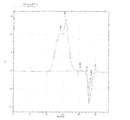
- Example 2 is a GPC chart (Em-1 GPC chart) of a polymer contained in the emulsion aqueous solution of Example 1.
- one polymer block is insoluble in water (in the present invention, this is referred to as a polymer block of A for convenience).
- One of the polymer blocks has a carboxy group (in the present invention, for convenience, this is a polymer block of B), and an AB block copolymer is neutralized with an alkali and dissolved in water.
- polymer II An aqueous solution, this neutralized AB block copolymer (referred to as polymer I) as a protective colloid, and other monomers including at least a hydrophobic addition polymerizable monomer are subjected to emulsion polymerization to form a polymer (referred to as polymer II).
- the remarkable effect of the present invention can be obtained for the first time by realizing an emulsion aqueous solution composed of the following unique structures, in which polymer I and polymer II are stably mixed.
- the AB block copolymer used as the polymer I constituting the present invention is such that the A polymer block is insoluble in water, and the B polymer block having a carboxy group is obtained by neutralizing with an alkali. Neutralized and dissolved in water. For this reason, in the aqueous solution containing polymer I, the polymer block of A is insoluble in water, so it exists as very fine particles, and the polymer block of B neutralized with alkali is dissolved in water. .
- the polymer block A In the fine particles, polymer II, which is a polymerized addition-polymerizable monomer, is present in a state of being incorporated. Therefore, the emulsion aqueous solution of the present invention is in a state where the incorporated polymer II is mixed in the fine particles composed of the polymer block A of polymer I, and the polymer block B of polymer I is dissolved in water. Therefore, the fine particles are very stable in water.
- the resin emulsion aqueous solution of the present invention has completely different properties from the conventional one.
- the AB block copolymer constituting the polymer I used for the protective colloid does not dissolve in water but exists as fine particles mixed with the polymer II. Can be achieved.
- the emulsion aqueous solution of the present invention has no polymer component dissolved in water. Problems such as lack of stability do not occur.
- the polymer block B of the AB block copolymer used as the polymer I has a carboxy group, it has high solubility in water, and even when dried with a head, other liquid media such as alkali It is easy to dissolve in an aqueous solution or the like (that is, good re-dissolution property), and can make the ink excellent in re-dissolution property.
- the polymer II is formed by (emulsion) polymerization in the particles of the addition polymerizable monomer in the presence of the fine particles of the polymer block A, the polymer II has a very large molecular weight. Therefore, the emulsion aqueous solution of the present invention, when used as a film-forming component such as an ink jet ink, is useful to exhibit a remarkable effect capable of obtaining a good film that is tough and has high adhesion. . Since the emulsion aqueous solution of the present invention has the above-mentioned specific properties, the above-described problems of the prior art can be solved at once by using it in an inkjet ink.
- Living radical polymerization is suitable as a method for obtaining an AB block copolymer used as the polymer I constituting the emulsion aqueous solution of the present invention, but there are various living radical polymerization methods.
- various living radical polymerization methods For example, there are an NMP method using nitroxide, an atom transfer radical polymerization method using a metal complex such as copper or ruthenium and a halide, and a reversible addition-fragmentation chain transfer polymerization using a sulfur compound such as dithiocarbamate.
- each method has its own problems as described below. That is, the NMP method requires a high temperature, and the polymerization of the methacrylate monomer cannot be performed well by living polymerization.
- atom transfer radical polymerization uses the metal complex, and the metal complex uses an amine compound as a ligand, so that a monomer having a carboxy group cannot be polymerized as it is.
- reversible addition-cleavage type chain transfer polymerization has a problem such as odor because it uses a sulfur compound.
- the AB block copolymer that characterizes the present invention is obtained by using an iodine compound as a polymerization initiating compound in conventional radical polymerization, and, if necessary, active phosphorus, nitrogen, oxygen, and carbon atoms as a catalyst. It is preferable to produce by living radical polymerization using an organic compound. By producing in this way, it is possible to easily obtain an AB block copolymer having a narrow molecular weight distribution (hereinafter abbreviated as PDI) defined in the present invention, that is, a uniform molecular weight.
- PDI narrow molecular weight distribution
- the AB block copolymer constituting the present invention has this narrow molecular weight distribution, when it is neutralized with an alkali to form a polymer I, a polymer molecule that is easily dissolved in water, or a polymer that is difficult to dissolve in water There are no molecules and the properties are uniform.
- the property of the polymer I is uniform, and as a result, in the aqueous solution containing the polymer I, the addition polymerization monomer is added and radical polymerization is performed, and when the polymer II is mixed, the stability is very high.
- An aqueous emulsion solution having the property of maintaining is obtained. Furthermore, by using such an aqueous emulsion solution for the ink jet ink, it is possible to obtain the optimum performance for the discharge property of the ink jet printing method.
- a pigment dispersant is used when dispersing the pigment.
- the AB block copolymer used for the polymer I constituting the aqueous emulsion solution of the present invention can also be used as a pigment dispersant. .
- the AB block copolymer is used as a pigment dispersant in a pigment dispersion containing the emulsion aqueous solution of the present invention, the following effects are obtained.
- the polymer I used for emulsifying the emulsion aqueous solution of the present invention and the polymer used as the pigment dispersant are the same, the emulsion aqueous solution is added to the pigment dispersion dispersed with the pigment and the dispersant. Even if it is added, aggregation, precipitation, separation, dispersion breakage or aggregation of dispersed pigment, phase separation or whitening when formed into a film after printing, which may occur between different polymers, do not occur. As a result, a good pigment dispersion, ink, and image can be provided.
- the present invention relates to an emulsion aqueous solution in which a polymer I and a polymer II are mixed.
- the polymer I and the polymer II have the following characteristics, respectively.
- the polymer I is an AB block copolymer having a specific structure, which is composed of 90% by mass or more of a methacrylate monomer and satisfies the following requirements (1) to (3), and is neutralized with an alkali.
- the polymer block of A of the AB block copolymer is substantially insoluble in water, has a number average molecular weight of 1000 to 10,000, and exhibits a molecular weight distribution (weight average). (Molecular weight / number average molecular weight) is required to be 1.5 or less.
- the polymer block B of the AB block copolymer needs to have at least methacrylic acid as a constituent component and an acid value of 30 to 250 mgKOH / g. By neutralization with alkali, the carboxy group of methacrylic acid of the polymer block of B is neutralized and dissolved in water.
- the AB block copolymer has a number average molecular weight of 5000 to 20000, and the content of the A block in the AB block copolymer is 5 to 60% by mass, And the degree of dispersion (weight average molecular weight / number average molecular weight) is required to be 1.6 or less.
- the polymer II which is another component constituting the emulsion aqueous solution of the present invention is a polymer obtained by polymerizing an addition polymerizable monomer containing at least a hydrophobic addition polymerizable monomer and having a glass transition temperature of 70 ° C. or lower.
- the mass ratio of the above-mentioned polymer I and polymer II needs to be 5 to 80:95 to 20.
- the polymer I is a polymer obtained by emulsifying and finely dispersing the coexisting polymer II in the aqueous emulsion solution of the present invention, wherein the above-mentioned unique AB block copolymer is neutralized with an alkali and contained in the aqueous solution. It is a component and exhibits a function called protective colloid.
- the polymer II is a polymer component having a function of forming a tough film having a high molecular weight, insoluble in water, formed by polymerization of a monomer containing at least a hydrophobic addition polymerizable monomer.
- the materials used to disperse and emulsify the conventionally used polymer II are both water-soluble and soluble compounds and polymers, particularly when used for inkjet printing as an inkjet ink, There has been a problem that the performance such as ejection properties is lacking due to the generation of bubbles or the increase in viscosity.
- the polymer I constituting the aqueous emulsion solution of the present invention requires that the AB block copolymer having a specific structure composed of 90% by mass or more of a methacrylate monomer is neutralized.
- the following new characteristics that are not present can be obtained.
- the AB block copolymer that characterizes the present invention consists of a polymer block of A and a polymer block of B, the polymer block of A being substantially insoluble in water, and the polymer of B having a carboxy group, When the carboxy group is neutralized with alkali, it dissolves in water.
- the polymer block of A when the AB block copolymer used in the present invention is added to water, the polymer block of A is substantially insoluble in water and thus precipitates in water, but the polymer block of B is neutralized with alkali. Is dissolved in water. For this reason, the polymer block A is insoluble in water and is dispersed in the form of fine particles. As a result, the polymer I in the emulsion aqueous solution of the present invention is very small (10 nm or less) dispersed in water.
- polymer I has such characteristics, when the emulsion aqueous solution of the present invention is used for ink or the like, a conventional water-insoluble polymer is dispersed using a surfactant, an emulsifier, and a polymer that dissolves in water. In the case of using an emulsified product, there is almost no change in viscosity or generation of bubbles.
- the water-insoluble polymer II is mixed with the polymer block A constituting the polymer I in the particles of the polymer block A of the polymer I in water. It becomes a shape.
- the polymer block of B constituting the polymer I is dissolved in water, the particles composed of the polymer block particles of A and the polymer II incorporated therein can be stably dispersed in water. Dispersed and emulsified.
- the AB block copolymer comprising 90% by mass or more of a methacrylate-based monomer, which is used as the polymer I after neutralizing with an alkali, characterizing the emulsion aqueous solution of the present invention, has all the following requirements (1) to (3): It satisfies.
- the polymer block of A is substantially insoluble in water and has a number average molecular weight of 1,000 to 10,000, and a dispersity (weight average molecular weight / number average molecular weight, hereinafter referred to as a molecular weight distribution). (Abbreviated as PDI) is 1.5 or less.
- the polymer block of B has at least methacrylic acid as a constituent component and an acid value of 30 to 250 mgKOH / g.
- the number average molecular weight of the AB block copolymer is 5000 to 20000, the content of the A block in the AB block copolymer is 5 to 60% by mass, and the total PDI is 1. 6 or less.
- an AB block copolymer comprising 90% by mass or more of a methacrylate monomer is used.
- the AB block copolymer used in the present invention can use a styrene monomer or an acrylate monomer in addition to a methacrylate monomer, but preferably all of the forming monomers are methacrylate monomers.
- Methacrylate monomers are known to be the optimal monomer species for the polymerization method used in the present invention, and can take various glass transition temperatures, functional groups, solubility, and soft / hard performance. This is preferable because it is possible.
- the polymerization method used in the present invention is difficult to obtain the molecular weight distribution, molecular weight, etc. defined in the present invention.
- the AB emulsification and dispersion of the polymer are made better by using the AB block copolymer obtained with the methacrylate monomer as the main monomer.
- the polymer block A constituting the AB block copolymer is a polymer block that is substantially insoluble in water, and the polymer block B is synthesized with at least methacrylic acid as a forming component.
- the polymer block A is synthesized by using a conventionally known methacrylate as a main forming component, and exhibits a property that is substantially insoluble in water.
- methacrylate that can be used for the synthesis of the polymer block of A include the following. Examples include methyl methacrylate, ethyl methacrylate, n-propyl methacrylate, 2-propyl methacrylate, n-butyl methacrylate, isobutyl methacrylate, t-butyl methacrylate, n-hexyl methacrylate, n-octyl methacrylate.
- Methacrylate esters of aliphatic alcohols such as 2-ethylhexyl methacrylate, decyl methacrylate, isodecyl methacrylate, dodecyl methacrylate, octadecyl methacrylate; Cyclohexyl methacrylate, 3-methylcyclohexyl methacrylate, 3-ethylcyclohexyl methacrylate, 3,3,5-trimethylcyclohexyl methacrylate, 4-t-butylcyclohexyl methacrylate, tricyclodecyl methacrylate, dicyclopentenyloxy methacrylate Methacrylates of alicyclic alcohols such as ethyl, isobornyl methacrylate, adamantyl methacrylate or the like or alkoxyalkanols thereof; And aromatic group-containing methacrylate esters such as phenyl methacrylate, naphthyl methacrylate
- the polymer I constituting the aqueous emulsion solution of the present invention neutralizes the AB block copolymer having a specific structure with an alkali to make the B polymer block water-soluble. Insoluble in water. For this reason, a methacrylate having a carboxy group or a phosphate group is used as a component for forming the polymer block of A as long as it is not substantially soluble in water when the polymer block of B is neutralized with an alkali. May be.
- Examples of the monomer having a carboxy group used in this case include methacrylate, methacryloyloxyethyl phosphate obtained by reacting dibasic acid such as succinic acid, maleic acid and phthalic acid with methacrylic acid and 2-hydroxyethyl methacrylate.
- dibasic acid such as succinic acid, maleic acid and phthalic acid
- An acid etc. are mentioned.
- the polymer block of A substantially insoluble in water when neutralized there is no limitation in view of other monomer components, but it is preferably about 0 to 30 mg KOH / g, more preferably What is necessary is just to make it an acid value of about 0-10 mgKOH / g.
- the polymer block B of the AB block copolymer used in the present invention has a carboxy group
- the polymer block of A has a functional group that reacts with the carboxy group, such as a glycidyl group, an isocyanate group, It is preferable not to contain an oxetanyl group. The reason is that these functional groups may react with a carboxy group and gel.
- the polymer block of A when synthesizing the polymer block of A, it is synthesized by appropriately selecting a monomer from the monomer group as mentioned above so as to be substantially insoluble in water, and adjusting its kind and composition amount.
- the polymer block of A is in the form of fine particles and polymer II is included and mixed.
- the aromatic group or alicyclic group in the above-mentioned monomer is used. More preferably, the group-containing methacrylate is at least a constituent component.
- the aromatic ring is due to its benzene ring, and the alicyclic ring is highly hydrophobic and hard, thereby increasing the affinity with the polymer II and stably dispersing the polymer II. Therefore, it is considered that good results were obtained.
- Suitable monomers for synthesizing the polymer block of A include the above-mentioned methacrylates having an aromatic group or an alicyclic group, and more preferably benzyl methacrylate or cyclohexyl methacrylate. These monomers have high versatility, and furthermore, since they differ depending on the ratio of other constituent monomers, it cannot be generally stated, but the homopolymer has a high glass transition temperature (hereinafter sometimes referred to as Tg). Since the glass transition point of the polymer block of A does not increase, it is preferable to use these monomers as constituents.
- Tg glass transition temperature
- the polymer block A synthesized with the monomer as described above is substantially insoluble in water, has a number average molecular weight of 1000 to 10,000, and its PDI needs to be 1.5 or less.
- the number average molecular weight means the number average molecular weight in terms of polystyrene in the measurement by gel permeation chromatography (hereinafter abbreviated as GPC), and the same applies to the following examples.
- the polymer block of A is specified to have a number average molecular weight of 1,000 to 10,000.
- the molecular weight is less than 1000, the molecular weight is too small to dissolve in water, the polymer II cannot be taken in to form good particles, and sufficient dispersion and emulsification of the polymer II can be given. Can not.
- the molecular weight is larger than 10,000, when the AB block copolymer is dispersed in water, the polymer block of A alone has a large particle size, and the polymer II may not be sufficiently taken up. More preferably, the number average molecular weight of the polymer block of A is 3000 to 8000.
- the PDI of the polymer block of A is required to be 1.5 or less. This represents a distribution of molecular weight, but if it is larger than 1.5, it may contain a lot of molecular weight other than the above-mentioned number average molecular weight range. More preferably, it is 1.3 or less.
- the polymer block B functions as a polymer block that dissolves in the AB block copolymer in water. It contributes to the stability of dispersion and emulsification.
- the polymer block of B has a carboxy group as an essential component, and methacrylic acid as an essential component as a forming component.
- the ester-type methacrylate having a carboxy group may be used, but in the ester type, the ester may be hydrolyzed to impair the affinity for water.
- methacrylic acid when used as a constituent component, the carboxy group contained in the methacrylic acid is neutralized with an alkali and ionized to ensure water solubility.
- the amount of methacrylic acid is limited by the acid value, and in the present invention, the acid value of the B polymer block is 30 to 250 mgKOH / g. When it is less than 30 mgKOH / g, sufficient water solubility cannot be obtained. There is a possibility that water resistance problems may occur. More preferably, it is 50 to 200 mg KOH / g.
- the monomer used in that case is not limited, and one or more of the above-mentioned methacrylate monomers are used.
- the molecular weight of the B polymer block is not particularly limited. As will be described later, the molecular weight of the B polymer block is obtained by subtracting the number average molecular weight of the A polymer block from the number average molecular weight of the entire AB block copolymer. It is calculated
- the molecular weight of the polymer block of B is preferably 3000 to 15000, more preferably 4000 to 10,000.
- the AB block copolymer used for the polymer I constituting the aqueous emulsion solution of the present invention comprises the above-described polymer block A and polymer block B, and has a number average molecular weight of 5,000 to 20,000, and A
- the content of the A block in the -B block copolymer is 5 to 60% by mass, and the total PDI is 1.6 or less.
- the reason is that when the number average molecular weight is less than 5000, when the emulsion aqueous solution containing the polymer I is inked and printed, the molecular weight is small as a polymer, so the strength is inferior and the film performance is poor.
- the molecular weight exceeds 20000, the molecular weight is too large, the viscosity of the ink becomes high, or the molecular weight is too large, and the number of molecules is reduced in the formulation, which acts on dispersion and emulsification. This is because the amount may be insufficient, and dispersion or emulsification may not be possible.
- a more preferred number average molecular weight is 6000 to 15000.
- the proportion of the polymer block of A in the AB block copolymer is defined as 5 to 60% by mass, because the polymer block of A is the particles in the AB block copolymer. This is because sufficient particle preparation and stability are required as described below. That is, if it is less than 5% by mass, the amount of the polymer block of A is insufficient, and the polymer is sufficiently On the other hand, when II cannot be taken in and exceeds 60% by mass, the polymer block of B is relatively decreased, and sufficient stability of the emulsion particles may not be maintained. For this reason, it is more preferable that the polymer block of A is contained in an amount of 20 to 50% by mass from the viewpoint of sufficient particle formation and higher stability.
- the AB block copolymer as a whole has a PDI of 1.6 or less because, as described above, it is necessary to maintain the limited molecular weight range as much as possible, and the molecular weight is uniform. Thus, more stable emulsion particles can be formed. More preferably, it is 1.5 or less.
- the AB block copolymer having the above-mentioned specific structure is neutralized with an alkali and used as the polymer I.
- the AB block copolymer is preferably obtained by the following polymerization method.
- the AB block copolymer used in the present invention requires that the molecular weight of each of the A and B polymer blocks and the copolymer as a whole is in a specific range and the distribution thereof is uniform.
- a living radical polymerization method As described above, the living radical polymerization for obtaining the polymer I of the present invention is preferably the following method.
- the living radical polymerization used in the present invention includes a step of living radical polymerization of a monomer component containing the above-mentioned methacrylate monomers in the presence of a polymerization initiating compound and a catalyst.
- the polymerization initiating compound is at least one of iodine and iodine compound
- the catalyst is phosphorus halide, phosphite compound, phosphinate compound, imide compound, phenol compound, diphenylmethane compound, and cyclopentadiene compound. It is obtained by being at least one compound selected from the group consisting of
- NMP method nitroxide method
- ARP method halogens Atom transfer radical polymerization
- RAFT method Reversible addition-fragmentation chain transfer
- MADIX method Macromolecular-Design-via-Interchange-of-Xanthate
- organic tellurium organic bismuth
- organic antimony antimony halide
- organic germanium Haloge
- DT method a method using a heavy metal such as germanium nitride
- the above method has a problem in that the AB block copolymer characterizing the present invention can be obtained simply and stably.
- an amine oxide such as a tetramethylpiperidine oxide radical is used.
- it is necessary to polymerize under a high temperature condition of 100 ° C. or higher. There is also a problem of not progressing.
- the AB block copolymer polymerization method carried out by the above-described method for producing an aqueous emulsion of the present invention does not require the use of heavy metal compounds, does not require purification of the polymer, and has a special Since it is not necessary to synthesize a compound and it can be easily produced only by using a relatively inexpensive material on the market, it is very useful. Furthermore, this method is a method in which the polymerization conditions are mild and the polymerization can be performed under the same conditions as the conventional radical polymerization method. It should be noted that a monomer having a carboxy group or a phosphate group can be used as it is. It can be radically polymerized.
- a step of living radical polymerization of a monomer component containing a methacrylate monomer (polymerization step) in the presence of a polymerization initiating compound and a catalyst is performed.
- a polymerization initiating compound and a catalyst is performed.
- at least one of iodine and an iodine compound is used as the polymerization initiating compound.
- various functional groups can be used as described later.
- iodine and an iodine compound is used as a polymerization initiating compound, and a monomer component containing a methacrylate monomer is polymerized by living radical polymerization, and the reaction at that time proceeds as follows.
- iodine radicals are dissociated.
- the iodine radical is immediately bonded again to the polymer terminal radical and stabilized, and the polymerization reaction proceeds while preventing the termination reaction.
- iodine compound used above examples include alkyl iodides such as 2-iodo-1-phenylethane and 1-iodo-1-phenylethane; 2-cyano-2-iodopropane, 2-cyano-2- Cyano group-containing iodine such as iodobutane, 1-cyano-1-iodocyclohexane, 2-cyano-2iodo-2,4-dimethylpentane, 2-cyano-2-iodo-4-methoxy-2,4-dimethylpentane And the like.
- iodine compounds may be commercially available products, but those prepared by a conventionally known method can also be used.
- an iodine compound can be obtained by reacting an azo compound such as azobisisobutyronitrile with iodine.
- an organic halide obtained by substituting iodine of the above iodine compound with a halogen atom such as bromine or chlorine is reacted with an iodide salt such as quaternary ammonium iodide or sodium iodide, and the halogen compound is exchanged.
- an iodine salt such as quaternary ammonium iodide or sodium iodide
- a catalyst capable of further extracting iodine of the polymerization initiating compound may be used together with the polymerization initiating compound.
- catalysts include phosphorus compounds such as phosphorus halides, phosphite compounds, and phosphinate compounds; nitrogen compounds such as imide compounds; oxygen compounds such as phenol compounds; diphenylmethane compounds and cyclopentadiene compounds. It is preferable to use the following hydrocarbon compound.
- these catalysts can be used individually by 1 type or in combination of 2 or more types.
- phosphorus compounds include phosphorus triiodide, diethyl phosphite, dibutyl phosphite, ethoxyphenyl phosphinate, phenylphenoxy phosphinate and the like.
- nitrogen compound include succinimide, 2,2-dimethylsuccinimide, maleimide, phthalimide, N-iodosuccinimide, hydantoin and the like.
- oxygen compound include phenol, hydroquinone, methoxyhydroquinone, t-butylphenol, catechol, and di-t-butylhydroxytoluene.
- the hydrocarbon compound include cyclohexadiene and diphenylmethane.
- the amount of the catalyst used is preferably less than the amount of use of the polymerization initiating compound (number of moles). When the amount of the catalyst used (number of moles) is too large, the polymerization is excessively controlled, and the polymerization may be difficult to proceed.
- the temperature (polymerization temperature) during the living radical polymerization is preferably 30 to 100 ° C. If the polymerization temperature is too high, iodine at the polymerization terminal is decomposed, and the terminal is not stable, and living polymerization may not be performed, which is not preferable.
- iodine is bonded to the terminal, and the iodine is dissociated as a radical to generate a radical so that the terminal is stable.
- the terminal is a secondary iodide, which is relatively stable and does not come off as an iodine radical, the polymerization may not proceed, or the distribution may be widened. .
- a polymerization initiator that can generate radicals is usually added.
- the polymerization initiator conventionally known azo initiators and peroxide initiators are used. It is preferable to use a polymerization initiator that generates radicals sufficiently within the above polymerization temperature range. Specifically, it is preferable to use an azo initiator such as 2,2'-azobis (4-methoxy-2,4-dimethylvaleronitrile).
- the amount of the polymerization initiator used is preferably 0.001 to 0.1 mol times, more preferably 0.002 to 0.05 mol times with respect to the monomer. If the amount of the polymerization initiator used is too small, the polymerization reaction may not proceed sufficiently. On the other hand, if the amount of the polymerization initiator used is too large, a normal radical polymerization reaction that is not a living radical polymerization reaction may proceed as a side reaction.
- Living radical polymerization may be bulk polymerization without using an organic solvent, but is preferably solution polymerization using an organic solvent.
- the organic solvent is preferably one that can dissolve components such as a polymerization initiator compound, a catalyst, a monomer component, and a polymerization initiator.
- organic solvent As specific examples of the organic solvent, the following can be used. That is, hydrocarbon solvents such as hexane, octane, decane, isodecane, cyclohexane, methylcyclohexane, toluene, xylene, and ethylbenzene; alcohols such as methanol, ethanol, propanol, isopropanol, butanol, isobutanol, hexanol, benzyl alcohol, and cyclohexanol Solvents: ethylene glycol, diethylene glycol, propylene glycol, dipropylene glycol, methyl cellosolve, ethyl cellosolve, butyl cellosolve, propylene glycol monomethyl ether, propylene glycol monoethyl ether, propylene glycol propyl ether, diglyme, triglyme, tetraglyme, dipropyline glycol dimethyl
- the organic solvent used for these polymerizations can be used as it is as a solution of polymer I, but if necessary, the copolymer can be taken out from the solution and solidified.
- the method of taking out the synthesized copolymer is not particularly limited. For example, it can be precipitated as a poor solvent and filtered or dried, or the solution can be dried to take out only the copolymer to obtain a solid copolymer.
- An aqueous alkali solution is added to the obtained AB block copolymer solution to neutralize the carboxy groups of the AB block copolymer to form an aqueous solution, thereby obtaining a polymer I solution.
- the AB block copolymer is taken out as a solid, it may be used by adding it to an aqueous medium, neutralizing the carboxy group with an alkali, and dissolving and dispersing in water.
- the solid content concentration (monomer concentration) of the polymerization solution is preferably 5 to 80% by mass, and more preferably 20 to 60% by mass. If the solid content concentration of the polymerization solution is less than 5% by mass, the monomer concentration is too low and the polymerization may not be completed. On the other hand, when the solid content concentration of the polymerization liquid exceeds 80% by mass or bulk polymerization, the viscosity of the polymerization liquid becomes too high, and stirring tends to be difficult and the polymerization yield tends to decrease. Living radical polymerization is preferably carried out until the monomer runs out. Specifically, the polymerization time is preferably 0.5 to 48 hours, and more preferably 1 to 24 hours.
- the polymerization atmosphere is not particularly limited, and may be an atmosphere in which oxygen exists within a normal range or a nitrogen stream atmosphere.
- polymerization may use what removed the impurity by distillation, activated carbon treatment, an alumina treatment, etc., and may use a commercial item as it is.
- polymerization may be performed under light shielding, or polymerization may be performed in a transparent container such as glass.
- the molecular weight of the main chain is controlled by adjusting the use balance of the methacrylate monomer and the polymerization initiating compound in the living radical polymerization in a molar ratio. It will become something. Specifically, a polymer whose main chain has an arbitrary molecular weight can be obtained by appropriately setting the number of moles of the monomer with respect to the number of moles of the polymerization initiating compound.
- molecular weight is a concept including both the number average molecular weight (Mn) and the weight average molecular weight (Mw).
- Theoretical molecular weight of main chain polymer “1 mol of polymerization initiation compound” ⁇ “monomer molecular weight” ⁇ “number of moles of monomer / number of moles of polymerization initiation compound” (1) The amount of the polymerization initiating compound is as described above.
- the polymerization process may involve a two-molecule termination or a disproportionation side reaction, a main chain polymer having the above theoretical molecular weight may not be obtained.
- the AB block copolymer used in the present invention is preferably obtained without causing these side reactions.
- the polymerization rate may not be 100%.
- the polymerization may be completed by adding a polymerization initiating compound or a catalyst and consuming the remaining monomer. That is, the AB block copolymer used in the present invention is produced by the production method as described above, and the AB block copolymer having the above-mentioned structure having a specific main chain is formed and contains this as a main component. Just go out.
- the produced copolymer is a specific AB block copolymer, it can be said that the effect is sufficiently obtained and the main component.
- a polymer block of A substantially insoluble in water is polymerized, and then a mixture of monomers having a carboxy group is added.
- the polymer block of B may be formed, and conversely, after forming the polymer block of the monomer having a carboxy group, the monomer that forms the other polymer block so as to be substantially insoluble in water. It may be added and polymerized. After polymerizing carboxy groups first, excess carboxy groups can be mixed into one polymer block, and polymer blocks that are substantially insoluble in water can contain more carboxy groups and dissolve in water than necessary. Therefore, it is preferable to form a polymer block that is substantially insoluble in water and then polymerize by adding a monomer having a carboxy group.
- an AB block copolymer having a specific structure defined in the present invention that can be used as the polymer I can be obtained simply and reliably.
- the carboxy group of the B polymer block of the AB block copolymer is neutralized with an alkali to form an aqueous solution of polymer I.
- a monomer containing a hydrophobic addition polymerizable monomer is added.
- alkali to be neutralized used in this case, conventionally known alkalis are used and are not particularly limited. Specific examples include ammonia; alkanolamines such as monoethanolamine, diethanolamine, and triethanolamine; alkali metal hydroxides such as lithium hydroxide, sodium hydroxide, and potassium hydroxide; and 60 mol% of the carboxy group. As described above, preferably 100% or more is used to make an aqueous solution.
- the polymer II is a polymer that is finely dispersed and emulsified by the polymer I, has a high molecular weight, and is a polymer that forms a tough and highly adhesive film.
- This polymer is obtained by emulsion polymerization by using a conventionally known addition polymerizable monomer and adding a monomer for forming the polymer II in the presence of the polymer I in an aqueous solution.
- Examples of conventionally known addition polymerizable monomers that can be used above include the following.
- vinyl monomers vinyl group-bonded monomers such as styrene, vinyl toluene, vinyl acetate, N-vinyl pyrrolidone, acrylonitrile, methacrylonitrile, vinyl pyridine; acrylate monomers in which the methacrylic group of the methacrylate is an acrylic group;
- Methacrylate monomers Amide monomers such as acrylamide, methacrylamide and N, N-dimethylmethacrylamide can be used.
- reactive monomers such as N-methylolacrylamide may be mentioned.
- the following monomers that could react with the carboxy group and could not be used in the polymer I can also be used.
- a monomer having a glycidyl group for example, glycidyl methacrylate can be used.
- a monomer having an isocyanate group for example, methacryloyloxyethyl isocyanate can also be used.
- a monomer obtained by reacting a dibasic acid such as phthalic acid or succinic acid with hydroxyethyl (meth) acrylate can be used, and a carboxy group can be introduced into the polymer II by using the monomers listed above. As a result, when a film is formed, it is effective in improving the adhesion.
- the polymer II as a coating component is imparted with an ultraviolet absorbing ability.
- the light resistance of the film can be improved, and further, the light resistance of the dye or pigment used when the ink is formed can be improved.
- polyfunctional crosslinkable monomers such as divinylbenzene, ethylene glycol di (meth) acrylate, and trimethylolpropane tri (meth) acrylate are also used as necessary as addition polymerizable monomers that form the polymer II. it can.
- crosslinkable monomers it is preferable because a higher molecular weight and a three-dimensional structure can be obtained, and a higher toughness and high adhesion film can be formed.
- a macromonomer such as polystyrene-terminated (meth) acrylate can be used.
- polymers such as polyether, polyester, a polyurethane, can be dissolved in the monomer which is a formation component of the polymer II, and it can also be set as a heterogeneous mixed polymer.
- the addition polymerizable monomer which is a component of the polymer II preferably has styrene, vinyltoluene, or an aliphatic group, alicyclic group or aromatic group having 1 to 18 carbon atoms because of its versatility. Any one of (meth) acrylates may be an essential component. Examples of the (meth) acrylate having an aliphatic group having 1 to 18 carbon atoms, an alicyclic group or an aromatic group used in this case include the above-mentioned methacrylates or acrylates thereof. These monomers can be used in part or in whole.
- the polymer II obtained by polymerizing the monomer containing the hydrophobic addition polymerizable monomer as described above constituting the emulsion aqueous solution of the present invention is intended to act as a film component, its film forming property is important. This film-forming property is contributed by the glass transition temperature (Tg) of the polymer II.
- Tg glass transition temperature
- the Tg of the polymer II is preferably 70 ° C. or lower, more preferably 60 ° C. or lower. Is good. In the case of Tg higher than 70 ° C., high temperature heating is required for drying, and in addition, it may take time.
- the formed film has a high Tg, it is hard and may be broken by a bending test or the like. In order to follow bending with respect to the film, it is preferable that the film is flexible, and it is more preferable that Tg is low. However, even when the Tg of the polymer II is higher than 70 ° C., the film-forming property can be improved by adding a film-forming aid such as a high boiling point solvent. As the high boiling point solvent used in this case, the above-described glycol solvent is suitable. However, since this high-boiling solvent contains a solvent that does not volatilize easily, the formed film may become soft or the strength may be weak. Therefore, it is preferable not to use a solvent.
- Tg may be measured by thermal analysis of a polymer obtained by polymerizing monomers to be used, or can be easily calculated from the monomers used for synthesis. A value may be used.
- the Tg of the homopolymer the value described in the fourth edition of the polymer handbook may be used, or the value of various documents may be used.
- the molecular weight of the polymer II constituting the emulsion aqueous solution of the present invention is not limited for the following reasons.
- the emulsion aqueous solution of the present invention is a radical polymerization by adding a monomer containing at least a hydrophobic addition polymerizable monomer for forming the polymer II to the polymer I aqueous solution so that the polymer II coexists. It will be. Therefore, it is a mixture of polymer I and polymer II, in which the addition polymerizable monomer is polymerized into the polymer block A of polymer I and the polymer II is incorporated and mixed. In this state, the molecular weight of only polymer II Is difficult to measure.
- the molecular weight of the polymer II is sufficiently larger than that of the polymer I, it is observed in the GPC measurement that the peak of the polymer II overlaps with the polymer I, and the molecular weight of the peak top of the polymer II is sufficiently large. Indicated.
- the molecular weight of the peak top is 50000 or more, more preferably 70000 or more.
- the ratio of the polymer II is less than 20, the effect of the coating of the present invention may not be obtained.
- the ratio of polymer I is more than 95, the resulting particles have poor stability, and may cause precipitation during polymerization.
- the particle size of the resulting emulsion becomes too large, which may result in deterioration of filterability, and clogging of the head when used for inkjet ink.
- the method for producing the emulsion aqueous solution of the present invention will be described more specifically.
- the carboxy group of the B polymer block of the AB block copolymer is neutralized with an alkali in water.
- the polymer block A of the AB block copolymer is insoluble in water, the polymer block A is finely divided, and the polymer block B is dissolved in water, so that the polymer I constituting the present invention is transparent to translucent In a finely dispersed and emulsified state.
- a radical polymerization initiator is added here, and monomers containing at least a hydrophobic addition-polymerizable monomer that is a forming component of polymer II are added, or alternatively, to the monomers that are forming components of polymer II A radical polymerization initiator is dissolved and added, and the added monomers are radically polymerized.
- the method of making the AB block copolymer into an aqueous solution to form the polymer I is as described above, and the liquid medium used is mainly water, and if necessary, a water-soluble organic solvent may be used in combination. Also good.
- the water-soluble organic solvent the above-mentioned alcohol, glycol and the like are used, and the amount used is about 0 to 20% by mass in the liquid medium. If it is used in an amount of more than 20% by mass, the organic solvent is taken into the particles, and the particles may swell or aggregate to destroy the dispersion or emulsified state of the emulsion aqueous solution of the present invention. Preferably it is 10 mass% or less in a liquid medium.
- the above-mentioned water-soluble organic solvent is not particularly limited, and examples thereof include those that can be mixed with 20% by mass or more with respect to water, and a solvent that can be completely mixed is preferable. Further, the solvent used for the polymerization of the AB block copolymer can be used as it is.
- the concentration of polymer I constituting the emulsion aqueous solution of the present invention with respect to water is not particularly limited, but is preferably 10% by mass to 30% by mass.
- the polymer I and the polymer II constituting the emulsion aqueous solution of the present invention are adjusted so as to have a mass ratio of the polymer I and the polymer II defined in the present invention, but the concentration of the polymer I with respect to water is 10% by mass. If it is less than the concentration, the concentration is too thin, the polymerization for allowing the polymer II to exist does not proceed well, and the polymerization rate may not increase. On the other hand, if it exceeds 30% by mass, the solid content of the resulting emulsion aqueous solution becomes too high, and the viscosity of the emulsion aqueous solution may become too high, which is not preferable.
- a radical polymerization initiator is added to an aqueous solution of polymer I having the concentration as described above, and monomers including a hydrophobic addition polymerizable monomer that is a component of polymer II are added for polymerization, or polymer A mixed solution obtained by adding a radical polymerizable initiator to the above-described monomers that are the formation component of II is added to the aqueous solution of polymer I having the above-described concentration to perform polymerization.
- the radical polymerizable initiator used in this case is not particularly limited, and an aqueous or oily radical polymerization initiator can be used.
- water-soluble radical initiators such as peroxide-based initiators such as ammonium persulfate and potassium persulfate, and water-soluble azo initiators such as 2,2′-azobis (2-methylpropionamidine) dihydrochloride salt
- peroxides such as benzoyl peroxide and azo initiators such as azobisisobutyronitrile can be used, but these may be added to water in advance
- the monomer mixture is preferably dissolved in the monomer to be used and added to the aqueous solution of polymer I.
- the amount of the radical initiator is not particularly limited, but is 0.1% by mass to 5% by mass, more preferably 0.5% by mass to 3% by mass with respect to the monomer.
- the polymerization temperature in the above is not particularly limited.
- it can be set based on the 10-hour half-life of the radical polymerization initiator used.
- it is not less than the 10-hour half-life temperature.
- the method for adding the monomers that are the components forming the polymer II is not particularly limited. Although all the monomers may be added in advance, it is preferable to gradually add dropwise over time. That is, by gradually dropping, the monomers that form the polymer II are uniformly incorporated into the particles of the polymer block A and polymerized so that the mixture of the polymer I and the polymer II is stable. Can be made into emulsion particles.
- the polymerization time is not particularly limited, but it is important that the radical polymerization initiator sufficiently decomposes and disappears, and that the polymerization rate is increased so that the residual monomer disappears.
- additives may be added in this polymerization. Specifically, colorants such as preservatives, pH adjusters, leveling agents, organic solvents and dyes described above, and addition of surfactants and the like to eliminate irregularly aggregated particles can be mentioned.
- another resin may be allowed to coexist to form the emulsion aqueous solution of the present invention. This resin is a conventionally known water-based resin, and a water-soluble resin solution or emulsion can be used.
- styrene-based acrylic styrene-based, acrylic-based, vinyl alkanoic acid-based, urethane-based, ester-based, olefin-based, and amide-based resin solutions, and emulsions thereof.
- an emulsion is preferably used because a dissolved polymer may deteriorate discharge stability.
- the emulsion aqueous solution of the present invention in which the specific polymer I and the polymer II are mixed can be obtained simply and stably.
- the particle diameter of the particles contained in the aqueous solution is preferably 20 to 300 nm in average particle diameter by light scattering measurement. This average particle diameter can be measured by a conventionally known method for measuring the particle diameter of emulsion particles. In the present invention, the value of a particle size measuring device by light scattering is used. If the average particle diameter is less than 20 nm, the particles may be too fine and the ink viscosity may increase. On the other hand, if the average particle diameter exceeds 300 nm, clogging of the head may occur during ink jet ejection. More preferably, it is 20 to 200 nm, and further 30 to 110 nm. The above is the description of the emulsion aqueous solution of the present invention.
- the colorant composition of the present invention includes at least a dye and / or pigment, water, a water-soluble organic solvent, and the above-described emulsion aqueous solution of the present invention as constituents.
- the dyes and pigments used at this time are not particularly limited, and various dyes and pigments conventionally used for printing can be used.
- an aqueous dye may be used, and an oily dye may be used as described below.
- oil-based dyes they are not inherently soluble in water, but are soluble in the organic solvent present in the colorant composition of the present invention, or a mixture of polymer I and polymer II constituting the emulsion aqueous solution of the present invention. May be used even if it is oil-soluble.
- a conventionally well-known dye is used. For example, various C.I. such as Acid Red, Acid Blue, Acid Yellow, Basic Red, Basic Blue, Basic Violet, Direct Red, Direct Blue, Direct Yellow, Direct Black Oil Red, Oil Blue, Oil Black, and Fluorescent Dye. I. Numbers and dyes from manufacturers with improved light resistance can be used. Furthermore, a polymer to which a dye is bound can be sufficiently used.
- examples of the pigment include conventionally known inorganic pigments and organic pigments, and are not particularly limited.
- Various C.I. I. No. pigments are used, and examples thereof include carbon black pigments, quinacridone pigments, phthalocyanine pigments, benzimidazolone pigments, isoindolinone pigments, azo pigments, and titanium oxide pigments.
- Color Index Number (CI) Pigment Blue-15 3, 15: 4, C.I. I. Pigment red-122, 269, C.I. I. Pigment violet-19, C.I. I. Pigment yellow-74, 155, 180, 183, C.I. I. Pigment Green-7, 36, 58, C.I. I. Pigment orange-43, C.I. I. Pigment black-7, C.I. I. And CI Pigment White-6.
- a self-dispersing pigment having a water-soluble group introduced into the pigment surface or encapsulated with a resin can also be used as the pigment.
- examples of self-dispersing pigments include carbon black introduced with acidic groups sold by various carbon black manufacturers, and self-dispersing pigments such as Cabot.
- these dyes and pigments are used, and the dye and the pigment may be used in combination.
- the content of the dye or pigment in the coloring composition is not particularly limited.
- a dye it is preferably used in the range of about 0.5 to 10% by mass, in the case of a pigment, in the range of 1 to 30% by mass in the case of an organic pigment, and in the range of about 5 to 60% by mass in the case of an inorganic pigment. Is done.
- water or a water-soluble organic solvent is used as a liquid medium.
- the water-soluble organic solvent the above-mentioned alcohol, glycol, polyhydric alcohol and the like can be used as appropriate, but the blending amount is also arbitrary and is not particularly limited.
- the water-soluble organic solvents include water-soluble lower aliphatic alcohols such as ethanol and isopropanol, ketone-based water-soluble solvents such as acetone, water-soluble ester solvents such as ethyl lactate, tetrahydrofuran, ethylene glycol dimethyl ether and diethylene glycol dimethyl ether.
- Water-soluble ether solvents such as propylene glycol and ethylene glycol, water-soluble glycol solvents such as monoalkyl ethers thereof, water-soluble amide solvents such as N-methylpyrrolidone, water-soluble solvents such as glycerin and 1,2-hexanediol A polyol solvent etc. are mentioned, It does not specifically limit, One or more of these are used.
- a head such as diethylene glycol monobutyl ether, triethylene glycol monobutyl ether, glycerin, propylene glycol, 1,2-hexanediol, 2-pyrrolidone, or N-methyl-2-pyrrolidone is more preferable. It is preferable to use one or more water-soluble organic solvents to prevent the drying of the water.
- the above-mentioned dye aqueous solution of the present invention is added to the dye and / or pigment and liquid medium as described above to obtain the colorant composition of the present invention.
- the amount of the aqueous emulsion added at that time may be appropriately determined depending on the amount of the polymer component contained in the emulsion in order to obtain the required film performance and coloring power.
- a water-soluble dye can be added to a liquid medium and mixed and dissolved to obtain a colored composition.
- an organic solvent is added and stirred for homogenization so that the dye is dissolved, or is stirred and homogenized so that the dye is incorporated into emulsion particles.
- a pigment in the case of a self-dispersing pigment, it is added to the liquid medium, and the pigment is dispersed by stirring, preferably by a dispersion step. In the case of this self-dispersing pigment, no dispersant is particularly required.
- Examples of the dispersion method include a kneader such as a kneader, two rolls, three rolls, and Miracle KCK (Asada Steel Corporation, trade name), an ultrasonic disperser, and a microfluidizer (high-pressure homogenizer).
- a kneader such as a kneader, two rolls, three rolls, and Miracle KCK (Asada Steel Corporation, trade name), an ultrasonic disperser, and a microfluidizer (high-pressure homogenizer).
- Mizuho Industry Co., Ltd., trade name trade name
- Nanomizer Yoshida Kikai Kogyo Co., Ltd., trade name
- Starburst Sugino Machine Co., Ltd., trade name
- G-Smasher Rho Chemical Company, trade name
- the pigment is dispersed by the above dispersion method using a pigment dispersant.
- pigment dispersants are used, for example, random polymers such as acrylic and styrene polymers, block copolymer type dispersants, graft polymer type dispersants, star type polymer dispersants, hyperbranch type dispersions. Agents and the like.
- the pigment dispersant is used in an arbitrary amount with respect to the pigment.
- the pigment dispersant is 1 to 100 parts by mass, more preferably 5 to 50 parts by mass with respect to 100 parts by mass of the pigment. .
- the desirable dispersed particle diameter of the pigment is as described above, and the average of the organic pigment is averaged in consideration of the color development of the ink such as optical density and saturation and the print quality or the precipitation of the pigment in the ink.
- the particle diameter is 150 nm or less, and the inorganic pigment is 300 nm or less.
- the size of the grinding media of the disperser is reduced, the filling rate of the grinding media is increased, the processing time is increased, the discharge speed is decreased, and the grinding is performed.
- a method such as classification with a post filter or a centrifuge is used. Or the combination of those methods is mentioned.
- a method of using a pigment in which the primary particle diameter of the pigment to be used is finely adjusted in advance by a conventionally known method, for example, a salt milling method. After dispersion, it is preferable to remove coarse particles with a centrifuge or a filter.
- the pigment dispersant is the same as the AB block copolymer used in the polymer I constituting the present invention.
- the AB block copolymer used in the present invention comprises an A polymer block that does not dissolve in water and a B polymer block that dissolves in water.
- the A polymer block is adsorbed to the pigment, and the B polymer block is water. It is possible to disperse the pigment finely.
- the polymer II constituting the emulsion aqueous solution is in the same state as the polymer I in which the polymer II is stably dispersed and emulsified in water.
- the polymer of the pigment dispersant and the polymer I of the emulsion stabilizer are the same, so there is no poor phase dissolution, phase separation, or whitening, giving a good print be able to.
- colorant compositions are made into inks by adding additives as necessary.
- a surfactant a pigment derivative, a dye, a leveling agent, an antifoaming agent, an ultraviolet absorber and the like can be used, and the additive is not particularly limited.
- the colorant composition obtained as described above is converted into an ink by adding water, a water-soluble organic solvent, and additives.
- the concentration is adjusted to 0.5 to 7% by mass
- the concentration is adjusted to 1 to 10% by mass.
- the addition amount of the emulsion aqueous solution of the present invention is preferably 50 to 300 parts by mass with respect to 100 parts by mass of the dye and / or pigment in which the polymer component contained in the emulsion aqueous solution is used.
- the amount is 50 parts by mass or less, the amount of the dye component is excessively increased and the strength of the coating may not be exhibited.
- the concentration of the contained pigment is relatively decreased and the coloring power may be reduced. is there. More preferred is 50 to 200 parts by mass.
- a surfactant a water-soluble organic solvent, an antifoaming agent, and the like can be used.
- the surface tension is in the range of 20 mN / m or more and 40 mN / m or less to widen the dot diameter to be printed by inkjet, it is preferable to add at least a surfactant.
- a conventionally well-known thing can be used for surfactant.
- the amount added is preferably 0.01 to 5% by mass, more preferably 0.1 to 2% by mass, since a large amount may impair the dispersion stability of the pigment.
- the viscosity of the obtained ink is not particularly limited, but it is preferably 2 to 10 mPa ⁇ s for inkjet inks containing dyes or organic pigments, and 5 to 30 mPa ⁇ s for inkjet inks containing inorganic pigments.
- the emulsion aqueous solution of the present invention can be used as a film forming component suitable for an ink jet printing method, and can provide an ink jet ink capable of obtaining excellent effects. Specifically, it is excellent in printability such as high-speed printability and discharge stability, and is particularly useful in the case of an aqueous pigment ink for ink jet using a pigment as a color material. However, the ink is excellent in redispersibility and can be easily redispersed. Further, the ink can form printed matter having adhesion to various substrates.
- the ink-jet ink of the present invention can be applied to an ink-jet printer using a water-based ink for consumer use, industrial use, textile printing and the like.
- the aqueous emulsion solution of the present invention is preferably added to the inkjet ink, but is not limited thereto, and may be applied to the above-described base material in advance or applied as an overcoat to the printed material.
- the effect of the present invention can also be obtained by printing.
- Example 1 Synthesis of polymer I-1 and emulsion (Em-1) using the same [Synthesis of Polymer I-1] First, the following was charged into a reactor of a 2 liter separable flask equipped with a stirrer, a reverse flow condenser, a thermometer, and a nitrogen inlet tube, and used as the polymer I defined in the present invention as follows. A polymer block of A constituting a B block copolymer was synthesized.
- BDG diethylene glycol monobutyl ether
- iodine compound as a polymerization initiating compound
- V-70 2,2 1-azobis (4-methoxy-2,4-dimethylvaleronitrile)
- HEMA 2-hydroxyethyl methacrylate
- the temperature of the reaction solution was set to 40 ° C., 234.8 parts of BzMA and 57.2 parts of methacrylic acid (hereinafter abbreviated as MAA) were added thereto, and polymerization was performed for 4.5 hours.
- MAA methacrylic acid
- the polymerization rate of the sampled product was almost 100%, and it was confirmed that most of the monomers were polymerized.
- molecular weight was measured by GPC, it was 10800 in number average molecular weight, and PDI was 1.23. Since the molecular peak of the polymer block of A shifted to a high molecular weight and there was almost no peak of the polymer block of A, it was speculated that the polymer block became an AB block copolymer.
- the acid value of the sample after polymerization was measured by the acid value measuring method described above.
- the acid value of the AB block copolymer was 71.3 mgKOH / g, which almost coincided with the theoretical value.
- the proportion of the polymer block of A in the AB block copolymer obtained above is 44.4% in terms of blending. Moreover, when the solid content of the polymerization solution obtained above was measured, it was 33.3%, which almost coincided with the theoretical value in the formulation.
- This solution of polymer I is referred to as polymer I-1 aqueous solution.
- the aqueous acetic acid solution was completely neutralized to make the water insoluble by adding the aqueous acetic acid solution to pH 5.
- a resin was deposited.
- This solution was filtered and washed thoroughly with ion exchange water to obtain an aqueous paste of polymer I-1.
- the solid content of this water paste was 65.0%.
- the acid value measured was 70.9 mgKOH / g, the number average molecular weight was 10800, and the PDI was 1.23.
- the polymer component was taken out from the aqueous polymer I-1 solution as a water paste. This is referred to as Polymer I-1 water paste.
- the particle size measuring instrument used was “NICOMP 380ZLS-S” (manufactured by International Business Co., Ltd.). In the following examples, the measurement of the average particle size of the polymer was similarly attempted using this apparatus.
- the average particle size of the polymer I-1 is estimated to be a particle size of 10 nm or less, which is below the detection limit of the above-described measuring apparatus.
- KPS potassium persulfate
- Em-1 This emulsion aqueous solution is referred to as Em-1.
- Em-1 The measured solid content of Em-1 was 25.0%, which almost coincided with the theoretical value. Further, when the particle diameter in Em-1 was measured with a light scattering particle size distribution analyzer, the average particle diameter was 89 nm. The pH was 9.0. Moreover, it was 5.9 mPa * s when the viscosity was measured with rotation number 60rpm with the BM type
- the Tg calculated from the above theoretical Tg is ⁇ 23 ° C.
- the peak of polymer II which is a high molecular weight peak, overlapped with the peak of polymer I, which is a protective colloid.
- the molecular weight of the peak top of this polymer II was 100,000.
- FIG. 1 shows this GPC chart.
- the outflow time of 14.310 minutes is the peak of polymer II
- the outflow time of 15.863 minutes is the peak of polymer I.
- the outflow time of 14.310 minutes is a molecular weight of 100,000 in terms of polystyrene.
- Emulsions using polymer I-1 Emulsion aqueous solutions Em-2 to Em-5 of Examples 2 to 5 of the present invention were obtained in the same manner as in Example 1 described above with respect to the respective polymer compositions and blending amounts. Specifically, the ratios of the polymer I-1 and the polymer II were changed so that the ratio of the polymer I as the protective colloid and the polymer II as the coating component was as shown in Table 1, and the examples 2 to 5 emulsion aqueous solutions Em-2 to Em-5 were obtained. Properties and the like of these emulsion aqueous solutions were determined in the same manner as in Example 1, and are shown in Table 1 together. In Table 1, the values for the emulsion aqueous solution Em-1 of Example 1 are also shown.
- Example 6 and 7 Emulsions using polymer I-1 (Em-6, Em-7)
- the emulsion aqueous solutions Em-6 and Em-7 of the present invention were prepared in the same manner as Em-1 in Example 1, except that the ratio of BA and St, which are the components forming the polymer II, was changed as shown in Table 2. Obtained. These examples are for examining the influence of Tg of polymer II by changing the Tg of polymer II by changing the ratio of BA and St. Properties and the like of these emulsion aqueous solutions were determined in the same manner as in Example 1, and are shown in Table 2. In Table 2, the values for the emulsion aqueous solution Em-1 of Example 1 are also shown.
- Emulsions using polymer I-1 Emulsion aqueous solutions Em-8 to Em-10 of the present invention were obtained in the same manner as in Example 1 except that the composition of the components forming the polymer II was changed as shown in Table 2. Properties and the like of these emulsion aqueous solutions were determined in the same manner as in Example 1, and are shown in Table 3. In Table 3, values for the aqueous emulsion Em-1 of Example 1 are also shown.
- Em-8 diethylene glycol methacrylate, which is a bifunctional methacrylate, was added to the forming component of polymer II, thereby causing polymer II to have a cross-linked structure and forming a tough film.
- the dry film of Em-8 was immersed in THF, the film became tattered but was insoluble in THF, and it was confirmed that polymer II was sufficiently crosslinked in this system.
- the purpose of Em-9 was to improve adhesion to a substrate to be printed by introducing a polycyclic aromatic ring that is a paracumyl group into the polymer II.
- Em-10 aims at the same effect as Em-9 by introducing an aromatic ring and a carboxy group into polymer II.
- Example 11 to 14 Emulsions using polymer I-1 (Em-11 to Em-14) Next, emulsions having Tg higher than Em-1 in Example 1 were prepared with the components forming polymer II having the composition shown in Table 4. Properties and the like of these emulsion aqueous solutions were determined in the same manner as in Example 1, and are shown in Table 4. In Table 4, the values for the emulsion aqueous solution Em-1 of Example 1 are also shown.
- Em-11 was obtained by changing the polymer II BA used in Example 1 to BMA to improve Tg.
- Em-12 is obtained by introducing air-drying dicyclopentanyl into the monomer of the polymer II of Em-11 to further improve the adhesion.
- Em-13 and 14 do not contain styrene in the composition of polymer II and are all composed of methacrylate.
- the RUVA used for forming the polymer II of Em-15 is for imparting ultraviolet absorbing ability to the polymer II so as to have a function of improving light resistance as compared with Em-1 of Example 1. Since RUVA is a powder, it was mixed and dissolved in another monomer in advance and dropped.
- Em-16 is a self-reactive emulsion in which polymer II contains a glycidyl group, and as a coating film, the carboxy group of polymer I and the glycidyl group of polymer II react to form a crosslinked coating. In the synthesis of Em-16, 80 mol% of ammonia when polymer I was dissolved in water was used with respect to the carboxy group of polymer I.
- Em-17 is intended to provide an emulsion having a stain resistance effect by exhibiting water repellency and oil repellency by containing a fluorinated monomer as a component of polymer II.
- Em-18 is intended to improve adhesion to inorganic materials, glass and metal plates by introducing a phosphate group into the polymer II.
- P1M may act as an activator due to neutralization of phosphate groups in the emulsion polymerization used in the present invention, but there is no particular problem. As described above, it was confirmed that various monomers can be applied as monomers forming the polymer II, and this makes it possible to impart new characteristics to the emulsion.
- Example 19 Synthesis of polymer I-1 and emulsion using the same (Em-19)
- the polymer I-1 aqueous solution containing an organic solvent obtained by polymerizing the AB block copolymer and neutralizing with ammonia was used as it was without performing the resin precipitation performed in Example 1.
- a dropping device is attached to the same apparatus as used in Example 1, and the polymer I-1 aqueous solution obtained in Example 1, that is, the polymer I-1 in a state containing BDG, is 123. 4 parts, 3.5% 28% ammonia water, and 225.1 parts ion-exchanged water were mixed and homogenized.
- Example 1 0.6 part of KPS was added, and a mixed solution of 18.5 parts of BA and 43.1 parts of St was gradually added dropwise over 1.5 hours and then polymerized for 5 hours. In particular, no precipitation or sediment was observed, and an emulsion aqueous solution Em-19 was obtained in the same manner as Em-1 in Example 1. It was a bluish white emulsion aqueous solution. Its solid content was 25.4% and the pH was 9.1.
- the theoretical Tg of II was 35 ° C.
- the particle diameter was 102 nm, and because of the large amount of styrene, the particle diameter was slightly larger and the emulsion aqueous solution was stronger in white color than Em-1 in Example 1.
- Example 20 to 23 Synthesis of polymers I-2 to 5 and emulsions using them (Em-20 to Em-23) Using the same apparatus as in Example 1, polymers I-2 to 5 different from polymer I-1 obtained in Example 1 were synthesized as described below, and this was used to produce emulsions Em-20 to Em-23. Got. First, a polymer block of A was synthesized as follows.
- the temperature of the reaction solution was set to 40 ° C., 18.1 parts of CHMA, 21.6 parts of MMA, and 13.9 parts of MAA were added thereto and polymerized for 4.5 hours.
- the polymerization rate of the sampled product was almost 100%, and it was confirmed that most of the monomers were polymerized.
- molecular weight was measured by GPC, it was 10900 in number average molecular weight, and PDI was 1.22. Since the molecular peak of the polymer block of A shifted to a high molecular weight and there was almost no peak of the polymer block of A, it was speculated that the polymer block became an AB block copolymer.
- the acid value of the sample after polymerization was measured by the acid value measuring method described above, the acid value of the AB block copolymer was 78.3 mgKOH / g, which almost coincided with the theoretical value.
- polymer I-2 aqueous solution when the solid content of the aqueous solution obtained above was measured, it was 25.1%, which almost coincided with the theoretical value in formulation.
- this polymer I solution is referred to as polymer I-2 aqueous solution.
- Example 2 the resin was precipitated in the same manner as in Example 1 to obtain a water paste of polymer I-2.
- the solid content of this water paste was 58.0%, and when the acid value was measured, it was 78.1 mg / KOH, its number average molecular weight was 10900, and PDI was 1.19. Moreover, when it measured with the infrared spectrophotometer before and after precipitation, a change was not seen. In this way, the polymer I-2 was taken out from the polymer I-2 aqueous solution.
- Polymers I-3 to I-5 were obtained in the same manner as in the operation for obtaining the polymer I-2. Specifically, the monomer used has the same composition as the polymer I-2, and as shown in Table 6, the molecular weight and acid value of the polymer block A and the polymer block B are changed, and the AB block copolymer is obtained. Polymers I-3 to I-5 were obtained. The physical properties and the like of each polymer obtained are shown in Table 6 together with the polymer I-2 obtained in Example 20. In the synthesis of the polymer I-3 of Example 21, the amount of monomer was doubled in the same manner as in Example 20 without changing the amounts of iodine, V-70 and catalyst.
- Example 22 In addition, in the synthesis of the polymer I-4 of Example 22, only the amount of the polymer block B in Example 20 was used twice. Further, in the polymer I-5 of Example 23, the amount of methacrylic acid in the polymer block of B was halved compared to the synthesis of the polymer I-4 of Example 22, and the reduced amount was changed to MMA. In addition, it is a polymerized AB block copolymer.
- the polymers I-3 to I-5 synthesized as described above had a triethanolamine aqueous solution in the same manner as in Example 20 so that the polymerization solid content was 40% and the polymer component after neutralization was 25%. Neutralized. In addition, the polymer was precipitated in the same manner as in the synthesis of polymer I-1 of Example 1, and water pastes were obtained.
- the ratio of the polymer block of B was increased as compared with the polymer of Example 20, and thus, as in Example 21, It is considered that the PDI of the obtained AB block copolymer was slightly widened.
- the mass ratio of polymer I and polymer II is the same, whereas polymer I-3 of Example 21 is used as compared to the case where polymer I-2 of Example 20 is used.
- the particle size of the emulsion was large and its viscosity was high.
- the following can be considered as the cause. That is, since the molecular weight of the polymer block A of polymer I-3 is large, when dissolved in water, the particle size of the polymer block particles of A is large and the average particle size is already 50 nm. It is considered that the viscosity of the emulsion aqueous solution was increased because the particle size of the polymer block B was high and the polymer block B had a high acid value and a large molecular weight.
- the polymer I-4 used in Example 22 was finely dispersed in the same manner as the polymer I-1 in Example 1, and the average particle size of the polymer block of A could not be measured. This is the same for the polymer I-2 used in Example 20. However, as shown in Table 7, due to the difference in mass ratio between polymer I and polymer II, the emulsion particles of Em-22 in Example 22 contained more polymer II than the finely dispersed particles of polymer I-4. By being incorporated, it is considered that the particle size of the emulsion increased and the viscosity became high.
- the polymer I-5 used in Example 23 has a large molecular weight of the polymer block of B, but as shown in Table 6, its acid value is lower than that of other polymers I, so the solubility is lowered. However, even when the polymer II was taken in, the polymer block of B was dissolved in water and did not spread but was in the vicinity of the particles, so it seems that the emulsion particle diameter was apparently increased.
- Example 24 to 28 Emulsions using polymer I-1 (Em-24 to Em-28)
- the ratio of the polymer I as the protective colloid to the polymer II as the coating component is as shown in Table 8
- Emulsion aqueous solutions Em-24 to Em-28 of Examples 24 to 28 of the present invention were respectively obtained by changing the ratio of the polymer II to the polymer II.
- Table 8 summarizes the properties of these emulsion aqueous solutions. In these emulsions, the content of polymer I is decreased and the ratio of polymer II, which is a high molecular weight polymer, is increased.
- the average particle size is smaller when the ratio of the polymer I as the protective colloid is larger, whereas the average particle size is larger when the ratio of the polymer II is larger.
- any emulsion solution of Em-24 to Em-28 had a low viscosity. Surprisingly, it was found that even if the amount of the polymer I is small, there is almost no precipitation or aggregation, and a stable emulsion can be obtained. Moreover, it has also confirmed that the viscosity fell, so that the polymer I which has the polymer block of A dissolved has decreased.
- Example 2 the polymer solution of Comparative Example 1 was precipitated in the same manner as in Example 1 to obtain a water paste.
- the solid content was 65.0%.
- the acid value was measured, it was 71.0 mg / KOH, the number average molecular weight was 11000, and PDI was 1.89.
- the solid content before and after precipitation was measured with an infrared spectrophotometer, no change was observed.
- an aqueous emulsion solution was synthesized using this water paste in the same manner as in Example 1. When this water paste was neutralized with an alkali, it became a transparent aqueous solution and dissolved in water. The Tyndall phenomenon was not observed even when the laser was applied.
- Comparative Em The solid content of Comparative Em was measured and found to be 25.1%, which almost coincided with the theoretical value.
- the average particle diameter was 79 nm as measured by a light scattering particle size distribution analyzer.
- the pH was 9.0. Further, the viscosity was 20.5 mPa ⁇ s, which was much higher than that of the emulsion aqueous solution of the example.
- Comparative Em the random polymer used as the protective colloid is water-soluble and is not an AB block copolymer as in the examples of the present invention.
- the ratio of the random polymer as the protective colloid and the polymer II as the coating component is 40:60.
- the molecular weight was measured, it was measured by overlapping the polymer II which is a high molecular weight peak and the random polymer peak which is a protective colloid. Moreover, the molecular weight of the peak top of this polymer II was 100,000.
- Example 29 Preparation of dye ink Using the emulsion aqueous solution Em-1 obtained in Example 1, a dye ink was prepared with the following composition.
- Direct Blue 86 5 parts Emulsion aqueous solution Em-1 obtained in Example 1 8 parts 1,2-hexanediol 3 parts
- Glycerin 15 parts Propylene glycol 15 parts Surfynol 465 (manufactured by Air Products) 1 part Water 53 parts Above
- the mixture was mixed and homogenized well using a disper and filtered through a 10 ⁇ m membrane filter.
- the viscosity of the obtained ink was 3.59 mPa ⁇ s.
- Example 29 Preparation of Dye Ink
- a dye ink was similarly prepared using the comparative Em of the emulsion obtained in Comparative Example 1 instead of the emulsion aqueous solution Em-1 of Example 1.
- the viscosity of the obtained ink was 4.51 mPa ⁇ s. That is, the viscosity was low when the emulsion aqueous solution of the present invention of Example 29 was used, and the viscosity was high in the case of the ink of Comparative Example 2 using Comparative Em. This is thought to be because the viscosity of the ink has increased because Comparative Em is a water-soluble polymer.
- the polymer used in the ink of the comparative example has a high viscosity because it is water-soluble and lacks ejection stability due to the non-Newtonian viscosity due to many dissolved polymer components. it is conceivable that.
- the ejection stability was improved due to the low viscosity because the coating component was particleized.
- Example 29 could be printed without any problem.
- the ink of Comparative Example 2 could not be printed. This is because, in the ink of Example 29 of the present invention, the polymer block of B, which has a high acid value of the block copolymer in the ink, is easily dissolved in water. This is thought to be because printing is now possible.
- Example 30 Preparation of ink-jet red pigment coloring composition and aqueous pigment ink Using the emulsion aqueous solution Em-6 prepared in Example 6, a pigment ink was obtained as follows.
- the mill base was prepared by mixing and stirring.
- a dispersion treatment was performed at a peripheral speed of 10 m / s using a horizontal medium disperser “Dynomill 0.6 liter ECM type” (trade name, manufactured by Shinmaru Enterprises Co., Ltd., zirconia beads; diameter 0.5 mm). .
- Dispersion was terminated when dispersed for 2 hours.
- the dispersion was centrifuged (7500 rpm, 20 minutes), the pigment solution was filtered through a 10 ⁇ m membrane filter, and adjusted with ion-exchanged water to obtain a pigment dispersion having a pigment concentration of 14%.
- the average particle size of the pigment dispersion was measured, the average particle size was 102 nm.
- the viscosity was 3.66 mPa ⁇ s.
- Example 31 Preparation of blue, yellow and black pigment coloring compositions and aqueous pigment ink for inkjet use
- blue, yellow and black pigment coloring compositions and color pigments for inkjet use An ink was prepared. That is, instead of the red pigment used in Example 30, C.I. I. Pigment Blue 15: 3 (manufactured by Dainichi Seika Kogyo Co., Ltd., cyanine blue A220JC) as a yellow pigment, C.I. I. Pigment Yellow 74 (manufactured by Dainichi Seika Kogyo Co., Ltd., Seika First Yellow 2016G) as a black pigment, C.I. I.
- Pigment Black 7 (manufactured by Degussa, S170) was used for each to obtain blue, yellow, and black colored pigment dispersions.
- Table 9 shows the average particle size and viscosity of the pigment in the resulting colored pigment dispersion.
- each of the blue, yellow, and black colored pigment dispersions obtained above was used, and the emulsion aqueous solution Em-6 used in Example 30 was changed to the following in the same manner.
- a pigment ink was prepared. Specifically, the following inks were obtained by using the following emulsion binders to be added to each color ink. Specifically, the aqueous emulsion Em-7 obtained in Example 7 was used to obtain a blue aqueous pigment ink for ink jet (viscosity 2.55 mPa ⁇ s). The aqueous emulsion Em-15 obtained in Example 15 was used to obtain a yellow aqueous pigment ink for ink jet (viscosity 2.22 mPa ⁇ s).
- Example 11 Using the emulsion aqueous solution Em-11 obtained in Example 11, a black aqueous pigment ink for inkjet 1 (viscosity 3.23 mPa ⁇ s) was obtained. As a result, it was confirmed that low viscosity was achieved in all the prepared inks.
- the ink was evaluated by performing a high-speed printing test in the same manner as in Example 29 using each color ink prepared above. As a result, all the inks prepared in Example 31 exhibited good printability. In addition, when each of the above-described color inks of the examples was used, water solubility due to the high acid value of the polymer block B of the added emulsion binder was imparted to the ink. It was also confirmed that printing was possible.
- Example 10 summarizes the properties of the inks prepared in Example 31.
- Example 32 Preparation of Yellow Pigment Ink for Inkjet An ink was prepared in the same manner except that Em-15 used in the yellow aqueous pigment ink prepared in Example 31 was changed to Em-9. Then, when the obtained water-based pigment ink was used and solid printing was performed in the same manner as described above, a print having excellent discharge stability, re-dissolvability and physical resistance was obtained. These two solid prints were irradiated with ultraviolet rays for 10 hours in super UV. As a result, the color difference before and after the irradiation was within 1.00 for the ink using Em-15, but the color difference of the ink using Em-9 was 2.00 or more. Almost no color was developed. This is presumably because the light-absorbing group contained in Em-15 polymer II absorbed ultraviolet light, thereby improving the light fastness of the yellow pigment of the ink using Em-15.
- Example 33 Preparation of black pigment inks 2 to 6 for inkjet use
- the black pigment dispersion liquid-1 prepared in Example 31 was used, and an emulsion aqueous solution, Em-1, Em-8, Inks were produced in the same manner as in Example 30 using Em-12, Em-13, and Em-14, respectively.
- the obtained inks had the following physical properties. The results are shown in Table 11 together with the previously obtained black pigment aqueous ink-1.
- Each of the black pigment inks 1 to 6 obtained above was loaded into the cartridge of the apparatus used in the above-described evaluation test, and a 5 cm frame was formed on a shrink PET film (thickness 40 ⁇ m, heat shrinkage rate 90 ° C., 76% for 10 seconds).
- the printed matter was dried to produce a label, and each ink was evaluated. As a result, it was confirmed that all the inks could be printed without any problems as described above, and the re-dissolvability was also good.
- the tape peel test was conducted as an adhesion test without shrinking the label, all the printed materials did not peel and showed good adhesion.
- each label obtained above was fixed to the plate, immersed in hot water at 90 ° C. for 10 seconds, heat-treated, and contracted by 50%.
- this shrink label was subjected to a tape peeling test and 100 times by hand, and a hand abrasion test was conducted to determine whether the coating film was cracked.
- the black pigment aqueous inks-1, -4, -5 and -6 showed no adhesion in the tape peeling test and almost no drop in the hand-fitting test, indicating good adhesion.
- the film was peeled off when the cello tape (registered trademark) was applied, and the film was slightly lost even in the hand.
- the emulsion aqueous solution of the present invention is more preferably used by adjusting its Tg according to the application.
- the performance up to the adhesion of the black pigment aqueous ink-1, -4, -5, and -6 was not obtained in the tape peel test with respect to the shrink label. The result was peeled off.
- the emulsion used for the black pigment aqueous ink-3 is a polymer II having a crosslinked structure, it is considered that the emulsion exhibits better adhesion than the black pigment aqueous ink-2 which does not have a crosslinked structure. Further, the same results as described above could be obtained even when the emulsions Em-24 to Em-28 obtained in Examples 24 to 28 were similarly used.
- Example 34 Preparation of Inkjet Yellow Pigment Coloring Composition and Ink
- An aqueous solution of polymers I-2 to I-5 obtained in Examples 20 to 23 was used as a pigment dispersant in the same manner as in Example 30.
- a yellow pigment dispersion was obtained.
- an azo yellow pigment PY-74 (Seika First Yellow 2016G / manufactured by Dainichi Seika Kogyo Co., Ltd.), which is a yellow pigment, was used as the pigment.
- Table 12 shows the results together with the results of the storage stability test. As shown in Table 12, all of the obtained pigment dispersions were finely dispersed and had high storage stability.
- Example 13 summarizes the main composition and physical properties of the ink and the results of a storage stability test conducted at 70 ° C. for one week.
- an aqueous emulsion solution of the present invention containing a high molecular weight polymer component formed by polymer II is used as a protective colloid for polymer I using an AB block copolymer having a specific structure.
- Inkjet ink added as a binder may be mentioned.
- the above ink has low viscosity, is excellent in both high-speed printability and re-dissolvability of the ink, and can realize adhesion to a film.
- An ink-jet ink suitable for an ink-jet printing system compatible with high-speed printing is used. Can be provided, and future development is expected.
Landscapes
- Chemical & Material Sciences (AREA)
- Organic Chemistry (AREA)
- Chemical Kinetics & Catalysis (AREA)
- Engineering & Computer Science (AREA)
- Wood Science & Technology (AREA)
- Materials Engineering (AREA)
- Life Sciences & Earth Sciences (AREA)
- Polymers & Plastics (AREA)
- Health & Medical Sciences (AREA)
- Medicinal Chemistry (AREA)
- Dispersion Chemistry (AREA)
- Inks, Pencil-Leads, Or Crayons (AREA)
- Compositions Of Macromolecular Compounds (AREA)
- Pigments, Carbon Blacks, Or Wood Stains (AREA)
- Ink Jet (AREA)
- Ink Jet Recording Methods And Recording Media Thereof (AREA)
- Graft Or Block Polymers (AREA)
Priority Applications (8)
| Application Number | Priority Date | Filing Date | Title |
|---|---|---|---|
| EP14787463.0A EP2990441B1 (de) | 2013-04-22 | 2014-04-17 | Wässrige emulsionslösung, färbemittelzusammensetzung mit dieser wässrigen lösung, wässrige tintenstrahltinte und verfahren zur herstellung einer wässrigen emulsionslösung |
| JP2015513718A JP6001767B2 (ja) | 2013-04-22 | 2014-04-17 | エマルジョン水溶液、該水溶液を含む着色剤組成物、水性インクジェットインク及びエマルジョン水溶液の製造方法 |
| NZ713047A NZ713047A (en) | 2013-04-22 | 2014-04-17 | Aqueous emulsion solution, coloring agent composition containing said aqueous solution, aqueous inkjet ink, and method for producing aqueous emulsion solution |
| AU2014258546A AU2014258546B2 (en) | 2013-04-22 | 2014-04-17 | Aqueous emulsion solution, coloring agent composition containing said aqueous solution, aqueous inkjet ink, and method for producing aqueous emulsion solution |
| CN201480023010.5A CN105143342B (zh) | 2013-04-22 | 2014-04-17 | 乳液水溶液、包含该水溶液的着色剂组合物、水性喷墨墨及乳液水溶液的制造方法 |
| KR1020157033250A KR101747589B1 (ko) | 2013-04-22 | 2014-04-17 | 에멀젼 수용액, 상기 수용액을 포함하는 착색제 조성물, 수성 잉크젯 잉크 및 에멀젼 수용액의 제조 방법 |
| CA2909981A CA2909981C (en) | 2013-04-22 | 2014-04-17 | Aqueous emulsion solution, coloring agent composition containing said aqueous solution, aqueous inkjet ink, and method for producing aqueous emulsion solution |
| US14/781,217 US9644106B2 (en) | 2013-04-22 | 2014-04-17 | Aqueous emulsion solution, coloring agent composition containing said aqueous solution, aqueous inkjet ink, and method for producing aqueous emulsion solution |
Applications Claiming Priority (2)
| Application Number | Priority Date | Filing Date | Title |
|---|---|---|---|
| JP2013089311 | 2013-04-22 | ||
| JP2013-089311 | 2013-04-22 |
Publications (1)
| Publication Number | Publication Date |
|---|---|
| WO2014175162A1 true WO2014175162A1 (ja) | 2014-10-30 |
Family
ID=51791740
Family Applications (1)
| Application Number | Title | Priority Date | Filing Date |
|---|---|---|---|
| PCT/JP2014/060925 Ceased WO2014175162A1 (ja) | 2013-04-22 | 2014-04-17 | エマルジョン水溶液、該水溶液を含む着色剤組成物、水性インクジェットインク及びエマルジョン水溶液の製造方法 |
Country Status (9)
| Country | Link |
|---|---|
| US (1) | US9644106B2 (de) |
| EP (1) | EP2990441B1 (de) |
| JP (1) | JP6001767B2 (de) |
| KR (1) | KR101747589B1 (de) |
| CN (1) | CN105143342B (de) |
| AU (1) | AU2014258546B2 (de) |
| CA (1) | CA2909981C (de) |
| NZ (1) | NZ713047A (de) |
| WO (1) | WO2014175162A1 (de) |
Cited By (5)
| Publication number | Priority date | Publication date | Assignee | Title |
|---|---|---|---|---|
| JP2015093917A (ja) * | 2013-11-12 | 2015-05-18 | 大塚化学株式会社 | 顔料分散剤及びそれを含む顔料分散組成物 |
| JP2015205963A (ja) * | 2014-04-17 | 2015-11-19 | 大日精化工業株式会社 | 架橋微粒子、架橋微粒子を含む水溶液の製造方法、架橋微粒子の製造方法及び架橋微粒子組成物 |
| JP2017214469A (ja) * | 2016-05-31 | 2017-12-07 | 大日精化工業株式会社 | 水性インクジェット用インク及び該インクを用いたインクジェット印刷方法 |
| JP2020105527A (ja) * | 2020-03-13 | 2020-07-09 | 大日精化工業株式会社 | 水性インクジェット用インクに用いるバインダー樹脂 |
| JP2021031542A (ja) * | 2019-08-21 | 2021-03-01 | 東洋インキScホールディングス株式会社 | 紫外線吸収性ポリマー、成形用組成物、および成形体 |
Families Citing this family (16)
| Publication number | Priority date | Publication date | Assignee | Title |
|---|---|---|---|---|
| JP6598009B2 (ja) * | 2015-09-30 | 2019-10-30 | ブラザー工業株式会社 | インクジェット記録用水性インク及びインクカートリッジ |
| TWI606071B (zh) * | 2016-12-23 | 2017-11-21 | 財團法人工業技術研究院 | 雙團塊共聚物與分散液 |
| WO2018180547A1 (ja) * | 2017-03-30 | 2018-10-04 | Sdpグローバル株式会社 | ラジカル重合用分子量制御剤、それを用いた重合体の製造方法及び重合体 |
| JP6375019B1 (ja) * | 2017-05-30 | 2018-08-15 | 東洋インキScホールディングス株式会社 | インクジェット用水性インキ、及び印刷物の製造方法 |
| JP7005204B2 (ja) * | 2017-07-25 | 2022-01-21 | キヤノン株式会社 | 水性インク、インクカートリッジ、及び画像記録方法 |
| WO2019026804A1 (ja) * | 2017-08-02 | 2019-02-07 | 花王株式会社 | 顔料水分散体 |
| CN109535902B (zh) * | 2018-10-15 | 2021-01-15 | 西安理工大学 | 一种用于木塑复合材料表面的超双疏涂料的制备方法 |
| US12308435B2 (en) | 2018-12-18 | 2025-05-20 | Toagosei Co. Ltd. | Binder for a secondary battery electrode and use thereof |
| US11981693B2 (en) | 2019-10-24 | 2024-05-14 | Asai Germanium Research Institute Co., Ltd. | Organogermanium compound |
| US11613662B2 (en) * | 2020-02-13 | 2023-03-28 | Canon Kabushiki Kaisha | Aqueous ink, ink cartridge and ink jet recording method |
| JP6886062B1 (ja) * | 2020-08-25 | 2021-06-16 | 大日精化工業株式会社 | A−bブロックコポリマー、ポリマーエマルジョン、及び水性インクジェットインク |
| JP6979142B1 (ja) * | 2021-02-17 | 2021-12-08 | 大日精化工業株式会社 | 高分子分散剤及びその製造方法、水性顔料分散液、並びに水性インクジェットインク |
| EP4421135A4 (de) * | 2021-10-21 | 2025-12-10 | Dnp Fine Chemicals Co Ltd | Tintenzusammensetzung, tintensatz, aufzeichnungsverfahren, verfahren zur herstellung von aufgezeichnetem material und aufgezeichnetes material |
| JP7152625B1 (ja) * | 2022-06-23 | 2022-10-12 | 大日精化工業株式会社 | 水性インク用バインダー成分及び水性インク |
| US20260035487A1 (en) | 2024-08-02 | 2026-02-05 | Silvis Materials, Inc. | Cellulose dissolution, emulsions thereof, compositions therefrom, and process of making cellulose-based binders and adhesive therefrom |
| CN119432186A (zh) * | 2025-01-06 | 2025-02-14 | 山东孚日宣威新材料科技有限公司 | 一种在高温表面施工的隔热涂料及其制备方法 |
Citations (11)
| Publication number | Priority date | Publication date | Assignee | Title |
|---|---|---|---|---|
| JP2003520279A (ja) | 1997-10-31 | 2003-07-02 | ヒューレット・パッカード・カンパニー | インクジェットインク用ラテックスポリマー配合物 |
| JP2004197090A (ja) | 2002-12-17 | 2004-07-15 | Hewlett-Packard Development Co Lp | 画像安定化剤の組み込まれたラテックス粒子 |
| JP2005179679A (ja) | 2003-12-19 | 2005-07-07 | Hewlett-Packard Development Co Lp | ラテックスインクジェットインクの頻度応答を改善するための液体ビヒクルシステム |
| JP2007197640A (ja) * | 2006-01-30 | 2007-08-09 | Seiko Epson Corp | インク組成物およびそのインク組成物を用いたインクジェット記録方法 |
| JP2010526887A (ja) * | 2007-04-26 | 2010-08-05 | ヒューレット−パッカード デベロップメント カンパニー エル.ピー. | 自己分散性ラテックス粒子 |
| JP2011241259A (ja) * | 2010-05-14 | 2011-12-01 | Dainichiseika Color & Chem Mfg Co Ltd | A−bブロックコポリマー、その製造方法及び顔料分散体 |
| JP2012021120A (ja) * | 2010-07-16 | 2012-02-02 | Dainichiseika Color & Chem Mfg Co Ltd | インクジェットインク用水性顔料分散液およびインクジェットプリンタ用水性顔料インク |
| JP2012036251A (ja) * | 2010-08-04 | 2012-02-23 | Dainichiseika Color & Chem Mfg Co Ltd | インクジェット用水性顔料分散液およびインク |
| JP2012092317A (ja) * | 2010-09-28 | 2012-05-17 | Fujifilm Corp | インクジェット記録用インク組成物とこれを用いたインクジェット記録方法 |
| WO2012085541A2 (en) * | 2010-12-21 | 2012-06-28 | Fujifilm Imaging Colorants Limited | Inks & printing process |
| JP2012211228A (ja) * | 2011-03-30 | 2012-11-01 | Dainichiseika Color & Chem Mfg Co Ltd | 顔料着色剤組成物及び該組成物を含有してなるカラーフィルター用顔料着色剤組成物 |
Family Cites Families (8)
| Publication number | Priority date | Publication date | Assignee | Title |
|---|---|---|---|---|
| JP2002194037A (ja) | 2000-10-13 | 2002-07-10 | Kansai Paint Co Ltd | 顔料分散樹脂及びこの樹脂を含有する水性顔料分散体 |
| JP2007077383A (ja) | 2005-03-31 | 2007-03-29 | Seiko Epson Corp | 水性インク |
| JP5300217B2 (ja) | 2006-06-12 | 2013-09-25 | キヤノン株式会社 | インクジェット用顔料インク |
| JP2008231130A (ja) | 2007-03-16 | 2008-10-02 | Seiko Epson Corp | インクジェット記録用インク |
| JP5677849B2 (ja) | 2007-12-12 | 2015-02-25 | イー・アイ・デュポン・ドウ・ヌムール・アンド・カンパニーE.I.Du Pont De Nemours And Company | 両性分散剤およびインクジェットインクにおけるその使用 |
| JP5342819B2 (ja) | 2008-07-09 | 2013-11-13 | キヤノンファインテック株式会社 | 顔料分散液、インクジェット記録用インク、インクジェット記録方法、インクカートリッジおよびインクジェット記録装置 |
| JP5733608B2 (ja) * | 2008-07-28 | 2015-06-10 | 大日精化工業株式会社 | 高分子分散剤の製造方法 |
| JP5717134B2 (ja) | 2011-03-15 | 2015-05-13 | 大日精化工業株式会社 | エマルジョンバインダー及びそれを含有するインクジェット用水性顔料インク、並びにエマルジョンバインダーの製造方法 |
-
2014
- 2014-04-17 EP EP14787463.0A patent/EP2990441B1/de active Active
- 2014-04-17 US US14/781,217 patent/US9644106B2/en active Active
- 2014-04-17 AU AU2014258546A patent/AU2014258546B2/en active Active
- 2014-04-17 WO PCT/JP2014/060925 patent/WO2014175162A1/ja not_active Ceased
- 2014-04-17 CA CA2909981A patent/CA2909981C/en active Active
- 2014-04-17 JP JP2015513718A patent/JP6001767B2/ja active Active
- 2014-04-17 CN CN201480023010.5A patent/CN105143342B/zh active Active
- 2014-04-17 NZ NZ713047A patent/NZ713047A/en unknown
- 2014-04-17 KR KR1020157033250A patent/KR101747589B1/ko active Active
Patent Citations (11)
| Publication number | Priority date | Publication date | Assignee | Title |
|---|---|---|---|---|
| JP2003520279A (ja) | 1997-10-31 | 2003-07-02 | ヒューレット・パッカード・カンパニー | インクジェットインク用ラテックスポリマー配合物 |
| JP2004197090A (ja) | 2002-12-17 | 2004-07-15 | Hewlett-Packard Development Co Lp | 画像安定化剤の組み込まれたラテックス粒子 |
| JP2005179679A (ja) | 2003-12-19 | 2005-07-07 | Hewlett-Packard Development Co Lp | ラテックスインクジェットインクの頻度応答を改善するための液体ビヒクルシステム |
| JP2007197640A (ja) * | 2006-01-30 | 2007-08-09 | Seiko Epson Corp | インク組成物およびそのインク組成物を用いたインクジェット記録方法 |
| JP2010526887A (ja) * | 2007-04-26 | 2010-08-05 | ヒューレット−パッカード デベロップメント カンパニー エル.ピー. | 自己分散性ラテックス粒子 |
| JP2011241259A (ja) * | 2010-05-14 | 2011-12-01 | Dainichiseika Color & Chem Mfg Co Ltd | A−bブロックコポリマー、その製造方法及び顔料分散体 |
| JP2012021120A (ja) * | 2010-07-16 | 2012-02-02 | Dainichiseika Color & Chem Mfg Co Ltd | インクジェットインク用水性顔料分散液およびインクジェットプリンタ用水性顔料インク |
| JP2012036251A (ja) * | 2010-08-04 | 2012-02-23 | Dainichiseika Color & Chem Mfg Co Ltd | インクジェット用水性顔料分散液およびインク |
| JP2012092317A (ja) * | 2010-09-28 | 2012-05-17 | Fujifilm Corp | インクジェット記録用インク組成物とこれを用いたインクジェット記録方法 |
| WO2012085541A2 (en) * | 2010-12-21 | 2012-06-28 | Fujifilm Imaging Colorants Limited | Inks & printing process |
| JP2012211228A (ja) * | 2011-03-30 | 2012-11-01 | Dainichiseika Color & Chem Mfg Co Ltd | 顔料着色剤組成物及び該組成物を含有してなるカラーフィルター用顔料着色剤組成物 |
Non-Patent Citations (1)
| Title |
|---|
| See also references of EP2990441A4 |
Cited By (7)
| Publication number | Priority date | Publication date | Assignee | Title |
|---|---|---|---|---|
| JP2015093917A (ja) * | 2013-11-12 | 2015-05-18 | 大塚化学株式会社 | 顔料分散剤及びそれを含む顔料分散組成物 |
| WO2015072333A1 (ja) * | 2013-11-12 | 2015-05-21 | 大塚化学株式会社 | 顔料分散剤及びそれを含む顔料分散組成物 |
| JP2015205963A (ja) * | 2014-04-17 | 2015-11-19 | 大日精化工業株式会社 | 架橋微粒子、架橋微粒子を含む水溶液の製造方法、架橋微粒子の製造方法及び架橋微粒子組成物 |
| JP2017214469A (ja) * | 2016-05-31 | 2017-12-07 | 大日精化工業株式会社 | 水性インクジェット用インク及び該インクを用いたインクジェット印刷方法 |
| JP2021031542A (ja) * | 2019-08-21 | 2021-03-01 | 東洋インキScホールディングス株式会社 | 紫外線吸収性ポリマー、成形用組成物、および成形体 |
| JP2020105527A (ja) * | 2020-03-13 | 2020-07-09 | 大日精化工業株式会社 | 水性インクジェット用インクに用いるバインダー樹脂 |
| JP7017595B2 (ja) | 2020-03-13 | 2022-02-08 | 大日精化工業株式会社 | 水性インクジェット用インクに用いるバインダー樹脂 |
Also Published As
| Publication number | Publication date |
|---|---|
| NZ713047A (en) | 2016-09-30 |
| CN105143342A (zh) | 2015-12-09 |
| EP2990441A1 (de) | 2016-03-02 |
| AU2014258546B2 (en) | 2016-09-22 |
| JPWO2014175162A1 (ja) | 2017-02-23 |
| US9644106B2 (en) | 2017-05-09 |
| JP6001767B2 (ja) | 2016-10-05 |
| AU2014258546A1 (en) | 2015-11-05 |
| CA2909981A1 (en) | 2014-10-30 |
| EP2990441B1 (de) | 2020-03-04 |
| KR101747589B1 (ko) | 2017-06-14 |
| CA2909981C (en) | 2017-08-22 |
| EP2990441A4 (de) | 2016-12-07 |
| US20160053125A1 (en) | 2016-02-25 |
| CN105143342B (zh) | 2017-07-28 |
| KR20160003014A (ko) | 2016-01-08 |
Similar Documents
| Publication | Publication Date | Title |
|---|---|---|
| JP6001767B2 (ja) | エマルジョン水溶液、該水溶液を含む着色剤組成物、水性インクジェットインク及びエマルジョン水溶液の製造方法 | |
| JP5717134B2 (ja) | エマルジョンバインダー及びそれを含有するインクジェット用水性顔料インク、並びにエマルジョンバインダーの製造方法 | |
| JP5782394B2 (ja) | 水性顔料分散液及びそれを用いたインクジェット用水性顔料インク | |
| JP5953380B2 (ja) | 顔料分散剤、顔料分散剤の製造方法および顔料分散液 | |
| JP6104939B2 (ja) | A−bブロックコポリマー、樹脂処理顔料組成物、樹脂処理顔料組成物の製造方法、顔料分散体及び顔料分散液 | |
| JP6096583B2 (ja) | 樹脂処理顔料組成物の製造方法、及びその使用 | |
| JP6948285B2 (ja) | 顔料分散剤及びその製造方法、水性顔料分散液、並びに水性インクジェットインク | |
| JP6059677B2 (ja) | 顔料分散液、これに用いるa−bブロックコポリマーの製造方法、樹脂処理顔料及び顔料分散液の製造方法 | |
| JP6482025B2 (ja) | ポリマー水分散体、その製造方法、水性顔料分散液及びインクジェット記録用インク | |
| JP7216694B2 (ja) | 顔料分散剤及びその製造方法、インクジェットインク用顔料分散液、及び水性インクジェットインク | |
| JP2020105527A (ja) | 水性インクジェット用インクに用いるバインダー樹脂 | |
| JP6059634B2 (ja) | ポリマーエマルジョン、これを含む着色剤組成物、水性インクジェットインク、及びポリマーエマルジョンの製造方法 | |
| JP2025166315A (ja) | 高分子分散剤及びその製造方法、水性顔料分散液、並びに水性インクジェットインク |
Legal Events
| Date | Code | Title | Description |
|---|---|---|---|
| WWE | Wipo information: entry into national phase |
Ref document number: 201480023010.5 Country of ref document: CN |
|
| 121 | Ep: the epo has been informed by wipo that ep was designated in this application |
Ref document number: 14787463 Country of ref document: EP Kind code of ref document: A1 |
|
| ENP | Entry into the national phase |
Ref document number: 2015513718 Country of ref document: JP Kind code of ref document: A |
|
| WWE | Wipo information: entry into national phase |
Ref document number: 14781217 Country of ref document: US |
|
| WWE | Wipo information: entry into national phase |
Ref document number: 2014787463 Country of ref document: EP |
|
| ENP | Entry into the national phase |
Ref document number: 2909981 Country of ref document: CA |
|
| NENP | Non-entry into the national phase |
Ref country code: DE |
|
| ENP | Entry into the national phase |
Ref document number: 2014258546 Country of ref document: AU Date of ref document: 20140417 Kind code of ref document: A |
|
| ENP | Entry into the national phase |
Ref document number: 20157033250 Country of ref document: KR Kind code of ref document: A |