WO2014189090A1 - Feuille d'alliage d'aluminium, objet lié et élément pour véhicule automobile - Google Patents
Feuille d'alliage d'aluminium, objet lié et élément pour véhicule automobile Download PDFInfo
- Publication number
- WO2014189090A1 WO2014189090A1 PCT/JP2014/063512 JP2014063512W WO2014189090A1 WO 2014189090 A1 WO2014189090 A1 WO 2014189090A1 JP 2014063512 W JP2014063512 W JP 2014063512W WO 2014189090 A1 WO2014189090 A1 WO 2014189090A1
- Authority
- WO
- WIPO (PCT)
- Prior art keywords
- film
- aluminum alloy
- adhesive
- alloy plate
- amount
- Prior art date
- Legal status (The legal status is an assumption and is not a legal conclusion. Google has not performed a legal analysis and makes no representation as to the accuracy of the status listed.)
- Ceased
Links
Images





Classifications
-
- B—PERFORMING OPERATIONS; TRANSPORTING
- B32—LAYERED PRODUCTS
- B32B—LAYERED PRODUCTS, i.e. PRODUCTS BUILT-UP OF STRATA OF FLAT OR NON-FLAT, e.g. CELLULAR OR HONEYCOMB, FORM
- B32B15/00—Layered products comprising a layer of metal
- B32B15/04—Layered products comprising a layer of metal comprising metal as the main or only constituent of a layer, which is next to another layer of the same or of a different material
- B32B15/08—Layered products comprising a layer of metal comprising metal as the main or only constituent of a layer, which is next to another layer of the same or of a different material of synthetic resin
-
- B—PERFORMING OPERATIONS; TRANSPORTING
- B32—LAYERED PRODUCTS
- B32B—LAYERED PRODUCTS, i.e. PRODUCTS BUILT-UP OF STRATA OF FLAT OR NON-FLAT, e.g. CELLULAR OR HONEYCOMB, FORM
- B32B15/00—Layered products comprising a layer of metal
- B32B15/04—Layered products comprising a layer of metal comprising metal as the main or only constituent of a layer, which is next to another layer of the same or of a different material
- B32B15/043—Layered products comprising a layer of metal comprising metal as the main or only constituent of a layer, which is next to another layer of the same or of a different material of metal
-
- B—PERFORMING OPERATIONS; TRANSPORTING
- B32—LAYERED PRODUCTS
- B32B—LAYERED PRODUCTS, i.e. PRODUCTS BUILT-UP OF STRATA OF FLAT OR NON-FLAT, e.g. CELLULAR OR HONEYCOMB, FORM
- B32B15/00—Layered products comprising a layer of metal
- B32B15/20—Layered products comprising a layer of metal comprising aluminium or copper
-
- B—PERFORMING OPERATIONS; TRANSPORTING
- B32—LAYERED PRODUCTS
- B32B—LAYERED PRODUCTS, i.e. PRODUCTS BUILT-UP OF STRATA OF FLAT OR NON-FLAT, e.g. CELLULAR OR HONEYCOMB, FORM
- B32B27/00—Layered products comprising a layer of synthetic resin
- B32B27/18—Layered products comprising a layer of synthetic resin characterised by the use of special additives
-
- B—PERFORMING OPERATIONS; TRANSPORTING
- B32—LAYERED PRODUCTS
- B32B—LAYERED PRODUCTS, i.e. PRODUCTS BUILT-UP OF STRATA OF FLAT OR NON-FLAT, e.g. CELLULAR OR HONEYCOMB, FORM
- B32B27/00—Layered products comprising a layer of synthetic resin
- B32B27/30—Layered products comprising a layer of synthetic resin comprising vinyl (co)polymers; comprising acrylic (co)polymers
- B32B27/302—Layered products comprising a layer of synthetic resin comprising vinyl (co)polymers; comprising acrylic (co)polymers comprising aromatic vinyl (co)polymers, e.g. styrenic (co)polymers
-
- B—PERFORMING OPERATIONS; TRANSPORTING
- B32—LAYERED PRODUCTS
- B32B—LAYERED PRODUCTS, i.e. PRODUCTS BUILT-UP OF STRATA OF FLAT OR NON-FLAT, e.g. CELLULAR OR HONEYCOMB, FORM
- B32B27/00—Layered products comprising a layer of synthetic resin
- B32B27/30—Layered products comprising a layer of synthetic resin comprising vinyl (co)polymers; comprising acrylic (co)polymers
- B32B27/304—Layered products comprising a layer of synthetic resin comprising vinyl (co)polymers; comprising acrylic (co)polymers comprising vinyl halide (co)polymers, e.g. PVC, PVDC, PVF, PVDF
-
- B—PERFORMING OPERATIONS; TRANSPORTING
- B32—LAYERED PRODUCTS
- B32B—LAYERED PRODUCTS, i.e. PRODUCTS BUILT-UP OF STRATA OF FLAT OR NON-FLAT, e.g. CELLULAR OR HONEYCOMB, FORM
- B32B27/00—Layered products comprising a layer of synthetic resin
- B32B27/30—Layered products comprising a layer of synthetic resin comprising vinyl (co)polymers; comprising acrylic (co)polymers
- B32B27/308—Layered products comprising a layer of synthetic resin comprising vinyl (co)polymers; comprising acrylic (co)polymers comprising acrylic (co)polymers
-
- B—PERFORMING OPERATIONS; TRANSPORTING
- B32—LAYERED PRODUCTS
- B32B—LAYERED PRODUCTS, i.e. PRODUCTS BUILT-UP OF STRATA OF FLAT OR NON-FLAT, e.g. CELLULAR OR HONEYCOMB, FORM
- B32B27/00—Layered products comprising a layer of synthetic resin
- B32B27/32—Layered products comprising a layer of synthetic resin comprising polyolefins
-
- B—PERFORMING OPERATIONS; TRANSPORTING
- B32—LAYERED PRODUCTS
- B32B—LAYERED PRODUCTS, i.e. PRODUCTS BUILT-UP OF STRATA OF FLAT OR NON-FLAT, e.g. CELLULAR OR HONEYCOMB, FORM
- B32B27/00—Layered products comprising a layer of synthetic resin
- B32B27/34—Layered products comprising a layer of synthetic resin comprising polyamides
-
- B—PERFORMING OPERATIONS; TRANSPORTING
- B32—LAYERED PRODUCTS
- B32B—LAYERED PRODUCTS, i.e. PRODUCTS BUILT-UP OF STRATA OF FLAT OR NON-FLAT, e.g. CELLULAR OR HONEYCOMB, FORM
- B32B27/00—Layered products comprising a layer of synthetic resin
- B32B27/36—Layered products comprising a layer of synthetic resin comprising polyesters
-
- B—PERFORMING OPERATIONS; TRANSPORTING
- B32—LAYERED PRODUCTS
- B32B—LAYERED PRODUCTS, i.e. PRODUCTS BUILT-UP OF STRATA OF FLAT OR NON-FLAT, e.g. CELLULAR OR HONEYCOMB, FORM
- B32B27/00—Layered products comprising a layer of synthetic resin
- B32B27/40—Layered products comprising a layer of synthetic resin comprising polyurethanes
-
- B—PERFORMING OPERATIONS; TRANSPORTING
- B32—LAYERED PRODUCTS
- B32B—LAYERED PRODUCTS, i.e. PRODUCTS BUILT-UP OF STRATA OF FLAT OR NON-FLAT, e.g. CELLULAR OR HONEYCOMB, FORM
- B32B7/00—Layered products characterised by the relation between layers; Layered products characterised by the relative orientation of features between layers, or by the relative values of a measurable parameter between layers, i.e. products comprising layers having different physical, chemical or physicochemical properties; Layered products characterised by the interconnection of layers
- B32B7/04—Interconnection of layers
- B32B7/12—Interconnection of layers using interposed adhesives or interposed materials with bonding properties
-
- C—CHEMISTRY; METALLURGY
- C09—DYES; PAINTS; POLISHES; NATURAL RESINS; ADHESIVES; COMPOSITIONS NOT OTHERWISE PROVIDED FOR; APPLICATIONS OF MATERIALS NOT OTHERWISE PROVIDED FOR
- C09D—COATING COMPOSITIONS, e.g. PAINTS, VARNISHES OR LACQUERS; FILLING PASTES; CHEMICAL PAINT OR INK REMOVERS; INKS; CORRECTING FLUIDS; WOODSTAINS; PASTES OR SOLIDS FOR COLOURING OR PRINTING; USE OF MATERIALS THEREFOR
- C09D5/00—Coating compositions, e.g. paints, varnishes or lacquers, characterised by their physical nature or the effects produced; Filling pastes
- C09D5/002—Priming paints
-
- C—CHEMISTRY; METALLURGY
- C25—ELECTROLYTIC OR ELECTROPHORETIC PROCESSES; APPARATUS THEREFOR
- C25D—PROCESSES FOR THE ELECTROLYTIC OR ELECTROPHORETIC PRODUCTION OF COATINGS; ELECTROFORMING; APPARATUS THEREFOR
- C25D11/00—Electrolytic coating by surface reaction, i.e. forming conversion layers
- C25D11/02—Anodisation
- C25D11/04—Anodisation of aluminium or alloys based thereon
-
- C—CHEMISTRY; METALLURGY
- C25—ELECTROLYTIC OR ELECTROPHORETIC PROCESSES; APPARATUS THEREFOR
- C25D—PROCESSES FOR THE ELECTROLYTIC OR ELECTROPHORETIC PRODUCTION OF COATINGS; ELECTROFORMING; APPARATUS THEREFOR
- C25D11/00—Electrolytic coating by surface reaction, i.e. forming conversion layers
- C25D11/02—Anodisation
- C25D11/04—Anodisation of aluminium or alloys based thereon
- C25D11/18—After-treatment, e.g. pore-sealing
- C25D11/24—Chemical after-treatment
-
- B—PERFORMING OPERATIONS; TRANSPORTING
- B32—LAYERED PRODUCTS
- B32B—LAYERED PRODUCTS, i.e. PRODUCTS BUILT-UP OF STRATA OF FLAT OR NON-FLAT, e.g. CELLULAR OR HONEYCOMB, FORM
- B32B2255/00—Coating on the layer surface
- B32B2255/06—Coating on the layer surface on metal layer
-
- B—PERFORMING OPERATIONS; TRANSPORTING
- B32—LAYERED PRODUCTS
- B32B—LAYERED PRODUCTS, i.e. PRODUCTS BUILT-UP OF STRATA OF FLAT OR NON-FLAT, e.g. CELLULAR OR HONEYCOMB, FORM
- B32B2255/00—Coating on the layer surface
- B32B2255/20—Inorganic coating
-
- B—PERFORMING OPERATIONS; TRANSPORTING
- B32—LAYERED PRODUCTS
- B32B—LAYERED PRODUCTS, i.e. PRODUCTS BUILT-UP OF STRATA OF FLAT OR NON-FLAT, e.g. CELLULAR OR HONEYCOMB, FORM
- B32B2255/00—Coating on the layer surface
- B32B2255/24—Organic non-macromolecular coating
-
- B—PERFORMING OPERATIONS; TRANSPORTING
- B32—LAYERED PRODUCTS
- B32B—LAYERED PRODUCTS, i.e. PRODUCTS BUILT-UP OF STRATA OF FLAT OR NON-FLAT, e.g. CELLULAR OR HONEYCOMB, FORM
- B32B2255/00—Coating on the layer surface
- B32B2255/26—Polymeric coating
-
- B—PERFORMING OPERATIONS; TRANSPORTING
- B32—LAYERED PRODUCTS
- B32B—LAYERED PRODUCTS, i.e. PRODUCTS BUILT-UP OF STRATA OF FLAT OR NON-FLAT, e.g. CELLULAR OR HONEYCOMB, FORM
- B32B2255/00—Coating on the layer surface
- B32B2255/28—Multiple coating on one surface
-
- B—PERFORMING OPERATIONS; TRANSPORTING
- B32—LAYERED PRODUCTS
- B32B—LAYERED PRODUCTS, i.e. PRODUCTS BUILT-UP OF STRATA OF FLAT OR NON-FLAT, e.g. CELLULAR OR HONEYCOMB, FORM
- B32B2262/00—Composition or structural features of fibres which form a fibrous or filamentary layer or are present as additives
- B32B2262/02—Synthetic macromolecular fibres
- B32B2262/0253—Polyolefin fibres
-
- B—PERFORMING OPERATIONS; TRANSPORTING
- B32—LAYERED PRODUCTS
- B32B—LAYERED PRODUCTS, i.e. PRODUCTS BUILT-UP OF STRATA OF FLAT OR NON-FLAT, e.g. CELLULAR OR HONEYCOMB, FORM
- B32B2262/00—Composition or structural features of fibres which form a fibrous or filamentary layer or are present as additives
- B32B2262/02—Synthetic macromolecular fibres
- B32B2262/0261—Polyamide fibres
- B32B2262/0269—Aromatic polyamide fibres
-
- B—PERFORMING OPERATIONS; TRANSPORTING
- B32—LAYERED PRODUCTS
- B32B—LAYERED PRODUCTS, i.e. PRODUCTS BUILT-UP OF STRATA OF FLAT OR NON-FLAT, e.g. CELLULAR OR HONEYCOMB, FORM
- B32B2262/00—Composition or structural features of fibres which form a fibrous or filamentary layer or are present as additives
- B32B2262/10—Inorganic fibres
-
- B—PERFORMING OPERATIONS; TRANSPORTING
- B32—LAYERED PRODUCTS
- B32B—LAYERED PRODUCTS, i.e. PRODUCTS BUILT-UP OF STRATA OF FLAT OR NON-FLAT, e.g. CELLULAR OR HONEYCOMB, FORM
- B32B2262/00—Composition or structural features of fibres which form a fibrous or filamentary layer or are present as additives
- B32B2262/10—Inorganic fibres
- B32B2262/101—Glass fibres
-
- B—PERFORMING OPERATIONS; TRANSPORTING
- B32—LAYERED PRODUCTS
- B32B—LAYERED PRODUCTS, i.e. PRODUCTS BUILT-UP OF STRATA OF FLAT OR NON-FLAT, e.g. CELLULAR OR HONEYCOMB, FORM
- B32B2262/00—Composition or structural features of fibres which form a fibrous or filamentary layer or are present as additives
- B32B2262/10—Inorganic fibres
- B32B2262/106—Carbon fibres, e.g. graphite fibres
-
- B—PERFORMING OPERATIONS; TRANSPORTING
- B32—LAYERED PRODUCTS
- B32B—LAYERED PRODUCTS, i.e. PRODUCTS BUILT-UP OF STRATA OF FLAT OR NON-FLAT, e.g. CELLULAR OR HONEYCOMB, FORM
- B32B2307/00—Properties of the layers or laminate
- B32B2307/50—Properties of the layers or laminate having particular mechanical properties
-
- B—PERFORMING OPERATIONS; TRANSPORTING
- B32—LAYERED PRODUCTS
- B32B—LAYERED PRODUCTS, i.e. PRODUCTS BUILT-UP OF STRATA OF FLAT OR NON-FLAT, e.g. CELLULAR OR HONEYCOMB, FORM
- B32B2307/00—Properties of the layers or laminate
- B32B2307/50—Properties of the layers or laminate having particular mechanical properties
- B32B2307/56—Damping, energy absorption
-
- B—PERFORMING OPERATIONS; TRANSPORTING
- B32—LAYERED PRODUCTS
- B32B—LAYERED PRODUCTS, i.e. PRODUCTS BUILT-UP OF STRATA OF FLAT OR NON-FLAT, e.g. CELLULAR OR HONEYCOMB, FORM
- B32B2605/00—Vehicles
Definitions
- the present invention relates to an aluminum alloy plate, a joined body, and a member for an automobile. More specifically, the present invention relates to an aluminum alloy plate having an oxide film formed on at least one surface, a joined body using the aluminum alloy plate, and an automobile member.
- Mg-containing aluminum alloy plates such as JIS 5000-based Al—Mg-based alloy plates and JIS 6000-based Al—Mg—Si-based alloy plates are used.
- As a joining method of these aluminum alloy plates there are welding and adhesion by an adhesive, and these methods may be used in combination. Whereas welding joins aluminum alloy plates with dots or lines, bonding with an adhesive bonds the aluminum alloy plates over the entire surface, so that the joining strength is high and it is advantageous in terms of collision safety. For this reason, in recent years, adhesion by an adhesive tends to increase in automobile members.
- Patent Document 1 proposes a method of removing the Mg concentrated layer on the surface of the aluminum alloy plate by pickling and simultaneously concentrating Cu on the surface of the aluminum alloy plate.
- Patent Document 2 proposes a method in which the amount of Mg concentrated on the surface of an aluminum alloy plate and the OH absorption rate have a specific relationship.
- Patent Document 3 proposes a method in which the Mg concentration, Si concentration, and OH concentration in the oxide film surface layer of the aluminum material are set to specific ranges by continuously performing solution treatment and hot water treatment. .
- Japanese Unexamined Patent Publication No. 6-256881 Japanese Unexamined Patent Publication No. 2006-200007 Japanese Unexamined Patent Publication No. 2007-217750
- the main object of the present invention is to provide an aluminum alloy plate, a bonded body, and an automobile member that are not easily lowered in adhesive strength even when exposed to a high-temperature and humid environment and that have excellent adhesion durability.
- the present inventor has conducted extensive experiments to solve the above-described problems, and as a result, has obtained the following knowledge.
- the interface is hydrated and bonding strength (hydrogen bonding) decreases when exposed to a high temperature and wet environment. To do.
- bonding strength hydrogen bonding
- the base of the aluminum alloy plate and the adhesive layer are basically bonded by hydrogen bonding, and exposed to a high temperature and humidity environment where water, oxygen, chloride ions, etc. penetrate. As a result, the interface is hydrated and the bonding force is reduced.
- the method of performing anodization complicates the apparatus and costs equipment, and further requires a long time for film formation, resulting in a reduction in production efficiency.
- the interface deteriorates due to the hydration of the interface, and the interface peels off. Occurs and the adhesive strength decreases.
- the present inventor examined the bonding state between the substrate surface and the adhesive layer, and provided an oxide film containing a specific amount of magnesium on the substrate surface, and provided a film having a siloxane bond on the oxide film.
- the present inventors have found that it is possible to suppress a decrease in adhesive strength when exposed to a high-temperature and humid environment, and have reached the present invention.
- an aluminum alloy plate according to the present invention is formed of an aluminum alloy substrate and a first oxide film that is formed on at least one surface of the aluminum alloy substrate and includes 0.1 atomic% or more and less than 30 atomic% of Mg.
- the area of peaks arising in the vicinity of 1057cm -1 is in the 0.01 or more.
- the amount of Mg in the first film is a value measured by a high-frequency glow discharge optical emission spectrometry (GD-OES) method (GD-OES: Glow Discharge-Optical Emission Spectroscopy).
- the coating amount of the second coating is the coating amount after drying. Furthermore, it is difficult to define the amount of MO—Si bond between the first film and the second film unless the above-described spectrum peak area of FT-IR is used as an index. Therefore, in the present invention, the amount of M—O—Si bond between the first film and the second film is defined using the spectrum peak derived from this M—O—Si bond.
- the amount of Cu exposed on the surface can be less than 0.5 atomic%.
- the “Cu amount” defined here is a value measured by high-frequency glow discharge optical emission spectrometry (GD-OES).
- the aluminum alloy substrate can be formed of, for example, an Al—Mg alloy, an Al—Cu—Mg alloy, an Al—Mg—Si alloy, or an Al—Zn—Mg alloy.
- an adhesive layer made of an adhesive may be formed on the second film.
- the joined body according to the present invention uses the above-described aluminum alloy plate.
- the joined body of the present invention has, for example, a configuration in which the above-described aluminum alloy plates are arranged so that the surfaces on which the first film and the second film are formed face each other, and are joined via an adhesive. It can be. Or the other aluminum in which the said 1st film
- An alloy plate or a resin molded body may be joined.
- the aluminum alloy plate provided with the adhesive layer described above and the aluminum alloy plate not provided with the adhesive layer described above, the surface on which the adhesive layer is formed, the first film and the second film It may be arranged so as to face the surface on which the is formed and bonded via the adhesive layer.
- the surface of the above-described aluminum alloy plate on which the adhesive layer is formed is joined to another aluminum alloy plate or resin molded body on which the first film and the second film are not formed.
- a fiber reinforced plastic molding is mentioned, for example.
- the automotive member according to the present invention is manufactured using the above-described joined body.
- an aluminum alloy plate that is less likely to decrease the adhesive strength even when exposed to a high-temperature and humid environment and that has excellent adhesion durability.
- a and B are sectional views schematically showing another configuration example of the joined body according to the second embodiment of the present invention.
- a and B are side views schematically showing a method for measuring the cohesive failure rate.
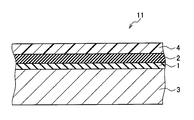
- FIG. 1 is a cross-sectional view schematically showing the configuration of the aluminum alloy plate of the present embodiment.
- a first film 1 made of an oxide film is formed on at least one surface of an aluminum alloy substrate 3, and at least one first film 1 is further formed.
- a second film 2 having a siloxane bond is formed on the part.
- the substrate 3 is made of an aluminum alloy.
- the type of the aluminum alloy forming the substrate 3 is not particularly limited, and various non-heat-treatable or heat-treatable aluminum alloys that are defined in JIS or approximate to JIS depending on the application of the processed member Can be appropriately selected and used.
- the non-heat treatment type aluminum alloy there are pure aluminum (1000 series), Al—Mn series alloy (3000 series), Al—Si series alloy (4000 series), and Al—Mg series alloy (5000 series).
- the heat-treatable aluminum alloy there are an Al—Cu—Mg alloy (2000 series), an Al—Mg—Si alloy (6000 series), and an Al—Zn—Mg alloy (7000 series).
- the substrate 3 preferably has a 0.2% proof stress of 100 MPa or more from the viewpoint of strength.
- Aluminum alloys that can form a substrate that satisfies such characteristics include those containing a relatively large amount of magnesium, such as 2000 series, 5000 series, 6000 series, and 7000 series. These alloys are necessary. It may be tempered accordingly.
- it is preferable to use a 6000 series aluminum alloy because it has excellent age-hardening ability, has a relatively small amount of alloy elements, and is excellent in scrap recyclability and formability.
- Cu copper
- the amount of Cu exposed on the surface of the substrate 3 is less than 0.5 atomic%, so that even when used in a high temperature and humid environment, the adhesive is deteriorated and the substrate 3 is corroded. Can be suppressed.
- the amount of Cu exposed on the surface of the substrate 3 can be measured by high-frequency glow discharge optical emission spectrometry (GD-OES).
- each element except oxygen (O), nitrogen (N), and carbon (C) is specifically formed in the thickness direction of the substrate 3 by high-frequency glow discharge optical emission spectrometry (GD-OES).
- the film 1 is made of an oxide film containing 0.1 atomic percent or more and less than 30 atomic percent of Mg. This coating 1 is provided in order to improve adhesion durability when exposed to a high-temperature and humid environment.
- the aluminum alloy constituting the substrate of the aluminum alloy plate usually contains Mg as an alloy component. When an oxide film that is a composite oxide of aluminum and magnesium is formed on the surface of such a substrate 3, the surface is formed on the surface. Magnesium is present in a concentrated state.
- Mg on the surface becomes a weak boundary layer of the adhesive interface, and the initial adhesiveness is lowered.
- Mg on the surface becomes a weak boundary layer of the adhesive interface, and the initial adhesiveness is lowered.
- it causes hydration of the interface with the adhesive layer and dissolution of the substrate, thereby lowering the adhesion durability of the aluminum alloy plate.
- the amount of Mg in the oxide film is 30 atomic% or more, the adhesion durability of the aluminum alloy plate is lowered.
- the amount of magnesium in the first film 1 made of an oxide film is restricted to less than 30 atomic%.
- adhesion durability can be improved.
- the amount of Mg in the film 1 is preferably less than 20 atomic%, more preferably less than 10 atomic%, from the viewpoint of improving adhesion durability.
- the lower limit of the Mg content of the coating 1 is set to 0.1 atomic% or more from the viewpoint of economy.
- the amount of Mg in the film 1 can be measured by high-frequency glow discharge optical emission spectrometry (GD-OES), similarly to the amount of Cu described above.
- the method for adjusting the amount of Mg in the film 1 is not particularly limited, but examples thereof include acids or mixed acids such as nitric acid, sulfuric acid and hydrofluoric acid, or potassium hydroxide, sodium hydroxide, silicate and carbonate.
- a method of surface treatment with an alkaline solution containing can be applied.
- Mg is dissolved in an acid or alkali solution to adjust the amount of magnesium in the film 1 (oxide film).
- the amount of magnesium in the film 1 can be set in the range described above.
- components other than Mg in the film 1 are oxygen, aluminum, and unavoidable impurities, and the amounts of oxygen and aluminum contained in the film 1 are each preferably 15 to 80 atomic%.
- Inevitable impurities include C, N, Si, Ca, Fe, Cu, Mn, Ti, Zn, and Ni.
- C is less than 10 atomic%
- N is less than 15 atomic%
- other impurities If it is less than 7 atomic%, the inclusion is allowed.
- the film thickness of the film 1 is preferably 1 to 30 nm.
- the ester component in the press oil used when producing a joined body or an automobile member from the rust preventive oil or the aluminum alloy plate 10 used when producing the substrate 3 Adsorption is suppressed.
- coat 1 oxide membrane
- in order to control the film thickness of the film 1 to be less than 1 nm excessive acid cleaning or the like is required, so that productivity is inferior and practicality tends to be lowered.
- excessive pickling causes the Cu contained in the substrate 3 to be concentrated on the surface, and causes a decrease in adhesion durability.
- the film thickness of the film 1 is more preferably 3 nm or more and less than 20 nm from the viewpoints of chemical conversion and productivity.
- the second film 2 has a siloxane bond, and the amount of the film is 0.1 mg / m 2 or more and less than 30 mg / m 2 .
- the MO—Si bond amount between the film 1 and the film 2 can be set within a specific range, and high adhesion durability can be realized.
- the film amount of the film 2 is less than 0.1 mg / m 2 , the influence of Cu exposed on the surface of the substrate 3 and the amount of M—O—Si bond between the film 1 and the film 2 are insufficient. Adhesive durability cannot be obtained.
- the coating amount is 30 mg / m 2 or more, the coating 2 is aggregated and broken by itself, so that the adhesion durability is lowered.
- the coating 2 having a siloxane bond is preferably thin and uniformly formed on the coating 1, but may be applied in an island shape on the coating 1 as long as it is within the range described above.
- MoO-Si bond amount When the film 2 having a siloxane bond is formed on the film 1 made of the oxide film, a MO—Si bond is formed between them.
- M is an element contained in the aluminum alloy substrate 3, specifically, Al and Mg contained in the coating 1.
- This M—O—Si bond is a main bond between the first film 1 made of an oxide film and the second film 2 having a siloxane bond. It is influenced by the structure of the oxide film.
- the amount of M—O—Si bond is analyzed by Fourier transform infrared spectroscopy with parallel polarized light having an incident angle of 75 ° incident on the surface on which the first film 1 and the second film 2 are formed.
- the spectrum obtained in this way can be obtained from the area of the peak derived from the M—O—Si bond generated in the vicinity of 1057 cm ⁇ 1 with 1026 cm ⁇ 1 to 1084 cm ⁇ 1 as the baseline. Note that the position of the peak derived from the M—O—Si bond is shifted in the range of about 1045 to 1065 cm ⁇ 1 depending on the type and ratio of M.
- the peak area generated in the vicinity of 1057 cm ⁇ 1 calculated by the above-described method is 0.01 or more.
- the area of the peak derived from this M—O—Si bond is less than 0.01, the rate of occurrence of interfacial peeling at the interface between the first film 1 and the second film 2 increases, and the desired adhesion durability I can't get sex.
- the peak area derived from the M—O—Si bond is preferably 0.17 or more, and more preferably 0.25 or more.
- additional treatment can be performed in order to increase the MO-Si bond between the first film 1 and the second film 2.
- the oxide film constituting the first film 1 and the group consisting of Si, Zr, Ti, HfV, Nb, Ta, Cr, Mo and W on the surface thereof are selected. It is desirable to contain at least one kind of element. Furthermore, in order not to reduce the MO—Si bond, it is desirable to reduce the amount of carbonate or sulfate present on the surface of the substrate 3.
- FIG. 2 is a flowchart showing a method for manufacturing the aluminum alloy plate 10 of the present embodiment. As shown in FIG. 2, when manufacturing the aluminum alloy plate 10 of this embodiment, substrate production process S1, 1st film formation process S2, and 2nd film formation process S3 are performed. Hereinafter, each step will be described.
- Step S1 Substrate manufacturing process>
- the substrate 3 is manufactured by the following procedure, for example. First, an aluminum alloy having a predetermined composition is melted by continuous casting and cast to produce an ingot (melting casting process). Next, the produced ingot is subjected to homogenization heat treatment (homogenization heat treatment step). Thereafter, the ingot subjected to homogenization heat treatment is hot-rolled to produce a hot-rolled sheet (hot-rolling step).
- the hot-rolled sheet is subjected to rough annealing or intermediate annealing at 300 to 580 ° C., and is subjected to cold rolling at a final cold rolling rate of 5% or more at least once to obtain a cold-rolled sheet (substrate 3) having a predetermined thickness. ) Is obtained (cold rolling process).
- the temperature of rough annealing or intermediate annealing it is preferable to set the temperature of rough annealing or intermediate annealing to 300 ° C. or higher, and thereby the effect of improving formability is more exhibited.
- the temperature of rough annealing or intermediate annealing shall be 580 degrees C or less, and this becomes easy to suppress the fall of the moldability by generation
- the final cold rolling rate is preferably 5% or more, and thereby, the effect of improving the formability is more exhibited.
- the conditions of homogenization heat processing and hot rolling are not specifically limited, It can carry out on the conditions in the case of obtaining a hot rolled sheet normally. Further, intermediate annealing may not be performed.
- Step S2 First film formation step>
- the first film 1 made of an oxide film is formed on the front surface, the back surface, or both of the substrate 3 manufactured in the substrate manufacturing process in step S1.
- the formed oxide film is surface-treated so that the amount of Mg and the amount of M—O—Si bonds are in a specific range.
- the substrate 3 is heated to 400 to 580 ° C. to form an oxide film constituting the first film 1 on the surface of the substrate 3.
- the heat treatment also has an effect of adjusting the strength of the aluminum alloy plate 10.
- the heat treatment performed here is a solution treatment when the substrate 3 is formed of a heat-treatable aluminum alloy, and is annealed (final) when the substrate 3 is formed of a non-heat-treatable aluminum alloy. It is a heat treatment in annealing.
- This heat treatment is preferably rapid heating at a heating rate of 100 ° C./min or more from the viewpoint of improving the strength. Moreover, by setting the heating temperature to 400 ° C. or higher and rapidly heating, the strength of the aluminum alloy plate 10 and the strength after heating (baking) of the aluminum alloy plate 10 can be further increased. On the other hand, by setting the heating temperature to 580 ° C. or less and performing rapid heating, it is possible to suppress a decrease in formability due to the occurrence of burning. Furthermore, from the viewpoint of improving strength, the holding time in the heat treatment is preferably 3 to 30 seconds. Thus, when the substrate 3 is heated at a heating temperature of 400 to 580 ° C., an oxide film having a film thickness of 1 to 30 nm, for example, is formed on the surface of the substrate 3.
- the Mg amount of the first film 1 and the siloxane bond amount formed between the first film 1 and the second film 2 are set to a specific range.
- a mixed acid such as a mixed acid of hydrofluoric acid and sulfuric acid or a mixed acid of hydrofluoric acid and nitric acid, an alkaline solution containing sodium hydroxide, potassium hydroxide, silicate or carbonate, Si, Zr, Ti, Hf, Acids containing V, Nb, Ta, Cr, Mo and W in the form of ions or salts (including mixed acids in which two or more acids are mixed) or alkali solutions (including alkali solutions in which two or more alkalis are mixed) , Alone or in combination, the oxide film formed on the surface of the substrate 3 is treated.
- the oxide film structure control that affects the amount of Mg and the amount of MO-Si bonding in the first film 1 by the treatment with the solution is performed.
- the heat treatment which is a process is also indirectly, since it affects the amount of Mg and the oxide film structure, it is necessary to appropriately adjust the treatment conditions.
- step S1 the adjustment of the amount of Mg in the first film 1 and the adjustment of the film structure for setting the MO—Si bond amount within a specific range are performed once. However, it can also be performed individually by two or more processes.
- Step S3 Second film forming step>
- the second film 2 having a siloxane bond is formed.
- the second film 2 can be formed by using, for example, a silane coupling agent having a reactive functional group such as an amino group, an epoxy group, a methacryl group, a methacryloxy group, a vinyl group, and a mercapto group.
- coat 2 is not limited to what was mentioned above, The silane coupling agent which has various functional groups can be selected suitably, and can be used. .
- the coating amount of the silane coupling agent, coating amount after drying, per side made to be 0.1 mg / m 2 or more 30 mg / m of less than 2.
- the coating amount of the coating 2 is preferably less than 23 mg / m 2 , more preferably less than 15 mg / m 2 .
- the film 2 is preferably thinner because the high adhesion durability obtained when the above-described specific MO—Si bond amount is obtained can be easily secured.
- the coating amount of the coating 2 is less than 0.1 mg / m 2 , it is easily affected by Cu concentrated on the substrate 3 and the amount of M—O—Si bond is insufficient. The cohesive failure rate becomes insufficient.
- the coating amount of the coating 2 described above is, for example, by diluting the silane coupling agent with a solvent (including water as well as an organic solvent) to reduce its solid content concentration and viscosity, or by wet coating with a coater count It can be easily controlled by adjusting the amount.
- the coating method of a silane coupling agent is not specifically limited, The existing method can be applied. Specifically, a coating method by dipping, a method using various coating machines such as a roll coater, a bar coater, a gravure coater, a micro gravure coater, a reverse gravure coater, and a dip coater, a spray coating method, and the like can be applied.
- ⁇ Other processes> In the manufacturing process of the aluminum alloy plate 10 of the present embodiment, other processes may be included between or before and after each process as long as the processes described above are not adversely affected.
- This preliminary aging treatment is preferably performed by heating at 40 to 120 ° C. within 72 hours at a low temperature of 8 to 36 hours.
- pre-aging treatment By performing pre-aging treatment under these conditions, it is possible to improve moldability and strength after baking.
- a foreign matter removing step for removing foreign matter on the surface of the aluminum alloy plate 10 or a defective product removing step for removing defective products generated in each step may be performed.
- the manufactured aluminum alloy plate 10 is coated with press oil on the surface thereof before the fabrication of the joined body or before processing into the member for an automobile.
- the press oil one containing an ester component is mainly used.
- the method and conditions for applying the press oil to the aluminum alloy plate 10 are not particularly limited, and methods and conditions for applying a normal press oil can be widely applied.
- a press containing ethyl oleate as an ester component What is necessary is just to immerse the aluminum alloy plate 10 in oil.
- the ester component is not limited to ethyl oleate, and various materials such as butyl stearate and sorbitan monostearate can be used.
- the aluminum alloy plate 10 of the present embodiment includes a specific amount of bonding between the first film 1 made of an oxide film and the second film 2 having a siloxane bond.
- the interface between the adhesive and the coating 2 having a siloxane bond is chemically bonded, and the coating 1 having the siloxane bond and the coating 1 made of an oxide film is formed. Even between them, there will be chemical bonds.
- the decrease in strength due to hydration is suppressed, so that interfacial peeling can be suppressed, and the decrease in adhesive strength can be suppressed over a long period of time.
- the aluminum alloy plate 10 of this embodiment is provided with the oxide film (coating 1) containing a specific amount of magnesium, the elution of the aluminum alloy substrate 3 can be suppressed, and the alkalinization of the surface of the substrate 3 associated therewith can be suppressed. It can suppress and degradation of adhesive resin can be suppressed. Furthermore, since the aluminum alloy plate 10 of the present embodiment includes a coating (coating 2) having a siloxane bond with a coating amount in a specific range, cohesive failure in the coating 2 is suppressed, and a decrease in adhesive strength is suppressed. Can do.
- the substrate 3 when the substrate 3 is formed of an alloy species having a relatively high Mg content, Mg is concentrated on the surface of the substrate 3 and a weak boundary layer is easily generated at the adhesion interface.
- the substrate 3 since the Mg amount of the first film 1 is controlled within a specific range, the substrate 3 is made of an Al—Mg alloy, an Al—Cu—Mg alloy, Even when formed of an Al—Mg—Si based alloy or an Al—Zn—Mg based alloy, it is possible to suppress interfacial delamination and suppress a decrease in adhesive strength.
- FIG. 3 is a cross-sectional view schematically showing the configuration of the aluminum alloy plate of this modification.
- the same components as those of the aluminum alloy plate 10 shown in FIG. 1 are denoted by the same reference numerals, and detailed description thereof is omitted.
- the aluminum alloy plate 11 of this modification is an adhesive made of an adhesive so as to cover the first film 1 and the second film 2 of the aluminum alloy plate of the first embodiment described above.
- An agent layer 4 is formed.
- the adhesive layer 4 is made of an adhesive, and the aluminum alloy plate 11 of the present modification is joined to another aluminum alloy plate via the adhesive layer 4.
- the adhesive constituting the adhesive layer 4 is not particularly limited, and various adhesives such as a reactive adhesive, a solution adhesive, a water dispersion adhesive, and a solid adhesive typified by a hot melt adhesive. Agents can be used.
- acrylic resin adhesives ⁇ -olefin adhesives, urethane resin adhesives, ethylene-vinyl acetate resin adhesives, epoxy resin adhesives, vinyl chloride resin adhesives, chloroprene rubber adhesives
- Adhesive vinyl acetate resin adhesive, cyanoacrylate adhesive, silicone adhesive, styrene-butadiene rubber adhesive, nitrile rubber adhesive, nitrocellulose adhesive, phenol resin adhesive, silicone adhesive , Polyamide resin adhesive, polyimide adhesive, polyolefin resin adhesive, polyvinyl acetate resin adhesive, polystyrene resin adhesive, polyvinyl alcohol adhesive, polyvinyl pyrrolidone resin adhesive, polyvinyl butyral resin adhesive Agent, polyaromatic adhesive, polymethacrylate resin adhesive Melamine resin adhesives, urea resin adhesives, resorcinol adhesives, and the like. These adhesives are appropriately selected according to the coating 2, the resin, the aluminum alloy, and the manufacturing process in contact with the adhesive layer 4. You can choose
- two or more types of adhesives can be used in combination, functional groups can be added to the adhesive molecules, and silane coupling agents can be added to the adhesive. You can also do it.
- the resin or the precursor thereof may be used as an adhesive.
- the thickness of the adhesive layer 4 is not particularly limited, but is preferably 10 to 500 ⁇ m, and more preferably 50 to 400 ⁇ m.
- the thickness of the adhesive layer 4 is less than 10 ⁇ m, a high adhesion durability is obtained when the aluminum alloy plate 11 and an aluminum alloy plate not provided with another adhesive layer are joined via the adhesive layer 4. Sexuality may not be obtained.
- the thickness of the adhesive layer 4 exceeds 500 ⁇ m, the adhesive strength may be reduced.
- FIG. 4 is a flowchart showing a method for manufacturing the aluminum alloy plate 11 of this modification. As shown in FIG. 4, when the aluminum alloy plate 11 of the present modification is manufactured, an adhesive layer forming step S4 is performed in addition to the steps S1 to S3 described above.
- Step S4 Adhesive Layer Formation Step
- an adhesive layer 4 made of an adhesive is formed so as to cover the first film 1 and the second film 2.
- the method for forming the adhesive layer 4 is not particularly limited. For example, when the adhesive is solid, it is melted (hot melted) by heating, laminated, or the adhesive is removed. A method of spraying or coating a solution dissolved in a solvent on the surfaces of the film 1 and the film 2 can be applied. On the other hand, when the adhesive is in a liquid state, a method of spraying or coating the surfaces of the film 1 and the film 2 as they are can be applied.
- the aluminum alloy plate of the present modification since an adhesive layer is provided in advance, when producing a joined body or a member for an automobile, operations such as applying an adhesive to the surface of the aluminum alloy plate can be omitted. .
- the configuration and effects of the aluminum alloy plate of this modification other than those described above are the same as those in the first embodiment described above.
- the joined body of the present embodiment uses the aluminum alloy plate of the first embodiment described above or its modification.
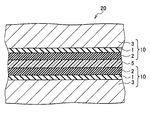
- 5 to 8 are cross-sectional views schematically showing a configuration example of the joined body of this embodiment. 5 to 8, the same components as those of the aluminum alloy plates 10 and 11 shown in FIGS. 1 and 3 are denoted by the same reference numerals, and detailed description thereof is omitted.
- the first coating 1 and the second coating 2 are formed on the two aluminum alloy plates 10 shown in FIG. 1. It can be set as the structure arrange
- the adhesive 5 in the joined body of the present embodiment is not particularly limited, and is a solid adhesive represented by a reactive adhesive, a solution adhesive, a water dispersion adhesive, and a hot melt adhesive.
- Various adhesives such as can be used. Specifically, acrylic resin adhesives, ⁇ -olefin adhesives, urethane resin adhesives, ethylene-vinyl acetate resin adhesives, epoxy resin adhesives, vinyl chloride resin adhesives, chloroprene rubber adhesives Adhesive, vinyl acetate resin adhesive, cyanoacrylate adhesive, silicone adhesive, styrene-butadiene rubber adhesive, nitrile rubber adhesive, nitrocellulose adhesive, phenol resin adhesive, silicone adhesive , Polyamide resin adhesive, polyimide adhesive, polyolefin resin adhesive, polyvinyl acetate resin adhesive, polystyrene resin adhesive, polyvinyl alcohol adhesive, polyvinyl pyrrolidone resin adhesive, polyvinyl butyral resin adhesive Agent, polyaromatic adhesive, polymeth
- the adhesive layer 4 may be used as an adhesive.
- the thickness of the adhesive 5 is not particularly limited, but is preferably 10 to 500 ⁇ m, more preferably 50 to 400 ⁇ m from the viewpoint of improving the adhesive strength.
- both surfaces of the adhesive 5 are the film 1 and the film 2 of the aluminum alloy plate 10 of the first embodiment. Even if it does, the adhesive strength of the interface of the adhesive agent 5 and the membrane
- Examples of the resin molded body 7 include glass fiber reinforced plastic (GFRP), carbon fiber reinforced plastic (CFRP), boron fiber reinforced plastic (BFRP), aramid fiber reinforced plastic (AFRP, KFRP), polyethylene fiber reinforced plastic (A fiber reinforced plastic molded body formed of various fiber reinforced plastics such as DFRP) and Zylon reinforced plastic (ZFRP) can be used. By using these fiber-reinforced plastic molded bodies, it is possible to reduce the weight of the joined body while maintaining a certain strength.
- GFRP glass fiber reinforced plastic
- CFRP carbon fiber reinforced plastic
- BFRP boron fiber reinforced plastic
- AFRP aramid fiber reinforced plastic
- KFRP polyethylene fiber reinforced plastic
- a fiber reinforced plastic molded body formed of various fiber reinforced plastics such as DFRP
- ZFRP Zylon reinforced plastic
- the resin molded body 7 is made of polypropylene (PP), acrylic-butadiene-styrene copolymer (ABS) resin, polyurethane (PU), polyethylene (PE), polyvinyl chloride (PVC). , Nylon 6, nylon 6,6, polystyrene (PS), polyethylene terephthalate (PET), polyamide (PA), polyphenylene sulfide (PPS), polybutylene terephthalate (PBT) and polyphthalamide (PPA) Not engineering plastics can be used.
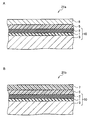
- the joined bodies 21a and 21b shown in FIGS. 6A and 6B since one surface of the adhesive 5 is joined to the first film 1 or the second film 2 side, similarly to the above-described joined body 20, it is used for automobiles. When used for a member, even if it is exposed to a high temperature and humidity environment, it is not affected by the type of adhesive, and adhesion durability at the interface is improved. Moreover, since the joined body 21b shown to FIG. 6B has joined the aluminum alloy plate 10 and the resin molding 7, it is lightweight compared with the joined body of aluminum alloy plates, By using this joined body 21b, Further weight reduction of the automobile can be realized.
- the other configurations and effects of the joined bodies 21a and 21b shown in FIGS. 6A and 6B are the same as those of the joined body 20 shown in FIG.
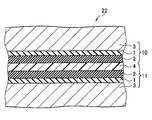
- the film 1 and the film 2 of the aluminum alloy plate 10 are bonded to the adhesive layer 4 side of the aluminum alloy plate 11.
- the film 1 or the film 2 of the two aluminum alloy plates 10 and 11 are arranged so as to face each other through the adhesive layer 4 of the aluminum alloy plate 11.
- the first film and the first film are formed on the adhesive layer 4 side of the aluminum alloy plate 11 provided with the adhesive layer 4 shown in FIG. It can also be set as the structure which joined resin moldings 7, such as the other aluminum alloy plate 6 in which the membrane
- the joined bodies 23a and 23b since one surface of the adhesive layer 4 is joined to the film 1 and the film 2 side, when the joined body 23 is used for a member for an automobile as in the above-described joined body 20, it is wet at high temperature. Even if exposed to the environment, the adhesion durability at the interface is improved without being affected by the type of adhesive.
- the joined body 23b shown in FIG. 8B joins the aluminum alloy plate 10 and the resin molded body 7, it is lighter than the joined body of aluminum alloy plates, and an automobile that is required to be lighter. It is suitable for a vehicle member.
- the structures and effects of the joined bodies 23a and 23b shown in FIGS. 8A and 8B other than those described above are the same as those of the joined body 20 shown in FIG.
- a conventionally known joining method can be used as a manufacturing method of the joined bodies 20 to 23, particularly a joining method.
- the method of applying the adhesive 5 to the aluminum alloy plate is not particularly limited.
- an adhesive member prepared in advance with the adhesive 5 may be used, or the adhesive 5 may be bonded to the siloxane bond. You may form by spraying or apply
- the bonded bodies 20 to 23 may be coated with press oil on their surfaces before being processed into automobile members, like the aluminum alloy plates 10 and 11.
- the adhesive agent 5 or the adhesive bond layer 4 is used. Accordingly, it is possible to further join the aluminum alloy plate 6 or the other aluminum alloy plate 6 or the resin molded body 7 on which the coatings 1 and 2 are not formed.
- the joined body of this embodiment is composed of an aluminum alloy plate in which a specific amount of a second film having a siloxane bond is formed on a first film made of an oxide film containing a specific amount of Mg.
- An adhesive or an adhesive layer is bonded to the first film and the second film.
- the joined body of the present embodiment has a coating amount of a coating having a siloxane bond within a specific range, it can suppress cohesive failure in the coating, thereby suppressing a decrease in adhesive strength.
- the manufacturing method of the automobile member of the present embodiment is not particularly limited, but a conventionally known manufacturing method can be applied.
- the joined members 20 to 23 shown in FIGS. 5 to 8 are cut or pressed to produce a predetermined-shaped automobile member.
- the automobile member according to the present embodiment is manufactured from the joined body according to the second embodiment described above, the adhesive or the adhesive layer and the oxide film (first film) even when exposed to a high-temperature and humid environment. Elution of the aluminum alloy substrate can also be suppressed without being substantially affected by the hydration. As a result, in the automotive member of this embodiment, it is possible to suppress interfacial peeling when exposed to a high-temperature and humid environment, and to suppress a decrease in adhesive strength.
- an aluminum alloy plate was produced by the following method and conditions, and its adhesion durability and the like were evaluated.
- the substrate was treated with a nitric acid solution with a solution adjusted to pH 2 or lower at a temperature of 10 to 80 ° C. and a treatment time of 1 to 60 seconds, washed with water within 5 minutes, and dried within 5 minutes after washing with water.
- membrane which is an oxide film was formed.
- a silane coupling agent containing an amino group is diluted with pure water, and the second coating is formed by controlling the coating amount after drying by changing the dilution rate and the count of the bar coater. Examples 1-4 And the aluminum alloy plate of the comparative example 2 was produced. In addition, drying after application
- Examples 5 and 10 Before the nitric acid solution treatment, the substrate is treated with a sodium hydroxide solution adjusted to pH 10 or higher at a temperature of 10 to 80 ° C. and a treatment time of 1 to 60 seconds to change these conditions. As a result, the amount of Mg in the first film, the amount of the second film, the amount of M—O—Si bonds, and the amount of surface Cu were adjusted, and aluminum alloy plates of Examples 5 and 10 were produced. In Examples 5 and 10, the methods other than the above-described sodium hydroxide solution treatment were the same as in Examples 1 to 4.
- Example 6 Comparative Example 3> After the substrate was treated with a sodium hydroxide solution at a temperature of 10 to 80 ° C. and a treatment time of 1 to 60 seconds with a solution adjusted to pH 10 or more, hydrofluoric acid and sulfuric acid were added at 0.01 to 6 mol / L. A hydrofluoric acid / sulfuric acid solution treatment was performed at a temperature of 10 to 80 ° C. and a treatment time of 1 to 60 seconds with a solution adjusted to a pH of 2 or less.
- Example 6 Except for this surface treatment, the same method as in Examples 1 to 4 described above was used, and the surface treatment conditions were changed, so that the amount of Mg in the first film, the film amount of the second film, M ⁇
- the aluminum alloy plates of Example 6 and Comparative Example 3 were prepared by adjusting the O—Si bond amount and the surface Cu amount.
- Example 7 A hydrofluoric acid / sulfuric acid solution with a pH of 10 to 80 ° C. and a processing time of 1 to 60 seconds adjusted to a pH of 2 or less between 0.01 and 6 mol / L of hydrofluoric acid with respect to the substrate After the treatment, a silicate treatment was performed with a sodium silicate solution having a pH of 10 or more at a temperature of 10 to 80 ° C. and a treatment time of 1 to 60 seconds. Except for this surface treatment, the same method as in Examples 1 to 4 was used, and the amount of Mg in the first film, the amount of the second film, the amount of M—O—Si bond, and the amount of surface Cu were determined. An adjusted aluminum alloy plate of Example 7 was produced.
- Example 8> The substrate was subjected to a nitric acid solution treatment with a solution adjusted to pH 2 or lower at a temperature of 10 to 80 ° C. and a treatment time of 1 to 60 seconds, and then with a sodium silicate solution having a pH of 10 or higher at a temperature of 10 to 80 ° C. Silicate treatment was performed with a treatment time of 1 to 60 seconds. Except for this surface treatment, the same method as in Examples 1 to 4 was used, and the amount of Mg in the first film, the amount of the second film, the amount of M—O—Si bond, and the amount of surface Cu were determined. The adjusted aluminum alloy plate of Example 8 was produced.
- Example 9 The examples described above except that the substrate was treated with a nitric acid solution and then treated with a sodium silicate solution of pH 10 or higher at a temperature of 10 to 80 ° C. and a treatment time of 1 to 60 seconds.
- an aluminum alloy plate of Example 9 was prepared in which the amount of Mg in the first film, the amount of film in the second film, the amount of M—O—Si bonds, and the amount of surface Cu were adjusted.
- Comparative Example 1 The aluminum alloy plate of Comparative Example 1 was produced by performing only the acetone cleaning for the substrate without performing the treatment with the various solutions as in the above-described Examples and Comparative Examples.
- the amount of the second film having a siloxane bond was measured by fluorescent X-ray. Specifically, the amount of silicon in the composite film of the first film and the second film was quantified by fluorescent X-ray, and the calculation was performed by converting the intensity of the fluorescent X-ray and the amount of the film using a calibration curve. .
- M-O-Si bond amount The amount of M—O—Si bond was quantified by FT-IR (Fourier transform infrared spectrophotometer: Migna-750 spectrometer manufactured by Nicolet) analysis. Specifically, the FT-IR spectrum measured by the parallel polarization using the incident angle 75 °, when the baseline from 1026cm -1 to 1084cm -1, to M-O-Si bonds generated in the vicinity of 1057cm -1 The area of the derived peak was determined.
- FT-IR Fastier transform infrared spectrophotometer: Migna-750 spectrometer manufactured by Nicolet
- the amount of Mg in the first film which is a composite oxide film of aluminum and magnesium, is determined by oxygen (in the film thickness direction by high-frequency glow discharge optical emission spectrometry (GD-OES: model JY-5000RF manufactured by Horiba Joban Yvon)) in the film thickness direction.
- GD-OES high-frequency glow discharge optical emission spectrometry
- coat (oxide film) was made into the amount of Mg.
- GD-OES model JY-5000RF manufactured by Horiba Joban Yvon
- metal elements such as aluminum (Al), magnesium (Mg), copper (Cu), iron (Fe), and titanium (Ti), silicon (Si), and the like were measured. And the outermost surface amount of copper (Cu) was calculated in percentage.
- 9A and 9B are diagrams schematically showing a method of measuring the cohesive failure rate
- FIG. 9A is a side view
- FIG. 9B is a plan view.
- the adhesive 35 used here is a thermosetting epoxy resin adhesive (bisphenol A type epoxy resin amount 40 to 50%).
- the wet adhesion test and the salt spray test were performed on the produced adhesion test specimens, and the cohesive failure rate of the adhesive at the adhesion part was evaluated after each test.
- the wet deterioration test was performed by holding the adhesion test specimen in a high temperature and humid environment of 50 ° C. and a relative humidity of 95% for 30 days.
- the salt spray test the temperature in the test tank was set to 35 ° C. using a salt spray tester, and an aqueous sodium chloride solution having a concentration mass of 5% was sprayed onto the adhesion test specimen for 300 hours.
- the adhesion test body after each test was pulled at a rate of 50 mm / min with a tensile tester, and the cohesive failure rate was calculated based on the following formula 1 from the interfacial peel area and adhesion area.
- the test specimen a was used as one side after the tension of the adhesion test specimen, and the test specimen b was used as the other side.
- the cohesive failure rate was the average value of the three samples. Further, the evaluation criteria are that the cohesive failure rate is less than 70% as bad (x), 70% or more and less than 80% as good ( ⁇ ), 80% or more and less than 90% as good ( ⁇ ), and 90% or more as excellent ( ⁇ ), and 70% or more was accepted.
- the aluminum alloy sheets of Examples 1 to 10 had good cohesive failure rate (adhesion durability) because each item was within the scope of the present invention.
- the aluminum alloy plate of Comparative Example 1 had a low cohesive failure rate and poor adhesion durability because the amount of Mg in the first film (oxide film) exceeded the range of the present invention. .
- the aluminum alloy plate of the present invention can be bonded with an adhesive, has a low adhesive strength even under a high temperature and humidity environment, and has excellent adhesion durability. It is.
Landscapes
- Chemical & Material Sciences (AREA)
- Engineering & Computer Science (AREA)
- Materials Engineering (AREA)
- Organic Chemistry (AREA)
- Chemical Kinetics & Catalysis (AREA)
- Electrochemistry (AREA)
- Metallurgy (AREA)
- General Chemical & Material Sciences (AREA)
- Life Sciences & Earth Sciences (AREA)
- Wood Science & Technology (AREA)
- Laminated Bodies (AREA)
Abstract
Priority Applications (2)
| Application Number | Priority Date | Filing Date | Title |
|---|---|---|---|
| CN201480028903.9A CN105228822B (zh) | 2013-05-23 | 2014-05-21 | 铝合金板、接合体和汽车用构件 |
| US14/892,123 US10357944B2 (en) | 2013-05-23 | 2014-05-21 | Aluminum alloy sheet, bonded object, and member for motor vehicle |
Applications Claiming Priority (2)
| Application Number | Priority Date | Filing Date | Title |
|---|---|---|---|
| JP2013109114 | 2013-05-23 | ||
| JP2013-109114 | 2013-05-23 |
Publications (1)
| Publication Number | Publication Date |
|---|---|
| WO2014189090A1 true WO2014189090A1 (fr) | 2014-11-27 |
Family
ID=51933642
Family Applications (1)
| Application Number | Title | Priority Date | Filing Date |
|---|---|---|---|
| PCT/JP2014/063512 Ceased WO2014189090A1 (fr) | 2013-05-23 | 2014-05-21 | Feuille d'alliage d'aluminium, objet lié et élément pour véhicule automobile |
Country Status (4)
| Country | Link |
|---|---|
| US (1) | US10357944B2 (fr) |
| JP (1) | JP6283240B2 (fr) |
| CN (1) | CN105228822B (fr) |
| WO (1) | WO2014189090A1 (fr) |
Cited By (3)
| Publication number | Priority date | Publication date | Assignee | Title |
|---|---|---|---|---|
| WO2017195802A1 (fr) * | 2016-05-10 | 2017-11-16 | 株式会社神戸製鋼所 | Matériau en alliage d'aluminium, matériau en alliage d'aluminium ayant une couche de résine adhésive, procédé de production de matériau en alliage d'aluminium, et procédé de production de matériau en alliage d'aluminium ayant une couche de résine adhésive |
| WO2017195805A1 (fr) * | 2016-05-10 | 2017-11-16 | 株式会社神戸製鋼所 | Matériau en alliage d'aluminium, matériau en alliage d'aluminium ayant une couche de résine adhésive, corps relié, et procédé de production de matériau en alliage d'aluminium |
| JP2017203186A (ja) * | 2016-05-10 | 2017-11-16 | 株式会社神戸製鋼所 | 金属表面処理用水溶液、金属表面の処理方法、及び接合体 |
Families Citing this family (9)
| Publication number | Priority date | Publication date | Assignee | Title |
|---|---|---|---|---|
| DE102012204636A1 (de) * | 2012-03-22 | 2013-09-26 | Nanogate Ag | Behandlung einer anodisch oxidierten Oberfläche |
| DE102015203128A1 (de) * | 2015-02-20 | 2016-08-25 | Thyssenkrupp Ag | Fahrwerkkomponente, Verfahren zu seiner Herstellung und Verwendung |
| WO2017006805A1 (fr) * | 2015-07-09 | 2017-01-12 | 株式会社神戸製鋼所 | Solution aqueuse de traitement de surface métallique, procédé de traitement de surface métallique et conjugué |
| JP2017203209A (ja) * | 2015-07-09 | 2017-11-16 | 株式会社神戸製鋼所 | アルミニウム合金材の製造方法、アルミニウム合金材、及び接合体 |
| JP2017203208A (ja) * | 2015-07-09 | 2017-11-16 | 株式会社神戸製鋼所 | 金属表面処理用水溶液、金属表面の処理方法、及び接合体 |
| WO2017006804A1 (fr) * | 2015-07-09 | 2017-01-12 | 株式会社神戸製鋼所 | Procédé de fabrication d'un alliage d'aluminium, alliage d'aluminium et conjugué |
| WO2017038573A1 (fr) * | 2015-09-02 | 2017-03-09 | 株式会社神戸製鋼所 | Matériau d'alliage d'aluminium, corps lié, élément d'automobile, procédé pour produire un matériau d'alliage d'aluminium, et procédé pour produire un corps lié |
| WO2018096952A1 (fr) * | 2016-11-24 | 2018-05-31 | 株式会社神戸製鋼所 | Feuille d'alliage d'aluminium avec film de lubrification |
| CN111674120A (zh) * | 2020-05-13 | 2020-09-18 | 宁波华源精特金属制品有限公司 | 一种连接杆 |
Citations (5)
| Publication number | Priority date | Publication date | Assignee | Title |
|---|---|---|---|---|
| JP2003147550A (ja) * | 2001-07-23 | 2003-05-21 | Mitsubishi Alum Co Ltd | 表面処理アルミニウム缶用板材 |
| JP2003342790A (ja) * | 2002-05-27 | 2003-12-03 | Mitsubishi Alum Co Ltd | 表面処理アルミニウム材及び熱可塑性樹脂被覆アルミニウム材 |
| JP2004018906A (ja) * | 2002-06-13 | 2004-01-22 | Mitsubishi Alum Co Ltd | 表面処理アルミニウム材、その製造方法、アルミニウム成形体及びアルミニウム缶 |
| JP2005349691A (ja) * | 2004-06-10 | 2005-12-22 | Mitsubishi Alum Co Ltd | 一般缶用熱可塑性樹脂被覆アルミニウム板 |
| JP2007217750A (ja) * | 2006-02-16 | 2007-08-30 | Furukawa Sky Kk | アルミニウム材及びその製造方法 |
Family Cites Families (9)
| Publication number | Priority date | Publication date | Assignee | Title |
|---|---|---|---|---|
| JP3207588B2 (ja) | 1993-03-05 | 2001-09-10 | 新日本製鐵株式会社 | 接着性に優れるアルミニウム合金板及びその製造方法 |
| JP2000239644A (ja) * | 1999-02-22 | 2000-09-05 | Toray Ind Inc | プライマー組成物 |
| JP2006200007A (ja) | 2005-01-21 | 2006-08-03 | Furukawa Sky Kk | 脱脂後水濡れ性及び接着性に優れた自動車ボディーシート用アルミニウム合金板 |
| US9365931B2 (en) * | 2006-12-01 | 2016-06-14 | Kobe Steel, Ltd. | Aluminum alloy with high seawater corrosion resistance and plate-fin heat exchanger |
| JP2008266663A (ja) * | 2007-04-16 | 2008-11-06 | Furukawa Sky Kk | ラミネート用アルミニウム材及び樹脂被覆アルミニウム材、ならびに、これらの製造方法 |
| CA2721752C (fr) * | 2009-11-20 | 2015-01-06 | Korea Institute Of Industrial Technology | Alliage d'aluminium et procede de fabrication connexe |
| CN102312233B (zh) * | 2010-06-29 | 2013-10-30 | 株式会社神户制钢所 | 经表面处理的铝合金板及其制造方法 |
| CN103057198B (zh) * | 2011-10-05 | 2015-07-22 | 株式会社神户制钢所 | 铝合金板、使用该铝合金板的接合体以及汽车用构件 |
| JP2016089261A (ja) * | 2014-11-11 | 2016-05-23 | 株式会社神戸製鋼所 | アルミニウム合金材、接合体、自動車用部材、及びアルミニウム合金材の製造方法 |
-
2014
- 2014-03-18 JP JP2014055318A patent/JP6283240B2/ja not_active Expired - Fee Related
- 2014-05-21 WO PCT/JP2014/063512 patent/WO2014189090A1/fr not_active Ceased
- 2014-05-21 CN CN201480028903.9A patent/CN105228822B/zh not_active Expired - Fee Related
- 2014-05-21 US US14/892,123 patent/US10357944B2/en not_active Expired - Fee Related
Patent Citations (5)
| Publication number | Priority date | Publication date | Assignee | Title |
|---|---|---|---|---|
| JP2003147550A (ja) * | 2001-07-23 | 2003-05-21 | Mitsubishi Alum Co Ltd | 表面処理アルミニウム缶用板材 |
| JP2003342790A (ja) * | 2002-05-27 | 2003-12-03 | Mitsubishi Alum Co Ltd | 表面処理アルミニウム材及び熱可塑性樹脂被覆アルミニウム材 |
| JP2004018906A (ja) * | 2002-06-13 | 2004-01-22 | Mitsubishi Alum Co Ltd | 表面処理アルミニウム材、その製造方法、アルミニウム成形体及びアルミニウム缶 |
| JP2005349691A (ja) * | 2004-06-10 | 2005-12-22 | Mitsubishi Alum Co Ltd | 一般缶用熱可塑性樹脂被覆アルミニウム板 |
| JP2007217750A (ja) * | 2006-02-16 | 2007-08-30 | Furukawa Sky Kk | アルミニウム材及びその製造方法 |
Cited By (6)
| Publication number | Priority date | Publication date | Assignee | Title |
|---|---|---|---|---|
| WO2017195802A1 (fr) * | 2016-05-10 | 2017-11-16 | 株式会社神戸製鋼所 | Matériau en alliage d'aluminium, matériau en alliage d'aluminium ayant une couche de résine adhésive, procédé de production de matériau en alliage d'aluminium, et procédé de production de matériau en alliage d'aluminium ayant une couche de résine adhésive |
| WO2017195805A1 (fr) * | 2016-05-10 | 2017-11-16 | 株式会社神戸製鋼所 | Matériau en alliage d'aluminium, matériau en alliage d'aluminium ayant une couche de résine adhésive, corps relié, et procédé de production de matériau en alliage d'aluminium |
| JP2017203186A (ja) * | 2016-05-10 | 2017-11-16 | 株式会社神戸製鋼所 | 金属表面処理用水溶液、金属表面の処理方法、及び接合体 |
| WO2017195803A1 (fr) * | 2016-05-10 | 2017-11-16 | 株式会社神戸製鋼所 | Solution aqueuse pour traitement de surface métallique, procédé de traitement de surface métallique, et corps relié |
| CN109072440A (zh) * | 2016-05-10 | 2018-12-21 | 株式会社神户制钢所 | 金属表面处理用水溶液、金属表面的处理方法和接合体 |
| CN109072440B (zh) * | 2016-05-10 | 2020-10-16 | 株式会社神户制钢所 | 金属表面处理用水溶液、金属表面的处理方法和接合体 |
Also Published As
| Publication number | Publication date |
|---|---|
| CN105228822A (zh) | 2016-01-06 |
| US10357944B2 (en) | 2019-07-23 |
| CN105228822B (zh) | 2017-05-10 |
| JP6283240B2 (ja) | 2018-02-21 |
| JP2015003514A (ja) | 2015-01-08 |
| US20160082702A1 (en) | 2016-03-24 |
Similar Documents
| Publication | Publication Date | Title |
|---|---|---|
| JP6283240B2 (ja) | アルミニウム合金板、接合体及び自動車用部材 | |
| WO2016076344A1 (fr) | Matériau alliage d'aluminium, corps collé, élément pour automobiles, et procédé de production du matériau alliage d'aluminium | |
| WO2015125897A1 (fr) | Plaque d'alliage d'aluminium, corps assemblé et organe d'automobile | |
| JP6426135B2 (ja) | 酸性溶液および接着剤の塗布を含む、Zn−Al−Mgコーティングを有する金属シートを製造する方法、ならびに対応する金属シートおよびアセンブリ | |
| JP2017203209A (ja) | アルミニウム合金材の製造方法、アルミニウム合金材、及び接合体 | |
| KR20150038677A (ko) | 알루미늄 합금판, 이것을 사용한 접합체 및 자동차용 부재 | |
| KR20210109590A (ko) | 캔 뚜껑 원료를 라미네이트하기 위한 시스템 및 방법 | |
| WO2017006804A1 (fr) | Procédé de fabrication d'un alliage d'aluminium, alliage d'aluminium et conjugué | |
| JP2017203212A (ja) | アルミニウム合金材、接着樹脂層付きアルミニウム合金材、アルミニウム合金材の製造方法、及び接着樹脂層付きアルミニウム合金材の製造方法 | |
| WO2015151886A1 (fr) | Matériau en alliage d'aluminium et corps assemblé ayant une excellente résistance d'adhérence et pièce d'automobile | |
| JP6750964B2 (ja) | アルミニウム合金材の製造方法 | |
| WO2017195811A1 (fr) | Matériau en alliage d'aluminium, matériau en alliage d'aluminium ayant une couche de résine adhésive, procédé de production de matériau en alliage d'aluminium, et procédé de production de matériau en alliage d'aluminium ayant une couche de résine adhésive | |
| KR101469324B1 (ko) | 자동차용 알루미늄 합금판, 및 이것을 이용한 접합체 및 자동차용 부재 | |
| JP2013159806A (ja) | アルミニウム合金板、これを用いた接合体および自動車用部材 | |
| JP5968956B2 (ja) | アルミニウム合金板、これを用いた接合体および自動車用部材 | |
| JP6721406B2 (ja) | アルミニウム合金材、接着樹脂層付きアルミニウム合金材、アルミニウム合金材の製造方法、及び接着樹脂層付きアルミニウム合金材の製造方法 | |
| JP2017203213A (ja) | アルミニウム合金材、接着樹脂層付きアルミニウム合金材、接合体、及びアルミニウム合金材の製造方法 | |
| JP2017048456A (ja) | アルミニウム合金材、接合体、自動車用部材、アルミニウム合金材の製造方法及び接合体の製造方法 | |
| JP6705694B2 (ja) | アルミニウム合金材、接着樹脂層付きアルミニウム合金材、接合体、及びアルミニウム合金材の製造方法 | |
| WO2017195808A1 (fr) | Matériau en alliage d'aluminium, matériau en alliage d'aluminium pourvu d'une couche de résine adhésive, corps assemblé et procédé de production d'un matériau en alliage d'aluminium | |
| WO2016031940A1 (fr) | Matériau d'alliage d'aluminium, objet collé, et composant d'automobile | |
| WO2017038573A1 (fr) | Matériau d'alliage d'aluminium, corps lié, élément d'automobile, procédé pour produire un matériau d'alliage d'aluminium, et procédé pour produire un corps lié |
Legal Events
| Date | Code | Title | Description |
|---|---|---|---|
| WWE | Wipo information: entry into national phase |
Ref document number: 201480028903.9 Country of ref document: CN |
|
| 121 | Ep: the epo has been informed by wipo that ep was designated in this application |
Ref document number: 14801112 Country of ref document: EP Kind code of ref document: A1 |
|
| WWE | Wipo information: entry into national phase |
Ref document number: 14892123 Country of ref document: US |
|
| NENP | Non-entry into the national phase |
Ref country code: DE |
|
| 122 | Ep: pct application non-entry in european phase |
Ref document number: 14801112 Country of ref document: EP Kind code of ref document: A1 |