WO2014192903A1 - Nouvelle forme de composé pyrimidinique ayant une structure dibenzylamine - Google Patents
Nouvelle forme de composé pyrimidinique ayant une structure dibenzylamine Download PDFInfo
- Publication number
- WO2014192903A1 WO2014192903A1 PCT/JP2014/064372 JP2014064372W WO2014192903A1 WO 2014192903 A1 WO2014192903 A1 WO 2014192903A1 JP 2014064372 W JP2014064372 W JP 2014064372W WO 2014192903 A1 WO2014192903 A1 WO 2014192903A1
- Authority
- WO
- WIPO (PCT)
- Prior art keywords
- hydrochloride
- pyrimidine compound
- methyl
- ethyl
- phenyl
- Prior art date
- Legal status (The legal status is an assumption and is not a legal conclusion. Google has not performed a legal analysis and makes no representation as to the accuracy of the status listed.)
- Ceased
Links
Images
Classifications
-
- C—CHEMISTRY; METALLURGY
- C07—ORGANIC CHEMISTRY
- C07D—HETEROCYCLIC COMPOUNDS
- C07D239/00—Heterocyclic compounds containing 1,3-diazine or hydrogenated 1,3-diazine rings
- C07D239/02—Heterocyclic compounds containing 1,3-diazine or hydrogenated 1,3-diazine rings not condensed with other rings
- C07D239/24—Heterocyclic compounds containing 1,3-diazine or hydrogenated 1,3-diazine rings not condensed with other rings having three or more double bonds between ring members or between ring members and non-ring members
- C07D239/28—Heterocyclic compounds containing 1,3-diazine or hydrogenated 1,3-diazine rings not condensed with other rings having three or more double bonds between ring members or between ring members and non-ring members with hetero atoms or with carbon atoms having three bonds to hetero atoms with at the most one bond to halogen, directly attached to ring carbon atoms
- C07D239/46—Two or more oxygen, sulphur or nitrogen atoms
- C07D239/47—One nitrogen atom and one oxygen or sulfur atom, e.g. cytosine
-
- A—HUMAN NECESSITIES
- A61—MEDICAL OR VETERINARY SCIENCE; HYGIENE
- A61P—SPECIFIC THERAPEUTIC ACTIVITY OF CHEMICAL COMPOUNDS OR MEDICINAL PREPARATIONS
- A61P3/00—Drugs for disorders of the metabolism
- A61P3/06—Antihyperlipidemics
-
- C—CHEMISTRY; METALLURGY
- C07—ORGANIC CHEMISTRY
- C07B—GENERAL METHODS OF ORGANIC CHEMISTRY; APPARATUS THEREFOR
- C07B2200/00—Indexing scheme relating to specific properties of organic compounds
- C07B2200/13—Crystalline forms, e.g. polymorphs
Definitions
- the present invention is a pyrimidine compound having a dibenzylamine structure useful for the prevention and / or treatment of diseases such as dyslipidemia, (S) -trans- ⁇ 4-[( ⁇ 2-[( ⁇ 1- [ 3,5-bis (trifluoromethyl) phenyl] ethyl ⁇ ⁇ 5- [2- (methylsulfonyl) ethoxy] pyrimidin-2-yl ⁇ amino) methyl] -4- (trifluoromethyl) phenyl ⁇ (ethyl) amino ) Methyl] cyclohexyl ⁇ acetic acid.
- diseases such as dyslipidemia, (S) -trans- ⁇ 4-[( ⁇ 2-[( ⁇ 1- [ 3,5-bis (trifluoromethyl) phenyl] ethyl ⁇ ⁇ 5- [2- (methylsulfonyl) ethoxy] pyrimidin-2-yl ⁇ amino) methyl] -4- (trifluoromethyl) phenyl
- Patent Documents 1, 2, and 3 Prediction of diseases such as abnormalities It is known to be useful for prevention and treatment (Patent Documents 1, 2, and 3).
- Patent Document 1 Example 45 it has been disclosed in Patent Document 1 Example 45 that the racemate has been obtained as a pale yellow oil, and Patent Document 2 Example 1 and Patent Document 3 Production Example 2 have been disclosed so far.
- US Pat. No. 6,057,093 it was disclosed that it was obtained as a white amorphous.
- the crystal of pyrimidine compound (1) has not been reported so far.
- a crystallization technique can be established for a low molecular weight compound that can be used as an active ingredient of a pharmaceutical product, the purity can be improved by recrystallization, so that a high-purity pharmaceutical product can be provided.
- crystals are superior in homogeneity and less susceptible to variations in solubility and the like as compared with forms having poor crystallinity such as amorphous and non-crystalline solids, it is possible to provide homogeneous pharmaceuticals.
- crystals are usually solid and easy to handle, they are advantageous when producing pharmaceutical preparations.
- it is generally desired that a low molecular weight compound that can be used as an active ingredient of a pharmaceutical is in a crystalline form.
- the crystal formation of the compound is extremely unpredictable, and the fact is that the possibility of crystal formation, the conditions for crystal formation, etc. are not understood at all unless actually examined.
- An object of the present invention is to provide a novel form of the pyrimidine compound (1) useful for the prevention and / or treatment of diseases such as dyslipidemia.
- the present inventors first made extensive studies on crystallization of a free form of the pyrimidine compound (1). However, it was difficult to crystallize the pyrimidine compound (1) in a free form, and crystals could not be obtained even when examined under various conditions. Therefore, the inventors of the present invention conducted further crystallization after making pyrimidine compound (1) into various salts, and as a result, sulfate, arginine salt and the like of pyrimidine compound (1), and further hydrohalide salts. In contrast, when the pyrimidine compound (1) is a hydrochloride, which is also a kind of hydrohalide, it cannot be crystallized with the hydrobromide which is a kind of the hydrobromide. An excellent crystal was obtained, and it was found that a stable pharmaceutical composition could be provided by using the crystal, and the present invention was completed.
- the powder X-ray diffraction pattern obtained by irradiation with copper K ⁇ rays shows a value around 14.0 ⁇ 0.2 °, around 18.3 ⁇ 0.2 °, around 20.1 ⁇ 0.2 °, and 20.
- the powder X-ray diffraction pattern obtained by irradiation with copper K ⁇ rays has peaks at diffraction angles (2 ⁇ ) around 18.3 ⁇ 0.2 ° and 20.5 ⁇ 0.2 °, [3] Or crystals according to [4].
- the powder X-ray diffraction pattern obtained by irradiation with copper K ⁇ rays shows a value around 14.0 ⁇ 0.2 °, around 18.3 ⁇ 0.2 °, around 20.1 ⁇ 0.2 °, and 20.
- a pharmaceutical composition comprising the compound according to any one of [1] to [11].
- a pharmaceutical composition comprising the compound according to any one of [1] to [11] above and a pharmaceutically acceptable carrier.
- a method for producing a pharmaceutical composition comprising a step of mixing the compound according to any one of [1] to [11] above with a pharmaceutically acceptable carrier.
- the hydrochloride of the pyrimidine compound (1) according to the present invention can be used as a raw material for crystal formation of the pyrimidine compound (1) which is difficult to crystallize. Moreover, the crystal
- crystallization of pyrimidine compound (1) hydrochloride has favorable heat stability, and is useful for manufacture of a pharmaceutical with favorable quality.
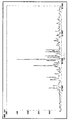
- FIG. 1 is a diagram showing a powder X-ray diffraction pattern of crystals of pyrimidine compound (1) hydrochloride obtained in 1-3 in Example 1.
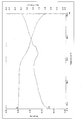
- FIG. 3 is a diagram showing thermal analysis measurement (TG-DTA measurement) data of pyrimidine compound (1) hydrochloride crystals obtained in 1-3 in Example 1.
- the number of hydrochloric acids is not particularly limited and may be any of monohydrochloride, dihydrochloride, trihydrochloride and tetrahydrochloride, and may be a mixture thereof.
- Monohydrochloride is preferable from the viewpoint of being obtained as a stable acid addition salt.
- the hydrochloride of the pyrimidine compound (1) is represented by the following formula (2):
- the specific crystal form of the pyrimidine compound (1) hydrochloride is not particularly limited, and may be any of different crystal forms, or a mixture thereof. Further, the pyrimidine compound (1) It may be a mixture of amorphous hydrochloride. Whether the pyrimidine compound (1) hydrochloride is a crystal is determined by, for example, X-ray diffraction measurement (specifically, powder X-ray diffraction measurement, etc.), thermal analysis measurement (specifically, differential thermal analysis (DTA)). ), Differential scanning calorimetry (DSC), etc.], polarization confirmation (specifically, observation with a polarizing microscope, etc.), solid NMR measurement, etc., can be confirmed by known methods.
- X-ray diffraction measurement specifically, powder X-ray diffraction measurement, etc.
- thermal analysis measurement specifically, differential thermal analysis (DTA)).
- DSC Differential scanning calorimetry
- polarization confirmation specifically, observation with a polarizing microscope, etc.
- the pyrimidine compound (1) hydrochloride is crystalline. It can be confirmed that there is.
- the method for determining crystallinity can be carried out with reference to descriptions of the Japanese Pharmacopeia, US Pharmacopeia, European Pharmacopeia and the like. These crystals may be confirmed in the presence of other components.
- solid pharmaceutical compositions (tablets, capsules, granules, powders, etc.) containing the hydrochloride of pyrimidine compound (1) and a pharmaceutically acceptable carrier require solid pharmaceutical compositions.
- a pharmaceutically acceptable carrier for example, solid pharmaceutical compositions (tablets, capsules, granules, powders, etc.) containing the hydrochloride of pyrimidine compound (1) and a pharmaceutically acceptable carrier require solid pharmaceutical compositions.
- the crystal of the pyrimidine compound (1) hydrochloride has a powder X-ray diffraction pattern obtained when irradiated with copper K ⁇ rays, at least around 14.0 ⁇ 0.2 °, 18.3 ⁇ 0. Near 2 °, 20.1 ⁇ 0.2 °, 20.5 ⁇ 0.2 °, 21.3 ⁇ 0.2 °, 21.8 ⁇ 0.2 °, 23.3 ⁇ 0.
- a crystal having a peak at one or more diffraction angles (2 ⁇ ) selected from the group consisting of around 2 ° and around 24.0 ⁇ 0.2 ° is preferred, and at least a diffraction angle (2 ⁇ of around 20.5 ⁇ 0.2 °).
- Crystals having peaks at diffraction angles (2 ⁇ ) of at least about 18.3 ⁇ 0.2 ° and 20.5 ⁇ 0.2 ° are more preferable, and at least 14.0 ⁇ Near 0.2 °, 18.3 ⁇ 0.2 °, 20.1 ⁇ 0.2 °, 20.5 ⁇ 0 At diffraction angles (2 ⁇ ) around 2 °, 21.3 ⁇ 0.2 °, 21.8 ⁇ 0.2 °, 23.3 ⁇ 0.2 °, and 24.0 ⁇ 0.2 °. Crystals having peaks are even more preferred, and crystals that are substantially identical to those shown in FIG. 1 are particularly preferred.
- the crystal of the pyrimidine compound (1) hydrochloride is preferably a crystal having an endothermic peak in the vicinity of about 162 ⁇ 5 ° C. in differential thermal analysis (DTA). More preferred are crystals whose thermal analysis (DTA) and thermal mass measurement (TG) results are substantially the same as those shown in FIG.
- hydrochloride of the pyrimidine compound (1) and the crystal thereof according to the present invention may be a solvate such as a hydrate or a non-solvate such as an anhydride. Preferably there is.
- the hydrochloride of the pyrimidine compound (1) and the crystal thereof are, for example, the following steps: (Step 1) Formation of hydrochloride from a free form of pyrimidine compound (1) (Step 2) Production by crystal formation from hydrochloride of pyrimidine compound (1).
- Step 1 Formation of hydrochloride from a free form of pyrimidine compound (1)
- Step 2 Production by crystal formation from hydrochloride of pyrimidine compound (1).
- Step 1 Formation of hydrochloride salt from free form of pyrimidine compound (1)>
- This step is a step of forming a hydrochloride by coexisting the pyrimidine compound (1) and hydrogen chloride in the presence of a solvent.
- this step is a step of forming a salt by dissolving a free form of the pyrimidine compound (1) in a solvent and supplying hydrogen chloride.
- the free form of the pyrimidine compound (1) as a starting material can be produced, for example, according to the method described in Patent Document 2.
- This step is performed in the presence of a solvent.
- the solvent is not particularly limited as long as it does not participate in hydrochloride formation.
- aromatic hydrocarbons such as benzene, toluene, xylene, mesitylene, chlorobenzene, 1,2-dichlorobenzene, nitrobenzene; diethyl ether , Ethers such as diisopropyl ether, tert-butyl methyl ether and 1,4-dioxane; acetates such as ethyl acetate, n-propyl acetate and isopropyl acetate; ketones such as acetone, 2-butanone and 3-pentanone; Aliphatic hydrocarbons such as n-pentane, n-hexane, n-heptane, cyclohexane, n-octane and n-decane; Amides such as N, N-dimethylformamide and N,
- the pyrimidine compound (1) may be dissolved after mixing them, or the remaining solvent after dissolving the pyrimidine compound (1) in one solvent. May be added.
- the solvent is preferably at least one selected from diisopropyl ether, tert-butyl methyl ether, 1,4-dioxane, n-hexane, n-heptane, ethyl acetate, and isopropyl acetate.
- the amount of the solvent is not particularly limited, but the volume ratio of the pyrimidine compound (1) to the free body weight is 1 to 20 times (V / W), preferably 5 to 15 times (V / W). That's fine.
- the supply source of hydrogen chloride is not particularly limited, and hydrogen chloride gas is directly blown into the solution, and easily available concentrated hydrochloric acid, 4M HCl / ethyl acetate solution, 4M HCl / 1,4-dioxane solution, and the like can be used.
- the amount of hydrogen chloride is not particularly limited, but is preferably 1 to 5 molar equivalents and particularly preferably 1 to 4 molar equivalents with respect to the free form of pyrimidine compound (1).
- the salt formation temperature is not particularly limited, but is usually in the range of ⁇ 50 to 150 ° C., preferably ⁇ 20 to 80 ° C., more preferably ⁇ 10 to 40 ° C.
- the time required for salt formation is not particularly limited, but is usually 5 minutes to 48 hours, preferably 30 minutes to 24 hours, more preferably 30 minutes to 3 hours.
- the hydrochloride of the produced pyrimidine compound (1) can be isolated.
- the salt precipitated as a solid may be isolated by a method usually used in the technical field such as filtration, and further dried by a method usually used in the technical field as necessary.
- the drying means is not particularly limited, and examples thereof include heating and / or drying under reduced pressure.
- the drying temperature is preferably 50 ° C. or less, and more preferably 40 to 50 ° C.
- the drying time is preferably 1 to 24 hours, more preferably 6 to 12 hours.
- Step 2 Formation of crystal from hydrochloride of pyrimidine compound (1)>
- This step is a step of crystallizing the hydrochloride (eg, amorphous) of the pyrimidine compound (1) obtained in Step 1 in the presence of a solvent.
- this step is a step of adding the hydrochloride of the pyrimidine compound (1) obtained in Step 1 to a solvent, dissolving it by heating or the like as necessary, and then performing crystallization by cooling or the like. It is.
- This step is performed in the presence of a solvent.
- the solvent include a mixed solution of 2-propanol and heptane, or a mixed solution of methyl ethyl ketone and heptane, and a mixed solution of 2-propanol and heptane is preferable.
- the mixing ratio of the solvent is not particularly limited, but as a volume ratio to the volume of 2-propanol or methyl ethyl ketone, heptane is 0.1 to 2 times (V / V), preferably 0.2 to 1 times (V / V). ) Should be used.
- the hydrochloride of the pyrimidine compound (1) When the hydrochloride of the pyrimidine compound (1) is dissolved in a solvent, the hydrochloride of the pyrimidine compound (1) may be dissolved after mixing the solvent in advance, but the hydrochloride of the pyrimidine compound (1) may be dissolved in 2-propanol or It is preferable to add heptane after dissolving in methyl ethyl ketone.
- the amount of the solvent is not particularly limited, but the total mixed solvent amount is 1 to 20 times (V / W), preferably 5 to 10 times the volume ratio of the pyrimidine compound (1) to the weight of the hydrochloride. V / W) may be used.
- the temperature at which the hydrochloride of the pyrimidine compound (1) is dissolved in the solvent is not particularly limited, but is usually in the range of 40 to 100 ° C., preferably 50 to 80 ° C.
- the crystallization temperature of the hydrochloride of the pyrimidine compound (1) is not particularly limited, but it may be usually in the range of 5 to 40 ° C., preferably 10 to 35 ° C., more preferably 10 to 30 ° C., particularly preferably. Is 15 to 25 ° C. If there is a discrepancy between the temperature at which the hydrochloride of the pyrimidine compound (1) is dissolved in the solvent and the crystallization temperature, it may be cooled slowly in about 1 to 10 hours depending on the temperature difference.
- the time required for crystallization is not particularly limited, but is usually 1 hour or longer, preferably 6 to 24 hours, more preferably 8 to 16 hours.
- the precipitated pyrimidine compound (1) hydrochloride crystals may be isolated by a method commonly used in the technical field such as filtration, and further dried by a method commonly used in the technical field as necessary.
- the drying means is not particularly limited, and examples thereof include heating and / or drying under reduced pressure.
- the drying temperature is preferably 50 ° C. or less, and more preferably 40 to 50 ° C.
- the drying time is preferably 1 to 24 hours, more preferably 6 to 12 hours.
- seed crystal crystallization (seed crystal) of the pyrimidine compound (1) hydrochloride manufactured separately.
- solvent isopropyl acetate may be used instead of the above-described one.
- the amount of seed crystals is not particularly limited, but may be 0.00001 to 0.05 parts by weight, preferably 0.0001 to 0.01 parts by weight, based on the hydrochloride of pyrimidine compound (1).
- the seed crystal is preferably added after the hydrochloride of the pyrimidine compound (1) is dissolved in a solvent.
- hydrochloride of this invention when the crystal
- hydrochloride crystals can be produced from the free form of the pyrimidine compound (1) in the presence of a solvent.
- the solvent is preferably isopropyl acetate. It is also possible to perform step 2 while omitting the time for salt formation in step 1. That is, the free form of the pyrimidine compound (1) can be dissolved in a solvent and hydrogen chloride can be supplied, followed by heating or the like, followed by cooling or the like for crystallization. The operation of other steps is the same as described above.
- the pyrimidine compound (1) has a CETP inhibitory action, a PCSK9 protein amount reducing action, and the like. Therefore, the hydrochloride of the pyrimidine compound (1) and its crystal of the present invention can be used as a pharmaceutical component useful for the prevention and / or treatment of diseases such as dyslipidemia, hyper-LDL and hypoHDL.
- the crystal of the hydrochloride of the pyrimidine compound (1) of the present invention has excellent thermal stability as will be apparent from Test Example 2 described later, and can be particularly suitably used as a component of a stable pharmaceutical composition. Moreover, since the crystal
- a pharmaceutical composition for oral administration include pharmaceutical compositions in dosage forms such as tablets, capsules, granules, powders, oral solutions, syrups, and oral jelly.
- pharmaceutical compositions for parenteral administration include injections, inhalants, eye drops, ear drops, nasal drops, suppositories, external solid preparations, external liquid preparations, sprays, and ointments. And pharmaceutical compositions in dosage forms such as agents, creams, gels and patches.
- compositions can be produced by adding a pharmaceutically acceptable carrier (additive).
- additives include excipients, binders, extenders, disintegrants, surfactants, lubricants, dispersants, buffers, preservatives, flavoring agents, fragrances, coating agents, and diluents. Although it is mentioned, it is not limited to these.
- the dose of the pyrimidine compound (1) varies depending on the patient's weight, age, sex, symptoms, etc., but in the case of a normal adult, about 0.01 to 1000 mg in terms of the free form of the pyrimidine compound (1) is 1
- the administration can be divided into 1 to 4 times a day. Preferably, about 0.1-100 mg can be administered in 1 to 4 divided doses per day.
- Powder X-ray diffraction measurement was performed on the crystals obtained in 1-3. The powder X-ray diffraction was measured by filling the crushed crystal sample in the sample holder portion of the silicon non-reflective sample plate for X-ray diffraction and under the following conditions.
- Powder X-ray diffractometer RINT-UltimaIV-Protectus (manufactured by Rigaku Corporation)
- Sampling width 0.02 °
- Scan speed 2.00 ° / min
- the obtained diffraction pattern is shown in FIG.
- the vertical axis indicates the diffraction intensity (count / second (cps)), and the horizontal axis indicates the diffraction angle 2 ⁇ (°).
- Table 7 shows the diffraction angle 2 ⁇ , the half width, the d value, the intensity, and the relative intensity for main peaks having a relative intensity of 30 or more. From FIG.
- Example 1-3 The crystal obtained in Example 1-3 was subjected to thermal analysis measurement.
- the thermal analysis measurement about 5 mg of a sample is accurately weighed in an aluminum pan for thermal analysis, Al 2 O 3 is used as a reference material, under a nitrogen atmosphere (150 mL / min), at a heating rate of 10 ° C./min.
- a thermal analyzer Thermo Plus 2 system manufactured by Rigaku Corporation
- DTA differential thermal analysis
- TG thermal mass measurement
- the vertical axis represents the thermoelectromotive force ( ⁇ V) of the thermocouple for the DTA curve
- the mass change (mg) for the TG curve and the horizontal axis represents the temperature (° C.).
- the crystal of pyrimidine compound (1) hydrochloride had an endothermic peak around 162 ⁇ 5 ° C. (specifically, 161.6 ° C.) in differential thermal analysis (DTA).
- DTA differential thermal analysis
- Test Example 2 Thermal stability test The test compound was put in a glass bottle and the residual ratio (%) of the pyrimidine compound (1) in the test compound after being stored for a certain period of time at 80 ° C, 100 ° C or 120 ° C. ) was measured. The residual rate was determined by measuring the ratio of the pyrimidine compound (1) contained in the test compound as a percentage of peak area using high performance liquid chromatography. In the measurement by high performance liquid chromatography, an ODS column is used as a column, two kinds of a 0.1% TFA aqueous solution and a 0.1% TFA acetonitrile solution are mixed and used as a solvent, and a detection wavelength is 242 nm. It was. From the area percentage of the obtained pyrimidine compound (1), the residual ratio was calculated by the following formula.
- test compound used was the crystal (pyrimidine compound (1) hydrochloride crystal) obtained in Example 1-3 and a free form of pyrimidine compound (1).
- the results are shown in Table 8.
- the pyrimidine compound (1) useful for the prevention and / or treatment of diseases such as dyslipidemia can be provided in a form suitable for the production of a pharmaceutical having high purity, homogeneity and excellent quality. It can be used in the pharmaceutical industry.
Landscapes
- Chemical & Material Sciences (AREA)
- Organic Chemistry (AREA)
- Health & Medical Sciences (AREA)
- Engineering & Computer Science (AREA)
- Bioinformatics & Cheminformatics (AREA)
- Diabetes (AREA)
- Hematology (AREA)
- Obesity (AREA)
- Chemical Kinetics & Catalysis (AREA)
- General Chemical & Material Sciences (AREA)
- Medicinal Chemistry (AREA)
- Nuclear Medicine, Radiotherapy & Molecular Imaging (AREA)
- Pharmacology & Pharmacy (AREA)
- Life Sciences & Earth Sciences (AREA)
- Animal Behavior & Ethology (AREA)
- General Health & Medical Sciences (AREA)
- Public Health (AREA)
- Veterinary Medicine (AREA)
- Pharmaceuticals Containing Other Organic And Inorganic Compounds (AREA)
Abstract
Priority Applications (5)
| Application Number | Priority Date | Filing Date | Title |
|---|---|---|---|
| KR1020157033941A KR20160014620A (ko) | 2013-05-31 | 2014-05-30 | 디벤질아민 구조를 갖는 피리미딘 화합물의 신규 형태 |
| CN201480030617.6A CN105246877A (zh) | 2013-05-31 | 2014-05-30 | 具有二苄胺结构的嘧啶化合物的新形态 |
| US14/784,147 US9682942B2 (en) | 2013-05-31 | 2014-05-30 | Form of pyrimidine compound having dibenzylamine structure |
| EP14804509.9A EP3006430A4 (fr) | 2013-05-31 | 2014-05-30 | Nouvelle forme de composé pyrimidinique ayant une structure dibenzylamine |
| US15/595,039 US20170313664A1 (en) | 2013-05-31 | 2017-05-15 | Novel form of pyrimidine compound having dibenzylamine structure |
Applications Claiming Priority (2)
| Application Number | Priority Date | Filing Date | Title |
|---|---|---|---|
| JP2013115189 | 2013-05-31 | ||
| JP2013-115189 | 2013-05-31 |
Related Child Applications (2)
| Application Number | Title | Priority Date | Filing Date |
|---|---|---|---|
| US14/784,147 A-371-Of-International US9682942B2 (en) | 2013-05-31 | 2014-05-30 | Form of pyrimidine compound having dibenzylamine structure |
| US15/595,039 Continuation US20170313664A1 (en) | 2013-05-31 | 2017-05-15 | Novel form of pyrimidine compound having dibenzylamine structure |
Publications (1)
| Publication Number | Publication Date |
|---|---|
| WO2014192903A1 true WO2014192903A1 (fr) | 2014-12-04 |
Family
ID=51988925
Family Applications (1)
| Application Number | Title | Priority Date | Filing Date |
|---|---|---|---|
| PCT/JP2014/064372 Ceased WO2014192903A1 (fr) | 2013-05-31 | 2014-05-30 | Nouvelle forme de composé pyrimidinique ayant une structure dibenzylamine |
Country Status (7)
| Country | Link |
|---|---|
| US (2) | US9682942B2 (fr) |
| EP (1) | EP3006430A4 (fr) |
| JP (2) | JP6109785B2 (fr) |
| KR (1) | KR20160014620A (fr) |
| CN (1) | CN105246877A (fr) |
| TW (1) | TW201512175A (fr) |
| WO (1) | WO2014192903A1 (fr) |
Cited By (3)
| Publication number | Priority date | Publication date | Assignee | Title |
|---|---|---|---|---|
| JP2015007038A (ja) * | 2013-05-31 | 2015-01-15 | 興和株式会社 | ジベンジルアミン構造を有するピリミジン化合物の新規形態 |
| WO2016084950A1 (fr) * | 2014-11-28 | 2016-06-02 | 興和株式会社 | Composition pharmaceutique |
| WO2016084949A1 (fr) * | 2014-11-28 | 2016-06-02 | 興和株式会社 | Médicament |
Families Citing this family (2)
| Publication number | Priority date | Publication date | Assignee | Title |
|---|---|---|---|---|
| TWI691331B (zh) * | 2014-09-26 | 2020-04-21 | 日商興和股份有限公司 | 脂質異常症治療劑 |
| US10266558B2 (en) * | 2016-10-07 | 2019-04-23 | Alexandre Vasilievich Ivachtchenko | Macroheterocyclic nucleoside derivatives and their analogues, production and use thereof |
Citations (5)
| Publication number | Priority date | Publication date | Assignee | Title |
|---|---|---|---|---|
| WO2008129951A1 (fr) | 2007-04-13 | 2008-10-30 | Kowa Company, Ltd. | Nouveau composé de pyrimidine à structure de dibenzylamine et médicament le comprenant |
| WO2011152508A1 (fr) | 2010-06-04 | 2011-12-08 | 興和株式会社 | Dérivé de dibenzylamine optiquement actif et procédé pour sa préparation |
| WO2012046681A1 (fr) | 2010-10-04 | 2012-04-12 | 興和株式会社 | Agent capable d'inhiber l'expression d'un arnm lié au métabolisme lipidique |
| WO2013081087A1 (fr) * | 2011-12-02 | 2013-06-06 | 興和株式会社 | Procédé de préparation d'un composé optiquement actif |
| JP2013136572A (ja) * | 2011-12-02 | 2013-07-11 | Kowa Co | 光学活性ジベンジルアミン誘導体及びその製造方法 |
Family Cites Families (5)
| Publication number | Priority date | Publication date | Assignee | Title |
|---|---|---|---|---|
| US5883092A (en) | 1995-09-06 | 1999-03-16 | Kowa Co., Ltd. | Pyrimidine derivatives as endothelin antagonists |
| JP3630676B2 (ja) | 2002-08-30 | 2005-03-16 | 日本たばこ産業株式会社 | ジベンジルアミン化合物及びその医薬用途 |
| ES2277142T3 (es) | 2002-08-30 | 2007-07-01 | Japan Tobacco Inc. | Compuesto de dibencilamina y su uso medicinal. |
| JP5319457B2 (ja) * | 2008-08-25 | 2013-10-16 | 興和株式会社 | 新規なジベンジルアミン構造を有するピリミジン化合物及びこれを含有する医薬 |
| WO2014192903A1 (fr) * | 2013-05-31 | 2014-12-04 | 興和株式会社 | Nouvelle forme de composé pyrimidinique ayant une structure dibenzylamine |
-
2014
- 2014-05-30 WO PCT/JP2014/064372 patent/WO2014192903A1/fr not_active Ceased
- 2014-05-30 TW TW103118969A patent/TW201512175A/zh unknown
- 2014-05-30 US US14/784,147 patent/US9682942B2/en not_active Expired - Fee Related
- 2014-05-30 KR KR1020157033941A patent/KR20160014620A/ko not_active Withdrawn
- 2014-05-30 EP EP14804509.9A patent/EP3006430A4/fr not_active Withdrawn
- 2014-05-30 CN CN201480030617.6A patent/CN105246877A/zh active Pending
- 2014-06-02 JP JP2014113680A patent/JP6109785B2/ja not_active Expired - Fee Related
-
2017
- 2017-03-06 JP JP2017041364A patent/JP2017101077A/ja active Pending
- 2017-05-15 US US15/595,039 patent/US20170313664A1/en not_active Abandoned
Patent Citations (5)
| Publication number | Priority date | Publication date | Assignee | Title |
|---|---|---|---|---|
| WO2008129951A1 (fr) | 2007-04-13 | 2008-10-30 | Kowa Company, Ltd. | Nouveau composé de pyrimidine à structure de dibenzylamine et médicament le comprenant |
| WO2011152508A1 (fr) | 2010-06-04 | 2011-12-08 | 興和株式会社 | Dérivé de dibenzylamine optiquement actif et procédé pour sa préparation |
| WO2012046681A1 (fr) | 2010-10-04 | 2012-04-12 | 興和株式会社 | Agent capable d'inhiber l'expression d'un arnm lié au métabolisme lipidique |
| WO2013081087A1 (fr) * | 2011-12-02 | 2013-06-06 | 興和株式会社 | Procédé de préparation d'un composé optiquement actif |
| JP2013136572A (ja) * | 2011-12-02 | 2013-07-11 | Kowa Co | 光学活性ジベンジルアミン誘導体及びその製造方法 |
Non-Patent Citations (3)
| Title |
|---|
| BAVIN, M.: "Polymorphism in Process Development", CHEMISTRY & INDUSTRY, vol. 21, 21 August 1989 (1989-08-21), pages 527 - 529, XP001180136 * |
| BYRN, S. ET AL.: "Pharmaceutical Solids: A Strategic Approach to Regulatory Considerations", PHARMACEUTICAL RESEARCH, vol. 12, no. 7, 1 July 1995 (1995-07-01), pages 945 - 954, XP000996386, DOI: 10.1023/A:1016241927429 * |
| See also references of EP3006430A4 * |
Cited By (3)
| Publication number | Priority date | Publication date | Assignee | Title |
|---|---|---|---|---|
| JP2015007038A (ja) * | 2013-05-31 | 2015-01-15 | 興和株式会社 | ジベンジルアミン構造を有するピリミジン化合物の新規形態 |
| WO2016084950A1 (fr) * | 2014-11-28 | 2016-06-02 | 興和株式会社 | Composition pharmaceutique |
| WO2016084949A1 (fr) * | 2014-11-28 | 2016-06-02 | 興和株式会社 | Médicament |
Also Published As
| Publication number | Publication date |
|---|---|
| EP3006430A1 (fr) | 2016-04-13 |
| JP6109785B2 (ja) | 2017-04-05 |
| US9682942B2 (en) | 2017-06-20 |
| KR20160014620A (ko) | 2016-02-11 |
| CN105246877A (zh) | 2016-01-13 |
| TW201512175A (zh) | 2015-04-01 |
| EP3006430A4 (fr) | 2016-11-02 |
| US20170313664A1 (en) | 2017-11-02 |
| US20160031827A1 (en) | 2016-02-04 |
| JP2015007038A (ja) | 2015-01-15 |
| JP2017101077A (ja) | 2017-06-08 |
Similar Documents
| Publication | Publication Date | Title |
|---|---|---|
| TWI322805B (fr) | ||
| EP2571863B1 (fr) | Sels de nilotinib et leurs formes cristallines | |
| JP2020183408A (ja) | {[5−(3−クロロフェニル)−3−ヒドロキシピリジン−2−カルボニル]アミノ}酢酸の固体形態、組成物、及びその使用 | |
| JP6109785B2 (ja) | ジベンジルアミン構造を有するピリミジン化合物の新規形態 | |
| EP2547649B1 (fr) | Chlorhydrate d'agomélatine hydraté et sa préparation | |
| JP5337261B2 (ja) | 縮合複素環誘導体の塩及びその結晶 | |
| TW201002323A (en) | Novel piperazine salts as D3/D2 antagonists | |
| JP2022519885A (ja) | Jak2阻害剤の結晶形態 | |
| JP2716740B2 (ja) | ブスピロンの薬学的に有用な多形変態 | |
| CN111943962A (zh) | 咪唑并噁嗪晶体、含有所述晶体的药物组合物和制备所述晶体的方法 | |
| US10143688B2 (en) | Mesylic acid salt of acylthiourea compound, crystal of the same, and process for producing these | |
| JP2702519B2 (ja) | 多形結晶形態の転換法 | |
| EP3476835A1 (fr) | Cristal de dérivé de quinoléine | |
| JP2022508864A (ja) | チロシンキナーゼ阻害剤のマレイン酸塩の結晶形及びその調製方法 | |
| WO2016084950A1 (fr) | Composition pharmaceutique | |
| JPWO2016084949A1 (ja) | 医薬 | |
| TW201238965A (en) | Process for the production of a pemetrexed salt | |
| JP6985137B2 (ja) | スルホンアミド化合物の結晶形 | |
| WO2023125418A1 (fr) | Cristaux de sel d'acide benzènesulfonique et leur procédé de préparation | |
| KR20160035599A (ko) | 아고멜라틴 및 설폰산의 신규한 복합체, 이를 제조하기 위한 방법 및 이를 함유하는 약학적 조성물 | |
| CZ300352B6 (cs) | Zpusob prípravy fosforecnanu aripiprazolu | |
| CN109721534A (zh) | 一种马来酸茚达特罗中间体及其制备方法和用途 | |
| HU231054B1 (hu) | Gyógyászati készítmény előállítására alkalmazható új sók |
Legal Events
| Date | Code | Title | Description |
|---|---|---|---|
| 121 | Ep: the epo has been informed by wipo that ep was designated in this application |
Ref document number: 14804509 Country of ref document: EP Kind code of ref document: A1 |
|
| WWE | Wipo information: entry into national phase |
Ref document number: 14784147 Country of ref document: US |
|
| WWE | Wipo information: entry into national phase |
Ref document number: 2014804509 Country of ref document: EP |
|
| ENP | Entry into the national phase |
Ref document number: 20157033941 Country of ref document: KR Kind code of ref document: A |
|
| NENP | Non-entry into the national phase |
Ref country code: DE |
|
| NENP | Non-entry into the national phase |
Ref country code: JP |