WO2014199754A1 - Matériel de culture cellulaire enduit à l'état sec de fragments de laminines - Google Patents
Matériel de culture cellulaire enduit à l'état sec de fragments de laminines Download PDFInfo
- Publication number
- WO2014199754A1 WO2014199754A1 PCT/JP2014/062449 JP2014062449W WO2014199754A1 WO 2014199754 A1 WO2014199754 A1 WO 2014199754A1 JP 2014062449 W JP2014062449 W JP 2014062449W WO 2014199754 A1 WO2014199754 A1 WO 2014199754A1
- Authority
- WO
- WIPO (PCT)
- Prior art keywords
- laminin
- fragment
- integrin
- coated
- cells
- Prior art date
- Legal status (The legal status is an assumption and is not a legal conclusion. Google has not performed a legal analysis and makes no representation as to the accuracy of the status listed.)
- Ceased
Links
Images






Classifications
-
- C—CHEMISTRY; METALLURGY
- C12—BIOCHEMISTRY; BEER; SPIRITS; WINE; VINEGAR; MICROBIOLOGY; ENZYMOLOGY; MUTATION OR GENETIC ENGINEERING
- C12M—APPARATUS FOR ENZYMOLOGY OR MICROBIOLOGY; APPARATUS FOR CULTURING MICROORGANISMS FOR PRODUCING BIOMASS, FOR GROWING CELLS OR FOR OBTAINING FERMENTATION OR METABOLIC PRODUCTS, i.e. BIOREACTORS OR FERMENTERS
- C12M25/00—Means for supporting, enclosing or fixing the microorganisms, e.g. immunocoatings
- C12M25/06—Plates; Walls; Drawers; Multilayer plates
-
- C—CHEMISTRY; METALLURGY
- C07—ORGANIC CHEMISTRY
- C07K—PEPTIDES
- C07K14/00—Peptides having more than 20 amino acids; Gastrins; Somatostatins; Melanotropins; Derivatives thereof
- C07K14/435—Peptides having more than 20 amino acids; Gastrins; Somatostatins; Melanotropins; Derivatives thereof from animals; from humans
-
- C—CHEMISTRY; METALLURGY
- C07—ORGANIC CHEMISTRY
- C07K—PEPTIDES
- C07K14/00—Peptides having more than 20 amino acids; Gastrins; Somatostatins; Melanotropins; Derivatives thereof
- C07K14/435—Peptides having more than 20 amino acids; Gastrins; Somatostatins; Melanotropins; Derivatives thereof from animals; from humans
- C07K14/76—Albumins
- C07K14/765—Serum albumin, e.g. HSA
-
- C—CHEMISTRY; METALLURGY
- C07—ORGANIC CHEMISTRY
- C07K—PEPTIDES
- C07K14/00—Peptides having more than 20 amino acids; Gastrins; Somatostatins; Melanotropins; Derivatives thereof
- C07K14/435—Peptides having more than 20 amino acids; Gastrins; Somatostatins; Melanotropins; Derivatives thereof from animals; from humans
- C07K14/78—Connective tissue peptides, e.g. collagen, elastin, laminin, fibronectin, vitronectin or cold insoluble globulin [CIG]
-
- C—CHEMISTRY; METALLURGY
- C07—ORGANIC CHEMISTRY
- C07K—PEPTIDES
- C07K14/00—Peptides having more than 20 amino acids; Gastrins; Somatostatins; Melanotropins; Derivatives thereof
- C07K14/435—Peptides having more than 20 amino acids; Gastrins; Somatostatins; Melanotropins; Derivatives thereof from animals; from humans
- C07K14/79—Transferrins, e.g. lactoferrins, ovotransferrins
-
- C—CHEMISTRY; METALLURGY
- C12—BIOCHEMISTRY; BEER; SPIRITS; WINE; VINEGAR; MICROBIOLOGY; ENZYMOLOGY; MUTATION OR GENETIC ENGINEERING
- C12M—APPARATUS FOR ENZYMOLOGY OR MICROBIOLOGY; APPARATUS FOR CULTURING MICROORGANISMS FOR PRODUCING BIOMASS, FOR GROWING CELLS OR FOR OBTAINING FERMENTATION OR METABOLIC PRODUCTS, i.e. BIOREACTORS OR FERMENTERS
- C12M23/00—Constructional details, e.g. recesses, hinges
- C12M23/20—Material Coatings
-
- C—CHEMISTRY; METALLURGY
- C12—BIOCHEMISTRY; BEER; SPIRITS; WINE; VINEGAR; MICROBIOLOGY; ENZYMOLOGY; MUTATION OR GENETIC ENGINEERING
- C12N—MICROORGANISMS OR ENZYMES; COMPOSITIONS THEREOF; PROPAGATING, PRESERVING, OR MAINTAINING MICROORGANISMS; MUTATION OR GENETIC ENGINEERING; CULTURE MEDIA
- C12N5/00—Undifferentiated human, animal or plant cells, e.g. cell lines; Tissues; Cultivation or maintenance thereof; Culture media therefor
- C12N5/0068—General culture methods using substrates
-
- C—CHEMISTRY; METALLURGY
- C12—BIOCHEMISTRY; BEER; SPIRITS; WINE; VINEGAR; MICROBIOLOGY; ENZYMOLOGY; MUTATION OR GENETIC ENGINEERING
- C12N—MICROORGANISMS OR ENZYMES; COMPOSITIONS THEREOF; PROPAGATING, PRESERVING, OR MAINTAINING MICROORGANISMS; MUTATION OR GENETIC ENGINEERING; CULTURE MEDIA
- C12N9/00—Enzymes; Proenzymes; Compositions thereof; Processes for preparing, activating, inhibiting, separating or purifying enzymes
- C12N9/10—Transferases (2.)
- C12N9/1085—Transferases (2.) transferring alkyl or aryl groups other than methyl groups (2.5)
- C12N9/1088—Glutathione transferase (2.5.1.18)
-
- C—CHEMISTRY; METALLURGY
- C12—BIOCHEMISTRY; BEER; SPIRITS; WINE; VINEGAR; MICROBIOLOGY; ENZYMOLOGY; MUTATION OR GENETIC ENGINEERING
- C12N—MICROORGANISMS OR ENZYMES; COMPOSITIONS THEREOF; PROPAGATING, PRESERVING, OR MAINTAINING MICROORGANISMS; MUTATION OR GENETIC ENGINEERING; CULTURE MEDIA
- C12N2533/00—Supports or coatings for cell culture, characterised by material
-
- C—CHEMISTRY; METALLURGY
- C12—BIOCHEMISTRY; BEER; SPIRITS; WINE; VINEGAR; MICROBIOLOGY; ENZYMOLOGY; MUTATION OR GENETIC ENGINEERING
- C12N—MICROORGANISMS OR ENZYMES; COMPOSITIONS THEREOF; PROPAGATING, PRESERVING, OR MAINTAINING MICROORGANISMS; MUTATION OR GENETIC ENGINEERING; CULTURE MEDIA
- C12N2533/00—Supports or coatings for cell culture, characterised by material
- C12N2533/50—Proteins
- C12N2533/52—Fibronectin; Laminin
-
- C—CHEMISTRY; METALLURGY
- C12—BIOCHEMISTRY; BEER; SPIRITS; WINE; VINEGAR; MICROBIOLOGY; ENZYMOLOGY; MUTATION OR GENETIC ENGINEERING
- C12Y—ENZYMES
- C12Y205/00—Transferases transferring alkyl or aryl groups, other than methyl groups (2.5)
- C12Y205/01—Transferases transferring alkyl or aryl groups, other than methyl groups (2.5) transferring alkyl or aryl groups, other than methyl groups (2.5.1)
- C12Y205/01018—Glutathione transferase (2.5.1.18)
Definitions
- the present invention relates to a cell culture device, and more particularly to a cell culture device coated with a laminin fragment having integrin ⁇ 6 ⁇ 1 binding activity or a modified form thereof in a dry state.
- Human pluripotent stem cells such as human ES cells and human iPS cells are attracting worldwide attention for their application in regenerative medicine.
- human pluripotent stem cells In order to apply human pluripotent stem cells to regenerative medicine, it is necessary to develop a culture technique for culturing and amplifying these stem cells safely and stably.
- the development of a stable culture method under conditions that do not use feeder cells and do not contain components derived from different animals (xeno-free) is an urgent issue.
- the present inventors focused on the fact that early embryonic pluripotent stem cells are based on a basement membrane having laminin ⁇ 5 ⁇ 1 ⁇ 1 (laminin 511) as a main component, and human laminin 511 recombinant protein is feeder-free of human ES cells. It was reported for the first time in the world that it was useful as a culture substrate (see Non-Patent Document 1). In addition, the present inventors have found that laminin 511 has a very high affinity for ⁇ 6 ⁇ 1 integrin, and that E8 fragment of laminin 511 (laminin 511E8) has ⁇ 6 ⁇ 1 integrin binding activity equivalent to full-length laminin 511. It was reported that it has (refer nonpatent literature 2).
- the present invention has found a technique for stably maintaining the activity of a laminin fragment that can be used as a feeder-free culture substrate for human stem cells for a long period of time in a dry state, and a laminin fragment that can be used as a feeder-free culture substrate for human stem cells. It is an object of the present invention to provide a cell culture device that is coated in a dry state while maintaining its activity.
- a cell culture device in which a laminin fragment having an integrin ⁇ 6 ⁇ 1 binding activity or a variant thereof is coated in a dry state on a surface in contact with a cell, wherein the laminin fragment is selected from laminin ⁇ 5 ⁇ 1 ⁇ 1 and laminin ⁇ 5 ⁇ 2 ⁇ 1
- a cell culture device which is at least one fragment and is the following (1), (2) or (3).
- a cell culture device in which only a laminin fragment having integrin ⁇ 6 ⁇ 1 binding activity or a variant thereof is coated in a dry state on the surface in contact with cells (2) It has integrin ⁇ 6 ⁇ 1 binding activity on the surface in contact with cells
- a cell culture device coated with a laminin fragment or a variant thereof and a laminin fragment not having an integrin ⁇ 6 ⁇ 1 binding activity in a dry state (3) A laminin fragment having an integrin ⁇ 6 ⁇ 1 binding activity or a variant thereof on the surface that contacts the cell If, laminin or cell culture instrument that proteins other than fragments is coated in a dry state [2] in the above (1), laminin fragments or variants thereof having integrin ⁇ 6 ⁇ 1 binding activity 0.7 [mu] g / cm 2 or more The cell culture instrument according to [1], which are coated with concentration.
- the cell culture device according to any one of [1] to [7], wherein the cell culture device is produced by coating a desired total protein on a surface in contact with a cell and then drying.
- a method for producing a cell culture device in which a laminin fragment having integrin ⁇ 6 ⁇ 1 binding activity or a variant thereof is coated in a dry state on a surface that contacts a cell, wherein the laminin fragment is derived from laminin ⁇ 5 ⁇ 1 ⁇ 1 and laminin ⁇ 5 ⁇ 2 ⁇ 1.
- A) preparing a coating solution containing the protein to be coated (B) coating the desired total protein on the surface of the cell culture device that contacts the cells, and (C) The manufacturing method characterized by including the process of drying the coated protein.
- [10] A method for culturing mammalian cells, wherein the cell culture device according to any one of [1] to [8] is used.
- the mammalian cells are ES cells, iPS cells, somatic stem cells, or cells differentiated from these cells.
- One or more selected from the group consisting of gelatin, human serum albumin, bovine serum albumin, transferrin, myelin basic protein, ⁇ -lactoglobulin, glutathione-S-transferase, collagen and laminin ⁇ 2 ⁇ 1 ⁇ 1 E8 fragment is effective
- An activity decrease inhibitor that suppresses a decrease in integrin ⁇ 6 ⁇ 1 binding activity due to drying of a laminin fragment having integrin ⁇ 6 ⁇ 1 binding activity or a variant thereof as a component.
- the protein to be coated is only a laminin fragment having integrin ⁇ 6 ⁇ 1 binding activity or a variant thereof, and the laminin fragment having integrin ⁇ 6 ⁇ 1 binding activity or a variant thereof is coated at a concentration of 0.7 ⁇ g / cm 2 or more.
- laminin ⁇ 5 ⁇ 1 ⁇ 1 is referred to as “laminin 511”, laminin ⁇ 5 ⁇ 2 ⁇ 1 as “laminin 521”, and laminin ⁇ 2 ⁇ 1 ⁇ 1 as “laminin 211”.
- laminin E8 fragment is referred to as “laminin E8” and the E8 fragment is simply referred to as “E8”.
- a cell culture device coated with a laminin fragment having integrin ⁇ 6 ⁇ 1 binding activity that can be used as a feeder-free culture substrate for human pluripotent stem cells, a method for producing the same, and the cell culture device are used.
- a method for culturing mammalian cells can be provided.
- the activity fall inhibitor which suppresses the fall of the integrin alpha6beta1 binding activity by drying of the laminin fragment which has integrin alpha6beta1 binding activity can be provided.
- the cell culture instrument of the present invention can be stored for a long time after production, and stem cells can be cultured well in a feeder-free environment even after long-term storage.
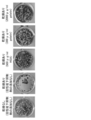
- Human laminin 511E8 (Plus # 5 laminin E8) in which heparin sulfate chain binding domain of perlecan was added to the C-terminal part of ⁇ 5 chain E8 fragment was coated on a plate dried in the presence or absence of an activity-reducing inhibitor. It is a figure which shows the result of having cultured human iPS cell for 1 week.
- the present invention provides a cell culture device in which a surface in contact with cells is coated with a laminin fragment having integrin ⁇ 6 ⁇ 1 binding activity or a variant thereof in a dry state.
- the cell culture device is not particularly limited as long as it can be used for culturing animal cells, but preferably used for culturing mammalian cells, more preferably used for culturing mammalian stem cells, What can be used for culture
- glass or plastic petri dishes, flasks, multiwell plates, culture slides, microcarriers, polymer films such as polyvinylidene fluoride films, and the like can be mentioned.
- Laminin is a heterotrimeric molecule consisting of three subunit chains, an ⁇ chain, a ⁇ chain, and a ⁇ chain. Five types of ⁇ chain are known, ⁇ 1 to ⁇ 5, three types of ⁇ chain are ⁇ 1 to ⁇ 3, and three types of ⁇ chain are ⁇ 1 to ⁇ 3. There are at least 12 or more isoforms in combination.
- the laminin used in the present invention may be any laminin having integrin ⁇ 6 ⁇ 1 binding activity, and among them, at least one selected from laminin 511 and laminin 521 is preferable.
- the laminin used in the present invention is preferably a fragment having integrin ⁇ 6 ⁇ 1 binding activity or a variant thereof.
- the laminin fragment may be a laminin fragment composed of a fragment in which at least one of the ⁇ chain, ⁇ chain, and ⁇ chain is shorter than the full length as long as the integrin ⁇ 6 ⁇ 1 binding activity is not inactivated.
- a laminin fragment forming a heterotrimer is preferable. Whether the laminin fragment forms a heterotrimer can be confirmed by subjecting the laminin fragment to SDS-PAGE and detecting the number of bands. Whether the laminin fragment has integrin ⁇ 6 ⁇ 1 binding activity can be confirmed by a solid phase binding assay or the like.
- laminin E8 is preferable from the viewpoints of integrin binding activity, expression efficiency as a recombinant protein, and the like.
- Laminin E8 has been identified as a fragment having strong cell adhesion activity among fragments obtained by digesting mouse laminin ⁇ 1 ⁇ 1 ⁇ 1 (hereinafter referred to as “mouse laminin 111”) with elastase (Edgar D., Timpl R., Thoenen H. The heparin-binding domain of laminin is responsible for its effects on neurite outgrowth and neuronal survival.EMBO J., 3: 1463-1468, 1984., Goodman SL., Deutzmann R., von der Mark K.
- laminin E8 used in the present invention does not need to be a laminin elastase digestion product, has the same cell adhesion activity as the E8 of mouse laminin 111, has the same structure, and the same level.
- the laminin fragment having integrin ⁇ 6 ⁇ 1 binding activity used in the present invention is preferably a fragment of laminin 511 forming a heterotrimer and / or a fragment of laminin 521 forming a heterotrimer, Laminin 511E8 and / or laminin 521E8 is preferred.
- laminin The origin of laminin is not particularly limited, and laminin derived from various organisms can be used.
- Laminin derived from a mammal is preferable. Examples of mammals include, but are not limited to, humans, mice, rats, cows, pigs and the like. Among these, it is particularly preferable to use human-derived laminin.
- human-derived laminin When culturing human stem cells to obtain human regenerative medical materials, it is preferable to use human-derived laminin because a culture environment that satisfies the xeno-free condition of excluding components derived from different organisms from the culture system is required. .
- Laminin may be a natural type or a modified type in which one or more amino acid residues are modified while maintaining its biological activity.
- a method for producing a laminin fragment is not particularly limited, and examples thereof include a method in which full-length laminin is digested with a proteolytic enzyme such as elastase, and a target fragment is separated and purified, and a method in which it is produced as a recombinant protein. From the viewpoint of production amount, quality uniformity, production cost, etc., it is preferable to produce it as a recombinant protein.
- full-length laminin can be manufactured by the method of refine
- Recombinant full-length laminin and recombinant laminin fragments can be produced by using known gene recombination techniques.
- a method for producing recombinant laminin and recombinant laminin fragment for example, DNAs encoding full-length proteins or partial proteins of ⁇ chain, ⁇ chain, and ⁇ chain are obtained and inserted into expression vectors, respectively.
- the three types of expression vectors thus obtained can be co-introduced into an appropriate host cell and expressed, and the protein forming the trimer can be purified by a known method. For example, Ido et al.
- the base sequence information of the genes encoding the ⁇ chain, ⁇ chain, and ⁇ chain constituting the main mammalian laminin and the amino acid sequence information of each chain can be obtained from a known database (GenBank, etc.).
- Table 1 shows the accession numbers of the chains constituting laminin for main mammals including humans.
- the base sequence information and amino acid sequence information of laminin constituent chains derived from various organisms other than these can also be obtained from known databases (GenBank etc.).
- Laminin E8 is a fragment obtained by removing globular domains 4 and 5 from a C-terminal fragment of ⁇ chain (hereinafter referred to as “ ⁇ chain E8”), a C-terminal fragment of ⁇ chain (hereinafter referred to as “ ⁇ chain E8”) and ⁇
- the C-terminal fragment of the chain (hereinafter referred to as “ ⁇ chain E8”) is a fragment forming a trimer, and the molecular weight of the trimer is about 150 to about 170 kDa.
- the ⁇ chain E8 usually consists of about 770 amino acids, and about 230 amino acids on the N-terminal side are involved in trimer formation.
- the ⁇ chain E8 usually consists of about 220 to about 230 amino acids.
- the ⁇ chain E8 usually consists of about 240 to about 250 amino acids.
- the third glutamic acid residue from the C-terminal part of ⁇ chain E8 is essential for cell adhesion activity of laminin E8 (Hiroyuki Ido, Aya Nakamura, Reiko Kobayashi, ashiShunsuke Ito, Shaoliang Li, Sugiko Futaki, and Kiyotoshi Sekiguchi, “The requirement of the glutamic acid residue at the third position from the carboxyl termini of the laminin ⁇ chains in integrin binding by laminins ”The Journal of Biological Chemistry, 282, 11144-11154, 2007.).
- modified laminin fragment used in the present invention examples include a modified laminin in which a cell adhesion molecule or a growth factor binding molecule is bound to a laminin fragment having integrin ⁇ 6 ⁇ 1 binding activity (International Publication No. 2012/137970). Issue).
- cell adhesion molecule examples include cell adhesion molecules that bind to integrin (fibronectin, collagen, vitronectin, nephronectin, osteopontin, MAEG, tenascin, SVEP1, TGF- ⁇ 1 late associated peptide, TGF- ⁇ 3 late acid acid, etc.
- Cell adhesion molecules that bind to membrane-bound proteoglycans such as fibronectin, vitronectin, nephronectin, and laminin
- cell adhesion molecules that bind to discoidin domain receptors such as fibronectin, vitronectin, nephronectin, and laminin
- cell adhesion molecules that bind to dystroglycan such as laminin
- sugars on the cell surface Cell adhesion molecules that bind to chains (Concanavalin A, Dolichos biflorus agglutinin, Arach) is hypogaea agglutinin, Ricinus communis agglutinin, Wheat germ agglutinin, etc.).
- the growth factor-binding molecule for example, perlecan, agrin, type XVIII collagen, syndecan 1-4, heparan sulfate proteoglycans such as glypican 1-6, and latent TGF- ⁇ binding protein 1-4 are preferable.
- the modified laminin fragment can be produced as a recombinant protein by using a known gene recombination technique.
- Base sequence information and amino acid sequence information of known cell adhesion molecules and growth factor binding molecules can be obtained from known databases (GenBank, etc.).
- the cell culture instrument of the present invention may be any of the following (1), (2), and (3).
- a cell culture device in which only a laminin fragment having integrin ⁇ 6 ⁇ 1 binding activity or a variant thereof is coated in a dry state on the surface in contact with cells (2) It has integrin ⁇ 6 ⁇ 1 binding activity on the surface in contact with cells
- a laminin fragment having an integrin ⁇ 6 ⁇ 1 binding activity or a variant thereof on the surface that contacts the cell A cell culture device in which a protein other than laminin or a fragment thereof is coated in a dry state, that is, a laminin fragment having integrin ⁇ 6 ⁇ 1 binding activity or a variant thereof (hereinafter referred to as “ ⁇ 6 ⁇ 1 active fragment etc.”).
- Human stem cells can be well cultured in a feeder-free environment without reducing integrin ⁇ 6 ⁇ 1-dependent cell adhesion and subsequent cell proliferation.
- the coating concentration of the ⁇ 6 ⁇ 1 active fragment having integrin ⁇ 6 ⁇ 1 binding activity is such that the integrin ⁇ 6 ⁇ 1 binding activity when the ⁇ 6 ⁇ 1 active fragment is coated and then dried is the same concentration of ⁇ 6 ⁇ 1 active fragment, etc. Is preferably 60% or more, more preferably 70% or more, and even more preferably 80% or more of the concentration of integrin ⁇ 6 ⁇ 1 binding activity when coated in a dry state. A concentration of 90% or more is more preferable, and a concentration of 95% or more is particularly preferable. Comparison of integrin ⁇ 6 ⁇ 1 binding activity can be performed, for example, by the method described in Example 2 described later.
- ⁇ 6 ⁇ 1 active fragment prepared to an appropriate concentration was added to a 96-well microplate, coated overnight at 4 ° C., washed with PBS, then dried at room temperature for 1 hour, and PBS. It can be carried out by measuring the amount of binding after adding integrin ⁇ 6 ⁇ 1 to a plate that has not been dried after washing and reacting for 3 hours.
- laminin E8 is coated at a concentration of 0.7 ⁇ g / cm 2 or more in the cell culture device of (1) above, laminin E8 is dried when the activity is measured by the method described in Example 2. 60% or more of the activity when coated in a non-coated state.
- coating concentration of such ⁇ 6 ⁇ 1 active fragments may be any 0.7 [mu] g / cm 2 or more, preferably 1.0 [mu] g / cm 2 or more, more preferably 1.2 ug / cm 2 or more, more preferably 1.4 .mu.g / cm 2 or more, more preferably 1.5 ⁇ g / cm 2 or more.
- the upper limit is not particularly limited, but there is no benefit of using a high concentration in terms of production cost and effect, and it is preferably 5.0 ⁇ g / cm 2 or less.
- the coating concentration of the ⁇ 6 ⁇ 1 active fragment and the like is such that when the ⁇ 6 ⁇ 1 active fragment is coated, dried at room temperature for 1 hour, sealed and stored at 4 ° C. for 8 weeks.
- the concentration is preferably such that the ⁇ 6 ⁇ 1 binding activity or the proliferation activity of human iPS cells decreases.
- the degree of the decrease in activity is preferably 70% or less, more preferably 60% or less, and even more preferably 50% or less, compared to the case where ⁇ 6 ⁇ 1 active fragment or the like is coated in a dry state.
- the coating concentration of the integrin laminin fragment that does not have the ⁇ 6 ⁇ 1 binding activity (hereinafter referred to as “other laminin fragments”) that is coated simultaneously with the ⁇ 6 ⁇ 1 active fragment, etc., is such that the ⁇ 6 ⁇ 1 active fragment is dried by coating simultaneously with the laminin fragment.
- a concentration capable of maintaining 60% or more is preferable, and a concentration capable of maintaining 70% or more is more preferable.
- a concentration at which 80% or more activity can be maintained is more preferable, a concentration at which 90% or more activity can be maintained is further preferable, and a concentration at which 95% or more activity can be maintained is particularly preferable.
- the coating concentration of the ⁇ 6 ⁇ 1 active fragment or the like is not particularly limited as long as it satisfies the above conditions.
- the coating density of such ⁇ 6 ⁇ 1 active fragment is 1.5 [mu] g / cm 2 or less, more preferably 1.3 ug / cm 2 or less, more preferably 1.0 [mu] g / cm 2 or less, more preferably 0.7 [mu] g / cm 2 or less.
- the lower limit is preferably 0.2 ⁇ g / cm 2 or more.
- 0.2 ⁇ 1.5 ⁇ g / cm 2 more preferably 0.2 ⁇ 1.3 ⁇ g / cm 2, more preferably 0.2 ⁇ 1.0 ⁇ g / cm 2, 0.2 ⁇ 0.7 ⁇ g / Cm 2 is more preferable.
- the other laminin fragment is not particularly limited as long as it is a laminin fragment having no integrin ⁇ 6 ⁇ 1 binding activity, but is preferably a laminin fragment forming a heterotrimer, more preferably laminin E8.
- a laminin 211 fragment is preferable, a laminin 211 fragment forming a heterotrimer is more preferable, and laminin 211E8 is more preferable.
- Other laminin fragments may be used alone or in combination of two or more.
- the coating concentration of other laminin fragments may be 3 times or more, preferably 4 times or more, more preferably 5 times or more of the coating concentration of ⁇ 6 ⁇ 1 active fragment or the like.
- An upper limit is not specifically limited, For example, it can be 300 times or less. The lower the coating concentration of the laminin fragment or variant thereof, the higher the coating concentration of other laminin fragments.
- the coating concentration of the ⁇ 6 ⁇ 1 active fragment and the like is such that when the ⁇ 6 ⁇ 1 active fragment or the like is coated, dried at room temperature for 1 hour, sealed and stored at 4 ° C. for 8 weeks, the integrin ⁇ 6 ⁇ 1
- the concentration is preferably such that the binding activity or the proliferation activity of human iPS cells decreases.
- the degree of the decrease in activity is preferably 70% or less, more preferably 60% or less, and even more preferably 50% or less, compared to the case where ⁇ 6 ⁇ 1 active fragment or the like is coated in a dry state.
- the coating concentration of laminin or a protein other than the fragment coated simultaneously with the laminin fragment (hereinafter referred to as “other protein”) is coated in the state where the laminin fragment is not dried by coating simultaneously with the ⁇ 6 ⁇ 1 active fragment or the like.
- the concentration at which 60% or more of activity can be maintained is preferable, the concentration at which 70% or more of activity can be maintained is more preferable, and the activity of 80% or more Is more preferable, a concentration at which 90% or more activity can be maintained is more preferable, and a concentration at which 95% or more activity can be maintained is particularly preferable.
- the coating concentration of the ⁇ 6 ⁇ 1 active fragment or the like is not particularly limited as long as it satisfies the above conditions.
- the coating density of such ⁇ 6 ⁇ 1 active fragment is 1.5 [mu] g / cm 2 or less, more preferably 1.3 ug / cm 2 or less, more preferably 1.0 [mu] g / cm 2 or less, more preferably 0.7 [mu] g / cm 2 or less.
- the lower limit is preferably 0.2 ⁇ g / cm 2 or more.
- 0.2 ⁇ 1.5 ⁇ g / cm 2 more preferably 0.2 ⁇ 1.3 ⁇ g / cm 2, more preferably 0.2 ⁇ 1.0 ⁇ g / cm 2, 0.2 ⁇ 0.7 ⁇ g / Cm 2 is more preferable.
- proteins are not particularly limited, and any protein can suppress a decrease in integrin ⁇ 6 ⁇ 1 binding activity due to drying of a laminin fragment having integrin ⁇ 6 ⁇ 1 binding activity.
- it is a water-soluble protein.
- the molecular weight of other proteins is not particularly limited, but the molecular weight is preferably 10,000 or more.
- the molecular weight of the other protein is more preferably 15000 or more, further preferably 20000 or more, further preferably 30000 or more, further preferably 40000 or more, and further preferably 60000 or more. .
- proteins include gelatin, human serum albumin, bovine serum albumin, transferrin, myelin basic protein, ⁇ -lactoglobulin, glutathione-S-transferase, sericin, collagen, and the like.
- gelatin human serum albumin, bovine serum albumin, transferrin, myelin basic protein, ⁇ -lactoglobulin, glutathione-S-transferase or collagen
- gelatin human serum albumin, bovine serum albumin or transferrin. More preferred is gelatin or human serum albumin.
- Other proteins may be used alone or in combination of two or more.
- the coating concentration of the other protein may be 20 times or more of the coating concentration of ⁇ 6 ⁇ 1 active fragment or the like, preferably 100 times or more, more preferably 500 times or more, and still more preferably 1000 times or more.
- An upper limit is not specifically limited, For example, it can be 5000 times or less.
- gelatin When gelatin is used, a known gelatin used for cell culture can be preferably used.
- the cell culture instrument of the present invention is used for cell culture for regenerative medicine, it is preferable to use gelatin that has been confirmed to be safe for medical use.
- gelatin that has been confirmed to be safe for medical use include Nippi High Grade Gelatin (Nippi) and Medi Gelatin (Nippi).
- the present invention provides an activity decrease inhibitor that suppresses a decrease in integrin ⁇ 6 ⁇ 1 binding activity due to drying of an ⁇ 6 ⁇ 1 active fragment or the like.
- a fragment having laminin 511 or laminin 521 integrin ⁇ 6 ⁇ 1 binding activity is preferable, and laminin 511E8 or laminin 521E8 is more preferable.
- the active ingredient of the activity lowering inhibitor of the present invention comprises gelatin, human serum albumin, bovine serum albumin, transferrin, myelin basic protein, ⁇ -lactoglobulin, glutathione-S-transferase, collagen, and E8 fragment of laminin ⁇ 2 ⁇ 1 ⁇ 1 It is preferable that it is 1 or more types selected more.
- the activity decrease inhibitor of the present invention can suppress integrin ⁇ 6 ⁇ 1-dependent cell adhesion and subsequent decrease in cell proliferation of cultured cells when cells are cultured using the culture instrument of the present invention.
- the cell culture instrument of the present invention can be manufactured by the following manufacturing method.
- a coating solution is a solution containing the protein to be coated.
- the coating solution may contain a kind of protein or may contain two or more kinds of proteins. In the case of coating a plurality of proteins, it is preferable to prepare a coating solution containing all the proteins to be coated from the viewpoint of efficiency of work and simplicity.
- the concentration of the protein contained in the coating solution may be appropriately set so as to achieve the desired coating concentration in consideration of the coating concentration on the surface of the culture device that contacts the cells.
- the solvent that can be used for the coating solution is not particularly limited as long as it does not decrease the protein activity, but an aqueous solvent is preferable.
- a neutral buffer generally used as a solvent for proteins can be preferably used.
- physiological salt adjusted to near neutral pH with phosphoric acid, citric acid, boric acid, acetic acid, trishydroxymethylaminomethane, HEPES [4- (2-hydroxyethyl) -1-piperazineethanesulfonic acid]], etc. Liquid and the like.
- the coating solution is preferably subjected to sterilization such as filtration sterilization.
- a coating solution containing a laminin fragment having integrin ⁇ 6 ⁇ 1 binding activity may be prepared.
- a coating solution containing a laminin fragment having integrin ⁇ 6 ⁇ 1 binding activity and a coating solution containing another laminin fragment may be prepared separately. It may be prepared. It is preferred to prepare a coating solution that contains the total protein to be coated.
- a coating solution containing a laminin fragment having integrin ⁇ 6 ⁇ 1 binding activity and a coating solution containing other proteins may be prepared separately, or a coating solution containing both is prepared. May be. It is preferred to prepare a coating solution that contains the total protein to be coated.
- (B) The step of coating the desired total protein on the surface of the cell culture device that contacts the cells.
- the solution By contacting the surface of the cell culture device to be coated with the coating solution, the solution is allowed to stand for a certain period of time or gently shaken.
- the protein contained in the coating solution can be coated.
- the coating solution may be added to the container.
- the coating solution may be overlaid on the area to be coated.
- a desired total protein can be coated by sequentially adding or overlaying a plurality of coating solutions.
- coating desired total protein means that when there are two or more proteins to be coated, the coating of the second protein is not performed after the coating of the first protein, but two or more types are coated. It means to coat all of the protein at the same time.
- the coating conditions are not particularly limited, and may be performed at 4 ° C. for about 2 to 18 hours, or at room temperature to 37 ° C. for about 0.5 to 6 hours. After a predetermined time has elapsed, the added or overlaid coating solution is removed. After removal of the coating solution, it is preferred to wash the coated surface.
- the washing solution is not particularly limited, but a buffered saline solution such as PBS is preferably used. This step is preferably performed in an aseptic environment such as in a clean room or clean bench.
- the drying method is not particularly limited, and a known method such as natural drying or reduced pressure drying can be used.
- the drying temperature may be any temperature at which the coated protein is not denatured or inactivated, and can be suitably performed at room temperature. Usually, it may be in the range of about 2 ° C to about 40 ° C, preferably about 4 ° C to about 37 ° C, more preferably about 10 ° C to about 30 ° C, and still more preferably about 15 ° C to about 25 ° C.
- the drying time is not particularly limited, and the drying can be finished when it is confirmed by visual observation that no liquid remains and the surface of the coating is dry. It is preferable to set an optimal drying time in advance according to conditions such as the shape of the cell culture device, the composition of the coating solution, the drying method, and the drying temperature. This step is preferably performed in an aseptic environment such as in a clean room or clean bench.
- a step of sterilizing the dried protein may be provided after the step of drying the coated protein.
- a sterilization method gamma ray sterilization, electron beam sterilization, radiation sterilization such as X-ray sterilization, and ultraviolet sterilization are preferably used. It is better not to use sterilization methods that may denature proteins, such as chemical sterilization such as ethylene oxide gas sterilization or high-pressure steam sterilization with high heat.
- the cell culture device produced in this way can be stably stored for a long time by hermetically packaging.
- the storage temperature is preferably room temperature or lower, and is preferably stored at a lower temperature (for example, about 4 ° C.).
- the present inventors have shown that a cell culture device that is dried, sealed and packaged and stored at 4 ° C. has good integrin ⁇ 6 ⁇ 1 binding activity even after at least 20 weeks, and human iPS cells proliferate well. I have confirmed that.
- the present invention provides a culture method for culturing mammalian cells using the cell culture instrument of the present invention.
- the cell culture instrument of the present invention By using the cell culture instrument of the present invention, cells that have been conventionally cultured using feeder cells can be cultured without using feeder cells. Further, by using the cell culture instrument of the present invention, it becomes possible to disperse and culture human pluripotent stem cells into single cells.
- the culture method of the present invention can be applied to any mammalian cell culture, but is preferably applied to stem cell culture.
- Stem cells mean cells having self-replicating ability and pluripotency, and include somatic stem cells, pluripotent stem cells, and the like.
- somatic stem cells include neural stem cells, mesenchymal stem cells, and hematopoietic stem cells.
- pluripotent stem cells include ES cells (embryonic stem cells), iPS cells (artificial pluripotent stem cells), mGS cells (pluripotent germ stem cells), and fusion cells of ES cells and somatic cells. More preferred are pluripotent stem cells, and more preferred are ES cells and iPS cells.
- the culture method of the present invention can also be suitably used for culturing cells differentiated from the stem cells.
- Cells differentiated from stem cells include various cells obtained by inducing differentiation of stem cells. That is, the culture method of the present invention can be suitably used for culturing cells at various differentiation stages in the process from stem cells to terminally differentiated cells. Mammals are not particularly limited, and examples include humans, mice, rats, cows, and pigs. Of these, humans are preferable. That is, the culture method of the present invention is preferably used for culturing human stem cells and cells differentiated from human stem cells. Further, when culturing human stem cells or cells differentiated from human stem cells using the culture method of the present invention, it is preferable to use human-derived modified laminin.
- the medium used when culturing mammalian cells by the culturing method of the present invention is not particularly limited, and a known known medium can be used according to the cells to be cultured. Further, the specific culture procedure is not particularly limited, and it is preferable to perform the culture according to a recommended known culture procedure according to the cell to be cultured.
- a cell culture device that is pre-coated with a laminin fragment having integrin ⁇ 6 ⁇ 1 binding activity is commercially available.
- a cell culture device coated with an optimal concentration of a laminin fragment having an integrin ⁇ 6 ⁇ 1 binding activity can be stably stored for a long period of time.
- Human recombinant laminin 511E8 (hereinafter referred to as “511E8”) is a product of Ido et al. (Hiroyuki Ido, Aya Nakamura, Reiko Kobayashi, Shunsuke Ito, Shaoliang Li, Sugiko Futaki, and Kiyotoshi Sekiguchi, “The requirement of the glutamic acid residue at According to the method described in The third position from the carboxyl termini of the laminin ⁇ chains in integrin binding by laminins ”The Journal of Biological Chemistry, 282, 11144-11154, 2007), it was prepared as follows.
- PCR was performed using the following three types of primer sets, and a 6 ⁇ His tag was placed on the 5 ′ side of EcoRV in the multicloning site of the plasmid.
- Three types of pBluescript KS (+) into which DNA coding for DNA, DNA coding for HA (hemagglutinin) tag, or DNA coding for FLAG tag were prepared.
- PCR was performed to amplify regions corresponding to ⁇ 5 (Ala 2534 -Ala 3327 ), ⁇ 1 (Leu 1561 -Leu 1786 ), and ⁇ 1 (Asn 1362 -Pro 1608 ) of each chain.
- the amplified cDNA is inserted into the EcoRV site of the multiple cloning site of pBluescriptcKS (+) to which the tag sequence is added, and then the amplified cDNA including the sequence encoding the 5 ′ tag is excised with restriction enzymes EcoRI and HindIII.
- a human ⁇ 5 chain E8 fragment (including a 6XHis tag on the N-terminal side), a human ⁇ 1 chain E8 fragment (including an HA tag on the N-terminal side), human, inserted into the corresponding site of the mammalian cell expression vector pSecTag2B (Invitrogen) Expression vectors for ⁇ 1 chain E8 fragment (containing a FLAG tag on the N-terminal side) were prepared.
- the expression of 511E8 was performed by introducing the produced expression vector for each chain into human kidney-derived 293F cells (purchased from Invitrogen). 300 ⁇ l of 293F cells (1.0 ⁇ 10 6 cells / ml) were simultaneously transfected with 180 ⁇ g of each chain expression vector using transfection reagent 293fectin (trade name, Invitrogen) and Opti-MEM (trade name, Invitrogen). After culturing for 72 hours, the culture solution was collected. The culture solution was centrifuged at 1000 ⁇ g for 10 minutes, and the supernatant was further centrifuged at 15,000 ⁇ g for 30 minutes to remove cells and insoluble matters.
- Ni-NTA agarose 5 ml of Ni-NTA agarose (Qiagen) was added to the culture supernatant and incubated overnight to adsorb the target protein. Ni-NTA agarose was recovered, washed with TBS (-) (Tris buffered saline without Ca and Mg) and 10 mM imidazole / TBS (-) and then eluted with 200 mM imidazole / TBS (-). . The eluted fraction was confirmed by SDS-PAGE and silver staining. To the fraction from which 511E8 was eluted, 2 ml of ANTI-FLAG M2 affinity Gel (Sigma) was added and swirled at 4 ° C. overnight.
- the gel was transferred to an Econo column, washed with TBS ( ⁇ ) containing 1 mM PMSF, and then eluted with TBS ( ⁇ ) containing 100 ⁇ g / ml FLAG peptide (Sigma). The eluted fraction was confirmed by silver staining, and the eluted fractions of 511E8 were combined and dialyzed against TBS ( ⁇ ).
- Human recombinant laminin 521E8 (hereinafter referred to as “521E8”) was prepared according to the above-described method for preparing human recombinant laminin 511E8.
- human ⁇ 5 chain E8 fragment including 6XHis tag on the N-terminal side
- human ⁇ 2 chain E8 fragment including HA tag on the N-terminal side
- human ⁇ 1 chain E8 fragment including FLAG tag on the N-terminal side
- Each expression vector was transfected into human kidney-derived 293F cells and cultured for 72 hours, and then the culture broth was collected and affinity chromatography using Ni-NTA agarose and ANTI-FLAG M2 affinity Gel as with laminin 511E8. Purified by The expression vector of the human ⁇ 2 chain E8 fragment is the method of Taniguchi et al.
- a modified laminin (hereinafter referred to as “Pln-D1 / 2/3”) containing human heparin sulfate chain binding site fused to human N-terminal portion of human recombinant laminin 511E8 (hereinafter referred to as “Pln-D1 / 2/3”).
- Plus # 3 laminin E8 and a laminin variant in which human perlecan domain I (hereinafter referred to as“ Pln-D1 ”) is fused to the C-terminal part of human recombinant laminin 511E8 (hereinafter referred to as“ Plus # 3 ”). 5 laminin E8 ").
- the Pln-D1 / 2/3 fusion human laminin ⁇ 1 chain E8 fragment expression vector used for the production of Plus # 3 laminin E8 is a mouse Ig- ⁇ chain V in order from the 5 ′ side according to the description in WO 2012/137970. -DNA fragments encoding J2-C signal peptide, Pln-D1 / 2/3, HA tag, and ⁇ 1 chain E8 were joined together.
- This Pln-D1 / 2/3 fusion human laminin ⁇ 1 chain E8 fragment expression vector is composed of a human ⁇ 5 chain E8 fragment (containing a 6XHis tag on the N-terminal side) and a human ⁇ 1 chain E8 fragment (containing a FLAG tag on the N-terminal side).
- a Pln-D1 fusion human laminin ⁇ 5 chain E8 fragment expression vector used for the production of Plus # 5 laminin E8 was produced as follows. First, PCR was performed using a human laminin ⁇ 5 chain E8 fragment expression vector as a template and the following primers, and the C-terminal part (Leu 611 -Pro 813 ) of human laminin ⁇ 5 chain E8 fragment and the human laminin ⁇ 1 chain G3-G4 domain linker sequence: A DNA fragment encoding (DAEDSKLLPEPRAFP, SEQ ID NO: 12) was amplified.
- An expression vector fragment containing the N-terminal part (Met 1 -Asp 610 ) of the human laminin ⁇ 5 chain E8 fragment obtained by digesting the human laminin ⁇ 5 chain E8 fragment expression vector with restriction enzymes AscI and NotI is added to the DNA fragments 1 and 2 described above.
- Pln-D1 fusion human laminin ⁇ 5 chain E8 fragment expression vector mixed with human ⁇ 1 chain E8 fragment (including HA tag on the N-terminal side) expression vector and human ⁇ 1 chain E8 fragment (including FLAG tag on the N-terminal side) expression vector After transfecting human kidney-derived 293F cells and culturing for 72 hours, the culture solution was collected and purified by affinity chromatography using Ni-NTA agarose and ANTI-FLAG M2 affinity Gel in the same manner as laminin 511E8. did.
- Human recombinant laminin 211E8 (hereinafter referred to as “211E8”) was prepared according to the above-described method for preparing human recombinant laminin 511E8.
- human ⁇ 2 chain E8 fragment including 6XHis tag on the N-terminal side
- human ⁇ 1 chain E8 fragment including HA tag on the N-terminal side
- human ⁇ 1 chain E8 fragment including FLAG tag on the N-terminal side
- Each expression vector was transfected into human kidney-derived 293F cells and purified by affinity chromatography using Ni-NTA agarose and ANTI-FLAG M2 affinity Gel in the same manner as laminin 511E8.
- the expression vector for the human ⁇ 2 chain E8 fragment is the method of Taniguchi et al.
- the human iPS cell 201B7 strain was obtained from RIKEN BioResource Center (# HPS0063) and 4 ng / mL human on feeder cells SNL76 / 7 (ECACC # 07032801) inactivated by mitomycin C treatment according to the recommended culture method. Maintenance culture was performed using a primate ES culture medium (Reprocell # RCHEMD001) containing basic fibroblast growth factor (bFGF, Sigma # F0291).
- a primate ES culture medium Reprocell # RCHEMD001
- bFGF basic fibroblast growth factor
- maintenance-cultured 201B7 cells were seeded in a single cell dispersed on a 511E8-coated 6-well culture plate (Becton Dickinson # 353046), and feeder-free for 6-8 days. It was used after culturing under cell conditions.
- trypsin (Life Technologies # 15090-046) /0.1 mg / mL type IV collagenase (Life Technologies # 17104-019) / 20%
- KnockOut serum replacement (Life Technologies # 10828-028) / 1 ⁇ M CaCl 2 solution
- 0.5 ⁇ TrypLE Select (Life Technologies # 12563-011) was added and treated at 37 ° C. for 4 minutes. .
- the human iPS cell Tic strain was obtained from the JCRB cell bank (# JCRB1331) and inactivated on the primary mouse fetal fibroblasts (MEF, Merck Millipore # PMEF-H) feeder inactivated by mitomycin C treatment according to the recommended culture method.
- MEF primary mouse fetal fibroblasts
- PMEF-H primary mouse fetal fibroblasts
- Tic maintenance medium is 20% KnockOut serum replacement / non-essential amino acid (Life Technologies # 11140-050) / 2 mM L-glutamine (Life Technologies # 25030-081) /0.1 mM 2-mercaptoethanol (Life Technologies # 21985) 023) KnockOut DMEM / F-12 medium (Life Technologies # 12660-012).
- KnockOut serum replacement / non-essential amino acid (Life Technologies # 11140-050) / 2 mM L-glutamine (Life Technologies # 25030-081) /0.1 mM 2-mercaptoethanol (Life Technologies # 21985) 023) KnockOut DMEM / F-12 medium (Life Technologies # 12660-012).
- For the evaluation test maintenance-cultured Tic cells were seeded on a 6-well culture plate coated with Matrigel in a state of being dispersed in a single cell, cultured after 6 to 8 days under feeder-free cell conditions, and used. did.
- Tic cells maintained on feeder cells were added with dispase II (Roche Applied Science # 49442078) and treated at 37 ° C. for 7 minutes, then TrypLE Express (Life Technologies # 12605-010) was added at 37 ° C. Treated for 4 minutes.
- the cells were dispersed into single cells by adding mTeSR1 (stem cell # 05850) containing a final concentration of 10 ⁇ M Y27632 and pipetting with a cell scraper.
- the cells were placed on a 6-well culture plate coated with 3 ⁇ g / cm 2 of Matrigel for human ES cells (Becton Dickinson # 354277) at 1.3 ⁇ 10 4 or 2.6 ⁇ 10 4 cell /
- the cells were seeded at a density of well and cultured in mTeSR1 medium containing Y27632 under humid conditions of 5% CO 2 /95% Air and 37 ° C.
- the mTeSR1 medium (without Y27632) was changed every day after the first, third, and fifth days after seeding, and the cells were used for the experiment when the cells expanded to about 80% of the culture area on the 6th to 8th days (feeder).
- This cell is hereinafter referred to as MGP1 in the sense that it has passed through passage 1 on the Matrigel coat from the above maintenance).
- 511E8 is diluted with PBS (pH 7.4) (Life Technologies # 10010-023) to 0.5-16 ⁇ g / mL, and the final concentration is added to a 24-well cell culture plate (Becton Dickinson # 353047, culture area 2 cm 2 / well). Was added in an amount of 0.125 to 4 ⁇ g / cm 2 , and coating was performed with gentle shaking at 4 ° C. overnight (about 18 hours). After coating, the plate was washed with PBS (pH 7.4), TeSR2 / NutriStem 1: 1 mixed medium was added, and the mixture was allowed to stand in a 37 ° C. CO 2 incubator until use.
- PBS pH 7.4
- TeSR2 / NutriStem 1 1 mixed medium was added, and the mixture was allowed to stand in a 37 ° C. CO 2 incubator until use.
- 511E8P1 201B7 cells were washed with PBS (pH 7.4), treated with 0.5 ⁇ TripLE Select, treated at 37 ° C. for 4 minutes, and then converted into single cells in a TeSR2 / NutriStem 1: 1 mixed medium containing 10 ⁇ M Y27632. Distributed. After counting the number of cells, the cells were seeded on a 24-well culture plate coated with 511E8 at a density of 1.3 ⁇ 10 3 cells / cm 2 and wetted at 5% CO 2 /95% Air at 37 ° C. Cultured under conditions.
- the TeSR2 / NutriStem 1: 1 mixed medium (without Y27632) was changed, and on the seventh day, cell proliferation and state were evaluated by alkaline phosphatase staining.
- Alkaline phosphatase staining was performed using a leukocyte alkaline phosphatase kit (Sigma Aldrich # 86R-1KT) according to the attached recommended protocol.
- 201B7 cells can not grow well at low concentrations 511E8 coated wells of 0.125 [mu] g / cm 2, also when coated with high concentrations such as 2 ⁇ 4 ⁇ g / cm 2, colonies It was clear that what was formed was not large enough. That is, it was shown that it is appropriate to coat 511E8 at a concentration of 0.25 to 1 ⁇ g / cm 2 for the growth of 201B7 cells.
- Alkaline phosphatase activity is one of the undifferentiated markers that remain highly active in the undifferentiated state, and the cell colonies that grew in all conditions showed positive in alkaline phosphatase staining, so the undifferentiated state was maintained. It was thought to have been.
- Example 2 Reduction in activity of 511E8 by drying after coating
- 511E8 coated at the optimal concentration 0.5 ⁇ g / cm 2
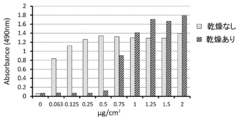
- the coated plate is dried for 1 hour to bind integrin to the binding activity and proliferation of human iPS cells.
- the effect was investigated.
- the binding activity of ⁇ 6 ⁇ 1 integrin to 511E8 coated on the plate was measured according to the method described in Ido et al. (J. Biol. Chem., 282, 11144-11154, 2007).
- the amount of binding after 10 nM ⁇ 6 ⁇ 1 integrin was reacted for 3 hours in the presence of 1 mM MnCl 2 was measured as the absorbance of the chromogenic substrate at 490 nm.
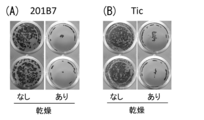
- Adhesion of human embryonic stem cells (ES cells) to 511E8 is inhibited by simultaneous treatment with inhibitory antibodies against ⁇ 6 integrin and ⁇ 1 integrin (Miyazaki et al. Nature Communications, 3: 1236. Doi: 10.1038 / ncomms2231, 2012). Since the ⁇ 6 ⁇ 1 integrin binding activity of 511E8 coated on the plate is reduced by drying, it is expected that the adhesion and proliferation of human iPS cells will be affected. This possibility was verified by culturing human iPS cells on actually dried 511E8 plates.
- 511E8 was coated on a 24-well culture plate at a concentration of 0.5 ⁇ g / cm 2 in the same manner as in Example 1, washed with PBS (pH 7.4), and then air-dried at room temperature for 1 hour. A 511E8 coated plate that was not dried was used as a control. 511E8P1 201B7 cells and MGP1 Tic cells were dispersed in single cells in the same manner as in Example 1, seeded at a density of 1.3 ⁇ 10 3 cells / cm 2 , and cell morphology was stained with alkaline phosphatase on day 7. Was observed.
- FIG. (A) is the result of 201B7 cells
- (B) is the result of Tic cells. Both cell lines could grow on plates that had not been dried 511E8, but could not grow well on plates that had been dried for 1 hour. This was considered to be due to a decrease in ⁇ 6 ⁇ 1 integrin binding activity due to drying shown in FIG.
- Example 3 Concentration dependence of integrin binding activity decrease by drying after coating
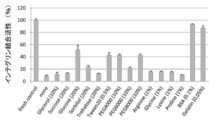
- Example 4 Screening of candidate substance for suppressing activity decrease
- 511E8 was coated simultaneously with various substances, and it was verified whether it was possible to suppress the decrease in the activity of 511E8 under dry conditions.
- Example 5 Activity lowering suppression effect by proteins other than BSA and gelatin
- BSA and gelatin which had a high activity reduction inhibitory effect, are proteins. Therefore, in order to investigate whether any protein has an activity decrease inhibitory effect under dry conditions or only with a specific protein, it is also possible to suppress the decrease in activity of 511E8 under dry conditions for a plurality of proteins. The effect was verified.
- Example 4 The coated plate was washed with PBS (pH 7.4) and dried at room temperature for 1 hour, and binding of 10 nM ⁇ 6 ⁇ 1 integrin was measured.
- 511E8 was coated at a final concentration of 0.5 ⁇ g / cm 2 , and 10 nM ⁇ 6 ⁇ 1 integrin binding amount (absorbance at 490 nm) on an undried plate was taken as 100%, and drying in the presence of each protein was performed. Later integrin binding activity was compared.
- Example 6 Concentration dependence of activity lowering suppression effect by protein component
- the diluted solution concentration of 511E8 coated at 0.5 ⁇ g / cm 2 on the 96-well microplate in Example 4 and Example 5 is equivalent to 2 ⁇ g / mL, and BSA and gelatin used as the activity decrease inhibitor are 511E8 protein amount, respectively. It was added 500 times and 250 times more. Therefore, it was verified whether the integrin binding activity of adsorbed 511E8 was affected by the amount of the activity decrease inhibitor.
- 511E8 and gelatin are diluted with PBS (pH 7.4), respectively, and the final concentration of gelatin is 1 so that 511E8 has a final concentration of 0.25, 0.5, or 1.0 ⁇ g / cm 2.
- the mixture was mixed to 7 to 500 ⁇ g / mL and coated on a 96-well microplate in the same manner as in Example 4. After washing with PBS (pH 7.4), the binding of 10 nM ⁇ 6 ⁇ 1 integrin was measured without drying.
- Example 3 The results are shown in FIG. As shown in Example 3, 511E8 alone at 1.0 ⁇ g / cm 2 was not so inactivated by drying, and no change in binding activity due to addition of gelatin at that concentration was observed. For 511E8 at 0.5 ⁇ g / cm 2 , the concentration dependency of the activity lowering inhibitory effect by gelatin was observed, and the integrin binding activity was inactivated up to gelatin 16.7 ⁇ g / mL, and the concentration was 167 ⁇ g / mL or higher. Then, the binding activity was maintained without drying. When 50 ⁇ g / mL of gelatin was added, a weak activity reduction inhibitory effect was observed.
- the integrin binding activity was attenuated to about 70% even when gelatin was added at 500 ⁇ g / mL, and the concentration dependence was about 40% at 167 ⁇ g / mL.
- the observed strength of the effect was generally weaker than that of 511E8 at 0.5 ⁇ g / cm 2 . That is, it has been clarified that the activity lowering suppression effect by the protein component is concentration-dependent, and the strength of the effect is also related to the concentration of 511E8.
- Example 7 Examination of addition timing of activity decrease inhibitor
- the activity decrease inhibitor was added simultaneously with or before or after the 511E8 coating, and the activity decrease inhibitory effect in the subsequent drying was examined.
- 511E8 was added to a final concentration of 0.5 ⁇ g / cm 2 and coated at 4 ° C. overnight on a 96-well microplate.
- Gelatin with a final concentration of 300 ⁇ g / mL was added as an activity decrease inhibitor under the following three conditions. (1) Add the activity decrease inhibitor diluted with PBS (pH 7.4) to the plate, pre-coat at room temperature for 3 hours and then add 511E8. (2) Preliminarily mix the activity decrease inhibitor and 511E8.
- condition (1) is expressed as Gelatin ⁇ 511E8
- condition (2) is expressed as Gelatin + 511E8
- condition (3) is expressed as 511E8 ⁇ Gelatin.
- Example 8 Persistence of effect of activity decrease inhibitor
- 201B7 cells were dispersed into single cells as in Example 1, seeded at a density of 2.6 ⁇ 10 3 cells / cm 2 , and stained with alkaline phosphatase on day 7. Cell morphology was observed.
- Example 9 BSA concentration-dependent activity decrease inhibitory effect
- various concentrations of BSA up to 3000 ⁇ g / mL were added to 511E8 diluted with PBS (pH 7.4) to a final concentration of 0.5 ⁇ g / cm 2 , and then added to a 96-well microplate at 4 ° C. Was coated overnight, washed with PBS (pH 7.4), and dried overnight at room temperature. After storage at 4 ° C. for 1 week, the binding amount of 10 nM ⁇ 6 ⁇ 1 integrin was measured and used as an index of the inhibitory effect on the decrease in activity of 511E8 due to the concentration of BSA.
- Example 10 Examination of inhibitory effect on activity reduction against 511E8 and full length laminin 511
- the effect was compared using full-length laminin 511.
- Full length laminin 511 was prepared and used according to the method described in Ido et al. (J. Biol. Chem., 279, 10946-10954, 2004). The experiment was performed in the same manner as in Example 4.
- PBS pH7 as the case of the full-length laminin final concentration of 16.0 or 32.0 ⁇ g / cm 2. It was diluted in 4), mixed with BSA or gelatin at a final concentration of 300 ⁇ g / mL, and coated at 4 ° C. overnight. The plate was washed with PBS (pH 7.4) and then dried at room temperature for 24 hours, and binding of 10 nM ⁇ 6 ⁇ 1 integrin was measured.
- the results are shown in FIG.
- the vertical axis shows the relative activity when the concentration of 10 nM ⁇ 6 ⁇ 1 integrin bound (absorbance at 490 nm) measured without drying, with each concentration of 511E8 or full-length laminin 511 alone coated, is 100%.
- the integrin binding activity was significantly decreased in both 511E8 and the full length 511 after 24 hours of drying.
- the effect of the activity decrease inhibitor on the activity decrease due to drying was analyzed by a two-way analysis of variance and the Bonferroni method. In 511E8, when BSA or gelatin was added, significant decrease in activity was observed at a significant level of 0.1% under any condition.
- the effect on the full-length laminin 511 was not recognized under any conditions (significance level 5%). From this result, the effect of the activity lowering inhibitor such as BSA or gelatin is not recognized in the same way when other proteins are coated as a culture substrate, and it depends on the molecular properties such as the shape of the protein and the amino acid sequence. It was suggested that it was very different. That is, it was suggested that the same effect was exhibited against other proteins having similar molecular properties such as having the same shape as 511E8.
- 521E8 is an E8 fragment derived from laminin 521.
- the ⁇ 5 chain E8 fragment and the ⁇ 1 chain E8 fragment are common to 511E8, but the ⁇ chain is composed of a ⁇ 2 chain E8 fragment different from 511E8.
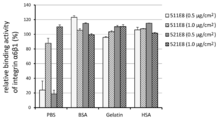
- 511E8 and 521E8 were diluted with PBS (pH 7.4) to a final concentration of 0.5 or 1.0 ⁇ g / cm 2 , and BSA, gelatin or human at a final concentration of 500 ⁇ g / mL.
- PBS pH 7.4
- BSA serum albumin
- HSA serum albumin
- FIG. 1 The results are shown in FIG.
- the vertical axis shows the relative activity when the binding amount (absorbance at 490 nm) of 10 nM ⁇ 6 ⁇ 1 integrin measured without coating and coating each concentration of 511E8 alone is 100%. It has already been reported by Taniguchi et al. (J. Biol. Chem., 284, 7820-7831, 2009) that the binding affinity of 511E8 and 521E8 to ⁇ 6 ⁇ 1 integrin is almost the same.
- the absorbance at 490 nm which indicates the amount of ⁇ 6 ⁇ 1 integrin bound, was 2.62 ⁇ 0.05 (average ⁇ standard) at 511E8 and 521E8 at 0.5 ⁇ g / cm 2 when measured without drying. Deviation) 2.75 ⁇ 0.02 and 1.0 ⁇ g / cm 2 511E8 and 521E8 were 2.96 ⁇ 0.03 and 2.83 ⁇ 0.11, respectively, which were almost the same.
- the integrin-binding activity of 521E8 showed the same inactivation pattern as that of 511E8 when the drying treatment was performed for 1 hour. That is, when coated at 1.0 ⁇ g / cm 2 , almost no inactivation due to drying was observed, whereas when coated at 0.5 ⁇ g / cm 2 , a significant decrease in integrin binding activity was observed. This decrease in binding activity due to drying was almost completely avoided by the simultaneous addition of BSA, gelatin or HSA, as in 511E8. That is, it was shown that the effects of these activity decrease inhibitors are not limited to 511E8, but are also exerted on E8 fragments of other laminin isoforms.
- Example 12 Effect of 211E8 on activity reduction of 511E8
- laminin E8 other than 511E8 also has an effect of suppressing a decrease in activity due to drying.
- an E8 fragment to be added an E8 fragment of laminin 211 (hereinafter referred to as 211E8) having no ⁇ 6 ⁇ 1 integrin-binding activity itself was used.
- 511E8 final concentration 0.4 ⁇ g / cm 2
- PBS pH 7.4
- 211E8 final concentrations adjusted to 0, 0.8, 1.6 ⁇ g / cm 2
- a 96-well microplate was coated overnight at 4 ° C.
- the plate was washed with PBS (pH 7.4), dried at room temperature for 24 hours, and binding of ⁇ 6 ⁇ 1 integrin (10 nM) was measured.
- the inventors have confirmed that 211E8 does not have ⁇ 6 ⁇ 1 integrin binding activity (Taniguchi et al. J. Biol. Chem., 284, 7820-7831, 2009).
- the results are shown in FIG.
- the ⁇ 6 ⁇ 1 integrin binding activity was expressed as a relative value with the amount of binding (absorbance at 490 nm being 1.07) measured as 100% when coated with 0.4 ⁇ g / cm 2 of 511E8 and not dried.
- the integrin-binding activity when the 211E8 0.8 ⁇ g / cm 2 added is recovered to about 30%, integrin-binding activity by about 80% when the 211E8 1.6 ⁇ g / cm 2 added was recovered. From this result, it was shown that other laminin E8 can be used as an activity reduction inhibitor of 511E8.
- other laminin E8 exhibits an effect of suppressing a decrease in activity during drying in a very small amount as compared with the case where a protein such as BSA or gelatin is used as an activity decrease inhibitor.
- Example 13 Inhibitory effect on activity decrease against modified laminin fragment (1)
- two types of 511E8 variants Plus # 3 laminin E8 and Plus # 5 laminin E8 added with heparan sulfate chain binding domain of perlecan were obtained. The effect was compared.
- Plus # 3 laminin E8 is a 511E8 variant in which perlecan domains I to III are added to the N-terminal part of ⁇ 1 chain E8 fragment, and Plus # 5 laminin E8 has perlecan domain I at the C-terminal part of ⁇ 5 chain E8 fragment. Added variant.
- Plus # 3 laminin E8 or Plus # 5 laminin E8 was diluted with PBS (pH 7.4) to a final concentration of 0.56 ⁇ g / cm 2 , and human serum albumin (HSA; final)
- gelatin concentration 500 ⁇ g / mL
- gelatin final concentration 300 ⁇ g / mL or 2000 ⁇ g / mL
- it was coated on a 96-well microplate at 37 ° C. for 1 hour. After removing the coating solution, the coated plate was dried at room temperature for 22 hours, and the binding of 10 nM ⁇ 6 ⁇ 1 integrin was measured.
- FIG. 14 shows the result of Plus # 3 laminin E8, and FIG. 15 shows the result of Plus # 5 laminin E8.
- the vertical axis represents the amount of ⁇ 6 ⁇ 1 integrin binding (absorbance at 490 nm).
- FIGS. 14 and 15 when Plus # 3 laminin E8 and Plus # 5 laminin E8 were individually coated on the plate and then dried, the integrin binding activity was significantly reduced.
- human serum albumin or gelatin was added and dried, the decrease in integrin binding activity was suppressed.
- Plus # 5 laminin E8 retained about 90% of integrin binding activity even after drying due to the addition of human serum albumin or gelatin.
- Example 14 inhibitory effect on activity reduction against modified laminin fragment (2)
- 24-well cell culture plates (Becton Dickinson # 353047) coated with Plus # 5 laminin E8 (final concentration 0.56 ⁇ g / cm 2 ) and Plus # 24-well cell culture plate coated with human laminin E8 (final concentration 0.56 ⁇ g / cm 2 ) and human serum albumin (HSA; final concentration 500 ⁇ g / mL) or gelatin (final concentration 300 ⁇ g / mL or 2000 ⁇ g / mL)
- HSA human serum albumin
- TeSR2 / NutriStem 1 1 mixed medium was used as the medium.
- 201B7 cells were seeded on a 24-well cell culture plate coated with Plus # 5 laminin E8 (final concentration 0.56 ⁇ g / cm 2 ) without any drying step, and cultured in the same manner for one week.
- the growth state of human iPS cells after 1 week of culture was evaluated by alkaline phosphatase staining.
Landscapes
- Health & Medical Sciences (AREA)
- Chemical & Material Sciences (AREA)
- Life Sciences & Earth Sciences (AREA)
- Organic Chemistry (AREA)
- Zoology (AREA)
- Genetics & Genomics (AREA)
- Engineering & Computer Science (AREA)
- Wood Science & Technology (AREA)
- Bioinformatics & Cheminformatics (AREA)
- General Health & Medical Sciences (AREA)
- Biochemistry (AREA)
- Biotechnology (AREA)
- Biomedical Technology (AREA)
- Medicinal Chemistry (AREA)
- Molecular Biology (AREA)
- General Engineering & Computer Science (AREA)
- Microbiology (AREA)
- Proteomics, Peptides & Aminoacids (AREA)
- Toxicology (AREA)
- Gastroenterology & Hepatology (AREA)
- Biophysics (AREA)
- Immunology (AREA)
- Sustainable Development (AREA)
- Clinical Laboratory Science (AREA)
- Cell Biology (AREA)
- Micro-Organisms Or Cultivation Processes Thereof (AREA)
- Peptides Or Proteins (AREA)
- Apparatus Associated With Microorganisms And Enzymes (AREA)
- Medicines That Contain Protein Lipid Enzymes And Other Medicines (AREA)
Abstract
Priority Applications (4)
| Application Number | Priority Date | Filing Date | Title |
|---|---|---|---|
| EP14811174.3A EP3009502B1 (fr) | 2013-06-12 | 2014-05-09 | Matériel de culture cellulaire enduit à l'état sec de fragments de laminines |
| CN201480034043.XA CN105378054B (zh) | 2013-06-12 | 2014-05-09 | 以干燥状态包被有层粘连蛋白片段的细胞培养器具 |
| JP2015522654A JP6101351B2 (ja) | 2013-06-12 | 2014-05-09 | ラミニンフラグメントが乾燥状態でコーティングされている細胞培養器具 |
| US14/897,298 US10287541B2 (en) | 2013-06-12 | 2014-05-09 | Cell culture vessel coated with laminin fragment in dry state |
Applications Claiming Priority (2)
| Application Number | Priority Date | Filing Date | Title |
|---|---|---|---|
| JP2013123554 | 2013-06-12 | ||
| JP2013-123554 | 2013-06-12 |
Publications (1)
| Publication Number | Publication Date |
|---|---|
| WO2014199754A1 true WO2014199754A1 (fr) | 2014-12-18 |
Family
ID=52022056
Family Applications (1)
| Application Number | Title | Priority Date | Filing Date |
|---|---|---|---|
| PCT/JP2014/062449 Ceased WO2014199754A1 (fr) | 2013-06-12 | 2014-05-09 | Matériel de culture cellulaire enduit à l'état sec de fragments de laminines |
Country Status (5)
| Country | Link |
|---|---|
| US (1) | US10287541B2 (fr) |
| EP (1) | EP3009502B1 (fr) |
| JP (1) | JP6101351B2 (fr) |
| CN (1) | CN105378054B (fr) |
| WO (1) | WO2014199754A1 (fr) |
Cited By (11)
| Publication number | Priority date | Publication date | Assignee | Title |
|---|---|---|---|---|
| WO2017078029A1 (fr) * | 2015-11-04 | 2017-05-11 | 国立大学法人 東京医科歯科大学 | Matériel de culture de cellules myosatellites et procédé associé |
| WO2017082220A1 (fr) * | 2015-11-10 | 2017-05-18 | 国立大学法人京都大学 | Procédé de culture cellulaire utilisant un milieu contenant un fragment de laminine |
| WO2018088501A1 (fr) | 2016-11-11 | 2018-05-17 | 国立大学法人大阪大学 | Procédé pour induire la différenciation de cellules souches pluripotentes en cellules somatiques |
| WO2018116904A1 (fr) | 2016-12-22 | 2018-06-28 | Dic株式会社 | Substrat de culture cellulaire |
| WO2018116905A1 (fr) | 2016-12-22 | 2018-06-28 | Dic株式会社 | Matériau d'échafaudage pour culture cellulaire |
| US10428311B2 (en) | 2014-07-16 | 2019-10-01 | Osaka University | Method for enhancing activity of laminin fragments as cell culture matrix |
| EP3578640A4 (fr) * | 2017-01-31 | 2020-06-10 | Osaka University | Procédé de contrôle de différenciation pour cellules souches pluripotentes |
| JP2020521484A (ja) * | 2017-05-30 | 2020-07-27 | ザ クイーンズ ユニバーシティ オブ ベルファスト | 人工多能性幹細胞を生成するための基質および方法 |
| WO2021025027A1 (fr) | 2019-08-06 | 2021-02-11 | 花王株式会社 | Procede de production de cellules progenitrices pluripotentes derivees de la peau |
| JPWO2021200744A1 (fr) * | 2020-03-31 | 2021-10-07 | ||
| WO2021225171A1 (fr) | 2020-05-08 | 2021-11-11 | 国立大学法人大阪大学 | Protéine chimère contenant un fragment de fibrinogène et un fragment de laminine, et son utilisation |
Citations (5)
| Publication number | Priority date | Publication date | Assignee | Title |
|---|---|---|---|---|
| JPH0698757A (ja) * | 1992-09-22 | 1994-04-12 | Sumitomo Bakelite Co Ltd | ラミニンコート細胞培養器具及びその製造方法 |
| JPH08173144A (ja) * | 1994-12-28 | 1996-07-09 | Sumitomo Bakelite Co Ltd | ラミニンコート細胞培養器及びその製造方法 |
| WO2011043405A1 (fr) | 2009-10-08 | 2011-04-14 | 国立大学法人大阪大学 | Substrat de culture pour cellules souches pluripotentes humaines, et son utilisation |
| JP2011079795A (ja) * | 2009-10-09 | 2011-04-21 | Osaka Univ | I型−iv型コラーゲン混成ゲル |
| WO2012137970A1 (fr) | 2011-04-08 | 2012-10-11 | 国立大学法人大阪大学 | Laminine modifiée et utilisation de celle-ci |
Family Cites Families (6)
| Publication number | Priority date | Publication date | Assignee | Title |
|---|---|---|---|---|
| US8241908B2 (en) * | 2006-05-16 | 2012-08-14 | Becton, Dickinson And Company | Extracellular matrix coated surface for culturing cells |
| DE602007012282D1 (de) | 2006-10-12 | 2011-03-10 | Massachusetts Inst Technology | Multi-well-mikromusterung durch ablation |
| JP2013047763A (ja) * | 2011-08-29 | 2013-03-07 | Tohoku Univ | 周期構造反射鏡およびそれを用いた光素子 |
| AU2012311233B2 (en) * | 2011-09-22 | 2017-03-16 | Sergey Rodin | Cell culture substrate comprising a laminin and a cadherin |
| WO2013047763A1 (fr) * | 2011-09-29 | 2013-04-04 | オリエンタル酵母工業株式会社 | Procédé de culture de cellule de mammifère dans système contenant de la laminine 511 |
| WO2013156855A1 (fr) * | 2012-04-20 | 2013-10-24 | Biolamina Ab | Maintien de cellules différenciées avec des laminines |
-
2014
- 2014-05-09 WO PCT/JP2014/062449 patent/WO2014199754A1/fr not_active Ceased
- 2014-05-09 US US14/897,298 patent/US10287541B2/en active Active
- 2014-05-09 EP EP14811174.3A patent/EP3009502B1/fr active Active
- 2014-05-09 JP JP2015522654A patent/JP6101351B2/ja active Active
- 2014-05-09 CN CN201480034043.XA patent/CN105378054B/zh active Active
Patent Citations (6)
| Publication number | Priority date | Publication date | Assignee | Title |
|---|---|---|---|---|
| JPH0698757A (ja) * | 1992-09-22 | 1994-04-12 | Sumitomo Bakelite Co Ltd | ラミニンコート細胞培養器具及びその製造方法 |
| JPH08173144A (ja) * | 1994-12-28 | 1996-07-09 | Sumitomo Bakelite Co Ltd | ラミニンコート細胞培養器及びその製造方法 |
| WO2011043405A1 (fr) | 2009-10-08 | 2011-04-14 | 国立大学法人大阪大学 | Substrat de culture pour cellules souches pluripotentes humaines, et son utilisation |
| JP2011078370A (ja) * | 2009-10-08 | 2011-04-21 | Osaka Univ | ヒト多能性幹細胞用培養基材およびその利用 |
| JP2011079795A (ja) * | 2009-10-09 | 2011-04-21 | Osaka Univ | I型−iv型コラーゲン混成ゲル |
| WO2012137970A1 (fr) | 2011-04-08 | 2012-10-11 | 国立大学法人大阪大学 | Laminine modifiée et utilisation de celle-ci |
Non-Patent Citations (20)
| Title |
|---|
| DOI T; THYBOLL J; KORTESMAA J; JANSSON K; IIVANAINEN A; PARVARDEH M; TIMPL R; HEDIN U; SWEDENBORG; TRYGGVASON K: "Recombinant human laminin-10 (a5(31y1", J BIOL CHEM, vol. 277, 2002, pages 12741 - 12748, XP055022474, DOI: doi:10.1074/jbc.M111228200 |
| EDGAR D.; TIMPL R.; THOENEN H.: "The heparin-binding domain of laminin is responsible for its effects on neurite outgrowth and neuronal survival", EMBO J., vol. 3, 1984, pages 1463 - 1468, XP055222218 |
| GOODMAN SL.; DEUTZMANNR.; VON DER MARK K.: "Two distinct cell-binding domains in laminin can independently promote nonneuronal cell adhesion and spreading", J. CELL BIOL., vol. 105, 1987, pages 589 - 598, XP055304702, DOI: doi:10.1083/jcb.105.1.589 |
| HIROYUKI IDO; AYA NAKAMURA; REIKO KOBAYASHI; SHUNSUKE ITO; SHAOLIANG LI; SUGIKO FUTAKI; KIYOTOSHI SEKIGUCHI: "The requirement of the glutamic acid residue at the third position from the carboxyl termini of the laminin y chains in integrin binding by laminins", JOURNAL OF BIOLOGICAL CHEMISTRY, vol. 282, 2007, pages 11144 - 11154, XP008153460, DOI: doi:10.1074/jbc.M609402200 |
| HIROYUKI IDO; AYA NAKAMURA; REIKO KOBAYASHI; SHUNSUKE ITO; SHAOLIANG LI; SUGIKO FUTAKI; KIYOTOSHI SEKIGUCHI: "The requirement of the glutamic acid residue at the third position from the carboxyl termini of the laminin y chains in integrin binding by laminins", THE JOURNAL OF BIOLOGICAL CHEMISTRY, vol. 282, 2007, pages 11144 - 11154, XP008153460, DOI: doi:10.1074/jbc.M609402200 |
| HIROYUKI IDO; KENJI HARADA; SUGIKO FUTAKI; YOSHITAKA HAYASHI; RYOKO NISHIUCHI; YUKO NATSUKA; SHAOLIANG LI; YOSHINAO WADA; ARIANA C: "Molecular dissection of the a-dystroglycan- and integrin-binding sites within the globular domain of human laminin-10", THE JOURNAL OF BIOLOGICAL CHEMISTRY, vol. 279, 2004, pages 10946 - 10954 |
| IDO ET AL., J. BIOL. CHEM., vol. 279, 2004, pages 10946 - 10954 |
| IDO ET AL., J. BIOL. CHEM., vol. 282, 2007, pages 11144 - 11154 |
| IDO H. ET AL.: "The Requirement of the Glutamic Acid Residue at the Third Position from the Carboxyl Termini of the Laminin y Chains in Integrin Binding by Laminins", THE JOURNAL OF BIOLOGICAL CHEMISTRY, vol. 282, no. 15, 13 April 2007 (2007-04-13), pages 11144 - 11154, XP008153460 * |
| MIYAZAKI ET AL., NATURE COMMUNICATIONS, vol. 3, 2012, pages 1236 |
| MIYAZAKI T. ET AL.: "Laminin E8 fragments support efficient adhesion and expansion of dissociated human pluripotent stem cells", NATURE COMMUNICATIONS, vol. 3, no. 1236, pages 1 - 10, XP055055638 * |
| MIYAZAKI T. ET AL.: "Recombinant human laminin isoforms can support the undifferentiated growth of human embryonic stem cells", BIOCHEMICAL AND BIOPHYSICAL RESEARCH COMMUNICATIONS, vol. 375, 2008, pages 27 - 32, XP024520467 * |
| MIYAZAKI T; FUTAKI S; HASEGAWA K; KAWASAKI M; SANZEN N; HAYASHI M; KAWASE E; SEKIGUCHI K; NAKATSUJI N; SUEMORI H: "Recombinant human laminin isoforms can support the undifferentiated growth of human embryonic stem cells", BIOCHEM. BIOPHYS. RES. COMMUN., vol. 375, 2008, pages 27 - 35 |
| MIYAZAKI T; FUTAKI S; SUEMORI H; TANIGUCHI Y; YAMADA M; KAWASAKI M; HAYASHI M; KUMAGAI H; NAKATSUJI N; SEKIGUCHI K: "Laminin E8 fragments support efficient adhesion and expansion of dissociated human pluripotent stem cells", NAT COMMUN, vol. 3, 2012, pages 1236, XP055055638, DOI: doi:10.1038/ncomms2231 |
| NISHIUCHI R. ET AL.: "Ligand-binding specificities of laminin-binding integrins: A comprehensive survey of laminin-integrin interactions using recombinant alpha3beta1, alpha6beta1, alpha7beta1 and alpha6beta4 integrins", MATRIX BIOLOGY, vol. 25, 2006, pages 189 - 197, XP027933625 * |
| See also references of EP3009502A4 |
| SHAOLIANG LI; CHISEI SHIMONO; NAOKO NORIOKA; ITSUKO NAKANO; TETSUO OKUBO; YOSHIKO YAGI; MARIA HAYASHI; YUYA SATO; HITOMI FUJISAKI;: "Activin A Binds to Perlecan through Its Pro-region That Has Heparin/Heparan Sulfate Binding Activity", JOURNAL OF BIOLOGICAL CHEMISTRY, vol. 285, no. 47, 2010, pages 36645 - 36655, XP055266811, DOI: doi:10.1074/jbc.M110.177865 |
| TANIGUCHI ET AL., J. BIOL. CHEM., vol. 284, 2009, pages 7820 - 7831 |
| TANIGUCHI Y; IDO H; SANZEN N; HAYASHI M; SATO-NISHIUCHI R; FUTAKI S; SEKIGUCHI K: "The C-terminal region of laminin (3 chains modulates the integrin binding affinities of laminins", J BIOL CHEM., vol. 284, 2009, pages 7820 - 7831, XP055022477, DOI: doi:10.1074/jbc.M809332200 |
| YUKIMASA TANIGUCHI; HIROYUKI IDO; NORIKO SANZEN; MARIA HAYASHI; RYOKO SATO-NISHIGUTI; SUGIKO FUTAKI; KIYOTOSHI SEKIGUCHI: "The C-terminal region of laminin (3 chains modulates the integrin binding affinities of laminins", THE JOURNAL OF BIOLOGICAL CHEMISTRY, 2009, pages 7820 - 7831, XP055022477, DOI: doi:10.1074/jbc.M809332200 |
Cited By (30)
| Publication number | Priority date | Publication date | Assignee | Title |
|---|---|---|---|---|
| US10428311B2 (en) | 2014-07-16 | 2019-10-01 | Osaka University | Method for enhancing activity of laminin fragments as cell culture matrix |
| JPWO2017078029A1 (ja) * | 2015-11-04 | 2018-08-30 | 国立大学法人 東京医科歯科大学 | 筋衛星細胞培養用材料および筋衛星細胞の培養方法 |
| WO2017078029A1 (fr) * | 2015-11-04 | 2017-05-11 | 国立大学法人 東京医科歯科大学 | Matériel de culture de cellules myosatellites et procédé associé |
| CN108350417B (zh) * | 2015-11-10 | 2023-04-11 | 国立大学法人京都大学 | 使用含有层粘连蛋白片段的培养基的细胞培养方法 |
| CN108350417A (zh) * | 2015-11-10 | 2018-07-31 | 国立大学法人京都大学 | 使用含有层粘连蛋白片段的培养基的细胞培养方法 |
| US11505785B2 (en) | 2015-11-10 | 2022-11-22 | Kyoto University | Cell culture method using laminin fragment-containing medium |
| JP2017085963A (ja) * | 2015-11-10 | 2017-05-25 | 国立大学法人京都大学 | ラミニンフラグメント含有培地を用いる細胞培養方法 |
| WO2017082220A1 (fr) * | 2015-11-10 | 2017-05-18 | 国立大学法人京都大学 | Procédé de culture cellulaire utilisant un milieu contenant un fragment de laminine |
| US11959103B2 (en) | 2016-11-11 | 2024-04-16 | Osaka University | Method for inducing pluripotent stem cells to differentiate into somatic cells |
| CN109937251B (zh) * | 2016-11-11 | 2023-12-29 | 国立大学法人大阪大学 | 由多能干细胞向体细胞的分化诱导方法 |
| WO2018088501A1 (fr) | 2016-11-11 | 2018-05-17 | 国立大学法人大阪大学 | Procédé pour induire la différenciation de cellules souches pluripotentes en cellules somatiques |
| CN109937251A (zh) * | 2016-11-11 | 2019-06-25 | 国立大学法人大阪大学 | 由多能干细胞向体细胞的分化诱导方法 |
| JP7038361B2 (ja) | 2016-11-11 | 2022-03-18 | 国立大学法人大阪大学 | 多能性幹細胞から体細胞への分化誘導方法 |
| JPWO2018088501A1 (ja) * | 2016-11-11 | 2019-10-03 | 国立大学法人大阪大学 | 多能性幹細胞から体細胞への分化誘導方法 |
| US11441120B2 (en) | 2016-12-22 | 2022-09-13 | Fujifilm Corporation | Cell culture substrate |
| US11499136B2 (en) | 2016-12-22 | 2022-11-15 | Dic Corporation | Cell culture substrate |
| WO2018116904A1 (fr) | 2016-12-22 | 2018-06-28 | Dic株式会社 | Substrat de culture cellulaire |
| WO2018116905A1 (fr) | 2016-12-22 | 2018-06-28 | Dic株式会社 | Matériau d'échafaudage pour culture cellulaire |
| KR20190096968A (ko) | 2016-12-22 | 2019-08-20 | 디아이씨 가부시끼가이샤 | 세포 배양 기재 |
| KR20190096967A (ko) | 2016-12-22 | 2019-08-20 | 디아이씨 가부시끼가이샤 | 세포 배양 기재 |
| EP3578640A4 (fr) * | 2017-01-31 | 2020-06-10 | Osaka University | Procédé de contrôle de différenciation pour cellules souches pluripotentes |
| AU2018215170B2 (en) * | 2017-01-31 | 2021-11-11 | Osaka University | Differentiation control method for pluripotent stem cells |
| US11649433B2 (en) | 2017-01-31 | 2023-05-16 | Osaka University | Method for controlling differentiation of pluripotent stem cells |
| JP2020521484A (ja) * | 2017-05-30 | 2020-07-27 | ザ クイーンズ ユニバーシティ オブ ベルファスト | 人工多能性幹細胞を生成するための基質および方法 |
| JP2023103407A (ja) * | 2017-05-30 | 2023-07-26 | ザ クイーンズ ユニバーシティ オブ ベルファスト | 人工多能性幹細胞を生成するための基質および方法 |
| WO2021025027A1 (fr) | 2019-08-06 | 2021-02-11 | 花王株式会社 | Procede de production de cellules progenitrices pluripotentes derivees de la peau |
| JP2022181218A (ja) * | 2020-03-31 | 2022-12-07 | Cell Exosome Therapeutics株式会社 | 増殖細胞の生産方法、細胞生産物の生産方法、間葉系幹細胞集団およびその生産方法、幹細胞の培養上清およびその生産方法、並びに治療剤 |
| WO2021200744A1 (fr) * | 2020-03-31 | 2021-10-07 | Cell Exosome Therapeutics株式会社 | Procédé de production de cellules prolifératives, procédé de production d'un produit cellulaire, population de cellules souches mésenchymateuses et son procédé de production, surnageant de culture de cellules souches et son procédé de production, et agent thérapeutique |
| JPWO2021200744A1 (fr) * | 2020-03-31 | 2021-10-07 | ||
| WO2021225171A1 (fr) | 2020-05-08 | 2021-11-11 | 国立大学法人大阪大学 | Protéine chimère contenant un fragment de fibrinogène et un fragment de laminine, et son utilisation |
Also Published As
| Publication number | Publication date |
|---|---|
| US10287541B2 (en) | 2019-05-14 |
| JP6101351B2 (ja) | 2017-03-22 |
| EP3009502A1 (fr) | 2016-04-20 |
| EP3009502B1 (fr) | 2020-10-28 |
| CN105378054A (zh) | 2016-03-02 |
| US20160137965A1 (en) | 2016-05-19 |
| CN105378054B (zh) | 2018-09-21 |
| EP3009502A4 (fr) | 2017-01-25 |
| JPWO2014199754A1 (ja) | 2017-02-23 |
Similar Documents
| Publication | Publication Date | Title |
|---|---|---|
| JP6101351B2 (ja) | ラミニンフラグメントが乾燥状態でコーティングされている細胞培養器具 | |
| KR101533842B1 (ko) | 세포 배양을 위한 세포외 매트릭스로 코팅된 표면 | |
| JP6278324B2 (ja) | ラミニンフラグメントの細胞培養基質活性増強方法 | |
| DK2487236T3 (en) | CULTURAL SUBSTANCES FOR HUMAN PLURIPOTENT STEM CELLS AND USE THEREOF | |
| JP5761826B2 (ja) | 改変ラミニンおよびその利用 | |
| US10000554B2 (en) | Modified laminin containing collagen binding molecule and use thereof | |
| CA3004251C (fr) | Procede de culture cellulaire utilisant un milieu contenant un fragment de laminine | |
| EP2845862B1 (fr) | Procédé d'incubation de cellules souches pluripotentes et polypeptide à utiliser à cet effet | |
| JP6559239B2 (ja) | 多能性幹細胞の培養方法、培養容器の製造方法、培養容器、及び細胞培養用の足場材料 | |
| US20240368253A1 (en) | Human vitronectin fragments and uses thereof |
Legal Events
| Date | Code | Title | Description |
|---|---|---|---|
| 121 | Ep: the epo has been informed by wipo that ep was designated in this application |
Ref document number: 14811174 Country of ref document: EP Kind code of ref document: A1 |
|
| ENP | Entry into the national phase |
Ref document number: 2015522654 Country of ref document: JP Kind code of ref document: A |
|
| NENP | Non-entry into the national phase |
Ref country code: DE |
|
| WWE | Wipo information: entry into national phase |
Ref document number: 2014811174 Country of ref document: EP |
|
| WWE | Wipo information: entry into national phase |
Ref document number: 14897298 Country of ref document: US |