WO2014203341A1 - たばこ原料の製造方法 - Google Patents
たばこ原料の製造方法 Download PDFInfo
- Publication number
- WO2014203341A1 WO2014203341A1 PCT/JP2013/066806 JP2013066806W WO2014203341A1 WO 2014203341 A1 WO2014203341 A1 WO 2014203341A1 JP 2013066806 W JP2013066806 W JP 2013066806W WO 2014203341 A1 WO2014203341 A1 WO 2014203341A1
- Authority
- WO
- WIPO (PCT)
- Prior art keywords
- tobacco
- alcohol
- raw material
- added
- treatment
- Prior art date
- Legal status (The legal status is an assumption and is not a legal conclusion. Google has not performed a legal analysis and makes no representation as to the accuracy of the status listed.)
- Ceased
Links
Images


Classifications
-
- A—HUMAN NECESSITIES
- A24—TOBACCO; CIGARS; CIGARETTES; SIMULATED SMOKING DEVICES; SMOKERS' REQUISITES
- A24B—MANUFACTURE OR PREPARATION OF TOBACCO FOR SMOKING OR CHEWING; TOBACCO; SNUFF
- A24B15/00—Chemical features or treatment of tobacco; Tobacco substitutes, e.g. in liquid form
- A24B15/18—Treatment of tobacco products or tobacco substitutes
- A24B15/28—Treatment of tobacco products or tobacco substitutes by chemical substances
- A24B15/30—Treatment of tobacco products or tobacco substitutes by chemical substances by organic substances
-
- A—HUMAN NECESSITIES
- A24—TOBACCO; CIGARS; CIGARETTES; SIMULATED SMOKING DEVICES; SMOKERS' REQUISITES
- A24B—MANUFACTURE OR PREPARATION OF TOBACCO FOR SMOKING OR CHEWING; TOBACCO; SNUFF
- A24B3/00—Preparing tobacco in the factory
- A24B3/12—Steaming, curing, or flavouring tobacco
Definitions
- the present invention relates to a method for producing a tobacco raw material.
- Patent Document 1 describes a method in which ethyl alcohol is added to leaf tobacco before the ripening process of cigarette leaf tobacco.
- ethyl alcohol adsorbed on leaf tobacco due to the chemical action of ethyl alcohol adsorbed on leaf tobacco, oxidation reaction, decomposition, deamination, etc. of protein-based polymer compounds, nitrogen-containing compounds, sugars, etc. in leaf tobacco become active. Ripening proceeds while releasing a large amount of.
- the smoke at the time of smoking of the cigarette using the leaf tobacco obtained through such fermentation contains many organic acids such as formic acid and acetic acid.
- acetaldehyde, acetone, acrolein, acetol and the like that cause odor and irritation during smoking are reduced.
- Patent Document 1 it is described that by adding ethyl alcohol to leaf tobacco, it is possible to increase the content of organic acid contained in smoke during cigarette smoking using the attached leaf tobacco.
- the increased compounds are only related to organic acids.
- ester compounds as components for imparting a flavor to tobacco materials. And the method of increasing the flavor of a tobacco raw material by increasing such a flavor ingredient in a tobacco raw material is provided.
- the present invention has been obtained by a production method including a step of smoked dry tobacco leaves, a step of adding alcohol to smoked dry tobacco leaves, and a step of storing alcohol-added tobacco leaves.
- the present inventors have found that the content of an ester that enhances the flavor is increased, and the present invention has been achieved.
- the present invention is as follows.
- a method for producing a tobacco raw material comprising a step of smoke-treating dried tobacco leaves, a step of adding alcohol to smoked and dried tobacco leaves, and a step of storing tobacco leaves added with alcohol.
- the production method according to [1] further including a step of adding a polyol to the tobacco leaf after the storing step.
- a method for producing a tobacco raw material in which the content of an ester compound that is a flavor component is enhanced is provided.
- the method for producing a tobacco raw material of the present invention includes a step of smoking a dried tobacco leaf, a step of adding alcohol to the smoked dried tobacco leaf, and a step of storing the tobacco leaf to which the alcohol has been added.
- Tobacco leaves subjected to smoke treatment in the production method of the present invention are those that have been dried.
- a known method can be used as the drying treatment.
- the dried tobacco leaf refers to a product that has been dried until the moisture content of the tobacco leaf is generally less than 15% by weight.
- a well-known method can be used without a special limitation.
- the tobacco leaf to be used is not particularly limited and belongs to the genus Nicotiana, and examples thereof include yellow and Burley species of Nicotiana tabacum, and Brasilia species of Nicotiana rustica. These tobacco leaves are cut by a known method to produce tobacco cuts.
- Hot-boil treatment is a treatment to boil tobacco leaves at a product temperature of about 60 to 120 ° C.
- the treatment time can be arbitrarily set based on the required amount of organic acid applied, and is, for example, about 10 minutes to 1 hour.
- the hot candy treatment is a treatment for smoking tobacco leaves at a product temperature of about 30 to 60 ° C.
- the treatment time can be arbitrarily set based on the required amount of organic acid applied, and is, for example, about 10 minutes to 1 day.
- the cold chilling treatment is a treatment for smoking tobacco leaves at a product temperature of about 15 to 30 ° C.
- the treatment time can be arbitrarily set based on the required amount of organic acid applied, and is, for example, about 10 minutes to 4 weeks.
- the kind of wood used for generating smoke is not particularly limited, and examples include white oak, cherry blossom, walnut, apple, beach beech, oak and hickory.
- wood may be burned or heated to generate soot.
- the heating temperature can be 350 ° C. to 650 ° C., preferably 450 ° C. to 500 ° C. Any of the smoking processes can be performed using a known smoking apparatus.
- organic acids such as acetic acid, butanoic acid, isobutanoic acid, valeric acid, isovaleric acid, and 2-methylbutanoic acid are imparted to the tobacco leaves.
- the organic acid can be imparted to the tobacco leaf using any of the above-described smoked treatments.
- the smoke treatment can include an embodiment in which the smoke treatment is performed from the viewpoint of handling of the production apparatus (easiness of cleaning).
- the smoke treatment time at this time is preferably 10 minutes to 1 day, more preferably 1 hour to 3 hours.
- the alcohol added to the tobacco leaf obtained through the smoke treatment is not particularly limited, and ethanol, 1-propanol, 2-propanol, 1-butanol, 2-butanol, 2-methyl-1-propanol, Monohydric alcohols having aromatic substituents such as monovalent aliphatic alcohols such as 2,2-dimethylethanol and cyclohexanol, benzyl alcohol and phenylethyl alcohol, sorbitol, maltitol, xylitol, erythritol, lactitol, sorbitan And sugar alcohols such as xylose, arabinose, mannose and trehalose. These alcohols may be used alone or in combination of two or more.
- the smoked tobacco leaf is provided with an organic acid as described above.
- Alcohol is added to the tobacco leaf and then stored, whereby the organic acid reacts with the alcohol to cause esterification. Thereby, content of the ester compound in the tobacco raw material obtained is strengthened.
- the alcohol added to the tobacco leaf can be added at a ratio of 0.000001 to 0.1 with respect to the weight 1 of the tobacco leaf.
- Alcohol is added using a general method such as spraying so that it is applied as uniformly as possible to the tobacco leaf.
- the perfume added to the tobacco leaf can be added at a ratio of 0.000001 to 0.1 with respect to the weight 1 of the tobacco leaf.
- the step of storing the tobacco leaf to which alcohol has been added is preferably performed under conditions such that the ester compound produced during storage does not volatilize.
- conditions include sealed conditions.
- the sealed condition include a condition formed by using a sealed container.
- the conditions of the grade which a volatile component like a low molecular ester compound does not volatilize can be mentioned.
- the storage period is not particularly limited as long as it is a sufficient period for producing the ester compound, but it is preferably 1 week or longer in order to cause a sufficient reaction. Although the upper limit of the period when storing is not fundamentally limited, about 30 weeks can be given in consideration of the period until shipment of the manufactured tobacco raw material.
- the temperature at the time of storage is preferably a temperature at which the ester compound is sufficiently generated.
- a temperature is preferably a temperature at which an enzyme that promotes an esterification reaction contained in tobacco leaves is activated and a temperature at which a chemical esterification reaction is likely to occur.
- Specific examples of the temperature include a mode in which the temperature is appropriately adjusted in the range of room temperature to 70 ° C., and a mode in which the temperature is appropriately set in the range of 30 to 80 ° C. can also be exemplified.
- the tobacco leaves also contain organic acids originally contained, such as myristic acid, palmitic acid, stearic acid, oleic acid, linoleic acid, linolenic acid and the like. From this, the ester of the organic acid originally contained in these tobacco leaves and the added alcohol is also produced by passing through the steps of adding the alcohol and storing it.
- tobacco leaves also contain methanol, benzyl alcohol, and phenylethyl alcohol as alcohols, and it is considered that these alcohols also contribute to the formation of esters by obtaining the above-described process of the present invention.
- Examples of the organic acid ester enhanced in the tobacco raw material obtained through the production method of the present invention include, for example, ethyl acetate, ethyl valerate, ethyl crotonic acid, ethyl hexanoate, ethyl myristate, ethyl palmitate, ethyl stearate, Mention may be made of ethyl oleate and ethyl succinate.
- the production method of the present invention may include a step of adding a polyol to the tobacco leaf after the storing step.
- a polyol propylene glycol, glycerin, or a mixture thereof can be used.
- the polyol can be added in an amount of 0.1 to 5% by weight based on the tobacco leaf cut. It is preferable to add the polyol by a general method used in the tobacco production process such as spraying so that the polyol is distributed throughout the entire tobacco leaf.
- the polyol has a function of suppressing the esterification reaction between the added alcohol and the organic acid, as shown in the experimental examples described later.
- the present invention is a storing step.
- the composition of the produced ester compound is less likely to change over time. This is considered because the added polyol preferentially forms an organic acid and an ester over alcohol.
- After passing through the step of adding a polyol it is preferable to store it for about one week or more from the viewpoint of sufficiently suppressing the esterification reaction between the added alcohol and the organic acid.
- the storage is preferably performed under sealed conditions.
- additives such as the above-described essential oil and extract fragrance can be added in an arbitrary amount in an arbitrary step.
- the tobacco raw material of the present invention is an oral tobacco product
- snus can be cited as an example.
- the tobacco raw material produced by the above-described production method is obtained by filling a packaging material using a raw material such as a nonwoven fabric by a known method.
- the amount of tobacco material is adjusted and filled, and sealed by means such as heat sealing to obtain snus.
- the packaging material can be used without any particular limitation, but a cellulose-based nonwoven fabric is preferably used.
- the gum is used as the oral tobacco product, it is obtained by mixing the tobacco raw material obtained using the production method of the present invention with a known gum base and a known method.
- a chewing tobacco, a hooked tobacco, and a compressed tobacco can also be obtained using a known method except that the tobacco raw material obtained using the production method of the present invention is used.
- an edible film can also be obtained using a known material or method except that the tobacco raw material obtained using the production method of the present invention is used.
- the cigarette raw material of the present invention may be mixed with a normal cigarette at an arbitrary ratio to produce a cigarette. Moreover, you may arrange
- an arrangement of the filter portion for example, an arrangement in the cavity or an arrangement in which the filter portion is dispersed in the filter fiber can be used.
- the tobacco raw material of the present invention can also be used for warming or non-heating type cigarette substitute products.
- the production method of the present invention makes it possible to supply tobacco raw materials with enhanced flavor components.
- the tobacco raw material produced by the method of the present invention may be used as all of the tobacco raw material in the tobacco product, or may be used as a part of the tobacco raw material in the tobacco product.
- the tobacco raw material obtained by this invention can be used in arbitrary ratios, when used as a part of tobacco raw material in tobacco products.
- the concentration of acetic acid contained in the smoked tobacco leaves was measured by the following procedure. 10 mL of ultrapure water was added to 0.5 g of smoked tobacco, and extraction was performed by shaking for 30 minutes. The extract was subjected to ultrafiltration (molecular weight fraction 3000), and the filtrate was recovered. The filtrate was diluted with ultrapure water so that it was within the range of the calibration curve, and quantitative analysis was performed by capillary electrophoresis (DAD detector). Next, other organic acids were analyzed by SPE-GCMS. 50 mL of ultrapure water was added to 0.5 g of smoked tobacco, and extraction was performed by shaking for 30 minutes.
- the extract was filtered and collected, and then adjusted to pH 2 with hydrochloric acid.
- the extract was passed through a solid phase extraction cartridge (OasisHLB) conditioned with about 20 mL each of diethyl ether, methanol, and 0.01N hydrochloric acid aqueous solution, and then the cartridge was dried with a nitrogen stream.
- the organic acids adsorbed on the cartridge were eluted with diethyl ether and quantified by GCMS analysis.
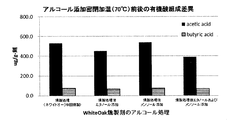
- Comparison data of organic acid analysis values before and after the smoke treatment are shown in FIG. From the result of FIG. 1, it was confirmed that the content of the organic acid contained in the tobacco leaf was increased by applying the smoke treatment to the tobacco leaf. Moreover, it has also confirmed that the quantity of the provided organic acid increased by increasing the frequency
- the organic acid content was measured by the same method as in Experimental Example 1 above. From the result of FIG. 3, it can be inferred that the esterification reaction occurred in the case where alcohol was added and the mixture was heated in a sealed container because the content of the organic acid was reduced.
- the analysis of the ester compound was performed as follows. 0.5 g of tobacco was accurately weighed into an SPME vial (20 mL capacity), sealed with a vial cap, and analyzed by GCMS with SPME automatic introduction device. Further, a sample in which 25 ⁇ L of p-bromophenethyl alcohol in acetonitrile (1 mg / mL) was added to another SPME vial was similarly analyzed, and the ratio of the peak area of the analysis target component to p-bromophenethyl alcohol was determined and obtained. By value, the amount of analysis target component contained in each sample was compared.
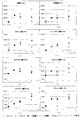
- FIGS. 4 (a) to (h) The results of Experimental Example 3 are shown in FIGS. 4 (a) to (h).
- shaft in FIG. 4 shows the peak area value obtained by analysis of GCMS instead of the density
- the numerical values on the horizontal axis in FIG. 4 indicate the number of weeks that have passed.
- organic acid esters were produced in the case where the tobacco leaves to which alcohol was added were stored for one week.
Landscapes
- Health & Medical Sciences (AREA)
- General Health & Medical Sciences (AREA)
- Toxicology (AREA)
- Chemical & Material Sciences (AREA)
- Chemical Kinetics & Catalysis (AREA)
- General Chemical & Material Sciences (AREA)
- Manufacture Of Tobacco Products (AREA)
Abstract
Description
この技術によれば、葉たばこに吸着されたエチルアルコールの化学作用により、葉たばこ中のタンパク質系高分子化合物、含窒素化合物、糖類等の酸化反応、分解、脱アミノ化等が活発になり、炭酸ガスを多量に放出しながら熟成が進行する。そしてこのような発酵を経て得られた葉たばこを用いたシガレットの喫煙時の煙には、ギ酸、酢酸のような有機酸が多く含まれることが記載されている。また、喫煙時の異臭、刺激の原因になるアセトアルデヒド、アセトン、アクロレイン、アセトール等が低減したことが記載されている。
これに対し、本発明では、たばこ原料に香喫味を付与する成分として、エステル化合物に着目した。そして、そのような香喫味成分をたばこ原料において増加させることで、たばこ原料の香喫味を増強させる方法を提供する。
[1] 乾燥たばこ葉を燻製処理する工程と、燻製処理された乾燥たばこ葉にアルコールを添加する工程と、アルコール添加されたたばこ葉を蔵置する工程を含む、たばこ原料の製造方法。
[2] 前記蔵置する工程の後に、たばこ葉にポリオールを添加する工程をさらに含む、[1]に記載の製造方法。
[3] 前記蔵置する工程が、室温~70℃で行われ、その期間が1週間以上である、[1]または[2]に記載の製造方法。
[4] 前記蔵置する工程が密閉条件下で行われる、[1]~[3]のいずれかに記載の製造方法。
[5] 前記燻製処理が冷燻法によるものである、[1]~[4]のいずれかに記載の製造方法。
[6] [1]~[5]のいずれかの製造方法により製造されたたばこ原料を含むたばこ製品。
本発明の製造方法において燻製処理を施されるたばこ葉は、乾燥処理されたものである。乾燥処理としては公知の方法を挙げることができる。本発明でいう乾燥処理されたたばこ葉とは、たばこ葉の含水率が概ね15重量%未満になるまで乾燥させたものをいう。
乾燥処理については特段の限定なく公知の方法を用いることができる。
用いるたばこ葉は特に制限されず、ニコチアナ属であり、ニコチアナタバカムの黄色種・バーレー種、ニコチアナルスチカのブラジリア種などを挙げることができる。
これらのたばこ葉を公知の方法により裁断し、たばこ刻を作製する。
たばこ葉を燻製処理する方法としては、公知の方法を挙げることができ、例えば熱燻処理や温燻処理、冷燻処理を挙げることができる。
熱燻処理は、品温60~120℃程度でたばこ葉を燻す処理である。処理時間は必要とする有機酸の付与量に基づいて任意に設定できるが、例えば10分~1時間程度である。
温燻処理は、品温30~60℃程度でたばこ葉を燻す処理である。処理時間は必要とする有機酸の付与量に基づいて任意に設定できるが、例えば10分~1日程度である。
冷燻処理は、品温15~30℃程度でたばこ葉を燻す処理である。処理時間は必要とする有機酸の付与量に基づいて任意に設定できるが、例えば10分~4週間程度である。
燻煙を発生させるために用いる木材の種類は特に制限されないが、例えば、ホワイトオーク、サクラ、クルミ、リンゴ、ビーチブナ、オーク、ヒッコリーを挙げることができる。また、燻煙を発生させるために木材を燃焼させてもよいし加熱してもよい。加熱温度は350℃~650℃とすることができ、好ましくは450℃~500℃である。
いずれの燻製処理も、公知の燻製器等を用いて行うことができる。
燻製処理をたばこ葉に施すことで、たばこ葉に酢酸、ブタン酸、イソブタン酸、吉草酸、イソ吉草酸、2-メチルブタン酸等の有機酸が付与される。
上記の燻製処理のいずれを用いてもたばこ葉に有機酸を付与することができる。燻製処理は、製造装置の取り扱い(洗浄の容易性)の観点では冷燻処理で行う態様を挙げることができる。この際の燻製処理時間は好ましくは10分~1日であり、より好ましくは1時間~3時間である。
燻製処理を経て得られたたばこ葉に添加されるアルコールは、特に制限されるものではなく、エタノール、1-プロパノール、2-プロパノール、1-ブタノール、2-ブタノール、2-メチル-1-プロパノール、2,2-ジメチルエタノール、シクロヘキサノールのような一価の脂肪族アルコール、ベンジルアルコール、フェニルエチルアルコールなどの芳香族置換基を有する一価アルコールや、ソルビトール、マルチトール、キシリトール、エリスリトール、ラクチトール、ソルビタン、キシロース、アラビノース、マンノース、トレハロースのような糖アルコールを挙げることができる。
これらのアルコールは単独で用いても、二種以上を組み合わせて用いてもよい。
燻製処理されたたばこ葉には上記のように有機酸が付与されており、たばこ葉にアルコールが添加され、その後にこれを蔵置させることで、有機酸とアルコールが反応してエステル化が起こる。これにより、得られるたばこ原料におけるエステル化合物の含有量が増強される。
たばこ葉に添加されるアルコールは、たばこ葉の重量1に対して、0.000001~0.1の割合で添加することができる。
アルコールの添加は、たばこ葉の刻に対してできだけ均一に塗布されるように、噴霧のような一般的な方法を用いて行う。
また、アルコールを添加する工程において、上記のアルコールだけでなく、その他の香料も添加してもよい。そのような香料としては、メンソール、ラム、ペパーミントオイル、スペアミントオイル、ハッカオイル、ローズマリーオイル、リコリスエキス、セントジョンズエキス、ココアなどの精油またはエキス香料から選択される1以上を挙げることができる。
たばこ葉に添加される香料は、たばこ葉の重量1に対して0.000001~0.1の割合で添加することができる。
アルコール添加されたたばこ葉を蔵置する工程としては、蔵置の最中に生成したエステル化合物が揮散しないような条件下で行われることが好ましい。そのような条件として、密閉された条件を挙げることができる。
密閉された条件としては、密閉容器を用いることで形成される条件を挙げることができる。また、密閉された条件としては、低分子のエステル化合物のような揮発性成分が揮散しない程度の条件を挙げることができる。
蔵置する期間としては、エステル化合物が生成するために十分な期間であれば特に制限はないが、1週間以上であることが、十分な反応を起こさせるために好ましい。
蔵置させる際の期間の上限は基本的に制限されるものではないが、作製されるたばこ原料の出荷までの期間を考慮して、30週間程度を挙げることができる。
蔵置させる際の温度としては、エステル化合物の生成が十分に起こる温度であることが好ましい。
そのような温度としては、たばこ葉に含まれるエステル化反応を促進する酵素が活性化する温度であるとともに、化学的なエステル化反応が生じやすくなる温度であることが好ましい。
具体的な温度としては、室温~70℃の範囲で適宜調整する態様が挙げられ、30~80℃の範囲で適宜設定する態様も挙げることができる。
また、たばこ葉は、アルコールとしてメタノール、ベンジルアルコール、フェニルエチルアルコールも含んでおり、上記の本発明の工程を得ることで、これらのアルコールもエステルの生成に寄与すると考えられる。
本発明の製造方法を経て得られるたばこ原料において増強される有機酸エステルとしては、例えば、酢酸エチル、吉草酸エチル、クロトン酸エチル、ヘキサン酸エチル、ミリスチン酸エチル、パルミチン酸エチル、ステアリン酸エチル、オレイン酸エチル、コハク酸エチルを挙げることができる。
ポリオールの添加は、噴霧等、たばこ製造工程で使用されている一般的な方法により、たばこ葉の刻全体にポリオールが行き渡るように行うことが好ましい。
ポリオールは、後述の実験例に示されるとおり、添加したアルコールと有機酸とのエステル化反応を抑制する機能を有する。このため、蔵置する工程の後にポリオールを添加することにより、添加したアルコールが更なる反応を起こすことにより生成するエステル化合物の生成を抑制することができ、これにより、本発明は、蔵置する工程で生成されたエステル化合物の組成が経時的に変化しにくくなる。
これは、添加したポリオールがアルコールよりも優先的に有機酸とエステルを形成するためであると考えられる。
ポリオールを添加する工程を経た後は、添加したアルコールと有機酸とのエステル化反応を十分に抑制する観点から、約1週間以上は蔵置しておくことが好ましい。また、その蔵置は密封条件下で行うことが好ましい。
本発明のたばこ原料を例えばオーラルたばこ製品とする場合、スヌースを例として挙げることができる。この場合は、上述した製造方法で作製したたばこ原料を例えば不織布のような原料を用いた包装材に公知の方法を用いて充填することで得られる。例えばたばこ原料の量を調整して充填し、ヒートシールなどの手段によりシールしてスヌースを得る。
包装材としては特段の限定なく用いることができるが、セルロース系の不織布などが好ましく用いられる。
オーラルたばこ製品として、例えばガムとする場合は、本発明の製造方法を用いて得られる上記たばこ原料を公知のガムベースと公知の方法を用いて混合することで得られる。かみたばこやかぎたばこ、圧縮たばこについても、本発明の製造方法を用いて得られる上記たばこ原料を用いること以外は、公知の方法を用いて得ることができる。また、可食フィルムについても本発明の製造方法を用いて得られる上記たばこ原料を用いること以外は、公知の材料や方法を用いて得ることができる。
本発明のたばこ原料は、加温あるいは非加熱タイプのシガレット代替製品に用いることもできる。
たばこ葉の燻製処理による短鎖脂肪酸の付与
(燻製処理詳細)
ホワイトオークのウッドチップ20gをアルミホイル上で秤量し、燻製器の底部に敷いた。
たばこ刻20gを燻製器内の網上に載せた。燻製器の蓋を閉め、ヒーターをON(600W)にした。煙が出始めてから5分間そのまま600Wで加熱を持続し、ヒーター電源をOFFにした。煙が出始めるまでの時間はおよそ6~7分であった。燻製器の蓋を閉じた状態で30分放置した(冷却)。
処理したたばこ刻をさらに燻製処理する場合、上記の操作を繰り返した。
上記の処理では品温が100℃程度であり、ウッドチップの温度は600℃程度であった。
燻製処理を行ったたばこ葉に含まれる酢酸の濃度は以下の手順により測定した。
燻製処理されたたばこ刻0.5gに超純水10mLを加え、30分振とうして抽出を行った。
抽出液について限外濾過(分子量分画3000)し、ろ液を回収した。検量線の範囲に収まるように超純水でろ液を希釈してキャピラリー電気泳動(DAD検出器)による定量分析を実施した。
次に、その他の有機酸類の分析はSPE-GCMSにより行った。
燻製処理されたたばこ刻0.5gに超純水50mLを加え、30分振とうして抽出を行った。
抽出液をろ過・回収後、塩酸を加えpH2に調整した。
ジエチルエーテル・メタノール・0.01N塩酸水溶液各約20mLでコンディショニングした固相抽出カートリッジ(OasisHLB)に抽出液を通過させた後、カートリッジを窒素気流により乾燥させた。カートリッジに吸着された有機酸類をジエチルエーテルで溶出し、GCMS分析により定量した。
燻製処理前後の有機酸分析値の比較データを図1に示す。
図1の結果から、たばこ葉に燻製処理を施すことで、たばこ葉に含まれる有機酸の含有量が増加したことが確認できた。また、燻製処理の回数を増やすことで、付与された有機酸の量が増加することも確認できた。
各素材に対して行った手順は上記のホワイトオークと同様の手順に従った。
結果を図2に示す。
図2の結果から、燻製処理に用いる木材の種類を変えてもたばこ葉中の有機酸の含有量が増加することが分かった。
エステル化処理に伴う有機酸組成の変化
<エステル化処理操作>
ホワイトオークにて8回の燻製処理を行ったたばこ葉の刻10g及び各種アルコール素材(エタノール0.5g・メンソール0.5g・エタノール0.5g+メンソール0.5g)を50mL容量のスクリュー管に入れて密封した。これを所定温度(70℃)・所定期間(1週間)密閉容器中で加温しながら蔵置した。
上記のエステル化処理について、燻製処理(ホワイトオーク8回燻製)のみ、燻製処理後エタノール添加、燻製処理後メンソール添加、燻製処理後エタノールおよびメンソール添加について、それぞれ有機酸組成を調べた。結果を図3に示す。
有機酸の含有量の測定は、上記の実験例1と同様の方法により行った。
図3の結果から、アルコール添加して密封容器で加温したものについては、有機酸の含有量が減少しており、エステル化反応が起こっていたと推察できる。
エステル化処理に伴う各種エステル類生成
<燻製刻のエチルエステル化とポリオール添加によるクエンチング>
エステル化およびクエンチング条件
エタノール(燻製処理後のたばこ葉刻の重量に対して5%)を添加し、40℃、1週間スクリュー管に入れて密封し、1週間蔵置した時点でプロピレングリコールを所定濃度(たばこ葉に対して1重量%、2重量%、5重量%)で添加した。
0週間経過時(未処理)と、エタノールを添加して一週間経過時(プロピレングリコール添加前)と、その後(プロピレングリコール添加後)一週間経過するたびに以下で示す操作により各有機酸エステルの分析を行った。
たばこ刻み0.5gをSPMEバイアル(20mL容量)に精確にはかりとり、バイアルキャップを取り付け密封し、SPME自動導入装置付きGCMSにより分析した。
また、別のSPMEバイアルにp-ブロモフェネチルアルコールのアセトニトリル溶液(1mg/mL)25μLを加えたサンプルを同様に分析し、分析対象成分とp-ブロモフェネチルアルコールのピーク面積の比を求め、求めた値で、各刻サンプル中に含まれる分析対象成分の量を比較した。
<分析条件>
装置: アジレント社製ガスクロマトグラフ分析装置(6890A)
アジレント社製質量検出器(5973N)
注入量: 1μL(パルスドスプリットレスモードで注入)
カラム: INNOWAX
オーブン: 40℃→250℃(3℃/min)
質量検出器: TICモード(質量数29~550)
<分析対象成分>
エステル化合物:酢酸エチル、吉草酸エチル、ヘキサン酸エチル、クロトン酸エチル、ヘキサン酸エチル、ミリスチン酸エチル、パルミチン酸エチル、ステアリン酸エチル、オレイン酸エチル
図4から分かるように、アルコール添加を行ったたばこ葉を1週間蔵置したものでは、有機酸エステルが生成した。また、その後プロピレングリコールを添加したものでは、添加していないものに比べて時間が経過すると有機酸エステルの生成が抑制されていることが分かった。
Claims (6)
- 乾燥たばこ葉を燻製処理する工程と、燻製処理された乾燥たばこ葉にアルコールを添加する工程と、アルコール添加されたたばこ葉を蔵置する工程を含む、たばこ原料の製造方法。
- 前記蔵置する工程の後に、たばこ葉にポリオールを添加する工程をさらに含む、請求項1に記載の製造方法。
- 前記蔵置する工程が、室温~70℃で行われ、その期間が1週間以上である、請求項1または2に記載の製造方法。
- 前記蔵置する工程が密閉条件下で行われる、請求項1~3のいずれか一項に記載の製造方法。
- 前記燻製処理が冷燻法によるものである、請求項1~4のいずれか一項に記載の製造方法。
- 請求項1~5のいずれか一項の製造方法により製造されたたばこ原料を含むたばこ製品。
Priority Applications (6)
| Application Number | Priority Date | Filing Date | Title |
|---|---|---|---|
| PCT/JP2013/066806 WO2014203341A1 (ja) | 2013-06-19 | 2013-06-19 | たばこ原料の製造方法 |
| UAA201600373A UA116250C2 (uk) | 2013-06-19 | 2013-06-19 | Спосіб одержання вихідного тютюнового матеріалу |
| RU2016100236A RU2633205C2 (ru) | 2013-06-19 | 2013-06-19 | Способ получения исходного табачного материала |
| CN201380077609.2A CN105307515B (zh) | 2013-06-19 | 2013-06-19 | 烟草原料的制造方法 |
| JP2015522410A JP6129964B2 (ja) | 2013-06-19 | 2013-06-19 | たばこ原料の製造方法 |
| EP13887397.1A EP2965637B1 (en) | 2013-06-19 | 2013-06-19 | Process for producing raw tobacco material |
Applications Claiming Priority (1)
| Application Number | Priority Date | Filing Date | Title |
|---|---|---|---|
| PCT/JP2013/066806 WO2014203341A1 (ja) | 2013-06-19 | 2013-06-19 | たばこ原料の製造方法 |
Publications (1)
| Publication Number | Publication Date |
|---|---|
| WO2014203341A1 true WO2014203341A1 (ja) | 2014-12-24 |
Family
ID=52104107
Family Applications (1)
| Application Number | Title | Priority Date | Filing Date |
|---|---|---|---|
| PCT/JP2013/066806 Ceased WO2014203341A1 (ja) | 2013-06-19 | 2013-06-19 | たばこ原料の製造方法 |
Country Status (6)
| Country | Link |
|---|---|
| EP (1) | EP2965637B1 (ja) |
| JP (1) | JP6129964B2 (ja) |
| CN (1) | CN105307515B (ja) |
| RU (1) | RU2633205C2 (ja) |
| UA (1) | UA116250C2 (ja) |
| WO (1) | WO2014203341A1 (ja) |
Cited By (3)
| Publication number | Priority date | Publication date | Assignee | Title |
|---|---|---|---|---|
| WO2018139068A1 (ja) | 2017-01-30 | 2018-08-02 | 日本たばこ産業株式会社 | たばこ原料の製造方法及びたばこ原料 |
| JP2021104049A (ja) * | 2015-06-30 | 2021-07-26 | アール・ジエイ・レイノルズ・タバコ・カンパニー | 喫煙用物品のエアゾール発生システム用の熱発生セグメント |
| JP2023164948A (ja) * | 2018-04-10 | 2023-11-14 | ブリティッシュ アメリカン タバコ (インヴェストメンツ) リミテッド | 喫煙品 |
Families Citing this family (6)
| Publication number | Priority date | Publication date | Assignee | Title |
|---|---|---|---|---|
| EP3711494A4 (en) * | 2017-11-16 | 2021-07-07 | Japan Tobacco Inc. | METHOD OF MANUFACTURING A TOBACCO CHARGE CONTAINING A PERFUME, TOBACCO CHARGE CONTAINING A PERFUME AND HEATING-TYPE FLAVOR INHALER |
| CN111329098B (zh) * | 2020-03-19 | 2022-01-28 | 云南中烟工业有限责任公司 | 一种熏蒸调香方法及其在烟草中的用途 |
| CN113951551A (zh) * | 2020-07-20 | 2022-01-21 | 黄锐 | 一种调制旱烟的防霉增香水浸发酵方法 |
| GB202014921D0 (en) * | 2020-09-22 | 2020-11-04 | Nicoventures Trading Ltd | Tobacco compositions and preparation thereof |
| KR102571394B1 (ko) * | 2020-10-14 | 2023-08-25 | 주식회사 케이티앤지 | 흡연재료의 가향숙성방법 및 이를 이용하여 제조된 흡연물품 |
| CN119999946B (zh) * | 2023-11-14 | 2025-11-18 | 广东中烟工业有限责任公司 | 一种采用植物香料对烟叶增香的方法及其应用 |
Citations (5)
| Publication number | Priority date | Publication date | Assignee | Title |
|---|---|---|---|---|
| JPS5651976A (en) | 1979-10-01 | 1981-05-09 | Japan Tobacco & Salt Public | Improvement of smoking flavor of tobacco |
| JPS5933345B2 (ja) * | 1981-06-02 | 1984-08-15 | ア−ル・ジエイ・レノルズ・タバコ・カンパニ− | タバコ処理法 |
| JPH0659201B2 (ja) * | 1989-09-18 | 1994-08-10 | ブリティッシュ―アメリカン・タバコ・カンパニー・リミテッド | 煙草葉の処理方法 |
| JP2003000219A (ja) * | 2001-06-20 | 2003-01-07 | Japan Tobacco Inc | 刻タバコの製造システムおよびその製造方法 |
| WO2013098920A1 (ja) * | 2011-12-26 | 2013-07-04 | 日本たばこ産業株式会社 | 増強されたエステル香気成分及び香喫味に寄与する成分を含むたばこ材料の製造方法および該方法により製造されたたばこ材料を含むたばこ製品 |
Family Cites Families (20)
| Publication number | Priority date | Publication date | Assignee | Title |
|---|---|---|---|---|
| US4528993A (en) * | 1982-08-20 | 1985-07-16 | R. J. Reynolds Tobacco Company | Process for producing moist snuff |
| US4660577A (en) * | 1982-08-20 | 1987-04-28 | R.J. Reynolds Tobacco Company | Dry pre-mix for moist snuff |
| US4848373A (en) * | 1987-04-13 | 1989-07-18 | Helme Tobacco Company | Nicotine removal process and product produced thereby |
| CN1031312C (zh) * | 1992-12-19 | 1996-03-20 | 祖泽民 | 烟草醇化液及其加工方法 |
| CN1109302A (zh) * | 1994-03-30 | 1995-10-04 | 黑龙江省科学技术情报研究所 | 刺五加绞股蓝保健吸品及其制造方法 |
| US20040118422A1 (en) * | 2002-12-19 | 2004-06-24 | Swedish Match North Europe Ab | Tobacco dough and a method for its manufacture |
| WO2005112670A1 (en) * | 2004-05-24 | 2005-12-01 | Mip Technologies Ab | Molecularly imprinted polymers selective for nitrosamines and methods of using the same |
| US20060185686A1 (en) * | 2004-08-23 | 2006-08-24 | Lawrence Robert H Jr | Nicotiana diversity |
| US7757697B2 (en) * | 2005-12-22 | 2010-07-20 | Swisher International, Inc. | Method for reducing nitrosamines in tobacco |
| EP2173200B1 (en) * | 2007-07-23 | 2017-11-15 | R.J.Reynolds Tobacco Company | Smokeless tobacco compositions and methods for treating tobacco for use therein |
| CN101254025B (zh) * | 2008-03-13 | 2010-04-14 | 中国烟草总公司郑州烟草研究院 | 袋装口含烟草制品及其制备方法 |
| CN101292776B (zh) * | 2008-06-23 | 2010-06-02 | 中国烟草总公司郑州烟草研究院 | 一种口含型烟草制品 |
| CN101773293B (zh) * | 2009-01-09 | 2012-05-30 | 安徽中烟工业公司 | 一种毛烟的处理方法 |
| CN101773292A (zh) * | 2009-01-09 | 2010-07-14 | 安徽中烟工业公司 | 一种雪茄原料烟叶的处理方法 |
| CN101779829B (zh) * | 2009-01-20 | 2012-09-05 | 段煌 | 一种废弃烟丝再利用的方法 |
| CN102100400B (zh) * | 2009-12-18 | 2012-11-28 | 深圳波顿香料有限公司 | 一种烟草的处理方法 |
| CN101856144B (zh) * | 2010-06-10 | 2012-07-04 | 红云红河烟草(集团)有限责任公司 | 一种改善卷烟烟丝品质的方法 |
| US11206863B2 (en) * | 2010-12-07 | 2021-12-28 | Steven R. Freeman | Vegetable based tobacco alternatives and articles comprising same |
| CN102247005B (zh) * | 2011-07-24 | 2013-04-03 | 红云红河烟草(集团)有限责任公司 | 一种烟草加料方法 |
| CN102845829B (zh) * | 2012-10-19 | 2014-03-19 | 红塔烟草(集团)有限责任公司 | 一种提高低等级烟叶品质的复合添加剂和应用方法 |
-
2013
- 2013-06-19 UA UAA201600373A patent/UA116250C2/uk unknown
- 2013-06-19 JP JP2015522410A patent/JP6129964B2/ja not_active Expired - Fee Related
- 2013-06-19 CN CN201380077609.2A patent/CN105307515B/zh not_active Expired - Fee Related
- 2013-06-19 WO PCT/JP2013/066806 patent/WO2014203341A1/ja not_active Ceased
- 2013-06-19 EP EP13887397.1A patent/EP2965637B1/en active Active
- 2013-06-19 RU RU2016100236A patent/RU2633205C2/ru active
Patent Citations (6)
| Publication number | Priority date | Publication date | Assignee | Title |
|---|---|---|---|---|
| JPS5651976A (en) | 1979-10-01 | 1981-05-09 | Japan Tobacco & Salt Public | Improvement of smoking flavor of tobacco |
| JPS5722545B2 (ja) * | 1979-10-01 | 1982-05-13 | ||
| JPS5933345B2 (ja) * | 1981-06-02 | 1984-08-15 | ア−ル・ジエイ・レノルズ・タバコ・カンパニ− | タバコ処理法 |
| JPH0659201B2 (ja) * | 1989-09-18 | 1994-08-10 | ブリティッシュ―アメリカン・タバコ・カンパニー・リミテッド | 煙草葉の処理方法 |
| JP2003000219A (ja) * | 2001-06-20 | 2003-01-07 | Japan Tobacco Inc | 刻タバコの製造システムおよびその製造方法 |
| WO2013098920A1 (ja) * | 2011-12-26 | 2013-07-04 | 日本たばこ産業株式会社 | 増強されたエステル香気成分及び香喫味に寄与する成分を含むたばこ材料の製造方法および該方法により製造されたたばこ材料を含むたばこ製品 |
Cited By (7)
| Publication number | Priority date | Publication date | Assignee | Title |
|---|---|---|---|---|
| JP2021104049A (ja) * | 2015-06-30 | 2021-07-26 | アール・ジエイ・レイノルズ・タバコ・カンパニー | 喫煙用物品のエアゾール発生システム用の熱発生セグメント |
| JP2023078326A (ja) * | 2015-06-30 | 2023-06-06 | アール・ジエイ・レイノルズ・タバコ・カンパニー | 喫煙用物品のエアゾール発生システム用の熱発生セグメント |
| JP7470658B2 (ja) | 2015-06-30 | 2024-04-18 | アール・ジエイ・レイノルズ・タバコ・カンパニー | 喫煙用物品のエアゾール発生システム用の熱発生セグメント |
| JP7702984B2 (ja) | 2015-06-30 | 2025-07-04 | アール・ジエイ・レイノルズ・タバコ・カンパニー | 喫煙用物品のエアゾール発生システム用の熱発生セグメント |
| WO2018139068A1 (ja) | 2017-01-30 | 2018-08-02 | 日本たばこ産業株式会社 | たばこ原料の製造方法及びたばこ原料 |
| JPWO2018139068A1 (ja) * | 2017-01-30 | 2019-11-07 | 日本たばこ産業株式会社 | たばこ原料の製造方法及びたばこ原料 |
| JP2023164948A (ja) * | 2018-04-10 | 2023-11-14 | ブリティッシュ アメリカン タバコ (インヴェストメンツ) リミテッド | 喫煙品 |
Also Published As
| Publication number | Publication date |
|---|---|
| CN105307515B (zh) | 2019-07-05 |
| JPWO2014203341A1 (ja) | 2017-02-23 |
| RU2633205C2 (ru) | 2017-10-11 |
| JP6129964B2 (ja) | 2017-05-17 |
| UA116250C2 (uk) | 2018-02-26 |
| RU2016100236A (ru) | 2017-07-20 |
| EP2965637A4 (en) | 2016-12-07 |
| CN105307515A (zh) | 2016-02-03 |
| EP2965637A1 (en) | 2016-01-13 |
| EP2965637B1 (en) | 2019-04-24 |
Similar Documents
| Publication | Publication Date | Title |
|---|---|---|
| JP6129964B2 (ja) | たばこ原料の製造方法 | |
| EP3297460B1 (en) | Aerosol generating material and devices including the same | |
| JP6832960B2 (ja) | たばこ原料の製造方法及びたばこ原料 | |
| EP3979841B1 (en) | Nicotine composition, method for making and aerosol generating articles comprising such | |
| CN105899091B (zh) | 烟草材料及其处理方法 | |
| RU2578115C2 (ru) | Способ получения материала табака, содержащего обогащенный сложноэфирный ароматизирующий компонент и обогащенный компонент, вносящий свой вклад в аромат и вкус табака, и табачное изделие, содержащее материал табака, полученный по данному способу | |
| CA3030815C (en) | Tobacco filler for non-combustion type heat smoking article | |
| CN105848502A (zh) | 烟草处理 | |
| ES2954965T3 (es) | Extracto de tabaco líquido, método para fabricarlo y artículos generadores de aerosol que lo comprenden | |
| JP6025950B2 (ja) | 増強されたエステル香気成分及び香喫味に寄与する成分を含むたばこ材料の製造方法および該方法により製造されたたばこ材料を含むたばこ製品 | |
| WO2022064183A1 (en) | Tobacco compositions and preparation thereof | |
| TW201500013A (zh) | 煙草原料的製造方法 | |
| WO2025181881A1 (ja) | たばこ組成物、非燃焼加熱型喫煙物品、及びたばこ組成物の保存方法 | |
| HK40067910B (en) | Liquid tobacco extract, method for making and aerosol-generating articles comprising such | |
| HK40067910A (en) | Liquid tobacco extract, method for making and aerosol-generating articles comprising such | |
| TW201328612A (zh) | 含有增加之酯香氣成分及含提供香口嚼味成分之香菸材料之製造方法,及含有由該製造方法所製造之香菸材料之香菸製品 | |
| JPWO2013098920A1 (ja) | 増強されたエステル香気成分及び香喫味に寄与する成分を含むたばこ材料の製造方法および該方法により製造されたたばこ材料を含むたばこ製品 | |
| TW201924544A (zh) | 擔持有香料之煙草填充材的製造方法、擔持有香料之煙草填充材及加熱型香味吸嚐器 | |
| HK40004316A (en) | Tobacco filler for non-combustion type heat smoking article |
Legal Events
| Date | Code | Title | Description |
|---|---|---|---|
| WWE | Wipo information: entry into national phase |
Ref document number: 201380077609.2 Country of ref document: CN |
|
| 121 | Ep: the epo has been informed by wipo that ep was designated in this application |
Ref document number: 13887397 Country of ref document: EP Kind code of ref document: A1 |
|
| WWE | Wipo information: entry into national phase |
Ref document number: 2013887397 Country of ref document: EP |
|
| ENP | Entry into the national phase |
Ref document number: 2015522410 Country of ref document: JP Kind code of ref document: A |
|
| NENP | Non-entry into the national phase |
Ref country code: DE |
|
| WWE | Wipo information: entry into national phase |
Ref document number: A201600373 Country of ref document: UA |
|
| ENP | Entry into the national phase |
Ref document number: 2016100236 Country of ref document: RU Kind code of ref document: A |