WO2015015643A1 - Système de recommandation de fonctionnement économisant l'énergie - Google Patents
Système de recommandation de fonctionnement économisant l'énergie Download PDFInfo
- Publication number
- WO2015015643A1 WO2015015643A1 PCT/JP2013/071030 JP2013071030W WO2015015643A1 WO 2015015643 A1 WO2015015643 A1 WO 2015015643A1 JP 2013071030 W JP2013071030 W JP 2013071030W WO 2015015643 A1 WO2015015643 A1 WO 2015015643A1
- Authority
- WO
- WIPO (PCT)
- Prior art keywords
- energy
- rolling
- rolled
- energy consumption
- consumption
- Prior art date
- Legal status (The legal status is an assumption and is not a legal conclusion. Google has not performed a legal analysis and makes no representation as to the accuracy of the status listed.)
- Ceased
Links
Images

Classifications
-
- G—PHYSICS
- G06—COMPUTING OR CALCULATING; COUNTING
- G06Q—INFORMATION AND COMMUNICATION TECHNOLOGY [ICT] SPECIALLY ADAPTED FOR ADMINISTRATIVE, COMMERCIAL, FINANCIAL, MANAGERIAL OR SUPERVISORY PURPOSES; SYSTEMS OR METHODS SPECIALLY ADAPTED FOR ADMINISTRATIVE, COMMERCIAL, FINANCIAL, MANAGERIAL OR SUPERVISORY PURPOSES, NOT OTHERWISE PROVIDED FOR
- G06Q10/00—Administration; Management
- G06Q10/06—Resources, workflows, human or project management; Enterprise or organisation planning; Enterprise or organisation modelling
- G06Q10/063—Operations research, analysis or management
- G06Q10/0631—Resource planning, allocation, distributing or scheduling for enterprises or organisations
- G06Q10/06312—Adjustment or analysis of established resource schedule, e.g. resource or task levelling, or dynamic rescheduling
-
- B—PERFORMING OPERATIONS; TRANSPORTING
- B21—MECHANICAL METAL-WORKING WITHOUT ESSENTIALLY REMOVING MATERIAL; PUNCHING METAL
- B21B—ROLLING OF METAL
- B21B37/00—Control devices or methods specially adapted for metal-rolling mills or the work produced thereby
-
- G—PHYSICS
- G06—COMPUTING OR CALCULATING; COUNTING
- G06Q—INFORMATION AND COMMUNICATION TECHNOLOGY [ICT] SPECIALLY ADAPTED FOR ADMINISTRATIVE, COMMERCIAL, FINANCIAL, MANAGERIAL OR SUPERVISORY PURPOSES; SYSTEMS OR METHODS SPECIALLY ADAPTED FOR ADMINISTRATIVE, COMMERCIAL, FINANCIAL, MANAGERIAL OR SUPERVISORY PURPOSES, NOT OTHERWISE PROVIDED FOR
- G06Q50/00—Information and communication technology [ICT] specially adapted for implementation of business processes of specific business sectors, e.g. utilities or tourism
- G06Q50/06—Energy or water supply
-
- Y—GENERAL TAGGING OF NEW TECHNOLOGICAL DEVELOPMENTS; GENERAL TAGGING OF CROSS-SECTIONAL TECHNOLOGIES SPANNING OVER SEVERAL SECTIONS OF THE IPC; TECHNICAL SUBJECTS COVERED BY FORMER USPC CROSS-REFERENCE ART COLLECTIONS [XRACs] AND DIGESTS
- Y02—TECHNOLOGIES OR APPLICATIONS FOR MITIGATION OR ADAPTATION AGAINST CLIMATE CHANGE
- Y02P—CLIMATE CHANGE MITIGATION TECHNOLOGIES IN THE PRODUCTION OR PROCESSING OF GOODS
- Y02P90/00—Enabling technologies with a potential contribution to greenhouse gas [GHG] emissions mitigation
- Y02P90/80—Management or planning
- Y02P90/82—Energy audits or management systems therefor
Definitions
- This invention relates to an energy saving operation recommendation system for a rolling line.
- the equipment configuration of a typical hot rolling line will be described.
- a high-temperature steel plate slab heated to a required temperature in a slab heating furnace is transported on the rolling line, sequentially rolled, and finally wound by a coiler to form a product coil.
- the heating process includes equipment such as a slab reheating furnace, bar heater, and edge heater.
- rolling mill equipment such as an edger mill, a rough mill, and a finishing mill.
- the cooling process includes water injection equipment such as scale breakers, descalers, and laminar cooling.
- mechanical equipment such as table rollers, coil boxes, crop shears, down coilers, etc. that are related to the conveyance of the material to be rolled.
- a rolling mill, a down coiler, a table roller, a crop shear, and the like are driven by motors, and these motors consume electric energy.
- water injection equipment such as scale breakers, descalers, and laminar cooling
- high-pressure water and a large amount of water are supplied by a pump, and electric energy is consumed by a motor that drives the pump.
- energy is consumed by various facilities in the rolling line, and the necessary energy consumption varies depending on the operating conditions of each facility.
- the rolling torque of the finishing mill increases and the energy consumption of the motor that drives the finishing mill increases.
- the rough mill alone saves energy, but the energy consumption of the entire rolling line including the finishing mill is determined by the sum of the increase and decrease in consumption energy of each facility, so it is not always energy saving.
- the rolling schedule changes due to changes in the steel type and size of the material to be rolled, thereby changing the energy consumption of the rolling mill.
- the amount of water injection is changed by changing the cooling conditions of the laminar water injection equipment to obtain the required product material, or by changing the spray pattern of the descaler to ensure the surface quality of the material.
- the operating state of the pump changes and the energy consumption of the drive motor changes.
- the energy consumption of each facility changes depending on the steel type, size, required product material, and product quality of the material to be rolled, and the energy consumption of the entire rolling line also changes.
- the amount of energy consumption of the entire rolling line is determined by the total increase or decrease in energy consumption of each facility. Therefore, even if the steel type, size, required product material, product quality, etc. of the material to be rolled changes, It is important to be able to accurately predict the energy consumption of the equipment.
- Japanese Patent Publication No. 63-23846 proposes a control method that minimizes the total cost from slab to product by setting the extraction temperature, extraction pitch, and rolling speed to optimum values in hot continuous rolling. Has been.
- Energy saving in the heating furnace can be studied by focusing on how to increase the heating efficiency by reducing the fuel used in the heating furnace. However, it is not easy to study energy saving in the entire rolling line. There are various types of equipment that consumes energy in the rolling line, and the degree of energy saving differs depending on the energy efficiency of each equipment. Therefore, the increase and decrease in energy consumption in the entire rolling line is complicated.
- the product quality such as thickness, width, crown, flatness, etc. may fall below the required values due to the change in operating conditions, and yield stress and tensile strength may be reduced. If the mechanical properties of the product material are less than the required value, the product will be defective. It is important to indicate the operating conditions of the rolling line so that the required product quality and product material can be satisfied while saving energy.
- the present invention has been made to solve the above-described problems, and can accurately predict the energy consumption consumed by the entire rolling line for the material to be rolled next, which is to be rolled. It aims to provide an energy-saving operation recommendation system that can improve the operation conditions based on the above.
- This invention is an energy-saving operation recommendation system in a rolling line for rolling a material to be rolled by a plurality of facilities in order to achieve the above object, A total consumption energy consumed by the plurality of facilities in the process of passing one rolled material through the rolling line is calculated, and the total consumed energy is divided by the width and length of the rolled material before rolling.
- An energy consumption performance calculation device for calculating a reference amount of energy consumption that determines the energy consumption per unit width and unit length of the rolled material; Consumption energy reference amount storage means for storing the consumption energy reference amount calculated by the consumption energy performance calculation means in association with the steel type of the material to be rolled and the target plate thickness after rolling, Consumption energy standard for obtaining a consumption energy reference amount corresponding to the steel type and the target plate thickness after rolling, from the consumption energy reference amount storage means for the rolling target material scheduled to be rolled next in the rolling line.
- a quantity acquisition means The consumption energy reference amount acquired by the consumption energy reference amount acquisition means is multiplied by the width and length of the rolling target material to be rolled, and the plurality of rolling materials in the process of passing the rolling line.
- Energy consumption prediction calculation means for calculating predicted energy consumption predicted to be consumed by the equipment.
- the present invention maintains the product quality of the material to be rolled after rolling and the mechanical properties of the product material within an allowable range, and consumes more energy than the predicted consumption energy calculated by the consumption energy prediction calculation means.
- An energy saving operation condition recommendation means for recommending an operation condition that can be reduced to an operator is further provided.
- the plurality of facilities includes a finishing mill including a plurality of rolling stands, and a coiler provided downstream of the finishing mill
- the energy saving operation condition recommendation means is: Flatness detection means for detecting the flatness of the material to be rolled between the downstream of the finishing mill and the upstream of the coiler; When the index representing the variation in flatness is equal to or higher than the product quality upper limit, for the plurality of rolling stands, the rolling load distribution ratio of the former stand is increased, and the operating condition for reducing the rolling load distribution ratio of the latter stand is recommended. 1 recommendation means.
- a material prediction calculation device for calculating a mechanical property value related to the yield stress and tensile strength of the rolled material after rolling
- the plurality of facilities includes a finishing mill having a plurality of rolling stands
- the energy saving operation condition recommending means recommends a second recommendation for recommending an operation condition for raising the finishing mill outlet side target temperature when the mechanical property value is equal to or higher than a set allowable value higher than the mechanical property lower limit value. Means.
- a material prediction calculation device for calculating a mechanical property value related to the yield stress and tensile strength of the rolled material after rolling
- the plurality of facilities includes a roughing mill and a finishing mill provided downstream of the roughing mill,
- the energy saving operation condition recommending means when the mechanical property value is equal to or higher than a set allowable value higher than the mechanical property lower limit value, the target of the material to be rolled between the rough mill and the finishing mill
- third recommending means for recommending operating conditions for reducing the plate thickness when the mechanical property value is equal to or higher than a set allowable value higher than the mechanical property lower limit value.
- the plurality of facilities includes a finishing mill including a plurality of rolling stands
- the energy saving operation condition recommendation means is: A crown value detecting means for detecting a crown value of the material to be rolled downstream of the finishing mill; When the crown value is equal to or less than a set allowable value lower than the product quality upper limit value, an operation of increasing the rolling load distribution ratio of the front stage stand and decreasing the rolling load distribution ratio of the rear stage stand for the plurality of rolling stands.
- fourth recommendation means for recommending conditions.
- product quality means a material that can be detected by various sensors installed on a rolling line, such as a plate thickness, a plate width, a crown, and flatness.
- Product material means materials that cannot be detected by various sensors installed on the rolling line, such as yield stress and tensile strength. Yield stress and tensile strength can be measured by cutting a sample from a product coil and conducting an experiment.
- FIG. 1 is a schematic diagram of a rolling line to which the energy saving operation recommendation system according to Embodiment 1 of the present invention is applied.
- FIG. 1 shows a hot rolling line of a steel plant.
- the slab is a material to be rolled (hereinafter also simply referred to as “material”).
- the slab extracted from the slab heating furnace 1 is conveyed by a conveyance table.
- the conveyance table includes, for example, a large number of rollers. Each roller is connected to a motor, and the material to be rolled placed on the roller moves at a predetermined speed in a predetermined direction by appropriately controlling the rotation direction and rotation speed of the motor.
- a high-pressure descaling device 2 is provided downstream of the slab heating furnace 1.
- An edger mill 3 is provided downstream of the high-pressure descaling device 2.
- a rough mill 4 is provided downstream of the edger mill 3.
- the slab extracted from the slab heating furnace 1 is roughly rolled by the coarse mill 4.
- the slab passes through the coarse mill 4 several times.
- the number of times the slab passes through the rough mill 4 is referred to as the number of passes.
- the material to be rolled after rough rolling is referred to as a transfer bar.
- a rough mill outlet sensor 5 for detecting the temperature of the material to be rolled is provided on the outlet side of the rough mill 4.
- a finishing mill entry sensor 6 for detecting the temperature of the material to be rolled is provided downstream of the coarse mill delivery sensor 5.
- a crop shear 7 is provided downstream of the finishing mill entry sensor 6.
- a finishing mill entry-side descaling device 8 is provided downstream of the crop shear 7.
- a finishing mill 9 is provided downstream of the finishing mill entry-side descaling device 8.
- the finishing mill 9 includes a plurality of rolling stands. The transfer bar is finish-rolled by each rolling stand while being conveyed in the downstream direction.
- a material to be rolled that is wound around the down coiler 13 after finish rolling is referred to as a product.
- a finishing mill exit side sensor 10 for detecting the temperature, sheet thickness, sheet width, crown, and flatness of the material to be rolled is provided downstream of the finishing mill 9.
- a runout laminar spray cooling device 11 is provided downstream of the finishing mill outlet sensor 10.
- a coiler entrance sensor 12 for detecting the temperature of the material to be rolled is provided downstream of the runout laminar spray cooling device 11.
- One or a plurality of down coilers 13 are provided downstream of the coiler inlet side sensor 12. The material to be rolled is wound around the down coiler 13.
- the high pressure descaling device 2 and the coarse mill 4 are connected to a coarse pump 14 for pumping cooling water.
- a finishing pump 15 for pumping cooling water is connected to the finishing mill entry-side descaling device 8 and the finishing mill 9.
- a run-out table pump 16 for pumping cooling water is connected to the run-out laminar spray cooling device 11.
- the material to be rolled is water-cooled by the cooling water assembled by the rough pump 14, the finishing pump 15, and the run-out table pump 16, and the temperature is adjusted.
- the above-described transport table, edger mill 3, coarse mill 4, crop shear 7, finishing mill 9, down coiler 13, coarse pump 14, finishing pump 15, and run-out table pump 16 are each provided with a driving motor.
- the energy-saving operation recommendation system includes an energy consumption detection device that detects actual values of energy consumption such as current and voltage consumed by each motor.
- position sensors (not shown) for detecting the position of the material to be rolled are provided at various locations on the rolling line. Based on the position of the material to be rolled and the actual value of the energy consumption of each motor, it is possible to calculate the energy consumed by each facility for any material to be rolled.
- each facility in the rolling line is appropriately controlled based on the calculation result of a process computer (not shown).
- the rolling load and torque of the rough mill 4 are determined according to the set target transfer bar thickness, and the motor is driven.
- the rolling load and torque of each rolling stand of the finishing mill 9 are determined according to the set product target plate thickness, and the motor is driven.
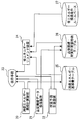
- FIG. 2 is a conceptual configuration diagram of the energy saving operation recommendation system according to Embodiment 1 of the present invention.
- the energy saving operation recommendation system is configured by an arithmetic processing device including a storage device such as a ROM, a RAM, and a database, and operates according to an installed program.
- the energy saving operation recommendation system includes an energy consumption result calculation device 20, a quality result data collection device 21, a material prediction calculation device 22, a display means 23, an energy saving recommendation device 24, a consumption energy reference amount table 25, a quality result / material calculation value storage table. 26.
- An energy saving operation condition rule base 27 is provided.
- the energy consumption reference amount table 25, the quality performance / material calculation value storage table 26, and the energy saving operation condition rule base 27 are managed on one or a plurality of databases.
- the energy consumption result calculation device 20 is connected to the display means 23 and the energy consumption reference amount table 25.
- the quality record data collecting device 21 is connected to the display means 23 and the quality record / material calculated value storage table 26.
- the material prediction calculation device 22 is connected to the display means 23 and the quality performance / material calculation value storage table 26.
- the energy saving recommendation device 24 is connected to the display means 23, the energy consumption reference amount table 25, the quality result / material calculation value storage table 26, and the energy saving operation condition rule base 27.
- the consumption energy performance calculation device 20 will be described.
- the actual consumption energy can be calculated using, for example, the current, voltage, rotational speed and the like obtained from the drive motor as follows. This is a calculation of energy consumption when rolling one piece from the tip to the tail.
- Ei [MJ] is the actual energy consumption during the time T [s]
- t [s] is the time
- v [m / s] is the roll peripheral speed record
- G [kNm] is the rolling torque (roll standard) record
- R [mm] is the roll radius
- Pw is the rolling power [kW]
- ⁇ is the power conversion efficiency (efficiency during conversion between current and work) [-].
- T [s] represents the rolling time.
- i represents the path index of the coarse mill 4 and the finishing mill 9
- Ri represents the i-th pass of the coarse mill 4
- Fi represents the i-th stand of the finishing mill 9.
- N R represents the final rolling pass of the rough mill 4 and N F represents the final stand of the finishing mill 9.
- E Ei [MJ] represents the actual energy consumption in each rolling pass of the edger mill 3.
- E Ti [MJ] represents the actual energy consumption of each motor on the transfer table.
- E DC [MJ] represents the actual energy consumption of the down coiler 13.
- E RP [MJ] represents the actual energy consumption of the pump motor of the tank that supplies water to the spray related to the coarse pump 14 (high pressure water descaler, coarse mill descaler).
- E FP [MJ] represents the actual energy consumption of the pump motor of the tank that supplies water to the spray related to the finishing pump 15 (such as the finishing mill entry-side descaler and the finishing mill spray between rolling stands).
- E ROTP [MJ] represents the energy consumption of the pump motor of the tank that supplies water to the laminar spray on the run-out table.
- the energy consumption required for the entire processing water cooling treatment for one material to be rolled is calculated based on the actual data.
- the energy consumption for one rolled material calculated in this way varies depending on the steel type and size of the rolled material.
- the processing time for rolling and cooling is changed by changing the rolling torque, changing the temperature schedule for obtaining the required product material, changing the amount of water used, and changing the length of the material to be rolled. Because it changes.
- the rolling torque has a substantially proportional relationship with respect to the sheet width, and the length of the material to be rolled has a correlation with the rolling time.
- the energy consumption result calculation apparatus 20 has a total energy consumption (equation (4)) consumed by each facility in the process of passing one rolled material through the rolling line, as shown in the equation (5). And the total energy consumption is divided by the slab width before rolling and the slab length to calculate a consumption energy reference amount that determines the unit width and energy consumption per unit length of the material to be rolled.
- E total p [MJ] represents the energy consumed by the entire rolling line for one rolled material.
- B S [mm] represents the slab width.
- L S [mm] represents the slab length.
- E Norm_total [MJ / mm 2 ] represents the reference amount of energy consumed by the entire rolling line per unit width and unit length of the material to be rolled. Strictly speaking, it cannot be said that the total energy consumption is exactly proportional to the slab width and slab length, but it can be shown as a representative index.
- This energy consumption reference amount can be organized using the steel type and the target thickness of the final product as keys.
- the consumption energy reference amount table 25 stores the consumption energy reference amount in association with the steel type of the material to be rolled and the product target plate thickness.
- the average value of those shall be calculated to increase the accuracy as a representative value. Can do.
- E Norm i, j_OLD [MJ / mm 2 ] represents the table value before the update of the energy consumption reference amount in the steel type index i and the product target plate thickness index j.
- E Norm i, j_CUR [MJ / mm 2 ] represents a calculated value of the energy consumption reference amount of one latest rolled material at the same steel type index i and the same product target sheet thickness index j.
- E Norm i, j_NEW [MJ / mm 2 ] represents a table update value of the energy consumption reference amount for the same steel type index i and the same product target thickness index j.
- ⁇ represents an update gain.
- the energy consumption reference amount for each area is also managed by the energy consumption reference amount table 25.
- Formula (7) is the coarse mill area
- Formula (8) is the finishing mill area
- Formula (9) is the downcoiler 13
- Formula (10) is the transfer table
- Formula (11) is the coarse pump 14
- Formula (12) is the finish pump 15.
- Equation (13) shows the reference amounts of energy consumption of the run-out table pump 16.
- the coarse mill area is an area including the edger mill 3 and the coarse mill 4 shown in FIG.
- the finishing mill area is an area including a finishing mill 9 having a plurality of rolling stands shown in FIG.
- the transfer table is divided into a plurality of areas (for example, between the slab heating furnace 1 and the roughing mill 4, between the roughing mill 4 and the finishing mill 9, and between the finishing mill 9 and the downcoiler 13). In this specification, for ease of explanation, it is assumed that there is one material to be rolled that is simultaneously present in one area. Therefore, it is possible to easily detect the energy consumed by one material to be rolled in each area.
- the energy consumption reference amount for each area is managed by the energy consumption reference amount table 25. Thereby, it is possible to acquire a representative energy consumption reference amount based on the actual value for each area using the steel type and the product target plate thickness as keys.
- the slab width and slab length are used and the slab thickness is assumed to be constant. However, the calculation accuracy may be further increased by adding a slab thickness.
- the quality record data collecting device 21 collects record data (actual values) relating to product quality such as plate thickness, plate width, crown, and flatness detected by the finishing mill outlet sensor 10.
- the quality record data collecting device 21 creates record measurement chart data on sheet thickness, sheet width, crown, and flatness as product quality information from the latest record data of the material to be rolled.
- the performance measurement chart data is transmitted to the display means 23.
- the actual data is stored in the quality actual / material calculated value storage table 26.
- the material prediction calculation device 22 takes in actual data of mechanical properties such as yield stress and tensile strength as product material information, and predicts data using a model similar to a known material prediction system for a material to be rolled without actual data. (Predicted value) is calculated.
- the performance data and the prediction data are stored in the quality performance / material calculated value storage table 26 as mechanical property data of the product material. Further, the mechanical property data is transmitted to the display means 23.
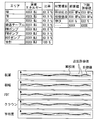
- FIG. 3 is a schematic diagram illustrating a screen configuration example of the display unit according to Embodiment 1 of the present invention.
- the display means 23 simultaneously displays the above-mentioned consumption energy reference amount (total value and each area value), actual measurement chart data related to product quality, and mechanical property data related to product material on one display unit.
- the operator has a record of energy consumption in each area from when the material to be rolled is extracted from the slab heating furnace 1 until it is taken up by the down coiler 13, and a record of product quality such as sheet thickness, sheet width, crown, and flatness.
- product quality such as sheet thickness, sheet width, crown, and flatness.
- the operator can confirm in which area the energy consumption is large in a series of processes of the material to be rolled, and whether there is a problem with the product quality or product material of the material to be rolled. . Further, it is possible to examine whether or not there is a possibility of reducing energy consumption (energy saving) in any area within the allowable range for the displayed product quality and product material. Even if there is a possibility that energy saving can be realized by reducing energy consumption by changing a certain operating condition, if it does not meet the required quality and material, it will be a defective product, resulting in a loss more than energy saving. Displaying information on energy consumption, product quality, and product material side by side in a single screen makes it easier to compare the information and examines the possibility of energy saving after securing the required product quality and product material. can do.
- the energy saving recommendation device 24 reads the energy consumption reference amount corresponding to the steel type and the product target plate thickness from the energy consumption reference amount table 25 for the material to be rolled (slab) scheduled to be rolled next.
- the read energy consumption reference amount is multiplied by the slab width and slab length of the material to be rolled, and the energy consumed that each piece of equipment is expected to consume as the material passes through the rolling line (predicted energy consumption) Is calculated.
- the estimated energy consumption is the total line E total p [MJ], rough mill area E RM p [MJ], finishing mill area E FM p [MJ], downcoiler E DC p [MJ], transfer table E TBL p [MJ], Coarse pump E RP p [MJ], finish pump E FP p [MJ], run-out table pump E ROTP p [MJ].
- the display means 23 has a record of the product quality (sheet thickness, sheet width, crown, flatness) of the last rolled material with the same steel type, product sheet thickness, and product sheet width together with the predicted energy consumption.
- the measurement chart and the mechanical property data calculated by the material prediction calculation device 22 are displayed side by side.
- the energy saving recommendation device 24 recommends the possibility of energy saving in consideration of the product quality and the allowable range of the product material.
- the following is a menu of typical operating conditions related to energy conservation. (1) Heating furnace extraction temperature (2) Transfer bar thickness between coarse mill and finishing mill (3) Finishing mill outlet side target temperature (FDT) (4) Rolling load distribution ratio of each rolling stand of finishing mill
- the heating furnace extraction temperature change will be described.
- the extraction temperature of the slab is raised, the rough mill 4 and the finishing mill 9 are rolled at a higher temperature, so that the deformation resistance is reduced and the rolling load and torque are reduced. Therefore, the energy consumption of the rough mill 4 and the finishing mill 9 is reduced, and there is an energy saving effect.
- the energy saving recommendation device 24 recommends to the operator operating conditions that can reduce the energy consumption more than the predicted energy consumption while maintaining the product quality of the material to be rolled and the mechanical properties of the product material within an allowable range.
- the following example can be given as an operating condition change policy having an energy saving effect in consideration of the product quality and the allowable range of the product material.
- (Rule 1) If the finishing mill outlet flatness is not good, lowering the rolling load distribution ratio of the rear stage stand of the finishing mill 9 improves the flatness and provides an energy saving effect.
- (Rule 2) If there is a margin to raise the finishing mill delivery target temperature (FDT) to the lower limit of the required mechanical properties, raising the FDT will provide energy savings within the allowable range of the product material.
- FDT finishing mill delivery target temperature
- the energy saving effect can be obtained within the allowable range of the product material by reducing the transfer bar thickness. .
- (Rule 4) When there is room to increase the finish mill exit-side crown, an energy saving effect can be obtained within the allowable range of the crown by increasing the rolling load distribution ratio of the front stand of the finish mill 9.
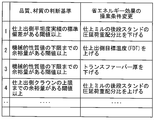
- FIG. 4 is a diagram showing an example of a rule base of energy saving operation conditions in Embodiment 1 of the present invention.
- the energy saving operation condition rule base 27 stores a rule of general relevance between the product quality / product material and the operation condition change policy having an energy saving effect.
- the energy saving recommendation device 24 acquires data of product quality and product material, selects a condition that matches the rule on the energy saving operation condition rule base 27, and displays the change policy of the operation condition having an energy saving effect on the display means 23. You can make recommendations.
- the energy saving recommendation device 24 calculates a standard deviation, which is an index representing variation in the flatness of the material to be rolled, from the actual data obtained by sampling the finishing mill outlet flatness.
- the performance data of the finishing mill outlet side flatness is that the flatness output signal is obtained by establishing the tension between the finishing mill 9 and the down coiler 13 after the tip of the material to be rolled is wound around the down coiler 13. Will become smaller. Therefore, when calculating the said standard deviation, the device which calculates a standard deviation from the performance data sampled in the range until the front-end
- the energy saving recommendation device 24 recommends operating conditions that increase the rolling load distribution ratio of the former stage stand and lower the rolling load distribution ratio of the rear stage stand for each rolling stand of the finishing mill 9. The operating conditions are displayed on the display means 23.
- the lower limit of mechanical properties is given as a product requirement.
- the energy saving recommendation device 24 compares the mechanical property value calculated by the material prediction system with the lower limit value of the mechanical property. When the margin to the mechanical property lower limit (mechanical property value-mechanical property lower limit) is equal to or greater than a certain threshold value, it is judged that there is a margin as the product material, and the operating conditions that have the above energy saving effect are changed. Recommend.
- Rule 2 is used when there is a margin to raise the finishing mill target temperature (FDT) as a premise.
- FDT finishing mill target temperature
- the mechanical properties related to the yield stress and tensile strength of the final product coil can be increased by raising the finish mill target temperature (FDT). There is a tendency for the strength of to decrease.
- the material prediction calculation device 22 calculates mechanical property values related to yield stress and tensile strength, based on the finishing mill delivery target temperature (FDT) given at present.
- the energy saving recommendation device 24 recommends an operating condition for raising the finishing mill outlet side target temperature (FDT) when the mechanical property value is equal to or higher than a set allowable value higher than the required mechanical property lower limit value. .
- the operating conditions are displayed on the display means 23. According to this change in operating conditions, it is possible to obtain an energy saving effect while ensuring the minimum strength.
- Rule 3 is used as a premise when there is a margin to reduce the total reduction amount in the finishing mill 9.
- the material prediction calculation device 22 calculates mechanical property values related to yield stress and tensile strength, based on the finishing mill delivery target temperature (FDT) given at present.
- the energy saving recommendation device 24 is a material to be rolled (transferred) between the rough mill 4 and the finishing mill 9. Recommended operating conditions to reduce target bar thickness. The operating conditions are displayed on the display means 23. According to this change in operating conditions, it is possible to obtain an energy saving effect while ensuring the minimum strength.
- the product quality upper limit value of the crown on the exit side of the finishing mill 9 is given as a product requirement value.
- the energy saving recommendation device 24 is used when the actual value of the crown measured by the finishing mill outlet sensor 10 is equal to or less than a set allowable value lower than the product quality upper limit value (in other words, a margin to the product quality upper limit value).
- a set allowable value lower than the product quality upper limit value in other words, a margin to the product quality upper limit value.
- the operating conditions are displayed on the display means 23.
- the energy consumption of each facility is calculated for each material to be rolled based on the actual data on the rolling line.
- the total energy consumption of the rolling line is calculated by summing them. Therefore, the energy consumption consumed by the entire rolling line can be predicted with high accuracy as long as the steel type, slab size, and target product thickness of the material to be rolled next are known without having a model.
- the energy saving operation recommendation system it is possible to recommend to the operator operating conditions that can reduce the energy consumption of the entire rolling line while ensuring product quality and product material. Therefore, the operator can change the operating conditions with peace of mind. Further, according to the energy saving operation recommendation system, the relation between the product quality / product material and the energy saving effect is displayed on the display means 23 in an easy-to-understand manner, and the operator can also consider the energy saving operation in consideration of the relation.
- the energy saving operation recommendation system it is possible to manage the actual energy consumption data and the actual product quality data together, and to present operational conditions that have an energy saving effect after considering the improvement and margin of the product quality. This allows the operator to change the operating conditions with peace of mind.
- the actual consumption energy calculation device 20 is the “consumption energy actual calculation device” in this invention
- the consumption energy reference amount table 25 is the “consumption energy reference amount storage means” in the Xth invention.
- the energy saving recommendation device 24 corresponds to the “consumption energy reference amount acquisition means”, the “consumption energy prediction calculation means” and the “energy saving operation condition recommendation means” in the present invention, and the finishing mill outlet side sensor 10 in the present invention “
- the material predicting / calculating device 22 corresponds to the “flatness detecting means” and the “crown value detecting means”, and corresponds to the “material predicting / calculating device” in the present invention.
Landscapes
- Business, Economics & Management (AREA)
- Engineering & Computer Science (AREA)
- Human Resources & Organizations (AREA)
- Economics (AREA)
- Strategic Management (AREA)
- Entrepreneurship & Innovation (AREA)
- Health & Medical Sciences (AREA)
- Theoretical Computer Science (AREA)
- Marketing (AREA)
- General Physics & Mathematics (AREA)
- General Business, Economics & Management (AREA)
- Tourism & Hospitality (AREA)
- Physics & Mathematics (AREA)
- Mechanical Engineering (AREA)
- Public Health (AREA)
- Primary Health Care (AREA)
- Water Supply & Treatment (AREA)
- Development Economics (AREA)
- Educational Administration (AREA)
- General Health & Medical Sciences (AREA)
- Game Theory and Decision Science (AREA)
- Operations Research (AREA)
- Quality & Reliability (AREA)
- Control Of Metal Rolling (AREA)
Abstract
Priority Applications (5)
| Application Number | Priority Date | Filing Date | Title |
|---|---|---|---|
| PCT/JP2013/071030 WO2015015643A1 (fr) | 2013-08-02 | 2013-08-02 | Système de recommandation de fonctionnement économisant l'énergie |
| US14/909,379 US10482406B2 (en) | 2013-08-02 | 2013-08-02 | Energy-saving-operation recommending system |
| CN201380078672.8A CN105451904B (zh) | 2013-08-02 | 2013-08-02 | 节能作业推荐系统 |
| KR1020167003771A KR101733366B1 (ko) | 2013-08-02 | 2013-08-02 | 에너지 절약 조업 리커멘드 시스템 |
| JP2015529311A JP5999265B2 (ja) | 2013-08-02 | 2013-08-02 | 省エネルギー操業リコメンドシステム |
Applications Claiming Priority (1)
| Application Number | Priority Date | Filing Date | Title |
|---|---|---|---|
| PCT/JP2013/071030 WO2015015643A1 (fr) | 2013-08-02 | 2013-08-02 | Système de recommandation de fonctionnement économisant l'énergie |
Publications (1)
| Publication Number | Publication Date |
|---|---|
| WO2015015643A1 true WO2015015643A1 (fr) | 2015-02-05 |
Family
ID=52431215
Family Applications (1)
| Application Number | Title | Priority Date | Filing Date |
|---|---|---|---|
| PCT/JP2013/071030 Ceased WO2015015643A1 (fr) | 2013-08-02 | 2013-08-02 | Système de recommandation de fonctionnement économisant l'énergie |
Country Status (5)
| Country | Link |
|---|---|
| US (1) | US10482406B2 (fr) |
| JP (1) | JP5999265B2 (fr) |
| KR (1) | KR101733366B1 (fr) |
| CN (1) | CN105451904B (fr) |
| WO (1) | WO2015015643A1 (fr) |
Families Citing this family (6)
| Publication number | Priority date | Publication date | Assignee | Title |
|---|---|---|---|---|
| US10204310B2 (en) * | 2015-01-16 | 2019-02-12 | Txu Energy Retail Company Llc | System and method for home automation |
| US10832354B2 (en) * | 2016-11-29 | 2020-11-10 | Rockwell Automation Technologies Inc. | Energy key performance indicators for the industrial marketplace |
| CN106777132A (zh) * | 2016-12-18 | 2017-05-31 | 深圳市辣妈帮科技有限公司 | 数据处理方法及装置 |
| CN113305178B (zh) * | 2021-05-12 | 2023-02-03 | 首钢京唐钢铁联合有限责任公司 | 一种降低卷取设备电耗的方法、装置、介质及计算机设备 |
| US20240113520A1 (en) * | 2021-06-02 | 2024-04-04 | Ihi Corporation | Energy consumption prediction device, energy consumption prediction method, and energy consumption prediction program |
| EP4124398B1 (fr) * | 2021-07-27 | 2024-04-10 | Primetals Technologies Austria GmbH | Procédé de détermination des propriétés mécaniques d'un produit laminé a l'aide d'un modèle hybride |
Citations (3)
| Publication number | Priority date | Publication date | Assignee | Title |
|---|---|---|---|---|
| JP2012170962A (ja) * | 2011-02-18 | 2012-09-10 | Toshiba Mitsubishi-Electric Industrial System Corp | エネルギー消費量予測装置 |
| JP2013066929A (ja) * | 2011-09-26 | 2013-04-18 | Toshiba Mitsubishi-Electric Industrial System Corp | 最適化装置、最適化方法、及び最適化プログラム |
| WO2013121514A1 (fr) * | 2012-02-14 | 2013-08-22 | 東芝三菱電機産業システム株式会社 | Dispositif d'égalisation de puissance |
Family Cites Families (29)
| Publication number | Priority date | Publication date | Assignee | Title |
|---|---|---|---|---|
| US4106318A (en) * | 1974-04-10 | 1978-08-15 | Nippon Steel Corporation | Method and apparatus for rolling metallic material |
| AU517323B2 (en) * | 1976-07-28 | 1981-07-23 | Nippon Steel Corporation | Producing killed steels for continuous casting |
| JPS5617104A (en) * | 1979-07-23 | 1981-02-18 | Nippon Steel Corp | Method and apparatus for rolling bar or rod |
| JPS5858905A (ja) | 1981-10-05 | 1983-04-07 | Kawasaki Steel Corp | 熱間圧延における最適圧延制御方法 |
| AU554019B2 (en) * | 1984-11-09 | 1986-08-07 | Nippon Steel Corporation | Changing slab width in continuous casting |
| JPH0523723A (ja) * | 1991-07-24 | 1993-02-02 | Toshiba Corp | 平坦度測定装置及びこの平坦度測定装置を用いた連続圧延機の制御装置 |
| JP3254067B2 (ja) * | 1993-05-07 | 2002-02-04 | 川崎製鉄株式会社 | エンドレス圧延における板クラウンの制御方法 |
| US5564178A (en) * | 1993-09-10 | 1996-10-15 | Kyoei Steel Ltd. | Process of producing a hot coil and a production system of producing the same |
| US5493885A (en) * | 1994-03-10 | 1996-02-27 | Kawasaki Steel Corporation | Method and apparatus for controlling rolling process in hot strip finish rolling mill |
| JP3174457B2 (ja) * | 1994-05-17 | 2001-06-11 | 株式会社日立製作所 | 連鋳直結熱間圧延設備およびその圧延方法 |
| CA2199872C (fr) * | 1995-07-13 | 2000-04-18 | Katsuhiro Takebayashi | Procede de laminage a chaud continu de lingots |
| EP0791411B1 (fr) * | 1995-12-26 | 2008-02-13 | Toshiba Mitsubishi-Electric Industrial Systems Corporation | Méthode de mesure du profil d'une bande et méthode de control pour laminer en continu |
| JP3747786B2 (ja) * | 2001-02-05 | 2006-02-22 | 株式会社日立製作所 | 板材用圧延機の圧延方法及び板材用圧延設備 |
| JP2004129322A (ja) * | 2002-09-30 | 2004-04-22 | Nippon Steel Corp | 電力需要の予測制御システム |
| CN1267215C (zh) * | 2002-11-20 | 2006-08-02 | Posco株式会社 | 带钢热精轧中的故障诊断设备和方法 |
| CN1913984B (zh) * | 2004-10-14 | 2012-10-10 | 东芝三菱电机产业系统株式会社 | 轧制、锻造或矫正生产线的材质控制方法及其装置 |
| US7277768B2 (en) * | 2004-11-05 | 2007-10-02 | International Business Machines Corporation | Method for production design and operations scheduling for plate design in the steel industry |
| CN1644257A (zh) * | 2004-12-15 | 2005-07-27 | 大连理工大学 | 热轧过程加热炉综合优化控制系统设计及其控制方法 |
| WO2007080688A1 (fr) * | 2006-01-13 | 2007-07-19 | Jfe Steel Corporation | Dispositif et procede destines a l’elaboration de formules de prediction |
| JP4449991B2 (ja) * | 2007-02-26 | 2010-04-14 | Jfeスチール株式会社 | 熱延鋼帯の冷却装置及び方法 |
| KR20090108103A (ko) * | 2007-02-28 | 2009-10-14 | 제이에프이 스틸 가부시키가이샤 | 근적외선 카메라를 사용한 금속띠의 열간 압연 방법 및 장치 |
| DE102007058709A1 (de) * | 2007-08-04 | 2009-02-05 | Sms Demag Ag | Verfahren zum Herstellen eines Bandes aus Stahl |
| WO2010103659A1 (fr) * | 2009-03-13 | 2010-09-16 | 東芝三菱電機産業システム株式会社 | Appareil d'optimisation |
| JP5423443B2 (ja) | 2010-02-04 | 2014-02-19 | 新日鐵住金株式会社 | 連続式加熱炉における燃料流量算出方法、鋼材の製造方法、及び連続式加熱炉 |
| IT1405344B1 (it) * | 2010-06-14 | 2014-01-03 | Danieli Off Mecc | Linea di laminazione e relativo procedimento |
| IT1404286B1 (it) * | 2011-01-24 | 2013-11-15 | Danieli Off Mecc | Procedimento di laminazione per nastri e relativa linea di laminazione |
| CN102637272B (zh) * | 2012-03-19 | 2016-05-04 | 东北大学 | 热轧板坯前库剩余板坯的分配方法及装置 |
| WO2014118989A1 (fr) * | 2013-02-04 | 2014-08-07 | 東芝三菱電機産業システム株式会社 | Dispositif de commande à économie d'énergie destiné à une ligne de laminage |
| ES2864636T3 (es) * | 2013-10-28 | 2021-10-14 | Nanosteel Co Inc | Producción de acero metálico por fundición de planchones |
-
2013
- 2013-08-02 WO PCT/JP2013/071030 patent/WO2015015643A1/fr not_active Ceased
- 2013-08-02 US US14/909,379 patent/US10482406B2/en active Active
- 2013-08-02 KR KR1020167003771A patent/KR101733366B1/ko active Active
- 2013-08-02 CN CN201380078672.8A patent/CN105451904B/zh active Active
- 2013-08-02 JP JP2015529311A patent/JP5999265B2/ja active Active
Patent Citations (3)
| Publication number | Priority date | Publication date | Assignee | Title |
|---|---|---|---|---|
| JP2012170962A (ja) * | 2011-02-18 | 2012-09-10 | Toshiba Mitsubishi-Electric Industrial System Corp | エネルギー消費量予測装置 |
| JP2013066929A (ja) * | 2011-09-26 | 2013-04-18 | Toshiba Mitsubishi-Electric Industrial System Corp | 最適化装置、最適化方法、及び最適化プログラム |
| WO2013121514A1 (fr) * | 2012-02-14 | 2013-08-22 | 東芝三菱電機産業システム株式会社 | Dispositif d'égalisation de puissance |
Also Published As
| Publication number | Publication date |
|---|---|
| CN105451904B (zh) | 2017-07-04 |
| KR101733366B1 (ko) | 2017-05-08 |
| CN105451904A (zh) | 2016-03-30 |
| US10482406B2 (en) | 2019-11-19 |
| JP5999265B2 (ja) | 2016-09-28 |
| US20160180269A1 (en) | 2016-06-23 |
| JPWO2015015643A1 (ja) | 2017-03-02 |
| KR20160032189A (ko) | 2016-03-23 |
Similar Documents
| Publication | Publication Date | Title |
|---|---|---|
| JP5999265B2 (ja) | 省エネルギー操業リコメンドシステム | |
| TWI483790B (zh) | 能源消費量預測裝置 | |
| CN104209339B (zh) | 一种利用粗轧逆道次立辊辊缝测量进行板坯宽度控制的方法 | |
| JP5685208B2 (ja) | 薄板用熱間圧延機の制御装置および薄板用熱間圧延機の制御方法 | |
| CN101590489A (zh) | 热轧机的板宽控制装置及控制方法 | |
| JP6187603B2 (ja) | 圧延ラインのエネルギー消費量予測装置 | |
| CN101678418B (zh) | 可逆式轧钢机的板厚控制装置 | |
| CN103008358A (zh) | 优化装置、优化方法、及优化程序 | |
| JP7230880B2 (ja) | 圧延荷重予測方法、圧延方法、熱延鋼板の製造方法、及び圧延荷重予測モデルの生成方法 | |
| JP2005034875A (ja) | 熱間圧延における被圧延材幅の制御方法 | |
| JP2021133415A (ja) | モデル学習方法、走間板厚変更方法、鋼板の製造方法、モデル学習装置、走間板厚変更装置および鋼板の製造装置 | |
| JP2004331992A (ja) | 熱間圧延における金属板の温度予測方法および冷却方法 | |
| TWI814254B (zh) | 資料收集裝置 | |
| JPH09276915A (ja) | 連続圧延機におけるダイナミックセットアップ方法 | |
| CN118568962B (zh) | 一种槽钢轧辊孔型磨损量在线预测方法及系统 | |
| JP2006051512A (ja) | 熱間圧延における被圧延材幅の制御方法及び熱延金属板の製造方法 | |
| JP3801154B2 (ja) | 熱延鋼板の製造方法 | |
| CN120513144A (zh) | 轧制控制装置 | |
| JP3937997B2 (ja) | 熱間仕上げ圧延機における板幅制御方法 | |
| JPH0938708A (ja) | 熱間圧延における板厚制御方法 | |
| JP2006055887A (ja) | 熱間圧延における被圧延材の冷却制御方法及び熱延金属板の製造方法 | |
| JPH10156404A (ja) | 熱延鋼帯の圧延方法 | |
| KR20240046210A (ko) | 열간 압연기의 판두께 제어 장치 | |
| JP2022149488A (ja) | 加熱制御方法及び装置並びに熱延鋼板の製造方法、搬送予測モデル生成方法 | |
| JP2004154818A (ja) | 熱延鋼帯の製造方法 |
Legal Events
| Date | Code | Title | Description |
|---|---|---|---|
| WWE | Wipo information: entry into national phase |
Ref document number: 201380078672.8 Country of ref document: CN |
|
| 121 | Ep: the epo has been informed by wipo that ep was designated in this application |
Ref document number: 13890715 Country of ref document: EP Kind code of ref document: A1 |
|
| ENP | Entry into the national phase |
Ref document number: 2015529311 Country of ref document: JP Kind code of ref document: A |
|
| WWE | Wipo information: entry into national phase |
Ref document number: 14909379 Country of ref document: US |
|
| NENP | Non-entry into the national phase |
Ref country code: DE |
|
| ENP | Entry into the national phase |
Ref document number: 20167003771 Country of ref document: KR Kind code of ref document: A |
|
| 122 | Ep: pct application non-entry in european phase |
Ref document number: 13890715 Country of ref document: EP Kind code of ref document: A1 |